EP2965274B1 - System und verfahren zur steuerung von mindestens zwei automatisierten nicht aneinander vorbeigehenden schienenmontierten portalkränen - Google Patents
System und verfahren zur steuerung von mindestens zwei automatisierten nicht aneinander vorbeigehenden schienenmontierten portalkränen Download PDFInfo
- Publication number
- EP2965274B1 EP2965274B1 EP13707850.7A EP13707850A EP2965274B1 EP 2965274 B1 EP2965274 B1 EP 2965274B1 EP 13707850 A EP13707850 A EP 13707850A EP 2965274 B1 EP2965274 B1 EP 2965274B1
- Authority
- EP
- European Patent Office
- Prior art keywords
- crane
- work
- cranes
- work orders
- work order
- Prior art date
- Legal status (The legal status is an assumption and is not a legal conclusion. Google has not performed a legal analysis and makes no representation as to the accuracy of the status listed.)
- Active
Links
Images

Classifications
-
- B—PERFORMING OPERATIONS; TRANSPORTING
- B66—HOISTING; LIFTING; HAULING
- B66C—CRANES; LOAD-ENGAGING ELEMENTS OR DEVICES FOR CRANES, CAPSTANS, WINCHES, OR TACKLES
- B66C13/00—Other constructional features or details
- B66C13/18—Control systems or devices
- B66C13/48—Automatic control of crane drives for producing a single or repeated working cycle; Programme control
-
- B—PERFORMING OPERATIONS; TRANSPORTING
- B66—HOISTING; LIFTING; HAULING
- B66C—CRANES; LOAD-ENGAGING ELEMENTS OR DEVICES FOR CRANES, CAPSTANS, WINCHES, OR TACKLES
- B66C19/00—Cranes comprising trolleys or crabs running on fixed or movable bridges or gantries
- B66C19/002—Container cranes
-
- B—PERFORMING OPERATIONS; TRANSPORTING
- B66—HOISTING; LIFTING; HAULING
- B66C—CRANES; LOAD-ENGAGING ELEMENTS OR DEVICES FOR CRANES, CAPSTANS, WINCHES, OR TACKLES
- B66C19/00—Cranes comprising trolleys or crabs running on fixed or movable bridges or gantries
- B66C19/007—Cranes comprising trolleys or crabs running on fixed or movable bridges or gantries for containers
-
- G—PHYSICS
- G06—COMPUTING OR CALCULATING; COUNTING
- G06Q—INFORMATION AND COMMUNICATION TECHNOLOGY [ICT] SPECIALLY ADAPTED FOR ADMINISTRATIVE, COMMERCIAL, FINANCIAL, MANAGERIAL OR SUPERVISORY PURPOSES; SYSTEMS OR METHODS SPECIALLY ADAPTED FOR ADMINISTRATIVE, COMMERCIAL, FINANCIAL, MANAGERIAL OR SUPERVISORY PURPOSES, NOT OTHERWISE PROVIDED FOR
- G06Q10/00—Administration; Management
- G06Q10/06—Resources, workflows, human or project management; Enterprise or organisation planning; Enterprise or organisation modelling
- G06Q10/063—Operations research, analysis or management
- G06Q10/0631—Resource planning, allocation, distributing or scheduling for enterprises or organisations
- G06Q10/06312—Adjustment or analysis of established resource schedule, e.g. resource or task levelling, or dynamic rescheduling
-
- G—PHYSICS
- G06—COMPUTING OR CALCULATING; COUNTING
- G06Q—INFORMATION AND COMMUNICATION TECHNOLOGY [ICT] SPECIALLY ADAPTED FOR ADMINISTRATIVE, COMMERCIAL, FINANCIAL, MANAGERIAL OR SUPERVISORY PURPOSES; SYSTEMS OR METHODS SPECIALLY ADAPTED FOR ADMINISTRATIVE, COMMERCIAL, FINANCIAL, MANAGERIAL OR SUPERVISORY PURPOSES, NOT OTHERWISE PROVIDED FOR
- G06Q10/00—Administration; Management
- G06Q10/08—Logistics, e.g. warehousing, loading or distribution; Inventory or stock management
-
- G—PHYSICS
- G06—COMPUTING OR CALCULATING; COUNTING
- G06Q—INFORMATION AND COMMUNICATION TECHNOLOGY [ICT] SPECIALLY ADAPTED FOR ADMINISTRATIVE, COMMERCIAL, FINANCIAL, MANAGERIAL OR SUPERVISORY PURPOSES; SYSTEMS OR METHODS SPECIALLY ADAPTED FOR ADMINISTRATIVE, COMMERCIAL, FINANCIAL, MANAGERIAL OR SUPERVISORY PURPOSES, NOT OTHERWISE PROVIDED FOR
- G06Q10/00—Administration; Management
- G06Q10/08—Logistics, e.g. warehousing, loading or distribution; Inventory or stock management
- G06Q10/087—Inventory or stock management, e.g. order filling, procurement or balancing against orders
Definitions
- the invention relates to a system and method for controlling at least two automated rail mounted gantry cranes which cannot pass one another, the system comprising for each of the cranes a crane control unit containing at least one control input interface for receiving from a scheduling system at least one work order at a time and for receiving at least one sensor information reflecting execution of the at least one work order by the respective crane, wherein each work order specifies at least a start position and an end position of a target container to be moved by the respective crane.
- the crane control units each further comprise a control processing unit for processing the at least one work order and the at least one sensor information to generate control information for ensuring execution of the at least one work order by the respective crane, and at least one control output interface for transmitting the control information towards at least one actuator of the respective crane.
- Container terminals e.g. in marine ports, have the need to store containers for a time period ranging from hours to weeks.
- a container yard is a container storage area in which the containers are stored in a 3 dimensional way by placing some of them on the ground beside one forming a rectangular shape and by stacking the other containers on top of those on the ground.
- One or more gantry cranes are used to drop-off the containers in the yard, to move the containers between locations inside the yard and to pick them up again from the yard.
- Different types of gantry cranes are known, in particular rubber-tired gantry (RTG) cranes and rail-mounted gantry (RMG) cranes.
- the invention deals with RMG cranes, where the cranes move on rails, and where the container yard is situated in between two or more of these rails so that the RMG cranes span across the yard.
- RMG cranes are often operating in an automated way, in which case they are also called automated stacking crane (ASC).
- ASC automated stacking crane
- each ASC may either have its own pair of rails, or the ASCs may be mounted on the same rail. In the latter case, the ASCs are not able to pass each other which in the following is denoted as non-passing cranes. In the case of two non-passing cranes, these cranes are also called twin stacking cranes or twin RMG.
- the information on which container is to be moved by which crane from which start to which end position is generated by a so-called terminal operating system (TOS).
- TOS takes as input the container handling jobs required in order to unload and load the ships. Further, it considers the container handling jobs for loading and unloading the trucks or trains on the landside of the container yard. Even further, it considers the case that a target container of a job is placed beneath some other container. Then, a corresponding work-order is generated by the TOS for relocating the upper container at a nearby stack. These relocation work-orders may be called rehandling jobs.
- Each ASC in the container yard receives its work orders one by one from the TOS.
- the work orders are executed using a first-come-first-served strategy, which means that the ASC which receives its work order first has higher priority.
- the ASCs have colliding work orders in the sense that one ASCs work order overlaps the other ASCs position, the ASC with lower priority has to yield and wait in order to avoid collisions.
- interference In order to determine which crane actually has priority and whether an interference is likely to occur or not, the crane control systems of the ASCs may exchange corresponding information.
- US 2006/0182527 A1 a method for automated container terminal scheduling is known, where it is suggested to reorganize the containers in the terminal when resources, i.e. cranes, are available to perform the corresponding tasks.
- the aim of the reorganization is to better adapt the locations of the containers within the terminals to external changes, such as changes in ship and/or truck arrivals, custom holds on containers or port equipment failures.
- US 2006/0182527 A1 describes a terminal operating system generating updated schedules for the various cranes and other equipment in the container terminal.
- a crane control system for a crane that moves containers in a specific block of a container terminal. It is proposed that the crane control system takes care of the container storage optimization in its corresponding block. The tasks taken care of by the crane control system are to find an optimal placement for new containers whether delivered by land or by sea, to remove a container from the block in the shortest possible time and to relocate containers to more favorable positions during times of low crane load. Accordingly, the crane control system takes over a part of the scheduling functionality from the TOS, which in EP 2 006 237 B1 is called port logistics system.
- a scheduling system first identifies so called main jobs to be done at the container terminal, where the main jobs are the seaside jobs for discharging and loading the ships as well as the landside jobs for carrying in and carrying out containers from and to external trucks.
- the scheduling system described in Choe et al generates so called preparatory jobs, which are jobs identified to possibly, but not necessarily, assist the main jobs.
- the preparatory jobs are in particular rehandling jobs, as explained above, and repositioning jobs.
- a repositioning job is a job by which a container is moved to another position closer to its final target location. Due to the repositioning jobs, the delay caused by interference between the ASCs can be reduced, as one of the ASCs can be made to temporarily put down the container at a location outside the range of interference and to perform other jobs until the other ASC moves away.
- the actual crane scheduling is performed in order to determine which of the jobs is to be performed in which sequence by which of the twin ASCs.
- the assignment of ASCs is defined to be only required for the preparatory jobs, as in the set-up discussed in Choe et al the seaside jobs can only be performed by the seaside ASC and the landside jobs can only be performed by the landside ASC.
- the main jobs and the preparatory jobs are treated as independent jobs. If scheduling of the preparatory jobs results in an inappropriate job order, like a repositioning job following its corresponding main job or the originally blocked container now lying on top of its stack, the respective preparatory job becomes obsolete.
- Choe et al describes a scheduling system which expands the known functionality of a TOS by introducing repositioning jobs in order to reduce interference between non-passing ASCs.
- the scheduled main and preparatory jobs will afterwards be transmitted to the respectively assigned ASC and its corresponding crane control system for job execution.
- a rescheduling unit which contains
- the rescheduling unit operates in parallel with the crane control units currently executing the work orders, and the control processing units of these crane control units regard the work orders received from the rescheduling unit as update of all previously received work orders.
- the present invention which is to be applied in the case of ASCs on the same rail, such as twin RMGs, suggests keeping the known TOS and crane control functionality of a container terminal untouched.
- the TOS continues to create prehandling jobs and to schedule work orders for each of the ASCs in order to fulfill the above described main jobs as well as the prehandling jobs.
- the TOS further continues to transmit the work orders one by one to the correspondingly allocated crane. Alternatively, it may transmit them as a list of several future work orders to the correspondingly allocated crane.
- the crane control is continued to be performed by a crane control unit individually assigned to each ASC, where the crane control units receive the work orders from the TOS and control execution of these work orders.
- the basic idea of the invention is to introduce a rescheduling functionality for the scheduled work orders in between TOS and crane control, where the rescheduling unit checks whether a possible splitting of work orders would result in an improved work order schedule, and where the rescheduling is performed in parallel with the crane control, i.e. dynamically and at the same time as execution of work orders has started, so that the additional rescheduling does not cause any time delay.
- the rescheduling and possible splitting is performed based on an expected trajectory, i.e. a time-dependent path, generated by the data processing module of the rescheduling unit for each of the work orders, where the trajectory leads from the corresponding start to the end container position given by the respective work order.
- an expected trajectory i.e. a time-dependent path
- the rescheduling unit may be either a stand-alone data processing device with its own input and output data communication hardware, or a subunit added to or integrated in one of the crane control units or the TOS or another already existing data processing device of the container terminal.
- a subunit it may be provided either - at least in part - with its own pieces of hardware or just in the form of software modules to be added to or integrated in the existing software modules and sharing the hardware modules already present.
- control processing unit of one of the crane control units and the data processing module of the rescheduling unit may be one and the same piece of hardware.
- control input interface and the input interface of the rescheduling unit as well as the control output interface and the output interface of the rescheduling unit may share the same hardware, at least in part.
- the job splitting as such reduces at least one of yielding operations and waiting times for the cranes and/or better balances the work load between the cranes.
- the total traveling time and travel distance of the cranes along the rails are reduced, which potentially results in a more energy efficient operation, in an improved collaboration between the cranes and finally in an increased container throughput per container yard or block, where a high container throughput is the main objective of container terminals since it reduces the berthing times for ships in the harbor.
- the data processing module of the rescheduling unit determines the intermediate position of a split work order so that the intermediate position fulfills at least one of the following position criteria:
- the data processing module further takes into account an earliest start time and/or a latest completion time of at least one of the work orders or of a subtask of at least one of the work orders. This information may be provided by the TOS as well, in order to ensure timely execution of the work orders.
- a subtask may for example be the picking-up or setting-down of a container in one of the transfer zones, which has to be performed by a specified time or cannot be performed earlier than a specified time.
- the data processing module may perform the rescheduling iteratively, until for example a predefined threshold of one of the rescheduling criteria is exceeded.
- the data processing module may perform the rescheduling once for a newly received list of work orders or whenever receiving an external trigger, where the trigger may come from at least one of the crane control units or from an external server.
- the list of work orders may contain either just the single next work orders for each of the at least two RMG cranes, e.g. two or three work orders in total, or several work orders per crane.
- the trigger may for example be generated when external conditions for execution of the work orders have changed, resulting in an adoption of the rescheduling criteria, such as an unexpected malfunction in one of the non-passing ASCs which would require the other ASCs on the same rail to take over at least some of its jobs so that a workload imbalance between the ASCs would even be desirable.
- the data processing module may further take into account at least one of the following additional information on ongoing and/or future work order execution, which may preferably be delivered by one or several of the crane control units or alternatively by a supervision system:
- a close cooperation and exchange of information between the crane control units and the rescheduling unit may be advantageous as the above listed information may help the rescheduling unit to improve the accuracy and applicability of the determined expected trajectories.
- the re-scheduled work orders are better adapted to any particularities occurring during current work order execution or expected for execution of future work orders.
- the data processing module may determine from an expected trajectory a corresponding length of interference time during which the crane assigned to the corresponding work order has to yield and/or wait. This information may then be used for different purposes as explained below.
- the data processing module may determine from an expected trajectory a workload imbalance between the cranes by calculating and comparing the number of work orders performed by each of the cranes during a predefined period of time and/or by calculating and comparing the length of idle time for each of the cranes during the predefined period of time.
- the decision on whether a work order needs to be split or not, may then be made by the data processing module depending on whether the length of interference time and/or whether the workload imbalance exceeds a corresponding predetermined threshold.
- the data processing module may on the one hand perform the rescheduling stepwise based on heuristic rules, where for each of the steps - generation of expected trajectories, splitting of work orders, determination of a sequence and an allocation to the cranes for the resulting new and unsplit work orders - separately adapted rules are defined, taking into account the various criteria described above as well as the length of interference time and/or the workload imbalance.
- the data processing module may perform the rescheduling by applying a scheduling algorithm which directly sequences and allocates the work orders to the at least two cranes taking the at least one work order for all the cranes as input.
- the scheduling algorithm may in particular
- the different optimization objectives may be combined by the data processing module by taking into account a priority and/or a weight predefined for at least one of the objectives to be combined.
- the result for one or a multiple of the above described optimization objectives or the combination of optimization objectives is compared with the same indicator determined for the work orders scheduled by the TOS, and the splitting of work orders is ultimately allowed for only if the indicator for the un-split work orders is less advantageous.
- the expected overall execution time or travelling distance or length of interference time or workload imbalance etc. is indeed reduced by the planned split work orders before sending them to the crane control units.
- the method for controlling at least two automated rail mounted gantry cranes which cannot pass one another and its embodiments are defined by the above described steps performed by the elements and units contained in the above-described system.
- a diagram is shown illustrating a container yard 1 of a container terminal containing a considerable number of stacked containers 8.
- the container yard 1 comprises three automated stacking cranes 3a, 3b, 3c.
- the ASCs 3a, 3b 3c are arranged on a pair of rails 4a, 4b so that they can move between a first transfer zone 5 and a second transfer zone 6, travelling past a main container storage area located in the middle between the first and second transfer zones. Since the ASCs use one and the same pair of rails 4a, 4b, they cannot pass each other.
- a more common arrangement in container yards is the usage of two non-passing ASCs, also called twin RMGs.
- a transfer zone is an area belonging to a container yard and being situated at one of its outer ends.
- containers may be temporarily dropped-off by the ASCs 3a, 3b, 3c in order to be picked-up shortly afterwards by external container terminal equipment to be loaded onto ships on the sea side or onto truck or trains on the land side of container yard 1 a.
- the transfer zones 5 and 6 are each located at one of the short ends of the rectangular container yard 1, where the seaside and the landside loading zones are situated directly behind. Accordingly, each container 8 will enter and leave the container yard 1 through one of its short ends. Such an arrangement may be called end-loaded container yard.
- An intermediate zone 7 is located in the midst of the containers of the main storage area of container yard 1, dividing the main storage area into two so called blocks.
- a plurality of containers 8 are placed in each transfer zone 5, 6 as well as in each of the two blocks adjacent to intermediate zone 7 in a three-dimensional way, i.e. the containers do not only cover the ground of container yard 1, but are stacked on top of each other as well.
- the ASCs 3a, 3b, 3c are arranged to move the containers 8 between the transfer zones 5, 6, as well as between one transfer zone, 5 or 6, and the main storage area.
- the movement of the ASCs 3a, 3b, 3c along the pair of rails 4a, 4b, as well as the movement of their corresponding end effectors used to pick-up, hold and drop-off one of the containers 8 are controlled for each of the ASCs by a corresponding crane control unit 2a, 2b, 2c.
- the crane control units 2a, 2b, 2c each generate control signals for the actuating units of the respective ASCs, in particular electric motors, so that the actuating units may cause the required movements of the ASC to execute its assigned work orders.
- the ASCs 3a, 3b, 3c are arranged to acquire work orders 10a, 10b, 10c.
- the work orders 10a, 10b, 10c are generated and transmitted from a terminal operating system (TOS) 9.
- TOS terminal operating system
- the ASCs 3a, 3b, 3c have more or less the same working range within the yard.
- the difference in the working ranges is defined by the two transfer zones 5, 6, where there are always positions in each of the transfer zones that can only be reached by one of the ASCs due to the fact that the ASC are non-passing, even if in some larger transfer zone layouts partial access of two or all ASCs 3a, 3b, 3c may be allowed.
- the ASC work orders 10a, 10b, 10c are created and scheduled by the TOS 9, and the ASCs 3a, 3b, 3c receive the work orders 10a, 10b, 10c respectively assigned to them one by one.
- the work orders are then executed by the ASCs 3a, 3b, 3c using a first-come-first-served strategy, meaning that in case of interfering work orders, the ASC which received its work order first has highest priority while the other ASCs have to yield and/or wait accordingly.
- the embodiments disclosed herein relate to scheduling work orders between at least two of the ASCs 3a, 3b, 3c.
- some embodiments concern a strategy for improving the efficiency of the ASCs 3a, 3b, 3c by introducing a rescheduling functionality.
- the disclosed embodiments can be implemented by simply adding software to one of the already existing crane control units 2a, 2b or 2c. Alternatively, an additional rescheduling device or rescheduling unit may be introduced.
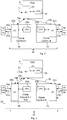
- a system 25 for controlling the two ASCs 3a and 3b is seen together with TOS 9.
- the system as well as its arrangement together with the TOS 9 is known from the art.
- the system 25 comprises the two crane control units 2a, 2b belonging to the ASCs 3a and 3b, respectively.
- Each crane control unit 2a, 2b contains an interface unit 22a, 22b which is a combination of a control input interface and a control output interface.
- the control input interfaces are each arranged for receiving from TOS 9 one work order 10a, 10b at a time, where the one work order 10a, 10b is the next work order to be executed by the respective crane 3a or 3b and where the one work order 10a, 10b specifies a start position and an end position of a target container 8 to be moved by the respective crane within container yard 1.
- the control input interface of the interface units 22a, 22b is further arranged for receiving a sensor information 20a, 20b from a sensor SA, SB, where the sensor information 20a, 20b reflects execution of a current work order.
- Sensor information 20a, 20b may for example be a position information of the respective crane with respect to the pair of rails 4a, 4b, or a position and/or size information of the container 8 which is to be moved next, or an information on obstacles within the path to be taken by the crane.
- the crane control units 2a, 2b further contain a control processing unit 23a, 23b for processing the one work order 10a, 10b and the at least one sensor information 20a, 20b to generate control information 21 a, 21 b for ensuring execution of the one work order 10a, 10b by the respective ASC 3a, 3b.
- the control information 21 a, 21 b may for example be a reference value for an underlying controller which controls one or several of the actuators AA, AB of the respective ASC, in particular electric drives and/or motors. If no underlying controller is present, the control information 21 a, 21 b may as well be at least one actuating signal which can be applied directly to the actuators AA, AB.
- the control output interface of the interface units 22a , 22b is arranged for transmitting the control information 21 a, 21 b towards the at least one actuator AA, AB, either via the underlying controller or directly, as is shown here.
- the TOS 9 is also equipped with a combined input/output interface 28 for communication with the crane control units 2a, 2b and for reception of an input signal 27 from an external source, such as a human or machine based supervisor or container terminal operator. It further comprises a data processing unit 29 which is arranged to generate the work orders 10a, 10b for the ASCs 3a, 3b and to schedule them, where the work orders are generated by processing loading and unloading plans for ships, trucks and/or trains, by choosing locations for incoming containers 8 in container yard 1 and by creating prehandling jobs if necessary and appropriate.
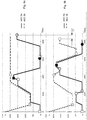
- FIG. 3 shows the system 25 with extended functionality according to the present invention.
- a rescheduling unit ReS is integrated into one of the already existing data processing devices belonging to container yard 1, here crane control unit 2a.
- the rescheduling unit ReS uses the existing hardware components of crane control unit 2a, which means that the components of the rescheduling unit ReS are all realized as software modules.
- the rescheduling unit ReS may as well be implemented as an additional hardware device or as a mixture of additional hardware modules and software modules.
- Rescheduling unit ReS contains an input interface integrated in interface unit 22a for receiving the same work orders as all the ASCs, i.e. in this example work orders 10a and 10b or list of work orders 10a, 10b.
- work orders 10a and 10b i.e. in this example work orders 10a and 10b or list of work orders 10a, 10b.
- Fig. 3 the differences to the known system of Fig. 2 are indicated by using dotted lines.
- the rescheduling unit ReS further contains a data processing module integrated in control processing unit 23a adapted to perform a rescheduling of the received work orders 10a, 10b, thereby generating new work orders as will be explained below with respect to Figs. 4a to 6b .
- rescheduling unit ReS contains an output interface integrated in interface unit 22a for transmitting the rescheduled work orders 24, containing the new work orders as well as unsplit work orders, to the crane control unit 2a or 2b of the respectively allocated crane.
- the transmission to crane control unit 2a takes of course place internally from the software module for rescheduling to the software module for work order execution.
- the transmission of rescheduled work orders 24 to the other crane control unit 22b requires an additional communication connection compared to system 25 of Fig. 2 .
- Rescheduling unit ReS operates in parallel with the crane control units 2a, 2b, i.e. while the crane control units 2a, 2b are starting to execute the newly received work orders 10a, 10b, rescheduling unit ReS reschedules them, thereby potentially introducing an additional drop-off and pickup action some time later during the same work orders.
- the crane control units 2a, 2b Once the crane control units 2a, 2b have received the rescheduled work orders, they regard them as an update of all previously received work orders. Accordingly, it may occur that a crane control unit starts with one work order, but after receiving the update, interrupts it and continues with another work order.
- FIG. 4a The operation of the data processing module of rescheduling unit ReS is now illustrated with the help of Figs. 4a to 6b .
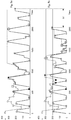
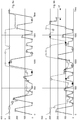
- the figures 4a , 5a and 6a relate to scheduled work orders generated by TOS 9, and the figures 4b , 5b , and 6b relate to rescheduled work orders generated by rescheduling unit ReS.
- the data processing module of rescheduling unit ReS first generates for each of the received work orders 10a, 10b an expected trajectory along the pair of rails 4a, 4b between the start and end positions of the respective work order.
- the trajectories are shown in Figs. 4a to 6b as continuous lines for ASC 3a and as dotted lines for ASC 3b.
- the start position of each work order is indicated by a square and the end position by a circle, where the squares and circles belonging to ASC 3a have a continuous contour and the squares and circles belonging to ASC 3b have a dotted contour.
- Figs. 4a to 6b The start position of each work order is indicated by a square and the end position by a circle, where the squares and circles belonging to ASC 3a have a continuous contour and the squares and circles belonging to ASC 3b have a dotted contour.
- the start and end positions of the containers are illustrated in longitudinal dimension x only, along the pair of rails 4a, 4b.
- the longitudinal positions x several containers may be placed in a row in y-direction (see Fig. 1 ).
- some of the containers may be stacked on top of other containers in z-direction.
- a lateral dimension y and a vertical dimension z is further to be taken into account during the actual picking-up and dropping-off actions performed by the ASCs. Therefore, the work orders 10a, 10b received from TOS 9 indicate the start and end positions as [x, y, z]-triplets containing the longitudinal component x as well as the corresponding lateral and vertical components, y and z.
- Fig. 4a a list of three work orders for ASC 3a and just one work order for ASC 3b was received by rescheduling unit ReS.
- the corresponding trajectories of Fig. 4a show as series of movements of the ASCs along the rails, interrupted by periods of time where the respective ASC remains at the same position while lifting up or letting down a container.
- the first pickup position of ASC 3a is at position zero, while the first pick up position of ASC 3b is at 70.
- ASC 3a For ASC 3a, it will take some time until the respective container 8 is lifted, while the ASC 3b can directly start to move towards its first pick up position, being in an unloaded state.
- the first drop-off position of ASC 3a is at position 150.
- the trajectories show that when ASC 3a would start to move towards this drop-off position, it will be blocked halfway by ASC3b which is lifting its container at position 70. Accordingly, ASC 3a has to wait until the lifting is finished. Then, ASC 3a and ASC 3b can move simultaneously towards their drop-off positions at 150 and 200, respectively. Afterwards, ASC 3a will be executing its two further work orders alone, while ASC 3b remains idle and still.
- the data processing module of rescheduling unit ReS is arranged to split at least one of the work orders shown in Fig. 4a into at least two new work orders through introduction of at least one intermediate position between the start and end positions and to determine a sequence and an allocation to ASCs 3a and 3b for both the resulting new work orders and those original work orders which remain unsplit.
- the scheduling is performed by the data processing module so as to reduce either the number and/or the duration of situations, where the expected trajectory of one ASC blocks the expected trajectory of the other ASC, or the workload imbalance between the ASCs, or both.
- FIG. 4b A possible result of the rescheduling performed on the work orders of Fig. 4a is shown in Fig. 4b .
- the first work order performed by ASC 3a is split, so that instead of simply waiting for ASC 3b, ASC 3a drops off the first container at position 45 and continues with its originally third work order, moving the corresponding target container from start position zero to end position 160.
- ASC 3a executes its originally second work order between start position 180 and end position zero, while ASC 3b has to yield for some time and may then take over the remaining second part of the first work order of ASC 3a, by picking up the container at position 45 and by moving it to its original end position 160.
- Figs. 5a to 6b show the same kind of comparison between scheduled and rescheduled work orders. While Figs. 4b and 5b present the results generated by a rescheduling unit applying heuristic rules, Fig. 6b illustrates the outcome of a scheduling algorithm with integrated optimization functionality. Both were described above.
- Figs. 5b and 6b illustrate that the order of work orders per ASC was partly rearranged, as is indicated for example by the work orders with the striped symbols at the start and end positions. Further, some work orders were split, as are shown by the black symbols and the symbols with a checked pattern inside, were in these examples all split work orders are at the same time taken over by the respective other ASC. Of course, it is also possible that both parts of a split work order are performed by one and the same ASC. Even further, work orders may not only be rearranged per ASC but shifted completely from one ASC to the other.
- FIG. 6b illustrates an additional feature of the rescheduling algorithm.
- ASC 3b finishes its final work order already at point in time 1450. Afterwards, it does not directly return to an idle position but seems to follow ASC 3a instead.
- the trajectory of ASC 3b is indeed planned like this on purpose in order to keep it close at hand in case new work orders arrive from TOS 9 which require a splitting of work orders currently executed by ASC 3a. In this way, unnecessary travelling times of an idle crane can be further reduced.
Landscapes
- Business, Economics & Management (AREA)
- Engineering & Computer Science (AREA)
- Human Resources & Organizations (AREA)
- Economics (AREA)
- Strategic Management (AREA)
- Entrepreneurship & Innovation (AREA)
- Mechanical Engineering (AREA)
- General Physics & Mathematics (AREA)
- General Business, Economics & Management (AREA)
- Marketing (AREA)
- Operations Research (AREA)
- Quality & Reliability (AREA)
- Tourism & Hospitality (AREA)
- Physics & Mathematics (AREA)
- Development Economics (AREA)
- Theoretical Computer Science (AREA)
- Automation & Control Theory (AREA)
- Educational Administration (AREA)
- Game Theory and Decision Science (AREA)
- Accounting & Taxation (AREA)
- Finance (AREA)
- Control And Safety Of Cranes (AREA)
- Ship Loading And Unloading (AREA)
Claims (14)
- System zum Steuern von mindestens zwei automatisierten schienenmontierten Portalkränen (3a, 3b, 3c), die nicht aneinander vorbeigehen können, wobei das System für jeden der Kräne eine Kransteuereinheit (2a, 2b, 2c) umfasst, die Folgendes aufweist:• mindestens eine Steuereingabeschnittstelle (22a; 22b) zum Empfangen jeweils mindestens eines Arbeitsauftrags (10a; 10b) von einem Planungssystem (9) und zum Empfangen mindestens einer Sensorinformation (20a; 20b), die die Ausführung eines der Arbeitsaufträge durch den jeweiligen Kran wiedergibt, wobei jeder Arbeitsauftrag mindestens eine Startposition und eine Endposition (x, y, z) eines Zielbehälters (8), der von dem jeweiligen Kran zu bewegen ist, spezifiziert,• eine Steuerverarbeitungseinheit (23a; 23b) zum Verarbeiten des mindestens einen Arbeitsauftrags und der mindestens einen Sensorinformation, um Steuerinformationen (21a, 21b) zu erzeugen, um die Ausführung des mindestens einen Arbeitsauftrags durch den jeweiligen Kran sicherzustellen, und• mindestens eine Steuerausgabeschnittstelle (22a, 22b) zum Übertragen der Steuerinformationen zu mindestens einem Aktuator (AA; AB) des jeweiligen Krans,dadurch gekennzeichnet, dass das System ferner eine Neuplanungseinheit (ReS) umfasst, die Folgendes enthält:• mindestens eine Eingabeschnittstelle (22a) zum Empfangen des mindestens einen Arbeitsauftrags (10a, 10b) für alle Kräne,• ein Datenverarbeitungsmodul (23a), das angepasst ist, um eine Neuplanung auszuführen durch∘ Erzeugen für jeden Arbeitsauftrag einer erwarteten Bahn entlang der Schiene (4a, 4b) zwischen der entsprechenden Anfangs- und Endposition,∘ Aufteilen mindestens einen der Arbeitsaufträge in mindestens zwei neue Arbeitsaufträge durch Einführen mindestens einer Zwischenposition zwischen der Anfangs- und Endposition, und∘ Bestimmen einer Abfolge und einer Zuweisung der Kräne für die resultierenden neuen und nicht aufgeteilten Arbeitsaufträge, um mindestens eines der folgenden Neuplanungskriterien zu verringern:◆ eine Anzahl von Situationen, bei welchen die erwartete Bahn eines der Kräne die erwartete Bahn eines anderen Krans blockiert◆ eine Dauer von Situationen, bei welchen die erwartete Bahn eines der Kräne die erwartete Bahn eines anderen Krans blockiert,◆ eine Arbeitsauslastungsunausgewogenheit zwischen den Kränen,• mindestens eine Ausgangsschnittstelle (22a) zum Übertragen der neuen und nicht aufgeteilten Arbeitsaufträge zu der mindestens einen Steuereingabeschnittstelle der Kransteuereinheit des jeweils zugewiesenen Krans,wobei• die Neuplanungseinheit (ReS) parallel zu den Kransteuereinheiten (2a, 2b, 2c), die Arbeitsaufträge ausführen, arbeitet, und• die Steuerverarbeitungseinheiten (23a, 23b) die Arbeitsaufträge, die von der Neuplanungseinheit empfangen werden, als Aktualisierung aller zuvor erhaltenen Arbeitsaufträge betrachten.
- System nach Anspruch 1, wobei das Datenverarbeitungsmodul (23a) die Zwischenposition derart festlegt, dass sie mindestens eines der folgenden Positionskriterien erfüllt:• leere Position mit kürzestem Abstand zu der erwarteten Bahn des aufzuteilenden Arbeitsauftrags,• leere Position mit bester Zugänglichkeit von der erwarteten Bahn des aufzuteilenden Arbeitsauftrags,• leere Position, die keinen Zielbehälter, der als nächster zu bewegen ist, blockiert.
- System nach einem der Ansprüche 1 oder 2, wobei das Datenverarbeitungsmodul (23a) ferner eine früheste Startzeit und/oder eine späteste Abschlusszeit mindestens eines der Arbeitsaufträge oder einer Unteraufgabe mindestens eines der Arbeitsaufträge berücksichtigt.
- System nach einem der vorhergehenden Ansprüche, wobei das Datenverarbeitungsmodul (23a) die Neuplanung iterativ ausführt.
- System nach einem der vorhergehenden Ansprüche, wobei die Neuplanungseinheit (ReS) in eine der Kransteuereinheiten (2a) integriert ist.
- System nach einem der vorhergehenden Ansprüche, wobei das Datenverarbeitungsmodul (23a) die Neuplanung einmal für eine neu empfangene Liste von Arbeitsaufträgen oder bei jedem Empfang eines externen Auslösers ausführt.
- System nach einem der vorhergehenden Ansprüche, wobei das Datenverarbeitungsmodul (23a) während des Neuplanens mindestens eine der folgenden zusätzlichen Informationen zur laufenden und/oder zukünftigen Ausführung von Arbeitsaufträgen berücksichtigt:• laufende Position des Zielbehälters des jeweiligen Arbeitsauftrags,• laufender Betriebszustand des Krans, der dem Arbeitsauftrag unter Neuplanung zugewiesen ist,• Zustand und/oder Timing der Ausführung des Arbeitsauftrags, der aktuell von dem Kran ausgeführt wird, der dem Arbeitsauftrag unter Neuplanung zugewiesen ist,• Timing der Ausführung zukünftiger Arbeitsaufträge.
- System nach einem der vorhergehenden Ansprüche, wobei das Datenverarbeitungsmodul (23a) aus einer erwarteten Bahn eine entsprechende Dauer der Interferenzzeit bestimmt, während welcher der Kran, der dem entsprechenden Arbeitsauftrag zugewiesen ist, Vorrang einräumen und/oder warten muss.
- System nach einem der vorhergehenden Ansprüche, wobei das Datenverarbeitungsmodul (23a) aus einer erwarteten Bahn eine Arbeitsauslastungsunausgewogenheit zwischen den Kränen bestimmt, indem die Anzahl von Arbeitsaufträgen, die von jedem der Kräne während einer vorbestimmten Zeitspanne ausgeführt wird und/oder die Dauer der Leerlaufzeit für jeden der Kräne während der vordefinierten Zeitspanne berechnet und verglichen wird/werden.
- System nach einem der vorhergehenden Ansprüche 7 oder 8, wobei das Datenverarbeitungsmodul (23a) entscheidet, dass ein Arbeitsauftrag aufgeteilt werden muss, wenn die Dauer der Interferenzzeit und/oder die Arbeitsauslastungsunausgewogenheit einen entsprechenden vorbestimmten Schwellenwert überschreitet.
- System nach einem der vorhergehenden Ansprüche 1 bis 8, wobei das Datenverarbeitungsmodul (23a) die Neuplanung durch Anwenden eines Planungsalgorithmus ausführt, der die Arbeitsaufträge direkt sequenziert und den mindestens zwei Kränen zuweist, indem der mindestens eine Arbeitsauftrag für alle Kräne als Eingabe genommen wird, wobei der Planungsalgorithmus• das Aufteilen des mindestens einen Arbeitsauftrags durch Verwenden von Bevorrechtigung erlaubt,• mindestens eine der folgenden Einschränkungen einhält:∘ kein Aufteilen von Arbeitsaufträgen, deren Dauer oder entsprechende erwartete Bahn unter einen entsprechenden vordefinierten Schwellenwert fällt,∘ kein Aufteilen von Arbeitsaufträgen, die oberhalb eines vorbestimmten Vorrangniveaus sind,∘ kein Verstoß gegen einen vordefinierten Vorrang von Arbeitsaufträgen,∘ kein Verstoß oder minimaler Verstoß gegen eine vordefinierte früheste Startzeit und/oder eine späteste Abschlusszeit des mindestens einen Arbeitsauftrags oder einer Unteraufgabe des mindestens einen der Arbeitsaufträge, und• Optimieren der resultierenden Sequenz und Zuweisung der Arbeitsaufträge gemäß mindestens einer der folgenden Zielsetzungen:∘ Minimieren einer Gesamtausführungszeit des mindestens einen Arbeitsauftrags,∘ Minimieren einer Fahrstrecke für die Kräne, die in einem unbeladenen Zustand sind,∘ Minimieren einer Dauer von Interferenzzeit zwischen den Kränen,∘ Minimieren einer Arbeitsauslastungsunausgewogenheit zwischen den Kränen,∘ Minimieren einer Wartezeit für andere Behälterhandhabungsausstattung, die auf Arbeitsauftragabschluss durch die Kräne wartet,∘ Halten oberhalb von null eines Zeitunterschieds zwischen einer spätesten Abschlusszeit und einer erwarteten Abschlusszeit des mindestens einen Arbeitsauftrags,∘ Minimieren einer Energiemenge, die von den Kränen verwendet wird.
- System nach Anspruch 10, wobei das Datenverarbeitungsmodul (23a) zusätzliche Aufnahme- und Ablegezeiten, die aus jedem Aufteilen eines Arbeitsauftrags resultieren, berücksichtigt.
- System nach einem der Ansprüche 10 oder 11, wobei das Datenverarbeitungsmodul (23a) die Zielsetzungen kombiniert, die einen vordefinierten Vorrang und/oder ein vordefiniertes Gewicht für mindestens eine der zu kombinierenden Zielsetzungen berücksichtigt.
- Verfahren zum Steuern von mindestens zwei automatisierten schienenmontierten Portalkränen (3a, 3b, 3c), die nicht aneinander vorbeigehen können, wobei das Verfahren für jeden der Kräne Folgendes umfasst:• Empfangen jeweils mindestens eines Arbeitsauftrags (10a; 10b) von einem Planungssystem (9),• Empfangen mindestens einer Sensorinformation (20a; 20b), die das Ausführen eines der Arbeitsaufträge durch den jeweiligen Kran wiedergibt, wobei jeder Arbeitsauftrag mindestens eine Startposition und eine Endposition (x, y, z) eines Zielbehälters (8), der von dem jeweiligen Kran zu bewegen ist, spezifiziert,• Verarbeiten des mindestens einen Arbeitsauftrags und der mindestens einen Sensorinformation, um Steuerinformationen (21a; 21b) zu erzeugen, um die Ausführung des mindestens einen Arbeitsauftrags durch den jeweiligen Kran sicherzustellen, und• Übertragen der Steuerinformationen zu mindestens einem Aktuator (AA, AB) des jeweiligen Krans,dadurch gekennzeichnet, dass
das Verfahren Folgendes umfasst• Empfangen mindestens eines Arbeitsauftrags für alle Kräne,• Ausführen einer Neuplanung durch∘ Erzeugen für jeden Arbeitsauftrag einer erwarteten Bahn entlang der Schiene zwischen der entsprechenden Anfangs- und Endposition,∘ Aufteilen mindestens eines der Arbeitsaufträge in mindestens zwei neue Arbeitsaufträge durch Einführen mindestens einer Zwischenposition zwischen der Anfangs- und Endposition, und∘ Bestimmen einer Abfolge und einer Zuweisung der Kräne für die resultierenden neuen und nicht aufgeteilten Arbeitsaufträge, um mindestens eines der folgenden Neuplanungskriterien zu verringern:◆ eine Anzahl von Situationen, bei welchen die erwartete Bahn eines der Kräne die erwartete Bahn eines anderen Krans blockiert,◆ eine Dauer von Situationen, bei welchen die erwartete Bahn eines der Kräne die erwartete Bahn eines anderen Krans blockiert,◆ eine Arbeitsauslastungsunausgewogenheit zwischen den Kränen,• Übertragen der neuen und der nicht aufgeteilten Arbeitsaufträge zu dem jeweiligen zugewiesenen Kran,wobei• die Neuplanung parallel zu dem Ausführen der Arbeitsaufträge ausgeführt wird, und• die Arbeitsaufträge, die von der Neuplanung empfangen werden, von dem jeweiligen zugewiesenen Kran als eine Aktualisierung aller zuvor empfangenen Arbeitsaufträge angesehen werden.
Applications Claiming Priority (1)
| Application Number | Priority Date | Filing Date | Title |
|---|---|---|---|
| PCT/EP2013/054281 WO2014135191A1 (en) | 2013-03-04 | 2013-03-04 | System and method for controlling at least two automated non-passing rail mounted gantry cranes |
Publications (2)
| Publication Number | Publication Date |
|---|---|
| EP2965274A1 EP2965274A1 (de) | 2016-01-13 |
| EP2965274B1 true EP2965274B1 (de) | 2017-02-01 |
Family
ID=47833055
Family Applications (1)
| Application Number | Title | Priority Date | Filing Date |
|---|---|---|---|
| EP13707850.7A Active EP2965274B1 (de) | 2013-03-04 | 2013-03-04 | System und verfahren zur steuerung von mindestens zwei automatisierten nicht aneinander vorbeigehenden schienenmontierten portalkränen |
Country Status (5)
| Country | Link |
|---|---|
| US (1) | US9481553B2 (de) |
| EP (1) | EP2965274B1 (de) |
| KR (1) | KR102015006B1 (de) |
| CN (1) | CN105190658B (de) |
| WO (1) | WO2014135191A1 (de) |
Families Citing this family (35)
| Publication number | Priority date | Publication date | Assignee | Title |
|---|---|---|---|---|
| EP3056464A1 (de) * | 2015-02-11 | 2016-08-17 | Siemens Aktiengesellschaft | Automatisierte Kransteuerung mit Berücksichtigung von last- und positionsabhängigen Messfehlern |
| EP3359480B1 (de) * | 2015-10-08 | 2023-07-12 | Verton IP Pty Ltd | Materialverwaltungssysteme und -verfahren |
| ES2622469B2 (es) * | 2016-01-06 | 2018-03-08 | Antonio Marcos RUIZ VEGA | Procedimiento para el traslado de contenedores estandarizados entre un buque portacontenedores y un muelle |
| DK179592B1 (en) * | 2016-03-21 | 2019-02-22 | Apm Terminals Management Bv | Communication device for a container handling equipment device and communication method |
| DK179085B1 (en) * | 2016-03-21 | 2017-10-16 | Apm Terminals Man Bv | Container handling equipment controller arrangement |
| DE102016119839A1 (de) * | 2016-10-18 | 2018-04-19 | Terex Mhps Gmbh | Verfahren zum automatischen Positionieren eines Portalhubstaplers für Container und Portalhubstapler dafür |
| CN107032234B (zh) * | 2016-12-13 | 2018-09-11 | 上海国际港务(集团)股份有限公司振东集装箱码头分公司 | 自动化轨道吊双车避让系统 |
| CN107784396A (zh) * | 2017-11-06 | 2018-03-09 | 上海海事大学 | 一种自动化集装箱码头关键装卸资源集成调度方法 |
| US11209836B1 (en) | 2018-02-08 | 2021-12-28 | Vita Inclinata Technologies, Inc. | Long line loiter apparatus, system, and method |
| US12246952B2 (en) | 2018-02-08 | 2025-03-11 | Vita Inclintata IP Holdings LLC | Hoist and deployable equipment apparatus, system, and method |
| US12304779B2 (en) | 2018-02-08 | 2025-05-20 | Vita Inclinata Ip Holdings Llc | On-board power and remote power for suspended load control apparatuses, systems, and methods |
| US11142316B2 (en) | 2018-02-08 | 2021-10-12 | Vita Inclinata Technologies, Inc. | Control of drone-load system method, system, and apparatus |
| US11945697B2 (en) | 2018-02-08 | 2024-04-02 | Vita Inclinata Ip Holdings Llc | Multiple remote control for suspended load control equipment apparatus, system, and method |
| KR200496170Y1 (ko) | 2018-02-08 | 2022-11-16 | 비타 인클리나타 테크놀로지스 인코포레이티드 | 현수된 화물 안정 시스템들 및 방법들 |
| US12434813B2 (en) | 2018-02-08 | 2025-10-07 | Vita Inclinata Ip Holdings Llc | Bidirectional thrust apparatus, system and method |
| CN110516894A (zh) * | 2018-05-22 | 2019-11-29 | 招商局国际信息技术有限公司 | 货场调度方法及装置 |
| CN109615306A (zh) * | 2018-11-07 | 2019-04-12 | 上海图森未来人工智能科技有限公司 | 货物运输控制系统及相关系统和装置 |
| FR3092689B1 (fr) * | 2019-02-08 | 2023-01-27 | Savoye | Procédé de séquencement de charges dans un système de distribution automatisé, avec réduction d’un désordre lors d’une collecte de charges sur un collecteur. |
| US11618566B1 (en) | 2019-04-12 | 2023-04-04 | Vita Inclinata Technologies, Inc. | State information and telemetry for suspended load control equipment apparatus, system, and method |
| US11834305B1 (en) | 2019-04-12 | 2023-12-05 | Vita Inclinata Ip Holdings Llc | Apparatus, system, and method to control torque or lateral thrust applied to a load suspended on a suspension cable |
| WO2025122161A1 (en) | 2023-12-04 | 2025-06-12 | Vita Inclinata Ip Holdings Llc | Apparatus, system, and method to control torque or lateral thrust applied to a load suspended on a suspension cable |
| JP7229136B2 (ja) * | 2019-09-26 | 2023-02-27 | 株式会社神戸製鋼所 | 干渉時間比率出力装置、稼働可否情報出力装置、干渉時間比率出力方法、稼働可否情報出力方法、及びプログラム |
| CA3159310A1 (en) | 2019-11-25 | 2021-06-03 | Derek SIKORA | Coupling for suspended load control apparatus, system, and method |
| US12099337B1 (en) * | 2019-12-06 | 2024-09-24 | Vita Inclinata Ip Holdings Llc | Control moment gyroscope hoist stabilization system, method, and apparatus |
| WO2022012727A1 (en) * | 2020-07-13 | 2022-01-20 | Portchain Aps | Method of operating a container carrier terminal |
| CN111832965B (zh) * | 2020-07-24 | 2024-04-12 | 上海海得控制系统股份有限公司 | 无人驾驶同跨多天车协同调度方法及系统、介质及终端 |
| CN112429648B (zh) * | 2020-11-20 | 2023-01-24 | 上海振华重工(集团)股份有限公司 | 一种基于自动化堆场多轨道吊的安全作业方法 |
| CN112938284B (zh) * | 2021-02-09 | 2022-12-13 | 深圳市库宝软件有限公司 | 一种仓储机器人控制方法、装置、电子设备及仓储系统 |
| EP4186847B1 (de) | 2021-11-30 | 2024-05-08 | B&R Industrial Automation GmbH | Trajektorienplanung mit flexibler umplanungsfunktionalität - geänderter endpunkt |
| CN115140657A (zh) * | 2022-08-22 | 2022-10-04 | 北京科技大学 | 一种多天车调度与防撞方法及系统 |
| CN115571654B (zh) * | 2022-10-25 | 2025-07-11 | 上海振华重工(集团)股份有限公司 | 一种作业堆场两台轨道吊同时作业集卡方法、装置及应用 |
| JP7313615B1 (ja) | 2023-03-22 | 2023-07-25 | コグニロボ株式会社 | プログラム、製造計画装置、および製造計画方法 |
| CN117682429B (zh) * | 2024-02-01 | 2024-04-05 | 华芯(嘉兴)智能装备有限公司 | 一种物料控制系统的天车搬运指令调度方法及装置 |
| CN118479263B (zh) * | 2024-07-16 | 2024-10-01 | 张家港保税港区港务有限公司 | 一种基于龙门起重机的集装箱装卸系统及方法 |
| CN119143016A (zh) * | 2024-11-13 | 2024-12-17 | 上海国际港务(集团)股份有限公司 | 一种港口码头岸桥控制系统及计算机程序 |
Family Cites Families (5)
| Publication number | Priority date | Publication date | Assignee | Title |
|---|---|---|---|---|
| US20060182527A1 (en) | 2004-12-17 | 2006-08-17 | Navis Llc | Automated container terminal scheduling |
| DK2006237T3 (da) * | 2007-06-19 | 2013-03-11 | Abb Research Ltd | Fremgangsmåde og system til optimering af containere i en blok |
| CN101587571A (zh) * | 2008-05-20 | 2009-11-25 | 上海海事大学 | 集装箱码头堆场优化系统 |
| US7972102B2 (en) * | 2008-07-24 | 2011-07-05 | Marine Terminals Corporation | Automated marine container terminal and system |
| CN101996358A (zh) * | 2009-08-26 | 2011-03-30 | 上海振华重工(集团)股份有限公司 | 自动化码头的堆场管理方法 |
-
2013
- 2013-03-04 EP EP13707850.7A patent/EP2965274B1/de active Active
- 2013-03-04 WO PCT/EP2013/054281 patent/WO2014135191A1/en not_active Ceased
- 2013-03-04 KR KR1020157024068A patent/KR102015006B1/ko active Active
- 2013-03-04 US US14/772,419 patent/US9481553B2/en active Active
- 2013-03-04 CN CN201380076324.7A patent/CN105190658B/zh active Active
Non-Patent Citations (1)
| Title |
|---|
| None * |
Also Published As
| Publication number | Publication date |
|---|---|
| KR102015006B1 (ko) | 2019-08-27 |
| WO2014135191A1 (en) | 2014-09-12 |
| CN105190658A (zh) | 2015-12-23 |
| CN105190658B (zh) | 2019-01-15 |
| US9481553B2 (en) | 2016-11-01 |
| KR20150124958A (ko) | 2015-11-06 |
| US20160009531A1 (en) | 2016-01-14 |
| EP2965274A1 (de) | 2016-01-13 |
Similar Documents
| Publication | Publication Date | Title |
|---|---|---|
| EP2965274B1 (de) | System und verfahren zur steuerung von mindestens zwei automatisierten nicht aneinander vorbeigehenden schienenmontierten portalkränen | |
| Dorndorf et al. | Scheduling automated triple cross-over stacking cranes in a container yard | |
| Lau et al. | Integrated scheduling of handling equipment at automated container terminals | |
| KR102444184B1 (ko) | 컨테이너 취급 장비 제어기 어레인지먼트(arrangement) | |
| KR20230035631A (ko) | 로봇, 화물 운반 방법, 서버 및 창고 시스템 | |
| Froyland et al. | Optimizing the landside operation of a container terminal | |
| Vis et al. | Sequencing two cooperating automated stacking cranes in a container terminal | |
| Park et al. | Real-time scheduling for twin RMGs in an automated container yard | |
| KR20220013341A (ko) | 화물 운반 방법, 장치, 서버 및 운반 로봇 | |
| Szczepanski et al. | Optimal scheduling for palletizing task using robotic arm and artificial bee colony algorithm | |
| Zhen et al. | A review on yard management in container terminals | |
| Speer et al. | Scheduling of different automated yard crane systems at container terminals | |
| CN113044462B (zh) | 机器人调度的方法、装置、系统、存储介质及程序产品 | |
| CN107678433B (zh) | 一种考虑agv碰撞规避的装卸设备调度方法 | |
| EP2805904A1 (de) | Verfahren und System zur Vorhersage des Arbeitsfortschritts eines Portalkrans | |
| EP2775429A1 (de) | Zeitplanung von Arbeitsaufträgen zwischen automatisierten Stapelkränen | |
| CN115650067B (zh) | 智慧码头轨道吊任务管理方法及系统 | |
| CN109165834A (zh) | 一种自动导引运输车任务匹配方法及系统 | |
| CN118037006A (zh) | 一种场桥作业调度方法及调度系统 | |
| Choe et al. | Queue-based local scheduling and global coordination for real-time operation control in a container terminal | |
| CN109399462A (zh) | 一种悬臂式轨道吊的任务分配方法及系统 | |
| Guo et al. | Dispatching rules for scheduling twin automated gantry cranes in an automated railroad container terminal | |
| CN118154104A (zh) | 一种立体仓库系统的物流管理方法 | |
| JP7170625B2 (ja) | コンテナ取り扱い機器のための通信アレンジメントおよび通信方法 | |
| Lee et al. | Load scheduling of multiple yard crane systems in container terminal with buffer areas |
Legal Events
| Date | Code | Title | Description |
|---|---|---|---|
| PUAI | Public reference made under article 153(3) epc to a published international application that has entered the european phase |
Free format text: ORIGINAL CODE: 0009012 |
|
| 17P | Request for examination filed |
Effective date: 20150821 |
|
| AK | Designated contracting states |
Kind code of ref document: A1 Designated state(s): AL AT BE BG CH CY CZ DE DK EE ES FI FR GB GR HR HU IE IS IT LI LT LU LV MC MK MT NL NO PL PT RO RS SE SI SK SM TR |
|
| AX | Request for extension of the european patent |
Extension state: BA ME |
|
| RIN1 | Information on inventor provided before grant (corrected) |
Inventor name: NOREN, HENRIK Inventor name: ZANARINI, ALESSANDRO Inventor name: SCHMITT, SUSANNE Inventor name: HENRIKSSON, BJOERN Inventor name: SALIBA, SLEMAN Inventor name: MUXFELDT, KERSTIN Inventor name: ISRAELSSON TAMPE, STEFAN |
|
| DAX | Request for extension of the european patent (deleted) | ||
| RIC1 | Information provided on ipc code assigned before grant |
Ipc: B66C 19/00 20060101ALI20160630BHEP Ipc: G06Q 10/06 20120101ALI20160630BHEP Ipc: B66C 13/48 20060101ALI20160630BHEP Ipc: G06Q 10/08 20120101AFI20160630BHEP |
|
| GRAP | Despatch of communication of intention to grant a patent |
Free format text: ORIGINAL CODE: EPIDOSNIGR1 |
|
| INTG | Intention to grant announced |
Effective date: 20160915 |
|
| RAP1 | Party data changed (applicant data changed or rights of an application transferred) |
Owner name: ABB SCHWEIZ AG |
|
| GRAS | Grant fee paid |
Free format text: ORIGINAL CODE: EPIDOSNIGR3 |
|
| GRAA | (expected) grant |
Free format text: ORIGINAL CODE: 0009210 |
|
| AK | Designated contracting states |
Kind code of ref document: B1 Designated state(s): AL AT BE BG CH CY CZ DE DK EE ES FI FR GB GR HR HU IE IS IT LI LT LU LV MC MK MT NL NO PL PT RO RS SE SI SK SM TR |
|
| REG | Reference to a national code |
Ref country code: GB Ref legal event code: FG4D |
|
| REG | Reference to a national code |
Ref country code: CH Ref legal event code: EP Ref country code: AT Ref legal event code: REF Ref document number: 866110 Country of ref document: AT Kind code of ref document: T Effective date: 20170215 |
|
| REG | Reference to a national code |
Ref country code: IE Ref legal event code: FG4D |
|
| REG | Reference to a national code |
Ref country code: DE Ref legal event code: R096 Ref document number: 602013016979 Country of ref document: DE |
|
| REG | Reference to a national code |
Ref country code: NL Ref legal event code: FP |
|
| REG | Reference to a national code |
Ref country code: LT Ref legal event code: MG4D |
|
| REG | Reference to a national code |
Ref country code: AT Ref legal event code: MK05 Ref document number: 866110 Country of ref document: AT Kind code of ref document: T Effective date: 20170201 |
|
| PG25 | Lapsed in a contracting state [announced via postgrant information from national office to epo] |
Ref country code: HR Free format text: LAPSE BECAUSE OF FAILURE TO SUBMIT A TRANSLATION OF THE DESCRIPTION OR TO PAY THE FEE WITHIN THE PRESCRIBED TIME-LIMIT Effective date: 20170201 Ref country code: LT Free format text: LAPSE BECAUSE OF FAILURE TO SUBMIT A TRANSLATION OF THE DESCRIPTION OR TO PAY THE FEE WITHIN THE PRESCRIBED TIME-LIMIT Effective date: 20170201 Ref country code: NO Free format text: LAPSE BECAUSE OF FAILURE TO SUBMIT A TRANSLATION OF THE DESCRIPTION OR TO PAY THE FEE WITHIN THE PRESCRIBED TIME-LIMIT Effective date: 20170501 Ref country code: IS Free format text: LAPSE BECAUSE OF FAILURE TO SUBMIT A TRANSLATION OF THE DESCRIPTION OR TO PAY THE FEE WITHIN THE PRESCRIBED TIME-LIMIT Effective date: 20170601 Ref country code: GR Free format text: LAPSE BECAUSE OF FAILURE TO SUBMIT A TRANSLATION OF THE DESCRIPTION OR TO PAY THE FEE WITHIN THE PRESCRIBED TIME-LIMIT Effective date: 20170502 |
|
| PG25 | Lapsed in a contracting state [announced via postgrant information from national office to epo] |
Ref country code: PL Free format text: LAPSE BECAUSE OF FAILURE TO SUBMIT A TRANSLATION OF THE DESCRIPTION OR TO PAY THE FEE WITHIN THE PRESCRIBED TIME-LIMIT Effective date: 20170201 Ref country code: LV Free format text: LAPSE BECAUSE OF FAILURE TO SUBMIT A TRANSLATION OF THE DESCRIPTION OR TO PAY THE FEE WITHIN THE PRESCRIBED TIME-LIMIT Effective date: 20170201 Ref country code: PT Free format text: LAPSE BECAUSE OF FAILURE TO SUBMIT A TRANSLATION OF THE DESCRIPTION OR TO PAY THE FEE WITHIN THE PRESCRIBED TIME-LIMIT Effective date: 20170601 Ref country code: ES Free format text: LAPSE BECAUSE OF FAILURE TO SUBMIT A TRANSLATION OF THE DESCRIPTION OR TO PAY THE FEE WITHIN THE PRESCRIBED TIME-LIMIT Effective date: 20170201 Ref country code: RS Free format text: LAPSE BECAUSE OF FAILURE TO SUBMIT A TRANSLATION OF THE DESCRIPTION OR TO PAY THE FEE WITHIN THE PRESCRIBED TIME-LIMIT Effective date: 20170201 Ref country code: BG Free format text: LAPSE BECAUSE OF FAILURE TO SUBMIT A TRANSLATION OF THE DESCRIPTION OR TO PAY THE FEE WITHIN THE PRESCRIBED TIME-LIMIT Effective date: 20170501 Ref country code: SE Free format text: LAPSE BECAUSE OF FAILURE TO SUBMIT A TRANSLATION OF THE DESCRIPTION OR TO PAY THE FEE WITHIN THE PRESCRIBED TIME-LIMIT Effective date: 20170201 Ref country code: AT Free format text: LAPSE BECAUSE OF FAILURE TO SUBMIT A TRANSLATION OF THE DESCRIPTION OR TO PAY THE FEE WITHIN THE PRESCRIBED TIME-LIMIT Effective date: 20170201 |
|
| PG25 | Lapsed in a contracting state [announced via postgrant information from national office to epo] |
Ref country code: SK Free format text: LAPSE BECAUSE OF FAILURE TO SUBMIT A TRANSLATION OF THE DESCRIPTION OR TO PAY THE FEE WITHIN THE PRESCRIBED TIME-LIMIT Effective date: 20170201 Ref country code: CZ Free format text: LAPSE BECAUSE OF FAILURE TO SUBMIT A TRANSLATION OF THE DESCRIPTION OR TO PAY THE FEE WITHIN THE PRESCRIBED TIME-LIMIT Effective date: 20170201 Ref country code: RO Free format text: LAPSE BECAUSE OF FAILURE TO SUBMIT A TRANSLATION OF THE DESCRIPTION OR TO PAY THE FEE WITHIN THE PRESCRIBED TIME-LIMIT Effective date: 20170201 Ref country code: IT Free format text: LAPSE BECAUSE OF FAILURE TO SUBMIT A TRANSLATION OF THE DESCRIPTION OR TO PAY THE FEE WITHIN THE PRESCRIBED TIME-LIMIT Effective date: 20170201 Ref country code: EE Free format text: LAPSE BECAUSE OF FAILURE TO SUBMIT A TRANSLATION OF THE DESCRIPTION OR TO PAY THE FEE WITHIN THE PRESCRIBED TIME-LIMIT Effective date: 20170201 |
|
| REG | Reference to a national code |
Ref country code: CH Ref legal event code: PL |
|
| REG | Reference to a national code |
Ref country code: DE Ref legal event code: R097 Ref document number: 602013016979 Country of ref document: DE |
|
| PG25 | Lapsed in a contracting state [announced via postgrant information from national office to epo] |
Ref country code: DK Free format text: LAPSE BECAUSE OF FAILURE TO SUBMIT A TRANSLATION OF THE DESCRIPTION OR TO PAY THE FEE WITHIN THE PRESCRIBED TIME-LIMIT Effective date: 20170201 Ref country code: SM Free format text: LAPSE BECAUSE OF FAILURE TO SUBMIT A TRANSLATION OF THE DESCRIPTION OR TO PAY THE FEE WITHIN THE PRESCRIBED TIME-LIMIT Effective date: 20170201 Ref country code: MC Free format text: LAPSE BECAUSE OF FAILURE TO SUBMIT A TRANSLATION OF THE DESCRIPTION OR TO PAY THE FEE WITHIN THE PRESCRIBED TIME-LIMIT Effective date: 20170201 |
|
| PLBE | No opposition filed within time limit |
Free format text: ORIGINAL CODE: 0009261 |
|
| STAA | Information on the status of an ep patent application or granted ep patent |
Free format text: STATUS: NO OPPOSITION FILED WITHIN TIME LIMIT |
|
| REG | Reference to a national code |
Ref country code: IE Ref legal event code: MM4A |
|
| REG | Reference to a national code |
Ref country code: FR Ref legal event code: ST Effective date: 20171130 |
|
| 26N | No opposition filed |
Effective date: 20171103 |
|
| GBPC | Gb: european patent ceased through non-payment of renewal fee |
Effective date: 20170501 |
|
| PG25 | Lapsed in a contracting state [announced via postgrant information from national office to epo] |
Ref country code: LU Free format text: LAPSE BECAUSE OF NON-PAYMENT OF DUE FEES Effective date: 20170304 Ref country code: FR Free format text: LAPSE BECAUSE OF NON-PAYMENT OF DUE FEES Effective date: 20170403 |
|
| PG25 | Lapsed in a contracting state [announced via postgrant information from national office to epo] |
Ref country code: CH Free format text: LAPSE BECAUSE OF NON-PAYMENT OF DUE FEES Effective date: 20170331 Ref country code: IE Free format text: LAPSE BECAUSE OF NON-PAYMENT OF DUE FEES Effective date: 20170304 Ref country code: SI Free format text: LAPSE BECAUSE OF FAILURE TO SUBMIT A TRANSLATION OF THE DESCRIPTION OR TO PAY THE FEE WITHIN THE PRESCRIBED TIME-LIMIT Effective date: 20170201 Ref country code: LI Free format text: LAPSE BECAUSE OF NON-PAYMENT OF DUE FEES Effective date: 20170331 |
|
| REG | Reference to a national code |
Ref country code: BE Ref legal event code: MM Effective date: 20170331 |
|
| PG25 | Lapsed in a contracting state [announced via postgrant information from national office to epo] |
Ref country code: GB Free format text: LAPSE BECAUSE OF NON-PAYMENT OF DUE FEES Effective date: 20170501 |
|
| PG25 | Lapsed in a contracting state [announced via postgrant information from national office to epo] |
Ref country code: BE Free format text: LAPSE BECAUSE OF NON-PAYMENT OF DUE FEES Effective date: 20170331 |
|
| PG25 | Lapsed in a contracting state [announced via postgrant information from national office to epo] |
Ref country code: MT Free format text: LAPSE BECAUSE OF NON-PAYMENT OF DUE FEES Effective date: 20170304 |
|
| PG25 | Lapsed in a contracting state [announced via postgrant information from national office to epo] |
Ref country code: HU Free format text: LAPSE BECAUSE OF FAILURE TO SUBMIT A TRANSLATION OF THE DESCRIPTION OR TO PAY THE FEE WITHIN THE PRESCRIBED TIME-LIMIT; INVALID AB INITIO Effective date: 20130304 |
|
| PG25 | Lapsed in a contracting state [announced via postgrant information from national office to epo] |
Ref country code: CY Free format text: LAPSE BECAUSE OF FAILURE TO SUBMIT A TRANSLATION OF THE DESCRIPTION OR TO PAY THE FEE WITHIN THE PRESCRIBED TIME-LIMIT Effective date: 20170201 |
|
| PG25 | Lapsed in a contracting state [announced via postgrant information from national office to epo] |
Ref country code: MK Free format text: LAPSE BECAUSE OF FAILURE TO SUBMIT A TRANSLATION OF THE DESCRIPTION OR TO PAY THE FEE WITHIN THE PRESCRIBED TIME-LIMIT Effective date: 20170201 |
|
| PG25 | Lapsed in a contracting state [announced via postgrant information from national office to epo] |
Ref country code: TR Free format text: LAPSE BECAUSE OF FAILURE TO SUBMIT A TRANSLATION OF THE DESCRIPTION OR TO PAY THE FEE WITHIN THE PRESCRIBED TIME-LIMIT Effective date: 20170201 |
|
| PG25 | Lapsed in a contracting state [announced via postgrant information from national office to epo] |
Ref country code: AL Free format text: LAPSE BECAUSE OF FAILURE TO SUBMIT A TRANSLATION OF THE DESCRIPTION OR TO PAY THE FEE WITHIN THE PRESCRIBED TIME-LIMIT Effective date: 20170201 |
|
| PGFP | Annual fee paid to national office [announced via postgrant information from national office to epo] |
Ref country code: DE Payment date: 20250319 Year of fee payment: 13 |
|
| PGFP | Annual fee paid to national office [announced via postgrant information from national office to epo] |
Ref country code: FI Payment date: 20250324 Year of fee payment: 13 Ref country code: NL Payment date: 20250319 Year of fee payment: 13 |