EP2963117B1 - Pflanzentypbezogenes protein und codierungen und anwendung davon - Google Patents
Pflanzentypbezogenes protein und codierungen und anwendung davon Download PDFInfo
- Publication number
- EP2963117B1 EP2963117B1 EP13881828.1A EP13881828A EP2963117B1 EP 2963117 B1 EP2963117 B1 EP 2963117B1 EP 13881828 A EP13881828 A EP 13881828A EP 2963117 B1 EP2963117 B1 EP 2963117B1
- Authority
- EP
- European Patent Office
- Prior art keywords
- plant
- gene
- transgenic
- target
- protein
- Prior art date
- Legal status (The legal status is an assumption and is not a legal conclusion. Google has not performed a legal analysis and makes no representation as to the accuracy of the status listed.)
- Not-in-force
Links
- 108090000623 proteins and genes Proteins 0.000 title claims description 141
- 102000004169 proteins and genes Human genes 0.000 title claims description 43
- 241000196324 Embryophyta Species 0.000 claims description 234
- 230000009261 transgenic effect Effects 0.000 claims description 68
- 108020004414 DNA Proteins 0.000 claims description 34
- 230000014509 gene expression Effects 0.000 claims description 29
- 150000001647 brassinosteroids Chemical class 0.000 claims description 28
- 238000000034 method Methods 0.000 claims description 28
- 102000053602 DNA Human genes 0.000 claims description 24
- 239000013604 expression vector Substances 0.000 claims description 24
- 241001233957 eudicotyledons Species 0.000 claims description 20
- 238000003259 recombinant expression Methods 0.000 claims description 17
- FWMNVWWHGCHHJJ-SKKKGAJSSA-N 4-amino-1-[(2r)-6-amino-2-[[(2r)-2-[[(2r)-2-[[(2r)-2-amino-3-phenylpropanoyl]amino]-3-phenylpropanoyl]amino]-4-methylpentanoyl]amino]hexanoyl]piperidine-4-carboxylic acid Chemical compound C([C@H](C(=O)N[C@H](CC(C)C)C(=O)N[C@H](CCCCN)C(=O)N1CCC(N)(CC1)C(O)=O)NC(=O)[C@H](N)CC=1C=CC=CC=1)C1=CC=CC=C1 FWMNVWWHGCHHJJ-SKKKGAJSSA-N 0.000 claims description 13
- 239000002773 nucleotide Substances 0.000 claims description 11
- 125000003729 nucleotide group Chemical group 0.000 claims description 11
- 241000209510 Liliopsida Species 0.000 claims description 10
- 108091028043 Nucleic acid sequence Proteins 0.000 claims description 10
- 108091026890 Coding region Proteins 0.000 claims description 9
- 230000004044 response Effects 0.000 claims description 9
- 125000003275 alpha amino acid group Chemical group 0.000 claims description 8
- 230000002950 deficient Effects 0.000 claims description 7
- 230000002035 prolonged effect Effects 0.000 claims description 6
- 230000001737 promoting effect Effects 0.000 claims description 5
- 238000007493 shaping process Methods 0.000 claims description 5
- 238000012986 modification Methods 0.000 claims description 4
- 230000004048 modification Effects 0.000 claims description 4
- 238000005507 spraying Methods 0.000 claims description 3
- 230000017260 vegetative to reproductive phase transition of meristem Effects 0.000 claims description 3
- 230000003111 delayed effect Effects 0.000 claims description 2
- 229920000742 Cotton Polymers 0.000 description 72
- 241000219146 Gossypium Species 0.000 description 71
- 239000013598 vector Substances 0.000 description 21
- 241000219195 Arabidopsis thaliana Species 0.000 description 20
- 230000012010 growth Effects 0.000 description 16
- 238000004519 manufacturing process Methods 0.000 description 15
- 239000013612 plasmid Substances 0.000 description 14
- 238000005286 illumination Methods 0.000 description 12
- 241000219194 Arabidopsis Species 0.000 description 10
- 238000003776 cleavage reaction Methods 0.000 description 9
- 230000007017 scission Effects 0.000 description 9
- 241000589158 Agrobacterium Species 0.000 description 8
- 240000002024 Gossypium herbaceum Species 0.000 description 8
- 235000004341 Gossypium herbaceum Nutrition 0.000 description 8
- 238000010899 nucleation Methods 0.000 description 8
- 238000009395 breeding Methods 0.000 description 7
- 230000001488 breeding effect Effects 0.000 description 7
- 239000006870 ms-medium Substances 0.000 description 7
- XLYOFNOQVPJJNP-UHFFFAOYSA-N water Substances O XLYOFNOQVPJJNP-UHFFFAOYSA-N 0.000 description 7
- 239000003623 enhancer Substances 0.000 description 6
- 230000002018 overexpression Effects 0.000 description 6
- 239000002689 soil Substances 0.000 description 6
- 244000299507 Gossypium hirsutum Species 0.000 description 5
- 235000009432 Gossypium hirsutum Nutrition 0.000 description 5
- 238000006243 chemical reaction Methods 0.000 description 5
- 239000002299 complementary DNA Substances 0.000 description 5
- 238000011161 development Methods 0.000 description 5
- 230000018109 developmental process Effects 0.000 description 5
- 230000002779 inactivation Effects 0.000 description 5
- 229930027917 kanamycin Natural products 0.000 description 5
- 229960000318 kanamycin Drugs 0.000 description 5
- SBUJHOSQTJFQJX-NOAMYHISSA-N kanamycin Chemical compound O[C@@H]1[C@@H](O)[C@H](O)[C@@H](CN)O[C@@H]1O[C@H]1[C@H](O)[C@@H](O[C@@H]2[C@@H]([C@@H](N)[C@H](O)[C@@H](CO)O2)O)[C@H](N)C[C@@H]1N SBUJHOSQTJFQJX-NOAMYHISSA-N 0.000 description 5
- 229930182823 kanamycin A Natural products 0.000 description 5
- 239000002609 medium Substances 0.000 description 5
- 239000000725 suspension Substances 0.000 description 5
- IXVMHGVQKLDRKH-YEJCTVDLSA-N (22s,23s)-epibrassinolide Chemical compound C1OC(=O)[C@H]2C[C@H](O)[C@H](O)C[C@]2(C)[C@H]2CC[C@]3(C)[C@@H]([C@H](C)[C@H](O)[C@@H](O)[C@H](C)C(C)C)CC[C@H]3[C@@H]21 IXVMHGVQKLDRKH-YEJCTVDLSA-N 0.000 description 4
- 241000894006 Bacteria Species 0.000 description 4
- IXVMHGVQKLDRKH-VRESXRICSA-N Brassinolide Natural products O=C1OC[C@@H]2[C@@H]3[C@@](C)([C@H]([C@@H]([C@@H](O)[C@H](O)[C@H](C(C)C)C)C)CC3)CC[C@@H]2[C@]2(C)[C@@H]1C[C@H](O)[C@H](O)C2 IXVMHGVQKLDRKH-VRESXRICSA-N 0.000 description 4
- 229930006000 Sucrose Natural products 0.000 description 4
- CZMRCDWAGMRECN-UGDNZRGBSA-N Sucrose Chemical compound O[C@H]1[C@H](O)[C@@H](CO)O[C@@]1(CO)O[C@@H]1[C@H](O)[C@@H](O)[C@H](O)[C@@H](CO)O1 CZMRCDWAGMRECN-UGDNZRGBSA-N 0.000 description 4
- 230000032683 aging Effects 0.000 description 4
- 125000000539 amino acid group Chemical group 0.000 description 4
- 230000002068 genetic effect Effects 0.000 description 4
- 230000001965 increasing effect Effects 0.000 description 4
- 238000005259 measurement Methods 0.000 description 4
- 238000003753 real-time PCR Methods 0.000 description 4
- 238000012163 sequencing technique Methods 0.000 description 4
- 239000005720 sucrose Substances 0.000 description 4
- 108091032973 (ribonucleotides)n+m Proteins 0.000 description 3
- LFQSCWFLJHTTHZ-UHFFFAOYSA-N Ethanol Chemical compound CCO LFQSCWFLJHTTHZ-UHFFFAOYSA-N 0.000 description 3
- 238000012408 PCR amplification Methods 0.000 description 3
- 230000033228 biological regulation Effects 0.000 description 3
- 229940027138 cambia Drugs 0.000 description 3
- 239000012634 fragment Substances 0.000 description 3
- 230000006872 improvement Effects 0.000 description 3
- 230000006698 induction Effects 0.000 description 3
- 239000003550 marker Substances 0.000 description 3
- 230000035772 mutation Effects 0.000 description 3
- 230000001850 reproductive effect Effects 0.000 description 3
- 238000011160 research Methods 0.000 description 3
- 239000000243 solution Substances 0.000 description 3
- 239000000126 substance Substances 0.000 description 3
- 238000013519 translation Methods 0.000 description 3
- 238000002054 transplantation Methods 0.000 description 3
- 230000009105 vegetative growth Effects 0.000 description 3
- JLIDBLDQVAYHNE-YKALOCIXSA-N (+)-Abscisic acid Chemical compound OC(=O)/C=C(/C)\C=C\[C@@]1(O)C(C)=CC(=O)CC1(C)C JLIDBLDQVAYHNE-YKALOCIXSA-N 0.000 description 2
- 229920001817 Agar Polymers 0.000 description 2
- 206010020649 Hyperkeratosis Diseases 0.000 description 2
- 240000007594 Oryza sativa Species 0.000 description 2
- 235000007164 Oryza sativa Nutrition 0.000 description 2
- 108010028230 Trp-Ser- His-Pro-Gln-Phe-Glu-Lys Proteins 0.000 description 2
- 239000008272 agar Substances 0.000 description 2
- 230000003321 amplification Effects 0.000 description 2
- 230000009286 beneficial effect Effects 0.000 description 2
- 230000008901 benefit Effects 0.000 description 2
- 230000015572 biosynthetic process Effects 0.000 description 2
- 230000003247 decreasing effect Effects 0.000 description 2
- KXZOIWWTXOCYKR-UHFFFAOYSA-M diclofenac potassium Chemical compound [K+].[O-]C(=O)CC1=CC=CC=C1NC1=C(Cl)C=CC=C1Cl KXZOIWWTXOCYKR-UHFFFAOYSA-M 0.000 description 2
- 108020004999 messenger RNA Proteins 0.000 description 2
- 238000003199 nucleic acid amplification method Methods 0.000 description 2
- 210000000056 organ Anatomy 0.000 description 2
- 230000035515 penetration Effects 0.000 description 2
- 230000009467 reduction Effects 0.000 description 2
- 108091008146 restriction endonucleases Proteins 0.000 description 2
- 235000009566 rice Nutrition 0.000 description 2
- 238000005204 segregation Methods 0.000 description 2
- 230000007480 spreading Effects 0.000 description 2
- 239000008223 sterile water Substances 0.000 description 2
- 230000035882 stress Effects 0.000 description 2
- 238000013337 sub-cultivation Methods 0.000 description 2
- 238000012360 testing method Methods 0.000 description 2
- 238000007861 thermal asymmetric interlaced PCR Methods 0.000 description 2
- 238000013518 transcription Methods 0.000 description 2
- 230000035897 transcription Effects 0.000 description 2
- 230000009466 transformation Effects 0.000 description 2
- 238000011144 upstream manufacturing Methods 0.000 description 2
- 238000009423 ventilation Methods 0.000 description 2
- 239000005631 2,4-Dichlorophenoxyacetic acid Substances 0.000 description 1
- 101710197633 Actin-1 Proteins 0.000 description 1
- 229930192334 Auxin Natural products 0.000 description 1
- 244000260524 Chrysanthemum balsamita Species 0.000 description 1
- 235000005633 Chrysanthemum balsamita Nutrition 0.000 description 1
- 108020004705 Codon Proteins 0.000 description 1
- 108700003861 Dominant Genes Proteins 0.000 description 1
- 108090000790 Enzymes Proteins 0.000 description 1
- 102000004190 Enzymes Human genes 0.000 description 1
- 241000620209 Escherichia coli DH5[alpha] Species 0.000 description 1
- 108700039887 Essential Genes Proteins 0.000 description 1
- VGGSQFUCUMXWEO-UHFFFAOYSA-N Ethene Chemical compound C=C VGGSQFUCUMXWEO-UHFFFAOYSA-N 0.000 description 1
- 239000005977 Ethylene Substances 0.000 description 1
- XZWYTXMRWQJBGX-VXBMVYAYSA-N FLAG peptide Chemical compound NCCCC[C@@H](C(O)=O)NC(=O)[C@H](CC(O)=O)NC(=O)[C@H](CC(O)=O)NC(=O)[C@H](CC(O)=O)NC(=O)[C@H](CC(O)=O)NC(=O)[C@H](CCCCN)NC(=O)[C@@H](NC(=O)[C@@H](N)CC(O)=O)CC1=CC=C(O)C=C1 XZWYTXMRWQJBGX-VXBMVYAYSA-N 0.000 description 1
- 229930191978 Gibberellin Natural products 0.000 description 1
- WQZGKKKJIJFFOK-GASJEMHNSA-N Glucose Natural products OC[C@H]1OC(O)[C@H](O)[C@@H](O)[C@@H]1O WQZGKKKJIJFFOK-GASJEMHNSA-N 0.000 description 1
- HVLSXIKZNLPZJJ-TXZCQADKSA-N HA peptide Chemical compound C([C@@H](C(=O)N[C@@H](CC(O)=O)C(=O)N[C@@H](C(C)C)C(=O)N1[C@@H](CCC1)C(=O)N[C@@H](CC(O)=O)C(=O)N[C@@H](CC=1C=CC(O)=CC=1)C(=O)N[C@@H](C)C(O)=O)NC(=O)[C@H]1N(CCC1)C(=O)[C@@H](N)CC=1C=CC(O)=CC=1)C1=CC=C(O)C=C1 HVLSXIKZNLPZJJ-TXZCQADKSA-N 0.000 description 1
- 241000238631 Hexapoda Species 0.000 description 1
- 108010093488 His-His-His-His-His-His Proteins 0.000 description 1
- 108010033040 Histones Proteins 0.000 description 1
- 101710135898 Myc proto-oncogene protein Proteins 0.000 description 1
- 102100038895 Myc proto-oncogene protein Human genes 0.000 description 1
- 108700026244 Open Reading Frames Proteins 0.000 description 1
- 108091034057 RNA (poly(A)) Proteins 0.000 description 1
- 108091081024 Start codon Proteins 0.000 description 1
- 101710150448 Transcriptional regulator Myc Proteins 0.000 description 1
- 241000209140 Triticum Species 0.000 description 1
- 235000021307 Triticum Nutrition 0.000 description 1
- 229920004890 Triton X-100 Polymers 0.000 description 1
- 239000013504 Triton X-100 Substances 0.000 description 1
- 108091023045 Untranslated Region Proteins 0.000 description 1
- 241001464837 Viridiplantae Species 0.000 description 1
- 241000700605 Viruses Species 0.000 description 1
- 230000004913 activation Effects 0.000 description 1
- 230000003044 adaptive effect Effects 0.000 description 1
- 239000011543 agarose gel Substances 0.000 description 1
- 229960000723 ampicillin Drugs 0.000 description 1
- AVKUERGKIZMTKX-NJBDSQKTSA-N ampicillin Chemical compound C1([C@@H](N)C(=O)N[C@H]2[C@H]3SC([C@@H](N3C2=O)C(O)=O)(C)C)=CC=CC=C1 AVKUERGKIZMTKX-NJBDSQKTSA-N 0.000 description 1
- 239000007864 aqueous solution Substances 0.000 description 1
- 238000003556 assay Methods 0.000 description 1
- 239000002363 auxin Substances 0.000 description 1
- 244000052616 bacterial pathogen Species 0.000 description 1
- 230000003115 biocidal effect Effects 0.000 description 1
- 238000010170 biological method Methods 0.000 description 1
- 125000003178 carboxy group Chemical group [H]OC(*)=O 0.000 description 1
- 235000013339 cereals Nutrition 0.000 description 1
- 230000008859 change Effects 0.000 description 1
- 238000010367 cloning Methods 0.000 description 1
- 150000001875 compounds Chemical class 0.000 description 1
- 238000010276 construction Methods 0.000 description 1
- 238000007796 conventional method Methods 0.000 description 1
- -1 cytomin Chemical compound 0.000 description 1
- 238000004925 denaturation Methods 0.000 description 1
- 230000036425 denaturation Effects 0.000 description 1
- FCRACOPGPMPSHN-UHFFFAOYSA-N desoxyabscisic acid Natural products OC(=O)C=C(C)C=CC1C(C)=CC(=O)CC1(C)C FCRACOPGPMPSHN-UHFFFAOYSA-N 0.000 description 1
- 239000012154 double-distilled water Substances 0.000 description 1
- 235000013399 edible fruits Nutrition 0.000 description 1
- 230000000694 effects Effects 0.000 description 1
- 238000002474 experimental method Methods 0.000 description 1
- 239000003337 fertilizer Substances 0.000 description 1
- 239000000499 gel Substances 0.000 description 1
- 238000012252 genetic analysis Methods 0.000 description 1
- 238000010353 genetic engineering Methods 0.000 description 1
- 230000004034 genetic regulation Effects 0.000 description 1
- IXORZMNAPKEEDV-UHFFFAOYSA-N gibberellic acid GA3 Natural products OC(=O)C1C2(C3)CC(=C)C3(O)CCC2C2(C=CC3O)C1C3(C)C(=O)O2 IXORZMNAPKEEDV-UHFFFAOYSA-N 0.000 description 1
- 239000003448 gibberellin Substances 0.000 description 1
- 239000008103 glucose Substances 0.000 description 1
- 238000003306 harvesting Methods 0.000 description 1
- 238000009396 hybridization Methods 0.000 description 1
- SEOVTRFCIGRIMH-UHFFFAOYSA-N indole-3-acetic acid Chemical compound C1=CC=C2C(CC(=O)O)=CNC2=C1 SEOVTRFCIGRIMH-UHFFFAOYSA-N 0.000 description 1
- 230000005764 inhibitory process Effects 0.000 description 1
- 238000003780 insertion Methods 0.000 description 1
- 230000037431 insertion Effects 0.000 description 1
- 239000007788 liquid Substances 0.000 description 1
- 230000007774 longterm Effects 0.000 description 1
- 239000000463 material Substances 0.000 description 1
- VHOVSQVSAAQANU-UHFFFAOYSA-M mepiquat chloride Chemical compound [Cl-].C[N+]1(C)CCCCC1 VHOVSQVSAAQANU-UHFFFAOYSA-M 0.000 description 1
- LWJROJCJINYWOX-UHFFFAOYSA-L mercury dichloride Chemical compound Cl[Hg]Cl LWJROJCJINYWOX-UHFFFAOYSA-L 0.000 description 1
- 238000000520 microinjection Methods 0.000 description 1
- 239000000203 mixture Substances 0.000 description 1
- 238000007857 nested PCR Methods 0.000 description 1
- 235000015097 nutrients Nutrition 0.000 description 1
- 230000003287 optical effect Effects 0.000 description 1
- 230000027874 photomorphogenesis Effects 0.000 description 1
- 230000029553 photosynthesis Effects 0.000 description 1
- 238000010672 photosynthesis Methods 0.000 description 1
- 230000001766 physiological effect Effects 0.000 description 1
- 230000008121 plant development Effects 0.000 description 1
- 239000003375 plant hormone Substances 0.000 description 1
- 229920003023 plastic Polymers 0.000 description 1
- 239000002243 precursor Substances 0.000 description 1
- 125000002924 primary amino group Chemical group [H]N([H])* 0.000 description 1
- 230000008569 process Effects 0.000 description 1
- 238000012545 processing Methods 0.000 description 1
- 238000013138 pruning Methods 0.000 description 1
- 238000000746 purification Methods 0.000 description 1
- 238000012207 quantitative assay Methods 0.000 description 1
- 238000011084 recovery Methods 0.000 description 1
- 238000012216 screening Methods 0.000 description 1
- 238000000926 separation method Methods 0.000 description 1
- SUKJFIGYRHOWBL-UHFFFAOYSA-N sodium hypochlorite Chemical compound [Na+].Cl[O-] SUKJFIGYRHOWBL-UHFFFAOYSA-N 0.000 description 1
- 238000009331 sowing Methods 0.000 description 1
- 241000894007 species Species 0.000 description 1
- 230000001954 sterilising effect Effects 0.000 description 1
- 238000004659 sterilization and disinfection Methods 0.000 description 1
- 239000003270 steroid hormone Substances 0.000 description 1
- 238000003786 synthesis reaction Methods 0.000 description 1
- 230000002103 transcriptional effect Effects 0.000 description 1
- 230000007704 transition Effects 0.000 description 1
- 230000000007 visual effect Effects 0.000 description 1
- 238000004383 yellowing Methods 0.000 description 1
Images


Classifications
-
- C—CHEMISTRY; METALLURGY
- C12—BIOCHEMISTRY; BEER; SPIRITS; WINE; VINEGAR; MICROBIOLOGY; ENZYMOLOGY; MUTATION OR GENETIC ENGINEERING
- C12N—MICROORGANISMS OR ENZYMES; COMPOSITIONS THEREOF; PROPAGATING, PRESERVING, OR MAINTAINING MICROORGANISMS; MUTATION OR GENETIC ENGINEERING; CULTURE MEDIA
- C12N15/00—Mutation or genetic engineering; DNA or RNA concerning genetic engineering, vectors, e.g. plasmids, or their isolation, preparation or purification; Use of hosts therefor
- C12N15/09—Recombinant DNA-technology
- C12N15/63—Introduction of foreign genetic material using vectors; Vectors; Use of hosts therefor; Regulation of expression
- C12N15/79—Vectors or expression systems specially adapted for eukaryotic hosts
- C12N15/82—Vectors or expression systems specially adapted for eukaryotic hosts for plant cells, e.g. plant artificial chromosomes (PACs)
- C12N15/8241—Phenotypically and genetically modified plants via recombinant DNA technology
- C12N15/8261—Phenotypically and genetically modified plants via recombinant DNA technology with agronomic (input) traits, e.g. crop yield
-
- C—CHEMISTRY; METALLURGY
- C07—ORGANIC CHEMISTRY
- C07K—PEPTIDES
- C07K14/00—Peptides having more than 20 amino acids; Gastrins; Somatostatins; Melanotropins; Derivatives thereof
- C07K14/415—Peptides having more than 20 amino acids; Gastrins; Somatostatins; Melanotropins; Derivatives thereof from plants
-
- C—CHEMISTRY; METALLURGY
- C12—BIOCHEMISTRY; BEER; SPIRITS; WINE; VINEGAR; MICROBIOLOGY; ENZYMOLOGY; MUTATION OR GENETIC ENGINEERING
- C12N—MICROORGANISMS OR ENZYMES; COMPOSITIONS THEREOF; PROPAGATING, PRESERVING, OR MAINTAINING MICROORGANISMS; MUTATION OR GENETIC ENGINEERING; CULTURE MEDIA
- C12N15/00—Mutation or genetic engineering; DNA or RNA concerning genetic engineering, vectors, e.g. plasmids, or their isolation, preparation or purification; Use of hosts therefor
- C12N15/09—Recombinant DNA-technology
- C12N15/63—Introduction of foreign genetic material using vectors; Vectors; Use of hosts therefor; Regulation of expression
- C12N15/79—Vectors or expression systems specially adapted for eukaryotic hosts
- C12N15/82—Vectors or expression systems specially adapted for eukaryotic hosts for plant cells, e.g. plant artificial chromosomes (PACs)
- C12N15/8241—Phenotypically and genetically modified plants via recombinant DNA technology
- C12N15/8261—Phenotypically and genetically modified plants via recombinant DNA technology with agronomic (input) traits, e.g. crop yield
- C12N15/8262—Phenotypically and genetically modified plants via recombinant DNA technology with agronomic (input) traits, e.g. crop yield involving plant development
- C12N15/8266—Abscission; Dehiscence; Senescence
-
- C—CHEMISTRY; METALLURGY
- C12—BIOCHEMISTRY; BEER; SPIRITS; WINE; VINEGAR; MICROBIOLOGY; ENZYMOLOGY; MUTATION OR GENETIC ENGINEERING
- C12N—MICROORGANISMS OR ENZYMES; COMPOSITIONS THEREOF; PROPAGATING, PRESERVING, OR MAINTAINING MICROORGANISMS; MUTATION OR GENETIC ENGINEERING; CULTURE MEDIA
- C12N15/00—Mutation or genetic engineering; DNA or RNA concerning genetic engineering, vectors, e.g. plasmids, or their isolation, preparation or purification; Use of hosts therefor
- C12N15/09—Recombinant DNA-technology
- C12N15/63—Introduction of foreign genetic material using vectors; Vectors; Use of hosts therefor; Regulation of expression
- C12N15/79—Vectors or expression systems specially adapted for eukaryotic hosts
- C12N15/82—Vectors or expression systems specially adapted for eukaryotic hosts for plant cells, e.g. plant artificial chromosomes (PACs)
- C12N15/8241—Phenotypically and genetically modified plants via recombinant DNA technology
- C12N15/8261—Phenotypically and genetically modified plants via recombinant DNA technology with agronomic (input) traits, e.g. crop yield
- C12N15/8291—Hormone-influenced development
- C12N15/8298—Brassinosteroids
-
- Y—GENERAL TAGGING OF NEW TECHNOLOGICAL DEVELOPMENTS; GENERAL TAGGING OF CROSS-SECTIONAL TECHNOLOGIES SPANNING OVER SEVERAL SECTIONS OF THE IPC; TECHNICAL SUBJECTS COVERED BY FORMER USPC CROSS-REFERENCE ART COLLECTIONS [XRACs] AND DIGESTS
- Y02—TECHNOLOGIES OR APPLICATIONS FOR MITIGATION OR ADAPTATION AGAINST CLIMATE CHANGE
- Y02A—TECHNOLOGIES FOR ADAPTATION TO CLIMATE CHANGE
- Y02A40/00—Adaptation technologies in agriculture, forestry, livestock or agroalimentary production
- Y02A40/10—Adaptation technologies in agriculture, forestry, livestock or agroalimentary production in agriculture
- Y02A40/146—Genetically Modified [GMO] plants, e.g. transgenic plants
Definitions
- the present invention belongs to the field of biotechnology and genetic engineering, and relates to a plant type related protein, and a coding gene and an application thereof, particularly to a cotton plant dwarfing related protein and a coding gene and an application thereof.
- plant type refers to a set of characteristics or an arrangement in space, i.e., features of growth and appearance, of a plant associated with the productivity of a crop variety.
- An ideal plant type also called an ideotype, refers to an ideal type of plant formed of characters beneficial to plant photosynthesis, growth and development, and grain production, which allows for a maximal improvement of population optical energy availability, an increased biological yield, and an improved economic coefficient, etc.
- plant height is not only a dominative factor affecting the plant type of a crop, but also an important agronomical character controlling the production.
- plant height is not only a dominative factor affecting the plant type of a crop, but also an important agronomical character controlling the production.
- Cotton is one of the most important economic crops in China. Cotton is originally a capitaous perennial, and becomes an annual after a long-term naturalization, but retaining the character of indeterminate growth of a capitaous plant. However, big body with luxuriant foliage and spreading branches of the cotton plant often leads to shadowing in field, poor ventilation and light penetration, massive buds and bolls drop, and tendency to lodging, susceptibility of cotton bolls to pathogenic bacteria, formation of rotted and dead bolls, having a severe impact on the production and quality of cotton. Hybrid cotton predominates the south of China, where light, heat, and water are all sufficient during the growth of cotton, to make vegetative growth more vigorous.
- cultivation techniques are mainly used to lower plant height, shorten branches, and reduce leaf size.
- cultivation means such as regulation with fertilizers, reduction of nutrient supply, inhibition of apical dominance by top pruning, chemical regulation with dimethyl piperidinium chloride (DPC), etc., which require consumption of a large number of labor and fossil energy, increasing costs for cotton production.
- DPC dimethyl piperidinium chloride
- a goal of the present invention is to provide a plant type related protein and a coding gene and an application thereof.
- the present invention relates to a protein, which is a protein consisting of an amino acid sequence presented by SEQ ID NO: 1 in the sequence listing.
- the present invention relates to a gene coding the protein of the first aspect of the invention, characterized in that: the gene is a DNA molecule of 1) or 2) or 3) or 4) or 5) or 6):
- the present invention relates to an expression cassette, a recombinant expression vector, a transgenic cell line or a recombinant strain containing the gene of the second aspect of the invention.
- the invention relates to the use of the protein of the first aspect of the invention, the gene of the second aspect of the invention, and the expression cassette, recombinant expression vector, transgenic cell line or recombinant strain of the third aspect of the invention in the modification of a plant type.
- the invention relates to the use of the protein of the first aspect of the invention, the gene of the second aspect of the invention, and the expression cassette, recombinant expression vector, transgenic cell line or recombinant strain of the third aspect of the invention in the cultivation of a transgenic plant.
- the invention relates to a method for cultivating a transgenic plant, by introducing the gene of the second aspect of the invention into a target plant, to obtain a transgenic plant with a plant height less than that of the target plant.
- the invention relates to a method for cultivating a transgenic plant, by overexpressing the gene of the second aspect of the invention in a target plant, to obtain a transgenic plant with a plant height less than that of the target plant.
- the invention relates to a method for cultivating a transgenic plant, by overexpressing the gene of the second aspect of the invention in a target plant, to obtain a brassinosteroids defective transgenic plant.
- the invention relates to a method for shaping a plant, by spraying brassinosteroids to a part of a plant so that the plant is grown into a desired shape; wherein the plant is a transgenic plant obtained by a method according to the sixth, seventh or eighth aspects of the invention, a self offspring of a homozygous transgenic plant comprising the gene of the second aspect of the invention, a hybrid offspring of the homozygous transgenic plant, or a backcross offspring of the homozygous transgenic plant.
- the present disclosure provides a protein derived from Gossypium hirsutum, which is named as protein GhPGD1, and is a protein of following (a) or (b) or (c) or (d) or (e):
- a label as shown in Table 1 may be linked to the protein consisting of the amino acid sequence presented by SEQ ID NO: 1 in the sequence listing at an amino or carboxy end.
- Table 1 Sequence of labels Label Residues Sequence Poly-Arg 5-6 (usually 5) RRRRR Poly-His 2-10 (usually 6) HHHHHH FLAG 8 DYKDDDDK Strep-tag II 8 WSHPQFEK c-myc 10 EQKLISEEDL HA 9 YPYDVPDYA
- the protein (b) or (c) or (d) or (e) described above and not forming part of the invention may be artificially synthesized, or may be obtained by synthesis of a coding gene and subsequently biological expression thereof.
- the coding gene of the protein of (b) or (c) or (d) or (e) described above may be obtained by deleting codon(s) of one or more amino acid residue from the DNA sequence of SEQ ID NO: 2 in the sequence listing, and/or by performing missense mutation of one or more base pairs, and/or by linking a coding sequence of the label as shown in Table 1 at 5 '-terminus and/or 3 '-terminus.
- the gene coding protein GhPGD1 as shown in (a) also belongs to the scope of the present invention, and designated as a GhPGD1 gene.
- a gene that may be particularly a DNA molecule of 1) or 2) or 3) or 4) or 5) or 6) or 7) or 8):
- the strict conditions aforementioned may be hybridization in a solution of 6 ⁇ SSC, 0.5% SDS, at 65°C, and then wash with each of 2 ⁇ SSC, 0.1% SDS and 1 ⁇ SSC, 0.1% SDS once.
- the recombinant expression vector containing said gene may be constructed using an existing plant expression vector.
- the plant expression vector comprises a binary expression vector of Agrobacterium and a vector that may be used for microprojectile bombardment in a plant.
- the plant expression vector may also comprise a 3'-terminal untranslated region of an exogenous gene, i.e., comprising polyadenylic acid (polyA) signal and any other DNA fragment participating mRNA processing or gene expression.
- the polyA signal may lead polyA to incorporate into 3'-terminus of mRNA precursor.
- any enhanced promoter or constitutive promoter may be added, alone or in combination with other plant promoters, before the transcription starting nucleotide therein; in addition, when the gene of the invention is used to construct a recombinant expression vector, an enhancer, including a translational enhancer or a transcriptional enhancer, may be used, but it must have the reading frame of coding sequence, to ensure a correct translation of the entire sequence.
- the signal controlling translation and the initiation codon may be from a wide variety of sources, and may be native or synthetic.
- a translation starting region may be from a transcription starting region or a structural gene.
- the plant expression vector to be used may be processed, for example, adding a gene that may be expressed in a plant and encodes an enzyme or a luminous compound that may develop a change in color, a resistant antibiotic marker, or a chemical resistant marker gene, or the like.
- the recombinant expression vector may be particularly a recombinant plasmid obtained by inserting the GhPGD1 gene to vector pCAMBIA2300 at a multiple clone site.
- the recombinant expression vector may be particularly a recombinant plasmid obtained by inserting a cassette of the GhPGD1 gene to vector pCAMBIA2300 at a multiple clone site.
- the expression of the GhPGD1 gene is initiated by a 35S promoter, and terminated by a nos terminator.
- the 35S promoter is particularly presented by SEQ ID NO: 4 in the sequence listing.
- the nos terminator is particularly presented by SEQ ID NO: 5 in the sequence listing.
- the recombinant expression vector may be particularly a recombinant plasmid as below: having vector pCAMBIA2300 as backbone, with the 35S promoter inserted between HindIII and XbaI cleavage sites, the GhPGD1 gene inserted between XbaI and SacI cleavage sites, and the nos terminator inserted between SacI and EcoRI cleavage sites.
- Each of the GhPGD1 protein, GhPGD1 gene, cassette, recombinant expression vector, transgenic cell line or recombinant strain may be used for improving a plant type.
- the improvement of a plant type is particularly realized as dwarfing a plant.
- the plant may be a monocotyledon or a dicotyledon.
- the dicotyledon may be cotton, and particularly a cotton variety of "CRI 24".
- the dicotyledon may be Arabidopsis, and particularly Arabidopsis thaliana of ecotype Columbia.
- Each of the GhPGD1 protein, GhPGD1 gene, cassette, recombinant expression vector, transgenic cell line or recombinant strain may be used for cultivating a transgenic plant.
- the transgenic plant may be particularly a plant having a dwarf phenotype.
- the plant may be a monocotyledon or a dicotyledon.
- the dicotyledon may be cotton, and particularly a cotton variety of "CRI 24".
- the dicotyledon may be Arabidopsis, and particularly Arabidopsis thaliana of ecotype Columbia.
- the present invention also provides a method for breeding a transgenic plant, by introducing the GhPGD1 gene into a target plant, to obtain a transgenic plant with a plant height less than that of the target plant.
- An expression vector carrying the gene may be transformed into a plant cell or a tissue by conventional biological methods such as use of a Ti plasmid, a Ri plasmid, a plant virus vector, direct DNA transformation, microinjection, electroconduction, Agrobacterium mediation, etc., and the transformed plant tissue is cultivated into a plant.
- the GhPGD1 gene may be particularly introduced into the target plant by the recombinant expression vector.
- the target plant may be a monocotyledon or a dicotyledon.
- the dicotyledon may be cotton, and particularly a cotton variety of "CRI 24".
- the dicotyledon may be Arabidopsis, and particularly Arabidopsis thaliana of ecotype Columbia.
- the present invention also provides a method for breeding a transgenic plant, by overexpressing the GhPGD1 gene in a target plant, to obtain a transgenic plant with a plant height less than that of the target plant.
- the "overexpressing the GhPGD1 gene in a target plant” may be achieved by introducing the gene into the target plant or by promoting the expression of the GhPGD1 gene of the target plant per se (for example, by introducing a promoter or an enhancer to facilitate the expression of the gene).
- the target plant may be a monocotyledon or a dicotyledon.
- the dicotyledon may be cotton, and particularly a cotton variety of "CRI 24".
- the dicotyledon may be Arabidopsis, and particularly Arabidopsis thaliana of ecotype Columbia.
- Brassinosteroids is a group of plant specific steroid hormone, broadly found in plant bodies, and regulates many aspects of the growth and development of a plant, including vegetative growth, reproductive growth, sprouting, aging as well as responses to various biological stress and non-biological stress. Brassinosteroids, even at a very low concentration (nmol/L), exhibits extremely high physiological activities, and thus is consisered as a sixth type of plant hormone following auxin, gibberellin, cytomin, abscisic acid and ethylene.
- the present invention also provides a method for breeding a transgenic plant, by overexpressing the GhPGD1 gene in a target plant, to obtain brassinosteroids defective transgenic plant.
- the brassinosteroids defective type is characterized in that the transgenic plant, as compared with the target plant, has at least one of the phenotypes of: 1) a shortened hypocotyledonary axis; 2) a reduced plant height; 3) a shortened petiole and/or sheath; 4) a delayed flowering; 5) a prolonged life cycle; 6) a phenotype having photomorphogenetic responses in dark.
- the "overexpressing the GhPGD1 gene in a target plant” may be achieved by introducing the GhPGD1 gene into a target plant, or by promoting the expression of the GhPGD1 gene in the target plant per se (for example, by introducing a promoter or an enhancer to facilitate the expression of the gene).
- the target plant may be a monocotyledon or a dicotyledon.
- the dicotyledon may be cotton, and particularly a cotton variety of "CRI 24".
- the dicotyledon may be Arabidopsis, and particularly Arabidopsis thaliana of ecotype Columbia.
- the present invention also provides a method for shaping a plant, by spraying brassinosteroids to a part of a plant (to facilitate merely the sprayed part), so that the plant is grown into a desired shape; wherein the plant may be the transgenic plant obtained by any of the methods described above, a self offspring of a homozygous transgenic plant comprising the gene according to the second aspect of the invention, a hybrid offspring of the homozygous transgenic plant, or a backcross offspring of the homozygous transgenic plant.
- CRI 24 The cotton variety "CRI 24" (expressed as WT): a variety of Gossypium hirsutum, which is bred by the Cotton Research Institute, Chinese Academy of Agricultural Sciences, and is commercially available from the Cotton Seed Industry Technology Co., Ltd. or other seed companies.
- Arabidopsis thaliana of ecotype Columbia (Col-0): commercially available from ABRC (Arabidopsis Biological Resource Center).
- Plant expression vector pCAMBIA2300 (abbreviated as vector pCAMBIA2300): commercially available from Cambia (http://www.cambia.org/daisy/cambia/585.html).
- Agrobacterium strain LBA4404 commercially available from clontech.
- mutant pagoda1 Genetic transformation of a cotton variety of "CRI 24" was performed using an activation label to obtain a plant of a dwarfed and tightened mutant, designated as mutant pagoda1 (expressed as pagoda1 ).
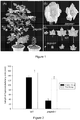
- a comparison of phenotypes between the cotton variety "CRI 24" (expressed as WT) and mutant pagoda1 may be seen in Figure 1 .
- mutant pagoda1 had an extremely decreased height ( Figure 1A ), a reduced floral organ size ( Figure 1B ), a shortened petiole ( Figure 1C , a petiole of the top 4th leaf).
- the cotton variety "CRI 24" was hybridized with mutant pagoda1, to obtain a T 0 hybrid, which was sowed to obtain T 1 plants.
- the phenotype and segregation ratio of the T 1 plants were observed.
- the results showed that the T 1 plants exhibited a high-to-short segregation ratio of 1:3 from a seedling stage, and kanamycin application showed that dwarfed and tightened properties were co-separated with a transgenic resistant marker gene NptII, demonstrating that the dwarfed and tightened properties were heritable.
- the ratio of tall to dwarf of the T 2 plants was still shown as 1:3 (see Table 2), consisting with genetic performance controlled by a pair of single dominant genes. Accordingly, the dwarfing mutation was a dominant mutation.
- Table 2 Separation of T 2 plants Number of dwarfed plants Number of normal height plants Ratio Chi-Square DF Pr > ChiSq 85 31 3:1 0.0725 1 0.7878
- the mutant pagoda1 and the cotton variety"CRI 24" were identified as below, respectively:
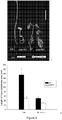
- hypocotyledonary axis of the processed plants from respective groups are shown in Figure 2 .
- the hypocotyledonary axis was prolonged by 270% after the treatment with brassinosteroids, comparable to the length of the hypocotyledonary axis of the cotton variety "CRI 24".
- the hypocotyledonary axis was prolonged by only 16%.
- mutant pagoda1 may be restored by brassinosteroids from a dwarfed phenotype to the phenotype of the cotton variety "CRI 24", that is, mutant pagoda1 is a BRs defective mutant.
- the mutant pagoda1 and the cotton variety "CRI 24" were identified as below:
- brassinosteroids cannot be delivered for a long distance in a plant, a local application thereof may promote the growth of the applied part, without an impact on the far part.
- 500nM brassinosteroids to the top of a seeding of mutant pagoda1
- 500nM brassinosteroids to a lateral branch of a seeding of mutant pagoda1 the lateral branch was significantly extended, even to a length more than that of the main stem, while the growth of the main stem was not affected (see Figure 4B ).
- a hiTAIL-PCR Yao-Guang Liu, et al., High-efficiency thermal asymmetric interlaced PCR for amplification of unknown flanking sequences. Yao-Guang Liu and Yuanling Chen. BioTechniques Vol. 43, No. 5: pp 649-656 (Nov 2007 )) method was used for amplifying the flanking sequence at the T-DNA inserting site.
- TAIL-PCR also called thermal asymmetric interlaced PCR
- TAIL-PCR can effectively separate an unknown sequence adjacent to a known DNA sequence, which is simple and practicable, effective and sensitive, and capable of obtaining a target fragment in a short time, and thus is a suitable means in molecular-biological studies.
- a substantial modification was made on TAIL-PCR by Professor Yao-Guang Liu, to develop a new method of hiTAIL-PCR, which produced an excellent amplification effect in many species such as rice, Arabidopsis, insects, etc..
- the nested primers were paired with random primers and anchor primers to form a 25 ⁇ l reaction system, particularly with reference to articles such as Yao-Guang Liu, et al.
- the products were separated with 1% agarose gel, specific bands were recovered with a Promega gel recovery kit, and a T-A cloning was performed according to a pMD18-T kit from TAKARA.
- the reaction system comprises: 4 ⁇ l of DNA fragment (25 ng/ul), 1 ⁇ l of T vector, and 5 ⁇ l of Solution I, totally 10 ⁇ l.
- BAC library of pagoda1 existing in our laboratory was screened by pooled PCR.
- the PCR reaction system was 25 ⁇ l, comprising 2.5 ⁇ l of 10 ⁇ Buffer, 2 ⁇ l of dNTP Mixture (10 ⁇ M), 0.5 ⁇ l of Ex Taq (5 ⁇ / ⁇ l), 1 ⁇ l (125 ng) of BAC library plasmid, 1 ⁇ l of upstream primer (10 ⁇ M), 1 ⁇ l of downstream primer (10 ⁇ M), made up with ddH 2 O to 25 ⁇ l.
- Reaction conditions comprise: initial denaturation at 94°C for 5 min; at 94°C for 30s, at 58°C for 30s, at 72°C for 1 min, for 30 cycles; extension at 72°C for 5 min. 5 positive clones were screened out, 3 of which were sequenced.
- the results of the sequencing showed that T-DNA was inserted upstream of the promoter of a gene having a nucleotide sequence presented by SEQ ID NO: 3 in the sequence listing, which was designated as a GhPAGODA1 gene (abbreviated as a GhPGD1 gene).
- the GhPGD1 gene had a coding region with a sequence of: nucleotides at positions 1 to 279, 1135 to 1356, 1457 to 1703, 1849 to 2216, and 2356 to 2814 from 5'-terminus of SEQ ID NO: 3 in the sequence listing.
- the GhPGD1 gene had a cDNA presented by SEQ ID NO: 2 (1800bp) in the sequence listing, with an open reading frame of nucleotides at positions 133 to 1707 (1575bp) from 5'-terminus of SEQ ID NO: 2 in the sequence listing.
- mutant pagoda1 with dwarfed and tightened phenotypes might be resulted from an overexpression of the GhPGD1 gene.
- the leaf total RNA of mutant pagoda1 and cotton variety "CRI 24" were extracted, respectively, and reversely transcribed into a cDNA, which was subjected to Real-time PCR with a pair of primers qpgd1-S and qpgd1-A, to identify the expression level of the GhPGD1 gene.
- Histone 3 as a reference gene, Real-time PCR was performed using a primer pair of Histone3-S and Histone3-A.
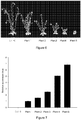
- T 3 seeds were randomly selected from 5 homozygous transgenic plants (plant 1, plant 2, plant 3, plant 4, and plant 5) (20 seeds of each plant), sowed in soil, and normally cultivated (22°C, 70% relative humidity, a light intensity of 150 ⁇ mol m -2 s -1 , 12h illumination/12h dark), for 30 days counted from the sowing day, and then taken pictures, measured for plant height, and assayed for expression level of GhPGD1 gene. 20 of T 3 seeds of Arabidopsis thaliana transfected with an empty vector and 20 seeds of Arabidopsis thaliana of ecotype Columbia were treated in parallel as controls.
- Plant 1 had an averaged height of 25.11 ⁇ 1.54 centimeters.
- Plant 2 had an averaged height of 19.78 ⁇ 2.05 centimeters.
- Plant 3 had an averaged height of 12.78 ⁇ 1.39 centimeters.
- Plant 4 had an averaged height of 6.33 ⁇ 1.2 centimeters.
- Plant 5 had an averaged height of 3.83 ⁇ 0.71 centimeters.
- Arabidopsis thaliana transfected with an empty vector had an averaged height of 31.89 ⁇ 2.15 centimeters.
- Arabidopsis thaliana of ecotype Columbia had an averaged height of 32.17 ⁇ 1.46 centimeters.
- RNA was extracted from a leaf of each of the plants, and reversely transcribed into a cDNA, which was used as a template to perform Real-time PCR with a pair of primers qpgd1-S and qpgd1-A, to identify the expression level of GhPGD1 gene.
- actin1 gene was used as a reference gene
- Real-time PCR was performed using a pair of primers actin1-S and actin1-A.
- the relative expression levels of the GhPGD1 gene in respective plants are shown in Figure 7 .
- Arabidopsis thaliana of ecotype Columbia and the Arabidopsis thaliana transfected with an empty vector had no expression of GhPGD1 gene. And the transgenic plants had different expression levels of GhPGD1 gene.
- the mutant pagoda1 and the cotton variety "CRI 24" were identified as follows, respectively: Cotton plants were sowed in field in Anyang at planting time, and subjected to a normal field management. The phenotype thereof was observed and pictured in early October. The pictures are shown in Figure 8 .
- the cotton variety "CRI 24" had most of leaves yellowing, withered and dropped, and mutant pagoda1 had still dark green leaves, and continuously growable top tissue. The results showed that overexpression of the GhPGD1 gene enables delay of plant aging, prolonging the life cycle of the plant.
- Cotton transfected with an empty vector was obtained with a recombinant plasmid pCAMBIA2300-35S-nos instead of recombinant plasmid pCAMBIA -GhPGD1, and the rest the same as procedure I.
- T 3 seeds were randomly selected from 4 homozygous transgenic plants (plant a, plant b, plant c, plant d) (15 seeds of each plant) and sowed in soil in a sunlight greenhouse. These were observed character, measured, and taken pictures at a full-bloom stage. 20 of T 3 seeds of cotton transfected with an empty vector and 20 seeds of the cotton variety "CRI 24" were treated in parallel as controls.
- the present invention discloses a protein from cotton related to plant dwarfing and inactivation of brassinosteroids and a coding gene thereof.
- Overexpression of the gene in a plant allows for a reduction of the amount of endogenous brassinosteroids, which is realized by a shortened hypocotyledonary axis, a dwarfed plant, shortened petioles, shortened internodes, dark green leaves and a prolonged life cycle, as well as photomorphogenesis even in dark. Taking use of this gene, it is possible to improve and shape a plant type, and to delay plant aging.
- the gene is dominant, which is essential to improve a plant (specifically a crop), shorten breeding time, and increase breeding efficiency.
- the genetic regulation of cotton plant height with the dwarfing gene and the breeding of a variety having a proper plant height and a desired plant type are beneficial for making full use of the production potential of light and heat resources and of the space and time advantages of flowering and boll forming of cotton to improve the economic coefficient of cotton, and allow for reducing chemical and artificial regulations, reducing cotton production costs, and improving economic benefits in cotton planting.
- the protein and coding gene thereof provided by the present invention have very important value in improving the production of a crop (a fruit tree), improving the visual enjoyability of a green plant, implementing a simple cultivation of a plant, and improving a breeding efficiency, and have a broad prospective in genetic improvement of a plant, and new variety cultivation and application.
Landscapes
- Health & Medical Sciences (AREA)
- Genetics & Genomics (AREA)
- Life Sciences & Earth Sciences (AREA)
- Engineering & Computer Science (AREA)
- Chemical & Material Sciences (AREA)
- Organic Chemistry (AREA)
- Molecular Biology (AREA)
- Biomedical Technology (AREA)
- Zoology (AREA)
- Biotechnology (AREA)
- General Engineering & Computer Science (AREA)
- Bioinformatics & Cheminformatics (AREA)
- Wood Science & Technology (AREA)
- Biophysics (AREA)
- Biochemistry (AREA)
- General Health & Medical Sciences (AREA)
- Physics & Mathematics (AREA)
- Microbiology (AREA)
- Plant Pathology (AREA)
- Cell Biology (AREA)
- Endocrinology (AREA)
- Botany (AREA)
- Gastroenterology & Hepatology (AREA)
- Medicinal Chemistry (AREA)
- Proteomics, Peptides & Aminoacids (AREA)
- Breeding Of Plants And Reproduction By Means Of Culturing (AREA)
- Micro-Organisms Or Cultivation Processes Thereof (AREA)
Claims (19)
- Ein Protein, das ein Protein ist, das aus einer Aminosäuresequenz besteht, die durch SEQ ID NO: 1 in dem Sequenzprotokoll dargestellt wird.
- Gen, das das Protein nach Anspruch 1 codiert, dadurch gekennzeichnet, dass: das Gen ein DNA-Molekül nach 1) oder 2) oder 3) oder 4) oder 5) oder 6) ist:1) ein DNA-Molekül mit einer codierenden Region, dargestellt durch Nukleotide an den Positionen 133 bis 1704 von SEQ ID NO: 2 vom 5'-Terminus im Sequenzprotokoll;2) ein DNA-Molekül mit einer codierenden Region, dargestellt durch Nukleotide an den Positionen 133 bis 1707 von SEQ ID NO: 2 vom 5'-Terminus im Sequenzprotokoll;3) ein DNA-Molekül, dargestellt durch SEQ ID NO: 2 im Sequenzprotokoll;4) ein DNA-Molekül, dargestellt durch SEQ ID NO: 3 im Sequenzprotokoll;5) ein DNA-Molekül, das unter strengen Bedingungen mit der durch 1) oder 2) oder 3) oder 4) definierten DNA-Sequenz hybridisiert und das in Anspruch 1 definierte Protein kodiert;6) ein DNA-Molekül, das mehr als 80% Homologie zu der durch 1) oder 2) oder 3) oder 4) definierten DNA-Sequenz aufweist und das in Anspruch 1 definierte Protein codiert.
- Eine Expressionskassette, ein rekombinanter Expressionsvektor, eine transgene Zelllinie oder ein rekombinanter Stamm, enthaltend das Gen nach Anspruch 2.
- Verwendung des Proteins nach Anspruch 1, des Gens nach Anspruch 2 und der Expressionskassette, des rekombinanten Expressionsvektors, der transgenen Zelllinie oder des rekombinanten Stammes nach Anspruch 3 in der Modifikation eines Pflanzentyps.
- Verwendung nach Anspruch 4, dadurch gekennzeichnet, dass: die Modifikation eines Pflanzentyps durch Zwergwuchs einer Pflanze realisiert wird.
- Verwendung nach Anspruch 4 oder 5, gekennzeichnet durch: eine Zielpflanze, die eine Dikotyledone oder eine Monokotyledone ist.
- Verwendung des Proteins nach Anspruch 1, des Gens nach Anspruch 2 und der Expressionskassette, des rekombinanten Expressionsvektors, der transgenen Zelllinie oder des rekombinanten Stammes nach Anspruch 4 bei der Kultivierung einer transgenen Pflanze.
- Verwendung nach Anspruch 6, dadurch gekennzeichnet, dass die transgene Pflanze eine Pflanze ist, die einen Zwergphänotyp aufweist.
- Verwendung nach Anspruch 7 oder 8, dadurch gekennzeichnet, dass: die Zielpflanze eine Dikotyledone oder eine Monokotyledone ist.
- Verfahren zur Kultivierung einer transgenen Pflanze durch Einführung des Gens nach Anspruch 2 in eine Zielpflanze, um eine transgene Pflanze mit einer Pflanzenhöhe zu erhalten, die geringer als die der Zielpflanze ist.
- Verfahren nach Anspruch 10, dadurch gekennzeichnet, dass: die Zielpflanze eine Dikotyledone oder eine Monokotyledone ist.
- Verfahren zur Kultivierung einer transgenen Pflanze durch Überexpression des Gens nach Anspruch 2 in einer Zielpflanze, um eine transgene Pflanze mit einer Pflanzenhöhe zu erhalten, die geringer ist als die der Zielpflanze.
- Verfahren nach Anspruch 12, dadurch gekennzeichnet, dass: das Überexprimieren des Gens nach Anspruch 2 in einer Zielpflanze durch Einführen des Gens nach Anspruch 2 in eine Zielpflanze oder durch Förderung der Expression des Gens nach Anspruch 2 in einer Zielpflanze an sich erreicht wird.
- Verfahren nach Anspruch 12 oder 13, dadurch gekennzeichnet, dass: die Zielpflanze eine Dikotyledone oder eine Monokotyledone ist.
- Verfahren zum Kultivieren einer transgenen Pflanze durch Überexprimieren des Gens nach Anspruch 2 in einer Zielpflanze, um eine Brassinosteroid-defiziente transgene Pflanze zu erhalten.
- Verfahren nach Anspruch 15, dadurch gekennzeichnet, dass: die Brassinosteroid-defiziente transgene Pflanze dadurch gekennzeichnet ist, dass die transgene Pflanze, verglichen mit der Zielpflanze, mindestens einen der folgenden Phänotypen aufweist: 1) eine verkürzte hypokotyle Achse; 2) eine verringerte Pflanzenhöhe; 3) eine(n) verkürzte(n) Blattstiel und/oder Scheide; 4) eine verzögerte Blüte; 5) ein verlängerter Lebenszyklus; und 6) ein Phänotyp mit photomorphogenetischen Antworten in der Dunkelheit.
- Verfahren nach Anspruch 15 oder 16, dadurch gekennzeichnet, dass: die Überexpression des Gens nach Anspruch 2 in einer Zielpflanze erreicht wird durch Einführung des Gens nach Anspruch 2 in eine Zielpflanze oder durch Förderung der Expression des Gens nach Anspruch 2 in einer Zielpflanze an sich.
- Verfahren nach Anspruch 15 oder 16 oder 17, dadurch gekennzeichnet, dass: die Zielpflanze eine Dikotyledone oder eine Monokotyledone ist.
- Verfahren zum Formen einer Pflanze durch Sprühen von Brassinosteroiden auf einen Teil einer Pflanze, so dass die Pflanze in eine gewünschte Form gezüchtet wird; wobei die Pflanze eine transgene Pflanze ist, die durch ein Verfahren nach einem der Ansprüche 10 bis 17 erhalten wurde, eine selbstständige Nachkommenschaft einer homozygoten transgenen Pflanze, umfassend das Gen nach Anspruch 2, eine hybride Nachkommenschaft der homozygoten transgenen Pflanze oder eine Rückkreuzung der homozygoten Nachkommenschaft transgene Pflanze.
Applications Claiming Priority (1)
| Application Number | Priority Date | Filing Date | Title |
|---|---|---|---|
| PCT/CN2013/000406 WO2014166012A1 (zh) | 2013-04-09 | 2013-04-09 | 植物株型相关蛋白及其编码基因与应用 |
Publications (3)
| Publication Number | Publication Date |
|---|---|
| EP2963117A1 EP2963117A1 (de) | 2016-01-06 |
| EP2963117A4 EP2963117A4 (de) | 2016-10-05 |
| EP2963117B1 true EP2963117B1 (de) | 2018-09-05 |
Family
ID=51688808
Family Applications (1)
| Application Number | Title | Priority Date | Filing Date |
|---|---|---|---|
| EP13881828.1A Not-in-force EP2963117B1 (de) | 2013-04-09 | 2013-04-09 | Pflanzentypbezogenes protein und codierungen und anwendung davon |
Country Status (3)
| Country | Link |
|---|---|
| US (1) | US10041085B2 (de) |
| EP (1) | EP2963117B1 (de) |
| WO (1) | WO2014166012A1 (de) |
Families Citing this family (5)
| Publication number | Priority date | Publication date | Assignee | Title |
|---|---|---|---|---|
| CN113121662B (zh) * | 2019-12-31 | 2022-11-01 | 中国科学院植物研究所 | 棉花GhBZR3蛋白及其编码基因在调节植物生长发育中的应用 |
| CN111543312A (zh) * | 2020-06-09 | 2020-08-18 | 中国热带农业科学院热带作物品种资源研究所 | 一种转绿型新叶黄化杂交水稻两系不育系的选育方法 |
| CN114540341B (zh) * | 2022-01-12 | 2023-10-27 | 西北农林科技大学 | 一种快速高效的dna 5’侧翼序列克隆方法 |
| CN116063426B (zh) * | 2022-08-15 | 2025-07-25 | 山东农业大学 | 苹果果实糖含量调控蛋白MdSWEET9b及其编码基因和应用 |
| CN119120413A (zh) * | 2022-09-26 | 2024-12-13 | 中国科学院遗传与发育生物学研究所 | 油菜绿色革命基因bgr及其应用 |
Family Cites Families (9)
| Publication number | Priority date | Publication date | Assignee | Title |
|---|---|---|---|---|
| US5880110A (en) * | 1995-02-21 | 1999-03-09 | Toyobo Co., Ltd. | Production of cotton fibers with improved fiber characteristics by treatment with brassinosteroids |
| EP1163324A4 (de) * | 1999-03-16 | 2002-11-04 | Salk Inst For Biological Studi | Genetisch veränderte pflanzen mit modulierter brassinosteroid-signalübertragung |
| AU2001259263A1 (en) * | 2000-05-02 | 2001-11-12 | Agrinomics, Llc | Identification and characterization of a pagoda phenotype (pgd) in plants |
| US8008542B2 (en) * | 2007-01-10 | 2011-08-30 | The Salk Institute For Biological Studies | Compositions, cells, and plants that include BKI1, a negative regulator of BRI1-mediated BR signaling |
| CN101768213B (zh) * | 2008-12-30 | 2012-05-30 | 中国科学院遗传与发育生物学研究所 | 一种与植物分蘖数目相关的蛋白及其编码基因与应用 |
| CN101519662A (zh) * | 2009-03-31 | 2009-09-02 | 西南大学 | 棉花油菜素内酯合成酶基因的用途及含有其的表达载体 |
| CN101624595B (zh) * | 2009-07-01 | 2012-02-01 | 西南大学 | 棉花油菜素内酯合成酶GhDWF4基因的启动子及其应用 |
| CN102911939A (zh) * | 2012-09-26 | 2013-02-06 | 中国科学院华南植物园 | 影响水稻株高、种子大小及抗性的小分子RNA Osa-miR1848及其靶基因 |
| CN103014061A (zh) * | 2013-01-16 | 2013-04-03 | 江苏省农业科学院 | 油菜素内酯失活基因bas1的根系重组表达载体及其构建方法和应用 |
-
2013
- 2013-04-09 US US14/782,976 patent/US10041085B2/en active Active
- 2013-04-09 EP EP13881828.1A patent/EP2963117B1/de not_active Not-in-force
- 2013-04-09 WO PCT/CN2013/000406 patent/WO2014166012A1/zh not_active Ceased
Non-Patent Citations (1)
| Title |
|---|
| None * |
Also Published As
| Publication number | Publication date |
|---|---|
| EP2963117A1 (de) | 2016-01-06 |
| US20170130241A1 (en) | 2017-05-11 |
| EP2963117A4 (de) | 2016-10-05 |
| WO2014166012A1 (zh) | 2014-10-16 |
| US10041085B2 (en) | 2018-08-07 |
Similar Documents
| Publication | Publication Date | Title |
|---|---|---|
| US11479784B2 (en) | Modulation of seed vigor | |
| CN117568289B (zh) | 一种抗大豆胞囊线虫病的蛋白质及其编码基因与应用 | |
| CN104829700A (zh) | 一种玉米CCCH型锌指蛋白及其编码基因ZmC3H54与应用 | |
| US12584117B2 (en) | Use of gene encoding gibberellin 3beta-hydroxylase of Glycine max, GmGA3ox1 | |
| CN104611359B (zh) | ZmSPL1蛋白及其编码基因在调控玉米籽粒发育中的应用 | |
| CN115991756B (zh) | 一种提高弱光条件下番茄果实产量和番茄果实番茄红素含量的方法 | |
| CN110628808A (zh) | 拟南芥AtTCP5基因及其在调控株高上的应用 | |
| US10041085B2 (en) | Plant type related protein, and coding gene and application thereof | |
| CN114480417A (zh) | 一种调控叶片衰老基因ZmSAG39、编码蛋白及其应用 | |
| CN110358772A (zh) | 提高水稻非生物胁迫抗性的OsEBP89基因及制备方法与应用 | |
| US20220411809A1 (en) | Gene mutations in tomato to yield compact and early yielding forms suitable for urban agriculture | |
| CN101585869B (zh) | 一种水稻分蘖相关蛋白及其编码基因与应用 | |
| CN101519662A (zh) | 棉花油菜素内酯合成酶基因的用途及含有其的表达载体 | |
| CN110004165A (zh) | 桃生长素酰胺水解酶基因PpIAAH1及其应用 | |
| CN110564740A (zh) | 一种提高植物抗病性的基因AtPIP2;7及其应用 | |
| CN114657187A (zh) | 一种调控烟草花丝长度的WRKY转录因子基因NtWRKY65及其应用 | |
| CN101928726A (zh) | 一种调控水稻株型的方法 | |
| CN118147175B (zh) | MtCOMT13基因在调控植物耐盐抗旱性中的应用 | |
| CN110042109B (zh) | 与番茄叶片衰老相关的基因及其应用 | |
| CN115215929A (zh) | CsCRC蛋白及其编码基因在调控植物果实长度中的应用 | |
| CN112522283A (zh) | 一种花粉发育相关基因及其应用 | |
| CN119060147A (zh) | ZmRIN4蛋白在调控植物产量中的应用 | |
| CN102911939A (zh) | 影响水稻株高、种子大小及抗性的小分子RNA Osa-miR1848及其靶基因 | |
| CN104404060A (zh) | 棉花类固醇C22α-羟化酶基因GhCYP90B1在改良番茄品质中的应用 | |
| CN113528533B (zh) | 二色补血草基因LbRSG及其应用 |
Legal Events
| Date | Code | Title | Description |
|---|---|---|---|
| PUAI | Public reference made under article 153(3) epc to a published international application that has entered the european phase |
Free format text: ORIGINAL CODE: 0009012 |
|
| 17P | Request for examination filed |
Effective date: 20150930 |
|
| AK | Designated contracting states |
Kind code of ref document: A1 Designated state(s): AL AT BE BG CH CY CZ DE DK EE ES FI FR GB GR HR HU IE IS IT LI LT LU LV MC MK MT NL NO PL PT RO RS SE SI SK SM TR |
|
| AX | Request for extension of the european patent |
Extension state: BA ME |
|
| DAX | Request for extension of the european patent (deleted) | ||
| RIC1 | Information provided on ipc code assigned before grant |
Ipc: C12N 15/82 20060101AFI20160824BHEP Ipc: C07K 14/415 20060101ALI20160824BHEP |
|
| A4 | Supplementary search report drawn up and despatched |
Effective date: 20160902 |
|
| STAA | Information on the status of an ep patent application or granted ep patent |
Free format text: STATUS: EXAMINATION IS IN PROGRESS |
|
| 17Q | First examination report despatched |
Effective date: 20170413 |
|
| GRAP | Despatch of communication of intention to grant a patent |
Free format text: ORIGINAL CODE: EPIDOSNIGR1 |
|
| STAA | Information on the status of an ep patent application or granted ep patent |
Free format text: STATUS: GRANT OF PATENT IS INTENDED |
|
| INTG | Intention to grant announced |
Effective date: 20180314 |
|
| GRAS | Grant fee paid |
Free format text: ORIGINAL CODE: EPIDOSNIGR3 |
|
| GRAA | (expected) grant |
Free format text: ORIGINAL CODE: 0009210 |
|
| STAA | Information on the status of an ep patent application or granted ep patent |
Free format text: STATUS: THE PATENT HAS BEEN GRANTED |
|
| AK | Designated contracting states |
Kind code of ref document: B1 Designated state(s): AL AT BE BG CH CY CZ DE DK EE ES FI FR GB GR HR HU IE IS IT LI LT LU LV MC MK MT NL NO PL PT RO RS SE SI SK SM TR |
|
| REG | Reference to a national code |
Ref country code: GB Ref legal event code: FG4D |
|
| REG | Reference to a national code |
Ref country code: CH Ref legal event code: EP |
|
| REG | Reference to a national code |
Ref country code: AT Ref legal event code: REF Ref document number: 1037849 Country of ref document: AT Kind code of ref document: T Effective date: 20180915 |
|
| REG | Reference to a national code |
Ref country code: IE Ref legal event code: FG4D |
|
| REG | Reference to a national code |
Ref country code: DE Ref legal event code: R096 Ref document number: 602013043382 Country of ref document: DE |
|
| REG | Reference to a national code |
Ref country code: NL Ref legal event code: MP Effective date: 20180905 |
|
| REG | Reference to a national code |
Ref country code: LT Ref legal event code: MG4D |
|
| PG25 | Lapsed in a contracting state [announced via postgrant information from national office to epo] |
Ref country code: RS Free format text: LAPSE BECAUSE OF FAILURE TO SUBMIT A TRANSLATION OF THE DESCRIPTION OR TO PAY THE FEE WITHIN THE PRESCRIBED TIME-LIMIT Effective date: 20180905 Ref country code: LT Free format text: LAPSE BECAUSE OF FAILURE TO SUBMIT A TRANSLATION OF THE DESCRIPTION OR TO PAY THE FEE WITHIN THE PRESCRIBED TIME-LIMIT Effective date: 20180905 Ref country code: BG Free format text: LAPSE BECAUSE OF FAILURE TO SUBMIT A TRANSLATION OF THE DESCRIPTION OR TO PAY THE FEE WITHIN THE PRESCRIBED TIME-LIMIT Effective date: 20181205 Ref country code: SE Free format text: LAPSE BECAUSE OF FAILURE TO SUBMIT A TRANSLATION OF THE DESCRIPTION OR TO PAY THE FEE WITHIN THE PRESCRIBED TIME-LIMIT Effective date: 20180905 Ref country code: FI Free format text: LAPSE BECAUSE OF FAILURE TO SUBMIT A TRANSLATION OF THE DESCRIPTION OR TO PAY THE FEE WITHIN THE PRESCRIBED TIME-LIMIT Effective date: 20180905 Ref country code: GR Free format text: LAPSE BECAUSE OF FAILURE TO SUBMIT A TRANSLATION OF THE DESCRIPTION OR TO PAY THE FEE WITHIN THE PRESCRIBED TIME-LIMIT Effective date: 20181206 Ref country code: NO Free format text: LAPSE BECAUSE OF FAILURE TO SUBMIT A TRANSLATION OF THE DESCRIPTION OR TO PAY THE FEE WITHIN THE PRESCRIBED TIME-LIMIT Effective date: 20181205 |
|
| REG | Reference to a national code |
Ref country code: AT Ref legal event code: MK05 Ref document number: 1037849 Country of ref document: AT Kind code of ref document: T Effective date: 20180905 |
|
| PG25 | Lapsed in a contracting state [announced via postgrant information from national office to epo] |
Ref country code: LV Free format text: LAPSE BECAUSE OF FAILURE TO SUBMIT A TRANSLATION OF THE DESCRIPTION OR TO PAY THE FEE WITHIN THE PRESCRIBED TIME-LIMIT Effective date: 20180905 Ref country code: HR Free format text: LAPSE BECAUSE OF FAILURE TO SUBMIT A TRANSLATION OF THE DESCRIPTION OR TO PAY THE FEE WITHIN THE PRESCRIBED TIME-LIMIT Effective date: 20180905 Ref country code: AL Free format text: LAPSE BECAUSE OF FAILURE TO SUBMIT A TRANSLATION OF THE DESCRIPTION OR TO PAY THE FEE WITHIN THE PRESCRIBED TIME-LIMIT Effective date: 20180905 |
|
| PG25 | Lapsed in a contracting state [announced via postgrant information from national office to epo] |
Ref country code: IS Free format text: LAPSE BECAUSE OF FAILURE TO SUBMIT A TRANSLATION OF THE DESCRIPTION OR TO PAY THE FEE WITHIN THE PRESCRIBED TIME-LIMIT Effective date: 20190105 Ref country code: ES Free format text: LAPSE BECAUSE OF FAILURE TO SUBMIT A TRANSLATION OF THE DESCRIPTION OR TO PAY THE FEE WITHIN THE PRESCRIBED TIME-LIMIT Effective date: 20180905 Ref country code: NL Free format text: LAPSE BECAUSE OF FAILURE TO SUBMIT A TRANSLATION OF THE DESCRIPTION OR TO PAY THE FEE WITHIN THE PRESCRIBED TIME-LIMIT Effective date: 20180905 Ref country code: AT Free format text: LAPSE BECAUSE OF FAILURE TO SUBMIT A TRANSLATION OF THE DESCRIPTION OR TO PAY THE FEE WITHIN THE PRESCRIBED TIME-LIMIT Effective date: 20180905 Ref country code: EE Free format text: LAPSE BECAUSE OF FAILURE TO SUBMIT A TRANSLATION OF THE DESCRIPTION OR TO PAY THE FEE WITHIN THE PRESCRIBED TIME-LIMIT Effective date: 20180905 Ref country code: RO Free format text: LAPSE BECAUSE OF FAILURE TO SUBMIT A TRANSLATION OF THE DESCRIPTION OR TO PAY THE FEE WITHIN THE PRESCRIBED TIME-LIMIT Effective date: 20180905 Ref country code: IT Free format text: LAPSE BECAUSE OF FAILURE TO SUBMIT A TRANSLATION OF THE DESCRIPTION OR TO PAY THE FEE WITHIN THE PRESCRIBED TIME-LIMIT Effective date: 20180905 Ref country code: CZ Free format text: LAPSE BECAUSE OF FAILURE TO SUBMIT A TRANSLATION OF THE DESCRIPTION OR TO PAY THE FEE WITHIN THE PRESCRIBED TIME-LIMIT Effective date: 20180905 Ref country code: PL Free format text: LAPSE BECAUSE OF FAILURE TO SUBMIT A TRANSLATION OF THE DESCRIPTION OR TO PAY THE FEE WITHIN THE PRESCRIBED TIME-LIMIT Effective date: 20180905 |
|
| PG25 | Lapsed in a contracting state [announced via postgrant information from national office to epo] |
Ref country code: SK Free format text: LAPSE BECAUSE OF FAILURE TO SUBMIT A TRANSLATION OF THE DESCRIPTION OR TO PAY THE FEE WITHIN THE PRESCRIBED TIME-LIMIT Effective date: 20180905 Ref country code: PT Free format text: LAPSE BECAUSE OF FAILURE TO SUBMIT A TRANSLATION OF THE DESCRIPTION OR TO PAY THE FEE WITHIN THE PRESCRIBED TIME-LIMIT Effective date: 20190105 Ref country code: SM Free format text: LAPSE BECAUSE OF FAILURE TO SUBMIT A TRANSLATION OF THE DESCRIPTION OR TO PAY THE FEE WITHIN THE PRESCRIBED TIME-LIMIT Effective date: 20180905 |
|
| REG | Reference to a national code |
Ref country code: DE Ref legal event code: R097 Ref document number: 602013043382 Country of ref document: DE |
|
| PLBE | No opposition filed within time limit |
Free format text: ORIGINAL CODE: 0009261 |
|
| STAA | Information on the status of an ep patent application or granted ep patent |
Free format text: STATUS: NO OPPOSITION FILED WITHIN TIME LIMIT |
|
| PG25 | Lapsed in a contracting state [announced via postgrant information from national office to epo] |
Ref country code: DK Free format text: LAPSE BECAUSE OF FAILURE TO SUBMIT A TRANSLATION OF THE DESCRIPTION OR TO PAY THE FEE WITHIN THE PRESCRIBED TIME-LIMIT Effective date: 20180905 |
|
| 26N | No opposition filed |
Effective date: 20190606 |
|
| PG25 | Lapsed in a contracting state [announced via postgrant information from national office to epo] |
Ref country code: SI Free format text: LAPSE BECAUSE OF FAILURE TO SUBMIT A TRANSLATION OF THE DESCRIPTION OR TO PAY THE FEE WITHIN THE PRESCRIBED TIME-LIMIT Effective date: 20180905 |
|
| REG | Reference to a national code |
Ref country code: CH Ref legal event code: PL |
|
| REG | Reference to a national code |
Ref country code: BE Ref legal event code: MM Effective date: 20190430 |
|
| PG25 | Lapsed in a contracting state [announced via postgrant information from national office to epo] |
Ref country code: MC Free format text: LAPSE BECAUSE OF FAILURE TO SUBMIT A TRANSLATION OF THE DESCRIPTION OR TO PAY THE FEE WITHIN THE PRESCRIBED TIME-LIMIT Effective date: 20180905 Ref country code: LU Free format text: LAPSE BECAUSE OF NON-PAYMENT OF DUE FEES Effective date: 20190409 |
|
| PG25 | Lapsed in a contracting state [announced via postgrant information from national office to epo] |
Ref country code: LI Free format text: LAPSE BECAUSE OF NON-PAYMENT OF DUE FEES Effective date: 20190430 Ref country code: CH Free format text: LAPSE BECAUSE OF NON-PAYMENT OF DUE FEES Effective date: 20190430 |
|
| PG25 | Lapsed in a contracting state [announced via postgrant information from national office to epo] |
Ref country code: BE Free format text: LAPSE BECAUSE OF NON-PAYMENT OF DUE FEES Effective date: 20190430 |
|
| PG25 | Lapsed in a contracting state [announced via postgrant information from national office to epo] |
Ref country code: TR Free format text: LAPSE BECAUSE OF FAILURE TO SUBMIT A TRANSLATION OF THE DESCRIPTION OR TO PAY THE FEE WITHIN THE PRESCRIBED TIME-LIMIT Effective date: 20180905 |
|
| PG25 | Lapsed in a contracting state [announced via postgrant information from national office to epo] |
Ref country code: IE Free format text: LAPSE BECAUSE OF NON-PAYMENT OF DUE FEES Effective date: 20190409 |
|
| PG25 | Lapsed in a contracting state [announced via postgrant information from national office to epo] |
Ref country code: FR Free format text: LAPSE BECAUSE OF NON-PAYMENT OF DUE FEES Effective date: 20190430 |
|
| PG25 | Lapsed in a contracting state [announced via postgrant information from national office to epo] |
Ref country code: CY Free format text: LAPSE BECAUSE OF FAILURE TO SUBMIT A TRANSLATION OF THE DESCRIPTION OR TO PAY THE FEE WITHIN THE PRESCRIBED TIME-LIMIT Effective date: 20180905 |
|
| PG25 | Lapsed in a contracting state [announced via postgrant information from national office to epo] |
Ref country code: HU Free format text: LAPSE BECAUSE OF FAILURE TO SUBMIT A TRANSLATION OF THE DESCRIPTION OR TO PAY THE FEE WITHIN THE PRESCRIBED TIME-LIMIT; INVALID AB INITIO Effective date: 20130409 Ref country code: MT Free format text: LAPSE BECAUSE OF FAILURE TO SUBMIT A TRANSLATION OF THE DESCRIPTION OR TO PAY THE FEE WITHIN THE PRESCRIBED TIME-LIMIT Effective date: 20180905 |
|
| PG25 | Lapsed in a contracting state [announced via postgrant information from national office to epo] |
Ref country code: MK Free format text: LAPSE BECAUSE OF FAILURE TO SUBMIT A TRANSLATION OF THE DESCRIPTION OR TO PAY THE FEE WITHIN THE PRESCRIBED TIME-LIMIT Effective date: 20180905 |
|
| PGFP | Annual fee paid to national office [announced via postgrant information from national office to epo] |
Ref country code: DE Payment date: 20230418 Year of fee payment: 11 |
|
| PGFP | Annual fee paid to national office [announced via postgrant information from national office to epo] |
Ref country code: GB Payment date: 20230403 Year of fee payment: 11 |
|
| REG | Reference to a national code |
Ref country code: DE Ref legal event code: R119 Ref document number: 602013043382 Country of ref document: DE |
|
| GBPC | Gb: european patent ceased through non-payment of renewal fee |
Effective date: 20240409 |
|
| PG25 | Lapsed in a contracting state [announced via postgrant information from national office to epo] |
Ref country code: DE Free format text: LAPSE BECAUSE OF NON-PAYMENT OF DUE FEES Effective date: 20241105 |
|
| PG25 | Lapsed in a contracting state [announced via postgrant information from national office to epo] |
Ref country code: GB Free format text: LAPSE BECAUSE OF NON-PAYMENT OF DUE FEES Effective date: 20240409 |
|
| PG25 | Lapsed in a contracting state [announced via postgrant information from national office to epo] |
Ref country code: GB Free format text: LAPSE BECAUSE OF NON-PAYMENT OF DUE FEES Effective date: 20240409 Ref country code: DE Free format text: LAPSE BECAUSE OF NON-PAYMENT OF DUE FEES Effective date: 20241105 |