EP2962787A1 - Method for treating powder and powder treated thereby - Google Patents
Method for treating powder and powder treated thereby Download PDFInfo
- Publication number
- EP2962787A1 EP2962787A1 EP15175076.7A EP15175076A EP2962787A1 EP 2962787 A1 EP2962787 A1 EP 2962787A1 EP 15175076 A EP15175076 A EP 15175076A EP 2962787 A1 EP2962787 A1 EP 2962787A1
- Authority
- EP
- European Patent Office
- Prior art keywords
- powder
- treating
- treating additive
- particle size
- additive
- Prior art date
- Legal status (The legal status is an assumption and is not a legal conclusion. Google has not performed a legal analysis and makes no representation as to the accuracy of the status listed.)
- Granted
Links
Images


Classifications
-
- B—PERFORMING OPERATIONS; TRANSPORTING
- B22—CASTING; POWDER METALLURGY
- B22F—WORKING METALLIC POWDER; MANUFACTURE OF ARTICLES FROM METALLIC POWDER; MAKING METALLIC POWDER; APPARATUS OR DEVICES SPECIALLY ADAPTED FOR METALLIC POWDER
- B22F1/00—Metallic powder; Treatment of metallic powder, e.g. to facilitate working or to improve properties
- B22F1/14—Treatment of metallic powder
-
- B—PERFORMING OPERATIONS; TRANSPORTING
- B22—CASTING; POWDER METALLURGY
- B22F—WORKING METALLIC POWDER; MANUFACTURE OF ARTICLES FROM METALLIC POWDER; MAKING METALLIC POWDER; APPARATUS OR DEVICES SPECIALLY ADAPTED FOR METALLIC POWDER
- B22F1/00—Metallic powder; Treatment of metallic powder, e.g. to facilitate working or to improve properties
- B22F1/16—Metallic particles coated with a non-metal
-
- B—PERFORMING OPERATIONS; TRANSPORTING
- B22—CASTING; POWDER METALLURGY
- B22F—WORKING METALLIC POWDER; MANUFACTURE OF ARTICLES FROM METALLIC POWDER; MAKING METALLIC POWDER; APPARATUS OR DEVICES SPECIALLY ADAPTED FOR METALLIC POWDER
- B22F10/00—Additive manufacturing of workpieces or articles from metallic powder
- B22F10/30—Process control
- B22F10/34—Process control of powder characteristics, e.g. density, oxidation or flowability
-
- C—CHEMISTRY; METALLURGY
- C09—DYES; PAINTS; POLISHES; NATURAL RESINS; ADHESIVES; COMPOSITIONS NOT OTHERWISE PROVIDED FOR; APPLICATIONS OF MATERIALS NOT OTHERWISE PROVIDED FOR
- C09C—TREATMENT OF INORGANIC MATERIALS, OTHER THAN FIBROUS FILLERS, TO ENHANCE THEIR PIGMENTING OR FILLING PROPERTIES ; PREPARATION OF CARBON BLACK ; PREPARATION OF INORGANIC MATERIALS WHICH ARE NO SINGLE CHEMICAL COMPOUNDS AND WHICH ARE MAINLY USED AS PIGMENTS OR FILLERS
- C09C3/00—Treatment in general of inorganic materials, other than fibrous fillers, to enhance their pigmenting or filling properties
- C09C3/06—Treatment with inorganic compounds
-
- B—PERFORMING OPERATIONS; TRANSPORTING
- B22—CASTING; POWDER METALLURGY
- B22F—WORKING METALLIC POWDER; MANUFACTURE OF ARTICLES FROM METALLIC POWDER; MAKING METALLIC POWDER; APPARATUS OR DEVICES SPECIALLY ADAPTED FOR METALLIC POWDER
- B22F1/00—Metallic powder; Treatment of metallic powder, e.g. to facilitate working or to improve properties
- B22F1/05—Metallic powder characterised by the size or surface area of the particles
- B22F1/052—Metallic powder characterised by the size or surface area of the particles characterised by a mixture of particles of different sizes or by the particle size distribution
-
- B—PERFORMING OPERATIONS; TRANSPORTING
- B22—CASTING; POWDER METALLURGY
- B22F—WORKING METALLIC POWDER; MANUFACTURE OF ARTICLES FROM METALLIC POWDER; MAKING METALLIC POWDER; APPARATUS OR DEVICES SPECIALLY ADAPTED FOR METALLIC POWDER
- B22F10/00—Additive manufacturing of workpieces or articles from metallic powder
- B22F10/20—Direct sintering or melting
-
- B—PERFORMING OPERATIONS; TRANSPORTING
- B22—CASTING; POWDER METALLURGY
- B22F—WORKING METALLIC POWDER; MANUFACTURE OF ARTICLES FROM METALLIC POWDER; MAKING METALLIC POWDER; APPARATUS OR DEVICES SPECIALLY ADAPTED FOR METALLIC POWDER
- B22F2304/00—Physical aspects of the powder
- B22F2304/10—Micron size particles, i.e. above 1 micrometer up to 500 micrometer
-
- C—CHEMISTRY; METALLURGY
- C22—METALLURGY; FERROUS OR NON-FERROUS ALLOYS; TREATMENT OF ALLOYS OR NON-FERROUS METALS
- C22C—ALLOYS
- C22C33/00—Making ferrous alloys
- C22C33/02—Making ferrous alloys by powder metallurgy
- C22C33/0257—Making ferrous alloys by powder metallurgy characterised by the range of the alloying elements
- C22C33/0278—Making ferrous alloys by powder metallurgy characterised by the range of the alloying elements with at least one alloying element having a minimum content above 5%
-
- Y—GENERAL TAGGING OF NEW TECHNOLOGICAL DEVELOPMENTS; GENERAL TAGGING OF CROSS-SECTIONAL TECHNOLOGIES SPANNING OVER SEVERAL SECTIONS OF THE IPC; TECHNICAL SUBJECTS COVERED BY FORMER USPC CROSS-REFERENCE ART COLLECTIONS [XRACs] AND DIGESTS
- Y02—TECHNOLOGIES OR APPLICATIONS FOR MITIGATION OR ADAPTATION AGAINST CLIMATE CHANGE
- Y02P—CLIMATE CHANGE MITIGATION TECHNOLOGIES IN THE PRODUCTION OR PROCESSING OF GOODS
- Y02P10/00—Technologies related to metal processing
- Y02P10/25—Process efficiency
Definitions
- the invention relates generally to methods for treating powders and powders treated thereby.
- Additive manufacturing technology i.e., 3D printing technology, such as direct metal laser sintering (DMLS), direct metal laser melting (DMLM), selective laser melting (SLM), selective laser sintering (SLS), electron-beam melting (EBM) or direct deposition, enables the quick production of complex shaped three-dimensional parts directly from metal powder.
- 3D printing technology such as direct metal laser sintering (DMLS), direct metal laser melting (DMLM), selective laser melting (SLM), selective laser sintering (SLS), electron-beam melting (EBM) or direct deposition
- DMLS direct metal laser sintering
- DMLM direct metal laser melting
- SLM selective laser melting
- SLS selective laser sintering
- EBM electron-beam melting
- direct deposition i.e., 3D printing technology, such as direct metal laser sintering (DMLS), direct metal laser melting (DMLM), selective laser melting (SLM), selective laser sintering (SLS), electron-beam melting (EBM) or direct
- Some approaches have been proposed to increase the flowability of a powder by dry blending the powder with a fluidization additive to produce a dry blended mixture. These methods introduce a relatively large amount of fluidization additives into the powder and thus may change the element formulation of the powder, which is undesirable when the element formulation is critical to the produced part.
- the invention relates to a method for treating a powder, comprising: dry mixing the powder with an effective amount of a treating additive to distribute a layer of the treating additive on a surface of a particle of the powder, a primary particle size of the treating additive being smaller than an average particle size of the powder.
- the invention in another aspect, relates to a powder comprising a particle, the particle comprising a layer of a treating additive on a surface thereof, a primary particle size of the treating additive being smaller than an average particle size of the powder.
- Approximating language may be applied to modify any quantitative representation that could permissibly vary without resulting in a change in the basic function to which it is related. Accordingly, a value modified by a term or terms, such as "about” is not to be limited to the precise value specified. In some instances, the approximating language may correspond to the precision of an instrument for measuring the value.
- range limitations may be combined and/or interchanged; such ranges are identified and include all the sub-ranges contained therein unless context or language indicates otherwise.
- the term "or" is not meant to be exclusive and refers to at least one of the referenced components (for example, a material) being present and includes instances in which a combination of the referenced components may be present, unless the context clearly dictates otherwise.
- Embodiments of the present invention relate to methods for treating powders and powders treated thereby.
- an average particle size of the powder is less than about 100 micrometers. In some embodiments, an average particle size of the powder is in a range of from about 0.2 micrometers to less than about 100 micrometers, such as about 0.2, 0.5, 1.0, 5, 10 or 45 micrometers.
- the average particle size refers to an average value of the particle sizes.
- the average particle size refers to d50, i.e., the particle diameter at the 50% point on a particle size distribution curve when the total volume is 100%.
- the particle size distribution of the powder may be any as appropriate for use.
- a particle size distribution of the powder is the d10 is 10 micrometers and the d90 is 45 micrometers, wherein d10 and d90 represent particle diameters at 10% and 90% points on a particle size distribution curve when the total volume is 100%.
- the powder may be made of any materials, such as, nickel, chromium, iron, niobium, tantalum, molybdenum, titanium, aluminum, cobalt, carbon, manganese, silicon, phosphorus, sulfur, boron, copper, or any combination thereof.
- the powder is metallic.
- the powder is an alloy.
- the powder examples include, but are not limited to, the Inconel ® 718 powder from Praxair Surface Technologies, Inc., Indianapolis, United States and the Inconel ® 625 powder from Carpenter Powder Products Inc., Bridgeville, United States.
- the treating additive refers to a material useful to dry mix with a powder to distribute on a surface of a particle of the powder to improve the flowing and/or spreading performance(s) of the powder.
- the treating additive may have a primary particle size of nano scale.
- primary particle size refers to the size of a non-associated single treating additive particle.
- the primary particle size of the treating additive is in a range of from about 1 nanometer to about 100 nanometers.
- the treating additive may be made of any material.
- the treating additive is fumed silica.
- the treating additive is nano hydrophobic silica.
- the treating additive is nano hydrophilic silica. Examples of silica based treating additives include, but are not limited to, R972, R202, R974, and A200 from Evonik Industries, and TS-610 and TS-720 from Cabot Corporation.
- the treating additive is nano carbon, such as carbon powder, carbon black, graphite, or graphene.
- the powder and the treating additive may be dry mixed in any suitable ways. In mixing, the particles are not damaged, thereby avoiding defects caused thereby. In some embodiments, the mixing is mechanical mixing. In some embodiments, the powder is mixed with the treating additive by a tumbler mixer, a V blender, a ball mixer or other instrument.
- the mixing environment may be dependent on the specific powder, the specific treating additive, the specific requirements of the treated powder, etc.
- the powder and the treating additive are sealed during mixing.
- the mixing is at an ambient temperature and an ambient pressure.
- the particles of the treating additive may aggregate before mixing, but as can be seen from the following examples, after the powder is mixed with a trace amount of treating additive, the treating additive is distributed to surfaces of particles of the powder, the spreading and/or flowing properties of the powder are improved, and the element formulation of the powder does not obviously change.
- the treating additive distributed to the surfaces of particles of powder has an average particle size of from about 1 nanometer to about 300 nanometers or from about 1 nanometer to about 100 nanometers.
- Inconel ® 718 powders (average particle size: -10-45+ micrometer (D10: 10 ⁇ m; D90: 45 ⁇ m)) from Praxair Surface Technologies, Inc., Indianapolis, United States, or Inconel ® 625 powders (average particle size: -10-45+ micrometer (D10: 10 ⁇ m; D90: 45 ⁇ m)) from Carpenter Powder Products Inc., Bridgeville, United States, and a treating additive (hydrophobic fumed silica (BET surface area > 100m 2 /g with less than 20nm primary particle size) or nano carbon (with less than 100 nm primary particle size and without oxidation surface treatment) were added to one plastic bottle.
- a treating additive hydrophobic fumed silica (BET surface area > 100m 2 /g with less than 20nm primary particle size) or nano carbon (with less than 100 nm primary particle size and without oxidation surface treatment) were added to one plastic bottle.
- the bottle was sealed and shaken by a tumbler mixer at a speed of 110 rotations per minute (rpm) to mix the powder and the treating additive.
- the dosages of the powder and the treating additive, and the mixing time are listed in table 1 below.
- the dosage of the treating additive is represented in ppm with respect to a total weight of the treating additive and the powder.
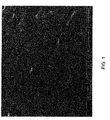
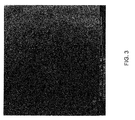
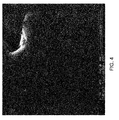
- FIGS. 1-4 respectively show SEM pictures of a part of a surface of an Inconel ® 718 particle before mixing with a treating additive, a part of a surface of an Inconel ® 718 particle after mixing with 80 ppm hydrophobic fumed silica, a part of a surface of an Inconel ® 625 particle before mixing with a treating additive and a part of a surface of an Inconel ® 625 particle after mixing with 50 ppm nano carbon. It can be seen from FIGS. 1-4 that the nano-scale ( ⁇ 100nm) treating additives were distributed to (coated on) surfaces of micro-sized particles after mixing.
- the flowability was measured by a Hall flowmeter according to ASTM B213 standards.
- the flow time of 50g Inconel ® 718 powder treated with different weight percentages of a treating additive (hydrophobic or hydrophilic fumed silica) was recorded through the Hall flowmeter with 0.1 inch diameter of funnel and is shown in FIG. 5 .
- a treating additive hydrophobic or hydrophilic fumed silica
- the flow through the Hall funnel was initiated by a one-time knocking. Other samples' flow was free flow.
- the x axis (horizontal axis) in FIG. 5 is by logarithmic scale.
- Powder spreadability was measured through spreading a layer of the Inconel ® 625 powder (thickness: about 0.5 mm for the powder treated with hydrophobic fumed silica and about 0.05 mm for the powder treated with nano carbon) by a stainless tube on a smooth stainless substrate and is summarized in tables 3 and 4 below.
- Table 3 Weight percentage of hydrophobic fumed silica spreadability 80 ppm High 50 ppm High 30 ppm Medium 20 ppm low 0
- Tables 3 and 4 illustrate that the trace amount of treating additives improved the spreadabilities of the powders.
- the composition specification of Inconel ® 718 powder is shown in table 5 below.
- the heavy elements of two Inconel ® 718 powder samples and 50 ppm and 80 ppm hydrophobic fumed silica treated Inconel ® 718 powder samples were measured by X Ray fluorescene (XRF), and the light elements were determined by Inductively Coupled Plasma Optical Emission Spectrometer (ICP). The results are shown in tables 6 and 7 below.
- Table 5 composition specification of Inconel ® 718 powder Element wt% Nickel (plus Cobalt) 50.00-55.00 Chromium 17.00-21.00 Iron Balance Niobium (plus Tantalum) 4.75-5.50 Molybdenum 2.80-3.30 Titanium 0.65-1.15 Aluminum 0.20-0.80 Cobalt 1.00 max. Carbon 0.08 max. Manganese 0.35 max. Silicon 0.35 max. Phosphorus 0.015 max. Sulfur 0.015 max. Boron 0.006 max. Copper 0.30 max.
Landscapes
- Engineering & Computer Science (AREA)
- Chemical & Material Sciences (AREA)
- Automation & Control Theory (AREA)
- Manufacturing & Machinery (AREA)
- Materials Engineering (AREA)
- Organic Chemistry (AREA)
- Silicon Compounds (AREA)
- Powder Metallurgy (AREA)
- Pigments, Carbon Blacks, Or Wood Stains (AREA)
- Developing Agents For Electrophotography (AREA)
Description
- The invention relates generally to methods for treating powders and powders treated thereby.
- Additive manufacturing technology, i.e., 3D printing technology, such as direct metal laser sintering (DMLS), direct metal laser melting (DMLM), selective laser melting (SLM), selective laser sintering (SLS), electron-beam melting (EBM) or direct deposition, enables the quick production of complex shaped three-dimensional parts directly from metal powder. Generally, the additive manufacturing process uses a bed of loose powder, and for making fine-featured parts and reducing surface roughness of produced parts, the flowing and/or spreading properties of the metal powders usually need to be improved.
- Some approaches have been proposed to increase the flowability of a powder by dry blending the powder with a fluidization additive to produce a dry blended mixture. These methods introduce a relatively large amount of fluidization additives into the powder and thus may change the element formulation of the powder, which is undesirable when the element formulation is critical to the produced part.
- Therefore, while some of the proposed approaches have general use in other conventional industries, it is desirable to provide in additive manufacturing new methods for treating powders and powders treated thereby.
- In one aspect, the invention relates to a method for treating a powder, comprising: dry mixing the powder with an effective amount of a treating additive to distribute a layer of the treating additive on a surface of a particle of the powder, a primary particle size of the treating additive being smaller than an average particle size of the powder.
- In another aspect, the invention relates to a powder comprising a particle, the particle comprising a layer of a treating additive on a surface thereof, a primary particle size of the treating additive being smaller than an average particle size of the powder.
- These and other features, aspects, and advantages of the present invention will become better understood when the following detailed description is read with reference to the accompanying drawings, wherein:
-
FIG. 1 is a scanning electron microscope (SEM) picture of a part of a surface of an Inconel® 718 particle before mixing with a treating additive; -
FIG. 2 is an SEM picture of a part of a surface of an Inconel® 718 particle after mixing with 80 ppm hydrophobic fumed silica; -
FIG. 3 is an SEM picture of a part of a surface of an Inconel® 625 particle before mixing with a treating additive; -
FIG. 4 is an SEM picture of a part of a surface of an Inconel® 625 particle after mixing with 50 ppm nano carbon; and -
FIG. 5 illustrates the flow time of 50g Inconel® 718 powders treated with different weight percentages of treating additives. - Unless defined otherwise, technical and scientific terms used herein have the same meaning as is commonly understood by one of ordinary skill in the art to which this disclosure belongs. The use of "including", "comprising" or "having" and variations thereof herein are meant to encompass the items listed thereafter and equivalents thereof as well as additional items.
- Approximating language, as used herein throughout the specification and claims, may be applied to modify any quantitative representation that could permissibly vary without resulting in a change in the basic function to which it is related. Accordingly, a value modified by a term or terms, such as "about" is not to be limited to the precise value specified. In some instances, the approximating language may correspond to the precision of an instrument for measuring the value. Here and throughout the specification and claims, range limitations may be combined and/or interchanged; such ranges are identified and include all the sub-ranges contained therein unless context or language indicates otherwise.
- In the specification and the claims, the singular forms "a", "an" and "the" include plural referents unless the context clearly dictates otherwise. Moreover, the suffix "(s)" as used herein is usually intended to include both the singular and the plural of the term that it modifies, thereby including one or more of that term.
- As used herein, the term "or" is not meant to be exclusive and refers to at least one of the referenced components (for example, a material) being present and includes instances in which a combination of the referenced components may be present, unless the context clearly dictates otherwise.
- Reference throughout the specification to "some embodiments", and so forth, means that a particular element (e.g., feature, structure, and/or characteristic) described in connection with the invention is included in at least one embodiment described herein, and may or may not be present in other embodiments. In addition, it is to be understood that the described inventive features may be combined in any suitable manner in the various embodiments.
- Embodiments of the present invention relate to methods for treating powders and powders treated thereby.
- As used herein the term "powder" or the like refers to a collection of particles. The particles may be of any configuration, shape or size as long as they are suitable for improvement in the flowability and/or spreadability thereof. In some embodiments, an average particle size of the powder is less than about 100 micrometers. In some embodiments, an average particle size of the powder is in a range of from about 0.2 micrometers to less than about 100 micrometers, such as about 0.2, 0.5, 1.0, 5, 10 or 45 micrometers.
- As used herein the term "average particle size" refers to an average value of the particle sizes. In some embodiments, the average particle size refers to d50, i.e., the particle diameter at the 50% point on a particle size distribution curve when the total volume is 100%.
- The particle size distribution of the powder may be any as appropriate for use. In some embodiments, a particle size distribution of the powder is the d10 is 10 micrometers and the d90 is 45 micrometers, wherein d10 and d90 represent particle diameters at 10% and 90% points on a particle size distribution curve when the total volume is 100%.
- The powder may be made of any materials, such as, nickel, chromium, iron, niobium, tantalum, molybdenum, titanium, aluminum, cobalt, carbon, manganese, silicon, phosphorus, sulfur, boron, copper, or any combination thereof. In some embodiments, the powder is metallic. In some embodiments, the powder is an alloy.
- Examples of the powder include, but are not limited to, the Inconel® 718 powder from Praxair Surface Technologies, Inc., Indianapolis, United States and the Inconel® 625 powder from Carpenter Powder Products Inc., Bridgeville, United States.
- As used herein the term "the treating additive" or the like refers to a material useful to dry mix with a powder to distribute on a surface of a particle of the powder to improve the flowing and/or spreading performance(s) of the powder.
- The treating additive may have a primary particle size of nano scale. As used herein the term "primary particle size" or the like refers to the size of a non-associated single treating additive particle. In some embodiments, the primary particle size of the treating additive is in a range of from about 1 nanometer to about 100 nanometers.
- The treating additive may be made of any material. In some embodiments, the treating additive is fumed silica. In some embodiments, the treating additive is nano hydrophobic silica. In some embodiments, the treating additive is nano hydrophilic silica. Examples of silica based treating additives include, but are not limited to, R972, R202, R974, and A200 from Evonik Industries, and TS-610 and TS-720 from Cabot Corporation. In some embodiments, the treating additive is nano carbon, such as carbon powder, carbon black, graphite, or graphene.
- The powder and the treating additive may be dry mixed in any suitable ways. In mixing, the particles are not damaged, thereby avoiding defects caused thereby. In some embodiments, the mixing is mechanical mixing. In some embodiments, the powder is mixed with the treating additive by a tumbler mixer, a V blender, a ball mixer or other instrument.
- The mixing environment may be dependent on the specific powder, the specific treating additive, the specific requirements of the treated powder, etc. In some embodiments, the powder and the treating additive are sealed during mixing. In some embodiments, the mixing is at an ambient temperature and an ambient pressure.
- The particles of the treating additive may aggregate before mixing, but as can be seen from the following examples, after the powder is mixed with a trace amount of treating additive, the treating additive is distributed to surfaces of particles of the powder, the spreading and/or flowing properties of the powder are improved, and the element formulation of the powder does not obviously change. In some embodiments, the treating additive distributed to the surfaces of particles of powder has an average particle size of from about 1 nanometer to about 300 nanometers or from about 1 nanometer to about 100 nanometers.
- The following examples are included to provide additional guidance to those of ordinary skill in the art in practicing the claimed invention. These examples do not limit the invention as defined in the appended claims.
- Inconel® 718 powders (average particle size: -10-45+ micrometer (D10: 10µm; D90: 45µm)) from Praxair Surface Technologies, Inc., Indianapolis, United States, or Inconel® 625 powders (average particle size: -10-45+ micrometer (D10: 10µm; D90: 45µm)) from Carpenter Powder Products Inc., Bridgeville, United States, and a treating additive (hydrophobic fumed silica (BET surface area > 100m2/g with less than 20nm primary particle size) or nano carbon (with less than 100 nm primary particle size and without oxidation surface treatment) were added to one plastic bottle. The bottle was sealed and shaken by a tumbler mixer at a speed of 110 rotations per minute (rpm) to mix the powder and the treating additive. The dosages of the powder and the treating additive, and the mixing time are listed in table 1 below. The dosage of the treating additive is represented in ppm with respect to a total weight of the treating additive and the powder.
Table 1 powder Powder dosage Treating additive Treating additive dosage Mixing time Inconel® 718 50 g hydrophobic fumed silica 3700 ppm 10 minutes 800 ppm 80 ppm 50 ppm 30 ppm 20 ppm Inconel® 625 nano carbon 100 ppm 5 minutes 50 ppm 25 ppm - Before and after mixing, some particles were analyzed using a scanning electron microscope (SEM) and
FIGS. 1-4 respectively show SEM pictures of a part of a surface of an Inconel® 718 particle before mixing with a treating additive, a part of a surface of an Inconel® 718 particle after mixing with 80 ppm hydrophobic fumed silica, a part of a surface of an Inconel® 625 particle before mixing with a treating additive and a part of a surface of an Inconel® 625 particle after mixing with 50 ppm nano carbon. It can be seen fromFIGS. 1-4 that the nano-scale (<100nm) treating additives were distributed to (coated on) surfaces of micro-sized particles after mixing. - The flowability was measured by a Hall flowmeter according to ASTM B213 standards. The flow time of 50g Inconel® 718 powder treated with different weight percentages of a treating additive (hydrophobic or hydrophilic fumed silica) was recorded through the Hall flowmeter with 0.1 inch diameter of funnel and is shown in
FIG. 5 . For the samples treated with 80ppm hydrophilic fumed silica and 20ppm hydrophobic fumed silica, the flow through the Hall funnel was initiated by a one-time knocking. Other samples' flow was free flow. The x axis (horizontal axis) inFIG. 5 is by logarithmic scale. - It can be seen from
FIG. 5 that the flow time of the treated powder varied when the treating additives and the weight percentages thereof changed and there is no clear trend when weight percentages of the treating additives changed. Surprisingly, the powders treated with less than 100ppm treating additives had acceptable flowabilities. The powders treated with 80 ppm treating additives had the best flowabilities as their flow times were the shortest. - The Carr indices and relevant parameters of treated and non-treated Inconel® 718 powders were measured through the standard process of ASTM D6393 and are shown in table 2 below. Table 2 shows that all parameters changed in desired directions after treating and hence the flowability of the powder improved after treating.
Table 2 Carr indices Inconel® 718 powder Inconel 718® powder treated with 80 ppm hydrophobic fumed silica Angle of repose 32.14° 29.50°↓ Angle of fall 28.82° 21.73°↓ Angle of difference 3.32° 7.77°↑ Angle of spatula 37.32° 31.20°↓ Loosed bulk density 4.36g/cm3 4.77g/cm3↑ Packed bulk density 4.76g/cm3 5.21g/cm3↑ Uniformity 2.05% 2.05% Carr index 87 91↑ - Powder spreadability was measured through spreading a layer of the Inconel® 625 powder (thickness: about 0.5 mm for the powder treated with hydrophobic fumed silica and about 0.05 mm for the powder treated with nano carbon) by a stainless tube on a smooth stainless substrate and is summarized in tables 3 and 4 below.
Table 3 Weight percentage of hydrophobic fumed silica spreadability 80 ppm High 50 ppm High 30 ppm Medium 20 ppm low 0 Couldn't spread Table 4 Weight percentage of nano carbon spreadability 50 ppm Medium 25 ppm Low 0 Couldn't spread - Tables 3 and 4 illustrate that the trace amount of treating additives improved the spreadabilities of the powders.
- The composition specification of Inconel® 718 powder is shown in table 5 below. The heavy elements of two Inconel® 718 powder samples and 50 ppm and 80 ppm hydrophobic fumed silica treated Inconel® 718 powder samples were measured by X Ray fluorescene (XRF), and the light elements were determined by Inductively Coupled Plasma Optical Emission Spectrometer (ICP). The results are shown in tables 6 and 7 below.
Table 5: composition specification of Inconel® 718 powder Element wt% Nickel (plus Cobalt) 50.00-55.00 Chromium 17.00-21.00 Iron Balance Niobium (plus Tantalum) 4.75-5.50 Molybdenum 2.80-3.30 Titanium 0.65-1.15 Aluminum 0.20-0.80 Cobalt 1.00 max. Carbon 0.08 max. Manganese 0.35 max. Silicon 0.35 max. Phosphorus 0.015 max. Sulfur 0.015 max. Boron 0.006 max. Copper 0.30 max. Table 6 element measurement by XRF Sample Inconel® 718-1 Inconel® 718-2 50 ppm hydrophobic fumed silica treated Inconel® 718 80 ppm hydrophobic fumed silica treated Inconel® 718 Element wt% wt% wt% wt% Ti 1.00 0.93 1.10 0.99 Cr 19.73 19.94 19.88 19.96 Fe 17.46 17.57 17.19 17.63 Co 0.86 0.83 0.81 0.83 Ni 51.24 51.61 51.72 51.55 Nb 5.05 5.06 4.87 4.96 Mo 3.26 3.22 3.45 3.18 Table 7 A1 and Si weight percentage (wt%) by ICP Sample Al, wt% Si, wt% Inconel® 718-1 0.55 0.077 Inconel® 718-2 0.57 0.081 Inconel® 718 treated with 80ppm hydrophobic fumed silica-1 0.64 0.075 Inconel® 718 treated with 80ppm hydrophobic fumed silica-2 0.63 0.075 Note: -1 and -2 are duplicates for the same batch of treated or non-treated powder - The tables above show that the trace amount of nano-scale treating additives didn't obviously change the element formulation of the alloy powder. Most of the element contents of the treated metal powder are still in the specification range of the powder. The influence of the coating on the element formulation of the powder could be neglected, which ensures the element formulation of the product derived from the treated powder.
- While only certain features of the invention have been illustrated and described herein, many modifications and changes will occur to those skilled in the art. It is, therefore, to be understood that the appended claims are intended to cover all such modifications and changes as fall within the true spirit of the invention.
Claims (14)
- A method for treating a powder, comprising:dry mixing the powder with an effective amount of a treating additive to distribute a layer of the treating additive on a surface of a particle of the powder, a primary particle size of the treating additive being smaller than an average particle size of the powder.
- The method of claim 1, wherein the powder is metallic.
- The method of either of claim 1 or 2, wherein the powder is an alloy.
- The method of any preceding claim, wherein the dry mixing is by a tumbler mixer, a V blender, a ball mixer, or other instrument.
- The method of any preceding claim, wherein the average particle size of the powder is less than 100 micrometer.
- The method of any preceding claim, wherein the primary particle size of the treating additive is in a range of from 1 nanometer to 100 nanometers.
- The method of any preceding claim, wherein a weight of the treating additive is less than 100 ppm of a total of the weight of the treating additive and a weight of the powder.
- The method of any preceding claim, wherein the treating additive is nano hydrophobic silica.
- The method of any of claims 1 to 7, wherein the treating additive is nano carbon.
- A powder comprising a particle, the particle comprising a layer of a treating additive on a surface thereof, a primary particle size of the treating additive being smaller than an average particle size of the powder.
- The powder of claim 10, being metallic.
- The powder of either of claim 10 or 11, being an alloy.
- The powder of any of claims 10 to 12, wherein the average particle size of the powder is less than 100 micrometers.
- The powder of any of claims 10 to 13, wherein a weight of the treating additive is less than 100 ppm of a total of the weight of the treating additive and a weight of the powder.
Applications Claiming Priority (1)
| Application Number | Priority Date | Filing Date | Title |
|---|---|---|---|
| CN201410320967.8A CN105290388B (en) | 2014-07-04 | 2014-07-04 | Powder treatment method and correspondingly treated powder |
Publications (2)
| Publication Number | Publication Date |
|---|---|
| EP2962787A1 true EP2962787A1 (en) | 2016-01-06 |
| EP2962787B1 EP2962787B1 (en) | 2020-04-08 |
Family
ID=53514035
Family Applications (1)
| Application Number | Title | Priority Date | Filing Date |
|---|---|---|---|
| EP15175076.7A Active EP2962787B1 (en) | 2014-07-04 | 2015-07-02 | Method for treating powder and powder treated thereby |
Country Status (6)
| Country | Link |
|---|---|
| US (1) | US9994716B2 (en) |
| EP (1) | EP2962787B1 (en) |
| JP (1) | JP6716205B2 (en) |
| CN (1) | CN105290388B (en) |
| BR (1) | BR102015016164A2 (en) |
| CA (1) | CA2895419A1 (en) |
Cited By (2)
| Publication number | Priority date | Publication date | Assignee | Title |
|---|---|---|---|---|
| WO2017125243A1 (en) * | 2016-01-18 | 2017-07-27 | Audi Ag | Substance for producing a component |
| DE102019207389A1 (en) * | 2019-05-21 | 2020-11-26 | Volkswagen Aktiengesellschaft | Method for the additive and / or generative production of a component and a motor vehicle |
Families Citing this family (23)
| Publication number | Priority date | Publication date | Assignee | Title |
|---|---|---|---|---|
| JP7001061B2 (en) * | 2016-11-02 | 2022-01-19 | コニカミノルタ株式会社 | Manufacturing method of additive manufacturing |
| CN106898802B (en) * | 2017-02-28 | 2019-07-26 | 安研纳米新材料科技(广州)有限责任公司 | A kind of high-performing car hydrogen fuel cell composite nano-powder material and preparation method thereof |
| CN106825554B (en) * | 2017-02-28 | 2018-12-25 | 广州市新稀冶金化工有限公司 | 3D printing nano metal alloy powder and preparation method thereof |
| JP7024394B2 (en) * | 2017-12-26 | 2022-02-24 | 大同特殊鋼株式会社 | Metal powder material |
| WO2019177614A1 (en) | 2018-03-15 | 2019-09-19 | Hewlett-Packard Development Company, L.P. | Composition |
| US10620103B2 (en) * | 2018-05-15 | 2020-04-14 | Honeywell International Inc. | Devices and methods for evaluating the spreadability of powders utilized in additive manufacturing |
| CN115943059B (en) * | 2018-10-25 | 2025-09-09 | 佩里多特打印有限责任公司 | Three-dimensional printing |
| US20220145427A1 (en) * | 2019-03-04 | 2022-05-12 | Hitachi Metals, Ltd. | Ni-based corrosion resistant alloy powder for additive manufacturing and manufacturing method of additive manufacturing product using said powder |
| JP7395840B2 (en) * | 2019-04-09 | 2023-12-12 | セイコーエプソン株式会社 | Powder for additive manufacturing and method for producing additively manufactured objects |
| KR20220019680A (en) | 2019-05-02 | 2022-02-17 | 테크나 플라즈마 시스템 인코포레이티드 | Additive manufacturing powder with improved physical properties, manufacturing method and use thereof |
| JP7544697B2 (en) | 2019-06-13 | 2024-09-03 | 福田金属箔粉工業株式会社 | Copper powder for additive manufacturing, and manufacturing method for additive manufacturing body |
| JP6734447B1 (en) | 2019-07-31 | 2020-08-05 | 株式会社ソディック | Material powder for metal additive manufacturing and manufacturing method thereof |
| CN114630720B (en) * | 2019-11-08 | 2024-06-18 | 大同特殊钢株式会社 | Powder material |
| JP7427919B2 (en) * | 2019-11-08 | 2024-02-06 | 大同特殊鋼株式会社 | Manufacturing method of powder material |
| JP7686956B2 (en) * | 2019-11-08 | 2025-06-03 | 大同特殊鋼株式会社 | powder material |
| EP3915787A1 (en) * | 2020-05-26 | 2021-12-01 | General Electric Company | Fluorescent binders for use in monitoring additive manufacturing processes |
| US20220288677A1 (en) * | 2021-03-11 | 2022-09-15 | Daido Steel Co, Ltd. | Powder material and producing method for the same |
| US12208449B2 (en) * | 2021-05-04 | 2025-01-28 | The Government Of The United States Of America, As Represented By The Secretary Of The Navy | 3D printed oxide reinforced titanium composites and methods |
| JP7615014B2 (en) * | 2021-12-01 | 2025-01-16 | 山陽特殊製鋼株式会社 | Metal powder for additive manufacturing containing oxide nanoparticles and additive manufacturing body |
| JP2023122710A (en) * | 2022-02-24 | 2023-09-05 | 株式会社リコー | Powder material for three-dimensional modeling, kit for three-dimensional modeling, and method for producing three-dimensional model |
| WO2023188780A1 (en) * | 2022-03-31 | 2023-10-05 | 株式会社村田製作所 | Method for producing magnetic core and method for producing coil component |
| JP2024004378A (en) * | 2022-06-28 | 2024-01-16 | 山陽特殊製鋼株式会社 | Ni-based alloy powder for additive manufacturing mixed with oxide nanoparticles and additively manufactured object |
| JP7661456B1 (en) * | 2023-12-07 | 2025-04-14 | 日本アエロジル株式会社 | Composite filler and its manufacturing method |
Citations (2)
| Publication number | Priority date | Publication date | Assignee | Title |
|---|---|---|---|---|
| US6582763B1 (en) * | 1999-01-29 | 2003-06-24 | Nisshin Seifun Group Inc. | Process for producing oxide coated fine metal particles |
| US20070053846A1 (en) * | 2005-08-31 | 2007-03-08 | Dave Rajesh N | Dry coating and downstream processing of cohesive powders |
Family Cites Families (18)
| Publication number | Priority date | Publication date | Assignee | Title |
|---|---|---|---|---|
| US5387380A (en) | 1989-12-08 | 1995-02-07 | Massachusetts Institute Of Technology | Three-dimensional printing techniques |
| GB9814519D0 (en) * | 1998-07-03 | 1998-09-02 | Courtaulds Coatings Holdings | Powder coating compositions |
| US6833185B2 (en) | 2002-07-12 | 2004-12-21 | The University Of Western Ontario | Fluidization additives to fine powders |
| DE10330591A1 (en) | 2002-11-28 | 2004-06-09 | Degussa Ag | Sinter powder useful in selective laser sintering to produce moldings comprises polyamide and fatty acid salt, montanic acid salt or dimer acid salt |
| WO2004062799A1 (en) * | 2003-01-09 | 2004-07-29 | Showa Denko K.K. | Composite particles and method for production thereof and use thereof |
| JP2004332016A (en) * | 2003-05-01 | 2004-11-25 | Seiko Epson Corp | Metal granulated powder, method for producing the same, and metal powder |
| JP2005015910A (en) * | 2003-06-03 | 2005-01-20 | Hosokawa Funtai Gijutsu Kenkyusho:Kk | Method for producing composite particles, and composite particles produced by the method |
| WO2005090448A1 (en) | 2004-03-21 | 2005-09-29 | Toyota Motorsport Gmbh | Powders for rapid prototyping and methods for the production thereof |
| UA95096C2 (en) * | 2005-12-30 | 2011-07-11 | Хеганес Аб | Iron-based powder metallurgical composition, composite lubricant on its base and method of production thereof |
| WO2007121575A1 (en) | 2006-04-21 | 2007-11-01 | Metafoam Technologies Inc. | Open cell porous material and method for producing same |
| US7878430B2 (en) * | 2006-11-20 | 2011-02-01 | The University Of Western Ontario | Method and apparatus for uniformly dispersing additive particles in fine powders |
| WO2008067496A2 (en) | 2006-11-29 | 2008-06-05 | Desktop Factory Inc. | Sinterable powder |
| US20080166558A1 (en) * | 2006-12-22 | 2008-07-10 | 3M Innovative Properties Company | Compositions of particles |
| WO2009054386A1 (en) * | 2007-10-22 | 2009-04-30 | Nippon Chemical Industrial Co., Ltd. | Coated conductive powder and conductive adhesive using the same |
| DE102010043166A1 (en) | 2010-10-29 | 2012-05-03 | Eos Gmbh Electro Optical Systems | Device for treating powder for a device for producing a three-dimensional object and device for producing a three-dimensional object |
| EP2790858B1 (en) | 2011-12-14 | 2017-02-08 | General Electric Technology GmbH | Method for additively manufacturing an article made of a difficult-to-weld material |
| ITMI20120331A1 (en) | 2012-03-02 | 2013-09-03 | Legor Group S P A | SILVER-BASED ALLOY POWDER FOR MANUFACTURING OF 3-DIMENSIONAL METAL OBJECTS |
| CN103088281A (en) * | 2013-01-22 | 2013-05-08 | 广东新劲刚新材料科技股份有限公司 | Mo2FeB2-based thermal spraying alloy powder and preparation method thereof |
-
2014
- 2014-07-04 CN CN201410320967.8A patent/CN105290388B/en active Active
-
2015
- 2015-06-17 US US14/741,479 patent/US9994716B2/en active Active
- 2015-06-25 CA CA2895419A patent/CA2895419A1/en not_active Abandoned
- 2015-06-30 JP JP2015130511A patent/JP6716205B2/en active Active
- 2015-07-02 EP EP15175076.7A patent/EP2962787B1/en active Active
- 2015-07-03 BR BR102015016164A patent/BR102015016164A2/en active Search and Examination
Patent Citations (2)
| Publication number | Priority date | Publication date | Assignee | Title |
|---|---|---|---|---|
| US6582763B1 (en) * | 1999-01-29 | 2003-06-24 | Nisshin Seifun Group Inc. | Process for producing oxide coated fine metal particles |
| US20070053846A1 (en) * | 2005-08-31 | 2007-03-08 | Dave Rajesh N | Dry coating and downstream processing of cohesive powders |
Non-Patent Citations (2)
| Title |
|---|
| M. ALONSO ET AL: "Dry mixing and coating of powders", REVISTA DE METALURGIA, vol. 35, no. 5, 30 October 1999 (1999-10-30), ES, pages 315 - 328, XP055226175, ISSN: 0034-8570, DOI: 10.3989/revmetalm.1999.v35.i5 * |
| TOMOHIRO IWASAKI ET AL: "Coating of soft metal particles with ceramic fines using a dry mechanical method", JOURNAL OF MATERIALS PROCESSING TECHNOLOGY, vol. 146, no. 3, March 2004 (2004-03-01), NL, pages 330 - 337, XP055226163, ISSN: 0924-0136, DOI: 10.1016/j.jmatprotec.2003.11.020 * |
Cited By (3)
| Publication number | Priority date | Publication date | Assignee | Title |
|---|---|---|---|---|
| WO2017125243A1 (en) * | 2016-01-18 | 2017-07-27 | Audi Ag | Substance for producing a component |
| CN108472723A (en) * | 2016-01-18 | 2018-08-31 | 奥迪股份公司 | Materials used to make components |
| DE102019207389A1 (en) * | 2019-05-21 | 2020-11-26 | Volkswagen Aktiengesellschaft | Method for the additive and / or generative production of a component and a motor vehicle |
Also Published As
| Publication number | Publication date |
|---|---|
| US20160002471A1 (en) | 2016-01-07 |
| US9994716B2 (en) | 2018-06-12 |
| JP6716205B2 (en) | 2020-07-01 |
| EP2962787B1 (en) | 2020-04-08 |
| CA2895419A1 (en) | 2016-01-04 |
| JP2016041850A (en) | 2016-03-31 |
| CN105290388A (en) | 2016-02-03 |
| BR102015016164A2 (en) | 2016-01-05 |
| CN105290388B (en) | 2020-04-07 |
Similar Documents
| Publication | Publication Date | Title |
|---|---|---|
| EP2962787A1 (en) | Method for treating powder and powder treated thereby | |
| CN109954874B (en) | Metal powder material | |
| US10875091B2 (en) | Metal powder, feedstock, and preparation method therefor | |
| US20090229976A1 (en) | Sputtering Target Material Containing Cobalt/Chromium/Platinum Matrix Phase and Oxide Phase, and Process for Producing the Same | |
| TWI558834B (en) | Target for magnetron sputtering | |
| JP7176219B2 (en) | Metal powder material and method for producing metal powder material | |
| JP4871406B1 (en) | Magnetron sputtering target and method for manufacturing the same | |
| WO2019230806A1 (en) | Metal powder for 3d printers, shaped article, and method for producing shaped article | |
| WO2016147943A1 (en) | Flat soft magnetic powder and production method therefor | |
| JP5768029B2 (en) | Magnetron sputtering target and method for manufacturing the same | |
| Oh et al. | Nanopowder effect on Fe nano/micro-bimodal powder injection molding | |
| TW201726955A (en) | Sputtering target material | |
| WO2013073323A1 (en) | Target for use in magnetron sputtering and manufacturing process therefor | |
| JP2016125103A (en) | Metal powder for powder metallurgy, compound, granulated powder and sintered body | |
| JP2014074219A5 (en) | ||
| JP7133666B2 (en) | Soft magnetic flat powder | |
| JP5748639B2 (en) | Magnetron sputtering target and method for manufacturing the same | |
| TWI727414B (en) | Alloy powder composition | |
| JP7083289B2 (en) | Powder material | |
| CN110871269A (en) | Alloy powder composition | |
| KR101808437B1 (en) | Fe-based alloy for metal injection molding and manufacturing method of the same | |
| JP2025150418A (en) | Powder for laser additive manufacturing and method for producing the same | |
| KR101754163B1 (en) | Method for fabricating hard metal using powder process technique | |
| CN117120180A (en) | Soft magnetic powder and magnetic core | |
| JPH09256004A (en) | Metal powder and method for producing the same |
Legal Events
| Date | Code | Title | Description |
|---|---|---|---|
| PUAI | Public reference made under article 153(3) epc to a published international application that has entered the european phase |
Free format text: ORIGINAL CODE: 0009012 |
|
| AK | Designated contracting states |
Kind code of ref document: A1 Designated state(s): AL AT BE BG CH CY CZ DE DK EE ES FI FR GB GR HR HU IE IS IT LI LT LU LV MC MK MT NL NO PL PT RO RS SE SI SK SM TR |
|
| AX | Request for extension of the european patent |
Extension state: BA ME |
|
| 17P | Request for examination filed |
Effective date: 20160706 |
|
| RBV | Designated contracting states (corrected) |
Designated state(s): AL AT BE BG CH CY CZ DE DK EE ES FI FR GB GR HR HU IE IS IT LI LT LU LV MC MK MT NL NO PL PT RO RS SE SI SK SM TR |
|
| STAA | Information on the status of an ep patent application or granted ep patent |
Free format text: STATUS: REQUEST FOR EXAMINATION WAS MADE |
|
| R17P | Request for examination filed (corrected) |
Effective date: 20160706 |
|
| STAA | Information on the status of an ep patent application or granted ep patent |
Free format text: STATUS: EXAMINATION IS IN PROGRESS |
|
| 17Q | First examination report despatched |
Effective date: 20180222 |
|
| GRAP | Despatch of communication of intention to grant a patent |
Free format text: ORIGINAL CODE: EPIDOSNIGR1 |
|
| RIC1 | Information provided on ipc code assigned before grant |
Ipc: B22F 1/02 20060101ALI20190906BHEP Ipc: B22F 1/00 20060101AFI20190906BHEP Ipc: C22C 33/02 20060101ALN20190906BHEP Ipc: B22F 3/105 20060101ALN20190906BHEP |
|
| STAA | Information on the status of an ep patent application or granted ep patent |
Free format text: STATUS: GRANT OF PATENT IS INTENDED |
|
| INTG | Intention to grant announced |
Effective date: 20191017 |
|
| GRAS | Grant fee paid |
Free format text: ORIGINAL CODE: EPIDOSNIGR3 |
|
| GRAA | (expected) grant |
Free format text: ORIGINAL CODE: 0009210 |
|
| STAA | Information on the status of an ep patent application or granted ep patent |
Free format text: STATUS: THE PATENT HAS BEEN GRANTED |
|
| AK | Designated contracting states |
Kind code of ref document: B1 Designated state(s): AL AT BE BG CH CY CZ DE DK EE ES FI FR GB GR HR HU IE IS IT LI LT LU LV MC MK MT NL NO PL PT RO RS SE SI SK SM TR |
|
| REG | Reference to a national code |
Ref country code: CH Ref legal event code: EP Ref country code: AT Ref legal event code: REF Ref document number: 1253680 Country of ref document: AT Kind code of ref document: T Effective date: 20200415 |
|
| REG | Reference to a national code |
Ref country code: IE Ref legal event code: FG4D |
|
| REG | Reference to a national code |
Ref country code: DE Ref legal event code: R096 Ref document number: 602015050159 Country of ref document: DE |
|
| REG | Reference to a national code |
Ref country code: NL Ref legal event code: MP Effective date: 20200408 |
|
| REG | Reference to a national code |
Ref country code: LT Ref legal event code: MG4D |
|
| PG25 | Lapsed in a contracting state [announced via postgrant information from national office to epo] |
Ref country code: SE Free format text: LAPSE BECAUSE OF FAILURE TO SUBMIT A TRANSLATION OF THE DESCRIPTION OR TO PAY THE FEE WITHIN THE PRESCRIBED TIME-LIMIT Effective date: 20200408 Ref country code: NL Free format text: LAPSE BECAUSE OF FAILURE TO SUBMIT A TRANSLATION OF THE DESCRIPTION OR TO PAY THE FEE WITHIN THE PRESCRIBED TIME-LIMIT Effective date: 20200408 Ref country code: FI Free format text: LAPSE BECAUSE OF FAILURE TO SUBMIT A TRANSLATION OF THE DESCRIPTION OR TO PAY THE FEE WITHIN THE PRESCRIBED TIME-LIMIT Effective date: 20200408 Ref country code: NO Free format text: LAPSE BECAUSE OF FAILURE TO SUBMIT A TRANSLATION OF THE DESCRIPTION OR TO PAY THE FEE WITHIN THE PRESCRIBED TIME-LIMIT Effective date: 20200708 Ref country code: GR Free format text: LAPSE BECAUSE OF FAILURE TO SUBMIT A TRANSLATION OF THE DESCRIPTION OR TO PAY THE FEE WITHIN THE PRESCRIBED TIME-LIMIT Effective date: 20200709 Ref country code: IS Free format text: LAPSE BECAUSE OF FAILURE TO SUBMIT A TRANSLATION OF THE DESCRIPTION OR TO PAY THE FEE WITHIN THE PRESCRIBED TIME-LIMIT Effective date: 20200808 Ref country code: LT Free format text: LAPSE BECAUSE OF FAILURE TO SUBMIT A TRANSLATION OF THE DESCRIPTION OR TO PAY THE FEE WITHIN THE PRESCRIBED TIME-LIMIT Effective date: 20200408 Ref country code: PT Free format text: LAPSE BECAUSE OF FAILURE TO SUBMIT A TRANSLATION OF THE DESCRIPTION OR TO PAY THE FEE WITHIN THE PRESCRIBED TIME-LIMIT Effective date: 20200817 |
|
| REG | Reference to a national code |
Ref country code: AT Ref legal event code: MK05 Ref document number: 1253680 Country of ref document: AT Kind code of ref document: T Effective date: 20200408 |
|
| PG25 | Lapsed in a contracting state [announced via postgrant information from national office to epo] |
Ref country code: LV Free format text: LAPSE BECAUSE OF FAILURE TO SUBMIT A TRANSLATION OF THE DESCRIPTION OR TO PAY THE FEE WITHIN THE PRESCRIBED TIME-LIMIT Effective date: 20200408 Ref country code: RS Free format text: LAPSE BECAUSE OF FAILURE TO SUBMIT A TRANSLATION OF THE DESCRIPTION OR TO PAY THE FEE WITHIN THE PRESCRIBED TIME-LIMIT Effective date: 20200408 Ref country code: BG Free format text: LAPSE BECAUSE OF FAILURE TO SUBMIT A TRANSLATION OF THE DESCRIPTION OR TO PAY THE FEE WITHIN THE PRESCRIBED TIME-LIMIT Effective date: 20200708 Ref country code: HR Free format text: LAPSE BECAUSE OF FAILURE TO SUBMIT A TRANSLATION OF THE DESCRIPTION OR TO PAY THE FEE WITHIN THE PRESCRIBED TIME-LIMIT Effective date: 20200408 |
|
| PG25 | Lapsed in a contracting state [announced via postgrant information from national office to epo] |
Ref country code: AL Free format text: LAPSE BECAUSE OF FAILURE TO SUBMIT A TRANSLATION OF THE DESCRIPTION OR TO PAY THE FEE WITHIN THE PRESCRIBED TIME-LIMIT Effective date: 20200408 |
|
| REG | Reference to a national code |
Ref country code: DE Ref legal event code: R097 Ref document number: 602015050159 Country of ref document: DE |
|
| PG25 | Lapsed in a contracting state [announced via postgrant information from national office to epo] |
Ref country code: RO Free format text: LAPSE BECAUSE OF FAILURE TO SUBMIT A TRANSLATION OF THE DESCRIPTION OR TO PAY THE FEE WITHIN THE PRESCRIBED TIME-LIMIT Effective date: 20200408 Ref country code: IT Free format text: LAPSE BECAUSE OF FAILURE TO SUBMIT A TRANSLATION OF THE DESCRIPTION OR TO PAY THE FEE WITHIN THE PRESCRIBED TIME-LIMIT Effective date: 20200408 Ref country code: CZ Free format text: LAPSE BECAUSE OF FAILURE TO SUBMIT A TRANSLATION OF THE DESCRIPTION OR TO PAY THE FEE WITHIN THE PRESCRIBED TIME-LIMIT Effective date: 20200408 Ref country code: SM Free format text: LAPSE BECAUSE OF FAILURE TO SUBMIT A TRANSLATION OF THE DESCRIPTION OR TO PAY THE FEE WITHIN THE PRESCRIBED TIME-LIMIT Effective date: 20200408 Ref country code: EE Free format text: LAPSE BECAUSE OF FAILURE TO SUBMIT A TRANSLATION OF THE DESCRIPTION OR TO PAY THE FEE WITHIN THE PRESCRIBED TIME-LIMIT Effective date: 20200408 Ref country code: AT Free format text: LAPSE BECAUSE OF FAILURE TO SUBMIT A TRANSLATION OF THE DESCRIPTION OR TO PAY THE FEE WITHIN THE PRESCRIBED TIME-LIMIT Effective date: 20200408 Ref country code: DK Free format text: LAPSE BECAUSE OF FAILURE TO SUBMIT A TRANSLATION OF THE DESCRIPTION OR TO PAY THE FEE WITHIN THE PRESCRIBED TIME-LIMIT Effective date: 20200408 Ref country code: ES Free format text: LAPSE BECAUSE OF FAILURE TO SUBMIT A TRANSLATION OF THE DESCRIPTION OR TO PAY THE FEE WITHIN THE PRESCRIBED TIME-LIMIT Effective date: 20200408 |
|
| PLBE | No opposition filed within time limit |
Free format text: ORIGINAL CODE: 0009261 |
|
| STAA | Information on the status of an ep patent application or granted ep patent |
Free format text: STATUS: NO OPPOSITION FILED WITHIN TIME LIMIT |
|
| PG25 | Lapsed in a contracting state [announced via postgrant information from national office to epo] |
Ref country code: SK Free format text: LAPSE BECAUSE OF FAILURE TO SUBMIT A TRANSLATION OF THE DESCRIPTION OR TO PAY THE FEE WITHIN THE PRESCRIBED TIME-LIMIT Effective date: 20200408 Ref country code: PL Free format text: LAPSE BECAUSE OF FAILURE TO SUBMIT A TRANSLATION OF THE DESCRIPTION OR TO PAY THE FEE WITHIN THE PRESCRIBED TIME-LIMIT Effective date: 20200408 Ref country code: MC Free format text: LAPSE BECAUSE OF FAILURE TO SUBMIT A TRANSLATION OF THE DESCRIPTION OR TO PAY THE FEE WITHIN THE PRESCRIBED TIME-LIMIT Effective date: 20200408 |
|
| REG | Reference to a national code |
Ref country code: CH Ref legal event code: PL |
|
| 26N | No opposition filed |
Effective date: 20210112 |
|
| REG | Reference to a national code |
Ref country code: BE Ref legal event code: MM Effective date: 20200731 |
|
| PG25 | Lapsed in a contracting state [announced via postgrant information from national office to epo] |
Ref country code: IE Free format text: LAPSE BECAUSE OF NON-PAYMENT OF DUE FEES Effective date: 20200702 Ref country code: CH Free format text: LAPSE BECAUSE OF NON-PAYMENT OF DUE FEES Effective date: 20200731 Ref country code: LU Free format text: LAPSE BECAUSE OF NON-PAYMENT OF DUE FEES Effective date: 20200702 Ref country code: LI Free format text: LAPSE BECAUSE OF NON-PAYMENT OF DUE FEES Effective date: 20200731 |
|
| PG25 | Lapsed in a contracting state [announced via postgrant information from national office to epo] |
Ref country code: BE Free format text: LAPSE BECAUSE OF NON-PAYMENT OF DUE FEES Effective date: 20200731 Ref country code: SI Free format text: LAPSE BECAUSE OF FAILURE TO SUBMIT A TRANSLATION OF THE DESCRIPTION OR TO PAY THE FEE WITHIN THE PRESCRIBED TIME-LIMIT Effective date: 20200408 |
|
| PG25 | Lapsed in a contracting state [announced via postgrant information from national office to epo] |
Ref country code: TR Free format text: LAPSE BECAUSE OF FAILURE TO SUBMIT A TRANSLATION OF THE DESCRIPTION OR TO PAY THE FEE WITHIN THE PRESCRIBED TIME-LIMIT Effective date: 20200408 Ref country code: MT Free format text: LAPSE BECAUSE OF FAILURE TO SUBMIT A TRANSLATION OF THE DESCRIPTION OR TO PAY THE FEE WITHIN THE PRESCRIBED TIME-LIMIT Effective date: 20200408 Ref country code: CY Free format text: LAPSE BECAUSE OF FAILURE TO SUBMIT A TRANSLATION OF THE DESCRIPTION OR TO PAY THE FEE WITHIN THE PRESCRIBED TIME-LIMIT Effective date: 20200408 |
|
| PG25 | Lapsed in a contracting state [announced via postgrant information from national office to epo] |
Ref country code: MK Free format text: LAPSE BECAUSE OF FAILURE TO SUBMIT A TRANSLATION OF THE DESCRIPTION OR TO PAY THE FEE WITHIN THE PRESCRIBED TIME-LIMIT Effective date: 20200408 |
|
| P01 | Opt-out of the competence of the unified patent court (upc) registered |
Effective date: 20230515 |
|
| PGFP | Annual fee paid to national office [announced via postgrant information from national office to epo] |
Ref country code: GB Payment date: 20250619 Year of fee payment: 11 |
|
| PGFP | Annual fee paid to national office [announced via postgrant information from national office to epo] |
Ref country code: FR Payment date: 20250619 Year of fee payment: 11 |
|
| PGFP | Annual fee paid to national office [announced via postgrant information from national office to epo] |
Ref country code: DE Payment date: 20250620 Year of fee payment: 11 |