EP2955693B1 - Faltendetektionsvorrichtung und faltendetektionsverfahren - Google Patents
Faltendetektionsvorrichtung und faltendetektionsverfahren Download PDFInfo
- Publication number
- EP2955693B1 EP2955693B1 EP15166536.1A EP15166536A EP2955693B1 EP 2955693 B1 EP2955693 B1 EP 2955693B1 EP 15166536 A EP15166536 A EP 15166536A EP 2955693 B1 EP2955693 B1 EP 2955693B1
- Authority
- EP
- European Patent Office
- Prior art keywords
- area
- wrinkle
- image
- edge
- threshold
- Prior art date
- Legal status (The legal status is an assumption and is not a legal conclusion. Google has not performed a legal analysis and makes no representation as to the accuracy of the status listed.)
- Active
Links
Images


Classifications
-
- A—HUMAN NECESSITIES
- A61—MEDICAL OR VETERINARY SCIENCE; HYGIENE
- A61B—DIAGNOSIS; SURGERY; IDENTIFICATION
- A61B5/00—Measuring for diagnostic purposes; Identification of persons
- A61B5/44—Detecting, measuring or recording for evaluating the integumentary system, e.g. skin, hair or nails
- A61B5/441—Skin evaluation, e.g. for skin disorder diagnosis
- A61B5/442—Evaluating skin mechanical properties, e.g. elasticity, hardness, texture, wrinkle assessment
-
- A—HUMAN NECESSITIES
- A61—MEDICAL OR VETERINARY SCIENCE; HYGIENE
- A61B—DIAGNOSIS; SURGERY; IDENTIFICATION
- A61B5/00—Measuring for diagnostic purposes; Identification of persons
- A61B5/0059—Measuring for diagnostic purposes; Identification of persons using light, e.g. diagnosis by transillumination, diascopy, fluorescence
- A61B5/0077—Devices for viewing the surface of the body, e.g. camera, magnifying lens
-
- A—HUMAN NECESSITIES
- A61—MEDICAL OR VETERINARY SCIENCE; HYGIENE
- A61B—DIAGNOSIS; SURGERY; IDENTIFICATION
- A61B5/00—Measuring for diagnostic purposes; Identification of persons
- A61B5/74—Details of notification to user or communication with user or patient; User input means
- A61B5/742—Details of notification to user or communication with user or patient; User input means using visual displays
-
- G—PHYSICS
- G06—COMPUTING OR CALCULATING; COUNTING
- G06T—IMAGE DATA PROCESSING OR GENERATION, IN GENERAL
- G06T7/00—Image analysis
- G06T7/0002—Inspection of images, e.g. flaw detection
- G06T7/0012—Biomedical image inspection
-
- G—PHYSICS
- G06—COMPUTING OR CALCULATING; COUNTING
- G06T—IMAGE DATA PROCESSING OR GENERATION, IN GENERAL
- G06T7/00—Image analysis
- G06T7/10—Segmentation; Edge detection
- G06T7/13—Edge detection
-
- G—PHYSICS
- G06—COMPUTING OR CALCULATING; COUNTING
- G06T—IMAGE DATA PROCESSING OR GENERATION, IN GENERAL
- G06T7/00—Image analysis
- G06T7/10—Segmentation; Edge detection
- G06T7/136—Segmentation; Edge detection involving thresholding
-
- G—PHYSICS
- G06—COMPUTING OR CALCULATING; COUNTING
- G06V—IMAGE OR VIDEO RECOGNITION OR UNDERSTANDING
- G06V40/00—Recognition of biometric, human-related or animal-related patterns in image or video data
- G06V40/10—Human or animal bodies, e.g. vehicle occupants or pedestrians; Body parts, e.g. hands
- G06V40/16—Human faces, e.g. facial parts, sketches or expressions
- G06V40/161—Detection; Localisation; Normalisation
-
- G—PHYSICS
- G06—COMPUTING OR CALCULATING; COUNTING
- G06V—IMAGE OR VIDEO RECOGNITION OR UNDERSTANDING
- G06V40/00—Recognition of biometric, human-related or animal-related patterns in image or video data
- G06V40/10—Human or animal bodies, e.g. vehicle occupants or pedestrians; Body parts, e.g. hands
- G06V40/16—Human faces, e.g. facial parts, sketches or expressions
- G06V40/168—Feature extraction; Face representation
-
- A—HUMAN NECESSITIES
- A61—MEDICAL OR VETERINARY SCIENCE; HYGIENE
- A61B—DIAGNOSIS; SURGERY; IDENTIFICATION
- A61B2576/00—Medical imaging apparatus involving image processing or analysis
-
- G—PHYSICS
- G06—COMPUTING OR CALCULATING; COUNTING
- G06T—IMAGE DATA PROCESSING OR GENERATION, IN GENERAL
- G06T2207/00—Indexing scheme for image analysis or image enhancement
- G06T2207/10—Image acquisition modality
- G06T2207/10004—Still image; Photographic image
-
- G—PHYSICS
- G06—COMPUTING OR CALCULATING; COUNTING
- G06T—IMAGE DATA PROCESSING OR GENERATION, IN GENERAL
- G06T2207/00—Indexing scheme for image analysis or image enhancement
- G06T2207/30—Subject of image; Context of image processing
- G06T2207/30004—Biomedical image processing
- G06T2207/30088—Skin; Dermal
-
- G—PHYSICS
- G06—COMPUTING OR CALCULATING; COUNTING
- G06T—IMAGE DATA PROCESSING OR GENERATION, IN GENERAL
- G06T2207/00—Indexing scheme for image analysis or image enhancement
- G06T2207/30—Subject of image; Context of image processing
- G06T2207/30196—Human being; Person
- G06T2207/30201—Face
Definitions
- the present disclosure relates to a wrinkle detection apparatus and a wrinkle detection method for detecting a wrinkle area of skin included in an image.
- the wrinkle area refers to a linear image area of a wrinkle portion shown on the image.
- JP H08-123967 A describes a technique to improve accuracy of detection (hereinafter referred to as "wrinkle detection") of the wrinkle area from the image.
- the technique (hereinafter referred to as "conventional technique") described in JP H08-123967 A calculates a gradient value in each portion of the image by using an edge detection filter, and obtains a line element from the image by comparing each gradient value with a threshold.
- the gradient value refers to a value that indicates a degree of change in pixel values in the image.
- misdetection detection of a component other than the wrinkle, such as a chloasma
- omission of detection failures to detect the wrinkle that actually exists
- Document US 2014-0205159 A1 discloses a wrinkle detection method, wherein a plural pieces of wrinkle component extracted data is produced by extracting wrinkle components extending in plural directions at different angles, and wherein the plural pieces of wrinkle component extracted data are combined.
- the conventional technique which needs to repeat the processing for switching the threshold and searching a vicinity of each obtained line element, requires a high processing load.
- highly accurate wrinkle detection is preferably implemented under the processing load as low as possible.
- One non-limiting and exemplary aspect of the present disclosure is a wrinkle detection apparatus capable of performing highly accurate wrinkle detection under a lower processing load.
- the invention provides a wrinkle detection apparatus with the features of claim 1 and a wrinkle detection method with the features of claim 4.
- Advantageous embodiments are mentioned in the dependent claims.
- ⁇ may be implemented by a system, a method, an integrated circuit, a computer program, or a computer-readable recording medium, and may be implemented by an arbitrary combination of a system, a method, an integrated circuit, a computer program, and a computer-readable recording medium.
- the computer-readable recording medium include a nonvolatile recording medium, such as a CD-ROM (Compact Disc-Read Only Memory).
- the present disclosure enables highly accurate wrinkle detection under the lower processing load.
- a first exemplary embodiment of the present disclosure is an example of basic aspects of the present disclosure.
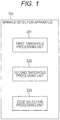
- FIG. 1 is a block diagram illustrating an example of the configuration of the wrinkle detection apparatus according to the present exemplary embodiment.
- wrinkle detection apparatus 100 is an apparatus for detecting a wrinkle area of skin included in an image, and includes first threshold processing unit 221, second threshold processing unit 222, and edge selection processing unit 223.
- First threshold processing unit 221 detects a first edge area included in the image by performing first threshold processing for comparing a gradient value with a first threshold in each portion of the image.
- the gradient value refers to a value that indicates a degree of change in pixel values in the image, and becomes higher in an edge portion where the degree of change in pixel values is greater.
- Second threshold processing unit 222 detects a second edge area included in the image by performing second threshold processing for comparing the gradient value with a second threshold in each portion of the image.
- Edge selection processing unit 223 determines the wrinkle area based on an overlapping area in which the first edge area detected by the first threshold processing and the second edge area detected by the second threshold processing are overlapped.
- Wrinkle detection apparatus 100 includes, for example, a CPU (Central Processing Unit), a storage medium, such as a ROM (Read Only Memory) that stores a control program, and a working memory, such as a RAM (Random Access Memory), although not illustrated.
- a CPU Central Processing Unit
- storage medium such as a ROM (Read Only Memory) that stores a control program
- working memory such as a RAM (Random Access Memory)
- functions of the above units of wrinkle detection apparatus 100 are implemented by the CPU executing the control program.
- the overlapping area is likely to be at least part of a true wrinkle area. Accordingly, wrinkle determination based on the overlapping area allows for improvement in accuracy of the wrinkle determination.
- processing for determining the wrinkle area based on the first threshold processing, the second threshold processing, and the overlapping area does not need to repeat the processing for searching a vicinity of a line element while switching the threshold, as in the conventional technique. Therefore, wrinkle detection apparatus 100 according to the present exemplary embodiment can perform highly accurate wrinkle detection under a lower processing load.
- a second exemplary embodiment of the present disclosure is an example of a specific aspect in a case where the present disclosure is applied to an apparatus that detects a wrinkle area of facial skin and presents the wrinkle area to a user.
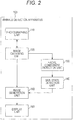
- FIG. 2 is a block diagram illustrating an example of a configuration of wrinkle detection apparatus 100 according to the present exemplary embodiment.
- wrinkle detection apparatus 100 includes photographing unit 110, image obtaining unit 120, facial component detection unit 130, skin state detection unit 140, image generation unit 150, and display unit 160.
- Photographing unit 110 is, for example, a camera including a lens and a color image pickup device, and photographs an image of a user's face. Photographing unit 110 then outputs the photographed image to image obtaining unit 120. An operation of photographing unit 110 is controlled by, for example, image obtaining unit 120.
- Image obtaining unit 120 performs required image quality processing, such as brightness adjustment, on the image that is input from photographing unit 110, and outputs the image to each of facial component detection unit 130 and image generation unit 150.
- image quality processing processing suitable for edge detection processing described later is employed.
- the image that is output from image obtaining unit 120 is referred to as "a photographed image.”
- the photographed image may be flipped horizontally by image obtaining unit 120 or another unit.
- Facial component detection unit 130 detects, from the photographed image, positions of facial components in the photographed image.
- Each of the facial components refers to a section that constitutes a face, such as eyes, a nose, and cheeks, and can be defined, for example, by a position of a feature of the face, such as inner canthi.
- Facial component detection unit 130 detects the positions of the facial components by extracting the feature of the face from the photographed image, for example, by using a known image feature detection method such as pattern matching. Facial component detection unit 130 then outputs the photographed image and facial component positional information that indicates the detected positions of the respective facial components to skin state detection unit 140.
- Skin state detection unit 140 detects the wrinkle area in the photographed image. Skin state detection unit 140 then outputs wrinkle area information that indicates the detected wrinkle area to image generation unit 150.
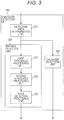
- FIG. 3 is a block diagram illustrating an example of a configuration of skin state detection unit 140.
- skin state detection unit 140 includes detection area determination unit 210, wrinkle detection unit 220, and chloasma detection unit 230.
- Detection area determination unit 210 determines a detection area that is a target of wrinkle detection based on the facial component positional information that is input from facial component detection unit 130. For example, from positions of both eyes and a nose, detection area determination unit 210 determines an area from a lower eyelid of a left eye to a left cheek, and an area from a lower eyelid of a right eye to a right cheek as the detection area. Such an area is typically an area where wrinkles tend to appear. Detection area determination unit 210 then outputs the photographed image and detection area information that indicates the determined detection area to wrinkle detection unit 220 and chloasma detection unit 230.
- Detection area determination unit 210 may exclude an area occupied by eyelashes, hair, a rim of glasses, and the like from the detection area.
- the eyelashes area can be removed through use of a known image processing technique, such as techniques described in JP 2011-008643 A or JP 2011-115460 A .
- Wrinkle detection unit 220 detects the wrinkle area in the detection area.
- Wrinkle detection unit 220 includes first threshold processing unit 221, second threshold processing unit 222, and edge selection processing unit 223.
- First threshold processing unit 221 detects an edge area included in the photographed image, through application of first threshold processing to at least the detection area indicated by the detection area information that is input from detection area determination unit 210, out of the photographed image that is input from detection area determination unit 210. First threshold processing unit 221 then outputs the photographed image, the detection area information, and first edge area information that indicates the edge area (hereinafter referred to as "a first edge area") detected by the first threshold processing, to second threshold processing unit 222.
- the first threshold processing refers to processing for calculating a gradient value and comparing the calculated gradient value with a first threshold in each portion of the photographed image.
- the gradient value in each portion is a value that indicates a degree of change in pixel values in the image; for example, the gradient value is a value obtained through application of a known edge detection filter to image data of the detection area.
- a known edge detection filter a Gabor filter, a Laplacian filter, a Prewitt filter, a Sobel filter, and the like can be employed.
- the first threshold processing is the edge detection processing using the first threshold.
- Second threshold processing unit 222 detects an edge area included in the photographed image, through application of second threshold processing to at least the detection area indicated by the detection area information that is input from first threshold processing unit 221, out of the photographed image that is input from first threshold processing unit 221. Second threshold processing unit 222 then outputs the first edge area information, and second edge area information that indicates the edge area (hereinafter referred to as "a second edge area”) detected by the second threshold processing, to edge selection processing unit 223.
- a second edge area second edge area information that indicates the edge area
- the second threshold processing is processing similar to the first threshold processing, and detects the edge area by using the second threshold, not the first threshold. That is, the second threshold processing is the edge detection processing using the second threshold.
- the degree (gradient value) of change in pixel values corresponding to the second threshold is higher than the degree (gradient value) of change in pixel values corresponding to the first threshold. That is, the first edge area is unlikely to miss the wrinkle area compared with the second edge area.
- the second edge area is unlikely to include any area (hereinafter referred to as "noise") other than the wrinkle area, such as a series of pores, gloss of skin, and a chloasma, compared with the first edge area.
- the edge area detected by the first threshold processing may be detected as a plurality of separated areas.
- each of the plurality of separated areas is referred to as "the first edge area.” That is, one first edge area is one continuous area.
- the first threshold processing allows for detection of the plurality of first edge areas. This also applies to "the second edge area.”
- An apparatus unit for calculating the gradient value of each portion of the photographed image may be disposed at an upstream stage of first threshold processing unit 221 and second threshold processing unit 222, apart from these apparatus units 221 and 222.
- Edge selection processing unit 223 obtains the overlapping area in which the first edge area and the second edge area are overlapped, based on the first edge area information and the second edge area information that are input from second threshold processing unit 222. Edge selection processing unit 223 can obtain the plurality of overlapping areas. Edge selection processing unit 223 determines the wrinkle area based on the obtained overlapping area. Edge selection processing unit 223 then outputs the wrinkle area information that indicates the determined wrinkle area to image generation unit 150 (see FIG. 2 ). Details of wrinkle area determination will be described later.
- chloasma detection unit 230 detects a chloasma area of skin included in the photographed image. For example, chloasma detection unit 230 performs processing for extracting the pixel having the pixel value equal to or less than a threshold, for at least a detection area indicated by detection area information that is input, among the photographed image, by using signals of RGB channels, thereby performing such chloasma area detection. Chloasma detection unit 230 then outputs chloasma area information that indicates the detected chloasma area to image generation unit 150 (see, FIG. 2 ).
- image generation unit 150 of FIG. 2 Based on the wrinkle area information that is input from wrinkle detection processing unit 223, image generation unit 150 of FIG. 2 generates a wrinkle image that indicates the wrinkle area in the photographed image, and generates a wrinkle-enhanced image obtained by superimposing the generated wrinkle image on the photographed image.
- the wrinkle image is, for example, an image for indicating a position of a wrinkle line with the wrinkle area filled with a predetermined color.
- Image generation unit 150 then outputs the generated wrinkle-enhanced image to display unit 160.
- the wrinkle-enhanced image may be flipped horizontally by image generation unit 150 or downstream display unit 160.
- Image generation unit 150 may generate a chloasma image that indicates the chloasma area in the photographed image based on the chloasma area information, and may include the generated wrinkle image in the wrinkle-enhanced image.
- Display unit 160 includes, for example, a liquid crystal display, and displays the wrinkle-enhanced image that is input from image generation unit 150.
- Wrinkle detection apparatus 100 includes, for example, a CPU, a storage medium such as a ROM that stores a control program, and a working memory such as a RAM, although not illustrated. In this case, functions of the above units of wrinkle detection apparatus 100 are implemented by the CPU executing the control program.
- Wrinkle detection apparatus 100 having such a configuration can perform wrinkle determination based on the overlapping area in which the first edge area based on the first threshold and the second edge area based on the second threshold are overlapped. Wrinkle detection apparatus 100 can then present a determination result to a user.
- FIG. 4 is a diagram for illustrating an example of the determination method of the wrinkle area.
- first edge area 302 has lower criteria of edge detection. Accordingly, more areas will be detected as first edge area 302, compared with second edge area 303.
- Edge selection processing unit 223 performs, for example, labeling processing for labeling each of the plurality of first edge areas 302 as A0, A1, ..., A5. In addition, edge selection processing unit 223 performs, for example, labeling processing for labeling each of the plurality of second edge areas 303 as B0, B1, ..., B7.
- first edge areas 302 are likely to include more wrinkle areas, first edge areas 302 are also likely to include noise. Meanwhile, when at least part of first edge area 302, which is a cluster of continuous edge area, is the true wrinkle area, all of pertinent first edge area 302 is likely to be the true wrinkle area.
- Second edge areas 303 are unlikely to include noise. Accordingly, all of second edge areas 303 are likely to be the true wrinkle areas.
- edge selection processing unit 223 selects first edge area 302 including at least part of second edge area 303 out of one or more first edge areas 302 as the wrinkle area. In other words, edge selection processing unit 223 selects first edge area 302 including the overlapping area in which first edge area 302 and second edge area 303 are overlapped out of first edge areas 302 as the wrinkle area.
- edge selection processing unit 223 extracts an area obtained by deleting first edge area 302 that does not include the overlapping area from one or more first edge areas 302 as wrinkle area 304.
- first edge area 302 of A0 overlaps with second edge areas 303 of B0 to B2.
- First edge area 302 of A2 overlaps with second edge areas 303 of B3 to B5.
- First edge area 302 of A3 overlaps with second edge areas 303 of B6 and B7.
- first edge areas 302 of A1, A4, and A5 do not overlap with any second edge area 303. Therefore, first edge areas 302 of A0, A2, and A3 are extracted as wrinkle areas 304.
- wrinkle detection apparatus 100 can perform wrinkle detection while reducing both omission of detection and misdetection.
- FIG. 5 is a flow chart illustrating an example of the operation of wrinkle detection apparatus 100.
- step S1100 image obtaining unit 120 obtains the photographed image of the user's face by using photographing unit 110.
- step S1200 facial component detection unit 130 detects the position of each facial component from the photographed image.
- detection area determination unit 210 determines the detection area based on the position of the facial component.
- the detection area is, for example, an area from a lower eyelid of a left eye to a left cheek, and an area from a lower eyelid of a right eye to a right cheek, as described above.
- step S1400 first threshold processing unit 221 applies the first threshold processing to the detection area, and detects the first edge area.
- step S1500 second threshold processing unit 222 applies the second threshold processing to the detection area, and detects the second edge area. Processing of step S1400 and processing of step S1500 may be performed in an opposite order.
- edge selection processing unit 223 determines the overlapping area in which the first edge area and the second edge area are overlapped. Specifically, edge selection processing unit 223 determines, for example, whether each pixel of the first edge area constitutes the second edge area.
- step S1700 edge selection processing unit 223 determines the first edge area including the overlapping area as the wrinkle area.
- chloasma detection unit 230 detects the chloasma area.
- step S1800 image generation unit 150 generates the wrinkle-enhanced image, and displays the wrinkle-enhanced image by using display unit 160.
- FIG. 6A, FIG. 6B, and FIG. 6C are diagrams each illustrating an example of how the wrinkle area is extracted.
- first edge areas 311 areas illustrated in a deep color
- second edge areas 312 areas illustrated in a light color
- First edge area 311 that overlaps with second edge area 312 is likely to be the true wrinkle area
- first edge area 311 that does not overlap with second edge area 312 is likely to be noise.
- edge selection processing unit 223 determines, as wrinkle area 313, an area obtained by excluding first edge area 311 that does not overlap with second edge area 312 from many first edge areas 311. Then, as illustrated in FIG. 6C , wrinkle-enhanced image 316 is generated through superimposition of image 314 of wrinkle area 313 determined by edge selection processing unit 223 on photographed image 315.
- edge selection processing unit 223 may also determine such a portion as the wrinkle area.
- wrinkle detection can be performed in a state where omission of detection is further reduced.
- the processing load can be reduced more in the processing for determining, as the wrinkle area, an area obtained by deleting the first edge area that does not include the overlapping area from the one or more first edge areas.
- the aforementioned operation allows wrinkle detection apparatus 100 to perform wrinkle determination based on the overlapping area in which the first edge area based on the first threshold and the second edge area based on the second threshold are overlapped, and to present the determination result to the user.
- Wrinkle detection apparatus 100 may further perform edge detection processing using a method stricter than an extraction method of the second edge area, and may use an obtained third edge area to increase or decrease the wrinkle area. For example, wrinkle detection apparatus 100 determines that the first edge area that does not include the third edge area is not the wrinkle area, and adds the third edge area that is not included in the first edge area to the wrinkle area.
- wrinkle detection apparatus 100 performs wrinkle determination based on the overlapping area in which the first edge area based on the first threshold and the second edge area based on the second threshold are overlapped.
- the overlapping area is likely to be at least part of the true wrinkle area, as described above. Therefore, wrinkle determination based on the overlapping area allows for improvement in accuracy of wrinkle determination.
- wrinkle detection apparatus 100 according to the present exemplary embodiment does not need to repeat processing for searching a vicinity of a line element while switching the threshold, as in the conventional technique. Therefore, wrinkle detection apparatus 100 according to the present exemplary embodiment allows for highly accurate wrinkle detection under a lower processing load.
- edge selection processing unit 223 may select the second edge area with at least part of the second edge area being included in the first edge area out of the second edge areas, and may determine the area obtained through interpolation between the plurality of selected second edge areas as the wrinkle area.
- the detection target is the wrinkle of skin
- the detection target may be another state that has a shape of a linear groove, such as a scratch on a wall, a crack on a surface of a metallic material, and a wrinkle of cloth.
- a wrinkle detection apparatus includes: a first threshold processing unit that detects a first edge area included in an image by performing first threshold processing for comparing a gradient value that indicates a degree of change in pixel values in the image including skin with a first threshold; a second threshold processing unit that detects a second edge area included in the image by performing second threshold processing for comparing the gradient value with a second threshold; and an edge selection processing unit that determines a wrinkle area based on an overlapping area in which the first edge area and the second edge area are overlapped.
- the second threshold may be larger than the first threshold, and the edge selection processing unit may select the first edge area including the overlapping area out of the one or more first edge areas as the wrinkle area.
- the edge selection processing unit may select an area other than the first edge area that does not include the overlapping area, out of the one or more first edge areas, as the wrinkle area.
- the wrinkle detection apparatus may further include: an image obtaining unit that obtains the image; a facial component obtaining unit that obtains a position of a facial component from the image; and a detection area determination unit that determines a detection area that is a target of the first threshold processing and the second threshold processing out of the image, based on the position of the facial component.
- the first threshold processing unit and the second threshold processing unit may calculate at least the gradient value of the detection area.
- the wrinkle detection apparatus may further include: an image obtaining unit that obtains the image; an image generation unit that generates a wrinkle image indicating the wrinkle area in the image, and generates a wrinkle-enhanced image obtained through superimposition of the generated wrinkle image on the image; and a display unit that displays the wrinkle-enhanced image.
- a wrinkle detection method includes: detecting a first edge area included in an image by performing first threshold processing for comparing a gradient value that indicates a degree of change in pixel values in the image including skin with a first threshold; detecting a second edge area included in the image by performing second threshold processing for comparing the gradient value with a second threshold; and determining a wrinkle area based on an overlapping area in which the first edge area and the second edge area are overlapped.
- the present disclosure is useful as the wrinkle detection apparatus and the wrinkle detection method that allow for highly accurate wrinkle detection under a lower processing load.
Landscapes
- Engineering & Computer Science (AREA)
- Health & Medical Sciences (AREA)
- Life Sciences & Earth Sciences (AREA)
- Physics & Mathematics (AREA)
- General Physics & Mathematics (AREA)
- Theoretical Computer Science (AREA)
- General Health & Medical Sciences (AREA)
- Computer Vision & Pattern Recognition (AREA)
- Medical Informatics (AREA)
- Molecular Biology (AREA)
- Heart & Thoracic Surgery (AREA)
- Biomedical Technology (AREA)
- Pathology (AREA)
- Surgery (AREA)
- Animal Behavior & Ethology (AREA)
- Biophysics (AREA)
- Public Health (AREA)
- Veterinary Medicine (AREA)
- Oral & Maxillofacial Surgery (AREA)
- Human Computer Interaction (AREA)
- Multimedia (AREA)
- Radiology & Medical Imaging (AREA)
- Quality & Reliability (AREA)
- Dermatology (AREA)
- Nuclear Medicine, Radiotherapy & Molecular Imaging (AREA)
- Image Analysis (AREA)
- Image Processing (AREA)
Claims (4)
- Faltenerfassungsvorrichtung (100) zum Erfassen eines Faltenbereichs (304, 313) einer Gesichtshaut in einem Bild (301, 315), umfassend:eine erste Schwellwertverarbeitungseinheit (221), die einen ersten Kantenbereich (302, 311) in dem Bild (301, 315) durch das Durchführen einer ersten Schwellwertverarbeitung erfasst, in welcher ein Gradientenwert, der einen Änderungsgrad in Pixelwerten in dem Haut enthaltenden Bild (301, 315) angibt, mit einem ersten Schwellwert verglichen wird, wobei der erste Kantenbereich (302, 311) einen ersten kontinuierlichen Bereich (A0) und einen zweiten kontinuierlichen Bereich (A1) umfasst,eine zweite Schwellwertverarbeitungseinheit (222), die einen zweiten Kantenbereich (303, 312) in dem Bild durch das Durchführen einer zweiten Schwellwertverarbeitung erfasst, in welcher der Gradientenwert mit einem zweiten Schwellwert verglichen wird, wobei der zweite Schwellwert höher ist als der erste Schwellwert, undeine Kantenauswahlverarbeitungseinheit (223), die den Faltenbereich (304, 313) basierend auf einem Überlappungsbereich, in dem der erste Kantenbereich (302) und der zweite Kantenbereich (303) einander überlappen, bestimmt,wobei die Kantenauswahlverarbeitungseinheit (223) bestimmt, dass der erste kontinuierliche Bereich (A0) in dem Überlappungsbereich enthalten ist und dass der zweite kontinuierliche Bereich (A1) nicht in dem Überlappungsbereich enthalten ist, undwobei die Kantenauswahlverarbeitungseinheit (223) den ersten kontinuierlichen Bereich (A0) als den Faltenbereich (304, 313) extrahiert und den zweiten kontinuierlichen Bereich (A1) aus dem Faltenbereich (304, 313) ausschließt.
- Faltenerfassungsvorrichtung (100) nach Anspruch 1, die weiterhin umfasst:eine Bilderhaltungseinheit (120), die das Bild erhält,eine Gesichtskomponenten-Erhaltungseinheit (130), die eine Position einer Gesichtskomponente aus dem Bild erhält, undeine Erfassungsbereich-Bestimmungseinheit (210), die einen Erfassungsbereich, der ein Ziel der ersten Schwellwertverarbeitung und der zweiten Schwellwertverarbeitung ist, aus dem Bild (301, 315) basierend auf der Position der Gesichtskomponente bestimmt, wobei die erste Schwellwertverarbeitungseinheit (221) und die zweite Schwellwertverarbeitungseinheit (222) wenigstens den Gradientenwert des Erfassungsbereichs berechnen.
- Faltenerfassungsvorrichtung (100) nach Anspruch 1, die weiterhin umfasst:eine Bilderhaltungseinheit (120), die das Bild (301, 315) erhält,eine Bilderzeugungseinheit (150), die ein Faltenbild (314) erzeugt, das den Faltenbereich (304, 313) in dem Bild (301, 315) angibt, und ein faltenverbessertes Bild (316) erzeugt, das durch eine Überlagerung des erzeugten Faltenbilds (314) auf das Bild (301, 315) erhalten wird, undeine Anzeigeeinheit (160), die das faltenverbesserte Bild (316) anzeigt.
- Faltenerfassungsverfahren zum Erfassen eines Faltenbereichs (304, 313) einer Gesichtshaut in einem Bild (301, 315), umfassend:Erfassen eines ersten Kantenbereichs in dem Bild durch das Durchführen einer ersten Schwellwertverarbeitung (S1400), in welcher ein Gradientenwert, der einen Änderungsgrad in Pixelwerten in dem Haut enthaltenden Bild angibt, mit einem ersten Schwellwert verglichen wird, wobei der erste Kantenbereich einen ersten kontinuierlichen Bereich und einen zweiten kontinuierlichen Bereich umfasst,Erfassen eines zweiten Kantenbereichs in dem Bild durch das Durchführen einer zweiten Schwellwertverarbeitung (S1500), in welcher der Gradientenwert mit einem zweiten Schwellwert verglichen wird, wobei der zweite Schwellwert höher ist als der erste Schwellwert,Bestimmen des Faltenbereichs (S1700) basierend auf einem Überlappungsbereich, in dem der erste Kantenbereich und der zweite Kantenbereich einander überlappen (S1600),Bestimmen, das der erste kontinuierliche Bereich in dem Überlappungsbereich enthalten ist und dass der zweite kontinuierliche Bereich nicht in dem Überlappungsbereich enthalten ist, undExtrahieren des ersten kontinuierlichen Bereichs als des Faltenbereichs, und Ausschließen des zweiten kontinuierlichen Bereichs aus dem Faltenbereich.
Applications Claiming Priority (1)
| Application Number | Priority Date | Filing Date | Title |
|---|---|---|---|
| JP2014118506A JP2015232746A (ja) | 2014-06-09 | 2014-06-09 | 皺検出装置および皺検出方法 |
Publications (2)
| Publication Number | Publication Date |
|---|---|
| EP2955693A1 EP2955693A1 (de) | 2015-12-16 |
| EP2955693B1 true EP2955693B1 (de) | 2019-08-21 |
Family
ID=53283982
Family Applications (1)
| Application Number | Title | Priority Date | Filing Date |
|---|---|---|---|
| EP15166536.1A Active EP2955693B1 (de) | 2014-06-09 | 2015-05-06 | Faltendetektionsvorrichtung und faltendetektionsverfahren |
Country Status (4)
| Country | Link |
|---|---|
| US (1) | US9782119B2 (de) |
| EP (1) | EP2955693B1 (de) |
| JP (1) | JP2015232746A (de) |
| CN (1) | CN105310690A (de) |
Families Citing this family (11)
| Publication number | Priority date | Publication date | Assignee | Title |
|---|---|---|---|---|
| US9501689B2 (en) * | 2014-03-13 | 2016-11-22 | Panasonic Intellectual Property Management Co., Ltd. | Image processing apparatus and image processing method |
| JP6550642B2 (ja) * | 2014-06-09 | 2019-07-31 | パナソニックIpマネジメント株式会社 | 皺検出装置および皺検出方法 |
| JP6576473B2 (ja) * | 2016-01-22 | 2019-09-18 | 富士フイルム株式会社 | ひび割れ情報編集装置、ひび割れ情報編集方法およびひび割れ情報編集プログラム |
| US9934578B2 (en) * | 2016-08-15 | 2018-04-03 | Macau University Of Science And Technology | Method for edge detection |
| JP7191823B2 (ja) * | 2017-07-07 | 2022-12-19 | キヤノン株式会社 | 画像から変状を検知する画像処理装置、画像処理方法及びプログラム |
| US11321830B2 (en) * | 2017-08-24 | 2022-05-03 | Huawei Technologies Co., Ltd. | Image detection method and apparatus and terminal |
| CN109086688A (zh) * | 2018-07-13 | 2018-12-25 | 北京科莱普云技术有限公司 | 脸部皱纹检测方法、装置、计算机设备和存储介质 |
| CN111566693B (zh) * | 2018-07-16 | 2022-05-20 | 荣耀终端有限公司 | 一种皱纹检测方法及电子设备 |
| CN111199171B (zh) * | 2018-11-19 | 2022-09-23 | 荣耀终端有限公司 | 一种皱纹检测方法和终端设备 |
| CN110738678B (zh) * | 2019-10-18 | 2022-05-31 | 厦门美图宜肤科技有限公司 | 脸部细纹检测方法、装置、电子设备及可读存储介质 |
| JP7779487B2 (ja) * | 2021-02-15 | 2025-12-03 | 株式会社 資生堂 | 肌状態推定方法、装置、プログラム、システム、学習済みモデル生成方法、および学習済みモデル |
Family Cites Families (11)
| Publication number | Priority date | Publication date | Assignee | Title |
|---|---|---|---|---|
| JPH08123967A (ja) | 1994-10-28 | 1996-05-17 | Oki Electric Ind Co Ltd | 画像のエッジ検出装置 |
| WO2007105213A2 (en) * | 2006-03-13 | 2007-09-20 | Given Imaging Ltd. | Device, system and method for automatic detection of contractile activity in an image frame |
| JP2008293327A (ja) * | 2007-05-25 | 2008-12-04 | Noritsu Koki Co Ltd | 顔画像表示システム |
| JP4952550B2 (ja) | 2007-11-30 | 2012-06-13 | トヨタ自動車株式会社 | 搬送膜のしわ検知装置およびその方法 |
| WO2010063527A1 (en) * | 2008-12-03 | 2010-06-10 | Delaval Holding Ab | Arrangement and method for determining a body condition score of an animal |
| US8411986B2 (en) * | 2009-04-13 | 2013-04-02 | Flashfoto, Inc. | Systems and methods for segmenation by removal of monochromatic background with limitied intensity variations |
| JP4833322B2 (ja) | 2009-06-26 | 2011-12-07 | 株式会社バンダイナムコゲームス | 画像生成装置及びプリントシール製造方法 |
| JP5578603B2 (ja) | 2009-12-04 | 2014-08-27 | 国立大学法人佐賀大学 | 視線制御装置、視線制御方法、及びそのプログラム |
| US20110263946A1 (en) * | 2010-04-22 | 2011-10-27 | Mit Media Lab | Method and system for real-time and offline analysis, inference, tagging of and responding to person(s) experiences |
| JP5657494B2 (ja) * | 2011-09-22 | 2015-01-21 | 富士フイルム株式会社 | シワ検出方法、シワ検出装置およびシワ検出プログラム、並びに、シワ評価方法、シワ評価装置およびシワ評価プログラム |
| CN102798343B (zh) | 2012-08-14 | 2014-12-24 | 胡海明 | 卷边皱纹检测器 |
-
2014
- 2014-06-09 JP JP2014118506A patent/JP2015232746A/ja active Pending
-
2015
- 2015-05-06 EP EP15166536.1A patent/EP2955693B1/de active Active
- 2015-05-14 CN CN201510245897.9A patent/CN105310690A/zh not_active Withdrawn
- 2015-06-01 US US14/726,631 patent/US9782119B2/en active Active
Non-Patent Citations (1)
| Title |
|---|
| None * |
Also Published As
| Publication number | Publication date |
|---|---|
| CN105310690A (zh) | 2016-02-10 |
| EP2955693A1 (de) | 2015-12-16 |
| JP2015232746A (ja) | 2015-12-24 |
| US20150351682A1 (en) | 2015-12-10 |
| US9782119B2 (en) | 2017-10-10 |
Similar Documents
| Publication | Publication Date | Title |
|---|---|---|
| EP2955693B1 (de) | Faltendetektionsvorrichtung und faltendetektionsverfahren | |
| US9443131B2 (en) | Wrinkle detection apparatus and wrinkle detection method | |
| JP7027537B2 (ja) | 画像処理方法および装置、電子機器、ならびにコンピュータ可読記憶媒体 | |
| US10032277B2 (en) | Method, apparatus, and system for displaying a graphical user interface | |
| EP2923306B1 (de) | Verfahren und vorrichtung zur gesichtsbildverarbeitung | |
| JP6008309B2 (ja) | 電子ミラー装置 | |
| EP4185983B1 (de) | Systeme und verfahren zur reduzierung eines suchbereichs zur identifizierung von korrespondenzen zwischen bildern | |
| JP6489427B2 (ja) | 画像処理装置および画像処理方法 | |
| US20220028094A1 (en) | Systems and methods for facilitating the identifying of correspondences between images experiencing motion blur | |
| CN112368710B (zh) | 对来自多个帧的内容进行组合的方法及其电子装置 | |
| KR20170056860A (ko) | 이미지 생성 방법 및 장치 | |
| US20180336688A1 (en) | Image processing apparatus and image processing method, and storage medium | |
| US20160078685A1 (en) | Display control device, display control method, and recording medium | |
| US10326972B2 (en) | Three-dimensional image generation method and apparatus | |
| WO2018078857A1 (ja) | 視線推定装置、視線推定方法及びプログラム記録媒体 | |
| US10388252B2 (en) | Device and method to adjust display brightness | |
| JP2016009203A (ja) | 皺検出装置および皺検出方法 | |
| EP3068123A1 (de) | Bilderzeuger und bilderzeugungsverfahren | |
| JP6572841B2 (ja) | 情報処理装置及びプログラム | |
| US20190066306A1 (en) | Information processing apparatus, information processing method, and storage medium | |
| EP4064230A1 (de) | Bildverarbeitungsvorrichtung, bildverarbeitungsverfahren, computerprogramm und speichermedium | |
| US12230054B2 (en) | Determining display zoom level | |
| JP2012227830A (ja) | 情報処理装置、その処理方法、プログラム及び撮像装置 | |
| JP6175583B1 (ja) | 画像処理装置、実寸法表示方法、及び実寸法表示処理プログラム | |
| KR101276792B1 (ko) | 눈 검출 장치 및 방법 |
Legal Events
| Date | Code | Title | Description |
|---|---|---|---|
| PUAI | Public reference made under article 153(3) epc to a published international application that has entered the european phase |
Free format text: ORIGINAL CODE: 0009012 |
|
| AK | Designated contracting states |
Kind code of ref document: A1 Designated state(s): AL AT BE BG CH CY CZ DE DK EE ES FI FR GB GR HR HU IE IS IT LI LT LU LV MC MK MT NL NO PL PT RO RS SE SI SK SM TR |
|
| AX | Request for extension of the european patent |
Extension state: BA ME |
|
| 17P | Request for examination filed |
Effective date: 20160616 |
|
| RBV | Designated contracting states (corrected) |
Designated state(s): AL AT BE BG CH CY CZ DE DK EE ES FI FR GB GR HR HU IE IS IT LI LT LU LV MC MK MT NL NO PL PT RO RS SE SI SK SM TR |
|
| STAA | Information on the status of an ep patent application or granted ep patent |
Free format text: STATUS: EXAMINATION IS IN PROGRESS |
|
| 17Q | First examination report despatched |
Effective date: 20161222 |
|
| REG | Reference to a national code |
Ref country code: DE Ref legal event code: R079 Ref document number: 602015036146 Country of ref document: DE Free format text: PREVIOUS MAIN CLASS: G06T0007000000 Ipc: G06T0007130000 |
|
| RIC1 | Information provided on ipc code assigned before grant |
Ipc: A61B 5/00 20060101ALI20190228BHEP Ipc: G06T 7/13 20170101AFI20190228BHEP Ipc: G06T 7/136 20170101ALI20190228BHEP Ipc: G06T 7/00 20170101ALI20190228BHEP Ipc: G06K 9/00 20060101ALI20190228BHEP |
|
| GRAP | Despatch of communication of intention to grant a patent |
Free format text: ORIGINAL CODE: EPIDOSNIGR1 |
|
| STAA | Information on the status of an ep patent application or granted ep patent |
Free format text: STATUS: GRANT OF PATENT IS INTENDED |
|
| INTG | Intention to grant announced |
Effective date: 20190405 |
|
| GRAS | Grant fee paid |
Free format text: ORIGINAL CODE: EPIDOSNIGR3 |
|
| GRAA | (expected) grant |
Free format text: ORIGINAL CODE: 0009210 |
|
| STAA | Information on the status of an ep patent application or granted ep patent |
Free format text: STATUS: THE PATENT HAS BEEN GRANTED |
|
| AK | Designated contracting states |
Kind code of ref document: B1 Designated state(s): AL AT BE BG CH CY CZ DE DK EE ES FI FR GB GR HR HU IE IS IT LI LT LU LV MC MK MT NL NO PL PT RO RS SE SI SK SM TR |
|
| REG | Reference to a national code |
Ref country code: GB Ref legal event code: FG4D |
|
| REG | Reference to a national code |
Ref country code: CH Ref legal event code: EP |
|
| REG | Reference to a national code |
Ref country code: DE Ref legal event code: R096 Ref document number: 602015036146 Country of ref document: DE |
|
| REG | Reference to a national code |
Ref country code: AT Ref legal event code: REF Ref document number: 1170615 Country of ref document: AT Kind code of ref document: T Effective date: 20190915 |
|
| REG | Reference to a national code |
Ref country code: IE Ref legal event code: FG4D |
|
| REG | Reference to a national code |
Ref country code: LT Ref legal event code: MG4D |
|
| REG | Reference to a national code |
Ref country code: NL Ref legal event code: MP Effective date: 20190821 |
|
| PG25 | Lapsed in a contracting state [announced via postgrant information from national office to epo] |
Ref country code: BG Free format text: LAPSE BECAUSE OF FAILURE TO SUBMIT A TRANSLATION OF THE DESCRIPTION OR TO PAY THE FEE WITHIN THE PRESCRIBED TIME-LIMIT Effective date: 20191121 Ref country code: SE Free format text: LAPSE BECAUSE OF FAILURE TO SUBMIT A TRANSLATION OF THE DESCRIPTION OR TO PAY THE FEE WITHIN THE PRESCRIBED TIME-LIMIT Effective date: 20190821 Ref country code: NO Free format text: LAPSE BECAUSE OF FAILURE TO SUBMIT A TRANSLATION OF THE DESCRIPTION OR TO PAY THE FEE WITHIN THE PRESCRIBED TIME-LIMIT Effective date: 20191121 Ref country code: PT Free format text: LAPSE BECAUSE OF FAILURE TO SUBMIT A TRANSLATION OF THE DESCRIPTION OR TO PAY THE FEE WITHIN THE PRESCRIBED TIME-LIMIT Effective date: 20191223 Ref country code: HR Free format text: LAPSE BECAUSE OF FAILURE TO SUBMIT A TRANSLATION OF THE DESCRIPTION OR TO PAY THE FEE WITHIN THE PRESCRIBED TIME-LIMIT Effective date: 20190821 Ref country code: NL Free format text: LAPSE BECAUSE OF FAILURE TO SUBMIT A TRANSLATION OF THE DESCRIPTION OR TO PAY THE FEE WITHIN THE PRESCRIBED TIME-LIMIT Effective date: 20190821 Ref country code: LT Free format text: LAPSE BECAUSE OF FAILURE TO SUBMIT A TRANSLATION OF THE DESCRIPTION OR TO PAY THE FEE WITHIN THE PRESCRIBED TIME-LIMIT Effective date: 20190821 Ref country code: FI Free format text: LAPSE BECAUSE OF FAILURE TO SUBMIT A TRANSLATION OF THE DESCRIPTION OR TO PAY THE FEE WITHIN THE PRESCRIBED TIME-LIMIT Effective date: 20190821 |
|
| PG25 | Lapsed in a contracting state [announced via postgrant information from national office to epo] |
Ref country code: ES Free format text: LAPSE BECAUSE OF FAILURE TO SUBMIT A TRANSLATION OF THE DESCRIPTION OR TO PAY THE FEE WITHIN THE PRESCRIBED TIME-LIMIT Effective date: 20190821 Ref country code: AL Free format text: LAPSE BECAUSE OF FAILURE TO SUBMIT A TRANSLATION OF THE DESCRIPTION OR TO PAY THE FEE WITHIN THE PRESCRIBED TIME-LIMIT Effective date: 20190821 Ref country code: GR Free format text: LAPSE BECAUSE OF FAILURE TO SUBMIT A TRANSLATION OF THE DESCRIPTION OR TO PAY THE FEE WITHIN THE PRESCRIBED TIME-LIMIT Effective date: 20191122 Ref country code: IS Free format text: LAPSE BECAUSE OF FAILURE TO SUBMIT A TRANSLATION OF THE DESCRIPTION OR TO PAY THE FEE WITHIN THE PRESCRIBED TIME-LIMIT Effective date: 20191221 Ref country code: RS Free format text: LAPSE BECAUSE OF FAILURE TO SUBMIT A TRANSLATION OF THE DESCRIPTION OR TO PAY THE FEE WITHIN THE PRESCRIBED TIME-LIMIT Effective date: 20190821 Ref country code: LV Free format text: LAPSE BECAUSE OF FAILURE TO SUBMIT A TRANSLATION OF THE DESCRIPTION OR TO PAY THE FEE WITHIN THE PRESCRIBED TIME-LIMIT Effective date: 20190821 |
|
| REG | Reference to a national code |
Ref country code: AT Ref legal event code: MK05 Ref document number: 1170615 Country of ref document: AT Kind code of ref document: T Effective date: 20190821 |
|
| PG25 | Lapsed in a contracting state [announced via postgrant information from national office to epo] |
Ref country code: TR Free format text: LAPSE BECAUSE OF FAILURE TO SUBMIT A TRANSLATION OF THE DESCRIPTION OR TO PAY THE FEE WITHIN THE PRESCRIBED TIME-LIMIT Effective date: 20190821 |
|
| PG25 | Lapsed in a contracting state [announced via postgrant information from national office to epo] |
Ref country code: RO Free format text: LAPSE BECAUSE OF FAILURE TO SUBMIT A TRANSLATION OF THE DESCRIPTION OR TO PAY THE FEE WITHIN THE PRESCRIBED TIME-LIMIT Effective date: 20190821 Ref country code: IT Free format text: LAPSE BECAUSE OF FAILURE TO SUBMIT A TRANSLATION OF THE DESCRIPTION OR TO PAY THE FEE WITHIN THE PRESCRIBED TIME-LIMIT Effective date: 20190821 Ref country code: DK Free format text: LAPSE BECAUSE OF FAILURE TO SUBMIT A TRANSLATION OF THE DESCRIPTION OR TO PAY THE FEE WITHIN THE PRESCRIBED TIME-LIMIT Effective date: 20190821 Ref country code: EE Free format text: LAPSE BECAUSE OF FAILURE TO SUBMIT A TRANSLATION OF THE DESCRIPTION OR TO PAY THE FEE WITHIN THE PRESCRIBED TIME-LIMIT Effective date: 20190821 Ref country code: AT Free format text: LAPSE BECAUSE OF FAILURE TO SUBMIT A TRANSLATION OF THE DESCRIPTION OR TO PAY THE FEE WITHIN THE PRESCRIBED TIME-LIMIT Effective date: 20190821 Ref country code: PL Free format text: LAPSE BECAUSE OF FAILURE TO SUBMIT A TRANSLATION OF THE DESCRIPTION OR TO PAY THE FEE WITHIN THE PRESCRIBED TIME-LIMIT Effective date: 20190821 |
|
| PG25 | Lapsed in a contracting state [announced via postgrant information from national office to epo] |
Ref country code: IS Free format text: LAPSE BECAUSE OF FAILURE TO SUBMIT A TRANSLATION OF THE DESCRIPTION OR TO PAY THE FEE WITHIN THE PRESCRIBED TIME-LIMIT Effective date: 20200224 Ref country code: SK Free format text: LAPSE BECAUSE OF FAILURE TO SUBMIT A TRANSLATION OF THE DESCRIPTION OR TO PAY THE FEE WITHIN THE PRESCRIBED TIME-LIMIT Effective date: 20190821 Ref country code: SM Free format text: LAPSE BECAUSE OF FAILURE TO SUBMIT A TRANSLATION OF THE DESCRIPTION OR TO PAY THE FEE WITHIN THE PRESCRIBED TIME-LIMIT Effective date: 20190821 Ref country code: CZ Free format text: LAPSE BECAUSE OF FAILURE TO SUBMIT A TRANSLATION OF THE DESCRIPTION OR TO PAY THE FEE WITHIN THE PRESCRIBED TIME-LIMIT Effective date: 20190821 |
|
| REG | Reference to a national code |
Ref country code: DE Ref legal event code: R097 Ref document number: 602015036146 Country of ref document: DE |
|
| PLBE | No opposition filed within time limit |
Free format text: ORIGINAL CODE: 0009261 |
|
| STAA | Information on the status of an ep patent application or granted ep patent |
Free format text: STATUS: NO OPPOSITION FILED WITHIN TIME LIMIT |
|
| PG2D | Information on lapse in contracting state deleted |
Ref country code: IS |
|
| 26N | No opposition filed |
Effective date: 20200603 |
|
| PG25 | Lapsed in a contracting state [announced via postgrant information from national office to epo] |
Ref country code: SI Free format text: LAPSE BECAUSE OF FAILURE TO SUBMIT A TRANSLATION OF THE DESCRIPTION OR TO PAY THE FEE WITHIN THE PRESCRIBED TIME-LIMIT Effective date: 20190821 |
|
| PG25 | Lapsed in a contracting state [announced via postgrant information from national office to epo] |
Ref country code: CH Free format text: LAPSE BECAUSE OF NON-PAYMENT OF DUE FEES Effective date: 20200531 Ref country code: LI Free format text: LAPSE BECAUSE OF NON-PAYMENT OF DUE FEES Effective date: 20200531 Ref country code: MC Free format text: LAPSE BECAUSE OF FAILURE TO SUBMIT A TRANSLATION OF THE DESCRIPTION OR TO PAY THE FEE WITHIN THE PRESCRIBED TIME-LIMIT Effective date: 20190821 |
|
| REG | Reference to a national code |
Ref country code: BE Ref legal event code: MM Effective date: 20200531 |
|
| GBPC | Gb: european patent ceased through non-payment of renewal fee |
Effective date: 20200506 |
|
| PG25 | Lapsed in a contracting state [announced via postgrant information from national office to epo] |
Ref country code: LU Free format text: LAPSE BECAUSE OF NON-PAYMENT OF DUE FEES Effective date: 20200506 |
|
| PG25 | Lapsed in a contracting state [announced via postgrant information from national office to epo] |
Ref country code: GB Free format text: LAPSE BECAUSE OF NON-PAYMENT OF DUE FEES Effective date: 20200506 Ref country code: IE Free format text: LAPSE BECAUSE OF NON-PAYMENT OF DUE FEES Effective date: 20200506 Ref country code: FR Free format text: LAPSE BECAUSE OF NON-PAYMENT OF DUE FEES Effective date: 20200531 |
|
| PG25 | Lapsed in a contracting state [announced via postgrant information from national office to epo] |
Ref country code: BE Free format text: LAPSE BECAUSE OF NON-PAYMENT OF DUE FEES Effective date: 20200531 |
|
| PGFP | Annual fee paid to national office [announced via postgrant information from national office to epo] |
Ref country code: DE Payment date: 20210520 Year of fee payment: 7 |
|
| PG25 | Lapsed in a contracting state [announced via postgrant information from national office to epo] |
Ref country code: MT Free format text: LAPSE BECAUSE OF FAILURE TO SUBMIT A TRANSLATION OF THE DESCRIPTION OR TO PAY THE FEE WITHIN THE PRESCRIBED TIME-LIMIT Effective date: 20190821 Ref country code: CY Free format text: LAPSE BECAUSE OF FAILURE TO SUBMIT A TRANSLATION OF THE DESCRIPTION OR TO PAY THE FEE WITHIN THE PRESCRIBED TIME-LIMIT Effective date: 20190821 |
|
| PG25 | Lapsed in a contracting state [announced via postgrant information from national office to epo] |
Ref country code: MK Free format text: LAPSE BECAUSE OF FAILURE TO SUBMIT A TRANSLATION OF THE DESCRIPTION OR TO PAY THE FEE WITHIN THE PRESCRIBED TIME-LIMIT Effective date: 20190821 |
|
| REG | Reference to a national code |
Ref country code: DE Ref legal event code: R119 Ref document number: 602015036146 Country of ref document: DE |
|
| PG25 | Lapsed in a contracting state [announced via postgrant information from national office to epo] |
Ref country code: DE Free format text: LAPSE BECAUSE OF NON-PAYMENT OF DUE FEES Effective date: 20221201 |