EP2952033B1 - A protection system for wireless nlos backhaul - Google Patents
A protection system for wireless nlos backhaul Download PDFInfo
- Publication number
- EP2952033B1 EP2952033B1 EP13702215.8A EP13702215A EP2952033B1 EP 2952033 B1 EP2952033 B1 EP 2952033B1 EP 13702215 A EP13702215 A EP 13702215A EP 2952033 B1 EP2952033 B1 EP 2952033B1
- Authority
- EP
- European Patent Office
- Prior art keywords
- backhaul
- dependent
- node
- technology
- communication
- Prior art date
- Legal status (The legal status is an assumption and is not a legal conclusion. Google has not performed a legal analysis and makes no representation as to the accuracy of the status listed.)
- Active
Links
Images

Classifications
-
- H—ELECTRICITY
- H04—ELECTRIC COMMUNICATION TECHNIQUE
- H04W—WIRELESS COMMUNICATION NETWORKS
- H04W72/00—Local resource management
- H04W72/50—Allocation or scheduling criteria for wireless resources
- H04W72/54—Allocation or scheduling criteria for wireless resources based on quality criteria
- H04W72/542—Allocation or scheduling criteria for wireless resources based on quality criteria using measured or perceived quality
-
- H—ELECTRICITY
- H04—ELECTRIC COMMUNICATION TECHNIQUE
- H04W—WIRELESS COMMUNICATION NETWORKS
- H04W24/00—Supervisory, monitoring or testing arrangements
- H04W24/04—Arrangements for maintaining operational condition
-
- H—ELECTRICITY
- H04—ELECTRIC COMMUNICATION TECHNIQUE
- H04W—WIRELESS COMMUNICATION NETWORKS
- H04W24/00—Supervisory, monitoring or testing arrangements
- H04W24/08—Testing, supervising or monitoring using real traffic
-
- H—ELECTRICITY
- H04—ELECTRIC COMMUNICATION TECHNIQUE
- H04W—WIRELESS COMMUNICATION NETWORKS
- H04W72/00—Local resource management
- H04W72/50—Allocation or scheduling criteria for wireless resources
- H04W72/56—Allocation or scheduling criteria for wireless resources based on priority criteria
-
- H—ELECTRICITY
- H04—ELECTRIC COMMUNICATION TECHNIQUE
- H04B—TRANSMISSION
- H04B7/00—Radio transmission systems, i.e. using radiation field
- H04B7/14—Relay systems
- H04B7/15—Active relay systems
- H04B7/155—Ground-based stations
- H04B7/15528—Control of operation parameters of a relay station to exploit the physical medium
- H04B7/15542—Selecting at relay station its transmit and receive resources
-
- H—ELECTRICITY
- H04—ELECTRIC COMMUNICATION TECHNIQUE
- H04W—WIRELESS COMMUNICATION NETWORKS
- H04W24/00—Supervisory, monitoring or testing arrangements
- H04W24/10—Scheduling measurement reports ; Arrangements for measurement reports
-
- H—ELECTRICITY
- H04—ELECTRIC COMMUNICATION TECHNIQUE
- H04W—WIRELESS COMMUNICATION NETWORKS
- H04W72/00—Local resource management
- H04W72/20—Control channels or signalling for resource management
Definitions
- the invention relates to a protection system configured for switching between backhaul technologies for upholding a communication in a wireless backhaul network.
- a wireless backhaul system for small cells operates in a non-line-of-sight (NLOS) environment.
- NLOS non-line-of-sight
- most wireless backhaul systems are designed for microwave communications in a line-of-sight (LOS) environment which guarantees a high availability of a desired data rate over a communication link or link, respectively.
- LOS operation also guarantees an extremely low outage probability, i.e. the link is in principle never in outage which is important when designing wireless backhaul systems that transport user data and control data traffic between radio base stations (RBSs).
- RBSs radio base stations
- a wireless backhaul system operating in NLOS should also guarantee a high availability and thus a very low outage probability. It is however difficult to achieve this when using microwave frequencies, for instance microwave frequencies larger than 10 GHz, for backhauling in NLOS.
- microwave frequencies for instance microwave frequencies larger than 10 GHz
- a capacity boost is achieved at specific locations, such as at hotspots, cell edges and indoor locations.
- One approach to increase the capacity at these locations is to deploy low power radio base stations, such as pico RBSs, covering smaller cells within the macro cell coverage area in a heterogeneous network.
- the number of cells in the network and thus the required number of mobile backhaul (MBH) links will increase dramatically. Due to its small coverage area it will be important that the small cell pico RBS is arranged in a correct location, not limited by the availability of a broadband connection for MBH. Further, the pico RBS will in many cases be placed or arranged below rooftop level of a building, preventing a clear LOS between the pico RBS and an aggregation node that is co-located with a macro RBS above rooftop. Typically, the macro RBS is arranged on a rooftop of a building. The macro RBS is characterized by a large coverage area, by high power and directional antennas.
- the pico RBS is typically arranged up to 6 meters above street level, for instance on a building wall, dependent on the desired application and environment.
- communication via a backhaul channel is primarily based on diffraction and/or reflection.
- Traditional MBH technologies such as copper, optical fiber or LOS microwave links, may not always fit to such a heterogeneous backhaul scenario and thus they need to be complemented by low cost wireless NLOS MBH links.
- NLOS propagation has traditionally been proposed only for carrier frequencies below 6 GHz. However, wideband spectrum on these frequencies is a scarce resource and if made available it becomes attractive to utilize this spectrum for mobile broadband services in a radio access network (RAN).
- RAN radio access network
- PtP microwave point-to-point
- Traditional fixed service LOS microwave point-to-point (PtP) links operate in licensed frequency bands between 6 GHz and 42 GHz on channel bandwidths ranging from 3.5 MHz up to 112 MHz. Due to the nature of the traffic carried by the MBH, traditional PtP LOS links are required to have an extremely high availability. However, if a small cell is within the coverage area of a macro cell in a heterogeneous deployment, an extremely high availability requirement on the small cell backhaul can be debated. The requirement for a small cell MBH is becoming an increasingly important topic that is discussed within the industry and it is driven by the evolution towards flexible and cost effective heterogeneous deployments.
- the 60 GHz band comprising a 9 GHz of bandwidth between 57 to 66 GHz and for the 70/80 GHz band comprising a total of 10 GHz bandwidth between 71 to 86 GHz.
- the bandwidths offered in these bands are large which makes them attractive.
- Parts of the 60 GHz band is license free spectrum which means that anyone can deploy systems within that band as long as the equipment complies with predefined regulations. Nevertheless, this frequency is particularly interesting for small cell MBH applications since the excess oxygen loss at this band may attenuate interference from neighbouring links enabling efficient frequency reuse.
- a mobile user In cellular communications a mobile user is associated or connected to a cell.
- the choice of a cell is usually based on being connected to the, in some sense, best cell for the particular user. Due to mobility of a user, the user might experience another cell as an alternative connection. If needed, the system may handover the user to another cell. Conventionally, handovers are based on measurements on the access links from different cells or base stations.
- a microwave-based wireless backhaul system operating in NLOS will have problems with guaranteeing a high availability and low outage probability due to a number of issues related to microwave propagation in urban NLOS.
- Some typical disadvantages and problems are described in the following: Weather effects, such as rain and snow, will change the diffraction properties; non-existing penetration of obstacles since high-frequency radio waves rely mostly on reflections and diffractions; trees and other objects may move in the wind; temporary obstacles, for instance tall vehicles passing close to the small cell RBS mounted at or just above street level; long-term changes in the urban topology, for instance new buildings, commercial billboard signs and so on; unexpected multipath propagation due to strong reflections; and high gain antennas, i.e. pencil beam antennas, that become misaligned due to weather effects or vandalism.
- this handover has to be requested by the users themselves which might mean that many users have to quickly do simultaneous handover requests which increase the likelihood of dropped connections. It could be that the users might have a poor, a very poor or even a non-existing connection to an alternative access point. For instance, the users might be indoors and connected to an indoor access point that receives its backhaul connection via an outdoor or close to an outdoor antenna solution.
- EP 2424327 describes either using a licensed radio frequency spectrum or an unlicensed radio frequency spectrum for backhaul communication between two network entities in dependence of network load and QoS (Quality of Service), using a suitable radio frequency communication technology for both radio frequency spectrums.
- WO 2012/105881 and WO 2009/014764 describe using different backhaul propagation paths in dependence of estimated capacity.
- a protection system configured for switching between backhaul technologies for upholding a communication in a wireless backhaul network, comprising a main node and a dependent node, wherein the main node and the dependent node are configured for communicating with each other via a backhaul channel, and a switching unit configured for selecting a backhaul technology for a communication via the backhaul channel, wherein at least one of the main node and the dependent node are further configured for measuring a quality parameter of the backhaul channel, wherein the switching unit is further configured for switching the backhaul technology selected for the communication via the backhaul channel to a predefined backhaul technology dependent on the quality parameter measured.
- the main node preferably corresponds to a macro radio base station or to a macro cell
- the dependent node preferably corresponds to a pico radio base station or to a pico cell, respectively.
- switching between backhaul technologies does not only mean that it is either switched to one or to another backhaul technology but also that there could be a mix between at least two backhaul technologies. This allows to uphold a communication or being connected using a plurality of backhaul technologies at the same time, preferably at least during a handover process.
- the wireless backhaul network preferably corresponds to a wireless non-line-of-sight backhaul network.
- communication in its general meaning refers to two nodes, i.e.
- the first node preferably comprises a radio transmitter and the second node preferably comprises a radio receiver.
- the first node and the second node are preferably arranged in a radio communication system.
- the wirelessly backhauled small cell RBS in other words the pico RBS, is preferably arranged within the coverage area of the macro cell or the macro RBS, respectively, which operates on regular international mobile telecommunication standard bands (IMT bands).
- IMT represents a technology standard underlying 3G mobile telecommunications, whereas 3G is merely one of many examples of IMT technologies.
- the overall wireless backhaul connection becomes more robust due to system diversity and/or due to technology diversity.
- the more unreliable wireless backhauling using microwave technology may fail due to different reasons and then this can be communicated via IMT technology, for instance using high speed packet access (HSPA) or long-term-evolution (LTE) back to the macro RBS with the invention at hand.
- HSPA high speed packet access
- LTE long-term-evolution
- control data and prioritizing data traffic can still be communicated via IMT technology.
- HSPA represents a mobile broadband technology
- LTE is a standard for a wireless communication technology.
- a macro RBS prioritizes the scheduling of a small cell RBS backhauling in the event of a poor or a lost microwave connection.
- the switching unit is further configured for requesting a status parameter of the backhaul channel, wherein the status parameter comprises a communication status from at least one of the main node and the dependent node.
- the switching unit is preferably further configured for transmitting the requested status parameter of the backhaul channel to the dependent node and/or to the main node.
- the quality parameter of the backhaul channel comprises a received signal strength (RSL) parameter, a channel quality indicator (CQI) parameter, a latency measure parameter and/or repeated retransmission requests, wherein the quality parameter is configured for indicating performance of the backhaul channel.
- the predefined backhaul technology preferably comprises a mobile telecommunication technology, such as HSPA and LTE, a microwave technology and/or a wireless local area network technology, such as Wi-Fi.
- the protection system comprises a diversity unit configured for receiving the status parameter of the backhaul channel transmitted from the switching unit, the switching unit being arranged at least partly inside the main node and/or being arranged at least partly inside the dependent node, wherein the diversity unit is further configured for controlling and for prioritizing data traffic between the main node and the dependent node dependent on the status parameter received and/or dependent on the quality parameter.
- the diversity unit is preferably arranged at least partly inside the main node and/or is preferably arranged at least partly inside the dependent node, the diversity unit being further configured for scheduling data traffic towards the dependent node and/or towards the main node dependent on the quality parameter and/or dependent on the status parameter.
- the diversity unit, arranged at least partly inside the dependent node is further configured for sending a prioritizing request and/or for sending a scheduling request to the main node.
- the predefined backhaul technology corresponds to HSPA and/or LTE and is based on a relaying-type of backhaul.
- an LTE RBS is called enhanced node base station (eNB).
- eNB enhanced node base station
- a relay in 3GPP terminology is an eNB that is backhauled to another eNB using LTE technology. Hence, it is switched between a relaying-type of backhaul and a microwave backhaul.
- the dependent node is preferably arranged in non-line-of-sight to the main node within a predefined coverage area of the main node.
- a second aspect of the invention above-mentioned object is achieved by a main node, configured for communicating in a protection system according to the first aspect of the invention, wherein the main node is configured for communicating via a backhaul channel and for measuring a quality parameter of the backhaul channel.
- the main node preferably comprises a switching unit configured for selecting a backhaul technology for a communication via the backhaul channel, wherein the switching unit is further configured for switching the backhaul technology selected for the communication via the backhaul channel to a predefined backhaul technology dependent on the quality parameter of the backhaul channel measured.
- a third aspect of the invention above-mentioned object is achieved by a dependent node, configured for communicating in a protection system according to the first aspect of the invention, wherein the dependent node is configured for communicating via a backhaul channel and for measuring a quality parameter of the backhaul channel.
- the dependent node preferably comprises a switching unit configured for selecting a backhaul technology for a communication via the backhaul channel, wherein the switching unit is further configured for switching the backhaul technology selected for the communication via the backhaul channel to a predefined backhaul technology dependent on the quality parameter of the backhaul channel measured.
- a fourth aspect of the invention is achieved by a method for switching between backhaul technologies for upholding a communication, comprising the steps: a) selecting a backhaul technology used for a communication via a backhaul channel, b) measuring a quality parameter of the backhaul channel, and c) switching the backhaul technology selected for the communication via the backhaul channel to a predefined backhaul technology dependent on the quality parameter measured in the previous step.
- the method comprises the step of controlling data traffic and of prioritizing data traffic dependent on the quality parameter measured.
- the method comprises the step of sending a prioritizing request and/or of sending a scheduling request via the backhaul channel.
- the IMT technology based backup ensures high availability of a data connection between a macro cell and a small cell RBS such that at least control and prioritized data can be communicated to/from the network.
- the backhaul network is more robust compared to a solution where the users are connected to a small cell RBS and do a user handover to another access point in the event of a backhaul outage.
- it is easier to do a single and network controlled "backhaul handover" between two already established technologies which are prepared for such an event compared, for instance, to a case of letting multiple users do simultaneous handover to another access point.
- the invention at hand the users stay connected to the small cell RBS.
- the users might be indoors and connected to an indoor access point that receives its backhaul connection via an outdoor or close to outdoor antenna solution.
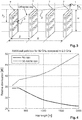
- Fig. 1 shows a protection system 5 that is configured for switching between different backhaul technologies.
- a main node 1 is shown that comprises a switching unit 4 and a diversity unit 6.
- a dependent node 2 is shown that also comprises a switching unit 4 and a diversity unit 6.
- the main node 1 and the dependent node 2 correspond to a macro RBS and to a pico RBS, respectively.
- Communication between the macro RBS 1 and the pico RBS 2 takes place via a backhaul channel 3. Since the pico RBS 2 is in NLOS to the macro RBS 1, the communication is based on reflections and diffractions taken place in the urban NLOS environment.
- the urban NLOS environment is characterized by a building 7.
- the switching unit 4 of the pico RBS 2 selects a backhaul technology that is a microwave technology which is used for communication via the backhaul channel 3. Further, the macro RBS 1 measures a quality parameter of the backhaul channel 3 and afterwards directs the result of this measurement, i.e. the quality parameter measured, to the switching unit 4 which is arranged inside the macro RBS 1 in this first preferred embodiment.
- the received signal level (RSL) is below a certain predefined value and thus the backhaul technology is switched to a different backhaul technology which is a mobile telecommunication technology, such as LTE.
- the switching unit 4 requests a status parameter of the backhaul channel 3, wherein the status parameter comprises a communication status from the macro RBS 1 and from the pico RBS 2.
- the switching unit 4 transmits the status parameter of the backhaul channel 3 requested to the pico RBS 2 and to the macro RBS 1.
- a node or RBS measures its own status and initiates the switching without any status reporting being done via the backhaul. In other words, if a node itself detects a backhaul problem then the node initiates a switch which is preferably communicated to the other node.
- Fig. 2 illustrates a NLOS backhaul solution where microwave is used as the primary backhaul technology and IMT technology for backup according to a second preferred embodiment of the invention.
- the narrow arrow illustrates diffracted microwaves and the wide arrows illustrate diffracted and reflected IMT radio waves.
- a macro RBS 1 communicates via a backhaul channel 3 with a pico RBS 2. Both the macro RBS 1 and the pico RBS 2 are arranged in an urban environment which is characterized by three buildings 7 in this second preferred embodiment.
- Microwave frequencies in principle rely on rooftop diffraction to reach the pico RBS 2, whereas the IMT band based technology has better propagation characteristics using multipath propagation with reflections and diffraction around the buildings 7 in NLOS which is illustrated by the wide arrows in this second preferred embodiment.
- Fig. 3 shows a path loss model with diffraction over buildings according to a third preferred embodiment of the invention.
- the parameters used for the model are given by h 1 equal to 5 m, h 2 equal to 20 m, H equal to 33 m and D equal to 15 m, respectively.
- Fig. 4 shows the additional path loss a signal experiences at a microwave frequency of 32 GHz compared to an IMT frequency of 2.3 GHz according to the third preferred embodiment of the invention.
- the relative attenuation in dB is illustrated over the hop length which is given by the distance between the macro RBS 1 and the pico RBS 2 shown in fig. 3 .
- FIG. 4 represents the relative attenuation without rain and the dashed curve illustrates the situation for 50 mm/hr rain intensity.
- Fig. 4 illustrates a numerical example where only above rooftop diffraction is considered. Further, a plurality of buildings being arranged in between the corresponding nodes are considered since the hop length varies from 100 m up to 2000 m. At a hop length of 500 m one can see how the 32 GHz channel suffers from additional path losses of 33 dB and 39 dB for without rain and with rain, respectively. It is noticeable how the curves with rain and without rain behave differently with increasing hop length. While the additional path loss decreases with increasing distance when there is no rain, the additional path loss increases with increasing distance in 50 mm/hr rain intensity.
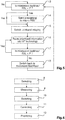
- Fig. 5 illustrates a method for switched backhaul diversity according to a fourth preferred embodiment of the invention.
- the received signal strength (RSL) is a measure of the quality of the channel.
- RSL received signal strength
- a first step 13 it is checked whether RSL is large and thus if the channel quality is good but if RSL is small then the channel quality is poor.
- the value of the design parameter P is a measure for deciding when to switch backhaul technology.
- the prioritized backhaul information is re-routed via IMT technology back to the network, for instance using 3GPP LTE radio access back to a 3GPP eNB in case of a poor microwave backhaul.
- the microwave backhaul can be in outage or close to outage.
- a prewarning can be sent 14 to the macro RBS in case the RSL is small. In this case it is always switched 15 to inband relaying and prioritized information is routed 16 via IMT technology. This continues 17 while the microwave backhaul is still poor otherwise it is switched back 18 again to the microwave backhaul.
- P is larger than the minimum RSL required for the backhaul to work to avoid abrupt events.
- the macro RBS schedules the pico RBS in a similar way as it schedules users connected to the macro RBS but in a prioritized way, which is realized, for instance, by an in-band relay according to 3GPP terminology.
- a microwave-based connection in NLOS provides a rate R 1 that is available T 1 % of the time and further a corresponding IMT based connection provides a rate R 2 that is available T 2 % of the time.
- Availability is defined as one minus outage probability.
- the network is in outage if and only if both the microwave based backhaul and the IMT based backhaul are both in outage at the same time, which becomes a very low probability event which implies a higher availability of the backhauling compared to other preferred embodiment covering a scenario when only a single backhaul technology is used.
- FIG. 6 schematically shows the step of a method for switching between backhaul technologies in a wireless backhaul network according to a fifth preferred embodiment of the invention.
- a backhaul technology used for communication via a backhaul channel between a main node and a dependent node is selected 8.
- a quality parameter of the backhaul channel is measured 9.
- the backhaul technology selected is switched 10 to a predefined backhaul technology for communication between the main node and the dependent node dependent on the quality parameter measured in the previous step 9.
- control 11 and prioritizing 12 data traffic between the main node and the dependent node using the predefined backhaul technology is performed.
- a step of sending a prioritizing request and/or of sending a scheduling request via the backhaul channel is performed.
- the step of sending a prioritizing request or of sending a scheduling request is not performed via the backhaul channel but, in case it has been switched to an alternative backhaul technology, such as to LTE, LTE prioritizes the backhaul scheduling. For instance, this can be done by a 3GPP in-band relay which comprises reserved resources for the in-band relaying, i.e. the LTE "backhaul" prioritizes backhaul traffic in case backhaul is switched to in-band LTE.
Landscapes
- Engineering & Computer Science (AREA)
- Computer Networks & Wireless Communication (AREA)
- Signal Processing (AREA)
- Quality & Reliability (AREA)
- Mobile Radio Communication Systems (AREA)
Applications Claiming Priority (1)
| Application Number | Priority Date | Filing Date | Title |
|---|---|---|---|
| PCT/EP2013/051792 WO2014117832A1 (en) | 2013-01-30 | 2013-01-30 | A protection system for wireless nlos backhaul |
Publications (2)
| Publication Number | Publication Date |
|---|---|
| EP2952033A1 EP2952033A1 (en) | 2015-12-09 |
| EP2952033B1 true EP2952033B1 (en) | 2020-03-04 |
Family
ID=47631431
Family Applications (1)
| Application Number | Title | Priority Date | Filing Date |
|---|---|---|---|
| EP13702215.8A Active EP2952033B1 (en) | 2013-01-30 | 2013-01-30 | A protection system for wireless nlos backhaul |
Country Status (7)
| Country | Link |
|---|---|
| US (1) | US10306653B2 (da) |
| EP (1) | EP2952033B1 (da) |
| CN (1) | CN105027604B (da) |
| DK (1) | DK2952033T3 (da) |
| MX (1) | MX344766B (da) |
| PH (1) | PH12015501413A1 (da) |
| WO (1) | WO2014117832A1 (da) |
Families Citing this family (9)
| Publication number | Priority date | Publication date | Assignee | Title |
|---|---|---|---|---|
| GB2515492A (en) * | 2013-06-24 | 2014-12-31 | Vodafone Ip Licensing Ltd | Optimization of a cellular radio network |
| US10149309B2 (en) * | 2013-08-07 | 2018-12-04 | Sony Corporation | Communication control device, communication control method, and communication device |
| CN105794253B (zh) * | 2013-11-28 | 2017-11-28 | 英国电讯有限公司 | 无线接入点和报告连接的丢失的方法 |
| US9986458B2 (en) * | 2015-08-27 | 2018-05-29 | Qualcomm Incorporated | Mitigating constrained backhaul availability between a radio access network (RAN) and core network |
| US9967884B2 (en) | 2015-11-10 | 2018-05-08 | Netgear, Inc. | Dedicated backhaul for whole home coverage |
| US10721669B2 (en) * | 2017-04-27 | 2020-07-21 | Airspan Networks, Inc. | Apparatus and method for improving connectivity for items of user equipment in a wireless network |
| US11277195B2 (en) | 2017-04-27 | 2022-03-15 | Airspan Ip Holdco Llc | Apparatus and method for providing network coverage in a wireless network |
| EP3874791B1 (en) | 2018-11-02 | 2023-07-19 | Telefonaktiebolaget LM Ericsson (publ) | Handling of deteriorating ap-to-ap wireless link |
| GB2607146B (en) | 2019-11-29 | 2023-05-24 | Jio Platforms Ltd | System and method for automatic deployment of an outdoor small cell |
Citations (1)
| Publication number | Priority date | Publication date | Assignee | Title |
|---|---|---|---|---|
| US20120179810A1 (en) * | 2011-01-11 | 2012-07-12 | Qualcomm Incorporated | Method and apparatus for improving management of network resources for devices |
Family Cites Families (34)
| Publication number | Priority date | Publication date | Assignee | Title |
|---|---|---|---|---|
| US6795414B1 (en) * | 1996-11-14 | 2004-09-21 | Hitachi, Ltd. | Communication system |
| US8908609B1 (en) * | 2003-06-06 | 2014-12-09 | Rockstar Consortium Us Lp | Multi-hop wireless communications system and method |
| EP1507422A1 (en) * | 2003-08-14 | 2005-02-16 | Matsushita Electric Industrial Co., Ltd. | Serving base station selection during soft handover |
| US8909226B2 (en) * | 2004-06-07 | 2014-12-09 | Apple Inc. | Handoffs and handoff selection in a wireless access network |
| US7697450B2 (en) * | 2005-11-30 | 2010-04-13 | Motorola, Inc. | Method and apparatus for broadcast in an ad hoc network with dynamic selection of relay nodes |
| US20080107091A1 (en) * | 2006-11-07 | 2008-05-08 | Motorola, Inc. | Broadcast efficiency in a multihop network |
| WO2009014764A1 (en) * | 2007-07-25 | 2009-01-29 | Teenay Wireless, Inc. | A multi-tier backhaul network system with traffic differentiation and advanced processing capabilities and methods therefor |
| US8054822B2 (en) * | 2008-01-28 | 2011-11-08 | Alcatel Lucent | Synchronization of call traffic in the forward direction over backhaul links |
| US9083474B2 (en) * | 2008-04-25 | 2015-07-14 | Qualcomm Incorporated | Multimedia broadcast forwarding systems and methods |
| US8355722B1 (en) * | 2008-08-08 | 2013-01-15 | Clearwire Ip Holdings Llc | Service initiation based on alternative resources and QoS |
| WO2010074536A2 (ko) * | 2008-12-24 | 2010-07-01 | 엘지전자 주식회사 | 중계기에 대한 자원 할당 방법 |
| WO2010121661A1 (en) * | 2009-04-24 | 2010-10-28 | Nokia Siemens Networks Oy | Method, apparatus, and related computer program product for load balancing in a relay network |
| EP2437411A4 (en) * | 2009-05-25 | 2015-12-02 | Fujitsu Ltd | RELAY DEVICE, TRANSMISSION DEVICE, COMMUNICATION SYSTEM, RECEPTION DEVICE AND COMMUNICATION PROCESS |
| US8488514B2 (en) * | 2009-10-02 | 2013-07-16 | Research In Motion Limited | Relay backhaul link quality considerations for mobility procedures |
| EP2494729B1 (en) * | 2009-10-30 | 2017-03-29 | BlackBerry Limited | Downlink mcs selection in a type 2 relay network |
| US8954078B2 (en) * | 2009-12-02 | 2015-02-10 | Nokia Siemens Networks Oy | Handing over relayed connections in mobile environment |
| US8254949B2 (en) * | 2009-12-23 | 2012-08-28 | At&T Intellectual Property I, L.P. | Active set modification to release backhaul capacity |
| US8559957B2 (en) * | 2010-01-28 | 2013-10-15 | Qualcomm Incorporated | Method and apparatus for biasing a handoff decision based on a blackhaul link |
| US8811513B2 (en) * | 2010-02-05 | 2014-08-19 | Qualcomm Incorporated | Antenna switching in a closed loop transmit diversity system |
| EP2550781B1 (en) * | 2010-03-22 | 2017-11-22 | Telefonaktiebolaget LM Ericsson (publ) | Adaptive feedback of channel information for coordinated transmission on a wireless backhaul |
| US8724472B2 (en) * | 2010-03-25 | 2014-05-13 | Qualcomm Incorporated | Data radio bearer mapping in a telecommunication network with relays |
| US9332510B2 (en) * | 2010-08-17 | 2016-05-03 | Qualcomm Incorporated | Apparatus and method for controlling inter-cell interference between femtocells and macrocells |
| EP2424327A1 (en) * | 2010-08-27 | 2012-02-29 | Deutsche Telekom AG | Method, public land mobile network and network entity for providing wireless backhaul link |
| US8737506B1 (en) * | 2010-12-29 | 2014-05-27 | Sprint Communications Company L.P. | Determination of transmit diversity transmission delays |
| US9066242B2 (en) * | 2011-01-14 | 2015-06-23 | Telefonaktiebolaget L M Ericsson (Publ) | Method and device for distinguishing between relay types |
| JP5795809B2 (ja) * | 2011-02-04 | 2015-10-14 | テレフオンアクチーボラゲット エル エム エリクソン(パブル) | バックホール選択をサポートする方法及び装置 |
| US9445334B2 (en) * | 2011-04-20 | 2016-09-13 | Qualcomm Incorporated | Switching between radio access technologies at a multi-mode access point |
| US8385305B1 (en) * | 2012-04-16 | 2013-02-26 | CBF Networks, Inc | Hybrid band intelligent backhaul radio |
| US20130246575A1 (en) * | 2011-09-16 | 2013-09-19 | Qualcomm Incorporated | Systems and methods for network quality estimation, connectivity detection, and load management |
| US9078176B2 (en) * | 2011-09-29 | 2015-07-07 | Electronics And Telecommunications Research Institute | System and method for multi-hierarchical cell configuration |
| CN103988546A (zh) * | 2011-12-08 | 2014-08-13 | 交互数字专利控股公司 | 高速双波段蜂窝通信 |
| US8660015B2 (en) * | 2011-12-27 | 2014-02-25 | Trueposition, Inc. | Location of mobile devices served by a relay node |
| US20130183895A1 (en) * | 2012-01-13 | 2013-07-18 | Qualcomm Incorporated | System, apparatus, and method for facilitating multi-antenna diversity for repeaters in wireless communication systems |
| US9203761B2 (en) * | 2012-12-12 | 2015-12-01 | Taqua Wbh, Llc | Systems and methods optimizing backhaul transport |
-
2013
- 2013-01-30 WO PCT/EP2013/051792 patent/WO2014117832A1/en not_active Ceased
- 2013-01-30 CN CN201380071747.XA patent/CN105027604B/zh active Active
- 2013-01-30 EP EP13702215.8A patent/EP2952033B1/en active Active
- 2013-01-30 DK DK13702215.8T patent/DK2952033T3/da active
- 2013-01-30 US US14/764,542 patent/US10306653B2/en active Active
- 2013-01-30 MX MX2015008734A patent/MX344766B/es active IP Right Grant
-
2015
- 2015-06-19 PH PH12015501413A patent/PH12015501413A1/en unknown
Patent Citations (1)
| Publication number | Priority date | Publication date | Assignee | Title |
|---|---|---|---|---|
| US20120179810A1 (en) * | 2011-01-11 | 2012-07-12 | Qualcomm Incorporated | Method and apparatus for improving management of network resources for devices |
Also Published As
| Publication number | Publication date |
|---|---|
| PH12015501413A1 (en) | 2015-09-14 |
| CN105027604A (zh) | 2015-11-04 |
| DK2952033T3 (da) | 2020-05-11 |
| US20150365959A1 (en) | 2015-12-17 |
| EP2952033A1 (en) | 2015-12-09 |
| CN105027604B (zh) | 2019-12-13 |
| MX2015008734A (es) | 2015-10-26 |
| US10306653B2 (en) | 2019-05-28 |
| WO2014117832A1 (en) | 2014-08-07 |
| MX344766B (es) | 2017-01-06 |
Similar Documents
| Publication | Publication Date | Title |
|---|---|---|
| EP2952033B1 (en) | A protection system for wireless nlos backhaul | |
| US12177760B2 (en) | Methods, wireless communications networks and infrastructure equipment | |
| US8798525B2 (en) | Composite reporting of wireless relay power capability | |
| US9191098B2 (en) | Capability reporting for relay nodes in wireless networks | |
| KR101457347B1 (ko) | 링크 서브섹션들의 목표 패킷 지연을 결정하고 조정하기 위한 방법, 장치 및 노드 | |
| CN101453745B (zh) | 一种小区切换过程中的测量方法、透明中继及基站 | |
| US8953482B2 (en) | Methods and apparatuses to improve on-time throughput for integrated multi-rat heterogeneous networks | |
| EP4329212A1 (en) | Communication control method, wireless terminal, and base station | |
| KR102296164B1 (ko) | 무선 통신 시스템에서 안테나 파라미터를 최적화하기 위한 장치 및 방법 | |
| KR20130132339A (ko) | 빔포밍을 이용하는 이동통신 시스템에서 참조 신호를 송수신하는 방법 및 장치 | |
| US20140029507A1 (en) | Intra cell interference mitigation in a wireless network employing relay nodes | |
| WO2010132201A1 (en) | Multi-stream wireless relay | |
| EP3167656B1 (en) | Method and apparatus for access point selection | |
| KR20120139841A (ko) | 링크의 각 섹션에서 서비스의 품질을 결정하기 위한 방법, 장비 및 노드 | |
| US20100061313A1 (en) | Method and apparatus for using remote station as backhaul in a coordinated manner | |
| Zhao et al. | LTE-M system performance of integrated services based on field test results | |
| US20140349650A1 (en) | Temporarily Serving a User Equipment by a Second Cell | |
| US20240008017A1 (en) | Technique for Allocating Spatial Radio Resources for an Integrated Access and Backhaul Node | |
| CN108353412A (zh) | 对于共享小区中的多点子集传输的高级laa调度 | |
| WO2022084301A1 (en) | Iab dynamic capability updates | |
| KR101892927B1 (ko) | 통신 시스템에서 소형 기지국의 동작을 제어하는 방법 및 그에 따른 소형 기지국 | |
| WO2023222302A1 (en) | Methods and infrastructure equipment to avoid physical cell identifier (pci) collisions |
Legal Events
| Date | Code | Title | Description |
|---|---|---|---|
| PUAI | Public reference made under article 153(3) epc to a published international application that has entered the european phase |
Free format text: ORIGINAL CODE: 0009012 |
|
| 17P | Request for examination filed |
Effective date: 20150703 |
|
| AK | Designated contracting states |
Kind code of ref document: A1 Designated state(s): AL AT BE BG CH CY CZ DE DK EE ES FI FR GB GR HR HU IE IS IT LI LT LU LV MC MK MT NL NO PL PT RO RS SE SI SK SM TR |
|
| AX | Request for extension of the european patent |
Extension state: BA ME |
|
| DAX | Request for extension of the european patent (deleted) | ||
| STAA | Information on the status of an ep patent application or granted ep patent |
Free format text: STATUS: EXAMINATION IS IN PROGRESS |
|
| 17Q | First examination report despatched |
Effective date: 20180315 |
|
| RIC1 | Information provided on ipc code assigned before grant |
Ipc: H04B 7/155 20060101ALN20190626BHEP Ipc: H04W 72/04 20090101ALN20190626BHEP Ipc: H04W 24/04 20090101AFI20190626BHEP |
|
| RIC1 | Information provided on ipc code assigned before grant |
Ipc: H04W 24/04 20090101AFI20190718BHEP Ipc: H04B 7/155 20060101ALN20190718BHEP Ipc: H04W 72/04 20090101ALN20190718BHEP |
|
| RIC1 | Information provided on ipc code assigned before grant |
Ipc: H04W 72/04 20090101ALN20190719BHEP Ipc: H04W 24/04 20090101AFI20190719BHEP Ipc: H04B 7/155 20060101ALN20190719BHEP |
|
| GRAP | Despatch of communication of intention to grant a patent |
Free format text: ORIGINAL CODE: EPIDOSNIGR1 |
|
| STAA | Information on the status of an ep patent application or granted ep patent |
Free format text: STATUS: GRANT OF PATENT IS INTENDED |
|
| INTG | Intention to grant announced |
Effective date: 20191001 |
|
| RIN1 | Information on inventor provided before grant (corrected) |
Inventor name: COLDREY, MIKAEL |
|
| GRAS | Grant fee paid |
Free format text: ORIGINAL CODE: EPIDOSNIGR3 |
|
| GRAA | (expected) grant |
Free format text: ORIGINAL CODE: 0009210 |
|
| STAA | Information on the status of an ep patent application or granted ep patent |
Free format text: STATUS: THE PATENT HAS BEEN GRANTED |
|
| AK | Designated contracting states |
Kind code of ref document: B1 Designated state(s): AL AT BE BG CH CY CZ DE DK EE ES FI FR GB GR HR HU IE IS IT LI LT LU LV MC MK MT NL NO PL PT RO RS SE SI SK SM TR |
|
| REG | Reference to a national code |
Ref country code: GB Ref legal event code: FG4D |
|
| REG | Reference to a national code |
Ref country code: CH Ref legal event code: EP |
|
| REG | Reference to a national code |
Ref country code: AT Ref legal event code: REF Ref document number: 1241855 Country of ref document: AT Kind code of ref document: T Effective date: 20200315 |
|
| REG | Reference to a national code |
Ref country code: DE Ref legal event code: R096 Ref document number: 602013066418 Country of ref document: DE |
|
| REG | Reference to a national code |
Ref country code: IE Ref legal event code: FG4D |
|
| REG | Reference to a national code |
Ref country code: DK Ref legal event code: T3 Effective date: 20200504 |
|
| REG | Reference to a national code |
Ref country code: NL Ref legal event code: FP |
|
| REG | Reference to a national code |
Ref country code: GR Ref legal event code: EP Ref document number: 20200401153 Country of ref document: GR Effective date: 20200615 |
|
| PG25 | Lapsed in a contracting state [announced via postgrant information from national office to epo] |
Ref country code: NO Free format text: LAPSE BECAUSE OF FAILURE TO SUBMIT A TRANSLATION OF THE DESCRIPTION OR TO PAY THE FEE WITHIN THE PRESCRIBED TIME-LIMIT Effective date: 20200604 Ref country code: RS Free format text: LAPSE BECAUSE OF FAILURE TO SUBMIT A TRANSLATION OF THE DESCRIPTION OR TO PAY THE FEE WITHIN THE PRESCRIBED TIME-LIMIT Effective date: 20200304 Ref country code: FI Free format text: LAPSE BECAUSE OF FAILURE TO SUBMIT A TRANSLATION OF THE DESCRIPTION OR TO PAY THE FEE WITHIN THE PRESCRIBED TIME-LIMIT Effective date: 20200304 |
|
| PG25 | Lapsed in a contracting state [announced via postgrant information from national office to epo] |
Ref country code: LV Free format text: LAPSE BECAUSE OF FAILURE TO SUBMIT A TRANSLATION OF THE DESCRIPTION OR TO PAY THE FEE WITHIN THE PRESCRIBED TIME-LIMIT Effective date: 20200304 Ref country code: SE Free format text: LAPSE BECAUSE OF FAILURE TO SUBMIT A TRANSLATION OF THE DESCRIPTION OR TO PAY THE FEE WITHIN THE PRESCRIBED TIME-LIMIT Effective date: 20200304 Ref country code: HR Free format text: LAPSE BECAUSE OF FAILURE TO SUBMIT A TRANSLATION OF THE DESCRIPTION OR TO PAY THE FEE WITHIN THE PRESCRIBED TIME-LIMIT Effective date: 20200304 Ref country code: BG Free format text: LAPSE BECAUSE OF FAILURE TO SUBMIT A TRANSLATION OF THE DESCRIPTION OR TO PAY THE FEE WITHIN THE PRESCRIBED TIME-LIMIT Effective date: 20200604 |
|
| REG | Reference to a national code |
Ref country code: LT Ref legal event code: MG4D |
|
| PG25 | Lapsed in a contracting state [announced via postgrant information from national office to epo] |
Ref country code: RO Free format text: LAPSE BECAUSE OF FAILURE TO SUBMIT A TRANSLATION OF THE DESCRIPTION OR TO PAY THE FEE WITHIN THE PRESCRIBED TIME-LIMIT Effective date: 20200304 Ref country code: EE Free format text: LAPSE BECAUSE OF FAILURE TO SUBMIT A TRANSLATION OF THE DESCRIPTION OR TO PAY THE FEE WITHIN THE PRESCRIBED TIME-LIMIT Effective date: 20200304 Ref country code: PT Free format text: LAPSE BECAUSE OF FAILURE TO SUBMIT A TRANSLATION OF THE DESCRIPTION OR TO PAY THE FEE WITHIN THE PRESCRIBED TIME-LIMIT Effective date: 20200729 Ref country code: ES Free format text: LAPSE BECAUSE OF FAILURE TO SUBMIT A TRANSLATION OF THE DESCRIPTION OR TO PAY THE FEE WITHIN THE PRESCRIBED TIME-LIMIT Effective date: 20200304 Ref country code: SM Free format text: LAPSE BECAUSE OF FAILURE TO SUBMIT A TRANSLATION OF THE DESCRIPTION OR TO PAY THE FEE WITHIN THE PRESCRIBED TIME-LIMIT Effective date: 20200304 Ref country code: CZ Free format text: LAPSE BECAUSE OF FAILURE TO SUBMIT A TRANSLATION OF THE DESCRIPTION OR TO PAY THE FEE WITHIN THE PRESCRIBED TIME-LIMIT Effective date: 20200304 Ref country code: IS Free format text: LAPSE BECAUSE OF FAILURE TO SUBMIT A TRANSLATION OF THE DESCRIPTION OR TO PAY THE FEE WITHIN THE PRESCRIBED TIME-LIMIT Effective date: 20200704 Ref country code: SK Free format text: LAPSE BECAUSE OF FAILURE TO SUBMIT A TRANSLATION OF THE DESCRIPTION OR TO PAY THE FEE WITHIN THE PRESCRIBED TIME-LIMIT Effective date: 20200304 Ref country code: LT Free format text: LAPSE BECAUSE OF FAILURE TO SUBMIT A TRANSLATION OF THE DESCRIPTION OR TO PAY THE FEE WITHIN THE PRESCRIBED TIME-LIMIT Effective date: 20200304 |
|
| REG | Reference to a national code |
Ref country code: AT Ref legal event code: MK05 Ref document number: 1241855 Country of ref document: AT Kind code of ref document: T Effective date: 20200304 |
|
| REG | Reference to a national code |
Ref country code: DE Ref legal event code: R097 Ref document number: 602013066418 Country of ref document: DE |
|
| PLBE | No opposition filed within time limit |
Free format text: ORIGINAL CODE: 0009261 |
|
| STAA | Information on the status of an ep patent application or granted ep patent |
Free format text: STATUS: NO OPPOSITION FILED WITHIN TIME LIMIT |
|
| PG25 | Lapsed in a contracting state [announced via postgrant information from national office to epo] |
Ref country code: AT Free format text: LAPSE BECAUSE OF FAILURE TO SUBMIT A TRANSLATION OF THE DESCRIPTION OR TO PAY THE FEE WITHIN THE PRESCRIBED TIME-LIMIT Effective date: 20200304 Ref country code: IT Free format text: LAPSE BECAUSE OF FAILURE TO SUBMIT A TRANSLATION OF THE DESCRIPTION OR TO PAY THE FEE WITHIN THE PRESCRIBED TIME-LIMIT Effective date: 20200304 |
|
| 26N | No opposition filed |
Effective date: 20201207 |
|
| PG25 | Lapsed in a contracting state [announced via postgrant information from national office to epo] |
Ref country code: SI Free format text: LAPSE BECAUSE OF FAILURE TO SUBMIT A TRANSLATION OF THE DESCRIPTION OR TO PAY THE FEE WITHIN THE PRESCRIBED TIME-LIMIT Effective date: 20200304 Ref country code: PL Free format text: LAPSE BECAUSE OF FAILURE TO SUBMIT A TRANSLATION OF THE DESCRIPTION OR TO PAY THE FEE WITHIN THE PRESCRIBED TIME-LIMIT Effective date: 20200304 |
|
| PGFP | Annual fee paid to national office [announced via postgrant information from national office to epo] |
Ref country code: DK Payment date: 20210127 Year of fee payment: 9 |
|
| PG25 | Lapsed in a contracting state [announced via postgrant information from national office to epo] |
Ref country code: MC Free format text: LAPSE BECAUSE OF FAILURE TO SUBMIT A TRANSLATION OF THE DESCRIPTION OR TO PAY THE FEE WITHIN THE PRESCRIBED TIME-LIMIT Effective date: 20200304 |
|
| REG | Reference to a national code |
Ref country code: CH Ref legal event code: PL |
|
| PG25 | Lapsed in a contracting state [announced via postgrant information from national office to epo] |
Ref country code: LU Free format text: LAPSE BECAUSE OF NON-PAYMENT OF DUE FEES Effective date: 20210130 |
|
| REG | Reference to a national code |
Ref country code: BE Ref legal event code: MM Effective date: 20210131 |
|
| PG25 | Lapsed in a contracting state [announced via postgrant information from national office to epo] |
Ref country code: CH Free format text: LAPSE BECAUSE OF NON-PAYMENT OF DUE FEES Effective date: 20210131 Ref country code: LI Free format text: LAPSE BECAUSE OF NON-PAYMENT OF DUE FEES Effective date: 20210131 |
|
| PG25 | Lapsed in a contracting state [announced via postgrant information from national office to epo] |
Ref country code: IE Free format text: LAPSE BECAUSE OF NON-PAYMENT OF DUE FEES Effective date: 20210130 |
|
| PG25 | Lapsed in a contracting state [announced via postgrant information from national office to epo] |
Ref country code: BE Free format text: LAPSE BECAUSE OF NON-PAYMENT OF DUE FEES Effective date: 20210131 |
|
| REG | Reference to a national code |
Ref country code: DK Ref legal event code: EBP Effective date: 20220131 |
|
| PG25 | Lapsed in a contracting state [announced via postgrant information from national office to epo] |
Ref country code: DK Free format text: LAPSE BECAUSE OF NON-PAYMENT OF DUE FEES Effective date: 20220131 |
|
| PGFP | Annual fee paid to national office [announced via postgrant information from national office to epo] |
Ref country code: FR Payment date: 20230125 Year of fee payment: 11 |
|
| PG25 | Lapsed in a contracting state [announced via postgrant information from national office to epo] |
Ref country code: HU Free format text: LAPSE BECAUSE OF FAILURE TO SUBMIT A TRANSLATION OF THE DESCRIPTION OR TO PAY THE FEE WITHIN THE PRESCRIBED TIME-LIMIT; INVALID AB INITIO Effective date: 20130130 |
|
| PGFP | Annual fee paid to national office [announced via postgrant information from national office to epo] |
Ref country code: GR Payment date: 20230127 Year of fee payment: 11 Ref country code: DE Payment date: 20230127 Year of fee payment: 11 |
|
| PG25 | Lapsed in a contracting state [announced via postgrant information from national office to epo] |
Ref country code: CY Free format text: LAPSE BECAUSE OF FAILURE TO SUBMIT A TRANSLATION OF THE DESCRIPTION OR TO PAY THE FEE WITHIN THE PRESCRIBED TIME-LIMIT Effective date: 20200304 |
|
| PG25 | Lapsed in a contracting state [announced via postgrant information from national office to epo] |
Ref country code: MK Free format text: LAPSE BECAUSE OF FAILURE TO SUBMIT A TRANSLATION OF THE DESCRIPTION OR TO PAY THE FEE WITHIN THE PRESCRIBED TIME-LIMIT Effective date: 20200304 |
|
| REG | Reference to a national code |
Ref country code: DE Ref legal event code: R119 Ref document number: 602013066418 Country of ref document: DE |
|
| PG25 | Lapsed in a contracting state [announced via postgrant information from national office to epo] |
Ref country code: MT Free format text: LAPSE BECAUSE OF FAILURE TO SUBMIT A TRANSLATION OF THE DESCRIPTION OR TO PAY THE FEE WITHIN THE PRESCRIBED TIME-LIMIT Effective date: 20200304 |
|
| PG25 | Lapsed in a contracting state [announced via postgrant information from national office to epo] |
Ref country code: DE Free format text: LAPSE BECAUSE OF NON-PAYMENT OF DUE FEES Effective date: 20240801 |
|
| PG25 | Lapsed in a contracting state [announced via postgrant information from national office to epo] |
Ref country code: GR Free format text: LAPSE BECAUSE OF NON-PAYMENT OF DUE FEES Effective date: 20240802 |
|
| PG25 | Lapsed in a contracting state [announced via postgrant information from national office to epo] |
Ref country code: FR Free format text: LAPSE BECAUSE OF NON-PAYMENT OF DUE FEES Effective date: 20240131 |
|
| PG25 | Lapsed in a contracting state [announced via postgrant information from national office to epo] |
Ref country code: GR Free format text: LAPSE BECAUSE OF NON-PAYMENT OF DUE FEES Effective date: 20240802 Ref country code: FR Free format text: LAPSE BECAUSE OF NON-PAYMENT OF DUE FEES Effective date: 20240131 Ref country code: DE Free format text: LAPSE BECAUSE OF NON-PAYMENT OF DUE FEES Effective date: 20240801 |
|
| PG25 | Lapsed in a contracting state [announced via postgrant information from national office to epo] |
Ref country code: TR Free format text: LAPSE BECAUSE OF FAILURE TO SUBMIT A TRANSLATION OF THE DESCRIPTION OR TO PAY THE FEE WITHIN THE PRESCRIBED TIME-LIMIT Effective date: 20200304 |
|
| PGFP | Annual fee paid to national office [announced via postgrant information from national office to epo] |
Ref country code: NL Payment date: 20260126 Year of fee payment: 14 |
|
| PGFP | Annual fee paid to national office [announced via postgrant information from national office to epo] |
Ref country code: GB Payment date: 20260127 Year of fee payment: 14 |