EP2946359B1 - Verfahren zur prüfung einer zellalterung - Google Patents
Verfahren zur prüfung einer zellalterung Download PDFInfo
- Publication number
- EP2946359B1 EP2946359B1 EP14701598.6A EP14701598A EP2946359B1 EP 2946359 B1 EP2946359 B1 EP 2946359B1 EP 14701598 A EP14701598 A EP 14701598A EP 2946359 B1 EP2946359 B1 EP 2946359B1
- Authority
- EP
- European Patent Office
- Prior art keywords
- population
- organisms
- days
- images
- mobility
- Prior art date
- Legal status (The legal status is an assumption and is not a legal conclusion. Google has not performed a legal analysis and makes no representation as to the accuracy of the status listed.)
- Active
Links
Images




Classifications
-
- G—PHYSICS
- G06—COMPUTING OR CALCULATING; COUNTING
- G06T—IMAGE DATA PROCESSING OR GENERATION, IN GENERAL
- G06T7/00—Image analysis
- G06T7/0002—Inspection of images, e.g. flaw detection
- G06T7/0012—Biomedical image inspection
-
- G—PHYSICS
- G02—OPTICS
- G02B—OPTICAL ELEMENTS, SYSTEMS OR APPARATUS
- G02B21/00—Microscopes
- G02B21/36—Microscopes arranged for photographic purposes or projection purposes or digital imaging or video purposes including associated control and data processing arrangements
- G02B21/365—Control or image processing arrangements for digital or video microscopes
-
- G—PHYSICS
- G06—COMPUTING OR CALCULATING; COUNTING
- G06T—IMAGE DATA PROCESSING OR GENERATION, IN GENERAL
- G06T7/00—Image analysis
- G06T7/20—Analysis of motion
- G06T7/254—Analysis of motion involving subtraction of images
-
- G—PHYSICS
- G06—COMPUTING OR CALCULATING; COUNTING
- G06V—IMAGE OR VIDEO RECOGNITION OR UNDERSTANDING
- G06V20/00—Scenes; Scene-specific elements
- G06V20/60—Type of objects
- G06V20/69—Microscopic objects, e.g. biological cells or cellular parts
-
- G—PHYSICS
- G06—COMPUTING OR CALCULATING; COUNTING
- G06T—IMAGE DATA PROCESSING OR GENERATION, IN GENERAL
- G06T2207/00—Indexing scheme for image analysis or image enhancement
- G06T2207/10—Image acquisition modality
- G06T2207/10056—Microscopic image
-
- G—PHYSICS
- G06—COMPUTING OR CALCULATING; COUNTING
- G06T—IMAGE DATA PROCESSING OR GENERATION, IN GENERAL
- G06T2207/00—Indexing scheme for image analysis or image enhancement
- G06T2207/30—Subject of image; Context of image processing
- G06T2207/30004—Biomedical image processing
- G06T2207/30024—Cell structures in vitro; Tissue sections in vitro
Definitions
- the present invention relates to a high throughput method for assessing the chronological lifespan (CLS) of a model organism, such as Caenorhabditis elegans ( C. elegans ).
- C. elegans is a well-studied model used in ageing and has been utilised in the analysis of not only the fundamental processes which contribute to ageing, but also of age related diseases.
- Traditional techniques of lifespan evaluation involve the manual examination of a synchronised ageing population of C. elegans and assessment of the fraction of the population which are still living by means of individual physical stimulation. The data accumulated in this manner can be plotted over time to generate a Chronological Lifespan (CLS) profile.
- CLS Chronological Lifespan
- GB2479628 discloses a method for tracking the motion of a biological object.
- the method comprises the successive subtraction of a number of images from a reference image allowing the tracking of motion of a single biological object over time.
- US 5789242 describes a method for determining the toxicity of water-soluble substances by measuring the change in mobility of individual organisms within a population over time.
- WO2007/042044 describes a method for determining a change in a cell population over time as a method for selecting embryos for in vitro fertilisation.
- US 8265357 describes the determination of a change in a cell culture by analysis of a time series of difference images.
- the development of a high throughput automated method for determining the mobility of a population of organisms would be of great advantage in ageing experiments.
- the inventors have developed such a method which can be used to assess the chronological lifespan of a model organism by examining the mobility of a given population. The mobility can then be quantified and expressed as a fraction of the number of organisms in the group to provide a mobility coefficient (MoCo).
- MoCo mobility coefficient
- steps d) to g) of the method can be repeated at further time points to calculate the change in mobility of the population over time.
- mobility refers to the movement of members of the population of organisms.
- mobility does not require measurement of the velocity or rate of movement of the organisms within the population. The measurement of the relative change in the velocity of the organisms forming the population over time is not required for the claimed methods. Furthermore, the term mobility refers to the mobility of the population as a whole, not to the mobility of individual organisms within the population.
- mobility refers to identifying the movement of the population of organisms in two dimensions, preferably on a solid media. It will be understood that in a preferred embodiment of the present invention the organisms are not immobilised in the media, but are able to freely move.
- ⁇ D1 is the mobility of the population at a first time point (for example day 0). It will be further apparent that ⁇ D2 is the mobility of the population at a second time point. The skilled person will understand that the change in mobility between ⁇ D1 and ⁇ D2 is equivalent to the change in the viability of the population over that time period.
- size of ⁇ D is proportional to the mobility of the whole imaged population and is calculated by comparing appropriate pairs of images, e.g. the first (I1) and second (I2) images, and calculating the difference between their derived matrices (i.e. images converted to tables of pixel intensity) in respect of the population in its entirety. Absolute values (i.e. negative values are converted into positive values) from the difference between the two matrices are summed. This value can be divided by the average signal input (the average sum of the intensity of the images I1 and I2) to account for any variation in the number of worms on each plate. This value is defined herein as the Mobility Coefficient (MoCo) and is a measure of the proportion of the imaged population that are mobile.
- MoCo Mobility Coefficient
- the positions of the organisms forming the population may optionally be compared indirectly by comparing the matrices. It will be understood that the method does not rely on calculating the position of each individual organism or where each organism has moved to, or on measuring the distances moved by individual organisms. The method involves calculating the absolute difference between the first and second images i.e. how many of the organisms have moved from their starting positions. This allows a method for calculating the relative mobility of the whole population over time, allowing the development of high throughput screening methods. It will be further understood that using this method quantitative mobility data can be obtained from a comparison of the images.
- the methods relate to the measurement of the absolute change in position of the population as a whole and not the separate analysis of one or more individual organisms within the population.
- the time period between 11 and 12 is preferably, about 100ms to about 5 minutes, about 140ms to about 3 minutes, about 200ms to about 90s, about 300ms to about 1 minute, about 400ms to about 45s, about 500ms to about 30s, about 600ms to about 15s, about 700ms to about 10s, about 750ms to about 5s, about 800ms to about 3s, about 850ms to about 2s, about 900ms to about 1s or about 1s to about 2s.
- the time period between I1 and I2 is preferably about 500ms, about 800ms, about 1s, about 2s, about 3s, about 4s, about 5s, about 6s, about 7s, about 8s, about 9s or about 10s. Most preferably about 1s.
- time period between I1 and I2 may vary depending upon the organism used in the method. It will be understood that the time period should be sufficient to allow movement of the organisms from their starting locations but not long enough to allow the organisms to move to the starting location of another organism in the population.
- time period between I2 and I3 can be any suitable time period.
- time period can be any suitable period according to the lifespan of the organism being tested.
- the time period between I2 and I3 is at least about 6 hours, at least about 12 hours, at least about 1 day, at least about 2 days, at least about 3 days, at least about 4 days, at least about 5 days, at least about 6 days, at least about 7 days, at least about 8 days, at least about 9 days, at least about 10 days, at least about 11 days or at least about 12 days.
- ⁇ D1 is calculated from images obtained on day 0 and ⁇ D2 is calculated from images obtained on day 4.
- the time period between I1 and I2, and I3 and I4 is preferably 1s.
- ⁇ D1 is calculated from images obtained on day 0 and ⁇ D2 is calculated from images obtained on day 6.
- the time period between I1 and I2, and 13 and 14 is preferably 10s.
- ⁇ D1 is calculated from images obtained on day 0 and ⁇ D2 is calculated from images obtained on day 6.
- the time period between I1 and I2, and I3 and I4 is preferably 1 min.
- a chronological lifespan profile can be calculated. It will be readily apparent to the skilled person that an increase in the mobility of the organisms over time equates to an increase in the chronological lifespan of the organisms.
- time period between the sets of images (I1 and I2, I3 and I4) should be the same for each set of time points.
- the term population refers to a plurality of organisms that, in one embodiment, belong to the same group or species. It will be understood by the skilled person that an organism can be any suitable organism (such as an animal, micro-organism, or single-celled life form) capable of movement. It will be understood that in one preferred embodiment the term movement refers to locomotion and not, for example, contraction of a cell such as a cardiomyocyte or movement of a cell or cells caused by cell division such as occurs, for example, in an embryo or other dividing cell mass.
- the population comprises at least about 2, at least about 5, at least about 10, at least about 20, at least about 50, at least about 75, at least about 100, at least about 110, at least about 120, at least about 150, at least about 175, at least about 200, at least about 250, at least about 300, at least about 350, at least about 400, at least about 450, at least about 500, at least about 550, at least about 600, at least about 650, at least about 700, at least about 750, at least about 800, at least about 850, at least about 900, at least about 950 or at least about 1000 organisms.
- the population comprises about 5 to about 1000, about 10 to about 750, about 20 to about 500, about 50 to about 300, about 50 to about 200, about 75 to about 200, about 80 to about 150, about 90 to about 125 or about 95 to about 100 organisms.
- the population comprises 50, 75, 80, 90, 100, 110, 125, 150, 175 or 200 organisms.
- the term image refers to a visual representation of the population of organisms. It will be understood that the image can be obtained by any suitable means, for example by scanning with a detector or electromagnetic beam. In one embodiment, a wide screen microscope is used. In a further embodiment, a fluorescent plate reader is used.
- the organisms can be labelled.
- the population of organisms are fluorescently labelled by any suitable means.
- the population of organisms are labelled with green fluorescent protein (GFP).
- the inventors have discovered that by using organisms with the label localised to one particular area within the organism the data generated for determining the change in mobility is more accurate. The skilled person will understand that this allows denser populations to be used reducing sampling errors.
- the organisms are C. elegans.
- GFP expressing C. elegans More preferably C. elegans with GFP expression in the body wall muscle
- the organisms are Danio rerio.
- GFP expressing Danio rerio More preferably, Danio rerio with GFP expression in the body wall muscle.
- GFP expression is localised to one particular area within the labelled organisms.
- the organisms are C. elegans MYO2 bus-5 (a drug sensitive worm expressing GFP in its pharynx)
- the inventors have discovered that the use of two labelled loci within a single organism allows for identification of specific head and/or tail movement. This allows behavioural and paralysing side effects to be accounted for when calculating viability.
- An algorithm is used to analyse the change in the position of input signals between image pairs.
- the algorithm converts the images to grey scale, thresholding them and comparing images mathematically by calculating the absolute differences between the two images. This value is then divided by the average input signal to express the mobility of a population as a fraction of the population size. This value is referred to as the Mobility Coefficient (MoCo).
- MoCo Mobility Coefficient
- the inventors have also made the surprising discovery that during the period between the first and second or subsequent time points a proportion of the organisms may escape. Therefore, division by the average input signal takes account of this reduction in organism numbers. It will be understood that the mobility coefficient (MoCo) will be proportional to the total number of organisms present compared to the initial number.
- present invention is not directed towards measuring a change in the size of the population, i.e. increased or decreased absolute numbers, but is directed to identifying a change in the mobility and hence viability of the population. Therefore, maintenance of population size, or taking account of changes in population size is desirable.
- the algorithm is used to calculate a change in the mobility of the population.
- binning can be used to alter the sensitivity of the method.
- the skilled person will be aware that binning involves summing cells in the image matrix before calculating the difference between paired images. It will be apparent that increasing the Bin size artificially reduces the sensitivity of the assay. The Inventors have discovered that this allows for the detection of changes in mobility in older, less mobile populations.
- a Bin value of 1 to 100, 2 to 75, 3 to 50, 4 to 25 or 5 to 10 is used in the algorithm.
- a Bin value of 1, 5, 10, 50 or 100 is used in the algorithm.
- the Bin value of 1 is used.
- the method can be used to assess the effect of at least one test compound or at least one environmental factor on the viability/CLS of the population.
- at least one test compound may be any suitable compound, for example, one or more small molecules or biological compositions.
- the test compound can be applied to the organisms by any suitable means, for example, the test compound may by applied topically, or may be located within the medium upon which the organisms are maintained.
- the at least one environmental factor can be any environmental factor of interest, such as temperature, light or atmospheric factors, one or more nutritional conditions such as, for example a nutritional supplement or deficiency.
- the atmospheric factor can be any factor of interest such as pollution level, atmospheric composition, moisture level etc.
- test compound such as a compound contained in a combinatorial library
- any suitable test compound such as a compound contained in a combinatorial library
- any compound which, for example, extends the CLS of the test organisms as measured via their mobility will be a candidate compound which may be useful in, for example, combatting the effects of aging or for the treatment of an age related disorder.
- any compound which reduces the CLS of the test organisms may have toxic effects.
- the organisms are C. elegans.
- the organisms can be maintained in any suitable apparatus, for example a petri dish/single well plate or a multi-well plate.
- the population is maintained in a single-well plate.
- the population is maintained in a well of a multi-well plate, wherein each well comprises a separate population.
- the method is carried out using 6 well, 12 well, 24 or 96 well plates. In a preferred embodiment, the method is carried out using 12 well plates.
- FUDR is a chemotherapeutic drug which is used in C. elegans studies to prevent the formation of second generation progeny which would otherwise complicate ageing experiments, and to produce age synchronous populations. FUDR prevents DNA synthesis and therefore eggs do not hatch and young worms do not develop. In traditional assays treatment with FUDR occurs by transferring adult worms grown on media, for example, NGM agar plates, in the absence of the drug, to a plate which has been soaked with an FUDR solution (transfer method).
- the inventors have discovered that generation of age-synchronous C. elegans populations by topical FUDR addition is possible and is preferable to transfer methods because the method can be carried out on a single plate or well without the need to transfer the worms and with the minimum of maintenance.
- the population is treated topically with FUDR, wherein the population is not transferred to a new plate or well.
- the population is treated topically with FUDR at a level of at least 0.5 ⁇ g/ml media, at least 1.0 ⁇ g/ml, at least 1.5 ⁇ g/ml, at least 17 ⁇ g/ml, at least 2.0 ⁇ g/ml, at least 2.5 ⁇ g/ml, or at least 3 ⁇ g/ml.
- the population is treated topically with 17 ⁇ g FUDR/ml media.
- the population is treated topically with 2 ⁇ g FUDR /ml media.
- the population is treated topically with more than 2 ⁇ g FUDR /ml media.
- a computer program according to claim 11 comprising instructions operable to configure a data processing apparatus to perform the method according to any of the previous aspects.
- FUDR 2'-Deoxy-5-flurouridine
- C. elegans studies to prevent the formation of second generation progeny which would otherwise complicate ageing experiments.
- FUDR prevents DNA synthesis and therefore eggs do not hatch and young worms do not develop.
- treatment occurs by transferring adult worms grown on NGM agar plates in the absence of the drug using M9 buffer to a plate which has been soaked with an FUDR solution (transfer method). Transferring worms in this manner is a time consuming and thus expensive process. Due to the adhesion of live worms to plasticware it is also error prone resulting in variability in the number of worms per ageing population.
- the topical method allows ageing experiments to be carried out on a single plate with the minimum of maintenance.
- the use of various sized wells in multi-well dishes was compared to determine their suitability for carrying out ageing assays in order to optimize the most suitable plates for use in high throughput assays.
- Topical and transfer methods of FUDR application were compared and the optimal concentration of the FUDR on 24 well, 12 well and 6 well plates, assessed.
- AM134 bus-5 and bus-8 drug sensitive worms were synchronized by bleaching and then plated onto multi-well plates and allowed to develop to adulthood. The adults in half of the wells were transferred to a separate well which had been soaked with varying amounts of FUDR solution using M9 buffer. The remaining wells were treated topically with FUDR.
- the cultures were then regularly imaged by bright field microscopy and fed with OP50 when necessary.
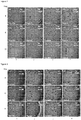
- Figure 1 shows a comparison of FUDR treatment of AM134 bus-5 mutant C. elegans by transfer and topical application techniques on 6 well plates. Images show a synchronised worm population on a 6 well plate with an FUDR addition after 1 day (13-09). Results are shown 4 (17-09), 6 (19-09) and 11 (24-09) days after treatment.
- Figure 2 shows a comparison of FUDR treatment of AM134 bus-5 mutant C. elegans by transfer and topical application techniques on 12 well plates. Images show a synchronised worm population on a 12 well plate with an FUDR addition after 1 day (13-09). Results are shown 4 (17-09), 6 (19/09) and 11 (24/09) days after treatment.
- Figure 3 shows a comparison of FUDR treatment of AM134 bus-5 mutant C. elegans by transfer and topical application techniques on 24 well plates. Images show a synchronised worm population on a 24 well plate with an FUDR addition after 1 day (13-09). Results are shown 4 (17-09), 6 (19/09) and 11 (24/09) days after treatment.
- Example 2 optimisation of computational analysis parameters and strain type.
- the novel assay of the present invention uses the relative mobility of a population of worms as a surrogate for the viability of the population. When changes in viability over time are measured a chronological lifespan profile can be calculated.
- a MatLab algorithm (see Fig. 4 ) has been written to analyse the change in the position of GFP signals between pairs of wide field images (i.e. images encompassing numerous worms - 5 to 500).
- the code (shown in appendix 1) converts the images to grey scale, thresholds them and compares images mathematically by calculating the absolute differences between the two images. This value is then divided by the average input signal to express the mobility of a population as a fraction of the population size. This value is referred to as the Mobility Coefficient (MoCo).
- MoCo Mobility Coefficient
- Binning can be used to alter the sensitivity of the analysis. Binning involves summing cells in the image matrix (e.g. 1x1 no binning - 2x2 binning groups 4 cells together) before calculating the difference between paired images. In theory, increasing the bin size would artificially reduce the sensitivity of the assay allowing for the detection of changes in mobility in older less mobile populations.
- Figure 4 summarizes the MatLab algorithm and the processing and analysis of time lapse GFP images of expressing C. elegans.
- the left hand panel of Figure 4 shows that high mobility worms move relatively far such that when the image is processed the signals do not over lap generating a high MoCo.
- the process is repeated for numerous images and by analysing them sequentially mean values and measures of error are calculated.
- Example 3 optimisation of temporal separation of the image pairs and the bin size on worms immobilized by cold shock.
- Figure 5 shows the effect of varying the image separation time on MoCo calculated from AM134 bus-5.
- Fig. 5 shows the effect of different time intervals between consecutive images on the calculated MoCo values of worms with normal mobility (room temperature) and low mobility (cold shock).
- FIG. 1s was previously identified as the optimal image separation for detecting changes in cold induced MoCo reduction.
- Figure 7 shows different GFP Localisation Strains of C. elegans.
- the bright field image shows a the profile of a whole worm.
- the central image is of AM134 and shows the region of expression in this strain (body wall muscle).
- the right hand image is of a MYO2 strain showing more localised GFP expression in the pharynx.
- FIG. 9 shows the effect of varying the BIN size of the MatLab analysis on the MoCo values in MYO2bus-5 worms of normal (room temperature) and low mobility (cold shock) for 1 s separated images.
- the analysis for each condition is of the same 10 consecutive images taken at time intervals of 1 second and MoCo represents the mean mobility coefficient measured between the images.
- a Bin value of 1 i.e. no binning
- Figure 10 shows a comparison of MoCo Matrices of AM134 bus-5 and MY02 bus-5 C. elegans mutants. During the mat lab analysis pairs of images are thresholded and compared mathematically by calculating the absolute difference between the images. These Mobility Coefficient Matrices give a visual account of which part of the plates the mobile worms are on and of the size and origin of the derived MoCo values. Image separation of 1 s and no binning was used for this data.
- the matrices show there are more localised differences in GFP signal changes between images when MYO 2bus-5 worms are imaged in comparison to AM134 bus-5 worms due to the more precise GFP labelling and that both strains show a dramatic reduction in mobility following a cold shock Table 1 AM134 bus-5 Std Dev/MoCo Room Temperature 0.0733964 Cold Shock 0.0967688 MYO2 bus-5 Std Dev/MoCo Room Temperature 0.0359029 Cold Shock 0.0662668
- Table 1 summarises the standard deviation as a percentage of the total signal.
- two strains have been used to optimise the assays, the body wall muscle expressing AM134bus-5, and the more localised MYO2bus-5 (pharyngeal expressing GFP).
- a comparison of the error generated as a proportion of the mean was calculated for each using the optimal settings (a BIN value of 1 and the images are at intervals of 1 second).
- the data shown in Table 1 above data suggests that the MYO2bus-5 strain produces a smaller relative error than the AM134bus-5 strain during image analysis especially when the worms are of a higher mobility. This strain was therefore used in the further studies.
- Example 5 confirmation of optimum temporal separation for MYO 2bus-5 C. elegans.
- Figure 11 shows a summary of results for MYO2bus-5 worms with a time interval between each of ten consecutive images of 140 ms, 800 ms and 1 second and a BIN value of 1.
- Mean mobility coefficients (MoCo) of the same population of adult worms under room temperature and immediately after being placed at 4°C for one hour was calculated using a BIN value of 1.
- Figure 12 shows the effect of both changing the time interval between GFP time lapse images during image acquisition and the BIN value during MatLab analysis on the MoCo that is calculated in a population of MYO2bus-5 C. elegans at room temperature (high mobility) relative to the same population of worms after a cold shock at 4°C for one hour (low mobility).
- the figure shows a peak in relative MoCo when images are recorded at a separation of 1 second and analysed with minimised BIN value of 1 showing that these parameters give the greatest sensitivity in detecting changes in mobility.
- the aim of a high throughput technique is to maximise the number of experiments that may be performed simultaneously. This may be achieved through the use of multi-well plates. Previous experiments showed that 12 well plates were the smallest plate format applicable to the methodology. Further experiments were undertaken to optimize the density of the worm population and the time points across the ageing process at which data should be taken. FK506, a compound known to extend the chronological lifespan of C. elegans, was used as a control to optimize the assay. 12 well plates were soaked with FK506 or DMSO control, MYO 2bus-5 C. elegans which had been synchronized by bleaching, were added to each well. For the 12 well plate 10, 50, 100 and 200 eggs per well were added.
- Figure 14 shows the effect of day of measurement and of worm density on the relative effect of FK506 on the MoCo.
- the effect on FK506 treatment (expressed as relative FK506 MoCo/relative control MoCo) is plotted for the range of worm densities (20, 50, 100 and 200 eggs per well) and over the time period (0, 1, 4, 6, 8 days) tested in order to identify the optimal conditions for detecting changes in ageing.
- the data shown here suggests that using 100 eggs per well is the optimal worm density and assaying on day 0 and 4 with a 1s image separation and days 0 and 6 with 10s image separation would be optimal for detecting age dependant changes in MoCo.
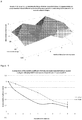
- Figure 15 shows a comparison of the MoCo in 42 MYO2bus-5 worms mock treated with 10 ⁇ l DMSO and 51 MYO2bus-5 worms treated with FK506.
- Figure 16 shows a comparison of the MoCo in 42 MYO2bus-5 worms mock treated with 10 ⁇ l DMSO and 51 MYO2bus-5 worms treated with FK506.
Landscapes
- Engineering & Computer Science (AREA)
- Physics & Mathematics (AREA)
- General Physics & Mathematics (AREA)
- Computer Vision & Pattern Recognition (AREA)
- Multimedia (AREA)
- Theoretical Computer Science (AREA)
- Health & Medical Sciences (AREA)
- General Health & Medical Sciences (AREA)
- Radiology & Medical Imaging (AREA)
- Nuclear Medicine, Radiotherapy & Molecular Imaging (AREA)
- Medical Informatics (AREA)
- Quality & Reliability (AREA)
- Chemical & Material Sciences (AREA)
- Analytical Chemistry (AREA)
- Optics & Photonics (AREA)
- Life Sciences & Earth Sciences (AREA)
- Biomedical Technology (AREA)
- Molecular Biology (AREA)
- Measuring Or Testing Involving Enzymes Or Micro-Organisms (AREA)
- Investigating, Analyzing Materials By Fluorescence Or Luminescence (AREA)
- Investigating Or Analysing Materials By Optical Means (AREA)
- Image Analysis (AREA)
Claims (11)
- Verfahren zum Screenen und Auswählen mindestens einer Testverbindung, die einen Einfluss auf die chronologische Lebensdauer einer Population von Organismen hat, indem eine Veränderung in der Mobilität der Population von Organismen über die Zeit bestimmt wird, wobei die Organismen aus der Gruppe ausgewählt werden, bestehend aus: Caenorhabditis elegans und Danio rerio; und wobei die Organismen markiert sind, wobei das Verfahren das Anwenden mindestens einer Testverbindung auf die Population von Organismen umfasst und:a) Erhalten eines ersten Bildes (I1) der Population zu einem ersten Zeitpunkt (T1)b) Erhalten eines zweiten Bildes (I2) der Population zu einem zweiten Zeitpunkt (T2)c) Berechnen der absoluten Differenz zwischen I1 und I2 (ΔD1)d) Erhalten eines dritten Bildes (I3) der Population zu einem dritten Zeitpunkt (T3)e) Erhalten eines vierten Bildes (I4) der Population zu einem vierten Zeitpunkt (T4)f) Berechnen der absoluten Differenz zwischen I3 und I4 (ΔD2).g) Berechnen der Veränderung zwischen ΔD1 und ΔD2, um eine Veränderung in der Mobilität der gesamten Population zu berechnen, und(h) Bestimmen, ob die mindestens eine Testverbindung eine Wirkung auf die chronologische Lebensdauer der Population im Vergleich zu einer Population zeigt, die der mindestens einen Testverbindung nicht ausgesetzt war, wobei Testverbindungen, die die chronologische Lebensdauer der Population von Organismen verlängern, Kandidatenverbindungen sind, die zur Bekämpfung der Auswirkungen des Alterns oder zur Behandlung einer altersbedingten Störung nützlich sind.
- Verfahren nach Anspruch 1, wobei die Zeitspanne zwischen I1 und I2 und die Zeitspanne zwischen 18 und 14 100 ms bis 5 Minuten, 140 ms bis 3 Minuten, 200 ms bis 90 s, 300 ms bis 1 Minute, 400 ms bis 45 s, 500 ms bis 30 s, 600 ms bis 15 s, 700 ms bis 10 s, 750 ms bis 5 s, 800 ms bis 3 s, 850 ms bis 2 s, 900 ms bis 1 s oder 1 s bis 2 s beträgt.
- Verfahren nach Anspruch 1 oder Anspruch 2, wobei die Zeitspanne zwischen I2 und I3 mindestens 6 Stunden, mindestens 12 Stunden, mindestens 1 Tag, mindestens 2 Tage, mindestens 3 Tage, mindestens 4 Tage, mindestens 5 Tage, mindestens 6 Tage, mindestens 7 Tage, mindestens 8 Tage, mindestens 9 Tage, mindestens 10 Tage, mindestens 11 Tage oder mindestens 12 Tage beträgt.
- Verfahren nach einem der vorhergehenden Ansprüche, wobei ΔD1 aus den am Tag 0 erhaltenen Bildern, und/oder wobei ΔD2 aus den am Tag 4 erhaltenen Bildern, oder wobei ΔD2 aus den am Tag 6 erhaltenen Bildern berechnet wird.
- Verfahren nach einem der vorhergehenden Ansprüche, wobei:i) die Organismen mit grün fluoreszierendem Protein (GFP) markiert sind; und/oderii) wobei die Kennzeichnung auf einen bestimmten Bereich innerhalb der Organismen lokalisiert ist; oderiii) wobei ein einziger Organismus zwei fluoreszenzmarkierte Stellen aufweist.
- Verfahren nach einem der Ansprüche 1 bis 5, wobei sich der Begriff Population auf eine Vielzahl von Organismen bezieht, die zur gleichen Gruppe oder Spezies gehören, und wobei der Organismus ein beliebiger geeigneter Organismus ist, der ein Tier, ein Mikroorganismus oder eine einzellige Lebensform ist, die zur Bewegung fähig ist, oder wobei sich der Begriff Population auf eine Vielzahl von Organismen bezieht, die zur gleichen Gruppe oder Spezies gehören, und wobei der Organismus ein beliebiges geeignetes Tier ist, das zur Bewegung fähig ist.
- Verfahren nach Anspruch 5 oder 6, wobei sich der Begriff Bewegung auf die Fortbewegung bezieht.
- Verfahren nach einem der Ansprüche 1 bis 5, wobei die Organismen Caenorhabditis elegans sind und wobei die Population von Caenorhabditis elegans durch ein beliebiges geeignetes Mittel fluoreszenzmarkiert ist, oder wobei die Organismen Caenorhabditis elegans sind, das grün fluoreszierendes Protein (GFP) exprimiert, wobei die GFP-Expression auf einen bestimmten Bereich innerhalb der markierten Organismen lokalisiert ist, oder wobei die Organismen: arzneimittelsensitive Caenorhabditis elegans Würmer, die grün fluoreszierendes Protein (GFP) in ihrem Schlund (Caenorhabditis elegans MY02bus-5)' exprimieren, oder Caenorhabditis elegans mit GFP-Expression in ihrem Körperwandmuskel.
- Verfahren nach einem der vorhergehenden Ansprüche, wobei die mindestens eine Testverbindung ein kleines Molekül oder eine biologische Zusammensetzung umfasst.
- Anwendung des Verfahrens nach einem der Ansprüche 1 bis 9 im Bereich der Arzneimittelforschung und/oder der Toxikologie.
- Computerprogramm umfassend Befehle, die dazu dienen, ein Datenverarbeitungsgerät dafür zu konfigurieren, ein Verfahren nach einem der Ansprüche 1 bis 9 auszuführen.
Applications Claiming Priority (2)
| Application Number | Priority Date | Filing Date | Title |
|---|---|---|---|
| GBGB1301043.4A GB201301043D0 (en) | 2013-01-21 | 2013-01-21 | Method for assessing cell aging |
| PCT/GB2014/050154 WO2014111732A1 (en) | 2013-01-21 | 2014-01-21 | Method for assessing cell aging |
Publications (2)
| Publication Number | Publication Date |
|---|---|
| EP2946359A1 EP2946359A1 (de) | 2015-11-25 |
| EP2946359B1 true EP2946359B1 (de) | 2020-05-06 |
Family
ID=47843657
Family Applications (1)
| Application Number | Title | Priority Date | Filing Date |
|---|---|---|---|
| EP14701598.6A Active EP2946359B1 (de) | 2013-01-21 | 2014-01-21 | Verfahren zur prüfung einer zellalterung |
Country Status (12)
| Country | Link |
|---|---|
| US (1) | US9734575B2 (de) |
| EP (1) | EP2946359B1 (de) |
| JP (1) | JP6389827B2 (de) |
| KR (1) | KR20150113043A (de) |
| CA (1) | CA2898659A1 (de) |
| DK (1) | DK2946359T3 (de) |
| ES (1) | ES2810250T3 (de) |
| GB (1) | GB201301043D0 (de) |
| IL (1) | IL240033B (de) |
| MY (1) | MY172155A (de) |
| SG (1) | SG11201505649XA (de) |
| WO (1) | WO2014111732A1 (de) |
Families Citing this family (3)
| Publication number | Priority date | Publication date | Assignee | Title |
|---|---|---|---|---|
| KR102291945B1 (ko) | 2017-02-02 | 2021-08-23 | 패스트 코포레이션 | 미생물의 운동성 운동학의 분석 및 사용 |
| GB2578144A (en) | 2018-10-18 | 2020-04-22 | The Univ Of Durham | Method and apparatus for tracking nematode worms |
| KR102499070B1 (ko) | 2020-03-02 | 2023-02-13 | 재단법인대구경북과학기술원 | 인공신경망을 이용한 심근 세포 모니터링 방법 및 그 장치 |
Family Cites Families (10)
| Publication number | Priority date | Publication date | Assignee | Title |
|---|---|---|---|---|
| BR9507108A (pt) * | 1994-03-19 | 1997-09-09 | Eidgenoess Munitionsfab Thun | Processo e dispositivo para determinaçao da toxicidade e sua aplicaçao |
| GB0012229D0 (en) * | 2000-05-19 | 2000-07-12 | Devgen Nv | Lipid uptake assays |
| JP2003066029A (ja) * | 2001-06-01 | 2003-03-05 | Kubota Corp | 水質検査装置および方法 |
| CA2492288A1 (en) * | 2002-07-15 | 2004-01-22 | Juan Botas | Assaying and imaging system identifying traits of biological specimens |
| DE602006013409D1 (de) * | 2005-01-17 | 2010-05-20 | Biophos Ag | Verfahren und vorrichtung zur messung dynamischer partikelparameter |
| JP2007010524A (ja) * | 2005-06-30 | 2007-01-18 | Univ Of Tokyo | 微小流路内速度分布計測装置及び方法 |
| CN101331500B (zh) * | 2005-10-14 | 2015-04-29 | 尤尼森斯繁殖技术公司 | 细胞群的变化的测定 |
| US7940978B2 (en) | 2007-06-05 | 2011-05-10 | General Electric Company | Automatic characterization of cellular motion |
| GB201006046D0 (en) | 2010-04-12 | 2010-05-26 | Ge Healthcare Uk Ltd | System and method for determining motion of a biological object |
| US9494783B2 (en) * | 2010-11-30 | 2016-11-15 | Etaluma Inc. | Compact, high-resolution fluorescence and brightfield microscope and methods of use |
-
2013
- 2013-01-21 GB GBGB1301043.4A patent/GB201301043D0/en not_active Ceased
-
2014
- 2014-01-21 CA CA2898659A patent/CA2898659A1/en not_active Abandoned
- 2014-01-21 US US14/761,970 patent/US9734575B2/en not_active Expired - Fee Related
- 2014-01-21 EP EP14701598.6A patent/EP2946359B1/de active Active
- 2014-01-21 SG SG11201505649XA patent/SG11201505649XA/en unknown
- 2014-01-21 WO PCT/GB2014/050154 patent/WO2014111732A1/en not_active Ceased
- 2014-01-21 DK DK14701598.6T patent/DK2946359T3/da active
- 2014-01-21 KR KR1020157022797A patent/KR20150113043A/ko not_active Withdrawn
- 2014-01-21 ES ES14701598T patent/ES2810250T3/es active Active
- 2014-01-21 JP JP2015553170A patent/JP6389827B2/ja active Active
- 2014-01-21 MY MYPI2015001830A patent/MY172155A/en unknown
-
2015
- 2015-07-20 IL IL240033A patent/IL240033B/en active IP Right Grant
Non-Patent Citations (1)
| Title |
|---|
| Y. MATSUBAYASHI ET AL: "'White wave' analysis of epithelial scratch wound healing reveals how cells mobilise back from the leading edge in a myosin-II-dependent fashion", JOURNAL OF CELL SCIENCE, vol. 124, no. 7, 14 March 2011 (2011-03-14), pages 1017 - 1021, XP055161778, ISSN: 0021-9533, DOI: 10.1242/jcs.080853 * |
Also Published As
| Publication number | Publication date |
|---|---|
| JP6389827B2 (ja) | 2018-09-12 |
| GB201301043D0 (en) | 2013-03-06 |
| US20150317795A1 (en) | 2015-11-05 |
| JP2016513237A (ja) | 2016-05-12 |
| ES2810250T3 (es) | 2021-03-08 |
| MY172155A (en) | 2019-11-15 |
| WO2014111732A1 (en) | 2014-07-24 |
| US9734575B2 (en) | 2017-08-15 |
| IL240033B (en) | 2018-07-31 |
| EP2946359A1 (de) | 2015-11-25 |
| SG11201505649XA (en) | 2015-09-29 |
| IL240033A0 (en) | 2015-09-24 |
| CA2898659A1 (en) | 2014-07-24 |
| KR20150113043A (ko) | 2015-10-07 |
| DK2946359T3 (da) | 2020-08-17 |
Similar Documents
| Publication | Publication Date | Title |
|---|---|---|
| Perni et al. | Massively parallel C. elegans tracking provides multi-dimensional fingerprints for phenotypic discovery | |
| JP7187151B2 (ja) | 生存細胞の画像解析のための方法及び装置 | |
| CA2838707C (en) | Engineered cardiac tissues and methods of using them | |
| Laine et al. | Fast fluorescence lifetime imaging reveals the aggregation processes of α-synuclein and polyglutamine in aging Caenorhabditis elegans | |
| US11480562B2 (en) | Methods of identifying xenohormetic phenotypes and agents | |
| EP4145385A1 (de) | Überwachung von zellkulturen | |
| US9734575B2 (en) | Method for assessing cell aging | |
| Trudeau et al. | Measurement of mitochondrial turnover and life cycle using MitoTimer | |
| Tott et al. | Raman imaging-based phenotyping of murine primary endothelial cells to identify disease-associated biochemical alterations | |
| US9535057B2 (en) | Method of in vivo screening for cardiac toxic agents using teleost | |
| Cruz-Bustos et al. | The proteomic landscape of Toxoplasma gondii extracellular vesicles across diverse host cell types | |
| WO2001088532A2 (en) | Improved assay techniques using nematode worms | |
| NAUMANN¹ et al. | FTIR spectroscopy of cells, tissues and body fluids | |
| Riedl et al. | Functional label-free assessment of fibroblast differentiation in 3D collagen-I-matrices using particle image velocimetry | |
| Kourtis et al. | Protein synthesis rate assessment by fluorescence recovery after photobleaching (FRAP) | |
| KR101918344B1 (ko) | Adssl1 유전자 결핍 돌연변이 제브라피쉬 및 이의 용도 | |
| Leao et al. | A voltage-sensitive dye-based assay for the identification of differentiated neurons derived from embryonic neural stem cell cultures | |
| Bouyanfif et al. | Fourier transform infrared microspectroscopy detects biochemical changes during C. elegans lifespan | |
| Kinser | MicroRna Gene Expression States Underlying Individual Variation in Aging and Lifespan in Isogenic C. elegans | |
| Preußer | Scalable image analysis for quantitative microscopy | |
| Sinha | On the study of age-related physiological decline in C. elegans | |
| Jin et al. | Organoid analytical toolkits | |
| Miyagi | Monitoring protein synthesis in Caenorhabditis elegans using SILAC | |
| Steinhauer | Development of a novel human co-culture model to study interactions between intestinal immune and epithelial cells | |
| Pan | Cell size control in fission yeast |
Legal Events
| Date | Code | Title | Description |
|---|---|---|---|
| PUAI | Public reference made under article 153(3) epc to a published international application that has entered the european phase |
Free format text: ORIGINAL CODE: 0009012 |
|
| 17P | Request for examination filed |
Effective date: 20150817 |
|
| AK | Designated contracting states |
Kind code of ref document: A1 Designated state(s): AL AT BE BG CH CY CZ DE DK EE ES FI FR GB GR HR HU IE IS IT LI LT LU LV MC MK MT NL NO PL PT RO RS SE SI SK SM TR |
|
| AX | Request for extension of the european patent |
Extension state: BA ME |
|
| DAX | Request for extension of the european patent (deleted) | ||
| RAP1 | Party data changed (applicant data changed or rights of an application transferred) |
Owner name: SIBELIUS LIMITED |
|
| STAA | Information on the status of an ep patent application or granted ep patent |
Free format text: STATUS: EXAMINATION IS IN PROGRESS |
|
| 17Q | First examination report despatched |
Effective date: 20180914 |
|
| REG | Reference to a national code |
Ref country code: DE Ref legal event code: R079 Ref document number: 602014064873 Country of ref document: DE Free format text: PREVIOUS MAIN CLASS: G06T0007200000 Ipc: G06T0007000000 |
|
| GRAP | Despatch of communication of intention to grant a patent |
Free format text: ORIGINAL CODE: EPIDOSNIGR1 |
|
| RIC1 | Information provided on ipc code assigned before grant |
Ipc: G06T 7/00 20170101AFI20191016BHEP Ipc: G01N 15/14 20060101ALI20191016BHEP Ipc: G06T 7/254 20170101ALI20191016BHEP |
|
| STAA | Information on the status of an ep patent application or granted ep patent |
Free format text: STATUS: GRANT OF PATENT IS INTENDED |
|
| INTG | Intention to grant announced |
Effective date: 20191121 |
|
| GRAS | Grant fee paid |
Free format text: ORIGINAL CODE: EPIDOSNIGR3 |
|
| GRAA | (expected) grant |
Free format text: ORIGINAL CODE: 0009210 |
|
| STAA | Information on the status of an ep patent application or granted ep patent |
Free format text: STATUS: THE PATENT HAS BEEN GRANTED |
|
| AK | Designated contracting states |
Kind code of ref document: B1 Designated state(s): AL AT BE BG CH CY CZ DE DK EE ES FI FR GB GR HR HU IE IS IT LI LT LU LV MC MK MT NL NO PL PT RO RS SE SI SK SM TR |
|
| REG | Reference to a national code |
Ref country code: GB Ref legal event code: FG4D |
|
| REG | Reference to a national code |
Ref country code: AT Ref legal event code: REF Ref document number: 1267996 Country of ref document: AT Kind code of ref document: T Effective date: 20200515 Ref country code: CH Ref legal event code: EP |
|
| REG | Reference to a national code |
Ref country code: IE Ref legal event code: FG4D |
|
| REG | Reference to a national code |
Ref country code: DE Ref legal event code: R096 Ref document number: 602014064873 Country of ref document: DE |
|
| REG | Reference to a national code |
Ref country code: CH Ref legal event code: NV Representative=s name: TR-IP CONSULTING LLC, CH |
|
| REG | Reference to a national code |
Ref country code: DK Ref legal event code: T3 Effective date: 20200810 |
|
| REG | Reference to a national code |
Ref country code: NL Ref legal event code: FP |
|
| REG | Reference to a national code |
Ref country code: LT Ref legal event code: MG4D |
|
| PG25 | Lapsed in a contracting state [announced via postgrant information from national office to epo] |
Ref country code: LT Free format text: LAPSE BECAUSE OF FAILURE TO SUBMIT A TRANSLATION OF THE DESCRIPTION OR TO PAY THE FEE WITHIN THE PRESCRIBED TIME-LIMIT Effective date: 20200506 Ref country code: PT Free format text: LAPSE BECAUSE OF FAILURE TO SUBMIT A TRANSLATION OF THE DESCRIPTION OR TO PAY THE FEE WITHIN THE PRESCRIBED TIME-LIMIT Effective date: 20200907 Ref country code: IS Free format text: LAPSE BECAUSE OF FAILURE TO SUBMIT A TRANSLATION OF THE DESCRIPTION OR TO PAY THE FEE WITHIN THE PRESCRIBED TIME-LIMIT Effective date: 20200906 Ref country code: SE Free format text: LAPSE BECAUSE OF FAILURE TO SUBMIT A TRANSLATION OF THE DESCRIPTION OR TO PAY THE FEE WITHIN THE PRESCRIBED TIME-LIMIT Effective date: 20200506 Ref country code: GR Free format text: LAPSE BECAUSE OF FAILURE TO SUBMIT A TRANSLATION OF THE DESCRIPTION OR TO PAY THE FEE WITHIN THE PRESCRIBED TIME-LIMIT Effective date: 20200807 Ref country code: FI Free format text: LAPSE BECAUSE OF FAILURE TO SUBMIT A TRANSLATION OF THE DESCRIPTION OR TO PAY THE FEE WITHIN THE PRESCRIBED TIME-LIMIT Effective date: 20200506 Ref country code: NO Free format text: LAPSE BECAUSE OF FAILURE TO SUBMIT A TRANSLATION OF THE DESCRIPTION OR TO PAY THE FEE WITHIN THE PRESCRIBED TIME-LIMIT Effective date: 20200806 |
|
| PG25 | Lapsed in a contracting state [announced via postgrant information from national office to epo] |
Ref country code: HR Free format text: LAPSE BECAUSE OF FAILURE TO SUBMIT A TRANSLATION OF THE DESCRIPTION OR TO PAY THE FEE WITHIN THE PRESCRIBED TIME-LIMIT Effective date: 20200506 Ref country code: RS Free format text: LAPSE BECAUSE OF FAILURE TO SUBMIT A TRANSLATION OF THE DESCRIPTION OR TO PAY THE FEE WITHIN THE PRESCRIBED TIME-LIMIT Effective date: 20200506 Ref country code: LV Free format text: LAPSE BECAUSE OF FAILURE TO SUBMIT A TRANSLATION OF THE DESCRIPTION OR TO PAY THE FEE WITHIN THE PRESCRIBED TIME-LIMIT Effective date: 20200506 Ref country code: BG Free format text: LAPSE BECAUSE OF FAILURE TO SUBMIT A TRANSLATION OF THE DESCRIPTION OR TO PAY THE FEE WITHIN THE PRESCRIBED TIME-LIMIT Effective date: 20200806 |
|
| REG | Reference to a national code |
Ref country code: AT Ref legal event code: MK05 Ref document number: 1267996 Country of ref document: AT Kind code of ref document: T Effective date: 20200506 |
|
| PG25 | Lapsed in a contracting state [announced via postgrant information from national office to epo] |
Ref country code: AL Free format text: LAPSE BECAUSE OF FAILURE TO SUBMIT A TRANSLATION OF THE DESCRIPTION OR TO PAY THE FEE WITHIN THE PRESCRIBED TIME-LIMIT Effective date: 20200506 |
|
| PG25 | Lapsed in a contracting state [announced via postgrant information from national office to epo] |
Ref country code: IT Free format text: LAPSE BECAUSE OF FAILURE TO SUBMIT A TRANSLATION OF THE DESCRIPTION OR TO PAY THE FEE WITHIN THE PRESCRIBED TIME-LIMIT Effective date: 20200506 Ref country code: CZ Free format text: LAPSE BECAUSE OF FAILURE TO SUBMIT A TRANSLATION OF THE DESCRIPTION OR TO PAY THE FEE WITHIN THE PRESCRIBED TIME-LIMIT Effective date: 20200506 Ref country code: RO Free format text: LAPSE BECAUSE OF FAILURE TO SUBMIT A TRANSLATION OF THE DESCRIPTION OR TO PAY THE FEE WITHIN THE PRESCRIBED TIME-LIMIT Effective date: 20200506 Ref country code: EE Free format text: LAPSE BECAUSE OF FAILURE TO SUBMIT A TRANSLATION OF THE DESCRIPTION OR TO PAY THE FEE WITHIN THE PRESCRIBED TIME-LIMIT Effective date: 20200506 Ref country code: AT Free format text: LAPSE BECAUSE OF FAILURE TO SUBMIT A TRANSLATION OF THE DESCRIPTION OR TO PAY THE FEE WITHIN THE PRESCRIBED TIME-LIMIT Effective date: 20200506 Ref country code: SM Free format text: LAPSE BECAUSE OF FAILURE TO SUBMIT A TRANSLATION OF THE DESCRIPTION OR TO PAY THE FEE WITHIN THE PRESCRIBED TIME-LIMIT Effective date: 20200506 |
|
| REG | Reference to a national code |
Ref country code: DE Ref legal event code: R097 Ref document number: 602014064873 Country of ref document: DE |
|
| PG25 | Lapsed in a contracting state [announced via postgrant information from national office to epo] |
Ref country code: PL Free format text: LAPSE BECAUSE OF FAILURE TO SUBMIT A TRANSLATION OF THE DESCRIPTION OR TO PAY THE FEE WITHIN THE PRESCRIBED TIME-LIMIT Effective date: 20200506 Ref country code: SK Free format text: LAPSE BECAUSE OF FAILURE TO SUBMIT A TRANSLATION OF THE DESCRIPTION OR TO PAY THE FEE WITHIN THE PRESCRIBED TIME-LIMIT Effective date: 20200506 |
|
| REG | Reference to a national code |
Ref country code: ES Ref legal event code: FG2A Ref document number: 2810250 Country of ref document: ES Kind code of ref document: T3 Effective date: 20210308 |
|
| PLBE | No opposition filed within time limit |
Free format text: ORIGINAL CODE: 0009261 |
|
| STAA | Information on the status of an ep patent application or granted ep patent |
Free format text: STATUS: NO OPPOSITION FILED WITHIN TIME LIMIT |
|
| 26N | No opposition filed |
Effective date: 20210209 |
|
| PG25 | Lapsed in a contracting state [announced via postgrant information from national office to epo] |
Ref country code: SI Free format text: LAPSE BECAUSE OF FAILURE TO SUBMIT A TRANSLATION OF THE DESCRIPTION OR TO PAY THE FEE WITHIN THE PRESCRIBED TIME-LIMIT Effective date: 20200506 |
|
| PG25 | Lapsed in a contracting state [announced via postgrant information from national office to epo] |
Ref country code: MC Free format text: LAPSE BECAUSE OF FAILURE TO SUBMIT A TRANSLATION OF THE DESCRIPTION OR TO PAY THE FEE WITHIN THE PRESCRIBED TIME-LIMIT Effective date: 20200506 |
|
| PG25 | Lapsed in a contracting state [announced via postgrant information from national office to epo] |
Ref country code: LU Free format text: LAPSE BECAUSE OF NON-PAYMENT OF DUE FEES Effective date: 20210121 |
|
| PG25 | Lapsed in a contracting state [announced via postgrant information from national office to epo] |
Ref country code: FR Free format text: LAPSE BECAUSE OF NON-PAYMENT OF DUE FEES Effective date: 20210131 |
|
| PG25 | Lapsed in a contracting state [announced via postgrant information from national office to epo] |
Ref country code: IE Free format text: LAPSE BECAUSE OF NON-PAYMENT OF DUE FEES Effective date: 20210121 |
|
| PG25 | Lapsed in a contracting state [announced via postgrant information from national office to epo] |
Ref country code: HU Free format text: LAPSE BECAUSE OF FAILURE TO SUBMIT A TRANSLATION OF THE DESCRIPTION OR TO PAY THE FEE WITHIN THE PRESCRIBED TIME-LIMIT; INVALID AB INITIO Effective date: 20140121 |
|
| PG25 | Lapsed in a contracting state [announced via postgrant information from national office to epo] |
Ref country code: CY Free format text: LAPSE BECAUSE OF FAILURE TO SUBMIT A TRANSLATION OF THE DESCRIPTION OR TO PAY THE FEE WITHIN THE PRESCRIBED TIME-LIMIT Effective date: 20200506 |
|
| PGFP | Annual fee paid to national office [announced via postgrant information from national office to epo] |
Ref country code: NL Payment date: 20240326 Year of fee payment: 11 |
|
| PG25 | Lapsed in a contracting state [announced via postgrant information from national office to epo] |
Ref country code: MK Free format text: LAPSE BECAUSE OF FAILURE TO SUBMIT A TRANSLATION OF THE DESCRIPTION OR TO PAY THE FEE WITHIN THE PRESCRIBED TIME-LIMIT Effective date: 20200506 |
|
| PGFP | Annual fee paid to national office [announced via postgrant information from national office to epo] |
Ref country code: DE Payment date: 20240329 Year of fee payment: 11 Ref country code: GB Payment date: 20240322 Year of fee payment: 11 Ref country code: CH Payment date: 20240328 Year of fee payment: 11 |
|
| PGFP | Annual fee paid to national office [announced via postgrant information from national office to epo] |
Ref country code: DK Payment date: 20240328 Year of fee payment: 11 Ref country code: BE Payment date: 20240326 Year of fee payment: 11 |
|
| PGFP | Annual fee paid to national office [announced via postgrant information from national office to epo] |
Ref country code: ES Payment date: 20240327 Year of fee payment: 11 |
|
| PG25 | Lapsed in a contracting state [announced via postgrant information from national office to epo] |
Ref country code: MT Free format text: LAPSE BECAUSE OF FAILURE TO SUBMIT A TRANSLATION OF THE DESCRIPTION OR TO PAY THE FEE WITHIN THE PRESCRIBED TIME-LIMIT Effective date: 20200506 |
|
| REG | Reference to a national code |
Ref country code: DE Ref legal event code: R119 Ref document number: 602014064873 Country of ref document: DE |
|
| REG | Reference to a national code |
Ref country code: DK Ref legal event code: EBP Effective date: 20250131 |
|
| REG | Reference to a national code |
Ref country code: CH Ref legal event code: PL |
|
| REG | Reference to a national code |
Ref country code: NL Ref legal event code: MM Effective date: 20250201 |
|
| GBPC | Gb: european patent ceased through non-payment of renewal fee |
Effective date: 20250121 |
|
| PG25 | Lapsed in a contracting state [announced via postgrant information from national office to epo] |
Ref country code: DE Free format text: LAPSE BECAUSE OF NON-PAYMENT OF DUE FEES Effective date: 20250801 |
|
| PG25 | Lapsed in a contracting state [announced via postgrant information from national office to epo] |
Ref country code: NL Free format text: LAPSE BECAUSE OF NON-PAYMENT OF DUE FEES Effective date: 20250201 |
|
| PG25 | Lapsed in a contracting state [announced via postgrant information from national office to epo] |
Ref country code: BE Free format text: LAPSE BECAUSE OF NON-PAYMENT OF DUE FEES Effective date: 20250131 Ref country code: GB Free format text: LAPSE BECAUSE OF NON-PAYMENT OF DUE FEES Effective date: 20250121 |
|
| PG25 | Lapsed in a contracting state [announced via postgrant information from national office to epo] |
Ref country code: CH Free format text: LAPSE BECAUSE OF NON-PAYMENT OF DUE FEES Effective date: 20250131 |
|
| REG | Reference to a national code |
Ref country code: BE Ref legal event code: MM Effective date: 20250131 |
|
| PG25 | Lapsed in a contracting state [announced via postgrant information from national office to epo] |
Ref country code: TR Free format text: LAPSE BECAUSE OF FAILURE TO SUBMIT A TRANSLATION OF THE DESCRIPTION OR TO PAY THE FEE WITHIN THE PRESCRIBED TIME-LIMIT Effective date: 20200506 |
|
| PG25 | Lapsed in a contracting state [announced via postgrant information from national office to epo] |
Ref country code: DK Free format text: LAPSE BECAUSE OF NON-PAYMENT OF DUE FEES Effective date: 20250131 |
|
| REG | Reference to a national code |
Ref country code: ES Ref legal event code: FD2A Effective date: 20260302 |
|
| PG25 | Lapsed in a contracting state [announced via postgrant information from national office to epo] |
Ref country code: ES Free format text: LAPSE BECAUSE OF NON-PAYMENT OF DUE FEES Effective date: 20250122 |