EP2931003A1 - Drahtlose kommunikationsvorrichtung, drahtloses kommunikationsverfahren und drahtloses kommunikationsprogramm - Google Patents
Drahtlose kommunikationsvorrichtung, drahtloses kommunikationsverfahren und drahtloses kommunikationsprogramm Download PDFInfo
- Publication number
- EP2931003A1 EP2931003A1 EP15159630.1A EP15159630A EP2931003A1 EP 2931003 A1 EP2931003 A1 EP 2931003A1 EP 15159630 A EP15159630 A EP 15159630A EP 2931003 A1 EP2931003 A1 EP 2931003A1
- Authority
- EP
- European Patent Office
- Prior art keywords
- network
- communication network
- application
- communication
- event
- Prior art date
- Legal status (The legal status is an assumption and is not a legal conclusion. Google has not performed a legal analysis and makes no representation as to the accuracy of the status listed.)
- Granted
Links
Images



Classifications
-
- H—ELECTRICITY
- H04—ELECTRIC COMMUNICATION TECHNIQUE
- H04W—WIRELESS COMMUNICATION NETWORKS
- H04W36/00—Hand-off or reselection arrangements
- H04W36/14—Reselecting a network or an air interface
- H04W36/144—Reselecting a network or an air interface over a different radio air interface technology
- H04W36/1443—Reselecting a network or an air interface over a different radio air interface technology between licensed networks
-
- H—ELECTRICITY
- H04—ELECTRIC COMMUNICATION TECHNIQUE
- H04W—WIRELESS COMMUNICATION NETWORKS
- H04W36/00—Hand-off or reselection arrangements
- H04W36/24—Reselection being triggered by specific parameters
- H04W36/30—Reselection being triggered by specific parameters by measured or perceived connection quality data
- H04W36/302—Reselection being triggered by specific parameters by measured or perceived connection quality data due to low signal strength
-
- H—ELECTRICITY
- H04—ELECTRIC COMMUNICATION TECHNIQUE
- H04W—WIRELESS COMMUNICATION NETWORKS
- H04W48/00—Access restriction; Network selection; Access point selection
- H04W48/18—Selecting a network or a communication service
-
- H—ELECTRICITY
- H04—ELECTRIC COMMUNICATION TECHNIQUE
- H04W—WIRELESS COMMUNICATION NETWORKS
- H04W88/00—Devices specially adapted for wireless communication networks, e.g. terminals, base stations or access point devices
- H04W88/02—Terminal devices
- H04W88/06—Terminal devices adapted for operation in multiple networks or having at least two operational modes, e.g. multi-mode terminals
-
- H—ELECTRICITY
- H04—ELECTRIC COMMUNICATION TECHNIQUE
- H04W—WIRELESS COMMUNICATION NETWORKS
- H04W24/00—Supervisory, monitoring or testing arrangements
-
- H—ELECTRICITY
- H04—ELECTRIC COMMUNICATION TECHNIQUE
- H04W—WIRELESS COMMUNICATION NETWORKS
- H04W72/00—Local resource management
- H04W72/12—Wireless traffic scheduling
- H04W72/1215—Wireless traffic scheduling for collaboration of different radio technologies
-
- H—ELECTRICITY
- H04—ELECTRIC COMMUNICATION TECHNIQUE
- H04W—WIRELESS COMMUNICATION NETWORKS
- H04W72/00—Local resource management
- H04W72/50—Allocation or scheduling criteria for wireless resources
- H04W72/56—Allocation or scheduling criteria for wireless resources based on priority criteria
- H04W72/566—Allocation or scheduling criteria for wireless resources based on priority criteria of the information or information source or recipient
-
- H—ELECTRICITY
- H04—ELECTRIC COMMUNICATION TECHNIQUE
- H04W—WIRELESS COMMUNICATION NETWORKS
- H04W84/00—Network topologies
- H04W84/02—Hierarchically pre-organised networks, e.g. paging networks, cellular networks, WLAN [Wireless Local Area Network] or WLL [Wireless Local Loop]
- H04W84/10—Small scale networks; Flat hierarchical networks
- H04W84/12—WLAN [Wireless Local Area Networks]
-
- H—ELECTRICITY
- H04—ELECTRIC COMMUNICATION TECHNIQUE
- H04W—WIRELESS COMMUNICATION NETWORKS
- H04W84/00—Network topologies
- H04W84/18—Self-organising networks, e.g. ad-hoc networks or sensor networks
Definitions
- the embodiments discussed herein are related to a wireless communication apparatus, a wireless communication method, and a wireless communication program.
- the user of a wireless communication terminal provided with a plurality of wireless systems can select a wireless system suitable for various situations and can use the selected wireless system. Therefore, user convenience is improved.
- communication network operators can distribute a data communication load to various wireless systems, which promotes the construction of multi-wireless systems in terminals or PCs.
- a plurality of multi-wireless systems are not manually selected and used, but a plurality of wireless systems are constantly turned on and are automatically switched.
- a wireless system different from the wireless system which is currently used for communication is periodically searched for and a connection thereto is checked.
- a search method varies depending on the service coverage of each wireless system.
- a cellular network such as a long term evolution (LTE) network
- LTE long term evolution
- LAN wireless local area network
- Wi-Fi wireless fidelity
- the wireless communication terminal normally performs communication with the cellular network.
- the wireless communication terminal performs a control process of switching the communication network from the cellular network to the wireless LAN even though communication is continuously performed using the cellular network.
- the advantage of communication using the wireless LAN is that there is no charge for communication packets or the user can benefit from high-speed communication with a data transmission rate greater than 100 Mbps.
- Telecommunications carriers make a policy of performing communication using the wireless LAN as much as possible when traffic congestion occurs in the cellular network.
- the disadvantage of communication using the wireless LAN is that there is a large variation in communication quality and only low-speed communication is performed depending on the degree of congestion or the communication band of the backbone of the access point.
- the wireless communication terminal When the wireless communication terminal is in this state, the user manually switches the wireless LAN connection to the cellular network or continuously uses a weak wireless LAN until communication is disconnected.
- an application installed in the wireless communication terminal performs an unintended operation.
- some of the applications installed in the wireless communication terminal recognize whether the wireless communication terminal is connected to the wireless LAN or the cellular network and determine the operation mode on the basis of the recognition result.
- a preload function in which a browser application reads a linked site from a site first in order to display content at high speed.
- the browser application performs the preload function only when the wireless LAN is used, considering a communication charge.
- the browser application performs the preload function, with the wireless communication terminal connected to the cellular network, which results in an unintended charge.
- the application installed in the wireless communication terminal performs an unintended operation, which creates a disadvantage for the user.
- a wireless communication apparatus includes a determination unit (26) that, while data is allocated to a first communication network and a second communication network and wireless communication is executed, determines the first communication network or the second communication network to be a communication network available for an application, on the basis of the radio quality of the first communication network, the radio quality of the second communication network, and a type of the application; and a notification unit (27) that notifies the application of network information for specifying the available communication network determined by the determination unit (26).
- FIG. 1 is a diagram illustrating an example of the overall structure of a system according to a first embodiment.
- a mobile terminal 10 and a Web server 1 are connected so as to communicate with each other through a mobile network 2 and a wireless LAN 3.
- the mobile terminal 10 communicates with the Web server 1.
- the communication destination of the mobile terminal 10 is not particularly limited by the embodiment.
- An example of the mobile network 2 is an LTE network or a 3G network and an example of the wireless LAN 3 is a Wi-Fi network or a worldwide interoperability for microwave access (WiMAX) network.
- the number of apparatuses is an illustrative example and is not particularly limited. In this embodiment, an example in which the Wi-Fi network and the LTE network are used will be described.
- the Web server 1 is a server apparatus that provides Web services to a client.
- the Web server 1 performs user authentication for a client terminal and provides various Web services to the authenticated client terminal.
- the mobile terminal 10 is a client terminal that executes applications to communicate with the Web server 1 and is, for example, a smart phone, a mobile phone, or a notebook personal computer.
- the mobile terminal 10 includes antennas corresponding to each communication network and can perform communication using the communication networks at the same time. For example, the mobile terminal 10 determines an allocation ratio on the basis of the quality of the Wi-Fi network and the quality of the LTE network, allocates packets to the Wi-Fi network and the LTE network at the determined ratio, and performs wireless communication.
- the mobile terminal 10 can allocate packets in a socket unit. For example, the mobile terminal 10 determines the ratio of the Wi-Fi network to the LTE network to be 7 : 3 in an environment in which the quality of the Wi-Fi network is higher than that of the LTE network. In this case, the mobile terminal 10 transmits data through a Wi-Fi channel using seven sockets and transmits data through an LTE channel using three sockets, among 10 sockets used for an application A.
- the mobile terminal 10 establishes a connection to the Wi-Fi network, using a Wi-Fi internet protocol (IP) and a port number used by the application A, and the Wi-Fi IP address of the Web server 1 and the port number used by the application A. Then, the mobile terminal 10 opens the sockets and writes data to the sockets such that the Web server 1 reads the data. The Web server 1 returns a request from the mobile terminal 10 and the mobile terminal 10 receives data using the sockets. When the communication between the mobile terminal 10 and the Web server 1 is completed, the mobile terminal 10 closes the sockets. The mobile terminal 10 performs communication using seven Wi-Fi sockets among a total of 10 sockets to transmit data.
- IP Wi-Fi internet protocol
- the mobile terminal 10 establishes a connection to the LTE network, using an LTE IP address and the port number used by the application A, and the LTE IP address of the Web server 1 and the port number used by the application A. Then, the mobile terminal 10 opens the sockets and writes data to the sockets such that the Web server 1 reads the data. The Web server 1 returns a request from the mobile terminal 10 and the mobile terminal 10 receives the data using the sockets. When the communication between the mobile terminal 10 and the Web server 1 is completed, the mobile terminal 10 closes the sockets. The mobile terminal 10 performs communication using three LTE sockets among a total of 10 sockets to transmit data.
- the mobile terminal 10 allocates data to the Wi-Fi network and the LTE network and performs wireless communication using the two networks at the same time.
- the mobile terminal 10 determines the Wi-Fi network or the LTE network to be an available communication network for the application, on the basis of the radio quality of the Wi-Fi network and the radio quality of the LTE network, and the type of application. Then, the mobile terminal 10 notifies the application of network information indicating the determined available communication network.
- the mobile terminal 10 makes a browser application recognize that the mobile terminal is connected to the LTE network when communication is performed using the Wi-Fi network and the LTE network at the same time and makes the browser application recognize that the mobile terminal is connected to the Wi-Fi network when communication is performed using only the Wi-Fi network. In this way, the mobile terminal 10 prevents the occurrence of an error in the application, such as a charge caused by simultaneous communication.
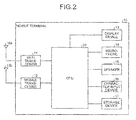
- FIG. 2 is a diagram illustrating an example of the hardware configuration of the mobile terminal according to the first embodiment.
- the mobile terminal 10 includes a Wi-Fi transceiver 11, a mobile transceiver 12, a display device 13, a microphone 14, a speaker 15, a character input device 16, a storage device 17, and a central processing unit (CPU) 20.
- CPU central processing unit
- the Wi-Fi transceiver 11 performs wireless communication through the wireless LAN 3, such as a Wi-Fi network, using an antenna 10a.
- a Wi-Fi IP address is set in the Wi-Fi transceiver 11.
- the Wi-Fi transceiver 11 establishes a connection to the Web server 1, using the IP address, and transmits and receives data.
- the mobile transceiver 12 performs wireless communication through the mobile network 2, such as an LTE network, using an antenna 10b.
- An LTE IP address is set in the mobile transceiver 12.
- the mobile transceiver 12 establishes a connection to the Web server 1, using the IP address, and transmits and receives data.
- the display device 13 is, for example, a touch panel or a display and displays various kinds of information.
- the microphone 14 collects a voice and inputs the collected voice to the CPU 20.
- the speaker 15 outputs the voice input from the CPU 20.
- the character input device 16 is, for example, a keyboard or a keyboard which is displayed on a touch panel, receives various inputs from the user, and outputs the inputs to the CPU 20.
- the storage device 17 is, for example, a memory or a hard disk and stores, for example, the programs executed by the CPU 20, the processing results which are generated by the programs executed by the CPU 20, and various tables.
- the CPU 20 is a processing unit which is in charge of all of the processes of the mobile terminal 10.
- the CPU 20 reads a program from the storage device 17 and performs processes.
- the CPU 20 operates a process that performs processing which will be described after FIG. 3 .
- two or more CPUs 20 may be provided.
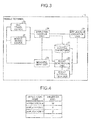
- FIG. 3 is a functional block diagram illustrating the functional structure of the mobile terminal according to the first embodiment.
- the mobile terminal 10 includes a control target list 21, a Wi-Fi transceiver 22, a mobile transceiver 23, an application execution unit 24, a measurement unit 25, an event generation unit 26, an event notification unit 27, and a switching control unit 28.
- the control target list 21 stores information about applications other than a simultaneous communication target. Specifically, the control target list 21 stores information about applications which use a limited communication network. For example, the control target list 21 stores information about applications which can use only by the Wi-Fi network.
- FIG. 4 is a diagram illustrating an example of the information stored in the control target list.
- the control target list 21 stores an "application name” and an “identifier (UID)" so as to be associated with each other.
- the stored "application name” is the name of the application which can use only by the Wi-Fi network and the identifier (UID) is an identifier for specifying the application.
- the identifier UID
- "W" is set to the application A.
- the Wi-Fi transceiver 22 is a processing unit that generates sockets to be used for the Wi-Fi network and transmits and receives data using the Wi-Fi network. Specifically, the Wi-Fi transceiver 22 establishes a connection to the communication destination, such as the Web server 1, on the Wi-Fi network and transmits data to the communication destination using the socket.
- the communication destination such as the Web server 1
- the Wi-Fi transceiver 22 writes data to the socket using the connection which is established with the communication destination such as the Web server 1.
- the data is read by the communication destination.
- the communication destination returns the request from the mobile terminal 10 and the mobile terminal 10 receives the data using the socket.
- the Wi-Fi transceiver 22 closes the socket.
- the Wi-Fi transceiver 22 When the communication destination writes data to the socket, the Wi-Fi transceiver 22 reads the data from the socket, using the connection established with the communication destination. In this way, the Wi-Fi transceiver 22 transmits and receives data using Wi-Fi socket communication.
- the mobile transceiver 23 is a processing unit that generates sockets to be used for the LTE network and transmits and receives data using the LTE network. Specifically, the mobile transceiver 23 establishes a connection to the communication destination, such as the Web server 1, on the LTE network and transmits data to the communication destination using the socket.
- the communication destination such as the Web server 1
- the mobile transceiver 23 writes data to the socket using the connection established with the communication destination and the communication destination reads the data.
- the communication destination returns the request from the mobile terminal 10 and the mobile terminal 10 receives the data using the socket.
- the mobile transceiver 23 closes the socket.
- the mobile transceiver 23 When the communication destination writes data to the socket, the mobile transceiver 23 reads the data from the socket, using the connection established with the communication destination. In this way, the mobile transceiver 23 transmits and receives data using LTE socket communication.
- the application execution unit 24 is a processing unit that executes applications. Specifically, the application execution unit 24 reads an application program desired by the user from, for example, the storage device 17, develops the program in the memory, and executes the application, in response to an instruction from the user.
- the measurement unit 25 is a processing unit that measures the radio quality of each communication network. Specifically, the measurement unit 25 measures, for example, the link speed of the mobile network 2 or the received signal strength indicator (RSSI) value of the wireless LAN 3. For example, the measurement unit 25 acquires, for example, the link speed from a mobile phone company which provides the mobile network 2 or the RSSI value from a wireless LAN access point at a predetermined interval of 2 minutes, and notifies the event generation unit 26 or the switching control unit 28 of the acquired information.
- RSSI received signal strength indicator
- the event generation unit 26 is a processing unit that generates network information to be notified to the application, on the basis of the quality of each wireless communication network and the type of application. Specifically, the event generation unit 26 acquires the RSSI value of the Wi-Fi network or the link speed of the LTE network from the measurement unit 25. Then, when the mobile terminal is disconnected from the Wi-Fi network and is connected to the LTE network, the event generation unit 26 generates network information indicating that the LTE network is the available communication network. On the other hand, when the mobile terminal is simultaneously connected to the Wi-Fi network and the LTE network or when the mobile terminal is connected only to the Wi-Fi network, the event generation unit 26 generates network information indicating that the Wi-Fi network is the available communication network.
- the event generation unit 26 generates an event which makes a limit target application, which is limited to use only by the Wi-Fi network, recognize that the mobile terminal is connected to the LTE network when communication is performed using both the Wi-Fi network and the LTE network and makes the limit target application recognize that the mobile terminal is connected to the Wi-Fi network when communication is performed using only the Wi-Fi network.
- the event generation unit 26 determines that the Wi-Fi network is not stabilized and it is difficult to normally use the Wi-Fi network. Then, the event generation unit 26 pretends that communication is performed using the LTE network, in order to limit the operation of the application registered in the control target list 21, similarly to when the LTE network is used.
- the event generation unit 26 determines that the Wi-Fi network is stabilized and it is possible to normally use the Wi-Fi network. Then, the event generation unit 26 notifies the application which is limited in use that communication is being performed using the Wi-Fi network, in order to release the limit of the operation of the application registered in the control target list 21. In addition, the event generation unit 26 can transmit a request to switch the communication mode to communication using only the Wi-Fi network to the switching control unit 28. In addition, the event is also generated in an environment in which the LTE network is not available and the Wi-Fi network is available.
- the event generation unit 26 outputs the generated event to the event notification unit 27.
- various events used by the wireless communication terminal such as broadcast intent, can be used as the generated event.
- the event notification unit 27 is a processing unit that notifies the corresponding application of the event generated by the event generation unit 26. For example, the event notification unit 27 notifies all of the applications which are installed in the mobile terminal 10 of the event during LTE connection which is generated during LTE connection.
- the event notification unit 27 notifies the application registered in the control target list 21 of the event which pretends that communication is performed using the LTE network. In addition, the event notification unit 27 notifies the application registered in the control target list 21 of the event which is generated in an environment in which both the Wi-Fi network and the LTE network can be used and the use rate of the Wi-Fi network is greater than a threshold value.
- the switching control unit 28 is a processing unit that determines the allocation ratio of the sockets to each communication network on the basis of the quality of the Wi-Fi network and the quality of the LTE network measured by the measurement unit 25 and performs wireless communication at the determined allocation ratio. Then, the switching control unit 28 generates sockets in the Wi-Fi transceiver 22 or the mobile transceiver 23 at the determined allocation ratio, and transmits and receives data. It is preferable that the quality determination threshold value used by the switching control unit 28 be the same as the quality determination threshold value used by the event generation unit 26. In addition, the switching control unit 28 notifies the event generation unit 26 of the determined allocation ratio.
- a table can be used to determine the allocation ratio on the basis of radio quality.
- the switching control unit 28 can determine the allocation ratio on the basis of radio quality, using a table for uniquely determining the allocation ratio from the RSSI value of the Wi-Fi network and the link speed of the LTE network.
- the switching control unit 28 determines that the Wi-Fi network is stabilized and it is possible to normally use the Wi-Fi network. Similarly, when a connection to the Wi-Fi network and a connection to the LTE network are established and the state in which the quality of the Wi-Fi network is equal to or less than the threshold value is maintained for a predetermined period of time, the switching control unit 28 determines that the Wi-Fi network is not stabilized and it is difficult to normally use the Wi-Fi network. This determination process makes it possible to suppress a reduction in communication efficiency due to frequent switching control. This method can also be applied to the event generation unit 26.
- FIG. 5 is a diagram illustrating the generation of an event notification.
- FIG. 5 illustrates the lapse of time from the left to the right.
- the mobile terminal 10 establishes a connection to the Wi-Fi network and a connection to the LTE network and the state in which the quality of the Wi-Fi network is greater than a threshold value A is maintained for a predetermined period of time. Therefore, wireless communication is performed using only the Wi-Fi network.
- the mobile terminal 10 performs wireless communication using the Wi-Fi network and the LTE network at the same time.
- the mobile terminal 10 generates a simultaneous communication event candidate (event W2) and notifies the corresponding application of the generated simultaneous communication event candidate.
- the mobile terminal 10 notifies the application registered in the control target list 21 that wireless communication is being performed using the LTE network and limits the operation of the application to be controlled.
- the mobile terminal 10 When the radio quality of the Wi-Fi network is equal to or less than a threshold value B (the threshold value A > the threshold value B) or is unavailable, the mobile terminal 10 performs wireless communication using only the LTE network. In this case, the mobile terminal 10 generates a Wi-Fi event (event M2) and notifies the corresponding application of the generated Wi-Fi event. Specifically, the mobile terminal 10 notifies the application installed in the mobile terminal 10 that wireless communication is being performed using the LTE network.
- a threshold value B the threshold value A > the threshold value B
- the mobile terminal 10 performs wireless communication using the Wi-Fi network and the LTE network at the same time.
- the mobile terminal 10 generates a Wi-Fi event (event M1) and notifies the corresponding application of the generated Wi-Fi event.
- the mobile terminal 10 notifies the application registered in the control target list 21 that wireless communication is being performed using the LTE network and notifies the other applications that wireless communication is being performed using the Wi-Fi network.
- the mobile terminal 10 performs wireless communication using only the Wi-Fi network.
- the mobile terminal 10 generates a simultaneous communication event candidate (event W1) and notifies the corresponding application of the generated simultaneous communication event candidate.
- the mobile terminal 10 notifies the application registered in the control target list 21 that wireless communication is being performed using the Wi-Fi network.
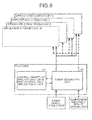
- FIG. 6 is a diagram illustrating an example of the control of an event notification. As illustrated in FIG. 6 , when it is detected that stable Wi-Fi communication starts or that stable Wi-Fi communication is cancelled, the event generation unit 26 of the mobile terminal 10 generates simultaneous communication event candidates in the applications A, C, and D to be controlled which are registered in the control target list 21.
- the event generation unit 26 of the mobile terminal 10 When it is detected that general Wi-Fi communication starts or that general Wi-Fi communication is cancelled, the event generation unit 26 of the mobile terminal 10 generates each Wi-Fi event in each application.
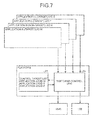
- FIG. 7 is a diagram illustrating an example of the allocation of communication from an application.
- FIG. 7 illustrates an example in which communication is performed using the Wi-Fi network and the LTE network at the same time.
- the switching control unit 28 of the mobile terminal 10 transmits data output from the applications A, C, and D to the destination using the LTE network, regardless of the allocation ratio since the applications A, C, and D have been registered in the control target list 21.
- the switching control unit 28 of the mobile terminal 10 transmits data output from the application B to the destination on the basis of the allocation ratio, using both the LTE network and the Wi-Fi network, since the application B has not been registered in the control target list 21.
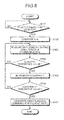
- FIG. 8 is a flowchart illustrating the flow of the event generation determination process. As illustrated in FIG. 8 , when a connection to the Wi-Fi network starts (Step S101: Yes), the switching control unit 28 sets a value of 0 to a counter C (Step S102).
- the measurement unit 25 periodically acquires the quality of the Wi-Fi network during simultaneous communication (Step S103).
- the switching control unit 28 determines whether the acquired quality of the Wi-Fi network is greater than a threshold value (Step S104).
- Step S104 when the quality of the Wi-Fi network is greater than the threshold value (Step S104: Yes), the switching control unit 28 increments the counter C (Step S105). On the other hand, when the quality of the Wi-Fi network is equal to or less than the threshold value (Step S104: No), the switching control unit 28 repeats Step S103 and the subsequent steps.
- Step S106 determines that a simultaneous communication event has been generated (Step S107).
- the switching control unit 28 sets the allocation ratio of the sockets to the Wi-Fi network to 100% and changes the communication mode to communication using only the Wi-Fi network.
- the event generation unit 26 generates an event W1 corresponding to the simultaneous communication event candidate described with reference to FIG. 5 .
- the switching control unit 28 can notify the event generation unit 26 of the generation of the simultaneous event.
- Step S106 No
- the switching control unit 28 repeats Step S103 and the subsequent steps.
- the switching control unit 28 can perform the process using the same method as that described above.
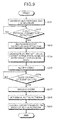
- FIG. 9 is a flowchart illustrating the flow of a process of notifying the event M1. This process is a process of transmitting the event M1 which is the Wi-Fi event described with reference to FIG. 5 .
- the event generation unit 26 monitors the Wi-Fi network and the LTE network through the measurement unit 25 (Step S201). When a physical connection to the Wi-Fi network is detected (Step S202: Yes), the event generation unit 26 determines an event notification destination (Step S203). Specifically, the event generation unit 26 specifies the application to be controlled, with reference to the control target list 21.
- the event generation unit 26 generates the event M1 corresponding to the type of application (Step S204). Specifically, the event generation unit 26 generates an event M1 having "mobile” as an active net value for a target application registered in the control target list and generates an event M1 having "Wi-Fi" as the active net value for the other non-target applications. Then, the event notification unit 27transmits the generated events M1 to the corresponding applications (Step S205).
- the application installed in the mobile terminal 10 suppresses the reception of the event transmitted from the platform of the mobile terminal 10 until the waiting of the event occurs (Step S206).
- Step S206 the application receives the event M1 transmitted from the event notification unit 27 which is the platform of the mobile terminal 10 (Step S207).
- the application determines an active network on the basis of the active net value set to the received event M1 (Step S208). Specifically, the application determines that the network set to the active net value is being used.
- the application changes the operation mode on the basis of the determined active network and starts communication (Step S209).
- the non-target application performs the function which can be used by the Wi-Fi network since the active net value is "Wi-Fi" and the target application suppresses the execution of the function which can be used by the Wi-Fi network since the active net value is "mobile”.
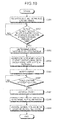
- FIG. 10 is a flowchart illustrating the flow of a process of notifying the event W1. This process is a process of transmitting the event W1 which is the simultaneous communication event candidate described with reference to FIG. 5 .
- the event generation unit 26 monitors the Wi-Fi network and the LTE network through the measurement unit 25 (Step S301). When it is detected that the quality of the Wi-Fi is equal to or greater than a reference value for a predetermined period of time (Step S302: Yes), the event generation unit 26 determines an event notification destination (Step S303).
- the event generation unit 26 generates the event W1 corresponding to the type of application (Step S304). Specifically, the event generation unit 26 generates an event W1 having "Wi-Fi" as the active net value for a target application registered in the control target list and suppresses the generation of the event W1 for the other non-target applications. Then, the event notification unit 27 transmits the generated event W1 to the corresponding application (Step S305).
- the application installed in the mobile terminal 10 suppresses the reception of the event transmitted from the platform of the mobile terminal 10 until the waiting of the event occurs (Step S306).
- Step S306 the application receives the event W1 transmitted from the event notification unit 27 which is the platform of the mobile terminal 10 (Step S307).
- the application determines an active network on the basis of the active net value set to the received event W1 (Step S308). Specifically, the application determines that the network set to the active net value is being used.
- the application changes the operation mode on the basis of the determined active network and starts communication (Step S309).
- the target application performs the function which can be used by the Wi-Fi network since the active net value is "Wi-Fi".
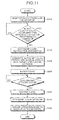
- FIG. 11 is a flowchart illustrating the flow of a process of notifying the event W2. This process is a process of transmitting the event W2 which is the simultaneous communication event candidate described with reference to FIG. 5 .
- the event generation unit 26 monitors the Wi-Fi network and the LTE network through the measurement unit 25 (Step S401). When it is detected that the quality of the Wi-Fi is equal to or less than a reference value for a predetermined period of time (Step S402: Yes), the event generation unit 26 determines an event notification destination (Step S403).
- the event generation unit 26 generates the event W2 corresponding to the type of application (Step S404). Specifically, the event generation unit 26 generates an event W1 having "Mobile" as the active net value for a target application registered in the control target list and suppresses the generation of the event W2 for the other non-target applications. Then, the event notification unit 27 transmits the generated event W2 to the corresponding application (Step S405).
- the application installed in the mobile terminal 10 suppresses the reception of the event transmitted from the platform of the mobile terminal 10 until the waiting of the event occurs (Step S406).
- Step S406 when the waiting of the event occurs (Step S406: Yes), the application receives the event W2 transmitted from the event notification unit 27 (Step S407).
- the application determines an active network on the basis of the active net value set to the received event W2 (Step S408). Specifically, the application determines that the network set to the active net value is being used.
- the application changes the operation mode on the basis of the determined active network and starts communication (Step S409).
- the target application suppresses the execution of the function which can be used by the Wi-Fi network since the active net value is "Mobile".
- FIG. 12 is a flowchart illustrating the flow of a process of notifying the event M2. This process is a process of transmitting the event M2 which is the Wi-Fi event described with reference to FIG. 5 .
- the event generation unit 26 monitors the Wi-Fi network and the LTE network through the measurement unit 25 (Step S501). When a physical disconnection from the Wi-Fi network is detected (Step S502: Yes), the event generation unit 26 determines an event notification destination (Step S503).
- the event generation unit 26 generates the event M2 corresponding to the type of application (Step S504). Specifically, the event generation unit 26 generates an event M2 having "mobile" as the active net value for a target application registered in the control target list and the other applications. Then, the event notification unit 27 transmits the generated event M2 to all applications (Step S505).
- the application installed in the mobile terminal 10 suppresses the reception of the event until the waiting of the event occurs (Step S506). Then, when the waiting of the event occurs (Step S506: Yes), the application receives the event M2 transmitted from the event notification unit 27 (Step S507).
- the application determines an active network on the basis of the active net value set to the received event M2 (Step S508). Specifically, the application determines that the network set to the active net value is being used.
- the application changes the operation mode on the basis of the determined active network and starts communication (Step S509).
- all applications suppress the execution of the function which can be used by the Wi-Fi network since the active net value is "Mobile".
- the mobile terminal 10 can make the application, which is limited in use, recognize that LTE communication is being performed and can notify the application, which is not limited in use, that Wi-Fi communication is being performed.
- the browser application performs only the functions corresponding to the LTE network and does not perform a preload function which can be used only by the Wi-Fi network. Therefore, the mobile terminal 10 can prevent, for example, the occurrence of an unnecessary charge caused by simultaneous communication and can prevent the occurrence of an operation error in the application.
- the application generally transmits packets in a secure mobile network (cellular network), without any change because of a security problem.
- Wi-Fi communication the application performs a special security process and then performs packet communication, in order to strengthen security.
- the mobile terminal 10 can prevent an unencrypted packet from being transmitted through the Wi-Fi network.
- the mobile terminal 10 can switch the communication mode to communication using only the Wi-Fi network and can notify the application which is limited in use that the Wi-Fi network is being used. Therefore, the mobile terminal 10 can stably use communication after wireless communication is switched and can suppress an increase in load due to frequency switching.
- the mobile terminal 10 can switch the communication mode to communication using only the LTE network and can notify all applications that the LTE network is used. Therefore, the mobile terminal 10 can suppress the execution of the function which can be used only by the Wi-Fi network or the application which can be used only by the Wi-Fi network.
- the platform of the mobile terminal 10 notifies the application of the event.
- the invention is not limited thereto. For example, when the application requests the platform to transmit an event and the platform receives the request, it is possible to generate and notify the event.
- the mobile terminal 10 allocates the sockets to the communication networks.
- the invention is not limited thereto.
- the mobile terminal 10 can perform allocation control in an arbitrary unit, such as the unit of packets.
- each structure of the apparatus illustrated in the drawings is not always the physical structure illustrated in the drawings. That is, the components can be dispersed or integrated in an arbitrary unit.
- all or some of the processing functions of each apparatus can be implemented by a CPU and the program which is analyzed and executed by the CPU or they can be implemented as hardware by a wired logic.
- all or some of the processes that are automatically performed may be manually performed.
- all or some of the processes that are manually performed may be automatically performed by a known method.
- the processing procedure, the control procedure, the specific names, and information including various kinds of data and parameters which are described in the specification and the drawings may be arbitrarily changed unless otherwise specified.
- the mobile terminal 10 described in this embodiment can read a wireless communication control program and execute the wireless communication control program to implement the same functions as those in the process described with reference to, for example, FIG. 3 .
- the mobile terminal 10 develops, in the memory, a program which has the same functions as the Wi-Fi transceiver 22, the mobile transceiver 23, the application execution unit 24, the measurement unit 25, the event generation unit 26, the event notification unit 27, and the switching control unit 28.
- the mobile terminal 10 executes the program which implements the same processes as the Wi-Fi transceiver 22, the mobile transceiver 23, the application execution unit 24, the measurement unit 25, the event generation unit 26, the event notification unit 27, and the switching control unit 28 to perform the same processes as those in the above-described embodiment.
- the program can be distributed through a network such as the Internet.
- the program can be recorded on a computer-readable recording medium, such as a hard disk, a flexible disk (FD), a CD-ROM, an MO, or a DVD and the computer can read the program from the recording medium and execute the program.
- a computer-readable recording medium such as a hard disk, a flexible disk (FD), a CD-ROM, an MO, or a DVD and the computer can read the program from the recording medium and execute the program.
Landscapes
- Engineering & Computer Science (AREA)
- Computer Networks & Wireless Communication (AREA)
- Signal Processing (AREA)
- Computer Security & Cryptography (AREA)
- Mobile Radio Communication Systems (AREA)
- Telephone Function (AREA)
Applications Claiming Priority (1)
| Application Number | Priority Date | Filing Date | Title |
|---|---|---|---|
| JP2014079769A JP6299354B2 (ja) | 2014-04-08 | 2014-04-08 | 無線通信装置、無線通信方法および無線通信プログラム |
Publications (2)
| Publication Number | Publication Date |
|---|---|
| EP2931003A1 true EP2931003A1 (de) | 2015-10-14 |
| EP2931003B1 EP2931003B1 (de) | 2019-06-12 |
Family
ID=52706021
Family Applications (1)
| Application Number | Title | Priority Date | Filing Date |
|---|---|---|---|
| EP15159630.1A Active EP2931003B1 (de) | 2014-04-08 | 2015-03-18 | Drahtlose kommunikationsvorrichtung, drahtloses kommunikationsverfahren und drahtloses kommunikationsprogramm |
Country Status (3)
| Country | Link |
|---|---|
| US (1) | US9788249B2 (de) |
| EP (1) | EP2931003B1 (de) |
| JP (1) | JP6299354B2 (de) |
Cited By (1)
| Publication number | Priority date | Publication date | Assignee | Title |
|---|---|---|---|---|
| EP3761713A4 (de) * | 2018-03-02 | 2021-05-05 | Panasonic Intellectual Property Corporation of America | Vorrichtung, system und kommunikationsverfahren |
Families Citing this family (5)
| Publication number | Priority date | Publication date | Assignee | Title |
|---|---|---|---|---|
| CN107148793B (zh) * | 2014-09-30 | 2020-09-08 | 康维达无线有限责任公司 | 动态策略控制 |
| KR20160141560A (ko) * | 2015-06-01 | 2016-12-09 | 삼성전기주식회사 | 무선 통신 장치 및 이를 이용한 운용 방법 |
| KR102461929B1 (ko) * | 2015-09-25 | 2022-11-02 | 삼성전자주식회사 | 다수의 무선 접속 인터페이스를 지원하는 이동 통신 시스템에서 스트리밍 서비스 데이터를 수신하는 장치 및 방법 |
| CN111740963B (zh) * | 2020-05-29 | 2022-07-29 | 深圳市优博讯科技股份有限公司 | 一种数据通信方法及装置 |
| KR20220017252A (ko) * | 2020-08-04 | 2022-02-11 | 삼성전자주식회사 | 무선 통신 시스템에서 통신 인터페이스 전환을 위한 장치 및 방법 |
Citations (6)
| Publication number | Priority date | Publication date | Assignee | Title |
|---|---|---|---|---|
| EP1401162A2 (de) * | 2002-09-19 | 2004-03-24 | NTT DoCoMo, Inc. | Paketkommunikationsendgerät, -system, -verfahren und -programm |
| JP2008136150A (ja) | 2006-10-27 | 2008-06-12 | Sanyo Electric Co Ltd | 送信方法、通信方法およびそれらを利用した送信装置、端末装置 |
| JP2011166251A (ja) | 2010-02-05 | 2011-08-25 | Nec Corp | マルチモード無線通信システムおよびマルチモード無線通信方法 |
| US20130121145A1 (en) * | 2011-11-11 | 2013-05-16 | Verizon Patent And Licensing Inc. | Network selection based on one or more factors |
| US20130229270A1 (en) * | 2012-03-02 | 2013-09-05 | Seven Networks, Inc. | Providing data to a mobile application accessible at a mobile device via different network connections without interruption |
| US20140071895A1 (en) * | 2008-12-12 | 2014-03-13 | Ryan H. Bane | Network Selection Based On Customizing Crowdsourced Connection Quality Data |
Family Cites Families (8)
| Publication number | Priority date | Publication date | Assignee | Title |
|---|---|---|---|---|
| US9072077B2 (en) * | 2010-04-01 | 2015-06-30 | Qualcomm Incorporated | Method and apparatus for performing fractional system selection by a wireless device |
| US9055556B2 (en) * | 2010-04-01 | 2015-06-09 | Qualcomm Incorporated | Method and apparatus for selecting radios and mapping applications to radios on a wireless device |
| US9571952B2 (en) * | 2011-04-22 | 2017-02-14 | Qualcomm Incorporatd | Offloading of data to wireless local area network |
| JP2013141166A (ja) * | 2012-01-06 | 2013-07-18 | Hitachi Ltd | 通信端末、アドレス変換装置および通信システム |
| KR101906747B1 (ko) * | 2013-03-29 | 2018-12-05 | 인텔 아이피 코포레이션 | 무선 셀룰러 네트워크에 제공하는 wlan 트래픽 로드 측정치 |
| US20140321376A1 (en) * | 2013-04-29 | 2014-10-30 | Qualcomm Incorporated | Lte-wlan centralized downlink scheduler |
| US9491660B2 (en) * | 2013-05-06 | 2016-11-08 | Qualcomm Incorporated | Support data connectivity over WLAN and WWAN |
| US9930560B2 (en) * | 2013-10-23 | 2018-03-27 | Motorola Solutions, Inc. | Methods for managing a broadband connection using a narrowband connection |
-
2014
- 2014-04-08 JP JP2014079769A patent/JP6299354B2/ja active Active
-
2015
- 2015-03-18 EP EP15159630.1A patent/EP2931003B1/de active Active
- 2015-03-30 US US14/672,428 patent/US9788249B2/en active Active
Patent Citations (6)
| Publication number | Priority date | Publication date | Assignee | Title |
|---|---|---|---|---|
| EP1401162A2 (de) * | 2002-09-19 | 2004-03-24 | NTT DoCoMo, Inc. | Paketkommunikationsendgerät, -system, -verfahren und -programm |
| JP2008136150A (ja) | 2006-10-27 | 2008-06-12 | Sanyo Electric Co Ltd | 送信方法、通信方法およびそれらを利用した送信装置、端末装置 |
| US20140071895A1 (en) * | 2008-12-12 | 2014-03-13 | Ryan H. Bane | Network Selection Based On Customizing Crowdsourced Connection Quality Data |
| JP2011166251A (ja) | 2010-02-05 | 2011-08-25 | Nec Corp | マルチモード無線通信システムおよびマルチモード無線通信方法 |
| US20130121145A1 (en) * | 2011-11-11 | 2013-05-16 | Verizon Patent And Licensing Inc. | Network selection based on one or more factors |
| US20130229270A1 (en) * | 2012-03-02 | 2013-09-05 | Seven Networks, Inc. | Providing data to a mobile application accessible at a mobile device via different network connections without interruption |
Cited By (1)
| Publication number | Priority date | Publication date | Assignee | Title |
|---|---|---|---|---|
| EP3761713A4 (de) * | 2018-03-02 | 2021-05-05 | Panasonic Intellectual Property Corporation of America | Vorrichtung, system und kommunikationsverfahren |
Also Published As
| Publication number | Publication date |
|---|---|
| JP6299354B2 (ja) | 2018-03-28 |
| US20150289183A1 (en) | 2015-10-08 |
| JP2015201769A (ja) | 2015-11-12 |
| US9788249B2 (en) | 2017-10-10 |
| EP2931003B1 (de) | 2019-06-12 |
Similar Documents
| Publication | Publication Date | Title |
|---|---|---|
| US9380508B2 (en) | System, apparatus and method for managing network device connectivity on heterogenous networks | |
| EP2931003B1 (de) | Drahtlose kommunikationsvorrichtung, drahtloses kommunikationsverfahren und drahtloses kommunikationsprogramm | |
| EP3108694B1 (de) | Verkehrssteuerung zwischen wlan und mobilfunknetzen | |
| US10764349B2 (en) | Self-organizing network communication | |
| TW200922179A (en) | Wireless relay apparatus and wireless communication system | |
| US12463912B2 (en) | Systems and methods for host responsiveness monitoring for low-latency, low-loss, scalable-throughput services | |
| CN103260216B (zh) | 无线通信装置以及进行无线通信的方法 | |
| CN111866925B (zh) | 频点测量方法、装置以及存储介质 | |
| US9014036B2 (en) | Dynamic band selection and aggregation | |
| US11129092B2 (en) | Application specific location discovery | |
| WO2014027436A1 (ja) | 通信装置、通信方法、通信システム、およびプログラム | |
| CA2946630A1 (en) | D2d communication discovery method, apparatus, and system | |
| US20220361096A1 (en) | Greedy user equipment data transport network selection | |
| US10575239B2 (en) | Data network management | |
| WO2024002114A1 (zh) | 一种通信方法和相关设备 | |
| EP2931000B1 (de) | Drahtlose kommunikationsvorrichtung, drahtloses kommunikationsverfahren und drahtloses kommunikationsprogramm | |
| US20240007880A1 (en) | Systems and methods for quality of service monitoring activated by policy control function | |
| CN115515207A (zh) | 通信方法、装置、电子设备和计算机可读存储介质 | |
| EP2632202B1 (de) | Vorrichtung und verfahren zum aktiven bestimmen der kommunikationsverknüpfung in einem kommunikationssystem | |
| EP2930991B1 (de) | Drahtlose kommunikationsvorrichtung und verfahren für verkehrsausgeglichene kommunikation über zwei drahtlose netzwerke gleichzeitig | |
| EP2930900A1 (de) | Drahtlose kommunikationsvorrichtung, drahtloses kommunikationsverfahren und drahtloses kommunikationsprogramm | |
| US10244046B2 (en) | Managing traffic at a node within a wireless communication network upon the node entering service | |
| JP6729688B2 (ja) | 無線中継装置、無線制御装置及び無線通信システム | |
| CN110574468A (zh) | 基于质量得分的网络连接选择 | |
| CN107306437B (zh) | 关联消息处理装置及方法 |
Legal Events
| Date | Code | Title | Description |
|---|---|---|---|
| PUAI | Public reference made under article 153(3) epc to a published international application that has entered the european phase |
Free format text: ORIGINAL CODE: 0009012 |
|
| AK | Designated contracting states |
Kind code of ref document: A1 Designated state(s): AL AT BE BG CH CY CZ DE DK EE ES FI FR GB GR HR HU IE IS IT LI LT LU LV MC MK MT NL NO PL PT RO RS SE SI SK SM TR |
|
| AX | Request for extension of the european patent |
Extension state: BA ME |
|
| 17P | Request for examination filed |
Effective date: 20160205 |
|
| RBV | Designated contracting states (corrected) |
Designated state(s): AL AT BE BG CH CY CZ DE DK EE ES FI FR GB GR HR HU IE IS IT LI LT LU LV MC MK MT NL NO PL PT RO RS SE SI SK SM TR |
|
| RAP1 | Party data changed (applicant data changed or rights of an application transferred) |
Owner name: FUJITSU CONNECTED TECHNOLOGIES LIMITED |
|
| GRAP | Despatch of communication of intention to grant a patent |
Free format text: ORIGINAL CODE: EPIDOSNIGR1 |
|
| STAA | Information on the status of an ep patent application or granted ep patent |
Free format text: STATUS: GRANT OF PATENT IS INTENDED |
|
| INTG | Intention to grant announced |
Effective date: 20190109 |
|
| GRAS | Grant fee paid |
Free format text: ORIGINAL CODE: EPIDOSNIGR3 |
|
| GRAA | (expected) grant |
Free format text: ORIGINAL CODE: 0009210 |
|
| STAA | Information on the status of an ep patent application or granted ep patent |
Free format text: STATUS: THE PATENT HAS BEEN GRANTED |
|
| AK | Designated contracting states |
Kind code of ref document: B1 Designated state(s): AL AT BE BG CH CY CZ DE DK EE ES FI FR GB GR HR HU IE IS IT LI LT LU LV MC MK MT NL NO PL PT RO RS SE SI SK SM TR |
|
| REG | Reference to a national code |
Ref country code: GB Ref legal event code: FG4D |
|
| REG | Reference to a national code |
Ref country code: CH Ref legal event code: EP |
|
| REG | Reference to a national code |
Ref country code: AT Ref legal event code: REF Ref document number: 1144250 Country of ref document: AT Kind code of ref document: T Effective date: 20190615 |
|
| REG | Reference to a national code |
Ref country code: DE Ref legal event code: R096 Ref document number: 602015031630 Country of ref document: DE |
|
| REG | Reference to a national code |
Ref country code: IE Ref legal event code: FG4D |
|
| REG | Reference to a national code |
Ref country code: NL Ref legal event code: MP Effective date: 20190612 |
|
| REG | Reference to a national code |
Ref country code: LT Ref legal event code: MG4D |
|
| PG25 | Lapsed in a contracting state [announced via postgrant information from national office to epo] |
Ref country code: AL Free format text: LAPSE BECAUSE OF FAILURE TO SUBMIT A TRANSLATION OF THE DESCRIPTION OR TO PAY THE FEE WITHIN THE PRESCRIBED TIME-LIMIT Effective date: 20190612 Ref country code: SE Free format text: LAPSE BECAUSE OF FAILURE TO SUBMIT A TRANSLATION OF THE DESCRIPTION OR TO PAY THE FEE WITHIN THE PRESCRIBED TIME-LIMIT Effective date: 20190612 Ref country code: HR Free format text: LAPSE BECAUSE OF FAILURE TO SUBMIT A TRANSLATION OF THE DESCRIPTION OR TO PAY THE FEE WITHIN THE PRESCRIBED TIME-LIMIT Effective date: 20190612 Ref country code: NO Free format text: LAPSE BECAUSE OF FAILURE TO SUBMIT A TRANSLATION OF THE DESCRIPTION OR TO PAY THE FEE WITHIN THE PRESCRIBED TIME-LIMIT Effective date: 20190912 Ref country code: LT Free format text: LAPSE BECAUSE OF FAILURE TO SUBMIT A TRANSLATION OF THE DESCRIPTION OR TO PAY THE FEE WITHIN THE PRESCRIBED TIME-LIMIT Effective date: 20190612 Ref country code: FI Free format text: LAPSE BECAUSE OF FAILURE TO SUBMIT A TRANSLATION OF THE DESCRIPTION OR TO PAY THE FEE WITHIN THE PRESCRIBED TIME-LIMIT Effective date: 20190612 |
|
| PG25 | Lapsed in a contracting state [announced via postgrant information from national office to epo] |
Ref country code: RS Free format text: LAPSE BECAUSE OF FAILURE TO SUBMIT A TRANSLATION OF THE DESCRIPTION OR TO PAY THE FEE WITHIN THE PRESCRIBED TIME-LIMIT Effective date: 20190612 Ref country code: LV Free format text: LAPSE BECAUSE OF FAILURE TO SUBMIT A TRANSLATION OF THE DESCRIPTION OR TO PAY THE FEE WITHIN THE PRESCRIBED TIME-LIMIT Effective date: 20190612 Ref country code: GR Free format text: LAPSE BECAUSE OF FAILURE TO SUBMIT A TRANSLATION OF THE DESCRIPTION OR TO PAY THE FEE WITHIN THE PRESCRIBED TIME-LIMIT Effective date: 20190913 Ref country code: BG Free format text: LAPSE BECAUSE OF FAILURE TO SUBMIT A TRANSLATION OF THE DESCRIPTION OR TO PAY THE FEE WITHIN THE PRESCRIBED TIME-LIMIT Effective date: 20190912 |
|
| REG | Reference to a national code |
Ref country code: AT Ref legal event code: MK05 Ref document number: 1144250 Country of ref document: AT Kind code of ref document: T Effective date: 20190612 |
|
| PG25 | Lapsed in a contracting state [announced via postgrant information from national office to epo] |
Ref country code: PT Free format text: LAPSE BECAUSE OF FAILURE TO SUBMIT A TRANSLATION OF THE DESCRIPTION OR TO PAY THE FEE WITHIN THE PRESCRIBED TIME-LIMIT Effective date: 20191014 Ref country code: AT Free format text: LAPSE BECAUSE OF FAILURE TO SUBMIT A TRANSLATION OF THE DESCRIPTION OR TO PAY THE FEE WITHIN THE PRESCRIBED TIME-LIMIT Effective date: 20190612 Ref country code: SK Free format text: LAPSE BECAUSE OF FAILURE TO SUBMIT A TRANSLATION OF THE DESCRIPTION OR TO PAY THE FEE WITHIN THE PRESCRIBED TIME-LIMIT Effective date: 20190612 Ref country code: EE Free format text: LAPSE BECAUSE OF FAILURE TO SUBMIT A TRANSLATION OF THE DESCRIPTION OR TO PAY THE FEE WITHIN THE PRESCRIBED TIME-LIMIT Effective date: 20190612 Ref country code: NL Free format text: LAPSE BECAUSE OF FAILURE TO SUBMIT A TRANSLATION OF THE DESCRIPTION OR TO PAY THE FEE WITHIN THE PRESCRIBED TIME-LIMIT Effective date: 20190612 Ref country code: CZ Free format text: LAPSE BECAUSE OF FAILURE TO SUBMIT A TRANSLATION OF THE DESCRIPTION OR TO PAY THE FEE WITHIN THE PRESCRIBED TIME-LIMIT Effective date: 20190612 Ref country code: RO Free format text: LAPSE BECAUSE OF FAILURE TO SUBMIT A TRANSLATION OF THE DESCRIPTION OR TO PAY THE FEE WITHIN THE PRESCRIBED TIME-LIMIT Effective date: 20190612 |
|
| PG25 | Lapsed in a contracting state [announced via postgrant information from national office to epo] |
Ref country code: ES Free format text: LAPSE BECAUSE OF FAILURE TO SUBMIT A TRANSLATION OF THE DESCRIPTION OR TO PAY THE FEE WITHIN THE PRESCRIBED TIME-LIMIT Effective date: 20190612 Ref country code: IS Free format text: LAPSE BECAUSE OF FAILURE TO SUBMIT A TRANSLATION OF THE DESCRIPTION OR TO PAY THE FEE WITHIN THE PRESCRIBED TIME-LIMIT Effective date: 20191012 Ref country code: IT Free format text: LAPSE BECAUSE OF FAILURE TO SUBMIT A TRANSLATION OF THE DESCRIPTION OR TO PAY THE FEE WITHIN THE PRESCRIBED TIME-LIMIT Effective date: 20190612 Ref country code: SM Free format text: LAPSE BECAUSE OF FAILURE TO SUBMIT A TRANSLATION OF THE DESCRIPTION OR TO PAY THE FEE WITHIN THE PRESCRIBED TIME-LIMIT Effective date: 20190612 |
|
| REG | Reference to a national code |
Ref country code: DE Ref legal event code: R097 Ref document number: 602015031630 Country of ref document: DE |
|
| PG25 | Lapsed in a contracting state [announced via postgrant information from national office to epo] |
Ref country code: TR Free format text: LAPSE BECAUSE OF FAILURE TO SUBMIT A TRANSLATION OF THE DESCRIPTION OR TO PAY THE FEE WITHIN THE PRESCRIBED TIME-LIMIT Effective date: 20190612 |
|
| PLBE | No opposition filed within time limit |
Free format text: ORIGINAL CODE: 0009261 |
|
| STAA | Information on the status of an ep patent application or granted ep patent |
Free format text: STATUS: NO OPPOSITION FILED WITHIN TIME LIMIT |
|
| PG25 | Lapsed in a contracting state [announced via postgrant information from national office to epo] |
Ref country code: PL Free format text: LAPSE BECAUSE OF FAILURE TO SUBMIT A TRANSLATION OF THE DESCRIPTION OR TO PAY THE FEE WITHIN THE PRESCRIBED TIME-LIMIT Effective date: 20190612 Ref country code: DK Free format text: LAPSE BECAUSE OF FAILURE TO SUBMIT A TRANSLATION OF THE DESCRIPTION OR TO PAY THE FEE WITHIN THE PRESCRIBED TIME-LIMIT Effective date: 20190612 |
|
| 26N | No opposition filed |
Effective date: 20200313 |
|
| PG25 | Lapsed in a contracting state [announced via postgrant information from national office to epo] |
Ref country code: IS Free format text: LAPSE BECAUSE OF FAILURE TO SUBMIT A TRANSLATION OF THE DESCRIPTION OR TO PAY THE FEE WITHIN THE PRESCRIBED TIME-LIMIT Effective date: 20200224 Ref country code: SI Free format text: LAPSE BECAUSE OF FAILURE TO SUBMIT A TRANSLATION OF THE DESCRIPTION OR TO PAY THE FEE WITHIN THE PRESCRIBED TIME-LIMIT Effective date: 20190612 |
|
| PG2D | Information on lapse in contracting state deleted |
Ref country code: IS |
|
| PG25 | Lapsed in a contracting state [announced via postgrant information from national office to epo] |
Ref country code: MC Free format text: LAPSE BECAUSE OF FAILURE TO SUBMIT A TRANSLATION OF THE DESCRIPTION OR TO PAY THE FEE WITHIN THE PRESCRIBED TIME-LIMIT Effective date: 20190612 |
|
| REG | Reference to a national code |
Ref country code: CH Ref legal event code: PL |
|
| REG | Reference to a national code |
Ref country code: BE Ref legal event code: MM Effective date: 20200331 |
|
| PG25 | Lapsed in a contracting state [announced via postgrant information from national office to epo] |
Ref country code: LU Free format text: LAPSE BECAUSE OF NON-PAYMENT OF DUE FEES Effective date: 20200318 |
|
| REG | Reference to a national code |
Ref country code: DE Ref legal event code: R082 Ref document number: 602015031630 Country of ref document: DE Representative=s name: HL KEMPNER PATENTANWALT, RECHTSANWALT, SOLICIT, DE |
|
| PG25 | Lapsed in a contracting state [announced via postgrant information from national office to epo] |
Ref country code: IE Free format text: LAPSE BECAUSE OF NON-PAYMENT OF DUE FEES Effective date: 20200318 Ref country code: CH Free format text: LAPSE BECAUSE OF NON-PAYMENT OF DUE FEES Effective date: 20200331 Ref country code: LI Free format text: LAPSE BECAUSE OF NON-PAYMENT OF DUE FEES Effective date: 20200331 |
|
| PG25 | Lapsed in a contracting state [announced via postgrant information from national office to epo] |
Ref country code: BE Free format text: LAPSE BECAUSE OF NON-PAYMENT OF DUE FEES Effective date: 20200331 |
|
| PGFP | Annual fee paid to national office [announced via postgrant information from national office to epo] |
Ref country code: FR Payment date: 20210210 Year of fee payment: 7 |
|
| PGFP | Annual fee paid to national office [announced via postgrant information from national office to epo] |
Ref country code: DE Payment date: 20210302 Year of fee payment: 7 Ref country code: GB Payment date: 20210310 Year of fee payment: 7 |
|
| PG25 | Lapsed in a contracting state [announced via postgrant information from national office to epo] |
Ref country code: MT Free format text: LAPSE BECAUSE OF FAILURE TO SUBMIT A TRANSLATION OF THE DESCRIPTION OR TO PAY THE FEE WITHIN THE PRESCRIBED TIME-LIMIT Effective date: 20190612 Ref country code: CY Free format text: LAPSE BECAUSE OF FAILURE TO SUBMIT A TRANSLATION OF THE DESCRIPTION OR TO PAY THE FEE WITHIN THE PRESCRIBED TIME-LIMIT Effective date: 20190612 |
|
| PG25 | Lapsed in a contracting state [announced via postgrant information from national office to epo] |
Ref country code: MK Free format text: LAPSE BECAUSE OF FAILURE TO SUBMIT A TRANSLATION OF THE DESCRIPTION OR TO PAY THE FEE WITHIN THE PRESCRIBED TIME-LIMIT Effective date: 20190612 |
|
| REG | Reference to a national code |
Ref country code: DE Ref legal event code: R119 Ref document number: 602015031630 Country of ref document: DE |
|
| GBPC | Gb: european patent ceased through non-payment of renewal fee |
Effective date: 20220318 |
|
| PG25 | Lapsed in a contracting state [announced via postgrant information from national office to epo] |
Ref country code: GB Free format text: LAPSE BECAUSE OF NON-PAYMENT OF DUE FEES Effective date: 20220318 Ref country code: FR Free format text: LAPSE BECAUSE OF NON-PAYMENT OF DUE FEES Effective date: 20220331 Ref country code: DE Free format text: LAPSE BECAUSE OF NON-PAYMENT OF DUE FEES Effective date: 20221001 |