EP2928084A1 - Verfahren und vorrichtung zur erkennung der decodierung einer weichen ausgabesphäre mit fester komplexität - Google Patents
Verfahren und vorrichtung zur erkennung der decodierung einer weichen ausgabesphäre mit fester komplexität Download PDFInfo
- Publication number
- EP2928084A1 EP2928084A1 EP13858769.6A EP13858769A EP2928084A1 EP 2928084 A1 EP2928084 A1 EP 2928084A1 EP 13858769 A EP13858769 A EP 13858769A EP 2928084 A1 EP2928084 A1 EP 2928084A1
- Authority
- EP
- European Patent Office
- Prior art keywords
- layer
- path
- complementary set
- layers
- nodes
- Prior art date
- Legal status (The legal status is an assumption and is not a legal conclusion. Google has not performed a legal analysis and makes no representation as to the accuracy of the status listed.)
- Granted
Links
Images

Classifications
-
- H—ELECTRICITY
- H04—ELECTRIC COMMUNICATION TECHNIQUE
- H04L—TRANSMISSION OF DIGITAL INFORMATION, e.g. TELEGRAPHIC COMMUNICATION
- H04L1/00—Arrangements for detecting or preventing errors in the information received
- H04L1/004—Arrangements for detecting or preventing errors in the information received by using forward error control
- H04L1/0045—Arrangements at the receiver end
- H04L1/0054—Maximum-likelihood or sequential decoding, e.g. Viterbi, Fano, ZJ algorithms
-
- H—ELECTRICITY
- H04—ELECTRIC COMMUNICATION TECHNIQUE
- H04L—TRANSMISSION OF DIGITAL INFORMATION, e.g. TELEGRAPHIC COMMUNICATION
- H04L25/00—Baseband systems
- H04L25/02—Details ; arrangements for supplying electrical power along data transmission lines
- H04L25/03—Shaping networks in transmitter or receiver, e.g. adaptive shaping networks
- H04L25/03006—Arrangements for removing intersymbol interference
- H04L25/03178—Arrangements involving sequence estimation techniques
- H04L25/03203—Trellis search techniques
- H04L25/03242—Methods involving sphere decoding
-
- H—ELECTRICITY
- H04—ELECTRIC COMMUNICATION TECHNIQUE
- H04B—TRANSMISSION
- H04B7/00—Radio transmission systems, i.e. using radiation field
- H04B7/02—Diversity systems; Multi-antenna system, i.e. transmission or reception using multiple antennas
- H04B7/04—Diversity systems; Multi-antenna system, i.e. transmission or reception using multiple antennas using two or more spaced independent antennas
- H04B7/0413—MIMO systems
- H04B7/0456—Selection of precoding matrices or codebooks, e.g. using matrices antenna weighting
-
- H—ELECTRICITY
- H04—ELECTRIC COMMUNICATION TECHNIQUE
- H04L—TRANSMISSION OF DIGITAL INFORMATION, e.g. TELEGRAPHIC COMMUNICATION
- H04L25/00—Baseband systems
- H04L25/02—Details ; arrangements for supplying electrical power along data transmission lines
- H04L25/03—Shaping networks in transmitter or receiver, e.g. adaptive shaping networks
- H04L25/03006—Arrangements for removing intersymbol interference
- H04L25/03178—Arrangements involving sequence estimation techniques
- H04L25/03312—Arrangements specific to the provision of output signals
- H04L25/03318—Provision of soft decisions
Definitions
- the present disclosure relates to Multiple-Input Multiple-Output (MIMO) detection techniques in wireless communications, and in particular to a method and apparatus for Soft-output Fixed-complexity Sphere Decoding (SFSD) detection.
- MIMO Multiple-Input Multiple-Output
- SFSD Soft-output Fixed-complexity Sphere Decoding
- LTE-A Long Term Evolution Advanced
- SD detection can approach the optimal performance, i.e., Maximum Likelihood performance, thus in order to obtain the optimal performance, the SD detection is used to implement MIMO detection in cases of acceptable hardware implementation complexity.
- the SD detection includes Fixed-complexity Sphere Decoding (FSD) and non fixed-complexity sphere decoding, and the FSD is commonly used since it is readily to be implemented by Very Large Scale Integration (VLSI).
- VLSI Very Large Scale Integration
- soft-output MIMO detection can be adapted to subsequent soft decoders to enable the system to achieve better detection performance, thus SFSD detection is commonly used at present.
- processes for receivers in an LTE-A system to perform SFSD detection mainly include preprocessing, sphere detection and Likelihood Ratio (LLR) output, wherein the preprocessing includes generation of an equivalent channel matrix, sequencing and QR decomposition.
- preprocessing includes generation of an equivalent channel matrix, sequencing and QR decomposition.
- an LTE-A system Due to high requirements on spectral efficiency of a system based on International Mobile Telecommunications-Advanced (IMT-Advanced) specifications established by the International Telecommunications Union (ITU), an LTE-A system is required to achieve a downlink spectral efficiency of 30bps/Hz and an uplink spectral efficiency of 15bps/Hz.
- IMT-Advanced International Mobile Telecommunications-Advanced
- an LTE-A system adopts 8-layer MIMO at most on downlink and 4-layer MIMO at most on uplink, and it also supports modulation modes such as Quadrature Phase Shift Keying (QPSK) / 16 Quadrature Amplitude Modulation (QAM) / 64QAM. Due to a great increase in MIMO layers, a very large amount of computation is resulted in sphere detection.
- QPSK Quadrature Phase Shift Keying
- QAM Quadrature Amplitude Modulation
- embodiments of the disclosure are intended to provide a method and apparatus for SFSD detection, which can acquire a detection performance approaching the ML performance for more-than-two-layer MIMO and meet requirements on acceptable hardware implementation complexity.
- An embodiment of the disclosure provides a method for SFSD detection, including:
- the step that ML path detection is performed on the equalized signal, reserved nodes in respective layers are decreased layer by layer to acquire an ML path, and branches as many as iterations are reserved may include:
- the step that ML complementary set path detection is performed on the branches, and all nodes of an acquired complementary set layer are reserved and reserved nodes in other layers are decreased, layer by layer, to acquire an ML complementary set path may include:
- the step that reserved nodes in layers below the acquired complementary set layer are decreased layer by layer until the bottom layer has one node may include:
- An embodiment of the disclosure provides an apparatus for SFSD detection applied to a receiver, and the apparatus includes:
- the ML path detection unit may be specifically configured to:
- the ML complementary set path detection unit may be specifically configured to:
- the ML complementary set path detection unit may be specifically configured to reserve all nodes of the acquired complementary set layers and to decrease, layer by layer, reserved nodes in layers below the acquired complementary set layers until the bottom layers have one node, so as to acquire Euclidean distances of respective branches.
- the technical solution according to the embodiments of the disclosure includes: QR decomposition is performed on a channel response matrix to acquire a Q matrix and an R matrix; the conjugate transpose of the Q matrix is multiplied by a received signal to acquire an equalized signal of the received signal; ML path detection is performed on the equalized signal, reserved nodes in respective layers are decreased layer by layer to acquire an ML path, and branches as many as iterations are reserved; ML complementary set path detection is performed on the branches, and all nodes of an acquired complementary set layer are reserved, and reserved nodes in other layers are decreased layer by layer to acquire an ML complementary set path; and LLR information of each bit of each symbol of each layer is acquired according to the ML path and the ML complementary set path; in this way, a detection performance approaching the ML performance can be acquired for more-than-two-layer MIMO, and requirements on acceptable hardware implementation complexity are met.
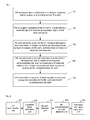
- a first embodiment of an SFSD detection method provided by the disclosure is as shown in Fig. 1 , and the method includes the following steps:
- the step that ML path detection is performed on the equalized signal, reserved nodes in respective layers are decreased, layer by layer, to acquire an ML path, and branches as many as iterations are reserved may include:
- the step that ML complementary set path detection is performed on the branches, and all nodes of an acquired complementary set layer are reserved and reserved nodes in other layers are decreased, layer by layer, to acquire an ML complementary set path may include:
- the step that reserved nodes in layers below the acquired complementary set layer are decreased layer by layer until the bottom layer has one node may include: reserved nodes in layers below the acquired complementary set layer are decreased layer by layer until the bottom layer has one node.
- FIG. 2 An embodiment of an SFSD detection apparatus provided by the disclosure is as shown in Fig. 2 , and the apparatus includes:
- the ML path detection unit 203 may be specifically configured to:
- the ML complementary set path detection unit 204 may be specifically configured to:
- the ML complementary set path detection unit 204 may be specifically configured to reserve all nodes of the acquired complementary set layers and to decrease, layer by layer, reserved nodes in layers below the acquired complementary set layers until the corresponding bottom layers have one node, so as to acquire Euclidean distances of respective branches.
- the QR decomposition unit 201, the equalized signal calculation unit 202, the ML path detection unit 203, the ML complementary set path detection unit 204, and the soft value information calculation unit 205 can be implemented by a Central Processing Unit (CPU), a Digital Signal Processor (DSP) or a Field Programmable Gate Array (FPGA).
- CPU Central Processing Unit
- DSP Digital Signal Processor
- FPGA Field Programmable Gate Array
- the SFSD detection apparatus in the embodiment can be applied to a receiver.
- a second embodiment of the SFSD detection method provided by the disclosure will be described below.
- a MIMO system with encoding has M T transmission antennas and M R ⁇ M T reception antennas, and its encoded bit stream is mapped to a constellation diagram and forms M T transmission symbols s ⁇ O M T with O being a set of constellation points.
- Step 301 is that sequencing and QR decomposition is performed on a channel response matrix H to acquire a Q matrix and an R matrix; here, the Q matrix is an orthogonal matrix, and the R matrix is an upper triangular matrix.
- Step 302 is that the conjugate transpose Q H of the Q matrix is multiplied by a received signal y to acquire an equalized signal of the received signal.
- Step 303 is that detection is performed starting from a top layer, i.e., a layer having only one non-zero element of the R matrix;
- the top layer is a layer beneath a top root node.
- Step 304 is that it is determined whether the number of branches of the root node is larger than a preset value, e.g., the number of constellation points; if it is smaller than the preset value, proceed to step 305; if it is larger than the preset value, proceed to step 308; step 305 is that an Euclidean distance of the top layer is calculated for each branch; step 306 is that path extension is performed downwards from the top layer, Euclidean distances of respective layers are continued to be calculated; an optimal node of each layer and corresponding Euclidean distance are reserved based on the preset value, and the corresponding Euclidean distance is added to an Euclidean distance of the corresponding branch.
- a preset value e.g., the number of constellation points
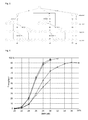
- Step 307 is that it is determined whether a leaf node is reached; if the leaf node is reached, proceed to step 308; otherwise, return to step 306; here, as shown in Fig. 3 , the leaf node is a bottom layer node.
- Step 308 is that an Euclidean distance of a complete path acquired from a downward branch of a top layer root node and sequence numbers of constellation points corresponding to symbols of respective layers are stored temporarily; return to step 304 to start processing of a next branch.
- Step 309 is that complete Euclidean distances of all branches are sequenced in an ascending order, a branch having a minimum Euclidean distance is selected as an ML path, and sequence numbers of constellation points corresponding to symbols of respective layers of branches are selected; sequence numbers of constellation points of respective layers of multiple optimal paths are reserved simultaneously, wherein the number of the optimal paths is as same as the number of iterations for subsequent iteration of ML complementary set paths.
- Step 310 is that a complementary set ⁇ ML of each bit of each symbol in a top layer of the ML path is acquired according to the Euclidean distances of respective branches reserved in the ML path detection and the sequence numbers of constellation points of respective layers; here, a complete complementary set of each bit of each symbol of each layer is acquired by taking into consideration all possible cases from a top layer to a bottom layer.
- Step 311 is that for complementary sets of respective layers below the top layer, for example the complementary set of the iRx-th layer, multiple iterations are required and paths on which iterations in each layer are based are in an ascending order of Euclidean distances; in an iteration, Euclidean distances from respective layers above the iRx-th layer to the iRx-th layer is calculated firstly; here, each bit of each symbol in the layer is then traversed.
- Step 312 is that Euclidean distances of respective layers below the iRx-th layer are then calculated with reference to step 306, and then path extension and node acceptance/rejection is performed downwards from the iRx-th layer.
- Step 313 is that it is determined whether a leaf node is reached; if the leaf node is reached, proceed to step 314; otherwise, return to step 312.
- Step 314 is that the sum of results of step 311 and 312 is calculated, and a minimum value of complete complementary sets of respective bits of respective symbols in the iRx-th layer is selected as an optimal path of the iteration and then stored temporarily.
- Step 315 is that it is determined whether the number of iterations reaches a preset value; if the preset value is not reached, proceed to step 316; otherwise, proceed to step 317.
- Step 316 is that the number of iterations is incremented by 1 and a next iteration is performed.
- Step 317 is that for a layer where a complementary set is required to be calculated, optimal paths stored temporarily in multiple iterations can be acquired, and a minimum value is selected from these paths as a final complementary set path of the bit of the symbol of the layer.
- Step 318 is that it is determined whether calculation of a complementary set has been performed on all layers; if not, proceed to step 319; otherwise, proceed to step 320.
- evaluation of an Euclidean distance of a path can be regarded as detection and acceptance/rejection of the nodes in the tree as shown in Fig. 4 .
- ML detection below each parent node there are as many child nodes as the number of constellation points, this applies to both root nodes and leaf nodes;
- SFSD detection during ML path detection, a node tree is accepted/rejected by reserving a group of nodes in each layer, and for each parent node, only those child nodes having optimal Euclidean distances are reserved, and path extension is performed from top to bottom based on the group of parameters, and an optimal path is selected finally from several complete paths reserved as the ML path.
- Fig. 3 and Fig. 4 show a case of 4*4 MIMO and QPSK
- An optimal path of the four paths, the arrow line path in Fig. 4 is namely the ML path.
- the embodiment of the disclosure adopts a unified architecture where the number of reserved nodes is decreased layer by layer.
- the largest branch measurement supported when the highest modulation mode is configured for each layer under most layers is taken as a threshold, and other various modulation modes and combinations of layers are configured under such a branch measurement. Since a previously detected layer has an error propagation effect on a currently detected layer (from a top layer to a bottom layer of the tree), the number of reserved nodes in the top layer is equal to the number of constellation points (for example, for QPSK it is 4, for 16QAM it is 16 and for 64QAM it is 64), intermediate layers have a gradually-decreased number of reserved nodes, and the last few layers can all have 1 node. Different modulation modes and different numbers of layers all follow such a rule.
- the reserved nodes are configured to support measurement of a total of 128 branches (64 2 1 1), and detected branches of other various modulated layers are all below 128, the parameters adopted currently are as shown in table 1.
- n s ( n 1 , n 2 , n 3 , n 4 ) T Number of branches 64QAM, 4 layers (64 2 1 1) 128 64QAM, 3 layers (64 2 1) 128 64QAM, 2 layers (64 1) 64 16QAM, 4 layers (16 2 1 1) 32 16QAM, 3 layers (16 2 1) 32 16QAM, 2 layers (16 1) 16 QPSK, 4 layers (4 4 2 1) 32 QPSK, 3 layers (4 4 1) 16 QPSK, 2 layers (4 1) 4
- complementary set paths corresponding to respective bits in nodes of respective layers are calculated using a number of reserved nodes and extended paths consistent with those of the ML path, and it specifically includes:
- n s ( n 4 , n 3 , n 2 ,n 1 ) T in table 1, the result of ML path can be multiplexed by the top layer; below are all cases where a reserved node 1 is selected, and measurement values can be found directly according to regions of the constellation diagram, and traversal of all constellation points is not required.
- Fig. 6 is a comparison diagram of throughput simulation results between prior arts 1, 2, 3 and 64QAM according to an embodiment of the disclosure
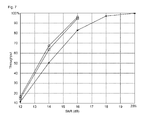
- Fig. 7 is a comparison diagram of throughput simulation results between prior arts 1, 2, 3 and 16QAM according to an embodiment of the disclosure.
- curves with crossings represent throughput performance of prior arts 1 and 2
- curves with small circles represent throughput performance of prior art 3
- curves with squares represent throughput performance of the embodiments of the disclosure
- curves with stars represent a lower limit (Minimum Mean Square Error, MMSE) of throughput performance.
- the curve with crossings is below the curve with stars, in cases of same throughput, prior arts 1 and 2 have high SNRs, it indicates that the throughput performance of prior arts 1 and 2 do not reach the lower limit of the throughput performance, that is to say, the performance is poor and can not reach the ML performance.
- the SNR of the embodiment of the disclosure is slightly higher than that of the prior art 3; in Fig. 6 when the throughput is 70%, the difference between the SNR of the embodiment of the disclosure and the SNR of prior art 3 is less than 0.3 dB; in Fig. 7 when the throughput is 70%, the difference between the SNR of the embodiment of the disclosure and the SNR of prior art 3 is less than 0.2 dB, it can be seen that the performance of the embodiment of the disclosure approaches the ML performance.
- Table 3 is a statistics table showing the complexity of the embodiment of the disclosure (64 QAM 2, 3, 4 layers; 16QAM 2, 3, 4 layers)
- Table 4 is a statistics table showing the complexity of prior art 3 (16QAM, 4 layers)
- Fig. 5 is a statistics table showing the complexity of prior art 3 (64QAM, 4 layers) when the SNR is 30dB. It can be seen from Table 3 that the embodiment of the disclosure has a fixed complexity, it can be seen from Table 4 that the complexity of prior art 3 varies depending on the SNR, and it can be seen from Table 5 that the prior art 3 has very high complexity when the SNR is high.
- the embodiment of the disclosure applies to both a terminal receiver and a base station receiver.
- the MIMO detection can acquire a performance approaching ML and its complexity is reduced greatly, thereby making the MIMO detection achievable.
- the iterative processing adopted in the embodiments of the disclosure has no feedback mechanism and thus can be implemented in parallel, and a unified processing unit and parameters are used by respective branches, thus the embodiments of the disclosure enable a short processing delay and a small cache, and they are suitable for a parallel pipeline structure and have more advantages in implementation of terminal receivers.
Landscapes
- Engineering & Computer Science (AREA)
- Computer Networks & Wireless Communication (AREA)
- Signal Processing (AREA)
- Power Engineering (AREA)
- Artificial Intelligence (AREA)
- Digital Transmission Methods That Use Modulated Carrier Waves (AREA)
- Radio Transmission System (AREA)
Applications Claiming Priority (2)
| Application Number | Priority Date | Filing Date | Title |
|---|---|---|---|
| CN201210499242.0A CN103856254B (zh) | 2012-11-29 | 2012-11-29 | 一种软输出固定复杂度球形译码检测方法和装置 |
| PCT/CN2013/084017 WO2014082487A1 (zh) | 2012-11-29 | 2013-09-23 | 一种软输出固定复杂度球形译码检测方法和装置 |
Publications (3)
| Publication Number | Publication Date |
|---|---|
| EP2928084A1 true EP2928084A1 (de) | 2015-10-07 |
| EP2928084A4 EP2928084A4 (de) | 2015-12-09 |
| EP2928084B1 EP2928084B1 (de) | 2019-02-06 |
Family
ID=50827155
Family Applications (1)
| Application Number | Title | Priority Date | Filing Date |
|---|---|---|---|
| EP13858769.6A Active EP2928084B1 (de) | 2012-11-29 | 2013-09-23 | Verfahren und vorrichtung zur erkennung der decodierung einer weichen ausgabesphäre mit fester komplexität |
Country Status (4)
| Country | Link |
|---|---|
| US (1) | US9356733B2 (de) |
| EP (1) | EP2928084B1 (de) |
| CN (1) | CN103856254B (de) |
| WO (1) | WO2014082487A1 (de) |
Families Citing this family (6)
| Publication number | Priority date | Publication date | Assignee | Title |
|---|---|---|---|---|
| US10171207B2 (en) * | 2017-04-26 | 2019-01-01 | Cavium, Llc | Methods and apparatus for control bit detection |
| US10523480B1 (en) * | 2018-11-08 | 2019-12-31 | Nxp B.V. | K-bit enumerative sphere shaping of multidimensional constellations |
| US10904131B1 (en) * | 2020-07-08 | 2021-01-26 | Eci Telecom Ltd. | Systems and methods for configuring a communications network |
| US10903904B1 (en) | 2020-07-08 | 2021-01-26 | Eci Telecom Ltd. | Systems and methods for configuring a communications network |
| CN115051734B (zh) * | 2022-05-24 | 2023-09-19 | 西安电子科技大学 | 一种固定复杂度球形译码的改进方法 |
| CN118337571A (zh) * | 2023-01-12 | 2024-07-12 | 深圳市中兴微电子技术有限公司 | 球形译码检测方法、装置、电子设备及可读存储介质 |
Family Cites Families (10)
| Publication number | Priority date | Publication date | Assignee | Title |
|---|---|---|---|---|
| JP4387282B2 (ja) * | 2004-10-20 | 2009-12-16 | 株式会社エヌ・ティ・ティ・ドコモ | 信号分離装置及び信号分離方法 |
| US8243842B2 (en) * | 2006-09-25 | 2012-08-14 | Panasonic Corporation | Signal separating device and signal separating method |
| CN101022325A (zh) * | 2007-03-23 | 2007-08-22 | 东南大学 | 多输入多输出天线系统空分复用的最大似然简化检测方法 |
| CN101373975A (zh) * | 2007-08-22 | 2009-02-25 | 株式会社Ntt都科摩 | 一种球形译码方法 |
| WO2010000075A1 (en) * | 2008-07-03 | 2010-01-07 | Eth Zurich | Computation of extrinsic information in a branch-and-bound detector |
| TWI361573B (en) | 2008-07-16 | 2012-04-01 | Ind Tech Res Inst | Symbol detector and sphere decoding method |
| CN101557269B (zh) * | 2009-05-18 | 2012-12-05 | 北京天碁科技有限公司 | 一种基于超大规模集成电路的球形译码检测方法 |
| CN101582750B (zh) * | 2009-06-02 | 2012-11-21 | 北京天碁科技有限公司 | 一种基于宽度优先搜索的球形译码检测方法 |
| EP2341676A1 (de) * | 2009-12-30 | 2011-07-06 | ST-Ericsson SA | Zweigverarbeitung eines Suchbaumes in einem Sphärendecodierer |
| CN102594467B (zh) * | 2011-08-15 | 2014-07-02 | 上海交通大学 | 无线多输入多输出系统的接收机检测方法 |
-
2012
- 2012-11-29 CN CN201210499242.0A patent/CN103856254B/zh active Active
-
2013
- 2013-09-23 WO PCT/CN2013/084017 patent/WO2014082487A1/zh not_active Ceased
- 2013-09-23 US US14/648,089 patent/US9356733B2/en active Active
- 2013-09-23 EP EP13858769.6A patent/EP2928084B1/de active Active
Also Published As
| Publication number | Publication date |
|---|---|
| CN103856254B (zh) | 2017-09-12 |
| US9356733B2 (en) | 2016-05-31 |
| EP2928084B1 (de) | 2019-02-06 |
| WO2014082487A1 (zh) | 2014-06-05 |
| EP2928084A4 (de) | 2015-12-09 |
| US20150304069A1 (en) | 2015-10-22 |
| CN103856254A (zh) | 2014-06-11 |
Similar Documents
| Publication | Publication Date | Title |
|---|---|---|
| JP5512776B2 (ja) | Mimo通信の球検出及びレート選択 | |
| EP2245808B1 (de) | Baumpositions-Adaptiv-Softausgabe-M-Algorithmus-Empfängerstrukturen | |
| CN102739378B (zh) | 适用于卫星移动通信系统的自适应虚拟混合重传方法 | |
| EP2928084A1 (de) | Verfahren und vorrichtung zur erkennung der decodierung einer weichen ausgabesphäre mit fester komplexität | |
| KR102511374B1 (ko) | 무선 통신 시스템에서 인티저 포싱 기법을 이용하는 통신 기법 | |
| CN111010256B (zh) | 一种基于lte-a pdsch信道的解调装置及方法 | |
| EP2391020A1 (de) | Verfahren und einrichtung für effiziente mehrbenutzer-mehrvarianten-parallelübertragung | |
| CN107094063B (zh) | 半穷举迭代块解码方法和设备 | |
| CN107276935B (zh) | 用于顺序球形解码的方法和设备 | |
| Zheng et al. | LDPC-coded MIMO systems with unknown block fading channels: soft MIMO detector design, channel estimation, and code optimization | |
| US10284276B2 (en) | Weighted sequential decoding | |
| KR20170059412A (ko) | 매개변수화 순차 복호화 | |
| CN101964667B (zh) | 用于长期演进方案的高效多天线检测方法 | |
| US20140211831A1 (en) | Communication devices and methods for signal detection | |
| KR20190007698A (ko) | 다중 접속 방식을 지원하는 무선통신 시스템에서 신호의 수신 및 송신하는 방법과 이를 위한 통신 장치 | |
| EP1811706B1 (de) | Methode und System für Zellular- Diversitätsempfänger mit verbesserter Interferenzunterdrückung | |
| Chen et al. | Multiuser detection for uplink non‐orthogonal multiple access system | |
| CN105340232A (zh) | 改进的用于无线通信网络的接收器 | |
| JP2014204254A (ja) | 端末装置、基地局装置、無線通信システムおよび通信方法 | |
| KR101244303B1 (ko) | 다중 안테나 시스템에서 수신장치 및 방법 | |
| Indoonundon et al. | A Regression-Based Optimal Scaling Factor Scheme for 5G LDPC Codes with MIMO Systems | |
| Yamamoto et al. | Simple turbo MIMO scheme using arithmetic extended mapping and repetition codes | |
| KR20100124136A (ko) | 데이터 수신 방법 및 장치 | |
| KR20090012955A (ko) | 다중 입력 다중 출력 통신 시스템에서 다중 안테나 사용이득 증가 장치 및 방법 |
Legal Events
| Date | Code | Title | Description |
|---|---|---|---|
| PUAI | Public reference made under article 153(3) epc to a published international application that has entered the european phase |
Free format text: ORIGINAL CODE: 0009012 |
|
| 17P | Request for examination filed |
Effective date: 20150629 |
|
| AK | Designated contracting states |
Kind code of ref document: A1 Designated state(s): AL AT BE BG CH CY CZ DE DK EE ES FI FR GB GR HR HU IE IS IT LI LT LU LV MC MK MT NL NO PL PT RO RS SE SI SK SM TR |
|
| AX | Request for extension of the european patent |
Extension state: BA ME |
|
| RA4 | Supplementary search report drawn up and despatched (corrected) |
Effective date: 20151106 |
|
| RIC1 | Information provided on ipc code assigned before grant |
Ipc: H04L 25/03 20060101AFI20151102BHEP |
|
| DAX | Request for extension of the european patent (deleted) | ||
| RAP1 | Party data changed (applicant data changed or rights of an application transferred) |
Owner name: ZTE MICROELECTRONICS TECHNOLOGY CO., LTD |
|
| RAP1 | Party data changed (applicant data changed or rights of an application transferred) |
Owner name: SANECHIPS TECHNOLOGY CO., LTD. |
|
| STAA | Information on the status of an ep patent application or granted ep patent |
Free format text: STATUS: EXAMINATION IS IN PROGRESS |
|
| 17Q | First examination report despatched |
Effective date: 20180108 |
|
| GRAP | Despatch of communication of intention to grant a patent |
Free format text: ORIGINAL CODE: EPIDOSNIGR1 |
|
| STAA | Information on the status of an ep patent application or granted ep patent |
Free format text: STATUS: GRANT OF PATENT IS INTENDED |
|
| INTG | Intention to grant announced |
Effective date: 20180829 |
|
| GRAS | Grant fee paid |
Free format text: ORIGINAL CODE: EPIDOSNIGR3 |
|
| GRAA | (expected) grant |
Free format text: ORIGINAL CODE: 0009210 |
|
| STAA | Information on the status of an ep patent application or granted ep patent |
Free format text: STATUS: THE PATENT HAS BEEN GRANTED |
|
| AK | Designated contracting states |
Kind code of ref document: B1 Designated state(s): AL AT BE BG CH CY CZ DE DK EE ES FI FR GB GR HR HU IE IS IT LI LT LU LV MC MK MT NL NO PL PT RO RS SE SI SK SM TR |
|
| REG | Reference to a national code |
Ref country code: GB Ref legal event code: FG4D |
|
| REG | Reference to a national code |
Ref country code: CH Ref legal event code: EP Ref country code: AT Ref legal event code: REF Ref document number: 1095562 Country of ref document: AT Kind code of ref document: T Effective date: 20190215 |
|
| REG | Reference to a national code |
Ref country code: IE Ref legal event code: FG4D |
|
| REG | Reference to a national code |
Ref country code: DE Ref legal event code: R096 Ref document number: 602013050614 Country of ref document: DE |
|
| REG | Reference to a national code |
Ref country code: NL Ref legal event code: MP Effective date: 20190206 |
|
| REG | Reference to a national code |
Ref country code: LT Ref legal event code: MG4D |
|
| PG25 | Lapsed in a contracting state [announced via postgrant information from national office to epo] |
Ref country code: LT Free format text: LAPSE BECAUSE OF FAILURE TO SUBMIT A TRANSLATION OF THE DESCRIPTION OR TO PAY THE FEE WITHIN THE PRESCRIBED TIME-LIMIT Effective date: 20190206 Ref country code: NL Free format text: LAPSE BECAUSE OF FAILURE TO SUBMIT A TRANSLATION OF THE DESCRIPTION OR TO PAY THE FEE WITHIN THE PRESCRIBED TIME-LIMIT Effective date: 20190206 Ref country code: NO Free format text: LAPSE BECAUSE OF FAILURE TO SUBMIT A TRANSLATION OF THE DESCRIPTION OR TO PAY THE FEE WITHIN THE PRESCRIBED TIME-LIMIT Effective date: 20190506 Ref country code: SE Free format text: LAPSE BECAUSE OF FAILURE TO SUBMIT A TRANSLATION OF THE DESCRIPTION OR TO PAY THE FEE WITHIN THE PRESCRIBED TIME-LIMIT Effective date: 20190206 Ref country code: PT Free format text: LAPSE BECAUSE OF FAILURE TO SUBMIT A TRANSLATION OF THE DESCRIPTION OR TO PAY THE FEE WITHIN THE PRESCRIBED TIME-LIMIT Effective date: 20190606 Ref country code: FI Free format text: LAPSE BECAUSE OF FAILURE TO SUBMIT A TRANSLATION OF THE DESCRIPTION OR TO PAY THE FEE WITHIN THE PRESCRIBED TIME-LIMIT Effective date: 20190206 |
|
| REG | Reference to a national code |
Ref country code: AT Ref legal event code: MK05 Ref document number: 1095562 Country of ref document: AT Kind code of ref document: T Effective date: 20190206 |
|
| PG25 | Lapsed in a contracting state [announced via postgrant information from national office to epo] |
Ref country code: IS Free format text: LAPSE BECAUSE OF FAILURE TO SUBMIT A TRANSLATION OF THE DESCRIPTION OR TO PAY THE FEE WITHIN THE PRESCRIBED TIME-LIMIT Effective date: 20190606 Ref country code: BG Free format text: LAPSE BECAUSE OF FAILURE TO SUBMIT A TRANSLATION OF THE DESCRIPTION OR TO PAY THE FEE WITHIN THE PRESCRIBED TIME-LIMIT Effective date: 20190506 Ref country code: RS Free format text: LAPSE BECAUSE OF FAILURE TO SUBMIT A TRANSLATION OF THE DESCRIPTION OR TO PAY THE FEE WITHIN THE PRESCRIBED TIME-LIMIT Effective date: 20190206 Ref country code: LV Free format text: LAPSE BECAUSE OF FAILURE TO SUBMIT A TRANSLATION OF THE DESCRIPTION OR TO PAY THE FEE WITHIN THE PRESCRIBED TIME-LIMIT Effective date: 20190206 Ref country code: GR Free format text: LAPSE BECAUSE OF FAILURE TO SUBMIT A TRANSLATION OF THE DESCRIPTION OR TO PAY THE FEE WITHIN THE PRESCRIBED TIME-LIMIT Effective date: 20190507 Ref country code: HR Free format text: LAPSE BECAUSE OF FAILURE TO SUBMIT A TRANSLATION OF THE DESCRIPTION OR TO PAY THE FEE WITHIN THE PRESCRIBED TIME-LIMIT Effective date: 20190206 |
|
| PG25 | Lapsed in a contracting state [announced via postgrant information from national office to epo] |
Ref country code: ES Free format text: LAPSE BECAUSE OF FAILURE TO SUBMIT A TRANSLATION OF THE DESCRIPTION OR TO PAY THE FEE WITHIN THE PRESCRIBED TIME-LIMIT Effective date: 20190206 Ref country code: DK Free format text: LAPSE BECAUSE OF FAILURE TO SUBMIT A TRANSLATION OF THE DESCRIPTION OR TO PAY THE FEE WITHIN THE PRESCRIBED TIME-LIMIT Effective date: 20190206 Ref country code: SK Free format text: LAPSE BECAUSE OF FAILURE TO SUBMIT A TRANSLATION OF THE DESCRIPTION OR TO PAY THE FEE WITHIN THE PRESCRIBED TIME-LIMIT Effective date: 20190206 Ref country code: AL Free format text: LAPSE BECAUSE OF FAILURE TO SUBMIT A TRANSLATION OF THE DESCRIPTION OR TO PAY THE FEE WITHIN THE PRESCRIBED TIME-LIMIT Effective date: 20190206 Ref country code: EE Free format text: LAPSE BECAUSE OF FAILURE TO SUBMIT A TRANSLATION OF THE DESCRIPTION OR TO PAY THE FEE WITHIN THE PRESCRIBED TIME-LIMIT Effective date: 20190206 Ref country code: IT Free format text: LAPSE BECAUSE OF FAILURE TO SUBMIT A TRANSLATION OF THE DESCRIPTION OR TO PAY THE FEE WITHIN THE PRESCRIBED TIME-LIMIT Effective date: 20190206 Ref country code: CZ Free format text: LAPSE BECAUSE OF FAILURE TO SUBMIT A TRANSLATION OF THE DESCRIPTION OR TO PAY THE FEE WITHIN THE PRESCRIBED TIME-LIMIT Effective date: 20190206 Ref country code: RO Free format text: LAPSE BECAUSE OF FAILURE TO SUBMIT A TRANSLATION OF THE DESCRIPTION OR TO PAY THE FEE WITHIN THE PRESCRIBED TIME-LIMIT Effective date: 20190206 |
|
| REG | Reference to a national code |
Ref country code: DE Ref legal event code: R097 Ref document number: 602013050614 Country of ref document: DE |
|
| PG25 | Lapsed in a contracting state [announced via postgrant information from national office to epo] |
Ref country code: SM Free format text: LAPSE BECAUSE OF FAILURE TO SUBMIT A TRANSLATION OF THE DESCRIPTION OR TO PAY THE FEE WITHIN THE PRESCRIBED TIME-LIMIT Effective date: 20190206 Ref country code: PL Free format text: LAPSE BECAUSE OF FAILURE TO SUBMIT A TRANSLATION OF THE DESCRIPTION OR TO PAY THE FEE WITHIN THE PRESCRIBED TIME-LIMIT Effective date: 20190206 |
|
| PLBE | No opposition filed within time limit |
Free format text: ORIGINAL CODE: 0009261 |
|
| STAA | Information on the status of an ep patent application or granted ep patent |
Free format text: STATUS: NO OPPOSITION FILED WITHIN TIME LIMIT |
|
| PG25 | Lapsed in a contracting state [announced via postgrant information from national office to epo] |
Ref country code: AT Free format text: LAPSE BECAUSE OF FAILURE TO SUBMIT A TRANSLATION OF THE DESCRIPTION OR TO PAY THE FEE WITHIN THE PRESCRIBED TIME-LIMIT Effective date: 20190206 |
|
| 26N | No opposition filed |
Effective date: 20191107 |
|
| PG25 | Lapsed in a contracting state [announced via postgrant information from national office to epo] |
Ref country code: SI Free format text: LAPSE BECAUSE OF FAILURE TO SUBMIT A TRANSLATION OF THE DESCRIPTION OR TO PAY THE FEE WITHIN THE PRESCRIBED TIME-LIMIT Effective date: 20190206 |
|
| PG25 | Lapsed in a contracting state [announced via postgrant information from national office to epo] |
Ref country code: TR Free format text: LAPSE BECAUSE OF FAILURE TO SUBMIT A TRANSLATION OF THE DESCRIPTION OR TO PAY THE FEE WITHIN THE PRESCRIBED TIME-LIMIT Effective date: 20190206 |
|
| PG25 | Lapsed in a contracting state [announced via postgrant information from national office to epo] |
Ref country code: MC Free format text: LAPSE BECAUSE OF FAILURE TO SUBMIT A TRANSLATION OF THE DESCRIPTION OR TO PAY THE FEE WITHIN THE PRESCRIBED TIME-LIMIT Effective date: 20190206 |
|
| REG | Reference to a national code |
Ref country code: CH Ref legal event code: PL |
|
| PG25 | Lapsed in a contracting state [announced via postgrant information from national office to epo] |
Ref country code: CH Free format text: LAPSE BECAUSE OF NON-PAYMENT OF DUE FEES Effective date: 20190930 Ref country code: LI Free format text: LAPSE BECAUSE OF NON-PAYMENT OF DUE FEES Effective date: 20190930 Ref country code: IE Free format text: LAPSE BECAUSE OF NON-PAYMENT OF DUE FEES Effective date: 20190923 Ref country code: LU Free format text: LAPSE BECAUSE OF NON-PAYMENT OF DUE FEES Effective date: 20190923 |
|
| REG | Reference to a national code |
Ref country code: BE Ref legal event code: MM Effective date: 20190930 |
|
| PG25 | Lapsed in a contracting state [announced via postgrant information from national office to epo] |
Ref country code: BE Free format text: LAPSE BECAUSE OF NON-PAYMENT OF DUE FEES Effective date: 20190930 |
|
| PG25 | Lapsed in a contracting state [announced via postgrant information from national office to epo] |
Ref country code: FR Free format text: LAPSE BECAUSE OF NON-PAYMENT OF DUE FEES Effective date: 20190930 |
|
| PG25 | Lapsed in a contracting state [announced via postgrant information from national office to epo] |
Ref country code: CY Free format text: LAPSE BECAUSE OF FAILURE TO SUBMIT A TRANSLATION OF THE DESCRIPTION OR TO PAY THE FEE WITHIN THE PRESCRIBED TIME-LIMIT Effective date: 20190206 |
|
| PG25 | Lapsed in a contracting state [announced via postgrant information from national office to epo] |
Ref country code: MT Free format text: LAPSE BECAUSE OF FAILURE TO SUBMIT A TRANSLATION OF THE DESCRIPTION OR TO PAY THE FEE WITHIN THE PRESCRIBED TIME-LIMIT Effective date: 20190206 Ref country code: HU Free format text: LAPSE BECAUSE OF FAILURE TO SUBMIT A TRANSLATION OF THE DESCRIPTION OR TO PAY THE FEE WITHIN THE PRESCRIBED TIME-LIMIT; INVALID AB INITIO Effective date: 20130923 |
|
| PG25 | Lapsed in a contracting state [announced via postgrant information from national office to epo] |
Ref country code: MK Free format text: LAPSE BECAUSE OF FAILURE TO SUBMIT A TRANSLATION OF THE DESCRIPTION OR TO PAY THE FEE WITHIN THE PRESCRIBED TIME-LIMIT Effective date: 20190206 |
|
| PGFP | Annual fee paid to national office [announced via postgrant information from national office to epo] |
Ref country code: DE Payment date: 20250702 Year of fee payment: 13 |
|
| PGFP | Annual fee paid to national office [announced via postgrant information from national office to epo] |
Ref country code: GB Payment date: 20250703 Year of fee payment: 13 |