EP2905723A1 - Appareil de détection de déplacement de ligne de limite de voie - Google Patents
Appareil de détection de déplacement de ligne de limite de voie Download PDFInfo
- Publication number
- EP2905723A1 EP2905723A1 EP15153836.0A EP15153836A EP2905723A1 EP 2905723 A1 EP2905723 A1 EP 2905723A1 EP 15153836 A EP15153836 A EP 15153836A EP 2905723 A1 EP2905723 A1 EP 2905723A1
- Authority
- EP
- European Patent Office
- Prior art keywords
- travel lane
- lane boundary
- line
- composite
- travel
- Prior art date
- Legal status (The legal status is an assumption and is not a legal conclusion. Google has not performed a legal analysis and makes no representation as to the accuracy of the status listed.)
- Granted
Links
Images

Classifications
-
- G—PHYSICS
- G06—COMPUTING OR CALCULATING; COUNTING
- G06T—IMAGE DATA PROCESSING OR GENERATION, IN GENERAL
- G06T7/00—Image analysis
- G06T7/10—Segmentation; Edge detection
- G06T7/13—Edge detection
-
- G—PHYSICS
- G06—COMPUTING OR CALCULATING; COUNTING
- G06V—IMAGE OR VIDEO RECOGNITION OR UNDERSTANDING
- G06V10/00—Arrangements for image or video recognition or understanding
- G06V10/40—Extraction of image or video features
- G06V10/42—Global feature extraction by analysis of the whole pattern, e.g. using frequency domain transformations or autocorrelation
- G06V10/421—Global feature extraction by analysis of the whole pattern, e.g. using frequency domain transformations or autocorrelation by analysing segments intersecting the pattern
-
- G—PHYSICS
- G06—COMPUTING OR CALCULATING; COUNTING
- G06V—IMAGE OR VIDEO RECOGNITION OR UNDERSTANDING
- G06V10/00—Arrangements for image or video recognition or understanding
- G06V10/40—Extraction of image or video features
- G06V10/48—Extraction of image or video features by mapping characteristic values of the pattern into a parameter space, e.g. Hough transformation
-
- G—PHYSICS
- G06—COMPUTING OR CALCULATING; COUNTING
- G06V—IMAGE OR VIDEO RECOGNITION OR UNDERSTANDING
- G06V20/00—Scenes; Scene-specific elements
- G06V20/50—Context or environment of the image
- G06V20/56—Context or environment of the image exterior to a vehicle by using sensors mounted on the vehicle
-
- G—PHYSICS
- G06—COMPUTING OR CALCULATING; COUNTING
- G06V—IMAGE OR VIDEO RECOGNITION OR UNDERSTANDING
- G06V20/00—Scenes; Scene-specific elements
- G06V20/50—Context or environment of the image
- G06V20/56—Context or environment of the image exterior to a vehicle by using sensors mounted on the vehicle
- G06V20/588—Recognition of the road, e.g. of lane markings; Recognition of the vehicle driving pattern in relation to the road
-
- G—PHYSICS
- G06—COMPUTING OR CALCULATING; COUNTING
- G06T—IMAGE DATA PROCESSING OR GENERATION, IN GENERAL
- G06T2207/00—Indexing scheme for image analysis or image enhancement
- G06T2207/20—Special algorithmic details
- G06T2207/20112—Image segmentation details
- G06T2207/20164—Salient point detection; Corner detection
Definitions
- the present invention relates to a travel lane boundary line detection apparatus.
- Japanese Patent Application Laid-open No. 2013-120458 discloses a road shape estimation apparatus for detecting plural edge lines from an image of a road surface in a travel region in which composite lines formed including travel lane boundary lines (for example, solid white lines) and auxiliary lines (for example, dotted white lines) are drawn on the travel road surface, coupling one or more of the edge lines to create composite edge lines, and determining road shape parameters including an offset in a lateral direction of a camera that has picked up the road surface and a road width based on the information of the inside composite edge line nearest to the central portion of a road.
- composite lines formed including travel lane boundary lines for example, solid white lines
- auxiliary lines for example, dotted white lines
- the road shape estimation apparatus determines a correction amount based on the distance between the inside composite edge line and an outside composite edge line, and corrects the offset in the lateral direction and the road width using the correction amount. With the operation, the road shape estimation apparatus can accurately estimate a road shape from the image of the road surface without being affected by auxiliary lines due to decreased resolution even in a travel road on which the auxiliary lines are painted in parallel with a travel lane marking.
- the road shape estimation apparatus described in Japanese Patent Application Laid-open No. 2013-120458 , when the correction has been carried out to the offset in the lateral direction and to the road width of the road shape parameters that are based on the information of the inside composite edge line nearest to the center of a road at, for example, a switching point where the composite lines are switched with single lines formed by the travel lane boundary lines, there is a fear that the parameters representing the travel lane boundary lines in the travel region of the single lines are excessively offset to the outside of an actual road.
- the road shape estimation apparatus has a room for improvement in the point of estimation of the parameters for representing more appropriate travel lane boundary lines.
- a travel lane boundary line detection apparatus includes:
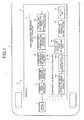
- FIG. 1 is a schematic configuration view illustrating a travel lane boundary line detection apparatus according to an embodiment.
- FIG. 2 is a schematic view illustrating an example of a travel road surface image used in the travel lane boundary line detection apparatus according to the embodiment.
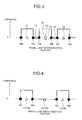
- FIG. 3 and FIG. 4 are schematic views explaining an example of a central-point candidate point calculation by the travel lane boundary line detection apparatus according to the embodiment.
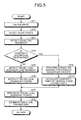
- FIG. 5 is a flowchart illustrating an example of a processing flow by the travel lane boundary line detection apparatus according to the embodiment.
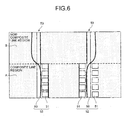
- FIG. 6 is a schematic view explaining a travel lane boundary line detection apparatus according to a comparative example.
- a travel lane boundary line detection apparatus 1 is mounted on a vehicle 2 as a driver's own vehicle and detects travel lane boundary lines drawn on a road surface on which the vehicle 2 travels.
- the travel lane boundary line detection apparatus 1 of the embodiment typically distinguishes a composite line region in which composite lines formed including the travel lane boundary lines and auxiliary lines are drawn on the travel road surface and a non-composite line region in which single lines formed by the travel lane boundary lines are drawn on the travel road surface and detects the travel lane boundary lines by making a feature point detection method different according to the respective regions.
- the travel lane boundary line detection apparatus 1 performs voting for the predetermined central positions in the edge point groups of the composite lines and calculates a voting peak (the highest point in the voting) as a candidate point of the central point of the composite lines.
- the travel lane boundary line detection apparatus 1 detects the travel lane boundary line segments of the travel lane boundary lines and extracts travel lane boundary points from the travel lane boundary line traffic line segments. Then, the travel lane boundary line detection apparatus 1 estimates travel lane boundary line parameters that show the travel lane boundary lines using an integrated travel lane boundary point group obtained by integrating the candidate points at the central points of the composite lines with the travel lane boundary points.
- the travel lane boundary line detection apparatus 1 can appropriately detect the travel lane boundary line parameters that show the travel lane boundary lines.
- the travel lane boundary line detection apparatus 1 of the embodiment is realized by mounting the components illustrated in FIG. 1 on the vehicle 2. A configuration of the travel lane boundary line detection apparatus 1 will be specifically described below referring to FIG. 1 and FIG. 2 .
- the direction along a travel lane boundary lines 50 is called a travel lane direction and the direction orthogonal to (intersects with) the travel lane direction is called a travel lane width direction.
- the front side of the travel direction of the vehicle 2 may be called the distal side of the travel lane direction
- the rear side of the travel direction may be called the proximal side of the travel lane direction
- the left side to the distal side of the travel lane direction may be called the left side of the travel lane width direction
- the right side may be called the right side of the travel lane width direction.
- the travel lane boundary lines 50 are boundary main lines for segmenting a travel lane L as traveling lines disposed on a road surface on which the vehicle 2 travels and disposed to both the right and left ends in the travel lane width direction.
- the travel lane boundary lines 50 are white solid lines.
- the travel lane boundary line parameters detected by the travel lane boundary line detection apparatus 1 are white line parameters.
- the travel lane boundary line parameters are the white line parameters.
- Auxiliary lines 51 are lines along the travel lane boundary lines 50 and are subordinate lines for supporting the travel lane boundary lines 50.
- the auxiliary lines 51 are disposed adjacent to each other at intervals to the travel lane boundary lines 50 in the travel lane width direction.
- the auxiliary lines 51 herein are while dotted lines.
- the composite line region A is a region in which composite lines 52 formed including the travel lane boundary lines 50 and the auxiliary lines 51 are drawn on the travel road surface.
- a pair of the composite lines 52 are drawn on the right and left sides in the travel lane width direction.
- the composite line 52 on the left side of the travel lane width direction is configured of one travel lane boundary line 50 and one auxiliary line 51 disposed on the travel lane central side of the travel lane boundary line 50.
- the composite line 52 on the right side of the travel lane width direction is configured of one travel lane boundary line 50 and two auxiliary lines 51 disposed on the travel lane central side and the outside of the travel lane boundary line 50.
- the non-composite line region B is a region in which a single line 53 formed by the travel lane boundary line 50 is drawn on the travel road surface.
- a pair of the single lines 53 is drawn on the right and left in the travel lane width direction.
- the region on the proximal side of the travel lane direction is the composite line region A
- the region on the distal side of the travel lane direction is the non-composite line region B.
- travel lane boundary line segments 54 of the travel lane boundary lines 50 which are detected by the travel lane boundary line detection apparatus 1 in the non-composite line region B, are the edge line segments on the central side of the travel lane of the travel lane boundary lines 50.
- the travel lane boundary line segments 54 may be the edge line segments on the outside thereof.
- the travel lane boundary line detection apparatus 1 includes an image sensor 3 as an image pick-up unit and an image ECU (Electronic Control Unit) 4 as an image processing unit.
- image sensor 3 as an image pick-up unit
- image ECU Electronic Control Unit
- FIG. 2 the description as to specific processing will be appropriately made referring to FIG. 2 .
- the image sensor 3 picks up the road surface on which the vehicle 2 travels.
- the image sensor 3 is fixed in, for example, the vicinity of a room mirror at a predetermined angle of depression so as to be able to continuously pick up the road surface on which the vehicle 2 travels and outputs a picked-up travel road surface image that is an image of the travel road surface to the image ECU 4.
- the image sensor 3 can pick up an image at a position far from the front of the vehicle 2 a predetermined distance.
- the image sensor 3 may be a monocular camera or a stereo camera. Further, the image picked up by the image sensor 3 may be monochrome or color.
- the image ECU 4 subjects the travel road surface image picked up by the image sensor 3 to various kinds of image processing and detects the travel lane boundary lines 50.
- the image ECU 4 is configured including an electronic circuit mainly composed of a known microcomputer having a CPU, a ROM, a RAM, and an interface.
- the image ECU 4 is electrically connected with the image sensor 3 described above and input with an electric signal corresponding to a result of detection. Further, the image ECU 4 is electrically connected with various units for outputting the white line parameters of the detected travel lane boundary lines 50.
- the image ECU 4 continuously processes the travel road surface image that is the input image from the image sensor 3 at a predetermined sampling cycle.
- the image ECU 4 of the embodiment is configured including an edge point detector 40, an edge line segment detector 41, a composite line region determination unit 42 as a determination unit, a non-composite line region calculation unit 43 as an extraction unit, a composite line region calculation unit 44 as a calculation unit, a travel lane boundary point integration unit 45 as an integration unit, and a white line parameter estimation unit 46 as an estimation unit, and an output unit 47.
- the edge point detector 40, the edge line segment detector 41, the composite line region determination unit 42, the non-composite line region calculation unit 43, the composite line region calculation unit 44, the travel lane boundary point integration unit 45, the white line parameter estimation unit 46, and the output unit 47 can transmit and receive various information between respective units, a storage unit, etc. via a unit electrically connected thereto.
- the edge point detector 40 is connected to the image sensor 3 and detects edge points from the travel road surface image input from the image sensor 3.
- the edge points herein are the points that are assumed to configure the edges of the travel lane boundary lines 50 and the auxiliary lines 51 drawn on the travel road surface on the travel road surface image.
- the edge points are typically the points that position on the boundary of a region where brightness, luminance, etc. are greatly different, in other words, the points where brightness, luminance, etc. change abruptly.
- the edge point detector 40 continuously processes the travel road surface image from the image sensor 3 using various filters, etc. at a predetermined sampling cycle and detects the points where brightness, luminance, etc. abruptly change as the edge points.
- the edge point detector 40 uses a detection line along the travel lane width direction in the travel road surface image (refer to a single-dashed line in FIG. 2 ) as one line, and sequentially detects the edge points of respective detection lines at predetermined intervals in the travel lane direction at a predetermined sampling cycle from the travel road surface images sequential picked up as the vehicle 2 travels.
- the edge line segment detector 41 is connected to the edge point detector 40, is input with the information as to the edge points detected by the edge point detector 40, and detects the edge line segments based on the input edge point groups.
- the edge line segment detector 41 performs linear approximation to the edge point groups that are detected by the edge point detector 40 in each detection line and are accumulated along the travel lane direction using various straight line detection methods, for example, Hough transform, etc., and detects the edge line segments that can become the candidates of the edges that configure the travel lane boundary lines 50 and the auxiliary lines 51.
- the composite line region determination unit 42 is connected to the edge line segment detector 41 and distinguishes and determines the composite line region A in which the composite lines 52 are drawn on the travel road surface and the non-composite line region B in which the single line 53 is drawn on the travel road surface from the travel road surface image of the road surface on which the vehicle 2 travels.
- the composite line region determination unit 42 distinguishes and determines the composite line region A and the non-composite line region B based on, for example, the information as to the edge points detected by the edge point detector 40 and on the information as to the edge line segments detected by the edge line segment detector 41, etc.
- the composite line region determination unit 42 determines whether or not a region is the composite line region A or the non-composite line region B in each region of a preset and predetermined range based on, for example, the total number of the edge points, the total number of the edge line segments in a horizontal direction, the number of the edge line segments that configure a pair, etc. When, for example, the total number of the edge line segments and the total number of the edge points are equal to or more than previously set threshold values, the composite line region determination unit 42 determines that the region is the composite line region A. On the other hand, when the total number of the edge line segments and the total number of the edge points are less the threshold values, the composite line region determination unit 42 determines that the region is the non-composite line region B.
- the non-composite line region calculation unit 43 detects the travel lane boundary line segments 54 of the travel lane boundary lines 50 in the non-composite line region B of the travel road surface image and extracts travel lane boundary points 55 from the travel lane boundary line segments 54.
- the non-composite line region calculation unit 43 of the embodiment is configured to function-conceptually include a travel lane boundary line segment detector 43a and a travel lane boundary line point extraction unit 43b.
- the travel lane boundary line segment detector 43a is connected to the composite line region determination unit 42.
- the travel lane boundary line segment detector 43a detects the travel lane boundary line segments 54 of the travel lane boundary lines 50 based on the information as to the edge line segments detected by the edge line segment detector 41, etc.
- the travel lane boundary line segments 54 detected by the edge line segment detector 41 are the edge line segments on the travel lane central side of the travel lane boundary lines 50
- the travel lane boundary line segments 54 are not limited thereto and may be typically the edge line segments used by the control of the output destinations of the white line parameters.
- the travel lane boundary line segment detector 43a detects the edge line segments that are most suitable for the edge line segments on the travel lane central side of the travel lane boundary lines 50 as the travel lane boundary line segments 54 from the detected edge line segments from, for example, the positions, the lengths, and the tilts, etc. of edge line segments detected by the edge line segment detector 41.
- the travel lane boundary line segment detector 43a detects a travel lane boundary line segment 54 on each of the right and left sides in the travel lane width direction in a predetermined non-composite line region B.
- the travel lane boundary line point extraction unit 43b is connected to the travel lane boundary line segment detector 43a and extracts the travel lane boundary points 55 from the respective travel lane boundary line segments 54 detected by the travel lane boundary line segment detector 43a.
- the travel lane boundary line point extraction unit 43b performs reverse lookup and decomposition of the respective travel lane boundary line segments 54 of each detected line to the edge points that configure the respective travel lane boundary line segments 54 and uses the edge points as the travel lane boundary points 55.
- the travel lane boundary line point extraction unit 43b extracts the travel lane boundary points 55 from the respective travel lane boundary line segments 54 on the right and left in the travel lane width direction in the predetermined non-composite line region B.
- the composite line region calculation unit 44 calculates candidate points 56 of the central points of the composite lines 52 in the travel lane width direction in the composite line region A of the travel road surface image.
- the composite line region calculation unit 44 performs voting for the predetermined central positions in, for example, the edge point groups of the composite lines 52, and calculates the highest points of the predetermined points as the candidate points 56 of the central points of the composite lines 52. More specifically, the composite line region calculation unit 44 combines the plural edge points on one side of the travel lane width direction and the plural edge points on the other side of the travel lane width direction, respectively.
- the plural edge points on both the sides are the edge points that are estimated to configure the travel lane boundary lines 50 and the auxiliary lines 51, from the plural edge point groups of the composite lines 52 arranged along the travel lane width direction in the composite line region A of the travel road surface image.
- the composite line region calculation unit 44 then performs voting for the central positions of the respective combinations in the travel lane width direction, and calculates the central position having the largest number of the votes, that is, the voting peak as the candidate point 56 of the central points of the composite lines 52.
- the composite line region calculation unit 44 selects the combinations of the edge points on one side and the edge points on the other side, where the edge points are disposed at intervals along the travel lane width direction within a preset threshold value, and performs the voting for the central positions of the selected combinations in the travel lane width direction. Thereby, the composite line region calculation unit 44 can perform the voting for the central positions excluding the combinations of the edge points in which it can be apparently estimated that the edge points do not configure the travel lane boundary lines 50 or the auxiliary lines 51. It is preferable that the threshold value is previously set according to, for example, the assumed width of the travel lane boundary lines 50 and the assumed width of the auxiliary lines 51, etc.
- the composite line region calculation unit 44 preferably calculates all the respective central positions as the candidate points 56 of the central points of the composite lines 52.
- the composite line region calculation unit 44 calculates the central points of the composite lines 52 as the candidate points 56 on each of the right and left sides in the travel lane width direction in the predetermined composite line region A.
- the composite line region calculation unit 44 of the embodiment is configured function-conceptually including an edge point group central position voting unit 44a and a voting peak extraction unit 44b.
- FIG. 3 and FIG. 4 a horizontal axis shows a travel lane width direction position and a vertical axis shows luminance on the travel road surface image.
- FIG. 3 illustrates the composite line 52 on the right side of the travel lane width direction
- FIG. 4 illustrates the composite line 52 on the left side of the travel lane width direction.
- edge points 59a, 59b, 59c, 59d, 59e are the edge points where luminance abruptly decreases from the left side to the right side of the travel lane width direction among the points whose luminance abruptly changes.
- the edge point group central position voting unit 44a is connected to the composite line region determination unit 42.
- the edge point group central position voting unit 44a When it is determined by the composite line region determination unit 42 that the region is the composite line region A, the edge point group central position voting unit 44a combines the plural edge points on one side of the travel lane width direction and the plural edge points on the other side of the travel lane width direction, respectively, the plural edge points on both the sides being the edge points that are estimated to configure the travel lane boundary lines 50 and the auxiliary lines 51, from the plural edge point groups of the composite lines 52 that are arranged along the travel lane width direction and performs voting for the central positions of the respective combinations in the travel lane width direction.
- the edge point group central position voting unit 44a performs voting for the central positions of the composite lines 52 on each of the right and left in the travel lane width direction in the predetermined composite line region A.
- the edge point group central position voting unit 44a selects the upward edge points 58a, 58b, 58c as the plural edge points, which are estimated to configure the travel lane boundary lines 50 and the auxiliary lines 51, on the one side of the travel lane width direction and selects the downward edge points 59a, 59b, 59c as the plural edge points on the other side.
- the edge point group central position voting unit 44a selects, for example, the upward edge point 58a and the downward edge point 59a, the downward edge point 59a and the upward edge point 58b, the downward edge point 59a and the upward edge point 58c, the upward edge point 58b and the downward edge point 59b, the downward edge point 59b and the upward edge point 58c, and the upward edge point 58c and the downward edge point 59c as the combinations whose intervals along the travel lane width direction are within the threshold value.
- the edge point group central position voting unit 44a performs voting for a central position C1 between the upward edge point 58a and the downward edge point 59a, a central position C2 between the downward edge point 59a and the upward edge point 58b, a central position C3 between the downward edge point 59a and the upward edge points 58c, a central position C4 between the upward edge point 58b and the downward edge point 59b, a central position C5 between the downward edge point 59b and the upward edge points 58c, and a central position C6 between the upward edge points 58c and the downward edge points 59c.
- the edge point group central position voting unit 44a selects the upward edge points 58d, 58e as the plural edge points, which are estimated to configure the travel lane boundary lines 50 and the auxiliary lines 51, on the one side of the travel lane width direction and selects the downward edge points 59d, 59e as the plural edge points on the other side.
- the edge point group central position voting unit 44a selects, for example, the upward edge point 58d and the downward edge point 59d, the downward edge point 59d and the upward edge point 58e, and the upward edge points 58e and the upward edge point 59e as the combinations whose intervals along the travel lane width direction are within the threshold value.
- the edge point group central position voting unit 44a performs voting for a central position C7 between the upward edge point 58d and the downward edge point 59d, a central position C8 between the downward edge point 59d and the upward edge point 58e, and a central position C9 between the upward edge point 58e and the downward edge point 59e.
- the voting peak extraction unit 44b is connected to the edge point group central position voting unit 44a and calculates the candidate points 56 of the central positions of the composite lines 52 according to the voting by the edge point group central position voting unit 44a.
- the voting peak extraction unit 44b calculates the central position having the largest number of the votes, that is, the voting peak as the candidate point 56 of the central points of the composite lines 52. Further, when the numbers of votes of the respective central positions are the same, the voting peak extraction unit 44b calculates all the respective central positions as the candidate points 56 of the central points of the composite lines 52.
- the voting peak extraction unit 44b calculates the candidate points 56 of the central points of the composite lines 52 according to the voting for the central positions of the composite lines 52 on each of the right and left in the travel lane width direction in the predetermined composite line region A. In the example of FIG. 3 , since the central positions C3, C4 are the voting peak, the voting peak extraction unit 44b calculates the central position C3 (C4) as the candidate point 56 of the central point of the composite lines 52. In the example of FIG. 4 , since the numbers of votes of the respective central positions are the same, the voting peak extraction unit 44b calculates all the central positions C7, C8, C9 as the candidate points 56 of the central points of the composite lines 52.
- the travel lane boundary point integration unit 45 creates an integrated travel lane boundary point group 57 based on the candidate points 56 of the central points of the composite lines 52 calculated by the composite line region calculation unit 44 and on the travel lane boundary points 55 extracted by the non-composite line region calculation unit 43.
- the travel lane boundary point integration unit 45 is connected to the non-composite line region calculation unit 43 and the composite line region calculation unit 44, integrates the candidate points 56 of the central points of the composite lines 52 in the composite line region A and the travel lane boundary points 55 in the non-composite line region B, and configures them as the integrated travel lane boundary point group 57.
- the travel lane boundary point integration unit 45 integrates the candidate points 56 of the central points of the composite lines 52 and the travel lane boundary points 55 in the non-composite line region B on each of the right and left in the travel lane width direction in the predetermined composite line region A and creates the integrated travel lane boundary point group 57.
- the travel lane boundary point integration unit 45 sequentially updates the integrated travel lane boundary point group 57 so as to reflect the edge points that are sequentially detected along the travel lane direction according to a predetermined sampling cycle.
- the white line parameter estimation unit 46 estimates the white line parameters as the travel lane boundary line parameters representing the travel lane boundary lines 50 based on the integrated travel lane boundary point group 57.
- the white line parameter estimation unit 46 is connected to the travel lane boundary point integration unit 45 and estimates the white line parameters by, for example, carrying out model fitting to the integrated travel lane boundary point group 57 that is integrated by the travel lane boundary point integration unit 45.
- the white line parameter estimation unit 46 estimates a curve representing the edge lines of the travel lane boundary lines 50 on the travel lane central side from the integrated travel lane boundary point group 57 using, for example, the least-squares method, etc.
- the white line parameter estimation unit 46 specifies a curve showing the edge lines of the travel lane boundary lines 50 on the travel lane central side from the integrated travel lane boundary point group 57 applying, for example, a cubic curve model shown by the following Expression (1).
- x a • z 3 + b • z 2 + c • z + d
- Expression (1) "x" shows a travel lane width direction position, and “z” shows a travel lane direction distance.
- the white line parameter estimation unit 46 of the embodiment calculates coefficients a, b, c, d in, for example, Expression (1) as the white line parameters.
- the coefficient a shows the curvature change rate of the edge lines of the travel lane boundary lines 50 on the travel lane central side
- the coefficient b shows the curvature of the edge lines of the travel lane boundary lines 50 on the travel lane central side
- the coefficient c shows the tilt of the edge lines of the travel lane boundary lines 50 on the travel lane central side
- coefficient d shows the offset of the edge lines of the travel lane boundary lines 50 on the travel lane central side.
- the white line parameter estimation unit 46 calculates the white line parameters representing the edge lines of the travel lane boundary lines 50 on the travel lane central side from the integrated travel lane boundary point group 57 on each of the right and left sides of the travel lane width direction.
- the white line parameter estimation unit 46 sequentially updates the white line parameters based on the integrated travel lane boundary point group 57 that is sequentially updated according to the predetermined sampling cycle.
- White edge lines 60 exemplified in FIG. 2 are an example of the edge lines of the travel lane boundary lines (white lines) 50 on the travel lane central side shown by the white line parameters estimated by the white line parameter estimation unit 46.
- the output unit 47 is connected to the white line parameter estimation unit 46 and outputs the white line parameters estimated by the white line parameter estimation unit 46 to various units.
- the output unit 47 outputs the estimated white line parameters to a controller for performing various controls using the white line parameters, for example, an LKA (Lane Keeping Assist) control for controlling the vehicle 2 so that the vehicle 2 does not depart from a travel lane L, etc.
- LKA Li Keeping Assist
- the edge point detector 40 of the image ECU 4 obtains the travel road surface image picked up by the image sensor 3 (step ST1).
- the edge point detector 40 detects the edge points that can become the candidates of the edge points that configure the travel lane boundary lines 50 and the auxiliary lines 51 from the travel road surface image obtained at step ST1 in each detected line along a line width direction and accumulates the edge points in a storage unit (step ST2).
- the edge line segment detector 41 of the image ECU 4 detects the edge line segments that can become the candidates of the edges configuring the travel lane boundary lines 50 and the auxiliary lines 51, from the edge point groups in which the edge points detected in each detected line at step ST2 are accumulated, and accumulates the edge line segments in the storage unit (step ST3).
- the composite line region determination unit 42 of the image ECU 4 distinguishes and determines the composite line region A and the non-composite line region B from the travel road surface image based on the edge points accumulated in a predetermined region and the edge line segments accumulated in a predetermined region, and determines whether or not the region of predetermined ranges that are sequentially set as the vehicle 2 travels is the composite line region A (step ST4).
- the travel lane boundary line segment detector 43a of the non-composite line region calculation unit 43 of the image ECU 4 carries out the following processing. More specifically, the travel lane boundary line segment detector 43a detects the travel lane boundary line segments (the edge line segments on the travel lane central side) 54 of the travel lane boundary lines 50 based on the edge line segments accumulated in the region of the predetermined ranges and accumulates the travel lane boundary line segments in the storage unit (step ST5).
- the travel lane boundary line point extraction unit 43b of the non-composite line region calculation unit 43 of the image ECU 4 extracts the travel lane boundary points 55 from the travel lane boundary line segments 54 accumulated in the region of the predetermined ranges, accumulates the travel lane boundary points 55 in the storage unit (step ST6). Then, processing at step ST7 follows.
- the edge point group central position voting unit 44a of the composite line region calculation unit 44 of the image ECU 4 carries out the following processing. More specifically, the edge point group central position voting unit 44a combines the plural edge points on one side of the travel lane width direction and the plural edge points on the other side of the travel lane width direction, respectively, the plural edge points on both the sides being the edge points that are estimated to configure the travel lane boundary lines 50 and the auxiliary lines 51, from the plural edge point groups of the composite lines 52 arranged along the vehicle lane width direction based on the edge points accumulated in the region of the predetermined ranges. The edge point group central position voting unit 44a then performs voting for the central positions of the respective combinations in the travel lane width direction (step ST9).
- the voting peak extraction unit 44b of the composite line region calculation unit 44 of the image ECU 4 calculates the candidate points 56 of the central points of the composite lines 52 according to a result of voting by the edge point group central position voting unit 44a, accumulates the candidate points 56 in the storage unit (step ST10). Then, the processing at step ST7 follows. In the case, the voting peak extraction unit 44b calculates the central position having the largest number of votes, that is, the voting peak as the candidate point 56 of the central points of the composite lines 52. Further, when the number of votes of the respective central positions is the same, the voting peak extraction unit 44b calculates all the respective central positions as the candidate points 56 of central points of the composite lines 52.
- the travel lane boundary point integration unit 45 of the image ECU 4 integrates the travel lane boundary line segments 54, which have been accumulated until the control cycle at the time, with the candidate points 56 of the central points of the composite lines 52, which have been accumulated until the control cycle at the time, and creates the integrated travel lane boundary point group 57 (step ST7).
- the white line parameter estimation unit 46 of the image ECU 4 estimates the white line parameters as the travel lane boundary line parameters that show the travel lane boundary lines 50 based on the integrated travel lane boundary point group 57 integrated by the travel lane boundary point integration unit 45 (step ST8), finishes the control cycle at the time, and goes to a next control cycle.
- the white line parameter estimation unit 46 calculates the coefficients a, b, c, d in Expression (1) as, for example, the white line parameters.
- the travel lane boundary line detection apparatus 1 configured as described above estimates the white line parameters, based on the integrated travel lane boundary point group 57 that is based on the candidate points 56 of the central points of the composite lines 52 calculated in the composite line region A and on the travel lane boundary points 55 extracted in the non-composite line region B. Therefore, the travel lane boundary line detection apparatus 1 can appropriately detect the parameters representing the travel lane boundary lines 50 in any of the composite line region A, the non-composite line region B, and the switch region where the composite line region A and the non-composite line region B are switched.
- FIG. 6 shows an example of detection of white line parameters by a travel lane boundary line detection apparatus according to a comparative example.
- the travel lane boundary line detection apparatus detects plural edge lines from a travel road surface image in a composite line region A, in which composite lines 52 formed by including travel lane boundary lines 50 and auxiliary lines 51 are drawn.
- the travel lane boundary line detection apparatus then creates composite edge lines by coupling one or more of the edge lines, and determines the white line parameters including a road width and the offset in a lateral direction of a camera by which the travel road surface image is picked up based on the information of the inside composite edge line nearest to the central portion of a road.
- the apparatus further determines a correction amount based on the distance between the inside composite edge line and an outside composite edge line, and corrects the white line parameters.
- the travel lane boundary line detection apparatus when the travel lane boundary line detection apparatus according to the comparative example has applied the correction as described above to the white line parameters that are based on the information of the inside composite edge line nearest to the central portion of the road in the switching position of, for example, the composite lines 52 and the single lines 53, that is, the switching region of the composite line region A and the non-composite line region B.
- the white edge line on the travel lane central side of the travel lane boundary lines 50 shown by the white line parameters in the non-composite line region B is excessively offset to the outside of the road than an actual central side.
- the travel lane boundary line detection apparatus 1 estimates the white line parameters based on the integrated travel lane boundary point group 57 as described above, even in the switching region of the composite line region A and the non-composite line region B, the white edge line 60 on the travel lane central side of the travel lane boundary lines 50 shown by the white line parameters can be suppressed from being excessively offset to the outside of an actual road as illustrated in FIG. 2 .
- the composite line region determination unit 42 distinguishes and determines the composite line region A, in which the composite lines 52 formed including the travel lane boundary lines 50 and the auxiliary lines 51 along the travel lane boundary lines 50 are drawn on the travel road surface, and the non-composite line region B in which the single lines 53 formed by the travel lane boundary lines 50 are drawn on the travel road surface, from the travel road surface image obtained by picking up the road surface on which the vehicle 2 travels.
- the composite line region calculation unit 44 calculates the candidate points 56 of the central points of the composite lines 52 in the travel lane width direction that intersects the travel lane direction along the travel lane boundary lines 50 in the composite line region A of the travel road surface image.
- the non-composite line region calculation unit 43 detects the travel lane boundary line segments 54 of the travel lane boundary lines 50 in the non-composite line region B of the travel road surface image, and extracts the travel lane boundary points 55 from the travel lane boundary line segments 54.
- the travel lane boundary point integration unit 45 creates the integrated travel lane boundary point group 57, based on the candidate points 56 of the central points of the composite lines 52 calculated by the composite line region calculation unit 44 and the travel lane boundary points 55 extracted by the non-composite line region calculation unit 43.
- the white line parameter estimation unit 46 estimates the white line parameters representing the travel lane boundary lines 50 based on the integrated travel lane boundary point group 57 created by the travel lane boundary point integration unit 45.
- the travel lane boundary line detection apparatus 1 estimates the white line parameters based on the integrated travel lane boundary point group 57 that is based on the candidate points 56 of the central points of the composite lines 52 calculated in the composite line region A and on the travel lane boundary points 55 extracted by the non-composite line region B, the travel lane boundary line detection apparatus 1 can appropriately detect the parameters showing the travel lane boundary lines 50.
- the calculation method of the candidate points 56 of the central points by the composite line region calculation unit 44 is not limited to the method described above.
- the composite line region calculation unit 44 may use the middle between the edge point nearest to the travel lane central side and the edge point nearest to the outside of the travel lane in, for example, the edge points that are estimated to configure the composite lines 52 as the candidate points 56 of the central points of the composite lines 52. Further, the composite line region calculation unit 44 may calculate the candidate points 56 of the central points of the composite lines 52 by applying a statistical processing to the edge points accumulated in, for example, a predetermined travel distance and a predetermined time and using a frequency distribution, etc.
- the travel lane boundary line detection apparatus estimates the travel lane boundary line parameters based on the integrated travel lane boundary point group that is based on the candidate points of the central points of the composite lines calculated in the composite line region in which the composite lines are drawn on the travel road surface and on the travel lane boundary points extracted in the non-composite line region in which the single lines are drawn on the travel road surface. Accordingly, the travel lane boundary line detection apparatus can achieve an effect of appropriately detecting parameters representing travel lane boundary lines in any of the composite line region, the non-composite line region, and the switch region where the composite line region and the non-composite line region are switched to each other.
Landscapes
- Engineering & Computer Science (AREA)
- Physics & Mathematics (AREA)
- General Physics & Mathematics (AREA)
- Theoretical Computer Science (AREA)
- Multimedia (AREA)
- Computer Vision & Pattern Recognition (AREA)
- Image Analysis (AREA)
- Traffic Control Systems (AREA)
- Image Processing (AREA)
Applications Claiming Priority (1)
| Application Number | Priority Date | Filing Date | Title |
|---|---|---|---|
| JP2014022843A JP5895955B2 (ja) | 2014-02-07 | 2014-02-07 | 車線境界線検出装置 |
Publications (2)
| Publication Number | Publication Date |
|---|---|
| EP2905723A1 true EP2905723A1 (fr) | 2015-08-12 |
| EP2905723B1 EP2905723B1 (fr) | 2019-03-27 |
Family
ID=52446277
Family Applications (1)
| Application Number | Title | Priority Date | Filing Date |
|---|---|---|---|
| EP15153836.0A Active EP2905723B1 (fr) | 2014-02-07 | 2015-02-04 | Appareil de détection de déplacement de ligne de limite de voie |
Country Status (3)
| Country | Link |
|---|---|
| US (1) | US9317755B2 (fr) |
| EP (1) | EP2905723B1 (fr) |
| JP (1) | JP5895955B2 (fr) |
Families Citing this family (13)
| Publication number | Priority date | Publication date | Assignee | Title |
|---|---|---|---|---|
| DE102013217860A1 (de) * | 2013-09-06 | 2015-03-12 | Robert Bosch Gmbh | Verfahren und Vorrichtung zum Bestimmen eines Fahrbahnverlaufs einer Fahrbahn eines Fahrzeugs |
| JP5895955B2 (ja) * | 2014-02-07 | 2016-03-30 | トヨタ自動車株式会社 | 車線境界線検出装置 |
| WO2015194866A1 (fr) * | 2014-06-17 | 2015-12-23 | (주)유진로봇 | Dispositif et procédé permettant de reconnaître un emplacement d'un robot mobile au moyen d'un réajustage basé sur les bords |
| JP6483446B2 (ja) | 2015-01-15 | 2019-03-13 | トヨタ自動車株式会社 | 複合線判定装置及び複合線判定方法 |
| JP6396850B2 (ja) | 2015-05-29 | 2018-09-26 | 株式会社デンソー | 運転支援装置及び運転支援方法 |
| JP7024176B2 (ja) * | 2016-09-27 | 2022-02-24 | 日産自動車株式会社 | 走路検出方法及び走路検出装置 |
| JP7053211B2 (ja) * | 2017-10-04 | 2022-04-12 | 株式会社Soken | 運転支援装置 |
| JP7123154B2 (ja) * | 2018-07-02 | 2022-08-22 | 日産自動車株式会社 | 走行支援方法及び走行支援装置 |
| CN110967025B (zh) * | 2018-09-30 | 2022-05-13 | 毫末智行科技有限公司 | 车道线筛选方法及系统 |
| CN113494917B (zh) * | 2020-04-07 | 2024-11-15 | 上汽通用汽车有限公司 | 地图构建方法及系统、制定导航策略的方法以及存储介质 |
| KR20230071556A (ko) * | 2021-11-16 | 2023-05-23 | 현대자동차주식회사 | 차량의 주행 제어 장치 및 그 방법 |
| US12597145B2 (en) * | 2022-12-14 | 2026-04-07 | Industrial Technology Research Institute | Measuring method and system for body-shaped data |
| CN116415470B (zh) * | 2023-06-06 | 2023-08-25 | 中国空气动力研究与发展中心计算空气动力研究所 | 一种结构有限元的边界点提取方法、装置及设备和介质 |
Citations (3)
| Publication number | Priority date | Publication date | Assignee | Title |
|---|---|---|---|---|
| US20110052080A1 (en) * | 2009-08-31 | 2011-03-03 | Fuji Jukogyo Kabushiki Kaisha | White road line recognition device for vehicle |
| US20120057757A1 (en) * | 2010-09-08 | 2012-03-08 | Fuji Jukogyo Kabushiki Kaisha | Lane line estimating apparatus |
| JP2013120458A (ja) | 2011-12-06 | 2013-06-17 | Fujitsu Ltd | 道路形状推定装置及びプログラム |
Family Cites Families (10)
| Publication number | Priority date | Publication date | Assignee | Title |
|---|---|---|---|---|
| JP2003271930A (ja) * | 2002-03-13 | 2003-09-26 | Denso Corp | レーンマーク認識装置 |
| JP2005157648A (ja) * | 2003-11-25 | 2005-06-16 | Toyota Motor Corp | 運転者認識装置 |
| JP4659631B2 (ja) * | 2005-04-26 | 2011-03-30 | 富士重工業株式会社 | 車線認識装置 |
| JP4811201B2 (ja) * | 2005-12-06 | 2011-11-09 | 日産自動車株式会社 | 走路境界線検出装置、および走路境界線検出方法 |
| JP4344869B2 (ja) * | 2007-02-16 | 2009-10-14 | 三菱電機株式会社 | 計測装置 |
| JP5363921B2 (ja) | 2009-08-31 | 2013-12-11 | 富士重工業株式会社 | 車両用白線認識装置 |
| US8994824B2 (en) * | 2010-01-14 | 2015-03-31 | Honda Motor Co., Ltd. | Vehicle periphery monitoring device |
| JP5513327B2 (ja) * | 2010-09-08 | 2014-06-04 | 富士重工業株式会社 | 車線推定装置 |
| JP5997962B2 (ja) * | 2012-07-27 | 2016-09-28 | クラリオン株式会社 | 車載レーンマーカ認識装置 |
| JP5895955B2 (ja) * | 2014-02-07 | 2016-03-30 | トヨタ自動車株式会社 | 車線境界線検出装置 |
-
2014
- 2014-02-07 JP JP2014022843A patent/JP5895955B2/ja active Active
-
2015
- 2015-01-30 US US14/609,572 patent/US9317755B2/en active Active
- 2015-02-04 EP EP15153836.0A patent/EP2905723B1/fr active Active
Patent Citations (3)
| Publication number | Priority date | Publication date | Assignee | Title |
|---|---|---|---|---|
| US20110052080A1 (en) * | 2009-08-31 | 2011-03-03 | Fuji Jukogyo Kabushiki Kaisha | White road line recognition device for vehicle |
| US20120057757A1 (en) * | 2010-09-08 | 2012-03-08 | Fuji Jukogyo Kabushiki Kaisha | Lane line estimating apparatus |
| JP2013120458A (ja) | 2011-12-06 | 2013-06-17 | Fujitsu Ltd | 道路形状推定装置及びプログラム |
Non-Patent Citations (1)
| Title |
|---|
| MCCRAE J ET AL: "Sketching piecewise clothoid curves", COMPUTERS AND GRAPHICS, ELSEVIER, GB, vol. 33, no. 4, 1 August 2009 (2009-08-01), pages 452 - 461, XP026564968, ISSN: 0097-8493, [retrieved on 20090607], DOI: 10.1016/J.CAG.2009.05.006 * |
Also Published As
| Publication number | Publication date |
|---|---|
| JP2015149029A (ja) | 2015-08-20 |
| US20150227799A1 (en) | 2015-08-13 |
| JP5895955B2 (ja) | 2016-03-30 |
| EP2905723B1 (fr) | 2019-03-27 |
| CN104835139A (zh) | 2015-08-12 |
| US9317755B2 (en) | 2016-04-19 |
Similar Documents
| Publication | Publication Date | Title |
|---|---|---|
| EP2905723B1 (fr) | Appareil de détection de déplacement de ligne de limite de voie | |
| EP1968014B1 (fr) | Dispositif de detection de vehicule et marque de voie de circulation | |
| JP4248558B2 (ja) | 道路区画線検出装置 | |
| US20090245582A1 (en) | Lane recognition apparatus for vehicle, vehicle thereof, and lane recognition program for vehicle | |
| EP3082066A1 (fr) | Dispositif de détection de gradient de la surface d'une route | |
| JP3587506B2 (ja) | ステレオカメラの調整装置 | |
| US20090190800A1 (en) | Vehicle environment recognition system | |
| CN110398979B (zh) | 一种基于视觉与姿态融合的无人驾驶工程作业设备循迹方法及装置 | |
| US9697421B2 (en) | Stereoscopic camera apparatus | |
| KR101448411B1 (ko) | 입체물 검출 장치 및 입체물 검출 방법 | |
| JP5966965B2 (ja) | 車線境界線逸脱抑制装置及び車線境界線逸脱抑制方法 | |
| CN111860120B (zh) | 车载相机自动遮挡检测方法和装置 | |
| US20090080704A1 (en) | Vehicle and lane recognition device | |
| JP2012168838A (ja) | 車両検出装置 | |
| CN104123533A (zh) | 对象检测设备 | |
| CN104834889A (zh) | 标志线检测系统和标志线检测方法 | |
| US10870450B2 (en) | Vehicle control apparatus | |
| CN105005758A (zh) | 图像处理装置 | |
| EP1283498B1 (fr) | Dispositif et procédé pour la détection des lignes blanches | |
| JP6654999B2 (ja) | 物標検出装置 | |
| CN105809104A (zh) | 复合标记判定装置和复合标记判定方法 | |
| CN105302132A (zh) | 一种基于行走机器人的分布式视觉定位系统及方法 | |
| JP2018106259A (ja) | 区画線認識装置 | |
| CN114521180A (zh) | 物体检测装置、行驶控制系统以及行驶控制方法 | |
| JP2014106706A (ja) | 車載画像処理装置 |
Legal Events
| Date | Code | Title | Description |
|---|---|---|---|
| PUAI | Public reference made under article 153(3) epc to a published international application that has entered the european phase |
Free format text: ORIGINAL CODE: 0009012 |
|
| 17P | Request for examination filed |
Effective date: 20150304 |
|
| AK | Designated contracting states |
Kind code of ref document: A1 Designated state(s): AL AT BE BG CH CY CZ DE DK EE ES FI FR GB GR HR HU IE IS IT LI LT LU LV MC MK MT NL NO PL PT RO RS SE SI SK SM TR |
|
| AX | Request for extension of the european patent |
Extension state: BA ME |
|
| STAA | Information on the status of an ep patent application or granted ep patent |
Free format text: STATUS: EXAMINATION IS IN PROGRESS |
|
| 17Q | First examination report despatched |
Effective date: 20170607 |
|
| GRAP | Despatch of communication of intention to grant a patent |
Free format text: ORIGINAL CODE: EPIDOSNIGR1 |
|
| STAA | Information on the status of an ep patent application or granted ep patent |
Free format text: STATUS: GRANT OF PATENT IS INTENDED |
|
| INTG | Intention to grant announced |
Effective date: 20180921 |
|
| GRAS | Grant fee paid |
Free format text: ORIGINAL CODE: EPIDOSNIGR3 |
|
| GRAA | (expected) grant |
Free format text: ORIGINAL CODE: 0009210 |
|
| STAA | Information on the status of an ep patent application or granted ep patent |
Free format text: STATUS: THE PATENT HAS BEEN GRANTED |
|
| AK | Designated contracting states |
Kind code of ref document: B1 Designated state(s): AL AT BE BG CH CY CZ DE DK EE ES FI FR GB GR HR HU IE IS IT LI LT LU LV MC MK MT NL NO PL PT RO RS SE SI SK SM TR |
|
| REG | Reference to a national code |
Ref country code: GB Ref legal event code: FG4D |
|
| REG | Reference to a national code |
Ref country code: CH Ref legal event code: EP |
|
| REG | Reference to a national code |
Ref country code: DE Ref legal event code: R096 Ref document number: 602015026985 Country of ref document: DE |
|
| REG | Reference to a national code |
Ref country code: AT Ref legal event code: REF Ref document number: 1113928 Country of ref document: AT Kind code of ref document: T Effective date: 20190415 |
|
| REG | Reference to a national code |
Ref country code: IE Ref legal event code: FG4D |
|
| REG | Reference to a national code |
Ref country code: DE Ref legal event code: R084 Ref document number: 602015026985 Country of ref document: DE |
|
| REG | Reference to a national code |
Ref country code: GB Ref legal event code: 746 Effective date: 20190528 |
|
| PG25 | Lapsed in a contracting state [announced via postgrant information from national office to epo] |
Ref country code: FI Free format text: LAPSE BECAUSE OF FAILURE TO SUBMIT A TRANSLATION OF THE DESCRIPTION OR TO PAY THE FEE WITHIN THE PRESCRIBED TIME-LIMIT Effective date: 20190327 Ref country code: NO Free format text: LAPSE BECAUSE OF FAILURE TO SUBMIT A TRANSLATION OF THE DESCRIPTION OR TO PAY THE FEE WITHIN THE PRESCRIBED TIME-LIMIT Effective date: 20190627 Ref country code: SE Free format text: LAPSE BECAUSE OF FAILURE TO SUBMIT A TRANSLATION OF THE DESCRIPTION OR TO PAY THE FEE WITHIN THE PRESCRIBED TIME-LIMIT Effective date: 20190327 Ref country code: LT Free format text: LAPSE BECAUSE OF FAILURE TO SUBMIT A TRANSLATION OF THE DESCRIPTION OR TO PAY THE FEE WITHIN THE PRESCRIBED TIME-LIMIT Effective date: 20190327 |
|
| REG | Reference to a national code |
Ref country code: NL Ref legal event code: MP Effective date: 20190327 |
|
| PG25 | Lapsed in a contracting state [announced via postgrant information from national office to epo] |
Ref country code: LV Free format text: LAPSE BECAUSE OF FAILURE TO SUBMIT A TRANSLATION OF THE DESCRIPTION OR TO PAY THE FEE WITHIN THE PRESCRIBED TIME-LIMIT Effective date: 20190327 Ref country code: HR Free format text: LAPSE BECAUSE OF FAILURE TO SUBMIT A TRANSLATION OF THE DESCRIPTION OR TO PAY THE FEE WITHIN THE PRESCRIBED TIME-LIMIT Effective date: 20190327 Ref country code: NL Free format text: LAPSE BECAUSE OF FAILURE TO SUBMIT A TRANSLATION OF THE DESCRIPTION OR TO PAY THE FEE WITHIN THE PRESCRIBED TIME-LIMIT Effective date: 20190327 Ref country code: BG Free format text: LAPSE BECAUSE OF FAILURE TO SUBMIT A TRANSLATION OF THE DESCRIPTION OR TO PAY THE FEE WITHIN THE PRESCRIBED TIME-LIMIT Effective date: 20190627 Ref country code: GR Free format text: LAPSE BECAUSE OF FAILURE TO SUBMIT A TRANSLATION OF THE DESCRIPTION OR TO PAY THE FEE WITHIN THE PRESCRIBED TIME-LIMIT Effective date: 20190628 Ref country code: RS Free format text: LAPSE BECAUSE OF FAILURE TO SUBMIT A TRANSLATION OF THE DESCRIPTION OR TO PAY THE FEE WITHIN THE PRESCRIBED TIME-LIMIT Effective date: 20190327 |
|
| REG | Reference to a national code |
Ref country code: AT Ref legal event code: MK05 Ref document number: 1113928 Country of ref document: AT Kind code of ref document: T Effective date: 20190327 |
|
| PG25 | Lapsed in a contracting state [announced via postgrant information from national office to epo] |
Ref country code: PT Free format text: LAPSE BECAUSE OF FAILURE TO SUBMIT A TRANSLATION OF THE DESCRIPTION OR TO PAY THE FEE WITHIN THE PRESCRIBED TIME-LIMIT Effective date: 20190727 Ref country code: AL Free format text: LAPSE BECAUSE OF FAILURE TO SUBMIT A TRANSLATION OF THE DESCRIPTION OR TO PAY THE FEE WITHIN THE PRESCRIBED TIME-LIMIT Effective date: 20190327 Ref country code: EE Free format text: LAPSE BECAUSE OF FAILURE TO SUBMIT A TRANSLATION OF THE DESCRIPTION OR TO PAY THE FEE WITHIN THE PRESCRIBED TIME-LIMIT Effective date: 20190327 Ref country code: IT Free format text: LAPSE BECAUSE OF FAILURE TO SUBMIT A TRANSLATION OF THE DESCRIPTION OR TO PAY THE FEE WITHIN THE PRESCRIBED TIME-LIMIT Effective date: 20190327 Ref country code: SK Free format text: LAPSE BECAUSE OF FAILURE TO SUBMIT A TRANSLATION OF THE DESCRIPTION OR TO PAY THE FEE WITHIN THE PRESCRIBED TIME-LIMIT Effective date: 20190327 Ref country code: CZ Free format text: LAPSE BECAUSE OF FAILURE TO SUBMIT A TRANSLATION OF THE DESCRIPTION OR TO PAY THE FEE WITHIN THE PRESCRIBED TIME-LIMIT Effective date: 20190327 Ref country code: RO Free format text: LAPSE BECAUSE OF FAILURE TO SUBMIT A TRANSLATION OF THE DESCRIPTION OR TO PAY THE FEE WITHIN THE PRESCRIBED TIME-LIMIT Effective date: 20190327 Ref country code: ES Free format text: LAPSE BECAUSE OF FAILURE TO SUBMIT A TRANSLATION OF THE DESCRIPTION OR TO PAY THE FEE WITHIN THE PRESCRIBED TIME-LIMIT Effective date: 20190327 |
|
| PG25 | Lapsed in a contracting state [announced via postgrant information from national office to epo] |
Ref country code: PL Free format text: LAPSE BECAUSE OF FAILURE TO SUBMIT A TRANSLATION OF THE DESCRIPTION OR TO PAY THE FEE WITHIN THE PRESCRIBED TIME-LIMIT Effective date: 20190327 Ref country code: SM Free format text: LAPSE BECAUSE OF FAILURE TO SUBMIT A TRANSLATION OF THE DESCRIPTION OR TO PAY THE FEE WITHIN THE PRESCRIBED TIME-LIMIT Effective date: 20190327 |
|
| PG25 | Lapsed in a contracting state [announced via postgrant information from national office to epo] |
Ref country code: AT Free format text: LAPSE BECAUSE OF FAILURE TO SUBMIT A TRANSLATION OF THE DESCRIPTION OR TO PAY THE FEE WITHIN THE PRESCRIBED TIME-LIMIT Effective date: 20190327 Ref country code: IS Free format text: LAPSE BECAUSE OF FAILURE TO SUBMIT A TRANSLATION OF THE DESCRIPTION OR TO PAY THE FEE WITHIN THE PRESCRIBED TIME-LIMIT Effective date: 20190727 |
|
| REG | Reference to a national code |
Ref country code: DE Ref legal event code: R097 Ref document number: 602015026985 Country of ref document: DE |
|
| PG25 | Lapsed in a contracting state [announced via postgrant information from national office to epo] |
Ref country code: DK Free format text: LAPSE BECAUSE OF FAILURE TO SUBMIT A TRANSLATION OF THE DESCRIPTION OR TO PAY THE FEE WITHIN THE PRESCRIBED TIME-LIMIT Effective date: 20190327 |
|
| PLBE | No opposition filed within time limit |
Free format text: ORIGINAL CODE: 0009261 |
|
| STAA | Information on the status of an ep patent application or granted ep patent |
Free format text: STATUS: NO OPPOSITION FILED WITHIN TIME LIMIT |
|
| PG25 | Lapsed in a contracting state [announced via postgrant information from national office to epo] |
Ref country code: SI Free format text: LAPSE BECAUSE OF FAILURE TO SUBMIT A TRANSLATION OF THE DESCRIPTION OR TO PAY THE FEE WITHIN THE PRESCRIBED TIME-LIMIT Effective date: 20190327 |
|
| 26N | No opposition filed |
Effective date: 20200103 |
|
| PG25 | Lapsed in a contracting state [announced via postgrant information from national office to epo] |
Ref country code: TR Free format text: LAPSE BECAUSE OF FAILURE TO SUBMIT A TRANSLATION OF THE DESCRIPTION OR TO PAY THE FEE WITHIN THE PRESCRIBED TIME-LIMIT Effective date: 20190327 |
|
| REG | Reference to a national code |
Ref country code: CH Ref legal event code: PL |
|
| REG | Reference to a national code |
Ref country code: BE Ref legal event code: MM Effective date: 20200229 |
|
| PG25 | Lapsed in a contracting state [announced via postgrant information from national office to epo] |
Ref country code: MC Free format text: LAPSE BECAUSE OF FAILURE TO SUBMIT A TRANSLATION OF THE DESCRIPTION OR TO PAY THE FEE WITHIN THE PRESCRIBED TIME-LIMIT Effective date: 20190327 Ref country code: LU Free format text: LAPSE BECAUSE OF NON-PAYMENT OF DUE FEES Effective date: 20200204 |
|
| PG25 | Lapsed in a contracting state [announced via postgrant information from national office to epo] |
Ref country code: CH Free format text: LAPSE BECAUSE OF NON-PAYMENT OF DUE FEES Effective date: 20200229 Ref country code: LI Free format text: LAPSE BECAUSE OF NON-PAYMENT OF DUE FEES Effective date: 20200229 |
|
| PG25 | Lapsed in a contracting state [announced via postgrant information from national office to epo] |
Ref country code: IE Free format text: LAPSE BECAUSE OF NON-PAYMENT OF DUE FEES Effective date: 20200204 |
|
| PG25 | Lapsed in a contracting state [announced via postgrant information from national office to epo] |
Ref country code: BE Free format text: LAPSE BECAUSE OF NON-PAYMENT OF DUE FEES Effective date: 20200229 |
|
| REG | Reference to a national code |
Ref country code: DE Ref legal event code: R079 Ref document number: 602015026985 Country of ref document: DE Free format text: PREVIOUS MAIN CLASS: G06K0009000000 Ipc: G06V0010000000 |
|
| PG25 | Lapsed in a contracting state [announced via postgrant information from national office to epo] |
Ref country code: MT Free format text: LAPSE BECAUSE OF FAILURE TO SUBMIT A TRANSLATION OF THE DESCRIPTION OR TO PAY THE FEE WITHIN THE PRESCRIBED TIME-LIMIT Effective date: 20190327 Ref country code: CY Free format text: LAPSE BECAUSE OF FAILURE TO SUBMIT A TRANSLATION OF THE DESCRIPTION OR TO PAY THE FEE WITHIN THE PRESCRIBED TIME-LIMIT Effective date: 20190327 |
|
| PG25 | Lapsed in a contracting state [announced via postgrant information from national office to epo] |
Ref country code: MK Free format text: LAPSE BECAUSE OF FAILURE TO SUBMIT A TRANSLATION OF THE DESCRIPTION OR TO PAY THE FEE WITHIN THE PRESCRIBED TIME-LIMIT Effective date: 20190327 |
|
| P01 | Opt-out of the competence of the unified patent court (upc) registered |
Effective date: 20230427 |
|
| PGFP | Annual fee paid to national office [announced via postgrant information from national office to epo] |
Ref country code: FR Payment date: 20251231 Year of fee payment: 12 |
|
| PGFP | Annual fee paid to national office [announced via postgrant information from national office to epo] |
Ref country code: GB Payment date: 20260106 Year of fee payment: 12 |
|
| PGFP | Annual fee paid to national office [announced via postgrant information from national office to epo] |
Ref country code: DE Payment date: 20251230 Year of fee payment: 12 |