EP2902025A1 - Therapeutic agent for dyslipidemia - Google Patents
Therapeutic agent for dyslipidemia Download PDFInfo
- Publication number
- EP2902025A1 EP2902025A1 EP13842381.9A EP13842381A EP2902025A1 EP 2902025 A1 EP2902025 A1 EP 2902025A1 EP 13842381 A EP13842381 A EP 13842381A EP 2902025 A1 EP2902025 A1 EP 2902025A1
- Authority
- EP
- European Patent Office
- Prior art keywords
- group
- compound
- hdl
- pharmaceutical composition
- cholesterol
- Prior art date
- Legal status (The legal status is an assumption and is not a legal conclusion. Google has not performed a legal analysis and makes no representation as to the accuracy of the status listed.)
- Granted
Links
- 0 *C(*)(C(O)=O)Oc1ccccc1 Chemical compound *C(*)(C(O)=O)Oc1ccccc1 0.000 description 1
Images

Classifications
-
- A—HUMAN NECESSITIES
- A61—MEDICAL OR VETERINARY SCIENCE; HYGIENE
- A61K—PREPARATIONS FOR MEDICAL, DENTAL OR TOILETRY PURPOSES
- A61K31/00—Medicinal preparations containing organic active ingredients
- A61K31/33—Heterocyclic compounds
- A61K31/395—Heterocyclic compounds having nitrogen as a ring hetero atom, e.g. guanethidine or rifamycins
- A61K31/41—Heterocyclic compounds having nitrogen as a ring hetero atom, e.g. guanethidine or rifamycins having five-membered rings with two or more ring hetero atoms, at least one of which being nitrogen, e.g. tetrazole
- A61K31/42—Oxazoles
- A61K31/423—Oxazoles condensed with carbocyclic rings
-
- A—HUMAN NECESSITIES
- A61—MEDICAL OR VETERINARY SCIENCE; HYGIENE
- A61K—PREPARATIONS FOR MEDICAL, DENTAL OR TOILETRY PURPOSES
- A61K31/00—Medicinal preparations containing organic active ingredients
- A61K31/33—Heterocyclic compounds
- A61K31/395—Heterocyclic compounds having nitrogen as a ring hetero atom, e.g. guanethidine or rifamycins
- A61K31/397—Heterocyclic compounds having nitrogen as a ring hetero atom, e.g. guanethidine or rifamycins having four-membered rings, e.g. azetidine
-
- A—HUMAN NECESSITIES
- A61—MEDICAL OR VETERINARY SCIENCE; HYGIENE
- A61K—PREPARATIONS FOR MEDICAL, DENTAL OR TOILETRY PURPOSES
- A61K45/00—Medicinal preparations containing active ingredients not provided for in groups A61K31/00 - A61K41/00
- A61K45/06—Mixtures of active ingredients without chemical characterisation, e.g. antiphlogistics and cardiaca
-
- A—HUMAN NECESSITIES
- A61—MEDICAL OR VETERINARY SCIENCE; HYGIENE
- A61P—SPECIFIC THERAPEUTIC ACTIVITY OF CHEMICAL COMPOUNDS OR MEDICINAL PREPARATIONS
- A61P3/00—Drugs for disorders of the metabolism
- A61P3/06—Antihyperlipidemics
-
- A—HUMAN NECESSITIES
- A61—MEDICAL OR VETERINARY SCIENCE; HYGIENE
- A61P—SPECIFIC THERAPEUTIC ACTIVITY OF CHEMICAL COMPOUNDS OR MEDICINAL PREPARATIONS
- A61P3/00—Drugs for disorders of the metabolism
- A61P3/08—Drugs for disorders of the metabolism for glucose homeostasis
- A61P3/10—Drugs for disorders of the metabolism for glucose homeostasis for hyperglycaemia, e.g. antidiabetics
-
- A—HUMAN NECESSITIES
- A61—MEDICAL OR VETERINARY SCIENCE; HYGIENE
- A61P—SPECIFIC THERAPEUTIC ACTIVITY OF CHEMICAL COMPOUNDS OR MEDICINAL PREPARATIONS
- A61P43/00—Drugs for specific purposes, not provided for in groups A61P1/00-A61P41/00
Definitions
- the present invention relates to a composition containing a compound (1) selectively activating an ⁇ -type (PPAR ⁇ ) of peroxisome proliferator-activated receptors (PPARs), and a cholesterol absorption inhibitor, which are intended to prevent and/or treat atherosclerosis, and a lipemia condition such as hypercholesterolemia; and a combination thereof.
- PPAR ⁇ peroxisome proliferator-activated receptors
- hyper LDL-cholesterolemia, hypo-HDL cholesterolemia, and hypertriglyceridemia are risk factors for coronary artery disease (CAD) or cerebral vascular disorder and the like.
- CAD coronary artery disease
- the importance of the management of dyslipidemia is described in " Guidelines for Preventing Arteriosclerotic Diseases, 2012 edition” released by Japan Atherosclerosis Society .
- Dyslipidemia in particular, hypercholesterolemia has already fallen into a disease area of high medical satisfaction with the advent of statins.
- statins the further decrease of blood LDL cholesterol level leads to the prevention of coronary artery disease (the lower the better), and the more strict lipid control is recommended.
- Non-Patent Document 1 For the hypertriglyceridemia, it has been indicated that fibrate-based agents more effectively reduce the level, and for the hypo-HDL cholesterolemia, research and development of CETP inhibitors, apo A-I increasing agents, and the like has been carried out. In particular, it has been expected that blood HDL-C increasing drugs are increasingly important in the future from the viewpoint of reverse transfer of cholesterol, and evolution suppression and regression of arteriosclerosis, (Non-Patent Document 1).
- PPAR is one of the receptors that belong to a nuclear receptor family. It has been known of the presence of three subtypes ( ⁇ , ⁇ , and ⁇ ) in the receptor (Non-Patent Document 2). Among them, PPAR ⁇ is mainly expressed in the liver, and when PPAR ⁇ is activated, production of apo C-III is suppressed, and then lipoprotein lipase (LPL) is activated, as a result, fat is decomposed.
- LPL lipoprotein lipase
- As the PPAR ⁇ agonist unsaturated fatty acids; fibrate-based agents such as fenofibrate, bezafibrate, and gemfibrozil; and the like have been known (Non-Patent Document 3). Further, in recent years, a compound, which has a PPAR ⁇ activating effect more strongly and selectively than the conventional fibrate-based agent does, has been reported (Patent Documents 1 to 10).
- a cholesterol absorption inhibitor is an agent suppressing the absorption of dietary cholesterol from the small intestine.
- contribution of de novo synthesized cholesterol in the liver is 70%, and contribution of the dietary cholesterol is 30%, therefore, the blood cholesterol levels can be reduced by the suppression of the absorption of dietary cholesterol from the small intestine, independently from the cholesterol synthesis inhibition by statins.
- the cholesterol absorption inhibitor for example, ezetimibe (Zetia (registered trademark) has been known.
- An object of the present invention is to provide a pharmaceutical combination composition and a drug combination for prevention and/or treatment of atherosclerosis, or a dyslipidemic condition such as hypercholesterolemia, and hypo-HDL cholesterolemia, and the like.
- the present inventors found the fact that a strong blood HDL cholesterol increasing effect is exerted by a combination of a phenoxyacetic acid derivative represented by the following general formula (1) or a salt thereof, with ezetimibe that is a cholesterol absorption inhibitor, wherein the phenoxyacetic acid derivative represented by the following general formula (1) is disclosed in the Patent Document 1 to have a selective PPAR ⁇ activating effect, not to be accompanied by weight gain or obesity in mammals including human beings, and to be useful as a prophylactic and/or therapeutic agent for dyslipidemia, arteriosclerosis, diabetes, diabetic complication (diabetic nephropathy and the like), inflammation, heart disease, and the like, and thus have completed the present invention.
- the present invention is to provide a pharmaceutical composition for preventing and/or treating dyslipidemia, including:
- the present invention is to provide a pharmaceutical composition for preventing and/or treating mixed dyslipidemia, metabolic syndrome, dyslipidemia complicated by diabetes, hypo-HDL cholesterolemia, or hypertriglyceridemia, including: a) a compound represented by the general formula (1) or a salt thereof, or a solvate of the compound, or a solvate of the salt of the compound; and b) a cholesterol absorption inhibitor.
- the agent and pharmaceutical composition of the present invention have an excellent blood HDL cholesterol increasing effect, and are useful in the prevention and/or treatment of dyslipidemia, particularly mixed dyslipidemia, metabolic syndrome, dyslipidemia complicated by diabetes, hypo-HDL cholesterolemia, or hypertriglyceridemia.
- Examples of the halogen atom of R 3a , R 3b , R 4a , and R 4b in the general formula (1) include a fluorine atom, a chlorine atom, and a bromine atom. Among them, a fluorine atom and a chlorine atom are particularly preferable.
- Examples of the C 1-4 alkyl group of R 3a , R 3b , R 4a , R 4b , and R 5 include a methyl group, an ethyl group, an n-propyl group, an isopropyl group, and a butyl group. Among them, a methyl group is particularly preferable.
- Examples of the C 1-4 alkoxy group of R 3a , R 31 , R 4a and R 4b include a methoxy group, an ethoxy group, an n-propoxy group, an isopropoxy group, and a butoxy group. Among them, a methoxy group is particularly preferable.
- Examples of the C 1-4 alkylcarbonyloxy group of R 3a , R 3b , R 4a and R 4b include a methylcarbonyloxy group, an ethylcarbonyloxy group, an n-propylcarbonyloxy group, an isopropylcarbonyloxy group, and a butylcarbonyloxy group. Among them, a methylcarbonyloxy group is particularly preferable.
- Examples of the di-C 1-4 alkylamino group of R 3a , R 3b , R 4a and R 4b include a dimethylamino group, a diethylamino group, and a diisopropylamino group. Among them, a dimethylamino group is particularly preferable.
- Examples of the C 1-4 alkylsulfonyloxy group of R 3a , R 3b , R 4a and R 4b include a methylsulfonyloxy group, and an ethylsulfonyloxy group. Among them, a methylsulfonyloxy group is particularly preferable.
- Examples of the C 1-4 alkylsulfonyl group of R 3a , R 3b , R 4a , R 4b , and R 5 include a methylsulfonyl group, and an ethylsulfonyl group. Among them, a methylsulfonyl group is particularly preferable.
- Examples of the C 1-4 alkylsulfinyl group of R 3a , R 3b , R 4a and R 4b include a methylsulfinyl group, and an ethylsulfinyl group. Among them, a methylsulfinyl group is particularly preferable.
- Examples of the C 1-4 alkylthio group of R 3a , R 3b , R 4a and R 4b include a methylthio group, and an ethylthio group. Among them, a methylthio group is particularly preferable.
- Examples of the alkylenedioxy group in which R 3a and R 3b , or R 4a and R 4b are bonded to each other include a methylenedioxy group,and an ethylenedioxy group. Among them, a methylenedioxy group is particularly preferable.
- Examples of the C 1-4 alkyloxycarbonyl group of R 5 include a methyloxycarbonyl group, and an ethyloxycarbonyl group. Among them, a methyloxycarbonyl group is particularly preferable.
- R 1 and R 2 are particularly preferably hydrogen atoms at the same time, or methyl groups at the same time; or a methyl group and a hydrogen atom, or an ethyl group and a hydrogen atom.
- X represents an oxygen atom, a sulfur atom, or N-R 5 , and is preferably an oxygen atom.
- Y represents an oxygen atom, a S(O) l group, a carbonyl group, a carbonylamino group, an aminocarbonyl group, a sulfonylamino group, an aminosulfonyl group, or an NH group, and is preferably an oxygen atom.
- Z represents CH or N, and is preferably CH. 1 represents 0, 1 or 2, and is preferably 2.
- n represents a number from 1 to 6, and is preferably from 1 to 3.
- m represents a number from 2 to 6, is preferably 2 to 4, and is particularly preferably 2 or 3.
- Preferable examples of the compound represented by the general formula (1) of the present invention include a compound in which X and Y are oxygen atoms, Z is CH, n is 1, and m is 3. More preferable examples of the compound include a compound in which X and Y are oxygen atoms; Z is CH; n is 1; m is 3; R 3a and R 3b , which may be identical or different, each of which is a hydrogen atom, a halogen atom, a hydroxyl group, a C 1-4 alkyl group, a trifluoromethyl group, or a C 1-4 alkoxy group; R 4a and R 4b , which may be identical or different, each of which is a halogen atom, a hydroxyl group, a C 1-4 alkyl group, a trifluoromethyl group, or a C 1-4 alkoxy group.
- compound A More preferable examples of the compound represented by the general formula (1) of the present invention include (R)-2-[3-[[N-(benzoxazol-2-yl)-N-3-(4-methoxyphenoxy)propyl ]aminomethyl]phenoxy]butyric acid (hereinafter, may be referred to as "compound A").
- the cholesterol absorption inhibitor is not particularly limited as long as being able to inhibit the absorption of the cholesterol drawn into the small intestine, and examples of the cholesterol absorption inhibitor include, for example, an anion exchange resin such as cholestyramine, and cholestyramide, and an agent suppressing the absorption of cholesterol by the inhibition of a cholesterol transporter (NPC1-L1), such as ezetimibe, and a compound described in the Patent Documents 11 to 14.
- Preferable examples of the cholesterol absorption inhibitor of the present invention include, for example, an agent suppressing the absorption of cholesterol by the inhibition of a cholesterol transporter (NPC1-L1), and among them, ezetimibe is more preferable.
- a compound represented by the general formula (1) of the present invention can be produced, for example, in accordance with a method described in Patent Document 1.
- a salt or solvate of the compound represented by the general formula (1) can be used.
- the salt and solvate can be produced by routine procedures.
- the salt of the compound represented by the general formula (1) of the present invention is not particularly limited as long as being pharmacologically acceptable, and examples of the salt include, for example, an alkali metal salt such as a sodium salt, and a potassium salt; an alkaline earth metal salt such as a calcium salt, and a magnesium salt; an organic base salt such as an ammonium salt, and a trialkylamine salt; a mineral acid salt such as a hydrochloride, and a sulfate; and an organic acid salt such as an acetate.
- an alkali metal salt such as a sodium salt, and a potassium salt
- an alkaline earth metal salt such as a calcium salt, and a magnesium salt
- an organic base salt such as an ammonium salt, and a trialkylamine salt
- a mineral acid salt such as a hydrochloride, and a sulfate
- an organic acid salt such as an acetate.
- Examples of the solvate of the compound represented by the general formula (1) or the salt thereof of the present invention include a hydrate, and an alcohol solvate (for example, an ethanol solvate).
- the compound represented by the general formula (1) of the present invention has an asymmetric carbon atom, and therefore has optical isomers of a R-isomer and a S-isomer, and all the optical isomers are included in the present invention.
- an agent of the present invention is useful in the prevention and/or treatment of mixed dyslipidemia, metabolic syndrome, dyslipidemia complicated by diabetes, hypo-HDL cholesterolemia, or hypertriglyceridemia.
- the dyslipidemia in the present invention means that any one or two or more of the total triglyceride (TG) level, the total cholesterol (TC) level, the VLDL cholesterol (VLDL-C) level, the LDL cholesterol (LDL-C) level, or the HDL cholesterol (HDL-C) level, in the blood deviate from a range of the normal level.
- the disease in a subject requiring increase of HDL cholesterol (HDL-C) in the present invention means the case where the HDL-C level in the blood is lower than the normal level.
- the compound represented by the general formula (1) or a salt thereof, or a solvate of the compound, or a solvate of the salt of the compound of the present invention can be prepared alone or in combination with other pharmaceutically acceptable carriers, into a dosage form of a tablet, a capsule, granules, powders, lotion, ointment, an injection, a suppository, and the like. These pharmaceutical preparations can be produced by a known method.
- a preparation for oral administration can be produced by the formulation of a solubilizer such as tragacanth gum, gum arabic, sucrose fatty acid ester, lecithin, olive oil, soybean oil, and PEG 400; an excipient such as starch, mannitol, and lactose; a binder such as methyl cellulose, carboxymethylcellulose sodium, and hydroxypropylcellulose; a disintegrant such as crystalline cellulose, and carboxymethyl cellulose calcium; a lubricant such as talc, and magnesium stearate; a fluidity-improving agent such as light silicic anhydride; and the like, in appropriate combination.
- a solubilizer such as tragacanth gum, gum arabic, sucrose fatty acid ester, lecithin, olive oil, soybean oil, and PEG 400
- an excipient such as starch, mannitol, and lactose
- a binder such as methyl cellulose, carboxymethylcellulose sodium, and
- a) a compound represented by the general formula (1) or a salt thereof, or a solvate of the compound, or a solvate of the salt of the compound is used in combination with b) a cholesterol absorption inhibitor
- the pharmaceutical composition can be used in a form in which a prophylactic and/or therapeutic effect for dyslipidemia such as mixed dyslipidemia, metabolic syndrome, dyslipidemia complicated by diabetes, hypo-HDL cholesterolemia, and hypertriglyceridemia is exerted with the use of the synergistic blood HDL-C increasing effect by the administration of both agents in addition to each effect of agents, however, is not limited to these usage forms.
- the compound represented by the general formula (1) and the cholesterol absorption inhibitor may be administered at the same time, or may be administered separately at intervals.
- the compound represented by the general formula (1) and the cholesterol absorption inhibitor may be prepared together into a single preparation, or may be prepared separately into each preparation and used as a kit. That is, the pharmaceutical composition of the present invention may be a kit composed of an agent containing as an active component at least one kind selected from a compound represented by the general formula (1) or a salt thereof, or a solvate of the compound, or a solvate of the salt of the compound, and an agent containing at least one kind of cholesterol absorption inhibitors in combination.
- the mixing ratio of the compound represented by the general formula (1) to the cholesterol absorption inhibitor can be appropriately selected in the range of effective dose of each active component, however, the mixing ratio is generally preferably in the range of 5 : 1 to 1 : 30, 000 by mass ratio, and more preferably in the range of 5 : 1 to 1 : 1,000 by mass ratio.
- the mixing ratio is preferably in the range of 5 : 1 to 1 : 300, and more preferably 3 : 1 to 1 : 200 by mass ratio from the viewpoint that the particularly excellent synergistic effect is obtained.
- the dosage forms of both preparations may be the same as or different from each other. Further, the number of administrations of each component may vary.
- the compound represented by the general formula (1) or a salt thereof, or a solvate of the compound, or a solvate of the salt of the compound of the present invention is orally or parenterally administered.
- the dosage of the pharmaceutical of the present invention varies depending on the body weight, age, sex, symptoms and the like of a subject, however, usually in a case of an adult human, the dosage of 0.001 to 100 mg, and preferably 0.01 to 10 mg is preferably administered while being divided into 1 to 3 times per day as for the compound of the general formula (1).
- the cholesterol absorption inhibitor is preferably administered in a dosage of 0.01 to 1,000 mg, and preferably 1 to 100 mg while being divided into 1 to 3 times per day as the ezetimibe.
- N 8
- a vehicle an aqueous solution of 0.5% methylcellulose: MC
- blood was collected under pentobarbital anesthesia after the fasting period of 4 hours, and the HDL-C levels in the plasma were measured.
- the synergistic effect was determined by using Bürgi's formula (if the relative level in the combined group is larger than the value of the product of the relative level of single agent A and the relative level of single agent B, the synergistic effect is positive).
- a vehicle (0.5% MC
- compound A and/or ezetimibe was orally administered once a day.
- FIG. 2 shows the results of the total cholesterol (TC) levels
- FIG. 3 shows the VLDL cholesterol (VLDL-C) levels
- FIG. 4 shows the LDL cholesterol (LDL-C) levels
- FIG. 5 shows the HDL cholesterol (HDL-C) levels.
- the symbol in FIGS means as follows: *: p ⁇ 0.05, **: p ⁇ 0.01, and ***: p ⁇ 0.001.
- the value in the upper shows a relative level to the control group
- the value in the lower shows the product of the relative levels in the compound A single administration group and the ezetimibe single administration group by using Bürgi's formula.
- the values in the underlined part show that the synergistic effect is recognized.
- the relative level of the compound A single administration group was 0.956
- the relative level of the 0.01 mg/kg single administration group of ezetimibe was 0.898
- the product of both relative levels was 0.859.
- the relative level of the combined administration group of compound A and 0.01 mg/kg of ezetimibe was 0.635, and was significantly decreased as compared with the product of levels in the single administration groups, therefore, the synergistic TC lowering effect was confirmed.
- the relative level of 0.1 mg/kg single administration group of ezetimibe was 0.555, and the product of the relative level 0.555 and the relative level 0.956 of the compound A administration group was 0.530, whereas the relative level of 0.1 mg/kg combined administration group of the compound A and the ezetimibe was 0.462, therefore, it was revealed that the synergistic TC lowering effect was recognized also in the high-dose group of ezetimibe.
- Fenofibrate has also been known as a PPAR ⁇ agonist, however, the synergistic increasing effect for the HDL-C level was not recognized in the combination of fenofibrate with ezetimibe.
- the tablets for administration, in which compound A and ezetimibe are contained, can be produced as in the following.
- the agent and pharmaceutical composition of the present invention have an excellent blood HDL cholesterol increasing effect, and are useful in the prevention and/or treatment of dyslipidemia, particularly mixed dyslipidemia, metabolic syndrome, dyslipidemia complicated by diabetes, hypo-HDL cholesterolemia, or hypertriglyceridemia, therefore have industrial applicability.
Landscapes
- Health & Medical Sciences (AREA)
- Life Sciences & Earth Sciences (AREA)
- Animal Behavior & Ethology (AREA)
- General Health & Medical Sciences (AREA)
- Public Health (AREA)
- Veterinary Medicine (AREA)
- Chemical & Material Sciences (AREA)
- Medicinal Chemistry (AREA)
- Pharmacology & Pharmacy (AREA)
- Epidemiology (AREA)
- Diabetes (AREA)
- Nuclear Medicine, Radiotherapy & Molecular Imaging (AREA)
- Engineering & Computer Science (AREA)
- Organic Chemistry (AREA)
- Bioinformatics & Cheminformatics (AREA)
- Chemical Kinetics & Catalysis (AREA)
- General Chemical & Material Sciences (AREA)
- Obesity (AREA)
- Hematology (AREA)
- Emergency Medicine (AREA)
- Endocrinology (AREA)
- Pharmaceuticals Containing Other Organic And Inorganic Compounds (AREA)
- Medicines That Contain Protein Lipid Enzymes And Other Medicines (AREA)
- Acyclic And Carbocyclic Compounds In Medicinal Compositions (AREA)
Abstract
Description
- The present invention relates to a composition containing a compound (1) selectively activating an α-type (PPARα) of peroxisome proliferator-activated receptors (PPARs), and a cholesterol absorption inhibitor, which are intended to prevent and/or treat atherosclerosis, and a lipemia condition such as hypercholesterolemia; and a combination thereof.
- In recent years, due to the westernization of diet, patients with hypercholesterolemia, hypertriglyceridemia, hypo-HDL chloesterolemia, and the like, which are in the category of a so-called lifestyle-related diseases, are in an increasing trend. Further, recently, patients with mixed or combined dyslipidemia, which has both hypercholesterolemia and hypertriglyceridemia, have been increased. Especially in patients with mixed dyslipidemia, LDL cholesterol (LDL-C) and triglyceride (TG) are increased, and HDL cholesterol (HDL-C) is decreased. Such a high TG and low HDL-C condition is also observed in patients with metabolic syndrome or diabetes. It has been proved that hyper LDL-cholesterolemia, hypo-HDL cholesterolemia, and hypertriglyceridemia are risk factors for coronary artery disease (CAD) or cerebral vascular disorder and the like. The importance of the management of dyslipidemia is described in "Guidelines for Preventing Arteriosclerotic Diseases, 2012 edition" released by Japan Atherosclerosis Society.
- Dyslipidemia, in particular, hypercholesterolemia has already fallen into a disease area of high medical satisfaction with the advent of statins. However, from the results of a large number of large-scale clinical trials, it has been found that the further decrease of blood LDL cholesterol level leads to the prevention of coronary artery disease (the lower the better), and the more strict lipid control is recommended. There are a large number of patients who cannot reach the intended level of blood LDL-C only by the statins, and treatment with a combination of multiple agents has been required. On the other hand, for the hypertriglyceridemia, it has been indicated that fibrate-based agents more effectively reduce the level, and for the hypo-HDL cholesterolemia, research and development of CETP inhibitors, apo A-I increasing agents, and the like has been carried out. In particular, it has been expected that blood HDL-C increasing drugs are increasingly important in the future from the viewpoint of reverse transfer of cholesterol, and evolution suppression and regression of arteriosclerosis, (Non-Patent Document 1).
- PPAR is one of the receptors that belong to a nuclear receptor family. It has been known of the presence of three subtypes (α, γ, and δ) in the receptor (Non-Patent Document 2). Among them, PPARα is mainly expressed in the liver, and when PPARα is activated, production of apo C-III is suppressed, and then lipoprotein lipase (LPL) is activated, as a result, fat is decomposed. As the PPARα agonist, unsaturated fatty acids; fibrate-based agents such as fenofibrate, bezafibrate, and gemfibrozil; and the like have been known (Non-Patent Document 3). Further, in recent years, a compound, which has a PPARα activating effect more strongly and selectively than the conventional fibrate-based agent does, has been reported (Patent Documents 1 to 10).
- A cholesterol absorption inhibitor is an agent suppressing the absorption of dietary cholesterol from the small intestine. As to the factors to determine the blood cholesterol level, it is considered that contribution of de novo synthesized cholesterol in the liver is 70%, and contribution of the dietary cholesterol is 30%, therefore, the blood cholesterol levels can be reduced by the suppression of the absorption of dietary cholesterol from the small intestine, independently from the cholesterol synthesis inhibition by statins. As the cholesterol absorption inhibitor, for example, ezetimibe (Zetia (registered trademark)) has been known. The mechanism of its action was unknown for a long time, however, recently the mechanism that the absorption of cholesterol is suppressed by the inhibition of a cholesterol transporter (Niemann-Pick C1-like 1, NPC1-L1) expressed in the small intestinal epithelial cells has been elucidated. In addition to ezetimibe, multiple compounds having an inhibitory effect on the cholesterol transporter have been reported (Patent Documents 11 to 14).
- Treatments with a combination of the above-described fibrate-based agent with ezetimibe have been investigated for patients with mixed dyslipidemia who have a feature that the blood LDL-C level and the blood TG level are increased, and the blood HDL-C level is decreased (
Patent Document 15, and Non-Patent Documents 4 and 5). Meanwhile, it has not been known what kind of effect is exerted on the dyslipidemia if a compound (1) of the present invention is used in combination with ezetimibe. -
- Patent Document 1:
WO 2005/023777 - Patent Document 2:
WO 2009/080248 - Patent Document 3:
WO 2009/047240 - Patent Document 4:
WO 2008/006043 - Patent Document 5:
WO 2006/049232 - Patent Document 6:
WO 2006/033891 - Patent Document 7:
WO 2005/009942 - Patent Document 8:
WO 2004/103997 - Patent Document 9:
WO 2005/097784 - Patent Document 10:
WO 2003/043997 - Patent Document 11:
WO 2007/008541 - Patent Document 12:
WO 2007/008529 - Patent Document 13:
WO 2008/033464 - Patent Document 14:
WO 2008/104875 - Patent Document 15:
WO 2002/058732 -
- Non-Patent Document 1: Folia Pharmacol. Jpn., 129, 267-270 (2007)
- Non-Patent Document 2: J. Lipid Research 37, 907-925 (1996)
- Non Patent Document 3: Trends in Endocrinology and Metabolism, 15(7), 324-330 (2004)
- Non-Patent Document 4: European Heart Journal, 26, 897-905 (2005)
- Non-Patent Document 5: Clinical Medicine: Therapeutics, 1, 1703-1713 (2009)
- An object of the present invention is to provide a pharmaceutical combination composition and a drug combination for prevention and/or treatment of atherosclerosis, or a dyslipidemic condition such as hypercholesterolemia, and hypo-HDL cholesterolemia, and the like.
- As a result of intensive study, in view of the above circumstances, the present inventors found the fact that a strong blood HDL cholesterol increasing effect is exerted by a combination of a phenoxyacetic acid derivative represented by the following general formula (1) or a salt thereof, with ezetimibe that is a cholesterol absorption inhibitor, wherein the phenoxyacetic acid derivative represented by the following general formula (1) is disclosed in the Patent Document 1 to have a selective PPARα activating effect, not to be accompanied by weight gain or obesity in mammals including human beings, and to be useful as a prophylactic and/or therapeutic agent for dyslipidemia, arteriosclerosis, diabetes, diabetic complication (diabetic nephropathy and the like), inflammation, heart disease, and the like, and thus have completed the present invention.
- That is, the present invention is to provide a pharmaceutical composition for preventing and/or treating dyslipidemia, including:
- a) a compound represented by the following general formula (1) :
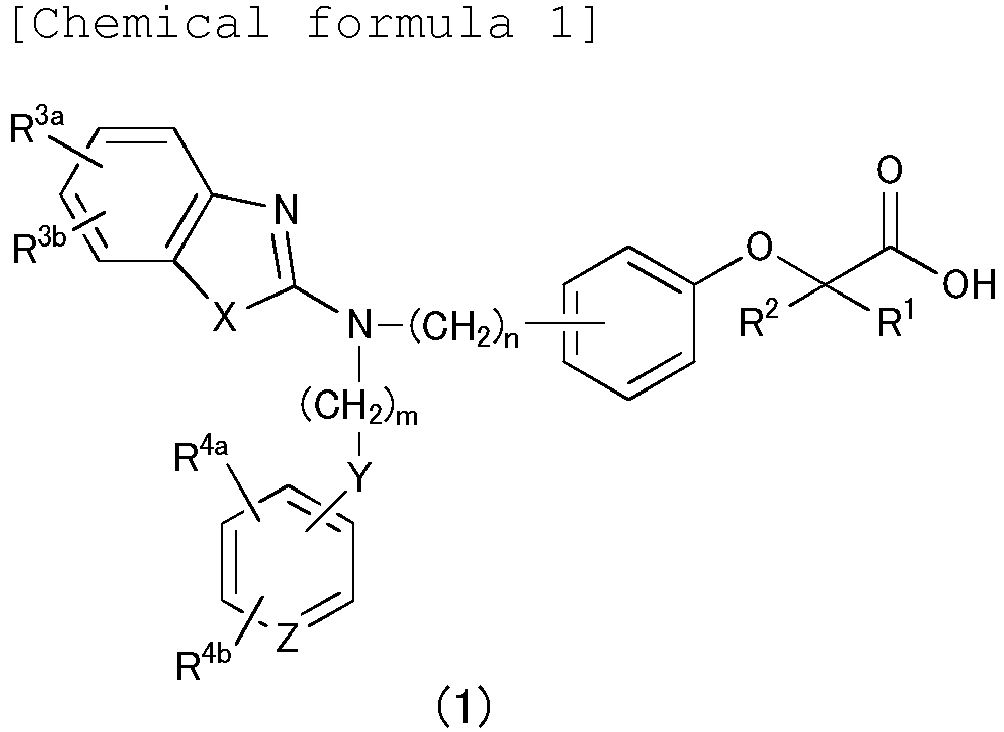
- In more detail, the present invention is to provide a pharmaceutical composition for preventing and/or treating mixed dyslipidemia, metabolic syndrome, dyslipidemia complicated by diabetes, hypo-HDL cholesterolemia, or hypertriglyceridemia, including: a) a compound represented by the general formula (1) or a salt thereof, or a solvate of the compound, or a solvate of the salt of the compound; and b) a cholesterol absorption inhibitor.
- The more detailed description of the present invention is as follows.
- (1) A pharmaceutical composition for preventing and/or treating dyslipidemia, including: a compound represented by the general formula (1) or a salt thereof, or a solvate of the compound, or a solvate of the salt of the compound; and a cholesterol absorption inhibitor.
- (2) The pharmaceutical composition according to (1), wherein the compound represented by the general formula (1) is (R)-2-[3-[[N-(benzoxazol-2-yl)-N-3-(4-methoxyphenoxy)propyl ]aminomethyl]phenoxy]butyric acid.
- (3) The pharmaceutical composition according to (1) or (2), wherein the cholesterol absorption inhibitor is ezetimibe.
- (4) The pharmaceutical composition according to any one of (1) to (3), wherein the dyslipidemia is a disease selected from the group consisting of mixed dyslipidemia, metabolic syndrome, dyslipidemia complicated by diabetes, hypo-HDL chloesterolemia (hypo HDL-C-emia), and hypertriglyceridemia (hyper TG-emia).
- (5) The pharmaceutical composition according to any one of (1) to (4), wherein a mass ratio of the compound represented by the general formula (1) to the cholesterol absorption inhibitor is 1 : 200 to 3 : 1.
- (6) A pharmaceutical composition for increasing HDL cholesterol (HDL-C), including: a compound represented by the general formula (1) or a salt thereof, or a solvate of the compound, or a solvate of the salt of the compound; and a cholesterol absorption inhibitor.
- (7) The pharmaceutical composition according to (6), wherein the compound represented by the general formula (1) is (R)-2-[3-[[N-(benzoxazol-2-yl)-N-3-(4-methoxyphenoxy)propyl ]aminomethyl]phenoxy]butyric acid.
- (8) The pharmaceutical composition according to (6) or (7), wherein the cholesterol absorption inhibitor is ezetimibe.
- (9) The pharmaceutical composition according to any one of (6) to (8), wherein a disease requiring increase of HDL cholesterol (HDL-C) is a disease selected from the group consisting of mixed dyslipidemia, metabolic syndrome, dyslipidemia complicated by diabetes, hypo-HDL chloesterolemia (hypo HDL-C-emia), and hypertriglyceridemia (hyper TG-emia).
- (10) The pharmaceutical composition according to any one of (6) to (9), wherein a mass ratio of the compound represented by the general formula (1) to the cholesterol absorption inhibitor is 1 : 200 to 3 : 1.
- (11) A method for preventing and/or treating dyslipidemia in a subject, comprising: administering to a subject with dyslipidemia or a subj ect with a risk of dyslipidemia an effective amount of a pharmaceutical composition containing a compound represented by the general formula (1) or a salt thereof, or a solvate of the compound, or a solvate of the salt of the compound, and a cholesterol absorption inhibitor.
- (12) The method for preventing and/or treating dyslipidemia in a subject according to (11), wherein the compound represented by the general formula (1) is (R)-2-[3-[[N-(benzoxazol-2-yl)-N-3-(4-methoxyphenoxy)propyl ]aminomethyl]phenoxy]butyric acid.
- (13) The method for preventing and/or treating dyslipidemia in a subject according to (11) or (12), wherein the cholesterol absorption inhibitor is ezetimibe.
- (14) The method for preventing and/or treating dyslipidemia with a subject according to any one of (11) to (13), wherein the dyslipidemia is selected from the group consisting of mixed dyslipidemia, metabolic syndrome, dyslipidemia complicated by diabetes, hypo-HDL chloesterolemia (hypo HDL-C-emia), and hypertriglyceridemia (hyper TG-emia).
- (15) The method for preventing and/or treating dyslipidemia in a subject according to any one of (11) to (14), wherein a mass ratio of the compound represented by the general formula (1) to the cholesterol absorption inhibitor in the pharmaceutical composition is 1 : 200 to 3 : 1.
- (16) A method for increasing HDL cholesterol (HDL-C) in a subj ect, comprising: administering to a subject requiring increase of HDL cholesterol (HDL-C) an effective amount of a pharmaceutical composition containing a compound represented by the general formula (1) or a salt thereof, or a solvate of the compound, or a solvate of the salt of the compound, and a cholesterol absorption inhibitor.
- (17) The method according to (16), wherein the compound represented by the general formula (1) is (R)-2-[3-[[N-(benzoxazol-2-yl)-N-3-(4-methoxyphenoxy)propyl ]aminomethyl]phenoxy]butyric acid.
- (18) The method according to (16) or (17), wherein the cholesterol absorption inhibitor is ezetimibe.
- (19) The method according to any one of (16) to (18), wherein a disease in a subject requiring increase of HDL cholesterol (HDL-C) is selected from the group consisting of mixed dyslipidemia, metabolic syndrome, dyslipidemia complicated by diabetes, hypo-HDL chloesterolemia (hypo HDL-C-emia), and hypertriglyceridemia (hyper TG-emia).
- (20) The method according to any one of (16) to (19), wherein a mass ratio of the compound represented by the general formula (1) to the cholesterol absorption inhibitor in the pharmaceutical composition is 1 : 200 to 3 : 1.
- (21) A compound represented by the general formula (1) or a salt thereof, or a solvate of the compound, or a solvate of the salt of the compound, for use as a pharmaceutical combination composition for preventing and/or treating dyslipidemia in combination with a cholesterol absorption inhibitor.
- (22) The compound or a salt thereof, or a solvate of the compound, or a solvate of the salt of the compound for use according to (21), wherein the compound represented by the general formula (1) is (R)-2-[3-[[N-(benzoxazol-2-yl)-N-3-(4-methoxyphenoxy)propyl ]aminomethyl]phenoxy]butyric acid.
- (23) The compound or a salt thereof, or a solvate of the compound, or a solvate of the salt of the compound for use according to (21) or (22), wherein the cholesterol absorption inhibitor is ezetimibe.
- (24) The compound or a salt thereof, or a solvate of the compound, or a solvate of the salt of the compound for use according to any one of (21) to (23), wherein the dyslipidemia is selected from the group consisting of mixed dyslipidemia, metabolic syndrome, dyslipidemia complicated by diabetes, hypo-HDL chloesterolemia (hypo HDL-C-emia), and hypertriglyceridemia (hyper TG-emia).
- (25) The compound or a salt thereof, or a solvate of the compound, or a solvate of the salt of the compound for use according to any one of (21) to (24), wherein a mass ratio of the compound represented by the general formula (1) to the cholesterol absorption inhibitor in the pharmaceutical composition is 1 : 200 to 3 : 1.
- (26) A compound represented by the general formula (1) or a salt thereof, or a solvate of the compound, or a solvate of the salt of the compound, for use as a pharmaceutical combination composition for increasing HDL cholesterol (HDL-C) in combination with a cholesterol absorption inhibitor.
- (27) The compound or a salt thereof, or a solvate of the compound, or a solvate of the salt of the compound for use according to (26), wherein the compound represented by the general formula (1) is (R)-2-[3-[[N-(benzoxazol-2-yl)-N-3-(4-methoxyphenoxy)propyl ]aminomethyl]phenoxy]butyric acid.
- (28) The compound or a salt thereof, or a solvate of the compound, or a solvate of the salt of the compound for use according to (26) or (27), wherein the cholesterol absorption inhibitor is ezetimibe.
- (29) The compound or a salt thereof, or a solvate of the compound, or a solvate of the salt of the compound for use according to any one of (26) to (28), wherein a disease in a subject requiring increase of HDL cholesterol (HDL-C) is selected from the group consisting of mixed dyslipidemia, metabolic syndrome, dyslipidemia complicated by diabetes, hypo-HDL chloesterolemia (hypo HDL-C-emia), and hypertriglyceridemia (hyper TG-emia).
- (30) The compound or a salt thereof, or a solvate of the compound, or a solvate of the salt of the compound for use according to any one of (26) to (29), wherein a mass ratio of the compound represented by the general formula (1) to the cholesterol absorption inhibitor in the pharmaceutical composition is 1 : 200 to 3 : 1.
- The agent and pharmaceutical composition of the present invention have an excellent blood HDL cholesterol increasing effect, and are useful in the prevention and/or treatment of dyslipidemia, particularly mixed dyslipidemia, metabolic syndrome, dyslipidemia complicated by diabetes, hypo-HDL cholesterolemia, or hypertriglyceridemia.
-
-
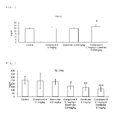
FIG. 1 illustrates plasma HDL-C levels when compound A and ezetimibe are administered each alone or in combination. -
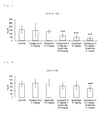
FIG. 2 illustrates plasma TC levels when compound A and ezetimibe are administered each alone or in combination. -
FIG. 3 illustrates plasma VLDL-C levels when compound A and ezetimibe are administered each alone or in combination. -
FIG. 4 illustrates plasma LDL-C levels when compound A and ezetimibe are administered each alone or in combination. -
FIG. 5 illustrates plasma HDL-C levels when compound A and ezetimibe are administered each alone or in combination. -
FIG. 6 illustrates plasma HDL-C levels when fenofibrate and ezetimibe are administered each alone or in combination. - Examples of the halogen atom of R3a, R3b, R4a, and R4b in the general formula (1) include a fluorine atom, a chlorine atom, and a bromine atom. Among them, a fluorine atom and a chlorine atom are particularly preferable.
- Examples of the C1-4 alkyl group of R3a, R3b, R4a, R4b, and R5 include a methyl group, an ethyl group, an n-propyl group, an isopropyl group, and a butyl group. Among them, a methyl group is particularly preferable.
- Examples of the C1-4 alkoxy group of R3a, R31, R4a and R4b include a methoxy group, an ethoxy group, an n-propoxy group, an isopropoxy group, and a butoxy group. Among them, a methoxy group is particularly preferable.
- Examples of the C1-4 alkylcarbonyloxy group of R3a, R3b, R4a and R4b include a methylcarbonyloxy group, an ethylcarbonyloxy group, an n-propylcarbonyloxy group, an isopropylcarbonyloxy group, and a butylcarbonyloxy group. Among them, a methylcarbonyloxy group is particularly preferable.
- Examples of the di-C1-4 alkylamino group of R3a, R3b, R4a and R4b include a dimethylamino group, a diethylamino group, and a diisopropylamino group. Among them, a dimethylamino group is particularly preferable.
- Examples of the C1-4 alkylsulfonyloxy group of R3a, R3b, R4a and R4b include a methylsulfonyloxy group, and an ethylsulfonyloxy group. Among them, a methylsulfonyloxy group is particularly preferable.
- Examples of the C1-4 alkylsulfonyl group of R3a, R3b, R4a, R4b, and R5 include a methylsulfonyl group, and an ethylsulfonyl group. Among them, a methylsulfonyl group is particularly preferable.
- Examples of the C1-4 alkylsulfinyl group of R3a, R3b, R4a and R4b include a methylsulfinyl group, and an ethylsulfinyl group. Among them, a methylsulfinyl group is particularly preferable.
- Examples of the C1-4 alkylthio group of R3a, R3b, R4a and R4b include a methylthio group, and an ethylthio group. Among them, a methylthio group is particularly preferable.
- Examples of the alkylenedioxy group in which R3a and R3b, or R4a and R4b are bonded to each other include a methylenedioxy group,and an ethylenedioxy group. Among them, a methylenedioxy group is particularly preferable.
- Examples of the C1-4 alkyloxycarbonyl group of R5 include a methyloxycarbonyl group, and an ethyloxycarbonyl group. Among them, a methyloxycarbonyl group is particularly preferable.
- R1 and R2 are particularly preferably hydrogen atoms at the same time, or methyl groups at the same time; or a methyl group and a hydrogen atom, or an ethyl group and a hydrogen atom.
- X represents an oxygen atom, a sulfur atom, or N-R5, and is preferably an oxygen atom. Further, Y represents an oxygen atom, a S(O)l group, a carbonyl group, a carbonylamino group, an aminocarbonyl group, a sulfonylamino group, an aminosulfonyl group, or an NH group, and is preferably an oxygen atom. Z represents CH or N, and is preferably CH. 1 represents 0, 1 or 2, and is preferably 2. n represents a number from 1 to 6, and is preferably from 1 to 3. m represents a number from 2 to 6, is preferably 2 to 4, and is particularly preferably 2 or 3.
- Preferable examples of the compound represented by the general formula (1) of the present invention include a compound in which X and Y are oxygen atoms, Z is CH, n is 1, and m is 3. More preferable examples of the compound include a compound in which X and Y are oxygen atoms; Z is CH; n is 1; m is 3; R3a and R3b, which may be identical or different, each of which is a hydrogen atom, a halogen atom, a hydroxyl group, a C1-4 alkyl group, a trifluoromethyl group, or a C1-4 alkoxy group; R4a and R4b, which may be identical or different, each of which is a halogen atom, a hydroxyl group, a C1-4 alkyl group, a trifluoromethyl group, or a C1-4 alkoxy group. More preferable examples of the compound represented by the general formula (1) of the present invention include (R)-2-[3-[[N-(benzoxazol-2-yl)-N-3-(4-methoxyphenoxy)propyl ]aminomethyl]phenoxy]butyric acid (hereinafter, may be referred to as "compound A").
- Usually, in an amount of around 400 to 500 mg of cholesterol from the diet, and in an amount of around 800 to 2,000 mg of cholesterol from the bile are drawn into the small intestine per day, and around 50% of the cholesterol drawn into the small intestine is absorbed. In the present invention, the cholesterol absorption inhibitor is not particularly limited as long as being able to inhibit the absorption of the cholesterol drawn into the small intestine, and examples of the cholesterol absorption inhibitor include, for example, an anion exchange resin such as cholestyramine, and cholestyramide, and an agent suppressing the absorption of cholesterol by the inhibition of a cholesterol transporter (NPC1-L1), such as ezetimibe, and a compound described in the Patent Documents 11 to 14. Preferable examples of the cholesterol absorption inhibitor of the present invention include, for example, an agent suppressing the absorption of cholesterol by the inhibition of a cholesterol transporter (NPC1-L1), and among them, ezetimibe is more preferable.
- A compound represented by the general formula (1) of the present invention can be produced, for example, in accordance with a method described in Patent Document 1.
- In addition, in the present invention, a salt or solvate of the compound represented by the general formula (1) can be used. The salt and solvate can be produced by routine procedures.
- The salt of the compound represented by the general formula (1) of the present invention is not particularly limited as long as being pharmacologically acceptable, and examples of the salt include, for example, an alkali metal salt such as a sodium salt, and a potassium salt; an alkaline earth metal salt such as a calcium salt, and a magnesium salt; an organic base salt such as an ammonium salt, and a trialkylamine salt; a mineral acid salt such as a hydrochloride, and a sulfate; and an organic acid salt such as an acetate.
- Examples of the solvate of the compound represented by the general formula (1) or the salt thereof of the present invention include a hydrate, and an alcohol solvate (for example, an ethanol solvate).
- The compound represented by the general formula (1) of the present invention has an asymmetric carbon atom, and therefore has optical isomers of a R-isomer and a S-isomer, and all the optical isomers are included in the present invention.
- Ezetimibe (chemical name:
- (3R,4S)-1-(4-fluorophenyl)-3-{(3S)-3-(4-fluorophenyl)-3-hyd roxypropyl}-4-(4-hydroxyphenyl)azetidin-2-one (IUPAC)) can be produced by a method described in J. Org. Chem. , 64(10), 3714-3718 (1999), Tetrahedron Lett., 44(4), 801-804 (2003), and the like. Further, a pharmaceutical product available on the market may be used.
- As indicated in Examples below, when a compound represented by the general formula (1) is used in combination with a cholesterol absorption inhibitor, each plasma lipid parameter is improved and particularly a strong HDL-C increasing effect is exerted in an evaluation system using a rat loaded with high cholesterol diet. Therefore, an agent of the present invention is useful in the prevention and/or treatment of mixed dyslipidemia, metabolic syndrome, dyslipidemia complicated by diabetes, hypo-HDL cholesterolemia, or hypertriglyceridemia.
- The dyslipidemia in the present invention means that any one or two or more of the total triglyceride (TG) level, the total cholesterol (TC) level, the VLDL cholesterol (VLDL-C) level, the LDL cholesterol (LDL-C) level, or the HDL cholesterol (HDL-C) level, in the blood deviate from a range of the normal level.
- In addition, the disease in a subject requiring increase of HDL cholesterol (HDL-C) in the present invention means the case where the HDL-C level in the blood is lower than the normal level.
- The compound represented by the general formula (1) or a salt thereof, or a solvate of the compound, or a solvate of the salt of the compound of the present invention can be prepared alone or in combination with other pharmaceutically acceptable carriers, into a dosage form of a tablet, a capsule, granules, powders, lotion, ointment, an injection, a suppository, and the like. These pharmaceutical preparations can be produced by a known method. For example, a preparation for oral administration can be produced by the formulation of a solubilizer such as tragacanth gum, gum arabic, sucrose fatty acid ester, lecithin, olive oil, soybean oil, and
PEG 400; an excipient such as starch, mannitol, and lactose; a binder such as methyl cellulose, carboxymethylcellulose sodium, and hydroxypropylcellulose; a disintegrant such as crystalline cellulose, and carboxymethyl cellulose calcium; a lubricant such as talc, and magnesium stearate; a fluidity-improving agent such as light silicic anhydride; and the like, in appropriate combination. - As to the usage form of the pharmaceutical composition of the present invention, a) a compound represented by the general formula (1) or a salt thereof, or a solvate of the compound, or a solvate of the salt of the compound is used in combination with b) a cholesterol absorption inhibitor, and the pharmaceutical composition can be used in a form in which a prophylactic and/or therapeutic effect for dyslipidemia such as mixed dyslipidemia, metabolic syndrome, dyslipidemia complicated by diabetes, hypo-HDL cholesterolemia, and hypertriglyceridemia is exerted with the use of the synergistic blood HDL-C increasing effect by the administration of both agents in addition to each effect of agents, however, is not limited to these usage forms. The compound represented by the general formula (1) and the cholesterol absorption inhibitor may be administered at the same time, or may be administered separately at intervals.
- The compound represented by the general formula (1) and the cholesterol absorption inhibitor may be prepared together into a single preparation, or may be prepared separately into each preparation and used as a kit. That is, the pharmaceutical composition of the present invention may be a kit composed of an agent containing as an active component at least one kind selected from a compound represented by the general formula (1) or a salt thereof, or a solvate of the compound, or a solvate of the salt of the compound, and an agent containing at least one kind of cholesterol absorption inhibitors in combination.
- When both agents are administered as a single preparation in the present invention, the mixing ratio of the compound represented by the general formula (1) to the cholesterol absorption inhibitor can be appropriately selected in the range of effective dose of each active component, however, the mixing ratio is generally preferably in the range of 5 : 1 to 1 : 30, 000 by mass ratio, and more preferably in the range of 5 : 1 to 1 : 1,000 by mass ratio. In particular, in a case where the cholesterol absorption inhibitor is an agent such as ezetimibe, which suppresses the absorption of cholesterol by the inhibition of a cholesterol transporter (NPC1-L1), the mixing ratio is preferably in the range of 5 : 1 to 1 : 300, and more preferably 3 : 1 to 1 : 200 by mass ratio from the viewpoint that the particularly excellent synergistic effect is obtained.
- In a case where the compound represented by the general formula (1) and the cholesterol absorption inhibitor are separately prepared, the dosage forms of both preparations may be the same as or different from each other. Further, the number of administrations of each component may vary.
- The compound represented by the general formula (1) or a salt thereof, or a solvate of the compound, or a solvate of the salt of the compound of the present invention is orally or parenterally administered. The dosage of the pharmaceutical of the present invention varies depending on the body weight, age, sex, symptoms and the like of a subject, however, usually in a case of an adult human, the dosage of 0.001 to 100 mg, and preferably 0.01 to 10 mg is preferably administered while being divided into 1 to 3 times per day as for the compound of the general formula (1). Further, the cholesterol absorption inhibitor is preferably administered in a dosage of 0.01 to 1,000 mg, and preferably 1 to 100 mg while being divided into 1 to 3 times per day as the ezetimibe.
- Hereinafter, the present invention will be more specifically explained by way of Examples, Comparative Example, and Preparation Example, however should not be limited at all by these Examples.
- SD rats (6 weeks old, male, CHARLES RIVER LABORATORIES JAPAN, INC.) were used in the experiments. Blood was collected from the jugular vein of chow-fed rat, and divided into 4 groups (N = 8) base on the levels of TG and TC in the plasma, and the body weight. From the next day, a solid chow containing 2% cholesterol and 0.5% sodium cholate (MF-based, Oriental Yeast Co., Ltd.) was loaded to rats for one week. In parallel to the loading with the high cholesterol diet, a vehicle (an aqueous solution of 0.5% methylcellulose: MC), or (R)-2-[3-[[N-(benzoxazol-2-yl)-N-3-(4-methoxyphenoxy)propyl ]aminomethyl]phenoxy]butyric acid (compound A) and/or ezetimibe was orally administered once a day. In the afternoon of the last day of the administration, blood was collected under pentobarbital anesthesia after the fasting period of 4 hours, and the HDL-C levels in the plasma were measured. The synergistic effect was determined by using Bürgi's formula (if the relative level in the combined group is larger than the value of the product of the relative level of single agent A and the relative level of single agent B, the synergistic effect is positive).
-
- Group 1: Control
- Group 2: Compound A 0.1 mg/kg
- Group 3: Ezetimibe 0.003 mg/kg
- Group 4: Compound A 0.1 mg/kg and ezetimibe 0.003 mg/kg 3. Statistical Analysis and Data Processing Method
- The results were shown as the mean ± standard deviation. Comparison between the control group and the drug administration group was performed using Dunnett's multiple comparison test, and the risk rate of less than 5% was determined to have a significant difference.
- The results are shown in
FIG. 1 and Table 1. In addition, the average level of each group of HDL-C is shown in Table 1. In the single administration group of compound A or ezetimibe, apparent effects were not recognized for the HDL-C level. However, in the combined administration group of 0.1 mg/kg of compound A and 0.003 mg/kg of ezetimibe, significant (*: p<0.05, to the control) and synergistic (the relative level (1.167) in the combined group is larger than the value of the product (1.010 × 1.022 = 1.032) of the relative level in the single agent A administration group to the control group and the relative level in the single agent B administration group to the control group) increase of HDL-C level was recognized (FIG. 1 , and Table 1).[Table 1] Control Compound A 0.1mg/kg Ezetimibe 0.003mg/kg Compound A 0.1mg/kg + Ezetimibe 0.003mg/kg Ave. 24.1 24.3 24.6 28.1 SD 1.6 3.0 2.4 2.9 HDL-C Rate of Change - 1.0% 2.2% 16.7% - SD rats (6 weeks old, male, CHARLES RIVER LABORATORIES JAPAN, INC.) were used in the experiments. Blood was collected from the jugular vein of chow-fed rat, and divided into 6 groups (N = 6, 8) base on the levels of TG and TC in the plasma, and the body weight. From the next day, a solid food containing 2% cholesterol and 0.5% sodium cholate (MF-based, Oriental Yeast Co., Ltd.) was loaded to rats for one week. In parallel to the loading with the high cholesterol diet, a vehicle (0.5% MC), or compound A and/or ezetimibe was orally administered once a day. In the afternoon of the last day of the administration, blood was collected under pentobarbital anesthesia after the fasting period of 4 hours, and the TG levels and TC levels in the plasma, and lipid levels in the lipoprotein (VLDL-C, LDL-C and HLDL-C) were measured. The synergistic effect was determined by using Bürgi's formula (in a case where a level lower than that in the control group is indicated in a drug administration group, that is, when the evaluation of an agent to the TC, VLDL-C, or LDL-C is performed, if the relative level in the combined group is smaller than the value of the product of the relative level of single agent A and the relative level of single agent B, the synergistic effect exists. In a case where a level higher than that in the control group is indicated in a drug administration group, that is, when the evaluation of an agent to the HDL-C is performed, if the relative level in the combined group is larger than the value of the product of the relative level of single agent A and the relative level of single agent B, the synergistic effect exists).
-
- Group 1: Control
- Group 2: Compound A 0.1 mg/kg
- Group 3: Ezetimibe 0.01 mg/kg
- Group 4 : Combination of compound A 0.1 mg/kg and ezetimibe 0.01 mg/kg
- Group 5: Ezetimibe 0.1 mg/kg
- Group 6: Combination of compound A 0.1 mg/kg and ezetimibe 0.1 mg/kg
- The results were shown as the mean ± standard deviation. Comparison between the control group and the drug administration group was performed using Dunnett's multiple comparison test, and the risk rate of less than 5% was determined to have a significant difference.
- The results are shown in Table 2 and
FIGS. 2 to 5 .FIG. 2 shows the results of the total cholesterol (TC) levels,FIG. 3 shows the VLDL cholesterol (VLDL-C) levels,FIG. 4 shows the LDL cholesterol (LDL-C) levels, andFIG. 5 shows the HDL cholesterol (HDL-C) levels. The symbol in FIGS means as follows: *: p<0.05, **: p<0.01, and ***: p<0.001. - Synergistic effects by the combination of compound A with ezetimibe on the high-cholesterol diet-fed rats
[Table 2] Compound A (mg/kg) 0.1 - 0.1 - 0.1 Ezetimibe (mg/kg) - 0.01 0.01 0.1 0.1 TC Relative Level (to Control) 0.956 0.898 0.635 0.555 0.462 Bürgi's Formula 0.859 0.530 VLDL-C Relative Level (to Control) 0.827 0.719 0.374 0.262 0.179 Bürgi's Formula 0.595 0.217 LDL-C Relative Level (to Control) 0.971 0.955 0.713 0.720 0.529 Bürgi's Formula 0.927 0.698 HDL-C Relative Level (to Control) 1.021 0.910 1.204 1.100 1.326 Bürgi's Formula 0.929 1.123 - As to each numerical value, the value in the upper shows a relative level to the control group, and the value in the lower shows the product of the relative levels in the compound A single administration group and the ezetimibe single administration group by using Bürgi's formula. The values in the underlined part show that the synergistic effect is recognized.
- Firstly, when the attention was focused on TC (Table 2 and
FIG. 2 ), the relative level of the compound A single administration group was 0.956, the relative level of the 0.01 mg/kg single administration group of ezetimibe was 0.898, and the product of both relative levels was 0.859. On the other hand, the relative level of the combined administration group of compound A and 0.01 mg/kg of ezetimibe was 0.635, and was significantly decreased as compared with the product of levels in the single administration groups, therefore, the synergistic TC lowering effect was confirmed. - Further, the relative level of 0.1 mg/kg single administration group of ezetimibe was 0.555, and the product of the relative level 0.555 and the relative level 0.956 of the compound A administration group was 0.530, whereas the relative level of 0.1 mg/kg combined administration group of the compound A and the ezetimibe was 0.462, therefore, it was revealed that the synergistic TC lowering effect was recognized also in the high-dose group of ezetimibe.
- In the same manner, by the combined administration of the compound A and the ezetimibe, the synergistic lowering effect for the VLDL-C level and LDL-C level, and the synergistic increasing effect for the HDL-C level were recognized.
- SD rats (6 weeks old, male, CHARLES RIVER LABORATORIES JAPAN, INC.) were used in the experiments. Blood was collected from the jugular vein of chow-fed rat, and divided into 4 groups (N = 8) base on the levels of TG and TC in the plasma, and the body weight. From the next day, a solid chow containing 2% cholesterol and 0.5% sodium cholate (MF-based, Oriental Yeast Co., Ltd.) was loaded to rats for one week. In parallel to the loading with the high cholesterol diet, a vehicle (0.5% MC), or fenofibrate (FF) and/or ezetimibe (Ezeti) was orally administered once a day. In the afternoon of the last day of the administration, blood was collected under pentobarbital anesthesia after the fasting period of 4 hours. The HDL-C levels in the plasma were measured.
-
- Group 1: Control
- Group 2:
Fenofibrate 10 mg/kg - Group 3: Ezetimibe 0.1 mg/kg
- Group 4 : Combination of
fenofibrate 10 mg/kg and ezetimibe 0.1 mg/kg - The results were shown as the average level ± standard deviation. Comparison between the control group and the drug administration group was performed using Dunnett's multiple comparison test, and the risk rate of less than 5% was determined to have a significant difference.
- The results are shown in
FIG. 6 . Fenofibrate has also been known as a PPARα agonist, however, the synergistic increasing effect for the HDL-C level was not recognized in the combination of fenofibrate with ezetimibe. - The tablets for administration, in which compound A and ezetimibe are contained, can be produced as in the following.
[Table 3] Component Dosage Compound A 0.05mg Ezetimibe 10mg Microcrystalline Cellulose 37.25mg Modified food Grade Cornstarch 37.25mg Magnesium Stearate 0.5mg - All of the compound A and ezetimibe (mass ratio 1 : 200) and part of the cellulose and cornstarch were mixed, and the mixture was granulated, as a result, 10% cornstarch paste was obtained. The obtained granules were sieved and dried, and the dried granules were mixed with the remaining part of the cornstarch, and the magnesium stearate. Next, the obtained granules were compressed into a tablet containing 0.05 mg of compound A and 10 mg of ezetimibe per tablet.
- The agent and pharmaceutical composition of the present invention have an excellent blood HDL cholesterol increasing effect, and are useful in the prevention and/or treatment of dyslipidemia, particularly mixed dyslipidemia, metabolic syndrome, dyslipidemia complicated by diabetes, hypo-HDL cholesterolemia, or hypertriglyceridemia, therefore have industrial applicability.
Claims (10)
- A pharmaceutical composition for preventing and/or treating dyslipidemia, comprising:a) a compound represented by the following general formula (1) :
 b) a cholesterol absorption inhibitor.
 - The pharmaceutical composition according to Claim 1, wherein the compound represented by the general formula (1) is (R)-2-[3-[[N-(benzoxazol-2-yl)-N-3-(4-methoxyphenoxy)propyl ]aminomethyl]phenoxy]butyric acid.
- The pharmaceutical composition according to Claim 1 or 2,
wherein the cholesterol absorption inhibitor is ezetimibe. - The pharmaceutical composition according to any one of Claims 1 to 3,
wherein the dyslipidemia is a disease selected from the group consisting of mixed dyslipidemia, metabolic syndrome, dyslipidemia complicated by diabetes, hypo-HDL chloesterolemia (hypo HDL-C-emia), and hypertriglyceridemia (hyper TG-emia). - The pharmaceutical composition according to any one of Claims 1 to 4,
wherein a mass ratio of the compound represented by the general formula (1) to the cholesterol absorption inhibitor is 1 : 200 to 3 : 1. - A pharmaceutical composition for increasing HDL cholesterol (HDL-C), comprising:a) a compound represented by the following general formula (1) :
 b) a cholesterol absorption inhibitor.
 - The pharmaceutical composition according to Claim 6,
wherein the compound represented by the general formula (1) is
(R)-2-[3-[[N-(benzoxazol-2-yl)-N-3-(4-methoxyphenoxy)propyl ]aminomethyl]phenoxy]butyric acid. - The pharmaceutical composition according to Claim 6 or 7,
wherein the cholesterol absorption inhibitor is ezetimibe. - The pharmaceutical composition according to any one of Claims 6 to 8,
wherein a disease requiring increase of HDL cholesterol (HDL-C) is a disease selected from the group consisting of mixed dyslipidemia, metabolic syndrome, dyslipidemia complicated by diabetes, hypo-HDL chloesterolemia (hypo HDL-C-emia), and hypertriglyceridemia (hyper TG-emia). - The pharmaceutical composition according to any one of Claims 6 to 9,
wherein a mass ratio of the compound represented by the general formula (1) to the cholesterol absorption inhibitor is 1 : 200 to 3 : 1.
Priority Applications (1)
| Application Number | Priority Date | Filing Date | Title |
|---|---|---|---|
| PL13842381T PL2902025T3 (en) | 2012-09-27 | 2013-09-27 | Therapeutic agent for dyslipidemia |
Applications Claiming Priority (2)
| Application Number | Priority Date | Filing Date | Title |
|---|---|---|---|
| JP2012214635 | 2012-09-27 | ||
| PCT/JP2013/005756 WO2014050134A1 (en) | 2012-09-27 | 2013-09-27 | Therapeutic agent for dyslipidemia |
Publications (3)
| Publication Number | Publication Date |
|---|---|
| EP2902025A1 true EP2902025A1 (en) | 2015-08-05 |
| EP2902025A4 EP2902025A4 (en) | 2016-03-02 |
| EP2902025B1 EP2902025B1 (en) | 2019-08-07 |
Family
ID=50387566
Family Applications (1)
| Application Number | Title | Priority Date | Filing Date |
|---|---|---|---|
| EP13842381.9A Active EP2902025B1 (en) | 2012-09-27 | 2013-09-27 | Therapeutic agent for dyslipidemia |
Country Status (20)
| Country | Link |
|---|---|
| US (4) | US9572798B2 (en) |
| EP (1) | EP2902025B1 (en) |
| JP (1) | JP6238460B2 (en) |
| KR (1) | KR102098032B1 (en) |
| CN (1) | CN104640544B (en) |
| AU (1) | AU2013321918B2 (en) |
| BR (1) | BR112015006305B1 (en) |
| CA (1) | CA2901650C (en) |
| EA (1) | EA024873B1 (en) |
| ES (1) | ES2752039T3 (en) |
| IL (1) | IL237981B (en) |
| IN (1) | IN2015DN02966A (en) |
| MX (1) | MX357446B (en) |
| MY (1) | MY177686A (en) |
| PH (1) | PH12015500471A1 (en) |
| PL (1) | PL2902025T3 (en) |
| PT (1) | PT2902025T (en) |
| SG (1) | SG11201501740XA (en) |
| TW (1) | TWI598098B (en) |
| WO (1) | WO2014050134A1 (en) |
Cited By (2)
| Publication number | Priority date | Publication date | Assignee | Title |
|---|---|---|---|---|
| EP3646867A4 (en) * | 2017-06-30 | 2021-03-24 | Kowa Company, Ltd. | PHARMACEUTICAL COMPOSITION |
| EP3646863A4 (en) * | 2017-06-30 | 2021-03-24 | Kowa Company, Ltd. | PHARMACEUTICAL COMPOSITION |
Families Citing this family (12)
| Publication number | Priority date | Publication date | Assignee | Title |
|---|---|---|---|---|
| TWI691331B (en) * | 2014-09-26 | 2020-04-21 | 日商興和股份有限公司 | Treatment agent for dyslipidemia |
| WO2019004448A1 (en) * | 2017-06-30 | 2019-01-03 | 興和株式会社 | Pharmaceutical composition |
| JPWO2019004452A1 (en) * | 2017-06-30 | 2020-04-30 | 興和株式会社 | Pharmaceutical composition |
| US11344535B2 (en) | 2017-06-30 | 2022-05-31 | Kowa Company, Ltd. | Pharmaceutical composition |
| JPWO2019004453A1 (en) * | 2017-06-30 | 2020-04-30 | 興和株式会社 | Medicine |
| EP3646864B1 (en) | 2017-06-30 | 2026-04-08 | Kowa Company, Ltd. | Pharmaceutical containing pemafibrate |
| JP7425603B2 (en) * | 2017-06-30 | 2024-01-31 | 興和株式会社 | pharmaceutical composition |
| US11446282B2 (en) | 2017-12-21 | 2022-09-20 | Kowa Company, Ltd. | Methods of treating mixed dyslipidemia and hypertriglycertdemia |
| US20190224169A1 (en) * | 2017-12-21 | 2019-07-25 | Kowa Company, Ltd. | Methods of Treatment of Hypertriglyceridemia |
| EP3903781A4 (en) * | 2018-12-27 | 2023-01-25 | Kowa Company, Ltd. | PHARMACEUTICAL PREPARATION |
| US20220096443A1 (en) * | 2018-12-27 | 2022-03-31 | Kowa Company, Ltd. | Pharmaceutical composition |
| JP2020105174A (en) * | 2018-12-27 | 2020-07-09 | 興和株式会社 | Pharmaceutical composition |
Family Cites Families (17)
| Publication number | Priority date | Publication date | Assignee | Title |
|---|---|---|---|---|
| HU230253B1 (en) | 2001-01-26 | 2015-11-30 | Merck Sharp & Dohme Corp | Combinations of peroxisome proliferator-activated receptor (ppar) activator(s) and sterol absorption inhibitor(s) and their use in the treatment of vascular indications |
| US7205321B2 (en) | 2001-11-15 | 2007-04-17 | Eli Lilly And Company | Peroxisome proliferator activated receptor alpha agonists |
| US6987118B2 (en) | 2003-05-21 | 2006-01-17 | Pfizer Inc. | Tetrahydroisoquinoline derivatives as PPAR-alpha activators |
| WO2005009942A1 (en) | 2003-07-28 | 2005-02-03 | Kyorin Pharmaceutical Co., Ltd. | Optically active substituted phenylpropionic acid derivative |
| EA009374B1 (en) | 2003-09-03 | 2007-12-28 | Кова Ко., Лтд. | Ppar-activating compound and pharmaceutical composition containing same |
| CN100425594C (en) * | 2003-09-03 | 2008-10-15 | 兴和株式会社 | PPAR activating compound and pharmaceutical composition containing the same |
| DE102004016845A1 (en) | 2004-04-07 | 2005-10-27 | Bayer Healthcare Ag | Phenylthioacetic acid derivatives and their use |
| US7629372B2 (en) | 2004-09-16 | 2009-12-08 | Merck & Co., Inc. | Compounds for the treatment of dyslipidemia and other lipid disorders |
| TWI359810B (en) | 2004-11-04 | 2012-03-11 | Mitsubishi Tanabe Pharma Corp | Carboxylic acid derivative containing thiazole rin |
| WO2007008529A2 (en) | 2005-07-08 | 2007-01-18 | Kalypsys, Inc | Celullar cholesterol absorption modifiers |
| WO2007008541A2 (en) | 2005-07-08 | 2007-01-18 | Kalypsys, Inc. | Cellular cholesterol absorption modifiers |
| US7795291B2 (en) | 2006-07-07 | 2010-09-14 | Bristol-Myers Squibb Company | Substituted acid derivatives useful as anti-atherosclerotic, anti-dyslipidemic, anti-diabetic and anti-obesity agents and method |
| CA2663502A1 (en) | 2006-09-15 | 2008-03-20 | Schering Corporation | Azetidinone derivatives and methods of use thereof |
| WO2008104875A1 (en) | 2007-03-01 | 2008-09-04 | Pfizer Products Inc. | Oxazolidinones as cholesterol absorption inhibitors |
| TWI407955B (en) * | 2007-03-29 | 2013-09-11 | Kowa Co | Prevention and/or treatment of hyperlipidemia |
| WO2009047240A1 (en) | 2007-10-09 | 2009-04-16 | Smithkline Beecham Corporation | Indole derivatives useful as ppar activators |
| DE102007061757A1 (en) | 2007-12-20 | 2009-06-25 | Bayer Healthcare Ag | Substituted 2-phenylpyrimidine-5-carboxylic acids and their use |
-
2013
- 2013-09-27 KR KR1020157005248A patent/KR102098032B1/en active Active
- 2013-09-27 AU AU2013321918A patent/AU2013321918B2/en not_active Ceased
- 2013-09-27 EA EA201590653A patent/EA024873B1/en unknown
- 2013-09-27 MY MYPI2015700727A patent/MY177686A/en unknown
- 2013-09-27 JP JP2014538198A patent/JP6238460B2/en active Active
- 2013-09-27 IN IN2966DEN2015 patent/IN2015DN02966A/en unknown
- 2013-09-27 ES ES13842381T patent/ES2752039T3/en active Active
- 2013-09-27 US US14/429,449 patent/US9572798B2/en active Active
- 2013-09-27 BR BR112015006305-5A patent/BR112015006305B1/en active IP Right Grant
- 2013-09-27 CN CN201380047997.XA patent/CN104640544B/en active Active
- 2013-09-27 PL PL13842381T patent/PL2902025T3/en unknown
- 2013-09-27 TW TW102134981A patent/TWI598098B/en active
- 2013-09-27 SG SG11201501740XA patent/SG11201501740XA/en unknown
- 2013-09-27 MX MX2015003705A patent/MX357446B/en active IP Right Grant
- 2013-09-27 EP EP13842381.9A patent/EP2902025B1/en active Active
- 2013-09-27 CA CA2901650A patent/CA2901650C/en active Active
- 2013-09-27 WO PCT/JP2013/005756 patent/WO2014050134A1/en not_active Ceased
- 2013-09-27 PT PT138423819T patent/PT2902025T/en unknown
-
2015
- 2015-03-04 PH PH12015500471A patent/PH12015500471A1/en unknown
- 2015-03-26 IL IL237981A patent/IL237981B/en active IP Right Grant
-
2017
- 2017-01-06 US US15/399,856 patent/US9931321B2/en active Active
-
2018
- 2018-02-26 US US15/904,922 patent/US10258609B2/en active Active
-
2019
- 2019-02-11 US US16/272,050 patent/US11013722B2/en active Active
Cited By (3)
| Publication number | Priority date | Publication date | Assignee | Title |
|---|---|---|---|---|
| EP3646867A4 (en) * | 2017-06-30 | 2021-03-24 | Kowa Company, Ltd. | PHARMACEUTICAL COMPOSITION |
| EP3646863A4 (en) * | 2017-06-30 | 2021-03-24 | Kowa Company, Ltd. | PHARMACEUTICAL COMPOSITION |
| US11406621B2 (en) | 2017-06-30 | 2022-08-09 | Kowa Company, Ltd. | Pharmaceutical composition |
Also Published As
Similar Documents
| Publication | Publication Date | Title |
|---|---|---|
| US11013722B2 (en) | Therapeutic agent for dyslipidemia | |
| US20200246314A1 (en) | Dyslipidemia therapeutic agent | |
| US9968592B2 (en) | Dyslipidemia therapeutic agent | |
| WO2015030033A1 (en) | Therapeutic agent for dyslipidemia | |
| HK1206620B (en) | Therapeutic agent for dyslipidemia | |
| HK40013864A (en) | Therapeutic agent for dyslipidemia | |
| HK40013864B (en) | Therapeutic agent for dyslipidemia | |
| HK1219662B (en) | Therapeutic agent for dyslipidemia |
Legal Events
| Date | Code | Title | Description |
|---|---|---|---|
| PUAI | Public reference made under article 153(3) epc to a published international application that has entered the european phase |
Free format text: ORIGINAL CODE: 0009012 |
|
| 17P | Request for examination filed |
Effective date: 20150407 |
|
| AK | Designated contracting states |
Kind code of ref document: A1 Designated state(s): AL AT BE BG CH CY CZ DE DK EE ES FI FR GB GR HR HU IE IS IT LI LT LU LV MC MK MT NL NO PL PT RO RS SE SI SK SM TR |
|
| AX | Request for extension of the european patent |
Extension state: BA ME |
|
| DAX | Request for extension of the european patent (deleted) | ||
| RA4 | Supplementary search report drawn up and despatched (corrected) |
Effective date: 20160201 |
|
| RIC1 | Information provided on ipc code assigned before grant |
Ipc: A61K 45/06 20060101ALI20160125BHEP Ipc: A61K 31/397 20060101ALI20160125BHEP Ipc: A61P 43/00 20060101ALI20160125BHEP Ipc: A61P 3/06 20060101ALI20160125BHEP Ipc: A61P 3/10 20060101ALI20160125BHEP Ipc: A61K 31/423 20060101AFI20160125BHEP |
|
| STAA | Information on the status of an ep patent application or granted ep patent |
Free format text: STATUS: EXAMINATION IS IN PROGRESS |
|
| 17Q | First examination report despatched |
Effective date: 20180131 |
|
| REG | Reference to a national code |
Ref country code: DE Ref legal event code: R079 Ref document number: 602013058937 Country of ref document: DE Free format text: PREVIOUS MAIN CLASS: A61K0031423000 Ipc: A61K0031397000 |
|
| GRAP | Despatch of communication of intention to grant a patent |
Free format text: ORIGINAL CODE: EPIDOSNIGR1 |
|
| STAA | Information on the status of an ep patent application or granted ep patent |
Free format text: STATUS: GRANT OF PATENT IS INTENDED |
|
| RIC1 | Information provided on ipc code assigned before grant |
Ipc: A61P 3/10 20060101ALI20190204BHEP Ipc: A61K 31/423 20060101ALI20190204BHEP Ipc: A61K 31/397 20060101AFI20190204BHEP Ipc: A61P 43/00 20060101ALI20190204BHEP Ipc: A61P 3/06 20060101ALI20190204BHEP |
|
| INTG | Intention to grant announced |
Effective date: 20190228 |
|
| GRAS | Grant fee paid |
Free format text: ORIGINAL CODE: EPIDOSNIGR3 |
|
| GRAA | (expected) grant |
Free format text: ORIGINAL CODE: 0009210 |
|
| STAA | Information on the status of an ep patent application or granted ep patent |
Free format text: STATUS: THE PATENT HAS BEEN GRANTED |
|
| AK | Designated contracting states |
Kind code of ref document: B1 Designated state(s): AL AT BE BG CH CY CZ DE DK EE ES FI FR GB GR HR HU IE IS IT LI LT LU LV MC MK MT NL NO PL PT RO RS SE SI SK SM TR |
|
| REG | Reference to a national code |
Ref country code: GB Ref legal event code: FG4D |
|
| REG | Reference to a national code |
Ref country code: CH Ref legal event code: EP Ref country code: AT Ref legal event code: REF Ref document number: 1162758 Country of ref document: AT Kind code of ref document: T Effective date: 20190815 |
|
| REG | Reference to a national code |
Ref country code: DE Ref legal event code: R096 Ref document number: 602013058937 Country of ref document: DE |
|
| REG | Reference to a national code |
Ref country code: IE Ref legal event code: FG4D |
|
| REG | Reference to a national code |
Ref country code: CH Ref legal event code: NV Representative=s name: RENTSCH PARTNER AG, CH |
|
| REG | Reference to a national code |
Ref country code: PT Ref legal event code: SC4A Ref document number: 2902025 Country of ref document: PT Date of ref document: 20191104 Kind code of ref document: T Free format text: AVAILABILITY OF NATIONAL TRANSLATION Effective date: 20191025 |
|
| REG | Reference to a national code |
Ref country code: NL Ref legal event code: MP Effective date: 20190807 |
|
| REG | Reference to a national code |
Ref country code: LT Ref legal event code: MG4D |
|
| PG25 | Lapsed in a contracting state [announced via postgrant information from national office to epo] |
Ref country code: LT Free format text: LAPSE BECAUSE OF FAILURE TO SUBMIT A TRANSLATION OF THE DESCRIPTION OR TO PAY THE FEE WITHIN THE PRESCRIBED TIME-LIMIT Effective date: 20190807 Ref country code: HR Free format text: LAPSE BECAUSE OF FAILURE TO SUBMIT A TRANSLATION OF THE DESCRIPTION OR TO PAY THE FEE WITHIN THE PRESCRIBED TIME-LIMIT Effective date: 20190807 Ref country code: NL Free format text: LAPSE BECAUSE OF FAILURE TO SUBMIT A TRANSLATION OF THE DESCRIPTION OR TO PAY THE FEE WITHIN THE PRESCRIBED TIME-LIMIT Effective date: 20190807 Ref country code: BG Free format text: LAPSE BECAUSE OF FAILURE TO SUBMIT A TRANSLATION OF THE DESCRIPTION OR TO PAY THE FEE WITHIN THE PRESCRIBED TIME-LIMIT Effective date: 20191107 Ref country code: SE Free format text: LAPSE BECAUSE OF FAILURE TO SUBMIT A TRANSLATION OF THE DESCRIPTION OR TO PAY THE FEE WITHIN THE PRESCRIBED TIME-LIMIT Effective date: 20190807 Ref country code: FI Free format text: LAPSE BECAUSE OF FAILURE TO SUBMIT A TRANSLATION OF THE DESCRIPTION OR TO PAY THE FEE WITHIN THE PRESCRIBED TIME-LIMIT Effective date: 20190807 Ref country code: NO Free format text: LAPSE BECAUSE OF FAILURE TO SUBMIT A TRANSLATION OF THE DESCRIPTION OR TO PAY THE FEE WITHIN THE PRESCRIBED TIME-LIMIT Effective date: 20191107 |
|
| REG | Reference to a national code |
Ref country code: AT Ref legal event code: MK05 Ref document number: 1162758 Country of ref document: AT Kind code of ref document: T Effective date: 20190807 |
|
| PG25 | Lapsed in a contracting state [announced via postgrant information from national office to epo] |
Ref country code: RS Free format text: LAPSE BECAUSE OF FAILURE TO SUBMIT A TRANSLATION OF THE DESCRIPTION OR TO PAY THE FEE WITHIN THE PRESCRIBED TIME-LIMIT Effective date: 20190807 Ref country code: IS Free format text: LAPSE BECAUSE OF FAILURE TO SUBMIT A TRANSLATION OF THE DESCRIPTION OR TO PAY THE FEE WITHIN THE PRESCRIBED TIME-LIMIT Effective date: 20191207 Ref country code: AL Free format text: LAPSE BECAUSE OF FAILURE TO SUBMIT A TRANSLATION OF THE DESCRIPTION OR TO PAY THE FEE WITHIN THE PRESCRIBED TIME-LIMIT Effective date: 20190807 Ref country code: LV Free format text: LAPSE BECAUSE OF FAILURE TO SUBMIT A TRANSLATION OF THE DESCRIPTION OR TO PAY THE FEE WITHIN THE PRESCRIBED TIME-LIMIT Effective date: 20190807 |
|
| REG | Reference to a national code |
Ref country code: GR Ref legal event code: EP Ref document number: 20190403445 Country of ref document: GR Effective date: 20200213 |
|
| REG | Reference to a national code |
Ref country code: ES Ref legal event code: FG2A Ref document number: 2752039 Country of ref document: ES Kind code of ref document: T3 Effective date: 20200402 |
|
| PG25 | Lapsed in a contracting state [announced via postgrant information from national office to epo] |
Ref country code: RO Free format text: LAPSE BECAUSE OF FAILURE TO SUBMIT A TRANSLATION OF THE DESCRIPTION OR TO PAY THE FEE WITHIN THE PRESCRIBED TIME-LIMIT Effective date: 20190807 Ref country code: AT Free format text: LAPSE BECAUSE OF FAILURE TO SUBMIT A TRANSLATION OF THE DESCRIPTION OR TO PAY THE FEE WITHIN THE PRESCRIBED TIME-LIMIT Effective date: 20190807 Ref country code: EE Free format text: LAPSE BECAUSE OF FAILURE TO SUBMIT A TRANSLATION OF THE DESCRIPTION OR TO PAY THE FEE WITHIN THE PRESCRIBED TIME-LIMIT Effective date: 20190807 Ref country code: DK Free format text: LAPSE BECAUSE OF FAILURE TO SUBMIT A TRANSLATION OF THE DESCRIPTION OR TO PAY THE FEE WITHIN THE PRESCRIBED TIME-LIMIT Effective date: 20190807 |
|
| PG25 | Lapsed in a contracting state [announced via postgrant information from national office to epo] |
Ref country code: CZ Free format text: LAPSE BECAUSE OF FAILURE TO SUBMIT A TRANSLATION OF THE DESCRIPTION OR TO PAY THE FEE WITHIN THE PRESCRIBED TIME-LIMIT Effective date: 20190807 Ref country code: MC Free format text: LAPSE BECAUSE OF FAILURE TO SUBMIT A TRANSLATION OF THE DESCRIPTION OR TO PAY THE FEE WITHIN THE PRESCRIBED TIME-LIMIT Effective date: 20190807 Ref country code: SK Free format text: LAPSE BECAUSE OF FAILURE TO SUBMIT A TRANSLATION OF THE DESCRIPTION OR TO PAY THE FEE WITHIN THE PRESCRIBED TIME-LIMIT Effective date: 20190807 Ref country code: SM Free format text: LAPSE BECAUSE OF FAILURE TO SUBMIT A TRANSLATION OF THE DESCRIPTION OR TO PAY THE FEE WITHIN THE PRESCRIBED TIME-LIMIT Effective date: 20190807 Ref country code: IS Free format text: LAPSE BECAUSE OF FAILURE TO SUBMIT A TRANSLATION OF THE DESCRIPTION OR TO PAY THE FEE WITHIN THE PRESCRIBED TIME-LIMIT Effective date: 20200224 |
|
| REG | Reference to a national code |
Ref country code: DE Ref legal event code: R097 Ref document number: 602013058937 Country of ref document: DE |
|
| PLBE | No opposition filed within time limit |
Free format text: ORIGINAL CODE: 0009261 |
|
| STAA | Information on the status of an ep patent application or granted ep patent |
Free format text: STATUS: NO OPPOSITION FILED WITHIN TIME LIMIT |
|
| PG2D | Information on lapse in contracting state deleted |
Ref country code: IS |
|
| PG25 | Lapsed in a contracting state [announced via postgrant information from national office to epo] |
Ref country code: IE Free format text: LAPSE BECAUSE OF NON-PAYMENT OF DUE FEES Effective date: 20190927 Ref country code: LU Free format text: LAPSE BECAUSE OF NON-PAYMENT OF DUE FEES Effective date: 20190927 |
|
| 26N | No opposition filed |
Effective date: 20200603 |
|
| REG | Reference to a national code |
Ref country code: BE Ref legal event code: MM Effective date: 20190930 |
|
| PG25 | Lapsed in a contracting state [announced via postgrant information from national office to epo] |
Ref country code: SI Free format text: LAPSE BECAUSE OF FAILURE TO SUBMIT A TRANSLATION OF THE DESCRIPTION OR TO PAY THE FEE WITHIN THE PRESCRIBED TIME-LIMIT Effective date: 20190807 Ref country code: BE Free format text: LAPSE BECAUSE OF NON-PAYMENT OF DUE FEES Effective date: 20190930 |
|
| PG25 | Lapsed in a contracting state [announced via postgrant information from national office to epo] |
Ref country code: CY Free format text: LAPSE BECAUSE OF FAILURE TO SUBMIT A TRANSLATION OF THE DESCRIPTION OR TO PAY THE FEE WITHIN THE PRESCRIBED TIME-LIMIT Effective date: 20190807 |
|
| PG25 | Lapsed in a contracting state [announced via postgrant information from national office to epo] |
Ref country code: HU Free format text: LAPSE BECAUSE OF FAILURE TO SUBMIT A TRANSLATION OF THE DESCRIPTION OR TO PAY THE FEE WITHIN THE PRESCRIBED TIME-LIMIT; INVALID AB INITIO Effective date: 20130927 Ref country code: MT Free format text: LAPSE BECAUSE OF FAILURE TO SUBMIT A TRANSLATION OF THE DESCRIPTION OR TO PAY THE FEE WITHIN THE PRESCRIBED TIME-LIMIT Effective date: 20190807 |
|
| PG25 | Lapsed in a contracting state [announced via postgrant information from national office to epo] |
Ref country code: MK Free format text: LAPSE BECAUSE OF FAILURE TO SUBMIT A TRANSLATION OF THE DESCRIPTION OR TO PAY THE FEE WITHIN THE PRESCRIBED TIME-LIMIT Effective date: 20190807 |
|
| PGFP | Annual fee paid to national office [announced via postgrant information from national office to epo] |
Ref country code: IT Payment date: 20220811 Year of fee payment: 10 Ref country code: GB Payment date: 20220804 Year of fee payment: 10 Ref country code: DE Payment date: 20220809 Year of fee payment: 10 |
|
| PGFP | Annual fee paid to national office [announced via postgrant information from national office to epo] |
Ref country code: PL Payment date: 20220812 Year of fee payment: 10 Ref country code: FR Payment date: 20220808 Year of fee payment: 10 |
|
| P01 | Opt-out of the competence of the unified patent court (upc) registered |
Effective date: 20230522 |
|
| REG | Reference to a national code |
Ref country code: DE Ref legal event code: R119 Ref document number: 602013058937 Country of ref document: DE |
|
| GBPC | Gb: european patent ceased through non-payment of renewal fee |
Effective date: 20230927 |
|
| PG25 | Lapsed in a contracting state [announced via postgrant information from national office to epo] |
Ref country code: GB Free format text: LAPSE BECAUSE OF NON-PAYMENT OF DUE FEES Effective date: 20230927 |
|
| PG25 | Lapsed in a contracting state [announced via postgrant information from national office to epo] |
Ref country code: GB Free format text: LAPSE BECAUSE OF NON-PAYMENT OF DUE FEES Effective date: 20230927 Ref country code: FR Free format text: LAPSE BECAUSE OF NON-PAYMENT OF DUE FEES Effective date: 20230930 Ref country code: DE Free format text: LAPSE BECAUSE OF NON-PAYMENT OF DUE FEES Effective date: 20240403 |
|
| PG25 | Lapsed in a contracting state [announced via postgrant information from national office to epo] |
Ref country code: IT Free format text: LAPSE BECAUSE OF NON-PAYMENT OF DUE FEES Effective date: 20230927 |
|
| PG25 | Lapsed in a contracting state [announced via postgrant information from national office to epo] |
Ref country code: IT Free format text: LAPSE BECAUSE OF NON-PAYMENT OF DUE FEES Effective date: 20230927 |
|
| PG25 | Lapsed in a contracting state [announced via postgrant information from national office to epo] |
Ref country code: PL Free format text: LAPSE BECAUSE OF NON-PAYMENT OF DUE FEES Effective date: 20230927 |
|
| REG | Reference to a national code |
Ref country code: CH Ref legal event code: U11 Free format text: ST27 STATUS EVENT CODE: U-0-0-U10-U11 (AS PROVIDED BY THE NATIONAL OFFICE) Effective date: 20251001 |
|
| PGFP | Annual fee paid to national office [announced via postgrant information from national office to epo] |
Ref country code: PT Payment date: 20250925 Year of fee payment: 13 |
|
| PGFP | Annual fee paid to national office [announced via postgrant information from national office to epo] |
Ref country code: GR Payment date: 20250818 Year of fee payment: 13 |
|
| PGFP | Annual fee paid to national office [announced via postgrant information from national office to epo] |
Ref country code: TR Payment date: 20250922 Year of fee payment: 13 |
|
| PGFP | Annual fee paid to national office [announced via postgrant information from national office to epo] |
Ref country code: CH Payment date: 20251001 Year of fee payment: 13 |
|
| PGFP | Annual fee paid to national office [announced via postgrant information from national office to epo] |
Ref country code: ES Payment date: 20251013 Year of fee payment: 13 |