EP2901206B1 - Kontaktlinse mit bestimmung des hydrationsgrades, zugehöriges verfahren und system - Google Patents
Kontaktlinse mit bestimmung des hydrationsgrades, zugehöriges verfahren und system Download PDFInfo
- Publication number
- EP2901206B1 EP2901206B1 EP13841094.9A EP13841094A EP2901206B1 EP 2901206 B1 EP2901206 B1 EP 2901206B1 EP 13841094 A EP13841094 A EP 13841094A EP 2901206 B1 EP2901206 B1 EP 2901206B1
- Authority
- EP
- European Patent Office
- Prior art keywords
- contact lens
- hydration
- hydration level
- information
- eye
- Prior art date
- Legal status (The legal status is an assumption and is not a legal conclusion. Google has not performed a legal analysis and makes no representation as to the accuracy of the status listed.)
- Active
Links
- 230000036571 hydration Effects 0.000 title claims description 182
- 238000006703 hydration reaction Methods 0.000 title claims description 182
- 238000000034 method Methods 0.000 title claims description 29
- 239000000017 hydrogel Substances 0.000 claims description 45
- 230000008961 swelling Effects 0.000 claims description 28
- 239000000758 substrate Substances 0.000 claims description 24
- 238000004458 analytical method Methods 0.000 claims description 22
- 230000004044 response Effects 0.000 claims description 11
- 230000000694 effects Effects 0.000 claims description 5
- 210000001508 eye Anatomy 0.000 description 95
- 239000000523 sample Substances 0.000 description 20
- 238000010586 diagram Methods 0.000 description 9
- 239000012530 fluid Substances 0.000 description 9
- 238000012545 processing Methods 0.000 description 9
- 238000003860 storage Methods 0.000 description 9
- 230000006870 function Effects 0.000 description 7
- 238000004364 calculation method Methods 0.000 description 4
- 238000004891 communication Methods 0.000 description 4
- 238000012706 support-vector machine Methods 0.000 description 4
- 230000004410 intraocular pressure Effects 0.000 description 3
- 208000003556 Dry Eye Syndromes Diseases 0.000 description 2
- 206010013774 Dry eye Diseases 0.000 description 2
- 238000013528 artificial neural network Methods 0.000 description 2
- 210000005252 bulbus oculi Anatomy 0.000 description 2
- 230000001413 cellular effect Effects 0.000 description 2
- 238000001514 detection method Methods 0.000 description 2
- 238000005516 engineering process Methods 0.000 description 2
- 238000012544 monitoring process Methods 0.000 description 2
- LFQSCWFLJHTTHZ-UHFFFAOYSA-N Ethanol Chemical compound CCO LFQSCWFLJHTTHZ-UHFFFAOYSA-N 0.000 description 1
- 208000009319 Keratoconjunctivitis Sicca Diseases 0.000 description 1
- 241001508691 Martes zibellina Species 0.000 description 1
- 230000009471 action Effects 0.000 description 1
- 238000013459 approach Methods 0.000 description 1
- 238000003491 array Methods 0.000 description 1
- 230000005540 biological transmission Effects 0.000 description 1
- 239000008280 blood Substances 0.000 description 1
- 210000004369 blood Anatomy 0.000 description 1
- 238000009530 blood pressure measurement Methods 0.000 description 1
- 230000008859 change Effects 0.000 description 1
- 238000013145 classification model Methods 0.000 description 1
- 210000004087 cornea Anatomy 0.000 description 1
- 238000003066 decision tree Methods 0.000 description 1
- 230000004927 fusion Effects 0.000 description 1
- 210000004907 gland Anatomy 0.000 description 1
- 230000010354 integration Effects 0.000 description 1
- 150000002500 ions Chemical class 0.000 description 1
- 230000001050 lubricating effect Effects 0.000 description 1
- 238000004519 manufacturing process Methods 0.000 description 1
- 239000002609 medium Substances 0.000 description 1
- 230000002093 peripheral effect Effects 0.000 description 1
- 229920000642 polymer Polymers 0.000 description 1
- 229920001296 polysiloxane Polymers 0.000 description 1
- 238000003825 pressing Methods 0.000 description 1
- 230000008569 process Effects 0.000 description 1
- 230000001681 protective effect Effects 0.000 description 1
- 210000001747 pupil Anatomy 0.000 description 1
- 238000012360 testing method Methods 0.000 description 1
- 230000000699 topical effect Effects 0.000 description 1
- 238000012549 training Methods 0.000 description 1
- 238000012546 transfer Methods 0.000 description 1
- 230000007723 transport mechanism Effects 0.000 description 1
- 239000006163 transport media Substances 0.000 description 1
- 238000005406 washing Methods 0.000 description 1
Images





Classifications
-
- G—PHYSICS
- G02—OPTICS
- G02C—SPECTACLES; SUNGLASSES OR GOGGLES INSOFAR AS THEY HAVE THE SAME FEATURES AS SPECTACLES; CONTACT LENSES
- G02C7/00—Optical parts
- G02C7/02—Lenses; Lens systems ; Methods of designing lenses
- G02C7/04—Contact lenses for the eyes
-
- A—HUMAN NECESSITIES
- A61—MEDICAL OR VETERINARY SCIENCE; HYGIENE
- A61B—DIAGNOSIS; SURGERY; IDENTIFICATION
- A61B3/00—Apparatus for testing the eyes; Instruments for examining the eyes
- A61B3/10—Objective types, i.e. instruments for examining the eyes independent of the patients' perceptions or reactions
- A61B3/101—Objective types, i.e. instruments for examining the eyes independent of the patients' perceptions or reactions for examining the tear film
-
- A—HUMAN NECESSITIES
- A61—MEDICAL OR VETERINARY SCIENCE; HYGIENE
- A61B—DIAGNOSIS; SURGERY; IDENTIFICATION
- A61B5/00—Measuring for diagnostic purposes; Identification of persons
- A61B5/05—Detecting, measuring or recording for diagnosis by means of electric currents or magnetic fields; Measuring using microwaves or radio waves
- A61B5/053—Measuring electrical impedance or conductance of a portion of the body
- A61B5/0537—Measuring body composition by impedance, e.g. tissue hydration or fat content
-
- A—HUMAN NECESSITIES
- A61—MEDICAL OR VETERINARY SCIENCE; HYGIENE
- A61B—DIAGNOSIS; SURGERY; IDENTIFICATION
- A61B5/00—Measuring for diagnostic purposes; Identification of persons
- A61B5/48—Other medical applications
- A61B5/4869—Determining body composition
- A61B5/4875—Hydration status, fluid retention of the body
-
- A—HUMAN NECESSITIES
- A61—MEDICAL OR VETERINARY SCIENCE; HYGIENE
- A61B—DIAGNOSIS; SURGERY; IDENTIFICATION
- A61B5/00—Measuring for diagnostic purposes; Identification of persons
- A61B5/68—Arrangements of detecting, measuring or recording means, e.g. sensors, in relation to patient
- A61B5/6801—Arrangements of detecting, measuring or recording means, e.g. sensors, in relation to patient specially adapted to be attached to or worn on the body surface
- A61B5/6813—Specially adapted to be attached to a specific body part
- A61B5/6814—Head
- A61B5/6821—Eye
-
- A—HUMAN NECESSITIES
- A61—MEDICAL OR VETERINARY SCIENCE; HYGIENE
- A61B—DIAGNOSIS; SURGERY; IDENTIFICATION
- A61B2560/00—Constructional details of operational features of apparatus; Accessories for medical measuring apparatus
- A61B2560/04—Constructional details of apparatus
- A61B2560/0406—Constructional details of apparatus specially shaped apparatus housings
- A61B2560/0412—Low-profile patch shaped housings
-
- A—HUMAN NECESSITIES
- A61—MEDICAL OR VETERINARY SCIENCE; HYGIENE
- A61B—DIAGNOSIS; SURGERY; IDENTIFICATION
- A61B2562/00—Details of sensors; Constructional details of sensor housings or probes; Accessories for sensors
- A61B2562/16—Details of sensor housings or probes; Details of structural supports for sensors
- A61B2562/164—Details of sensor housings or probes; Details of structural supports for sensors the sensor is mounted in or on a conformable substrate or carrier
-
- A—HUMAN NECESSITIES
- A61—MEDICAL OR VETERINARY SCIENCE; HYGIENE
- A61B—DIAGNOSIS; SURGERY; IDENTIFICATION
- A61B5/00—Measuring for diagnostic purposes; Identification of persons
- A61B5/0002—Remote monitoring of patients using telemetry, e.g. transmission of vital signals via a communication network
- A61B5/0015—Remote monitoring of patients using telemetry, e.g. transmission of vital signals via a communication network characterised by features of the telemetry system
- A61B5/002—Monitoring the patient using a local or closed circuit, e.g. in a room or building
Definitions
- This disclosure generally relates to measuring and reporting eye hydration levels via a contact lens.
- Tears keep the delicate surface of an eyeball clean and wet. Tears are produced in glands above an outer corner of the eye, and they spread across the eye surface with each blink and form a layer of moisture, or tear film, that serves as a protective coat for lubricating the eye and washing away foreign bodies that might cause harm or obscure vision. Tears that wash across the eye naturally evaporate into air or drain into tear ducts. Normally, the eye constantly bathes itself in tears by producing tears at a slow and steady rate so that the eye remains moist and comfortable. However, many people that wear contact lenses or have dry eyes in general may need to apply tear drops to keep their eyes properly hydrated. Yet those individuals may go about the day without knowing that their eyes are too dry or not optimally hydrated with tear fluid.
- US4951683A discloses a device for detecting keratoconjunctivitis sicca.
- EP2305100A1 discloses a sensor contact lens, system for the non-invasive monitoring of intraocular pressure and method for measuring the same.
- CA2789203A1 discloses a non-invasive sensor for determining the hydration level of the cornea, a device including said sensor, and the use thereof.
- Leonardi et al, XP032377676, DOI: 10.1109/SENOR.2003.1216947, ISBN: 978-0-7803-7731-8 discloses a soft contact lens with a MEMS strain gage embedded for intraocular pressure monitoring.
- US2004/207808A1 discloses an intraocular pressure measurement system including a sensor mounted in a contact lens.
- a contact lens as set out in claim 1.
- the contact lens includes a substrate that forms at least part of a body of the contact lens and a hydration component that generates information associated with a hydration level of an eye on in which the contact lens is worn.
- a device for use with a contact lens is set out in claim 14.
- the device may further include an analysis component that analyses the received data and determines the eye hydration level, and a display component that generates a display corresponding to the hydration level.
- Apparatus, systems, and methods disclosed herein thus relate to a contact lens with means for sensing or generating information indicative of a hydration level of an eye in which the contact lens is worn.
- a processor associated with the contact lens can analyze the information and based on the analysis a determination or inference is made regarding eye hydration level.
- hydration level of an eye refers to an amount of tear fluid, including tear film, located on the eye and/or within the eye cavity.
- the contact lens can further wirelessly transmit information pertaining to the hydration level of the eye to a remote device.
- the remote device can request eye hydration level information from the contact lens, and the contact lens can generate and send the information in response to the request.
- the means for sensing or generating information indicative of eye hydration level by the contact lens can vary.
- the contact lens can employ a hydration component that can apply various means for generating or sensing the information indicative of eye hydration level.
- the hydration component can employ pressure sensors and/or piezoelectric sensors that measure pressure and/or a piezoelectric effect associated with swelling of a hydrogel substrate of the contact lens.
- the hydrogel can comprise a network of polymer chains that are hydrophilic and thus absorb tear fluid. Accordingly hydrogel swelling/shrinking information provides an indication of amount of tear fluid absorbed within the hydrogel and thus indirectly relates to eye hydration level.
- the hydration component captures information indicate e of eye hydration level (e.g. swelling information) and generates signals corresponding to the information.
- the signals generated by the hydration component of the contact lens can be captured by a local integrated circuit and reported out through a radio frequency (RF) interface. The reported signals can further be received at a reader device that analyzes the signals in connection with determining or inferring eye hydration level eye in which the contact lens is worn.
- signals generated by the hydration component can be captured by a local integrated circuit and analyzed by a microprocessor located on/within the contact lens itself to determine eye hydration level. The determined hydration level can further be reported out via an RF interface.
- FIG. 1A is an illustration of an exemplary non-limiting system 100 that includes a contact lens 102 employing a hydration component to generate information indicative of hydration level of an eye in which the contact lens 102 is worn.
- the system 100 includes a contact lens covering at least a portion of an eye 104 and having a contact lens circuit 106.
- the contact lens circuit 106 in described in greater detail with reference to FIG. 2 .
- the contact lens circuit 106 can include the hydration component (not shown) to facilitate generating information that can be used to determine hydration level of the eye 104.
- Information gathered by the hydration component can be captured via the contact lens circuit 106.
- the hydration component can sense at least characteristics associated with the contact lend that arc influenced by amount of tear fluid present within the eye, i.e. swelling of hydrogel from which the contact lens is made.
- the contact lens circuit 106 including the hydration component can he located on and/or within a substrate of the contact lens.
- the contact lens 102 comprises a hydrogel substrate, such as a silicone hydrogel.
- One or more electrodes or sensors employed by the hydration component can further be located on and/or within a thickness of the hydrogel.
- the hydration component can be integrated physically and/or communicatively with contact lens circuit 106.
- the contact lens circuit 106 can be separated physically and/or communicatively from the hydration component.
- FIGs. 1B and 1C depict enlarged perspectives of an example contact lens 102 in accordance with aspects described herein.
- FIG. 1B illustrates a cross-sectional view of contact lens 102 while
- FIG. 1C depicts a topical/planar view of contact lens 102.
- contact lens circuit 106 is located within the substrate (e.g. within the thickness of the hydrogel) of the contact lens 102 and is depicted as a single unit. However, it should be appreciated that contact lens circuit 106 and/or one or more components associated with contact lens circuit 106 can be located on and/or within the substrate. According to this aspect, the contact lens circuit 106 and its associated components, including the hydration component, arc co-located and communicatively coupled.
- one or more components of contact lens circuit 106 can be physically dispersed on and/or within the contact lens 102.
- components of contact lens circuit 106 as presented in FIG. 1C are divided.
- the hydration component can be physically separated from other components of the contact lens circuit.
- components of the hydration component such as one or more electrodes and/or one or more sensors, can be physically dispensed on and/or within the contact lens 102 substrate.
- one or more components of the contact lens circuit 106, including the hydration component can be communicatively coupled via one or more wires 112 and/or chemically.
- the contact lens 102 can include one or more components (not shown) to communicate sensed/generated and/or determined information, such as
- the components can include a radio frequency (RF) antenna in some aspects.
- the information 108 can be communicated to a reader 110.
- the reader 110 can be an RF reader. Accordingly, the contact lens 102 can wirelessly communicate with reader 110.
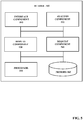
- FIG. 2 is an illustration of a contact lens circuit for a contact lens employing a hydration component 210 in accordance with aspects described herein.
- FIG. 3 is an illustration of hydration component 210 in accordance with aspects described herein.
- the contact lens circuit 200 can include one or more of the structure and/or functionality of the contact lens circuit 106 (and vice versa).
- the contact lens circuit 200 can include a hydration component 210, circuitry 220, power source 230, transmitter 240, memory 250 and/or microprocessor 260.
- the contact lens circuit 200 includes hydration component 210 and its associated components.
- hydration component 210 can be physically and/or communicatively independent (not shown) from contact lens circuit 200.
- one or more of the hydration component 210, its associated components, circuitry 220, power source 230, transmitter 240, memory 250 and/or microprocessor 260 can be communicatively coupled to one another fo perform one or more functions of contact lens circuit 200.
- the hydration component 210 can employ various means for generating/sensing information indicative of hydration level of an eye in which the contact lens employing contact lens circuit 200, is worn.
- the hydration component 210 measures conductivity or resistivity of the contact lens by employing two or more electrodes, (e.g. first electrode 310, second electrode 320, third electrode 340, fourth electrode 350, and etc.) that are located on and/or within a hydrogel body of the contact lens.
- the hydration component 210 can measure intensity of current generated between two or more points (e.g. two electrodes), located on and/or within the substrate in response to an applied voltage.
- the hydration component 210 can apply a constant current between electrodes and measure change in potential at one of the electrodes.
- conductivity and/or resistivity of the contact lens will vary depending on amount of tear fluid present on and/or within the contact lens.
- Such variance in conductivity/resistivity of the contact lens can be compared to a known base conductivity/resistivity level of the contact lens to equate hydration level of the eye in which the contact lens is worn.
- the hydration component 210 can measure sheet resistance of the contact lens (e.g. via two-terminal, three terminal, or M terminal sensing (M is an integer)).
- the hydration component 210 can use four electrodes (e.g. first electrode 310, second electrode 320, third electrode 340, and fourth electrode 350), as a four point probe.
- a four point probe is used to avoid contact resistance, which can often be of same magnitude as the sheet resistance.
- the hydration component 210 applies a constant current to two probes (e.g. first electrode 310 and second electrode 320) and measures potential on the other two probes (e.g. third electrode 340 and fourth electrode 350).
- a constant current to two probes (e.g. first electrode 310 and second electrode 320) and measures potential on the other two probes (e.g. third electrode 340 and fourth electrode 350).
- sheet resistance of the contact lens e.g.
- geometrical locations and relative geometric shape resulting from the geometrical locations of each of the respective electrodes with respect to the contact lens arc preferably known.
- geometrical locations and relative geometric shape resulting from the geometrical locations of each of the respective electrodes with respect to the contact lens arc preferably known.
- electrodes can be dispersed in a substantially straight line with substantially equal or know spacing there between.
- the two or more electrodes employed by hydration component 210 can be integrated at various locations on and/or within the substrate of the contact lens.
- electrodes may be provided on opposing surfaces of the contact lens.
- a first electrode 310 may be provided on an inner surface of the contact lens, (where the inner surface of the contact lens is the surface of the contact lens touching the eyeball when the contact lens is inserted into the eye) while a second electrode 320 may be provided on an outer surface of the contact lens (where the outer surface of the contact lens is the surface of the contact lens opposite the inner surface and facing the external environment).
- respective electrodes may be located on opposing radial sides of the contact lens and within the thickness of the substrate of the contact lens.
- the hydration component 210 employs sensor component 330 to sense properties indicative of hydration level of an eye in which the contact lens is worn.
- Sensor component 330 can include one or more sensors configured to sense swelling of the hydrogel substrate of the contact lens. The one or more sensors can be located on and/or within the hydrogel substrate. For instance, as the hydrogel (substrate of the contact lens absorbs tear fluid, it will swell. Similarly, as the hydrogel substrate of the contact lens becomes less hydrated, it will shrink.
- the one or more sensors include a pressure sensor. In another aspect, the one or more sensors include a piezoelectric sensor. In an embodiment, the hydration component 210 measures pressure within the contact lens and/or a piezoelectric effect within the contact Ions in response to swelling or shrinking (e.g. in thickness) of the hydrogel substrate from which the contact lens is made. In an aspect, the hydration component 210 measures pressure of the hydrogel with respect to two sensors where the hydrogel is sandwiched between the two sensors. It should be appreciated that depending on whether the hydrogel is swelling or shrinking as well as location, type and integration manner of a sensor on/within the hydrogel, force sensed by the sensor will vary.
- a decrease in hydration level of an eye may be associated with either an increase or decrease in procure against a sensor employed by the hydration component 210.
- the contact lens circuit 200 can further include circuitry 220, power source 230, transmitter 240, memory 250 and/or microprocessor 260.
- the hydration component 210 senses/generates information relating to hydration level of the eye in which a contact lens is worn. For example, such information includes measured pressure or piezoelectric effect on/within the contact lens.
- the hydration component 210 can further generate signals representative of sensed/generated information.
- Circuitry 210 facilitates collection of signals generated by the hydration component 210.
- circuitry 210 further facilitates processing of signal received from the hydration component.
- Circuitry 220 can further send received signals to transmitter 220, memory 250, and/or microprocessor 260.
- Power course 230 can include any suitable power source, (e.g. a battery or solar power source), that can provide necessary power for the operation of the various component of the contact lens circuit 200.
- transmitter 240 transmits sensed/generated i information indicative of a hydration level of an eye in which the contact lens is worn (e.g. hydrogel swelling information) to a reader device remote from the contact lens.
- the transmitter 240 may include an RF antenna in some aspects.
- the reader device may perform analysis and processing of the sensed/generated information indicative of a hydration level of an eye in which the contact lens is worn.
- the microprocessor 260 can receive information from the hydration component 210 indicative of a hydration level of an eye in which the contact lens is worn (e.g. hydrogel swelling information). The microprocessor 260 can further perform analysis and processing of the sensed/generated information.
- Memory 250 can store information sensed/generated by the hydration component 210 (e.g. hydrogel swelling information). Memory 250 may also store information relating hydrogel swelling information to eye hydration levels. Further, memory 250 can store information necessary for microprocessor 260 to perform calculations and determinations of hydrogel swelling. For example, memory 250 can store algorithms and known values requited for the algorithmic calculations (e.g. base values of the hydrogel thickness, etc.). Memory 250 can further store computer-executable instructions for execution by the microprocessor 260. The microprocessor 260 can execute computer-executable instructions to perform one or more functions of the contact lens circuit 200.
- Microprocessor 260 can perform a variety of functions to conduct analysis and processing of information sensed/generated by the hydration component 210 to determine eye hydration level of a wearer of the contact lens.
- the microprocessor 260 can employ any suitable information sensed/generated by hydration component 210.
- microprocessor 260 can employ combined contact lens resistivity and/or conductivity information, contact lens sheet resistance information, and hydrogel swelling information, to determine hydration level of an eye.
- the microprocessor can employ a look up sable in memory 250 relating to information sensed/generated by the hydration component 210 to an output value associated with eye hydration level.
- the microprocessor 260 can employ various algorithms relating information sensed/generated by the hydration component 210 to an output value of an eye hydration level.
- the transmitter 240 can transmit the determined eye hydration level information to a reader device.
- microprocessor can implement various classification (explicitly or implicitly trained) schemes or systems (e.g. , support vector machines, neural networks, expert systems, Bayesian belief networks, fuzzy logic, data fusion engines, etc.) in connection with performing analysis of sensed/generated information.
- Such classification can employ a probabilistic or statistical-based analysis (e.g. , factoring into the analysis utilities and costs) to prognose or infer an action that a user desires to be automatically performed.
- a support vector machine is an example of a classifier that can be employed.
- the SVM operates by finding a hyper-surface in the space of possible inputs, where the hyper-surface attempts to split the triggering criteria from the non-triggering events. Intuitively, this makes the classification correct for testing data that is near, but not identical to training data.
- Other directed and undirected model classification approaches include, e.g. , naive Bayes, Bayesian networks, decision trees, neural networks, fuzzy logic models, and probabilistic classification models providing different patterns of independence can be employed. Classification as used in this disclosure also is inclusive of statistical regression that is utilized to develop models of priority.
- the hydration component 210 performs sensing/generating of eye hydration level information on a continuous basis.
- the hydration component 210 can perform sensing/generating of eye hydration level information according to a programmed schedule, such as every minute, every thirty minutes, every hour and etc.
- Memory 250 and microprocessor 260 can facilitate directing and controlling sensing/generating by hydration component 210.
- transmitter 240 can further be configured to transmit sensed/generated information according to a same or similar programmed schedule as the hydration component 210.
- the transmitter 240 can be configured to transmit determined eye hydration levels in response to the eye hydration level being below a predetermined threshold.
- the hydration component 210 may routinely sense/generate information indicative of an eye hydration level and the microprocessor may routinely determine the eye hydration level based on the sensed/generated information.
- the transmitter 240 can send an alert to a reader device.
- the hydration component 210 can perform sensing/generating of eye hydration level information in response to a request signal.
- transmitter 240 can receive a request from a remote device for eye hydration level information.
- the hydration component 210 can sense/generate information indicative of eye hydration level information and the microprocessor can further determine or infer eye hydration level based on the sensed/generated information.
- the transmitter 240 can transmit sensed/generated and/or determined/inferred eye hydration level information back to the reader device.
- FIGs. 4A and 4B depict different perspectives of an unclaimed contact lens having a four point detection probe for generating information indicative of a hydration level of an eye on/in which the contact lens is worn.
- FIG. 4C illustrates an example contact lens having sensors for sensing information indicative of a hydration level of an eye on/in which the contact lens is worn in accordance with aspects described herein.
- FIG. 4A presented is a cross section of an unclaimed contact lens 410 comprising a four-point probe integrated therein to serve as the contact lens hydration component (e.g. hydration component 210).
- the multi-point probe of this example includes four sensors 402, 404, 406, and 408 that are configured to receive an applied voltage and generate a detectable potential value that can be analyzed to determine sheet resistance of the contact lens.
- the sheet resistance of the contact lens can further be employed to determine hydration level of the contact lens.
- the location and spacing of the four probes/electrodes can be mapped in an associated memory (e.g. memory 250).
- Contact lens 410 further includes circuitry 106.
- Circuitry 106 can include one or more of the structure and/or functionality of the contact lens circuit 200 (and vice versa). Some or all of tho fourth probes 402. 404, 406, and 408 can be electrically connected to one another and/or electrically connected to circuitry 106 (e.g. via one or more wires).
- the four probes 402, 404, 406, and 408 are located within the substrate of the contact lens 410 an within a substantially straight line with respect to one another
- the probes arc further dispersed so as to not overlap with the center of the contact lens 410 at which the iris/pupil of the eye is adjacent to when the lens is placed over the eye 104.
- the location of the probes depleted in FIG. 4A is merely demonstrative.
- the probes 402. 404, 406, and 408 may be located at various positions on/or within the substrate.
- the probes 402, 404, 406, and 408 can be located on the outer surface 412 or inner surface of the contact lens and inside or outside of the substrate.
- FIG. 4B presents a top planar view of an unclaimed contact lens 410 comprising a four-point probe integrated therein to serve as the contact lens hydration component (e.g. hydration component 210).
- the four point probe comprises electrodes 402. 404, 406 and 408.
- the electrodes can be located at various locations of the contact lens 420.
- the probes 402 and 404 arc electrically connected via a wire 416
- probes 406 and 408 are electrically connected via a wire 416.
- Each pair of probes 402-404 and 406-408 can further be connected to circuit 106 via wire 416.
- FIG. 4C depicts cross-sectional views of a hydrated contact lens 420 and a dehydrated contact lens 430, each having two pressure sensors 422 and 424 integrated therein.
- Contact lens 420 and contact lens 430 have a first sensor 424 provided on an outer surface of the contact lens and a second sensor 422 provided on an inner surface of the contact lens.
- location of the sensors can vary.
- sensor 422 and 424 can be located within the substrate and not against a surface of the contact lens.
- any suitable number sensors can be employed by a contact lens as the contact lens hydration component (e.g. hydration component 210).
- contact lens 420 is hydrated/filled with tear fluid and thus swollen.
- contact lens 420 can represent a contact lens that has been recently provided within an eye.
- contact lens 430 depicts a contact lens that has been shrunk as a result of depletion of tear fluid therein.
- contact lens 430 can represent a contact lens that is worn over a period of time in a dehydrated eye.
- the pressure between sensors 424 and 422 of contact lens 420 is greater than the pressure against sensor 424 and 422 of contact lens 430 as a result of the swelling of the contact lens 420 and/or the shrinking of contact lens 430.
- the lower pressure against contact lenses 424 and 422 of contact lens 430 can be indicative of a low hydration level of the eye 104 in which the contact lens 430 is worn.
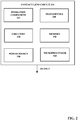
- FIG. 5 is an illustration of an exemplary non-limiting reader device 500 that interfaces with a contact lens employing a hydration component to receive information associated with hydration level of an eye in which the contact lens is worn in accordance with aspects described herein.
- the reader device 500 can include one or more of the structure and/or functionality of the reader device 110 (and vice versa).
- reader device 500 can include interface component 510, analysis component 520, display component 530, and request component 540.
- aspects of device 500 constitute machine-executable components embodied within machine(s), e.g., embodied in one or more computer readable mediums (or media) associated with one or more machines.
- Such components when executed by the one or more machines, e.g., computer(s), computing device(s), virtual machine(s), etc. can cause the machine(s) to perform the operations described.
- Device 500 can include memory 560 for storing computer executable components and instructions.
- a processor 550 can facilitate operation of the computer executable components and instructions by device 500.
- Interface component 510 interfaces with and receives from at least one contact lens, data relating an eye hydration level.
- interface component 510 can interface with contact lenses described herein that comprise a contact lens circuit such as contact lens circuit 106 and/or contact lens circuit 200.
- interface component 510 employs a receiver, such as an RF receiver, to receive sensed/generated and/or determined information from a contact lens comprising a contact lens circuit as described herein.
- interfacing component 510 can receive from a contact lens, a determined value indicating a hydration level of an eye in which the contact lens is worn.
- the contact lens may include appropriate circuitry and components to process data provided by a hydration component thereon and/or therein.
- the reader can receive raw data from a contact lens that is indicative of eye hydration levels.
- the interface component 510 may receive hydrogel swelling/shrinking information that is sensed/generated by a hydration component located within the contact lens.
- the reader 500 can comprise an analysis component 520 that can analyze the received raw data and to determine a hydration level of an eye in which the contact lens sending the information, is worn.
- the analysis component 520 can perform the same or similar analysis techniques as microprocessor 260.
- the analysis component 520 can employ any received information to determine a hydration level of an eye.
- the analysis component 520 can employ combined contact lens resistivity and/or conductivity information, contact lens sheet resistance information, and hydrogel swelling information, to determine a hydration level of an eye.
- the analysis component 520 can further employ information in memory 340 that relates the received information to an eye hydration level.
- the analysis component 520 may employ various look up tables, algorithms, and/or classifiers relating sensed/generated information to an eye hydration level.
- memory 560 can store information relating hydrogel swelling information to eye hydration levels. Further, memory 360 can store information necessary for analysis component 520 to perform calculations and determinations of hydrogel swelling. For example, memory 560 can store algorithms and known values required for the algorithmic calculations (e.g. base values of the hydrogel thickness, etc.).
- Request component 540 can transmit a request to a contact lens for data relating to a hydration level of an eye in which the contact lens is worn.
- the request component can request an eye hydration level of an eye in which the contact lens is worn and/or sensed/detected information indicative of an eye hydration level.
- the request can prompt the contact lens to perform sensing/generation and/or analysis of eye hydration level information.
- the reader device 500 can further include a display component 530 that generates a display corresponding to a hydration level of an eye in which a contact lens as described herein, is worn.
- Reader device 500 can include any suitable computing device capable of wirelessly transmitting and receiving information, displaying information. and/or processing eye hydration level information.
- reader device 500 can include but is not limited to, a cellular phone, a smart phone, a personal digital assistant, a tablet PC. a laptop computer, or a desktop computer.
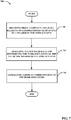
- FIGs. 6-7 illustrates methodologies or flow diagrams in accordance with certain aspects of this disclosure. While, for purposes of simplicity of explanation, the methodologies arc shown and described as a series of acts, the disclosed subject matter is not limited by the order of acts, as some acts can occur in different orders and/or concurrently with other acts from that shown and described herein. For example, those skilled in the art will understand and appreciate that a methodology can alternatively be represented as a series of interrelated states or events, such as in a state diagram. Moreover, not all illustrated acts may be required to implement a methodology in accordance with the disclosed subject matter. Additionally, it is to be appreciated that the methodologies disclosed in this disclosure are capable of being stored on an article of manufacture to facilitate transporting and transferring such methodologies to computers or other computing devices.
- a contact lens such as those described herein (e.g. 102 and the like) is employed to generate information pertaining to a hydration level of an eye in which the contact lens is worn.
- a contact lens comprising a hydration level hydration component (e.g. contact lens 102) is used to generate information associated with a hydration level of an eye in which the contact lens is worn, (e.g. using hydration component 210).
- the hydration level hydration component is employed to apply an electric current to the contact lens.
- the conductivity between two points on the contact lens resulting from the electric current is measured to determine the information associated with the hydration level (e.g. using the hydration component 210).
- a method 700 can include receiving information generated by a contact lens relating to an eye hydration level of the wearer of the contact lens (e.g. using reader device 110 or 500).
- data relating to a hydration level of an eye of a wearer of the contact lens is received from the contact lens (e.g. using interface component 510).
- the received data is analyzed and the blood alcohol level of the wearer of the contact lens is hydration level of the eye of the wearer of the contact lens is determined (e.g. using analysis component 520).
- a display is generated corresponding to the hydration level (e.g. using display component 530).
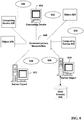
- FIG. 8 provides a schematic diagram of an exemplary networked or distributed computing environment with which one or more aspects described in this disclosure can be associated.
- the distributed computing environment includes computing objects 810, 812, etc. and computing objects or devices 820, 822, 824, 826, 828, etc., which can include programs, methods, data stores, programmable logic, etc., as represented by applications 830, 832, 834, 836, 838.
- computing objects 810, 812, etc. and computing objects or devices 820, 822, 824, 826, 828, etc. can include different devices, such as active contact lenses (and components thereof), personal digital assistants (PDAs), audio/video devices, mobile phones, MPEG-1 Audio Layer 3 (MP3) players, personal computers, laptops, tablets, etc.
- PDAs personal digital assistants
- MP3 MPEG-1 Audio Layer 3
- Each computing object 810, 812, etc. and computing objects or devices 820, 822, 824, 826, 828, etc. can communicate with one or more other computing objects 810, 812, etc. and computing objects or devices 820, 822, 824, 826, 828, etc. by way of the communications network 840, either directly or indirectly.
- network 840 can include other computing objects and computing devices that provide services to the system of FIG. 8 , and/or can represent multiple interconnected networks, which are not shown.
- the computing objects 810, 812, etc. can be Web servers, file servers, media servers, etc. with which the client computing objects or devices 820, 822, 824, 826, 828, etc. communicate via any of a number of known protocols, such as the hypertext transfer protocol (HTTP).
- HTTP hypertext transfer protocol
- the techniques described in this disclosure can be associated with any suitable device. It is to be understood, therefore, that handheld, portable and other computing devices (including active contact lens having circuitry or components that compute and/or perform various functions).
- the device can be the contact lens (or components of the contact lens) and/or the reader described herein.
- the data store can include or be included within, any of the memory described herein, any of the contact lenses described herein and/or the reader devices described herein.
- the data store can be any repository for storing information transmitted to or received from the contact lens.
- FIG. 9 illustrates an example of a suitable computing system environment 900 in which one or aspects of the aspects described in this disclosure can be implemented.
- Components of computer 910 can include, but are not limited to, a processing unit 920, a system memory 930, and a system bus 922 that couples various system components including the system memory to the processing unit 920.
- Computer 910 typically includes a variety of computer readable media and can be any available media that can be accessed by computer 910.
- the system memory 930 can include computer storage media in the form of volatile and/or nonvolatile memory such as read only memory (ROM) and/or random access memory (RAM).
- ROM read only memory
- RAM random access memory
- memory 930 can also include an operating system, application programs, other program components, and program data.
- a user can enter commands and information into the computer 910 through input devices 940 (e.g., keyboard, keypad, a pointing device, a mouse, stylus, touchpad, touch screen, motion detector, camera, microphone or any other device that allows the user to interact with the computer 910).
- input devices 940 e.g., keyboard, keypad, a pointing device, a mouse, stylus, touchpad, touch screen, motion detector, camera, microphone or any other device that allows the user to interact with the computer 910
- a monitor or other type of display device can be also connected to the system bus 922 via an interface, such as output interface 950.
- computers can also include other peripheral output devices such as speakers and a printer, which can be connected through output interface 950.
- the computer 910 can operate in a networked or distributed environment using logical connections to one or more other remote computers, such as remote computer 960.
- the remote computer 960 can be a personal computer, a server, a router, a network PC, a peer device or other common network node, or any other remote media consumption or transmission device, and can include any or all of the elements described above relative to the computer 910.
- the logical connections depicted in FIG. 9 include a network 970, such local area network (LAN) or a wide area network (WAN), but can also include other networks/buses e.g., cellular networks.
- Computer-readable storage media can be any available storage media that can be accessed by the computer, can be typically of a non-transitory nature, and can include both volatile and nonvolatile media, removable and non-removable media.
- Computer-readable storage media can be implemented in connection with any method or technology for storage of information such as computer-readable instructions, program components, structured data, or unstructured data.
- Computer-readable storage media can include, but are not limited to, RAM, ROM, electrically erasable programmable read only memory (EEPROM), flash memory or other memory technology, or other tangible and/or non-transitory media which can be used to store desired information.
- Computer-readable storage media can be accessed by one or more local or remote computing devices, e.g., via access requests, queries or other data retrieval protocols, for a variety of operations with respect to the information stored by the medium.
- the computer-readable storage media can be, or be included within, the memory, contact lens (or components thereof) or reader described herein.
- communications media typically embody computer-readable instructions, data structures, program components or other structured or unstructured data in a data signal such as a modulated data signal, e.g., a carrier wave or other transport mechanism, and includes any information delivery or transport media.
- modulated data signal or signals refers to a signal that has one or more of its characteristics set or changed in such a manner as to encode information in one or more signals.
- the aspects described in this disclosure can be implemented in hardware, software, firmware, middleware, microcode, or any combination thereof.
- the processing units can be implemented within one or more application specific integrated circuits (ASICs), digital signal processors (DSPs), digital signal processing devices (DSPDs), programmable logic devices (PLDs), field programmable gate arrays (FPGAs), processors, controllers, micro-controllers, microprocessors and/or other electronic units designed to perform the functions described in this disclosure, or a combination thereof.
- ASICs application specific integrated circuits
- DSPs digital signal processors
- DSPDs digital signal processing devices
- PLDs programmable logic devices
- FPGAs field programmable gate arrays
- processors controllers, micro-controllers, microprocessors and/or other electronic units designed to perform the functions described in this disclosure, or a combination thereof.
- the techniques described in this disclosure can be implemented with components or components (e.g., procedures, functions, and so on) that perform the functions described in this disclosure.
- the software codes can be stored in memory units and executed by processors.
Landscapes
- Health & Medical Sciences (AREA)
- Life Sciences & Earth Sciences (AREA)
- Physics & Mathematics (AREA)
- General Health & Medical Sciences (AREA)
- Ophthalmology & Optometry (AREA)
- Animal Behavior & Ethology (AREA)
- Medical Informatics (AREA)
- Biophysics (AREA)
- Veterinary Medicine (AREA)
- Engineering & Computer Science (AREA)
- Biomedical Technology (AREA)
- Heart & Thoracic Surgery (AREA)
- Public Health (AREA)
- Molecular Biology (AREA)
- Surgery (AREA)
- Pathology (AREA)
- General Physics & Mathematics (AREA)
- Optics & Photonics (AREA)
- Nuclear Medicine, Radiotherapy & Molecular Imaging (AREA)
- Radiology & Medical Imaging (AREA)
- Eyeglasses (AREA)
Claims (15)
- Kontaktlinse (102), die Folgendes umfasst:ein Substrat, das zumindest einen Teil eines Körpers der Kontaktlinse (102) ausbildet,wobei das Substrat ein Hydrogel umfasst; undeine Hydratisierungskomponente (210), die ausgelegt ist, um Informationen zu erzeugen, die dem Hydratisierungsgrad eines Auges, in dem die Kontaktlinse (102) getragen wird, zugeordnet sind;wobei die Hydratisierungskomponente (210) einen oder mehrere Sensoren umfasst, um die dem Hydratisierungsgrad zugeordneten Informationen zu erzeugen;wobei der eine oder die mehreren Sensoren zumindest einen Sensor (330) umfassen, der ausgelegt ist, um ein Aufquellen des Hydrogels zu erfassen, undwobei die Kontaktlinse außerdem einen Prozessor (260) umfasst, der ausgelegt ist, um den Hydratisierungsgrad des Auges, in dem die Kontaktlinse (102) getragen wird, auf Basis der Informationen zu bestimmen.
- Kontaktlinse (102) nach Anspruch 1, wobei zumindest einer des einen oder der mehreren Sensoren ein Drucksensor (422, 424) ist, der ausgelegt ist, um den dem Aufquellen des Hydrogels zugeordneten Druck zu messen.
- Kontaktlinse (102) nach Anspruch 1, wobei zumindest einer des einen oder der mehreren Sensoren ein piezoelektrischer Sensor ist, der ausgelegt ist, um einen piezoelektrischen Effekt zu messen, der aus dem dem Aufquellen des Hydrogels zugeordneten Druck resultiert.
- Kontaktlinse (102) nach Anspruch 1, die außerdem Folgendes umfasst:eine Schaltung (200), die auf oder in dem Substrat angeordnet und ausgelegt ist, um die dem Hydratisierungsgrad zugeordneten Informationen zu empfangen; undeinen Sender (240), der ausgelegt ist, um die dem Hydratisierungsgrad zugeordneten Informationen zu senden.
- Kontaktlinse (102) nach Anspruch 4, wobei der Sender (240) ausgelegt ist, um die dem Hydratisierungsgrad zugeordneten Informationen als Antwort auf eine Anfrage zu senden.
- Kontaktlinse (102) nach Anspruch 5, wobei der Prozessor (260) ausgelegt ist, um:den Hydratisierungsgrad als Antwort auf eine Anfrage zu bestimmen, und wobei der Sender (240) ausgelegt ist, um Daten, die den Hydratisierungsgrad anzeigen, als Antwort auf die Anfrage zu senden; oderden Hydratisierungsgrad regelmäßig basierend auf einem programmierten Zeitplan zu bestimmen.
- Kontaktlinse (102) nach Anspruch 5, wobei der Sender (240) ausgelegt ist, um die dem Hydratisierungsgrad zugeordneten Informationen als Antwort auf eine Bestimmung, dass der Hydratisierungsgrad unter einem vorbestimmten Schwellenwert liegt, zu senden.
- Verfahren, das Folgendes umfasst:das Erzeugen von Informationen, die einem Hydratisierungsgrad eines Auges, in dem eine Kontaktlinse (102) getragen wird, zugeordnet sind,wobei das Verfahren eine Hydratisierungskomponente (210) innerhalb der Kontaktlinse (102) nutzt,wobei die Hydratisierungskomponente (210) einen oder mehrere Sensoren nutzt, um die dem Hydratisierungsgrad zugeordneten Informationen zu erzeugen,wobei zumindest einer des einen oder der mehreren Sensoren (330) ausgelegt ist, um ein Aufquellen eines Hydrogels in der Kontaktlinse (102) zu erfassen, undwobei das Verfahren das Bestimmen des Hydratisierungsgrades des Auges, in dem die Kontaktlinse (102) getragen wird, auf Basis der erzeugten Informationen umfasst.
- Verfahren nach Anspruch 8, wobei zumindest einer des einen oder der mehreren Sensoren ein Drucksensor (422, 424) ist, der den dem Aufquellen des Hydrogels zugeordneten Druck misst.
- Verfahren nach Anspruch 8, wobei zumindest einer des einen oder der mehreren Sensoren ein piezoelektrischer Sensor ist, der einen piezoelektrischen Effekt misst, der aus dem dem Aufquellen des Hydrogels zugeordneten Druck resultiert.
- Verfahren nach Anspruch 8, das außerdem Folgendes umfasst:das Empfangen der Informationen über eine Schaltung (200), die auf oder in der Kontaktlinse (102) angeordnet ist; unddas Senden der Informationen an eine Vorrichtung (500), die sich von der Kontaktlinse (102) entfernt befindet.
- Verfahren nach Anspruch 11, wobei das Senden der Informationen das Senden der Informationen als Antwort auf eine Anfrage von der entfernten Vorrichtung (500) umfasst.
- Verfahren nach Anspruch 12, wobei das Senden der Informationen das Senden der Informationen als Reaktion auf die Bestimmung, dass der Hydratisierungsgrad unter einem vorbestimmten Schwellenwert liegt, umfasst; oder
wobei das Bestimmen der Informationen das regelmäßige Bestimmen der Informationen gemäß einem programmierten Zeitplan umfasst. - System, das Folgendes umfasst:eine Kontaktlinse (102), die Folgendes umfasst:ein Substrat, das zumindest einen Teil eines Körpers der Kontaktlinse (102) ausbildet,wobei das Substrat ein Hydrogel umfasst;eine Hydratisierungskomponente (210), die ausgelegt ist, um Informationen zu erzeugen, die einem Hydratisierungsgrad eines Auges, in dem die Kontaktlinse (102) getragen wird, zugeordnet sind; undeinen Sender (240), der ausgelegt ist, um die dem Hydratisierungsgrad zugeordneten Informationen zu senden,wobei die Hydratisierungskomponente (210) einen oder mehrere Sensoren umfasst, um die dem Hydratisierungsgrad zugeordneten Informationen zu erzeugen, undwobei der eine oder die mehreren Sensoren zumindest einen Sensor (330) umfassen, der ausgelegt ist, um ein Aufquellen des Hydrogels zu erfassen; undeine Vorrichtung (500) zur Verwendung mit der Kontaktlinse, wobei die Vorrichtung Folgendes umfasst:einen Speicher (560), der computerausführbare Komponenten speichert; undeinen Prozessor (550), der ausgelegt ist, um die folgenden, in dem Speicher (560) gespeicherten computerausführbaren Komponenten auszuführen:eine Schnittstellenkomponente (510), die sich mit der Kontaktlinse (102) verbindet und von dieser die Daten betreffend den Hydratisierungsgrad des Auges empfängt;eine Analysekomponente (520), die die empfangenen Daten analysiert und den Hydratisierungsgrad des Auges bestimmt; undeine Anzeigekomponente (530), die eine Anzeige entsprechend dem Hydratisierungsgrad erzeugt.
- System nach Anspruch 14, das außerdem eine Anfragekomponente (450) umfasst, die ausgelegt ist, um eine Anfrage an die Kontaktlinse (102) für die Daten betreffend den Hydratisierungsgrad des Auges des Trägers der Kontaktlinse (102) zu senden.
Applications Claiming Priority (2)
| Application Number | Priority Date | Filing Date | Title |
|---|---|---|---|
| US13/626,603 US8989834B2 (en) | 2012-09-25 | 2012-09-25 | Wearable device |
| PCT/US2013/060688 WO2014052164A1 (en) | 2012-09-25 | 2013-09-19 | Wearable device |
Publications (3)
| Publication Number | Publication Date |
|---|---|
| EP2901206A1 EP2901206A1 (de) | 2015-08-05 |
| EP2901206A4 EP2901206A4 (de) | 2016-11-16 |
| EP2901206B1 true EP2901206B1 (de) | 2021-04-07 |
Family
ID=50338520
Family Applications (1)
| Application Number | Title | Priority Date | Filing Date |
|---|---|---|---|
| EP13841094.9A Active EP2901206B1 (de) | 2012-09-25 | 2013-09-19 | Kontaktlinse mit bestimmung des hydrationsgrades, zugehöriges verfahren und system |
Country Status (3)
| Country | Link |
|---|---|
| US (1) | US8989834B2 (de) |
| EP (1) | EP2901206B1 (de) |
| WO (1) | WO2014052164A1 (de) |
Families Citing this family (49)
| Publication number | Priority date | Publication date | Assignee | Title |
|---|---|---|---|---|
| US9812096B2 (en) | 2008-01-23 | 2017-11-07 | Spy Eye, Llc | Eye mounted displays and systems using eye mounted displays |
| US10028824B2 (en) | 2012-01-24 | 2018-07-24 | Clarvista Medical, Inc. | Modular intraocular lens designs, tools and methods |
| US9364316B1 (en) | 2012-01-24 | 2016-06-14 | Clarvista Medical, Inc. | Modular intraocular lens designs, tools and methods |
| US10080648B2 (en) | 2012-01-24 | 2018-09-25 | Clarvista Medical, Inc. | Modular intraocular lens designs, tools and methods |
| JP6270739B2 (ja) | 2012-01-24 | 2018-01-31 | ザ リージェンツ オブ ザ ユニバーシティ オブ コロラド, ア ボディー コーポレイトTHE REGENTS OF THE UNIVERSITY OF COLORADO, a body corporate | モジュール式眼内レンズの設計および方法 |
| US9696564B1 (en) | 2012-08-21 | 2017-07-04 | Verily Life Sciences Llc | Contact lens with metal portion and polymer layer having indentations |
| US9176332B1 (en) * | 2012-10-24 | 2015-11-03 | Google Inc. | Contact lens and method of manufacture to improve sensor sensitivity |
| TWI494638B (zh) * | 2012-12-12 | 2015-08-01 | Univ Nat Taiwan | 眼壓變化監控系統、其方法及用以感測眼壓變化之隱形眼鏡 |
| US9304230B2 (en) * | 2013-03-15 | 2016-04-05 | Johnson & Johnson Vision Care, Inc. | Hydrogel lens including a removable media insert |
| US9873233B2 (en) * | 2013-03-15 | 2018-01-23 | Johnson & Johnson Vision Care, Inc. | Ophthalmic lens viewing sets for three-dimensional perception of stereoscopic media |
| US9977256B2 (en) * | 2013-05-30 | 2018-05-22 | Johnson & Johnson Vision Care, Inc. | Methods for manufacturing and programming an energizable ophthalmic lens with a programmable media insert |
| US20150148648A1 (en) * | 2013-11-22 | 2015-05-28 | Johnson & Johnson Vision Care, Inc. | Ophthalmic lens with intraocular pressure monitoring system |
| US9993335B2 (en) | 2014-01-08 | 2018-06-12 | Spy Eye, Llc | Variable resolution eye mounted displays |
| WO2015123616A1 (en) | 2014-02-13 | 2015-08-20 | David Markus | Piezoelectric sensor for vision correction |
| AU2015219461B2 (en) | 2014-02-18 | 2019-10-31 | Alcon Inc. | Modular intraocular lens designs, tools and methods |
| US10845620B2 (en) | 2014-12-08 | 2020-11-24 | Aleksandr Shtukater | Smart contact lens |
| ES3023708T3 (en) | 2015-01-30 | 2025-06-03 | Alcon Inc | Inserter for inserting a base and a lens of a modular intraocular lens into an eye |
| US20180055448A1 (en) * | 2015-03-26 | 2018-03-01 | Koninklijke Philips N.V. | Contact lens for analyzing ocular fluid |
| CA3002085A1 (en) | 2015-11-04 | 2017-05-11 | The Regents Of The University Of Colorado, A Body Corporate | Modular intraocular lens designs, tools and methods |
| US10353463B2 (en) * | 2016-03-16 | 2019-07-16 | RaayonNova LLC | Smart contact lens with eye driven control system and method |
| US11045309B2 (en) | 2016-05-05 | 2021-06-29 | The Regents Of The University Of Colorado | Intraocular lens designs for improved stability |
| US11099405B2 (en) | 2016-09-17 | 2021-08-24 | Raayon Nova LLC | Master slave smart contact lens system |
| US10575775B2 (en) | 2016-10-31 | 2020-03-03 | Motorola Solutions, Inc. | Method and apparatus for monitoring hydration using a portable communication device |
| US10649233B2 (en) | 2016-11-28 | 2020-05-12 | Tectus Corporation | Unobtrusive eye mounted display |
| US20180173013A1 (en) * | 2016-12-21 | 2018-06-21 | Johnson & Johnson Vision Care, Inc. | Electrode configuration for sensing ciliary impedance |
| US10620144B2 (en) * | 2017-02-27 | 2020-04-14 | Verily Life Sciences Llc | Impedance-based measurement of eye-mountable lens hydration |
| US10761347B2 (en) | 2017-03-23 | 2020-09-01 | Verily Life Sciences Llc | Ophthalmic device with built-in self-test circuitry for testing an adjustable lens |
| US11382736B2 (en) | 2017-06-27 | 2022-07-12 | Alcon Inc. | Injector, intraocular lens system, and related methods |
| US10673414B2 (en) | 2018-02-05 | 2020-06-02 | Tectus Corporation | Adaptive tuning of a contact lens |
| US10505394B2 (en) | 2018-04-21 | 2019-12-10 | Tectus Corporation | Power generation necklaces that mitigate energy absorption in the human body |
| US10895762B2 (en) | 2018-04-30 | 2021-01-19 | Tectus Corporation | Multi-coil field generation in an electronic contact lens system |
| US10838239B2 (en) | 2018-04-30 | 2020-11-17 | Tectus Corporation | Multi-coil field generation in an electronic contact lens system |
| US20190346692A1 (en) * | 2018-05-09 | 2019-11-14 | Johnson & Johnson Vision Care, Inc. | Electronic ophthalmic lens for measuring distance using ultrasound time-of-flight |
| US10790700B2 (en) | 2018-05-18 | 2020-09-29 | Tectus Corporation | Power generation necklaces with field shaping systems |
| US10996769B2 (en) * | 2018-06-11 | 2021-05-04 | Tectus Corporation | Contact lens-based eye tracking |
| US11137622B2 (en) | 2018-07-15 | 2021-10-05 | Tectus Corporation | Eye-mounted displays including embedded conductive coils |
| US10529107B1 (en) | 2018-09-11 | 2020-01-07 | Tectus Corporation | Projector alignment in a contact lens |
| RU189501U1 (ru) * | 2018-11-12 | 2019-05-24 | Федеральное государственное бюджетное учреждение "Московский научно-исследовательский институт глазных болезней имени Гельмгольца" Министерства здравоохранения Российской Федерации | Устройство для многоканальной электроимпедансной оценки кровотока в глазничной артерии и сосудах передней части головного мозга |
| US10838232B2 (en) | 2018-11-26 | 2020-11-17 | Tectus Corporation | Eye-mounted displays including embedded solenoids |
| US10644543B1 (en) | 2018-12-20 | 2020-05-05 | Tectus Corporation | Eye-mounted display system including a head wearable object |
| US11907417B2 (en) | 2019-07-25 | 2024-02-20 | Tectus Corporation | Glance and reveal within a virtual environment |
| US10944290B2 (en) | 2019-08-02 | 2021-03-09 | Tectus Corporation | Headgear providing inductive coupling to a contact lens |
| US10901505B1 (en) | 2019-10-24 | 2021-01-26 | Tectus Corporation | Eye-based activation and tool selection systems and methods |
| US11662807B2 (en) | 2020-01-06 | 2023-05-30 | Tectus Corporation | Eye-tracking user interface for virtual tool control |
| US12135471B2 (en) | 2021-09-10 | 2024-11-05 | Tectus Corporation | Control of an electronic contact lens using eye gestures |
| US11357620B1 (en) | 2021-09-10 | 2022-06-14 | California LASIK & Eye, Inc. | Exchangeable optics and therapeutics |
| US11592899B1 (en) | 2021-10-28 | 2023-02-28 | Tectus Corporation | Button activation within an eye-controlled user interface |
| US11619994B1 (en) | 2022-01-14 | 2023-04-04 | Tectus Corporation | Control of an electronic contact lens using pitch-based eye gestures |
| US11874961B2 (en) | 2022-05-09 | 2024-01-16 | Tectus Corporation | Managing display of an icon in an eye tracking augmented reality device |
Family Cites Families (174)
| Publication number | Priority date | Publication date | Assignee | Title |
|---|---|---|---|---|
| US4055378A (en) | 1971-12-31 | 1977-10-25 | Agfa-Gevaert Aktiengesellschaft | Silicone contact lens with hydrophilic surface treatment |
| US4122942A (en) | 1974-01-31 | 1978-10-31 | Wolfson Leonard G | Hydrophilic contact lens case |
| US3958560A (en) | 1974-11-25 | 1976-05-25 | Wayne Front March | Non-invasive automatic glucose sensor system |
| US4014321A (en) | 1974-11-25 | 1977-03-29 | March Wayne F | Non-invasive glucose sensor system |
| US4143949A (en) | 1976-10-28 | 1979-03-13 | Bausch & Lomb Incorporated | Process for putting a hydrophilic coating on a hydrophobic contact lens |
| US4136250A (en) | 1977-07-20 | 1979-01-23 | Ciba-Geigy Corporation | Polysiloxane hydrogels |
| US4153641A (en) | 1977-07-25 | 1979-05-08 | Bausch & Lomb Incorporated | Polysiloxane composition and contact lens |
| DE2756114B1 (de) | 1977-12-16 | 1979-05-23 | Titmus Eurocon Kontaktlinsen | Verfahren zur Oberflaechenbehandlung einer harten oder dehydratisierten hydrophilen Kontaktlinse |
| US4309085A (en) | 1979-07-12 | 1982-01-05 | Morrison Robert J | Method for measuring eye features with a contact lens |
| US4312575A (en) | 1979-09-18 | 1982-01-26 | Peyman Gholam A | Soft corneal contact lens with tightly cross-linked polymer coating and method of making same |
| US4401371A (en) | 1979-09-24 | 1983-08-30 | Neefe Charles W | Hydrogel oxygen generator with improved fluid flow |
| US4555372A (en) | 1981-03-23 | 1985-11-26 | Bausch & Lomb Incorporated | Rotational molding of contact lenses |
| US4604479A (en) | 1981-12-04 | 1986-08-05 | Polymer Technology Corporation | Silicone-containing contact lens material and contact lenses made thereof |
| US4826936A (en) | 1981-12-04 | 1989-05-02 | Polymer Technology Corp. | Silicone-containing contact lens material and contact lenses made thereof |
| US4463149A (en) | 1982-03-29 | 1984-07-31 | Polymer Technology Corporation | Silicone-containing contact lens material and contact lenses made thereof |
| JPS60163901A (ja) | 1984-02-04 | 1985-08-26 | Japan Synthetic Rubber Co Ltd | プラズマ重合処理方法 |
| US4996275A (en) | 1985-10-11 | 1991-02-26 | Polymer Technology Corporation | Fluorine containing polymeric compositions useful in contact lenses |
| US4686267A (en) | 1985-10-11 | 1987-08-11 | Polymer Technology Corporation | Fluorine containing polymeric compositions useful in contact lenses |
| US4740533A (en) | 1987-07-28 | 1988-04-26 | Ciba-Geigy Corporation | Wettable, flexible, oxygen permeable, substantially non-swellable contact lens containing block copolymer polysiloxane-polyoxyalkylene backbone units, and use thereof |
| CA1305873C (en) | 1987-05-26 | 1992-08-04 | Howel Gwynne Giles | Method and means for detecting alcohol levels in humans |
| US5018849A (en) | 1988-11-16 | 1991-05-28 | Ciba-Geigy Corporation | Colored contact lens and methods of making the same |
| US4951683A (en) | 1989-01-19 | 1990-08-28 | Davis Jeffrey P | Device for detecting keratoconjunctivitis sicca |
| US5326584A (en) | 1989-04-24 | 1994-07-05 | Drexel University | Biocompatible, surface modified materials and method of making the same |
| GB8909491D0 (en) | 1989-04-26 | 1989-06-14 | Glynn Christopher J | Device for real-time monitoring of human or animal bodily functions |
| US5070215A (en) | 1989-05-02 | 1991-12-03 | Bausch & Lomb Incorporated | Novel vinyl carbonate and vinyl carbamate contact lens material monomers |
| US5034461A (en) | 1989-06-07 | 1991-07-23 | Bausch & Lomb Incorporated | Novel prepolymers useful in biomedical devices |
| US5177168A (en) | 1989-10-17 | 1993-01-05 | Polymer Technology Corp. | Polymeric compositions useful in oxygen permeable contact lenses |
| US5032658A (en) | 1989-10-17 | 1991-07-16 | Polymer Technology Corporation | Polymeric compositions useful in oxygen permeable contact lenses |
| US5135297A (en) | 1990-11-27 | 1992-08-04 | Bausch & Lomb Incorporated | Surface coating of polymer objects |
| US5177165A (en) | 1990-11-27 | 1993-01-05 | Bausch & Lomb Incorporated | Surface-active macromonomers |
| US5219965A (en) | 1990-11-27 | 1993-06-15 | Bausch & Lomb Incorporated | Surface modification of polymer objects |
| US5271875A (en) | 1991-09-12 | 1993-12-21 | Bausch & Lomb Incorporated | Method for molding lenses |
| US5310779A (en) | 1991-11-05 | 1994-05-10 | Bausch & Lomb Incorporated | UV curable crosslinking agents useful in copolymerization |
| US5358995A (en) | 1992-05-15 | 1994-10-25 | Bausch & Lomb Incorporated | Surface wettable silicone hydrogels |
| US5260000A (en) | 1992-08-03 | 1993-11-09 | Bausch & Lomb Incorporated | Process for making silicone containing hydrogel lenses |
| US5336797A (en) | 1992-12-30 | 1994-08-09 | Bausch & Lomb Incorporated | Siloxane macromonomers |
| ATE321575T1 (de) * | 1993-01-15 | 2006-04-15 | Mark L Pankow | Vorrichtung zur behandlung von kontaktlinsen |
| US5321108A (en) | 1993-02-12 | 1994-06-14 | Bausch & Lomb Incorporated | Fluorosilicone hydrogels |
| US5346976A (en) | 1993-03-29 | 1994-09-13 | Polymer Technology Corporation | Itaconate copolymeric compositions for contact lenses |
| US5616757A (en) | 1993-04-08 | 1997-04-01 | Bausch & Lomb Incorporated | Organosilicon-containing materials useful for biomedical devices |
| TW253849B (de) | 1993-08-09 | 1995-08-11 | Ciba Geigy | |
| WO1995017689A1 (en) | 1993-12-21 | 1995-06-29 | Bausch & Lomb Incorporated | Method for increasing hydrophilicity of contact lenses |
| US5472436A (en) | 1994-07-26 | 1995-12-05 | Fremstad; Daria A. | Ocular appliance for delivering medication |
| US5760100B1 (en) | 1994-09-06 | 2000-11-14 | Ciba Vision Corp | Extended wear ophthalmic lens |
| US5585871A (en) | 1995-05-26 | 1996-12-17 | Linden; Harry | Multi-function display apparatus |
| BR9611859A (pt) | 1995-12-07 | 1999-05-04 | Bausch & Lomb | Composição de silicone polimérico com baixo teor de água lente de contato e método para produzir uma composição de silicone polimérico com baixo teor de água |
| EP0865444B1 (de) | 1995-12-07 | 2001-09-19 | BAUSCH & LOMB INCORPORATED | Monomere zur reduzierung des modulus von siloxynhydrogele |
| US5682210A (en) | 1995-12-08 | 1997-10-28 | Weirich; John | Eye contact lens video display system |
| US6544193B2 (en) | 1996-09-04 | 2003-04-08 | Marcio Marc Abreu | Noninvasive measurement of chemical substances |
| US6120460A (en) | 1996-09-04 | 2000-09-19 | Abreu; Marcio Marc | Method and apparatus for signal acquisition, processing and transmission for evaluation of bodily functions |
| US5708094A (en) | 1996-12-17 | 1998-01-13 | Bausch & Lomb Incorporated | Polybutadiene-based compositions for contact lenses |
| US6145736A (en) | 1997-12-17 | 2000-11-14 | Kellogg Company | Dispensing assembly for a lined carton and process and apparatus thereof |
| US5981669A (en) | 1997-12-29 | 1999-11-09 | Bausch & Lomb Incorporated | Silicone-containing prepolymers and low water materials |
| US5935155A (en) | 1998-03-13 | 1999-08-10 | John Hopkins University, School Of Medicine | Visual prosthesis and method of using same |
| US6614408B1 (en) | 1998-03-25 | 2003-09-02 | W. Stephen G. Mann | Eye-tap for electronic newsgathering, documentary video, photojournalism, and personal safety |
| US6131580A (en) | 1998-04-17 | 2000-10-17 | The University Of Washington | Template imprinted materials by RFGD plasma deposition |
| AU740278B2 (en) | 1998-05-05 | 2001-11-01 | Bausch & Lomb Incorporated | Plasma surface treatment of silicone hydrogel contact lenses |
| AU3786699A (en) | 1998-05-05 | 1999-11-23 | Bausch & Lomb Incorporated | Surface treatment of silicone hydrogel contact lenses |
| US7398119B2 (en) | 1998-07-13 | 2008-07-08 | Childrens Hospital Los Angeles | Assessing blood brain barrier dynamics or identifying or measuring selected substances, including ethanol or toxins, in a subject by analyzing Raman spectrum signals |
| US6087941A (en) | 1998-09-01 | 2000-07-11 | Ferraz; Mark | Warning device for alerting a person falling asleep |
| EP1130996B1 (de) | 1998-11-20 | 2005-04-13 | The University of Connecticut | Generisch integriete implantierbare potentiostat fernmessanordnung für elektrochemische fühler |
| US6532298B1 (en) | 1998-11-25 | 2003-03-11 | Iridian Technologies, Inc. | Portable authentication device and method using iris patterns |
| US6550915B1 (en) | 1998-12-21 | 2003-04-22 | Bausch & Lomb Incorporated | Surface treatment of fluorinated contact lens materials |
| US6450642B1 (en) | 1999-01-12 | 2002-09-17 | California Institute Of Technology | Lenses capable of post-fabrication power modification |
| DE19921399C2 (de) | 1999-05-07 | 2003-12-18 | Univ Eberhard Karls | Retina-Implantat |
| US6630243B2 (en) | 1999-05-20 | 2003-10-07 | Bausch & Lomb Incorporated | Surface treatment of silicone hydrogel contact lenses comprising hydrophilic polymer chains attached to an intermediate carbon coating |
| US6213604B1 (en) | 1999-05-20 | 2001-04-10 | Bausch & Lomb Incorporated | Plasma surface treatment of silicone hydrogel contact lenses with a flexible carbon coating |
| US6200626B1 (en) | 1999-05-20 | 2001-03-13 | Bausch & Lomb Incorporated | Surface-treatment of silicone medical devices comprising an intermediate carbon coating and graft polymerization |
| US6440571B1 (en) | 1999-05-20 | 2002-08-27 | Bausch & Lomb Incorporated | Surface treatment of silicone medical devices with reactive hydrophilic polymers |
| US6851805B2 (en) | 1999-07-02 | 2005-02-08 | E-Vision, Llc | Stabilized electro-active contact lens |
| US20020007113A1 (en) | 1999-08-26 | 2002-01-17 | March Wayne Front | Ocular analyte sensor |
| WO2001016641A1 (en) | 1999-08-31 | 2001-03-08 | Johnson & Johnson Vision Care, Inc. | Rotationally stabilized contact lenses |
| US6579235B1 (en) | 1999-11-01 | 2003-06-17 | The Johns Hopkins University | Method for monitoring intraocular pressure using a passive intraocular pressure sensor and patient worn monitoring recorder |
| AU1583601A (en) | 1999-11-05 | 2001-06-06 | Bausch & Lomb Incorporated | Surface treatment of non-plasma treated silicone hydrogel contact lenses |
| US6431705B1 (en) | 1999-11-10 | 2002-08-13 | Infoeye | Eyewear heart rate monitor |
| US6939299B1 (en) | 1999-12-13 | 2005-09-06 | Kurt Petersen | Implantable continuous intraocular pressure sensor |
| US7998412B2 (en) | 2000-01-07 | 2011-08-16 | Smart Holograms Limited | Ophthalmic device comprising a holographic sensor |
| US6735328B1 (en) | 2000-03-07 | 2004-05-11 | Agilent Technologies, Inc. | Personal viewing device with system for providing identification information to a connected system |
| US6599559B1 (en) | 2000-04-03 | 2003-07-29 | Bausch & Lomb Incorporated | Renewable surface treatment of silicone medical devices with reactive hydrophilic polymers |
| US6428839B1 (en) | 2000-06-02 | 2002-08-06 | Bausch & Lomb Incorporated | Surface treatment of medical device |
| US6779888B2 (en) | 2000-07-28 | 2004-08-24 | Ocular Sciences, Inc. | Contact lenses with microchannels |
| US6749568B2 (en) | 2000-08-21 | 2004-06-15 | Cleveland Clinic Foundation | Intraocular pressure measurement system including a sensor mounted in a contact lens |
| CA2420861C (en) | 2000-09-19 | 2007-04-24 | Joseph A. Mcgee | Method for applying polymeric lens coating |
| AU2002220570A1 (en) | 2000-09-28 | 2002-04-08 | Novartis Pharma Gmbh | Fenestrated lens for increased tear flow and method for making the same |
| US6885818B2 (en) | 2001-07-30 | 2005-04-26 | Hewlett-Packard Development Company, L.P. | System and method for controlling electronic devices |
| US6570386B2 (en) | 2001-07-30 | 2003-05-27 | Hewlett-Packard Development Company, L.P. | System and method for providing power to electrical devices |
| JP2003195230A (ja) | 2001-12-21 | 2003-07-09 | Nippon Telegr & Teleph Corp <Ntt> | コンタクトレンズ、コンタクトレンズの探査具及びこれらを用いた探索方法、並びにコンタクトレンズのデータ管理システム |
| US20030149350A1 (en) | 2002-02-05 | 2003-08-07 | Vittorio Porciatti | Glaucoma screening system and method |
| US20030179094A1 (en) | 2002-03-08 | 2003-09-25 | Abreu Marcio Marc | Signal-to-product coupling |
| JP2005535942A (ja) | 2002-08-09 | 2005-11-24 | イー・ビジョン・エルエルシー | 電気駆動のコンタクトレンズ系 |
| US7429465B2 (en) | 2002-09-13 | 2008-09-30 | Novartis Ag | Process for analyzing tear fluid |
| US7964390B2 (en) | 2002-10-11 | 2011-06-21 | Case Western Reserve University | Sensor system |
| US7131945B2 (en) | 2002-10-16 | 2006-11-07 | California Institute Of Technology | Optically powered and optically data-transmitting wireless intraocular pressure sensor device |
| US6958169B2 (en) | 2002-12-17 | 2005-10-25 | Bausch & Lomb Incorporated | Surface treatment of medical device |
| US20040254438A1 (en) | 2003-01-09 | 2004-12-16 | The Regents Of The University Of California | Implantable devices and methods for measuring intraocular, subconjunctival or subdermal pressure and/or analyte concentration |
| WO2004064629A1 (en) | 2003-01-21 | 2004-08-05 | Ehrfeld Miktotechnik Ag | Sensor system for detecting analytes in tear fluid |
| US20040181172A1 (en) | 2003-03-12 | 2004-09-16 | Carney Fiona Patricia | Devices for collecting analytes of interest in tears |
| EP1629449B1 (de) | 2003-05-26 | 2008-09-03 | Securecom Technologies Limited | Tragbare kommunikationsvorrichtung |
| DE10329615A1 (de) | 2003-06-23 | 2005-03-03 | Eberhard-Karls-Universität Tübingen Universitätsklinikum | Aktives Retina-Implantat mit einer Vielzahl von Bildelementen |
| US8131333B2 (en) | 2003-08-07 | 2012-03-06 | Eyesense Ag | Ophthalmic sensor |
| US7250197B2 (en) | 2003-08-25 | 2007-07-31 | Bausch & Lomb Incorporated | Plasma treatment of contact lens and IOL |
| DE602004004415T2 (de) | 2003-10-03 | 2007-10-18 | Invisia Ltd. | Multifocal-linse |
| US7601274B2 (en) | 2004-03-31 | 2009-10-13 | The University Of Connecticut | Shape memory main-chain smectic-C elastomers |
| WO2006015315A2 (en) | 2004-07-30 | 2006-02-09 | University Of Rochester Medical Center | Intraocular video system |
| JP4455216B2 (ja) | 2004-08-06 | 2010-04-21 | キヤノン株式会社 | 検出装置 |
| KR20060044058A (ko) | 2004-11-11 | 2006-05-16 | 삼성전자주식회사 | 투과반사를 이용한 혈중성분 측정 장치 및 방법 |
| GB2422660C (en) | 2005-01-27 | 2018-04-25 | H Icheck Ltd | Improved device for monitoring body functions |
| US20070121065A1 (en) | 2005-03-24 | 2007-05-31 | Cox David D | Device and method for tracking eye gaze direction |
| TWI249772B (en) | 2005-06-07 | 2006-02-21 | Siliconware Precision Industries Co Ltd | Semiconductor device for accommodating large chip, fabrication method thereof, and carrier used in the semiconductor device |
| US20080218696A1 (en) | 2005-07-01 | 2008-09-11 | Jose Mir | Non-Invasive Monitoring System |
| US7384145B2 (en) | 2006-02-16 | 2008-06-10 | The Board Of Trustees Of The University Of Illinois | Mapping retinal function using corneal electrode array |
| US8118752B2 (en) | 2006-02-16 | 2012-02-21 | The Board Of Trustees Of The University Of Illinois | Apparatus and methods for mapping retinal function |
| US7885698B2 (en) | 2006-02-28 | 2011-02-08 | Abbott Diabetes Care Inc. | Method and system for providing continuous calibration of implantable analyte sensors |
| GB0604845D0 (en) | 2006-03-10 | 2006-04-19 | Ocutec Ltd | Polymeric Materials |
| US8224415B2 (en) | 2009-01-29 | 2012-07-17 | Abbott Diabetes Care Inc. | Method and device for providing offset model based calibration for analyte sensor |
| CA2587097A1 (en) | 2006-04-12 | 2007-10-12 | Rikke Dootjes | Lens |
| TW200741278A (en) | 2006-04-28 | 2007-11-01 | Wei-Bin Shiu | Contact lenses |
| WO2007136993A1 (en) * | 2006-05-17 | 2007-11-29 | Mayo Foundation For Medical Education And Research | Monitoring intraocular pressure |
| US7878650B2 (en) | 2006-06-29 | 2011-02-01 | Fritsch Michael H | Contact lens materials, designs, substances, and methods |
| US20110274680A1 (en) | 2009-10-02 | 2011-11-10 | Mazed Mohammad A | Chemical composition and its delivery for lowering the risks of alzheimer's, cardiov ascular and type-2 diabetes diseases |
| DE102007003341B4 (de) | 2007-01-17 | 2018-01-04 | Eyesense Ag | Okularsensor und Messsystem zum Nachweis eines Analyten in einer Augenflüssigkeit |
| AR064986A1 (es) | 2007-01-22 | 2009-05-06 | Pixeloptics Inc | Material cristalino liquido colesterico en lente electroactiva |
| AR064985A1 (es) | 2007-01-22 | 2009-05-06 | E Vision Llc | Lente electroactivo flexible |
| AU2008218240B2 (en) | 2007-02-23 | 2014-01-30 | E-Vision Smart Optics, Inc. | Ophthalmic dynamic aperture |
| US8446341B2 (en) | 2007-03-07 | 2013-05-21 | University Of Washington | Contact lens with integrated light-emitting component |
| WO2008109867A2 (en) * | 2007-03-07 | 2008-09-12 | University Of Washington | Active contact lens |
| US8679859B2 (en) | 2007-03-12 | 2014-03-25 | State of Oregon by and through the State Board of Higher Education on behalf of Porland State University | Method for functionalizing materials and devices comprising such materials |
| WO2009032122A1 (en) | 2007-08-31 | 2009-03-12 | Novartis Ag | Contact lens packaging solutions |
| CN101910832A (zh) | 2007-11-02 | 2010-12-08 | 爱德华兹生命科学公司 | 具有用于系统转移或主要电源缺失的备用电源的分析物监测系统 |
| US8608310B2 (en) | 2007-11-07 | 2013-12-17 | University Of Washington Through Its Center For Commercialization | Wireless powered contact lens with biosensor |
| US8579434B2 (en) | 2007-11-07 | 2013-11-12 | University Of Washington Through Its Center For Commercialization | Free-standing two-sided device fabrication |
| US20090196460A1 (en) | 2008-01-17 | 2009-08-06 | Thomas Jakobs | Eye tracking system and method |
| WO2009094587A1 (en) | 2008-01-23 | 2009-07-30 | Deering Michael F | Eye mounted displays |
| WO2009094643A2 (en) | 2008-01-26 | 2009-07-30 | Deering Michael F | Systems using eye mounted displays |
| TWI511869B (zh) | 2008-02-20 | 2015-12-11 | Johnson & Johnson Vision Care | 激能生醫裝置 |
| WO2009111726A2 (en) | 2008-03-06 | 2009-09-11 | The Regents Of The University Of California | Measuring outlflow resistance/facility of an eye |
| BRPI0908992A2 (pt) | 2008-03-18 | 2015-11-24 | Pixeloptics Inc | dispositivo ótico eletro-ativo avançado |
| US7931832B2 (en) | 2008-03-31 | 2011-04-26 | Johnson & Johnson Vision Care, Inc. | Ophthalmic lens media insert |
| ES2330405B1 (es) | 2008-06-06 | 2010-09-21 | Consejo Superior De Investigaciones Cientificas (Csic) (45%) | Lente de contacto sensora, sistema para la monitorizacion no invasiva de la presion intraocular y metodo para poner su medida. |
| US20100016704A1 (en) | 2008-07-16 | 2010-01-21 | Naber John F | Method and system for monitoring a condition of an eye |
| US8142016B2 (en) | 2008-09-04 | 2012-03-27 | Innovega, Inc. | Method and apparatus for constructing a contact lens with optics |
| US9296158B2 (en) | 2008-09-22 | 2016-03-29 | Johnson & Johnson Vision Care, Inc. | Binder of energized components in an ophthalmic lens |
| CA2683467C (en) | 2008-10-24 | 2016-01-26 | Jin Zhang | Contact lens integrated with a biosensor for detection of glucose and other components in tears |
| US8092013B2 (en) | 2008-10-28 | 2012-01-10 | Johnson & Johnson Vision Care, Inc. | Apparatus and method for activation of components of an energized ophthalmic lens |
| US9375886B2 (en) | 2008-10-31 | 2016-06-28 | Johnson & Johnson Vision Care Inc. | Ophthalmic device with embedded microcontroller |
| US9375885B2 (en) | 2008-10-31 | 2016-06-28 | Johnson & Johnson Vision Care, Inc. | Processor controlled ophthalmic device |
| US8169006B2 (en) | 2008-11-29 | 2012-05-01 | Electronics And Telecommunications Research Institute | Bio-sensor chip for detecting target material |
| US9474831B2 (en) | 2008-12-04 | 2016-10-25 | Gearbox, Llc | Systems, devices, and methods including implantable devices with anti-microbial properties |
| US20100234942A1 (en) | 2009-03-11 | 2010-09-16 | Peyman Gholam A | Transition lenses with virtual pupil |
| WO2010105728A2 (en) | 2009-03-20 | 2010-09-23 | Retina Implant Ag | Active retinal implant |
| EP2410908A1 (de) | 2009-03-26 | 2012-02-01 | The Arizona Board of Regents for and on behalf of Arizona State University | Integrierte vorrichtung für oberflächenkontakt-probennahme und -extraktion sowie elektrochemische messungen |
| EP2433176B8 (de) | 2009-05-17 | 2017-11-29 | Helmut Binder | Linse mit variabler brechungskraft für das menschliche auge |
| US8461226B2 (en) | 2009-07-24 | 2013-06-11 | Bausch & Lomb Incorporated | Contact lens |
| US8060560B2 (en) | 2009-08-27 | 2011-11-15 | Net Power And Light, Inc. | System and method for pervasive computing |
| WO2011035228A1 (en) | 2009-09-18 | 2011-03-24 | Orthomems, Inc. | Implantable mems intraocular pressure sensor devices and methods for glaucoma monitoring |
| US20120177576A1 (en) | 2009-09-18 | 2012-07-12 | Jun Jack Hu | Optical device and method for non-invasive real-time testing of blood sugar levels |
| WO2011035262A1 (en) | 2009-09-18 | 2011-03-24 | Orthomems, Inc. | Implantable ophthalmic mems sensor devices and methods for eye surgery |
| US8628194B2 (en) | 2009-10-13 | 2014-01-14 | Anton Sabeta | Method and system for contact lens care and compliance |
| ES2425931T3 (es) | 2010-01-05 | 2013-10-18 | Sensimed Sa | Dispositivo de monitorización de presión intraocular |
| US9128281B2 (en) | 2010-09-14 | 2015-09-08 | Microsoft Technology Licensing, Llc | Eyepiece with uniformly illuminated reflective display |
| ES2372082B1 (es) | 2010-03-02 | 2013-01-30 | Consejo Superior De Investigaciones Científicas (Csic) | Sensor no invasivo para determinar características funcionales de la córnea y dispositivo que incluye dicho sensor. |
| US20110298794A1 (en) | 2010-06-08 | 2011-12-08 | Barney Freedman | Circular polarized contact lenses and methods thereof |
| CN103037790A (zh) | 2010-06-20 | 2013-04-10 | 伊兰扎公司 | 具有专用集成电路的眼科装置和方法 |
| ES2980213T3 (es) | 2010-07-30 | 2024-09-30 | Alcon Inc | Lentes de hidrogel de silicona con superficies ricas en agua |
| US9289584B2 (en) | 2010-09-13 | 2016-03-22 | The University Of British Columbia | Remotely controlled drug delivery systems |
| US20120238857A1 (en) | 2010-09-16 | 2012-09-20 | Orthomems, Inc. | Expandable implantable pressure sensor for intraocular surgery |
| EP2621339B1 (de) | 2010-09-29 | 2020-01-15 | Dexcom, Inc. | Erweitertes system für kontinuierliche analytüberwachung |
| MX2013004011A (es) | 2010-10-11 | 2013-05-20 | Adlens Beacon Inc | Lentes de contacto ajustables rellenos de fluido. |
| US9063352B2 (en) | 2010-10-11 | 2015-06-23 | The Regents Of The University Of California | Telescopic contact lens |
| GB201017637D0 (en) | 2010-10-20 | 2010-12-01 | Univ Dundee | Device for monitoring intraocular pressure |
| US9114004B2 (en) | 2010-10-27 | 2015-08-25 | Iridium Medical Technology Co, Ltd. | Flexible artificial retina devices |
| US20120206691A1 (en) | 2011-02-10 | 2012-08-16 | Iwai Benjamin T | Dynamic multifocal contact lens |
| EP2508935A1 (de) | 2011-04-08 | 2012-10-10 | Nxp B.V. | Flexibler Augeneinsatz und Glukosemesssystem |
| US8542325B2 (en) | 2011-09-29 | 2013-09-24 | Ehren Ray Burton | Color changing contact lenses |
-
2012
- 2012-09-25 US US13/626,603 patent/US8989834B2/en not_active Expired - Fee Related
-
2013
- 2013-09-19 WO PCT/US2013/060688 patent/WO2014052164A1/en not_active Ceased
- 2013-09-19 EP EP13841094.9A patent/EP2901206B1/de active Active
Non-Patent Citations (1)
| Title |
|---|
| None * |
Also Published As
| Publication number | Publication date |
|---|---|
| EP2901206A1 (de) | 2015-08-05 |
| WO2014052164A1 (en) | 2014-04-03 |
| US20140085602A1 (en) | 2014-03-27 |
| EP2901206A4 (de) | 2016-11-16 |
| US8989834B2 (en) | 2015-03-24 |
Similar Documents
| Publication | Publication Date | Title |
|---|---|---|
| US8989834B2 (en) | Wearable device | |
| JP6359106B2 (ja) | 静電容量センサと一体のコンタクトレンズの容易化 | |
| US10932695B2 (en) | Sensing system | |
| US9298020B1 (en) | Input system | |
| EP2901118B1 (de) | Erleichterung der temperaturkompensation für kontaktlinsensensoren und temperaturmessung | |
| AU2010231550A1 (en) | Method and system for detecting a fall of a user | |
| EP3278174B1 (de) | System zur überwachung der position einer kopfmontierten vorrichtung | |
| US10729363B1 (en) | Cancellation of a baseline current signal via current subtraction within a linear relaxation oscillator-based current-to-frequency converter circuit | |
| EP3138478B1 (de) | Tragbare herzfrequenzmessvorrichtung | |
| Shirley et al. | Smart Wearable Socks Enabled with IoT for Fall Detection | |
| Vyas et al. | Fall Detection System for Elderly People using Piezoresistive Textile Pressure Sensor | |
| US20250311921A1 (en) | Systems and devices for dry eye detection, prevention, and diagnosis | |
| CN120052815A (zh) | 坐姿检测方法、坐姿检测装置及存储介质 | |
| CN115278504A (zh) | 耳机佩戴状态检测方法、装置和耳机 |
Legal Events
| Date | Code | Title | Description |
|---|---|---|---|
| PUAI | Public reference made under article 153(3) epc to a published international application that has entered the european phase |
Free format text: ORIGINAL CODE: 0009012 |
|
| 17P | Request for examination filed |
Effective date: 20150312 |
|
| AK | Designated contracting states |
Kind code of ref document: A1 Designated state(s): AL AT BE BG CH CY CZ DE DK EE ES FI FR GB GR HR HU IE IS IT LI LT LU LV MC MK MT NL NO PL PT RO RS SE SI SK SM TR |
|
| AX | Request for extension of the european patent |
Extension state: BA ME |
|
| DAX | Request for extension of the european patent (deleted) | ||
| RAP1 | Party data changed (applicant data changed or rights of an application transferred) |
Owner name: VERILY LIFE SCIENCES LLC |
|
| RIC1 | Information provided on ipc code assigned before grant |
Ipc: G02C 7/04 20060101AFI20160429BHEP Ipc: A61B 5/053 20060101ALI20160429BHEP |
|
| RA4 | Supplementary search report drawn up and despatched (corrected) |
Effective date: 20161017 |
|
| RIC1 | Information provided on ipc code assigned before grant |
Ipc: A61B 5/053 20060101ALI20161011BHEP Ipc: G02C 7/04 20060101AFI20161011BHEP |
|
| STAA | Information on the status of an ep patent application or granted ep patent |
Free format text: STATUS: EXAMINATION IS IN PROGRESS |
|
| 17Q | First examination report despatched |
Effective date: 20191017 |
|
| REG | Reference to a national code |
Ref country code: DE Ref legal event code: R079 Ref document number: 602013076787 Country of ref document: DE Free format text: PREVIOUS MAIN CLASS: G02C0007040000 Ipc: A61B0005000000 |
|
| RIC1 | Information provided on ipc code assigned before grant |
Ipc: A61B 5/00 20060101AFI20200818BHEP |
|
| GRAP | Despatch of communication of intention to grant a patent |
Free format text: ORIGINAL CODE: EPIDOSNIGR1 |
|
| STAA | Information on the status of an ep patent application or granted ep patent |
Free format text: STATUS: GRANT OF PATENT IS INTENDED |
|
| INTG | Intention to grant announced |
Effective date: 20201023 |
|
| GRAS | Grant fee paid |
Free format text: ORIGINAL CODE: EPIDOSNIGR3 |
|
| GRAA | (expected) grant |
Free format text: ORIGINAL CODE: 0009210 |
|
| STAA | Information on the status of an ep patent application or granted ep patent |
Free format text: STATUS: THE PATENT HAS BEEN GRANTED |
|
| AK | Designated contracting states |
Kind code of ref document: B1 Designated state(s): AL AT BE BG CH CY CZ DE DK EE ES FI FR GB GR HR HU IE IS IT LI LT LU LV MC MK MT NL NO PL PT RO RS SE SI SK SM TR |
|
| REG | Reference to a national code |
Ref country code: GB Ref legal event code: FG4D |
|
| REG | Reference to a national code |
Ref country code: AT Ref legal event code: REF Ref document number: 1378611 Country of ref document: AT Kind code of ref document: T Effective date: 20210415 Ref country code: CH Ref legal event code: EP |
|
| REG | Reference to a national code |
Ref country code: DE Ref legal event code: R096 Ref document number: 602013076787 Country of ref document: DE |
|
| REG | Reference to a national code |
Ref country code: IE Ref legal event code: FG4D |
|
| REG | Reference to a national code |
Ref country code: LT Ref legal event code: MG9D |
|
| REG | Reference to a national code |
Ref country code: NL Ref legal event code: MP Effective date: 20210407 Ref country code: AT Ref legal event code: MK05 Ref document number: 1378611 Country of ref document: AT Kind code of ref document: T Effective date: 20210407 |
|
| PG25 | Lapsed in a contracting state [announced via postgrant information from national office to epo] |
Ref country code: HR Free format text: LAPSE BECAUSE OF FAILURE TO SUBMIT A TRANSLATION OF THE DESCRIPTION OR TO PAY THE FEE WITHIN THE PRESCRIBED TIME-LIMIT Effective date: 20210407 Ref country code: FI Free format text: LAPSE BECAUSE OF FAILURE TO SUBMIT A TRANSLATION OF THE DESCRIPTION OR TO PAY THE FEE WITHIN THE PRESCRIBED TIME-LIMIT Effective date: 20210407 Ref country code: LT Free format text: LAPSE BECAUSE OF FAILURE TO SUBMIT A TRANSLATION OF THE DESCRIPTION OR TO PAY THE FEE WITHIN THE PRESCRIBED TIME-LIMIT Effective date: 20210407 Ref country code: NL Free format text: LAPSE BECAUSE OF FAILURE TO SUBMIT A TRANSLATION OF THE DESCRIPTION OR TO PAY THE FEE WITHIN THE PRESCRIBED TIME-LIMIT Effective date: 20210407 Ref country code: BG Free format text: LAPSE BECAUSE OF FAILURE TO SUBMIT A TRANSLATION OF THE DESCRIPTION OR TO PAY THE FEE WITHIN THE PRESCRIBED TIME-LIMIT Effective date: 20210707 Ref country code: AT Free format text: LAPSE BECAUSE OF FAILURE TO SUBMIT A TRANSLATION OF THE DESCRIPTION OR TO PAY THE FEE WITHIN THE PRESCRIBED TIME-LIMIT Effective date: 20210407 |
|
| PG25 | Lapsed in a contracting state [announced via postgrant information from national office to epo] |
Ref country code: PT Free format text: LAPSE BECAUSE OF FAILURE TO SUBMIT A TRANSLATION OF THE DESCRIPTION OR TO PAY THE FEE WITHIN THE PRESCRIBED TIME-LIMIT Effective date: 20210809 Ref country code: PL Free format text: LAPSE BECAUSE OF FAILURE TO SUBMIT A TRANSLATION OF THE DESCRIPTION OR TO PAY THE FEE WITHIN THE PRESCRIBED TIME-LIMIT Effective date: 20210407 Ref country code: NO Free format text: LAPSE BECAUSE OF FAILURE TO SUBMIT A TRANSLATION OF THE DESCRIPTION OR TO PAY THE FEE WITHIN THE PRESCRIBED TIME-LIMIT Effective date: 20210707 Ref country code: ES Free format text: LAPSE BECAUSE OF FAILURE TO SUBMIT A TRANSLATION OF THE DESCRIPTION OR TO PAY THE FEE WITHIN THE PRESCRIBED TIME-LIMIT Effective date: 20210407 Ref country code: RS Free format text: LAPSE BECAUSE OF FAILURE TO SUBMIT A TRANSLATION OF THE DESCRIPTION OR TO PAY THE FEE WITHIN THE PRESCRIBED TIME-LIMIT Effective date: 20210407 Ref country code: SE Free format text: LAPSE BECAUSE OF FAILURE TO SUBMIT A TRANSLATION OF THE DESCRIPTION OR TO PAY THE FEE WITHIN THE PRESCRIBED TIME-LIMIT Effective date: 20210407 Ref country code: GR Free format text: LAPSE BECAUSE OF FAILURE TO SUBMIT A TRANSLATION OF THE DESCRIPTION OR TO PAY THE FEE WITHIN THE PRESCRIBED TIME-LIMIT Effective date: 20210708 Ref country code: IS Free format text: LAPSE BECAUSE OF FAILURE TO SUBMIT A TRANSLATION OF THE DESCRIPTION OR TO PAY THE FEE WITHIN THE PRESCRIBED TIME-LIMIT Effective date: 20210807 Ref country code: LV Free format text: LAPSE BECAUSE OF FAILURE TO SUBMIT A TRANSLATION OF THE DESCRIPTION OR TO PAY THE FEE WITHIN THE PRESCRIBED TIME-LIMIT Effective date: 20210407 |
|
| PGFP | Annual fee paid to national office [announced via postgrant information from national office to epo] |
Ref country code: GB Payment date: 20210927 Year of fee payment: 9 |
|
| REG | Reference to a national code |
Ref country code: DE Ref legal event code: R097 Ref document number: 602013076787 Country of ref document: DE |
|
| PG25 | Lapsed in a contracting state [announced via postgrant information from national office to epo] |
Ref country code: CZ Free format text: LAPSE BECAUSE OF FAILURE TO SUBMIT A TRANSLATION OF THE DESCRIPTION OR TO PAY THE FEE WITHIN THE PRESCRIBED TIME-LIMIT Effective date: 20210407 Ref country code: EE Free format text: LAPSE BECAUSE OF FAILURE TO SUBMIT A TRANSLATION OF THE DESCRIPTION OR TO PAY THE FEE WITHIN THE PRESCRIBED TIME-LIMIT Effective date: 20210407 Ref country code: DK Free format text: LAPSE BECAUSE OF FAILURE TO SUBMIT A TRANSLATION OF THE DESCRIPTION OR TO PAY THE FEE WITHIN THE PRESCRIBED TIME-LIMIT Effective date: 20210407 Ref country code: SM Free format text: LAPSE BECAUSE OF FAILURE TO SUBMIT A TRANSLATION OF THE DESCRIPTION OR TO PAY THE FEE WITHIN THE PRESCRIBED TIME-LIMIT Effective date: 20210407 Ref country code: SK Free format text: LAPSE BECAUSE OF FAILURE TO SUBMIT A TRANSLATION OF THE DESCRIPTION OR TO PAY THE FEE WITHIN THE PRESCRIBED TIME-LIMIT Effective date: 20210407 Ref country code: RO Free format text: LAPSE BECAUSE OF FAILURE TO SUBMIT A TRANSLATION OF THE DESCRIPTION OR TO PAY THE FEE WITHIN THE PRESCRIBED TIME-LIMIT Effective date: 20210407 |
|
| PGFP | Annual fee paid to national office [announced via postgrant information from national office to epo] |
Ref country code: DE Payment date: 20211126 Year of fee payment: 9 |
|
| PLBE | No opposition filed within time limit |
Free format text: ORIGINAL CODE: 0009261 |
|
| STAA | Information on the status of an ep patent application or granted ep patent |
Free format text: STATUS: NO OPPOSITION FILED WITHIN TIME LIMIT |
|
| 26N | No opposition filed |
Effective date: 20220110 |
|
| REG | Reference to a national code |
Ref country code: CH Ref legal event code: PL |
|
| REG | Reference to a national code |
Ref country code: BE Ref legal event code: MM Effective date: 20210930 |
|
| PG25 | Lapsed in a contracting state [announced via postgrant information from national office to epo] |
Ref country code: IS Free format text: LAPSE BECAUSE OF FAILURE TO SUBMIT A TRANSLATION OF THE DESCRIPTION OR TO PAY THE FEE WITHIN THE PRESCRIBED TIME-LIMIT Effective date: 20210807 Ref country code: MC Free format text: LAPSE BECAUSE OF FAILURE TO SUBMIT A TRANSLATION OF THE DESCRIPTION OR TO PAY THE FEE WITHIN THE PRESCRIBED TIME-LIMIT Effective date: 20210407 Ref country code: AL Free format text: LAPSE BECAUSE OF FAILURE TO SUBMIT A TRANSLATION OF THE DESCRIPTION OR TO PAY THE FEE WITHIN THE PRESCRIBED TIME-LIMIT Effective date: 20210407 |
|
| PG25 | Lapsed in a contracting state [announced via postgrant information from national office to epo] |
Ref country code: LU Free format text: LAPSE BECAUSE OF NON-PAYMENT OF DUE FEES Effective date: 20210919 Ref country code: IT Free format text: LAPSE BECAUSE OF FAILURE TO SUBMIT A TRANSLATION OF THE DESCRIPTION OR TO PAY THE FEE WITHIN THE PRESCRIBED TIME-LIMIT Effective date: 20210407 Ref country code: IE Free format text: LAPSE BECAUSE OF NON-PAYMENT OF DUE FEES Effective date: 20210919 Ref country code: FR Free format text: LAPSE BECAUSE OF NON-PAYMENT OF DUE FEES Effective date: 20210930 Ref country code: BE Free format text: LAPSE BECAUSE OF NON-PAYMENT OF DUE FEES Effective date: 20210930 |
|
| PG25 | Lapsed in a contracting state [announced via postgrant information from national office to epo] |
Ref country code: LI Free format text: LAPSE BECAUSE OF NON-PAYMENT OF DUE FEES Effective date: 20210930 Ref country code: CH Free format text: LAPSE BECAUSE OF NON-PAYMENT OF DUE FEES Effective date: 20210930 |
|
| REG | Reference to a national code |
Ref country code: DE Ref legal event code: R119 Ref document number: 602013076787 Country of ref document: DE |
|
| GBPC | Gb: european patent ceased through non-payment of renewal fee |
Effective date: 20220919 |
|
| PG25 | Lapsed in a contracting state [announced via postgrant information from national office to epo] |
Ref country code: HU Free format text: LAPSE BECAUSE OF FAILURE TO SUBMIT A TRANSLATION OF THE DESCRIPTION OR TO PAY THE FEE WITHIN THE PRESCRIBED TIME-LIMIT; INVALID AB INITIO Effective date: 20130919 |
|
| P01 | Opt-out of the competence of the unified patent court (upc) registered |
Effective date: 20230522 |
|
| PG25 | Lapsed in a contracting state [announced via postgrant information from national office to epo] |
Ref country code: CY Free format text: LAPSE BECAUSE OF FAILURE TO SUBMIT A TRANSLATION OF THE DESCRIPTION OR TO PAY THE FEE WITHIN THE PRESCRIBED TIME-LIMIT Effective date: 20210407 |
|
| PG25 | Lapsed in a contracting state [announced via postgrant information from national office to epo] |
Ref country code: DE Free format text: LAPSE BECAUSE OF NON-PAYMENT OF DUE FEES Effective date: 20230401 |
|
| PG25 | Lapsed in a contracting state [announced via postgrant information from national office to epo] |
Ref country code: GB Free format text: LAPSE BECAUSE OF NON-PAYMENT OF DUE FEES Effective date: 20220919 |
|
| PG25 | Lapsed in a contracting state [announced via postgrant information from national office to epo] |
Ref country code: MK Free format text: LAPSE BECAUSE OF FAILURE TO SUBMIT A TRANSLATION OF THE DESCRIPTION OR TO PAY THE FEE WITHIN THE PRESCRIBED TIME-LIMIT Effective date: 20210407 |
|
| PG25 | Lapsed in a contracting state [announced via postgrant information from national office to epo] |
Ref country code: TR Free format text: LAPSE BECAUSE OF FAILURE TO SUBMIT A TRANSLATION OF THE DESCRIPTION OR TO PAY THE FEE WITHIN THE PRESCRIBED TIME-LIMIT Effective date: 20210407 |
|
| PG25 | Lapsed in a contracting state [announced via postgrant information from national office to epo] |
Ref country code: MT Free format text: LAPSE BECAUSE OF FAILURE TO SUBMIT A TRANSLATION OF THE DESCRIPTION OR TO PAY THE FEE WITHIN THE PRESCRIBED TIME-LIMIT Effective date: 20210407 |