EP2892273B1 - Kommunikationssystem, basisstation und kommunikationsverfahren - Google Patents
Kommunikationssystem, basisstation und kommunikationsverfahren Download PDFInfo
- Publication number
- EP2892273B1 EP2892273B1 EP13833676.3A EP13833676A EP2892273B1 EP 2892273 B1 EP2892273 B1 EP 2892273B1 EP 13833676 A EP13833676 A EP 13833676A EP 2892273 B1 EP2892273 B1 EP 2892273B1
- Authority
- EP
- European Patent Office
- Prior art keywords
- cell
- base station
- operation information
- load
- information
- Prior art date
- Legal status (The legal status is an assumption and is not a legal conclusion. Google has not performed a legal analysis and makes no representation as to the accuracy of the status listed.)
- Not-in-force
Links
Images







Classifications
-
- H—ELECTRICITY
- H04—ELECTRIC COMMUNICATION TECHNIQUE
- H04W—WIRELESS COMMUNICATION NETWORKS
- H04W28/00—Network traffic management; Network resource management
- H04W28/02—Traffic management, e.g. flow control or congestion control
- H04W28/08—Load balancing or load distribution
- H04W28/086—Load balancing or load distribution among access entities
- H04W28/0861—Load balancing or load distribution among access entities between base stations
-
- H—ELECTRICITY
- H04—ELECTRIC COMMUNICATION TECHNIQUE
- H04W—WIRELESS COMMUNICATION NETWORKS
- H04W36/00—Hand-off or reselection arrangements
- H04W36/16—Performing reselection for specific purposes
- H04W36/22—Performing reselection for specific purposes for handling the traffic
-
- H—ELECTRICITY
- H04—ELECTRIC COMMUNICATION TECHNIQUE
- H04W—WIRELESS COMMUNICATION NETWORKS
- H04W48/00—Access restriction; Network selection; Access point selection
- H04W48/02—Access restriction performed under specific conditions
- H04W48/06—Access restriction performed under specific conditions based on traffic conditions
-
- H—ELECTRICITY
- H04—ELECTRIC COMMUNICATION TECHNIQUE
- H04W—WIRELESS COMMUNICATION NETWORKS
- H04W52/00—Power management, e.g. Transmission Power Control [TPC] or power classes
- H04W52/04—Transmission power control [TPC]
- H04W52/30—Transmission power control [TPC] using constraints in the total amount of available transmission power
- H04W52/34—TPC management, i.e. sharing limited amount of power among users or channels or data types, e.g. cell loading
- H04W52/343—TPC management, i.e. sharing limited amount of power among users or channels or data types, e.g. cell loading taking into account loading or congestion level
-
- H—ELECTRICITY
- H04—ELECTRIC COMMUNICATION TECHNIQUE
- H04W—WIRELESS COMMUNICATION NETWORKS
- H04W92/00—Interfaces specially adapted for wireless communication networks
- H04W92/16—Interfaces between hierarchically similar devices
- H04W92/20—Interfaces between hierarchically similar devices between access points
-
- H—ELECTRICITY
- H04—ELECTRIC COMMUNICATION TECHNIQUE
- H04W—WIRELESS COMMUNICATION NETWORKS
- H04W84/00—Network topologies
- H04W84/18—Self-organising networks, e.g. ad-hoc networks or sensor networks
Definitions
- the present invention relates to the transmission and reception of information between base stations.
- a large number of base stations are deployed in a wide area, and each base station covers one to about ten small zones known as cells.
- standardization groups such as 3GPP (3rd Generation Partnership Program) go ahead with the standardization of a system called Self Organizing Network (SON), which autonomously changes parameters of base stations and the like based on the values of radio quality measured by base stations and terminals in a mobile communication system.
- 3GPP 3rd Generation Partnership Program
- SON Self Organizing Network
- NPL 1 describes a SON-related standardization.
- the followings are cited as SON use cases: Coverage and Capacity Optimization, Energy Savings, Interference Reduction, Automated Configuration of Physical Cell Identity, Mobility Robustness Optimization, Mobility Load Balancing, RACH Optimization, Automatic Neighbor Relation Function, and the like.
- NPL 2 describes that methods for the deployment of functions for implementing SON in a wireless system complying with the LTE (Long Term Evolution) standardization are classified as follows.
- Hybrid SON deployment of the functions in which the SON algorithm is divided and executed at two or more of (1), (2) and (3) above, is known as Hybrid SON.
- the SON algorithm is executed in a centralized manner by a network management system (NMS), which integrates multiple element management systems (EMSs) and secondarily manages base stations.
- NMS network management system
- EMSs multiple element management systems
- the SON algorithm is executed in a centralized manner by an EMS that primarily manages base stations.
- an EMS is provided for each vender of base stations in general. Accordingly, there are some cases where operation information on base stations cannot be transmitted and received between EMSs. In this case, inter-base-station (inter-BS) interfaces need to be used in order for an EMS in a system with the deployment of the functions according to (2) above to acquire operation information on a neighbor base station out of its own management.
- inter-BS inter-base-station
- inter-BS or inter-EMS interfaces need to be used in order for an NMS in a system with the deployment of the functions according to (1) above to acquire operation information on a base station out of its own management.
- operation information on a base station needs to be transmitted and received through an inter-BS interface, in order to collect operation information on a neighbor base station,
- an inter-BS interface in LTE is defined as the X2 interface in NPL 3.
- Examples of operation information on a base station transmitted and received over the X2 interface include load information on each cell (RESOURCE STATUS UPDATE) and configuration information on a neighbor cell list and random access channels (ENB CONFIGURAION UPDATE).
- NPL 2 cites the following four items as loads on each cell (RESOURCE STATUS UPDATE) transmitted and received between base stations: namely, Hardware Load Indicator, S1 TNL Load Indicator, Radio Resource Status, and Composite Available Capacity Group.
- PTLs 1 and 2 also describe operation information on a base station transmitted and received through an inter-BS interface.
- load information on a base station is transmitted and received between base stations.
- the degree of sufficiency of throughputs required of mobile terminals connected to a base station is transmitted and received between base stations.
- a communication system according to the preamble of claim 1 is disclosed in US 2010/214943 A1 and EP 2296394 A1 .
- a user terminal in packet communication tends to maximize the instantaneous communication rate by using as many resources as available. Accordingly, even if loads are leveled between neighboring cells, there are some cases where the communication rate of each user terminal is not improved.
- load balancing is performed between a cell CELL11 of a base station 10 and a cell CELL21 of a base station 20, using FIG. 1 .
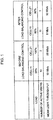
- FIG. 1 shows a table of the loads on individual cells, the numbers of active users, and the mean user throughputs in the individual cells, before and after load balancing.
- the number of active users is the number of communication terminals (user terminal) connected to a base station in a cell.
- the load on the CELL11 of the base station 10 is 50%
- the number of active users in the CELL11 is 10
- the mean user throughput of user terminal is 10 Mb/s.
- the load on the CELL21 of the base station 20 is 100%
- the number of active users in the CELL21 is 2
- the mean user throughput of user terminal is 50 Mb/s.
- the load on the CELL21 is heavier than the load on the CELL11 before load balancing. Accordingly, if load balancing is performed only considering the load on each cell, control is performed so as to have a user terminal belonging to the CELL21 belong to the CELL11.
- the load on, the number of active users in, and the mean throughput of user terminal in the CELL11 become 60%, 11, and 8 Mb/s, respectively.
- the load on, the number of active users in, and the mean user throughput of user terminal in the CELL21 become 90%, 9, and 90 Mb/s, respectively.
- the loads on the CELL11 and CELL21 are leveled through this control.
- the mean user throughput of user terminal in the CELL11 which was low before load balancing, has become further lower after load balancing.
- the mean user throughput of user terminal in the CELL21 which kept a sufficient value before load balancing, has become further higher after load balancing.
- each user terminal needs to calculate the degree of sufficiency of a required throughput and report it to a base station. Accordingly, the load on the user terminal is increased, and so effective load balancing control cannot be performed.
- an object of the present invention is to provide a communication system in which information on the number of active users in each cell can be shared between base stations.
- a communication system according to the present exemplary embodiment is defined in claim 1.
- a base station according to the present exemplary embodiment is defined in claim 7.
- a communication method according to the present exemplary embodiment is defined in claim 8.
- a program according to the present exemplary embodiment is defined in claim 9.
- a recording medium according to the present exemplary embodiment is a computer-readable information recording medium and records the program according to the present exemplary embodiment.
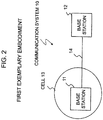
- FIG. 2 A communication system according to a first exemplary embodiment of the present invention will be described using FIG. 2 .
- a communication system 10 includes base stations 11 and 12.
- the base station 11 controls a cell 13.
- the base station 12 is connected to the base station 11 through an inter-BS interface 14.
- the base station 11 transmits operation information on the cell 13 to the base station 12 through the inter-BS interface 14.
- An inter-BS interface is, for example the X2 interface.
- the operation information on the cell 13 includes the load on the cell 13 and the number of active users in the cell 13.
- the number of active users is the number of communication terminals (user terminals) connected to a base station in a cell.
- the number of active users may refer to the number of communication terminals concurrently connected to a base station, or may refer to the number of communication terminals connected within a predetermined time range. Note that when the base station 11 controls a plurality of cells, the base station 11 transmits operation information on each cell to the base station 12.
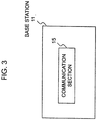
- FIG. 3 shows a configuration of the base station 11.
- the base station 11 includes a communication section 15.
- the communication section 15 transmits operation information on the cell 13, which is formed by the base station 11, to the base station 12 through the inter-BS interface 14.
- the base station 11 transmits operation information on each cell to the base station 12.
- the base station 11 transmits operation information on the cell 13 through the inter-BS interface 14 (Operation S1).
- the base station 11 transmits operation information on each cell.
- the base station 12 receives the operation information on the cell 13 through the inter-BS interface 14 (Operation S2).
- base stations transmit and receive information on the load on a cell and the number of active users in this cell.
- base stations can share information on the loads on individual cells and the numbers of active users in the individual cells.
- the base station 12 when the base station 12 performs load balancing control, the base station 12 can consider the number of active users in the cell 13 of the base station 11 in addition to the load on the cell 13. As described above, there is correlation between the number of active users relative to the load on a cell and the user throughput. Accordingly, in the communication system according to the present exemplary embodiment, it is possible to perform efficient load balancing control, considering not only the leveling of cell loads but also the leveling of user throughputs.
- operation information on cells is transmitted and received through inter-BS interfaces, it is possible to prevent performance degradation in load balancing control accompanied by delays in transmission and reception of operation information, in comparison with a case where operation information on cells is transmitted and received via an EMS or NMS.
- FIGS. 5 and 6 Next, a communication system 20 according to a second exemplary embodiment of the present invention will be described using FIGS. 5 and 6 .
- the communication system 20 includes base stations 21 and 22.
- the base stations 21 and 22 are connected through an inter-BS interface 25.
- the base stations 21 and 22 communicate with multiple user terminals 26 within cells 23 and 24, respectively.
- the base stations 21 and 22 each communicate with a core network 28 through a base station-core interface 27.
- the base stations 21 and 22 each perform processing for relaying communication between the core network 28 and the user terminal 26.
- FIG. 6 shows a functional configuration of the base station 21.
- the base station 22 also has a similar configuration to the base station 21.
- the base station 21 includes a communication section 29, a call control section 30, a load control section 31, and a measurement section 32.
- the measurement section 32 includes a first measurement section 33 and a second measurement section 34.
- the communication section 29 communicates with the base station 22 through the inter-BS interface 25 and performs transmission/reception of signals for processing of handover between the cells 23 and 24, transmission/reception of information on the load and the number of active users measured by the measurement section 32, which will be described later, and transmission/reception of control signals for load balancing control.
- the communication section 29 transmits/receives user data to/from the multiple user terminals 26 over radio links.
- the communication section 29 connects to the core network 28 through the base station-core interface 27 and performs processing for relaying traffic of the user terminal 26.
- the call control section 30 makes calls to and receives calls from the user terminal 26 as well as performs handover control, radio resource assignment and the like.
- the load control section 31 performs control for load balancing between the cell 23 controlled by the base station 21 and the cell 24 controlled by the base station 22 neighboring on the base station 21, based on operation information on the cells.
- operation information on the cell 24 in the present exemplary embodiment indicates the load on the cell 24 and the mean value of the number of active users in the cell 24.
- the first measurement section 33 of the measurement section 32 measures the loads per unit time on the downlink and uplink in the cell 23 controlled by the base station 21. Moreover, the second measurement section 34 of the measurement section 32 measures the mean values of the numbers of active users per unit time on the downlink and uplink in the cell 23.
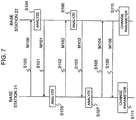
- FIG. 7 shows a sequence of operations in the communication system 20.
- the base station 21 sends a message M100 including operation information on the cell 23 controlled by the base station 21 to the base station 22 (Operation S100).
- the base station 22 also sends a message M101 including operation information on the cell 24 controlled by the base station 22 to the base station 21 (Operation S101).
- the base stations 21 and 22 may be configured to send and receive respective messages M102 and M103 including operation information on the cells 23 and 24, respectively, to/from each other at predetermined periods T0 thereafter (Operations S102 and 103).
- the base stations may be configured to notify the start or stop of transmission of operation information to each other at any timing. For example, in FIG.
- the base station 22 may start sending the message M101 to the base station 21 after receiving the message M100 and before analyzing the message M100 (Operation S104), which will be described later. Moreover, the base stations 21 and 22 may stop transmission and reception of operation information for a certain period of time after each having changed a parameter (Operations S110 and 111).
- the load control section of the base station 22 after acquiring the operation information on the cell 23, analyzes the operation information on the cells 23 and 24 and determines whether or not there is necessity for load balancing control (Operations S104 and S106). Similarly, the load control section 31 of the base station 21 having acquired the operation information on the cell 24 analyzes the operation information on the cells 23 and 24 and determines the necessity for load balancing between the cells 23 and 24 (Operations S105 and S107). Note that a specific method for determining the necessity for load balancing will be described later.
- the base stations 21 and 22 determine in Operations S104 to S106 that there is no necessity for load balancing. Moreover, it is assumed that the base station 21 determines in Operation S107 that there is necessity for load balancing.
- the load control section 31 of the base station 21 sends a parameter change request message M104 to the base station 22 via the communication section 29 (Operation S108).
- the parameter change request message includes a request to change a load balancing-related parameter such as, for example, an offset value to handover or cell reselection from the cell 23 to the cell 24.
- the base station 22 when accepting the request for change included in the parameter change request message, sends a parameter change response message M105 to the base station 21 (Operation S109). Moreover, after or before Operation S109, the base station 22 changes the value of the predetermined parameter in accordance with information included in the parameter change request message (Operation S110). Furthermore, the base station 21 itself changes a predetermined parameter as necessary based on a result of the analysis in Operation S107 (Operation S111). Thus, it is possible to accomplish the leveling of the loads on the cells 23 and 24.
- the base stations 21 and 22 perform control for load balancing between the cells 23 and 24.
- FIGS. 8 and 9 show an example of the operation information on the cells to be transmitted and received between the base stations in Operations S100 to S103.
- FIG. 8 shows an example of the operation information on the cell 23.
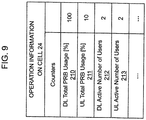
- FIG. 9 shows an example of the operation information on the cell 24.
- the operation information on the cells 23 and 24 shown in FIGS. 8 and 9 include the statistics values of measurement information per unit time for each cell managed by a base station.
- "DL Total PRB Usage (Downlink Total Physical Resource Block Usage) [%]" shows the load on the downlink in a cell and is a value representing the use rate of downlink physical resource blocks in percentages.
- DL Total PRB Usage is set to zero in a state where any communication including transmission/reception of control information is not being performed, and set to 100 in a state where communication is being performed using all resource blocks.
- UL Total PRB Usage (Uplink Total Physical Resource Block Usage) [%] shows the load on the uplink in a cell and represents the use rate of uplink physical resource blocks. Note that for an index of load, an index other than "PRB usage" will do, and, for example, downlink gross transmission power, uplink broadband received power, total throughput or the like may be used.
- DL Active Number of Users (202, 212) is the number of active users on the downlink. Specifically, it is a value obtained by averaging the numbers of active users on the downlink at sampling times within a statistical time interval.
- UL Active Number of Users (203, 213) is the number of active users on the uplink.
- the base station 21 transmits operation information on the cell 23 to the base station 22.
- the measurement section 32 measures operation information on the cell 23 controlled by the base station 21 (Operation S201).
- the measurement section 32 notifies the measured operation information to the load control section 31.
- the measurement section 32 transmits the measured operation information on the cell 23 to the base station 22 via the communication section 29 through the inter-BS interface 25 (Operation S202) and then completes the processing.
- the base station 21 receives operation information on the cell 24 from the base station 22.
- the load control section 31 acquires the operation information on the cell 24 received from the base station 22 (Operation S203).
- the load control section 31 determines whether or not there is necessity for load balancing between the cells 23 and 24 (Operation S204). That is, based on information about the load on and the number of active users in the cell 23 and the load on and the number of active users in the cell 24, it is determined whether or not there is necessity for load balancing between the cells 23 and 24. For example, it may be determined that load balancing is required when the value of the following expression is larger than a predetermined threshold: (load on the cell 23/number of active users) - (load on the cell 24/number of active users).
- load balancing is not required when the value of the expression, (load on the cell 23/number of active users) - (load on the cell 24/number of active users), is not larger than the predetermined threshold.
- load balancing is performed based on other predetermined expression using loads and the numbers of active users, other than a case as described above where load balancing is performed based on the ratio of a load to the number of active users.
- load balancing is required when the value of the following expression is larger than a predetermined threshold: ( ⁇ x load on the cell 23 + ⁇ x number of active users) - ( ⁇ x load on the cell 24 + ⁇ x number of active users), where ⁇ and ⁇ are arbitrary fixed coefficients.
- load balancing is not required when the value of the expression, ( ⁇ x load on the cell 23 + ⁇ x number of active users) - ( ⁇ x load on the cell 24 + ⁇ x number of active users), is not larger than the predetermined threshold.
- the load control section 31 changes a predetermined parameter set on the base station 21 (Operation S205).
- the predetermined parameter is a parameter related to load balancing, which may be, for example, a parameter related to a criterion of handover and cell reselection from the cell 23 to the cell 24, or may be maximum transmission power and reference signal transmission power in the cell 23.
- the load control section 31 requests the base station 22 to change a predetermined parameter (Operation S206).
- the parameter requested to be changed may be, for example, a parameter related to a criterion of handover and cell reselection from the cell 24 to the cell 23, or may be maximum transmission power and reference signal transmission power in the cell 24.
- the number of active users in the cell can be shared between base stations. Accordingly, base stations can perform load balancing control based on not only the loads on individual cells but also the numbers of active users in the individual cells. Hence, in the communication system 20 according to the present exemplary embodiment, it is possible to perform efficient load balancing control, considering not only the leveling of loads between cells but also the leveling of user throughputs.
- the present exemplary embodiment Comparing the present exemplary embodiment to the second exemplary embodiment, operation information measured by the measurement section 32 of the base station 21 and a flow of load balancing control processing are different. That is, the first measurement section 33 of the base station 21 in the present exemplary embodiment measures the load on the cell 23 controlled by the base station 21, for each service in the cell 23. Moreover, the second measurement section 34 of the base station 21 measures the number of active users in the cell 23, for each service.
- FIG. 11 shows a flowchart of load balancing control processing according to the present exemplary embodiment.
- the base station 21 transmits operation information on the cell 23 to the base station 22.
- the measurement section 32 measures operation information for each service in the cell 23 (Operation S301).
- the measurement section 32 measures operation information for GBR (Guaranteed Bit Rate) service and operation information for non-GBR service in the cell 23 individually and notifies them to the load control section 31.
- the operation information in the present exemplary embodiment includes at least the loads on and the numbers of active users of individual services in the cell 23.
- the operation information in the present exemplary embodiment includes the loads on GBR service and non-GBR service and the numbers of active users of these individual services.
- the measurement section 32 transmits the operation information for each service in the cell 23 to the base station 22 through the inter-BS interface 25 (Operation S302) and completes the processing.
- the base station 21 receives operation information for each service in the cell 24 from the base station 22.
- the load control section 31 acquires the operation information for each service in the cell 24 received from the base station 22 (Operation S303).
- the threshold may take different values for different services.
- the necessity for load balancing based on the operation information for GBR service may be determined based on whether or not the value of the following expression is larger than a first threshold: (load on GBR service in the cell 23/number of active users of GBR service in the cell 23) - (load on GBR service in the cell 24/number of active users of GBR service in the cell 24).
- the necessity for load balancing based on the operation information for non-GBR service may be determined based on whether or not the value of the following expression is larger than a second threshold: (load on non-GBR service in the cell 23/number of active users of non-GBR service in the cell 23) - (load on non-GBR service in the cell 24/number of active users of non-GBR service in the cell 24).
- the predetermined parameter is a load balancing-related parameter, which may be, for example, a parameter related to a criterion of handover and cell reselection from the cell 23 to the cell 24, or may be maximum transmission power and reference signal transmission power in the cell 23.
- the load control section 31 requests the base station 22 to change a predetermined parameter (Operation S306).
- the predetermined parameter requested to be changed may be, for example, a parameter related to a criterion of handover and cell reselection from the cell 24 to the cell 23, or may be maximum transmission power and reference signal transmission power in the cell 24.
- GBR service and non-GBR service are taken as an example of service category in the present exemplary embodiment, other arbitrary service categories may be used, such as, for example, voice service, streaming service, interactive data service, and background data service.
- the first measurement section 33 of the base station 21 in the present exemplary embodiment measures the overall load on the cell 23 controlled by the base station 21 and also measures the load on each provider to which users subscribe. That is, of the load on the cell 23, the first measurement section 33 measures a load arising from communication of users subscribing to a predetermined provider.
- the second measurement section 34 of the base station 21 measures the gross number of active users in the cell 23 and also measures the number of active users of each predetermined provider. That is, of the active users in the cell 23, the second measurement section 34 measures the number of users subscribing to a predetermined provider. Note that it is assumed that telecommunication operators A and B share the base stations 21 and 22 in the present exemplary embodiment.
- FIG. 12 shows an example of operation information on the cell 23 transmitted and received between base stations in the present exemplary embodiment.
- the operation information on the cell 23 shown in FIG. 12 includes the use rate of downlink physical resource blocks for each telecommunication operator (DL Total PRB Usage per Operator) 205, the use rate of uplink physical resource blocks for each telecommunication operator (UL Total PRB Usage per Operator) 206, the number of active users on the downlink for each telecommunication operator (DL Active Number of Users per Operator) 207, and the number of active users on the uplink for each telecommunication operator (UL Active Number of Users per Operator) 208, in addition to the operation information shown in FIG. 8 .
- DL Total PRB Usage and UL Total PRB Usage include common control signals (reference signal, synchronization signal and the like) that do not belong to communication of users subscribing to telecommunication operators. Accordingly, as shown in Fig. 12 , a difference arises between the load on the cell 23 and a total of the loads on the individual telecommunication operators.
- FIG. 13 shows a flowchart of load balancing control processing according to the present exemplary embodiment.
- the base station 21 transmits operation information on the cell 23 to the base station 22.
- the measurement section 32 measures operation information for each telecommunication operator in the cell 23 (Operation S401). That is, the measurement section 32 of the base station 21 in the present exemplary embodiment measures operation information on the cell 23 controlled by the base station 21 for each telecommunication operator and notifies them to the load control section 31.
- the measurement section 32 measures a load arising from communication of users subscribing to the telecommunication operator A and the number of active users subscribing to the telecommunication operator A. Moreover, of the load on the cell 23, the measurement section 32 measures a load arising from communication of users subscribing to the telecommunication operator B and the number of active users subscribing to the telecommunication operator B.
- the measurement section 32 transmits the measured operation information for each telecommunication operator to the base station 22 through the inter-BS interface 25 (Operation S402) and completes the processing.
- the base station 21 receives operation information for each telecommunication operator in the cell 24 from the base station 22.
- the load control section 31 acquires the operation information for each telecommunication operator in the cell 24 received by the base station 21 (Operation S403).
- the load control section 31 determines whether or not there is necessity for load balancing between the cells 23 and 24 (Operation S404). For example, the load control section 31 may determine that there is necessity for load balancing when the value of the following expression is larger than a third threshold: (load on the telecommunication operator A in the cell 23/number of active users of the telecommunication operator A in the cell 23) - (load on the telecommunication operator A in the cell 24/number of active users of the telecommunication operator A in the cell 24), or when the value of the following expression is larger than a fourth threshold: (load on the telecommunication operator B in the cell 23/number of active users of the telecommunication operator B in the cell 23) - (load on the telecommunication operator B in the cell 24/number of active users of the telecommunication operator B in the cell 24).
- a third threshold load on the telecommunication operator A in the cell 23/number of active users of the telecommunication operator A in the cell 23
- - load on the telecommunication
- the load control section 31 changes a predetermined parameter set on the base station 21 for load balancing (Operation S405).
- the predetermined parameter is a load balancing-related parameter, which may be, for example, a parameter related to a criterion of handover and cell reselection from the cell 23 to the call 24, or may be maximum transmission power and reference signal transmission power in the cell 23.
- the load control section 31 requests the base station 22 to change a predetermined parameter (Operation S406).
- the parameter requested to be changed may be, for example, a parameter related to a criterion of handover and cell reselection from the cell 24 to the cell 23, or may be maximum transmission power and reference signal transmission power in the cell 24.
- load information and measurement information on the number of active users for each telecommunication operator can be shared between base stations. Accordingly, load balancing control can be performed based on not only the loads on individual cells but also the loads on individual telecommunication operators.
- present exemplary embodiment shows a case where two telecommunication operators A and B share the base station 21, the present exemplary embodiment may be applied to a case where three or more telecommunication operators share a single base station.
- the base station 51 according to the present exemplary embodiment transmits/receives operation information on a cell to/from the base station 52. Moreover, the base station 51 controls the cell 23, while the base station 52 controls the cell 24.
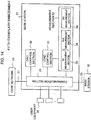
- FIG. 14 shows the configuration of the base station 51 according to the present exemplary embodiment.
- a measurement section 53 of the base station 51 shown in FIG. 14 includes a third measurement section 54, in addition to the first measurement section 33 and the second measurement section 34.
- the first measurement section 33 and the second measurement section 34 measure the load on the cell 23 and the number of active users in the cell 23, respectively, as in the second exemplary embodiment.
- the third measurement section 54 measures the probability distribution of user throughput in the cell 23. Specifically, the third measurement section 54, for each call of user terminal, measures the number of bytes transmitted over the downlink and uplink and retains them as user throughputs. Further, the third measurement section 54, for each cell, compiles such user throughputs during a predetermined time interval and creates a histogram or cumulative distribution function of user throughput.
- the measurement section 53 notifies the probability distribution of user throughput measured by the third measurement section 54 to the load control section 31. Furthermore, the measurement section 53 includes the probability distribution of user throughput measured by the third measurement section 54 into operation information on the cell 23 and transmits it to the base station 52 through the inter-BS interface 25.
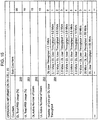
- FIG. 15 shows an example of operation information on the cell 23 transmitted by the base station 51 to the base station 52 in the present exemplary embodiment.
- the operation information shown in FIG. 15 includes "Number of Calls per DL User Throughput", which is information on a probability distribution of downlink user throughput, in addition to the operation information shown in FIG. 8 .
- downlink user throughputs are marked at 0.1 Mb/s, 0.2 Mb/s, 0.5 Mb/s, 1.0 Mb/s, 2.0 Mb/s, 5.0 Mb/s, 10 Mb/s, 20 Mb/s, and 50 Mb/s on a scale of a histogram, and the number of calls within a predetermined time interval is measured for each bin of the histogram and included in operation information.
- Uplink user throughputs are similarly measured and included in operation information.
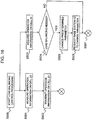
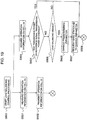
- FIG. 16 shows a flowchart of load balancing control processing according to the present exemplary embodiment.
- the base station 51 transmits operation information to the base station 52.
- the measurement section 53 measures operation information on the cell 23 controlled by the base station 51 (Operation S501).
- the operation information on the cell 23 in the present exemplary embodiment is the operation information shown in FIG. 15 . That is, the measurement section 53 in the present exemplary embodiment measures at least the load on the cell 23, the number of active users in the cell 23, and the probability distribution of user throughput in the cell 23 and notifies them to the load control section 31.
- the measurement section 53 transmits the operation information on the cell 23 to the base station 52 through the inter-BS interface 25 (Operation S502).
- the base station 51 receives operation information on the cell 24 from the base station 52.
- the load control section 31 acquires the operation information on the cell 24 received by the base station 51 (Operation S503).
- the load control section 31 based on the operation information on the cells 23 and 24, determines whether or not there is necessity for load balancing between the cells 23 and 24 (Operation S504). In this event, the load control section 31 determines the necessity for load balancing based on the loads on, the numbers of active users in, and the probability distributions of user throughput in the cells 23 and 24.
- the load control section 31 may determine that there is necessity for load balancing both when the value of the following expression is larger than a fifth threshold: (load on the cell 23/number of active users in the cell 23) - (load on the cell 24/number of active users in the cell 24), and when the proportion of user throughputs in the cell 23 that are not greater than a predetermined value is larger than a sixth threshold while the proportion of user throughputs in the cell 24 that are not greater than a predetermined value is smaller than the sixth threshold.
- the load control section 31 changes a predetermined parameter set on the base station 51 (Operation S505).
- the predetermined parameter is a load balancing-related parameter, which may be, for example, a parameter related to a criterion of handover and cell reselection from the cell 23 to the cell 24, or may be maximum transmission power and reference signal transmission power in the cell 23.
- the load control section 31 requests the base station 52 to change a predetermined parameter (Operation S506).
- the predetermined parameter requested to be changed may be, for example, a parameter related to a criterion of handover and cell reselection from the cell 24 to the cell 23, or may be maximum transmission power and reference signal transmission power in the cell 24.
- information on the probability distributions of user throughput in individual cells can be shared between base stations, in addition to the loads on and the numbers of active users in the individual cells. Accordingly, it is possible to efficiently perform load balancing particularly when user throughputs at the cell edge greatly degrade.
- the base station 21 lowers maximum transmission power in the cell 23 to reduce interference from the cell 23 of the base station 21 to the cell 24 of the base station 22. Consequently, user terminal belonging to the cell 23 moves to the cell 24.
- the base station 22 changes a predetermined parameter in an attempt to perform load balancing between the cells 23 and 24, with the result that user terminal belonging to the cell 24 moves to the cell 23.
- the communication system according to the present exemplary embodiment will be described. Comparing the present exemplary embodiment to the second exemplary embodiment, the configurations of base stations 61 and 62 included in the communication system are different.
- the base station 61 transmits/receives operation information on a cell to/from the base station 62. Moreover, the base station 61 controls the cell 23, while the base station 62 controls the cell 24.
- FIG. 17 shows the configuration of the base station 61 according to the present exemplary embodiment.
- a measurement section 63 of the base station 61 shown in FIG. 17 includes a fourth measurement section 64, in addition to the first measurement section 33 and the second measurement section 34.
- the first measurement section 33 and the second measurement section 34 measure the load on the cell 23 and the number of active users in the cell 23, respectively, as in the second exemplary embodiment.
- the fourth measurement section 64 measures the maximum transmission power and a set value of the reference transmission power in the cell 23 and notifies them to the load control section 31.
- the measurement section 63 sends the maximum transmission power and the set value of the reference signal transmission power measured by the fourth measurement section 64 to the base station 62 through the inter-BS interface 25.
- FIG. 18 shows an example of operation information on the cell 23 transmitted by the base station 61 to the base station 62 in the present exemplary embodiment.
- the operation information shown in FIG. 18 includes downlink maximum transmission power (DL Maximum Transmission Power) 209 and downlink reference signal transmission power (DL Reference Signal Transmission Power) 210, in addition to the operation information shown in FIG. 8 .
- DL Maximum Transmission Power DL Maximum Transmission Power
- DL Reference Signal Transmission Power DL Reference Signal Transmission Power
- the coverage of a cell is controlled by intentionally setting an offset to a reference signal. Accordingly, information on downlink maximum transmission power and information on downlink reference signal transmission power are acquired individually.
- FIG. 19 shows a flowchart of load balancing control processing according to the present exemplary embodiment.
- the base station 61 transmits operation information to the base station 62.
- the measurement section 63 acquires operation information on the cell 23 controlled by the base station 61 (Operation S601).
- the operation information on the cell 23 in the present exemplary embodiment is the operation information shown in FIG. 18 . That is, the measurement section 63 in the present exemplary embodiment measures at least the load on the cell 23, the number of active users in the cell 23, the maximum transmission power, and a set value of the reference signal transmission power in the cell 23, and notifies them to the load control section 31.
- the measurement section 63 transmits the operation information on the cell 23 to the base station 62 through the inter-BS interface 25 (Operation S602) and completes the processing.
- the base station 61 receives operation information on the cell 24 from the base station 62.
- the load control section 31 acquires the operation information on the cell 24 received by the base station 61 (Operation S603).
- the load control section 31 determines whether or not the maximum transmission power and the set value of the reference signal transmission power in the cell 24 included in the received operation information have been changed from the values included in operation information previously received (Operation S604). That is, the load control section 31 determines whether or not control for changing the maximum transmission power and the set value of the reference signal transmission power in the cell 24 has been performed by the base station 62.
- the load control section 31 determines whether or not there is necessity for load balancing between the cells 23 and 24 (Operation S605). For example, the cells 23 and 24 are compared in load per active user in a cell, and when the difference therebetween is larger than a seventh threshold or when the difference therebetween is smaller than an eighth threshold, it may be determined that there is necessity for load balancing.
- a predetermined parameter of the cell 23 is changed for load balancing (Operation S606).
- the predetermined parameter is a load balancing-related parameter, which may be, for example, a parameter related to a criterion of handover and cell reselection from the cell 23 to the cell 24, or may be maximum transmission power and reference signal transmission power in the cell 23.
- a load balancing-related parameter which may be, for example, a parameter related to a criterion of handover and cell reselection from the cell 23 to the cell 24, or may be maximum transmission power and reference signal transmission power in the cell 23.
- the load control section 31 transmits a request to change a predetermined parameter to the base station 62 through the inter-BS interface 25 (Operation S607).
- the predetermined parameter may be, for example, a parameter related to a criterion of handover and cell reselection from the cell 23 to the cell 24, or may be maximum transmission power and reference signal transmission power in the cell 23.
- the load control section 31 determines that the maximum transmission power and the set value of the reference signal transmission power in the cell 24 are changed (YES at Operation S604), the load control section 31 completes the processing without changing the parameters (Operation S608).
- the load control section 31 determines that the maximum transmission power and the set value of the reference signal transmission power in the cell 24 are not changed (NO at Operation S604), but when the load control section 31 determines that there is no necessity for load balancing based on the loads on and the numbers of active users in the cells (NO at Operation S605), the load control section 31 completes the processing without changing the parameters (Operation S608).
- base stations can share the values of maximum transmission power or reference signal transmission power in cells. That is, a base station in the present exemplary embodiment can grasp whether or not the value of maximum transmission power or reference signal transmission power in a cell of a neighbor base station has been changed. Thus, it is possible to prevent the effects of load balancing control performed by a base station and the effects of load balancing control performed by another base station from canceling out each other. Accordingly, in the communication system according to the present exemplary embodiment, it is possible to efficiently perform load balancing control and thus to make network autonomous optimization more efficient.
- a base station performs load balancing control in the communication systems according to the first to sixth exemplary embodiments, this is not a restriction.
- a base station management device managing base stations e.g., EMS or NMS
- a base station transmits operation information on a cell acquired from another base station to a base station management device.
- the base station also transmits operation information on a cell controlled by itself to the base station management device. Then, the base station management device, based on the acquired operation information on the cells, performs control for load balancing between these cells.
- the communication systems according to the first to sixth exemplary embodiments can be applied to a SON system, which performs autonomous optimization of radio parameters in mobile communication.
- the operations in the communication systems described in the first to sixth exemplary embodiments may be controlled by a CPU (Central Processing Unit) of a device included in the communication system shown in FIG. 2 or 5 , or of another device communicable with this device.
- a CPU Central Processing Unit
- the operations are accomplished in such a manner that a recording medium storing software program codes for implementing the functions in each embodiment is prepared and the CPU is caused to operate by a general computer reading the program codes stored in the recording medium.
- the recording medium providing the programs may be any one as long as it can store the above-described program, such as, for example, CD-ROM (Compact Disc Read Only Memory), DVD-R (Digital Versatile Disk Recordable), optical disk, magnetic disk, or nonvolatile memory card.
- CD-ROM Compact Disc Read Only Memory
- DVD-R Digital Versatile Disk Recordable
- optical disk magnetic disk
- magnetic disk magnetic disk
- nonvolatile memory card nonvolatile memory card
- a base station may be any of a macro base station configuring a macro cell, a pico base station configuring a pico cell, and a femto base station (HNB (Home Node B) or HeNB) configuring a femto cell.
- HNB Home Node B
- HeNB HeNB
Landscapes
- Engineering & Computer Science (AREA)
- Computer Networks & Wireless Communication (AREA)
- Signal Processing (AREA)
- Computer Security & Cryptography (AREA)
- Mobile Radio Communication Systems (AREA)
Claims (10)
- Kommunikationssystem (20), das Folgendes umfasst:eine erste Basisstation (21), die eine erste Zelle (23) steuert; undeine zweite Basisstation (22), die eine zweite Zelle (24) steuert, wobei die zweite Basisstation (22) mit der ersten Basisstation (21) durch eine Inter-Basisstationsschnittstelle verbunden ist,wobei die erste Basisstation (21) erste Betriebsinformationen über die erste Zelle (23) durch die Inter-Basisstationsschnittstelle an die zweite Basisstation (22) sendet,wobei die ersten Betriebsinformationen über die erste Zelle (23) Informationen über eine Last der ersten Zelle (23) und Informationen über eine Anzahl an aktiven Nutzern in der ersten Zelle (23) einschließen,wobei die zweite Basisstation (22), basierend auf den ersten Betriebsinformationen und zweiten Betriebsinformationen über die zweite Zelle (24) festlegt, ob eine Notwendigkeit zum Lastausgleich zwischen der ersten und zweiten Zelle (23, 24) besteht,dadurch gekennzeichnet, dass die Last eine von physischer Abwärtsverbindung-Ressourcenblockbenutzung, physischer Aufwärtsverbindung-Ressourcenblockbenutzung, Abwärtsverbindung-Bruttosendeleistung, Aufwärtsverbindung-Breitbandempfangsleistung und Gesamtdurchsatz ist.
- Kommunikationssystem (20) gemäß Anspruch 1, wobei die ersten Betriebsinformationen über die erste Zelle (23) Informationen über eine Last eines vorgegebenen Service in der erste Zelle (23) und Informationen über eine Anzahl aktiver Nutzer des vorgegebenen Service einschließen.
- Kommunikationssystem (20) gemäß Anspruch 1 oder 2, wobei die ersten Betriebsinformationen über die erste Zelle (23) Informationen über, von der Last der ersten Zelle (23), eine Last, die durch Kommunikation von Nutzern, die sich bei einem vorgegebenen Betreiber anmelden, entsteht, und Informationen über, von den aktiven Nutzern in der ersten Zelle (23), eine Anzahl an Nutzern, die sich bei dem vorgegebenen Betreiber anmelden, einschließen.
- Kommunikationssystem (20) gemäß einem der Ansprüche 1 bis 3, wobei die ersten Betriebsinformationen über die erste Zelle (23) Informationen über eine Wahrscheinlichkeitsverteilung von Nutzerdurchsatz in der ersten Zelle (23) einschließen.
- Kommunikationssystem (20) gemäß einem der Ansprüche 1 bis 4, wobei die ersten Betriebsinformationen über die erste Zelle (23) einen Wert der maximalen Sendeleistung und einen eingestellten Wert der Referenzsignal-Sendeleistung in der ersten Zelle (23) einschließen.
- Kommunikationssystem (20) gemäß einem der Ansprüche 1 bis 5, wobei die erste Basisstation (21) die zweiten Betriebsinformationen über die zweite Zelle (24) durch die Inter-Basisstationsschnittstelle (25) empfängt und, basierend auf den ersten Betriebsinformationen über die erste Zelle (23) und den zweiten Betriebsinformationen über die zweite Zelle (24), festlegt, ob eine Notwendigkeit zum Lastausgleich zwischen der ersten Zelle (23) und der zweiten Zelle (24) besteht.
- Basisstation (21), die eine erste Zelle (23) steuert und Folgendes umfasst:ein Kommunikationsmittel (29), das zum Empfangen von Betriebsinformationen über eine zweite Zelle (24) von einer anderen Basisstation (22) durch eine Inter-Basisstationsschnittstelle (25) konfiguriert ist, wobei die andere Basisstation (22) die zweite Zelle (24) steuert, wobei die Betriebsinformationen über die zweite Zelle (24) Informationen über eine Last der zweiten Zelle (24) und Informationen über eine Anzahl an aktiven Nutzern in der zweiten Zelle (24) einschließen; undein Steuerungsmittel (31), das zum Festlegen, basierend auf den Betriebsinformationen über die zweite Zelle (24) und Betriebsinformationen über die erste Zelle (23), konfiguriert ist, ob eine Notwendigkeit zum Lastausgleich zwischen der ersten und zweiten Zelle (23, 24) besteht,dadurch gekennzeichnet, dass die Last eine von physischer Abwärtsverbindung-Ressourcenblockbenutzung, physischer Aufwärtsverbindung-Ressourcenblockbenutzung, Abwärtsverbindung-Bruttosendeleistung, Aufwärtsverbindung-Breitbandempfangsleistung und Gesamtdurchsatz ist.
- Kommunikationsverfahren, das Folgendes umfasst:Senden von Betriebsinformationen über eine erste Zelle (23), die von einer ersten Basisstation (21) gesteuert wird, zu einer zweiten Basisstation (22) durch eine Inter-Basisstationsschnittstelle (25),wobei die Betriebsinformationen über die erste Zelle (23) Informationen über eine Last der ersten Zelle (23) und Informationen über eine Anzahl an aktiven Nutzern in der ersten Zelle (23) einschließen,wobei die zweite Basisstation (22), basierend auf den Betriebsinformationen über die erste Zelle (23) und Betriebsinformationen über die zweite Zelle (24), festlegt, ob eine Notwendigkeit zum Lastausgleich zwischen der ersten und zweiten Zelle (23, 24) besteht,dadurch gekennzeichnet, dass die Last eine von physischer Abwärtsverbindung-Ressourcenblockbenutzung, physischer Aufwärtsverbindung-Ressourcenblockbenutzung, Abwärtsverbindung-Bruttosendeleistung, Aufwärtsverbindung-Breitbandempfangsleistung und Gesamtdurchsatz ist.
- Programm zum Veranlassen eines Computers zum Funktionieren als eine erste Basisstation (21), die eine erste Zelle (23) steuert, wobei das Programm den Computer dazu veranlasst, die folgenden Funktionen zu implementieren:Empfangen von Betriebsinformationen über eine erste Zelle (24) von einer zweiten Basisstation (22) durch eine Inter-Basisstationsschnittstelle, wobei die Betriebsinformationen über die zweite Zelle (24) Informationen über eine Last der zweite Zelle (24) und Informationen über eine Anzahl an aktiven Nutzern in der zweiten Zelle (24) einschließen; undFestlegen, basierend auf den Betriebsinformationen über die zweite Zelle (24) und Betriebsinformationen über die erste Zelle (23), ob eine Notwendigkeit zum Lastausgleich zwischen der ersten und zweiten Zelle (23, 24) besteht,dadurch gekennzeichnet, dass die Last eine von physischer Abwärtsverbindung-Ressourcenblockbenutzung, physischer Aufwärtsverbindung-Ressourcenblockbenutzung, Abwärtsverbindung-Bruttosendeleistung, Aufwärtsverbindung-Breitbandempfangsleistung und Gesamtdurchsatz ist.
- Computerlesbares Informationsaufzeichnungsmedium, welches das Programm gemäß Anspruch 9 aufzeichnet.
Applications Claiming Priority (2)
| Application Number | Priority Date | Filing Date | Title |
|---|---|---|---|
| JP2012188520 | 2012-08-29 | ||
| PCT/JP2013/005106 WO2014034118A1 (ja) | 2012-08-29 | 2013-08-29 | 通信システム、基地局、及び通信方法 |
Publications (3)
| Publication Number | Publication Date |
|---|---|
| EP2892273A1 EP2892273A1 (de) | 2015-07-08 |
| EP2892273A4 EP2892273A4 (de) | 2016-04-27 |
| EP2892273B1 true EP2892273B1 (de) | 2018-04-18 |
Family
ID=50182952
Family Applications (1)
| Application Number | Title | Priority Date | Filing Date |
|---|---|---|---|
| EP13833676.3A Not-in-force EP2892273B1 (de) | 2012-08-29 | 2013-08-29 | Kommunikationssystem, basisstation und kommunikationsverfahren |
Country Status (4)
| Country | Link |
|---|---|
| US (1) | US9516548B2 (de) |
| EP (1) | EP2892273B1 (de) |
| JP (1) | JP6048694B2 (de) |
| WO (1) | WO2014034118A1 (de) |
Cited By (1)
| Publication number | Priority date | Publication date | Assignee | Title |
|---|---|---|---|---|
| US11191072B2 (en) | 2016-12-29 | 2021-11-30 | Huawei Technologies Co., Ltd. | Information transmission method and radio access network device |
Families Citing this family (155)
| Publication number | Priority date | Publication date | Assignee | Title |
|---|---|---|---|---|
| GB2458258A (en) | 2008-02-04 | 2009-09-16 | Nec Corp | Method of controlling base station loading in a mobile communication system |
| US10009065B2 (en) | 2012-12-05 | 2018-06-26 | At&T Intellectual Property I, L.P. | Backhaul link for distributed antenna system |
| US9113347B2 (en) | 2012-12-05 | 2015-08-18 | At&T Intellectual Property I, Lp | Backhaul link for distributed antenna system |
| US9525524B2 (en) | 2013-05-31 | 2016-12-20 | At&T Intellectual Property I, L.P. | Remote distributed antenna system |
| US9999038B2 (en) | 2013-05-31 | 2018-06-12 | At&T Intellectual Property I, L.P. | Remote distributed antenna system |
| WO2015001840A1 (ja) * | 2013-07-02 | 2015-01-08 | ソニー株式会社 | 通信制御装置、通信制御方法、無線通信システム及び端末装置 |
| US8897697B1 (en) | 2013-11-06 | 2014-11-25 | At&T Intellectual Property I, Lp | Millimeter-wave surface-wave communications |
| EP3114875B1 (de) * | 2014-03-03 | 2017-05-10 | Telefonaktiebolaget LM Ericsson (publ) | Steuerung der mobilität und/oder der zugangsauswahl zwischen zellen |
| KR102301828B1 (ko) * | 2014-05-02 | 2021-09-14 | 삼성전자 주식회사 | 무선 통신 시스템에서 실시간 송신 전력 조절 방법 및 장치 |
| US9692101B2 (en) | 2014-08-26 | 2017-06-27 | At&T Intellectual Property I, L.P. | Guided wave couplers for coupling electromagnetic waves between a waveguide surface and a surface of a wire |
| US9768833B2 (en) | 2014-09-15 | 2017-09-19 | At&T Intellectual Property I, L.P. | Method and apparatus for sensing a condition in a transmission medium of electromagnetic waves |
| US10063280B2 (en) | 2014-09-17 | 2018-08-28 | At&T Intellectual Property I, L.P. | Monitoring and mitigating conditions in a communication network |
| US9615269B2 (en) | 2014-10-02 | 2017-04-04 | At&T Intellectual Property I, L.P. | Method and apparatus that provides fault tolerance in a communication network |
| US9685992B2 (en) | 2014-10-03 | 2017-06-20 | At&T Intellectual Property I, L.P. | Circuit panel network and methods thereof |
| US9503189B2 (en) | 2014-10-10 | 2016-11-22 | At&T Intellectual Property I, L.P. | Method and apparatus for arranging communication sessions in a communication system |
| US9973299B2 (en) | 2014-10-14 | 2018-05-15 | At&T Intellectual Property I, L.P. | Method and apparatus for adjusting a mode of communication in a communication network |
| US9762289B2 (en) | 2014-10-14 | 2017-09-12 | At&T Intellectual Property I, L.P. | Method and apparatus for transmitting or receiving signals in a transportation system |
| US9769020B2 (en) | 2014-10-21 | 2017-09-19 | At&T Intellectual Property I, L.P. | Method and apparatus for responding to events affecting communications in a communication network |
| US9653770B2 (en) | 2014-10-21 | 2017-05-16 | At&T Intellectual Property I, L.P. | Guided wave coupler, coupling module and methods for use therewith |
| US9520945B2 (en) | 2014-10-21 | 2016-12-13 | At&T Intellectual Property I, L.P. | Apparatus for providing communication services and methods thereof |
| US9312919B1 (en) | 2014-10-21 | 2016-04-12 | At&T Intellectual Property I, Lp | Transmission device with impairment compensation and methods for use therewith |
| US9577306B2 (en) | 2014-10-21 | 2017-02-21 | At&T Intellectual Property I, L.P. | Guided-wave transmission device and methods for use therewith |
| US9780834B2 (en) | 2014-10-21 | 2017-10-03 | At&T Intellectual Property I, L.P. | Method and apparatus for transmitting electromagnetic waves |
| US9627768B2 (en) | 2014-10-21 | 2017-04-18 | At&T Intellectual Property I, L.P. | Guided-wave transmission device with non-fundamental mode propagation and methods for use therewith |
| US9742462B2 (en) | 2014-12-04 | 2017-08-22 | At&T Intellectual Property I, L.P. | Transmission medium and communication interfaces and methods for use therewith |
| US9461706B1 (en) | 2015-07-31 | 2016-10-04 | At&T Intellectual Property I, Lp | Method and apparatus for exchanging communication signals |
| US9544006B2 (en) | 2014-11-20 | 2017-01-10 | At&T Intellectual Property I, L.P. | Transmission device with mode division multiplexing and methods for use therewith |
| US9997819B2 (en) | 2015-06-09 | 2018-06-12 | At&T Intellectual Property I, L.P. | Transmission medium and method for facilitating propagation of electromagnetic waves via a core |
| US10243784B2 (en) | 2014-11-20 | 2019-03-26 | At&T Intellectual Property I, L.P. | System for generating topology information and methods thereof |
| US9800327B2 (en) | 2014-11-20 | 2017-10-24 | At&T Intellectual Property I, L.P. | Apparatus for controlling operations of a communication device and methods thereof |
| US10009067B2 (en) | 2014-12-04 | 2018-06-26 | At&T Intellectual Property I, L.P. | Method and apparatus for configuring a communication interface |
| US10340573B2 (en) | 2016-10-26 | 2019-07-02 | At&T Intellectual Property I, L.P. | Launcher with cylindrical coupling device and methods for use therewith |
| US9954287B2 (en) | 2014-11-20 | 2018-04-24 | At&T Intellectual Property I, L.P. | Apparatus for converting wireless signals and electromagnetic waves and methods thereof |
| US10144036B2 (en) | 2015-01-30 | 2018-12-04 | At&T Intellectual Property I, L.P. | Method and apparatus for mitigating interference affecting a propagation of electromagnetic waves guided by a transmission medium |
| US9876570B2 (en) | 2015-02-20 | 2018-01-23 | At&T Intellectual Property I, Lp | Guided-wave transmission device with non-fundamental mode propagation and methods for use therewith |
| US9749013B2 (en) | 2015-03-17 | 2017-08-29 | At&T Intellectual Property I, L.P. | Method and apparatus for reducing attenuation of electromagnetic waves guided by a transmission medium |
| US10224981B2 (en) | 2015-04-24 | 2019-03-05 | At&T Intellectual Property I, Lp | Passive electrical coupling device and methods for use therewith |
| US9705561B2 (en) | 2015-04-24 | 2017-07-11 | At&T Intellectual Property I, L.P. | Directional coupling device and methods for use therewith |
| US9948354B2 (en) | 2015-04-28 | 2018-04-17 | At&T Intellectual Property I, L.P. | Magnetic coupling device with reflective plate and methods for use therewith |
| US9793954B2 (en) | 2015-04-28 | 2017-10-17 | At&T Intellectual Property I, L.P. | Magnetic coupling device and methods for use therewith |
| US9871282B2 (en) | 2015-05-14 | 2018-01-16 | At&T Intellectual Property I, L.P. | At least one transmission medium having a dielectric surface that is covered at least in part by a second dielectric |
| US9748626B2 (en) | 2015-05-14 | 2017-08-29 | At&T Intellectual Property I, L.P. | Plurality of cables having different cross-sectional shapes which are bundled together to form a transmission medium |
| US9490869B1 (en) | 2015-05-14 | 2016-11-08 | At&T Intellectual Property I, L.P. | Transmission medium having multiple cores and methods for use therewith |
| US10650940B2 (en) | 2015-05-15 | 2020-05-12 | At&T Intellectual Property I, L.P. | Transmission medium having a conductive material and methods for use therewith |
| US9917341B2 (en) | 2015-05-27 | 2018-03-13 | At&T Intellectual Property I, L.P. | Apparatus and method for launching electromagnetic waves and for modifying radial dimensions of the propagating electromagnetic waves |
| US9912381B2 (en) | 2015-06-03 | 2018-03-06 | At&T Intellectual Property I, Lp | Network termination and methods for use therewith |
| US10103801B2 (en) | 2015-06-03 | 2018-10-16 | At&T Intellectual Property I, L.P. | Host node device and methods for use therewith |
| US9866309B2 (en) | 2015-06-03 | 2018-01-09 | At&T Intellectual Property I, Lp | Host node device and methods for use therewith |
| US10812174B2 (en) | 2015-06-03 | 2020-10-20 | At&T Intellectual Property I, L.P. | Client node device and methods for use therewith |
| US9913139B2 (en) | 2015-06-09 | 2018-03-06 | At&T Intellectual Property I, L.P. | Signal fingerprinting for authentication of communicating devices |
| US10142086B2 (en) | 2015-06-11 | 2018-11-27 | At&T Intellectual Property I, L.P. | Repeater and methods for use therewith |
| US9608692B2 (en) | 2015-06-11 | 2017-03-28 | At&T Intellectual Property I, L.P. | Repeater and methods for use therewith |
| US9820146B2 (en) | 2015-06-12 | 2017-11-14 | At&T Intellectual Property I, L.P. | Method and apparatus for authentication and identity management of communicating devices |
| US9667317B2 (en) | 2015-06-15 | 2017-05-30 | At&T Intellectual Property I, L.P. | Method and apparatus for providing security using network traffic adjustments |
| US9865911B2 (en) | 2015-06-25 | 2018-01-09 | At&T Intellectual Property I, L.P. | Waveguide system for slot radiating first electromagnetic waves that are combined into a non-fundamental wave mode second electromagnetic wave on a transmission medium |
| US9509415B1 (en) | 2015-06-25 | 2016-11-29 | At&T Intellectual Property I, L.P. | Methods and apparatus for inducing a fundamental wave mode on a transmission medium |
| US9640850B2 (en) | 2015-06-25 | 2017-05-02 | At&T Intellectual Property I, L.P. | Methods and apparatus for inducing a non-fundamental wave mode on a transmission medium |
| US10498177B2 (en) * | 2015-06-30 | 2019-12-03 | Ossia Inc. | Techniques for wireless power transmission system handoff and load balancing |
| US10033107B2 (en) | 2015-07-14 | 2018-07-24 | At&T Intellectual Property I, L.P. | Method and apparatus for coupling an antenna to a device |
| US10148016B2 (en) | 2015-07-14 | 2018-12-04 | At&T Intellectual Property I, L.P. | Apparatus and methods for communicating utilizing an antenna array |
| US10170840B2 (en) | 2015-07-14 | 2019-01-01 | At&T Intellectual Property I, L.P. | Apparatus and methods for sending or receiving electromagnetic signals |
| US10320586B2 (en) | 2015-07-14 | 2019-06-11 | At&T Intellectual Property I, L.P. | Apparatus and methods for generating non-interfering electromagnetic waves on an insulated transmission medium |
| US9628116B2 (en) | 2015-07-14 | 2017-04-18 | At&T Intellectual Property I, L.P. | Apparatus and methods for transmitting wireless signals |
| US10033108B2 (en) | 2015-07-14 | 2018-07-24 | At&T Intellectual Property I, L.P. | Apparatus and methods for generating an electromagnetic wave having a wave mode that mitigates interference |
| US9853342B2 (en) | 2015-07-14 | 2017-12-26 | At&T Intellectual Property I, L.P. | Dielectric transmission medium connector and methods for use therewith |
| US10044409B2 (en) | 2015-07-14 | 2018-08-07 | At&T Intellectual Property I, L.P. | Transmission medium and methods for use therewith |
| US9882257B2 (en) | 2015-07-14 | 2018-01-30 | At&T Intellectual Property I, L.P. | Method and apparatus for launching a wave mode that mitigates interference |
| US9722318B2 (en) | 2015-07-14 | 2017-08-01 | At&T Intellectual Property I, L.P. | Method and apparatus for coupling an antenna to a device |
| US10341142B2 (en) | 2015-07-14 | 2019-07-02 | At&T Intellectual Property I, L.P. | Apparatus and methods for generating non-interfering electromagnetic waves on an uninsulated conductor |
| US9847566B2 (en) | 2015-07-14 | 2017-12-19 | At&T Intellectual Property I, L.P. | Method and apparatus for adjusting a field of a signal to mitigate interference |
| US10205655B2 (en) | 2015-07-14 | 2019-02-12 | At&T Intellectual Property I, L.P. | Apparatus and methods for communicating utilizing an antenna array and multiple communication paths |
| US9793951B2 (en) | 2015-07-15 | 2017-10-17 | At&T Intellectual Property I, L.P. | Method and apparatus for launching a wave mode that mitigates interference |
| US9608740B2 (en) | 2015-07-15 | 2017-03-28 | At&T Intellectual Property I, L.P. | Method and apparatus for launching a wave mode that mitigates interference |
| US10090606B2 (en) | 2015-07-15 | 2018-10-02 | At&T Intellectual Property I, L.P. | Antenna system with dielectric array and methods for use therewith |
| US9912027B2 (en) | 2015-07-23 | 2018-03-06 | At&T Intellectual Property I, L.P. | Method and apparatus for exchanging communication signals |
| US9871283B2 (en) | 2015-07-23 | 2018-01-16 | At&T Intellectual Property I, Lp | Transmission medium having a dielectric core comprised of plural members connected by a ball and socket configuration |
| US9948333B2 (en) | 2015-07-23 | 2018-04-17 | At&T Intellectual Property I, L.P. | Method and apparatus for wireless communications to mitigate interference |
| US9749053B2 (en) | 2015-07-23 | 2017-08-29 | At&T Intellectual Property I, L.P. | Node device, repeater and methods for use therewith |
| US9735833B2 (en) | 2015-07-31 | 2017-08-15 | At&T Intellectual Property I, L.P. | Method and apparatus for communications management in a neighborhood network |
| US9967173B2 (en) | 2015-07-31 | 2018-05-08 | At&T Intellectual Property I, L.P. | Method and apparatus for authentication and identity management of communicating devices |
| US9904535B2 (en) | 2015-09-14 | 2018-02-27 | At&T Intellectual Property I, L.P. | Method and apparatus for distributing software |
| US10009063B2 (en) | 2015-09-16 | 2018-06-26 | At&T Intellectual Property I, L.P. | Method and apparatus for use with a radio distributed antenna system having an out-of-band reference signal |
| US10136434B2 (en) | 2015-09-16 | 2018-11-20 | At&T Intellectual Property I, L.P. | Method and apparatus for use with a radio distributed antenna system having an ultra-wideband control channel |
| US10079661B2 (en) | 2015-09-16 | 2018-09-18 | At&T Intellectual Property I, L.P. | Method and apparatus for use with a radio distributed antenna system having a clock reference |
| US9769128B2 (en) | 2015-09-28 | 2017-09-19 | At&T Intellectual Property I, L.P. | Method and apparatus for encryption of communications over a network |
| US9729197B2 (en) | 2015-10-01 | 2017-08-08 | At&T Intellectual Property I, L.P. | Method and apparatus for communicating network management traffic over a network |
| US9876264B2 (en) | 2015-10-02 | 2018-01-23 | At&T Intellectual Property I, Lp | Communication system, guided wave switch and methods for use therewith |
| US9882277B2 (en) | 2015-10-02 | 2018-01-30 | At&T Intellectual Property I, Lp | Communication device and antenna assembly with actuated gimbal mount |
| US10355367B2 (en) | 2015-10-16 | 2019-07-16 | At&T Intellectual Property I, L.P. | Antenna structure for exchanging wireless signals |
| US10665942B2 (en) | 2015-10-16 | 2020-05-26 | At&T Intellectual Property I, L.P. | Method and apparatus for adjusting wireless communications |
| US9912419B1 (en) | 2016-08-24 | 2018-03-06 | At&T Intellectual Property I, L.P. | Method and apparatus for managing a fault in a distributed antenna system |
| US9860075B1 (en) | 2016-08-26 | 2018-01-02 | At&T Intellectual Property I, L.P. | Method and communication node for broadband distribution |
| US10291311B2 (en) | 2016-09-09 | 2019-05-14 | At&T Intellectual Property I, L.P. | Method and apparatus for mitigating a fault in a distributed antenna system |
| US11032819B2 (en) | 2016-09-15 | 2021-06-08 | At&T Intellectual Property I, L.P. | Method and apparatus for use with a radio distributed antenna system having a control channel reference signal |
| EP3300410B1 (de) * | 2016-09-23 | 2019-12-11 | Alcatel Lucent | Verfahren und vorrichtung zur zuweisung von funkressourcen in einem funkkommunikationssystem |
| US10340600B2 (en) | 2016-10-18 | 2019-07-02 | At&T Intellectual Property I, L.P. | Apparatus and methods for launching guided waves via plural waveguide systems |
| US10135146B2 (en) | 2016-10-18 | 2018-11-20 | At&T Intellectual Property I, L.P. | Apparatus and methods for launching guided waves via circuits |
| US10135147B2 (en) | 2016-10-18 | 2018-11-20 | At&T Intellectual Property I, L.P. | Apparatus and methods for launching guided waves via an antenna |
| US9991580B2 (en) | 2016-10-21 | 2018-06-05 | At&T Intellectual Property I, L.P. | Launcher and coupling system for guided wave mode cancellation |
| US9876605B1 (en) | 2016-10-21 | 2018-01-23 | At&T Intellectual Property I, L.P. | Launcher and coupling system to support desired guided wave mode |
| US10811767B2 (en) | 2016-10-21 | 2020-10-20 | At&T Intellectual Property I, L.P. | System and dielectric antenna with convex dielectric radome |
| US10374316B2 (en) | 2016-10-21 | 2019-08-06 | At&T Intellectual Property I, L.P. | System and dielectric antenna with non-uniform dielectric |
| US10312567B2 (en) | 2016-10-26 | 2019-06-04 | At&T Intellectual Property I, L.P. | Launcher with planar strip antenna and methods for use therewith |
| US10224634B2 (en) | 2016-11-03 | 2019-03-05 | At&T Intellectual Property I, L.P. | Methods and apparatus for adjusting an operational characteristic of an antenna |
| US10291334B2 (en) | 2016-11-03 | 2019-05-14 | At&T Intellectual Property I, L.P. | System for detecting a fault in a communication system |
| US10225025B2 (en) | 2016-11-03 | 2019-03-05 | At&T Intellectual Property I, L.P. | Method and apparatus for detecting a fault in a communication system |
| US10498044B2 (en) | 2016-11-03 | 2019-12-03 | At&T Intellectual Property I, L.P. | Apparatus for configuring a surface of an antenna |
| US10535928B2 (en) | 2016-11-23 | 2020-01-14 | At&T Intellectual Property I, L.P. | Antenna system and methods for use therewith |
| US10178445B2 (en) | 2016-11-23 | 2019-01-08 | At&T Intellectual Property I, L.P. | Methods, devices, and systems for load balancing between a plurality of waveguides |
| US10340601B2 (en) | 2016-11-23 | 2019-07-02 | At&T Intellectual Property I, L.P. | Multi-antenna system and methods for use therewith |
| US10090594B2 (en) | 2016-11-23 | 2018-10-02 | At&T Intellectual Property I, L.P. | Antenna system having structural configurations for assembly |
| US10340603B2 (en) | 2016-11-23 | 2019-07-02 | At&T Intellectual Property I, L.P. | Antenna system having shielded structural configurations for assembly |
| US10305190B2 (en) | 2016-12-01 | 2019-05-28 | At&T Intellectual Property I, L.P. | Reflecting dielectric antenna system and methods for use therewith |
| US10361489B2 (en) | 2016-12-01 | 2019-07-23 | At&T Intellectual Property I, L.P. | Dielectric dish antenna system and methods for use therewith |
| US10326494B2 (en) | 2016-12-06 | 2019-06-18 | At&T Intellectual Property I, L.P. | Apparatus for measurement de-embedding and methods for use therewith |
| US10382976B2 (en) | 2016-12-06 | 2019-08-13 | At&T Intellectual Property I, L.P. | Method and apparatus for managing wireless communications based on communication paths and network device positions |
| US10819035B2 (en) | 2016-12-06 | 2020-10-27 | At&T Intellectual Property I, L.P. | Launcher with helical antenna and methods for use therewith |
| US10637149B2 (en) | 2016-12-06 | 2020-04-28 | At&T Intellectual Property I, L.P. | Injection molded dielectric antenna and methods for use therewith |
| US10020844B2 (en) | 2016-12-06 | 2018-07-10 | T&T Intellectual Property I, L.P. | Method and apparatus for broadcast communication via guided waves |
| US10727599B2 (en) | 2016-12-06 | 2020-07-28 | At&T Intellectual Property I, L.P. | Launcher with slot antenna and methods for use therewith |
| US10694379B2 (en) | 2016-12-06 | 2020-06-23 | At&T Intellectual Property I, L.P. | Waveguide system with device-based authentication and methods for use therewith |
| US10755542B2 (en) | 2016-12-06 | 2020-08-25 | At&T Intellectual Property I, L.P. | Method and apparatus for surveillance via guided wave communication |
| US10439675B2 (en) | 2016-12-06 | 2019-10-08 | At&T Intellectual Property I, L.P. | Method and apparatus for repeating guided wave communication signals |
| US10135145B2 (en) | 2016-12-06 | 2018-11-20 | At&T Intellectual Property I, L.P. | Apparatus and methods for generating an electromagnetic wave along a transmission medium |
| US9927517B1 (en) | 2016-12-06 | 2018-03-27 | At&T Intellectual Property I, L.P. | Apparatus and methods for sensing rainfall |
| US10446936B2 (en) | 2016-12-07 | 2019-10-15 | At&T Intellectual Property I, L.P. | Multi-feed dielectric antenna system and methods for use therewith |
| US10027397B2 (en) | 2016-12-07 | 2018-07-17 | At&T Intellectual Property I, L.P. | Distributed antenna system and methods for use therewith |
| US9893795B1 (en) | 2016-12-07 | 2018-02-13 | At&T Intellectual Property I, Lp | Method and repeater for broadband distribution |
| US10359749B2 (en) | 2016-12-07 | 2019-07-23 | At&T Intellectual Property I, L.P. | Method and apparatus for utilities management via guided wave communication |
| US10139820B2 (en) | 2016-12-07 | 2018-11-27 | At&T Intellectual Property I, L.P. | Method and apparatus for deploying equipment of a communication system |
| US10168695B2 (en) | 2016-12-07 | 2019-01-01 | At&T Intellectual Property I, L.P. | Method and apparatus for controlling an unmanned aircraft |
| US10243270B2 (en) | 2016-12-07 | 2019-03-26 | At&T Intellectual Property I, L.P. | Beam adaptive multi-feed dielectric antenna system and methods for use therewith |
| US10389029B2 (en) | 2016-12-07 | 2019-08-20 | At&T Intellectual Property I, L.P. | Multi-feed dielectric antenna system with core selection and methods for use therewith |
| US10547348B2 (en) | 2016-12-07 | 2020-01-28 | At&T Intellectual Property I, L.P. | Method and apparatus for switching transmission mediums in a communication system |
| US10411356B2 (en) | 2016-12-08 | 2019-09-10 | At&T Intellectual Property I, L.P. | Apparatus and methods for selectively targeting communication devices with an antenna array |
| US9998870B1 (en) | 2016-12-08 | 2018-06-12 | At&T Intellectual Property I, L.P. | Method and apparatus for proximity sensing |
| US9911020B1 (en) | 2016-12-08 | 2018-03-06 | At&T Intellectual Property I, L.P. | Method and apparatus for tracking via a radio frequency identification device |
| US10601494B2 (en) | 2016-12-08 | 2020-03-24 | At&T Intellectual Property I, L.P. | Dual-band communication device and method for use therewith |
| US10938108B2 (en) | 2016-12-08 | 2021-03-02 | At&T Intellectual Property I, L.P. | Frequency selective multi-feed dielectric antenna system and methods for use therewith |
| US10103422B2 (en) | 2016-12-08 | 2018-10-16 | At&T Intellectual Property I, L.P. | Method and apparatus for mounting network devices |
| US10389037B2 (en) | 2016-12-08 | 2019-08-20 | At&T Intellectual Property I, L.P. | Apparatus and methods for selecting sections of an antenna array and use therewith |
| US10916969B2 (en) | 2016-12-08 | 2021-02-09 | At&T Intellectual Property I, L.P. | Method and apparatus for providing power using an inductive coupling |
| US10069535B2 (en) | 2016-12-08 | 2018-09-04 | At&T Intellectual Property I, L.P. | Apparatus and methods for launching electromagnetic waves having a certain electric field structure |
| US10326689B2 (en) | 2016-12-08 | 2019-06-18 | At&T Intellectual Property I, L.P. | Method and system for providing alternative communication paths |
| US10777873B2 (en) | 2016-12-08 | 2020-09-15 | At&T Intellectual Property I, L.P. | Method and apparatus for mounting network devices |
| US10530505B2 (en) | 2016-12-08 | 2020-01-07 | At&T Intellectual Property I, L.P. | Apparatus and methods for launching electromagnetic waves along a transmission medium |
| US9838896B1 (en) | 2016-12-09 | 2017-12-05 | At&T Intellectual Property I, L.P. | Method and apparatus for assessing network coverage |
| US10340983B2 (en) | 2016-12-09 | 2019-07-02 | At&T Intellectual Property I, L.P. | Method and apparatus for surveying remote sites via guided wave communications |
| US10264586B2 (en) | 2016-12-09 | 2019-04-16 | At&T Mobility Ii Llc | Cloud-based packet controller and methods for use therewith |
| US9973940B1 (en) | 2017-02-27 | 2018-05-15 | At&T Intellectual Property I, L.P. | Apparatus and methods for dynamic impedance matching of a guided wave launcher |
| US10298293B2 (en) | 2017-03-13 | 2019-05-21 | At&T Intellectual Property I, L.P. | Apparatus of communication utilizing wireless network devices |
| CN109392002B (zh) * | 2017-08-11 | 2022-07-12 | 华为技术有限公司 | 一种上报网络性能参数的方法及设备 |
| JP2019213078A (ja) * | 2018-06-06 | 2019-12-12 | Hapsモバイル株式会社 | Hapsのフィーダリンクに用いる電波資源の有効活用及びhapsのセル最適化 |
| WO2022031210A1 (en) | 2020-08-06 | 2022-02-10 | Telefonaktiebolaget Lm Ericsson (Publ) | Requesting a configuration change for a radio access network node |
| EP4344075A4 (de) | 2021-05-17 | 2025-03-19 | Nippon Telegraph And Telephone Corporation | Steuerungsverfahren und drahtloskommunikationssystem |
Family Cites Families (15)
| Publication number | Priority date | Publication date | Assignee | Title |
|---|---|---|---|---|
| GB2392055A (en) | 2002-08-14 | 2004-02-18 | Hutchison Whampoa Three G Ip | Adjusting resource threshold (maximum available resource per terminal) according to cell load |
| US7489903B2 (en) | 2003-04-29 | 2009-02-10 | Nokia Corporation | Method and system for exchanging the capacity reports in a radio access network |
| JP2005117357A (ja) * | 2003-10-08 | 2005-04-28 | Nec Corp | 無線通信システムの管理方法及びシステム並びに管理装置 |
| US9258743B2 (en) * | 2007-11-01 | 2016-02-09 | Qualcomm Incorporated | Resource scaling in wireless communication systems |
| EP2374298B1 (de) | 2008-11-17 | 2016-09-14 | Telefonaktiebolaget LM Ericsson (publ) | Verfahren und knoten zur ermöglichung der zentralen verarbeitung von lokalen informationen eines zweiten kommunikationsknotens |
| US8538435B2 (en) * | 2009-02-25 | 2013-09-17 | Eden Rock Communications, Llc | Systems and methods for autonomously determining network capacity and load balancing amongst multiple network cells |
| DK2468027T3 (da) * | 2009-08-18 | 2013-10-21 | Ericsson Telefon Ab L M | Energibesparende mekanismer i et heterogentradiokommunikationsnetværk |
| EP2296394B1 (de) | 2009-09-10 | 2016-08-10 | Alcatel Lucent | Basisstation, Verfahren und Computerprogrammprodukt zum Belastungsausgleich in einer Gruppe von Funkfeststationen |
| JP5340995B2 (ja) | 2010-02-26 | 2013-11-13 | 株式会社日立製作所 | 基地局、無線通信システム及び干渉基準のハンドオーバ制御方法 |
| JP5498860B2 (ja) | 2010-05-27 | 2014-05-21 | 京セラ株式会社 | 無線基地局、無線通信システム、及び制御方法 |
| JP2011259202A (ja) | 2010-06-09 | 2011-12-22 | Kyocera Corp | 無線通信システム、無線基地局、無線端末及び通信制御方法 |
| JP5306287B2 (ja) * | 2010-06-16 | 2013-10-02 | 三菱電機株式会社 | 無線通信システムおよび無線通信方法 |
| WO2012029143A1 (ja) * | 2010-09-01 | 2012-03-08 | 富士通株式会社 | 制御装置及び制御方法並びに移動通信システム |
| US8605586B2 (en) * | 2011-03-14 | 2013-12-10 | Clearwire Ip Holdings Llc | Apparatus and method for load balancing |
| WO2014034115A1 (ja) | 2012-08-29 | 2014-03-06 | 日本電気株式会社 | 通信システム、管理装置、ネットワークノード及び通信方法 |
-
2013
- 2013-08-29 EP EP13833676.3A patent/EP2892273B1/de not_active Not-in-force
- 2013-08-29 WO PCT/JP2013/005106 patent/WO2014034118A1/ja not_active Ceased
- 2013-08-29 US US14/425,184 patent/US9516548B2/en active Active
- 2013-08-29 JP JP2014532799A patent/JP6048694B2/ja not_active Expired - Fee Related
Non-Patent Citations (1)
| Title |
|---|
| None * |
Cited By (1)
| Publication number | Priority date | Publication date | Assignee | Title |
|---|---|---|---|---|
| US11191072B2 (en) | 2016-12-29 | 2021-11-30 | Huawei Technologies Co., Ltd. | Information transmission method and radio access network device |
Also Published As
| Publication number | Publication date |
|---|---|
| US9516548B2 (en) | 2016-12-06 |
| EP2892273A4 (de) | 2016-04-27 |
| US20150223113A1 (en) | 2015-08-06 |
| JPWO2014034118A1 (ja) | 2016-08-08 |
| JP6048694B2 (ja) | 2016-12-21 |
| EP2892273A1 (de) | 2015-07-08 |
| WO2014034118A1 (ja) | 2014-03-06 |
Similar Documents
| Publication | Publication Date | Title |
|---|---|---|
| EP2892273B1 (de) | Kommunikationssystem, basisstation und kommunikationsverfahren | |
| JP7088146B2 (ja) | 通信システム、無線基地局、および無線基地局の制御方法 | |
| Bilen et al. | Handover management in software-defined ultra-dense 5G networks | |
| EP2337395B1 (de) | Zellenlastausgleichsverfahren, zellenlastausgleichseinrichtung, zellenlastausgleichssystem und computerlesbares medium | |
| EP2294852B1 (de) | Verfahren und system zum dynamischen konfigurieren eines telekommunikationsnetzes | |
| US20230199539A1 (en) | Method and device for measuring performance in wireless communication system | |
| EP2624614A1 (de) | Drahtloses kommunikationssystem und -verfahren, drahtloses endgerät, drahtlose station und betriebsverwaltungsserver | |
| US20130072212A1 (en) | Radio communication system, radio base station, and communication control method | |
| KR20130052558A (ko) | 무선통신시스템, 무선기지국, 및 통신제어방법 | |
| EP2485515A1 (de) | Mobilkommunikationssystem, basisstation, netzwerkvorrichtung sowie steuerverfahren und programm dafür | |
| JP6612554B2 (ja) | 無線基地局、ユーザ端末、無線通信方法 | |
| WO2013147660A1 (en) | A method and apparatus for controlling transfer of network traffic | |
| US10028273B2 (en) | Method for interference coordination, network server and communication system using the same | |
| US11968143B2 (en) | Assignment of physical resource blocks to base stations | |
| KR101756637B1 (ko) | 무선 구성 파라미터들의 동기화 | |
| EP2892217B1 (de) | Kommunikationssystem, verwaltungsvorrichtung, netzwerkknoten und kommunikationsverfahren | |
| CN101841850A (zh) | 在lte系统中获取邻区负荷信息的方法、装置和系统 | |
| EP3222075B1 (de) | Umkonfiguration der nutzung von funkresourcen in einem zellularen kommunikationsnetzwerk | |
| US9998974B2 (en) | Wireless communication terminal, storage medium, and cell selection method | |
| KR20160013611A (ko) | 이동 통신 시스템에서 셀 서비스 영역이 작은 셀간 핸드오버를 효율적으로 수행하기 위한 방법 및 장치 | |
| KR102625777B1 (ko) | 이동 통신 시스템에서 이중 연결 모드의 스몰셀 기지국의 셀 선택 방법 및 장치 | |
| EP2892292A1 (de) | Kleinzellige Basisstation, Makrozellen-Basisstation, Kernnetzwerkknoten und Verfahren zum Senden von Steuerungsnachrichten an ein Benutzerendgerät mit Uplink-Verbindung an kleinzellige Basisstation und Downlink-Verbindung an eine andere Basisstation | |
| KR20220085239A (ko) | 코어 네트워크에 연결된 스몰셀(SmallCell) 게이트웨이, 스몰셀 게이트웨이에 의해 수행되는 스몰셀 관리 방법 및 컴퓨터 프로그램 |
Legal Events
| Date | Code | Title | Description |
|---|---|---|---|
| PUAI | Public reference made under article 153(3) epc to a published international application that has entered the european phase |
Free format text: ORIGINAL CODE: 0009012 |
|
| 17P | Request for examination filed |
Effective date: 20150327 |
|
| AK | Designated contracting states |
Kind code of ref document: A1 Designated state(s): AL AT BE BG CH CY CZ DE DK EE ES FI FR GB GR HR HU IE IS IT LI LT LU LV MC MK MT NL NO PL PT RO RS SE SI SK SM TR |
|
| AX | Request for extension of the european patent |
Extension state: BA ME |
|
| DAX | Request for extension of the european patent (deleted) | ||
| RA4 | Supplementary search report drawn up and despatched (corrected) |
Effective date: 20160329 |
|
| RIC1 | Information provided on ipc code assigned before grant |
Ipc: H04W 36/00 20090101ALI20160321BHEP Ipc: H04W 48/06 20090101ALI20160321BHEP Ipc: H04W 84/18 20090101ALI20160321BHEP Ipc: H04W 36/22 20090101ALI20160321BHEP Ipc: H04W 92/20 20090101ALI20160321BHEP Ipc: H04W 24/02 20090101AFI20160321BHEP Ipc: H04W 28/08 20090101ALI20160321BHEP |
|
| STAA | Information on the status of an ep patent application or granted ep patent |
Free format text: STATUS: EXAMINATION IS IN PROGRESS |
|
| 17Q | First examination report despatched |
Effective date: 20170330 |
|
| GRAP | Despatch of communication of intention to grant a patent |
Free format text: ORIGINAL CODE: EPIDOSNIGR1 |
|
| STAA | Information on the status of an ep patent application or granted ep patent |
Free format text: STATUS: GRANT OF PATENT IS INTENDED |
|
| INTG | Intention to grant announced |
Effective date: 20171128 |
|
| GRAS | Grant fee paid |
Free format text: ORIGINAL CODE: EPIDOSNIGR3 |
|
| GRAA | (expected) grant |
Free format text: ORIGINAL CODE: 0009210 |
|
| STAA | Information on the status of an ep patent application or granted ep patent |
Free format text: STATUS: THE PATENT HAS BEEN GRANTED |
|
| AK | Designated contracting states |
Kind code of ref document: B1 Designated state(s): AL AT BE BG CH CY CZ DE DK EE ES FI FR GB GR HR HU IE IS IT LI LT LU LV MC MK MT NL NO PL PT RO RS SE SI SK SM TR |
|
| REG | Reference to a national code |
Ref country code: GB Ref legal event code: FG4D |
|
| REG | Reference to a national code |
Ref country code: CH Ref legal event code: EP |
|
| REG | Reference to a national code |
Ref country code: AT Ref legal event code: REF Ref document number: 991715 Country of ref document: AT Kind code of ref document: T Effective date: 20180515 |
|
| REG | Reference to a national code |
Ref country code: IE Ref legal event code: FG4D |
|
| REG | Reference to a national code |
Ref country code: DE Ref legal event code: R096 Ref document number: 602013036216 Country of ref document: DE |
|
| REG | Reference to a national code |
Ref country code: NL Ref legal event code: MP Effective date: 20180418 |
|
| REG | Reference to a national code |
Ref country code: LT Ref legal event code: MG4D |
|
| PG25 | Lapsed in a contracting state [announced via postgrant information from national office to epo] |
Ref country code: NL Free format text: LAPSE BECAUSE OF FAILURE TO SUBMIT A TRANSLATION OF THE DESCRIPTION OR TO PAY THE FEE WITHIN THE PRESCRIBED TIME-LIMIT Effective date: 20180418 |
|
| PG25 | Lapsed in a contracting state [announced via postgrant information from national office to epo] |
Ref country code: ES Free format text: LAPSE BECAUSE OF FAILURE TO SUBMIT A TRANSLATION OF THE DESCRIPTION OR TO PAY THE FEE WITHIN THE PRESCRIBED TIME-LIMIT Effective date: 20180418 Ref country code: LT Free format text: LAPSE BECAUSE OF FAILURE TO SUBMIT A TRANSLATION OF THE DESCRIPTION OR TO PAY THE FEE WITHIN THE PRESCRIBED TIME-LIMIT Effective date: 20180418 Ref country code: PL Free format text: LAPSE BECAUSE OF FAILURE TO SUBMIT A TRANSLATION OF THE DESCRIPTION OR TO PAY THE FEE WITHIN THE PRESCRIBED TIME-LIMIT Effective date: 20180418 Ref country code: FI Free format text: LAPSE BECAUSE OF FAILURE TO SUBMIT A TRANSLATION OF THE DESCRIPTION OR TO PAY THE FEE WITHIN THE PRESCRIBED TIME-LIMIT Effective date: 20180418 Ref country code: BG Free format text: LAPSE BECAUSE OF FAILURE TO SUBMIT A TRANSLATION OF THE DESCRIPTION OR TO PAY THE FEE WITHIN THE PRESCRIBED TIME-LIMIT Effective date: 20180718 Ref country code: NO Free format text: LAPSE BECAUSE OF FAILURE TO SUBMIT A TRANSLATION OF THE DESCRIPTION OR TO PAY THE FEE WITHIN THE PRESCRIBED TIME-LIMIT Effective date: 20180718 Ref country code: SE Free format text: LAPSE BECAUSE OF FAILURE TO SUBMIT A TRANSLATION OF THE DESCRIPTION OR TO PAY THE FEE WITHIN THE PRESCRIBED TIME-LIMIT Effective date: 20180418 Ref country code: AL Free format text: LAPSE BECAUSE OF FAILURE TO SUBMIT A TRANSLATION OF THE DESCRIPTION OR TO PAY THE FEE WITHIN THE PRESCRIBED TIME-LIMIT Effective date: 20180418 |
|
| PG25 | Lapsed in a contracting state [announced via postgrant information from national office to epo] |
Ref country code: RS Free format text: LAPSE BECAUSE OF FAILURE TO SUBMIT A TRANSLATION OF THE DESCRIPTION OR TO PAY THE FEE WITHIN THE PRESCRIBED TIME-LIMIT Effective date: 20180418 Ref country code: GR Free format text: LAPSE BECAUSE OF FAILURE TO SUBMIT A TRANSLATION OF THE DESCRIPTION OR TO PAY THE FEE WITHIN THE PRESCRIBED TIME-LIMIT Effective date: 20180719 Ref country code: HR Free format text: LAPSE BECAUSE OF FAILURE TO SUBMIT A TRANSLATION OF THE DESCRIPTION OR TO PAY THE FEE WITHIN THE PRESCRIBED TIME-LIMIT Effective date: 20180418 Ref country code: LV Free format text: LAPSE BECAUSE OF FAILURE TO SUBMIT A TRANSLATION OF THE DESCRIPTION OR TO PAY THE FEE WITHIN THE PRESCRIBED TIME-LIMIT Effective date: 20180418 |
|
| REG | Reference to a national code |
Ref country code: AT Ref legal event code: MK05 Ref document number: 991715 Country of ref document: AT Kind code of ref document: T Effective date: 20180418 |
|
| PG25 | Lapsed in a contracting state [announced via postgrant information from national office to epo] |
Ref country code: PT Free format text: LAPSE BECAUSE OF FAILURE TO SUBMIT A TRANSLATION OF THE DESCRIPTION OR TO PAY THE FEE WITHIN THE PRESCRIBED TIME-LIMIT Effective date: 20180820 |
|
| REG | Reference to a national code |
Ref country code: DE Ref legal event code: R097 Ref document number: 602013036216 Country of ref document: DE |
|
| PG25 | Lapsed in a contracting state [announced via postgrant information from national office to epo] |
Ref country code: SK Free format text: LAPSE BECAUSE OF FAILURE TO SUBMIT A TRANSLATION OF THE DESCRIPTION OR TO PAY THE FEE WITHIN THE PRESCRIBED TIME-LIMIT Effective date: 20180418 Ref country code: RO Free format text: LAPSE BECAUSE OF FAILURE TO SUBMIT A TRANSLATION OF THE DESCRIPTION OR TO PAY THE FEE WITHIN THE PRESCRIBED TIME-LIMIT Effective date: 20180418 Ref country code: CZ Free format text: LAPSE BECAUSE OF FAILURE TO SUBMIT A TRANSLATION OF THE DESCRIPTION OR TO PAY THE FEE WITHIN THE PRESCRIBED TIME-LIMIT Effective date: 20180418 Ref country code: DK Free format text: LAPSE BECAUSE OF FAILURE TO SUBMIT A TRANSLATION OF THE DESCRIPTION OR TO PAY THE FEE WITHIN THE PRESCRIBED TIME-LIMIT Effective date: 20180418 Ref country code: EE Free format text: LAPSE BECAUSE OF FAILURE TO SUBMIT A TRANSLATION OF THE DESCRIPTION OR TO PAY THE FEE WITHIN THE PRESCRIBED TIME-LIMIT Effective date: 20180418 Ref country code: AT Free format text: LAPSE BECAUSE OF FAILURE TO SUBMIT A TRANSLATION OF THE DESCRIPTION OR TO PAY THE FEE WITHIN THE PRESCRIBED TIME-LIMIT Effective date: 20180418 |
|
| PLBE | No opposition filed within time limit |
Free format text: ORIGINAL CODE: 0009261 |
|
| STAA | Information on the status of an ep patent application or granted ep patent |
Free format text: STATUS: NO OPPOSITION FILED WITHIN TIME LIMIT |
|
| PG25 | Lapsed in a contracting state [announced via postgrant information from national office to epo] |
Ref country code: SM Free format text: LAPSE BECAUSE OF FAILURE TO SUBMIT A TRANSLATION OF THE DESCRIPTION OR TO PAY THE FEE WITHIN THE PRESCRIBED TIME-LIMIT Effective date: 20180418 Ref country code: IT Free format text: LAPSE BECAUSE OF FAILURE TO SUBMIT A TRANSLATION OF THE DESCRIPTION OR TO PAY THE FEE WITHIN THE PRESCRIBED TIME-LIMIT Effective date: 20180418 |
|
| 26N | No opposition filed |
Effective date: 20190121 |
|
| PG25 | Lapsed in a contracting state [announced via postgrant information from national office to epo] |
Ref country code: MC Free format text: LAPSE BECAUSE OF FAILURE TO SUBMIT A TRANSLATION OF THE DESCRIPTION OR TO PAY THE FEE WITHIN THE PRESCRIBED TIME-LIMIT Effective date: 20180418 |
|
| REG | Reference to a national code |
Ref country code: CH Ref legal event code: PL |
|
| GBPC | Gb: european patent ceased through non-payment of renewal fee |
Effective date: 20180829 |
|
| PG25 | Lapsed in a contracting state [announced via postgrant information from national office to epo] |
Ref country code: LU Free format text: LAPSE BECAUSE OF NON-PAYMENT OF DUE FEES Effective date: 20180829 Ref country code: CH Free format text: LAPSE BECAUSE OF NON-PAYMENT OF DUE FEES Effective date: 20180831 Ref country code: LI Free format text: LAPSE BECAUSE OF NON-PAYMENT OF DUE FEES Effective date: 20180831 |
|
| REG | Reference to a national code |
Ref country code: BE Ref legal event code: MM Effective date: 20180831 |
|
| PG25 | Lapsed in a contracting state [announced via postgrant information from national office to epo] |
Ref country code: SI Free format text: LAPSE BECAUSE OF FAILURE TO SUBMIT A TRANSLATION OF THE DESCRIPTION OR TO PAY THE FEE WITHIN THE PRESCRIBED TIME-LIMIT Effective date: 20180418 |
|
| PG25 | Lapsed in a contracting state [announced via postgrant information from national office to epo] |
Ref country code: FR Free format text: LAPSE BECAUSE OF NON-PAYMENT OF DUE FEES Effective date: 20180831 Ref country code: BE Free format text: LAPSE BECAUSE OF NON-PAYMENT OF DUE FEES Effective date: 20180831 |
|
| PG25 | Lapsed in a contracting state [announced via postgrant information from national office to epo] |
Ref country code: GB Free format text: LAPSE BECAUSE OF NON-PAYMENT OF DUE FEES Effective date: 20180829 |
|
| PG25 | Lapsed in a contracting state [announced via postgrant information from national office to epo] |
Ref country code: MT Free format text: LAPSE BECAUSE OF NON-PAYMENT OF DUE FEES Effective date: 20180829 |
|
| PG25 | Lapsed in a contracting state [announced via postgrant information from national office to epo] |
Ref country code: TR Free format text: LAPSE BECAUSE OF FAILURE TO SUBMIT A TRANSLATION OF THE DESCRIPTION OR TO PAY THE FEE WITHIN THE PRESCRIBED TIME-LIMIT Effective date: 20180418 |
|
| PG25 | Lapsed in a contracting state [announced via postgrant information from national office to epo] |
Ref country code: MK Free format text: LAPSE BECAUSE OF NON-PAYMENT OF DUE FEES Effective date: 20180418 Ref country code: IE Free format text: LAPSE BECAUSE OF NON-PAYMENT OF DUE FEES Effective date: 20180829 Ref country code: HU Free format text: LAPSE BECAUSE OF FAILURE TO SUBMIT A TRANSLATION OF THE DESCRIPTION OR TO PAY THE FEE WITHIN THE PRESCRIBED TIME-LIMIT; INVALID AB INITIO Effective date: 20130829 Ref country code: CY Free format text: LAPSE BECAUSE OF FAILURE TO SUBMIT A TRANSLATION OF THE DESCRIPTION OR TO PAY THE FEE WITHIN THE PRESCRIBED TIME-LIMIT Effective date: 20180418 |
|
| PG25 | Lapsed in a contracting state [announced via postgrant information from national office to epo] |
Ref country code: IS Free format text: LAPSE BECAUSE OF FAILURE TO SUBMIT A TRANSLATION OF THE DESCRIPTION OR TO PAY THE FEE WITHIN THE PRESCRIBED TIME-LIMIT Effective date: 20180818 |
|
| REG | Reference to a national code |
Ref country code: DE Ref legal event code: R082 Ref document number: 602013036216 Country of ref document: DE Representative=s name: GLAWE DELFS MOLL PARTNERSCHAFT MBB VON PATENT-, DE Ref country code: DE Ref legal event code: R082 Ref document number: 602013036216 Country of ref document: DE Representative=s name: GLAWE DELFS MOLL PARTGMBB, DE |
|
| PGFP | Annual fee paid to national office [announced via postgrant information from national office to epo] |
Ref country code: DE Payment date: 20240821 Year of fee payment: 12 |
|
| REG | Reference to a national code |
Ref country code: DE Ref legal event code: R119 Ref document number: 602013036216 Country of ref document: DE |