EP2889545B1 - Energiesparendes steuerungsverfahren und vorrichtung für eine inverter-klimaanlage - Google Patents
Energiesparendes steuerungsverfahren und vorrichtung für eine inverter-klimaanlage Download PDFInfo
- Publication number
- EP2889545B1 EP2889545B1 EP12880755.9A EP12880755A EP2889545B1 EP 2889545 B1 EP2889545 B1 EP 2889545B1 EP 12880755 A EP12880755 A EP 12880755A EP 2889545 B1 EP2889545 B1 EP 2889545B1
- Authority
- EP
- European Patent Office
- Prior art keywords
- conditioner
- energy consumption
- operating time
- inverter air
- air
- Prior art date
- Legal status (The legal status is an assumption and is not a legal conclusion. Google has not performed a legal analysis and makes no representation as to the accuracy of the status listed.)
- Active
Links
Images

Classifications
-
- F—MECHANICAL ENGINEERING; LIGHTING; HEATING; WEAPONS; BLASTING
- F24—HEATING; RANGES; VENTILATING
- F24F—AIR-CONDITIONING; AIR-HUMIDIFICATION; VENTILATION; USE OF AIR CURRENTS FOR SCREENING
- F24F11/00—Control or safety arrangements
- F24F11/30—Control or safety arrangements for purposes related to the operation of the system, e.g. for safety or monitoring
-
- F—MECHANICAL ENGINEERING; LIGHTING; HEATING; WEAPONS; BLASTING
- F24—HEATING; RANGES; VENTILATING
- F24F—AIR-CONDITIONING; AIR-HUMIDIFICATION; VENTILATION; USE OF AIR CURRENTS FOR SCREENING
- F24F11/00—Control or safety arrangements
- F24F11/30—Control or safety arrangements for purposes related to the operation of the system, e.g. for safety or monitoring
- F24F11/46—Improving electric energy efficiency or saving
-
- F—MECHANICAL ENGINEERING; LIGHTING; HEATING; WEAPONS; BLASTING
- F24—HEATING; RANGES; VENTILATING
- F24F—AIR-CONDITIONING; AIR-HUMIDIFICATION; VENTILATION; USE OF AIR CURRENTS FOR SCREENING
- F24F11/00—Control or safety arrangements
- F24F11/50—Control or safety arrangements characterised by user interfaces or communication
- F24F11/56—Remote control
-
- F—MECHANICAL ENGINEERING; LIGHTING; HEATING; WEAPONS; BLASTING
- F24—HEATING; RANGES; VENTILATING
- F24F—AIR-CONDITIONING; AIR-HUMIDIFICATION; VENTILATION; USE OF AIR CURRENTS FOR SCREENING
- F24F11/00—Control or safety arrangements
- F24F11/50—Control or safety arrangements characterised by user interfaces or communication
- F24F11/56—Remote control
- F24F11/59—Remote control for presetting
-
- F—MECHANICAL ENGINEERING; LIGHTING; HEATING; WEAPONS; BLASTING
- F24—HEATING; RANGES; VENTILATING
- F24F—AIR-CONDITIONING; AIR-HUMIDIFICATION; VENTILATION; USE OF AIR CURRENTS FOR SCREENING
- F24F11/00—Control or safety arrangements
- F24F11/62—Control or safety arrangements characterised by the type of control or by internal processing, e.g. using fuzzy logic, adaptive control or estimation of values
-
- F—MECHANICAL ENGINEERING; LIGHTING; HEATING; WEAPONS; BLASTING
- F24—HEATING; RANGES; VENTILATING
- F24F—AIR-CONDITIONING; AIR-HUMIDIFICATION; VENTILATION; USE OF AIR CURRENTS FOR SCREENING
- F24F11/00—Control or safety arrangements
- F24F11/62—Control or safety arrangements characterised by the type of control or by internal processing, e.g. using fuzzy logic, adaptive control or estimation of values
- F24F11/63—Electronic processing
- F24F11/65—Electronic processing for selecting an operating mode
-
- F—MECHANICAL ENGINEERING; LIGHTING; HEATING; WEAPONS; BLASTING
- F24—HEATING; RANGES; VENTILATING
- F24F—AIR-CONDITIONING; AIR-HUMIDIFICATION; VENTILATION; USE OF AIR CURRENTS FOR SCREENING
- F24F11/00—Control or safety arrangements
- F24F11/70—Control systems characterised by their outputs; Constructional details thereof
- F24F11/72—Control systems characterised by their outputs; Constructional details thereof for controlling the supply of treated air, e.g. its pressure
- F24F11/74—Control systems characterised by their outputs; Constructional details thereof for controlling the supply of treated air, e.g. its pressure for controlling air flow rate or air velocity
-
- F—MECHANICAL ENGINEERING; LIGHTING; HEATING; WEAPONS; BLASTING
- F24—HEATING; RANGES; VENTILATING
- F24F—AIR-CONDITIONING; AIR-HUMIDIFICATION; VENTILATION; USE OF AIR CURRENTS FOR SCREENING
- F24F11/00—Control or safety arrangements
- F24F11/70—Control systems characterised by their outputs; Constructional details thereof
- F24F11/72—Control systems characterised by their outputs; Constructional details thereof for controlling the supply of treated air, e.g. its pressure
- F24F11/74—Control systems characterised by their outputs; Constructional details thereof for controlling the supply of treated air, e.g. its pressure for controlling air flow rate or air velocity
- F24F11/77—Control systems characterised by their outputs; Constructional details thereof for controlling the supply of treated air, e.g. its pressure for controlling air flow rate or air velocity by controlling the speed of ventilators
-
- F—MECHANICAL ENGINEERING; LIGHTING; HEATING; WEAPONS; BLASTING
- F24—HEATING; RANGES; VENTILATING
- F24F—AIR-CONDITIONING; AIR-HUMIDIFICATION; VENTILATION; USE OF AIR CURRENTS FOR SCREENING
- F24F11/00—Control or safety arrangements
- F24F11/70—Control systems characterised by their outputs; Constructional details thereof
- F24F11/80—Control systems characterised by their outputs; Constructional details thereof for controlling the temperature of the supplied air
- F24F11/83—Control systems characterised by their outputs; Constructional details thereof for controlling the temperature of the supplied air by controlling the supply of heat-exchange fluids to heat-exchangers
- F24F11/85—Control systems characterised by their outputs; Constructional details thereof for controlling the temperature of the supplied air by controlling the supply of heat-exchange fluids to heat-exchangers using variable-flow pumps
-
- F—MECHANICAL ENGINEERING; LIGHTING; HEATING; WEAPONS; BLASTING
- F25—REFRIGERATION OR COOLING; COMBINED HEATING AND REFRIGERATION SYSTEMS; HEAT PUMP SYSTEMS; MANUFACTURE OR STORAGE OF ICE; LIQUEFACTION SOLIDIFICATION OF GASES
- F25B—REFRIGERATION MACHINES, PLANTS OR SYSTEMS; COMBINED HEATING AND REFRIGERATION SYSTEMS; HEAT PUMP SYSTEMS
- F25B2600/00—Control issues
- F25B2600/02—Compressor control
- F25B2600/021—Inverters therefor
-
- Y—GENERAL TAGGING OF NEW TECHNOLOGICAL DEVELOPMENTS; GENERAL TAGGING OF CROSS-SECTIONAL TECHNOLOGIES SPANNING OVER SEVERAL SECTIONS OF THE IPC; TECHNICAL SUBJECTS COVERED BY FORMER USPC CROSS-REFERENCE ART COLLECTIONS [XRACs] AND DIGESTS
- Y02—TECHNOLOGIES OR APPLICATIONS FOR MITIGATION OR ADAPTATION AGAINST CLIMATE CHANGE
- Y02B—CLIMATE CHANGE MITIGATION TECHNOLOGIES RELATED TO BUILDINGS, e.g. HOUSING, HOUSE APPLIANCES OR RELATED END-USER APPLICATIONS
- Y02B30/00—Energy efficient heating, ventilation or air conditioning [HVAC]
- Y02B30/70—Efficient control or regulation technologies, e.g. for control of refrigerant flow, motor or heating
Definitions
- the present invention relates to energy saving controlling technologies of inverter air-conditioners, and particularly, to an energy saving controlling method and device of an inverter air-conditioner.
- Related technologies are known from WO 2012/066674 A1 , CN 101 833 310 A , US 2011/077789 A1 and DE 10 2007 017500 A1 .
- controlling of an inverter air-conditioner is generally realized by setting a target indoor temperature.
- the energy saving can be realized by increasing the target indoor temperature if the air-conditioner works in the cooling mode and by decreasing the target indoor temperature if the air-conditioner works in the heating mode.
- the energy consumption in unit time is unclear to user(s) and the energy consumption cannot be relatively accurately controlled, which prevents the user from controlling the using cost of the inverter air-conditioner accurately.
- An energy saving controlling method according to the preamble of claim 1 is known from document JP 4 688 185 B1 .
- the main object of the present invention is to provide an energy saving controlling method of an inverter air-conditioner, which allows the user to accurately control the energy consumption and using cost of the inverter air-conditioner.
- the energy saving controlling method of an inverter air-conditioner includes:
- the operational parameters of the inverter air-conditioner correspond to a variable power of the inverter air-conditioner
- the energy consumption is X
- the operating time is T
- the set operating time T is divided into time periods from T1 to Tn
- the set energy consumption X is correspondingly divided into sections from X1 to Xn, wherein n is a natural number greater than or equal to 2
- the operating power of the inverter air-conditioner in each phase is obtained by dividing the energy consumption of the corresponding phase by the operating time of the corresponding phase, and X1/T1>Xn/Tn.
- X ranges from 1 KW*h to 3 KW*h
- T ranges from 5 h to 10 h.
- the settings further include the setting the target indoor temperature.
- the energy consumption and the operating time, or the energy consumption and the operating time and the target indoor temperature are preset by system; or, options corresponding to the energy consumption and the operating time, or options corresponding to the energy consumption and the operating time and the target indoor temperature are preset to be chosen by a user.
- the present disclosure further provides an energy saving controlling device of an inverter air-conditioner, including:
- the operational parameters of the inverter air-conditioner correspond to the a variable power of the inverter air-conditioner
- the energy consumption is X
- the operating time is T
- the set operating time T is divided into time periods from T1 to Tn
- the set energy consumption X is correspondingly divided into sections from X1 to Xn, wherein n is a natural number greater than or equal to 2
- the operating power of the inverter air-conditioner in each phase is obtained by dividing the energy consumption of the corresponding phase by the operating time of the corresponding phase, and X1/T1>Xn/Tn.
- X ranges from 1 KW*h to 3 KW*h
- T ranges from 5 h to 10 h.
- the inverter air-conditioner can operate according to the operational parameters, which allows the user to control the energy consumption and the using cost of the inverter air-conditioner directly and accurately.
- a power factor correction (FPC) module of an outdoor unit of an inverter air-conditioner is generally provided with functions of current detection and voltage detection, and a power of an indoor unit of the inverter air-conditioner can be calculated by mature fuzzy calculating method, which can realize the detection of the power of the whole air-conditioner. Or, the detection of the power of the whole air-conditioner can be realized via extra detecting device(s) used for detecting the current or voltage of the whole air-conditioner.
- the calculation or retrieval of operational parameters of a target power of the whole air-conditioner can be realized by setting the target operating power in predetermined chosen working conditions and detecting the actual operating power; and the target operating power and the actual operating power are compared thereafter to increase or decrease an operating frequency of a compressor and/or the operating frequency of a fan, which allows the operating power of the inverter air-conditioner to be close to the target operating power.
- the experimental operational parameters of the air-conditioner then are retrieved to be the operational parameters under the same target power, thus, the operational parameters of the air-conditioner can be controlled by the target power.
- the operational parameters of the air-conditioner under the target power can also be calculated according to the fuzzy calculating methods, which can control the air-conditioner smartly. What mentioned above is the mature controlling technology of the present air-conditioner.
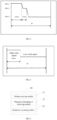
- FIG. 1 is a flow chart of an energy saving controlling method of an inverter air-conditioner in accordance with an embodiment of the present invention.
- the method includes the following steps:
- the settings of the energy consumption and the operating time can be realized by using a remote controller or a main controlling panel of the air-conditioner. Or, more than one group of parameters matching with each can be provided in the system of the air-conditioner which can be chosen by a button(s).
- the main controlling unit of the air-conditioner calculates or retrieves the operational parameters such as the operating power of the inverter air-conditioner correspondingly, so the inverter air-conditioner can operate according to the operational parameters. In this way, the energy consumption and the using cost of the inverter air-conditioner can be directly and accurately controlled by the user.
- the operational parameters can contain different operational parameters depending on various operating situations of the inverter air-conditioner. For example, if the inverter air-conditioner works at a constant power, the operational parameters corresponding to the constant power can include the operating power, an operating frequency of the compressor under the operating power, revolutions of outdoor and indoor fans, etc. If the inverter air-conditioner works at a variable power, the operational parameters corresponding to the variable power can include power variation times, the operating frequency of the compressor in each phase, and the revolutions of the outdoor and indoor fans, etc.
- the energy consumption mentioned above is X and the operating time mentioned above is T
- the constant power is X/T (dividing X by T)
- the set operating time T can be divided into time periods from T1 to Tn (T1, T2&Tn)
- the set energy consumption can be divided into sections from X1 to Xn (X1, X2 aloneXn), wherein n is a natural number greater than or equal to 2 and X1/T1>Xn/Tn.
- T1, T2....Tn or X1, X2....Xn may not be equal to each other.
- the corresponding operating power for example, the constant power or the corresponding operating power in a corresponding time period
- the operating frequency of the compressor and/or the operating frequency of the fan can be controlled according to the calculated operating power.
- the above energy consumption X and operating time T can be set according to actual situations, for example, the energy consumption X is preferably set within the range from 1 KW*h (kilowatt-hour) to 3 KW*h (kilowatt-hour) and the operating time T is preferably set within the range from 5 h (hours) to 10 h.
- the energy consumption X and the operating time T are required to match with giving the operating frequency of the inverter air-conditioner into consideration simultaneously.
- the settings of the energy consumption X and the operating time T are required to allow for the operation of the inverter air-conditioner so that inverter air-conditioner can meet requirements (such as requirements for refrigeration, heating, ventilating) of the user.
- the energy consumption X of an IP air-conditioner of three-level energy efficiency is set to be 1 KW*h and the operating time T thereof is required to be longer than or equal to 2 hours.
- the operating time is set to be 1 hour, the air-conditioner can only operate at the allowed maximum operating power; if the set energy consumption X is much less than the required consumption and the set operating time T is much longer than the required time, the target operating power will be much less than the operating power corresponding to the allowed minimum operating frequency of the air-conditioner, at this time, the minimum operating frequency of the air-conditioner is considered as the operational parameter.
- the settings of the energy consumption X and the operating time T are not received. For example, if the energy consumed by the inverter air-conditioner working at the minimum operating power in the set operating time is still greater than the set energy consumption X, or if the user needs the air-conditioner to work in a cooling mode while the air-conditioner can only work in a ventilating mode according to the settings, the corresponding settings are not received.
- the target indoor temperature is considered to be the restricting temperature, for example, if the target indoor temperature is set to be 26 degrees Celsius, the operating frequency of the compressor of the air-conditioner remains unchanged or is properly decreased when the air output from the air-conditioner reaches or is close to 26 degrees Celsius, which prevents the drop of the indoor temperature.
- Options corresponding to the energy consumption, the operating time, and the target indoor temperature can be preset in the inverter air-conditioner of the above embodiment, thus, the user can choose the corresponding option to finish the settings conveniently.
- the adjusting sate of an energy saving mode can be entered by pressing an "energy-saving" button formed on the remote controller or the main controlling panel of the air-conditioner: by displaying value of the energy consumption in the energy saving mode, the user can choose the needed energy saving mode by pressing the button.
- FIG. 2 multiple energy saving modes are provided, and the energy saving modes can be switched by pressing the energy-saving button.
- the air-conditioner is required to operate at a high power, the energy saving mode with the energy consumption being 3 KW*h and the operating time being 8 hours can be chosen; if the air-conditioner is required to operate at a low power, the energy saving mode with the energy consumption being 1 KW*h and the operating time being 8 hours can be chosen.
- the above energy consumption X and operating time T can be preset in the system or can be set by adding manual setting options on the controlling interface of the air-conditioner.
- the energy consumption of the embodiment can be respectively set to be 1 KW*h, 1.5 KW*h, 2 KW*h, and 3 KW*h, and the user can choose the needed mode via the remote controller or the main controlling panel of the air-conditioner.
- the remote controller determines the chosen energy saving mode automatically; if the user cancels the energy saving mode, the remote controller immediately sends codes to cancel the energy saving mode.
- the operating time of the air-conditioner can be manually set to be 9 hours with the total energy consumption being 2 KW*h. At this time, if the inverter air-conditioner works at a constant power, the operating power W thereof is equivalent to 2 KW*h/9.
- the target indoor temperature defaults to 26 degrees Celsius when the inverter air-conditioner works in the cooling mode and defaults to about 20 degrees Celsius when the inverter air-conditioner works in a heating mode.
- the operating frequency of the air-conditioner is decreased if the indoor temperature is lower than the energy saving indoor temperature such as 26 degrees Celsius; when the inverter air-conditioner works in the heating mode, the operating frequency of the air-conditioner is decreased if the indoor temperature is higher than the energy saving temperature such as 20 degrees Celsius. It is noted that the user can set the target indoor temperature manually.
- the energy saving mode can be entered through the energy-saving button, and the system thereafter works in the defaulted mode with the energy consumption being 1 KW*h and the operating time being 8 hours.
- the operating power of the inverter air-conditioner is equivalent to KW*h/8, which is a constant power.
- the energy saving mode can be entered through the energy-saving button, and the system thereafter works in the defaulted mode with the energy consumption being 1 KW*h and the operating time being 8 hours.
- the operating power of the inverter air-conditioner is equivalent to 1 KW*h/8.
- the target energy consumption is 0.2 KW*h in a first phase lasting for 15 minutes and is 0.05 KW*h in a second phase lasting for 5 minutes, and the inverter air-conditioner operates at a constant power stably in the remaining 7 hours and 40 minutes using the left 0.75 KW*h of energy.
- the operating time defaults to 8 hours
- the refrigeration energy saving temperature defaults to 26 degrees Celsius
- the inverter air-conditioner works in the cooling mode (referring to FIG. 3 ):
- the compressor and the indoor and outdoor fans can operate relative to each other, after the energy saving mode is started, the indoor fan operates at a high wind speed (for example, a speed-regulating fan works in the 80% shift) for 20 minutes and then operates at a low wind speed (for example, the speed-regulating fan works in the 30% shift), as shown in FIG. 4 .
- a high wind speed for example, a speed-regulating fan works in the 80% shift
- a low wind speed for example, the speed-regulating fan works in the 30% shift
- the user is allowed to adjust the wind speed of the indoor fan through the remote controller, thus, the indoor fan can operate at the speed set by the user. Since the indoor fan does not affect the power of the whole air-conditioner much, thus, certain deviation of the total energy consumption of the air-conditioner is allowable.
- an energy saving controlling device 20 of an inverter air-conditioner in accordance with an embodiment of the present disclosure is provided.
- the energy saving controlling device 20 of the inverter air-conditioner includes: a setting receiving module 21, a parameter calculating or retrieving module 22, and a parameter executing module 23.
- the setting receiving module 21 is used for receiving the settings of an energy consumption and an operating time through a main controlling unit of the air-conditioner.
- the parameter calculating or retrieving module 22 is used for calculating or retrieving operational parameters of the air-conditioner based on that the air-conditioner consumes the set energy consumption in the set operating time according to the set energy consumption and the set operating time.
- the parameter executing module 23 is used for controlling the inverter air-conditioner to operate according to the calculated or retrieved operational parameters.
- the parameter calculating or retrieving module 22 can calculate or retrieve the operational parameters such as a corresponding operating power of the inverter air-conditioner, thus, the parameter executing module 23 can control the inverter air-conditioner to operate according to the operational parameters. In this way, the user can control the energy consumption and the using cost of the inverter air-conditioner directly and accurately.
- the operational parameters can contain different operational parameters depending on various operating situations of the inverter air-conditioner. For example, if the inverter air-conditioner works at a constant power, the operational parameters of the constant power can include the operating power, an operating frequency of the compressor under the operating power, revolutions of outdoor and indoor fans, etc. If the inverter air-conditioner works at a variable power, the operational parameters of the variable power can include power variation times, the operating frequency of the compressor in each phase, and the revolutions of the outdoor and indoor fans, etc.
- the energy consumption mentioned above is X and the operating time mentioned above is T
- the constant power is X/T (dividing X by T)
- the set operating time T can be divided into time periods from T1 to Tn (T1, T2&Tn)
- the set energy consumption can be divided into sections from X1 to Xn (X1, X2 aloneXn), wherein n is a natural number greater than or equal to 2 and X1/T1>Xn/Tn.
- T1, T2....Tn or X1, X2....Xn may not be equal to each other.
- the corresponding operating power for example, the constant power or the corresponding operating power in a corresponding time period
- the operating frequency of the compressor and/or the operating frequency of the fan can be controlled according to the calculated operating power.
- the above energy consumption X and operating time T can be set according to actual situations, for example, the energy consumption X is preferably set within the range from 1 KW*h (kilowatt-hour) to 3 KW*h (kilowatt-hour) and the operating time T is preferably set within the range from 5 h (hours) to 10 h.
- the energy consumption X and the operating time T are required to match with giving the operating frequency of the inverter air-conditioner into consideration simultaneously.
- the settings of the energy consumption X and the operating time T are required to allow for the operation of the inverter air-conditioner so that inverter air-conditioner can meet requirements (such as requirements for refrigeration, heating, ventilating) of the user.
- the energy consumption X of an IP air-conditioner of three-level energy efficiency is set to be 1 KW*h and the operating time T thereof is required to be longer than or equal to 2 hours.
- the operating time is set to be 1 hour, the air-conditioner can only operate at the allowed maximum operating power; if the set energy consumption X is much less than the required consumption and the set operating time T is much longer than the required time, the target operating power will be much less than the operating power corresponding to the allowed minimum operating frequency of the air-conditioner, at this time, the minimum operating frequency of the air-conditioner is considered as the operational parameter.
- the settings of the energy consumption X and the operating time T are not received. For example, if the energy consumed by the inverter air-conditioner working at the minimum operating power in the set operating time is still greater than the set energy consumption X, or if the user needs the air-conditioner to work in a cooling mode while the air-conditioner can only work in a ventilating mode according to the settings, the corresponding settings are not received. Additionally, if the settings further include the setting of the target temperature, whether the target temperature can be reached should be given into consideration when setting the energy consumption X and the operating time T. If the difference between the temperature which can be reached after the air-conditioner operates according to the set energy consumption and the set operating time and the target temperature is great, the settings are not received.
Landscapes
- Engineering & Computer Science (AREA)
- Chemical & Material Sciences (AREA)
- Combustion & Propulsion (AREA)
- Mechanical Engineering (AREA)
- General Engineering & Computer Science (AREA)
- Physics & Mathematics (AREA)
- Signal Processing (AREA)
- Fuzzy Systems (AREA)
- Human Computer Interaction (AREA)
- Mathematical Physics (AREA)
- Fluid Mechanics (AREA)
- Air Conditioning Control Device (AREA)
- General Physics & Mathematics (AREA)
- Automation & Control Theory (AREA)
- Power Engineering (AREA)
- Electromagnetism (AREA)
- Radar, Positioning & Navigation (AREA)
Claims (16)
- Energiesparendes Steuerungsverfahren einer Inverter-Klimaanlage, umfassend:Empfangen (S11) von Einstellungen eines Energieverbrauchs und einer Betriebszeit durch eine Hauptsteuereinheit der Inverter-Klimaanlage;Berechnen oder Abrufen (S12) von Betriebsparametern der Inverter-Klimaanlage entsprechend dem eingestellten Energieverbrauch und der eingestellten Betriebszeit; undSteuern (S13) der Inverter-Klimaanlage, so dass sie gemäß den berechneten oder abgerufenen Betriebsparametern betrieben wird,dadurch gekennzeichnet, dassdie Betriebsparameter darauf basieren, dass die Inverter-Klimaanlage den eingestellten Energieverbrauch innerhalb der eingestellten Betriebszeit verbraucht, wobei die Betriebsparameter einer konstanten Leistung der Inverter-Klimaanlage entsprechen, der Energieverbrauch X ist, die Betriebszeit T ist und eine Betriebsleistung der Inverter-Klimaanlage X/T ist.
- Energiesparendes Steuerungsverfahren gemäß Anspruch 1, wobei X im Bereich von 1 KW*h bis 3 KW*h liegt und T im Bereich von 5 h bis 10 h liegt.
- Energiesparendes Steuerungsverfahren gemäß Anspruch 2, wobei die Einstellungen ferner das Einstellen einer Ziel-Innentemperatur umfassen.
- Energiesparendes Steuerungsverfahren gemäß Anspruch 3, wobei der Energieverbrauch und die Betriebszeit, oder der Energieverbrauch und die Betriebszeit und die Ziel-Innentemperatur vom System voreingestellt sind; oder bei dem Optionen, die dem Energieverbrauch und der Betriebszeit entsprechen, oder Optionen, die dem Energieverbrauch und der Betriebszeit und der Ziel-Innentemperatur entsprechen, zur Auswahl durch den Benutzer voreingestellt sind.
- Energiesparendes Steuerungsverfahren gemäß Anspruch 1, wobei die Betriebsparameter der Inverter-Klimaanlage einer variablen Leistung der Inverter-Klimaanlage entsprechen, der Energieverbrauch X ist, die Betriebszeit T ist, die eingestellte Betriebszeit T in Zeitabschnitte von T1 bis Tn unterteilt ist, der eingestellte Energieverbrauch X entsprechend in Abschnitte von X1 bis Xn unterteilt ist, wobei n eine natürliche Zahl größer oder gleich 2 ist, die Betriebsleistung der Inverter-Klimaanlage in jeder Phase durch Dividieren des Energieverbrauchs der entsprechenden Phase durch die Betriebszeit der entsprechenden Phase erhalten wird, und X1/T1>Xn/Tn.
- Energiesparendes Steuerungsverfahren gemäß Anspruch 5, wobei X im Bereich von 1 KW*h bis 3 KW*h liegt und T im Bereich von 5 h bis 10 h liegt.
- Energiesparendes Steuerungsverfahren gemäß Anspruch 6, wobei die Einstellungen ferner das Einstellen der Ziel-Innentemperatur umfassen.
- Energiesparendes Steuerungsverfahren gemäß Anspruch 7, wobei der Energieverbrauch und die Betriebszeit, oder der Energieverbrauch und die Betriebszeit und die Ziel-Innentemperatur vom System voreingestellt sind; oder Optionen, die dem Energieverbrauch und der Betriebszeit entsprechen, oder Optionen, die dem Energieverbrauch und der Betriebszeit und der Ziel-Innentemperatur entsprechen, zur Auswahl durch einen Benutzer voreingestellt sind.
- Energiesparende Steuerungsvorrichtung (20) einer Inverter-Klimaanlage, umfassend:ein Einstellungsempfangsmodul (21) zum Empfangen von Einstellungen eines Energieverbrauchs und einer Betriebszeit durch eine Hauptsteuerungseinheit der Inverter-Klimaanlage;ein Parameterberechnungs- oder -abrufmodul (22) zum Berechnen oder Abrufen von Betriebsparametern der Inverter-Klimaanlage; undein Parameterausführungsmodul (23) zum Steuern der Inverter-Klimaanlage, so dass sie gemäß den berechneten oder abgerufenen Betriebsparametern betrieben wird,dadurch gekennzeichnet, dassdie Betriebsparameter darauf basieren, dass die Inverter-Klimaanlage den eingestellten Energieverbrauch innerhalb der eingestellten Betriebszeit verbraucht, wobei die Betriebsparameter einer konstanten Leistung der Inverter-Klimaanlage entsprechen, der Energieverbrauch X ist, die Betriebszeit T ist und eine Betriebsleistung der Inverter-Klimaanlage X/T ist.
- Energiesparende Steuerungsvorrichtung gemäß Anspruch 9, wobei X im Bereich von 1 KW*h bis 3 KW*h liegt und T im Bereich von 5 h bis 10 h liegt.
- Energiesparende Steuerungsvorrichtung gemäß Anspruch 9, wobei die Einstellungen ferner das Einstellen einer Ziel-Innentemperatur umfassen.
- Energiesparende Steuerungsvorrichtung gemäß Anspruch 11, wobei der Energieverbrauch und die Betriebszeit, oder der Energieverbrauch und die Betriebszeit und die Ziel-Innentemperatur vom System voreingestellt sind; oder Optionen, die dem Energieverbrauch und der Betriebszeit entsprechen, oder Optionen, die dem Energieverbrauch und der Betriebszeit und der Ziel-Innentemperatur entsprechen, zur Auswahl durch den Benutzer voreingestellt sind.
- Energiesparende Steuerungsvorrichtung gemäß Anspruch 9, wobei die Betriebsparameter der Inverter-Klimaanlage der variablen Leistung der Inverter-Klimaanlage entsprechen, der Energieverbrauch X ist, die Betriebszeit T ist, die eingestellte Betriebszeit T in Zeitabschnitte von T1 bis Tn unterteilt ist, der eingestellte Energieverbrauch X entsprechend in Abschnitte von X1 bis Xn unterteilt ist, wobei n eine natürliche Zahl größer oder gleich 2 ist, die Betriebsleistung der Inverter-Klimaanlage in jeder Phase durch Dividieren des Energieverbrauchs der entsprechenden Phase durch die Betriebszeit der entsprechenden Phase erhalten wird, und X1/T1>Xn/Tn.
- Energiesparende Steuerungsvorrichtung gemäß Anspruch 13, wobei X im Bereich von 1 KW*h bis 3 KW*h liegt und T im Bereich von 5 h bis 10 h liegt.
- Energiesparende Steuerungsvorrichtung gemäß Anspruch 14, wobei die Einstellungen ferner das Einstellen einer Ziel-Innentemperatur umfassen.
- Energiesparende Steuerungsvorrichtung gemäß Anspruch 15, wobei der Energieverbrauch und die Betriebszeit, oder der Energieverbrauch und die Betriebszeit und die Ziel-Innentemperatur vom System voreingestellt sind; oder Optionen, die dem Energieverbrauch und der Betriebszeit entsprechen, oder Optionen, die dem Energieverbrauch und der Betriebszeit und der Ziel-Innentemperatur entsprechen, zur Auswahl durch den Benutzer voreingestellt sind.
Applications Claiming Priority (2)
| Application Number | Priority Date | Filing Date | Title |
|---|---|---|---|
| CN201210236422.XA CN103206767B (zh) | 2012-07-09 | 2012-07-09 | 变频空调器的节能控制方法及装置 |
| PCT/CN2012/085764 WO2014008737A1 (zh) | 2012-07-09 | 2012-12-03 | 变频空调器的节能控制方法及装置 |
Publications (4)
| Publication Number | Publication Date |
|---|---|
| EP2889545A1 EP2889545A1 (de) | 2015-07-01 |
| EP2889545A4 EP2889545A4 (de) | 2016-07-27 |
| EP2889545C0 EP2889545C0 (de) | 2025-06-25 |
| EP2889545B1 true EP2889545B1 (de) | 2025-06-25 |
Family
ID=48754072
Family Applications (1)
| Application Number | Title | Priority Date | Filing Date |
|---|---|---|---|
| EP12880755.9A Active EP2889545B1 (de) | 2012-07-09 | 2012-12-03 | Energiesparendes steuerungsverfahren und vorrichtung für eine inverter-klimaanlage |
Country Status (4)
| Country | Link |
|---|---|
| US (1) | US9062891B2 (de) |
| EP (1) | EP2889545B1 (de) |
| CN (1) | CN103206767B (de) |
| WO (1) | WO2014008737A1 (de) |
Cited By (1)
| Publication number | Priority date | Publication date | Assignee | Title |
|---|---|---|---|---|
| US20230314024A1 (en) * | 2022-03-31 | 2023-10-05 | Eaton Intelligent Power Limited | Air conditioning predictive power management system and method |
Families Citing this family (38)
| Publication number | Priority date | Publication date | Assignee | Title |
|---|---|---|---|---|
| IN2013CH03559A (de) * | 2013-10-08 | 2015-09-04 | Ajith Kariguddaiah | |
| CN104728993B (zh) * | 2013-12-19 | 2017-09-29 | 广东美的制冷设备有限公司 | 空调器控制方法及装置 |
| CN103954017B (zh) * | 2014-05-23 | 2016-12-21 | 努比亚技术有限公司 | 一种智能遥控器及其控制方法 |
| CN105222266B (zh) * | 2014-06-26 | 2017-09-22 | 广东美的制冷设备有限公司 | 空调器的电量控制方法、装置及系统 |
| CN105444334A (zh) * | 2014-08-21 | 2016-03-30 | 青岛海尔空调电子有限公司 | 一种空调机组的控制方法及控制装置 |
| US9621047B2 (en) * | 2014-10-10 | 2017-04-11 | Dell Products L.P. | Systems and methods for measuring power system current using OR-ing MOSFETs |
| CN105222270B (zh) * | 2015-09-16 | 2018-03-13 | 珠海格力电器股份有限公司 | 空调器控制方法及系统 |
| CN105157185A (zh) * | 2015-10-23 | 2015-12-16 | 珠海格力电器股份有限公司 | 一种空调自动节能系统、方法及多联空调 |
| DE102015221553A1 (de) * | 2015-11-03 | 2017-05-04 | Innogy Se | Freileitungsmastsystem und Verfahren zum Erweitern der elektrischen Übertragungskapazität eines Freileitungsmastsystems |
| US10724753B2 (en) | 2015-12-29 | 2020-07-28 | Carrier Corporation | System and method for operating a variable speed compressor |
| CN106322688B (zh) * | 2016-09-30 | 2019-07-26 | 广东美的制冷设备有限公司 | 电量设置控制方法、控制器、智能设备及空调 |
| CN106403190B (zh) * | 2016-09-30 | 2019-04-19 | 广东美的制冷设备有限公司 | 电量设置控制方法、控制器、智能设备及空调 |
| CN107461880B (zh) * | 2017-07-25 | 2020-05-05 | 广东美的制冷设备有限公司 | 空调器、终端及具有空调器和终端的空调系统 |
| CN107975918B (zh) * | 2017-11-21 | 2020-10-13 | 广东美的暖通设备有限公司 | 空调系统、空调系统的控制方法和装置 |
| CN108397853B (zh) * | 2018-02-11 | 2019-11-01 | 珠海格力电器股份有限公司 | 空调机组控制方法和装置 |
| CN108873997B (zh) * | 2018-07-24 | 2020-11-06 | 国网湖北省电力公司咸宁供电公司 | 一种电力变压器吸湿器湿度智能控制系统及其运行方法 |
| CN109323419A (zh) * | 2018-09-30 | 2019-02-12 | 广东美的制冷设备有限公司 | 用电高峰控制空调的方法和装置及空调系统和设备 |
| CN111043715A (zh) * | 2018-10-12 | 2020-04-21 | 广州松下空调器有限公司 | 空调器的控制方法及系统、空调器 |
| CN110940064B (zh) * | 2019-11-22 | 2021-09-21 | 重庆海尔空调器有限公司 | 空调的运行频率的控制方法 |
| CN111174389A (zh) * | 2020-01-08 | 2020-05-19 | 珠海格力电器股份有限公司 | 分布式供电的空调功率控制方法及空调系统 |
| CN111692712A (zh) * | 2020-06-10 | 2020-09-22 | 滁州普利斯特软件有限公司 | 一种节能空调遥控器及其信息传输方法 |
| CN111831871B (zh) * | 2020-07-07 | 2023-10-24 | 海尔(深圳)研发有限责任公司 | 用于空调工作模式推荐的方法及装置、设备 |
| CN113932400A (zh) * | 2020-07-13 | 2022-01-14 | 海信(山东)空调有限公司 | 一种空调器及节能控制方法 |
| CN112327639B (zh) * | 2020-07-31 | 2024-12-03 | 深圳Tcl新技术有限公司 | 设备控制方法、装置、系统与计算机可读存储介质 |
| CN112611079B (zh) * | 2020-12-14 | 2023-05-23 | 深圳Tcl新技术有限公司 | 空调控制方法、装置、终端设备及存储介质 |
| CN112648722B (zh) * | 2020-12-23 | 2022-07-19 | 青岛海尔空调器有限总公司 | 用于空调的控制方法、装置、电子设备及存储介质 |
| CN112810396B (zh) * | 2020-12-28 | 2022-08-05 | 格力电器(武汉)有限公司 | 一种驻车空调及其使用参数确定方法、装置和存储介质 |
| CN112815571B (zh) * | 2021-01-18 | 2022-10-28 | 中科广能能源研究院(重庆)有限公司 | 燃气热泵发动机驱动压缩机的转速调节控制方法及系统 |
| CN113468629B (zh) * | 2021-05-10 | 2022-04-26 | 北京科技大学 | 一种洁净空调系统制冷季能耗拆分方法 |
| CN114034106B (zh) * | 2021-11-10 | 2023-05-12 | 珠海格力电器股份有限公司 | 多联机组控制方法、装置和多联机组设备 |
| CN113983651B (zh) * | 2021-11-23 | 2023-04-14 | 海信(广东)空调有限公司 | 空调器及其控制方法 |
| CN114216218B (zh) * | 2021-12-02 | 2022-12-27 | 珠海格力电器股份有限公司 | 一种空调器的降功率控制方法及空调器 |
| CN114543277B (zh) * | 2022-03-09 | 2023-07-14 | 海信空调有限公司 | 空调器及其电量控制方法 |
| GB2619818B (en) * | 2022-06-14 | 2024-06-19 | Sunswap Ltd | Control system for vapour compression cycle and related methods |
| GB2619730B (en) * | 2022-06-14 | 2024-07-24 | Sunswap Ltd | Control system for vapour compression cycle and related methods |
| CN115468277B (zh) * | 2022-09-23 | 2025-06-10 | 小米科技(武汉)有限公司 | 空调控制方法、装置、计算机可读存储介质及空调 |
| CN117346409A (zh) * | 2023-09-05 | 2024-01-05 | 珠海格力电器股份有限公司 | 压缩机的控制方法和装置、存储介质、电子装置 |
| CN117628664A (zh) * | 2023-12-15 | 2024-03-01 | 广州市赛科自动化控制设备有限公司 | 一种基于净化空调的室内温湿度控制方法及系统 |
Citations (2)
| Publication number | Priority date | Publication date | Assignee | Title |
|---|---|---|---|---|
| JP4688185B1 (ja) * | 2010-10-27 | 2011-05-25 | 株式会社 テクノミライ | 空調制御システム及びプログラム |
| CN102193510A (zh) * | 2010-03-02 | 2011-09-21 | 三星电子株式会社 | 需求响应系统 |
Family Cites Families (34)
| Publication number | Priority date | Publication date | Assignee | Title |
|---|---|---|---|---|
| US5219119A (en) * | 1992-09-21 | 1993-06-15 | Honeywell Inc. | Thermostat-type setback controller having a recovery set point which depends on the time-based value of a sensor signal |
| US5675503A (en) * | 1994-04-19 | 1997-10-07 | Denver Energy Cost Controls, Inc. | Adaptive load cycler for controlled reduction of energy use |
| JPH09266630A (ja) * | 1996-03-27 | 1997-10-07 | Chubu Electric Power Co Inc | 電力抑制制御装置、空気調和装置 |
| JPH10246493A (ja) * | 1997-03-05 | 1998-09-14 | Sanyo Electric Co Ltd | 空気調和装置 |
| EP0916531B1 (de) * | 1997-11-11 | 2005-12-21 | Siemens Aktiengesellschaft | Verfahren und Vorrichtung zum Betreiben eines Kältemittelsystems |
| US6122603A (en) * | 1998-05-29 | 2000-09-19 | Powerweb, Inc. | Multi-utility energy control system with dashboard |
| US6843063B2 (en) * | 2000-06-08 | 2005-01-18 | Kazuo Miwa | Method and device for saving energy in indoor cooling and heating |
| US20020045992A1 (en) * | 2000-09-25 | 2002-04-18 | Shincovich John T. | Point of use digital electric energy apparatus and method for measuring out-of-specification energy |
| KR20020096420A (ko) * | 2001-06-19 | 2002-12-31 | 주식회사 엘지이아이 | 에어컨의 전력제어장치 및 방법 |
| JP2003116219A (ja) * | 2001-10-09 | 2003-04-18 | Nihon Setsubi Kogyo Co Ltd | 使用電力量制御システムと使用電力量制御方法と使用電力量制御プログラムを記録したコンピュータ読み取り可能な記録媒体 |
| BR0308702A (pt) * | 2002-03-28 | 2005-02-09 | Robertshaw Controls Co | Sistema e método de gerenciamento de suprimento de energia, dispositivo de termostato e método de desvio de pedidos de energia |
| CN100398927C (zh) * | 2002-11-26 | 2008-07-02 | 乐金电子(天津)电器有限公司 | 空调的电力控制装置及方法 |
| WO2005041393A2 (en) * | 2003-10-24 | 2005-05-06 | Pf1, Inc. | Method and system for power factor correction |
| JP4552119B2 (ja) * | 2004-07-16 | 2010-09-29 | 清水建設株式会社 | マルチエアコンのデマンド制御システム |
| US7181293B2 (en) * | 2004-12-27 | 2007-02-20 | Intel Corporation | System and method for enabling home power management |
| KR20060121030A (ko) * | 2005-05-23 | 2006-11-28 | 주식회사 대우일렉트로닉스 | 실시간 전력 소비량 표시기능을 갖는 에어컨 및 그표시방법 |
| CN1896629A (zh) * | 2005-07-15 | 2007-01-17 | 乐金电子(天津)电器有限公司 | 空气调节器及其运作方法 |
| JP2007285579A (ja) * | 2006-04-14 | 2007-11-01 | Toshiba Corp | 空調制御装置 |
| US7840825B2 (en) * | 2006-10-24 | 2010-11-23 | International Business Machines Corporation | Method for autonomous dynamic voltage and frequency scaling of microprocessors |
| KR20080063581A (ko) * | 2007-01-02 | 2008-07-07 | 삼성전자주식회사 | 공기조화기 및 그 제어방법 |
| WO2008088031A1 (ja) * | 2007-01-17 | 2008-07-24 | Daikin Industries, Ltd. | 空気調和機 |
| US7693670B2 (en) * | 2007-08-14 | 2010-04-06 | General Electric Company | Cognitive electric power meter |
| CN101545706B (zh) * | 2008-03-24 | 2012-01-04 | 海尔集团公司 | 变频冰箱变频控制方法 |
| CN101782258B (zh) * | 2009-01-19 | 2012-08-15 | 中华电信股份有限公司 | 空调节能方法 |
| CN101833310B (zh) * | 2009-03-09 | 2012-08-29 | 纵横资通能源股份有限公司 | 用电量管控系统及方法 |
| US9771732B2 (en) * | 2009-07-20 | 2017-09-26 | Lanai Pool Pump Systems, LLC | High-efficiency pump systems |
| TW201112576A (en) * | 2009-09-29 | 2011-04-01 | Kinpo Elect Inc | System and method for power management |
| JP5425582B2 (ja) * | 2009-09-30 | 2014-02-26 | 三洋電機株式会社 | 電気機器管理システム |
| CN101893309B (zh) * | 2010-07-19 | 2012-12-05 | 宁波奥克斯电气有限公司 | 变频空调节能运转的控制方法 |
| WO2012066674A1 (ja) * | 2010-11-19 | 2012-05-24 | 株式会社テクノミライ | 省エネルギー制御システム |
| US8761944B2 (en) * | 2011-01-12 | 2014-06-24 | Emerson Electric Co. | Apparatus and method for determining load of energy consuming appliances within a premises |
| CN102338545A (zh) * | 2011-08-31 | 2012-02-01 | 海信容声(广东)冰箱有限公司 | 一种冰箱显示耗电量的方法及显示系统 |
| CN202254626U (zh) * | 2011-08-31 | 2012-05-30 | 海信容声(广东)冰箱有限公司 | 一种冰箱显示耗电量的显示系统 |
| CN202442450U (zh) * | 2012-02-08 | 2012-09-19 | 珠海格力电器股份有限公司 | 空调器 |
-
2012
- 2012-07-09 CN CN201210236422.XA patent/CN103206767B/zh active Active
- 2012-12-03 WO PCT/CN2012/085764 patent/WO2014008737A1/zh not_active Ceased
- 2012-12-03 EP EP12880755.9A patent/EP2889545B1/de active Active
-
2013
- 2013-03-07 US US13/787,851 patent/US9062891B2/en active Active
Patent Citations (3)
| Publication number | Priority date | Publication date | Assignee | Title |
|---|---|---|---|---|
| CN102193510A (zh) * | 2010-03-02 | 2011-09-21 | 三星电子株式会社 | 需求响应系统 |
| JP4688185B1 (ja) * | 2010-10-27 | 2011-05-25 | 株式会社 テクノミライ | 空調制御システム及びプログラム |
| US20130178988A1 (en) * | 2010-10-27 | 2013-07-11 | Technomirai Co., Ltd. | Air-conditioning control system and program |
Cited By (1)
| Publication number | Priority date | Publication date | Assignee | Title |
|---|---|---|---|---|
| US20230314024A1 (en) * | 2022-03-31 | 2023-10-05 | Eaton Intelligent Power Limited | Air conditioning predictive power management system and method |
Also Published As
| Publication number | Publication date |
|---|---|
| WO2014008737A1 (zh) | 2014-01-16 |
| AU2012385336B2 (en) | 2016-03-10 |
| EP2889545A4 (de) | 2016-07-27 |
| US20140012423A1 (en) | 2014-01-09 |
| EP2889545A1 (de) | 2015-07-01 |
| EP2889545C0 (de) | 2025-06-25 |
| CN103206767B (zh) | 2014-09-03 |
| US9062891B2 (en) | 2015-06-23 |
| CN103206767A (zh) | 2013-07-17 |
| AU2012385336A1 (en) | 2015-02-05 |
Similar Documents
| Publication | Publication Date | Title |
|---|---|---|
| US9062891B2 (en) | Energy saving controlling method and device of inverter air-conditioner | |
| CN104422067B (zh) | 变频空调控制方法及空调器 | |
| CN103388879B (zh) | 一种空调器的控制方法 | |
| CN103185387B (zh) | 空调器及其出风温度控制方法 | |
| CN107990498B (zh) | 空调控制方法、装置及空调器 | |
| CN103175285B (zh) | 空调室外风机的控制电路、控制方法及空调器 | |
| CN100582592C (zh) | 一种空调器自动选择运行模式的控制方法 | |
| US8650894B2 (en) | System and method for compressor capacity modulation in a heat pump | |
| JP6244791B2 (ja) | 空調システム | |
| CN103940058A (zh) | 空调器的控制方法、空调器的控制装置和空调器 | |
| CN104896665B (zh) | 空调器的控制方法及装置 | |
| CN108592340B (zh) | 空调系统的控制方法、装置、存储介质和处理器 | |
| CN106440594B (zh) | 一种室外风机控制方法、系统和空调器 | |
| CN103836762B (zh) | 变频空调及其系统控制方法和装置 | |
| CN112648722B (zh) | 用于空调的控制方法、装置、电子设备及存储介质 | |
| CN104266305A (zh) | 变频空调器的控制装置、方法及变频空调器 | |
| CN108253603B (zh) | 空调控制的方法、装置、系统和空调 | |
| CN111207500B (zh) | 一种水多联空调及其控制方法、装置和存储介质 | |
| CN114216217A (zh) | 用于空调供电调节的方法及装置、空调 | |
| JP6328902B2 (ja) | 空調システム | |
| CN112628961A (zh) | 一种调温器控制变频空调的调频方式 | |
| EP3415831B1 (de) | System zur automatischen kühlgebläsesteuerung und vorrichtung zur automatischen kühlgebläsesteuerung | |
| JP2010157152A (ja) | 設備機器制御システム | |
| JP2014196860A (ja) | 空気調和機 | |
| US20150362231A1 (en) | Gas heat pump air conditioning system |
Legal Events
| Date | Code | Title | Description |
|---|---|---|---|
| PUAI | Public reference made under article 153(3) epc to a published international application that has entered the european phase |
Free format text: ORIGINAL CODE: 0009012 |
|
| 17P | Request for examination filed |
Effective date: 20150121 |
|
| AK | Designated contracting states |
Kind code of ref document: A1 Designated state(s): AL AT BE BG CH CY CZ DE DK EE ES FI FR GB GR HR HU IE IS IT LI LT LU LV MC MK MT NL NO PL PT RO RS SE SI SK SM TR |
|
| AX | Request for extension of the european patent |
Extension state: BA ME |
|
| DAX | Request for extension of the european patent (deleted) | ||
| RIN1 | Information on inventor provided before grant (corrected) |
Inventor name: HUANG, CANBIN Inventor name: WANG, LEI Inventor name: LI, JINBO Inventor name: PAN, XINYUN Inventor name: ZHU, LIANGHONG Inventor name: ZENG, QIANGBIN Inventor name: CHEN, SHOUMIN Inventor name: LUO, LING Inventor name: ZHANG, ZHIGUO Inventor name: LI, HAISHENG Inventor name: ZHENG, SHUISHENG Inventor name: LI, QIANG Inventor name: QI, WENDUAN |
|
| RA4 | Supplementary search report drawn up and despatched (corrected) |
Effective date: 20160629 |
|
| RIC1 | Information provided on ipc code assigned before grant |
Ipc: F24F 11/00 20060101AFI20160623BHEP |
|
| STAA | Information on the status of an ep patent application or granted ep patent |
Free format text: STATUS: EXAMINATION IS IN PROGRESS |
|
| 17Q | First examination report despatched |
Effective date: 20200121 |
|
| GRAP | Despatch of communication of intention to grant a patent |
Free format text: ORIGINAL CODE: EPIDOSNIGR1 |
|
| STAA | Information on the status of an ep patent application or granted ep patent |
Free format text: STATUS: GRANT OF PATENT IS INTENDED |
|
| INTG | Intention to grant announced |
Effective date: 20250306 |
|
| GRAS | Grant fee paid |
Free format text: ORIGINAL CODE: EPIDOSNIGR3 |
|
| GRAA | (expected) grant |
Free format text: ORIGINAL CODE: 0009210 |
|
| STAA | Information on the status of an ep patent application or granted ep patent |
Free format text: STATUS: THE PATENT HAS BEEN GRANTED |
|
| AK | Designated contracting states |
Kind code of ref document: B1 Designated state(s): AL AT BE BG CH CY CZ DE DK EE ES FI FR GB GR HR HU IE IS IT LI LT LU LV MC MK MT NL NO PL PT RO RS SE SI SK SM TR |
|
| REG | Reference to a national code |
Ref country code: GB Ref legal event code: FG4D |
|
| REG | Reference to a national code |
Ref country code: CH Ref legal event code: EP |
|
| REG | Reference to a national code |
Ref country code: CH Ref legal event code: EP |
|
| REG | Reference to a national code |
Ref country code: IE Ref legal event code: FG4D |
|
| REG | Reference to a national code |
Ref country code: DE Ref legal event code: R096 Ref document number: 602012081580 Country of ref document: DE |
|
| U01 | Request for unitary effect filed |
Effective date: 20250718 |
|
| U07 | Unitary effect registered |
Designated state(s): AT BE BG DE DK EE FI FR IT LT LU LV MT NL PT RO SE SI Effective date: 20250728 |
|
| PG25 | Lapsed in a contracting state [announced via postgrant information from national office to epo] |
Ref country code: GR Free format text: LAPSE BECAUSE OF FAILURE TO SUBMIT A TRANSLATION OF THE DESCRIPTION OR TO PAY THE FEE WITHIN THE PRESCRIBED TIME-LIMIT Effective date: 20250926 Ref country code: NO Free format text: LAPSE BECAUSE OF FAILURE TO SUBMIT A TRANSLATION OF THE DESCRIPTION OR TO PAY THE FEE WITHIN THE PRESCRIBED TIME-LIMIT Effective date: 20250925 |
|
| PG25 | Lapsed in a contracting state [announced via postgrant information from national office to epo] |
Ref country code: HR Free format text: LAPSE BECAUSE OF FAILURE TO SUBMIT A TRANSLATION OF THE DESCRIPTION OR TO PAY THE FEE WITHIN THE PRESCRIBED TIME-LIMIT Effective date: 20250625 |
|
| PG25 | Lapsed in a contracting state [announced via postgrant information from national office to epo] |
Ref country code: RS Free format text: LAPSE BECAUSE OF FAILURE TO SUBMIT A TRANSLATION OF THE DESCRIPTION OR TO PAY THE FEE WITHIN THE PRESCRIBED TIME-LIMIT Effective date: 20250925 |
|
| PG25 | Lapsed in a contracting state [announced via postgrant information from national office to epo] |
Ref country code: IS Free format text: LAPSE BECAUSE OF FAILURE TO SUBMIT A TRANSLATION OF THE DESCRIPTION OR TO PAY THE FEE WITHIN THE PRESCRIBED TIME-LIMIT Effective date: 20251025 |
|
| PG25 | Lapsed in a contracting state [announced via postgrant information from national office to epo] |
Ref country code: SM Free format text: LAPSE BECAUSE OF FAILURE TO SUBMIT A TRANSLATION OF THE DESCRIPTION OR TO PAY THE FEE WITHIN THE PRESCRIBED TIME-LIMIT Effective date: 20250625 |
|
| PG25 | Lapsed in a contracting state [announced via postgrant information from national office to epo] |
Ref country code: CZ Free format text: LAPSE BECAUSE OF FAILURE TO SUBMIT A TRANSLATION OF THE DESCRIPTION OR TO PAY THE FEE WITHIN THE PRESCRIBED TIME-LIMIT Effective date: 20250625 |
|
| U20 | Renewal fee for the european patent with unitary effect paid |
Year of fee payment: 14 Effective date: 20251217 |
|
| PG25 | Lapsed in a contracting state [announced via postgrant information from national office to epo] |
Ref country code: PL Free format text: LAPSE BECAUSE OF FAILURE TO SUBMIT A TRANSLATION OF THE DESCRIPTION OR TO PAY THE FEE WITHIN THE PRESCRIBED TIME-LIMIT Effective date: 20250625 |
|
| PG25 | Lapsed in a contracting state [announced via postgrant information from national office to epo] |
Ref country code: SK Free format text: LAPSE BECAUSE OF FAILURE TO SUBMIT A TRANSLATION OF THE DESCRIPTION OR TO PAY THE FEE WITHIN THE PRESCRIBED TIME-LIMIT Effective date: 20250625 |
|
| PG25 | Lapsed in a contracting state [announced via postgrant information from national office to epo] |
Ref country code: ES Free format text: LAPSE BECAUSE OF FAILURE TO SUBMIT A TRANSLATION OF THE DESCRIPTION OR TO PAY THE FEE WITHIN THE PRESCRIBED TIME-LIMIT Effective date: 20250625 |
|
| PLBE | No opposition filed within time limit |
Free format text: ORIGINAL CODE: 0009261 |
|
| STAA | Information on the status of an ep patent application or granted ep patent |
Free format text: STATUS: NO OPPOSITION FILED WITHIN TIME LIMIT |
|
| REG | Reference to a national code |
Ref country code: CH Ref legal event code: L10 Free format text: ST27 STATUS EVENT CODE: U-0-0-L10-L00 (AS PROVIDED BY THE NATIONAL OFFICE) Effective date: 20260507 |