EP2886610A1 - Resin composition and application therefor - Google Patents
Resin composition and application therefor Download PDFInfo
- Publication number
- EP2886610A1 EP2886610A1 EP13879638.8A EP13879638A EP2886610A1 EP 2886610 A1 EP2886610 A1 EP 2886610A1 EP 13879638 A EP13879638 A EP 13879638A EP 2886610 A1 EP2886610 A1 EP 2886610A1
- Authority
- EP
- European Patent Office
- Prior art keywords
- resin
- measurement sample
- preparation
- formula
- working example
- Prior art date
- Legal status (The legal status is an assumption and is not a legal conclusion. Google has not performed a legal analysis and makes no representation as to the accuracy of the status listed.)
- Withdrawn
Links
- 239000011342 resin composition Substances 0.000 title claims abstract description 51
- 229920005989 resin Polymers 0.000 claims abstract description 406
- 239000011347 resin Substances 0.000 claims abstract description 406
- 239000003963 antioxidant agent Substances 0.000 claims abstract description 78
- 230000003078 antioxidant effect Effects 0.000 claims abstract description 64
- 125000000217 alkyl group Chemical group 0.000 claims abstract description 37
- 125000004437 phosphorous atom Chemical group 0.000 claims abstract description 32
- RRJHFUHAKCSNRY-UHFFFAOYSA-L [Cu+2].[O-]P([O-])=O Chemical compound [Cu+2].[O-]P([O-])=O RRJHFUHAKCSNRY-UHFFFAOYSA-L 0.000 claims abstract description 30
- 239000002250 absorbent Substances 0.000 claims abstract description 30
- 230000002745 absorbent Effects 0.000 claims abstract description 30
- BHEPBYXIRTUNPN-UHFFFAOYSA-N hydridophosphorus(.) (triplet) Chemical compound [PH] BHEPBYXIRTUNPN-UHFFFAOYSA-N 0.000 claims abstract description 29
- ISWSIDIOOBJBQZ-UHFFFAOYSA-N Phenol Chemical compound OC1=CC=CC=C1 ISWSIDIOOBJBQZ-UHFFFAOYSA-N 0.000 claims abstract description 19
- 125000004435 hydrogen atom Chemical group [H]* 0.000 claims abstract description 15
- 125000002729 alkyl fluoride group Chemical group 0.000 claims abstract description 5
- 229920002037 poly(vinyl butyral) polymer Polymers 0.000 claims description 103
- 239000005340 laminated glass Substances 0.000 claims description 22
- 239000011229 interlayer Substances 0.000 claims description 9
- 239000005038 ethylene vinyl acetate Substances 0.000 claims description 8
- 229920001200 poly(ethylene-vinyl acetate) Polymers 0.000 claims description 8
- 125000002496 methyl group Chemical group [H]C([H])([H])* 0.000 claims description 5
- 229920000178 Acrylic resin Polymers 0.000 claims description 3
- 239000004925 Acrylic resin Substances 0.000 claims description 3
- BZHJMEDXRYGGRV-UHFFFAOYSA-N Vinyl chloride Chemical compound ClC=C BZHJMEDXRYGGRV-UHFFFAOYSA-N 0.000 claims description 3
- JFNLZVQOOSMTJK-KNVOCYPGSA-N norbornene Chemical compound C1[C@@H]2CC[C@H]1C=C2 JFNLZVQOOSMTJK-KNVOCYPGSA-N 0.000 claims description 3
- 229920005668 polycarbonate resin Polymers 0.000 claims description 3
- 239000004431 polycarbonate resin Substances 0.000 claims description 3
- 229920001225 polyester resin Polymers 0.000 claims description 3
- 239000004645 polyester resin Substances 0.000 claims description 3
- 229920005672 polyolefin resin Polymers 0.000 claims description 3
- 229920005749 polyurethane resin Polymers 0.000 claims description 3
- 238000002845 discoloration Methods 0.000 abstract description 7
- 238000005259 measurement Methods 0.000 description 410
- 238000002360 preparation method Methods 0.000 description 239
- 239000010949 copper Substances 0.000 description 145
- 229910052802 copper Inorganic materials 0.000 description 145
- RYGMFSIKBFXOCR-UHFFFAOYSA-N Copper Chemical compound [Cu] RYGMFSIKBFXOCR-UHFFFAOYSA-N 0.000 description 143
- 238000011156 evaluation Methods 0.000 description 129
- 238000001228 spectrum Methods 0.000 description 41
- 230000007774 longterm Effects 0.000 description 39
- -1 polysiloxane Polymers 0.000 description 37
- YXFVVABEGXRONW-UHFFFAOYSA-N Toluene Chemical compound CC1=CC=CC=C1 YXFVVABEGXRONW-UHFFFAOYSA-N 0.000 description 30
- 230000000052 comparative effect Effects 0.000 description 29
- 238000012360 testing method Methods 0.000 description 25
- 229910019142 PO4 Inorganic materials 0.000 description 23
- JKIJEFPNVSHHEI-UHFFFAOYSA-N Phenol, 2,4-bis(1,1-dimethylethyl)-, phosphite (3:1) Chemical compound CC(C)(C)C1=CC(C(C)(C)C)=CC=C1OP(OC=1C(=CC(=CC=1)C(C)(C)C)C(C)(C)C)OC1=CC=C(C(C)(C)C)C=C1C(C)(C)C JKIJEFPNVSHHEI-UHFFFAOYSA-N 0.000 description 23
- 150000001879 copper Chemical class 0.000 description 23
- 239000010452 phosphate Substances 0.000 description 23
- OKKJLVBELUTLKV-UHFFFAOYSA-N Methanol Chemical compound OC OKKJLVBELUTLKV-UHFFFAOYSA-N 0.000 description 21
- 238000000034 method Methods 0.000 description 20
- 239000002904 solvent Substances 0.000 description 20
- LFQSCWFLJHTTHZ-UHFFFAOYSA-N Ethanol Chemical compound CCO LFQSCWFLJHTTHZ-UHFFFAOYSA-N 0.000 description 15
- 239000006185 dispersion Substances 0.000 description 15
- QSRJVOOOWGXUDY-UHFFFAOYSA-N 2-[2-[2-[3-(3-tert-butyl-4-hydroxy-5-methylphenyl)propanoyloxy]ethoxy]ethoxy]ethyl 3-(3-tert-butyl-4-hydroxy-5-methylphenyl)propanoate Chemical compound CC(C)(C)C1=C(O)C(C)=CC(CCC(=O)OCCOCCOCCOC(=O)CCC=2C=C(C(O)=C(C)C=2)C(C)(C)C)=C1 QSRJVOOOWGXUDY-UHFFFAOYSA-N 0.000 description 14
- 238000004519 manufacturing process Methods 0.000 description 14
- 238000004383 yellowing Methods 0.000 description 13
- 150000003013 phosphoric acid derivatives Chemical class 0.000 description 10
- YMWUJEATGCHHMB-UHFFFAOYSA-N Dichloromethane Chemical compound ClCCl YMWUJEATGCHHMB-UHFFFAOYSA-N 0.000 description 9
- ZMXDDKWLCZADIW-UHFFFAOYSA-N N,N-Dimethylformamide Chemical compound CN(C)C=O ZMXDDKWLCZADIW-UHFFFAOYSA-N 0.000 description 9
- DHKHKXVYLBGOIT-UHFFFAOYSA-N 1,1-Diethoxyethane Chemical compound CCOC(C)OCC DHKHKXVYLBGOIT-UHFFFAOYSA-N 0.000 description 8
- 239000011354 acetal resin Substances 0.000 description 8
- 238000006243 chemical reaction Methods 0.000 description 8
- 239000002270 dispersing agent Substances 0.000 description 8
- 239000011521 glass Substances 0.000 description 8
- 229920006324 polyoxymethylene Polymers 0.000 description 8
- 229920002554 vinyl polymer Polymers 0.000 description 8
- BMBHXJHGUQJBFX-UHFFFAOYSA-L copper ethyl-dioxido-oxo-lambda5-phosphane Chemical compound C(C)P([O-])([O-])=O.[Cu+2] BMBHXJHGUQJBFX-UHFFFAOYSA-L 0.000 description 7
- 238000010438 heat treatment Methods 0.000 description 7
- 239000012321 sodium triacetoxyborohydride Substances 0.000 description 7
- NLZUEZXRPGMBCV-UHFFFAOYSA-N Butylhydroxytoluene Chemical compound CC1=CC(C(C)(C)C)=C(O)C(C(C)(C)C)=C1 NLZUEZXRPGMBCV-UHFFFAOYSA-N 0.000 description 6
- WMFOQBRAJBCJND-UHFFFAOYSA-M Lithium hydroxide Chemical compound [Li+].[OH-] WMFOQBRAJBCJND-UHFFFAOYSA-M 0.000 description 6
- NBIIXXVUZAFLBC-UHFFFAOYSA-N Phosphoric acid Chemical compound OP(O)(O)=O NBIIXXVUZAFLBC-UHFFFAOYSA-N 0.000 description 6
- KWYUFKZDYYNOTN-UHFFFAOYSA-M Potassium hydroxide Chemical compound [OH-].[K+] KWYUFKZDYYNOTN-UHFFFAOYSA-M 0.000 description 6
- HEMHJVSKTPXQMS-UHFFFAOYSA-M Sodium hydroxide Chemical compound [OH-].[Na+] HEMHJVSKTPXQMS-UHFFFAOYSA-M 0.000 description 6
- 239000011541 reaction mixture Substances 0.000 description 6
- ZTQSAGDEMFDKMZ-UHFFFAOYSA-N Butyraldehyde Chemical compound CCCC=O ZTQSAGDEMFDKMZ-UHFFFAOYSA-N 0.000 description 5
- 239000004372 Polyvinyl alcohol Substances 0.000 description 5
- SSDSCDGVMJFTEQ-UHFFFAOYSA-N octadecyl 3-(3,5-ditert-butyl-4-hydroxyphenyl)propanoate Chemical compound CCCCCCCCCCCCCCCCCCOC(=O)CCC1=CC(C(C)(C)C)=C(O)C(C(C)(C)C)=C1 SSDSCDGVMJFTEQ-UHFFFAOYSA-N 0.000 description 5
- 229920002451 polyvinyl alcohol Polymers 0.000 description 5
- 239000000047 product Substances 0.000 description 5
- 239000000126 substance Substances 0.000 description 5
- HEDRZPFGACZZDS-UHFFFAOYSA-N Chloroform Chemical compound ClC(Cl)Cl HEDRZPFGACZZDS-UHFFFAOYSA-N 0.000 description 4
- WYURNTSHIVDZCO-UHFFFAOYSA-N Tetrahydrofuran Chemical compound C1CCOC1 WYURNTSHIVDZCO-UHFFFAOYSA-N 0.000 description 4
- MCMNRKCIXSYSNV-UHFFFAOYSA-N Zirconium dioxide Chemical compound O=[Zr]=O MCMNRKCIXSYSNV-UHFFFAOYSA-N 0.000 description 4
- 150000001299 aldehydes Chemical class 0.000 description 4
- 125000002887 hydroxy group Chemical group [H]O* 0.000 description 4
- 239000000203 mixture Substances 0.000 description 4
- HGBOYTHUEUWSSQ-UHFFFAOYSA-N pentanal Chemical compound CCCCC=O HGBOYTHUEUWSSQ-UHFFFAOYSA-N 0.000 description 4
- 239000004014 plasticizer Substances 0.000 description 4
- 125000000999 tert-butyl group Chemical group [H]C([H])([H])C(*)(C([H])([H])[H])C([H])([H])[H] 0.000 description 4
- HVLLSGMXQDNUAL-UHFFFAOYSA-N triphenyl phosphite Chemical compound C=1C=CC=CC=1OP(OC=1C=CC=CC=1)OC1=CC=CC=C1 HVLLSGMXQDNUAL-UHFFFAOYSA-N 0.000 description 4
- PFANXOISJYKQRP-UHFFFAOYSA-N 2-tert-butyl-4-[1-(5-tert-butyl-4-hydroxy-2-methylphenyl)butyl]-5-methylphenol Chemical compound C=1C(C(C)(C)C)=C(O)C=C(C)C=1C(CCC)C1=CC(C(C)(C)C)=C(O)C=C1C PFANXOISJYKQRP-UHFFFAOYSA-N 0.000 description 3
- GPNYZBKIGXGYNU-UHFFFAOYSA-N 2-tert-butyl-6-[(3-tert-butyl-5-ethyl-2-hydroxyphenyl)methyl]-4-ethylphenol Chemical compound CC(C)(C)C1=CC(CC)=CC(CC=2C(=C(C=C(CC)C=2)C(C)(C)C)O)=C1O GPNYZBKIGXGYNU-UHFFFAOYSA-N 0.000 description 3
- VSAWBBYYMBQKIK-UHFFFAOYSA-N 4-[[3,5-bis[(3,5-ditert-butyl-4-hydroxyphenyl)methyl]-2,4,6-trimethylphenyl]methyl]-2,6-ditert-butylphenol Chemical compound CC1=C(CC=2C=C(C(O)=C(C=2)C(C)(C)C)C(C)(C)C)C(C)=C(CC=2C=C(C(O)=C(C=2)C(C)(C)C)C(C)(C)C)C(C)=C1CC1=CC(C(C)(C)C)=C(O)C(C(C)(C)C)=C1 VSAWBBYYMBQKIK-UHFFFAOYSA-N 0.000 description 3
- ZVVFVKJZNVSANF-UHFFFAOYSA-N 6-[3-(3,5-ditert-butyl-4-hydroxyphenyl)propanoyloxy]hexyl 3-(3,5-ditert-butyl-4-hydroxyphenyl)propanoate Chemical compound CC(C)(C)C1=C(O)C(C(C)(C)C)=CC(CCC(=O)OCCCCCCOC(=O)CCC=2C=C(C(O)=C(C=2)C(C)(C)C)C(C)(C)C)=C1 ZVVFVKJZNVSANF-UHFFFAOYSA-N 0.000 description 3
- CCQLRCWMEMYCSW-UHFFFAOYSA-L C1(=CC=CC=C1)C.P([O-])([O-])=O.[Cu+2] Chemical compound C1(=CC=CC=C1)C.P([O-])([O-])=O.[Cu+2] CCQLRCWMEMYCSW-UHFFFAOYSA-L 0.000 description 3
- OKOBUGCCXMIKDM-UHFFFAOYSA-N Irganox 1098 Chemical compound CC(C)(C)C1=C(O)C(C(C)(C)C)=CC(CCC(=O)NCCCCCCNC(=O)CCC=2C=C(C(O)=C(C=2)C(C)(C)C)C(C)(C)C)=C1 OKOBUGCCXMIKDM-UHFFFAOYSA-N 0.000 description 3
- KFZMGEQAYNKOFK-UHFFFAOYSA-N Isopropanol Chemical compound CC(C)O KFZMGEQAYNKOFK-UHFFFAOYSA-N 0.000 description 3
- LRHPLDYGYMQRHN-UHFFFAOYSA-N N-Butanol Chemical compound CCCCO LRHPLDYGYMQRHN-UHFFFAOYSA-N 0.000 description 3
- 239000004809 Teflon Substances 0.000 description 3
- 229920006362 Teflon® Polymers 0.000 description 3
- CGRTZESQZZGAAU-UHFFFAOYSA-N [2-[3-[1-[3-(3-tert-butyl-4-hydroxy-5-methylphenyl)propanoyloxy]-2-methylpropan-2-yl]-2,4,8,10-tetraoxaspiro[5.5]undecan-9-yl]-2-methylpropyl] 3-(3-tert-butyl-4-hydroxy-5-methylphenyl)propanoate Chemical compound CC(C)(C)C1=C(O)C(C)=CC(CCC(=O)OCC(C)(C)C2OCC3(CO2)COC(OC3)C(C)(C)COC(=O)CCC=2C=C(C(O)=C(C)C=2)C(C)(C)C)=C1 CGRTZESQZZGAAU-UHFFFAOYSA-N 0.000 description 3
- BGYHLZZASRKEJE-UHFFFAOYSA-N [3-[3-(3,5-ditert-butyl-4-hydroxyphenyl)propanoyloxy]-2,2-bis[3-(3,5-ditert-butyl-4-hydroxyphenyl)propanoyloxymethyl]propyl] 3-(3,5-ditert-butyl-4-hydroxyphenyl)propanoate Chemical compound CC(C)(C)C1=C(O)C(C(C)(C)C)=CC(CCC(=O)OCC(COC(=O)CCC=2C=C(C(O)=C(C=2)C(C)(C)C)C(C)(C)C)(COC(=O)CCC=2C=C(C(O)=C(C=2)C(C)(C)C)C(C)(C)C)COC(=O)CCC=2C=C(C(O)=C(C=2)C(C)(C)C)C(C)(C)C)=C1 BGYHLZZASRKEJE-UHFFFAOYSA-N 0.000 description 3
- 239000000654 additive Substances 0.000 description 3
- 229910000147 aluminium phosphate Inorganic materials 0.000 description 3
- ZEFSGHVBJCEKAZ-UHFFFAOYSA-N bis(2,4-ditert-butyl-6-methylphenyl) ethyl phosphite Chemical compound CC=1C=C(C(C)(C)C)C=C(C(C)(C)C)C=1OP(OCC)OC1=C(C)C=C(C(C)(C)C)C=C1C(C)(C)C ZEFSGHVBJCEKAZ-UHFFFAOYSA-N 0.000 description 3
- 150000001875 compounds Chemical class 0.000 description 3
- NWFNSTOSIVLCJA-UHFFFAOYSA-L copper;diacetate;hydrate Chemical compound O.[Cu+2].CC([O-])=O.CC([O-])=O NWFNSTOSIVLCJA-UHFFFAOYSA-L 0.000 description 3
- 239000004615 ingredient Substances 0.000 description 3
- 229910052751 metal Inorganic materials 0.000 description 3
- 239000002184 metal Substances 0.000 description 3
- MBAUOPQYSQVYJV-UHFFFAOYSA-N octyl 3-[4-hydroxy-3,5-di(propan-2-yl)phenyl]propanoate Chemical compound OC1=C(C=C(C=C1C(C)C)CCC(=O)OCCCCCCCC)C(C)C MBAUOPQYSQVYJV-UHFFFAOYSA-N 0.000 description 3
- 239000002245 particle Substances 0.000 description 3
- 238000007127 saponification reaction Methods 0.000 description 3
- MFGOFGRYDNHJTA-UHFFFAOYSA-N 2-amino-1-(2-fluorophenyl)ethanol Chemical compound NCC(O)C1=CC=CC=C1F MFGOFGRYDNHJTA-UHFFFAOYSA-N 0.000 description 2
- IKHGUXGNUITLKF-UHFFFAOYSA-N Acetaldehyde Chemical compound CC=O IKHGUXGNUITLKF-UHFFFAOYSA-N 0.000 description 2
- FRQDZJMEHSJOPU-UHFFFAOYSA-N Triethylene glycol bis(2-ethylhexanoate) Chemical compound CCCCC(CC)C(=O)OCCOCCOCCOC(=O)C(CC)CCCC FRQDZJMEHSJOPU-UHFFFAOYSA-N 0.000 description 2
- 239000008186 active pharmaceutical agent Substances 0.000 description 2
- 125000005037 alkyl phenyl group Chemical group 0.000 description 2
- 239000011324 bead Substances 0.000 description 2
- HUMNYLRZRPPJDN-UHFFFAOYSA-N benzaldehyde Chemical compound O=CC1=CC=CC=C1 HUMNYLRZRPPJDN-UHFFFAOYSA-N 0.000 description 2
- UOKRBSXOBUKDGE-UHFFFAOYSA-N butylphosphonic acid Chemical compound CCCCP(O)(O)=O UOKRBSXOBUKDGE-UHFFFAOYSA-N 0.000 description 2
- HUCVOHYBFXVBRW-UHFFFAOYSA-M caesium hydroxide Inorganic materials [OH-].[Cs+] HUCVOHYBFXVBRW-UHFFFAOYSA-M 0.000 description 2
- AXCZMVOFGPJBDE-UHFFFAOYSA-L calcium dihydroxide Chemical compound [OH-].[OH-].[Ca+2] AXCZMVOFGPJBDE-UHFFFAOYSA-L 0.000 description 2
- 239000000920 calcium hydroxide Substances 0.000 description 2
- 229910001861 calcium hydroxide Inorganic materials 0.000 description 2
- 238000000748 compression moulding Methods 0.000 description 2
- YEOCHZFPBYUXMC-UHFFFAOYSA-L copper benzoate Chemical compound [Cu+2].[O-]C(=O)C1=CC=CC=C1.[O-]C(=O)C1=CC=CC=C1 YEOCHZFPBYUXMC-UHFFFAOYSA-L 0.000 description 2
- AXNXHNHWUZHSMN-UHFFFAOYSA-L copper ethyl-dioxido-oxo-lambda5-phosphane toluene Chemical compound C1(=CC=CC=C1)C.C(C)P([O-])([O-])=O.[Cu+2] AXNXHNHWUZHSMN-UHFFFAOYSA-L 0.000 description 2
- OPQARKPSCNTWTJ-UHFFFAOYSA-L copper(ii) acetate Chemical compound [Cu+2].CC([O-])=O.CC([O-])=O OPQARKPSCNTWTJ-UHFFFAOYSA-L 0.000 description 2
- 230000003247 decreasing effect Effects 0.000 description 2
- 239000002612 dispersion medium Substances 0.000 description 2
- GATNOFPXSDHULC-UHFFFAOYSA-N ethylphosphonic acid Chemical compound CCP(O)(O)=O GATNOFPXSDHULC-UHFFFAOYSA-N 0.000 description 2
- JARKCYVAAOWBJS-UHFFFAOYSA-N hexanal Chemical compound CCCCCC=O JARKCYVAAOWBJS-UHFFFAOYSA-N 0.000 description 2
- 150000004677 hydrates Chemical class 0.000 description 2
- 150000004678 hydrides Chemical class 0.000 description 2
- 150000007529 inorganic bases Chemical class 0.000 description 2
- VTHJTEIRLNZDEV-UHFFFAOYSA-L magnesium dihydroxide Chemical compound [OH-].[OH-].[Mg+2] VTHJTEIRLNZDEV-UHFFFAOYSA-L 0.000 description 2
- 239000000347 magnesium hydroxide Substances 0.000 description 2
- 229910001862 magnesium hydroxide Inorganic materials 0.000 description 2
- 239000000463 material Substances 0.000 description 2
- 150000007522 mineralic acids Chemical class 0.000 description 2
- 239000012046 mixed solvent Substances 0.000 description 2
- 238000002156 mixing Methods 0.000 description 2
- 238000006386 neutralization reaction Methods 0.000 description 2
- 150000007524 organic acids Chemical class 0.000 description 2
- 235000005985 organic acids Nutrition 0.000 description 2
- UEZVMMHDMIWARA-UHFFFAOYSA-M phosphonate Chemical compound [O-]P(=O)=O UEZVMMHDMIWARA-UHFFFAOYSA-M 0.000 description 2
- DOIRQSBPFJWKBE-UHFFFAOYSA-N phthalic acid di-n-butyl ester Natural products CCCCOC(=O)C1=CC=CC=C1C(=O)OCCCC DOIRQSBPFJWKBE-UHFFFAOYSA-N 0.000 description 2
- 238000006116 polymerization reaction Methods 0.000 description 2
- 238000010298 pulverizing process Methods 0.000 description 2
- 239000007787 solid Substances 0.000 description 2
- 238000003756 stirring Methods 0.000 description 2
- 239000000725 suspension Substances 0.000 description 2
- YLQBMQCUIZJEEH-UHFFFAOYSA-N tetrahydrofuran Natural products C=1C=COC=1 YLQBMQCUIZJEEH-UHFFFAOYSA-N 0.000 description 2
- BKHZQJRTFNFCTG-UHFFFAOYSA-N tris(2-methylphenyl) phosphite Chemical compound CC1=CC=CC=C1OP(OC=1C(=CC=CC=1)C)OC1=CC=CC=C1C BKHZQJRTFNFCTG-UHFFFAOYSA-N 0.000 description 2
- XLYOFNOQVPJJNP-UHFFFAOYSA-N water Substances O XLYOFNOQVPJJNP-UHFFFAOYSA-N 0.000 description 2
- OVSKIKFHRZPJSS-UHFFFAOYSA-N 2,4-D Chemical compound OC(=O)COC1=CC=C(Cl)C=C1Cl OVSKIKFHRZPJSS-UHFFFAOYSA-N 0.000 description 1
- JXSRRBVHLUJJFC-UHFFFAOYSA-N 7-amino-2-methylsulfanyl-[1,2,4]triazolo[1,5-a]pyrimidine-6-carbonitrile Chemical compound N1=CC(C#N)=C(N)N2N=C(SC)N=C21 JXSRRBVHLUJJFC-UHFFFAOYSA-N 0.000 description 1
- 0 CC(C)(Oc1ccccc1)PO* Chemical compound CC(C)(Oc1ccccc1)PO* 0.000 description 1
- GDOHDNVLNKFRDG-UHFFFAOYSA-N CCCCCCCCCCCCCCCCCCOP(O)=O Chemical compound CCCCCCCCCCCCCCCCCCOP(O)=O GDOHDNVLNKFRDG-UHFFFAOYSA-N 0.000 description 1
- CWNQWPDUVZHDIQ-UHFFFAOYSA-N CCCCCCCCCCCCCCCCCOP(O)=O Chemical compound CCCCCCCCCCCCCCCCCOP(O)=O CWNQWPDUVZHDIQ-UHFFFAOYSA-N 0.000 description 1
- YKAKXSMVYZHNCH-UHFFFAOYSA-N CCCCCCCCCCCCCCCCOP(O)=O Chemical compound CCCCCCCCCCCCCCCCOP(O)=O YKAKXSMVYZHNCH-UHFFFAOYSA-N 0.000 description 1
- BFZLIHSQELKYRB-UHFFFAOYSA-N CCCCCCCCCCCCCCCOP(O)=O Chemical compound CCCCCCCCCCCCCCCOP(O)=O BFZLIHSQELKYRB-UHFFFAOYSA-N 0.000 description 1
- MGJJRXIEFROZLZ-UHFFFAOYSA-N CCCCCCCCCCCCOP(O)=O Chemical compound CCCCCCCCCCCCOP(O)=O MGJJRXIEFROZLZ-UHFFFAOYSA-N 0.000 description 1
- DEKOLWKUSOWLMN-UHFFFAOYSA-N CCCCCCCCCCCOP(O)=O Chemical compound CCCCCCCCCCCOP(O)=O DEKOLWKUSOWLMN-UHFFFAOYSA-N 0.000 description 1
- ZBEKPPVMYNVMQO-UHFFFAOYSA-N CCCCCCCCCCOP(O)=O Chemical compound CCCCCCCCCCOP(O)=O ZBEKPPVMYNVMQO-UHFFFAOYSA-N 0.000 description 1
- OCLUUUROQDRUIU-UHFFFAOYSA-N CCCCCCCCCOP(O)=O Chemical compound CCCCCCCCCOP(O)=O OCLUUUROQDRUIU-UHFFFAOYSA-N 0.000 description 1
- XJKCIKMIYBWISX-UHFFFAOYSA-N CCCCCCCCOP(O)=O Chemical compound CCCCCCCCOP(O)=O XJKCIKMIYBWISX-UHFFFAOYSA-N 0.000 description 1
- DEVJMJPPUVBPOV-UHFFFAOYSA-N CCCCCCCOP(O)=O Chemical compound CCCCCCCOP(O)=O DEVJMJPPUVBPOV-UHFFFAOYSA-N 0.000 description 1
- OEODWKRQWJHQSK-UHFFFAOYSA-N CCCCCCOP(O)=O Chemical compound CCCCCCOP(O)=O OEODWKRQWJHQSK-UHFFFAOYSA-N 0.000 description 1
- WMFDLEFIURCJJE-UHFFFAOYSA-N CCCCCOP(O)=O Chemical compound CCCCCOP(O)=O WMFDLEFIURCJJE-UHFFFAOYSA-N 0.000 description 1
- WCJLOEFXANROAO-UHFFFAOYSA-N CCCCOP(O)=O Chemical compound CCCCOP(O)=O WCJLOEFXANROAO-UHFFFAOYSA-N 0.000 description 1
- DEVWEFBXXYMHIL-UHFFFAOYSA-N CCCOP(O)=O Chemical compound CCCOP(O)=O DEVWEFBXXYMHIL-UHFFFAOYSA-N 0.000 description 1
- JJLJMEJHUUYSSY-UHFFFAOYSA-L Copper hydroxide Chemical compound [OH-].[OH-].[Cu+2] JJLJMEJHUUYSSY-UHFFFAOYSA-L 0.000 description 1
- 239000005750 Copper hydroxide Substances 0.000 description 1
- QPLDLSVMHZLSFG-UHFFFAOYSA-N Copper oxide Chemical compound [Cu]=O QPLDLSVMHZLSFG-UHFFFAOYSA-N 0.000 description 1
- 239000005751 Copper oxide Substances 0.000 description 1
- JPVYNHNXODAKFH-UHFFFAOYSA-N Cu2+ Chemical compound [Cu+2] JPVYNHNXODAKFH-UHFFFAOYSA-N 0.000 description 1
- AMIMRNSIRUDHCM-UHFFFAOYSA-N Isopropylaldehyde Chemical compound CC(C)C=O AMIMRNSIRUDHCM-UHFFFAOYSA-N 0.000 description 1
- ORBWDPCMBBPOQU-UHFFFAOYSA-L P(OCCCC)([O-])=O.[Cu+2].C(CCC)OP([O-])=O Chemical compound P(OCCCC)([O-])=O.[Cu+2].C(CCC)OP([O-])=O ORBWDPCMBBPOQU-UHFFFAOYSA-L 0.000 description 1
- 235000002597 Solanum melongena Nutrition 0.000 description 1
- 244000061458 Solanum melongena Species 0.000 description 1
- HCHKCACWOHOZIP-UHFFFAOYSA-N Zinc Chemical compound [Zn] HCHKCACWOHOZIP-UHFFFAOYSA-N 0.000 description 1
- 150000001298 alcohols Chemical class 0.000 description 1
- 125000005600 alkyl phosphonate group Chemical group 0.000 description 1
- 125000002947 alkylene group Chemical group 0.000 description 1
- QVGXLLKOCUKJST-UHFFFAOYSA-N atomic oxygen Chemical compound [O] QVGXLLKOCUKJST-UHFFFAOYSA-N 0.000 description 1
- 230000015572 biosynthetic process Effects 0.000 description 1
- 125000000484 butyl group Chemical group [H]C([*])([H])C([H])([H])C([H])([H])C([H])([H])[H] 0.000 description 1
- 239000006227 byproduct Substances 0.000 description 1
- 229910052799 carbon Inorganic materials 0.000 description 1
- 125000004432 carbon atom Chemical group C* 0.000 description 1
- 230000015556 catabolic process Effects 0.000 description 1
- 239000002738 chelating agent Substances 0.000 description 1
- 239000003795 chemical substances by application Substances 0.000 description 1
- 238000009833 condensation Methods 0.000 description 1
- 230000005494 condensation Effects 0.000 description 1
- 239000004035 construction material Substances 0.000 description 1
- 229920001577 copolymer Polymers 0.000 description 1
- WYKCOLQQHSQKIU-UHFFFAOYSA-L copper butyl-dioxido-oxo-lambda5-phosphane Chemical compound [Cu++].CCCCP([O-])([O-])=O WYKCOLQQHSQKIU-UHFFFAOYSA-L 0.000 description 1
- 229940116318 copper carbonate Drugs 0.000 description 1
- 229910001956 copper hydroxide Inorganic materials 0.000 description 1
- 229910001431 copper ion Inorganic materials 0.000 description 1
- 229940120693 copper naphthenate Drugs 0.000 description 1
- 229910000431 copper oxide Inorganic materials 0.000 description 1
- 229910000365 copper sulfate Inorganic materials 0.000 description 1
- ORTQZVOHEJQUHG-UHFFFAOYSA-L copper(II) chloride Chemical compound Cl[Cu]Cl ORTQZVOHEJQUHG-UHFFFAOYSA-L 0.000 description 1
- XTVVROIMIGLXTD-UHFFFAOYSA-N copper(II) nitrate Chemical compound [Cu+2].[O-][N+]([O-])=O.[O-][N+]([O-])=O XTVVROIMIGLXTD-UHFFFAOYSA-N 0.000 description 1
- ARUVKPQLZAKDPS-UHFFFAOYSA-L copper(II) sulfate Chemical compound [Cu+2].[O-][S+2]([O-])([O-])[O-] ARUVKPQLZAKDPS-UHFFFAOYSA-L 0.000 description 1
- SEVNKWFHTNVOLD-UHFFFAOYSA-L copper;3-(4-ethylcyclohexyl)propanoate;3-(3-ethylcyclopentyl)propanoate Chemical compound [Cu+2].CCC1CCC(CCC([O-])=O)C1.CCC1CCC(CCC([O-])=O)CC1 SEVNKWFHTNVOLD-UHFFFAOYSA-L 0.000 description 1
- GEZOTWYUIKXWOA-UHFFFAOYSA-L copper;carbonate Chemical compound [Cu+2].[O-]C([O-])=O GEZOTWYUIKXWOA-UHFFFAOYSA-L 0.000 description 1
- HFDWIMBEIXDNQS-UHFFFAOYSA-L copper;diformate Chemical compound [Cu+2].[O-]C=O.[O-]C=O HFDWIMBEIXDNQS-UHFFFAOYSA-L 0.000 description 1
- PLQYMJTWHLJUIL-UHFFFAOYSA-N copper;toluene Chemical compound [Cu].CC1=CC=CC=C1 PLQYMJTWHLJUIL-UHFFFAOYSA-N 0.000 description 1
- 239000003431 cross linking reagent Substances 0.000 description 1
- KSMVZQYAVGTKIV-UHFFFAOYSA-N decanal Chemical compound CCCCCCCCCC=O KSMVZQYAVGTKIV-UHFFFAOYSA-N 0.000 description 1
- 125000002704 decyl group Chemical group [H]C([H])([H])C([H])([H])C([H])([H])C([H])([H])C([H])([H])C([H])([H])C([H])([H])C([H])([H])C([H])([H])C([H])([H])* 0.000 description 1
- 238000006731 degradation reaction Methods 0.000 description 1
- 230000018044 dehydration Effects 0.000 description 1
- 238000006297 dehydration reaction Methods 0.000 description 1
- FWBOFUGDKHMVPI-UHFFFAOYSA-K dicopper;2-oxidopropane-1,2,3-tricarboxylate Chemical compound [Cu+2].[Cu+2].[O-]C(=O)CC([O-])(C([O-])=O)CC([O-])=O FWBOFUGDKHMVPI-UHFFFAOYSA-K 0.000 description 1
- PEVJCYPAFCUXEZ-UHFFFAOYSA-J dicopper;phosphonato phosphate Chemical compound [Cu+2].[Cu+2].[O-]P([O-])(=O)OP([O-])([O-])=O PEVJCYPAFCUXEZ-UHFFFAOYSA-J 0.000 description 1
- 238000009826 distribution Methods 0.000 description 1
- 125000003438 dodecyl group Chemical group [H]C([H])([H])C([H])([H])C([H])([H])C([H])([H])C([H])([H])C([H])([H])C([H])([H])C([H])([H])C([H])([H])C([H])([H])C([H])([H])C([H])([H])* 0.000 description 1
- 230000000694 effects Effects 0.000 description 1
- XYIBRDXRRQCHLP-UHFFFAOYSA-N ethyl acetoacetate Chemical compound CCOC(=O)CC(C)=O XYIBRDXRRQCHLP-UHFFFAOYSA-N 0.000 description 1
- 125000001495 ethyl group Chemical group [H]C([H])([H])C([H])([H])* 0.000 description 1
- 125000003187 heptyl group Chemical group [H]C([*])([H])C([H])([H])C([H])([H])C([H])([H])C([H])([H])C([H])([H])C([H])([H])[H] 0.000 description 1
- 125000004051 hexyl group Chemical group [H]C([H])([H])C([H])([H])C([H])([H])C([H])([H])C([H])([H])C([H])([H])* 0.000 description 1
- 239000012535 impurity Substances 0.000 description 1
- 229920000554 ionomer Polymers 0.000 description 1
- 239000004611 light stabiliser Substances 0.000 description 1
- 239000007788 liquid Substances 0.000 description 1
- 125000002960 margaryl group Chemical group [H]C([*])([H])C([H])([H])C([H])([H])C([H])([H])C([H])([H])C([H])([H])C([H])([H])C([H])([H])C([H])([H])C([H])([H])C([H])([H])C([H])([H])C([H])([H])C([H])([H])C([H])([H])C([H])([H])C([H])([H])[H] 0.000 description 1
- 238000000691 measurement method Methods 0.000 description 1
- 239000012528 membrane Substances 0.000 description 1
- WSFSSNUMVMOOMR-NJFSPNSNSA-N methanone Chemical compound O=[14CH2] WSFSSNUMVMOOMR-NJFSPNSNSA-N 0.000 description 1
- 239000000178 monomer Substances 0.000 description 1
- 125000001421 myristyl group Chemical group [H]C([*])([H])C([H])([H])C([H])([H])C([H])([H])C([H])([H])C([H])([H])C([H])([H])C([H])([H])C([H])([H])C([H])([H])C([H])([H])C([H])([H])C([H])([H])C([H])([H])[H] 0.000 description 1
- 239000012299 nitrogen atmosphere Substances 0.000 description 1
- GYHFUZHODSMOHU-UHFFFAOYSA-N nonanal Chemical compound CCCCCCCCC=O GYHFUZHODSMOHU-UHFFFAOYSA-N 0.000 description 1
- 125000001400 nonyl group Chemical group [H]C([*])([H])C([H])([H])C([H])([H])C([H])([H])C([H])([H])C([H])([H])C([H])([H])C([H])([H])C([H])([H])[H] 0.000 description 1
- NUJGJRNETVAIRJ-UHFFFAOYSA-N octanal Chemical compound CCCCCCCC=O NUJGJRNETVAIRJ-UHFFFAOYSA-N 0.000 description 1
- 125000002347 octyl group Chemical group [H]C([*])([H])C([H])([H])C([H])([H])C([H])([H])C([H])([H])C([H])([H])C([H])([H])C([H])([H])[H] 0.000 description 1
- 230000003287 optical effect Effects 0.000 description 1
- 230000003647 oxidation Effects 0.000 description 1
- 238000007254 oxidation reaction Methods 0.000 description 1
- ACMVLJBSYFHILY-UHFFFAOYSA-N oxo-di(tridecoxy)phosphanium Chemical compound CCCCCCCCCCCCCO[P+](=O)OCCCCCCCCCCCCC ACMVLJBSYFHILY-UHFFFAOYSA-N 0.000 description 1
- 239000001301 oxygen Substances 0.000 description 1
- 229910052760 oxygen Inorganic materials 0.000 description 1
- 125000004430 oxygen atom Chemical group O* 0.000 description 1
- 125000000913 palmityl group Chemical group [H]C([*])([H])C([H])([H])C([H])([H])C([H])([H])C([H])([H])C([H])([H])C([H])([H])C([H])([H])C([H])([H])C([H])([H])C([H])([H])C([H])([H])C([H])([H])C([H])([H])C([H])([H])C([H])([H])[H] 0.000 description 1
- QNGNSVIICDLXHT-UHFFFAOYSA-N para-ethylbenzaldehyde Natural products CCC1=CC=C(C=O)C=C1 QNGNSVIICDLXHT-UHFFFAOYSA-N 0.000 description 1
- 230000035515 penetration Effects 0.000 description 1
- 125000002958 pentadecyl group Chemical group [H]C([*])([H])C([H])([H])C([H])([H])C([H])([H])C([H])([H])C([H])([H])C([H])([H])C([H])([H])C([H])([H])C([H])([H])C([H])([H])C([H])([H])C([H])([H])C([H])([H])C([H])([H])[H] 0.000 description 1
- 125000001147 pentyl group Chemical group C(CCCC)* 0.000 description 1
- 125000001997 phenyl group Chemical group [H]C1=C([H])C([H])=C(*)C([H])=C1[H] 0.000 description 1
- 230000000704 physical effect Effects 0.000 description 1
- 229920001296 polysiloxane Polymers 0.000 description 1
- 229920002689 polyvinyl acetate Polymers 0.000 description 1
- 239000011118 polyvinyl acetate Substances 0.000 description 1
- 239000000843 powder Substances 0.000 description 1
- 238000001556 precipitation Methods 0.000 description 1
- 125000001436 propyl group Chemical group [H]C([*])([H])C([H])([H])C([H])([H])[H] 0.000 description 1
- 230000005855 radiation Effects 0.000 description 1
- 239000002994 raw material Substances 0.000 description 1
- 238000010992 reflux Methods 0.000 description 1
- 238000011160 research Methods 0.000 description 1
- 150000003839 salts Chemical class 0.000 description 1
- 229910000077 silane Inorganic materials 0.000 description 1
- 125000004079 stearyl group Chemical group [H]C([*])([H])C([H])([H])C([H])([H])C([H])([H])C([H])([H])C([H])([H])C([H])([H])C([H])([H])C([H])([H])C([H])([H])C([H])([H])C([H])([H])C([H])([H])C([H])([H])C([H])([H])C([H])([H])C([H])([H])C([H])([H])[H] 0.000 description 1
- 238000006467 substitution reaction Methods 0.000 description 1
- 238000003786 synthesis reaction Methods 0.000 description 1
- BVQJQTMSTANITJ-UHFFFAOYSA-N tetradecylphosphonic acid Chemical compound CCCCCCCCCCCCCCP(O)(O)=O BVQJQTMSTANITJ-UHFFFAOYSA-N 0.000 description 1
- 238000002834 transmittance Methods 0.000 description 1
- 125000002889 tridecyl group Chemical group [H]C([*])([H])C([H])([H])C([H])([H])C([H])([H])C([H])([H])C([H])([H])C([H])([H])C([H])([H])C([H])([H])C([H])([H])C([H])([H])C([H])([H])C([H])([H])[H] 0.000 description 1
- ZIBGPFATKBEMQZ-UHFFFAOYSA-N triethylene glycol Chemical compound OCCOCCOCCO ZIBGPFATKBEMQZ-UHFFFAOYSA-N 0.000 description 1
- 125000002948 undecyl group Chemical group [H]C([*])([H])C([H])([H])C([H])([H])C([H])([H])C([H])([H])C([H])([H])C([H])([H])C([H])([H])C([H])([H])C([H])([H])C([H])([H])[H] 0.000 description 1
- 229910052724 xenon Inorganic materials 0.000 description 1
- FHNFHKCVQCLJFQ-UHFFFAOYSA-N xenon atom Chemical compound [Xe] FHNFHKCVQCLJFQ-UHFFFAOYSA-N 0.000 description 1
Classifications
-
- C—CHEMISTRY; METALLURGY
- C08—ORGANIC MACROMOLECULAR COMPOUNDS; THEIR PREPARATION OR CHEMICAL WORKING-UP; COMPOSITIONS BASED THEREON
- C08K—Use of inorganic or non-macromolecular organic substances as compounding ingredients
- C08K5/00—Use of organic ingredients
- C08K5/49—Phosphorus-containing compounds
- C08K5/51—Phosphorus bound to oxygen
- C08K5/53—Phosphorus bound to oxygen bound to oxygen and to carbon only
- C08K5/5317—Phosphonic compounds, e.g. R—P(:O)(OR')2
-
- B—PERFORMING OPERATIONS; TRANSPORTING
- B32—LAYERED PRODUCTS
- B32B—LAYERED PRODUCTS, i.e. PRODUCTS BUILT-UP OF STRATA OF FLAT OR NON-FLAT, e.g. CELLULAR OR HONEYCOMB, FORM
- B32B17/00—Layered products essentially comprising sheet glass, or glass, slag, or like fibres
- B32B17/06—Layered products essentially comprising sheet glass, or glass, slag, or like fibres comprising glass as the main or only constituent of a layer, next to another layer of a specific material
- B32B17/10—Layered products essentially comprising sheet glass, or glass, slag, or like fibres comprising glass as the main or only constituent of a layer, next to another layer of a specific material of synthetic resin
- B32B17/10005—Layered products essentially comprising sheet glass, or glass, slag, or like fibres comprising glass as the main or only constituent of a layer, next to another layer of a specific material of synthetic resin laminated safety glass or glazing
- B32B17/1055—Layered products essentially comprising sheet glass, or glass, slag, or like fibres comprising glass as the main or only constituent of a layer, next to another layer of a specific material of synthetic resin laminated safety glass or glazing characterized by the resin layer, i.e. interlayer
-
- B—PERFORMING OPERATIONS; TRANSPORTING
- B32—LAYERED PRODUCTS
- B32B—LAYERED PRODUCTS, i.e. PRODUCTS BUILT-UP OF STRATA OF FLAT OR NON-FLAT, e.g. CELLULAR OR HONEYCOMB, FORM
- B32B17/00—Layered products essentially comprising sheet glass, or glass, slag, or like fibres
- B32B17/06—Layered products essentially comprising sheet glass, or glass, slag, or like fibres comprising glass as the main or only constituent of a layer, next to another layer of a specific material
- B32B17/10—Layered products essentially comprising sheet glass, or glass, slag, or like fibres comprising glass as the main or only constituent of a layer, next to another layer of a specific material of synthetic resin
- B32B17/10005—Layered products essentially comprising sheet glass, or glass, slag, or like fibres comprising glass as the main or only constituent of a layer, next to another layer of a specific material of synthetic resin laminated safety glass or glazing
- B32B17/1055—Layered products essentially comprising sheet glass, or glass, slag, or like fibres comprising glass as the main or only constituent of a layer, next to another layer of a specific material of synthetic resin laminated safety glass or glazing characterized by the resin layer, i.e. interlayer
- B32B17/10614—Layered products essentially comprising sheet glass, or glass, slag, or like fibres comprising glass as the main or only constituent of a layer, next to another layer of a specific material of synthetic resin laminated safety glass or glazing characterized by the resin layer, i.e. interlayer comprising particles for purposes other than dyeing
- B32B17/10633—Infrared radiation absorbing or reflecting agents
-
- B—PERFORMING OPERATIONS; TRANSPORTING
- B32—LAYERED PRODUCTS
- B32B—LAYERED PRODUCTS, i.e. PRODUCTS BUILT-UP OF STRATA OF FLAT OR NON-FLAT, e.g. CELLULAR OR HONEYCOMB, FORM
- B32B17/00—Layered products essentially comprising sheet glass, or glass, slag, or like fibres
- B32B17/06—Layered products essentially comprising sheet glass, or glass, slag, or like fibres comprising glass as the main or only constituent of a layer, next to another layer of a specific material
- B32B17/10—Layered products essentially comprising sheet glass, or glass, slag, or like fibres comprising glass as the main or only constituent of a layer, next to another layer of a specific material of synthetic resin
- B32B17/10005—Layered products essentially comprising sheet glass, or glass, slag, or like fibres comprising glass as the main or only constituent of a layer, next to another layer of a specific material of synthetic resin laminated safety glass or glazing
- B32B17/1055—Layered products essentially comprising sheet glass, or glass, slag, or like fibres comprising glass as the main or only constituent of a layer, next to another layer of a specific material of synthetic resin laminated safety glass or glazing characterized by the resin layer, i.e. interlayer
- B32B17/10678—Layered products essentially comprising sheet glass, or glass, slag, or like fibres comprising glass as the main or only constituent of a layer, next to another layer of a specific material of synthetic resin laminated safety glass or glazing characterized by the resin layer, i.e. interlayer comprising UV absorbers or stabilizers, e.g. antioxidants
-
- B—PERFORMING OPERATIONS; TRANSPORTING
- B32—LAYERED PRODUCTS
- B32B—LAYERED PRODUCTS, i.e. PRODUCTS BUILT-UP OF STRATA OF FLAT OR NON-FLAT, e.g. CELLULAR OR HONEYCOMB, FORM
- B32B17/00—Layered products essentially comprising sheet glass, or glass, slag, or like fibres
- B32B17/06—Layered products essentially comprising sheet glass, or glass, slag, or like fibres comprising glass as the main or only constituent of a layer, next to another layer of a specific material
- B32B17/10—Layered products essentially comprising sheet glass, or glass, slag, or like fibres comprising glass as the main or only constituent of a layer, next to another layer of a specific material of synthetic resin
- B32B17/10005—Layered products essentially comprising sheet glass, or glass, slag, or like fibres comprising glass as the main or only constituent of a layer, next to another layer of a specific material of synthetic resin laminated safety glass or glazing
- B32B17/1055—Layered products essentially comprising sheet glass, or glass, slag, or like fibres comprising glass as the main or only constituent of a layer, next to another layer of a specific material of synthetic resin laminated safety glass or glazing characterized by the resin layer, i.e. interlayer
- B32B17/10788—Layered products essentially comprising sheet glass, or glass, slag, or like fibres comprising glass as the main or only constituent of a layer, next to another layer of a specific material of synthetic resin laminated safety glass or glazing characterized by the resin layer, i.e. interlayer containing ethylene vinylacetate
-
- C—CHEMISTRY; METALLURGY
- C08—ORGANIC MACROMOLECULAR COMPOUNDS; THEIR PREPARATION OR CHEMICAL WORKING-UP; COMPOSITIONS BASED THEREON
- C08J—WORKING-UP; GENERAL PROCESSES OF COMPOUNDING; AFTER-TREATMENT NOT COVERED BY SUBCLASSES C08B, C08C, C08F, C08G or C08H
- C08J5/00—Manufacture of articles or shaped materials containing macromolecular substances
- C08J5/18—Manufacture of films or sheets
-
- C—CHEMISTRY; METALLURGY
- C08—ORGANIC MACROMOLECULAR COMPOUNDS; THEIR PREPARATION OR CHEMICAL WORKING-UP; COMPOSITIONS BASED THEREON
- C08J—WORKING-UP; GENERAL PROCESSES OF COMPOUNDING; AFTER-TREATMENT NOT COVERED BY SUBCLASSES C08B, C08C, C08F, C08G or C08H
- C08J7/00—Chemical treatment or coating of shaped articles made of macromolecular substances
- C08J7/04—Coating
- C08J7/0427—Coating with only one layer of a composition containing a polymer binder
-
- C—CHEMISTRY; METALLURGY
- C08—ORGANIC MACROMOLECULAR COMPOUNDS; THEIR PREPARATION OR CHEMICAL WORKING-UP; COMPOSITIONS BASED THEREON
- C08K—Use of inorganic or non-macromolecular organic substances as compounding ingredients
- C08K5/00—Use of organic ingredients
- C08K5/04—Oxygen-containing compounds
- C08K5/13—Phenols; Phenolates
-
- C—CHEMISTRY; METALLURGY
- C08—ORGANIC MACROMOLECULAR COMPOUNDS; THEIR PREPARATION OR CHEMICAL WORKING-UP; COMPOSITIONS BASED THEREON
- C08K—Use of inorganic or non-macromolecular organic substances as compounding ingredients
- C08K5/00—Use of organic ingredients
- C08K5/49—Phosphorus-containing compounds
- C08K5/51—Phosphorus bound to oxygen
-
- B—PERFORMING OPERATIONS; TRANSPORTING
- B32—LAYERED PRODUCTS
- B32B—LAYERED PRODUCTS, i.e. PRODUCTS BUILT-UP OF STRATA OF FLAT OR NON-FLAT, e.g. CELLULAR OR HONEYCOMB, FORM
- B32B2250/00—Layers arrangement
- B32B2250/03—3 layers
-
- B—PERFORMING OPERATIONS; TRANSPORTING
- B32—LAYERED PRODUCTS
- B32B—LAYERED PRODUCTS, i.e. PRODUCTS BUILT-UP OF STRATA OF FLAT OR NON-FLAT, e.g. CELLULAR OR HONEYCOMB, FORM
- B32B2307/00—Properties of the layers or laminate
- B32B2307/40—Properties of the layers or laminate having particular optical properties
-
- C—CHEMISTRY; METALLURGY
- C08—ORGANIC MACROMOLECULAR COMPOUNDS; THEIR PREPARATION OR CHEMICAL WORKING-UP; COMPOSITIONS BASED THEREON
- C08J—WORKING-UP; GENERAL PROCESSES OF COMPOUNDING; AFTER-TREATMENT NOT COVERED BY SUBCLASSES C08B, C08C, C08F, C08G or C08H
- C08J2329/00—Characterised by the use of homopolymers or copolymers of compounds having one or more unsaturated aliphatic radicals, each having only one carbon-to-carbon double bond, and at least one being terminated by an alcohol, ether, aldehydo, ketonic, acetal, or ketal radical; Hydrolysed polymers of esters of unsaturated alcohols with saturated carboxylic acids; Derivatives of such polymer
- C08J2329/14—Homopolymers or copolymers of acetals or ketals obtained by polymerisation of unsaturated acetals or ketals or by after-treatment of polymers of unsaturated alcohols
-
- C—CHEMISTRY; METALLURGY
- C08—ORGANIC MACROMOLECULAR COMPOUNDS; THEIR PREPARATION OR CHEMICAL WORKING-UP; COMPOSITIONS BASED THEREON
- C08J—WORKING-UP; GENERAL PROCESSES OF COMPOUNDING; AFTER-TREATMENT NOT COVERED BY SUBCLASSES C08B, C08C, C08F, C08G or C08H
- C08J2369/00—Characterised by the use of polycarbonates; Derivatives of polycarbonates
-
- C—CHEMISTRY; METALLURGY
- C08—ORGANIC MACROMOLECULAR COMPOUNDS; THEIR PREPARATION OR CHEMICAL WORKING-UP; COMPOSITIONS BASED THEREON
- C08J—WORKING-UP; GENERAL PROCESSES OF COMPOUNDING; AFTER-TREATMENT NOT COVERED BY SUBCLASSES C08B, C08C, C08F, C08G or C08H
- C08J2475/00—Characterised by the use of polyureas or polyurethanes; Derivatives of such polymers
- C08J2475/04—Polyurethanes
- C08J2475/14—Polyurethanes having carbon-to-carbon unsaturated bonds
- C08J2475/16—Polyurethanes having carbon-to-carbon unsaturated bonds having terminal carbon-to-carbon unsaturated bonds
-
- C—CHEMISTRY; METALLURGY
- C08—ORGANIC MACROMOLECULAR COMPOUNDS; THEIR PREPARATION OR CHEMICAL WORKING-UP; COMPOSITIONS BASED THEREON
- C08J—WORKING-UP; GENERAL PROCESSES OF COMPOUNDING; AFTER-TREATMENT NOT COVERED BY SUBCLASSES C08B, C08C, C08F, C08G or C08H
- C08J2483/00—Characterised by the use of macromolecular compounds obtained by reactions forming in the main chain of the macromolecule a linkage containing silicon with or without sulfur, nitrogen, oxygen, or carbon only; Derivatives of such polymers
- C08J2483/10—Block- or graft-copolymers containing polysiloxane sequences
-
- C—CHEMISTRY; METALLURGY
- C08—ORGANIC MACROMOLECULAR COMPOUNDS; THEIR PREPARATION OR CHEMICAL WORKING-UP; COMPOSITIONS BASED THEREON
- C08K—Use of inorganic or non-macromolecular organic substances as compounding ingredients
- C08K2201/00—Specific properties of additives
- C08K2201/002—Physical properties
- C08K2201/005—Additives being defined by their particle size in general
Definitions
- the present invention relates to a resin composition and the application thereof, and specifically relates to a resin composition made from a near-infrared absorbent, an antioxidant, and resin, and the application thereof.
- Laminated glass has been used in the past in various applications, such as vehicles, e.g., cars, etc., buildings, and solar cells.
- Polyvinyl butyral resin film, ionomer resin film, and the like are known as interlayer films used in laminated glasses.
- sunlight in addition to visible light, sunlight also includes ultraviolet rays, infrared rays, and the like. Infrared rays further include infrared rays whose wavelength is near that of visible light, which are called near-infrared rays. Near-infrared rays are also called thermic rays, which are one cause of temperature increases inside vehicles and buildings.
- a copper salt composition that contains copper phosphonate, a polysiloxane ingredient, a plasticizer, and a dispersant (for example, see Patent Document 1).
- Patent Document 1 discloses that a resin composition, which contains the aforementioned copper salt composition and a resin, can provide an infrared absorbing film of excellent visible light transparency and stability, even when exposed to high temperatures.
- Patent Document 1 suppressed yellowing when exposed to high temperatures compared with resin compositions made only from copper phosphonate and resin, but had the problem of increasing the number of processes because it required a process for dehydration condensation of the silane compound.
- Patent Document 1 Japanese Patent Application Publication No. 2009-242650A
- the object of the present invention is to provide a resin composition containing a near-infrared absorbent with suppressed heat-induced discoloration, i.e., yellowing.
- the resin composition of the present invention is a resin composition that is made from a near-infrared absorbent, an antioxidant, and a resin, wherein the near-infrared absorbent is a particulate made from a copper phosphonate represented by Formula (1), below, the antioxidant is not less than one type of antioxidant selected from hindered phenol-based antioxidants and phosphorous-based antioxidants having not less than one structure represented by Formula (2), below, bonded to the phosphorous atom in the molecule, and not having a structure represented by Formula (3), below, bonded to the phosphorous atom in the molecule.
- the near-infrared absorbent is a particulate made from a copper phosphonate represented by Formula (1), below
- the antioxidant is not less than one type of antioxidant selected from hindered phenol-based antioxidants and phosphorous-based antioxidants having not less than one structure represented by Formula (2), below, bonded to the phosphorous atom in the molecule, and not having a structure represented by Formula (3), below,
- R 1 is a univalent group represented by -CH 2 CH 2 -R 11 , and R 11 indicates a hydrogen atom, an alkyl group having from 1 to 20 carbons, or an alkyl fluoride group having from 1 to 20 carbons.
- R 2 to R 4 are each independently an alkyl group having 1 or 2 carbons, and R 5 to R 8 each independently indicates a hydrogen atom or an alkyl group having from 1 to 20 carbons;
- the aforementioned phosphorous-based antioxidant is a phosphorous-based antioxidant that has not less than two of the structures represented by the Formula (2) bonded to a phosphorous atom in the molecule, and does not have a structure represented by the Formula (3) bonded to a phosphorous atom in the molecule.
- R 2 to R 4 in the Formula (2) is a methyl group.
- the antioxidant is the aforementioned phosphorous-based antioxidant.
- the resin is at least one type of resin selected from a polyvinylacetal resin, ethylene-vinyl acetate copolymer, (meth)acrylic resin, polyester resin, polyurethane resin, vinyl chloride resin, polyolefin resin, polycarbonate resin, and norbornene resin, and more preferably is a polyvinyl butyral resin or ethylene-vinyl acetate copolymer.
- the resin contains 0.05 to 30 parts by mass of near-infrared absorbent per 100 parts by mass of the aforementioned resin.
- the resin contains 0.01 to 30 parts by mass of antioxidant per 100 parts by mass of the aforementioned resin.
- the laminated glass interlayer of the present invention is formed from the aforementioned resin composition.
- the laminated glass of the present invention possesses the aforementioned laminated glass interlayer.
- the resin composition of the present invention suppresses heat-induced discoloration, i.e., yellowing.
- the resin composition of the present invention is a resin composition made from a near-infrared absorbent, an antioxidant, and a resin, wherein the near-infrared absorbent is a particulate made from a copper phosphonate represented by a Formula (1), described below, the antioxidant is not less than one type of antioxidant selected from a hindered phenol-based antioxidant and a phosphorous-based antioxidant having not less than one structure represented by a Formula (2), described below, bonded to a phosphorous atom in the molecule, and not having a structure represented by a Formula (3), described below, bonded to a phosphorous atom in the molecule.
- the near-infrared absorbent is a particulate made from a copper phosphonate represented by a Formula (1), described below
- the antioxidant is not less than one type of antioxidant selected from a hindered phenol-based antioxidant and a phosphorous-based antioxidant having not less than one structure represented by a Formula (2), described below, bonded to a phosphorous
- the resin composition of the present invention is also noted as a copper salt particulate dispersion resin.
- the near-infrared absorbent used in the present invention is a particulate made from a copper phosphonate represented by the Formula (1), below.
- the particulate made from the copper phosphonate represented by Formula (1) may be formed only from the copper phosphonate represented by Formula (1), or it may be formed from the copper phosphonate represented by the Formula (1) and other ingredients.
- R 1 is a univalent group represented by -CH 2 CH 2 -R 11 , and R 11 indicates a hydrogen atom, an alkyl group having from 1 to 20 carbons, or an alkyl fluoride group having from 1 to 20 carbons.
- R 11 is a hydrogen atom or an alkyl group having 1 to 20 carbons. Specifically, it is preferable that R 11 is a hydrogen atom, methyl group, ethyl group, propyl group, butyl group, pentyl group, hexyl group, heptyl group, octyl group, nonyl group, decyl group, undecyl group, dodecyl group, tridecyl group, tetradecyl group, pentadecyl group, hexadecyl group, heptadecyl group, or octadecyl group. Further, only one type of the copper phosphonate represented by Formula (1) may be used alone, or two or more types may be used.
- the "copper phosphonate represented by Formula (1)” may also be noted simply as “copper phosphonate.”
- the method of manufacturing the particulate made from copper phosphonate used in the present invention is not specifically limited, but it can be manufactured, for example, by the following method.
- An example method of manufacturing copper phosphonate particulate is a method having a step in which a reaction mixture is obtained by mixing a phosphonic acid compound represented by Formula (4), below, with a copper salt in a solvent, preferably in the presence of a dispersant (hereinafter, the reaction step), and a step in which copper phosphonate particulate are then obtained by removing the solvent in the reaction mixture (hereinafter, the solvent removal step).
- R 1 is a univalent group represented by -CH 2 CH 2 -R 11
- R 11 indicates a hydrogen atom, an alkyl group having from 1 to 20 carbons, or an alkyl fluoride group having from 1 to 20 carbons.
- R 11 is a hydrogen atom or an alkyl group having from 1 to 20 carbons.
- the phosphonic acid compound represented by Formula (4) include alkyl phosphonates such as ethyl phosphonate, propyl phosphonate, butyl phosphonate, pentyl phosphonate, hexyl phosphonate, heptyl phosphonate, octyl phosphonate, nonyl phosphonate, decyl phosphonate, undecyl phosphonate, dodecyl phosphonate, tridecyl phosphonate, tetradecyl phosphonate, pentadecyl phosphonate, hexadecyl phosphonate, heptadecyl phosphonate, and octadecyl phosphonate. Further, only one type of the phosphonic acid compound represented by Formula (4)
- Copper salts capable of donating a divalent copper ion are commonly used as the aforementioned copper salt.
- the copper salt may also be a copper salt other than the copper phosphonate represented by Formula (1).
- the aforementioned copper salt include copper salts of organic acids, such as anhydrous copper acetate, anhydrous copper formate, anhydrous copper stearate, anhydrous copper benzoate, anhydrous copper ethylacetoaceate, anhydrous copper pyrophosphate, anhydrous copper naphthenate, and anhydrous copper citrate; hydrates or hydrides of these copper salts of organic acids; copper salts of inorganic acids, such as copper oxide, copper chloride, copper sulfate, copper nitrate, and basic copper carbonate; hydrates or hydrides of these copper salts of inorganic acids; and copper hydroxide. Further, only one type of the copper salt may be used alone, or two or more types may be used.
- anhydrous copper acetate or copper acetate monohydrate from the standpoints of solubility and removing by-products.
- a dispersant when manufacturing copper phosphonate particulate. It is preferable to use a dispersant because it improves the dispersibility of the copper phosphonate represented by Formula (1).
- the dispersant include at least one phosphate compound selected from phosphate compounds represented by Formula (3a) and phosphate compounds represented by Formula (3b), and compounds in which the phosphoric acid, i.e., hydroxyl group, in this phosphate compound is neutralized by a base.
- the base used for neutralization include inorganic bases, such as lithium hydroxide, sodium hydroxide, potassium hydroxide, cesium hydroxide, magnesium hydroxide, and calcium hydroxide.
- R 21 , R 22 , and R 23 are univalent groups represented by - (CH 2 CH 2 O) n R 55 , n is an integer of 4 to 35, and R 55 indicates an alkyl group having from 6 to 25 carbons or an alkylphenyl group having from 6 to 25 carbons; provided that R 21 , R 22 , and R 23 may each be the same or different.
- n is less than 4, there are cases in which the transparency will be inadequate when manufacturing laminated glass, etc. Also, if n exceeds the aforementioned range, the quantity of phosphate compound required to obtain sufficiently transparent laminated glass, etc. tends to increase, which becomes cause of increased cost.
- R 55 is an alkyl group having from 6 to 25 carbons or an alkylphenyl group having from 6 to 25 carbons, preferably an alkyl group having from 6 to 25 carbons, and more preferably alkyl group having from 12 to 20 carbons. If R 55 is a group having fewer than 6 carbons, there are cases in which the transparency will be inadequate when manufacturing laminated glass, etc. Also, if R 55 is a group having more than 25 carbons, the quantity of phosphate compound required to obtain sufficiently transparent laminated glass, etc. tends to increase, which becomes cause of increased cost.
- the phosphate compound represented by Formula (3a) and the phosphate compound represented by Formula (3b) it is preferable to use at least one of the phosphate compound represented by Formula (3a) and the phosphate compound represented by Formula (3b), and more preferable to use both the phosphate compound represented by Formula (3a) and the phosphate compound represented by Formula (3b).
- Using the phosphate compound represented by Formula (3a) and the phosphate compound represented by Formula (3b) is preferred as there is a tendency for superior transparency and heat resistance in laminated glasses and the like.
- the ratio of the phosphate compound represented by Formula (3a) and the phosphate compound represented by Formula (3b) is not specifically limited, but is normally a mole ratio from 10:90 to 90:10 ((3a):(3b)).
- one type of the phosphate compounds represented by Formula (3a) can be used alone or two or more may be used, and one type of the phosphate compounds represented by Formula (3b) can be used alone or two or more types may be used.
- phosphate compounds e.g., DLP-8, DLP-10, DDP-6, DDP-8, DDP-10, TDP-6, TDP-8, TDP-10 (the above manufactured by Nikko Chemicals Co., Ltd.), and Plysurf A215C, Plysurf AL12H, Plysurf AL, Plysurf A208F, Plysurf A219B, Plysurf A210D (the above manufactured by Dai-ichi Kogyo Seiyaku Co., Ltd.), can be also used as the at least one phosphate compound selected from the phosphate compound represented by Formula (3a) and the phosphate compound represented by Formula (3b).
- Compounds can also be used in which the phosphoric acid, i.e., the hydroxyl group, in these phosphate compounds has been neutralized with a suitable base.
- bases used for neutralization include inorganic bases such as lithium hydroxide, sodium hydroxide, potassium hydroxide, cesium hydroxide, magnesium hydroxide, and calcium hydroxide.
- the dispersant is at least one phosphate compound selected from the phosphate compound represented by Formula (3a) and the phosphate compound represented by Formula (3b), and/or a compound in which the phosphoric acid in this phosphate compound, i.e., the hydroxyl group, is neutralized with a base, it is preferable to use 5 to 100 parts by mass, preferably 10 to 50 parts by mass, per 100 parts by mass of the copper salt.
- Examples of the aforementioned solvent include alcohols, such as methanol, ethanol, isopropyl alcohol, and n-butyl alcohol; tetrahydrofuran (THF), dimethylformamide (DMF), and water, where methanol, ethanol or DMF are preferable from the perspective of accomplishing the reaction well.
- the reaction step preferably is performed under temperature conditions of room temperature to 60°C, more preferably from 20 to 40°C, and for from 0.5 to 50 hours, more preferably from 1 to 30 hours.
- the phosphonic acid compound represented by Formula (4) and the copper salt are reacted in the reaction step, whereby the reaction produces fine particulate copper phosphonate that is not dissolved in the solvent. Because the at least one phosphate compound selected from phosphate compounds represented by Formula (3a) and phosphate compounds represented by Formula (3b) can act as a good dispersant during the reaction, the copper phosphonate maintains high dispersibility, whereby clumping can be suppressed.
- the phosphonic acid compound represented by Formula (4) and copper salt be reacted in the reaction step, but, for example, the at least one phosphate compound selected from phosphate compounds represented by Formula (3a) and phosphate compounds represented by Formula (3b) may also be reacted with some of the copper salt. Some of the raw materials may also remain unreacted.
- the method of manufacturing copper phosphonate particulate normally yields copper phosphonate particulate by removing at least some of the solvent from the aforementioned reaction mixture.
- the solvent removal step at least some of the solvent is removed from the reaction mixture. Besides solvent, the liquid ingredient in the reaction mixture may also be removed.
- the heating conditions in the solvent removal step whereby at least some of the solvent normally is removed by heating the reaction mixture normally are room temperature to 70°C, preferably from 40 to 60°C.
- the solvent removal step may be performed under normal pressure, and may also be performed under reduced pressure. When the solvent removal step is performed under reduce pressure, there are cases in which heating does not have to be performed, and cases in which the heating temperature may be lowered.
- a step may also be provided wherein the copper phosphonate particulate dispersed in a dispersion medium, and then the dispersion medium is removed for the purpose of removing impurities in the copper phosphonate particulate.
- Copper phosphonate particulate with an average particle size of 1 to 1,000 nm normally are used as the aforementioned copper phosphonate particulate. In order to ensure dispersibility into a monomer and transparency of the resin composition, it is more preferable that the average particle size is 5 to 300 nm.
- the antioxidant used in the present invention is at least one antioxidant selected from hindered phenol-based antioxidants and phosphorous-based antioxidants that have not less than one of the structures represented by Formula (2) bonded to a phosphorous atom in the molecule, and do not have a structure represented by Formula (3) bonded to a phosphorous atom in the molecule.
- One type of antioxidant may be used, and two or more types may also be used.
- the resin composition of the present invention controls yellowing when heated, but the inventor hypothesized that the use of a specific antioxidant can suppress oxidation by oxygen during heating. Additionally, the resin composition of the present invention uses the aforementioned specific antioxidants, but it can also be obtained by a simple process because it is not necessary to provide a special step in the preparation of the resin composition of this invention.
- the resin composition of the present invention also tends to have excellent long-term heat-resistance since it contains a specific antioxidant.
- R 2 to R 4 are each independently an alkyl group having 1 or 2 carbons, and R 5 to R 8 each independently indicates a hydrogen atom or an alkyl group having from 1 to 20 carbons; provided, in cases where the molecule has two or more of the structures represented by Formula (2), that R 5 to R 8 in one of the structures represented by Formula (2) may form crosslinks with R 5 to R 8 in the other of the structures represented by Formula (2).
- [Formula 8] ⁇ O-R] (3) In Formula (3), R indicates an alkyl group.
- phosphorous-based antioxidants that have not less than one of the structures represented by the Formula (2) bonded to a phosphorous atom in the molecule, and do not have a structure represented by the Formula (3) bonded to a phosphorous atom in the molecule, are also noted as specific phosphorous-based antioxidants.
- the hindered phenol-based antioxidant has a structure in which both ortho sites of the benzene ring having the hydroxyl group in the molecule is a t-butyl group, or has a structure in which one of these ortho sites is a t-butyl group and the other is a methyl group.
- IRGANOX 1076 manufactured by BASF
- BHT 2,6-di-t-butyl-4-methylphenol
- BHT 2,6-di-t-butyl-4-methylphenol
- ADK STAB AO-20 manufactured by Wako Pure Chemical Industries, Ltd.
- Formula 13 2,6-di-t-butyl-4-methylphenol
- Formula 13 2,6-di-t-butyl-4-methylphenol
- Formula 13 2,6-di-t-butyl-4-methylphenol
- SUMILIZER GA-80 manufactured by Sumitomo Chemical Co., Ltd.
- Formula 14 IRGANOX 1010 (manufactured by BASF)
- Formula 15 IRGANOX 245
- IRGANOX 259 manufactured by BASF
- IRGANOX 1098 manufactured by BASF
- Formula 18 IRGANOX 1135
- the specific phosphorous-based antioxidant has not less than two structures represented by Formula (2) bonded to the phosphorous atom in the molecule.
- the phosphorous-based antioxidant is a phosphorous-based antioxidant that has not less than two of the structures represented by Formula (2) bonded to a phosphorous atom in the molecule, and does not have the structure represented by the Formula (3) bonded to a phosphorous atom in the molecule.
- the aforementioned specific phosphorous-based antioxidant has at least 1 phosphorous atom in the molecule thereof.
- the phosphorous atom that constitutes the specific phosphorous-based antioxidant normally has a +3 valence.
- R 2 to R 4 each independently are alkyl groups having 1 or 2 carbons.
- R 5 to R 8 are each independently a hydrogen atom or alkyl group having from 1 to 20 carbons, preferably a hydrogen atom or alkyl group having from 1 to 7 carbons.
- R 5 to R 8 in one of the structures represented by Formula (2) may form crosslinks with R 5 to R 8 in the other of the structures represented by Formula (2).
- examples of the crosslink structures include single bonds and alkylene groups having from 1 to 4 carbons, and single bonds are preferred.
- the ortho site substitution group of the molecule having the oxygen atom i.e., the group constituted by a carbon atom and R 2 to R 4
- R 2 to R 4 are each independently an alkyl group having 1 or 2 carbons, preferably a methyl group.
- R 6 is an alkyl group having from 1 to 7 carbons. It is also preferable that R 6 is a bulky alkyl group, and specifically is preferably a secondary or tertiary alkyl group, more preferably a tertiary alkyl group, and especially preferably a t-butyl group.
- R 7 in Formula (2) is a hydrogen atom or an alkyl group having from 1 to 2 carbons.
- R 8 in Formula (2) is an alkyl group having from 1 to 7 carbons. It is also preferable that R 8 is a bulky alkyl group, and specifically is preferably a tertiary alkyl group, more preferably a t-butyl group.
- IRGAFOS 168 manufactured by BASF
- Formula 21 GSY-P101 (manufactured by Sakai Chemical Industry Co., Ltd.)
- SUMILIZER GP manufactured by Sumitomo Chemical Co., Ltd.
- One type of specific phosphorous-based antioxidant may be used, and two or more types may also be used.
- the specific phosphorous-based antioxidant has not less than two of the structures represented by Formula (2) bonded to a phosphorous atom in the molecule, as described above, and IRGAFOS 168 has 3 of the structures represented by Formula (2) bonded to a phosphorous atom in the molecule, GSY-P101 has 4 of the structures represented by Formula (2) bonded to a phosphorous atom in the molecule, and SUMILIZER GP has two of the structures represented by Formula (2) bonded to a phosphorous atom in the molecule.
- R 8 in one of the structures represented by Formula (2) is crosslinked by a single bond to R 8 in the other structure represented by Formula (2).
- a phosphorous-based antioxidant that has one phosphorous atom in the molecule and has 3 of the structures represented by Formula (2) bonded to the phosphorous atom in the molecule is most preferred as the specific phosphorous-based antioxidant used in the present invention.
- the specific phosphorous-based antioxidant used in the present invention does not have a structure represented by Formula (3) bonded to a phosphorous atom in the molecule. Further, the inventors discovered that having this structure made it likely that yellowing would occur. The specific reasons as to why yellowing is likely to occur are unclear, but the inventors hypothesized that one factor causing yellowing was that the structure represented by Formula (3) is hydrolyzed by heating.
- IRGAFOS 38 manufactured by BASF used in Comparative Example 2 can be given as an example that does not correspond to the specific phosphorous-based antioxidant because, while it has two of the structures represented by Formula (2) bonded to a phosphorous atom in the molecule, it also has a structure represented by Formula (3) bonded to the phosphorous atom. It was found that in an aspect using this IRGAFOS 38, yellowing is caused by heating.
- the antioxidant used in the present invention is at least one type of antioxidant selected from hindered phenol-based antioxidants and specific phosphorous-based antioxidants, as described above. Resin compositions of the present invention that use this kind of specific antioxidant are preferred for their long-term heat resistance. Further, having excellent long-term heat resistance means that there was little yellowing (discoloration) when long-term heat resistance testing (for example, held for 735 hours at a temperature of 100°C) was performed.
- Resin is used in the present invention.
- the resin used in the present invention is not specifically limited as long as it can disperse the near-infrared absorbent described above, and, for example, the following resins can be used.
- Using at least one type of resin selected from a polyvinylacetal resin, ethylene-vinyl acetate copolymer, (meth)acrylic resin, polyester resin, polyurethane resin, vinyl chloride resin, polyolefin resin, polycarbonate resin, and norbornene resin, as the resin used in the present invention is preferable because near-infrared absorbent can be well dispersed and transparency to visible light is excellent.
- the resin used in the present invention is at least one type of resin selected from a polyvinyl acetal resin and an ethylene-vinyl acetate copolymer, especially preferable that it is at least one type of resin selected from a polyvinyl butyral resin (PVB) and an ethylene-vinyl acetate copolymer, and most preferably that it is a polyvinyl butyral resin or an ethylene-vinyl acetate copolymer.
- PVB polyvinyl butyral resin
- ethylene-vinyl acetate copolymer ethylene-vinyl acetate copolymer
- a polyvinyl acetal resin As dispersibility of the near-infrared absorbent described above is excellent; and, when manufacturing optical materials using the resin composition of the present invention, adhesion to glass and the like is excellent, the resin composition of this invention is pliable, and the near-infrared absorbent is not susceptible to degradation accompanying temperature changes.
- a polyvinyl butyral (PVB) resin as the polyvinyl acetal resin is preferable from the perspectives of glass adhesion, dispersibility, transparency, heat resistance, light resistance, and the like.
- the polyvinyl acetal resin may be a blend combining two or more types, according to the required physical properties, and may also be a polyvinyl acetal resin obtained by acetalation by combination with aldehyde during acetalation.
- the molecular weight, molecular weight distribution and degree of acetalation of the polyvinyl acetal resin are not specifically limited, but acetalation is commonly from 40 to 85%, preferably with a minimum of 60% and maximum of 75%.
- Polyvinyl acetal resin can be obtained by acetalating polyvinyl alcohol resin with aldehyde.
- the above polyvinyl alcohol resin generally is obtained by saponification of polyvinyl acetate, and polyvinyl alcohol resins with from 80 to 99.8 mole% saponification are generally used.
- the viscosity-average degree of polymerization of the above polyvinyl acetal resin preferably is a minimum of 200 and a maximum of 3,000. When less than 200, there are cases where the penetration resistance of the resulting laminated glass is decreased. When 3,000 is exceeded, there are cases where the formability of the resin composition becomes poor, and moreover, the rigidity of the resin composition becomes too great and workability becomes worse.
- the minimum is 500 and the maximum is 2,200.
- the viscosity-average degree of polymerization and level of saponification of the polyvinyl alcohol resin can be measured based on, for example, JISK 6726 "Polyvinyl Alcohol Measurement Methods.”
- the aldehyde is not specifically limited, and examples thereof include aldehydes having from 1 to 10 carbons, and more specifically, e.g., n-butylaldehyde, isobutylaldehyde, n-valeraldehyde, 2-ethylbutylaldehyde, n-hexylaldehyde, n-octylaldehyde, n-nonylaldehyde, n-decylaldehyde, formaldehyde, acetoaldehyde, and benzaldehyde.
- n-butylaldehyde, n-hexylaldehyde, n-valeraldehyde, and the like are preferred. More preferable is butylaldehyde having 4 carbons.
- ethyl-vinylacetate copolymers have excellent dispersibility of the near-infrared absorbent, described above, and are preferable from the perspectives of glass adhesion, dispersibility, transparency, heat resistance, and light resistance.
- the resin composition of the present invention is a resin composition that is made from a near-infrared absorbent, an antioxidant, and a resin, as described above.
- the method of manufacture is not specifically limited.
- An example of the method of manufacturing the resin composition of the present invention includes a method in which, for example, a dispersion of a resin, an antioxidant, and a near-infrared absorbent is added to a solvent, such as toluene, an ethanol/toluene mixed solvent, methanol, a methanol/toluene mixed solvent, methylene chloride, or chloroform, stirred, and then exposed to ultrasonic irradiation, etc.
- a solvent such as toluene, an ethanol/toluene mixed solvent, methanol, a methanol/toluene mixed solvent, methylene chloride, or chloroform
- the aforementioned near-infrared absorbent dispersion can be prepared by dispersing a near-infrared absorbent into toluene, methanol, methylene chloride, or chloroform.
- the resin composition of the present invention preferably contains from 0.05 to 30 parts by mass, more preferably from 0.1 to 20 parts by mass of the near-infrared absorbent, per 100 parts by mass of the aforementioned resin. If there is less than 0.05 parts by mass, there is a possibility that sufficient near-infrared absorbent characteristics will not be obtained, and if there is more than 30 parts by mass, there is a risk of vastly decreasing the transparency and adhesion in the resin.
- the resin composition of the present invention contains from 0.01 to 30 parts by mass, more preferably from 0.03 to 10 parts by mass, of antioxidant per 100 parts by mass of the aforementioned resin. If there is less than 0.01 parts by mass, it is possible that yellowing will not be sufficiently suppressed, and if there is more than 30 parts by mass, there is a risk that the antioxidant itself will decompose, causing discoloration, precipitation of the solid antioxidant and loss of the transparency of the resin.
- the resin composition of the present invention has excellent near-infrared absorbency, and can be appropriately used as an interlayer for structural materials, such as laminated glass, as it controls heat-induced discoloration, i.e., yellowing.
- the resin composition of the present invention may also contain various types of additives.
- additives include plasticizers, dispersants, crosslinking agents, chelating agents, antioxidants, ultraviolet absorbents, light stabilizers, and color tone correcting agents. These additives may be added during the manufacture of the resin composition of the present invention, or may be added during the respective production of the near-infrared absorbent, antioxidant, or resin.
- the resin composition of the present invention normally is used in applications that demand that near infrared radiation is absorbed.
- a resin membrane formed from the resin composition of the present invention will have excellent near-infrared absorbency, suppresses heat-induced discoloration, i.e., yellowing, and can appropriately be used as interlayers in construction materials, such as interlayers in laminated glass.
- laminated glass of the present invention has the aforementioned interlayer for laminated glass.
- the glass that constitutes the laminated glass of the present invention is not specifically limited and any such glass commonly known in the past can be used.
- the vessel and beads were further rinsed several times with approximately 13 gm of toluene to recover their contents, and a total 28 gm of copper ethylphosphonate toluene dispersion (1) (2) were prepared.
- the average particle size of the pulverized copper ethylphosphonate was 75 nm.
- This dispersion was spread on a Teflon (registered trademark) tray and air dried for 12 hours at 20°C. This product was then vacuum dried at 70°C for another 4 hours to completely remove the solvent and yield a PVB resin with copper salt particulate dispersed therein (1).
- the particulate copper salt-dispersed PVB resin (1) was preheated for 1 minute at 120°C, 3 MPa using a 0.8 mm-thick mold and a compression molding machine manufactured by SHINTO Metal industries Corp., and then pressed for 3 minutes at 15 MPa to yield a resin sheet (1).
- the resin sheet (1) was preheated for 1 minute at 200°C, 3 MPa using a 0.8 mm-thick mold and a compression molding machine manufactured by SHINTO Metal industries Corp., and then pressed for 15 minutes at 10 MPa to yield a resin sheet (2).
- the resin sheet (1) was sandwiched on both sides with slide glass (1.2 to 1.5 mm-thick) laminated on a 70°C plate to produce laminated glass (1).
- This laminated glass (1) was heated for 0.5 hours at 130°C inside an autoclave in a nitrogen atmosphere at 1.5 MPa pressure to yield a measurement sample (1) with slide glass disposed on both sides of a resin sheet.
- a measurement sample (2) with slide glass disposed on both sides of a resin sheet was prepared and obtained in the same manner as the measurement sample (1), except that resin sheet (1) was substituted with resin sheet (2).
- a spectrophotometer (model U-4000, manufactured by Hitachi, Ltd.) was used to measure the spectra of these measurement samples in the 250 to 2,500 nm wavelength range.
- the tristimulus values (X, Y, Z) were calculated using a C light source.
- a particulate copper salt-dispersed PVB resin (c1) was obtained in the same manner as in the paragraph Working Example 1 (Preparation of particulate copper salt-dispersed resin), except that IRGAFOS 168 was not used.
- Resin sheets (c1) and (c2) were obtained in the same manner as in the paragraph Working Example 1 (Preparation of resin sheet), except that the particulate copper salt-dispersed PVB resin (1) was substituted with particulate copper salt-dispersed PVB resin (c1).
- a measurement sample (c1) was prepared in the same manner as in the paragraph Working Example 1 (Preparation of measurement sample (1)), except that resin sheet (1) was substituted with resin sheet (c1).
- a measurement sample (c2) was prepared in the same manner as in the paragraph Working Example 1 (Preparation of measurement sample (2)), except that resin sheet (2) was substituted with resin sheet (c2).
- YI of measurement sample (c1) was 2.8 and YI of measurement sample (c2) was 12.6.
- ⁇ YI of measurement sample (c1) and measurement sample (c2) was 9.8.
- a particulate copper salt-dispersed PVB resin (2) was obtained in the same manner as in the paragraph Working Example 1 (Preparation of particulate copper salt-dispersed resin), except that the 64 mg of IRGAFOS 168 was substituted with 54 mg of GSY-P101 (manufactured by Sakai Chemical Industry Co., Ltd.).
- Resin sheets (3) and (4) were obtained in the same manner as in the paragraph Working Example 1 (Preparation of resin sheet), except that the particulate copper salt-dispersed PVB resin (1) was substituted with particulate copper salt-dispersed PVB resin (2).
- a measurement sample (3) was prepared and obtained in the same manner as in the paragraph Working Example 1 (Preparation of measurement sample (1)), except that resin sheet (1) was substituted with resin sheet (3).
- a measurement sample (4) was prepared and obtained in the same manner as in the paragraph Working Example 1 (Preparation of measurement sample (2)), except that resin sheet (2) was substituted with resin sheet (4).
- YI of measurement sample (3) was 3.5 and YI of measurement sample (4) was 7.9.
- ⁇ YI of measurement sample (3) and measurement sample (4) was 4.4.
- a particulate copper salt-dispersed PVB resin (3) was obtained in the same manner as in the paragraph Working Example 1 (Preparation of particulate copper salt-dispersed resin), except that the 64 mg of IRGAFOS 168 was substituted with 32 mg of SUMILIZER GP (manufactured by Sumitomo Chemical Co., Ltd.).
- Resin sheets (5) and (6) were obtained in the same manner as in the paragraph Working Example 1 (Preparation of resin sheets), except that the particulate copper salt-dispersed PVB resin (1) was substituted with particulate copper salt-dispersed PVB resin (3).
- a measurement sample (5) was obtained in the same manner as in the paragraph Working Example 1 (Preparation of measurement sample (1)), except that resin sheet (1) was substituted with resin sheet (5).
- a measurement sample (6) was obtained in the same manner as in the paragraph Working Example 1 (Preparation of measurement sample (2)), except that resin sheet (2) was substituted with resin sheet (6).
- YI of measurement sample (5) was 3.1 and YI of measurement sample (6) was 10.6.
- ⁇ YI of measurement sample (3) and measurement sample (6) was 7.5.
- a particulate copper salt-dispersed PVB resin (c2) was obtained in the same manner as in the paragraph Working Example 1 (Preparation of particulate copper salt-dispersed resin), except that the 64 mg of IRGAFOS 168 was substituted with 52 mg of IRGAFOS 38 (manufactured by BASF) (hereinafter Formula 31).
- Resin sheets (c3) and (c4) were obtained in the same manner as in the paragraph Working Example 1 (Preparation of resin sheets), except that the particulate copper salt-dispersed PVB resin (1) was substituted with particulate copper salt-dispersed PVB resin (c2).
- a measurement sample (c3) was prepared in the same manner as in the paragraph Working Example 1 (Preparation of measurement sample (1)), except that resin sheet (1) was substituted with resin sheet (c3).
- a measurement sample (c4) was prepared in the same manner as in the paragraph Working Example 1 (Preparation of measurement sample (2)), except that resin sheet (2) was substituted with resin sheet (c4).
- YI of measurement sample (c3) was 4.0 and YI of measurement sample (c4) was 35.3.
- ⁇ YI of measurement sample (c3) and measurement sample (c4) was 31.3.
- This dispersion was spread on a Teflon (registered trademark) tray and air dried for 12 hours at 20°C. This product was then vacuum dried at 70°C for another 3 hours to completely remove the solvent and yield a particulate copper salt-dispersed PVB resin (4).
- Resin sheets (7) and (8) were obtained in the same manner as in the paragraph Working Example 1 (Preparation of resin sheets), except that the particulate copper salt-dispersed PVB resin (1) was substituted with particulate copper salt-dispersed PVB resin (4).
- a measurement sample (7) was prepared in the same manner as in the paragraph Working Example 1 (Preparation of measurement sample (1)), except that resin sheet (1) was substituted with resin sheet (7).
- a measurement sample (8) was prepared in the same manner as in the paragraph Working Example 1 (Preparation of measurement sample (2)), except that resin sheet (2) was substituted with resin sheet (8).
- YI of measurement sample (7) was 1.2 and YI of measurement sample (8) was 4.2.
- ⁇ YI of measurement sample (7) and measurement sample (8) was 3.0.
- a particulate copper salt-dispersed PVB resin (5) was obtained in the same manner as in the paragraph Working Example 4 (Preparation of particulate copper salt-dispersed resin), except that the 50 mg of IRGAFOS 168 was substituted with 50 mg of SUMILIZER GP (manufactured by Sumitomo Chemical Co., Ltd.).
- Resin sheets (9) and (10) were obtained in the same manner as in the paragraph Working Example 1 (Preparation of resin sheets), except that the particulate copper salt-dispersed PVB resin (1) was substituted with particulate copper salt-dispersed PVB resin (5).
- a measurement sample (9) was prepared in the same manner as in the paragraph Working Example 1 (Preparation of measurement sample (1)), except that resin sheet (1) was substituted with resin sheet (9).
- a measurement sample (10) was prepared in the same manner as in the paragraph Working Example 1 (Preparation of measurement sample (2)), except that resin sheet (2) was substituted with resin sheet (10).
- YI of measurement sample (9) was 1.2 and YI of measurement sample (10) was 5.3.
- ⁇ YI of measurement sample (9) and measurement sample (10) was 4.1.
- a particulate copper salt-dispersed PVB resin (c3) was obtained in the same manner as in the paragraph Working Example 4 (Preparation of particulate copper salt-dispersed resin), except that the IRGAFOS 168 was not used.
- Resin sheets (c5) and (c6) were obtained in the same manner as in the paragraph Working Example 1 (Preparation of resin sheets), except that the particulate copper salt-dispersed PVB resin (1) was substituted with particulate copper salt-dispersed PVB resin (c3).
- a measurement sample (c5) was prepared in the same manner as in the paragraph Working Example 1 (Preparation of measurement sample (1)), except that resin sheet (1) was substituted with resin sheet (c5).
- a measurement sample (c6) was prepared in the same manner as in the paragraph Working Example 1 (Preparation of measurement sample (2)), except that resin sheet (2) was substituted with resin sheet (c6).
- YI of measurement sample (c5) was 1.5 and YI of measurement sample (c6) was 7.5.
- ⁇ YI of measurement sample (c5) and measurement sample (c6) was 6.0.
- a particulate copper salt-dispersed PVB resin (c4) was obtained in the same manner as in the paragraph Working Example 4 (Preparation of particulate copper salt-dispersed resin), except that the 50 mg of IRGAFOS 168 was substituted with 50 mg of ADK STAB AO-503A (manufactured by ADEKA Corp.) (hereinafter Formula 32).
- Resin sheets (c7) and (c8) were obtained in the same manner as in the paragraph Working Example 1 (Preparation of resin sheets), except that the particulate copper salt-dispersed PVB resin (1) was substituted with particulate copper salt-dispersed PVB resin (c4).
- a measurement sample (c7) was obtained in the same manner as in the paragraph Working Example 1 (Preparation of measurement sample (1)), except that resin sheet (1) was substituted with resin sheet (c7).
- a measurement sample (c8) was obtained in the same manner as in the paragraph Working Example 1 (Preparation of measurement sample (2)), except that resin sheet (2) was substituted with resin sheet (c8).
- YI of measurement sample (c7) was 1.5 and YI of measurement sample (c8) was 25.2.
- ⁇ YI of measurement sample (c7) and measurement sample (c8) was 23.7.
- a particulate copper salt-dispersed PVB resin (c5) was obtained in the same manner as in the paragraph Working Example 4 (Preparation of particulate copper salt-dispersed resin), except that the 50 mg of IRGAFOS 168 was substituted with 50 mg of ADK STAB C (manufactured by ADEKA Corp.) (hereinafter Formula 33).
- Resin sheets (c9) and (c10) were obtained in the same manner as in the paragraph Working Example 1 (Preparation of resin sheets), except that the particulate copper salt-dispersed PVB resin (1) was substituted with particulate copper salt-dispersed PVB resin (c5).
- a measurement sample (c9) was obtained in the same manner as in the paragraph Working Example 1 (Preparation of measurement sample (1)), except that resin sheet (1) was substituted with resin sheet (c9).
- a measurement sample (c10) was obtained in the same manner as in the paragraph Working Example 1 (Preparation of measurement sample (2)), except that resin sheet (2) was substituted with resin sheet (c10).
- YI of measurement sample (c9) was 1.4 and YI of measurement sample (c10) was 28.1.
- ⁇ YI of measurement sample (c9) and measurement sample (c10) was 26.7.
- a particulate copper salt-dispersed PVB resin (c6) was obtained in the same manner as in the paragraph Working Example 4 (Preparation of particulate copper salt-dispersed resin), except that the 50 mg of IRGAFOS 168 was substituted with 50 mg of triphenyl phosphite (manufactured by Kanto Chemical Co., Inc.) (hereinafter Formula 34).
- Resin sheets (c11) and (c12) were obtained in the same manner as in the paragraph Working Example 1 (Preparation of resin sheets), except that the particulate copper salt-dispersed PVB resin (1) was substituted with particulate copper salt-dispersed PVB resin (c6).
- a measurement sample (c11) was obtained in the same manner as in the paragraph Working Example 1 (Preparation of measurement sample (1)), except that resin sheet (1) was substituted with resin sheet (c11).
- a measurement sample (c12) was obtained in the same manner as in the paragraph Working Example 1 (Preparation of measurement sample (2)), except that resin sheet (2) was substituted with resin sheet (c12).
- YI of measurement sample (c11) was 1.8 and YI of measurement sample (c12) was 60.4. ⁇ YI of measurement sample (c11) and measurement sample (c12) was 58.6.
- a particulate copper salt-dispersed PVB resin (c7) was obtained in the same manner as in the paragraph Working Example 4 (Preparation of particulate copper salt-dispersed resin), except that the 50 mg of IRGAFOS 168 was substituted with 50 mg of tri-ortho-tolyl phosphite (manufactured by Tokyo Chemical Industry Co., Inc.) (hereinafter Formula 35).
- Resin sheets (c13) and (c14) were obtained in the same manner as in the paragraph Working Example 1 (Preparation of resin sheets), except that the particulate copper salt-dispersed PVB resin (1) was substituted with particulate copper salt-dispersed PVB resin (c7).
- a measurement sample (c13) was obtained in the same manner as in the paragraph Working Example 1 (Preparation of measurement sample (1)), except that resin sheet (1) was substituted with resin sheet (c13).
- a measurement sample (c14) was obtained in the same manner as in the paragraph Working Example 1 (Preparation of measurement sample (2)), except that resin sheet (2) was substituted with resin sheet (c14).
- YI of measurement sample (c13) was 1.1 and YI of measurement sample (c14) was 44.0.
- ⁇ YI of measurement sample (c13) and measurement sample (c14) was 42.9.
- a particulate copper salt-dispersed PVB resin (6) was obtained in the same manner as in the paragraph Working Example 4 (Preparation of particulate copper salt-dispersed resin), except that the 50 mg of IRGAFOS 168 was substituted with 50 mg of IRGANOX 1076 (manufactured BASF).
- Resin sheets (11) and (12) were obtained in the same manner as in the paragraph Working Example 1 (Preparation of resin sheets), except that the particulate copper salt-dispersed PVB resin (1) was substituted with particulate copper salt-dispersed PVB resin (6).
- a measurement sample (11) was obtained in the same manner as in the paragraph Working Example 1 (Preparation of measurement sample (1)), except that resin sheet (1) was substituted with resin sheet (11).
- a measurement sample (12) was obtained in the same manner as in the paragraph Working Example 1 (Preparation of measurement sample (2)), except that resin sheet (2) was substituted with resin sheet (12).
- YI of measurement sample (11) was 1.0 and YI of measurement sample (12) was 3.3.
- ⁇ YI of measurement sample (11) and measurement sample (12) was 2.3.
- a particulate copper salt-dispersed PVB resin (7) was obtained in the same manner as in the paragraph Working Example 1 (Preparation of particulate copper salt-dispersed resin), except that the 64 mg of IRGAFOS 168 was substituted with 6.4 mg of 2,6-di-t-butyl-4-methylphenol (BHT, manufactured by Wako Pure Chemical Industries, Ltd.).
- Resin sheets (13) and (14) were obtained in the same manner as in the paragraph Working Example 1 (Preparation of resin sheets), except that the particulate copper salt-dispersed PVB resin (1) was substituted with particulate copper salt-dispersed PVB resin (7).
- a measurement sample (13) was obtained in the same manner as in the paragraph Working Example 1 (Preparation of measurement sample (1)), except that resin sheet (1) was substituted with resin sheet (13).
- a measurement sample (14) was obtained in the same manner as in the paragraph Working Example 1 (Preparation of measurement sample (2)), except that resin sheet (2) was substituted with resin sheet (14).
- YI of measurement sample (13) was 4.3 and YI of measurement sample (14) was 9.4. ⁇ YI of measurement sample (13) and measurement sample (14) was 5.1.
- a particulate copper salt-dispersed PVB resin (8) was obtained in the same manner as in the paragraph Working Example 1 (Preparation of particulate copper salt-dispersed resin), except that the 64 mg of IRGAFOS 168 was substituted with 6.4 mg of ADK STAB AO-20 (manufactured by ADEKA Corp.).
- Resin sheets (15) and (16) were obtained in the same manner as in the paragraph Working Example 1 (Preparation of resin sheets), except that the particulate copper salt-dispersed PVB resin (1) was substituted with particulate copper salt-dispersed PVB resin (8).
- a measurement sample (15) was obtained in the same manner as in the paragraph Working Example 1 (Preparation of measurement sample (1)), except that resin sheet (1) was substituted with resin sheet (15).
- a measurement sample (16) was obtained in the same manner as in the paragraph Working Example 1 (Preparation of measurement sample (2)), except that resin sheet (2) was substituted with resin sheet (16).
- YI of measurement sample (15) was 4.5 and YI of measurement sample (16) was 8.3.
- ⁇ YI of measurement sample (15) and measurement sample (16) was 3.8.
- a particulate copper salt-dispersed PVB resin (9) was obtained in the same manner as in the paragraph Working Example 1 (Preparation of particulate copper salt-dispersed resin), except that the 64 mg of IRGAFOS 168 was substituted with 64.0 mg of IRGANOX 1076 (manufactured by BASF).
- Resin sheets (17) and (18) were obtained in the same manner as in the paragraph Working Example 1 (Preparation of resin sheets), except that the particulate copper salt-dispersed PVB resin (1) was substituted with particulate copper salt-dispersed PVB resin (9).
- a measurement sample (17) was obtained in the same manner as in the paragraph Working Example 1 (Preparation of measurement sample (1)), except that resin sheet (1) was substituted with resin sheet (17).
- a measurement sample (18) was obtained in the same manner as in the paragraph Working Example 1 (Preparation of measurement sample (2)), except that resin sheet (2) was substituted with resin sheet (18).
- YI of measurement sample (17) was 4.5 and YI of measurement sample (18) was 8.3.
- ⁇ YI of measurement sample (17) and measurement sample (18) was 3.8.
- This dispersion was spread on a Teflon (registered trademark) tray and air dried for 12 hours at 20°C. This product was then vacuum dried at 70°C for another 4 hours to completely remove the solvent and yield a particulate copper salt-dispersed PVB resin (10).
- Resin sheets (19) and (20) were obtained in the same manner as in the paragraph Working Example 1 (Preparation of resin sheets), except that the particulate copper salt-dispersed PVB resin (1) was substituted with particulate copper salt-dispersed PVB resin (10).
- a measurement sample (19) was prepared in the same manner as in the paragraph Working Example 1 (Preparation of measurement sample (1)), except that resin sheet (1) was substituted with resin sheet (19).
- a measurement sample (20) was prepared in the same manner as in the paragraph Working Example 1 (Preparation of measurement sample (2)), except that resin sheet (2) was substituted with resin sheet (20).
- YI of measurement sample (19) was 4.3 and YI of measurement sample (20) was 11.8.
- ⁇ YI of measurement sample (19) and measurement sample (20) was 7.5.
- a particulate copper salt-dispersed PVB resin (11) was obtained in the same manner as in the paragraph Working Example 10 (Preparation of particulate copper salt-dispersed resin), except that the 5.0 mg of IRGANOX 245 was substituted with 15.0 mg of IRGANOX 259 (manufactured by BASF).
- Resin sheets (21) and (22) were obtained in the same manner as in the paragraph Working Example 1 (Preparation of resin sheets), except that the particulate copper salt-dispersed PVB resin (1) was substituted with particulate copper salt-dispersed PVB resin (11).
- a measurement sample (21) was prepared in the same manner as in the paragraph Working Example 1 (Preparation of measurement sample (1)), except that resin sheet (1) was substituted with resin sheet (21).
- a measurement sample (22) was prepared in the same manner as in the paragraph Working Example 1 (Preparation of measurement sample (2)), except that resin sheet (2) was substituted with resin sheet (22).
- YI of measurement sample (21) was 5.4 and YI of measurement sample (22) was 9.4.
- ⁇ YI of measurement sample (21) and measurement sample (22) was 4.0.
- a particulate copper salt-dispersed PVB resin (12) was obtained in the same manner as in the paragraph Working Example 10 (Preparation of particulate copper salt-dispersed resin), except that the 5.0 mg of IRGANOX 245 was substituted with 5.0 mg of IRGANOX 1010 (manufactured by BASF).
- Resin sheets (23) and (24) were obtained in the same manner as in the paragraph Working Example 1 (Preparation of resin sheets), except that the particulate copper salt-dispersed PVB resin (1) was substituted with particulate copper salt-dispersed PVB resin (12).
- a measurement sample (23) was prepared in the same manner as in the paragraph Working Example 1 (Preparation of measurement sample (1)), except that resin sheet (1) was substituted with resin sheet (23).
- a measurement sample (24) was prepared in the same manner as in the paragraph Working Example 1 (Preparation of measurement sample (2)), except that resin sheet (2) was substituted with resin sheet (24).
- YI of measurement sample (23) was 3.4 and YI of measurement sample (24) was 9.6.
- ⁇ YI of measurement sample (23) and measurement sample (23) was 6.2.
- a particulate copper salt-dispersed PVB resin (13) was obtained in the same manner as in the paragraph Working Example 10 (Preparation of particulate copper salt-dispersed resin), except that the 5.0 mg of IRGANOX 245 was substituted with 2.5 mg of IRGANOX 1098 (manufactured by BASF).
- Resin sheets (25) and (26) were obtained in the same manner as in the paragraph Working Example 1 (Preparation of resin sheets), except that the particulate copper salt-dispersed PVB resin (1) was substituted with particulate copper salt-dispersed PVB resin (13).
- a measurement sample (25) was prepared in the same manner as in the paragraph Working Example 1 (Preparation of measurement sample (1)), except that resin sheet (1) was substituted with resin sheet (25).
- a measurement sample (26) was prepared in the same manner as in the paragraph Working Example 1 (Preparation of measurement sample (2)), except that resin sheet (2) was substituted with resin sheet (26).
- YI of measurement sample (25) was 4.7 and YI of measurement sample (26) was 8.4.
- ⁇ YI of measurement sample (25) and measurement sample (26) was 3.7.
- a particulate copper salt-dispersed PVB resin (14) was obtained in the same manner as in the paragraph Working Example 10 (Preparation of particulate copper salt-dispersed resin), except that the 5.0 mg of IRGANOX 245 was substituted with 3.7 mg of IRGANOX 1135 (manufactured by BASF).
- Resin sheets (27) and (28) were obtained in the same manner as in the paragraph Working Example 1 (Preparation of resin sheets), except that the particulate copper salt-dispersed PVB resin (1) was substituted with particulate copper salt-dispersed PVB resin (14).
- a measurement sample (27) was prepared in the same manner as in the paragraph Working Example 1 (Preparation of measurement sample (1)), except that resin sheet (1) was substituted with resin sheet (27).
- a measurement sample (28) was prepared in the same manner as in the paragraph Working Example 1 (Preparation of measurement sample (2)), except that resin sheet (2) was substituted with resin sheet (28).
- YI of measurement sample (27) was 3.1 and YI of measurement sample (28) was 11.7.
- ⁇ YI of measurement sample (27) and measurement sample (28) was 8.6.
- a particulate copper salt-dispersed PVB resin (15) was obtained in the same manner as in the paragraph Working Example 10 (Preparation of particulate copper salt-dispersed resin), except that the 5.0 mg of IRGANOX 245 was substituted with 5.0 mg of SUMILIZER GM (manufactured by Sumitomo Chemical Co., Ltd.).
- Resin sheets (29) and (30) were obtained in the same manner as in the paragraph Working Example 1 (Preparation of resin sheets), except that the particulate copper salt-dispersed PVB resin (1) was substituted with particulate copper salt-dispersed PVB resin (15).
- a measurement sample (29) was prepared in the same manner as in the paragraph Working Example 1 (Preparation of measurement sample (1)), except that resin sheet (1) was substituted with resin sheet (29).
- a measurement sample (30) was prepared in the same manner as in the paragraph Working Example 1 (Preparation of measurement sample (2)), except that resin sheet (2) was substituted with resin sheet (30).
- YI of measurement sample (29) was 4.5 and YI of measurement sample (30) was 11.9.
- ⁇ YI of measurement sample (29) and measurement sample (30) was 7.4.
- a particulate copper salt-dispersed PVB resin (16) was obtained in the same manner as in the paragraph Working Example 10 (Preparation of particulate copper salt-dispersed resin), except that the 5.0 mg of IRGANOX 245 was substituted with 15.0 mg of SUMILIZER GS(F) (manufactured by Sumitomo Chemical Co., Ltd.).
- Resin sheets (31) and (32) were obtained in the same manner as in the paragraph Working Example 1 (Preparation of resin sheets), except that the particulate copper salt-dispersed PVB resin (1) was substituted with particulate copper salt-dispersed PVB resin (16).
- a measurement sample (31) was prepared in the same manner as in the paragraph Working Example 1 (Preparation of measurement sample (1)), except that resin sheet (1) was substituted with resin sheet (31).
- a measurement sample (32) was prepared in the same manner as in the paragraph Working Example 1 (Preparation of measurement sample (2)), except that resin sheet (2) was substituted with resin sheet (32).
- YI of measurement sample (31) was 4.2 and YI of measurement sample (32) was 11.0.
- ⁇ YI of measurement sample (31) and measurement sample (32) was 6.8.
- a particulate copper salt-dispersed PVB resin (17) was obtained in the same manner as in the paragraph Working Example 10 (Preparation of particulate copper salt-dispersed resin), except that the 5.0 mg of IRGANOX 245 was substituted with 15.0 mg of SUMILIZER GA-80 (manufactured by Sumitomo Chemical Co., Ltd.).
- Resin sheets (33) and (34) were obtained in the same manner as in the paragraph Working Example 1 (Preparation of resin sheets), except that the particulate copper salt-dispersed PVB resin (1) was substituted with particulate copper salt-dispersed PVB resin (17).
- a measurement sample (33) was prepared in the same manner as in the paragraph Working Example 1 (Preparation of measurement sample (1)), except that resin sheet (1) was substituted with resin sheet (33).
- a measurement sample (34) was prepared in the same manner as in the paragraph Working Example 1 (Preparation of measurement sample (2)), except that resin sheet (2) was substituted with resin sheet (34).
- YI of measurement sample (33) was 3.9 and YI of measurement sample (34) was 12.3.
- ⁇ YI of measurement sample (33) and measurement sample (34) was 8.4.
- a particulate copper salt-dispersed PVB resin (18) was obtained in the same manner as in the paragraph Working Example 10 (Preparation of particulate copper salt-dispersed resin), except that the 5.0 mg of IRGANOX 245 was substituted with 5.0 mg of SUMILIZER BBM-S (manufactured by Sumika Chemtex Co., Ltd.).
- Resin sheets (35) and (36) were obtained in the same manner as in the paragraph Working Example 1 (Preparation of resin sheets), except that the particulate copper salt-dispersed PVB resin (1) was substituted with particulate copper salt-dispersed PVB resin (18).
- a measurement sample (35) was prepared in the same manner as in the paragraph Working Example 1 (Preparation of measurement sample (1)), except that resin sheet (1) was substituted with resin sheet (35).
- a measurement sample (36) was prepared in the same manner as in the paragraph Working Example 1 (Preparation of measurement sample (2)), except that resin sheet (2) was substituted with resin sheet (36).
- YI of measurement sample (35) was 4.8 and YI of measurement sample (36) was 9.9.
- ⁇ YI of measurement sample (35) and measurement sample (36) was 5.1.
- a particulate copper salt-dispersed PVB resin (19) was obtained in the same manner as in the paragraph Working Example 10 (Preparation of particulate copper salt-dispersed resin), except that the 5.0 mg of IRGANOX 245 was substituted with 5.0 mg of SUMILIZER MDP-S (manufactured by Sumitomo Chemical Co., Ltd.).
- Resin sheets (37) and (38) were obtained in the same manner as in the paragraph Working Example 1 (Preparation of resin sheets), except that the particulate copper salt-dispersed PVB resin (1) was substituted with particulate copper salt-dispersed PVB resin (19).
- a measurement sample (37) was prepared in the same manner as in the paragraph Working Example 1 (Preparation of measurement sample (1)), except that resin sheet (1) was substituted with resin sheet (37).
- a measurement sample (38) was prepared in the same manner as in the paragraph Working Example 1 (Preparation of measurement sample (2)), except that resin sheet (2) was substituted with resin sheet (38).
- YI of measurement sample (37) was 4.8 and YI of measurement sample (38) was 12.1.
- ⁇ YI of measurement sample (37) and measurement sample (38) was 7.3.
- a particulate copper salt-dispersed PVB resin (20) was obtained in the same manner as in the paragraph Working Example 10 (Preparation of particulate copper salt-dispersed resin), except that the 5.0 mg of IRGANOX 245 was substituted with 5.0 mg of YOSHINOX 425 (manufactured by API Corp.).
- Resin sheets (39) and (40) were obtained in the same manner as in the paragraph Working Example 1 (Preparation of resin sheets), except that the particulate copper salt-dispersed PVB resin (1) was substituted with particulate copper salt-dispersed PVB resin (20).
- a measurement sample (39) was prepared in the same manner as in the paragraph Working Example 1 (Preparation of measurement sample (1)), except that resin sheet (1) was substituted with resin sheet (39).
- a measurement sample (40) was prepared in the same manner as in the paragraph Working Example 1 (Preparation of measurement sample (2)), except that resin sheet (2) was substituted with resin sheet (40).
- YI of measurement sample (39) was 5.1 and YI of measurement sample (40) was 11.8.
- ⁇ YI of measurement sample (39) and measurement sample (40) was 6.7.
- a particulate copper salt-dispersed PVB resin (21) was obtained in the same manner as in the paragraph Working Example 10 (Preparation of particulate copper salt-dispersed resin), except that the 5.0 mg of IRGANOX 245 was substituted with 1.5 mg of IRGANOX 1330 (manufactured by BASF).
- Resin sheets (41) and (42) were obtained in the same manner as in the paragraph Working Example 1 (Preparation of resin sheets), except that the particulate copper salt-dispersed PVB resin (1) was substituted with particulate copper salt-dispersed PVB resin (21).
- a measurement sample (41) was prepared in the same manner as in the paragraph Working Example 1 (Preparation of measurement sample (1)), except that resin sheet (1) was substituted with resin sheet (41).
- a measurement sample (42) was prepared in the same manner as in the paragraph Working Example 1 (Preparation of measurement sample (2)), except that resin sheet (2) was substituted with resin sheet (42).
- YI of measurement sample (41) was 4.5 and YI of measurement sample (42) was 10.8.
- ⁇ YI of measurement sample (41) and measurement sample (42) was 6.3.
- a measurement sample (2) was obtained in the same manner as in Working Example 1.
- the spectrum of the measurement sample (2) was measured in the same manner as shown in the paragraph Working Example 1 (Evaluation of heat resistance). YI of measurement sample (2) was 7.4.
- Measurement sample (2) was placed in a 100°C oven and held for 735 hours, and then the spectrum was measured to find YI.
- YI after 735 hours was 11.0 and, where ⁇ YI is the difference from YI before the long-term heat resistance test, ⁇ YI was 3.9 (11.0 - 7.4).
- a measurement sample (c2) was obtained in the same manner as in Comparative Example 1.
- the spectrum of the measurement sample (c2) was measured in the same manner as shown in the paragraph Working Example 1 (Evaluation of heat resistance). YI of measurement sample (c2) was 12.6.
- the long-term heat resistance of measurement sample (c2) was measured by the same method as the method shown in the paragraph Working Example 22 (Evaluation of long-term heat resistance).
- YI after 735 hours was 20.6 and, where ⁇ YI is the difference from YI before the long-term heat resistance test, ⁇ YI was 8.0 (20.6 - 12.6).
- a measurement sample (4) was obtained in the same manner as in Working Example 2.
- the spectrum of the measurement sample (4) was measured in the same manner as shown in the paragraph Working Example 1 (Evaluation of heat resistance). YI of measurement sample (4) was 7.9.
- the long-term heat resistance of the measurement sample (4) was measured in the same manner as shown in the paragraph Working Example 22 (Evaluation of long-term heat resistance).
- YI after 735 hours was 14.8 and, where ⁇ YI is the difference from YI before the long-term heat resistance test, ⁇ YI was 6.9 (14.8 - 7.9).
- a measurement sample (6) was obtained in the same manner as in Working Example 3.
- the spectrum of the measurement sample (6) was measured in the same manner as shown in the paragraph Working Example 1 (Evaluation of heat resistance). YI of measurement sample (6) was 10.6.
- the long-term heat resistance of the measurement sample (6) was measured in the same manner as shown in the paragraph Working Example 22 (Evaluation of long-term heat resistance).
- YI after 735 hours was 18.2 and, where ⁇ YI is the difference from YI before the long-term heat resistance test, ⁇ YI was 7.6 (18.2 - 10.6).
- a measurement sample (8) was obtained in the same manner as in Working Example 4.
- the spectrum of the measurement sample (8) was measured in the same manner as shown in the paragraph Working Example 1 (Evaluation of heat resistance). YI of measurement sample (8) was 4.2.
- the long-term heat resistance of the measurement sample (8) was measured in the same manner as shown in the paragraph Working Example 22 (Evaluation of long-term heat resistance).
- YI after 735 hours was 7.3 and, where ⁇ YI is the difference from YI before the long-term heat resistance test, ⁇ YI was 3.1 (7.3 - 4.2).
- a measurement sample (10) was obtained in the same manner as in Working Example 5.
- the spectrum of the measurement sample (10) was measured in the same manner as shown in the paragraph Working Example 1 (Evaluation of heat resistance). YI of measurement sample (10) was 5.3.
- the long-term heat resistance of the measurement sample (10) was measured in the same manner as shown in the paragraph Working Example 22 (Evaluation of long-term heat resistance).
- YI after 735 hours was 11.9 and, where ⁇ YI is the difference from YI before the long-term heat resistance test, ⁇ YI was 6.6 (11.9 - 5.3).
- a measurement sample (c6) was obtained in the same manner as in Comparative Example 3.
- the spectrum of the measurement sample (c6) was measured in the same manner as shown in the paragraph Working Example 1 (Evaluation of heat resistance).YI of measurement sample (c6) was 7.5.
- the long-term heat resistance of the measurement sample (c6) was measured in the same manner as shown in the paragraph Working Example 22 (Evaluation of long-term heat resistance).
- YI after 735 hours was 15.2 and, where ⁇ YI is the difference from YI before the long-term heat resistance test, ⁇ YI was 7.7 (15.2 - 7.5).
- a measurement sample (14) was obtained in the same manner as in Working Example 7.
- the spectrum of the measurement sample (14) was measured in the same manner as shown in the paragraph Working Example 1 (Evaluation of heat resistance). YI of measurement sample (14) was 9.4.
- the long-term heat resistance of the measurement sample (14) was measured in the same manner as shown in the paragraph Working Example 22 (Evaluation of long-term heat resistance).
- YI after 735 hours was 12.2 and, where ⁇ YI is the difference from YI before the long-term heat resistance test, ⁇ YI was 2.8 (12.2 - 9.4).
- a measurement sample (16) was obtained in the same manner as in Working Example 8.
- the long-term heat resistance of the measurement sample (16) was measured in the same manner as shown in the paragraph Working Example 22 (Evaluation of long-term heat resistance).
- YI after 735 hours was 11.3 and, where ⁇ YI is the difference from YI before the long-term heat resistance test, ⁇ YI was 3.0 (11.3 - 8.3).
- a measurement sample (2) was obtained in the same manner as in Working Example 1.
- the spectrum of the measurement sample (2) was measured by the same method as that shown in the paragraph Working Example 1 (Evaluation of heat resistance). YI of measurement sample (2) was 7.4.
- Visible light transmittance (Tvis) for measurement sample (2) was found using a spectrophotometer (model U-4000, manufactured by Hitachi, Ltd.). Tvis for measurement sample (2) was 85.8%.
- measurement sample (2) was placed in a super xenon weather meter (manufactured by Suga Test Instruments Co., Ltd.) and held for 300 hours under conditions of 180 W/m 2 irradiated light intensity, without rainfall, after which, the spectrum of the measurement sample was measured and YI and Tvis were found.
- YI after 300 hours was 12.4 and, where ⁇ YI is the difference from YI before the light resistance test, ⁇ YI was 5.0 (12.4 - 7.4).
- Tvis after 300 hours was 66.9% and, where ⁇ Tvis is the difference from Tvis before the light resistance test, ⁇ Tvis was 18.9% (85.8 - 66.9).
- a measurement sample (c2) was obtained in the same manner as in Comparative Example 1.
- the light resistance of the measurement sample (c2) was evaluated by the same method as the method shown in the paragraph Working Example 29 (Evaluation of light resistance).
- YI after 300 hours was 20.1 and, where ⁇ YI is the difference from YI before the light resistance test, ⁇ YI was 7.3 (20.1 - 12.8).
- Tvis after 300 hours was 42.0% and, where ⁇ Tvis is the difference from Tvis before the light resistance test, ⁇ Tvis was 42.1% (84.1 - 42.0).
- a particulate copper salt-dispersed PVB resin (22) was obtained in the same manner as in the paragraph Working Example 4 (Preparation of particulate copper salt-dispersed resin), except that the 50 mg of IRGAFOS 168 was substituted with 100 mg thereof.
- a resin sheet (43) was obtained in the same manner as resin sheet (2) in the paragraph Working Example 1 (Preparation of resin sheets), except that the particulate copper salt-dispersed PVB resin (1) was substituted with particulate copper salt-dispersed PVB resin (22).
- a measurement sample (43) was obtained in the same manner as in the paragraph Working Example 1 (Preparation of measurement sample (2)), except that the resin sheet (2) was substituted with resin sheet (43).
- the light resistance of the measurement sample (43) was evaluated by the same method as the method shown in the paragraph Working Example 29 (Evaluation of light resistance).
- YI after 300 hours was 4.5 and, where ⁇ YI is the difference from YI before the light resistance test, ⁇ YI was 0.5 (4.5 - 4.0)
- Tvis after 300 hours was 87.2% and, where ⁇ Tvis is the difference from Tvis before the light resistance test, ⁇ Tvis was 0.7% (87.9 - 87.2).
- a measurement sample (8) was obtained in the same manner as in Working Example 4.
- the light resistance of the measurement sample (8) was evaluated by the same method as the method shown in the paragraph Working Example 29 (Evaluation of light resistance).
- YI after 300 hours was 7.4 and, where ⁇ YI is the difference from YI before the light resistance test, ⁇ YI was 2.5 (7.4 - 4.9).
- Tvis after 300 hours was 39.5% and, where ⁇ Tvis is the difference from Tvis before the light resistance test, ⁇ Tvis was 47.4% (86.9 - 39.5).
- a measurement sample (c6) was obtained in the same manner as in Comparative Example 3.
- the light resistance of the measurement sample (c6) was evaluated by the same method as the method shown in the paragraph Working Example 29 (Evaluation of light resistance).
- YI after 300 hours was 18.2 and, where ⁇ YI is the difference from YI before the light resistance test, ⁇ YI was 10.3 (18.2 - 7.9).
- Tvis after 300 hours was 12.8% and, where ⁇ Tvis is the difference from Tvis before the light resistance test, ⁇ Tvis was 74.4% (87.2 - 12.8).
Landscapes
- Chemical & Material Sciences (AREA)
- Health & Medical Sciences (AREA)
- Chemical Kinetics & Catalysis (AREA)
- Medicinal Chemistry (AREA)
- Polymers & Plastics (AREA)
- Organic Chemistry (AREA)
- Life Sciences & Earth Sciences (AREA)
- Biochemistry (AREA)
- Engineering & Computer Science (AREA)
- Manufacturing & Machinery (AREA)
- Materials Engineering (AREA)
- Compositions Of Macromolecular Compounds (AREA)
- Joining Of Glass To Other Materials (AREA)
Abstract
The object of the present invention is to provide a resin composition that contains a near-infrared absorbent in which heat-induced discoloration is suppressed, and the resin composition is a resin composition made from a near-infrared absorbent, an antioxidant, and a resin, wherein the near-infrared absorbent is a particulate made from copper phosphonate represented by Formula (1) (wherein, R1 is a group represented by -CH2CH2-R11, and R11 indicates a hydrogen atom, an alkyl group, or an alkyl fluoride group)), and the antioxidant is at least one type selected from hindered phenol-based antioxidants and phosphorous-based antioxidants having not less than one structure represented by Formula (2) (wherein, R2 to R4 indicate alkyl groups and R5 to R8 indicate hydrogen atoms or alkyl groups.) bonded to a phosphorous atom in the molecule, and not having a structure represented by Formula (3) (wherein, R indicates an alkyl group.) bonded to the phosphorous atom in the molecule.

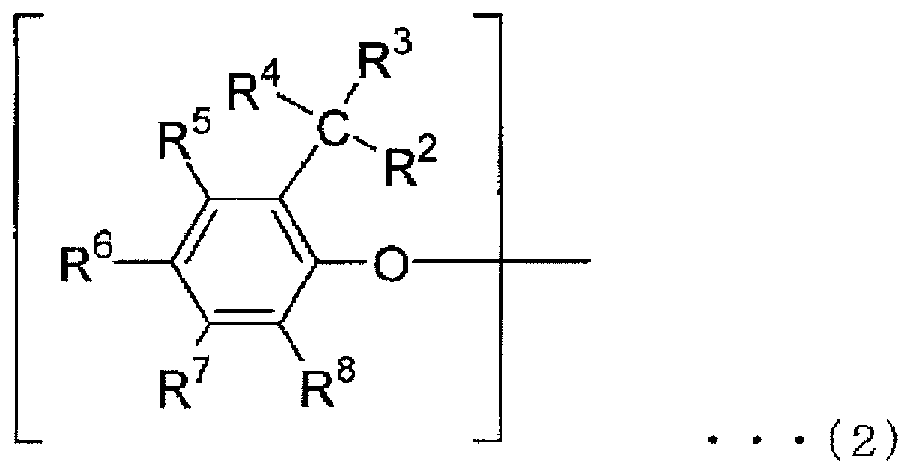
⁅O-R] (3)
⁅O-R] (3)
Description
- The present invention relates to a resin composition and the application thereof, and specifically relates to a resin composition made from a near-infrared absorbent, an antioxidant, and resin, and the application thereof.
- Laminated glass has been used in the past in various applications, such as vehicles, e.g., cars, etc., buildings, and solar cells. Polyvinyl butyral resin film, ionomer resin film, and the like are known as interlayer films used in laminated glasses.
- Incidentally, in addition to visible light, sunlight also includes ultraviolet rays, infrared rays, and the like. Infrared rays further include infrared rays whose wavelength is near that of visible light, which are called near-infrared rays. Near-infrared rays are also called thermic rays, which are one cause of temperature increases inside vehicles and buildings.
- Providing laminated glass used in vehicles and buildings with heat ray absorbency, while maintaining transparency to visible light has been considered in order to control these temperature increases. For example, a copper salt composition is known that contains copper phosphonate, a polysiloxane ingredient, a plasticizer, and a dispersant (for example, see Patent Document 1). Generally, when resin compositions obtained by blending metal salts with a resin are exposed to high temperatures, the visible light transparency sometimes decrease and the resin sometimes yellows. However, Patent Document 1 discloses that a resin composition, which contains the aforementioned copper salt composition and a resin, can provide an infrared absorbing film of excellent visible light transparency and stability, even when exposed to high temperatures.
- The resin composition described in Patent Document 1 suppressed yellowing when exposed to high temperatures compared with resin compositions made only from copper phosphonate and resin, but had the problem of increasing the number of processes because it required a process for dehydration condensation of the silane compound.
- Patent Document 1: Japanese Patent Application Publication No.
2009-242650A - In consideration of the prior art, the object of the present invention is to provide a resin composition containing a near-infrared absorbent with suppressed heat-induced discoloration, i.e., yellowing.
- As a result of research conducted to achieve the above object, the inventors discovered that a resin composition made from a specific near-infrared absorbent, a specific antioxidant, and resin is able to solve the aforementioned problems, and arrived at the present invention.
- Namely, the resin composition of the present invention is a resin composition that is made from a near-infrared absorbent, an antioxidant, and a resin, wherein the near-infrared absorbent is a particulate made from a copper phosphonate represented by Formula (1), below, the antioxidant is not less than one type of antioxidant selected from hindered phenol-based antioxidants and phosphorous-based antioxidants having not less than one structure represented by Formula (2), below, bonded to the phosphorous atom in the molecule, and not having a structure represented by Formula (3), below, bonded to the phosphorous atom in the molecule.

- (In Formula 1, R1 is a univalent group represented by -CH2CH2-R11, and R11 indicates a hydrogen atom, an alkyl group having from 1 to 20 carbons, or an alkyl fluoride group having from 1 to 20 carbons.)

- (In Formula 2, R2 to R4 are each independently an alkyl group having 1 or 2 carbons, and R5 to R8 each independently indicates a hydrogen atom or an alkyl group having from 1 to 20 carbons;
- provided, in cases where the molecule has not less than two of the structures represented by Formula (2), that R5 to R8 in one of the structures represented by Formula (2) may form crosslinks with R5 to R8 in the other of the structures represented by Formula (2).)
[Formula 3]
⁅O-R] (3)
(In Formula (3), R indicates an alkyl group.) - It is preferable that the aforementioned phosphorous-based antioxidant is a phosphorous-based antioxidant that has not less than two of the structures represented by the Formula (2) bonded to a phosphorous atom in the molecule, and does not have a structure represented by the Formula (3) bonded to a phosphorous atom in the molecule.
- It is preferable that R2 to R4 in the Formula (2) is a methyl group.
- It is preferable that the antioxidant is the aforementioned phosphorous-based antioxidant.
- It is preferable that the resin is at least one type of resin selected from a polyvinylacetal resin, ethylene-vinyl acetate copolymer, (meth)acrylic resin, polyester resin, polyurethane resin, vinyl chloride resin, polyolefin resin, polycarbonate resin, and norbornene resin, and more preferably is a polyvinyl butyral resin or ethylene-vinyl acetate copolymer.
- It is preferable the resin contains 0.05 to 30 parts by mass of near-infrared absorbent per 100 parts by mass of the aforementioned resin.
- It is preferable the resin contains 0.01 to 30 parts by mass of antioxidant per 100 parts by mass of the aforementioned resin.
- The laminated glass interlayer of the present invention is formed from the aforementioned resin composition.
- The laminated glass of the present invention possesses the aforementioned laminated glass interlayer.
- The resin composition of the present invention suppresses heat-induced discoloration, i.e., yellowing.
- The present invention will be specifically described below.
- The resin composition of the present invention is a resin composition made from a near-infrared absorbent, an antioxidant, and a resin, wherein the near-infrared absorbent is a particulate made from a copper phosphonate represented by a Formula (1), described below, the antioxidant is not less than one type of antioxidant selected from a hindered phenol-based antioxidant and a phosphorous-based antioxidant having not less than one structure represented by a Formula (2), described below, bonded to a phosphorous atom in the molecule, and not having a structure represented by a Formula (3), described below, bonded to a phosphorous atom in the molecule.
- Further, the resin composition of the present invention is also noted as a copper salt particulate dispersion resin.
- The near-infrared absorbent used in the present invention is a particulate made from a copper phosphonate represented by the Formula (1), below.
- The particulate made from the copper phosphonate represented by Formula (1), below may be formed only from the copper phosphonate represented by Formula (1), or it may be formed from the copper phosphonate represented by the Formula (1) and other ingredients.

- It is preferable that the aforementioned R11 is a hydrogen atom or an alkyl group having 1 to 20 carbons. Specifically, it is preferable that R11 is a hydrogen atom, methyl group, ethyl group, propyl group, butyl group, pentyl group, hexyl group, heptyl group, octyl group, nonyl group, decyl group, undecyl group, dodecyl group, tridecyl group, tetradecyl group, pentadecyl group, hexadecyl group, heptadecyl group, or octadecyl group. Further, only one type of the copper phosphonate represented by Formula (1) may be used alone, or two or more types may be used.
- Further, in this Specification, the "copper phosphonate represented by Formula (1)" may also be noted simply as "copper phosphonate."
- The method of manufacturing the particulate made from copper phosphonate used in the present invention is not specifically limited, but it can be manufactured, for example, by the following method.
- An example method of manufacturing copper phosphonate particulate is a method having a step in which a reaction mixture is obtained by mixing a phosphonic acid compound represented by Formula (4), below, with a copper salt in a solvent, preferably in the presence of a dispersant (hereinafter, the reaction step), and a step in which copper phosphonate particulate are then obtained by removing the solvent in the reaction mixture (hereinafter, the solvent removal step).

- It is preferable in the phosphonic acid compound represented by the Formula (4) that R11 is a hydrogen atom or an alkyl group having from 1 to 20 carbons. Examples of the phosphonic acid compound represented by Formula (4) include alkyl phosphonates such as ethyl phosphonate, propyl phosphonate, butyl phosphonate, pentyl phosphonate, hexyl phosphonate, heptyl phosphonate, octyl phosphonate, nonyl phosphonate, decyl phosphonate, undecyl phosphonate, dodecyl phosphonate, tridecyl phosphonate, tetradecyl phosphonate, pentadecyl phosphonate, hexadecyl phosphonate, heptadecyl phosphonate, and octadecyl phosphonate. Further, only one type of the phosphonic acid compound represented by Formula (4) may be used alone, or two or more types may be used.
- Copper salts capable of donating a divalent copper ion are commonly used as the aforementioned copper salt. The copper salt may also be a copper salt other than the copper phosphonate represented by Formula (1). Examples of the aforementioned copper salt include copper salts of organic acids, such as anhydrous copper acetate, anhydrous copper formate, anhydrous copper stearate, anhydrous copper benzoate, anhydrous copper ethylacetoaceate, anhydrous copper pyrophosphate, anhydrous copper naphthenate, and anhydrous copper citrate; hydrates or hydrides of these copper salts of organic acids; copper salts of inorganic acids, such as copper oxide, copper chloride, copper sulfate, copper nitrate, and basic copper carbonate; hydrates or hydrides of these copper salts of inorganic acids; and copper hydroxide. Further, only one type of the copper salt may be used alone, or two or more types may be used.
- It is preferable to use anhydrous copper acetate or copper acetate monohydrate from the standpoints of solubility and removing by-products.
- It is preferable to use a dispersant when manufacturing copper phosphonate particulate. It is preferable to use a dispersant because it improves the dispersibility of the copper phosphonate represented by Formula (1). Examples of the dispersant include at least one phosphate compound selected from phosphate compounds represented by Formula (3a) and phosphate compounds represented by Formula (3b), and compounds in which the phosphoric acid, i.e., hydroxyl group, in this phosphate compound is neutralized by a base. Further, examples of the base used for neutralization include inorganic bases, such as lithium hydroxide, sodium hydroxide, potassium hydroxide, cesium hydroxide, magnesium hydroxide, and calcium hydroxide.

- If n is less than 4, there are cases in which the transparency will be inadequate when manufacturing laminated glass, etc. Also, if n exceeds the aforementioned range, the quantity of phosphate compound required to obtain sufficiently transparent laminated glass, etc. tends to increase, which becomes cause of increased cost.
- Additionally, R55 is an alkyl group having from 6 to 25 carbons or an alkylphenyl group having from 6 to 25 carbons, preferably an alkyl group having from 6 to 25 carbons, and more preferably alkyl group having from 12 to 20 carbons. If R55 is a group having fewer than 6 carbons, there are cases in which the transparency will be inadequate when manufacturing laminated glass, etc. Also, if R55 is a group having more than 25 carbons, the quantity of phosphate compound required to obtain sufficiently transparent laminated glass, etc. tends to increase, which becomes cause of increased cost.
- When obtaining the copper phosphonate particulate, it is preferable to use at least one of the phosphate compound represented by Formula (3a) and the phosphate compound represented by Formula (3b), and more preferable to use both the phosphate compound represented by Formula (3a) and the phosphate compound represented by Formula (3b). Using the phosphate compound represented by Formula (3a) and the phosphate compound represented by Formula (3b) is preferred as there is a tendency for superior transparency and heat resistance in laminated glasses and the like. When both the phosphate compound represented by Formula (3a) and the phosphate compound represented by Formula (3b) are used, the ratio of the phosphate compound represented by Formula (3a) and the phosphate compound represented by Formula (3b) is not specifically limited, but is normally a mole ratio from 10:90 to 90:10 ((3a):(3b)).
- Additionally, one type of the phosphate compounds represented by Formula (3a) can be used alone or two or more may be used, and one type of the phosphate compounds represented by Formula (3b) can be used alone or two or more types may be used.
- Commercially available phosphate compounds, e.g., DLP-8, DLP-10, DDP-6, DDP-8, DDP-10, TDP-6, TDP-8, TDP-10 (the above manufactured by Nikko Chemicals Co., Ltd.), and Plysurf A215C, Plysurf AL12H, Plysurf AL, Plysurf A208F, Plysurf A219B, Plysurf A210D (the above manufactured by Dai-ichi Kogyo Seiyaku Co., Ltd.), can be also used as the at least one phosphate compound selected from the phosphate compound represented by Formula (3a) and the phosphate compound represented by Formula (3b). Compounds can also be used in which the phosphoric acid, i.e., the hydroxyl group, in these phosphate compounds has been neutralized with a suitable base. Examples of bases used for neutralization include inorganic bases such as lithium hydroxide, sodium hydroxide, potassium hydroxide, cesium hydroxide, magnesium hydroxide, and calcium hydroxide.
- Further, when manufacturing copper phosphonate particulate, it is preferable to use 0.5 to 1.5 moles, more preferably 0.8 to 1.2 moles, of the phosphonic acid compound represented by Formula (4) per 1 mole of the copper salt. Additionally, in cases where the dispersant is at least one phosphate compound selected from the phosphate compound represented by Formula (3a) and the phosphate compound represented by Formula (3b), and/or a compound in which the phosphoric acid in this phosphate compound, i.e., the hydroxyl group, is neutralized with a base, it is preferable to use 5 to 100 parts by mass, preferably 10 to 50 parts by mass, per 100 parts by mass of the copper salt.
- Examples of the aforementioned solvent include alcohols, such as methanol, ethanol, isopropyl alcohol, and n-butyl alcohol; tetrahydrofuran (THF), dimethylformamide (DMF), and water, where methanol, ethanol or DMF are preferable from the perspective of accomplishing the reaction well. The reaction step preferably is performed under temperature conditions of room temperature to 60°C, more preferably from 20 to 40°C, and for from 0.5 to 50 hours, more preferably from 1 to 30 hours.
- The phosphonic acid compound represented by Formula (4) and the copper salt are reacted in the reaction step, whereby the reaction produces fine particulate copper phosphonate that is not dissolved in the solvent. Because the at least one phosphate compound selected from phosphate compounds represented by Formula (3a) and phosphate compounds represented by Formula (3b) can act as a good dispersant during the reaction, the copper phosphonate maintains high dispersibility, whereby clumping can be suppressed.
- Further, not only can the phosphonic acid compound represented by Formula (4) and copper salt be reacted in the reaction step, but, for example, the at least one phosphate compound selected from phosphate compounds represented by Formula (3a) and phosphate compounds represented by Formula (3b) may also be reacted with some of the copper salt. Some of the raw materials may also remain unreacted.
- Further, the method of manufacturing copper phosphonate particulate normally yields copper phosphonate particulate by removing at least some of the solvent from the aforementioned reaction mixture.
- In the solvent removal step, at least some of the solvent is removed from the reaction mixture. Besides solvent, the liquid ingredient in the reaction mixture may also be removed.
- The heating conditions in the solvent removal step whereby at least some of the solvent normally is removed by heating the reaction mixture normally are room temperature to 70°C, preferably from 40 to 60°C. The solvent removal step may be performed under normal pressure, and may also be performed under reduced pressure. When the solvent removal step is performed under reduce pressure, there are cases in which heating does not have to be performed, and cases in which the heating temperature may be lowered.
- Additionally, after the solvent removal step has been performed, a step may also be provided wherein the copper phosphonate particulate dispersed in a dispersion medium, and then the dispersion medium is removed for the purpose of removing impurities in the copper phosphonate particulate.
- Copper phosphonate particulate with an average particle size of 1 to 1,000 nm normally are used as the aforementioned copper phosphonate particulate. In order to ensure dispersibility into a monomer and transparency of the resin composition, it is more preferable that the average particle size is 5 to 300 nm.
- The antioxidant used in the present invention is at least one antioxidant selected from hindered phenol-based antioxidants and phosphorous-based antioxidants that have not less than one of the structures represented by Formula (2) bonded to a phosphorous atom in the molecule, and do not have a structure represented by Formula (3) bonded to a phosphorous atom in the molecule. One type of antioxidant may be used, and two or more types may also be used.
- Further, it is not clear why the resin composition of the present invention controls yellowing when heated, but the inventor hypothesized that the use of a specific antioxidant can suppress oxidation by oxygen during heating. Additionally, the resin composition of the present invention uses the aforementioned specific antioxidants, but it can also be obtained by a simple process because it is not necessary to provide a special step in the preparation of the resin composition of this invention.
- The resin composition of the present invention also tends to have excellent long-term heat-resistance since it contains a specific antioxidant.

provided, in cases where the molecule has two or more of the structures represented by Formula (2), that R5 to R8 in one of the structures represented by Formula (2) may form crosslinks with R5 to R8 in the other of the structures represented by Formula (2).)
[Formula 8]
⁅O-R] (3)
(In Formula (3), R indicates an alkyl group.) - Further, phosphorous-based antioxidants that have not less than one of the structures represented by the Formula (2) bonded to a phosphorous atom in the molecule, and do not have a structure represented by the Formula (3) bonded to a phosphorous atom in the molecule, are also noted as specific phosphorous-based antioxidants.
- Commercially available products can be used as the aforementioned hindered phenol-based antioxidant without specific limitation. It is preferable that the hindered phenol-based antioxidant has a structure in which both ortho sites of the benzene ring having the hydroxyl group in the molecule is a t-butyl group, or has a structure in which one of these ortho sites is a t-butyl group and the other is a methyl group. Examples of the hindered phenol-based antioxidant include IRGANOX 1076 (manufactured by BASF) (hereinafter, Formula 11), 2,6-di-t-butyl-4-methylphenol (BHT, manufactured by Wako Pure Chemical Industries, Ltd.) (hereinafter Formula 12), ADK STAB AO-20 (manufactured by ADEKA Corp.) (hereinafter Formula 13), SUMILIZER GA-80 (manufactured by Sumitomo Chemical Co., Ltd.) (hereinafter Formula 14), IRGANOX 1010 (manufactured by BASF) (hereinafter Formula 15), IRGANOX 245 (manufactured by BASF) (hereinafter Formula 16), IRGANOX 259 (manufactured by BASF) (hereinafter Formula 17), IRGANOX 1098 (manufactured by BASF) (hereinafter Formula 18), IRGANOX 1135 (manufactured by BASF) (hereinafter Formula 19), IRGANOX 1330 (manufactured by BASF) (hereinafter Formula 20), SUMILIZER GM (manufactured by Sumitomo Chemical Co., Ltd.) (hereinafter Formula 36), SUMILIZER GS(F) (manufactured by Sumitomo Chemical Co., Ltd.) (hereinafter Formula 37), SUMILIZER BBM-S (manufactured by Sumika Chemtex Co., Ltd.) (hereinafter Formula 38), SUMILIZER MDP-S (manufactured by Sumitomo Chemical Co., Ltd.) (hereinafter Formula 39), and YOSHINOX 425 (manufactured by API Corp.) (hereinafter Formula 40) and the like. Further, only one type of hindered phenol-based antioxidant may be used, or two or more types may be used.


- It is preferable that the specific phosphorous-based antioxidant has not less than two structures represented by Formula (2) bonded to the phosphorous atom in the molecule. Namely, it is preferable that the phosphorous-based antioxidant is a phosphorous-based antioxidant that has not less than two of the structures represented by Formula (2) bonded to a phosphorous atom in the molecule, and does not have the structure represented by the Formula (3) bonded to a phosphorous atom in the molecule.
- Further, the aforementioned specific phosphorous-based antioxidant has at least 1 phosphorous atom in the molecule thereof. The phosphorous atom that constitutes the specific phosphorous-based antioxidant normally has a +3 valence.
- It is preferable to use the aforementioned phosphorous-based antioxidant as the antioxidant, as the weather resistance thereof is excellent.
- As described above, in Formula (2), R2 to R4 each independently are alkyl groups having 1 or 2 carbons.
- In the Formula (2), R5 to R8 are each independently a hydrogen atom or alkyl group having from 1 to 20 carbons, preferably a hydrogen atom or alkyl group having from 1 to 7 carbons.
- In cases where the molecule has two or more of the structures represented by Formula (2), R5 to R8 in one of the structures represented by Formula (2) may form crosslinks with R5 to R8 in the other of the structures represented by Formula (2). In cases where R5 to R8 in one of the structures represented by Formula (2) form crosslinks with R5 to R8 in the other of the structures represented by Formula (2), examples of the crosslink structures include single bonds and alkylene groups having from 1 to 4 carbons, and single bonds are preferred.
- In Formula (2), the ortho site substitution group of the molecule having the oxygen atom, i.e., the group constituted by a carbon atom and R2 to R4, is a bulky alkyl group, specifically a tertiary alkyl group. Specifically, R2 to R4 are each independently an alkyl group having 1 or 2 carbons, preferably a methyl group.
- Additionally, in Formula (2), it is preferable that R6 is an alkyl group having from 1 to 7 carbons. It is also preferable that R6 is a bulky alkyl group, and specifically is preferably a secondary or tertiary alkyl group, more preferably a tertiary alkyl group, and especially preferably a t-butyl group.
- Additionally, it is preferable that R7 in Formula (2) is a hydrogen atom or an alkyl group having from 1 to 2 carbons.
- Additionally, it is preferable that R8 in Formula (2) is an alkyl group having from 1 to 7 carbons. It is also preferable that R8 is a bulky alkyl group, and specifically is preferably a tertiary alkyl group, more preferably a t-butyl group.
- Commercially available products can be used as the aforementioned specific phosphorous-based antioxidant without specific limitation. IRGAFOS 168 (manufactured by BASF) (hereinafter Formula 21), GSY-P101 (manufactured by Sakai Chemical Industry Co., Ltd.) (hereinafter Formula 22), and SUMILIZER GP (manufactured by Sumitomo Chemical Co., Ltd.) (hereinafter Formula 23) can be used as the specific phosphorous-based antioxidant. One type of specific phosphorous-based antioxidant may be used, and two or more types may also be used.

- It is preferable that the specific phosphorous-based antioxidant has not less than two of the structures represented by Formula (2) bonded to a phosphorous atom in the molecule, as described above, and IRGAFOS 168 has 3 of the structures represented by Formula (2) bonded to a phosphorous atom in the molecule, GSY-P101 has 4 of the structures represented by Formula (2) bonded to a phosphorous atom in the molecule, and SUMILIZER GP has two of the structures represented by Formula (2) bonded to a phosphorous atom in the molecule.
- In the aforementioned SUMILIZER GP, R8 in one of the structures represented by Formula (2) is crosslinked by a single bond to R8 in the other structure represented by Formula (2).
- Further, from the perspective of controlling yellowing, a phosphorous-based antioxidant that has one phosphorous atom in the molecule and has 3 of the structures represented by Formula (2) bonded to the phosphorous atom in the molecule is most preferred as the specific phosphorous-based antioxidant used in the present invention.
- Also, the specific phosphorous-based antioxidant used in the present invention does not have a structure represented by Formula (3) bonded to a phosphorous atom in the molecule. Further, the inventors discovered that having this structure made it likely that yellowing would occur. The specific reasons as to why yellowing is likely to occur are unclear, but the inventors hypothesized that one factor causing yellowing was that the structure represented by Formula (3) is hydrolyzed by heating.
- Further, IRGAFOS 38 (manufactured by BASF) used in Comparative Example 2 can be given as an example that does not correspond to the specific phosphorous-based antioxidant because, while it has two of the structures represented by Formula (2) bonded to a phosphorous atom in the molecule, it also has a structure represented by Formula (3) bonded to the phosphorous atom. It was found that in an aspect using this IRGAFOS 38, yellowing is caused by heating.
- Additionally, other structures of the specific phosphorous-based antioxidant are not specifically limited as long as they may have one structure represented by Formula (2) bonded to the phosphorous atom in the molecule, and not have a structure represented by Formula (3) bonded to the phosphorous atom in the molecule, but it may also have a hindered phenol structure in the molecule thereof.
- The antioxidant used in the present invention is at least one type of antioxidant selected from hindered phenol-based antioxidants and specific phosphorous-based antioxidants, as described above. Resin compositions of the present invention that use this kind of specific antioxidant are preferred for their long-term heat resistance. Further, having excellent long-term heat resistance means that there was little yellowing (discoloration) when long-term heat resistance testing (for example, held for 735 hours at a temperature of 100°C) was performed.
- Resin is used in the present invention. The resin used in the present invention is not specifically limited as long as it can disperse the near-infrared absorbent described above, and, for example, the following resins can be used.
- Using at least one type of resin selected from a polyvinylacetal resin, ethylene-vinyl acetate copolymer, (meth)acrylic resin, polyester resin, polyurethane resin, vinyl chloride resin, polyolefin resin, polycarbonate resin, and norbornene resin, as the resin used in the present invention is preferable because near-infrared absorbent can be well dispersed and transparency to visible light is excellent.
- It is more preferable that the resin used in the present invention is at least one type of resin selected from a polyvinyl acetal resin and an ethylene-vinyl acetate copolymer, especially preferable that it is at least one type of resin selected from a polyvinyl butyral resin (PVB) and an ethylene-vinyl acetate copolymer, and most preferably that it is a polyvinyl butyral resin or an ethylene-vinyl acetate copolymer. It is preferable to use a polyvinyl acetal resin, as dispersibility of the near-infrared absorbent described above is excellent; and, when manufacturing optical materials using the resin composition of the present invention, adhesion to glass and the like is excellent, the resin composition of this invention is pliable, and the near-infrared absorbent is not susceptible to degradation accompanying temperature changes. Using a polyvinyl butyral (PVB) resin as the polyvinyl acetal resin is preferable from the perspectives of glass adhesion, dispersibility, transparency, heat resistance, light resistance, and the like.
- The polyvinyl acetal resin may be a blend combining two or more types, according to the required physical properties, and may also be a polyvinyl acetal resin obtained by acetalation by combination with aldehyde during acetalation. The molecular weight, molecular weight distribution and degree of acetalation of the polyvinyl acetal resin are not specifically limited, but acetalation is commonly from 40 to 85%, preferably with a minimum of 60% and maximum of 75%.
- Polyvinyl acetal resin can be obtained by acetalating polyvinyl alcohol resin with aldehyde. The above polyvinyl alcohol resin generally is obtained by saponification of polyvinyl acetate, and polyvinyl alcohol resins with from 80 to 99.8 mole% saponification are generally used. The viscosity-average degree of polymerization of the above polyvinyl acetal resin preferably is a minimum of 200 and a maximum of 3,000. When less than 200, there are cases where the penetration resistance of the resulting laminated glass is decreased. When 3,000 is exceeded, there are cases where the formability of the resin composition becomes poor, and moreover, the rigidity of the resin composition becomes too great and workability becomes worse. More preferably, the minimum is 500 and the maximum is 2,200. Further, the viscosity-average degree of polymerization and level of saponification of the polyvinyl alcohol resin can be measured based on, for example, JISK 6726 "Polyvinyl Alcohol Measurement Methods."
- The aldehyde is not specifically limited, and examples thereof include aldehydes having from 1 to 10 carbons, and more specifically, e.g., n-butylaldehyde, isobutylaldehyde, n-valeraldehyde, 2-ethylbutylaldehyde, n-hexylaldehyde, n-octylaldehyde, n-nonylaldehyde, n-decylaldehyde, formaldehyde, acetoaldehyde, and benzaldehyde. Among these, n-butylaldehyde, n-hexylaldehyde, n-valeraldehyde, and the like are preferred. More preferable is butylaldehyde having 4 carbons.
- Additionally, ethyl-vinylacetate copolymers have excellent dispersibility of the near-infrared absorbent, described above, and are preferable from the perspectives of glass adhesion, dispersibility, transparency, heat resistance, and light resistance.
- The resin composition of the present invention is a resin composition that is made from a near-infrared absorbent, an antioxidant, and a resin, as described above.
- As long as the resin composition of the present invention is a composition made from a near-infrared absorbent, an antioxidant, and a resin, as described above, the method of manufacture is not specifically limited. An example of the method of manufacturing the resin composition of the present invention includes a method in which, for example, a dispersion of a resin, an antioxidant, and a near-infrared absorbent is added to a solvent, such as toluene, an ethanol/toluene mixed solvent, methanol, a methanol/toluene mixed solvent, methylene chloride, or chloroform, stirred, and then exposed to ultrasonic irradiation, etc. to dissolve the resin and yield a dispersion, and then the solvent is removed from the dispersion. Further, the aforementioned near-infrared absorbent dispersion can be prepared by dispersing a near-infrared absorbent into toluene, methanol, methylene chloride, or chloroform.
- The resin composition of the present invention preferably contains from 0.05 to 30 parts by mass, more preferably from 0.1 to 20 parts by mass of the near-infrared absorbent, per 100 parts by mass of the aforementioned resin. If there is less than 0.05 parts by mass, there is a possibility that sufficient near-infrared absorbent characteristics will not be obtained, and if there is more than 30 parts by mass, there is a risk of vastly decreasing the transparency and adhesion in the resin.
- It is preferable that the resin composition of the present invention contains from 0.01 to 30 parts by mass, more preferably from 0.03 to 10 parts by mass, of antioxidant per 100 parts by mass of the aforementioned resin. If there is less than 0.01 parts by mass, it is possible that yellowing will not be sufficiently suppressed, and if there is more than 30 parts by mass, there is a risk that the antioxidant itself will decompose, causing discoloration, precipitation of the solid antioxidant and loss of the transparency of the resin.
- The resin composition of the present invention has excellent near-infrared absorbency, and can be appropriately used as an interlayer for structural materials, such as laminated glass, as it controls heat-induced discoloration, i.e., yellowing.
- Additionally, the resin composition of the present invention may also contain various types of additives. Examples of additives include plasticizers, dispersants, crosslinking agents, chelating agents, antioxidants, ultraviolet absorbents, light stabilizers, and color tone correcting agents. These additives may be added during the manufacture of the resin composition of the present invention, or may be added during the respective production of the near-infrared absorbent, antioxidant, or resin.
- The resin composition of the present invention normally is used in applications that demand that near infrared radiation is absorbed.
- A resin membrane formed from the resin composition of the present invention will have excellent near-infrared absorbency, suppresses heat-induced discoloration, i.e., yellowing, and can appropriately be used as interlayers in construction materials, such as interlayers in laminated glass.
- Additionally, laminated glass of the present invention has the aforementioned interlayer for laminated glass. The glass that constitutes the laminated glass of the present invention is not specifically limited and any such glass commonly known in the past can be used.
- Working examples of the present invention are described in greater detail below, but the present invention is not limited thereby.
- 1.164 gm (5.83 mmol) of copper acetate monohydrate and 35 gm of ethanol were added to a 200 mL eggplant type flask, stirred at 20°C to completely dissolve and yield a solution (Solution A).
- In a separate container, 0.291 gm of Plysurf A219B (manufactured by Dai-ichi Kogyo Seiyaku Co., Ltd.) and 0.793 gm of n-butylphosphonic acid were dissolved into 20 gm of ethanol to yield a solution (Solution B).
- The resulting Solution B was dripped over 3 hours into solution A. After stirring this reaction solution for 14 hours at 20°C, the solvent was distilled out with an evaporator (60°C water bath). 30 gm of toluene were added to this solution, which was then evaporated until reaching a constant weight. A 1.44 gm yield (99% yield) of bluish green solid was obtained. 30 gm of toluene were added to this and subjected to ultrasonic irradiation for 3 hours to produce a copper phosphonate toluene dispersion (1).
- 32.34 gm of ethylphosphonic acid were dissolved in 500 mL of methanol in a reactor vessel, 58.67 gm of copper acetate monohydrate were added to this and heated to reflux for 4 hours to yield a suspension.
- The resulting suspension was filtered and the residue rinsed twice with 500 mL of methanol, and then dried for 2 hours at 200°C to yield 49.79 gm (99% yield) of light blue powder (copper ethylphosphonate).
- 15 mL of 0.3 mm-diameter zirconia beads, 14.2 gm of toluene, 0.4 gm of the aforementioned copper ethylphosphonate, and 0.4 gm of TDP-8 (manufactured by Nikko Chemicals Co., Ltd.) were added to a 45 mL zirconia vessel and set in a Pulverisette planetary ball mill (manufactured by FRITSCH). The copper salt was pulverized by operating the ball mill under conditions of 500 rpm rotation and 48 hours of operation time (after 1 hour of operation, stopped and cooled for 30 minutes). After pulverization, the resulting copper salt toluene dispersion was collected. The vessel and beads were further rinsed several times with approximately 13 gm of toluene to recover their contents, and a total 28 gm of copper ethylphosphonate toluene dispersion (1) (2) were prepared. The average particle size of the pulverized copper ethylphosphonate was 75 nm.
- 2.43 gm of triethylene glycol bis(2-ethylhexanoate) (3GO, plasticizer), 300 mL of toluene, and 6.38 gm of polyvinyl butyral (PVB) were added to a 300 mL Erlenmeyer flask. 64 mg of IRGAFOS 168 (manufactured by BASF) were then added.
- 4.02 gm of the above copper phosphonate toluene dispersion (1) (containing 0.746 mmol copper salt) were then added to this flask and stirred for 14 hours at 20°C, and then subjected to ultrasonic irradiation for 1 hour to uniformly dissolve the PVB.
- This dispersion was spread on a Teflon (registered trademark) tray and air dried for 12 hours at 20°C. This product was then vacuum dried at 70°C for another 4 hours to completely remove the solvent and yield a PVB resin with copper salt particulate dispersed therein (1).
- The particulate copper salt-dispersed PVB resin (1) was preheated for 1 minute at 120°C, 3 MPa using a 0.8 mm-thick mold and a compression molding machine manufactured by SHINTO Metal industries Corp., and then pressed for 3 minutes at 15 MPa to yield a resin sheet (1).
- The resin sheet (1) was preheated for 1 minute at 200°C, 3 MPa using a 0.8 mm-thick mold and a compression molding machine manufactured by SHINTO Metal industries Corp., and then pressed for 15 minutes at 10 MPa to yield a resin sheet (2).
- The resin sheet (1) was sandwiched on both sides with slide glass (1.2 to 1.5 mm-thick) laminated on a 70°C plate to produce laminated glass (1).
- This laminated glass (1) was heated for 0.5 hours at 130°C inside an autoclave in a nitrogen atmosphere at 1.5 MPa pressure to yield a measurement sample (1) with slide glass disposed on both sides of a resin sheet.
- A measurement sample (2) with slide glass disposed on both sides of a resin sheet was prepared and obtained in the same manner as the measurement sample (1), except that resin sheet (1) was substituted with resin sheet (2).
- The spectra of each of the aforementioned measurement samples (1) and (2) were measured by the following method.
- A spectrophotometer (model U-4000, manufactured by Hitachi, Ltd.) was used to measure the spectra of these measurement samples in the 250 to 2,500 nm wavelength range. The tristimulus values (X, Y, Z) were calculated using a C light source.
- The YI (yellow index) of measurement sample (1) was 4.1, and the YI for measurement sample (2) was 7.4. Further, the value for YI was calculated by the following equation.

Where the difference between the YI values of measurement sample (1) and measurement sample (2) (YI of measurement sample (2) - YI of measurement sample (1)) is ΔYI, ΔYI was 3.3. - A particulate copper salt-dispersed PVB resin (c1) was obtained in the same manner as in the paragraph Working Example 1 (Preparation of particulate copper salt-dispersed resin), except that IRGAFOS 168 was not used.
- Resin sheets (c1) and (c2) were obtained in the same manner as in the paragraph Working Example 1 (Preparation of resin sheet), except that the particulate copper salt-dispersed PVB resin (1) was substituted with particulate copper salt-dispersed PVB resin (c1).
- A measurement sample (c1) was prepared in the same manner as in the paragraph Working Example 1 (Preparation of measurement sample (1)), except that resin sheet (1) was substituted with resin sheet (c1).
- A measurement sample (c2) was prepared in the same manner as in the paragraph Working Example 1 (Preparation of measurement sample (2)), except that resin sheet (2) was substituted with resin sheet (c2).
- The spectra of the measurement sample (c1) and measurement sample (c2) were measured in the same manner as shown in the paragraph Working Example 1 (Evaluation of heat resistance).
- YI of measurement sample (c1) was 2.8 and YI of measurement sample (c2) was 12.6. ΔYI of measurement sample (c1) and measurement sample (c2) was 9.8.
- A particulate copper salt-dispersed PVB resin (2) was obtained in the same manner as in the paragraph Working Example 1 (Preparation of particulate copper salt-dispersed resin), except that the 64 mg of IRGAFOS 168 was substituted with 54 mg of GSY-P101 (manufactured by Sakai Chemical Industry Co., Ltd.).
- Resin sheets (3) and (4) were obtained in the same manner as in the paragraph Working Example 1 (Preparation of resin sheet), except that the particulate copper salt-dispersed PVB resin (1) was substituted with particulate copper salt-dispersed PVB resin (2).
- A measurement sample (3) was prepared and obtained in the same manner as in the paragraph Working Example 1 (Preparation of measurement sample (1)), except that resin sheet (1) was substituted with resin sheet (3).
- A measurement sample (4) was prepared and obtained in the same manner as in the paragraph Working Example 1 (Preparation of measurement sample (2)), except that resin sheet (2) was substituted with resin sheet (4).
- The spectra of the measurement sample (3) and measurement sample (4) were measured in the same manner as shown in the paragraph Working Example 1 (Evaluation of heat resistance).
- YI of measurement sample (3) was 3.5 and YI of measurement sample (4) was 7.9. ΔYI of measurement sample (3) and measurement sample (4) was 4.4.
- A particulate copper salt-dispersed PVB resin (3) was obtained in the same manner as in the paragraph Working Example 1 (Preparation of particulate copper salt-dispersed resin), except that the 64 mg of IRGAFOS 168 was substituted with 32 mg of SUMILIZER GP (manufactured by Sumitomo Chemical Co., Ltd.).
- Resin sheets (5) and (6) were obtained in the same manner as in the paragraph Working Example 1 (Preparation of resin sheets), except that the particulate copper salt-dispersed PVB resin (1) was substituted with particulate copper salt-dispersed PVB resin (3).
- A measurement sample (5) was obtained in the same manner as in the paragraph Working Example 1 (Preparation of measurement sample (1)), except that resin sheet (1) was substituted with resin sheet (5).
- A measurement sample (6) was obtained in the same manner as in the paragraph Working Example 1 (Preparation of measurement sample (2)), except that resin sheet (2) was substituted with resin sheet (6).
- The spectra of the measurement sample (5) and measurement sample (6) were measured in the same manner as shown in the paragraph Working Example 1 (Evaluation of heat resistance).
- YI of measurement sample (5) was 3.1 and YI of measurement sample (6) was 10.6. ΔYI of measurement sample (3) and measurement sample (6) was 7.5.
- A particulate copper salt-dispersed PVB resin (c2) was obtained in the same manner as in the paragraph Working Example 1 (Preparation of particulate copper salt-dispersed resin), except that the 64 mg of IRGAFOS 168 was substituted with 52 mg of IRGAFOS 38 (manufactured by BASF) (hereinafter Formula 31).

- Resin sheets (c3) and (c4) were obtained in the same manner as in the paragraph Working Example 1 (Preparation of resin sheets), except that the particulate copper salt-dispersed PVB resin (1) was substituted with particulate copper salt-dispersed PVB resin (c2).
- A measurement sample (c3) was prepared in the same manner as in the paragraph Working Example 1 (Preparation of measurement sample (1)), except that resin sheet (1) was substituted with resin sheet (c3).
- A measurement sample (c4) was prepared in the same manner as in the paragraph Working Example 1 (Preparation of measurement sample (2)), except that resin sheet (2) was substituted with resin sheet (c4).
- The spectra of the measurement sample (c3) and measurement sample (c4) were measured in the same manner as shown in the paragraph Working Example 1 (Evaluation of heat resistance).
- YI of measurement sample (c3) was 4.0 and YI of measurement sample (c4) was 35.3. ΔYI of measurement sample (c3) and measurement sample (c4) was 31.3.
- 1.90 gm of triethylene glycol bis(2-ehtylhexanoate), 250 mL of methylene chloride, and 50 mg of IRGAFOS 168 (manufactured by BASF) were added to a 300 mL beaker.
- 7.0 gm of the copper ethylphosphonate toluene dispersion (2) above (containing 0.10 gm of copper ethylphosphonate) were added to this beaker, and then 5.00 gm of polyvinyl butyral (PVB) were added. The PVB was then uniformly dissolved by stirring for 1 hour at 20°C.
- This dispersion was spread on a Teflon (registered trademark) tray and air dried for 12 hours at 20°C. This product was then vacuum dried at 70°C for another 3 hours to completely remove the solvent and yield a particulate copper salt-dispersed PVB resin (4).
- Resin sheets (7) and (8) were obtained in the same manner as in the paragraph Working Example 1 (Preparation of resin sheets), except that the particulate copper salt-dispersed PVB resin (1) was substituted with particulate copper salt-dispersed PVB resin (4).
- A measurement sample (7) was prepared in the same manner as in the paragraph Working Example 1 (Preparation of measurement sample (1)), except that resin sheet (1) was substituted with resin sheet (7).
- A measurement sample (8) was prepared in the same manner as in the paragraph Working Example 1 (Preparation of measurement sample (2)), except that resin sheet (2) was substituted with resin sheet (8).
- The spectra of the measurement sample (7) and measurement sample (8) were measured in the same manner as shown in the paragraph Working Example 1 (Evaluation of heat resistance).
- YI of measurement sample (7) was 1.2 and YI of measurement sample (8) was 4.2. ΔYI of measurement sample (7) and measurement sample (8) was 3.0.
- A particulate copper salt-dispersed PVB resin (5) was obtained in the same manner as in the paragraph Working Example 4 (Preparation of particulate copper salt-dispersed resin), except that the 50 mg of IRGAFOS 168 was substituted with 50 mg of SUMILIZER GP (manufactured by Sumitomo Chemical Co., Ltd.).
- Resin sheets (9) and (10) were obtained in the same manner as in the paragraph Working Example 1 (Preparation of resin sheets), except that the particulate copper salt-dispersed PVB resin (1) was substituted with particulate copper salt-dispersed PVB resin (5).
- A measurement sample (9) was prepared in the same manner as in the paragraph Working Example 1 (Preparation of measurement sample (1)), except that resin sheet (1) was substituted with resin sheet (9).
- A measurement sample (10) was prepared in the same manner as in the paragraph Working Example 1 (Preparation of measurement sample (2)), except that resin sheet (2) was substituted with resin sheet (10).
- The spectra of the measurement sample (9) and measurement sample (10) were measured in the same manner as shown in the paragraph Working Example 1 (Evaluation of heat resistance).
- YI of measurement sample (9) was 1.2 and YI of measurement sample (10) was 5.3. ΔYI of measurement sample (9) and measurement sample (10) was 4.1.
- A particulate copper salt-dispersed PVB resin (c3) was obtained in the same manner as in the paragraph Working Example 4 (Preparation of particulate copper salt-dispersed resin), except that the IRGAFOS 168 was not used.
- Resin sheets (c5) and (c6) were obtained in the same manner as in the paragraph Working Example 1 (Preparation of resin sheets), except that the particulate copper salt-dispersed PVB resin (1) was substituted with particulate copper salt-dispersed PVB resin (c3).
- A measurement sample (c5) was prepared in the same manner as in the paragraph Working Example 1 (Preparation of measurement sample (1)), except that resin sheet (1) was substituted with resin sheet (c5).
- A measurement sample (c6) was prepared in the same manner as in the paragraph Working Example 1 (Preparation of measurement sample (2)), except that resin sheet (2) was substituted with resin sheet (c6).
- The spectra of the measurement sample (c5) and measurement sample (c6) were measured in the same manner as shown in the paragraph Working Example 1 (Evaluation of heat resistance).
- YI of measurement sample (c5) was 1.5 and YI of measurement sample (c6) was 7.5. ΔYI of measurement sample (c5) and measurement sample (c6) was 6.0.
- A particulate copper salt-dispersed PVB resin (c4) was obtained in the same manner as in the paragraph Working Example 4 (Preparation of particulate copper salt-dispersed resin), except that the 50 mg of IRGAFOS 168 was substituted with 50 mg of ADK STAB AO-503A (manufactured by ADEKA Corp.) (hereinafter Formula 32).

- Resin sheets (c7) and (c8) were obtained in the same manner as in the paragraph Working Example 1 (Preparation of resin sheets), except that the particulate copper salt-dispersed PVB resin (1) was substituted with particulate copper salt-dispersed PVB resin (c4).
- A measurement sample (c7) was obtained in the same manner as in the paragraph Working Example 1 (Preparation of measurement sample (1)), except that resin sheet (1) was substituted with resin sheet (c7).
- A measurement sample (c8) was obtained in the same manner as in the paragraph Working Example 1 (Preparation of measurement sample (2)), except that resin sheet (2) was substituted with resin sheet (c8).
- The spectra of the measurement sample (c7) and measurement sample (c8) were measured in the same manner as shown in the paragraph Working Example 1 (Evaluation of heat resistance).
- YI of measurement sample (c7) was 1.5 and YI of measurement sample (c8) was 25.2. ΔYI of measurement sample (c7) and measurement sample (c8) was 23.7.
- A particulate copper salt-dispersed PVB resin (c5) was obtained in the same manner as in the paragraph Working Example 4 (Preparation of particulate copper salt-dispersed resin), except that the 50 mg of IRGAFOS 168 was substituted with 50 mg of ADK STAB C (manufactured by ADEKA Corp.) (hereinafter Formula 33).

- Resin sheets (c9) and (c10) were obtained in the same manner as in the paragraph Working Example 1 (Preparation of resin sheets), except that the particulate copper salt-dispersed PVB resin (1) was substituted with particulate copper salt-dispersed PVB resin (c5).
- A measurement sample (c9) was obtained in the same manner as in the paragraph Working Example 1 (Preparation of measurement sample (1)), except that resin sheet (1) was substituted with resin sheet (c9).
- A measurement sample (c10) was obtained in the same manner as in the paragraph Working Example 1 (Preparation of measurement sample (2)), except that resin sheet (2) was substituted with resin sheet (c10).
- The spectra of the measurement sample (c9) and measurement sample (c10) were measured in the same manner as shown in the paragraph Working Example 1 (Evaluation of heat resistance).
- YI of measurement sample (c9) was 1.4 and YI of measurement sample (c10) was 28.1. ΔYI of measurement sample (c9) and measurement sample (c10) was 26.7.
- A particulate copper salt-dispersed PVB resin (c6) was obtained in the same manner as in the paragraph Working Example 4 (Preparation of particulate copper salt-dispersed resin), except that the 50 mg of IRGAFOS 168 was substituted with 50 mg of triphenyl phosphite (manufactured by Kanto Chemical Co., Inc.) (hereinafter Formula 34).

- Resin sheets (c11) and (c12) were obtained in the same manner as in the paragraph Working Example 1 (Preparation of resin sheets), except that the particulate copper salt-dispersed PVB resin (1) was substituted with particulate copper salt-dispersed PVB resin (c6).
- A measurement sample (c11) was obtained in the same manner as in the paragraph Working Example 1 (Preparation of measurement sample (1)), except that resin sheet (1) was substituted with resin sheet (c11).
- A measurement sample (c12) was obtained in the same manner as in the paragraph Working Example 1 (Preparation of measurement sample (2)), except that resin sheet (2) was substituted with resin sheet (c12).
- The spectra of the measurement sample (c11) and measurement sample (c12) were measured in the same manner as shown in the paragraph Working Example 1 (Evaluation of heat resistance).
- YI of measurement sample (c11) was 1.8 and YI of measurement sample (c12) was 60.4. ΔYI of measurement sample (c11) and measurement sample (c12) was 58.6.
- A particulate copper salt-dispersed PVB resin (c7) was obtained in the same manner as in the paragraph Working Example 4 (Preparation of particulate copper salt-dispersed resin), except that the 50 mg of IRGAFOS 168 was substituted with 50 mg of tri-ortho-tolyl phosphite (manufactured by Tokyo Chemical Industry Co., Inc.) (hereinafter Formula 35).

- Resin sheets (c13) and (c14) were obtained in the same manner as in the paragraph Working Example 1 (Preparation of resin sheets), except that the particulate copper salt-dispersed PVB resin (1) was substituted with particulate copper salt-dispersed PVB resin (c7).
- A measurement sample (c13) was obtained in the same manner as in the paragraph Working Example 1 (Preparation of measurement sample (1)), except that resin sheet (1) was substituted with resin sheet (c13).
- A measurement sample (c14) was obtained in the same manner as in the paragraph Working Example 1 (Preparation of measurement sample (2)), except that resin sheet (2) was substituted with resin sheet (c14).
- The spectra of the measurement sample (c13) and measurement sample (c14) were measured in the same manner as shown in the paragraph Working Example 1 (Evaluation of heat resistance).
- YI of measurement sample (c13) was 1.1 and YI of measurement sample (c14) was 44.0. ΔYI of measurement sample (c13) and measurement sample (c14) was 42.9.
- A particulate copper salt-dispersed PVB resin (6) was obtained in the same manner as in the paragraph Working Example 4 (Preparation of particulate copper salt-dispersed resin), except that the 50 mg of IRGAFOS 168 was substituted with 50 mg of IRGANOX 1076 (manufactured BASF).
- Resin sheets (11) and (12) were obtained in the same manner as in the paragraph Working Example 1 (Preparation of resin sheets), except that the particulate copper salt-dispersed PVB resin (1) was substituted with particulate copper salt-dispersed PVB resin (6).
- A measurement sample (11) was obtained in the same manner as in the paragraph Working Example 1 (Preparation of measurement sample (1)), except that resin sheet (1) was substituted with resin sheet (11).
- A measurement sample (12) was obtained in the same manner as in the paragraph Working Example 1 (Preparation of measurement sample (2)), except that resin sheet (2) was substituted with resin sheet (12).
- The spectra of the measurement sample (11) and measurement sample (12) were measured in the same manner as shown in the paragraph Working Example 1 (Evaluation of heat resistance).
- YI of measurement sample (11) was 1.0 and YI of measurement sample (12) was 3.3. ΔYI of measurement sample (11) and measurement sample (12) was 2.3.
- A particulate copper salt-dispersed PVB resin (7) was obtained in the same manner as in the paragraph Working Example 1 (Preparation of particulate copper salt-dispersed resin), except that the 64 mg of IRGAFOS 168 was substituted with 6.4 mg of 2,6-di-t-butyl-4-methylphenol (BHT, manufactured by Wako Pure Chemical Industries, Ltd.).
- Resin sheets (13) and (14) were obtained in the same manner as in the paragraph Working Example 1 (Preparation of resin sheets), except that the particulate copper salt-dispersed PVB resin (1) was substituted with particulate copper salt-dispersed PVB resin (7).
- A measurement sample (13) was obtained in the same manner as in the paragraph Working Example 1 (Preparation of measurement sample (1)), except that resin sheet (1) was substituted with resin sheet (13).
- A measurement sample (14) was obtained in the same manner as in the paragraph Working Example 1 (Preparation of measurement sample (2)), except that resin sheet (2) was substituted with resin sheet (14).
- The spectra of the measurement sample (13) and measurement sample (14) were measured in the same manner as shown in the paragraph Working Example 1 (Evaluation of heat resistance).
- YI of measurement sample (13) was 4.3 and YI of measurement sample (14) was 9.4. ΔYI of measurement sample (13) and measurement sample (14) was 5.1.
- A particulate copper salt-dispersed PVB resin (8) was obtained in the same manner as in the paragraph Working Example 1 (Preparation of particulate copper salt-dispersed resin), except that the 64 mg of IRGAFOS 168 was substituted with 6.4 mg of ADK STAB AO-20 (manufactured by ADEKA Corp.).
- Resin sheets (15) and (16) were obtained in the same manner as in the paragraph Working Example 1 (Preparation of resin sheets), except that the particulate copper salt-dispersed PVB resin (1) was substituted with particulate copper salt-dispersed PVB resin (8).
- A measurement sample (15) was obtained in the same manner as in the paragraph Working Example 1 (Preparation of measurement sample (1)), except that resin sheet (1) was substituted with resin sheet (15).
- A measurement sample (16) was obtained in the same manner as in the paragraph Working Example 1 (Preparation of measurement sample (2)), except that resin sheet (2) was substituted with resin sheet (16).
- The spectra of the measurement sample (15) and measurement sample (16) were measured in the same manner as shown in the paragraph Working Example 1 (Evaluation of heat resistance).
- YI of measurement sample (15) was 4.5 and YI of measurement sample (16) was 8.3. ΔYI of measurement sample (15) and measurement sample (16) was 3.8.
- A particulate copper salt-dispersed PVB resin (9) was obtained in the same manner as in the paragraph Working Example 1 (Preparation of particulate copper salt-dispersed resin), except that the 64 mg of IRGAFOS 168 was substituted with 64.0 mg of IRGANOX 1076 (manufactured by BASF).
- Resin sheets (17) and (18) were obtained in the same manner as in the paragraph Working Example 1 (Preparation of resin sheets), except that the particulate copper salt-dispersed PVB resin (1) was substituted with particulate copper salt-dispersed PVB resin (9).
- A measurement sample (17) was obtained in the same manner as in the paragraph Working Example 1 (Preparation of measurement sample (1)), except that resin sheet (1) was substituted with resin sheet (17).
- A measurement sample (18) was obtained in the same manner as in the paragraph Working Example 1 (Preparation of measurement sample (2)), except that resin sheet (2) was substituted with resin sheet (18).
- The spectra of the measurement sample (17) and measurement sample (18) were measured in the same manner as shown in the paragraph Working Example 1 (Evaluation of heat resistance).
- YI of measurement sample (17) was 4.5 and YI of measurement sample (18) was 8.3. ΔYI of measurement sample (17) and measurement sample (18) was 3.8.
- The results for working examples and comparative examples are shown in Table 1.
[Table 1] Measurement Sample Copper phosphonate Antioxidant 120°C YI 200°C YI ΔYI Working Example 1 1,2 IRGAFOS 168 4.1 7.4 3.3 Comparative Example 1 c1,c2 - 2.8 12.6 9.8 Working Example 2 3,4 GSY-P101 3.5 7.9 4.4 Working Example 3 5,6 SUMILIZER GP 3.1 10.6 7.5 Comparative Example 2 c3, c4 copper n-butyl phosphonate IRGAF0S 38 4.0 35.3 31.3 Working Example 7 13,14 BHT 4.3 9.4 5.1 Working Example 8 15,16 ADK STABAO-20 4.5 8.3 3.8 Working Example 9 17,18 IRGANOX 1076 4.5 8.3 3.8 Working Example 4 7,8 IRGAFOS 168 1.2 4.2 3.0 Working Example 5 9,10 SUMILIZER GP 1.2 5.3 4.1 Comparative Example 3 c5,c6 - 1.5 7.5 6.0 Comparative Example 4 c7, c8 copper ethylphosphonate ADK STAB AO-503A 1.5 25.2 23.7 Comparative Example 5 c9,c10 ADK STAB C 1.4 28.1 26.7 Comparative Example 6 c11,c12 triphenyl phosphite 1.8 60.4 58.6 Comparative Example 7 c13,c14 tri-ortho-tolyl phosphite 1.1 44.0 42.9 Working Example 6 11,12 IRGANOX 1076 1.0 3.3 2.3 - 1.90 gm of triethylene glycol bis(2-ethylhexanoate) (3GO, plasticizer), 250 mL of toluene, and 5.00 gm of polyvinyl butyral (PVB) were added to a 300 mL Erlenmeyer flask. 5.0 mg of IRGANOX 245 (manufactured by BASF) were then added.
- 3.14 gm of the above copper phosphonate toluene dispersion (1) (containing 0.583 mmol copper salt) were then added to this flask and stirred for 14 hours at 20°C, and then subjected to ultrasonic irradiation for 1 hour to uniformly dissolve the PVB.
- This dispersion was spread on a Teflon (registered trademark) tray and air dried for 12 hours at 20°C. This product was then vacuum dried at 70°C for another 4 hours to completely remove the solvent and yield a particulate copper salt-dispersed PVB resin (10).
- Resin sheets (19) and (20) were obtained in the same manner as in the paragraph Working Example 1 (Preparation of resin sheets), except that the particulate copper salt-dispersed PVB resin (1) was substituted with particulate copper salt-dispersed PVB resin (10).
- A measurement sample (19) was prepared in the same manner as in the paragraph Working Example 1 (Preparation of measurement sample (1)), except that resin sheet (1) was substituted with resin sheet (19).
- A measurement sample (20) was prepared in the same manner as in the paragraph Working Example 1 (Preparation of measurement sample (2)), except that resin sheet (2) was substituted with resin sheet (20).
- The spectra of the measurement sample (19) and measurement sample (20) were measured in the same manner as shown in the paragraph Working Example 1 (Evaluation of heat resistance).
- YI of measurement sample (19) was 4.3 and YI of measurement sample (20) was 11.8. ΔYI of measurement sample (19) and measurement sample (20) was 7.5.
- A particulate copper salt-dispersed PVB resin (11) was obtained in the same manner as in the paragraph Working Example 10 (Preparation of particulate copper salt-dispersed resin), except that the 5.0 mg of IRGANOX 245 was substituted with 15.0 mg of IRGANOX 259 (manufactured by BASF).
- Resin sheets (21) and (22) were obtained in the same manner as in the paragraph Working Example 1 (Preparation of resin sheets), except that the particulate copper salt-dispersed PVB resin (1) was substituted with particulate copper salt-dispersed PVB resin (11).
- A measurement sample (21) was prepared in the same manner as in the paragraph Working Example 1 (Preparation of measurement sample (1)), except that resin sheet (1) was substituted with resin sheet (21).
- A measurement sample (22) was prepared in the same manner as in the paragraph Working Example 1 (Preparation of measurement sample (2)), except that resin sheet (2) was substituted with resin sheet (22).
- The spectra of the measurement sample (21) and measurement sample (22) were measured in the same manner as shown in the paragraph Working Example 1 (Evaluation of heat resistance).
- YI of measurement sample (21) was 5.4 and YI of measurement sample (22) was 9.4. ΔYI of measurement sample (21) and measurement sample (22) was 4.0.
- A particulate copper salt-dispersed PVB resin (12) was obtained in the same manner as in the paragraph Working Example 10 (Preparation of particulate copper salt-dispersed resin), except that the 5.0 mg of IRGANOX 245 was substituted with 5.0 mg of IRGANOX 1010 (manufactured by BASF).
- Resin sheets (23) and (24) were obtained in the same manner as in the paragraph Working Example 1 (Preparation of resin sheets), except that the particulate copper salt-dispersed PVB resin (1) was substituted with particulate copper salt-dispersed PVB resin (12).
- A measurement sample (23) was prepared in the same manner as in the paragraph Working Example 1 (Preparation of measurement sample (1)), except that resin sheet (1) was substituted with resin sheet (23).
- A measurement sample (24) was prepared in the same manner as in the paragraph Working Example 1 (Preparation of measurement sample (2)), except that resin sheet (2) was substituted with resin sheet (24).
- The spectra of the measurement sample (23) and measurement sample (24) were measured in the same manner as shown in the paragraph Working Example 1 (Evaluation of heat resistance).
- YI of measurement sample (23) was 3.4 and YI of measurement sample (24) was 9.6. ΔYI of measurement sample (23) and measurement sample (23) was 6.2.
- A particulate copper salt-dispersed PVB resin (13) was obtained in the same manner as in the paragraph Working Example 10 (Preparation of particulate copper salt-dispersed resin), except that the 5.0 mg of IRGANOX 245 was substituted with 2.5 mg of IRGANOX 1098 (manufactured by BASF).
- Resin sheets (25) and (26) were obtained in the same manner as in the paragraph Working Example 1 (Preparation of resin sheets), except that the particulate copper salt-dispersed PVB resin (1) was substituted with particulate copper salt-dispersed PVB resin (13).
- A measurement sample (25) was prepared in the same manner as in the paragraph Working Example 1 (Preparation of measurement sample (1)), except that resin sheet (1) was substituted with resin sheet (25).
- A measurement sample (26) was prepared in the same manner as in the paragraph Working Example 1 (Preparation of measurement sample (2)), except that resin sheet (2) was substituted with resin sheet (26).
- The spectra of the measurement sample (25) and measurement sample (26) were measured in the same manner as shown in the paragraph Working Example 1 (Evaluation of heat resistance).
- YI of measurement sample (25) was 4.7 and YI of measurement sample (26) was 8.4. ΔYI of measurement sample (25) and measurement sample (26) was 3.7.
- A particulate copper salt-dispersed PVB resin (14) was obtained in the same manner as in the paragraph Working Example 10 (Preparation of particulate copper salt-dispersed resin), except that the 5.0 mg of IRGANOX 245 was substituted with 3.7 mg of IRGANOX 1135 (manufactured by BASF).
- Resin sheets (27) and (28) were obtained in the same manner as in the paragraph Working Example 1 (Preparation of resin sheets), except that the particulate copper salt-dispersed PVB resin (1) was substituted with particulate copper salt-dispersed PVB resin (14).
- A measurement sample (27) was prepared in the same manner as in the paragraph Working Example 1 (Preparation of measurement sample (1)), except that resin sheet (1) was substituted with resin sheet (27).
- A measurement sample (28) was prepared in the same manner as in the paragraph Working Example 1 (Preparation of measurement sample (2)), except that resin sheet (2) was substituted with resin sheet (28).
- The spectra of the measurement sample (27) and measurement sample (28) were measured in the same manner as shown in the paragraph Working Example 1 (Evaluation of heat resistance).
- YI of measurement sample (27) was 3.1 and YI of measurement sample (28) was 11.7. ΔYI of measurement sample (27) and measurement sample (28) was 8.6.
- A particulate copper salt-dispersed PVB resin (15) was obtained in the same manner as in the paragraph Working Example 10 (Preparation of particulate copper salt-dispersed resin), except that the 5.0 mg of IRGANOX 245 was substituted with 5.0 mg of SUMILIZER GM (manufactured by Sumitomo Chemical Co., Ltd.).
- Resin sheets (29) and (30) were obtained in the same manner as in the paragraph Working Example 1 (Preparation of resin sheets), except that the particulate copper salt-dispersed PVB resin (1) was substituted with particulate copper salt-dispersed PVB resin (15).
- A measurement sample (29) was prepared in the same manner as in the paragraph Working Example 1 (Preparation of measurement sample (1)), except that resin sheet (1) was substituted with resin sheet (29).
- A measurement sample (30) was prepared in the same manner as in the paragraph Working Example 1 (Preparation of measurement sample (2)), except that resin sheet (2) was substituted with resin sheet (30).
- The spectra of the measurement sample (29) and measurement sample (30) were measured in the same manner as shown in the paragraph Working Example 1 (Evaluation of heat resistance).
- YI of measurement sample (29) was 4.5 and YI of measurement sample (30) was 11.9. ΔYI of measurement sample (29) and measurement sample (30) was 7.4.
- A particulate copper salt-dispersed PVB resin (16) was obtained in the same manner as in the paragraph Working Example 10 (Preparation of particulate copper salt-dispersed resin), except that the 5.0 mg of IRGANOX 245 was substituted with 15.0 mg of SUMILIZER GS(F) (manufactured by Sumitomo Chemical Co., Ltd.).
- Resin sheets (31) and (32) were obtained in the same manner as in the paragraph Working Example 1 (Preparation of resin sheets), except that the particulate copper salt-dispersed PVB resin (1) was substituted with particulate copper salt-dispersed PVB resin (16).
- A measurement sample (31) was prepared in the same manner as in the paragraph Working Example 1 (Preparation of measurement sample (1)), except that resin sheet (1) was substituted with resin sheet (31).
- A measurement sample (32) was prepared in the same manner as in the paragraph Working Example 1 (Preparation of measurement sample (2)), except that resin sheet (2) was substituted with resin sheet (32).
- The spectra of the measurement sample (31) and measurement sample (32) were measured in the same manner as shown in the paragraph Working Example 1 (Evaluation of heat resistance).
- YI of measurement sample (31) was 4.2 and YI of measurement sample (32) was 11.0. ΔYI of measurement sample (31) and measurement sample (32) was 6.8.
- A particulate copper salt-dispersed PVB resin (17) was obtained in the same manner as in the paragraph Working Example 10 (Preparation of particulate copper salt-dispersed resin), except that the 5.0 mg of IRGANOX 245 was substituted with 15.0 mg of SUMILIZER GA-80 (manufactured by Sumitomo Chemical Co., Ltd.).
- Resin sheets (33) and (34) were obtained in the same manner as in the paragraph Working Example 1 (Preparation of resin sheets), except that the particulate copper salt-dispersed PVB resin (1) was substituted with particulate copper salt-dispersed PVB resin (17).
- A measurement sample (33) was prepared in the same manner as in the paragraph Working Example 1 (Preparation of measurement sample (1)), except that resin sheet (1) was substituted with resin sheet (33).
- A measurement sample (34) was prepared in the same manner as in the paragraph Working Example 1 (Preparation of measurement sample (2)), except that resin sheet (2) was substituted with resin sheet (34).
- The spectra of the measurement sample (33) and measurement sample (34) were measured in the same manner as shown in the paragraph Working Example 1 (Evaluation of heat resistance).
- YI of measurement sample (33) was 3.9 and YI of measurement sample (34) was 12.3. ΔYI of measurement sample (33) and measurement sample (34) was 8.4.
- A particulate copper salt-dispersed PVB resin (18) was obtained in the same manner as in the paragraph Working Example 10 (Preparation of particulate copper salt-dispersed resin), except that the 5.0 mg of IRGANOX 245 was substituted with 5.0 mg of SUMILIZER BBM-S (manufactured by Sumika Chemtex Co., Ltd.).
- Resin sheets (35) and (36) were obtained in the same manner as in the paragraph Working Example 1 (Preparation of resin sheets), except that the particulate copper salt-dispersed PVB resin (1) was substituted with particulate copper salt-dispersed PVB resin (18).
- A measurement sample (35) was prepared in the same manner as in the paragraph Working Example 1 (Preparation of measurement sample (1)), except that resin sheet (1) was substituted with resin sheet (35).
- A measurement sample (36) was prepared in the same manner as in the paragraph Working Example 1 (Preparation of measurement sample (2)), except that resin sheet (2) was substituted with resin sheet (36).
- The spectra of the measurement sample (35) and measurement sample (36) were measured in the same manner as shown in the paragraph Working Example 1 (Evaluation of heat resistance).
- YI of measurement sample (35) was 4.8 and YI of measurement sample (36) was 9.9. ΔYI of measurement sample (35) and measurement sample (36) was 5.1.
- A particulate copper salt-dispersed PVB resin (19) was obtained in the same manner as in the paragraph Working Example 10 (Preparation of particulate copper salt-dispersed resin), except that the 5.0 mg of IRGANOX 245 was substituted with 5.0 mg of SUMILIZER MDP-S (manufactured by Sumitomo Chemical Co., Ltd.).
- Resin sheets (37) and (38) were obtained in the same manner as in the paragraph Working Example 1 (Preparation of resin sheets), except that the particulate copper salt-dispersed PVB resin (1) was substituted with particulate copper salt-dispersed PVB resin (19).
- A measurement sample (37) was prepared in the same manner as in the paragraph Working Example 1 (Preparation of measurement sample (1)), except that resin sheet (1) was substituted with resin sheet (37).
- A measurement sample (38) was prepared in the same manner as in the paragraph Working Example 1 (Preparation of measurement sample (2)), except that resin sheet (2) was substituted with resin sheet (38).
- The spectra of the measurement sample (37) and measurement sample (38) were measured in the same manner as shown in the paragraph Working Example 1 (Evaluation of heat resistance).
- YI of measurement sample (37) was 4.8 and YI of measurement sample (38) was 12.1. ΔYI of measurement sample (37) and measurement sample (38) was 7.3.
- A particulate copper salt-dispersed PVB resin (20) was obtained in the same manner as in the paragraph Working Example 10 (Preparation of particulate copper salt-dispersed resin), except that the 5.0 mg of IRGANOX 245 was substituted with 5.0 mg of YOSHINOX 425 (manufactured by API Corp.).
- Resin sheets (39) and (40) were obtained in the same manner as in the paragraph Working Example 1 (Preparation of resin sheets), except that the particulate copper salt-dispersed PVB resin (1) was substituted with particulate copper salt-dispersed PVB resin (20).
- A measurement sample (39) was prepared in the same manner as in the paragraph Working Example 1 (Preparation of measurement sample (1)), except that resin sheet (1) was substituted with resin sheet (39).
- A measurement sample (40) was prepared in the same manner as in the paragraph Working Example 1 (Preparation of measurement sample (2)), except that resin sheet (2) was substituted with resin sheet (40).
- The spectra of the measurement sample (39) and measurement sample (40) were measured in the same manner as shown in the paragraph Working Example 1 (Evaluation of heat resistance).
- YI of measurement sample (39) was 5.1 and YI of measurement sample (40) was 11.8. ΔYI of measurement sample (39) and measurement sample (40) was 6.7.
- A particulate copper salt-dispersed PVB resin (21) was obtained in the same manner as in the paragraph Working Example 10 (Preparation of particulate copper salt-dispersed resin), except that the 5.0 mg of IRGANOX 245 was substituted with 1.5 mg of IRGANOX 1330 (manufactured by BASF).
- Resin sheets (41) and (42) were obtained in the same manner as in the paragraph Working Example 1 (Preparation of resin sheets), except that the particulate copper salt-dispersed PVB resin (1) was substituted with particulate copper salt-dispersed PVB resin (21).
- A measurement sample (41) was prepared in the same manner as in the paragraph Working Example 1 (Preparation of measurement sample (1)), except that resin sheet (1) was substituted with resin sheet (41).
- A measurement sample (42) was prepared in the same manner as in the paragraph Working Example 1 (Preparation of measurement sample (2)), except that resin sheet (2) was substituted with resin sheet (42).
- The spectra of the measurement sample (41) and measurement sample (42) were measured in the same manner as shown in the paragraph Working Example 1 (Evaluation of heat resistance).
- YI of measurement sample (41) was 4.5 and YI of measurement sample (42) was 10.8. ΔYI of measurement sample (41) and measurement sample (42) was 6.3.
- The results for working examples and comparative examples are shown in Table 2.
[Table 2] Measurement Sample Copper Phosphonate Antioxidant 120°C YI 200°C YI ΔYI Working Example 10 19,20 copper n-butylphosphonate IRGANOX 245 4.3 11.8 7.5 Working Example 11 21,22 IRGANOX 259 5.4 9.4 4.0 Working Example 12 23,24 IRGANOX 1010 3.4 9.6 6.2 Working Example 13 25,26 IRGANOX 1098 4.7 8.4 3.7 Working Example 14 27,28 IRGANOX 1135 3.1 11.7 8.6 Working Example 15 29,30 SUMILIZER GM 4.5 11.9 7.4 Working Example 16 31,32 SUMILIZER GS(F) 4.2 11.0 6.8 Working Example 17 33,34 SUMILIZER GA-80 3.9 12.3 8.4 Working Example 18 35,36 SUMILIZER BBM-S 4.8 9.9 5.1 Working Example 19 37,38 SUMILIZER MDP-S 4.8 12.1 7.3 Working Example 20 39,40 YOSHINOX 425 5.1 11.8 6.7 Working Example 21 41,42 IRGANOX 1330 4.5 10.8 6.3 - A measurement sample (2) was obtained in the same manner as in Working Example 1.
- The spectrum of the measurement sample (2) was measured in the same manner as shown in the paragraph Working Example 1 (Evaluation of heat resistance). YI of measurement sample (2) was 7.4.
- Long-term heat resistance was tested by the following method.
- Measurement sample (2) was placed in a 100°C oven and held for 735 hours, and then the spectrum was measured to find YI.
- YI after 735 hours was 11.0 and, where ΔYI is the difference from YI before the long-term heat resistance test, ΔYI was 3.9 (11.0 - 7.4).
- A measurement sample (c2) was obtained in the same manner as in Comparative Example 1.
- The spectrum of the measurement sample (c2) was measured in the same manner as shown in the paragraph Working Example 1 (Evaluation of heat resistance). YI of measurement sample (c2) was 12.6.
- The long-term heat resistance of measurement sample (c2) was measured by the same method as the method shown in the paragraph Working Example 22 (Evaluation of long-term heat resistance).
- YI after 735 hours was 20.6 and, where ΔYI is the difference from YI before the long-term heat resistance test, ΔYI was 8.0 (20.6 - 12.6).
- A measurement sample (4) was obtained in the same manner as in Working Example 2.
- The spectrum of the measurement sample (4) was measured in the same manner as shown in the paragraph Working Example 1 (Evaluation of heat resistance). YI of measurement sample (4) was 7.9.
- The long-term heat resistance of the measurement sample (4) was measured in the same manner as shown in the paragraph Working Example 22 (Evaluation of long-term heat resistance).
- YI after 735 hours was 14.8 and, where ΔYI is the difference from YI before the long-term heat resistance test, ΔYI was 6.9 (14.8 - 7.9).
- A measurement sample (6) was obtained in the same manner as in Working Example 3.
- The spectrum of the measurement sample (6) was measured in the same manner as shown in the paragraph Working Example 1 (Evaluation of heat resistance). YI of measurement sample (6) was 10.6.
- The long-term heat resistance of the measurement sample (6) was measured in the same manner as shown in the paragraph Working Example 22 (Evaluation of long-term heat resistance).
- YI after 735 hours was 18.2 and, where ΔYI is the difference from YI before the long-term heat resistance test, ΔYI was 7.6 (18.2 - 10.6).
- A measurement sample (8) was obtained in the same manner as in Working Example 4.
- The spectrum of the measurement sample (8) was measured in the same manner as shown in the paragraph Working Example 1 (Evaluation of heat resistance). YI of measurement sample (8) was 4.2.
- The long-term heat resistance of the measurement sample (8) was measured in the same manner as shown in the paragraph Working Example 22 (Evaluation of long-term heat resistance).
- YI after 735 hours was 7.3 and, where ΔYI is the difference from YI before the long-term heat resistance test, ΔYI was 3.1 (7.3 - 4.2).
- A measurement sample (10) was obtained in the same manner as in Working Example 5.
- The spectrum of the measurement sample (10) was measured in the same manner as shown in the paragraph Working Example 1 (Evaluation of heat resistance). YI of measurement sample (10) was 5.3.
- The long-term heat resistance of the measurement sample (10) was measured in the same manner as shown in the paragraph Working Example 22 (Evaluation of long-term heat resistance).
- YI after 735 hours was 11.9 and, where ΔYI is the difference from YI before the long-term heat resistance test, ΔYI was 6.6 (11.9 - 5.3).
- A measurement sample (c6) was obtained in the same manner as in Comparative Example 3.
- The spectrum of the measurement sample (c6) was measured in the same manner as shown in the paragraph Working Example 1 (Evaluation of heat resistance).YI of measurement sample (c6) was 7.5.
- The long-term heat resistance of the measurement sample (c6) was measured in the same manner as shown in the paragraph Working Example 22 (Evaluation of long-term heat resistance).
- YI after 735 hours was 15.2 and, where ΔYI is the difference from YI before the long-term heat resistance test, ΔYI was 7.7 (15.2 - 7.5).
- A measurement sample (14) was obtained in the same manner as in Working Example 7.
- The spectrum of the measurement sample (14) was measured in the same manner as shown in the paragraph Working Example 1 (Evaluation of heat resistance). YI of measurement sample (14) was 9.4.
- The long-term heat resistance of the measurement sample (14) was measured in the same manner as shown in the paragraph Working Example 22 (Evaluation of long-term heat resistance).
- YI after 735 hours was 12.2 and, where ΔYI is the difference from YI before the long-term heat resistance test, ΔYI was 2.8 (12.2 - 9.4).
- A measurement sample (16) was obtained in the same manner as in Working Example 8.
- The spectrum of the measurement sample (16) was measured in the same manner as shown in the paragraph Working Example 1 (Evaluation of heat resistance).YI of measurement sample (16) was 8.3.
- The long-term heat resistance of the measurement sample (16) was measured in the same manner as shown in the paragraph Working Example 22 (Evaluation of long-term heat resistance).
- YI after 735 hours was 11.3 and, where ΔYI is the difference from YI before the long-term heat resistance test, ΔYI was 3.0 (11.3 - 8.3).
- The results for working examples and comparative examples are shown in Table 3.
[Table 3] Measurement Sample Copper Phosphonate Antioxidant 200°C YI YI after holding at 100°C for 735 h ΔYI Working Example 22 2 n-butyl phosphonate IRGAFOS 168 7.4 11.0 3.6 Comparative Example 8 c2 - 12.6 20.6 8.0 Working Example 23 4 GSY-PI01 7.9 14.8 6.9 Working Example 24 6 SUMILIZER GP 10.6 18.2 7.6 Working Example 27 14 BHT 9.4 12.2 2.8 Working Example 28 16 ADK STAB AO-20 8.3 11.3 3.0 Working Example 25 8 copper ethylphosphonate IRGAFOS 168 4.2 7.3 3.1 Working Example 26 10 SUMILIZER GP 5.3 11.9 6.6 Comparative Example 9 c6 - 7.5 15.2 7.7 - A measurement sample (2) was obtained in the same manner as in Working Example 1.
- The spectrum of the measurement sample (2) was measured by the same method as that shown in the paragraph Working Example 1 (Evaluation of heat resistance). YI of measurement sample (2) was 7.4.
- Visible light transmittance (Tvis) for measurement sample (2) was found using a spectrophotometer (model U-4000, manufactured by Hitachi, Ltd.). Tvis for measurement sample (2) was 85.8%.
- Next, measurement sample (2) was placed in a super xenon weather meter (manufactured by Suga Test Instruments Co., Ltd.) and held for 300 hours under conditions of 180 W/m2 irradiated light intensity, without rainfall, after which, the spectrum of the measurement sample was measured and YI and Tvis were found.
- YI after 300 hours was 12.4 and, where ΔYI is the difference from YI before the light resistance test, ΔYI was 5.0 (12.4 - 7.4).
- Tvis after 300 hours was 66.9% and, where ΔTvis is the difference from Tvis before the light resistance test, ΔTvis was 18.9% (85.8 - 66.9).
- A measurement sample (c2) was obtained in the same manner as in Comparative Example 1.
- The light resistance of the measurement sample (c2) was evaluated by the same method as the method shown in the paragraph Working Example 29 (Evaluation of light resistance).
- Before light resistance testing, YI of the measurement sample (c2) was 12.8 and Tvis was 84.1%.
- YI after 300 hours was 20.1 and, where ΔYI is the difference from YI before the light resistance test, ΔYI was 7.3 (20.1 - 12.8).
- Tvis after 300 hours was 42.0% and, where ΔTvis is the difference from Tvis before the light resistance test, ΔTvis was 42.1% (84.1 - 42.0).
- A particulate copper salt-dispersed PVB resin (22) was obtained in the same manner as in the paragraph Working Example 4 (Preparation of particulate copper salt-dispersed resin), except that the 50 mg of IRGAFOS 168 was substituted with 100 mg thereof.
- A resin sheet (43) was obtained in the same manner as resin sheet (2) in the paragraph Working Example 1 (Preparation of resin sheets), except that the particulate copper salt-dispersed PVB resin (1) was substituted with particulate copper salt-dispersed PVB resin (22).
- A measurement sample (43) was obtained in the same manner as in the paragraph Working Example 1 (Preparation of measurement sample (2)), except that the resin sheet (2) was substituted with resin sheet (43).
- The light resistance of the measurement sample (43) was evaluated by the same method as the method shown in the paragraph Working Example 29 (Evaluation of light resistance).
- Before light resistance testing, YI of the measurement sample (43) was 4.0 and Tvis was 87.9%.
- YI after 300 hours was 4.5 and, where ΔYI is the difference from YI before the light resistance test, ΔYI was 0.5 (4.5 - 4.0)
- Tvis after 300 hours was 87.2% and, where ΔTvis is the difference from Tvis before the light resistance test, ΔTvis was 0.7% (87.9 - 87.2).
- A measurement sample (8) was obtained in the same manner as in Working Example 4.
- The light resistance of the measurement sample (8) was evaluated by the same method as the method shown in the paragraph Working Example 29 (Evaluation of light resistance).
- Before light resistance testing, YI of the measurement sample (8) was 4.9 and Tvis was 86.9%.
- YI after 300 hours was 7.4 and, where ΔYI is the difference from YI before the light resistance test, ΔYI was 2.5 (7.4 - 4.9).
- Tvis after 300 hours was 39.5% and, where ΔTvis is the difference from Tvis before the light resistance test, ΔTvis was 47.4% (86.9 - 39.5).
- A measurement sample (c6) was obtained in the same manner as in Comparative Example 3.
- The light resistance of the measurement sample (c6) was evaluated by the same method as the method shown in the paragraph Working Example 29 (Evaluation of light resistance).
- Before light resistance testing, YI of the measurement sample (c6) was 7.9 and Tvis was 87.2%.
- YI after 300 hours was 18.2 and, where ΔYI is the difference from YI before the light resistance test, ΔYI was 10.3 (18.2 - 7.9).
- Tvis after 300 hours was 12.8% and, where ΔTvis is the difference from Tvis before the light resistance test, ΔTvis was 74.4% (87.2 - 12.8).
- The results for working examples and comparative examples are shown in Table 4.

Claims (10)
- A resin composition made from a near-infrared absorbent, an antioxidant, and a resin; wherein the near-infrared absorbent is a particulate made from a copper phosphonate represented by Formula (1) below,
the antioxidant is at least one type of antioxidant selected from hindered phenol-based antioxidants and phosphorous-based antioxidants having not less than one structure represented by Formula (2) below bonded to a phosphorous atom in the molecule, and not having a structure represented by Formula (3) below bonded to the phosphorous atom in the molecule.

[Formula 3]
⁅O-R] (3)
(In Formula (3), R indicates an alkyl group.) - The resin composition according to claim 1, wherein the phosphorous-based antioxidant is a phosphorous-based antioxidant having not less than two structures represented by the Formula (2) bonded to a phosphorous atom in the molecule, and not having a structure represented by the Formula (3) bonded to the phosphorous atom in the molecule.
- The resin composition according to claim 1 or 2, wherein, in the Formula (2), R2 to R4 are methyl groups.
- The resin composition according to any one of claims 1 to 3, wherein the antioxidant is the phosphorous-based antioxidant.
- The resin composition according to any one of claims 1 to 4, wherein the resin is at least one type of resin selected from a polyvinylacetal resin, ethylene-vinyl acetate copolymer, (meth)acrylic resin, polyester resin, polyurethane resin, vinyl chloride resin, polyolefin resin, polycarbonate resin, and norbornene resin.
- The resin composition according to any one of claims 1 to 4, wherein the resin is a polyvinyl butyral resin or ethylene-vinyl acetate copolymer.
- The resin composition according to any one of claims 1 to 6, which contains 0.05 to 30 parts by mass of near-infrared absorbent per 100 parts by mass of the resin.
- The resin composition according to any one of claims 1 to 7, which contains 0.01 to 30 parts by mass of antioxidant per 100 parts by mass of the resin.
- A laminated glass interlayer that is formed from the resin composition described in any one of claims 1 to 8.
- A laminated glass having the laminated glass interlayer described in claim 9.
Applications Claiming Priority (2)
| Application Number | Priority Date | Filing Date | Title |
|---|---|---|---|
| JP2012180520 | 2012-08-16 | ||
| PCT/JP2013/071798 WO2014027639A1 (en) | 2012-08-16 | 2013-08-12 | Resin composition and application therefor |
Publications (1)
| Publication Number | Publication Date |
|---|---|
| EP2886610A1 true EP2886610A1 (en) | 2015-06-24 |
Family
ID=50685591
Family Applications (1)
| Application Number | Title | Priority Date | Filing Date |
|---|---|---|---|
| EP13879638.8A Withdrawn EP2886610A1 (en) | 2012-08-16 | 2013-08-12 | Resin composition and application therefor |
Country Status (4)
| Country | Link |
|---|---|
| US (1) | US20150225545A1 (en) |
| EP (1) | EP2886610A1 (en) |
| JP (1) | JPWO2014027639A1 (en) |
| WO (1) | WO2014027639A1 (en) |
Families Citing this family (3)
| Publication number | Priority date | Publication date | Assignee | Title |
|---|---|---|---|---|
| WO2014175231A1 (en) * | 2013-04-26 | 2014-10-30 | 株式会社クレハ | Resin composition and use thereof |
| WO2019093525A1 (en) * | 2017-11-13 | 2019-05-16 | 住友金属鉱山株式会社 | Absorber microparticle dispersion with excellent long-term stability, object containing dispersed absorber microparticles, and production methods therefor |
| JPWO2024237015A1 (en) * | 2023-05-18 | 2024-11-21 |
Family Cites Families (11)
| Publication number | Priority date | Publication date | Assignee | Title |
|---|---|---|---|---|
| FR2632315B1 (en) * | 1988-06-07 | 1992-02-21 | Saint Gobain Vitrage | THERMOPLASTIC COMPOSITION BASED ON POLYVINYLBUTYRAL, USEFUL FOR FIXING BASES ON GLAZING |
| DE4215141C1 (en) * | 1992-05-08 | 1993-12-09 | Hoechst Ag | Polyvinyl butyrale with improved thermal stability and light resistance |
| JPH11349769A (en) * | 1998-06-05 | 1999-12-21 | Denki Kagaku Kogyo Kk | Polyvinylacetal composition and intermediate film for laminated glass |
| DE10022037A1 (en) * | 2000-05-05 | 2001-11-08 | Bayer Ag | Transparent thermoplastic polymer compositions for e.g. glazing or roofing contain synergistic mixture of organic NIR absorber and surface-modified oxide nanoparticles to reduce amount of expensive NIR nanoparticles required |
| JP2005126650A (en) * | 2003-10-27 | 2005-05-19 | E Ultimate Investments Ltd | Transparent ultraviolet and infrared-cutting transparent composition and method for producing the same |
| WO2006035756A1 (en) * | 2004-09-29 | 2006-04-06 | Kureha Corporation | Near-infrared absorbing material and laminate |
| JP5473611B2 (en) * | 2008-01-16 | 2014-04-16 | 株式会社クラレ | Polyvinyl acetal powder coating |
| JP5331361B2 (en) | 2008-03-31 | 2013-10-30 | 株式会社クレハ | Copper salt composition, and resin composition, infrared absorption film and optical member using the same |
| JP5350733B2 (en) * | 2008-09-30 | 2013-11-27 | 株式会社クレハ | Phosphonic acid, copper phosphonate compound, resin composition and laminate |
| CN102892822B (en) * | 2010-05-11 | 2015-07-22 | 可乐丽欧洲有限责任公司 | Pvb film comprising phenolic antioxidants having the partial structure 3-t-butyl-4-hydroxy-5-methylphenyl proprionate |
| JP2012087243A (en) * | 2010-10-21 | 2012-05-10 | Kureha Corp | Method for producing copper salt particle dispersion resin, copper salt particle dispersion resin, and master batch |
-
2013
- 2013-08-12 WO PCT/JP2013/071798 patent/WO2014027639A1/en not_active Ceased
- 2013-08-12 US US14/418,126 patent/US20150225545A1/en not_active Abandoned
- 2013-08-12 EP EP13879638.8A patent/EP2886610A1/en not_active Withdrawn
- 2013-08-12 JP JP2014530550A patent/JPWO2014027639A1/en active Pending
Non-Patent Citations (1)
| Title |
|---|
| See references of WO2014027639A1 * |
Also Published As
| Publication number | Publication date |
|---|---|
| JPWO2014027639A1 (en) | 2016-07-28 |
| US20150225545A1 (en) | 2015-08-13 |
| WO2014027639A1 (en) | 2014-02-20 |
Similar Documents
| Publication | Publication Date | Title |
|---|---|---|
| EP2569356B1 (en) | Polymer composition having heat-absorbent properties and high stability | |
| EP2652030B1 (en) | Polymer composition having heat-absorbing properties and high resistance to weathering | |
| JP5816266B2 (en) | Stabilizer composition | |
| TWI492903B (en) | Potassium cesium tungsten bronze particles | |
| JP5738031B2 (en) | Method for producing copper salt fine particle dispersed resin, and copper salt fine particle dispersed resin | |
| EP3904443A1 (en) | Light-resistant, heat-resistant, and durable uv absorbent | |
| EP2768895B1 (en) | Polymer compound with heat absorbing characteristics | |
| CN107429047A (en) | Polyester and resin composition and its manufacture method | |
| KR102511445B1 (en) | Near-infrared absorbing composition, near-infrared absorbing film and image sensor for solid-state imaging device | |
| EP2813543B1 (en) | PVB film with UV protection and low yellow value for composite safety glass | |
| DE102009009757A1 (en) | PSA | |
| JP2020050867A (en) | Compositions, and methods and uses relating thereto | |
| WO2012105150A1 (en) | Resin composition and use thereof | |
| US20150225545A1 (en) | Resin composition and application thereof | |
| DE102008005339A1 (en) | Stabilizer composition for halogen-containing polymers | |
| WO2014119618A1 (en) | Method for producing near-infrared absorbent, near-infrared absorbent and use of same | |
| WO2014175231A1 (en) | Resin composition and use thereof | |
| JP2012087243A (en) | Method for producing copper salt particle dispersion resin, copper salt particle dispersion resin, and master batch | |
| US8623243B2 (en) | Anti-yellowing for thermochromic systems | |
| WO2023145776A1 (en) | Polymer film and laminated glass | |
| CN117736663A (en) | Packaging adhesive film for main-grid-free battery assembly, preparation method of packaging adhesive film and photovoltaic assembly | |
| JP2015134893A (en) | Method for manufacturing near-infrared absorber dispersion, near-infrared absorber dispersion and use thereof | |
| CN110078760A (en) | A kind of intramolecular complex type antioxidant and preparation method thereof | |
| WO2015080184A1 (en) | Resin composition and use thereof | |
| WO2014171215A1 (en) | Resin composition and use thereof |
Legal Events
| Date | Code | Title | Description |
|---|---|---|---|
| PUAI | Public reference made under article 153(3) epc to a published international application that has entered the european phase |
Free format text: ORIGINAL CODE: 0009012 |
|
| 17P | Request for examination filed |
Effective date: 20150122 |
|
| AK | Designated contracting states |
Kind code of ref document: A1 Designated state(s): AL AT BE BG CH CY CZ DE DK EE ES FI FR GB GR HR HU IE IS IT LI LT LU LV MC MK MT NL NO PL PT RO RS SE SI SK SM TR |
|
| AX | Request for extension of the european patent |
Extension state: BA ME |
|
| STAA | Information on the status of an ep patent application or granted ep patent |
Free format text: STATUS: THE APPLICATION HAS BEEN WITHDRAWN |
|
| DAX | Request for extension of the european patent (deleted) | ||
| 18W | Application withdrawn |
Effective date: 20151104 |