EP2877633B9 - Glycerinbasierte polymere zur reduzierung der ablagerung organischer verunreinigungen in papierherstellungsverfahren - Google Patents
Glycerinbasierte polymere zur reduzierung der ablagerung organischer verunreinigungen in papierherstellungsverfahren Download PDFInfo
- Publication number
- EP2877633B9 EP2877633B9 EP13822937.2A EP13822937A EP2877633B9 EP 2877633 B9 EP2877633 B9 EP 2877633B9 EP 13822937 A EP13822937 A EP 13822937A EP 2877633 B9 EP2877633 B9 EP 2877633B9
- Authority
- EP
- European Patent Office
- Prior art keywords
- branched
- based polymer
- glycerol
- cyclic
- cyclic glycerol
- Prior art date
- Legal status (The legal status is an assumption and is not a legal conclusion. Google has not performed a legal analysis and makes no representation as to the accuracy of the status listed.)
- Active
Links
Images



Classifications
-
- D—TEXTILES; PAPER
- D21—PAPER-MAKING; PRODUCTION OF CELLULOSE
- D21H—PULP COMPOSITIONS; PREPARATION THEREOF NOT COVERED BY SUBCLASSES D21C OR D21D; IMPREGNATING OR COATING OF PAPER; TREATMENT OF FINISHED PAPER NOT COVERED BY CLASS B31 OR SUBCLASS D21G; PAPER NOT OTHERWISE PROVIDED FOR
- D21H17/00—Non-fibrous material added to the pulp, characterised by its constitution; Paper-impregnating material characterised by its constitution
- D21H17/20—Macromolecular organic compounds
- D21H17/33—Synthetic macromolecular compounds
- D21H17/46—Synthetic macromolecular compounds obtained otherwise than by reactions only involving carbon-to-carbon unsaturated bonds
- D21H17/53—Polyethers; Polyesters
-
- D—TEXTILES; PAPER
- D21—PAPER-MAKING; PRODUCTION OF CELLULOSE
- D21C—PRODUCTION OF CELLULOSE BY REMOVING NON-CELLULOSE SUBSTANCES FROM CELLULOSE-CONTAINING MATERIALS; REGENERATION OF PULPING LIQUORS; APPARATUS THEREFOR
- D21C9/00—After-treatment of cellulose pulp, e.g. of wood pulp, or cotton linters ; Treatment of dilute or dewatered pulp or process improvement taking place after obtaining the raw cellulosic material and not provided for elsewhere
- D21C9/08—Removal of fats, resins, pitch or waxes; Chemical or physical purification, i.e. refining, of crude cellulose by removing non-cellulosic contaminants, optionally combined with bleaching
-
- D—TEXTILES; PAPER
- D21—PAPER-MAKING; PRODUCTION OF CELLULOSE
- D21C—PRODUCTION OF CELLULOSE BY REMOVING NON-CELLULOSE SUBSTANCES FROM CELLULOSE-CONTAINING MATERIALS; REGENERATION OF PULPING LIQUORS; APPARATUS THEREFOR
- D21C9/00—After-treatment of cellulose pulp, e.g. of wood pulp, or cotton linters ; Treatment of dilute or dewatered pulp or process improvement taking place after obtaining the raw cellulosic material and not provided for elsewhere
- D21C9/08—Removal of fats, resins, pitch or waxes; Chemical or physical purification, i.e. refining, of crude cellulose by removing non-cellulosic contaminants, optionally combined with bleaching
- D21C9/086—Removal of fats, resins, pitch or waxes; Chemical or physical purification, i.e. refining, of crude cellulose by removing non-cellulosic contaminants, optionally combined with bleaching with organic compounds or compositions comprising organic compounds
-
- D—TEXTILES; PAPER
- D21—PAPER-MAKING; PRODUCTION OF CELLULOSE
- D21H—PULP COMPOSITIONS; PREPARATION THEREOF NOT COVERED BY SUBCLASSES D21C OR D21D; IMPREGNATING OR COATING OF PAPER; TREATMENT OF FINISHED PAPER NOT COVERED BY CLASS B31 OR SUBCLASS D21G; PAPER NOT OTHERWISE PROVIDED FOR
- D21H17/00—Non-fibrous material added to the pulp, characterised by its constitution; Paper-impregnating material characterised by its constitution
- D21H17/20—Macromolecular organic compounds
- D21H17/33—Synthetic macromolecular compounds
- D21H17/46—Synthetic macromolecular compounds obtained otherwise than by reactions only involving carbon-to-carbon unsaturated bonds
-
- D—TEXTILES; PAPER
- D21—PAPER-MAKING; PRODUCTION OF CELLULOSE
- D21H—PULP COMPOSITIONS; PREPARATION THEREOF NOT COVERED BY SUBCLASSES D21C OR D21D; IMPREGNATING OR COATING OF PAPER; TREATMENT OF FINISHED PAPER NOT COVERED BY CLASS B31 OR SUBCLASS D21G; PAPER NOT OTHERWISE PROVIDED FOR
- D21H21/00—Non-fibrous material added to the pulp, characterised by its function, form or properties; Paper-impregnating or coating material, characterised by its function, form or properties
- D21H21/02—Agents for preventing deposition on the paper mill equipment, e.g. pitch or slime control
-
- Y—GENERAL TAGGING OF NEW TECHNOLOGICAL DEVELOPMENTS; GENERAL TAGGING OF CROSS-SECTIONAL TECHNOLOGIES SPANNING OVER SEVERAL SECTIONS OF THE IPC; TECHNICAL SUBJECTS COVERED BY FORMER USPC CROSS-REFERENCE ART COLLECTIONS [XRACs] AND DIGESTS
- Y02—TECHNOLOGIES OR APPLICATIONS FOR MITIGATION OR ADAPTATION AGAINST CLIMATE CHANGE
- Y02W—CLIMATE CHANGE MITIGATION TECHNOLOGIES RELATED TO WASTEWATER TREATMENT OR WASTE MANAGEMENT
- Y02W30/00—Technologies for solid waste management
- Y02W30/50—Reuse, recycling or recovery technologies
- Y02W30/64—Paper recycling
Definitions
- the present invention relates to methods of reducing the deposition of organic contaminants, such as pitch and stickies, in papermaking processes.
- Pitch deposits generally originate from natural resins present in virgin pulp, including terpene hydrocarbons, rosin/fatty acids or salts thereof, such as pimaric acid, pinic acid and abietic acid, glyceryl esters of fatty acid, sterols, etc.
- Stickies and white pitch generally refers to the hydrophobic substances used in the manufacture of paper such as sizing agents, coating binders, and pressure sensitive or contact adhesives. Such substances can form deposits when reintroduced in recycled fiber systems.
- Other common organic contaminants that are chemically similar to stickies and found in recycle applications include wax, which originates primarily from wax-coated old corrugated containers, and polyisoprene.
- Pitch and stickies may also contain entrapped inorganic materials such as talc, calcium carbonate, or titanium dioxide.
- Recycled fiber also refers to secondary fibers which are repulped to provide the papermaking furnish with raw material for the production of new papers.
- the secondary fibers may be either pre-consumer or post-consumer paper material that is suitable for use in the production of paper products.
- Sources of secondary fiber may include old newspaper (ONP), old corrugated containers (OCC), mixed office waste (MOW), computer printout (CPO), ledger, etc.
- OCP old newspaper
- OCC old corrugated containers
- MOW mixed office waste
- CPO computer printout
- ledger etc.
- These once-processed papers contain various types of adhesives (pressure sensitive, hot melts, etc.), inks, and coating binders.
- Pitch and stickies are hydrophobic in nature and thus unstable as colloids in aqueous papermaking environments, thereby facilitating their deposition.
- the major problems arising from deposition are as follows: (1) reduced throughput due to plugging of forming fabrics and press felts (2) sheet holes or paper breaks due to large deposits breaking loose from the equipment, and (3) reduced sheet quality due to large particle contaminants incorporated in the final sheet.
- Surfactant additives are often used to disperse pitch and stickies, but current products have limitations.
- cationic polymer dispersants can be easily attracted to fiber surfaces, which may reduce their effectiveness, and they may further interfere with the charge dynamics of fibers, which may lower the effectiveness of other additives such as strength agents.
- Anionic polymer dispersants may cause precipitation problems with wet strength agents or inorganic components.
- Nonionic surfactants such as nonylphenol ethoxylates may cause foaming issues which can upset the system. Accordingly, improved methodologies for controlling contaminant deposition in the papermaking process are needed.
- Document US 2011/220307 A discloses a method of improving the digestion of wood chips into pulp.
- the method involves: adding a liphohydrophilic glycerol-based polymer additive to a solution used in the digestion process.
- This additive is effective at facilitating digestion.
- the branched and ether structure of the additive allows it to withstand the harsh nature of a highly alkaline environment. In addition, it is more soluble in high pH than other surfactants.
- the structure, resistance, and particular balance between hydrophobic and hydrophilic regions, causes the additive to increase the interaction between the wood chips and the digestion chemicals.
- the invention provides a method of reducing the deposition of contaminants in a papermaking process, comprising adding to pulp or a papermaking system an effective amount of a branched, cyclic glycerol-based polymer, according to claims 1 - 11.
- the branched, cyclic glycerol-based polymer is a lipohydrophilic glycerol-based polymer.
- the branched, cyclic glycerol-based polymer is cross-linked.
- each R 1 is independently selected from hydrogen, C 6 -C 18 alkyl, and -C(O)CH(OH)CH 3 . In some embodiments, each R 1 is independently selected from hydrogen, C 10 -C 16 alkyl, and -C(O)CH(OH)CH 3 .
- the method further comprises adding to the pulp or the papermaking system at least one component selected from the group consisting of fixatives, detackifiers, and other dispersants.
- the organic contaminants are hydrophobic contaminants. In some embodiments, the hydrophobic contaminants are stickies deposits. In some embodiments, the hydrophobic contaminants are pitch deposits. In some embodiments, the hydrophobic contaminants are white pitch deposits.
- the branched, cyclic glycerol-based polymer is added to a pulp slurry in a pulper, latency chest, reject refiner chest, disk filter or Decker feed or accept, whitewater system, pulp stock storage chest, , blend chest, machine chest, headbox, saveall chest, or any combination thereof in the papermaking process.
- the branched, cyclic glycerol-based polymer is added to a surface in the papermaking process selected from a pipe wall, a chest wall, a machine wire, a press roll, a felt, a foil, an Uhle box, a dryer, or any combination thereof.
- the branched, cyclic glycerol-based polymer is added to a pulp slurry in the papermaking process.
- the effective amount of the branched, cyclic glycerol-based polymer is from about 5 ppm to about 300 ppm. In some embodiments, the effective amount of the branched, cyclic glycerol-based polymer is from about 50 ppm to about 200 ppm. In some embodiments, the effective amount of the branched, cyclic glycerol-based polymer is about 100 ppm.
- the method includes the step of adding to the papermaking process an effective amount of a branched, cyclic glycerol-based polymer such as one illustrated in FIG. 1 .
- the inventors have discovered that adding a branched, cyclic glycerol-based polymer to a papermaking process can effectively decrease hydrophobic contaminant deposition at lower doses than current products.
- Both ester and alkyl ether functionalities of the branched, cyclic polyglycerol may result in strong lipophilic interactions with pitch and stickies in a flow of contaminated pulp slurry.
- the hydrophilic portion of the alkylated, branched, cyclic polyglycerol esters provides for dispersion of the pitch and stickies particles in water.
- the branching and cyclic structures in the backbone of the polymer may increase the polymer dimensions for the effective interactions to disperse organic deposits.
- These branched, cyclic glycerol-based polymers lack some of the disadvantages associated with current products such as cationic and anionic surfactants, as well as nonionic surfactants that cause foaming problems.
- Acyl refers to a substituent having the general formula -C(O)R, wherein R is alkyl, alkenyl, alkynyl, aryl, heteroaryl or heterocyclyl, any of which may be further substituted
- Alkyl refers a linear, branched, or cyclic saturated hydrocarbon group, such as a methyl group, ethyl group, n-propyl group, isopropyl group, n-butyl group, isobutyl group, tert-butyl group, n-pentyl group, isopentyl group, n-hexyl group, isohexyl group, cyclopentyl group, cyclohexyl group, and the like. Alkyl groups may be optionally substituted.
- branched refers to a polymer having branch points that connect three or more chain segments.
- the degree of branching may be determined by 13 C NMR based on a known literature method described in Macromolecules, 1999, 32, 4240.
- a branched polymer includes hyperbranched and dendritic polymers.
- Cyclic means a polymer having cyclic or ring structures.
- the cyclic structure units can be formed by intramolecular cyclization or any other ways.
- “Degree of branching” or DB means the mole fraction of monomer units at the base of a chain branching away from the main polymer chain relative to a perfectly branched dendrimer, determined by 13 C NMR based on a known literature method described in Macromolecules, 1999, 32, 4240. Cyclic units or branched alkyl chains derived from fatty alcohols or fatty acids are not included in the degree of branching. In a perfect dendrimer the DB is 1 (or 100%).
- FIG. 1 illustrates a compound with a DB of 1/7.
- “Degree of cyclization” or DC means the mol fraction of cyclic structure units relative to the total monomer units in a polymer.
- the cyclic structure units can be formed by intramolecular cyclization of the polyols or any other ways to incorporate in the polyols.
- the cyclic structure units comprise basic structure units (V, VI and VII of FIG. 2 ) and the analogues thereof.
- the degree of cyclization may be determined by 13 C NMR.
- Glycerol-based polymers refers to any polymers containing repeating glycerol monomer units such as polyglycerols, polyglycerol derivatives, and a polymer consisting of glycerol monomer units and at least another monomer units to other multiple monomers units regardless of the sequence of monomers unit arrangements.
- glycerol-based polymers include alkylated, branched, cyclic polyglycerol esters.
- “Hyperbranched” means a polymer, which is highly branched with three-dimensional tree-like structures or dendritic architecture.
- Lipophilic glycerol-based polymers means glycerol-based polymers having lipophilic and hydrophilic functionalities, for example, lipohydrophilic polyglycerols resulting from lipophilic modification of polyglycerols (hydrophilic) in which at least a part of and up to all of the lipophilic character of the polymer results from a lipophilic carbon bearing group engaged to the polymer but not being an alkoxylate group, the lipophilic modification being one such as alkylation, and esterification modifications.
- Papermaking process means a method of making paper products from pulp comprising forming an aqueous cellulosic papermaking furnish, draining the furnish to form a sheet and drying the sheet. The steps of forming the papermaking furnish, draining and drying may be carried out in any conventional manner generally known to those skilled in the art.
- the papermaking process may also include a pulping stage, i.e. making pulp from a lignocellulosic raw material and bleaching stage, i.e. chemical treatment of the pulp for brightness improvement.
- branched, cyclic glycerol-based polymer to a papermaking process, such as adding the polymer to pulp or to a papermaking system.
- the branched, cyclic glycerol-based polymer may be added to a papermaking process involving virgin pulp, recycled pulp or combination thereof at any one or more of various locations during the papermaking process.
- Suitable locations may include pulper, latency chest, reject refiner chest, disk filter or Decker feed or accept, whitewater system, pulp stock storage chests (either low density ("LD"), medium consistency (MC), or high consistency (HC)), blend chest, machine chest, headbox, saveall chest, paper machine whitewater system, and combinations thereof.
- LD low density
- MC medium consistency
- HC high consistency
- the branched, cyclic glycerol-based polymer may be added to a pulp slurry in the papermaking process.
- the branched, cyclic glycerol-based polymer may also be applied to a surface in the papermaking process, such as a metal, plastic, or ceramic surfaces such as pipe walls, chest walls, machine wires, press rolls, felts, foils, Uhle boxes, dryers and any equipment surfaces that contact with fibers during the paper process.
- the method may include the step of contacting fibers with a branched, cyclic glycerol-based polymer.
- the fibers may be cellulose fibers, such as recycled fibers, virgin wood cellulose fibers, or combinations thereof.
- the recycled fibers may be obtained from a variety of paper products or fiber containing products, such as paperboard, newsprint, printing grades, sanitary and other paper products. These products may comprise, for example, old corrugated containers (OCC), old newsprint (ONP), mixed office waste (MOW), old magazines and books, or combinations thereof. These types of paper products typically contain large amounts of hydrophobic contaminants.
- the method may involve the use of pulp derived from softwood, hardwood or blends thereof.
- Virgin pulp can include bleached or unbleached Kraft, sulfite pulp or other chemical pulps, and groundwood (GW) or other mechanical pulps such as, for example, thermomechanical pulp (TMP).
- organic hydrophobic contaminants include what is known in the industry as "stickies” that may include synthetic polymers resulting from adhesives and the like, glues, hot melts, coatings, coating binders, pressure sensitive binders, unpulped wet strength resins and "pitch” that may include wood resins, rosin and resin acid salts. These types of materials are typically found in paper containing products, such as newsprint, corrugated container, and/or mixed office waste.
- hydrophobic contaminants can have polymers present, such as styrene butadiene rubber, vinyl acrylate polymers, polyisoprene, polybutadiene, natural rubber, ethyl vinyl acetate polymers, polyvinyl acetates, ethylvinyl alcohol polymers, polyvinyl alcohols, styrene acrylate polymers, and/or other synthetic type polymers.
- polymers present such as styrene butadiene rubber, vinyl acrylate polymers, polyisoprene, polybutadiene, natural rubber, ethyl vinyl acetate polymers, polyvinyl acetates, ethylvinyl alcohol polymers, polyvinyl alcohols, styrene acrylate polymers, and/or other synthetic type polymers.
- the method may control hydrophobic contaminants in papermaking processes, e.g., the deposition of hydrophobic contaminants on components of a papermaking process.
- the method may control hydrophobic contaminants present in paper mill furnish.
- the method may reduce, inhibit or eliminate the deposition of hydrophobic contaminants in a papermaking process.
- the method may also reduce the size of contaminant particles through dispersion and suppressing agglomeration, and/or reduce the tackiness of the hydrophobic contaminants when compared to a papermaking process in which a branched, cyclic glycerol-based polymer is not employed.
- the method may reduce the average size of contaminant particles by at least about 5% to about 40% (e.g., about 5%, 6%, 7%, 8%, 9%, 10%, 15%, 20%, 25%, 30%, 35% or 40%) when compared to a papermaking process in which a branched, cyclic glycerol-based polymer is not employed.
- 5% to about 40% e.g., about 5%, 6%, 7%, 8%, 9%, 10%, 15%, 20%, 25%, 30%, 35% or 40%
- the method may reduce the deposition of hydrophobic contaminants by at least about 5% to about 95% (e.g., about 5%, 6%, 7%, 8%, 9%, 10%, 15%, 20%, 25%, 30%, 35%, 40%, 45%, 50%, 55%, 60%, 65%, 70%, 75%, 80%, 85%, 90% or 95%) when compared to a papermaking process in which a branched, cyclic glycerol-based polymer is not employed.
- 5% to about 95% e.g., about 5%, 6%, 7%, 8%, 9%, 10%, 15%, 20%, 25%, 30%, 35%, 40%, 45%, 50%, 55%, 60%, 65%, 70%, 75%, 80%, 85%, 90% or 95%) when compared to a papermaking process in which a branched, cyclic glycerol-based polymer is not employed.
- a glycerol based polymer may be added to a papermaking process in an amount effective to reduce deposition of hydrophobic contaminants when compared to a papermaking process in which a branched, cyclic glycerol-based polymer is not employed.
- a glycerol based polymer may be added to pulp slurry in an amount from about 10 ppm to about 300 ppm, e.g., from about 50 ppm to about 200 ppm, or about 50ppm, 60ppm, 70ppm, 80ppm, 90ppm, 100ppm, 110ppm, 120ppm, 130ppm, 140ppm, 150ppm, 160ppm, 170ppm, 180ppm, 190ppm, to about 200 ppm.
- the effective amount may reduce the deposition of hydrophobic contaminants by at least 5% to about 95% (e.g., about 5%, 6%, 7%, 8%, 9%, 10%, 15%, 20%, 25%, 30%, 35%, 40%, 45%, 50%, 55%, 60%, 65%, 70%, 75%, 80%, 85%, 90% or 95%) when compared to a papermaking process in which a branched, cyclic glycerol-based polymer is not employed.
- the method may further include adding to the papermaking system at least one component selected from the group consisting of fixatives, detackifiers and other dispersants.
- the method for reducing the deposition of contaminants in a papermaking process comprises adding a branched, cyclic glycerol-based polymer to a papermaking process.
- the branched, cyclic glycerol-based polymer may be any polymer containing repeating glycerol monomer units such as polyglycerols, polyglycerol derivatives, and polymers consisting of glycerol monomer units and at least one other monomer unit, regardless of the sequence of monomers unit arrangements.
- other monomers may be polyols or hydrogen active compounds such as pentaerythrital, glycols, amines, etc. capable of reacting with glycerol or any polyglycerol structures.
- the branched, cyclic glycerol-based polymer may be modified with a lipophilic group, e.g., alkylated or esterified.
- a lipophilic group e.g., alkylated or esterified.
- modification of a branched, cyclic glycerol-based polymer with one or more lipophilic groups may produce branched, cyclic glycerol-based polymers with an advantageous balance of lipophilic and hydrophilic moieties.
- the lipophilic groups may interact with hydrophobic contaminants in a papermaking process, e.g., in a pulp slurry.
- the hydrophilic portion may aid dispersing the hydrophilic contaminants in water.
- the lipophilic groups may be introduced via known methods such as alkylation, alkoxylation esterification, or combinations thereof.
- At least one portion of the branched, cyclic glycerol-based polymer has both alkyl and ester functionalities.
- the nature of different polarities from both functionalities may be adjusted to optimally perform in dispersing pitch and stickies.
- the glycerol-based polymer is typically branched.
- the branching structure in the backbone of the polymer, not in the lipophilic chains, may increase the polymer dimensions for the effective interfacial interactions to result in exceptional organic deposit control. Branching may be particularly useful as it facilitates increased molecular weight of the branched, cyclic glycerol-based polymers.
- Branched polymers include both hyperbranched and dendritic structures.
- the branched, cyclic glycerol-based polymer may have a degree of branching of at least about 0.10, e.g., from about 0.20 to about 0.75 or from about 0.30 to about 0.50.
- a branched, cyclic glycerol-based polymer may have a degree of branching of about 0.10, about 0.15, about 0.20, about 0.25, about 0.30, about 0.35, about 0.40, about 0.45, about 0.50, about 0.55, about 0.60, about 0.65, about 0.70 or about 0.75.
- the glycerol-based polymer is also typically cyclic, i.e. has at least one cyclic or ring structure. Such cyclic structures may be formed, for example, during the polymerization process via intramolecular cyclization reactions.
- the rigidity of cyclic structures in the polymer backbone may uniquely extend the molecular dimensions and increase the hydrodynamic volume, to better act interfacially for dispersing pitch and stickies.
- the branched, cyclic glycerol-based polymer may have a degree of cyclization of about 0.01 to about 0.50.
- the branched, cyclic glycerol-based polymer may have a degree of cyclization of at least 0.01, e.g., about 0.02 to about 0.19 or about 0.05 to about 0.15.
- a branched, cyclic glycerol-based polymer may have a degree of cyclization of about 0.01, about 0.02, about 0.03, about 0.04, about 0.05, about 0.06, about 0.07, about 0.08, about 0.09, about 0.10, about 0.11, about 0.12, about 0.13, about 0.14, about 0.15, about 0.16, about 0.17, about 0.18, or about 0.19.
- Suitable branched, cyclic glycerol-based polymers include compounds as illustrated in FIG. 1 .
- m, n, o, p, q and r are independently 0 to 700;
- R and R' are independently -(CH 2 ) x -, wherein each x is independently 0 or 1; and each R 1 is independently selected from hydrogen, acyl and alkyl.
- the compounds illustrated in FIG. 1 are random polymers of the indicated monomeric units.
- m, n, o, p, q and r are each 1, it is understood that the monomeric units may be present in any order and not necessarily in the order illustrated in FIG. 1 .
- the monomeric units may be present in any order, where the two "m” units may or may not be adjacent to each other, the two "n” units may or may not be adjacent to each other, and so on.
- each m, n, o and p is independently 1-700, and each q and r is independently 0-700. In embodiments of the formula illustrated in FIG. 1 , each m, n, o and q is independently 1-700, and each p and r is independently 0-700.
- each m, n, o, p, q and r is independently selected from 0 to 50, 0 to 40, 0 to 30 or 0 to 25.
- each of m, n, o, p, q and r are independently selected from 0, 1, 2, 3, 4, 5, 6, 7, 8, 9, 10, 11, 12, 13, 14, 15, 16, 17, 18, 19, 20, 21, 22, 23, 24, 25, 26, 27, 28, 29, 30, 31, 32, 33, 34, 35, 36, 37, 38, 39, 40, 41, 42, 43, 44, 45, 46, 47, 48, 49 and 50 (or more).
- each R 1 is independently selected from hydrogen, acyl and C 1 -C 50 alkyl.
- R 1 is alkyl, it may be, for example, a C 1 -C 50 alkyl, C 1 -C 40 alkyl, C 1 -C 30 alkyl, C 1 -C 24 alkyl, C 6 -C 18 alkyl, C 10 -C 16 alkyl or C 12 -C 14 alkyl group.
- each R 1 that is alkyl may independently be a C 1 , C 2 , C 3 , C 4 , C 5 , C 6 , C 7 , C 8 , C 9 , C 10 , C 11 , C 12 , C 13 , C 14 , C 15 , C 16 , C 17 , C 18 , C 19 , C 20, , C 21 , C 22 , C 23 or C 24 alkyl group.
- the R 1 group may be optionally substituted with other hydrocarbon-based groups, such as branched, cyclic, saturated, unsaturated or unsaturated groups.
- R 1 When R 1 is acyl, it may be, for example, a C1-C15 acyl group. When R 1 is acyl, it may be, for example, -C(O)CH(OH)CH 3 (lactate). In embodiments, lactate or lactic acid may be produced as a co-product during the synthesis of the branched, cyclic glycerol-based polymer, which may further react with the polymer.
- the branched, cyclic glycerol-based polymer may comprise at least two repeating units selected from at least one of the structures listed in FIG. 2 , including but not limited to linear structures I and II, branched structures III, IV and VIII, cyclic structures V, VI and VII, and any combination thereof. Any structure in FIG. 2 can be combined with any structure or structures including itself, in any order.
- the cyclic linkages of any basic cyclic structures in FIG. 2 may contain any structure or structures as a part or parts of linkages.
- each R 1 is independently selected from hydrogen, acyl and alkyl
- each n and n' is independently 0 to 700.
- the branched, cyclic glycerol-based polymer is a lipohydrophilic glycerol-based polymer
- it may be a polymer as illustrated in FIG. 1 , wherein: m, n, o, p, q and r are independently 0 to 700; R and R' are independently -(CH 2 ) x -, wherein each x is independently 0 or 1; and each R 1 is independently selected from hydrogen, acyl and alkyl, wherein at least R 1 is alkyl.
- the branched, cyclic glycerol-based polymer may have a weight-average molecular weight of about 1000 Da to about 500000 Da, e.g., about 2000 Da to about 400000 Da, or about 3000 Da to about 300000 Da.
- the branched, cyclic glycerol-based polymer may have a molecular weight of about 1000 Da, about 2000 Da, about 3000 Da, about 4000 Da, about 5000 Da, about 6000 Da, about 7000 Da, about 8000 Da, about 9000 Da, about 10000 Da, about 15000 Da, about 20000 Da, about 25000 Da, about 30000 Da, about 35000 Da, about 40000 Da, about 45000 Da, about 50000 Da, about 60000 Da, about 70000 Da, about 80000 Da, about 90000 Da, about 100000 Da, about 150000 Da, about 200000 Da, about 250000 Da, about 300000 Da, about 350000 Da, about 400000 Da, about 450000 Da, or about 500000 Da.
- the branched, cyclic glycerol-based polymer may be crosslinked.
- the branched, cyclic glycerol-based polymer may self-crosslink, and in some embodiments the polymer may be crosslinked via addition of a crosslinking agent.
- Suitable crosslinking agents typically include at least two reactive groups such as double bonds, aldehydes, epoxides, halides, and the like.
- a cross-linking agent may have at least two double bonds, a double bond and a reactive group, or two reactive groups.
- Nonlimiting examples of such agents are diisocyanates, N,N-methylenebis(meth)acrylamide, polyethyleneglycol di(meth)acrylate, glycidyl(meth)acrylate, dialdehydes such as glyoxal, di-or tri-epoxy compounds such as glycerol diglycidyl ether and glycerol triglycidyl ether, dicarboxylic acids and anhydrides such as adipic acid, maleic acid, phthalic acid, maleic anhydride and succinic anhydride, phosphorus oxychloride, trimetaphosphates, dimethoxydimethsilane, tetraalkoxysilanes, 1,2-dichloroethane, 1,2-dibromoethane, dichloroglycerols 2,4,6-trichloro-s-triazine and epichlorohydrin.
- diisocyanates N,N-methylenebis(me
- the branched, cyclic glycerol-based polymer may be from a commercially available supplier, or synthesized according to known methods such as those described in U.S. Patent Nos. 3,637,774 , 5,198,532 and 6,765,082 B2 , and in U.S. Patent Application Publication Nos. 2008/0306211 and 2011/0092743 , or from any combination thereof.
- a method of preparing a branched, cyclic glycerol-based polymer may include the step of: reacting a reaction mass comprising at least glycerol monomer in the presence of a strong base catalyst of a concentration above 2%, in a low reactivity atmospheric environment at a temperature above 200 °C, which produces a product comprising branched, cyclic polyols and a co-product comprising lactic acid, lactic salt, and any combination thereof.
- a method can further comprise the steps of providing a catalyst above 3%.
- the catalyst may be selected from the group consisting of: NaOH, KOH, CsOH, a base stronger than NaOH, and any combination thereof.
- the strong base catalyst in the particular amount can be used with combining a base weaker than NaOH.
- the atmospheric environment may be an atmospheric pressure of less than 760 mm Hg and/or may be a flow of an inert gas selected from the list of N 2 , CO 2 , He, other inert gases and any combination thereof and the flow is at a rate of 0.2 to 15 mol of inert gas per hour per mol of monomer.
- the particular atmospheric environment profile applied can be steady, gradual increase, gradual decrease or any combination thereof.
- the method of preparing the branched, cyclic glycerol-based polymer may produce branched, cyclic glycerol-based polymer products selected from the group consisting of polyglycerols, polyglycerol derivatives, a polyol having both glycerol monomer units and non-glycerol monomer units and any combination thereof.
- the branched, cyclic glycerol-based polymer products have at least two hydroxyl groups. At least a portion of the produced polymers may have both at least a 0.1 degree of branching and at least a 0.01 degree of cyclization.
- the co-product may be at least 1% by weight.
- the method of preparing the branched, cyclic glycerol-based polymer may make use of different forms of glycerol including pure, technical, crude, or any combination thereof. Such methods may further comprise other monomers selected from the group consisting of polyols such as pentaerythritol and glycols, amines, other monomers capable of reacting with glycerol or glycerol-based polyol intermediates and any combination thereof.
- the monomer(s) and/or catalyst(s) can be mixed at the very beginning of the reaction, at any time during the reaction and any combination thereof.
- the glycerol-based polyol products may be resistant to biological contamination for at least two years after synthesis.
- the method may further comprise the steps of pre-determining the desired molecular weight of the produced polyglycerol and adjusting the atmospheric environment to match the environment optimum for producing the desired molecular weight.
- the method may further comprise the steps of pre-determining the desired degree of branching and the desired degree of cyclization of the produced polyglycerol and the desired amount of co-product, and adjusting the atmospheric environment to match the environment optimum for producing the desired degree of branching, degree of cyclization and amount of co-product lactic acid and/or lactate salt.
- a lipohydrophilic glycerol-based polymer may be produced from glycerol-based polymers, such as those that are commercially available or those described herein, according to known methods such as alkylation, esterification and any combinations thereof.
- such polymers may be produced from glycerol-based polymers according to known methods such as alkylation, as described in German Patent Application No. 10307172 , in Canadian Patent No. 2,613,704 , in U.S. Patent Nos, 3,637,774 , 5,198,532 , 6,228,416 and 6,765,082 B2 , in U.S. Patent Application Publication Nos. 2008/0306211 and 2011/0220307 , in Markova et al. Polymer International, 2003, 52, 1600-1604 , and the like.
- Glycerol-based polymers may be produced according to known methods such as esterification of glycerol-based polymers as described in U.S. Patent No. 2,023,388 , U.S. Patent Application Publication No. 2006/0286052 and the like.
- the esterification may be carried out with or without a catalyst such as acid(s) or base(s).
- the crosslinked glycerol-based polymers may be produced in a continuous process under a low reactivity atmospheric environment according to a method described in US Patent Application No. 13/484,526, filed on May 31, 2012 .
- the method may comprise the steps of: a) reacting a reaction mass comprising at least glycerol monomer in the presence of a strong base catalyst of a concentration of above 2% at a temperature above 200 degrees C which produces a first product comprising polyols which are both branched and cyclic, and a co-product comprising lactic acid, lactic salt, and any combination thereof, b) esterifying the first product in presence of an acid catalyst of a concentration above 5% at a temperature above 115 degrees C to produce a second product, c) alkylating the second product at a temperature above 115 degrees C to form a third product, and d) crosslinking the third product at a temperature above 115 degrees C to form an end product.
- the invention encompasses any and all possible combinations of some or all of the various embodiments described herein.
- Example 1 After cooling down, to a PG from the step 1 of Example 1 (Table 1, PG3 to PG6) was added sulfuric acid (10 to 22%). The mixture was again gradually heated up to 130° C-150 ° C and kept there for at least 30 minutes under a particular low reactivity atmospheric environment of nitrogen flow rate of 0.2 to 4 mol of nitrogen gas per hour per mol of monomer, to achieve the desired esterification. A 10 to 15% amount of C6-C16 alcohols was then added, and the mixture was heated up to 150° C and kept there under a particular low reactivity atmospheric environment for at least 30 minutes to achieve the desired alkylation.
- the resulting reaction mixture was stirred at 150° C under a particular low reactivity atmospheric environment for at least 30 minutes to achieve the crosslinking to produce the desired end product.
- the product was dissolved in water in as 50% solid, and directly used with or without after pH adjustment (Table 2, Product 3 to Product 6). During the whole process in-process samples were drawn every 30 minutes to 2 hours as needed to monitor the reaction progress in each step and determine the composition as needed.
- Table 2 Glycerol-based polymer surface active products Products in 50% Polyglycerol used Alcohols used Weight average MW* Number average MW* Polydispersity* lactic acid by HPLC** Product 2 PG2 lauryl alcohol 7,200 1,400 5.0 5.20% Product 3 PG3 C10-C16 alcohols 18,000 2,400 7.6 0.56% Product 4 PG4 C10-C16 alcohols 21,000 3000 7.3 - Product 5 PG5 1-hexanol 24,000 3,300 7.4 - Product 6 PG6 C10-C16 alcohols 17,000 2,000 8.6 1.66% Note: * determined by SEC method using PLgel Guard Mixed-D column and DMSO as mobile phase, and calibrated with polysaccharide standards; ** measured by HPLC external standard quantification and calibrated with lactic acid standard.
- Performance testing was carried out as model pitch tests, based on the deposition of synthetic softwood pitch induced by calcium ions and mild acidification and as an on-line stickies test in an actual mill.
- Comparison 1 is a solution of an ethoxylated fatty amide with EDTA and an alkyl aryl sulfonate.
- Comparison 2 is a cyanoguanidine condensation polymer (dicyandiamide-ureaformaldehyde resin).
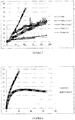
- Figure 7 shows results from a Mill test of Product 6 (Table 2) at 100 ppm, in actual 1% recycled pulp flow vs. untreated stream.
- the branched cyclic polyglycerol (Table 1, Product 1 or PG1) shows reduced pitch deposition compared to the control ( Figure 3 ), and the Product 2 from alkylation of PG2 with lauryl alcohol appears to perform better than PG1.
- the crosslinked, branched, cyclic glycerol-based polymer products having both alkyl and ester functionalities perform well in comparison with current products and un-crosslinked products (Tables 1 and 2, and Figures 3 to 5 ).
- the crosslinked Product 5 alkylated with a lower hydrocarbon chain alcohol (C6), performs organic deposit control well (Table 2, and Figure 6 ).
- the crosslinked Product 6 performs deposition control well, which demonstrates that the chemistry works well for reducing stickies deposition.
- SRM-3 and DRM-II are Nalco proprietary instruments based on the quartz crystal microbalance technology, which use the same sensors but different experimental setups and electronic controllers ( Appita, 2011, 64, 25-29 ). They can be best described as sensitive microcoupons that record mass deposition continuously either in a benchtop batch experiment (SRM-3) or on-line (DRM-II). In a series of benchtop tests the samples are tested consecutively - first, blank, then slurries containing the products. In an on-line experiment, the blank and treated stream are recorded simultaneously - the DRM-II instrument collects data from two sensors sidestream, and the product is fed after the first sensor to a mixing system before the second sensor in the same stream.
Landscapes
- Chemical & Material Sciences (AREA)
- Chemical Kinetics & Catalysis (AREA)
- Life Sciences & Earth Sciences (AREA)
- Engineering & Computer Science (AREA)
- Wood Science & Technology (AREA)
- Paper (AREA)
- Addition Polymer Or Copolymer, Post-Treatments, Or Chemical Modifications (AREA)
Claims (11)
- Verfahren zum Verringern der Ablagerung von organischen Verunreinigungen in einem Papierherstellungsvorgang, umfassend das Hinzufügen einer wirksamen Menge eines verzweigten, cyclischen Glycerin-basierten Polymers zu Zellstoff oder einem Papierherstellungssystem, wobei das verzweigte, cyclische Glycerin-basierte Polymer ein gewichtsgemitteltes Molekulargewicht von 1.000 Da bis 500.000 Da aufweist, wobei das verzweigte, cyclische Glycerin-basierte Polymer ein Random-Polymer der in der folgenden Formel angegebenen Monomereinheiten ist:
 m, n, o, p, q und r unabhängig ausgewählt sind aus 1, 2, 3, 4, 5, 6, 7, 8, 9, 10, 11, 12, 13, 14, 15, 16, 17, 18, 19, 20, 21, 22, 23, 24, 25, 26, 27, 28, 29, 30, 31, 32, 33, 34, 35, 36, 37, 38, 39, 40, 41, 42, 43, 44, 45, 46, 47, 48, 49 und 50;R und R' unabhängig voneinander -(CH2)x- sind, wobei jedes x unabhängig 0 oder 1 ist; und jedes R1 unabhängig ausgewählt ist aus Wasserstoff, Acyl und C1-C50-Alkyl, wobei das verzweigte, cyclische Glycerin-basierte Polymer einen Verzweigungsgrad von 0,20 bis 0,75 aufweist, wobei das verzweigte, cyclische Glycerin-basierte Polymer einen Zyklisierungsgrad von 0,01 bis 0,50 aufweist, wobei das verzweigte, cyclische Glycerol-basierte Polymer einer Zellstoffaufschlämmung in dem Papierherstellungsvorgang hinzugefügt wird, und wobei die wirksame Menge des verzweigten, cyclischen Glycerin-basierten Polymers von 5 ppm bis 300 ppm beträgt.
 - Verfahren nach Anspruch 1, wobei das verzweigte cyclische Glycerin-basierte Polymer ein lipohydrophiles Glycerin-basiertes Polymer ist.
- Verfahren nach Anspruch 1, wobei das verzweigte, cyclische Glycerin-basierte Polymer vernetzt ist.
- Verfahren nach Anspruch 1, wobei jedes R1 unabhängig aus Wasserstoff, C6-C18-Alkyl und -C(O)CH(OH)CH3 ausgewählt ist, oder wobei jedes R1 unabhängig aus Wasserstoff, C10-C16-Alkyl und -C(O)CH(OH)CH3 ausgewählt ist.
- Verfahren nach Anspruch 1, ferner umfassend das Hinzufügen von mindestens einer Komponente, ausgewählt aus der Gruppe bestehend aus Fixativen, Entklebungsmitteln und anderen Dispergiermitteln, zu der Pulpe oder dem Papierherstellungssystem.
- Verfahren nach Anspruch 1, wobei die Verunreinigungen hydrophobe Verunreinigungen sind.
- Verfahren nach Anspruch 6, wobei die hydrophoben Verunreinigungen Stickies sind oder wobei die hydrophoben Verunreinigungen Pech sind.
- Verfahren nach Anspruch 1, wobei das verzweigte, cyclische Glycerin-basierte Polymer zu einer Zellstoffaufschlämmung in einem Pulper, einem Reject-Refiner-Kasten, einem Weißwassersystem, einem Zellstofflagerungskasten, einem Mischkasten, einem Maschinenkasten, einem Stoffauflaufkasten oder einer beliebigen Kombination davon im Papierherstellungsvorgang hinzugefügt wird.
- Verfahren nach Anspruch 1, wobei das verzweigte, cyclische Glycerin-basierte Polymer zu einer Oberfläche in dem Papierherstellungsvorgang, ausgewählt aus einer Rohrwand, einer Kastenwand, einem Maschinendraht, einer Presswalze, einem Filz, einer Folie, einer Uhle-Box, einem Trockner oder einer beliebigen Kombination davon hinzugefügt wird.
- Verfahren nach Anspruch 1, wobei die wirksame Menge des verzweigten, cyclischen Glycerin-basierten Polymers von 50 ppm bis 200 ppm beträgt.
- Verfahren nach Anspruch 1, wobei die wirksame Menge des verzweigten, cyclischen Glycerin-basierten Polymers 100 ppm beträgt.
Applications Claiming Priority (2)
| Application Number | Priority Date | Filing Date | Title |
|---|---|---|---|
| US13/560,771 US8728275B2 (en) | 2012-07-27 | 2012-07-27 | Glycerol-based polymers for reducing deposition of organic contaminants in papermaking processes |
| PCT/US2013/052338 WO2014018898A1 (en) | 2012-07-27 | 2013-07-26 | Glycerol-based polymers for reducing deposition of organic contaminants in papermaking processes |
Publications (4)
| Publication Number | Publication Date |
|---|---|
| EP2877633A1 EP2877633A1 (de) | 2015-06-03 |
| EP2877633A4 EP2877633A4 (de) | 2016-05-25 |
| EP2877633B1 EP2877633B1 (de) | 2018-08-29 |
| EP2877633B9 true EP2877633B9 (de) | 2019-01-02 |
Family
ID=49993730
Family Applications (1)
| Application Number | Title | Priority Date | Filing Date |
|---|---|---|---|
| EP13822937.2A Active EP2877633B9 (de) | 2012-07-27 | 2013-07-26 | Glycerinbasierte polymere zur reduzierung der ablagerung organischer verunreinigungen in papierherstellungsverfahren |
Country Status (6)
| Country | Link |
|---|---|
| US (1) | US8728275B2 (de) |
| EP (1) | EP2877633B9 (de) |
| KR (1) | KR102123557B1 (de) |
| CN (1) | CN104508203B (de) |
| CA (1) | CA2876223C (de) |
| WO (1) | WO2014018898A1 (de) |
Families Citing this family (2)
| Publication number | Priority date | Publication date | Assignee | Title |
|---|---|---|---|---|
| CN107210815B (zh) * | 2015-02-10 | 2020-07-31 | 布莱特编码技术有限公司 | 用于提供光学编码信息的系统和方法 |
| WO2023034766A1 (en) * | 2021-08-31 | 2023-03-09 | Solenis Technologies Cayman, L.P. | Method of reducing hydrophobic contaminants in a pulping or papermaking process |
Family Cites Families (39)
| Publication number | Priority date | Publication date | Assignee | Title |
|---|---|---|---|---|
| US2023388A (en) | 1934-11-21 | 1935-12-03 | Benjamin R Harris | Ester of polyglycerols and method of producing the same |
| US2613704A (en) | 1950-03-11 | 1952-10-14 | Elmer P Sacrey | Depth adjustment for motor-driven cutting tools |
| US3637774A (en) | 1969-11-03 | 1972-01-25 | Vigen K Babayan | Process for preparation and purification of polyglycerols and esters thereof |
| US4968448A (en) * | 1988-08-31 | 1990-11-06 | Nalco Chemical Company | Antifoam/defoamer composition |
| US5057570A (en) | 1990-06-13 | 1991-10-15 | Air Products And Chemicals, Inc. | Polyvinyl alcohol resin soluble in high solids aqueous paper coating compositions without exernal heating |
| US5250152A (en) | 1991-02-20 | 1993-10-05 | Betz Paperchem, Inc. | Ethoxylated alcohol and dialkylphenol surfactants as Kraft pulping additives for reject reduction and yield increase |
| US5198532A (en) | 1991-03-19 | 1993-03-30 | Shell Oil Company | Polycondensation of epihalohydrin and polyhydric alcohols and thermal condensation to form polyethercyclicpolyols |
| US5667634A (en) * | 1991-05-01 | 1997-09-16 | Novo Nordisk A/S | Method for controlling pitch deposits in papermaking process using lipase and polyelectrolyte |
| US5091159A (en) | 1991-06-10 | 1992-02-25 | Nalco Chemical Company | Use of dextran as a filtration aid for thickener overflow filtration in Kelly filters in the Bayer process |
| DE4127719A1 (de) * | 1991-08-22 | 1993-02-25 | Basf Ag | Entschaeumer fuer die papierindustrie auf der basis von oel-in-wasser-emulsionen |
| CA2091272A1 (en) * | 1992-04-28 | 1993-10-29 | David D. Dreisbach | Methods for controlling the deposition of organic contaminants in pulp and papermaking processes |
| US5501769A (en) | 1992-06-09 | 1996-03-26 | Chemstone, Inc. | Pulping wood using fatty acid esters of polyoxyalkalene glycols to enhance pulping uniformity and pulp yield |
| SK113194A3 (en) | 1993-01-22 | 1995-07-11 | Buckman Labor Inc | Chemical agent for water treatment and its using |
| US5429718A (en) * | 1993-11-12 | 1995-07-04 | Lonza Inc. | Polyglycerol antifoam agents in paper processing |
| AU707514B2 (en) | 1995-04-05 | 1999-07-15 | Nalco Chemical Company | Biopolymer use as a sand filter aid |
| US5728265A (en) | 1995-06-12 | 1998-03-17 | Henkel Corporation | Process for enhancing white liquor penetration into wood chips by contacting the chips with a mixture of the white liquor and a polymethylalkyl siloxane |
| GB9718081D0 (en) | 1997-08-28 | 1997-10-29 | Ciba Geigy Ag | Fluorescent whitening agent |
| CA2217415A1 (en) | 1997-10-20 | 1999-04-20 | Tien-Feng Ling | Method for sulfite pulping using surfactants |
| US6166209A (en) | 1997-12-11 | 2000-12-26 | Hoffmann-La Roche Inc. | Piperidine derivatives |
| US6086771A (en) | 1997-12-12 | 2000-07-11 | Nalco Chemical Company | Water continuous emulsion polymers for improving scale control in the bayer process |
| US6822068B2 (en) | 1998-12-22 | 2004-11-23 | Bayer Aktiengesellschaft | Method for producing highly-branched glycidol-based polyols |
| US6228416B1 (en) | 1999-04-01 | 2001-05-08 | The Dow Chemical Company | Cellulose ether having enhanced gel strength and compositions containing it |
| US6030443A (en) | 1999-04-29 | 2000-02-29 | Hercules Incorporated | Paper coating composition with improved optical brightener carriers |
| US6620904B2 (en) * | 2000-11-06 | 2003-09-16 | Lonza Inc. | Processes for preparing linear polyglycerols and polyglycerol esters |
| US20030124710A1 (en) * | 2001-10-23 | 2003-07-03 | Novozymes A/S | Oxidizing enzymes in the manufacture of paper materials |
| DE10307172A1 (de) | 2003-02-20 | 2005-05-19 | Clariant Gmbh | Verfahren zur Herstellung von Polyglycerinethern durch direkte Umsetzung von Polyglycerinen und Alkoholen |
| JP5255749B2 (ja) | 2003-09-05 | 2013-08-07 | 阪本薬品工業株式会社 | 化粧品用抱水性油性原料及び化粧品 |
| WO2006033321A1 (ja) | 2004-09-22 | 2006-03-30 | San Nopco Ltd. | 蛍光増白増強剤 |
| US7534324B2 (en) * | 2005-06-24 | 2009-05-19 | Hercules Incorporated | Felt and equipment surface conditioner |
| DE102005030526A1 (de) | 2005-06-30 | 2007-01-04 | Clariant Produkte (Deutschland) Gmbh | Arylglycerinether |
| CA2658112C (en) * | 2006-07-26 | 2013-12-31 | Hercules Incorporated | Hydrophobically modified poly[ethylene glycol] for use in pitch and stickies control in pulp and papermaking processes |
| US20080306211A1 (en) | 2007-02-06 | 2008-12-11 | Cargill, Incorporated | Process for prepapring polycerol and mixed ethers |
| US20100212847A1 (en) * | 2007-10-15 | 2010-08-26 | Basf Se | Anti-foaming agent for the paper industry |
| US20100269989A1 (en) * | 2009-04-28 | 2010-10-28 | Enzymatic Deinking Technologies, L.L.C. | Use of 1,3-selective lipases for pitch control in pulp and paper processes |
| US8884049B2 (en) | 2009-10-21 | 2014-11-11 | Nalco Company | Glycerol based polymer surface active chemistry and production |
| US9290620B2 (en) * | 2009-10-21 | 2016-03-22 | Nalco Company | Production and composition of glycerol based polyols |
| US8048268B2 (en) * | 2009-10-27 | 2011-11-01 | Enzymatic Deinking Technologies, Llc | Method of controlling organic contaminants in pulp and paper making processes |
| US8101045B2 (en) * | 2010-01-05 | 2012-01-24 | Nalco Company | Modifying agent for yankee coatings |
| US8366877B2 (en) | 2010-03-10 | 2013-02-05 | Nalco Company | Lipohydrophilic glycerol based polymers as digestion aids for improving wood pulping processes |
-
2012
- 2012-07-27 US US13/560,771 patent/US8728275B2/en active Active
-
2013
- 2013-07-26 EP EP13822937.2A patent/EP2877633B9/de active Active
- 2013-07-26 CN CN201380039657.2A patent/CN104508203B/zh active Active
- 2013-07-26 WO PCT/US2013/052338 patent/WO2014018898A1/en not_active Ceased
- 2013-07-26 KR KR1020157002548A patent/KR102123557B1/ko active Active
- 2013-07-26 CA CA2876223A patent/CA2876223C/en active Active
Also Published As
| Publication number | Publication date |
|---|---|
| EP2877633B1 (de) | 2018-08-29 |
| EP2877633A4 (de) | 2016-05-25 |
| CA2876223C (en) | 2019-04-09 |
| US8728275B2 (en) | 2014-05-20 |
| KR102123557B1 (ko) | 2020-06-16 |
| CA2876223A1 (en) | 2014-01-30 |
| US20140027079A1 (en) | 2014-01-30 |
| EP2877633A1 (de) | 2015-06-03 |
| WO2014018898A1 (en) | 2014-01-30 |
| CN104508203B (zh) | 2016-10-19 |
| CN104508203A (zh) | 2015-04-08 |
| KR20150042190A (ko) | 2015-04-20 |
Similar Documents
| Publication | Publication Date | Title |
|---|---|---|
| EP2044263B1 (de) | Verfahren zur kontrolle von harzablagerungen und klebenden verunreinigungen in zellstoff- und papierherstellungsverfahren, unter verwendung von hydrophob modifiziertes poly(ethylenglycol) | |
| EP2877633B1 (de) | Glycerinbasierte polymere zur reduzierung der ablagerung organischer verunreinigungen in papierherstellungsverfahren | |
| EP0568229A1 (de) | Verhinderung der Ablagerung von organischen Schadstoffen in Zellstoff- und Papierherstellungssystemen | |
| US8709209B2 (en) | Anionic lipophilic glycerol-based polymers for organic deposition control in papermaking processes | |
| EP2938781B1 (de) | Lipophile anionische polymere auf glycerolbasis für organische abscheidungskontrolle in verfahren zur papierherstellung | |
| EP1950342A1 (de) | Emulsionen | |
| EP1697587B1 (de) | Papier mit quaternärem stickstoff enthaltendem celluloseether | |
| EP1185736B1 (de) | Retentionsmittel enthaltend peo | |
| US7854800B2 (en) | Alkanolamine-stabilized dispersed rosin sizing agents and their preparation | |
| Koskela et al. | Long‐chain fatty ammonium quaternaries in papermaking |
Legal Events
| Date | Code | Title | Description |
|---|---|---|---|
| PUAI | Public reference made under article 153(3) epc to a published international application that has entered the european phase |
Free format text: ORIGINAL CODE: 0009012 |
|
| 17P | Request for examination filed |
Effective date: 20150213 |
|
| AK | Designated contracting states |
Kind code of ref document: A1 Designated state(s): AL AT BE BG CH CY CZ DE DK EE ES FI FR GB GR HR HU IE IS IT LI LT LU LV MC MK MT NL NO PL PT RO RS SE SI SK SM TR |
|
| AX | Request for extension of the european patent |
Extension state: BA ME |
|
| DAX | Request for extension of the european patent (deleted) | ||
| RA4 | Supplementary search report drawn up and despatched (corrected) |
Effective date: 20160422 |
|
| RIC1 | Information provided on ipc code assigned before grant |
Ipc: D21H 17/53 20060101ALI20160418BHEP Ipc: D21H 17/46 20060101ALI20160418BHEP Ipc: D21C 9/08 20060101ALI20160418BHEP Ipc: D21H 21/02 20060101ALI20160418BHEP Ipc: D21H 17/20 20060101ALI20160418BHEP Ipc: D21H 21/00 20060101AFI20160418BHEP Ipc: D21H 17/33 20060101ALI20160418BHEP |
|
| STAA | Information on the status of an ep patent application or granted ep patent |
Free format text: STATUS: EXAMINATION IS IN PROGRESS |
|
| 17Q | First examination report despatched |
Effective date: 20170711 |
|
| RAP1 | Party data changed (applicant data changed or rights of an application transferred) |
Owner name: ECOLAB USA INC. |
|
| GRAP | Despatch of communication of intention to grant a patent |
Free format text: ORIGINAL CODE: EPIDOSNIGR1 |
|
| STAA | Information on the status of an ep patent application or granted ep patent |
Free format text: STATUS: GRANT OF PATENT IS INTENDED |
|
| GRAJ | Information related to disapproval of communication of intention to grant by the applicant or resumption of examination proceedings by the epo deleted |
Free format text: ORIGINAL CODE: EPIDOSDIGR1 |
|
| STAA | Information on the status of an ep patent application or granted ep patent |
Free format text: STATUS: EXAMINATION IS IN PROGRESS |
|
| INTG | Intention to grant announced |
Effective date: 20180116 |
|
| INTC | Intention to grant announced (deleted) | ||
| GRAP | Despatch of communication of intention to grant a patent |
Free format text: ORIGINAL CODE: EPIDOSNIGR1 |
|
| STAA | Information on the status of an ep patent application or granted ep patent |
Free format text: STATUS: GRANT OF PATENT IS INTENDED |
|
| INTG | Intention to grant announced |
Effective date: 20180316 |
|
| GRAS | Grant fee paid |
Free format text: ORIGINAL CODE: EPIDOSNIGR3 |
|
| GRAA | (expected) grant |
Free format text: ORIGINAL CODE: 0009210 |
|
| STAA | Information on the status of an ep patent application or granted ep patent |
Free format text: STATUS: THE PATENT HAS BEEN GRANTED |
|
| AK | Designated contracting states |
Kind code of ref document: B1 Designated state(s): AL AT BE BG CH CY CZ DE DK EE ES FI FR GB GR HR HU IE IS IT LI LT LU LV MC MK MT NL NO PL PT RO RS SE SI SK SM TR |
|
| REG | Reference to a national code |
Ref country code: GB Ref legal event code: FG4D |
|
| REG | Reference to a national code |
Ref country code: CH Ref legal event code: EP |
|
| REG | Reference to a national code |
Ref country code: AT Ref legal event code: REF Ref document number: 1035274 Country of ref document: AT Kind code of ref document: T Effective date: 20180915 |
|
| REG | Reference to a national code |
Ref country code: IE Ref legal event code: FG4D |
|
| REG | Reference to a national code |
Ref country code: DE Ref legal event code: R096 Ref document number: 602013042877 Country of ref document: DE |
|
| REG | Reference to a national code |
Ref country code: CH Ref legal event code: PK Free format text: BERICHTIGUNG B9 |
|
| REG | Reference to a national code |
Ref country code: NL Ref legal event code: MP Effective date: 20180829 |
|
| REG | Reference to a national code |
Ref country code: LT Ref legal event code: MG4D |
|
| PG25 | Lapsed in a contracting state [announced via postgrant information from national office to epo] |
Ref country code: SE Free format text: LAPSE BECAUSE OF FAILURE TO SUBMIT A TRANSLATION OF THE DESCRIPTION OR TO PAY THE FEE WITHIN THE PRESCRIBED TIME-LIMIT Effective date: 20180829 Ref country code: IS Free format text: LAPSE BECAUSE OF FAILURE TO SUBMIT A TRANSLATION OF THE DESCRIPTION OR TO PAY THE FEE WITHIN THE PRESCRIBED TIME-LIMIT Effective date: 20181229 Ref country code: GR Free format text: LAPSE BECAUSE OF FAILURE TO SUBMIT A TRANSLATION OF THE DESCRIPTION OR TO PAY THE FEE WITHIN THE PRESCRIBED TIME-LIMIT Effective date: 20181130 Ref country code: FI Free format text: LAPSE BECAUSE OF FAILURE TO SUBMIT A TRANSLATION OF THE DESCRIPTION OR TO PAY THE FEE WITHIN THE PRESCRIBED TIME-LIMIT Effective date: 20180829 Ref country code: LT Free format text: LAPSE BECAUSE OF FAILURE TO SUBMIT A TRANSLATION OF THE DESCRIPTION OR TO PAY THE FEE WITHIN THE PRESCRIBED TIME-LIMIT Effective date: 20180829 Ref country code: RS Free format text: LAPSE BECAUSE OF FAILURE TO SUBMIT A TRANSLATION OF THE DESCRIPTION OR TO PAY THE FEE WITHIN THE PRESCRIBED TIME-LIMIT Effective date: 20180829 Ref country code: BG Free format text: LAPSE BECAUSE OF FAILURE TO SUBMIT A TRANSLATION OF THE DESCRIPTION OR TO PAY THE FEE WITHIN THE PRESCRIBED TIME-LIMIT Effective date: 20181129 Ref country code: NO Free format text: LAPSE BECAUSE OF FAILURE TO SUBMIT A TRANSLATION OF THE DESCRIPTION OR TO PAY THE FEE WITHIN THE PRESCRIBED TIME-LIMIT Effective date: 20181129 Ref country code: NL Free format text: LAPSE BECAUSE OF FAILURE TO SUBMIT A TRANSLATION OF THE DESCRIPTION OR TO PAY THE FEE WITHIN THE PRESCRIBED TIME-LIMIT Effective date: 20180829 |
|
| REG | Reference to a national code |
Ref country code: AT Ref legal event code: MK05 Ref document number: 1035274 Country of ref document: AT Kind code of ref document: T Effective date: 20180829 |
|
| PG25 | Lapsed in a contracting state [announced via postgrant information from national office to epo] |
Ref country code: AL Free format text: LAPSE BECAUSE OF FAILURE TO SUBMIT A TRANSLATION OF THE DESCRIPTION OR TO PAY THE FEE WITHIN THE PRESCRIBED TIME-LIMIT Effective date: 20180829 Ref country code: HR Free format text: LAPSE BECAUSE OF FAILURE TO SUBMIT A TRANSLATION OF THE DESCRIPTION OR TO PAY THE FEE WITHIN THE PRESCRIBED TIME-LIMIT Effective date: 20180829 Ref country code: LV Free format text: LAPSE BECAUSE OF FAILURE TO SUBMIT A TRANSLATION OF THE DESCRIPTION OR TO PAY THE FEE WITHIN THE PRESCRIBED TIME-LIMIT Effective date: 20180829 |
|
| PG25 | Lapsed in a contracting state [announced via postgrant information from national office to epo] |
Ref country code: AT Free format text: LAPSE BECAUSE OF FAILURE TO SUBMIT A TRANSLATION OF THE DESCRIPTION OR TO PAY THE FEE WITHIN THE PRESCRIBED TIME-LIMIT Effective date: 20180829 Ref country code: EE Free format text: LAPSE BECAUSE OF FAILURE TO SUBMIT A TRANSLATION OF THE DESCRIPTION OR TO PAY THE FEE WITHIN THE PRESCRIBED TIME-LIMIT Effective date: 20180829 Ref country code: PL Free format text: LAPSE BECAUSE OF FAILURE TO SUBMIT A TRANSLATION OF THE DESCRIPTION OR TO PAY THE FEE WITHIN THE PRESCRIBED TIME-LIMIT Effective date: 20180829 Ref country code: ES Free format text: LAPSE BECAUSE OF FAILURE TO SUBMIT A TRANSLATION OF THE DESCRIPTION OR TO PAY THE FEE WITHIN THE PRESCRIBED TIME-LIMIT Effective date: 20180829 Ref country code: RO Free format text: LAPSE BECAUSE OF FAILURE TO SUBMIT A TRANSLATION OF THE DESCRIPTION OR TO PAY THE FEE WITHIN THE PRESCRIBED TIME-LIMIT Effective date: 20180829 Ref country code: CZ Free format text: LAPSE BECAUSE OF FAILURE TO SUBMIT A TRANSLATION OF THE DESCRIPTION OR TO PAY THE FEE WITHIN THE PRESCRIBED TIME-LIMIT Effective date: 20180829 Ref country code: IT Free format text: LAPSE BECAUSE OF FAILURE TO SUBMIT A TRANSLATION OF THE DESCRIPTION OR TO PAY THE FEE WITHIN THE PRESCRIBED TIME-LIMIT Effective date: 20180829 |
|
| PG25 | Lapsed in a contracting state [announced via postgrant information from national office to epo] |
Ref country code: SM Free format text: LAPSE BECAUSE OF FAILURE TO SUBMIT A TRANSLATION OF THE DESCRIPTION OR TO PAY THE FEE WITHIN THE PRESCRIBED TIME-LIMIT Effective date: 20180829 Ref country code: SK Free format text: LAPSE BECAUSE OF FAILURE TO SUBMIT A TRANSLATION OF THE DESCRIPTION OR TO PAY THE FEE WITHIN THE PRESCRIBED TIME-LIMIT Effective date: 20180829 Ref country code: DK Free format text: LAPSE BECAUSE OF FAILURE TO SUBMIT A TRANSLATION OF THE DESCRIPTION OR TO PAY THE FEE WITHIN THE PRESCRIBED TIME-LIMIT Effective date: 20180829 |
|
| REG | Reference to a national code |
Ref country code: DE Ref legal event code: R097 Ref document number: 602013042877 Country of ref document: DE |
|
| PLBE | No opposition filed within time limit |
Free format text: ORIGINAL CODE: 0009261 |
|
| STAA | Information on the status of an ep patent application or granted ep patent |
Free format text: STATUS: NO OPPOSITION FILED WITHIN TIME LIMIT |
|
| 26N | No opposition filed |
Effective date: 20190531 |
|
| PG25 | Lapsed in a contracting state [announced via postgrant information from national office to epo] |
Ref country code: SI Free format text: LAPSE BECAUSE OF FAILURE TO SUBMIT A TRANSLATION OF THE DESCRIPTION OR TO PAY THE FEE WITHIN THE PRESCRIBED TIME-LIMIT Effective date: 20180829 |
|
| PG25 | Lapsed in a contracting state [announced via postgrant information from national office to epo] |
Ref country code: MC Free format text: LAPSE BECAUSE OF FAILURE TO SUBMIT A TRANSLATION OF THE DESCRIPTION OR TO PAY THE FEE WITHIN THE PRESCRIBED TIME-LIMIT Effective date: 20180829 |
|
| REG | Reference to a national code |
Ref country code: CH Ref legal event code: PL |
|
| GBPC | Gb: european patent ceased through non-payment of renewal fee |
Effective date: 20190726 |
|
| PG25 | Lapsed in a contracting state [announced via postgrant information from national office to epo] |
Ref country code: TR Free format text: LAPSE BECAUSE OF FAILURE TO SUBMIT A TRANSLATION OF THE DESCRIPTION OR TO PAY THE FEE WITHIN THE PRESCRIBED TIME-LIMIT Effective date: 20180829 |
|
| REG | Reference to a national code |
Ref country code: BE Ref legal event code: MM Effective date: 20190731 |
|
| PG25 | Lapsed in a contracting state [announced via postgrant information from national office to epo] |
Ref country code: GB Free format text: LAPSE BECAUSE OF NON-PAYMENT OF DUE FEES Effective date: 20190726 |
|
| PG25 | Lapsed in a contracting state [announced via postgrant information from national office to epo] |
Ref country code: CH Free format text: LAPSE BECAUSE OF NON-PAYMENT OF DUE FEES Effective date: 20190731 Ref country code: LI Free format text: LAPSE BECAUSE OF NON-PAYMENT OF DUE FEES Effective date: 20190731 Ref country code: LU Free format text: LAPSE BECAUSE OF NON-PAYMENT OF DUE FEES Effective date: 20190726 Ref country code: BE Free format text: LAPSE BECAUSE OF NON-PAYMENT OF DUE FEES Effective date: 20190731 |
|
| PG25 | Lapsed in a contracting state [announced via postgrant information from national office to epo] |
Ref country code: FR Free format text: LAPSE BECAUSE OF NON-PAYMENT OF DUE FEES Effective date: 20190731 Ref country code: PT Free format text: LAPSE BECAUSE OF FAILURE TO SUBMIT A TRANSLATION OF THE DESCRIPTION OR TO PAY THE FEE WITHIN THE PRESCRIBED TIME-LIMIT Effective date: 20181229 |
|
| PG25 | Lapsed in a contracting state [announced via postgrant information from national office to epo] |
Ref country code: IE Free format text: LAPSE BECAUSE OF NON-PAYMENT OF DUE FEES Effective date: 20190726 |
|
| PG25 | Lapsed in a contracting state [announced via postgrant information from national office to epo] |
Ref country code: CY Free format text: LAPSE BECAUSE OF FAILURE TO SUBMIT A TRANSLATION OF THE DESCRIPTION OR TO PAY THE FEE WITHIN THE PRESCRIBED TIME-LIMIT Effective date: 20180829 |
|
| PG25 | Lapsed in a contracting state [announced via postgrant information from national office to epo] |
Ref country code: HU Free format text: LAPSE BECAUSE OF FAILURE TO SUBMIT A TRANSLATION OF THE DESCRIPTION OR TO PAY THE FEE WITHIN THE PRESCRIBED TIME-LIMIT; INVALID AB INITIO Effective date: 20130726 Ref country code: MT Free format text: LAPSE BECAUSE OF FAILURE TO SUBMIT A TRANSLATION OF THE DESCRIPTION OR TO PAY THE FEE WITHIN THE PRESCRIBED TIME-LIMIT Effective date: 20180829 |
|
| PG25 | Lapsed in a contracting state [announced via postgrant information from national office to epo] |
Ref country code: MK Free format text: LAPSE BECAUSE OF FAILURE TO SUBMIT A TRANSLATION OF THE DESCRIPTION OR TO PAY THE FEE WITHIN THE PRESCRIBED TIME-LIMIT Effective date: 20180829 |
|
| PGFP | Annual fee paid to national office [announced via postgrant information from national office to epo] |
Ref country code: DE Payment date: 20250604 Year of fee payment: 13 |