EP2869925B1 - Apparatus for detecting atp in a liquid sample - Google Patents
Apparatus for detecting atp in a liquid sample Download PDFInfo
- Publication number
- EP2869925B1 EP2869925B1 EP13737092.0A EP13737092A EP2869925B1 EP 2869925 B1 EP2869925 B1 EP 2869925B1 EP 13737092 A EP13737092 A EP 13737092A EP 2869925 B1 EP2869925 B1 EP 2869925B1
- Authority
- EP
- European Patent Office
- Prior art keywords
- sampling device
- reagent composition
- liquid reagent
- sample
- liquid
- Prior art date
- Legal status (The legal status is an assumption and is not a legal conclusion. Google has not performed a legal analysis and makes no representation as to the accuracy of the status listed.)
- Active
Links
Images

Classifications
-
- C—CHEMISTRY; METALLURGY
- C12—BIOCHEMISTRY; BEER; SPIRITS; WINE; VINEGAR; MICROBIOLOGY; ENZYMOLOGY; MUTATION OR GENETIC ENGINEERING
- C12Q—MEASURING OR TESTING PROCESSES INVOLVING ENZYMES, NUCLEIC ACIDS OR MICROORGANISMS; COMPOSITIONS OR TEST PAPERS THEREFOR; PROCESSES OF PREPARING SUCH COMPOSITIONS; CONDITION-RESPONSIVE CONTROL IN MICROBIOLOGICAL OR ENZYMOLOGICAL PROCESSES
- C12Q1/00—Measuring or testing processes involving enzymes, nucleic acids or microorganisms; Compositions therefor; Processes of preparing such compositions
- C12Q1/008—Measuring or testing processes involving enzymes, nucleic acids or microorganisms; Compositions therefor; Processes of preparing such compositions for determining co-enzymes or co-factors, e.g. NAD, ATP
-
- C—CHEMISTRY; METALLURGY
- C12—BIOCHEMISTRY; BEER; SPIRITS; WINE; VINEGAR; MICROBIOLOGY; ENZYMOLOGY; MUTATION OR GENETIC ENGINEERING
- C12Q—MEASURING OR TESTING PROCESSES INVOLVING ENZYMES, NUCLEIC ACIDS OR MICROORGANISMS; COMPOSITIONS OR TEST PAPERS THEREFOR; PROCESSES OF PREPARING SUCH COMPOSITIONS; CONDITION-RESPONSIVE CONTROL IN MICROBIOLOGICAL OR ENZYMOLOGICAL PROCESSES
- C12Q1/00—Measuring or testing processes involving enzymes, nucleic acids or microorganisms; Compositions therefor; Processes of preparing such compositions
- C12Q1/66—Measuring or testing processes involving enzymes, nucleic acids or microorganisms; Compositions therefor; Processes of preparing such compositions involving luciferase
-
- G—PHYSICS
- G01—MEASURING; TESTING
- G01N—INVESTIGATING OR ANALYSING MATERIALS BY DETERMINING THEIR CHEMICAL OR PHYSICAL PROPERTIES
- G01N1/00—Sampling; Preparing specimens for investigation
- G01N1/02—Devices for withdrawing samples
-
- G—PHYSICS
- G01—MEASURING; TESTING
- G01N—INVESTIGATING OR ANALYSING MATERIALS BY DETERMINING THEIR CHEMICAL OR PHYSICAL PROPERTIES
- G01N1/00—Sampling; Preparing specimens for investigation
- G01N1/02—Devices for withdrawing samples
- G01N1/10—Devices for withdrawing samples in the liquid or fluent state
-
- B—PERFORMING OPERATIONS; TRANSPORTING
- B01—PHYSICAL OR CHEMICAL PROCESSES OR APPARATUS IN GENERAL
- B01L—CHEMICAL OR PHYSICAL LABORATORY APPARATUS FOR GENERAL USE
- B01L3/00—Containers or dishes for laboratory use, e.g. laboratory glassware; Droppers
- B01L3/50—Containers for the purpose of retaining a material to be analysed, e.g. test tubes
- B01L3/502—Containers for the purpose of retaining a material to be analysed, e.g. test tubes with fluid transport, e.g. in multi-compartment structures
- B01L3/5029—Containers for the purpose of retaining a material to be analysed, e.g. test tubes with fluid transport, e.g. in multi-compartment structures using swabs
-
- G—PHYSICS
- G01—MEASURING; TESTING
- G01N—INVESTIGATING OR ANALYSING MATERIALS BY DETERMINING THEIR CHEMICAL OR PHYSICAL PROPERTIES
- G01N1/00—Sampling; Preparing specimens for investigation
- G01N1/02—Devices for withdrawing samples
- G01N2001/028—Sampling from a surface, swabbing, vaporising
Definitions
- Sampling programs are used to monitor critical raw materials, in-process materials, finished goods, and processing environments in the food and beverage industry. Routine sampling and testing can allow quality assurance personnel to detect undesirable materials, such as microorganisms, at a very early stage and take steps to prevent subsequent contamination of equipment and/or products. A variety of tests can be performed to detect the unwanted materials. Examples of such tests include chemical residue tests (e.g., Adenosine triphosphate (ATP) bioluminescence tests and protein colorimetric tests), culture methods, genetic tests (e.g., PCR), immunodiagnostic tests, and bioluminescent tests.
- chemical residue tests e.g., Adenosine triphosphate (ATP) bioluminescence tests and protein colorimetric tests
- culture methods e.g., PCR
- genetic tests e.g., PCR
- immunodiagnostic tests e.g., PCR tests, and bioluminescent tests.
- Sample-collection devices typically are used to collect surface samples for environmental tests. Commercially-available sample-collection devices include absorbent devices such as sponges, swabs, and the like. In addition, certain sample-collection devices are capable of collecting a predetermined volume of a liquid sample.
- ATP is used routinely to detect a presence or absence of microorganisms in a sample.
- the chemical energy produced from the breakdown of ATP is converted into light energy.
- Each molecule of ATP consumed in the reaction produces one photon of light. This light output can be quantified in a luminometer.
- the presence of ATP in a sample may be a direct indicator of the presence of a microorganism (i.e., the ATP is derived from a microorganism) or the ATP may be an indirect indicator of the presence of a microorganism (i.e., the ATP is derived from vegetative or animal matter and indicates that nutrients that support the growth of microorganisms may be present in the sample).
- the presence or absence of ATP in a sample is used routinely to assess the efficacy of cleaning processes in food, beverage, other industrial processed, healthcare (e.g. endoscopes) and for such as cooling and process waters and/or to determine whether biocide treatment has been effective in reducing the level of microorganisms.
- healthcare e.g. endoscopes
- biocide treatment has been effective in reducing the level of microorganisms.
- International application WO9411528 discloses an assay kit comprising two containers respectively containing an aqueous composition containing luciferase, luciferin, at pH 5.5 and a strong buffer which, when mixed with the composition, provides a solution buffered at pH 7.5 to 8.5.
- the aqueous composition after mixing with the strong buffer is used in bioluminescence assays experiment for live microorganisms or organic material.
- the composition has good stability, even at room temperature, it is easy to use, simply needing mixing with the strong buffer to give a mixture of pH close to the optimum for the luciferase-luciferine reaction.
- Document US2008206740 discloses a probe in the form of a swab like devices with an absorbent tip attached to a solid or semi-solid shaft.
- the probe can be composed of any or a combination of materials useful for absorbing, adsorbing or retaining a sample.
- Swab tip materials can include any type of porous material including rayon, Dacron, cotton, foam or a combination thereof.
- the tip can be pre-moistened with any one or more of a variety of liquids, depending on the need or application, the pre-moistening liquid can include, for example, buffer, sterile water, glycerin, diluents, wetting solutions, or other material desired to be mixed with the sample or useful for absorbing, neutralizing, stabilizing or maintaining a sample.
- the present disclosure generally relates to the detection of ATP in a sample using luciferase enzyme.
- the disclosure relates to a multi-purpose sampling device that comprises a dry coating comprising a pH-adjusting reagent.
- the pH-adjusting reagent is capable of causing a pH change when contacted with a liquid reagent composition comprising luciferin.
- the pH change can facilitate the achievement of a substantially steady-state light-emitting reaction in a shorter period of time than at a lower pH.
- the sampling device can be contacted with a liquid sample and, even though the dry coating may be soluble in the liquid sample, an effective amount of the pH-adjusting reagent is retained on and/or in the sampling device and the effective amount can be transferred to the liquid reagent composition where it effects the aforementioned pH change.
- the sampling device obtains a predetermined volume of a liquid sample, thereby permitting the operator to detect and, optionally, quantitate the amount of ATP in the liquid sample.
- the present disclosure provides a kit according to appended claim 1.
- the present disclosure provides an apparatus according to appended claim 2.
- the pH-adjusting reagent can comprise a water-soluble reagent.
- the sampling portion can comprise a calibrated loop.
- the closed compartment can comprise a frangible wall.
- the frangible wall can be disposed in the container between the opening and the cuvette portion.
- the sampling device comprises the closed compartment, wherein the sampling device further comprises a structure that selectively releases the fluid composition from the container.
- the sampling portion can comprise a foam material.
- the pH-adjusting reagent can comprise a buffer component selected from the group consisting of N-[2-hydroxyethyl] piperazine-N'-[2-ethanesulfonic acid], N-[tris(hydroxymethyl)methyl]glycine, and combinations thereof.
- the pH-adjusting reagent can be coated in the one or more cavity. In any of the above embodiments of the kit or the apparatus, the coating further can comprise an effective amount of a cell extractant.
- the luciferase enzyme can consist essentially of a recombinant luciferase enzyme having luciferase activity that is less sensitive to variations in temperature, ionic detergents, and reducing agents than a corresponding non-recombinant luciferase enzyme.
- the coating optionally does not comprise an effective amount of a phosphate buffer component.
- the predetermined volume can be about 0.01 milliliters to about 0.25 milliliters.
- the present disclosure provides a method according to appended claim 12.
- the method further can comprise the step of agitating the predetermined volume of the sample and the liquid reagent composition in the container.
- the liquid reagent composition further can comprise a luciferase enzyme.
- the luciferase enzyme activity can consist essentially of a recombinant luciferase enzyme having luciferase activity that is less sensitive to variations in temperature, ionic detergents, and reducing agents than a corresponding non-recombinant luciferase enzyme.
- contacting the sampling device comprising the sample with liquid reagent composition can comprise contacting the sampling device with the liquid reagent composition at a temperature within a range of 10° C and 35° C, inclusive. In any of the above embodiments of the method, after contacting the sampling device with liquid reagent composition, a substantially steady-state amount of light is emitted from the composition in less than 20 seconds.
- a cell extractant can be interpreted to mean “one or more” cell extractants.
- connection and “coupled” are not restricted to physical or mechanical connections or couplings. It is to be understood that other embodiments may be utilized and structural or logical changes may be made without departing from the scope of the present disclosure. Furthermore, terms such as “front,” “rear,” “top,” “bottom,” and the like are only used to describe elements as they relate to one another, but are in no way meant to recite specific orientations of the apparatus, to indicate or imply necessary or required orientations of the apparatus, or to specify how the invention described herein will be used, mounted, displayed, or positioned in use.
- the present disclosure generally relates to an apparatus and method for detecting ATP from organic residues and/or cells in a sample.
- the ATP from cells is detected by contacting the sample with a cell extractant to release ATP and detecting the released ATP using an enzymatic reaction that involves the reaction of the released ATP with luciferase enzyme activity in the presence of luciferin and results in the production of measurable light.
- the present disclosure provides an apparatus and/or a kit with a sampling device that is adapted such that it 1) can acquire and releasably retain a predetermined volume of liquid sample, 2) can use the liquid sample to rehydrate an effective amount of dry, rehydratable pH-adjusting reagent, and 3) can deliver the liquid sample and effective amount of pH-adjusting reagent into a container in order to facilitate a luciferase-catalyzed light-emitting reaction.
- kits and apparatuses that can be used to store aqueous mixtures comprising luciferin for extended periods of time and instantly to adjust the pH of the mixtures in order to reduce the lag time required for a glow-type luciferase enzyme activity to achieve stable light output (e.g., maximum light output) in the presence of ATP and luciferin, particularly at lower temperatures (e.g., temperatures below 20° C.
- FIG. 1 shows one embodiment of a sampling device that can be used in an apparatus, kit and/or method according to the present disclosure.
- the sampling device 100 comprises a handling portion 20 and a sampling portion 30.
- the sampling portion 30 is coupled to the handling portion 20 via an optional stem 15.
- the sampling device 100 is shaped and dimensioned to be received in a corresponding container (not shown).
- the handling portion 20 can be made from a variety of materials (e.g., wood, metal, plastic, glass) using processes known in the art and the handling portion 20 functions as a location at which the sampling device 100 can be grasped and/or manipulated during use.
- the handling portion comprises a handle 24 that is shaped and/or textured to facilitate manual or mechanical gripping of the sampling device 100.
- the sampling device 100 further can comprise a piercing tip 40.
- the sampling portion 30 may include any suitable structure that defines at least one cavity capable of obtaining (via capillary pressure) and retaining a liquid sample from a sample source.
- sampling portion 30 defines a single cavity.
- the sampling portion 30 includes a plurality of cavities that that are not in fluidic communication. Regardless of whether sampling portion 30 comprises one or more cavity, the sampling portion 30 is designed to retain a predetermined maximum sample volume. The maximum sample volume may be selected, for example, based on the desired sensitivity of the test performed with the sample.
- FIG. 1 shows one embodiment of a sampling portion 30 comprising a plurality of cavities 32.
- FIG. 1a shows a detailed view of the sampling portion 30 of FIG. 1 .
- the cavities 32 consist of indentations that circle the sampling device 100.
- the predetermined volume can be achieved using a variety of design configurations for the one or more cavity.
- International Publication No. WO 2009/134509 discloses a variety of sample acquisition devices comprising cavities that are suitable for obtaining and retaining a predetermined volume of liquid sample.
- the sampling portion of a sampling device of the present disclosure may comprise a plurality of cavities formed in a foam material.
- Foam articles e.g., sponges, sponges mounted on a handle
- FIG. 2 shows a sampling device 100' comprising a sampling portion 30 that comprises a foam material.
- the foam material comprises individual cells or void spaces that are capable of obtaining and retaining a liquid sample.
- Suitable foam materials for use in a sampling device of the present disclosure include, for example, polyurethane foams, polyethylene foams, and polystyrene foams.
- the foams may be treated (e.g., corona-treated or electron beam-treated) in order to make the surface of the polymer more hydrophilic.
- the foam material can be coupled to a stem 15 and/or a handling portion 20 using materials (e.g., adhesives, mechanical fasteners, or the like) and processes known in the art.
- FIG. 3 shows yet another alternative embodiment of a sampling device 100" according to the present disclosure.
- the sampling portion 30 comprises a calibrated loop 34 configured to obtain and retain a predetermined volume of sample liquid.
- Calibrated loops are known in the art and the loop may take a variety of forms including, for example, a circular form (as shown in FIG. 3 ) or an obround form.
- Any sampling device according to the present invention comprises a coating area on which a coating comprising a pH-adjusting reagent according to the present disclosure can be disposed.
- An embodiment of a sampling device 100" comprising a coating area 36 onto which a coating can be applied is shown in FIG. 3 .
- the coating comprises an effective amount of a pH-adjusting reagent that, when contacted (e.g., mixed) with a liquid reagent composition according to the present disclosure, adjusts the pH of the liquid reagent composition having an initial pH of 6.8 or lower to an adjusted pH of 6.9 or higher, preferably to an adjusted pH of about pH 7.2 - 8.0, more preferably to an adjusted pH of about pH 7.2 - 7.8.
- the handling portion 20 comprising a handle 24, the stem 15, and piercing tip 40.
- the pH-adjusting reagent can be a water-soluble reagent.
- sampling portion 30 is formed of a material having a surface energy in a range of about 20 dynes/centimeter (dyn/cm) to about 82 dyn/cm, such as about 45 dyn/cmto about 72 dyn/cm.
- the material for sampling portion 30 is selected to have a surface energy close to that of water, or about 72 dyn/cm.
- a sample may be easier to remove from sampling portion 30 compared to a conventional medical swab that includes a fibrous tip because the sample is held within sampling portion 30 by surface energy, rather than absorption, as is the case with some conventional medical swabs.
- sample liquid and/or liquid-suspended particles may be utilized to help elute the sample from sampling portion 30.
- sampling portion 30 is comprised of a material that achieves the desired sample acquisition characteristics, which may depend upon the type of sample acquired (e.g., some liquid samples may include dissolved or suspended solids that affect the surface tension of the liquid).
- Material properties that may affect the ability of sampling portion 30 to acquire and retain a sample include, for example, surface energy.
- the material may be selected to have a particular surface energy in order to draw the sample into the one or more cavity defined by sampling portion 30 by capillary force.
- Other characteristics of the material from which the sampling portion is made may include substantial inertness relative to the sample or a relatively low rate of elution of chemicals or other contaminants that may affect luciferase enzyme activity, e.g., when the sample is released from sampling portion 30.
- sampling portion 30 may include a base material that does not necessarily include the desired sample acquisition characteristics, and an external layer (e.g., a coating) comprising a material that affords hydrophilic, hydrophobic, positively-charged or negatively-charged surfaces to achieve the desired sample acquisition characteristics.
- an inorganic coating e.g., a silica coating
- an organic coating e.g., polymeric coatings, such as polyacrylate
- surface energy (or surface tension) characteristics of a material forming sampling portion 30 may also be achieved with the aid of physical treatments, such as, but not limited to, corona treating in which the material being treated is exposed to an electrical discharge, or corona, electron beam treatments.
- the sampling portion 30 may be formed at least in part of relatively rigid polymer (e.g., nylon, polysulfone, polycarbonate, or combinations thereof) or it may be formed using a more compliant polymer, such as silicone.
- Example materials for sampling portion 30 include, but are not limited to, any thermoplastic materials suitable for casting, profile extrusion, molding (e.g., injection molding) or embossing including, for example, polyolefins, polyesters, polyamides, poly(vinyl chloride), polymethyl methacrylate, polycarbonate, nylon, and the like.
- sampling portion 30 may be formed by molding or embossing a sheet of suitable material into the desired cavity structure.
- a sampling device of the present disclosure comprises a dry coating.
- the dry coating can be disposed on and/or in (e.g., in a cavity) the sampling portion of the device so that, when the device is dipped into the liquid sample, the coating is contacted with the liquid sample.
- at least a part of the dry coating can be disposed on another portion (e.g., the stem, the piercing tip) of the sampling device.
- the dry coating includes an effective amount of a pH-adjusting reagent that, when contacted (e.g. mixed) with a liquid reagent composition of the present disclosure, changes the pH of the liquid reagent composition.
- the pH-adjusting reagent comprises a water-soluble reagent.
- the pH-adjusting reagent comprises a component of a buffer solution (e.g. the pH-adjusting reagent comprises a base or a conjugate acid) having a pKa of 7.0 or higher, preferably having a pKa of 7.2 or higher.
- pH-adjusting reagents that each comprise a suitable buffer component include, but are not limited to, N-[2-hydroxyethyl] piperazine-N'-[2-ethanesulfonic acid], N-[tris(hydroxymethyl)methyl]glycine, and combinations thereof.
- the coating does not comprise an effective amount of a pH-adjusting reagent comprising phosphate.
- a pH-adjusting reagent comprising an amount of phosphate effective to change the pH of the liquid reagent composition from an initial pH 6.8 or lower to an adjusted pH of 6.9 or higher may also be sufficient to at least partially inhibit luciferase enzyme activity.
- the pH-adjusting reagent comprises a metallic base (e.g., sodium hydroxide, potassium hydroxide).
- the coating further can comprise a cell lysis agent that does not substantially inhibit luciferase enzyme activity.
- suitable cell lysis agents include, but are not limited to, chlorhexidine digluconate, TRITON X-100, lysozyme, lysostaphin, bacteriophage lysin, a quaternary ammonium compound (e.g., benzalkonium chloride, benzethonium chloride), cetyl trimethylammonium chloride (CTAB), dodecyltrimethylammonium chloride (DTAB), TWEEN 20, TWEEN 80, and a combination of any two or more of the foregoing.
- CAB cetyl trimethylammonium chloride
- DTAB dodecyltrimethylammonium chloride
- the amount of pH-adjusting reagent coated onto the sampling device should be enough to change the pH of the liquid reagent composition from an initial (i.e., before contact with the pH-adjusting reagent) pH of 6.8 or lower to an adjusted pH of about 6.9 or higher (after contact with the pH-adjusting reagent).
- the amount of pH-adjusting reagent coated on the sampling device should be enough to change the pH of the liquid reagent composition from an initial pH of 6.8 or lower to a pH about 7.2 or higher.
- the coating can be applied to the sampling device using any suitable coating method.
- the coating initially can be applied to the sampling device as a liquid coating (i.e., the pH-adjusting reagent is dissolved or suspended in a solvent such as water, for example).
- the solvent is subsequently dried to leave the substantially dry pH-adjusting reagent coated on the sampling device.
- the liquid coating is applied by dipping the sampling device (e.g., the sampling portion of the sampling device) into a liquid comprising the pH-adjusting reagent. While immersed in the coating liquid, the sampling device can be agitated to facilitate movement of the coating liquid into the one or more cavity of the sampling portion.
- the coated portion can be dried (e.g., in a stream of air, a convection oven, or the like) under conditions (e.g., ambient or above-ambient (warm) temperatures) sufficient to evaporate the solvent without substantially degrading the pH-adjusting reagent and/or cell lysis agent.
- conditions e.g., ambient or above-ambient (warm) temperatures
- Kits and apparatuses of the present disclosure further comprise a container.
- the container functions as a vessel in which to contact a sample with the liquid reagent composition described herein.
- the container comprises an opening and is configured (e.g., shaped and dimensioned) to receive at least a portion (e.g., the sampling portion) of the sampling device.
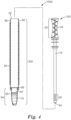
- FIG. 4 shows an exploded view, partially in section, of one embodiment of an apparatus comprising a container according to the present disclosure.
- the apparatus 1000 comprises a sampling device 100 comprising a handling portion 20 with a handle 24 and a sampling portion 30 according to any of the embodiments described herein.
- the apparatus 1000 further comprises a container 200, shown in cross-section in FIG. 4 .
- the container comprises at least one wall 50 and an opening 52, the opening configured to receive the sampling device 100.
- the apparatus 1000 with the opening 52 shown in the illustrated embodiment of FIG. 4 is shaped and dimensioned to receive the entire sampling device 100.
- the container further comprises a cuvette portion 54 that is adapted to be operationally coupled to a luminometer.
- the cuvette portion 54 is operationally coupled to a luminometer by placing the cuvette portion 54 of the container 200, or the entire container 200, into a complementary-shaped receiving compartment of the luminometer.
- the cuvette portion 54 is fabricated from optically-transmissible material (e.g., glass or a polymeric material such as poyethylene, polypropylene, polycarbonate, or polystyrene, for example) that permits the transmission there through of light emitted as a product of a reaction catalyzed by luciferase enzyme.
- optically-transmissible material e.g., glass or a polymeric material such as poyethylene, polypropylene, polycarbonate, or polystyrene, for example
- the container 200 may be fabricated as a unitary article (not shown), for example, using extrusion and/or molding processes known in the art.
- portions of the container 200 such as the cylindrically-shaped sleeve 56 and the cuvette 55 of the illustrated embodiment of FIG. 4 , may be fabricated separately and coupled together using suitable means (e.g., an adhesive, a heat sealing process, a sonic weld, and/or by press-fitting the sleeve 56 and cuvette 55 together).
- suitable means e.g., an adhesive, a heat sealing process, a sonic weld, and/or by press-fitting the sleeve 56 and cuvette 55 together.
- the sleeve 56 may be fabricated via a molding or extrusion process, for example, using a plastic polymer such as polypropylene or polyethylene, for example.
- the cuvette 55 can be formed in a variety of geometric shapes, such as cubic, cuboid, cylindrical, conical, frusto-conical, other suitable geometric shapes, and combinations thereof.
- the walls of the cuvette 55 are configured to allow the passage of light (e.g., visible light) into and/or out of the cuvette 55.
- the container further may comprise a lamina 60.
- the lamina 60 can hold the cuvette 55 firmly together with the sleeve 56.
- the lamina 60 can be made from paper or a plastic film, for example, and may be used as a label.
- Kits and apparatuses of the present disclosure further comprise a liquid reagent composition (liquid reagent composition 70 shown in FIGS. 4-6 ).
- the liquid reagent composition comprises luciferin at a concentration (e.g., 0.3-0.4 mg/L luciferin) sufficient to facilitate a light-emitting reaction in the presence of luciferase; preferably, a glow-type luciferase; and a source of ATP.
- the source of ATP can be a sample as disclosed herein or a solution containing a predefined amount or concentration of ATP (i.e., a positive control or an ATP standard).
- the liquid reagent composition can comprise an aqueous solution.
- liquid reagent composition used in the apparatus or kit of the present disclosure has an initial (i.e., before contact with the pH-adjusting reagent) pH of 6.8 or lower.
- liquid reagent composition has an initial (i.e., before contact with the pH-adjusting reagent) pH of 6.4 or lower.
- the liquid reagent composition optionally may comprise a buffering agent.
- Suitable buffering agents have a pKa that is effective to maintain the pH of the liquid reagent composition at a pH of 6.8 or lower, preferably at a pH of 6.4 or lower.
- N-(2-acetamido)-iminodiacetic acid (ADA) is a nonlimiting example of a suitable buffering agent.
- the buffering agent should be present in the liquid reagent composition in an amount (e.g., about 16 mM ADA in 425 microliters of liquid reagent composition at pH 6.4-6.8) that is high enough to effectively maintain the pH of the liquid reagent composition, yet low enough so that it does not substantially resist a change in the pH of the liquid reagent composition mediated by the pH-adjusting reagent coated on the sampling portion of the sampling device.
- the liquid reagent composition further may comprise a luciferase enzyme.
- the luciferase enzyme can consist essentially of a recombinant luciferase enzyme having luciferase activity that is less sensitive to variations in temperature, ionic detergents, and reducing agents than a corresponding non-recombinant luciferase enzyme.
- the luciferase enzyme can be present in the liquid reagent composition at a concentration of about 9 mg/L, for example.
- the liquid reagent composition further can comprise a source of magnesium ions (e.g., magnesium diacetate tetrahydrate).
- the source of magnesium ions can be present at a concentration (e.g., about 3 mM, for example) that does not substantially interfere with luciferase enzyme activity when the liquid reagent composition is mixed with the liquid sample.
- the liquid reagent composition further can comprise a protein (e.g., bovine serum albumin).
- the protein may stabilize the luciferase enzyme during prolonged storage and/or make the luciferase enzyme less susceptible to protease enzyme activities.
- the protein should not substantially interfere with luciferase enzyme activity when the liquid reagent composition is mixed with the liquid sample.
- the protein may be present in the liquid reagent composition at a concentration of about 0.046 weight percent, for example.
- the liquid reagent composition further can comprise a preservative (e.g., 0.046 weight percent sodium azide) at a concentration that does not substantially interfere with luciferase enzyme activity when the liquid reagent composition is mixed with the liquid sample.
- the liquid reagent composition further may comprise ethylenediamine tetraacetic acid (EDTA).
- EDTA ethylenediamine tetraacetic acid
- the EDTA can act as a preservative in the liquid reagent composition and may also function to chelate ions present in the liquid reagent composition and/or the liquid sample.
- the liquid reagent composition is disposed in a closed compartment.
- the closed compartment comprises a frangible wall.
- the container further comprises a liquid-resistant frangible wall 65 disposed proximate the cuvette 55 that forms a compartment 67.
- the frangible wall 65 can be made from a water-resistant material, such as plastic film, metal foil, or a metal-coated plastic film, for example.
- the frangible wall 65 can be coupled to the cuvette 55 and/or the sleeve 56 via an adhesive, a heat seal, a sonic weld, or other means known in the art to form a liquid-resistant seal to retain the liquid reagent composition 70 in the compartment 67.
- the liquid reagent composition may be disposed in a frangible ampoule (e.g., a glass or polymeric ampoule) which is disposed in the container.
- the liquid reagent composition can be released from the frangible ampoule by squeezing the container with enough force to fracture the ampoule or by urging the sampling device (e.g., the piercing tip of the sampling device) against the ampoule with enough force to fracture the ampoule.
- the liquid reagent composition may be disposed in a compartment disposed in the sampling device.
- Nason U.S. Patent No. 5,266,266 discloses a swab device comprising a hollow stem and a liquid-containing closed compartment with an actuatable valve (break-off nib) that releases the liquid into the hollow stem for delivery into tube in which at least a portion of the swab is disposed.
- Any sampling device of the present disclosure may be modified to include the hollow stem and reagent chamber of Nason.
- the reagent chamber can contain the liquid reagent composition of the present disclosure and the liquid reagent composition can be transferred into the container of the present disclosure using the technique described by Nason.
- the liquid reagent composition can be transferred to the container before or after the liquid sample is acquired using the sampling device according to the present disclosure.
- Other compartments for temporarily storing liquid reagent compositions to be used in a reaction are known in the art and a person of ordinary skill in the art will recognize such compartments can be used to temporarily contain the liquid reagent composition of the present disclosure.
- Non-limiting examples of such compartments can be found in U.S. Patent No. 7,399,984 ; U.S. Patent No. 6,548,018 ; U.S. Patent No. 5,965,453 ; and U.S. Patent No. 6,524,530 .
- the present disclosure provides a kit.
- the kit may be used, for example, to detect a presence or absence of ATP in a liquid sample according the method described herein.
- the kit may comprise instructions disclosing an embodiment of the method disclosed herein.
- Kits of the present disclosure comprise a container according to any of the embodiments disclosed herein.
- the container comprises an opening and a cuvette portion that is adapted to be operationally coupled to a luminometer.
- Kits of the present disclosure further comprise a liquid reagent composition comprising luciferin according to any of the embodiments disclosed herein.
- the initial pH (i.e., before contact with a pH-adjusting reagent of the present disclosure) of the liquid reagent composition is about pH 6.8 or lower; preferably, about pH 6.4 or lower.
- Kits of the present disclosure further comprise a sampling device having a sampling portion and a handling portion according to any of the embodiments disclosed herein.
- the liquid reagent composition is disposed in a closed compartment disposed in the container or in the sampling device, as disclosed herein.
- the sampling portion of the sampling device is adapted to acquire and releasably retain a predetermined volume of a liquid sample, as described herein, in one or more cavity that is not substantially defined by space between a plurality of fibers.
- the sampling portion of the sampling device comprises a dry coating that includes an effective amount of a pH-adjusting reagent that, when contacted (e.g., mixed) with the liquid reagent composition, changes the pH of the liquid reagent composition to 6.9 or higher, preferably to about pH 7.2 - 8.0, more preferably to about pH 7.2-7.8.
- the pH-adjusting reagent comprises a water-soluble reagent.
- Kits and apparatuses of the present disclosure can be used in a method of detecting a presence or an absence of ATP in a liquid sample.
- the presence of ATP in a sample can indicate a possible presence of organic residues and/or microorganisms (e.g., pathogenic microorganisms) in the sample.
- the quantity of ATP in the sample can be an indicator of the relative number of microorganisms in the sample. Therefore, it is desirable to test a predetermined volume of sample, so that the amount of ATP per unit volume of sample can be determined.
- the amount of ATP per unit volume of sample can be compared to a predetermined value to determine whether the sample is acceptable for use in a particular application (e.g., food or beverage production), whether a cleaning process has been effective in removing organic residues, and/or whether a biocide treatment has been effective in reducing the number of microorganisms.
- a particular application e.g., food or beverage production
- a cleaning process has been effective in removing organic residues
- biocide treatment has been effective in reducing the number of microorganisms.
- the method comprises using a sampling device to obtain a predetermined volume of liquid sample, contacting the predetermined volume of sample with a liquid reagent composition in a container to form a reaction mixture, and using a luminometer to detect light emitted from the reaction mixture.
- the predetermined volume of liquid sample can be about 10 microliters to about 250 microliters. In some embodiments, the predetermined volume of liquid sample can be about 100 microliters to about 200 microliters. In some embodiments, the predetermined volume of liquid sample can be about 125 microliters to about 175 microliters.
- the sample comprises a liquid.
- the liquid may comprise water.
- the sample further may comprise solids that are dissolved, dispersed, and/or suspended in the liquid.
- suitable samples include clean-in-place (CIP) rinse-water samples, process and cooling water samples, and endoscope rinse water samples.
- the sampling device used in the method of the present disclosure can be any sampling device disclosed herein.
- the sampling device comprises a sampling portion and a handling portion.
- the sampling portion is adapted to acquire and releasably retain a predetermined volume of liquid sample in one or more cavity.
- the one or more cavity is not substantially defined by space between a plurality of fibers.
- the sampling portion of the device comprises a dry coating that includes an effective amount of a pH-adjusting reagent that, when contacted (e.g., mixed) with a liquid reagent composition having an initial pH of 6.8 or lower, adjusts the pH of the liquid reagent composition to 6.9 or higher.
- the liquid reagent composition used in the method of the present disclosure comprises a luciferin (e.g., firefly luciferin).
- Luciferin is a compound that undergoes oxidation by luciferase enzyme activity to produce oxyluciferin and light. Luciferin compounds can be unstable when stored for extended periods of time in liquid solutions at a pH above 6.8.
- the liquid reagent composition used in the method of the present disclosure has an initial pH of 6.8 or lower.
- liquid reagent composition has an initial pH of 6.4 or lower.
- the liquid reagent composition may further comprise a luciferase enzyme.
- the luciferase enzyme comprises a recombinant luciferase enzyme having luciferase activity that is less sensitive than a corresponding non-recombinant luciferase enzyme to variations in temperature, ionic detergents, and reducing agents.
- the luciferase enzyme consists essentially of a recombinant luciferase enzyme having luciferase activity that is less sensitive to variations in temperature, ionic detergents, and reducing agents than a corresponding non-recombinant luciferase enzyme.
- the liquid reagent composition optionally may comprise a buffering agent.
- the buffering agent can be used to maintain the liquid reagent composition at a pH (e.g., ⁇ 6.8) that is suitable to store a liquid solution containing luciferin.
- a pH e.g., ⁇ 6.8
- ADA N-(2-acetamido)-iminodiacetic acid
- the buffering agent should be present in the liquid reagent composition in an amount (e.g., about 16 mM ADA in 425 microliters of liquid reagent composition at pH 6.4-6.8) that is high enough to effectively maintain the pH of the liquid reagent composition, yet low enough so that it does not substantially resist a change in the pH of the liquid reagent composition mediated by the pH-adjusting reagent coated on the sampling portion of the sampling device.
- an amount e.g., about 16 mM ADA in 425 microliters of liquid reagent composition at pH 6.4-6.
- the container used in the method of the present disclosure comprises a cuvette portion.
- the cuvette portion permits the transmission there through of light emitted as a product of the reaction catalyzed by luciferase enzyme.
- the cuvette portion is adapted (e.g., shaped and dimensioned) to be operationally coupled to the luminometer.
- using a luminometer to detect light emitted from the reaction mixture comprises detecting a presence or an absence of ATP in the liquid sample.
- using a luminometer to detect light emitted from the reaction mixture comprises measuring a quantity (e.g., a relative quantity or an absolute quantity) of ATP present in the liquid sample.
- Contacting the predetermined volume of sample with a liquid reagent composition in a container to form a reaction mixture comprises bringing the sampling portion of the sampling device into contact with the liquid reagent composition in a container.
- the contact may be achieved, for example, by immersing at least a part; preferably, the entire sampling portion; of the sampling device in the liquid reagent composition.
- the contact forms a reaction mixture (e.g., by diffusion of at least part of the liquid sample into the liquid reagent composition).
- luciferase can be added to the reaction mixture.
- the ATP can facilitate a light-emitting reaction catalyzed by luciferase enzyme.
- the light-emitting reaction can be detected in the aforementioned luminometer.
- FIGS. 5 and 6 illustrate one embodiment of a process of contacting a predetermined volume of sample with a liquid reagent composition in a container to form a reaction mixture.
- the sampling device is inserted into the container 200.
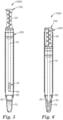
- FIG. 5 shows the sampling device 100 with the stem 15 and sampling portion 30 in the container.
- the sampling device 100 and container 200 are disposed in a first operational position with respect to one another and the apparatus 1000 is ready to bring the liquid sample into contact with the liquid reagent composition 70 located in the compartment 67.
- the piercing tip 40 is urged toward the compartment 67 until it pierces the frangible wall 65 and brings the liquid sample (not shown) associated with the sampling portion 30 into contact with the liquid reagent composition 70, as shown in FIG. 6 .
- the sampling device 100 and container 200 are disposed in a second operational position with respect to each other. In this embodiment, the sampling device 100 is fully-inserted into the container 200 and the sampling portion 30 of the sampling device is contacting the liquid reagent composition 70.
- contacting the predetermined volume of sample with a liquid reagent composition in a container to form a reaction mixture further can comprise the step of agitating the sample and the liquid reagent composition in the container. This may be done manually or mechanically, for example, by rapidly shaking the container in a swirling motion, a pendulum-like motion, or by contacting the container with a machine that vibrates the container.
- the cuvette portion of the container is operationally coupled to the luminometer in order to detect the light emission resulting from luciferase enzyme activity.
- Commercially-available luminometers are suitable for use in any embodiment of the method of the present disclosure.
- a non-limiting example of a suitable luminometer is the3M TM Clean -Trace TM NG Luminometer commercially available from 3M Company, St. Paul, MN.
- the cuvette is operationally coupled by placing a portion (e.g., the cuvette portion) of the container or the entire container into a corresponding receiving compartment of the luminometer.
- the cuvette portion may be operationally coupled to the luminometer before or after forming the reaction mixture.
- the cuvette portion is operationally coupled to the luminometer after the reaction mix is formed. In some embodiments the cuvette portion is operationally coupled to the luminometer up to 5 seconds after forming the reaction mixture. In some embodiments the cuvette portion is operationally coupled to the luminometer up to 10 seconds after forming the reaction mixture. In some embodiments the cuvette portion is operationally coupled to the luminometer up to 15 seconds after forming the reaction mixture. In some embodiments the cuvette portion is operationally coupled to the luminometer up to 20 seconds after forming the reaction mixture. In some embodiments the cuvette portion is operationally coupled to the luminometer up to 30 seconds after forming the reaction mixture. In some embodiments the cuvette portion is operationally coupled to the luminometer up to 45 seconds after forming the reaction mixture.
- the cuvette portion is operationally coupled to the luminometer up to 60 seconds after forming the reaction mixture. In some embodiments the cuvette portion is operationally coupled to the luminometer up to 90 seconds after forming the reaction mixture. In some embodiments the cuvette portion is operationally coupled to the luminometer up to 2 minutes after forming the reaction mixture. Preferably, the cuvette is operationally coupled to the luminometer within about 5 to 10 seconds after forming the reaction mixture.
- the light-emission is monitored by the luminometer. After the reaction mixture is formed, it may take a period of time for the reaction to reach a relatively stable quantity of light emission. This phenomenon is illustrated by the data in Tables 4-9. The length of time for the light emission to reach a relatively stable plateau is inversely related to the temperature of the reaction, as summarized in Table 11.
- the liquid reagent composition comprises luciferin at a concentration (e.g., about 0.3-0.4 mg/L luciferin) sufficient to facilitate a light-emitting reaction in the presence of luciferase and a source of ATP.
- the source of ATP can be a liquid sample as disclosed herein or a solution containing a predefined amount or concentration of ATP (i.e., a positive control or an ATP standard).
- the liquid reagent composition can comprise an aqueous solution.
- the liquid reagent composition used in the apparatus or kit of the present disclosure has an initial pH (i.e., before contact with a pH-adjusting reagent of the present disclosure) of 6.8 or lower.
- liquid reagent composition has an initial pH of 6.4 or lower.
- the liquid reagent composition optionally may comprise a buffering agent.
- Suitable buffering agents have a pKa that is effective to maintain the initial pH of the liquid reagent composition at a pH of 6.8 or lower, preferably at a pH of 6.4 or lower.
- N-(2-acetamido)-iminodiacetic acid (ADA) is a nonlimiting example of a suitable buffering agent.
- the buffering agent should be present in the liquid reagent composition in an amount (e.g., about 16 mM ADA in 425 microliters of liquid reagent composition at pH 6.4-6.8) that is high enough to effectively maintain the pH of the liquid reagent composition, yet low enough so that it does not substantially resist a change in the pH of the liquid reagent composition mediated by the pH-adjusting reagent coated on the sampling portion of the sampling device.
- the liquid reagent composition further may comprise a luciferase enzyme.
- the luciferase enzyme can consist essentially of a recombinant luciferase enzyme having luciferase activity that is less sensitive to variations in temperature, ionic detergents, and reducing agents than a corresponding non-recombinant luciferase enzyme.
- the luciferase enzyme can be present in the liquid reagent composition at a concentration of about 9 mg/L, for example.
- the liquid reagent composition further can comprise a source of magnesium ions (e.g., magnesium diacetate tetrahydrate).
- the source of magnesium ions can be present at a concentration (e.g., about 3 mM, for example) that does not substantially interfere with luciferase enzyme activity when the liquid reagent composition is mixed with the liquid sample.
- the liquid reagent composition further can comprise a protein (e.g., bovine serum albumin). The protein may be present in the liquid reagent composition at a concentration of about 0.046 weight percent, for example.
- the liquid reagent composition further can comprise a preservative (e.g., 0.046 weight percent sodium azide) at a concentration that does not substantially interfere with luciferase enzyme activity when the liquid reagent composition is mixed with the liquid sample.
- contacting the sampling device comprising the liquid sample with liquid reagent composition comprises contacting the sampling device with the liquid reagent composition at a particular temperature (e.g. ambient temperature).
- a particular temperature e.g. ambient temperature
- contacting the sampling device comprising the liquid sample with liquid reagent composition comprises contacting the liquid sample with the liquid reagent composition at temperature within a range of 10° C and 35° C, inclusive.
- contacting the sampling device comprising the liquid sample with liquid reagent composition comprises contacting the liquid sample with the liquid reagent composition at temperature within a range of 15° C and 30° C, inclusive.
- a substantially steady-state amount of light is emitted from the composition after a period of time.
- the period of time may be affected by the temperature at which the contact occurs.
- a substantially steady-state amount of light is emitted from the composition in less than 25 seconds (e.g., when contact occurs at a temperature of about 10° C to about 20° C).
- a substantially steady-state amount of light is emitted from the composition in about 22 seconds or less (e.g., when contact occurs at a temperature of about 10° C to about 20° C).
- a substantially steady-state amount of light is emitted from the composition in less than 20 seconds (e.g., when contact occurs at a temperature of about 14° C to about 20° C). In some embodiments, a substantially steady-state amount of light is emitted from the composition in about 10 seconds or less (e.g., when contact occurs at a temperature of about 20° C).
- the method of the present invention substantially reduces the amount of time necessary for a luciferase enzyme, in contact with a sample comprising ATP and a liquid reagent composition according to the present disclosure, to catalyze a light-emitting reaction that is substantially steady state.
- Table 11 shows the mean amount of time required for the reaction to reach a substantially steady-state light emission is reduced about 3-fold by the method of the present disclosure at temperatures between 10° C and 20° C, inclusive.
- Coating Formulations 1 and 2 were prepared as solutions from the components listed in Tables 1 and 2.
- the pH of Coating Formulation 1 was about 8.5 and the pH of Coating Formulation 2 was about 7.2.
- Table 1 Coating Formulation 1 Component Weight Percentage of Component in the Formulation Source Water (from a Milli Q water purification system) 96.33 % EMD Millipore Corp. (Billerica, MA) Chlorhexidine digluconate (20% in water) [ CAS No. 18472-51-0 ] 0.32 % Sigma-Aldrich Co. (St. Louis, MO) Triton X100 [ CAS No. 9002-93-1 ] 0.19 % Sigma-Aldrich Co. (St.
- the liquid reagent composition used in the following Examples comprises luciferin and a luciferase enzyme.
- the liquid reagent composition used in Examples 1-3 was prepared as a solution from the components listed in Table 3.
- the pH of the formulation was about 6.4.
- the total volume of liquid reagent composition contained in the sealed cuvette portion of each container was about 425 microliters.
- Table 3 Liquid reagent composition Component Weight Percentage of Component in the Formulation Source Water (from a Milli Q water purification system) 77.6099 % EMD Millipore Corp. (Billerica, MA) ADA Free Acid [ CAS No. 26239-55-4 ] 0.0283 % Sigma-Aldrich Co. (St.
- the liquid reagent composition used in Comparative Examples 1-3 was the same as listed in Table 2 with the exception that sodium hydroxide (4N) was added as a pH-adjusting reagent to adjust the pH of the liquid reagent composition from 6.4 to 6.8.
- the handling portion of the sampling device was fabricated from a polypropylene/TPE blend.
- the stem and sampling portion of the sampling device were fabricated (i.e., molded as a unitary part) using an acetal resin.
- the sampling device had an overall length of about 167 mm with the handling portion extending about 50.5 mm in length; the stem extending about 89.5 mm in length; and the sample collection ring element extending about 27 mm in length.
- the cavities in the sampling portion were positioned at least about 10 mm away from the stem.
- the cavities consisted of 11 spaced-apart indentations (approximately 0.3-0.4 mm deep) circling the sampling portion.
- the cavities were spaced apart over a distance of about 14.6 mm in the sampling portion of the sampling device with a spacing of about 0.85 mm between each cavity.
- a sharp conical shaped tip (about 2.4 mm in length) was located at the end of the sampling portion opposite the stem, as shown in FIG. 1A .
- 3M Clean-Trace TM Water ATP Test devices were obtained from the 3M Company. (St. Paul, MN). The pellet of freeze-dried enzyme located in the foil-sealed compartment of each test device was removed from the container and the liquid in the cuvette portion of the container was replaced with 425 microliters of the liquid reagent composition described in Table 3.
- the sampling portion of the sampling device was coated with one of the coating formulations described in Tables 1 and 2. The sampling device was coated by holding the handling portion of the sampling device and dipping the opposite end of the device into the coating solution to a point where all of the cavities were immersed in the coating solution. After the device was withdrawn from the coating solution, approximately 145 microliters of the coating solution remained on the sampling device. Warm air was used to dry the coating onto the sampling device.
- the ATP test apparatus described above was used.
- the sampling portion of the sampling device was coated with Coating Formulation 1 and dried as described above.
- the sampling device was removed from the ATP test apparatus and dipped into a vial containing 10 mL of 5 ⁇ 10 -9 M adenosine triphophate (ATP), commercially available from the Sigma-Aldrich Corporation. While the sampling portion was immersed in the ATP solution, gentle tapping of the sampling device against the side of the vial was used to dislodge any air bubbles from the cavities and facilitate acquisition of the predefined volume of sample liquid. After about 1-3 seconds of immersion, the sampling device was quickly removed from the vial and reinserted into the container. The sampling device retained about 145 microliters of the ATP solution.
- ATP adenosine triphophate
- the handle of the sampling device was pressed in order to move the sampling device from the first operational position to the second operational position.
- the movement of the sampling device in the container caused the frangible seal to be broken and the sampling portion to be positioned in direct contact with the liquid reagent composition.
- the container was held in the vertical position and shaken rapidly from side to side (pendulum motion) for 10 seconds.
- the cuvette portion of the apparatus was immediately inserted into a Clean-Trace TM NG Luminometer (commercially available from 3M Company, St. Paul, MN) and measurements were recorded in relative light units (RLU).
- the RLU measurements were taken approximately every 10 seconds over a 70 second time period. This was accomplished by initiating a new reading for the luminometer immediately after the previous reading.
- Movement of the sampling device from the first operational position to the second operational position resulted in the pH of the liquid reagent composition in the cuvette increasing from a pH approximately 6.4 to a pH approximately 7.2.
- Example 2 The same procedure was used as in Example 1 with the exception that the sampling device was coated with Coating Formulation 2 and the pH of the liquid reagent composition was 6.8. The RLU measurements were taken every 10 seconds over a 70 second time period. A total of five replicate samples were tested and the results are presented in Table 5. Table 4..
- Sampling Device Coated with Coating Formulation 1 (Example 1) Time (seconds) RLU Measurement at 10° C Sample 1 Sample 2 Sample 3 Sample 4 Sample 5 10 13,646 16,141 13,922 12,895 17,277 20 13,682 17,547 14,971 13,331 18,053 30 13,436 17,565 14,894 13,241 17,997 40 13,303 17,439 14,780 13,118 17,783 50 13,220 17,219 14,623 13,033 17,578 60 13,100 17,046 14,548 12,915 17,364 70 12,992 16,936 14,380 12,801 17,180 Table 5.
- Example 6 The same procedure as described in Example 1 was followed with the exception that the tests were conducted at 14° C. A total of five replicate samples were tested and the results are presented in Table 6.
- Example 2 The same procedure was used as in Example 2 with the exception that the sampling device was coated with Coating Formulation 2 and the pH of the liquid reagent composition was 6.8. The RLU measurements were taken every 10 seconds over a 70 second time period. A total of five replicate samples were tested and the results are presented in Table 7. Table 6.
- Sampling Device Coated with Coating Formulation 1 (Example 2) Time (seconds) RLU Measurement at 14° C Sample 1 Sample 2 Sample 3 Sample 4 Sample 5 10 18,874 19,415 20,888 22,388 20,630 20 18,920 20,266 21,430 22,749 20,624 30 18,761 20,134 21,268 22,548 20,447 40 18,530 19,908 21,106 22,297 20,161 50 18,316 19,961 20,837 22,106 19,899 60 18,180 19,527 20,639 21,924 19,738 70 18,040 19,352 20,666 21,776 19,597 Table 7.
- Example 8 The same procedure as described in Example 1 was followed with the exception that the tests were conducted at 20° C. A total of five replicate samples were tested and the results are presented in Table 8.
- Example 3 The same procedure was used as in Example 3 with the exception that the sampling device was coated with Coating Formulation 2 and the pH of the liquid reagent composition was 6.8. The RLU measurements were taken every 10 seconds over a 70 second time period. A total of five replicate samples were tested and the results are presented in Table 9. Table 8.
- Sampling Device Coated with Coating Formulation 1 (Example 3) Time (seconds) RLU Measurement at 20° C Sample 1
- Sample 2 Sample 3
- Sample 4 Sample 5 10 18,605 21,358 21,553 19,799 18,697 20 18,571 21,166 21,451 19,657 18,501 30 18,331 20,938 21,248 19,497 18,334 40 18,192 20,788 21,141 19,367 18,179 50 18,039 20,619 20,931 19,221 18,019 60 17,953 20,465 20,745 19,097 17,873 70 17,785 20,310 20,622 18,963 17,753 Table 9.
Landscapes
- Chemical & Material Sciences (AREA)
- Life Sciences & Earth Sciences (AREA)
- Organic Chemistry (AREA)
- Health & Medical Sciences (AREA)
- Zoology (AREA)
- Wood Science & Technology (AREA)
- Proteomics, Peptides & Aminoacids (AREA)
- Engineering & Computer Science (AREA)
- Biochemistry (AREA)
- General Health & Medical Sciences (AREA)
- Physics & Mathematics (AREA)
- Immunology (AREA)
- Analytical Chemistry (AREA)
- Molecular Biology (AREA)
- Microbiology (AREA)
- Biotechnology (AREA)
- Biophysics (AREA)
- Bioinformatics & Cheminformatics (AREA)
- General Engineering & Computer Science (AREA)
- Genetics & Genomics (AREA)
- Pathology (AREA)
- General Physics & Mathematics (AREA)
- Hydrology & Water Resources (AREA)
- Measuring Or Testing Involving Enzymes Or Micro-Organisms (AREA)
- Apparatus Associated With Microorganisms And Enzymes (AREA)
- Sampling And Sample Adjustment (AREA)
Applications Claiming Priority (2)
| Application Number | Priority Date | Filing Date | Title |
|---|---|---|---|
| US201261668520P | 2012-07-06 | 2012-07-06 | |
| PCT/US2013/048848 WO2014008150A1 (en) | 2012-07-06 | 2013-07-01 | Apparatus for detecting atp in a liquid sample |
Publications (3)
| Publication Number | Publication Date |
|---|---|
| EP2869925A1 EP2869925A1 (en) | 2015-05-13 |
| EP2869925B1 true EP2869925B1 (en) | 2024-11-13 |
| EP2869925C0 EP2869925C0 (en) | 2024-11-13 |
Family
ID=48790657
Family Applications (1)
| Application Number | Title | Priority Date | Filing Date |
|---|---|---|---|
| EP13737092.0A Active EP2869925B1 (en) | 2012-07-06 | 2013-07-01 | Apparatus for detecting atp in a liquid sample |
Country Status (4)
| Country | Link |
|---|---|
| US (2) | US10793890B2 (enExample) |
| EP (1) | EP2869925B1 (enExample) |
| JP (1) | JP6257614B2 (enExample) |
| WO (1) | WO2014008150A1 (enExample) |
Families Citing this family (9)
| Publication number | Priority date | Publication date | Assignee | Title |
|---|---|---|---|---|
| US10793890B2 (en) * | 2012-07-06 | 2020-10-06 | 3M Innovative Properties Company | Apparatus for detecting ATP in a liquid sample |
| WO2016099950A1 (en) | 2014-12-17 | 2016-06-23 | 3M Innovative Properties Company | Luciferin-containing substrate and monitoring device including the substrate |
| WO2017192305A1 (en) | 2016-05-05 | 2017-11-09 | 3M Innovative Properties Company | Method of disinfecting a medical device |
| CN107131929A (zh) * | 2017-04-01 | 2017-09-05 | 合肥迪安医学检验所有限公司 | 一种加样枪的自我校准方法 |
| EP3704465A4 (en) | 2017-10-31 | 2021-07-14 | Luminultra Technologies Ltd. | DECISION SUPPORT SYSTEM AND METHOD FOR WATER TREATMENT |
| GB2574262A (en) * | 2018-06-01 | 2019-12-04 | Smiths Detection Watford Ltd | Method and apparatus |
| US12066422B2 (en) | 2018-12-14 | 2024-08-20 | Luminultra Technologies Ltd. | Portable system for analyzing microbial population in a fluid |
| KR102808354B1 (ko) * | 2022-02-07 | 2025-05-16 | 연세대학교 산학협력단 | 상용 atp 광측정기의 재현성 있는 atp 반응을 위한 탈부착 가능한 믹싱 장치 |
| JP7245572B1 (ja) | 2022-12-21 | 2023-03-24 | 合同会社陶徳堂研究所 | 体液採取器 |
Citations (4)
| Publication number | Priority date | Publication date | Assignee | Title |
|---|---|---|---|---|
| US5266266A (en) * | 1988-02-09 | 1993-11-30 | Nason Frederic L | Specimen test unit |
| WO1994011528A1 (en) * | 1992-11-17 | 1994-05-26 | Celsis Limited | Bioluminescence reagent formulation |
| JP2000319280A (ja) * | 1999-05-10 | 2000-11-21 | Eiken Chem Co Ltd | ホタルルシフェリンの安定化方法 |
| US20080206740A1 (en) * | 2004-12-22 | 2008-08-28 | Skiffington Richard T | Sampling Method and Device |
Family Cites Families (46)
| Publication number | Priority date | Publication date | Assignee | Title |
|---|---|---|---|---|
| US3169905A (en) | 1961-05-15 | 1965-02-16 | William H Lambert | Sanitizing composition and method of use |
| US3876503A (en) | 1971-10-29 | 1975-04-08 | Frederick C Mennen | Method and instrument for the detection of neisseria gonorrheae without culture |
| US3792699A (en) | 1972-05-30 | 1974-02-19 | Medex Inc | Disposable swab unit |
| US3864085A (en) * | 1973-10-31 | 1975-02-04 | Princenton Biomedix Inc | Glutathione reagent and test method |
| DE2510633C3 (de) | 1975-03-12 | 1978-07-13 | Boehringer Mannheim Gmbh, 6800 Mannheim | Diagnostisches Mittel zum Nachweis von Eiweiß in Körperflüssigkeiten und dafür geeignete Indikatorfarbstoffe |
| US4036213A (en) | 1976-05-03 | 1977-07-19 | National Upper Cervical Chiropractic Research Association, Inc. | Process for determining vertebrae locations in humans |
| GB2127962B (en) | 1982-10-06 | 1986-06-18 | Venturecare Ltd | Hygiene-testing food-contacting surface |
| US4775626A (en) * | 1986-05-23 | 1988-10-04 | Syntex (U.S.A.) Inc. | Method and compositions for protecting anerobic microorganisms |
| US4978504A (en) | 1988-02-09 | 1990-12-18 | Nason Frederic L | Specimen test unit |
| GB9114265D0 (en) | 1991-07-02 | 1991-08-21 | Amersham Int Plc | Sampling device |
| US5827675A (en) | 1995-07-12 | 1998-10-27 | Charm Sciences, Inc. | Test apparatus, system and method for the detection of test samples |
| CA2226857C (en) | 1995-07-12 | 2008-03-18 | Charm Sciences, Inc. | Test apparatus, system and method for the detection of test samples |
| GB9526204D0 (en) | 1995-12-21 | 1996-02-21 | Biotrace Ltd | Sampling and assay device |
| US5879635A (en) | 1997-03-31 | 1999-03-09 | Nason; Frederic L. | Reagent dispenser and related test kit for biological specimens |
| BR9810074A (pt) | 1997-06-04 | 2000-09-19 | Procter & Gamble | Panos antimicrobianos suaves |
| US6420622B1 (en) | 1997-08-01 | 2002-07-16 | 3M Innovative Properties Company | Medical article having fluid control film |
| JP2000146957A (ja) | 1997-10-13 | 2000-05-26 | Kikkoman Corp | 検体採取具及び拭取検査用器具 |
| JP4379644B2 (ja) | 1999-03-08 | 2009-12-09 | 栄研化学株式会社 | ホタルルシフェリンの安定化方法 |
| US6482423B1 (en) | 1999-04-13 | 2002-11-19 | The Procter & Gamble Company | Antimicrobial wipes which provide improved residual benefit versus gram positive bacteria |
| US6413529B1 (en) | 1999-04-13 | 2002-07-02 | The Procter & Gamble Company | Antimicrobial wipes which provide improved residual benefit versus gram negative bacteria |
| US6488943B1 (en) | 1999-04-13 | 2002-12-03 | The Procter & Gamble Company | Antimicrobial wipes which provide improved immediate germ reduction |
| US6501002B1 (en) | 1999-06-29 | 2002-12-31 | The Proctor & Gamble Company | Disposable surface wipe article having a waste contamination sensor |
| US7572238B2 (en) | 1999-10-04 | 2009-08-11 | Dermanew, Inc. | Handheld sonic microdermabrasion porous applicator |
| GB2358061B (en) | 2000-01-09 | 2003-08-13 | Sec Dep Of The Home Dept | Improvements in and relating to the collection and storage of samples |
| US6548018B2 (en) | 2000-03-31 | 2003-04-15 | Neogen Corporation | Apparatus for chemiluminescent assays |
| AU2001275277B2 (en) | 2000-06-02 | 2005-05-19 | Biocontrol Systems, Inc. | Self-contained devices for detecting biological contaminants |
| US6383804B1 (en) | 2000-07-13 | 2002-05-07 | International Bioproducts, Inc. | Sampling device with snap-off head and method of use |
| US20070134740A1 (en) | 2005-12-12 | 2007-06-14 | David Brusilovsky | Compositions and articles for detection of analytes exceeding a pre-set threshold |
| JP4467304B2 (ja) | 2001-12-06 | 2010-05-26 | バイオコントロール システムズ,インコーポレイティド | サンプル収集および試験システム |
| GB0202421D0 (en) | 2002-02-01 | 2002-03-20 | Celsis Internat Plc | Polyols in bioluminescence assays |
| ITMI20030643A1 (it) | 2003-04-01 | 2004-10-02 | Copan Innovation Ltd | Tampone per il prelievo di campioni biologici |
| US7494781B1 (en) | 2003-05-12 | 2009-02-24 | Charm Sciences, Inc. | Sensitive method for detecting low levels of ATP |
| US20040267181A1 (en) | 2003-06-26 | 2004-12-30 | Asd | Swab sample collection and recovery device |
| US7556933B2 (en) * | 2004-10-01 | 2009-07-07 | Luminultra Technologies Ltd. | Reagent system and process for adenosine triphosphate monitoring |
| US20060216196A1 (en) | 2005-03-23 | 2006-09-28 | Neogen Corporation | Narrow swab (access swab) for ATP Measurement |
| WO2008007376A2 (en) * | 2006-07-13 | 2008-01-17 | Association For Public Health Services | Inoculation loop assembly |
| CN101464412B (zh) | 2007-12-19 | 2011-06-29 | 中国科学院电子学研究所 | 光学快速检测表面洁净度用生物传感器及测试方法 |
| CN101990631B (zh) | 2008-02-15 | 2014-08-06 | 3M创新有限公司 | 样品采集装置 |
| WO2009102835A1 (en) | 2008-02-15 | 2009-08-20 | 3M Innovative Properties Company | Sample acquisition device |
| GB0808557D0 (en) * | 2008-05-13 | 2008-06-18 | 3M Innovative Properties Co | Sampling devices and methods of use |
| US8609330B2 (en) * | 2008-12-31 | 2013-12-17 | 3M Innovative Properties Company | Live Bioload detection using microparticles |
| WO2010129727A1 (en) | 2009-05-06 | 2010-11-11 | 3M Innovative Properties Company | Coated substrates comprising a cell extractant and biodetection methods thereof |
| US20120082977A1 (en) | 2009-05-06 | 2012-04-05 | Raj Rajagopal | Articles with matrix comprising a cell extractant and biodetection methods thereof |
| CN102959073B (zh) | 2010-04-21 | 2015-08-05 | 普瑞坦医疗产品有限公司 | 采集装置及材料 |
| US10793890B2 (en) * | 2012-07-06 | 2020-10-06 | 3M Innovative Properties Company | Apparatus for detecting ATP in a liquid sample |
| US10240181B2 (en) * | 2012-07-06 | 2019-03-26 | 3M Innovative Properties Company | Apparatus and methods for detecting ATP in a liquid sample |
-
2013
- 2013-07-01 US US14/410,718 patent/US10793890B2/en active Active
- 2013-07-01 WO PCT/US2013/048848 patent/WO2014008150A1/en not_active Ceased
- 2013-07-01 EP EP13737092.0A patent/EP2869925B1/en active Active
- 2013-07-01 JP JP2015520611A patent/JP6257614B2/ja active Active
-
2019
- 2019-02-12 US US16/273,355 patent/US11459596B2/en active Active
Patent Citations (4)
| Publication number | Priority date | Publication date | Assignee | Title |
|---|---|---|---|---|
| US5266266A (en) * | 1988-02-09 | 1993-11-30 | Nason Frederic L | Specimen test unit |
| WO1994011528A1 (en) * | 1992-11-17 | 1994-05-26 | Celsis Limited | Bioluminescence reagent formulation |
| JP2000319280A (ja) * | 1999-05-10 | 2000-11-21 | Eiken Chem Co Ltd | ホタルルシフェリンの安定化方法 |
| US20080206740A1 (en) * | 2004-12-22 | 2008-08-28 | Skiffington Richard T | Sampling Method and Device |
Also Published As
| Publication number | Publication date |
|---|---|
| WO2014008150A1 (en) | 2014-01-09 |
| EP2869925A1 (en) | 2015-05-13 |
| US11459596B2 (en) | 2022-10-04 |
| US10793890B2 (en) | 2020-10-06 |
| EP2869925C0 (en) | 2024-11-13 |
| US20190169668A1 (en) | 2019-06-06 |
| JP2015523076A (ja) | 2015-08-13 |
| US20150322481A1 (en) | 2015-11-12 |
| JP6257614B2 (ja) | 2018-01-10 |
Similar Documents
| Publication | Publication Date | Title |
|---|---|---|
| US11459596B2 (en) | Apparatus for detecting ATP in a liquid sample | |
| US11085063B2 (en) | Apparatus and methods for detecting ATP in a liquid sample | |
| EP2276828B1 (en) | Sampling devices and methods of use | |
| US5905029A (en) | Method for rapid hygiene testing | |
| US7060223B2 (en) | Polymeric medium for the retention of reagent species for use in a hand-held device for the relatively rapid detection of the presence of an analyte of interest in a sample | |
| US20170175163A1 (en) | Wash monitor composition, device, and method of use | |
| US20010046687A1 (en) | Method for the enhancement of luminescence intensity from a reaction between adenosine triphosphate (ATP) and a luciferase/luciferin reactant system | |
| EP3234179B1 (en) | Luciferin-containing substrate and monitoring device including the substrate | |
| JP2009136205A (ja) | 細胞内atp測定方法 | |
| JP2004113043A (ja) | 核酸の分離精製装置 | |
| JP4130143B2 (ja) | 核酸の分離精製装置 | |
| JP2004180637A (ja) | 核酸の分離精製装置 | |
| US20250059582A1 (en) | Method for collecting microorganisms | |
| BRPI0908669B1 (pt) | A sample collection device, a sample collection article and a method for detecting an analyte in a sample |
Legal Events
| Date | Code | Title | Description |
|---|---|---|---|
| PUAI | Public reference made under article 153(3) epc to a published international application that has entered the european phase |
Free format text: ORIGINAL CODE: 0009012 |
|
| 17P | Request for examination filed |
Effective date: 20150114 |
|
| AK | Designated contracting states |
Kind code of ref document: A1 Designated state(s): AL AT BE BG CH CY CZ DE DK EE ES FI FR GB GR HR HU IE IS IT LI LT LU LV MC MK MT NL NO PL PT RO RS SE SI SK SM TR |
|
| AX | Request for extension of the european patent |
Extension state: BA ME |
|
| RIN1 | Information on inventor provided before grant (corrected) |
Inventor name: EVANS, RACHEL, E. Inventor name: DRISCOLL, MARK, B. Inventor name: DAVENPORT, KENNETH, R. Inventor name: PERCY, NEIL Inventor name: RAMSAY, CATHERINE, M. |
|
| DAX | Request for extension of the european patent (deleted) | ||
| STAA | Information on the status of an ep patent application or granted ep patent |
Free format text: STATUS: EXAMINATION IS IN PROGRESS |
|
| 17Q | First examination report despatched |
Effective date: 20190625 |
|
| RAP1 | Party data changed (applicant data changed or rights of an application transferred) |
Owner name: GARDEN US HOLDCO CORPORATION |
|
| RAP3 | Party data changed (applicant data changed or rights of an application transferred) |
Owner name: NEOGEN FOOD SAFETY US HOLDCO CORPORATION |
|
| GRAP | Despatch of communication of intention to grant a patent |
Free format text: ORIGINAL CODE: EPIDOSNIGR1 |
|
| STAA | Information on the status of an ep patent application or granted ep patent |
Free format text: STATUS: GRANT OF PATENT IS INTENDED |
|
| INTG | Intention to grant announced |
Effective date: 20240118 |
|
| GRAJ | Information related to disapproval of communication of intention to grant by the applicant or resumption of examination proceedings by the epo deleted |
Free format text: ORIGINAL CODE: EPIDOSDIGR1 |
|
| STAA | Information on the status of an ep patent application or granted ep patent |
Free format text: STATUS: EXAMINATION IS IN PROGRESS |
|
| GRAP | Despatch of communication of intention to grant a patent |
Free format text: ORIGINAL CODE: EPIDOSNIGR1 |
|
| STAA | Information on the status of an ep patent application or granted ep patent |
Free format text: STATUS: GRANT OF PATENT IS INTENDED |
|
| INTC | Intention to grant announced (deleted) | ||
| INTG | Intention to grant announced |
Effective date: 20240605 |
|
| GRAS | Grant fee paid |
Free format text: ORIGINAL CODE: EPIDOSNIGR3 |
|
| GRAA | (expected) grant |
Free format text: ORIGINAL CODE: 0009210 |
|
| STAA | Information on the status of an ep patent application or granted ep patent |
Free format text: STATUS: THE PATENT HAS BEEN GRANTED |
|
| AK | Designated contracting states |
Kind code of ref document: B1 Designated state(s): AL AT BE BG CH CY CZ DE DK EE ES FI FR GB GR HR HU IE IS IT LI LT LU LV MC MK MT NL NO PL PT RO RS SE SI SK SM TR |
|
| REG | Reference to a national code |
Ref country code: GB Ref legal event code: FG4D |
|
| REG | Reference to a national code |
Ref country code: CH Ref legal event code: EP |
|
| REG | Reference to a national code |
Ref country code: IE Ref legal event code: FG4D |
|
| REG | Reference to a national code |
Ref country code: DE Ref legal event code: R096 Ref document number: 602013086292 Country of ref document: DE |
|
| U01 | Request for unitary effect filed |
Effective date: 20241128 |
|
| U07 | Unitary effect registered |
Designated state(s): AT BE BG DE DK EE FI FR IT LT LU LV MT NL PT RO SE SI Effective date: 20241204 |
|
| PG25 | Lapsed in a contracting state [announced via postgrant information from national office to epo] |
Ref country code: IS Free format text: LAPSE BECAUSE OF FAILURE TO SUBMIT A TRANSLATION OF THE DESCRIPTION OR TO PAY THE FEE WITHIN THE PRESCRIBED TIME-LIMIT Effective date: 20250313 Ref country code: HR Free format text: LAPSE BECAUSE OF FAILURE TO SUBMIT A TRANSLATION OF THE DESCRIPTION OR TO PAY THE FEE WITHIN THE PRESCRIBED TIME-LIMIT Effective date: 20241113 |
|
| PG25 | Lapsed in a contracting state [announced via postgrant information from national office to epo] |
Ref country code: ES Free format text: LAPSE BECAUSE OF FAILURE TO SUBMIT A TRANSLATION OF THE DESCRIPTION OR TO PAY THE FEE WITHIN THE PRESCRIBED TIME-LIMIT Effective date: 20241113 |
|
| PG25 | Lapsed in a contracting state [announced via postgrant information from national office to epo] |
Ref country code: NO Free format text: LAPSE BECAUSE OF FAILURE TO SUBMIT A TRANSLATION OF THE DESCRIPTION OR TO PAY THE FEE WITHIN THE PRESCRIBED TIME-LIMIT Effective date: 20250213 |
|
| PG25 | Lapsed in a contracting state [announced via postgrant information from national office to epo] |
Ref country code: GR Free format text: LAPSE BECAUSE OF FAILURE TO SUBMIT A TRANSLATION OF THE DESCRIPTION OR TO PAY THE FEE WITHIN THE PRESCRIBED TIME-LIMIT Effective date: 20250214 |
|
| PG25 | Lapsed in a contracting state [announced via postgrant information from national office to epo] |
Ref country code: PL Free format text: LAPSE BECAUSE OF FAILURE TO SUBMIT A TRANSLATION OF THE DESCRIPTION OR TO PAY THE FEE WITHIN THE PRESCRIBED TIME-LIMIT Effective date: 20241113 |
|
| PG25 | Lapsed in a contracting state [announced via postgrant information from national office to epo] |
Ref country code: RS Free format text: LAPSE BECAUSE OF FAILURE TO SUBMIT A TRANSLATION OF THE DESCRIPTION OR TO PAY THE FEE WITHIN THE PRESCRIBED TIME-LIMIT Effective date: 20250213 |
|
| PG25 | Lapsed in a contracting state [announced via postgrant information from national office to epo] |
Ref country code: SM Free format text: LAPSE BECAUSE OF FAILURE TO SUBMIT A TRANSLATION OF THE DESCRIPTION OR TO PAY THE FEE WITHIN THE PRESCRIBED TIME-LIMIT Effective date: 20241113 |
|
| PG25 | Lapsed in a contracting state [announced via postgrant information from national office to epo] |
Ref country code: SK Free format text: LAPSE BECAUSE OF FAILURE TO SUBMIT A TRANSLATION OF THE DESCRIPTION OR TO PAY THE FEE WITHIN THE PRESCRIBED TIME-LIMIT Effective date: 20241113 |
|
| PG25 | Lapsed in a contracting state [announced via postgrant information from national office to epo] |
Ref country code: CZ Free format text: LAPSE BECAUSE OF FAILURE TO SUBMIT A TRANSLATION OF THE DESCRIPTION OR TO PAY THE FEE WITHIN THE PRESCRIBED TIME-LIMIT Effective date: 20241113 |
|
| PLBE | No opposition filed within time limit |
Free format text: ORIGINAL CODE: 0009261 |
|
| STAA | Information on the status of an ep patent application or granted ep patent |
Free format text: STATUS: NO OPPOSITION FILED WITHIN TIME LIMIT |
|
| PGFP | Annual fee paid to national office [announced via postgrant information from national office to epo] |
Ref country code: GB Payment date: 20250722 Year of fee payment: 13 |
|
| 26N | No opposition filed |
Effective date: 20250814 |
|
| REG | Reference to a national code |
Ref country code: CH Ref legal event code: H13 Free format text: ST27 STATUS EVENT CODE: U-0-0-H10-H13 (AS PROVIDED BY THE NATIONAL OFFICE) Effective date: 20260224 |
|
| U90 | Renewal fees not paid: noting of loss of rights |
Free format text: RENEWAL FEE NOT PAID FOR YEAR 13 Effective date: 20260217 |
|
| PG25 | Lapsed in a contracting state [announced via postgrant information from national office to epo] |
Ref country code: CH Free format text: LAPSE BECAUSE OF NON-PAYMENT OF DUE FEES Effective date: 20250731 |
|
| U93 | Unitary patent lapsed |
Free format text: RENEWAL FEE NOT PAID Effective date: 20250731 |
|
| PG25 | Lapsed in a contracting state [announced via postgrant information from national office to epo] |
Ref country code: IE Free format text: LAPSE BECAUSE OF NON-PAYMENT OF DUE FEES Effective date: 20250701 |
|
| PG25 | Lapsed in a contracting state [announced via postgrant information from national office to epo] |
Ref country code: MC Free format text: LAPSE BECAUSE OF FAILURE TO SUBMIT A TRANSLATION OF THE DESCRIPTION OR TO PAY THE FEE WITHIN THE PRESCRIBED TIME-LIMIT Effective date: 20241113 |
|
| PG25 | Lapsed in a contracting state [announced via postgrant information from national office to epo] |
Ref country code: CY Free format text: LAPSE BECAUSE OF FAILURE TO SUBMIT A TRANSLATION OF THE DESCRIPTION OR TO PAY THE FEE WITHIN THE PRESCRIBED TIME-LIMIT Effective date: 20241113 |