EP2865535A1 - Motorcycle with lateral shock-absorbing device - Google Patents
Motorcycle with lateral shock-absorbing device Download PDFInfo
- Publication number
- EP2865535A1 EP2865535A1 EP20140189521 EP14189521A EP2865535A1 EP 2865535 A1 EP2865535 A1 EP 2865535A1 EP 20140189521 EP20140189521 EP 20140189521 EP 14189521 A EP14189521 A EP 14189521A EP 2865535 A1 EP2865535 A1 EP 2865535A1
- Authority
- EP
- European Patent Office
- Prior art keywords
- hub
- cylindrical portion
- rim
- motorcycle
- elastically deformable
- Prior art date
- Legal status (The legal status is an assumption and is not a legal conclusion. Google has not performed a legal analysis and makes no representation as to the accuracy of the status listed.)
- Granted
Links
Images


Classifications
-
- B—PERFORMING OPERATIONS; TRANSPORTING
- B60—VEHICLES IN GENERAL
- B60B—VEHICLE WHEELS; CASTORS; AXLES FOR WHEELS OR CASTORS; INCREASING WHEEL ADHESION
- B60B9/00—Wheels of high resiliency, e.g. with conical interacting pressure-surfaces
- B60B9/005—Comprising a resilient hub
-
- B—PERFORMING OPERATIONS; TRANSPORTING
- B60—VEHICLES IN GENERAL
- B60B—VEHICLE WHEELS; CASTORS; AXLES FOR WHEELS OR CASTORS; INCREASING WHEEL ADHESION
- B60B27/00—Hubs
- B60B27/0047—Hubs characterised by functional integration of other elements
-
- B—PERFORMING OPERATIONS; TRANSPORTING
- B60—VEHICLES IN GENERAL
- B60B—VEHICLE WHEELS; CASTORS; AXLES FOR WHEELS OR CASTORS; INCREASING WHEEL ADHESION
- B60B27/00—Hubs
- B60B27/0047—Hubs characterised by functional integration of other elements
- B60B27/0052—Hubs characterised by functional integration of other elements the element being a brake disc
-
- B—PERFORMING OPERATIONS; TRANSPORTING
- B60—VEHICLES IN GENERAL
- B60B—VEHICLE WHEELS; CASTORS; AXLES FOR WHEELS OR CASTORS; INCREASING WHEEL ADHESION
- B60B9/00—Wheels of high resiliency, e.g. with conical interacting pressure-surfaces
- B60B9/02—Wheels of high resiliency, e.g. with conical interacting pressure-surfaces using springs resiliently mounted bicycle rims
- B60B9/10—Wheels of high resiliency, e.g. with conical interacting pressure-surfaces using springs resiliently mounted bicycle rims of rubber or the like
-
- B—PERFORMING OPERATIONS; TRANSPORTING
- B60—VEHICLES IN GENERAL
- B60B—VEHICLE WHEELS; CASTORS; AXLES FOR WHEELS OR CASTORS; INCREASING WHEEL ADHESION
- B60B9/00—Wheels of high resiliency, e.g. with conical interacting pressure-surfaces
- B60B9/02—Wheels of high resiliency, e.g. with conical interacting pressure-surfaces using springs resiliently mounted bicycle rims
- B60B9/10—Wheels of high resiliency, e.g. with conical interacting pressure-surfaces using springs resiliently mounted bicycle rims of rubber or the like
- B60B9/14—Wheels of high resiliency, e.g. with conical interacting pressure-surfaces using springs resiliently mounted bicycle rims of rubber or the like with means limiting relative lateral movements between hub and remainder of wheel
-
- B—PERFORMING OPERATIONS; TRANSPORTING
- B62—LAND VEHICLES FOR TRAVELLING OTHERWISE THAN ON RAILS
- B62K—CYCLES; CYCLE FRAMES; CYCLE STEERING DEVICES; RIDER-OPERATED TERMINAL CONTROLS SPECIALLY ADAPTED FOR CYCLES; CYCLE AXLE SUSPENSIONS; CYCLE SIDECARS, FORECARS, OR THE LIKE
- B62K11/00—Motorcycles, engine-assisted cycles or motor scooters with one or two wheels
- B62K11/02—Frames
-
- B—PERFORMING OPERATIONS; TRANSPORTING
- B60—VEHICLES IN GENERAL
- B60B—VEHICLE WHEELS; CASTORS; AXLES FOR WHEELS OR CASTORS; INCREASING WHEEL ADHESION
- B60B27/00—Hubs
- B60B27/02—Hubs adapted to be rotatably arranged on axle
-
- B—PERFORMING OPERATIONS; TRANSPORTING
- B60—VEHICLES IN GENERAL
- B60B—VEHICLE WHEELS; CASTORS; AXLES FOR WHEELS OR CASTORS; INCREASING WHEEL ADHESION
- B60B2900/00—Purpose of invention
- B60B2900/10—Reduction of
- B60B2900/131—Vibrations
-
- B—PERFORMING OPERATIONS; TRANSPORTING
- B60—VEHICLES IN GENERAL
- B60Y—INDEXING SCHEME RELATING TO ASPECTS CROSS-CUTTING VEHICLE TECHNOLOGY
- B60Y2200/00—Type of vehicle
- B60Y2200/10—Road Vehicles
- B60Y2200/12—Motorcycles, Trikes; Quads; Scooters
Definitions
- This invention relates to a motorcycle according to the introductory part of the main claim.
- a motorcycle comprises a frame mounted on wheels connected to said frame by means of front and rear forks, with two arms or a single arm.
- Shock-absorbing devices capable of enabling the absorption of stresses that are generated along the median plane of the motorcycle, are associated with said forks.
- shock-absorbing devices associated with at least the front wheel of the vehicle.
- These devices are very diverse but in general comprise an elastic or elastically deformable body connected to the hub of the wheel or to a part of the vehicle's steering assembly.
- GB581845 describes a cycle or similar vehicle having a frame with a median plane, front and rear wheels, each of which comprises a hub having a longitudinal spindle on which is mounted a rim carrying a tyre. This hub is supported by a fork. Positioned between the hub and the rim is an elastically deformable cylindrical tubular device whose opposing ends form flanges interposed between said rim and protruding collars of the hub.
- the aim of the present invention is to offer a motorcycle provided with a shock-absorbing device capable of absorbing transverse stresses, or in any event stresses not arranged along the plane of the vehicle, that is an improvement on known solutions.
- the aim of the invention is to offer a motorcycle in which said shock-absorbing device is simple to make and fit onto the vehicle in order to reduce the time taken for its possible replacement, which could be advantageous when this operation is performed on a competition motorcycle.
- Another aim is to offer a motorcycle of the type described that allows the response of the shock-absorbing device to be easily and quickly calibrated.
- a wheel for a motorcycle is indicated generally by 1 and comprises a hub 2 having a first end 6, a second end 9 and a longitudinal spindle K.
- This hub 2 is fitted onto a hollow tubular spindle 15 carrying conventional bearings 16 at each opposing end that disconnect the hub from said spindle.
- the latter is connected in a known way, for example by means of a pin 17 inserted into said spindle 15, to a fork supporting the wheel (not shown), a fork that can be a double front fork or one large rear fork.
- the hub 2 Near its first end 6, the hub 2 has a radially-protruding collar 7 onto which abuts a first brake disc 4 of a conventional motor vehicle braking system (comprising other known components, not shown).
- the second end 9 of the hub 2 is connected, by means of screws (not shown), to a wheel flange 10, which also has an (extremal) collar 11 resting on the above-mentioned second end 9.
- a second brake disc 4A may be present.
- a floating rim 3 integral with a cylindrical portion 5 fitted onto the hub itself and torsionally secured to it.
- an external perimetral edge 18 of said hub 2 has a plurality of protrusions 19 inserted into recesses 20, of an equal number and conformation, provided on the internal surface 21 of the cylindrical portion 5. The connection between said protrusions 19 and said recesses 20 creates the torsional bond between the rim 3 and the hub 2.
- the cylindrical portion 5 has a first end 8 and a second end 12.
- the first end 8 faces, at a distance, towards the collar 7 of the hub 2; the second end 12 is by contrast located, at a distance, opposite the collar 11 of the flange 10.
- the figures show a solution that provides three pairs of shock-absorbing elements 13, 14 arranged angularly equidistant from each other (in the example, at 120°) about the spindle K. This solution enables an optimum distribution of the absorption of the transverse lateral stresses that act on the wheel during the movement of the vehicle when the motorcycle leans over on a bend.
- the number of these pairs of elements 13, 14 is not limited to three (as in the figures), but can range from one to a number more than three.
- Each pair of shock-absorbing elements 13, 14 (each defining a lateral shock-absorbing device of the wheel) can be made of rubber, a metal or polymer material, a material with a honeycomb structure or another anistropic or in any event shock-absorbing material.
- shock-absorbing response of the device defined by the shock-absorbing elements 13 can be modified by changing the transverse thickness of these devices, their shape, their total number or, as stated, the material from which they are made.
- the collar 7 can form part of a component separate from the hub, but which is fixed to it like the flange 10 so as to hold between it and the portion 5 the shock-absorbing elements 14.
- shock-absorbing elements 13 and 14 it is possible to absorb the transverse lateral stresses that act on the wheel and thus on the frame of the vehicle when the motorcycle leans over on negotiating a bend. In this case, any irregularity in the road surface is transferred to the wheel or rather to its tyre and thus to the rim 3. Thanks to the presence of the shock-absorbing elements 13 and 14, these stresses are not transferred (or at least are transferred in a contained manner) to the forks and thus to the vehicle's frame, avoiding or in any event containing and limiting the phenomenon of "chattering" felt by the rider. All this makes for better drivability of the vehicle by the rider and greater safety of the latter.
- the invention enables a reduction in the occurrence of chattering, an improvement in the motorcycle's road-holding and therefore in its performance, guaranteeing less variation in the forces of contact with the ground.
- elements 13 and 14 are still bodies that are easy to fit onto the hub 2 of the wheel 1 and easy to remove from it in order to modify the response of the shock-absorbing device defined by these elements.
- their response to stresses can easily be calibrated to suit the rider's driving style, the conditions of the track or road, the tyres fitted, etc.
- shock-absorbing device according to the invention can be fitted on any type of motorcycle, even those with a conventional frame, in order to enable at least the reduction of "chattering" while negotiating a bend (with the bike leaning over).
- the invention enables the longitudinal rigidity of the motorcycle to be dissociated from its lateral rigidity. This is particularly advantageous in the light of their different characteristics.
- the former in fact, must be high to react to the forces that occur during extreme braking, whereas the lateral rigidity must be limited so as to be better able to absorb the stresses from the ground when negotiating bends while leaning over at great angles, conditions in which conventional suspension systems are inefficient.
Landscapes
- Engineering & Computer Science (AREA)
- Mechanical Engineering (AREA)
- Axle Suspensions And Sidecars For Cycles (AREA)
- Professional, Industrial, Or Sporting Protective Garments (AREA)
- Vibration Dampers (AREA)
Abstract
Description
- This invention relates to a motorcycle according to the introductory part of the main claim.
- As is known, a motorcycle comprises a frame mounted on wheels connected to said frame by means of front and rear forks, with two arms or a single arm. Shock-absorbing devices, capable of enabling the absorption of stresses that are generated along the median plane of the motorcycle, are associated with said forks.
- During use, however, when the motorcycle negotiates a bend, it leans over to one side, at a very marked angle when the motorcycle is used in a competition. In this condition, the forks and shock-absorber devices associated with them are incapable of efficiently absorbing the stresses directed in lateral directions in relation to them, or rather, in relation to the median plane of the vehicle. These stresses, generated by the imperfections of the road surface, can contribute to the emergence of vibrations or "chattering" on the vehicle (particularly on its front part), which make it difficult to steer, especially at high speed.
- In order to enable the absorption of the above-mentioned lateral stresses, various solutions are known that envisage shock-absorbing devices associated with at least the front wheel of the vehicle. These devices are very diverse but in general comprise an elastic or elastically deformable body connected to the hub of the wheel or to a part of the vehicle's steering assembly.
- Known solutions do not enable a rapid adjustment of the shock-absorbing response of the above-mentioned device and are costly to produce and/or fit.
-
GB581845 - This known solution does not, however, enable adjustment of the shock-absorbing response of the shock-absorbing device defined by the cylindrical tubular device because, among other things, it is compressed between the rim and the single end collars as these form part of portions of the hub screwed tightly together.
- The aim of the present invention is to offer a motorcycle provided with a shock-absorbing device capable of absorbing transverse stresses, or in any event stresses not arranged along the plane of the vehicle, that is an improvement on known solutions.
- In particular, the aim of the invention is to offer a motorcycle in which said shock-absorbing device is simple to make and fit onto the vehicle in order to reduce the time taken for its possible replacement, which could be advantageous when this operation is performed on a competition motorcycle.
- Another aim is to offer a motorcycle of the type described that allows the response of the shock-absorbing device to be easily and quickly calibrated.
- These and other aims, which will become clear to a person skilled in the art, will be achieved by a motorcycle according to the accompanying claims.
- A better understanding of this invention will emerge from the following drawings, given purely by way of a nonlimiting example, in which:
-
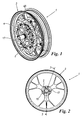
Figure 1 is a perspective view of a motorcycle wheel, without the tyre, but such as to embody the present invention; -
Figure 2 is a front view of the wheel inFigure 1 with some parts omitted for greater clarity; -
Figure 3 is a cross-sectional view of the wheel inFigure 1 along Line 3-3 ofFigure 2 ; -
Figure 4 is a view of a detail of a cross-section along Line 4-4 ofFigure 3 ; -
Figure 5 is a view of a detail of a cross-section along Line 5-5 ofFigure 3 . - With reference to said figures, a wheel for a motorcycle is indicated generally by 1 and comprises a
hub 2 having afirst end 6, a second end 9 and a longitudinal spindle K. Thishub 2 is fitted onto a hollowtubular spindle 15 carryingconventional bearings 16 at each opposing end that disconnect the hub from said spindle. The latter is connected in a known way, for example by means of apin 17 inserted into saidspindle 15, to a fork supporting the wheel (not shown), a fork that can be a double front fork or one large rear fork. - Near its
first end 6, thehub 2 has a radially-protrudingcollar 7 onto which abuts afirst brake disc 4 of a conventional motor vehicle braking system (comprising other known components, not shown). The second end 9 of thehub 2 is connected, by means of screws (not shown), to awheel flange 10, which also has an (extremal) collar 11 resting on the above-mentioned second end 9. At the latter, asecond brake disc 4A may be present. - On the
hub 2 is located afloating rim 3 integral with acylindrical portion 5 fitted onto the hub itself and torsionally secured to it. For this purpose, an externalperimetral edge 18 of saidhub 2 has a plurality ofprotrusions 19 inserted intorecesses 20, of an equal number and conformation, provided on theinternal surface 21 of thecylindrical portion 5. The connection between saidprotrusions 19 and saidrecesses 20 creates the torsional bond between therim 3 and thehub 2. - The
cylindrical portion 5 has afirst end 8 and asecond end 12. Thefirst end 8 faces, at a distance, towards thecollar 7 of thehub 2; thesecond end 12 is by contrast located, at a distance, opposite the collar 11 of theflange 10. Between eachend collars 7 and 11, within corresponding seats of said components are located one or several pairs of annular shock-absorbing elements (as shown in the figures), cylindrical or ofsimilar shapes - The figures show a solution that provides three pairs of shock-absorbing
elements - Clearly, the number of these pairs of
elements - Each pair of shock-absorbing
elements 13, 14 (each defining a lateral shock-absorbing device of the wheel) can be made of rubber, a metal or polymer material, a material with a honeycomb structure or another anistropic or in any event shock-absorbing material. - Furthermore, the shock-absorbing response of the device defined by the shock-absorbing
elements 13 can be modified by changing the transverse thickness of these devices, their shape, their total number or, as stated, the material from which they are made. - The replacement of
elements flange 10 can be separated from thehub 2 and removed. It is thus possible to remove thecorresponding elements 13 at theend 12, pull off the rim and remove thecorresponding elements 14 at theend 8. Having replaced these elements, the reverse procedure is followed, inserting theelements 13 and fixing theflange 10 to thehub 2 by means of screws. - Clearly, the
collar 7 can form part of a component separate from the hub, but which is fixed to it like theflange 10 so as to hold between it and theportion 5 the shock-absorbingelements 14. - Thanks to the presence of the shock-absorbing
elements rim 3. Thanks to the presence of the shock-absorbingelements - In other words, the invention enables a reduction in the occurrence of chattering, an improvement in the motorcycle's road-holding and therefore in its performance, guaranteeing less variation in the forces of contact with the ground.
- In addition,
elements hub 2 of thewheel 1 and easy to remove from it in order to modify the response of the shock-absorbing device defined by these elements. By altering the shape, number, dimensions and materials of the elastic shock-absorbingelements - In addition, the shock-absorbing device according to the invention can be fitted on any type of motorcycle, even those with a conventional frame, in order to enable at least the reduction of "chattering" while negotiating a bend (with the bike leaning over).
- The invention enables the longitudinal rigidity of the motorcycle to be dissociated from its lateral rigidity. This is particularly advantageous in the light of their different characteristics. The former, in fact, must be high to react to the forces that occur during extreme braking, whereas the lateral rigidity must be limited so as to be better able to absorb the stresses from the ground when negotiating bends while leaning over at great angles, conditions in which conventional suspension systems are inefficient.
- A particular embodiment of the invention has been described. Others are however possible in the light of the preceding description: for example,
elements
Claims (7)
- Motorcycle comprising a frame having a median plane (W), one front wheel and one rear wheel, each wheel (1) comprising a hub (2) with its own longitudinal spindle (K) onto which is fitted a rim (3) carrying a tyre, said hub (2) being associated with a fork and at least one brake disc (4) or similar device of a braking system of the vehicle, said rim (3) having a cylindrical portion (5) fitted onto said hub (2), the latter having at one of its first lateral ends (6) a protruding collar (7) located at a distance from a corresponding first end (8) of said cylindrical portion (5), the second end (9) of said hub (2) cooperating with a flange (10) also having a collar (11) located at a distance from a second end (12) of said cylindrical portion (5), there being between said ends (8, 12) of the cylindrical portion (5) of the rim (3) and the above-mentioned collars (7, 11) of the hub (2) and of the flange (10) elastically deformable organs (13, 14) capable of absorbing stresses directed in lateral directions in relation to the median plane (W) of the frame, characterised in that said devices comprise at least one pair of shock-absorbing elements (13, 14) located between the cylindrical portion (5) of the rim (3) and said collars (7, 11) of the hub (2) and the flange (10).
- Motorcycle according to claim 1, characterised in that it comprises three pairs of elastically deformable elements arranged angularly equidistant from each other about a longitudinal spindle (K) of the hub (2).
- Motorcycle according to claim 1, characterised in that the elastically deformable elements (13, 14) have the same mechanical and/or dimensional characteristics.
- Motorcycle according to claim 1, characterised in that the elastically deformable elements (13, 14) have a shape chosen between an annular or cylindrical shape.
- Motorcycle according to claim 1, characterised in that the collar (7) at the first end (6) of the hub (2) forms one piece with the latter.
- Motorcycle according to claim 1, characterised in that the collar (7) at the first end (6) of the hub (2) is part of a component different from the hub (2), but fixed thereto.
- Motorcycle according to claim 1, characterised in that each elastically deformable element (13, 14) is alternatively obtained from rubber, metal or polymer material, material with a honeycomb structure, anisotropic shock-absorbing material or suchlike.
Applications Claiming Priority (1)
| Application Number | Priority Date | Filing Date | Title |
|---|---|---|---|
| IT001775A ITMI20131775A1 (en) | 2013-10-24 | 2013-10-24 | MOTORCYCLE WITH LATERAL SHOCK ABSORBER |
Publications (2)
| Publication Number | Publication Date |
|---|---|
| EP2865535A1 true EP2865535A1 (en) | 2015-04-29 |
| EP2865535B1 EP2865535B1 (en) | 2019-11-27 |
Family
ID=49958548
Family Applications (1)
| Application Number | Title | Priority Date | Filing Date |
|---|---|---|---|
| EP14189521.9A Active EP2865535B1 (en) | 2013-10-24 | 2014-10-20 | Motorcycle with lateral shock-absorbing device |
Country Status (5)
| Country | Link |
|---|---|
| US (1) | US20150114743A1 (en) |
| EP (1) | EP2865535B1 (en) |
| JP (1) | JP6474581B2 (en) |
| ES (1) | ES2773135T3 (en) |
| IT (1) | ITMI20131775A1 (en) |
Cited By (1)
| Publication number | Priority date | Publication date | Assignee | Title |
|---|---|---|---|---|
| IT201900011493A1 (en) * | 2019-07-11 | 2021-01-11 | Gandini S R L | Crown of a motorcycle transmission |
Citations (4)
| Publication number | Priority date | Publication date | Assignee | Title |
|---|---|---|---|---|
| FR369167A (en) * | 1906-08-23 | 1906-12-31 | Jean Laurent Zwingelstein | Soft wheel system |
| US2282589A (en) * | 1941-07-12 | 1942-05-12 | Goodrich Co B F | Wheel structure |
| GB581845A (en) | 1944-04-27 | 1946-10-28 | Wright Howard Clayton | Improvements in or relating to wheel hubs for cycles or like vehicles |
| FR1065107A (en) * | 1952-10-28 | 1954-05-20 | Motobecane Ateliers | Rear hub with shock absorber, for motorcycle wheels by? |
Family Cites Families (20)
| Publication number | Priority date | Publication date | Assignee | Title |
|---|---|---|---|---|
| USRE23161E (en) * | 1949-10-25 | Resilient wheel | ||
| US611715A (en) * | 1898-10-04 | Robert heap soutiiall | ||
| US1100133A (en) * | 1913-02-13 | 1914-06-16 | Alfred Ahlberg | Spring-cushioned wheel. |
| US2534981A (en) * | 1945-10-02 | 1950-12-19 | Bromsregulator Svenska Ab | Resilient connection |
| GB646664A (en) * | 1948-07-26 | 1950-11-29 | Feridax Ltd | Spring road wheel |
| US2770278A (en) * | 1952-02-18 | 1956-11-13 | Robert J Dillon | Vehicle wheel construction |
| US2798525A (en) * | 1956-09-07 | 1957-07-09 | Rand Goetze Corp | Vehicle wheel |
| JPS5819109Y2 (en) * | 1975-10-09 | 1983-04-19 | 本田技研工業株式会社 | Nirinshyarinshijisouchi |
| JPS59501945A (en) * | 1982-07-07 | 1984-11-22 | ヴオロシロフグラ−ドスキ− マシノストロイチエルヌイ インスチツ−ト | Elastic wheels for railway vehicles |
| JPS5918603U (en) * | 1982-07-29 | 1984-02-04 | 本田技研工業株式会社 | vehicle wheels |
| JP2568403B2 (en) * | 1987-03-03 | 1997-01-08 | ヤマハ発動機株式会社 | Motorcycle air cooling system |
| US5104201A (en) * | 1989-10-12 | 1992-04-14 | Ross Michael G | Shock absorbing wheel hub |
| US5494090A (en) * | 1994-01-07 | 1996-02-27 | Electrion, Inc. | Lightweight pressure-airless tire construction |
| US20030188931A1 (en) * | 2001-03-02 | 2003-10-09 | Labrash Richard | Brake mechanism for resilient wheel |
| US6702399B2 (en) * | 2001-04-30 | 2004-03-09 | Morten Andre Lund | Shock absorbing bicycle wheel hub |
| DE102005030966A1 (en) * | 2005-06-30 | 2007-01-04 | Bochumer Verein Verkehrstechnik Gmbh | Rubber-sprung rail vehicle wheel |
| JP2007118684A (en) * | 2005-10-26 | 2007-05-17 | Yamaha Motor Co Ltd | Motorcycle wheel and method of manufacturing the same |
| US20090108665A1 (en) * | 2005-11-25 | 2009-04-30 | Toshiaki Sakaki | Elastic Wheel |
| FR2928865B1 (en) * | 2008-03-19 | 2010-03-19 | Michelin Soc Tech | NON-PNEUMATIC ELASTIC WHEEL |
| KR101043001B1 (en) * | 2010-09-14 | 2011-06-21 | 한국타이어 주식회사 | Airless tire |
-
2013
- 2013-10-24 IT IT001775A patent/ITMI20131775A1/en unknown
-
2014
- 2014-10-20 EP EP14189521.9A patent/EP2865535B1/en active Active
- 2014-10-20 ES ES14189521T patent/ES2773135T3/en active Active
- 2014-10-21 US US14/519,446 patent/US20150114743A1/en not_active Abandoned
- 2014-10-23 JP JP2014216598A patent/JP6474581B2/en active Active
Patent Citations (4)
| Publication number | Priority date | Publication date | Assignee | Title |
|---|---|---|---|---|
| FR369167A (en) * | 1906-08-23 | 1906-12-31 | Jean Laurent Zwingelstein | Soft wheel system |
| US2282589A (en) * | 1941-07-12 | 1942-05-12 | Goodrich Co B F | Wheel structure |
| GB581845A (en) | 1944-04-27 | 1946-10-28 | Wright Howard Clayton | Improvements in or relating to wheel hubs for cycles or like vehicles |
| FR1065107A (en) * | 1952-10-28 | 1954-05-20 | Motobecane Ateliers | Rear hub with shock absorber, for motorcycle wheels by? |
Cited By (1)
| Publication number | Priority date | Publication date | Assignee | Title |
|---|---|---|---|---|
| IT201900011493A1 (en) * | 2019-07-11 | 2021-01-11 | Gandini S R L | Crown of a motorcycle transmission |
Also Published As
| Publication number | Publication date |
|---|---|
| EP2865535B1 (en) | 2019-11-27 |
| US20150114743A1 (en) | 2015-04-30 |
| ES2773135T3 (en) | 2020-07-09 |
| ITMI20131775A1 (en) | 2015-04-25 |
| JP2015110407A (en) | 2015-06-18 |
| JP6474581B2 (en) | 2019-02-27 |
Similar Documents
| Publication | Publication Date | Title |
|---|---|---|
| US9248883B2 (en) | Bicycle fork with compliant tip | |
| KR101427079B1 (en) | Lower arm for vehicle suspension system | |
| CN109649098B (en) | Suspension device for motor vehicle wheels | |
| US20080196960A1 (en) | Swingarm assembly | |
| CN202965863U (en) | Excessive-part type guiding supporting piece used in motor vehicle supporting seat | |
| WO2011061585A3 (en) | Four-wheeled vehicle | |
| CN203439188U (en) | Straddle-ride type vehicle | |
| EP2865535B1 (en) | Motorcycle with lateral shock-absorbing device | |
| EP3541695B1 (en) | Front suspension of the telescopic type with anti-dive effect | |
| JP5268784B2 (en) | Steering operation device for vehicle | |
| HRP20161744T1 (en) | FOUR WHEEL ELECTRIC VEHICLE BENDING AND TRANSMITTING | |
| CN205131489U (en) | Reverse tricycle turns to stand before and with before turn to stand | |
| CN103552426A (en) | Damping wheel for motorcycle | |
| KR20140135003A (en) | Rack Bar Supporting Device of Steering Apparatus for Vehicle | |
| JP6965055B2 (en) | Non-pneumatic tires | |
| JP2004108431A (en) | Front fork | |
| KR20170070726A (en) | Bush unit for coupled torsion beam axle | |
| CN204432901U (en) | A kind of improved structure of bicycle | |
| JP6323832B2 (en) | tube | |
| JP2015163813A (en) | Impact absorber and bicycle with the same | |
| EP3186095A1 (en) | Hub carrier for a vehicle wheel | |
| WO2019031104A1 (en) | Non-pneumatic tire | |
| KR20090124402A (en) | Automotive Axle Mounting Units | |
| JP3171800U (en) | Front wheel support device for motorcycles | |
| KR20180059401A (en) | Styled wheel |
Legal Events
| Date | Code | Title | Description |
|---|---|---|---|
| PUAI | Public reference made under article 153(3) epc to a published international application that has entered the european phase |
Free format text: ORIGINAL CODE: 0009012 |
|
| 17P | Request for examination filed |
Effective date: 20141020 |
|
| AK | Designated contracting states |
Kind code of ref document: A1 Designated state(s): AL AT BE BG CH CY CZ DE DK EE ES FI FR GB GR HR HU IE IS IT LI LT LU LV MC MK MT NL NO PL PT RO RS SE SI SK SM TR |
|
| AX | Request for extension of the european patent |
Extension state: BA ME |
|
| R17P | Request for examination filed (corrected) |
Effective date: 20151001 |
|
| RBV | Designated contracting states (corrected) |
Designated state(s): AL AT BE BG CH CY CZ DE DK EE ES FI FR GB GR HR HU IE IS IT LI LT LU LV MC MK MT NL NO PL PT RO RS SE SI SK SM TR |
|
| GRAP | Despatch of communication of intention to grant a patent |
Free format text: ORIGINAL CODE: EPIDOSNIGR1 |
|
| STAA | Information on the status of an ep patent application or granted ep patent |
Free format text: STATUS: GRANT OF PATENT IS INTENDED |
|
| INTG | Intention to grant announced |
Effective date: 20190508 |
|
| GRAS | Grant fee paid |
Free format text: ORIGINAL CODE: EPIDOSNIGR3 |
|
| GRAA | (expected) grant |
Free format text: ORIGINAL CODE: 0009210 |
|
| STAA | Information on the status of an ep patent application or granted ep patent |
Free format text: STATUS: THE PATENT HAS BEEN GRANTED |
|
| AK | Designated contracting states |
Kind code of ref document: B1 Designated state(s): AL AT BE BG CH CY CZ DE DK EE ES FI FR GB GR HR HU IE IS IT LI LT LU LV MC MK MT NL NO PL PT RO RS SE SI SK SM TR |
|
| REG | Reference to a national code |
Ref country code: GB Ref legal event code: FG4D |
|
| REG | Reference to a national code |
Ref country code: CH Ref legal event code: EP |
|
| REG | Reference to a national code |
Ref country code: DE Ref legal event code: R096 Ref document number: 602014057408 Country of ref document: DE |
|
| REG | Reference to a national code |
Ref country code: AT Ref legal event code: REF Ref document number: 1206235 Country of ref document: AT Kind code of ref document: T Effective date: 20191215 |
|
| REG | Reference to a national code |
Ref country code: IE Ref legal event code: FG4D |
|
| REG | Reference to a national code |
Ref country code: NL Ref legal event code: MP Effective date: 20191127 |
|
| REG | Reference to a national code |
Ref country code: LT Ref legal event code: MG4D |
|
| PG25 | Lapsed in a contracting state [announced via postgrant information from national office to epo] |
Ref country code: SE Free format text: LAPSE BECAUSE OF FAILURE TO SUBMIT A TRANSLATION OF THE DESCRIPTION OR TO PAY THE FEE WITHIN THE PRESCRIBED TIME-LIMIT Effective date: 20191127 Ref country code: LV Free format text: LAPSE BECAUSE OF FAILURE TO SUBMIT A TRANSLATION OF THE DESCRIPTION OR TO PAY THE FEE WITHIN THE PRESCRIBED TIME-LIMIT Effective date: 20191127 Ref country code: NL Free format text: LAPSE BECAUSE OF FAILURE TO SUBMIT A TRANSLATION OF THE DESCRIPTION OR TO PAY THE FEE WITHIN THE PRESCRIBED TIME-LIMIT Effective date: 20191127 Ref country code: GR Free format text: LAPSE BECAUSE OF FAILURE TO SUBMIT A TRANSLATION OF THE DESCRIPTION OR TO PAY THE FEE WITHIN THE PRESCRIBED TIME-LIMIT Effective date: 20200228 Ref country code: NO Free format text: LAPSE BECAUSE OF FAILURE TO SUBMIT A TRANSLATION OF THE DESCRIPTION OR TO PAY THE FEE WITHIN THE PRESCRIBED TIME-LIMIT Effective date: 20200227 Ref country code: LT Free format text: LAPSE BECAUSE OF FAILURE TO SUBMIT A TRANSLATION OF THE DESCRIPTION OR TO PAY THE FEE WITHIN THE PRESCRIBED TIME-LIMIT Effective date: 20191127 Ref country code: FI Free format text: LAPSE BECAUSE OF FAILURE TO SUBMIT A TRANSLATION OF THE DESCRIPTION OR TO PAY THE FEE WITHIN THE PRESCRIBED TIME-LIMIT Effective date: 20191127 Ref country code: BG Free format text: LAPSE BECAUSE OF FAILURE TO SUBMIT A TRANSLATION OF THE DESCRIPTION OR TO PAY THE FEE WITHIN THE PRESCRIBED TIME-LIMIT Effective date: 20200227 |
|
| PG25 | Lapsed in a contracting state [announced via postgrant information from national office to epo] |
Ref country code: HR Free format text: LAPSE BECAUSE OF FAILURE TO SUBMIT A TRANSLATION OF THE DESCRIPTION OR TO PAY THE FEE WITHIN THE PRESCRIBED TIME-LIMIT Effective date: 20191127 Ref country code: RS Free format text: LAPSE BECAUSE OF FAILURE TO SUBMIT A TRANSLATION OF THE DESCRIPTION OR TO PAY THE FEE WITHIN THE PRESCRIBED TIME-LIMIT Effective date: 20191127 Ref country code: IS Free format text: LAPSE BECAUSE OF FAILURE TO SUBMIT A TRANSLATION OF THE DESCRIPTION OR TO PAY THE FEE WITHIN THE PRESCRIBED TIME-LIMIT Effective date: 20200327 |
|
| PG25 | Lapsed in a contracting state [announced via postgrant information from national office to epo] |
Ref country code: AL Free format text: LAPSE BECAUSE OF FAILURE TO SUBMIT A TRANSLATION OF THE DESCRIPTION OR TO PAY THE FEE WITHIN THE PRESCRIBED TIME-LIMIT Effective date: 20191127 |
|
| REG | Reference to a national code |
Ref country code: ES Ref legal event code: FG2A Ref document number: 2773135 Country of ref document: ES Kind code of ref document: T3 Effective date: 20200709 |
|
| PG25 | Lapsed in a contracting state [announced via postgrant information from national office to epo] |
Ref country code: CZ Free format text: LAPSE BECAUSE OF FAILURE TO SUBMIT A TRANSLATION OF THE DESCRIPTION OR TO PAY THE FEE WITHIN THE PRESCRIBED TIME-LIMIT Effective date: 20191127 Ref country code: RO Free format text: LAPSE BECAUSE OF FAILURE TO SUBMIT A TRANSLATION OF THE DESCRIPTION OR TO PAY THE FEE WITHIN THE PRESCRIBED TIME-LIMIT Effective date: 20191127 Ref country code: DK Free format text: LAPSE BECAUSE OF FAILURE TO SUBMIT A TRANSLATION OF THE DESCRIPTION OR TO PAY THE FEE WITHIN THE PRESCRIBED TIME-LIMIT Effective date: 20191127 Ref country code: EE Free format text: LAPSE BECAUSE OF FAILURE TO SUBMIT A TRANSLATION OF THE DESCRIPTION OR TO PAY THE FEE WITHIN THE PRESCRIBED TIME-LIMIT Effective date: 20191127 Ref country code: PT Free format text: LAPSE BECAUSE OF FAILURE TO SUBMIT A TRANSLATION OF THE DESCRIPTION OR TO PAY THE FEE WITHIN THE PRESCRIBED TIME-LIMIT Effective date: 20200419 |
|
| REG | Reference to a national code |
Ref country code: CH Ref legal event code: NV Representative=s name: R.A. EGLI AND CO, PATENTANWAELTE, CH |
|
| REG | Reference to a national code |
Ref country code: DE Ref legal event code: R097 Ref document number: 602014057408 Country of ref document: DE |
|
| PG25 | Lapsed in a contracting state [announced via postgrant information from national office to epo] |
Ref country code: SK Free format text: LAPSE BECAUSE OF FAILURE TO SUBMIT A TRANSLATION OF THE DESCRIPTION OR TO PAY THE FEE WITHIN THE PRESCRIBED TIME-LIMIT Effective date: 20191127 Ref country code: SM Free format text: LAPSE BECAUSE OF FAILURE TO SUBMIT A TRANSLATION OF THE DESCRIPTION OR TO PAY THE FEE WITHIN THE PRESCRIBED TIME-LIMIT Effective date: 20191127 |
|
| PLBE | No opposition filed within time limit |
Free format text: ORIGINAL CODE: 0009261 |
|
| STAA | Information on the status of an ep patent application or granted ep patent |
Free format text: STATUS: NO OPPOSITION FILED WITHIN TIME LIMIT |
|
| 26N | No opposition filed |
Effective date: 20200828 |
|
| PG25 | Lapsed in a contracting state [announced via postgrant information from national office to epo] |
Ref country code: PL Free format text: LAPSE BECAUSE OF FAILURE TO SUBMIT A TRANSLATION OF THE DESCRIPTION OR TO PAY THE FEE WITHIN THE PRESCRIBED TIME-LIMIT Effective date: 20191127 Ref country code: SI Free format text: LAPSE BECAUSE OF FAILURE TO SUBMIT A TRANSLATION OF THE DESCRIPTION OR TO PAY THE FEE WITHIN THE PRESCRIBED TIME-LIMIT Effective date: 20191127 |
|
| PG25 | Lapsed in a contracting state [announced via postgrant information from national office to epo] |
Ref country code: IT Free format text: LAPSE BECAUSE OF FAILURE TO SUBMIT A TRANSLATION OF THE DESCRIPTION OR TO PAY THE FEE WITHIN THE PRESCRIBED TIME-LIMIT Effective date: 20191127 |
|
| PG25 | Lapsed in a contracting state [announced via postgrant information from national office to epo] |
Ref country code: MC Free format text: LAPSE BECAUSE OF FAILURE TO SUBMIT A TRANSLATION OF THE DESCRIPTION OR TO PAY THE FEE WITHIN THE PRESCRIBED TIME-LIMIT Effective date: 20191127 Ref country code: LU Free format text: LAPSE BECAUSE OF NON-PAYMENT OF DUE FEES Effective date: 20201020 |
|
| REG | Reference to a national code |
Ref country code: BE Ref legal event code: MM Effective date: 20201031 |
|
| PG25 | Lapsed in a contracting state [announced via postgrant information from national office to epo] |
Ref country code: BE Free format text: LAPSE BECAUSE OF NON-PAYMENT OF DUE FEES Effective date: 20201031 |
|
| PG25 | Lapsed in a contracting state [announced via postgrant information from national office to epo] |
Ref country code: IE Free format text: LAPSE BECAUSE OF NON-PAYMENT OF DUE FEES Effective date: 20201020 |
|
| PG25 | Lapsed in a contracting state [announced via postgrant information from national office to epo] |
Ref country code: TR Free format text: LAPSE BECAUSE OF FAILURE TO SUBMIT A TRANSLATION OF THE DESCRIPTION OR TO PAY THE FEE WITHIN THE PRESCRIBED TIME-LIMIT Effective date: 20191127 Ref country code: MT Free format text: LAPSE BECAUSE OF FAILURE TO SUBMIT A TRANSLATION OF THE DESCRIPTION OR TO PAY THE FEE WITHIN THE PRESCRIBED TIME-LIMIT Effective date: 20191127 Ref country code: CY Free format text: LAPSE BECAUSE OF FAILURE TO SUBMIT A TRANSLATION OF THE DESCRIPTION OR TO PAY THE FEE WITHIN THE PRESCRIBED TIME-LIMIT Effective date: 20191127 |
|
| PG25 | Lapsed in a contracting state [announced via postgrant information from national office to epo] |
Ref country code: MK Free format text: LAPSE BECAUSE OF FAILURE TO SUBMIT A TRANSLATION OF THE DESCRIPTION OR TO PAY THE FEE WITHIN THE PRESCRIBED TIME-LIMIT Effective date: 20191127 |
|
| P01 | Opt-out of the competence of the unified patent court (upc) registered |
Effective date: 20230602 |
|
| REG | Reference to a national code |
Ref country code: AT Ref legal event code: UEP Ref document number: 1206235 Country of ref document: AT Kind code of ref document: T Effective date: 20191127 |
|
| REG | Reference to a national code |
Ref country code: CH Ref legal event code: U11 Free format text: ST27 STATUS EVENT CODE: U-0-0-U10-U11 (AS PROVIDED BY THE NATIONAL OFFICE) Effective date: 20251101 |
|
| PGFP | Annual fee paid to national office [announced via postgrant information from national office to epo] |
Ref country code: DE Payment date: 20251029 Year of fee payment: 12 |
|
| PGFP | Annual fee paid to national office [announced via postgrant information from national office to epo] |
Ref country code: GB Payment date: 20251016 Year of fee payment: 12 |
|
| PGFP | Annual fee paid to national office [announced via postgrant information from national office to epo] |
Ref country code: AT Payment date: 20251029 Year of fee payment: 12 |
|
| PGFP | Annual fee paid to national office [announced via postgrant information from national office to epo] |
Ref country code: FR Payment date: 20251027 Year of fee payment: 12 |
|
| PGFP | Annual fee paid to national office [announced via postgrant information from national office to epo] |
Ref country code: CH Payment date: 20251101 Year of fee payment: 12 |
|
| PGFP | Annual fee paid to national office [announced via postgrant information from national office to epo] |
Ref country code: ES Payment date: 20251103 Year of fee payment: 12 |