EP2852136A1 - Verfahren und vorrichtung zur steuerung des anrufaudiokanals eines kommunikationsendgeräts sowie kommunikationsendgerät - Google Patents
Verfahren und vorrichtung zur steuerung des anrufaudiokanals eines kommunikationsendgeräts sowie kommunikationsendgerät Download PDFInfo
- Publication number
- EP2852136A1 EP2852136A1 EP20140754611 EP14754611A EP2852136A1 EP 2852136 A1 EP2852136 A1 EP 2852136A1 EP 20140754611 EP20140754611 EP 20140754611 EP 14754611 A EP14754611 A EP 14754611A EP 2852136 A1 EP2852136 A1 EP 2852136A1
- Authority
- EP
- European Patent Office
- Prior art keywords
- audio device
- audio
- voice signal
- received
- communications terminal
- Prior art date
- Legal status (The legal status is an assumption and is not a legal conclusion. Google has not performed a legal analysis and makes no representation as to the accuracy of the status listed.)
- Granted
Links
Images

Classifications
-
- H—ELECTRICITY
- H04—ELECTRIC COMMUNICATION TECHNIQUE
- H04M—TELEPHONIC COMMUNICATION
- H04M1/00—Substation equipment, e.g. for use by subscribers
- H04M1/72—Mobile telephones; Cordless telephones, i.e. devices for establishing wireless links to base stations without route selection
- H04M1/724—User interfaces specially adapted for cordless or mobile telephones
-
- H—ELECTRICITY
- H04—ELECTRIC COMMUNICATION TECHNIQUE
- H04M—TELEPHONIC COMMUNICATION
- H04M1/00—Substation equipment, e.g. for use by subscribers
- H04M1/60—Substation equipment, e.g. for use by subscribers including speech amplifiers
- H04M1/6033—Substation equipment, e.g. for use by subscribers including speech amplifiers for providing handsfree use or a loudspeaker mode in telephone sets
-
- H—ELECTRICITY
- H04—ELECTRIC COMMUNICATION TECHNIQUE
- H04M—TELEPHONIC COMMUNICATION
- H04M1/00—Substation equipment, e.g. for use by subscribers
- H04M1/60—Substation equipment, e.g. for use by subscribers including speech amplifiers
- H04M1/6033—Substation equipment, e.g. for use by subscribers including speech amplifiers for providing handsfree use or a loudspeaker mode in telephone sets
- H04M1/6041—Portable telephones adapted for handsfree use
- H04M1/6058—Portable telephones adapted for handsfree use involving the use of a headset accessory device connected to the portable telephone
-
- H—ELECTRICITY
- H04—ELECTRIC COMMUNICATION TECHNIQUE
- H04M—TELEPHONIC COMMUNICATION
- H04M1/00—Substation equipment, e.g. for use by subscribers
- H04M1/60—Substation equipment, e.g. for use by subscribers including speech amplifiers
- H04M1/6033—Substation equipment, e.g. for use by subscribers including speech amplifiers for providing handsfree use or a loudspeaker mode in telephone sets
- H04M1/6041—Portable telephones adapted for handsfree use
- H04M1/6058—Portable telephones adapted for handsfree use involving the use of a headset accessory device connected to the portable telephone
- H04M1/6066—Portable telephones adapted for handsfree use involving the use of a headset accessory device connected to the portable telephone including a wireless connection
-
- H—ELECTRICITY
- H04—ELECTRIC COMMUNICATION TECHNIQUE
- H04R—LOUDSPEAKERS, MICROPHONES, GRAMOPHONE PICK-UPS OR LIKE ACOUSTIC ELECTROMECHANICAL TRANSDUCERS; ELECTRIC HEARING AIDS; PUBLIC ADDRESS SYSTEMS
- H04R1/00—Details of transducers, loudspeakers or microphones
- H04R1/10—Earpieces; Attachments therefor ; Earphones; Monophonic headphones
- H04R1/1041—Mechanical or electronic switches, or control elements
Definitions
- the present invention pertains to the field of communications technologies, and in particular, relates to a method and apparatus for controlling a call audio channel on a communications terminal, and a communications terminal.
- a current call audio channel is used by default according to a certain rule in the call. For example, if a Bluetooth headset is connected to the communications terminal, a call is made by using the Bluetooth headset by default; if a wired headset is connected to the communications terminal, a call is made by using the wired headset by default.
- a Bluetooth headset is connected to the communications terminal
- a wired headset is connected to the communications terminal
- a call is made by using the wired headset by default.
- An objective of embodiments of the present invention is to provide a method for controlling a call audio channel on a communications terminal, so as to resolve a problem in prior art that a call audio channel needs to be switched manually.
- a method for controlling a call audio channel on a communications terminal including:
- the detecting a voice signal received by a microphone of audio devices connected to the communications terminal includes detecting a voice signal that is received within a preset period of time by a microphone of the audio devices connected to the communications terminal.
- the selecting an audio device with a received voice signal meeting a preset condition as a target audio device includes selecting an audio device with a strongest received voice signal as the target audio device.
- the selecting an audio device with a received voice signal meeting a preset condition as a target audio device includes:
- the selecting an audio device with a received voice signal meeting a preset condition as a target audio device includes:
- the method further includes: generating a voice prompt or a text prompt.
- an apparatus for controlling a call audio channel on a communications terminal includes:
- the detecting unit is specifically configured to detect a voice signal that is received within a preset period of time by a microphone of the audio devices connected to the communications terminal.
- the selecting unit is specifically configured to select an audio device with a strongest received voice signal as the target audio device.
- the selecting unit is specifically configured to compare a voice signal received by a microphone of the external audio device of the communications terminal with a voice signal received by a microphone of the internal audio device of the communications terminal; and if a proportion of a strength difference between the two voice signals to a smaller strength value is greater than a preset value, select an audio device with a greater received voice signal strength value as the target audio device.
- the selecting unit is specifically configured to select voice signals of two audio devices with strength of received voice signals ranked top two among the audio devices; and if a proportion of a difference between two selected voice signals to a smaller strength value is greater than a preset value, select an audio device with a greatest received voice signal strength value as the target audio device.
- the apparatus further includes a prompt unit, configured to generate a voice prompt or a text prompt.
- a voice signal received by a microphone of audio devices connected to a communications terminal is detected, where the audio devices include an internal audio device and at least one external audio device; then, an audio device with a received voice signal meeting a preset condition is selected as a target audio device; finally, the target audio device is set as a current call audio channel.
- a voice signal received by a microphone of audio devices connected to a communications terminal is detected, where the audio devices include an internal audio device and at least one external audio device; then, an audio device with a received voice signal meeting a preset condition is selected as a target audio device; finally, the target audio device is set as a current call audio channel.
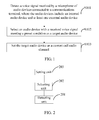
- FIG. 1 shows an implementation flowchart of a method for controlling a call audio channel on a communications terminal according to this embodiment of the present invention, which is described in detail as follows:
- step S101 a voice signal received by a microphone of audio devices connected to the communications terminal is detected, where the audio devices include an internal audio device and at least one external audio device.
- a communications terminal for example, a mobile phone
- the internal audio device of the communications terminal and the external audio device of the communications terminal both include a microphone and an earpiece.
- the external audio device is a wired headset or/and a wireless headset (for example, a Bluetooth headset) connected to the communications terminal; that is, an individual wired headset or an individual wireless headset may be connected to the communications terminal, and both a wired headset and a wireless headset may also be connected to the communications terminal.
- a voice signal received by a microphone of the audio devices connected to the communications terminal is detected. Because a sound signal received by a microphone is generally noisy, voice volume detection is enabled at this time, no matter which audio device is used as a call audio channel. In addition, once a call audio channel is manually switched in a call, the automatic detection function is disabled in the call, a channel is not automatically switched, and interaction is performed according to a call audio channel set by a user. In this way, confusion is avoided, so that manual switching and automatic switching of a call audio channel do not interfere with each other, and practicality is strong.
- a voice signal that is received within a preset period of time by a microphone of the audio devices connected to the communications terminal is detected.
- a voice signal received by each microphone in a period of time (for example, 2s or 3s), so as to avoid switching of a call audio channel when another audio device has a very short voice input. For example, switching is performed only when a voice signal remains stronger than a voice signal received by another audio device within 2s, thereby avoiding a misjudgment.
- a voice signal received by a microphone in this method refers to voice information from which noise is removed, that is, voice information input by a user. In this way, a target audio device may be determined more accurately.
- a current noise reduction technology may identify a difference between a voice and noise, and an identification rate of a voice may be continually improved by using a learning function. For example, an 80dB sound signal may differentiate into a 50dB voice and 30dB noise.
- step S102 an audio device with a received voice signal meeting a preset condition is selected as a target audio device.
- the audio device in which the received voice signal meets the preset condition is selected as the target voice device, where the target audio device may be an audio device with a strongest received voice signal.
- the target audio device may be an audio device with a strongest received voice signal.
- a voice signal received by a microphone of the external audio device of the communications terminal is 30dB
- a voice signal received by a microphone of the internal audio device of the communications terminal is 50dB; then, the internal audio device is selected as the target audio device.
- the selecting the audio device in which the received voice signal meets the preset condition as the target audio device includes: comparing a voice signal received by a microphone of the external audio device of the communications terminal with a voice signal received by a microphone of the internal audio device of the communications terminal; and if a proportion of a strength difference between the two voice signals to a smaller strength value is greater than a preset value (for example, 10% or 20%), selecting an audio device with a greater received voice signal strength value as the target audio device. In this way, only when a difference between strength values of the two voice signals is greater, the audio device with the greater received voice signal strength value is selected as the target audio device.
- an original call audio channel is maintained (that is, a call is made by using a default call audio channel). That is, if strength values of voice signals that act on two call audio channels are approximate, the original call audio channel is maintained (that is, the call is made by using the default call audio channel), which can also avoid a misjudgment.
- the selecting the audio device in which the received voice signal meets the preset condition as the target audio device includes: selecting voice signals of two audio devices with strength of received voice signals ranked top two among the audio devices; and if a proportion of a difference between two selected voice signals to a smaller strength value is greater than a preset value (for example, 10% or 20%), selecting an audio device with a greatest received voice signal strength value as the target audio device.
- a preset value for example, 10% or 20%
- two voice signals with greater strength values are first selected; only when a difference between the strength values of the two voice signals is greater, the audio device with the greater received voice signal strength value is selected as the target audio device. If the proportion of the strength difference between the two voice signals to the smaller strength value is less than or equal to the preset value (for example, 10% or 20%), an original call audio channel is maintained (that is, a call is made by using a default call audio channel). That is, if strength values of voice signals that act on two call audio channels are approximate, the original call audio channel is maintained (that is, the call is made by using the default call audio channel), which can also avoid a misjudgment.
- the preset value for example, 10% or 20%
- a communications terminal may generate text prompt information and display the text prompt information on a screen of the communications terminal.
- the communications terminal may also generate voice prompt information and play the sound prompt information on a target call audio device, so that a user is prompted that the call audio channel has been switched to the target call audio device, thereby greatly improving usability of the communications terminal.
- step S103 the target audio device is set as a current call audio channel.
- the target audio device is set as the current call audio channel; in this way, a user neither needs to remember an audio device that has been connected nor needs to manually switch to a desired call audio channel, which brings convenience to the user.
- FIG. 2 shows an apparatus for controlling a call audio channel on a communications terminal according to this embodiment of the present invention, which is described in detail as follows:
- the apparatus includes a detecting unit 201, a selecting unit 202, and a setting unit 203, where the detecting unit 201 is configured to detect a voice signal received by a microphone of audio devices connected to the communications terminal, and the audio devices include an internal audio device and at least one external audio device; the selecting unit 202 is configured to select an audio device with a received voice signal meeting a preset condition as a target audio device; and the setting unit 203 is configured to set the target audio device as a current call audio channel.
- a communications terminal for example, a mobile phone
- the internal audio device of the communications terminal and the external audio device of the communications terminal both include a microphone and an earpiece.
- the external audio device is a wired headset or/and a wireless headset (for example, a Bluetooth headset) connected to the communications terminal; that is, an individual wired headset or an individual wireless headset may be connected to the communications terminal, and a wired headset and a wireless headset may also be connected to the communications terminal at the same time.
- the detecting unit 201 disposed in the communications terminal detects a voice signal received by a microphone of the audio devices connected to the communications terminal. In this way, the voice signal received by the microphone is transmitted to the detecting unit 201, and voice signal strength is detected by the detecting unit 201. Because a sound signal received by a microphone is generally noisy, voice volume detection is enabled at this time, no matter which audio device is used as a call audio channel. In addition, once a call audio channel is manually switched in a call, the automatic detection function is disabled in the call, a channel is not automatically switched, and interaction is performed according to a call audio channel set by a user. In this way, confusion is avoided, so that manual switching and automatic switching of a call audio channel do not interfere with each other, and practicality is strong.
- a voice signal that is received within a preset period of time by a microphone of the audio devices connected to the communications terminal is detected by the detecting unit 201.
- a voice signal received by each microphone in a period of time (for example, 2s or 3s), so as to avoid switching of a call audio channel when another audio device has a very short voice input. For example, switching is performed only when a voice signal remains stronger than a voice signal received by another audio device within 2s, thereby avoiding a misjudgment.
- a voice signal received by a microphone in this method refers to voice information from which noise is removed, that is, voice information input by a user. In this way, a target audio device may be determined more accurately.
- a current noise reduction technology may identify a difference between a voice and noise, and an identification rate of a voice may be continually improved by using a learning function. For example, an 80dB sound signal may differentiate into a 50dB voice and 30dB noise.
- the selecting unit 202 may select an audio device with a strongest received voice signal as the target audio device. For example, a voice signal received by a microphone of the external audio device of the communications terminal is 30dB, and a voice signal received by a microphone of the internal audio device of the communications terminal is 50dB; then, the internal audio device is selected as the target audio device.
- the selecting, by the selecting unit 202, the audio device in which the received voice signal meets the preset condition as the target audio device includes: comparing a voice signal received by a microphone of the external audio device of the communications terminal with a voice signal received by a microphone of the internal audio device of the communications terminal; and if a proportion of a strength difference between the two voice signals to a smaller strength value is greater than a preset value (for example, 10% or 20%), selecting an audio device with a greater received voice signal strength value as the target audio device.
- a preset value for example, 10% or 20%
- the audio device with the greater received voice signal strength value is selected as the target audio device. If the proportion of the strength difference between the two voice signals to the smaller strength value is less than or equal to the preset value (for example, 10% or 20%), an original call audio channel is maintained (that is, a call is made by using a default call audio channel). That is, if strength values of voice signals that act on two call audio channels are approximate, the original call audio channel is maintained (that is, the call is made by using the default call audio channel), which can also avoid a misjudgment.
- the preset value for example, 10% or 20%
- the selecting, by the selecting unit 202, the audio device in which the received voice signal meets the preset condition as the target audio device includes: selecting voice signals of two audio devices with strength of received voice signals ranked top two among the audio devices; and if a proportion of a difference between two selected voice signals to a smaller strength value is greater than a preset value (for example, 10% or 20%), selecting an audio device with a greatest received voice signal strength value as the target audio device.
- a preset value for example, 10% or 20%
- two voice signals with greater strength values are first selected; only when a difference between the strength values of the two voice signals is greater, the audio device with the greater received voice signal strength value is selected as the target audio device. If the proportion of the strength difference between the two voice signals to the smaller strength value is less than or equal to the preset value (for example, 10% or 20%), an original call audio channel is maintained (that is, a call is made by using a default call audio channel). That is, if strength values of voice signals that act on two call audio channels are approximate, the original call audio channel is maintained (that is, the call is made by using the default call audio channel), which can also avoid a misjudgment.
- the preset value for example, 10% or 20%
- the apparatus for controlling a call audio channel on a communications terminal further includes a prompt unit that is configured to generate a voice prompt or a text prompt.
- a communications terminal may generate text prompt information and display the text prompt information on a screen of the communications terminal.
- the communications terminal may also generate voice prompt information and play the sound prompt information on a target call audio device, so that a user is prompted that the call audio channel has been switched to the target call audio device, thereby greatly improving usability of the communications terminal.
- the setting unit 203 sets the target audio device as the current call audio channel; in this way, a user neither needs to remember an audio device that has been connected nor needs to manually switch to a desired call audio channel, which brings convenience to the user.
- each unit in the foregoing apparatus for automatic switching of a call audio channel on a communications terminal may be a software unit, a hardware unit, or a unit combining software and hardware, where a software unit part may be stored in a computer readable storage medium, such as a ROM/RAM, a magnetic disk, or an optical disc.
- FIG. 3 is a schematic diagram of structural composition of a communications terminal according to an embodiment of the present invention, and the communications terminal includes:
- the audio device 302 may include an internal audio device of the communications terminal and at least one external audio device, where the external audio device may include a wired headset and a wireless headset (for example, a Bluetooth headset).
- the external audio device may include a wired headset and a wireless headset (for example, a Bluetooth headset).
- the processor 301 is configured to receive a voice signal sent by a microphone of the audio device 302, where the audio device includes an internal audio device and at least one external audio device; the processor 301 is further configured to select an audio device with a received voice signal meeting a preset condition as a target audio device; the processor 301 is further configured to set the target audio device as a current call audio channel, and send an instruction to the target audio device 302, so that an earpiece 3022 and a microphone 3021 of the target audio device 302 are in a working state.
- That the earpiece 3022 and the microphone 3021 are in the working state means that a voice of a communications terminal user and a voice of a peer user are transmitted by using the earpiece and the microphone of the target audio device, and an earpiece and a microphone of another audio device are disabled.
- the processor 301 is further configured to receive a voice signal sent by a microphone of the audio device 302 in a preset period of time.
- a voice signal received by each microphone in a period of time (for example, 2s or 3s), so as to avoid switching of a call audio channel when another audio device has a very short voice input. For example, switching is performed only when a voice signal remains stronger than a voice signal received by another audio device within 2s, thereby avoiding a misjudgment.
- the processor 301 is specifically configured to select an audio device with a strongest received voice signal as the target audio device.
- the processor 301 may select the audio device with the strongest received voice signal as the target audio device. For example, a voice signal received by a microphone of the external audio device of the communications terminal is 30dB, and a voice signal received by a microphone of the internal audio device of the communications terminal is 50dB; then, the internal audio device is selected as the target audio device.
- the processor 301 is specifically configured to compare a voice signal received by a microphone of the external audio device of the communications terminal with a voice signal received by a microphone of the internal audio device of the communications terminal; and if a proportion of a strength difference between the two voice signals to a smaller strength value is greater than a preset value, select an audio device with a greater received voice signal strength value as the target audio device. In this way, only when a difference between strength values of the two voice signals is greater, the audio device with the greater received voice signal strength value is selected as the target audio device.
- an original call audio channel is maintained (that is, a call is made by using a default call audio channel). That is, if strength values of voice signals that act on two call audio channels are approximate, the original call audio channel is maintained (that is, the call is made by using the default call audio channel), which can also avoid a misjudgment.
- the processor 301 is further configured to select voice signals of two audio devices with strength of received voice signals ranked top two among the audio devices; and if a proportion of a difference between two selected voice signals to a smaller strength value is greater than a preset value, select an audio device with a greatest received voice signal strength value as the target audio device. In this way, two voice signals with greater strength values are first selected; only when a difference between the strength values of the two voice signals is greater, the audio device with the greater received voice signal strength value is selected as the target audio device.
- an original call audio channel is maintained (that is, a call is made by using a default call audio channel). That is, if strength values of voice signals that act on two call audio channels are approximate, the original call audio channel is maintained (that is, the call is made by using the default call audio channel), which can also avoid a misjudgment.
- a voice signal received by a microphone in this method refers to voice information from which noise is removed, that is, voice information input by a user. In this way, a target audio device may be determined more accurately.
- a current noise reduction technology may identify a difference between a voice and noise, and an identification rate of a voice may be continually improved by using a learning function. For example, an 80dB sound signal may differentiate into a 50dB voice and 30dB noise.
- the processor 301 is further configured to generate a voice prompt and send the voice prompt information to the earpiece 3022.
- the communications terminal further includes a display screen.
- the processor 301 is further configured to generate a text prompt and send the text prompt to the display screen; and the display screen is configured to display the text prompt generated by the processor 301. Therefore, a user is prompted that the call audio channel has been switched to the target call audio device, thereby greatly improving usability of the communications terminal.
- the processor 301 sets the target audio device as the current call audio channel; in this way, a user neither needs to remember an audio device that has been connected nor needs to manually switch to a desired call audio channel, which brings convenience to the user.
Landscapes
- Engineering & Computer Science (AREA)
- Signal Processing (AREA)
- Computer Networks & Wireless Communication (AREA)
- Physics & Mathematics (AREA)
- Acoustics & Sound (AREA)
- Human Computer Interaction (AREA)
- Telephone Function (AREA)
Applications Claiming Priority (2)
| Application Number | Priority Date | Filing Date | Title |
|---|---|---|---|
| CN2013100590517A CN103200311A (zh) | 2013-02-25 | 2013-02-25 | 一种通讯终端通话音频通路的控制方法、装置及通讯终端 |
| PCT/CN2014/072088 WO2014127712A1 (zh) | 2013-02-25 | 2014-02-14 | 一种通讯终端通话音频通路的控制方法、装置及通讯终端 |
Publications (3)
| Publication Number | Publication Date |
|---|---|
| EP2852136A1 true EP2852136A1 (de) | 2015-03-25 |
| EP2852136A4 EP2852136A4 (de) | 2015-08-26 |
| EP2852136B1 EP2852136B1 (de) | 2019-07-03 |
Family
ID=48722661
Family Applications (1)
| Application Number | Title | Priority Date | Filing Date |
|---|---|---|---|
| EP14754611.3A Active EP2852136B1 (de) | 2013-02-25 | 2014-02-14 | Verfahren zur steuerung des anrufaudiokanals eines kommunikationsendgeräts sowie kommunikationsendgerät |
Country Status (4)
| Country | Link |
|---|---|
| US (1) | US20150110262A1 (de) |
| EP (1) | EP2852136B1 (de) |
| CN (1) | CN103200311A (de) |
| WO (1) | WO2014127712A1 (de) |
Families Citing this family (10)
| Publication number | Priority date | Publication date | Assignee | Title |
|---|---|---|---|---|
| CN103200311A (zh) * | 2013-02-25 | 2013-07-10 | 华为终端有限公司 | 一种通讯终端通话音频通路的控制方法、装置及通讯终端 |
| CN105630586B (zh) * | 2014-10-30 | 2020-03-24 | 联想(北京)有限公司 | 一种信息处理方法及电子设备 |
| CN105554202A (zh) * | 2015-09-28 | 2016-05-04 | 宇龙计算机通信科技(深圳)有限公司 | 一种麦克风的控制方法和装置 |
| CN106095380A (zh) * | 2016-05-31 | 2016-11-09 | 广东欧珀移动通信有限公司 | 声音信号获取方法及装置 |
| CN108432220B (zh) * | 2016-12-29 | 2020-02-21 | 华为技术有限公司 | 一种切换通话模式的方法和终端 |
| CN110764730B (zh) * | 2018-07-25 | 2023-11-14 | 杭州海康威视数字技术股份有限公司 | 播放音频数据的方法和装置 |
| CN109618052A (zh) * | 2018-12-11 | 2019-04-12 | 努比亚技术有限公司 | 一种通话音频切换方法及装置、移动终端及可读存储介质 |
| CN110602312B (zh) | 2019-08-21 | 2021-05-11 | 华为技术有限公司 | 通话方法、电子设备及计算机可读存储介质 |
| CN112689050A (zh) * | 2020-12-23 | 2021-04-20 | 北京元心科技有限公司 | 音频设备的管理方法、装置、电子设备及存储介质 |
| CN115412804A (zh) * | 2021-05-27 | 2022-11-29 | 海能达通信股份有限公司 | 一种语音通路切换电路、方法及通信系统 |
Family Cites Families (17)
| Publication number | Priority date | Publication date | Assignee | Title |
|---|---|---|---|---|
| US7411934B2 (en) * | 2002-02-12 | 2008-08-12 | Broadcom Corporation | Packetized audio data operations in a wireless local area network device |
| KR100652645B1 (ko) * | 2004-07-23 | 2006-12-06 | 엘지전자 주식회사 | 푸시 투 토크형 이동 통신 단말기의 음성 검출 및 인식을이용한 발언권 관리 장치와 방법 |
| CN100403655C (zh) * | 2004-09-21 | 2008-07-16 | 华为技术有限公司 | 一种音频输出通道切换装置及方法 |
| CN100367188C (zh) * | 2005-06-06 | 2008-02-06 | 腾讯科技(深圳)有限公司 | 恢复系统默认音频设备及系统处理音频业务的方法 |
| US20080273692A1 (en) * | 2007-05-03 | 2008-11-06 | Buehl George T | Telephone Having Multiple Headset Connection Capability |
| US8068925B2 (en) * | 2007-06-28 | 2011-11-29 | Apple Inc. | Dynamic routing of audio among multiple audio devices |
| US20090023479A1 (en) * | 2007-07-17 | 2009-01-22 | Broadcom Corporation | Method and system for routing phone call audio through handset or headset |
| US20090323973A1 (en) * | 2008-06-25 | 2009-12-31 | Microsoft Corporation | Selecting an audio device for use |
| CN102215287B (zh) * | 2010-04-12 | 2014-07-02 | 中兴通讯股份有限公司 | 切换通讯模块音频通道的方法及装置 |
| CN101867657B (zh) * | 2010-06-24 | 2014-03-12 | 中兴通讯股份有限公司南京分公司 | 一种手机上切换音频输出设备的方法及装置 |
| US20120045990A1 (en) * | 2010-08-23 | 2012-02-23 | Sony Ericsson Mobile Communications Ab | Intelligent Audio Routing for Incoming Calls |
| US8694054B2 (en) * | 2011-09-08 | 2014-04-08 | Cisco Technology, Inc. | Wireless cell phone headset relay |
| US9699581B2 (en) * | 2012-09-10 | 2017-07-04 | Nokia Technologies Oy | Detection of a microphone |
| US9516168B2 (en) * | 2012-10-19 | 2016-12-06 | Virtual Hold Technology, Llc | Managing, directing, and queuing communication events using near-field communications |
| US20140170979A1 (en) * | 2012-12-17 | 2014-06-19 | Qualcomm Incorporated | Contextual power saving in bluetooth audio |
| CN103200311A (zh) * | 2013-02-25 | 2013-07-10 | 华为终端有限公司 | 一种通讯终端通话音频通路的控制方法、装置及通讯终端 |
| US9245527B2 (en) * | 2013-10-11 | 2016-01-26 | Apple Inc. | Speech recognition wake-up of a handheld portable electronic device |
-
2013
- 2013-02-25 CN CN2013100590517A patent/CN103200311A/zh active Pending
-
2014
- 2014-02-14 WO PCT/CN2014/072088 patent/WO2014127712A1/zh not_active Ceased
- 2014-02-14 EP EP14754611.3A patent/EP2852136B1/de active Active
- 2014-12-29 US US14/584,712 patent/US20150110262A1/en not_active Abandoned
Also Published As
| Publication number | Publication date |
|---|---|
| US20150110262A1 (en) | 2015-04-23 |
| CN103200311A (zh) | 2013-07-10 |
| EP2852136A4 (de) | 2015-08-26 |
| WO2014127712A1 (zh) | 2014-08-28 |
| EP2852136B1 (de) | 2019-07-03 |
Similar Documents
| Publication | Publication Date | Title |
|---|---|---|
| EP2852136A1 (de) | Verfahren und vorrichtung zur steuerung des anrufaudiokanals eines kommunikationsendgeräts sowie kommunikationsendgerät | |
| US9532154B2 (en) | Method and apparatus for customizing audio signal processing for a user | |
| EP3048779B1 (de) | Lautstärkeeinstellungsverfahren und -vorrichtung | |
| US10609196B2 (en) | Method and apparatus for controlling application program, and electronic device | |
| KR101568176B1 (ko) | 휴대단말기의 이어폰 인식 방법 및 장치 | |
| US10073672B2 (en) | Method, system, and computer storage medium for voice control of a split-screen terminal | |
| CN102067576A (zh) | 用于将可听、视觉或触觉侧音反馈通知提供到具有多个麦克风的通信装置的用户的方法和设备 | |
| WO2022156662A1 (zh) | 音频播放方式的切换方法、装置、电子设备和存储介质 | |
| US8954012B2 (en) | Reduction of magnetic field noise via management of current draw from a power source | |
| WO2012055118A1 (en) | Control methods for communication devices | |
| US9100821B2 (en) | Anti-eavesdropping communication system and method | |
| US20140376755A1 (en) | Method for providing hearing aid compatibility mode and electronic device thereof | |
| US11303746B2 (en) | Terminal apparatus that displays which communication system is available from multiple communication systems being used | |
| US20140115481A1 (en) | Method for executing communication on a mobile terminal and the mobile terminal thereof | |
| CN103945063A (zh) | 一种耳机模式切换装置和切换方法,以及移动终端 | |
| JP2017046280A (ja) | 電子機器 | |
| CN105159648A (zh) | 一种输出语音信息的方法及电子设备 | |
| US20130039154A1 (en) | Remote control of a portable electronic device and method therefor | |
| JP2014202808A (ja) | 入出力装置 | |
| CN106406808A (zh) | 一种音量处理方法、装置及终端 | |
| US20200012475A1 (en) | Terminal device, control method, and audio data reproduction system | |
| CN103873632B (zh) | 一种信息处理方法与电子设备 | |
| CN104883427A (zh) | 记录信息的方法及其装置 | |
| EP2557763A1 (de) | Fernbedienung einer tragbaren elektronischen Vorrichtung und Verfahren dafür | |
| CN106101364A (zh) | 一种音量调节的方法及终端 |
Legal Events
| Date | Code | Title | Description |
|---|---|---|---|
| PUAI | Public reference made under article 153(3) epc to a published international application that has entered the european phase |
Free format text: ORIGINAL CODE: 0009012 |
|
| 17P | Request for examination filed |
Effective date: 20141219 |
|
| AK | Designated contracting states |
Kind code of ref document: A1 Designated state(s): AL AT BE BG CH CY CZ DE DK EE ES FI FR GB GR HR HU IE IS IT LI LT LU LV MC MK MT NL NO PL PT RO RS SE SI SK SM TR |
|
| AX | Request for extension of the european patent |
Extension state: BA ME |
|
| RA4 | Supplementary search report drawn up and despatched (corrected) |
Effective date: 20150723 |
|
| RIC1 | Information provided on ipc code assigned before grant |
Ipc: H04M 1/60 20060101ALI20150717BHEP Ipc: H04R 29/00 20060101ALI20150717BHEP Ipc: H04M 1/725 20060101AFI20150717BHEP |
|
| DAX | Request for extension of the european patent (deleted) | ||
| RAP1 | Party data changed (applicant data changed or rights of an application transferred) |
Owner name: HUAWEI DEVICE (DONGGUAN) CO., LTD. |
|
| STAA | Information on the status of an ep patent application or granted ep patent |
Free format text: STATUS: EXAMINATION IS IN PROGRESS |
|
| 17Q | First examination report despatched |
Effective date: 20180717 |
|
| GRAP | Despatch of communication of intention to grant a patent |
Free format text: ORIGINAL CODE: EPIDOSNIGR1 |
|
| STAA | Information on the status of an ep patent application or granted ep patent |
Free format text: STATUS: GRANT OF PATENT IS INTENDED |
|
| INTG | Intention to grant announced |
Effective date: 20190116 |
|
| RAP1 | Party data changed (applicant data changed or rights of an application transferred) |
Owner name: HUAWEI DEVICE CO., LTD. |
|
| GRAS | Grant fee paid |
Free format text: ORIGINAL CODE: EPIDOSNIGR3 |
|
| GRAA | (expected) grant |
Free format text: ORIGINAL CODE: 0009210 |
|
| STAA | Information on the status of an ep patent application or granted ep patent |
Free format text: STATUS: THE PATENT HAS BEEN GRANTED |
|
| AK | Designated contracting states |
Kind code of ref document: B1 Designated state(s): AL AT BE BG CH CY CZ DE DK EE ES FI FR GB GR HR HU IE IS IT LI LT LU LV MC MK MT NL NO PL PT RO RS SE SI SK SM TR |
|
| REG | Reference to a national code |
Ref country code: GB Ref legal event code: FG4D |
|
| REG | Reference to a national code |
Ref country code: CH Ref legal event code: EP Ref country code: AT Ref legal event code: REF Ref document number: 1152386 Country of ref document: AT Kind code of ref document: T Effective date: 20190715 |
|
| REG | Reference to a national code |
Ref country code: IE Ref legal event code: FG4D |
|
| REG | Reference to a national code |
Ref country code: DE Ref legal event code: R096 Ref document number: 602014049489 Country of ref document: DE |
|
| REG | Reference to a national code |
Ref country code: NL Ref legal event code: MP Effective date: 20190703 |
|
| REG | Reference to a national code |
Ref country code: LT Ref legal event code: MG4D |
|
| REG | Reference to a national code |
Ref country code: AT Ref legal event code: MK05 Ref document number: 1152386 Country of ref document: AT Kind code of ref document: T Effective date: 20190703 |
|
| PG25 | Lapsed in a contracting state [announced via postgrant information from national office to epo] |
Ref country code: FI Free format text: LAPSE BECAUSE OF FAILURE TO SUBMIT A TRANSLATION OF THE DESCRIPTION OR TO PAY THE FEE WITHIN THE PRESCRIBED TIME-LIMIT Effective date: 20190703 Ref country code: HR Free format text: LAPSE BECAUSE OF FAILURE TO SUBMIT A TRANSLATION OF THE DESCRIPTION OR TO PAY THE FEE WITHIN THE PRESCRIBED TIME-LIMIT Effective date: 20190703 Ref country code: SE Free format text: LAPSE BECAUSE OF FAILURE TO SUBMIT A TRANSLATION OF THE DESCRIPTION OR TO PAY THE FEE WITHIN THE PRESCRIBED TIME-LIMIT Effective date: 20190703 Ref country code: AT Free format text: LAPSE BECAUSE OF FAILURE TO SUBMIT A TRANSLATION OF THE DESCRIPTION OR TO PAY THE FEE WITHIN THE PRESCRIBED TIME-LIMIT Effective date: 20190703 Ref country code: NO Free format text: LAPSE BECAUSE OF FAILURE TO SUBMIT A TRANSLATION OF THE DESCRIPTION OR TO PAY THE FEE WITHIN THE PRESCRIBED TIME-LIMIT Effective date: 20191003 Ref country code: LT Free format text: LAPSE BECAUSE OF FAILURE TO SUBMIT A TRANSLATION OF THE DESCRIPTION OR TO PAY THE FEE WITHIN THE PRESCRIBED TIME-LIMIT Effective date: 20190703 Ref country code: BG Free format text: LAPSE BECAUSE OF FAILURE TO SUBMIT A TRANSLATION OF THE DESCRIPTION OR TO PAY THE FEE WITHIN THE PRESCRIBED TIME-LIMIT Effective date: 20191003 Ref country code: CZ Free format text: LAPSE BECAUSE OF FAILURE TO SUBMIT A TRANSLATION OF THE DESCRIPTION OR TO PAY THE FEE WITHIN THE PRESCRIBED TIME-LIMIT Effective date: 20190703 Ref country code: PT Free format text: LAPSE BECAUSE OF FAILURE TO SUBMIT A TRANSLATION OF THE DESCRIPTION OR TO PAY THE FEE WITHIN THE PRESCRIBED TIME-LIMIT Effective date: 20191104 Ref country code: NL Free format text: LAPSE BECAUSE OF FAILURE TO SUBMIT A TRANSLATION OF THE DESCRIPTION OR TO PAY THE FEE WITHIN THE PRESCRIBED TIME-LIMIT Effective date: 20190703 |
|
| PG25 | Lapsed in a contracting state [announced via postgrant information from national office to epo] |
Ref country code: LV Free format text: LAPSE BECAUSE OF FAILURE TO SUBMIT A TRANSLATION OF THE DESCRIPTION OR TO PAY THE FEE WITHIN THE PRESCRIBED TIME-LIMIT Effective date: 20190703 Ref country code: AL Free format text: LAPSE BECAUSE OF FAILURE TO SUBMIT A TRANSLATION OF THE DESCRIPTION OR TO PAY THE FEE WITHIN THE PRESCRIBED TIME-LIMIT Effective date: 20190703 Ref country code: GR Free format text: LAPSE BECAUSE OF FAILURE TO SUBMIT A TRANSLATION OF THE DESCRIPTION OR TO PAY THE FEE WITHIN THE PRESCRIBED TIME-LIMIT Effective date: 20191004 Ref country code: ES Free format text: LAPSE BECAUSE OF FAILURE TO SUBMIT A TRANSLATION OF THE DESCRIPTION OR TO PAY THE FEE WITHIN THE PRESCRIBED TIME-LIMIT Effective date: 20190703 Ref country code: RS Free format text: LAPSE BECAUSE OF FAILURE TO SUBMIT A TRANSLATION OF THE DESCRIPTION OR TO PAY THE FEE WITHIN THE PRESCRIBED TIME-LIMIT Effective date: 20190703 Ref country code: IS Free format text: LAPSE BECAUSE OF FAILURE TO SUBMIT A TRANSLATION OF THE DESCRIPTION OR TO PAY THE FEE WITHIN THE PRESCRIBED TIME-LIMIT Effective date: 20191103 |
|
| PG25 | Lapsed in a contracting state [announced via postgrant information from national office to epo] |
Ref country code: TR Free format text: LAPSE BECAUSE OF FAILURE TO SUBMIT A TRANSLATION OF THE DESCRIPTION OR TO PAY THE FEE WITHIN THE PRESCRIBED TIME-LIMIT Effective date: 20190703 |
|
| PG25 | Lapsed in a contracting state [announced via postgrant information from national office to epo] |
Ref country code: EE Free format text: LAPSE BECAUSE OF FAILURE TO SUBMIT A TRANSLATION OF THE DESCRIPTION OR TO PAY THE FEE WITHIN THE PRESCRIBED TIME-LIMIT Effective date: 20190703 Ref country code: RO Free format text: LAPSE BECAUSE OF FAILURE TO SUBMIT A TRANSLATION OF THE DESCRIPTION OR TO PAY THE FEE WITHIN THE PRESCRIBED TIME-LIMIT Effective date: 20190703 Ref country code: PL Free format text: LAPSE BECAUSE OF FAILURE TO SUBMIT A TRANSLATION OF THE DESCRIPTION OR TO PAY THE FEE WITHIN THE PRESCRIBED TIME-LIMIT Effective date: 20190703 Ref country code: IT Free format text: LAPSE BECAUSE OF FAILURE TO SUBMIT A TRANSLATION OF THE DESCRIPTION OR TO PAY THE FEE WITHIN THE PRESCRIBED TIME-LIMIT Effective date: 20190703 Ref country code: DK Free format text: LAPSE BECAUSE OF FAILURE TO SUBMIT A TRANSLATION OF THE DESCRIPTION OR TO PAY THE FEE WITHIN THE PRESCRIBED TIME-LIMIT Effective date: 20190703 |
|
| PG25 | Lapsed in a contracting state [announced via postgrant information from national office to epo] |
Ref country code: IS Free format text: LAPSE BECAUSE OF FAILURE TO SUBMIT A TRANSLATION OF THE DESCRIPTION OR TO PAY THE FEE WITHIN THE PRESCRIBED TIME-LIMIT Effective date: 20200224 Ref country code: SK Free format text: LAPSE BECAUSE OF FAILURE TO SUBMIT A TRANSLATION OF THE DESCRIPTION OR TO PAY THE FEE WITHIN THE PRESCRIBED TIME-LIMIT Effective date: 20190703 Ref country code: SM Free format text: LAPSE BECAUSE OF FAILURE TO SUBMIT A TRANSLATION OF THE DESCRIPTION OR TO PAY THE FEE WITHIN THE PRESCRIBED TIME-LIMIT Effective date: 20190703 |
|
| REG | Reference to a national code |
Ref country code: DE Ref legal event code: R097 Ref document number: 602014049489 Country of ref document: DE |
|
| PLBE | No opposition filed within time limit |
Free format text: ORIGINAL CODE: 0009261 |
|
| STAA | Information on the status of an ep patent application or granted ep patent |
Free format text: STATUS: NO OPPOSITION FILED WITHIN TIME LIMIT |
|
| PG2D | Information on lapse in contracting state deleted |
Ref country code: IS |
|
| 26N | No opposition filed |
Effective date: 20200603 |
|
| PG25 | Lapsed in a contracting state [announced via postgrant information from national office to epo] |
Ref country code: SI Free format text: LAPSE BECAUSE OF FAILURE TO SUBMIT A TRANSLATION OF THE DESCRIPTION OR TO PAY THE FEE WITHIN THE PRESCRIBED TIME-LIMIT Effective date: 20190703 |
|
| REG | Reference to a national code |
Ref country code: CH Ref legal event code: PL |
|
| REG | Reference to a national code |
Ref country code: BE Ref legal event code: MM Effective date: 20200229 |
|
| PG25 | Lapsed in a contracting state [announced via postgrant information from national office to epo] |
Ref country code: LU Free format text: LAPSE BECAUSE OF NON-PAYMENT OF DUE FEES Effective date: 20200214 Ref country code: MC Free format text: LAPSE BECAUSE OF FAILURE TO SUBMIT A TRANSLATION OF THE DESCRIPTION OR TO PAY THE FEE WITHIN THE PRESCRIBED TIME-LIMIT Effective date: 20190703 |
|
| PG25 | Lapsed in a contracting state [announced via postgrant information from national office to epo] |
Ref country code: LI Free format text: LAPSE BECAUSE OF NON-PAYMENT OF DUE FEES Effective date: 20200229 Ref country code: CH Free format text: LAPSE BECAUSE OF NON-PAYMENT OF DUE FEES Effective date: 20200229 |
|
| PG25 | Lapsed in a contracting state [announced via postgrant information from national office to epo] |
Ref country code: IE Free format text: LAPSE BECAUSE OF NON-PAYMENT OF DUE FEES Effective date: 20200214 |
|
| PG25 | Lapsed in a contracting state [announced via postgrant information from national office to epo] |
Ref country code: BE Free format text: LAPSE BECAUSE OF NON-PAYMENT OF DUE FEES Effective date: 20200229 |
|
| PG25 | Lapsed in a contracting state [announced via postgrant information from national office to epo] |
Ref country code: MT Free format text: LAPSE BECAUSE OF FAILURE TO SUBMIT A TRANSLATION OF THE DESCRIPTION OR TO PAY THE FEE WITHIN THE PRESCRIBED TIME-LIMIT Effective date: 20190703 Ref country code: CY Free format text: LAPSE BECAUSE OF FAILURE TO SUBMIT A TRANSLATION OF THE DESCRIPTION OR TO PAY THE FEE WITHIN THE PRESCRIBED TIME-LIMIT Effective date: 20190703 |
|
| PG25 | Lapsed in a contracting state [announced via postgrant information from national office to epo] |
Ref country code: MK Free format text: LAPSE BECAUSE OF FAILURE TO SUBMIT A TRANSLATION OF THE DESCRIPTION OR TO PAY THE FEE WITHIN THE PRESCRIBED TIME-LIMIT Effective date: 20190703 |
|
| PGFP | Annual fee paid to national office [announced via postgrant information from national office to epo] |
Ref country code: FR Payment date: 20241231 Year of fee payment: 12 |
|
| PGFP | Annual fee paid to national office [announced via postgrant information from national office to epo] |
Ref country code: DE Payment date: 20241231 Year of fee payment: 12 |
|
| PGFP | Annual fee paid to national office [announced via postgrant information from national office to epo] |
Ref country code: GB Payment date: 20250102 Year of fee payment: 12 |