EP2851417B1 - Toilet solid block - Google Patents
Toilet solid block Download PDFInfo
- Publication number
- EP2851417B1 EP2851417B1 EP14185156.8A EP14185156A EP2851417B1 EP 2851417 B1 EP2851417 B1 EP 2851417B1 EP 14185156 A EP14185156 A EP 14185156A EP 2851417 B1 EP2851417 B1 EP 2851417B1
- Authority
- EP
- European Patent Office
- Prior art keywords
- block
- weight
- toilet
- respect
- block according
- Prior art date
- Legal status (The legal status is an assumption and is not a legal conclusion. Google has not performed a legal analysis and makes no representation as to the accuracy of the status listed.)
- Active
Links
Images


Classifications
-
- C—CHEMISTRY; METALLURGY
- C11—ANIMAL OR VEGETABLE OILS, FATS, FATTY SUBSTANCES OR WAXES; FATTY ACIDS THEREFROM; DETERGENTS; CANDLES
- C11D—DETERGENT COMPOSITIONS; USE OF SINGLE SUBSTANCES AS DETERGENTS; SOAP OR SOAP-MAKING; RESIN SOAPS; RECOVERY OF GLYCEROL
- C11D17/00—Detergent materials or soaps characterised by their shape or physical properties
- C11D17/0047—Detergents in the form of bars or tablets
- C11D17/0056—Lavatory cleansing blocks
-
- C—CHEMISTRY; METALLURGY
- C11—ANIMAL OR VEGETABLE OILS, FATS, FATTY SUBSTANCES OR WAXES; FATTY ACIDS THEREFROM; DETERGENTS; CANDLES
- C11D—DETERGENT COMPOSITIONS; USE OF SINGLE SUBSTANCES AS DETERGENTS; SOAP OR SOAP-MAKING; RESIN SOAPS; RECOVERY OF GLYCEROL
- C11D1/00—Detergent compositions based essentially on surface-active compounds; Use of these compounds as a detergent
- C11D1/66—Non-ionic compounds
- C11D1/825—Mixtures of compounds all of which are non-ionic
-
- C—CHEMISTRY; METALLURGY
- C11—ANIMAL OR VEGETABLE OILS, FATS, FATTY SUBSTANCES OR WAXES; FATTY ACIDS THEREFROM; DETERGENTS; CANDLES
- C11D—DETERGENT COMPOSITIONS; USE OF SINGLE SUBSTANCES AS DETERGENTS; SOAP OR SOAP-MAKING; RESIN SOAPS; RECOVERY OF GLYCEROL
- C11D1/00—Detergent compositions based essentially on surface-active compounds; Use of these compounds as a detergent
- C11D1/66—Non-ionic compounds
- C11D1/83—Mixtures of non-ionic with anionic compounds
-
- C—CHEMISTRY; METALLURGY
- C11—ANIMAL OR VEGETABLE OILS, FATS, FATTY SUBSTANCES OR WAXES; FATTY ACIDS THEREFROM; DETERGENTS; CANDLES
- C11D—DETERGENT COMPOSITIONS; USE OF SINGLE SUBSTANCES AS DETERGENTS; SOAP OR SOAP-MAKING; RESIN SOAPS; RECOVERY OF GLYCEROL
- C11D1/00—Detergent compositions based essentially on surface-active compounds; Use of these compounds as a detergent
- C11D1/66—Non-ionic compounds
- C11D1/835—Mixtures of non-ionic with cationic compounds
-
- C—CHEMISTRY; METALLURGY
- C11—ANIMAL OR VEGETABLE OILS, FATS, FATTY SUBSTANCES OR WAXES; FATTY ACIDS THEREFROM; DETERGENTS; CANDLES
- C11D—DETERGENT COMPOSITIONS; USE OF SINGLE SUBSTANCES AS DETERGENTS; SOAP OR SOAP-MAKING; RESIN SOAPS; RECOVERY OF GLYCEROL
- C11D3/00—Other compounding ingredients of detergent compositions covered in group C11D1/00
- C11D3/16—Organic compounds
- C11D3/20—Organic compounds containing oxygen
- C11D3/2003—Alcohols; Phenols
- C11D3/2041—Dihydric alcohols
-
- C—CHEMISTRY; METALLURGY
- C11—ANIMAL OR VEGETABLE OILS, FATS, FATTY SUBSTANCES OR WAXES; FATTY ACIDS THEREFROM; DETERGENTS; CANDLES
- C11D—DETERGENT COMPOSITIONS; USE OF SINGLE SUBSTANCES AS DETERGENTS; SOAP OR SOAP-MAKING; RESIN SOAPS; RECOVERY OF GLYCEROL
- C11D3/00—Other compounding ingredients of detergent compositions covered in group C11D1/00
- C11D3/16—Organic compounds
- C11D3/20—Organic compounds containing oxygen
- C11D3/2003—Alcohols; Phenols
- C11D3/2065—Polyhydric alcohols
-
- C—CHEMISTRY; METALLURGY
- C11—ANIMAL OR VEGETABLE OILS, FATS, FATTY SUBSTANCES OR WAXES; FATTY ACIDS THEREFROM; DETERGENTS; CANDLES
- C11D—DETERGENT COMPOSITIONS; USE OF SINGLE SUBSTANCES AS DETERGENTS; SOAP OR SOAP-MAKING; RESIN SOAPS; RECOVERY OF GLYCEROL
- C11D3/00—Other compounding ingredients of detergent compositions covered in group C11D1/00
- C11D3/16—Organic compounds
- C11D3/37—Polymers
- C11D3/3703—Macromolecular compounds obtained otherwise than by reactions only involving carbon-to-carbon unsaturated bonds
- C11D3/3707—Polyethers, e.g. polyalkyleneoxides
-
- C—CHEMISTRY; METALLURGY
- C11—ANIMAL OR VEGETABLE OILS, FATS, FATTY SUBSTANCES OR WAXES; FATTY ACIDS THEREFROM; DETERGENTS; CANDLES
- C11D—DETERGENT COMPOSITIONS; USE OF SINGLE SUBSTANCES AS DETERGENTS; SOAP OR SOAP-MAKING; RESIN SOAPS; RECOVERY OF GLYCEROL
- C11D3/00—Other compounding ingredients of detergent compositions covered in group C11D1/00
- C11D3/50—Perfumes
-
- C—CHEMISTRY; METALLURGY
- C11—ANIMAL OR VEGETABLE OILS, FATS, FATTY SUBSTANCES OR WAXES; FATTY ACIDS THEREFROM; DETERGENTS; CANDLES
- C11D—DETERGENT COMPOSITIONS; USE OF SINGLE SUBSTANCES AS DETERGENTS; SOAP OR SOAP-MAKING; RESIN SOAPS; RECOVERY OF GLYCEROL
- C11D1/00—Detergent compositions based essentially on surface-active compounds; Use of these compounds as a detergent
- C11D1/02—Anionic compounds
- C11D1/12—Sulfonic acids or sulfuric acid esters; Salts thereof
- C11D1/29—Sulfates of polyoxyalkylene ethers
-
- C—CHEMISTRY; METALLURGY
- C11—ANIMAL OR VEGETABLE OILS, FATS, FATTY SUBSTANCES OR WAXES; FATTY ACIDS THEREFROM; DETERGENTS; CANDLES
- C11D—DETERGENT COMPOSITIONS; USE OF SINGLE SUBSTANCES AS DETERGENTS; SOAP OR SOAP-MAKING; RESIN SOAPS; RECOVERY OF GLYCEROL
- C11D1/00—Detergent compositions based essentially on surface-active compounds; Use of these compounds as a detergent
- C11D1/66—Non-ionic compounds
- C11D1/72—Ethers of polyoxyalkylene glycols
Definitions
- the present invention relates to a solid toilet block. It is comprised in the technical field of detergent and/or perfuming and/or sanitizing products, in the solid form, to be applied onto the internal wall of sanitary appliances such as toilet bowls, bidet, washbasins, pissoirs.
- Said blocks are capable to provide an effective cleansing, disinfecting and/or perfuming treatment of the toilet bowl, thanks to the use of a solid block, containing the various active ingredients of interest, slowly dissolving to rinsing water flushing.
- the solid blocks are, in general, a product particularly attractive from a point of view of lasting in time, thanks to the presence of components which, adjusting the dissolution, allow a gradual and slow release of the various components constituting the block itself. Moreover, they are particularly interesting as they combine a long lasting, with production and marketing costs absolutely advantageous with respect to other similar products.
- the formulations of the toilet blocks according to the state of the art usually contain, additional to surfactants and to minor components such as perfume, colorants, possible whiteners based on oxygen or chlorine, also significant amounts of inert fillers, which are usually inorganic fillers such as sodium sulfate or sodium carbonate.
- the fillers have the purpose both to modulate consumption, and to give the proper texture to the formulation, allowing to adjust the amount of the total active components.
- the weight of the solid block thus formulated is mostly due to the presence of high quantities of filler itself, with a considerable increase of costs to move an inert product during the transportation of the finished toilet block, with a consequent increase of production of CO 2 per piece.
- the prior document GB 1,465,475 discloses a solid toilet block not dissolving quickly when placed in contact with water.
- the fundamental element of GB 1,465,475 is the presence of an amount comprised between 60 and 95% by weight of a hydrophobic biodegradable agent, slowing the dissolution of the tablet, said biodegradable hydrophobic material being selected from alkanolamides of fatty acids, ethoxylated fatty acids or ethoxylated fatty alcohols having a number of carbon atoms ranging from 10 to 22 and with a number of units of ethylene oxide varying from 8 to 15 units per mole.
- the main purpose of the present invention is therefore that of finding a solid toilet block which ensures, at the same time, a particular combination of features and specifically: a plurality of actions, an aesthetic aspect particularly appealing for the consumer, a long lasting for a high number of flushing operations, without release of residual elements attaching to the walls of the sanitary object during use, and that it can be achieved through extremely simple methods.
- the purpose of the present invention is therefore that of identifying a solid toilet block which, when applied onto the sanitary object and subjected to contact with rinsing water, gets and maintains a transparent appearance, with an unquestionable aesthetic advantage for the consumer.
- a purpose of the present invention is also that of achieving a solid toilet block which, along with optimal appearance and lasting, presents an improved formulation allowing a plurality of actions and avoid formation of residues due to re-crystallization of fillers on the walls of the sanitary object during use.
- Subject-matter of the present invention is a toilet block having a formulation comprising
- a further purpose of the present invention is a method of production of the toilet block providing the production of the block by extrusion, molding or melting and/or pouring of mixture of components constituting said solid toilet block.
- the present invention relates also to a device for the cleansing/sanitizing/perfuming of the toilet bowl suitable for hanging onto the edge of the bowl by means of a support for the toilet block subject-matter of the present invention.
- Said support can be composed of a hook directly applied onto the toilet block, of a plastic cage or other similar solution.
- the toilet block according to the present invention comprises as main component a non-ionic surfactant in an amount ranging from 85 to 95%, preferably from 91 to 93%, by weight with respect to the total weight of the block.
- the non-ionic surfactant is a mixture of polyalkylethers, with a linear alkyl chain having a number of carbon atoms comprised between 12 and 22 and having a number of moles of ethylene per molecule greater than 30.
- it is a mixture of oleyl and cetyl alcohols ethoxylates 55 moles EO in an amount ranging from 91 to 93%, more preferably from 91 to 92% by weight with respect to the total weight of the block.
- the perfuming agent is present, in the toilet block according to the present invention, in an amount ranging from 2 to 10%, preferably from 3 to 5%, and still more preferably it is equal to 4% by weight with respect to the total weight of the block.
- a perfuming agent can have a natural or synthetic origin.
- the polyalcohol is preferred with respect to polyether and it is preferably selected from glycerol, ethylene glycol and propylene glycol, in an amount ranging from 0,1 to 3%, preferably from 1,5 to 2,5%, by weight with respect to the total weight of the block.
- the glycerol can be glycerol of natural, synthetic or semi-synthetic origin.
- the polyether is preferably a polyethylenglycol liquid at room temperature (20-25°C).
- a foaming agent is also present, selected from anionic and/or non-ionic and/or cationic and/or amphoteric surfactants, preferably laurylether sodium sulfate (or sodium les 2 EO), said agent being present in an amount ranging from 1 to 3%, preferably from 1,5 to 2,5%, still more preferably equal to 2% by weight with respect to the total weight of the block.
- the own specific non-ionic surfactants of the toilet block according to the present invention confer a good foaminess to the composition, obtaining a good cleansing effect and a good foam profile, without damaging the gel structure.
- the filler when present, is selected from an inorganic filler, such as for example silica, salts of alkali and/or alkaline-earth metals, clays and/or zeolites, or an organic filler, both in the form of salt and in the molecular form, such as for example sucrose and/or xylitol.
- an inorganic filler such as for example silica, salts of alkali and/or alkaline-earth metals, clays and/or zeolites, or an organic filler, both in the form of salt and in the molecular form, such as for example sucrose and/or xylitol.
- Said filler being preferably an inorganic filler such as sodium sulfate or sodium carbonate.
- the formulation of the toilet block according to the present invention can also provide, as minority components, colorants with the objective to confer a more pleasing appearance to the block, and/or preservatives and/or sanitizing agents, selected from those commonly known to the skilled person in the art.
- the solid block according to the present invention preferably provides the following formulation consisting of oleyl or cetyl alcohols ethoxylates 55 moles EO; a perfuming agent; glycerol; sodium lauryl ether sulfate; colorant; water.
- the solid block according to the present invention consists of 91,75% by weight of mixture of oleyl and cetyl alcohols ethoxylates 55 moles, 4% by weight of perfuming agent, 2% by weight of sodium les 2 EO (sliding pasta at 70%), 2% by weight of glycerol, 0.008% by weight of colorant and 0.242% by weight of water. The percentages are all percentages by weight with respect to the total weight of the solid block.
- a main advantage of the solid toilet block according to the present invention is connected with the special formulation thereof which, with a much reduced content of filler or filler-free, allows to achieve a block with a weight of about 30 g, a number of flushing operations at least 20% greater than a block with a weight of 35-40 g of the state of the art.
- a further advantage of the solid block according to the present invention is connected with the easiness of production thereof: indeed, it can be obtained through whichever known method for the achievement of a solid block, as for example extrusion, moulding, melting and subsequent pouring, substantially obtaining whichever form.
- the solid toilet block thus achieved modifies and, by hydration, turns into a gel.
- the toilet block swells by adsorbing water (documented by the increase of weight in the first few days), thus making the active components pre-dissolved and available.
- the toilet block according to the present invention presents a particular formulation that ensures at the same time a slow dissolution, hydration to form the gel and pre-dissolution of active components that are so readily available.
- the preferred process for preparing a solid toilet block according to the present invention comprises the following phases:
- the moulding of the block may occur directly about such a hook, which results thus inserted into the structure of the same solid block.
- extrusion In the case of extrusion, it can be carried out through a proper head of extrusion allowing to achieve the seat for the same hook.
- the toilet block according to the present invention can be thus applied at a peripheral edge of a sanitary bowl or WC through a hook directly inserted in the same body of the block or through an application device outside the block, as a plastic cage.
- the process for the production of the solid block according to the present invention presents the advantage to be extremely simplified, not requiring the preparation, separately, of a solid phase and of a gel phase which will be then necessarily joined in the end product, but, on the contrary, allows the achievement of the solid block with a single simple process.
- the block turns into a product presenting on the surface initially a solid phase and a gel phase, to lead then, after a certain number of flushing operations, to be a solid block in the gel form.
- the solid block according to the present invention implies costs definitely lower than those characterizing solid blocks comprising a gel phase according to the state of the art.
- Such active components which are detergent, sanitizing or perfuming, dissolve in the water flow or evaporate and achieve the cleansing, sanitization and perfuming of the sanitary object.
- the water also forms a foam, which increases the effectiveness of the cleansing of the sanitary object, causing the wear of the block, consuming at each flushing operation a small amount of materials, constituting the block itself, allowing therefore also the diffusion of a new perfuming agent. Therefore, as previously outlined, the standard blocks, during their life time, consume by erosion without substantially modifying their aspect.
- the solid toilet block provided with the specific formulation according to the present invention has, instead, as peculiar feature that of changing appearance (from solid to transparent gel) during its use (see figures 1-3 , wherein it is apparent that the product in the initial state is matt ( figure 1 ), after a certain number of flushing operations (25 flushings), the product provides a solid matt phase and a transparent gel phase ( figure 2 ) and after a greater number of flushing operations (50 flushings) the product is fully in the gel form, transparent ( figure 3 ).
- This change of physical appearance has two important functions: the first, further than aesthetic, is that of visually informing the consumer on the fact that the block is suitably functioning, hydrating and releasing active components.
- the second relates to the fact that the gel forms by adsorption of water by side of the matrix, generating in fact a weight and volume increase in the initial phases of the solid block life.
- This feature of the block according to the present invention is particularly important, as while a standard block having a weight of 35-40 g averagely lasts 150-200 flushing operations, the present block allows, in view of an initial amount of active components in the solid block equal to about 30g, to achieve an end product in gel which lasts at least 400 flushing operations.
- a solid block according to the present invention subjected to rinsing operations of a volume variable from 6 to 9 litres each, having a weight of about 30 g, is completely rinsed off only after about 400 flushing operations, keeping in mind that the number of flushing operations necessary for the complete rinsing off depends also on the geometry of the block and the modes of flushing of water into the toilet bowl.
- a solid toilet block having a weight of about 30 g, rectangular, sized 65mm x 30mm x 10mm, having the following formulation (percentages by weight with respect to the total weight of the block): Components % by weight Perfume 4,000 Sodium LES 2 EO (sliding pasta at 70%, ZETESOL LES 70% ex Zimmer & Schwartz, foaming agent) 2,000 Mixture of oleyl and cetyl alcohols ethoxylates 55 moles EO (Emulgant CO 55 - Ex Sasol, non-ionic surfactant) 91, 750 Blue Colour 0, 008 Glycerol 2, 000 Water 0, 242 Total 100, 000
- Such a block, in a plastic cage, has been arranged in a sanitary object and subjected to a flushing test which averagely provides about 15 flushing operations a day. During use, said tablet got hydrated, adsorbing the flushing water and becoming a transparent gel.
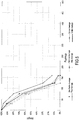
- each line of the graph represents a solid toilet block according to the formulation as previously indicated in use in several models of toilet bowls and the dotted line represents the average consumption, from the initial point 0, with 100 as a weight, it was recorded a weight increase of the block until 150 flushing operations. Such a weight increase, due to hydration, has been recorded concurrently to the formation of the gel.
- Example 2 comparative.
- Such a block, in a plastic cage, has been arranged in a sanitary object and subjected to the same flushing test of example 1.
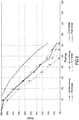
- each line of the graph represents a solid toilet block according to the formulation previously indicated, in use in several models of toilet bowls, and the dotted line represents the average consumption.
- Such a block, in a plastic cage, has been arranged in a sanitary object and subjected to the same flushing test of example 1.
- each line of the graph represents a solid toilet block according to the formulation as previously indicated, in use in several models of toilet bowls, and the dotted line represents the average consumption.
Landscapes
- Chemical & Material Sciences (AREA)
- Oil, Petroleum & Natural Gas (AREA)
- Life Sciences & Earth Sciences (AREA)
- Engineering & Computer Science (AREA)
- Chemical Kinetics & Catalysis (AREA)
- Wood Science & Technology (AREA)
- Organic Chemistry (AREA)
- Emergency Medicine (AREA)
- Health & Medical Sciences (AREA)
- Detergent Compositions (AREA)
- Non-Flushing Toilets (AREA)
- Medicinal Preparation (AREA)
- Cosmetics (AREA)
Description
- The present invention relates to a solid toilet block. It is comprised in the technical field of detergent and/or perfuming and/or sanitizing products, in the solid form, to be applied onto the internal wall of sanitary appliances such as toilet bowls, bidet, washbasins, pissoirs.
- Many solid toilet blocks provided with detergent and/or perfuming and/or sanitizing properties are known and subject-matter of wide marketing.
- Said blocks are capable to provide an effective cleansing, disinfecting and/or perfuming treatment of the toilet bowl, thanks to the use of a solid block, containing the various active ingredients of interest, slowly dissolving to rinsing water flushing.
- Within the solid toilet products of the rim-block type, applied onto the surface of interest by means of appropriate hooks or plastic cages, it is increasingly felt the need of products capable to exert multiple actions (detergent, perfuming, sanitizing) for a great number of water flushing operations, keeping at the same time a pleasant aesthetic appearance for the user. The need to achieve a product capable to exert a multiplicity of actions necessarily implies also the identification of a formulation in which the several active components are physically and chemically compatible with each other.
- The solid blocks are, in general, a product particularly attractive from a point of view of lasting in time, thanks to the presence of components which, adjusting the dissolution, allow a gradual and slow release of the various components constituting the block itself. Moreover, they are particularly interesting as they combine a long lasting, with production and marketing costs absolutely advantageous with respect to other similar products.
- Many and several approaches have been adopted over the time to control the consumption of the solid blocks: for example, a possible solution is represented by the presence of active components having a limited solubility in the flushing rinsing water.
- To this end, the formulations of the toilet blocks according to the state of the art, usually contain, additional to surfactants and to minor components such as perfume, colorants, possible whiteners based on oxygen or chlorine, also significant amounts of inert fillers, which are usually inorganic fillers such as sodium sulfate or sodium carbonate. The fillers have the purpose both to modulate consumption, and to give the proper texture to the formulation, allowing to adjust the amount of the total active components.
- The use of high quantities of fillers implies however some drawbacks during use of the solid toilet blocks contained therein.
- First of all, at each water flushing, one part of the filler contained into the toilet block dissolves and re-crystallizes on the walls of the toilet bowl: this leads to the formation of typical white and unpleasant deposits on the surface of the sanitary appliance, constituted in fact by sodium sulfate or sodium carbonate.
- Moreover, the use of high quantities of inert filler has a significant impact on the sustainability of the final product.
- The weight of the solid block thus formulated is mostly due to the presence of high quantities of filler itself, with a considerable increase of costs to move an inert product during the transportation of the finished toilet block, with a consequent increase of production of CO2 per piece.
- Moreover it is apparent that, in the price of the end-product, namely of the toilet block purchased by the consumer, is comprised the cost of materials which, for most, do not give any contribution to the perfuming/detergent/sanitizing properties of the toilet block.
- Another element that should be remembered with reference to the solid toilet blocks of the state of the art, containing high quantities of fillers, is that they are characterized by a matt appearance, aesthetically less pleasant and less appealing for the consumer with respect, for example, to multilayer/phases blocks, where at least one of such phases is translucent, as it is achieved with a transparent gel. Toilet blocks having a translucent appearance have increasingly found much favour with the consumers from an aesthetic point of view, ensuring also a better perfuming action, when the layer of gel is composed by the components of the formulation which give, in fact, the scent.
- The evolution of the product in that direction led to develop toilet blocks which provide a solid phase and a gel phase. They however present the drawback to be generally characterized by particularly complicated production processes.
- For example, the prior document
GB 1,465,475 GB 1,465,475 - The applicant has now surprisingly found a solid toilet block which overcomes the drawbacks of the state of the art as previously highlighted.
- The main purpose of the present invention is therefore that of finding a solid toilet block which ensures, at the same time, a particular combination of features and specifically: a plurality of actions, an aesthetic aspect particularly appealing for the consumer, a long lasting for a high number of flushing operations, without release of residual elements attaching to the walls of the sanitary object during use, and that it can be achieved through extremely simple methods.
- The purpose of the present invention is therefore that of identifying a solid toilet block which, when applied onto the sanitary object and subjected to contact with rinsing water, gets and maintains a transparent appearance, with an unquestionable aesthetic advantage for the consumer.
- A purpose of the present invention is also that of achieving a solid toilet block which, along with optimal appearance and lasting, presents an improved formulation allowing a plurality of actions and avoid formation of residues due to re-crystallization of fillers on the walls of the sanitary object during use. Subject-matter of the present invention is a toilet block having a formulation comprising
- a non-ionic surfactant selected from one or more polyalkylethers, in an amount ranging from 85 to 95%, preferably from 91 to 93%, by weight with respect to the total weight of the block; wherein said non-ionic surfactant includes a linear or branched alkyl chain, preferably linear, with a number of carbon atoms greater than or equal to 10, and even more preferably comprised between 12 and 22; and wherein said non-ionic surfactant has a number of moles of ethylene oxide per molecule greater than 15, even more preferably greater than 30;
- a perfuming agent in an amount ranging from 2 to 10%, preferably from 3 to 5%, by weight with respect to the total weight of the block;
- a polyalcohol, with a number of carbon atoms preferably less than 5, or a polyether liquid at room temperature, in an amount ranging from 0.1 to 3%, preferably from 1.5 to 2.5%, by weight with respect to the total weight of the block;
- a foaming agent selected from the classes of anionic and/or non-ionic and/or cationic and/or amphoteric surfactants, in an amount ranging from 1 to 3%, preferably from 1.5 to 2.5%, by weight with respect to the total weight of the block;
- water in an amount ranging from 0.1 to 0.5%, preferably from 0.2 to 0.3%, by weight with respect to the total weight of the block;
- A further purpose of the present invention is a method of production of the toilet block providing the production of the block by extrusion, molding or melting and/or pouring of mixture of components constituting said solid toilet block.
- The present invention relates also to a device for the cleansing/sanitizing/perfuming of the toilet bowl suitable for hanging onto the edge of the bowl by means of a support for the toilet block subject-matter of the present invention. Said support can be composed of a hook directly applied onto the toilet block, of a plastic cage or other similar solution.
- The toilet block according to the present invention comprises as main component a non-ionic surfactant in an amount ranging from 85 to 95%, preferably from 91 to 93%, by weight with respect to the total weight of the block.
- The percentages by weight indicated in the present text are all percentages by weight with respect to the total weight of the solid block, before it is put in use. Preferably the non-ionic surfactant is a mixture of polyalkylethers, with a linear alkyl chain having a number of carbon atoms comprised between 12 and 22 and having a number of moles of ethylene per molecule greater than 30.
- Still more preferably it is a mixture of oleyl and cetyl alcohols ethoxylates 55 moles EO in an amount ranging from 91 to 93%, more preferably from 91 to 92% by weight with respect to the total weight of the block.
- The perfuming agent is present, in the toilet block according to the present invention, in an amount ranging from 2 to 10%, preferably from 3 to 5%, and still more preferably it is equal to 4% by weight with respect to the total weight of the block. Such a perfuming agent can have a natural or synthetic origin. In the toilet block according to the present invention the polyalcohol is preferred with respect to polyether and it is preferably selected from glycerol, ethylene glycol and propylene glycol, in an amount ranging from 0,1 to 3%, preferably from 1,5 to 2,5%, by weight with respect to the total weight of the block. The glycerol can be glycerol of natural, synthetic or semi-synthetic origin.
- The polyether is preferably a polyethylenglycol liquid at room temperature (20-25°C).
- In the toilet block according to the present invention a foaming agent is also present, selected from anionic and/or non-ionic and/or cationic and/or amphoteric surfactants, preferably laurylether sodium sulfate (or sodium les 2 EO), said agent being present in an amount ranging from 1 to 3%, preferably from 1,5 to 2,5%, still more preferably equal to 2% by weight with respect to the total weight of the block.
- The own specific non-ionic surfactants of the toilet block according to the present invention confer a good foaminess to the composition, obtaining a good cleansing effect and a good foam profile, without damaging the gel structure.
- The filler, when present, is selected from an inorganic filler, such as for example silica, salts of alkali and/or alkaline-earth metals, clays and/or zeolites, or an organic filler, both in the form of salt and in the molecular form, such as for example sucrose and/or xylitol. Said filler being preferably an inorganic filler such as sodium sulfate or sodium carbonate.
- The formulation of the toilet block according to the present invention can also provide, as minority components, colorants with the objective to confer a more pleasing appearance to the block, and/or preservatives and/or sanitizing agents, selected from those commonly known to the skilled person in the art. The solid block according to the present invention preferably provides the following formulation consisting of oleyl or cetyl alcohols ethoxylates 55 moles EO;
a perfuming agent;
glycerol;
sodium lauryl ether sulfate;
colorant;
water. - Still more preferably, the solid block according to the present invention consists of 91,75% by weight of mixture of oleyl and cetyl alcohols ethoxylates 55 moles, 4% by weight of perfuming agent, 2% by weight of sodium les 2 EO (sliding pasta at 70%), 2% by weight of glycerol, 0.008% by weight of colorant and 0.242% by weight of water. The percentages are all percentages by weight with respect to the total weight of the solid block.
- A main advantage of the solid toilet block according to the present invention is connected with the special formulation thereof which, with a much reduced content of filler or filler-free, allows to achieve a block with a weight of about 30 g, a number of flushing operations at least 20% greater than a block with a weight of 35-40 g of the state of the art.
- Moreover, still thanks to the special formulation of the block itself, which substantially reduces or excludes the presence of fillers, the deposits onto the surface of the sanitary object, which are due to the re-crystallization of the filler during use, are completely eliminated.
- At last, a further much important advantage is the particular formulation of the solid block according to the present invention which allows to achieve a matt solid product which, as soon as put in use and hit by the flushing water, adsorbs water, hydrates and the surface layer transforms into a gel, with a consequent transparent appearance.
- The adsorption of water goes on up to when the whole structure of the solid block turns into a gel (about 150 flushing operations), allowing thus not only to obtain a more pleasant aesthetic appearance, but also allowing the user to monitor the functioning of the block which hydrates and releases active ingredients for its whole life time.
- A further advantage of the solid block according to the present invention is connected with the easiness of production thereof: indeed, it can be obtained through whichever known method for the achievement of a solid block, as for example extrusion, moulding, melting and subsequent pouring, substantially obtaining whichever form.
- Thanks to the specific formulation, the solid toilet block thus achieved, once put in use, modifies and, by hydration, turns into a gel.
- The toilet block swells by adsorbing water (documented by the increase of weight in the first few days), thus making the active components pre-dissolved and available.
- Then the toilet block according to the present invention presents a particular formulation that ensures at the same time a slow dissolution, hydration to form the gel and pre-dissolution of active components that are so readily available.
- The preferred process for preparing a solid toilet block according to the present invention comprises the following phases:
- all the components of the formulation of the solid block according to the present invention, are mixed at room temperature for a variable time from 45 to 120 minutes;
- the extrudable stuff thus obtained is then extruded in the desired form.
- In the case in which the solid block according to the present invention provides a hook directly applied to the same for the application onto the wall of the sanitary object, the moulding of the block may occur directly about such a hook, which results thus inserted into the structure of the same solid block.
- In the case of extrusion, it can be carried out through a proper head of extrusion allowing to achieve the seat for the same hook.
- The toilet block according to the present invention can be thus applied at a peripheral edge of a sanitary bowl or WC through a hook directly inserted in the same body of the block or through an application device outside the block, as a plastic cage.
- With respect to the processes of preparation of solid toilet blocks with a gel phase according to the known art, the process for the production of the solid block according to the present invention presents the advantage to be extremely simplified, not requiring the preparation, separately, of a solid phase and of a gel phase which will be then necessarily joined in the end product, but, on the contrary, allows the achievement of the solid block with a single simple process.
- Thanks to the specific formulation of the solid block according to the present invention, as soon as put in use, the block turns into a product presenting on the surface initially a solid phase and a gel phase, to lead then, after a certain number of flushing operations, to be a solid block in the gel form. Additional to the advantages as previously indicated, it is also highlighted that the solid block according to the present invention implies costs definitely lower than those characterizing solid blocks comprising a gel phase according to the state of the art.
- The operation of the solid block according to the present invention is thus the following:
- the block is applied onto the internal wall of the sanitary object through a hook or plastic cage; when the rinsing water is operated, the water flow hits the same block and hydrates the block, which turns into a gel, releasing the active components. As previously indicated, approximately 120-150 flushing operations are required to allow the whole block to get the aspect of a gel.
- Such active components, which are detergent, sanitizing or perfuming, dissolve in the water flow or evaporate and achieve the cleansing, sanitization and perfuming of the sanitary object.
- At the same time the water also forms a foam, which increases the effectiveness of the cleansing of the sanitary object, causing the wear of the block, consuming at each flushing operation a small amount of materials, constituting the block itself, allowing therefore also the diffusion of a new perfuming agent. Therefore, as previously outlined, the standard blocks, during their life time, consume by erosion without substantially modifying their aspect. The solid toilet block provided with the specific formulation according to the present invention has, instead, as peculiar feature that of changing appearance (from solid to transparent gel) during its use (see
figures 1-3 , wherein it is apparent that the product in the initial state is matt (figure 1 ), after a certain number of flushing operations (25 flushings), the product provides a solid matt phase and a transparent gel phase (figure 2 ) and after a greater number of flushing operations (50 flushings) the product is fully in the gel form, transparent (figure 3 ). - This change of physical appearance has two important functions: the first, further than aesthetic, is that of visually informing the consumer on the fact that the block is suitably functioning, hydrating and releasing active components. The second relates to the fact that the gel forms by adsorption of water by side of the matrix, generating in fact a weight and volume increase in the initial phases of the solid block life. This feature of the block according to the present invention is particularly important, as while a standard block having a weight of 35-40 g averagely lasts 150-200 flushing operations, the present block allows, in view of an initial amount of active components in the solid block equal to about 30g, to achieve an end product in gel which lasts at least 400 flushing operations. Indeed, a solid block according to the present invention, subjected to rinsing operations of a volume variable from 6 to 9 litres each, having a weight of about 30 g, is completely rinsed off only after about 400 flushing operations, keeping in mind that the number of flushing operations necessary for the complete rinsing off depends also on the geometry of the block and the modes of flushing of water into the toilet bowl.
- The following examples are provided with a mere illustrative purpose.
- Using the process of preparation as previously described, it has been extruded a solid toilet block having a weight of about 30 g, rectangular, sized 65mm x 30mm x 10mm, having the following formulation (percentages by weight with respect to the total weight of the block):
Components % by weight Perfume 4,000 Sodium LES 2 EO (sliding pasta at 70%, ZETESOL LES 70% ex Zimmer & Schwartz, foaming agent)2,000 Mixture of oleyl and cetyl alcohols ethoxylates 55 moles EO (Emulgant CO 55 - Ex Sasol, non-ionic surfactant) 91, 750 Blue Colour 0, 008 Glycerol 2, 000 Water 0, 242 Total 100, 000 - Such a block, in a plastic cage, has been arranged in a sanitary object and subjected to a flushing test which averagely provides about 15 flushing operations a day. During use, said tablet got hydrated, adsorbing the flushing water and becoming a transparent gel.
- As derivable from the graph reported in
Figure 4 , wherein each line of the graph represents a solid toilet block according to the formulation as previously indicated in use in several models of toilet bowls and the dotted line represents the average consumption, from theinitial point 0, with 100 as a weight, it was recorded a weight increase of the block until 150 flushing operations. Such a weight increase, due to hydration, has been recorded concurrently to the formation of the gel. - The graph reported in
figure 4 outlined that the solid block according to the present invention presents a lasting greater than 500 rinsing operations for each type of toilet bowl used. - It has been tested a standard solid toilet block, available on the market, having a weight of about 34 g, rectangular, sized 65mm x 30mm x 10mm, having the following formulation (percentages by weight with respect to the total weight of the block):
Components % by weight Perfume 4, 000 Sodium sulfate (filler) 55, 200 Alpha-olefins sulfonated (anionic surfactant, NANSA LSS 480/H (80%) ex Huntsmann) 6, 500 n-C10-C13-sodium alkylbenzensulfonate (anionic surfactant, MARLON ARL (80%) ex Sasol) 30, 000 Sodium LES 2 EO (foaming agent, ZETESOL LES 27% ex Zimmer & Schwartz) 0, 900 PEG 6000 3, 000 Titanium dioxide (colorant) 0, 150 Blue Colour 0, 006 Water 0, 244 Total 100 - Such a block, in a plastic cage, has been arranged in a sanitary object and subjected to the same flushing test of example 1.
- In the graph reported in
Figure 5 each line of the graph represents a solid toilet block according to the formulation previously indicated, in use in several models of toilet bowls, and the dotted line represents the average consumption. - The graph reported in
figure 5 outlined that the standard solid block tested in the comparative example 2, presents a lasting of about 150 flushing operations for each type of toilet bowl used. - It is thus apparent the superiority of the toilet block according to the present invention in terms of lasting connected with the particular formulation which provides a specific type of non-ionic surfactant and a reduced amount or absence of fillers.
- It has been tested a second standard solid toilet block, available on the market, having a weight of about 34 g, rectangular, sized 65mm x 30mm x 15mm, having the following formulation (percentages by weight with respect to the total weight of the block):
Components % by weight Perfume 4, 000 Sodium Carbonate (filler) 38, 550 Linear Alkyl benzene sulfonate (anionic surfactant, DDBS ISU LAS G ex ISU) 55, 000 PEG 6000 2, 200 Blue Colour 0, 008 Water 0, 242 Total 100 - Such a block, in a plastic cage, has been arranged in a sanitary object and subjected to the same flushing test of example 1.
- In the graph reported in
Figure 6 each line of the graph represents a solid toilet block according to the formulation as previously indicated, in use in several models of toilet bowls, and the dotted line represents the average consumption. - The graph reported in
figure 6 outlined that the standard solid block tested in the comparative example 3 presents a lasting of about 320 flushing operations for whichever type of toilet bowl used. - It is thus apparent the superiority of the toilet block according to the present invention in terms of lasting connected with the particular formulation which provides a specific type of non-ionic surfactant and a reduced amount or absence of fillers.
Claims (11)
- A toilet block having a formulation comprising:- a non-ionic surfactant selected from one or more polyalkylethers, in an amount ranging from 85 to 95%, preferably from 91 to 93%, by weight with respect to the total weight of the block; wherein said non-ionic surfactant includes a linear or branched alkyl chain, preferably linear, with a number of carbon atoms greater than or equal to 10, and even more preferably comprised between 12 and 22; and wherein said non-ionic surfactant has a number of moles of ethylene oxide per molecule greater than 15, even more preferably greater than 30;- a perfuming agent in an amount ranging from 2 to 10%, preferably from 3 to 5%, by weight with respect to the total weight of the block;- a polyalcohol, with a number of carbon atoms preferably less than 5, or a polyether liquid at room temperature, in an amount ranging of from 0.1 to 3%, preferably of from 1.5 to 2.5%, by weight with respect to the total weight of the block;- a foaming agent selected from the classes of anionic and/or non-ionic and/or cationic and/or amphoteric surfactants, in an amount ranging of from 1 to 3%, preferably of from 1.5 to 2.5%, by weight with respect to the total weight of the block;- water in an amount ranging of from 0.1 to 0.5%, preferably of from 0.2 to 0.3%, by weight with respect to the total weight of the block;said formulation including an inorganic or organic filler, in an amount less than 10% by weight, still more preferably said formulation not including any inorganic or organic filler.
- Block according to claim 1, wherein the non-ionic surfactant is a mixture of polyalkylethers, with a linear alkyl chain with a number of carbon atoms ranging between 12 and 22 and with a number of moles of ethylene oxide per molecule greater than 30.
- Block according to any one of the preceding claims, wherein the non-ionic surfactant is a mixture of oleyl and cetyl alcohols ethoxylates 55 moles EO, in an amount ranging of from 91 to 93%, more preferably of from 91 to 92%, by weight with respect to the weight total of the block.
- Block according to any one of the preceding claims, wherein the polyalcohol is selected from glycerine, ethylene glycol and propylene glycol, in an amount ranging of from 0.1 to 3%, preferably of from 1.5 to 2.5%, by weight with respect to the total weight of the block.
- Block according to any one of the preceding claims, wherein the polyether liquid at room temperature is a polyethylene glycol liquid at room temperature.
- Block for toilet according to any one of the preceding claims, wherein the foaming agent is sodium lauryl ether sulfate (or sodium les 2 EO), in an amount ranging of from 1 to 3%, preferably of from 1.5 to 2.5%, even more preferably equal to 2% by weight with respect to the total weight of the block.
- Block according to any one of the preceding claims, wherein the filler, when present, is an inorganic filler selected from sodium sulfate or sodium carbonate.
- Block according to any one of the preceding claims, consisting of oleyl and cetyl alcohols ethoxylates 55 moles EO, a perfuming agent, glycerine, sodium lauryl ether sulfate, colorant and water.
- Block according to any one of the preceding claims, consisting of oleyl and cetyl alcohols ethoxylates 55 moles EO in an amount equal to 91.75% by weight, of a perfuming agent in an amount equal to 4% by weight, of sodium laurylether sulfate 2 EO in an amount equal to 2% by weight in the form of a sliding pasta at 70% by weight, of glycerine in an amount equal to 2% by weight, of colorant in an amount equal to 0.008% by weight and of water in an amount equal to 0.242 % by weight.
- Block according to any one of the preceding claims, applied to a peripheral edge of a lavatory bowl or toilet through a hook directly inserted into the body of the block or by means of an applicator device external to the block.
- Method of production of a toilet block according to any one of claims 1 to 10, wherein the block is made by extrusion, molding or melting and/or subsequent pouring of mixture of components of the formulation.
Priority Applications (5)
| Application Number | Priority Date | Filing Date | Title |
|---|---|---|---|
| RS20180174A RS57053B1 (en) | 2013-09-18 | 2014-09-17 | Toilet solid block |
| SM20180060T SMT201800060T1 (en) | 2013-09-18 | 2014-09-17 | Toilet solid block |
| SI201430610T SI2851417T1 (en) | 2013-09-18 | 2014-09-17 | Solid toilet |
| PL14185156T PL2851417T3 (en) | 2013-09-18 | 2014-09-17 | Toilet solid block |
| HRP20180255TT HRP20180255T1 (en) | 2013-09-18 | 2018-02-09 | Toilet solid block |
Applications Claiming Priority (1)
| Application Number | Priority Date | Filing Date | Title |
|---|---|---|---|
| IT001535A ITMI20131535A1 (en) | 2013-09-18 | 2013-09-18 | SOLID TABLET FOR WC |
Publications (2)
| Publication Number | Publication Date |
|---|---|
| EP2851417A1 EP2851417A1 (en) | 2015-03-25 |
| EP2851417B1 true EP2851417B1 (en) | 2018-01-10 |
Family
ID=49486556
Family Applications (1)
| Application Number | Title | Priority Date | Filing Date |
|---|---|---|---|
| EP14185156.8A Active EP2851417B1 (en) | 2013-09-18 | 2014-09-17 | Toilet solid block |
Country Status (11)
| Country | Link |
|---|---|
| EP (1) | EP2851417B1 (en) |
| CY (1) | CY1120001T1 (en) |
| ES (1) | ES2660289T3 (en) |
| HR (1) | HRP20180255T1 (en) |
| IT (1) | ITMI20131535A1 (en) |
| LT (1) | LT2851417T (en) |
| PL (1) | PL2851417T3 (en) |
| PT (1) | PT2851417T (en) |
| RS (1) | RS57053B1 (en) |
| SI (1) | SI2851417T1 (en) |
| SM (1) | SMT201800060T1 (en) |
Families Citing this family (5)
| Publication number | Priority date | Publication date | Assignee | Title |
|---|---|---|---|---|
| CA3089629A1 (en) | 2018-01-26 | 2019-08-01 | Ecolab Usa Inc. | Solidifying liquid amine oxide, betaine, and/or sultaine surfactants with a carrier |
| KR102874921B1 (en) | 2018-01-26 | 2025-10-22 | 에코랍 유에스에이 인코퍼레이티드 | Solidification of liquid amine oxide, betaine, and/or sultaine surfactants using binders and optional carriers |
| CA3167784A1 (en) | 2018-01-26 | 2019-08-01 | Ecolab Usa Inc. | Solidifying liquid anionic surfactants |
| JP2021515820A (en) | 2018-02-23 | 2021-06-24 | ユニリーバー・ナームローゼ・ベンノートシヤープ | Molding detergent product composition containing aminopolycarboxylate |
| WO2022189340A1 (en) * | 2021-03-08 | 2022-09-15 | Unilever Ip Holdings B.V. | Shaped toilet cleaner block |
Citations (3)
| Publication number | Priority date | Publication date | Assignee | Title |
|---|---|---|---|---|
| GB1465475A (en) | 1974-05-23 | 1977-02-23 | Ciba Geigy Ag | Lavatory cleaning composition |
| EP1086199B1 (en) | 1998-06-12 | 2002-05-29 | Buck-Chemie GmbH . | Adhesive sanitary agent |
| EP1325103A1 (en) | 2000-09-29 | 2003-07-09 | Buck-Chemie GmbH & Co. | Adhesive sanitary cleaning and deodorising product |
Family Cites Families (2)
| Publication number | Priority date | Publication date | Assignee | Title |
|---|---|---|---|---|
| ITMI20070642A1 (en) * | 2007-03-29 | 2008-09-30 | Bolton Manitoba S P A | SANITIZING ADHESIVE COMPOSITION FOR THE CLEANING AND / OR DISINFECTION AND SANITARY SCENTING |
| WO2012017276A1 (en) * | 2010-08-06 | 2012-02-09 | Re.Le.Vi. S.P.A. | A sanitary agent covered by a film |
-
2013
- 2013-09-18 IT IT001535A patent/ITMI20131535A1/en unknown
-
2014
- 2014-09-17 SI SI201430610T patent/SI2851417T1/en unknown
- 2014-09-17 EP EP14185156.8A patent/EP2851417B1/en active Active
- 2014-09-17 RS RS20180174A patent/RS57053B1/en unknown
- 2014-09-17 ES ES14185156.8T patent/ES2660289T3/en active Active
- 2014-09-17 LT LTEP14185156.8T patent/LT2851417T/en unknown
- 2014-09-17 PT PT141851568T patent/PT2851417T/en unknown
- 2014-09-17 PL PL14185156T patent/PL2851417T3/en unknown
- 2014-09-17 SM SM20180060T patent/SMT201800060T1/en unknown
-
2018
- 2018-02-09 HR HRP20180255TT patent/HRP20180255T1/en unknown
- 2018-02-21 CY CY20181100199T patent/CY1120001T1/en unknown
Patent Citations (3)
| Publication number | Priority date | Publication date | Assignee | Title |
|---|---|---|---|---|
| GB1465475A (en) | 1974-05-23 | 1977-02-23 | Ciba Geigy Ag | Lavatory cleaning composition |
| EP1086199B1 (en) | 1998-06-12 | 2002-05-29 | Buck-Chemie GmbH . | Adhesive sanitary agent |
| EP1325103A1 (en) | 2000-09-29 | 2003-07-09 | Buck-Chemie GmbH & Co. | Adhesive sanitary cleaning and deodorising product |
Also Published As
| Publication number | Publication date |
|---|---|
| HRP20180255T1 (en) | 2018-03-09 |
| RS57053B1 (en) | 2018-05-31 |
| ES2660289T3 (en) | 2018-03-21 |
| LT2851417T (en) | 2018-04-25 |
| CY1120001T1 (en) | 2018-12-12 |
| SI2851417T1 (en) | 2018-05-31 |
| EP2851417A1 (en) | 2015-03-25 |
| ITMI20131535A1 (en) | 2015-03-19 |
| PT2851417T (en) | 2018-02-28 |
| SMT201800060T1 (en) | 2018-05-02 |
| PL2851417T3 (en) | 2018-07-31 |
Similar Documents
| Publication | Publication Date | Title |
|---|---|---|
| EP2851417A1 (en) | Toilet solid block | |
| US8927477B2 (en) | Sanitary agent covered by a film | |
| CA2634384C (en) | Cageless lavatory dispensing device comprising a compressed solid block comprising titanium dioxide | |
| ES2289127T3 (en) | CLEANER FOR THE THREADED TOILET CUP. | |
| EP1978080B1 (en) | Adhesive hygienizing composition for the cleaning and/or disinfecting and/or perfuming of sanitary fixtures | |
| EP2134829B1 (en) | Self adhesive hard surface cleaning block | |
| NZ587536A (en) | Silver dihydrogen citrate compositions for use in deodorants, detergents, moisturizers and the like | |
| ECSP10010629A (en) | LIQUID COMPOSITIONS FOR CLEANING AND METHODS OF USE AND MANUFACTURE | |
| DK1456331T3 (en) | Liquid dishwashing compositions containing hydrogen peroxide | |
| EP2601284B1 (en) | A sanitary agent | |
| ES2365739T3 (en) | COMBINATION OF AROMATIC SUBSTANCES CONTAINING 3,7-DIMETILOCT-6-ENO-NITRILE (CITRONELIL NITRILE) AS A SUBSTITUTE FOR GERANONITRILE. | |
| JP2015120882A (en) | Prevents water splashes during toilet excretion | |
| EP3168284A1 (en) | Shaped toilet cleaner block | |
| US6849586B2 (en) | Hard surface cleaners containing chitosan | |
| CN105112182A (en) | Normal-pressure foam-type toilet cleaning agent and preparation method thereof | |
| JP2005187511A (en) | Liquid composition and cleaning method | |
| US20240052265A1 (en) | Composition to prevent or reduce splashing on use of a toilet | |
| CN104479932A (en) | Multifunctional toilet cleaning effervescent tablets | |
| JP6095944B2 (en) | Foam composition | |
| CN104093826B (en) | Foam enhanced hard surface cleaning composition | |
| KR102896891B1 (en) | Liquid type foaming cleaner composition, cleaner for toilet containing the same and Cleaning catridge for bidet | |
| EP4674934A1 (en) | Sanitary agent for cleaning and perfuming a sanitary apparatus | |
| Wisniewski | 5 Specialty Cleaners | |
| WO2026077752A1 (en) | Use for improving foam quality | |
| HK1183684B (en) | A sanitary agent covered by a film |
Legal Events
| Date | Code | Title | Description |
|---|---|---|---|
| PUAI | Public reference made under article 153(3) epc to a published international application that has entered the european phase |
Free format text: ORIGINAL CODE: 0009012 |
|
| 17P | Request for examination filed |
Effective date: 20140917 |
|
| AK | Designated contracting states |
Kind code of ref document: A1 Designated state(s): AL AT BE BG CH CY CZ DE DK EE ES FI FR GB GR HR HU IE IS IT LI LT LU LV MC MK MT NL NO PL PT RO RS SE SI SK SM TR |
|
| AX | Request for extension of the european patent |
Extension state: BA ME |
|
| R17P | Request for examination filed (corrected) |
Effective date: 20150825 |
|
| RBV | Designated contracting states (corrected) |
Designated state(s): AL AT BE BG CH CY CZ DE DK EE ES FI FR GB GR HR HU IE IS IT LI LT LU LV MC MK MT NL NO PL PT RO RS SE SI SK SM TR |
|
| GRAP | Despatch of communication of intention to grant a patent |
Free format text: ORIGINAL CODE: EPIDOSNIGR1 |
|
| STAA | Information on the status of an ep patent application or granted ep patent |
Free format text: STATUS: GRANT OF PATENT IS INTENDED |
|
| RIC1 | Information provided on ipc code assigned before grant |
Ipc: C11D 17/00 20060101ALI20170703BHEP Ipc: C11D 1/825 20060101AFI20170703BHEP Ipc: C11D 1/72 20060101ALI20170703BHEP Ipc: C11D 1/29 20060101ALI20170703BHEP Ipc: C11D 3/50 20060101ALI20170703BHEP Ipc: C11D 1/835 20060101ALI20170703BHEP Ipc: C11D 3/20 20060101ALI20170703BHEP Ipc: C11D 3/37 20060101ALI20170703BHEP Ipc: C11D 1/83 20060101ALI20170703BHEP |
|
| INTG | Intention to grant announced |
Effective date: 20170803 |
|
| GRAS | Grant fee paid |
Free format text: ORIGINAL CODE: EPIDOSNIGR3 |
|
| GRAA | (expected) grant |
Free format text: ORIGINAL CODE: 0009210 |
|
| STAA | Information on the status of an ep patent application or granted ep patent |
Free format text: STATUS: THE PATENT HAS BEEN GRANTED |
|
| AK | Designated contracting states |
Kind code of ref document: B1 Designated state(s): AL AT BE BG CH CY CZ DE DK EE ES FI FR GB GR HR HU IE IS IT LI LT LU LV MC MK MT NL NO PL PT RO RS SE SI SK SM TR |
|
| REG | Reference to a national code |
Ref country code: CH Ref legal event code: EP Ref country code: AT Ref legal event code: REF Ref document number: 962426 Country of ref document: AT Kind code of ref document: T Effective date: 20180115 |
|
| REG | Reference to a national code |
Ref country code: IE Ref legal event code: FG4D |
|
| REG | Reference to a national code |
Ref country code: HR Ref legal event code: TUEP Ref document number: P20180255 Country of ref document: HR |
|
| REG | Reference to a national code |
Ref country code: DE Ref legal event code: R096 Ref document number: 602014019789 Country of ref document: DE |
|
| REG | Reference to a national code |
Ref country code: PT Ref legal event code: SC4A Ref document number: 2851417 Country of ref document: PT Date of ref document: 20180228 Kind code of ref document: T Free format text: AVAILABILITY OF NATIONAL TRANSLATION Effective date: 20180222 |
|
| REG | Reference to a national code |
Ref country code: NL Ref legal event code: FP |
|
| REG | Reference to a national code |
Ref country code: HR Ref legal event code: T1PR Ref document number: P20180255 Country of ref document: HR |
|
| REG | Reference to a national code |
Ref country code: ES Ref legal event code: FG2A Ref document number: 2660289 Country of ref document: ES Kind code of ref document: T3 Effective date: 20180321 |
|
| REG | Reference to a national code |
Ref country code: SK Ref legal event code: T3 Ref document number: E 26472 Country of ref document: SK |
|
| PG25 | Lapsed in a contracting state [announced via postgrant information from national office to epo] |
Ref country code: NO Free format text: LAPSE BECAUSE OF FAILURE TO SUBMIT A TRANSLATION OF THE DESCRIPTION OR TO PAY THE FEE WITHIN THE PRESCRIBED TIME-LIMIT Effective date: 20180410 Ref country code: FI Free format text: LAPSE BECAUSE OF FAILURE TO SUBMIT A TRANSLATION OF THE DESCRIPTION OR TO PAY THE FEE WITHIN THE PRESCRIBED TIME-LIMIT Effective date: 20180110 |
|
| PG25 | Lapsed in a contracting state [announced via postgrant information from national office to epo] |
Ref country code: IS Free format text: LAPSE BECAUSE OF FAILURE TO SUBMIT A TRANSLATION OF THE DESCRIPTION OR TO PAY THE FEE WITHIN THE PRESCRIBED TIME-LIMIT Effective date: 20180510 Ref country code: SE Free format text: LAPSE BECAUSE OF FAILURE TO SUBMIT A TRANSLATION OF THE DESCRIPTION OR TO PAY THE FEE WITHIN THE PRESCRIBED TIME-LIMIT Effective date: 20180110 Ref country code: BG Free format text: LAPSE BECAUSE OF FAILURE TO SUBMIT A TRANSLATION OF THE DESCRIPTION OR TO PAY THE FEE WITHIN THE PRESCRIBED TIME-LIMIT Effective date: 20180410 |
|
| REG | Reference to a national code |
Ref country code: GR Ref legal event code: EP Ref document number: 20180400929 Country of ref document: GR Effective date: 20180829 |
|
| REG | Reference to a national code |
Ref country code: FR Ref legal event code: PLFP Year of fee payment: 5 |
|
| REG | Reference to a national code |
Ref country code: DE Ref legal event code: R026 Ref document number: 602014019789 Country of ref document: DE |
|
| PLBI | Opposition filed |
Free format text: ORIGINAL CODE: 0009260 |
|
| PLAX | Notice of opposition and request to file observation + time limit sent |
Free format text: ORIGINAL CODE: EPIDOSNOBS2 |
|
| PG25 | Lapsed in a contracting state [announced via postgrant information from national office to epo] |
Ref country code: EE Free format text: LAPSE BECAUSE OF FAILURE TO SUBMIT A TRANSLATION OF THE DESCRIPTION OR TO PAY THE FEE WITHIN THE PRESCRIBED TIME-LIMIT Effective date: 20180110 Ref country code: AL Free format text: LAPSE BECAUSE OF FAILURE TO SUBMIT A TRANSLATION OF THE DESCRIPTION OR TO PAY THE FEE WITHIN THE PRESCRIBED TIME-LIMIT Effective date: 20180110 Ref country code: RO Free format text: LAPSE BECAUSE OF FAILURE TO SUBMIT A TRANSLATION OF THE DESCRIPTION OR TO PAY THE FEE WITHIN THE PRESCRIBED TIME-LIMIT Effective date: 20180110 |
|
| 26 | Opposition filed |
Opponent name: BUCK-CHEMIE GMBH . Effective date: 20180927 |
|
| PG25 | Lapsed in a contracting state [announced via postgrant information from national office to epo] |
Ref country code: DK Free format text: LAPSE BECAUSE OF FAILURE TO SUBMIT A TRANSLATION OF THE DESCRIPTION OR TO PAY THE FEE WITHIN THE PRESCRIBED TIME-LIMIT Effective date: 20180110 |
|
| PLBB | Reply of patent proprietor to notice(s) of opposition received |
Free format text: ORIGINAL CODE: EPIDOSNOBS3 |
|
| REG | Reference to a national code |
Ref country code: HR Ref legal event code: ODRP Ref document number: P20180255 Country of ref document: HR Payment date: 20190903 Year of fee payment: 6 |
|
| PGFP | Annual fee paid to national office [announced via postgrant information from national office to epo] |
Ref country code: LU Payment date: 20190927 Year of fee payment: 6 Ref country code: MC Payment date: 20190904 Year of fee payment: 6 Ref country code: PT Payment date: 20190909 Year of fee payment: 6 Ref country code: IE Payment date: 20190927 Year of fee payment: 6 Ref country code: LT Payment date: 20190902 Year of fee payment: 6 |
|
| PGFP | Annual fee paid to national office [announced via postgrant information from national office to epo] |
Ref country code: SM Payment date: 20190913 Year of fee payment: 6 Ref country code: LV Payment date: 20190905 Year of fee payment: 6 |
|
| PGFP | Annual fee paid to national office [announced via postgrant information from national office to epo] |
Ref country code: AT Payment date: 20190903 Year of fee payment: 6 Ref country code: GB Payment date: 20190927 Year of fee payment: 6 |
|
| PGFP | Annual fee paid to national office [announced via postgrant information from national office to epo] |
Ref country code: DE Payment date: 20190927 Year of fee payment: 6 |
|
| REG | Reference to a national code |
Ref country code: AT Ref legal event code: UEP Ref document number: 962426 Country of ref document: AT Kind code of ref document: T Effective date: 20180110 |
|
| PG25 | Lapsed in a contracting state [announced via postgrant information from national office to epo] |
Ref country code: TR Free format text: LAPSE BECAUSE OF FAILURE TO SUBMIT A TRANSLATION OF THE DESCRIPTION OR TO PAY THE FEE WITHIN THE PRESCRIBED TIME-LIMIT Effective date: 20180110 |
|
| PGFP | Annual fee paid to national office [announced via postgrant information from national office to epo] |
Ref country code: CH Payment date: 20191002 Year of fee payment: 6 |
|
| PG25 | Lapsed in a contracting state [announced via postgrant information from national office to epo] |
Ref country code: HU Free format text: LAPSE BECAUSE OF FAILURE TO SUBMIT A TRANSLATION OF THE DESCRIPTION OR TO PAY THE FEE WITHIN THE PRESCRIBED TIME-LIMIT; INVALID AB INITIO Effective date: 20140917 |
|
| REG | Reference to a national code |
Ref country code: HR Ref legal event code: ODRP Ref document number: P20180255 Country of ref document: HR Payment date: 20200918 Year of fee payment: 7 |
|
| REG | Reference to a national code |
Ref country code: DE Ref legal event code: R119 Ref document number: 602014019789 Country of ref document: DE |
|
| PG25 | Lapsed in a contracting state [announced via postgrant information from national office to epo] |
Ref country code: MC Free format text: LAPSE BECAUSE OF NON-PAYMENT OF DUE FEES Effective date: 20200930 |
|
| REG | Reference to a national code |
Ref country code: CH Ref legal event code: PL |
|
| REG | Reference to a national code |
Ref country code: AT Ref legal event code: MM01 Ref document number: 962426 Country of ref document: AT Kind code of ref document: T Effective date: 20200917 |
|
| GBPC | Gb: european patent ceased through non-payment of renewal fee |
Effective date: 20200917 |
|
| PG25 | Lapsed in a contracting state [announced via postgrant information from national office to epo] |
Ref country code: LV Free format text: LAPSE BECAUSE OF NON-PAYMENT OF DUE FEES Effective date: 20200917 |
|
| PLCK | Communication despatched that opposition was rejected |
Free format text: ORIGINAL CODE: EPIDOSNREJ1 |
|
| PG25 | Lapsed in a contracting state [announced via postgrant information from national office to epo] |
Ref country code: LU Free format text: LAPSE BECAUSE OF NON-PAYMENT OF DUE FEES Effective date: 20200917 |
|
| PG25 | Lapsed in a contracting state [announced via postgrant information from national office to epo] |
Ref country code: PT Free format text: LAPSE BECAUSE OF NON-PAYMENT OF DUE FEES Effective date: 20210413 Ref country code: DE Free format text: LAPSE BECAUSE OF NON-PAYMENT OF DUE FEES Effective date: 20210401 Ref country code: SM Free format text: LAPSE BECAUSE OF NON-PAYMENT OF DUE FEES Effective date: 20210512 |
|
| REG | Reference to a national code |
Ref country code: LT Ref legal event code: MM4D Effective date: 20200917 |
|
| PG25 | Lapsed in a contracting state [announced via postgrant information from national office to epo] |
Ref country code: LI Free format text: LAPSE BECAUSE OF NON-PAYMENT OF DUE FEES Effective date: 20200930 Ref country code: GB Free format text: LAPSE BECAUSE OF NON-PAYMENT OF DUE FEES Effective date: 20200917 Ref country code: IE Free format text: LAPSE BECAUSE OF NON-PAYMENT OF DUE FEES Effective date: 20200917 Ref country code: CH Free format text: LAPSE BECAUSE OF NON-PAYMENT OF DUE FEES Effective date: 20200930 Ref country code: AT Free format text: LAPSE BECAUSE OF NON-PAYMENT OF DUE FEES Effective date: 20200917 |
|
| APBM | Appeal reference recorded |
Free format text: ORIGINAL CODE: EPIDOSNREFNO |
|
| APBP | Date of receipt of notice of appeal recorded |
Free format text: ORIGINAL CODE: EPIDOSNNOA2O |
|
| APAH | Appeal reference modified |
Free format text: ORIGINAL CODE: EPIDOSCREFNO |
|
| REG | Reference to a national code |
Ref country code: HR Ref legal event code: ODRP Ref document number: P20180255 Country of ref document: HR Payment date: 20210902 Year of fee payment: 8 |
|
| APBQ | Date of receipt of statement of grounds of appeal recorded |
Free format text: ORIGINAL CODE: EPIDOSNNOA3O |
|
| PG25 | Lapsed in a contracting state [announced via postgrant information from national office to epo] |
Ref country code: LT Free format text: LAPSE BECAUSE OF NON-PAYMENT OF DUE FEES Effective date: 20200917 |
|
| REG | Reference to a national code |
Ref country code: HR Ref legal event code: ODRP Ref document number: P20180255 Country of ref document: HR Payment date: 20220906 Year of fee payment: 9 |
|
| REG | Reference to a national code |
Ref country code: HR Ref legal event code: ODRP Ref document number: P20180255 Country of ref document: HR Payment date: 20230724 Year of fee payment: 10 |
|
| REG | Reference to a national code |
Ref country code: DE Ref legal event code: R100 Ref document number: 602014019789 Country of ref document: DE |
|
| APBU | Appeal procedure closed |
Free format text: ORIGINAL CODE: EPIDOSNNOA9O |
|
| PLBN | Opposition rejected |
Free format text: ORIGINAL CODE: 0009273 |
|
| STAA | Information on the status of an ep patent application or granted ep patent |
Free format text: STATUS: OPPOSITION REJECTED |
|
| REG | Reference to a national code |
Ref country code: CH Ref legal event code: PK Free format text: DIE PUBLIKATION VOM 17.04.2024 WURDE AM 24.04.2024 IRRTUEMLICHERWEISE ERNEUT PUBLIZIERT. LA PUBLICATION DU 17.04.2024 A ETE REPUBLIEE PAR ERREUR LE 24.04.2024. LA PUBBLICAZIONE DEL 17.04.2024 E STATA ERRONEAMENTE RIPUBBLICATA IL 24.04.2024. |
|
| 27O | Opposition rejected |
Effective date: 20240404 |
|
| REG | Reference to a national code |
Ref country code: HR Ref legal event code: ODRP Ref document number: P20180255 Country of ref document: HR Payment date: 20240821 Year of fee payment: 11 |
|
| REG | Reference to a national code |
Ref country code: HR Ref legal event code: ODRP Ref document number: P20180255 Country of ref document: HR Payment date: 20250811 Year of fee payment: 12 |
|
| PGFP | Annual fee paid to national office [announced via postgrant information from national office to epo] |
Ref country code: GR Payment date: 20250922 Year of fee payment: 12 |
|
| PGFP | Annual fee paid to national office [announced via postgrant information from national office to epo] |
Ref country code: NL Payment date: 20250925 Year of fee payment: 12 Ref country code: PL Payment date: 20250903 Year of fee payment: 12 Ref country code: IT Payment date: 20250827 Year of fee payment: 12 |
|
| PGFP | Annual fee paid to national office [announced via postgrant information from national office to epo] |
Ref country code: BE Payment date: 20250918 Year of fee payment: 12 |
|
| PGFP | Annual fee paid to national office [announced via postgrant information from national office to epo] |
Ref country code: HR Payment date: 20250811 Year of fee payment: 12 |
|
| PGFP | Annual fee paid to national office [announced via postgrant information from national office to epo] |
Ref country code: FR Payment date: 20250829 Year of fee payment: 12 |
|
| PGFP | Annual fee paid to national office [announced via postgrant information from national office to epo] |
Ref country code: MT Payment date: 20250826 Year of fee payment: 12 |
|
| PGFP | Annual fee paid to national office [announced via postgrant information from national office to epo] |
Ref country code: RS Payment date: 20250812 Year of fee payment: 12 Ref country code: CZ Payment date: 20250827 Year of fee payment: 12 |
|
| PGFP | Annual fee paid to national office [announced via postgrant information from national office to epo] |
Ref country code: SK Payment date: 20250909 Year of fee payment: 12 |
|
| PGFP | Annual fee paid to national office [announced via postgrant information from national office to epo] |
Ref country code: SI Payment date: 20250904 Year of fee payment: 12 |
|
| PGFP | Annual fee paid to national office [announced via postgrant information from national office to epo] |
Ref country code: MK Payment date: 20250822 Year of fee payment: 12 |
|
| PGFP | Annual fee paid to national office [announced via postgrant information from national office to epo] |
Ref country code: CY Payment date: 20250812 Year of fee payment: 12 |
|
| PGFP | Annual fee paid to national office [announced via postgrant information from national office to epo] |
Ref country code: ES Payment date: 20251001 Year of fee payment: 12 |