EP2846641B1 - Verfahren und system zur regelung von backtriebmittelreaktionen - Google Patents
Verfahren und system zur regelung von backtriebmittelreaktionen Download PDFInfo
- Publication number
- EP2846641B1 EP2846641B1 EP13786998.8A EP13786998A EP2846641B1 EP 2846641 B1 EP2846641 B1 EP 2846641B1 EP 13786998 A EP13786998 A EP 13786998A EP 2846641 B1 EP2846641 B1 EP 2846641B1
- Authority
- EP
- European Patent Office
- Prior art keywords
- leavening
- dough
- sodium
- carnallite
- acid
- Prior art date
- Legal status (The legal status is an assumption and is not a legal conclusion. Google has not performed a legal analysis and makes no representation as to the accuracy of the status listed.)
- Not-in-force
Links
Images


Classifications
-
- A—HUMAN NECESSITIES
- A21—BAKING; EDIBLE DOUGHS
- A21D—TREATMENT OF FLOUR OR DOUGH FOR BAKING, e.g. BY ADDITION OF MATERIALS; BAKING; BAKERY PRODUCTS
- A21D2/00—Treatment of flour or dough by adding materials thereto before or during baking
- A21D2/02—Treatment of flour or dough by adding materials thereto before or during baking by adding inorganic substances
-
- A—HUMAN NECESSITIES
- A21—BAKING; EDIBLE DOUGHS
- A21D—TREATMENT OF FLOUR OR DOUGH FOR BAKING, e.g. BY ADDITION OF MATERIALS; BAKING; BAKERY PRODUCTS
- A21D10/00—Batters, dough or mixtures before baking
- A21D10/02—Ready-for-oven doughs
- A21D10/025—Packaged doughs
-
- A—HUMAN NECESSITIES
- A21—BAKING; EDIBLE DOUGHS
- A21D—TREATMENT OF FLOUR OR DOUGH FOR BAKING, e.g. BY ADDITION OF MATERIALS; BAKING; BAKERY PRODUCTS
- A21D6/00—Other treatment of flour or dough before baking, e.g. cooling, irradiating or heating
- A21D6/001—Cooling
-
- A—HUMAN NECESSITIES
- A23—FOODS OR FOODSTUFFS; TREATMENT THEREOF, NOT COVERED BY OTHER CLASSES
- A23V—INDEXING SCHEME RELATING TO FOODS, FOODSTUFFS OR NON-ALCOHOLIC BEVERAGES AND LACTIC OR PROPIONIC ACID BACTERIA USED IN FOODSTUFFS OR FOOD PREPARATION
- A23V2002/00—Food compositions, function of food ingredients or processes for food or foodstuffs
-
- A—HUMAN NECESSITIES
- A23—FOODS OR FOODSTUFFS; TREATMENT THEREOF, NOT COVERED BY OTHER CLASSES
- A23V—INDEXING SCHEME RELATING TO FOODS, FOODSTUFFS OR NON-ALCOHOLIC BEVERAGES AND LACTIC OR PROPIONIC ACID BACTERIA USED IN FOODSTUFFS OR FOOD PREPARATION
- A23V2200/00—Function of food ingredients
- A23V2200/20—Ingredients acting on or related to the structure
- A23V2200/234—Raising agent
Definitions
- Packaged dough products provide commercial and retail consumers with a convenient way to prepare fresh baked or cooked products without the need to make the dough from scratch.
- Commercial dough product manufacturers strive to produce dough products that result in baked or cooked products that have the same or similar organoleptic properties as a made-from-scratch product. In many cases, this goal requires that the dough product be proofed or partially proofed before it reaches the consumer, involving the use of leavening systems in the dough that can withstand the rigors of commercial dough manufacturing, packaging and distribution.
- Chemical leavening systems are used to proof dough in many packaged dough products.
- Commercial dough product manufacturers have found challenges in providing a desired level of leavener-generated proofing during production, storage and distribution, and upon use by the consumer.
- This invention involves regulating the reaction rate of the leavening system in a chemically leavened dough.
- the method for regulating the reaction rate of a leavening system includes providing a source of an alternate counter ion of one or more of the leavening agent ions.
- the invention also relates to a method for preparing a chemically-leavened packaged or canned dough product by combining a chemical leavening agent and a regulating agent with dough ingredients to make a dough; placing the dough in a package; and allowing the leavening agent and regulating agent to react in the dough to generate gas at a regulated rate sufficient to expand the dough to substantially fill the package, wherein the regulated rate is greater than a gas generation rate of the chemical leavening agent without the regulating agent.
- the invention further includes a leavener regulation system for a chemically-leavened dough product, the system including a source of an alternate counter ion, wherein the alternate counter ion has an equivalent or greater affinity for one or more of the leavening agent ions as compared to the affinity of the leavening agent ions themselves.
- the source of such alternate counter ion is a halide salt selected from the group consisting of carnallite, magnesium chloride, and a combination thereof.
- Dough products generally contain flour, water and a leavening agent, and may include other minor ingredients.
- Flour used to make dough can be any type of natural or synthetic flour known in the art, and can be used at levels ranging from about 45% to about 55% by weight of the total dough formula. Water is added in an amount sufficient to form a dough, generally ranging from about 20% to about 35% by weight.
- Fat may be used to create a desired texture in the baked or cooked dough product, and may be any type of vegetable, animal, dairy, or synthetic fat in solid, liquid, or semi-solid form. The fat content of doughs can vary significantly, ranging from about 0% to about 15% by weight.
- Minor ingredients may include flavorings, colorants, dough conditioners, emulsifiers, protein, processing aids, texture-enhancing aids, and the like, with levels varying from about 0% to about 10% or higher by weight.
- Leavening agents are selected to provide the desired functional effects during dough production, packaging, storage, distribution, and final baking or cooking by the end user.
- the amount of leavening agent used varies depending on the type of ingredients used and the desired degree of leavening desired.
- sodium bicarbonate includes both the sodium ion and the bicarbonate ion, and any salts or other derivatives formed from sodium bicarbonate, when sodium bicarbonate is mixed with other ingredients to form a dough.
- Chemically leavened dough products comprise a chemical leavening system combined with the flour and other dough ingredients and water to form the dough.
- the chemical reaction of the leavening acid with the leavening base in the presence of water generates carbon dioxide gas.
- the following formula shows the general reaction of the leavening agents in the presence of water in the dough to produce carbon dioxide gas: HX + YHCO 3 ⁇ XY + H 2 O + CO 2
- HX is the acidic salt of the leavening system
- YHCO 3 is the alkaline bicarbonate of the leavening system
- XY is the neutral salt resulting from the reaction.
- leavening acids in free and/or encapsulated form include, but are not limited to, sodium aluminum phosphate (SALP), sodium acid pyrophosphate (SAPP), sodium aluminum sulfate (SAS), glucono-delta-lactone (GDL), calcium phosphate, monocalcium phosphate (MCP), dicalcium phosphate (DCP), calcium acid pyrophosphate (CAPP), dimagnesium phosphate (DMP), monopotassium phosphate, potassium acid pyrophosphate, and combinations thereof.
- Non-limiting examples of leavening bases in free and/or encapsulated form include sodium bicarbonate (soda), potassium bicarbonate, ammonium bicarbonate, sodium carbonate, calcium carbonate and combinations thereof.
- Gas generated by the leavening system, and the resulting dough volume expansion, is essential for providing baked or cooked dough-based products with their desired volume, texture and other functional and organoleptic properties.
- Some packaged dough products require a certain unbaked volume, or proofed volume, in order for the packaging system to function.
- controlling or regulating the reaction rate of the leavening system to minimize gas production prior to packaging, and to maximize gas-generating capabilities after packaging until an equilibrium is reached provide significant advantages to the commercial food manufacturer.
- Regulating the leavening reaction rate helps to delay gas generation until the dough is packaged so that at least a portion, most, substantially all, or all of the gas generation and dough expansion takes place after the dough is packaged.
- leavening agents may be encapsulated or otherwise manipulated, or sequestered from the other dough ingredients, to help regulate the reaction rate.
- a packaged dough product is a canned dough product, which includes a self-sealing, hermetically sealed, pressurized package, such as a spirally wound can.
- Carbon dioxide generated in the dough after it is canned causes the dough to expand and fill all of the head space in the can, while evacuating air out of the package through specialized vents. The expanding dough then seals the vents from inside the can, creating a hermetically sealed package.
- the initial leavening reaction rate In a canned dough product, the initial leavening reaction rate must be fast enough to cause the dough to expand in the can, but not be so fast as to impede processing prior to the dough being canned.
- headspace air in the can i.e., the empty space in the can after the dough has been put into the can, needs to be vented out of the can within about the first 24 hours after canning the dough. This helps to alleviate detrimental reactions, such as gray dough formation.
- a final package equilibrium resulting in a certain can pressure is reached so that further dough expansion does not occur. If the can pressure is too high, the can materials may fail to contain the dough. If the can pressure is too low, the headspace may not be entirely filled, causing dough deterioration. In some embodiments, a can final pressure of between about 12 psi to about 21 psi has been found useful.
- the leavening reaction may be regulated by using physical sequestration of leavening ingredients from exposure to water, such as by adding them later during dough mixing, or encapsulating one or more of the leavening agents.
- Other or additional regulation methods have included using specific types and/or ratios or levels of leavening agents, such as slow- or fast-acting leaveners, or a combination thereof.
- manipulative leavener regulation methods may require process and/or formula manipulations, and may introduce other effects, such as off-flavors, insufficient dough expansion, or non-uniform leavening distribution, as a result of such manipulation.
- the invention is directed to the unexpected discovery that by providing a alternate counter ion to one or more of the leavening agents in the dough, the leavening system can be regulated to provide the desired timing and degree of gas generation within the dough.
- cationic counter ion refers to an alternate counter ion having an affinity or electronegativity for a leavening agent anion equal to or greater than the affinity or electronegativity of the leavening agent cation for the same leavening agent anion.
- Anionic counter ion refers to an alternate counter ion having an affinity or eletronegativity for a leavening agent cation equal to or greater than the affinity or electronegativity of the leavening agent anion for the same leavening cation.
- the affinity of a leavening agent cation for a leavening agent anion shall be referred to as an "internal affinity.”
- an alternate counter ion has a greater electronegativity than the leavener ions' electronegativity, the alternate counter ion has a greater tendency to attract electrons or electron density towards itself. Electronegativity is affected by atomic number and the distance of the valence electrons from the charged nucleus. This attraction for electrons translates into a greater attraction to or affinity for ions. The relative difference in electronegativity between the added counter ion and leavening ion determines the magnitude of the reaction.
- Comparable alternate counter ion effects may be obtained with different leavening systems.
- sodium-based leavening systems demonstrate a greater increase in reaction rate with the use of alternate counter ions than non-sodium-based leavening systems.
- the alternate counter ion may have an equivalent or higher valency than one or more of the leavener ions.
- leavening reaction rate acceleration can occur by providing an alternate anionic counter ion, an alternate cationic counter ion, or a combination thereof.
- the leavening agents contain sodium, so reducing the amount of sodium-based leaveners can result in an overall sodium content reduction in the dough product.
- the sodium reduction achieved by the ability to use non-sodium leavening agents may be sufficient to make a reduced sodium, low sodium, or no sodium product that meets government guidelines to be labeled accordingly.
- Another benefit of using an alternate counter ion to accelerate the reaction rate may be the ability to use of other types of leavening agents which were not previously used due to their slow reaction rate.
- slow-acting leaveners containing a nutrient such as calcium can be used to increase the nutritional value of the dough product while attaining desired gas generation rates that were previously not possible.
- the invention includes the use of encapsulated or otherwise manipulated leavening agents together with the regulation system to further enhance the properties of the dough products.
- the electronegativity of a particular ion determines its ability to accelerate the leavener reaction rate in a given leavening system. It was discovered that magnesium chloride functions with sodium-based leavening systems to accelerate the leavening reaction rate, even in a dough containing a reduced amount of leavening agents.
- Sodium has an electronegativity of about 0.93, while magnesium has an electronegativity of about 1.13.
- This difference in electronegativity of magnesium as the alternate counter ion, representing about a 21% increase in electronegativity over sodium, is believed to accelerate the leavener reaction ra te. While not intending to be bound by theory, it is believed that an alternate counter ion electronegatvity that is equal to, or that is at least about 10% greater than, or at least about 20% greater than, the electonegativity of the leavening agent ion, increases the leavening reaction rate. As the difference in electronegativity between the alternate counter ion and the leavening agent ion increases, it is believed that the degree of leavening reaction rate acceleration will also increase.
- Carnallite is a hydrated potassium magnesium chloride having the formula KMgCl 3 ⁇ 6(H 2 O). It is believed that alternate counter ions from carnallite facilitate the dissociation of the leavening acid salts, resulting in an accelerated reaction rate as compared to the reaction rate of the leavening agents without carnallite. A proposed mechanism of action is shown in Fig. 1 .
- magnesium-containing ingredients may be useful in accelerating the leavening reaction rate in dough products.
- other alternate counterions are suitable for use in the leavening reaction regulation methods and systems described herein.
- a control dough was prepared using flour, water, fat, leavening agents, salt, and other ingredients as shown in Table 1.
- a reduced-leavener test dough was prepared, having about 40% less leavening agents than the control dough, in other words, 60% of the leavening agents used in the control dough, and optionally an added source of an alternate counter ion, as shown in Table 1.
- the alternate counter ion was selected from the group of magnesium chloride, potassium chloride, and carnallite.
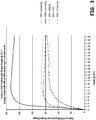
- the total amount of carbon dioxide generated was also measured for each dough, and the results are shown in Fig. 3 .
- the 60% leavened dough formulas with added magnesium chloride or carnallite unexpectedly generated more total carbon dioxide than the 60% leavened dough formula, evidencing a more complete leavening reaction with the addition of these sources of alternate counter ions.
- the canned dough was then proofed at about 70°F (ambient) for 24 hours, and the can pressures were measured by measuring can end deflection using a digital height indicator or similar instrument, and performing regression analysis of the measurement to compare it to end deflection measurement of cans with known can pressure levels.
- the results including a comparison with a dough containing the full amount (100%) of the leavening system with and without carnallite added to the dough, are shown in Table 2. All percentages are provided as weight percentage (wt-%) unless indicated otherwise.
- the leavening level percent refers to the amount of leaveners used in the samples as compared to the fully-leavened control, which is designated as having a 100% leavening level.
- Table 2a Observed Can Pressures with Carnallite Treatment Leavening Level (not weight percent) SAPP wt-% SALP wt-% Sodium Bicarbonate wt-% Carnallite wt-% 24 Hour Average Pressure (psi) Control 100% 1.122 0.173 0.974 0% 17.9 T2 100% 1.122 0.173 0.974 0.25% 19.0 T3 100% 1.122 0.173 0.974 0.45% 19.2 T4 90% 1.010 0.156 0.877 0.25% 15.8 T5 90% 1.010 0.156 0.877 0.45% 16.7
- Samples T2 and T3 containing 100% leavening level with added carnallite resulted in increased can pressures as compared to the Control.
- Samples T4 and T5 contained 90% of the Control leavening and carnallite, and resulted in can pressures within normal ranges.
- Table 2b Calculated Can Pressures with Carnallite Leavening Level (not weight percent) Carnallite wt-% Calculated/Predicted PSI 100% 0 18.1 100% 0.25 18.9 100% 0.45 19.5 90% 0 15.7 90% 0.25 16.4 90% 0.45 17.1
- This Example demonstrates that when using a reduced level of leavening agents, low pressure issues can be overcome by adding carnallite with the leavening agents.
- the resulting final can pressures are within suitable ranges for canned refrigerated dough products, and can be predicted and controlled based on the equation described above.
- Example 3 Carnallite as a Leavening Reaction Accelerant
- Table 3 shows the effects of adding carnallite to full-sodium and reduced-sodium leavened dough products. Dough was prepared, packaged and proofed as described in Example 1. Can pressure was measured at about 3-5 hours after canning the dough, and then again at about 24 hours after canning.
- carnallite can be added to these products to accelerate the reaction rate and to achieve the desired final can pressure ranges.
- the leavener regulation system caused the chemically-leavened dough product to generate gas at a rate of between about 1.4 psi/hour and about 4.2 psi/hour within 5 hours at about 70°F or ambient temperatures after the dough product had been packaged.
- reaction rate acceleration may be useful depending on the dough, leavening, and packaging systems, and desired reaction time duration.
- Other examples of accelerated gas generation rates are between about 2.5 psi/hour to about 3.2 psi/hour within a period of about 3 hours after packaging.
- DI water refers to deionized water.
- a low sodium dough suitable for being packaged and stored under refrigeration or frozen conditions was prepared by combining about 52% flour, 28% water, 9.3% fat, 6% sugar and 1.3% minor ingredients, with the salt and leavening ingredient combinations shown in Table 5.
- Table 5 Ingredient Control Dough with 100% leavening Dough with 80% Leavening Dough with Alternate Leavening NaCl 1.3% 0.65% 0.65% KCl 0.0% 0.65% 0.65% Carnallite 0.0% 0.45% 0.45% Sodium Bicarbonate 0.97% 0.78% 0.97% Sodium Acid Pyrophospate 1.122% 0.9% 0.0% Sodium Aluminum Phosphate 0.173% 0.14% 0.0% Calcium Acid Pyrophosplate 0.0% 0.0% 1.325%
- the resulting dough products had the indicated percentages of sodium reduction, and final can pressures within operable ranges.
- an alternate leavening system such as calcium acid pyrophosphate
- inconsistent reaction rates that have been previously observed in a conventional dough can be regulated by the addition of a source of alternate counter ions such as carnallite or magnesium chloride.
- Sodium reduction in dough products can have many implications on the dough chemistry, depending on how and with what the sodium-containing ingredients are reduced or replaced.
- the resulting sodium level creates a dough environment in which the sodium-based leavening agents are less soluble, so the majority of the leavening reaction takes place later in the dough manufacturing process, after the dough has been packaged.
- the common ion effect of sodium is reduced, thereby creating an environment in which the sodium-based leavening agents are more soluble and may react too early in the dough manufacturing process.
- alternate counter ions added to the dough formula may be used to increase the reaction rate of the leavening agent after the dough has been packaged to generate the desired package pressure even if some of the leavening reaction has taken place earlier in the dough manufacturing process.
- the use of an alternate counter ion with a dough leavening system provides the ability to generate suitable can pressures within the desired timeframe, for example, about 24 hours, in dough products containing a reduced amount of leavening.
- the dough may contain about 10% to about 60% less leavening than a similarly formulated control dough, in other words, about 40% to about 90% of the level of leavening in a similarly formulated control dough, and yet still attain can pressures within suitable ranges, such as about 12psi to about 21 psi, or from about 14psi to about 19psi, within the desired timeframe.
- the rate of the leavening reaction is greater during about the first 5 hours of proofing at about 70°F, ranging from about 1 psi/hour to about 5 psi/hour.
- an alternate counter ion with a dough leavening system provides the ability to compensate for the reduced common ion effect of sodium in lower sodium canned dough products.
- the dough may contain from about 20% to about 60% less sodium than a similarly formulated control dough, and yet still attain can pressures within suitable levels, for example ranging from about 12 psi to about 21 psi, or from about 14 psi to about 19 psi, even in dough products containing a reduced level or a complete elimination of sodium-containing leavening agents.
- suitable levels for example ranging from about 12 psi to about 21 psi, or from about 14 psi to about 19 psi, even in dough products containing a reduced level or a complete elimination of sodium-containing leavening agents.
- the foregoing Examples demonstrate the use of magnesium chloride and/or carnallite as a source of alternate counter ions.
- Other variations of the embodiments described herein are encompassed by the scope of the invention.
- the invention includes all modifications and equivalent
Landscapes
- Life Sciences & Earth Sciences (AREA)
- Engineering & Computer Science (AREA)
- Food Science & Technology (AREA)
- Chemical & Material Sciences (AREA)
- Inorganic Chemistry (AREA)
- Physics & Mathematics (AREA)
- Thermal Sciences (AREA)
- Bakery Products And Manufacturing Methods Therefor (AREA)
- Noodles (AREA)
- Confectionery (AREA)
Claims (6)
- Dosenteigzusammensetzung, wobei der Teig umfasst:Mehl; Wasser; eine Triebmittelsäure, die in der Lage ist, in dem Teig in Triebmittelsäure-Ionen zu dissoziieren, ausgewählt aus der Gruppe bestehend aus Natriumaluminiumphosphat, saurem Natriumpyrophosphat, Natriumaluminiumsulfat, Glucono-delta-lacton, Calciumphosphat, Monocalciumphosphat, Dicalciumphosphat, saurem Calciumpyrophosphat, Dimagnesiumphosphat, Monokaliumphosphat, saurem Kaliumpyrophosphat und einer Kombination davon; eine Triebmittelbase, die in der Lage ist, in dem Teig in Triebmittelbase-Ionen zu dissoziieren, ausgewählt aus der Gruppe bestehend aus Natriumbicarbonat, Kaliumbicarbonat, Ammoniumbicarbonat, Natriumcarbonat, Calciumcarbonat und einer Kombination davon; undein Halogenidsalz ausgewählt aus der Gruppe bestehend aus Carnallit, Magnesiumchlorid und einer Kombination davon.
- Dosenteigzusammensetzung gemäß Anspruch 1, wobei die Triebmittelsäure ausgewählt ist aus der Gruppe bestehend aus Natriumaluminiumphosphat, saurem Natriumpyrophosphat, saurem Calciumpyrophosphat und einer Kombination davon; und die Triebmittelbase Natriumbicarbonat umfasst; und das Halogenidsalz ein alternierendes Gegenion ausgewählt aus der Gruppe bestehend aus Carnallit, Magnesiumchlorid und einer Kombination davon umfasst.
- Dosenteigzusammensetzung gemäß Anspruch 1, wobei die Triebmittelsäure Natriumaluminiumphosphat und saures Natriumpyrophosphat umfasst, die Triebmittelbase Natriumbicarbonat umfasst und das alternierende Gegenion Carnallit umfasst.
- Dosenteigzusammensetzung gemäß Anspruch 3, wobei der Teig 1,04 Gew.-% bis 1,30 Gew.-% Triebmittelsäure, 0,877 Gew.-% bis 0,974 Gew.-% Triebmittelbase und 0,2 Gew.-% bis 0,5 Gew.-% Carnallit umfasst.
- Dosenteigzusammensetzung gemäß Anspruch 1, wobei die Triebmittelsäure saures Calciumpyrophosphat umfasst, die Triebmittelbase Natriumbicarbonat umfasst und das alternierende Gegenion Carnallit umfasst.
- Dosenteigzusammensetzung gemäß Anspruch 5, wobei der Teig etwa 1,325 Gew.-% Triebmittelsäure, etwa 0,97 Gew.-% Triebmittelbase und etwa 0,45 Gew.-% Carnallit umfasst.
Applications Claiming Priority (2)
| Application Number | Priority Date | Filing Date | Title |
|---|---|---|---|
| US201261643952P | 2012-05-08 | 2012-05-08 | |
| PCT/US2013/039629 WO2013169619A1 (en) | 2012-05-08 | 2013-05-06 | Method and system for regulating leavening reactions |
Publications (3)
| Publication Number | Publication Date |
|---|---|
| EP2846641A1 EP2846641A1 (de) | 2015-03-18 |
| EP2846641A4 EP2846641A4 (de) | 2015-11-18 |
| EP2846641B1 true EP2846641B1 (de) | 2018-08-22 |
Family
ID=49551180
Family Applications (1)
| Application Number | Title | Priority Date | Filing Date |
|---|---|---|---|
| EP13786998.8A Not-in-force EP2846641B1 (de) | 2012-05-08 | 2013-05-06 | Verfahren und system zur regelung von backtriebmittelreaktionen |
Country Status (4)
| Country | Link |
|---|---|
| US (2) | US10694756B2 (de) |
| EP (1) | EP2846641B1 (de) |
| CA (1) | CA2870317C (de) |
| WO (1) | WO2013169619A1 (de) |
Families Citing this family (3)
| Publication number | Priority date | Publication date | Assignee | Title |
|---|---|---|---|---|
| US12382964B2 (en) | 2016-06-23 | 2025-08-12 | Kudos Blends Ltd. | Leavening agent |
| US12568977B2 (en) | 2016-06-23 | 2026-03-10 | Kudos Blend Ltd. | Leavening agents |
| DE102019113073A1 (de) * | 2019-05-17 | 2020-11-19 | Addcon GmbH | Verfahren zur Senkung der Menge von Acrylamid während der Hitzebehandlung von Lebensmitteln mit Backtriebmittelwirkung |
Family Cites Families (18)
| Publication number | Priority date | Publication date | Assignee | Title |
|---|---|---|---|---|
| US4381315A (en) * | 1981-05-11 | 1983-04-26 | The Pillsbury Company | Refrigerated dough and method of manufacture |
| US5064661A (en) * | 1989-01-27 | 1991-11-12 | Nabisco Brands, Inc. | Process for making low sodium sponge goods and products obtained thereby |
| US5451417A (en) * | 1993-04-23 | 1995-09-19 | Van Den Bergh Foods Co., Division Of Conopco, Inc. | Just bake frozen dough |
| US5409724A (en) * | 1993-06-18 | 1995-04-25 | Monsanto Company | Leavening composition and process of making |
| WO1995007630A1 (en) * | 1993-09-17 | 1995-03-23 | Akzo Nobel N.V. | Salt composition |
| CA2191836C (en) * | 1995-12-26 | 2005-05-17 | Rei-Young Amos Wu | Use of calcium chloride and magnesium chloride as leavening acids for batter and dough compositions |
| US5855945A (en) * | 1996-09-30 | 1999-01-05 | The Pillsbury Corporation | Method of preparing dough |
| US6824807B2 (en) * | 2001-09-19 | 2004-11-30 | The Pillsbury Company | Chemical leavener system comprising acidulant precursors |
| US20040081738A1 (en) | 2002-10-23 | 2004-04-29 | Murty Annavarapu S. | Method of producing novel pasta and masa like doughs and products produced therefrom |
| CA2468219C (en) * | 2004-05-19 | 2012-05-01 | The Pillsbury Company | Packaged, non-developed dough product in low pressure package, and related compositions and methods |
| WO2007021665A2 (en) | 2005-08-11 | 2007-02-22 | General Mills Marketing, Inc. | Developed dough product in moderately-pressurized package, and related methods |
| CN101374767B (zh) | 2006-01-31 | 2011-04-13 | 科学与工业研究会 | 一种制备氧化镁的改进方法 |
| US7771682B2 (en) | 2006-01-31 | 2010-08-10 | Council Of Scientific And Industrial Research | Process for the preparation of magnesia (MgO) from crude Mg (OH)2 |
| WO2008019278A2 (en) * | 2006-08-04 | 2008-02-14 | General Mills Marketing, Inc. | Canned dough product having ingredient pouch |
| AU2008349773B2 (en) | 2008-02-06 | 2014-12-04 | The Campbell’s Company | Methods and compositions for reducing sodium content in food products |
| US8501253B2 (en) * | 2008-03-21 | 2013-08-06 | Smart Salt, Inc. | Carnallite-like food salts and products thereof |
| GB2464974A (en) * | 2008-10-31 | 2010-05-05 | Smart Salt Inc | Carnallite salt products |
| US20110212228A1 (en) * | 2008-11-21 | 2011-09-01 | Robb Bruce W | Leavening composition for refrigerated dough products |
-
2013
- 2013-05-06 EP EP13786998.8A patent/EP2846641B1/de not_active Not-in-force
- 2013-05-06 CA CA2870317A patent/CA2870317C/en active Active
- 2013-05-06 US US14/398,802 patent/US10694756B2/en active Active
- 2013-05-06 WO PCT/US2013/039629 patent/WO2013169619A1/en not_active Ceased
-
2020
- 2020-05-06 US US16/868,007 patent/US11992019B2/en active Active
Non-Patent Citations (1)
| Title |
|---|
| None * |
Also Published As
| Publication number | Publication date |
|---|---|
| US10694756B2 (en) | 2020-06-30 |
| CA2870317A1 (en) | 2013-11-14 |
| CA2870317C (en) | 2020-06-16 |
| US20200260740A1 (en) | 2020-08-20 |
| US20150132437A1 (en) | 2015-05-14 |
| EP2846641A1 (de) | 2015-03-18 |
| EP2846641A4 (de) | 2015-11-18 |
| WO2013169619A1 (en) | 2013-11-14 |
| US11992019B2 (en) | 2024-05-28 |
Similar Documents
| Publication | Publication Date | Title |
|---|---|---|
| US11992019B2 (en) | Method and system for regulating leavening reactions | |
| CA2277183A1 (en) | Low pressure refrigerated dough product | |
| AU2017282091B2 (en) | Leavening agent | |
| ES2272079T3 (es) | Proceso y formulacion para una masa fermentada o producto de panaderia leudado quimicamente. | |
| NO143780B (no) | Surt hevningsmiddel for kjeks. | |
| CA2825353C (en) | Modified disodium dihydrogen diphosphate | |
| CA2468219C (en) | Packaged, non-developed dough product in low pressure package, and related compositions and methods | |
| US20110212228A1 (en) | Leavening composition for refrigerated dough products | |
| US4741917A (en) | Alkali metal acid pyrophosphate leavening acid compositions and methods for producing the same | |
| US20030064138A1 (en) | Frozen dough having decreased proof time | |
| US3109738A (en) | Self-rising flour compositions comprising mixtures of sodium aluminum phosphate and anhydrous monocalcium phosphate | |
| US10182577B2 (en) | Refrigerated, chemically leavened doughs in package, with carbon dioxide atmosphere | |
| US2263487A (en) | Leavening agent | |
| US4804553A (en) | Alkali metal acid pyrophosphate leavening acid compositions and methods for producing the same | |
| US3166426A (en) | Method of preserving canned refrigerator doughs | |
| US20190246652A1 (en) | Pressure Packaged Dough Products and Systems | |
| US2933396A (en) | Baking powder | |
| US20060177558A1 (en) | Refrigerated dough and product in low pressure container | |
| US20210395087A1 (en) | Aqueous chlorine dioxide solution and method for producing same | |
| US1113632A (en) | Baking preparation. | |
| CA1190794A (en) | Leavening acid composition | |
| EP3372086A1 (de) | Natriumfreies backpulver | |
| JPH05316929A (ja) | パン生地およびその製造法 | |
| Bennion et al. | Chemical aeration |
Legal Events
| Date | Code | Title | Description |
|---|---|---|---|
| PUAI | Public reference made under article 153(3) epc to a published international application that has entered the european phase |
Free format text: ORIGINAL CODE: 0009012 |
|
| 17P | Request for examination filed |
Effective date: 20141124 |
|
| AK | Designated contracting states |
Kind code of ref document: A1 Designated state(s): AL AT BE BG CH CY CZ DE DK EE ES FI FR GB GR HR HU IE IS IT LI LT LU LV MC MK MT NL NO PL PT RO RS SE SI SK SM TR |
|
| AX | Request for extension of the european patent |
Extension state: BA ME |
|
| DAX | Request for extension of the european patent (deleted) | ||
| RA4 | Supplementary search report drawn up and despatched (corrected) |
Effective date: 20151019 |
|
| RIC1 | Information provided on ipc code assigned before grant |
Ipc: A23L 1/22 20060101ALI20151013BHEP Ipc: A21D 10/02 20060101AFI20151013BHEP Ipc: A23L 1/237 20060101ALI20151013BHEP |
|
| REG | Reference to a national code |
Ref country code: DE Ref legal event code: R079 Ref document number: 602013042459 Country of ref document: DE Free format text: PREVIOUS MAIN CLASS: A21D0010020000 Ipc: A23L0027000000 |
|
| RIC1 | Information provided on ipc code assigned before grant |
Ipc: A23L 27/40 20160101ALI20171201BHEP Ipc: A23L 27/00 20160101AFI20171201BHEP |
|
| GRAP | Despatch of communication of intention to grant a patent |
Free format text: ORIGINAL CODE: EPIDOSNIGR1 |
|
| STAA | Information on the status of an ep patent application or granted ep patent |
Free format text: STATUS: GRANT OF PATENT IS INTENDED |
|
| INTG | Intention to grant announced |
Effective date: 20180116 |
|
| GRAS | Grant fee paid |
Free format text: ORIGINAL CODE: EPIDOSNIGR3 |
|
| GRAA | (expected) grant |
Free format text: ORIGINAL CODE: 0009210 |
|
| STAA | Information on the status of an ep patent application or granted ep patent |
Free format text: STATUS: THE PATENT HAS BEEN GRANTED |
|
| AK | Designated contracting states |
Kind code of ref document: B1 Designated state(s): AL AT BE BG CH CY CZ DE DK EE ES FI FR GB GR HR HU IE IS IT LI LT LU LV MC MK MT NL NO PL PT RO RS SE SI SK SM TR |
|
| REG | Reference to a national code |
Ref country code: GB Ref legal event code: FG4D |
|
| REG | Reference to a national code |
Ref country code: CH Ref legal event code: EP |
|
| REG | Reference to a national code |
Ref country code: AT Ref legal event code: REF Ref document number: 1031414 Country of ref document: AT Kind code of ref document: T Effective date: 20180915 |
|
| REG | Reference to a national code |
Ref country code: IE Ref legal event code: FG4D |
|
| REG | Reference to a national code |
Ref country code: DE Ref legal event code: R096 Ref document number: 602013042459 Country of ref document: DE |
|
| REG | Reference to a national code |
Ref country code: NL Ref legal event code: MP Effective date: 20180822 |
|
| REG | Reference to a national code |
Ref country code: LT Ref legal event code: MG4D |
|
| PG25 | Lapsed in a contracting state [announced via postgrant information from national office to epo] |
Ref country code: NO Free format text: LAPSE BECAUSE OF FAILURE TO SUBMIT A TRANSLATION OF THE DESCRIPTION OR TO PAY THE FEE WITHIN THE PRESCRIBED TIME-LIMIT Effective date: 20181122 Ref country code: FI Free format text: LAPSE BECAUSE OF FAILURE TO SUBMIT A TRANSLATION OF THE DESCRIPTION OR TO PAY THE FEE WITHIN THE PRESCRIBED TIME-LIMIT Effective date: 20180822 Ref country code: SE Free format text: LAPSE BECAUSE OF FAILURE TO SUBMIT A TRANSLATION OF THE DESCRIPTION OR TO PAY THE FEE WITHIN THE PRESCRIBED TIME-LIMIT Effective date: 20180822 Ref country code: LT Free format text: LAPSE BECAUSE OF FAILURE TO SUBMIT A TRANSLATION OF THE DESCRIPTION OR TO PAY THE FEE WITHIN THE PRESCRIBED TIME-LIMIT Effective date: 20180822 Ref country code: IS Free format text: LAPSE BECAUSE OF FAILURE TO SUBMIT A TRANSLATION OF THE DESCRIPTION OR TO PAY THE FEE WITHIN THE PRESCRIBED TIME-LIMIT Effective date: 20181222 Ref country code: RS Free format text: LAPSE BECAUSE OF FAILURE TO SUBMIT A TRANSLATION OF THE DESCRIPTION OR TO PAY THE FEE WITHIN THE PRESCRIBED TIME-LIMIT Effective date: 20180822 Ref country code: BG Free format text: LAPSE BECAUSE OF FAILURE TO SUBMIT A TRANSLATION OF THE DESCRIPTION OR TO PAY THE FEE WITHIN THE PRESCRIBED TIME-LIMIT Effective date: 20181122 Ref country code: NL Free format text: LAPSE BECAUSE OF FAILURE TO SUBMIT A TRANSLATION OF THE DESCRIPTION OR TO PAY THE FEE WITHIN THE PRESCRIBED TIME-LIMIT Effective date: 20180822 |
|
| REG | Reference to a national code |
Ref country code: CH Ref legal event code: PK Free format text: BERICHTIGUNGEN |
|
| RIC2 | Information provided on ipc code assigned after grant |
Ipc: A23L 27/00 20160101AFI20171201BHEP Ipc: A23L 27/40 20160101ALI20171201BHEP |
|
| REG | Reference to a national code |
Ref country code: AT Ref legal event code: MK05 Ref document number: 1031414 Country of ref document: AT Kind code of ref document: T Effective date: 20180822 |
|
| PG25 | Lapsed in a contracting state [announced via postgrant information from national office to epo] |
Ref country code: AL Free format text: LAPSE BECAUSE OF FAILURE TO SUBMIT A TRANSLATION OF THE DESCRIPTION OR TO PAY THE FEE WITHIN THE PRESCRIBED TIME-LIMIT Effective date: 20180822 Ref country code: LV Free format text: LAPSE BECAUSE OF FAILURE TO SUBMIT A TRANSLATION OF THE DESCRIPTION OR TO PAY THE FEE WITHIN THE PRESCRIBED TIME-LIMIT Effective date: 20180822 Ref country code: HR Free format text: LAPSE BECAUSE OF FAILURE TO SUBMIT A TRANSLATION OF THE DESCRIPTION OR TO PAY THE FEE WITHIN THE PRESCRIBED TIME-LIMIT Effective date: 20180822 |
|
| REG | Reference to a national code |
Ref country code: GR Ref legal event code: EP Ref document number: 20180403465 Country of ref document: GR Effective date: 20190320 |
|
| PG25 | Lapsed in a contracting state [announced via postgrant information from national office to epo] |
Ref country code: AT Free format text: LAPSE BECAUSE OF FAILURE TO SUBMIT A TRANSLATION OF THE DESCRIPTION OR TO PAY THE FEE WITHIN THE PRESCRIBED TIME-LIMIT Effective date: 20180822 Ref country code: PL Free format text: LAPSE BECAUSE OF FAILURE TO SUBMIT A TRANSLATION OF THE DESCRIPTION OR TO PAY THE FEE WITHIN THE PRESCRIBED TIME-LIMIT Effective date: 20180822 Ref country code: EE Free format text: LAPSE BECAUSE OF FAILURE TO SUBMIT A TRANSLATION OF THE DESCRIPTION OR TO PAY THE FEE WITHIN THE PRESCRIBED TIME-LIMIT Effective date: 20180822 Ref country code: ES Free format text: LAPSE BECAUSE OF FAILURE TO SUBMIT A TRANSLATION OF THE DESCRIPTION OR TO PAY THE FEE WITHIN THE PRESCRIBED TIME-LIMIT Effective date: 20180822 Ref country code: RO Free format text: LAPSE BECAUSE OF FAILURE TO SUBMIT A TRANSLATION OF THE DESCRIPTION OR TO PAY THE FEE WITHIN THE PRESCRIBED TIME-LIMIT Effective date: 20180822 Ref country code: CZ Free format text: LAPSE BECAUSE OF FAILURE TO SUBMIT A TRANSLATION OF THE DESCRIPTION OR TO PAY THE FEE WITHIN THE PRESCRIBED TIME-LIMIT Effective date: 20180822 Ref country code: IT Free format text: LAPSE BECAUSE OF FAILURE TO SUBMIT A TRANSLATION OF THE DESCRIPTION OR TO PAY THE FEE WITHIN THE PRESCRIBED TIME-LIMIT Effective date: 20180822 |
|
| REG | Reference to a national code |
Ref country code: DE Ref legal event code: R097 Ref document number: 602013042459 Country of ref document: DE |
|
| PG25 | Lapsed in a contracting state [announced via postgrant information from national office to epo] |
Ref country code: SM Free format text: LAPSE BECAUSE OF FAILURE TO SUBMIT A TRANSLATION OF THE DESCRIPTION OR TO PAY THE FEE WITHIN THE PRESCRIBED TIME-LIMIT Effective date: 20180822 Ref country code: DK Free format text: LAPSE BECAUSE OF FAILURE TO SUBMIT A TRANSLATION OF THE DESCRIPTION OR TO PAY THE FEE WITHIN THE PRESCRIBED TIME-LIMIT Effective date: 20180822 Ref country code: SK Free format text: LAPSE BECAUSE OF FAILURE TO SUBMIT A TRANSLATION OF THE DESCRIPTION OR TO PAY THE FEE WITHIN THE PRESCRIBED TIME-LIMIT Effective date: 20180822 |
|
| PLBE | No opposition filed within time limit |
Free format text: ORIGINAL CODE: 0009261 |
|
| STAA | Information on the status of an ep patent application or granted ep patent |
Free format text: STATUS: NO OPPOSITION FILED WITHIN TIME LIMIT |
|
| 26N | No opposition filed |
Effective date: 20190523 |
|
| PG25 | Lapsed in a contracting state [announced via postgrant information from national office to epo] |
Ref country code: SI Free format text: LAPSE BECAUSE OF FAILURE TO SUBMIT A TRANSLATION OF THE DESCRIPTION OR TO PAY THE FEE WITHIN THE PRESCRIBED TIME-LIMIT Effective date: 20180822 |
|
| REG | Reference to a national code |
Ref country code: CH Ref legal event code: PL |
|
| PG25 | Lapsed in a contracting state [announced via postgrant information from national office to epo] |
Ref country code: MC Free format text: LAPSE BECAUSE OF FAILURE TO SUBMIT A TRANSLATION OF THE DESCRIPTION OR TO PAY THE FEE WITHIN THE PRESCRIBED TIME-LIMIT Effective date: 20180822 Ref country code: LI Free format text: LAPSE BECAUSE OF NON-PAYMENT OF DUE FEES Effective date: 20190531 Ref country code: CH Free format text: LAPSE BECAUSE OF NON-PAYMENT OF DUE FEES Effective date: 20190531 |
|
| REG | Reference to a national code |
Ref country code: BE Ref legal event code: MM Effective date: 20190531 |
|
| PG25 | Lapsed in a contracting state [announced via postgrant information from national office to epo] |
Ref country code: LU Free format text: LAPSE BECAUSE OF NON-PAYMENT OF DUE FEES Effective date: 20190506 |
|
| PG25 | Lapsed in a contracting state [announced via postgrant information from national office to epo] |
Ref country code: TR Free format text: LAPSE BECAUSE OF FAILURE TO SUBMIT A TRANSLATION OF THE DESCRIPTION OR TO PAY THE FEE WITHIN THE PRESCRIBED TIME-LIMIT Effective date: 20180822 |
|
| PG25 | Lapsed in a contracting state [announced via postgrant information from national office to epo] |
Ref country code: IE Free format text: LAPSE BECAUSE OF NON-PAYMENT OF DUE FEES Effective date: 20190506 |
|
| PG25 | Lapsed in a contracting state [announced via postgrant information from national office to epo] |
Ref country code: BE Free format text: LAPSE BECAUSE OF NON-PAYMENT OF DUE FEES Effective date: 20190531 |
|
| PG25 | Lapsed in a contracting state [announced via postgrant information from national office to epo] |
Ref country code: FR Free format text: LAPSE BECAUSE OF NON-PAYMENT OF DUE FEES Effective date: 20190531 Ref country code: PT Free format text: LAPSE BECAUSE OF FAILURE TO SUBMIT A TRANSLATION OF THE DESCRIPTION OR TO PAY THE FEE WITHIN THE PRESCRIBED TIME-LIMIT Effective date: 20181222 |
|
| PG25 | Lapsed in a contracting state [announced via postgrant information from national office to epo] |
Ref country code: CY Free format text: LAPSE BECAUSE OF FAILURE TO SUBMIT A TRANSLATION OF THE DESCRIPTION OR TO PAY THE FEE WITHIN THE PRESCRIBED TIME-LIMIT Effective date: 20180822 |
|
| PG25 | Lapsed in a contracting state [announced via postgrant information from national office to epo] |
Ref country code: MT Free format text: LAPSE BECAUSE OF FAILURE TO SUBMIT A TRANSLATION OF THE DESCRIPTION OR TO PAY THE FEE WITHIN THE PRESCRIBED TIME-LIMIT Effective date: 20180822 Ref country code: HU Free format text: LAPSE BECAUSE OF FAILURE TO SUBMIT A TRANSLATION OF THE DESCRIPTION OR TO PAY THE FEE WITHIN THE PRESCRIBED TIME-LIMIT; INVALID AB INITIO Effective date: 20130506 |
|
| PG25 | Lapsed in a contracting state [announced via postgrant information from national office to epo] |
Ref country code: MK Free format text: LAPSE BECAUSE OF FAILURE TO SUBMIT A TRANSLATION OF THE DESCRIPTION OR TO PAY THE FEE WITHIN THE PRESCRIBED TIME-LIMIT Effective date: 20180822 |
|
| P01 | Opt-out of the competence of the unified patent court (upc) registered |
Effective date: 20230427 |
|
| PGFP | Annual fee paid to national office [announced via postgrant information from national office to epo] |
Ref country code: DE Payment date: 20230519 Year of fee payment: 11 |
|
| PGFP | Annual fee paid to national office [announced via postgrant information from national office to epo] |
Ref country code: GR Payment date: 20230516 Year of fee payment: 11 |
|
| PGFP | Annual fee paid to national office [announced via postgrant information from national office to epo] |
Ref country code: GB Payment date: 20230522 Year of fee payment: 11 |
|
| REG | Reference to a national code |
Ref country code: DE Ref legal event code: R119 Ref document number: 602013042459 Country of ref document: DE |
|
| PG25 | Lapsed in a contracting state [announced via postgrant information from national office to epo] |
Ref country code: GR Free format text: LAPSE BECAUSE OF NON-PAYMENT OF DUE FEES Effective date: 20241204 |
|
| GBPC | Gb: european patent ceased through non-payment of renewal fee |
Effective date: 20240506 |
|
| PG25 | Lapsed in a contracting state [announced via postgrant information from national office to epo] |
Ref country code: GR Free format text: LAPSE BECAUSE OF NON-PAYMENT OF DUE FEES Effective date: 20241204 |
|
| PG25 | Lapsed in a contracting state [announced via postgrant information from national office to epo] |
Ref country code: DE Free format text: LAPSE BECAUSE OF NON-PAYMENT OF DUE FEES Effective date: 20241203 |
|
| PG25 | Lapsed in a contracting state [announced via postgrant information from national office to epo] |
Ref country code: GB Free format text: LAPSE BECAUSE OF NON-PAYMENT OF DUE FEES Effective date: 20240506 |