EP2829233A1 - Bildanalysevorrichtung, -verfahren und -programm - Google Patents
Bildanalysevorrichtung, -verfahren und -programm Download PDFInfo
- Publication number
- EP2829233A1 EP2829233A1 EP13763526.4A EP13763526A EP2829233A1 EP 2829233 A1 EP2829233 A1 EP 2829233A1 EP 13763526 A EP13763526 A EP 13763526A EP 2829233 A1 EP2829233 A1 EP 2829233A1
- Authority
- EP
- European Patent Office
- Prior art keywords
- ventilation volume
- function
- dimensional images
- volume function
- difference
- Prior art date
- Legal status (The legal status is an assumption and is not a legal conclusion. Google has not performed a legal analysis and makes no representation as to the accuracy of the status listed.)
- Withdrawn
Links
Images

Classifications
-
- G—PHYSICS
- G06—COMPUTING OR CALCULATING; COUNTING
- G06T—IMAGE DATA PROCESSING OR GENERATION, IN GENERAL
- G06T7/00—Image analysis
- G06T7/20—Analysis of motion
-
- A—HUMAN NECESSITIES
- A61—MEDICAL OR VETERINARY SCIENCE; HYGIENE
- A61B—DIAGNOSIS; SURGERY; IDENTIFICATION
- A61B5/00—Measuring for diagnostic purposes; Identification of persons
- A61B5/08—Measuring devices for evaluating the respiratory organs
- A61B5/091—Measuring volume of inspired or expired gases, e.g. to determine lung capacity
-
- A—HUMAN NECESSITIES
- A61—MEDICAL OR VETERINARY SCIENCE; HYGIENE
- A61B—DIAGNOSIS; SURGERY; IDENTIFICATION
- A61B5/00—Measuring for diagnostic purposes; Identification of persons
- A61B5/103—Measuring devices for testing the shape, pattern, colour, size or movement of the body or parts thereof, for diagnostic purposes
- A61B5/11—Measuring movement of the entire body or parts thereof, e.g. head or hand tremor or mobility of a limb
- A61B5/113—Measuring movement of the entire body or parts thereof, e.g. head or hand tremor or mobility of a limb occurring during breathing
-
- A—HUMAN NECESSITIES
- A61—MEDICAL OR VETERINARY SCIENCE; HYGIENE
- A61B—DIAGNOSIS; SURGERY; IDENTIFICATION
- A61B6/00—Apparatus or devices for radiation diagnosis; Apparatus or devices for radiation diagnosis combined with radiation therapy equipment
- A61B6/02—Arrangements for diagnosis sequentially in different planes; Stereoscopic radiation diagnosis
- A61B6/03—Computed tomography [CT]
- A61B6/032—Transmission computed tomography [CT]
-
- A—HUMAN NECESSITIES
- A61—MEDICAL OR VETERINARY SCIENCE; HYGIENE
- A61B—DIAGNOSIS; SURGERY; IDENTIFICATION
- A61B6/00—Apparatus or devices for radiation diagnosis; Apparatus or devices for radiation diagnosis combined with radiation therapy equipment
- A61B6/50—Apparatus or devices for radiation diagnosis; Apparatus or devices for radiation diagnosis combined with radiation therapy equipment specially adapted for specific body parts; specially adapted for specific clinical applications
-
- A—HUMAN NECESSITIES
- A61—MEDICAL OR VETERINARY SCIENCE; HYGIENE
- A61B—DIAGNOSIS; SURGERY; IDENTIFICATION
- A61B6/00—Apparatus or devices for radiation diagnosis; Apparatus or devices for radiation diagnosis combined with radiation therapy equipment
- A61B6/52—Devices using data or image processing specially adapted for radiation diagnosis
- A61B6/5211—Devices using data or image processing specially adapted for radiation diagnosis involving processing of medical diagnostic data
- A61B6/5217—Devices using data or image processing specially adapted for radiation diagnosis involving processing of medical diagnostic data extracting a diagnostic or physiological parameter from medical diagnostic data
-
- G—PHYSICS
- G06—COMPUTING OR CALCULATING; COUNTING
- G06T—IMAGE DATA PROCESSING OR GENERATION, IN GENERAL
- G06T7/00—Image analysis
- G06T7/0002—Inspection of images, e.g. flaw detection
- G06T7/0012—Biomedical image inspection
- G06T7/0014—Biomedical image inspection using an image reference approach
- G06T7/0016—Biomedical image inspection using an image reference approach involving temporal comparison
-
- G—PHYSICS
- G06—COMPUTING OR CALCULATING; COUNTING
- G06T—IMAGE DATA PROCESSING OR GENERATION, IN GENERAL
- G06T7/00—Image analysis
- G06T7/30—Determination of transform parameters for the alignment of images, i.e. image registration
- G06T7/33—Determination of transform parameters for the alignment of images, i.e. image registration using feature-based methods
-
- G—PHYSICS
- G06—COMPUTING OR CALCULATING; COUNTING
- G06T—IMAGE DATA PROCESSING OR GENERATION, IN GENERAL
- G06T7/00—Image analysis
- G06T7/60—Analysis of geometric attributes
- G06T7/62—Analysis of geometric attributes of area, perimeter, diameter or volume
-
- G—PHYSICS
- G16—INFORMATION AND COMMUNICATION TECHNOLOGY [ICT] SPECIALLY ADAPTED FOR SPECIFIC APPLICATION FIELDS
- G16H—HEALTHCARE INFORMATICS, i.e. INFORMATION AND COMMUNICATION TECHNOLOGY [ICT] SPECIALLY ADAPTED FOR THE HANDLING OR PROCESSING OF MEDICAL OR HEALTHCARE DATA
- G16H50/00—ICT specially adapted for medical diagnosis, medical simulation or medical data mining; ICT specially adapted for detecting, monitoring or modelling epidemics or pandemics
- G16H50/30—ICT specially adapted for medical diagnosis, medical simulation or medical data mining; ICT specially adapted for detecting, monitoring or modelling epidemics or pandemics for calculating health indices; for individual health risk assessment
-
- A—HUMAN NECESSITIES
- A61—MEDICAL OR VETERINARY SCIENCE; HYGIENE
- A61B—DIAGNOSIS; SURGERY; IDENTIFICATION
- A61B6/00—Apparatus or devices for radiation diagnosis; Apparatus or devices for radiation diagnosis combined with radiation therapy equipment
- A61B6/02—Arrangements for diagnosis sequentially in different planes; Stereoscopic radiation diagnosis
- A61B6/03—Computed tomography [CT]
- A61B6/037—Emission tomography
-
- A—HUMAN NECESSITIES
- A61—MEDICAL OR VETERINARY SCIENCE; HYGIENE
- A61B—DIAGNOSIS; SURGERY; IDENTIFICATION
- A61B6/00—Apparatus or devices for radiation diagnosis; Apparatus or devices for radiation diagnosis combined with radiation therapy equipment
- A61B6/46—Arrangements for interfacing with the operator or the patient
- A61B6/461—Displaying means of special interest
-
- G—PHYSICS
- G06—COMPUTING OR CALCULATING; COUNTING
- G06T—IMAGE DATA PROCESSING OR GENERATION, IN GENERAL
- G06T2207/00—Indexing scheme for image analysis or image enhancement
- G06T2207/10—Image acquisition modality
- G06T2207/10072—Tomographic images
-
- G—PHYSICS
- G06—COMPUTING OR CALCULATING; COUNTING
- G06T—IMAGE DATA PROCESSING OR GENERATION, IN GENERAL
- G06T2207/00—Indexing scheme for image analysis or image enhancement
- G06T2207/10—Image acquisition modality
- G06T2207/10072—Tomographic images
- G06T2207/10081—Computed x-ray tomography [CT]
-
- G—PHYSICS
- G06—COMPUTING OR CALCULATING; COUNTING
- G06T—IMAGE DATA PROCESSING OR GENERATION, IN GENERAL
- G06T2207/00—Indexing scheme for image analysis or image enhancement
- G06T2207/10—Image acquisition modality
- G06T2207/10072—Tomographic images
- G06T2207/10084—Hybrid tomography; Concurrent acquisition with multiple different tomographic modalities
-
- G—PHYSICS
- G06—COMPUTING OR CALCULATING; COUNTING
- G06T—IMAGE DATA PROCESSING OR GENERATION, IN GENERAL
- G06T2207/00—Indexing scheme for image analysis or image enhancement
- G06T2207/10—Image acquisition modality
- G06T2207/10072—Tomographic images
- G06T2207/10088—Magnetic resonance imaging [MRI]
-
- G—PHYSICS
- G06—COMPUTING OR CALCULATING; COUNTING
- G06T—IMAGE DATA PROCESSING OR GENERATION, IN GENERAL
- G06T2207/00—Indexing scheme for image analysis or image enhancement
- G06T2207/30—Subject of image; Context of image processing
- G06T2207/30004—Biomedical image processing
- G06T2207/30061—Lung
Definitions
- the present invention relates to an image analysis apparatus and method for analyzing a three-dimensional distribution of ventilation volume of lungs using three-dimensional images representing motion of the lungs during respiration, and a program for causing a computer to perform the image analysis method.
- multi-detector CT hereinafter referred to as multi-slice CT, and the like.
- multi-slice CT a plurality of rows of detectors for detecting X-ray is provided and a plurality of tomographic images can be obtained at a time by one rotation of the rows of detectors around a human body.
- the number of detectors has been increased exponentially by the technological advancement, and recently a multi-slice CT with a maximum of 320 rows has been used.
- the time required for the detectors to make one rotation around a human body is about 0.35 seconds and the imaging range in an axis direction of the human body extends over to 16cm.
- bronchial asthma and lung emphysema may be cited as respiratory diseases.
- spirometers spirometry
- nuclear medicine studies such as lung scintigraphy of SPECT
- the spirometry measures the volume of breath exhaled by the subject and the exhaling time, and is recommended as tests for diagnosing lung diseases such as COPD (Chronic Obstructive Pulmonary Disease) and the like.
- the spirometry may obtain a ventilation volume of the entire lungs and the ventilation curve (vital capacity curve), but is unable to check which portion of the lungs has a reduced ventilation volume.
- the SPECT scan may visualize the state of ventilation with respect to each region, but is unable to obtain detailed information due to relatively poor image quality. Further, it has a problem that the amount of radiation received by the patient is increased as it is necessary to inject a radioactive material into the body of the patient.
- Patent Document 2 a method that disposes an air passage in each of three-dimensional time series images representing lung motion, extracts a three-dimensional grid point between air passages in each three-dimensional image, and measures a spread of tracheomalacia by measuring the volume of the extracted point is proposed (refer to Patent Document 2).
- Patent Document 1 calculates a local ventilation volume of lungs from CT images in two phases of exhalation and exhalation
- the method cannot check a temporal change in ventilation volume which shows from which portion of the lungs air is started to be taken in and from which portion air exits.
- the method described in Patent Document 2 may check the three-dimensional lung motion during respiration and a spread of tracheomalacia, but cannot confirm the ventilation volume of the lungs.
- the present invention has been developed in view of the circumstances described above, and it is an object of the present invention to enable confirmation of a local abnormality of lungs along with a three-dimensional motion of lungs during respiration.
- An image analysis apparatus is an apparatus that analyzes, based on a series of three-dimensional images of lungs at different time phases, a three-dimensional distribution of ventilation volume of the lungs, the apparatus including:
- any type of images may be used as long as they are obtained by imaging the chest region, including the lungs, of the same subject in series at a short time interval and capable of reproducing lung motion due to respiration by being displayed in time series order. More specifically, three-dimensional images generated from CT images or MR images may be used.
- the quantification means may be a means that calculates a difference function representing a difference between the local ventilation volume function and the benchmark ventilation volume function as the quantitative value.
- the quantification means may be a means that calculates a difference function representing a difference between the local ventilation volume function and the benchmark ventilation volume function, and calculates an integration value of absolute values of ventilation volumes or a maximum value of the absolute values of the difference function as the quantitative value.
- the quantification means may be a means that calculates a difference in time to reach a predetermined ventilation volume between the local ventilation volume function and the benchmark ventilation volume function as the quantitative value.
- the image analysis apparatus according to the present invention may further include a display control means that visualizes the quantitative value on the three-dimensional images displayed or on two-dimensional images obtained from the three-dimensional images.
- the display control means may be a means that visualizes the quantitative value by mapping the quantitative value on each point in the displacement vector field in each of the three-dimensional images or each of the two-dimensional images.
- the alignment means may be a means that performs the alignment by a non-rigid registration method.
- the alignment means may be a means that performs the alignment based on a correlation between the three-dimensional images.
- the three-dimensional images may be three-dimensional images generated from CT images or MRI images.
- the quantification means may be a means that quantifies the difference after normalizing the local ventilation volume function and the benchmark ventilation volume function in a time axis direction.
- the quantification means may be a means that quantifies the difference after normalizing the local ventilation volume function and the benchmark ventilation volume function by a maximum value of the local ventilation volume function or the benchmark ventilation volume function.
- the benchmark ventilation volume function may be a function representing a volume change in the entire lungs of the same subject as that for which the three-dimensional images are obtained, a vital capacity function of the same subject, a function representing a volume change in a partial region of the lungs of the same subject, a ventilation volume function calculated based on many heathy persons, or a ventilation volume function calculated mathematically.
- An image analysis method is a method that analyzes, based on a series of three-dimensional images of lungs at different time phases, a three-dimensional distribution of ventilation volume of the lungs, the method including:
- the image analysis method according to the present invention may be provided as a program for causing a computer to perform the image analysis method.
- a lung region is extracted from each of a series of three-dimensional images of lungs at different time phases, the lung regions are aligned between the series of three-dimensional images, and a displacement vector field in the lung region is calculated. Then, a local ventilation volume function at each point in the displacement vector field in each of the three-dimensional images is calculated based on the displacement vector field and a difference between the local ventilation volume function and a benchmark ventilation volume function serving as a reference is quantified and the difference is calculated as a quantitative value. Therefore, by displaying the three-dimensional images in time series order, the three-dimensional lung motion during respiration may be checked. Further, a local abnormality in the lungs with respect to ventilation volume may be confirmed by the quantitative value.
- three-dimensional lung motion during respiration may be checked along with local ventilation volumes.
- the quantification of a difference between the local ventilation volume function and the benchmark ventilation volume function after normalizing the functions in a time axis direction or by a maximum value of the local ventilation volume function or the benchmark ventilation volume function allows more accurate quantification of the difference to be made.
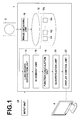
- Figure 1 is a schematic block diagram of an image analysis apparatus according to an embodiment of the present invention, illustrating a configuration thereof.
- the configuration of the image analysis apparatus 1 shown in Figure 1 is realized by executing an image analysis program read into an auxiliary storage unit on a computer.
- the image analysis program is provided being recorded on a storage medium, such as CD-ROM and the like, or distributed via a network, such as the Internet, and installed on a computer.
- the image analysis apparatus 1 includes an image obtaining unit 10, a storage unit 12, a lung region extraction unit 14, an alignment unit 16, a function calculation unit 18, a quantification unit 20, a display control unit 22, and input unit 24.
- the three-dimensional image group Vg is sent from the modality 2 via a LAN.
- the three-dimensional images Vi are obtained by stacking two-dimensional images of a chest region to be diagnosed obtained in order along a direction perpendicular to the cross-sectional face, and generated by superimposing a plurality of tomographic images captured by the modality 2 in the present embodiment.
- a three-dimensional image obtained with a CT system becomes data in which an absorbed amount of X-ray is stored in each voxel (i.e., pixel position) that forms a grid point in a three-dimensional space, and one signal value (a value representing the absorbed amount of X-ray, if captured by a CT system) is given to each pixel position.
- the three-dimensional image group Vg includes a series of three-dimensional images Vi obtained, for example, by imaging a subject at different time phases T1, T2, -----, Tn separated by a fixed time interval ⁇ t.
- the imaging of the subject is performed in the order of exhaling-inhaling-exhaling or in the order of inhaling-exhaling-inhaling, but the imaging may be performed in the order of exhaling-inhaling or inhaling-exhaling.
- auxiliary information defined by DICOM Digital Imaging and Communications in Medicine
- the auxiliary information may include, for example, an image ID for identifying the three-dimensional image represented by each three-dimensional image vi, a patient ID for identifying the subject, an examination ID for identifying the examination, a unique ID (UID) allocated to each image information, examination date and examination time when the image information was generated, a type of modality used in the examination for obtaining the image information, patient information, such as the patient name, age, gender, and the like, an examination region (imaging region, chest region in the present embodiment), imaging conditions (with or without contrast agent, radiation dose, and the like), and information, such as a series number or a harvest number when a plurality of images was obtained at a time, and the like.
- DICOM Digital Imaging and Communications in Medicine
- the storage unit 12 is a large capacity storage device such as a hard disk or the like, and the three-dimensional image group Vg is stored.
- the storage unit 12 includes a plurality of three-dimensional image groups Vg of different subjects (i.e., different patients) or of the same subject imaged at different times.
- the lung region extraction unit 14 extracts a lung region from each of the three-dimensional images Vi.
- any method may be used, including an method that extracts the lung region by making a histogram of signal values of the respective pixels from the three-dimensional image Vi and performing threshold processing on the lung region, a region growing method based on seed points representing the lung region, and the like. If a lesion area is present near the boundary of the lungs, it is preferable that a concave portion of the lung region which is the lesion area be newly included in the lung region through a curve interpolation using a radius of curvature before and after the concave portion at the boundary of the lung region and extracted as described, for example, in Japanese Unexamined Patent Publication No. 2008-253293 .
- the alignment unit 16 aligns corresponding pixel positions in the lung region extracted from each three-dimensional image Vi between the three-dimensional images Vi and calculates a displacement vector field in the lung region. More specifically, the alignment is performed by relating corresponding pixel positions between three-dimensional images adjacent in time phase using the method described in V. Boldea et al., "Lung Deformation Estimation with Non-rigid Registration for Radiotherapy Treatment", Proceedings of MICCAI, Vol. 2878, pp. 770-777, 2003 (Reference Document 1), and calculates a displacement vector field in the lung region between the two three-dimensional images adjacent in time phase.
- Reference Document 1 performs the alignment of the lung regions extracted from two CT images on a voxel basis using a non-rigid registration method, and a method that obtains a displacement vector field in which the similarity of signal values is maximal and the elastic energy due to deformation is minimal.
- the alignment method is not limited to the method of Reference Document 1 and the alignment may be performed by a method that calculates a correlation between three-dimensional images adjacent in time phase and obtains a displacement vector field where the correlation becomes minimal.
- the displacement vector field between two adjacent time phases (Ti to Ti+1) calculated by the alignment is denoted as D(Ti)(x, y, z)in the time between the two time phases.
- (x, y, z) is the three-dimensional coordinate of each point of the displacement vector field.
- the cumulative amount of change in the displacement vector field to a specific time Tk is denoted as F(Tk) (x, y, z).
- each three-dimensional image Vi may be smoothed before the alignment is performed. More specifically, each three-dimensional image Vi may be smoothed by calculating an average value of signal values at each pixel position using a smoothing filter of a predetermined size (e.g. , 3 ⁇ 3 ⁇ 3). When performing the alignment, this may reduce the influence of noise included in the three-dimensional images Vi and a more accurate alignment may be made.
- a smoothing filter of a predetermined size e.g. 3 ⁇ 3 ⁇ 3
- the function calculation unit 18 calculates an amount of capacity displacement of each point in the displacement vector field per unit time as a local ventilation volume P(Ti) (x, y, z) using the displacement vector field D(Ti)(x, y, z) calculated by the alignment unit 16. More specifically, the divergence at each point in the displacement vector field in the lung region is calculated as the local ventilation volume in the lungs, as described in aforementioned Patent Document 1.
- the term "local ventilation volume” as used herein refers to a ventilation volume at any partial (local) region in the lungs. In the present embodiment, the local region is formed of one voxel or a plurality of adjacent voxels. The relationship between the divergence at each point in the displacement vector field in the lung region and the local ventilation volume in the lungs may be explained as follows.
- the ventilation in the lungs is an incompressible flow of air and the lung parenchyma is deformed by the air flow.
- the theory of elastic body may be applied to the deformation of the lung parenchyma associated with respiration by regarding the lungs as a porous elastic body.
- the local deformation in an elastic body may be expressed using a displacement vector field in a local region and a deformation tensor (3 ⁇ 3 matrix form) and, in particular, if the coordinate axis direction is taken in the main direction of deformation tensor field, the deformation tensor is diagonalized and the trace (sumof the diagonal elements) corresponds to the divergence of the displacement vector.
- the volume change rate in the local region may be approximated by the trace of the diagonalized deformation tenor, that is, the change rate of the volume due to deformation can be regarded as corresponding to the dispersion of the displacement vector. Note that in the tissues without any flow of air, such as a lung blood vessel and the like, the divergence is 0 because such tissues may deform but the volume change is negligible.
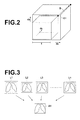
- FIG. 2 is a drawing conceptually illustrating the relationship between the divergence of a displacement vector field and the volume change due to deformation.
- D represents a displacement vector field at a point O1 and dx, dy, dz represent small displacements of a unit cube in x, y, z axis directions respectively.
- the volume change of the unit cube may be obtained by (1+dx) ⁇ (1+dy) ⁇ (1+dz) -1 and this can be approximated by dx + dy + dz. Therefore, the volume change rate of the unit cube may be regarded as corresponding to the divergence of the displacement vector field.
- the divergence is generally represented as divA or ⁇ Ausing a Hamiltonianoperator.
- the vector function is D(Ti) (x, y, z) in the present embodiment
- the divergence divD may be calculated by Formula (1) given below and the calculated divergence divD is the local ventilation volume P(Ti)(x, y, z) at each point in the displacement vector field between certain time phases.
- the function calculation unit 18 further calculates a local ventilation volume function Q(t)(x, y, z) representing a temporal change in ventilation volume by integrating the local ventilation volumes between each time phase with respect to all time phases.
- the quantification unit 20 quantifies a difference between the local ventilation volume function Q(t) (x, y, z) and a benchmark ventilation volume function V(t) (x, y, z) serving as a reference.
- the benchmark ventilation volume function will be described first.
- a global ventilation volume function, a vital capacity ventilation function, a partial ventilation volume function, an average model ventilation volume function, or a mathematical model ventilation volume function is used as the benchmark ventilation volume function. Note that these functions are calculated and stored in the storage unit 12 in advance.
- the global ventilation volume function represents a volume change of the entire lungs of the same subject as that for which the three-dimensional images Vi are obtained, and may be calculated by volume (capacity) integration of the local ventilation volume function Q(t) (x, y, z) of each point in the displacement vector field within the lung region.
- the global ventilation volume function represents a temporal change in ventilation volume of the entire lung region of the same subject as that for which the three-dimensional images Vi are obtained.
- the vital capacity ventilation function may be obtained by performing spirometry on the same subject as that for which the three-dimensional images Vi are obtained.
- the vital capacity ventilation function represents a temporal change in ventilation volume obtained by actual measurements with respect to the same subject as that for which the three-dimensional images Vi are obtained.
- the partial ventilation volume function represents, when the lung fields of the same subject as that for which the three-dimensional images Vi are obtained are divided into a plurality of regions, a volume change in the partial region and may be obtained by volume integration of the local ventilation volume function Q (t) (x, y, z) of each point in the displacement vector field with respect to each partial region.
- Q (t) x, y, z) of each point in the displacement vector field with respect to each partial region.
- the left and right lungs are divided into six regions of upper, middle, and lower regions for diagnosis by a ratio with respect to the entire length of the lungs in the Goddard classification used in the COPD guidelines, each of six regions divided according to the Goddard classification may be regarded as the partial region.
- the interlobar membrane may be extracted from the lung region to divide the lungs into five leaves and the five regions so obtained may be used as the partial region.
- bronchi, lung artery, and lung vein may be extracted from the lung region and a control region of each branch of the bronchi, lung artery, and lung vein may be calculated, and each of the control regions may be used as the partial region. If it is undesirable that the ventilation volume functions are discontinued at the boundary of partial regions, the ventilation volume function with respect to each partial region may be interpolated near the boundary in order to smoothly change the ventilation volume functions at the boundary of the partial regions.
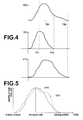
- FIG. 3 is a drawing for explaining calculation of the average model ventilation volume function.
- local ventilation volume functions are calculated with respect to many healthy persons using three-dimensional images as in above.
- the local ventilation volume function space A1 and the area surround the lung region are cuboid, but they are shown as rectangles in Figure 3 for explanation purposes.
- the local ventilation volume function Q(t) (x, y, z) of each point in the displacement vector fields with respect to many healthy persons is mapped to the local ventilation volume function space A1 and an average of local ventilation volumes at each point is calculated.
- the ventilation volume function of the displacement vector field at a point closest to the area is allocated.
- an arithmetic mean of the local ventilation volume function at each point is calculated and this is used as the average model ventilation volume function.
- the arithmetic mean of the local ventilation volume function at each point may be smoothed using a smoothing filter of a predetermined size (e.g., 3 ⁇ 3 ⁇ 3). This may reduce the influence of noise and the average model ventilation volume function may be calculated more accurately.
- the lung region of one of the many healthy persons is set as the benchmark lung region and lung regions of the other healthy persons may be aligned with respect to the benchmark lung region using the aforementioned non-rigid registration method.
- the local ventilation volume function Q(t)(x, y, z) of each point in the displacement vector fields with respect to many healthy persons may be mapped to the benchmark lung region after the alignment, and the average model ventilation volume function may be calculated by calculating an average of the local ventilation volume functions at each point.
- the mathematical model ventilation volume function uses a function obtained by approximating the aforementioned average model ventilation volume function by a formula. Otherwise, a lung ventilation volume function calculated from a lung ventilation model simulated in advance may be used as described in R. Werner et al., "Modeling Respiratory Lung Motion - a Biophysical Approach using Finite Element Methods", Proc. of SPIE, Vol. 6916, pp. 69160N-1-69160N-11, 2008 (Reference Document 2) or H. Kitaoka, "A 4D Model Generator of the Human Lung", Forma, Vol. 26, pp. 19-24, 2011 (Reference Document 3).
- the method described in Reference Document 2 is a method that verifies displacement of the modeled respiratory ventilation volume function from the positions of specific characteristic points extracted from three-dimensional images of a plurality of time phases.
- the method described in Reference Document 3 is a method that generates an artificial lung model and calculates an average ventilation volume function from the artificial model.
- the quantification unit 20 quantifies a difference between the local ventilation volume function Q(t) (x, y, z) and the benchmark ventilation volume function V(t) (x, y, z) and calculates the difference as a quantitative value. In performing the quantification, the quantification unit 20 normalizes the local ventilation volume function Q(t) (x, y, z) and the benchmark ventilation volume function V(t) (x, y, z).
- the benchmark ventilation volume function is a function obtained from the same subject along with the local ventilation volume function, like the global ventilation volume function and the partial ventilation volume function, there is no displacement in a time axis direction between the benchmark ventilation volume function and the local ventilation volume function and the normalization in the time axis direction between the two functions is unnecessary.
- the local ventilation volume function Q(t)(x, y, z) and the benchmark ventilation volume function V(t) (x, y, z) are normalized by the entire variation.
- the local ventilation volume function Q(t) (x, y, z) and the benchmark ventilation volume function V(t) (x, y, z) are normalized by a maximum Q(t) max and a maximum V(t) max respectively.
- the normalized local ventilation volume function Q(t) (x, y, z) and benchmark ventilation volume function V(t) (x, y, z) become Q(t) (x, y, z)/Q(t)max and V(t) (x, y, z)/V(t)max respectively.
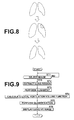
- FIG. 4 is a drawing for explaining normalization of a ventilation volume function. Note that Figure 4 explains the case where the benchmark ventilation volume function V(t) (x, y, z) is normalized.
- the inhalation timing TQ1 and the exhalation timing TQ2 of the local ventilation volume function Q(t)(x, y, z) are shifted respectively from the inhalation timing TV1 and the exhalation timing TV2 of the benchmark ventilation volume function V(t) (x, y, z). Therefore, the benchmark ventilation volume function V(t) (x, y, z) is normalized such that the inhalation timing TV1 and the exhalation timing TV2 of the benchmark ventilation volume function V(t) (x, y, z) correspond respectively to the inhalation timing TQ1 and the exhalation timing TQ2 of the local ventilation volume function Q(t) (x, y, z).
- the benchmark ventilation volume function normalized in the time axis direction is normalized by the entire variation and the local ventilation volume function Q is normalized by the entire variation.
- the normalized local ventilation volume function Q(t)(x, y, z) and benchmark ventilation volume function V(t) (x, y, z) are hereinafter referred to as Q'(t)(x, y, z) and V'(t) (x, y, z) respectively.
- FIG. 5 is a drawing for explaining the comparison between the normalized local ventilation volume function and the normalized benchmark ventilation volume function in a certain region of lungs.
- the horizontal axis represents time and the vertical axis represents ventilation volume.
- Figure 6 illustrates a difference function.
- the difference function B(t) shows a difference between the local ventilation volume and benchmark ventilation volume with the passage of time and, more specifically, shows to what extent the ventilation of a local position is delayed from the reference ventilation.
- the difference function may be calculated using the local ventilation volume function of a partial region from which the partial ventilation volume is obtained and the partial ventilation volume function.
- the display control unit 22 When displaying the three-dimensional image Vi on the display 4, the display control unit 22 displays the difference function B(t)(x, y, z) along with the three-dimensional image Vi. More specifically, the display control unit 22 extracts a lung region from the three-dimensional images Vi and displays a volume rendering image or a surface rendering image (hereinafter, simply VR image) of the lungs. Further, the display control unit 22 mapping displays the difference function B(t) (x, y, z) on the surface of the lung VR image. That is, the display control unit 22 displays a signal at a pixel position on the lung surface at each time phase by converting to a color according to the difference function B(t)(x, y, z) corresponding to the pixel position.
- the display control unit 22 displays the difference function B(t)(x, y, z) along with the three-dimensional image Vi. More specifically, the display control unit 22 extracts a lung region from the three-dimensional images Vi and displays a volume rendering image or a
- the color conversion is performed using, for example, a one-dimensional lookup table in which the value of difference function B(t) is set to the horizontal axis and the color (R, G, B) is set to the horizontal axis, as illustrated in Figure 7 .
- a one-dimensional lookup table in which the value of difference function B(t) is set to the horizontal axis and the color (R, G, B) is set to the horizontal axis, as illustrated in Figure 7 .
- the display control unit 22 converts a signal value of each pixel on the lung surface to a display pixel value of each of R, G, B with reference to the lookup tables. Then, the display control unit 22 displays the converted lung VR images on the display 4 in time series order.
- Figure 8 is a drawing for explaining the display of lung VR images. As illustrated in Figure 8 , a portion of the lungs having an abnormal ventilation amount is displayed on the display 4 along with a deformed state of the lungs according to the respiration. Note that three-dimensional images of lungs are displayed on the display 4, but the lungs are represented by two-dimensional images in Figure 8 for explanation purposes. Further, a region where an abnormal ventilation volume is locally observed under inhalation is indicated by the slashes in Figure 8 .
- the input unit 24 includes known input devices, such as a keyboard, a mouse, and the like.
- FIG. 9 is a flowchart of processing performed in the present embodiment. It is assumed that the plurality of three-dimensional images Vi of lungs has been obtained by the image obtaining unit 10 and stored in the storage unit 12.
- the lung region extraction unit 14 reads out the selected three-dimensional images Vi from the storage unit 12 and extracts a lung region from each of the three-dimensional images Vi (step ST2).
- the alignment unit 16 aligns pixel positions corresponding to the lung region extracted from each of the three-dimensional images Vi between the three-dimensional images Vi (step ST3). This calculates a displacement vector field at each time phase of the three-dimensional images Vi.
- the function calculation unit 18 calculates a local ventilation volume function Q(t)(x, y, z) representing a temporal change in ventilation volume at each point of the displacement vector field (step ST4).
- the quantification unit 20 calculates a difference function B (t) (x, y, z), which is a function of difference values between the local ventilation volume function and the benchmark ventilation volume function by performing quantification, as a quantitative value representing a difference between the local ventilation volume function and the benchmark ventilation volume function (quantification, step ST5).
- the display control unit 22 displays lung VR images on which the difference function is mapped on the display 4 in time series order (step ST6), and the processing is completed.
- lung diseases such as cancer, bronchial asthma, lung infarction, and the like
- diagnosis of such a portion is difficult by simply observing the image. Therefore, there exists an inspection method that calculates the ventilation volume as in the spirometry, but the ventilation volume alone simply shows what amount of air the lungs have finally taken in and lung motion state cannot be known.
- the difference function that represents the difference between the local ventilation volume function and the benchmark ventilation volume function is mapped on the three-dimensional images and displayed in time series order. This allows three-dimensional motion of the lungs during respiration to be checked and a local abnormality of the lungs to be confirmed through comparison with the surrounding state by the mapped difference function. If a portion of a lung field has become completely stiff and no air ventilation is performed, the ventilation volume is 0 in principle. In the present embodiment, it is possible to confirm, in a region having a ventilation volume greater than a predetermined value, whether or not the ventilation volume is normal or abnormal through comparison with the ventilation volumes of surrounding regions. In addition, it is possible, if the ventilation volume is abnormal, to visually confirm as to what extent it is abnormal. Therefore, by following up the state of the lungs regularly using the present embodiment, the diagnosis as to whether or not the condition of the disease is aggravated may be made easily.
- the global ventilation volume function if air is taken in uniformly over the entire lungs for respiration, the local ventilation volume function of each region of the lungs should have a similar function shape to that of the benchmark ventilation volume function. If the lungs have a certain disease, however, the local ventilation volume function of the region having the disease has a function shape different from that of the benchmark ventilation volume function. Consequently, a local abnormality of the lungs may be detected by setting the global ventilation volume function as the benchmark ventilation volume function.
- the global ventilation volume function is used as the benchmark ventilation volume function
- the ventilation volume may not be estimated accurately.
- the spirometry may easily obtain a ventilation volume function of a continuous time, so that the benchmark ventilation volume function may be calculated accurately and easily.
- one benchmark ventilation volume function is calculated from the entire lung region and the difference between the benchmark ventilation volume function and the local ventilation volume function is set as the quantitative value, the difference in ventilation volume between each region due to the gravity or the difference in ventilation volume between each region which should be essentially judged normal may not be distinguished and, as a result, a region having such a difference may possibly be detected as an abnormal region. Therefore, by setting the region ventilation volume function as the benchmark ventilation volume, and quantifying a difference between the region ventilation volume function and the local ventilation volume function for each region, only a region having a local abnormality may be detected.
- the average model ventilation volume function calculated in advance using healthy persons and the mathematical model function, it becomes easier to identify an abnormal region and it is possible to identify an abnormal region without being influenced by the bias in the ventilation volume due to the gravity of the lung fields or by the bias physiologically present in the ventilation volume.
- the difference function B(t) is mapped on the surface of the lungs in the lung VR images but the difference function B(t) may be mapped on cross-sections provided by cutting the lungs in the lung VR images.
- the difference function B (t) is calculated as quantitative values, but the absolute maximum value
- shows a maximum difference in ventilation volume of a region where the difference function B(t) is calculated with respect to the normal region.
- becomes maximum may be set as the quantitative value.
- the time Tk shows the time when a difference in ventilation volume of a region where the difference function B(t) is calculated becomes maximum with respect to the normal region.
- a specific time point for example, the exhalation starting time may be used as the reference.
- the integration value of the difference function B(t) may be used as the quantitative value.
- the quantitative value represents the sum of the differences of a region where the difference function B(t) is calculated with respect to the normal region.
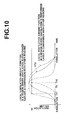
- a time Tp1 where the local ventilation volume function reaches a given ventilation volume Vk comes earlier that a time Tb where the benchmark ventilation volume function reaches the given ventilation volume, as illustrated in Figure 10 .
- a time Tp2 where the local ventilation volume function reaches a given ventilation volume comes later that the time Tb where the benchmark ventilation volume function reaches the given ventilation volume.
- a value of difference between a time from a certain reference time (e.g., time when exhalation is started as shown in Figure 10 ) to the time when the predetermined ventilation value Vk is reached in the local ventilation volume function and a time to the time when the predetermined ventilation value Vk is reached in the benchmark ventilation volume function (e.g., Tp-Tb) may be calculated as the quantitative value.
- a certain reference time e.g., time when exhalation is started as shown in Figure 10
- Tp-Tb a time to the time when the predetermined ventilation value Vk is reached in the benchmark ventilation volume function
- the quantitative value may be mapped on the lung VR images.
- the color on the lung surface does not change with the passage of time, but the lung motion state and a region having an abnormal value of ventilation volume maybe confirmed.
- the quantitative value may be mapped on cross-sections provided by cutting the lungs in the lung VR images.
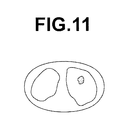
- the quantitative value may be overlay displayed on the lung region in the MPR cross-section of the three-dimensional image Vi. Note that the overlay displayed portion in Figure 11 is indicated by the slashes in Figure 11 .
Landscapes
- Health & Medical Sciences (AREA)
- Engineering & Computer Science (AREA)
- Life Sciences & Earth Sciences (AREA)
- Medical Informatics (AREA)
- Physics & Mathematics (AREA)
- General Health & Medical Sciences (AREA)
- Public Health (AREA)
- Pathology (AREA)
- Biomedical Technology (AREA)
- Veterinary Medicine (AREA)
- Molecular Biology (AREA)
- Surgery (AREA)
- Animal Behavior & Ethology (AREA)
- Biophysics (AREA)
- Heart & Thoracic Surgery (AREA)
- Theoretical Computer Science (AREA)
- Computer Vision & Pattern Recognition (AREA)
- Nuclear Medicine, Radiotherapy & Molecular Imaging (AREA)
- Radiology & Medical Imaging (AREA)
- General Physics & Mathematics (AREA)
- Pulmonology (AREA)
- High Energy & Nuclear Physics (AREA)
- Optics & Photonics (AREA)
- Physiology (AREA)
- Oral & Maxillofacial Surgery (AREA)
- Dentistry (AREA)
- Multimedia (AREA)
- Quality & Reliability (AREA)
- Geometry (AREA)
- Primary Health Care (AREA)
- Data Mining & Analysis (AREA)
- Epidemiology (AREA)
- Databases & Information Systems (AREA)
- Apparatus For Radiation Diagnosis (AREA)
- Measurement Of The Respiration, Hearing Ability, Form, And Blood Characteristics Of Living Organisms (AREA)
Applications Claiming Priority (2)
| Application Number | Priority Date | Filing Date | Title |
|---|---|---|---|
| JP2012066598A JP5844187B2 (ja) | 2012-03-23 | 2012-03-23 | 画像解析装置および方法並びにプログラム |
| PCT/JP2013/001640 WO2013140749A1 (ja) | 2012-03-23 | 2013-03-13 | 画像解析装置および方法並びにプログラム |
Publications (2)
| Publication Number | Publication Date |
|---|---|
| EP2829233A1 true EP2829233A1 (de) | 2015-01-28 |
| EP2829233A4 EP2829233A4 (de) | 2015-11-18 |
Family
ID=49222231
Family Applications (1)
| Application Number | Title | Priority Date | Filing Date |
|---|---|---|---|
| EP13763526.4A Withdrawn EP2829233A4 (de) | 2012-03-23 | 2013-03-13 | Bildanalysevorrichtung, -verfahren und -programm |
Country Status (4)
| Country | Link |
|---|---|
| US (1) | US9117287B2 (de) |
| EP (1) | EP2829233A4 (de) |
| JP (1) | JP5844187B2 (de) |
| WO (1) | WO2013140749A1 (de) |
Cited By (3)
| Publication number | Priority date | Publication date | Assignee | Title |
|---|---|---|---|---|
| EP2907450A1 (de) * | 2014-02-14 | 2015-08-19 | FUJIFILM Corporation | Medizinische Bildanzeigesteuerungsvorrichtung und Verfahren zu deren Betrieb und Medium |
| GB2569427A (en) * | 2017-10-13 | 2019-06-19 | Optellum Ltd | System, method and apparatus for assisting a determination of medical images |
| EP3683765A1 (de) * | 2019-01-18 | 2020-07-22 | Koninklijke Philips N.V. | System zur bestimmung einer gewebespezifischen eigenschaft |
Families Citing this family (36)
| Publication number | Priority date | Publication date | Assignee | Title |
|---|---|---|---|---|
| DE102011017778A1 (de) * | 2011-04-29 | 2012-10-31 | Charité - Universitätsmedizin Berlin | Verfahren und Anordnung zur Gewebecharakterisierung von menschlichem oder tierischem Gewebe |
| WO2013111813A1 (ja) * | 2012-01-27 | 2013-08-01 | 株式会社 東芝 | 医用画像処理装置 |
| JP6106260B2 (ja) * | 2012-03-23 | 2017-03-29 | コーニンクレッカ フィリップス エヌ ヴェKoninklijke Philips N.V. | ボリュームレンダリング |
| CN105246407A (zh) * | 2013-05-28 | 2016-01-13 | 柯尼卡美能达株式会社 | 图像处理装置以及程序 |
| US10424225B2 (en) * | 2013-09-23 | 2019-09-24 | SonoSim, Inc. | Method for ultrasound training with a pressure sensing array |
| JP6411072B2 (ja) * | 2014-06-02 | 2018-10-24 | キヤノンメディカルシステムズ株式会社 | 医用画像処理装置、医用画像処理方法およびプログラム |
| US10062167B2 (en) * | 2014-08-15 | 2018-08-28 | Toshiba Medical Systems Corporation | Estimated local rigid regions from dense deformation in subtraction |
| US9972081B2 (en) * | 2014-10-30 | 2018-05-15 | Edda Technology, Inc. | Method and system for estimating a deflated lung shape for video assisted thoracic surgery |
| US10499992B2 (en) | 2014-10-30 | 2019-12-10 | Edda Technology, Inc. | Method and system for estimating a deflated lung shape for video assisted thoracic surgery in augmented and mixed reality |
| US9675317B2 (en) * | 2014-12-22 | 2017-06-13 | Toshiba Medical Systems Corporation | Interface identification apparatus and method |
| US9454814B2 (en) * | 2015-01-27 | 2016-09-27 | Mckesson Financial Holdings | PACS viewer and a method for identifying patient orientation |
| JP6516510B2 (ja) * | 2015-03-02 | 2019-05-22 | キヤノン株式会社 | 画像処理装置、撮像装置、画像処理方法、画像処理プログラム、および、記憶媒体 |
| JP6494328B2 (ja) | 2015-03-02 | 2019-04-03 | キヤノン株式会社 | 画像処理装置、撮像装置、画像処理方法、画像処理プログラム、および、記憶媒体 |
| US10299752B2 (en) * | 2015-04-27 | 2019-05-28 | Toshiba Medical Systems Corporation | Medical image processing apparatus, X-ray CT apparatus, and image processing method |
| JP6413927B2 (ja) * | 2015-05-25 | 2018-10-31 | コニカミノルタ株式会社 | 動態解析装置及び動態解析システム |
| JP2017099616A (ja) * | 2015-12-01 | 2017-06-08 | ソニー株式会社 | 手術用制御装置、手術用制御方法、およびプログラム、並びに手術システム |
| KR102510760B1 (ko) * | 2016-02-15 | 2023-03-16 | 삼성전자주식회사 | 영상처리장치, 영상처리방법 및 이를 기록한 기록매체 |
| KR102728701B1 (ko) * | 2016-02-15 | 2024-11-12 | 삼성전자주식회사 | 영상처리장치, 영상처리방법 및 이를 기록한 기록매체 |
| JP6929689B2 (ja) | 2016-04-26 | 2021-09-01 | キヤノンメディカルシステムズ株式会社 | 医用画像処理装置及び医用画像診断装置 |
| JP6686733B2 (ja) * | 2016-06-23 | 2020-04-22 | コニカミノルタ株式会社 | 動態解析システム |
| JP2018000281A (ja) * | 2016-06-28 | 2018-01-11 | コニカミノルタ株式会社 | 動態解析システム |
| CA3033987A1 (en) | 2016-08-18 | 2018-02-22 | William Beaumont Hospital | System and method for determining respiratory induced blood mass change from 4d computed tomography |
| JP2018068814A (ja) * | 2016-11-01 | 2018-05-10 | 国立大学法人東北大学 | 画像処理装置、画像処理方法、及び、画像処理プログラム |
| JP2018122093A (ja) * | 2017-02-02 | 2018-08-09 | キヤノンメディカルシステムズ株式会社 | 医用画像処理装置、x線ct装置、及び医用画像処理方法 |
| JP7040908B2 (ja) * | 2017-09-28 | 2022-03-23 | 日鉄鋼板株式会社 | サンドイッチパネル、及び壁ユニット |
| JP7047574B2 (ja) * | 2018-04-26 | 2022-04-05 | コニカミノルタ株式会社 | 動態画像解析装置、動態画像解析システム、動態画像解析プログラム及び動態画像解析方法 |
| US12026832B2 (en) | 2018-06-08 | 2024-07-02 | Data Integrity Advisors, Llc | System and method for gating radiation exposure |
| JP7074101B2 (ja) * | 2019-03-20 | 2022-05-24 | コニカミノルタ株式会社 | 動態解析装置、動態解析システム、予測率算出方法及びプログラム |
| JP6748762B2 (ja) * | 2019-05-23 | 2020-09-02 | キヤノン株式会社 | 医用画像処理装置、医用画像処理方法 |
| JP2021194139A (ja) * | 2020-06-11 | 2021-12-27 | コニカミノルタ株式会社 | 画像表示装置及びプログラム |
| JP7643875B2 (ja) * | 2021-01-15 | 2025-03-11 | キヤノン株式会社 | 情報処理装置、情報処理方法、及びプログラム |
| US12340527B2 (en) * | 2021-10-05 | 2025-06-24 | Koninklijke Philips N.V. | Inter- and extrapolation of chest image and mechanical ventilation settings into a time lapse series for progression monitoring and outcome prediction during long term mechanical ventilation |
| EP4197444A1 (de) | 2021-12-20 | 2023-06-21 | Koninklijke Philips N.V. | Lungenvolumenschätzung aus röntgenbildern |
| CN116763331B (zh) * | 2023-05-16 | 2025-12-09 | 深圳市安健科技股份有限公司 | 一种基于dr的通气量测量方法及装置 |
| EP4403211B1 (de) * | 2023-06-30 | 2025-06-11 | Siemens Healthineers AG | Verfahren zur bereitstellung angepasster 4d-ct-daten |
| WO2025111647A1 (en) * | 2023-11-27 | 2025-06-05 | 4DMedical Limited | Method of assessing lung health |
Family Cites Families (11)
| Publication number | Priority date | Publication date | Assignee | Title |
|---|---|---|---|---|
| JP3666987B2 (ja) * | 1996-05-02 | 2005-06-29 | コーリンメディカルテクノロジー株式会社 | 血圧監視装置 |
| US7221787B2 (en) * | 2002-12-10 | 2007-05-22 | Eastman Kodak Company | Method for automated analysis of digital chest radiographs |
| JP4560643B2 (ja) * | 2003-06-17 | 2010-10-13 | 株式会社Aze | 呼吸気ct画像による換気分布計測方法 |
| US8195269B2 (en) * | 2006-07-07 | 2012-06-05 | Siemens Medical Solutions Usa, Inc. | System and method for automatic detection and measurement of malacia in the airways |
| JP2008253293A (ja) | 2007-03-30 | 2008-10-23 | Fujifilm Corp | Ct画像からの肺野領域抽出方法 |
| JP2009153677A (ja) * | 2007-12-26 | 2009-07-16 | Konica Minolta Medical & Graphic Inc | 動態画像処理システム |
| WO2009132002A1 (en) * | 2008-04-21 | 2009-10-29 | University Of South Florida | Method and apparatus for pulmonary ventilation imaging using local volume changes |
| RU2542096C2 (ru) * | 2009-01-30 | 2015-02-20 | Конинклейке Филипс Электроникс Н.В. | Система для представления информации о вентиляции легких |
| JP5521392B2 (ja) * | 2009-05-22 | 2014-06-11 | コニカミノルタ株式会社 | 動態画像診断支援システム及びプログラム |
| JP5874636B2 (ja) * | 2010-08-27 | 2016-03-02 | コニカミノルタ株式会社 | 診断支援システム及びプログラム |
| CN103079466B (zh) * | 2010-08-27 | 2015-11-25 | 柯尼卡美能达医疗印刷器材株式会社 | 胸部诊断辅助系统 |
-
2012
- 2012-03-23 JP JP2012066598A patent/JP5844187B2/ja active Active
-
2013
- 2013-03-13 WO PCT/JP2013/001640 patent/WO2013140749A1/ja not_active Ceased
- 2013-03-13 EP EP13763526.4A patent/EP2829233A4/de not_active Withdrawn
-
2014
- 2014-09-18 US US14/489,529 patent/US9117287B2/en active Active
Cited By (8)
| Publication number | Priority date | Publication date | Assignee | Title |
|---|---|---|---|---|
| EP2907450A1 (de) * | 2014-02-14 | 2015-08-19 | FUJIFILM Corporation | Medizinische Bildanzeigesteuerungsvorrichtung und Verfahren zu deren Betrieb und Medium |
| GB2569427A (en) * | 2017-10-13 | 2019-06-19 | Optellum Ltd | System, method and apparatus for assisting a determination of medical images |
| GB2569427B (en) * | 2017-10-13 | 2021-12-15 | Optellum Ltd | System, method and apparatus for assisting a determination of medical images |
| US11594005B2 (en) | 2017-10-13 | 2023-02-28 | Optellum Limited | System, method and apparatus for assisting a determination of medical images |
| EP3683765A1 (de) * | 2019-01-18 | 2020-07-22 | Koninklijke Philips N.V. | System zur bestimmung einer gewebespezifischen eigenschaft |
| WO2020148407A1 (en) * | 2019-01-18 | 2020-07-23 | Koninklijke Philips N.V. | System for determining a tissue-specific property |
| US20220122247A1 (en) * | 2019-01-18 | 2022-04-21 | Koninklijke Philips N.V. | System for determining a tissue-specific property |
| US12008753B2 (en) * | 2019-01-18 | 2024-06-11 | Koninklijke Philips N.V. | System for determining a tissue-specific property |
Also Published As
| Publication number | Publication date |
|---|---|
| JP5844187B2 (ja) | 2016-01-13 |
| WO2013140749A1 (ja) | 2013-09-26 |
| US20150005659A1 (en) | 2015-01-01 |
| EP2829233A4 (de) | 2015-11-18 |
| US9117287B2 (en) | 2015-08-25 |
| JP2013192912A (ja) | 2013-09-30 |
Similar Documents
| Publication | Publication Date | Title |
|---|---|---|
| US9117287B2 (en) | Image analysis apparatus, method, and program | |
| JP7858737B2 (ja) | 肺気量ゲートx線撮像システム及び方法 | |
| US12357261B2 (en) | System and method for determining radiation parameters | |
| EP3052018B1 (de) | Elektrisches impedanztomografiesystem | |
| CN105101878B (zh) | 医用图像处理装置以及医用图像处理方法 | |
| JP4560643B2 (ja) | 呼吸気ct画像による換気分布計測方法 | |
| CN102125439B (zh) | 图像处理装置、x射线计算机断层摄像装置以及图像处理方法 | |
| CN102802534B (zh) | 医用图像转换设备、方法和程序 | |
| CN105188541A (zh) | 图像处理装置和程序 | |
| JP2003199715A (ja) | 画像関連データ処理方法 | |
| US20040249314A1 (en) | Tempero-spatial physiological signal detection method and apparatus | |
| JP2019180899A (ja) | 医用画像処理装置 | |
| JP6155177B2 (ja) | 画像診断支援装置に画像処理を実行させるためのコンピュータプログラム、装置及び方法 | |
| US12033366B2 (en) | Matching apparatus, matching method, and matching program | |
| JP5068334B2 (ja) | 医用画像変換装置および方法並びにプログラム | |
| JP5068336B2 (ja) | 医用画像変換装置および方法並びにプログラム | |
| EP4186432B1 (de) | Vorrichtung zur verarbeitung medizinischer bilder, verfahren zur verarbeitung medizinischer bilder und speichermedium | |
| JP7500360B2 (ja) | 情報処理装置、情報処理方法、及びプログラム | |
| JP2025180560A (ja) | 動態画像解析装置、方法、及びプログラム | |
| KR101529658B1 (ko) | 장기의 기능 및 구조의 통합 분석 방법 | |
| Schoebinger et al. | Quantification of tumor mobility during the breathing cycle using 3D dynamic MRI |
Legal Events
| Date | Code | Title | Description |
|---|---|---|---|
| PUAI | Public reference made under article 153(3) epc to a published international application that has entered the european phase |
Free format text: ORIGINAL CODE: 0009012 |
|
| 17P | Request for examination filed |
Effective date: 20140922 |
|
| AK | Designated contracting states |
Kind code of ref document: A1 Designated state(s): AL AT BE BG CH CY CZ DE DK EE ES FI FR GB GR HR HU IE IS IT LI LT LU LV MC MK MT NL NO PL PT RO RS SE SI SK SM TR |
|
| AX | Request for extension of the european patent |
Extension state: BA ME |
|
| DAX | Request for extension of the european patent (deleted) | ||
| RA4 | Supplementary search report drawn up and despatched (corrected) |
Effective date: 20151016 |
|
| RIC1 | Information provided on ipc code assigned before grant |
Ipc: G06T 7/00 20060101ALI20151012BHEP Ipc: A61B 6/03 20060101AFI20151012BHEP Ipc: A61B 6/00 20060101ALI20151012BHEP |
|
| STAA | Information on the status of an ep patent application or granted ep patent |
Free format text: STATUS: THE APPLICATION IS DEEMED TO BE WITHDRAWN |
|
| 18D | Application deemed to be withdrawn |
Effective date: 20160514 |