EP2828289B1 - Growth differentiation factor (gdf) 11 for treatment of age-related cardiovascular condition - Google Patents
Growth differentiation factor (gdf) 11 for treatment of age-related cardiovascular condition Download PDFInfo
- Publication number
- EP2828289B1 EP2828289B1 EP13764561.0A EP13764561A EP2828289B1 EP 2828289 B1 EP2828289 B1 EP 2828289B1 EP 13764561 A EP13764561 A EP 13764561A EP 2828289 B1 EP2828289 B1 EP 2828289B1
- Authority
- EP
- European Patent Office
- Prior art keywords
- gdf11
- mice
- polypeptide
- seq
- subject
- Prior art date
- Legal status (The legal status is an assumption and is not a legal conclusion. Google has not performed a legal analysis and makes no representation as to the accuracy of the status listed.)
- Active
Links
Images





Classifications
-
- C—CHEMISTRY; METALLURGY
- C07—ORGANIC CHEMISTRY
- C07K—PEPTIDES
- C07K14/00—Peptides having more than 20 amino acids; Gastrins; Somatostatins; Melanotropins; Derivatives thereof
- C07K14/435—Peptides having more than 20 amino acids; Gastrins; Somatostatins; Melanotropins; Derivatives thereof from animals; from humans
- C07K14/475—Growth factors; Growth regulators
- C07K14/51—Bone morphogenetic factor; Osteogenins; Osteogenic factor; Bone-inducing factor
-
- A—HUMAN NECESSITIES
- A61—MEDICAL OR VETERINARY SCIENCE; HYGIENE
- A61K—PREPARATIONS FOR MEDICAL, DENTAL OR TOILETRY PURPOSES
- A61K31/00—Medicinal preparations containing organic active ingredients
- A61K31/70—Carbohydrates; Sugars; Derivatives thereof
- A61K31/7088—Compounds having three or more nucleosides or nucleotides
-
- A—HUMAN NECESSITIES
- A61—MEDICAL OR VETERINARY SCIENCE; HYGIENE
- A61K—PREPARATIONS FOR MEDICAL, DENTAL OR TOILETRY PURPOSES
- A61K38/00—Medicinal preparations containing peptides
- A61K38/16—Peptides having more than 20 amino acids; Gastrins; Somatostatins; Melanotropins; Derivatives thereof
- A61K38/17—Peptides having more than 20 amino acids; Gastrins; Somatostatins; Melanotropins; Derivatives thereof from animals; from humans
- A61K38/18—Growth factors; Growth regulators
- A61K38/1875—Bone morphogenic factor; Osteogenins; Osteogenic factor; Bone-inducing factor
-
- A—HUMAN NECESSITIES
- A61—MEDICAL OR VETERINARY SCIENCE; HYGIENE
- A61P—SPECIFIC THERAPEUTIC ACTIVITY OF CHEMICAL COMPOUNDS OR MEDICINAL PREPARATIONS
- A61P21/00—Drugs for disorders of the muscular or neuromuscular system
-
- A—HUMAN NECESSITIES
- A61—MEDICAL OR VETERINARY SCIENCE; HYGIENE
- A61P—SPECIFIC THERAPEUTIC ACTIVITY OF CHEMICAL COMPOUNDS OR MEDICINAL PREPARATIONS
- A61P25/00—Drugs for disorders of the nervous system
- A61P25/28—Drugs for disorders of the nervous system for treating neurodegenerative disorders of the central nervous system, e.g. nootropic agents, cognition enhancers, drugs for treating Alzheimer's disease or other forms of dementia
-
- A—HUMAN NECESSITIES
- A61—MEDICAL OR VETERINARY SCIENCE; HYGIENE
- A61P—SPECIFIC THERAPEUTIC ACTIVITY OF CHEMICAL COMPOUNDS OR MEDICINAL PREPARATIONS
- A61P9/00—Drugs for disorders of the cardiovascular system
-
- A—HUMAN NECESSITIES
- A61—MEDICAL OR VETERINARY SCIENCE; HYGIENE
- A61P—SPECIFIC THERAPEUTIC ACTIVITY OF CHEMICAL COMPOUNDS OR MEDICINAL PREPARATIONS
- A61P9/00—Drugs for disorders of the cardiovascular system
- A61P9/10—Drugs for disorders of the cardiovascular system for treating ischaemic or atherosclerotic diseases, e.g. antianginal drugs, coronary vasodilators, drugs for myocardial infarction, retinopathy, cerebrovascula insufficiency, renal arteriosclerosis
-
- A—HUMAN NECESSITIES
- A61—MEDICAL OR VETERINARY SCIENCE; HYGIENE
- A61P—SPECIFIC THERAPEUTIC ACTIVITY OF CHEMICAL COMPOUNDS OR MEDICINAL PREPARATIONS
- A61P9/00—Drugs for disorders of the cardiovascular system
- A61P9/12—Antihypertensives
-
- C—CHEMISTRY; METALLURGY
- C07—ORGANIC CHEMISTRY
- C07K—PEPTIDES
- C07K14/00—Peptides having more than 20 amino acids; Gastrins; Somatostatins; Melanotropins; Derivatives thereof
- C07K14/435—Peptides having more than 20 amino acids; Gastrins; Somatostatins; Melanotropins; Derivatives thereof from animals; from humans
- C07K14/705—Receptors; Cell surface antigens; Cell surface determinants
- C07K14/71—Receptors; Cell surface antigens; Cell surface determinants for growth factors; for growth regulators
Definitions
- Embodiments of the technology described herein relate to treatments for diastolic heart failure, cardiac hypertrophy, and related conditions.
- Heart failure affects approximately 1% of individuals over 50 but over 5% of individuals over 75, and with the ongoing steep rise in the proportion of elderly individuals within our population, age-related heart failure is certain to become an increasingly prevalent health condition. Most age-related heart failure is in the setting of normal systolic function, and this is a condition often associated with cardiac hypertrophy (i.e. enlargement of heart tissue) and called "diastolic heart failure" ( G, P. Aurigemma, N Engl J Med 355, 308 (Jul 20, 2006 )). Diastolic heart failure accounts for 40-60% of heart failure cases ( G, P.
- Diastolic heart failure is a clinical syndrome that occurs in a variety of pathophysiologic settings, including long-standing hypertension, valvular disease such as aortic stenosis, genetic hypertrophic cardiomyopathy, and as a result of aging. These disparate etiologies converge with some common pathophysiologic threads, most obviously with cellular hypertrophy or increased diameter of cardiomyocytes; which translates into increased thickness of the heart wall without significantly reducing squeezing capacity (systolic function). Myocardial hypertrophy is an important contributor to the impairment in relaxation or increased stiffness that causes diastolic heart failure ( A. J. Wagers, et al., Science 2002 297:2256 ).
- Embodiments of the technology described herein are based on the discovery that the level of GDF11 in the blood of an animal decreases with age and this decrease in GDF11 level is associated with cardiac hypertrophy in the aging animal.
- the inventors have further discovered the therapeutic potential of increasing the GDF11 level in an animal, particularly as it relates to cardiac conditions, including those associated with aging.
- the present invention is defined by the claims.
- One aspect of this disclosure is a method of treating a cardiovascular condition, the method comprising administering to a subject a composition which increases the level of GDF11 polypeptide in the subject.
- the level of GDF11 polypeptide is the level of GDF11 in the circulation of the subject. In some embodiments, the level of GDF11 polypeptide is the level of GDF11 in the cardiac tissue of the subject.
- the subject has or has been diagnosed with a condition selected from the group consisting of: diastolic heart failure; cardiac hypertrophy; age-related cardiac hypertrophy; hypertension; valvular disease; aortic stenosis; genetic hypertrophic cardiomyopathy; or stiffness of the heart due to aging.
- a condition selected from the group consisting of: diastolic heart failure; cardiac hypertrophy; age-related cardiac hypertrophy; hypertension; valvular disease; aortic stenosis; genetic hypertrophic cardiomyopathy; or stiffness of the heart due to aging.
- the composition comprises a GDF11 polypeptide. In some embodiments, the composition comprises a GDF11 polypeptide comprising the amino acid sequence of SEQ ID NO 14. In some embodiments, the composition comprises a GDF11 polypeptide comprising the amino acid sequence of SEQ ID NO 15. In some embodiments, the composition comprises a GDF11 polypeptide comprising the amino acid sequence of SEQ ID NO 2. In some embodiments, the composition comprises a GDF11 polypeptide comprising the amino acid sequence of SEQ ID NO: 1.
- the composition comprises homodimers of GDF11 polypeptides comprising the amino acid sequence of any of SEQ ID NO 1, 2, 14, and/or 15. In some embodiments, the composition comprises complexes of GDF11 polypeptides comprising the amino acid sequence of any of SEQ ID NO 1, 2, 14, and/or 15.
- the composition comprises a nucleic acid encoding a GDF11 polypeptide.
- the composition is administered via a route selected from the group consisting of: intravenously; subcutaneously; intra-arterial; and intra-coronary arterial.
- the level of GDF11 is increased by at least 100%. In some embodiments, the level of GDF11 is increased to at least 75% of a healthy reference level.
- the technology described herein relates to a pharmaceutical composition
- a pharmaceutical composition comprising an isolated GDF11 polypeptide and a pharmaceutically acceptable carrier.
- the technology described herein relates to the use of a GDF11 polypeptide for the treatment of a condition selected from the group consisting of: diastolic heart failure; cardiac hypertrophy; hypertension; valvular disease; aortic stenosis; genetic hypertrophic cardiomyopathy; or stiffness of the heart due to aging.
- a condition selected from the group consisting of: diastolic heart failure; cardiac hypertrophy; hypertension; valvular disease; aortic stenosis; genetic hypertrophic cardiomyopathy; or stiffness of the heart due to aging.
- Embodiments of the technology described herein are based on the discovery that as animals age, their level of GDF11 polypeptide decreases and results in cardiac hypertrophy. Described herein are methods and compositions for the treatment of cardiac conditions including, but not limited to diastolic heart failure; cardiac hypertrophy; age-related cardiac hypertrophy; hypertension; valvular disease; aortic stenosis; genetic hypertrophic cardiomyopathy; and/or stiffness of the heart due to aging. These methods and compositions relate generally to increasing the level of GDF11 polypeptide in a subject in order to treat, prevent, or reverse the cardiac conditions described herein.
- cardiovascular condition refers to a condition mediated or characterized by a reduction in circulating GDF11 polypeptide.
- cardiovascular conditions include diastolic heart failure; cardiac hypertrophy; hypertension; valvular disease; aortic stenosis; genetic hypertrophic cardiomyopathy; or stiffness of the heart due to aging.
- “decrease,” “reduce,” “reduced”, “reduction” , “decrease,” and “inhibit” are all used herein generally to mean a decrease by a statistically significant amount relative to a reference.
- “reduce,” “reduction” or “decrease” or “inhibit” typically means a decrease by at least 10% as compared to a reference level and can include, for example, a decrease by at least about 20%, at least about 25%, at least about 30%, at least about 35%, at least about 40%, at least about 45%, at least about 50%, at least about 55%, at least about 60%, at least about 65%, at least about 70%, at least about 75%, at least about 80%, at least about 85%, at least about 90%, at least about 95%, at least about 98%, at least about 99% , up to and including, for example, the complete absence of the given entity or parameter as compared to the reference level, or any decrease between 10-99% as compared to the absence of a given treatment.
- the terms “increased”, “increase” or “enhance” or “activate” are all used herein to generally mean an increase by a statically significant amount; for the avoidance of any doubt, the terms “increased”, “increase” or “enhance” or “activate” means an increase of at least 10% as compared to a reference level, for example an increase of at least about 20%, or at least about 30%, or at least about 40%, or at least about 50%, or at least about 60%, or at least about 70%, or at least about 80%, or at least about 90%, or up to and including a 100% increase or any increase between 10-100% as compared to a reference level, or at least about a 2-fold, or at least about a 3-fold, or at least about a 4-fold, or at least about a 5-fold or at least about a 10-fold increase, or any increase between 2-fold and 10-fold or more as compared to a reference level.
- isolated refers, in the case of a nucleic acid or polypeptide, to a nucleic acid or polypeptide separated from at least one other component (e.g., nucleic acid or polypeptide) that is present with the nucleic acid or polypeptide as found in its natural source and/or that would be present with the nucleic acid or polypeptide when expressed by a cell, or secreted in the case of secreted polypeptides.
- a chemically synthesized nucleic acid or polypeptide or one synthesized using in vitro transcription/translation is considered “isolated.”
- biological sample denotes a sample taken or isolated from a biological organism, e.g., cardiac biopsy sample, blood sample, cell lysate, a homogenate of a tissue sample from a subject, or a fluid sample from a subject.
- exemplary biological samples include, but are not limited to, cardiac tissue biopsies or blood and/or serum samples.
- the sample is from a resection, biopsy, or core needle biopsy.
- fine needle aspirate samples can be used. Samples can include paraffin-embedded and frozen tissue.
- biological sample also includes untreated or pretreated (or pre-processed) biological samples.
- the biological sample is an untreated biological sample.
- the sample can be obtained by removing a sample of cells from a subject, but can also be accomplished by using previously isolated cells (e.g. isolated at a prior timepoint and isolated by the same or another person.
- a "subject” means a human or animal. Usually the animal is a vertebrate such as a primate, rodent, domestic animal or game animal. Primates include chimpanzees, cynomologous monkeys, spider monkeys, and macaques, e.g., Rhesus. Rodents include mice, rats, woodchucks, ferrets, rabbits and hamsters.
- Domestic and game animals include cows, horses, pigs, deer, bison, buffalo, feline species, e.g., domestic cat, canine species, e.g., dog, fox, wolf, avian species, e.g., chicken, emu, ostrich, and fish, e.g., trout, catfish and salmon.
- Patient or subject includes any subset of the foregoing, e.g., all of the above, but excluding one or more groups or species such as humans, primates or rodents.
- the subject is a mammal, e.g., a primate, e.g., a human.
- the terms, "patient”, “individual” and “subject” are used interchangeably herein.
- the subject is a mammal.
- the mammal can be a human, non-human primate, mouse, rat, dog, cat, horse, or cow, but are not limited to these examples. Mammals other than humans can be advantageously used, for example, as subjects that represent animal models of, for example, cardiac hypertrophy.
- the methods described herein can be used to treat domesticated animals and/or pets.
- a subject can be male or female.
- a subject can be one who has been previously diagnosed with or identified as suffering from or having a condition in need of treatment (e.g. cardiac hypertrophy) or one or more complications related to such a condition, and optionally, but need not have already undergone treatment for a condition or the one or more complications related to the condition.
- a subject can also be one who has not been previously diagnosed as having a condition in need of treatment or one or more complications related to such a condition. Rather, a subject can include one who exhibits one or more risk factors for a condition or one or more complications related to a condition.
- a "subject in need" of treatment for a particular condition can be a subject having that condition, diagnosed as having that condition, or at increased risk of developing that condition relative to a given reference population.
- compositions, methods, and respective component(s) thereof are used in reference to compositions, methods, and respective component(s) thereof, that are essential to the method or composition, yet open to the inclusion of unspecified elements, whether essential or not.
- compositions, methods, and respective components thereof as described herein, which are exclusive of any element not recited in that description of the embodiment.
- the term “consisting essentially of” refers to those elements required for a given embodiment. The term permits the presence of elements that do not materially affect the basic and novel or functional characteristic(s) of that embodiment.
- Described herein are methods comprising administering to a subject a composition which increases the level of GDF11 polypeptide in the subject.
- the subject is one who has, or has been diagnosed as having an age-related condition.
- the term "age-related condition" refers to any disease, disorder, or undesirable state whose incidence in a population or severity in an individual correlates with the progression of age.
- the age-related condition is a cardiovascular condition; aging of the heart; aging of skeletal muscle; or aging of the brain. Aging of any given organ can include, but is not limited to, reduced cellularity, reduced stem cell genomic integrity, reduced cellular function (e.g. reduced muscle contraction in muscle tissue), reduced regenerative capacity, atrophy (e.g.
- aging of the skin can include atrophy of the epidermis and/or sebaceous follicles).
- An age-related condition can be one that reduces the function of a given organ or one that is aesthetically undesirable (e.g. aging of the skin or muscle can be aesthetically undesirable).
- Additional age-related conditions can include, but are not limited to: sarcopenia, skin atrophy, muscle wasting, brain atrophy, atherosclerosis, arteriosclerosis, pulmonary emphysema, osteoporosis, osteoarthritis, immunologic incompetence, high blood pressure, dementia, Huntington's disease, Alzheimer's disease, cataracts, age-related macular degeneration, prostate cancer, stroke, diminished life expectancy, memory loss, wrinkles, impaired kidney function, and age-related hearing loss.
- “Metabolic disorder”, as used herein, shall mean any disease or disorder that damages or interferes with normal function in a cell, tissue, or organ by affecting the production of energy in cells or the accumulation of toxins in a cell, tissue, organ, or individual.
- Metabolic disorders relevant to the present invention include, but are not limited to, Type II Diabetes, Metabolic Syndrome, hyperglycemia, and obesity.
- the composition which increases the level of GDF11 polypeptide is administered to a subject who has or has been diagnosed with diastolic heart failure, cardiac hypertrophy, age-related cardiac hypertrophy, hypertension, valvular disease, aortic stenosis, genetic hypertrophic cardiomyopathy, and/or stiffness of the heart due to aging.
- the level of GDF11 polypeptide is the level of GDF11 in the circulation of a subject. In some embodiments, the level of GDF11 polypeptide is the level of GDF11 in the cardiac tissue of a subject. In some embodiments, the level of GDF11 polypeptide is determined by measuring the level of an mRNA encoding a GDF11 polypeptide. The level of GDF11 in a subject can be determined by obtaining a biological sample from the subject and determining the level of GDF11 in the biological sample.
- Methods for determining the level of a polypeptide in a subject or a sample obtained from a subject include, but are not limited to, ELISA, radioimmunoassay, immunohistochemistry, methods involving a labeled antibody specific for GDF11, dot blot analysis, Northern blot, in-situ hybridization, and RT-PCR, among others.
- Antibodies specific for GDF11 are commercially available, e.g. Cat. No. ab71347 from Abcam; Cambridge, MA.
- the level of GDF11 can be measured as described in Souza et al., Molecular Endocrinology 2008 22:2689-2702 ; which is incorporated by reference herein in its entirety.
- cardiac hypertrophy refers to an enlargement of the heart due in part to an increase in the size of the myocytes.
- the myocytes respond to stress through hypertrophic growth. Cardiac hypertrophy is often associated with increased risk of morbidity and mortality.
- the cardiac hypertrophy is left ventricle cardiac hypertrophy.
- left ventricle cardiac hypertrophy refers to a disorder in which the myocardial tissue of the left ventricle of the heart thickens.
- causes of left ventricle cardiac hypertrophy include, for example, hypertension (e.g., high blood pressure), stenosis of the aortic valve (e.g., the inability of the heart valve to fully open), and hypertrophic cardiomyopathy (e.g., a disorder in which the myocardial tissue thickens for no obvious cause).
- the cardiac hypertrophy is right ventricle cardiac hypertrophy.
- right ventricle cardiac hypertrophy refers to a disorder in which the myocardial tissue of the right ventricle thickens.
- causes of right ventricle hypertrophy include, for example, diseases that damage the lungs, such as emphysema and cystic fibrosis; conditions that decrease oxygen levels in the body, such as chronic bronchitis and sleep apnea; stenosis of the pulmonic heart valve, chronic pulmonary embolism, primary pulmonary hypertension, asymmetric septal hypertrophy, and idiopathic hypertrophic subaortic stenosis.
- Symptoms of cardiac hypertrophy and methods of measuring them are well known in the art and include but are not limited to, an increase in left ventricular mass; a change in body weight ratio; changes in cardiomyocyte size, mass, and organization; changes in cardiac gene expression; changes in cardiac function (e.g. diastolic heart function); fibroid deposition; changes in dP/dT, i.e., the rate of change of the ventricular pressure with respect to time; calcium ion flux; stroke length; and ventricular output.
- Diagnostic procedures useful in detecting cardiovascular conditions and/or efficacy of treatment of cardiovascular conditions include echocardiography (.e.g 2 and 3 dimensional), MRI (e.g.
- echocardiography can detect the size of the heart, the pattern of hypertrophy, the contractile function of the heart, and the severity of the outflow gradient while MRI can evaluate ventricular anatomy, wall thickness, ventricular function, ventricular end-diastolic and end-systolic volumes, valvular dysfunction, and outflow tract obstruction.
- GDF11 refers to "Growth and Differentiation Factor 11" (NCBI Gene ID No: 10220), a member of the Transforming Growth Factor-beta superfamily of growth factors. GDF11 is known to bind TGF ⁇ superfamily type I receptors including ALK4, ALK5, and ALK7. For signaling in mammalian development, GDF11 predominantly uses ALK4 and ALK5. In some embodiments, GDF11 signaling can also occur via the ACVR2B receptor. GDF11 is also closely related to GDF8 (also known as myostatin).
- GDF11 can also be referred to as bone morphogenic protein 11, i.e. BMP11.
- GDF11 can include the human precursor polypeptide (SEQ ID NO: 1, NCBI RefSeq: NP_005802); the human pro-peptide (SEQ ID NO: 2); the human N-terminal polypeptide (SEQ ID NO: 15), and the human mature (SEQ ID NO:14) forms of GDF11 as well as homologs from other species, including but not limited to bovine, dog, cat chicken, murine, rat, porcine, ovine, turkey, horse, fish, baboon and other primates.
- the terms also refer to fragments or variants of GDF11 that maintain at least 50% of the cardiac hypertrophy-reducing (or prevention) effect of the full length GDF11 of SEQ ID NO: 2, SEQ ID NO: 1, or SEQ ID NO: 14, e.g. as measured in an appropriate animal model.
- Conservative substitution variants that maintain cardiac hypertrophy-reducing or preventing activity of wildtype GDF11 will include a conservative substitution as defined herein. The identification of amino acids most likely to be tolerant of conservative substitution while maintaining at least 50% of the activity of the wildtype is guided by, for example, sequence alignment with GDF11 homologs or paralogs from other species.
- Amino acids that are identical between GDF11 homologs are less likely to tolerate change, while those showing conservative differences are obviously much more likely to tolerate conservative change in the context of an artificial variant. Similarly, positions with non-conservative differences are less likely to be critical to function and more likely to tolerate conservative substitution in an artificial variant. Variants can be tested for activity, for example, by administering the variant to an appropriate animal model with cardiac hypertrophy and imaging as described herein to follow any reversion of the hypertrophy.
- the pro-peptide plus signal sequence (e.g. the precursor polypeptide) is 407 amino acids long. Cleavage of the 24 amino acid signal peptide generates a pro-peptide of 383 amino acids and cleavage of the pro-peptide results in a mature GDF11 polypeptide of 109 amino acids that corresponds to the C-terminal 109 amino acids of the pro-peptide. The mature polypeptide forms a disulfide-linked homodimer. Cleavage of the pro-peptide also generates the N-terminal polypeptide (e.g. SEQ ID NO: 15) comprising amino acids 25-298 of SEQ ID NO: 1.
- the N-terminal GDF11 polypeptide can antagonize the activity of, e.g. the polypeptides of SEQ ID NOs: 2 and 14, at least in vitro by forming a complex with the other forms of GDF11 polypeptides and can thus be used to modulate the activity of GDF11 compositions as described herein.
- GDF11 polypeptides as described herein reduce or prevent cardiac conditions, e.g., cardiac hypertrophy or stiffening among others, and to the extent the N-terminal GDF11 polypeptide of, e.g., SEQ ID NO: 15, can antagonize such reduction or prevention, the polypeptide of SEQ ID NO: 15 can be excluded from the meaning of "GDF11 polypeptide" as that term is used herein.
- proteins and “polypeptides” are used interchangeably to designate a series of amino acid residues connected to the other by peptide bonds between the alpha-amino and carboxy groups of adjacent residues.
- protein and “polypeptide” refer to a polymer of protein amino acids, including modified amino acids (e.g., phosphorylated, glycated, glycosylated, etc.) and amino acid analogs, regardless of its size or function.
- modified amino acids e.g., phosphorylated, glycated, glycosylated, etc.
- amino acid analogs regardless of its size or function.
- Protein and “polypeptide” are often used in reference to relatively large polypeptides, whereas the term “peptide” is often used in reference to small polypeptides, but usage of these terms in the art overlaps.
- protein and “polypeptide” are used interchangeably herein when referring to a gene product and fragments thereof. Besides the naturally occurring proteins, homologs, orthologs, paralogs, fragments and other equivalents, variants, fragments, and analogs of the foregoing are also disclosed.
- pro-peptide used in reference to GDF11 refers to a GDF11 polypeptide in which the signal domain (e.g. amino acids 1-24 of SEQ ID NO:1) which has been cleaved off during formation of the mature and/or active forms of GDF11.
- signal domain e.g. amino acids 1-24 of SEQ ID NO:1
- precursor peptide used in reference to GDF11 refers to a GDF 11 polypeptide comprising the signal domain, e.g. a polypeptide comprising the amino acid sequence of SEQ ID NO: 1.
- the level of GDF11 in a subject is increased by administering a composition comprising a GDF11 polypeptide and/or a nucleic acid encoding a GDF11 polypeptide.
- a GDF11 polypeptide administered to a subject according to the methods described herein can comprise a GDF11 polypeptide as described herein above, e.g. a pro-peptide or mature form.
- the GDF11 polypeptide comprises the amino acid sequence of SEQ ID NO: 1.
- the GDF11 polypeptide comprises the amino acid sequence of SEQ ID NO: 2.
- the GDF11 polypeptide comprises the amino acid sequence of SEQ ID NO: 14.
- the GDF11 polypeptide comprises the amino acid sequence of SEQ ID NO: 15.
- the composition administered to the subject can comprise GDF11 polypeptide homodimers comprising polypeptides of the amino acid sequence of SEQ ID NO: 14.
- the composition administered to the subject can comprise GDF11 polypeptide homodimers comprising polypeptides of the amino acid sequence of SEQ ID NO: 15.
- the composition administered to the subject can comprise GDF11 polypeptide homodimers comprising polypeptides of the amino acid sequence of SEQ ID NO: 2.
- the composition administered to the subject can comprise GDF11 polypeptide homodimers comprising polypeptides of the amino acid sequence of SEQ ID NO: 1.
- the composition administered to the subject can comprise GDF11 polypeptide heterodimers comprising polypeptides of any of the amino acid sequence of SEQ ID NO: 15, SEQ ID NO: 14, SEQ ID NO: 2, and/or SEQ ID NO: 1.
- a variant or fragment of a GDF11 polypeptide can be administered to a subject.
- the variant of GDF11 is a conservatively modified variant.
- the subject can be administered a variant or fragment (e.g. a conservatively modified variant or a functional fragment or a nucleic acid encoding such a polypeptide) of a polypeptide selected from Collectin kidney 1 (e.g. NCBI Gene ID No: 78989) (SEQ ID NO: 4), Cathespin D (e.g. NCBI Gene ID No: 1509) (SEQ ID NO: 5), Dickkopf-related protein 4 (e.g. NCBI Gene ID No: 27121) (SEQ ID NO: 6), Erythrocyte membrane protein 4.1 (e.g. NCBI Gene ID No: 2035) (SEQ ID NO: 7), esterase D (e.g.
- NCBI Gene ID No: 2098 (SEQ ID NO: 8), hemoglobin (e.g. NCBI Gene ID No: 3043 or 3047) (SEQ ID NOS 9 and 20, respectively), interleukin-1 receptor accessory protein (e.g. NCBI Gene ID No: 3556) (SEQ ID NO: 21), natural killer group 2 member D (e.g. NCBI Gene ID No: 22914) (SEQ ID NO: 22), Ras-related C3 botulinum toxin substrate 1 (e.g. NCBI Gene ID No: 5879) (SEQ ID NO: 23), GTP-binding nuclear protein Ran (e.g. NCBI Gene ID No: 5901) (SEQ ID NO: 24), tissue inhibitor of metalloproteases 3 (e.g. NCBI Gene ID No: 7078) (SEQ ID NO: 25), and thymidylate synthase (e.g. NCBI Gene ID No: 7298) (SEQ ID NO: 26).
- the GDF11 polypeptide can be a variant of a sequence described herein, e.g. a variant of a GDF11 polypeptide comprising the amino acid sequence of SEQ ID NO: 15, SEQ ID NO: 14, SEQ ID NO: 1, or SEQ ID NO: 2.
- the variant is a conservative substitution variant.
- Variants can be obtained by mutations of native nucleotide sequences, for example.
- a "variant,” as referred to herein, is a polypeptide substantially homologous to a native or reference polypeptide, but which has an amino acid sequence different from that of the native or reference polypeptide because of one or a plurality of deletions, insertions or substitutions.
- Polypeptide-encoding DNA sequences encompass sequences that comprise one or more additions, deletions, or substitutions of nucleotides when compared to a native or reference DNA sequence, but that encode a variant protein or fragment thereof that retains the relevant biological activity relative to the reference protein, i.e., can slow or reverse cardiac hypertrophy at least 50% as well as wildtype GDF11.
- amino acid sequences one of skill will recognize that individual substitutions, deletions or additions to a nucleic acid, peptide, polypeptide, or protein sequence which alters a single amino acid or a small percentage, (i.e. 5% or fewer, e.g.
- 4% or fewer, or 3% or fewer, or 1% or fewer) of amino acids in the encoded sequence is a "conservatively modified variant" where the alteration results in the substitution of an amino acid with a chemically similar amino acid. It is contemplated that some changes can potentially improve the relevant activity, such that a variant, whether conservative or note, has more than 100% of the activity of wildtype GDF11, e.g. 110%, 125%, 150%, 175%, 200%, 500%, 1000% or more.
- One method of identifying amino acid residues which can be substituted is to align, for example, human GDF11 to a GDF11 homolog from one or more non-human species. Alignment can provide guidance regarding not only residues likely to be necessary for function but also, conversely, those residues likely to tolerate change. Where, for example, an alignment shows two identical or similar amino acids at corresponding positions, it is more likely that that site is important functionally. Where, conversely, alignment shows residues in corresponding positions to differ significantly in size, charge, hydrophobicity, etc., it is more likely that that site can tolerate variation in a functional polypeptide. Similarly, alignment with a related polypeptide from the same species, e.g.
- GDF8 which does not show the same activity, can also provide guidance with respect to regions or structures required for GDF11 activity.
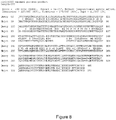
- Figure 8 depicts an example of an alignment between human GDF11 precursor peptide (query sequence; residues 62-407 of SEQ ID NO:1) and human GDF8 precursor peptide created using the default settings of the alignment tool of the BLASTP program, freely available on the world wide web at http://blast.ncbi.nlm.nih.gov/.
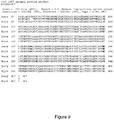
- Figure 9 depicts an example of an alignment between human GDF11 precursor peptide (query sequence; residues 47-407 of SEQ ID NO:1) and murine GDF11 precursor peptide created using the default settings of the alignment tool of the BLASTP program, freely available on the world wide web at http://blast.ncbi.nlm.nih.gov/.
- the variant amino acid or DNA sequence can be at least 90%, at least 95%, at least 96%, at least 97%, at least 98%, at least 99%, or more, identical to a native or reference sequence, e.g. SEQ ID NO: 15, SEQ ID NO: 14, SEQ ID NO:1, or SEQ ID NO: 2 or a nucleic acid encoding one of those amino acid sequences.
- the degree of homology (percent identity) between a native and a mutant sequence can be determined, for example, by comparing the two sequences using freely available computer programs commonly employed for this purpose on the world wide web.
- the variant amino acid or DNA sequence can be at least 90%, at least 91%, at least 92%, at least 93%, at least 94%, at least 95%, at least 96%, at least 97%, at least 98%, at least 99%, or more, similar to the sequence from which it is derived (referred to herein as an "original" sequence).
- the degree of similarity (percent similarity) between an original and a mutant sequence can be determined, for example, by using a similarity matrix.
- Similarity matrices are well known in the art and a number of tools for comparing two sequences using similarity matrices are freely available online, e.g. BLASTp (available on the world wide web at http://blast.ncbi.nlm.nih.gov), with default parameters set.
- BLASTp available on the world wide web at http://blast.ncbi.nlm.nih.gov
- the mature GDF11 polypeptide includes likely intrachain disulfide bonds between, e.g. amino acid 313 and 372; 341 and 404; and 345 and 406 (numbered relative to the full length polypeptide, including the signal sequence) and that amino acid 371 likely participates in interchain disulfide bonding.
- a given amino acid can be replaced by a residue having similar physiochemical characteristics, e.g., substituting one aliphatic residue for another (such as Ile, Val, Leu, or Ala for one another), or substitution of one polar residue for another (such as between Lys and Arg; Glu and Asp; or Gln and Asn).
- Other such conservative substitutions e.g., substitutions of entire regions having similar hydrophobicity characteristics, are well known.
- Polypeptides comprising conservative amino acid substitutions can be tested in any one of the assays described herein to confirm that a desired apoptotic activity of a native or reference polypeptide is retained.
- Conservative substitution tables providing functionally similar amino acids are well known in the art.
- conservatively modified variants are in addition to and do not exclude polymorphic variants, interspecies homologs, and alleles consistent with the disclosure.
- conservative substitutions for one another include: 1) Alanine (A), Glycine (G); 2) Aspartic acid (D), Glutamic acid (E); 3) Asparagine (N), Glutamine (Q); 4) Arginine (R), Lysine (K); 5) Isoleucine (I), Leucine (L), Methionine (M), Valine (V); 6) Phenylalanine (F), Tyrosine (Y), Tryptophan (W); 7) Serine (S), Threonine (T); and 8) Cysteine (C), Methionine (M) (see, e.g., Creighton, Proteins (1984)).
- cysteine residues not involved in maintaining the proper conformation of the polypeptide also can be substituted, generally with serine, to improve the oxidative stability of the molecule and prevent aberrant crosslinking.
- cysteine bond(s) can be added to the polypeptide to improve its stability or facilitate oligomerization.
- the GDF11 polypeptide administered to a subject can comprise one or more amino acid substitutions or modifications.
- the substitutions and/or modifications can prevent or reduce proteolytic degradation and/or prolong half-life of the polypeptide in the subject.
- a GDF11 polypeptide can be modified by conjugating or fusing it to other polypeptide or polypeptide domains such as, by way of non-limiting example, transferrin ( WO06096515A2 ), albumin (Yeh et al., 1992), growth hormone ( US2003104578AA ); cellulose (Levy and Shoseyov, 2002); and/or Fc fragments (Ashkenazi and Chamow, 1997).
- a GDF11 polypeptide as described herein can comprise at least one peptide bond replacement.
- a single peptide bond or multiple peptide bonds e.g. 2 bonds, 3 bonds, 4 bonds, 5 bonds, or 6 or more bonds, or all the peptide bonds can be replaced.
- An isolated peptide as described herein can comprise one type of peptide bond replacement or multiple types of peptide bond replacements, e.g. 2 types, 3 types, 4 types, 5 types, or more types of peptide bond replacements.
- Non-limiting examples of peptide bond replacements include urea, thiourea, carbamate, sulfonyl urea, trifluoroethylamine, ortho-(aminoalkyl)-phenylacetic acid, para-(aminoalkyl)-phenylacetic acid, meta-(aminoalkyl)-phenylacetic acid, thioamide, tetrazole, boronic ester, olefinic group, and derivatives thereof.
- a GDF11 polypeptide as described herein can comprise naturally occurring amino acids commonly found in polypeptides and/or proteins produced by living organisms, e.g. Ala (A), Val (V), Leu (L), Ile (I), Pro (P), Phe (F), Trp (W), Met (M), Gly (G), Ser (S), Thr (T), Cys (C), Tyr (Y), Asn (N), Gln (Q), Asp (D), Glu (E), Lys (K), Arg (R), and His (H).
- a GDF11 polypeptide as described herein can comprise alternative amino acids.
- Non-limiting examples of alternative amino acids include, D-amino acids; beta-amino acids; homocysteine, phosphoserine, phosphothreonine, phosphotyrosine, hydroxyproline, gamma-carboxyglutamate; hippuric acid, octahydroindole-2-carboxylic acid, statine, 1,2,3,4,-tetrahydroisoquinoline-3-carboxylic acid, penicillamine (3-mercapto-D-valine), ornithine, citruline, alpha-methyl-alanine, para-benzoylphenylalanine, para-amino phenylalanine, p-fluorophenylalanine, phenylglycine, propargylglycine, sarcosine, and tert-butylglycine), diaminobutyric acid, 7-hydroxy-tetrahydroisoquinoline carboxylic acid, naphthylalan
- a GDF11 polypeptide can be modified, e.g. by addition of a moiety to one or more of the amino acids comprising the peptide.
- a GDF11 polypeptide as described herein can comprise one or more moiety molecules, e.g. 1 or more moiety molecules per peptide, 2 or more moiety molecules per peptide, 5 or more moiety molecules per peptide, 10 or more moiety molecules per peptide or more moiety molecules per peptide.
- a GDF11 polypeptide as described herein can comprise one more types of modifications and/or moieties, e.g. 1 type of modification, 2 types of modifications, 3 types of modifications or more types of modifications.
- Non-limiting examples of modifications and/or moieties include PEGylation; glycosylation; HESylation; ELPylation; lipidation; acetylation; amidation; end-capping modifications; cyano groups; phosphorylation; albumin, and cyclization.
- an end-capping modification can comprise acetylation at the N-terminus, N-terminal acylation, and N-terminal formylation.
- an end-capping modification can comprise amidation at the C-terminus, introduction of C-terminal alcohol, aldehyde, ester, and thioester moieties.
- the half-life of a GDF11 polypeptide can be increased by the addition of moieties, e.g. PEG or albumin.
- the GDF11 polypeptide administered to the subject can be a functional fragment of one of the GDF11 amino acid sequences described herein.
- a "functional fragment” is a fragment or segment of a peptide which can slow or reverse cardiac hypertrophy in a subject according to the assays described below herein.
- a functional fragment can comprise conservative substitutions of the sequences disclosed herein.
- a functional fragment can comprise the 12.5 kDa C-terminus of GDF11.
- the 12.5 kDa C-terminus of GDF11 can function as a monomer.
- the 12.5 kDa C-terminus of GDF11 can function as a homodimer.
- the 12.5 kDa C-terminus of GDF11 can function as a heterodimer with the GDF11 pro-peptide.
- Alterations of the original amino acid sequence can be accomplished by any of a number of techniques known to one of skill in the art. Mutations can be introduced, for example, at particular loci by synthesizing oligonucleotides containing a mutant sequence, flanked by restriction sites permitting ligation to fragments of the native sequence. Following ligation, the resulting reconstructed sequence encodes an analog having the desired amino acid insertion, substitution, or deletion. Alternatively, oligonucleotide-directed site-specific mutagenesis procedures can be employed to provide an altered nucleotide sequence having particular codons altered according to the substitution, deletion, or insertion required. Techniques for making such alterations include those disclosed by Walder et al.
- GDF11 polypeptide as described herein can be chemically synthesized and mutations can be incorporated as part of the chemical synthesis process.
- a GDF11 polypeptide as described herein can be formulated as a pharmaceutically acceptable prodrug.
- a prodrug refers to compounds that can be converted via some chemical or physiological process (e.g., enzymatic processes and metabolic hydrolysis) to a therapeutic agent.
- the term “prodrug” also refers to a precursor of a biologically active compound that is pharmaceutically acceptable.
- a prodrug may be inactive when administered to a subject, i.e. an ester, but is converted in vivo to an active compound, for example, by hydrolysis to the free carboxylic acid or free hydroxyl.
- the prodrug compound often offers advantages of solubility, tissue compatibility or delayed release in an organism.
- prodrug is also meant to include any covalently bonded carriers, which release the active compound in vivo when such prodrug is administered to a subject.
- Prodrugs of an active compound may be prepared by modifying functional groups present in the active compound in such a way that the modifications are cleaved, either in routine manipulation or in vivo, to the parent active compound.
- Prodrugs include compounds wherein a hydroxy, amino or mercapto group is bonded to any group that, when the prodrug of the active compound is administered to a subject, cleaves to form a free hydroxy, free amino or free mercapto group, respectively.
- prodrugs include, but are not limited to, acetate, formate and benzoate derivatives of an alcohol or acetamide, formamide and benzamide derivatives of an amine functional group in the active compound and the like. See Harper, “Drug Latentiation” in Jucker, ed. Progress in Drug Research 4:221-294 (1962 ); Morozowich et al, "Application of Physical Organic Principles to Prodrug Design” in E. B. Roche ed. Design of Biopharmaceutical Properties through Prodrugs and Analogs, APHA Acad. Pharm. Sci. 40 (1977 ); Bioreversible Carriers in Drug in Drug Design, Theory and Application, E. B. Roche, ed., APHA Acad.
- a GDF11 polypeptide as described herein can be a pharmaceutically acceptable solvate.
- solvate refers to a peptide as described herein in the solid state, wherein molecules of a suitable solvent are incorporated in the crystal lattice.
- a suitable solvent for therapeutic administration is physiologically tolerable at the dosage administered. Examples of suitable solvents for therapeutic administration are ethanol and water. When water is the solvent, the solvate is referred to as a hydrate.
- solvates are formed by dissolving the compound in the appropriate solvent and isolating the solvate by cooling or using an antisolvent. The solvate is typically dried or azeotroped under ambient conditions.
- the peptides of the present invention can be synthesized by using well known methods including recombinant methods and chemical synthesis.
- Recombinant methods of producing a peptide through the introduction of a vector including nucleic acid encoding the peptide into a suitable host cell is well known in the art, such as is described in Sambrook et al., Molecular Cloning: A Laboratory Manual, 2d Ed, Vols 1 to 8, Cold Spring Harbor, NY (1989 ); M.W. Pennington and B.M. Dunn, Methods in Molecular Biology: Peptide Synthesis Protocols, Vol 35, Humana Press, Totawa, NJ (1994 ).
- Peptides can also be chemically synthesized using methods well known in the art.
- nucleic acid encoding a GDF11 polypeptide as described herein.
- nucleic acid or “nucleic acid sequence” refers to any molecule, preferably a polymeric molecule, incorporating units of ribonucleic acid, deoxyribonucleic acid or an analog thereof.
- the nucleic acid can be either single-stranded or double-stranded.
- a single-stranded nucleic acid can be one strand nucleic acid of a denatured double-stranded DNA. Alternatively, it can be a single-stranded nucleic acid not derived from any double-stranded DNA.
- the template nucleic acid is DNA.
- the template is RNA.
- Suitable nucleic acid molecules are DNA, including genomic DNA or cDNA.
- Other suitable nucleic acid molecules are RNA, including mRNA.
- the nucleic acid molecule can be naturally occurring, as in genomic DNA, or it may be synthetic, i.e., prepared based up human action, or may be a combination of the two.
- the nucleic acid molecule can also have certain modification such as 2'-deoxy, 2'-deoxy-2'-fluoro, 2'-O-methyl, 2'-O-methoxyethyl (2'-O-MOE), 2'-O-aminopropyl (2'-O-AP), 2'-O-dimethylaminoethyl (2'-O-DMAOE), 2'-O-dimethylaminopropyl (2'-O-DMAP), 2'-O-dimethylaminoethyloxyethyl (2'-O-DMAEOE), or 2'-O--N-methylacetamido (2'-O-NMA), cholesterol addition, and phosphorothioate backbone as described in US Patent Application 20070213292 ; and certain ribonucleoside that are is linked between the 2'-oxygen and the 4'-carbon atoms with a methylene unit as described in US Pat No. 6,268,490 .
- a nucleic acid encoding a GDF11 polypeptide can comprise the nucleotide sequence of SEQ ID NO: 3.
- a nucleic acid encoding a GDF11 polypeptide as described herein is comprised by a vector.
- a nucleic acid sequence encoding a GDF11 polypeptide as described herein, or any module thereof is operably linked to a vector.
- the term "vector”, as used herein, refers to a nucleic acid construct designed for delivery to a host cell or for transfer between different host cells.
- a vector can be viral or non-viral.
- the term “vector” encompasses any genetic element that is capable of replication when associated with the proper control elements and that can transfer gene sequences to cells.
- a vector can include, but is not limited to, a cloning vector, an expression vector, a plasmid, phage, transposon, cosmid, chromosome, virus, virion, etc.
- expression vector refers to a vector that directs expression of an RNA or polypeptide from sequences linked to transcriptional regulatory sequences on the vector.
- the sequences expressed will often, but not necessarily, be heterologous to the cell.
- An expression vector may comprise additional elements, for example, the expression vector may have two replication systems, thus allowing it to be maintained in two organisms, for example in human cells for expression and in a prokaryotic host for cloning and amplification.
- expression refers to the cellular processes involved in producing RNA and proteins and as appropriate, secreting proteins, including where applicable, but not limited to, for example, transcription, transcript processing, translation and protein folding, modification and processing.
- “Expression products” include RNA transcribed from a gene, and polypeptides obtained by translation of mRNA transcribed from a gene.
- the term “gene” means the nucleic acid sequence which is transcribed (DNA) to RNA in vitro or in vivo when operably linked to appropriate regulatory sequences.
- the gene may or may not include regions preceding and following the coding region, e.g. 5' untranslated (5'UTR) or "leader” sequences and 3' UTR or “trailer” sequences, as well as intervening sequences (introns) between individual coding segments (exons).
- viral vector refers to a nucleic acid vector construct that includes at least one element of viral origin and has the capacity to be packaged into a viral vector particle.
- the viral vector can contain the nucleic acid encoding encoding a GDF11 polypeptide as described herein in place of non-essential viral genes.
- the vector and/or particle may be utilized for the purpose of transferring any nucleic acids into cells either in vitro or in vivo. Numerous forms of viral vectors are known in the art.
- recombinant vector is meant a vector that includes a heterologous nucleic acid sequence, or "transgene” that is capable of expression in vivo. It should be understood that the vectors described herein can, in some embodiments, be combined with other suitable compositions and therapies. In some embodiments, the vector is episomal. The use of a suitable episomal vector provides a means of maintaining the nucleotide of interest in the subject in high copy number extra chromosomal DNA thereby eliminating potential effects of chromosomal integration.
- the level of GDF11 in the subject is increased by at least 20% over the level of GDF11 in the subject prior to treatment, e.g. 20% or more, 30% or more, 40% or more, 50% or more, 100% or more, 150% or more, 200% or more, 250% or more, 300% or more, or 350% or more. In some embodiments the level of GDF11 in the subject is increased by at least 100% over the level of GDF11 in the subject prior to treatment. In some embodiments the level of GDF11 in the subject is increased by at least 200% over the level of GDF11 in the subject prior to treatment. In some embodiments the level of GDF11 in the subject is increased by about 250% over the level of GDF11 in the subject prior to treatment.
- the level of GDF11 in the subject is increased to at least 50% of a healthy reference level, e.g. 50% or more, 60% or more, 70% or more, 80% or more, 90% or more, or 100% or more of a healthy reference level. In some embodiments, the level of GDF11 in the subject is increased to at least 60% of a healthy reference level. In some embodiments, the level of GDF11 in the subject is increased to at least 75% of a healthy reference level. In some embodiments, the level of GDF11 in the subject is increased to at least 90% of a healthy reference level.
- a healthy reference level can be the average level of GDF11 in a population of human subjects not exhibiting any signs or symptoms of cardiac hypertrophy, diastolic heart failure, or related conditions.
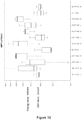
- a healthy reference level can be the average level of GDF11 in a population of human subjects not exhibiting any signs or symptoms of cardiac hypertrophy, diastolic heart failure, or related conditions and who are under the age of 70. In some embodiments, a healthy reference level can be the average level of GDF11 in a population of human subjects not exhibiting any signs or symptoms of cardiac hypertrophy, diastolic heart failure, or related conditions and who are under the age of 65. In some embodiments, a healthy reference level can be a level equivalent to at least 8,500 units as measured by the aptamer technology described in the Examples herein, e.g. 8,500 or greater, 9,000 or greater, or 10,000 or greater.
- the methods described herein can comprise selecting a subject with a level of GDF 11 which is lower than a healthy reference level and administering a treatment as described herein.
- the level of GDF11 in a subject is increased in order to treat a cardiac condition, e.g. cardiac hypertrophy or stiffening as described herein. In some embodiments, the level of GDF11 in a subject is increased in order to prevent a cardiac condition, e.g. cardiac hypertrophy or stiffening as described herein.
- Cardiac conditions related to low or decreased GDF11 polypeptide tend to develop with the decrease in GDF11 levels that occur with increasing age. Thus, it is expected that such conditions can be prevented or, at a minimum, delayed, by maintaining GDF11 polypeptide levels at or near the level found in normal, healthy young adults, e.g. by administering a GDF11 polypeptide or a nucleic acid encoding a GDF 11 polypeptide with advancing age, but prior to the onset of a cardiac disorder.
- compositions comprising a GDF11 polypeptide as described herein or a nucleic acid encoding a GDF11 polypeptide as described herein.
- the composition is a pharmaceutical composition.
- pharmaceutical composition refers to the active agent in combination with a pharmaceutically acceptable carrier commonly used in the pharmaceutical industry.
- pharmaceutically acceptable is employed herein to refer to those compounds, materials, compositions, and/or dosage forms which are, within the scope of sound medical judgment, suitable for use in contact with the tissues of human beings and animals without excessive toxicity, irritation, allergic response, or other problem or complication, commensurate with a reasonable benefit/risk ratio.
- compositions that contains active ingredients dissolved or dispersed therein are well understood in the art and generally need not be limited based on formulation. Typically such compositions are prepared as injectable either as liquid solutions or suspensions, however, solid forms suitable for solution, or suspension, in liquid prior to use can also be prepared. The preparation can also be emulsified or presented as a liposome composition.
- the active ingredient can be mixed with excipients which are pharmaceutically acceptable and compatible with the active ingredient and in amounts suitable for use in the therapeutic methods described herein. Suitable excipients are, for example, water, saline, dextrose, glycerol, ethanol or the like and combinations thereof.
- compositions can contain minor amounts of auxiliary substances such as wetting or emulsifying agents, pH buffering agents, and the like which enhance the effectiveness of the active ingredient.
- auxiliary substances such as wetting or emulsifying agents, pH buffering agents, and the like which enhance the effectiveness of the active ingredient.
- the therapeutic composition of the present invention can include pharmaceutically acceptable salts of the components therein.
- Pharmaceutically acceptable salts include the acid addition salts (formed with the free amino groups of the polypeptide) that are formed with inorganic acids such as, for example, hydrochloric or phosphoric acids, or such organic acids as acetic, tartaric, mandelic, and the like.
- Salts formed with the free carboxyl groups can also be derived from inorganic bases such as, for example, sodium, potassium, ammonium, calcium or ferric hydroxides, and such organic bases as isopropylamine, trimethylamine, 2-ethylamino ethanol, histidine, procaine, and the like.
- Physiologically tolerable carriers are well known in the art.
- Exemplary liquid carriers are sterile aqueous solutions that contain no materials in addition to the active ingredients and water, or contain a buffer such as sodium phosphate at physiological pH value, physiological saline or both, such as phosphate-buffered saline.
- aqueous carriers can contain more than one buffer salt, as well as salts such as sodium and potassium chlorides, dextrose, polyethylene glycol and other solutes.
- Liquid compositions can also contain liquid phases in addition to and to the exclusion of water. Exemplary of such additional liquid phases are glycerin, vegetable oils such as cottonseed oil, and water-oil emulsions.
- the amount of an active agent used in the invention that will be effective in the treatment of a particular disorder or condition will depend on the nature of the disorder or condition, and can be determined by standard clinical techniques.
- a GDF11 polypeptide or nucleic acid encoding a GDF11 polypeptide as described herein can be administered by controlled- or delayed-release means.
- Controlled-release pharmaceutical products have a common goal of improving drug therapy over that achieved by their non-controlled release counterparts.
- the use of an optimally designed controlled- release preparation in medical treatment is characterized by a minimum of drug substance being employed to cure or control the condition in a minimum amount of time.
- Controlled- release formulations include: 1) extended activity of the drug; 2) reduced dosage frequency; 3) increased patient compliance; 4) usage of less total drug; 5) reduction in local or systemic side effects; 6) minimization of drug accumulation; 7) reduction in blood level fluctuations; 8) improvement in efficacy of treatment; 9) reduction of potentiation or loss of drug activity; and 10) improvement in speed of control of diseases or conditions.
- Conventional dosage forms generally provide rapid or immediate drug release from the formulation. Depending on the pharmacology and pharmacokinetics of the drug, use of conventional dosage forms can lead to wide fluctuations in the concentrations of the drug in a patient's blood and other tissues. These fluctuations can impact a number of parameters, such as dose frequency, onset of action, duration of efficacy, maintenance of therapeutic blood levels, toxicity, side effects, and the like.
- controlled- release formulations can be used to control a drug's onset of action, duration of action, plasma levels within the therapeutic window, and peak blood levels.
- controlled- or extended-release dosage forms or formulations can be used to ensure that the maximum effectiveness of a drug is achieved while minimizing potential adverse effects and safety concerns, which can occur both from under-dosing a drug (i.e., going below the minimum therapeutic levels) as well as exceeding the toxicity level for the drug.
- Controlled- release formulations are designed to initially release an amount of drug (active ingredient) that promptly produces the desired therapeutic effect, and gradually and continually release other amounts of drug to maintain this level of therapeutic or prophylactic effect over an extended period of time. In order to maintain this constant level of drug in the body, the drug must be released from the dosage form at a rate that will replace the amount of drug being metabolized and excreted from the body. Controlled- release of an active ingredient can be stimulated by various conditions including, but not limited to, pH, ionic strength, osmotic pressure, temperature, enzymes, water, and other physiological conditions or compounds.
- a variety of known controlled- or extended-release dosage forms, formulations, and devices can be adapted for use with the salts and compositions of the disclosure. Examples include, but are not limited to, those described in U.S. Pat. Nos.: 3,845,770 ; 3,916,899 ; 3,536,809 ; 3,598,123 ; 4,008,719 ; 5674,533 ; 5,059,595 ; 5,591 ,767 ; 5,120,548 ; 5,073,543 ; 5,639,476 ; 5,354,556 ; 5,733,566 ; and 6,365,185 B1 .
- dosage forms can be used to provide slow or controlled- release of one or more active ingredients using, for example, hydroxypropylmethyl cellulose, other polymer matrices, gels, permeable membranes, osmotic systems (such as OROS® (Alza Corporation, Mountain View, Calif. USA)), or a combination thereof to provide the desired release profile in varying proportions.
- active ingredients for example, hydroxypropylmethyl cellulose, other polymer matrices, gels, permeable membranes, osmotic systems (such as OROS® (Alza Corporation, Mountain View, Calif. USA)), or a combination thereof to provide the desired release profile in varying proportions.
- OROS® Alza Corporation, Mountain View, Calif. USA
- the technology described herein relates to a syringe comprising a therapeutically effective amount of a composition e.g. a pharmaceutical preparation comprising a GDF11 polypeptide as described herein.
- the phrase "therapeutically effective amount”, “effective amount” or “effective dose” refers to an amount that provides a therapeutic or aesthetic benefit in the treatment, prevention, or management of, for example, cardiac hypertrophy, e.g. an amount that provides a statistically significant decrease in at least one symptom, sign, or marker of cardiac hypertrophy. Determination of a therapeutically effective amount is well within the capability of those skilled in the art. Generally, a therapeutically effective amount can vary with the subject's history, age, condition, sex, as well as the severity and type of the medical condition in the subject, and administration of other pharmaceutically active agents.
- the technology described herein relates to a method comprising administering a GDF11 polypeptide or a nucleic acid encoding a GDF11 polypeptide to a subject.
- the subject is in need of treatment for cardiac hypertrophy, diastolic heart failure or a related condition as described above herein.
- the method is a method of treating a subject.
- the method is a method of treating cardiac hypertrophy and/or diastolic heart failure or a related condition in a subject. Such conditions, as well as methods of diagnosing them are described above herein.
- the terms “treat,” “treatment,” “treating,” or “amelioration” when used in reference to a disease, disorder or medical condition refer to therapeutic treatments for a condition, wherein the object is to reverse, alleviate, ameliorate, inhibit, slow down or stop the progression or severity of a symptom or condition.
- the term “treating” includes reducing or alleviating at least one adverse effect or symptom of a condition. Treatment is generally “effective” if one or more symptoms or clinical markers are reduced. Alternatively, treatment is “effective” if the progression of a condition is reduced or halted.
- treatment includes not just the improvement of symptoms or markers, but also a cessation or at least slowing of progress or worsening of symptoms that would be expected in the absence of treatment.
- Beneficial or desired clinical results include, but are not limited to, alleviation of one or more symptom(s), diminishment of extent of the deficit, stabilized (i.e., not worsening) state of, for example, cardiac hypertrophy, delay or slowing of cardiac hypertrophy, and an increased lifespan as compared to that expected in the absence of treatment.
- administering refers to the placement of the composition comprising a GDF11 polypeptide or a nucleic acid encoding a GDF11 polypeptide as disclosed herein into a subject by a method or route which results in delivery to a site of action.
- the pharmaceutical composition comprising a GDF11 polypeptide or a nucleic acid encoding a GDF11 polypeptide can be administered by any appropriate route which results in an effective treatment in the subject.
- compositions are administered in a manner compatible with the dosage formulation, and in a therapeutically effective amount.
- the quantity to be administered and timing depends on the subject to be treated, capacity of the subject's system to utilize the active ingredient, and degree of therapeutic effect desired.
- compositions containing at least one agent can be conventionally administered in a unit dose, for example.
- unit dose when used in reference to a therapeutic composition refers to physically discrete units suitable as unitary dosage for the subject, each unit containing a predetermined quantity of active material calculated to produce the desired therapeutic effect in association with the required physiologically acceptable diluent, i.e., carrier, or vehicle.
- the dosage ranges for the agent depends upon the potency, and are amounts large enough to produce the desired effect e.g., a decrease of the rate of cardiac hypertrophy or a reversal of cardiac hypertrophy.
- the dosage should not be so large as to cause unacceptable adverse side effects.
- the dosage will vary with the age, condition, and sex of the patient and can be determined by one of skill in the art.
- the dosage can also be adjusted by the individual physician in the event of any complication.
- the dosage can range from 0.001mg/kg body weight to 0.5 mg/kg body weight. In one embodiment, the dose range is from 5 ⁇ g/kg body weight to 30 ⁇ g/kg body weight.
- the doses recited above can be repeated.
- the doses are given once a day, or multiple times a day, for example, but not limited to, three times a day.
- the doses recited above are administered daily for weeks or months.
- the duration of treatment depends upon the subject's clinical progress and responsiveness to therapy. Where the GDF11 polypeptide apparently diminishes with age in affected individuals, it is expected that long-term therapy would be required to establish and maintain the benefit of GDF11 -based treatment, e.g. for cardiac hypertrophy.
- Precise amounts of active ingredient required to be administered depend on the judgment of the practitioner and are particular to each individual. However, suitable dosage ranges for systemic application are disclosed herein and depend on the route of administration. Suitable regimes for administration are also variable, but are typified by an initial administration followed by repeated doses at one or more intervals by a subsequent administration. Alternatively, continuous intravenous infusion sufficient to maintain concentrations in the blood in the ranges specified for in vivo therapies are contemplated. In some embodiments, the dosage range is sufficient to maintain concentrations in the blood in the range found in the blood of a population of normal, healthy human subjects (e.g. those with no signs, symptoms, or makers of cardiac hypertrophy) under the age of 50.
- the dosage range is sufficient to maintain concentrations in the blood in the range found in normal, healthy human subjects under the age of 40. In some embodiments, the dosage range is sufficient to maintain concentrations in the blood in the range found in normal, healthy human subjects under the age of 30.
- a therapeutically effective amount is an amount of an agent that is sufficient to produce a statistically significant, measurable change in, for example, cardiac hypertrophy. Such effective amounts can be gauged in clinical trials as well as animal studies. Efficacy of an agent can be determined by assessing physical indicators of, for example cardiac hypertrophy as described above herein. In experimental systems, assays for efficacy include measurement of heart mass as well as, determination of myocyte size as determined by histological microscopy, and/or a reduction in expression of aged myocardium marker genes such as ANP and BNP. Such assays are well known in the art and described in detail in the Examples herein. Clinically acceptable methods for detecting or monitoring cardiac hypertrophy are described herein below. In addition, efficacy of an agent can be measured by an increase in GDF11 polypeptides or fragments thereof in a subject being treated with an agent comprising a GDF11 polypeptide or a nucleic acid encoding GDF11 polypeptide.
- the efficacy of a given treatment for cardiac hypertrophy can be determined by the skilled clinician. However, a treatment is considered "effective treatment," as the term is used herein, if any one or all of the signs or symptoms of e.g., cardiac hypertrophy are altered in a beneficial manner, other clinically accepted symptoms are improved or ameliorated, e.g., by at least 10% following treatment with an agent as described herein. Efficacy can also be measured by a failure of an individual to worsen as assessed by hospitalization or need for medical interventions (i.e., progression of the disease is halted). Methods of measuring these indicators are known to those of skill in the art and/or described herein.
- cardiac hypertrophy and/or the efficacy of a treatment for cardiac hypertrophy can be determined by imaging of the heart to gauge hypertrophy, e.g. using MRI or 2-dimensional echocardiography. Imaging of cardiac hypertrophy is described in more detail in Agarwal and Hartnell "Imaging in Hypertrophic Cardiomyopathy” Medscape Reference, May 27, 2011 (available online at http://emedicine.medscape.com/article/348503-overview ).
- the methods further comprise administering the pharmaceutical composition described herein along with one or more additional agents, biologics, drugs, or treatments beneficial to a subject suffering from cardiac hypertrophy or diastolic heart failure as part of a combinatorial therapy.
- the agent, biologic, drug, or treatment can be selected from the group consisting of: treatments for high blood pressure (e.g.
- thiazide diuretics ACE inhibitors such as enalapril, lisinopril, and captropril; ARBs such as losartan or valsartan; beta blockers such as atenolol, carvedilol, metoprolol and bisoprolol; calcium channel blockers such as amlodipine, diltiazem, nifedipine, and verapamil); aortic valve repair; treatments to relax the muscle or slow the rate of muscle contraction (e.g. beta blockers, calcium channel blockers, or anti-arrhythmic treatments such as disopyramide or amiodarone); septal myectomy; septal ablation; pacemaker implantation; and/or cardioverter-defibrillator implantation.
- ACE inhibitors such as enalapril, lisinopril, and captropril
- ARBs such as losartan or valsartan
- beta blockers such as atenol
- EXAMPLE 1 Identification of Growth Differentiation Factor 11 as a Circulating Factor that Reverses Age-Related Cardiac Hypertrophy
- TGF ⁇ superfamily member GDF11 was identified as a circulating factor in young mice that declines with age. Treatment of old mice to restore GDF11 to youthful levels recapitulated the effects of parabiosis and reversed age-related hypertrophy, providing a new therapeutic opportunity for cardiac aging.
- Heart failure affects approximately 1% of individuals over 50 and over 5% of individuals over 75. With the ongoing steep rise in the proportion of elderly individuals within our population (Schocken et al., 2008), age-related heart failure is becoming increasingly prevalent.
- Heterochronic parabiosis experiments suggest that blood-borne signals from a young circulation can significantly impact the function of aging tissues, as indicated by the restoration of appropriate activation and function of endogenous, "old" skeletal muscle satellite cells and successful muscle repair after injury following exposure to a "youthful" systemic milieu (Conboy et al., 2005). Conversely, exposing a young mouse to an old systemic environment can inhibit myogenesis (Brack et al., 2008) and neurogenesis (Villeda et al., 2011) in the young mouse.
- age-related cardiac hypertrophy can be reversed by exposure to a young circulatory environment.
- These experiments reveal that the cardiac hypertrophy of aging is at least in part mediated by circulating factors, and led to the discovery that systemic GDF11, a TGF ⁇ family member, can reverse age-related cardiac hypertrophy.
- systemic GDF11 a TGF ⁇ family member
- Heterochronic parabiosis reverses age-related cardiac hypertrophy.
- the inventors hypothesized that circulating factors specific to a young mouse might reverse cardiac aging.
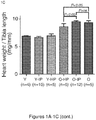
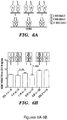
- heterochronic parabiotic (HP) pairs were generated, in which young female C57BL/6 mice (Y-HP, 2 months) were surgically joined to old partners (O-HP, 23 months), and compared these to isochronic parabiotic (IP) pairs (young-young, Y-IP, or old-old, O-IP), joined at identical ages, and to age- and sex-matched unpaired mice as controls (young Y and old O) ( Figure 1A ).
- Cardiac aging in C57B1/6 mice recapitulates human cardiac aging, including development of age-related cardiac hypertrophy (Dai et al., 2009) in a gender independent fashion.
- Parabiotic pairs were maintained for 4 weeks before analysis, and congenic markers were used to distinguish blood cells from aged (CD45.2+) versus young (CD45.1+) partners (Wright et al., 2001).
- This strategy allowed blood chimerism in the pairs to be monitored; however, because old CD45.1+ mice are not commercially available, only CD45.2+ mice were used to generate isochronic old pairs.
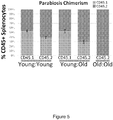
- mice were euthanized 4 weeks after joining, and cross-circulation was confirmed in most of the pairs (>90%) by measuring the frequency of donor-derived blood cells from one partner (CD45.1+) in the blood or spleen of the other partner (CD45.2+) ( Figure 5 ).
- the heart weight to tibia length ratio was significantly lower in old mice exposed to a young circulation (O-HP) compared to old mice exposed to an old circulation (O-IP), after 4 weeks of parabiosis ( 7.93 +/- 0.19 vs.9.61 +/ -0.21 mm / mg, P ⁇ 0.05, Figure 1C ).
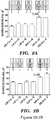
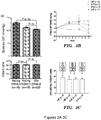
- noninvasive blood pressure measurements were performed at serial time points on heterochronic pairs and compared them to isochronic young and old pairs over 10 wks. No change was detected over time in the blood pressure of young mice from any of the groups ( Figure 3B ).
- aged mice exposed to a young circulation (O-HP) showed a significant increase in systolic blood pressure at 7 and 10 weeks, and aged members of isochronic pairs exhibited significantly increased blood pressure at 7 weeks, relative to baseline measurements.
- terminal intra-arterial hemodynamic tracings were obtained using simultaneous micromanometer catheterizations, performed after mice had been joined for 10 weeks.
- mice in this experiment were genetically identical, flow cytometry could not be used to verify the establishment of chimerism in these pairs; however, extensive experience with this model strongly supports the conclusion that cross-circulation is effectively established in fully isogenic pairs (Pietramaggiori et al., 2009).
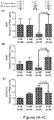
- Heterochronic parabiosis is associated with molecular remodeling. Cardiac hypertrophy is associated with altered expression of a number of cardiac markers. To evaluate the reversal of hypertrophy in O-HP mice on a molecular level, the cardiac transcriptional expression of atrial natriuretic peptide (ANP) and brain natriuretic peptide (BNP), molecular markers of myocyte hypertrophy were quantified ( Figures 4A-4B ). A significant reduction in ANP and BNP transcript levels was detected in the hearts of old mice exposed to a young circulation, as compared to the isochronic age-matched controls.
- ANP atrial natriuretic peptide
- BNP brain natriuretic peptide
- SERCA-2 Transcript levels of sarcoplasmic reticulum calcium ATPase (SERCA-2), expression of which may vary with age (Dai et al., 2009) and is functionally important for normal diastolic relaxation was also quantified. SERCA-2 expression was significantly increased in hearts of aged mice exposed to a young circulation (O-HP) when compared to O-IP controls ( Figure 4C ). These data provide additional evidence that young circulating factors modify discrete molecular pathways associated with cardiac myocyte hypertrophy and diastolic function.
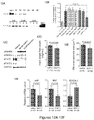
- Sham heterochronic parabiotic pairs in which young female mice (2 months) were joined to aged partners (23 months) were generated and compared to sham isochronic parabiotic pairs (young-young or old-old) and to age-matched heterochronic and isochronic parabiotic pairs ( Figure 11A-11C ).
- the hearts of sham pairs were analyzed after 4 wks, as in prior experiments.
- no significant difference in heart weight to tibia length ratio was found in aged mice involved in sham heterochronic parabiosis, as compared to aged isochronic shams ( 9.38 +/- 0.39 vs.
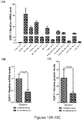
- GDF11 prevents cardiac hypertrophy in vitro and suppresses Forkhead transcription factor phosphorylation. It was next tested whether GDF11 displayed anti-hypertrophic properties in cultured neonatal cardiomyocytes using a leucine incorporation assay. After serum starvation, neonatal rat cardiomyocytes were treated for 24h with recombinant GDF11 (rGDF11) or the closely related TGF ⁇ superfamily protein myostatin at three different concentrations, followed by 24h exposure to 3 H-leucine and phenylephrine (50 ⁇ M).
- rGDF11 recombinant GDF11
- TGF ⁇ superfamily protein myostatin 50 ⁇ M
- GDF11 reverses age related cardiac hypertrophy in vivo.
- Immunohistochemical staining of mouse cardiac sections with antibodies specific for GDF11 demonstrated evidence for GDF11 at the plasma membranes of cardiomyocytes, and specifically at the intercalated discs, supporting the concept that GDF11 has specific effects at the level of the cardiomyocyte (data not shown).
- Figure 12B-12C in vitro evidence supporting GDF11-mediated signaling in cardiomyocytes, these data provided the rationale to test whether restoring "youthful" levels of circulating GDF11 in aged mice might reverse age-related cardiac hypertrophy.
- GDF11 does not prevent cardiac hypertrophy after pressure overload in vivo.
- 2 month old female C56B1/6 mice were subjected to transverse aortic constriction and then randomized to receive a daily IP injection of rGDF11 (0.1mg/Kg) or vehicle for 30 days.
- An echocardiographic evaluation was performed at 15 days and then prior to sacrifice ( Figure 15C ). After 30 days, mice were euthanized and hearts were collected for histological and molecular evaluation.
- Left ventricular hypertrophy is an important feature of cardiac aging, contributing to diastolic dysfunction and heart failure with preserved systolic function (Lakatta and Levy, 2003).
- An autopsy study of elderly subjects without hypertension or clinically evident cardiovascular disease performed by Anversa and colleagues describes cardiomyocyte enlargement and decreased cardiomyocyte number, without a change in total myocardial mass, a pattern that was more pronounced in males (Olivetti et al., 1995).
- a cross-sectional study of a similar patient population suggests an increase in left ventricular wall thickness in both sexes (Lakatta and Levy, 2003).
- Patients with diastolic dysfunction tend to be older and are more likely to be obese, diabetic, hypertensive and female, compared to patients with systolic dysfunction (Owan and Redfield, 2005), suggesting distinct underlying pathological mechanisms.
- myostatin negatively regulates skeletal muscle mass led to the development of therapeutic strategies for age- and cancer-related muscle atrophy by blocking myostatin signaling.
- myostatin null mice have not consistently demonstrated important changes in cardiac mass during aging (Cohn et al., 2007; Jackson et al., 2012)
- treatment with a soluble ActRIIB antagonist leads to increased skeletal and cardiac muscle mass, suggesting that the cardiac effects of this antagonist may arise from inhibition of a ligand other than myostatin.
- GDF11 and myostatin exhibit many nonoverlapping functions.
- Myostatin null mice demonstrate substantially increased skeletal muscle mass, whereas GDF11 null mice exhibit skeletal and renal abnormalities and die within 24h of birth (McPherron et al., 1999). Thus, it is contemplated therein that the reported ActRIIB antagonist effects on myocardium (Zhou et al., 2010) may be due to inhibition of GDF11 signaling and independent of effects on myostatin.
- GDF11 was ineffective in preventing cardiac hypertrophy in the context of pressure overload.
- GDF 11 treatment may influence aging phenotypes in other tissues, such as skeletal muscle.
- C57B1/6 mice were obtained from the National Institute on Aging (NIA); young (2 months) C57B1/6 (CD45.1 - CD45.2 + ) or young B6.SJL (CD45.1 + CD45.2 - ) mice were obtained from JAX.
- Parabiosis was performed as described previously (Bunster and Meyer, 1933; Ruckh et al., 2012). Blood chimerism was confirmed in a subset of parabiotic pairs by flow cytometry measuring the frequency of donor-derived blood cells from one partner (CD45.1+) in the spleen of the other partner (CD45.2 + ). Partner-derived cells typically represented 40-50% of splenocytes, consistent with establishment of parabiotic cross-circulation. Because old CD45.1+ mice are not commercially available we could not use this method to verify the establishment of chimerism in isochronic-old parabiotic pairs.
- Sham parabiosis Sham parabiosis was performed as a modification of the parabiosis procedure (Bunster and Meyer, 1933;Ruckh et al., 2012) to achieve surgical joining without development of a shared circulation. Mice were anesthetized to full muscle relaxation and joined by a modification of the technique of Bunster and Meyer. After shaving the corresponding lateral aspects of each mouse, matching skin incisions were made from the olecranon to the knee joint of each mouse, and the subcutaneous fascia was bluntly dissected to create about 1/2 cm of free skin. The olecranon and knee joints were attached with a single 2-0 prolene suture.
- the suture was sequentially passed through the skin and joint of the first mouse, through a silicon disk to separate the skin of the two mice, and then through the skin and joint of the second mouse.
- the suture was tied, such that the silicon disk separated the skin of each mouse at the joint and without any contact between the cutaneous flaps of each mouse.
- the skin incisions were closed with staples.
- the prolene sutures connecting the mice were reinforced with meshed staples.
- Noninvasive blood pressure A computerized tail-cuff system (BP-2000, Visitech Systems, Apex, NC) was modified to allow simultaneous blood pressure measurement of both members of the parabiotic pair. Unoperated mice or pairs of mice were trained for 5 consecutive days in the prewarmed tail-cuff device to accustom them to the procedure, followed by measurements of heart rate and systolic blood pressure.
- BP-2000 Visitech Systems, Apex, NC
- SOMAscan SomaLogicTM proteomics discovery platform
- SOMAmersTM Small Off-rate Modified Aptamers
- SELEXTM Tuerk and Gold, 1990
- SOMAscanTM transforms the concentration of proteins in the matrix into a relative quantity of SOMAmersTM, through equilibration binding and removal of unbound SOMAmersTM and proteins.
- the SOMAmerTM quantity is measured by hybridization to microarrays (for a full description, see(Gold et al., 2010))
- Neonatal cardiac myocytes were isolated from post-natal day 1 CD1 rats (Charles River) (Seki et al., 2009). Approximately 36h after plating, cardiac myocytes were serum starved for 24h in low-glucose DMEM supplemented with ITS (PAA Laboratories). Cardiac myocytes were pretreated with myostatin (R&D Systems) or rGDF11 (Peprotech) for 24h, prior to treating with phenylephrine (50 ⁇ M, Sigma) and assaying protein synthesis/hypertrophy with 3 H-leucine (1 ⁇ Ci/ml, Moravek).
- rGDF11 and myostatin treatments were continued during the period of exposure to phenylephrine and 3 H-leucine. 24h after labeling with 3 H-leucine, cells were washed with ice-cold PBS and fixed with ice-cold 10% trichloroacetic acid for 45 min at 4C. Cells were lysed with 0.05M NaOH and analyzed by liquid scintillation.
- LC-MS / MS analysis Plasma metabolomic profiling was performed on a 4000 QTRAP triple quadrupole mass spectrometer (Applied Biosystems/Sciex, Foster City, CA) with a Turbo V electrospray source coupled to an HPLC system including an HTS PAL autosampler (Leap Technologies, Carrboro, NC) and a 1200 series binary pump (Agilent Technologies, Santa Clara, CA).
- HTS PAL autosampler Leap Technologies, Carrboro, NC
- 1200 series binary pump Algilent Technologies, Santa Clara, CA.
- This LC-MS/MS system was used for polar metabolites analysis employing hydrophilic-interaction liquid chromatography (HILIC) and also for lipid analysis, each requiring distinct methods of plasma extraction, LS/MS acquisition methods and instrument configurations.
- HILIC hydrophilic-interaction liquid chromatography
- HILIC Hydrophilic-interaction liquid chromatography is suitable for analyzing hydrophilic metabolites; including amino acids, nucleotides and neurotransmitters. Ten microliters of plasma were extracted with 90 ⁇ L of 74.9:24.9:0.2 vol/vol/vol acetonitrile/methanol/formic acid containing 0.2 ⁇ g/mL (final concentration) of isotopically labeled valine-d8 and phenylalanine-d8 (Sigma-Aldrich; St Louis, MO).
- Samples underwent hydrophilic interaction chromatography using a 150 x 2.1 mm Atlantis HILICTM Silica column (Waters, Milford, MA): mobile-phase A, 10 mM ammonium formate and 0.1% formic acid; and mobile-phase B, acetonitrile with 0.1% formic acid.
- the column was eluted isocratically with 5% mobile-phase A for 0.5 minutes followed by a linear gradient to 60% mobile-phase over 10 minutes and then back to 5% mobile-phase A for 17 minutes.
- Electrospray ionization was used in positive multiple reaction monitoring (MRM) ion mode. Declustering potentials and collision energies were optimized for each metabolite by infusion of reference standards before sample analyses.
- the ion spray voltage was 5 kV
- the source temperature was 425°C
- the MRM window was set to 70 msec.
- Formic acid, ammonium acetate, LC/MS grade solvents, and valine-d8 were obtained from Sigma-Aldrich (St. Louis, MO), with the remainder of isotopically-labeled analytical standards obtained from Cambridge Isotope Laboratories, Inc. (Andover, MA).
- the samples were run in a randomized order to minimize internal variation and were interspaced by mouse pooled plasma samples to account for temporal drift across all analyzed metabolites.
- the internal standard peak areas were monitored for quality control and individual samples with peak areas differing from the group mean by more than 2 standard deviations were reanalyzed.
- Metabolites analyzed were selected based on the following criteria: 1) known structural identity; 2) distribution across multiple biochemical pathways; 3) reliable measurement using LC/MS in a high throughput fashion; and, 4) low rate of missingness on our platform ( ⁇ 1%).
- Lipid analysis Ten microliters of plasma were extracted with 190 ⁇ l of isopropanol containing 0.25 ⁇ g/ml (final concentration) 1-dodecanoyl-2-tridecanoyl-sn-glycero-3-phosphocholine (Avanti Polar Lipids, Alabaster, AL). After centrifugation, supernatants were injected directly, followed by reverse-phase chromatography using a 150 x 3.0 mm Prosphere HP C4 column (Grace, Columbia, MD): mobile-phase A, 95:5:0.1 vol/vol/vol 10mM ammonium acetate/methanol/acetic acid; and mobile-phase B, 99.9:0.1 vol/vol methanol/acetic acid.
- the column was eluted isocratically with 80% mobile-phase A for 2 minutes followed by a linear gradient to 20% mobile-phase A over 1 minute, a linear gradient to 0% mobile phase A over 12 minutes, then 10 minutes at 0% mobile-phase A and a linear gradient to 80% mobile phase A over 9 minutes.
- MS analyses were carried out using electrospray ionization and Q1 scans in the positive ion mode. Ion spray voltage was 5.0 kV, the source temperature was 400°C and the declustering potential was 70 V.
- the first number denotes the total number of carbons in the lipid acyl chain(s) and the second number (after the colon) denotes the total number of double bonds in the lipid acyl chain(s).
- Induced pluripotent stem cell-derived human cardiomyocytes Induced pluripotent stem cell-derived human cardiomyocytes. Induced pluripotent stem cell-derived human cardiomyocytes (iPSC-CM) were obtained from Cellular Dynamics International (CDI) and cultured according to the manufacturer's instructions. Briefly, cells were plated at ⁇ 580,000 viable cells per well in 5ug/ml fibronectin-coated 6 well plates in CDI Plating Medium. Medium was changed after 2 days to CDI Maintenance Medium, and 2 additional changes with this medium were performed at days 4 and 6 post-plating. At the latter point, cells were observed to be beating homogenously. At 7 days post-plating, medium was changed to serum-free DMEM (low glucose) and cells were incubated for an additional 24h.
- CDI Plating Medium was changed after 2 days to CDI Maintenance Medium, and 2 additional changes with this medium were performed at days 4 and 6 post-plating. At the latter point, cells were observed to be beating homogenously. At 7
- Spleen western blot analyses were performed with membranes (immune-Blot PVDF membrane, Bio-Rad) incubated with primary antibodies (anti-GDF 11, Abcam, 1:500 dilution and alpha-tubuline, Sigma, 1:1000 dilution) and detected with IRDye conjugated antibodies (1:10000 dilution, Li-Cor).
- Membranes were scanned with Odyssey CLx Infrared Imaging System (Li-Cor) and quantified by densitometry with the Image Studio Software (Li-Cor).
- Transverse Aortic Constriction and Echocardiography Transverse aortic constriction (TAC) surgery and Echocardiography were performed in in vivo studies using blinded protocols.
- cardiac hypertrophy of aging can be rapidly reversed in a matter of weeks by exposure to a young blood circulation.
- the data presented above herein suggest that there is a circulating factor that is transferred from the young mouse to the old mouse via the shared circulation that is responsible for the rapid regression of cardiac hypertrophy.
- GDF Growth differentiation factor
- GDF11 can induce regression of cardiac hypertrophy and improve diastolic function and clinical heart failure.
- GDF11 - with or without amino acid or other modifications aimed at reducing proteolytic degradation and prolonging half-life - can be used to treat cardiac hypertrophy and diastolic heart failure, including that associated with hypertension, aging, genetic hypertrophic cardiomyopathy, and valvular disease.
- a therapeutic strategy to restore youthful levels of GDF11 in patients with diastolic heart failure of any etiology is described herein.
- GDF11 can influence aging phenotypes in other tissues as well. These effects have been explored in several different tissues including skin, skeletal muscle, and brain.
- skeletal muscle GDF11 can reverse the age-related impairment of muscle stem cell genomic integrity, myogenic function and regenerative capacity.
- Serum levels of GDF11 protein in normal humans was determined using the apatmer technology described in Example 1. The levels in humans depend on gender but fall above the age of 70 in both men and women.
Landscapes
- Health & Medical Sciences (AREA)
- Life Sciences & Earth Sciences (AREA)
- Chemical & Material Sciences (AREA)
- Medicinal Chemistry (AREA)
- General Health & Medical Sciences (AREA)
- Organic Chemistry (AREA)
- Animal Behavior & Ethology (AREA)
- Pharmacology & Pharmacy (AREA)
- Public Health (AREA)
- Veterinary Medicine (AREA)
- Bioinformatics & Cheminformatics (AREA)
- Engineering & Computer Science (AREA)
- Molecular Biology (AREA)
- General Chemical & Material Sciences (AREA)
- Nuclear Medicine, Radiotherapy & Molecular Imaging (AREA)
- Chemical Kinetics & Catalysis (AREA)
- Gastroenterology & Hepatology (AREA)
- Proteomics, Peptides & Aminoacids (AREA)
- Zoology (AREA)
- Epidemiology (AREA)
- Orthopedic Medicine & Surgery (AREA)
- Toxicology (AREA)
- Biochemistry (AREA)
- Immunology (AREA)
- Genetics & Genomics (AREA)
- Biophysics (AREA)
- Cardiology (AREA)
- Heart & Thoracic Surgery (AREA)
- Neurology (AREA)
- Cell Biology (AREA)
- Neurosurgery (AREA)
- Biomedical Technology (AREA)
- Vascular Medicine (AREA)
- Hospice & Palliative Care (AREA)
- Physical Education & Sports Medicine (AREA)
- Urology & Nephrology (AREA)
- Psychiatry (AREA)
- Medicines That Contain Protein Lipid Enzymes And Other Medicines (AREA)
- Peptides Or Proteins (AREA)
Applications Claiming Priority (3)
| Application Number | Priority Date | Filing Date | Title |
|---|---|---|---|
| US201261612550P | 2012-03-19 | 2012-03-19 | |
| US201261649962P | 2012-05-22 | 2012-05-22 | |
| PCT/US2013/030140 WO2013142114A1 (en) | 2012-03-19 | 2013-03-11 | Growth differentiation factor (gdf) for treatment of diastolic heart failure |
Publications (3)
| Publication Number | Publication Date |
|---|---|
| EP2828289A1 EP2828289A1 (en) | 2015-01-28 |
| EP2828289A4 EP2828289A4 (en) | 2016-01-06 |
| EP2828289B1 true EP2828289B1 (en) | 2020-02-26 |
Family
ID=49223184
Family Applications (1)
| Application Number | Title | Priority Date | Filing Date |
|---|---|---|---|
| EP13764561.0A Active EP2828289B1 (en) | 2012-03-19 | 2013-03-11 | Growth differentiation factor (gdf) 11 for treatment of age-related cardiovascular condition |
Country Status (6)
| Country | Link |
|---|---|
| US (1) | US9434779B2 (enExample) |
| EP (1) | EP2828289B1 (enExample) |
| JP (1) | JP6124986B2 (enExample) |
| CA (1) | CA2901394A1 (enExample) |
| ES (1) | ES2779698T3 (enExample) |
| WO (1) | WO2013142114A1 (enExample) |
Families Citing this family (16)
| Publication number | Priority date | Publication date | Assignee | Title |
|---|---|---|---|---|
| US10359425B2 (en) | 2008-09-09 | 2019-07-23 | Somalogic, Inc. | Lung cancer biomarkers and uses thereof |
| EP2603622A4 (en) | 2010-08-13 | 2015-04-22 | Somalogic Inc | BIOMARKERS FOR PANCREATIC CANCER AND USES THEREOF |
| SG10201607331WA (en) * | 2011-09-30 | 2016-11-29 | Somalogic Inc | Cardiovascular risk event prediction and uses thereof |
| US10092627B2 (en) | 2013-04-08 | 2018-10-09 | President And Fellows Of Harvard College | Methods and compositions for rejuvenating skeletal muscle stem cells |
| EP3007719B1 (en) * | 2013-06-11 | 2021-03-17 | President and Fellows of Harvard College | Methods and compositions for increasing neurogenesis and angiogenesis |
| WO2015073396A1 (en) * | 2013-11-12 | 2015-05-21 | The Brigham And Women's Hospital, Inc. | Growth differentiation factor (gdf) for treatment of diastolic heart failure |
| CN106573030A (zh) * | 2014-05-16 | 2017-04-19 | 因特穆内公司 | Lpa相关蛋白和rna表达 |
| WO2016049662A1 (en) * | 2014-09-23 | 2016-03-31 | President And Fellows Of Harvard College | Methods and compositions for treating age-related disorders |
| EP3224361B1 (en) | 2014-11-24 | 2019-06-19 | Somalogic, Inc. | Nucleic acid compounds for binding growth differentiation factor 11 |
| US11041006B2 (en) | 2015-12-28 | 2021-06-22 | Riken | Compositions for use in recovering or ameliorating deterioration of physiological functions due to aging |
| ES2893813T3 (es) | 2016-01-06 | 2022-02-10 | Harvard College | El tratamiento con GDF11 previene el aumento de peso, mejora la tolerancia a la glucosa y reduce la hepatoesteatosis |
| WO2019144053A1 (en) * | 2018-01-19 | 2019-07-25 | President And Fellows Of Harward College | Gdf11 variants and uses thereof |
| US20200222459A1 (en) * | 2019-01-16 | 2020-07-16 | Melvin Barnes | System, Method and Compositions for Treating Age-Related Illnesses and Conditions |
| JP2022001603A (ja) * | 2021-10-14 | 2022-01-06 | 功 加治佐 | 自分由来iPS若い血液応用GDF11分子コーティング若返り経口不老不死薬9 |
| CN114989310B (zh) * | 2022-06-20 | 2024-11-19 | 深圳先进技术研究院 | 一种嵌合抗原受体、表达嵌合抗原受体的巨噬细胞及应用 |
| CN115212299B (zh) * | 2022-06-21 | 2026-02-24 | 深圳先进技术研究院 | Car-t和car-m联用在制备抗肿瘤药物中的应用 |
Family Cites Families (33)
| Publication number | Priority date | Publication date | Assignee | Title |
|---|---|---|---|---|
| US3536809A (en) | 1969-02-17 | 1970-10-27 | Alza Corp | Medication method |
| US3598123A (en) | 1969-04-01 | 1971-08-10 | Alza Corp | Bandage for administering drugs |
| US3845770A (en) | 1972-06-05 | 1974-11-05 | Alza Corp | Osmatic dispensing device for releasing beneficial agent |
| US3916899A (en) | 1973-04-25 | 1975-11-04 | Alza Corp | Osmotic dispensing device with maximum and minimum sizes for the passageway |
| US4008719A (en) | 1976-02-02 | 1977-02-22 | Alza Corporation | Osmotic system having laminar arrangement for programming delivery of active agent |
| US4737462A (en) | 1982-10-19 | 1988-04-12 | Cetus Corporation | Structural genes, plasmids and transformed cells for producing cysteine depleted muteins of interferon-β |
| US4518584A (en) | 1983-04-15 | 1985-05-21 | Cetus Corporation | Human recombinant interleukin-2 muteins |
| US4612302A (en) | 1983-11-14 | 1986-09-16 | Brigham And Women's Hospital | Clinical use of somatostatin analogues |
| US4684620A (en) | 1984-09-04 | 1987-08-04 | Gibson-Stephens Neuropharmaceuticals, Inc. | Cyclic polypeptides having mu-receptor specificity |
| IE58110B1 (en) | 1984-10-30 | 1993-07-14 | Elan Corp Plc | Controlled release powder and process for its preparation |
| US4853371A (en) | 1986-06-17 | 1989-08-01 | The Administrators Of The Tulane Educational Fund | Therapeutic somatostatin analogs |
| US5073543A (en) | 1988-07-21 | 1991-12-17 | G. D. Searle & Co. | Controlled release formulations of trophic factors in ganglioside-lipsome vehicle |
| IT1229203B (it) | 1989-03-22 | 1991-07-25 | Bioresearch Spa | Impiego di acido 5 metiltetraidrofolico, di acido 5 formiltetraidrofolico e dei loro sali farmaceuticamente accettabili per la preparazione di composizioni farmaceutiche in forma a rilascio controllato attive nella terapia dei disturbi mentali organici e composizioni farmaceutiche relative. |
| US5120548A (en) | 1989-11-07 | 1992-06-09 | Merck & Co., Inc. | Swelling modulated polymeric drug delivery device |
| US5733566A (en) | 1990-05-15 | 1998-03-31 | Alkermes Controlled Therapeutics Inc. Ii | Controlled release of antiparasitic agents in animals |
| US5580578A (en) | 1992-01-27 | 1996-12-03 | Euro-Celtique, S.A. | Controlled release formulations coated with aqueous dispersions of acrylic polymers |
| US5591767A (en) | 1993-01-25 | 1997-01-07 | Pharmetrix Corporation | Liquid reservoir transdermal patch for the administration of ketorolac |
| DK0698094T3 (da) * | 1993-05-12 | 2004-05-03 | Inst Genetics Llc | BMP-11-sammensætninger |
| IT1270594B (it) | 1994-07-07 | 1997-05-07 | Recordati Chem Pharm | Composizione farmaceutica a rilascio controllato di moguisteina in sospensione liquida |
| US6008434A (en) * | 1994-07-08 | 1999-12-28 | Johns Hopkins University School Of Medicine | Growth differentiation factor-11 transgenic mice |
| GB9526733D0 (en) | 1995-12-30 | 1996-02-28 | Delta Biotechnology Ltd | Fusion proteins |
| JP3756313B2 (ja) | 1997-03-07 | 2006-03-15 | 武 今西 | 新規ビシクロヌクレオシド及びオリゴヌクレオチド類縁体 |
| CA2291514C (en) | 1997-05-30 | 2011-07-12 | Mariel Therapeutics, Inc. | Methods for evaluating tissue morphogenesis and activity |
| US20030170213A1 (en) * | 1998-01-23 | 2003-09-11 | Marc F. Charette | Methods and compositions for enhancing cognitive function using morphogenic proteins |
| US6365185B1 (en) | 1998-03-26 | 2002-04-02 | University Of Cincinnati | Self-destructing, controlled release peroral drug delivery system |
| US20060078532A1 (en) | 2004-10-12 | 2006-04-13 | Omoigui Osemwota S | Method of prevention and treatment of Atherosclerosis, Peripheral vascular disease, Coronary artery disease, aging and age-related disorders including osteoporosis, arthritis, type 2 diabetes, dementia and Alzheimer's disease |
| US20070155661A1 (en) | 2003-02-14 | 2007-07-05 | The Board Of Trustees Of The Leland Standord Junior University | Methods and compositions for modulating the development of stem cells |
| NZ529860A (en) | 2003-11-28 | 2006-10-27 | Ovita Ltd | Muscle growth regulator mighty and use in promoting muscle mass and treating muscle wasting diseases |
| EP1858546A4 (en) | 2005-03-04 | 2009-03-04 | Biorexis Pharmaceutical Corp | MODIFIED TRANSFERRINFUSION PROTEINS |
| US20070213292A1 (en) | 2005-08-10 | 2007-09-13 | The Rockefeller University | Chemically modified oligonucleotides for use in modulating micro RNA and uses thereof |
| AU2007257208B2 (en) | 2006-05-17 | 2013-05-02 | Stryker Corporation | Use of a soluble morphogenic protein complex for treating cartilage defects |
| US7947646B2 (en) | 2007-03-06 | 2011-05-24 | Amgen Inc. | Variant activin receptor polypeptides |
| WO2009142678A1 (en) | 2008-03-27 | 2009-11-26 | Promega Corporatin | Protein labeling with cyanobenzothiazole conjugates |
-
2013
- 2013-03-11 US US14/385,578 patent/US9434779B2/en active Active
- 2013-03-11 JP JP2015501721A patent/JP6124986B2/ja active Active
- 2013-03-11 ES ES13764561T patent/ES2779698T3/es active Active
- 2013-03-11 WO PCT/US2013/030140 patent/WO2013142114A1/en not_active Ceased
- 2013-03-11 CA CA2901394A patent/CA2901394A1/en active Pending
- 2013-03-11 EP EP13764561.0A patent/EP2828289B1/en active Active
Non-Patent Citations (1)
| Title |
|---|
| None * |
Also Published As
| Publication number | Publication date |
|---|---|
| WO2013142114A1 (en) | 2013-09-26 |
| JP6124986B2 (ja) | 2017-05-10 |
| US9434779B2 (en) | 2016-09-06 |
| JP2015512387A (ja) | 2015-04-27 |
| EP2828289A4 (en) | 2016-01-06 |
| CA2901394A1 (en) | 2013-09-26 |
| EP2828289A1 (en) | 2015-01-28 |
| US20150045297A1 (en) | 2015-02-12 |
| ES2779698T3 (es) | 2020-08-18 |
Similar Documents
| Publication | Publication Date | Title |
|---|---|---|
| US9434779B2 (en) | Growth differentiation factor 11 (GDF-11) for treatment of diastolic heart failure | |
| US11612639B2 (en) | Methods and compositions for rejuvenating skeletal muscle stem cells | |
| US20200317767A1 (en) | Growth differentiation factor (gdf) for treatment of diastolic heart failure | |
| US11725033B2 (en) | GDF11 variants and uses thereof | |
| Song et al. | CREG protects from myocardial ischemia/reperfusion injury by regulating myocardial autophagy and apoptosis | |
| EP2763688B1 (en) | Compositions and methods for treating and preventing hyperlipidemia, fatty liver, atherosclerosis and other disorders associated with metabolic syndrome | |
| EP3007719B1 (en) | Methods and compositions for increasing neurogenesis and angiogenesis | |
| JP7847994B2 (ja) | PIK3CA関連過成長症候群(PROS CLOVaS症候群)の処置に使用するためのBYL719(アルペリシブ) | |
| WO2016118859A1 (en) | Compositions and methods for selectively depleting senescent cells comprising flip | |
| US20190365858A1 (en) | Methods and compositions for rejuvenating neuromuscular junctions | |
| US20220062299A1 (en) | Use of glucocorticoid steroids in preventing and treating conditions of muscle wasting, aging and metabolic disorder | |
| US20200031873A1 (en) | Repurposing cell penetrating peptides and their novel derivatives and iopromide and iodo-aryl carbonates for treatment of senescence-related diseases and disorders | |
| US20250129093A1 (en) | Compositions and methods relating to atp/p2x7r signaling inhibition | |
| US20240382561A1 (en) | Glucoregulatory compound, composition and uses thereof | |
| Masuda et al. | Articles in PresS. Am J Physiol Endocrinol Metab (December 17, 2013). doi: 10.1152/ajpendo. 00124.2013 | |
| Sun et al. | Articles in PresS. Am J Physiol Cell Physiol (April 27, 2016). doi: 10.1152/ajpcell. 00344.2015 |
Legal Events
| Date | Code | Title | Description |
|---|---|---|---|
| PUAI | Public reference made under article 153(3) epc to a published international application that has entered the european phase |
Free format text: ORIGINAL CODE: 0009012 |
|
| 17P | Request for examination filed |
Effective date: 20141015 |
|
| AK | Designated contracting states |
Kind code of ref document: A1 Designated state(s): AL AT BE BG CH CY CZ DE DK EE ES FI FR GB GR HR HU IE IS IT LI LT LU LV MC MK MT NL NO PL PT RO RS SE SI SK SM TR |
|
| AX | Request for extension of the european patent |
Extension state: BA ME |
|
| DAX | Request for extension of the european patent (deleted) | ||
| RIC1 | Information provided on ipc code assigned before grant |
Ipc: A61K 39/00 20060101ALI20150804BHEP Ipc: A61P 9/00 20060101ALI20150804BHEP Ipc: C07K 14/475 20060101AFI20150804BHEP |
|
| RA4 | Supplementary search report drawn up and despatched (corrected) |
Effective date: 20151203 |
|
| RIC1 | Information provided on ipc code assigned before grant |
Ipc: A61K 39/00 20060101ALI20151127BHEP Ipc: C07K 14/475 20060101AFI20151127BHEP Ipc: A61P 9/00 20060101ALI20151127BHEP |
|
| STAA | Information on the status of an ep patent application or granted ep patent |
Free format text: STATUS: EXAMINATION IS IN PROGRESS |
|
| 17Q | First examination report despatched |
Effective date: 20170217 |
|
| GRAP | Despatch of communication of intention to grant a patent |
Free format text: ORIGINAL CODE: EPIDOSNIGR1 |
|
| STAA | Information on the status of an ep patent application or granted ep patent |
Free format text: STATUS: GRANT OF PATENT IS INTENDED |
|
| INTG | Intention to grant announced |
Effective date: 20191016 |
|
| GRAS | Grant fee paid |
Free format text: ORIGINAL CODE: EPIDOSNIGR3 |
|
| GRAA | (expected) grant |
Free format text: ORIGINAL CODE: 0009210 |
|
| STAA | Information on the status of an ep patent application or granted ep patent |
Free format text: STATUS: THE PATENT HAS BEEN GRANTED |
|
| AK | Designated contracting states |
Kind code of ref document: B1 Designated state(s): AL AT BE BG CH CY CZ DE DK EE ES FI FR GB GR HR HU IE IS IT LI LT LU LV MC MK MT NL NO PL PT RO RS SE SI SK SM TR |
|
| REG | Reference to a national code |
Ref country code: GB Ref legal event code: FG4D |
|
| REG | Reference to a national code |
Ref country code: CH Ref legal event code: EP |
|
| REG | Reference to a national code |
Ref country code: AT Ref legal event code: REF Ref document number: 1237526 Country of ref document: AT Kind code of ref document: T Effective date: 20200315 |
|
| REG | Reference to a national code |
Ref country code: IE Ref legal event code: FG4D |
|
| REG | Reference to a national code |
Ref country code: DE Ref legal event code: R096 Ref document number: 602013066250 Country of ref document: DE |
|
| PG25 | Lapsed in a contracting state [announced via postgrant information from national office to epo] |
Ref country code: RS Free format text: LAPSE BECAUSE OF FAILURE TO SUBMIT A TRANSLATION OF THE DESCRIPTION OR TO PAY THE FEE WITHIN THE PRESCRIBED TIME-LIMIT Effective date: 20200226 Ref country code: FI Free format text: LAPSE BECAUSE OF FAILURE TO SUBMIT A TRANSLATION OF THE DESCRIPTION OR TO PAY THE FEE WITHIN THE PRESCRIBED TIME-LIMIT Effective date: 20200226 Ref country code: NO Free format text: LAPSE BECAUSE OF FAILURE TO SUBMIT A TRANSLATION OF THE DESCRIPTION OR TO PAY THE FEE WITHIN THE PRESCRIBED TIME-LIMIT Effective date: 20200526 |
|
| REG | Reference to a national code |
Ref country code: NL Ref legal event code: MP Effective date: 20200226 |
|
| REG | Reference to a national code |
Ref country code: ES Ref legal event code: FG2A Ref document number: 2779698 Country of ref document: ES Kind code of ref document: T3 Effective date: 20200818 |
|
| REG | Reference to a national code |
Ref country code: LT Ref legal event code: MG4D |
|
| PG25 | Lapsed in a contracting state [announced via postgrant information from national office to epo] |
Ref country code: SE Free format text: LAPSE BECAUSE OF FAILURE TO SUBMIT A TRANSLATION OF THE DESCRIPTION OR TO PAY THE FEE WITHIN THE PRESCRIBED TIME-LIMIT Effective date: 20200226 Ref country code: LV Free format text: LAPSE BECAUSE OF FAILURE TO SUBMIT A TRANSLATION OF THE DESCRIPTION OR TO PAY THE FEE WITHIN THE PRESCRIBED TIME-LIMIT Effective date: 20200226 Ref country code: HR Free format text: LAPSE BECAUSE OF FAILURE TO SUBMIT A TRANSLATION OF THE DESCRIPTION OR TO PAY THE FEE WITHIN THE PRESCRIBED TIME-LIMIT Effective date: 20200226 Ref country code: GR Free format text: LAPSE BECAUSE OF FAILURE TO SUBMIT A TRANSLATION OF THE DESCRIPTION OR TO PAY THE FEE WITHIN THE PRESCRIBED TIME-LIMIT Effective date: 20200527 Ref country code: IS Free format text: LAPSE BECAUSE OF FAILURE TO SUBMIT A TRANSLATION OF THE DESCRIPTION OR TO PAY THE FEE WITHIN THE PRESCRIBED TIME-LIMIT Effective date: 20200626 Ref country code: BG Free format text: LAPSE BECAUSE OF FAILURE TO SUBMIT A TRANSLATION OF THE DESCRIPTION OR TO PAY THE FEE WITHIN THE PRESCRIBED TIME-LIMIT Effective date: 20200526 |
|
| PG25 | Lapsed in a contracting state [announced via postgrant information from national office to epo] |
Ref country code: NL Free format text: LAPSE BECAUSE OF FAILURE TO SUBMIT A TRANSLATION OF THE DESCRIPTION OR TO PAY THE FEE WITHIN THE PRESCRIBED TIME-LIMIT Effective date: 20200226 |
|
| PG25 | Lapsed in a contracting state [announced via postgrant information from national office to epo] |
Ref country code: SK Free format text: LAPSE BECAUSE OF FAILURE TO SUBMIT A TRANSLATION OF THE DESCRIPTION OR TO PAY THE FEE WITHIN THE PRESCRIBED TIME-LIMIT Effective date: 20200226 Ref country code: CZ Free format text: LAPSE BECAUSE OF FAILURE TO SUBMIT A TRANSLATION OF THE DESCRIPTION OR TO PAY THE FEE WITHIN THE PRESCRIBED TIME-LIMIT Effective date: 20200226 Ref country code: RO Free format text: LAPSE BECAUSE OF FAILURE TO SUBMIT A TRANSLATION OF THE DESCRIPTION OR TO PAY THE FEE WITHIN THE PRESCRIBED TIME-LIMIT Effective date: 20200226 Ref country code: LT Free format text: LAPSE BECAUSE OF FAILURE TO SUBMIT A TRANSLATION OF THE DESCRIPTION OR TO PAY THE FEE WITHIN THE PRESCRIBED TIME-LIMIT Effective date: 20200226 Ref country code: PT Free format text: LAPSE BECAUSE OF FAILURE TO SUBMIT A TRANSLATION OF THE DESCRIPTION OR TO PAY THE FEE WITHIN THE PRESCRIBED TIME-LIMIT Effective date: 20200719 Ref country code: SM Free format text: LAPSE BECAUSE OF FAILURE TO SUBMIT A TRANSLATION OF THE DESCRIPTION OR TO PAY THE FEE WITHIN THE PRESCRIBED TIME-LIMIT Effective date: 20200226 Ref country code: EE Free format text: LAPSE BECAUSE OF FAILURE TO SUBMIT A TRANSLATION OF THE DESCRIPTION OR TO PAY THE FEE WITHIN THE PRESCRIBED TIME-LIMIT Effective date: 20200226 Ref country code: DK Free format text: LAPSE BECAUSE OF FAILURE TO SUBMIT A TRANSLATION OF THE DESCRIPTION OR TO PAY THE FEE WITHIN THE PRESCRIBED TIME-LIMIT Effective date: 20200226 |
|
| REG | Reference to a national code |
Ref country code: CH Ref legal event code: PL |
|
| REG | Reference to a national code |
Ref country code: AT Ref legal event code: MK05 Ref document number: 1237526 Country of ref document: AT Kind code of ref document: T Effective date: 20200226 |
|
| REG | Reference to a national code |
Ref country code: DE Ref legal event code: R097 Ref document number: 602013066250 Country of ref document: DE |
|
| PG25 | Lapsed in a contracting state [announced via postgrant information from national office to epo] |
Ref country code: MC Free format text: LAPSE BECAUSE OF FAILURE TO SUBMIT A TRANSLATION OF THE DESCRIPTION OR TO PAY THE FEE WITHIN THE PRESCRIBED TIME-LIMIT Effective date: 20200226 |
|
| REG | Reference to a national code |
Ref country code: BE Ref legal event code: MM Effective date: 20200331 |
|
| PG25 | Lapsed in a contracting state [announced via postgrant information from national office to epo] |
Ref country code: LU Free format text: LAPSE BECAUSE OF NON-PAYMENT OF DUE FEES Effective date: 20200311 |
|
| PLBE | No opposition filed within time limit |
Free format text: ORIGINAL CODE: 0009261 |
|
| STAA | Information on the status of an ep patent application or granted ep patent |
Free format text: STATUS: NO OPPOSITION FILED WITHIN TIME LIMIT |
|
| PG25 | Lapsed in a contracting state [announced via postgrant information from national office to epo] |
Ref country code: AT Free format text: LAPSE BECAUSE OF FAILURE TO SUBMIT A TRANSLATION OF THE DESCRIPTION OR TO PAY THE FEE WITHIN THE PRESCRIBED TIME-LIMIT Effective date: 20200226 Ref country code: LI Free format text: LAPSE BECAUSE OF NON-PAYMENT OF DUE FEES Effective date: 20200331 Ref country code: IE Free format text: LAPSE BECAUSE OF NON-PAYMENT OF DUE FEES Effective date: 20200311 Ref country code: CH Free format text: LAPSE BECAUSE OF NON-PAYMENT OF DUE FEES Effective date: 20200331 |
|
| 26N | No opposition filed |
Effective date: 20201127 |
|
| PG25 | Lapsed in a contracting state [announced via postgrant information from national office to epo] |
Ref country code: PL Free format text: LAPSE BECAUSE OF FAILURE TO SUBMIT A TRANSLATION OF THE DESCRIPTION OR TO PAY THE FEE WITHIN THE PRESCRIBED TIME-LIMIT Effective date: 20200226 Ref country code: BE Free format text: LAPSE BECAUSE OF NON-PAYMENT OF DUE FEES Effective date: 20200331 Ref country code: SI Free format text: LAPSE BECAUSE OF FAILURE TO SUBMIT A TRANSLATION OF THE DESCRIPTION OR TO PAY THE FEE WITHIN THE PRESCRIBED TIME-LIMIT Effective date: 20200226 |
|
| PG25 | Lapsed in a contracting state [announced via postgrant information from national office to epo] |
Ref country code: TR Free format text: LAPSE BECAUSE OF FAILURE TO SUBMIT A TRANSLATION OF THE DESCRIPTION OR TO PAY THE FEE WITHIN THE PRESCRIBED TIME-LIMIT Effective date: 20200226 Ref country code: MT Free format text: LAPSE BECAUSE OF FAILURE TO SUBMIT A TRANSLATION OF THE DESCRIPTION OR TO PAY THE FEE WITHIN THE PRESCRIBED TIME-LIMIT Effective date: 20200226 Ref country code: CY Free format text: LAPSE BECAUSE OF FAILURE TO SUBMIT A TRANSLATION OF THE DESCRIPTION OR TO PAY THE FEE WITHIN THE PRESCRIBED TIME-LIMIT Effective date: 20200226 |
|
| PG25 | Lapsed in a contracting state [announced via postgrant information from national office to epo] |
Ref country code: MK Free format text: LAPSE BECAUSE OF FAILURE TO SUBMIT A TRANSLATION OF THE DESCRIPTION OR TO PAY THE FEE WITHIN THE PRESCRIBED TIME-LIMIT Effective date: 20200226 Ref country code: AL Free format text: LAPSE BECAUSE OF FAILURE TO SUBMIT A TRANSLATION OF THE DESCRIPTION OR TO PAY THE FEE WITHIN THE PRESCRIBED TIME-LIMIT Effective date: 20200226 |
|
| P01 | Opt-out of the competence of the unified patent court (upc) registered |
Effective date: 20230506 |
|
| PGFP | Annual fee paid to national office [announced via postgrant information from national office to epo] |
Ref country code: ES Payment date: 20250401 Year of fee payment: 13 |
|
| PGFP | Annual fee paid to national office [announced via postgrant information from national office to epo] |
Ref country code: GB Payment date: 20260327 Year of fee payment: 14 |
|
| PGFP | Annual fee paid to national office [announced via postgrant information from national office to epo] |
Ref country code: DE Payment date: 20260327 Year of fee payment: 14 |
|
| PGFP | Annual fee paid to national office [announced via postgrant information from national office to epo] |
Ref country code: IT Payment date: 20260319 Year of fee payment: 14 |
|
| PGFP | Annual fee paid to national office [announced via postgrant information from national office to epo] |
Ref country code: FR Payment date: 20260325 Year of fee payment: 14 |