EP2812939B1 - Stabilisierte anode für eine lithiumbatterie und verfahren zu ihrer herstellung - Google Patents
Stabilisierte anode für eine lithiumbatterie und verfahren zu ihrer herstellung Download PDFInfo
- Publication number
- EP2812939B1 EP2812939B1 EP13746060.6A EP13746060A EP2812939B1 EP 2812939 B1 EP2812939 B1 EP 2812939B1 EP 13746060 A EP13746060 A EP 13746060A EP 2812939 B1 EP2812939 B1 EP 2812939B1
- Authority
- EP
- European Patent Office
- Prior art keywords
- group
- layer
- carbon
- lithium battery
- anode
- Prior art date
- Legal status (The legal status is an assumption and is not a legal conclusion. Google has not performed a legal analysis and makes no representation as to the accuracy of the status listed.)
- Active
Links
Images
Classifications
-
- H—ELECTRICITY
- H01—ELECTRIC ELEMENTS
- H01M—PROCESSES OR MEANS, e.g. BATTERIES, FOR THE DIRECT CONVERSION OF CHEMICAL ENERGY INTO ELECTRICAL ENERGY
- H01M4/00—Electrodes
- H01M4/02—Electrodes composed of, or comprising, active material
- H01M4/36—Selection of substances as active materials, active masses, active liquids
- H01M4/58—Selection of substances as active materials, active masses, active liquids of inorganic compounds other than oxides or hydroxides, e.g. sulfides, selenides, tellurides, halogenides or LiCoFy; of polyanionic structures, e.g. phosphates, silicates or borates
- H01M4/583—Carbonaceous material, e.g. graphite-intercalation compounds or CFx
-
- H—ELECTRICITY
- H01—ELECTRIC ELEMENTS
- H01M—PROCESSES OR MEANS, e.g. BATTERIES, FOR THE DIRECT CONVERSION OF CHEMICAL ENERGY INTO ELECTRICAL ENERGY
- H01M4/00—Electrodes
- H01M4/02—Electrodes composed of, or comprising, active material
- H01M4/04—Processes of manufacture in general
- H01M4/0402—Methods of deposition of the material
- H01M4/0421—Methods of deposition of the material involving vapour deposition
- H01M4/0423—Physical vapour deposition
-
- H—ELECTRICITY
- H01—ELECTRIC ELEMENTS
- H01B—CABLES; CONDUCTORS; INSULATORS; SELECTION OF MATERIALS FOR THEIR CONDUCTIVE, INSULATING OR DIELECTRIC PROPERTIES
- H01B1/00—Conductors or conductive bodies characterised by the conductive materials; Selection of materials as conductors
- H01B1/04—Conductors or conductive bodies characterised by the conductive materials; Selection of materials as conductors mainly consisting of carbon-silicon compounds, carbon or silicon
-
- H—ELECTRICITY
- H01—ELECTRIC ELEMENTS
- H01M—PROCESSES OR MEANS, e.g. BATTERIES, FOR THE DIRECT CONVERSION OF CHEMICAL ENERGY INTO ELECTRICAL ENERGY
- H01M10/00—Secondary cells; Manufacture thereof
- H01M10/05—Accumulators with non-aqueous electrolyte
- H01M10/052—Li-accumulators
-
- H—ELECTRICITY
- H01—ELECTRIC ELEMENTS
- H01M—PROCESSES OR MEANS, e.g. BATTERIES, FOR THE DIRECT CONVERSION OF CHEMICAL ENERGY INTO ELECTRICAL ENERGY
- H01M10/00—Secondary cells; Manufacture thereof
- H01M10/05—Accumulators with non-aqueous electrolyte
- H01M10/052—Li-accumulators
- H01M10/0525—Rocking-chair batteries, i.e. batteries with lithium insertion or intercalation in both electrodes; Lithium-ion batteries
-
- H—ELECTRICITY
- H01—ELECTRIC ELEMENTS
- H01M—PROCESSES OR MEANS, e.g. BATTERIES, FOR THE DIRECT CONVERSION OF CHEMICAL ENERGY INTO ELECTRICAL ENERGY
- H01M4/00—Electrodes
- H01M4/02—Electrodes composed of, or comprising, active material
- H01M4/13—Electrodes for accumulators with non-aqueous electrolyte, e.g. for lithium-accumulators; Processes of manufacture thereof
- H01M4/133—Electrodes based on carbonaceous material, e.g. graphite-intercalation compounds or CFx
-
- H—ELECTRICITY
- H01—ELECTRIC ELEMENTS
- H01M—PROCESSES OR MEANS, e.g. BATTERIES, FOR THE DIRECT CONVERSION OF CHEMICAL ENERGY INTO ELECTRICAL ENERGY
- H01M4/00—Electrodes
- H01M4/02—Electrodes composed of, or comprising, active material
- H01M4/13—Electrodes for accumulators with non-aqueous electrolyte, e.g. for lithium-accumulators; Processes of manufacture thereof
- H01M4/134—Electrodes based on metals, Si or alloys
-
- H—ELECTRICITY
- H01—ELECTRIC ELEMENTS
- H01M—PROCESSES OR MEANS, e.g. BATTERIES, FOR THE DIRECT CONVERSION OF CHEMICAL ENERGY INTO ELECTRICAL ENERGY
- H01M4/00—Electrodes
- H01M4/02—Electrodes composed of, or comprising, active material
- H01M4/13—Electrodes for accumulators with non-aqueous electrolyte, e.g. for lithium-accumulators; Processes of manufacture thereof
- H01M4/139—Processes of manufacture
- H01M4/1393—Processes of manufacture of electrodes based on carbonaceous material, e.g. graphite-intercalation compounds or CFx
-
- H—ELECTRICITY
- H01—ELECTRIC ELEMENTS
- H01M—PROCESSES OR MEANS, e.g. BATTERIES, FOR THE DIRECT CONVERSION OF CHEMICAL ENERGY INTO ELECTRICAL ENERGY
- H01M4/00—Electrodes
- H01M4/02—Electrodes composed of, or comprising, active material
- H01M4/13—Electrodes for accumulators with non-aqueous electrolyte, e.g. for lithium-accumulators; Processes of manufacture thereof
- H01M4/139—Processes of manufacture
- H01M4/1395—Processes of manufacture of electrodes based on metals, Si or alloys
-
- H—ELECTRICITY
- H01—ELECTRIC ELEMENTS
- H01M—PROCESSES OR MEANS, e.g. BATTERIES, FOR THE DIRECT CONVERSION OF CHEMICAL ENERGY INTO ELECTRICAL ENERGY
- H01M4/00—Electrodes
- H01M4/02—Electrodes composed of, or comprising, active material
- H01M4/36—Selection of substances as active materials, active masses, active liquids
- H01M4/362—Composites
- H01M4/366—Composites as layered products
-
- H—ELECTRICITY
- H01—ELECTRIC ELEMENTS
- H01M—PROCESSES OR MEANS, e.g. BATTERIES, FOR THE DIRECT CONVERSION OF CHEMICAL ENERGY INTO ELECTRICAL ENERGY
- H01M4/00—Electrodes
- H01M4/02—Electrodes composed of, or comprising, active material
- H01M4/36—Selection of substances as active materials, active masses, active liquids
- H01M4/38—Selection of substances as active materials, active masses, active liquids of elements or alloys
-
- H—ELECTRICITY
- H01—ELECTRIC ELEMENTS
- H01M—PROCESSES OR MEANS, e.g. BATTERIES, FOR THE DIRECT CONVERSION OF CHEMICAL ENERGY INTO ELECTRICAL ENERGY
- H01M4/00—Electrodes
- H01M4/02—Electrodes composed of, or comprising, active material
- H01M4/36—Selection of substances as active materials, active masses, active liquids
- H01M4/38—Selection of substances as active materials, active masses, active liquids of elements or alloys
- H01M4/386—Silicon or alloys based on silicon
-
- H—ELECTRICITY
- H01—ELECTRIC ELEMENTS
- H01M—PROCESSES OR MEANS, e.g. BATTERIES, FOR THE DIRECT CONVERSION OF CHEMICAL ENERGY INTO ELECTRICAL ENERGY
- H01M4/00—Electrodes
- H01M4/02—Electrodes composed of, or comprising, active material
- H01M4/36—Selection of substances as active materials, active masses, active liquids
- H01M4/38—Selection of substances as active materials, active masses, active liquids of elements or alloys
- H01M4/387—Tin or alloys based on tin
-
- H—ELECTRICITY
- H01—ELECTRIC ELEMENTS
- H01M—PROCESSES OR MEANS, e.g. BATTERIES, FOR THE DIRECT CONVERSION OF CHEMICAL ENERGY INTO ELECTRICAL ENERGY
- H01M4/00—Electrodes
- H01M4/02—Electrodes composed of, or comprising, active material
- H01M4/36—Selection of substances as active materials, active masses, active liquids
- H01M4/58—Selection of substances as active materials, active masses, active liquids of inorganic compounds other than oxides or hydroxides, e.g. sulfides, selenides, tellurides, halogenides or LiCoFy; of polyanionic structures, e.g. phosphates, silicates or borates
- H01M4/583—Carbonaceous material, e.g. graphite-intercalation compounds or CFx
- H01M4/587—Carbonaceous material, e.g. graphite-intercalation compounds or CFx for inserting or intercalating light metals
-
- H—ELECTRICITY
- H01—ELECTRIC ELEMENTS
- H01M—PROCESSES OR MEANS, e.g. BATTERIES, FOR THE DIRECT CONVERSION OF CHEMICAL ENERGY INTO ELECTRICAL ENERGY
- H01M4/00—Electrodes
- H01M4/02—Electrodes composed of, or comprising, active material
- H01M2004/026—Electrodes composed of, or comprising, active material characterised by the polarity
- H01M2004/027—Negative electrodes
-
- Y—GENERAL TAGGING OF NEW TECHNOLOGICAL DEVELOPMENTS; GENERAL TAGGING OF CROSS-SECTIONAL TECHNOLOGIES SPANNING OVER SEVERAL SECTIONS OF THE IPC; TECHNICAL SUBJECTS COVERED BY FORMER USPC CROSS-REFERENCE ART COLLECTIONS [XRACs] AND DIGESTS
- Y02—TECHNOLOGIES OR APPLICATIONS FOR MITIGATION OR ADAPTATION AGAINST CLIMATE CHANGE
- Y02E—REDUCTION OF GREENHOUSE GAS [GHG] EMISSIONS, RELATED TO ENERGY GENERATION, TRANSMISSION OR DISTRIBUTION
- Y02E60/00—Enabling technologies; Technologies with a potential or indirect contribution to GHG emissions mitigation
- Y02E60/10—Energy storage using batteries
Definitions
- This invention relates generally to batteries and more particularly to rechargeable lithium batteries.
- the invention relates to a stabilized, carbon based anode for use in rechargeable lithium battery systems.
- lithium batteries employ carbon, and in particular graphite, based anodes; and these anodes can be a significant factor in lowered cycle life and calendar life of lithium batteries in which they are incorporated, owing to exfoliation and other physical degradation of these materials during their operational life.
- a generalized lithium battery includes an anode and a cathode which are disposed in a volume of a nonaqueous electrolyte material, which typically includes one or more lithium salts and a solvent such as an organic carbonate material. In most instances, the anode and cathode have a body of separator material interposed therebetween. During the charging of the battery, lithium ions travel from the cathode to the anode and are intercalated therein. During discharge of the battery, the process reverses.
- the surface of the anode can react with lithium ions and components of the electrolyte to form a layer of material referred to as a "solid electrolyte interface” (SEI) layer.
- SEI solid electrolyte interface
- this SEI layer is also referred to as a “solid electrolyte interphase” layer.
- the thus produced SEI material is electrically insulating but conductive of lithium ions. The reaction is irreversible and consumes some of the lithium capacity of the battery.
- silicon is capable of intercalating large amounts of lithium; however, in doing so it undergoes very large changes in volume, which leads to pulverization and degradation of anode structures.
- the art has sought to accommodate these volume changes by utilizing composite and/or multiphase structures which include buffer materials. These structures are difficult to implement, and also decrease the amount of lithium which can be intercalated.
- thin films of silicon have been proposed as the active component of lithium battery electrodes. While thin films of silicon are not prone to pulverization, the actual amount of silicon they contain is very small and thus their charge capacity per unit area is correspondingly small.
- the art is still looking to find methods and materials for stabilizing the surfaces (and associated SEI layers) of carbon based anodes.
- the present invention provides a method and structure for stabilizing carbon, and in particular graphite, based anodes of lithium batteries.
- the methods and materials of the present invention may be implemented utilizing well developed, high volume thin film deposition techniques so as to produce anode structures having an SEI layer which is not only stabilized, but also optimized so as to provide maximum performance.
- an anode for a lithium battery which comprises a body of carbon such as graphite and the like.
- the anode further includes a layer of a Group IV element or Group IV element-containing substance disposed on the electrolyte contacting surfaces of the body of carbon.
- this layer of Group IV element or Group IV element-containing substance participates in the formation of the SEI layer, and the layer thus produced stabilizes the underlying carbon against physical degradation.
- the Group IV element or Group IV element-containing substance can be deposited by thin film techniques either chemically by a glow discharge or physically by a DC or RF sputtering method.
- the Group IV element or Group IV element-containing substance may be amorphous, nanocrystalline, or polycrystalline. Thickness of the Group IV element or Group IV element-containing substance layer is typically in the range of 100-1500 angstroms. In some specific instances, the Group IV element is silicon.
- the body of Group IV element or Group IV element-containing substance is disposed upon the carbon portion of the anode, and thereafter the anode is incorporated into a lithium battery cell having a cathode and an electrolyte.
- the cell is operated in an initial charge mode so as to cause lithium ions to be intercalated into the carbon, and this charging causes the electrochemically active surface of the anode having the Group IV element or Group IV element-containing substance disposed thereupon to interact with the electrolyte and lithium ion so as to form the SEI layer of the present invention.
- carbon based anode materials for lithium batteries are stabilized by disposing a relatively thin layer of a Group IV element , including silicon, germanium, tin, or lead, or Group IV element-containing substance such as a silicon alloy material onto their electrolyte contacting surfaces.
- This Group IV element or Group IV element-containing substance layer operates to limit exfoliation of the carbon surface and further acts to form an improved, stabilized SEI layer on the carbon surface during the initial charging of the battery.
- the inclusion of the Group IV element or Group IV element-containing substance layer enhances both the cycle and calendar lives of the anode and hence batteries in which it is incorporated.
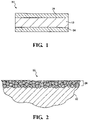
- Figure 1 there is shown a typical anode structure 10 of the present invention.
- the anode is comprised of a body of carbon 12 which is in form of a layer, and which, in particular instances, may comprise graphitic carbon, although it is to be understood that other types of carbon such as amorphous carbon and the like may also be employed in the practice of the present invention.
- the carbon 12 may be in the form of a monolithic sheet of graphite or the like, or it may be comprised of particulate carbon held together by a binder, as is known in the art.
- the body of carbon 12 may be comprised of microbeads of mesoporous carbon (MCMB) held together by a binder.
- MCMB mesoporous carbon
- the body of carbon 12 is typically supported on a body of electrically conductive electrode material 14 which may comprise a metallic body in the form of a sheet, mesh, or the like.
- a thin layer of a Group IV element or Group IV element-containing substance 18 Disposed atop the body of carbon 12 is a thin layer of a Group IV element or Group IV element-containing substance 18.
- This layer 18 covers at least the surface of the body of carbon 12 which will contact an electrolyte when the anode structure 10 is incorporated into a lithium battery. It is notable that the layer 18 covers at least a portion of a surface of the bulk carbon body 12; coverage need not necessarily be complete.
- this structure is differentiated from composite structures of the prior art wherein various coatings are disposed upon individual particles which are then compressed into a bulk electrode material.
- the Group IV element or Group IV element-containing substance layer 18 is relatively thin and in particular instances has a thickness in the range of 100 to 1500 angstroms. As is known in the art, the body of carbon material 12 is very much thicker than the layer 18 and typically has a thickness in the range of 500 to 1000 microns. For purposes of illustration, it should be noted that the thickness of the layer 18 has been exaggerated.
- the Group IV element or Group IV element-containing substance 18 typically is present either in the elemental form or as a substance such as alloy, mixture, or compound. Such substances may, as is known in the art, be deposited by various thin film techniques.
- One specific technique is glow discharge deposition, also known in the art as plasma enhanced chemical vapor deposition (PECVD).
- PECVD plasma enhanced chemical vapor deposition
- a substrate upon which the layer 18 is to be deposited in this instance the body of carbon 12
- a process gas which includes gaseous compounds from Group IV elements and other ingredients is introduced into the chamber and energized with electrical energy which may comprise radiofrequency energy, VHF energy, or microwaves. This electrical energy decomposes the process gas resulting in the deposition of a layer of a Group IV element or Group IV element-containing substance onto the anode surface.
- the substrate is maintained at an elevated temperature, such as a temperature in the range of 300 to 900 degrees centigrade.
- Gaseous sources of Group IV elements may include silane, disilane, hydrogenated silane, germanium, and the like.
- the process gas may also include gaseous compounds of other ingredients, hydrogen, and an inert carrier gas.
- the parameters of the deposition process in terms of gas pressure, activating energy, substrate temperature, and the like may be controlled so as to control the morphology of the depositing layer.
- the Group IV element or Group IV element-containing substance used in the present invention may be amorphous, nanocrystalline, microcrystalline, polycrystalline, or a mixture of the foregoing morphologies.
- glow discharge deposition techniques of the type described herein may be readily adapted to high volume processes such as continuous deposition processes.
- the present invention may be implemented in automated, high volume commercial processes for the preparation of lithium battery electrodes.
- Some techniques for the glow discharge deposition of thin film silicon alloy materials are shown in U.S. Patents 6,468,829 ; 5,476,789 ; 4,891,330 ; and 4,600,801 .
- Other thin film deposition techniques including sputtering techniques, evaporation techniques, and chemical vapor deposition techniques may be likewise employed to deposit the Group IV element or Group IV element-containing substance layer in accord with the present invention.
- the layer of Group IV element or Group IV element-containing substance interacts with the surface of the carbon during the initial charging of the battery so as to form an SEI layer which, unlike SEI layers formed in the absence of a Group IV element coating, is resistant to exfoliation and degradation. While not wishing to be bound by theory, Applicant speculates the interaction of the Group IV element with the carbon and the electrolyte forms halogenated Group IV-carbon species which constitute the SEI layer.
- the anode 10 includes the body of carbon 12 having an SEI layer 20 formed upon the electrolyte contacting surface thereof.
- This SEI layer tends to be nonhomogeneous and includes a number of subregions comprising compounds of the Group IV element or elements, halogens, and carbon compounds such as pyrenes, macrocycles, and the like.
- This layer 20, with a thickness ranging between 100 and 5000 angstroms, has a good conductivity for lithium ions. Since the SEI layers of the present invention are resistant to exfoliation or other physical degradation, lithium batteries which incorporate the anode materials of the present invention exhibit good cycle and calendar lives while still securing the benefits and advantages of carbon based anode systems.
Landscapes
- Chemical & Material Sciences (AREA)
- Chemical Kinetics & Catalysis (AREA)
- Electrochemistry (AREA)
- General Chemical & Material Sciences (AREA)
- Engineering & Computer Science (AREA)
- Manufacturing & Machinery (AREA)
- Materials Engineering (AREA)
- Composite Materials (AREA)
- Inorganic Chemistry (AREA)
- Battery Electrode And Active Subsutance (AREA)
- Secondary Cells (AREA)
Claims (13)
- Lithiumbatterie, die eine Anode beinhaltet, wobei die Anode Folgendes umfasst:eine Kohlenstoffschicht, wobei die Kohlenstoffschicht wenigstens eine elektrochemisch aktive Oberfläche aufweist, die eine Schnittstelle mit einem Elektrolyten der Batterie bereitstellt; undeine Festelektrolytschnittstellenschicht, die ein Gruppe IV-Element oder eine Gruppe IV-Element enthaltende Substanz und Kohlenstoff aus der Kohlenstoffschicht umfasst, wobei die Festelektrolytschnittstellenschicht auf der wenigstens einen elektrochemisch aktiven Oberfläche direkt angeordnet ist, wobei das Gruppe IV-Element Folgendes ist: Silizium, Germanium, Zinn und/oder Blei; wobei eine Dicke der Festelektrolytschnittstellenschicht in dem Bereich von 100 bis 1500 Angström liegt;wobei die Lithiumbatterie eine Kathode, die von der Anode beabstandet ist, und ein Elektrolytvolumen umfasst, das ein Lithiumsalz und ein organisches Carbonatlösungsmittel umfasst, das zwischen der Kathode und der Anode angeordnet ist; und wobeibei einem Lademodus Lithium in den Kohlenstoff eingelagert wird, wobei die wenigstens eine elektrochemisch aktive Oberfläche des Anodenbauteils mit dem darauf angeordneten Gruppe IV-Element oder der Gruppe IV-Element enthaltenden Substanz und dem Elektrolyten interagiert, um die Festelektrolytschnittstellenschicht auszubilden.
- Lithiumbatterie nach Anspruch 1, wobei das Gruppe IV-Element aus Silizium und/oder Germanium ausgewählt ist.
- Lithiumbatterie nach Anspruch 2, wobei das Gruppe IV-Element oder die Gruppe IV-Element enthaltende Substanz amorph, nanokristallin, mikrokristallin, polykristallin oder eine Mischung der vorstehenden Morphologien ist.
- Lithiumbatterie nach Anspruch 3, wobei das Gruppe IV-Element oder die Gruppe IV-Element enthaltende Substanz amorph ist.
- Lithiumbatterie nach Anspruch 3, wobei das Gruppe IV-Element oder die Gruppe IV-Element enthaltende Substanz nanokristallin ist.
- Lithiumbatterie nach Anspruch 1, wobei die Dicke der Kohlenstoffschicht in dem Bereich von 500-1000 Mikrometern liegt.
- Lithiumbatterie nach Anspruch 1, wobei die Kohlenstoffschicht in der Form einer monolithischen Folie aus Graphit vorliegt oder aus Kohlenstofffeinstaub besteht, der durch ein Bindemittel zusammengehalten wird.
- Lithiumbatterie nach Anspruch 1, wobei die Kohlenstoffschicht Graphit umfasst.
- Verfahren zum Herstellen einer Anode für eine Lithiumbatterie nach Anspruch 1, wobei das Verfahren die folgenden Schritte umfasst:Bereitstellen eines Anodenbauteils, das eine Kohlenstoffschicht umfasst, die wenigstens eine elektrochemisch aktive Oberfläche aufweist, die, wenn die Anode in eine Lithiumbatterie eingebaut ist, eine Schnittstelle mit einem Elektrolyten der Batterie bereitstellt; undBeschichten, durch Dünnfilmabscheidungstechnik, einer Schicht aus einem Gruppe IV-Element oder einer Gruppe IV-Element enthaltenden Substanz, direkt auf die wenigstens eine elektrochemisch aktive Oberfläche; und Betreiben der Lithium-Batteriezelle in einem Lademodus, so dass Lithium in den Kohlenstoff eingelagert wird, wobei die wenigstens eine elektrochemisch aktive Oberfläche des Anodenbauteils, das das Gruppe IV-Element oder die Gruppe-IV enthaltenden Substanz darauf angeordnet aufweist, mit dem Elektrolyten interagiert, um eine Festelektrolytschnittstellenschicht auszubilden, die das Gruppe IV-Element und Kohlenstoff aus der Kohlenstoffschicht umfasst.
- Verfahren nach Anspruch 9, wobei der Schritt des Beschichtens der Schicht aus Gruppe IV-Element oder einer Gruppe IV-Element enthaltenden Substanz, das Abscheiden der Schicht durch einen Glimmentladungsabscheidungsvorgang umfasst.
- Verfahren nach Anspruch 9, wobei der Schritt des Beschichtens einer Schicht aus Gruppe IV-Element oder einer Gruppe IV-Element enthaltenden Substanz, das Beschichten einer Schicht umfasst, die Folgendes enthält: Silizium, Germanium, Zinn und/oder Blei.
- Verfahren nach Anspruch 9, wobei der Schritt des Beschichtens einer Schicht aus Gruppe IV-Element oder einer Gruppe IV-Element enthaltenden Substanz, das Beschichten der Schicht auf eine Dicke in dem Bereich von 100-1500 Angström umfasst.
- Verfahren nach Anspruch 9, wobei der Schritt des Bereitstellens eines Anodenbauteils, das eine Kohlenstoffschicht umfasst, das Bereitstellen eines Anodenbauteils umfasst, das Graphit umfasst.
Applications Claiming Priority (2)
| Application Number | Priority Date | Filing Date | Title |
|---|---|---|---|
| US13/369,746 US9490473B2 (en) | 2012-02-09 | 2012-02-09 | Stabilized anode for lithium battery and method for its manufacture |
| PCT/US2013/024886 WO2013119629A1 (en) | 2012-02-09 | 2013-02-06 | Stabilized anode for lithium battery and method for its manufacture |
Publications (3)
| Publication Number | Publication Date |
|---|---|
| EP2812939A1 EP2812939A1 (de) | 2014-12-17 |
| EP2812939A4 EP2812939A4 (de) | 2015-10-07 |
| EP2812939B1 true EP2812939B1 (de) | 2022-08-03 |
Family
ID=48945820
Family Applications (1)
| Application Number | Title | Priority Date | Filing Date |
|---|---|---|---|
| EP13746060.6A Active EP2812939B1 (de) | 2012-02-09 | 2013-02-06 | Stabilisierte anode für eine lithiumbatterie und verfahren zu ihrer herstellung |
Country Status (7)
| Country | Link |
|---|---|
| US (2) | US9490473B2 (de) |
| EP (1) | EP2812939B1 (de) |
| JP (2) | JP6653991B2 (de) |
| KR (3) | KR20180137042A (de) |
| CN (1) | CN104221193B (de) |
| CA (1) | CA2863687A1 (de) |
| WO (1) | WO2013119629A1 (de) |
Families Citing this family (3)
| Publication number | Priority date | Publication date | Assignee | Title |
|---|---|---|---|---|
| EP3353844B1 (de) | 2015-03-27 | 2022-05-11 | Mason K. Harrup | Vollständig anorganische lösungsmittel für elektrolyte |
| NL2014588B1 (en) * | 2015-04-07 | 2017-01-19 | Stichting Energieonderzoek Centrum Nederland | Rechargeable battery and method for manufacturing the same. |
| US10707531B1 (en) | 2016-09-27 | 2020-07-07 | New Dominion Enterprises Inc. | All-inorganic solvents for electrolytes |
Citations (1)
| Publication number | Priority date | Publication date | Assignee | Title |
|---|---|---|---|---|
| US20080261116A1 (en) * | 2007-04-23 | 2008-10-23 | Burton David J | Method of depositing silicon on carbon materials and forming an anode for use in lithium ion batteries |
Family Cites Families (24)
| Publication number | Priority date | Publication date | Assignee | Title |
|---|---|---|---|---|
| US4600801A (en) | 1984-11-02 | 1986-07-15 | Sovonics Solar Systems | Fluorinated, p-doped microcrystalline silicon semiconductor alloy material |
| US4891330A (en) | 1987-07-27 | 1990-01-02 | Energy Conversion Devices, Inc. | Method of fabricating n-type and p-type microcrystalline semiconductor alloy material including band gap widening elements |
| MY129967A (en) | 1990-07-31 | 2007-05-31 | Clariant Finance Bvi Ltd | New fungi for pitch reduction their production, their preparation and use |
| US6524707B1 (en) * | 1999-07-09 | 2003-02-25 | Powerstor Corporation | Carbon-bonded metal structures and methods of fabrication |
| US6468829B2 (en) | 2000-05-16 | 2002-10-22 | United Solar Systems Corporation | Method for manufacturing high efficiency photovoltaic devices at enhanced depositions rates |
| US6740299B2 (en) | 2001-05-16 | 2004-05-25 | George F. Carini | Method of manufacture of phosphate-bonded refractories |
| JP4701579B2 (ja) * | 2002-01-23 | 2011-06-15 | 日本電気株式会社 | 二次電池用負極 |
| KR100540181B1 (ko) | 2004-06-03 | 2006-01-12 | 한국과학기술연구원 | 이차전지의 전극활물질용 탄소복합체 및 그 제조방법,이를 이용한 이차전지 |
| JP4824394B2 (ja) * | 2004-12-16 | 2011-11-30 | パナソニック株式会社 | リチウムイオン二次電池用負極、その製造方法、およびそれを用いたリチウムイオン二次電池 |
| KR100738054B1 (ko) | 2004-12-18 | 2007-07-12 | 삼성에스디아이 주식회사 | 음극 활물질, 그 제조 방법 및 이를 채용한 음극과 리튬전지 |
| FR2895572B1 (fr) * | 2005-12-23 | 2008-02-15 | Commissariat Energie Atomique | Materiau a base de nanotubes de carbone et de silicium utilisable dans des electrodes negatives pour accumulateur au lithium |
| JP4986222B2 (ja) | 2006-01-31 | 2012-07-25 | Jfeケミカル株式会社 | リチウムイオン二次電池用負極材料の製造方法 |
| JP2007213825A (ja) * | 2006-02-07 | 2007-08-23 | Matsushita Electric Ind Co Ltd | 非水電解質二次電池と、その負極活物質および負極、ならびにそれらの製造方法 |
| JP2008277156A (ja) * | 2007-04-27 | 2008-11-13 | Mitsui Mining & Smelting Co Ltd | 非水電解液二次電池用負極 |
| KR100878718B1 (ko) * | 2007-08-28 | 2009-01-14 | 한국과학기술연구원 | 리튬이차전지용 실리콘 박막 음극, 이의 제조방법 및 이를포함하는 리튬이차전지 |
| JP5186884B2 (ja) * | 2007-11-06 | 2013-04-24 | 株式会社豊田中央研究所 | リチウム2次電池用電極及びリチウム2次電池 |
| US9431181B2 (en) * | 2009-02-25 | 2016-08-30 | Catalyst Power Technologies | Energy storage devices including silicon and graphite |
| US8968820B2 (en) * | 2008-04-25 | 2015-03-03 | Nanotek Instruments, Inc. | Process for producing hybrid nano-filament electrodes for lithium batteries |
| US8526167B2 (en) * | 2009-09-03 | 2013-09-03 | Applied Materials, Inc. | Porous amorphous silicon-carbon nanotube composite based electrodes for battery applications |
| WO2011137448A2 (en) * | 2010-04-30 | 2011-11-03 | University Of Southern California | Silicon-carbon nanostructured electrodes |
| WO2012125853A1 (en) * | 2011-03-16 | 2012-09-20 | The Regents Of The University Of California | Method for the preparation of graphene/silicon multilayer structured anodes for lithium ion batteries |
| JP2012204195A (ja) * | 2011-03-25 | 2012-10-22 | Waseda Univ | リチウム二次電池用活物質、リチウム二次電池用負極、およびリチウム二次電池 |
| US20130177820A1 (en) * | 2012-01-06 | 2013-07-11 | University of Pittsburgh - of the Commonwealth Systems of Higher Education | Silicon-containing compositions, methods of their preparation, and methods of electrolytically depositing silicon on a current carrier for use in lithium ion battery applications |
| KR20160026978A (ko) * | 2013-07-03 | 2016-03-09 | 캘리포니아 인스티튜트 오브 테크놀로지 | 세퍼레이터 부재 실리콘-황 배터리용 탄소 나노튜브-그래핀 혼성 구조물 |
-
2012
- 2012-02-09 US US13/369,746 patent/US9490473B2/en active Active
-
2013
- 2013-02-06 CN CN201380008421.2A patent/CN104221193B/zh active Active
- 2013-02-06 WO PCT/US2013/024886 patent/WO2013119629A1/en not_active Ceased
- 2013-02-06 EP EP13746060.6A patent/EP2812939B1/de active Active
- 2013-02-06 CA CA2863687A patent/CA2863687A1/en not_active Abandoned
- 2013-02-06 KR KR1020187036625A patent/KR20180137042A/ko not_active Ceased
- 2013-02-06 KR KR1020147024928A patent/KR20140128411A/ko not_active Ceased
- 2013-02-06 KR KR1020167034079A patent/KR20160143889A/ko not_active Ceased
- 2013-02-06 JP JP2014556626A patent/JP6653991B2/ja active Active
-
2016
- 2016-07-05 US US15/202,292 patent/US10170748B2/en active Active
-
2018
- 2018-02-09 JP JP2018022299A patent/JP2018092944A/ja not_active Ceased
Patent Citations (1)
| Publication number | Priority date | Publication date | Assignee | Title |
|---|---|---|---|---|
| US20080261116A1 (en) * | 2007-04-23 | 2008-10-23 | Burton David J | Method of depositing silicon on carbon materials and forming an anode for use in lithium ion batteries |
Also Published As
| Publication number | Publication date |
|---|---|
| US20160315317A1 (en) | 2016-10-27 |
| CN104221193B (zh) | 2017-10-31 |
| US10170748B2 (en) | 2019-01-01 |
| JP2018092944A (ja) | 2018-06-14 |
| US9490473B2 (en) | 2016-11-08 |
| JP6653991B2 (ja) | 2020-02-26 |
| CA2863687A1 (en) | 2013-08-15 |
| US20130209887A1 (en) | 2013-08-15 |
| CN104221193A (zh) | 2014-12-17 |
| KR20180137042A (ko) | 2018-12-26 |
| EP2812939A4 (de) | 2015-10-07 |
| WO2013119629A1 (en) | 2013-08-15 |
| JP2015510244A (ja) | 2015-04-02 |
| KR20140128411A (ko) | 2014-11-05 |
| EP2812939A1 (de) | 2014-12-17 |
| KR20160143889A (ko) | 2016-12-14 |
Similar Documents
| Publication | Publication Date | Title |
|---|---|---|
| US12489109B2 (en) | Silicon composition material for use as battery anode | |
| US11996564B2 (en) | Nano-engineered coatings for anode active materials, cathode active materials, and solid-state electrolytes and methods of making batteries containing nano-engineered coatings | |
| EP2710653B1 (de) | Wiederaufladbare alkalimetall- und erdalkalihaltige elektroden mit gesteuertem dendritischem wachstum sowie verfahren zu ihrer herstellung und verwendung | |
| CN102282705B (zh) | 用于在柔性衬底上制造碳纳米结构的工艺、以及包括柔性碳纳米结构电极的能量存储器件 | |
| US20220223855A1 (en) | Method for producing silicon-based anodes for secondary batteries | |
| US20030207178A1 (en) | Method of preparing electrode composition having a carbon-containing-coated metal oxide, electrode composition and electrochemical cell | |
| JP5058381B1 (ja) | 集電体及び電極、これを用いた蓄電素子 | |
| US10170748B2 (en) | Stabilized anode for lithium battery and method for its manufacture | |
| JP2013165250A (ja) | 集電体及び電極、これを用いた蓄電素子 | |
| CN114207876B (zh) | 具有过氧化锂的阴极活性材料、用于锂离子电池的阴极、锂离子电池以及被涂层的过氧化锂在锂离子电池中的应用 | |
| WO2022200507A1 (en) | Three dimensional lithium anode with a capping layer | |
| US20250149546A1 (en) | Co-sputtered silicon-metal composite layer for anode electrodes of all-solid-state battery cells | |
| Ihsan‐Ul‐Haq | Diamond‐like Carbon Coatings for Electric Storage Batteries | |
| JP2007328932A (ja) | リチウム二次電池用負極およびこれを用いたリチウム二次電池 | |
| US9666864B1 (en) | Vertically oriented graphene-supported anode | |
| WO2024166127A1 (en) | Lithium-ion capacitor utilizing electrodes made of reduced graphene oxide | |
| Vlad et al. | Coated silicon nanowires for battery applications | |
| HK1242044A1 (en) | Electrode foil, current collector, electrode, and energy storage element using same |
Legal Events
| Date | Code | Title | Description |
|---|---|---|---|
| PUAI | Public reference made under article 153(3) epc to a published international application that has entered the european phase |
Free format text: ORIGINAL CODE: 0009012 |
|
| 17P | Request for examination filed |
Effective date: 20131017 |
|
| AK | Designated contracting states |
Kind code of ref document: A1 Designated state(s): AL AT BE BG CH CY CZ DE DK EE ES FI FR GB GR HR HU IE IS IT LI LT LU LV MC MK MT NL NO PL PT RO RS SE SI SK SM TR |
|
| AX | Request for extension of the european patent |
Extension state: BA ME |
|
| DAX | Request for extension of the european patent (deleted) | ||
| RA4 | Supplementary search report drawn up and despatched (corrected) |
Effective date: 20150908 |
|
| RIC1 | Information provided on ipc code assigned before grant |
Ipc: H01M 4/04 20060101ALI20150902BHEP Ipc: H01M 4/587 20100101ALI20150902BHEP Ipc: H01M 4/38 20060101AFI20150902BHEP Ipc: H01M 4/36 20060101ALI20150902BHEP |
|
| STAA | Information on the status of an ep patent application or granted ep patent |
Free format text: STATUS: EXAMINATION IS IN PROGRESS |
|
| 17Q | First examination report despatched |
Effective date: 20180301 |
|
| REG | Reference to a national code |
Ref country code: DE Ref legal event code: R079 Ref document number: 602013082222 Country of ref document: DE Free format text: PREVIOUS MAIN CLASS: H01M0004583000 Ipc: H01M0004380000 |
|
| GRAP | Despatch of communication of intention to grant a patent |
Free format text: ORIGINAL CODE: EPIDOSNIGR1 |
|
| STAA | Information on the status of an ep patent application or granted ep patent |
Free format text: STATUS: GRANT OF PATENT IS INTENDED |
|
| RIC1 | Information provided on ipc code assigned before grant |
Ipc: H01B 1/04 20060101ALI20220204BHEP Ipc: H01M 4/587 20100101ALI20220204BHEP Ipc: H01M 4/36 20060101ALI20220204BHEP Ipc: H01M 4/04 20060101ALI20220204BHEP Ipc: H01M 4/38 20060101AFI20220204BHEP |
|
| INTG | Intention to grant announced |
Effective date: 20220302 |
|
| GRAS | Grant fee paid |
Free format text: ORIGINAL CODE: EPIDOSNIGR3 |
|
| GRAA | (expected) grant |
Free format text: ORIGINAL CODE: 0009210 |
|
| STAA | Information on the status of an ep patent application or granted ep patent |
Free format text: STATUS: THE PATENT HAS BEEN GRANTED |
|
| AK | Designated contracting states |
Kind code of ref document: B1 Designated state(s): AL AT BE BG CH CY CZ DE DK EE ES FI FR GB GR HR HU IE IS IT LI LT LU LV MC MK MT NL NO PL PT RO RS SE SI SK SM TR |
|
| REG | Reference to a national code |
Ref country code: AT Ref legal event code: REF Ref document number: 1509474 Country of ref document: AT Kind code of ref document: T Effective date: 20220815 Ref country code: CH Ref legal event code: EP |
|
| REG | Reference to a national code |
Ref country code: DE Ref legal event code: R096 Ref document number: 602013082222 Country of ref document: DE |
|
| REG | Reference to a national code |
Ref country code: IE Ref legal event code: FG4D |
|
| REG | Reference to a national code |
Ref country code: SE Ref legal event code: TRGR |
|
| REG | Reference to a national code |
Ref country code: NL Ref legal event code: FP |
|
| REG | Reference to a national code |
Ref country code: LT Ref legal event code: MG9D |
|
| PG25 | Lapsed in a contracting state [announced via postgrant information from national office to epo] |
Ref country code: RS Free format text: LAPSE BECAUSE OF FAILURE TO SUBMIT A TRANSLATION OF THE DESCRIPTION OR TO PAY THE FEE WITHIN THE PRESCRIBED TIME-LIMIT Effective date: 20220803 Ref country code: PT Free format text: LAPSE BECAUSE OF FAILURE TO SUBMIT A TRANSLATION OF THE DESCRIPTION OR TO PAY THE FEE WITHIN THE PRESCRIBED TIME-LIMIT Effective date: 20221205 Ref country code: NO Free format text: LAPSE BECAUSE OF FAILURE TO SUBMIT A TRANSLATION OF THE DESCRIPTION OR TO PAY THE FEE WITHIN THE PRESCRIBED TIME-LIMIT Effective date: 20221103 Ref country code: LV Free format text: LAPSE BECAUSE OF FAILURE TO SUBMIT A TRANSLATION OF THE DESCRIPTION OR TO PAY THE FEE WITHIN THE PRESCRIBED TIME-LIMIT Effective date: 20220803 Ref country code: LT Free format text: LAPSE BECAUSE OF FAILURE TO SUBMIT A TRANSLATION OF THE DESCRIPTION OR TO PAY THE FEE WITHIN THE PRESCRIBED TIME-LIMIT Effective date: 20220803 Ref country code: FI Free format text: LAPSE BECAUSE OF FAILURE TO SUBMIT A TRANSLATION OF THE DESCRIPTION OR TO PAY THE FEE WITHIN THE PRESCRIBED TIME-LIMIT Effective date: 20220803 Ref country code: ES Free format text: LAPSE BECAUSE OF FAILURE TO SUBMIT A TRANSLATION OF THE DESCRIPTION OR TO PAY THE FEE WITHIN THE PRESCRIBED TIME-LIMIT Effective date: 20220803 |
|
| REG | Reference to a national code |
Ref country code: AT Ref legal event code: MK05 Ref document number: 1509474 Country of ref document: AT Kind code of ref document: T Effective date: 20220803 |
|
| PG25 | Lapsed in a contracting state [announced via postgrant information from national office to epo] |
Ref country code: PL Free format text: LAPSE BECAUSE OF FAILURE TO SUBMIT A TRANSLATION OF THE DESCRIPTION OR TO PAY THE FEE WITHIN THE PRESCRIBED TIME-LIMIT Effective date: 20220803 Ref country code: IS Free format text: LAPSE BECAUSE OF FAILURE TO SUBMIT A TRANSLATION OF THE DESCRIPTION OR TO PAY THE FEE WITHIN THE PRESCRIBED TIME-LIMIT Effective date: 20221203 Ref country code: HR Free format text: LAPSE BECAUSE OF FAILURE TO SUBMIT A TRANSLATION OF THE DESCRIPTION OR TO PAY THE FEE WITHIN THE PRESCRIBED TIME-LIMIT Effective date: 20220803 Ref country code: GR Free format text: LAPSE BECAUSE OF FAILURE TO SUBMIT A TRANSLATION OF THE DESCRIPTION OR TO PAY THE FEE WITHIN THE PRESCRIBED TIME-LIMIT Effective date: 20221104 |
|
| PG25 | Lapsed in a contracting state [announced via postgrant information from national office to epo] |
Ref country code: SM Free format text: LAPSE BECAUSE OF FAILURE TO SUBMIT A TRANSLATION OF THE DESCRIPTION OR TO PAY THE FEE WITHIN THE PRESCRIBED TIME-LIMIT Effective date: 20220803 Ref country code: RO Free format text: LAPSE BECAUSE OF FAILURE TO SUBMIT A TRANSLATION OF THE DESCRIPTION OR TO PAY THE FEE WITHIN THE PRESCRIBED TIME-LIMIT Effective date: 20220803 Ref country code: DK Free format text: LAPSE BECAUSE OF FAILURE TO SUBMIT A TRANSLATION OF THE DESCRIPTION OR TO PAY THE FEE WITHIN THE PRESCRIBED TIME-LIMIT Effective date: 20220803 Ref country code: CZ Free format text: LAPSE BECAUSE OF FAILURE TO SUBMIT A TRANSLATION OF THE DESCRIPTION OR TO PAY THE FEE WITHIN THE PRESCRIBED TIME-LIMIT Effective date: 20220803 Ref country code: AT Free format text: LAPSE BECAUSE OF FAILURE TO SUBMIT A TRANSLATION OF THE DESCRIPTION OR TO PAY THE FEE WITHIN THE PRESCRIBED TIME-LIMIT Effective date: 20220803 |
|
| REG | Reference to a national code |
Ref country code: DE Ref legal event code: R097 Ref document number: 602013082222 Country of ref document: DE |
|
| PG25 | Lapsed in a contracting state [announced via postgrant information from national office to epo] |
Ref country code: SK Free format text: LAPSE BECAUSE OF FAILURE TO SUBMIT A TRANSLATION OF THE DESCRIPTION OR TO PAY THE FEE WITHIN THE PRESCRIBED TIME-LIMIT Effective date: 20220803 Ref country code: EE Free format text: LAPSE BECAUSE OF FAILURE TO SUBMIT A TRANSLATION OF THE DESCRIPTION OR TO PAY THE FEE WITHIN THE PRESCRIBED TIME-LIMIT Effective date: 20220803 |
|
| PLBE | No opposition filed within time limit |
Free format text: ORIGINAL CODE: 0009261 |
|
| STAA | Information on the status of an ep patent application or granted ep patent |
Free format text: STATUS: NO OPPOSITION FILED WITHIN TIME LIMIT |
|
| P01 | Opt-out of the competence of the unified patent court (upc) registered |
Effective date: 20230417 |
|
| PG25 | Lapsed in a contracting state [announced via postgrant information from national office to epo] |
Ref country code: AL Free format text: LAPSE BECAUSE OF FAILURE TO SUBMIT A TRANSLATION OF THE DESCRIPTION OR TO PAY THE FEE WITHIN THE PRESCRIBED TIME-LIMIT Effective date: 20220803 |
|
| 26N | No opposition filed |
Effective date: 20230504 |
|
| PG25 | Lapsed in a contracting state [announced via postgrant information from national office to epo] |
Ref country code: SI Free format text: LAPSE BECAUSE OF FAILURE TO SUBMIT A TRANSLATION OF THE DESCRIPTION OR TO PAY THE FEE WITHIN THE PRESCRIBED TIME-LIMIT Effective date: 20220803 |
|
| PG25 | Lapsed in a contracting state [announced via postgrant information from national office to epo] |
Ref country code: MC Free format text: LAPSE BECAUSE OF FAILURE TO SUBMIT A TRANSLATION OF THE DESCRIPTION OR TO PAY THE FEE WITHIN THE PRESCRIBED TIME-LIMIT Effective date: 20220803 |
|
| PG25 | Lapsed in a contracting state [announced via postgrant information from national office to epo] |
Ref country code: LU Free format text: LAPSE BECAUSE OF NON-PAYMENT OF DUE FEES Effective date: 20230206 |
|
| REG | Reference to a national code |
Ref country code: IE Ref legal event code: MM4A |
|
| PG25 | Lapsed in a contracting state [announced via postgrant information from national office to epo] |
Ref country code: IE Free format text: LAPSE BECAUSE OF NON-PAYMENT OF DUE FEES Effective date: 20230206 |
|
| PG25 | Lapsed in a contracting state [announced via postgrant information from national office to epo] |
Ref country code: BG Free format text: LAPSE BECAUSE OF FAILURE TO SUBMIT A TRANSLATION OF THE DESCRIPTION OR TO PAY THE FEE WITHIN THE PRESCRIBED TIME-LIMIT Effective date: 20220803 |
|
| PG25 | Lapsed in a contracting state [announced via postgrant information from national office to epo] |
Ref country code: BG Free format text: LAPSE BECAUSE OF FAILURE TO SUBMIT A TRANSLATION OF THE DESCRIPTION OR TO PAY THE FEE WITHIN THE PRESCRIBED TIME-LIMIT Effective date: 20220803 |
|
| PG25 | Lapsed in a contracting state [announced via postgrant information from national office to epo] |
Ref country code: CY Free format text: LAPSE BECAUSE OF FAILURE TO SUBMIT A TRANSLATION OF THE DESCRIPTION OR TO PAY THE FEE WITHIN THE PRESCRIBED TIME-LIMIT; INVALID AB INITIO Effective date: 20130206 |
|
| PG25 | Lapsed in a contracting state [announced via postgrant information from national office to epo] |
Ref country code: HU Free format text: LAPSE BECAUSE OF FAILURE TO SUBMIT A TRANSLATION OF THE DESCRIPTION OR TO PAY THE FEE WITHIN THE PRESCRIBED TIME-LIMIT; INVALID AB INITIO Effective date: 20130206 |
|
| PG25 | Lapsed in a contracting state [announced via postgrant information from national office to epo] |
Ref country code: TR Free format text: LAPSE BECAUSE OF FAILURE TO SUBMIT A TRANSLATION OF THE DESCRIPTION OR TO PAY THE FEE WITHIN THE PRESCRIBED TIME-LIMIT Effective date: 20220803 |
|
| REG | Reference to a national code |
Ref country code: CH Ref legal event code: U11 Free format text: ST27 STATUS EVENT CODE: U-0-0-U10-U11 (AS PROVIDED BY THE NATIONAL OFFICE) Effective date: 20260301 |
|
| PGFP | Annual fee paid to national office [announced via postgrant information from national office to epo] |
Ref country code: NL Payment date: 20260220 Year of fee payment: 14 |
|
| PGFP | Annual fee paid to national office [announced via postgrant information from national office to epo] |
Ref country code: SE Payment date: 20260223 Year of fee payment: 14 |
|
| PGFP | Annual fee paid to national office [announced via postgrant information from national office to epo] |
Ref country code: GB Payment date: 20260223 Year of fee payment: 14 |
|
| PGFP | Annual fee paid to national office [announced via postgrant information from national office to epo] |
Ref country code: DE Payment date: 20260220 Year of fee payment: 14 |
|
| PGFP | Annual fee paid to national office [announced via postgrant information from national office to epo] |
Ref country code: BE Payment date: 20260220 Year of fee payment: 14 Ref country code: IT Payment date: 20260220 Year of fee payment: 14 |
|
| PGFP | Annual fee paid to national office [announced via postgrant information from national office to epo] |
Ref country code: FR Payment date: 20260227 Year of fee payment: 14 |
|
| PGFP | Annual fee paid to national office [announced via postgrant information from national office to epo] |
Ref country code: CH Payment date: 20260301 Year of fee payment: 14 |