EP2810075B1 - Proteinchips, herstellung und verwendung davon - Google Patents
Proteinchips, herstellung und verwendung davon Download PDFInfo
- Publication number
- EP2810075B1 EP2810075B1 EP13702062.4A EP13702062A EP2810075B1 EP 2810075 B1 EP2810075 B1 EP 2810075B1 EP 13702062 A EP13702062 A EP 13702062A EP 2810075 B1 EP2810075 B1 EP 2810075B1
- Authority
- EP
- European Patent Office
- Prior art keywords
- seq
- protein
- interest
- membrane
- proteins
- Prior art date
- Legal status (The legal status is an assumption and is not a legal conclusion. Google has not performed a legal analysis and makes no representation as to the accuracy of the status listed.)
- Active
Links
Images


Classifications
-
- G—PHYSICS
- G01—MEASURING; TESTING
- G01N—INVESTIGATING OR ANALYSING MATERIALS BY DETERMINING THEIR CHEMICAL OR PHYSICAL PROPERTIES
- G01N33/00—Investigating or analysing materials by specific methods not covered by groups G01N1/00 - G01N31/00
- G01N33/48—Biological material, e.g. blood, urine; Haemocytometers
- G01N33/50—Chemical analysis of biological material, e.g. blood, urine; Testing involving biospecific ligand binding methods; Immunological testing
- G01N33/53—Immunoassay; Biospecific binding assay; Materials therefor
- G01N33/564—Immunoassay; Biospecific binding assay; Materials therefor for pre-existing immune complex or autoimmune disease, i.e. systemic lupus erythematosus, rheumatoid arthritis, multiple sclerosis, rheumatoid factors or complement components C1-C9
-
- G—PHYSICS
- G01—MEASURING; TESTING
- G01N—INVESTIGATING OR ANALYSING MATERIALS BY DETERMINING THEIR CHEMICAL OR PHYSICAL PROPERTIES
- G01N33/00—Investigating or analysing materials by specific methods not covered by groups G01N1/00 - G01N31/00
- G01N33/48—Biological material, e.g. blood, urine; Haemocytometers
- G01N33/50—Chemical analysis of biological material, e.g. blood, urine; Testing involving biospecific ligand binding methods; Immunological testing
- G01N33/53—Immunoassay; Biospecific binding assay; Materials therefor
- G01N33/543—Immunoassay; Biospecific binding assay; Materials therefor with an insoluble carrier for immobilising immunochemicals
-
- G—PHYSICS
- G01—MEASURING; TESTING
- G01N—INVESTIGATING OR ANALYSING MATERIALS BY DETERMINING THEIR CHEMICAL OR PHYSICAL PROPERTIES
- G01N33/00—Investigating or analysing materials by specific methods not covered by groups G01N1/00 - G01N31/00
- G01N33/48—Biological material, e.g. blood, urine; Haemocytometers
- G01N33/50—Chemical analysis of biological material, e.g. blood, urine; Testing involving biospecific ligand binding methods; Immunological testing
- G01N33/53—Immunoassay; Biospecific binding assay; Materials therefor
- G01N33/543—Immunoassay; Biospecific binding assay; Materials therefor with an insoluble carrier for immobilising immunochemicals
- G01N33/54366—Apparatus specially adapted for solid-phase testing
-
- G—PHYSICS
- G01—MEASURING; TESTING
- G01N—INVESTIGATING OR ANALYSING MATERIALS BY DETERMINING THEIR CHEMICAL OR PHYSICAL PROPERTIES
- G01N33/00—Investigating or analysing materials by specific methods not covered by groups G01N1/00 - G01N31/00
- G01N33/48—Biological material, e.g. blood, urine; Haemocytometers
- G01N33/50—Chemical analysis of biological material, e.g. blood, urine; Testing involving biospecific ligand binding methods; Immunological testing
- G01N33/68—Chemical analysis of biological material, e.g. blood, urine; Testing involving biospecific ligand binding methods; Immunological testing involving proteins, peptides or amino acids
- G01N33/6803—General methods of protein analysis not limited to specific proteins or families of proteins
- G01N33/6845—Methods of identifying protein-protein interactions in protein mixtures
-
- G—PHYSICS
- G01—MEASURING; TESTING
- G01N—INVESTIGATING OR ANALYSING MATERIALS BY DETERMINING THEIR CHEMICAL OR PHYSICAL PROPERTIES
- G01N33/00—Investigating or analysing materials by specific methods not covered by groups G01N1/00 - G01N31/00
- G01N33/48—Biological material, e.g. blood, urine; Haemocytometers
- G01N33/50—Chemical analysis of biological material, e.g. blood, urine; Testing involving biospecific ligand binding methods; Immunological testing
- G01N33/68—Chemical analysis of biological material, e.g. blood, urine; Testing involving biospecific ligand binding methods; Immunological testing involving proteins, peptides or amino acids
- G01N33/6854—Immunoglobulins
-
- G—PHYSICS
- G01—MEASURING; TESTING
- G01N—INVESTIGATING OR ANALYSING MATERIALS BY DETERMINING THEIR CHEMICAL OR PHYSICAL PROPERTIES
- G01N33/00—Investigating or analysing materials by specific methods not covered by groups G01N1/00 - G01N31/00
- G01N33/48—Biological material, e.g. blood, urine; Haemocytometers
- G01N33/50—Chemical analysis of biological material, e.g. blood, urine; Testing involving biospecific ligand binding methods; Immunological testing
- G01N33/68—Chemical analysis of biological material, e.g. blood, urine; Testing involving biospecific ligand binding methods; Immunological testing involving proteins, peptides or amino acids
- G01N33/6872—Intracellular protein regulatory factors and their receptors, e.g. including ion channels
-
- G—PHYSICS
- G01—MEASURING; TESTING
- G01N—INVESTIGATING OR ANALYSING MATERIALS BY DETERMINING THEIR CHEMICAL OR PHYSICAL PROPERTIES
- G01N33/00—Investigating or analysing materials by specific methods not covered by groups G01N1/00 - G01N31/00
- G01N33/48—Biological material, e.g. blood, urine; Haemocytometers
- G01N33/50—Chemical analysis of biological material, e.g. blood, urine; Testing involving biospecific ligand binding methods; Immunological testing
- G01N33/68—Chemical analysis of biological material, e.g. blood, urine; Testing involving biospecific ligand binding methods; Immunological testing involving proteins, peptides or amino acids
- G01N33/6893—Chemical analysis of biological material, e.g. blood, urine; Testing involving biospecific ligand binding methods; Immunological testing involving proteins, peptides or amino acids related to diseases not provided for elsewhere
- G01N33/6896—Neurological disorders, e.g. Alzheimer's disease
-
- G—PHYSICS
- G01—MEASURING; TESTING
- G01N—INVESTIGATING OR ANALYSING MATERIALS BY DETERMINING THEIR CHEMICAL OR PHYSICAL PROPERTIES
- G01N2333/00—Assays involving biological materials from specific organisms or of a specific nature
- G01N2333/435—Assays involving biological materials from specific organisms or of a specific nature from animals; from humans
- G01N2333/705—Assays involving receptors, cell surface antigens or cell surface determinants
- G01N2333/70571—Assays involving receptors, cell surface antigens or cell surface determinants for neuromediators, e.g. serotonin receptor, dopamine receptor
-
- G—PHYSICS
- G01—MEASURING; TESTING
- G01N—INVESTIGATING OR ANALYSING MATERIALS BY DETERMINING THEIR CHEMICAL OR PHYSICAL PROPERTIES
- G01N2800/00—Detection or diagnosis of diseases
- G01N2800/28—Neurological disorders
-
- G—PHYSICS
- G01—MEASURING; TESTING
- G01N—INVESTIGATING OR ANALYSING MATERIALS BY DETERMINING THEIR CHEMICAL OR PHYSICAL PROPERTIES
- G01N2800/00—Detection or diagnosis of diseases
- G01N2800/28—Neurological disorders
- G01N2800/2814—Dementia; Cognitive disorders
- G01N2800/2828—Prion diseases
Definitions
- the present invention relates to the field of medicine, in particular research and diagnosis. It relates more particularly to a new tool for the detection of autoantibodies in a biological sample from a mammal.
- This tool in the form of a protein chip, is typically usable in the screening of new targets of interest involved in the occurrence of an autoimmune disease, particularly a disease affecting the nervous system of a patient. mammal, as well as in the diagnosis or follow-up of the evolution of such an autoimmune disease.
- the invention also relates to a method of manufacturing such a tool as well as kits comprising it and allowing its use.
- RIAs radioimmunoassays
- IFA immunofluorescence assays
- LIA luminescence immunoassays
- EIA Enzyme Immunoassay
- ELISA Enzyme-linked immunosorbent assay
- bound enzyme immunoadsorption assay that is to say enzyme-linked immunosorbent assay.
- Radioimmunoprecipitation assays allow the precipitation of an antigen of interest present in a sample using a labeled specific antibody. This method can be used to isolate and concentrate a particular protein within a sample comprising thousands of others. The technique requires the antibody to be coupled to a solid substrate.
- Immunofluorescence tests use antibodies (or immunoglobulins) as well as fluorochromes (chemical substance capable of emitting fluorescence light after excitation).
- fluorochromes chemical substance capable of emitting fluorescence light after excitation.
- the most widely used fluorochromes are phycoerythrin (PE), Fluorescein isothiocyanate (FITC), Alexa Fluor's range, green fluorescent protein (GFP).
- PE phycoerythrin
- FITC Fluorescein isothiocyanate
- GFP green fluorescent protein
- Enzyme-linked immunosorbent assay is part of the more general EIA (enzyme immunoassays) or immunoenzymatic assay in which the assay of a reaction between antigen and antibody is coupled to an enzyme-catalyzed reaction that releases a component. colored followed by spectroscopy.
- ELISA is a biochemical technique, mainly used in immunology to detect the presence of an antibody or antigen in a sample (eg Gotti et al. Muscle & Nerve, 20: 800-808, 1997 ; Franciotta et al., Clin Chem. 45: 400-5, 19999 ; Hewer et al., Clin Chim Acta. 364: 159-66, 2006 ).
- the technique uses one or two antibodies. One of these is antigen specific, while the other reacts with immune complexes (antigen-antibody) and is coupled to an enzyme. This secondary antibody, responsible for the name of the technique, can also cause the emission of a signal by a chromogenic or fluorogenic substrate.
- ELISA tests for example, may require serum dilution of at least 50-fold.
- Radioimmunoprecipitation (RIPA) tests favor the use of only a few microliters (approximately 5 microliters) of serum to be tested in order to avoid the use of large volumes of anti-serum generating unacceptable background noises (ie inappropriate radioactivity of negative controls) because of excessively large caps.
- encephalopathies in particular those associated with disorders of neuronal excitability.
- autoantibodies often present in very small quantities, directed against membrane proteins or membrane protein complexes, in particular proteins or complexes comprising functional epitopes, described as involved, or suspected to be involved, in the occurrence of these encephalopathies in humans.
- WO2011 / 142900 which describes a method of diagnosis of a neurodegenerative disease including the detection of autoantibodies as well as a chip made with proteins, specifies however that these proteins are produced in insect cells, and not, unlike the in mammalian cells before being purified. Such a production method inevitably impacts the post-translational modifications of the proteins thus produced and therefore the recognition of epitopes by possible autoantibodies. It is furthermore impossible to use such a chip to allow coexpression on the surface of said partner subunit chip (protein complex).
- WO 2006/033972 relates to the preparation of protein chips, all examples describing the expression of recombinant proteins in insect cells.
- WO 2006/033972 involves a protein purification step by affinity chromatography.
- the other types of autoantibody identification tests practiced at present generally require the sacrifice of animals, typically rodents (rats, mice), insofar as they are all carried out on cells, in particularly on transfected cells, or on tissue sections (typically arranged on glass slides).
- a considerable advantage of the protein chip according to the invention is that, due to the preservation by the protein of its native three-dimensional structure, the detection both sensitive and specific of any antibody, present in a biological sample, capable of binding any of the epitopes (sequential as well as conformational) formed by the protein or proteins of interest expressed on said chip.
- the membrane protein of interest may be alone (membrane protein) or associated with one or more membrane or perimembrane auxiliary subunits (membrane protein complex). Due to its specificity, this chip also makes it possible to use large quantities of biological samples to be tested and imposes, as part of its use, no step of diluting said sample. organic. It is now possible to detect the presence of antibodies even when their concentration in the sample to be tested is very low.
- a particular object of the invention relates to a protein chip for the simple and effective identification of antibodies, preferably autoantibodies, in a biological sample, said chip comprising at least one protein of solubilized interest, typically at least one membrane protein of solubilized interest preferably selected from an ion channel protein, a transporter protein, and a membrane receptor protein that regulates the activity of an ion channel protein or a transporter protein, said protein being optionally associated with one or more auxiliary subunits, and said chip being in the form of a support allowing a detection of the complexes formed between antibodies, preferably autoantibodies, and epitopes (sequential as well as conformational) specific for said protein, possibly associated with its or its auxiliary subunits.
- said at least one protein or at least one membrane protein complex is expressed in the nervous system of a human being and is preferably involved or suspected to be involved in the occurrence of encephalopathy associated with the subject. disorders of neuronal excitability.
- Another subject of the invention relates to a protein chip comprising several proteins of different interest, typically several membrane proteins of different interest, typically at least 50 or at least 100 proteins of different interest, preferably between about 200 and about 400 different proteins of interest, for example about 250 or about 300 different proteins of interest, each protein of interest possibly being associated with one or more auxiliary subunits.
- the invention relates to a method for preparing a chip as described above, as well as the chip that can be obtained by means of such a method, said method comprising the following steps of cloning the cDNA or CDNA of interest, expression of the protein or proteins (typically of the membrane protein or proteins) encoded by said cDNA (s) in cells in culture, for solubilization of proteins expressed using a non-denaturing detergent allowing solubilizing said proteins while preserving their native three-dimensional conformation and their ability to attach to a support, and depositing said solubilized proteins on a support in order to obtain the chip of interest.
- the patent application WO2004 / 108762 describes methods of preparing solubilized thyroid membrane which all require a fractionation step using salts to obtain a fraction enriched in proteins of interest, as well as an ultracentrifugation step.
- the invention also relates to the use of a chip according to the invention for the screening of antibodies of interest, preferably an antibody involved in the occurrence of an autoimmune disease, or for the diagnosis and / or follow-up of the evolution of an autoimmune disease.
- kits comprising a chip as described above, and, optionally, one or more reagents preferably chosen from a non-specific site blocking buffer, a buffer allowing the association between antibodies and antigens (Ac / Ag), a wash buffer, a secondary antibody, a product or several products for detecting said secondary antibody (s), and instructions for use.
- reagents preferably chosen from a non-specific site blocking buffer, a buffer allowing the association between antibodies and antigens (Ac / Ag), a wash buffer, a secondary antibody, a product or several products for detecting said secondary antibody (s), and instructions for use.
- the invention relates to a protein chip for detecting antibodies, typically autoantibodies, preferably autoantibodies directed against membrane proteins and / or membrane protein complexes, in a biological sample, as well as its method of obtaining and its uses. More specifically, the invention relates to a protein chip for the detection of autoantibodies, in particular the identification of new autoantibodies, in a biological sample.
- a chip in the form of a support comprising at least one solubilized protein of interest (typically a membrane protein of solubilized interest), preferably a protein having retained its native three-dimensional structure (or conformation), and allowing the detection of complexes formed between antibodies, typically autoantibodies, and specific epitopes (sequential or conformational epitopes), typically conformational epitopes, of said protein of interest.
- solubilized protein of interest typically a membrane protein of solubilized interest
- the present invention allows, for the first time, the detection, both sensitive and specific, complexes formed between autoantibodies and epitopes (sequential as well as conformational) of the membrane protein of interest (optionally associated with its auxiliary subunit or subunits), preferably of a protein or protein complex involved or suspected to be involved in the occurrence of encephalopathy associated with neuronal excitability disorders.
- this method makes optional the dilution of the tested biological sample
- the term " biological sample" includes any sample (fluid, tissue or cell) derived from an animal, typically a mammal, a lagomorph or a rodent (rat, mouse, hamster, guinea pig), preferably a human being.
- the biological sample is preferably a fluid, typically a fluid containing autoantibodies produced by said animal.
- the biological sample can be obtained directly from said animal or can be derived from a cell culture obtained from said animal.
- the biological samples are preferably chosen for example from blood, serum, plasma, cerebrospinal fluid (CSF), endolymph of the inner ear, perilymph of the inner ear, and a subfraction or a product derived therefrom.
- a preferred biological sample is a cerebrospinal fluid sample.
- the biological sample may have been subjected to a treatment such as dilution in an acceptable vehicle. The present invention, however, advantageously makes it possible to dispense with such a step.
- autoantibody includes any antibody as well as any fragment or portions of antibodies such as Fab, F (ab ') 2, Fv and scFv binding to an epitope of a self protein.
- protein covers any amino acid sequence, or set of amino acid sequences, comprising at least one antigen comprising at least one epitope.
- protein typically covers a membrane protein or a membrane protein complex as defined above.
- solubilized protein refers to a protein having been exposed to a non-denaturing detergent, ie a nonionic detergent (also identified as a “mild detergent"), permitting the solubilization of said proteins while preserving their conformation (three-dimensional structure) and their ability to attach to a support. This gentle solubilization is the first step used for the purification of membrane proteins and subsequently their functional analysis.
- antigen refers to a natural or synthetic macromolecule recognized by antibodies or cells of the immune system and capable of eliciting an immune response.
- epitope refers to an immunoreactive amino acid sequence, ie, an amino acid sequence capable by its structure of specifically interacting with a particular antibody. The same antigen may have several epitopes (identical or different) and thus induce various immune responses. There are sequential epitopes , corresponding to an amino acid sequence, and conformational epitopes , linked to the authentic structure (spatial conformation or native three-dimensional conformation) of the protein.
- a protein can thus for example consist of a single chain polypeptide; a set of polypeptide linked by covalent or non-covalent bonds; a portion of protein such as a subunit, a domain or a fragment; a modified protein, for example by glycosylation (glycoprotein) or by combination with a lipid (lipoprotein).
- glycoprotein glycosylation
- lipoprotein lipoprotein
- variant or “ derivative” is meant any spontaneously (naturally occurring variant) or deliberately (artificial variant) amino acid sequence relative to the specific amino acid sequence encoding the particular protein, such that the Protein variant retains at least one of the endogenous functions of said particular protein, e.g., the set of endogenous functions of that particular protein (functionally equivalent protein).
- a variant may be obtained by adding or inserting, deleting and / or substituting one or more amino acid residue (s) within the specific amino acid sequence encoding the particular protein.
- the choice of the substitution amino acid can be decided on the basis of similarity of polarity, charge, solubility, hydrophobicity, hydrophilicity and / or of amphiphatic nature guaranteeing the preservation of a particular function (eg transport function or modulation function). transport activity).
- Negatively charged amino acids include, for example, aspartic acid and glutamic acid
- positively charged amino acids include, for example, lysine and arginine
- uncharged amino acids of similar hydrophilic character include, for example, leucine, isoleucine, valine, glycine, alanine, asparagine, glutamine, serine, threonine, phenylalanine and tyrosine.
- Analogous means any mimetic which is a naturally occurring or artificially manufactured chemical compound having at least one of the endogenous functions of the protein that it mimics, for example the set of endogenous functions of the protein that it mimics (functionally equivalent protein).
- an epitope consists of a sequence of at least 3-4 amino acids, and more commonly at least 5-6 amino acids. Epitopes can also consist of a sequence of about 7 to 8 amino acids, or even about 10 amino acids. In the case of a sequential epitope, the amino acids are consecutive within the linear amino acid sequence of the protein. On the contrary, as explained above, the amino acids of a conformational epitope are not necessarily all consecutive within the linear amino acid sequence of the protein, the conformational epitope depending on the structure of the protein. In the context of the present invention, a particular epitope of a given protein refers to a particular amino acid sequence (linear or conformational) as well as the immunological equivalents thereof.
- the invention relates to a protein chip for the detection of antibodies, typically autoantibodies, in a biological sample, said chip comprising at least one protein of solubilized interest (preferably a protein having retained its three-dimensional structure), typically at least one membrane protein of solubilized interest chosen for example from an ion channel protein, a transporter protein, and a membrane receptor protein that regulates the activity of an ion channel protein or a transporter protein, said protein being optionally, when it corresponds to a main subunit, associated with one or more auxiliary subunits, and said chip being in the form of a support enabling a detection of the complexes formed between antibodies and epitopes specific for said protein, the latter possibly being associated with its or its auxiliary subunits.
- a protein chip for the detection of antibodies, typically autoantibodies, in a biological sample
- said chip comprising at least one protein of solubilized interest (preferably a protein having retained its three-dimensional structure), typically at least one membrane protein of solubilized interest chosen for example from an
- ion channel protein refers to a membrane protein that allows the passive passage of one or more ions.
- Ion channel proteins that can be attached to the surface of the protein chip according to the invention can be chosen for example from ion channels and channel receivers.
- Examples of ion channels are potassium channels (intracellular calcium activated potassium channel, incoming rectifier potassium channel, P-domain potassium channel, etc.), calcium channels, sodium channels and chlorine channels.
- the ion channel may be a voltage-dependent channel.
- carrier protein refers to a protein intrinsic to the lipid cell membrane that allows the selective passage of water, ions and / or metabolites.
- Carrier proteins that can be attached to the surface of the protein chip according to the invention can be chosen for example from aquaporins, connexins, Na + / K + -ATPases (or Na + / K + pumps), H + / K + -ATPases (or H + / K + pumps), Na + / H + exchangers, Na + / Ca ++ exchangers, and Na-K-Cl cotransporters.
- membrane receptor protein regulating the activity of an ion channel protein or a transporter protein or " regulatory membrane receptor protein” refers to any membrane protein, whether or not associated with an ion channel protein and / or a carrier protein. regulating at least one activity of said proteins.
- Membrane receptor-like regulatory proteins capable of being fixed on the surface of the protein chip according to the invention may be chosen, for example, from the seven G-protein coupled transmembrane domain receptors and the tyrosine kinase receptors.
- said at least one protein of interest deposited on the support typically corresponds to a single-stranded protein (peptide) in its three-dimensional configuration, to the main subunit of a multi-strand protein (polypeptide) in its configuration. natural, ie three-dimensional, or to one of the main subunits of such a multi-strand protein.
- This protein of interest may however correspond to or be associated with one or more auxiliary subunits of a set of functionally associated proteins (protein complex).
- auxiliary subunit refers to the secondary parts of a protein or protein complex, i.e. parts other than the main subunit (s).
- the auxiliary subunit may be membrane or perimembrane.
- auxiliary subunits of a protein make it possible to regulate the activity (ie at least one of the functions) or a property (ie a functional characteristic) of said protein.
- the main subunit generally allows the passage of ions or metabolites, while the auxiliary subunits regulate this passage.
- Chaperone proteins and ionotropic receptors are examples of auxiliary subunits of a protein complex.
- the protein of interest is expressed in the cells of the nervous system of an animal, typically a mammal, a rodent (rat, mouse, hamster, guinea pig) or a lagomorph, preferably 'a human.
- the protein of interest is thus preferably a human protein.
- the protein of interest is expressed in the cells of the nervous system of an animal, typically a mammal, a rodent (rat, mouse, hamster, guinea pig) or a lagomorph, preferably a human being.
- the protein of interest is thus preferably a human protein. It may also be a protein derived from an animal distinct from humans such as those identified previously.
- such an animal protein has a sequence sufficiently close to that of the corresponding human isoform to allow recognition by the antibodies of the immune system of a human being of at least one conformational epitope of said animal protein.
- the animal protein of interest has a homology between its linear sequence and that of the human isoform of at least 50%, preferably at least 75%, more preferably at least 95%.
- the protein of interest is typically a human membrane protein selected from a pentameric receptor (or "cys-loop" receptor), an ATP receptor, an ionotropic glutamate receptor, a voltage-dependent channel, for example a calcium channel.
- voltage-gated sodium or potassium hydroxide an intracellular calcium-activated potassium channel, an incoming rectifier potassium channel, a P-domain potassium channel, a cyclic nucleotide-activatable ion channel, a TRP (Transient Receptor) ion channel Potential), a chlorine channel, an acid-sensitive cation channel, an auxiliary sodium channel sub-unit, a calcium channel auxiliary sub-unit.
- the protein of interest may also be a rodent protein, typically mouse or rat.
- Membrane proteins of interest derived from rodents may be for example selected from a rat sodium channel, a rat calcium channel and a rat glutamate channel.
- the protein of interest typically the membrane protein of interest
- the protein of interest is preferably associated (or suspected to be associated) with a human pathology responsible for the appearance of autoantibodies.
- the protein of interest is advantageously associated (or suspected to be associated) with an autoimmune disease or pathology (or suspected autoimmune ) affecting the nervous system (neurological disease).
- autoimmune disorders affecting the nervous system include encephalopathies associated with neuronal excitability disorders, typically neuronal receptor excitability disorders, and include, but are not limited to, acquired epileptic syndromes, encephalitis, paraneoplastic neurological syndromes (PNS), and non-paraneoplastic neurological syndromes with autoantibodies.
- encephalopathies associated with neuronal excitability disorders typically neuronal receptor excitability disorders
- PNS paraneoplastic neurological syndromes
- non-paraneoplastic neurological syndromes with autoantibodies examples of autoimmune (or presumed autoimmune) encephalopathies, whether convulsive or not, associated with neuronal excitability disorders are limbic encephalitis (which involves autoantibodies to proteins associated with voltage-gated potassium channels).
- encephalopathy is a central nervous system disorder that may be associated with disorders of neuronal excitability of autoimmune origin (demonstrated or suspected) and of post-infectious or paraneoplastic origin.
- the protein of interest is a protein associated with (or suspected to be associated with) a peripheral neurological syndrome (possibly associated with encephalopathy). autoimmune origin (demonstrated or suspected), and typically of postinfectious or paraneoplastic origin. Peripheral neurological syndromes can cause muscle paralysis of pre- or post-synaptic origin. Isaac's syndrome is an example of a peripheral neurological syndrome.
- the protein of interest is a protein associated with (or suspected of being associated with) a neurosensory disease (associated or not with the excitability of sensory receptors), for example to a disease of the inner ear such as Menière's disease or acquired or presumed congenital deafness.
- a neurosensory disease associated or not with the excitability of sensory receptors
- a particular chip according to the invention comprises at least one membrane protein of interest, typically several membrane proteins of interest, said protein being encoded by a human cDNA sequence chosen from the nucleotide sequences identified in Table 2 below or corresponding to an amino acid sequence selected from the amino acid sequences also identified in Table 2 below, preferably from the amino acid sequences SEQ ID NO: 1 to SEQ ID NO: 311.
- the membrane protein of interest is selected from a GABA receptor, typically a GABA B receptor (GABA B R1 or GABA B R2 for example); a glutamate receptor, typically an alpha-amino-3-hydroxy-5-methylisoazole-4-propionic acid (AMPA) receptor, preferably the glutamate receptor GluR3 subunit (SEQ ID NO: 73 or SEQ ID NO: 74) or an N-methyl-D-aspartate-activated glutamate receptor (NMDA), preferably the NMDAR1 subunit of the human glutamate receptor (SEQ ID NO: 62); aquaporin 2 (SEQ ID NO: 307); aquaporin 4 (SEQ ID NO: 309); a potassium channel; a calcium channel; an acetylcholine receptor, preferably the ⁇ 3 subunit (SEQ ID NO: 9) of the human nicotinic acetylcholine receptor (ACH ⁇ 3); a voltage-dependent potassium channel-associated
- GABA receptor typically a
- Another subject of the invention relates to a chip comprising at least 20 different proteins of interest, for example at least 50, typically at least 100 proteins of different interest, preferably between about 20 and about 400 proteins of different interest, for example about 250 or about 300 different proteins of interest, or between about 20 and about 100 different proteins of interest, for example about 50 different proteins of interest, each protein of interest possibly being associated with one or more auxiliary subunits.
- proteins of interest are preferably membrane proteins chosen from proteins whose sequences (preferably the sequences of human proteins) are identified in Table 2.
- the inventors have in particular developed chips comprising membrane proteins corresponding to proteins of the ion channel protein type, transporter proteins and / or membrane receptor proteins that regulate the activity of an ion channel protein or a transporter protein. These proteins are encoded by the sequences, preferably by the sequences identified by a number SEQ ID, even more preferably by the human sequences identified by a number SEQ ID, referenced in Table 2. To manufacture these chips, the inventors have without a priori amplified by PCR a large number of subunits obtained from human brain cDNA (see experimental part). The products were subcloned into an expression vector and transfected into cells in multiwell plate culture, each well containing cells expressing a single type of membrane protein or membrane protein complex.
- a particular object of the invention relates to a chip as described in the present text of which said one or more proteins of interest are labeled using the same peptide sequence (tag or tag), recognized by one or more detection antibodies known to those skilled in the art, such as, for example, the V5 antibody which recognizes the sequence GKPIPNPLLGLDST (SEQ ID NO: 312).
- detection antibodies known to those skilled in the art, such as, for example, the V5 antibody which recognizes the sequence GKPIPNPLLGLDST (SEQ ID NO: 312).
- Other labels that can be used in the context of the present invention are, for example, the labels (or tag) T7, Flag, Ha, myc and His (hexahistidine).
- the protein chip according to the invention comprises at least one positive control and / or one negative control, typically a positive control and a negative control, in order to check the specificity of the signals obtained.
- the negative control is typically constituted by a cell extract not comprising the protein of interest.
- the positive control is typically constituted by human immunoglobulins, for example IgG, and makes it possible to validate the ability of the protein chip according to the invention to detect the presence of autoantibodies capable of binding to the proteins of interest within a biological sample to be tested.
- the chips used in the context of the invention comprise a support capable of binding solubilized proteins, typically a solid (or semi-solid) support, preferably chosen from a membrane, typically a nitrocellulose or nylon membrane; glass ; and a polymer capable of absorbing immune complexes, typically plastic (eg PVDF).
- a support can be treated to improve its properties of fixing the cell extracts using products and according to methods known to those skilled in the art.
- the support may for example be coated with a layer of organosilicon compounds (silane) and / or be functionalized with glycosaminoglycans (GAG).
- kits comprising a chip as described above, and, optionally, one or more reagents preferably chosen from a non-specific site blocking buffer, a buffer allowing the association between antibodies and antigens (Ac / Ag), a wash buffer, one or more secondary antibodies, a product or several products for detecting said secondary antibody or antibodies, a standard solution for preparing a calibration curve, and instructions for use, typically instructions for using one, more or all of said kit elements.
- reagents preferably chosen from a non-specific site blocking buffer, a buffer allowing the association between antibodies and antigens (Ac / Ag), a wash buffer, one or more secondary antibodies, a product or several products for detecting said secondary antibody or antibodies, a standard solution for preparing a calibration curve, and instructions for use, typically instructions for using one, more or all of said kit elements.
- Such a kit can typically be used in the screening of new targets of interest, for example targets involved in the occurrence of an autoimmune disease, in particular a disease affecting the nervous system of a mammal, or in the diagnosis or follow up the evolution of such an autoimmune disease in a patient undergoing treatment to determine in this patient the effectiveness of said treatment.
- a particular object of the invention thus relates to a kit for screening targets of interest involved in the occurrence of a disease of interest, for example an autoimmune disease.
- Another particular object of the invention relates moreover to a kit for diagnosing a disease, typically an autoimmune disease as described above, in an animal, typically a mammal, preferably a human being.
- Another object of the invention relates to a method for preparing a chip as described above, comprising the following steps: a) cloning of the cDNA or cDNAs of interest; b) expressing the protein or proteins, typically membrane protein or proteins, encoded by said at least one cDNA in a protein production system, typically in cells in culture; c) solubilizing the proteins expressed with a non-denaturing detergent, typically a nonionic detergent (also identified as a "mild detergent”), allowing the solubilization of said proteins while preserving their conformation (three-dimensional structure) and their ability to attach to a support; and d) depositing said solubilized proteins on a support in order to obtain the chip of interest.
- a non-denaturing detergent typically a nonionic detergent (also identified as a "mild detergent"
- the invention also relates to a chip that can be obtained using a method according to the invention as described above.
- the chip according to the invention makes it possible for the person skilled in the art to detect the proteins of interest which are fixed on the support, using a conventional detection method, typically involving an antibody. single detection.
- a conventional detection method typically involving an antibody. single detection.
- Such a chip allows its manufacturer or user to ensure the proper expression of the protein or proteins of interest on said chip.
- One way to obtain such a chip is to clone the protein of interest (step a) of the method described above) using an expression vector allowing i) the insertion of a label (sequence " tag "), as described above, in the same reading frame as the sequence encoding the protein of interest, and ii) the expression of a protein fused, preferably in a C-terminal position, to said label.
- a label preferably in a C-terminal position
- the expression vector used is preferably a directional vector allowing the insertion of the gene of interest following its amplification by PCR, without prior enzymatic digestion step.
- a directional vector is provided by the experimental part of the present application which implements the pcDNA6.2 / V5 / GW / D-TOPO vector (Invitrogen).
- the vector used also benefits from Gateway technology which makes it possible to envisage the rapid transfer of the gene encoding the protein of interest, from a first vector into a second vector benefiting from the same technology but having expression properties. different (the gene being cloned into the donor vector between two recombination sites compatible with all Gateway recipient vectors).
- This technology makes it possible, for example, to transfer the gene encoding the protein of interest from a vector allowing expression in mammalian cells (donor vector) to a vector (recipient vector) allowing the expression in insect cells, batrachian cells, yeasts, or bacteria, or to an identical vector but devoid of label.
- a vector benefiting from Gateway technology may be chosen for example from the pT-REx TM vectors -DEST30 (allowing expression in mammalian cells), pET TM -DEST42 (allowing expression in bacteria), pDEST TM 8 Vector (allowing expression in insect cells), and pYES2-DEST52 (allowing expression in yeasts).
- the forward primer When amplifying the genes by PCR, the forward primer preferably begins with the CACC sequence (SEQ ID NO: 313) (which precedes the start codon (ATG) of the gene of interest). In another preferred embodiment, a guanidine nucleotide (G) is inserted after the ATG start codon to obtain a Kozak sequence. In yet another embodiment, an additional GGA codon is introduced into the nucleotide sequence following the start codon of the gene of interest. According to yet another preferred embodiment, the reverse primer ( "reverse primer” ) does not contain a stop codon and / or does not terminate with the complementary sequence of the beginning of the forward primer. Preferentially, the primers (sense and / or antisense) have a hybridization temperature of between about 70 ° C. and about 80 ° C., and advantageously a percentage of GC units of less than about 60%.
- Step b) of expression of the protein or proteins encoded by said at least one cDNA of interest is advantageously carried out in cells in culture, preferably in human cells.
- the cells are generally cultured on multi-well plates, treated or not to promote cell adhesion using techniques known to those skilled in the art, each well preferably containing cells expressing a single type of cell. protein of interest.
- the expression of the protein of interest can be controlled at this stage, and if necessary normalized, thanks to the possible detection (for example by immunofluorescence) of the "tag" sequence which is expressed, if necessary, at the same time as the protein of interest.
- the selected cells are preferably cells with satisfactory properties of adhesion to the culture medium, which are simple to grow and handle. Such cells may be advantageously selected, for example, from the HEK293A, COS, MDCK, CHO and CCL39 lines.
- the method according to the invention also comprises a step c) of solubilization of the protein or proteins of interest using a detergent, preferably using a non-denaturing detergent capable of preserving the conformation of the native protein as well as its capacity for attachment to a support, typically to a support as described above, preferably to a solid support of membrane type.
- a detergent may advantageously be selected from X_100 tritium, X114 tritone, Nonidet P-40, CHAPS, sodium cholate, sodium deoxycholate, digitonin, sarkosyl NL30 and octylglucoside.
- the method finally comprises a step d) of depositing on a support as described above solubilized proteins of interest in order to obtain the chip according to the invention.
- This step is typically carried out by depositing, in the form of spots, the solubilisates obtained at the end of step c) on the chosen support, using techniques known to those skilled in the art.
- the chip according to the invention can be advantageously used in the context of a method for diagnosing and / or monitoring the course of a disease, typically an autoimmune disease as described above, preferably encephalopathy. associated with disorders of neuronal excitability, related to the expression of one or more of the proteins, in particular membrane proteins, of interest fixed on the support of said chip, or within the framework of a method of determining the effectiveness of a treatment applied to a given patient.
- the immediate or progressive disappearance of the autoantibodies sought in the biological sample from a patient undergoing therapeutic treatment, evaluated using the protein chip according to the invention thus makes it possible to verify, over time, the efficacy of the treatment applied to said patient.
- the absence of effect of said treatment, easily detectable with the aid of said chip also now makes it possible to correct or adapt at an early stage the treatment applied to a given patient.
- the chip according to the invention can also be used in the context of the necessary methods of research and identification (screening methods) of antibodies of interest, even present at very low concentrations (ie of the order of one millimole) , especially autoantibodies, as well as new antigenic targets of diseases, for example autoimmune diseases (antigens of interest involved in the occurrence of an immune disease).
- autoimmune diseases antigenic targets of diseases, for example autoimmune diseases (antigens of interest involved in the occurrence of an immune disease).
- Biological samples of subjects identified as suffering from pathologies suspected of belonging or clearly identified as belonging to the category of autoimmune diseases can advantageously be used for this purpose.
- a chip according to the invention typically a chip which has i) all the proteins, in particular protein or membrane protein complexes, expressed by a given tissue, ii) the all proteins, in particular proteins or membrane protein complexes, involved in a particular physiological mechanism, or iii) all proteins, in particular membrane proteins or protein complexes, involved in a specific metabolic pathway] in order to detect new autoantibodies or to identify new targets of therapeutic interest.
- the large-scale screening allowed by this new tool allows the simultaneous detection of a very large number of Ag / Ac complexes. It also allows a simpler archiving of results than that allowed by currently known tests implemented on cells or tissue sections.
- the membranes represent surfaces of about 4 cm by 4 cm of the thickness of a sheet of paper. They are detected on a "picture" of identical size that can be stored as any paper or scanned photo. In the case of tissue sections or transfected cells, archiving of the slides is done in a freezer.
- the protein chip according to the invention by virtue of the new antigen / antibody complexes that it makes it possible to identify, also makes it possible to develop new therapeutic treatments involving the use of the identified antibodies, or modulators of the formation of said antigen / antibody complexes, as medicaments, or in the context of the preparation of pharmaceutical compositions of interest.
- the inventors used the pcDNA6.2-TOPO / GW / V5 expression vector (Cat Invitrogen # K2460-20). The majority of the primers were ordered from Eurogentech and the rest from Sigma.
- the PCR is carried out on a Thermocycler machine (Biometra) with a commercial polymerase mixture (HF enzym mix of Fermentas cat # K0192).
- the amplification protocol is of 2-step type with a temperature of elongation and amplification at 68 ° C.
- the template for the amplification of the genes of interest is mainly derived from a cDNA library made from healthy human brain mRNA (Invitrogen).
- the reverse transcription of this mRNA in cDNA is carried out using a Superscript III (Invitrogen) according to the manufacturer's protocol.
- RNA human HEK cells for example
- a plasmid construct is used when it is available.
- the amplified PCR genes are separated from the dNTPs and the matrix by agarose gel electrophoresis (1%).
- the DNA bands of molecular weight corresponding to the genes of interest are cut on gel and purified on a column (type "gel extraction purification" of QuiAgen, Promega or Macherey Nagel).
- the amplified genes thus purified are then inserted into the expression vector according to the manufacturer's instructions (TOPO-cloning Invitrogen).
- the plasmid constructs thus created are screened by bacterial transformation. Spread out on bacterial culture dishes, they are selected with an Ampicillin antibiotic.
- the bacteria (type TOP10 Invitrogen) positive are placed in liquid culture the next day with the same antibiotic selection. This bacterial culture amplification allows the amplification of the amount of available DNA.
- This amplified DNA is purified on a column (of the Qiagen miniperp type).
- the plasmids that may have incorporated the gene of interest are sequenced using a sequencing platform.
- the sequencing primers are the forward T7 and a specific reverse primer of the pcDNA6.2-TOPO / GW / V5 vector. Only the beginning and the end of the gene sequence are verified by sequencing. Indeed, the subsequent detection of the presence of the tag (ta-V5g) in the cells in culture alone will attest to the integrity of the protein.
- the inventors used as a protein production system the human cell strain HEK293A (Invitrogen Cat # R70507).
- the inventors used JetPEI as a transfecting agent (Ozyme cat # 101-10).
- solubilizates of different cultures and of different expressed proteins are distributed in boxes of 96 conical bottom wells advantageously using the 24 central wells.
- This membrane is incubated for 15 minutes with 2 ml of blocking solution (PBS, 5% milk, 0.2% NP40).
- This blocking medium is replaced with 750 .mu.l to 1 ml of antibody solution at 1 / 20th (50 .mu.l of CSF in 1 ml of blocking solution). It is incubated overnight at room temperature on a rotating machine. The incubation medium is recovered and frozen for a second use.
- Each membrane is rinsed 3 times in the hemolysis tubes with the rinsing solution (PBS, 0.1% NP40).
- samples from a cohort of patients known to have antibodies to the NR1 receptor subunit NMDA (initially detected by an immunocytology method) as well as samples from individuals not suffering from an autoimmune disease are used to validate the efficiency of the protein chip according to the invention.
- the invention has been validated by means of a blind test performed on various samples from 17 patients known to contain anti-NR1 antibodies (in a population consisting of 26 healthy individuals).
- the membrane proteins of cells expressing the NR1 receptor are solubilized and deposited on a nitrocellulose membrane.
- Each membrane has 4 deposits of the protein of interest corresponding to 4 decreasing dilutions of the same solubilized membrane protein preparation from cells overexpressing the NR1 subunit, a control deposit corresponding to membrane proteins solubilized from cells expressing the empty vector, a control deposit corresponding to a dilution of human serum from a healthy subject (see figure 1 ).
- the results showed that of the 17 sick patients, the test recognized 15 and therefore has an efficiency of 88%.
- the specificity for negative patients is 100%.
- the two false positives recognized by the protein chip according to the invention correspond to two candidates which had been detected positive and then discarded in second screening of a first test performed on cells.
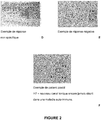
- each plate has 20 samples of solubilized membrane proteins from cells over-expressing individually 20 proteins of interest (here codified A15, F28, F31, etc.) and 2 samples corresponding to a dilution of human serum from a healthy subject.
- the nitrocellulose membrane deposits were made according to the protocol described above (with a replicator) in duplicate and by combining on the same membrane the deposits of the two plates (plate 1 at the bottom, plate 2 at the top) (see figure 2 ).
Landscapes
- Health & Medical Sciences (AREA)
- Life Sciences & Earth Sciences (AREA)
- Engineering & Computer Science (AREA)
- Immunology (AREA)
- Molecular Biology (AREA)
- Biomedical Technology (AREA)
- Hematology (AREA)
- Chemical & Material Sciences (AREA)
- Urology & Nephrology (AREA)
- Physics & Mathematics (AREA)
- Cell Biology (AREA)
- General Health & Medical Sciences (AREA)
- General Physics & Mathematics (AREA)
- Microbiology (AREA)
- Biotechnology (AREA)
- Pathology (AREA)
- Food Science & Technology (AREA)
- Medicinal Chemistry (AREA)
- Analytical Chemistry (AREA)
- Biochemistry (AREA)
- Proteomics, Peptides & Aminoacids (AREA)
- Neurology (AREA)
- Neurosurgery (AREA)
- Rehabilitation Therapy (AREA)
- Rheumatology (AREA)
- Bioinformatics & Cheminformatics (AREA)
- Bioinformatics & Computational Biology (AREA)
- Biophysics (AREA)
- Peptides Or Proteins (AREA)
Claims (16)
- Verfahren zur Herstellung eines Proteinchips, das die folgenden Schritte umfasst:a) Klonieren einer oder mehrerer cDNA von Interesse, die für mindestens ein Membranprotein codiert/codieren, das in den Zellen den Nervensystems eines Tieres exprimiert wird und das am Auftreten einer Enzephalopathie, die mit Störungen der Erregbarkeit der Neuronen in Verbindung steht, beteiligt ist oder mutmaßlich beteiligt ist,b) Exprimieren des oder der Membranproteine, die von der/den cDNA codiert werden, in angezüchteten Zellen, wobei es sich bei den angezüchteten Zellen um Säugetierzellen handelt, mit Hilfe eines Vektors, der es ermöglicht, i) einen Marker (Sequenzmarker) in denselben Leserahmen wie das Protein von Interesse einzuführen, und ii) Exprimieren eines Proteins, das mit dem Marker fusioniert ist,c) Inlösungbringen der exprimierten Proteine, die mit dem Marker fusioniert sind, mit Hilfe eines nichtdenaturierenden Detergens, das es ermöglicht, die Membranprotein in Lösung zu bringen, wobei deren Tertiärstruktur und deren Fähigkeit zur Befestigung an einem Träger erhalten bleiben, um ein Solubilisat zu erhalten, undd) Aufbringen des Solubilisats der Membranproteine, wie es nach Abschluss des Schrittes c) erhalten wurde, auf einen Träger und Erhalten des Chips von Interesse.
- Verfahren nach Anspruch 1, dadurch gekennzeichnet, dass es sich bei dem Detergens um ein Detergens handelt, das aus Triton X_100, Triton X_114, Nonidet P-40, CHAPS, Natriumcholat, Natriumdesoxycholat, Digitonin, Sarkosyl NL30 und Octylglucosid ausgewählt ist.
- Verfahren nach einem beliebigen der Ansprüche 1 oder 2, dadurch gekennzeichnet, dass das Membranprotein mit einer oder mehreren unterstützenden Untereinheiten in Verbindung steht.
- Verfahren nach einem beliebigen der vorhergehenden Ansprüche, dadurch gekennzeichnet, dass das in Lösung gebrachte Membranprotein von Interesse aus einem Ionenkanalprotein, einem Transporterprotein und einem membranständigen Rezeptorprotein ausgewählt ist, das die Aktivität eines Ionenkanalproteins oder eines Transporterproteins reguliert.
- Verfahren nach einem beliebigen der vorhergehenden Ansprüche, dadurch gekennzeichnet, dass das mindestens eine Membranprotein in den Zellen des Nervensystems eines Menschen exprimiert wird.
- Verfahren nach einem beliebigen der vorhergehenden Ansprüche, dadurch gekennzeichnet, dass die Enzephalopathie, die mit Störungen der Erregbarkeit der Neuronen in Verbindung steht, aus einer postinfektiösen Enzephalitis, der Anti-NMDA-Rezeptor-Enzephalitis, dem Morvan-Syndrom, dem Devic-Syndrom, einem Opso-Myoklonus-Syndrom beim Kind, einer limbischen Enzephalitis, der Rasmussen-Enzephalitis, einer Enzephalomyelitis, einem erworbenen epileptischen Syndrom und einem neurologisch-paraneoplastischen Syndrom ausgewählt ist.
- Verfahren nach einem beliebigen der vorhergehenden Ansprüche, dadurch gekennzeichnet, dass das mindestens eine Membranprotein aus einer Aminosäuresequenz besteht, die aus der SEQ ID Nr.: 1 bis SEQ ID Nr.: 311 ausgewählt ist.
- Verfahren nach einem beliebigen der vorhergehenden Ansprüche, dadurch gekennzeichnet, dass das Membranprotein von Interesse aus einem GABA-Rezeptor; einem Glutamat-Rezeptor; Aquaporin 2 (SEQ ID Nr.: 307); Aquaporin 4 (SEQ ID Nr.: 309); einem Kaliumkanal; einem Calciumkanal; einem Acetylcholin-Rezeptor, einem Protein, das mit spannungsabhängigen Kaliumkanälen in Verbindung steht; einem Glycinrezeptor; Connexin 32 (SEQ ID Nr.: 310) und Connexin 43 (SEQ ID Nr.: 311) ausgewählt ist.
- Verfahren nach einem beliebigen der vorhergehenden Ansprüche, dadurch gekennzeichnet, dass es sich bei dem Membranprotein von Interesse um einen Glutamat-Rezeptor handelt, der durch N-Methyl-D-aspartat (NMDA) aktiviert wird, vorzugsweise um den Rezeptor NMDAR1 (SEQ ID Nr.: 62).
- Chip, der mit Hilfe eines Verfahrens nach einem der Ansprüche 1 bis 9 erhalten werden kann.
- Chip nach Anspruch 10, dadurch gekennzeichnet, dass er mindestens 100 verschiedenartige Membranproteine von Interesse, vorzugsweise zwischen ungefähr 200 und ungefähr 400 verschiedenartige Proteine von Interesse, beispielsweise ungefähr 250 oder ungefähr 300 verschiedenartige Proteine von Interesse umfasst, wobei jedes Protein von Interesse möglicherweise mit einer oder mehreren unterstützenden Untereinheiten in Verbindung steht.
- Chip nach einem beliebigen der Ansprüche 10 bis 11, dadurch gekennzeichnet, dass das oder die Membranproteine von Interesse mit Hilfe ein und derselben Peptidsequenz markiert sind, die von einem Detektionsantikörper erkannt wird.
- Chip nach einem beliebigen der Ansprüche 10 bis 12, dadurch gekennzeichnet, dass er einen Träger umfasst, auf dem die in Lösung gebrachten Membranproteine von Interesse befestigt werden können, wobei er aus einer Membran, typischerweise einer Nitrocellulose- oder Nylonmembran; Glas; und Kunststoff ausgewählt ist.
- Verwendung eines Chips nach einem der Ansprüche 10 bis 13, um eine biologische Probe, die aus Blut, Serum, Plasma, Gehirn-Rückenmarksflüssigkeit, Endolymphe des Innenohrs, Perilymphe des Innenohrs sowie einer Teilfraktion davon ausgewählt ist, auf einen Autoantikörper von Interesse zu screenen, der am Auftreten einer Enzephalopathie beteiligt ist, die mit Störungen der Erregbarkeit der Neuronen in Verbindung steht.
- Verwendung eines Chips nach einem der Ansprüche 10 bis 13 zur Diagnose oder Beobachtung des Verlaufs einer Enzephalopathie, die mit Störungen der Erregbarkeit der Neuronen in Verbindung steht.
- Kit, das einen Chip nach einem der Ansprüche 10 bis 13 sowie möglicherweise ein oder mehrere Reagenzien, die aus einem Puffer zum Blockieren unspezifischer Stellen, einem Puffer, der es ermöglich, die Verbindung zwischen Antikörpern und Antigenen herzustellen, einem Waschpuffer, einem sekundären Antikörper, einem Mittel zur Detektion des sekundären Antikörpers ausgewählt sind, und Gebrauchsanweisungen umfasst.
Applications Claiming Priority (2)
| Application Number | Priority Date | Filing Date | Title |
|---|---|---|---|
| FR1250956A FR2986331B1 (fr) | 2012-02-01 | 2012-02-01 | Puces a proteines, preparation et utilisations |
| PCT/EP2013/052009 WO2013113864A1 (fr) | 2012-02-01 | 2013-02-01 | Puces a proteines, preparation et utilisations |
Publications (2)
| Publication Number | Publication Date |
|---|---|
| EP2810075A1 EP2810075A1 (de) | 2014-12-10 |
| EP2810075B1 true EP2810075B1 (de) | 2019-10-16 |
Family
ID=47630378
Family Applications (1)
| Application Number | Title | Priority Date | Filing Date |
|---|---|---|---|
| EP13702062.4A Active EP2810075B1 (de) | 2012-02-01 | 2013-02-01 | Proteinchips, herstellung und verwendung davon |
Country Status (4)
| Country | Link |
|---|---|
| US (1) | US10168327B2 (de) |
| EP (1) | EP2810075B1 (de) |
| FR (1) | FR2986331B1 (de) |
| WO (1) | WO2013113864A1 (de) |
Families Citing this family (9)
| Publication number | Priority date | Publication date | Assignee | Title |
|---|---|---|---|---|
| EP2863231A1 (de) * | 2013-10-17 | 2015-04-22 | Institut D'Investigaciones Biomédiques August Pi i Sunyer | Diagnostisches Verfahren zum Nachweis einer GABA(A)-verwandten Autoimmunerkrankung und zugehörige Subjektmaterie |
| GB201409234D0 (en) * | 2014-05-23 | 2014-07-09 | Isis Innovation | Method |
| US11340218B2 (en) * | 2016-05-25 | 2022-05-24 | Kromnigon Ab | Method for preparing a biological sample for use in an immunolabeling process |
| EP4258866A4 (de) * | 2021-01-12 | 2024-10-16 | University of Virginia Patent Foundation | Adrenergische mechanismen von durch audiogene anfälle induziertem tod in einem mausmodell von scn8a-enzephalopathie |
| CN115825447B (zh) * | 2022-09-29 | 2025-08-22 | 北京中医药大学 | 一种trpc4分子感官人工智能生物传感器在辛味关键质量属性辨识中的应用 |
| EP4614149A1 (de) * | 2024-03-06 | 2025-09-10 | Cardiomix S.r.l. | Autoantikörper gegen nav1.5-kanal als biomarker zur diagnose des brugada-syndroms |
| EP4498088A1 (de) * | 2023-07-24 | 2025-01-29 | Cardiomix S.r.l. | Autoantikörper gegen das nav1.5-kanalprotein als biomarker zur diagnose des brugada-syndroms |
| WO2025021888A1 (en) * | 2023-07-24 | 2025-01-30 | Cardiomix S.R.L. | Autoantibodies against nav1.5 channel as biomarkers for the diagnosis of brugada syndrome |
| CN120309699B (zh) * | 2025-04-18 | 2025-11-21 | 中国医学科学院基础医学研究所 | 稀释诱导相分离多肽及其应用 |
Citations (1)
| Publication number | Priority date | Publication date | Assignee | Title |
|---|---|---|---|---|
| WO2006033972A2 (en) * | 2004-09-15 | 2006-03-30 | Protometrix, Inc. | Protein arrays and methods of use thereof |
Family Cites Families (3)
| Publication number | Priority date | Publication date | Assignee | Title |
|---|---|---|---|---|
| EP1631589A1 (de) * | 2003-06-04 | 2006-03-08 | Université de Liège | Immobilisierte membrane proteine und methoden für dessen anwendungen. |
| CA2697742C (en) * | 2006-08-15 | 2017-10-03 | The Trustees Of The University Of Pennsylvania | Methods and compositions for treatment and diagnosis of autoimmune encephalitis or epilepsy |
| EP2569630A4 (de) * | 2010-05-13 | 2013-10-30 | Univ New Jersey Med | Diagnostische autoantikörper-profile zur erkennung und diagnose neurodegenerativer erkrankungen |
-
2012
- 2012-02-01 FR FR1250956A patent/FR2986331B1/fr not_active Expired - Fee Related
-
2013
- 2013-02-01 EP EP13702062.4A patent/EP2810075B1/de active Active
- 2013-02-01 WO PCT/EP2013/052009 patent/WO2013113864A1/fr not_active Ceased
- 2013-02-01 US US14/375,623 patent/US10168327B2/en active Active
Patent Citations (1)
| Publication number | Priority date | Publication date | Assignee | Title |
|---|---|---|---|---|
| WO2006033972A2 (en) * | 2004-09-15 | 2006-03-30 | Protometrix, Inc. | Protein arrays and methods of use thereof |
Non-Patent Citations (2)
| Title |
|---|
| ANONYMOUS: "Absolute identification of novel autoimmune biomarkers ProtoArray (R) Human Protein Microarrays", 7 June 2011 (2011-06-07), XP055254290, Retrieved from the Internet <URL:https://www.thermofisher.com/content/dam/LifeTech/migration/en/filelibrary/protein-expression/pdfs.par.16180.file.dat/protoarray%20v5%20irbp-fhr.pdf> [retrieved on 20160301] * |
| ANONYMOUS: "Protein Analysis - Access the human proteome on a microarray scale - ProtoArray(R) Human Protein Microarray v5.0", 7 June 2011 (2011-06-07), XP055456462, Retrieved from the Internet <URL:https://www.thermofisher.com/content/dam/LifeTech/migration/en/filelibrary/protein-expression/pdfs.par.70966.file.dat/protoarray%20v5%20general-fhr.pdf> [retrieved on 20180305] * |
Also Published As
| Publication number | Publication date |
|---|---|
| FR2986331A1 (fr) | 2013-08-02 |
| US20150018251A1 (en) | 2015-01-15 |
| EP2810075A1 (de) | 2014-12-10 |
| FR2986331B1 (fr) | 2017-11-03 |
| US10168327B2 (en) | 2019-01-01 |
| WO2013113864A1 (fr) | 2013-08-08 |
Similar Documents
| Publication | Publication Date | Title |
|---|---|---|
| US10168327B2 (en) | Protein chips, preparation and use thereof | |
| Song et al. | Divergent and self-reactive immune responses in the CNS of COVID-19 patients with neurological symptoms | |
| Ray et al. | Label-free optical detection of multiple biomarkers in sweat, plasma, urine, and saliva | |
| Liu et al. | Arrestin-biased AT1R agonism induces acute catecholamine secretion through TRPC3 coupling | |
| Li et al. | Mimicry and antibody-mediated cell signaling in autoimmune myocarditis | |
| CN103154736B (zh) | 用于检测和诊断神经变性疾病的诊断性自身抗体谱 | |
| US20120220534A1 (en) | Biomarker for neurodegeneration in neurological disease | |
| US9188587B2 (en) | Neurological autoimmune disorders | |
| Smith et al. | Acetylcholine receptors in the retinas of the α7 nicotinic acetylcholine receptor knockout mouse | |
| US20250138029A1 (en) | Methods for assessing likelihood of post-operative delirium in patients undergoing surgery | |
| KR101628331B1 (ko) | 인플루엔자 a 바이러스 특이적 단클론 항체 및 이를 이용한 인플루엔자 감염 치료 및 진단 방법 | |
| EP2817623B1 (de) | Identifizierung der bindungseigenschaften von mit einem mitglied der insulinrezeptorfamilie reaktiven antikörpern | |
| US20260118371A1 (en) | Methods for diagnosing alzheimer's disease and other neurological disorders | |
| Fernández-Pereira et al. | The insulin-like growth factor family as a potential peripheral biomarker in psychiatric disorders: a systematic review | |
| US10557860B2 (en) | Circulating pulmonary hypertension biomarker | |
| Lamb et al. | Differential role of phosphorylation in glucagon family receptor signaling revealed by mass spectrometry | |
| RU2707071C2 (ru) | Способы детектирования антител против членов семейства сердечных рецепторов | |
| FR2930036A1 (fr) | Procede de diagnostic d'une hypertension arterielle pulmonaire. | |
| JP2023536737A (ja) | Sars-cov-2を検出するためのアッセイ | |
| JP5413766B2 (ja) | レプチン測定方法 | |
| NO338179B1 (no) | Anvendelse av prionkonverteringsmodulerende midler | |
| DE202022104518U1 (de) | Autoantikörper und Mittel zum Nachweis eines Autoantikörpers | |
| CN1896101A (zh) | 抗胆碱能m3型受体抗体测定在干燥综合征诊断中的应用 | |
| WO2025115644A1 (ja) | 運動ニューロン疾患の予後及び治療効果を予測する方法 | |
| WO2017121963A1 (fr) | Procede de determination d'une reponse humorale chez un sujet immunodeprime |
Legal Events
| Date | Code | Title | Description |
|---|---|---|---|
| PUAI | Public reference made under article 153(3) epc to a published international application that has entered the european phase |
Free format text: ORIGINAL CODE: 0009012 |
|
| 17P | Request for examination filed |
Effective date: 20140729 |
|
| AK | Designated contracting states |
Kind code of ref document: A1 Designated state(s): AL AT BE BG CH CY CZ DE DK EE ES FI FR GB GR HR HU IE IS IT LI LT LU LV MC MK MT NL NO PL PT RO RS SE SI SK SM TR |
|
| AX | Request for extension of the european patent |
Extension state: BA ME |
|
| DAX | Request for extension of the european patent (deleted) | ||
| 17Q | First examination report despatched |
Effective date: 20151009 |
|
| STAA | Information on the status of an ep patent application or granted ep patent |
Free format text: STATUS: EXAMINATION IS IN PROGRESS |
|
| GRAP | Despatch of communication of intention to grant a patent |
Free format text: ORIGINAL CODE: EPIDOSNIGR1 |
|
| STAA | Information on the status of an ep patent application or granted ep patent |
Free format text: STATUS: GRANT OF PATENT IS INTENDED |
|
| RIN1 | Information on inventor provided before grant (corrected) |
Inventor name: ROGEMOND, VERONIQUE Inventor name: CHATELAIN, FRANCK Inventor name: MAZZUCA, MICHEL Inventor name: LESAGE, FLORIAN Inventor name: HONNORAT, JEROME Inventor name: LARROQUE, MARIE-MADELEINE |
|
| INTG | Intention to grant announced |
Effective date: 20190515 |
|
| GRAS | Grant fee paid |
Free format text: ORIGINAL CODE: EPIDOSNIGR3 |
|
| GRAA | (expected) grant |
Free format text: ORIGINAL CODE: 0009210 |
|
| STAA | Information on the status of an ep patent application or granted ep patent |
Free format text: STATUS: THE PATENT HAS BEEN GRANTED |
|
| AK | Designated contracting states |
Kind code of ref document: B1 Designated state(s): AL AT BE BG CH CY CZ DE DK EE ES FI FR GB GR HR HU IE IS IT LI LT LU LV MC MK MT NL NO PL PT RO RS SE SI SK SM TR |
|
| REG | Reference to a national code |
Ref country code: GB Ref legal event code: FG4D Free format text: NOT ENGLISH |
|
| REG | Reference to a national code |
Ref country code: CH Ref legal event code: EP |
|
| REG | Reference to a national code |
Ref country code: IE Ref legal event code: FG4D Free format text: LANGUAGE OF EP DOCUMENT: FRENCH |
|
| REG | Reference to a national code |
Ref country code: DE Ref legal event code: R096 Ref document number: 602013061746 Country of ref document: DE |
|
| REG | Reference to a national code |
Ref country code: AT Ref legal event code: REF Ref document number: 1191778 Country of ref document: AT Kind code of ref document: T Effective date: 20191115 |
|
| REG | Reference to a national code |
Ref country code: NL Ref legal event code: MP Effective date: 20191016 |
|
| REG | Reference to a national code |
Ref country code: LT Ref legal event code: MG4D |
|
| REG | Reference to a national code |
Ref country code: AT Ref legal event code: MK05 Ref document number: 1191778 Country of ref document: AT Kind code of ref document: T Effective date: 20191016 |
|
| PG25 | Lapsed in a contracting state [announced via postgrant information from national office to epo] |
Ref country code: NO Free format text: LAPSE BECAUSE OF FAILURE TO SUBMIT A TRANSLATION OF THE DESCRIPTION OR TO PAY THE FEE WITHIN THE PRESCRIBED TIME-LIMIT Effective date: 20200116 Ref country code: BG Free format text: LAPSE BECAUSE OF FAILURE TO SUBMIT A TRANSLATION OF THE DESCRIPTION OR TO PAY THE FEE WITHIN THE PRESCRIBED TIME-LIMIT Effective date: 20200116 Ref country code: LT Free format text: LAPSE BECAUSE OF FAILURE TO SUBMIT A TRANSLATION OF THE DESCRIPTION OR TO PAY THE FEE WITHIN THE PRESCRIBED TIME-LIMIT Effective date: 20191016 Ref country code: PL Free format text: LAPSE BECAUSE OF FAILURE TO SUBMIT A TRANSLATION OF THE DESCRIPTION OR TO PAY THE FEE WITHIN THE PRESCRIBED TIME-LIMIT Effective date: 20191016 Ref country code: GR Free format text: LAPSE BECAUSE OF FAILURE TO SUBMIT A TRANSLATION OF THE DESCRIPTION OR TO PAY THE FEE WITHIN THE PRESCRIBED TIME-LIMIT Effective date: 20200117 Ref country code: LV Free format text: LAPSE BECAUSE OF FAILURE TO SUBMIT A TRANSLATION OF THE DESCRIPTION OR TO PAY THE FEE WITHIN THE PRESCRIBED TIME-LIMIT Effective date: 20191016 Ref country code: PT Free format text: LAPSE BECAUSE OF FAILURE TO SUBMIT A TRANSLATION OF THE DESCRIPTION OR TO PAY THE FEE WITHIN THE PRESCRIBED TIME-LIMIT Effective date: 20200217 Ref country code: FI Free format text: LAPSE BECAUSE OF FAILURE TO SUBMIT A TRANSLATION OF THE DESCRIPTION OR TO PAY THE FEE WITHIN THE PRESCRIBED TIME-LIMIT Effective date: 20191016 Ref country code: SE Free format text: LAPSE BECAUSE OF FAILURE TO SUBMIT A TRANSLATION OF THE DESCRIPTION OR TO PAY THE FEE WITHIN THE PRESCRIBED TIME-LIMIT Effective date: 20191016 Ref country code: ES Free format text: LAPSE BECAUSE OF FAILURE TO SUBMIT A TRANSLATION OF THE DESCRIPTION OR TO PAY THE FEE WITHIN THE PRESCRIBED TIME-LIMIT Effective date: 20191016 Ref country code: AT Free format text: LAPSE BECAUSE OF FAILURE TO SUBMIT A TRANSLATION OF THE DESCRIPTION OR TO PAY THE FEE WITHIN THE PRESCRIBED TIME-LIMIT Effective date: 20191016 Ref country code: NL Free format text: LAPSE BECAUSE OF FAILURE TO SUBMIT A TRANSLATION OF THE DESCRIPTION OR TO PAY THE FEE WITHIN THE PRESCRIBED TIME-LIMIT Effective date: 20191016 |
|
| PG25 | Lapsed in a contracting state [announced via postgrant information from national office to epo] |
Ref country code: IS Free format text: LAPSE BECAUSE OF FAILURE TO SUBMIT A TRANSLATION OF THE DESCRIPTION OR TO PAY THE FEE WITHIN THE PRESCRIBED TIME-LIMIT Effective date: 20200224 Ref country code: HR Free format text: LAPSE BECAUSE OF FAILURE TO SUBMIT A TRANSLATION OF THE DESCRIPTION OR TO PAY THE FEE WITHIN THE PRESCRIBED TIME-LIMIT Effective date: 20191016 Ref country code: RS Free format text: LAPSE BECAUSE OF FAILURE TO SUBMIT A TRANSLATION OF THE DESCRIPTION OR TO PAY THE FEE WITHIN THE PRESCRIBED TIME-LIMIT Effective date: 20191016 |
|
| PG25 | Lapsed in a contracting state [announced via postgrant information from national office to epo] |
Ref country code: AL Free format text: LAPSE BECAUSE OF FAILURE TO SUBMIT A TRANSLATION OF THE DESCRIPTION OR TO PAY THE FEE WITHIN THE PRESCRIBED TIME-LIMIT Effective date: 20191016 |
|
| REG | Reference to a national code |
Ref country code: DE Ref legal event code: R097 Ref document number: 602013061746 Country of ref document: DE |
|
| PG2D | Information on lapse in contracting state deleted |
Ref country code: IS |
|
| PG25 | Lapsed in a contracting state [announced via postgrant information from national office to epo] |
Ref country code: DK Free format text: LAPSE BECAUSE OF FAILURE TO SUBMIT A TRANSLATION OF THE DESCRIPTION OR TO PAY THE FEE WITHIN THE PRESCRIBED TIME-LIMIT Effective date: 20191016 Ref country code: CZ Free format text: LAPSE BECAUSE OF FAILURE TO SUBMIT A TRANSLATION OF THE DESCRIPTION OR TO PAY THE FEE WITHIN THE PRESCRIBED TIME-LIMIT Effective date: 20191016 Ref country code: RO Free format text: LAPSE BECAUSE OF FAILURE TO SUBMIT A TRANSLATION OF THE DESCRIPTION OR TO PAY THE FEE WITHIN THE PRESCRIBED TIME-LIMIT Effective date: 20191016 Ref country code: EE Free format text: LAPSE BECAUSE OF FAILURE TO SUBMIT A TRANSLATION OF THE DESCRIPTION OR TO PAY THE FEE WITHIN THE PRESCRIBED TIME-LIMIT Effective date: 20191016 Ref country code: IS Free format text: LAPSE BECAUSE OF FAILURE TO SUBMIT A TRANSLATION OF THE DESCRIPTION OR TO PAY THE FEE WITHIN THE PRESCRIBED TIME-LIMIT Effective date: 20200216 |
|
| PLBE | No opposition filed within time limit |
Free format text: ORIGINAL CODE: 0009261 |
|
| STAA | Information on the status of an ep patent application or granted ep patent |
Free format text: STATUS: NO OPPOSITION FILED WITHIN TIME LIMIT |
|
| PG25 | Lapsed in a contracting state [announced via postgrant information from national office to epo] |
Ref country code: IT Free format text: LAPSE BECAUSE OF FAILURE TO SUBMIT A TRANSLATION OF THE DESCRIPTION OR TO PAY THE FEE WITHIN THE PRESCRIBED TIME-LIMIT Effective date: 20191016 Ref country code: SM Free format text: LAPSE BECAUSE OF FAILURE TO SUBMIT A TRANSLATION OF THE DESCRIPTION OR TO PAY THE FEE WITHIN THE PRESCRIBED TIME-LIMIT Effective date: 20191016 Ref country code: SK Free format text: LAPSE BECAUSE OF FAILURE TO SUBMIT A TRANSLATION OF THE DESCRIPTION OR TO PAY THE FEE WITHIN THE PRESCRIBED TIME-LIMIT Effective date: 20191016 |
|
| 26N | No opposition filed |
Effective date: 20200717 |
|
| REG | Reference to a national code |
Ref country code: CH Ref legal event code: PL |
|
| REG | Reference to a national code |
Ref country code: BE Ref legal event code: MM Effective date: 20200229 |
|
| PG25 | Lapsed in a contracting state [announced via postgrant information from national office to epo] |
Ref country code: LU Free format text: LAPSE BECAUSE OF NON-PAYMENT OF DUE FEES Effective date: 20200201 Ref country code: MC Free format text: LAPSE BECAUSE OF FAILURE TO SUBMIT A TRANSLATION OF THE DESCRIPTION OR TO PAY THE FEE WITHIN THE PRESCRIBED TIME-LIMIT Effective date: 20191016 |
|
| PG25 | Lapsed in a contracting state [announced via postgrant information from national office to epo] |
Ref country code: CH Free format text: LAPSE BECAUSE OF NON-PAYMENT OF DUE FEES Effective date: 20200229 Ref country code: LI Free format text: LAPSE BECAUSE OF NON-PAYMENT OF DUE FEES Effective date: 20200229 Ref country code: SI Free format text: LAPSE BECAUSE OF FAILURE TO SUBMIT A TRANSLATION OF THE DESCRIPTION OR TO PAY THE FEE WITHIN THE PRESCRIBED TIME-LIMIT Effective date: 20191016 |
|
| PG25 | Lapsed in a contracting state [announced via postgrant information from national office to epo] |
Ref country code: IE Free format text: LAPSE BECAUSE OF NON-PAYMENT OF DUE FEES Effective date: 20200201 |
|
| PG25 | Lapsed in a contracting state [announced via postgrant information from national office to epo] |
Ref country code: BE Free format text: LAPSE BECAUSE OF NON-PAYMENT OF DUE FEES Effective date: 20200229 |
|
| PGFP | Annual fee paid to national office [announced via postgrant information from national office to epo] |
Ref country code: GB Payment date: 20220218 Year of fee payment: 10 Ref country code: DE Payment date: 20220214 Year of fee payment: 10 |
|
| PG25 | Lapsed in a contracting state [announced via postgrant information from national office to epo] |
Ref country code: TR Free format text: LAPSE BECAUSE OF FAILURE TO SUBMIT A TRANSLATION OF THE DESCRIPTION OR TO PAY THE FEE WITHIN THE PRESCRIBED TIME-LIMIT Effective date: 20191016 Ref country code: MT Free format text: LAPSE BECAUSE OF FAILURE TO SUBMIT A TRANSLATION OF THE DESCRIPTION OR TO PAY THE FEE WITHIN THE PRESCRIBED TIME-LIMIT Effective date: 20191016 Ref country code: CY Free format text: LAPSE BECAUSE OF FAILURE TO SUBMIT A TRANSLATION OF THE DESCRIPTION OR TO PAY THE FEE WITHIN THE PRESCRIBED TIME-LIMIT Effective date: 20191016 |
|
| PGFP | Annual fee paid to national office [announced via postgrant information from national office to epo] |
Ref country code: FR Payment date: 20220228 Year of fee payment: 10 |
|
| PG25 | Lapsed in a contracting state [announced via postgrant information from national office to epo] |
Ref country code: MK Free format text: LAPSE BECAUSE OF FAILURE TO SUBMIT A TRANSLATION OF THE DESCRIPTION OR TO PAY THE FEE WITHIN THE PRESCRIBED TIME-LIMIT Effective date: 20191016 |
|
| REG | Reference to a national code |
Ref country code: DE Ref legal event code: R081 Ref document number: 602013061746 Country of ref document: DE Owner name: UNIVERSITE PARIS CITE, FR Free format text: FORMER OWNERS: CENTRE NATIONAL DE LA RECHERCHE SCIENTIFIQUE (C.N.R.S.), PARIS, FR; LES HOSPICES CIVILS DE LYON, LYON, FR; UNIVERSITE CLAUDE BERNARD LYON I, VILLEURBANNE, FR; UNIVERSITE RENE DESCARTES - PARIS 5, PARIS, FR Ref country code: DE Ref legal event code: R081 Ref document number: 602013061746 Country of ref document: DE Owner name: UNIVERSITE CLAUDE BERNARD LYON I, FR Free format text: FORMER OWNERS: CENTRE NATIONAL DE LA RECHERCHE SCIENTIFIQUE (C.N.R.S.), PARIS, FR; LES HOSPICES CIVILS DE LYON, LYON, FR; UNIVERSITE CLAUDE BERNARD LYON I, VILLEURBANNE, FR; UNIVERSITE RENE DESCARTES - PARIS 5, PARIS, FR Ref country code: DE Ref legal event code: R081 Ref document number: 602013061746 Country of ref document: DE Owner name: LES HOSPICES CIVILS DE LYON, FR Free format text: FORMER OWNERS: CENTRE NATIONAL DE LA RECHERCHE SCIENTIFIQUE (C.N.R.S.), PARIS, FR; LES HOSPICES CIVILS DE LYON, LYON, FR; UNIVERSITE CLAUDE BERNARD LYON I, VILLEURBANNE, FR; UNIVERSITE RENE DESCARTES - PARIS 5, PARIS, FR Ref country code: DE Ref legal event code: R081 Ref document number: 602013061746 Country of ref document: DE Owner name: CENTRE NATIONAL DE LA RECHERCHE SCIENTIFIQUE (, FR Free format text: FORMER OWNERS: CENTRE NATIONAL DE LA RECHERCHE SCIENTIFIQUE (C.N.R.S.), PARIS, FR; LES HOSPICES CIVILS DE LYON, LYON, FR; UNIVERSITE CLAUDE BERNARD LYON I, VILLEURBANNE, FR; UNIVERSITE RENE DESCARTES - PARIS 5, PARIS, FR |
|
| REG | Reference to a national code |
Ref country code: GB Ref legal event code: 732E Free format text: REGISTERED BETWEEN 20220721 AND 20220727 |
|
| REG | Reference to a national code |
Ref country code: DE Ref legal event code: R119 Ref document number: 602013061746 Country of ref document: DE |
|
| GBPC | Gb: european patent ceased through non-payment of renewal fee |
Effective date: 20230201 |
|
| PG25 | Lapsed in a contracting state [announced via postgrant information from national office to epo] |
Ref country code: GB Free format text: LAPSE BECAUSE OF NON-PAYMENT OF DUE FEES Effective date: 20230201 |
|
| PG25 | Lapsed in a contracting state [announced via postgrant information from national office to epo] |
Ref country code: GB Free format text: LAPSE BECAUSE OF NON-PAYMENT OF DUE FEES Effective date: 20230201 Ref country code: FR Free format text: LAPSE BECAUSE OF NON-PAYMENT OF DUE FEES Effective date: 20230228 Ref country code: DE Free format text: LAPSE BECAUSE OF NON-PAYMENT OF DUE FEES Effective date: 20230901 |