EP2806743B1 - Antifungale formulierungen enthaltend einen rheum-wurzelextrakt zur bekämpfung von pflanzenkrankheiten - Google Patents
Antifungale formulierungen enthaltend einen rheum-wurzelextrakt zur bekämpfung von pflanzenkrankheiten Download PDFInfo
- Publication number
- EP2806743B1 EP2806743B1 EP13707264.1A EP13707264A EP2806743B1 EP 2806743 B1 EP2806743 B1 EP 2806743B1 EP 13707264 A EP13707264 A EP 13707264A EP 2806743 B1 EP2806743 B1 EP 2806743B1
- Authority
- EP
- European Patent Office
- Prior art keywords
- rheum
- formulation according
- antifungal formulation
- phase
- fusarium
- Prior art date
- Legal status (The legal status is an assumption and is not a legal conclusion. Google has not performed a legal analysis and makes no representation as to the accuracy of the status listed.)
- Not-in-force
Links
Images







Classifications
-
- A—HUMAN NECESSITIES
- A01—AGRICULTURE; FORESTRY; ANIMAL HUSBANDRY; HUNTING; TRAPPING; FISHING
- A01N—PRESERVATION OF BODIES OF HUMANS OR ANIMALS OR PLANTS OR PARTS THEREOF; BIOCIDES, e.g. AS DISINFECTANTS, AS PESTICIDES OR AS HERBICIDES; PEST REPELLANTS OR ATTRACTANTS; PLANT GROWTH REGULATORS
- A01N65/00—Biocides, pest repellants or attractants, or plant growth regulators containing material from algae, lichens, bryophyta, multi-cellular fungi or plants, or extracts thereof
-
- A—HUMAN NECESSITIES
- A01—AGRICULTURE; FORESTRY; ANIMAL HUSBANDRY; HUNTING; TRAPPING; FISHING
- A01N—PRESERVATION OF BODIES OF HUMANS OR ANIMALS OR PLANTS OR PARTS THEREOF; BIOCIDES, e.g. AS DISINFECTANTS, AS PESTICIDES OR AS HERBICIDES; PEST REPELLANTS OR ATTRACTANTS; PLANT GROWTH REGULATORS
- A01N65/00—Biocides, pest repellants or attractants, or plant growth regulators containing material from algae, lichens, bryophyta, multi-cellular fungi or plants, or extracts thereof
- A01N65/08—Magnoliopsida [dicotyledons]
- A01N65/30—Polygonaceae [Buckwheat family], e.g. red-knees or rhubarb
Definitions
- the invention relates to the use of an antifungal formulation for combating fungal plant diseases which contain at least active substances or active ingredient compositions with antifungal activity from polyphenolic extracts of the roots of Rheum species and other polyphenol-containing plants.
- the herbal active ingredients have a novel mechanism of action against fungal diseases. Because of the high risk of developing resistance to fungal diseases to synthetic fungicides and also because many of the fungicides used have the same mechanism of action against certain plant diseases, in practice preparations with a novel mechanism of action are urgently needed.
- the DE 4411 895 A1 describes a method for controlling fungi on plants, materials and seeds by the action of a fungicidally effective amount of Rheum rhabarbarum and Solidago canadensis.
- Plasmopara viticola are listed as pathogens in wine, Phytophthora infestans as causative agent of late blight in potatoes, Erysiphe cichoracearum as causative agent of cucumber powdery mildew and Botrytis cinerea as a pathogen in peppers.
- epicatechin, epigallocatechin and epigallocatechin gallate act to inhibit a large number of plant pathogenic fungi.
- EC epicatechin
- Ecg epicatechin gallate
- KR 2010 0048351 A is an extract of Rheum undulatum known to control plant diseases caused by fungi.
- the object of the invention is to provide formulations with one or more plant-based active ingredients for use in combating fungal plant diseases. Ideally, such formulations should be both protective and curative.
- plant-based active ingredients may be developed that are new to the application described.
- the concept of the invention is that here vegetable polyphenols with protective and curative effect against fungal pathogens and the potential to protect important crops against abiotic stress by strengthening the antioxidant potential, are used, these plant polyphenols the basis for development innovative crop protection products.
- these plant polyphenols the basis for development innovative crop protection products.
- the present invention utilizes drugs and drug fractions derived from the use of an optimized extraction method solely from rhubarb roots and the roots of other polyphenol-containing plants.
- the extracts used according to the invention contain no anthraquinones and anthraquinone derivatives, since these are removed in step b) as lipophilic concomitants.
- it was also possible to detect a curative effect for example in the case of infestation of barley with Blumeria graminis.
- formulations developed on the basis of the extracts used according to the invention can surprisingly be used both for the protective and curative control of phytopathogenic fungi on plants.
- a chemically inert protective gas is provided. Nitrogen is used as the preferred protective gas.
- liquid / liquid distribution chromatographic separation techniques such as, for example, the so-called high-speed countercurrent chromatography (HSCCC) and / or the so-called Fast -Centrifugal Partitioning Chromatography (FCPC).
- HSCCC high-speed countercurrent chromatography
- FCPC Fast -Centrifugal Partitioning Chromatography
- successively several different alcohols are used in succession, that is to say at least two alcohols, preferably of different polarity.
- a further aspect of the invention relates to the use of the antifungal formulations according to the invention for combating fungal and / or plant fungal diseases.
- one or more phytopathogenic fungi or fungal fungi for example Erysiphe spec .; Blumeria, in particular Blumeria graminis f. sp.
- Rust diseases in particular Puccinia graminis, Puccinia triticina, Puccinia striiformis, Phakopsora spec., Hemileia vastatrix, Uromyces dianthi; powdery mildew; Septoria; Fusarium, in particular Fusarium solani complex, Fusarium oxysporum, Fusarium verticillioides, Fusarium proliferatum, Fusarium culmorum, Fusarium graminearum; Rhizoctonia, in particular Rhizoctonia solani complex; Alternaria; Helminthosporium; Bipolaris, especially Bipolaris sorokiniana; Thielaviopsis; Botrytis; Phytophthora, in particular Phytophthora capsici, Phytophthora infestans; Fusarium, especially Fusarium spec .; Venturia, in particular Venturia inaeqaulis;
- the polyphenols according to the invention can be used in all crops in which the infection of the controlled by the polyphenolic extracts mushrooms and / or fungal eggs is undesirable, for example, corn, corn, rice, legumes, potatoes, tomatoes, vegetables, fruit trees, Vines or ornamental plants.
- the polyphenolic extracts according to the invention may contain biological antagonists in coformulation which are suitable for the control of viruses, bacteria, nematodes, fungi, insects or weeds.
- biological antagonists are: Bacillus thuringiensis, Bacillus subtilus, Verticillium lecanii, Autographica californica NPV, Beauvaria bassicana, Metarhizium anisopliae, Pseudomonas fluorescens, Steptomyces griseoviridis, Trichoderma harzianum, Piriformospora indica and Sebacina vermifera.
- those biological antagonists are selected which have a complementary effect on the Rheum extracts, ie act against diseases that are not covered by the Rheum extracts.
- co-formulations may contain at least one of the polyphenolic substances of the present invention and a chemical agent that induces systemic acquired resistance (SAR) in plants, that is, an active ingredient that modulates the salicylic acid biosynthetic pathway and induces pathogenesis -related (PR) genes and thus contributes to plant-acquired resistance (SAR) to plant diseases, in particular 2,6-dichloro-isonicotinic acid (DCINA) or benzo (1,2,3) -thiadiazolecarbothionic acid S-methyl ester (BTH), which act as synthetic agents via the modulation of salicylic acid activity.
- SAR systemic acquired resistance
- DCINA 2,6-dichloro-isonicotinic acid
- BTH benzo (1,2,3) -thiadiazolecarbothionic acid S-methyl ester
- coformulations may contain at least one of the polyphenolic substances or active substances from the polyphenolic extract and chemical agents or non-pathogenic, root-colonizing rhizobacteria or fungi, in particular symbiotic root fungi, which have an induced systemic resistance (ISR) Create plants.
- ISR induced systemic resistance
- These are such microorganisms which over the modulation of jasmonate biosynthesis contribute to plant-induced resistance (ISR) to plant diseases.
- symbiotic root fungi arbuscular mycorrhizal fungi or Sebacina species, in particular Piriformospora spec. (for example Piriformospora indica) or Sebacina vermifera.
- co-formulations may contain at least one of the polyphenolic substances of the present invention and one or more adjuvants for improving the effect and rainfastness.
- adjuvants for improving the effect and rainfastness.
- any commercially available adjuvants can be used.
- Rheum species for the preparation of the extracts which are used in the application according to the invention are: Rheum rhaponticum L., Rheum officinale Baill. sp., Rheum palmatum L., Rheum altaicum LOSINSK, Rheum rhubarberum L., Rheum undulatum L., Rheum alexandrae VEITCH., Rheum wittrockii LUNDSTR, Rheum maximowiczii LOSINSK., Rheum leucorrhizum PALL., Rheum tanguticum Maxim., Rheum nobile Hook et.
- an alcoholic solvent for example, methanol
- these alcoholic extracts are further used.
- a preparative column chromatographic fractionation of the hydrophilic or hydrophobic phase can be carried out.
- rhubarb root material For extraction of the rhubarb root material, 1 kg of a dried and ground root sample was subjected to multi-stage vortex extraction with about 8000 ml of alcoholic solvent for 15 min each on the Ultra-Turrax. The collected extracts were then concentrated on a rotary evaporator under vacuum at temperatures up to a maximum of 50 ° C, and after addition of 500 ml of water, the alcoholic solvent was completely removed. To precipitate interfering lipophilic substances, the aqueous extract was stored overnight in a nitrogen atmosphere in the refrigerator at 5 ° C. The precipitates could be centrifuged off the next day. To separate further lipophilic accompanying substances, the aqueous solution was then shaken out three times with 500 ml of petroleum ether each time.
- the thus purified aqueous phase was then shaken four times with 750 ml of organic solvent from the group of esters, such as ethyl acetate, after which should be in the combined hydrophobic phases increasingly low oligomerized compounds and in the remaining hydrophilic phase compounds with higher degree of oligomerization , Both the hydrophobic and the hydrophilic phase were then gently concentrated under reduced pressure and at temperatures up to 50 ° C, taken up with a little water and then freeze-dried.
- esters such as ethyl acetate
- the freeze-dried hydrophobic and hydrophilic extracts were stored at -21 ° C under nitrogen atmosphere until further use.
- the column chromatographic (sc) preparative separation of the hydrophobic and the hydrophilic phase was carried out according to a preferred embodiment of the invention in order to limit the total spectrum of polyphenolic compounds to a limited number of substances.
- column chromatographic (sc) separation Sephadex LH-20 was used.
- the eluents used were successively different alcohols.
- mixtures of solvents of the alkanone series with water are suitable.
- the hydrophobic or hydrophilic phase was dissolved in short-chain alcohols or in alcohol / water mixtures, applied to the column (length 100 cm, diameter 5 cm) and eluted successively with different alcohols and mixtures of alkanones and water.
- an MPLC system with sample feed pump was used.
- TLC thin-layer chromatographic examination
- Barley plants (3 plants / vessel) were cultivated in Fruhstorfer Erde for three weeks. After 7 hours after application of the whole plants with the Trial products were cut off 7 cm long leaf segments, starting from the base of the stem, and each 15 leaves of the youngest and second youngest leaf were placed on benzimidazol agar in square Petri dishes (10 x 10 cm). To this was added 0.5% agar agar with 40 ppm added benzimidazole after autoclaving. Benzimidazole was added to the agar to prevent premature dehydration of the leaves. The leaves were inoculated with fresh conidia of the barley powdery mildew Blumeria graminis f. sp.
- the concentration of preparations for foliar application on whole plants was adjusted to 1000 ppm.
- the evaluation was carried out by evaluating the mildew pustules per leaf on 5 cm leaf length.
- the control plants were intensively colonized with mildew. There was 66% leaf infestation after 7 days and 97% leaf infestation after 14 days FIGS. 2 to 5 demonstrate.
- For a leaf segment test 7 cm long leaf segments starting from the culm base were cut off and 15 leaves each of the youngest and second youngest leaves were placed on benzimidazol agar in square Petri dishes (10 x 10 cm). To this was added 0.5% agar agar with 40 ppm added benzimidazole after autoclaving.
- the concentration of preparations for foliar application on whole plants was adjusted to 1000 ppm.
- the evaluation of the mildew effect was carried out after 7 and 14 days by evaluating the mildew pustules per leaf on 5 cm leaf length.
- the tested rhubarb extracts showed a remarkable activity against mildew, in both protective and curative applications.
- Chancellor wheat plants 3 plants per vessel, were cultivated in Fruhstorfer Erde for three weeks. At the end of 7 hours after application of the whole plants with the test products, 7 cm long leaf segments starting from the culm base were cut off and 15 leaves each of the youngest and second youngest leaves were mounted on benzimidazol agar in 10x10 cm square Petri dishes. To this was added 0.5% agar agar with 40 ppm added benzimidazole after autoclaving. The inoculation of the leaves was carried out by spraying the leaves by means of a membrane pump with fresh uredospores of the wheat brown rust Puccinia triticina. The incubation period was 10 days.
- the concentration of preparations for foliar application on whole plants was adjusted to 1000 ppm.
- the evaluation was carried out by evaluating the rust pustules per leaf on 5 cm blade length.
- the Fig. 11 shows the effect of rhubarb extracts GT 2 and GT 19 (hydrophobic phase) on the infection of chancre wheat with wheat brown rust (Puccinia triticina) 10 days after inoculation.
- the control plants were intensively colonized with brown rust.
- all tested rhubarb root extracts showed a marked activity against wheat brown rust, such as Fig. 11 shows.
- the Fig. 12 shows the effect of rhubarb root extract GT 2 (hydrophobic Phase) against the powdery mildew ( Oidium ) in vines (grape infestation) in the basic application amounts of 375 and 750 g / 10,000 m 2 .
- the fungus disease "powdery mildew” (Oidium) represents the world's most economically important grapevine disease.
- the Ascomycet attacks all European vines, with varieties such as Chardonnay, Kerner, Scheurebe, Muller-Thurgau, Chenin Blanc, Cabernet Franc, St. Laurent, Trollinger and Portuguese are particularly vulnerable.
- the application of the preparations took place at a time interval of 10 days, beginning with the BBCH development stage 50 and ending with the final injection to the BBCH development stage 81 of the vines.
- the application was carried out with a pneumatic application device for room cultures. Teejet flat jet nozzles were used for the application.
- the basic application amount for GT 2 (hydrophobic phase) was 375 or 750 g / 10,000 m 2 .
- the application was carried out in combination with the orange oil Prev_B2 frequently used in organic viticulture as an additive for better wetting of the leaves.
- the solo application of orange oil Prev_B2 has no effect against Oidium.
- a net sulfur preparation was applied at the approved application rate.
- the fungi were cultured on V8 agar plates at 25 ° C in the incubator in the dark.
- the overgrown mushroom mycelium was removed with a cork borer (5 mm diameter) at the agar plate edge of an actively growing fungal culture and placed in the center on a V8 agar plate with a seed needle under sterile conditions, which had final concentrations of 0.100 when poured into the Petri dishes , 250, 500 and 1000 ppm of rhubarb root extract were admixed.
- the fungal growth was scored at 7-day intervals by measuring fungal growth on the agar plates.
- Table 1 shows the effect of rhubarb root extract GT 2 (hydrophobic phase) against various phytopathogenic fungi in the agar diffusion test.
- Table 1 Growth as a percentage of control PG Pathogenic 100 ppm 250 ppm 500 ppm 1000 ppm 1 Thielaviopsis basicola (BK18) 74 43 48 30 2 Phytophthora capsici (V8) 56 17 0 0 3 Fusarium graminearum (WT 1003) 79 53 37 26 4 Bipolaris sorokiniana (JB2) 74 43 48 0 5 Rhizoctonia solani 512 (AG 2) 25 25 13 0
- the isolated polyphenolic extracts were characterized by HPLC with diode array detection or by coupling HPLC with mass spectrometry (negative ionization in electrospray ionization mode).
- Fig. 13 For example, for the GT 19, such a chromatographic separation of the hydrophobic phase is shown.
- Table 2 shows the polyphenolic substances found sorted according to substance classes by way of example for the hydrophobic phases of GT 2, GT 19 and GT 25.
- Table 2 material class GT 2 GT 19 GT 25th Flavan-3-ols catechin catechin catechin epicatechin epicatechin epicatechin epicatechin epicatechin ProcyanidinB1 ProcyanidinB2 ProcyanidinB2 ProcyanidinB2 Oligomeric proanthocyanidins Dimeric procyanidin, galloylated Precursors of hydrolyzable tannins Monogalloylglucose Monogalloylglucose Monogalloylglucose Monogalloylglucose Digalloylglucose Digalloylglucose stilbenes rhaponticin rhaponticin rhaponticin Rhaponticin, galloylated Rhaponticin, galloylated rhapontigenin deoxyrhaponticin deoxyrhaponticin Rh
Landscapes
- Health & Medical Sciences (AREA)
- Life Sciences & Earth Sciences (AREA)
- General Health & Medical Sciences (AREA)
- Engineering & Computer Science (AREA)
- Mycology (AREA)
- Biotechnology (AREA)
- Agronomy & Crop Science (AREA)
- Microbiology (AREA)
- Natural Medicines & Medicinal Plants (AREA)
- Plant Pathology (AREA)
- Dentistry (AREA)
- Wood Science & Technology (AREA)
- Zoology (AREA)
- Environmental Sciences (AREA)
- Agricultural Chemicals And Associated Chemicals (AREA)
- Compounds Of Unknown Constitution (AREA)
Description
- Die Erfindung betrifft die Verwendung einer antifungalen Formulierung zur Bekämpfung von pilzlichen Pflanzenkrankheiten, die zumindest Wirkstoffe oder Wirkstoffzusammensetzungen mit antifungaler Wirkung aus polyphenolischen Extrakten der Wurzeln von Rheum-Arten und anderen polyphenolhaltigen Pflanzen enthalten.
- Zahlreiche wichtige Kulturpflanzen sind häufig von Schädigungen betroffen, die auf pilzliche Erreger oder auf abiotischen Stress zurückgeführt werden können. Die pilzlichen Erreger werden zumeist mit synthetischen Fungiziden bekämpft, die ihrerseits allerdings zu nicht unerheblichen unerwünschten Nebenwirkungen führen können.
- Eine Alternative könnten Wirkstoffe oder Wirkstoffzusammensetzungen bieten, die auf pflanzlicher Basis gewonnen werden. Der Einsatz rein pflanzlicher Wirkstoffe mit guter Wirkung gegen wichtige Pflanzenkrankheiten im Weinbau und in landwirtschaftlichen sowie gärtnerischen Kulturen kann die Möglichkeit der Produktion neuer innovativer Präparate schaffen. Zudem kann erwartet werden, dass die pflanzlichen Wirkstoffe einen neuartigen Wirkungsmechanismus gegen Pilzkrankheiten aufweisen. Wegen des hohen Risikos der Resistenzbildung von pilzlichen Krankheiten gegenüber synthetischen fungiziden Wirkstoffen und auch aufgrund der Tatsache, dass viele der eingesetzten fungiziden Wirkstoffe den gleichen Wirkungsmechanismus gegenüber bestimmten Pflanzenkrankheiten haben, werden in der Praxis dringend Präparate mit einem neuartigen Wirkungsmechanismus benötigt.
- Aus der DE-PS
484 489 ist ein Verfahren zur Bekämpfung von Pflanzenschädlingen bekannt. Darin wird die Wirksamkeit pflanzlicher Extrakte zur Bekämpfung von Schädlingen bei Obstgehölzen durch Einführung in den Saftstrom beschrieben. Rhabarber erscheint dabei in der Aufzählung der nutzbaren Pflanzen. - Die
DE 4411 895 A1 beschreibt ein Verfahren zur Bekämpfung von Pilzen auf Pflanzen, Materialien und Saatgut durch das Einwirken einer fungizid wirksamen Menge von Rheum rhabarbarum und Solidago canadensis. Beispielsweise werden Plasmopara viticola als Erreger bei Wein, Phytophthora infestans als Erreger von Krautfäule bei Kartoffeln, Erysiphe cichoracearum als Erreger des Gurkenmehltaus und Botrytis cinerea als Erreger bei Paprika aufgeführt. - In der
US 2011/0053771 A1 wird die Verwendung von Gerbstoffen zur Stärkung der Pflanzen gegen die Infektion durch pilzliche Erreger, zum Beispiel Blumeria graminis, beschrieben. - In der Dissertationsschrift von Michelle Wilmot mit dem Titel "Inhibition of Phytopathogenic Fungi on Selected Vegetable Crops by Catechins, Caffeine, Theanine and Extracts of Camellia sinensis (L.) O. Kuntze", Master Thesis, Faculty of Natural and Agricultural Sciences, University of Pretoria, 1. September 2006, Seiten 1 bis 132, ist offenbart, dass Epicatechin, Epigallocatechin und Epigallocatechingallat gegen eine große Zahl an pflanzen pathogenen Pilzen inhibierend wirken. Insbesondere sind die Ergebnisse einer in vitro Inhibition des Pilzwachstums durch Epicatechin (EC), Epigallocatechin (EGC), Epicatechingallat (Ecg) bei einer Konzentration von 2,5 g*L-1 aufgeführt.
- Aus der
KR 2010 0048351 A - Wie bei den oben beschriebenen Anwendungen werden bisher im Allgemeinen überwiegend die oberirdischen Teile der Pflanzen verwendet. Des Weiteren wurden für die meisten Anwendungen lediglich protektive Effekte beschrieben.
- Die Aufgabe der Erfindung besteht in der Bereitstellung von Formulierungen mit einem oder mehreren Wirkstoffen auf pflanzlicher Basis für eine Verwendung zur Bekämpfung von pilzlichen Pflanzenkrankheiten. Solche Formulierungen sollten dabei idealerweise sowohl protektiv als auch kurativ wirksam sein.
- Die Lösung dieser Aufgabe der Erfindung liegt in der Verwendung einer antifungalen Formulierung zur Bekämpfung von pilzlichen Pflanzenkrankheiten, wobei zu den zu bekämpfenden phytopathogenen Pilzen ein oder mehrere phytopathogene Pilze gehören und die antifungale Formulierung zumindest Wirkstoffe oder Wirkstoffzusammensetzungen mit antifungaler Wirkung aus polyphenolischen, keine Anthrachinone und Anthrachinonderivate enthaltenden Extrakten der Wurzeln von Rheum-Arten enthält, wobei diese Wirkstoffe oder Wirkstoffzusammensetzungen erhältlich sind durch ein Verfahren, umfassend die folgenden Verfahrensschritte:
- a) kontinuierlich oder batchweise durchgeführte ein- oder mehrstufige Extraktion der gereinigten und zerkleinerten Wurzeln, wobei die Wurzeln ungetrocknet oder getrocknet, vorzugsweise getrocknet und gemahlen, eingesetzt werden mittels eines alkoholischen Lösungsmittels;
- b) schonende Entfernung des alkoholischen Lösungsmittels bei reduziertem Druck und bei Temperaturen bis maximal 50 °C unter Zugabe von Wasser, wobei
- aus der gebildeten wässrigen Phase lipophile Begleitstoffe durch Kühlen bei einer Temperatur von 2 bis 8 °C ausgefällt und mittels Filtration oder Zentrifugation entfernt werden und weitere lipophile Begleitstoffe durch anschließendes Ausschütteln der wässrigen Phase mit Petrolether entfernt werden oder
- aus der gebildeten wässrigen Phase lipophile Begleitstoffe mittels flüssig/flüssig-chromatografischer Verfahren abgetrennt werden;
- c) extraktive Auftrennung des unter b) gewonnenen wässrigen Extraktes unter Verwendung eines organischen Lösungsmittels aus der Gruppe der Ester, wie zum Beispiel Essigsäureethylester, in eine hydrophile und eine hydrophobe Phase; und
- d) Gewinnung von Extrakten aus beiden Extraktphasen des Verfahrensschrittes c).
- Gemäß der Erfindung werden polyphenolische Extrakte, die in der oben beschriebenen Weise erhältlich sind, im Verfahrensschritt d) mit den Teilschritten d1) bis d3) gewonnen, bei denen
- d1) eine säulenchromatografische Auftrennung an Sephadex LH-20 der hydrophoben Extraktphase oder der hydrophilen Extraktphase erfolgt, wobei als Elutionsmittel nacheinander unterschiedliche Alkohole, bevorzugt Methanol, Ethanol, Propanol oder Butanol, und ein Gemisch aus Lösungsmitteln der Alkanone-Reihe, vorzugsweise Propanon, Butanon oder Pentanon, und Wasser eingesetzt werden, wonach eine begrenzte Anzahl von Fraktionen resultiert und danach
- d2) die gewonnenen Fraktionen aus der hydrophoben Phase oder der hydrophilen Phase mit jeweils gleichem Inhaltsstoffspektrum zu Wirkstofffraktionen zusammengefasst werden können, worauf
- d3) eine Auswahl einzelner Wirkstofffraktionen zur Verwendung nach Durchführung eines Wirksamkeitsnachweises der Wirkstofffraktionen hinsichtlich ihrer protektiven und/oder kurativen Wirksamkeit gegenüber phytopathogenen Pilzen getroffen wird.
- Auf diese Weise können Wirkstoffe auf pflanzlicher Basis entwickelt werden, die bezüglich der beschriebenen Anwendung neu sind. Die Konzeption der Erfindung besteht darin, dass hierbei pflanzliche Polyphenole mit protektiver sowie kurativer Wirkung gegenüber pilzlichen Erregern und dem Potenzial, wichtige Kulturpflanzen auch vor abiotischem Stress durch Stärkung des antioxidativen Potenzials zu schützen, zur Anwendung kommen, wobei diese pflanzlichen Polyphenole die Grundlage für die Entwicklung innovativer Pflanzenschutzpräparate bilden können. Insbesondere erfolgt eine Nutzung der antifungalen Wirkung und Radikalfängereigenschaften definierter pflanzlicher Polyphenole beziehungsweise Polyphenolfraktionen aus Rheum-Wurzeln und Wurzelbiomasse anderer polyphenolhaltiger Pflanzen aus der Familie der Polygonaceae wie zum Beispiel Rumex für die Herstellung effektiver Wirkstoffe und Wirkstofffraktionen. Im Unterschied zu vielen früheren Anwendungen aus dem Stand der Technik nutzt die vorliegende Erfindung Wirkstoffe und Wirkstofffraktionen, die durch den Einsatz einer optimierten Extraktionsmethode allein aus Rhabarberwurzeln und den Wurzeln der anderen polyphenolhaltigen Pflanzen gewonnen werden. Im Gegensatz zu vielen Rhabarberextrakten, die aus dem Stand der Technik bekannt sind, enthalten die erfindungsgemäß angewendeten Extrakte keine Anthrachinone und Anthrachinonderivate, da diese im Schritt b) als lipophile Begleitstoffe entfernt werden. Für die erfindungsgemäßen Anwendungen konnte, zum Beispiel beim Befall von Gerste mit Blumeria graminis, auch eine kurative Wirkung nachgewiesen werden. Somit können Formulierungen, die auf der Basis der erfindungsgemäß angewendeten Extrakte entwickelt werden, überraschenderweise sowohl zur protektiven als auch zur kurativen Bekämpfung von phytopathogenen Pilzen an Pflanzen genutzt werden.
- Der Verfahrensschritt a), das heißt die Extraktion, findet vorzugsweise in einer bis hundert Stufen statt. Besonders bevorzugt ist dabei ein Bereich von zwei bis sechs Stufen. In einer besonders bevorzugten Ausgestaltung des Extraktionsverfahrens erfolgt der Verfahrensschritt b), das heißt die schonende Entfernung des alkoholischen Lösungsmittels bei reduziertem Druck und bei Temperaturen bis maximal 50 °C unter Zugabe von Wasser, bei der aus der gebildeten wässrigen Phase lipophile Begleitstoffe durch Kühlen bei einer Temperatur von 2 bis 8°C ausgefällt und mittels Filtration oder Zentrifugation entfernt werden und weitere lipophile Begleitstoffe durch anschließendes Ausschütteln der wässrigen Phase mit Petrolether entfernt werden unter Einsatz eines Schutzgases zur Reduzierung oxidativer Prozesse. Vorteilhafterweise ist dabei ein chemisch inertes Schutzgas vorgesehen. Als bevorzugtes Schutzgas wird dabei Stickstoff verwendet. Im Falle der Anwendung von flüssig/flüssig-chromatografischen Verfahren zur Abtrennung lipophiler Begleitstoffe in Schritt b) kommen unter anderem flüssig/flüssig-verteilungschromatographische Trenntechniken, wie zum Beispiel die sogenannte High-Speed-Countercurrent-Chromatography (HSCCC) und/oder die sogenannte Fast-Centrifugal-Partioning-Chromatography (FCPC), zum Einsatz. Im Verfahrensschritt c) erfolgt dann die extraktive Auftrennung des unter b) gewonnenen wässrigen Extraktes unter Verwendung eines organischen Lösungsmittels aus der Gruppe der Ester in eine hydrophile und eine hydrophobe Phase.
- Wie unter Verfahrensschritt d1) bereits erwähnt, werden dabei nacheinander immer mehrere verschiedene Alkohole eingesetzt, das heißt mindestens zwei Alkohole, vorzugsweise unterschiedlicher Polarität.
- Ein weiterer Aspekt der Erfindung betrifft die Verwendung der erfindungsgemäßen antifungalen Formulierungen zur Bekämpfung von pilzlichen und/oder durch Eipilze verursachten Pflanzenkrankheiten. Zu den zu bekämpfenden phytopathogenen Pilzen oder Eipilzen können ein oder mehrere phytopathogene Pilze oder Eipilze, zum Beispiel Erysiphe spec.; Blumeria, insbesondere Blumeria graminis f. sp. hordei; Rostkrankheiten, insbesondere Puccinia graminis, Puccinia triticina, Puccinia striiformis, Phakopsora spec., Hemileia vastatrix, Uromyces dianthi; Oidium; Septoria; Fusarium, insbesondere Fusarium solani complex, Fusarium oxysporum, Fusarium verticillioides, Fusarium proliferatum, Fusarium culmorum, Fusarium graminearum; Rhizoctonia, insbesondere Rhizoctonia solani-Komplex; Alternaria; Helminthosporium; Bipolaris, insbesondere Bipolaris sorokiniana; Thielaviopsis; Botrytis; Phytophthora, insbesondere Phytophthora capsici, Phytophthora infestans; Fusarium, insbesondere Fusarium spec.; Venturia, insbesondere Venturia inaeqaulis; Plasmopora, insbesondere Plasmopora viticola; oder Perenospora zählen.
- Aufgrund ihrer hervorragenden Pflanzenverträglichkeit können die erfindungsgemäßen Polyphenole in allen Kulturpflanzen eingesetzt werden, bei denen die Infektion der durch die polyphenolischen Extrakte kontrollierten Pilze und/oder Eipilze unerwünscht ist, zum Beispiel Getreide, Mais, Reis, Leguminosen, Kartoffeln, Tomaten, Gemüse, Obstbäume, Reben oder Zierpflanzen.
- Darüber hinaus können die erfindungsgemäßen polyphenolischen Extrakte biologische Antagonisten in Koformulierung enthalten, die für die Kontrolle von Viren, Bakterien, Nematoden, Pilzen, Insekten oder Unkräutern geeignet sind. Beispiele für solche biologische Antagonisten sind: Bacillus thuringiensis, Bacillus subtilus, Verticillium lecanii, Autographica californica NPV, Beauvaria bassicana, Metarhizium anisopliae, Pseudomonas fluorescens, Steptomyces griseoviridis, Trichoderma harzianum, Piriformospora indica und Sebacina vermifera. Als Mischungspartner werden vorzugsweise solche biologischen Antagonisten ausgewählt, welche eine ergänzende Wirkung zu den Rheum-Extrakten aufweisen, also gegen Krankheiten wirken, die von den Rheum-Extrakten nicht erfasst werden.
- Ferner können Koformulierungen mindestens eine der erfindungsgemäßen polyphenolischen Substanzen und ein chemisches Agenz enthalten, das systemisch erworbene Resistenz (systemic aquired resistance = SAR) in Pflanzen induziert, das heißt also einen Wirkstoff, der über die Modulierung des Salicylsäure-Biosyntheseweges sowie über die Induktion von pathogenesis-related (PR)-Genen charakterisiert ist und somit zu der in Pflanzen erworbenen Resistenz (SAR) gegenüber Pflanzenkrankheiten beiträgt, insbesondere 2,6-Dichlor-isonikotinsäure (DCINA) oder Benzo(1,2,3)-thiadiazolcarbothionsäure-S-methylesther (BTH), die als synthetische Wirkstoffe über die Modulierung der Salicylsäure-Aktivität wirken. Zudem können Koformulierungen mindestens eine der erfindungsgemäßen polyphenolischen Substanzen beziehungsweise Wirkstoffe aus dem polyphenolischen Extrakt und chemische Agenzien oder apathogene, das heißt nichtpathogene, Wurzel besiedelnde Rhizobakterien oder Pilze, insbesondere symbiotische Wurzelpilze, enthalten, die eine induzierte systemische Resistenz (ISR = induced systemic resistance) in Pflanzen erzeugen. Es handelt sich dabei um solche Mikroorganismen, welche über die Modulierung der Jasmonat-Biosynthese zu der in Pflanzen induzierten Resistenz (ISR) gegenüber Pflanzenkrankheiten beitragen. Vorzugsweise werden dabei als symbiotische Wurzelpilze arbuskuläre Mykorrhizapilze oder Sebacina-Arten, insbesondere Piriformospora spec. (zum Beispiel Piriformospora indica) oder Sebacina vermifera, verwendet.
- Ferner können Koformulierungen mindestens eine der erfindungsgemäßen polyphenolischen Substanzen und ein Adjuvants oder mehrere Adjuvantien zur Verbesserung der Wirkung und Regenfestigkeit enthalten. Dabei können beliebige, kommerziell erhältliche Adjuvantien zur Anwendung kommen.
- Bevorzugte Rheum-Arten für die Herstellung der Extrakte, die in der erfindungsgemäßen Applikation angewendet werden, sind: Rheum rhaponticum L., Rheum officinale Baill. sp., Rheum palmatum L., Rheum altaicum LOSINSK., Rheum rhabarberum L., Rheum undulatum L., Rheum alexandrae VEITCH., Rheum wittrockii LUNDSTR, Rheum maximowiczii LOSINSK., Rheum leucorrhizum PALL., Rheum tanguticum Maxim., Rheum nobile Hook et. Thomson, Rheum alexandrae Batalin, Rheum tibeticum und Rheum palaestinum, Rheum australe, Rheum collinianum, Rheum compactum, Rheum delavayi, Rheum franzenbachii, Rheum moorcroftianum, Rheum nanum, Rheum ribes, Rheum robertianum, Rheum rupestre, Rheum songaricum, Rheum spiciforme, Rheum tataricum, Rheum tetragonopos, Rheum turcestanicum und Rheum webbianum. Dabei wird für eine Applikation vorzugsweise genetisch einheitliches Material verwendet.
- Weitere Einzelheiten, Merkmale und Vorteile der Erfindung ergeben sich aus der nachfolgenden Beschreibung von Ausführungsbeispielen mit Bezugnahme auf die zugehörigen Zeichnungen. Es zeigen:
- Fig. 1:
- ein Extraktionsschema für die Aufarbeitung getrockneter, gemahlener Rhabarberwurzeln,
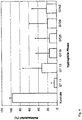
- Fig. 2:
- den Einfluss unterschiedlicher Rharbarberwurzelextrakte (hydrophile Phase) auf den Befall von Gerste der Sorte Hansa mit dem Gerstenmehltau Blumeria graminis f. sp. hordei bei protektiver Anwendung (Bonitur: 7 Tage nach Inokulation),
- Fig. 3:
- den Einfluss unterschiedlicher Rharbarberwurzelextrakte (hydrophobe Phase) auf den Befall von Gerste der Sorte Hansa mit dem Gerstenmehltau Blumeria graminis f. sp. hordei bei protektiver Anwendung (Bonitur: 7 Tage nach Inokulation),
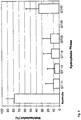
- Fig. 4:
- den Einfluss unterschiedlicher Rharbarberwurzelextrakte (hydrophile Phase) auf den Befall von Gerste der Sorte Hansa mit dem Gerstenmehltau Blumeria graminis f. sp. hordei bei protektiver Anwendung (Bonitur: 14 Tage nach Inokulation),
- Fig. 5:
- den Einfluss unterschiedlicher Rharbarberwurzelextrakte (hydrophobe Phase) auf den Befall von Gerste der Sorte Hansa mit dem Gerstenmehltau Blumeria graminis f. sp. hordei bei protektiver Anwendung (Bonitur: 14 Tage nach Inokulation),
- Fig. 6:
- die Wirkung unterschiedlicher Rhabarberwurzelextrakte (GT2 [GT = Genotyp] und GT19; hydrophobe Phase) auf den Befall von Gerste der Sorte Hansa mit dem Gerstenmehltau Blumeria graminis f. sp. hordei in der Dosierung von 250 ppm bei protektiver Anwendung (Bonitur: 7 Tage nach Inokulation),
- Fig. 7:
- den Einfluss unterschiedlicher Rharbarberwurzelextrakte (hydrophile Phase) auf den Befall von Gerste der Sorte Hansa mit dem Gerstenmehltau Blumeria graminis f. sp. hordei bei kurativer Anwendung (Bonitur: 7 Tage nach Inokulation),
- Fig. 8:
- den Einfluss unterschiedlicher Rharbarberwurzelextrakte (hydrophobe Phase) auf den Befall von Gerste der Sorte Hansa mit dem Gerstenmehltau Blumeria graminis f. sp. hordei bei kurativer Anwendung (Bonitur: 7 Tage nach Inokulation),
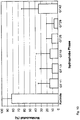
- Fig. 9:
- den Einfluss unterschiedlicher Rharbarberwurzelextrakte (hydrophile Phase) auf den Befall von Gerste der Sorte Hansa mit dem Gerstenmehltau Blumeria graminis f. sp. hordei bei kurativer Anwendung (Bonitur: 14 Tage nach Inokulation),
- Fig. 10:
- den Einfluss unterschiedlicher Rharbarberwurzelextrakte (hydrophobe Phase) auf den Befall von Gerste der Sorte Hansa mit dem Gerstenmehltau Blumeria graminis f. sp. hordei bei kurativer Anwendung (Bonitur: 14 Tage nach Inokulation).
- Fig. 11:
- die Wirkung unterschiedlicher Rhabarberwurzelextrakte (GT2 und GT 19; hydrophobe Phase) auf den Befall von Weizen der Sorte Kanzler mit Weizenbraunrost Puccinia triticina,
- Fig. 12:
- Ergebnisse eines Freilandversuches zur Testung der Wirkung eines Rhabarberwurzelextraktes (hydrophobe Phase) gegen den Echten Mehltau (Oidium) in Reben (Traubenbefall),
- Fig. 13:
- eine Aufnahme der chromatografischen Auftrennung der hydrophoben Phase, gewonnen aus GT 19 (Rheum rhaponticum L.) bei UV-Detektion bei 280 nm und
- Fig. 14:
- das Massenspektrum von Piceatannolglucosid mit der Masse 390 Da als ein Beispiel zur qualitativen Identifizierung der polyphenolischen Substanzen mittels Massenspektroskopie.
- Die Extrakte wurden in Anlehnung an die in den
DE 10 2006 015 573 A1 ,
DE 10 2006 015 574 A1 undDE 10 2006 015 575 A1 offenbarten Extraktionsverfahren hergestellt. - Ein erfindungsgemäßes Extraktionsschema für die Aufarbeitung getrockneter, gemahlener Rhabarberwurzeln ist in der
Fig. 1 dargestellt. - Für die Erzeugung der wässrigen Ausgangsphase wird ein alkoholisches Lösungsmittel, zum Beispiel Methanol, als Primär-Extraktionsmittel eingesetzt, und diese alkoholischen Extrakte werden weiter verwendet. Nach der mehrstufigen extraktiven Aufarbeitung kann, wie unter d1) bis d3) (siehe oben) dargestellt, eine präparative säulenchromatografische Fraktionierung der hydrophilen bzw. hydrophoben Phase durchgeführt werden.
- Für eine Extraktion des Rhabarberwurzel-Materials wurden 1 kg einer getrockneten und gemahlenen Wurzelprobe einer mehrstufigen Wirbelextraktion mit etwa 8000 ml alkoholischem Lösungsmittel für je 15 min am Ultra-Turrax unterworfen. Die gesammelten Extrakte wurden dann am Rotationsverdampfer unter Vakuum bei Temperaturen bis maximal 50 °C eingeengt, und nach Zugabe von 500 ml Wasser wurde das alkoholische Lösungsmittel vollständig abgezogen. Zur Ausfällung störender lipophiler Substanzen wurde der wässrige Extrakt über Nacht unter Stickstoffbegasung im Kühlschrank bei 5 °C aufbewahrt. Die Fällungen konnten am nächsten Tag abzentrifugiert werden. Zur Abtrennung weiterer lipophiler Begleitstoffe wurde die wässrige Lösung anschließend noch dreimal mit je 500 ml Petrolether ausgeschüttelt. Die so gereinigte wässrige Phase wurde daraufhin viermal mit je 750 ml organischem Lösungsmittel aus der Gruppe der Ester, wie zum Beispiel Essigsäureethylester, ausgeschüttelt, wonach sich in den vereinigten hydrophoben Phasen vermehrt niedrig oligomerisierte Verbindungen befinden sollten und in der verbleibenden hydrophilen Phase Verbindungen mit höherem Oligomerisierungsgrad. Sowohl die hydrophobe als auch die hydrophile Phase wurden dann schonend bei reduziertem Druck und bei Temperaturen bis maximal 50 °C eingeengt, mit wenig Wasser aufgenommen und anschließend gefriergetrocknet.
- Die gefriergetrockneten hydrophoben und hydrophilen Extrakte wurden bis zur weiteren Verwendung unter Stickstoffatmosphäre bei -21 °C aufbewahrt. Die säulenchromatografische (sc) präparative Auftrennung der hydrophoben sowie der hydrophilen Phase erfolgte gemäß einer bevorzugten Ausführungsform der Erfindung, um das Gesamtspektrum an polyphenolischen Verbindungen auf eine begrenzte Anzahl an Substanzen einzuschränken. Zur säulenchromatografischen (sc) Trennung wurde Sephadex LH-20 eingesetzt. Als Elutionsmittel dienten nacheinander unterschiedliche Alkohole. Zur Trennung polymerer Substanzen sind Gemische aus Lösungsmitteln der Alkanone-Reihe mit Wasser geeignet.
- Die hydrophobe beziehungsweise hydrophile Phase wurde in kurzkettigen Alkoholen beziehungsweise in Alkohol/Wasser-Gemischen gelöst, auf die Säule (Länge 100 cm, Durchmesser 5 cm) aufgegeben und nacheinander mit unterschiedlichen Alkoholen sowie Gemischen aus Alkanonen und Wasser eluiert. Hierfür wurde eine MPLC-Anlage mit Probeaufgabepumpe genutzt. Nach dünnschichtchromatografischer Überprüfung (DC) der erhaltenen Reagenzglasfraktionen wurden für die einzelnen Rheum-Genotypen sowohl die Fraktionen der hydrophoben Phase als auch die Fraktionen der hydrophilen Phase mit gleichem Inhaltsstoffspektrum zusammengefasst.
- Nach säulenchromatografischer Trennung der hydrophoben Phase resultierten zum Beispiel bei Rheum palmatum L. 11 Fraktionen, bei Rheum rhaponticum L. 12 Fraktionen.
- Die Anwendung von solchen in der oben beschriebenen Weise erhältlichen Extrakten ist für die Bekämpfung von phytopathogenen Pilzen an Pflanzen bisher nicht bekannt. Es wurden Untersuchungen mit Rhabarberwurzelextrakten an verschiedenen Pflanzenkrankheiten mit dem Ergebnis durchgeführt, dass die durch das Extraktionsverfahren erhaltenen Extrakte gegen ein sehr breites Spektrum kommerziell wichtiger Pflanzenkrankheiten wirksam sind. Bei bestimmten Pflanzenkrankheiten, wie Gerstenmehltau (Blumeria graminis f. sp. hordei), sind diese Extrakte sowohl bei protektiver als auch bei kurativer Anwendung wirksam.
- Gerstenpflanzen (3 Pflanzen/Gefäß) wurden drei Wochen in Fruhstorfer Erde kultiviert. Nach Ablauf von 7 Stunden nach Applikation der ganzen Pflanzen mit den Versuchsprodukten wurden 7 cm lange Blattsegmente, beginnend von der Halmbasis, abgeschnitten und je 15 Blätter des jüngsten sowie zweitjüngsten Blattes auf Benzimidazolagar in quadratischen Petrischalen (10 x 10 cm) ausgelegt. Dazu wurde 0,5 % Agar Agar unter Zumischung von 40 ppm Benzimidazol nach dem Autoklavieren verwendet. Benzimidazol wurde dem Agar zugegeben, um ein frühzeitiges Austrocknen der Blätter zu verhindern. Die Inokulation der Blätter erfolgte mit frischen Konidien des Gerstenmehltaupilzes Blumeria graminis f. sp. hordei (Rasse A6) im Mehltau-Turm durch Windverteilung (Inkubationszeit: 7 und 14 Tage). Die Bonitur nach 14 Tagen diente dazu, gegebenenfalls die Dauerwirkung der eingesetzten Versuchspräparate beurteilen zu können, da von kommerziell eingesetzten Fungiziden bekannt ist, dass die Dauerwirkung zum Teil begrenzt ist.
- Die Konzentration der Präparate für die Blattapplikation an ganzen Pflanzen wurde auf 1000 ppm eingestellt. Die Auswertung erfolgte durch Evaluierung der Mehltaupusteln pro Blatt auf 5 cm Blattlänge.
- Die Kontrollpflanzen waren intensiv mit Mehltau besiedelt. Es wurden 66 % Blattbefall nach 7 Tagen und 97 % Blattbefall nach 14 Tagen beobachtet, wie die
Figuren 2 bis 5 zeigen. - Wie aus der
Fig. 2 und derFig. 3 ebenfalls hervorgeht, zeigten alle geprüften Rhabarberwurzelextrakte nach 7 Tagen eine deutliche Wirkung gegen Gerstenmehltau. Zwischen den Rhabarberwurzelextrakten ergaben sich jedoch bemerkenswerte Unterschiede. Die hydrophile Phase, gewonnen aus dem Rhabarbergenotyp GT 11, zeigte eine 100%ige Wirkung und war somit die beste Versuchsphase. Auch die hydrophile Phase von GT 25 sowie die jeweiligen hydrophoben Phasen von GT 13, GT 19 und GT 29 waren sehr wirksam, während im Vergleich zu diesen Fraktionen die übrigen Versuchspräparate in der Wirkung abfielen. Die relativ schwächste Fraktion war die hydrophobe Phase von GT 42. - Nach 14 Tagen wurde bei Anwendung der hydrophilen Phase von GT 11 ein minimaler Restbefall von 6 % detektiert (siehe
Fig. 4 ). Die hydrophoben Phasen der GT 11, GT 19 sowie GT 29 überzeugten ebenfalls mit einem geringen Restbefall um die 10 % (sieheFig. 5 ). Die relativ schwächste Phase war erneut die hydrophobe Phase von GT 42. - Aufgrund der guten protektiven Wirkung erfolgte eine weitere protektive Anwendung gegen Gerstenmehltau mit 250 ppm Präparat (
Fig. 6 ). Auch in der niedrigeren Dosierung von 250 ppm ergab sich eine gute Wirkung der getesteten Rhabarberwurzelextrakte, wie am Beispiel der hydrophoben Phase von GT 2 und GT 19 belegt werden konnte (Fig. 6 ). - Gerstenpflanzen, 3 Pflanzen pro Gefäß, wurden drei Wochen in Fruhstorfer Erde kultiviert. Die Applikation der Versuchspräparate erfolgte 2 Tage nach der Inokulation der Blätter. Die Inokulation erfolgte mit frischen Konidien des Gerstenmehltaupilzes Blumeria graminis f. sp. hordei (Rasse A6) im Mehltau-Turm durch Windverteilung. Es wurden für einen Blattsegmenttest 7 cm lange Blattsegmente, beginnend von der Halmbasis, abgeschnitten und je 15 Blätter des jüngsten sowie zweitjüngsten Blattes auf Benzimidazolagar in quadratischen Petrischalen (10 x 10 cm) ausgelegt. Dazu wurde 0,5 % Agar Agar unter Zumischung von 40 ppm Benzimidazol nach dem Autoklavieren verwendet.
- Die Konzentration der Präparate für die Blattapplikation an ganzen Pflanzen wurde auf 1000 ppm eingestellt. Die Auswertung der Mehltauwirkung erfolgte nach 7 und 14 Tagen durch Evaluierung der Mehltaupusteln pro Blatt auf 5 cm Blattlänge.
- Nach 7 Tagen zeigten auch bei kurativer Anwendung die meisten geprüften Rhabarberwurzelextrakte eine deutliche Wirkung gegen Gerstenmehltau (siehe
Fig. 7 undFig. 8 ). Die beste Fraktion war die hydrophobe Phase des Rhabarbergenotyps GT 29 mit einer 100%igen Wirkung (sieheFig. 8 ). Mit Ausnahme der hydrophilen Phasen von GT 11, GT 25 sowie der hydrophoben Phase von GT 42 konnte auch bei den übrigen Versuchspräparaten eine gute Wirkung gegen Mehltau beobachtet werden. Nach 14 Tagen ergab sich bei allen geprüften Rhabarberwurzelextrakten ein gewisser Restbefall (sieheFig. 9 undFig. 10 ). Dennoch überzeugte immer noch insbesondere die hydrophobe Phase aus GT 29 mit nur 7 % Restbefall (sieheFig. 10 ). Die hydrophile Phase von GT 42 sowie die hydrophoben Phasen von GT 13 und GT 25 waren ebenfalls sehr wirksam (sieheFig. 9 undFig. 10 ). - Die geprüften Rhabarberwurzelextrakte zeigten sowohl bei protektiver als auch kurativer Anwendung eine bemerkenswerte Wirkung gegen Mehltau.
- Mehltaubekämpfung stellt im Pflanzenschutz im Übrigen eine permanente Herausforderung dar, da wegen der erheblichen Resistenzprobleme in der Praxis die Zahl hochwirksamer Mehltaumittel limitiert ist. Generell besteht daher ein Bedarf an guten Mehltaumitteln in diversen Kulturen, unter anderem in Getreide und Reben. In diesem Zusammenhang sei der Hinweis erlaubt, dass im biologischen Anbau von Reben keine wirklich guten Präparate gegen Echten Mehltau zur Verfügung stehen. Eine entsprechend gute Wirkung vorausgesetzt, könnte die Verwendung eines Rhabarberwurzelextraktes als biologisches Präparat mit entsprechend geringen amtlichen Auflagen auch für den biologischen Anbau von Reben interessant sein.
- Weizenpflanzen der Sorte Kanzler, 3 Pflanzen pro Gefäß, wurden drei Wochen in Fruhstorfer Erde kultiviert. Nach Ablauf von 7 Stunden nach Applikation der ganzen Pflanzen mit den Versuchsprodukten wurden 7 cm lange Blattsegmente, beginnend von der Halmbasis, abgeschnitten und je 15 Blätter des jüngsten sowie zweitjüngsten Blattes auf Benzimidazolagar in quadratischen Petrischalen (10 x 10 cm) ausgelegt. Dazu wurde 0,5 % Agar Agar unter Zumischung von 40 ppm Benzimidazol nach dem Autoklavieren verwendet. Die Inokulation der Blätter erfolgte durch Besprühen der Blätter mittels einer Membranpumpe mit frischen Uredosporen des Weizenbraunrostes Puccinia triticina. Die Inkubationszeit betrug 10 Tage.
- Die Konzentration der Präparate für die Blattapplikation an ganzen Pflanzen wurde auf 1000 ppm eingestellt. Die Auswertung erfolgte durch Evaluierung der Rostpusteln pro Blatt auf 5 cm Blattlänge.
- Die
Fig. 11 zeigt die Wirkung der Rhabarberwurzelextrakte GT 2 und GT 19 (hydrophobe Phase) auf den Befall von Weizen der Sorte Kanzler mit Weizenbraunrost (Puccinia triticina) 10 Tage nach Inokulation. Die Kontrollpflanzen waren intensiv mit Braunrost besiedelt. Nach 7 Tagen zeigten alle geprüften Rhabarberwurzelextrakte eine deutliche Wirkung gegen Weizenbraunrost, wieFig. 11 zeigt. Zwischen den Rhabarberwurzelextrakten (GT 2 und GT 19) ergaben sich aufgrund der sehr guten Wirkung keine bemerkenswerten Unterschiede. - Die
Fig. 12 zeigt die Wirkung des Rhabarberwurzelextraktes GT 2 (hydrophobe Phase) gegen den Echten Mehltau (Oidium) in Reben (Traubenbefall) in den Basisaufwandmengen von 375 und 750 g/10.000 m2. - Die Pilzkrankheit "Echter Mehltau" (Oidium) stellt weltweit die wirtschaftlich bedeutendste Rebenkrankheit dar. Der Ascomycet befällt alle Europäer-Reben, wobei Sorten wie Chardonnay, Kerner, Scheurebe, Müller-Thurgau, Chenin blanc, Cabernet Franc, St. Laurent, Trollinger und Portugieser besonders anfällig sind.
- Die Applikation der Präparate erfolgte in einem zeitlichen Intervall von 10 Tagen, beginnend mit dem BBCH-Entwicklungsstadium 50 und endend mit der Abschlussspritzung zum BBCH-Entwicklungsstadium 81 der Reben. Die Applikation erfolgte mit einem pneumatischen Applikationsgerät für Raumkulturen. Es wurden für die Applikation Teejet-Flachstrahldüsen verwendet. Die Basisaufwandmenge für GT 2 (hydrophobe Phase) betrug 375 beziehungsweise 750 g/10.000 m2. Die Ausbringung erfolgte in Kombination mit dem im ökologischen Weinbau häufig verwendeten Orangenöl Prev_B2 als Additiv zur besseren Benetzung der Blätter. Die Soloanwendung von Orangenöl Prev_B2 hat keine Wirkung gegen Oidium. Als Vergleichsmittel wurde ein Netzschwefelpräparat in der zugelassenen Aufwandmenge ausgebracht. Es zeigte sich, dass der Traubenbefall mit Oidium durch den Rhabarberwurzelextrakt sehr wirksam eingeschränkt werden konnte und in der Wirkung höher lag als beim kommerziellen Vergleichspräparat Netzschwefel, welches im ökologischen Weinbau gegen Oidium eingesetzt wird, wie aus der
Fig. 12 hervorgeht. - Die Pilze wurden auf V8-Agarplatten bei 25 °C im Brutschrank im Dunkeln kultiviert. Pilzmycel der bewachsenen Platten wurde mit einem Korkbohrer (5 mm Durchmesser) am Agar-Plattenrand einer aktiv wachsenden Pilzkultur entnommen und mit einer Impfnadel unter sterilen Bedingungen im Zentrum auf V8-Agarplatten plaziert, denen beim Ausgießen in die Petrischalen zuvor finale Konzentrationen von 0, 100, 250, 500 und 1000 ppm Rhabarberwurzelextrakt zugemischt worden waren. Die Bonitierung des Pilzwachstums erfolgte in Abständen von 7 Tagen durch Messung des Pilzwachstums auf den Agarplatten.
- Die Tabelle 1 zeigt die Wirkung des Rhabarberwurzelextraktes GT 2 (hydrophobe Phase) gegen verschiedene phytopathogene Pilze im Agardiffusionstest.
Tabelle 1 Wachstum prozentual zur Kontrolle PG Pathogen 100 ppm 250 ppm 500 ppm 1000 ppm 1 Thielaviopsis basicola (BK18) 74 43 48 30 2 Phytophthora capsici (V8) 56 17 0 0 3 Fusarium graminearum (WT 1003) 79 53 37 26 4 Bipolaris sorokiniana (JB2) 74 43 48 0 5 Rhizoctonia solani 512 (AG 2) 25 25 13 0 - Aus den Untersuchungen geht hervor, dass konzentrationsabhängig eine sehr gute Wirkung des Rhabarberwurzelextraktes GT 2 (hydrophobe Phase) gegen den falschen Mehltaupilz Phytophthora capsici gegeben war und des Weiteren auch Bipolaris sorokiniana und Rhizoctonia solani (AG 2) wirkungsvoll kontrolliert wurden.
- Untersuchungen an Gerste mit Rhabarberwurzelextrakten zeigten zudem eine Erhöhung der Ascorbatperoxidase- sowie Dehydroascorbat- Reduktase-Aktivität. Beide Enzyme gelten als Schlüsselproteine des Ascorbat-Glutathion-Zyklus, in dem reaktive Sauerstoffspecies detoxifiziert werden. Die Ergebnisse der Untersuchungen deuten auf das Potenzial pflanzlicher Phenole aus Rhabarberwurzelextrakten gegenüber wichtigen Pflanzenkrankheiten hin. Insbesondere das breite Wirkungsspektrum sowohl gegen Echte Mehltaupilze (Getreidemehltau, Echter Mehltau in Reben) als auch Falsche Mehltaupilze (Phytophthora capsici) sowie gegen Rostpilze (Puccinia triticina), Rhizoctonia und Bipolaris sorokiniana zeigt, dass die erfindungsgemäßen Rhabarberwurzelextrakte eine beachtliche Anzahl sehr wichtiger Pflanzenkrankheiten erfassen. Die hier aufgeführten phytopathogenen Pilze zählen zu den global bedeutendsten Pflanzenkrankheiten. Das breite Wirkungsspektrum gegen Pflanzenkrankheiten sowie das weite Applikationsfenster durch sowohl protektive als auch kurative Anwendung der erfindungsgemäßen Rhabarberwurzelextrakte wird von den im Stand der Technik aufgeführten Verfahren nicht erreicht.
- Nachfolgend werden beispielhaft Ergebnisse zur inhaltsstofflichen Charakterisierung der in den
Figuren 6 ,9 ,10 ,11 und12 gezeigten hydrophoben Phasen dargestellt. Die isolierten polyphenolischen Extrakte wurden charakterisiert über HPLC mit Dioden-Array-Detektion beziehungsweise über die Kopplung HPLC mit Massenspektrometrie (negative Ionisierung im Electrospray-lonisationsmodus).Chromatografische Bedingungen: Trennsäule: SYNERGI Polar-RP 80A; 250*2,0 mm; 4 µ Mobile Phase: A: 0,1 % Wasser/Ameisensäure B: 100 % Methanol Gradient: Zeit (min) % B 0 0 10 10 40 50 41 0 55 0 Flussrate: 0,3 ml/min Injektionsvolumen: 10 µl Probe Detektor: DAD, 190 bis 500 nm und MS im Full Scan Modus Analysenzeit: 58 min. - In
Fig. 13 wird beispielhaft für den GT 19 eine solche chromatografische Auftrennung der hydrophoben Phase gezeigt. - Die Tabelle 2 zeigt die gefundenen polyphenolischen Substanzen geordnet nach Stoffklassen beispielhaft für die hydrophoben Phasen der GT 2, GT 19 und GT 25.
Tabelle 2 Stoffklasse GT 2 GT 19 GT 25 Flavan-3-ole Catechin Catechin Catechin Epicatechin Epicatechin Epicatechingallat Epicatechingallat Epicatechingallat ProcyanidinB1 ProcyanidinB2 ProcyanidinB2 ProcyanidinB2 Oligomere Proanthocyanidine Dimeres Procyanidin, galloyliert Vorstufen hydrolysierbarer Gerbstoffe Monogalloylglucose Monogalloylglucose Monogalloylglucose Digalloylglucose Digalloylglucose Stilbene Rhaponticin Rhaponticin Rhaponticin Rhaponticin, galloyliert Rhaponticin, galloyliert Rhapontigenin Desoxyrhaponticin Desoxyrhaponticin Rhaponticin, galloyliert Piceatannolglucosid Piceatannolglucosid Desoxyrhaponticin Piceatannolglucosid, galloyliert Piceatannolglucosid, galloyliert Piceatannolxylopyranosid Trihydroxystilbenglucosid, galloyliert Resveratrolglucosid Piceatannolglucosid Trihydroxystilbenglucosid, galloyliert Piceatannolglucosid, galloyliert Resveratrolglucosid Resveratrol -
Fig. 14 zeigt das Massenspektrum von Piceatannolglucosid mit der Masse 390 Da beziehungsweise u (u = unified atomic mass unit; 1u entspricht 1/12 der Masse des 12C Isotops) als ein Beispiel zur qualitativen Identifizierung der polyphenolischen Substanzen mittels Massenspektroskopie.
Claims (16)
- Verwendung einer antifungalen Formulierung zur Bekämpfung von pilzlichen Pflanzenkrankheiten, wobei zu den zu bekämpfenden phytopathogenen Pilzen ein oder mehrere phytopathogene Pilze gehören und die antifungale Formulierung zumindest Wirkstoffe oder Wirkstoffzusammensetzungen aus polyphenolischen, keine Anthrachinone und Anthrachinonderivate enthaltenden Extrakten der Wurzeln von Rheum-Arten enthält, wobei diese Wirkstoffe oder Wirkstoffzusammensetzungen erhältlich sind durch ein Verfahren, umfassend die folgenden Verfahrensschritte:a) kontinuierlich oder batchweise durchgeführte, ein- oder mehrstufige Extraktion der gereinigten und zerkleinerten Wurzeln, wobei die Wurzeln ungetrocknet oder getrocknet eingesetzt werden, mittels eines alkoholischen Lösungsmittels;b) schonende Entfernung des alkoholischen Lösungsmittels bei reduziertem Druck und bei Temperaturen bis maximal 50 °C unter Zugabe von Wasser, wobei aus der gebildeten wässrigen Phase lipophile Begleitstoffe durch Kühlen bei einer Temperatur von 2 bis 8 °C ausgefällt und mittels Filtration oder Zentrifugation entfernt werden und weitere lipophile Begleitstoffe durch anschließendes Ausschütteln der wässrigen Phase mit Petrolether entfernt werden oder aus der gebildeten wässrigen Phase lipophile Begleitstoffe mittels flüssig/flüssig-chromatografischer Verfahren abgetrennt werden;c) extraktive Auftrennung des unter b) gewonnenen wässrigen Extraktes unter Verwendung eines organischen Lösungsmittels aus der Gruppe der Ester in eine hydrophile und eine hydrophobe Phase; undd) Gewinnung von Extrakten aus beiden Extraktphasen des Verfahrensschrittes c) in den folgenden Teilschritten:d1) eine säulenchromatografische Auftrennung an Sephadex LH-20 der hydrophoben Extraktphase oder der hydrophilen Extraktphase erfolgt, wobei als Elutionsmittel nacheinander unterschiedliche Alkohole und ein Gemisch aus Lösungsmitteln der Alkanone-Reihe und Wasser eingesetzt werden, und danachd2) die gewonnenen Fraktionen aus der hydrophoben Phase oder der hydrophilen Phase mit jeweils gleichem Inhaltsstoffspektrum zu Wirkstofffraktionen zusammengefasst werden, woraufd3) eine Auswahl einzelner Wirkstofffraktionen zur Verwendung nach Durchführung eines Wirksamkeitsnachweises der Wirkstofffraktionen hinsichtlich ihrer protektiven und/oder kurativen Wirksamkeit gegenüber phytopathogenen Pilzen getroffen wird.
- Verwendung einer antifungalen Formulierung nach Anspruch 1, dadurch gekennzeichnet, dass in Verfahrensschritt a) die Wurzeln getrocknet und gemahlen eingesetzt werden.
- Verwendung einer antifungalen Formulierung nach Anspruch 1 oder 2, dadurch gekennzeichnet, dass in Verfahrensschritt a) die Extraktion in einer bis hundert Stufen erfolgt.
- Verwendung einer antifungalen Formulierung nach Anspruch 3, dadurch gekennzeichnet, dass in Verfahrensschritt a) die Extraktion in zwei bis sechs Stufen erfolgt.
- Verwendung einer antifungalen Formulierung nach einem der Ansprüche 1 bis 4, dadurch gekennzeichnet, dass Verfahrensschritt b) unter Einsatz eines Schutzgases zur Reduzierung oxidativer Prozesse erfolgt.
- Verwendung einer antifungalen Formulierung nach Anspruch 5, dadurch gekennzeichnet, dass ein chemisch inertes Schutzgas, vorzugsweise Stickstoff, verwendet wird.
- Verwendung einer antifungalen Formulierung nach einem der Ansprüche 1 bis 6, dadurch gekennzeichnet, dass als organisches Lösungsmittel aus der Gruppe der Ester in Verfahrensschritt c) Essigsäureethylester angewandt wird.
- Verwendung einer antifungalen Formulierung nach einem der Ansprüche 1 bis 7, dadurch gekennzeichnet, dass in Verfahrenschritt d1) als Alkohole Methanol, Ethanol, Propanol oder Butanol und als Lösungsmittel der Alkanone-Reihe Propanon, Butanon oder Pentanon eingesetzt werden.
- Verwendung einer antifungalen Formulierung nach einem der Ansprüche 1 bis 8, dadurch gekennzeichnet, dass folgende Rheum-Arten verwendet werden können: Rheum rhaponticum L., Rheum officinale Baill.sp., Rheum palmatum L., Rheum altaicum LOSINSK., Rheum rhabarberum L., Rheum undulatum L., Rheum alexandrae VEITCH., Rheum wittrockii LUNDSTR, Rheum maximowiczii LOSINSK., Rheum leucorrhizum PALL., Rheum tanguticum Maxim., Rheum nobile Hook et. Thomson, Rheum alexandrae Batalin, Rheum tibeticum, Rheum palaestinum, Rheum australe, Rheum collinianum, Rheum compactum, Rheum delavayi, Rheum franzenbachii, Rheum moorcroftianum, Rheum nanum, Rheum ribes, Rheum robertianum, Rheum rupestre, Rheum songaricum, Rheum spiciforme, Rheum tataricum, Rheum tetragonopos, Rheum turcestanicum und Rheum webbianum.
- Verwendung einer antifungalen Formulierung nach einem der Ansprüche 1 bis 9, dadurch gekennzeichnet, dass genetisch einheitliches Material verwendet wird.
- Verwendung einer antifungalen Formulierung nach einem der Ansprüche 1 bis 10, enthaltend jeweils als Koformulierung mindestens einen Wirkstoff aus dem polyphenolischen Extrakt sowie einen oder mehrere biologische Antagonisten für die Kontrolle von Viren, Bakterien, Nematoden, Pilzen, Insekten oder Unkräutern.
- Verwendung einer antifungalen Formulierung nach Anspruch 11, dadurch gekennzeichnet, dass ein oder mehrere biologische Antagonisten aus der Gruppe Bacillus thuringiensis, Bacillus subtilus, Verticillium lecanii, Autographica californica NPV, Beauvaria bassicana, Metarhizium anisopliae, Pseudomonas fluorescens und Steptomyces griseoviridis, Trichoderma harzianum enthalten sind.
- Verwendung einer antifungalen Formulierung nach einem der Ansprüche 1 bis 12, enthaltend jeweils als Koformulierung mindestens einen Wirkstoff aus dem polyphenolischen Extrakt und ein chemisches Agenz, das systemisch erworbene Resistenz in Pflanzen induziert, das heißt also einen Wirkstoff, der über die Modulierung der Salicylsäure-Biosynthese sowie über die Induktion von pathogenesis-related (PR)-Genen charakterisiert ist und somit zu der in Pflanzen systemisch erworbenen Resistenz (SAR) gegenüber Pflanzenkrankheiten beiträgt, insbesondere 2,6-Dichlor-isonikotinsäure (DCINA) oder Benzo(1,2,3)-thiadiazolcarbothionsäure-S-methylesther (BTH).
- Verwendung einer antifungalen Formulierung nach einem der Ansprüche 1 bis 12, enthaltend jeweils als Koformulierung mindestens einen Wirkstoff aus dem polyphenolischen Extrakt und nichtpathogene Rhizobakterien oder symbiotische Wurzelpilze, die systemische Resistenz in Pflanzen induzieren (induced systemic resistance = ISR), das heißt solche Mikroorganismen enthalten, welche über die Modulierung der Jasmonat-Biosynthese zu der in Pflanzen induzierten Resistenz gegenüber Pflanzenkrankheiten beitragen.
- Verwendung einer antifungalen Formulierung nach einem der Ansprüche 1 bis 14, enthaltend jeweils als Koformulierung mindestens einen Wirkstoff aus dem polyphenolischen Extrakt und ein Adjuvants oder mehrere Adjuvantien zur Verbesserung der Wirkung und Regenfestigkeit.
- Verwendung einer antifungalen Formulierung nach einem der Ansprüche 1 bis 15, dadurch gekennzeichnet, dass zu den ein oder mehreren phytopathogenen Pilzen Blumeria graminis f. sp. hordei ; Erysiphe spec.; Rostkrankheiten, insbesondere Puccinia graminis, Puccinia triticina, Puccinia striiformis, Phakopsora spec., Hemileia vastatrix, Uromyces dianthi; Oidium; Septoria; Fusarium, insbesondere Fusarium solani complex, Fusarium oxysporum, Fusarium verticillioides, Fusarium proliferatum, Fusarium culmorum, Fusarium graminearum; Rhizoctonia, insbesondere Rhizoctonia solani-Komplex; Alternaria; Helminthosporium; Bipolaris, insbesondere Bipolaris sorokiniana; Thielaviopsis; Botrytis; Phytophthora, insbesondere Phytophthora capsici, Phytophthora infestans; Fusarium, insbesondere Fusarium spec.; Venturia, insbesondere Venturia inaeqaulis; Plasmopora, insbesondere Plasmopora viticola; oder Perenospora zählen.
Applications Claiming Priority (2)
| Application Number | Priority Date | Filing Date | Title |
|---|---|---|---|
| DE102012001867A DE102012001867A1 (de) | 2012-01-24 | 2012-01-24 | Antifungale Formulierungen zur Bekämpfung von Pflanzenkrankheiten |
| PCT/DE2013/000031 WO2013110258A1 (de) | 2012-01-24 | 2013-01-17 | Antifungale formulierungen zur bekämpfung von pflanzenkrankheiten |
Publications (2)
| Publication Number | Publication Date |
|---|---|
| EP2806743A1 EP2806743A1 (de) | 2014-12-03 |
| EP2806743B1 true EP2806743B1 (de) | 2017-09-06 |
Family
ID=47789925
Family Applications (1)
| Application Number | Title | Priority Date | Filing Date |
|---|---|---|---|
| EP13707264.1A Not-in-force EP2806743B1 (de) | 2012-01-24 | 2013-01-17 | Antifungale formulierungen enthaltend einen rheum-wurzelextrakt zur bekämpfung von pflanzenkrankheiten |
Country Status (5)
| Country | Link |
|---|---|
| EP (1) | EP2806743B1 (de) |
| DE (1) | DE102012001867A1 (de) |
| ES (1) | ES2649043T3 (de) |
| PT (1) | PT2806743T (de) |
| WO (1) | WO2013110258A1 (de) |
Cited By (1)
| Publication number | Priority date | Publication date | Assignee | Title |
|---|---|---|---|---|
| CN108293480A (zh) * | 2018-03-26 | 2018-07-20 | 叶志坚 | 利用生防菌剂防治番茄灰霉病的方法 |
Families Citing this family (13)
| Publication number | Priority date | Publication date | Assignee | Title |
|---|---|---|---|---|
| US9018392B1 (en) | 2014-04-22 | 2015-04-28 | Active AgriProducts Inc. | Compounds, compositions and methods for crop enhancement |
| CN104026168B (zh) * | 2014-05-28 | 2016-05-18 | 赵兰 | 一种防治草莓灰霉病的天然杀菌剂及其制备方法 |
| DE102014013302A1 (de) * | 2014-09-04 | 2016-03-10 | Hochschule Anhalt | Wirkstoffzusammensetzung zur Bekämpfung von Pflanzenkrankheiten |
| CN104541668B (zh) * | 2014-12-04 | 2016-06-22 | 浙江大学 | 一种提高烟草漂浮育苗种子发芽率和壮苗的方法 |
| CN109831959A (zh) * | 2017-09-20 | 2019-06-04 | 中国科学院西北高原生物研究所 | 一种唐古特大黄免耕生态抚育方法 |
| CN112266889B (zh) * | 2020-11-06 | 2022-02-18 | 青岛农业大学 | 枯草芽孢杆菌、食用菌采前处理制剂及其应用 |
| CN113215061B (zh) * | 2021-06-15 | 2022-12-06 | 四川农业大学 | 一种枯草芽孢杆菌scau-z8及其应用 |
| CN113519505A (zh) * | 2021-09-01 | 2021-10-22 | 宁波西敦医药包衣科技有限公司 | 环保水性交联剂生物组织保存材料及其制备方法 |
| CN115226580B (zh) * | 2022-06-16 | 2023-08-15 | 河北工业大学 | 一种防治小麦纹枯病生物源方法及应用 |
| CN115088733A (zh) * | 2022-06-29 | 2022-09-23 | 福建百果壹号农业发展有限公司 | 一种基于植入印度梨形孢提高百香果抗寒性的方法 |
| CN117044627B (zh) * | 2023-10-11 | 2023-12-15 | 中国科学院昆明植物研究所 | 一种高山植物塔黄的组培快繁及离体保存方法 |
| WO2026006571A1 (en) * | 2024-06-28 | 2026-01-02 | Vegamour, Inc. | Compositions for hair treatment with rhapontigenin and derivatives thereof |
| CN119257127A (zh) * | 2024-10-17 | 2025-01-07 | 山东农业大学 | 一种抑制番茄茎基腐病的中草药大黄制剂及其使用方法 |
Family Cites Families (9)
| Publication number | Priority date | Publication date | Assignee | Title |
|---|---|---|---|---|
| DE484489C (de) | 1923-04-03 | 1929-10-21 | Walter Ilisch | Verfahren zur Bekaempfung von Pflanzenschaedlingen |
| DE4411895A1 (de) | 1994-04-07 | 1995-05-24 | Basf Ag | Verfahren zur Bekämpfung von Pilzen mit Rheum rhabarbarum und Solidago canadensis |
| KR100552997B1 (ko) * | 2004-01-09 | 2006-02-16 | 최용표 | 대황 추출물 함유 생물농약제제 및 항곰팡이제 |
| DE102006015573A1 (de) * | 2006-04-03 | 2007-10-04 | Esa Patentverwertungsagentur Sachsen-Anhalt Gmbh | Wirkstofffraktionen mit hoher antiviraler Aktivität |
| DE102006015575A1 (de) | 2006-04-03 | 2007-10-04 | Hochschule Anhalt (Fh) | Antioxidative Wirkstofffraktionen für kosmetische Formulierungen |
| DE102006015574A1 (de) * | 2006-04-03 | 2007-10-04 | Esa Patentverwertungsagentur Sachsen-Anhalt Gmbh | Wirkstofffraktionen für Formulierungen zur Therapie und Prävention von entzündlichen Erkrankungen |
| KR20100048351A (ko) * | 2008-10-31 | 2010-05-11 | 주식회사 아이지에스 | 식물병해 방제 활성을 갖는 종대황 추출물 |
| AR077432A1 (es) * | 2009-07-30 | 2011-08-24 | Marrone Bio Innovations | Combinaciones de inhibidor de patogenos de planta y metodos de uso |
| AR081510A1 (es) | 2009-09-03 | 2012-10-03 | Fbsciences Holdings Inc | Composiciones y metodos para el tratamiento de semillas |
-
2012
- 2012-01-24 DE DE102012001867A patent/DE102012001867A1/de not_active Withdrawn
-
2013
- 2013-01-17 ES ES13707264.1T patent/ES2649043T3/es active Active
- 2013-01-17 WO PCT/DE2013/000031 patent/WO2013110258A1/de not_active Ceased
- 2013-01-17 EP EP13707264.1A patent/EP2806743B1/de not_active Not-in-force
- 2013-01-17 PT PT137072641T patent/PT2806743T/pt unknown
Non-Patent Citations (1)
| Title |
|---|
| None * |
Cited By (1)
| Publication number | Priority date | Publication date | Assignee | Title |
|---|---|---|---|---|
| CN108293480A (zh) * | 2018-03-26 | 2018-07-20 | 叶志坚 | 利用生防菌剂防治番茄灰霉病的方法 |
Also Published As
| Publication number | Publication date |
|---|---|
| EP2806743A1 (de) | 2014-12-03 |
| PT2806743T (pt) | 2017-11-28 |
| ES2649043T3 (es) | 2018-01-09 |
| WO2013110258A1 (de) | 2013-08-01 |
| DE102012001867A1 (de) | 2013-07-25 |
Similar Documents
| Publication | Publication Date | Title |
|---|---|---|
| DE102012001867A1 (de) | Antifungale Formulierungen zur Bekämpfung von Pflanzenkrankheiten | |
| de Rodríguez et al. | Antifungal activity in vitro of Rhus muelleri against Fusarium oxysporum f. sp. lycopersici | |
| Eloff et al. | Solvent-solvent fractionation can increase the antifungal activity of a Melianthus comosus (Melianthaceae) acetone leaf extract to yield a potentially useful commercial antifungal product | |
| Meela et al. | Acetone leaf extracts of seven invasive weeds have promising activity against eight important plant fungal pathogens | |
| US9456610B2 (en) | Plant extracts for use as phytochemicals | |
| Uthpala et al. | Evaluation of antimicrobial potential and phytochemicals in Acmella (A. oleracea) flower pod extracts subjected to different drying techniques | |
| Fu et al. | Isolation, purification and identification of the active compound of turmeric and its potential application to control cucumber powdery mildew | |
| Leontopoulos et al. | Antifungal activity of Azadirachta indica aqueous and non-aqueous extracts on Colletotrichum gloeosporioides, Botryodiplodia theobromae and Fusarium solani. A first approach | |
| Khurshid et al. | Antifungal activity of aerial parts of Cenchrus pennisetiformis against Fusarium oxysporum f. sp. lycopersici | |
| KR101837622B1 (ko) | 빌레나무 추출물을 유효성분으로 함유하는 식물병 방제용 조성물 및 이를 이용한 식물병 방제방법 | |
| Aboh et al. | Preliminary studies on Luffa cylindrica: Comparative phytochemical and antimicrobial screening of the fresh and dried aerial parts | |
| DE202024102518U1 (de) | Ein Extraktionssystem zur Extraktion von Bikaverin aus Fusarium oxysporum | |
| Omoniyi et al. | Efficacy of three selected botanicals in the control of Botrytis cinerea associated with damping off in Citrullus lanatus (Thunb.) Matsum and Nakai | |
| Bamidele | Antifungal potency of Aframomum melegueta (alligator pepper) seed extracts on postharvest rot fungi of two citrus species | |
| Ikhwan et al. | Analysis of Metabolites from Purple Cleome Extract (Cleome rutidosperma Linn.) as Potential Organic Fungicides | |
| KR102135166B1 (ko) | 항균제 조성물 및 호두나무탄저병균의 생장 억제 효과가 우수한 은사시나무 추출물의 제조방법 | |
| Agrawal et al. | Insecticidal and Antimicrobial Activity of Ethanolic Extract of Lantana camara and GC-MS Analysis | |
| Tauseef et al. | Antifungal Potential of Leaves and Barks of Azadirachta indica: Antifungal Potential of Neem Tree | |
| Nurhidayat et al. | Isolation and Identification of Endophytic Fungi Associated with Indonesian Sesbania grandiflora Plant | |
| Oladele et al. | Activities of leaf extracts of cashew (Anacardium occidentale L.) and pawpaw (Carica papaya L.) against mycelia growth of Aspergillus species obtained from decayed cashew fruits | |
| Qureshi et al. | Isolation and identification of endophytic fungi inhabiting Azadirachta indica A juss from different regions of Jabalpur (MP) India | |
| KR102339423B1 (ko) | 은행나무 꽃 추출물을 유효성분으로 포함하는 항진균 조성물 | |
| Adjeroh et al. | PHYTOCHEMICAL SCREENING OF PODS OF INDIGOFERA TINCTORIA L.(URI) AND ITS ANTIBACTERIA AND ANTIFUNGI PROPERTIES | |
| El-Shamy | Scientific evaluation of using habat albaraka (nigella sativa l.) against microorganisms for the preservation of historical parchment and leather artifacts | |
| Pradhan et al. | ANTIMICROBIAL ACTIVITY OF CAESULIA AXILLARIS ROXB AND PSORALEA CORYLIFOLIA L |
Legal Events
| Date | Code | Title | Description |
|---|---|---|---|
| PUAI | Public reference made under article 153(3) epc to a published international application that has entered the european phase |
Free format text: ORIGINAL CODE: 0009012 |
|
| 17P | Request for examination filed |
Effective date: 20140812 |
|
| AK | Designated contracting states |
Kind code of ref document: A1 Designated state(s): AL AT BE BG CH CY CZ DE DK EE ES FI FR GB GR HR HU IE IS IT LI LT LU LV MC MK MT NL NO PL PT RO RS SE SI SK SM TR |
|
| DAX | Request for extension of the european patent (deleted) | ||
| 17Q | First examination report despatched |
Effective date: 20151126 |
|
| REG | Reference to a national code |
Ref country code: DE Ref legal event code: R079 Ref document number: 502013008273 Country of ref document: DE Free format text: PREVIOUS MAIN CLASS: A01N0065300000 Ipc: A01N0065000000 |
|
| RIC1 | Information provided on ipc code assigned before grant |
Ipc: A01N 65/00 20090101AFI20170202BHEP Ipc: A01N 65/30 20090101ALI20170202BHEP Ipc: A01P 3/00 20060101ALI20170202BHEP |
|
| GRAP | Despatch of communication of intention to grant a patent |
Free format text: ORIGINAL CODE: EPIDOSNIGR1 |
|
| INTG | Intention to grant announced |
Effective date: 20170314 |
|
| GRAS | Grant fee paid |
Free format text: ORIGINAL CODE: EPIDOSNIGR3 |
|
| GRAA | (expected) grant |
Free format text: ORIGINAL CODE: 0009210 |
|
| AK | Designated contracting states |
Kind code of ref document: B1 Designated state(s): AL AT BE BG CH CY CZ DE DK EE ES FI FR GB GR HR HU IE IS IT LI LT LU LV MC MK MT NL NO PL PT RO RS SE SI SK SM TR |
|
| REG | Reference to a national code |
Ref country code: GB Ref legal event code: FG4D Free format text: NOT ENGLISH |
|
| REG | Reference to a national code |
Ref country code: CH Ref legal event code: EP Ref country code: AT Ref legal event code: REF Ref document number: 924879 Country of ref document: AT Kind code of ref document: T Effective date: 20170915 |
|
| REG | Reference to a national code |
Ref country code: IE Ref legal event code: FG4D Free format text: LANGUAGE OF EP DOCUMENT: GERMAN |
|
| REG | Reference to a national code |
Ref country code: DE Ref legal event code: R096 Ref document number: 502013008273 Country of ref document: DE |
|
| REG | Reference to a national code |
Ref country code: PT Ref legal event code: SC4A Ref document number: 2806743 Country of ref document: PT Date of ref document: 20171128 Kind code of ref document: T Free format text: AVAILABILITY OF NATIONAL TRANSLATION Effective date: 20171121 |
|
| REG | Reference to a national code |
Ref country code: ES Ref legal event code: FG2A Ref document number: 2649043 Country of ref document: ES Kind code of ref document: T3 Effective date: 20180109 |
|
| REG | Reference to a national code |
Ref country code: NL Ref legal event code: MP Effective date: 20170906 |
|
| REG | Reference to a national code |
Ref country code: FR Ref legal event code: PLFP Year of fee payment: 6 |
|
| REG | Reference to a national code |
Ref country code: LT Ref legal event code: MG4D |
|
| PG25 | Lapsed in a contracting state [announced via postgrant information from national office to epo] |
Ref country code: FI Free format text: LAPSE BECAUSE OF FAILURE TO SUBMIT A TRANSLATION OF THE DESCRIPTION OR TO PAY THE FEE WITHIN THE PRESCRIBED TIME-LIMIT Effective date: 20170906 Ref country code: HR Free format text: LAPSE BECAUSE OF FAILURE TO SUBMIT A TRANSLATION OF THE DESCRIPTION OR TO PAY THE FEE WITHIN THE PRESCRIBED TIME-LIMIT Effective date: 20170906 Ref country code: NO Free format text: LAPSE BECAUSE OF FAILURE TO SUBMIT A TRANSLATION OF THE DESCRIPTION OR TO PAY THE FEE WITHIN THE PRESCRIBED TIME-LIMIT Effective date: 20171206 Ref country code: SE Free format text: LAPSE BECAUSE OF FAILURE TO SUBMIT A TRANSLATION OF THE DESCRIPTION OR TO PAY THE FEE WITHIN THE PRESCRIBED TIME-LIMIT Effective date: 20170906 Ref country code: LT Free format text: LAPSE BECAUSE OF FAILURE TO SUBMIT A TRANSLATION OF THE DESCRIPTION OR TO PAY THE FEE WITHIN THE PRESCRIBED TIME-LIMIT Effective date: 20170906 |
|
| PG25 | Lapsed in a contracting state [announced via postgrant information from national office to epo] |
Ref country code: RS Free format text: LAPSE BECAUSE OF FAILURE TO SUBMIT A TRANSLATION OF THE DESCRIPTION OR TO PAY THE FEE WITHIN THE PRESCRIBED TIME-LIMIT Effective date: 20170906 Ref country code: GR Free format text: LAPSE BECAUSE OF FAILURE TO SUBMIT A TRANSLATION OF THE DESCRIPTION OR TO PAY THE FEE WITHIN THE PRESCRIBED TIME-LIMIT Effective date: 20171207 Ref country code: LV Free format text: LAPSE BECAUSE OF FAILURE TO SUBMIT A TRANSLATION OF THE DESCRIPTION OR TO PAY THE FEE WITHIN THE PRESCRIBED TIME-LIMIT Effective date: 20170906 Ref country code: BG Free format text: LAPSE BECAUSE OF FAILURE TO SUBMIT A TRANSLATION OF THE DESCRIPTION OR TO PAY THE FEE WITHIN THE PRESCRIBED TIME-LIMIT Effective date: 20171206 |
|
| PG25 | Lapsed in a contracting state [announced via postgrant information from national office to epo] |
Ref country code: NL Free format text: LAPSE BECAUSE OF FAILURE TO SUBMIT A TRANSLATION OF THE DESCRIPTION OR TO PAY THE FEE WITHIN THE PRESCRIBED TIME-LIMIT Effective date: 20170906 |
|
| PG25 | Lapsed in a contracting state [announced via postgrant information from national office to epo] |
Ref country code: RO Free format text: LAPSE BECAUSE OF FAILURE TO SUBMIT A TRANSLATION OF THE DESCRIPTION OR TO PAY THE FEE WITHIN THE PRESCRIBED TIME-LIMIT Effective date: 20170906 Ref country code: CZ Free format text: LAPSE BECAUSE OF FAILURE TO SUBMIT A TRANSLATION OF THE DESCRIPTION OR TO PAY THE FEE WITHIN THE PRESCRIBED TIME-LIMIT Effective date: 20170906 Ref country code: PL Free format text: LAPSE BECAUSE OF FAILURE TO SUBMIT A TRANSLATION OF THE DESCRIPTION OR TO PAY THE FEE WITHIN THE PRESCRIBED TIME-LIMIT Effective date: 20170906 |
|
| PG25 | Lapsed in a contracting state [announced via postgrant information from national office to epo] |
Ref country code: EE Free format text: LAPSE BECAUSE OF FAILURE TO SUBMIT A TRANSLATION OF THE DESCRIPTION OR TO PAY THE FEE WITHIN THE PRESCRIBED TIME-LIMIT Effective date: 20170906 Ref country code: SK Free format text: LAPSE BECAUSE OF FAILURE TO SUBMIT A TRANSLATION OF THE DESCRIPTION OR TO PAY THE FEE WITHIN THE PRESCRIBED TIME-LIMIT Effective date: 20170906 Ref country code: IS Free format text: LAPSE BECAUSE OF FAILURE TO SUBMIT A TRANSLATION OF THE DESCRIPTION OR TO PAY THE FEE WITHIN THE PRESCRIBED TIME-LIMIT Effective date: 20180106 Ref country code: SM Free format text: LAPSE BECAUSE OF FAILURE TO SUBMIT A TRANSLATION OF THE DESCRIPTION OR TO PAY THE FEE WITHIN THE PRESCRIBED TIME-LIMIT Effective date: 20170906 |
|
| REG | Reference to a national code |
Ref country code: DE Ref legal event code: R097 Ref document number: 502013008273 Country of ref document: DE |
|
| PLBE | No opposition filed within time limit |
Free format text: ORIGINAL CODE: 0009261 |
|
| STAA | Information on the status of an ep patent application or granted ep patent |
Free format text: STATUS: NO OPPOSITION FILED WITHIN TIME LIMIT |
|
| PG25 | Lapsed in a contracting state [announced via postgrant information from national office to epo] |
Ref country code: DK Free format text: LAPSE BECAUSE OF FAILURE TO SUBMIT A TRANSLATION OF THE DESCRIPTION OR TO PAY THE FEE WITHIN THE PRESCRIBED TIME-LIMIT Effective date: 20170906 |
|
| 26N | No opposition filed |
Effective date: 20180607 |
|
| PG25 | Lapsed in a contracting state [announced via postgrant information from national office to epo] |
Ref country code: SI Free format text: LAPSE BECAUSE OF FAILURE TO SUBMIT A TRANSLATION OF THE DESCRIPTION OR TO PAY THE FEE WITHIN THE PRESCRIBED TIME-LIMIT Effective date: 20170906 |
|
| REG | Reference to a national code |
Ref country code: CH Ref legal event code: PL |
|
| PG25 | Lapsed in a contracting state [announced via postgrant information from national office to epo] |
Ref country code: MT Free format text: LAPSE BECAUSE OF FAILURE TO SUBMIT A TRANSLATION OF THE DESCRIPTION OR TO PAY THE FEE WITHIN THE PRESCRIBED TIME-LIMIT Effective date: 20170906 |
|
| PG25 | Lapsed in a contracting state [announced via postgrant information from national office to epo] |
Ref country code: LU Free format text: LAPSE BECAUSE OF NON-PAYMENT OF DUE FEES Effective date: 20180117 |
|
| REG | Reference to a national code |
Ref country code: IE Ref legal event code: MM4A |
|
| REG | Reference to a national code |
Ref country code: BE Ref legal event code: MM Effective date: 20180131 |
|
| PG25 | Lapsed in a contracting state [announced via postgrant information from national office to epo] |
Ref country code: BE Free format text: LAPSE BECAUSE OF NON-PAYMENT OF DUE FEES Effective date: 20180131 Ref country code: LI Free format text: LAPSE BECAUSE OF NON-PAYMENT OF DUE FEES Effective date: 20180131 Ref country code: CH Free format text: LAPSE BECAUSE OF NON-PAYMENT OF DUE FEES Effective date: 20180131 |
|
| PG25 | Lapsed in a contracting state [announced via postgrant information from national office to epo] |
Ref country code: IE Free format text: LAPSE BECAUSE OF NON-PAYMENT OF DUE FEES Effective date: 20180117 |
|
| PG25 | Lapsed in a contracting state [announced via postgrant information from national office to epo] |
Ref country code: MC Free format text: LAPSE BECAUSE OF FAILURE TO SUBMIT A TRANSLATION OF THE DESCRIPTION OR TO PAY THE FEE WITHIN THE PRESCRIBED TIME-LIMIT Effective date: 20170906 |
|
| PG25 | Lapsed in a contracting state [announced via postgrant information from national office to epo] |
Ref country code: TR Free format text: LAPSE BECAUSE OF FAILURE TO SUBMIT A TRANSLATION OF THE DESCRIPTION OR TO PAY THE FEE WITHIN THE PRESCRIBED TIME-LIMIT Effective date: 20170906 |
|
| PG25 | Lapsed in a contracting state [announced via postgrant information from national office to epo] |
Ref country code: HU Free format text: LAPSE BECAUSE OF FAILURE TO SUBMIT A TRANSLATION OF THE DESCRIPTION OR TO PAY THE FEE WITHIN THE PRESCRIBED TIME-LIMIT; INVALID AB INITIO Effective date: 20130117 |
|
| PG25 | Lapsed in a contracting state [announced via postgrant information from national office to epo] |
Ref country code: CY Free format text: LAPSE BECAUSE OF FAILURE TO SUBMIT A TRANSLATION OF THE DESCRIPTION OR TO PAY THE FEE WITHIN THE PRESCRIBED TIME-LIMIT Effective date: 20170906 Ref country code: MK Free format text: LAPSE BECAUSE OF NON-PAYMENT OF DUE FEES Effective date: 20170906 |
|
| PG25 | Lapsed in a contracting state [announced via postgrant information from national office to epo] |
Ref country code: AL Free format text: LAPSE BECAUSE OF FAILURE TO SUBMIT A TRANSLATION OF THE DESCRIPTION OR TO PAY THE FEE WITHIN THE PRESCRIBED TIME-LIMIT Effective date: 20170906 |
|
| PGFP | Annual fee paid to national office [announced via postgrant information from national office to epo] |
Ref country code: ES Payment date: 20240216 Year of fee payment: 12 |
|
| PGFP | Annual fee paid to national office [announced via postgrant information from national office to epo] |
Ref country code: AT Payment date: 20240118 Year of fee payment: 12 |
|
| PGFP | Annual fee paid to national office [announced via postgrant information from national office to epo] |
Ref country code: DE Payment date: 20231220 Year of fee payment: 12 Ref country code: PT Payment date: 20240115 Year of fee payment: 12 Ref country code: GB Payment date: 20240124 Year of fee payment: 12 |
|
| PGFP | Annual fee paid to national office [announced via postgrant information from national office to epo] |
Ref country code: IT Payment date: 20240131 Year of fee payment: 12 Ref country code: FR Payment date: 20240124 Year of fee payment: 12 |
|
| REG | Reference to a national code |
Ref country code: DE Ref legal event code: R119 Ref document number: 502013008273 Country of ref document: DE |
|
| REG | Reference to a national code |
Ref country code: AT Ref legal event code: MM01 Ref document number: 924879 Country of ref document: AT Kind code of ref document: T Effective date: 20250117 |
|
| GBPC | Gb: european patent ceased through non-payment of renewal fee |
Effective date: 20250117 |
|
| PG25 | Lapsed in a contracting state [announced via postgrant information from national office to epo] |
Ref country code: PT Free format text: LAPSE BECAUSE OF NON-PAYMENT OF DUE FEES Effective date: 20250717 |
|
| PG25 | Lapsed in a contracting state [announced via postgrant information from national office to epo] |
Ref country code: DE Free format text: LAPSE BECAUSE OF NON-PAYMENT OF DUE FEES Effective date: 20250801 |
|
| PG25 | Lapsed in a contracting state [announced via postgrant information from national office to epo] |
Ref country code: GB Free format text: LAPSE BECAUSE OF NON-PAYMENT OF DUE FEES Effective date: 20250117 |
|
| PG25 | Lapsed in a contracting state [announced via postgrant information from national office to epo] |
Ref country code: AT Free format text: LAPSE BECAUSE OF NON-PAYMENT OF DUE FEES Effective date: 20250117 Ref country code: FR Free format text: LAPSE BECAUSE OF NON-PAYMENT OF DUE FEES Effective date: 20250131 |
|
| PG25 | Lapsed in a contracting state [announced via postgrant information from national office to epo] |
Ref country code: IT Free format text: LAPSE BECAUSE OF NON-PAYMENT OF DUE FEES Effective date: 20250117 |
|
| REG | Reference to a national code |
Ref country code: ES Ref legal event code: FD2A Effective date: 20260227 |
|
| PG25 | Lapsed in a contracting state [announced via postgrant information from national office to epo] |
Ref country code: ES Free format text: LAPSE BECAUSE OF NON-PAYMENT OF DUE FEES Effective date: 20250118 |