EP2804978B1 - Device and method for monitoring biocide dosing in a machine - Google Patents
Device and method for monitoring biocide dosing in a machine Download PDFInfo
- Publication number
- EP2804978B1 EP2804978B1 EP13705518.2A EP13705518A EP2804978B1 EP 2804978 B1 EP2804978 B1 EP 2804978B1 EP 13705518 A EP13705518 A EP 13705518A EP 2804978 B1 EP2804978 B1 EP 2804978B1
- Authority
- EP
- European Patent Office
- Prior art keywords
- probe
- vapor phase
- information
- modified
- corrosion
- Prior art date
- Legal status (The legal status is an assumption and is not a legal conclusion. Google has not performed a legal analysis and makes no representation as to the accuracy of the status listed.)
- Active
Links
- 238000000034 method Methods 0.000 title claims description 73
- 239000003139 biocide Substances 0.000 title claims description 65
- 230000003115 biocidal effect Effects 0.000 title claims description 53
- 238000012544 monitoring process Methods 0.000 title claims description 23
- 239000000523 sample Substances 0.000 claims description 128
- 230000007797 corrosion Effects 0.000 claims description 110
- 238000005260 corrosion Methods 0.000 claims description 110
- 239000012808 vapor phase Substances 0.000 claims description 71
- 230000001590 oxidative effect Effects 0.000 claims description 46
- 238000001816 cooling Methods 0.000 claims description 35
- 230000008569 process Effects 0.000 claims description 29
- 238000009529 body temperature measurement Methods 0.000 claims description 9
- 239000002826 coolant Substances 0.000 claims description 8
- 230000009467 reduction Effects 0.000 claims description 5
- 239000000123 paper Substances 0.000 description 60
- 230000015654 memory Effects 0.000 description 32
- 238000005259 measurement Methods 0.000 description 15
- XLYOFNOQVPJJNP-UHFFFAOYSA-N water Substances O XLYOFNOQVPJJNP-UHFFFAOYSA-N 0.000 description 14
- 229910052751 metal Inorganic materials 0.000 description 13
- 239000002184 metal Substances 0.000 description 13
- 230000008859 change Effects 0.000 description 9
- 238000004519 manufacturing process Methods 0.000 description 6
- 238000004891 communication Methods 0.000 description 5
- 230000003287 optical effect Effects 0.000 description 5
- OSVXSBDYLRYLIG-UHFFFAOYSA-N dioxidochlorine(.) Chemical compound O=Cl=O OSVXSBDYLRYLIG-UHFFFAOYSA-N 0.000 description 4
- 230000000670 limiting effect Effects 0.000 description 4
- 230000000813 microbial effect Effects 0.000 description 4
- 244000005700 microbiome Species 0.000 description 4
- 230000015572 biosynthetic process Effects 0.000 description 3
- 230000002354 daily effect Effects 0.000 description 3
- 238000005516 engineering process Methods 0.000 description 3
- 229910052736 halogen Inorganic materials 0.000 description 3
- 150000002367 halogens Chemical class 0.000 description 3
- 239000000463 material Substances 0.000 description 3
- 239000000047 product Substances 0.000 description 3
- 239000000126 substance Substances 0.000 description 3
- 238000011282 treatment Methods 0.000 description 3
- RXZBMPWDPOLZGW-HEWSMUCTSA-N (Z)-roxithromycin Chemical compound O([C@@H]1[C@@H](C)C(=O)O[C@@H]([C@@]([C@H](O)[C@@H](C)C(=N\OCOCCOC)/[C@H](C)C[C@@](C)(O)[C@H](O[C@H]2[C@@H]([C@H](C[C@@H](C)O2)N(C)C)O)[C@H]1C)(C)O)CC)[C@H]1C[C@@](C)(OC)[C@@H](O)[C@H](C)O1 RXZBMPWDPOLZGW-HEWSMUCTSA-N 0.000 description 2
- NLXLAEXVIDQMFP-UHFFFAOYSA-N Ammonia chloride Chemical compound [NH4+].[Cl-] NLXLAEXVIDQMFP-UHFFFAOYSA-N 0.000 description 2
- 241000894006 Bacteria Species 0.000 description 2
- 229910000975 Carbon steel Inorganic materials 0.000 description 2
- 239000004155 Chlorine dioxide Substances 0.000 description 2
- 239000005708 Sodium hypochlorite Substances 0.000 description 2
- 229910000831 Steel Inorganic materials 0.000 description 2
- 239000000654 additive Substances 0.000 description 2
- 230000000996 additive effect Effects 0.000 description 2
- 229910052799 carbon Inorganic materials 0.000 description 2
- 239000010962 carbon steel Substances 0.000 description 2
- 235000019398 chlorine dioxide Nutrition 0.000 description 2
- 239000000498 cooling water Substances 0.000 description 2
- 238000013480 data collection Methods 0.000 description 2
- 238000001035 drying Methods 0.000 description 2
- 230000006870 function Effects 0.000 description 2
- 150000001469 hydantoins Chemical class 0.000 description 2
- 238000009434 installation Methods 0.000 description 2
- 238000004806 packaging method and process Methods 0.000 description 2
- 230000002829 reductive effect Effects 0.000 description 2
- 230000035945 sensitivity Effects 0.000 description 2
- SUKJFIGYRHOWBL-UHFFFAOYSA-N sodium hypochlorite Chemical compound [Na+].Cl[O-] SUKJFIGYRHOWBL-UHFFFAOYSA-N 0.000 description 2
- 230000003068 static effect Effects 0.000 description 2
- 239000010959 steel Substances 0.000 description 2
- 239000003643 water by type Substances 0.000 description 2
- 230000004580 weight loss Effects 0.000 description 2
- UWMJRBYGKZOPCC-UHFFFAOYSA-N 1-chloro-5,5-dimethylimidazolidine-2,4-dione Chemical compound CC1(C)N(Cl)C(=O)NC1=O UWMJRBYGKZOPCC-UHFFFAOYSA-N 0.000 description 1
- PAWQVTBBRAZDMG-UHFFFAOYSA-N 2-(3-bromo-2-fluorophenyl)acetic acid Chemical compound OC(=O)CC1=CC=CC(Br)=C1F PAWQVTBBRAZDMG-UHFFFAOYSA-N 0.000 description 1
- QGZKDVFQNNGYKY-UHFFFAOYSA-O Ammonium Chemical compound [NH4+] QGZKDVFQNNGYKY-UHFFFAOYSA-O 0.000 description 1
- 239000004254 Ammonium phosphate Substances 0.000 description 1
- QDHHCQZDFGDHMP-UHFFFAOYSA-N Chloramine Chemical class ClN QDHHCQZDFGDHMP-UHFFFAOYSA-N 0.000 description 1
- 241000233866 Fungi Species 0.000 description 1
- 229920002472 Starch Polymers 0.000 description 1
- XSQUKJJJFZCRTK-UHFFFAOYSA-N Urea Chemical compound NC(N)=O XSQUKJJJFZCRTK-UHFFFAOYSA-N 0.000 description 1
- 230000002411 adverse Effects 0.000 description 1
- SWLVFNYSXGMGBS-UHFFFAOYSA-N ammonium bromide Chemical compound [NH4+].[Br-] SWLVFNYSXGMGBS-UHFFFAOYSA-N 0.000 description 1
- 235000019270 ammonium chloride Nutrition 0.000 description 1
- 229910000148 ammonium phosphate Inorganic materials 0.000 description 1
- 235000019289 ammonium phosphates Nutrition 0.000 description 1
- 150000003863 ammonium salts Chemical class 0.000 description 1
- BFNBIHQBYMNNAN-UHFFFAOYSA-N ammonium sulfate Chemical compound N.N.OS(O)(=O)=O BFNBIHQBYMNNAN-UHFFFAOYSA-N 0.000 description 1
- 229910052921 ammonium sulfate Inorganic materials 0.000 description 1
- 235000011130 ammonium sulphate Nutrition 0.000 description 1
- PQRDTUFVDILINV-UHFFFAOYSA-N bcdmh Chemical compound CC1(C)N(Cl)C(=O)N(Br)C1=O PQRDTUFVDILINV-UHFFFAOYSA-N 0.000 description 1
- 230000032770 biofilm formation Effects 0.000 description 1
- 239000004202 carbamide Substances 0.000 description 1
- 239000007795 chemical reaction product Substances 0.000 description 1
- 239000003153 chemical reaction reagent Substances 0.000 description 1
- 238000004140 cleaning Methods 0.000 description 1
- 150000001875 compounds Chemical class 0.000 description 1
- 238000010276 construction Methods 0.000 description 1
- 239000000356 contaminant Substances 0.000 description 1
- 230000001186 cumulative effect Effects 0.000 description 1
- 238000013500 data storage Methods 0.000 description 1
- 230000007547 defect Effects 0.000 description 1
- 230000003111 delayed effect Effects 0.000 description 1
- 230000001066 destructive effect Effects 0.000 description 1
- 238000001514 detection method Methods 0.000 description 1
- 238000010586 diagram Methods 0.000 description 1
- MNNHAPBLZZVQHP-UHFFFAOYSA-N diammonium hydrogen phosphate Chemical compound [NH4+].[NH4+].OP([O-])([O-])=O MNNHAPBLZZVQHP-UHFFFAOYSA-N 0.000 description 1
- 230000000694 effects Effects 0.000 description 1
- 230000003203 everyday effect Effects 0.000 description 1
- 230000002349 favourable effect Effects 0.000 description 1
- 239000012530 fluid Substances 0.000 description 1
- CUILPNURFADTPE-UHFFFAOYSA-N hypobromous acid Chemical compound BrO CUILPNURFADTPE-UHFFFAOYSA-N 0.000 description 1
- 230000003993 interaction Effects 0.000 description 1
- 230000014759 maintenance of location Effects 0.000 description 1
- 238000000691 measurement method Methods 0.000 description 1
- 239000000203 mixture Substances 0.000 description 1
- 235000015097 nutrients Nutrition 0.000 description 1
- 239000007800 oxidant agent Substances 0.000 description 1
- 239000011087 paperboard Substances 0.000 description 1
- 238000012545 processing Methods 0.000 description 1
- 230000001681 protective effect Effects 0.000 description 1
- 239000002994 raw material Substances 0.000 description 1
- 230000035484 reaction time Effects 0.000 description 1
- 238000012552 review Methods 0.000 description 1
- 239000004065 semiconductor Substances 0.000 description 1
- 239000002002 slurry Substances 0.000 description 1
- 239000010935 stainless steel Substances 0.000 description 1
- 229910001220 stainless steel Inorganic materials 0.000 description 1
- 235000019698 starch Nutrition 0.000 description 1
- 239000008107 starch Substances 0.000 description 1
- 238000003860 storage Methods 0.000 description 1
- 238000013024 troubleshooting Methods 0.000 description 1
- -1 urea Chemical class 0.000 description 1
- 230000000007 visual effect Effects 0.000 description 1
Images

Classifications
-
- G—PHYSICS
- G01—MEASURING; TESTING
- G01N—INVESTIGATING OR ANALYSING MATERIALS BY DETERMINING THEIR CHEMICAL OR PHYSICAL PROPERTIES
- G01N17/00—Investigating resistance of materials to the weather, to corrosion, or to light
- G01N17/04—Corrosion probes
-
- D—TEXTILES; PAPER
- D21—PAPER-MAKING; PRODUCTION OF CELLULOSE
- D21H—PULP COMPOSITIONS; PREPARATION THEREOF NOT COVERED BY SUBCLASSES D21C OR D21D; IMPREGNATING OR COATING OF PAPER; TREATMENT OF FINISHED PAPER NOT COVERED BY CLASS B31 OR SUBCLASS D21G; PAPER NOT OTHERWISE PROVIDED FOR
- D21H21/00—Non-fibrous material added to the pulp, characterised by its function, form or properties; Paper-impregnating or coating material, characterised by its function, form or properties
- D21H21/02—Agents for preventing deposition on the paper mill equipment, e.g. pitch or slime control
- D21H21/04—Slime-control agents
-
- D—TEXTILES; PAPER
- D21—PAPER-MAKING; PRODUCTION OF CELLULOSE
- D21H—PULP COMPOSITIONS; PREPARATION THEREOF NOT COVERED BY SUBCLASSES D21C OR D21D; IMPREGNATING OR COATING OF PAPER; TREATMENT OF FINISHED PAPER NOT COVERED BY CLASS B31 OR SUBCLASS D21G; PAPER NOT OTHERWISE PROVIDED FOR
- D21H21/00—Non-fibrous material added to the pulp, characterised by its function, form or properties; Paper-impregnating or coating material, characterised by its function, form or properties
- D21H21/14—Non-fibrous material added to the pulp, characterised by its function, form or properties; Paper-impregnating or coating material, characterised by its function, form or properties characterised by function or properties in or on the paper
- D21H21/36—Biocidal agents, e.g. fungicidal, bactericidal, insecticidal agents
-
- D—TEXTILES; PAPER
- D21—PAPER-MAKING; PRODUCTION OF CELLULOSE
- D21H—PULP COMPOSITIONS; PREPARATION THEREOF NOT COVERED BY SUBCLASSES D21C OR D21D; IMPREGNATING OR COATING OF PAPER; TREATMENT OF FINISHED PAPER NOT COVERED BY CLASS B31 OR SUBCLASS D21G; PAPER NOT OTHERWISE PROVIDED FOR
- D21H23/00—Processes or apparatus for adding material to the pulp or to the paper
- D21H23/02—Processes or apparatus for adding material to the pulp or to the paper characterised by the manner in which substances are added
- D21H23/04—Addition to the pulp; After-treatment of added substances in the pulp
- D21H23/20—Apparatus therefor
-
- G—PHYSICS
- G01—MEASURING; TESTING
- G01N—INVESTIGATING OR ANALYSING MATERIALS BY DETERMINING THEIR CHEMICAL OR PHYSICAL PROPERTIES
- G01N27/00—Investigating or analysing materials by the use of electric, electrochemical, or magnetic means
- G01N27/02—Investigating or analysing materials by the use of electric, electrochemical, or magnetic means by investigating impedance
- G01N27/04—Investigating or analysing materials by the use of electric, electrochemical, or magnetic means by investigating impedance by investigating resistance
- G01N27/041—Investigating or analysing materials by the use of electric, electrochemical, or magnetic means by investigating impedance by investigating resistance of a solid body
Definitions
- the present invention relates to an improved method for minimizing corrosion damages of machinery for paper or board manufacturing.
- Microorganisms are present in paper and board machines every day. Their entry into the process is inevitable, because the circulating water contains biodegradable dissolved substances, temperature and pH are typically favourable for microbial life, and the machines are open processes subject to contaminants from air, water, and non-sterile raw materials. Paper and board machines can support growth of very different kinds of microorganism; but most common organisms are bacteria and fungi.
- a thorough review of paper machine microbiology, about the microorganisms and their impact on paper making, is presented in Chapter 6: Paper machine microbiology, pp. 181-198, by Marko Kolari, in Handbook of Papermaking chemistry 2007, Raimo Alen (Ed.), Finnish Paper Engineers' Association, Helsinki, Finl and.
- Microorganisms can cause a number of problems in papermaking, if countermeasures are not taken. Microbes may affect both the functioning of the chemistry of papermaking and the quality of the end product. Starch is one of the most easily digestible nutrients for microbes, but also some other additive slurries are prone to spoilage. High microbial activity, for example in a coated broke tower, can lower the pH and thus have a marked effect on wet-end chemistry. High microbial activity can also create strong odours that may be a nuisance or even a danger to personnel, and also destructive for product quality in packaging grades.
- Biocide dosing to the process waters is the most common way to combat microbes.
- a typical biocide program is composed of individual treatments of the different parts of the process system, such as incoming raw water, additive storages, paper machine water circuits, and the broke system. If biocide treatment in one part fails, it typically affects the whole machine.
- the type of biocide to be selected depends on the point of application, the performance target and chemical compatibility to the system.
- oxidizing biocides are nowadays widely used due to their cost-efficiency.
- Common oxidizing biocides are for example the "free halogen" sources such as sodium hypochlorite, hypobromous acid and chlorine dioxide.
- stabilized halogens such as halogenated hydantoins, e.g., bromochloro-dimethylhydantoin or partially halogenated hydantoins such as monochloro-dimethylhydantoin.
- halogenated hydantoins e.g., bromochloro-dimethylhydantoin or partially halogenated hydantoins such as monochloro-dimethylhydantoin.
- haloamines such as chloramines and bromamines, formed by combining an ammonium source, such as ammonium sulfate, ammonium chloride, ammonium bromide, ammonium phosphate, ammonium nitrate or any other ammonium salt, including urea, with an oxidant such as sodium hypochlorite.
- Corrosion is a particular concern in the "short loop," or short circulation section, of a paper machine, and in the subsequent press and drying section.
- pulp stock is passed into a headbox, which distributes the pulp stock onto a moving wire in a forming section.
- the paper sheet is formed in the forming section and then sent to presses and dryers for finishing.
- the short loop is a system that re-circulates and recycles excess water from the pulp stock. The excess water is collected in a wire pit in the forming section and then a major portion thereof is recirculated back to the headbox for re-use.
- WO 2011/037819 discloses a method of making paperboard wherein the papermaking furnish is continuously treated with a biocide at various locations. Biocides may be selected in a way to cause little or no vapor phase corrosion.
- the current practice of how paper makers are following vapor phase corrosion (if monitoring at all) is based on installing steel coupons (e.g., carbon steel coupons) hanging in the vicinity of the paper machine. These coupons have been accurately weighted before installation and after removal they are thoroughly washed to remove any loose corrosion products, dried and weighted again. The corrosion rate is calculated based on metal loss (weight loss) during the exposure time. Monitoring with corrosion coupons only provides delayed information and does not allow a fast reaction time. Thus, there is a need to try to overcome at least these problems.
- embodiments of the present disclosure in one aspect, relate to methods to monitor and/or control the quantity of vapor phase corrosion, devices, and the like.
- the present invention provides, a method for monitoring the vapor phase corrosion in a paper or board machine comprising obtaining information regarding the rate of vapor phase corrosion over a time period using an online sensor; and using the information to determine how to adjust the dosing of an oxidizing biocide in a paper or board making process; and adjusting the amount of the oxidizing biocide based on the information obtained regarding vapor phase corrosion.
- a modified ER device comprising an ER probe and a cooling unit, wherein the cooling device includes a structure disposed around the ER probe, wherein a cavity is formed between the structure and the ER probe, and wherein the structure includes one or more openings, is provided.
- a method comprising obtaining, by a computing device, information regarding the rate of vapor phase corrosion over a time period using an online sensor; and using the information to determine, by a computing device, how to adjust the dosing of an oxidizing biocide in a paper or board making process, is provided.
- a system comprising at least one computing device; and a method application executable in the at least one computing device, the method application comprising: logic that obtains information regarding the rate of vapor phase corrosion over a time period using an online sensor; and logic that uses the information to determine how to adjust the dosing of an oxidizing biocide in a paper or board making process, is provided.
- Embodiments of the present disclosure will employ, unless otherwise indicated, techniques of paper science, chemistry, and the like, which are within the skill of the art. Such techniques are explained fully in the literature.
- the present disclosure is not limited to particular materials, reagents, reaction materials, manufacturing processes, dimensions, frequency ranges, applications, or the like, as such can vary. It is also to be understood that the terminology used herein is for purposes of describing particular embodiments only, and is not intended to be limiting. It is also possible in the present disclosure that steps can be executed in different sequence, where this is logically possible. It is also possible that the embodiments of the present disclosure can be applied to additional embodiments involving measurements beyond the examples described herein, which are not intended to be limiting. It is furthermore possible that the embodiments of the present disclosure can be combined or integrated with other measurement techniques beyond the examples described herein, which are not intended to be limiting.
- the present invention provides a method for monitoring the vapor phase corrosion in a paper or board machine. It comprises the steps of obtaining information regarding the rate of vapor phase corrosion over a time period using an online sensor; and using the information to determine how to adjust the dosing of an oxidizing biocide in a paper or board making process, and adjusting the amount of the oxidizing biocide based on the information obtained regarding vapor phase corrosion.
- the information is obtained using a modified electrical resistance (ER) probe equipped with an ER probe and a cooling unit disposed around the ER probe.
- the information includes preferably measurement information of the corrosion or determination of the corrosion rate by measurements.
- the information is obtained using a temperature measurement sensor to measure the temperature of one or more of the following: the ER probe, the air around the ER probe, or the air outside of the ER probe.
- Obtaining information preferably includes measuring an electrical resistance of an element in the modified ER probe.
- an increase in the electrical resistance of the element over a time period indicates that the element undergoes reduction, and a rate of corrosion is determined from the reduction of the element over the time period.
- the method preferably further comprises controlling the temperature difference between the air outside of the modified ER probe and the surface of the ER probe.
- the method may be modified by assisting the data collection and the use of information by a computing device.
- a method comprising obtaining, by a computing device information regarding the rate of vapor phase corrosion over a time period using an online sensor; and using the information to determine, by a computing device, how to adjust the dosing of an oxidizing biocide in a paper or board making process.
- the method preferably further comprises adjusting, by the computing device, the amount of the oxidizing biocide based on the information obtained regarding vapor phase corrosion.
- the information obtained preferably includes measuring, by the computing device, an electrical resistance of an element in a modified ER probe.
- the method preferably further comprises controlling, by a computing device, the temperature difference between the air outside of a modified ER probe and a surface of an ER probe.
- the present invention provides a modified electrical resistance (ER) device. It comprises an ER probe and a cooling unit. This device is suitable for use in the above described methods for monitoring the vapor phase corrosion in a paper or board machine described in the first aspect.
- the cooling device of the modified ER probe includes a structure disposed around the ER probe, wherein a cavity is formed between the structure and the ER probe, and wherein the structure includes one or more openings.
- the cooling device is configured to flow a cooling medium in the cavity.
- the cooling device is directly attached to the ER probe to control the temperature of the ER probe.
- the cooling device is not directly attached to the ER probe, and the cooling medium is used to control the temperature of the ER probe.
- the modified ER probe further comprises a temperature measurement sensor to measure the temperature of one or more of the following: the ER probe, the air around the ER probe, or the air outside of the ER probe.
- a yet further aspect of the present invention is a system able to perform the required processes described above.
- This system comprises at least one computing device; and a method application executable in the at least one computing device, the measuring application comprising: logic that obtains information regarding the rate of vapor phase corrosion over a time period using an online sensor; and logic that uses the information to determine how to adjust the dosing of an oxidizing biocide in a paper or board making process.
- the system preferably further comprises logic that adjusts the amount of the oxidizing biocide based on the information obtained regarding vapor phase corrosion.
- Obtaining information preferably includes logic that measures an electrical resistance of an element in a modified ER probe.
- the system preferably further comprises logic that controls the temperature difference between the air outside of a modified ER probe and a surface of an ER probe.
- method application is meant the means for carrying out a method for monitoring the vapor phase corrosion in a paper or board machine, comprising obtaining information regarding the rate of vapor phase corrosion over a time period; and using the information to determine how to adjust the dosing of an oxidizing biocide in a paper or board making process, as described above or means for measuring or determining the required elements in a measuring application.
- the method application is typically implemented by portions of computer software executable in a computing device.
- logic portions of computer software which are executed in a computing device causing the computing device to perform logical operations as defined in the method for monitoring the vapor phase corrosion in a paper or board machine, comprising obtaining information regarding the rate of vapor phase corrosion over a time period; and using the information to determine how to adjust the dosing of an oxidizing biocide in a paper or board making process, as described above or means for measuring or determining the required elements in a measuring application.
- Embodiments of the present disclosure include methods to monitor and/or control the quantity of vapor phase corrosion, devices, and the like.
- embodiments of the present disclosure can include monitoring the rate and/or quantity of vapor phase corrosion of paper machinery (e.g., uniform corrosion) on-line.
- the rate and/or quantity of vapor phase corrosion can be used to control the dosing amounts of oxidizing biocides as an effective way to minimize vapor phase corrosion in a paper machine in a timely manner.
- One or more embodiments of the present disclosure relate to an improved method for minimizing corrosion damages of machinery for paper or board manufacturing, and in particular, minimizing corrosion damages caused by dosing of biocides to said aqueous manufacturing process. This can be accomplished by use of modified ER probe as an on-line vapor-phase corrosion sensor for monitoring corrosion rate and by use of that information for adjusting biocide dosing in time.
- An exemplary embodiment of the present disclosure can be advantageous over the current methods where information on corrosion rate is based on weight loss information from corrosion coupons that have been held in the process for several weeks. Other methods provide information with a significant time delay only and there is not an opportunity to react quickly in changes in corrosiveness.
- An exemplary embodiment of the present disclosure enables the use of on-line and real-time or semi-real-time information on the corrosion rate that can be directly used for adjusting oxidizing biocide dosing quantity and thus, e.g., sudden peaks with high corrosion rate can be stopped in a timely fashion ( e.g., hours or days).
- the oxidizing biocide can be added to one or more points in the process and these can include the pulp line, water line, or tanks.
- An exemplary embodiment of the present disclosure includes monitoring the rate of vapor phase corrosion of paper machinery on-line and using that information to control the dosing amounts of oxidizing biocides. Monitoring the corrosion in this manner can be an effective way to minimize vapor phase corrosion in a paper machine.
- an exemplary embodiment of the present disclosure includes an on-line sensor based on a modified Electrical Resistance (ER) probe, such as electrical resistance technique, that can be used as an on-line sensor, which can be used to determine if the amount of biocide should be adjusted (e.g., manually or automatically adjusting biocide dosing pumps).
- the modified ER probe can be part of a modified ER probe system.
- the ER probe can be equipped with an ER probe and a cooling unit and optionally a temperature measurement device.
- the cooling unit enables the formation of condensate water on the probe surface.
- the modified ER probe such as a cooling unit and temperature measurement device, can be in communication with a computer system, such as including an on-line data collection system, a data interpretation system, a control system for the cooling unit, and the like.
- the modified ER probe may include one of the ER probes sold by CAPROCO or ROXAR.
- the modified ER probe can use the electrical resistance technique as an "on-line" method for monitoring the rate of corrosion and metal loss for equipment including one or more metallic structures or components of the ER probe, where the ER probe includes an appropriate measurement system to measure the electrical resistance of the element.
- Reduction (metal loss) in the cross section of the element of the ER probe due to corrosion increases the elements electrical resistance. Measurements showing an increase in the electrical resistance indicates that the element is corroding, which can be due to the oxidizing biocide interaction with the element.
- Monitoring the electrical resistance over a time period correlates to the rate of corrosion. Once the rate of corrosion is known, the amount of biocide being used can be adjusted.
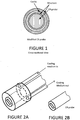
- FIGURE 1 illustrates a cross-sectional view of an exemplary embodiment of the present disclosure.
- the modified ER probe includes a ER probe and a cooling unit that includes a structure, preferably a mantel with an annular cavity disposed or arranged around the ER probe, so that the temperature of the surface can be controlled and, optionally, a temperature sensor (not shown) to monitor the temperature.
- the ER probe includes one or more elements, where the resistance across the electrode can be determined and/or measured by the modified ER probe or computer system interfaced with the modified ER probe.
- the structure can be contoured to flow the cooling medium.
- the structure can have a cross section that is similar to the ER probe cross section.
- the structure can have a circular cross section, polygonal cross section or the like.
- the structure can include one or more openings so that a cooling medium, e.g., a gas or a fluid, can flow in and out of the cavity of the structure.
- the cooling unit includes an opening for the ER probe so that the sensor (e.g., element) of the probe (See the rectangular shaped structure in FIGURE 2 ) is exposed to the environment around the ER probe.
- the openings can be the same or a different size (e.g., circular, polygonal, and the like) and on the order of millimeters to centimeters.
- the structure can have 1 to 100 openings.
- a flow system can be used to flow the cooling medium and can include flow regulators, piezoelectric systems, and the like.
- a surface of the cooling unit which has been cooled down to a specified temperature, is arranged to be in connection, preferably directly attached (touch), with a surface of the probe thereby cooling the probe head and the sensing element.
- the cooling unit is not in direct contact with the ER probe, so a cool gas, preferably air, can be circulated in the area around the ER probe to control the temperature of the ER probe.
- the modified ER probe can also include a temperature sensor so that the temperature can be monitored as a function of the results produced by the ER probe.
- the temperature sensor can include one or more temperature detection sensors disposed on or outside of the modified ER probe.
- the temperature measurement sensor(s) can be disposed adjacent the ER probe to measure the temperature of one or more of the following: the ER probe, the air around the ER probe, or the air outside of the ER probe.
- FIGURE 2A illustrates a perspective view of an embodiment of the modified ER probe (i.e., an embodiment of a cooling unit is disposed around the ER probe).
- FIGURE 2A illustrates an embodiment of a configuration to change the temperature (e.g., reduce the temperature) using the cooling unit by flowing a cooling medium through the structure.
- FIGURE 2B illustrates a schematic perspective view of an ER probe.
- Embodiments of the present disclosure may overcome these problems by cooling the measurement head of the ER probe.
- cooling the ER probe can create conditions where a sensing element in the ER probe is sensitive to reacting to changes in the amount of corrosive chemicals in the air and thus gives information on the rate of vapor phase corrosion in the paper machine.
- the temperature difference between the air outside of the modified ER probe and the surface of the ER probe can be controlled to be about 3 to 30 C.
- an automatic valve assembly for a cooling water flow can be controlled and maintain the probe surface temperature as constant.
- the variation of probe surface temperature can be controlled to be about 10°C or less.
- this aspect can be solved by installing an on-line temperature measurement sensor in the modified ER probe.
- a change in the rate of vapor phase corrosion can be considered as valid data when the temperature of the sensor head was unchanged (e.g., a temperature change of about 10 °C or less or about 3 °C or less) from adjacent temperature readings. This provides reliable information on changes in the rate of vapor phase corrosion and this data can be used for adjusting dosages of oxidizing biocides.
- vapor phase corrosion shows an increased rate for about 12 hours compared to the preceding 12 hours (and the temperature change of the is less than 5 or 3°C)
- this may indicate that the dosing of oxidizing biocides can be reduced (e.g., nearest to the headbox of the paper machine).
- This is just an example of the possible time ranges set for data comparison, depending on the paper machine conditions the time range in comparison can be shorter ( e.g., 1 to 12 hours) or longer ( e.g., 12 hours to day increments or 2 or 3 day increments, or a week increment).
- the signals from the modified ER probe and the signals from the temperature sensor are stored in a computer device (e.g., software, hardware, or a combination thereof).
- the computer device can collect, store, and analyze the signals, e.g., rate of vapor phase corrosion and/or change in corrosion quantity is calculated using signals from modified ER probe.
- the computer device can also be used for signals from the temperature sensor, to check validity of the detected rate of vapor phase corrosion.
- adjustment of the biocide dosing amounts can be determined from the corrosion data (e.g., calculated data or untreated data from the modified ER probe). The adjustment can happen automatically, such as initiated by the computer device, or manually, such as initiated by a person.
- the computer device is programmed to send an alarm message for a service person, which after receiving a message of, e.g., increased corrosion rate, can then go and manually adjust biocide dosing quantities to a lower level.
- a computer device monitoring the signals from the modified ER probe and temperature sensor can be used to convert the information on changes in corrosion data (i.e., corrosion quantity or corrosion rate) into relative changes in biocide dosing quantities to the paper making process. In this regard, the system is completely automated.
- the modified ER probe system 200 may be in communication with the computer device 10.
- the temperature sensor 210 and the cooling unit 220, and the modified ER probe 230 may be communication with the computer device 10.
- one or more aspects of the measuring method can be implemented using software and/or hardware as described herein.
- the computing device 10 includes at least one processor circuit, for example, having a processor 13 and a memory 16, both of which are coupled to a local interface 19.
- the computing device 10 may comprise, for example, at least one server computer or like device.
- the local interface 19 may comprise, for example, a data bus with an accompanying address/control bus or other bus structure as can be appreciated.
- Stored in the memory 16 are both data and several components that are executable by the processor 13.
- stored in the memory 16 and executable by the processor 13 are a measuring application 15 and/or other applications.
- Also stored in the memory 16 may be a data store 12 and other data.
- an operating system may be stored in the memory 16 and executable by the processor 13.
- any one of a number of programming languages may be employed such as, for example, C, C++, C#, Objective C, Java® , JavaScript®, Perl, PHP, Visual Basic®, Python®, Ruby, Delphi®, Flash®, MATLAB, or other programming languages.
- executable means a program file that is in a form that can ultimately be run by the processor 13.
- Examples of executable programs may be, for example, a compiled program that can be translated into machine code in a format that can be loaded into a random access portion of the memory 16 and run by the processor 13, source code that may be expressed in proper format such as object code that is capable of being loaded into a random access portion of the memory 16 and executed by the processor 13, or source code that may be interpreted by another executable program to generate instructions in a random access portion of the memory 16 to be executed by the processor 13, etc.
- An executable program may be stored in any portion or component of the memory 16 including, for example, random access memory (RAM), read-only memory (ROM), hard drive, solid-state drive, USB flash drive, memory card, optical disc such as compact disc (CD) or digital versatile disc (DVD), floppy disk, magnetic tape, or other memory components.
- RAM random access memory
- ROM read-only memory
- hard drive solid-state drive
- USB flash drive USB flash drive
- memory card such as compact disc (CD) or digital versatile disc (DVD), floppy disk, magnetic tape, or other memory components.
- CD compact disc
- DVD digital versatile disc
- the memory 16 is defined herein as including both volatile and nonvolatile memory and data storage components. Volatile components are those that do not retain data values upon loss of power. Nonvolatile components are those that retain data upon a loss of power.
- the memory 16 may comprise, for example, random access memory (RAM), read-only memory (ROM), hard disk drives, solid-state drives, USB flash drives, memory cards accessed via a memory card reader, floppy disks accessed via an associated floppy disk drive, optical discs accessed via an optical disc drive, magnetic tapes accessed via an appropriate tape drive, and/or other memory components, or a combination of any two or more of these memory components.
- the RAM may comprise, for example, static random access memory (SRAM), dynamic random access memory (DRAM), or magnetic random access memory (MRAM) and other such devices.
- the ROM may comprise, for example, a programmable read-only memory (PROM), an erasable programmable read-only memory (EPROM), an electrically erasable programmable read-only memory (EEPROM), or other like memory device.
- the processor 13 may represent multiple processors 13 and the memory 16 may represent multiple memories 16 that operate in parallel processing circuits, respectively.
- the local interface 19 may be an appropriate network that facilitates communication between any two of the multiple processors 13, between any processor 13 and any of the memories 16, or between any two of the memories 16, etc.
- the local interface 19 may comprise additional systems designed to coordinate this communication, including, for example, performing load balancing.
- the processor 13 may be of electrical or of some other available construction.
- measuring application 15 and other various systems described herein may be embodied in software or code executed by general purpose hardware as discussed above, as an alternative the same may also be embodied in dedicated hardware or a combination of software/general purpose hardware and dedicated hardware. If embodied in dedicated hardware, each can be implemented as a circuit or state machine that employs any one of or a combination of a number of technologies. These technologies may include, but are not limited to, discrete logic circuits having logic gates for implementing various logic functions upon an application of one or more data signals, application specific integrated circuits having appropriate logic gates, or other components, etc. Such technologies are generally well known by those skilled in the art and, consequently, are not described in detail herein.
- a measuring application 15 can be used for monitoring and/or measuring the vapor phase corrosion in a paper or board machine.
- a step 32 includes obtaining information regarding the rate of vapor phase corrosion over a time period.
- the information can be used to determine how to adjust the dosing of an oxidizing biocide in a paper or board making process.
- any logic or application described herein, including the measuring application 15 and/or application(s), that comprises software or code can be embodied in any non-transitory computer-readable medium for use by or in connection with an instruction execution system such as, for example, a processor 13 in a computer system or other system.
- the logic may comprise, for example, statements including instructions and declarations that can be fetched from the computer-readable medium and executed by the instruction execution system.
- a "computer-readable medium" can be any medium that can contain, store, or maintain the logic or application described herein for use by or in connection with the instruction execution system.
- the computer-readable medium can comprise any one of many physical media such as, for example, magnetic, optical, or semiconductor media.
- a suitable computer-readable medium would include, but are not limited to, magnetic tapes, magnetic floppy diskettes, magnetic hard drives, memory cards, solid-state drives, USB flash drives, or optical discs.
- the computer-readable medium may be a random access memory (RAM) including, for example, static random access memory (SRAM) and dynamic random access memory (DRAM), or magnetic random access memory (MRAM).
- the computer-readable medium may be a read-only memory (ROM), a programmable read-only memory (PROM), an erasable programmable read-only memory (EPROM), an electrically erasable programmable read-only memory (EEPROM), or other type of memory device.
- An exemplary embodiment according to clause 1 discloses a method for monitoring the vapor phase corrosion in a paper or board machine, comprising: obtaining information regarding the rate of vapor phase corrosion over a time period; and using the information to determine how to adjust the dosing of an oxidizing biocide in a paper or board making process; and adjusting the amount of the oxidizing biocide based on the information obtained regarding vapor phase corrosion, wherein obtaining information regarding the rate of vapor phase corrosion over a time period is by a computing device; and using the information to determine how to adjust the dosing of an oxidizing biocide in a paper or board making process is by a computing device, further comprising: adjusting, by the computing device, the amount of the oxidizing biocide based on the information obtained regarding vapor phase corrosion, wherein obtaining includes measuring, by the computing device, an electrical resistance of an element in a modified ER probe.
- An exemplary embodiment according to clause 2 discloses a method for monitoring the vapor phase corrosion in a paper or board machine, comprising: obtaining information regarding the rate of vapor phase corrosion over a time period; and using the information to determine how to adjust the dosing of an oxidizing biocide in a paper or board making process; and adjusting the amount of the oxidizing biocide based on the information obtained regarding vapor phase corrosion, wherein obtaining information regarding the rate of vapor phase corrosion over a time period is by a computing device; and using the information to determine how to adjust the dosing of an oxidizing biocide in a paper or board making process is by a computing device, further comprising: adjusting, by the computing device, the amount of the oxidizing biocide based on the information obtained regarding vapor phase corrosion, further comprising: controlling, by a computing device, the temperature difference between the air outside of a modified ER probe and a surface of an ER probe.
- An exemplary embodiment according to clause 3 discloses a modified electrical resistance (ER) device, comprising: an electrical resistance (ER) probe and a cooling unit, wherein the cooling device includes a structure disposed around the ER probe, wherein a cavity is formed between the structure and the ER probe, and wherein the structure includes one or more openings, further comprising a temperature measurement sensor to measure the temperature of one or more of the following: the ER probe, the air around the ER probe, or the air outside of the ER probe.
- the cooling device includes a structure disposed around the ER probe, wherein a cavity is formed between the structure and the ER probe, and wherein the structure includes one or more openings, further comprising a temperature measurement sensor to measure the temperature of one or more of the following: the ER probe, the air around the ER probe, or the air outside of the ER probe.
- An exemplary embodiment according to clause 4 discloses a system, comprising: at least one computing device; and a method application executable in the at least one computing device, the method application comprising: logic that obtains information regarding the rate of vapor phase corrosion over a time period; and logic that uses the information to determine how to adjust the dosing of an oxidizing biocide in a paper or board making process, further comprising: logic that controls the temperature difference between the air outside of a modified ER probe and a surface of an ER probe.
- An Electrical Resistance (ER) probe (Roxar Flow Measurements AS, Norway) modified with a cooling unit, with a pt-temperature probe and with a datalogger, was installed in a paper machine making almost 150 000 tons of paper annually. Exact point of installation was in the beginning of the drier section, inside the protective doors of the drier section, in vapor phase, less than one meter away from the paper web.
- the sensing element of the ER probe was of carbon steel. Surface temperature of the sensing element was lowered and kept constant, around 60°C, by cooling water flow.
- Datalogger was recording temperature and rate of corrosion (metal loss) every minute. Datalogger was connected to internet and enabled remote on-line monitoring of the vapor phase corrosion.
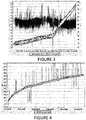
- the graph shown in Figure 3 illustrates example data about measured rate of corrosion (metal loss of the sensing element, ⁇ m) during a period from 18 th of December to 3 rd of January. It can be seen from the Figure 3 that until 29 th of December the rate of vapor phase corrosion was quite stable, cumulative metal loss increased linearly and daily average metal loss was ca. 0.3 ⁇ m/d. When biocide dosages in the machine were changed after a shut-down of the machine late of Dec 29 th , the on-line probe for vapor phase corrosion responded quickly and showed an increased rate of vapor phase corrosion.
- a modified ER probe (similar setup like in example 1) was installed in vapor phase in beginning of the drier section, near the 6 th cylinder, of a board machine making almost 160 000 tons of packaging board annually.
- Datalogger was recording rate of corrosion (metal loss) every minute.
- Datalogger was connected to internet and enabled remote on-line monitoring of the vapor phase corrosion.
- Figure 4 illustrates a graph that shows example data about measured rate of corrosion (metal loss of the sensing element, ⁇ m) during a five-week period. It can be seen from Figure 4 that during the first ten days the rate of vapor phase corrosion was quite high, with a daily average metal loss of 1.17 ⁇ m/d.
- the biocide program was altered during shut-down of the machine and starting from re-start of the machine (3 rd of May) the rate of vapor phase corrosion was clearly lower, with a daily average metal loss of 0.25 ⁇ m/d.
- ratios, concentrations, amounts, and other numerical data may be expressed herein in a range format. It is to be understood that such a range format is used for convenience and brevity, and thus, should be interpreted in a flexible manner to include not only the numerical values explicitly recited as the limits of the range, but also to include all the individual numerical values or sub-ranges encompassed within that range as if each numerical value and sub-range is explicitly recited.
- a concentration range of "about 0.1% to about 5%” should be interpreted to include not only the explicitly recited concentration of about 0.1 wt% to about 5 wt%, but also include individual concentrations ( e.g., 1%, 2%, 3%, and 4%) and the sub-ranges ( e.g., 0.5%, 1.1%, 2.2%, 3.3%, and 4.4%) within the indicated range.
- the term “about” can include traditional rounding according to significant figures of the numerical value.
- the phrase “about 'x' to 'y'” includes “about 'x' to about 'y'".
- a range includes “zero” and is modified by "about” (e.g., about one to zero or about zero to one), about zero can include, 0, 0.1. 0.01, or 0.001.
Landscapes
- Life Sciences & Earth Sciences (AREA)
- Chemical & Material Sciences (AREA)
- Biochemistry (AREA)
- Pathology (AREA)
- Immunology (AREA)
- General Physics & Mathematics (AREA)
- General Health & Medical Sciences (AREA)
- Physics & Mathematics (AREA)
- Health & Medical Sciences (AREA)
- Analytical Chemistry (AREA)
- Environmental Sciences (AREA)
- Environmental & Geological Engineering (AREA)
- Ecology (AREA)
- Biodiversity & Conservation Biology (AREA)
- Pest Control & Pesticides (AREA)
- Engineering & Computer Science (AREA)
- Manufacturing & Machinery (AREA)
- Chemical Kinetics & Catalysis (AREA)
- Electrochemistry (AREA)
- Testing Resistance To Weather, Investigating Materials By Mechanical Methods (AREA)
- Investigating Or Analyzing Materials By The Use Of Electric Means (AREA)
Priority Applications (1)
| Application Number | Priority Date | Filing Date | Title |
|---|---|---|---|
| PL13705518T PL2804978T3 (pl) | 2012-01-20 | 2013-01-21 | Urządzenie i sposób monitorowania dozowania biocydu w maszynie |
Applications Claiming Priority (2)
| Application Number | Priority Date | Filing Date | Title |
|---|---|---|---|
| US201261588710P | 2012-01-20 | 2012-01-20 | |
| PCT/FI2013/050060 WO2013107941A1 (en) | 2012-01-20 | 2013-01-21 | Device and method for monitoring biocide dosing in a machine |
Publications (2)
| Publication Number | Publication Date |
|---|---|
| EP2804978A1 EP2804978A1 (en) | 2014-11-26 |
| EP2804978B1 true EP2804978B1 (en) | 2019-01-09 |
Family
ID=47747663
Family Applications (1)
| Application Number | Title | Priority Date | Filing Date |
|---|---|---|---|
| EP13705518.2A Active EP2804978B1 (en) | 2012-01-20 | 2013-01-21 | Device and method for monitoring biocide dosing in a machine |
Country Status (9)
| Country | Link |
|---|---|
| US (1) | US9341560B2 (pl) |
| EP (1) | EP2804978B1 (pl) |
| KR (1) | KR102056879B1 (pl) |
| CN (1) | CN104246072B (pl) |
| BR (1) | BR112014017859B1 (pl) |
| CA (1) | CA2861599C (pl) |
| ES (1) | ES2719075T3 (pl) |
| PL (1) | PL2804978T3 (pl) |
| WO (1) | WO2013107941A1 (pl) |
Families Citing this family (6)
| Publication number | Priority date | Publication date | Assignee | Title |
|---|---|---|---|---|
| US9341560B2 (en) * | 2012-01-20 | 2016-05-17 | Kemira Oyj | Device and method for monitoring biocide dosing in a machine |
| PT2855766T (pt) * | 2012-06-05 | 2019-09-18 | Buckman Laboratories Int Inc | Métodos de conservação de amido numa pasta |
| CN109722936B (zh) * | 2014-02-27 | 2022-01-18 | 艺康美国股份有限公司 | 利用杀生物剂在造纸中保护回收纤维的方法以及利用回收纤维造纸的方法 |
| US12072279B2 (en) | 2018-11-27 | 2024-08-27 | Kemira Oyj | Method for estimating the vapor phase corrosion load |
| US20230003634A1 (en) * | 2019-12-04 | 2023-01-05 | University of Alaska Anchorage | Low-power sensor network |
| EP4208870A4 (en) | 2020-09-04 | 2024-11-06 | Buckman Laboratories International, Inc. | PREDICTIVE SYSTEMS AND METHODS FOR PROACTIVE INTERVENTIONS IN CHEMICAL PROCESSES |
Family Cites Families (40)
| Publication number | Priority date | Publication date | Assignee | Title |
|---|---|---|---|---|
| US2898026A (en) * | 1954-02-01 | 1959-08-04 | Continental Can Co | Corrosion inhibiting container for metal articles |
| US5894040A (en) * | 1996-05-30 | 1999-04-13 | Cortec Corporation | Vapor phase corrosion inhibitors on post-consumer used or recycled paper |
| CZ20013966A3 (cs) * | 1999-05-03 | 2002-05-15 | Betzdearborn Inc. | Způsob a kompozice k inhibici koroze ve vodných systémech |
| US6794317B2 (en) * | 2000-04-26 | 2004-09-21 | Creare Inc. | Protective cover system including a corrosion inhibitor |
| FI116030B (fi) * | 2002-11-06 | 2005-09-15 | Kemira Oyj | Paperi- ja kartonkikoneiden termofiilisten mikrobien biofilminmuodostuksen esto |
| AU2003276306A1 (en) * | 2002-11-06 | 2004-06-07 | Kemira Oyj | A method for monitoring the presence of harmful microorganisms in paper industry |
| CN2577275Y (zh) | 2002-11-15 | 2003-10-01 | 中国科学院金属研究所 | 在线式电阻探针腐蚀监测仪 |
| FI117056B (fi) * | 2003-11-06 | 2006-05-31 | Kemira Oyj | Menetelmä biofilmiä muodostavien mikro-organismien esiintymisen monitoroimiseksi paperiteollisuudessa |
| KR100712970B1 (ko) * | 2005-03-03 | 2007-05-02 | 롬 앤드 하아스 컴패니 | 부식을 줄이기 위한 방법 |
| RU2008116166A (ru) * | 2005-10-31 | 2009-10-27 | Интернэшнл Пэйпа Кампани (Us) | Антикоррозийный бумажный или картонный материал |
| US7776363B2 (en) * | 2006-01-27 | 2010-08-17 | Nalco Company | Suppressing microbial growth in pulp and paper |
| FI119903B (fi) * | 2006-03-16 | 2009-05-15 | Kemira Oyj | Bakteeri-itiöiden muodostumisen estäminen kartonkikoneen hylkysysteemissä |
| FI119800B (fi) * | 2006-11-09 | 2009-03-31 | Kemira Oyj | Menetelmä mikro-organismien kasvun estämiseksi ja mikro-organismien kasvua estävä yhdistelmä |
| US8085165B2 (en) * | 2007-02-09 | 2011-12-27 | Luna Innovations Incorporated | Wireless corrosion sensor |
| US20090012825A1 (en) * | 2007-02-20 | 2009-01-08 | Ik-Hau Ng | Method for determining and/or managing corrosion and/or contamination |
| EP2126546B1 (en) | 2007-03-19 | 2014-12-24 | Avantium International B.V. | Corrosion simulator and the corresponding method |
| US8906202B2 (en) * | 2007-07-24 | 2014-12-09 | Nalco Company | Method of detecting and reducing contamination in papermaking boiler systems |
| US20090039864A1 (en) | 2007-08-06 | 2009-02-12 | Honeywell International, Inc. | Wireless corrosion sensor |
| US8133383B2 (en) * | 2008-01-23 | 2012-03-13 | Baker Hughes Incorporated | Localized corrosion monitoring device for limited conductivity fluids |
| WO2009143511A1 (en) * | 2008-05-23 | 2009-11-26 | Kemira Oyj | Chemistry for effective microbe control with reduced gas phase corrosiveness in pulp & paper processing systems |
| UA104886C2 (uk) * | 2009-03-13 | 2014-03-25 | Грін Сорс Енерджі Ллк | Екстракція вуглеводнів з вуглеводневмісних матеріалів і/або переробка вуглеводневмісних матеріалів |
| SE533727C2 (sv) * | 2009-04-30 | 2010-12-14 | Scs Engineering Ab | Anordning för att indikera kritisk korrosion hos en metallisk konstruktion |
| MX2012001211A (es) * | 2009-07-27 | 2012-05-29 | Lonza Ag | Soluciones de halogeno activas estabilizadas. |
| EP2480719A1 (en) | 2009-09-22 | 2012-08-01 | SONOCO Development Inc. | Paperboard containing a biocide and method for making the same |
| US20110200688A1 (en) * | 2010-02-16 | 2011-08-18 | Harvey Michael S | Methods and compositions for the reduction of pathogenic microorganisms from meat and poultry carcasses, trim and offal |
| EP2390408B1 (en) * | 2010-05-31 | 2013-03-27 | Kemira Oyj | Control of enzymes in the production of pulp |
| FI20105814A0 (fi) * | 2010-07-20 | 2010-07-20 | Kemira Oyj | Menetelmä ja järjestelmä vesipitoisten virtojen käsittelemiseksi |
| FI20105813A0 (fi) * | 2010-07-20 | 2010-07-20 | Kemira Oyj | Menetelmä ja järjestelmä vesipitoisen virran ominaisuuksien monitoroimiseksi |
| CN102004074B (zh) * | 2010-10-27 | 2014-07-23 | 中国石油化工股份有限公司 | 高温高压气液两相腐蚀模拟实验装置及其实验方法 |
| US8795589B1 (en) * | 2011-04-29 | 2014-08-05 | Cortec Corporation | Bio-based volatile corrosion inhibitors |
| CN103907008A (zh) * | 2011-06-21 | 2014-07-02 | 俄亥俄州立大学 | 用于监测流体和壁之间的相互作用的设备和方法 |
| US20140151273A1 (en) * | 2011-08-18 | 2014-06-05 | Outotec Oyj | Probe arrangement for a flotation cell |
| RU2609245C2 (ru) * | 2011-09-30 | 2017-01-31 | Кемира Ойй | Предотвращение деградации крахмала при производстве целлюлозы, бумаги или картона |
| US9265259B2 (en) * | 2011-10-21 | 2016-02-23 | Nalco Company | Use of sulfamic acid or its salts as stabilizers especially in combination with ammonium salt and/or ammine for bleach or other halogen containing biocides in the paper area |
| US9500461B2 (en) * | 2011-12-14 | 2016-11-22 | Exxonmobil Research And Engineering Company | Method for quantifying corrosion at a pressure containing boundary |
| EP4066925B1 (en) * | 2011-12-30 | 2025-05-07 | Kemira Oyj | Method for preventing microbial growth on filtration membrane |
| EA024652B1 (ru) * | 2012-01-06 | 2016-10-31 | Кемира Ойй | Биоцидная система и способы ее применения |
| US9341560B2 (en) * | 2012-01-20 | 2016-05-17 | Kemira Oyj | Device and method for monitoring biocide dosing in a machine |
| CN102749280A (zh) * | 2012-07-31 | 2012-10-24 | 内蒙古包钢钢联股份有限公司 | 一种测定材料腐蚀性能的方法 |
| NL2011758C2 (en) * | 2012-11-09 | 2015-05-19 | Johannes Jacobus Maria Heselmans | Field measurement of corrosion and erosion. |
-
2013
- 2013-01-21 US US14/373,236 patent/US9341560B2/en active Active
- 2013-01-21 WO PCT/FI2013/050060 patent/WO2013107941A1/en not_active Ceased
- 2013-01-21 CA CA2861599A patent/CA2861599C/en active Active
- 2013-01-21 EP EP13705518.2A patent/EP2804978B1/en active Active
- 2013-01-21 KR KR1020147023022A patent/KR102056879B1/ko active Active
- 2013-01-21 ES ES13705518T patent/ES2719075T3/es active Active
- 2013-01-21 CN CN201380006117.4A patent/CN104246072B/zh active Active
- 2013-01-21 BR BR112014017859-3A patent/BR112014017859B1/pt active IP Right Grant
- 2013-01-21 PL PL13705518T patent/PL2804978T3/pl unknown
Non-Patent Citations (1)
| Title |
|---|
| None * |
Also Published As
| Publication number | Publication date |
|---|---|
| CN104246072A (zh) | 2014-12-24 |
| CA2861599A1 (en) | 2013-07-25 |
| US9341560B2 (en) | 2016-05-17 |
| KR102056879B1 (ko) | 2019-12-17 |
| CA2861599C (en) | 2020-03-10 |
| WO2013107941A1 (en) | 2013-07-25 |
| PL2804978T3 (pl) | 2019-09-30 |
| CN104246072B (zh) | 2017-06-16 |
| US20150000853A1 (en) | 2015-01-01 |
| KR20140121444A (ko) | 2014-10-15 |
| EP2804978A1 (en) | 2014-11-26 |
| ES2719075T3 (es) | 2019-07-08 |
| BR112014017859A2 (pl) | 2017-06-20 |
| BR112014017859A8 (pt) | 2017-07-11 |
| BR112014017859B1 (pt) | 2021-03-09 |
Similar Documents
| Publication | Publication Date | Title |
|---|---|---|
| EP2804978B1 (en) | Device and method for monitoring biocide dosing in a machine | |
| KR101387036B1 (ko) | 공정 스트림에서의 미생물학적 활동 모니터링 방법 | |
| US11859347B2 (en) | Method for predicting or controlling microbial status of a paper or board making process | |
| US8489240B2 (en) | Control system for industrial water system and method for its use | |
| US8906202B2 (en) | Method of detecting and reducing contamination in papermaking boiler systems | |
| KR20130102608A (ko) | 종이를 제조하는 방법 | |
| CA2748258A1 (en) | Control system for monitoring localized corrosion in an industrial water system | |
| US20100028202A1 (en) | Proactive control system for an industrial water system | |
| JP2011525242A (ja) | 微生物学的堆積物の監視法 | |
| JP4238842B2 (ja) | スライムコントロール効果の判定方法及びスライムコントロール方法 | |
| RU2685799C1 (ru) | Измерение скорости коррозии многопараметрическим датчиком | |
| US20050036903A1 (en) | Pewitt analyzer | |
| US12072279B2 (en) | Method for estimating the vapor phase corrosion load | |
| US20220194826A1 (en) | Method of dosing biocide into a fluid system | |
| Kolari et al. | NOVEL BIOFILM CONTROL TECHNOLOGY FOR PAPER MACHINES | |
| Puckorius et al. | Cooling Water Inhibitor Performance | |
| Hassler | Improving Productivity and Quality by Controlling Organic, Inorganic and Microbiological Deposits |
Legal Events
| Date | Code | Title | Description |
|---|---|---|---|
| PUAI | Public reference made under article 153(3) epc to a published international application that has entered the european phase |
Free format text: ORIGINAL CODE: 0009012 |
|
| 17P | Request for examination filed |
Effective date: 20140805 |
|
| AK | Designated contracting states |
Kind code of ref document: A1 Designated state(s): AL AT BE BG CH CY CZ DE DK EE ES FI FR GB GR HR HU IE IS IT LI LT LU LV MC MK MT NL NO PL PT RO RS SE SI SK SM TR |
|
| DAX | Request for extension of the european patent (deleted) | ||
| 17Q | First examination report despatched |
Effective date: 20160307 |
|
| STAA | Information on the status of an ep patent application or granted ep patent |
Free format text: STATUS: EXAMINATION IS IN PROGRESS |
|
| REG | Reference to a national code |
Ref country code: DE Ref legal event code: R079 Ref document number: 602013049501 Country of ref document: DE Free format text: PREVIOUS MAIN CLASS: D21H0021040000 Ipc: D21H0021360000 |
|
| GRAP | Despatch of communication of intention to grant a patent |
Free format text: ORIGINAL CODE: EPIDOSNIGR1 |
|
| STAA | Information on the status of an ep patent application or granted ep patent |
Free format text: STATUS: GRANT OF PATENT IS INTENDED |
|
| RIC1 | Information provided on ipc code assigned before grant |
Ipc: D21H 21/38 20060101ALI20180710BHEP Ipc: D21H 21/36 20060101AFI20180710BHEP |
|
| INTG | Intention to grant announced |
Effective date: 20180730 |
|
| RAP1 | Party data changed (applicant data changed or rights of an application transferred) |
Owner name: KEMIRA OYJ |
|
| GRAS | Grant fee paid |
Free format text: ORIGINAL CODE: EPIDOSNIGR3 |
|
| GRAA | (expected) grant |
Free format text: ORIGINAL CODE: 0009210 |
|
| STAA | Information on the status of an ep patent application or granted ep patent |
Free format text: STATUS: THE PATENT HAS BEEN GRANTED |
|
| AK | Designated contracting states |
Kind code of ref document: B1 Designated state(s): AL AT BE BG CH CY CZ DE DK EE ES FI FR GB GR HR HU IE IS IT LI LT LU LV MC MK MT NL NO PL PT RO RS SE SI SK SM TR |
|
| REG | Reference to a national code |
Ref country code: GB Ref legal event code: FG4D |
|
| REG | Reference to a national code |
Ref country code: CH Ref legal event code: EP Ref country code: AT Ref legal event code: REF Ref document number: 1087438 Country of ref document: AT Kind code of ref document: T Effective date: 20190115 |
|
| REG | Reference to a national code |
Ref country code: IE Ref legal event code: FG4D |
|
| REG | Reference to a national code |
Ref country code: DE Ref legal event code: R096 Ref document number: 602013049501 Country of ref document: DE |
|
| REG | Reference to a national code |
Ref country code: SE Ref legal event code: TRGR |
|
| REG | Reference to a national code |
Ref country code: NL Ref legal event code: MP Effective date: 20190109 |
|
| REG | Reference to a national code |
Ref country code: LT Ref legal event code: MG4D |
|
| PG25 | Lapsed in a contracting state [announced via postgrant information from national office to epo] |
Ref country code: NL Free format text: LAPSE BECAUSE OF FAILURE TO SUBMIT A TRANSLATION OF THE DESCRIPTION OR TO PAY THE FEE WITHIN THE PRESCRIBED TIME-LIMIT Effective date: 20190109 |
|
| REG | Reference to a national code |
Ref country code: ES Ref legal event code: FG2A Ref document number: 2719075 Country of ref document: ES Kind code of ref document: T3 Effective date: 20190708 |
|
| REG | Reference to a national code |
Ref country code: AT Ref legal event code: MK05 Ref document number: 1087438 Country of ref document: AT Kind code of ref document: T Effective date: 20190109 |
|
| PG25 | Lapsed in a contracting state [announced via postgrant information from national office to epo] |
Ref country code: LT Free format text: LAPSE BECAUSE OF FAILURE TO SUBMIT A TRANSLATION OF THE DESCRIPTION OR TO PAY THE FEE WITHIN THE PRESCRIBED TIME-LIMIT Effective date: 20190109 Ref country code: PT Free format text: LAPSE BECAUSE OF FAILURE TO SUBMIT A TRANSLATION OF THE DESCRIPTION OR TO PAY THE FEE WITHIN THE PRESCRIBED TIME-LIMIT Effective date: 20190509 Ref country code: NO Free format text: LAPSE BECAUSE OF FAILURE TO SUBMIT A TRANSLATION OF THE DESCRIPTION OR TO PAY THE FEE WITHIN THE PRESCRIBED TIME-LIMIT Effective date: 20190409 |
|
| PG25 | Lapsed in a contracting state [announced via postgrant information from national office to epo] |
Ref country code: GR Free format text: LAPSE BECAUSE OF FAILURE TO SUBMIT A TRANSLATION OF THE DESCRIPTION OR TO PAY THE FEE WITHIN THE PRESCRIBED TIME-LIMIT Effective date: 20190410 Ref country code: LV Free format text: LAPSE BECAUSE OF FAILURE TO SUBMIT A TRANSLATION OF THE DESCRIPTION OR TO PAY THE FEE WITHIN THE PRESCRIBED TIME-LIMIT Effective date: 20190109 Ref country code: IS Free format text: LAPSE BECAUSE OF FAILURE TO SUBMIT A TRANSLATION OF THE DESCRIPTION OR TO PAY THE FEE WITHIN THE PRESCRIBED TIME-LIMIT Effective date: 20190509 Ref country code: BG Free format text: LAPSE BECAUSE OF FAILURE TO SUBMIT A TRANSLATION OF THE DESCRIPTION OR TO PAY THE FEE WITHIN THE PRESCRIBED TIME-LIMIT Effective date: 20190409 Ref country code: HR Free format text: LAPSE BECAUSE OF FAILURE TO SUBMIT A TRANSLATION OF THE DESCRIPTION OR TO PAY THE FEE WITHIN THE PRESCRIBED TIME-LIMIT Effective date: 20190109 Ref country code: RS Free format text: LAPSE BECAUSE OF FAILURE TO SUBMIT A TRANSLATION OF THE DESCRIPTION OR TO PAY THE FEE WITHIN THE PRESCRIBED TIME-LIMIT Effective date: 20190109 |
|
| REG | Reference to a national code |
Ref country code: CH Ref legal event code: PL |
|
| PG25 | Lapsed in a contracting state [announced via postgrant information from national office to epo] |
Ref country code: LU Free format text: LAPSE BECAUSE OF NON-PAYMENT OF DUE FEES Effective date: 20190121 |
|
| REG | Reference to a national code |
Ref country code: DE Ref legal event code: R097 Ref document number: 602013049501 Country of ref document: DE |
|
| REG | Reference to a national code |
Ref country code: BE Ref legal event code: MM Effective date: 20190131 |
|
| REG | Reference to a national code |
Ref country code: IE Ref legal event code: MM4A |
|
| PG25 | Lapsed in a contracting state [announced via postgrant information from national office to epo] |
Ref country code: AL Free format text: LAPSE BECAUSE OF FAILURE TO SUBMIT A TRANSLATION OF THE DESCRIPTION OR TO PAY THE FEE WITHIN THE PRESCRIBED TIME-LIMIT Effective date: 20190109 Ref country code: MC Free format text: LAPSE BECAUSE OF FAILURE TO SUBMIT A TRANSLATION OF THE DESCRIPTION OR TO PAY THE FEE WITHIN THE PRESCRIBED TIME-LIMIT Effective date: 20190109 Ref country code: CZ Free format text: LAPSE BECAUSE OF FAILURE TO SUBMIT A TRANSLATION OF THE DESCRIPTION OR TO PAY THE FEE WITHIN THE PRESCRIBED TIME-LIMIT Effective date: 20190109 Ref country code: RO Free format text: LAPSE BECAUSE OF FAILURE TO SUBMIT A TRANSLATION OF THE DESCRIPTION OR TO PAY THE FEE WITHIN THE PRESCRIBED TIME-LIMIT Effective date: 20190109 Ref country code: SK Free format text: LAPSE BECAUSE OF FAILURE TO SUBMIT A TRANSLATION OF THE DESCRIPTION OR TO PAY THE FEE WITHIN THE PRESCRIBED TIME-LIMIT Effective date: 20190109 Ref country code: AT Free format text: LAPSE BECAUSE OF FAILURE TO SUBMIT A TRANSLATION OF THE DESCRIPTION OR TO PAY THE FEE WITHIN THE PRESCRIBED TIME-LIMIT Effective date: 20190109 Ref country code: EE Free format text: LAPSE BECAUSE OF FAILURE TO SUBMIT A TRANSLATION OF THE DESCRIPTION OR TO PAY THE FEE WITHIN THE PRESCRIBED TIME-LIMIT Effective date: 20190109 Ref country code: DK Free format text: LAPSE BECAUSE OF FAILURE TO SUBMIT A TRANSLATION OF THE DESCRIPTION OR TO PAY THE FEE WITHIN THE PRESCRIBED TIME-LIMIT Effective date: 20190109 |
|
| PLBE | No opposition filed within time limit |
Free format text: ORIGINAL CODE: 0009261 |
|
| STAA | Information on the status of an ep patent application or granted ep patent |
Free format text: STATUS: NO OPPOSITION FILED WITHIN TIME LIMIT |
|
| PG25 | Lapsed in a contracting state [announced via postgrant information from national office to epo] |
Ref country code: SM Free format text: LAPSE BECAUSE OF FAILURE TO SUBMIT A TRANSLATION OF THE DESCRIPTION OR TO PAY THE FEE WITHIN THE PRESCRIBED TIME-LIMIT Effective date: 20190109 Ref country code: BE Free format text: LAPSE BECAUSE OF NON-PAYMENT OF DUE FEES Effective date: 20190131 |
|
| 26N | No opposition filed |
Effective date: 20191010 |
|
| PG25 | Lapsed in a contracting state [announced via postgrant information from national office to epo] |
Ref country code: CH Free format text: LAPSE BECAUSE OF NON-PAYMENT OF DUE FEES Effective date: 20190131 Ref country code: LI Free format text: LAPSE BECAUSE OF NON-PAYMENT OF DUE FEES Effective date: 20190131 |
|
| PG25 | Lapsed in a contracting state [announced via postgrant information from national office to epo] |
Ref country code: IE Free format text: LAPSE BECAUSE OF NON-PAYMENT OF DUE FEES Effective date: 20190121 |
|
| PG25 | Lapsed in a contracting state [announced via postgrant information from national office to epo] |
Ref country code: SI Free format text: LAPSE BECAUSE OF FAILURE TO SUBMIT A TRANSLATION OF THE DESCRIPTION OR TO PAY THE FEE WITHIN THE PRESCRIBED TIME-LIMIT Effective date: 20190109 |
|
| PG25 | Lapsed in a contracting state [announced via postgrant information from national office to epo] |
Ref country code: TR Free format text: LAPSE BECAUSE OF FAILURE TO SUBMIT A TRANSLATION OF THE DESCRIPTION OR TO PAY THE FEE WITHIN THE PRESCRIBED TIME-LIMIT Effective date: 20190109 |
|
| PG25 | Lapsed in a contracting state [announced via postgrant information from national office to epo] |
Ref country code: MT Free format text: LAPSE BECAUSE OF NON-PAYMENT OF DUE FEES Effective date: 20190121 |
|
| PG25 | Lapsed in a contracting state [announced via postgrant information from national office to epo] |
Ref country code: CY Free format text: LAPSE BECAUSE OF FAILURE TO SUBMIT A TRANSLATION OF THE DESCRIPTION OR TO PAY THE FEE WITHIN THE PRESCRIBED TIME-LIMIT Effective date: 20190109 |
|
| PG25 | Lapsed in a contracting state [announced via postgrant information from national office to epo] |
Ref country code: HU Free format text: LAPSE BECAUSE OF FAILURE TO SUBMIT A TRANSLATION OF THE DESCRIPTION OR TO PAY THE FEE WITHIN THE PRESCRIBED TIME-LIMIT; INVALID AB INITIO Effective date: 20130121 |
|
| PG25 | Lapsed in a contracting state [announced via postgrant information from national office to epo] |
Ref country code: MK Free format text: LAPSE BECAUSE OF FAILURE TO SUBMIT A TRANSLATION OF THE DESCRIPTION OR TO PAY THE FEE WITHIN THE PRESCRIBED TIME-LIMIT Effective date: 20190109 |
|
| PGFP | Annual fee paid to national office [announced via postgrant information from national office to epo] |
Ref country code: DE Payment date: 20250121 Year of fee payment: 13 |
|
| PGFP | Annual fee paid to national office [announced via postgrant information from national office to epo] |
Ref country code: FI Payment date: 20250124 Year of fee payment: 13 |
|
| PGFP | Annual fee paid to national office [announced via postgrant information from national office to epo] |
Ref country code: ES Payment date: 20250226 Year of fee payment: 13 |
|
| PGFP | Annual fee paid to national office [announced via postgrant information from national office to epo] |
Ref country code: SE Payment date: 20250121 Year of fee payment: 13 |
|
| PGFP | Annual fee paid to national office [announced via postgrant information from national office to epo] |
Ref country code: PL Payment date: 20250113 Year of fee payment: 13 Ref country code: FR Payment date: 20250127 Year of fee payment: 13 |
|
| PGFP | Annual fee paid to national office [announced via postgrant information from national office to epo] |
Ref country code: IT Payment date: 20250123 Year of fee payment: 13 Ref country code: GB Payment date: 20250128 Year of fee payment: 13 |