EP2804286A2 - Vorrichtung und Verfahren mit aktiver Ausgleichsschaltung und aktivem Ausgleichsalgorithmus zum Laden und Entladen von in Reihe geschalteten Sekundärbatterien - Google Patents
Vorrichtung und Verfahren mit aktiver Ausgleichsschaltung und aktivem Ausgleichsalgorithmus zum Laden und Entladen von in Reihe geschalteten Sekundärbatterien Download PDFInfo
- Publication number
- EP2804286A2 EP2804286A2 EP14168108.0A EP14168108A EP2804286A2 EP 2804286 A2 EP2804286 A2 EP 2804286A2 EP 14168108 A EP14168108 A EP 14168108A EP 2804286 A2 EP2804286 A2 EP 2804286A2
- Authority
- EP
- European Patent Office
- Prior art keywords
- secondary batteries
- battery
- voltage
- charging
- discharging
- Prior art date
- Legal status (The legal status is an assumption and is not a legal conclusion. Google has not performed a legal analysis and makes no representation as to the accuracy of the status listed.)
- Withdrawn
Links
Images



Classifications
-
- H—ELECTRICITY
- H02—GENERATION; CONVERSION OR DISTRIBUTION OF ELECTRIC POWER
- H02J—ELECTRIC POWER NETWORKS; CIRCUIT ARRANGEMENTS OR SYSTEMS FOR SUPPLYING OR DISTRIBUTING ELECTRIC POWER; SYSTEMS FOR STORING ELECTRIC ENERGY
- H02J7/00—Circuit arrangements for charging or discharging batteries or for supplying loads from batteries
-
- H—ELECTRICITY
- H02—GENERATION; CONVERSION OR DISTRIBUTION OF ELECTRIC POWER
- H02J—ELECTRIC POWER NETWORKS; CIRCUIT ARRANGEMENTS OR SYSTEMS FOR SUPPLYING OR DISTRIBUTING ELECTRIC POWER; SYSTEMS FOR STORING ELECTRIC ENERGY
- H02J7/00—Circuit arrangements for charging or discharging batteries or for supplying loads from batteries
- H02J7/50—Circuit arrangements for charging or discharging batteries or for supplying loads from batteries acting upon multiple batteries simultaneously or sequentially
- H02J7/52—Circuit arrangements for charging or discharging batteries or for supplying loads from batteries acting upon multiple batteries simultaneously or sequentially for charge balancing, e.g. equalisation of charge between batteries
- H02J7/54—Passive balancing, e.g. using resistors or parallel MOSFETs
-
- B—PERFORMING OPERATIONS; TRANSPORTING
- B60—VEHICLES IN GENERAL
- B60L—PROPULSION OF ELECTRICALLY-PROPELLED VEHICLES; SUPPLYING ELECTRIC POWER FOR AUXILIARY EQUIPMENT OF ELECTRICALLY-PROPELLED VEHICLES; ELECTRODYNAMIC BRAKE SYSTEMS FOR VEHICLES IN GENERAL; MAGNETIC SUSPENSION OR LEVITATION FOR VEHICLES; MONITORING OPERATING VARIABLES OF ELECTRICALLY-PROPELLED VEHICLES; ELECTRIC SAFETY DEVICES FOR ELECTRICALLY-PROPELLED VEHICLES
- B60L58/00—Methods or circuit arrangements for monitoring or controlling batteries or fuel cells, specially adapted for electric vehicles
- B60L58/10—Methods or circuit arrangements for monitoring or controlling batteries or fuel cells, specially adapted for electric vehicles for monitoring or controlling batteries
- B60L58/18—Methods or circuit arrangements for monitoring or controlling batteries or fuel cells, specially adapted for electric vehicles for monitoring or controlling batteries of two or more battery modules
- B60L58/21—Methods or circuit arrangements for monitoring or controlling batteries or fuel cells, specially adapted for electric vehicles for monitoring or controlling batteries of two or more battery modules having the same nominal voltage
-
- B—PERFORMING OPERATIONS; TRANSPORTING
- B60—VEHICLES IN GENERAL
- B60L—PROPULSION OF ELECTRICALLY-PROPELLED VEHICLES; SUPPLYING ELECTRIC POWER FOR AUXILIARY EQUIPMENT OF ELECTRICALLY-PROPELLED VEHICLES; ELECTRODYNAMIC BRAKE SYSTEMS FOR VEHICLES IN GENERAL; MAGNETIC SUSPENSION OR LEVITATION FOR VEHICLES; MONITORING OPERATING VARIABLES OF ELECTRICALLY-PROPELLED VEHICLES; ELECTRIC SAFETY DEVICES FOR ELECTRICALLY-PROPELLED VEHICLES
- B60L58/00—Methods or circuit arrangements for monitoring or controlling batteries or fuel cells, specially adapted for electric vehicles
- B60L58/10—Methods or circuit arrangements for monitoring or controlling batteries or fuel cells, specially adapted for electric vehicles for monitoring or controlling batteries
- B60L58/18—Methods or circuit arrangements for monitoring or controlling batteries or fuel cells, specially adapted for electric vehicles for monitoring or controlling batteries of two or more battery modules
- B60L58/22—Balancing the charge of battery modules
-
- H—ELECTRICITY
- H02—GENERATION; CONVERSION OR DISTRIBUTION OF ELECTRIC POWER
- H02J—ELECTRIC POWER NETWORKS; CIRCUIT ARRANGEMENTS OR SYSTEMS FOR SUPPLYING OR DISTRIBUTING ELECTRIC POWER; SYSTEMS FOR STORING ELECTRIC ENERGY
- H02J7/00—Circuit arrangements for charging or discharging batteries or for supplying loads from batteries
- H02J7/02—Circuit arrangements for charging or discharging batteries or for supplying loads from batteries for charging batteries from AC mains by converters
- H02J7/04—Regulation of charging current or voltage
-
- H—ELECTRICITY
- H02—GENERATION; CONVERSION OR DISTRIBUTION OF ELECTRIC POWER
- H02J—ELECTRIC POWER NETWORKS; CIRCUIT ARRANGEMENTS OR SYSTEMS FOR SUPPLYING OR DISTRIBUTING ELECTRIC POWER; SYSTEMS FOR STORING ELECTRIC ENERGY
- H02J7/00—Circuit arrangements for charging or discharging batteries or for supplying loads from batteries
- H02J7/50—Circuit arrangements for charging or discharging batteries or for supplying loads from batteries acting upon multiple batteries simultaneously or sequentially
- H02J7/52—Circuit arrangements for charging or discharging batteries or for supplying loads from batteries acting upon multiple batteries simultaneously or sequentially for charge balancing, e.g. equalisation of charge between batteries
-
- B—PERFORMING OPERATIONS; TRANSPORTING
- B60—VEHICLES IN GENERAL
- B60L—PROPULSION OF ELECTRICALLY-PROPELLED VEHICLES; SUPPLYING ELECTRIC POWER FOR AUXILIARY EQUIPMENT OF ELECTRICALLY-PROPELLED VEHICLES; ELECTRODYNAMIC BRAKE SYSTEMS FOR VEHICLES IN GENERAL; MAGNETIC SUSPENSION OR LEVITATION FOR VEHICLES; MONITORING OPERATING VARIABLES OF ELECTRICALLY-PROPELLED VEHICLES; ELECTRIC SAFETY DEVICES FOR ELECTRICALLY-PROPELLED VEHICLES
- B60L2210/00—Converter types
- B60L2210/10—DC to DC converters
-
- H—ELECTRICITY
- H02—GENERATION; CONVERSION OR DISTRIBUTION OF ELECTRIC POWER
- H02J—ELECTRIC POWER NETWORKS; CIRCUIT ARRANGEMENTS OR SYSTEMS FOR SUPPLYING OR DISTRIBUTING ELECTRIC POWER; SYSTEMS FOR STORING ELECTRIC ENERGY
- H02J7/00—Circuit arrangements for charging or discharging batteries or for supplying loads from batteries
- H02J7/485—Circuit arrangements for charging or discharging batteries or for supplying loads from batteries with provisions for charging different types of batteries
-
- Y—GENERAL TAGGING OF NEW TECHNOLOGICAL DEVELOPMENTS; GENERAL TAGGING OF CROSS-SECTIONAL TECHNOLOGIES SPANNING OVER SEVERAL SECTIONS OF THE IPC; TECHNICAL SUBJECTS COVERED BY FORMER USPC CROSS-REFERENCE ART COLLECTIONS [XRACs] AND DIGESTS
- Y02—TECHNOLOGIES OR APPLICATIONS FOR MITIGATION OR ADAPTATION AGAINST CLIMATE CHANGE
- Y02T—CLIMATE CHANGE MITIGATION TECHNOLOGIES RELATED TO TRANSPORTATION
- Y02T10/00—Road transport of goods or passengers
- Y02T10/60—Other road transportation technologies with climate change mitigation effect
- Y02T10/70—Energy storage systems for electromobility, e.g. batteries
Definitions
- the present invention relates to a secondary battery charge/discharge control apparatus and method with an active balancing circuit and algorithm to charge and discharge a plurality of secondary batteries connected in series.
- Li-capacity lithium secondary batteries used in electric vehicles each have a relatively low operating voltage, for example, a voltage of about 2 volts (V) to about 4.7 V, and a relatively high operating current, for example, a current of about 25 amperes (A) to about 50 A.
- a battery of a unit module (for example, a single battery, or a few batteries are connected in parallel or in series) needs to be charged and discharged at maximum capacity.
- a battery of a unit module for example, a single battery, or a few batteries are connected in parallel or in series
- AC alternating current
- a single lithium secondary battery with an operating voltage of about 2 V to about 4.7 V may be discharged. Electricity obtained by the discharging may need to be regenerated in a nationwide AC grid by consuming the electricity as heat, or by converting the electricity to AC electricity.
- a direct current (DC)-to-AC (DC/AC) converter used to regenerate power may have extremely low conversion efficiency, for example typically 40%, since a voltage of a single battery is considerably lower than a voltage of a commercial AC grid (for example, 220 V or 380 V). During conversion, remaining energy may be consumed as heat in the DC/AC converter.
- DC/AC direct current
- a process of using a conventional secondary battery charge/discharge apparatus is known to use the most power in a factory of manufacturing batteries including conditioning equipment for cooling.
- secondary batteries having slightly different capacities and slightly different internal resistances are connected in series and are charged and discharged by a single bidirectional constant current power supply, it may be difficult to charge and discharge each of the plurality of secondary batteries at a constant voltage (CV) due to a difference in characteristics of the secondary batteries, and overcharge or overdischarge may occur.
- CV constant voltage
- a technical configuration associated with a battery pack control module and a method of using the same for balancing of a plurality of lithium secondary batteries or groups of lithium secondary batteries is disclosed in Korean Patent Publication No. 10-2011-0008337 . Additionally, a technical configuration including discharge route circuits for each secondary battery connected in series and for protecting overcharge is disclosed in Korean Patent Publication No. 10-2010-0122911 . However, in that disclosure, because each of the plurality of secondary batteries includes a separate discharge resistor and a switching element to form a discharge route circuit, power consumption, and manufacturing costs may increase.
- An aspect of the present invention is to overcome a difference in characteristics between secondary batteries, connected in series and having different capacities and different internal resistances, and to enable constant voltage (CV) charge/discharge in a series circuit, by adding an active balancing circuit configured to add or subtract a predetermined amount of current at both ends of each of the secondary batteries, when the secondary batteries are charged and discharged by a single bidirectional constant current source.
- CV constant voltage
- Another aspect of the present invention is to enable balancing of all batteries within each of a plurality of trays during CV charging, using an active balancing circuit with an extremely small capacity in each secondary battery charge/discharge circuit. This is because batteries manufactured in the same process are generally different from each other in characteristics (for example, an internal resistance, capacity, and the like) typically by a relatively low value, for example about 5 %, that is set by a user to determine whether a battery is good or faulty. Another reason is that capacity distribution between batteries manufactured in the same process is not very large.
- Still another aspect of the present invention is to reduce manufacturing costs by configuring an apparatus with a single bidirectional direct current (DC)-to-DC (DC/DC) converter, a single bidirectional linear current source, and a single controller, to innovatively increase a power conversion efficiency by using discharged electricity to perform charging in a DC state without a change, to significantly reduce size and weight, and to significantly reduce installation space, when a plurality of secondary batteries within a single tray are connected in series, and are simultaneously charged and discharged.
- DC direct current
- DC/DC bidirectional linear current source
- a secondary battery charge/discharge control apparatus and method with an active balancing circuit and algorithm that are designed and manufactured to simultaneously charge and discharge a plurality of secondary batteries, connected in series within a single tray and having different charge/discharge characteristics, for example capacity, internal resistance, and the like, by using the active balancing circuit and a switching circuit. This is commonly done to achieve balancing of each of the plurality of secondary batteries so that all the plurality of secondary batteries are charged and discharged in a CV mode at a set voltage.
- a secondary battery charge/discharge control apparatus and method with an active balancing circuit and algorithm may enable constant current (CC) and CV charge/discharge, despite different characteristics of secondary batteries connected in series. This may be accomplished by actively adjusting the different characteristics to maintain a CV when the same amount of current flows in circuit components of a series circuit in which the plurality of secondary batteries are connected in series. Additionally, when a small capacity, for example about 5 % of the total capacity, is adjusted by the active balancing circuit due to distribution of a capacity or internal resistance in a narrow range, for example about 5 %, a balancing circuit with a sufficiently small capacity may be connected to each of secondary battery charge/discharge circuits.
- a small capacity for example about 5 % of the total capacity
- a secondary battery charge/discharge control apparatus and method with an active balancing circuit and algorithm may simultaneously charge and discharge a plurality of secondary batteries connected in series within a single tray, using a single bidirectional DC/DC converter and a bidirectional linear current source, and that may terminate charging and discharging when all the plurality of secondary batteries have the same current values at a maximum voltage when charging and discharging are performed in a CC mode, and then performed in a CV mode using the active balancing circuit.
- the secondary battery charge/discharge control apparatus and method may enable a plurality of batteries connected in series to be simultaneously charged and discharged, using the active balancing circuit and a relay to achieve balancing of each of the batteries so that the batteries may be charged at a set maximum voltage in a constant voltage (CV) mode, in an apparatus for simultaneously charging and discharging a plurality of secondary batteries connected in series.
- the batteries may have different charge/discharge characteristics, because capacities and internal resistances of the batteries are not exactly the same.
- the different characteristics may be compensated for using an active balancing circuit configured to actively control the different characteristics to maintain a constant voltage (CV). Accordingly, secondary batteries having equivalently, exactly the same characteristics may be connected in series, and may be charged and discharged.
- CV constant voltage
- an active balancing circuit when batteries manufactured in the same process are different from each other in characteristics (for example, an internal resistance, capacity, and the like) typically by a relatively low value, for example about 5 %, and when a small capacity, for example about 5 % of the total capacity, is adjusted by an active balancing circuit due to distribution of capacity or internal resistance in a narrow range, for example about 5 %, an active balancing circuit with a sufficiently small capacity may be connected to each of a plurality of secondary battery charge/discharge circuits.
- characteristics for example, an internal resistance, capacity, and the like
- Embodiment 1 relates to a secondary battery charge/discharge control apparatus with an active balancing circuit and algorithm to charge and discharge a plurality of batteries connected in series.
- FIG. 1 is a diagram illustrating an individual secondary battery charge/discharge apparatus according to the related art.
- the individual secondary battery charge/discharge apparatus of FIG. 1 may encounter the issue in which high installation costs and wide space are required, and a power recovery rate is low, because each of a plurality of batteries are charged and discharged using a direct current (DC)-to-alternating current (AC) power supply of each of the batteries.
- DC direct current
- AC alternating current
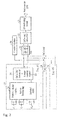
- FIG. 2 is a diagram illustrating a secondary battery charge/discharge control apparatus with an active balancing circuit to charge and discharge a plurality of secondary batteries connected in series according to an embodiment of the present invention.
- the terms “charging and discharging” and “charge/discharge” may be interchangeably used with respect to each other.
- the terms “lithium secondary battery,” “secondary battery,” and “battery” may be interchangeably used with respect to each other.
- the terms “central processing unit (CPU),” “controller including a CPU,” and “controller” may be interchangeably used with respect to each other.
- the controller may include a control program, and may be configured to perform charging and discharging based on the control program.
- different reference numerals may be assigned to the same element.
- An apparatus for charging and discharging each of a plurality of secondary batteries may increase power conversion efficiency by converting a voltage increased by connecting in series tens to hundreds of batteries, each having a relatively low voltage (for example, a voltage of 2 volts (V) to 4.7 V), using a bidirectional DC-to-DC (DC/DC) converter. Additionally, the apparatus may set a voltage of a DC charge/discharge apparatus to be about twice a maximum voltage of a battery group, and may increase a resolution and efficiency during power control. Furthermore, the apparatus may recycle power of a discharged battery so that the recycled power may be used to perform charging without a loss.
- DC/DC bidirectional DC-to-DC
- commercial power may be input through a distributing board 21.
- the commercial power supplied through the distributing board 21 may be stored in a DC energy storage system (ESS) 23 through a bidirectional AC-to-DC (AC/DC) converter 22.
- ESS DC energy storage system
- AC/DC bidirectional AC-to-DC
- the DC ESS 23 may connect electrolytic condensers and/or super condensers in series or in parallel, and may have a required voltage and capacity. Each of the electrolytic condensers and/or super condensers may have a capacity of hundreds of faraday (F).
- a power output through the DC ESS 23 may be electrically connected to a bidirectional DC/DC converter 24 that is installed in each of trays 27, 28 and 29. The power may be electrically connected to a linear current source 25, so that a plurality of batteries connected in series may be charged and discharged.
- the DC ESS 23 may function to stably supply electricity to the bidirectional DC/DC converter 24. Additionally, during power outage, the DC ESS 23 may enable charging and discharging to be continuously performed, by stably supplying electricity to the bidirectional DC/DC converter 24 for a predetermined period of time.
- the bidirectional DC/DC converter 24 and the linear current source 25 may be installed each of trays 27, 28 and 29, so that each of the plurality of batteries connected in series may be charged and discharged.
- Control system 30 is shown operatively coupled to DC/DC converter 24 of each of the plurality of trays.
- the linear current source 25 may be used to perform charging and discharging and accordingly, it is possible to more efficiently perform charging and discharging, regardless of the number of the batteries.
- a voltage may be increased by the number of batteries connected in series and accordingly, a power conversion efficiency of the bidirectional DC/DC converter 24 may be remarkably increased.
- power may be converted by increasing voltage of both ends of a battery group by connecting the batteries in series and accordingly, an energy efficiency may be increased over 80 %.
- an energy efficiency may be increased over 80 %.
- the secondary battery charge/discharge control apparatus of FIG. 2 may be desirably configured to set an appropriate voltage of a DC charge/discharge apparatus to be about twice a maximum voltage applied to both ends of a battery group including batteries connected in series.
- the appropriate voltage may be changed.
- FIG. 3 is a diagram illustrating a secondary battery charge/discharge control apparatus with an active balancing circuit to supply power to each of a plurality of trays according to an embodiment of the present invention.
- the bidirectional AC/DC converter 22 and the DC ESS 23 of FIG. 2 generally corresponds to a bidirectional AC/DC converter 31 and the ESS 32 of FIG. 3 , respectively.
- the bidirectional AC/DC converter 31 and the ESS 32 may be electrically connected to a plurality of trays, and may simultaneously supply power to charge and discharge secondary batteries.
- a bidirectional DC/DC converter 33, and a bidirectional linear current source 34 are used to precisely control current and may be installed in each of trays 35, 36 and 37.
- a plurality of secondary batteries for example tens to hundreds of secondary batteries, may be connected in series, and may be charged and discharged.
- V B1 + and V B1 - output from the bidirectional linear current source 34 is generally the same as V B1 + and V B1 - of FIG. 4 .
- a voltage or a voltage control range in each end is shown. This is merely an example, and there is no limitation thereto.
- FIG. 4 is a diagram illustrating a circuit for charging and discharging each of tens to hundreds of secondary batteries in a single tray according to an embodiment of the present invention.
- battery probes 42 may be installed in both ends of a battery, and may be configured to measure a voltage of both of the ends of the battery.
- a battery measurement analog-to-digital converter (ADC) (isolated differential analog-to-digital converter (ADC) 41 may be connected to the battery probes 42, and may be configured to measure voltage, current, and temperature, and to transmit the measured voltage, the measured current, and the measured temperature to a controller.
- ADC isolated differential analog-to-digital converter
- the battery measurement ADC 41 may convert an analog voltage measured between the battery probes 42 to a digital signal, and may use the digital signal to control charging and discharging based on the measured voltage of both the ends of the battery.
- Each of the plurality of secondary batteries may include an isolated battery measurement system (IBMS) configured to precisely measure voltage, current, temperature, and the like that indicate a state of each of the batteries when the batteries are isolated from each other.
- IBMS isolated battery measurement system
- An analog value measured by the isolated BMS may be converted to a digital signal by an ADC.
- the battery measurement ADC 41 may convert a measured analog signal to a digital signal by combining the isolated BMS and the ADC.
- a relay driver 44 may be configured to allow a relay 45 to operate, in response to a control signal received from a controller including a single CPU installed in a single tray.
- a controller including a single CPU installed in a single tray.
- Each of trays may include a controller to charge and discharge each of the plurality of secondary batteries.
- the controller may include a CPU and a memory, and a control program required to charge and discharge a secondary battery may be loaded in the controller.
- the control program may include units that are configured to control a pulse width modulation (PWM) signal required to charge and discharge a secondary battery, and configured to control a constant current (CC) mode and a CV mode required to charge and discharge batteries connected in series.
- PWM pulse width modulation
- CC constant current
- a single tray may include a single controller, and a single microprocessor, for example a CPU.
- the controller may control charging and discharging of each of the batteries 43 connected in series.
- the microprocessor may be connected to the controller via a typical communication unit, and may generate a control signal.
- a sensor to measure temperature, voltage, current, and the like may be installed in a required position relative to the controller.
- the controller may receive a measurement value from each sensor.
- a controller installed in each of the trays may be connected to a host personal computer (PC), and may be configured to exchange signals with the host PC using a wired or wireless communication unit.
- PC personal computer
- a relay snubber 46 may be installed between both ends of the relay 45.
- the relay snubber 46 may prevent current flow from being interrupted due to opening of a circuit instantly when the relay 45 moves from one contact to another contact, may prevent a contact from being damaged by a spark generated when the contact is attached, and may increase durability of the relay 45.
- the relay snubber 46 may prevent opening of the circuit and a damage of the contact by bypassing current between both ends of the relay 45 immediately when the relay 45 is open, so that the circuit may stably operate and the durability of the relay 45 may increase.
- An active balancing circuit may receive a PWM signal from the controller including the CPU, and may control a current using a current regulator.
- an active balancing circuit may include a current regulator 47, a low-pass filter (LPF) 48, and PWM signal input units 49 and 50 to input a PWM signal from the controller including the CPU.
- LPF low-pass filter
- FIG. 5 is a graph illustrating capacity distribution and internal resistance of each of a plurality of secondary batteries used in charging and discharging according to an embodiment of the present invention.
- the same amount of current may flow in circuit components of a series circuit in which secondary batteries are connected in series within a single tray, and the plurality of secondary batteries may have slightly different characteristics, for example capacity, internal resistance, and the like.
- a first battery discharged over a set value may be processed as a faulty battery due to an extremely high internal resistance of the first battery.
- a second battery, a third battery, and a fourth battery may be discharged within the set value.
- the second battery to the fourth battery may be determined to be in a good state, and may be normally charged and discharged.
- charging and discharging in a CC mode and a CV mode may be enabled using an active balancing circuit, even when secondary batteries connected in series have different characteristics including different capacities and different internal resistances.
- an active balancing circuit may compensate for such characteristics. Accordingly, it is possible to achieve the same operation and affect as if secondary batteries with equivalently the same characteristics are connected in series and are charged and discharged.
- a balancing circuit capacity controlled by the active balancing circuit may also have a small value corresponding to about 5 % of the total capacity.
- the active balancing circuit may be designed and manufactured to be applied, despite a difference between capacities and/or internal resistance values of batteries being greater than 5 %.
- FIG. 6 is a graph illustrating a process for charging and discharging secondary batteries having different capacities and/or different internal resistances, using a relay and an active balancing circuit according to an embodiment of the present invention.
- batteries having different capacities and different internal resistances are connected in series, and are charged and discharged using a single bidirectional constant current source, a difference in characteristics between the batteries may be overcome, and CV charge/discharge may be enabled in a series circuit, by adding an active balancing circuit configured to add or subtract a predetermined or other defined amount of current in both ends of each of the batteries.
- FIG. 6 illustrates a process of charging and discharging the two secondary batteries having different characteristics, and a capacity C B of a secondary battery may be greater than a capacity C A of the other secondary battery.
- secondary batteries having different capacities may be charged and discharged in a CC mode within a single tray, until each of the secondary batteries reaches a first voltage Vmax.
- the secondary batteries may be charged and discharged in a CV mode.
- secondary batteries reaching the first voltage Vmax during charging and discharging may each include a unit to control the other secondary batteries to reach the first voltage Vmax at the point in time by turning on or off a relay in the CC mode.
- all the plurality of secondary batteries may continue to be charged and discharged using an active balancing circuit, until the plurality of secondary batteries reach a cut-off current.
- all the plurality of secondary batteries may be controlled to maintain the same voltage by appropriately subtracting current of a battery with a largest capacity in a state in which a standard is satisfied in the active balancing circuit.
- a deviation of charging voltage may be desirably equal to or less than 2 millivolts (mV).
- a plurality of secondary batteries that are connected in series and that have different capacity distributions may be charged at the same voltage.
- FIG. 7 is a diagram illustrating an active balancing circuit to charge and discharge each of a plurality of secondary batteries according to an embodiment of the present invention.
- values of variable resistors for example R1, R2, RN, and the like, may be changed using a PWM signal generated by a controller including a CPU, so that the same voltage in both ends of each of secondary batteries may be maintained.
- the variable resistors may be installed between both ends of each of the plurality of secondary batteries.
- FIG. 8 is a diagram illustrating a single circuit as a combination of the secondary battery charge/discharge control apparatus of FIG. 3 and the circuit of FIG. 4 , in an apparatus configured to charge and discharge secondary batteries connected in series within a single tray in a constant current (CC) mode and a constant voltage (CV) mode according to an embodiment of the present invention.
- FIG. 9 is a diagram illustrating the charge/discharge circuit as that shown in FIG. 8 ,
- a controller may control a secondary battery to be stably and quickly charged and discharged based on current, temperature, voltage, and the like that are received from each sensor.
- V b to stably and efficiently control charging and discharging, V b , currents i b and i bb 1 to i bb 45 , a voltage between both ends of a battery, temperature of a battery, and the like may be measured.
- a main circuit used to perform charging and discharging may be represented by a bold black line of FIG. 9 , and may be configured to charge and discharge each of the batteries connected in series while a constant current supplied from a linear current source passes through each of the batteries.
- Batteries 103 connected in series may have different capacities and different charge/discharge characteristics including internal resistance for each manufacturer. Additionally, batteries manufactured by the same manufacturer may have different capacities and different characteristics.
- charging may not be performed under the same condition. This is because, when a large-capacity battery and a small-capacity battery are charged under the same condition, the small-capacity battery may reach a desired charging condition, earlier than the large-capacity battery, and when charging continues to be performed, the batteries may be exploded due to excess of a maximum voltage for charging.
- a difference in characteristics and internal resistances between the batteries may be overcome, and charging and discharging may be enabled in a set condition, by adding an active balancing circuit configured to add or subtract a predetermined amount of current in both ends of each of the batteries.
- the plurality of secondary batteries having different capacities may be charged and discharged within a single tray in the CC mode, until each of the plurality of secondary batteries reaches the first Vmax of 3.65 V.
- the plurality of secondary batteries may be charged and discharged in the CV mode within the single tray.
- secondary batteries reaching the first voltage Vmax may control the other secondary batteries to reach the first voltage Vmax based on a point in time at which a last secondary battery among the secondary batteries reaches the first voltage Vmax, by turning on or off a relay in the CC mode.
- all the plurality of secondary batteries may continue to be charged and discharged using an active balancing circuit installed in each of the plurality of secondary batteries, during a period from the point in time to a cut-off current point of FIG. 6 .
- the active balancing circuit may be configured to control a duty ratio and a frequency of a PWM signal supplied by the controller including the CPU, to control a current (for example, the current i bb 1 of FIG. 9 ) by turning on or off a switching element, and to control a value of a current flowing to each of the batteries (for example, the current i c 1 flowing to a 1 st battery in FIG. 9 ).
- One process includes terminating charging of secondary batteries having different internal resistances and different capacities in the same current state and a maximum voltage (for example, the maximum voltage Vmax of 3.65 V of FIG. 6 ), using a relay (or a switching circuit) and an active balancing circuit that are key technical components.
- a relay or a switching circuit
- a process may simultaneously charge and discharge tens to hundreds of secondary batteries connected in series within a single tray at a set maximum voltage, using a CC mode and a CV mode, by a control program loaded in a controller including a CPU.
- a charge/discharge algorithm may be configured to measure voltage at both ends of each of batteries connected in series during charging and discharging in a controller including a CPU, and to turn off a relay to prevent current from flowing to a corresponding battery when the measured voltage reaches the maximum voltage Vmax, so that charging may not be performed.
- a voltage of each of a plurality of secondary batteries connected in series within a single tray may be continuously measured.
- discharging may be interrupted by turning off the relay.
- the relay may be controlled to be turned on or off repeatedly until a point in time at which a last secondary battery among the plurality of secondary batteries reaches the maximum voltage Vmax (for example, a cut-off voltage of 3.65 V of FIG. 6 ).
- charging and discharging may be controlled in the CC mode until a point in time at which a last secondary battery among a plurality of secondary batteries connected in series within a single tray reaches a maximum voltage. After the point in time, the CC mode may be switched to the CV mode, and charging and discharging may be finely controlled.
- a CV in the CV mode in which charging and discharging are finely controlled using an active balancing circuit may, for example, correspond to the maximum voltage Vmax of 3.65 V of FIG. 6 .
- charging and discharging may be controlled by the active balancing circuits of FIGS. 8 and 9 .
- a value of the current i c 1 flowing to the 1 st battery of FIG. 9 may be obtained by subtracting a value of the current i bb 1 from a value of a current ib.
- FIG. 9 illustrates a flow of a current flowing to each of a plurality of batteries connected in series during charging and discharging of the batteries, which is somewhat different than that of FIG. 8 .
- a value of a current i c 2 flowing to a 2 nd battery may be obtained by subtracting a value of a current ibb 2 from the value of the current i b
- a value of a current i c 45 flowing to a 45 th battery may be obtained by subtracting a value of a current i bb 45 from the value of the current ib.
- An active balancing circuit 98 of FIG. 9 may include a switching element, and may operate under the control of the controller including the CPU. The controller may control a current flowing in both ends of the relay (for example, the currents i bb 1 to i bb 45 ) by turning on or off the switching element.
- a duty ratio and a frequency of a PWM signal may be controlled, the PWM signal may be supplied, and a current flowing in both ends of the switching element (for example, the currents i bb 1 to i bb 45 ) may be controlled.
- a current flowing in both ends of the switching element for example, the currents i bb 1 to i bb 45
- charging may be completed.
- the currents i bb 1 to i bb 45 and i c 1 to i c 45 of FIG. 9 may indicate "45" batteries connected in series, however greater or fewer batteries are possible. Accordingly, the number of batteries connected in series may be represented by "n,” and currents may be represented as currents i c 1 to i c n .
- a relay snubber may include a diode or a bidirectional zener diode with a large capacity, a condenser, a resistor, and the like. Additionally, charging and discharging may be performed using a relay installed to charge and discharge each of secondary batteries, and using a switching element that performs an equal function.
- Embodiment 2 relates to a secondary battery charge/discharge control method with an active balancing circuit and algorithm to charge and discharge a plurality of batteries connected in series.
- the secondary battery charge/discharge control apparatus with an active balancing circuit and process to charge and discharge a plurality of batteries connected in series according to Embodiment 1 may be used.
- the secondary battery charge/discharge control method may also include simultaneously charging and discharging a plurality of secondary batteries within a single tray at a set maximum voltage, in a CC mode and a CV mode.
- the plurality of secondary batteries may be electrically connected in series within a single tray to be charged and discharged at a high power conversion efficiency, so that a bidirectional DC/DC converter operates at a high voltage, and may have different internal resistances and different capacities.
- a linear current source may supply a current to stably perform charging and discharging, regardless of a change in a voltage between both ends of a battery group including the plurality of secondary batteries.
- a relay may control a current flowing to each of the plurality of secondary batteries.
- the active balancing circuit may finely control the current flowing to each of the plurality of secondary batteries, and a control program may be loaded.
- a secondary battery charge/discharge control method may include measuring, by an isolated BMS, a voltage at both ends of each of the plurality of secondary batteries while charging and discharging are performed in a controller including a CPU, and turning off the relay so that charging is not performed, to prevent a current from flowing to a corresponding secondary battery when the measured voltage reaches a maximum voltage set by the controller.
- the secondary battery charge/discharge control method may include continuously measuring, by the isolated BMS, a voltage at both ends of each of the plurality of secondary batteries, when the measured voltage is reduced to a set voltage due to discharging, interrupting discharging by turning off the relay, and controlling charging and discharging by turning on or off the relay repeatedly until a point in time at which a last secondary battery among the plurality of secondary batteries reaches a maximum voltage (for example, the cut-off voltage of 3.65 V of FIG. 6 ).
- a secondary battery charge/discharge control method may include controlling charging and discharging in the CC mode until the point in time at which the last secondary battery reaches the maximum voltage, switching the CC mode to the CV mode after the point in time, and controlling the plurality of secondary batteries to have the same currents as a cut-off current. Furthermore, the secondary battery charge/discharge control method may include terminating charging and discharging when all the plurality of secondary batteries have the same cut-off current value at the maximum voltage of FIG. 6 .
- the secondary battery charge/discharge control method of Embodiment 2 may have similar technical configurations to technical configurations of the secondary battery charge/discharge control apparatus of Embodiment 1. Accordingly, all the technical configurations of the secondary battery charge/discharge control apparatus may also be applied to the secondary battery charge/discharge control method. Further description of these technical configurations will be omitted herein to avoid redundancy.
- Embodiments of the present invention may provide an active balancing control apparatus and method with an active balancing algorithm to charge and discharge a plurality of batteries connected in series.
- the active balancing control apparatus and method may be designed and manufactured to simultaneously charge and discharge a plurality of batteries connected in series, using an active balancing circuit and a relay, to achieve balancing of each of the batteries so that the batteries may be charged at a set maximum voltage in a CV mode, in an apparatus for simultaneously charging and discharging a plurality of secondary batteries connected in series.
- the batteries may have different charge/discharge characteristics, because capacities and internal resistances of the batteries are not exactly the same.
- it is possible to simultaneously charge and discharge a plurality of batteries connected in series using a maximum power, thereby providing a very high industrial applicability.
Landscapes
- Engineering & Computer Science (AREA)
- Power Engineering (AREA)
- Life Sciences & Earth Sciences (AREA)
- Sustainable Development (AREA)
- Sustainable Energy (AREA)
- Transportation (AREA)
- Mechanical Engineering (AREA)
- Charge And Discharge Circuits For Batteries Or The Like (AREA)
- Secondary Cells (AREA)
Applications Claiming Priority (1)
| Application Number | Priority Date | Filing Date | Title |
|---|---|---|---|
| KR1020130054978A KR101470735B1 (ko) | 2013-05-15 | 2013-05-15 | 직렬 연결된 다수의 2차 전지 충방전을 위한 능동 벨런스회로와 알고리즘을 구비한 2차 전지 충방전 제어장치 및 방법 |
Publications (2)
| Publication Number | Publication Date |
|---|---|
| EP2804286A2 true EP2804286A2 (de) | 2014-11-19 |
| EP2804286A3 EP2804286A3 (de) | 2015-01-07 |
Family
ID=50819560
Family Applications (1)
| Application Number | Title | Priority Date | Filing Date |
|---|---|---|---|
| EP14168108.0A Withdrawn EP2804286A3 (de) | 2013-05-15 | 2014-05-13 | Vorrichtung und Verfahren mit aktiver Ausgleichsschaltung und aktivem Ausgleichsalgorithmus zum Laden und Entladen von in Reihe geschalteten Sekundärbatterien |
Country Status (5)
| Country | Link |
|---|---|
| US (1) | US9559528B2 (de) |
| EP (1) | EP2804286A3 (de) |
| JP (1) | JP5851551B2 (de) |
| KR (1) | KR101470735B1 (de) |
| CN (1) | CN104167772B (de) |
Cited By (3)
| Publication number | Priority date | Publication date | Assignee | Title |
|---|---|---|---|---|
| WO2016207663A1 (en) * | 2015-06-26 | 2016-12-29 | Lyra Electronics Limited | Battery balancing circuit |
| EP3214724A1 (de) * | 2016-03-03 | 2017-09-06 | Lg Chem, Ltd. | Batterieenergiespeichersystem |
| EP3336955A1 (de) * | 2016-12-14 | 2018-06-20 | Lithium Energy and Power GmbH & Co. KG | Batterieelement und solche batterieelemente enthaltende batterie |
Families Citing this family (35)
| Publication number | Priority date | Publication date | Assignee | Title |
|---|---|---|---|---|
| CN104659877B (zh) * | 2015-01-28 | 2017-12-22 | 杭州高特电子设备股份有限公司 | 一种基于共用设备供电电源的隔离双向恒流维护系统 |
| US9935501B2 (en) | 2015-04-10 | 2018-04-03 | Samsung Electro-Mechanics Co., Ltd. | Wireless power transmitting and receiving device, apparatus including the same, and method |
| KR102629773B1 (ko) * | 2015-12-23 | 2024-01-26 | 삼성전자주식회사 | 배터리 충전장치 및 그 충전 제어방법 |
| KR101655292B1 (ko) | 2016-04-15 | 2016-09-07 | 스탠다드에너지(주) | 레독스 흐름전지 |
| KR20170120000A (ko) * | 2016-04-20 | 2017-10-30 | 엘에스산전 주식회사 | 전기자동차 충전 시스템 제어장치 |
| US10840725B2 (en) | 2016-07-10 | 2020-11-17 | Gbatteries Energy Canada Inc. | Battery charging with charging parameters sweep |
| US10615465B2 (en) * | 2016-09-23 | 2020-04-07 | Artisan Vehicle Systems Inc. | Battery management system |
| KR101829704B1 (ko) * | 2016-09-29 | 2018-02-22 | 대구대학교 산학협력단 | 스위칭 주파수의 가변을 통해 고속의 능동 밸런싱을 진행하는 능동 배터리 셀 밸런싱 방법 및 이를 이용한 능동 배터리 셀 밸런싱 장치 |
| CN209488195U (zh) * | 2016-10-12 | 2019-10-11 | Oppo广东移动通信有限公司 | 移动终端 |
| US10250045B2 (en) | 2017-01-05 | 2019-04-02 | Gbatteries Energy Canada Inc. | System and method for battery pack |
| US10622823B2 (en) * | 2017-03-28 | 2020-04-14 | The Government Of The United States, As Represented By The Secretary Of The Army | Battery charging and discharging without interface removal |
| WO2019060665A1 (en) * | 2017-09-22 | 2019-03-28 | Urban Electric Power Inc. | SYSTEM FOR CHARGING CELLS ASSEMBLED IN A BATTERY |
| KR102236384B1 (ko) | 2017-10-27 | 2021-04-05 | 주식회사 엘지화학 | 배터리 밸런싱을 위한 장치 및 그것을 포함하는 배터리팩 |
| US10444295B2 (en) * | 2017-12-20 | 2019-10-15 | National Chung Shan Institute Of Science And Technology | Battery balance management circuit |
| CN108075545B (zh) * | 2017-12-26 | 2020-10-30 | 叶俊歆 | 一种电池充电均衡方法 |
| US11594883B2 (en) * | 2018-01-23 | 2023-02-28 | Tdk Corporation | Direct current power supplying system |
| KR102082317B1 (ko) * | 2018-03-14 | 2020-02-27 | 숭실대학교 산학협력단 | 양방향 선형 레귤레이터를 이용한 배터리 충방전기 및 제어 방법, 상기 방법을 수행하기 위한 기록 매체 |
| KR102549233B1 (ko) * | 2018-10-23 | 2023-06-28 | 주식회사 엘지에너지솔루션 | 배터리 재사용을 위한 부스터 키트 |
| KR102876299B1 (ko) * | 2019-08-20 | 2025-10-23 | 주식회사 엘지에너지솔루션 | 배터리 시스템 및 배터리 시스템의 운용 방법 |
| WO2022004753A1 (ja) * | 2020-06-30 | 2022-01-06 | 本田技研工業株式会社 | 台座、蓄電装置組立体、蓄電装置収容システム、蓄電装置管理システム、蓄電装置管理方法、プログラム及びコンピュータ可読記録媒体 |
| JP7412833B2 (ja) | 2020-12-29 | 2024-01-15 | エイチビーエル コーポレーション | 電流の断続がない直列型充放電装置 |
| KR102262789B1 (ko) | 2020-12-29 | 2021-06-09 | (주)한빛레이저 | 전류의 단속이 없는 직렬형충방전 장치 |
| KR102299482B1 (ko) | 2021-02-22 | 2021-09-07 | (주)한빛레이저 | 전류의 단속이 없는 직렬형충방전 방법 |
| US11880324B2 (en) | 2021-06-21 | 2024-01-23 | Caterpillar Inc. | Battery data translator |
| US20230029405A1 (en) * | 2021-07-08 | 2023-01-26 | The Regents Of The University Of Michigan | Early-Life Diagnostics For Fast Battery Formation Protocols And Their Impacts To Long-Term Aging |
| KR102941178B1 (ko) * | 2021-07-26 | 2026-03-18 | 주식회사 엘지에너지솔루션 | 에너지 저장 시스템 및 에너지 저장 시스템의 제어 방법 |
| EP4173886B1 (de) * | 2021-11-02 | 2024-07-24 | Vitesco Technologies GmbH | Batteriesystem und verfahren zur steuerung des batteriesystems |
| CA3243578A1 (en) | 2022-02-11 | 2025-01-20 | Lg Energy Solution, Ltd. | Charging method and charging system for battery cell |
| KR20230121538A (ko) | 2022-02-11 | 2023-08-18 | 주식회사 엘지에너지솔루션 | 배터리 셀 충전 방법 및 충전 시스템 |
| JP7776093B2 (ja) * | 2022-09-01 | 2025-11-26 | エルジー エナジー ソリューション リミテッド | 直列型充放電装置およびそれを用いた充放電方法 |
| CN115483744A (zh) * | 2022-10-17 | 2022-12-16 | 阳光电源股份有限公司 | 一种储能系统的转换电源和自主补电方法 |
| US12549113B2 (en) | 2023-01-31 | 2026-02-10 | Cummins Power Generation Inc. | Rebalancing pulse width modulation signals for power systems |
| KR20240124055A (ko) * | 2023-02-08 | 2024-08-16 | 삼성전자주식회사 | 배터리 시스템 및 이의 제어 방법 |
| SE2450795A1 (en) * | 2024-07-10 | 2026-01-11 | Sem Ab | A method for controlling a battery system, a battery system, and a measuring assembly |
| SE2450796A1 (en) * | 2024-07-10 | 2026-01-11 | Sem Ab | A battery system and a method for controlling a battery system |
Citations (2)
| Publication number | Priority date | Publication date | Assignee | Title |
|---|---|---|---|---|
| KR20100122911A (ko) | 2008-02-25 | 2010-11-23 | 이와사키 덴끼 가부시키가이샤 | 충전 장치 및 충전 방법 |
| KR20110008337A (ko) | 2008-05-21 | 2011-01-26 | 싸우쓰웨스트 일렉트로닉 에너지 코포레이션 | 리튬 2차 전지들을 밸런싱시키기 위한 방법 및 모듈들 |
Family Cites Families (17)
| Publication number | Priority date | Publication date | Assignee | Title |
|---|---|---|---|---|
| US6121751A (en) * | 1999-03-11 | 2000-09-19 | Lockheed Martin Corporation | Battery charger for charging a stack of multiple lithium ion battery cells |
| FR2815786B1 (fr) * | 2000-10-23 | 2003-01-17 | Cit Alcatel | Procede, agencement et ensemble d'interface destines a permettre la charge de batteries electriques de natures au moyen d'un meme dispositif |
| JP3828354B2 (ja) * | 2000-12-14 | 2006-10-04 | 三菱電機株式会社 | バッテリセル用セルシャント回路 |
| JP4126167B2 (ja) * | 2001-09-13 | 2008-07-30 | 三菱重工業株式会社 | 直列接続の電池群の充放電回路 |
| US20060261783A1 (en) * | 2005-05-23 | 2006-11-23 | Paul Gamboa | Electronic battery module (EBM) with bidirectional DC-DC converter |
| JP5486780B2 (ja) * | 2008-07-01 | 2014-05-07 | 株式会社日立製作所 | 電池システム |
| KR101093597B1 (ko) | 2009-01-30 | 2011-12-15 | 한국과학기술원 | 정전압원을 이용한 자동전하균일 장치 |
| KR101076786B1 (ko) | 2009-01-30 | 2011-10-25 | 한국과학기술원 | 직렬연결 배터리 스트링을 위한 지능제어 전하균일 장치 및방법 |
| KR100969589B1 (ko) * | 2009-03-03 | 2010-07-12 | 대호전자(주) | 급속 충전용 배터리 모듈 관리 시스템 |
| US8139384B2 (en) * | 2009-06-02 | 2012-03-20 | Power Integrations, Inc. | Method and apparatus for input charge control of a power supply |
| WO2011053951A1 (en) * | 2009-11-02 | 2011-05-05 | Iftron Technologies, Inc. | System and method for both battery charging and load regulation in a single circuit with a single, bidirectional power path |
| EP2325970A3 (de) * | 2009-11-19 | 2015-01-21 | Samsung SDI Co., Ltd. | Energieverwaltungssystem und netzgebundenes Energiespeichersystem mit dem Energieverwaltungssystem |
| KR101000550B1 (ko) * | 2009-11-30 | 2010-12-14 | 정윤이 | 배터리 팩과 이를 포함한 능동형 셀 발란싱 배터리 관리장치 |
| KR101733742B1 (ko) * | 2011-03-10 | 2017-05-25 | 삼성에스디아이 주식회사 | 2차 전지 충방전 시스템 및 그 구동 방법 |
| FI123467B (fi) * | 2011-07-08 | 2013-05-31 | Europ Batteries Oy | Menetelmä ja järjestelmä litium-ioni-kennoston varaustilan hallinnoimiseksi |
| KR101451009B1 (ko) * | 2013-03-27 | 2014-10-15 | 주식회사 엘지씨엔에스 | 직렬 연결된 다수 개의 전지 직류 마이크로그리드 충방전 시스템 |
| CN104124726B (zh) * | 2013-04-25 | 2016-08-31 | 财团法人工业技术研究院 | 充电装置与充电方法 |
-
2013
- 2013-05-15 KR KR1020130054978A patent/KR101470735B1/ko active Active
-
2014
- 2014-05-13 EP EP14168108.0A patent/EP2804286A3/de not_active Withdrawn
- 2014-05-14 JP JP2014100479A patent/JP5851551B2/ja active Active
- 2014-05-15 US US14/278,676 patent/US9559528B2/en active Active
- 2014-05-15 CN CN201410204702.1A patent/CN104167772B/zh active Active
Patent Citations (2)
| Publication number | Priority date | Publication date | Assignee | Title |
|---|---|---|---|---|
| KR20100122911A (ko) | 2008-02-25 | 2010-11-23 | 이와사키 덴끼 가부시키가이샤 | 충전 장치 및 충전 방법 |
| KR20110008337A (ko) | 2008-05-21 | 2011-01-26 | 싸우쓰웨스트 일렉트로닉 에너지 코포레이션 | 리튬 2차 전지들을 밸런싱시키기 위한 방법 및 모듈들 |
Cited By (5)
| Publication number | Priority date | Publication date | Assignee | Title |
|---|---|---|---|---|
| WO2016207663A1 (en) * | 2015-06-26 | 2016-12-29 | Lyra Electronics Limited | Battery balancing circuit |
| US20180191173A1 (en) * | 2015-06-26 | 2018-07-05 | Lyra Electronics Limited | Battery Balancing Circuit |
| EP3214724A1 (de) * | 2016-03-03 | 2017-09-06 | Lg Chem, Ltd. | Batterieenergiespeichersystem |
| US10763677B2 (en) | 2016-03-03 | 2020-09-01 | Lg Chem, Ltd. | Charging/discharging of battery energy storage system using 3-phase transformer |
| EP3336955A1 (de) * | 2016-12-14 | 2018-06-20 | Lithium Energy and Power GmbH & Co. KG | Batterieelement und solche batterieelemente enthaltende batterie |
Also Published As
| Publication number | Publication date |
|---|---|
| CN104167772B (zh) | 2017-03-29 |
| KR101470735B1 (ko) | 2014-12-08 |
| JP2014226031A (ja) | 2014-12-04 |
| US20140340044A1 (en) | 2014-11-20 |
| EP2804286A3 (de) | 2015-01-07 |
| KR20140134925A (ko) | 2014-11-25 |
| CN104167772A (zh) | 2014-11-26 |
| JP5851551B2 (ja) | 2016-02-03 |
| US9559528B2 (en) | 2017-01-31 |
Similar Documents
| Publication | Publication Date | Title |
|---|---|---|
| US9559528B2 (en) | Apparatus and method with active balancing circuit and active balancing algorithm for charging and discharging secondary batteries connected in series | |
| US9455578B2 (en) | Direct current (DC) microgrid charge/discharge system for secondary batteries connected in series | |
| EP3259152B1 (de) | Stromverteilungssystem für ein elektrofahrzeug | |
| US8294421B2 (en) | Cell balancing systems employing transformers | |
| JP4626828B2 (ja) | 放電制御装置 | |
| JP4587233B2 (ja) | 放電制御装置 | |
| US11146094B2 (en) | Electrical apparatus | |
| JP7496134B2 (ja) | 蓄電システム | |
| KR102151652B1 (ko) | 척컨버터 토폴로지를 이용한 리튬이온 전지 셀밸런싱 장치 | |
| JPWO2020022344A1 (ja) | 電源システム、及び管理装置 | |
| JP2008220167A (ja) | 直列接続されたエネルギー蓄積装置のための等化システムおよび方法 | |
| JP7620325B2 (ja) | 蓄電システム | |
| WO2020026965A1 (ja) | 管理装置、及び電源システム | |
| JP5664310B2 (ja) | 直流電源装置 | |
| JP2011188700A (ja) | 電源システム、放電制御方法および放電制御プログラム | |
| KR20090092890A (ko) | 배터리 시스템의 배터리 균등 충전장치 | |
| JP4948907B2 (ja) | 電池システム | |
| JP2022066025A (ja) | 蓄電装置、その充電方法、および、その充電制御プログラム | |
| HK40077945A (en) | Electric vehicle power distribution system |
Legal Events
| Date | Code | Title | Description |
|---|---|---|---|
| PUAI | Public reference made under article 153(3) epc to a published international application that has entered the european phase |
Free format text: ORIGINAL CODE: 0009012 |
|
| 17P | Request for examination filed |
Effective date: 20140513 |
|
| AK | Designated contracting states |
Kind code of ref document: A2 Designated state(s): AL AT BE BG CH CY CZ DE DK EE ES FI FR GB GR HR HU IE IS IT LI LT LU LV MC MK MT NL NO PL PT RO RS SE SI SK SM TR |
|
| AX | Request for extension of the european patent |
Extension state: BA ME |
|
| PUAL | Search report despatched |
Free format text: ORIGINAL CODE: 0009013 |
|
| AK | Designated contracting states |
Kind code of ref document: A3 Designated state(s): AL AT BE BG CH CY CZ DE DK EE ES FI FR GB GR HR HU IE IS IT LI LT LU LV MC MK MT NL NO PL PT RO RS SE SI SK SM TR |
|
| AX | Request for extension of the european patent |
Extension state: BA ME |
|
| RIC1 | Information provided on ipc code assigned before grant |
Ipc: H02J 7/00 20060101AFI20141128BHEP |
|
| RBV | Designated contracting states (corrected) |
Designated state(s): AL AT BE BG CH CY CZ DE DK EE ES FI FR GB GR HR HU IE IS IT LI LT LU LV MC MK MT NL NO PL PT RO RS SE SI SK SM TR |
|
| STAA | Information on the status of an ep patent application or granted ep patent |
Free format text: STATUS: THE APPLICATION IS DEEMED TO BE WITHDRAWN |
|
| 18D | Application deemed to be withdrawn |
Effective date: 20181201 |