EP2782284A2 - Verfahren zur Durchführung von hybriden automatischen Wiederholungsanforderungen, und Basisstation und mobile Vorrichtung damit - Google Patents
Verfahren zur Durchführung von hybriden automatischen Wiederholungsanforderungen, und Basisstation und mobile Vorrichtung damit Download PDFInfo
- Publication number
- EP2782284A2 EP2782284A2 EP20140151257 EP14151257A EP2782284A2 EP 2782284 A2 EP2782284 A2 EP 2782284A2 EP 20140151257 EP20140151257 EP 20140151257 EP 14151257 A EP14151257 A EP 14151257A EP 2782284 A2 EP2782284 A2 EP 2782284A2
- Authority
- EP
- European Patent Office
- Prior art keywords
- mobile device
- resource allocation
- allocation message
- base station
- harq
- Prior art date
- Legal status (The legal status is an assumption and is not a legal conclusion. Google has not performed a legal analysis and makes no representation as to the accuracy of the status listed.)
- Withdrawn
Links
Images



Classifications
-
- H—ELECTRICITY
- H04—ELECTRIC COMMUNICATION TECHNIQUE
- H04L—TRANSMISSION OF DIGITAL INFORMATION, e.g. TELEGRAPHIC COMMUNICATION
- H04L1/00—Arrangements for detecting or preventing errors in the information received
- H04L1/12—Arrangements for detecting or preventing errors in the information received by using return channel
- H04L1/16—Arrangements for detecting or preventing errors in the information received by using return channel in which the return channel carries supervisory signals, e.g. repetition request signals
- H04L1/18—Automatic repetition systems, e.g. Van Duuren systems
- H04L1/1867—Arrangements specially adapted for the transmitter end
- H04L1/1896—ARQ related signaling
-
- H—ELECTRICITY
- H04—ELECTRIC COMMUNICATION TECHNIQUE
- H04W—WIRELESS COMMUNICATION NETWORKS
- H04W72/00—Local resource management
- H04W72/20—Control channels or signalling for resource management
- H04W72/23—Control channels or signalling for resource management in the downlink direction of a wireless link, i.e. towards a terminal
-
- H—ELECTRICITY
- H04—ELECTRIC COMMUNICATION TECHNIQUE
- H04L—TRANSMISSION OF DIGITAL INFORMATION, e.g. TELEGRAPHIC COMMUNICATION
- H04L1/00—Arrangements for detecting or preventing errors in the information received
- H04L1/12—Arrangements for detecting or preventing errors in the information received by using return channel
- H04L1/16—Arrangements for detecting or preventing errors in the information received by using return channel in which the return channel carries supervisory signals, e.g. repetition request signals
- H04L1/18—Automatic repetition systems, e.g. Van Duuren systems
- H04L1/1867—Arrangements specially adapted for the transmitter end
- H04L1/1887—Scheduling and prioritising arrangements
-
- H—ELECTRICITY
- H04—ELECTRIC COMMUNICATION TECHNIQUE
- H04L—TRANSMISSION OF DIGITAL INFORMATION, e.g. TELEGRAPHIC COMMUNICATION
- H04L1/00—Arrangements for detecting or preventing errors in the information received
- H04L2001/0092—Error control systems characterised by the topology of the transmission link
- H04L2001/0093—Point-to-multipoint
-
- H—ELECTRICITY
- H04—ELECTRIC COMMUNICATION TECHNIQUE
- H04W—WIRELESS COMMUNICATION NETWORKS
- H04W72/00—Local resource management
- H04W72/04—Wireless resource allocation
-
- H—ELECTRICITY
- H04—ELECTRIC COMMUNICATION TECHNIQUE
- H04W—WIRELESS COMMUNICATION NETWORKS
- H04W76/00—Connection management
- H04W76/10—Connection setup
- H04W76/14—Direct-mode setup
-
- H—ELECTRICITY
- H04—ELECTRIC COMMUNICATION TECHNIQUE
- H04W—WIRELESS COMMUNICATION NETWORKS
- H04W84/00—Network topologies
- H04W84/18—Self-organising networks, e.g. ad-hoc networks or sensor networks
Definitions
- the technical field relates to a method for performing hybrid automatic repeat request (HARQ), and a base station and a mobile device using the same.
- HARQ hybrid automatic repeat request
- D2D communication is a technique which allows mobile devices to directly communicate with each other by using licensed bands or unlicensed bands (for example, wireless local area networks (WLAN)) in conjunction with heterogeneous networks after proximity discovery under the control of a wireless communication system.
- licensed bands or unlicensed bands for example, wireless local area networks (WLAN)
- the D2D communication technique increases the system spectral efficiency, reduces the transmitting power of each mobile device, and resolves the problem of insufficient spectral resources in a wireless communication system to a certain extent.
- the D2D communication technique could satisfy the requirements of proximity communications, such as electronic direct mails and alarm systems, in some commercial applications and during disaster relief.
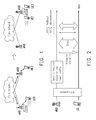
- FIG. 1 is a diagram illustrating an application scenario of D2D communication according to an exemplary embodiment.
- the mobile devices UE1 and UE2 communicate with each other through uplink and downlink communication connections established by a wireless communication system. While the mobile device UE1 slowly moves closer to the mobile device UE2, the communication connection between the mobile devices UE1 and UE2 is switched to D2D communication to reduce the network load (network offloading). While the mobile devices UE1 and UE2 slowly move away from each other, the communication connection between the mobile devices UE1 and UE2 is switched back to the original uplink/downlink communication for D2D communication is not feasible anymore.
- FIG. 2 is a timing diagram of an uplink/downlink communication procedure according to an exemplary embodiment.
- the base station eNB and the mobile device UE have to measure features (including channel quality, pathloss, and timing advance) of the wireless link first.
- the measurement result of the channel quality allows the base station eNB to optimize the system spectral efficiency when wireless resources are allocated.
- the measurement result of the pathloss allows the mobile device UE to calculate the transmission power for transmitting data to the base station eNB.
- the calibration of the timing advance allows the data transmitted by the mobile device UE to be received by the base station eNB at a correct time point even after a propagation delay.
- the base station eNB After measuring the features of the wireless link, the base station eNB allocates wireless resources appropriately for the mobile device UE according to the measurement results and transmits the resource allocation result and some control parameters to the mobile device UE. Because the condition of the wireless link may change quickly from time to time due to changes of the transmission environment and the moving speed, the base station dynamically and quickly allocates the wireless resources to the mobile device UE to adapt to any change of the condition of the wireless link.
- LTE extends the hybrid automatic repeat request (HARQ) mechanism adopted in the high speed packet access (HSPA) technology to enhance the data transmission reliability.
- HARQ hybrid automatic repeat request
- HSPA high speed packet access
- HARQ is a technique integrating the feed-forward error correction (FEC) technique and the automatic repeat request (ARQ) technique.
- the main concept of HARQ is keeping useful information in failed transmission procedures and using such information during the next transmission procedure, so as to increase the success rate of retransmission.
- HARQ retransmission could be carried out in a synchronous or an asynchronous manner.
- the timing of the HARQ retransmission is pre-determined, and when the receiver fails to receive the data and sends a negative acknowledgement (NACK) back, the transmitter does not wait for an additional control signal and retransmits the data in a pre-scheduled subframe by using the same wireless resources.
- NACK negative acknowledgement
- the timing of the HARQ retransmission and the wireless resources used during the retransmission are dynamically changed through control signals.
- the HARQ retransmission mechanism needs to be adopted in D2D communication to enhance the data transmission reliability.
- an existing HARQ program is to be executed only between a base station and a mobile device. Thereby, how to perform HARQ among a base station and two mobile devices which are about to perform D2D communication has become a important issue in the industry.
- the disclosure is directed to a method for performing a hybrid automatic repeat request (HARQ) retransmission mechanism for device-to-device (D2D) communication, in which a D2D communication transmitter and a D2D communication receiver are allowed to realize HARQ with the help of a base station so that the communication quality of the D2D communication could be maintained.
- HARQ hybrid automatic repeat request
- An embodiment of the disclosure provides a method for performing HARQ.
- the method is adapted to a base station in a wireless communication system and includes following steps.
- a wireless resource is allocated by a base station, and whether to perform a D2D communication is determined.
- a first resource allocation message is transmitted to a first mobile device and a second mobile device by the base station, so that the first mobile device, as a transmitter, transmits a data packet to the second mobile device, as a receiver, according to the first resource allocation message.
- a HARQ feedback packet is received from the second mobile device by the base station to determine whether the data packet is successfully transmitted.
- the HARQ feedback packet is a negative acknowledgement (NACK)
- NACK negative acknowledgement
- An embodiment of the disclosure provides a base station including a transceiver and a processor.
- the transceiver is configured to transmit and receive wireless signals.
- the processor is coupled to the transceiver and configured to execute following operations.
- the processor allocates a wireless resource used by at least one mobile device.
- the processor transmits a first resource allocation message to a first mobile device and a second mobile device, so that the first mobile device, as a transmitter, transmits a data packet to the second mobile device, as a receiver, according to the first resource allocation message.
- the processor receives a HARQ feedback packet from the second mobile device to determine whether the data packet is successfully transmitted.
- the HARQ feedback packet is a NACK
- the processor retains the wireless resource allocated in the first resource allocation message or transmits a second resource allocation message to the first mobile device and the second mobile device.
- An embodiment of the disclosure provides a method for performing HARQ.
- the method is adapted to a first mobile device and a second mobile device performing D2D communication in a wireless communication system.
- the method includes following steps. Whether to perform the D2D communication is determined by the first mobile device and the second mobile device by monitoring a first resource allocation message from a base station.
- the first mobile device which is instructed to serve as a transmitter, transmits a data packet to the second mobile device, which is instructed to serve as a receiver, according to a wireless resource allocated in the first resource allocation message.
- a HARQ feedback packet is transmitted by the second mobile device to the base station to respond that whether the data packet is successfully received.
- An embodiment of the disclosure provides a mobile device including a transceiver and a processor.
- the transceiver is configured to transmit and receive wireless signals.
- the processor is coupled to the transceiver and configured to execute following operations.
- the processor receives a first resource allocation message from a base station to determine whether to perform a D2D communication.
- the processor transmits a data packet to another mobile device according to a wireless resource allocated in the first resource allocation message.
- the processor receives the data packet from the other mobile device according to the wireless resource allocated in the first resource allocation message and transmits a HARQ feedback packet to the base station to respond that whether the data packet is successfully received.
- mobile devices performing D2D communication are allowed to realize HARQ with the help of a base station, so that the communication quality of the D2D communication could be maintained.
- uplink/downlink communication respectively adopt synchronous/asynchronous HARQ.
- a mobile device adopts the synchronous HARQ to transmit data and adopts the asynchronous HARQ to receive data.
- FIG. 3A is a timing diagram of a downlink communication adopting asynchronous HARQ according to an exemplary embodiment of the disclosure.
- the base station eNB transmits a resource allocation message to the mobile device UE through a physical downlink control channel (PDCCH).
- the mobile device UE receives data packets in the same subframe.
- the mobile device UE fails to receive a data packet, the mobile device UE automatically sends a negative acknowledgement (NACK) to the base station eNB at a predefined timing through a physical uplink control channel (PUCCH).
- NACK negative acknowledgement
- the base station eNB re-allocates resources based on dynamic scheduling and sends a new resource allocation message to the mobile device UE through the PDCCH.
- the mobile device UE receives the same data packet in the same subframe.
- the predefined timing is defined to be 4 subframes in the 3GPP LTE/LTE-A standards.
- FIG. 3B is a timing diagram of an uplink communication adopting synchronous HARQ according to an exemplary embodiment of the disclosure.
- the mobile device UE uploads a data packet to the base station eNB after a predefined timing.
- the base station eNB fails to receive the data packet, the base station eNB sends a NACK to the mobile device UE in a predefined subframe through a physical hybrid-ARQ indicator channel (PHICH).
- PHICH physical hybrid-ARQ indicator channel
- the mobile device UE does not wait for any additional control signal and retransmits the data packet in the predefined subframe by using the same wireless resources.
- the disclosure provides a three-terminal communication method which realizes synchronous and asynchronous HARQ retransmission under the control of a base station for D2D communication.
- the D2D communication transmitter should be able to know whether to perform synchronous HARQ to transmit uplink data to the base station or perform asynchronous HARQ to transmit data to the D2D communication receiver once the D2D communication transmitter receives the resource allocation message from the PDCCH.
- the base station adds an indicator in the resource allocation message (i.e., a downlink control information (DCI)) sent through the PDCCH to indicate whether the DCI is resource allocation regarding the D2D communication or general uplink/downlink communication.
- the base station allocates resources for the D2D communication through a D2D communication specific cell radio network temporary identifier (C-RNTI) (i.e., the DCI for allocating resources for the D2D communication is scrambled by the C-RNTI before being transmitted through the PDCCH).
- C-RNTI D2D communication specific cell radio network temporary identifier
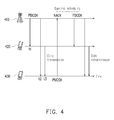
- FIG. 4 is a timing diagram of a D2D communication performing asynchronous HARQ three-terminal communication according to the first exemplary embodiment of the disclosure.
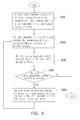
- FIG. 5 is a flowchart of a D2D communication performing asynchronous HARQ three-terminal communication according to the first exemplary embodiment of the disclosure. Please refer to both FIG. 4 and FIG. 5 for following description.
- the base station 410 allocates a wireless resource and transmits a resource allocation message (i.e., DCI) for allocating resources for a D2D communication to the D2D communication transmitter 420 and the D2D communication receiver 430 through a PDCCH (step S510).
- DCI resource allocation message
- the base station 410 may indicate that the DCI is resource allocation regarding the D2D communication by adding an indicator in the DCI transmitted through the PDCCH.
- the DCI transmitted by the base station 410 includes a transmitter resource allocation message (i.e., transmitter DCI) and a receiver resource allocation message (i.e., receiver DCI), wherein the transmitter DCI may be the same as or different from the receiver DCI.
- the base station 410 first transmits the transmitter DCI to the D2D communication transmitter 420 through the PDCCH at time t1. Then, the base station 410 transmits the receiver DCI to the D2D communication receiver 430 through the PDCCH at time t2.
- the D2D communication transmitter 420 and the D2D communication receiver 430 perform a data packet transmission according to instructions of the resource allocation message (step S520).
- the D2D communication transmitter 420 transmits a data packet to the D2D communication receiver 430 at time t3.
- the difference between time t1 and time t3 is 4 subframes, and time t2 and time t3 belong to the same subframe. Accordingly, the timing for the base station 410 to respectively transmit the transmitter DCI and the receiver DCI conforms to the specifications of 3GPP LTE/LTE-A.
- the base station 410 may also transmit the same DCI to the D2D communication transmitter 420 and the D2D communication receiver 430 at the same time.
- how a base station transmits DCIs to a D2D communication transmitter and a D2D communication receiver is not limited in the disclosure.
- the D2D communication transmitter 420 does not expect to receive any HARQ feedback packet after it transmits the data packet. Instead, the D2D communication transmitter 420 directly monitors the PDCCH and waits for the next resource allocation message from the base station 410.
- step S530 after the D2D communication receiver 430 receives the data packet according to the resource allocation message, the D2D communication receiver 430 transmits a HARQ feedback packet to the base station 410 through a PUCCH.
- the HARQ feedback packet may be an acknowledgement (ACK) signal or a negative acknowledgement (NACK) signal. If the data packet is successfully received, the D2D communication receiver 430 sends the ACK signal back to the base station 410. If the data packet is not successfully received, the D2D communication receiver 430 sends the NACK signal to the base station 410.
- ACK acknowledgement
- NACK negative acknowledgement
- step S540 the base station determines whether the NACK signal is received. If the NACK signal is not received, the transmission of the data packet is completed. If the NACK signal is received, in step S550, the base station 410 re-allocates the resource based on dynamic scheduling and sends a new resource allocation message (i.e., a second resource allocation message) to the D2D communication transmitter 420 and the D2D communication receiver 430 through the PDCCH. How the base station transmits the new resource allocation message has been explained in foregoing step S510 therefore will not be described herein.
- a new resource allocation message i.e., a second resource allocation message
- the D2D communication transmitter 420 and the D2D communication receiver 430 could be notified to transmit a new data packet or retransmit an old data packet by using a new data indicator (NDI) field in the DCI in the PDCCH. If there are more data packets to be transmitted, the base station 410 continues to allocate resources for the next data packet through the PDCCH.
- NDI new data indicator
- the D2D communication receiver should be able to know whether to perform asynchronous HARQ to receive downlink data from the base station or perform synchronous HARQ to receive data from the D2D communication transmitter once the D2D communication receiver receives a resource allocation message.
- the base station could also add an indicator in the resource allocation message (i.e., a DCI) or use a D2D communication specific C-RNTI scrambling the resource allocation message to indicate whether the DCI is resource allocation regarding the D2D communication or general uplink/downlink communication.
- FIG. 6 is a timing diagram of a D2D communication performing synchronous HARQ three-terminal communication according to the second exemplary embodiment of the disclosure.
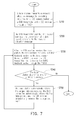
- FIG. 7 is a flowchart of a D2D communication performing synchronous HARQ three-terminal communication according to the second exemplary embodiment of the disclosure. Please refer to both FIG. 6 and FIG. 7 for following descriptions.
- the base station 610 allocates a wireless resource and transmits a resource allocation message (i.e., a DCI) for allocating resources for a D2D communication to the D2D communication transmitter 620 and the D2D communication receiver 630 through a PDCCH (step S710).
- the DCI transmitted by the base station 610 includes a transmitter resource allocation message (i.e., transmitter DCI) and a receiver resource allocation message (i.e., receiver DCI), where the transmitter DCI may be the same as or different from the receiver DCI.
- the base station 610 first transmits the transmitter DCI to the D2D communication transmitter 620 through the PDCCH at time t4. Then, the base station 410 transmits the receiver DCI to the D2D communication receiver 630 through the PDCCH at time t5.
- the D2D communication transmitter 620 and the D2D communication receiver 630 perform a data packet transmission according to the DCI (step S720).
- the D2D communication transmitter 620 transmits a data packet to the D2D communication receiver 630 at time t6.
- the difference between time t4 and time t6 is 4 subframes, and time t5 and time t6 belong to the same subframe.
- the D2D communication receiver 630 after the D2D communication receiver 630 receives the data packet, the D2D communication receiver 630 performs a cyclic redundancy check (CRC) and transmits a HARQ feedback packet (i.e., an ACK or NACK signal) to the base station 610 through a PUCCH at a predefined timing according to the CRC result.
- CRC cyclic redundancy check
- the D2D communication transmitter 620 Since synchronous HARQ is performed, besides that the base station 610 gets to know whether to keep the pre-allocated wireless resource to be used in HARQ automatic retransmission according to the ACK/NACK signal, the D2D communication transmitter 620 also needs to know whether to drive automatic data retransmission according to the ACK/NACK signal. To be specific, the difference between the present embodiment and the embodiment described above is that in the synchronous HARQ, the D2D communication transmitter 620 has to initiatively receive the HARQ feedback packet sent by the D2D communication receiver 630 to the base station 610 through the PUCCH (step S730).
- the D2D communication receiver 630 does not send any ACK/NACK signal to the D2D communication transmitter 620, and the D2D communication transmitter 620 automatically monitors the PUCCH and receives the ACK or NACK signal from the D2D communication receiver 630.
- step S750 if the D2D communication receiver 630 sends a NACK signal back, the base station 610 automatically retains the original wireless resource, and the D2D communication transmitter 620 automatically retransmits the data packet in a predefined subframe (i.e., at a predefined timing), and the D2D communication receiver 630 automatically receives the data packet again.
- the D2D communication transmitter 620 may not be able to receive the ACK/NACK signal due to different reasons (for example, the distance between the D2D communication transmitter 620 and the D2D communication receiver 630 is farther than that between the base station 610 and the D2D communication receiver 630).
- the D2D communication transmitter 620 when the D2D communication transmitter 620 cannot receive the HARQ feedback packet, the D2D communication transmitter 620 assumes that the data has been successfully transmitted (while according to existing HARQ, when a transmitter cannot receive a HARQ feedback packet, the transmitter assumes that the data is not successfully transmitted) and does not initiate the automatic data retransmission, so that the situation that the base station 610 thinks the data has been successfully transmitted and accordingly does not retain the wireless resource while the D2D communication transmitter 620 thinks the data is not successfully transmitted and accordingly drives the automatic data retransmission could be avoided.
- a base station transmits a DCI to a D2D communication transmitter and a D2D communication receiver through a PDCCH and instructs the D2D communication transmitter to transmit a HARQ data packet to the D2D communication receiver.
- the D2D communication receiver receives the HARQ data packet, the D2D communication receiver transmits a HARQ feedback packet (for example, an ACK signal or a NACK signal) to the base station through a PUCCH.
- a HARQ feedback packet for example, an ACK signal or a NACK signal
- the base station When the base station receives the HARQ feedback packet and the HARQ feedback packet is a NACK signal, the base station retains the original wireless resource to allow the D2D communication transmitter to automatically retransmit the HARQ data packet to the D2D communication receiver, or the base station allocates a new wireless resource and transmits another DCI to the D2D communication transmitter and the D2D communication receiver through the PDCCH to instruct the D2D communication transmitter to retransmit the HARQ data packet to the D2D communication receiver.
- the disclosure provides a mechanism which allows a D2D communication transmitter and a D2D communication receiver to realize HARQ with the help of a base station, such that the quality of a D2D communication is maintained.
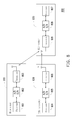
- FIG. 8 is a block diagram of a wireless communication system according to an exemplary embodiment of the disclosure.
- the wireless communication system 800 includes a base station 810 adopting the 3GPP long term evolution advanced (LTE-Advanced) standard and a D2D communication transmitter (i.e., a first mobile device) 820 and a D2D communication receiver (i.e., a second mobile device) 830 that perform a D2D communication.
- LTE-Advanced 3GPP long term evolution advanced
- the base station 810 includes a transceiver 801, an analog-to-digital (A/D)/digital-to-analog (D/A) converter 802, and a processor 803.
- the transceiver 801 is configured to transmit a downlink signal and/or receive an uplink signal in a wireless manner.
- the transceiver 801 may also execute other operations, such as low-noise amplification, impedance matching, frequency mixing, frequency raising, or down conversion, filtering, and amplification.
- the transceiver 801 also includes an antenna unit.
- the ADC/DAC 802 is configured to convert the uplink signal from an analog signal into a digital signal and convert the downlink signal from a digital signal into an analog signal.
- the processor 803 is configured to process a digital signal and execute the HARQ performing method illustrated in FIG. 9 .
- a wireless resource is allocated through a PDCCH (step S910), and whether to perform a D2D communication is determined (step S920). If the D2D communication is not performed, a general uplink/downlink communication is performed (step S930) (i.e., the downlink communication illustrated in FIG. 3A and the uplink communication illustrated in FIG. 3B are performed). If the D2D communication is to be performed, a first resource allocation message is transmitted to a D2D communication transmitter and a D2D communication receiver (step S940). A HARQ feedback packet transmitted by the D2D communication receiver is received through a PUCCH (step S950).
- step S960 Whether the data packet is successfully transmitted is determined (step S960). If the data packet is not successfully transmitted, the wireless resource allocated in the first resource allocation message is retained or a second resource allocation message is transmitted to the D2D communication transmitter and the D2D communication receiver (step S970). Thereafter, the procedure returns to step S950 until the data packet is successfully transmitted.
- the D2D communication transmitter 820 and the D2D communication receiver 830 respectively include a transceiver (806 and 809), an ADC/DAC (805 and 808), and a processor (804 and 807).
- the processors 804 and 807 are configured to process a digital signal and execute following HARQ performing method.
- a first resource allocation message transmitted by a base station is received to determine whether to perform a D2D communication.
- the first resource allocation message instructs to perform the D2D communication as a D2D communication transmitter, a data packet is transmitted to the D2D communication receiver according to the wireless resource allocated in the first resource allocation message.
- a data packet transmitted by the D2D communication transmitter is received according to the wireless resource allocated in the first resource allocation message, and a HARQ feedback packet is transmitted to the base station to respond that whether the data packet is successfully received.
- mobile devices a D2D communication transmitter and a D2D communication receiver
- a HARQ retransmission mechanism in three-terminal communication with the help of a base station, so that the reliability of data transmission is improved and the quality of a D2D communication is maintained.
Landscapes
- Engineering & Computer Science (AREA)
- Computer Networks & Wireless Communication (AREA)
- Signal Processing (AREA)
- Mobile Radio Communication Systems (AREA)
Applications Claiming Priority (2)
| Application Number | Priority Date | Filing Date | Title |
|---|---|---|---|
| TW102109539A TWI473462B (zh) | 2012-07-09 | 2013-03-18 | 執行混合式自動重送請求的方法及其基地台與行動裝置 |
| US13/929,802 US9137790B2 (en) | 2012-07-09 | 2013-06-28 | Method for performing hybrid automatic repeat request, and base station and mobile device using the same |
Publications (2)
| Publication Number | Publication Date |
|---|---|
| EP2782284A2 true EP2782284A2 (de) | 2014-09-24 |
| EP2782284A3 EP2782284A3 (de) | 2017-12-13 |
Family
ID=49878468
Family Applications (1)
| Application Number | Title | Priority Date | Filing Date |
|---|---|---|---|
| EP14151257.4A Withdrawn EP2782284A3 (de) | 2013-03-18 | 2014-01-15 | Verfahren zur Durchführung von hybriden automatischen Wiederholungsanforderungen, und Basisstation und mobile Vorrichtung damit |
Country Status (3)
| Country | Link |
|---|---|
| US (1) | US9137790B2 (de) |
| EP (1) | EP2782284A3 (de) |
| CN (1) | CN103546254B (de) |
Cited By (2)
| Publication number | Priority date | Publication date | Assignee | Title |
|---|---|---|---|---|
| WO2019196829A1 (zh) * | 2018-04-13 | 2019-10-17 | 维沃移动通信有限公司 | 旁链路的操作方法和终端 |
| WO2020011103A1 (en) * | 2018-07-11 | 2020-01-16 | Jrd Communication (Shenzhen) Ltd | Transmission techniques in a cellular network |
Families Citing this family (36)
| Publication number | Priority date | Publication date | Assignee | Title |
|---|---|---|---|---|
| EP2869665B1 (de) * | 2012-06-27 | 2018-03-07 | Kyocera Corporation | Mobiles kommunikationssystem und mobiles kommunikationsverfahren |
| US9591679B2 (en) | 2012-09-17 | 2017-03-07 | Blackberry Limited | Initiation of inter-device communication in wireless communication systems |
| US9826381B2 (en) | 2012-09-18 | 2017-11-21 | Blackberry Limited | Device handshake/discovery for inter-device communication in wireless communication systems |
| US9014113B2 (en) | 2012-09-21 | 2015-04-21 | Blackberry Limited | User equipment architecture for inter-device communication in wireless communication systems |
| US8982895B2 (en) | 2012-09-21 | 2015-03-17 | Blackberry Limited | Inter-device communication in wireless communication systems |
| US10154467B2 (en) | 2012-09-26 | 2018-12-11 | Blackberry Limited | Transmit power adjustment for inter-device communication in wireless communication systems |
| US9137836B2 (en) | 2012-10-15 | 2015-09-15 | Blackberry Limited | Inter-device communication authorization and data sniffing in wireless communication systems |
| US20140204847A1 (en) * | 2013-01-18 | 2014-07-24 | Telefonaktiebolaget L M Ericsson (Publ) | Network-assisted d2d communication using d2d capability information |
| WO2015020427A1 (ko) * | 2013-08-06 | 2015-02-12 | 엘지전자 주식회사 | D2d 신호 전송 방법 및 이를 위한 장치 |
| US10085297B2 (en) * | 2013-12-02 | 2018-09-25 | Innovative Sonic Corporation | Method and apparatus supporting device-to-device (D2D) communication in a wireless communication system |
| CN104935415B (zh) * | 2014-03-21 | 2020-10-13 | 北京三星通信技术研究有限公司 | 一种harq-ack传输的方法及用户设备 |
| EP3113559B1 (de) | 2014-03-21 | 2023-07-26 | Huawei Technologies Co., Ltd. | Vorrichtung und verfahren für datenübertragung in direkter kommunikation |
| WO2016015285A1 (zh) * | 2014-07-31 | 2016-02-04 | 富士通株式会社 | 信息配置装置、通信装置和通信系统 |
| CN105472758A (zh) * | 2014-08-25 | 2016-04-06 | 深圳市中兴微电子技术有限公司 | 一种数据传输方法及设备 |
| JP6398605B2 (ja) * | 2014-10-23 | 2018-10-03 | 沖電気工業株式会社 | 無線通信装置、無線通信プログラム及び無線通信システム |
| US9706385B1 (en) * | 2015-06-18 | 2017-07-11 | Sprint Spectrum L.P. | Systems and methods for configuring device to device communication |
| US9887806B2 (en) * | 2015-07-10 | 2018-02-06 | Cisco Technology, Inc. | Minimum latency link layer metaframing and error correction |
| WO2017054173A1 (zh) * | 2015-09-30 | 2017-04-06 | 华为技术有限公司 | 数据传输方法、基站及终端 |
| CN108353423B (zh) * | 2015-11-10 | 2021-09-28 | 瑞典爱立信有限公司 | 用于管理关于上行链路传送的剩余数据块的上行链路资源的分配的方法和布置 |
| CN106793092B (zh) * | 2015-11-19 | 2022-07-26 | 中兴通讯股份有限公司 | 控制信道资源的获取方法及设备 |
| CN107567099A (zh) * | 2016-06-30 | 2018-01-09 | 华为技术有限公司 | 上行控制信道发送与接收方法及装置 |
| US20180048430A1 (en) | 2016-08-11 | 2018-02-15 | Htc Corporation | Device and Method of Handling Hybrid Automatic Repeat Request Timing |
| EP3657714B1 (de) * | 2017-07-21 | 2025-09-03 | LG Electronics Inc. | Verfahren und vorrichtung zur übertragung einer rückkopplung durch ein endgerät, das ein signal von einem anderen endgerät empfängt, in einem drahtlosen kommunikationssystem |
| US11206107B2 (en) | 2017-07-28 | 2021-12-21 | Panasonic Intellectual Propertv Corporation of America | Communication apparatus and communication method for sidelink communication using a feedback timing |
| WO2019153125A1 (zh) * | 2018-02-06 | 2019-08-15 | Oppo广东移动通信有限公司 | 一种数据传输的方法、设备及计算机存储介质 |
| CN110582067B (zh) * | 2018-06-08 | 2022-04-05 | 华为技术有限公司 | 一种应答信息的发送和接收方法、通信设备及网络设备 |
| WO2020085854A1 (ko) * | 2018-10-25 | 2020-04-30 | 엘지전자 주식회사 | 무선 통신 시스템에서 사이드링크 harq 피드백과 관련된 정보에 기반하여 자원선택 윈도우를 결정하는 방법 및 장치 |
| CN111147202A (zh) * | 2018-11-02 | 2020-05-12 | 电信科学技术研究院有限公司 | 一种车联网的数据传输方法、发送终端和网络侧设备 |
| EP3703288A1 (de) | 2019-02-28 | 2020-09-02 | R3 - Reliable Realtime Radio Communications GmbH | Verfahren zum betrieb eines kommunikationssystems |
| CN111757294A (zh) * | 2019-03-29 | 2020-10-09 | 华为技术有限公司 | 一种重传资源的调度方法及设备 |
| CN111867099B (zh) * | 2019-04-30 | 2024-04-05 | 株式会社Kt | 发射和接收侧链路harq反馈信息的方法和装置 |
| US20210006318A1 (en) * | 2019-07-03 | 2021-01-07 | Electronics And Telecommunications Research Institute | Method and apparatus for sidelink communication |
| WO2021092923A1 (zh) * | 2019-11-15 | 2021-05-20 | Oppo广东移动通信有限公司 | 无线通信方法、终端设备和网络设备 |
| WO2022104543A1 (zh) * | 2020-11-17 | 2022-05-27 | Oppo广东移动通信有限公司 | 信息处理方法、装置及存储介质 |
| US11882546B2 (en) * | 2021-04-02 | 2024-01-23 | Qualcomm Incorporated | Sidelink feedback for multiple transmit receive points |
| US12207232B2 (en) * | 2021-04-16 | 2025-01-21 | Qualcomm Incorporated | Resource allocations to source user equipment from a user equipment in a hop |
Family Cites Families (28)
| Publication number | Priority date | Publication date | Assignee | Title |
|---|---|---|---|---|
| US6717927B2 (en) | 2002-04-05 | 2004-04-06 | Interdigital Technology Corporation | System for efficient recovery of node B buffered data following serving high speed downlink shared channel cell change |
| US7366477B2 (en) | 2004-05-06 | 2008-04-29 | Nokia Corporation | Redundancy version implementation for an uplink enhanced dedicated channel |
| JP4592547B2 (ja) | 2005-08-24 | 2010-12-01 | 株式会社エヌ・ティ・ティ・ドコモ | 送信電力制御方法及び移動通信システム |
| JP4684045B2 (ja) | 2005-08-30 | 2011-05-18 | 株式会社エヌ・ティ・ティ・ドコモ | 伝送制御方法、移動局、無線基地局及び無線回線制御局 |
| CN101047431B (zh) * | 2006-06-22 | 2011-02-02 | 华为技术有限公司 | 在含有中继站的通信系统中实现混合自动重传的方法 |
| US7996744B2 (en) * | 2007-04-30 | 2011-08-09 | Nokia Corporation | Method and apparatus for providing a data retransmission scheme |
| CN101330349B (zh) * | 2007-06-19 | 2012-02-08 | 中兴通讯股份有限公司 | 基于多跳中继网络的自适应混合自动请求重传方法 |
| US9420564B2 (en) | 2008-10-29 | 2016-08-16 | Nokia Technologies Oy | Apparatus and method for dynamic communication resource allocation for device to-device communications in a wireless communication system |
| CN102334370B (zh) | 2009-01-16 | 2014-10-29 | 诺基亚公司 | 调度用于设备到设备通信的资源的装置和方法 |
| US8824326B2 (en) | 2009-04-30 | 2014-09-02 | Nokia Corporation | Method and apparatus for managing device-to-device interference |
| KR101787097B1 (ko) | 2009-11-18 | 2017-10-19 | 엘지전자 주식회사 | 무선 통신 시스템에서 harq 수행 방법 및 장치 |
| US8842611B2 (en) * | 2010-03-03 | 2014-09-23 | Nokia Corporation | Compressed hybrid automatic repeat request feedback for device to device cluster communications |
| US8811359B2 (en) | 2010-04-15 | 2014-08-19 | Qualcomm Incorporated | Multiplexing of peer-to-peer (P2P) communication and wide area network (WAN) communication |
| US8526347B2 (en) | 2010-06-10 | 2013-09-03 | Qualcomm Incorporated | Peer-to-peer communication with symmetric waveform for downlink and uplink |
| US20120028672A1 (en) | 2010-07-30 | 2012-02-02 | Tao Chen | Apparatus and Method for Transmitter Power Control for Device-to-Device Communications in a Communication System |
| WO2012037160A1 (en) | 2010-09-13 | 2012-03-22 | Qualcomm Incorporated | Method, apparatus and computer program product to facilitate use of lte channelization structures and waveforms for peer-to- peer communications |
| US20130322388A1 (en) * | 2010-12-27 | 2013-12-05 | Jae-Young Ahn | Device-to-device communication and terminal relay method |
| US9014062B2 (en) | 2010-12-27 | 2015-04-21 | Electronics And Telecommunications Research Institute | Method for HARQ and link adaptation of device to device link in direct communication between user equipments and relaying by user equipment |
| WO2012091420A2 (ko) * | 2010-12-27 | 2012-07-05 | 한국전자통신연구원 | 단말간 직접 연결 통신 및 단말 릴레잉을 위한 디바이스 대 디바이스 링크의 연결 설정 및 스케쥴링 방법 |
| US9277551B2 (en) * | 2011-02-15 | 2016-03-01 | Lg Electronics Inc. | Hybrid automatic repeat request (HARQ) method and device in a cooperative terminal communication system |
| WO2012121477A1 (ko) * | 2011-03-08 | 2012-09-13 | 엘지전자 주식회사 | P2p(peer-to-peer) 통신 시스템에서의 harq 방법 및 그 장치 |
| WO2013042979A2 (ko) * | 2011-09-21 | 2013-03-28 | 엘지전자 주식회사 | 무선 통신 시스템에서 장치-대-장치 통신을 수행하는 방법 및 장치 |
| US10034317B2 (en) * | 2011-10-24 | 2018-07-24 | Lg Electronics Inc. | Method for allowing base station to support device-to-device (D2D) communication in wireless communication system, and method for allowing D2D device to efficiently transmit D2D communication request signal |
| KR20130070661A (ko) * | 2011-12-14 | 2013-06-28 | 한국전자통신연구원 | 단말간 직접 통신을 위한 제어 방법 |
| US8787305B2 (en) * | 2011-12-29 | 2014-07-22 | Motorola Solutions, Inc. | Method and apparatus for scheduling peer-to-peer communication links |
| US9338808B2 (en) * | 2012-11-09 | 2016-05-10 | Electronics And Telecommunications Research Institute | Method of direct communication by terminal |
| US9042938B2 (en) * | 2012-12-27 | 2015-05-26 | Google Technology Holdings LLC | Method and apparatus for device-to-device communication |
| US9112685B2 (en) * | 2013-05-10 | 2015-08-18 | Blackberry Limited | Mechanisms for direct inter-device signaling |
-
2013
- 2013-05-21 CN CN201310189012.9A patent/CN103546254B/zh active Active
- 2013-06-28 US US13/929,802 patent/US9137790B2/en active Active
-
2014
- 2014-01-15 EP EP14151257.4A patent/EP2782284A3/de not_active Withdrawn
Non-Patent Citations (1)
| Title |
|---|
| None |
Cited By (4)
| Publication number | Priority date | Publication date | Assignee | Title |
|---|---|---|---|---|
| WO2019196829A1 (zh) * | 2018-04-13 | 2019-10-17 | 维沃移动通信有限公司 | 旁链路的操作方法和终端 |
| US11510211B2 (en) | 2018-04-13 | 2022-11-22 | Vivo Mobile Communication Co., Ltd. | Sidelink operation method and terminal |
| US12058711B2 (en) | 2018-04-13 | 2024-08-06 | Vivo Mobile Communication Co., Ltd. | Sidelink operation method and terminal |
| WO2020011103A1 (en) * | 2018-07-11 | 2020-01-16 | Jrd Communication (Shenzhen) Ltd | Transmission techniques in a cellular network |
Also Published As
| Publication number | Publication date |
|---|---|
| CN103546254A (zh) | 2014-01-29 |
| US20140010175A1 (en) | 2014-01-09 |
| US9137790B2 (en) | 2015-09-15 |
| CN103546254B (zh) | 2017-09-15 |
| EP2782284A3 (de) | 2017-12-13 |
Similar Documents
| Publication | Publication Date | Title |
|---|---|---|
| US9137790B2 (en) | Method for performing hybrid automatic repeat request, and base station and mobile device using the same | |
| US11140731B2 (en) | Data transmission method, communication device, and data transmission system | |
| EP3300281B1 (de) | Verfahren, vorrichtung, ue und basisstation zur übertragung von hybriden automatischen wiederholungsanfragen-quittierungsinformationen | |
| EP3028397B1 (de) | Neuübertragung von kommunikation in einem mobilen netzwerk unter verwendung kleinzelliger cluster | |
| CN105191468B (zh) | 用于反馈报告的系统和方法 | |
| WO2018059282A1 (en) | System and method for d2d communication | |
| US10440611B2 (en) | RLC data packet offloading method and base station | |
| JP7195455B2 (ja) | 再送リソース設定方法、装置、チップ及びコンピュータプログラム | |
| US10841068B2 (en) | DL HARQ timing in TDD with 1 ms tti and reduced processing time | |
| US11405149B2 (en) | Methods and devices for data retransmission | |
| US9843420B2 (en) | Cross carrier scheduling method and apparatus | |
| JP2016527843A (ja) | セルラ移動通信システムでのスケジューリング要請方法及び装置 | |
| CN111434062A (zh) | 用于蜂窝通信的改进的辅助重传技术 | |
| JP2024538753A (ja) | 信号を送受信する方法と装置及び通信システム | |
| US10575363B2 (en) | Signaling reduction for out-of-sync users | |
| JP2023520705A (ja) | データ送信方法、装置及び通信システム | |
| JP2023525249A (ja) | サイドリンクフィードバック情報の送受信方法及び装置 | |
| CN112673585B (zh) | 用于装置到装置通信的方法及设备 | |
| JP2024503808A (ja) | フィードバックコードブックを生成すること | |
| JP7741356B2 (ja) | サイドリンク伝送方法及び装置 | |
| WO2021222666A1 (en) | Handling of non-numeric data to flow control feedback timing | |
| TWI473462B (zh) | 執行混合式自動重送請求的方法及其基地台與行動裝置 | |
| CN107534523B (zh) | 用户设备、接入网设备及上行控制信息的发送和接收方法 | |
| JP2024502952A (ja) | アップリンク送信多重化のための電力制御 |
Legal Events
| Date | Code | Title | Description |
|---|---|---|---|
| PUAI | Public reference made under article 153(3) epc to a published international application that has entered the european phase |
Free format text: ORIGINAL CODE: 0009012 |
|
| 17P | Request for examination filed |
Effective date: 20140115 |
|
| AK | Designated contracting states |
Kind code of ref document: A2 Designated state(s): AL AT BE BG CH CY CZ DE DK EE ES FI FR GB GR HR HU IE IS IT LI LT LU LV MC MK MT NL NO PL PT RO RS SE SI SK SM TR |
|
| AX | Request for extension of the european patent |
Extension state: BA ME |
|
| PUAL | Search report despatched |
Free format text: ORIGINAL CODE: 0009013 |
|
| AK | Designated contracting states |
Kind code of ref document: A3 Designated state(s): AL AT BE BG CH CY CZ DE DK EE ES FI FR GB GR HR HU IE IS IT LI LT LU LV MC MK MT NL NO PL PT RO RS SE SI SK SM TR |
|
| AX | Request for extension of the european patent |
Extension state: BA ME |
|
| RIC1 | Information provided on ipc code assigned before grant |
Ipc: H04L 1/18 20060101AFI20171108BHEP |
|
| STAA | Information on the status of an ep patent application or granted ep patent |
Free format text: STATUS: REQUEST FOR EXAMINATION WAS MADE |
|
| R17P | Request for examination filed (corrected) |
Effective date: 20180525 |
|
| RBV | Designated contracting states (corrected) |
Designated state(s): AL AT BE BG CH CY CZ DE DK EE ES FI FR GB GR HR HU IE IS IT LI LT LU LV MC MK MT NL NO PL PT RO RS SE SI SK SM TR |
|
| STAA | Information on the status of an ep patent application or granted ep patent |
Free format text: STATUS: THE APPLICATION HAS BEEN WITHDRAWN |
|
| 18W | Application withdrawn |
Effective date: 20200108 |