EP2775649A2 - Verfahren und Vorrichtung zur Übertragung von Steuerungsinformationen in einem drahtlosen Kommunikationssystem - Google Patents
Verfahren und Vorrichtung zur Übertragung von Steuerungsinformationen in einem drahtlosen Kommunikationssystem Download PDFInfo
- Publication number
- EP2775649A2 EP2775649A2 EP14158092.8A EP14158092A EP2775649A2 EP 2775649 A2 EP2775649 A2 EP 2775649A2 EP 14158092 A EP14158092 A EP 14158092A EP 2775649 A2 EP2775649 A2 EP 2775649A2
- Authority
- EP
- European Patent Office
- Prior art keywords
- control information
- user
- cyclic redundancy
- redundancy check
- user group
- Prior art date
- Legal status (The legal status is an assumption and is not a legal conclusion. Google has not performed a legal analysis and makes no representation as to the accuracy of the status listed.)
- Withdrawn
Links
Images


Classifications
-
- H—ELECTRICITY
- H04—ELECTRIC COMMUNICATION TECHNIQUE
- H04L—TRANSMISSION OF DIGITAL INFORMATION, e.g. TELEGRAPHIC COMMUNICATION
- H04L5/00—Arrangements affording multiple use of the transmission path
- H04L5/003—Arrangements for allocating sub-channels of the transmission path
- H04L5/0053—Allocation of signalling, i.e. of overhead other than pilot signals
-
- H—ELECTRICITY
- H04—ELECTRIC COMMUNICATION TECHNIQUE
- H04L—TRANSMISSION OF DIGITAL INFORMATION, e.g. TELEGRAPHIC COMMUNICATION
- H04L1/00—Arrangements for detecting or preventing errors in the information received
- H04L1/0001—Systems modifying transmission characteristics according to link quality, e.g. power backoff
- H04L1/0023—Systems modifying transmission characteristics according to link quality, e.g. power backoff characterised by the signalling
- H04L1/0026—Transmission of channel quality indication
-
- H—ELECTRICITY
- H04—ELECTRIC COMMUNICATION TECHNIQUE
- H04L—TRANSMISSION OF DIGITAL INFORMATION, e.g. TELEGRAPHIC COMMUNICATION
- H04L1/00—Arrangements for detecting or preventing errors in the information received
-
- H—ELECTRICITY
- H04—ELECTRIC COMMUNICATION TECHNIQUE
- H04L—TRANSMISSION OF DIGITAL INFORMATION, e.g. TELEGRAPHIC COMMUNICATION
- H04L1/00—Arrangements for detecting or preventing errors in the information received
- H04L1/004—Arrangements for detecting or preventing errors in the information received by using forward error control
-
- H—ELECTRICITY
- H04—ELECTRIC COMMUNICATION TECHNIQUE
- H04L—TRANSMISSION OF DIGITAL INFORMATION, e.g. TELEGRAPHIC COMMUNICATION
- H04L1/00—Arrangements for detecting or preventing errors in the information received
- H04L1/004—Arrangements for detecting or preventing errors in the information received by using forward error control
- H04L1/0045—Arrangements at the receiver end
- H04L1/0046—Code rate detection or code type detection
-
- H—ELECTRICITY
- H04—ELECTRIC COMMUNICATION TECHNIQUE
- H04L—TRANSMISSION OF DIGITAL INFORMATION, e.g. TELEGRAPHIC COMMUNICATION
- H04L1/00—Arrangements for detecting or preventing errors in the information received
- H04L1/004—Arrangements for detecting or preventing errors in the information received by using forward error control
- H04L1/0056—Systems characterized by the type of code used
- H04L1/0061—Error detection codes
-
- H—ELECTRICITY
- H04—ELECTRIC COMMUNICATION TECHNIQUE
- H04L—TRANSMISSION OF DIGITAL INFORMATION, e.g. TELEGRAPHIC COMMUNICATION
- H04L1/00—Arrangements for detecting or preventing errors in the information received
- H04L1/004—Arrangements for detecting or preventing errors in the information received by using forward error control
- H04L1/0072—Error control for data other than payload data, e.g. control data
-
- H—ELECTRICITY
- H04—ELECTRIC COMMUNICATION TECHNIQUE
- H04L—TRANSMISSION OF DIGITAL INFORMATION, e.g. TELEGRAPHIC COMMUNICATION
- H04L1/00—Arrangements for detecting or preventing errors in the information received
- H04L1/004—Arrangements for detecting or preventing errors in the information received by using forward error control
- H04L1/0075—Transmission of coding parameters to receiver
-
- H—ELECTRICITY
- H04—ELECTRIC COMMUNICATION TECHNIQUE
- H04L—TRANSMISSION OF DIGITAL INFORMATION, e.g. TELEGRAPHIC COMMUNICATION
- H04L12/00—Data switching networks
- H04L12/02—Details
- H04L12/16—Arrangements for providing special services to substations
- H04L12/18—Arrangements for providing special services to substations for broadcast or conference, e.g. multicast
-
- H—ELECTRICITY
- H04—ELECTRIC COMMUNICATION TECHNIQUE
- H04L—TRANSMISSION OF DIGITAL INFORMATION, e.g. TELEGRAPHIC COMMUNICATION
- H04L1/00—Arrangements for detecting or preventing errors in the information received
- H04L1/0001—Systems modifying transmission characteristics according to link quality, e.g. power backoff
- H04L1/0002—Systems modifying transmission characteristics according to link quality, e.g. power backoff by adapting the transmission rate
- H04L1/0003—Systems modifying transmission characteristics according to link quality, e.g. power backoff by adapting the transmission rate by switching between different modulation schemes
- H04L1/0004—Systems modifying transmission characteristics according to link quality, e.g. power backoff by adapting the transmission rate by switching between different modulation schemes applied to control information
-
- H—ELECTRICITY
- H04—ELECTRIC COMMUNICATION TECHNIQUE
- H04L—TRANSMISSION OF DIGITAL INFORMATION, e.g. TELEGRAPHIC COMMUNICATION
- H04L1/00—Arrangements for detecting or preventing errors in the information received
- H04L2001/0092—Error control systems characterised by the topology of the transmission link
- H04L2001/0093—Point-to-multipoint
Definitions
- the present application relates to mobile communication technology, and more particularly, to a method and a device for transmitting control information in a wireless communication system.
- a plurality of users can share the same radio resource through non-orthogonally multiplexing.
- the plurality of users using the same radio resource through non-orthogonally multiplexing is called users within a same user group.
- different users within a user group can be assigned different power allocation coefficients so as to distinguish each user.
- a user within the user group can receive data of its own through an interference cancellation process.
- control information e.g., signaling or information that assists data transmission, such as resource allocation information, channel coding rate, modulation and coding scheme
- the user needs to know control information of users in previous interference cancellation stages. Therefore, the issue of how to transmit control information of users in a wireless communication system is to be addressed in the existing wireless communication systems.
- embodiments of the present disclosure provide a method and a device for transmitting and receiving control information in a wireless communication system.
- a method for transmitting control information in a wireless communication system comprises: pre-assigning a group identification to each user group respectively, and determining a search space corresponding to each group identification respectively; determining a link adaptation method of a user group according to quality of channel of each user in the user group; generating contents of first control information according to common control information of all users in the user group and the link adaptation method corresponding to the user group; performing cyclic redundancy check for the contents of the first control information, generating the first control information, and then transmitting the first control information to each user in the user group; performing cyclic redundancy check for particular control information of each user in the user group and obtaining contents of second control information; performing link adaptation processing for the contents of the second control information according to the link adaptation method corresponding to the user group, generating the second control information, and transmitting the second control information to each user in the user group.
- Determining a link adaptation method of a user group according to quality of channel of each user in the user group may comprise: determining code rate to be introduced when performing link adaptation processing for control information corresponding to each user respectively according to the quality of the channel of each user in the user group; selecting an appropriate parameter as a parameter for the link adaptation method corresponding to the user group according to the determined code rate to be introduced when performing the link adaptation processing for the control information corresponding to each user.
- the common control information may comprise at least resource allocation information and multiplexing order information of data transmission.
- the method may further comprise: after performing cyclic redundancy check for the contents of the first control information, scrambling a cyclic redundancy check code generated through the cyclic redundancy check with the group identification of the user group.
- the particular control information of users may be information relating to transmission of user data.
- Performing cyclic redundancy check for particular control information of each user in the user group may comprise: performing cyclic redundancy check for particular control information of each user in the user group using a manner in which each control information is applied the cyclic redundancy check in a nested mode or a manner in which each control information is applied the cyclic redundancy check independently.
- the method may further comprise: scrambling a cyclic redundancy check code generated through the cyclic redundancy check with user identification of each user in the user group.
- a method for receiving control information in a wireless communication system comprises: de-mapping a search space corresponding to a group identification of a user group to which a user itself belongs and obtaining candidate first control information; performing blind detection for the candidate first control information, obtaining first control information sent by a base station, and determining common control information of all users in the user group to which itself belongs and link adaptation method corresponding to the user group to which itself belongs; de-mapping the search space corresponding to the group identification of the user group to which itself belongs and obtaining candidate second control information; performing blind detection for the candidate second control information according to the common control information of all users in the user group to which itself belongs and the link adaptation method corresponding to the user group to which itself belongs, and obtaining particular control information of itself or of itself and other users.
- Performing blind detection for the candidate second control information according to the common control information of all users in the user group to which itself belongs and the link adaptation method corresponding to the user group to which itself belongs may comprise: demodulating the candidate second control information according to the common control information of all users in the user group to which itself belongs; performing rate de-matching, channel decoding and cyclic redundancy check for the demodulated data according to the link adaptation method corresponding to the user group to which itself belongs.
- the base station performs cyclic redundancy check for the particular control information of each user in the user group with a manner in which each control information is applied the cyclic redundancy check in a nested mode
- the user performs cyclic redundancy check in the order from inside to outside of the cyclic redundancy check; if the cyclic redundancy check result is correct, the user stops decoding and outputs all of the particular control information of each user until this cyclic redundancy check; if the cyclic redundancy check result is incorrect, the user continues to decode until the next cyclic redundancy check; and if there is no any correct cyclic redundancy check result, the user considers itself as not being scheduled.
- the base station performs cyclic redundancy check for the particular control information of each user in the user group with a manner in which each control information is applied the cyclic redundancy check independently, the user performs cyclic redundancy check for the particular control information of each user independently; if there is a correct cyclic redundancy check result, obtaining the particular control information of the corresponding user; if there is no correct cyclic redundancy check result, the user considers itself as not being scheduled.
- a user equipment (UE) according to an embodiment of the present disclosure comprises:
- the second control information receiving unit may firstly demodulate the candidate second control information according to the common control information of all users in the user group to which itself belongs, and then perform rate de-matching, channel decoding and cyclic redundancy check for the demodulated data according to the link adaptation method corresponding to the user group to which itself belongs.
- the second control information receiving unit performs cyclic redundancy check in the order from inside to outside of the cyclic redundancy check; if the cyclic redundancy check result is correct, the user stops decoding and outputs all of the particular control information of each user until this cyclic redundancy check; if the cyclic redundancy check result is incorrect, the user continues to decode until the next cyclic redundancy check; and if there is no any correct cyclic redundancy check result, the user considers itself as not being scheduled.
- the second control information receiving unit performs cyclic redundancy check for the particular control information of each user independently; if there is a correct cyclic redundancy check result, the particular control information of the corresponding user is obtained; if there is no correct cyclic redundancy check result, the user considers itself as not being scheduled.
- base station and UE for transmitting and receiving control information since the base station sends the control information to be sent via two pieces of control information, the complexity of blind detection by the user is greatly reduced; on the other hand, since different code rates are used when performing link adaptation process for the second control information according to the quality of channels of each user, that is, different amount of redundancy information are introduced for users with different quality of channels, the signaling overhead is greatly reduced while ensuring the second control information can be accurately received by users at edges.
- the base station will send additional control information in a common search space.
- an embodiment of the present disclosure firstly discloses a method for transmitting control information in a wireless communication system.
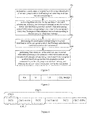
- Figure 1 shows a method for transmitting control information by a base station (eNode B) in a wireless communication system according to an embodiment of the present disclosure. As shown in Figure 1 , the method includes the following steps:
- a group identification (Group ID) to each user group is pre-assigned respectively, and a search space corresponding to each group identification is determined respectively.
- Users can be divided into different user groups by a base station according to the quantity of users in a cell and quality of channels of the users. For example, if the number of users in the cell is small, only one user group can be set up by the base station and all users in the cell belong to this user group. Instead, if the number of users in the cell is large, a plurality of user groups can be set up by the base station and each user group can contain one or more users. In addition users can be divided into different user groups based on the quality of channels of users. Usually users with large difference in channel quality are divided into a group to obtain a better performance gain.
- search spaces of users in a user group can be configured to be identical or partially overlapping through high layer signaling, so that the control information can be placed in the identical or overlapping search spaces for transmission.
- the search space which is identical for each user in the user group or the overlapping part of search spaces for users is referred as a search space of the user group, i.e. a search space corresponding to the group identification of the user group.
- a link adaptation method of a user group is determined according to quality of channels of each user in the user group.
- the eNode B may firstly determine the users who will be scheduled according to the quality of the channels of each user in the user group, then determine code rate to be introduced when performing link adaptation process for particular control information of each user being scheduled respectively, and then select appropriate parameters as parameters for the link adaptation corresponding to the user group according to the determined code rate to be introduced when performing the link adaptation for particular control information of each user being scheduled.
- the above-described link adaptation method includes adjusting the code rate of rate matching, adjusting the code rate of channel coding and the like.
- the above-described link adaptation process includes a rate matching process, a channel coding process and the like.
- the above-described parameters for the link adaptation include a rate matching parameter, a code rate parameter of channel coding and the like.
- the parameters for link adaptation of a user group prescribe the code rate to be introduced when performing link adaptation process for particular control information of each user being scheduled in the user group in the following operations.
- a i represents the code rate to be introduced when performing link adaptation process for particular control information of the ith user being scheduled in the user group, and can show the quantity of redundancy information introduced in the link adaptation process.
- a low code rate indicates more redundancy information
- a high code rate indicates less redundancy information.
- the code rate to be introduced when performing link adaptation process for particular control information of this user can be high, that is, the redundancy information to be introduced is less, which can reduce signaling overhead.
- the code rate to be introduced when performing link adaptation process for particular control information of this user can be low, that is, the redundancy information to be introduced is more, which can ensure accurate reception of the control information.
- the above-described channel quality can be indicated by parameters such as signal to noise ratio, signal to interference plus noise ratio or channel gain, etc.
- parameters such as signal to noise ratio, signal to interference plus noise ratio or channel gain, etc.
- contents of first control information are generated according to common control information of all users in the user group and the link adaptation method corresponding to the user group.
- the above-mentioned common control information of all users in the user group refers to common control information of all of the users being scheduled in the user group.
- the process of generating the contents of the first control information according to common control information of all of the users being scheduled in the user group and the link adaptation method corresponding to the user group may include: setting the common control information of all of the users being scheduled in the user group and the link adaptation method corresponding to the user group as all or a part of the contents of the first control information.
- the common control information of all users in the user group is a common part of control information of all of the users being scheduled in the user group, and at least includes resource allocation information (RA) and multiplexing order information of data transmission (M).
- RA resource allocation information
- M multiplexing order information of data transmission
- the contents of the above-mentioned first control information may be indicated with a joint indication manner or an independent indication manner.
- the first control information includes a plurality of data fields. Independent bits are used to indicate the meaning of each of the date fields, that is, the first control information may include at least a resource allocation field, a multiplexing order field and a link adaptation method field.
- the resource allocation field uses independent bits to indicate the resource allocation information
- the multiplexing order filed uses independent bits to indicate the multiplexing order information of data transmission
- the link adaptation method field uses independent bits to indicate link adaptation method information.
- the first control information may include only one data field.
- Bits in the data field indicate at least two of the resource allocation information, the multiplexing order information of data transmission and link adaptation method information simultaneously.
- the above-mentioned two indication manners can be combined, that is, a part of the information, such as the resource allocation information, uses the independent indication manner while the other information, such as the link adaptation method information and the multiplexing order information of data transmission, uses the joint indication manner.
- the first control information sent by the eNode B can only carry indexes of the resource allocation information (RA), the multiplexing order information of data transmission (M) and the link adaptation method (LA), and the user can determine the link adaptation method of the user group to which itself belongs according to the indexes of the multiplexing order information of data transmission (M) and the link adaptation method (LA).
- RA resource allocation information
- M multiplexing order information of data transmission
- LA link adaptation method
- cyclic redundancy check is performed for the contents of the first control information to generate the first control information, and then the first control information is transmitted to each user in the user group.
- the eNode B may further scramble a cyclic redundancy check code generated through the cyclic redundancy check with the group identification (Group ID) of the user group.
- transmitting the first control information to each user in the user group in this step may include the steps of: the eNode B performing channel coding, rate matching and modulation for the information after the cyclic redundancy check; and then, completing mapping to a control channel element (CCE) and a search space corresponding to the group identification of the user group.
- the resource allocation information (RA), the multiplexing order information of data transmission (M) and the link adaptation method (LA) or their indexes are link self-adapted with the same code rate.
- the channel coding, the rate matching, the modulation and the mapping operation to the control channel element (CCE) and the search space can refer to those in an existing control information transmission process in an orthogonal access system.
- cyclic redundancy check is performed for particular control information of each user in the user group to obtain contents of second control information.
- the data after a cyclic redundancy check may be set as all or a part of the contents of the second control information.
- control information of each user is information relating with transmission of user data, such as channel coding rate and modulation and coding scheme (MCS) used in data transmission. It is indicated with pDCI (private-DCI) in the following description and the attached drawings.
- the process of performing cyclic redundancy check for the particular control information of each user in the user group in the step may be realized with a manner in which each control information is performed the cyclic redundancy check in a nested mode (referred to as a nested cyclic redundancy check manner hereinafter) or a manner in which each control information is performed the cyclic redundancy check independently (referred to as an independent cyclic redundancy check manner hereinafter).
- the nested cyclic redundancy check manner means performing cyclic redundancy check for control information of a plurality of users in a nested mode while the independent cyclic redundancy check manner means performing cyclic redundancy check for control information of each user independently.
- the eNode B may further scramble a cyclic redundancy check code generated through the cyclic redundancy check with the user identification of each user being scheduled in the user group.
- a link adaptation process is performed for the contents of the second control information according to the link adaptation method corresponding to the user group to generate the second control information, and the second control information is transmitted to each user in the user group.
- the link adaptation method corresponding to the user group prescribes code rate to be introduced when performing link adaptation process for particular control information of each user in the user group in the following operations, referred to as code rate corresponding to each user. Therefore, in the link adaptation process in the step, the eNode B performs link adaptation process for particular control information of each user and the cyclic redundancy check code in the contents of the second control information according to the code rate corresponding to each user directly, that is, the lower the code rate is, the more redundancy is introduced; while the higher the code rate is, the less redundancy is introduced.
- the link adaptation method includes adjusting code rate of rate matching, adjusting code rate of channel coding and the like.
- transmitting the second control information to each user in the user group in this step may include the steps of: the eNode B performing modulation for the data after being performed the cyclic redundancy check; and then, completing mapping to a control channel element (CCE) and the search space corresponding to the group identification of the user group.
- CCE control channel element
- the modulation and the mapping operation to the control channel element (CCE) and the search space can refer to those in an existing control information transmission process in an orthogonal access system.
- the eNode B completes transmitting of all of the control information.
- FIG. 2 shows a method for receiving control information in a wireless communication system. As shown in Figure 2 , each user in the user group respectively performs the following steps:
- blind detection is performed for the candidate first control information to obtain the first control information sent by the eNode B, and common control information is determined among control information corresponding to each user in the user group to which itself belongs and link adaptation method (LA) corresponding to the user group to which itself belongs.
- LA link adaptation method
- the user can obtain resource allocation information of data transmission (RA) and multiplexing order information of data transmission of the user (M). Further, according to the multiplexing order information of data transmission of the user (M), the user can infer the possible size of the second control information in order to perform blind detection for the second control information.
- RA resource allocation information of data transmission
- M multiplexing order information of data transmission of the user
- the user can know how to receive the second control information.
- the blind detection in this step includes the steps of demodulation, rate de-matching, channel decoding and cyclic redundancy check which correspond to the operations by the eNode B.
- the operations of demodulation, rate de-matching, channel decoding and cyclic redundancy check can refer to those in an existing control information transmission process in an orthogonal access system. If the eNode B once scrambled the cyclic redundancy check code generated through the cyclic redundancy check with the group identification (Group ID) of the user group, in this step, the user also needs to descramble the cyclic redundancy check code carried in the first control information with the group identification of the user group.
- the search space corresponding to the group identification of the user group to which itself belongs is de-mapped to obtain candidate second control information.
- blind detection is performed for the candidate second control information according to the common control information among the control information corresponding to each user in the user group to which itself belongs and the link adaptation method corresponding to the user group to which itself belongs, to obtain particular control information among control information of itself or of itself and other users.
- the blind detection in this step includes the steps of demodulation, rate de-matching, channel decoding and cyclic redundancy check which correspond to the operations by the eNode B. If rate matching parameters were adjusted to realize that different users have different code rates in the link adaptation process, when rate de-matching is performed, the user needs to perform rate de-matching according to the rate matching parameters corresponding to the user group to which it belongs. Specifically, the user performs correlation combination for redundancy information introduced in the rate matching according to rate matching parameters, so as to obtain a combination gain.
- the combination method may be a conventional method, such as a maximum ratio combination method, an equal gain combination method and the like.
- the user performs rate de-matching for the demodulated signals, and then performs channel decoding for the signals after being rate de-matched according to the channel coding parameters, so as to obtain the channel coding gain.
- the channel decoding method may be a conventional method such as Viterbi decoding algorithm. Since the numbers of redundant information introduced by different users are different, the sizes of the channel coding gain obtained through channel coding for different users are different also. The more redundancy is, the more the user obtains the channel coding gain; while the less redundancy is, the less the user obtains the channel coding gain.
- rate matching parameters and channel coding parameters can be simultaneously adjusted to realize objective that different users have different code rates, in this case, the user needs to perform rate de-matching and channel decoding according to the rate matching parameters and the channel coding parameters corresponding to the user group to which itself belongs.
- the eNode B can use a manner in which each control information is performed the cyclic redundancy check in a nested mode (referred to as a nested cyclic redundancy check manner for short) or a manner in which each control information is performed the cyclic redundancy check independently (referred to as an independent cyclic redundancy check manner in short).
- the channel decoding processing is different.
- the user performs channel decoding in the order from inside to outside of the cyclic redundancy check, for example using the Viterbi decoding algorithm, and then calculates the cyclic redundancy check codes in the order from inside to outside of the cyclic redundancy check, i.e., CRC1, CRC2, ... , CRC M .
- the channel decoding process if a certain cyclic redundancy check result is correct, the user stops decoding and outputs all of the particular control information of each user until this cyclic redundancy check. Instead, if the cyclic redundancy check result is incorrect, the user continues to decode until the next cyclic redundancy check.
- the user If there is no any correct cyclic redundancy check result in the channel decoding process, the user considers itself as not being scheduled. If the eNode B once scrambled the cyclic redundancy check code generated through the cyclic redundancy check with identification of each user in the user group, in this step, the user needs to descramble the cyclic redundancy check code carried in the second control information with the identification of itself. In the case of the independent cyclic redundancy check, the user can perform channel decoding and cyclic redundancy check for particular control information of M users independently. If there is a correct cyclic redundancy check result, the user may consider itself as being scheduled and obtain the particular control information of the corresponding user.
- the user may consider itself as not being scheduled. If the eNode B once scrambled the cyclic redundancy check code generated through the cyclic redundancy check with identification of each user in the user group, in this step, the user also needs to descramble the cyclic redundancy check code carried in the second control information with the identification of each user in the group. It is noted that the demodulation operation may refer to that in a control information transmission process in an existing wireless communication system.
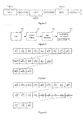
- Figure 3 shows an example of the first control information.
- the first control information includes the resource allocation information (RA), the multiplexing order information of data transmission (M) and the link adaptation method information of the user group (LA).
- the cyclic redundancy check code obtained by performing cyclic redundancy check for the above-described information needs to be scrambled with the group identification (GID).
- the resource allocation information (RA), the multiplexing order information of data transmission (M) and the link adaptation method information of the user group (LA) in the first control information can be indicated by either the independent indication manner or the joint indication manner.
- Figure 4 and 5 shows an example of the second control information respectively.
- the multiplexing order of data transmission is assumed as 3, thus the second control information includes three particular kind of control information.
- the meaning of each field is expressed as follows: pDCI m : particular control information of the mth user; ID m : the identification of the mth user; CRC m : the cyclic redundancy check code corresponding to the mth user.
- the CRC m carried in the second control information is scrambled with the IDm.
- Figures 4 and 5 show two manners of calculating the cyclic redundancy check code: the nested cyclic redundancy check and the independent cyclic redundancy check.
- CRC m is obtained by calculating all of the previous information bits.
- this nested cyclic redundancy check manner will lead to a better performance on packet error rate.
- CRCm is obtained by calculating bits of the previous control information DCI m .
- parallel processing can be used in this independent cyclic redundancy check, thus reducing delay of decoding.
- Figure 6 shows a process of processing the second control information by the eNode B according to the present embodiment.
- the eNode B calculates the cyclic redundancy check code using the nested cyclic redundancy check manner as shown in Figure 5 , and cascades the particular control information of the users in the user group together.
- the eNode B performs channel coding and interleaving for the cascaded control information according to the link adaptation method corresponding to the user group. It should be noted that the operation of interleaving is optional, that is, the eNode B does not perform interleaving for the bits obtained after channel coding.
- step 603 the eNode B performs rate matching for the bits obtained after channel coding according to the link adaptation method corresponding to the user group.
- the eNode B needs to introduce different redundancy for different users according to quality of the channels of users. It will be described hereinafter using an example in which the eNode B realizes the objective that different users have different redundancy through adjusting rate matching parameters.
- Tables 1 and 2 show all possible rate matching methods when the multiplexing orders are 2 and 3 and the set consisting of all rate matching redundancy is ⁇ 1, 1/2, 1/3, 1/4 ⁇ respectively.
- the rate matching redundancy being 1 means that the rate matching does not introduce additional redundancy
- 1/2 means that the rate matching introduces two times of redundancy
- 1/3 means that the rate matching introduces three times of redundancy
- 1/4 means that the rate matching introduces four times of redundancy.
- Tables 1 and 2 different indexes can be assigned to different rate matching methods. If Tables 1 and 2 are pre-stored in the eNode B and in the users, the eNode B can instruct the users to select a link adaptation method through informing the users the indexes of rate matching.
- a link adaptation method in the existing system can be included in the tables also, that is, all users use the same processing and have the same redundancy, so that the number of indexes of rate matching is reduced and therefore the signaling overhead is reduced.
- M 2
- ⁇ 1/4, 1/4 ⁇ , ⁇ 1/3, 1/3 ⁇ , ⁇ 1/2, 1/2 ⁇ and ⁇ 1 ⁇ can be achieved by index 1.
- the eNode B modulates the bits after rate matching and mapping them to the control channel element (CCE) and the search space corresponding to the group identification of the user group.
- CCE control channel element
- the code rates of all users are the same 2 ⁇ 1/4, 1/4, 1/3 ⁇ 3 ⁇ 1/4, 1/4, 1/2 ⁇ 4 ⁇ 1/4, 1/4, 1 ⁇ 5 ⁇ 1/4, 1/3, 1/3 ⁇ 6 ⁇ 1/4, 1/3, 1/2 ⁇ 7 ⁇ 1/4, 1/3, 1 ⁇ 8 ⁇ 1/4, 1/2, 1/2 ⁇ 9 ⁇ 1/4, 1/2, 1 ⁇ 10 ⁇ 1/4, 1, 1 ⁇ 11 ⁇ 1/3, 1/3, 1/2 ⁇ 12 ⁇ 1/3, 1/3, 1 ⁇ 13 ⁇ 1/3, 1/2, 1/2 ⁇ 14 ⁇ 1/3, 1/2, 1 ⁇ 15 ⁇ 1/3, 1, 1 ⁇ 16 ⁇ 1/2, 1/2, 1 ⁇ 17 ⁇ 1/2, 1, 1 ⁇
- Figures 7 and 8 show two examples of realizing a certain link adaptation method through rate matching, here, d UE ⁇ 1 ⁇ 0 , d UE ⁇ 1 ⁇ 1 and d UE ⁇ 1 ⁇ 2 are the bits obtained after performing cyclic redundancy check and channel coding for the particular control information of a first user UE1, d UE ⁇ 2 ⁇ 0 , d UE ⁇ 2 ⁇ 1 and d UE ⁇ 2 ⁇ 2 are the bits obtained after performing cyclic redundancy check and channel coding for the particular control information of a second user UE2, and d UE ⁇ 3 ⁇ 0 , d UE ⁇ 3 ⁇ 1 and d UE ⁇ 3 ⁇ 2 are the bits obtained after performing cyclic redundancy check and channel coding for the particular control information of a third user UE3.
- the rate matching parameter can be realized as ⁇ 1/3, 1/2, 1 ⁇ , that is, in the rate matching, the code rate of UE1 is 1/3, the code rate of UE2 is 1/2 and the code rate of UE3 is 1, which also means in the rate matching, the bits of UE1 are repeated three times, the bits of UE2 are repeated two times and the bits of UE3 are repeated once.
- rate matching parameter can be realized as ⁇ 1/3, 1/2, 1/2 ⁇ , that is, in the rate matching, the code rate of UE1 is 1/3, the code rate of UE2 is 1/2 and the code rate of UE3 is 1/2, which also means in the rate matching, the bits of UE1 are repeated three times, the bits of UE2 are repeated two times and the bits of UE3 are repeated two times.
- the code rate of channel coding can be adjusted in the link adaptation process.
- the eNode B can introduce different redundancy for different users by adjusting the code rate of channel coding.
- Figure 11 gives a specific example to realize the code rate parameter ⁇ 1/3, 1/2, 1 ⁇ of channel coding by adjusting the code rate of channel coding.
- the eNodeB when performing channel coding, can use 1/3 as code rate for user 1, use 1/2 as code rate for user 2 and use 1 as code rate for user 3 so as to introduce different redundancy for user 1, user 2 and user 3.
- the eNode B can introduce different redundancy for different users by adjusting the rate matching parameters and the channel coding parameters simultaneously, the detailed description of which will be omitted herein.
- the user For the first control information, the user first de-maps the search space corresponding to the group identification of the user group to which itself belongs and obtaining candidate first control information, performs blind detection (demodulation, rate de-matching, channel decoding and cyclic redundancy check) for the candidate first control information and obtains contents of the first control information sent by the eNode B, so as to determine common control information in control information corresponding to each user in the user group to which itself belongs and link adaptation method corresponding to the user group to which itself belongs.
- blind detection demodulation, rate de-matching, channel decoding and cyclic redundancy check
- the user first de-maps the search space corresponding to the group identification of the user group to which itself belongs and obtains candidate second control information, performs blind detection for the candidate second control information according to the common control information in the control information corresponding to each user in the user group to which itself belongs and the link adaptation method corresponding to the user group to which itself belongs, and obtains particular control information of itself and/or of other users. It should be noted that the user needs to calculate information of a plurality of cyclic redundancy checks in the process of channel decoding.
- the user calculates the cyclic redundancy check codes in the order from inside to outside of the cyclic redundancy check, i.e., CRC1, CRC2 ... CRC M . If the cyclic redundancy check result is correct, the user may stop decoding and output all of the particular control information of each user decoded. Instead, if the cyclic redundancy check result is incorrect, the user may continue to decode and perform the next cyclic redundancy check. If there is no any correct cyclic redundancy check result, the user may consider itself as not being scheduled.
- the user may perform decoding and cyclic redundancy check for particular control information of M users independently. If there is a correct cyclic redundancy check result, the user may consider itself as being scheduled and obtain the particular control information of the corresponding user. Instead, if there is no correct cyclic redundancy check result, the user may consider itself as not being scheduled.
- an embodiment of the present disclosure discloses devices to perform the method, including a base station eNode B and a UE.
- the internal structure of a base station (eNode B) provided by an embodiment of the present disclosure may include:
- the link adaptation method determining unit 902 may include:
- the first control information transmitting unit 903 may further scramble a cyclic redundancy check code generated through the cyclic redundancy check with the group identification of the user group.
- the second control information transmitting unit 904 may use a manner in which each control information is applied the cyclic redundancy check in a nested mode or a manner in which each control information is applied the cyclic redundancy check independently.
- the second control information transmitting unit 904 may further scramble a cyclic redundancy check code generated through the cyclic redundancy check with the user identification of each user in the user group.
- the internal structure of a UE comprises:
- the second control information receiving unit 1002 firstly demodulates the candidate second control information according to the common control information among the control information corresponding to each user in the user group to which itself belongs, and then performs rate de-matching, channel decoding and cyclic redundancy check for the demodulated data according to the link adaptation method corresponding to the user group to which itself belongs.
- the second control information receiving unit 1002 in the UE performs cyclic redundancy check in the order from inside to outside of the cyclic redundancy check.
- the user stops decoding and outputs all of the particular control information of each user until this cyclic redundancy check; instead, if the cyclic redundancy check result is incorrect, the user continues to decode until the next cyclic redundancy check; and if there is no any correct cyclic redundancy check result, the user considers itself as not being scheduled.
- the second control information receiving unit 1002 in the UE performs cyclic redundancy check for the particular control information among the control information corresponding to each user independently. If there is a correct cyclic redundancy check result, the particular control information of the corresponding user is obtained; instead, if there is no correct cyclic redundancy check result, the user considers itself as not being scheduled.
- the eNode B since the eNode B sends the control information to be sent via two pieces of control information, the complexity of blind detection by the user is greatly reduced; on the other hand, since different code rates are used when performing link adaptation processing for the second control information according to the quality of channel of each user, that is, different amount of redundancy information are introduced for users with different quality of channel, the signaling overhead is greatly reduced while ensuring the second control information can be accurately received by users at edges.
- control information for system information, power control information and the like.
Landscapes
- Engineering & Computer Science (AREA)
- Signal Processing (AREA)
- Computer Networks & Wireless Communication (AREA)
- Quality & Reliability (AREA)
- Mobile Radio Communication Systems (AREA)
- Detection And Prevention Of Errors In Transmission (AREA)
Applications Claiming Priority (1)
| Application Number | Priority Date | Filing Date | Title |
|---|---|---|---|
| CN201310070616.1A CN104038963A (zh) | 2013-03-06 | 2013-03-06 | 无线通信系统中控制信息的传输方法和装置 |
Publications (2)
| Publication Number | Publication Date |
|---|---|
| EP2775649A2 true EP2775649A2 (de) | 2014-09-10 |
| EP2775649A3 EP2775649A3 (de) | 2016-12-07 |
Family
ID=50241146
Family Applications (1)
| Application Number | Title | Priority Date | Filing Date |
|---|---|---|---|
| EP14158092.8A Withdrawn EP2775649A3 (de) | 2013-03-06 | 2014-03-06 | Verfahren und Vorrichtung zur Übertragung von Steuerungsinformationen in einem drahtlosen Kommunikationssystem |
Country Status (4)
| Country | Link |
|---|---|
| US (1) | US9166759B2 (de) |
| EP (1) | EP2775649A3 (de) |
| JP (1) | JP2014176091A (de) |
| CN (1) | CN104038963A (de) |
Cited By (1)
| Publication number | Priority date | Publication date | Assignee | Title |
|---|---|---|---|---|
| WO2017059885A1 (en) * | 2015-10-05 | 2017-04-13 | Telefonaktiebolaget Lm Ericsson (Publ) | Methods and nodes for communication of a message over a radio link |
Families Citing this family (8)
| Publication number | Priority date | Publication date | Assignee | Title |
|---|---|---|---|---|
| KR20150107490A (ko) * | 2014-03-14 | 2015-09-23 | 삼성전자주식회사 | 무선통신 시스템에서 간섭 신호 제거 및 억제를 위한 제어정보 전송 방법 및 장치 |
| JP6505244B2 (ja) * | 2015-02-27 | 2019-04-24 | 華為技術有限公司Huawei Technologies Co.,Ltd. | ダウンリンク制御情報送信方法及び装置 |
| BR112017024252B1 (pt) | 2015-05-13 | 2023-11-28 | Huawei Technologies Co., Ltd. | Nó de rede, dispositivo de usuário, e métodos para os mesmos para um sistema de comunicação sem fio |
| US20180041992A1 (en) * | 2016-01-13 | 2018-02-08 | Telefonaktiebolaget Lm Ericsson (Publ) | Control channel for a wireless network |
| CN108270535B (zh) * | 2017-01-03 | 2022-09-27 | 中兴通讯股份有限公司 | 信道检测方法及装置 |
| US10574388B2 (en) | 2017-04-03 | 2020-02-25 | Qualcomm Incorporated | Techniques for handling overlapping sets of downlink control channel resources |
| US11032034B2 (en) * | 2019-05-20 | 2021-06-08 | Telefonaktiebolaget Lm Ericsson (Publ) | Transmission structure for mmW RAN |
| JP2021052312A (ja) * | 2019-09-25 | 2021-04-01 | Kddi株式会社 | 2ステップのランダムアクセス手順を実行するための端末装置、基地局装置、制御方法、及びプログラム |
Family Cites Families (15)
| Publication number | Priority date | Publication date | Assignee | Title |
|---|---|---|---|---|
| US6498936B1 (en) * | 1999-01-22 | 2002-12-24 | Ericsson Inc. | Methods and systems for coding of broadcast messages |
| JP4671982B2 (ja) * | 2007-01-09 | 2011-04-20 | 株式会社エヌ・ティ・ティ・ドコモ | 基地局、送信方法及び移動通信システム |
| US9036566B2 (en) * | 2007-06-22 | 2015-05-19 | Mitsubishi Electric Corporation | Communications method, base station, and mobile terminal |
| WO2010077054A2 (en) * | 2008-12-29 | 2010-07-08 | Lg Electronics Inc. | Control channel detection for multiple implicit identifiers |
| CN101925109B (zh) * | 2009-06-16 | 2012-12-26 | 华为技术有限公司 | 一种控制信道映射的方法和装置 |
| US8599804B2 (en) * | 2009-08-07 | 2013-12-03 | Broadcom Corporation | Distributed signal field for communications within multiple user, multiple access, and/or MIMO wireless communications |
| JP5072986B2 (ja) * | 2010-02-15 | 2012-11-14 | 株式会社エヌ・ティ・ティ・ドコモ | 無線通信システム、基地局装置及びユーザ端末 |
| WO2011121774A1 (ja) * | 2010-03-31 | 2011-10-06 | 富士通株式会社 | 無線通信方法、無線通信システムおよび無線通信装置 |
| JP5455228B2 (ja) * | 2010-04-05 | 2014-03-26 | 株式会社Nttドコモ | 基地局装置及びユーザ端末 |
| CN103098402B (zh) * | 2010-07-01 | 2016-08-03 | Lg电子株式会社 | 在无线lan系统中收发mimo包的方法和设备 |
| WO2012057546A2 (ko) * | 2010-10-28 | 2012-05-03 | 엘지전자 주식회사 | 무선랜 시스템에서 데이터 프레임 송수신 방법 및 장치 |
| CN103238363B (zh) * | 2010-12-02 | 2017-03-22 | Lg电子株式会社 | 在无线通信系统中发送下行链路控制信号的方法 |
| CN102843748B (zh) * | 2011-06-22 | 2017-09-12 | 中兴通讯股份有限公司 | 一种确定搜索空间的方法及装置 |
| CN103095444B (zh) * | 2011-11-07 | 2016-05-11 | 上海贝尔股份有限公司 | 基于多用户mimo传输发送和接收下行控制信息的方法和设备 |
| ES2548428T3 (es) * | 2012-05-07 | 2015-10-16 | Mstar Semiconductor, Inc. | Aparato de recepción y desmodulación de símbolos de OFDM y método de desmodulación |
-
2013
- 2013-03-06 CN CN201310070616.1A patent/CN104038963A/zh active Pending
-
2014
- 2014-03-04 US US14/196,856 patent/US9166759B2/en not_active Expired - Fee Related
- 2014-03-05 JP JP2014042922A patent/JP2014176091A/ja not_active Ceased
- 2014-03-06 EP EP14158092.8A patent/EP2775649A3/de not_active Withdrawn
Non-Patent Citations (1)
| Title |
|---|
| None |
Cited By (2)
| Publication number | Priority date | Publication date | Assignee | Title |
|---|---|---|---|---|
| WO2017059885A1 (en) * | 2015-10-05 | 2017-04-13 | Telefonaktiebolaget Lm Ericsson (Publ) | Methods and nodes for communication of a message over a radio link |
| US10291375B2 (en) | 2015-10-05 | 2019-05-14 | Telefonaktiebolaget Lm Ericsson (Publ) | Methods and nodes for communication of a message over a radio link |
Also Published As
| Publication number | Publication date |
|---|---|
| EP2775649A3 (de) | 2016-12-07 |
| CN104038963A (zh) | 2014-09-10 |
| JP2014176091A (ja) | 2014-09-22 |
| US9166759B2 (en) | 2015-10-20 |
| US20140254461A1 (en) | 2014-09-11 |
Similar Documents
| Publication | Publication Date | Title |
|---|---|---|
| EP2775649A2 (de) | Verfahren und Vorrichtung zur Übertragung von Steuerungsinformationen in einem drahtlosen Kommunikationssystem | |
| EP3766293B1 (de) | Verfahren und vorrichtung zum übertragen oder empfangen eines synchronisationssignals in einem drahtlosen kommunikationssystem | |
| EP3472953B1 (de) | Superpositionscodierung von pdsch und pdcch | |
| EP3787214B1 (de) | Verfahren und vorrichtung zur rmsi-aufnahme aus einer benachbarten zelle | |
| EP2704349B1 (de) | Anpassung einer Anzahl von Aggregationsebenen für Steuerkanalelemente | |
| EP2853044B1 (de) | Gestaltung von übertragungsmodus und rückkopplung zur unterstützung von mtc-vorrichtungen in lte | |
| US20220377722A1 (en) | Sidelink control information stage 2 format | |
| EP3311514B1 (de) | Basisbandprozessoren, basisstation, benutzervorrichtung und verfahren dafür | |
| EP4301077A2 (de) | Übertragungen von downlink-steuerkanälen für kostengünstige benutzergeräte | |
| CN108352937A (zh) | 下行链路控制信道的两阶段调度方法 | |
| JP5147989B2 (ja) | 無線通信システムにおける多重アンテナ構成の信号伝達 | |
| EP3334109B1 (de) | Verfahren zum übertragen und empfangen eines signals auf der basis eines nicht-orthogonalen mehrfachzugangsschemas und vorrichtung dafür | |
| US9253785B2 (en) | Multi-cell incremental redundancy | |
| WO2020033434A1 (en) | Methods and apparatus for an uplink control channel in noma asynchronous transmissions | |
| CN107872298B (zh) | 免授权传输的方法、网络设备和终端设备 | |
| EP3582559B1 (de) | Vorrichtung und verfahren zur uplink-leistungssteuerung in einem mobilfunksystem | |
| US9614597B2 (en) | Method, device, and system for transmitting MU-MIMO pilot and data | |
| CN104104466A (zh) | 一种发送和接收广播信道的方法、系统及设备 | |
| US10306666B2 (en) | Data transmission method, base station, and user equipment | |
| US10182388B2 (en) | Method for detecting discovery signal for device-to-device communication in wireless communication system, and device for same | |
| CN105262560B (zh) | 一种信号传输方法及装置 | |
| EP4725146A1 (de) | Einheiten und verfahren zur drahtlosen kommunikation | |
| EP3478015A1 (de) | Verfahren und vorrichtung zum senden und empfangen von rückkopplungsinformationen | |
| KR20140035472A (ko) | 멀티 셀 hsdpa를 지원하는 이동통신 시스템에서 채널 품질 인식자 전송용 물리제어채널의 전송전력을 조절하는 방법 및 장치 |
Legal Events
| Date | Code | Title | Description |
|---|---|---|---|
| PUAI | Public reference made under article 153(3) epc to a published international application that has entered the european phase |
Free format text: ORIGINAL CODE: 0009012 |
|
| 17P | Request for examination filed |
Effective date: 20140306 |
|
| AK | Designated contracting states |
Kind code of ref document: A2 Designated state(s): AL AT BE BG CH CY CZ DE DK EE ES FI FR GB GR HR HU IE IS IT LI LT LU LV MC MK MT NL NO PL PT RO RS SE SI SK SM TR |
|
| AX | Request for extension of the european patent |
Extension state: BA ME |
|
| PUAL | Search report despatched |
Free format text: ORIGINAL CODE: 0009013 |
|
| AK | Designated contracting states |
Kind code of ref document: A3 Designated state(s): AL AT BE BG CH CY CZ DE DK EE ES FI FR GB GR HR HU IE IS IT LI LT LU LV MC MK MT NL NO PL PT RO RS SE SI SK SM TR |
|
| AX | Request for extension of the european patent |
Extension state: BA ME |
|
| RIC1 | Information provided on ipc code assigned before grant |
Ipc: H04L 1/00 20060101AFI20161102BHEP |
|
| R17P | Request for examination filed (corrected) |
Effective date: 20170602 |
|
| STAA | Information on the status of an ep patent application or granted ep patent |
Free format text: STATUS: THE APPLICATION IS DEEMED TO BE WITHDRAWN |
|
| 18D | Application deemed to be withdrawn |
Effective date: 20181002 |