EP2774796A2 - Elastisches Hohlprofil - Google Patents
Elastisches Hohlprofil Download PDFInfo
- Publication number
- EP2774796A2 EP2774796A2 EP14157183.6A EP14157183A EP2774796A2 EP 2774796 A2 EP2774796 A2 EP 2774796A2 EP 14157183 A EP14157183 A EP 14157183A EP 2774796 A2 EP2774796 A2 EP 2774796A2
- Authority
- EP
- European Patent Office
- Prior art keywords
- webs
- sealing lip
- main portion
- web
- hollow profile
- Prior art date
- Legal status (The legal status is an assumption and is not a legal conclusion. Google has not performed a legal analysis and makes no representation as to the accuracy of the status listed.)
- Granted
Links
Images




Classifications
-
- E—FIXED CONSTRUCTIONS
- E05—LOCKS; KEYS; WINDOW OR DOOR FITTINGS; SAFES
- E05F—DEVICES FOR MOVING WINGS INTO OPEN OR CLOSED POSITION; CHECKS FOR WINGS; WING FITTINGS NOT OTHERWISE PROVIDED FOR, CONCERNED WITH THE FUNCTIONING OF THE WING
- E05F15/00—Power-operated mechanisms for wings
- E05F15/40—Safety devices, e.g. detection of obstructions or end positions
- E05F15/42—Detection using safety edges
- E05F15/44—Detection using safety edges responsive to changes in electrical conductivity
-
- B—PERFORMING OPERATIONS; TRANSPORTING
- B60—VEHICLES IN GENERAL
- B60J—WINDOWS, WINDSCREENS, NON-FIXED ROOFS, DOORS, OR SIMILAR DEVICES FOR VEHICLES; REMOVABLE EXTERNAL PROTECTIVE COVERINGS SPECIALLY ADAPTED FOR VEHICLES
- B60J10/00—Sealing arrangements
- B60J10/20—Sealing arrangements characterised by the shape
- B60J10/24—Sealing arrangements characterised by the shape having tubular parts
- B60J10/248—Sealing arrangements characterised by the shape having tubular parts having two or more tubular cavities, e.g. formed by partition walls
-
- B—PERFORMING OPERATIONS; TRANSPORTING
- B60—VEHICLES IN GENERAL
- B60J—WINDOWS, WINDSCREENS, NON-FIXED ROOFS, DOORS, OR SIMILAR DEVICES FOR VEHICLES; REMOVABLE EXTERNAL PROTECTIVE COVERINGS SPECIALLY ADAPTED FOR VEHICLES
- B60J10/00—Sealing arrangements
- B60J10/80—Sealing arrangements specially adapted for opening panels, e.g. doors
- B60J10/86—Sealing arrangements specially adapted for opening panels, e.g. doors arranged on the opening panel
-
- E—FIXED CONSTRUCTIONS
- E05—LOCKS; KEYS; WINDOW OR DOOR FITTINGS; SAFES
- E05F—DEVICES FOR MOVING WINGS INTO OPEN OR CLOSED POSITION; CHECKS FOR WINGS; WING FITTINGS NOT OTHERWISE PROVIDED FOR, CONCERNED WITH THE FUNCTIONING OF THE WING
- E05F15/00—Power-operated mechanisms for wings
- E05F15/40—Safety devices, e.g. detection of obstructions or end positions
-
- E—FIXED CONSTRUCTIONS
- E05—LOCKS; KEYS; WINDOW OR DOOR FITTINGS; SAFES
- E05Y—INDEXING SCHEME ASSOCIATED WITH SUBCLASSES E05D AND E05F, RELATING TO CONSTRUCTION ELEMENTS, ELECTRIC CONTROL, POWER SUPPLY, POWER SIGNAL OR TRANSMISSION, USER INTERFACES, MOUNTING OR COUPLING, DETAILS, ACCESSORIES, AUXILIARY OPERATIONS NOT OTHERWISE PROVIDED FOR, APPLICATION THEREOF
- E05Y2900/00—Application of doors, windows, wings or fittings thereof
- E05Y2900/50—Application of doors, windows, wings or fittings thereof for vehicles
- E05Y2900/51—Application of doors, windows, wings or fittings thereof for vehicles for railway cars or mass transit vehicles
Definitions
- the invention relates to an elastic hollow profile, in particular for the arrangement on a front side of a door leaf of an inside pivoting door, wherein the hollow profile has a holding portion for attachment, in particular on the front side of the door leaf, a main portion and at least one projecting from the main portion sealing lip, wherein in one Connection region in which the sealing lip is connected to the main portion, at least one hollow chamber for arranging an electrical switching profile or for generating a detectable pressure shock during compression is provided, wherein the connecting portion is formed by means of two webs, each extending from the sealing lip to the main portion and between which the hollow chamber is arranged.
- German patent application DE 10 2007 002 745 A1 is an elastic hollow profile with hinge-hinged sealing lip and hermetically sealed hollow chamber for generating a detectable pressure surge during compression known.
- an elastic hollow profile is to be improved.
- an elastic hollow profile for this purpose, wherein the hollow profile has a holding portion for attachment, a main portion and at least one projecting from the main portion sealing lip, wherein in a connection region in which the sealing lip is connected to the main portion, at least one hollow chamber for arranging a electrical switching profile or for generating a detectable pressure surge during compression is provided, wherein the connecting portion is formed by means of two webs, each extending from the sealing lip to the main portion and between which the hollow chamber is arranged and wherein a connection the sealing lip with the two webs, the webs and a connection of the webs are formed with the main portion so that in a deflection of the sealing lip mainly the webs are deformed in such a way that reduces a distance between the webs.
- the elastic hollow profile is thus formed, and in particular the sealing lip is connected to the main section in such a way that an area of the greatest deformation about which the sealing lip then moves approximately is not in the base of the lip but in the region of the webs.
- the sealing lip itself is relatively rigidly connected to the webs and also the webs are relatively stiff connected to the main section, always seen in comparison to the stiffness of the webs themselves.
- Such a design then leads to a deflection of the sealing lip primarily the webs deform in their central region in such a way that the webs move toward each other and thus compress a located in the hollow chamber between the webs switching strip and thereby trigger a switching signal by means of an electrical switching strip or connected to the hollow chamber pressure sensor.
- the sealing lip itself may be formed solid without a cavity and, for example, in cross-section approximately triangular and tapered to an edge at the free end.
- the comparatively rigid design of the sealing lip causes the sealing lip is pivoted as a whole and thereby causes deformation of the webs and thus compression of the hollow chamber before, with even greater force, the sealing lip then deformed itself substantially.
- the sealing lip is thus formed as a projecting projection with a free end and the sealing lip has over the webs from a higher rigidity.
- the webs have a smooth outer surface and seen in cross section a continuous contour.
- the hollow profile according to the invention can be produced reliably and in particular with low tolerances. Also, the hollow profile according to the invention in operation is little susceptible to contamination.
- a smooth outer surface means that the webs are not provided with grooves, notches, protrusions or the like.
- a contours that are continuous in cross-section mean that there is a continuous contour of the outer surface and, in particular, there are no grooves, indentations, sharp edges or shoulders with sharp edges in the contour of the outer surfaces of the two webs.
- the webs between the sealing lip and the main portion seen in cross section to a substantially constant thickness.
- an inner surface of the hollow chamber between the webs is smooth and formed in cross section with a continuous contour.
- the assembly of the electrical switching profile can be significantly facilitated within the hollow chamber. Nevertheless, the reliable triggering of a switching signal by means of the switching profile or by means of a pressure sensor in a collision of the sealing lip is ensured with an obstacle.
- a wall thickness of the main section of the hollow profile in the region of the connection with the webs is greater than a wall thickness of the webs.
- the wall thickness of the main portion of the hollow profile in the region of the connection with the webs at least twice as large as the wall thickness of the webs.
- a wall thickness of the sealing lip in the region of the connection with the webs is at least twice as large as the wall thickness of the webs.
- the outer surface of a first of the webs at the transition between the first web and the main portion with the outer surface of the main portion forms an angle of 90 ° or less than 90 °.
- the transition between the first web and the main portion is arranged approximately at the level of the center of the hollow chamber. In this way, a strong deformation occurs approximately at the level of the center of the hollow chamber, which in turn a reliable compression of the hollow chamber can be achieved.
- the wall thickness of the first web is slightly reduced in the region of the transition between the first web and the main portion.
- the wall thickness of the first web is reduced in the region of the transition based on the wall thickness of the first web outside the transition between 10% and 20%. Such a comparatively small reduction of the wall thickness is surprisingly enough to achieve a reliable deformation in the region of the transition.
- the outer surface of a second of the webs at the transition between the second web and the main portion with the outer surface of the main portion forms an angle of about 180 °.
- an outer surface of the sealing lip in the region of the transition between the second web and the sealing lip encloses an angle of more than 45 ° and in particular 90 °.
- the outer surface of the first web with the outer surface of the sealing lip in the region of the transition between the first web and the sealing lip forms an angle of more than 120 °, in particular 180 °.
- each of the transition region will deform, in which the angle between the outer surface of the sealing lip and the outer surface of the respective web is greater.
- the presentation of the Fig. 1 shows a hollow profile 10 according to the invention, which has a holding portion 12, a main portion 14 and a sealing lip portion 16.
- the holding section 12 is provided for fastening the hollow profile 10 on the end face of a groove of a door leaf of an inside pivoting door, cf. the Fig. 2 and 3 ,
- a projection 18 of the holding portion 12 is inserted into an undercut groove on the front side of the door leaf.
- Sealing lips 20 and 22 limit the holding portion 12 laterally and are in the mounted state on the outside or inside of the door leaf of the inner swing door.
- the main portion 14 extends between the holding portion 12 and the sealing lip portion 16 and is provided with a first hollow chamber 24 in which a first elastic switching profile 26 is arranged.
- the hollow chamber 24 may also be sealed on both sides and connected to a pressure sensor, for example a membrane switch.
- the first hollow chamber 24 is arranged between a first actuating web 28 and a second actuating web 30, wherein the first actuating web 28 and the second actuating web 30 are arranged in alignment with each other.
- the first actuating bar 28 extends from a contact area 32 on the in Fig. 1 The left outer surface of the main portion 32 to the hollow chamber 24.
- the second actuating bar 30 extends from the hollow chamber 24 to the holding portion 12.
- a third actuating bar 34 is between a portion of the second actuating bar 30, in which this is connected to the boundary of the hollow chamber 24 , and one in Fig. 1 Left outer surface of the main portion 14. If the hollow section 10 meets with the contact portion 32 to an obstacle, so this is the contact portion 32 in the Fig. 1 moved to the left or bottom left. This movement is transmitted to the boundary of the hollow chamber 24 by means of the first actuating web 28. A reaction force is applied from the second actuating bar 30, so that the hollow chamber 24 is compressed. In the same way, the electrical switching profile 26 compressed and a switching signal can be triggered.
- the hollow chamber 24 is sealed and connected to a pressure sensor, compressing the hollow chamber 24 generates a pressure surge or a pressure fluctuation which is detected by means of the pressure sensor, whereby a switching signal is generated.
- the third actuating bar 34 prevents buckling of the second actuating bar 30 in the load case described and thereby ensures that the hollow chamber 24 is reliably compressed in the event of a collision with the contact area 32.
- the contact region 32 projects beyond an imaginary extension 36, which is shown as a dashed line, of the outer surface of the holding section 12. In the illustration of FIG Fig. 1 the contact area 32 projects beyond the imaginary extension 36 on the right. This ensures, see also Fig.
- a sealing lip 38 is arranged, which is connected by means of a first web 40 and a second web 42 with the outer surface of the main portion 14 of the hollow section 10. Between the webs 40, 42, a second hollow chamber 44 is provided. Within the second hollow chamber 44, a second elastic switching profile 46 is arranged. Instead of the switching profile 46, the second hollow chamber 44 may be sealed and connected to a pressure sensor.
- the cavity 44 is shown slightly larger than an outer periphery of the electrical switching profile 46. This representation corresponds to reality, since between the switching profile 46 and the hollow chamber 44 a certain amount of play must be present in order to move the switching profile 46 into the hollow chamber 44 can. Also, a certain amount of play is necessary to eliminate the risk of false triggering.
- both the first web 40 and the second web 42 have a smooth outer surface and, seen in cross section, a continuous contour.
- a smooth outer surface means that the webs 40, 42 are not provided with grooves, notches, protrusions or the like.
- a continuous contour, seen in cross-section, means that, like Fig. 1 it can be seen, there is a continuous course of the contour of the outer surface and in particular no grooves, notches, sharp edges or shoulders with sharp edges in the contour of the outer surface of the two webs 40, 42 are present.
- Such a design of the webs 40, 42 facilitates the production of the hollow profile 40 and reduces a susceptibility to soiling of the hollow section 10 significantly.
- the outer surface of the second web 42 and the outer surface of the hollow profile 10 form an angle of 180 °.
- an outer surface of the sealing lip 38 and an outer surface of the second web 42 form an angle of approximately 70 °.
- an outer surface of the sealing lip 38 and an outer surface of the second web 42 form an angle of approximately 70 °.
- an outer surface of the sealing lip 38 and an outer surface of the second web 42 form an angle of approximately 70 °.
- an outer surface of the sealing lip 38 and an outer surface of the second web 42 form an angle of approximately 70 °.
- the region of a transition 58 between the first web 40 and the main portion 14th of the hollow section 10 include the outer surface of the first web 40 and the outer surface of the main portion 14 at an angle of about 80 °.
- the outer surface of the sealing lip 38 and the outer surface of the first web 40 form an angle of approximately 170 °.
- FIG. 2 shows schematically the sequence of movement when closing an inside swinging door with two door leaves 62, 64.
- Each of the door leaves 62, 64 is provided on its front side with a hollow profile according to the invention 66 and 68, wherein the hollow sections 66, 68 identical to the hollow section 10 of Fig. 1 are formed.
- a closing movement of the door leaves 62, 64, in Fig. 2 is represented by ten consecutive states
- the door leaf 62 is rotated about a pivot point 70 by means of a drive, not shown turned.
- the door leaf 64 is rotated about a pivot 72 by means of a drive, not shown.
- FIG. 2 can be seen that in the closed state of the door leaves 62, 64, the sealing lips 38 of the hollow sections 66, 68 touch each other and typically rest on each other. If an object or a human body part is clamped between the two sealing lips 38 when closing the door leaves 62, 64, this leads to a deflection of one or both sealing lips 38 and thereby to a compression of the second hollow chamber 44 and thus to a compression of the second switching profile 48 As a result, a switching signal can be generated and the drive of the door leaves 62 and / or 64 can be stopped or reversed.
- the presentation of the Fig. 3 shows a collision of the door panel 62 with the lower arm 74 of a passenger 76.
- the door panel 62 is provided in the same manner as the door panel 64 with a handle 78, which is engaged by the passenger 76 just entering. Now begins at this moment, the closing movement of the door panel 62 by rotation about the pivot point 70, the hollow profile 66 collides with its contact area 32 with the forearm 74 of the passenger 76.
- This collision as shown in FIG Fig. 1 has been explained, transmitted via the first actuating bar 28 on the first hollow chamber 24 and thereby the first switching profile 26. As a result, a switching signal can be generated and the drive of the door leaf 62 can be stopped or reversed.
- the presentation of the 4 and 5 merely illustrate the networking of a computer model of the hollow section 10 of the Fig. 1 , By means of such a calculation model, the behavior of the hollow profile be simulated at external loads. Such calculation methods have long been state of the art.
- the 4 and 5 show the unloaded case of the hollow section 10, so according to the in Fig. 1 illustrated state.
- the representations of the 6 and 7 show a load case of the hollow section 10, wherein the sealing lip 38 in a clockwise direction, in the illustrations of 6 and 7 so to the right, is deflected. This can be done, for example, that the hollow section 10 with the sealing lip 38 on a in Fig. 6 schematically illustrated obstacle 80 impinges, for example, a human hand or the like.
- the sealing lip 38 is deflected in a clockwise direction.
- the second connecting web 42 is deformed and in particular moved inwards in the direction of the second hollow chamber 44.
- a deformation of the second web 42 is particularly strong in the region of the transition 56 between the sealing lip 38 and the second web 42.
- the second connecting web 52 is pressed strongly inward and thereby presses on the second switching profile 46, so that whose electrical conductors come into contact with each other and a switching signal is generated.
- the transition 56 is located approximately at the level of the center of the switching profile 46 and the center of the hollow chamber 44. It is Fig.
- the representations of the 8 and 9 show a further load case in which the sealing lip 38 meets the obstacle 80 and thereby against in a clockwise direction, in FIGS. 8 and 9 to the left, is deflected.
- the second connecting web 42 is only slightly deformed.
- the first connecting web 40 is strongly deformed in the region of the transition 58 between the outer surface of the first connecting web and the outer surface of the main portion of the hollow section 10 and pushed inwardly into the second hollow chamber 44.
- the inner surface of the first connecting web 40 thereby also presses on the switching profile 46, wherein the inner surface of the second connecting web 42 acts as an abutment, so that the electrical conductors of the switching profile 46 come into contact with each other and a switching signal can be generated.
- the transition 58 is located approximately at the level of the center of the switching profile 46 and the center of the hollow chamber 44. It is based on Fig. 9 to recognize that the first connecting web in the region of the transition 60 between the sealing lip 38 and the first connecting web 40 is not or only comparatively little deformed. Since the outer surface of the sealing lip 38 in the region of the transition 60 with the outer surface of the first connecting web 40 includes a significantly larger angle than in the region of the transition 58 between the first connecting web 40 and the main portion of the hollow section 10, the region of the transition 60 at the in the 8 and 9 shown load case significantly weaker deformed than in the transition 58.
- the representations of the 10 and 11 show a further load case, in which the sealing lip 38 as in the case of loading the 8 and 9 counterclockwise, but significantly further deflected.
- a load case can occur, for example, if, see Fig. 2 , with closed door leaves 62, 64 an object or a hand between the hollow sections 66, 68 is pushed through from the inside out.
- the transition 58 is advantageously arranged approximately at the level of the middle of the second hollow chamber 44. In a deflection of the sealing lip 38 in the counterclockwise direction thereby pushes the first connecting web in the region of the transition 58 approximately to the middle of the hollow chamber 44 into this and thus applied to the electrical switching profile 46 approximately in the middle. As a result, a reliable generation of a switching signal can be effected.
Landscapes
- Engineering & Computer Science (AREA)
- Mechanical Engineering (AREA)
- Seal Device For Vehicle (AREA)
- Specific Sealing Or Ventilating Devices For Doors And Windows (AREA)
Abstract
Description
- Die Erfindung betrifft ein elastisches Hohlprofil, insbesondere für die Anordnung an einer Stirnseite eines Türblatts einer Innenschwenktüre, wobei das Hohlprofil einen Halteabschnitt zur Befestigung, insbesondere an der Stirnseite des Türblatts, einen Hauptabschnitt und wenigstens eine, von dem Hauptabschnitt abragende Dichtlippe aufweist, wobei in einem Verbindungsbereich, in dem die Dichtlippe mit dem Hauptabschnitt verbunden ist, wenigstens eine Hohlkammer zur Anordnung eines elektrischen Schaltprofils oder zum Erzeugen eines detektierbaren Druckstoßes beim Komprimieren vorgesehen ist, wobei der Verbindungsbereich mittels zweier Stege gebildet ist, die sich jeweils von der Dichtlippe zu dem Hauptabschnitt erstrecken und zwischen denen die Hohlkammer angeordnet ist.
- Aus der europäischen Patentschrift
EP 1 561 623 B1 ist ein elastisches Hohlprofil für die Anordnung an einer Stirnseite eines Türblatts einer Innenschwenktüre bekannt, bei dem in einem Verbindungsbereich, in dem die Dichtlippe mit einem Hauptabschnitt des Hohlprofils verbunden ist, eine Hohlkammer zur Anordnung eines sogenannten Stahlbandschalters vorgesehen ist. Um den Stahlbandschalter zuverlässig auslösen zu können, ist dieser auf seiner Außenseite mit Rippen und Vertiefungen versehen. Die Dichtlippe selbst ist mittels zweier Stege an den Hauptabschnitt des Hohlprofils angebunden, die Nuten bzw. tiefe Einkerbungen aufweisen, um eine definierte Verformung der Stege und dadurch eine zuverlässige Auslösung des Stahlbandschalters beim Verkippen der Dichtlippe sicherzustellen. - Aus der deutschen Gebrauchsmusterschrift
DE 20 2008 011 477 U1 ist eine Fingerschutzleiste in Form eines Schlauchprofils für Außenschwing- und Schwenkschiebetüren bekannt. Ein Vorsprung des Schlauchprofils ist schlauchförmig mit elastischen Wänden gestaltet. Trifft der Vorsprung auf ein Hindernis, so verformt sich der gesamte Vorsprung, insbesondere seine Seitenwände, die jeweils mit einem Innenschlitz oder einer Einkerbung versehen sind. - Aus der deutschen Offenlegungsschrift
DE 10 2007 002 745 A1 ist ein elastisches Hohlprofil mit scharnierartig angelenkter Dichtlippe und luftdicht abgeschlossener Hohlkammer zum Erzeugen eines detektierbaren Druckstoßes beim Komprimieren bekannt. - Mit der Erfindung soll ein elastisches Hohlprofil verbessert werden.
- Erfindungsgemäß ist hierzu ein elastisches Hohlprofil vorgesehen, wobei das Hohlprofil einen Halteabschnitt zur Befestigung, einen Hauptabschnitt und wenigstens eine, von dem Hauptabschnitt abragende Dichtlippe aufweist, wobei in einem Verbindungsbereich, in dem die Dichtlippe mit dem Hauptabschnitt verbunden ist, wenigstens eine Hohlkammer zur Anordnung eines elektrischen Schaltprofils oder zum Erzeugen eines detektierbaren Druckstoßes beim Komprimieren vorgesehen ist, wobei der Verbindungsbereich mittels zweier Stege gebildet ist, die sich jeweils von der Dichtlippe zu dem Hauptabschnitt erstrecken und zwischen denen die Hohlkammer angeordnet ist und wobei eine Verbindung der Dichtlippe mit den beiden Stegen, die Stege sowie eine Verbindung der Stege mit dem Hauptabschnitt so ausgebildet sind, dass bei einer Auslenkung der Dichtlippe hauptsächlich die Stege in der Weise verformt werden, dass sich ein Abstand zwischen den Stegen verringert.
- Erfindungsgemäß ist das elastische Hohlprofil also so ausgebildet und speziell ist die Dichtlippe so an den Hauptabschnitt angebunden, dass sich ein Bereich der stärksten Verformung, um den sich die Dichtlippe dann annähernd bewegt, nicht im Fußpunkt der Lippe sondern im Bereich der Stege befindet. Die Dichtlippe selbst ist vergleichsweise steif an die Stege angebunden und auch die Stege sind vergleichsweise steif an den Hauptabschnitt angebunden, immer gesehen im Vergleich zu der Steifigkeit der Stege selbst. Eine solche Ausbildung führt dann dazu, dass sich bei einer Auslenkung der Dichtlippe vorrangig die Stege in ihrem Mittenbereich verformen und zwar so, dass sich die Stege aufeinander zu bewegen und somit eine in der Hohlkammer zwischen den Stegen befindliche Schaltleiste zusammendrücken und dadurch mittels einer elektrischen Schaltleiste oder einem an die Hohlkammer angeschlossenen Drucksensor ein Schaltsignal auslösen können.
- Die Dichtlippe selbst kann massiv ohne Hohlraum ausgebildet sein und ist beispielsweise im Querschnitt etwa dreieckförmig und zu einer Kante am freien Ende sich verjüngend ausgebildet. Die vergleichsweise steife Ausbildung der Dichtlippe bewirkt, dass die Dichtlippe insgesamt verschwenkt wird und dadurch eine Verformung der Stege und somit eine Komprimierung der Hohlkammer verursacht, bevor, bei noch größer werdender Kraft, sich die Dichtlippe dann selbst wesentlich verformt. Erfindungsgemäß ist die Dichtlippe somit als abragender Vorsprung mit einem freien Ende ausgebildet und die Dichtlippe weist gegenüber den Stegen eine höhere Steifigkeit aus.
- In Weiterbildung der Erfindung weisen die Stege eine glatte Außenfläche und im Querschnitt gesehen eine stetige Kontur auf.
- Indem die Stege eine glatte Außenfläche und im Querschnitt gesehen eine stetige Kontur aufweisen, lässt sich das erfindungsgemäße Hohlprofil zuverlässig und insbesondere mit geringen Toleranzen herstellen. Auch ist das erfindungsgemäße Hohlprofil im Betrieb wenig verschmutzungsanfällig. Eine glatte Außenfläche bedeutet dabei, dass die Stege nicht mit Rillen, Einkerbungen, Vorsprüngen oder dergleichen versehen sind. Eine im Querschnitt gesehen stetige Kontur bedeutet dabei, dass ein stetiger Verlauf der Kontur der Außenfläche vorliegt und insbesondere keine Rillen, Einkerbungen, scharfe Kanten oder Absätze mit scharfen Kanten in der Kontur der Außenflächen der beiden Stege vorliegen. Überraschenderweise gelingt es bei einer Anbindung der Dichtlippe mittels zweier Stege mit glatter Außenfläche und im Querschnitt gesehen stetiger Kontur bei einer Beaufschlagung der Dichtlippe mit einer Kollisionskraft, eine zuverlässige Komprimierung der Hohlkammer und insbesondere des in der Hohlkammer angeordneten elektrischen Schaltprofils zu erreichen. Mit dem erfindungsgemäßen Hohlprofil können dadurch Kollisionen der Dichtlippe mit einem Hindernis zuverlässig detektiert werden.
- In Weiterbildung der Erfindung weisen die Stege zwischen der Dichtlippe und dem Hauptabschnitt im Querschnitt gesehen eine im Wesentlichen konstante Dicke auf.
- Diese Maßnahmen erleichtern die Herstellung des elastischen Hohlprofils und sorgen gleichzeitig für eine definierte Komprimierung der Hohlkammer bei einer Auslenkung der Dichtlippe in zwei unterschiedlichen Richtungen.
- In Weiterbildung der Erfindung ist eine Innenfläche der Hohlkammer zwischen den Stegen glatt und im Querschnitt gesehen mit stetiger Kontur ausgebildet.
- Auf diese Weise kann die Montage des elektrischen Schaltprofils innerhalb der Hohlkammer deutlich erleichtert werden. Dennoch ist die zuverlässige Auslösung eines Schaltsignals mittels des Schaltprofils oder mittels eines Drucksensors bei einer Kollision der Dichtlippe mit einem Hindernis sichergestellt.
- In Weiterbildung der Erfindung ist eine Wandstärke des Hauptabschnitts des Hohlprofils im Bereich der Verbindung mit den Stegen größer als eine Wandstärke der Stege.
- Auf diese Weise kann sichergestellt werden, dass sich bei einer Kollision der Dichtlippe mit einem Hindernis die Stege verformen und nicht der Hauptabschnitt, dass also eine zuverlässige Komprimierung der Hohlkammer erreicht wird. Vorteilhafterweise ist die Wandstärke des Hauptabschnitts des Hohlprofils im Bereich der Verbindung mit den Stegen wenigstens doppelt so groß wie die Wandstärke der Stege.
- In Weiterbildung der Erfindung ist eine Wandstärke der Dichtlippe im Bereich der Verbindung mit den Stegen wenigstens doppelt so groß wie die Wandstärke der Stege.
- Auf diese Weise wird sichergestellt, dass bei Kollision der Dichtlippe mit einem Hindernis sich vorrangig die Stege verformen und die Dichtlippe jedenfalls im Bereich der Verbindung mit den Stegen sich nicht oder lediglich wenig verformt. Dadurch kann eine schnelle und zuverlässige Erzeugung eines Schaltsignals bei Kollision der Dichtlippe mit einem Hindernis sichergestellt werden.
- In Weiterbildung der Erfindung schließt die Außenfläche eines ersten der Stege am Übergang zwischen dem ersten Steg und dem Hauptabschnitt mit der Außenfläche des Hauptabschnitts einen Winkel von 90° oder weniger als 90° ein.
- Auf diese Weise kann eine definierte Verformung des ersten Stegs bei einer Kollision der Dichtlippe mit einem Hindernis erzielt werden. Ein Winkel von 90° oder weniger als 90° bewirkt am Übergang zwischen dem ersten Steg und dem Hauptabschnitt eine Art Kerbwirkung, so dass der Bereich des Übergangs besonders stark verformt wird. Dadurch kann eine zuverlässige Komprimierung der Hohlkammer sichergestellt werden. Vorteilhafterweise ist der Übergang zwischen dem ersten Steg und dem Hauptabschnitt etwa auf Höhe der Mitte der Hohlkammer angeordnet. Auf diese Weise tritt eine starke Verformung etwa auf Höhe der Mitte der Hohlkammer auf, wodurch wiederum eine zuverlässige Komprimierung der Hohlkammer erreicht werden kann. Vorteilhafterweise ist die Wandstärke des ersten Steges im Bereich des Übergangs zwischen erstem Steg und Hauptabschnitt geringfügig verringert. Durch die Maßnahme kann sichergestellt werden, dass im Bereich des Übergangs eine starke Verformung und damit eine Komprimierung der Hohlkammer erfolgt. Vorteilhafterweise ist die Wandstärke des ersten Steges im Bereich des Übergangs bezogen auf die Wandstärke des ersten Steges außerhalb des Übergangs zwischen 10% und 20% verringert. Eine solche, vergleichsweise kleine Verringerung der Wandstärke reicht überraschenderweise aus, um eine zuverlässige Verformung im Bereich des Übergangs zu erzielen.
- In Weiterbildung der Erfindung schließt die Außenfläche eines zweiten der Stege am Übergang zwischen dem zweiten Steg und dem Hauptabschnitt mit der Außenfläche des Hauptabschnitts einen Winkel von etwa 180° ein. Eine solche Anbindung des zweiten Stegs an den Hauptabschnitt ist gegenüber Verformungen vergleichsweise unempfindlich. Auch dadurch wird eine zuverlässige Komprimierung der Hohlkammer bei Kollision der Dichtlippe mit einem Hindernis erzielt.
- In Weiterbildung der Erfindung schließt eine Außenfläche der Dichtlippe im Bereich des Übergangs zwischen dem zweiten Steg und der Dichtlippe einen Winkel von mehr als 45° und insbesondere 90° ein.
- In Weiterbildung der Erfindung schließt die Außenfläche des ersten Steges mit der Außenfläche der Dichtlippe im Bereich des Übergangs zwischen dem ersten Steg und der Dichtlippe einen Winkel von mehr als 120°, insbesondere 180°, ein.
- Durch die Maßnahmen können je nach Auslenkung der Dichtlippe definierte Verformungsverhalten erreicht werden. Je nach Richtung der Auslenkung der Dichtlippe, also in Richtung des ersten Steges oder in Richtung des zweiten Steges, wird sich jeweils der Übergangsbereich verformen, in dem der Winkel zwischen der Außenfläche der Dichtlippe und der Außenfläche des jeweiligen Steges größer ist.
- Weitere Merkmale und Vorteile der Erfindung ergeben sich aus den Ansprüchen und der folgenden Beschreibung bevorzugter Ausführungsformen der Erfindung im Zusammenhang mit den Zeichnungen. In den unterschiedlichen Zeichnungen und im Zusammenhang mit den unterschiedlichen Ausführungsformen dargestellte Einzelmerkmale können dabei in beliebiger Weise miteinander kombiniert werden, ohne den Rahmen der Erfindung zu überschreiten. In den Zeichnungen zeigen:
- Fig. 1
- eine Ansicht eines erfindungsgemäßen Hohlprofils gemäß einer ersten Ausführungsform,
- Fig. 2
- eine schematische Darstellung des Bewegungsablaufs einer Innenschwenktüre, deren Türblätter mit dem Hohlprofil der
Fig. 1 versehen sind, - Fig. 3
- eine schematische Darstellung einer Situation, bei der ein Fahrgast in ein Fahrzeug mit einer Innenschwenktüre einsteigt, die mit dem Hohlprofil der
Fig. 1 versehen ist, - Fig. 4
- eine Darstellung eines Rechenmodells nach der FEM-Methode für das Hohlprofil der
Fig. 1 , - Fig. 5
- eine vergrößerte, abschnittsweise Darstellung des Rechenmodells der
Fig. 4 , - Fig. 6
- das Rechenmodell der
Fig. 4 in einem ersten Belastungsfall, - Fig. 7
- eine abschnittsweise, vergrößerte Darstellung des Rechenmodells der
Fig. 6 , - Fig. 8
- eine Darstellung des Rechenmodells der
Fig. 4 in einem zweiten Belastungsfall, - Fig. 9
- eine vergrößerte, abschnittsweise Darstellung des Rechenmodells der
Fig. 8 , - Fig. 10
- eine Darstellung des Rechenmodells der
Fig. 4 in einem dritten Belastungsfall und - Fig. 11
- eine abschnittsweise vergrößerte Darstellung des Rechenmodells der
Fig. 10 . - Die Darstellung der
Fig. 1 zeigt ein erfindungsgemäßes Hohlprofil 10, das einen Halteabschnitt 12, einen Hauptabschnitt 14 und einen Dichtlippenabschnitt 16 aufweist. Der Halteabschnitt 12 ist zur Befestigung des Hohlprofils 10 an der Stirnseite einer Nut eines Türblatts einer Innenschwenktüre vorgesehen, vgl. dieFig. 2 und3 . Hierzu wird ein Vorsprung 18 des Halteabschnitts 12 in eine hinterschnittene Nut an der Stirnseite des Türblatts eingeführt. Dichtlippen 20 und 22 begrenzen den Halteabschnitt 12 seitlich und liegen im montierten Zustand auf der Außenseite bzw. Innenseite des Türblatts der Innenschwenktüre an. - Der Hauptabschnitt 14 erstreckt sich zwischen dem Halteabschnitt 12 und dem Dichtlippenabschnitt 16 und ist mit einer ersten Hohlkammer 24 versehen, in der ein erstes elastisches Schaltprofil 26 angeordnet ist. Anstelle der Anordnung des Schaltprofils 26 kann die Hohlkammer 24 auch beidseitig abgedichtet und mit einem Drucksensor, beispielsweise einem Membranschalter, verbunden sein. Die erste Hohlkammer 24 ist zwischen einem ersten Betätigungssteg 28 und einem zweiten Betätigungssteg 30 angeordnet, wobei der erste Betätigungssteg 28 und der zweite Betätigungssteg 30 fluchtend zueinander angeordnet sind. Der erste Betätigungssteg 28 erstreckt sich von einem Kontaktbereich 32 auf der in
Fig. 1 linken Außenfläche des Hauptabschnitts 32 bis zu der Hohlkammer 24. Der zweite Betätigungssteg 30 erstreckt sich von der Hohlkammer 24 bis zum Halteabschnitt 12. Ein dritter Betätigungssteg 34 ist zwischen einem Bereich des zweiten Betätigungsstegs 30, in dem dieser mit der Berandung der Hohlkammer 24 verbunden ist, und einer inFig. 1 linken Außenfläche des Hauptabschnitts 14. Trifft das Hohlprofil 10 mit dem Kontaktbereich 32 auf ein Hindernis, so wird hierdurch der Kontaktbereich 32 in derFig. 1 nach links oder links unten bewegt. Diese Bewegung wird mittels des ersten Betätigungsstegs 28 auf die Berandung der Hohlkammer 24 übertragen. Eine Reaktionskraft wird von dem zweiten Betätigungssteg 30 aufgebracht, so dass die Hohlkammer 24 komprimiert wird. In gleicher Weise wird das elektrische Schaltprofil 26 komprimiert und ein Schaltsignal kann ausgelöst werden. Ist anstelle des Schaltprofils 26 die Hohlkammer 24 abgedichtet und mit einem Drucksensor verbunden, wird durch das Komprimieren der Hohlkammer 24 ein Druckstoß oder eine Druckschwankung erzeugt, die mittels des Drucksensors detektiert wird, wodurch ein Schaltsignal erzeugt wird. Der dritte Betätigungssteg 34 verhindert in dem beschriebenen Belastungsfall ein Ausknicken des zweiten Betätigungsstegs 30 und sorgt dadurch dafür, dass bei einer Kollision mit dem Kontaktbereich 32 die Hohlkammer 24 zuverlässig komprimiert werden. Der Kontaktbereich 32 überragt eine gedachte Verlängerung 36, die als gestrichelte Linie dargestellt ist, der Außenfläche des Halteabschnitts 12. In der Darstellung derFig. 1 ragt der Kontaktbereich 32 rechts über diese gedachte Verlängerung 36 hinaus. Dadurch ist sichergestellt, siehe auchFig. 3 , dass bei einer Schließbewegung einer Innenschwenktüre der Kontaktbereich 32 vor dem Türblatt der Innenschwenktüre auf ein Hindernis trifft, beispielsweise den Unterarm eines Fahrgasts. Dadurch ist mit dem Hohlprofil 10 derFig. 1 eine sogenannte Unterarmerkennung realisierbar. - In dem Dichtlippenabschnitt 16 ist eine Dichtlippe 38 angeordnet, die mittels eines ersten Steges 40 und eines zweiten Steges 42 mit der Außenfläche des Hauptabschnitts 14 des Hohlprofils 10 verbunden ist. Zwischen den Stegen 40, 42 ist eine zweite Hohlkammer 44 vorgesehen. Innerhalb der zweiten Hohlkammer 44 ist ein zweites elastisches Schaltprofil 46 angeordnet. Anstelle des Schaltprofils 46 kann auch die zweite Hohlkammer 44 abgedichtet und mit einem Drucksensor verbunden sein.
- Trifft die Dichtlippe 38 auf ein Hindernis, so werden die beiden Stege 40, 42 verformt. Dies führt zu einer Komprimierung der Hohlkammer 44 und infolgedessen zu einer Komprimierung des elektrischen Schaltprofils 46 oder zur Erzeugung einer detektierbaren Druckschwankung. Dadurch treffen leitfähige Bereiche 48, 50 des elektrischen Schaltprofils 46, die einander gegenüberliegend an einem Hohlraum 52 des Schaltprofils 46 angeordnet sind, aufeinander auf und ein elektrisches Schaltsignal kann erzeugt werden.
- In der Darstellung der
Fig. 1 ist der Hohlraum 44 geringfügig größer als ein Außenumfang des elektrischen Schaltprofils 46 dargestellt. Diese Darstellung entspricht der Realität, da zwischen dem Schaltprofil 46 und der Hohlkammer 44 ein gewisses Spiel vorhanden sein muss, um das Schaltprofil 46 in die Hohlkammer 44 einziehen zu können. Auch ist ein gewisses Spiel nötig, um die Gefahr von Fehlauslösungen zu bannen. - In der Darstellung der
Fig. 1 ist zu erkennen, dass sowohl der erste Steg 40 als auch der zweite Steg 42 eine glatte Außenfläche und im Querschnitt gesehen eine stetige Kontur aufweisen. Eine glatte Außenfläche bedeutet dabei, dass die Stege 40, 42 nicht mit Rillen, Einkerbungen, Vorsprüngen oder dergleichen versehen sind. Eine im Querschnitt gesehen stetige Kontur bedeutet dabei, dass, wieFig. 1 zu entnehmen ist, ein stetiger Verlauf der Kontur der Außenfläche vorliegt und insbesondere keine Rillen, Einkerbungen, scharfe Kanten oder Absätze mit scharfen Kanten in der Kontur der Außenfläche der beiden Stege 40, 42 vorliegen. Eine solche Ausbildung der Stege 40, 42 erleichtert die Herstellung des Hohlprofils 40 und verringert eine Verschmutzungsanfälligkeit des Hohlprofils 10 deutlich. - Es ist zu erkennen, dass im Bereich eines Übergangs 54 zwischen dem zweiten Steg 42 und der Außenfläche des Hauptabschnitts 14 des Hohlprofils 10 die Außenfläche des zweiten Stegs 42 und die Außenfläche des Hohlprofils 10 einen Winkel von 180° einschließen. Im Bereich eines Übergangs 56 zwischen der Dichtlippe 38 und dem zweiten Steg 42 schließen eine Außenfläche der Dichtlippe 38 und eine Außenfläche des zweiten Stegs 42 einen Winkel von etwa 70° ein. Im Bereich eines Übergangs 58 zwischen dem ersten Steg 40 und dem Hauptabschnitt 14 des Hohlprofils 10 schließen die Außenfläche des ersten Stegs 40 und die Außenfläche des Hauptabschnitts 14 einen Winkel von etwa 80° ein. Im Bereich eines Übergangs 60 zwischen der Dichtlippe 38 und dem ersten Verbindungssteg 40 schließen die Außenfläche der Dichtlippe 38 und die Außenfläche des ersten Stegs 40 einen Winkel von etwa 170° ein.
- Je nach Auslenkung der Dichtlippe 38 ergibt sich durch diese Winkelverhältnisse eine definierte Verformung entweder des ersten Verbindungsstegs 40 oder des zweiten Verbindungsstegs 42, je nach Richtung der Auslenkung, wie nachfolgend noch erläutert wird. Wesentlich ist dabei, dass ein Winkel im Bereich der Übergänge 56 und 54 verschieden zueinander ist, so dass beispielsweise bei einer Auslenkung der Dichtlippe 38 in
Fig. 1 nach rechts vorrangig der Übergang 46 abknicken wird, da dort der Winkel zwischen den Außenflächen von Dichtlippe und zweitem Verbindungssteg 42 deutlich geringer ist und somit eine Art Kerbwirkung auftritt. Umgekehrt ist wesentlich, dass der Winkel an den Übergängen 58 und 60 deutlich verschieden ist. Bei einer Auslenkung der Dichtlippe 38 inFig. 1 nach links, wird sich somit vorrangig der Übergang 58 verformen, da dort ein wesentlich kleinerer Winkel vorliegt, als am Übergang 60 und somit am Übergang 58 eine Art Kerbwirkung auftritt, die zu einer starken Verformung in diesem Bereich führt. - Die Darstellung der
Fig. 2 zeigt schematisch den Bewegungsablauf beim Schließen einer Innenschwenktüre mit zwei Türblättern 62, 64. Jedes der Türblätter 62, 64 ist an seiner Stirnseite mit einem erfindungsgemäßen Hohlprofil 66 bzw. 68 versehen, wobei die Hohlprofile 66, 68 identisch zu dem Hohlprofil 10 derFig. 1 ausgebildet sind. - Während einer Schließbewegung der Türblätter 62, 64, die in
Fig. 2 durch zehn aufeinanderfolgende Zustände dargestellt ist, wird das Türblatt 62 um einen Drehpunkt 70 mittels eines nicht dargestellten Antriebs gedreht. Das Türblatt 64 wird mittels eines nicht dargestellten Antriebs um einen Drehpunkt 72 gedreht. - Es ist
Fig. 2 zu entnehmen, dass im geschlossenen Zustand der Türblätter 62, 64 sich die Dichtlippen 38 der Hohlprofile 66, 68 einander berühren und typischerweise aufeinander aufliegen. Wird ein Gegenstand oder ein menschliches Körperteil zwischen den beiden Dichtlippen 38 beim Schließen der Türblätter 62, 64 eingeklemmt, so führt dies zu einer Auslenkung einer oder beider Dichtlippen 38 und dadurch zu einer Komprimierung der zweiten Hohlkammer 44 und damit zu einer Komprimierung des zweiten Schaltprofils 48. Dadurch kann ein Schaltsignal erzeugt werden und der Antrieb der Türblätter 62 und/oder 64 kann gestoppt oder reversiert werden. - Die Darstellung der
Fig. 3 zeigt eine Kollision des Türblatts 62 mit dem Unterarm 74 eines Fahrgasts 76. Das Türblatt 62 ist in gleicher Weise wie das Türblatt 64 mit einem Handgriff 78 versehen, an dem der gerade einsteigende Fahrgast 76 angreift. Beginnt nun in diesem Moment die Schließbewegung des Türblatts 62 durch Drehung um den Drehpunkt 70, so kollidiert das Hohlprofil 66 mit seinem Kontaktbereich 32 mit dem Unterarm 74 des Fahrgasts 76. Diese Kollision wird, wie anhand derFig. 1 erläutert wurde, über den ersten Betätigungssteg 28 auf die erste Hohlkammer 24 und dadurch das erste Schaltprofil 26 übertragen. Dadurch kann ein Schaltsignal erzeugt werden und der Antrieb des Türblatts 62 kann gestoppt oder reversiert werden. - Es ist
Fig. 3 dabei zu entnehmen, dass die Dichtlippe 38 des Hohlprofils 66 in der inFig. 3 dargestellten Situation nicht ausgelenkt wird. - Die Darstellung der
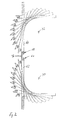
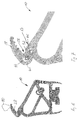
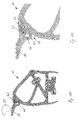
Fig. 4 und 5 zeigen lediglich zur Veranschaulichung die Vernetzung eines Rechenmodells des Hohlprofils 10 derFig. 1 . Mittels eines solchen Rechenmodells kann das Verhalten des Hohlprofils bei äußeren Belastungen simuliert werden. Solche Berechnungsverfahren zählen seit langem zum Stand der Technik. DieFig. 4 und 5 zeigen den unbelasteten Fall des Hohlprofils 10, also entsprechend dem inFig. 1 dargestellten Zustand. - Die Darstellungen der
Fig. 6 und 7 zeigen einen Belastungsfall des Hohlprofils 10, bei dem die Dichtlippe 38 im Uhrzeigersinn, in den Darstellungen derFig. 6 und 7 also nach rechts, ausgelenkt wird. Dies kann beispielsweise dadurch erfolgen, dass das Hohlprofil 10 mit der Dichtlippe 38 auf ein inFig. 6 schematisch dargestelltes Hindernis 80 auftrifft, beispielsweis eine menschliche Hand oder dergleichen. - In der Folge der Kollision mit dem Hindernis 80 wird die Dichtlippe 38 im Uhrzeigersinn ausgelenkt. Dadurch wird der zweite Verbindungssteg 42 verformt und insbesondere nach innen, in Richtung auf die zweite Hohlkammer 44 bewegt. Eine Verformung des zweiten Steges 42 ist dabei besonders stark im Bereich des Übergangs 56 zwischen der Dichtlippe 38 und dem zweiten Steg 42. Im Bereich dieses Übergangs 56 wird der zweite Verbindungssteg 52 stark nach innen gedrückt und drückt dadurch auf das zweite Schaltprofil 46, so dass dessen elektrische Leiter miteinander in Kontakt kommen und ein Schaltsignal erzeugt wird. Der Übergang 56 befindet sich etwa auf der Höhe der Mitte des Schaltprofils 46 bzw. der Mitte der Hohlkammer 44. Es ist
Fig. 7 zu entnehmen, dass der Bereich des Übergangs 54 zwischen dem zweiten Verbindungssteg 42 und der Außenfläche des Hauptabschnitts des Hohlprofils 10 nur vergleichsweise schwach verformt wird. Auch der erste Verbindungssteg 40 wird vergleichsweise geringfügig verformt und bildet im Wesentlichen ein Gegenlager für das Schaltprofil 46, das vom zweiten Verbindungssteg 42 komprimiert wird. - Die Darstellungen der
Fig. 8 und 9 zeigen einen weiteren Belastungsfall, bei dem die Dichtlippe 38 auf das Hindernis 80 trifft und dadurch gegen den Uhrzeigersinn, inFig. 8 und Fig. 9 nach links, ausgelenkt wird. Bei einem solchen Belastungsfall wird der zweite Verbindungssteg 42 lediglich geringfügig verformt. Der erste Verbindungssteg 40 hingegen wird im Bereich des Übergangs 58 zwischen der Außenfläche des ersten Verbindungsstegs und der Außenfläche des Hauptabschnitts des Hohlprofils 10 stark verformt und nach innen, in die zweite Hohlkammer 44 hineingedrückt. Die Innenfläche des ersten Verbindungsstegs 40 drückt dadurch auch auf das Schaltprofil 46, wobei die Innenfläche des zweiten Verbindungsstegs 42 als Widerlager wirkt, so dass die elektrischen Leiter des Schaltprofils 46 miteinander in Kontakt kommen und ein Schaltsignal erzeugt werden kann. Der Übergang 58 befindet sich etwa auf der Höhe der Mitte des Schaltprofils 46 bzw. der Mitte der Hohlkammer 44. Es ist anhand vonFig. 9 zu erkennen, dass der erste Verbindungssteg im Bereich des Übergangs 60 zwischen der Dichtlippe 38 und dem ersten Verbindungssteg 40 nicht oder nur vergleichsweise wenig verformt wird. Da die Außenfläche der Dichtlippe 38 im Bereich des Übergangs 60 mit der Außenfläche des ersten Verbindungsstegs 40 einen deutlich größeren Winkel einschließt als im Bereich des Übergangs 58 zwischen erstem Verbindungssteg 40 und Hauptabschnitt des Hohlprofils 10, wird der Bereich des Übergangs 60 bei dem in denFig. 8 und 9 dargestellten Belastungsfall deutlich schwächer verformt als im Bereich des Übergangs 58. - Die Darstellungen der
Fig. 10 und 11 zeigen einen weiteren Belastungsfall, bei dem die Dichtlippe 38 wie bei dem Belastungsfall derFig. 8 und 9 gegen den Uhrzeigersinn, aber deutlich weiter ausgelenkt wird. Ein solcher Belastungsfall kann beispielsweise auftreten, wenn, sieheFig. 2 , bei geschlossenen Türblättern 62, 64 ein Gegenstand oder eine Hand zwischen den Hohlprofilen 66, 68 von innen nach außen durchgesteckt wird. - In diesem Belastungsfall tritt eine sehr starke Verformung des Verbindungsbereichs zwischen der Dichtlippe 38 und dem Hauptabschnitt des Hohlprofils 10 auf, insbesondere eine sehr starke Verformung des ersten Verbindungsstegs 40 und des zweiten Verbindungsstegs 42. Wie
Fig. 11 zu entnehmen ist, wird der erste Verbindungssteg 40 im Bereich des Übergangs 58 zwischen erstem Verbindungssteg 40 und Hauptabschnitt des Hohlprofils 10 stark nach innen, in die Hohlkammer 44 hineingedrückt. Der zweite Verbindungssteg 42 wirkt als Gegenlager und das elektrische Schaltprofil 46 wird komprimiert, so dass sich seine elektrischen Leiter berühren und ein Schaltsignal ausgelöst werden kann. - Anhand der
Fig. 9 und11 ist zu erkennen, dass der Übergang 58 vorteilhafterweise etwa auf Höhe der Mitte der zweiten Hohlkammer 44 angeordnet wird. Bei einer Auslenkung der Dichtlippe 38 gegen den Uhrzeigersinn drückt dadurch der erste Verbindungssteg im Bereich des Übergangs 58 etwa auf Mitte der Hohlkammer 44 in diese hinein und beaufschlagt damit auch das elektrische Schaltprofil 46 etwa in dessen Mitte. Dadurch kann eine zuverlässige Erzeugung eines Schaltsignals bewirkt werden.
Claims (14)
- Elastisches Hohlprofil, insbesondere für die Anordnung an einer Stirnseite eines Türblatts (62, 64) einer Innenschwenktüre, wobei das Hohlprofil (10; 66; 68) einen Halteabschnitt (12) zur Befestigung, insbesondere an der Stirnseite des Türblatts (62, 64), einen Hauptabschnitt (14) und wenigstens eine, von dem Hauptabschnitt (14) abragende Dichtlippe (38) aufweist, wobei in einem Verbindungsbereich, in dem die Dichtlippe (38) mit dem Hauptabschnitt (14) verbunden ist, wenigstens eine Hohlkammer (44) zur Anordnung eines elektrischen Schaltprofils (46) oder zum Erzeugen eines detektierbaren Druckstoßes beim Komprimieren vorgesehen ist, wobei der Verbindungsbereich mittels zweier Stege (40, 42) gebildet ist, die sich jeweils von der Dichtlippe (38) zu dem Hauptabschnitt (14) erstrecken und zwischen denen die Hohlkammer (44) angeordnet ist, dadurch gekennzeichnet, dass eine Verbindung der Dichtlippe (38) mit den beiden Stegen (40, 42), die Stege (40, 42) sowie eine Verbindung der Stege (40, 42) mit dem Hauptabschnitt (14) so ausgebildet sind, dass bei einer Auslenkung der Dichtlippe (38) hauptsächlich die Stege (40, 42) in der Weise verformt werden, dass sich ein Abstand zwischen den Stegen verringert.
- Elastisches Hohlprofil nach Anspruch 1, dadurch gekennzeichnet, dass die Stege (40, 42) eine glatte Außenfläche und im Querschnitt gesehen eine stetige Kontur aufweisen.
- Elastisches Hohlprofil nach Anspruch 1 oder 2, dadurch gekennzeichnet, dass die Stege (40, 42) zwischen der Dichtlippe (38) und dem Hauptabschnitt (14) im Querschnitt gesehen eine im Wesentlichen konstante Dicke aufweisen.
- Elastisches Hohlprofil nach Anspruch 1, 2 oder 3, dadurch gekennzeichnet, dass eine Innenfläche der Hohlkammer (44) zwischen den Stegen (40, 42) glatt und im Querschnitt gesehen mit stetiger Kontur ausgebildet ist.
- Elastisches Hohlprofil nach wenigstens einem der vorstehenden Ansprüche, dadurch gekennzeichnet, dass eine Wandstärke des Hauptabschnitts (14) des Hohlprofils (10) im Bereich der Verbindung mit den Stegen (40, 42) größer ist als eine Wandstärke der Stege (40, 42).
- Elastisches Hohlprofil nach Anspruch 5, dadurch gekennzeichnet, dass die Wandstärke des Hauptabschnitts (14) des Hohlprofils (10) im Bereich der Verbindung mit den Stegen (40, 42) wenigstens doppelt so groß ist wie die Wandstärke der Stege (40, 42).
- Elastisches Hohlprofil nach wenigstens einem der vorstehenden Ansprüche, dadurch gekennzeichnet, dass eine Wandstärke der Dichtlippe (38) im Bereich der Verbindung mit den Stegen (40, 42) wenigstens doppelt so groß ist wie die Wandstärke der Stege (40, 42).
- Elastisches Hohlprofil nach wenigstens einem der vorstehenden Ansprüche, dadurch gekennzeichnet, dass die Außenfläche eines ersten der Stege (40, 42) am Übergang (58) zwischen dem ersten Steg (40) und dem Hauptabschnitt (14) mit der Außenfläche des Hauptabschnitts (14) einen Winkel von 90° oder weniger als 90° insbesondere 70°, einschließt.
- Elastisches Hohlprofil nach Anspruch 8, dadurch gekennzeichnet, dass der Übergang (58) zwischen dem ersten Steg (40) und dem Hauptabschnitt (14) etwa auf Höhe der Mitte der Hohlkammer (44) angeordnet ist.
- Elastisches Hohlprofil nach Anspruch 8 oder 9, dadurch gekennzeichnet, dass die Wandstärke des ersten Steges(40, 42) im Bereich des Übergangs (58) zwischen erstem Steg (40) und Hauptabschnitt (14) geringfügig verringert ist.
- Elastisches Hohlprofil nach Anspruch 10, dadurch gekennzeichnet, dass die Wandstärke des ersten Steges (40) im Bereich des Übergangs (58) bezogen auf die Wandstärke des ersten Steges (40) außerhalb des Übergangs (58) zwischen 10% und 20% verringert ist.
- Elastisches Hohlprofil nach wenigstens einem der vorstehenden Ansprüche, dadurch gekennzeichnet, dass die Außenfläche eines zweiten der Stege (42) am Übergang (58) zwischen dem zweiten Steg (42) und dem Hauptabschnitt (14) mit der Außenfläche des Hauptabschnitts (14) eine Winkel von etwa 180° einschließt.
- Elastisches Hohlprofil nach wenigstens einem der vorstehenden Ansprüche, dadurch gekennzeichnet, dass die Außenfläche der Dichtlippe (38) am Übergang (60) zwischen der Dichtlippe (38) und dem ersten Steg (40) einen Winkel von mehr als 120°, insbesondere 170 °, mit der Außenfläche des ersten Stegs (40) einschließt.
- Elastisches Hohlprofil nach wenigstens einem der vorstehenden Ansprüche, dadurch gekennzeichnet, dass die Außenfläche der Dichtlippe (38) am Übergang (58) zwischen der Dichtlippe (38) und dem zweiten Steg (42) einen Winkel von weniger als 120°, insbesondere 110° mit der Außenfläche des zweiten Stegs (42) einschließt.
Applications Claiming Priority (2)
| Application Number | Priority Date | Filing Date | Title |
|---|---|---|---|
| DE102013204022 | 2013-03-08 | ||
| DE102013205146.8A DE102013205146A1 (de) | 2013-03-08 | 2013-03-22 | Elastisches Hohlprofil |
Publications (3)
| Publication Number | Publication Date |
|---|---|
| EP2774796A2 true EP2774796A2 (de) | 2014-09-10 |
| EP2774796A3 EP2774796A3 (de) | 2015-11-04 |
| EP2774796B1 EP2774796B1 (de) | 2020-07-15 |
Family
ID=50193291
Family Applications (1)
| Application Number | Title | Priority Date | Filing Date |
|---|---|---|---|
| EP14157183.6A Active EP2774796B1 (de) | 2013-03-08 | 2014-02-28 | Elastisches Hohlprofil |
Country Status (2)
| Country | Link |
|---|---|
| EP (1) | EP2774796B1 (de) |
| DE (1) | DE102013205146A1 (de) |
Families Citing this family (1)
| Publication number | Priority date | Publication date | Assignee | Title |
|---|---|---|---|---|
| DE102018219584B4 (de) * | 2018-11-15 | 2020-07-23 | Mayser Gmbh & Co. Kg | Hohlprofil für eine elektrische Schaltleiste und Fahrzeug mit einem Hohlprofil |
Family Cites Families (10)
| Publication number | Priority date | Publication date | Assignee | Title |
|---|---|---|---|---|
| US4133365A (en) * | 1977-06-08 | 1979-01-09 | Vapor Corporation | Obstruction sensing edge for a bifolding door |
| DE9321338U1 (de) * | 1993-08-09 | 1997-06-12 | Metzeler Automotive Profiles Gmbh, 88131 Lindau | Einklemmschutz für kraftbetätigte Schließeinrichtungen |
| DE102004005289A1 (de) * | 2004-02-03 | 2005-08-25 | Gummi-Welz Gmbh & Co. Kg | Fingerschutzleiste mit elektrischem Schaltkontakt |
| DE202004014861U1 (de) * | 2004-09-23 | 2004-12-23 | Gummi-Welz Gmbh & Co. Kg | Fingerschutzleiste mit elektrischem Schaltkontakt |
| ATE447504T1 (de) | 2004-02-03 | 2009-11-15 | Gummi Welz Gmbh U Co Kg Gummi | Fingerschutzleiste mit elektrischem schaltkontakt gegen einklemmen |
| DE102007002745A1 (de) | 2006-01-19 | 2007-07-26 | Daimlerchrysler Ag | Fingerschutzleiste, insbesondere für Innenschwenktüren |
| DE202006010582U1 (de) * | 2006-07-08 | 2006-09-14 | Gummi-Welz Gmbh & Co. Kg | Fingerschutzleiste, insbesondere für Außen- und Innenschwenktüren |
| DE102008050897A1 (de) * | 2007-09-27 | 2009-07-02 | Mayser Gmbh & Co. Kg | Profil für Sensoren und Sensor zum berührungslosen Erfassen von Gegenständen |
| DE202008011477U1 (de) | 2008-08-28 | 2008-11-06 | Daimler Ag | Fingerschutzleiste, insbesondere für Aussenschwing- und Schwenkschiebetüren |
| DE202008013508U1 (de) * | 2008-10-10 | 2009-01-08 | Gummi-Welz Gmbh U. Co. Kg Gummi-Kunststofftechnik-Schaumstoffe | Profilleiste für eine Fahrzeugtür mit Einklemmschutz |
-
2013
- 2013-03-22 DE DE102013205146.8A patent/DE102013205146A1/de not_active Withdrawn
-
2014
- 2014-02-28 EP EP14157183.6A patent/EP2774796B1/de active Active
Also Published As
| Publication number | Publication date |
|---|---|
| EP2774796A3 (de) | 2015-11-04 |
| DE102013205146A1 (de) | 2014-09-11 |
| EP2774796B1 (de) | 2020-07-15 |
Similar Documents
| Publication | Publication Date | Title |
|---|---|---|
| DE102010039157A1 (de) | Schienenlängsführung | |
| WO2018060226A1 (de) | Kraftfahrzeugschlossanordnung | |
| EP3847332B1 (de) | Schutzvorrichtung für einen türflügel für ein fahrzeug und türvorrichtung für ein fahrzeug | |
| EP1876048B1 (de) | Fingerschutzleiste, insbesondere für Aussen- und Innenschwenktüren | |
| EP2827743B1 (de) | Zahntragender körper | |
| EP2532820B1 (de) | Hohlprofil für eine elektrische Schaltleiste und Verfahren zum Erfassen von Hindernissen mit einer elektrischen Schaltleiste | |
| EP1811118B1 (de) | Fingerschutzleiste, insbesondere für Innenschwenktüren | |
| EP1526241A1 (de) | Profilanordnung für Einklemmschutz und Spritzgusswerkzeug | |
| EP2383136B1 (de) | Dichtungseinrichtung für eine Fahrzeugtür | |
| EP2774796B1 (de) | Elastisches Hohlprofil | |
| DE102010017441A1 (de) | Dichtungseinrichtung für eine Fahrzeugtür | |
| DE102007002745A1 (de) | Fingerschutzleiste, insbesondere für Innenschwenktüren | |
| EP0280191A1 (de) | Einklemmschutz für eine Türe | |
| DE19745180B4 (de) | Andrückvorrichtung zwischen einem Flügel und einem Blendrahmen einer Tür, eines Fensters oder dergleichen | |
| EP3188919A1 (de) | Türdichtungsvorrichtung, türdichtungssystem und türflügel für ein schienenfahrzeug | |
| DE102013205149A1 (de) | Elastisches Hohlprofil und Innenschwenktüre mit einem elastischen Hohlprofil | |
| DE102004005289A1 (de) | Fingerschutzleiste mit elektrischem Schaltkontakt | |
| DE29710499U1 (de) | Sicherheitsvorrichtung für verschiebbare Fensterscheiben | |
| DE102009007407A1 (de) | Vorrichtung zur Höhenverstellung des Umlenkbeschlages von Sicherheitsgurten | |
| AT502951B1 (de) | Schaltprofil | |
| WO2008031472A1 (de) | Vorrichtung zur verfahrbaren anordnung einer schiebetür | |
| EP3421710B1 (de) | Dichtung für eine hermetisch schliessende türe | |
| DE202004014861U1 (de) | Fingerschutzleiste mit elektrischem Schaltkontakt | |
| WO2018029342A1 (de) | SCHLIEßKANTEN-SICHERUNG MIT VORKAMMER | |
| EP3261106B1 (de) | Einklemmschutz-system zum anbringen an einem fahrzeugteil |
Legal Events
| Date | Code | Title | Description |
|---|---|---|---|
| PUAI | Public reference made under article 153(3) epc to a published international application that has entered the european phase |
Free format text: ORIGINAL CODE: 0009012 |
|
| 17P | Request for examination filed |
Effective date: 20140228 |
|
| AK | Designated contracting states |
Kind code of ref document: A2 Designated state(s): AL AT BE BG CH CY CZ DE DK EE ES FI FR GB GR HR HU IE IS IT LI LT LU LV MC MK MT NL NO PL PT RO RS SE SI SK SM TR |
|
| AX | Request for extension of the european patent |
Extension state: BA ME |
|
| RAP1 | Party data changed (applicant data changed or rights of an application transferred) |
Owner name: MAYSER HOLDING GMBH & CO. KG |
|
| PUAL | Search report despatched |
Free format text: ORIGINAL CODE: 0009013 |
|
| AK | Designated contracting states |
Kind code of ref document: A3 Designated state(s): AL AT BE BG CH CY CZ DE DK EE ES FI FR GB GR HR HU IE IS IT LI LT LU LV MC MK MT NL NO PL PT RO RS SE SI SK SM TR |
|
| AX | Request for extension of the european patent |
Extension state: BA ME |
|
| R17P | Request for examination filed (corrected) |
Effective date: 20160504 |
|
| RBV | Designated contracting states (corrected) |
Designated state(s): AL AT BE BG CH CY CZ DE DK EE ES FI FR GB GR HR HU IE IS IT LI LT LU LV MC MK MT NL NO PL PT RO RS SE SI SK SM TR |
|
| STAA | Information on the status of an ep patent application or granted ep patent |
Free format text: STATUS: EXAMINATION IS IN PROGRESS |
|
| 17Q | First examination report despatched |
Effective date: 20190618 |
|
| REG | Reference to a national code |
Ref country code: DE Ref legal event code: R079 Ref document number: 502014014442 Country of ref document: DE Free format text: PREVIOUS MAIN CLASS: B60J0010000000 Ipc: E05F0015000000 |
|
| GRAP | Despatch of communication of intention to grant a patent |
Free format text: ORIGINAL CODE: EPIDOSNIGR1 |
|
| STAA | Information on the status of an ep patent application or granted ep patent |
Free format text: STATUS: GRANT OF PATENT IS INTENDED |
|
| RIC1 | Information provided on ipc code assigned before grant |
Ipc: E05F 15/44 20150101ALI20200130BHEP Ipc: E05F 15/40 20150101ALI20200130BHEP Ipc: E05F 15/00 20150101AFI20200130BHEP Ipc: B60J 10/86 20160101ALI20200130BHEP Ipc: E06B 7/36 20060101ALI20200130BHEP Ipc: B60J 10/248 20160101ALI20200130BHEP |
|
| INTG | Intention to grant announced |
Effective date: 20200218 |
|
| GRAS | Grant fee paid |
Free format text: ORIGINAL CODE: EPIDOSNIGR3 |
|
| GRAA | (expected) grant |
Free format text: ORIGINAL CODE: 0009210 |
|
| STAA | Information on the status of an ep patent application or granted ep patent |
Free format text: STATUS: THE PATENT HAS BEEN GRANTED |
|
| AK | Designated contracting states |
Kind code of ref document: B1 Designated state(s): AL AT BE BG CH CY CZ DE DK EE ES FI FR GB GR HR HU IE IS IT LI LT LU LV MC MK MT NL NO PL PT RO RS SE SI SK SM TR |
|
| REG | Reference to a national code |
Ref country code: GB Ref legal event code: FG4D Free format text: NOT ENGLISH Ref country code: CH Ref legal event code: EP |
|
| REG | Reference to a national code |
Ref country code: DE Ref legal event code: R096 Ref document number: 502014014442 Country of ref document: DE |
|
| REG | Reference to a national code |
Ref country code: IE Ref legal event code: FG4D Free format text: LANGUAGE OF EP DOCUMENT: GERMAN |
|
| REG | Reference to a national code |
Ref country code: AT Ref legal event code: REF Ref document number: 1291218 Country of ref document: AT Kind code of ref document: T Effective date: 20200815 |
|
| REG | Reference to a national code |
Ref country code: NL Ref legal event code: FP |
|
| REG | Reference to a national code |
Ref country code: LT Ref legal event code: MG4D |
|
| PG25 | Lapsed in a contracting state [announced via postgrant information from national office to epo] |
Ref country code: ES Free format text: LAPSE BECAUSE OF FAILURE TO SUBMIT A TRANSLATION OF THE DESCRIPTION OR TO PAY THE FEE WITHIN THE PRESCRIBED TIME-LIMIT Effective date: 20200715 Ref country code: NO Free format text: LAPSE BECAUSE OF FAILURE TO SUBMIT A TRANSLATION OF THE DESCRIPTION OR TO PAY THE FEE WITHIN THE PRESCRIBED TIME-LIMIT Effective date: 20201015 Ref country code: FI Free format text: LAPSE BECAUSE OF FAILURE TO SUBMIT A TRANSLATION OF THE DESCRIPTION OR TO PAY THE FEE WITHIN THE PRESCRIBED TIME-LIMIT Effective date: 20200715 Ref country code: GR Free format text: LAPSE BECAUSE OF FAILURE TO SUBMIT A TRANSLATION OF THE DESCRIPTION OR TO PAY THE FEE WITHIN THE PRESCRIBED TIME-LIMIT Effective date: 20201016 Ref country code: BG Free format text: LAPSE BECAUSE OF FAILURE TO SUBMIT A TRANSLATION OF THE DESCRIPTION OR TO PAY THE FEE WITHIN THE PRESCRIBED TIME-LIMIT Effective date: 20201015 Ref country code: SE Free format text: LAPSE BECAUSE OF FAILURE TO SUBMIT A TRANSLATION OF THE DESCRIPTION OR TO PAY THE FEE WITHIN THE PRESCRIBED TIME-LIMIT Effective date: 20200715 Ref country code: LT Free format text: LAPSE BECAUSE OF FAILURE TO SUBMIT A TRANSLATION OF THE DESCRIPTION OR TO PAY THE FEE WITHIN THE PRESCRIBED TIME-LIMIT Effective date: 20200715 Ref country code: HR Free format text: LAPSE BECAUSE OF FAILURE TO SUBMIT A TRANSLATION OF THE DESCRIPTION OR TO PAY THE FEE WITHIN THE PRESCRIBED TIME-LIMIT Effective date: 20200715 Ref country code: PT Free format text: LAPSE BECAUSE OF FAILURE TO SUBMIT A TRANSLATION OF THE DESCRIPTION OR TO PAY THE FEE WITHIN THE PRESCRIBED TIME-LIMIT Effective date: 20201116 |
|
| PG25 | Lapsed in a contracting state [announced via postgrant information from national office to epo] |
Ref country code: IS Free format text: LAPSE BECAUSE OF FAILURE TO SUBMIT A TRANSLATION OF THE DESCRIPTION OR TO PAY THE FEE WITHIN THE PRESCRIBED TIME-LIMIT Effective date: 20201115 Ref country code: PL Free format text: LAPSE BECAUSE OF FAILURE TO SUBMIT A TRANSLATION OF THE DESCRIPTION OR TO PAY THE FEE WITHIN THE PRESCRIBED TIME-LIMIT Effective date: 20200715 Ref country code: RS Free format text: LAPSE BECAUSE OF FAILURE TO SUBMIT A TRANSLATION OF THE DESCRIPTION OR TO PAY THE FEE WITHIN THE PRESCRIBED TIME-LIMIT Effective date: 20200715 Ref country code: LV Free format text: LAPSE BECAUSE OF FAILURE TO SUBMIT A TRANSLATION OF THE DESCRIPTION OR TO PAY THE FEE WITHIN THE PRESCRIBED TIME-LIMIT Effective date: 20200715 |
|
| REG | Reference to a national code |
Ref country code: DE Ref legal event code: R097 Ref document number: 502014014442 Country of ref document: DE |
|
| PG25 | Lapsed in a contracting state [announced via postgrant information from national office to epo] |
Ref country code: RO Free format text: LAPSE BECAUSE OF FAILURE TO SUBMIT A TRANSLATION OF THE DESCRIPTION OR TO PAY THE FEE WITHIN THE PRESCRIBED TIME-LIMIT Effective date: 20200715 Ref country code: SM Free format text: LAPSE BECAUSE OF FAILURE TO SUBMIT A TRANSLATION OF THE DESCRIPTION OR TO PAY THE FEE WITHIN THE PRESCRIBED TIME-LIMIT Effective date: 20200715 Ref country code: IT Free format text: LAPSE BECAUSE OF FAILURE TO SUBMIT A TRANSLATION OF THE DESCRIPTION OR TO PAY THE FEE WITHIN THE PRESCRIBED TIME-LIMIT Effective date: 20200715 Ref country code: CZ Free format text: LAPSE BECAUSE OF FAILURE TO SUBMIT A TRANSLATION OF THE DESCRIPTION OR TO PAY THE FEE WITHIN THE PRESCRIBED TIME-LIMIT Effective date: 20200715 Ref country code: DK Free format text: LAPSE BECAUSE OF FAILURE TO SUBMIT A TRANSLATION OF THE DESCRIPTION OR TO PAY THE FEE WITHIN THE PRESCRIBED TIME-LIMIT Effective date: 20200715 Ref country code: EE Free format text: LAPSE BECAUSE OF FAILURE TO SUBMIT A TRANSLATION OF THE DESCRIPTION OR TO PAY THE FEE WITHIN THE PRESCRIBED TIME-LIMIT Effective date: 20200715 |
|
| PLBE | No opposition filed within time limit |
Free format text: ORIGINAL CODE: 0009261 |
|
| STAA | Information on the status of an ep patent application or granted ep patent |
Free format text: STATUS: NO OPPOSITION FILED WITHIN TIME LIMIT |
|
| PG25 | Lapsed in a contracting state [announced via postgrant information from national office to epo] |
Ref country code: AL Free format text: LAPSE BECAUSE OF FAILURE TO SUBMIT A TRANSLATION OF THE DESCRIPTION OR TO PAY THE FEE WITHIN THE PRESCRIBED TIME-LIMIT Effective date: 20200715 |
|
| 26N | No opposition filed |
Effective date: 20210416 |
|
| PG25 | Lapsed in a contracting state [announced via postgrant information from national office to epo] |
Ref country code: SK Free format text: LAPSE BECAUSE OF FAILURE TO SUBMIT A TRANSLATION OF THE DESCRIPTION OR TO PAY THE FEE WITHIN THE PRESCRIBED TIME-LIMIT Effective date: 20200715 |
|
| PG25 | Lapsed in a contracting state [announced via postgrant information from national office to epo] |
Ref country code: SI Free format text: LAPSE BECAUSE OF FAILURE TO SUBMIT A TRANSLATION OF THE DESCRIPTION OR TO PAY THE FEE WITHIN THE PRESCRIBED TIME-LIMIT Effective date: 20200715 |
|
| PG25 | Lapsed in a contracting state [announced via postgrant information from national office to epo] |
Ref country code: MC Free format text: LAPSE BECAUSE OF FAILURE TO SUBMIT A TRANSLATION OF THE DESCRIPTION OR TO PAY THE FEE WITHIN THE PRESCRIBED TIME-LIMIT Effective date: 20200715 |
|
| PG25 | Lapsed in a contracting state [announced via postgrant information from national office to epo] |
Ref country code: LI Free format text: LAPSE BECAUSE OF NON-PAYMENT OF DUE FEES Effective date: 20210228 Ref country code: LU Free format text: LAPSE BECAUSE OF NON-PAYMENT OF DUE FEES Effective date: 20210228 Ref country code: CH Free format text: LAPSE BECAUSE OF NON-PAYMENT OF DUE FEES Effective date: 20210228 |
|
| PG25 | Lapsed in a contracting state [announced via postgrant information from national office to epo] |
Ref country code: IE Free format text: LAPSE BECAUSE OF NON-PAYMENT OF DUE FEES Effective date: 20210228 |
|
| REG | Reference to a national code |
Ref country code: AT Ref legal event code: MM01 Ref document number: 1291218 Country of ref document: AT Kind code of ref document: T Effective date: 20210228 |
|
| PG25 | Lapsed in a contracting state [announced via postgrant information from national office to epo] |
Ref country code: AT Free format text: LAPSE BECAUSE OF NON-PAYMENT OF DUE FEES Effective date: 20210228 |
|
| PGFP | Annual fee paid to national office [announced via postgrant information from national office to epo] |
Ref country code: NL Payment date: 20230220 Year of fee payment: 10 |
|
| PGFP | Annual fee paid to national office [announced via postgrant information from national office to epo] |
Ref country code: FR Payment date: 20230217 Year of fee payment: 10 |
|
| PG25 | Lapsed in a contracting state [announced via postgrant information from national office to epo] |
Ref country code: HU Free format text: LAPSE BECAUSE OF FAILURE TO SUBMIT A TRANSLATION OF THE DESCRIPTION OR TO PAY THE FEE WITHIN THE PRESCRIBED TIME-LIMIT; INVALID AB INITIO Effective date: 20140228 |
|
| PGFP | Annual fee paid to national office [announced via postgrant information from national office to epo] |
Ref country code: TR Payment date: 20230227 Year of fee payment: 10 Ref country code: GB Payment date: 20230221 Year of fee payment: 10 Ref country code: DE Payment date: 20230223 Year of fee payment: 10 Ref country code: BE Payment date: 20230220 Year of fee payment: 10 |
|
| PG25 | Lapsed in a contracting state [announced via postgrant information from national office to epo] |
Ref country code: CY Free format text: LAPSE BECAUSE OF FAILURE TO SUBMIT A TRANSLATION OF THE DESCRIPTION OR TO PAY THE FEE WITHIN THE PRESCRIBED TIME-LIMIT Effective date: 20200715 |
|
| PG25 | Lapsed in a contracting state [announced via postgrant information from national office to epo] |
Ref country code: MK Free format text: LAPSE BECAUSE OF FAILURE TO SUBMIT A TRANSLATION OF THE DESCRIPTION OR TO PAY THE FEE WITHIN THE PRESCRIBED TIME-LIMIT Effective date: 20200715 |
|
| REG | Reference to a national code |
Ref country code: DE Ref legal event code: R119 Ref document number: 502014014442 Country of ref document: DE |
|
| PG25 | Lapsed in a contracting state [announced via postgrant information from national office to epo] |
Ref country code: MT Free format text: LAPSE BECAUSE OF FAILURE TO SUBMIT A TRANSLATION OF THE DESCRIPTION OR TO PAY THE FEE WITHIN THE PRESCRIBED TIME-LIMIT Effective date: 20200715 |
|
| REG | Reference to a national code |
Ref country code: NL Ref legal event code: MM Effective date: 20240301 |
|
| GBPC | Gb: european patent ceased through non-payment of renewal fee |
Effective date: 20240228 |
|
| PG25 | Lapsed in a contracting state [announced via postgrant information from national office to epo] |
Ref country code: NL Free format text: LAPSE BECAUSE OF NON-PAYMENT OF DUE FEES Effective date: 20240301 |
|
| PG25 | Lapsed in a contracting state [announced via postgrant information from national office to epo] |
Ref country code: NL Free format text: LAPSE BECAUSE OF NON-PAYMENT OF DUE FEES Effective date: 20240301 |
|
| REG | Reference to a national code |
Ref country code: BE Ref legal event code: MM Effective date: 20240229 |
|
| PG25 | Lapsed in a contracting state [announced via postgrant information from national office to epo] |
Ref country code: DE Free format text: LAPSE BECAUSE OF NON-PAYMENT OF DUE FEES Effective date: 20240903 |
|
| PG25 | Lapsed in a contracting state [announced via postgrant information from national office to epo] |
Ref country code: BE Free format text: LAPSE BECAUSE OF NON-PAYMENT OF DUE FEES Effective date: 20240229 |
|
| PG25 | Lapsed in a contracting state [announced via postgrant information from national office to epo] |
Ref country code: GB Free format text: LAPSE BECAUSE OF NON-PAYMENT OF DUE FEES Effective date: 20240228 |
|
| PG25 | Lapsed in a contracting state [announced via postgrant information from national office to epo] |
Ref country code: FR Free format text: LAPSE BECAUSE OF NON-PAYMENT OF DUE FEES Effective date: 20240229 |
|
| PG25 | Lapsed in a contracting state [announced via postgrant information from national office to epo] |
Ref country code: GB Free format text: LAPSE BECAUSE OF NON-PAYMENT OF DUE FEES Effective date: 20240228 Ref country code: FR Free format text: LAPSE BECAUSE OF NON-PAYMENT OF DUE FEES Effective date: 20240229 Ref country code: DE Free format text: LAPSE BECAUSE OF NON-PAYMENT OF DUE FEES Effective date: 20240903 Ref country code: BE Free format text: LAPSE BECAUSE OF NON-PAYMENT OF DUE FEES Effective date: 20240229 |