EP2749555B1 - Method for producing pest controlling agent - Google Patents
Method for producing pest controlling agent Download PDFInfo
- Publication number
- EP2749555B1 EP2749555B1 EP12828367.8A EP12828367A EP2749555B1 EP 2749555 B1 EP2749555 B1 EP 2749555B1 EP 12828367 A EP12828367 A EP 12828367A EP 2749555 B1 EP2749555 B1 EP 2749555B1
- Authority
- EP
- European Patent Office
- Prior art keywords
- group
- formula
- added
- compound represented
- methyl
- Prior art date
- Legal status (The legal status is an assumption and is not a legal conclusion. Google has not performed a legal analysis and makes no representation as to the accuracy of the status listed.)
- Not-in-force
Links
Images



Classifications
-
- A—HUMAN NECESSITIES
- A01—AGRICULTURE; FORESTRY; ANIMAL HUSBANDRY; HUNTING; TRAPPING; FISHING
- A01N—PRESERVATION OF BODIES OF HUMANS OR ANIMALS OR PLANTS OR PARTS THEREOF; BIOCIDES, e.g. AS DISINFECTANTS, AS PESTICIDES OR AS HERBICIDES; PEST REPELLANTS OR ATTRACTANTS; PLANT GROWTH REGULATORS
- A01N43/00—Biocides, pest repellants or attractants, or plant growth regulators containing heterocyclic compounds
- A01N43/34—Biocides, pest repellants or attractants, or plant growth regulators containing heterocyclic compounds having rings with one nitrogen atom as the only ring hetero atom
- A01N43/40—Biocides, pest repellants or attractants, or plant growth regulators containing heterocyclic compounds having rings with one nitrogen atom as the only ring hetero atom six-membered rings
-
- A—HUMAN NECESSITIES
- A01—AGRICULTURE; FORESTRY; ANIMAL HUSBANDRY; HUNTING; TRAPPING; FISHING
- A01N—PRESERVATION OF BODIES OF HUMANS OR ANIMALS OR PLANTS OR PARTS THEREOF; BIOCIDES, e.g. AS DISINFECTANTS, AS PESTICIDES OR AS HERBICIDES; PEST REPELLANTS OR ATTRACTANTS; PLANT GROWTH REGULATORS
- A01N43/00—Biocides, pest repellants or attractants, or plant growth regulators containing heterocyclic compounds
- A01N43/48—Biocides, pest repellants or attractants, or plant growth regulators containing heterocyclic compounds having rings with two nitrogen atoms as the only ring hetero atoms
- A01N43/54—1,3-Diazines; Hydrogenated 1,3-diazines
-
- A—HUMAN NECESSITIES
- A01—AGRICULTURE; FORESTRY; ANIMAL HUSBANDRY; HUNTING; TRAPPING; FISHING
- A01N—PRESERVATION OF BODIES OF HUMANS OR ANIMALS OR PLANTS OR PARTS THEREOF; BIOCIDES, e.g. AS DISINFECTANTS, AS PESTICIDES OR AS HERBICIDES; PEST REPELLANTS OR ATTRACTANTS; PLANT GROWTH REGULATORS
- A01N43/00—Biocides, pest repellants or attractants, or plant growth regulators containing heterocyclic compounds
- A01N43/72—Biocides, pest repellants or attractants, or plant growth regulators containing heterocyclic compounds having rings with nitrogen atoms and oxygen or sulfur atoms as ring hetero atoms
- A01N43/74—Biocides, pest repellants or attractants, or plant growth regulators containing heterocyclic compounds having rings with nitrogen atoms and oxygen or sulfur atoms as ring hetero atoms five-membered rings with one nitrogen atom and either one oxygen atom or one sulfur atom in positions 1,3
- A01N43/78—1,3-Thiazoles; Hydrogenated 1,3-thiazoles
-
- C—CHEMISTRY; METALLURGY
- C07—ORGANIC CHEMISTRY
- C07D—HETEROCYCLIC COMPOUNDS
- C07D211/00—Heterocyclic compounds containing hydrogenated pyridine rings, not condensed with other rings
- C07D211/04—Heterocyclic compounds containing hydrogenated pyridine rings, not condensed with other rings with only hydrogen or carbon atoms directly attached to the ring nitrogen atom
- C07D211/80—Heterocyclic compounds containing hydrogenated pyridine rings, not condensed with other rings with only hydrogen or carbon atoms directly attached to the ring nitrogen atom having two double bonds between ring members or between ring members and non-ring members
- C07D211/84—Heterocyclic compounds containing hydrogenated pyridine rings, not condensed with other rings with only hydrogen or carbon atoms directly attached to the ring nitrogen atom having two double bonds between ring members or between ring members and non-ring members with hetero atoms or with carbon atoms having three bonds to hetero atoms, with at the most one bond to halogen directly attached to ring carbon atoms
-
- C—CHEMISTRY; METALLURGY
- C07—ORGANIC CHEMISTRY
- C07D—HETEROCYCLIC COMPOUNDS
- C07D213/00—Heterocyclic compounds containing six-membered rings, not condensed with other rings, with one nitrogen atom as the only ring hetero atom and three or more double bonds between ring members or between ring members and non-ring members
- C07D213/02—Heterocyclic compounds containing six-membered rings, not condensed with other rings, with one nitrogen atom as the only ring hetero atom and three or more double bonds between ring members or between ring members and non-ring members having three double bonds between ring members or between ring members and non-ring members
- C07D213/04—Heterocyclic compounds containing six-membered rings, not condensed with other rings, with one nitrogen atom as the only ring hetero atom and three or more double bonds between ring members or between ring members and non-ring members having three double bonds between ring members or between ring members and non-ring members having no bond between the ring nitrogen atom and a non-ring member or having only hydrogen or carbon atoms directly attached to the ring nitrogen atom
- C07D213/60—Heterocyclic compounds containing six-membered rings, not condensed with other rings, with one nitrogen atom as the only ring hetero atom and three or more double bonds between ring members or between ring members and non-ring members having three double bonds between ring members or between ring members and non-ring members having no bond between the ring nitrogen atom and a non-ring member or having only hydrogen or carbon atoms directly attached to the ring nitrogen atom with hetero atoms or with carbon atoms having three bonds to hetero atoms with at the most one bond to halogen, e.g. ester or nitrile radicals, directly attached to ring carbon atoms
- C07D213/72—Nitrogen atoms
- C07D213/75—Amino or imino radicals, acylated by carboxylic or carbonic acids, or by sulfur or nitrogen analogues thereof, e.g. carbamates
-
- C—CHEMISTRY; METALLURGY
- C07—ORGANIC CHEMISTRY
- C07D—HETEROCYCLIC COMPOUNDS
- C07D401/00—Heterocyclic compounds containing two or more hetero rings, having nitrogen atoms as the only ring hetero atoms, at least one ring being a six-membered ring with only one nitrogen atom
- C07D401/02—Heterocyclic compounds containing two or more hetero rings, having nitrogen atoms as the only ring hetero atoms, at least one ring being a six-membered ring with only one nitrogen atom containing two hetero rings
- C07D401/06—Heterocyclic compounds containing two or more hetero rings, having nitrogen atoms as the only ring hetero atoms, at least one ring being a six-membered ring with only one nitrogen atom containing two hetero rings linked by a carbon chain containing only aliphatic carbon atoms
-
- C—CHEMISTRY; METALLURGY
- C07—ORGANIC CHEMISTRY
- C07D—HETEROCYCLIC COMPOUNDS
- C07D417/00—Heterocyclic compounds containing two or more hetero rings, at least one ring having nitrogen and sulfur atoms as the only ring hetero atoms, not provided for by group C07D415/00
- C07D417/02—Heterocyclic compounds containing two or more hetero rings, at least one ring having nitrogen and sulfur atoms as the only ring hetero atoms, not provided for by group C07D415/00 containing two hetero rings
- C07D417/06—Heterocyclic compounds containing two or more hetero rings, at least one ring having nitrogen and sulfur atoms as the only ring hetero atoms, not provided for by group C07D415/00 containing two hetero rings linked by a carbon chain containing only aliphatic carbon atoms
Definitions
- the present invention relates to a method for producing a novel pest control agent having a 2-acyliminopyridine structure.
- Non-Patent Document 1 wet rice cultivation in East Asia and Southeast Asia obviously suffers damage due to planthoppers which have developed drug resistance to major pesticides including neonicotinoids represented by imidacloprid, phenylpyrazole-based agents represented by fipronil, and the like. Accordingly, specific agents against planthoppers which have developed resistance have been expected. In addition, it is required that such novel agents be provided in amounts required as pest control agents stably and at low costs.
- Patent Document 1 discloses a herbicide having the same ring structure as that of a compound represented by formula (I) described later.
- Patent Documents 2 and 3 disclose pesticides having the same ring structure as that of the compound represented by formula (I).
- Non-Patent Document 2 discloses a compound having a ring structure similar to that of the compound represented by formula (I), as a synthetic intermediate.
- Patent Documents 1, 2, and 3, and Non-Patent Document 2 are production methods in which a compound represented by formula (Ba) described later is used as an intermediate, and fail to describe production in which a compound represented by formula (B) described later is used as an intermediate.
- Patent Documents 1, 2, and 3, and Non-Patent Document 2 disclose production methods in which a compound represented by formula (Ba) is used as an intermediate, but do not specifically describe the production of a compound represented by formula (Ia) described later.
- Patent Document 3 discloses the structural formula of N-[1-((6-chloropyridin-3-yl)methyl)pyridin-2(1H)-ylid ene]-2,2,2-trifluoroacetamide, and describes a physical property value of the compound, i.e., a melting point of 60 to 62°C (Example No. 12 in Table 7 of Patent Document 3). However, this compound is not listed in the examples of compounds which exhibited pest control activities in Examples. Neither Patent Document 2 nor Patent Document 3 discloses a specific method for producing N-[1-((6-chloropyridin-3-yl)methyl)pyridin-2(1H)-ylid ene]-2,2,2-trifluoroacetamide.
- Non-Patent Document 3 discloses N-(pyridin-2(1H)-ylidene]-acetamide as a tautomer of 2-acetamide pyridine, but fails to describe a specific method for producing the tautomer, or a method for producing a haloacyl derivative thereof.
- EP 1 820 504 A1 discloses a method, in which an intermediate is obtained by reacting a starting material with an acylating agent and subsequently the intermediate is alkylated to produce the target substance. The reaction is carried out in the presence of a base.
- An object of the present invention is to provide a pest control agent having a 2-acyliminopyridine structure and being represented by formula (I) described later, in particular N-[1-((6-chloropyridin-3-yl)methyl)pyridin-2(1H)-ylidene]-2,2,2-trifluoroacet amide, in an amount required for a pest control agent stably and at a low cost.
- the present inventors have obtained a desired useful compound represented by the following formula (I) by using a compound represented by formula (A) as a starting substance, and a compound represented by formula (B) as an intermediate. As a result, the present invention has been completed.
- a further aspect described herein is a compound represented by formula (I'), which is produced according to the following reaction formula: [where the compound represented by formula (I') is N-[1-((6-chloropyridin-3-yl)methyl)pyridin-2(1H)-ylid ene]-2,2,2-trifluoroacetamide which has the following physical properties (a) and/or (b):
- a 2-acyliminopyridine derivative useful as a pest control agent can be produced efficiently in a good yield and, if necessary, in a one-pot manner.
- alkyl used herein either as a substituent or a portion of a substituent means a linear, branched, or cyclic alkyl, or an alkyl of a combination of any of these, unless otherwise defined.
- halogen atom used herein means an atom selected from fluorine, chlorine, bromine, and iodine.
- the term "equivalent" of the base used herein is, for example, as follows: when 1 mol of potassium carbonate is used for 1 mol of a compound represented by formula (A), the potassium carbonate is 2 equivalents; when 1 mol of sodium hydroxide or sodium hydrogen carbonate is used therefor, the sodium hydroxide or sodium hydrogen carbonate is 1 equivalent; and when 1 mol of an organic base is used therefor, the organic base is 1 equivalent.
- salt used herein refers to an inorganic acid salt such as a hydrochloride, a sulfuric acid salt, or a nitric acid salt; an organic acid salt such as a trifluoroacetic acid salt, a difluoroacetic acid salt, a dichloroacetic acid salt; or the like.
- the "reagent used simultaneously with an acylating agent R 1 COR 2 " used herein may be a hydrate thereof, when R 2 represents a hydroxyl group.
- the "condensation agent” used herein is a reagent for synthesis of carboxylic acid derivatives such as esters and amides, and examples of the “condensation agent” includes N,N'-dicyclohexylcarbodiimide, 1-ethyl-3-(3-dimethylaminopropyl)carbodiimide hydrochloride, 1,1'-carbonyldiimidazole, dipyridyl disulfide, diimidazolyl disulfide, 1,3,5-trichlorobenzoyl chloride, 1,3,5-trichlorobenzoyl anhydride, PyBop (registered trademark, (benzotriazole-1-yloxy)tripyrrolidinophosphonium hexafluorophosphate), and PyBrop (registered trademark, bromotri(pyrrolidino)phosphonium hexafluorophosphate), and the like.
- C a-b used herein and attached to a substituent means that the number of carbon atoms contained in the substituent is in the range from a to b.
- the "C a-b " in a case of "C a-b alkylcarbonyloxy” means that the number of carbon atoms in the alkyl moiety excluding the carbon atom in the carbonyloxy moiety is in the range from a to b.
- Ar which represents a phenyl group which may be substituted or a 5-to 6-membered heterocycle which may be substituted.
- the 5-to 6-membered heterocycle include pyridine, pyrimidine, thiazole, tetrahydrofuran, furan, and the like.
- the described Ar include a 3-pyridyl group, a 5-pyrimidyl group, a 3-thiazolyl group, a 5-thiazolyl group, and a 3-pyridyl group is more preferable.
- Examples of a substituent which may be introduced to the phenyl group or the heterocycle include halogen atoms, C 1-4 alkyl groups which may be substituted with a halogen atom, C 1-4 alkyloxy groups which may be substituted with a halogen atom, a hydroxyl group, a cyano group, and a nitro group.
- halogen atoms and C 1-4 alkyl groups which may be substituted with a halogen atom are preferable, and a chlorine atom is particularly preferable.
- phenyl group which may be substituted and the 5-to 6-membered heterocycle which may be substituted include a phenyl group, a 3-chlorophenyl group, a 4-chlorophenyl group, a 3-cyanophenyl group, a 4-cyanophenyl group, a 3-nitrophenyl group, a 4-nitrophenyl group, a 3,5-dichlorophenyl group, a 4-methylphenyl group, a 4-methoxyphenyl group, a 3,5-dibromophenyl group, a 2,4-dibromophenyl group, a 4-fluorophenyl group, a 4-bromophenyl group, a 3-nitro-5-bromophenyl group, a 3,5-bis(trifluoromethyl)phenyl group, a 6-chloro-3-pyridyl group, a 2-chloro-5-thiazolyl group, a 6-chloro-5-fluoro-3-
- a 6-chloro-3-pyridyl group, a 6-fluoro-3-pyridyl group, a 6-chloro-5-fluoro-3-pyridyl group, and a 6-bromo-3-pyridyl group are preferable, and a 6-chloro-3-pyridyl group is particularly preferable.
- R 1 represents a C 1-6 alkyl group which may be substituted.
- substituent which may be introduced to the C 1-6 alkyl group include halogen atoms, C 1-6 halogenated alkyloxy groups, a cyano group, a nitro group, and a hydroxyl group.
- C 1-6 alkyl group represented by R 1 include a trifluoromethyl group, a difluorochloromethyl group, a trichloromethyl group, a pentafluoroethyl group, a difluoromethyl group, a dichloromethyl group, a dibromomethyl group, a chloromethyl group, a difluoroethyl group, a dichloroethyl group, a 2,2,2-trifluoroethyl group, a difluorocyclopropyl group, a bromodifluoromethyl group, a trifluoromethoxymethyl group, and the like; preferred examples thereof include a trifluoromethyl group, a difluorochloromethyl group, a difluoromethyl group, a trichloromethyl group, and a pentafluoroethyl group; and a more preferred example is a trifluoromethyl group.
- Y represents a hydrogen atom
- R 2 represents (1) a trifluoroacetoxy group, (2) a C 1-6 alkyloxy group which may be substituted with a halogen atom or a benzyloxy group whose phenyl group may be substituted with a halogen atom, a methyl group, a cyano group, a nitro group, or a methoxy group, (3) a C 1-6 alkylcarbonyloxy group which may be substituted with a halogen atom (provided that a trifluoroacetoxy group is excluded) or a phenylcarbonyloxy group whose phenyl group may be substituted with a halogen atom, a methyl group, a cyano group, a nitro group, or a methoxy group, (4) a hydroxyl group, or (5) a halogen atom.
- R 4 represents a halogen, a C 1-6 alkylsulfoxy group which may be substituted with a halogen atom, or a phenylsulfoxy group which may be substituted with a halogen atom or a methyl group.
- Described examples of the compound represented by formula (I) or (Ia) include Compound No. 1: N-[1-((6-chloropyridin-3-yl)methyl)pyridin-2(1H)-ylid ene]-2,2,2-trifluoroacetamide, Compound No. 2: N-[1-((6-chloro-5-fluoropyridin-3-yl)methyl)pyridin-2 (1H)-ylidene]-2,2,2-trifluoroacetamide, Compound No. 19: N-[1-((6-fluoropyridin-3-yl)methyl)pyridin-2(1H)-ylid ene]-2,2,2-trifluoroacetamide, Compound No.
- Described examples of the compound represented by formula (B) include 2,2,2-trifluoro-N-(pyridin-2(1H)-ylidene)acetamide, 2-chloro-2,2-difluoro-N-(pyridin-2(1H)-ylidene)acetam ide, 2,2,3,3,3-pentafluoro-N-(pyridin-2(1H)-ylidene)propan amide, and 2,2-difluoro-N-(pyridin-2(1H)-ylidene)acetamide; and a more preferred example is 2,2,2-trifluoro-N-(pyridin-2(1H)-ylidene)acetamide represented by the following formula (B1):
- the compound represented by formula (A) can be obtained as a commercially available compound, or can be obtained by the method described in Journal of labeled compounds & radiopharmaceuticals (1987), 24(2), 119-123 , for example.
- a method for producing a compound represented by formula (B) from a compound represented by formula (A) is as follows. Specifically, the compound represented by formula (B) can be obtained by reacting the compound represented by formula (A) with an acylating agent R 1 COR 2 (R 1 and R 2 have the same meanings as those defined above) without a solvent or in a solvent which does not affect the reaction in the absence of a base.
- R 1 COR 2 R 1 and R 2 have the same meanings as those defined above
- Examples of usable solvents include aromatic hydrocarbon-based solvents such as toluene, xylene, and ethylbenzene; ester-based solvents such as ethyl acetate and butyl acetate; ether-based solvents such as diethyl ether, diisopropyl ether, tetrahydrofuran, and dioxane; aprotic polar organic solvents such as N,N-dimethylformamide, dimethyl sulfoxide, N,N-dimethylacetamide, N-methyl-2-pyrrolidinone, and acetonitrile; halogen-containing solvents such as dichloromethane and chloroform; hydrocarbon-based solvent such as cyclohexane; ketone-based solvents such as acetone and methyl ethyl ketone; water; and mixture solvents thereof.
- aromatic hydrocarbon-based solvents such as toluene, xylene, and ethyl
- acylating agent R 1 COR 2 examples include trifluoroacetic anhydride, trifluoroacetic acid, ethyl trifluoroacetate, trifluoroacetyl chloride, and mixed acid anhydrides. In addition, these acylating agents may be used alone or in combination of two or more. Of these acylating agents, trifluoroacetic anhydride, trifluoroacetic acid, ethyl trifluoroacetate, or trifluoroacetyl chloride can be preferably used.
- the reaction can be carried out by simultaneously using a condensation agent such as N,N'-dicyclohexylcarbodiimide, 1-ethyl-3-(3-dimethylaminopropyl)carbodiimide hydrochloride, 1,1'-carbonyldiimidazole, dipyridyl disulfide, diimidazolyl disulfide, 1,3,5-trichlorobenzoyl chloride, 1,3,5-trichlorobenzoyl anhydride, PyBop (registered trademark, (benzotriazole-1-yloxy)tripyrrolidinophosphonium hexafluorophosphate), or PyBrop(registered trademark, bromotri(pyrrolidino) phosphonium hexafluorophosphate); or a reagent such as phosphorus pentoxide, sulfuric acid, polyphosphoric acid, thionyl chloride, phosphorus
- these reagents may be used alone or in combination of two or more.
- Preferred examples of the halide, the sulfate, the nitrate, or the oxide of iron, cobalt, copper, nickel, zinc, aluminum, lithium, or magnesium include zinc chloride, copper chloride, magnesium chloride, cobalt chloride, nickel chloride, ferric chloride, aluminum chloride, ferric sulfate, and aluminum sulfate.
- These compounds of metals may be anhydrides or hydrates thereof.
- the amount of the acylating agent used is preferably 0.5 to 10.0 equivalents, and more preferably 1.0 to 5.0 equivalents.
- the reaction temperature is preferably in a range from -80°C to 200°C.
- the reaction time is preferably in a range from 0.1 hours to 7 days.
- Particularly preferred conditions are as follows: trifluoroacetyl chloride is used as the acylating agent; toluene, N,N-dimethylformamide, N-methyl-2-pyrrolidinone, or a mixture solvent of any of these is used as the solvent; the amount of the acylating agent used is 1.0 to 3.0 equivalents; the reaction temperature is -30°C to 30°C; and the reaction time is 0.5 hours to 8 hours.
- the compound represented by formula (B) may be neutralized by use of a base.
- bases include inorganic bases such as sodium carbonate, potassium carbonate, sodium hydrogen carbonate, potassium hydrogen carbonate, sodium hydroxide, magnesium hydroxide, calcium hydroxide, lithium hydroxide, and barium hydroxide; organic bases such as 1,8-diazabicyclo[5.4.0]undec-7-ene, 1,5-diazabicyclo[4.3.0]non-5-ene, triethylamine, diisopropylethylamine, pyridine, picoline, and dimethylaminopyridine; and alcoholates such as sodium ethoxide, sodium methoxide, and potassium tert-butoxide.
- potassium carbonate, sodium ethoxide, or triethylamine is preferable.
- a method for producing a compound represented by formula (I) from a compound represented by formula (B) is described as follows. Specifically, the compound represented by formula (I) can be obtained by reacting the compound represented by formula (B) with Ar-CH 2 -R 4 (Ar and R 4 have the same meanings as those defined above) without a solvent or in a solvent which does not affect the reaction in the presence of a base.
- Ar and R 4 have the same meanings as those defined above
- Examples of usable solvents include ether-based solvents such as diethyl ether, diisopropyl ether, tetrahydrofuran, and dioxane; aprotic polar organic solvents such as N,N-dimethylformamide, dimethyl sulfoxide, N,N-dimethylacetamide, acetonitrile, N-methyl-2-pyrrolidinone, N-methyl-2-piperazinone, N,N-dimethyl-2-imidazolidinone, and acetonitrile; halogen-containing solvents such as dichloromethane and chloroform; aromatic hydrocarbon-based solvents such as toluene, xylene, and ethylbenzene; and mixture solvents thereof; and preferred examples thereof include aprotic polar organic solvents.
- ether-based solvents such as diethyl ether, diisopropyl ether, tetrahydrofuran, and dioxane
- N,N-dimethylformamide, N,N-dimethylacetamide, N-methyl-2-pyrrolidinone, N,N-dimethyl-2-imidazolidinone, acetonitrile, or a mixture solvent of N,N-dimethylformamide, N,N-dimethylacetamide, N-methyl-2-pyrrolidinone, N,N-dimethyl-2-imidazolidinone, or acetonitrile with an aromatic hydrocarbon-based solvent is more preferable; and N,N-dimethylformamide or a mixture solvent of N,N-dimethylformamide with toluene is particularly preferable.
- examples of usable bases include inorganic bases such as sodium carbonate, potassium carbonate, sodium hydrogen carbonate, potassium hydrogen carbonate, sodium hydroxide, magnesium hydroxide, calcium hydroxide, lithium hydroxide, and barium hydroxide; and organic bases such as 1,8-diazabicyclo[5.4.0]undec-7-ene, 1,5-diazabicyclo[4.3.0]non-5-ene, triethylamine, diisopropylethylamine, pyridine, lutidine, collidine, N,N-dimethylaniline, and N,N-diethylaniline; preferred examples thereof include potassium carbonate, potassium hydrogen carbonate, pyridine, triethylamine, and the like; and more preferred examples thereof include potassium carbonate and triethylamine.
- inorganic bases such as sodium carbonate, potassium carbonate, sodium hydrogen carbonate, potassium hydrogen carbonate, sodium hydroxide, magnesium hydroxide, calcium hydroxide, lithium hydroxide, and barium hydroxide
- the amount of Ar-CH 2 -R 4 (Ar and R 4 have the same meanings as those defined above) used is preferably 0.7 to 2.0 equivalents, and more preferably 0.8 to 1.5 equivalents, to the compound represented by formula (B) or formula (B').
- the amount of the base used is preferably 1.0 to 10.0 equivalents, and more preferably 1.0 to 5.0 equivalents, to the compound represented by formula (B) or formula (B').
- the reaction temperature is preferably in a range from 20°C to 100°C, and more preferably from 40°C to 80°C.
- the reaction time is preferably in a range from 0.1 hours to 3 days, and more preferably in a range from 1 hour to 2 days.
- R 4 is a chlorine atom
- the amount of Ar-CH 2 -R 4 used is 0.8 to 1.5 equivalents to the compound represented by formula (B) or formula (B');
- the reaction temperature is 40°C to 80°C; the reaction time is 1 hour to 2 days; and potassium carbonate or triethylamine is used as the base in an amount of 1.0 to 5.0 equivalents.
- the compound represented by formula (I) can be obtained by a reaction in which the reaction product represented by formula (B) is used as it is or after the excessive reagent is removed under reduced pressure; Ar-CH 2 -R 4 (Ar and R 4 have the same meanings as those described above) and the base are added thereto; and a reaction therebetween is allowed to proceed under the above-described conditions.
- a preferred example of the method for obtaining the compound represented by formula (I) from the compound represented by formula (A) through the compound represented by formula (B) is a method in which a compound represented by formula (A) is reacted with an acylating agent R 1 COR 2 by use of an aromatic hydrocarbon-based solvent, an aprotic polar solvent, or a mixture solvent thereof in the absence of a base, to thereby obtain a compound represented by formula (B); then Ar-CH 2 -R 4 , a base, and an aromatic hydrocarbon-based solvent, an aprotic polar organic solvent, or a mixture solvent thereof are added; and a reaction therebetween is allowed to proceed, as it is or while the aromatic hydrocarbon-based solvent is distilled off under reduced pressure, to thereby obtain a compound represented by formula (I).
- the numbers of equivalents of reagents are all the numbers of equivalents to the compound represented by formula (A).
- R 1 COR 2 or CF 3 COR 2 in which R 2 is a CF 3 COO group, an OEt group, a hydroxyl group, or a chlorine atom.
- R 2 is a CF 3 COO group (for example, trifluoroacetic anhydride)
- particularly preferred conditions are as follow: toluene is used as the solvent; the amount of the acylating agent used is 1.0 to 1.5 equivalents, the reaction temperature is -10°C to 30°C; the reaction time is 0.5 to 4 hours; no base is used.
- R 2 is an OEt group (ethyl trifluoroacetate)
- particularly preferred conditions are as follows: N,N-dimethylformamide or a mixture solvent of N,N-dimethylformamide with toluene is used as the solvent; the amount of the acylating agent used is 1.5 to 5.0 equivalents; the reaction temperature is 40 to 80°C; the reaction time is 2 hours to 2 days; no base is used.
- R 2 is a hydroxyl group (for example, trifluoroacetic acid)
- particularly preferred conditions are as follows: toluene, N,N-dimethylformamide, xylene, N-methyl-2-pyrrolidinone, N,N-dimethylacetamide, a mixture solvent of N,N-dimethylformamide with toluene, a mixture solvent of N,N-dimethylformamide with xylene, a mixture solvent of xylene with N-methyl-2-pyrrolidinone, or a mixture solvent of xylene with N,N-dimethylacetamide is used as the solvent; and the amount of the acylating agent used is 1.0 to 3.0 equivalents.
- the reagent is used in an amount of 0.3 to 3.0 equivalents; no a base is used; the reaction temperature is -10°C to 40°C; and the reaction time is 0.5 hours to 1 day.
- phosphorus pentoxide, sulfuric acid, or polyphosphoric acid particularly preferred conditions are as follows: the reagent is used in an amount of 0.5 to 2.0 equivalents; the reaction temperature is -10°C to 160°C; and the reaction time is 0.5 hours to 1 day.
- the reagent is used in an amount of 0.0001 to 0.5 equivalents; no base is used; the reaction temperature is 80°C to 160°C; and the reaction time is 2 hours to 2 days.
- R 2 is a chlorine atom (for example, trifluoroacetyl chloride)
- the conditions are as follows: toluene, N,N-dimethylformamide, N-methyl-2-pyrrolidinone, or a mixture solvent of any of these is used as the solvent; the amount of the acylating agent used is 1.0 to 3.0 equivalents; the reaction temperature is -30°C to 30°C; and the reaction time is 0.5 hours to 8 hours.
- R 4 is a chlorine atom
- the amount of Ar-CH 2 -R 4 used is 0.8 to 1.5 equivalents to the compound represented by formula (B);
- the reaction temperature is 40°C to 80°C; the reaction time is 1 hour to 2 days.
- the compound represented by formula (I) can be purified and isolated by any one of or a combination of crystallization, solvent extraction, column chromatography, and the like, which are ordinarily employed.
- the solvent used for the solvent extraction is not particularly limited, as long as the solvent is immiscible with water, and specific examples thereof include ethyl acetate, butyl acetate, toluene, ethylbenzene, diethyl ether, diisopropyl ether, dichloromethane, chloroform, and the like.
- Examples of the solvent used for the crystallization include water, hexane, toluene, acetone, N,N-dimethylformamide, methanol, 2-propanol, dichloromethane, chloroform, ethyl acetate, diethyl ether, xylene, N-methyl-2-pyrrolidinone, N,N-dimethylacetamide, and the like; as well as mixture solvents of any of these.
- a preferred method for purifying and isolating the compound represented by formula (I) and the compound represented by formula (Ia) is crystallization.
- one of or a combination of acetone, toluene, water, N,N-dimethylformamide, methanol, xylene, N-methyl-2-pyrrolidinone, and N,N-dimethylacetamide is preferably used as a crystallization solvent, and combinations of any of water, N,N-dimethylformamide, methanol, N-methyl-2-pyrrolidinone, and N,N-dimethylacetamide are more preferable.
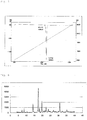
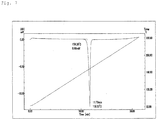
- Fig. 4 shows the results of the differential scanning calorimetry.
- Fig. 5 shows the results of the differential scanning calorimetry.
- Fig. 7 shows the results of the differential scanning calorimetry.
- Fig. 8 shows the results of the differential scanning calorimetry.
- Table 1 shows specific examples of compounds which are pest control agents represented by formula (I), and were produced by methods similar to the method of Synthesis Example 1, and also shows physical properties of the compounds.
- the mixture was filtered, and the crystals were subjected to slurry washing with 200 ml of water and subsequently with 500 ml of water. After the filtration, the crystals were washed with 100 ml of toluene, while being pressed. Further, the crystals were subjected to slurry washing with 400 ml of toluene. The obtained crystals were dried under reduced pressure at 60°C overnight with a vacuum pump. Thus, 147.78 g of the target compound N-[1-((6-chloropyridin-3-yl)methyl)pyridin-2(1H)-ylide ne]-2,2,2-trifluoroacetamide was obtained (88.1%).
- the mixture was heated at 50°C for 10 minutes, cooled gradually, and stirred at 15 to 20°C for 30 minutes. Then, the crystals were filtered, and washed with 150 ml of water, and subsequently with 150 ml of toluene. The obtained crystals were dried under reduced pressure at 60°C for 11 hours with a vacuum pump.
- 147.32 g of the target compound N-[1-((6-chloropyridin-3-yl)methyl)pyridin-2(1H)-ylide ne]-2,2,2-trifluoroacetamide was obtained (87.8%).
- distillation was conducted under reduced pressure (60 to 35 hPa) at 50 to 60°C.
- 25 ml of dimethylformamide, 20 ml of toluene, and 7.35 g (0.053 mol) of potassium carbonate powder were further added, and then distillation was conducted under reduced pressure (60 to 35 hPa) at 50 to 60°C for 2 hours.
- To the reaction liquid 60 ml of methanol and 50 ml of water were added, and the reaction liquid was added to 300 ml of water, while the vessel was also washed. Thirty minutes later, the crystals were filtered, and washed with 70 ml of water and 40 ml of toluene. The obtained crystals were dried under reduced pressure at 60°C. Thus, 25.75 g of the target compound was obtained (76.9%).
- the reaction vessel was washed with 30 ml of methanol and 20 ml of water, and the washing liquids were also added to the water. After completion of the addition, the mixture was stirred at room temperature for 30 minutes. Then, the crystals were filtered, and washed with 50 ml of water, and subsequently with 40 ml of toluene. The obtained crystals were dried under reduced pressure at 80°C for 11 hours with a vacuum pump. Thus, 11.63 g of the target compound N-[1-((6-chloropyridin-3-yl)methyl)pyridin-2(1H)-ylide ne]-2,2,2-trifluoroacetamide was obtained (69.4%).
- Trifluoroacetyl chloride generated therefrom was bubbled into a solution obtained by dissolving, in 25 mL of N-methyl-2-pyrrolidinone, 4.38 g (0.02 mol) of 1-((6-chloropyridin-3-yl)methyl)pyridine-2(1H)-imine, which was obtained by being synthesized according to the method of Synthesis Example 16, and then being neutralized, and the reaction was allowed to proceed at -10°C for 45 minutes. Crystals precipitated by adding 125 mL of water were collected by filtration. The obtained crystals were dried under reduced pressure at 45°C. Thus, 2.58 g of the target compound was obtained (Percentage Yield: 40.9%).
- Crystals were filtered, and washed with 50 mL of water and 50 mL of toluene. The obtained crystals were dried under reduced pressure at 45°C. Thus, 13.78 g of the target compound was obtained (Percentage Yield: 87.5%).
- Crystals were filtered, and washed with 50 mL of water and 75 mL of toluene. The obtained crystals were dried under reduced pressure at 60°C. Thus, 20.6 g of the target compound was obtained (Percentage Yield: 65.4%).
- Roots of wheat seedlings 48 hours after seeding were each treated with 200 ⁇ L of a liquid agent prepared to be 10% acetone-water, and to contain 100 ppm of a compound represented by formula (I).
- the agent was absorbed through the roots for 72 hours, and then 10 second instar larvae of Laodelphax striatellus were released on each wheat seedling. After that, the wheat seedlings were allowed to stand in a thermostatic chamber at 25°C (16-hour light period and 8-hour dark period) . Four days after the release, the insects were observed for their mortality, and the mortality rate was calculated in accordance with the following formula. The test was duplicated.
- Mortality rate % Number of dead insects / Number of survived insects + Number of dead insects ⁇ 100
- Table 2 shows the results of Test Examples 1 to 3, i.e., specific bioactivities (mortality rates (%)) of pest control agents represented by formula (I). [Table 2] Reference Example Comp. No.
- Rice plant seedlings grown in a pot were treated by soil drench with a liquid agent prepared to be 10% acetone-water, and to contain a predetermined concentration of a compound of the present invention.
- a liquid agent prepared to be 10% acetone-water, and to contain a predetermined concentration of a compound of the present invention.
- 10 sensitive or resistant strain of second instar larvae of Nilaparvata lugens were released on each of the rice plant seedlings.
- the rice plant seedlings were allowed to stand in a thermostatic chamber at 25°C (16-hour light period and 8-hour dark period).
- the insects were observed for their mortality, and the mortality rate was calculated in accordance with the following formula. The test was duplicated.
- Mortality rate % Number of dead insects / Number of survived insects + Number of dead insects ⁇ 100
- insects tested were as follows: Insects bred for generations in a room for a long period (sensitive strain), (I) Insects collected in Kumamoto Prefecture in 2007, and bred for generations in a room (field-collected strain: resistant strain), or (II) Insects collected in Fukuoka Prefecture in 2005, and bred for generations in a room (field-collected strain).
- treatments with Compound 1 at 0.05 mg/seedling achieved mortality rates of 100% for all the strains, and treatments with Compound 1 at 0.005 mg/seedling achieved mortality rates of 90% or higher for all the strains.
- treatments with Compound 2 at 0.01 mg/seedling achieved mortality rates of 72% for the sensitive strain and 70% for the strain (II).
- Treatments with Compound 19 at 0.01 mg/seedling achieved mortality rates of 100% for the sensitive strain and 93% for the strain (II).
- treatments with imidacloprid at 0.05 mg/seedling achieved mortality rates of 100% for the sensitive strain, 40% for the strain (I), and 60% for the strain (II).
- Rice plant seedlings grown in a pot were treated by soil drench with a liquid agent prepared to be 10% acetone-water, and to contain a predetermined concentration of a compound of the present invention.
- a liquid agent prepared to be 10% acetone-water, and to contain a predetermined concentration of a compound of the present invention.
- 10 sensitive or resistant strain of second instar larvae of Laodelphax striatellus were released on each of the rice plant seedlings. After that the rice plant seedlings were allowed to stand in a thermostatic chamber at 25°C (16-hour light period and 8-hour dark period).
- the insects were observed for their mortality, and the mortality rate was calculated in accordance with the following formula. The test was duplicated.
- Mortality rate % Number of dead insects / Number of survived insects + Number of dead insects ⁇ 100
- insects tested were insects bred for generations in a room for a long period (sensitive strain), and insects collected in Kumamoto Prefecture in 2006, and bred for generations in a room (field-collected strain: resistant strain).
- treatments with Compound 1 at 0.01 mg/seedling achieved mortality rates of 100% for all the strains
- treatments with Compound 1 at 0.005 mg/seedling achieved mortality rates of 90% or higher for all the strains.
- treatments with Compound 3 at 0.01 mg/seedling achieved mortality rates of 100% for the sensitive strain and 90% for the field-collected strain.
- treatments with imidacloprid at 0.01 mg/seedling achieved mortality rates of 100% for the sensitive strain and 50% for the field-collected strain.
- treatments with fipronil at 0.01 mg/seedling achieved mortality rates of 100% for the sensitive strain and 70% for the field-collected strain.
- imidacloprid is known to be inactivated by oxidative metabolism, which is thought to be one of the mechanisms for the acquisition of the resistance. To investigate effects on insects acquiring such resistance, the following experiment was carried out.
- Reagents were mixed with each other at the following ratio in a tube having a capacity of 1.5 mL, and allowed to react with each other at 25°C for 40 hours. After the reaction, 1 mL of acetone was added to the mixture, followed by stirring. Then, the formed precipitates were removed by centrifugation at 12000 rpm for 5 minutes. The acetone in the supernatant was distilled off, and the residue was injected into a LC/MS for analysis.
- Compound 1 and Compound 9 in treatment amounts of 200 ppm showed tickcidal effects with mortality rates of 80% or higher.
- Compound 1 and Compound 9 in treatment amounts of 10 ppm showed acaricidal effects with mortality rates of 80% or higher.
- imidacloprid in a treatment amount of 10 ppm achieved a mortality rate of 4%.
- a 1000-fold diluted liquid of a pest control agent prepared according to the following formulation was added dropwise onto the body surface of the mouse within the bonded tube. After sufficient drying, 10 or more larvae of Haemaphysalis longicornis were released into the tube, and the tube was capped. Three days after the release, the larvae of Haemaphysalis longicornis were observed for their mortality, and the blood-sucking inhibition rate was calculated in accordance with the following formula.
- Compound 1 showed an effect of controlling Haemaphysalis longicornis with a blood-sucking inhibition rate of 91%.
- the present invention it is possible to produce a 2-acyliminopyridine derivative represented by formula (I), which is useful as a pest control agent, in a good yield and, if necessary, effectively in a one-pot manner, and in turn to provide the 2-acyliminopyridine derivative in an amount required as a tick control agent stably and at a low cost. Accordingly, the present invention greatly contributes to the field of pest control.
Landscapes
- Chemical & Material Sciences (AREA)
- Organic Chemistry (AREA)
- Life Sciences & Earth Sciences (AREA)
- Dentistry (AREA)
- Pest Control & Pesticides (AREA)
- Plant Pathology (AREA)
- Health & Medical Sciences (AREA)
- Engineering & Computer Science (AREA)
- Agronomy & Crop Science (AREA)
- General Health & Medical Sciences (AREA)
- Wood Science & Technology (AREA)
- Zoology (AREA)
- Environmental Sciences (AREA)
- Pyridine Compounds (AREA)
- Plural Heterocyclic Compounds (AREA)
- Agricultural Chemicals And Associated Chemicals (AREA)
Priority Applications (3)
| Application Number | Priority Date | Filing Date | Title |
|---|---|---|---|
| EP17200356.8A EP3318554B1 (en) | 2011-08-26 | 2012-08-24 | Method for producing pest control agent |
| PL17200356T PL3318554T3 (pl) | 2011-08-26 | 2012-08-24 | Sposób wytwarzania środka do zwalczania szkodników |
| PL12828367T PL2749555T3 (pl) | 2011-08-26 | 2012-08-24 | Sposób wytwarzania środka do zwalczania szkodników |
Applications Claiming Priority (3)
| Application Number | Priority Date | Filing Date | Title |
|---|---|---|---|
| PCT/JP2011/069352 WO2012029672A1 (ja) | 2010-08-31 | 2011-08-26 | 有害生物防除剤 |
| JP2012043880 | 2012-02-29 | ||
| PCT/JP2012/071399 WO2013031671A1 (ja) | 2011-08-26 | 2012-08-24 | 有害生物防除剤の製造法 |
Related Child Applications (2)
| Application Number | Title | Priority Date | Filing Date |
|---|---|---|---|
| EP17200356.8A Division-Into EP3318554B1 (en) | 2011-08-26 | 2012-08-24 | Method for producing pest control agent |
| EP17200356.8A Division EP3318554B1 (en) | 2011-08-26 | 2012-08-24 | Method for producing pest control agent |
Publications (3)
| Publication Number | Publication Date |
|---|---|
| EP2749555A1 EP2749555A1 (en) | 2014-07-02 |
| EP2749555A4 EP2749555A4 (en) | 2015-05-06 |
| EP2749555B1 true EP2749555B1 (en) | 2018-11-14 |
Family
ID=47756161
Family Applications (2)
| Application Number | Title | Priority Date | Filing Date |
|---|---|---|---|
| EP12828367.8A Not-in-force EP2749555B1 (en) | 2011-08-26 | 2012-08-24 | Method for producing pest controlling agent |
| EP17200356.8A Active EP3318554B1 (en) | 2011-08-26 | 2012-08-24 | Method for producing pest control agent |
Family Applications After (1)
| Application Number | Title | Priority Date | Filing Date |
|---|---|---|---|
| EP17200356.8A Active EP3318554B1 (en) | 2011-08-26 | 2012-08-24 | Method for producing pest control agent |
Country Status (19)
| Country | Link |
|---|---|
| US (2) | US9357776B2 (enExample) |
| EP (2) | EP2749555B1 (enExample) |
| JP (2) | JP6092778B2 (enExample) |
| KR (1) | KR20140054004A (enExample) |
| CN (2) | CN103781764B (enExample) |
| AP (1) | AP3749A (enExample) |
| AR (1) | AR087683A1 (enExample) |
| AU (1) | AU2012302922A1 (enExample) |
| BR (2) | BR122019001978A8 (enExample) |
| CA (2) | CA2844916A1 (enExample) |
| HU (2) | HUE041416T2 (enExample) |
| IL (1) | IL230737A0 (enExample) |
| MA (1) | MA35447B1 (enExample) |
| MX (1) | MX351639B (enExample) |
| MY (2) | MY184642A (enExample) |
| PL (2) | PL3318554T3 (enExample) |
| TW (1) | TWI554501B (enExample) |
| WO (1) | WO2013031671A1 (enExample) |
| ZA (1) | ZA201400602B (enExample) |
Families Citing this family (17)
| Publication number | Priority date | Publication date | Assignee | Title |
|---|---|---|---|---|
| EP2789237A1 (en) * | 2010-08-31 | 2014-10-15 | Meiji Seika Pharma Co., Ltd. | Pest control agent |
| CN110256336A (zh) * | 2012-02-29 | 2019-09-20 | 明治制果药业株式会社 | 具有2-亚氨基的含氮杂环衍生物以及包含它的害虫防治剂 |
| CN104202981B (zh) | 2012-03-30 | 2018-01-30 | 巴斯夫欧洲公司 | 防治动物害虫的n‑取代的吡啶亚基化合物和衍生物 |
| WO2013144223A1 (en) | 2012-03-30 | 2013-10-03 | Basf Se | N-substituted pyrimidinylidene compounds and derivatives for combating animal pests |
| EP2986598B1 (en) | 2013-04-19 | 2017-03-29 | Basf Se | N-substituted acyl-imino-pyridine compounds and derivatives for combating animal pests |
| CA2910879A1 (en) * | 2013-05-27 | 2014-12-04 | Meiji Seika Pharma Co., Ltd. | Pest control agents for honeybee parasitic pests, and pest control method for honeybee parasitic pests using the pest control agents |
| EP3046919B1 (en) | 2013-09-19 | 2019-08-07 | Basf Se | N-acylimino heterocyclic compounds |
| WO2015055554A1 (de) | 2013-10-14 | 2015-04-23 | Bayer Cropscience Ag | Wirkstoff für die saatgut- und bodenbehandlung |
| JP6398124B2 (ja) * | 2014-03-10 | 2018-10-03 | Meiji Seikaファルマ株式会社 | 2−アシルイミノピリジン誘導体の製造法 |
| TW201613866A (en) * | 2014-07-07 | 2016-04-16 | Bayer Cropscience Ag | Process for preparing fluorinated iminopyridine compounds |
| JP6854813B2 (ja) * | 2015-10-02 | 2021-04-07 | ビーエイエスエフ・ソシエタス・エウロパエアBasf Se | 有害生物防除剤としての2−クロロピリミジン−5−イル置換基を有するイミノ化合物 |
| CA3036936C (en) * | 2016-09-16 | 2024-04-23 | Meiji Seika Pharma Co., Ltd. | Optimized production method for a 2-acyliminopyridine pest control agent |
| CN111320573B (zh) * | 2018-12-13 | 2022-11-01 | 江苏中旗科技股份有限公司 | 一种吡啶胺类化合物的制备方法 |
| EP3956330A4 (en) | 2019-04-18 | 2023-01-18 | The Johns Hopkins University | SUBSTITUTED 2-AMINO-PYRAZOLYL-[1,2,4]TRIAZOLO[1,5A]PYRIDINE DERIVATIVES AND THEIR USE |
| CN115015432A (zh) * | 2022-06-27 | 2022-09-06 | 中检科(北京)测试技术有限公司 | 一种测定草芽畏含量的前处理方法、gc-ms/ms检测方法 |
| TW202412787A (zh) | 2022-07-29 | 2024-04-01 | 日商住友製藥股份有限公司 | 2(1h)-吡啶亞胺衍生物 |
| CN115960043A (zh) * | 2023-01-30 | 2023-04-14 | 江西新龙生物科技股份有限公司 | 一种新烟碱杀虫剂及其合成方法 |
Family Cites Families (15)
| Publication number | Priority date | Publication date | Assignee | Title |
|---|---|---|---|---|
| DE3639877A1 (de) * | 1986-11-21 | 1988-05-26 | Bayer Ag | Hetarylalkyl substituierte 5- und 6-ringheterocyclen |
| HU207047B (en) * | 1989-11-07 | 1993-03-01 | Richter Gedeon Vegyeszet | Process for producing new pyridine derivatives and pharmaceutical copositions comprising same |
| DE4021439A1 (de) * | 1989-12-14 | 1991-06-20 | Bayer Ag | 2-iminopyridin-derivate |
| EP0639569A4 (en) * | 1991-03-11 | 1995-09-20 | Nippon Soda Co | NEW HETEROCYCLIC COMPOUND. |
| JPH0578323A (ja) * | 1991-03-11 | 1993-03-30 | Nippon Soda Co Ltd | 新規なヘテロ環化合物、その製造方法及び殺虫剤 |
| CN101065125A (zh) * | 2004-11-15 | 2007-10-31 | 大正制药株式会社 | 亚胺化合物 |
| JPWO2006051704A1 (ja) * | 2004-11-15 | 2008-05-29 | 大正製薬株式会社 | イミン化合物 |
| JP4723874B2 (ja) * | 2005-02-18 | 2011-07-13 | 花王株式会社 | 染毛剤組成物 |
| US20110039892A1 (en) * | 2008-04-23 | 2011-02-17 | Takeda Pharmaceutical Company Limited | Iminopyridine derivative and use thereof |
| JP2012176900A (ja) * | 2009-06-24 | 2012-09-13 | Eisai R & D Management Co Ltd | ((ホスホノオキシ)メチル)ピリジニウム環を有するピリジン誘導体およびそれらを含有する抗真菌剤 |
| UA105794C2 (uk) * | 2009-06-26 | 2014-06-25 | Новартіс Аг | 1,3-ДИЗАМІЩЕНІ ПОХІДНІ ІМІДАЗОЛІДИН-2-ОНУ ЯК ІНГІБІТОРИ Cyp17 |
| EP2789237A1 (en) * | 2010-08-31 | 2014-10-15 | Meiji Seika Pharma Co., Ltd. | Pest control agent |
| CN110256336A (zh) * | 2012-02-29 | 2019-09-20 | 明治制果药业株式会社 | 具有2-亚氨基的含氮杂环衍生物以及包含它的害虫防治剂 |
| AR093195A1 (es) * | 2012-02-29 | 2015-05-27 | Meiji Seika Pharma Co Ltd | Composicion para el control de plagas que incluye un derivado de iminopiridina |
| JP6398124B2 (ja) * | 2014-03-10 | 2018-10-03 | Meiji Seikaファルマ株式会社 | 2−アシルイミノピリジン誘導体の製造法 |
-
2012
- 2012-08-24 MY MYPI2018000303A patent/MY184642A/en unknown
- 2012-08-24 AR ARP120103150A patent/AR087683A1/es active IP Right Grant
- 2012-08-24 JP JP2013531274A patent/JP6092778B2/ja active Active
- 2012-08-24 EP EP12828367.8A patent/EP2749555B1/en not_active Not-in-force
- 2012-08-24 HU HUE12828367A patent/HUE041416T2/hu unknown
- 2012-08-24 CA CA2844916A patent/CA2844916A1/en not_active Abandoned
- 2012-08-24 CN CN201280041558.3A patent/CN103781764B/zh active Active
- 2012-08-24 BR BR122019001978A patent/BR122019001978A8/pt not_active Application Discontinuation
- 2012-08-24 US US14/238,299 patent/US9357776B2/en active Active
- 2012-08-24 EP EP17200356.8A patent/EP3318554B1/en active Active
- 2012-08-24 TW TW101130855A patent/TWI554501B/zh not_active IP Right Cessation
- 2012-08-24 KR KR1020147002461A patent/KR20140054004A/ko not_active Withdrawn
- 2012-08-24 HU HUE17200356A patent/HUE056549T2/hu unknown
- 2012-08-24 CA CA3024817A patent/CA3024817A1/en not_active Abandoned
- 2012-08-24 AU AU2012302922A patent/AU2012302922A1/en not_active Abandoned
- 2012-08-24 MY MYPI2014700410A patent/MY170652A/en unknown
- 2012-08-24 PL PL17200356T patent/PL3318554T3/pl unknown
- 2012-08-24 PL PL12828367T patent/PL2749555T3/pl unknown
- 2012-08-24 WO PCT/JP2012/071399 patent/WO2013031671A1/ja not_active Ceased
- 2012-08-24 AP AP2014007518A patent/AP3749A/en active
- 2012-08-24 CN CN201610472854.9A patent/CN106117132B/zh active Active
- 2012-08-24 BR BR112014004268A patent/BR112014004268A8/pt not_active Application Discontinuation
- 2012-08-24 MX MX2014000588A patent/MX351639B/es active IP Right Grant
-
2014
- 2014-01-24 ZA ZA2014/00602A patent/ZA201400602B/en unknown
- 2014-01-30 IL IL230737A patent/IL230737A0/en unknown
- 2014-03-20 MA MA36841A patent/MA35447B1/fr unknown
-
2016
- 2016-04-29 US US15/141,960 patent/US9883673B2/en active Active
-
2017
- 2017-02-09 JP JP2017022407A patent/JP6335348B2/ja active Active
Non-Patent Citations (1)
| Title |
|---|
| None * |
Also Published As
Similar Documents
| Publication | Publication Date | Title |
|---|---|---|
| EP2749555B1 (en) | Method for producing pest controlling agent | |
| US9580405B2 (en) | Processes for the preparation of pesticidal compounds | |
| AU2009313134B2 (en) | Novel halogen-substituted compounds | |
| EP0539588A1 (en) | Amine derivative | |
| Gorsuch et al. | Synthesis of isothiazol-3-one derivatives as inhibitors of histone acetyltransferases (HATs) | |
| US4968805A (en) | Pyrazole derivatives and insecticidal fungicidal and miticidal compositions thereof | |
| KR100511489B1 (ko) | 신규 2-피리미디닐옥시-n-아릴-벤질아민 유도체, 이의제조 방법 및 용도 | |
| CN102584810A (zh) | 一种苯并噻唑酮类化合物及其应用 | |
| Bhoot et al. | Synthesis of some new heterocyclic compounds with potential biological activity | |
| HK1197405A (en) | Method for producing pest controlling agent | |
| JP4706482B2 (ja) | 2,6−ジクロロイソニコチン酸ピリジルメチル誘導体、その製造方法および農園芸用病害防除剤 | |
| NZ709742B2 (en) | Method for producing pest controlling agent | |
| Deohate et al. | Synthesis of pyrimidine linked pyrazole heterocyclics by microwave irradiative cyclocondensation and evaluation of their insecticidal and antibacterial potential | |
| Gupta et al. | Synthesis, Characterization and Antibacterial Activity of Some 4-Thiazolidinones Derivatives. | |
| CN116803267B (zh) | 一类腙类化合物在杀菌剂中的应用 | |
| CN108610283B (zh) | 一种仲胺类化合物及其制备和应用 | |
| NZ623022B2 (en) | Method for producing pest controlling agent | |
| JP4906084B2 (ja) | 2,6−ジクロロ−4−環状アミノメチルピリジン誘導体、その酸付加塩、その製造方法、及び農園芸用病害防除剤 |
Legal Events
| Date | Code | Title | Description |
|---|---|---|---|
| PUAI | Public reference made under article 153(3) epc to a published international application that has entered the european phase |
Free format text: ORIGINAL CODE: 0009012 |
|
| 17P | Request for examination filed |
Effective date: 20140204 |
|
| AK | Designated contracting states |
Kind code of ref document: A1 Designated state(s): AL AT BE BG CH CY CZ DE DK EE ES FI FR GB GR HR HU IE IS IT LI LT LU LV MC MK MT NL NO PL PT RO RS SE SI SK SM TR |
|
| DAX | Request for extension of the european patent (deleted) | ||
| RIC1 | Information provided on ipc code assigned before grant |
Ipc: A01N 43/78 20060101ALI20141210BHEP Ipc: C07D 417/06 20060101ALI20141210BHEP Ipc: C07D 401/06 20060101ALI20141210BHEP Ipc: A01N 43/40 20060101ALI20141210BHEP Ipc: A01P 7/02 20060101ALI20141210BHEP Ipc: C07D 213/74 20060101AFI20141210BHEP Ipc: A01P 7/04 20060101ALI20141210BHEP |
|
| REG | Reference to a national code |
Ref country code: HK Ref legal event code: DE Ref document number: 1197405 Country of ref document: HK |
|
| RA4 | Supplementary search report drawn up and despatched (corrected) |
Effective date: 20150402 |
|
| RIC1 | Information provided on ipc code assigned before grant |
Ipc: A01P 7/02 20060101ALI20150327BHEP Ipc: A01N 43/40 20060101ALI20150327BHEP Ipc: A01P 7/04 20060101ALI20150327BHEP Ipc: C07D 417/06 20060101ALI20150327BHEP Ipc: C07D 401/06 20060101ALI20150327BHEP Ipc: C07D 213/74 20060101AFI20150327BHEP Ipc: A01N 43/78 20060101ALI20150327BHEP |
|
| RIC1 | Information provided on ipc code assigned before grant |
Ipc: C07D 213/74 20060101AFI20150609BHEP Ipc: A01N 43/40 20060101ALI20150609BHEP Ipc: A01P 7/04 20060101ALI20150609BHEP Ipc: A01P 7/02 20060101ALI20150609BHEP Ipc: C07D 417/06 20060101ALI20150609BHEP Ipc: A01N 43/78 20060101ALI20150609BHEP Ipc: C07D 401/06 20060101ALI20150609BHEP |
|
| STAA | Information on the status of an ep patent application or granted ep patent |
Free format text: STATUS: EXAMINATION IS IN PROGRESS |
|
| 17Q | First examination report despatched |
Effective date: 20161108 |
|
| GRAP | Despatch of communication of intention to grant a patent |
Free format text: ORIGINAL CODE: EPIDOSNIGR1 |
|
| STAA | Information on the status of an ep patent application or granted ep patent |
Free format text: STATUS: GRANT OF PATENT IS INTENDED |
|
| INTG | Intention to grant announced |
Effective date: 20180302 |
|
| RIN1 | Information on inventor provided before grant (corrected) |
Inventor name: FUKUDA YOSHIMASA Inventor name: NAKANISHI NOZOMU Inventor name: KITSUDA SHIGEKI Inventor name: OHNO IKUYA |
|
| GRAJ | Information related to disapproval of communication of intention to grant by the applicant or resumption of examination proceedings by the epo deleted |
Free format text: ORIGINAL CODE: EPIDOSDIGR1 |
|
| STAA | Information on the status of an ep patent application or granted ep patent |
Free format text: STATUS: EXAMINATION IS IN PROGRESS |
|
| GRAP | Despatch of communication of intention to grant a patent |
Free format text: ORIGINAL CODE: EPIDOSNIGR1 |
|
| STAA | Information on the status of an ep patent application or granted ep patent |
Free format text: STATUS: GRANT OF PATENT IS INTENDED |
|
| INTC | Intention to grant announced (deleted) | ||
| INTG | Intention to grant announced |
Effective date: 20180718 |
|
| GRAS | Grant fee paid |
Free format text: ORIGINAL CODE: EPIDOSNIGR3 |
|
| GRAA | (expected) grant |
Free format text: ORIGINAL CODE: 0009210 |
|
| STAA | Information on the status of an ep patent application or granted ep patent |
Free format text: STATUS: THE PATENT HAS BEEN GRANTED |
|
| AK | Designated contracting states |
Kind code of ref document: B1 Designated state(s): AL AT BE BG CH CY CZ DE DK EE ES FI FR GB GR HR HU IE IS IT LI LT LU LV MC MK MT NL NO PL PT RO RS SE SI SK SM TR |
|
| REG | Reference to a national code |
Ref country code: CH Ref legal event code: EP Ref country code: AT Ref legal event code: REF Ref document number: 1064638 Country of ref document: AT Kind code of ref document: T Effective date: 20181115 |
|
| REG | Reference to a national code |
Ref country code: DE Ref legal event code: R096 Ref document number: 602012053588 Country of ref document: DE |
|
| REG | Reference to a national code |
Ref country code: IE Ref legal event code: FG4D |
|
| REG | Reference to a national code |
Ref country code: CH Ref legal event code: NV Representative=s name: SCHMAUDER AND PARTNER AG PATENT- UND MARKENANW, CH |
|
| REG | Reference to a national code |
Ref country code: NL Ref legal event code: MP Effective date: 20181114 |
|
| REG | Reference to a national code |
Ref country code: LT Ref legal event code: MG4D |
|
| REG | Reference to a national code |
Ref country code: AT Ref legal event code: MK05 Ref document number: 1064638 Country of ref document: AT Kind code of ref document: T Effective date: 20181114 |
|
| PG25 | Lapsed in a contracting state [announced via postgrant information from national office to epo] |
Ref country code: AT Free format text: LAPSE BECAUSE OF FAILURE TO SUBMIT A TRANSLATION OF THE DESCRIPTION OR TO PAY THE FEE WITHIN THE PRESCRIBED TIME-LIMIT Effective date: 20181114 Ref country code: HR Free format text: LAPSE BECAUSE OF FAILURE TO SUBMIT A TRANSLATION OF THE DESCRIPTION OR TO PAY THE FEE WITHIN THE PRESCRIBED TIME-LIMIT Effective date: 20181114 Ref country code: BG Free format text: LAPSE BECAUSE OF FAILURE TO SUBMIT A TRANSLATION OF THE DESCRIPTION OR TO PAY THE FEE WITHIN THE PRESCRIBED TIME-LIMIT Effective date: 20190214 Ref country code: FI Free format text: LAPSE BECAUSE OF FAILURE TO SUBMIT A TRANSLATION OF THE DESCRIPTION OR TO PAY THE FEE WITHIN THE PRESCRIBED TIME-LIMIT Effective date: 20181114 Ref country code: LV Free format text: LAPSE BECAUSE OF FAILURE TO SUBMIT A TRANSLATION OF THE DESCRIPTION OR TO PAY THE FEE WITHIN THE PRESCRIBED TIME-LIMIT Effective date: 20181114 Ref country code: ES Free format text: LAPSE BECAUSE OF FAILURE TO SUBMIT A TRANSLATION OF THE DESCRIPTION OR TO PAY THE FEE WITHIN THE PRESCRIBED TIME-LIMIT Effective date: 20181114 Ref country code: LT Free format text: LAPSE BECAUSE OF FAILURE TO SUBMIT A TRANSLATION OF THE DESCRIPTION OR TO PAY THE FEE WITHIN THE PRESCRIBED TIME-LIMIT Effective date: 20181114 Ref country code: IS Free format text: LAPSE BECAUSE OF FAILURE TO SUBMIT A TRANSLATION OF THE DESCRIPTION OR TO PAY THE FEE WITHIN THE PRESCRIBED TIME-LIMIT Effective date: 20190314 Ref country code: NO Free format text: LAPSE BECAUSE OF FAILURE TO SUBMIT A TRANSLATION OF THE DESCRIPTION OR TO PAY THE FEE WITHIN THE PRESCRIBED TIME-LIMIT Effective date: 20190214 |
|
| REG | Reference to a national code |
Ref country code: HU Ref legal event code: AG4A Ref document number: E041416 Country of ref document: HU |
|
| PG25 | Lapsed in a contracting state [announced via postgrant information from national office to epo] |
Ref country code: GR Free format text: LAPSE BECAUSE OF FAILURE TO SUBMIT A TRANSLATION OF THE DESCRIPTION OR TO PAY THE FEE WITHIN THE PRESCRIBED TIME-LIMIT Effective date: 20190215 Ref country code: RS Free format text: LAPSE BECAUSE OF FAILURE TO SUBMIT A TRANSLATION OF THE DESCRIPTION OR TO PAY THE FEE WITHIN THE PRESCRIBED TIME-LIMIT Effective date: 20181114 Ref country code: NL Free format text: LAPSE BECAUSE OF FAILURE TO SUBMIT A TRANSLATION OF THE DESCRIPTION OR TO PAY THE FEE WITHIN THE PRESCRIBED TIME-LIMIT Effective date: 20181114 Ref country code: PT Free format text: LAPSE BECAUSE OF FAILURE TO SUBMIT A TRANSLATION OF THE DESCRIPTION OR TO PAY THE FEE WITHIN THE PRESCRIBED TIME-LIMIT Effective date: 20190314 Ref country code: AL Free format text: LAPSE BECAUSE OF FAILURE TO SUBMIT A TRANSLATION OF THE DESCRIPTION OR TO PAY THE FEE WITHIN THE PRESCRIBED TIME-LIMIT Effective date: 20181114 Ref country code: SE Free format text: LAPSE BECAUSE OF FAILURE TO SUBMIT A TRANSLATION OF THE DESCRIPTION OR TO PAY THE FEE WITHIN THE PRESCRIBED TIME-LIMIT Effective date: 20181114 |
|
| PG25 | Lapsed in a contracting state [announced via postgrant information from national office to epo] |
Ref country code: DK Free format text: LAPSE BECAUSE OF FAILURE TO SUBMIT A TRANSLATION OF THE DESCRIPTION OR TO PAY THE FEE WITHIN THE PRESCRIBED TIME-LIMIT Effective date: 20181114 Ref country code: CZ Free format text: LAPSE BECAUSE OF FAILURE TO SUBMIT A TRANSLATION OF THE DESCRIPTION OR TO PAY THE FEE WITHIN THE PRESCRIBED TIME-LIMIT Effective date: 20181114 Ref country code: IT Free format text: LAPSE BECAUSE OF FAILURE TO SUBMIT A TRANSLATION OF THE DESCRIPTION OR TO PAY THE FEE WITHIN THE PRESCRIBED TIME-LIMIT Effective date: 20181114 |
|
| REG | Reference to a national code |
Ref country code: DE Ref legal event code: R097 Ref document number: 602012053588 Country of ref document: DE |
|
| PG25 | Lapsed in a contracting state [announced via postgrant information from national office to epo] |
Ref country code: SK Free format text: LAPSE BECAUSE OF FAILURE TO SUBMIT A TRANSLATION OF THE DESCRIPTION OR TO PAY THE FEE WITHIN THE PRESCRIBED TIME-LIMIT Effective date: 20181114 Ref country code: EE Free format text: LAPSE BECAUSE OF FAILURE TO SUBMIT A TRANSLATION OF THE DESCRIPTION OR TO PAY THE FEE WITHIN THE PRESCRIBED TIME-LIMIT Effective date: 20181114 Ref country code: SM Free format text: LAPSE BECAUSE OF FAILURE TO SUBMIT A TRANSLATION OF THE DESCRIPTION OR TO PAY THE FEE WITHIN THE PRESCRIBED TIME-LIMIT Effective date: 20181114 Ref country code: RO Free format text: LAPSE BECAUSE OF FAILURE TO SUBMIT A TRANSLATION OF THE DESCRIPTION OR TO PAY THE FEE WITHIN THE PRESCRIBED TIME-LIMIT Effective date: 20181114 |
|
| PLBE | No opposition filed within time limit |
Free format text: ORIGINAL CODE: 0009261 |
|
| STAA | Information on the status of an ep patent application or granted ep patent |
Free format text: STATUS: NO OPPOSITION FILED WITHIN TIME LIMIT |
|
| 26N | No opposition filed |
Effective date: 20190815 |
|
| PG25 | Lapsed in a contracting state [announced via postgrant information from national office to epo] |
Ref country code: SI Free format text: LAPSE BECAUSE OF FAILURE TO SUBMIT A TRANSLATION OF THE DESCRIPTION OR TO PAY THE FEE WITHIN THE PRESCRIBED TIME-LIMIT Effective date: 20181114 |
|
| PG25 | Lapsed in a contracting state [announced via postgrant information from national office to epo] |
Ref country code: TR Free format text: LAPSE BECAUSE OF FAILURE TO SUBMIT A TRANSLATION OF THE DESCRIPTION OR TO PAY THE FEE WITHIN THE PRESCRIBED TIME-LIMIT Effective date: 20181114 |
|
| GBPC | Gb: european patent ceased through non-payment of renewal fee |
Effective date: 20190824 |
|
| PG25 | Lapsed in a contracting state [announced via postgrant information from national office to epo] |
Ref country code: MC Free format text: LAPSE BECAUSE OF FAILURE TO SUBMIT A TRANSLATION OF THE DESCRIPTION OR TO PAY THE FEE WITHIN THE PRESCRIBED TIME-LIMIT Effective date: 20181114 Ref country code: LU Free format text: LAPSE BECAUSE OF NON-PAYMENT OF DUE FEES Effective date: 20190824 |
|
| REG | Reference to a national code |
Ref country code: BE Ref legal event code: MM Effective date: 20190831 |
|
| PG25 | Lapsed in a contracting state [announced via postgrant information from national office to epo] |
Ref country code: FR Free format text: LAPSE BECAUSE OF NON-PAYMENT OF DUE FEES Effective date: 20190831 Ref country code: IE Free format text: LAPSE BECAUSE OF NON-PAYMENT OF DUE FEES Effective date: 20190824 |
|
| PG25 | Lapsed in a contracting state [announced via postgrant information from national office to epo] |
Ref country code: BE Free format text: LAPSE BECAUSE OF NON-PAYMENT OF DUE FEES Effective date: 20190831 Ref country code: GB Free format text: LAPSE BECAUSE OF NON-PAYMENT OF DUE FEES Effective date: 20190824 |
|
| PGFP | Annual fee paid to national office [announced via postgrant information from national office to epo] |
Ref country code: DE Payment date: 20200819 Year of fee payment: 9 |
|
| PGFP | Annual fee paid to national office [announced via postgrant information from national office to epo] |
Ref country code: HU Payment date: 20200929 Year of fee payment: 9 Ref country code: PL Payment date: 20200817 Year of fee payment: 9 Ref country code: CH Payment date: 20200819 Year of fee payment: 9 |
|
| REG | Reference to a national code |
Ref country code: HK Ref legal event code: WD Ref document number: 1197405 Country of ref document: HK |
|
| PG25 | Lapsed in a contracting state [announced via postgrant information from national office to epo] |
Ref country code: CY Free format text: LAPSE BECAUSE OF FAILURE TO SUBMIT A TRANSLATION OF THE DESCRIPTION OR TO PAY THE FEE WITHIN THE PRESCRIBED TIME-LIMIT Effective date: 20181114 |
|
| PG25 | Lapsed in a contracting state [announced via postgrant information from national office to epo] |
Ref country code: MT Free format text: LAPSE BECAUSE OF FAILURE TO SUBMIT A TRANSLATION OF THE DESCRIPTION OR TO PAY THE FEE WITHIN THE PRESCRIBED TIME-LIMIT Effective date: 20181114 |
|
| REG | Reference to a national code |
Ref country code: DE Ref legal event code: R119 Ref document number: 602012053588 Country of ref document: DE |
|
| REG | Reference to a national code |
Ref country code: CH Ref legal event code: PL |
|
| PG25 | Lapsed in a contracting state [announced via postgrant information from national office to epo] |
Ref country code: LI Free format text: LAPSE BECAUSE OF NON-PAYMENT OF DUE FEES Effective date: 20210831 Ref country code: HU Free format text: LAPSE BECAUSE OF NON-PAYMENT OF DUE FEES Effective date: 20210825 Ref country code: CH Free format text: LAPSE BECAUSE OF NON-PAYMENT OF DUE FEES Effective date: 20210831 |
|
| PG25 | Lapsed in a contracting state [announced via postgrant information from national office to epo] |
Ref country code: MK Free format text: LAPSE BECAUSE OF FAILURE TO SUBMIT A TRANSLATION OF THE DESCRIPTION OR TO PAY THE FEE WITHIN THE PRESCRIBED TIME-LIMIT Effective date: 20181114 |
|
| PG25 | Lapsed in a contracting state [announced via postgrant information from national office to epo] |
Ref country code: DE Free format text: LAPSE BECAUSE OF NON-PAYMENT OF DUE FEES Effective date: 20220301 |
|
| PG25 | Lapsed in a contracting state [announced via postgrant information from national office to epo] |
Ref country code: PL Free format text: LAPSE BECAUSE OF NON-PAYMENT OF DUE FEES Effective date: 20210824 |