EP2748811B1 - A medical feedback system based on sound analysis in a medical environment - Google Patents
A medical feedback system based on sound analysis in a medical environment Download PDFInfo
- Publication number
- EP2748811B1 EP2748811B1 EP12791560.1A EP12791560A EP2748811B1 EP 2748811 B1 EP2748811 B1 EP 2748811B1 EP 12791560 A EP12791560 A EP 12791560A EP 2748811 B1 EP2748811 B1 EP 2748811B1
- Authority
- EP
- European Patent Office
- Prior art keywords
- speech
- medical
- sound
- patient
- feedback system
- Prior art date
- Legal status (The legal status is an assumption and is not a legal conclusion. Google has not performed a legal analysis and makes no representation as to the accuracy of the status listed.)
- Not-in-force
Links
Images

Classifications
-
- H—ELECTRICITY
- H04—ELECTRIC COMMUNICATION TECHNIQUE
- H04R—LOUDSPEAKERS, MICROPHONES, GRAMOPHONE PICK-UPS OR LIKE ACOUSTIC ELECTROMECHANICAL TRANSDUCERS; ELECTRIC HEARING AIDS; PUBLIC ADDRESS SYSTEMS
- H04R29/00—Monitoring arrangements; Testing arrangements
-
- G—PHYSICS
- G16—INFORMATION AND COMMUNICATION TECHNOLOGY [ICT] SPECIALLY ADAPTED FOR SPECIFIC APPLICATION FIELDS
- G16H—HEALTHCARE INFORMATICS, i.e. INFORMATION AND COMMUNICATION TECHNOLOGY [ICT] SPECIALLY ADAPTED FOR THE HANDLING OR PROCESSING OF MEDICAL OR HEALTHCARE DATA
- G16H40/00—ICT specially adapted for the management or administration of healthcare resources or facilities; ICT specially adapted for the management or operation of medical equipment or devices
- G16H40/20—ICT specially adapted for the management or administration of healthcare resources or facilities; ICT specially adapted for the management or operation of medical equipment or devices for the management or administration of healthcare resources or facilities, e.g. managing hospital staff or surgery rooms
-
- A—HUMAN NECESSITIES
- A61—MEDICAL OR VETERINARY SCIENCE; HYGIENE
- A61N—ELECTROTHERAPY; MAGNETOTHERAPY; RADIATION THERAPY; ULTRASOUND THERAPY
- A61N1/00—Electrotherapy; Circuits therefor
-
- G—PHYSICS
- G10—MUSICAL INSTRUMENTS; ACOUSTICS
- G10L—SPEECH ANALYSIS TECHNIQUES OR SPEECH SYNTHESIS; SPEECH RECOGNITION; SPEECH OR VOICE PROCESSING TECHNIQUES; SPEECH OR AUDIO CODING OR DECODING
- G10L13/00—Speech synthesis; Text to speech systems
-
- G—PHYSICS
- G10—MUSICAL INSTRUMENTS; ACOUSTICS
- G10L—SPEECH ANALYSIS TECHNIQUES OR SPEECH SYNTHESIS; SPEECH RECOGNITION; SPEECH OR VOICE PROCESSING TECHNIQUES; SPEECH OR AUDIO CODING OR DECODING
- G10L15/00—Speech recognition
Definitions
- the present invention relates to a medical feedback system based on sound analysis in a medical environment.
- the present invention also relates to a corresponding method for providing feedback based on sound analysis in a medical environment, and a corresponding computer program product for implementing the invention.
- Noise levels in hospital setting may be surprisingly high, especially in intensive care units (ICU). Recent research studies also indicate that patients are negatively impacted by the high noise levels. Major noise sources in ICU environments may be attributed to the behavior of staff, including speech and other activities.
- the overall sound level is typically the only parameter on which such systems are designed to operate, and consequently the feedbacks may often be too ambiguous, providing little information on what the actual noise sources are.
- US2007/0183604 A1 discloses methods and system for monitoring an environment. Acoustic data collected from microphones distributed within the environment are received. Sound sources are identified from the received acoustic data as generative of sound detected by the microphones. An acoustic scene of the environment is characterized by application of acoustic-scene characterization rules to the received acoustic data. The acoustic scene of the environment is identified as anomalous according to parameter values deviant from a set of parameter values defining nonanomalous acoustic scenes. A remedial response to the environment is initiated in response to identifying the acoustic scene of the environment as anomalous.
- the invention preferably seeks to mitigate, alleviate or eliminate one or more of the above mentioned disadvantages singly or in any combination.
- the invention is particularly, but not exclusively, advantageous for obtaining a feedback system in medical context, where identifying or classifying the avoidable speech and unavoidable speech of the patient is applied to generate, and where appropriate communicate corresponding feedback signals that may be utilized by the medical personal, and other relevant persons.
- the invention provides an intelligent feedback system that is able to perform real-time speech analysis and classification.
- the feedback system may instantly provide appropriate feedback with required actions. If it is the speech activities between hospital staff that contributes mostly to the overall sound level, the system may directly advise them to consider lowering their voice, and so forth.
- the feedback system has been itemized into three separate modalities in the present formulation of the present invention, i.e. sound scene analyzer, sound level analyzer, and sound classifier, it is readily understood by the skilled person that in a practical implementation, e.g. on an appropriate computing device, the three modalities are typically integrated into a single processor implementing invention.
- the sound scene analyzer may be capable of classifying avoidable speech and unavoidable speech of the patient based on a learning process being performed, at least initially, in the said medical environment. This is particularly beneficially if the medical environment has a unique sound environment.
- the sound-level analyzer may comprise a psychoacoustic model for providing an indicator for perceived loudness, e.g. conventionally A or B weighting, or alternatively Zwicker loudness, or other hearing models readily available to the skilled person in acoustics. Possibly, more advanced model based on noisiness, sharpness, roughness, etc. maybe applied within the teaching of the present invention.
- a psychoacoustic model for providing an indicator for perceived loudness, e.g. conventionally A or B weighting, or alternatively Zwicker loudness, or other hearing models readily available to the skilled person in acoustics.
- more advanced model based on noisiness, sharpness, roughness, etc. maybe applied within the teaching of the present invention.
- the sound scene analyzer may be arranged for receiving patient specific information from an associated patient monitoring system in the medical environment, the sound scene analyzer using the said patient specific information for classification of avoidable speech and unavoidable speech of the patient.
- the patient monitoring system is, per se, another entity but could also be an integral part of the feedback system, or verse visa.
- the patient monitoring system may comprise, or be communicatively arranged with, various sensors for obtaining relevant patient data, e.g. electrical sensors, mechanical sensors, biochemical sensors.
- the patient monitoring system may receive input based on manual observations, e.g. from a nurse.
- the feedback system may be arranged for monitoring a plurality of patients with the first plurality of microphones, i.e. the number of microphones need not be equal to the number of patient.
- the microphones are arranged for communication with the feedback system, either by wire or wirelessly as will be readily appreciated by the skilled person.
- there may also be just one patient and one microphone e.g. a single patient approach for bed side application, for example in a private home.
- the feedback system may be arranged for communication with one or more feedback devices, the feedback devices being utilizable by medical personal, visitors, and/or patients.
- the feedback devices are arranged for communication with the feedback system, either by wire or wirelessly as will be readily appreciated by the skilled person. For example as mobile phones, monitors etc.
- the present invention relates to a method for operating a medical feedback system based on sound analysis in a medical environment, the method comprising:
- the invention relates to a computer program product being adapted to enable a computer system comprising at least one computer having data storage means in connection therewith to control a medical feedback system based on sound analysis in a medical environment according to the second aspect.
- This aspect of the invention is particularly, but not exclusively, advantageous in that the present invention may be accomplished by a computer program product enabling a computer system to carry out the operations of the system of the first aspect of the invention when down- or uploaded into the computer system.
- a computer program product may be provided on any kind of computer readable medium, or through a network.
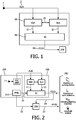
- FIG. 1 shows a schematic drawing of a feedback system 100 according to the present invention.
- the medical feedback system 100 is based on sound analysis in a medical environment where one or more microphones 1 produce an audio signal AUD 2 and transmit the signal to the system 100 as indicated schematically.
- the transmission may be done by wire or wirelessly as the skilled person would understand.
- the system comprises a sound scene analyzer SSA 10, where the sound scene analyzer is arranged for receiving the audio signal AUD 2 indicative of sound near a patient (not shown) in the medical environment. Additionally, the analyzer SSA 10 is capable of analyzing and classifying the audio signal AUD 2 so as to obtain a list of one or more sound sources in the medical environment surrounding the patient. This will be further explained below.
- the system 100 additionally comprises a sound-level analyzer SLA 20, which is also arranged for receiving the said audio signal AUD 2 as schematically indicated with the arrow connecting the microphone 1 with the SLA 20.
- the sound-level analyzer 20 is further arranged for receiving the before mentioned list of one or more sound sources from the sound scene analyzer SSA 10 as indicated by arrow 15. It is however also envisioned that some information may be transmitted in opposite direction, i.e. from the sound-level analyzer SLA to the sound scene analyzer SSA to assist the SSA in performing its operation and function. From the information provided from SSA 10, the sound-level analyzer SLA 20 is capable of providing, by appropriate calculations and models, an indicator for perceived levels of corresponding sound from said list of sound sources. It should be noted that the SLA may provide a plurality of indicators, e.g. for various time windows, and/or different frequency bands.
- a sound classifier SC 30 is present in the system 100, the sound classifier SC 30 being arranged for receiving said list of sound sources from the sound scene analyzer SSA, as indicated by arrow 11, together with an indicator for perceived levels of corresponding sound from said list of sound sources from the sound-lever analyzer SLA 20, as indicated by arrow 21.
- the sound classifier CL is further arranged for classifying said list of one or more sound sources in a medical environment with respect to a degree of avoidability, and generating a corresponding feedback signal FEED 50.
- the degree of avoidability can, in straightforward embodiment, be a classification of a sound source or event as 'avoidable' or 'not avoidable'. However, degrees between these two opposite classifications are also contemplated within the teaching of the present invention.
- the inventors have appreciated that the objective of improving the hospital environment by sound analysis in a feedback system 100 requires a targeted approach.
- the feedback indicators to the staff have to be meaningful (interpretable by these people) and also they have to relate to sound events which are within their span of control.
- the indicators should adequately capture the negative impact of the sound on the patient (meaningful).
- various ways may be used, one of which can be a dedicated beam-forming technique using a multiple microphones, capturing audio signals only from a very limited area (the head of the patient bed).
- One of other examples can be the use of speaker identification technique. If the audio input is classified as speech, and if the input from the beam-former (or speaker identifier) indicates that it comes from the patient, then the system assumes that patient himself/herself is speaking. Once patient speech is detected, all speech activities around the detected time (e.g., 5-10 minutes) will be considered to be patient-involved speech. Therefore, at the end of this process, speech will be further classified as patient-involved speech and other speech activities.
- Alarm is also one of the dominant noise sources in hospital. By producing alarm sounds, monitoring devices deliver warnings to medical staff. However, not all of the alarm sounds are unavoidable, since it was learned from field studies (and also from literature) that some less-urgent alarms (e.g. signaling the end of injection, etc.) are simply ignored without immediate actions taken by nursing staff.
- the classifier will identify all alarm sounds especially analyzing the tonality, harmonic structure and repetitiveness of input signal. Then, the system will observe how long the alarm sound continues without staff intervention. If the alarm lasts longer than a pre-determined threshold, then the feedback system will be activated to notify responsible medical staff.
- the system can get the history of alarm sounds from patient monitoring systems, and learn how urgently (in medical sense) they have been reacted upon, based on which the threshold time for each type of alarm sound can be adjusted. It should however be very clear that the feedback system will give warnings only about the annoyance level of alarm sounds without any indication of the severity of medical situation (for example, the feedback system will never operate to force medical staff to mute essential alarms).
- Medical equipment noise e.g. mechanical ventilator
- the feedback system will use the rhythmicity and spectral contents (e.g. MFCC), in order to learn and identify footsteps in a particular hospital environment.
- MFCC rhythmicity and spectral contents
- This class of sound events does not contribute much to the average noise level, but have significant impact on patient sleep/rest quality due to the impulsiveness causing high instantaneous peak noise level.
- the feedback system will classify these events based on the measures of onset steepness and percussiveness.
- the physical level of metallic object noise may not be so high, but due to its unique timbre, the resultant annoyance may be significant.
- the feedback system will detect sharp spectral peaks that are not harmonics of each other.
- mouse clicking (dragging) noise was identified to be very disturbing (due to the proximity to patients' ears, as LCD monitor with mouse is commonly positioned to the bedside for nursing staff to access patient data), but hardly recognized as a potentially severe noise source.
- Very unique temporal spectral characteristics of mouse clicking noise will be used for the classification, which also partly adopts techniques developed to identify keyboard strike noise.
- the following table summarizes the classes of sound events that may be used by the feedback system 100 and associated dominant class features: No. Class of sound events Features relevant for the classification Remarks 1 Speech Pitch range, mel-frequency cepstral coefficients (MFCC) and envelope variation Patient-involved speech will be identified by, e.g., beam-forming techniques or speaker identification. 2 Alarm Tonality, harmonic structure and repetitiveness The system will learn potentially avoidable alarms based on the information from patient monitoring systems. 3 Medical equipment noise Rhythmicity and predictability 4 Footsteps Rhythmicity and spectral contents (e.g.
- identified sound events from the list of sound sources are further classified into avoidable/ unavoidable sound sources, possibly noise. If the classification by the sound scene analyzer is sufficiently accurate, some sound events may be easy to classify at this stage as avoidable or unavoidable. For example, object-dropping sound can be identified by the analyzer, and can directly be classified as avoidable. On the other hand, additional information may be required for this intelligent classification. To distinguish essential alarm sounds from unnecessary ones, for example, the sound classifier SC may have to be trained based on the information from a patient monitoring systems PMS and/or a hospital central monitoring database 250 (cf. FIG.2 ): which alarm sounds the hospital staff had quickly responded to, given the condition of patient.
- a speaker identification system may also be employed to differentiate avoidable speech activities from the unavoidable (for example, a conversation in which the patient is involved is unavoidable).
- data from sleep/rest monitoring devices e.g. based on actigraphy, electrodiagnosis (incl. EEG, ECG, EOG, EMG, etc.), camera-based movement detection, etc.
- sleep/rest monitoring devices e.g. based on actigraphy, electrodiagnosis (incl. EEG, ECG, EOG, EMG, etc.), camera-based movement detection, etc.
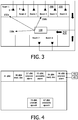
- FIG. 2 shows a more detailed embodiment of the feedback system 100 according to the present invention.
- the system 100 is shown together with a microphone 1 in a patient's room 200.
- a microphone 1, or similar device is placed in each patient's room 200, containing mainly a microphone 1 but also a microphone amplifier MIC AMP may be positioned locally.
- a computer with high computational power may host the feedback system 100, which 1) receives audio signal AUD from the patient's rooms 200 (only one room shown for clarity), 2) analyses the content and level of the possible noise, 3) determines whether the noise is avoidable or unavoidable, 4) determines whom the feedback should be delivered to and how, and 5) transmits the output to appropriate feedback devices 150.
- the feedback system may be integrated with a patient monitoring system PMS 210 shown schematically in the patient's room 200.
- the PMS may monitor physical condition and/or activity, and optionally also mental state, of the patient with appropriate medical monitoring devices available to the skilled person.
- the PMS may communicate with SC as indicated by arrow 25 i.e. the sound classifier is arranged for receiving patient specific information from the patient monitoring system PMS in the medical environment.
- the sound classifier CL may then use the said patient specific information for classification with respect to, at least, the degree of avoidability, the type of feedback signal to generate, and/or to who the signal should be transmitted.
- the present invention may also be integrated with a central monitoring and surveillance unit 250 of the hospital or medical environment being monitored as indicated schematically with arrows 22 and 24. Possibly, the unit 250 may give feedback signal FEED' to feedback devices 150 as indicated by arrow 23.
- the feedback signal FEED or FEED' there are shown various devices 150 that inform the designated personnel (mainly hospital staff, but also patients and their caretakers if necessary) of the contents and levels of the noise and the proposed actions.
- various feedback devices such as monitors at nursing stations and/or room entrances, bracelets giving tactile and/or visual response to the user, and handheld device (mobile phones etc.) are shown.
- the feedback system 100 is shown as a separate entity, it is contemplated that the present invention may readily be integrated together with, or as a part of, the central monitoring and surveillance unit 250 of the hospital or medical environment being monitored.
- the present invention may readily be integrated with, or as a part of, the patient monitoring system PMS 210.
- the present invention may readily be integrated together with, or as a part of, a feedback device 150, e.g. as a part of a mobile device/phone, having sufficient computational resources and communicative abilities for implementing the teaching of the present invention.
- FIG. 3 shows an embodiment of the feedback system 100 according to the present invention implemented in a hospital environment with different patient rooms 200 (numbered Room 1 to Room 8) shown in the layout of a medical department, each room 200 having a microphone 1 as shown. Also three different feedback devices 150 are shown receiving feedback signal from the system 100 as indicated by the shown arrows, e.g. feedback device 150a could be display device in Room 1, feedback device 150b could be a central display device for the medical department, and feedback device 150c could be handheld device carried by a medical staff member (not shown).
- feedback device 150a could be display device in Room 1
- feedback device 150b could be a central display device for the medical department
- feedback device 150c could be handheld device carried by a medical staff member (not shown).
- FIG. 4 shows a feedback example from the feedback system 100 providing an overview of sound level e.g. noise levels 40 and sound source e.g. noise sources 45 together with a classification of 'avoidable' or 'unavoidable' (abbreviated 'unavoid.').
- the layout of FIG. 4 is the same as in FIG. 3 .
- the feedback shown in FIG. 4 could for example be provided on a display 150b in FIG. 3 .
- FIG. 5 is a schematic system-chart representing an outline of the operations of a method, or a corresponding computer program product according to the present invention. The method or program comprising the steps of:
- the present invention relates to a medical feedback system 100 based on sound analysis in a medical environment.
- a sound scene analyzer SSA 10 being capable of analyzing and classifying an audio signal so as to obtain a list of one or more sound sources in the medical environment surrounding the patient
- a sound-level analyzer SLA 20 being capable of providing an indicator for perceived levels of corresponding sound from the list of sound sources
- a sound classifier SC 30 is arranged for classifying said list of one or more sound sources in a medical environment with respect to a degree of avoidability, and generating a corresponding feedback signal FEED 50 for appropriate action by medical personal, patients and/or visitors.
- the invention can be implemented by means of hardware, software, firmware or any combination of these.
- the invention or some of the features thereof can also be implemented as software running on one or more data processors and/or digital signal processors.
- the individual elements of an embodiment of the invention may be physically, functionally and logically implemented in any suitable way such as in a single unit, in a plurality of units or as part of separate functional units.
- the invention may be implemented in a single unit, or be both physically and functionally distributed between different units and processors.
- a single processor or other unit may fulfill the functions of several items recited in the claims.
- the mere fact that certain measures are recited in mutually different dependent claims does not indicate that a combination of these measures cannot be used to advantage.
- a computer program may be stored/distributed on a suitable medium, such as an optical storage medium or a solid-state medium supplied together with or as part of other hardware, but may also be distributed in other forms, such as via the Internet or other wired or wireless telecommunication systems.
Landscapes
- Health & Medical Sciences (AREA)
- Engineering & Computer Science (AREA)
- General Business, Economics & Management (AREA)
- Business, Economics & Management (AREA)
- General Health & Medical Sciences (AREA)
- Primary Health Care (AREA)
- Epidemiology (AREA)
- Medical Informatics (AREA)
- Biomedical Technology (AREA)
- Public Health (AREA)
- Otolaryngology (AREA)
- Physics & Mathematics (AREA)
- Acoustics & Sound (AREA)
- Signal Processing (AREA)
- Measuring And Recording Apparatus For Diagnosis (AREA)
- Medical Treatment And Welfare Office Work (AREA)
- Instructional Devices (AREA)
- Measurement Of The Respiration, Hearing Ability, Form, And Blood Characteristics Of Living Organisms (AREA)
Applications Claiming Priority (2)
| Application Number | Priority Date | Filing Date | Title |
|---|---|---|---|
| US201161547912P | 2011-10-17 | 2011-10-17 | |
| PCT/IB2012/055603 WO2013057652A2 (en) | 2011-10-17 | 2012-10-15 | A medical feedback system based on sound analysis in a medical environment |
Publications (2)
| Publication Number | Publication Date |
|---|---|
| EP2748811A2 EP2748811A2 (en) | 2014-07-02 |
| EP2748811B1 true EP2748811B1 (en) | 2017-05-17 |
Family
ID=47227990
Family Applications (1)
| Application Number | Title | Priority Date | Filing Date |
|---|---|---|---|
| EP12791560.1A Not-in-force EP2748811B1 (en) | 2011-10-17 | 2012-10-15 | A medical feedback system based on sound analysis in a medical environment |
Country Status (7)
| Country | Link |
|---|---|
| US (1) | US10080090B2 (enExample) |
| EP (1) | EP2748811B1 (enExample) |
| JP (1) | JP6158815B2 (enExample) |
| CN (1) | CN103875034B (enExample) |
| BR (1) | BR112014008951A2 (enExample) |
| IN (1) | IN2014CN02551A (enExample) |
| WO (1) | WO2013057652A2 (enExample) |
Families Citing this family (21)
| Publication number | Priority date | Publication date | Assignee | Title |
|---|---|---|---|---|
| US9124981B2 (en) * | 2012-11-14 | 2015-09-01 | Qualcomm Incorporated | Systems and methods for classification of audio environments |
| EP2787746A1 (en) | 2013-04-05 | 2014-10-08 | Koninklijke Philips N.V. | Apparatus and method for improving the audibility of specific sounds to a user |
| EP3063683B1 (en) | 2013-11-01 | 2022-06-01 | Koninklijke Philips N.V. | Apparatus and method for acoustic alarm detection and validation |
| US9396632B2 (en) * | 2014-12-05 | 2016-07-19 | Elwha Llc | Detection and classification of abnormal sounds |
| CN104575520A (zh) * | 2014-12-16 | 2015-04-29 | 中国农业大学 | 一种结合心理声学评价的声波监测装置及方法 |
| RU2714173C2 (ru) * | 2014-12-16 | 2020-02-12 | Конинклейке Филипс Н.В. | Мониторинг воздействия на пациента фактора окружающей среды |
| CN107111921A (zh) * | 2014-12-18 | 2017-08-29 | 皇家飞利浦有限公司 | 用于有效的可听警报设置的方法和设备 |
| EP3151535A1 (en) | 2015-09-29 | 2017-04-05 | Thomson Licensing | Plenoptic camera having an array of sensors for generating digital images and method of capturing an image using a plenoptic camera |
| EP3151534A1 (en) | 2015-09-29 | 2017-04-05 | Thomson Licensing | Method of refocusing images captured by a plenoptic camera and audio based refocusing image system |
| US10229573B1 (en) * | 2017-05-06 | 2019-03-12 | David Lawrie | Immediate alert for tracking movement via wireless tethered devices |
| CN108648748B (zh) * | 2018-03-30 | 2021-07-13 | 沈阳工业大学 | 医院噪声环境下的声学事件检测方法 |
| US10991381B2 (en) | 2018-04-09 | 2021-04-27 | Well Checked Systems International LLC | System and method for machine learning predictive maintenance through auditory detection on natural gas compressors |
| EP3582514B1 (en) * | 2018-06-14 | 2023-01-11 | Oticon A/s | Sound processing apparatus |
| US12138046B2 (en) | 2019-03-18 | 2024-11-12 | Cochlear Limited | System and method for tinnitus suppression |
| CN110415724A (zh) * | 2019-08-08 | 2019-11-05 | 中南大学湘雅二医院 | 报警数据的传输方法、装置、系统及计算机可读存储介质 |
| US11699422B2 (en) * | 2020-05-20 | 2023-07-11 | Carefusion 303, Inc. | Active adaptive noise and vibration control |
| JP7372210B2 (ja) * | 2020-06-03 | 2023-10-31 | ヤフー株式会社 | 情報処理装置、情報処理方法および情報処理プログラム |
| EP3945735A1 (en) * | 2020-07-30 | 2022-02-02 | Koninklijke Philips N.V. | Sound management in an operating room |
| US12444196B2 (en) | 2021-11-09 | 2025-10-14 | AvaSure, LLC | Predictive system for elopement detection |
| CN114023296B (zh) * | 2021-11-24 | 2024-10-29 | 中国航空工业集团公司上海航空测控技术研究所 | 环境噪声采集和分析测试系统 |
| DE102022104256A1 (de) | 2022-02-23 | 2023-08-24 | Drägerwerk AG & Co. KGaA | Verfahren sowie Steuereinheit zur Koordination der von unterschiedlichen Medizingeräten abgegebenen akustischen Signale |
Family Cites Families (10)
| Publication number | Priority date | Publication date | Assignee | Title |
|---|---|---|---|---|
| JP3350713B2 (ja) | 2000-08-15 | 2002-11-25 | 神戸大学長 | 騒音源の種類を特定する方法、その装置および媒体 |
| CN1531408A (zh) | 2001-04-23 | 2004-09-22 | 心脏网络公司 | 病人监视中传感器信号与主观信息的关联 |
| US7221260B2 (en) * | 2003-11-21 | 2007-05-22 | Honeywell International, Inc. | Multi-sensor fire detectors with audio sensors and systems thereof |
| US7315244B2 (en) * | 2004-07-14 | 2008-01-01 | Carmichel Eric L | Excessive noise level alerting device |
| US8323191B2 (en) | 2005-12-23 | 2012-12-04 | Koninklijke Philips Electronics N.V. | Stressor sensor and stress management system |
| US20070183604A1 (en) * | 2006-02-09 | 2007-08-09 | St-Infonox | Response to anomalous acoustic environments |
| US8706183B2 (en) * | 2007-06-28 | 2014-04-22 | University Of Pittsburgh-Of The Commonwealth System Of Higher Education | Electrode systems, devices and methods |
| US8515095B2 (en) * | 2007-10-04 | 2013-08-20 | Apple Inc. | Reducing annoyance by managing the acoustic noise produced by a device |
| US8824691B2 (en) * | 2008-02-01 | 2014-09-02 | Honeywell International Inc. | Apparatus and method for monitoring sound in a process system |
| WO2009153681A1 (en) * | 2008-06-17 | 2009-12-23 | Koninklijke Philips Electronics, N.V. | Acoustical patient monitoring using a sound classifier and a microphone |
-
2012
- 2012-10-15 IN IN2551CHN2014 patent/IN2014CN02551A/en unknown
- 2012-10-15 EP EP12791560.1A patent/EP2748811B1/en not_active Not-in-force
- 2012-10-15 WO PCT/IB2012/055603 patent/WO2013057652A2/en not_active Ceased
- 2012-10-15 BR BR112014008951A patent/BR112014008951A2/pt not_active Application Discontinuation
- 2012-10-15 CN CN201280050835.7A patent/CN103875034B/zh not_active Expired - Fee Related
- 2012-10-15 US US14/352,484 patent/US10080090B2/en active Active
- 2012-10-15 JP JP2014535223A patent/JP6158815B2/ja not_active Expired - Fee Related
Non-Patent Citations (2)
| Title |
|---|
| HUA BAO ET AL: "Psychoacoustic active noise control with ITU-R 468 noise weighting and its sound quality analysis", 2010 ANNUAL INTERNATIONAL CONFERENCE OF THE IEEE ENGINEERING IN MEDICINE AND BIOLOGY SOCIETY : (EMBC 2010) ; BUENOS AIRES, ARGENTINA, 31 AUGUST - 4 SEPTEMBER 2010, IEEE, PISCATAWAY, NJ, USA, 31 August 2010 (2010-08-31), pages 4323 - 4326, XP032108228, ISBN: 978-1-4244-4123-5, DOI: 10.1109/IEMBS.2010.5626197 * |
| MACKENZIE ET AL.: "Noise levels and noise sources in acute care hospital wards", BUILDING SERV. ENG. RES. TECHNOL., vol. 28, no. 2, 2007, pages 117 - 131, XP008161140, DOI: doi:10.1177/0143624406074468 * |
Also Published As
| Publication number | Publication date |
|---|---|
| JP6158815B2 (ja) | 2017-07-05 |
| US20140254808A1 (en) | 2014-09-11 |
| JP2014530438A (ja) | 2014-11-17 |
| IN2014CN02551A (enExample) | 2015-08-07 |
| US10080090B2 (en) | 2018-09-18 |
| EP2748811A2 (en) | 2014-07-02 |
| CN103875034B (zh) | 2018-03-09 |
| WO2013057652A2 (en) | 2013-04-25 |
| BR112014008951A2 (pt) | 2017-05-02 |
| WO2013057652A3 (en) | 2013-07-18 |
| CN103875034A (zh) | 2014-06-18 |
Similar Documents
| Publication | Publication Date | Title |
|---|---|---|
| US10080090B2 (en) | Medical feedback system based on sound analysis in a medical environment | |
| EP2744410B1 (en) | A medical monitoring system based on sound analysis in a medical environment | |
| JP5781926B2 (ja) | 音声分類器とマイクロホンを用いる音響患者モニタリング | |
| Park et al. | Analysis of the soundscape in an intensive care unit based on the annotation of an audio recording | |
| Brown et al. | The role of noise in clinical environments with particular reference to mental health care: A narrative review | |
| Smith et al. | Physiological effects of railway vibration and noise on sleep | |
| Dykstra et al. | Examining the relationship between speech intensity and self-rated communicative effectiveness in individuals with Parkinson's disease and hypophonia | |
| JP2021504070A (ja) | 患者の健康に関連する側面を監視するシステム、センサ、および患者の健康に関連する側面を監視する方法 | |
| US20180177432A1 (en) | Apparatus and method for detection of breathing abnormalities | |
| WO2017031936A1 (zh) | 健康监护电视 | |
| US20250235101A1 (en) | Passive assistive alerts using artificial intelligence assistants | |
| CN102770063A (zh) | 用于移动监视的生理信号质量分类方法及系统 | |
| EP3838127A1 (en) | Device, system and method for monitoring of a subject | |
| Beltrán et al. | Recognition of audible disruptive behavior from people with dementia | |
| Song | The Impact of Noise in Intensive Care Units on the Wellbeing of Healthcare Workers | |
| WO2016096630A1 (en) | Method and device for effective audible alarm settings | |
| CN114466298A (zh) | 基于多感官数据的声音调控装置及应用其的调控设备 | |
| Ziwei | The Impact of Noise in Intensive Care Units on the Wellbeing of Healthcare Workers | |
| JP7553108B2 (ja) | 転床情報提供システム | |
| Utami et al. | Soundscape characterization in an intensive care unit at a hospital in Yogyakarta, Indonesia | |
| Torres-Gaona et al. | A prospective controlled study for EEG records comparison between Scalp-EEG and Ear-EEG wearable device, for subsequent analysis by an artificial intelligence-based system: SERAS-EEG study | |
| JP2025112843A (ja) | 情報処理装置、情報処理方法及びプログラム | |
| Kalafata | Sound levels, noise source identification and perceptual analysis in an intensive care unit |
Legal Events
| Date | Code | Title | Description |
|---|---|---|---|
| PUAI | Public reference made under article 153(3) epc to a published international application that has entered the european phase |
Free format text: ORIGINAL CODE: 0009012 |
|
| 17P | Request for examination filed |
Effective date: 20140324 |
|
| AK | Designated contracting states |
Kind code of ref document: A2 Designated state(s): AL AT BE BG CH CY CZ DE DK EE ES FI FR GB GR HR HU IE IS IT LI LT LU LV MC MK MT NL NO PL PT RO RS SE SI SK SM TR |
|
| DAX | Request for extension of the european patent (deleted) | ||
| 17Q | First examination report despatched |
Effective date: 20150925 |
|
| REG | Reference to a national code |
Ref country code: DE Ref legal event code: R079 Ref document number: 602012032606 Country of ref document: DE Free format text: PREVIOUS MAIN CLASS: G10K0011160000 Ipc: G06F0019000000 |
|
| GRAP | Despatch of communication of intention to grant a patent |
Free format text: ORIGINAL CODE: EPIDOSNIGR1 |
|
| RIC1 | Information provided on ipc code assigned before grant |
Ipc: G06F 19/00 20110101AFI20161201BHEP Ipc: H04R 29/00 20060101ALI20161201BHEP |
|
| INTG | Intention to grant announced |
Effective date: 20161214 |
|
| GRAS | Grant fee paid |
Free format text: ORIGINAL CODE: EPIDOSNIGR3 |
|
| GRAA | (expected) grant |
Free format text: ORIGINAL CODE: 0009210 |
|
| AK | Designated contracting states |
Kind code of ref document: B1 Designated state(s): AL AT BE BG CH CY CZ DE DK EE ES FI FR GB GR HR HU IE IS IT LI LT LU LV MC MK MT NL NO PL PT RO RS SE SI SK SM TR |
|
| REG | Reference to a national code |
Ref country code: GB Ref legal event code: FG4D |
|
| REG | Reference to a national code |
Ref country code: CH Ref legal event code: EP |
|
| REG | Reference to a national code |
Ref country code: IE Ref legal event code: FG4D |
|
| REG | Reference to a national code |
Ref country code: AT Ref legal event code: REF Ref document number: 895076 Country of ref document: AT Kind code of ref document: T Effective date: 20170615 |
|
| REG | Reference to a national code |
Ref country code: DE Ref legal event code: R096 Ref document number: 602012032606 Country of ref document: DE |
|
| REG | Reference to a national code |
Ref country code: NL Ref legal event code: MP Effective date: 20170517 |
|
| REG | Reference to a national code |
Ref country code: LT Ref legal event code: MG4D |
|
| REG | Reference to a national code |
Ref country code: AT Ref legal event code: MK05 Ref document number: 895076 Country of ref document: AT Kind code of ref document: T Effective date: 20170517 |
|
| PG25 | Lapsed in a contracting state [announced via postgrant information from national office to epo] |
Ref country code: LT Free format text: LAPSE BECAUSE OF FAILURE TO SUBMIT A TRANSLATION OF THE DESCRIPTION OR TO PAY THE FEE WITHIN THE PRESCRIBED TIME-LIMIT Effective date: 20170517 Ref country code: FI Free format text: LAPSE BECAUSE OF FAILURE TO SUBMIT A TRANSLATION OF THE DESCRIPTION OR TO PAY THE FEE WITHIN THE PRESCRIBED TIME-LIMIT Effective date: 20170517 Ref country code: NO Free format text: LAPSE BECAUSE OF FAILURE TO SUBMIT A TRANSLATION OF THE DESCRIPTION OR TO PAY THE FEE WITHIN THE PRESCRIBED TIME-LIMIT Effective date: 20170817 Ref country code: GR Free format text: LAPSE BECAUSE OF FAILURE TO SUBMIT A TRANSLATION OF THE DESCRIPTION OR TO PAY THE FEE WITHIN THE PRESCRIBED TIME-LIMIT Effective date: 20170818 Ref country code: ES Free format text: LAPSE BECAUSE OF FAILURE TO SUBMIT A TRANSLATION OF THE DESCRIPTION OR TO PAY THE FEE WITHIN THE PRESCRIBED TIME-LIMIT Effective date: 20170517 Ref country code: AT Free format text: LAPSE BECAUSE OF FAILURE TO SUBMIT A TRANSLATION OF THE DESCRIPTION OR TO PAY THE FEE WITHIN THE PRESCRIBED TIME-LIMIT Effective date: 20170517 Ref country code: HR Free format text: LAPSE BECAUSE OF FAILURE TO SUBMIT A TRANSLATION OF THE DESCRIPTION OR TO PAY THE FEE WITHIN THE PRESCRIBED TIME-LIMIT Effective date: 20170517 |
|
| REG | Reference to a national code |
Ref country code: FR Ref legal event code: PLFP Year of fee payment: 6 |
|
| PG25 | Lapsed in a contracting state [announced via postgrant information from national office to epo] |
Ref country code: IS Free format text: LAPSE BECAUSE OF FAILURE TO SUBMIT A TRANSLATION OF THE DESCRIPTION OR TO PAY THE FEE WITHIN THE PRESCRIBED TIME-LIMIT Effective date: 20170917 Ref country code: RS Free format text: LAPSE BECAUSE OF FAILURE TO SUBMIT A TRANSLATION OF THE DESCRIPTION OR TO PAY THE FEE WITHIN THE PRESCRIBED TIME-LIMIT Effective date: 20170517 Ref country code: NL Free format text: LAPSE BECAUSE OF FAILURE TO SUBMIT A TRANSLATION OF THE DESCRIPTION OR TO PAY THE FEE WITHIN THE PRESCRIBED TIME-LIMIT Effective date: 20170517 Ref country code: BG Free format text: LAPSE BECAUSE OF FAILURE TO SUBMIT A TRANSLATION OF THE DESCRIPTION OR TO PAY THE FEE WITHIN THE PRESCRIBED TIME-LIMIT Effective date: 20170817 Ref country code: LV Free format text: LAPSE BECAUSE OF FAILURE TO SUBMIT A TRANSLATION OF THE DESCRIPTION OR TO PAY THE FEE WITHIN THE PRESCRIBED TIME-LIMIT Effective date: 20170517 Ref country code: SE Free format text: LAPSE BECAUSE OF FAILURE TO SUBMIT A TRANSLATION OF THE DESCRIPTION OR TO PAY THE FEE WITHIN THE PRESCRIBED TIME-LIMIT Effective date: 20170517 Ref country code: PL Free format text: LAPSE BECAUSE OF FAILURE TO SUBMIT A TRANSLATION OF THE DESCRIPTION OR TO PAY THE FEE WITHIN THE PRESCRIBED TIME-LIMIT Effective date: 20170517 |
|
| PG25 | Lapsed in a contracting state [announced via postgrant information from national office to epo] |
Ref country code: EE Free format text: LAPSE BECAUSE OF FAILURE TO SUBMIT A TRANSLATION OF THE DESCRIPTION OR TO PAY THE FEE WITHIN THE PRESCRIBED TIME-LIMIT Effective date: 20170517 Ref country code: SK Free format text: LAPSE BECAUSE OF FAILURE TO SUBMIT A TRANSLATION OF THE DESCRIPTION OR TO PAY THE FEE WITHIN THE PRESCRIBED TIME-LIMIT Effective date: 20170517 Ref country code: RO Free format text: LAPSE BECAUSE OF FAILURE TO SUBMIT A TRANSLATION OF THE DESCRIPTION OR TO PAY THE FEE WITHIN THE PRESCRIBED TIME-LIMIT Effective date: 20170517 Ref country code: CZ Free format text: LAPSE BECAUSE OF FAILURE TO SUBMIT A TRANSLATION OF THE DESCRIPTION OR TO PAY THE FEE WITHIN THE PRESCRIBED TIME-LIMIT Effective date: 20170517 Ref country code: DK Free format text: LAPSE BECAUSE OF FAILURE TO SUBMIT A TRANSLATION OF THE DESCRIPTION OR TO PAY THE FEE WITHIN THE PRESCRIBED TIME-LIMIT Effective date: 20170517 |
|
| REG | Reference to a national code |
Ref country code: DE Ref legal event code: R097 Ref document number: 602012032606 Country of ref document: DE |
|
| PG25 | Lapsed in a contracting state [announced via postgrant information from national office to epo] |
Ref country code: SM Free format text: LAPSE BECAUSE OF FAILURE TO SUBMIT A TRANSLATION OF THE DESCRIPTION OR TO PAY THE FEE WITHIN THE PRESCRIBED TIME-LIMIT Effective date: 20170517 Ref country code: IT Free format text: LAPSE BECAUSE OF FAILURE TO SUBMIT A TRANSLATION OF THE DESCRIPTION OR TO PAY THE FEE WITHIN THE PRESCRIBED TIME-LIMIT Effective date: 20170517 |
|
| PLBE | No opposition filed within time limit |
Free format text: ORIGINAL CODE: 0009261 |
|
| STAA | Information on the status of an ep patent application or granted ep patent |
Free format text: STATUS: NO OPPOSITION FILED WITHIN TIME LIMIT |
|
| 26N | No opposition filed |
Effective date: 20180220 |
|
| PG25 | Lapsed in a contracting state [announced via postgrant information from national office to epo] |
Ref country code: MC Free format text: LAPSE BECAUSE OF FAILURE TO SUBMIT A TRANSLATION OF THE DESCRIPTION OR TO PAY THE FEE WITHIN THE PRESCRIBED TIME-LIMIT Effective date: 20170517 Ref country code: SI Free format text: LAPSE BECAUSE OF FAILURE TO SUBMIT A TRANSLATION OF THE DESCRIPTION OR TO PAY THE FEE WITHIN THE PRESCRIBED TIME-LIMIT Effective date: 20170517 |
|
| REG | Reference to a national code |
Ref country code: CH Ref legal event code: PL |
|
| REG | Reference to a national code |
Ref country code: IE Ref legal event code: MM4A |
|
| PG25 | Lapsed in a contracting state [announced via postgrant information from national office to epo] |
Ref country code: CH Free format text: LAPSE BECAUSE OF NON-PAYMENT OF DUE FEES Effective date: 20171031 Ref country code: LI Free format text: LAPSE BECAUSE OF NON-PAYMENT OF DUE FEES Effective date: 20171031 Ref country code: LU Free format text: LAPSE BECAUSE OF NON-PAYMENT OF DUE FEES Effective date: 20171015 |
|
| REG | Reference to a national code |
Ref country code: BE Ref legal event code: MM Effective date: 20171031 |
|
| PG25 | Lapsed in a contracting state [announced via postgrant information from national office to epo] |
Ref country code: BE Free format text: LAPSE BECAUSE OF NON-PAYMENT OF DUE FEES Effective date: 20171031 |
|
| PG25 | Lapsed in a contracting state [announced via postgrant information from national office to epo] |
Ref country code: MT Free format text: LAPSE BECAUSE OF NON-PAYMENT OF DUE FEES Effective date: 20171015 |
|
| REG | Reference to a national code |
Ref country code: FR Ref legal event code: PLFP Year of fee payment: 7 |
|
| PG25 | Lapsed in a contracting state [announced via postgrant information from national office to epo] |
Ref country code: IE Free format text: LAPSE BECAUSE OF NON-PAYMENT OF DUE FEES Effective date: 20171015 |
|
| REG | Reference to a national code |
Ref country code: DE Ref legal event code: R079 Ref document number: 602012032606 Country of ref document: DE Free format text: PREVIOUS MAIN CLASS: G06F0019000000 Ipc: G16Z0099000000 |
|
| PG25 | Lapsed in a contracting state [announced via postgrant information from national office to epo] |
Ref country code: HU Free format text: LAPSE BECAUSE OF FAILURE TO SUBMIT A TRANSLATION OF THE DESCRIPTION OR TO PAY THE FEE WITHIN THE PRESCRIBED TIME-LIMIT; INVALID AB INITIO Effective date: 20121015 |
|
| PG25 | Lapsed in a contracting state [announced via postgrant information from national office to epo] |
Ref country code: CY Free format text: LAPSE BECAUSE OF NON-PAYMENT OF DUE FEES Effective date: 20170517 |
|
| PG25 | Lapsed in a contracting state [announced via postgrant information from national office to epo] |
Ref country code: MK Free format text: LAPSE BECAUSE OF FAILURE TO SUBMIT A TRANSLATION OF THE DESCRIPTION OR TO PAY THE FEE WITHIN THE PRESCRIBED TIME-LIMIT Effective date: 20170517 |
|
| PG25 | Lapsed in a contracting state [announced via postgrant information from national office to epo] |
Ref country code: TR Free format text: LAPSE BECAUSE OF FAILURE TO SUBMIT A TRANSLATION OF THE DESCRIPTION OR TO PAY THE FEE WITHIN THE PRESCRIBED TIME-LIMIT Effective date: 20170517 |
|
| PG25 | Lapsed in a contracting state [announced via postgrant information from national office to epo] |
Ref country code: PT Free format text: LAPSE BECAUSE OF FAILURE TO SUBMIT A TRANSLATION OF THE DESCRIPTION OR TO PAY THE FEE WITHIN THE PRESCRIBED TIME-LIMIT Effective date: 20170517 |
|
| PG25 | Lapsed in a contracting state [announced via postgrant information from national office to epo] |
Ref country code: AL Free format text: LAPSE BECAUSE OF FAILURE TO SUBMIT A TRANSLATION OF THE DESCRIPTION OR TO PAY THE FEE WITHIN THE PRESCRIBED TIME-LIMIT Effective date: 20170517 |
|
| PGFP | Annual fee paid to national office [announced via postgrant information from national office to epo] |
Ref country code: GB Payment date: 20231024 Year of fee payment: 12 |
|
| PGFP | Annual fee paid to national office [announced via postgrant information from national office to epo] |
Ref country code: FR Payment date: 20231026 Year of fee payment: 12 Ref country code: DE Payment date: 20231027 Year of fee payment: 12 |
|
| REG | Reference to a national code |
Ref country code: DE Ref legal event code: R119 Ref document number: 602012032606 Country of ref document: DE |
|
| GBPC | Gb: european patent ceased through non-payment of renewal fee |
Effective date: 20241015 |
|
| PG25 | Lapsed in a contracting state [announced via postgrant information from national office to epo] |
Ref country code: DE Free format text: LAPSE BECAUSE OF NON-PAYMENT OF DUE FEES Effective date: 20250501 |
|
| PG25 | Lapsed in a contracting state [announced via postgrant information from national office to epo] |
Ref country code: GB Free format text: LAPSE BECAUSE OF NON-PAYMENT OF DUE FEES Effective date: 20241015 |
|
| PG25 | Lapsed in a contracting state [announced via postgrant information from national office to epo] |
Ref country code: FR Free format text: LAPSE BECAUSE OF NON-PAYMENT OF DUE FEES Effective date: 20241031 |