EP2747653B1 - Positronenemissionstomographiesysteme für mammografiegeräte sowie relevante vorrichtungen und verfahren - Google Patents
Positronenemissionstomographiesysteme für mammografiegeräte sowie relevante vorrichtungen und verfahren Download PDFInfo
- Publication number
- EP2747653B1 EP2747653B1 EP12787245.5A EP12787245A EP2747653B1 EP 2747653 B1 EP2747653 B1 EP 2747653B1 EP 12787245 A EP12787245 A EP 12787245A EP 2747653 B1 EP2747653 B1 EP 2747653B1
- Authority
- EP
- European Patent Office
- Prior art keywords
- pet
- panels
- mammography
- detection
- pet system
- Prior art date
- Legal status (The legal status is an assumption and is not a legal conclusion. Google has not performed a legal analysis and makes no representation as to the accuracy of the status listed.)
- Active
Links
Images

Classifications
-
- A—HUMAN NECESSITIES
- A61—MEDICAL OR VETERINARY SCIENCE; HYGIENE
- A61B—DIAGNOSIS; SURGERY; IDENTIFICATION
- A61B6/00—Apparatus or devices for radiation diagnosis; Apparatus or devices for radiation diagnosis combined with radiation therapy equipment
- A61B6/44—Constructional features of apparatus for radiation diagnosis
- A61B6/4411—Constructional features of apparatus for radiation diagnosis the apparatus being modular
-
- A—HUMAN NECESSITIES
- A61—MEDICAL OR VETERINARY SCIENCE; HYGIENE
- A61B—DIAGNOSIS; SURGERY; IDENTIFICATION
- A61B6/00—Apparatus or devices for radiation diagnosis; Apparatus or devices for radiation diagnosis combined with radiation therapy equipment
- A61B6/42—Arrangements for detecting radiation specially adapted for radiation diagnosis
- A61B6/4275—Arrangements for detecting radiation specially adapted for radiation diagnosis using a detector unit almost surrounding the patient, e.g. more than 180°
-
- A—HUMAN NECESSITIES
- A61—MEDICAL OR VETERINARY SCIENCE; HYGIENE
- A61B—DIAGNOSIS; SURGERY; IDENTIFICATION
- A61B6/00—Apparatus or devices for radiation diagnosis; Apparatus or devices for radiation diagnosis combined with radiation therapy equipment
- A61B6/02—Arrangements for diagnosis sequentially in different planes; Stereoscopic radiation diagnosis
- A61B6/03—Computed tomography [CT]
- A61B6/037—Emission tomography
-
- A—HUMAN NECESSITIES
- A61—MEDICAL OR VETERINARY SCIENCE; HYGIENE
- A61B—DIAGNOSIS; SURGERY; IDENTIFICATION
- A61B6/00—Apparatus or devices for radiation diagnosis; Apparatus or devices for radiation diagnosis combined with radiation therapy equipment
- A61B6/04—Positioning of patients; Tiltable beds or the like
- A61B6/0407—Supports, e.g. tables or beds, for the body or parts of the body
- A61B6/0414—Supports, e.g. tables or beds, for the body or parts of the body with compression means
-
- A—HUMAN NECESSITIES
- A61—MEDICAL OR VETERINARY SCIENCE; HYGIENE
- A61B—DIAGNOSIS; SURGERY; IDENTIFICATION
- A61B6/00—Apparatus or devices for radiation diagnosis; Apparatus or devices for radiation diagnosis combined with radiation therapy equipment
- A61B6/42—Arrangements for detecting radiation specially adapted for radiation diagnosis
- A61B6/4208—Arrangements for detecting radiation specially adapted for radiation diagnosis characterised by using a particular type of detector
- A61B6/4233—Arrangements for detecting radiation specially adapted for radiation diagnosis characterised by using a particular type of detector using matrix detectors
-
- A—HUMAN NECESSITIES
- A61—MEDICAL OR VETERINARY SCIENCE; HYGIENE
- A61B—DIAGNOSIS; SURGERY; IDENTIFICATION
- A61B6/00—Apparatus or devices for radiation diagnosis; Apparatus or devices for radiation diagnosis combined with radiation therapy equipment
- A61B6/44—Constructional features of apparatus for radiation diagnosis
- A61B6/4417—Constructional features of apparatus for radiation diagnosis related to combined acquisition of different diagnostic modalities
-
- A—HUMAN NECESSITIES
- A61—MEDICAL OR VETERINARY SCIENCE; HYGIENE
- A61B—DIAGNOSIS; SURGERY; IDENTIFICATION
- A61B6/00—Apparatus or devices for radiation diagnosis; Apparatus or devices for radiation diagnosis combined with radiation therapy equipment
- A61B6/46—Arrangements for interfacing with the operator or the patient
- A61B6/461—Displaying means of special interest
-
- A—HUMAN NECESSITIES
- A61—MEDICAL OR VETERINARY SCIENCE; HYGIENE
- A61B—DIAGNOSIS; SURGERY; IDENTIFICATION
- A61B6/00—Apparatus or devices for radiation diagnosis; Apparatus or devices for radiation diagnosis combined with radiation therapy equipment
- A61B6/50—Apparatus or devices for radiation diagnosis; Apparatus or devices for radiation diagnosis combined with radiation therapy equipment specially adapted for specific body parts; specially adapted for specific clinical applications
- A61B6/502—Apparatus or devices for radiation diagnosis; Apparatus or devices for radiation diagnosis combined with radiation therapy equipment specially adapted for specific body parts; specially adapted for specific clinical applications for diagnosis of breast, i.e. mammography
-
- A—HUMAN NECESSITIES
- A61—MEDICAL OR VETERINARY SCIENCE; HYGIENE
- A61B—DIAGNOSIS; SURGERY; IDENTIFICATION
- A61B6/00—Apparatus or devices for radiation diagnosis; Apparatus or devices for radiation diagnosis combined with radiation therapy equipment
- A61B6/52—Devices using data or image processing specially adapted for radiation diagnosis
- A61B6/5211—Devices using data or image processing specially adapted for radiation diagnosis involving processing of medical diagnostic data
- A61B6/5229—Devices using data or image processing specially adapted for radiation diagnosis involving processing of medical diagnostic data combining image data of a patient, e.g. combining a functional image with an anatomical image
- A61B6/5235—Devices using data or image processing specially adapted for radiation diagnosis involving processing of medical diagnostic data combining image data of a patient, e.g. combining a functional image with an anatomical image combining images from the same or different ionising radiation imaging techniques, e.g. PET and CT
-
- A—HUMAN NECESSITIES
- A61—MEDICAL OR VETERINARY SCIENCE; HYGIENE
- A61B—DIAGNOSIS; SURGERY; IDENTIFICATION
- A61B90/00—Instruments, implements or accessories specially adapted for surgery or diagnosis and not covered by any of the groups A61B1/00 - A61B50/00, e.g. for luxation treatment or for protecting wound edges
- A61B90/10—Instruments, implements or accessories specially adapted for surgery or diagnosis and not covered by any of the groups A61B1/00 - A61B50/00, e.g. for luxation treatment or for protecting wound edges for stereotaxic surgery, e.g. frame-based stereotaxis
- A61B90/14—Fixators for body parts, e.g. skull clamps; Constructional details of fixators, e.g. pins
- A61B90/17—Fixators for body parts, e.g. skull clamps; Constructional details of fixators, e.g. pins for soft tissue, e.g. breast-holding devices
-
- A—HUMAN NECESSITIES
- A61—MEDICAL OR VETERINARY SCIENCE; HYGIENE
- A61B—DIAGNOSIS; SURGERY; IDENTIFICATION
- A61B17/00—Surgical instruments, devices or methods
- A61B17/34—Trocars; Puncturing needles
- A61B17/3403—Needle locating or guiding means
- A61B2017/3405—Needle locating or guiding means using mechanical guide means
- A61B2017/3411—Needle locating or guiding means using mechanical guide means with a plurality of holes, e.g. holes in matrix arrangement
-
- A—HUMAN NECESSITIES
- A61—MEDICAL OR VETERINARY SCIENCE; HYGIENE
- A61B—DIAGNOSIS; SURGERY; IDENTIFICATION
- A61B6/00—Apparatus or devices for radiation diagnosis; Apparatus or devices for radiation diagnosis combined with radiation therapy equipment
- A61B6/50—Apparatus or devices for radiation diagnosis; Apparatus or devices for radiation diagnosis combined with radiation therapy equipment specially adapted for specific body parts; specially adapted for specific clinical applications
- A61B6/508—Apparatus or devices for radiation diagnosis; Apparatus or devices for radiation diagnosis combined with radiation therapy equipment specially adapted for specific body parts; specially adapted for specific clinical applications for non-human patients
Definitions
- the present technology is generally directed to positron emission tomography systems for use with mammography machines and associated devices and methods. More specifically, some embodiments are directed to systems providing high resolution images, quantitative image accuracy, dynamic imaging, and/or biopsy guidance.
- Breast cancer is a common malignancy among women. Early detection by screening mammography and an increasing array of treatment options have recently been successful in reducing breast cancer mortality. As both detection and systemic treatment of breast cancer continue to advance, lesion characterization is becoming increasingly important for determining appropriate therapy. Selection of the correct therapy can maximize treatment efficacy while minimizing treatment-related morbidity. There is an important need to characterize early breast cancers, especially their aggressiveness, to match the intensity of the treatment approach to the likelihood the tumor will recur or spread systemically. Furthermore, characterizing tumor biology helps identify appropriate targets for systemic therapy. Additionally, early response assessment can identify treatments likely to be ineffective, and direct alternate choices for treatment.
- PET positron emission tomography
- a multi modality imaging system contains an X-ray imaging subsystem and a nuclear medicine imaging subsystem.
- the X-ray imaging subsystem may be a tomosynthesis subsystem.
- the system may be used for mammography imaging, such that the X-ray imaging subsystem and the nuclear medicine imaging subsystem are adapted to image a breast compressed by a breast compression paddle.
- WO2007/010534 A2 discloses imaging protocols. Protocols for radioimaging an event or disorder are provided.
- An exemplary protocol comprises a method of radioimaging a myocardial perfusion, the method comprising in sequence: (a) administering to a subject about 3mCi TI201 thallous chloride; (b) allowing said subject to rest; (c) radioimaging a heart of said subject; (d) subjecting said subject to a physical stress; (e) administering to said subject at a peak of said physical stress about 20-30 mCi Tc99m sestamibi; and (f) radioimaging said heart of said subject, thereby radioimaging a myocardial perfusion.
- a PET system includes a tissue platform and one or more PET detection panels removably coupled to the mammography machine.
- the panels are configured to generally surround the tissue platform and obtain an approximately 360 degree data sample of tissue.
- the system can further include an output device configured to output the data sample for image reconstruction.
- the system is configured to provide high resolution images, quantitative image accuracy, dynamic imaging, and/or biopsy guidance.
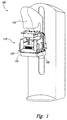
- FIG. 1 is an isometric view of a mammography machine 100 having a PET system 110 incorporated therein and configured in accordance with embodiments of the technology.
- the mammography machine 100 can be any type of mammography device known in the art and can include features typical of mammography devices.
- the mammography machine 100 includes an x-ray tube housing 102 and an x-ray detector platform 104.
- a patient can position her breast (represented by compressed saline bag 120) between the platform 104 and a compression paddle configured to compress the breast tissue against the platform 104 for improved imaging.
- the PET system 110 can be integrated with other standard or tomosynthesis mammography devices.
- the PET system 110 is electrically integrated with the mammography machine 100, and the mammography machine 100 and PET system 110 can provide integrated data output for imaging or other processing.
- the PET system 110 can be removably or permanently coupled to the mammography machine 100 or can be manufactured as an integral component of the mammography machine 100.
- the PET system 110 is positioned on the platform 104.
- the PET system 110 can be attached to the mammography machine at one or more rails 105 traditionally used to attach anti-scatter grids and/or magnification platforms.
- the PET system 110 can be configured to fit in an existing mammography machine 100 to form a dual-modality unit within the footprint of a traditional mammography suite.
- the PET system 110 utilizes a nuclear medicine imaging technique that produces a three-dimensional image or picture of functional processes in the body.
- the system 110 detects pairs of annihilation photons emitted indirectly by a positron-emitting radionuclide (tracer), which is introduced into the body on a biologically active molecule.
- a positron-emitting radionuclide tracer
- Three-dimensional images of tracer concentration within the body are then constructed by computer analysis.
- the three-dimensional imaging is accomplished with the aid of an X-ray scan performed on the patient by the mammography machine (or other device, such as tomosynthesis) during the same session.
- the concentrations of tracer imaged provide information related to the biological target of the tracer.
- the radiotracer 18-F-fluorodeoxyglucose (FDG) reveals information about tissue metabolic activity (representative of the possibility of the presence of cancer).
- the biologically active molecule chosen for PET is 18-F-fluorodeoxyglucse (FDG), an analogue of glucose.
- FDG and other PET tracers can be used to characterize breast cancer and measure response to treatment. Primary tumor uptake of FDG can be predictive of survival and response.
- serial FDG analysis can be effective in measuring response to systemic therapy, including early in the course of therapy.
- Tracers other than FDG can be used to characterize breast cancer and identify targets for systemic treatment. For example, using 18-F-fluoroestradiol, a user can perform an in vivo assessment of estrogen receptor expression and function, which predicts response to endocrine therapy and early assessment of response.
- PET tracers can be used to assess angiogenesis, cell proliferation, epidermal growth factor receptor-2 (ErbB-2 or HER-2) expression, and apoptosis, and offer new methods for evaluating and characterizing breast carcinoma.
- many other radiotracers can be used by the PET system 110 to image the tissue concentration of molecules of interest. Unlike in vitro assays, performed on small tissue samples, PET imaging with targeted agents can allow in vivo assessment of target expression and distribution within the tumor.
- the PET system 110 can be used to provide a quantitative assessment of response to systemic therapy.
- complete tomographic data sampling and quantitative imaging can be accomplished in an imaging volume appropriate for a compressed breast by positioning PET detector panels substantially around the breast.
- FIG. 2A is an isometric view of the PET system 110 arranged in an uncompressed configuration in accordance with embodiments of the technology.
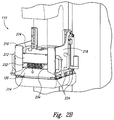
- Figure 2B is an isometric view of the PET system 110 arranged in a compressed configuration in accordance with embodiments of the technology.
- the PET system 110 comprises a top detector panel 212, a bottom detector panel 214, and first and second side detector panels 216, 218 positioned generally orthogonal to the top and bottom panels.
- the top and bottom panels 212, 214 have scanning dimensions of 20x15cm and the side panels 216, 218 have scanning dimensions of 10x15 cm.
- the PET system 110 comprises shapes or configurations other than top, bottom, and side panels.
- the PET system 110 comprises a cylindrical or partially cylindrical shape configured to radially surround a breast.
- the PET system 110 can comprise other shapes (e.g., a square, clamshell, etc.) allowing for a scan of approximately 360 degrees (or a "ring") around the breast 120.
- the panels 212-218 comprise flat panel detectors constructed from scintillation crystals and position-sensitive photo-sensors or photomultiplier tubes.
- the scintillation crystals can be optimized to provide the desired spatial sampling and gamma ray absorption sensitivity.
- the detectors can comprise one or more layers of crystals, wherein different layers can comprise the same or different crystal lengths or widths. These crystal dimensions may also vary within an individual layer.
- crystals in the top and bottom panels 214, 216 have crystal lengths of approximately 10-20 mm, while crystals in the side panels have crystal lengths of approximately 10, 20, 30, 40, or 50 mm.
- different crystal lengths can be selected to normalize imaging sensitivity.
- the crystals can comprise lutetium oxyorthosilicate or other suitable materials.
- solid-state (silicon) photomultipliers are used in place of position-sensitive photomultiplier tubes.
- the breast 120 can be held in place or immobilized by a superior immobilization panel 232 and an inferior immobilization panel 234.
- the superior and inferior panels 232, 234 can be part of the mammography machine, part of the PET system 110, or separate components altogether.
- the breast 120 need not be compressed for PET system 110 operation, so the superior panel 232 can be relatively lightweight and can stay in place for several (e.g., three to five) minutes without causing the patient discomfort.
- the breast 120 can be immobilized by the top and bottom panels 214, 216 and the superior and inferior panels 232, 234 can be absent.
- the top panel 214 can be lowered from an open configuration ( Figure 2A ) to a compressed configuration ( Figure 2B ) where the top panel 214 is adjacent to the breast 120 or adjacent to the superior immobilization panel 232.
- the panels 212-218 can include handles 224 configured to allow an operator to lift and place the panels in position for imaging.
- the PET imaging is performed either before or after the mammography imaging, with the detector panels 212-218 inserted or removed as appropriate, while the immobilization panels 232, 234 can keep the patient in the same position for both types of imaging.
- the immobilization panels 232, 234 can inhibit patient motion between mammogram and PET imaging.
- the PET and mammogram imaging are done at different times. While the illustrated embodiment includes handles 224 for mechanical placement by an operator, in further embodiments the panels 212-218 can be placed by machine operation. In some embodiments, each of the detection panels 212-218 can be placed individually on the mammography machine prior to use. In further embodiments, one or more of the detection panels 212 are coupled together during placement on the mammography machine.
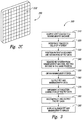
- FIG. 2C is an isometric view of a biopsy grid 250 configured for use with the PET system 110.
- one more of the detection panels include or are interchangeable with the biopsy guidance grid 250.
- the biopsy guidance grid 250 can be used to guide a biopsy needle based on imaging results.
- the imaging results can indicate a particular portion of a tumor that should be extracted for further evaluation.
- a biopsy needle can enter an exact position of the breast 120 by aligning with and traversing through a particular aperture 252 in the grid 250.
- the biopsy grid 250 can be used in conjunction with an x-ray mammography machine.
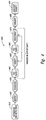
- FIG. 3 is a block diagram illustrating a method 300 of using the PET system.
- the method 300 includes coupling a PET system to a mammography or tomosynthesis machine, 310.
- the PET system can be removably coupled to an existing mammography machine, and does not necessarily require a dedicated machine.
- the method 300 includes introducing a radiotracer, such as FDG, to cells of interest 320 (e.g., breast cells).
- the tracer can be introduced to the patient in advance of imaging or during imaging.
- the method 300 further includes positioning a patient in the PET system and obtaining a ring of PET data from the breast 330.
- the approximately 360 degree "ring" of data can be obtained from an arrangement of PET panels that surround or substantially surround the breast tissue.
- only a partial "ring" of data can be obtained.
- the data is obtained as a function of time, so a dynamic "movie" of tracer uptake can be created.
- the method 300 can further include removing the PET system from the mammography or tomosynthesis machine, while keeping the patient in the same position 340.
- the method 300 can include obtaining mammography or tomosynthesis data 350.
- the PET and mammography data can be obtained in the opposite order, or only one type of data can be collected.
- the PET and mammography or tomosynthesis data are output to a processing system 360.
- the processing system can be integral to or externally coupled to or in communication with the PET system and/or mammography machine.
- the processing system can measure the amount of tracer uptake and/or prepare the PET data for useful output.
- the PET system 110 can utilize high-speed readout electronics (e.g., having count rate capabilities at or above 800 kcps). With high count-rate capability, the PET system 110 can image higher injected tracer doses with reduced imaging time and/or higher image statistics.
- Attenuation correction can be implemented on the PET data 370.
- Accurate attenuation correction is possible on a dual modality PET/mammography system by relying on the constraints that materials behave like water at 511 KeV, and that breast geometry can be used to estimate attenuation. More specifically, a user can utilize the known geometry of the mammogram acquisition, which compresses breast tissue between parallel plates with a known separation. Although photon absorption varies strongly by tissue type at the x-ray mammography energies of 25 to 49 kVp, at the PET photon energy of 511 keV, all soft tissues can allow for essentially identical absorption.
- the 511 keV attenuation image can thus be built from the three components: the outline of the compressed tissue, the constant thickness of the tissue, and the attenuation of soft tissue at 511 keV.
- a three-dimensional attenuation map that characterizes spatially variant breast tissue attenuation coefficients at 511 keV can be measured with x-ray tomosynthesis methods, and this can be used for PET attenuation correction.
- the outline of the compressed tissue can be obtained from the mammogram acquisition and/or the PET image reconstructed without attenuation correction.
- Second-order corrections can compensate for geometrical distortion from one beam geometry, distortion of the compression paddle, and embodiments where the x-ray thickness is less than the separation of the top and bottom PET detection panels.
- improved accuracy can be achieved through the use of two sequential mammogram acquisitions at different energies, e.g. 25 and 49 kVp.
- PET detector proximity in the system results in high geometric sensitivity, but also in oblique lines of response (LOR) that can cause event mispositioning due to parallax if depth-of-interaction (DOI) is not known.
- LOR oblique lines of response
- Statistics-based event positioning in monolithic crystals can provide high spatial resolution, including DOI, with resolution improving for thinner crystals.
- DOI resolution improving for thinner crystals.
- Monte Carlo simulation a user can estimate sensitivity and LOR mispositioning due to lack of DOI. Photon sensitivity, scatter fraction (SF), and parallax error can be studied as a function of crystal thickness.
- the method 300 further includes reconstructing and outputting the corrected PET data 380.
- the method 300 can also include displaying aligned PET and mammography images 390.
- the PET and mammography images can be displayed together on a single output (e.g., a monitor). In further embodiments, only one of the PET or mammography images is displayed.
- the PET system can provide high spatial resolution images.
- the PET system 110 can utilize a high-resolution and high-sensitivity detector geometry that enables quantitative PET imaging.
- the PET system can provide a spatial resolution of 1-4 mm, and can achieve quantitative accuracy for objects larger than approximately 5 mm. In other embodiments, other spatial resolutions are achieved.
- further treatment or evaluation tests can be implemented. For example, additional imaging can be performed or a biopsy can be taken (e.g., using the biopsy guidance system described above). In several embodiments, a biopsy can be facilitated by removal of one or more of the PET detector panels.
- FIG. 4 is a block diagram illustrating a method 400 of implementing serial imaging using the PET system.
- serial imaging can be facilitated by comparing the alignment of the mammography or tomosynthesis images acquired in serial scans. This alignment information can then be used to align the serial PET images.
- the PET system 110 can be used after the presence of cancer has been confirmed to evaluate response to therapy, e.g., in the neoadjuvant setting.
- the method 400 can include screening and detecting cancer or other disease 410. This may include a biopsy 420 to make a definitive determination of cancer type.
- a "window of opportunity" is the time (typically a few weeks or months) between a confirmed diagnosis 430 and breast cancer surgery 480 and/or adjuvant therapy 490.
- the patient can undergo FDG PET at two or more time points during the course of treatment (e.g., estrogen-inhibiting therapies).
- a pre-therapy scan 440 serves as a baseline.
- a post-therapy PET 460 scan is performed at a later time points during or after the course of therapy 450.
- serial evaluations demonstrate a significant difference between responders and non-responders 470, and show that tumors responding to neoadjuvant chemotherapy typically demonstrate a decline in tumor FDG uptake at mid-therapy compared to pre-therapy.
- PET can accordingly be an early predictor of therapy response.
- Serial PET imaging may therefore serve as not only a clinically useful classifier of response, but may also be a biomarker for improved survival. More specifically, there is an important need to characterize early breast cancers, especially their aggressiveness, to match the intensity of the treatment approach to the likelihood the tumor will recur or spread systemically. Furthermore, characterizing tumor biology can help identify appropriate targets for systemic therapy. Finally, early response assessment can identify treatments likely to be ineffective, and direct alternate choices for treatment.
- the systems and methods described herein offer several advantages over traditional mammography systems.
- the application of PET with FDG to smaller tumors and early stage disease has been limited due to the limitations of whole body scanners for identifying and quantifying tracer uptake in such lesions.
- the PET systems disclosed herein can evaluate breast cancer characteristics that can guide selection of effective therapies, eliminate ineffective therapies, and measure response to therapies via absolute metrics. This can improve patient outcomes and decrease treatment costs.
- the PET systems disclosed herein further provide quantitative accuracy, as the PET images represent an absolute measure of the concentration of PET tracer injection in the tumor (or anywhere in the image).
- Another advantage of the PET systems disclosed herein is the biopsy guidance capability. Using biopsy guidance in conjunction with high-resolution PET image improves biopsy location accuracy.
- the PET systems disclosed herein can further include registration with anatomical imaging.
- the PET image can be spatially registered and fused with an x-ray image (e.g., a standard planar mammogram or pseudo-3D tomosynthesis).
- the PET systems can further include dynamic imaging, or acquiring a PET image as a function of time, so a user can make a "movie" of the PET tracer distribution from the injection time point onward.
- Traditional PET tracers are injected, and a practitioner must wait for systematic distribution throughout the patient, when a 'snapshot' of the tracer distribution at the time of image acquisition is acquired. There are diagnostic advantages to being able to measure the course of the tracer distribution over time (dynamic imaging).
- the systems disclosed herein can have a small footprint and be used in a standard size mammography suite without requiring extensive reworking of existing mammography machines. Further, the systems can be useful in the clinical trial setting, as well as by oncology groups, pharmaceutical companies, etc to evaluate treatment effectiveness. The systems could further be useful in clinical practice to assess response to therapy for individual breast cancer patients to help select the optimal therapy for each patient.
- the PET system can be portable and modular.
- the technology is described with reference to breast imaging, but can be used with other body parts (e.g., limbs, hands, or feet) or to scan small animals. Further, the technology can be used to detect or evaluate diseases other than cancer, such as arthritis or other diseases. Further, certain aspects of the new technology described in the context of particular embodiments may be combined or eliminated in other embodiments. Moreover, while advantages associated with certain embodiments of the technology have been described in the context of those embodiments, other embodiments may also exhibit such advantages, and not all embodiments need necessarily exhibit such advantages to fall within the scope of the technology. Accordingly, the disclosure and associated technology can encompass other embodiments not expressly shown or described herein. Thus, the disclosure is not limited except as by the appended claims.
Landscapes
- Health & Medical Sciences (AREA)
- Life Sciences & Earth Sciences (AREA)
- Engineering & Computer Science (AREA)
- Medical Informatics (AREA)
- Surgery (AREA)
- Heart & Thoracic Surgery (AREA)
- General Health & Medical Sciences (AREA)
- Nuclear Medicine, Radiotherapy & Molecular Imaging (AREA)
- Veterinary Medicine (AREA)
- Pathology (AREA)
- Public Health (AREA)
- Biomedical Technology (AREA)
- Physics & Mathematics (AREA)
- Molecular Biology (AREA)
- Animal Behavior & Ethology (AREA)
- Biophysics (AREA)
- High Energy & Nuclear Physics (AREA)
- Radiology & Medical Imaging (AREA)
- Optics & Photonics (AREA)
- Oral & Maxillofacial Surgery (AREA)
- Dentistry (AREA)
- Mathematical Physics (AREA)
- Neurosurgery (AREA)
- Human Computer Interaction (AREA)
- Computer Vision & Pattern Recognition (AREA)
- Nuclear Medicine (AREA)
- Apparatus For Radiation Diagnosis (AREA)
Claims (10)
- Positronenemissionstomographie- (PET-) System (110), wobei das System (110) Folgendes umfasst:eine Gewebeplattform (104);ein oder mehrere PET-Detektionspanels (212-218), die mit einem Mammografiegerät (100) abnehmbar gekoppelt sind, worin die Panels (212-218) dafür konfiguriert sind, die Gewebeplattform (104) generell zu umgeben und eine ungefähr 360-Grad-Datenprobe von Gewebe zu erhalten;ein Ausgabegerät, das dafür konfiguriert ist, die Datenprobe zur Bildrekonstruktion auszugeben; dadurch gekennzeichnet, dass es ferner ein Biopsie-Gittermuster (250) umfasst, das für die austauschbare Bestückung mit dem einen oder mehreren Panels (212-218) konfiguriert ist.
- PET-System (110) nach Anspruch 1, worin die PET-Detektionspanels (212-218) ein oberes Panel (212), ein unteres Panel (214) und eine Mehrzahl von Seitenpanels (216, 218), die generell orthogonal zum oberen und unteren Panel (212, 214) positioniert sind, umfassen.
- PET-System (110) nach Anspruch 2, worin die individuellen Panels (212-218) bewegbar und voneinander trennbar sind.
- PET-System (110) nach Anspruch 1, worin das eine oder mehrere Detektionspanels (212-218) dafür konfiguriert sind, eine Datenprobe, die auf eine Traceruptake-Quantität hindeutet, zu erhalten.
- PET-System (110) nach Anspruch 1, worin das System mit dem Mammografiegerät (100) kombiniert ist und das Ausgabegerät dafür konfiguriert ist, die Datenprobe aus dem PET-System (110) zusammen mit Röntgendaten aus dem Mammografiegerät (100) auszugeben.
- PET-System (110) nach Anspruch 1, worin das eine oder mehrere Detektionspanels (212-218) dafür konfiguriert sind, eine Datenprobe als Funktion der Zeit zu erhalten.
- PET-System (110) nach Anspruch 1, worin die PET-Detektionspanels (212-218) Folgendes umfassen:ein höheres Detektionspanel (232);ein niedrigeres Detektionspanel (234), das dem höheren Detektionspanel (232) gegenüber und dafür konfiguriert ist, Gewebe beim Scannen abzustützen, und eine Mehrzahl von Seiten-Detektionspanels (216, 218), die generell orthogonal zum höheren und niedrigeren Detektionspanel (232, 234) sind, worin die zusammen platzierten höheren, niedrigeren und Seiten-Detektionspanels (232, 234, 216, 218) das Gewebe generell umgeben.
- PET-System (110) nach Anspruch 7, worin mindestens eines der Detektionspanels (232, 234, 216, 218) einen oder mehrere Griffe (224) beinhaltet.
- PET-System (110) nach Anspruch 7, worin mindestens eines der Detektionspanels (232, 234, 216, 218) für abnehmbares Koppeln mit einem Schienensystem (105) am Mammografiegerät (100) konfiguriert ist.
- PET-System (110) nach Anspruch 1, worin das System Röntgen-Mammografiedaten aus dem Mammografiegerät (100) zur Attenuationskorrektur von PET-Bilddaten (370) verwendet.
Applications Claiming Priority (2)
| Application Number | Priority Date | Filing Date | Title |
|---|---|---|---|
| US201161550733P | 2011-10-24 | 2011-10-24 | |
| PCT/US2012/061715 WO2013063133A1 (en) | 2011-10-24 | 2012-10-24 | Positron emission tomography systems for use with mammography machines and associated devices and methods |
Publications (2)
| Publication Number | Publication Date |
|---|---|
| EP2747653A1 EP2747653A1 (de) | 2014-07-02 |
| EP2747653B1 true EP2747653B1 (de) | 2016-08-24 |
Family
ID=47178931
Family Applications (1)
| Application Number | Title | Priority Date | Filing Date |
|---|---|---|---|
| EP12787245.5A Active EP2747653B1 (de) | 2011-10-24 | 2012-10-24 | Positronenemissionstomographiesysteme für mammografiegeräte sowie relevante vorrichtungen und verfahren |
Country Status (4)
| Country | Link |
|---|---|
| US (1) | US10531846B2 (de) |
| EP (1) | EP2747653B1 (de) |
| JP (1) | JP6105609B2 (de) |
| WO (1) | WO2013063133A1 (de) |
Families Citing this family (11)
| Publication number | Priority date | Publication date | Assignee | Title |
|---|---|---|---|---|
| US10427125B2 (en) | 2011-05-09 | 2019-10-01 | Arizona Board Of Regents On Behalf Of Arizona State University | Methods for performing patterned chemistry |
| US10046293B2 (en) | 2012-10-17 | 2018-08-14 | Arizona Board Of Regents, A Body Corporate Of The State Of Arizona | In situ chemical patterning |
| WO2015027568A1 (zh) * | 2013-08-24 | 2015-03-05 | 苏州瑞派宁科技有限公司 | Pet成像方法、pet成像和钼靶融合成像装置及方法 |
| US9974500B2 (en) | 2014-07-11 | 2018-05-22 | Ge Medical Systems Israel, Ltd. | Systems and methods for open imaging |
| JP6611428B2 (ja) * | 2014-12-09 | 2019-11-27 | キヤノン株式会社 | マンモ断層撮像システム |
| EP3223701B1 (de) * | 2015-08-05 | 2023-02-15 | Shenzhen United Imaging Healthcare Co., Ltd. | Pet einsatzsystem |
| US10758886B2 (en) | 2015-09-14 | 2020-09-01 | Arizona Board Of Regents On Behalf Of Arizona State University | Conditioned surfaces for in situ molecular array synthesis |
| USD831216S1 (en) * | 2016-11-25 | 2018-10-16 | Hologic, Inc. | Imaging system |
| US11420941B2 (en) | 2017-06-29 | 2022-08-23 | Cowper Sciences Inc. | Methods and systems for mask alignment in manufacturing process of arrays |
| US11331063B2 (en) * | 2018-06-20 | 2022-05-17 | Shimadzu Corporation | Image capturing apparatus for breast examination |
| CN109375250B (zh) * | 2018-12-24 | 2024-05-14 | 同方威视技术股份有限公司 | 探测器系统和辐射成像装置 |
Family Cites Families (21)
| Publication number | Priority date | Publication date | Assignee | Title |
|---|---|---|---|---|
| US5519221A (en) * | 1992-01-22 | 1996-05-21 | Ansel M. Schwartz | Dedicated apparatus and method for emission mammography |
| US5961457A (en) * | 1996-05-03 | 1999-10-05 | The Regents Of The University Of Michigan | Method and apparatus for radiopharmaceutical-guided biopsy |
| EP1424939A4 (de) | 2001-03-30 | 2005-05-18 | Univ Duke | Anwendungsspezifische emissions- und transmissionstomographie |
| JP2005515411A (ja) * | 2002-01-08 | 2005-05-26 | ペム テクノロジーズ インコーポレイテッド | アクセス可能な放射形断層撮影スキャナ |
| US20030194050A1 (en) | 2002-04-15 | 2003-10-16 | General Electric Company | Multi modality X-ray and nuclear medicine mammography imaging system and method |
| US7285092B2 (en) * | 2002-12-18 | 2007-10-23 | Barbara Ann Karmanos Cancer Institute | Computerized ultrasound risk evaluation system |
| CA2495215A1 (en) | 2002-08-12 | 2004-02-19 | Naviscan Pet Systems, Inc. | Mission-specific positron emission tomography |
| PT103200B (pt) * | 2004-09-30 | 2006-08-24 | Taguspark-Soc. Prom.Desenv.Parq.Ci.Tec.Area Lisboa | Sistema de tomografia por emissão de positrões (pet) |
| US20060074287A1 (en) | 2004-09-30 | 2006-04-06 | General Electric Company | Systems, methods and apparatus for dual mammography image detection |
| US20060239398A1 (en) | 2005-03-07 | 2006-10-26 | Fused Multimodality Imaging, Ltd. | Breast diagnostic apparatus for fused SPECT, PET, x-ray CT, and optical surface imaging of breast cancer |
| EP1909853B1 (de) | 2005-07-19 | 2015-03-18 | Biosensors International Group, Ltd. | Bildgebungsprotokolle |
| US20070223651A1 (en) | 2006-03-21 | 2007-09-27 | Wagenaar Douglas J | Dual modality mammography device |
| EP1916543A1 (de) | 2006-10-24 | 2008-04-30 | DKFZ Deutsches Krebsforschungszentrum, Stiftung des Öffentlichen Rechts | Bildgebungssystem mit Dreifach-Modalität |
| US20120068076A1 (en) | 2007-10-30 | 2012-03-22 | Farhad Daghighian | Portable pet scanner for imaging of a portion of the body |
| EP2274727A1 (de) * | 2008-04-08 | 2011-01-19 | Vereniging voor Christelijk Hoger Onderwijs, Wetenschappelijk Onderzoek en Patiëntenzorg | Pet-datenverarbeitungssystem, anordnung, verfahren und computerprogrammprodukt zum bestimmen einer verteilung einer tracer-aufnahme |
| US20100261997A1 (en) | 2009-04-13 | 2010-10-14 | Baorui Ren | System and Method for Molecular Breast Imaging with Biopsy Capability and Improved Tissue Coverage |
| US8217357B2 (en) | 2009-04-13 | 2012-07-10 | Hologic, Inc. | Integrated breast X-ray and molecular imaging system |
| WO2011007312A1 (en) | 2009-07-17 | 2011-01-20 | Koninklijke Philips Electronics N.V. | Multi-modality breast imaging |
| US9014780B2 (en) | 2009-11-20 | 2015-04-21 | Koninklijke Philips N.V. | Image-based biopsy guidance method |
| US20130204113A1 (en) | 2010-10-13 | 2013-08-08 | Koninklijke Philips Electronics N.V. | Multi-modality compact bore imaging system |
| US20120101377A1 (en) * | 2010-10-26 | 2012-04-26 | Hannah Hazard | Positron emission tomography (PET) imager of excised tissue specimens for cancer margins definition |
-
2012
- 2012-10-24 WO PCT/US2012/061715 patent/WO2013063133A1/en not_active Ceased
- 2012-10-24 US US14/350,349 patent/US10531846B2/en active Active
- 2012-10-24 JP JP2014538937A patent/JP6105609B2/ja not_active Expired - Fee Related
- 2012-10-24 EP EP12787245.5A patent/EP2747653B1/de active Active
Also Published As
| Publication number | Publication date |
|---|---|
| EP2747653A1 (de) | 2014-07-02 |
| JP2014534440A (ja) | 2014-12-18 |
| WO2013063133A1 (en) | 2013-05-02 |
| US10531846B2 (en) | 2020-01-14 |
| JP6105609B2 (ja) | 2017-03-29 |
| US20140257093A1 (en) | 2014-09-11 |
Similar Documents
| Publication | Publication Date | Title |
|---|---|---|
| EP2747653B1 (de) | Positronenemissionstomographiesysteme für mammografiegeräte sowie relevante vorrichtungen und verfahren | |
| González et al. | Organ-dedicated molecular imaging systems | |
| Chatziioannou | PET scanners dedicated to molecular imaging of small animal models | |
| EP2575620B1 (de) | Verfahren und vorrichtung zur doppelmodus ultraschall- und nuklear medizinische mammographie | |
| Meikle et al. | Small animal SPECT and its place in the matrix of molecular imaging technologies | |
| US7968851B2 (en) | Dynamic spect camera | |
| EP1952180B1 (de) | Dynamische spect-kamera | |
| Slomka et al. | New cardiac cameras: single-photon emission CT and PET | |
| US9060732B2 (en) | Multi-segment slant hole collimator system and method for tumor analysis in radiotracer-guided biopsy | |
| EP1700568A2 (de) | Gerät zur Diagnose von Brustkrebs mit kombinierter Bildgebung | |
| US20020143249A1 (en) | Application specific emission and transmission tomography | |
| JPH10502169A (ja) | 放射マンモグラフィーの専用装置及び方法 | |
| US8886293B2 (en) | System and method for tumor analysis and real-time biopsy guidance | |
| Del Guerra et al. | Advances in animal PET scanners | |
| Arabi et al. | Innovations in dedicated PET instrumentation: from the operating room to specimen imaging | |
| Chaudhari et al. | Application-specific nuclear medical in vivo imaging devices | |
| Sajedi et al. | Limited-angle TOF-PET for intraoperative surgical applications: proof of concept and first experimental data | |
| US20160007944A1 (en) | Quantification of tumor activity with a dual-modality ultrasonic and molecular breast imaging system | |
| Madhav et al. | Initial development of a dual-modality SPECT-CT system for dedicated mammotomography | |
| Lecomte | Biomedical imaging: SPECT and PET | |
| Poma et al. | Characterization of a Molecular Breast Imaging system in Limited Angle Tomography using a dedicated breast phantom | |
| WO2014133961A1 (en) | Quantification of tumor activity with a dual-modality ultrasonic and molecular breast imaging system | |
| Krishnamoorthy et al. | Advances in Breast PET Instrumentation | |
| Hasegawa et al. | Implementation and applications of dual-modality imaging | |
| Madhav | Development and Optimization of a Dedicated Dual-Modality SPECT-CT System for Improved |
Legal Events
| Date | Code | Title | Description |
|---|---|---|---|
| PUAI | Public reference made under article 153(3) epc to a published international application that has entered the european phase |
Free format text: ORIGINAL CODE: 0009012 |
|
| 17P | Request for examination filed |
Effective date: 20140326 |
|
| AK | Designated contracting states |
Kind code of ref document: A1 Designated state(s): AL AT BE BG CH CY CZ DE DK EE ES FI FR GB GR HR HU IE IS IT LI LT LU LV MC MK MT NL NO PL PT RO RS SE SI SK SM TR |
|
| DAX | Request for extension of the european patent (deleted) | ||
| 17Q | First examination report despatched |
Effective date: 20150824 |
|
| GRAP | Despatch of communication of intention to grant a patent |
Free format text: ORIGINAL CODE: EPIDOSNIGR1 |
|
| INTG | Intention to grant announced |
Effective date: 20160419 |
|
| GRAS | Grant fee paid |
Free format text: ORIGINAL CODE: EPIDOSNIGR3 |
|
| GRAA | (expected) grant |
Free format text: ORIGINAL CODE: 0009210 |
|
| AK | Designated contracting states |
Kind code of ref document: B1 Designated state(s): AL AT BE BG CH CY CZ DE DK EE ES FI FR GB GR HR HU IE IS IT LI LT LU LV MC MK MT NL NO PL PT RO RS SE SI SK SM TR |
|
| REG | Reference to a national code |
Ref country code: GB Ref legal event code: FG4D |
|
| REG | Reference to a national code |
Ref country code: CH Ref legal event code: EP |
|
| REG | Reference to a national code |
Ref country code: AT Ref legal event code: REF Ref document number: 822312 Country of ref document: AT Kind code of ref document: T Effective date: 20160915 |
|
| REG | Reference to a national code |
Ref country code: IE Ref legal event code: FG4D |
|
| REG | Reference to a national code |
Ref country code: DE Ref legal event code: R096 Ref document number: 602012022266 Country of ref document: DE |
|
| REG | Reference to a national code |
Ref country code: FR Ref legal event code: PLFP Year of fee payment: 5 |
|
| REG | Reference to a national code |
Ref country code: LT Ref legal event code: MG4D |
|
| REG | Reference to a national code |
Ref country code: NL Ref legal event code: MP Effective date: 20160824 |
|
| REG | Reference to a national code |
Ref country code: AT Ref legal event code: MK05 Ref document number: 822312 Country of ref document: AT Kind code of ref document: T Effective date: 20160824 |
|
| PG25 | Lapsed in a contracting state [announced via postgrant information from national office to epo] |
Ref country code: LT Free format text: LAPSE BECAUSE OF FAILURE TO SUBMIT A TRANSLATION OF THE DESCRIPTION OR TO PAY THE FEE WITHIN THE PRESCRIBED TIME-LIMIT Effective date: 20160824 Ref country code: FI Free format text: LAPSE BECAUSE OF FAILURE TO SUBMIT A TRANSLATION OF THE DESCRIPTION OR TO PAY THE FEE WITHIN THE PRESCRIBED TIME-LIMIT Effective date: 20160824 Ref country code: NO Free format text: LAPSE BECAUSE OF FAILURE TO SUBMIT A TRANSLATION OF THE DESCRIPTION OR TO PAY THE FEE WITHIN THE PRESCRIBED TIME-LIMIT Effective date: 20161124 Ref country code: RS Free format text: LAPSE BECAUSE OF FAILURE TO SUBMIT A TRANSLATION OF THE DESCRIPTION OR TO PAY THE FEE WITHIN THE PRESCRIBED TIME-LIMIT Effective date: 20160824 Ref country code: IT Free format text: LAPSE BECAUSE OF FAILURE TO SUBMIT A TRANSLATION OF THE DESCRIPTION OR TO PAY THE FEE WITHIN THE PRESCRIBED TIME-LIMIT Effective date: 20160824 Ref country code: NL Free format text: LAPSE BECAUSE OF FAILURE TO SUBMIT A TRANSLATION OF THE DESCRIPTION OR TO PAY THE FEE WITHIN THE PRESCRIBED TIME-LIMIT Effective date: 20160824 Ref country code: HR Free format text: LAPSE BECAUSE OF FAILURE TO SUBMIT A TRANSLATION OF THE DESCRIPTION OR TO PAY THE FEE WITHIN THE PRESCRIBED TIME-LIMIT Effective date: 20160824 |
|
| PG25 | Lapsed in a contracting state [announced via postgrant information from national office to epo] |
Ref country code: PT Free format text: LAPSE BECAUSE OF FAILURE TO SUBMIT A TRANSLATION OF THE DESCRIPTION OR TO PAY THE FEE WITHIN THE PRESCRIBED TIME-LIMIT Effective date: 20161226 Ref country code: ES Free format text: LAPSE BECAUSE OF FAILURE TO SUBMIT A TRANSLATION OF THE DESCRIPTION OR TO PAY THE FEE WITHIN THE PRESCRIBED TIME-LIMIT Effective date: 20160824 Ref country code: BE Free format text: LAPSE BECAUSE OF NON-PAYMENT OF DUE FEES Effective date: 20161031 Ref country code: AT Free format text: LAPSE BECAUSE OF FAILURE TO SUBMIT A TRANSLATION OF THE DESCRIPTION OR TO PAY THE FEE WITHIN THE PRESCRIBED TIME-LIMIT Effective date: 20160824 Ref country code: GR Free format text: LAPSE BECAUSE OF FAILURE TO SUBMIT A TRANSLATION OF THE DESCRIPTION OR TO PAY THE FEE WITHIN THE PRESCRIBED TIME-LIMIT Effective date: 20161125 Ref country code: LV Free format text: LAPSE BECAUSE OF FAILURE TO SUBMIT A TRANSLATION OF THE DESCRIPTION OR TO PAY THE FEE WITHIN THE PRESCRIBED TIME-LIMIT Effective date: 20160824 Ref country code: SE Free format text: LAPSE BECAUSE OF FAILURE TO SUBMIT A TRANSLATION OF THE DESCRIPTION OR TO PAY THE FEE WITHIN THE PRESCRIBED TIME-LIMIT Effective date: 20160824 |
|
| PG25 | Lapsed in a contracting state [announced via postgrant information from national office to epo] |
Ref country code: EE Free format text: LAPSE BECAUSE OF FAILURE TO SUBMIT A TRANSLATION OF THE DESCRIPTION OR TO PAY THE FEE WITHIN THE PRESCRIBED TIME-LIMIT Effective date: 20160824 Ref country code: RO Free format text: LAPSE BECAUSE OF FAILURE TO SUBMIT A TRANSLATION OF THE DESCRIPTION OR TO PAY THE FEE WITHIN THE PRESCRIBED TIME-LIMIT Effective date: 20160824 |
|
| REG | Reference to a national code |
Ref country code: DE Ref legal event code: R097 Ref document number: 602012022266 Country of ref document: DE |
|
| PG25 | Lapsed in a contracting state [announced via postgrant information from national office to epo] |
Ref country code: SM Free format text: LAPSE BECAUSE OF FAILURE TO SUBMIT A TRANSLATION OF THE DESCRIPTION OR TO PAY THE FEE WITHIN THE PRESCRIBED TIME-LIMIT Effective date: 20160824 Ref country code: BE Free format text: LAPSE BECAUSE OF FAILURE TO SUBMIT A TRANSLATION OF THE DESCRIPTION OR TO PAY THE FEE WITHIN THE PRESCRIBED TIME-LIMIT Effective date: 20160824 Ref country code: DK Free format text: LAPSE BECAUSE OF FAILURE TO SUBMIT A TRANSLATION OF THE DESCRIPTION OR TO PAY THE FEE WITHIN THE PRESCRIBED TIME-LIMIT Effective date: 20160824 Ref country code: PL Free format text: LAPSE BECAUSE OF FAILURE TO SUBMIT A TRANSLATION OF THE DESCRIPTION OR TO PAY THE FEE WITHIN THE PRESCRIBED TIME-LIMIT Effective date: 20160824 Ref country code: SK Free format text: LAPSE BECAUSE OF FAILURE TO SUBMIT A TRANSLATION OF THE DESCRIPTION OR TO PAY THE FEE WITHIN THE PRESCRIBED TIME-LIMIT Effective date: 20160824 Ref country code: BG Free format text: LAPSE BECAUSE OF FAILURE TO SUBMIT A TRANSLATION OF THE DESCRIPTION OR TO PAY THE FEE WITHIN THE PRESCRIBED TIME-LIMIT Effective date: 20161124 Ref country code: CZ Free format text: LAPSE BECAUSE OF FAILURE TO SUBMIT A TRANSLATION OF THE DESCRIPTION OR TO PAY THE FEE WITHIN THE PRESCRIBED TIME-LIMIT Effective date: 20160824 |
|
| REG | Reference to a national code |
Ref country code: CH Ref legal event code: PL |
|
| PLBE | No opposition filed within time limit |
Free format text: ORIGINAL CODE: 0009261 |
|
| STAA | Information on the status of an ep patent application or granted ep patent |
Free format text: STATUS: NO OPPOSITION FILED WITHIN TIME LIMIT |
|
| REG | Reference to a national code |
Ref country code: IE Ref legal event code: MM4A |
|
| PG25 | Lapsed in a contracting state [announced via postgrant information from national office to epo] |
Ref country code: LI Free format text: LAPSE BECAUSE OF NON-PAYMENT OF DUE FEES Effective date: 20161031 Ref country code: CH Free format text: LAPSE BECAUSE OF NON-PAYMENT OF DUE FEES Effective date: 20161031 |
|
| 26N | No opposition filed |
Effective date: 20170526 |
|
| PG25 | Lapsed in a contracting state [announced via postgrant information from national office to epo] |
Ref country code: SI Free format text: LAPSE BECAUSE OF FAILURE TO SUBMIT A TRANSLATION OF THE DESCRIPTION OR TO PAY THE FEE WITHIN THE PRESCRIBED TIME-LIMIT Effective date: 20160824 Ref country code: LU Free format text: LAPSE BECAUSE OF NON-PAYMENT OF DUE FEES Effective date: 20161024 |
|
| REG | Reference to a national code |
Ref country code: FR Ref legal event code: PLFP Year of fee payment: 6 |
|
| PG25 | Lapsed in a contracting state [announced via postgrant information from national office to epo] |
Ref country code: IE Free format text: LAPSE BECAUSE OF NON-PAYMENT OF DUE FEES Effective date: 20161024 |
|
| PG25 | Lapsed in a contracting state [announced via postgrant information from national office to epo] |
Ref country code: HU Free format text: LAPSE BECAUSE OF FAILURE TO SUBMIT A TRANSLATION OF THE DESCRIPTION OR TO PAY THE FEE WITHIN THE PRESCRIBED TIME-LIMIT; INVALID AB INITIO Effective date: 20121024 |
|
| PG25 | Lapsed in a contracting state [announced via postgrant information from national office to epo] |
Ref country code: IS Free format text: LAPSE BECAUSE OF FAILURE TO SUBMIT A TRANSLATION OF THE DESCRIPTION OR TO PAY THE FEE WITHIN THE PRESCRIBED TIME-LIMIT Effective date: 20160824 Ref country code: MC Free format text: LAPSE BECAUSE OF FAILURE TO SUBMIT A TRANSLATION OF THE DESCRIPTION OR TO PAY THE FEE WITHIN THE PRESCRIBED TIME-LIMIT Effective date: 20160824 Ref country code: MT Free format text: LAPSE BECAUSE OF NON-PAYMENT OF DUE FEES Effective date: 20161031 Ref country code: MK Free format text: LAPSE BECAUSE OF FAILURE TO SUBMIT A TRANSLATION OF THE DESCRIPTION OR TO PAY THE FEE WITHIN THE PRESCRIBED TIME-LIMIT Effective date: 20160824 Ref country code: CY Free format text: LAPSE BECAUSE OF FAILURE TO SUBMIT A TRANSLATION OF THE DESCRIPTION OR TO PAY THE FEE WITHIN THE PRESCRIBED TIME-LIMIT Effective date: 20160824 |
|
| REG | Reference to a national code |
Ref country code: FR Ref legal event code: PLFP Year of fee payment: 7 |
|
| PG25 | Lapsed in a contracting state [announced via postgrant information from national office to epo] |
Ref country code: TR Free format text: LAPSE BECAUSE OF FAILURE TO SUBMIT A TRANSLATION OF THE DESCRIPTION OR TO PAY THE FEE WITHIN THE PRESCRIBED TIME-LIMIT Effective date: 20160824 Ref country code: AL Free format text: LAPSE BECAUSE OF FAILURE TO SUBMIT A TRANSLATION OF THE DESCRIPTION OR TO PAY THE FEE WITHIN THE PRESCRIBED TIME-LIMIT Effective date: 20160824 |
|
| P01 | Opt-out of the competence of the unified patent court (upc) registered |
Effective date: 20230603 |
|
| PGFP | Annual fee paid to national office [announced via postgrant information from national office to epo] |
Ref country code: GB Payment date: 20250904 Year of fee payment: 14 |
|
| PGFP | Annual fee paid to national office [announced via postgrant information from national office to epo] |
Ref country code: FR Payment date: 20250908 Year of fee payment: 14 |
|
| PGFP | Annual fee paid to national office [announced via postgrant information from national office to epo] |
Ref country code: DE Payment date: 20250902 Year of fee payment: 14 |