EP2733134A2 - Alternative zu Tetrazen - Google Patents
Alternative zu Tetrazen Download PDFInfo
- Publication number
- EP2733134A2 EP2733134A2 EP14154634.1A EP14154634A EP2733134A2 EP 2733134 A2 EP2733134 A2 EP 2733134A2 EP 14154634 A EP14154634 A EP 14154634A EP 2733134 A2 EP2733134 A2 EP 2733134A2
- Authority
- EP
- European Patent Office
- Prior art keywords
- tetrazene
- nitrite
- compound
- acid
- mtx
- Prior art date
- Legal status (The legal status is an assumption and is not a legal conclusion. Google has not performed a legal analysis and makes no representation as to the accuracy of the status listed.)
- Withdrawn
Links
- 150000004655 tetrazenes Chemical class 0.000 title claims abstract description 70
- 101000727837 Rattus norvegicus Reduced folate transporter Proteins 0.000 claims abstract description 31
- LPXPTNMVRIOKMN-UHFFFAOYSA-M sodium nitrite Chemical group [Na+].[O-]N=O LPXPTNMVRIOKMN-UHFFFAOYSA-M 0.000 claims abstract description 26
- 239000007864 aqueous solution Substances 0.000 claims abstract description 19
- 150000002826 nitrites Chemical class 0.000 claims abstract description 14
- 239000002253 acid Substances 0.000 claims abstract description 13
- VEXZGXHMUGYJMC-UHFFFAOYSA-N Hydrochloric acid Chemical compound Cl VEXZGXHMUGYJMC-UHFFFAOYSA-N 0.000 claims abstract description 12
- QAOWNCQODCNURD-UHFFFAOYSA-N Sulfuric acid Chemical compound OS(O)(=O)=O QAOWNCQODCNURD-UHFFFAOYSA-N 0.000 claims abstract description 12
- AZFNGPAYDKGCRB-XCPIVNJJSA-M [(1s,2s)-2-amino-1,2-diphenylethyl]-(4-methylphenyl)sulfonylazanide;chlororuthenium(1+);1-methyl-4-propan-2-ylbenzene Chemical compound [Ru+]Cl.CC(C)C1=CC=C(C)C=C1.C1=CC(C)=CC=C1S(=O)(=O)[N-][C@@H](C=1C=CC=CC=1)[C@@H](N)C1=CC=CC=C1 AZFNGPAYDKGCRB-XCPIVNJJSA-M 0.000 claims abstract description 12
- IDNHOWMYUQKKTI-UHFFFAOYSA-M lithium nitrite Chemical compound [Li+].[O-]N=O IDNHOWMYUQKKTI-UHFFFAOYSA-M 0.000 claims abstract description 12
- VLTRZXGMWDSKGL-UHFFFAOYSA-N perchloric acid Chemical compound OCl(=O)(=O)=O VLTRZXGMWDSKGL-UHFFFAOYSA-N 0.000 claims abstract description 12
- 235000010289 potassium nitrite Nutrition 0.000 claims abstract description 12
- 239000004304 potassium nitrite Substances 0.000 claims abstract description 12
- 235000010288 sodium nitrite Nutrition 0.000 claims abstract description 12
- GRYLNZFGIOXLOG-UHFFFAOYSA-N Nitric acid Chemical compound O[N+]([O-])=O GRYLNZFGIOXLOG-UHFFFAOYSA-N 0.000 claims abstract description 7
- 229910017604 nitric acid Inorganic materials 0.000 claims abstract description 7
- 150000003839 salts Chemical class 0.000 claims abstract description 7
- 150000001875 compounds Chemical class 0.000 claims description 26
- 239000000203 mixture Substances 0.000 claims description 20
- 238000005033 Fourier transform infrared spectroscopy Methods 0.000 claims description 8
- 239000007795 chemical reaction product Substances 0.000 claims description 8
- 238000001228 spectrum Methods 0.000 claims description 4
- UNTUACGARNXAID-UHFFFAOYSA-N 2-[(E)-2H-tetrazol-5-yldiazenyl]guanidine Chemical compound NC(N)=N\N=N\C1=NN=NN1 UNTUACGARNXAID-UHFFFAOYSA-N 0.000 claims description 3
- 239000000463 material Substances 0.000 abstract description 45
- 239000000725 suspension Substances 0.000 abstract description 26
- 238000000034 method Methods 0.000 abstract description 22
- 238000004458 analytical method Methods 0.000 description 11
- XLYOFNOQVPJJNP-UHFFFAOYSA-N water Substances O XLYOFNOQVPJJNP-UHFFFAOYSA-N 0.000 description 11
- 238000012360 testing method Methods 0.000 description 10
- 239000002360 explosive Substances 0.000 description 6
- 238000010304 firing Methods 0.000 description 6
- 230000003301 hydrolyzing effect Effects 0.000 description 6
- 230000000977 initiatory effect Effects 0.000 description 5
- 230000035945 sensitivity Effects 0.000 description 5
- 239000000243 solution Substances 0.000 description 4
- ULRPISSMEBPJLN-UHFFFAOYSA-N 2h-tetrazol-5-amine Chemical compound NC1=NN=NN1 ULRPISSMEBPJLN-UHFFFAOYSA-N 0.000 description 3
- 206010070834 Sensitisation Diseases 0.000 description 3
- 150000001540 azides Chemical class 0.000 description 3
- 238000006243 chemical reaction Methods 0.000 description 3
- 239000013078 crystal Substances 0.000 description 3
- 238000000354 decomposition reaction Methods 0.000 description 3
- 238000002474 experimental method Methods 0.000 description 3
- WETZJIOEDGMBMA-UHFFFAOYSA-L lead styphnate Chemical compound [Pb+2].[O-]C1=C([N+]([O-])=O)C=C([N+]([O-])=O)C([O-])=C1[N+]([O-])=O WETZJIOEDGMBMA-UHFFFAOYSA-L 0.000 description 3
- 230000003287 optical effect Effects 0.000 description 3
- 239000000843 powder Substances 0.000 description 3
- 238000002360 preparation method Methods 0.000 description 3
- 238000011160 research Methods 0.000 description 3
- 230000008313 sensitization Effects 0.000 description 3
- 239000007787 solid Substances 0.000 description 3
- GQPLMRYTRLFLPF-UHFFFAOYSA-N Nitrous Oxide Chemical compound [O-][N+]#N GQPLMRYTRLFLPF-UHFFFAOYSA-N 0.000 description 2
- IWOUKMZUPDVPGQ-UHFFFAOYSA-N barium nitrate Chemical compound [Ba+2].[O-][N+]([O-])=O.[O-][N+]([O-])=O IWOUKMZUPDVPGQ-UHFFFAOYSA-N 0.000 description 2
- 230000008901 benefit Effects 0.000 description 2
- TVFDJXOCXUVLDH-UHFFFAOYSA-N caesium atom Chemical compound [Cs] TVFDJXOCXUVLDH-UHFFFAOYSA-N 0.000 description 2
- 238000000113 differential scanning calorimetry Methods 0.000 description 2
- 238000013467 fragmentation Methods 0.000 description 2
- 238000006062 fragmentation reaction Methods 0.000 description 2
- 230000007246 mechanism Effects 0.000 description 2
- MHWLNQBTOIYJJP-UHFFFAOYSA-N mercury difulminate Chemical compound [O-][N+]#C[Hg]C#[N+][O-] MHWLNQBTOIYJJP-UHFFFAOYSA-N 0.000 description 2
- 238000002156 mixing Methods 0.000 description 2
- 239000000047 product Substances 0.000 description 2
- 238000005070 sampling Methods 0.000 description 2
- 230000001235 sensitizing effect Effects 0.000 description 2
- 238000004611 spectroscopical analysis Methods 0.000 description 2
- 238000003756 stirring Methods 0.000 description 2
- 239000000126 substance Substances 0.000 description 2
- 238000005979 thermal decomposition reaction Methods 0.000 description 2
- 231100000331 toxic Toxicity 0.000 description 2
- 230000002588 toxic effect Effects 0.000 description 2
- 238000002211 ultraviolet spectrum Methods 0.000 description 2
- FRVOXOGJJXLSSY-UHFFFAOYSA-N 1-diazoguanidine Chemical compound NC(=N)N=[N+]=[N-] FRVOXOGJJXLSSY-UHFFFAOYSA-N 0.000 description 1
- -1 1H-tetrazol-5-yl Chemical group 0.000 description 1
- SPSSULHKWOKEEL-UHFFFAOYSA-N 2,4,6-trinitrotoluene Chemical compound CC1=C([N+]([O-])=O)C=C([N+]([O-])=O)C=C1[N+]([O-])=O SPSSULHKWOKEEL-UHFFFAOYSA-N 0.000 description 1
- 229910001369 Brass Inorganic materials 0.000 description 1
- 229910002651 NO3 Inorganic materials 0.000 description 1
- NHNBFGGVMKEFGY-UHFFFAOYSA-N Nitrate Chemical compound [O-][N+]([O-])=O NHNBFGGVMKEFGY-UHFFFAOYSA-N 0.000 description 1
- IOVCWXUNBOPUCH-UHFFFAOYSA-N Nitrous acid Chemical compound ON=O IOVCWXUNBOPUCH-UHFFFAOYSA-N 0.000 description 1
- 241000209140 Triticum Species 0.000 description 1
- 235000021307 Triticum Nutrition 0.000 description 1
- 238000002441 X-ray diffraction Methods 0.000 description 1
- 238000002835 absorbance Methods 0.000 description 1
- 230000006978 adaptation Effects 0.000 description 1
- 230000008033 biological extinction Effects 0.000 description 1
- 238000009835 boiling Methods 0.000 description 1
- 239000010951 brass Substances 0.000 description 1
- 239000008364 bulk solution Substances 0.000 description 1
- 229910052792 caesium Inorganic materials 0.000 description 1
- 230000008859 change Effects 0.000 description 1
- 238000012512 characterization method Methods 0.000 description 1
- 238000004891 communication Methods 0.000 description 1
- 230000002596 correlated effect Effects 0.000 description 1
- 230000000875 corresponding effect Effects 0.000 description 1
- 230000006866 deterioration Effects 0.000 description 1
- 238000001938 differential scanning calorimetry curve Methods 0.000 description 1
- 238000006073 displacement reaction Methods 0.000 description 1
- 230000008030 elimination Effects 0.000 description 1
- 238000003379 elimination reaction Methods 0.000 description 1
- 230000007613 environmental effect Effects 0.000 description 1
- 238000011067 equilibration Methods 0.000 description 1
- 238000011156 evaluation Methods 0.000 description 1
- 239000012535 impurity Substances 0.000 description 1
- 238000011835 investigation Methods 0.000 description 1
- VRNINGUKUJWZTH-UHFFFAOYSA-L lead(2+);dithiocyanate Chemical compound [Pb+2].[S-]C#N.[S-]C#N VRNINGUKUJWZTH-UHFFFAOYSA-L 0.000 description 1
- 230000007774 longterm Effects 0.000 description 1
- 230000013011 mating Effects 0.000 description 1
- 238000012986 modification Methods 0.000 description 1
- 230000004048 modification Effects 0.000 description 1
- 238000012544 monitoring process Methods 0.000 description 1
- XKLJHFLUAHKGGU-UHFFFAOYSA-N nitrous amide Chemical compound ON=N XKLJHFLUAHKGGU-UHFFFAOYSA-N 0.000 description 1
- 239000001272 nitrous oxide Substances 0.000 description 1
- 230000009972 noncorrosive effect Effects 0.000 description 1
- 239000002245 particle Substances 0.000 description 1
- 238000009527 percussion Methods 0.000 description 1
- VKJKEPKFPUWCAS-UHFFFAOYSA-M potassium chlorate Chemical compound [K+].[O-]Cl(=O)=O VKJKEPKFPUWCAS-UHFFFAOYSA-M 0.000 description 1
- 238000003825 pressing Methods 0.000 description 1
- 230000008569 process Effects 0.000 description 1
- 239000000376 reactant Substances 0.000 description 1
- 238000001953 recrystallisation Methods 0.000 description 1
- 238000007363 ring formation reaction Methods 0.000 description 1
- 229910052701 rubidium Inorganic materials 0.000 description 1
- IGLNJRXAVVLDKE-UHFFFAOYSA-N rubidium atom Chemical compound [Rb] IGLNJRXAVVLDKE-UHFFFAOYSA-N 0.000 description 1
- 229910001220 stainless steel Inorganic materials 0.000 description 1
- 239000010935 stainless steel Substances 0.000 description 1
- YPMOSINXXHVZIL-UHFFFAOYSA-N sulfanylideneantimony Chemical compound [Sb]=S YPMOSINXXHVZIL-UHFFFAOYSA-N 0.000 description 1
- USFPINLPPFWTJW-UHFFFAOYSA-N tetraphenylphosphonium Chemical class C1=CC=CC=C1[P+](C=1C=CC=CC=1)(C=1C=CC=CC=1)C1=CC=CC=C1 USFPINLPPFWTJW-UHFFFAOYSA-N 0.000 description 1
- 238000002411 thermogravimetry Methods 0.000 description 1
- 230000004580 weight loss Effects 0.000 description 1
Images




Classifications
-
- C—CHEMISTRY; METALLURGY
- C07—ORGANIC CHEMISTRY
- C07D—HETEROCYCLIC COMPOUNDS
- C07D257/00—Heterocyclic compounds containing rings having four nitrogen atoms as the only ring hetero atoms
- C07D257/02—Heterocyclic compounds containing rings having four nitrogen atoms as the only ring hetero atoms not condensed with other rings
- C07D257/04—Five-membered rings
- C07D257/06—Five-membered rings with nitrogen atoms directly attached to the ring carbon atom
-
- C—CHEMISTRY; METALLURGY
- C06—EXPLOSIVES; MATCHES
- C06B—EXPLOSIVES OR THERMIC COMPOSITIONS; MANUFACTURE THEREOF; USE OF SINGLE SUBSTANCES AS EXPLOSIVES
- C06B43/00—Compositions characterised by explosive or thermic constituents not provided for in groups C06B25/00 - C06B41/00
-
- C—CHEMISTRY; METALLURGY
- C06—EXPLOSIVES; MATCHES
- C06C—DETONATING OR PRIMING DEVICES; FUSES; CHEMICAL LIGHTERS; PYROPHORIC COMPOSITIONS
- C06C7/00—Non-electric detonators; Blasting caps; Primers
Definitions
- This invention relates to explosives, and in particular to preparation of a primer sensitizer.
- the NOL-130 composition is relatively insensitive to stab initiation when the Tetrazene component is omitted.
- the addition of ⁇ 2% Tetrazene is currently a requirement to ensure high stab sensitivity.
- It has been proposed that the low mechanical energy requirements for initiation of Tetrazene-based compositions is a direct result of its low temperature of ignition (143°C) in conjunction with its metastable chemical structure. Bird, R., "The Stab Sensitizing Action of Tetrazene," Materials Research Laboratories Technical Note, 362 (1975 ). This may be related to the mechanism of initiation where mechanical energy is applied to the primer and is converted to heat by friction and impact events between the explosive materials and/or grits in the composition.
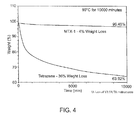
- Tetrazene suffers from a number of issues, most importantly low thermal and hydrolytic stabilities. It has been demonstrated that Tetrazene readily decomposes at approximately 90°C, which is in the temperature range that may be encountered during storage and handling in some parts of the world. As illustrated in Scheme 2 below, Bird has demonstrated using IR and UV monitoring that at 90°C, 1 mol of Tetrazene decomposes to afford 1.7 mol of 5-aminotetrazole (2, Scheme 2) via a fragmentation process followed by cyclization of a majority of the guanyl azide intermediate. Bird, R. and Power, A..J., "Thermal Decomposition of Tetrazene at 90°C," Materials Research Laboratories Report MRL-R-710 (1978 ).
- Embodiments of the invention provide materials suitable for use as a replacement for Tetrazene and methods of preparing such materials.
- the material comprises MTX-1, as well as simple salts or complexes derived therefrom. In some embodiments, this material may be used in a primer composition.
- a method of preparing a material suitable for use as a replacement for Tetrazene includes combining Tetrazene and an acid to form a suspension, where the acid is nitric acid, sulfuric acid, perchloric acid, or hydrochloric acid, and adding a nitrite salt to the suspension, where the nitrite salt may include sodium nitrite, lithium nitrite, potassium nitrite, an aqueous solution of sodium nitrite, an aqueous solution of lithium nitrite, or an aqueous solution of potassium nitrite.
- the method may also include stirring the suspension. In some embodiments, the suspension is stirred for at least four hours or until the suspension has a white appearance.
- Embodiments of the invention provide materials suitable for use as a replacement for Tetrazene and methods of preparing such materials. While the Tetrazene replacement materials are discussed for use in primer compositions, they are by no means so limited. Rather, the materials may be used as a replacement for Tetrazene in other applications or otherwise as desired.
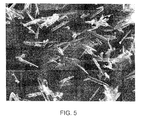
- MTX-1 The molecular structure of MTX-1 was determined by single crystal X-ray analyses of both the cesium, rubidium, and tetraphenylphosphonium salts obtained from slow recrystallization in aqueous solution.
- the displacement ellipsoid plot for the cesium salt is shown in Figure 1 .
- MTX-1 is presumably formed via elimination of nitrous oxide from the labile N-nitrosamine intermediate generated by reaction of nitrous acid.
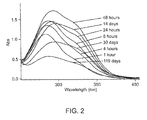
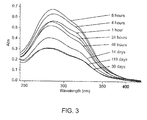
- the hydrolytic stability of Tetrazene and MTX-1 were evaluated by UV analysis of a water solution of each material over an extended time period.
- the samples (approximately 0.50g, accurately weighted and suspended in 250mL of water) were stirred at room temperature to fully homogenize for the initial 8 hr period after which they were stirred briefly just prior to obtaining the spectra.
- the samples were filtered before acquisition of the UV spectra and the samples were returned to the bulk solution to maintain the concentration after sampling.
- the UV spectra for both Tetrazene and MTX-1 are shown in Figures 2 and 3 , respectively, with the noted sampling times.
- the Tetrazene sample demonstrates a change in concentration over the first 8 hours and then a bathochromic shift towards 350nm and increased extinction below 250nm, which indicates that the material degrades on extended exposure to water.
- This result would seem to confirm Spears' observation of hydrolytic decomposition in Tetrazene. Spears and Elischer, supra.
- the UV analysis of MTX-1 would appear to indicate that there is no hydrolytic instability noted for that material, as there seems to be no shift over time.
- there seems to be a increase in absorbance followed by a decrease which stabilizes on extended exposure to water. This may be due to some small amount of unstable impurity or a long term equilibration of the pH.
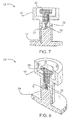
- the ability of these materials to sensitize a primer was evaluated by mixing Tetrazene and MTX-1 with sieved BLS (basic lead styphnate) in a 5:95 ratio and pressing at 10kpsi into a standard PVU-12 brass primer cup 10.
- the primer cup 10 was placed into a test unit 12.
- the test unit 12 comprises a base 14 and a cap 16.
- a firing pin 18 is positioned above the primer cup 10 within the test unit 12.
- the firing pin 18 has a 0.048" diameter with a suitable tip radius.
- a positioning device 20 is fitted around an opposing end of the firing pin 18 to hold the firing pin 18 in place within the cap 16.
- a vent hole 22 is positioned within the cap 16 to form an aperture adjacent the mating surface between the firing pin 18 and the primer cup 10.
- Tetrazene and MTX-1 act as a sensitizer on BLS pressed into a primer cup with Tetrazene being slightly more efficient.
- Tetrazene standard deviation is quite high, however, due to one outlying data point which skewed the Neyer analysis. It is possible that the two materials are nearly equivalent in terms of sensitization and, even if not, MTX-1 is certainly a sensitizer of higher stability.
- the method of preparation includes introducing Tetrazene into an acid in an amount that is suitable to allow the Tetrazene to become suspended.
- the acid is nitric acid.
- the acid includes but is not limited to sulfuric acid, perchloric acid, or hydrochloric acid.
- the nitrite salt is sodium nitrite, where the sodium nitrite may be added as an aqueous solution.
- the nitrite salt includes but is not limited to lithium nitrite, potassium nitrite, where the lithium nitrite or potassium nitrite may be added as an aqueous solution.
- the suspension is then stirred at ambient temperature for at least 4 hours. Typically, the suspension is stirred at ambient temperature until the suspension acquires a white appearance.
- the suspension may then be filtered to collect the suspension.
- the suspension is washed with water and dried.
- Tetrazene (4.53gms, 24.09mmol) was suspended in 150mL of 1N HNO 3 in a 250mL beaker and magnetically stirred at 400RPM.
- the beaker was placed in a room temperature water bath that would act as a heat sink.
- a solution of NaNO 2 (2.50gms, 1.50 eq.) dissolved in 30mL of water was added over approximately 10 minutes at a constant rate to keep the reaction temperature from increasing. Some effervescence was noted during the addition.
- the mixture was stirred at ambient temperature for 4.5 hours during which the initial wheat colored suspension turned white.
- the white suspension was filtered over Whatman #1 filter paper, washed with water (3 times) and dried in a convection oven at 65°C for 2 hours. Yield: 3.13gms (66%).
- the collected material was then analyzed by differential scanning calorimetry ("DSC”), the results of which are shown in Figure 9 .
- the collected material was also analyzed by Fourier transform infrared (“FTIR”) spectroscopic analysis, the results of which are shown in Figure 10 .
- FTIR Fourier transform infrared
Landscapes
- Chemical & Material Sciences (AREA)
- Organic Chemistry (AREA)
- Organic Low-Molecular-Weight Compounds And Preparation Thereof (AREA)
- Paints Or Removers (AREA)
- Catalysts (AREA)
Applications Claiming Priority (3)
| Application Number | Priority Date | Filing Date | Title |
|---|---|---|---|
| US32676810P | 2010-04-22 | 2010-04-22 | |
| US37056310P | 2010-08-04 | 2010-08-04 | |
| EP11782263.5A EP2560933B1 (de) | 2010-04-22 | 2011-04-21 | Alternative zu tetrazen |
Related Parent Applications (1)
| Application Number | Title | Priority Date | Filing Date |
|---|---|---|---|
| EP11782263.5A Division EP2560933B1 (de) | 2010-04-22 | 2011-04-21 | Alternative zu tetrazen |
Publications (2)
| Publication Number | Publication Date |
|---|---|
| EP2733134A2 true EP2733134A2 (de) | 2014-05-21 |
| EP2733134A3 EP2733134A3 (de) | 2017-10-11 |
Family
ID=44947174
Family Applications (2)
| Application Number | Title | Priority Date | Filing Date |
|---|---|---|---|
| EP11782263.5A Active EP2560933B1 (de) | 2010-04-22 | 2011-04-21 | Alternative zu tetrazen |
| EP14154634.1A Withdrawn EP2733134A3 (de) | 2010-04-22 | 2011-04-21 | Alternative zu Tetrazen |
Family Applications Before (1)
| Application Number | Title | Priority Date | Filing Date |
|---|---|---|---|
| EP11782263.5A Active EP2560933B1 (de) | 2010-04-22 | 2011-04-21 | Alternative zu tetrazen |
Country Status (9)
| Country | Link |
|---|---|
| US (2) | US8524019B2 (de) |
| EP (2) | EP2560933B1 (de) |
| JP (1) | JP5909225B2 (de) |
| AU (1) | AU2011271675B2 (de) |
| BR (1) | BR112012026892A2 (de) |
| CA (1) | CA2797115C (de) |
| IL (1) | IL222506A (de) |
| RU (1) | RU2012149696A (de) |
| WO (1) | WO2012003031A2 (de) |
Families Citing this family (4)
| Publication number | Priority date | Publication date | Assignee | Title |
|---|---|---|---|---|
| US8524019B2 (en) | 2010-04-22 | 2013-09-03 | Pacific Scientific Energetic Materials Company | Alternative to tetrazene |
| DE102015217841A1 (de) | 2015-09-17 | 2017-03-23 | Adidas Ag | Sportbekleidungsartikel mit Unterstützungselementen |
| USD809245S1 (en) | 2015-11-27 | 2018-02-06 | Adidas Ag | Garment |
| US20250100979A1 (en) * | 2023-09-25 | 2025-03-27 | Braja Sundar Pradhan | Synthesis of a tetrazole derivative |
Family Cites Families (12)
| Publication number | Priority date | Publication date | Assignee | Title |
|---|---|---|---|---|
| GB201009A (en) | 1922-06-30 | 1923-07-26 | Hans Rathsburg | Process for the manufacture of priming compositions |
| GB412460A (en) | 1932-10-07 | 1934-06-28 | Winchester Repeating Arms Co | Explosive priming mixture |
| FR1582964A (de) * | 1968-08-28 | 1969-10-10 | ||
| US4023352A (en) * | 1974-03-26 | 1977-05-17 | The United States Of America As Represented By The Secretary Of The Army | High nitrogen content gas generant and method of producing near-neutral combustion products |
| JPS5941307A (ja) * | 1982-09-01 | 1984-03-07 | Sumitomo Chem Co Ltd | キレート樹脂の製造方法 |
| US5216199A (en) | 1991-07-08 | 1993-06-01 | Blount, Inc. | Lead-free primed rimfire cartridge |
| US5436357A (en) * | 1994-06-06 | 1995-07-25 | Rohm And Haas Company | Polymer supported organotin catalyst |
| US5717159A (en) * | 1997-02-19 | 1998-02-10 | The United States Of America As Represented By The Secretary Of The Navy | Lead-free precussion primer mixes based on metastable interstitial composite (MIC) technology |
| DE29722912U1 (de) * | 1997-12-29 | 1998-02-19 | TRW Airbag Systems GmbH & Co. KG, 84544 Aschau | Azidfreie gaserzeugende Zusammensetzung |
| CZ288858B6 (cs) * | 1999-09-17 | 2001-09-12 | Sellier & Bellot, A. S. | Netoxická a nekorozivní zážehová slož |
| FR2897864B1 (fr) * | 2006-02-24 | 2008-04-11 | Cheddite France Sa | Composition d'amorcage et applications |
| US8524019B2 (en) | 2010-04-22 | 2013-09-03 | Pacific Scientific Energetic Materials Company | Alternative to tetrazene |
-
2011
- 2011-04-21 US US13/091,708 patent/US8524019B2/en active Active
- 2011-04-21 WO PCT/US2011/033356 patent/WO2012003031A2/en not_active Ceased
- 2011-04-21 JP JP2013506292A patent/JP5909225B2/ja active Active
- 2011-04-21 RU RU2012149696/05A patent/RU2012149696A/ru not_active Application Discontinuation
- 2011-04-21 BR BR112012026892A patent/BR112012026892A2/pt not_active IP Right Cessation
- 2011-04-21 AU AU2011271675A patent/AU2011271675B2/en not_active Ceased
- 2011-04-21 EP EP11782263.5A patent/EP2560933B1/de active Active
- 2011-04-21 EP EP14154634.1A patent/EP2733134A3/de not_active Withdrawn
- 2011-04-21 CA CA2797115A patent/CA2797115C/en active Active
-
2012
- 2012-10-17 IL IL222506A patent/IL222506A/en active IP Right Grant
-
2013
- 2013-08-01 US US13/956,451 patent/US8632643B2/en active Active
Also Published As
| Publication number | Publication date |
|---|---|
| AU2011271675A1 (en) | 2012-11-08 |
| US8632643B2 (en) | 2014-01-21 |
| US20130317232A1 (en) | 2013-11-28 |
| IL222506A0 (en) | 2012-12-31 |
| JP5909225B2 (ja) | 2016-04-26 |
| RU2012149696A (ru) | 2014-05-27 |
| EP2560933A2 (de) | 2013-02-27 |
| EP2560933B1 (de) | 2014-02-12 |
| WO2012003031A3 (en) | 2012-05-03 |
| US8524019B2 (en) | 2013-09-03 |
| AU2011271675B2 (en) | 2015-04-09 |
| CA2797115C (en) | 2018-01-16 |
| US20120145290A1 (en) | 2012-06-14 |
| BR112012026892A2 (pt) | 2016-07-19 |
| CA2797115A1 (en) | 2012-05-01 |
| IL222506A (en) | 2017-02-28 |
| JP2013530932A (ja) | 2013-08-01 |
| WO2012003031A2 (en) | 2012-01-05 |
| EP2733134A3 (de) | 2017-10-11 |
Similar Documents
| Publication | Publication Date | Title |
|---|---|---|
| Fronabarger et al. | DBX‐1–A Lead Free Replacement for Lead Azide | |
| Deng et al. | A green metal-free fused-ring initiating substance | |
| EP2018393B1 (de) | Bleifreie primärexplosivzusammensetzung und herstellungsverfahren dafür | |
| Matyáš et al. | Primary explosives | |
| US6478903B1 (en) | Non-toxic primer mix | |
| Pandey et al. | Pushing the limit of oxygen balance on a benzofuroxan framework: K2DNDP as an extremely dense and thermally stable material as a substitute for lead azide | |
| US20090194744A1 (en) | Methods for making scent simulants of chemical explosives, and compositions thereof | |
| Koch | Insensitive high explosives: III. Nitroguanidine–synthesis–structure–spectroscopy–sensitiveness | |
| US8632643B2 (en) | Alternative to tetrazene | |
| Fronabarger et al. | KDNP–a lead free replacement for lead styphnate | |
| Fronabarger et al. | MTX-1–A potential replacement for tetrazene in primers | |
| Joo et al. | Denitration of hydrazinium nitroformate to form hydrazinium dinitromethanide | |
| US9512127B2 (en) | Process for the production of speherical tetranitroglycouril | |
| Viswanath et al. | 5-Nitro-2, 4-Dihydro-3H-1, 2, 4-Triazole-3-One (NTO) | |
| RU2433110C2 (ru) | Воспламенительный состав | |
| Thangadurai et al. | Review of some newly synthesized high energetic materials | |
| US20220073502A1 (en) | Novel tetrazole azasydnone | |
| US11878951B2 (en) | Non-conductive pyrotechnic mixture | |
| Nicolich et al. | Dihydroxylammonium 5, 5′-bis-tetrazole-1, 1′-diolate (TKX-50) Synthesis and Lab Scale Characterization | |
| Kumar et al. | Synthesis and characterization of BNCP: A novel DDT explosive | |
| Spear et al. | Sensitization of high density silver azide to stab initiation | |
| Norris et al. | Potassium 4-hydroxyamino-5, 7-dinitro-4, 5-dihydrobenzofurazanide 3-oxide, the First in a Series of New Primary Explosives | |
| Oyler et al. | Green explosives: potential replacements for lead azide and other toxic detonator and primer constituents | |
| Orbovic et al. | Production of Exploding Materials for Electro Explosive Devices | |
| Kavetsky et al. | CENTER FOR ENERGETIC CONCEPTS DEVELOPMENT SERIES |
Legal Events
| Date | Code | Title | Description |
|---|---|---|---|
| PUAI | Public reference made under article 153(3) epc to a published international application that has entered the european phase |
Free format text: ORIGINAL CODE: 0009012 |
|
| 17P | Request for examination filed |
Effective date: 20140211 |
|
| AC | Divisional application: reference to earlier application |
Ref document number: 2560933 Country of ref document: EP Kind code of ref document: P |
|
| AK | Designated contracting states |
Kind code of ref document: A2 Designated state(s): AL AT BE BG CH CY CZ DE DK EE ES FI FR GB GR HR HU IE IS IT LI LT LU LV MC MK MT NL NO PL PT RO RS SE SI SK SM TR |
|
| PUAL | Search report despatched |
Free format text: ORIGINAL CODE: 0009013 |
|
| AK | Designated contracting states |
Kind code of ref document: A3 Designated state(s): AL AT BE BG CH CY CZ DE DK EE ES FI FR GB GR HR HU IE IS IT LI LT LU LV MC MK MT NL NO PL PT RO RS SE SI SK SM TR |
|
| RIC1 | Information provided on ipc code assigned before grant |
Ipc: C06C 7/00 20060101ALI20170901BHEP Ipc: C07D 257/06 20060101ALI20170901BHEP Ipc: C06B 43/00 20060101AFI20170901BHEP |
|
| STAA | Information on the status of an ep patent application or granted ep patent |
Free format text: STATUS: REQUEST FOR EXAMINATION WAS MADE |
|
| STAA | Information on the status of an ep patent application or granted ep patent |
Free format text: STATUS: THE APPLICATION IS DEEMED TO BE WITHDRAWN |
|
| 18D | Application deemed to be withdrawn |
Effective date: 20180412 |