EP2725079A1 - Umweltfreundliches Enteisungsmittel - Google Patents
Umweltfreundliches Enteisungsmittel Download PDFInfo
- Publication number
- EP2725079A1 EP2725079A1 EP13005131.1A EP13005131A EP2725079A1 EP 2725079 A1 EP2725079 A1 EP 2725079A1 EP 13005131 A EP13005131 A EP 13005131A EP 2725079 A1 EP2725079 A1 EP 2725079A1
- Authority
- EP
- European Patent Office
- Prior art keywords
- deicing composition
- composition according
- deicing
- propanediol
- lactate
- Prior art date
- Legal status (The legal status is an assumption and is not a legal conclusion. Google has not performed a legal analysis and makes no representation as to the accuracy of the status listed.)
- Granted
Links
Images

Classifications
-
- C—CHEMISTRY; METALLURGY
- C09—DYES; PAINTS; POLISHES; NATURAL RESINS; ADHESIVES; COMPOSITIONS NOT OTHERWISE PROVIDED FOR; APPLICATIONS OF MATERIALS NOT OTHERWISE PROVIDED FOR
- C09K—MATERIALS FOR MISCELLANEOUS APPLICATIONS, NOT PROVIDED FOR ELSEWHERE
- C09K3/00—Materials not provided for elsewhere
- C09K3/18—Materials not provided for elsewhere for application to surfaces to minimize adherence of ice, mist or water thereto; Thawing or antifreeze materials for application to surfaces
- C09K3/185—Thawing materials
Definitions
- the application relates to a deicing composition, more particularly a deicing composition.
- This comprises an aqueous solution of an ionic constituent and a nonionic constituent, wherein the ionic constituent comprises a lactate salt and the nonionic constituent comprises 1,2-propanediol (PDO).
- PDO 1,2-propanediol
- deicing agents Various techniques are known for removing snow and ice. In addition to mechanical methods, the use of chemicals having a "defrosting" effect comes into consideration in particular; According to the application, such chemicals are referred to as deicing agents.
- liquid and solid grating salts are used as de-icing agents in winter service. These usually have more than 95% saline as the ionic constituent.
- this road salt damages biological systems such as road trees and negatively influences the groundwater.
- significant damage due to corrosion, especially on concrete parts, bridge steel and motor vehicles are recorded.
- On aircraft runways therefore basically no chloride-containing deicing are used.
- formate- and acetate-based deicers are used, especially as sodium or potassium salts.
- nonionic chemicals are also used as deicing agents, for example ethylene glycol and propylene glycol solutions.
- deicing agents for example ethylene glycol and propylene glycol solutions.
- mixtures various ionic substances eg US 6,156,226
- ionic and nonionic deicing agents eg US 7,138,071 B2
- the present invention is therefore based on the object of specifying a further improved deicing composition, in particular a more environmentally friendly deicing composition, which can preferably provide a more favorable CO 2 balance and / or can be produced from renewable raw materials.
- new deicing compositions should preferably also be usable at very low temperatures and, if possible, should also be more cost-effectively producible than the comparable deicing compositions according to the prior art.
- the deicing composition according to the invention comprises an aqueous solution with an ionic constituent and, in addition, also a nonionic ingredient (which is usually also dissolved).
- concentration of the sum of the ionic and nonionic constituents is at least 10% by weight, in particular at least 20% by weight, based on the total weight of the deicing composition.
- the ionic component comprises lactate (hereinafter also abbreviated to Lac) and acetate (which will be hereinafter abbreviated as Ac) or consists of these two components.
- the nonionic constituent comprises 1,2-propanediol (hereinafter generally referred to as propanediol or PDO, chemically exactly 1-methyl-ethane-1,2-diol) or consists thereof.
- propanediol chemically exactly 1-methyl-ethane-1,2-diol
- the molar proportion of propanediol is considered to be at least one twentieth of the molar fraction of the anions of the ionic constituent. In other words, n POO > 0.05 * n An .
- the deicing composition according to the invention is further distinguished by the fact that the molar fraction of lactate is at least 0.4 times the molar fraction of acetate and is at most four times as high as the acetate fraction.
- the molar fraction of lactate is at least 0.4 times the molar fraction of acetate and is at most four times as high as the acetate fraction.
- the sodium acetate is partially replaced by lactate salts, especially sodium lactate, and further partially by propanediol. Nevertheless, there is no freezing of the mixture at relatively low temperatures (ie - 25 ° C to 0 ° C), even if very high acetate contents are present, for example if the molar acetate content is 11 ⁇ 2 times higher than that of the lactate and usually even then when it is 2 1 ⁇ 2 times higher.
- the freezing point (hereinafter also referred to as dew point) of a lactate / acetate solution does not change significantly if a certain proportion of the acetate / lactate salt mixture is replaced by the same proportion by weight of propanediol.
- the freezing point does not change significantly when x grams of acetate / lactate are replaced by x grams of propanediol and this reduces the number of particles by nearly x moles (x moles of anions + x moles of cations, ie 2x moles of salt ions by something) more than 1x mol of propanediol are replaced / PDO and sodium acetate have about the same molar mass, the molar mass of sodium lactate is only about 40% greater than that of PDO). Since the defrosting effect of deicing agents depends substantially on the number of particles present in the deicing solution, this result was not expected.
- the deicing compositions according to the invention are therefore already more advantageous than those of the prior art, since by the addition of propanediol, the salt load, which is introduced into the environment, can be significantly reduced and this with approximately the same deicing properties; they are therefore more environmentally friendly. Furthermore, the corrosive properties of deicing compositions are further reduced by the reduced salt load, which makes the composition of the invention also interesting for applications in the aviation sector. In particular, here are applications in which the metal iron (for example in the form of steel) is present, in which the deicing composition according to the invention even acts as a corrosion inhibitor.
- the deicing composition according to the invention has the advantage that no mechanical removal by devices of the winter service, by wind and the like can take place.
- the concentration of the ionic and nonionic constituents of the deicing composition is at least 25% by weight, in particular at least 29% by weight.
- Such embodiments are particularly advantageous when an immediate optimum effect is required for the application of the deicing composition. This may be the case, for example, in the de-icing of special areas (such as airport areas subject to specific safety regulations) or in other applications where an adverse weather event will occur less than 2 hours after the scheduled application of the de-icer (eg freezing rain, freezing rain or freezing wetness) or has already occurred (for example, snow, ice and the like).
- At least sodium is present in the ionic constituent as cation (Kat) or the cations of the ionic constituent consist exclusively of sodium (although commercial impurities of other cations may be present).
- n Na : n cat ie the proportion of sodium ions in the total number of cations
- n An that is, the proportion of Sodium ions is at least as high as the accumulated portion of the acetate ions, in addition to acetate and lactate present any other anions and half of the proportion of lactate anions.
- the cations of the ionic moiety comprise substantially sodium or substantially sodium and potassium. “Substantially” here means that the proportion of sodium or the accumulated proportion of sodium and potassium in the cations of the ionic constituent is at least 75 mol%, but in particular at least 90 mol%.
- quaternary ammonium salts for example, choline or oxychloride choline salts. It goes without saying that mixtures of the abovementioned anions may be present in addition to sodium and optionally potassium.
- the molar amount of sodium in the total amount of cations is at least 95%.
- Such de-icing agents can be produced particularly cost-effectively, since expensive potassium salts can be dispensed with in the preparation and sodium salts can be used (for example, only about 1 ⁇ 3 of the cost of the same amount of potassium hydroxide is incurred for tonne-scale sodium hydroxide.)
- potassium is avoided prevents over-fertilization of the wastewater and finally a waste of fertilizer for food production.
- the cationic portion of the ionic constituent is sodium.
- the anions of the ionic constituent essentially comprise lactate and acetate. “Substantially” here means that the added-up content of lactate and acetate on the anions of the ionic constituent is at least 75 mol%, but in particular at least 90 mol%.
- the added molar fraction of the lactate anions and acetate anions in the total amount of the anions is at least 90%, in particular at least 92.5%.
- a deicing composition according to the invention in which no lactate is present would be disadvantageous, since at temperatures below -20 ° C., acetate solutions with concentrations> 29% by weight no longer have sufficient defrosting action or no defrosting effect demonstrate. By mixing with lactate ions, this effect can be prevented.
- a deicing composition according to the invention in which the anions are formed essentially by lactate and acetate, fulfills the prerequisites for producing a very efficient, biodegradable and, in addition, particularly cost-effective deicing composition, even at low temperatures. This is especially true because on the one hand a relatively high acetate content is included and on the other hand the possibility to produce highly concentrated solutions is given). Thus, according to the invention, it is possible to provide deicing compositions which also have a long-lasting activity.
- the effect is that the melting of ice and snow causes the solution to dilute, accompanied by a change in the dew point in the direction of higher temperatures, but starting from more concentrated solutions, the limiting concentration is reached only at a later time is at which a certain maximum desired dew point is exceeded.
- the dew point of a 28% acetate solution is about -27 ° C; when diluted to about 1 1 ⁇ 2 times Volume is the dew point only about -15 ° C.
- temperatures are often reached in average Central European winters, so that for the de-icing of larger areas (eg in the airport area) correspondingly larger amounts of 28% acetate solution (or more generally: de-icing agent) would have to be provided.
- the lactate / acetate mixture used according to the invention can also be used in higher concentrations.
- a 40% solution of 7 parts of sodium lactate and 10 parts of sodium acetate also has a freezing point of about -27 ° C; only at a dilution to approximately double the volume, the threshold is exceeded at -15 ° C in the direction of higher temperatures.
- the deicing composition according to the invention also makes it possible to use moisturizing salts (highly concentrated solutions are used for moistening crystalline salts, they are produced on road sweeping vehicles from brine and road salt and are applied directly from there) and are cheaper to transport, not least because of their lower water content ,
- lactate and acetate are present in the ionic constituent as anions.
- impurities as anions which are included in particular in the use of commercially available acetate (again used for commercial reasons) and optionally also commercially available lactate. Such impurities will usually account for not more than 5 mole percent of the total anion content.
- the nonionic constituent essentially comprises 1,2-propanediol or 1,2-propanediol and glycerol.
- “Substantially” in this context means that the proportion of propanediol or the accumulated proportion of propanediol and glycerol at the nonionic (non-) aqueous) constituents is at least 75 mol%, but in particular at least 90 mol%.
- the nonionic component will consist of propanediol or consist of propanediol and glycerol.
- Propanediol and glycerol can be added to the deicing composition in a particularly cost-effective manner since these chemicals can be prepared, for example, by catalytic conversions of waste glycerol.
- propanediol has proven to be a particularly effective non-ionic ingredient in the deicing compositions of the invention.
- propanediol - as already mentioned - Sodium acetate can be replaced without changing the dew point significantly at the same concentration.
- a substantial change in the dew point is understood according to the invention to be a change in the dew point at which, at a given concentration (in% by weight), the sodium acetate and / or the sodium lactate is replaced by an increase in the dew point more than 3 ° C occurs. Frequently, according to the invention, even only an increase in the dew point can be observed by less than 2 ° C. and often even by less than 2 ° C.
- the proportion of propanediol is adjusted so that there is an increase in the dew point, which is a maximum of about 2 to 3 ° C.
- the proportion of propanediol is at least one fifth of the molar fraction of lactate anions, but at most as large as the total molar fraction of anions.
- the non-aqueous constituents of the deicing composition are chosen so that they can be prepared by means of a catalytic reaction of alcohols or aldehydes, apart from the commercially relatively inexpensive sodium acetate or sodium hydroxide solution and acetic acid.
- a catalytic reaction of alcohols or aldehydes apart from the commercially relatively inexpensive sodium acetate or sodium hydroxide solution and acetic acid.
- Such a method describes, for example, the EP 2 100 871 A1 , to which reference is made in full with respect to the preparation of a mixture containing lactate (or lactic acid), propanediol and optionally also glycerol.
- lactate or lactic acid
- propanediol propanediol
- optionallycerol propanediol
- the production of lactate from any lactic acid obtained can be carried out by neutralization by means of alkali lye (in particular NaOH and optionally also KOH).
- At least one of the objects of the invention is also achieved by the use of the above-described deicing composition for long-term use of more than 12 hours, in particular more than 48 hours.
- deicing compositions having a concentration of the ionic and nonionic constituents of at least 10 wt.%, For example at least 15 wt.%, For example at least 20 wt.
- the above use is particularly advantageous if, during the long-term use, evaporation of the water of the aqueous solution of the deicing agent occurs at least temporarily.
- the evaporation can be caused for example by solar radiation and / or wind.
- the above use is particularly advantageous when the use of the deicing composition is based on a weather forecast.
- a weather forecast the occurrence of an adverse weather event (for example, freezing rain, freezing rain and freezing Wetness)
- a less concentrated solution may be applied at least 3 hours before the onset of the weather event so that there is still sufficient time left before entry into which the deicing agent concentrates so that it will have its optimum effects as a more concentrated solution can play out.
- the deicing composition according to the invention can have a very favorable CO 2 balance, because it can be produced from predominantly renewable raw materials, and furthermore for the de-icing of special areas (such as airport areas , which are subject to special safety regulations) is suitable because it can be produced and is effective even in high concentrations and, finally, it can also be produced very inexpensively.
- the deicing compositions of the invention do not have the detrimental properties of saline solutions, such as, in particular, the environmental impact and the adverse corrosion properties of these solutions.
- the deicing compositions of the invention are advantageously provided with a high level of sodium as a cation in the ionic component;
- potassium hydroxide or caustic soda is often used;
- Caustic soda is currently but cheaper by a factor of 3 than potassium hydroxide, so that for economic reasons, in particular the use of caustic soda lends itself.
- the dew points were determined according to the invention by means of differential scanning calorimetry (DSC). As soon as an enthalpy change due to a phase change occurs in the sample (in each case 5 and 10 mg), the heat flow of the sample crucible deviates from the baseline and can be observed as a thermal effect in the form of a peak.
- DSC differential scanning calorimetry
- the dynamic differential calorimeter " ⁇ DSC VII" from Setaram is used. (Measuring range of the device: Temperature range: -40 ° C to 115 ° C, maximum -45 ° C to 120 ° C; Heating / cooling rates: 0.1 K / min to 1.2 K / min., Maximum 2 K / min)
- the analysis of the curve shows the extrapolated start temperature (onset) and the peak-maximum temperature as well as integration of the peak area, the crystallization or enthalpy of fusion.
- a solution with 30 wt .-% shows a freezing point of -18.3 ° C, a solution of 20 wt .-% only a freezing point of -10.1 ° C.
- a solution of 2 moles of lactate per mole of acetate was prepared. This has a dew point of -26.8 ° C at a concentration of 40 wt .-% and at 30 wt .-% to a dew point of -23.7 ° C.
- the effect found is interpreted as having a kinetic inhibition of the freezing process, which is advantageous for deicers, as kinetic inhibition in smaller time dimensions, such as those occurring at daily or even hourly (eg at airports) recurring application of further deicing, In this way, as it were, an additional lowering of the freezing point can be achieved.
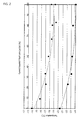
- FIG. 1 The behavior of the freezing point of various deicing agents is shown depending on the concentration. It can be seen that the freezing point of sodium acetate (triangles) initially decreases sharply with increasing concentration, but then abruptly increases from a concentration of 28% by weight. Sodium lactate solutions (diamond-filled) do not show this behavior, but even at a given concentration, lower temperatures than dew points are achieved than with sodium acetate solutions. For the sodium lactate / sodium acetate mixture according to Example 3 is shown with filled circles. It turns out that at a given concentration ratio these solutions reach approximately freezing points between those of pure sodium acetate and sodium lactate solutions. They roughly correspond to those of potassium formate solutions.
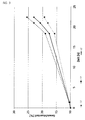
- FIG. 2 is the freezing point change seen in the successive replacement of sodium lactate by propanediol. It turns out that in solutions with 30 wt .-% (diamonds) or, 35 wt .-% (circles) no significant change in the freezing point takes place.
- the solutions of the pure lactate have a freezing point of about - 18.5 ° C or -24 ° C. Only at a sodium lactate / propanediol ratio of about 1: 1 is the freezing point increased by about 1 ° C; at a ratio of about 4: 1 still only about 2 ° C. The same applies to the mixtures according to the invention.
- FIG. 3 shows that both (L2) and (L3) dry faster than the reference solution (L1).
- this property is advantageous, since the increase in concentration associated with the drying process increases the freezing point-lowering effect of the deicing composition.
- the deicing composition according to the invention which may be diluted by dew and precipitation water during use, achieves a preferred increased concentration range by natural drying more quickly than conventional deicing agents (for example sodium chloride). Accordingly, even when a weakly concentrated deicing composition according to the invention is applied in good time, before the occurrence of a predicted weather event such as freezing rain, freezing rain or freezing moisture, a significant increase in concentration takes place. Due to the increased concentration, the effect of the deicing agent is given even at lower temperatures in a renewed cold snap.
- the deicing composition according to the invention has the advantage over pure salt solutions that no mechanical removal by devices of the winter service or by wind can take place;
- the advantage over sodium acetate is that the latter does not have good deicing properties in high concentrations or in substance.
Landscapes
- Chemical & Material Sciences (AREA)
- Engineering & Computer Science (AREA)
- Combustion & Propulsion (AREA)
- Materials Engineering (AREA)
- Organic Chemistry (AREA)
- Materials Applied To Surfaces To Minimize Adherence Of Mist Or Water (AREA)
Abstract
Description
- Die Anmeldung betrifft eine enteisende Zusammensetzung, genauer gesagt ein Enteisungsmittel. Dieses weist eine wässrige Lösung eines ionischen Bestandteils und eines nichtionischen Bestandteils auf, wobei der ionische Bestandteil ein Lactatsalz umfasst und der nichtionische Bestandteil 1,2-Propandiol (PDO) enthält.
- Diese Patentanmeldung beansprucht die Priorität der deutschen Patentanmeldung
10 2012 219 740.0 , deren Offenbarungsgehalt hiermit durch Rückbezug aufgenommen wird. - Zur Entfernung von Schnee und Eis sind verschiedene Techniken bekannt. Neben mechanischen Methoden kommt insbesondere die Verwendung von Chemikalien mit "abtauender" Wirkung in Betracht; derartige Chemikalien werden anmeldungsgemäß als Enteisungsmittel bezeichnet.
- Im privaten aber auch im öffentlichen Bereich kommen im Winterdienst flüssige und feste Streusalze als Enteisungsmittel zum Einsatz. Diese weisen als ionischen Bestandteil üblicherweise mehr als 95 % Kochsalz auf. Dieses Streusalz schädigt allerdings biologische Systeme wie Straßenbäume und beeinflusst das Grundwasser negativ. Außerdem sind erhebliche Schäden durch Korrosion, insbesondere an Betonteilen, Brückenstahl und Kraftfahrzeugen zu verzeichnen. Auf Flugzeuglandebahnen kommen deshalb grundsätzliche keine chloridhaltigen Enteisungsmittel zum Einsatz. Hier werden Formiat- und Acetat-basierte Enteisungsmittel eingesetzt, insbesondere als Natrium- oder Kalium-Salze.
- Ferner sind als Enteisungsmittel auch nichtionische Chemikalien im Einsatz, etwa Ethylenglykol- und Propylenglykollösungen. Auch die Verwendung von Gemischen verschiedener ionischer Substanzen (z.B.
US 6,156,226 ) oder von ionischen und nichtionischen Enteisungsmitteln (z.B.US 7,138,071 B2 ) sind bekannt. - Der vorliegenden Erfindung liegt daher die Aufgabe zugrunde, ein weiter verbessertes Enteisungsmittel anzugeben, insbesondere ein umweltfreundlicheres Enteisungsmittel, das bevorzugt eine günstigere CO2-Bilanz liefern kann und/oder aus nachwachsenden Rohstoffen herstellbar ist. Ferner sollten neue Enteisungsmittel vorzugsweise auch bei sehr tiefen Temperaturen einsetzbar sein und ferner möglichst auch kosteneffizienter herstellbar sein als die vergleichbaren Enteisungsmittel nach dem Stand der Technik.
- Zumindest eine dieser Aufgaben wird durch das Enteisungsmittel gemäß dem Hauptanspruch gelöst. Weitere Ausgestaltungen und Weiterbildungen sind Gegenstand von Unteransprüchen und gehen weiterhin aus der nachfolgenden Beschreibung hervor.
- Das erfindungsgemäße Enteisungsmittel umfasst eine wässrige Lösung mit einem ionischen Bestandteil und ferner zusätzlich auch einem nichtionischen Bestandteil (der üblicherweise auch gelöst vorliegt). Die Konzentration der Summe des ionischen und des nichtionischen Bestandteils beträgt bezogen auf das Gesamtgewicht des Enteisungsmittels zumindest 10 Gew.-%, insbesondere zumindest 20 Gew.-%. Als Anionen (An) umfasst der ionische Bestandteil Lactat (das nachfolgend auch als Lac abgekürzt wird) und Acetat (das nachfolgend auch als Ac abgekürzt wird) oder besteht aus diesen beiden Komponenten. Der nichtionische Bestandteil umfasst 1,2-Propandiol (im Folgenden in der Regel nur noch als Propandiol oder PDO bezeichnet; chemisch exakt 1-Methyl-ethan-1,2-diol) oder besteht hieraus. Für den molaren Anteil an Propandiol gilt, dass dieser zumindest ein Zwanzigstel des molaren Anteils an den Anionen des ionischen Bestandteils beträgt. Mit anderen Worten gilt nPOO> 0,05 * nAn.
- Das erfindungsgemäße Enteisungsmittel zeichnet sich ferner dadurch aus, dass der molare Anteil an Lactat zumindest das 0,4-fache des molaren Anteils an Acetat ist und maximal viermal so hoch wie der Acetatanteil ist. Mit anderen Worten gilt:

Häufig wird auch die folgende Ungleichung gelten:
- Erfindungsgemäß wurde erkannt, dass mit den vorstehend beschriebenen Enteisungsmitteln - anders als bei reinen Natriumacetatlösungen - auch bei Konzentrationen der nicht-wässrigen Bestandteile (also der ionischen und nichtionischen Bestandteile), die größer sind als 29 Gew.-%, eine Eignung als Enteisungsmittel gegeben ist. Als flüssiges Enteisungsmittel ist Natrium-Acetat als wässrige Lösung mit 30 Gew.-%, bis ca. -27°C einsetzbar. Die Löslichkeitsgrenze ist für Natrium-Acetat ab größer 30 Gew.-% annähernd erreicht; es bildet sich in diesem Bereich ein Eutektikum aus, wodurch der Gefrierpunkt der Lösung deutlich ansteigt (vergleiche auch
Figur 1 ). Zu berücksichtigen ist allerdings, dass auch bei Umgebungstemperaturen unter dem Gefrierpunkt Verdunstung von Wasser erfolgen kann, insbesondere durch starke Sonneneinstrahlung oder Wind. Wenn die Tagestemperaturen über dem Gefrierpunkt liegen, zeigt sich auch ohne Wind und Sonneneinstrahlung, ohnehin ein deutlicher Verdunstungs-Effekt (vergleicheFigur 3 ). Letzteres ist insbesondere wesentlich, wenn die Anwendung des Enteisungsmittels auf Nachtfröste, Temperaturstürze, Eisglätte oder Glatteis abzielt. Mit dem Trocknungsvorgang geht eine Konzentrationserhöhung einher, die die gefrierpunkterniedrigende Wirkung des Enteisungsmittels steigert. Für den Anwendungsfall bedeutet dies, dass bei rechtzeitigem Ausbringen eines erfindungsgemäßen Enteisungsmittels bereits mit Konzentrationen der nicht-wässrigen Bestandteile von größer 10 Gew.-%, und insbesondere von größer 20 Gew.-%, vor Eintreten eines entsprechenden Witterungsereignisses eine signifikante Konzentrationserhöhung erfolgt oder zumindest erfolgen kann und nicht nur eine Ausbringen in einer Konzentration größer 29 Gew.-% (in der das erfindungsgemäße Enteisungsmittel seine Vorteile voll ausspielen kann) sinnvoll ist. Zu beachten ist in diesem Zusammenhang auch, dass aufgrund der erhöhten Konzentration auch bei einem erneuten Kälteeinbruch die Wirkung des Enteisungsmittels bei tieferen Temperaturen gegeben ist. - In den erfindungsgemäßen Enteisungsmitteln ist das Natriumacetat teilweise durch Lactat-Salze, insbesondere Natriumlactat ersetzt und ferner teilweise durch Propandiol. Dennoch erfolgt kein Einfrieren des Gemisches bei relativ tiefen Temperaturen (also - 25°C bis 0°C), auch wenn sehr hohe Acetatgehalte vorliegen, beispielsweise wenn der molare Acetatanteil 1½ -mal so hoch ist wie der des Lactats und in der Regel auch dann, wenn er 2 ½-mal so hoch ist.
- Erfindungsgemäß wurde insbesondere erkannt, dass sich der Gefrierpunkt (nachfolgend auch Taupunkt genannt) einer Lactat/Acetat-Lösung nicht signifikant ändert, wenn ein gewisser Anteil des Acetat/Lactat-Salz-Gemisches durch denselben gewichtsmäßigen Anteil an Propandiol ersetzt wird. Mit anderen Worten ändert sich der Gefrierpunkt nicht wesentlich, wenn x Gramm Acetat/Lactat durch x Gramm Propandiol ersetzt werden und hierdurch die Anzahl der Teilchen um nahezu x mol verringert wird (nämlich x mol Anionen + x mol Kationen, d.h. 2x mol Salzionen durch etwas mehr als 1x mol Propandiol ersetzt werden / PDO und Natriumacetat haben etwa die gleiche molare Masse; die molare Masse von Natriumlactat ist nur etwa 40 % größer als die von PDO). Da die abtauende Wirkung von Enteisungsmitteln wesentlich von der Anzahl der Teilchen abhängt, die in der enteisenden Lösung vorliegen, war dieses Ergebnis nicht zu erwarten.
- Die erfindungsgemäßen Enteisungsmittel sind auch schon deshalb vorteilhafter als die nach dem Stand der Technik, da durch den Zusatz von Propandiol die Salzfracht, die in die Umgebung eingebracht wird, deutlich vermindert werden kann und dies bei etwa gleichen Enteisungseigenschaften; sie sind also umweltfreundlicher. Ferner werden durch die verminderte Salzfracht auch die korrodierenden Eigenschaften von Enteisungsmitteln weiter vermindert, was die erfindungsgemäße Zusammensetzung auch für Anwendungen im Luftfahrtbereich interessant macht. Insbesondere sind hier Anwendungen zu nennen, bei denen das Metall Eisen (beispielsweise in Form von Stahl) zugegen ist, bei denen das erfindungsgemäße Enteisungsmittel sogar als Korrosionsinhibitor wirkt.
- Ferner wurde auch erkannt, dass sich mit dem erfindungsgemäßen Enteisungsmittel bei Erhöhung der Konzentration im Regelfall eine stärkere Erniedrigung des Taupunkts ergibt als beispielsweise bei reinen Kalium- oder Natriumlactat-Lösungen gleicher Konzentration.
- Schließlich führt das Vorhandensein der nicht-ionischen Komponenten, insbesondere des 1,2-Propandiols und gegebenenfalls zusätzlich des Glycerins zudem zu einer Erhöhung der Viskosität und damit einer verbesserten Haftung auf den Untergründen. Auch bei vollständiger Verdunstung der wässrigen Anteile hat daher das erfindungsgemäße Enteisungsmittel den Vorteil, dass kein mechanischer Abtrag durch Geräte des Winterdiensts, durch Wind und dergleichen erfolgen kann.
- Gemäß einer Ausführungsform beträgt die Konzentration der ionischen und nichtionischen Bestandteile des Enteisungsmittels zumindest 25 Gew.-%, insbesondere zumindest 29 Gew.-%. Derartige Ausführungsformen sind besonders dann vorteilhaft, wenn für die Anwendung des Enteisungsmittels eine sofortige optimale Wirkung gefordert ist. Dies kann beispielsweise beim Enteisen von Sonderflächen (wie z.B. Flughafenflächen, die besonderen Sicherheitsbestimmungen unterliegen) der Fall sein oder auch bei anderen Anwendungen, bei denen ein zu bekämpfendes Witterungsereignis weniger als 2 Stunden nach dem vorgesehenen Aufbringen des Enteisungsmittels eintreten wird (beispielsweise gefrierender Regen, Eisregen oder überfrierende Nässe) oder bereits eingetreten ist (beispielsweise Schneeglätte, Eisglätte und dergleichen).
- Alle nachfolgend beschriebenen Ausführungsformen gehen zunächst - sofern nicht anders erläutert) vom Vorliegen eines Enteisungsmittels mit Konzentrationen der nicht-wässrigen Bestandteile von größer 29 Gew.-% aus. Es versteht sich von selbst, dass diese Ausführungsformen in entsprechender Weise auch für Enteisungsmittels mit geringeren Konzentrationen ab 10 Gew.-% gelten zumal aus diesen beim Vorliegen entsprechender Witterungsbedingungen auch vor Ort sukzessive Konzentrationen von 29 Gew.-% oder größer gebildet werden.
- Gemäß einer Ausführungsform der Erfindung ist im ionischen Bestandteil als Kation (Kat) zumindest Natrium enthalten oder die Kationen des ionischen Bestandteil bestehen ausschließlich aus Natrium (wobei allerdings handelsübliche Verunreinigungen anderer Kationen zugegen sein können). Insbesondere gilt hierbei, dass das molare Verhältnis nNa : nKat (also der Anteil der Natriumionen an der Gesamtzahl von Kationen) größer ist als das Verhältnis (nAn - 0,5*nLac) : nAn (dass also der Anteil der Natriumionen zumindest so hoch ist, wie der aufsummierte Anteil der Acetationen, der neben Acetat und Lactat vorliegenden etwaigen anderen Anionen und der Hälfte des Anteils der Lactat-Anionen). Hierdurch wird ausgedrückt, dass die vorstehend beschriebenen erfindungsgemäßen Vorteile sich auch dann einstellen, wenn nicht ausschließlich Natrium als Kation vorliegt sondern auch noch ein gewisser Anteil anderer Anionen vorhanden ist, beispielsweise Kalium. Wenn man von den ökonomischen Vorgaben absieht, kann man sogar so weit gehen, zu sagen, dass auch ionische Bestandteile, in denen ausschließlich Kalium als Kation vorliegt, die erfindungsgemäß beschriebenen Erfolge zeigen; die Herstellung derartiger Kalium-basierter Enteisungsmittel ist aber aufgrund des deutlich höheren Preises für Kalium-haltige Grundchemikalien (wie z.B. Kalilauge) wirtschaftlich weniger interessant. Entsprechendes gilt für erfindungsgemäße Enteisungsmittel, bei denen als Kationen im Wesentlichen oder ausschließlich Natrium und Kalium vorliegen und ein Kaliumanteil vorhanden ist, der höher ist als die Hälfte der molaren Menge an Lactat-Anionen.
- Gemäß einer Ausführungsform umfassen die Kationen des ionischen Bestandteils im Wesentlichen Natrium oder im Wesentlichen Natrium und Kalium. "Im Wesentlichen" bedeutet hierbei, dass der Anteil des Natriums oder der aufsummierte Anteil an Natrium und Kalium an den Kationen des ionischen Bestandteils zumindest 75 mol-%, insbesondere aber zumindest 90 mol-%, beträgt.
- Als Kationen, die neben Natrium und gegebenenfalls noch vorliegen können, sind insbesondere andere Alkalikationen und Erdalkalikationen zu nennen, ferner ist im Einzelfall auch denkbar, dass quarternäre Ammoniumsalze zugegen sind (z.B. Cholinhyrdoxid oder Cholinsalze). Es versteht sich von selbst, dass auch Gemische der vorgenannten Anionen neben Natrium und gegebenenfalls Kalium vorliegen können.
- Gemäß einer Ausführungsform beträgt der molare Anteil von Natrium an der Gesamtmenge der Kationen zumindest 95 %. Derartige Enteisungsmittel können besonders kostengünstig hergestellt werden, da bei der Herstellung auf teure Kaliumsalze verzichtet werden kann und Natriumsalze eingesetzt werden können (beispielsweise fallen für Natriumhydroxid im Tonnenmaßstab nur etwa ⅓ der Kosten für die gleiche Menge Kaliumhydroxid an. Zudem wird durch die Vermeidung von Kalium auch eine Überdüngung der Abwässer und schließlich noch eine Verschwendung von Dünger für die Nahrungsmittelproduktion verhindert.
- Gemäß einer weiteren Ausführungsform besteht der kationische Anteil des ionischen Bestandteils aus Natrium. Unter "bestehen aus" ist hierbei natürlich zu verstehen, dass handelsübliche Verunreinigungen anderer Kationen, die zwangsläufig durch den Einsatz möglichst billiger Natriumsalze mit enthalten sind, nicht zu berücksichtigen sind. Gemäß einer weiteren Ausführungsform umfassen die Anionen des ionischen Bestandteils im Wesentlichen Lactat und Acetat. "Im Wesentlichen" bedeutet hierbei, dass der aufsummierte Anteil an Lactat und Acetat an den Anionen des ionischen Bestandteils zumindest 75 mol-%, insbesondere aber zumindest 90 mol-%, beträgt.
- Als Anionen, die neben Acetat und Lactat noch vorliegen können, sind insbesondere Formiat, Succinat, Sulfat, Sulfit (das auch als Antioxidans wirkt) und im Einzelfall auch Chlorid zu nennen, ferner ist auch denkbar, dass Carbonat, Hydrogencarbonat und Phosphat zugegen ist. Schließlich können auch Citrat und andere Zuckersäuren mit 5 oder 6 Kohlenstoffatomen als Anionen vorliegen. Es versteht sich von selbst, dass auch Gemische der vorgenannten Anionen neben Acetat und Lactat vorliegen können.
- Gemäß einer weiteren Ausführungsform beträgt der aufsummierte molare Anteil der Lactat-Anionen und Acetat-Anionen an der Gesamtmenge der Anionen zumindest 90 %, insbesondere zumindest 92,5 %. Wie bereits vorstehend erwähnt, wäre ein dem erfindungsgemäßen Enteisungsmittel entsprechendes Enteisungsmittel, bei dem kein Lactat enthalten ist, nachteilig, da bei Temperaturen unterhalb von -20°C Acetatlösungen mit Konzentrationen > 29 Gew.-% keine ausreichende abtauende Wirkung oder gar keine abtauende Wirkung mehr zeigen. Durch Mischung mit Lactat-Ionen kann dieser Effekt verhindert werden. Insofern erfüllt ein erfindungsgemäßes Enteisungsmittel, bei dem die Anionen im Wesentlichen durch Lactat und Acetat gebildet werden, die Voraussetzungen ein auch bei tiefen Temperaturen sehr effizientes, biologisch abbaubares und daneben auch besonders kostengünstiges Enteisungsmittel herzustellen. Dies gilt vor allem, weil einerseits ein relativ hoher Acetatanteil enthalten ist und andererseits die Möglichkeit hochkonzentrierte Lösungen herzustellen gegeben ist). Erfindungsgemäß ist es also möglich, Enteisungsmittel bereitzustellen, die auch eine zeitlich lang andauernde Wirksamkeit besitzen. Bei höher konzentrierten Lösungen kommt nämlich der Effekt zum Tragen, dass durch das Schmelzen von Eis und Schnee zwar eine Verdünnung der Lösung erfolgt und hiermit einhergehend eine Veränderung des Taupunkts in Richtung höherer Temperaturen, allerdings ausgehend von konzentrierteren Lösungen erst zu einem späteren Zeitpunkt die Grenzkonzentration erreicht ist, bei dem ein bestimmter maximal erwünschter Taupunkt überschritten wird. So liegt beispielsweise der Taupunkt einer 28%igen Acetatlösung bei etwa -27°C; bei Verdünnung auf das etwa 1 ½-fache Volumen beträgt der Taupunkt nur noch etwa -15°C. Derartige Temperaturen werden aber in durchschnittlichen mitteleuropäischen Wintern häufig erreicht, so dass für die Enteisung größerer Flächen (z.B. im Flughafenbereich) dementsprechend größere Mengen an 28%iger Acetatlösung (bzw. allgemeiner: Enteisungsmittel) bereit zu stellen wären. Die erfindungsgemäß eingesetzte Lactat/Acetat-Mischung kann dagegen auch in höheren Konzentrationen verwendet werden. Beispielsweise weist eine 40%ige Lösung von 7 Teilen Natriumlactat und 10 Teilen Natriumacetat ebenfalls einen Gefrierpunkt von etwa -27°C auf; erst bei einer Verdünnung auf in etwa das doppelte Volumen wird die Schwelle bei -15°C in Richtung höherer Temperaturen überschritten. Das erfindungsgemäße Enteisungsmittel ermöglicht daneben auch eine Verwendung für Feuchtsalze (hoch konzentrierte Lösungen werden dabei zum Anfeuchten kristalliner Salze verwendet; sie werden auf Straßenstreufahrzeugen aus Sole und Streusalz hergestellt und von dort aus direkt ausgebracht) und sind nicht zuletzt auch aufgrund ihres geringeren Wassergehalts kostengünstiger zu transportieren.
- Gemäß einer weiteren Ausführungsform sind im ionischen Bestandteil als Anionen ausschließlich Lactat und Acetat vorhanden. Daneben existieren als Anionen lediglich die üblichen Verunreinigungen, die insbesondere bei der Verwendung von (wiederum aus kommerziellen Gründen eingesetzten) handelsüblichem Acetat und gegebenenfalls auch handelsüblichem Lactat mitenthalten sind. Derartige Verunreinigungen werden üblicherweise am Gesamtanteil der Anionen nicht mehr als 5 mol-% ausmachen.
- Gemäß einer weiteren Ausführungsform umfasst der nichtionische Bestandteil im Wesentlichen 1,2-Propandiol oder 1,2-Propandiol und Glycerin."Im Wesentlichen" bedeutet hierbei, dass der Anteil des Propandiols oder der aufsummierte Anteil an Propandiol und Glycerin an den nichtionischen (nicht-wässrigen) Bestandteilen zumindest 75 mol-%, insbesondere aber zumindest 90 mol-%, beträgt. Vielfach wird der nichtionische Bestanteil aus Propandiol bestehen oder aus Propandiol und Glycerin bestehen.
- Propandiol und Glycerin können besonders kostengünstig dem Enteisungsmittel zugefügt werden, da diese Chemikalien beispielsweise durch katalytische Konversionen von Abfallglycerin hergestellt werden können. Ferner hat sich Propandiol als besonders effektiver nichtionischer Bestandteil bei den erfindungsgemäßen Enteisungsmitteln erwiesen. Durch die Hinzufügung des Propandiols kann - wie bereits erwähnt - Natriumacetat ersetzt werden, ohne dass sich bei gleicher Konzentration der Taupunkt wesentlich ändert.
- Unter einer wesentlichen Änderung des Taupunkts, wie sie im vorstehenden Absatz beschrieben ist, wird erfindungsgemäß eine Änderung des Taupunkts verstanden, bei der bei einer gegebenen Konzentration (in Gew.-%) durch Austausch des Natriumacetats und/oder des Natriumlactats eine Erhöhung des Taupunkts um mehr als 3°C eintritt. Häufig ist erfindungsgemäß sogar lediglich eine Erhöhung des Taupunkts um weniger als 2°C und oft sogar um weniger als 2°C zu beobachten.
- Vorzugsweise wird der Anteil an Propandiol so eingestellt, dass ein Anstieg des Taupunkts zu verzeichnen ist, der maximal etwa 2 bis 3°C beträgt. Vielfach hat sich hierbei als vorteilhaft erwiesen, dass der Anteil an Propandiol mindestens ein Fünftel des molaren Anteils von Lactat-Anionen beträgt, höchstens aber so groß ist wie der gesamte molare Anteil an Anionen.
- Gemäß einer weiteren Ausführungsform sind die nicht-wässrigen Bestandteile des Enteisungsmittels so gewählt, dass sie - abgesehen von dem kommerziell relativ günstig erwerbbaren Natriumacetat bzw. von Natronlauge und Essigsäure - mittels einer katalytischen Reaktion aus Alkoholen oder Aldehyden herstellbar sind. Ein derartiges Verfahren beschreibt beispielsweise die
EP 2 100 871 A1 , auf die bezüglich der Herstellung eines Gemisches, das Lactat (bzw. Milchsäure), Propandiol und gegebenenfalls auch Glycerin enthält, vollumfänglich Bezug genommen wird. Die Herstellung von Lactat aus etwaiger erhaltener Milchsäure kann durch Neutralisation mittels Alkalilauge (insbesondere NaOH und gegebenenfalls auch KOH) erfolgen. - Insbesondere können Lactat, Propandiol und gegebenenfalls Glycerin erhalten werden, indem - wie in der
EP 2 100 871 A1 beschrieben - ein primärer Alkohol mit mindestens drei Kohlenstoffatomen oder ein Aldehyd mit mindestens drei Kohlenstoffatomen in Gegenwart eines Übergangsmetall-Katalysators zu Milchsäure oder deren Salzen umgesetzt wird. Das Ausgangsmaterial kann hierbei insbesondere ausgewählt sein aus - (i) 1,2,3-Propantriol (Glycerin) und dessen linearen, verzweigten oder cyclischen Oligomeren (Oligoglycerinen) und Polymeren (Polyglycerinen);
- (ii) Glycerinaldehyd (2,3-Hydroxypropionaldehyd);
- (iii) Zuckern und Zuckeralkoholen, insbesondere Mono- und Disacchariden,
- (iv) Mono- und Polysacchariden, insbesondere auf Basis von Pentosen oder Hexosen, bevorzugt Stärke, Hemicellulosen und Cellulose;
- Zumindest eine der erfindungsgemäßen Aufgaben wird auch durch Verwendung des vorstehend näher beschriebenen Enteisungsmittels für Langzeitanwendungen von mehr als 12 Stunden, insbesondere mehr als 48 Stunden gelöst. Hierbei sind insbesondere auch Enteisungsmittel mit einer Konzentration der ionischen und nichtionischen Bestandteile von zumindest 10 Gew.-%, beispielsweise zumindest 15 Gew.-%, beispielsweise zumindest 20 Gew.-% umfasst.
- Gemäß einer Ausführungsform ist die vorstehende Verwendung insbesondere dann vorteilhaft, wenn während der Langzeitanwendung zumindest zeitweise eine Verdunstung des Wassers der wässrigen Lösung des Enteisungsmittels erfolgt. Die Verdunstung kann dabei beispielsweise durch Sonneneinstrahlung und/oder Wind hervorgerufen werden.
- Gemäß einer weiteren Ausführungsform ist die vorstehende Verwendung insbesondere dann vorteilhaft, wenn sich die Verwendung des Enteisungsmittels nach einer Wettervorhersage richtet. Wird in der Wettervorhersage der Eintritt eines ungünstigen Witterungsereignisses (beispielsweise gefrierender Regen, Eisregen und überfrierende Nässe) vorausgesagt, so kann zumindest 3 Stunden vor dem Eintreten des Witterungsereignisses auch eine schwächer konzentrierte Lösung ausgebracht werden, so dass bis zum Eintreten noch ausreichend Zeit verbleibt, in der eine Aufkonzentrierung des Enteisungsmittels erfolgt, so dass dieses seine optimale Wirkungen als konzentriertere Lösung voll ausspielen kann.
- Zusammenfassend kann festgestellt werden, dass mit dem erfindungsgemäßen Enteisungsmittel eine Zusammensetzung bereitgestellt wird, die zum einen eine sehr günstige CO2-Bilanz aufweisen kann, weil sie aus überwiegend nachwachsenden Rohstoffen herstellbar ist, dass sie sich ferner für die Enteisung von Sonderflächen (wie z.B. Flughafenflächen, die besonderen Sicherheitsbestimmungen unterliegen) eignet, weil sie auch in hohen Konzentrationen herstellbar und wirksam ist und die schließlich auch sehr kostengünstig herstellbar ist. Außerdem weisen die erfindungsgemäßen Enteisungsmittel nicht die nachteiligen Eigenschaften von Kochsalzlösungen auf, wie insbesondere die Beeinträchtigung der Umwelt und die nachteiligen Korrosionseigenschaften dieser Lösungen.
- Die erfindungsgemäßen Enteisungsmittel werden vorteilhafterweise mit einem hohen Anteil an Natrium als Kation in der ionischen Komponente bereitgestellt; für die Herstellung des Enteisungsmittels wird häufig Kalilauge oder Natronlauge verwendet werden; Natronlauge ist derzeit aber um den Faktor 3 billiger als Kalilauge, so dass sich aus wirtschaftlichen Gründen insbesondere die Verwendung von Natronlauge anbietet.
- Die erfindungsgemäßen Enteisungsmittel werden nachfolgend ohne Einschränkung der Allgemeinheit noch näher anhand von Beispielen und Figuren erläutert.
- Die Taupunkte wurden erfindungsgemäß mittels Differential Scanning Calorimetry (DSC) ermittelt. Sobald in der Probe (jeweils 5 und 10 mg) eine Enthalpieänderung aufgrund einer Phasenumwandlung stattfindet weicht der Wärmestrom des Probentiegels von der Basislinie ab und ist als thermischer Effekt in Form eines Peaks beobachtbar.
- Zur Messung der Taupunkte wird das dynamische Differenzkalorimeter "µDSC VII" der Firma Setaram verwendet. (Messbereich des Gerätes:Temperaturbereich: -40°C bis 115°C, maximal -45°C bis 120°C; Heiz-/Kühlraten: 0,1 K/min bis 1,2 K/min., maximal 2 K/min)
- Die Analyse des Messkurvenverlaufs liefert die extrapolierte Anfangstemperatur (Onset) und die Peak-Maximum-Temperatur sowie über eine Integration der Peakfläche die Kristallisations- bzw. Schmelzenthalpie.
- Zunächst wurde reine Acetatlösung in Wasser vermessen. Es zeigt sich, dass bei Konzentrationen >28 Gew.-% ein Einfrieren erfolgt; Konzentrationen von 27 und 28 Gew.-% liefern Gefrierpunkte von -26,9 bzw. -26,7°C; Konzentrationen von 20 % Gefrierpunkte von -15,9°C.
- Es wurden reine Natriumlactatlösungen vermessen. Eine Lösung mit 30 Gew.-% zeigt einen Gefrierpunkt von -18,3°C, eine Lösung von 20 Gew.-% nur noch einen Gefrierpunkt von -10,1°C.
- Es wurde eine Lösung aus 2 mol Lactat pro mol Acetat hergestellt. Diese weist bei einer Konzentration von 40 Gew.-% einen Taupunkt von -26,8°C und bei 30 Gew.-% einen Taupunkt von -23,7°C auf.
- Ersetzt man in der Lösung gemäß Beispiel 3 Natriumacetat und Natriumlactat durch Propandiol (so dass das Acetat/Lactat-Verhältnis unverändert bleibt), so zeigt sich, dass bei einem Gemisch mit einem Anteil von 0,2 mol Propandiol pro mol Lactat und einer Konzentration der Lösung von 30 Gew.-% ein Gefrierpunkt von -23,5°C erhalten wird. Dieser liegt lediglich 0,2°C über dem Wert, der in Beispiel 3 (d.h. ohne Propandiol) erhalten wird. Die Messwerte von stärker konzentrierten Lösungen mit 35 Gew.-% (und ansonsten gleichen molaren Verhältnissen) sind schwer zu ermitteln, da sich sehr breite zwischen -21,5 und -34,6 °C liegende Schmelzbereiche ausbilden. Der eigentliche Gefrierpunkt liegt bei etwa -27 °C. Der gefundene Effekt wird so interpretiert, dass eine kinetische Hemmung des Gefrierprozesses vorliegt, was für Enteisungsmittel aber vorteilhaft ist, da durch die kinetische Hemmung in kleineren zeitlichen Dimensionen, wie sie beim täglich oder gar stündlich (z.B. bei Flughäfen) wiederkehrenden Aufbringen weiteren Enteisungsmittels vorliegen, hierdurch gewissermaßen eine zusätzliche Absenkung des Gefrierpunkts erreicht werden kann.
- In
Figur 1 ist das Verhalten des Gefrierpunkts verschiedener Enteisungsmittel abhängig von der Konzentration gezeigt. Man kann erkennen, dass der Gefrierpunkt von Natriumacetat (Dreiecke) mit steigender Konzentration zunächst stark sinkt, dann aber ab einer Konzentration von 28 Gew.-% schlagartig ansteigt. Natriumlactat-Lösungen (Rauten -ausgefüllt) zeigen dieses Verhalten nicht, allerdings werden auch bei einer gegebenen Konzentration weniger tiefe Temperaturen als Taupunkte erreicht als bei Natriumacetat-Lösungen. Für das Natriumlactat/Natriumacetat-Gemisch gemäß Beispiel 3 ist mit ausgefüllten Kreisen dargestellt. Es zeigt sich, dass diese Lösungen bei gegebenem Konzentrationsverhältnis in etwa Gefrierpunkte erreichen, die zwischen denen reiner Natriumacetat- und Natriumlactat-Lösungen liegen. Sie entsprechen in etwa denen von Kaliumformiat-Lösungen. Ersetzt man hier einen Teil des Natriumlactats und Natriumacetats durch Propandiol (erfindungsgemäßes Beispiel 4), so ergibt sich keine signifikante Änderung des Gefrierpunkts (nicht ausgefüllte Kreise). Es wurde auch festgestellt, dass ein entsprechender Effekt auftritt, wenn in Lösungen von reinem Natriumlactat das Natriumlactat durch PDO ersetzt wird (Rauten - nicht ausgefüllt). - In
Figur 2 ist die Gefrierpunktsänderung beim sukzessiven Ersatz von Natriumlactat durch Propandiol zu sehen. Es zeigt sich, dass bei Lösungen mit 30 Gew.-% (Rauten) bzw, 35 Gew.-% (Kreise) keine signifikante Änderung des Gefrierpunkts stattfindet. Die Lösungen des reinen Lactats besitzen einen Gefrierpunkt von ca. - 18,5 °C bzw. -24 °C. Erst bei einem Natriumlactat/Propandiol-Verhältnis von etwa 1:1 ist der Gefrierpunkt um ungefähr 1 °C erhöht; bei einem Verhältnis von etwa 4:1 immer noch um nur ca. 2 °C. Entsprechendes gilt für die erfindungsgemäßen Gemische. - In Petrischalen gleicher Größe mit Durchmesser von je 10 cm werden jeweils 10g eines Enteisungsmittels gegeben, das eine Konzentration von 10 Gew.-% aufweist. Diese Lösungen werden bei Umgebungsbedingungen (25°C, 1 bar) durch Verdunstung simultan getrocknet. Die Gewichtsabnahme wird mit Waagen protokolliert. Eingesetzt werden Lösungen aus Natriumchlorid (L1), Natriumacetat (L2) und einer Mischung aus Natriumlactat, Natriumacetat und 1,2-Propandiol im Molverhältnis Natriumlactat/ Natriumacetat = 2mol/1mol und Natriumlactat/1,2-Propandiol = 5mol/1mol (L3).
-
Figur 3 zeigt, dass sowohl (L2) als auch (L3) schneller trocknen als die Referenzlösung (L1). Für die Anwendung als Enteisungsmittel ist diese Eigenschaft vorteilhaft, da die mit dem Trocknungsvorgang einhergehende Konzentrationserhöhung die gefrierpunkterniedrigende Wirkung des Enteisungsmittels steigert. Für den Anwendungsfall bedeutet dies, dass das erfindungsgemäße Enteisungsmittel, welches durch Tau- und Niederschlagswasser während der Anwendung verdünnt vorliegen kann, schneller als konventionelle Enteisungsmittel (bspw. Natriumchlorid) einen bevorzugten erhöhten Konzentrationsbereich durch natürliche Trocknung wieder erreicht. Entsprechend gilt, dass auch bei rechtzeitigem Ausbringen eines schwach konzentrierten erfindungsgemäßen Enteisungsmittels durch vor Eintreten eines vorhergesagten Witterungsereignisses wie gefrierendem Regen, Eisregen oder überfrierender Nässe eine signifikante Konzentrationserhöhung erfolgt. Aufgrund der erhöhten Konzentration ist bei einem erneuten Kälteeinbruch die Wirkung des Enteisungsmittels auch bei tieferen Temperaturen gegeben. - Das Vorhandensein der nicht-ionischen Komponenten, insbesondere 1,2-Propandiol und gegebenenfalls zusätzlich Glycerin bewirkt zudem eine Erhöhung der Viskosität und damit eine verbesserte Haftung auf den Untergründen. Bei vollständiger Verdunstung des Wassers hat daher das erfindungsgemäße Enteisungsmittel gegenüber reinen Salzlösungen den Vorteil, dass kein mechanischer Abtrag durch Geräte des Winterdiensts oder durch Wind erfolgen kann; gegenüber Natriumacetat besteht-wie bereits erwähnt - der Vorteil, dass letzteres in hohen Konzentrationen oder in Substanz keine guten Enteisungseigenschaften besitzt.
Claims (15)
- Enteisungsmittel, umfassend eine wässrige Lösung eines ionischen und eines nichtionischen Bestandteils mit einer Konzentration dieser Bestandteile von zumindest 10 Gew.-%, insbesondere zumindest 20 Gew.-%,
wobei der ionische Bestandteil als Kation (Kat) zumindest Natrium und als Anionen (An) zumindest Lactat (Lac) und Acetat (Ac) umfasst,
das molare Verhältnis nNa : nKat größer ist als das Verhältnis (nAn - 0,5*nLac) : nAn und für das molare Verhältnis nLac : nAc gilt: 0,4 ≤ nLac : nAc ≤ 4, und insbesondere gilt nLac : nAc gilt: 0,7 ≤ nLac : nAc ≤ 3, und wobei
der nichtionische Bestandteil 1,2-Propandiol (PDO) umfasst und
für den molaren Anteil an 1,2-Propandiol gilt, dass nPDO größer ist als 0,05*nAn. - Enteisungsmittel nach dem vorhergehenden Anspruch, wobei die Konzentration der ionischen und nichtionischen Bestandteile zumindest 25 Gew.-%, insbesondere zumindest 29 Gew.-% beträgt.
- Enteisungsmittel nach dem vorhergehenden Anspruch, wobei der molare Anteil von Natrium an der Gesamtmenge der Kationen zumindest 95% beträgt.
- Enteisungsmittel nach dem vorhergehenden Anspruch, wobei die Kationen des ionischen Bestandteils aus Natrium bestehen.
- Enteisungsmittel nach einem der vorhergehenden Ansprüche, wobei der molare Anteil von Lactat und Acetat an der Gesamtmenge der Anionen zumindest 90 % beträgt.
- Enteisungsmittel nach dem vorhergehenden Anspruch, wobei die Anionen des ionischen Bestandteils aus Lactat und Acetat bestehen.
- Enteisungsmittel nach einem der vorhergehenden Ansprüche, wobei der nichtionische Bestandteil aus 1,2-Propandiol besteht.
- Enteisungsmittel nach einem der Ansprüche 1 bis 5, wobei der nichtionische Bestandteil neben 1,2-Propandiol Glycerin umfasst oder aus diesen beiden Komponenten besteht.
- Enteisungsmittel nach einem der vorhergehenden Ansprüche, wobei für den molaren Anteil an 1,2-Propandiol gilt, dass nPDO größer ist als 0,2*nLac.
- Enteisungsmittel nach dem vorhergehenden Anspruch, wobei für den molaren Anteil an 1,2-Propandiol gilt, dass nPDO kleiner ist als nAn.
- Enteisungsmittel nach dem vorhergehenden Anspruch, wobei die nicht wässrigen Bestandteile mittels einer katalytischen Reaktion zumindest teilweise aus primären Alkoholen oder primären Aldehyden als Ausgangsmaterialen hergestellt sind, wobei die Ausgangsmaterialien insbesondere ausgewählt sind aus(i) 1,2,3-Propantriol (Glycerin) und dessen linearen, verzweigten oder cyclischen Oligomeren (Oligoglycerinen) und Polymeren (Polyglycerinen);(ii) Glycerinaldehyd (2,3-Hydroxypropionaldehyd);(iii) Zuckern und Zuckeralkoholen, insbesondere Mono- und Disacchariden,(iv) Mono- und Polysacchariden, insbesondere auf Basis von Pentosen oder Hexosen, bevorzugt Stärke, Hemicellulosen und Cellulose;
sowie deren Gemischen. - Verwendung eines Enteisungsmittels nach einem der vorhergehenden Ansprüche für Langzeitanwendungen von mehr als 12 Stunden, insbesondere mehr als 48 Stunden.
- Verwendung nach dem vorhergehenden Anspruch, wobei während der Langzeitanwendung zumindest zeitweise eine Verdunstung des Wassers der wässrigen Lösung des Enteisungsmittels erfolgt.
- Verwendung nach dem vorhergehenden Anspruch,
wobei die Verdunstung durch Sonneneinstrahlung und/oder Wind hervorgerufen wird. - Verwendung nach einem der drei vorhergehenden Ansprüche, wobei die Verwendung des Enteisungsmittels auf ein in einer Wettervorhersage vorhergesagtes Witterungsereignis bezogen ist und der vorhergesagte Eintritt des Witterungsereignisses zumindest 3 Stunden nach dem vorgesehenen Aufbringen des Enteisungsmittels liegt, wobei das Witterungsereignis insbesondere ausgewählt ist aus gefrierendem Regen, Eisregen und überfrierender Nässe.
Applications Claiming Priority (1)
| Application Number | Priority Date | Filing Date | Title |
|---|---|---|---|
| DE102012219740.0A DE102012219740B4 (de) | 2012-10-29 | 2012-10-29 | Umweltfreundliches Enteisungsmittel |
Publications (2)
| Publication Number | Publication Date |
|---|---|
| EP2725079A1 true EP2725079A1 (de) | 2014-04-30 |
| EP2725079B1 EP2725079B1 (de) | 2014-12-10 |
Family
ID=49517245
Family Applications (1)
| Application Number | Title | Priority Date | Filing Date |
|---|---|---|---|
| EP13005131.1A Not-in-force EP2725079B1 (de) | 2012-10-29 | 2013-10-29 | Umweltfreundliches Enteisungsmittel |
Country Status (2)
| Country | Link |
|---|---|
| EP (1) | EP2725079B1 (de) |
| DE (1) | DE102012219740B4 (de) |
Cited By (1)
| Publication number | Priority date | Publication date | Assignee | Title |
|---|---|---|---|---|
| DE102018127373A1 (de) | 2018-11-02 | 2020-05-07 | Vaillant Gmbh | Enteisung von Wärmepumpenaußeneinheiten |
Citations (4)
| Publication number | Priority date | Publication date | Assignee | Title |
|---|---|---|---|---|
| US6156226A (en) | 1998-06-10 | 2000-12-05 | Thermo Fibergen, Inc. | Liquid and solid de-icing and anti-icing compositions and methods for making same |
| US7138071B2 (en) | 1997-09-30 | 2006-11-21 | Richard Sapienza | Environmentally benign anti-icing or deicing fluids |
| EP2100871A1 (de) | 2008-03-10 | 2009-09-16 | Fraunhofer-Gesellschaft zur Förderung der angewandten Forschung e.V. | Katalytisches Verfahren zur Gewinnung von Milchsäure aus nachwachsenden Rohstoffen |
| US8062544B2 (en) * | 1997-09-30 | 2011-11-22 | Mli Associates, L.L.C. | Environmentally benign anti-icing or deicing fluids |
Family Cites Families (1)
| Publication number | Priority date | Publication date | Assignee | Title |
|---|---|---|---|---|
| DE19538607A1 (de) * | 1995-10-18 | 1997-04-24 | Hoechst Ag | Polymerverdicktes Enteisungsmittel und Vereisungsschutzmittel für Flugzeuge |
-
2012
- 2012-10-29 DE DE102012219740.0A patent/DE102012219740B4/de not_active Expired - Fee Related
-
2013
- 2013-10-29 EP EP13005131.1A patent/EP2725079B1/de not_active Not-in-force
Patent Citations (4)
| Publication number | Priority date | Publication date | Assignee | Title |
|---|---|---|---|---|
| US7138071B2 (en) | 1997-09-30 | 2006-11-21 | Richard Sapienza | Environmentally benign anti-icing or deicing fluids |
| US8062544B2 (en) * | 1997-09-30 | 2011-11-22 | Mli Associates, L.L.C. | Environmentally benign anti-icing or deicing fluids |
| US6156226A (en) | 1998-06-10 | 2000-12-05 | Thermo Fibergen, Inc. | Liquid and solid de-icing and anti-icing compositions and methods for making same |
| EP2100871A1 (de) | 2008-03-10 | 2009-09-16 | Fraunhofer-Gesellschaft zur Förderung der angewandten Forschung e.V. | Katalytisches Verfahren zur Gewinnung von Milchsäure aus nachwachsenden Rohstoffen |
Cited By (1)
| Publication number | Priority date | Publication date | Assignee | Title |
|---|---|---|---|---|
| DE102018127373A1 (de) | 2018-11-02 | 2020-05-07 | Vaillant Gmbh | Enteisung von Wärmepumpenaußeneinheiten |
Also Published As
| Publication number | Publication date |
|---|---|
| DE102012219740A1 (de) | 2014-04-30 |
| EP2725079B1 (de) | 2014-12-10 |
| DE102012219740B4 (de) | 2014-05-22 |
Similar Documents
| Publication | Publication Date | Title |
|---|---|---|
| EP0077767B1 (de) | Gefrierschutz- und Eislösemittel sowie Verfahren zur Enteisung vereister Oberflächen wie Strassen, Wege und dgl. bzw. zur Verhinderung der Vereisung | |
| AT394199B (de) | Gefrierschutz- und eisloesemittel enthaltend polycarbonsaeuren | |
| EP0050700B1 (de) | Enteisungs- und Vereisungsschutzmittel | |
| US20070194272A1 (en) | Environmentally benign anti-icing or deicing fluids | |
| EP2054483B1 (de) | Enteisungsmittel und/oder vereisungsschutzmittel | |
| DE2834225C3 (de) | Mittel zum Auftauen von eis- und/oder schneebedeckten Flächen und Verfahren zum Auftauen von vereisten Flugplatzflächen | |
| AT405408B (de) | Gefrierschutz- und eislösemittel | |
| EP1027395B1 (de) | Umweltunschädliche vereisungsschutzmittel und enteisungsmittel | |
| DE69816684T2 (de) | Enteisungsflüssigkeiten | |
| DE3142059A1 (de) | "enteisungs- und vereisungsschutzmittel" | |
| CA2503859C (en) | Biobased deicing/anti-icing fluids | |
| EP2725079B1 (de) | Umweltfreundliches Enteisungsmittel | |
| EP1397460B1 (de) | Umweltfreundliche enteisungsmittel und vereisungsschutzmittel fürflugzeuge | |
| RU2272062C2 (ru) | Способы подавления или уменьшения обледенения с использованием водоактивируемых экзотермических антиобледенительных составов и наборы для получения указанных составов | |
| EP0221269B1 (de) | Gleitschutzmittel für vereiste und/oder verschneite Flächen | |
| CN103059813A (zh) | 一种非牛顿型机身除冰防冰液及其制备方法 | |
| DE112005001511T5 (de) | Schneeschmelz-/Gefrierschutzmittel | |
| WO2002086010A1 (de) | Enteisungsmittel und verfahren zum schmelzen von schnee und eis | |
| EP1553152A2 (de) | Enteisungsmittel und Vereisungsschutzmittel, verdickt mit Schichtsilikaten | |
| DE1519009C3 (de) | Frostschutz und Enteisungspaste | |
| DE2236811C3 (de) | Verwendung von Lösungen zum Auftauen von vereisten Flächen | |
| DE4129073C2 (de) | ||
| DE3780678T2 (de) | Saure zusammensetzung zum waschen der aussenseite von eisenbahnwagen und dergleichen. | |
| WO2003054107A1 (de) | Enteisungsmittel und verfahren zum schmelzen von schnee und eis | |
| DE2127679C3 (de) | Verfahren zur Herstellung eines freilagerfähigen, insbesondere nicht zusammenfrierenden Streusalzes auf der Basis von Natriumchlorid |
Legal Events
| Date | Code | Title | Description |
|---|---|---|---|
| PUAI | Public reference made under article 153(3) epc to a published international application that has entered the european phase |
Free format text: ORIGINAL CODE: 0009012 |
|
| 17P | Request for examination filed |
Effective date: 20131029 |
|
| AK | Designated contracting states |
Kind code of ref document: A1 Designated state(s): AL AT BE BG CH CY CZ DE DK EE ES FI FR GB GR HR HU IE IS IT LI LT LU LV MC MK MT NL NO PL PT RO RS SE SI SK SM TR |
|
| AX | Request for extension of the european patent |
Extension state: BA ME |
|
| 17P | Request for examination filed |
Effective date: 20140411 |
|
| RBV | Designated contracting states (corrected) |
Designated state(s): AL AT BE BG CH CY CZ DE DK EE ES FI FR GB GR HR HU IE IS IT LI LT LU LV MC MK MT NL NO PL PT RO RS SE SI SK SM TR |
|
| GRAP | Despatch of communication of intention to grant a patent |
Free format text: ORIGINAL CODE: EPIDOSNIGR1 |
|
| INTG | Intention to grant announced |
Effective date: 20140725 |
|
| GRAS | Grant fee paid |
Free format text: ORIGINAL CODE: EPIDOSNIGR3 |
|
| GRAA | (expected) grant |
Free format text: ORIGINAL CODE: 0009210 |
|
| AK | Designated contracting states |
Kind code of ref document: B1 Designated state(s): AL AT BE BG CH CY CZ DE DK EE ES FI FR GB GR HR HU IE IS IT LI LT LU LV MC MK MT NL NO PL PT RO RS SE SI SK SM TR |
|
| REG | Reference to a national code |
Ref country code: GB Ref legal event code: FG4D Free format text: NOT ENGLISH |
|
| REG | Reference to a national code |
Ref country code: CH Ref legal event code: EP |
|
| REG | Reference to a national code |
Ref country code: IE Ref legal event code: FG4D Free format text: LANGUAGE OF EP DOCUMENT: GERMAN |
|
| REG | Reference to a national code |
Ref country code: AT Ref legal event code: REF Ref document number: 700663 Country of ref document: AT Kind code of ref document: T Effective date: 20150115 |
|
| REG | Reference to a national code |
Ref country code: DE Ref legal event code: R096 Ref document number: 502013000224 Country of ref document: DE Effective date: 20150122 |
|
| REG | Reference to a national code |
Ref country code: SE Ref legal event code: TRGR |
|
| REG | Reference to a national code |
Ref country code: NL Ref legal event code: VDEP Effective date: 20141210 |
|
| REG | Reference to a national code |
Ref country code: NL Ref legal event code: VDEP Effective date: 20141210 |
|
| PG25 | Lapsed in a contracting state [announced via postgrant information from national office to epo] |
Ref country code: NO Free format text: LAPSE BECAUSE OF FAILURE TO SUBMIT A TRANSLATION OF THE DESCRIPTION OR TO PAY THE FEE WITHIN THE PRESCRIBED TIME-LIMIT Effective date: 20150310 Ref country code: ES Free format text: LAPSE BECAUSE OF FAILURE TO SUBMIT A TRANSLATION OF THE DESCRIPTION OR TO PAY THE FEE WITHIN THE PRESCRIBED TIME-LIMIT Effective date: 20141210 Ref country code: LT Free format text: LAPSE BECAUSE OF FAILURE TO SUBMIT A TRANSLATION OF THE DESCRIPTION OR TO PAY THE FEE WITHIN THE PRESCRIBED TIME-LIMIT Effective date: 20141210 Ref country code: FI Free format text: LAPSE BECAUSE OF FAILURE TO SUBMIT A TRANSLATION OF THE DESCRIPTION OR TO PAY THE FEE WITHIN THE PRESCRIBED TIME-LIMIT Effective date: 20141210 |
|
| REG | Reference to a national code |
Ref country code: LT Ref legal event code: MG4D |
|
| PG25 | Lapsed in a contracting state [announced via postgrant information from national office to epo] |
Ref country code: LV Free format text: LAPSE BECAUSE OF FAILURE TO SUBMIT A TRANSLATION OF THE DESCRIPTION OR TO PAY THE FEE WITHIN THE PRESCRIBED TIME-LIMIT Effective date: 20141210 Ref country code: HR Free format text: LAPSE BECAUSE OF FAILURE TO SUBMIT A TRANSLATION OF THE DESCRIPTION OR TO PAY THE FEE WITHIN THE PRESCRIBED TIME-LIMIT Effective date: 20141210 Ref country code: GR Free format text: LAPSE BECAUSE OF FAILURE TO SUBMIT A TRANSLATION OF THE DESCRIPTION OR TO PAY THE FEE WITHIN THE PRESCRIBED TIME-LIMIT Effective date: 20150311 Ref country code: RS Free format text: LAPSE BECAUSE OF FAILURE TO SUBMIT A TRANSLATION OF THE DESCRIPTION OR TO PAY THE FEE WITHIN THE PRESCRIBED TIME-LIMIT Effective date: 20141210 |
|
| PG25 | Lapsed in a contracting state [announced via postgrant information from national office to epo] |
Ref country code: NL Free format text: LAPSE BECAUSE OF FAILURE TO SUBMIT A TRANSLATION OF THE DESCRIPTION OR TO PAY THE FEE WITHIN THE PRESCRIBED TIME-LIMIT Effective date: 20141210 |
|
| PG25 | Lapsed in a contracting state [announced via postgrant information from national office to epo] |
Ref country code: RO Free format text: LAPSE BECAUSE OF FAILURE TO SUBMIT A TRANSLATION OF THE DESCRIPTION OR TO PAY THE FEE WITHIN THE PRESCRIBED TIME-LIMIT Effective date: 20141210 Ref country code: CZ Free format text: LAPSE BECAUSE OF FAILURE TO SUBMIT A TRANSLATION OF THE DESCRIPTION OR TO PAY THE FEE WITHIN THE PRESCRIBED TIME-LIMIT Effective date: 20141210 Ref country code: SK Free format text: LAPSE BECAUSE OF FAILURE TO SUBMIT A TRANSLATION OF THE DESCRIPTION OR TO PAY THE FEE WITHIN THE PRESCRIBED TIME-LIMIT Effective date: 20141210 Ref country code: EE Free format text: LAPSE BECAUSE OF FAILURE TO SUBMIT A TRANSLATION OF THE DESCRIPTION OR TO PAY THE FEE WITHIN THE PRESCRIBED TIME-LIMIT Effective date: 20141210 Ref country code: PT Free format text: LAPSE BECAUSE OF FAILURE TO SUBMIT A TRANSLATION OF THE DESCRIPTION OR TO PAY THE FEE WITHIN THE PRESCRIBED TIME-LIMIT Effective date: 20150410 |
|
| PG25 | Lapsed in a contracting state [announced via postgrant information from national office to epo] |
Ref country code: PL Free format text: LAPSE BECAUSE OF FAILURE TO SUBMIT A TRANSLATION OF THE DESCRIPTION OR TO PAY THE FEE WITHIN THE PRESCRIBED TIME-LIMIT Effective date: 20141210 Ref country code: IS Free format text: LAPSE BECAUSE OF FAILURE TO SUBMIT A TRANSLATION OF THE DESCRIPTION OR TO PAY THE FEE WITHIN THE PRESCRIBED TIME-LIMIT Effective date: 20150410 |
|
| REG | Reference to a national code |
Ref country code: DE Ref legal event code: R097 Ref document number: 502013000224 Country of ref document: DE |
|
| PLBE | No opposition filed within time limit |
Free format text: ORIGINAL CODE: 0009261 |
|
| STAA | Information on the status of an ep patent application or granted ep patent |
Free format text: STATUS: NO OPPOSITION FILED WITHIN TIME LIMIT |
|
| REG | Reference to a national code |
Ref country code: FR Ref legal event code: PLFP Year of fee payment: 3 |
|
| PG25 | Lapsed in a contracting state [announced via postgrant information from national office to epo] |
Ref country code: DK Free format text: LAPSE BECAUSE OF FAILURE TO SUBMIT A TRANSLATION OF THE DESCRIPTION OR TO PAY THE FEE WITHIN THE PRESCRIBED TIME-LIMIT Effective date: 20141210 |
|
| 26N | No opposition filed |
Effective date: 20150911 |
|
| PG25 | Lapsed in a contracting state [announced via postgrant information from national office to epo] |
Ref country code: IT Free format text: LAPSE BECAUSE OF FAILURE TO SUBMIT A TRANSLATION OF THE DESCRIPTION OR TO PAY THE FEE WITHIN THE PRESCRIBED TIME-LIMIT Effective date: 20141210 |
|
| PG25 | Lapsed in a contracting state [announced via postgrant information from national office to epo] |
Ref country code: SI Free format text: LAPSE BECAUSE OF FAILURE TO SUBMIT A TRANSLATION OF THE DESCRIPTION OR TO PAY THE FEE WITHIN THE PRESCRIBED TIME-LIMIT Effective date: 20141210 |
|
| PG25 | Lapsed in a contracting state [announced via postgrant information from national office to epo] |
Ref country code: LU Free format text: LAPSE BECAUSE OF FAILURE TO SUBMIT A TRANSLATION OF THE DESCRIPTION OR TO PAY THE FEE WITHIN THE PRESCRIBED TIME-LIMIT Effective date: 20151029 |
|
| PG25 | Lapsed in a contracting state [announced via postgrant information from national office to epo] |
Ref country code: MC Free format text: LAPSE BECAUSE OF FAILURE TO SUBMIT A TRANSLATION OF THE DESCRIPTION OR TO PAY THE FEE WITHIN THE PRESCRIBED TIME-LIMIT Effective date: 20141210 |
|
| REG | Reference to a national code |
Ref country code: IE Ref legal event code: MM4A |
|
| REG | Reference to a national code |
Ref country code: FR Ref legal event code: PLFP Year of fee payment: 4 |
|
| PG25 | Lapsed in a contracting state [announced via postgrant information from national office to epo] |
Ref country code: IE Free format text: LAPSE BECAUSE OF NON-PAYMENT OF DUE FEES Effective date: 20151029 |
|
| PG25 | Lapsed in a contracting state [announced via postgrant information from national office to epo] |
Ref country code: BG Free format text: LAPSE BECAUSE OF FAILURE TO SUBMIT A TRANSLATION OF THE DESCRIPTION OR TO PAY THE FEE WITHIN THE PRESCRIBED TIME-LIMIT Effective date: 20141210 Ref country code: HU Free format text: LAPSE BECAUSE OF FAILURE TO SUBMIT A TRANSLATION OF THE DESCRIPTION OR TO PAY THE FEE WITHIN THE PRESCRIBED TIME-LIMIT; INVALID AB INITIO Effective date: 20131029 |
|
| PG25 | Lapsed in a contracting state [announced via postgrant information from national office to epo] |
Ref country code: CY Free format text: LAPSE BECAUSE OF FAILURE TO SUBMIT A TRANSLATION OF THE DESCRIPTION OR TO PAY THE FEE WITHIN THE PRESCRIBED TIME-LIMIT Effective date: 20141210 |
|
| PG25 | Lapsed in a contracting state [announced via postgrant information from national office to epo] |
Ref country code: BE Free format text: LAPSE BECAUSE OF NON-PAYMENT OF DUE FEES Effective date: 20151031 |
|
| PG25 | Lapsed in a contracting state [announced via postgrant information from national office to epo] |
Ref country code: MT Free format text: LAPSE BECAUSE OF FAILURE TO SUBMIT A TRANSLATION OF THE DESCRIPTION OR TO PAY THE FEE WITHIN THE PRESCRIBED TIME-LIMIT Effective date: 20141210 |
|
| REG | Reference to a national code |
Ref country code: FR Ref legal event code: PLFP Year of fee payment: 5 |
|
| PG25 | Lapsed in a contracting state [announced via postgrant information from national office to epo] |
Ref country code: SM Free format text: LAPSE BECAUSE OF FAILURE TO SUBMIT A TRANSLATION OF THE DESCRIPTION OR TO PAY THE FEE WITHIN THE PRESCRIBED TIME-LIMIT Effective date: 20141210 |
|
| GBPC | Gb: european patent ceased through non-payment of renewal fee |
Effective date: 20171029 |
|
| PG25 | Lapsed in a contracting state [announced via postgrant information from national office to epo] |
Ref country code: MK Free format text: LAPSE BECAUSE OF FAILURE TO SUBMIT A TRANSLATION OF THE DESCRIPTION OR TO PAY THE FEE WITHIN THE PRESCRIBED TIME-LIMIT Effective date: 20141210 |
|
| PG25 | Lapsed in a contracting state [announced via postgrant information from national office to epo] |
Ref country code: GB Free format text: LAPSE BECAUSE OF NON-PAYMENT OF DUE FEES Effective date: 20171029 |
|
| REG | Reference to a national code |
Ref country code: FR Ref legal event code: PLFP Year of fee payment: 6 |
|
| PG25 | Lapsed in a contracting state [announced via postgrant information from national office to epo] |
Ref country code: TR Free format text: LAPSE BECAUSE OF FAILURE TO SUBMIT A TRANSLATION OF THE DESCRIPTION OR TO PAY THE FEE WITHIN THE PRESCRIBED TIME-LIMIT Effective date: 20141210 Ref country code: AL Free format text: LAPSE BECAUSE OF FAILURE TO SUBMIT A TRANSLATION OF THE DESCRIPTION OR TO PAY THE FEE WITHIN THE PRESCRIBED TIME-LIMIT Effective date: 20141210 |
|
| PGFP | Annual fee paid to national office [announced via postgrant information from national office to epo] |
Ref country code: GB Payment date: 20181219 Year of fee payment: 19 |
|
| PGFP | Annual fee paid to national office [announced via postgrant information from national office to epo] |
Ref country code: FR Payment date: 20181023 Year of fee payment: 6 |
|
| PGFP | Annual fee paid to national office [announced via postgrant information from national office to epo] |
Ref country code: DE Payment date: 20191023 Year of fee payment: 7 |
|
| PGFP | Annual fee paid to national office [announced via postgrant information from national office to epo] |
Ref country code: AT Payment date: 20191018 Year of fee payment: 7 Ref country code: CH Payment date: 20191023 Year of fee payment: 7 |
|
| PG25 | Lapsed in a contracting state [announced via postgrant information from national office to epo] |
Ref country code: SE Free format text: LAPSE BECAUSE OF NON-PAYMENT OF DUE FEES Effective date: 20191030 |
|
| PG25 | Lapsed in a contracting state [announced via postgrant information from national office to epo] |
Ref country code: FR Free format text: LAPSE BECAUSE OF NON-PAYMENT OF DUE FEES Effective date: 20191031 |
|
| REG | Reference to a national code |
Ref country code: DE Ref legal event code: R119 Ref document number: 502013000224 Country of ref document: DE |
|
| REG | Reference to a national code |
Ref country code: CH Ref legal event code: PL |
|
| REG | Reference to a national code |
Ref country code: AT Ref legal event code: MM01 Ref document number: 700663 Country of ref document: AT Kind code of ref document: T Effective date: 20201029 |
|
| PG25 | Lapsed in a contracting state [announced via postgrant information from national office to epo] |
Ref country code: DE Free format text: LAPSE BECAUSE OF NON-PAYMENT OF DUE FEES Effective date: 20210501 |
|
| PG25 | Lapsed in a contracting state [announced via postgrant information from national office to epo] |
Ref country code: AT Free format text: LAPSE BECAUSE OF NON-PAYMENT OF DUE FEES Effective date: 20201029 Ref country code: CH Free format text: LAPSE BECAUSE OF NON-PAYMENT OF DUE FEES Effective date: 20201031 Ref country code: LI Free format text: LAPSE BECAUSE OF NON-PAYMENT OF DUE FEES Effective date: 20201031 |