EP2713723B1 - Method of determining vasoreactivity using inhaled nitric oxide - Google Patents
Method of determining vasoreactivity using inhaled nitric oxide Download PDFInfo
- Publication number
- EP2713723B1 EP2713723B1 EP12793863.7A EP12793863A EP2713723B1 EP 2713723 B1 EP2713723 B1 EP 2713723B1 EP 12793863 A EP12793863 A EP 12793863A EP 2713723 B1 EP2713723 B1 EP 2713723B1
- Authority
- EP
- European Patent Office
- Prior art keywords
- nitric oxide
- patient
- pulmonary
- hemodynamics
- indicator
- Prior art date
- Legal status (The legal status is an assumption and is not a legal conclusion. Google has not performed a legal analysis and makes no representation as to the accuracy of the status listed.)
- Active
Links
Images
Classifications
-
- A—HUMAN NECESSITIES
- A61—MEDICAL OR VETERINARY SCIENCE; HYGIENE
- A61K—PREPARATIONS FOR MEDICAL, DENTAL OR TOILETRY PURPOSES
- A61K31/00—Medicinal preparations containing organic active ingredients
- A61K31/13—Amines
-
- A—HUMAN NECESSITIES
- A61—MEDICAL OR VETERINARY SCIENCE; HYGIENE
- A61B—DIAGNOSIS; SURGERY; IDENTIFICATION
- A61B5/00—Measuring for diagnostic purposes; Identification of persons
- A61B5/02—Detecting, measuring or recording for evaluating the cardiovascular system, e.g. pulse, heart rate, blood pressure or blood flow
- A61B5/026—Measuring blood flow
-
- A—HUMAN NECESSITIES
- A61—MEDICAL OR VETERINARY SCIENCE; HYGIENE
- A61K—PREPARATIONS FOR MEDICAL, DENTAL OR TOILETRY PURPOSES
- A61K33/00—Medicinal preparations containing inorganic active ingredients
-
- A—HUMAN NECESSITIES
- A61—MEDICAL OR VETERINARY SCIENCE; HYGIENE
- A61M—DEVICES FOR INTRODUCING MEDIA INTO, OR ONTO, THE BODY; DEVICES FOR TRANSDUCING BODY MEDIA OR FOR TAKING MEDIA FROM THE BODY; DEVICES FOR PRODUCING OR ENDING SLEEP OR STUPOR
- A61M16/00—Devices for influencing the respiratory system of patients by gas treatment, e.g. ventilators; Tracheal tubes
- A61M16/10—Preparation of respiratory gases or vapours
- A61M16/12—Preparation of respiratory gases or vapours by mixing different gases
-
- A—HUMAN NECESSITIES
- A61—MEDICAL OR VETERINARY SCIENCE; HYGIENE
- A61P—SPECIFIC THERAPEUTIC ACTIVITY OF CHEMICAL COMPOUNDS OR MEDICINAL PREPARATIONS
- A61P11/00—Drugs for disorders of the respiratory system
-
- A—HUMAN NECESSITIES
- A61—MEDICAL OR VETERINARY SCIENCE; HYGIENE
- A61P—SPECIFIC THERAPEUTIC ACTIVITY OF CHEMICAL COMPOUNDS OR MEDICINAL PREPARATIONS
- A61P43/00—Drugs for specific purposes, not provided for in groups A61P1/00-A61P41/00
-
- A—HUMAN NECESSITIES
- A61—MEDICAL OR VETERINARY SCIENCE; HYGIENE
- A61P—SPECIFIC THERAPEUTIC ACTIVITY OF CHEMICAL COMPOUNDS OR MEDICINAL PREPARATIONS
- A61P9/00—Drugs for disorders of the cardiovascular system
- A61P9/12—Antihypertensives
Definitions
- This description relates to nitric oxide for use in the treatment of pulmonary arterial hypertension in a patient.
- Nitric oxide also known as nitrosyl radical
- NO is a free radical that is an important signalling molecule.
- NO can cause smooth muscles in blood vessels to relax, thereby resulting in vasodilation and increased blood flow through the blood vessel.
- NO can be limited to small biological regions since NO can be highly reactive with a lifetime of a few seconds and can be quickly metabolized in the body.
- nitric oxide can be inhaled or otherwise delivered to an individual's lungs. Providing a dose of NO can result in localized pulmonary vasodilation.
- the NO gas can be supplied in a bottled gaseous form diluted in another gas, for example, nitrogen gas (N 2 ).
- N 2 nitrogen gas
- O 2 oxygen
- the part per million levels of NO 2 gas can be highly toxic if inhaled and can form nitric and nitrous acid in the lungs.
- the present invention provides nitric oxide for use in the treatment of pulmonary arterial hypertension in a patient, wherein the patient is being treated with a prostanoid, and wherein the use comprises administering the nitric oxide by inhalation to the patient; and the use further comprises:
- the present invention also provides nitric oxide for use in the treatment of pulmonary arterial hypertension in a patient, wherein the patient is being treated with a prostanoid, and wherein the use comprises administering the nitric oxide by inhalation to the patient; and the use further comprises:
- a patient can be a neonate (i.e. less than one month old), an infant (at least one month to one year old) or a toddler (at least one year to three years old).
- a patient can be a child (at least three years to 18 years old). More specifically, a patient can be a young child (at least three years to seven years old). In still other embodiments, a patient can be an adult (at least 18 years old).
- a vasoactive agent can cause vasculature to dilate, increasing the internal diameter of the vasculature.
- the vasoactive agent is inhaled nitric oxide.
- administering inhaled nitric oxide can include communicating an air flow including nitrogen dioxide through a receptacle.
- the receptacle can include an inlet, an outlet, and/or a surface-active material.
- a surface-active material can include a reducing agent.
- a reducing agent can include a hydroquinone, glutathione, thiols, nitrites, and/or one or more reduced metal salts such as Fe(II), Mo(VI), NaI, Ti(III) or Cr(III).
- a reducing agent can be an antioxidant.
- An antioxidant can be an aqueous solution of an antioxidant.
- a antioxidant can be ascorbic acid, alpha tocopherol, or gamma tocopherol. Any appropriate antioxidant can be used depending on the activities and properties as determined by a person of skill in the art.
- An antioxidant can be used dry or wet.
- a surface-active material can be coated with a reducing agent or coated with an aqueous solution of a reducing agent.
- an inlet can be configured to receive the flow of nitrogen dioxide.
- administering nitric oxide can further include communicating the air flow to the outlet through the surface-active material.
- administering nitric oxide can further include converting the gaseous nitrogen dioxide to nitric oxide, most preferably, at ambient temperature.
- the vasoactive agent nitric oxide can be administered repeatedly. In some embodiments, a nitric oxide can be administered at least twice, at least three times, at least four times, at least five times, at least ten times or greater than ten times.
- determining whether the patient has an enlarged right ventricle or right ventricular dysfunction can further include monitoring an at least one indicator of hemodynamics of the patient.
- Monitoring at least one indicator can include measuring a hemodynamic property.
- a hemodynamic property or an at least one indicator can include pulmonary vascular resistance, mean pulmonary arterial pressure or cardiac output.
- Hemodynamics can be anything relating to the movement, flow or circulation of blood.
- An indicator of hemodynamics includes, a pressure, a volume or a rate.
- Monitoring an at least one indicator can include monitoring at any time point during a method. In some embodiments, monitoring can include monitoring the at least one indicator of the hemodynamics of the patient before administering a vasoactive agent to the patient. In some embodiments, monitoring can include monitoring the at least one indicator of the hemodynamics of the patient after administering a vasoactive agent to the patient.
- determining whether the patient has an enlarged right ventricle or right ventricular dysfunction can further include calculating a change in at least one indicator of the hemodynamics of the patient between before the inhaled nitric oxide was administered and after the inhaled nitric oxide was administered.
- a change in at least one indicator of the hemodynamics of the patient can be a negative value, zero or a positive value.
- the at least one indicator of hemodynamics can include pulmonary vascular resistance and cardiac output.
- determining whether the patient has an enlarged right ventricle or right ventricular dysfunction can further include determining the presence of an increase in cardiac output after administration of nitric oxide which correlates with a decrease in pulmonary vascular resistance after administration of nitric oxide.
- a minimal decrease in pulmonary vascular resistance can correlate with a minimal increase in cardiac output.
- a moderate decrease in pulmonary vascular resistance can correlate with a moderate increase in cardiac output
- a marked decrease in pulmonary vascular resistance can correlate with a marked increase in cardiac output.
- a minimal decrease in pulmonary vascular resistance can be a decrease of at least zero mmHg ⁇ min/l and at most 0.2 mmHg ⁇ min/l
- a moderate decrease in pulmonary vascular resistance can be a decrease of at least 0.2 mmHg ⁇ min/l and at most 1.0 mmHg ⁇ min/l
- a marked decrease can be of at least 1.0 mmHg ⁇ min/l.
- a pulmonary vascular resistance can also increase.
- a minimal increase in cardiac output can be at least 0.0 l/min to at most 0.1 l/min
- a moderate increase in cardiac output can be at least 0.1 l/min to at most 0.3 l/min
- a marked increase in cardiac output can be at least 0.3 l/min.
- cardiac output can decrease.
- a decrease of at least 0.2 mmHg ⁇ min/l in pulmonary vascular resistance can correlate with an increase of at least 0.1 1/min in cardiac output.
- a statistically significant decrease in pulmonary vascular resistance can correlate with a statistically significant increase in cardiac output.
- Statistical significance can be independent of the magnitude of change (i.e. minimal, moderate, marked).
- Statistical significance can be determined using any of a variety of statistical tests known to those of skill in the art, including chi-square test, student's t-test, z- test, Fisher's exact test, runs test, Kolmogorov-Smirnov test, Mann-Whitney U test, Wald-Wolfowitz runs, Kruskal-Wallis test, Jonckheere-Terpstra test, McNemar test, Wilcoxon sign test, Friedman test, Kendall's W test and Cochran Q test.
- an increase in cardiac output which correlates with a decrease in pulmonary vascular resistance can indicate that an enlarged right ventricle or right ventricular dysfunction may not be present.
- a decrease in pulmonary vascular resistance can occur as a result of vasodilation. Therefore, as pulmonary vascular resistance decreases, a correlative increase in cardiac output can be expected, particularly when the right ventricle is functioning properly.
- a decrease in pulmonary vascular resistance without a correlative cardiac output can indicate that the right ventricle is unable to respond in the change in the hemodynamics and can suggest an enlarged right ventricle or right ventricular dysfunction.
- the nitric oxide for use according to claim 1 includes weaning the patient off of the prostanoid if the patient does not have an enlarged right ventricle or right ventricular dysfunction. Weaning can mean decreasing the amount of prostanoid administered over time to a patient during a given unit of time (e.g. per day, per week, per month), most preferably, decreasing the amount to zero.
- a prostanoid as defined in the present invention is prostacyclin, epoprostenol, trepostinil, iloprost or beraprost.
- a prostanoid can be administered intravenously, subcutaneously, orally (e.g. liquid, tablet or capsule) or by inhalation.
- a patient can be administered a prostanoid as part of a treatment course.
- a course can include administration of the prostanoid at least once a day, at least once a week or at least once a month.
- a course can last for at least three months, at least six months, at least one year, at least two years, or more than two years.
- a patient can be a neonate (i.e. less than one month old), an infant (at least one month to one year old) or a toddler (at least one year to three years old).
- a patient can be a child (at least three years to 18 years old). More specifically, a patient can be a young child (at least three years to seven years old). In still other embodiments, a patient can be an adult (at least 18 years old).
- the use can include determining whether the patient demonstrates an acute vasodilator response to the nitric oxide.
- a vasoactive agent can cause vasculature to dilate, increasing the internal diameter of the vasculature.
- the vasoactive agent is inhaled nitric oxide.
- administering inhaled nitric oxide can include communicating an air flow including nitrogen dioxide through a receptacle.
- the receptacle can include an inlet, an outlet, and/or a surface-active material.
- a surface-active material can include a reducing agent.
- a reducing agent can include a hydroquinone, glutathione, thiols, nitrites, and/or one or more reduced metal salts such as Fe(II), Mo(VI), NaI, Ti(III) or Cr(III).
- a reducing agent can be an antioxidant.
- An antioxidant can be an aqueous solution of an antioxidant.
- a antioxidant can be ascorbic acid, alpha tocopherol, or gamma tocopherol. Any appropriate antioxidant can be used depending on the activities and properties as determined by a person of skill in the art.
- An antioxidant can be used dry or wet.
- a surface-active material can be coated with a reducing agent or coated with an aqueous solution of a reducing agent.
- an inlet can be configured to receive the flow of nitrogen dioxide.
- administering nitric oxide can further include communicating the air flow to the outlet through the surface-active material.
- administering nitric oxide can further include converting the gaseous nitrogen dioxide to nitric oxide, most preferably, at ambient temperature.
- nitric oxide can be administered repeatedly. In some embodiments, nitric oxide can be administered at least twice, at least three times, at least four times, at least five times, at least ten times or greater than ten times.
- Determining whether the patient demonstrates an acute vasodilator response to the nitric oxide comprises monitoring an at least one indicator of hemodynamics of the patient.
- Monitoring at least one indicator can include measuring a hemodynamic property.
- a hemodynamic property or an at least one indicator can include pulmonary vascular resistance, mean pulmonary arterial pressure or cardiac output.
- Hemodynamics can be anything relating to the movement, flow or circulation of blood.
- An indicator of hemodynamics includes a pressure, a volume or a rate.
- Monitoring the at least one indicator of the hemodynamics of the patient occurs before and after administering nitric oxide to the patient.
- determining whether the patient demonstrates an acute vasodilator response to the vasoactive agent can further include calculating a change in at least one indicator of the hemodynamics of the patient between before the nitric oxide was administered and after the nitric oxide was administered. At least one indicator of the hemodynamics of the patient can be monitored before administration of nitric oxide and then the at least one indicator of the hemodynamics of the patient can be monitored after administration of nitric oxide. The difference between the indicator of the hemodynamics of the patient can be determined or calculated based on at least those two time points. A change in at least one indicator of the hemodynamics of the patient can be a negative value, zero or a positive value.
- the at least one indicator of hemodynamics can include mean pulmonary arterial pressure.
- determining whether the patient demonstrates an acute vasodilator response to the nitric oxide can further include determining the presence of a change in mean pulmonary arterial pressure of greater than 5 mm Hg, greater than 10 mm Hg between, greater than 12 mm Hg or greater than 15 mm Hg before the inhaled nitric oxide was administered and after the inhaled nitric oxide was administered.
- the nitric oxide for use according to claim 4 includes weaning the patient off of the prostanoid if the patient demonstrates an acute vasodilator response to the nitric oxide.
- Weaning can mean the decreasing the amount of prostanoid administered over time to a patient during a given unit of time (e.g. per day, per week, per month), most preferably, decreasing the amount to zero.
- a patient can be a neonate (i.e. less than one month old), an infant (at least one month to one year old) or a toddler (at least one year to three years old).
- a patient can be a child (at least three years to 18 years old). More specifically, a patient can be a young child (at least three years to seven years old). In still other embodiments, a patient can be an adult (at least 18 years old).
- administering inhaled nitric oxide can include communicating an air flow including nitrogen dioxide through a receptacle.
- the receptacle can include an inlet, an outlet, and/or a surface-active material.
- a vasoactive agent can be administered repeatedly. In some embodiments, a vasoactive agent can be administered at least twice, at least three times, at least four times, at least five times, at least ten times or greater than ten times.
- a surface-active material can include a reducing agent.
- a reducing agent can include a hydroquinone, glutathione, thiols, nitrites, and/or one or more reduced metal salts such as Fe(II), Mo(VI), NaI, Ti(III) or Cr(III).
- a reducing agent can be an antioxidant.
- An antioxidant can be an aqueous solution of an antioxidant.
- a antioxidant can be ascorbic acid, alpha tocopherol, or gamma tocopherol. Any appropriate antioxidant can be used depending on the activities and properties as determined by a person of skill in the art.
- An antioxidant can be used dry or wet.
- a surface-active material can be coated with a reducing agent or coated with an aqueous solution of a reducing agent.
- an inlet can be configured to receive the flow of nitrogen dioxide.
- administering nitric oxide can further include communicating the air flow to the outlet through the surface-active material.
- administering nitric oxide can further include converting the gaseous nitrogen dioxide to nitric oxide, most preferably, at ambient temperature.
- the use includes monitoring an at least one indicator of hemodynamics of the patient.
- Monitoring at least one indicator can include measuring a hemodynamic property.
- a hemodynamic property or an at least one indicator can include pulmonary vascular resistance, mean pulmonary arterial pressure or cardiac output.
- Hemodynamics can be anything relating to the movement, flow or circulation of blood.
- An indicator of hemodynamics can include a pressure, a volume or a rate.
- Monitoring the at least one indicator of the hemodynamics of the patient occurs before and after administering inhaled nitric oxide to the patient.
- a patient can be suspected of having right ventricular dysfunction.
- a patient can have been diagnosed with pulmonary arterial hypertension.
- FIG. 1 is a diagram of a NO delivery system.
- Pulmonary arterial hypertension a rare progressive disorder, can carry a poor prognosis. PAH can be associated with significant morbidity and mortality, having a historical survival rate rarely exceeding 5 years.
- Patients with PAH can be classified based on a system developed by the World Health Organization (WHO), which places patients in one of four classes based on aetiology. ( Nauser, et al., "Diagnosis and Treatment of Pulmonary Hypertension," Am Fam Physician, 2001; 63: 1789-98, 1800 ). Patients can also be classified using a Functional classification system. (Nauser, 2001).
- WHO World Health Organization
- parenteral prostacyclin analogs the first medications approved for the treatment of PAH
- PAH WHO functional class III and IV patients have resulted in substantial improvement in survival for PAH WHO functional class III and IV patients.
- treatment with prostacyclin analogs can be costly and complex to administer, can require continuous infusion, and can be associated with frequent side effects (e.g., flushing, jaw pain, diarrhea) and a potential for severe or life-threatening sequelae (e.g., catheter-related infections and sepsis).
- significant, potentially life-threatening, hemodynamic compromise may occur due to abrupt cessation of the infusion.
- the complications associated with parenteral prostacyclin therapy can include reduced quality of life, increased hospitalizations, morbidity and in certain cases, can be life threatening.
- PAH can become a "fixed" defect in the pulmonary vasculature with decreased reactivity to various vasodilators.
- the exact mechanism of decreased responsiveness to acute vasodilator testing is unknown.
- the propensity for select patients with PAH to have normalization of pulmonary hemodynamics following long-term administration of parenteral prostacyclin therapy is also unknown.
- some patients have demonstrated a normalization of pulmonary hemodynamics following long-term administration of parental prostacyclin therapy.
- transition process can be a complex process that can require careful monitoring and close follow-up.
- the common criteria can include that a patient is considered “clinically stable.”
- a patient can be considered “clinically stable” if the patient is on stable doses of prostanoid analogs, has no evidence of overt right-sided heart failure, and/or is in WHO classes I-III. While classes I-III have shown evidence of being capable of transition, Table 1 Transition From Parenteral Prostacyclins to Oral Agents: Summary of Available Literature Kim, et al. Suleman and Frost Steiner, et al.
- Normalization of pulmonary pressures, restoration of pulmonary vasoreactivity, and/or clinical response to treatment can have significant implications regarding a patient's condition. These factors may prove to be valuable measures of treatment effect. These factors may also prove valuable for evaluating the extent or reversal of beneficial pulmonary vascular remodelling, which can be helpful for evaluating a PAH patient. Consequently, measuring the hemodynamic response to a vasodilator, for example inhaled nitric oxide, may indicate possible pulmonary vascular remodelling. The measurement can then be used to support a change in patient management for carefully selected patients, for instance, in support of transitioning a patient from prostanoid therapy to alternative therapies. Ultimately, this information may result in individual patient management strategies that pose less risk, improve quality of life, and cost less, thus imparting a positive effect on clinical outcome.
- Inhaled nitric oxide can be administered during right heart catheterization (RHC) to evaluate and characterize pulmonary hemodynamics following long term parenteral prostacyclin therapy and can provide information that may influence the choice of treatment strategies for these patients. These treatment strategies may involve changing vasodilator therapy, eligibility for lung and/or heart transplantation, or changes in prognosis.
- Inhaled nitric oxide can be a potent, selective pulmonary vasodilator agent and has been well studied up to 80 ppm. It is expected that inhaled nitric oxide as a diagnostic agent during RHC may be useful for facilitating patient management strategies and provide clinical information beneficial to patient care.
- Pulmonary arterial hypertension is a rare disease of the pulmonary vessels that currently has no cure. PAH can eventually affect the right ventricle (RV). Right ventricular performance can be key in explaining symptoms, pathophysiology, and survival in PAH. At least one report has that ⁇ 70% of PAH deaths can be attributed to RV failure. (D'Alonzo, et al., 1991). Current therapies can remain palliative, improving symptoms, hemodynamics and longevity, while morbidity and mortality in this population can remain very high.
- the median survival for patients with no treatment can be 2.8 years with 1-, 3-, and 5-year survival rates of 68%, 48%, and 34%, respectively.
- Continuous prostanoid therapy may have improved median survival at 1-, 3-, and 5-years 97-99%, 63-71% and 56%, respectively.
- RV Right ventricular
- the right ventricle can perform against very little resistance, can be a thin walled compliant chamber.
- the RV can be more adaptive to sudden increases in volume and can be less tolerant to sudden increases in afterload.
- Capable of maintaining a relatively stable cardiac output, the RV can accommodate significant variations in volume but can be poorly adapted to generating high pressure, particularly in situations where there is a sudden increase in afterload. A sudden increase in afterload can follow massive pulmonary emboli.
- RV dysfunction and failure can be the result of the increased longstanding pressure overload of the RV. It may not be the degree of pulmonary hypertension (pulmonary artery pressure) that correlates with symptoms or survival, but RV mass, RV size and/or right atrial pressure that can reflect functional status and can be strong predictors of survival. (Voelkel, et al., 2006).
- the 6-minute walk test (6MWT or 6MWD) can be used as a measure of outcome and can correlate better with RV function than pulmonary artery pressure.
- ATS Committee on Proficiency Standards for Clinical Pulmonary Function Laboratories, "ATS Statement: Guidelines for the Six-Minute Walk Test," Am J Respir Crit Care Med, Vol. 166, pp. 111-117, 2002 ATS Committee on Proficiency Standards for Clinical Pulmonary Function Laboratories, "ATS Statement: Guidelines for the Six-Minute Walk Test," Am J Respir Crit Care Med, Vol. 166, pp. 111-117, 2002 ).
- the 6-minute walk test may not provide information on RV-pulmonary vascular
- the increase in afterload can manifest as elevated pulmonary vascular resistance.
- the RV can initially adapt to the increased pressure with myocardial hypertrophy minimizing wall stress through Laplace Law. This initial compensation can lead to eventual decompensation, chamber dilatation, heart failure and/or left ventricular diastolic dysfunction. Abnormal RV function can be reversed with effective medical therapy as can be seen with stabilization and improved exercise capacity. (Hinderliter et al., 1997).
- Prostacyclin therapy can be intended to target the pulmonary vascular bed, by decreasing pulmonary pressures. Therapy can be implemented at very low doses of prostacyclin and continually up-titrated to achieve the established target dose or until dose limiting side effects occur. The idea that continuous up-titration, regardless of clinical status, can be required is under question. Continuous up-titration can lead to excessively high cardiac output and even high output heart failure. A better option may be to conduct frequent reassessment of symptoms, exercise capacity and periodic hemodynamic evaluations.
- Prostacyclin therapies can restore the vasodilator/vasoconstrictor balance and can improve pulmonary hemodynamics, exercise capacity and/or survival.
- this complicated therapy may not be without its own associated risks, and in many instances, the opportunity to transition to alternative less complicated therapies can also have risks. Rapid deterioration with no response to resumption of prostacyclin therapy can occur.
- Criteria for the selection of patients that may be considered suitable for wean or transition can include two recommendations for patient selection: 1) stable/normalization of hemodynamics and/or 2) no clinical evidence of heart failure (Table 1). There may be support that, following prostacyclin therapy, pulmonary pressure can improve and pulmonary vascular resistance (PVR) can decrease.
- PVR pulmonary vascular resistance
- Cardiac catheterization can be the gold standard for the diagnosis and management of PH and RV dysfunction. However, it can provide the only direct measurement of right sided pressures and direct measurement of RV afterload, disease severity and determining prognostic markers (RAP, CO and mPAP). ('Alonzo et al., 1991).
- the characterization of stable hemodynamics and RV function can provide an indication of the effect of afterload reduction and the RV-pulmonary vascular relationship following long term treatment. This can help to guide and optimize patient management. In the presence of normal RV function and pulmonary hypertension, there can be minimal influence on RV ejection fraction or cardiac output (Bhorade, 1999, et al.). Identification of the RV-pulmonary vascular relationship may also allow for the detection and progression of arteriopathy and the subsequent decline of RV function earlier than current diagnostic methods.
- Vasodilator challenge following therapy can be useful as a diagnostic agent.
- vasodilator challenge can provide information to guide medical management.
- a reduction in PVR can allow for assessment of the RV hemodynamic response, the assessment of RV function and/or the inotropic effect of prostacyclin therapy.
- the information obtained from a vasodilator challenge can aid in the determination of the stability of hemodynamics, the RV-pulmonary vascular response to afterload reduction, the preservation of RV function.
- Repeat vasoreactivity testing i.e. vasodilator challenge
- PAH therapy e.g. medication adjustments
- characterization of the RV and response to a reduction in afterload This information can provide significant clinical information regarding the RV-pulmonary vascular relationship.
- Right ventricular function can be determined and a measure of outcomes information regarding the function of the RV can aid in early detection of heart failure and consequently failure to transition from a parental prostacyclin. Therefore, right ventricular function can guide treatment decisions and the optimization of patient management.
- An aim of the project was to collect and review the existing data from centers experienced with the practice of transition from parenteral prostacyclins to an alternative therapy. The review was conducted to determine if a population could be characterized based on the hemodynamic response using inhaled nitric oxide during right heart catheterization.
- a primary objective of the project was to determine the correlation, if any, between the return of pulmonary vascular reactivity following parenteral prostacyclin therapy and the ability of the patient to transition from parenteral prostacyclins to an alternative therapy.
- Secondary objectives included the exploration of clinical characteristics of a patient population with a documented wean or transition from parenteral prostacyclins, as well as evaluating any change in clinical impression.
- Nitrogen dioxide (NO 2 ) can be formed by the oxidation of nitric oxide (NO) with oxygen (O 2 ). The rate of formation of nitrogen dioxide (NO 2 ) can be proportional to the oxygen (O 2 ) concentration multiplied by the square of the nitric oxide (NO) concentration.
- a NO delivery system can convert nitrogen dioxide to nitric oxide.
- a NO delivery system can include a surface-active material.
- a surface-active material can include a reducing agent. Any appropriate reducing agent that can convert NO 2 or N 2 O 4 to NO can be used as determined by a person of skill in the art.
- a reducing agent can include a hydroquinone, glutathione, thiols, nitrites, and/or one or more reduced metal salts such as Fe(II), Mo(VI), NaI, Ti(III) or Cr(III).
- a reducing agent can be an antioxidant.
- An antioxidant can be an aqueous solution of an antioxidant.
- a antioxidant can be ascorbic acid, alpha tocopherol, or gamma tocopherol.
- Any appropriate antioxidant can be used depending on the activities and properties as determined by a person of skill in the art.
- An antioxidant can be used dry or wet.
- a surface-active material can be coated with a reducing agent or coated with an aqueous solution of a reducing agent.
- the system can employ a surface-active material coated with a reducing agent, for example an antioxidant, as a simple and effective mechanism for making the conversion.
- a reducing agent for example an antioxidant
- NO 2 can be converted to NO by passing the dilute gaseous NO 2 over a surface-active material including a reducing agent, e.g. an antioxidant, such that the reducing agent reacts with the NO 2 .
- a reducing agent e.g. an antioxidant
- the reaction can be quantitative at ambient temperatures.
- a surface-active material can be silica gel.
- Another example of a surface-active material that can be used is cotton.
- the surface-active material may be or may include a substrate capable of retaining a liquid, for example, water.
- a surface-active material can include a relatively large surface area.
- a surface-active material can also allow a fluid to pass through it.
- Another type of surface-active material that has a large surface area that is capable of absorbing moisture also may be used.
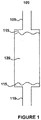
- Fig. 1 illustrates a cartridge 100 for generating NO by converting NO 2 to NO.
- the cartridge 100 which may be referred to as a cartridge, a converter, a NO generation cartridge, a GENO cartridge, or a GENO cylinder or NitrosylTM Primary Cartridge, can include an inlet 105 and an outlet 110.
- Screen and/or glass wool 115 can be located at the inlet 105 and/or the outlet 110.
- the remainder of the cartridge 100 can be filled with a surface-active material 120 that is coated with a reducing agent.
- the surface-active material can be soaked with a saturated solution including a reducing agent to coat the surface-active material.
- the saturated solution can be, for example, an antioxidant in water.
- the screen and/or glass wool 115 can also be soaked with the saturated solution before being inserted into the cartridge 100.
- the antioxidant can be ascorbic acid.
- a gas flow (e.g. air flow) having NO 2 can be received through the inlet 105.
- the gas flow can be fluidly communicated to the outlet 110 through the surface-active material 120 coated with the aqueous reducing agent, e.g. antioxidant.
- the general process can be effective at converting NO 2 to NO at ambient temperature.
- the inlet 105 also may receive a gas flow, e.g. air flow, having NO 2 , for example, from source of NO 2 .
- a source of NO 2 can include a pressurized bottle of NO 2 , which also may be referred to as a tank of NO 2 .
- the inlet 105 also may receive a gas flow with NO 2 in nitrogen (N 2 ), air, or oxygen (O 2 ). The conversion can occur over a wide concentration range. Experiments have been carried out at concentrations in a gas including from about 2 ppm NO 2 to 100 ppm NO 2 , and even to over 1000 ppm NO 2 .
- a cartridge that was approximately 6 inches long and had a diameter of 1.5-inches was packed with silica gel that had first been soaked in a saturated aqueous solution of ascorbic acid.
- the moist silica gel was prepared using ascorbic acid (i.e., vitamin C) designated as A.C.S reagent grade 99.1% pure from Aldrich Chemical Company and silica gel from Fischer Scientific International, Inc., designated as S8 32-1, 40 of Grade of 35 to 70 sized mesh.
- ascorbic acid i.e., vitamin C
- silica gel from Fischer Scientific International, Inc. designated as S8 32-1, 40 of Grade of 35 to 70 sized mesh.
- Other sizes of silica gel also can be effective.
- silica gel having an eighth-inch diameter could also work.
- the surface active material e.g. silica gel
- a solution including a reducing agent e.g. a saturated solution including a reducing agent.
- a saturated solution of ascorbic acid in water more specifically, the saturated solution can be a saturated solution that had been prepared by mixing 35% by weight ascorbic acid in water, stirring, and straining the water/ascorbic acid mixture through the silica gel, followed by draining.
- the conversion of NO 2 to NO can proceed well when the surface active material (e.g. silica gel) coated with a reducing agent (e.g. ascorbic acid) is moist.
- the conversion of NO 2 to NO may not proceed well with a reducing agent alone, for example, in an aqueous solution of ascorbic acid alone.
- the cartridge can be filled with the wet silica gel/reducing agent.
- a cartridge filled with the wet silica gel/ascorbic acid was able to convert 1000 ppm of NO 2 in air to NO at a flow rate of 150 ml per minute, quantitatively, non-stop for over 12 days.
- a wide variety of flow rates and NO 2 concentrations have been successfully tested, ranging from only a few ml per minute to flow rates of up to 5,000 ml per minute.
- Any appropriate reducing agent that can convert NO 2 or N 2 O 4 to NO can be used as determined by a person of skill in the art.
- the reducing agent can include a hydroquinone, glutathione, thiols, nitrites, and/or one or more reduced metal salts such as Fe(II), Mo(VI), NaI, Ti(III) or Cr(III).
- the reducing agent can be an antioxidant.
- the antioxidant can be an aqueous solution of an antioxidant.
- the antioxidant can be ascorbic acid, alpha tocopherol, or gamma tocopherol. Any appropriate antioxidant can be used depending on the activities and properties as determined by a person of skill in the art.
- the antioxidant can be used dry or wet.
- the antioxidant/surface-active material GENO cartridge may be used for inhalation therapy.
- the GENO cartridge can be used as a NO 2 scrubber for NO inhalation therapy that delivers NO from a pressurized bottle source.
- the GENO cartridge can be used to remove any NO 2 that chemically forms during inhalation therapy. This GENO cartridge can be used to help ensure that no harmful levels of NO 2 are inadvertently inhaled by the patient.
- the GENO cartridge may be used to supplement or replace some or all of the safety devices used during inhalation therapy in conventional NO inhalation therapy.
- one type of safety device can warn of the presence of NO 2 in air when the concentration of NO 2 exceeds a preset or predetermined limit, usually 1 part per million or greater of NO 2 .
- a safety device may be unnecessary when a GENO cartridge is positioned in a NO delivery system just prior to the patient breathing the NO laden air.
- the GENO cartridge can convert any NO 2 to NO just prior to the patient breathing the NO laden gas, which can make a device to warn of the presence of NO 2 in gas unnecessary.
- a NO 2 removal cartridge can be inserted just before the attachment of the delivery system to the patient to further enhance safety and help ensure that all traces of the toxic NO 2 have been removed.
- the NO 2 removal cartridge may be a GENO cartridge used to remove any trace amounts of NO 2 .
- the NO 2 removal cartridge may include heat-activated alumina.
- a cartridge with heat-activated alumina, such as supplied by Fisher Scientific International, Inc., designated as A505-212, of 8-14 sized mesh can be effective at removing low levels of NO 2 from an air or oxygen stream, and yet can let NO gas pass through without loss.
- Activated alumina, and other high surface area materials like it, can be used to scrub NO 2 from a NO inhalation line.
Landscapes
- Health & Medical Sciences (AREA)
- Life Sciences & Earth Sciences (AREA)
- Veterinary Medicine (AREA)
- Public Health (AREA)
- General Health & Medical Sciences (AREA)
- Animal Behavior & Ethology (AREA)
- Chemical & Material Sciences (AREA)
- Medicinal Chemistry (AREA)
- Pharmacology & Pharmacy (AREA)
- Engineering & Computer Science (AREA)
- Heart & Thoracic Surgery (AREA)
- Epidemiology (AREA)
- Nuclear Medicine, Radiotherapy & Molecular Imaging (AREA)
- Organic Chemistry (AREA)
- General Chemical & Material Sciences (AREA)
- Chemical Kinetics & Catalysis (AREA)
- Bioinformatics & Cheminformatics (AREA)
- Biomedical Technology (AREA)
- Hematology (AREA)
- Pulmonology (AREA)
- Cardiology (AREA)
- Surgery (AREA)
- Anesthesiology (AREA)
- Biophysics (AREA)
- Pathology (AREA)
- Physiology (AREA)
- Medical Informatics (AREA)
- Physics & Mathematics (AREA)
- Molecular Biology (AREA)
- Emergency Medicine (AREA)
- Inorganic Chemistry (AREA)
- Pharmaceuticals Containing Other Organic And Inorganic Compounds (AREA)
- Medicines That Contain Protein Lipid Enzymes And Other Medicines (AREA)
- Measuring Pulse, Heart Rate, Blood Pressure Or Blood Flow (AREA)
- Investigating Or Analysing Biological Materials (AREA)
- Steroid Compounds (AREA)
- Acyclic And Carbocyclic Compounds In Medicinal Compositions (AREA)
Applications Claiming Priority (2)
| Application Number | Priority Date | Filing Date | Title |
|---|---|---|---|
| US201161490929P | 2011-05-27 | 2011-05-27 | |
| PCT/US2012/039401 WO2012166534A1 (en) | 2011-05-27 | 2012-05-24 | Method of determining vasoreactivity using inhaled nitric oxide |
Publications (3)
| Publication Number | Publication Date |
|---|---|
| EP2713723A1 EP2713723A1 (en) | 2014-04-09 |
| EP2713723A4 EP2713723A4 (en) | 2015-03-25 |
| EP2713723B1 true EP2713723B1 (en) | 2018-09-12 |
Family
ID=47259769
Family Applications (1)
| Application Number | Title | Priority Date | Filing Date |
|---|---|---|---|
| EP12793863.7A Active EP2713723B1 (en) | 2011-05-27 | 2012-05-24 | Method of determining vasoreactivity using inhaled nitric oxide |
Country Status (6)
| Country | Link |
|---|---|
| US (1) | US11154210B2 (enExample) |
| EP (1) | EP2713723B1 (enExample) |
| JP (3) | JP2014527025A (enExample) |
| AU (1) | AU2012262534B2 (enExample) |
| CA (1) | CA2837341C (enExample) |
| WO (1) | WO2012166534A1 (enExample) |
Families Citing this family (20)
| Publication number | Priority date | Publication date | Assignee | Title |
|---|---|---|---|---|
| US7618594B2 (en) | 2004-08-18 | 2009-11-17 | Geno Llc | Conversion of nitrogen dioxide (NO2) to nitric oxide (NO) |
| EP2724742B1 (en) * | 2004-08-18 | 2017-11-01 | Geno LLC | Conversion of nitrogen dioxide (no2) to nitric oxide (no) |
| WO2009097343A1 (en) | 2008-01-28 | 2009-08-06 | Geno Llc | Conversion of nitrogen dioxide (no2) to nitric oxide (no) |
| US8607785B2 (en) | 2008-08-21 | 2013-12-17 | Geno Llc | Systems and devices for generating nitric oxide |
| WO2010151505A1 (en) | 2009-06-22 | 2010-12-29 | Geno Llc | Nitric oxide therapies |
| CA2837341C (en) | 2011-05-27 | 2021-10-19 | Geno Llc | Method of determining vasoreactivity using inhaled nitric oxide |
| EP2951968B1 (en) | 2014-04-15 | 2018-07-18 | CommScope Technologies LLC | Wideband remote unit for distributed antenna system |
| AU2017218391B2 (en) * | 2016-02-12 | 2022-11-24 | Mallinckrodt Pharmaceuticals Ireland Limited | Use and monitoring of inhaled nitric oxide with left ventricular assist devices |
| WO2018157172A1 (en) | 2017-02-27 | 2018-08-30 | Third Pole, Inc. | Systems and methods for generating nitric oxide |
| US10328228B2 (en) | 2017-02-27 | 2019-06-25 | Third Pole, Inc. | Systems and methods for ambulatory generation of nitric oxide |
| MX2020010523A (es) | 2017-02-27 | 2021-02-09 | Third Pole Inc | Sistemas y metodos para generar oxido nitrico. |
| US11672938B1 (en) | 2018-07-18 | 2023-06-13 | Vero Biotech LLC | Start-up protocols for nitric oxide delivery device |
| CA3116166A1 (en) * | 2018-10-12 | 2020-04-16 | Sanotize Research And Development Corp. | Gas-evolving compositions and container and delivery systems |
| JP2022533628A (ja) | 2019-05-15 | 2022-07-25 | サード ポール,インコーポレイテッド | 一酸化窒素生成用電極 |
| US11479464B2 (en) | 2019-05-15 | 2022-10-25 | Third Pole, Inc. | Systems and methods for generating nitric oxide |
| WO2020232414A1 (en) | 2019-05-15 | 2020-11-19 | Third Pole, Inc. | Architectures for production of nitric oxide |
| EP4069069A4 (en) | 2020-01-11 | 2024-07-03 | Third Pole, Inc. | SYSTEMS AND METHODS FOR NITROGEN OXIDE PRODUCTION WITH HUMIDITY CONTROL |
| EP4167920A4 (en) | 2020-06-18 | 2024-06-12 | Third Pole, Inc. | Systems and methods for preventing and treating infections with nitric oxide |
| WO2022082072A1 (en) | 2020-10-16 | 2022-04-21 | Third Pole, Inc. | Nitric oxide generation process controls |
| US11975139B2 (en) | 2021-09-23 | 2024-05-07 | Third Pole, Inc. | Systems and methods for delivering nitric oxide |
Family Cites Families (26)
| Publication number | Priority date | Publication date | Assignee | Title |
|---|---|---|---|---|
| US6758214B2 (en) | 2000-01-28 | 2004-07-06 | Cyterra Corporation | Simple nitric oxide generator for ambulatory and/or bedside inhaled no treatment |
| CA2459891C (en) | 2001-09-05 | 2014-02-04 | Cyterra Corporation | Method and apparatus for nitric oxide generation |
| US7618594B2 (en) | 2004-08-18 | 2009-11-17 | Geno Llc | Conversion of nitrogen dioxide (NO2) to nitric oxide (NO) |
| EP2724742B1 (en) | 2004-08-18 | 2017-11-01 | Geno LLC | Conversion of nitrogen dioxide (no2) to nitric oxide (no) |
| CA2588994A1 (en) * | 2004-12-08 | 2006-06-15 | Biomarin Pharmaceutical Inc. | Methods and compositions for the treatment of pulmonary hypertension of the newborn |
| WO2007087575A2 (en) * | 2006-01-24 | 2007-08-02 | University Of Chicago | Compositions and methods for treating pulmonary hypertension |
| CA2681308C (en) | 2007-03-23 | 2015-11-24 | Geno Llc | Conversion of nitrogen dioxide (no2) to nitric oxide (no) |
| WO2009097343A1 (en) | 2008-01-28 | 2009-08-06 | Geno Llc | Conversion of nitrogen dioxide (no2) to nitric oxide (no) |
| JP6058888B2 (ja) | 2008-07-24 | 2017-01-11 | ゲノ エルエルシー | 患者における心臓の病気の診断及び治療方法 |
| US10960168B2 (en) | 2008-08-21 | 2021-03-30 | Vero Biotech LLC | Delivery of high concentration nitric oxide |
| US10780241B2 (en) | 2008-08-21 | 2020-09-22 | Vero Biotech LLC | Devices and methods for minimizing and treating high-altitude sickness |
| US8607785B2 (en) | 2008-08-21 | 2013-12-17 | Geno Llc | Systems and devices for generating nitric oxide |
| US8701657B2 (en) | 2008-08-21 | 2014-04-22 | Geno Llc | Systems for generating nitric oxide |
| US8173072B2 (en) | 2008-09-22 | 2012-05-08 | Geno Llc | Conversation of nitrogen dioxide (NO2) to nitric oxide (NO) |
| WO2010151505A1 (en) | 2009-06-22 | 2010-12-29 | Geno Llc | Nitric oxide therapies |
| CA3130908A1 (en) * | 2009-06-30 | 2010-12-30 | Mallinckrodt Hospital Products IP Limited | Methods of treating term and near-term neonates having hypoxic respiratory failure associated with clinical or echocardiographic evidence of pulmonary hypertension |
| US20120093948A1 (en) * | 2009-11-20 | 2012-04-19 | Fine David H | Nitric Oxide Treatments |
| US8646445B2 (en) | 2009-11-20 | 2014-02-11 | Geno Llc | Nitric oxide delivery system |
| WO2011137122A1 (en) | 2010-04-26 | 2011-11-03 | Geno Llc | Nitrosyl special connector |
| WO2011137124A1 (en) | 2010-04-26 | 2011-11-03 | Geno Llc | Delivery of ultra pure nitric oxide (no) |
| USD688352S1 (en) | 2010-04-27 | 2013-08-20 | Geno Llc | Female gas connector |
| USD679366S1 (en) | 2010-04-27 | 2013-04-02 | Geno Llc | Male gas connector |
| JP2014506872A (ja) * | 2010-12-03 | 2014-03-20 | ゲノ エルエルシー | 一酸化窒素治療 |
| CA2833914A1 (en) * | 2011-05-10 | 2012-11-15 | Universite Laval | Methods for the treatment and diagnostic of pulmonary arterial hypertension |
| CA2837341C (en) | 2011-05-27 | 2021-10-19 | Geno Llc | Method of determining vasoreactivity using inhaled nitric oxide |
| EP3209360B1 (en) | 2014-10-20 | 2022-12-07 | VERO Biotech LLC | Nitrogen dioxide storage cassette |
-
2012
- 2012-05-24 CA CA2837341A patent/CA2837341C/en active Active
- 2012-05-24 AU AU2012262534A patent/AU2012262534B2/en not_active Ceased
- 2012-05-24 WO PCT/US2012/039401 patent/WO2012166534A1/en not_active Ceased
- 2012-05-24 EP EP12793863.7A patent/EP2713723B1/en active Active
- 2012-05-24 JP JP2014512110A patent/JP2014527025A/ja active Pending
-
2013
- 2013-01-07 US US13/735,558 patent/US11154210B2/en active Active
-
2017
- 2017-03-27 JP JP2017061811A patent/JP2017165731A/ja not_active Ceased
-
2019
- 2019-02-28 JP JP2019035311A patent/JP2019131556A/ja active Pending
Non-Patent Citations (1)
| Title |
|---|
| None * |
Also Published As
| Publication number | Publication date |
|---|---|
| JP2014527025A (ja) | 2014-10-09 |
| EP2713723A1 (en) | 2014-04-09 |
| US11154210B2 (en) | 2021-10-26 |
| CA2837341A1 (en) | 2012-12-06 |
| JP2017165731A (ja) | 2017-09-21 |
| CA2837341C (en) | 2021-10-19 |
| AU2012262534A1 (en) | 2013-12-12 |
| WO2012166534A1 (en) | 2012-12-06 |
| EP2713723A4 (en) | 2015-03-25 |
| US20130309328A1 (en) | 2013-11-21 |
| JP2019131556A (ja) | 2019-08-08 |
| AU2012262534B2 (en) | 2016-06-02 |
Similar Documents
| Publication | Publication Date | Title |
|---|---|---|
| EP2713723B1 (en) | Method of determining vasoreactivity using inhaled nitric oxide | |
| Machado et al. | Nitric oxide and pulmonary arterial pressures in pulmonary hypertension | |
| JP2015145376A (ja) | 患者における心臓の病気の診断及び治療方法 | |
| Haberger et al. | Prognostic value of plasma B-type natriuretic peptide in the long-term follow-up of patients with transposition of the great arteries with morphologic right systemic ventricle after atrial switch operation | |
| Gabrielli et al. | Systemic oxidative stress and endothelial dysfunction is associated with an attenuated acute vascular response to inhaled prostanoid in pulmonary artery hypertension patients | |
| US20180000859A1 (en) | Systems andmethods to improve organor tissue function andorganor tissue transplant longevity | |
| Grasemann et al. | Metabolites of nitric oxide in the lower respiratory tract of children | |
| Yoon et al. | Pulmonary dysfunction is possibly a marker of malnutrition and inflammation but not mortality in patients with end-stage renal disease | |
| TW200744701A (en) | Test agent for diagnosing dyspepsia | |
| Lee-Chiong et al. | The heart in the stable COPD patient | |
| Szturmowicz et al. | Pulmonary hypertension in the course of diffuse parenchymal lung diseases—state of art and future considerations | |
| Daif et al. | Using echocardiography and chest ultrasound for guidance of management of difficult-to-wean COPD patients | |
| Morris | Pulmonary diseases | |
| Habedank et al. | Vasodilation and exercise capacity in patients with end-stage renal disease: a prospective proof-of-concept study | |
| Westhoff-Bleck et al. | QRS duration in Fontan circulation in adults: a predictor of aerobic capacity | |
| ÖZTUNA et al. | Effect of nasal continuous positive airway pressure on global right ventricular myocardial performance in patients with obstructive sleep apnea syndrome | |
| Vijayakumar et al. | Early Prediction of Acute Kidney Injury in Living Donor Liver Transplantation by Serum Cystatin C Concentration at the End of the Surgery. | |
| Adıyeke et al. | Efficacy of Tocilizumab in the treatment of severe COVID-19 patients with respiratory failure: Treatment of Covid-19 pneumonia with Tocilizumab | |
| Baur et al. | Determination of exhaled nitric oxide in respiratory diseases | |
| Eyre et al. | MCQs and SBAs in Intensive Care Medicine | |
| Antonelli et al. | Year in review in Intensive Care Medicine, 2007. II. Haemodynamics, pneumonia, infections and sepsis, invasive and non-invasive mechanical ventilation, acute respiratory distress syndrome | |
| Shubrooks Jr et al. | Acidosis and pulmonary hemodynamics in hemorrhagic shock | |
| Sayed et al. | The Predictive Value of the Integrated Weaning Indices in Mechanically Ventilated COPD Patients | |
| Morley | Video instruction for dispatch-assisted cardiopulmonary resuscitation: Two steps forward and one step back! | |
| Teboul | Meaning of pulse pressure variation during cardiac surgery: everything is open |
Legal Events
| Date | Code | Title | Description |
|---|---|---|---|
| PUAI | Public reference made under article 153(3) epc to a published international application that has entered the european phase |
Free format text: ORIGINAL CODE: 0009012 |
|
| 17P | Request for examination filed |
Effective date: 20131218 |
|
| AK | Designated contracting states |
Kind code of ref document: A1 Designated state(s): AL AT BE BG CH CY CZ DE DK EE ES FI FR GB GR HR HU IE IS IT LI LT LU LV MC MK MT NL NO PL PT RO RS SE SI SK SM TR |
|
| DAX | Request for extension of the european patent (deleted) | ||
| RIC1 | Information provided on ipc code assigned before grant |
Ipc: A61B 5/026 20060101ALI20141121BHEP Ipc: A61P 11/00 20060101ALI20141121BHEP Ipc: A61K 31/13 20060101AFI20141121BHEP Ipc: A61P 43/00 20060101ALI20141121BHEP Ipc: A61P 9/12 20060101ALI20141121BHEP |
|
| A4 | Supplementary search report drawn up and despatched |
Effective date: 20150224 |
|
| RIC1 | Information provided on ipc code assigned before grant |
Ipc: A61B 5/026 20060101ALI20150218BHEP Ipc: A61K 31/13 20060101AFI20150218BHEP Ipc: A61P 9/12 20060101ALI20150218BHEP Ipc: A61P 43/00 20060101ALI20150218BHEP Ipc: A61P 11/00 20060101ALI20150218BHEP |
|
| 17Q | First examination report despatched |
Effective date: 20160518 |
|
| STAA | Information on the status of an ep patent application or granted ep patent |
Free format text: STATUS: EXAMINATION IS IN PROGRESS |
|
| REG | Reference to a national code |
Ref country code: DE Ref legal event code: R079 Ref document number: 602012051042 Country of ref document: DE Free format text: PREVIOUS MAIN CLASS: A01N0033240000 Ipc: A61B0005026000 |
|
| GRAP | Despatch of communication of intention to grant a patent |
Free format text: ORIGINAL CODE: EPIDOSNIGR1 |
|
| STAA | Information on the status of an ep patent application or granted ep patent |
Free format text: STATUS: GRANT OF PATENT IS INTENDED |
|
| GRAJ | Information related to disapproval of communication of intention to grant by the applicant or resumption of examination proceedings by the epo deleted |
Free format text: ORIGINAL CODE: EPIDOSDIGR1 |
|
| GRAP | Despatch of communication of intention to grant a patent |
Free format text: ORIGINAL CODE: EPIDOSNIGR1 |
|
| STAA | Information on the status of an ep patent application or granted ep patent |
Free format text: STATUS: EXAMINATION IS IN PROGRESS |
|
| GRAJ | Information related to disapproval of communication of intention to grant by the applicant or resumption of examination proceedings by the epo deleted |
Free format text: ORIGINAL CODE: EPIDOSDIGR1 |
|
| STAA | Information on the status of an ep patent application or granted ep patent |
Free format text: STATUS: GRANT OF PATENT IS INTENDED |
|
| RIC1 | Information provided on ipc code assigned before grant |
Ipc: A61M 16/12 20060101ALI20180220BHEP Ipc: A61K 33/00 20060101ALI20180220BHEP Ipc: A61P 11/00 20060101ALI20180220BHEP Ipc: A61B 5/026 20060101AFI20180220BHEP Ipc: A61P 9/12 20060101ALI20180220BHEP Ipc: A61K 31/13 20060101ALI20180220BHEP Ipc: A61P 43/00 20060101ALI20180220BHEP |
|
| GRAP | Despatch of communication of intention to grant a patent |
Free format text: ORIGINAL CODE: EPIDOSNIGR1 |
|
| INTG | Intention to grant announced |
Effective date: 20180307 |
|
| INTG | Intention to grant announced |
Effective date: 20180323 |
|
| INTC | Intention to grant announced (deleted) | ||
| INTG | Intention to grant announced |
Effective date: 20180404 |
|
| GRAS | Grant fee paid |
Free format text: ORIGINAL CODE: EPIDOSNIGR3 |
|
| GRAA | (expected) grant |
Free format text: ORIGINAL CODE: 0009210 |
|
| STAA | Information on the status of an ep patent application or granted ep patent |
Free format text: STATUS: THE PATENT HAS BEEN GRANTED |
|
| AK | Designated contracting states |
Kind code of ref document: B1 Designated state(s): AL AT BE BG CH CY CZ DE DK EE ES FI FR GB GR HR HU IE IS IT LI LT LU LV MC MK MT NL NO PL PT RO RS SE SI SK SM TR |
|
| REG | Reference to a national code |
Ref country code: GB Ref legal event code: FG4D |
|
| REG | Reference to a national code |
Ref country code: CH Ref legal event code: EP |
|
| REG | Reference to a national code |
Ref country code: IE Ref legal event code: FG4D |
|
| REG | Reference to a national code |
Ref country code: DE Ref legal event code: R096 Ref document number: 602012051042 Country of ref document: DE |
|
| REG | Reference to a national code |
Ref country code: AT Ref legal event code: REF Ref document number: 1039618 Country of ref document: AT Kind code of ref document: T Effective date: 20181015 |
|
| RAP2 | Party data changed (patent owner data changed or rights of a patent transferred) |
Owner name: VERO BIOTECH LLC |
|
| REG | Reference to a national code |
Ref country code: NL Ref legal event code: FP |
|
| REG | Reference to a national code |
Ref country code: LT Ref legal event code: MG4D |
|
| PG25 | Lapsed in a contracting state [announced via postgrant information from national office to epo] |
Ref country code: LT Free format text: LAPSE BECAUSE OF FAILURE TO SUBMIT A TRANSLATION OF THE DESCRIPTION OR TO PAY THE FEE WITHIN THE PRESCRIBED TIME-LIMIT Effective date: 20180912 Ref country code: RS Free format text: LAPSE BECAUSE OF FAILURE TO SUBMIT A TRANSLATION OF THE DESCRIPTION OR TO PAY THE FEE WITHIN THE PRESCRIBED TIME-LIMIT Effective date: 20180912 Ref country code: FI Free format text: LAPSE BECAUSE OF FAILURE TO SUBMIT A TRANSLATION OF THE DESCRIPTION OR TO PAY THE FEE WITHIN THE PRESCRIBED TIME-LIMIT Effective date: 20180912 Ref country code: BG Free format text: LAPSE BECAUSE OF FAILURE TO SUBMIT A TRANSLATION OF THE DESCRIPTION OR TO PAY THE FEE WITHIN THE PRESCRIBED TIME-LIMIT Effective date: 20181212 Ref country code: NO Free format text: LAPSE BECAUSE OF FAILURE TO SUBMIT A TRANSLATION OF THE DESCRIPTION OR TO PAY THE FEE WITHIN THE PRESCRIBED TIME-LIMIT Effective date: 20181212 Ref country code: GR Free format text: LAPSE BECAUSE OF FAILURE TO SUBMIT A TRANSLATION OF THE DESCRIPTION OR TO PAY THE FEE WITHIN THE PRESCRIBED TIME-LIMIT Effective date: 20181213 Ref country code: SE Free format text: LAPSE BECAUSE OF FAILURE TO SUBMIT A TRANSLATION OF THE DESCRIPTION OR TO PAY THE FEE WITHIN THE PRESCRIBED TIME-LIMIT Effective date: 20180912 |
|
| PG25 | Lapsed in a contracting state [announced via postgrant information from national office to epo] |
Ref country code: HR Free format text: LAPSE BECAUSE OF FAILURE TO SUBMIT A TRANSLATION OF THE DESCRIPTION OR TO PAY THE FEE WITHIN THE PRESCRIBED TIME-LIMIT Effective date: 20180912 Ref country code: LV Free format text: LAPSE BECAUSE OF FAILURE TO SUBMIT A TRANSLATION OF THE DESCRIPTION OR TO PAY THE FEE WITHIN THE PRESCRIBED TIME-LIMIT Effective date: 20180912 Ref country code: AL Free format text: LAPSE BECAUSE OF FAILURE TO SUBMIT A TRANSLATION OF THE DESCRIPTION OR TO PAY THE FEE WITHIN THE PRESCRIBED TIME-LIMIT Effective date: 20180912 |
|
| REG | Reference to a national code |
Ref country code: AT Ref legal event code: MK05 Ref document number: 1039618 Country of ref document: AT Kind code of ref document: T Effective date: 20180912 |
|
| PG25 | Lapsed in a contracting state [announced via postgrant information from national office to epo] |
Ref country code: CZ Free format text: LAPSE BECAUSE OF FAILURE TO SUBMIT A TRANSLATION OF THE DESCRIPTION OR TO PAY THE FEE WITHIN THE PRESCRIBED TIME-LIMIT Effective date: 20180912 Ref country code: RO Free format text: LAPSE BECAUSE OF FAILURE TO SUBMIT A TRANSLATION OF THE DESCRIPTION OR TO PAY THE FEE WITHIN THE PRESCRIBED TIME-LIMIT Effective date: 20180912 Ref country code: ES Free format text: LAPSE BECAUSE OF FAILURE TO SUBMIT A TRANSLATION OF THE DESCRIPTION OR TO PAY THE FEE WITHIN THE PRESCRIBED TIME-LIMIT Effective date: 20180912 Ref country code: IS Free format text: LAPSE BECAUSE OF FAILURE TO SUBMIT A TRANSLATION OF THE DESCRIPTION OR TO PAY THE FEE WITHIN THE PRESCRIBED TIME-LIMIT Effective date: 20190112 Ref country code: PL Free format text: LAPSE BECAUSE OF FAILURE TO SUBMIT A TRANSLATION OF THE DESCRIPTION OR TO PAY THE FEE WITHIN THE PRESCRIBED TIME-LIMIT Effective date: 20180912 Ref country code: IT Free format text: LAPSE BECAUSE OF FAILURE TO SUBMIT A TRANSLATION OF THE DESCRIPTION OR TO PAY THE FEE WITHIN THE PRESCRIBED TIME-LIMIT Effective date: 20180912 Ref country code: EE Free format text: LAPSE BECAUSE OF FAILURE TO SUBMIT A TRANSLATION OF THE DESCRIPTION OR TO PAY THE FEE WITHIN THE PRESCRIBED TIME-LIMIT Effective date: 20180912 Ref country code: AT Free format text: LAPSE BECAUSE OF FAILURE TO SUBMIT A TRANSLATION OF THE DESCRIPTION OR TO PAY THE FEE WITHIN THE PRESCRIBED TIME-LIMIT Effective date: 20180912 |
|
| PG25 | Lapsed in a contracting state [announced via postgrant information from national office to epo] |
Ref country code: SM Free format text: LAPSE BECAUSE OF FAILURE TO SUBMIT A TRANSLATION OF THE DESCRIPTION OR TO PAY THE FEE WITHIN THE PRESCRIBED TIME-LIMIT Effective date: 20180912 Ref country code: SK Free format text: LAPSE BECAUSE OF FAILURE TO SUBMIT A TRANSLATION OF THE DESCRIPTION OR TO PAY THE FEE WITHIN THE PRESCRIBED TIME-LIMIT Effective date: 20180912 Ref country code: PT Free format text: LAPSE BECAUSE OF FAILURE TO SUBMIT A TRANSLATION OF THE DESCRIPTION OR TO PAY THE FEE WITHIN THE PRESCRIBED TIME-LIMIT Effective date: 20190112 |
|
| REG | Reference to a national code |
Ref country code: DE Ref legal event code: R097 Ref document number: 602012051042 Country of ref document: DE |
|
| PGFP | Annual fee paid to national office [announced via postgrant information from national office to epo] |
Ref country code: NL Payment date: 20190526 Year of fee payment: 8 |
|
| PLBE | No opposition filed within time limit |
Free format text: ORIGINAL CODE: 0009261 |
|
| STAA | Information on the status of an ep patent application or granted ep patent |
Free format text: STATUS: NO OPPOSITION FILED WITHIN TIME LIMIT |
|
| PG25 | Lapsed in a contracting state [announced via postgrant information from national office to epo] |
Ref country code: DK Free format text: LAPSE BECAUSE OF FAILURE TO SUBMIT A TRANSLATION OF THE DESCRIPTION OR TO PAY THE FEE WITHIN THE PRESCRIBED TIME-LIMIT Effective date: 20180912 |
|
| 26N | No opposition filed |
Effective date: 20190613 |
|
| PG25 | Lapsed in a contracting state [announced via postgrant information from national office to epo] |
Ref country code: SI Free format text: LAPSE BECAUSE OF FAILURE TO SUBMIT A TRANSLATION OF THE DESCRIPTION OR TO PAY THE FEE WITHIN THE PRESCRIBED TIME-LIMIT Effective date: 20180912 |
|
| REG | Reference to a national code |
Ref country code: DE Ref legal event code: R119 Ref document number: 602012051042 Country of ref document: DE |
|
| REG | Reference to a national code |
Ref country code: CH Ref legal event code: PL |
|
| PG25 | Lapsed in a contracting state [announced via postgrant information from national office to epo] |
Ref country code: MC Free format text: LAPSE BECAUSE OF FAILURE TO SUBMIT A TRANSLATION OF THE DESCRIPTION OR TO PAY THE FEE WITHIN THE PRESCRIBED TIME-LIMIT Effective date: 20180912 Ref country code: CH Free format text: LAPSE BECAUSE OF NON-PAYMENT OF DUE FEES Effective date: 20190531 Ref country code: LI Free format text: LAPSE BECAUSE OF NON-PAYMENT OF DUE FEES Effective date: 20190531 |
|
| REG | Reference to a national code |
Ref country code: BE Ref legal event code: MM Effective date: 20190531 |
|
| PG25 | Lapsed in a contracting state [announced via postgrant information from national office to epo] |
Ref country code: LU Free format text: LAPSE BECAUSE OF NON-PAYMENT OF DUE FEES Effective date: 20190524 |
|
| PG25 | Lapsed in a contracting state [announced via postgrant information from national office to epo] |
Ref country code: TR Free format text: LAPSE BECAUSE OF FAILURE TO SUBMIT A TRANSLATION OF THE DESCRIPTION OR TO PAY THE FEE WITHIN THE PRESCRIBED TIME-LIMIT Effective date: 20180912 |
|
| PG25 | Lapsed in a contracting state [announced via postgrant information from national office to epo] |
Ref country code: DE Free format text: LAPSE BECAUSE OF NON-PAYMENT OF DUE FEES Effective date: 20191203 Ref country code: IE Free format text: LAPSE BECAUSE OF NON-PAYMENT OF DUE FEES Effective date: 20190524 |
|
| PG25 | Lapsed in a contracting state [announced via postgrant information from national office to epo] |
Ref country code: BE Free format text: LAPSE BECAUSE OF NON-PAYMENT OF DUE FEES Effective date: 20190531 |
|
| REG | Reference to a national code |
Ref country code: NL Ref legal event code: MM Effective date: 20200601 |
|
| PG25 | Lapsed in a contracting state [announced via postgrant information from national office to epo] |
Ref country code: NL Free format text: LAPSE BECAUSE OF NON-PAYMENT OF DUE FEES Effective date: 20200601 |
|
| PG25 | Lapsed in a contracting state [announced via postgrant information from national office to epo] |
Ref country code: CY Free format text: LAPSE BECAUSE OF FAILURE TO SUBMIT A TRANSLATION OF THE DESCRIPTION OR TO PAY THE FEE WITHIN THE PRESCRIBED TIME-LIMIT Effective date: 20180912 |
|
| PG25 | Lapsed in a contracting state [announced via postgrant information from national office to epo] |
Ref country code: HU Free format text: LAPSE BECAUSE OF FAILURE TO SUBMIT A TRANSLATION OF THE DESCRIPTION OR TO PAY THE FEE WITHIN THE PRESCRIBED TIME-LIMIT; INVALID AB INITIO Effective date: 20120524 Ref country code: MT Free format text: LAPSE BECAUSE OF FAILURE TO SUBMIT A TRANSLATION OF THE DESCRIPTION OR TO PAY THE FEE WITHIN THE PRESCRIBED TIME-LIMIT Effective date: 20180912 |
|
| PG25 | Lapsed in a contracting state [announced via postgrant information from national office to epo] |
Ref country code: MK Free format text: LAPSE BECAUSE OF FAILURE TO SUBMIT A TRANSLATION OF THE DESCRIPTION OR TO PAY THE FEE WITHIN THE PRESCRIBED TIME-LIMIT Effective date: 20180912 |
|
| P01 | Opt-out of the competence of the unified patent court (upc) registered |
Effective date: 20230525 |
|
| PGFP | Annual fee paid to national office [announced via postgrant information from national office to epo] |
Ref country code: GB Payment date: 20250508 Year of fee payment: 14 |
|
| PGFP | Annual fee paid to national office [announced via postgrant information from national office to epo] |
Ref country code: FR Payment date: 20250508 Year of fee payment: 14 |