EP2700701A2 - Reaktionsvorrichtung zur herstellung von kohlenwasserstoffen aus einem synthesegas - Google Patents
Reaktionsvorrichtung zur herstellung von kohlenwasserstoffen aus einem synthesegas Download PDFInfo
- Publication number
- EP2700701A2 EP2700701A2 EP12774203.9A EP12774203A EP2700701A2 EP 2700701 A2 EP2700701 A2 EP 2700701A2 EP 12774203 A EP12774203 A EP 12774203A EP 2700701 A2 EP2700701 A2 EP 2700701A2
- Authority
- EP
- European Patent Office
- Prior art keywords
- heat exchange
- reaction
- reactor system
- exchange plates
- heat
- Prior art date
- Legal status (The legal status is an assumption and is not a legal conclusion. Google has not performed a legal analysis and makes no representation as to the accuracy of the status listed.)
- Withdrawn
Links
Images

Classifications
-
- B—PERFORMING OPERATIONS; TRANSPORTING
- B01—PHYSICAL OR CHEMICAL PROCESSES OR APPARATUS IN GENERAL
- B01J—CHEMICAL OR PHYSICAL PROCESSES, e.g. CATALYSIS OR COLLOID CHEMISTRY; THEIR RELEVANT APPARATUS
- B01J12/00—Chemical processes in general for reacting gaseous media with gaseous media; Apparatus specially adapted therefor
- B01J12/007—Chemical processes in general for reacting gaseous media with gaseous media; Apparatus specially adapted therefor in the presence of catalytically active bodies, e.g. porous plates
-
- C—CHEMISTRY; METALLURGY
- C10—PETROLEUM, GAS OR COKE INDUSTRIES; TECHNICAL GASES CONTAINING CARBON MONOXIDE; FUELS; LUBRICANTS; PEAT
- C10G—CRACKING HYDROCARBON OILS; PRODUCTION OF LIQUID HYDROCARBON MIXTURES, e.g. BY DESTRUCTIVE HYDROGENATION, OLIGOMERISATION, POLYMERISATION; RECOVERY OF HYDROCARBON OILS FROM OIL-SHALE, OIL-SAND, OR GASES; REFINING MIXTURES MAINLY CONSISTING OF HYDROCARBONS; REFORMING OF NAPHTHA; MINERAL WAXES
- C10G2/00—Production of liquid hydrocarbon mixtures of undefined composition from oxides of carbon
-
- B—PERFORMING OPERATIONS; TRANSPORTING
- B01—PHYSICAL OR CHEMICAL PROCESSES OR APPARATUS IN GENERAL
- B01J—CHEMICAL OR PHYSICAL PROCESSES, e.g. CATALYSIS OR COLLOID CHEMISTRY; THEIR RELEVANT APPARATUS
- B01J16/00—Chemical processes in general for reacting liquids with non- particulate solids, e.g. sheet material; Apparatus specially adapted therefor
- B01J16/005—Chemical processes in general for reacting liquids with non- particulate solids, e.g. sheet material; Apparatus specially adapted therefor in the presence of catalytically active bodies, e.g. porous plates
-
- B—PERFORMING OPERATIONS; TRANSPORTING
- B01—PHYSICAL OR CHEMICAL PROCESSES OR APPARATUS IN GENERAL
- B01J—CHEMICAL OR PHYSICAL PROCESSES, e.g. CATALYSIS OR COLLOID CHEMISTRY; THEIR RELEVANT APPARATUS
- B01J19/00—Chemical, physical or physico-chemical processes in general; Their relevant apparatus
-
- B—PERFORMING OPERATIONS; TRANSPORTING
- B01—PHYSICAL OR CHEMICAL PROCESSES OR APPARATUS IN GENERAL
- B01J—CHEMICAL OR PHYSICAL PROCESSES, e.g. CATALYSIS OR COLLOID CHEMISTRY; THEIR RELEVANT APPARATUS
- B01J19/00—Chemical, physical or physico-chemical processes in general; Their relevant apparatus
- B01J19/0093—Microreactors, e.g. miniaturised or microfabricated reactors
-
- B—PERFORMING OPERATIONS; TRANSPORTING
- B01—PHYSICAL OR CHEMICAL PROCESSES OR APPARATUS IN GENERAL
- B01J—CHEMICAL OR PHYSICAL PROCESSES, e.g. CATALYSIS OR COLLOID CHEMISTRY; THEIR RELEVANT APPARATUS
- B01J19/00—Chemical, physical or physico-chemical processes in general; Their relevant apparatus
- B01J19/24—Stationary reactors without moving elements inside
- B01J19/248—Reactors comprising multiple separated flow channels
- B01J19/249—Plate-type reactors
-
- B—PERFORMING OPERATIONS; TRANSPORTING
- B01—PHYSICAL OR CHEMICAL PROCESSES OR APPARATUS IN GENERAL
- B01J—CHEMICAL OR PHYSICAL PROCESSES, e.g. CATALYSIS OR COLLOID CHEMISTRY; THEIR RELEVANT APPARATUS
- B01J8/00—Chemical or physical processes in general, conducted in the presence of fluids and solid particles; Apparatus for such processes
-
- C—CHEMISTRY; METALLURGY
- C07—ORGANIC CHEMISTRY
- C07C—ACYCLIC OR CARBOCYCLIC COMPOUNDS
- C07C1/00—Preparation of hydrocarbons from one or more compounds, none of them being a hydrocarbon
- C07C1/02—Preparation of hydrocarbons from one or more compounds, none of them being a hydrocarbon from oxides of a carbon
- C07C1/04—Preparation of hydrocarbons from one or more compounds, none of them being a hydrocarbon from oxides of a carbon from carbon monoxide with hydrogen
-
- C—CHEMISTRY; METALLURGY
- C10—PETROLEUM, GAS OR COKE INDUSTRIES; TECHNICAL GASES CONTAINING CARBON MONOXIDE; FUELS; LUBRICANTS; PEAT
- C10G—CRACKING HYDROCARBON OILS; PRODUCTION OF LIQUID HYDROCARBON MIXTURES, e.g. BY DESTRUCTIVE HYDROGENATION, OLIGOMERISATION, POLYMERISATION; RECOVERY OF HYDROCARBON OILS FROM OIL-SHALE, OIL-SAND, OR GASES; REFINING MIXTURES MAINLY CONSISTING OF HYDROCARBONS; REFORMING OF NAPHTHA; MINERAL WAXES
- C10G2/00—Production of liquid hydrocarbon mixtures of undefined composition from oxides of carbon
- C10G2/30—Production of liquid hydrocarbon mixtures of undefined composition from oxides of carbon from carbon monoxide with hydrogen
- C10G2/32—Production of liquid hydrocarbon mixtures of undefined composition from oxides of carbon from carbon monoxide with hydrogen with the use of catalysts
- C10G2/34—Apparatus, reactors
- C10G2/341—Apparatus, reactors with stationary catalyst bed
-
- F—MECHANICAL ENGINEERING; LIGHTING; HEATING; WEAPONS; BLASTING
- F28—HEAT EXCHANGE IN GENERAL
- F28D—HEAT-EXCHANGE APPARATUS, NOT PROVIDED FOR IN ANOTHER SUBCLASS, IN WHICH THE HEAT-EXCHANGE MEDIA DO NOT COME INTO DIRECT CONTACT
- F28D9/00—Heat-exchange apparatus having stationary plate-like or laminated conduit assemblies for both heat-exchange media, the media being in contact with different sides of a conduit wall
- F28D9/0006—Heat-exchange apparatus having stationary plate-like or laminated conduit assemblies for both heat-exchange media, the media being in contact with different sides of a conduit wall the plate-like or laminated conduits being enclosed within a pressure vessel
-
- F—MECHANICAL ENGINEERING; LIGHTING; HEATING; WEAPONS; BLASTING
- F28—HEAT EXCHANGE IN GENERAL
- F28F—DETAILS OF HEAT-EXCHANGE AND HEAT-TRANSFER APPARATUS, OF GENERAL APPLICATION
- F28F9/00—Casings; Header boxes; Auxiliary supports for elements; Auxiliary members within casings
- F28F9/02—Header boxes; End plates
- F28F9/026—Header boxes; End plates with static flow control means, e.g. with means for uniformly distributing heat exchange media into conduits
-
- B—PERFORMING OPERATIONS; TRANSPORTING
- B01—PHYSICAL OR CHEMICAL PROCESSES OR APPARATUS IN GENERAL
- B01J—CHEMICAL OR PHYSICAL PROCESSES, e.g. CATALYSIS OR COLLOID CHEMISTRY; THEIR RELEVANT APPARATUS
- B01J2219/00—Chemical, physical or physico-chemical processes in general; Their relevant apparatus
- B01J2219/00049—Controlling or regulating processes
- B01J2219/00051—Controlling the temperature
- B01J2219/00074—Controlling the temperature by indirect heating or cooling employing heat exchange fluids
- B01J2219/00076—Controlling the temperature by indirect heating or cooling employing heat exchange fluids with heat exchange elements inside the reactor
- B01J2219/00085—Plates; Jackets; Cylinders
-
- B—PERFORMING OPERATIONS; TRANSPORTING
- B01—PHYSICAL OR CHEMICAL PROCESSES OR APPARATUS IN GENERAL
- B01J—CHEMICAL OR PHYSICAL PROCESSES, e.g. CATALYSIS OR COLLOID CHEMISTRY; THEIR RELEVANT APPARATUS
- B01J2219/00—Chemical, physical or physico-chemical processes in general; Their relevant apparatus
- B01J2219/00781—Aspects relating to microreactors
- B01J2219/00783—Laminate assemblies, i.e. the reactor comprising a stack of plates
-
- B—PERFORMING OPERATIONS; TRANSPORTING
- B01—PHYSICAL OR CHEMICAL PROCESSES OR APPARATUS IN GENERAL
- B01J—CHEMICAL OR PHYSICAL PROCESSES, e.g. CATALYSIS OR COLLOID CHEMISTRY; THEIR RELEVANT APPARATUS
- B01J2219/00—Chemical, physical or physico-chemical processes in general; Their relevant apparatus
- B01J2219/00781—Aspects relating to microreactors
- B01J2219/00783—Laminate assemblies, i.e. the reactor comprising a stack of plates
- B01J2219/00786—Geometry of the plates
-
- B—PERFORMING OPERATIONS; TRANSPORTING
- B01—PHYSICAL OR CHEMICAL PROCESSES OR APPARATUS IN GENERAL
- B01J—CHEMICAL OR PHYSICAL PROCESSES, e.g. CATALYSIS OR COLLOID CHEMISTRY; THEIR RELEVANT APPARATUS
- B01J2219/00—Chemical, physical or physico-chemical processes in general; Their relevant apparatus
- B01J2219/00781—Aspects relating to microreactors
- B01J2219/00801—Means to assemble
- B01J2219/00804—Plurality of plates
- B01J2219/00806—Frames
-
- B—PERFORMING OPERATIONS; TRANSPORTING
- B01—PHYSICAL OR CHEMICAL PROCESSES OR APPARATUS IN GENERAL
- B01J—CHEMICAL OR PHYSICAL PROCESSES, e.g. CATALYSIS OR COLLOID CHEMISTRY; THEIR RELEVANT APPARATUS
- B01J2219/00—Chemical, physical or physico-chemical processes in general; Their relevant apparatus
- B01J2219/00781—Aspects relating to microreactors
- B01J2219/00819—Materials of construction
- B01J2219/00822—Metal
-
- B—PERFORMING OPERATIONS; TRANSPORTING
- B01—PHYSICAL OR CHEMICAL PROCESSES OR APPARATUS IN GENERAL
- B01J—CHEMICAL OR PHYSICAL PROCESSES, e.g. CATALYSIS OR COLLOID CHEMISTRY; THEIR RELEVANT APPARATUS
- B01J2219/00—Chemical, physical or physico-chemical processes in general; Their relevant apparatus
- B01J2219/00781—Aspects relating to microreactors
- B01J2219/00819—Materials of construction
- B01J2219/00824—Ceramic
-
- B—PERFORMING OPERATIONS; TRANSPORTING
- B01—PHYSICAL OR CHEMICAL PROCESSES OR APPARATUS IN GENERAL
- B01J—CHEMICAL OR PHYSICAL PROCESSES, e.g. CATALYSIS OR COLLOID CHEMISTRY; THEIR RELEVANT APPARATUS
- B01J2219/00—Chemical, physical or physico-chemical processes in general; Their relevant apparatus
- B01J2219/00781—Aspects relating to microreactors
- B01J2219/00819—Materials of construction
- B01J2219/00835—Comprising catalytically active material
-
- B—PERFORMING OPERATIONS; TRANSPORTING
- B01—PHYSICAL OR CHEMICAL PROCESSES OR APPARATUS IN GENERAL
- B01J—CHEMICAL OR PHYSICAL PROCESSES, e.g. CATALYSIS OR COLLOID CHEMISTRY; THEIR RELEVANT APPARATUS
- B01J2219/00—Chemical, physical or physico-chemical processes in general; Their relevant apparatus
- B01J2219/00781—Aspects relating to microreactors
- B01J2219/00851—Additional features
- B01J2219/00858—Aspects relating to the size of the reactor
- B01J2219/0086—Dimensions of the flow channels
-
- B—PERFORMING OPERATIONS; TRANSPORTING
- B01—PHYSICAL OR CHEMICAL PROCESSES OR APPARATUS IN GENERAL
- B01J—CHEMICAL OR PHYSICAL PROCESSES, e.g. CATALYSIS OR COLLOID CHEMISTRY; THEIR RELEVANT APPARATUS
- B01J2219/00—Chemical, physical or physico-chemical processes in general; Their relevant apparatus
- B01J2219/00781—Aspects relating to microreactors
- B01J2219/00873—Heat exchange
-
- B—PERFORMING OPERATIONS; TRANSPORTING
- B01—PHYSICAL OR CHEMICAL PROCESSES OR APPARATUS IN GENERAL
- B01J—CHEMICAL OR PHYSICAL PROCESSES, e.g. CATALYSIS OR COLLOID CHEMISTRY; THEIR RELEVANT APPARATUS
- B01J2219/00—Chemical, physical or physico-chemical processes in general; Their relevant apparatus
- B01J2219/24—Stationary reactors without moving elements inside
- B01J2219/2401—Reactors comprising multiple separate flow channels
- B01J2219/2402—Monolithic-type reactors
- B01J2219/2425—Construction materials
- B01J2219/2433—Construction materials of the monoliths
- B01J2219/2434—Metals or alloys
-
- B—PERFORMING OPERATIONS; TRANSPORTING
- B01—PHYSICAL OR CHEMICAL PROCESSES OR APPARATUS IN GENERAL
- B01J—CHEMICAL OR PHYSICAL PROCESSES, e.g. CATALYSIS OR COLLOID CHEMISTRY; THEIR RELEVANT APPARATUS
- B01J2219/00—Chemical, physical or physico-chemical processes in general; Their relevant apparatus
- B01J2219/24—Stationary reactors without moving elements inside
- B01J2219/2401—Reactors comprising multiple separate flow channels
- B01J2219/2402—Monolithic-type reactors
- B01J2219/2425—Construction materials
- B01J2219/2433—Construction materials of the monoliths
- B01J2219/2438—Ceramics
-
- B—PERFORMING OPERATIONS; TRANSPORTING
- B01—PHYSICAL OR CHEMICAL PROCESSES OR APPARATUS IN GENERAL
- B01J—CHEMICAL OR PHYSICAL PROCESSES, e.g. CATALYSIS OR COLLOID CHEMISTRY; THEIR RELEVANT APPARATUS
- B01J2219/00—Chemical, physical or physico-chemical processes in general; Their relevant apparatus
- B01J2219/24—Stationary reactors without moving elements inside
- B01J2219/2401—Reactors comprising multiple separate flow channels
- B01J2219/245—Plate-type reactors
- B01J2219/2451—Geometry of the reactor
- B01J2219/2453—Plates arranged in parallel
-
- B—PERFORMING OPERATIONS; TRANSPORTING
- B01—PHYSICAL OR CHEMICAL PROCESSES OR APPARATUS IN GENERAL
- B01J—CHEMICAL OR PHYSICAL PROCESSES, e.g. CATALYSIS OR COLLOID CHEMISTRY; THEIR RELEVANT APPARATUS
- B01J2219/00—Chemical, physical or physico-chemical processes in general; Their relevant apparatus
- B01J2219/24—Stationary reactors without moving elements inside
- B01J2219/2401—Reactors comprising multiple separate flow channels
- B01J2219/245—Plate-type reactors
- B01J2219/2451—Geometry of the reactor
- B01J2219/2456—Geometry of the plates
- B01J2219/2458—Flat plates, i.e. plates which are not corrugated or otherwise structured, e.g. plates with cylindrical shape
-
- B—PERFORMING OPERATIONS; TRANSPORTING
- B01—PHYSICAL OR CHEMICAL PROCESSES OR APPARATUS IN GENERAL
- B01J—CHEMICAL OR PHYSICAL PROCESSES, e.g. CATALYSIS OR COLLOID CHEMISTRY; THEIR RELEVANT APPARATUS
- B01J2219/00—Chemical, physical or physico-chemical processes in general; Their relevant apparatus
- B01J2219/24—Stationary reactors without moving elements inside
- B01J2219/2401—Reactors comprising multiple separate flow channels
- B01J2219/245—Plate-type reactors
- B01J2219/2451—Geometry of the reactor
- B01J2219/2456—Geometry of the plates
- B01J2219/2459—Corrugated plates
-
- B—PERFORMING OPERATIONS; TRANSPORTING
- B01—PHYSICAL OR CHEMICAL PROCESSES OR APPARATUS IN GENERAL
- B01J—CHEMICAL OR PHYSICAL PROCESSES, e.g. CATALYSIS OR COLLOID CHEMISTRY; THEIR RELEVANT APPARATUS
- B01J2219/00—Chemical, physical or physico-chemical processes in general; Their relevant apparatus
- B01J2219/24—Stationary reactors without moving elements inside
- B01J2219/2401—Reactors comprising multiple separate flow channels
- B01J2219/245—Plate-type reactors
- B01J2219/2461—Heat exchange aspects
- B01J2219/2462—Heat exchange aspects the reactants being in indirect heat exchange with a non reacting heat exchange medium
-
- B—PERFORMING OPERATIONS; TRANSPORTING
- B01—PHYSICAL OR CHEMICAL PROCESSES OR APPARATUS IN GENERAL
- B01J—CHEMICAL OR PHYSICAL PROCESSES, e.g. CATALYSIS OR COLLOID CHEMISTRY; THEIR RELEVANT APPARATUS
- B01J2219/00—Chemical, physical or physico-chemical processes in general; Their relevant apparatus
- B01J2219/24—Stationary reactors without moving elements inside
- B01J2219/2401—Reactors comprising multiple separate flow channels
- B01J2219/245—Plate-type reactors
- B01J2219/2469—Feeding means
- B01J2219/247—Feeding means for the reactants
-
- B—PERFORMING OPERATIONS; TRANSPORTING
- B01—PHYSICAL OR CHEMICAL PROCESSES OR APPARATUS IN GENERAL
- B01J—CHEMICAL OR PHYSICAL PROCESSES, e.g. CATALYSIS OR COLLOID CHEMISTRY; THEIR RELEVANT APPARATUS
- B01J2219/00—Chemical, physical or physico-chemical processes in general; Their relevant apparatus
- B01J2219/24—Stationary reactors without moving elements inside
- B01J2219/2401—Reactors comprising multiple separate flow channels
- B01J2219/245—Plate-type reactors
- B01J2219/2476—Construction materials
- B01J2219/2477—Construction materials of the catalysts
- B01J2219/2479—Catalysts coated on the surface of plates or inserts
-
- B—PERFORMING OPERATIONS; TRANSPORTING
- B01—PHYSICAL OR CHEMICAL PROCESSES OR APPARATUS IN GENERAL
- B01J—CHEMICAL OR PHYSICAL PROCESSES, e.g. CATALYSIS OR COLLOID CHEMISTRY; THEIR RELEVANT APPARATUS
- B01J2219/00—Chemical, physical or physico-chemical processes in general; Their relevant apparatus
- B01J2219/24—Stationary reactors without moving elements inside
- B01J2219/2401—Reactors comprising multiple separate flow channels
- B01J2219/245—Plate-type reactors
- B01J2219/2491—Other constructional details
- B01J2219/2492—Assembling means
- B01J2219/2493—Means for assembling plates together, e.g. sealing means, screws, bolts
-
- B—PERFORMING OPERATIONS; TRANSPORTING
- B01—PHYSICAL OR CHEMICAL PROCESSES OR APPARATUS IN GENERAL
- B01J—CHEMICAL OR PHYSICAL PROCESSES, e.g. CATALYSIS OR COLLOID CHEMISTRY; THEIR RELEVANT APPARATUS
- B01J2219/00—Chemical, physical or physico-chemical processes in general; Their relevant apparatus
- B01J2219/24—Stationary reactors without moving elements inside
- B01J2219/2401—Reactors comprising multiple separate flow channels
- B01J2219/245—Plate-type reactors
- B01J2219/2491—Other constructional details
- B01J2219/2492—Assembling means
- B01J2219/2493—Means for assembling plates together, e.g. sealing means, screws, bolts
- B01J2219/2495—Means for assembling plates together, e.g. sealing means, screws, bolts the plates being assembled interchangeably or in a disposable way
-
- B—PERFORMING OPERATIONS; TRANSPORTING
- B01—PHYSICAL OR CHEMICAL PROCESSES OR APPARATUS IN GENERAL
- B01J—CHEMICAL OR PHYSICAL PROCESSES, e.g. CATALYSIS OR COLLOID CHEMISTRY; THEIR RELEVANT APPARATUS
- B01J2219/00—Chemical, physical or physico-chemical processes in general; Their relevant apparatus
- B01J2219/24—Stationary reactors without moving elements inside
- B01J2219/2401—Reactors comprising multiple separate flow channels
- B01J2219/245—Plate-type reactors
- B01J2219/2491—Other constructional details
- B01J2219/2492—Assembling means
- B01J2219/2496—Means for assembling modules together, e.g. casings, holders, fluidic connectors
-
- B—PERFORMING OPERATIONS; TRANSPORTING
- B01—PHYSICAL OR CHEMICAL PROCESSES OR APPARATUS IN GENERAL
- B01J—CHEMICAL OR PHYSICAL PROCESSES, e.g. CATALYSIS OR COLLOID CHEMISTRY; THEIR RELEVANT APPARATUS
- B01J2219/00—Chemical, physical or physico-chemical processes in general; Their relevant apparatus
- B01J2219/24—Stationary reactors without moving elements inside
- B01J2219/2401—Reactors comprising multiple separate flow channels
- B01J2219/245—Plate-type reactors
- B01J2219/2491—Other constructional details
- B01J2219/2497—Size aspects, i.e. concrete sizes are being mentioned in the classified document
-
- B—PERFORMING OPERATIONS; TRANSPORTING
- B01—PHYSICAL OR CHEMICAL PROCESSES OR APPARATUS IN GENERAL
- B01J—CHEMICAL OR PHYSICAL PROCESSES, e.g. CATALYSIS OR COLLOID CHEMISTRY; THEIR RELEVANT APPARATUS
- B01J2219/00—Chemical, physical or physico-chemical processes in general; Their relevant apparatus
- B01J2219/24—Stationary reactors without moving elements inside
- B01J2219/2401—Reactors comprising multiple separate flow channels
- B01J2219/245—Plate-type reactors
- B01J2219/2491—Other constructional details
- B01J2219/2498—Additional structures inserted in the channels, e.g. plates, catalyst holding meshes
-
- F—MECHANICAL ENGINEERING; LIGHTING; HEATING; WEAPONS; BLASTING
- F28—HEAT EXCHANGE IN GENERAL
- F28F—DETAILS OF HEAT-EXCHANGE AND HEAT-TRANSFER APPARATUS, OF GENERAL APPLICATION
- F28F2280/00—Mounting arrangements; Arrangements for facilitating assembling or disassembling of heat exchanger parts
- F28F2280/02—Removable elements
Definitions
- the present invention relates to a reactor system for producing hydrocarbons from synthesis gas, and more particularly, to a reactor system for producing hydrocarbons and oxygenate with Fischer-Tropsch catalyst by supplying synthesis gas as feed while facilitating an easy replacement of the catalyst.
- composition of the synthesis gas suitable for the XTL process to produce a liquid fuel preferably uses the ratio of hydrogen to carbon monoxide which becomes about 2 as expressed by the following equation.
- CO, H 2 , -[CH 2 ] -n , and H 2 O are carbon monoxide, hydrocarbons, hydrocarbon with a chain length n (the number of carbons, n), and water, respectively.
- an iron-based catalyst is also widely used as a catalyst.
- the iron-based catalyst which has been mainly used at an early stage, is less expensive than the cobalt-based catalyst and has low methane selectivity at high temperature and higher olefin selectivity among hydrocarbons. Further, the iron-based catalyst is used to produce olefin-based products, in addition to the liquid fuel.
- the cobalt-based catalyst is mainly used to produce the liquid fuel while producing less carbon dioxide and has a relatively long lifespan.
- the cobalt-based catalyst is extremely expensive in comparison to the iron-based catalyst, and its methane selectivity increases at high temperature, which requires a reaction at a relatively low temperature.
- the cobalt-based catalyst is expensive, it is necessary to distribute it well and use a small amount on the surface of a support.
- a compound such as alumina, silica, titania, etc. may be used as the support, and a noble metal such as Ru, Pt, Re, and the like may be used as a promoter to improve the performance of the cobalt-based catalyst.
- a representative fluidized bed reactor may include a circulating fluidized bed reactor and a fixed fluidized bed reactor. Since reaction characteristics and distribution of products vary depending on the shape of the reactor and the reaction condition, it is necessary to select a catalyst appropriately depending on the final product of interest.
- the micro-channel reactor is fabricated in a structure in which a catalytic reaction unit and a heat exchange unit are alternately stacked, wherein any one of them is composed of micro-channels.
- the catalytic reaction unit may be configured with a fixed layer of a slab type or the catalytic reaction unit may also be configured with the micro-channels.
- the micro-channels may be filled with the catalyst by inserting it therein or the catalyst may be attached to the inner wall of the reactor using a coating method.
- Such FT reactors are particularly suitable for producing diesel, lube base oil and waxes and are operated mainly in a low temperature F-T process.
- a hydrocarbon with a high boiling point more than diesel is produced over 60%. Therefore, the diesel is additionally manufactured through subsequent steps such as a hydrocracking process and the like, and wax ingredient is converted into high quality lube base oil through a dewaxing process.
- tubular fixed bed reactor and the slurry phase reactor that are representative of the low-temperature F-T reaction have several advantages, but also have a great disadvantage in size compared to the micro-channel reactor or the multi-channel reactor.
- the tubular fixed bed reactor has advantages, such as a burden for scaling-up is relatively low, and a mechanical loss of the catalyst is small. Despite the merits, this type of reactor requires an enormous volume relative to production capacity, and the cost for installation and construction is known to be expensive. In addition, since it has a relatively low heat and mass transfer efficiency inside the catalyst layer, it is hard to control the highly exothermic or highly endothermic reaction.
- the slurry phase reactor is less expensive in terms of construction costs and equipment costs, and it also has a relatively high heat and mass transfer efficiency.
- the complex hydrodynamic behavior inside the reactor should be rigorously analyzed, which makes the design very difficult.
- this type of reactor usually suffers from a mechanical loss of catalyst particles due to the collision and friction.
- the multi-channel reactor (hereinafter, referred to inclusive of the micro-channel reactor) is a reactor having maximized heat transfer efficiency so that the reaction can occur at high space velocity.
- the multi-channel reactor occupies less volume relative to the production capacity (about 1/5 to 1/2 the level relative to a conventional reactor), and its construction and equipment cost is relatively low. Further, it could be scaled-up by numbering-up. Due to the absence of collision and friction of catalyst particles in the bed, the mechanical loss of catalyst particles could be significantly reduced. In addition, even in the case of movement of the reactor, the change of reactor outcome could be minimized and the mechanical loss of catalyst is expected to be negligible.
- the present invention provides a reactor system having a structure in which a heat exchange unit and a reaction unit are prefabricated separately.
- a reactor system for producing hydrocarbons from synthesis gas which includes: a heat exchange unit configured to inject a heat transfer medium therein and discharge the heat transfer medium that has been heat exchanged while passing through a plurality of heat exchange plates; a dispersion unit configured to distribute the injected heat transfer medium to the respective heat exchange plates; a shell configured to have an inner reaction space into which the heat exchange plates of the heat exchange unit are inserted through an opened one side, wherein the inner reaction space is partitioned by the heat exchange plates to define reaction channels, a reaction mixture is injected into the reaction channels and a product mixture is then discharged from the shell; a fixing groove arranged at the side facing the reaction space into which the heat exchange plates are inserted and configured to fix the inserted heat exchange plates therein; and flanges configured to fasten the heat exchange unit and the shell, wherein catalyst material is attached to the heat exchange plates before the heat exchange unit and the shell are assembled together.
- the heat exchange unit may be made in a flat-type having a heat transfer path formed therein with a plurality of fins arranged thereon in regular intervals or in the shape of a corrugated plate.
- Each of the heat exchange plates may have a surface with oxidation treatment for easy attachment of the catalyst material thereto.
- An inert material may be filled in upper and lower spaces of the reaction channels to distribute the injected reaction mixture and the product mixture or a dispersion plate may be installed in upper and lower portions of the reaction channels to distribute the injected reaction mixture and the product mixture.
- the inert material may be filled in upper and lower spaces of the reaction channels and the dispersion plate may be installed in upper and lower portions of the reaction channels.
- the catalyst material may be attached to the surfaces, which face the heat exchange plates, of the reaction channels at both ends among the reaction channels, and the width of the reaction channels at the both ends is 1/2 or less than that of the other reaction channels.
- a plurality of the reactor systems may be coupled in serial and/or parallel and organized in a module.
- a reactor system in which a heat exchange unit, which includes a plurality of heat exchange plates in a flat-type or in the shape of a corrugated plate, is made to be removable so that it can be inserted into a reaction space and in which the catalyst is attached to the heat transfer surfaces of the heat exchange plates of the heat exchange unit by a wash coat method or the like, thereby maximizing heat transfer efficiency and facilitating easy removal of the catalyst or reattachment of the catalyst at the end of the catalyst's life.
- Fig. 1 illustrates an exploded perspective view of a prefabricated multi-channel reactor system in accordance with an embodiment of the present invention.
- a reactor system of the embodiment is used to produce hydrocarbons from synthetic gas and includes a heat exchange unit 10 through which a heat transfer medium is injected, heat-exchanged through a plurality of heat exchange plates and then flowed out; a dispersion unit 5 to distribute the injected heat transfer medium to the respective heat exchange plates 1; a shell having an opened one side through which the heat exchange plates 1 of the heat exchange unit 10 are inserted within an inner reaction space, wherein the inner reaction space is partitioned by the heat exchange plates 1 to define plural reaction channels 8 (see, Fig.
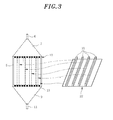
- a reaction mixture is injected into the reaction channels 8, and a product mixture is discharged; fixing grooves 21 (see, Fig. 3 ) facing the reaction space, in which the inserted heat exchange plates 1 are tied up; and flanges 40 to fasten the heat exchange unit 10 and the shell 20.
- a catalyst material is attached to the heat exchange plates 1 of the heat exchange unit 10.
- the heat exchange plates 1 of the heat exchange unit 10 on which the catalyst is expected to attach is inserted into the reaction space of the shell 20 in a direction of an arrow, and the flange 40 of the heat exchange unit 10 is then fastened with the flange 40 of the shell 20, thereby forming the reactor system.
- the heat exchange plates 1 of the heat exchange unit 10 act as a heat exchange surface on which a heat exchange substantially takes place and has a plurality of fins 2 that are arranged at equal intervals in order to increase heat transfer areas.
- a fluid path suitable for the heat transfer is formed so that the heat transfer medium can achieve its heat transfer function while allowing the heat transfer medium flow evenly.
- the heat transfer medium includes, for example, a cooling water, steam, solid molten salt, oil containing silicon or fluorine, biphenyl and a mixture of biphenyl ether.
- a representative material as an example of the solid molten salt is natrium nitrate and a mixture in which the natrium nitrate is mixed in an appropriate ratio
- the above examples are merely some of the representative heat transfer media, and it is understood that the embodiment is not limited thereto.
- the flange 40 has an inlet 3 and an outlet 4, which are formed at its one surface, through which the heat transfer medium is injected and discharged, respectively.
- the dispersion unit 5 mounted on the other surface of the flange 40 is the dispersion unit 5 by which the heat transfer medium injected through the inlet 3 is dispersed.
- a distributor may be installed, or solid particles may be filled in the inner space of the dispersion unit 5 so that the heat transfer medium can be evenly distributed to the respective heat exchange surfaces inside the heat exchange plates 1.
- the dispersion unit 5 also serves to prevent a reaction gas from leaking, upon being fastened with the shell 20. Additionally or alternatively, a gasket may be installed around the dispersion unit 5 or before a front portion of the dispersion unit 5, if necessary.
- a heat transfer fluid is filled from a foremost heat transfer plate 1, heat-exchanged at a backmost heat transfer plate 1 and then discharged through the outlet 4.
- a catalyst material for the reaction is attached to the surfaces of the respective heat exchange plates 1 in a way such as a wash coat.
- the shell 20 is composed of a reaction channel 8 and an upper space 7 and a lower space 9, in the form of a tetrahedron cone, that are disposed in an opposite direction to each other at an upper part and a lower part of the reaction channels 8.
- An injection hole 6 is formed at an apex of the cone to inject the reaction mixture
- a discharge hole 11 is formed at an apex of the cone to discharge the product mixture.
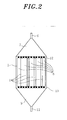
- Fig. 2 is a sectional view of an assembled multi-channel reactor system taken along a line II-II.
- an inert material particle layer may be stuffed into the upper space 7 and the lower space 9 in order to disperse the product mixture.
- the inert material may include, for example, alumina, Raschig rings, glass beads or the like.
- dispersion plates 12 and 13 may be additionally installed on the upper and the lower part of the reaction channels 8, respectively, in order to improve the dispersion performance of gas, and both the inert material and the dispersion plates 12 and 13 may also be employed if needed.
- the dispersion plates 12 and 13 may be formed by, for example, metal foam, disk-shaped filters (metal or ceramic) and the like.
- Each of the reaction channels 8 is a reaction space partitioned by the heat exchange plates 1.
- the catalyst material is attached to all left and right surfaces but to both ends of the reaction channels 8.
- the surfaces facing the heat exchange plates 1 have the catalyst attached thereto.
- the width of the leftmost and rightmost reaction channels 8 is designed to be 1/2 or less than that of the other reaction channels.
- the elongated fixing grooves 21, in which front ends of the heat exchange plates 1 are inserted and fixed, are installed at a location facing the reaction space in the shell 20, i.e., on an inner wall 22 opposite to the insertion side of the heat exchange plates 1 of the reaction channels 8, thereby ensuring the tunneling will not happen.
- Any heat exchange plates 1 may be employed as long as they have a shape that is able to expand a heat transfer area like a flat-type plate having a plurality of fins mounted thereon as shown in Fig. 1 , as well as a corrugated plate.
- Fig. 1 illustrates only a single cell unit of an overall reactor system as mentioned above.
- a plurality of cell units may be coupled serially and/or in parallel with each other to organize one module of the reactor system in accordance with the embodiment.
- the organized reactor system may be able to relatively and easily scale up using a concept of a number-up.
- the reactor system is suitable for small and medium-sized gas fields with a limited gas quantity, and it is able to fully exhibit its own function even in a specialized use such as a FPSO and the like.
- a method that the catalyst material for the reaction is attached to the reactor system is one of the methods to further maximize thermal efficiency, compared to a method to fill the catalyst particulars.
- a heat transfer path is made in the order of a catalyst phase (generation of reaction heat) ⁇ a gas phase ⁇ the heat transfer surfaces ⁇ the heat transfer medium, which suffers from much heat transfer resistance and exhibits a low thermal conductivity in the gas phase, in particular, to degrade heat transfer efficiency.
- the heat exchange unit having the catalyst attached thereto is configured in a removable form. Therefore, when the catalyst's life has ended because of the deactivation of the catalyst, it is possible to separate the heat change unit from the reactor system, remove some or all of the catalysts in a physicochemical method, attach new catalysts to the heat exchange unit and then assemble the heat change unit again, thereby operating the reaction process repeatedly.
Landscapes
- Chemical & Material Sciences (AREA)
- Organic Chemistry (AREA)
- Chemical Kinetics & Catalysis (AREA)
- Engineering & Computer Science (AREA)
- Oil, Petroleum & Natural Gas (AREA)
- Physics & Mathematics (AREA)
- Mechanical Engineering (AREA)
- General Engineering & Computer Science (AREA)
- Thermal Sciences (AREA)
- General Chemical & Material Sciences (AREA)
- Devices And Processes Conducted In The Presence Of Fluids And Solid Particles (AREA)
- Physical Or Chemical Processes And Apparatus (AREA)
- Organic Low-Molecular-Weight Compounds And Preparation Thereof (AREA)
Applications Claiming Priority (2)
| Application Number | Priority Date | Filing Date | Title |
|---|---|---|---|
| KR1020110036171A KR101297597B1 (ko) | 2011-04-19 | 2011-04-19 | 합성가스로부터 탄화수소를 제조하기 위한 반응장치 |
| PCT/KR2012/002949 WO2012144796A2 (ko) | 2011-04-19 | 2012-04-18 | 합성가스로부터 탄화수소를 제조하기 위한 반응장치 |
Publications (2)
| Publication Number | Publication Date |
|---|---|
| EP2700701A2 true EP2700701A2 (de) | 2014-02-26 |
| EP2700701A4 EP2700701A4 (de) | 2014-12-10 |
Family
ID=47042039
Family Applications (1)
| Application Number | Title | Priority Date | Filing Date |
|---|---|---|---|
| EP12774203.9A Withdrawn EP2700701A4 (de) | 2011-04-19 | 2012-04-18 | Reaktionsvorrichtung zur herstellung von kohlenwasserstoffen aus einem synthesegas |
Country Status (7)
| Country | Link |
|---|---|
| US (1) | US9446370B2 (de) |
| EP (1) | EP2700701A4 (de) |
| KR (1) | KR101297597B1 (de) |
| CN (1) | CN103476907B (de) |
| AU (1) | AU2012246877B2 (de) |
| CA (1) | CA2832364C (de) |
| WO (1) | WO2012144796A2 (de) |
Cited By (1)
| Publication number | Priority date | Publication date | Assignee | Title |
|---|---|---|---|---|
| CN108176335A (zh) * | 2018-03-07 | 2018-06-19 | 厦门大学 | 具有孔槽复合微通道多孔金属反应载体的串联式微反应器 |
Families Citing this family (3)
| Publication number | Priority date | Publication date | Assignee | Title |
|---|---|---|---|---|
| CN104096525B (zh) * | 2014-08-07 | 2015-10-28 | 淄博市临淄环宇经贸有限公司 | 一种实现规模化生产的微通道反应器 |
| DE102017001567B4 (de) * | 2017-02-20 | 2022-06-09 | Diehl Aerospace Gmbh | Verdampfer und Brennstoffzellenanordnung |
| US10632447B2 (en) * | 2018-08-28 | 2020-04-28 | Molecule Works Inc. | Reactor for hydrothermal growth of structured materials |
Family Cites Families (25)
| Publication number | Priority date | Publication date | Assignee | Title |
|---|---|---|---|---|
| US2314966A (en) * | 1937-03-29 | 1943-03-30 | Astle William | Plate heat exchanger |
| US2310962A (en) * | 1939-04-20 | 1943-02-16 | Houdry Process Corp | Contact treatment of fluids |
| US3661203A (en) * | 1969-11-21 | 1972-05-09 | Parkson Corp | Plates for directing the flow of fluids |
| US3955620A (en) | 1974-04-26 | 1976-05-11 | Artemov Lev N | Heat exchanger |
| DE3107010C2 (de) * | 1981-02-25 | 1985-02-28 | Dieter Christian Steinegg-Appenzell Steeb | Metallkühler zum Kühlen eines unter hohem Druck durchströmenden Fluids durch Luft |
| US5997831A (en) * | 1996-07-12 | 1999-12-07 | Engelhard Corporation | Method of catalytically treating the atmosphere and heat exchange devices produced thereby |
| JPH10281015A (ja) | 1997-04-02 | 1998-10-20 | Calsonic Corp | Egrガス冷却装置 |
| US6616909B1 (en) | 1998-07-27 | 2003-09-09 | Battelle Memorial Institute | Method and apparatus for obtaining enhanced production rate of thermal chemical reactions |
| DE60007811T2 (de) * | 1999-08-23 | 2004-11-25 | Nippon Shokubai Co., Ltd. | Verfahren zur Verhinderung von Verstopfungen in einem Plattenwärmetauscher |
| MX2007008365A (es) | 2001-01-10 | 2007-09-21 | Compactgtl Plc | Reactor catalitico. |
| CA2447769C (en) * | 2001-06-13 | 2011-07-26 | Energy & Environmental International, L.C. | Bulk polymerization reactors and methods for polymerization |
| GB0116894D0 (en) * | 2001-07-11 | 2001-09-05 | Accentus Plc | Catalytic reactor |
| US7316804B2 (en) * | 2001-08-02 | 2008-01-08 | Ineos Usa Llc | Flow reactors for chemical conversions with heterogeneous catalysts |
| DE10302948A1 (de) * | 2003-01-24 | 2004-08-05 | Behr Gmbh & Co. Kg | Wärmeübertrager, insbesondere Abgaskühler für Kraftfahrzeuge |
| US20040168791A1 (en) * | 2003-02-27 | 2004-09-02 | Alstom (Switzerland) Ltd. | Integrated core/casing plate heat exchanger |
| DE10317451A1 (de) * | 2003-04-16 | 2004-11-18 | Degussa Ag | Reaktor für heterogen katalysierte Reaktionen |
| US7294734B2 (en) | 2003-05-02 | 2007-11-13 | Velocys, Inc. | Process for converting a hydrocarbon to an oxygenate or a nitrile |
| DE10335510A1 (de) | 2003-07-31 | 2005-03-10 | Stockhausen Chem Fab Gmbh | Beschichteter Katalysator-Trägerkörper |
| JP2006071224A (ja) | 2004-09-03 | 2006-03-16 | Iwaya Reitouki Seisakusho:Kk | 耐圧プレート式熱交換器 |
| US7854255B2 (en) * | 2004-09-28 | 2010-12-21 | T. Rad Co., Ltd. | Heat exchanger |
| EP1904230A2 (de) | 2005-07-07 | 2008-04-02 | Zeropoint Clean Tech, Inc. | Wärmegekoppelter monolithreaktor |
| US7900692B2 (en) * | 2005-10-28 | 2011-03-08 | Nakamura Seisakusho Kabushikigaisha | Component package having heat exchanger |
| KR100902140B1 (ko) | 2007-07-16 | 2009-06-10 | 에니웰에이치피(주) | 착탈식 열교환부를 구비한 전기 온풍기 |
| GB0725140D0 (en) | 2007-12-24 | 2008-01-30 | Compactgtl Plc | Catalytic Reactor |
| FR2934174B1 (fr) | 2008-07-25 | 2010-09-17 | Total Sa | Procede de synthese fischer-tropsch sur plaques catalytiques comprenant un support de mousse de sic |
-
2011
- 2011-04-19 KR KR1020110036171A patent/KR101297597B1/ko not_active Expired - Fee Related
-
2012
- 2012-04-18 AU AU2012246877A patent/AU2012246877B2/en not_active Ceased
- 2012-04-18 WO PCT/KR2012/002949 patent/WO2012144796A2/ko not_active Ceased
- 2012-04-18 CN CN201280019330.4A patent/CN103476907B/zh not_active Expired - Fee Related
- 2012-04-18 US US14/111,384 patent/US9446370B2/en not_active Expired - Fee Related
- 2012-04-18 CA CA2832364A patent/CA2832364C/en not_active Expired - Fee Related
- 2012-04-18 EP EP12774203.9A patent/EP2700701A4/de not_active Withdrawn
Cited By (2)
| Publication number | Priority date | Publication date | Assignee | Title |
|---|---|---|---|---|
| CN108176335A (zh) * | 2018-03-07 | 2018-06-19 | 厦门大学 | 具有孔槽复合微通道多孔金属反应载体的串联式微反应器 |
| CN108176335B (zh) * | 2018-03-07 | 2024-01-05 | 厦门大学 | 具有孔槽复合微通道多孔金属反应载体的串联式微反应器 |
Also Published As
| Publication number | Publication date |
|---|---|
| WO2012144796A2 (ko) | 2012-10-26 |
| CN103476907B (zh) | 2015-05-27 |
| US20140044614A1 (en) | 2014-02-13 |
| WO2012144796A3 (ko) | 2013-01-03 |
| AU2012246877A1 (en) | 2013-10-24 |
| EP2700701A4 (de) | 2014-12-10 |
| AU2012246877B2 (en) | 2015-09-17 |
| CN103476907A (zh) | 2013-12-25 |
| CA2832364C (en) | 2016-09-13 |
| WO2012144796A4 (ko) | 2013-02-28 |
| US9446370B2 (en) | 2016-09-20 |
| KR20120118664A (ko) | 2012-10-29 |
| CA2832364A1 (en) | 2012-10-26 |
| KR101297597B1 (ko) | 2013-08-19 |
Similar Documents
| Publication | Publication Date | Title |
|---|---|---|
| US5080872A (en) | Temperature regulating reactor apparatus and method | |
| AU2010246584B2 (en) | Reactor for exothermic or endothermic catalytic reactions | |
| EP1964908A1 (de) | Fischer-tropsch-synthese-system unter verwendung eines slurry-bed-reaktors vom blasensäulentyp | |
| US20040102530A1 (en) | Multistage compact fischer-tropsch reactor | |
| US9446370B2 (en) | Reactor system for producing hydrocarbons from synthetic gas | |
| US7022741B2 (en) | Gas agitated multiphase catalytic reactor with reduced backmixing | |
| KR20170110848A (ko) | 쉘-앤드-멀티-더블 컨센트릭-튜브 반응기 및 열교환기 | |
| US9381486B2 (en) | Fischer tropsch reactor | |
| AU2003279683A1 (en) | Process for the preparation of hydrocarbons | |
| KR102018494B1 (ko) | 쉘-앤드 멀티 컨센트릭 튜브 형태의 반응기 | |
| JP6537454B2 (ja) | 反応器および反応方法 | |
| CN208098030U (zh) | 板框式固定床费托合成反应器 | |
| US10011776B2 (en) | Multi-structured reactor made of monolithic adjacent thermoconductive bodies for chemical processes with a high heat exchange | |
| JP5276326B2 (ja) | 固体/液体/気体の反応用の反応器 | |
| US10737236B2 (en) | Structural catalyst with internal heat transfer system for exothermic and endothermic reactions | |
| KR20200046216A (ko) | 반응열 제어가 용이한 마이크로채널 반응기 및 반응열 제어 방법 | |
| Jager | Fischer-tropsch reactors |
Legal Events
| Date | Code | Title | Description |
|---|---|---|---|
| PUAI | Public reference made under article 153(3) epc to a published international application that has entered the european phase |
Free format text: ORIGINAL CODE: 0009012 |
|
| 17P | Request for examination filed |
Effective date: 20131017 |
|
| AK | Designated contracting states |
Kind code of ref document: A2 Designated state(s): AL AT BE BG CH CY CZ DE DK EE ES FI FR GB GR HR HU IE IS IT LI LT LU LV MC MK MT NL NO PL PT RO RS SE SI SK SM TR |
|
| RIN1 | Information on inventor provided before grant (corrected) |
Inventor name: KWAK, GEUN JAE Inventor name: JUNG, JAE-HOON Inventor name: CHEON, JOO YOUNG Inventor name: HA, KYOUNG SU Inventor name: JUN, KI WON |
|
| DAX | Request for extension of the european patent (deleted) | ||
| A4 | Supplementary search report drawn up and despatched |
Effective date: 20141106 |
|
| RIC1 | Information provided on ipc code assigned before grant |
Ipc: B01J 12/00 20060101ALI20141031BHEP Ipc: F28F 9/02 20060101ALI20141031BHEP Ipc: B01J 19/24 20060101ALI20141031BHEP Ipc: B01J 16/00 20060101ALI20141031BHEP Ipc: C07C 1/04 20060101ALI20141031BHEP Ipc: F28D 9/00 20060101ALI20141031BHEP Ipc: B01J 19/00 20060101ALI20141031BHEP Ipc: C10G 2/00 20060101AFI20141031BHEP |
|
| 17Q | First examination report despatched |
Effective date: 20191014 |
|
| STAA | Information on the status of an ep patent application or granted ep patent |
Free format text: STATUS: THE APPLICATION IS DEEMED TO BE WITHDRAWN |
|
| 18D | Application deemed to be withdrawn |
Effective date: 20200225 |