EP2689604B1 - Stillstandszeitverwaltung für notfalls-ad-hoc-netzwerke in tv-whitespace - Google Patents
Stillstandszeitverwaltung für notfalls-ad-hoc-netzwerke in tv-whitespace Download PDFInfo
- Publication number
- EP2689604B1 EP2689604B1 EP11861531.9A EP11861531A EP2689604B1 EP 2689604 B1 EP2689604 B1 EP 2689604B1 EP 11861531 A EP11861531 A EP 11861531A EP 2689604 B1 EP2689604 B1 EP 2689604B1
- Authority
- EP
- European Patent Office
- Prior art keywords
- irfs
- access
- ifs
- information
- superframe
- Prior art date
- Legal status (The legal status is an assumption and is not a legal conclusion. Google has not performed a legal analysis and makes no representation as to the accuracy of the status listed.)
- Not-in-force
Links
- 238000000034 method Methods 0.000 claims description 45
- 238000004891 communication Methods 0.000 claims description 39
- 230000005540 biological transmission Effects 0.000 claims description 24
- 230000001149 cognitive effect Effects 0.000 claims description 12
- 238000012545 processing Methods 0.000 claims description 12
- 238000004590 computer program Methods 0.000 claims description 10
- 230000000737 periodic effect Effects 0.000 claims description 5
- 238000004002 angle-resolved photoelectron spectroscopy Methods 0.000 claims description 4
- 230000001186 cumulative effect Effects 0.000 claims description 4
- JFZVPWMZPZJUTE-UHFFFAOYSA-N [2-di(propan-2-yloxy)phosphorylphenyl]methanethiol Chemical compound CC(C)OP(=O)(OC(C)C)C1=CC=CC=C1CS JFZVPWMZPZJUTE-UHFFFAOYSA-N 0.000 claims 12
- 238000001228 spectrum Methods 0.000 description 37
- 238000010586 diagram Methods 0.000 description 17
- 238000007726 management method Methods 0.000 description 15
- 238000005516 engineering process Methods 0.000 description 13
- 230000008569 process Effects 0.000 description 9
- 230000000670 limiting effect Effects 0.000 description 6
- 229920006235 chlorinated polyethylene elastomer Polymers 0.000 description 5
- 238000000136 cloud-point extraction Methods 0.000 description 5
- 235000019879 cocoa butter substitute Nutrition 0.000 description 4
- 238000011161 development Methods 0.000 description 3
- 230000006870 function Effects 0.000 description 3
- 230000002093 peripheral effect Effects 0.000 description 3
- 230000008901 benefit Effects 0.000 description 2
- 230000001413 cellular effect Effects 0.000 description 2
- 230000006835 compression Effects 0.000 description 2
- 238000007906 compression Methods 0.000 description 2
- 238000013500 data storage Methods 0.000 description 2
- 238000001514 detection method Methods 0.000 description 2
- 239000000835 fiber Substances 0.000 description 2
- 230000003993 interaction Effects 0.000 description 2
- 238000012986 modification Methods 0.000 description 2
- 230000004048 modification Effects 0.000 description 2
- 230000003287 optical effect Effects 0.000 description 2
- 230000001105 regulatory effect Effects 0.000 description 2
- 230000036962 time dependent Effects 0.000 description 2
- 230000007704 transition Effects 0.000 description 2
- AFLGSUFOCCZEEZ-UHFFFAOYSA-N 3-(4-aminophenyl)pyrrolidine-2,5-dione Chemical compound C1=CC(N)=CC=C1C1C(=O)NC(=O)C1 AFLGSUFOCCZEEZ-UHFFFAOYSA-N 0.000 description 1
- IRLPACMLTUPBCL-KQYNXXCUSA-N 5'-adenylyl sulfate Chemical compound C1=NC=2C(N)=NC=NC=2N1[C@@H]1O[C@H](COP(O)(=O)OS(O)(=O)=O)[C@@H](O)[C@H]1O IRLPACMLTUPBCL-KQYNXXCUSA-N 0.000 description 1
- 230000009471 action Effects 0.000 description 1
- 238000013459 approach Methods 0.000 description 1
- 238000003491 array Methods 0.000 description 1
- 238000010276 construction Methods 0.000 description 1
- 230000001419 dependent effect Effects 0.000 description 1
- 238000013461 design Methods 0.000 description 1
- 230000000694 effects Effects 0.000 description 1
- 230000002708 enhancing effect Effects 0.000 description 1
- 238000007667 floating Methods 0.000 description 1
- 230000000977 initiatory effect Effects 0.000 description 1
- 230000002452 interceptive effect Effects 0.000 description 1
- 239000000463 material Substances 0.000 description 1
- 230000007246 mechanism Effects 0.000 description 1
- 238000010295 mobile communication Methods 0.000 description 1
- 239000003607 modifier Substances 0.000 description 1
- 230000002062 proliferating effect Effects 0.000 description 1
- 230000035755 proliferation Effects 0.000 description 1
- 230000002829 reductive effect Effects 0.000 description 1
- 230000004044 response Effects 0.000 description 1
- 239000007787 solid Substances 0.000 description 1
- 230000003068 static effect Effects 0.000 description 1
- 230000008685 targeting Effects 0.000 description 1
- 230000007723 transport mechanism Effects 0.000 description 1
Images


Classifications
-
- H—ELECTRICITY
- H04—ELECTRIC COMMUNICATION TECHNIQUE
- H04W—WIRELESS COMMUNICATION NETWORKS
- H04W84/00—Network topologies
- H04W84/18—Self-organising networks, e.g. ad-hoc networks or sensor networks
-
- H—ELECTRICITY
- H04—ELECTRIC COMMUNICATION TECHNIQUE
- H04W—WIRELESS COMMUNICATION NETWORKS
- H04W16/00—Network planning, e.g. coverage or traffic planning tools; Network deployment, e.g. resource partitioning or cells structures
- H04W16/14—Spectrum sharing arrangements between different networks
-
- H—ELECTRICITY
- H04—ELECTRIC COMMUNICATION TECHNIQUE
- H04W—WIRELESS COMMUNICATION NETWORKS
- H04W28/00—Network traffic management; Network resource management
- H04W28/16—Central resource management; Negotiation of resources or communication parameters, e.g. negotiating bandwidth or QoS [Quality of Service]
-
- H—ELECTRICITY
- H04—ELECTRIC COMMUNICATION TECHNIQUE
- H04W—WIRELESS COMMUNICATION NETWORKS
- H04W74/00—Wireless channel access
- H04W74/08—Non-scheduled access, e.g. ALOHA
- H04W74/0808—Non-scheduled access, e.g. ALOHA using carrier sensing, e.g. carrier sense multiple access [CSMA]
- H04W74/0816—Non-scheduled access, e.g. ALOHA using carrier sensing, e.g. carrier sense multiple access [CSMA] with collision avoidance
Definitions
- TV white spaces are location and time dependent (based on active TV broadcast stations in an area and when those stations broadcast).
- wireless technologies are proliferating in all aspects of personal, commercial, and other use.
- From home computer networks e.g., Wireless Local Area Networks "WLANs" to wireless sensor networks, Wireless Regional Area Networks (WRANs), an increasingly large number of devices and systems utilize and have a need for wireless spectrum.
- WLANs Wireless Local Area Networks
- WRANs Wireless Regional Area Networks
- attempts to increase efficiency of wireless communications include various sharing schemes for existing dedicated portions of the RF spectrum.
- standardization activities targeting TVWS include IEEE 802.22 for WRANs, IEEE 802.11af for personal/portable devices resulting in ad hoc networks, and IEEE 802.19.1 Task Groups (TGs) work on supporting coexistence in TVWS.
- TGs Task Groups
- the present disclosure appreciates that there are several limitations with existing spectrum sharing technologies, specifically directed to TVWS. For example, it is a challenging task to detect these white spaces, which are in-deterministic over time and space, for possible usage by opportunistic secondary user networks.
- CORDEIRO ET AL "Spectrum Sensing for Dynamic Spectrum Access of TV Bands” disclose that spectrum sensing is the key enabler for dynamic spectrum access as it can allow secondary networks to reuse spectrum without causing harmful interference to primary users. It is proposed a set of integrated medium access control (MAC) and physical layer (PHY) spectrum sensing techniques that provide reliable access to television (TV) bands. At the MAC level, there is proposed a two-stage spectrum sensing that guarantees timely detection of incumbents while meeting the quality of service (QoS) requirements of secondary users. At the PHY level, FFT-based pilot energy and location detection schemes are introduced that can detect a TV signal on a TV channel at levels as low as -116 dBm.
- MAC medium access control
- PHY physical layer
- Document US 2010/203914 A1 discloses a method and apparatus for synchronizing a Quiet Period (QP) in a Cognitive Radio (CR) system, which includes receiving QP information based on a channel N from at least one neighbor BS. The method further includes determining whether the channel N is an in-band channel. If the channel N is the in-band channel, QP scheduling is performed according to the received QP information based on the channel N.
- QP Quiet Period
- CR Cognitive Radio
- the present disclosure describes a method for quiet period management in secondary networks according to claim 1, a coexisting wireless network access point capable of operating in quiet periods of another secondary user network according to claim 5, a coexistence manager of a coexisting emergency ad hoc wireless network capable of operating in quiet periods of another wireless network according to claim 7, a coexisting emergency ad hoc wireless network capable of operating in quiet periods of another wireless network according to claim 11, and a computer program product according to claim 12.
- This disclosure is generally drawn, inter alia, to methods, apparatus, systems, devices, and/or computer program products related to quiet period management for emergency ad hoc networks in TV white spaces.
- Access Points in close proximity may form an ad hoc network (e.g., IEEE 802.11af) and instead of sensing and detecting idle channels in TV white spaces, listen to the broadcast messages from a co-existence manager, which broadcasts periodic intraframe sensing (IRFS) and interframe sensing (IFS) information in Medium Access Control (MAC) packets.
- IRFS periodic intraframe sensing
- IFS interframe sensing
- MAC Medium Access Control
- the APs may extract information regarding the operating channels of the active cognitive base stations and their scheduled IRFS and IFSs on these channels.
- short IRFS intervals over active channels may be allocated in a dedicated manner using a unique access request packet (ARP) by emergency network APs.
- contention-based access may be provided to longer IFS intervals on multiple channels.
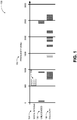
- FIG. 1 is a diagram of an illustrative example of white spaces that may be used for coexisting secondary wireless networks in accordance with at least some embodiments described herein.
- Radio spectrum typically refers to the full frequency range from 3 kHz to 300 GHz that may be used for wireless communication. Access to most of the spectrum is commonly regulated by national and international agencies specifying rules and regulations for transmitters to abide by in order to avoid misuse of the spectrum such as interference with legitimate users. Portions of the spectrum (e.g. 108) are dedicated to "licensed" users such as radio / TV broadcasters or cellular phone networks, where a particular frequency band is solely dedicated to the use of a single or group of transmitters. As shown in the frequency spectrum 102 of Diagram 100, distinct bands of frequencies are dedicated to licensed users.
- GSM Global System for Mobile Communications
- GPRS General Packet Radio Service
- CDMA Code Division Multiple Access
- EV-DO Evolution-Data Optimized
- EDGE Enhanced Data Rates for GSM Evolution
- 3GSM Digital Enhanced Cordless Telecommunications
- DEECT Digital Enhanced Cordless Telecommunications
- iDEN Integrated Digital Enhanced Network
- sub-bands may be dedicated to individual licensed users such as sub-bands of the TV band being dedicated to individual licensed stations.
- TV White Spaces 110 TV White Spaces 110. Because TV stations vary from one locale to another and their broadcast times are in some cases less than 24 hours a day, TV white spaces are location and time dependent. While white spaces 104 exist in other portions of the frequency spectrum 102 as well, current transmitter / receiver technologies make the TVWS 110 especially attractive for shared spectrum usage.
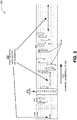
- FIG. 2 illustrates example white spaces for a particular location in television (TV) spectra and representative signal strengths.
- Diagram 200 illustrates licensed users 216 in the VHF and UHF bands across TV channel numbers 212 and their respective signal levels 214 in dBm. Signal levels for various licensed users may also be defined by a regulatory agency.
- the spectrum usage scenario is a snapshot of the spectrum at the ZIP code 98195 over channels 2 to 60 at 10.50 am on March 3 rd , 2010.
- the spectrum usage by licensed users may vary depending on location (licensed stations) and time (actually broadcasting stations).
- the available white spaces 220 are between channels 2-4, 15-23, and 51-69.
- Secondary opportunistic networks may take advantage of the white spaces 220 as long as they do not interfere with licensed users of the band. That means, the secondary users need to determine when and at what frequency the primary users are active and avoid those frequencies.
- IEEE 802.22 is an example standard for Wireless Regional Area Network (WRAN) using white spaces in the TV frequency spectrum. The standard is aimed at using cognitive radio technologies to allow sharing of geographically unused spectrum allocated to the Television Broadcast Service, on a non-interfering basis.
- WRAN Wireless Regional Area Network
- Non-interfering secondary use of the white spaces is not limited to 802.22 networks. While some networks like IEEE 802.22 WRANs utilize carrier sensing and employ quiet periods, embodiments are directed to other forms of secondary networks that can utilize information from another secondary network (such as an IEEE 802.22 WRAN) instead of sensing the spectrum or employing quiet periods, which add to the overhead of the network operation.
- An example of a network, where embodiments may be implemented is an IEEE 802.11af emergency service ad hoc network.
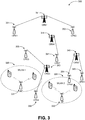
- FIG. 3 illustrates coexisting wireless service providers and ad hoc secondary wireless networks, where quiet period management may be employed in accordance with at least some embodiments described herein.
- Standards such as IEEE 802.22 define spectrum sensing intervals (also known as quiet periods "QPs") in order to operate efficiently in the TVWS.
- Quiet periods are indispensible for some secondary networks in order to perform spectrum sensing effectively and detect white spaces.
- the IEEE 802.22 standard defines explicit QPs in two stages: intra-frame sensing (IRFS) followed by an inter-frame sensing (IFS).
- IRFS intra-frame sensing
- IFS inter-frame sensing
- An IRFS is of short duration, typically in tens of ms, while an IFS is of long duration ranging from about 10 to about 50 ms.
- a cognitive base station CBS may schedule multiple IRFS for in-band sensing (the channel currently being used by the CBS) over multiple frames in a superframe. Based on the cumulative report from the received IRFSs on channel status (busy or idle), the CBS may schedule an IFS spanning multiple consecutive frames.
- An entire IEEE 802.22 network terminates data transmission during the IRFSs and an IFS.
- Diagram 300 shows multiple wireless service providers (WSPs) using a secondary opportunistic network such as IEEE 802.22.
- Each WSP includes a CBS (e.g., 341, 342, 343, and 344) and users, also known as consumer premise equipment (CPE) (e.g., 351 through 357).
- CBS may communicate with its CPEs (e.g., CPE 343 communicating with CPEs 355 and 356) on a single channel and schedule the QPs (i.e., IRFS and IFS intervals) for spectrum sensing.
- the QP scheduling by multiple WSPs over several operating channels may lead to multiple long IFS durations, causing considerable wastage of bandwidth.
- Each CBS may schedule multiple IRFS for in-band sensing (the channel currently being used by the CBS) over multiple frames in a superframe (for example, frames 1 through 15 of superframe 599 in FIG. 5 ). Based on the cumulative report from the received IRFSs on channel status (busy or idle), the CBS may schedule an IFS spanning multiple consecutive frames (for example, frames in superframe (N-1) indicated by reference numeral 462 in FIG. 4 ).
- Networks 330 and 332 are example networks according to at least some embodiments that include APs 331 and 333 along with a plurality of user equipment.
- APs near each other may form an ad hoc network such as an IEEE 802.11af network and operate in the TVWS.
- the APs instead of sensing and detecting idle channels, may listen to the broadcast messages from a co-existence manager (CM) of an IEEE 802.19.1 coexistence network.
- CM co-existence manager
- the APs (331, 333) may extract information from the CM regarding the operating channels of the active CBSs and their scheduled IRFS and IFSs on these channels. Two different schemes may be employed for IRFS and IFS access.
- a dedicated allocation of short IRFS intervals over active channels may be utilized through a unique access request packet (ARP) by emergency network APs.
- ARP unique access request packet
- a contention-based access of long IFS intervals on multiple channels may be utilized by the ad hoc network.
- FIG. 4 illustrates interframe sensing schedules from different coexisting wireless service providers of FIG. 3 in accordance with at least some embodiments described herein.
- the superframe control header (SCH) in medium access control (MAC) packets from the CBS possesses explicit information of IRFS and IFS intervals such as time to quiet period (TTQP) and duration to quiet period (DQP) for IFS and IRFS cycle length, IRFS cycle offset, IRFS cycle frame bitmap, and IRFS duration for IRFSs.
- the SCH information may be updated by the operating CBSs of WSPs at a centralized coexistence manager (CM) (e.g., of an IEEE 802.19.1 coexistence network).
- CM centralized coexistence manager
- the updating of IRFS and IFS intervals may be made mandatory before the initiation of the data transmission phase between CBSs and their corresponding CPEs. Then, the CM may broadcast periodic updates about the QPs to multiple IEEE 802.11af APs facilitating efficient data transmissions of ad hoc networks based on IEEE 802.11af or similar standard and enhancing the overall licensed spectrum utilization.
- Diagram 400 illustrates example IFS intervals ranging over multiple frames in a superframe.
- the IFS interval 463 is in superframe N-1.
- the IFS interval 465 is in superframe N.
- the IFS interval 467 is in superframe 2.
- the IFS interval 469 is in superframe N-1 again, but over different frames compared to the transmission for WSP 1.
- FIG. 5 illustrates heterogeneous coexistence between wireless regional area networks and ad hoc wireless networks with contentious IFS access and dedicated IRFS access using access request packets in accordance with at least some embodiments described herein.
- Diagram 500 illustrates a base station 572 communicating with CPEs 574 and 576 employing QPs in TVWS.
- Two example ad hoc networks 578, 580 may take advantage of the QPs to facilitate communications between APs 577, 583 and respective users 586, 579 and 581,584.
- the interframe sensing details are specified in the superframe control header (SCH) according to the IEEE 802.22 standard.
- the field "time to quiet period (TTQP)" of 12 bits indicates the time span between the transmission of this SCH information and the next scheduled quiet period for IRFS.
- the 8 leftmost bits specify the superframe number while the four rightmost bits indicate the frame number that initiates the IRFS.
- the duration of the scheduled IFS is indicated in the "duration to quiet period (DQP)" field in the SCH.
- DQP dedicated to quiet period
- the information in DQP hints upon the number of frames in a superframe, starting from the frame indicated in TTQP, which may be used for IFS.
- IRFS information is specified in the following fields in SCH: IRFS cycle length, IRFS cycle offset, IRFS cycle frame bitmap, and IRFS duration. Typical values of IRFS interval is about 5 ms while IFS duration lasts from about 25 to about 50 ms.
- the SCH information may be shared by the IEEE 802.22 CBSs with APs in ad hoc IEEE 802.11af networks within their respective transmission ranges through the Coexistence Manager (CM) in a system according to embodiments.
- CM Coexistence Manager
- These QPs, short IRFS and long IFS durations, may be utilized for short bursts of data transmissions among the contending APs.
- Two communication paradigms are proposed during the QPs according to some embodiments.
- One of the paradigms is the contentious access during long IFS intervals and the other is the dedicated access during IRFS intervals.
- IEEE 802.22 users CPEs and the CBS
- CPEs and the CBS do not involve in data transmission during the QPs
- coexistence of IEEE 802.11af APs is more of interference avoidance type. Therefore, these QPs may be suited for emergency service networks with applications of short durations and high Quality of Service (QoS) requirements such as multimedia or streaming video and audio applications for the coexisting ad hoc networks.
- QoS Quality of Service
- Dedicated access may be allowed during IRFS intervals to those APs with time critical high quality applications with small transmission durations.
- the APs may be required to broadcast their intention of data transmission in such IRFS slots.
- the time stamp on the ARP may be instrumental in deciding access to a specific IRFS interval as shown in Diagram 500.
- a user with the smallest time stamp (i.e., first intended user) may gain dedicated access to each IRFS interval.
- the ARP 596 may have the following frame structure: Time stamp (TS) may include the time for the ARP creation; superframe number (SFN) may specify the channel and superframe number for desired access; frame number (FN) may specify the frame number in the superframe defined in the SFN field of the ARP packet; and access duration (AD) may include information on the duration of access by the requesting AP. Based on the AD field, a requesting AP with the second smallest time stamp on the same frame in the superframe may access the IRFS if the requested access duration is less than the IRFS interval. Contention among the WLAN users may be valid only during long IFS intervals. Access to such intervals may be according to the traditional carrier sense multiple access - collision avoidance (CSMA-CA) approaches such as those defined in IEEE 802.11 a/b/g WLAN standards.
- CSMA-CA carrier sense multiple access - collision avoidance
- superframe 599 is shown having frames 1 through 15 (590) with IRFS intervals 592 and 594 in frames 1 and 15, respectively.
- IRFS interval 594 may be used for dedicated access 585 by user 584 for communicating with AP 583, while IFS 598 of superframe N-1 is subject to contentious access attempts 582 and 587 by users 581 and 586, respectively.
- FIG. 1 through FIG. 5 While embodiments have been discussed above using specific examples, components, scenarios, and configurations in FIG. 1 through FIG. 5 , they are intended to provide a general guideline to be used for quiet period management for emergency ad hoc networks in TV white spaces. These examples do not constitute a limitation on the embodiments, which may be implements using other components, maximization schemes, and configurations using the principles described herein. Furthermore, the specific standards such as IEEE 802.22 or IEEE 802.11 af are also for illustration purposes and do not impose a limitation on embodiments. A secondary opportunistic network according to embodiments may conform to any standard (or proprietary scheme) using the principles described herein.
- FIG. 6 illustrates a general purpose computing device, which may be used to implement quiet period management for emergency ad hoc networks in white spaces in accordance with at least some embodiments described herein.
- computing device 600 typically includes one or more processors 604 and a system memory 606.
- a memory bus 608 may be used for communicating between processor 604 and system memory 606.
- processor 604 may be of any type including but not limited to a microprocessor ( ⁇ P), a microcontroller ( ⁇ C), a digital signal processor (DSP), or any combination thereof.
- Processor 604 may include one more levels of caching, such as a level cache memory 612, a processor core 614, and registers 616.
- Example processor core 614 may include an arithmetic logic unit (ALU), a floating point unit (FPU), a digital signal processing core (DSP Core), or any combination thereof.
- An example memory controller 618 may also be used with processor 604, or in some implementations memory controller 615 may be an internal part of processor 604.
- system memory 606 may be of any type including but not limited to volatile memory (such as RAM), non-volatile memory (such as ROM, flash memory, etc.) or any combination thereof.
- System memory 606 may include an operating system 620, one or more communication applications 622, and program data 624.
- Communication application 622 may include a radio control module 626 that is arranged to control a radio of an access point to utilize IFS and IRFS periods in TV white spaces for dedicated and contentious access by secondary networks as discussed above.
- Program data 624 may include one or more of channel data 628 (e.g. frequencies of available channels, etc.) and similar data as discussed above in conjunction with at least FIG. 1 through 5 .
- communication application 622 may be arranged to operate with program data 624 on operating system 620 such that quiet periods in TV white spaces are managed for emergency ad hoc networks as described herein.
- This described basic configuration 602 is illustrated in FIG. 6 by those components within the inner dashed line.
- Computing device 600 may have additional features or functionality, and additional interfaces to facilitate communications between basic configuration 602 and any required devices and interfaces.
- a bus/interface controller 630 may be used to facilitate communications between basic configuration 602 and one or more data storage devices 632 via a storage interface bus 634.
- Data storage devices 632 may be removable storage devices 636, non-removable storage devices 638, or a combination thereof. Examples of removable storage and non-removable storage devices include magnetic disk devices such as flexible disk drives and hard-disk drives (HDD), optical disk drives such as compact disk (CD) drives or digital versatile disk (DVD) drives, solid state drives (SSD), and tape drives to name a few.
- Example computer storage media may include volatile and nonvolatile, removable and non-removable media implemented in any method or technology for storage of information, such as computer readable instructions, data structures, program modules, or other data.
- Computer storage media includes, but is not limited to, RAM, ROM, EEPROM, flash memory or other memory technology, CD-ROM, digital versatile disks (DVD) or other optical storage, magnetic cassettes, magnetic tape, magnetic disk storage or other magnetic storage devices, or any other medium which may be used to store the desired information and which may be accessed by computing device 600. Any such computer storage media may be part of computing device 600.
- Computing device 600 may also include an interface bus 640 for facilitating communication from various interface devices (e.g., output devices 642, peripheral interfaces 644, and communication devices 666 to basic configuration 602 via bus/interface controller 630.
- Example output devices 642 include a graphics processing unit 648 and an audio processing unit 650, which may be configured to communicate to various external devices such as a display or speakers via one or more A/V ports 652.
- Example peripheral interfaces 644 include a serial interface controller 654 or a parallel interface controller 656, which may be configured to communicate with external devices such as input devices (e.g., keyboard, mouse, pen, voice input device, touch input device, etc.) or other peripheral devices (e.g., printer, scanner, etc.) via one or more I/O ports 658.
- An example communication device 666 includes a network controller 660, which may be arranged to facilitate communications with one or more other computing devices 662 over a network communication link via one or more communication ports 664.
- the network communication link may be one example of a communication media.
- Communication media may typically be embodied by computer readable instructions, data structures, program modules, or other data in a modulated data signal, such as a carrier wave or other transport mechanism, and may include any information delivery media.
- a "modulated data signal" may be a signal that has one or more of its characteristics set or changed in such a manner as to encode information in the signal.
- communication media may include wired media such as a wired network or direct-wired connection, and wireless media such as acoustic, radio frequency (RF), microwave, infrared (IR) and other wireless media.
- RF radio frequency
- IR infrared
- the term computer readable media as used herein may include both storage media and communication media.
- Computing device 600 may be implemented as a portion of a physical server, virtual server, a computing cloud, or a hybrid device that include any of the above functions.
- Computing device 600 may also be implemented as a personal computer including both laptop computer and non-laptop computer configurations.
- computing device 600 may be implemented as a networked system or as part of a general purpose or specialized server.
- Networks for a networked system including computing device 600 may comprise any topology of servers, clients, switches, routers, modems, Internet service providers, and any appropriate communication media (e.g., wired or wireless communications).
- a system according to embodiments may have a static or dynamic network topology.
- the networks may include a secure network such as an enterprise network (e.g., a LAN, WAN, or WLAN), an unsecure network such as a wireless open network (e.g., IEEE 802.11 wireless networks), or a world-wide network such (e.g., the Internet).
- the networks may also comprise a plurality of distinct networks that are adapted to operate together. Such networks are configured to provide communication between the nodes described herein.
- these networks may include wireless media such as acoustic, RF, infrared and other wireless media.
- the networks may be portions of the same network or separate networks.
- FIG. 7 illustrates a special purpose processor, which may be used to implement quiet period management for emergency ad hoc networks in white spaces in accordance with at least some embodiments described herein.
- Processor 790 in diagram 700 may be part of a computing device that is communicatively coupled to radio 750, which may facilitate communication with other wireless devices 780 through network(s) 710-2 or may be integrated into radio 750.
- Processor 790 may also communicate with data source 770 storing channel information via network(s) 710-1.
- Processor 790 and radio 750 may be part of an access point in an emergency ad hoc network utilizing TV white spaces as a secondary opportunistic network.
- Processor 790 may include a number of processing modules such as radio control module 796.
- Channel data 792 retrieved from channel data source 770 via network(s) 710-1 may be provided to radio control module 796 for determining a channel to scan or to switch to, as well as timing data associated with quiet periods, IFS and IRFS periods.
- Radio data 794 may include information associated with operational controls of the radio 750.
- Channel data 792 and radio data 794 may be stored during processing in memory 791, which may be a cache memory of the processor 790 or in an external memory (e.g., memory external to processor 790).
- Processor 790 may also be communicatively coupled to data stores 760, where at least some of the data may be stored during or following the control of radio 750.
- Example embodiments may also include methods. These methods can be implemented in any number of ways, including the structures described herein. One such way is by machine operations, of devices of the type described in the present disclosure. Another optional way is for one or more of the individual operations of the methods to be performed in conjunction with one or more human operators performing some of the operations while other operations are performed by machines. These human operators need not be collocated with each other, but each can be only with a machine that performs a portion of the program. In other examples, the human interaction can be automated such as by pre-selected criteria that are machine automated.
- FIG. 8 is a flow diagram illustrating an example method for employing quiet period management for emergency ad hoc networks in white spaces that may be performed by a computing device such as device 600 in FIG. 6 or a special purpose processor such as processor 790 of FIG. 7 , in accordance with at least some embodiments described herein.
- controller device 810 may be processor 790 of FIG. 7 or computing device 600 of FIG. 6 .
- Computer-readable medium 820 may store instructions associated with the example method to be executed by the controller device 810.
- An example process according to embodiments may begin with operation 822, "RECEIVE IRFS AND IFS INFORMATION", where an access point such as AP 585 of FIG. 5 receives updated intraframe sensing (IRFS) and interframe sensing (IFS) information from a co-existence manager of a secondary network.
- IRFS intraframe sensing
- IFS interframe sensing
- Operations 822 may be followed by operation 824, "ALLOCATE IRFS INTERVALS TO DEDICATED ACCESS (SINGLE CHANNEL)", where the shorter IRFS intervals are allocated for dedicated access over an active channel between an AP and a component based on the received information in the ad hoc emergency service network.
- the allocation may be performed by a co-existence manager or through an agreement among the APs of the ad hoc network.
- Operations 824 may be followed by operation 826, "ALLOCATE IFS INTERVALS TO CONTENTIOUS ACCESS (MULTIPLE CHANNELS)", where the longer IFS intervals are allocated for contentious access over a plurality of channels between a plurality of APs and corresponding components based on the received information in the ad hoc emergency service network.
- the allocation may be performed by a co-existence manager or through an agreement among the APs of the ad hoc network.
- Quiet period management for emergency ad hoc networks in white spaces may be implemented by similar processes with fewer or additional operations.
- the operations may be performed in a different order.
- various operations may be eliminated.
- various operations may be divided into additional operations, or combined together into fewer operations.
- illustrated as sequentially ordered operations in some implementations the various operations may be performed in a different order, or in some cases various operations may be performed at substantially the same time.
- FIG. 9 illustrates a block diagram of an example computer program product, arranged in accordance with at least some embodiments described herein.
- computer program product 900 may include a signal bearing medium 902 that may also include machine readable instructions 904 that, when executed by, for example, a processor, may provide the functionality described above with respect to FIG 3 through FIG. 5 .
- processor 790 one or more of the tasks shown in FIG. 9 may be undertaken in response to instructions 904 conveyed to the processor 790 by medium 902 to perform actions associated with quiet period management for emergency ad hoc networks in TV white spaces as described herein.
- Some of those instructions may include detecting a co-existence manager signal, allocating IRFS intervals to dedicated access, and allocating IFS intervals to contentious access through one or more algorithms as described previously.
- signal bearing medium 902 depicted in FIG. 9 may encompass a computer-readable medium 906, such as, but not limited to, a hard disk drive, a Compact Disc (CD), a Digital Versatile Disk (DVD), a digital tape, memory, etc.
- signal bearing medium 902 may encompass a recordable medium 908, such as, but not limited to, memory, read/write (R/W) CDs, R/W DVDs, etc.
- signal bearing medium 902 may encompass a communications medium 910, such as, but not limited to, a digital and/or an analog communication medium (e.g., a fiber optic cable, a waveguide, a wired communications link, a wireless communication link, etc.).
- computer program product 900 may be conveyed to the processor 904 by an RF signal bearing medium 902, where the signal bearing medium 902 is conveyed by a wireless communications medium 910 (e.g., a wireless communications medium conforming with the IEEE 802.11 standard).
- a wireless communications medium 910 e.g., a wireless communications medium conforming with the IEEE 802.11 standard.
- the present disclosure describes a method for quiet period management in secondary networks.
- the method may include receiving intraframe sensing (IRFS) and interframe sensing (IFS) information from a co-existence manager; allocating an IRFS interval for dedicated access over an active channel between an access point (AP) and a component based on the received information; and allocating an IFS interval for contentious access over a plurality of channels between a plurality of APs and corresponding components based on the received information.
- IRFS intraframe sensing
- IFS interframe sensing
- the method may further include causing each AP to broadcast its intention of data transmission during an IRFS interval and/or employing a unique access request packet (ARP) for communicating access information from each AP to the corresponding component.
- the ARP may include at least one from a set of: a time stamp indicating a time of ARP creation, a superframe number specifying a channel and a superframe number for desired access, a frame number specifying a frame within a superframe defined by the superframe number, and an access duration defining a duration of access desired by a broadcasting AP.
- the method may also include enabling dedicated access to an available channel to a requesting AP with a smallest time stamp on the same frame in the superframe during the IRFS and/or enabling access to an available channel to a requesting AP with a second smallest time stamp on the same frame in the superframe during the IRFS if the access duration in the ARP is less than the IRFS interval.
- the channels may be within Television White Spaces.
- the IRFS and IFS information may be detected from a broadcast by a cognitive base station of a Wireless Regional Area Network (WRAN) and transmitted by the coexistence manager to a plurality of APs in one or more coexisting wireless networks.
- the method may also include forming an ad hoc wireless network by two or more APs prior to using an available channel.
- the ad hoc wireless network may be an emergency ad hoc network.
- the method may further include transmitting one of multimedia, streaming video, and/or streaming audio data using an available channel.
- the present disclosure describes a coexisting wireless network access point capable of operating in quiet periods of another wireless network.
- the access point may include a wireless communication module, a memory configured to store instructions, and a processor coupled to the memory.
- the processor may receive intraframe sensing (IRFS) and interframe sensing (IFS) information from a co-existence manager, broadcast an intention of data transmission during an IRFS interval employing a unique access request packet (ARP), and receive dedicated access over an active channel to communicate with a component based on the received information if a timestamp included in the ARP is the smallest among broadcast timestamps.
- IRFS intraframe sensing
- IFS interframe sensing
- ARP unique access request packet
- the ARP includes at least one from a set of: a time stamp indicating a time of ARP creation, a superframe number specifying a channel and a superframe number for desired access, a frame number specifying a frame within a superframe defined by the superframe number, and an access duration defining a duration of access desired by a broadcasting AP.
- the processor may also form an ad hoc wireless network with one or more APs prior to using an available channel and/or exchange one of multimedia, streaming video, and/or streaming audio data with one or more components using the active channel.
- the processor may also receive periodic updates on the IRFS and IFS information from the coexistence manager.
- the IRFS and IFS information may be detected by the coexistence manager from broadcasts by one or more cognitive base stations of at least one Wireless Regional Area Network (WRAN) using TV White Spaces as secondary users.
- WRAN Wireless Regional Area Network
- the access point may be part of an IEEE 802.11 af wireless network.
- the coexistence manager may be part of an IEEE 802.19.1 wireless coexistence network.
- the present disclosure describes an emergency ad hoc wireless network capable of operating in quiet periods of another coexisting wireless network.
- the network may include a coexistence manager adapted to detect intraframe sensing (IRFS) and interframe sensing (IFS) information from broadcasts by one or more cognitive base stations of at least one Wireless Regional Area Network (WRAN) using TV White Spaces as secondary users and transmit the IRFS and IFS information to a plurality of access points (APs) of coexisting emergency ad hoc networks.
- the network may also include an AP of a coexisting emergency ad hoc network adapted to receive the IRFS and IFS information from the co-existence manager and broadcast an intention of data transmission during an IRFS interval employing a unique access request packet (ARP).
- ARP unique access request packet
- the coexistence manager may allocate an IRFS interval for dedicated access over an active channel to the AP based on the IRFS information and the ARP; and allocate an IFS interval for contentious access over a plurality of channels between a plurality of components based on the IFS information and the broadcast ARPs.
- the ARP may include at least one from a set of: a time stamp indicating a time of ARP creation, a superframe number specifying a channel and a superframe number for desired access, a frame number specifying a frame within a superframe defined by the superframe number, and an access duration defining a duration of access desired by a broadcasting AP.
- the coexistence manager may also enable dedicated access to the active channel to the AP if the time stamp in the ARP is a smallest timestamp on the same frame in the superframe during the IRFS.
- the IRFS interval may be less than about 10 ms and the IFS interval may be between about 10 ms and about 50 ms.
- the IRFS and IFS information may include at least one from a set of: a time to quiet period (TTQP), a duration to quiet period (DQP) for IFS and IRFS intervals, an IRFS cycle offset, an IRFS cycle frame bitmap, and/or an IRFS duration for IRFSs.
- TQP time to quiet period
- DQP duration to quiet period
- the present disclosure describes a computer-readable storage medium having instructions stored thereon for a method of quiet period management in secondary networks.
- the method defined by the instructions may include receiving intraframe sensing (IRFS) and interframe sensing (IFS) information from a co-existence manager; detecting one or more access points (APs) broadcast of their intention of data transmission during an IRFS interval; and allocating an IRFS interval for dedicated access over an active channel between an AP and a component based on the received IRFS information and one or more parameters in the APs broadcast.
- IRFS intraframe sensing
- IFS interframe sensing
- APs access points
- the method may include allocating an IFS interval for contentious access over a plurality of channels between a plurality of APs and corresponding components based on the received IFS information.
- the APs may broadcast their intention of data transmission employing a unique access request packet (ARP) that includes at least one from a set of: a time stamp indicating a time of ARP creation, a superframe number specifying a channel and a superframe number for desired access, a frame number specifying a frame within a superframe defined by the superframe number, and an access duration defining a duration of access desired by a broadcasting AP.
- ARP unique access request packet
- the method may also include enabling dedicated access to the active channel to a requesting AP with a smallest time stamp on the same frame in the superframe during the IRFS and/or enabling access to the active channel to a requesting AP with a second smallest time stamp on the same frame in the superframe during the IRFS if the access duration in the ARP is less than the IRFS interval.
- the channels may be within Television White Spaces and the IRFS and IFS information may be detected from a broadcast by a cognitive base station of a Wireless Regional Area Network (WRAN). Two or more APs may form an ad hoc emergency wireless network for exchanging one of multimedia, streaming video, and/or streaming audio data over available channels.
- the method may further include broadcasting periodic updates on the IRFS and IFS information to the APs. Access to the active channel in an allocated IFS interval may be provided to a contending component employing multiple access collision avoidance.
- the implementer may opt for a mainly hardware and/or firmware vehicle; if flexibility is paramount, the implementer may opt for a mainly software implementation; or, yet again alternatively, the implementer may opt for some combination of hardware, software, and/or firmware.
- Examples of a signal bearing medium include, but are not limited to, the following: a recordable type medium such as a floppy disk, a hard disk drive, a Compact Disc (CD), a Digital Versatile Disk (DVD), a digital tape, a computer memory, etc.; and a transmission type medium such as a digital and/or an analog communication medium (e.g., a fiber optic cable, a waveguide, a wired communications link, a wireless communication link, etc.).
- a typical data processing system generally includes one or more of a system unit housing, a video display device, a memory such as volatile and non-volatile memory, processors such as microprocessors and digital signal processors, computational entities such as operating systems, drivers, graphical user interfaces, and applications programs, one or more interaction devices, such as a touch pad or screen, and/or control systems including feedback loops.
- a typical data processing system may be implemented utilizing any suitable commercially available components, such as those typically found in data computing/communication and/or network computing/communication systems.
- the herein described subject matter sometimes illustrates different components contained within, or connected with, different other components. It is to be understood that such depicted architectures are merely exemplary, and that in fact many other architectures may be implemented which achieve the same functionality. In a conceptual sense, any arrangement of components to achieve the same functionality is effectively “associated” such that the desired functionality is achieved. Hence, any two components herein combined to achieve a particular functionality may be seen as "associated with” each other such that the desired functionality is achieved, irrespective of architectures or intermediate components.
- any two components so associated may also be viewed as being “operably connected”, or “operably coupled”, to each other to achieve the desired functionality, and any two components capable of being so associated may also be viewed as being “operably couplable”, to each other to achieve the desired functionality.
- operably couplable include but are not limited to physically connectable and/or physically interacting components and/or wirelessly interactable and/or wirelessly interacting components and/or logically interacting and/or logically interactable components.
- a range includes each individual member.
- a group having 1-3 cells refers to groups having 1, 2, or 3 cells.
- a group having 1-5 cells refers to groups having 1, 2, 3, 4, or 5 cells, and so forth.
Landscapes
- Engineering & Computer Science (AREA)
- Computer Networks & Wireless Communication (AREA)
- Signal Processing (AREA)
- Quality & Reliability (AREA)
- Mobile Radio Communication Systems (AREA)
Claims (13)
- Verfahren zum Verwalten von Ruhezeiträumen in sekundären Netzwerken, umfassend einen Koexistenzverwalter und eine Mehrzahl von Zugriffspunkten, APs, (331, 333, 577, 583) von koexistierenden Notfall-Ad-hoc-Netzwerken (578, 580), wobei das Verfahren umfasst:im Koexistenzverwalter Detektieren von Informationen aus Intraframe-Erfassung, IRFS, und Interframe-Erfassung, IFS, (598), die von einer oder mehreren kognitiven Basisstationen (341, 342, 343, 344, 572) zumindest eines Wireless Regional Area Network, WRAN, ausgesendet werden, unter Verwendung von TV-White-Spaces als sekundäre Benutzer;im Koexistenzverwalter Übertragen der IRFS- und IFS-(598)-Informationen an die Mehrzahl von Zugriffspunkten, APs, (331, 333, 577, 583) von koexistierenden Notfall-Ad-hoc-Netzwerken (578, 580).in den APs (331, 333, 577, 583) Empfangen (822) von Informationen aus Intraframe-Erfassung, IRFS, und Interframe-Erfassung, IFS, (598) vom Koexistenzverwalter und Aussenden einer Intention einer Datenübertragung während eines IRFS-Intervalls (592, 594) unter Verwendung eines eindeutigen Zugriffsanfragepakets, ARP, (596);im Koexistenzverwalter Zuordnen (824) des IRFS-Intervalls (592, 594) für einen dedizierten Zugriff (585) über einen aktiven Kanal zwischen einem Zugriffspunkt, AP, (331, 333, 577, 583) und einer Komponente auf Basis der detektierten IFRS- und IFS-(598)-Informationen und des ARP eines der APs;im Koexistenzverwalter Festlegen eines IFS-Intervalls (463, 465, 467, 469), das mehrere aufeinanderfolgende Frames überspannt, auf Basis eines Gesamtberichts aus der IRFS zu einem Status des aktiven Kanals; undim Koexistenzverwalter Zuordnen (826) des IFS-Intervalls (463, 465, 467, 469) in Bezug auf einen umstrittenen Zugriff über eine Mehrzahl von Kanälen zwischen einer Mehrzahl von APs (331, 333, 577, 583) und entsprechender Komponenten auf Basis der detektierten IRFS- und IFS-(598)-Informationen,wobei der AP (331, 333, 577, 583), der den kleinsten der ausgesendeten Zeitstempel überträgt, die in den ARPs umfasst sind, dedizierten Zugriff (585) über einen aktiven Kanal erhält, um mit einer Komponente zu kommunizieren, auf Basis der empfangenen IRFS- und IFS-(598)-Informationen.
- Verfahren nach Anspruch 1, das ferner umfasst:Verwenden eines eindeutigen Zugriffsanfragepakets, ARP, um Zugriffsinformationen von jedem AP (331, 333, 577, 583) zur entsprechenden Komponente zu kommunizieren.
- Verfahren nach Anspruch 2, wobei das ARP zumindest eines aus einem Satz umfasst von:einem Zeitstempel, der einen Zeitpunkt einer ARP-Erstellung indiziert, einer Superframe-Zahl, die einen Kanal spezifiziert, und einer Superframe-Zahl für einen gewünschten Zugriff, einer Frame-Zahl, die ein Frame innerhalb eines Superframes (599) spezifiziert, wie durch die Superframe-Zahl definiert, und einer Zugriffsdauer, die eine durch den aussendenden AP (331, 333, 577, 583) gewünschte Zugriffsdauer definiert,wobei das Verfahren mehr bevorzugt ferner umfasst:Gewähren von dediziertem Zugriff (585) auf einen verfügbaren Kanal in Bezug auf einen anfragenden AP (331, 333, 577, 583) mit einem kleinsten Zeitstempel im gleichen Frame im Superframe (599) während der IRFS, oderwobei das Verfahren ferner umfasst:wenn die Zugriffsdauer im ARP kleiner als das IRFS-Intervall (592, 594) ist, Gewähren von Zugriff auf einen verfügbaren Kanal in Bezug auf einen anfragenden AP (331, 333, 577, 583) mit einem zweitkleinsten Zeitstempel im gleichen Frame im Superframe (599) während der IRFS.
- Verfahren nach Anspruch 1,
wobei die Kanäle innerhalb Television-White-Spaces liegen, oder
wobei die IRFS- und IFS-(598)-Informationen anhand einer Aussendung durch eine kognitive Basisstation (341, 342, 343, 344, 572) eines Wireless Regional Area Network, WRAN, detektiert werden, oder
wobei die IRFS- und IFS-(598)-Informationen vom Koexistenzverwalter an eine Mehrzahl von APs (331, 333, 577, 583) in einem oder mehreren koexistierenden drahtlosen Netzwerken übertragen werden, oder
wobei das Verfahren ferner umfasst:Übertragen eines von Multimedia-, Streamingvideo- und/oder Streamingaudiodaten unter Verwendung eines verfügbaren Kanals, oderVerfahren nach Anspruch 1, das ferner umfasst:Einrichten eines drahtlosen Ad-hoc-Netzwerkes (578, 580) durch zwei oder mehr APs (331, 333, 577,583) vor Verwenden eines verfügbaren Kanals, vorzugsweise wobei das drahtlose Ad-hoc-Netzwerk (578, 580) ein Notfall-Ad-hoc-Netzwerk (578, 580) ist. - Koexistierender drahtloser Netzwerkzugriffspunkt (331, 333, 577, 583), der in der Lage ist, in Ruhezeiträumen eines anderen sekundären Benutzernetzwerks zu arbeiten, wobei der Zugriffspunkt (331, 333, 577, 583) umfasst:ein drahtloses Kommunikationsmodul; undeinen Speicher, der so konfiguriert ist, dass er Anweisungen speichert; undeinen Prozessor, der mit dem Speicher verbunden ist, wobei der Prozessor so ausgelegt ist, dass er die Anweisungen ausführt, die, wenn ausgeführt, den Prozessor konfigurieren zum:Empfangen von Informationen aus Intraframe-Erfassung, IRFS, und Interframe-Erfassung, IFS, (598) von einem Koexistenzverwalter;Aussenden einer Intention einer Datenübertragung während eines IRFS-Intervalls (592, 594) unter Verwendung eines eindeutigen Zugriffsanfragepakets, ARP; undwenn ein im ARP umfasster Zeitstempel der kleinste der ausgesendeten Zeitstempel ist, Erhalten eines dedizierten Zugriffs (585) über einen aktiven Kanal, um mit einer Komponente zu kommunizieren, auf Basis der empfangenen IRFS- und IFS-(598)-Informationen.
- Zugriffspunkt (331, 333, 577, 583) nach Anspruch 5, wobei das ARP zumindest eines umfasst aus einem Satz von: einem Zeitstempel, der einen Zeitpunkt einer ARP-Erstellung indiziert, einer Superframe-Zahl, die einen Kanal spezifiziert, und einer Superframe-Zahl für einen gewünschten Zugriff, einer Frame-Zahl, die ein Frame innerhalb eines Superframes (599) spezifiziert, wie durch die Superframe-Zahl definiert, und einer Zugriffsdauer, die eine durch den zumindest einen aussendenden AP (331, 333, 577, 583) gewünschte Zugriffsdauer definiert, oder
wobei der Prozessor ferner konfiguriert ist zum:Einrichten eines drahtlosen Ad-hoc-Netzwerks (578, 580) mit dem zumindest einen AP (331, 333, 577, 583) vor Verwenden eines aktiven Kanals, oderwobei der Prozessor ferner konfiguriert ist zum:Austauschen eines von Multimedia-, Streamingvideo- und/oder Streamingaudiodaten mit einer oder mehreren Komponenten unter Verwendung des aktiven Kanals, oderwobei der Prozessor ferner konfiguriert ist zum:Empfangen von periodischen Aktualisierungen zu den IRFS- und IFS-(598)-Informationen vom Koexistenzverwalter, oderwobei die IRFS- und IFS-(598)-Informationen vom Koexistenzverwalter anhand von Aussendungen durch eine oder mehrere kognitive Basisstationen (341, 342, 343, 344, 572) zumindest eines Wireless Regional Area Network, WRAN, unter Verwendung von TV-White-Spaces als sekundäre Benutzer detektiert werden, oderwobei der Zugriffspunkt (331, 333, 577, 583) Teil eines drahtlosen IEEE-802.1 1af-Netzwerks ist, oderwobei der Koexistenzverwalter Teil eines drahtlosen IEEE-802.19.1-Koexistenznetzwerks ist. - Koexistenzverwalter eines koexistierenden drahtlosen Notfall-Ad-hoc-Netzwerks (578, 580), der in der Lage ist, in Ruhezeiträumen eines anderen drahtlosen Netzwerks zu arbeiten, und der ausgelegt ist zum:Detektieren von Informationen aus Intraframe-Erfassung, IRFS, und Interframe-Erfassung, IFS, (598), die von einer oder mehreren kognitiven Basisstationen (341, 342, 343, 344, 572) zumindest eines Wireless Regional Area Network, WRAN, ausgesendet werden, unter Verwendung von TV-White-Spaces als sekundäre Benutzer;Übertragen der IRFS- und IFS-(598)-Informationen an eine Mehrzahl von Zugriffspunkten, APs, (331, 333, 577, 583) von koexistierenden Notfall-Ad-hoc-Netzwerken (578, 580);Zuordnen eines IRFS-Intervalls (592, 594) für einen dedizierten Zugriff (585) über einen aktiven Kanal an den AP (331, 333, 577, 583) auf Basis der IRFS-Informationen und Zugriffsanfragepakete, ARPs, (596), wie von jedem der Mehrzahl von Zugriffspunkten, APs, ausgesendet, als Intention einer Datenübertragung während des IRFS-Intervalls (592, 594);Festlegen eines IFS-Intervalls (463, 465, 467, 469), das mehrere aufeinanderfolgende Frames überspannt, auf Basis eines Gesamtberichts aus der IRFS zu einem Status des aktiven Kanals; undZuordnen des IFS-Intervalls (463, 465, 467, 469) in Bezug auf einen umstrittenen Zugriff über eine Mehrzahl von Kanälen zwischen einer Mehrzahl von Komponenten auf Basis der IFS-(598)-Informationen und der ausgesendeten ARPs.
- Koexistenzverwalter nach Anspruch 7, wobei das ARP zumindest eines umfasst aus einem Satz von: einem Zeitstempel, der einen Zeitpunkt einer ARP-Erstellung indiziert, einer Superframe-Zahl, die einen Kanal spezifiziert, und einer Superframe-Zahl für einen gewünschten Zugriff, einer Frame-Zahl, die ein Frame innerhalb eines Superframes (599) spezifiziert, wie durch die Superframe-Zahl definiert, und einer Zugriffsdauer, die eine durch einen aussendenden AP (331, 333, 577, 583) gewünschte Zugriffsdauer definiert, vorzugsweise
wobei der Koexistenzverwalter ferner konfiguriert ist zum:Gewähren von dediziertem Zugriff (585) auf den aktiven Kanal in Bezug auf den AP (331, 333, 333, 577), wenn der Zeitstempel im ARP ein kleinster Zeitstempel im gleichen Frame im Superframe (599) während der IRFS ist. - Koexistenzverwalter nach Anspruch 7, wobei das IRFS-Intervall (592, 594) kleiner als ungefähr 10 ms ist und das IFS-Intervall (463, 465, 467, 469) zwischen ungefähr 10 ms und ungefähr 50 ms beträgt.
- Koexistenzverwalter nach Anspruch 7, wobei die IRFS- und IFS-(598)-Informationen zumindest eines umfassen aus einem Satz von: einer Zeit bis zu einem Ruhezeitraum, TTQP, einer Dauer bis zum Ruhezeitraum, DQP, für IFS-(463, 465, 467, 469)- und IRFS-Intervalle (592, 594), einem IRFS-Zyklus-Offset, einer IRFS-Zyklus-Frame-Bitmap und/oder einer IRFS-Dauer für IRFSs.
- Koexistierendes drahtloses Notfall-Ad-hoc-Netzwerks (578, 580), der in der Lage ist, in Ruhezeiträumen eines anderen drahtlosen Netzwerks zu arbeiten, wobei das Netzwerk umfasst:einen Koexistenzverwalter nach einem der Ansprüche 7 bis 10; undeinen koexistierenden drahtlosen Netzwerkzugriffspunkt (331, 333, 577, 583) nach Anspruch 5 oder 6.
- Computerprogrammprodukt (900), das ein Programm für eine Verarbeitungsvorrichtung umfasst, umfassend Softwarecodeteile zum Durchführen der Schritte nach einem der Ansprüche 1 bis 4, wenn das Programm auf der Verarbeitungsvorrichtung ausgeführt wird.
- Computerprogrammprodukt (900) nach Anspruch 12, wobei das Computerprogrammprodukt ein computerlesbares Medium (902) umfasst, auf dem die Softwarecodeteile (904) gespeichert sind, wobei das Programm direkt in einen internen Speicher der Verarbeitungsvorrichtung ladbar ist.
Applications Claiming Priority (1)
| Application Number | Priority Date | Filing Date | Title |
|---|---|---|---|
| PCT/US2011/029347 WO2012128757A1 (en) | 2011-03-22 | 2011-03-22 | Quiet period management for emergency ad hoc networks in tv white spaces |
Publications (3)
| Publication Number | Publication Date |
|---|---|
| EP2689604A1 EP2689604A1 (de) | 2014-01-29 |
| EP2689604A4 EP2689604A4 (de) | 2015-05-06 |
| EP2689604B1 true EP2689604B1 (de) | 2017-09-20 |
Family
ID=46878449
Family Applications (1)
| Application Number | Title | Priority Date | Filing Date |
|---|---|---|---|
| EP11861531.9A Not-in-force EP2689604B1 (de) | 2011-03-22 | 2011-03-22 | Stillstandszeitverwaltung für notfalls-ad-hoc-netzwerke in tv-whitespace |
Country Status (6)
| Country | Link |
|---|---|
| US (1) | US8565203B2 (de) |
| EP (1) | EP2689604B1 (de) |
| JP (1) | JP5487366B1 (de) |
| KR (1) | KR101365280B1 (de) |
| CN (1) | CN103430590B (de) |
| WO (1) | WO2012128757A1 (de) |
Families Citing this family (15)
| Publication number | Priority date | Publication date | Assignee | Title |
|---|---|---|---|---|
| JP5665694B2 (ja) | 2011-08-26 | 2015-02-04 | 株式会社東芝 | 無線通信装置 |
| US9532379B2 (en) * | 2012-03-15 | 2016-12-27 | Advanced Telecommunications Research Institute Int | Transmitter, transmission method used by the same, receiver for receiving a radio signal from transmitter and wireless communication system including the same |
| JP6179883B2 (ja) * | 2012-11-14 | 2017-08-16 | 国立研究開発法人情報通信研究機構 | マルチホップ無線通信システム |
| US9756665B2 (en) | 2013-07-19 | 2017-09-05 | Nokia Solutions And Networks Oy | Network assisted automatic disaster trigger to enable device-to-device (D2D) ad hoc communication |
| JP6018030B2 (ja) * | 2013-09-27 | 2016-11-02 | 日本電信電話株式会社 | 無線通信システム、遠隔基地局及び無線通信方法 |
| CN107210938A (zh) * | 2015-05-14 | 2017-09-26 | 华为技术有限公司 | 检测免许可频谱信道的信号的方法、用户设备和基站 |
| KR101587766B1 (ko) * | 2015-07-16 | 2016-01-22 | 주식회사 케이티 | Tvws 및 위성 백홀 기반의 백팩형 이동기지국 시스템 및 방법 |
| US10412603B2 (en) | 2017-02-28 | 2019-09-10 | At&T Mobility Ii Llc | Hypervisor for access points and edge nodes |
| US10880844B2 (en) * | 2019-01-08 | 2020-12-29 | Qualcomm Incorporated | Transmission power dependent quiet periods for NR-U |
| US11044753B2 (en) | 2019-02-12 | 2021-06-22 | Qts Holdings, Llc | Method for collision avoidance in transfer of network packets |
| JP7480961B2 (ja) * | 2019-05-22 | 2024-05-10 | アールティーエックス アー/エス | デュプレックスオーディオのための動的ワイヤレスネットワーク |
| CA3093762A1 (en) * | 2019-09-19 | 2021-03-19 | Meteorcomm, Llc | Opportunistic radio frequency transmissions in a centralized network of secondary users |
| CA3143425A1 (en) | 2020-12-19 | 2022-06-19 | Meteorcomm Llc | End of train to head of train communication over a train control network |
| CN113596259B (zh) * | 2021-07-09 | 2023-03-21 | 厦门亿联网络技术股份有限公司 | 一种基于dect的通信方法及装置 |
| WO2023121333A1 (ko) * | 2021-12-22 | 2023-06-29 | 엘지전자 주식회사 | 무선랜 시스템에서 중첩 침묵 인터벌 기반 송신 또는 수신 방법 및 장치 |
Family Cites Families (17)
| Publication number | Priority date | Publication date | Assignee | Title |
|---|---|---|---|---|
| US5166926A (en) * | 1990-12-18 | 1992-11-24 | Bell Communications Research, Inc. | Packet address look-ahead technique for use in implementing a high speed packet switch |
| WO2002037754A2 (en) * | 2000-11-03 | 2002-05-10 | At & T Corp. | Tiered contention multiple access (tcma): a method for priority-based shared channel access |
| US8204504B2 (en) * | 2001-10-26 | 2012-06-19 | Rockstar Bidco Llp | Wireless communications system and method |
| US7876786B2 (en) | 2006-12-01 | 2011-01-25 | Microsoft Corporation | Dynamic time-spectrum block allocation for cognitive radio networks |
| US7983216B2 (en) * | 2007-05-31 | 2011-07-19 | Broadcom Corporation | Coexistence management for cooperative transceiving in a shared spectrum |
| US8873580B2 (en) * | 2008-10-10 | 2014-10-28 | The Trustees Of The Stevens Institute Of Technology | Method and apparatus for dynamic spectrum access |
| US8107391B2 (en) | 2008-11-19 | 2012-01-31 | Wi-Lan, Inc. | Systems and etiquette for home gateways using white space |
| KR101527116B1 (ko) * | 2008-12-16 | 2015-06-08 | 한국전자통신연구원 | 인지 무선 시스템에서 자연 전송중단주기를 이용한 채널 탐색 방법 |
| KR101536921B1 (ko) | 2009-01-07 | 2015-07-15 | 삼성전자주식회사 | 인지무선 시스템에서 전송휴지기간을 동기화하기 위한 방법 및 장치 |
| KR101630867B1 (ko) | 2009-02-27 | 2016-06-24 | 코닌클리케 필립스 엔.브이. | 인컴번트 신호 검출을 위해 침묵 존의 침묵 기간들의 스케줄링 및 보호 |
| US20100232380A1 (en) | 2009-03-10 | 2010-09-16 | Nec Laboratories America, Inc. | System and method for utilizing spectrum operation modes in dynamic spectrum access systems |
| WO2011030957A1 (en) * | 2009-09-09 | 2011-03-17 | Lg Electronics Inc. | Method and apparatus of scanning channels in wireless local area network |
| US8824382B2 (en) * | 2009-10-02 | 2014-09-02 | Nokia Corporation | Reservation of spectrum resources in white spaces |
| US10172114B2 (en) * | 2009-12-11 | 2019-01-01 | Nokia Technologies Oy | Apparatus and associated methods for determining available channels based on predicted movement |
| US20110187591A1 (en) | 2010-02-01 | 2011-08-04 | Walker Sr Jonathan B | Hybrid wireless area network (wan) and global positioning system (gps) circuit board and method for seamless indoor and outdoor tracking |
| US9094837B2 (en) * | 2010-06-09 | 2015-07-28 | Microsoft Technology Licensing, Llc | Transmitting data in a wireless white space network |
| US20120093092A1 (en) * | 2010-10-19 | 2012-04-19 | Nokia Corporation | Method and apparatus for radio channel management |
-
2011
- 2011-03-22 JP JP2014501049A patent/JP5487366B1/ja not_active Expired - Fee Related
- 2011-03-22 US US13/140,102 patent/US8565203B2/en not_active Expired - Fee Related
- 2011-03-22 WO PCT/US2011/029347 patent/WO2012128757A1/en not_active Ceased
- 2011-03-22 CN CN201180069451.5A patent/CN103430590B/zh not_active Expired - Fee Related
- 2011-03-22 KR KR1020137024567A patent/KR101365280B1/ko not_active Expired - Fee Related
- 2011-03-22 EP EP11861531.9A patent/EP2689604B1/de not_active Not-in-force
Non-Patent Citations (1)
| Title |
|---|
| None * |
Also Published As
| Publication number | Publication date |
|---|---|
| JP2014512119A (ja) | 2014-05-19 |
| EP2689604A4 (de) | 2015-05-06 |
| CN103430590A (zh) | 2013-12-04 |
| CN103430590B (zh) | 2014-10-22 |
| KR20130117881A (ko) | 2013-10-28 |
| US20120246692A1 (en) | 2012-09-27 |
| KR101365280B1 (ko) | 2014-02-19 |
| JP5487366B1 (ja) | 2014-05-07 |
| EP2689604A1 (de) | 2014-01-29 |
| US8565203B2 (en) | 2013-10-22 |
| WO2012128757A1 (en) | 2012-09-27 |
Similar Documents
| Publication | Publication Date | Title |
|---|---|---|
| US8565203B2 (en) | Quiet period management for emergency ad hoc networks in TV white spaces | |
| CN105794262B (zh) | 用于多信号在多用频率频谱中共存的系统、方法和设备 | |
| JP7324779B2 (ja) | チャネル化および帯域幅パート(bwp) | |
| US20230327804A1 (en) | Increased spectrum efficiency in nomadic or stationary mobility environments | |
| US9801207B2 (en) | Evolved node-B and methods for supporting co-existence with Wi-Fi networks in an unlicensed frequency band | |
| JP5859513B2 (ja) | コグニティブ無線システムにおけるスペクトルマネージャの操作のための方法及びシステム | |
| EP2869615B1 (de) | System, vorrichtung und verfahren zur dynamisch getriggerten spektralabtastung in einem kognitiven funksystem | |
| CN102972059B (zh) | 提供信息使得不同类型的接入点能够共存的方法 | |
| US20140328264A1 (en) | Systems and methods for coordination messaging using high efficiency wifi | |
| US8868671B2 (en) | Method for selecting a master device in a coexistence system | |
| US20140328262A1 (en) | Systems and methods for peer-to-peer and ap traffic multiplexing | |
| US8463229B2 (en) | Coexistence for cognitive radio | |
| WO2013065306A1 (ja) | 無線基地局装置、無線資源管理方法、無線資源管理プログラム、無線通信装置、及び無線通信システム | |
| Derakhshani et al. | Opportunistic Spectrum Access: An Overview | |
| WO2026015694A2 (en) | Distributed/semi-centralized selection of coordinated-restricted target wake time (c-rtwt) slots | |
| Meghalatha et al. | Addressing the Exposed Terminal Problem for Heterogeneous Coexistence in White Space | |
| Zhang et al. | Radio Access Management of U-LTE | |
| Pollin et al. | Emerging Standards for Smart Radios: Enabling Tomorrow’s Operation |
Legal Events
| Date | Code | Title | Description |
|---|---|---|---|
| PUAI | Public reference made under article 153(3) epc to a published international application that has entered the european phase |
Free format text: ORIGINAL CODE: 0009012 |
|
| 17P | Request for examination filed |
Effective date: 20130920 |
|
| AK | Designated contracting states |
Kind code of ref document: A1 Designated state(s): AL AT BE BG CH CY CZ DE DK EE ES FI FR GB GR HR HU IE IS IT LI LT LU LV MC MK MT NL NO PL PT RO RS SE SI SK SM TR |
|
| DAX | Request for extension of the european patent (deleted) | ||
| RA4 | Supplementary search report drawn up and despatched (corrected) |
Effective date: 20150409 |
|
| RIC1 | Information provided on ipc code assigned before grant |
Ipc: H04W 74/08 20090101ALN20150401BHEP Ipc: H04W 16/14 20090101AFI20150401BHEP |
|
| 17Q | First examination report despatched |
Effective date: 20160126 |
|
| REG | Reference to a national code |
Ref country code: DE Ref legal event code: R079 Ref document number: 602011041809 Country of ref document: DE Free format text: PREVIOUS MAIN CLASS: H04W0028000000 Ipc: H04W0016140000 |
|
| GRAP | Despatch of communication of intention to grant a patent |
Free format text: ORIGINAL CODE: EPIDOSNIGR1 |
|
| RIC1 | Information provided on ipc code assigned before grant |
Ipc: H04W 74/08 20090101ALN20170515BHEP Ipc: H04W 16/14 20090101AFI20170515BHEP |
|
| INTG | Intention to grant announced |
Effective date: 20170608 |
|
| GRAS | Grant fee paid |
Free format text: ORIGINAL CODE: EPIDOSNIGR3 |
|
| GRAA | (expected) grant |
Free format text: ORIGINAL CODE: 0009210 |
|
| AK | Designated contracting states |
Kind code of ref document: B1 Designated state(s): AL AT BE BG CH CY CZ DE DK EE ES FI FR GB GR HR HU IE IS IT LI LT LU LV MC MK MT NL NO PL PT RO RS SE SI SK SM TR |
|
| REG | Reference to a national code |
Ref country code: GB Ref legal event code: FG4D |
|
| REG | Reference to a national code |
Ref country code: CH Ref legal event code: EP |
|
| REG | Reference to a national code |
Ref country code: AT Ref legal event code: REF Ref document number: 931012 Country of ref document: AT Kind code of ref document: T Effective date: 20171015 |
|
| REG | Reference to a national code |
Ref country code: IE Ref legal event code: FG4D |
|
| REG | Reference to a national code |
Ref country code: DE Ref legal event code: R096 Ref document number: 602011041809 Country of ref document: DE |
|
| REG | Reference to a national code |
Ref country code: NL Ref legal event code: MP Effective date: 20170920 |
|
| PG25 | Lapsed in a contracting state [announced via postgrant information from national office to epo] |
Ref country code: NO Free format text: LAPSE BECAUSE OF FAILURE TO SUBMIT A TRANSLATION OF THE DESCRIPTION OR TO PAY THE FEE WITHIN THE PRESCRIBED TIME-LIMIT Effective date: 20171220 Ref country code: LT Free format text: LAPSE BECAUSE OF FAILURE TO SUBMIT A TRANSLATION OF THE DESCRIPTION OR TO PAY THE FEE WITHIN THE PRESCRIBED TIME-LIMIT Effective date: 20170920 Ref country code: SE Free format text: LAPSE BECAUSE OF FAILURE TO SUBMIT A TRANSLATION OF THE DESCRIPTION OR TO PAY THE FEE WITHIN THE PRESCRIBED TIME-LIMIT Effective date: 20170920 Ref country code: HR Free format text: LAPSE BECAUSE OF FAILURE TO SUBMIT A TRANSLATION OF THE DESCRIPTION OR TO PAY THE FEE WITHIN THE PRESCRIBED TIME-LIMIT Effective date: 20170920 Ref country code: FI Free format text: LAPSE BECAUSE OF FAILURE TO SUBMIT A TRANSLATION OF THE DESCRIPTION OR TO PAY THE FEE WITHIN THE PRESCRIBED TIME-LIMIT Effective date: 20170920 |
|
| REG | Reference to a national code |
Ref country code: LT Ref legal event code: MG4D |
|
| REG | Reference to a national code |
Ref country code: AT Ref legal event code: MK05 Ref document number: 931012 Country of ref document: AT Kind code of ref document: T Effective date: 20170920 |
|
| REG | Reference to a national code |
Ref country code: FR Ref legal event code: PLFP Year of fee payment: 8 |
|
| PG25 | Lapsed in a contracting state [announced via postgrant information from national office to epo] |
Ref country code: LV Free format text: LAPSE BECAUSE OF FAILURE TO SUBMIT A TRANSLATION OF THE DESCRIPTION OR TO PAY THE FEE WITHIN THE PRESCRIBED TIME-LIMIT Effective date: 20170920 Ref country code: BG Free format text: LAPSE BECAUSE OF FAILURE TO SUBMIT A TRANSLATION OF THE DESCRIPTION OR TO PAY THE FEE WITHIN THE PRESCRIBED TIME-LIMIT Effective date: 20171220 Ref country code: RS Free format text: LAPSE BECAUSE OF FAILURE TO SUBMIT A TRANSLATION OF THE DESCRIPTION OR TO PAY THE FEE WITHIN THE PRESCRIBED TIME-LIMIT Effective date: 20170920 Ref country code: GR Free format text: LAPSE BECAUSE OF FAILURE TO SUBMIT A TRANSLATION OF THE DESCRIPTION OR TO PAY THE FEE WITHIN THE PRESCRIBED TIME-LIMIT Effective date: 20171221 |
|
| PG25 | Lapsed in a contracting state [announced via postgrant information from national office to epo] |
Ref country code: NL Free format text: LAPSE BECAUSE OF FAILURE TO SUBMIT A TRANSLATION OF THE DESCRIPTION OR TO PAY THE FEE WITHIN THE PRESCRIBED TIME-LIMIT Effective date: 20170920 |
|
| PG25 | Lapsed in a contracting state [announced via postgrant information from national office to epo] |
Ref country code: RO Free format text: LAPSE BECAUSE OF FAILURE TO SUBMIT A TRANSLATION OF THE DESCRIPTION OR TO PAY THE FEE WITHIN THE PRESCRIBED TIME-LIMIT Effective date: 20170920 Ref country code: ES Free format text: LAPSE BECAUSE OF FAILURE TO SUBMIT A TRANSLATION OF THE DESCRIPTION OR TO PAY THE FEE WITHIN THE PRESCRIBED TIME-LIMIT Effective date: 20170920 Ref country code: PL Free format text: LAPSE BECAUSE OF FAILURE TO SUBMIT A TRANSLATION OF THE DESCRIPTION OR TO PAY THE FEE WITHIN THE PRESCRIBED TIME-LIMIT Effective date: 20170920 Ref country code: CZ Free format text: LAPSE BECAUSE OF FAILURE TO SUBMIT A TRANSLATION OF THE DESCRIPTION OR TO PAY THE FEE WITHIN THE PRESCRIBED TIME-LIMIT Effective date: 20170920 |
|
| PG25 | Lapsed in a contracting state [announced via postgrant information from national office to epo] |
Ref country code: IS Free format text: LAPSE BECAUSE OF FAILURE TO SUBMIT A TRANSLATION OF THE DESCRIPTION OR TO PAY THE FEE WITHIN THE PRESCRIBED TIME-LIMIT Effective date: 20180120 Ref country code: SK Free format text: LAPSE BECAUSE OF FAILURE TO SUBMIT A TRANSLATION OF THE DESCRIPTION OR TO PAY THE FEE WITHIN THE PRESCRIBED TIME-LIMIT Effective date: 20170920 Ref country code: IT Free format text: LAPSE BECAUSE OF FAILURE TO SUBMIT A TRANSLATION OF THE DESCRIPTION OR TO PAY THE FEE WITHIN THE PRESCRIBED TIME-LIMIT Effective date: 20170920 Ref country code: SM Free format text: LAPSE BECAUSE OF FAILURE TO SUBMIT A TRANSLATION OF THE DESCRIPTION OR TO PAY THE FEE WITHIN THE PRESCRIBED TIME-LIMIT Effective date: 20170920 Ref country code: AT Free format text: LAPSE BECAUSE OF FAILURE TO SUBMIT A TRANSLATION OF THE DESCRIPTION OR TO PAY THE FEE WITHIN THE PRESCRIBED TIME-LIMIT Effective date: 20170920 Ref country code: EE Free format text: LAPSE BECAUSE OF FAILURE TO SUBMIT A TRANSLATION OF THE DESCRIPTION OR TO PAY THE FEE WITHIN THE PRESCRIBED TIME-LIMIT Effective date: 20170920 |
|
| REG | Reference to a national code |
Ref country code: DE Ref legal event code: R097 Ref document number: 602011041809 Country of ref document: DE |
|
| PLBE | No opposition filed within time limit |
Free format text: ORIGINAL CODE: 0009261 |
|
| STAA | Information on the status of an ep patent application or granted ep patent |
Free format text: STATUS: NO OPPOSITION FILED WITHIN TIME LIMIT |
|
| PG25 | Lapsed in a contracting state [announced via postgrant information from national office to epo] |
Ref country code: DK Free format text: LAPSE BECAUSE OF FAILURE TO SUBMIT A TRANSLATION OF THE DESCRIPTION OR TO PAY THE FEE WITHIN THE PRESCRIBED TIME-LIMIT Effective date: 20170920 |
|
| 26N | No opposition filed |
Effective date: 20180621 |
|
| REG | Reference to a national code |
Ref country code: CH Ref legal event code: PL |
|
| PG25 | Lapsed in a contracting state [announced via postgrant information from national office to epo] |
Ref country code: MC Free format text: LAPSE BECAUSE OF FAILURE TO SUBMIT A TRANSLATION OF THE DESCRIPTION OR TO PAY THE FEE WITHIN THE PRESCRIBED TIME-LIMIT Effective date: 20170920 Ref country code: SI Free format text: LAPSE BECAUSE OF FAILURE TO SUBMIT A TRANSLATION OF THE DESCRIPTION OR TO PAY THE FEE WITHIN THE PRESCRIBED TIME-LIMIT Effective date: 20170920 |
|
| REG | Reference to a national code |
Ref country code: BE Ref legal event code: MM Effective date: 20180331 |
|
| REG | Reference to a national code |
Ref country code: IE Ref legal event code: MM4A |
|
| PG25 | Lapsed in a contracting state [announced via postgrant information from national office to epo] |
Ref country code: LU Free format text: LAPSE BECAUSE OF NON-PAYMENT OF DUE FEES Effective date: 20180322 |
|
| PG25 | Lapsed in a contracting state [announced via postgrant information from national office to epo] |
Ref country code: IE Free format text: LAPSE BECAUSE OF NON-PAYMENT OF DUE FEES Effective date: 20180322 |
|
| PG25 | Lapsed in a contracting state [announced via postgrant information from national office to epo] |
Ref country code: BE Free format text: LAPSE BECAUSE OF NON-PAYMENT OF DUE FEES Effective date: 20180331 Ref country code: LI Free format text: LAPSE BECAUSE OF NON-PAYMENT OF DUE FEES Effective date: 20180331 Ref country code: CH Free format text: LAPSE BECAUSE OF NON-PAYMENT OF DUE FEES Effective date: 20180331 |
|
| PGFP | Annual fee paid to national office [announced via postgrant information from national office to epo] |
Ref country code: FR Payment date: 20190327 Year of fee payment: 9 Ref country code: GB Payment date: 20190320 Year of fee payment: 9 Ref country code: DE Payment date: 20190319 Year of fee payment: 9 |
|
| PG25 | Lapsed in a contracting state [announced via postgrant information from national office to epo] |
Ref country code: MT Free format text: LAPSE BECAUSE OF NON-PAYMENT OF DUE FEES Effective date: 20180322 |
|
| PG25 | Lapsed in a contracting state [announced via postgrant information from national office to epo] |
Ref country code: TR Free format text: LAPSE BECAUSE OF FAILURE TO SUBMIT A TRANSLATION OF THE DESCRIPTION OR TO PAY THE FEE WITHIN THE PRESCRIBED TIME-LIMIT Effective date: 20170920 |
|
| PG25 | Lapsed in a contracting state [announced via postgrant information from national office to epo] |
Ref country code: HU Free format text: LAPSE BECAUSE OF FAILURE TO SUBMIT A TRANSLATION OF THE DESCRIPTION OR TO PAY THE FEE WITHIN THE PRESCRIBED TIME-LIMIT; INVALID AB INITIO Effective date: 20110322 Ref country code: PT Free format text: LAPSE BECAUSE OF FAILURE TO SUBMIT A TRANSLATION OF THE DESCRIPTION OR TO PAY THE FEE WITHIN THE PRESCRIBED TIME-LIMIT Effective date: 20170920 |
|
| PG25 | Lapsed in a contracting state [announced via postgrant information from national office to epo] |
Ref country code: MK Free format text: LAPSE BECAUSE OF NON-PAYMENT OF DUE FEES Effective date: 20170920 Ref country code: CY Free format text: LAPSE BECAUSE OF FAILURE TO SUBMIT A TRANSLATION OF THE DESCRIPTION OR TO PAY THE FEE WITHIN THE PRESCRIBED TIME-LIMIT Effective date: 20170920 |
|
| PG25 | Lapsed in a contracting state [announced via postgrant information from national office to epo] |
Ref country code: AL Free format text: LAPSE BECAUSE OF FAILURE TO SUBMIT A TRANSLATION OF THE DESCRIPTION OR TO PAY THE FEE WITHIN THE PRESCRIBED TIME-LIMIT Effective date: 20170920 |
|
| REG | Reference to a national code |
Ref country code: DE Ref legal event code: R119 Ref document number: 602011041809 Country of ref document: DE |
|
| PG25 | Lapsed in a contracting state [announced via postgrant information from national office to epo] |
Ref country code: FR Free format text: LAPSE BECAUSE OF NON-PAYMENT OF DUE FEES Effective date: 20200331 Ref country code: DE Free format text: LAPSE BECAUSE OF NON-PAYMENT OF DUE FEES Effective date: 20201001 |
|
| GBPC | Gb: european patent ceased through non-payment of renewal fee |
Effective date: 20200322 |
|
| PG25 | Lapsed in a contracting state [announced via postgrant information from national office to epo] |
Ref country code: GB Free format text: LAPSE BECAUSE OF NON-PAYMENT OF DUE FEES Effective date: 20200322 |