EP2685655B1 - Method and apparatus for improved data communication in cellular access systems - Google Patents
Method and apparatus for improved data communication in cellular access systems Download PDFInfo
- Publication number
- EP2685655B1 EP2685655B1 EP13188011.4A EP13188011A EP2685655B1 EP 2685655 B1 EP2685655 B1 EP 2685655B1 EP 13188011 A EP13188011 A EP 13188011A EP 2685655 B1 EP2685655 B1 EP 2685655B1
- Authority
- EP
- European Patent Office
- Prior art keywords
- report
- data blocks
- user equipment
- priority
- party
- Prior art date
- Legal status (The legal status is an assumption and is not a legal conclusion. Google has not performed a legal analysis and makes no representation as to the accuracy of the status listed.)
- Active
Links
- 238000000034 method Methods 0.000 title claims description 22
- 230000001413 cellular effect Effects 0.000 title claims description 12
- 230000005540 biological transmission Effects 0.000 claims description 20
- 230000001960 triggered effect Effects 0.000 claims description 3
- 229920002239 polyacrylonitrile Polymers 0.000 description 63
- 201000006292 polyarteritis nodosa Diseases 0.000 description 63
- 101000741965 Homo sapiens Inactive tyrosine-protein kinase PRAG1 Proteins 0.000 description 32
- 102100038659 Inactive tyrosine-protein kinase PRAG1 Human genes 0.000 description 32
- 230000002085 persistent effect Effects 0.000 description 7
- 241001071864 Lethrinus laticaudis Species 0.000 description 4
- 230000001934 delay Effects 0.000 description 4
- 238000010586 diagram Methods 0.000 description 1
- 238000012986 modification Methods 0.000 description 1
- 230000004048 modification Effects 0.000 description 1
Images
Classifications
-
- H—ELECTRICITY
- H04—ELECTRIC COMMUNICATION TECHNIQUE
- H04L—TRANSMISSION OF DIGITAL INFORMATION, e.g. TELEGRAPHIC COMMUNICATION
- H04L1/00—Arrangements for detecting or preventing errors in the information received
- H04L1/12—Arrangements for detecting or preventing errors in the information received by using return channel
- H04L1/16—Arrangements for detecting or preventing errors in the information received by using return channel in which the return channel carries supervisory signals, e.g. repetition request signals
- H04L1/1607—Details of the supervisory signal
- H04L1/1664—Details of the supervisory signal the supervisory signal being transmitted together with payload signals; piggybacking
-
- H—ELECTRICITY
- H04—ELECTRIC COMMUNICATION TECHNIQUE
- H04L—TRANSMISSION OF DIGITAL INFORMATION, e.g. TELEGRAPHIC COMMUNICATION
- H04L1/00—Arrangements for detecting or preventing errors in the information received
- H04L1/12—Arrangements for detecting or preventing errors in the information received by using return channel
- H04L1/16—Arrangements for detecting or preventing errors in the information received by using return channel in which the return channel carries supervisory signals, e.g. repetition request signals
- H04L1/1607—Details of the supervisory signal
-
- H—ELECTRICITY
- H04—ELECTRIC COMMUNICATION TECHNIQUE
- H04L—TRANSMISSION OF DIGITAL INFORMATION, e.g. TELEGRAPHIC COMMUNICATION
- H04L1/00—Arrangements for detecting or preventing errors in the information received
- H04L1/12—Arrangements for detecting or preventing errors in the information received by using return channel
- H04L1/16—Arrangements for detecting or preventing errors in the information received by using return channel in which the return channel carries supervisory signals, e.g. repetition request signals
- H04L1/1607—Details of the supervisory signal
- H04L1/1685—Details of the supervisory signal the supervisory signal being transmitted in response to a specific request, e.g. to a polling signal
-
- H—ELECTRICITY
- H04—ELECTRIC COMMUNICATION TECHNIQUE
- H04L—TRANSMISSION OF DIGITAL INFORMATION, e.g. TELEGRAPHIC COMMUNICATION
- H04L1/00—Arrangements for detecting or preventing errors in the information received
- H04L1/12—Arrangements for detecting or preventing errors in the information received by using return channel
- H04L1/16—Arrangements for detecting or preventing errors in the information received by using return channel in which the return channel carries supervisory signals, e.g. repetition request signals
- H04L1/18—Automatic repetition systems, e.g. Van Duuren systems
- H04L1/1829—Arrangements specially adapted for the receiver end
- H04L1/1854—Scheduling and prioritising arrangements
-
- H—ELECTRICITY
- H04—ELECTRIC COMMUNICATION TECHNIQUE
- H04L—TRANSMISSION OF DIGITAL INFORMATION, e.g. TELEGRAPHIC COMMUNICATION
- H04L69/00—Network arrangements, protocols or services independent of the application payload and not provided for in the other groups of this subclass
- H04L69/30—Definitions, standards or architectural aspects of layered protocol stacks
- H04L69/32—Architecture of open systems interconnection [OSI] 7-layer type protocol stacks, e.g. the interfaces between the data link level and the physical level
- H04L69/322—Intralayer communication protocols among peer entities or protocol data unit [PDU] definitions
- H04L69/324—Intralayer communication protocols among peer entities or protocol data unit [PDU] definitions in the data link layer [OSI layer 2], e.g. HDLC
-
- H—ELECTRICITY
- H04—ELECTRIC COMMUNICATION TECHNIQUE
- H04W—WIRELESS COMMUNICATION NETWORKS
- H04W24/00—Supervisory, monitoring or testing arrangements
- H04W24/08—Testing, supervising or monitoring using real traffic
-
- H—ELECTRICITY
- H04—ELECTRIC COMMUNICATION TECHNIQUE
- H04W—WIRELESS COMMUNICATION NETWORKS
- H04W24/00—Supervisory, monitoring or testing arrangements
- H04W24/10—Scheduling measurement reports ; Arrangements for measurement reports
-
- H—ELECTRICITY
- H04—ELECTRIC COMMUNICATION TECHNIQUE
- H04W—WIRELESS COMMUNICATION NETWORKS
- H04W28/00—Network traffic management; Network resource management
- H04W28/02—Traffic management, e.g. flow control or congestion control
- H04W28/04—Error control
-
- H—ELECTRICITY
- H04—ELECTRIC COMMUNICATION TECHNIQUE
- H04W—WIRELESS COMMUNICATION NETWORKS
- H04W28/00—Network traffic management; Network resource management
- H04W28/02—Traffic management, e.g. flow control or congestion control
- H04W28/06—Optimizing the usage of the radio link, e.g. header compression, information sizing, discarding information
Definitions
- the invention discloses a method for use in a cellular access system, in which system there is at least one Radio Base Station, RBS, for the control of the traffic to and from a cell in the system, in which cell there can be a user with a User Equipment, UE.
- RBS Radio Base Station
- improved performance of so called ACK/NACK reports can be obtained.
- the current EDGE standard allows for two different Radio Link Control, RLC, modes of operation: acknowledged and un-acknowledged mode.
- RLC Radio Link Control
- NPM non-persistent RLC operating mode
- This non-persistent mode is similar to the acknowledged mode operation, but with the difference that a timer is suggested for use in order to enforce a maximum allowed time from the reception of an RLC block until it must be delivered to the Logical Link Protocol, LLC. protocol layer above.
- the ACK/NACK information for acknowledged mode is sent in special control blocks, containing a starting sequence number and a bitmap representing radio blocks.
- the reporting strategy e. g. how and when reports are sent etc., is controlled by the network.
- the mobile will send ACK/NACK information as a response to a poll from the base station.
- the poll will include information of when to send the control block, and the content of the report.
- FPB first partial bitmap
- NPB next partial bitmap
- a drawback of the current ACK/NACK reporting protocols is that a full control block is needed every time ACK/NACK information is sent. Therefore the overhead will be large when frequent ACK/NACK information is needed for delay sensitive services.
- PANs piggy-backed ACK/NACK Reports
- BSN Block Sequence Numbers
- BSN Block Sequence Numbers
- bitmaps giving ACK/NACK information of radio blocks after a specified BSN
- size bits or extension bits specifying the size of the ACK/NACK information. This method allows for the sent ACK/NACK information to consist either of one single PAN or be split into several multiple segment PANs.
- the First Partial Bitmap, FPB, and Next Partial Bitmap, NPB, reporting strategies do not guarantee that the BSN number that identifies the RLC block causing the event will be included in the PAN.
- FPB the BSN number that identifies the RLC block causing the event will be included in the PAN.
- this BSN will not be included in the PAN until it has reached the lower end (lowest BSNs) of the RLC window, thus causing retransmission delays to become significantly larger.
- Document EP 1513300 discloses a method for performing packet priority control at the transmitting side upon receiving a status request from the receiver.
- a status report comprises indications of received messages, where "1" represent an ACK message, meaning that a data block was correctly received, and "0" represent a NACK message, meaning that a data block needs to be retransmitted.
- RBS Radio Base Station
- the cell there can be a user with a User Equipment, UE, and the RBS and the UE are able to send and receive data blocks, which may comprise sequence numbers, to and from each other.
- UE User Equipment
- the RBS and the UE also exchange reports comprising information on whether or not data blocks have been received successfully, so that both the UE and the RBS can be either the reporting party or the report receiving party.
- the method of the invention further comprises:
- the reporting party decides the contents of the report using at least one of the following priority rules which have been given an internal priority ranking:
- the invention also discloses a transceiver such as a User Equipment for use in a cellular access system which works according to the principles described above.
- a node in a cellular access system will be shown below and referred to as a Radio Base Station, RBS.
- RBS Radio Base Station
- essentially the same function as that of an RBS is performed by a node known as Node B or sometimes "eNodeB".
- Node B node known as Node B or sometimes "eNodeB”.
- UE User Equipment
- MS Mobile Stations
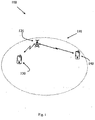
- a cellular access system 100 is shown in which the invention may be applied.
- the system 100 comprises a Radio Base Station, an RBS 120, which controls the traffic to and from a cell 110 in the system 100.
- the cell 110 there can be a user with a User Equipment, UE 130, 140.
- the RBS 120 and the UE 130, 140 are able to send and receive data in blocks to and from each other.
- the data which is sent between the RBS and the UE may comprise sequence numbers, which aid in identifying the data blocks.
- the Invention is primarily intended to provide a new reporting strategy for ACK/NACK reports, which can be used together with "event based" reporting of ACK/NACK, especially if the ACK/NACK reports are "piggy backed" ("PAN") on data sent from the reporting party to the other party, i.e. the "report receiving party", which is the party that sent the data that the report refers to.
- PAN packet backed
- the invention can be applied either to the acknowledged or to the non persistent RLC mode, which have been explained above, and the invention describes which parts of the RLC transmission window that should be covered by the PANs for those modes.
- an ACK/NACK report can be "piggy backed" to a data transmission which is addressed to, or intended for, a party in the system which is not the report receiving party. This embodiment will be elaborated upon more lately in this text.
- both the RBS 120 and the UE 130, 140 can be either the reporting or the report receiving party.
- the reporting party or the “report receiving party”, or words which are essentially synonyms of those words.
- the reporting party sends an ACK/NACK report to the report receiving party, and thus lets the report comprise information on whether or not data blocks which were transmitted by the report receiving party were received successfully. Also, according to this embodiment of the invention, the reporting party sends the ACK/NACK report together with data which it, i.e. the reporting party, needs to transmit to the report receiving party, i.e. the party which transmitted the data that the ACK/NACK-report concerns.
- the reporting party which has thus received data from the report receiving party may decide the contents of the ACK/NACK report using at least one of a number of priority rules which will be described in the following.
- the reporting party or the system needs to make a ranking of the priority rules, i.e. a rule which enables the reporting party to decide which of the rules Is the most important if there is a conflict between two or more of the rules explained below.
- This ranking can be done either once and for all, for example when installing or setting up the system, or the ranking can be done adaptively, either at regular intervals in time or each time that a report is to be sent.
- the ACK/NACK reporting can be controlled by the UE as well.
- the idea will in the following be described with reference to a reporting party, since the idea behind the invention can also be used by the RBS when sending ACK/NACK reports to the UE.
- the network If the UE is the reporting party, there is also a possibility for the network to send a poll for a PAN report to the UEs via the RBS.
- priority rules are comprised in the invention:
- the priority rules can also change depending on whether or not there has been a poll, usually from the RBS to the UE. For example, data blocks that belong to a TBF, Temporary Block Flow, that has been polled could be given top priority. Another way of adapting the priorities would be to give data block with lowest BSN from a polled TBF top priority. With that rule, a PAN poll would be similar to a FPB poll, First Partial Bitmap, which gives the base station ACK/NACK information of the beginning of the reception window in the UE.
- the priority rules can also be used to decide the size of the PAN. For example, it could be decided that the PAN should be sufficiently large to cover all data blocks that are covered by one or more of the priority rules of the invention.
- a multi segment PAN with several Starting Sequence Numbers, SSN is needed. If the PAN has its own channel coding in the system, the size of the PAN should be predefined or signalled in the header of the message, so that the size is known before the party which receives the PAN starts to decode it. As an option, a flag (consisting of one or more bits) in the message can be used to signal the presence or absence of a PAN in the transmission or message, and if there is a PAN included in the transmission or message, the receiving party can try to decode the PAN, with attempts being made for a number of different but known alternative PAN sizes.
- SSN Starting Sequence Numbers
- the structure of the PAN i.e. the number of segments and the relative size of the segments, could also be signalled in the message header, as an alternative to which, in order to save space in the header, a specific structure field in the beginning of the PAN could be used.
- This structure field will then comprise information on which of one or more predefined PAN structures that is used. The size and interpretation of the structure field could vary depending on the size of the PAN.
- a decision on whether to let the PAN consist of one or more segments should be made by the party which transmits the PAN.
- a single segment PAN can carry ACK/NACK information for more consecutive BSNs than a two-segment PAN of the same size, but a two-segment PAN can cover a larger range of BSNs.
- the method proposed by the invention is to test both these types of PAN, and to evaluate which type that fulfils the priority rules best and contains the largest amount of erroneous blocks.
- an ACK/NACK reporting scheme could be included using PANs and the reporting strategy shown below.
- the example below will use a UE as the reporting party, but those skilled in the field will realize that the method described below could also be applied to an RBS with the proper modifications.
- a UE 130, 140 will send a PAN if polled for it by the RBS 120, or If it detects an erroneous transmission.
- This PAN has one of two or three predefined sizes, the size being signalled in the header, as described above. If a large PAN size Is used, the PAN starts with a structure bit, defining If one or two segments are used.
- acknowledge mode it should be noted that item 3, acknowledged mode RLC, will make sure to encapsulate the BSN causing the event in the PAN.
- the second segment will continue to be filled with the remaining new unreported errors.
- Item 4 will enforce that the second segment covers the beginning of the reception window and effectively work as a First Partial Bitmap, FPB, which can, for example, help to prevent stalling.
- FPB First Partial Bitmap
- the reporting strategy of the invention would in this example produce a PAN with the following characteristics:
- the FPB strategy on the other hand, would have produced a PAN with the following characteristics:
- EBB event based strategy of the invention
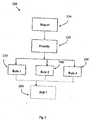
- fig 2 shows a brief flow chart 200 with some of the steps of a method of the invention:
- the reporting party sends a transmission comprising a report to the report receiving party, the report comprising information on whether or not data blocks which were transmitted by the report receiving party were received successfully, and the report is sent together with data from the reporting party to the report receiving party, or as mentioned previously, to another party in the cell.
- the reporting party attaches addresses for the recipient of the data blocks and for the report in the transmission.
- step 220 the reporting party decides the contents of the report using at least one of the following priority rules, steps 230-250, which have been given an internal priority ranking:
- step 260 Indicated in step 260 with dashed lines to show that it is an optional step, if the UE, 130, 140, is the reporting party, the report 210 is triggered by a request, i.e. a poll, from the RBS 120.
- a request i.e. a poll
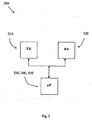
- Fig 3 shows a rough block diagram of a transceiver 300 of the Invention, the transceiver being either a UE or an RBS in the system 100 described above.
- the transceiver 300 comprises means 310, for sending and means 320 for receiving data blocks, which may comprise sequence numbers, to and from a second transceiver in the system, so that the transceiver 300 can be either a reporting or a report receiving party with respect to the second transceiver.
- the transceiver 300 comprises means 330 for sending a report, when the first transceiver is the reporting party, to the report receiving party, the report comprising information on whether or not data blocks which were transmitted by the report receiving party were received successfully, and also comprises means 340 for sending said report together with data to the report receiving party.
- the means 330 and 340 may be one and the same, for example a microprocessor or some other controlling device, as shown in fig 3 , which controls and coordinates the transmitter 310 and the receiver 320.
- the transceiver 300 also comprises means 350 for deciding the contents of the report using at least one of the priority rules described above. These means 350 may also be embodied by the processor or controller mentioned previously.
- the reporting party can send the ACK/NACK report together with data to the report receiving party or to another party in the cell.
- an RBS may broadcast a message which comprises data intended for one UE in the cell together with an ACK/NACK report (a "PAN") which is intended for another UE in the cell. Since the message is a "broadcast" message, both of the UEs will receive the message, and since the RBS includes addresses both for the recipient of the data and for the recipient of the ACK/NACK report in the transmission, both of the UEs will extract only that part of the transmission or message which is intended for them.
- a typical message according to the invention will comprise a data part and a "report part", i.e. a PAN part. The message will also include an address for the data, as well as an address for the PAN.
- the address for the PAN may be designed in a number of ways.
- One way is to let a message comprise explicit addresses both for the data and for the PAN, another way is to let the message comprise a flag (one or more bits) which signals the presence or absence of a PAN in the message, and to let the PAN as such comprise the address for which it is intended.
- An alternative way, as described previously in this text is to use a flag to signal the absence or presence of a PAN in the message, and to then let the report receiving party try different PAN sizes.
Landscapes
- Engineering & Computer Science (AREA)
- Computer Networks & Wireless Communication (AREA)
- Signal Processing (AREA)
- Computer Security & Cryptography (AREA)
- Mobile Radio Communication Systems (AREA)
- Detection And Prevention Of Errors In Transmission (AREA)
Applications Claiming Priority (4)
| Application Number | Priority Date | Filing Date | Title |
|---|---|---|---|
| PCT/SE2006/050080 WO2007120090A1 (en) | 2006-04-19 | 2006-04-19 | Method and apparatus for selective acknowledgement |
| SE0700311 | 2007-02-07 | ||
| EP07716142.0A EP2008391B1 (en) | 2006-04-19 | 2007-03-27 | Method and apparatus for improved data communication in cellular access systems |
| PCT/SE2007/050186 WO2007120107A2 (en) | 2006-04-19 | 2007-03-27 | Prioritized and piggy-backed ack/nack reports |
Related Parent Applications (2)
| Application Number | Title | Priority Date | Filing Date |
|---|---|---|---|
| EP07716142.0A Division-Into EP2008391B1 (en) | 2006-04-19 | 2007-03-27 | Method and apparatus for improved data communication in cellular access systems |
| EP07716142.0A Division EP2008391B1 (en) | 2006-04-19 | 2007-03-27 | Method and apparatus for improved data communication in cellular access systems |
Publications (2)
| Publication Number | Publication Date |
|---|---|
| EP2685655A1 EP2685655A1 (en) | 2014-01-15 |
| EP2685655B1 true EP2685655B1 (en) | 2019-05-08 |
Family
ID=38609928
Family Applications (2)
| Application Number | Title | Priority Date | Filing Date |
|---|---|---|---|
| EP13188011.4A Active EP2685655B1 (en) | 2006-04-19 | 2007-03-27 | Method and apparatus for improved data communication in cellular access systems |
| EP07716142.0A Not-in-force EP2008391B1 (en) | 2006-04-19 | 2007-03-27 | Method and apparatus for improved data communication in cellular access systems |
Family Applications After (1)
| Application Number | Title | Priority Date | Filing Date |
|---|---|---|---|
| EP07716142.0A Not-in-force EP2008391B1 (en) | 2006-04-19 | 2007-03-27 | Method and apparatus for improved data communication in cellular access systems |
Country Status (5)
| Country | Link |
|---|---|
| US (4) | US8155034B2 (enExample) |
| EP (2) | EP2685655B1 (enExample) |
| JP (1) | JP4927940B2 (enExample) |
| DK (1) | DK2008391T3 (enExample) |
| WO (1) | WO2007120107A2 (enExample) |
Families Citing this family (16)
| Publication number | Priority date | Publication date | Assignee | Title |
|---|---|---|---|---|
| JP4927940B2 (ja) | 2006-04-19 | 2012-05-09 | テレフオンアクチーボラゲット エル エム エリクソン(パブル) | セルラ・アクセス・システムにおける改良されたデータ通信のための方法および装置 |
| KR101518269B1 (ko) * | 2008-02-01 | 2015-05-08 | 삼성전자주식회사 | 상태보고를 전송하는 방법 및 시스템 |
| CN102047742B (zh) * | 2008-03-25 | 2014-04-16 | 诺基亚公司 | 用于基于公共通信会话对不同业务类型进行多路复用的方法和装置 |
| US8473800B2 (en) * | 2009-02-11 | 2013-06-25 | Telefonaktiebolaget Lm Ericsson (Publ) | Method and apparatus for ACK/NACK reporting |
| JP5254490B2 (ja) | 2009-03-23 | 2013-08-07 | リサーチ イン モーション リミテッド | アップリンクデータブロック伝送を割り振り、伝送するためのシステムおよび方法 |
| WO2010108257A1 (en) * | 2009-03-23 | 2010-09-30 | Research In Motion Limited | Systems and methods for allocating and transmitting uplink data block transmissions with piggy-backed ack/nack bitmap |
| SG175177A1 (en) * | 2009-04-21 | 2011-11-28 | Research In Motion Ltd | Methods and apparatus to prioritize mobile station transmissions in response to network acknowledgment polling |
| US8457048B2 (en) | 2009-08-31 | 2013-06-04 | Research In Motion Limited | Methods and apparatus to avoid mobile station transmission of duplicate event-based and polled acknowledgments |
| US20110069669A1 (en) * | 2009-09-11 | 2011-03-24 | Research In Motion Limited | System and methods for sending and receiving pan (piggy-backed ack/nack) so as to avoid decoding confusion |
| CN102577497A (zh) * | 2009-10-14 | 2012-07-11 | 捷讯研究有限公司 | 用于发送和接收确认信息以避免解码混淆的系统和方法 |
| US8745231B2 (en) * | 2010-07-22 | 2014-06-03 | Blackberry Limited | Methods and apparatus to poll in wireless communications |
| US8837388B2 (en) | 2010-07-22 | 2014-09-16 | Blackberry Limited | Methods and apparatus to perform assignments in wireless communications |
| US8830981B2 (en) * | 2010-07-22 | 2014-09-09 | Blackberry Limited | Methods and apparatus to poll in wireless communications based on assignments |
| US9001649B2 (en) | 2010-07-22 | 2015-04-07 | Blackberry Limited | Methods and apparatus to communicate data between a wireless network and a mobile station |
| EP2693800A1 (en) | 2012-08-03 | 2014-02-05 | Panasonic Corporation | Radio Resource Managment for Dual Priority Access |
| US11397745B1 (en) | 2019-03-26 | 2022-07-26 | Grant Carter Hemingway | System and method for determining rankings, searching, and generating reports of profiles and personal information |
Family Cites Families (27)
| Publication number | Priority date | Publication date | Assignee | Title |
|---|---|---|---|---|
| US5572546A (en) * | 1994-12-22 | 1996-11-05 | Motorola, Inc. | Data communications system with multilink protocol |
| US6367045B1 (en) * | 1999-07-01 | 2002-04-02 | Telefonaktiebolaget Lm Ericsson (Publ) | Bandwidth efficient acknowledgment/negative acknowledgment in a communication system using automatic repeat request (ARQ) |
| CN1202643C (zh) * | 2000-10-07 | 2005-05-18 | Lg电子株式会社 | 具有无线电链路控制层的无线电通信系统和数据处理方法 |
| US7251232B1 (en) * | 2000-11-22 | 2007-07-31 | Cisco Technology, Inc. | Point-controlled contention arbitration in multiple access wireless LANs |
| US7082569B2 (en) * | 2001-01-17 | 2006-07-25 | Outlooksoft Corporation | Systems and methods providing dynamic spreadsheet functionality |
| US7012893B2 (en) * | 2001-06-12 | 2006-03-14 | Smartpackets, Inc. | Adaptive control of data packet size in networks |
| GB0120303D0 (en) * | 2001-08-21 | 2001-10-17 | Roke Manor Research | Communication method |
| US7801092B2 (en) * | 2003-03-21 | 2010-09-21 | Cisco Technology, Inc. | Method for a simple 802.11e HCF implementation |
| JP4188774B2 (ja) * | 2003-08-14 | 2008-11-26 | 株式会社エヌ・ティ・ティ・ドコモ | フレーム送受信システム、フレーム送信装置、フレーム受信装置、及びフレーム送受信方法 |
| JP4335619B2 (ja) | 2003-09-04 | 2009-09-30 | 株式会社エヌ・ティ・ティ・ドコモ | パケット優先制御装置及びその方法 |
| US20050207436A1 (en) * | 2004-03-18 | 2005-09-22 | Anujan Varma | Switching device based on aggregation of packets |
| JP4086304B2 (ja) * | 2004-04-23 | 2008-05-14 | 株式会社東芝 | 通信装置、通信システム、および通信制御プログラム |
| US20050250497A1 (en) * | 2004-05-05 | 2005-11-10 | Amitava Ghosh | Acknowledgement method for ACK/NACK signaling to facilitate UE uplink data transfer |
| JP4032257B2 (ja) * | 2004-06-28 | 2008-01-16 | 日本電気株式会社 | 無線lanにおける省電力化方法、基地局、端末局、無線lanシステム |
| US7525908B2 (en) * | 2004-09-24 | 2009-04-28 | M-Stack Limited | Data unit management in communications |
| JP4130648B2 (ja) * | 2004-10-19 | 2008-08-06 | 株式会社東芝 | 通信装置および通信方法 |
| US7352712B2 (en) * | 2005-10-07 | 2008-04-01 | Symbol Technologies, Inc. | System and method for detecting a delay in a computer network |
| JP4927940B2 (ja) * | 2006-04-19 | 2012-05-09 | テレフオンアクチーボラゲット エル エム エリクソン(パブル) | セルラ・アクセス・システムにおける改良されたデータ通信のための方法および装置 |
| EP2008390B1 (en) | 2006-04-19 | 2014-12-24 | Telefonaktiebolaget L M Ericsson (publ) | Method and apparatus for selective acknowledgement |
| US20070249343A1 (en) * | 2006-04-19 | 2007-10-25 | Andreas Olsson | Method and system of communications |
| KR20090043009A (ko) * | 2006-08-30 | 2009-05-04 | 노키아 코포레이션 | 모바일 통신 시스템에서의 고속 또는 부정 응답을 위한 방법 및 장치 |
| US8473800B2 (en) * | 2009-02-11 | 2013-06-25 | Telefonaktiebolaget Lm Ericsson (Publ) | Method and apparatus for ACK/NACK reporting |
| SG175177A1 (en) * | 2009-04-21 | 2011-11-28 | Research In Motion Ltd | Methods and apparatus to prioritize mobile station transmissions in response to network acknowledgment polling |
| US8457048B2 (en) * | 2009-08-31 | 2013-06-04 | Research In Motion Limited | Methods and apparatus to avoid mobile station transmission of duplicate event-based and polled acknowledgments |
| US8837388B2 (en) * | 2010-07-22 | 2014-09-16 | Blackberry Limited | Methods and apparatus to perform assignments in wireless communications |
| US8745231B2 (en) * | 2010-07-22 | 2014-06-03 | Blackberry Limited | Methods and apparatus to poll in wireless communications |
| US8830981B2 (en) * | 2010-07-22 | 2014-09-09 | Blackberry Limited | Methods and apparatus to poll in wireless communications based on assignments |
-
2007
- 2007-03-27 JP JP2009506448A patent/JP4927940B2/ja not_active Expired - Fee Related
- 2007-03-27 EP EP13188011.4A patent/EP2685655B1/en active Active
- 2007-03-27 US US12/297,808 patent/US8155034B2/en not_active Expired - Fee Related
- 2007-03-27 DK DK07716142.0T patent/DK2008391T3/da active
- 2007-03-27 WO PCT/SE2007/050186 patent/WO2007120107A2/en not_active Ceased
- 2007-03-27 EP EP07716142.0A patent/EP2008391B1/en not_active Not-in-force
-
2012
- 2012-03-05 US US13/411,903 patent/US8630210B2/en not_active Expired - Fee Related
-
2013
- 2013-11-26 US US14/090,540 patent/US9001706B2/en active Active
-
2015
- 2015-03-06 US US14/640,983 patent/US20150180614A1/en not_active Abandoned
Non-Patent Citations (1)
| Title |
|---|
| None * |
Also Published As
| Publication number | Publication date |
|---|---|
| US8630210B2 (en) | 2014-01-14 |
| JP4927940B2 (ja) | 2012-05-09 |
| US20090098866A1 (en) | 2009-04-16 |
| EP2008391B1 (en) | 2014-01-15 |
| WO2007120107A2 (en) | 2007-10-25 |
| EP2685655A1 (en) | 2014-01-15 |
| WO2007120107A3 (en) | 2007-12-13 |
| JP2009534916A (ja) | 2009-09-24 |
| US20150180614A1 (en) | 2015-06-25 |
| DK2008391T3 (da) | 2014-04-14 |
| US9001706B2 (en) | 2015-04-07 |
| US8155034B2 (en) | 2012-04-10 |
| EP2008391A4 (en) | 2013-01-02 |
| EP2008391A2 (en) | 2008-12-31 |
| US20120163303A1 (en) | 2012-06-28 |
| US20140219108A1 (en) | 2014-08-07 |
Similar Documents
| Publication | Publication Date | Title |
|---|---|---|
| EP2008391B1 (en) | Method and apparatus for improved data communication in cellular access systems | |
| JP6987428B2 (ja) | 通信システムにおける方法および装置 | |
| EP2086148B1 (en) | Method for sending status information in mobile telecommunications system and receiver of mobile telecommunications | |
| EP3391570B1 (en) | Method for transmitting a stream in a wireless network from a wireless communication device to a plurality of wireless communication devices with nack avoidance | |
| JP4607339B2 (ja) | フレキシブル無線リンク制御プロトコル | |
| EP2094049B1 (en) | Method and apparatus for sending RLC PDU in a mobile communications system | |
| EP2030359B1 (en) | Method of supporting data retransmission in a mobile communication system | |
| RU2481713C2 (ru) | Способ и передающий блок для снижения риска затухания передачи | |
| US20040052250A1 (en) | Method of data communication using a control message | |
| EP2015500A1 (en) | Wireless communicating method and wireless communicating device | |
| KR101509766B1 (ko) | 이동통신시스템에서의 rlc pdu 전송 방법, 자원할당 방법 및 rlc 엔티티 | |
| CN101427503B (zh) | 用于蜂窝接入系统中的改进的数据通信的方法和设备 | |
| CN101542955A (zh) | 一种轮询方法、系统及设备 | |
| US20070249343A1 (en) | Method and system of communications | |
| WO2007120113A1 (en) | Method, communication entity and system for transmiting positive and negative acknowledgements in a radio communications system | |
| WO2003019852A1 (en) | A method of acknowledging data |
Legal Events
| Date | Code | Title | Description |
|---|---|---|---|
| PUAI | Public reference made under article 153(3) epc to a published international application that has entered the european phase |
Free format text: ORIGINAL CODE: 0009012 |
|
| AC | Divisional application: reference to earlier application |
Ref document number: 2008391 Country of ref document: EP Kind code of ref document: P |
|
| AK | Designated contracting states |
Kind code of ref document: A1 Designated state(s): AT BE BG CH CY CZ DE DK EE ES FI FR GB GR HU IE IS IT LI LT LU LV MC MT NL PL PT RO SE SI SK TR |
|
| 17P | Request for examination filed |
Effective date: 20140618 |
|
| RBV | Designated contracting states (corrected) |
Designated state(s): AT BE BG CH CY CZ DE DK EE ES FI FR GB GR HU IE IS IT LI LT LU LV MC MT NL PL PT RO SE SI SK TR |
|
| STAA | Information on the status of an ep patent application or granted ep patent |
Free format text: STATUS: EXAMINATION IS IN PROGRESS |
|
| 17Q | First examination report despatched |
Effective date: 20161206 |
|
| GRAP | Despatch of communication of intention to grant a patent |
Free format text: ORIGINAL CODE: EPIDOSNIGR1 |
|
| STAA | Information on the status of an ep patent application or granted ep patent |
Free format text: STATUS: GRANT OF PATENT IS INTENDED |
|
| GRAS | Grant fee paid |
Free format text: ORIGINAL CODE: EPIDOSNIGR3 |
|
| INTG | Intention to grant announced |
Effective date: 20190211 |
|
| GRAA | (expected) grant |
Free format text: ORIGINAL CODE: 0009210 |
|
| STAA | Information on the status of an ep patent application or granted ep patent |
Free format text: STATUS: THE PATENT HAS BEEN GRANTED |
|
| AC | Divisional application: reference to earlier application |
Ref document number: 2008391 Country of ref document: EP Kind code of ref document: P |
|
| AK | Designated contracting states |
Kind code of ref document: B1 Designated state(s): AT BE BG CH CY CZ DE DK EE ES FI FR GB GR HU IE IS IT LI LT LU LV MC MT NL PL PT RO SE SI SK TR |
|
| REG | Reference to a national code |
Ref country code: GB Ref legal event code: FG4D |
|
| REG | Reference to a national code |
Ref country code: CH Ref legal event code: EP Ref country code: AT Ref legal event code: REF Ref document number: 1131890 Country of ref document: AT Kind code of ref document: T Effective date: 20190515 |
|
| REG | Reference to a national code |
Ref country code: DE Ref legal event code: R096 Ref document number: 602007058346 Country of ref document: DE Ref country code: IE Ref legal event code: FG4D |
|
| REG | Reference to a national code |
Ref country code: NL Ref legal event code: MP Effective date: 20190508 |
|
| REG | Reference to a national code |
Ref country code: LT Ref legal event code: MG4D |
|
| PG25 | Lapsed in a contracting state [announced via postgrant information from national office to epo] |
Ref country code: ES Free format text: LAPSE BECAUSE OF FAILURE TO SUBMIT A TRANSLATION OF THE DESCRIPTION OR TO PAY THE FEE WITHIN THE PRESCRIBED TIME-LIMIT Effective date: 20190508 Ref country code: PT Free format text: LAPSE BECAUSE OF FAILURE TO SUBMIT A TRANSLATION OF THE DESCRIPTION OR TO PAY THE FEE WITHIN THE PRESCRIBED TIME-LIMIT Effective date: 20190908 Ref country code: SE Free format text: LAPSE BECAUSE OF FAILURE TO SUBMIT A TRANSLATION OF THE DESCRIPTION OR TO PAY THE FEE WITHIN THE PRESCRIBED TIME-LIMIT Effective date: 20190508 Ref country code: FI Free format text: LAPSE BECAUSE OF FAILURE TO SUBMIT A TRANSLATION OF THE DESCRIPTION OR TO PAY THE FEE WITHIN THE PRESCRIBED TIME-LIMIT Effective date: 20190508 Ref country code: LT Free format text: LAPSE BECAUSE OF FAILURE TO SUBMIT A TRANSLATION OF THE DESCRIPTION OR TO PAY THE FEE WITHIN THE PRESCRIBED TIME-LIMIT Effective date: 20190508 Ref country code: NL Free format text: LAPSE BECAUSE OF FAILURE TO SUBMIT A TRANSLATION OF THE DESCRIPTION OR TO PAY THE FEE WITHIN THE PRESCRIBED TIME-LIMIT Effective date: 20190508 |
|
| PG25 | Lapsed in a contracting state [announced via postgrant information from national office to epo] |
Ref country code: BG Free format text: LAPSE BECAUSE OF FAILURE TO SUBMIT A TRANSLATION OF THE DESCRIPTION OR TO PAY THE FEE WITHIN THE PRESCRIBED TIME-LIMIT Effective date: 20190808 Ref country code: LV Free format text: LAPSE BECAUSE OF FAILURE TO SUBMIT A TRANSLATION OF THE DESCRIPTION OR TO PAY THE FEE WITHIN THE PRESCRIBED TIME-LIMIT Effective date: 20190508 Ref country code: GR Free format text: LAPSE BECAUSE OF FAILURE TO SUBMIT A TRANSLATION OF THE DESCRIPTION OR TO PAY THE FEE WITHIN THE PRESCRIBED TIME-LIMIT Effective date: 20190809 |
|
| REG | Reference to a national code |
Ref country code: AT Ref legal event code: MK05 Ref document number: 1131890 Country of ref document: AT Kind code of ref document: T Effective date: 20190508 |
|
| PG25 | Lapsed in a contracting state [announced via postgrant information from national office to epo] |
Ref country code: AT Free format text: LAPSE BECAUSE OF FAILURE TO SUBMIT A TRANSLATION OF THE DESCRIPTION OR TO PAY THE FEE WITHIN THE PRESCRIBED TIME-LIMIT Effective date: 20190508 Ref country code: EE Free format text: LAPSE BECAUSE OF FAILURE TO SUBMIT A TRANSLATION OF THE DESCRIPTION OR TO PAY THE FEE WITHIN THE PRESCRIBED TIME-LIMIT Effective date: 20190508 Ref country code: DK Free format text: LAPSE BECAUSE OF FAILURE TO SUBMIT A TRANSLATION OF THE DESCRIPTION OR TO PAY THE FEE WITHIN THE PRESCRIBED TIME-LIMIT Effective date: 20190508 Ref country code: RO Free format text: LAPSE BECAUSE OF FAILURE TO SUBMIT A TRANSLATION OF THE DESCRIPTION OR TO PAY THE FEE WITHIN THE PRESCRIBED TIME-LIMIT Effective date: 20190508 Ref country code: CZ Free format text: LAPSE BECAUSE OF FAILURE TO SUBMIT A TRANSLATION OF THE DESCRIPTION OR TO PAY THE FEE WITHIN THE PRESCRIBED TIME-LIMIT Effective date: 20190508 Ref country code: SK Free format text: LAPSE BECAUSE OF FAILURE TO SUBMIT A TRANSLATION OF THE DESCRIPTION OR TO PAY THE FEE WITHIN THE PRESCRIBED TIME-LIMIT Effective date: 20190508 |
|
| REG | Reference to a national code |
Ref country code: DE Ref legal event code: R097 Ref document number: 602007058346 Country of ref document: DE |
|
| PG25 | Lapsed in a contracting state [announced via postgrant information from national office to epo] |
Ref country code: IT Free format text: LAPSE BECAUSE OF FAILURE TO SUBMIT A TRANSLATION OF THE DESCRIPTION OR TO PAY THE FEE WITHIN THE PRESCRIBED TIME-LIMIT Effective date: 20190508 |
|
| PLBE | No opposition filed within time limit |
Free format text: ORIGINAL CODE: 0009261 |
|
| STAA | Information on the status of an ep patent application or granted ep patent |
Free format text: STATUS: NO OPPOSITION FILED WITHIN TIME LIMIT |
|
| PG25 | Lapsed in a contracting state [announced via postgrant information from national office to epo] |
Ref country code: TR Free format text: LAPSE BECAUSE OF FAILURE TO SUBMIT A TRANSLATION OF THE DESCRIPTION OR TO PAY THE FEE WITHIN THE PRESCRIBED TIME-LIMIT Effective date: 20190508 |
|
| 26N | No opposition filed |
Effective date: 20200211 |
|
| PG25 | Lapsed in a contracting state [announced via postgrant information from national office to epo] |
Ref country code: PL Free format text: LAPSE BECAUSE OF FAILURE TO SUBMIT A TRANSLATION OF THE DESCRIPTION OR TO PAY THE FEE WITHIN THE PRESCRIBED TIME-LIMIT Effective date: 20190508 |
|
| PG25 | Lapsed in a contracting state [announced via postgrant information from national office to epo] |
Ref country code: SI Free format text: LAPSE BECAUSE OF FAILURE TO SUBMIT A TRANSLATION OF THE DESCRIPTION OR TO PAY THE FEE WITHIN THE PRESCRIBED TIME-LIMIT Effective date: 20190508 |
|
| PG25 | Lapsed in a contracting state [announced via postgrant information from national office to epo] |
Ref country code: MC Free format text: LAPSE BECAUSE OF FAILURE TO SUBMIT A TRANSLATION OF THE DESCRIPTION OR TO PAY THE FEE WITHIN THE PRESCRIBED TIME-LIMIT Effective date: 20190508 |
|
| REG | Reference to a national code |
Ref country code: CH Ref legal event code: PL |
|
| REG | Reference to a national code |
Ref country code: BE Ref legal event code: MM Effective date: 20200331 |
|
| PG25 | Lapsed in a contracting state [announced via postgrant information from national office to epo] |
Ref country code: LU Free format text: LAPSE BECAUSE OF NON-PAYMENT OF DUE FEES Effective date: 20200327 |
|
| PG25 | Lapsed in a contracting state [announced via postgrant information from national office to epo] |
Ref country code: IE Free format text: LAPSE BECAUSE OF NON-PAYMENT OF DUE FEES Effective date: 20200327 Ref country code: LI Free format text: LAPSE BECAUSE OF NON-PAYMENT OF DUE FEES Effective date: 20200331 Ref country code: CH Free format text: LAPSE BECAUSE OF NON-PAYMENT OF DUE FEES Effective date: 20200331 |
|
| PG25 | Lapsed in a contracting state [announced via postgrant information from national office to epo] |
Ref country code: BE Free format text: LAPSE BECAUSE OF NON-PAYMENT OF DUE FEES Effective date: 20200331 |
|
| PGFP | Annual fee paid to national office [announced via postgrant information from national office to epo] |
Ref country code: GB Payment date: 20220328 Year of fee payment: 16 Ref country code: DE Payment date: 20220329 Year of fee payment: 16 |
|
| PG25 | Lapsed in a contracting state [announced via postgrant information from national office to epo] |
Ref country code: MT Free format text: LAPSE BECAUSE OF FAILURE TO SUBMIT A TRANSLATION OF THE DESCRIPTION OR TO PAY THE FEE WITHIN THE PRESCRIBED TIME-LIMIT Effective date: 20190508 Ref country code: CY Free format text: LAPSE BECAUSE OF FAILURE TO SUBMIT A TRANSLATION OF THE DESCRIPTION OR TO PAY THE FEE WITHIN THE PRESCRIBED TIME-LIMIT Effective date: 20190508 |
|
| PGFP | Annual fee paid to national office [announced via postgrant information from national office to epo] |
Ref country code: FR Payment date: 20220325 Year of fee payment: 16 |
|
| PG25 | Lapsed in a contracting state [announced via postgrant information from national office to epo] |
Ref country code: IS Free format text: LAPSE BECAUSE OF FAILURE TO SUBMIT A TRANSLATION OF THE DESCRIPTION OR TO PAY THE FEE WITHIN THE PRESCRIBED TIME-LIMIT Effective date: 20190908 |
|
| REG | Reference to a national code |
Ref country code: DE Ref legal event code: R119 Ref document number: 602007058346 Country of ref document: DE |
|
| GBPC | Gb: european patent ceased through non-payment of renewal fee |
Effective date: 20230327 |
|
| PG25 | Lapsed in a contracting state [announced via postgrant information from national office to epo] |
Ref country code: GB Free format text: LAPSE BECAUSE OF NON-PAYMENT OF DUE FEES Effective date: 20230327 |
|
| PG25 | Lapsed in a contracting state [announced via postgrant information from national office to epo] |
Ref country code: GB Free format text: LAPSE BECAUSE OF NON-PAYMENT OF DUE FEES Effective date: 20230327 Ref country code: FR Free format text: LAPSE BECAUSE OF NON-PAYMENT OF DUE FEES Effective date: 20230331 Ref country code: DE Free format text: LAPSE BECAUSE OF NON-PAYMENT OF DUE FEES Effective date: 20231003 |