EP2682001A1 - Stabiler, konzentrierter und flüssiger Verstärker für menschliche Milch - Google Patents
Stabiler, konzentrierter und flüssiger Verstärker für menschliche Milch Download PDFInfo
- Publication number
- EP2682001A1 EP2682001A1 EP13004731.9A EP13004731A EP2682001A1 EP 2682001 A1 EP2682001 A1 EP 2682001A1 EP 13004731 A EP13004731 A EP 13004731A EP 2682001 A1 EP2682001 A1 EP 2682001A1
- Authority
- EP
- European Patent Office
- Prior art keywords
- human milk
- concentrated liquid
- liquid human
- milk fortifier
- fortifier
- Prior art date
- Legal status (The legal status is an assumption and is not a legal conclusion. Google has not performed a legal analysis and makes no representation as to the accuracy of the status listed.)
- Withdrawn
Links
- 235000020256 human milk Nutrition 0.000 title claims abstract description 199
- 210000004251 human milk Anatomy 0.000 title claims abstract description 199
- 239000007788 liquid Substances 0.000 title claims abstract description 172
- 229920002148 Gellan gum Polymers 0.000 claims abstract description 57
- 235000010492 gellan gum Nutrition 0.000 claims abstract description 57
- 239000000216 gellan gum Substances 0.000 claims abstract description 57
- 125000002252 acyl group Chemical group 0.000 claims abstract description 53
- 229920000881 Modified starch Polymers 0.000 claims abstract description 52
- 235000018102 proteins Nutrition 0.000 claims abstract description 51
- 102000004169 proteins and genes Human genes 0.000 claims abstract description 51
- 108090000623 proteins and genes Proteins 0.000 claims abstract description 51
- 239000003381 stabilizer Substances 0.000 claims abstract description 27
- BECPQYXYKAMYBN-UHFFFAOYSA-N casein, tech. Chemical compound NCCCCC(C(O)=O)N=C(O)C(CC(O)=O)N=C(O)C(CCC(O)=N)N=C(O)C(CC(C)C)N=C(O)C(CCC(O)=O)N=C(O)C(CC(O)=O)N=C(O)C(CCC(O)=O)N=C(O)C(C(C)O)N=C(O)C(CCC(O)=N)N=C(O)C(CCC(O)=N)N=C(O)C(CCC(O)=N)N=C(O)C(CCC(O)=O)N=C(O)C(CCC(O)=O)N=C(O)C(COP(O)(O)=O)N=C(O)C(CCC(O)=N)N=C(O)C(N)CC1=CC=CC=C1 BECPQYXYKAMYBN-UHFFFAOYSA-N 0.000 claims abstract description 26
- 235000021240 caseins Nutrition 0.000 claims abstract description 26
- 239000005018 casein Substances 0.000 claims abstract description 25
- 230000000774 hypoallergenic effect Effects 0.000 claims abstract description 16
- FLISWPFVWWWNNP-BQYQJAHWSA-N dihydro-3-(1-octenyl)-2,5-furandione Chemical compound CCCCCC\C=C\C1CC(=O)OC1=O FLISWPFVWWWNNP-BQYQJAHWSA-N 0.000 claims description 26
- 150000001720 carbohydrates Chemical class 0.000 claims description 24
- 235000014633 carbohydrates Nutrition 0.000 claims description 24
- XLYOFNOQVPJJNP-UHFFFAOYSA-N water Substances O XLYOFNOQVPJJNP-UHFFFAOYSA-N 0.000 claims description 24
- 229910052500 inorganic mineral Inorganic materials 0.000 claims description 21
- 239000011707 mineral Substances 0.000 claims description 21
- 239000007787 solid Substances 0.000 claims description 20
- 239000003925 fat Substances 0.000 claims description 18
- 239000004368 Modified starch Substances 0.000 claims description 17
- 239000000839 emulsion Substances 0.000 claims description 17
- 235000010755 mineral Nutrition 0.000 claims description 17
- 235000019197 fats Nutrition 0.000 claims description 16
- 229940088594 vitamin Drugs 0.000 claims description 14
- 229930003231 vitamin Natural products 0.000 claims description 14
- 235000013343 vitamin Nutrition 0.000 claims description 14
- 239000011782 vitamin Substances 0.000 claims description 14
- 235000015097 nutrients Nutrition 0.000 claims description 8
- 235000004252 protein component Nutrition 0.000 claims description 8
- OYPRJOBELJOOCE-UHFFFAOYSA-N Calcium Chemical compound [Ca] OYPRJOBELJOOCE-UHFFFAOYSA-N 0.000 claims description 7
- 239000011575 calcium Substances 0.000 claims description 7
- 229910052791 calcium Inorganic materials 0.000 claims description 7
- HCHKCACWOHOZIP-UHFFFAOYSA-N Zinc Chemical compound [Zn] HCHKCACWOHOZIP-UHFFFAOYSA-N 0.000 claims description 4
- 239000001506 calcium phosphate Substances 0.000 claims description 4
- 238000001556 precipitation Methods 0.000 claims description 4
- QORWJWZARLRLPR-UHFFFAOYSA-H tricalcium bis(phosphate) Chemical compound [Ca+2].[Ca+2].[Ca+2].[O-]P([O-])([O-])=O.[O-]P([O-])([O-])=O QORWJWZARLRLPR-UHFFFAOYSA-H 0.000 claims description 4
- 229940078499 tricalcium phosphate Drugs 0.000 claims description 4
- 229910000391 tricalcium phosphate Inorganic materials 0.000 claims description 4
- 235000019731 tricalcium phosphate Nutrition 0.000 claims description 4
- VEXZGXHMUGYJMC-UHFFFAOYSA-M Chloride anion Chemical compound [Cl-] VEXZGXHMUGYJMC-UHFFFAOYSA-M 0.000 claims description 3
- RYGMFSIKBFXOCR-UHFFFAOYSA-N Copper Chemical compound [Cu] RYGMFSIKBFXOCR-UHFFFAOYSA-N 0.000 claims description 3
- DGAQECJNVWCQMB-PUAWFVPOSA-M Ilexoside XXIX Chemical compound C[C@@H]1CC[C@@]2(CC[C@@]3(C(=CC[C@H]4[C@]3(CC[C@@H]5[C@@]4(CC[C@@H](C5(C)C)OS(=O)(=O)[O-])C)C)[C@@H]2[C@]1(C)O)C)C(=O)O[C@H]6[C@@H]([C@H]([C@@H]([C@H](O6)CO)O)O)O.[Na+] DGAQECJNVWCQMB-PUAWFVPOSA-M 0.000 claims description 3
- FYYHWMGAXLPEAU-UHFFFAOYSA-N Magnesium Chemical compound [Mg] FYYHWMGAXLPEAU-UHFFFAOYSA-N 0.000 claims description 3
- OAICVXFJPJFONN-UHFFFAOYSA-N Phosphorus Chemical compound [P] OAICVXFJPJFONN-UHFFFAOYSA-N 0.000 claims description 3
- BUGBHKTXTAQXES-UHFFFAOYSA-N Selenium Chemical compound [Se] BUGBHKTXTAQXES-UHFFFAOYSA-N 0.000 claims description 3
- 229910052802 copper Inorganic materials 0.000 claims description 3
- 239000010949 copper Substances 0.000 claims description 3
- PNDPGZBMCMUPRI-UHFFFAOYSA-N iodine Chemical compound II PNDPGZBMCMUPRI-UHFFFAOYSA-N 0.000 claims description 3
- 239000011777 magnesium Substances 0.000 claims description 3
- 229910052749 magnesium Inorganic materials 0.000 claims description 3
- 239000011574 phosphorus Substances 0.000 claims description 3
- 229910052698 phosphorus Inorganic materials 0.000 claims description 3
- 239000011669 selenium Substances 0.000 claims description 3
- 229910052711 selenium Inorganic materials 0.000 claims description 3
- 239000011734 sodium Substances 0.000 claims description 3
- 229910052708 sodium Inorganic materials 0.000 claims description 3
- 239000011701 zinc Substances 0.000 claims description 3
- 229910052725 zinc Inorganic materials 0.000 claims description 3
- 235000019426 modified starch Nutrition 0.000 claims description 2
- PWHULOQIROXLJO-UHFFFAOYSA-N Manganese Chemical compound [Mn] PWHULOQIROXLJO-UHFFFAOYSA-N 0.000 claims 1
- 239000011572 manganese Substances 0.000 claims 1
- 229910052748 manganese Inorganic materials 0.000 claims 1
- 239000000203 mixture Substances 0.000 description 45
- 238000000034 method Methods 0.000 description 35
- 108010076119 Caseins Proteins 0.000 description 31
- 102000011632 Caseins Human genes 0.000 description 31
- 239000004615 ingredient Substances 0.000 description 28
- 239000003921 oil Substances 0.000 description 26
- 235000019198 oils Nutrition 0.000 description 26
- 238000013019 agitation Methods 0.000 description 18
- 239000002002 slurry Substances 0.000 description 17
- 239000000047 product Substances 0.000 description 16
- CIWBSHSKHKDKBQ-JLAZNSOCSA-N Ascorbic acid Chemical compound OC[C@H](O)[C@H]1OC(=O)C(O)=C1O CIWBSHSKHKDKBQ-JLAZNSOCSA-N 0.000 description 14
- 238000004519 manufacturing process Methods 0.000 description 14
- 235000016709 nutrition Nutrition 0.000 description 14
- 230000008569 process Effects 0.000 description 14
- 238000009472 formulation Methods 0.000 description 13
- 230000035611 feeding Effects 0.000 description 12
- 235000013350 formula milk Nutrition 0.000 description 12
- 238000010438 heat treatment Methods 0.000 description 12
- 230000007774 longterm Effects 0.000 description 12
- YBJHBAHKTGYVGT-ZKWXMUAHSA-N (+)-Biotin Chemical compound N1C(=O)N[C@@H]2[C@H](CCCCC(=O)O)SC[C@@H]21 YBJHBAHKTGYVGT-ZKWXMUAHSA-N 0.000 description 10
- OVBPIULPVIDEAO-LBPRGKRZSA-N folic acid Chemical compound C=1N=C2NC(N)=NC(=O)C2=NC=1CNC1=CC=C(C(=O)N[C@@H](CCC(O)=O)C(O)=O)C=C1 OVBPIULPVIDEAO-LBPRGKRZSA-N 0.000 description 10
- 239000000243 solution Substances 0.000 description 10
- 239000000725 suspension Substances 0.000 description 10
- 108010009736 Protein Hydrolysates Proteins 0.000 description 9
- OAKJQQAXSVQMHS-UHFFFAOYSA-N Hydrazine Chemical compound NN OAKJQQAXSVQMHS-UHFFFAOYSA-N 0.000 description 8
- AUNGANRZJHBGPY-SCRDCRAPSA-N Riboflavin Chemical compound OC[C@@H](O)[C@@H](O)[C@@H](O)CN1C=2C=C(C)C(C)=CC=2N=C2C1=NC(=O)NC2=O AUNGANRZJHBGPY-SCRDCRAPSA-N 0.000 description 8
- 238000005191 phase separation Methods 0.000 description 8
- 239000003531 protein hydrolysate Substances 0.000 description 8
- ROHFNLRQFUQHCH-YFKPBYRVSA-N L-leucine Chemical compound CC(C)C[C@H](N)C(O)=O ROHFNLRQFUQHCH-YFKPBYRVSA-N 0.000 description 7
- OUYCCCASQSFEME-QMMMGPOBSA-N L-tyrosine Chemical compound OC(=O)[C@@H](N)CC1=CC=C(O)C=C1 OUYCCCASQSFEME-QMMMGPOBSA-N 0.000 description 7
- IJGRMHOSHXDMSA-UHFFFAOYSA-N Atomic nitrogen Chemical compound N#N IJGRMHOSHXDMSA-UHFFFAOYSA-N 0.000 description 6
- TWRXJAOTZQYOKJ-UHFFFAOYSA-L Magnesium chloride Chemical compound [Mg+2].[Cl-].[Cl-] TWRXJAOTZQYOKJ-UHFFFAOYSA-L 0.000 description 6
- WCUXLLCKKVVCTQ-UHFFFAOYSA-M Potassium chloride Chemical compound [Cl-].[K+] WCUXLLCKKVVCTQ-UHFFFAOYSA-M 0.000 description 6
- VYGQUTWHTHXGQB-FFHKNEKCSA-N Retinol Palmitate Chemical compound CCCCCCCCCCCCCCCC(=O)OC\C=C(/C)\C=C\C=C(/C)\C=C\C1=C(C)CCCC1(C)C VYGQUTWHTHXGQB-FFHKNEKCSA-N 0.000 description 6
- FAPWRFPIFSIZLT-UHFFFAOYSA-M Sodium chloride Chemical compound [Na+].[Cl-] FAPWRFPIFSIZLT-UHFFFAOYSA-M 0.000 description 6
- 238000009455 aseptic packaging Methods 0.000 description 6
- RMRCNWBMXRMIRW-BYFNXCQMSA-M cyanocobalamin Chemical compound N#C[Co+]N([C@]1([H])[C@H](CC(N)=O)[C@]\2(CCC(=O)NC[C@H](C)OP(O)(=O)OC3[C@H]([C@H](O[C@@H]3CO)N3C4=CC(C)=C(C)C=C4N=C3)O)C)C/2=C(C)\C([C@H](C/2(C)C)CCC(N)=O)=N\C\2=C\C([C@H]([C@@]/2(CC(N)=O)C)CCC(N)=O)=N\C\2=C(C)/C2=N[C@]1(C)[C@@](C)(CC(N)=O)[C@@H]2CCC(N)=O RMRCNWBMXRMIRW-BYFNXCQMSA-M 0.000 description 6
- 235000021073 macronutrients Nutrition 0.000 description 6
- 238000012545 processing Methods 0.000 description 6
- 235000010469 Glycine max Nutrition 0.000 description 5
- 229920002774 Maltodextrin Polymers 0.000 description 5
- 239000005913 Maltodextrin Substances 0.000 description 5
- OVBPIULPVIDEAO-UHFFFAOYSA-N N-Pteroyl-L-glutaminsaeure Natural products C=1N=C2NC(N)=NC(=O)C2=NC=1CNC1=CC=C(C(=O)NC(CCC(O)=O)C(O)=O)C=C1 OVBPIULPVIDEAO-UHFFFAOYSA-N 0.000 description 5
- QYSXJUFSXHHAJI-XFEUOLMDSA-N Vitamin D3 Natural products C1(/[C@@H]2CC[C@@H]([C@]2(CCC1)C)[C@H](C)CCCC(C)C)=C/C=C1\C[C@@H](O)CCC1=C QYSXJUFSXHHAJI-XFEUOLMDSA-N 0.000 description 5
- 240000008042 Zea mays Species 0.000 description 5
- 235000005824 Zea mays ssp. parviglumis Nutrition 0.000 description 5
- 235000002017 Zea mays subsp mays Nutrition 0.000 description 5
- MBMBGCFOFBJSGT-KUBAVDMBSA-N all-cis-docosa-4,7,10,13,16,19-hexaenoic acid Chemical compound CC\C=C/C\C=C/C\C=C/C\C=C/C\C=C/C\C=C/CCC(O)=O MBMBGCFOFBJSGT-KUBAVDMBSA-N 0.000 description 5
- 229960002685 biotin Drugs 0.000 description 5
- 235000020958 biotin Nutrition 0.000 description 5
- 239000011616 biotin Substances 0.000 description 5
- 235000005822 corn Nutrition 0.000 description 5
- 229960000304 folic acid Drugs 0.000 description 5
- 235000019152 folic acid Nutrition 0.000 description 5
- 239000011724 folic acid Substances 0.000 description 5
- 230000007062 hydrolysis Effects 0.000 description 5
- 238000006460 hydrolysis reaction Methods 0.000 description 5
- 229960000367 inositol Drugs 0.000 description 5
- 229940035034 maltodextrin Drugs 0.000 description 5
- 239000000463 material Substances 0.000 description 5
- 239000002245 particle Substances 0.000 description 5
- SHUZOJHMOBOZST-UHFFFAOYSA-N phylloquinone Natural products CC(C)CCCCC(C)CCC(C)CCCC(=CCC1=C(C)C(=O)c2ccccc2C1=O)C SHUZOJHMOBOZST-UHFFFAOYSA-N 0.000 description 5
- 239000004033 plastic Substances 0.000 description 5
- 239000001508 potassium citrate Substances 0.000 description 5
- 229960002635 potassium citrate Drugs 0.000 description 5
- QEEAPRPFLLJWCF-UHFFFAOYSA-K potassium citrate (anhydrous) Chemical compound [K+].[K+].[K+].[O-]C(=O)CC(O)(CC([O-])=O)C([O-])=O QEEAPRPFLLJWCF-UHFFFAOYSA-K 0.000 description 5
- 235000011082 potassium citrates Nutrition 0.000 description 5
- 239000013049 sediment Substances 0.000 description 5
- 238000001228 spectrum Methods 0.000 description 5
- 230000001954 sterilising effect Effects 0.000 description 5
- GHOKWGTUZJEAQD-ZETCQYMHSA-N (D)-(+)-Pantothenic acid Chemical compound OCC(C)(C)[C@@H](O)C(=O)NCCC(O)=O GHOKWGTUZJEAQD-ZETCQYMHSA-N 0.000 description 4
- PHIQHXFUZVPYII-ZCFIWIBFSA-N (R)-carnitine Chemical compound C[N+](C)(C)C[C@H](O)CC([O-])=O PHIQHXFUZVPYII-ZCFIWIBFSA-N 0.000 description 4
- GVJHHUAWPYXKBD-UHFFFAOYSA-N (±)-α-Tocopherol Chemical compound OC1=C(C)C(C)=C2OC(CCCC(C)CCCC(C)CCCC(C)C)(C)CCC2=C1C GVJHHUAWPYXKBD-UHFFFAOYSA-N 0.000 description 4
- AUNGANRZJHBGPY-UHFFFAOYSA-N D-Lyxoflavin Natural products OCC(O)C(O)C(O)CN1C=2C=C(C)C(C)=CC=2N=C2C1=NC(=O)NC2=O AUNGANRZJHBGPY-UHFFFAOYSA-N 0.000 description 4
- ZZZCUOFIHGPKAK-UHFFFAOYSA-N D-erythro-ascorbic acid Natural products OCC1OC(=O)C(O)=C1O ZZZCUOFIHGPKAK-UHFFFAOYSA-N 0.000 description 4
- MHAJPDPJQMAIIY-UHFFFAOYSA-N Hydrogen peroxide Chemical compound OO MHAJPDPJQMAIIY-UHFFFAOYSA-N 0.000 description 4
- 240000007594 Oryza sativa Species 0.000 description 4
- 235000007164 Oryza sativa Nutrition 0.000 description 4
- 229920002472 Starch Polymers 0.000 description 4
- 229930003268 Vitamin C Natural products 0.000 description 4
- 235000021466 carotenoid Nutrition 0.000 description 4
- 150000001747 carotenoids Chemical class 0.000 description 4
- 108010079058 casein hydrolysate Proteins 0.000 description 4
- 229960001231 choline Drugs 0.000 description 4
- OEYIOHPDSNJKLS-UHFFFAOYSA-N choline Chemical compound C[N+](C)(C)CCO OEYIOHPDSNJKLS-UHFFFAOYSA-N 0.000 description 4
- 239000003240 coconut oil Substances 0.000 description 4
- 235000019864 coconut oil Nutrition 0.000 description 4
- 235000020669 docosahexaenoic acid Nutrition 0.000 description 4
- 239000003995 emulsifying agent Substances 0.000 description 4
- 238000011156 evaluation Methods 0.000 description 4
- 229960003136 leucine Drugs 0.000 description 4
- 235000006180 nutrition needs Nutrition 0.000 description 4
- 239000000843 powder Substances 0.000 description 4
- 229960002477 riboflavin Drugs 0.000 description 4
- 235000019192 riboflavin Nutrition 0.000 description 4
- 239000002151 riboflavin Substances 0.000 description 4
- 235000009566 rice Nutrition 0.000 description 4
- 235000002639 sodium chloride Nutrition 0.000 description 4
- 235000019698 starch Nutrition 0.000 description 4
- 238000004659 sterilization and disinfection Methods 0.000 description 4
- 238000007669 thermal treatment Methods 0.000 description 4
- 239000011573 trace mineral Substances 0.000 description 4
- 235000013619 trace mineral Nutrition 0.000 description 4
- 229960004441 tyrosine Drugs 0.000 description 4
- 235000019154 vitamin C Nutrition 0.000 description 4
- 239000011718 vitamin C Substances 0.000 description 4
- 150000003722 vitamin derivatives Chemical class 0.000 description 4
- 239000001763 2-hydroxyethyl(trimethyl)azanium Substances 0.000 description 3
- PMYDPQQPEAYXKD-UHFFFAOYSA-N 3-hydroxy-n-naphthalen-2-ylnaphthalene-2-carboxamide Chemical compound C1=CC=CC2=CC(NC(=O)C3=CC4=CC=CC=C4C=C3O)=CC=C21 PMYDPQQPEAYXKD-UHFFFAOYSA-N 0.000 description 3
- 235000019743 Choline chloride Nutrition 0.000 description 3
- RFSUNEUAIZKAJO-ARQDHWQXSA-N Fructose Chemical compound OC[C@H]1O[C@](O)(CO)[C@@H](O)[C@@H]1O RFSUNEUAIZKAJO-ARQDHWQXSA-N 0.000 description 3
- WQZGKKKJIJFFOK-GASJEMHNSA-N Glucose Natural products OC[C@H]1OC(O)[C@H](O)[C@@H](O)[C@@H]1O WQZGKKKJIJFFOK-GASJEMHNSA-N 0.000 description 3
- 239000004395 L-leucine Substances 0.000 description 3
- 235000019454 L-leucine Nutrition 0.000 description 3
- ABSPRNADVQNDOU-UHFFFAOYSA-N Menaquinone 1 Natural products C1=CC=C2C(=O)C(CC=C(C)C)=C(C)C(=O)C2=C1 ABSPRNADVQNDOU-UHFFFAOYSA-N 0.000 description 3
- DFPAKSUCGFBDDF-UHFFFAOYSA-N Nicotinamide Chemical compound NC(=O)C1=CC=CN=C1 DFPAKSUCGFBDDF-UHFFFAOYSA-N 0.000 description 3
- VYGQUTWHTHXGQB-UHFFFAOYSA-N Retinol hexadecanoate Natural products CCCCCCCCCCCCCCCC(=O)OCC=C(C)C=CC=C(C)C=CC1=C(C)CCCC1(C)C VYGQUTWHTHXGQB-UHFFFAOYSA-N 0.000 description 3
- 235000010323 ascorbic acid Nutrition 0.000 description 3
- 239000011668 ascorbic acid Substances 0.000 description 3
- 229960005070 ascorbic acid Drugs 0.000 description 3
- OGBUMNBNEWYMNJ-UHFFFAOYSA-N batilol Chemical class CCCCCCCCCCCCCCCCCCOCC(O)CO OGBUMNBNEWYMNJ-UHFFFAOYSA-N 0.000 description 3
- 230000008901 benefit Effects 0.000 description 3
- FAPWYRCQGJNNSJ-UBKPKTQASA-L calcium D-pantothenic acid Chemical compound [Ca+2].OCC(C)(C)[C@@H](O)C(=O)NCCC([O-])=O.OCC(C)(C)[C@@H](O)C(=O)NCCC([O-])=O FAPWYRCQGJNNSJ-UBKPKTQASA-L 0.000 description 3
- 229960002079 calcium pantothenate Drugs 0.000 description 3
- SGMZJAMFUVOLNK-UHFFFAOYSA-M choline chloride Chemical compound [Cl-].C[N+](C)(C)CCO SGMZJAMFUVOLNK-UHFFFAOYSA-M 0.000 description 3
- 229960003178 choline chloride Drugs 0.000 description 3
- 229910000365 copper sulfate Inorganic materials 0.000 description 3
- ARUVKPQLZAKDPS-UHFFFAOYSA-L copper(II) sulfate Chemical compound [Cu+2].[O-][S+2]([O-])([O-])[O-] ARUVKPQLZAKDPS-UHFFFAOYSA-L 0.000 description 3
- 229960002104 cyanocobalamin Drugs 0.000 description 3
- 235000000639 cyanocobalamin Nutrition 0.000 description 3
- 239000011666 cyanocobalamin Substances 0.000 description 3
- 230000007547 defect Effects 0.000 description 3
- 239000000645 desinfectant Substances 0.000 description 3
- 238000009826 distribution Methods 0.000 description 3
- 239000011790 ferrous sulphate Substances 0.000 description 3
- 235000003891 ferrous sulphate Nutrition 0.000 description 3
- 238000011049 filling Methods 0.000 description 3
- 239000000499 gel Substances 0.000 description 3
- 150000004676 glycans Chemical class 0.000 description 3
- BAUYGSIQEAFULO-UHFFFAOYSA-L iron(2+) sulfate (anhydrous) Chemical compound [Fe+2].[O-]S([O-])(=O)=O BAUYGSIQEAFULO-UHFFFAOYSA-L 0.000 description 3
- 229910000359 iron(II) sulfate Inorganic materials 0.000 description 3
- 239000012263 liquid product Substances 0.000 description 3
- 229910001629 magnesium chloride Inorganic materials 0.000 description 3
- 235000011147 magnesium chloride Nutrition 0.000 description 3
- 229940099596 manganese sulfate Drugs 0.000 description 3
- 239000011702 manganese sulphate Substances 0.000 description 3
- 235000007079 manganese sulphate Nutrition 0.000 description 3
- SQQMAOCOWKFBNP-UHFFFAOYSA-L manganese(II) sulfate Chemical compound [Mn+2].[O-]S([O-])(=O)=O SQQMAOCOWKFBNP-UHFFFAOYSA-L 0.000 description 3
- 238000005259 measurement Methods 0.000 description 3
- 230000000813 microbial effect Effects 0.000 description 3
- 238000002156 mixing Methods 0.000 description 3
- 229960003966 nicotinamide Drugs 0.000 description 3
- 235000005152 nicotinamide Nutrition 0.000 description 3
- 239000011570 nicotinamide Substances 0.000 description 3
- 239000002773 nucleotide Substances 0.000 description 3
- 125000003729 nucleotide group Chemical group 0.000 description 3
- 230000035764 nutrition Effects 0.000 description 3
- 235000019175 phylloquinone Nutrition 0.000 description 3
- 239000011772 phylloquinone Substances 0.000 description 3
- MBWXNTAXLNYFJB-NKFFZRIASA-N phylloquinone Chemical compound C1=CC=C2C(=O)C(C/C=C(C)/CCC[C@H](C)CCC[C@H](C)CCCC(C)C)=C(C)C(=O)C2=C1 MBWXNTAXLNYFJB-NKFFZRIASA-N 0.000 description 3
- 229960001898 phytomenadione Drugs 0.000 description 3
- 229920001282 polysaccharide Polymers 0.000 description 3
- 239000005017 polysaccharide Substances 0.000 description 3
- 239000001103 potassium chloride Substances 0.000 description 3
- 235000011164 potassium chloride Nutrition 0.000 description 3
- 230000002028 premature Effects 0.000 description 3
- 238000002360 preparation method Methods 0.000 description 3
- ZUFQODAHGAHPFQ-UHFFFAOYSA-N pyridoxine hydrochloride Chemical compound Cl.CC1=NC=C(CO)C(CO)=C1O ZUFQODAHGAHPFQ-UHFFFAOYSA-N 0.000 description 3
- 229960004172 pyridoxine hydrochloride Drugs 0.000 description 3
- 235000019171 pyridoxine hydrochloride Nutrition 0.000 description 3
- 239000011764 pyridoxine hydrochloride Substances 0.000 description 3
- 235000019172 retinyl palmitate Nutrition 0.000 description 3
- 239000011769 retinyl palmitate Substances 0.000 description 3
- 229940108325 retinyl palmitate Drugs 0.000 description 3
- 239000011780 sodium chloride Substances 0.000 description 3
- 239000011655 sodium selenate Substances 0.000 description 3
- 235000018716 sodium selenate Nutrition 0.000 description 3
- 229960001881 sodium selenate Drugs 0.000 description 3
- 239000008107 starch Substances 0.000 description 3
- 230000002195 synergetic effect Effects 0.000 description 3
- 239000006188 syrup Substances 0.000 description 3
- 235000020357 syrup Nutrition 0.000 description 3
- DPJRMOMPQZCRJU-UHFFFAOYSA-M thiamine hydrochloride Chemical compound Cl.[Cl-].CC1=C(CCO)SC=[N+]1CC1=CN=C(C)N=C1N DPJRMOMPQZCRJU-UHFFFAOYSA-M 0.000 description 3
- 235000005282 vitamin D3 Nutrition 0.000 description 3
- 239000011647 vitamin D3 Substances 0.000 description 3
- QYSXJUFSXHHAJI-YRZJJWOYSA-N vitamin D3 Chemical compound C1(/[C@@H]2CC[C@@H]([C@]2(CCC1)C)[C@H](C)CCCC(C)C)=C\C=C1\C[C@@H](O)CCC1=C QYSXJUFSXHHAJI-YRZJJWOYSA-N 0.000 description 3
- 229940021056 vitamin d3 Drugs 0.000 description 3
- MTCFGRXMJLQNBG-REOHCLBHSA-N (2S)-2-Amino-3-hydroxypropansäure Chemical compound OC[C@H](N)C(O)=O MTCFGRXMJLQNBG-REOHCLBHSA-N 0.000 description 2
- FPIPGXGPPPQFEQ-UHFFFAOYSA-N 13-cis retinol Natural products OCC=C(C)C=CC=C(C)C=CC1=C(C)CCCC1(C)C FPIPGXGPPPQFEQ-UHFFFAOYSA-N 0.000 description 2
- 238000012371 Aseptic Filling Methods 0.000 description 2
- GHOKWGTUZJEAQD-UHFFFAOYSA-N Chick antidermatitis factor Natural products OCC(C)(C)C(O)C(=O)NCCC(O)=O GHOKWGTUZJEAQD-UHFFFAOYSA-N 0.000 description 2
- 229920002261 Corn starch Polymers 0.000 description 2
- DHMQDGOQFOQNFH-UHFFFAOYSA-N Glycine Chemical compound NCC(O)=O DHMQDGOQFOQNFH-UHFFFAOYSA-N 0.000 description 2
- SQUHHTBVTRBESD-UHFFFAOYSA-N Hexa-Ac-myo-Inositol Natural products CC(=O)OC1C(OC(C)=O)C(OC(C)=O)C(OC(C)=O)C(OC(C)=O)C1OC(C)=O SQUHHTBVTRBESD-UHFFFAOYSA-N 0.000 description 2
- SRBFZHDQGSBBOR-HWQSCIPKSA-N L-arabinopyranose Chemical compound O[C@H]1COC(O)[C@H](O)[C@H]1O SRBFZHDQGSBBOR-HWQSCIPKSA-N 0.000 description 2
- DCXYFEDJOCDNAF-REOHCLBHSA-N L-asparagine Chemical compound OC(=O)[C@@H](N)CC(N)=O DCXYFEDJOCDNAF-REOHCLBHSA-N 0.000 description 2
- WHUUTDBJXJRKMK-VKHMYHEASA-N L-glutamic acid Chemical compound OC(=O)[C@@H](N)CCC(O)=O WHUUTDBJXJRKMK-VKHMYHEASA-N 0.000 description 2
- HNDVDQJCIGZPNO-YFKPBYRVSA-N L-histidine Chemical compound OC(=O)[C@@H](N)CC1=CN=CN1 HNDVDQJCIGZPNO-YFKPBYRVSA-N 0.000 description 2
- KZSNJWFQEVHDMF-BYPYZUCNSA-N L-valine Chemical compound CC(C)[C@H](N)C(O)=O KZSNJWFQEVHDMF-BYPYZUCNSA-N 0.000 description 2
- GUBGYTABKSRVRQ-QKKXKWKRSA-N Lactose Natural products OC[C@H]1O[C@@H](O[C@H]2[C@H](O)[C@@H](O)C(O)O[C@@H]2CO)[C@H](O)[C@@H](O)[C@H]1O GUBGYTABKSRVRQ-QKKXKWKRSA-N 0.000 description 2
- 241001465754 Metazoa Species 0.000 description 2
- PVNIIMVLHYAWGP-UHFFFAOYSA-N Niacin Chemical compound OC(=O)C1=CC=CN=C1 PVNIIMVLHYAWGP-UHFFFAOYSA-N 0.000 description 2
- 235000010627 Phaseolus vulgaris Nutrition 0.000 description 2
- 244000046052 Phaseolus vulgaris Species 0.000 description 2
- ZLMJMSJWJFRBEC-UHFFFAOYSA-N Potassium Chemical compound [K] ZLMJMSJWJFRBEC-UHFFFAOYSA-N 0.000 description 2
- 235000019485 Safflower oil Nutrition 0.000 description 2
- 244000061456 Solanum tuberosum Species 0.000 description 2
- 235000002595 Solanum tuberosum Nutrition 0.000 description 2
- 229930006000 Sucrose Natural products 0.000 description 2
- CZMRCDWAGMRECN-UGDNZRGBSA-N Sucrose Chemical compound O[C@H]1[C@H](O)[C@@H](CO)O[C@@]1(CO)O[C@@H]1[C@H](O)[C@@H](O)[C@H](O)[C@@H](CO)O1 CZMRCDWAGMRECN-UGDNZRGBSA-N 0.000 description 2
- 235000019486 Sunflower oil Nutrition 0.000 description 2
- JZRWCGZRTZMZEH-UHFFFAOYSA-N Thiamine Natural products CC1=C(CCO)SC=[N+]1CC1=CN=C(C)N=C1N JZRWCGZRTZMZEH-UHFFFAOYSA-N 0.000 description 2
- FPIPGXGPPPQFEQ-BOOMUCAASA-N Vitamin A Natural products OC/C=C(/C)\C=C\C=C(\C)/C=C/C1=C(C)CCCC1(C)C FPIPGXGPPPQFEQ-BOOMUCAASA-N 0.000 description 2
- 229930003779 Vitamin B12 Natural products 0.000 description 2
- 229930003316 Vitamin D Natural products 0.000 description 2
- 229930003427 Vitamin E Natural products 0.000 description 2
- 229930003448 Vitamin K Natural products 0.000 description 2
- FPIPGXGPPPQFEQ-OVSJKPMPSA-N all-trans-retinol Chemical compound OC\C=C(/C)\C=C\C=C(/C)\C=C\C1=C(C)CCCC1(C)C FPIPGXGPPPQFEQ-OVSJKPMPSA-N 0.000 description 2
- 229940024606 amino acid Drugs 0.000 description 2
- 235000001014 amino acid Nutrition 0.000 description 2
- 150000001413 amino acids Chemical class 0.000 description 2
- 238000012863 analytical testing Methods 0.000 description 2
- YZXBAPSDXZZRGB-DOFZRALJSA-N arachidonic acid Chemical compound CCCCC\C=C/C\C=C/C\C=C/C\C=C/CCCC(O)=O YZXBAPSDXZZRGB-DOFZRALJSA-N 0.000 description 2
- 238000012865 aseptic processing Methods 0.000 description 2
- 159000000007 calcium salts Chemical class 0.000 description 2
- 235000010418 carrageenan Nutrition 0.000 description 2
- 239000000679 carrageenan Substances 0.000 description 2
- 229920001525 carrageenan Polymers 0.000 description 2
- 229940113118 carrageenan Drugs 0.000 description 2
- AGVAZMGAQJOSFJ-WZHZPDAFSA-M cobalt(2+);[(2r,3s,4r,5s)-5-(5,6-dimethylbenzimidazol-1-yl)-4-hydroxy-2-(hydroxymethyl)oxolan-3-yl] [(2r)-1-[3-[(1r,2r,3r,4z,7s,9z,12s,13s,14z,17s,18s,19r)-2,13,18-tris(2-amino-2-oxoethyl)-7,12,17-tris(3-amino-3-oxopropyl)-3,5,8,8,13,15,18,19-octamethyl-2 Chemical compound [Co+2].N#[C-].[N-]([C@@H]1[C@H](CC(N)=O)[C@@]2(C)CCC(=O)NC[C@@H](C)OP(O)(=O)O[C@H]3[C@H]([C@H](O[C@@H]3CO)N3C4=CC(C)=C(C)C=C4N=C3)O)\C2=C(C)/C([C@H](C\2(C)C)CCC(N)=O)=N/C/2=C\C([C@H]([C@@]/2(CC(N)=O)C)CCC(N)=O)=N\C\2=C(C)/C2=N[C@]1(C)[C@@](C)(CC(N)=O)[C@@H]2CCC(N)=O AGVAZMGAQJOSFJ-WZHZPDAFSA-M 0.000 description 2
- 238000011109 contamination Methods 0.000 description 2
- 229960000355 copper sulfate Drugs 0.000 description 2
- 239000008120 corn starch Substances 0.000 description 2
- 229940099112 cornstarch Drugs 0.000 description 2
- 238000010790 dilution Methods 0.000 description 2
- 239000012895 dilution Substances 0.000 description 2
- 150000002016 disaccharides Chemical class 0.000 description 2
- 229960001781 ferrous sulfate Drugs 0.000 description 2
- 235000013305 food Nutrition 0.000 description 2
- WIGCFUFOHFEKBI-UHFFFAOYSA-N gamma-tocopherol Natural products CC(C)CCCC(C)CCCC(C)CCCC1CCC2C(C)C(O)C(C)C(C)C2O1 WIGCFUFOHFEKBI-UHFFFAOYSA-N 0.000 description 2
- 239000008103 glucose Substances 0.000 description 2
- 239000008236 heating water Substances 0.000 description 2
- 238000000265 homogenisation Methods 0.000 description 2
- CDAISMWEOUEBRE-GPIVLXJGSA-N inositol Chemical compound O[C@H]1[C@H](O)[C@@H](O)[C@H](O)[C@H](O)[C@@H]1O CDAISMWEOUEBRE-GPIVLXJGSA-N 0.000 description 2
- 239000008101 lactose Substances 0.000 description 2
- -1 m-inositol Substances 0.000 description 2
- 229960002337 magnesium chloride Drugs 0.000 description 2
- WPBNNNQJVZRUHP-UHFFFAOYSA-L manganese(2+);methyl n-[[2-(methoxycarbonylcarbamothioylamino)phenyl]carbamothioyl]carbamate;n-[2-(sulfidocarbothioylamino)ethyl]carbamodithioate Chemical compound [Mn+2].[S-]C(=S)NCCNC([S-])=S.COC(=O)NC(=S)NC1=CC=CC=C1NC(=S)NC(=O)OC WPBNNNQJVZRUHP-UHFFFAOYSA-L 0.000 description 2
- 229910052751 metal Inorganic materials 0.000 description 2
- 239000002184 metal Substances 0.000 description 2
- 239000011785 micronutrient Substances 0.000 description 2
- 235000013369 micronutrients Nutrition 0.000 description 2
- 150000002772 monosaccharides Chemical class 0.000 description 2
- 229960003512 nicotinic acid Drugs 0.000 description 2
- 239000011664 nicotinic acid Substances 0.000 description 2
- 235000001968 nicotinic acid Nutrition 0.000 description 2
- 229910052757 nitrogen Inorganic materials 0.000 description 2
- 229940060184 oil ingredients Drugs 0.000 description 2
- ZQPPMHVWECSIRJ-KTKRTIGZSA-N oleic acid group Chemical group C(CCCCCCC\C=C/CCCCCCCC)(=O)O ZQPPMHVWECSIRJ-KTKRTIGZSA-N 0.000 description 2
- 238000004806 packaging method and process Methods 0.000 description 2
- 235000019161 pantothenic acid Nutrition 0.000 description 2
- 239000011713 pantothenic acid Substances 0.000 description 2
- 229940055726 pantothenic acid Drugs 0.000 description 2
- 229960003975 potassium Drugs 0.000 description 2
- 239000011591 potassium Substances 0.000 description 2
- 229910052700 potassium Inorganic materials 0.000 description 2
- 229960002816 potassium chloride Drugs 0.000 description 2
- LXNHXLLTXMVWPM-UHFFFAOYSA-N pyridoxine Chemical compound CC1=NC=C(CO)C(CO)=C1O LXNHXLLTXMVWPM-UHFFFAOYSA-N 0.000 description 2
- 235000005713 safflower oil Nutrition 0.000 description 2
- 239000003813 safflower oil Substances 0.000 description 2
- CDAISMWEOUEBRE-UHFFFAOYSA-N scyllo-inosotol Natural products OC1C(O)C(O)C(O)C(O)C1O CDAISMWEOUEBRE-UHFFFAOYSA-N 0.000 description 2
- 229940091258 selenium supplement Drugs 0.000 description 2
- 229960002668 sodium chloride Drugs 0.000 description 2
- 230000003381 solubilizing effect Effects 0.000 description 2
- 230000000087 stabilizing effect Effects 0.000 description 2
- 239000005720 sucrose Substances 0.000 description 2
- 239000002600 sunflower oil Substances 0.000 description 2
- 239000013589 supplement Substances 0.000 description 2
- 235000019157 thiamine Nutrition 0.000 description 2
- 229960003495 thiamine Drugs 0.000 description 2
- 239000011721 thiamine Substances 0.000 description 2
- KYMBYSLLVAOCFI-UHFFFAOYSA-N thiamine Chemical compound CC1=C(CCO)SCN1CC1=CN=C(C)N=C1N KYMBYSLLVAOCFI-UHFFFAOYSA-N 0.000 description 2
- 229960000344 thiamine hydrochloride Drugs 0.000 description 2
- 235000019190 thiamine hydrochloride Nutrition 0.000 description 2
- 239000011747 thiamine hydrochloride Substances 0.000 description 2
- 235000019155 vitamin A Nutrition 0.000 description 2
- 239000011719 vitamin A Substances 0.000 description 2
- 235000019163 vitamin B12 Nutrition 0.000 description 2
- 239000011715 vitamin B12 Substances 0.000 description 2
- 235000019166 vitamin D Nutrition 0.000 description 2
- 239000011710 vitamin D Substances 0.000 description 2
- 150000003710 vitamin D derivatives Chemical class 0.000 description 2
- 235000019165 vitamin E Nutrition 0.000 description 2
- 229940046009 vitamin E Drugs 0.000 description 2
- 239000011709 vitamin E Substances 0.000 description 2
- 235000019168 vitamin K Nutrition 0.000 description 2
- 239000011712 vitamin K Substances 0.000 description 2
- 150000003721 vitamin K derivatives Chemical class 0.000 description 2
- 229940045997 vitamin a Drugs 0.000 description 2
- 229940046008 vitamin d Drugs 0.000 description 2
- 229940046010 vitamin k Drugs 0.000 description 2
- NWONKYPBYAMBJT-UHFFFAOYSA-L zinc sulfate Chemical compound [Zn+2].[O-]S([O-])(=O)=O NWONKYPBYAMBJT-UHFFFAOYSA-L 0.000 description 2
- 229960001763 zinc sulfate Drugs 0.000 description 2
- 229910000368 zinc sulfate Inorganic materials 0.000 description 2
- UHVMMEOXYDMDKI-JKYCWFKZSA-L zinc;1-(5-cyanopyridin-2-yl)-3-[(1s,2s)-2-(6-fluoro-2-hydroxy-3-propanoylphenyl)cyclopropyl]urea;diacetate Chemical compound [Zn+2].CC([O-])=O.CC([O-])=O.CCC(=O)C1=CC=C(F)C([C@H]2[C@H](C2)NC(=O)NC=2N=CC(=CC=2)C#N)=C1O UHVMMEOXYDMDKI-JKYCWFKZSA-L 0.000 description 2
- OYHQOLUKZRVURQ-NTGFUMLPSA-N (9Z,12Z)-9,10,12,13-tetratritiooctadeca-9,12-dienoic acid Chemical compound C(CCCCCCC\C(=C(/C\C(=C(/CCCCC)\[3H])\[3H])\[3H])\[3H])(=O)O OYHQOLUKZRVURQ-NTGFUMLPSA-N 0.000 description 1
- PZNPLUBHRSSFHT-RRHRGVEJSA-N 1-hexadecanoyl-2-octadecanoyl-sn-glycero-3-phosphocholine Chemical compound CCCCCCCCCCCCCCCCCC(=O)O[C@@H](COP([O-])(=O)OCC[N+](C)(C)C)COC(=O)CCCCCCCCCCCCCCC PZNPLUBHRSSFHT-RRHRGVEJSA-N 0.000 description 1
- IIZPXYDJLKNOIY-JXPKJXOSSA-N 1-palmitoyl-2-arachidonoyl-sn-glycero-3-phosphocholine Chemical compound CCCCCCCCCCCCCCCC(=O)OC[C@H](COP([O-])(=O)OCC[N+](C)(C)C)OC(=O)CCC\C=C/C\C=C/C\C=C/C\C=C/CCCCC IIZPXYDJLKNOIY-JXPKJXOSSA-N 0.000 description 1
- QDGAVODICPCDMU-UHFFFAOYSA-N 2-amino-3-[3-[bis(2-chloroethyl)amino]phenyl]propanoic acid Chemical compound OC(=O)C(N)CC1=CC=CC(N(CCCl)CCCl)=C1 QDGAVODICPCDMU-UHFFFAOYSA-N 0.000 description 1
- 241000251468 Actinopterygii Species 0.000 description 1
- 239000001793 Citric acid esters of mono and diglycerides of fatty acids Substances 0.000 description 1
- 241000989055 Cronobacter Species 0.000 description 1
- 241000199912 Crypthecodinium cohnii Species 0.000 description 1
- CKLJMWTZIZZHCS-UHFFFAOYSA-N D-OH-Asp Natural products OC(=O)C(N)CC(O)=O CKLJMWTZIZZHCS-UHFFFAOYSA-N 0.000 description 1
- QNAYBMKLOCPYGJ-UHFFFAOYSA-N D-alpha-Ala Natural products CC([NH3+])C([O-])=O QNAYBMKLOCPYGJ-UHFFFAOYSA-N 0.000 description 1
- ZAKOWWREFLAJOT-UHFFFAOYSA-N DL-alpha-tocopherylacetate Chemical compound CC(=O)OC1=C(C)C(C)=C2OC(CCCC(C)CCCC(C)CCCC(C)C)(C)CCC2=C1C ZAKOWWREFLAJOT-UHFFFAOYSA-N 0.000 description 1
- 235000001809 DL-alpha-tocopherylacetate Nutrition 0.000 description 1
- 239000011626 DL-alpha-tocopherylacetate Substances 0.000 description 1
- SBJKKFFYIZUCET-JLAZNSOCSA-N Dehydro-L-ascorbic acid Chemical compound OC[C@H](O)[C@H]1OC(=O)C(=O)C1=O SBJKKFFYIZUCET-JLAZNSOCSA-N 0.000 description 1
- 108010082495 Dietary Plant Proteins Proteins 0.000 description 1
- 241000588914 Enterobacter Species 0.000 description 1
- 108010028690 Fish Proteins Proteins 0.000 description 1
- 229930091371 Fructose Natural products 0.000 description 1
- 239000005715 Fructose Substances 0.000 description 1
- 239000004471 Glycine Substances 0.000 description 1
- 244000068988 Glycine max Species 0.000 description 1
- 206010020751 Hypersensitivity Diseases 0.000 description 1
- 238000007696 Kjeldahl method Methods 0.000 description 1
- QNAYBMKLOCPYGJ-UWTATZPHSA-N L-Alanine Natural products C[C@@H](N)C(O)=O QNAYBMKLOCPYGJ-UWTATZPHSA-N 0.000 description 1
- CKLJMWTZIZZHCS-UWTATZPHSA-N L-Aspartic acid Natural products OC(=O)[C@H](N)CC(O)=O CKLJMWTZIZZHCS-UWTATZPHSA-N 0.000 description 1
- FFEARJCKVFRZRR-UHFFFAOYSA-N L-Methionine Natural products CSCCC(N)C(O)=O FFEARJCKVFRZRR-UHFFFAOYSA-N 0.000 description 1
- ONIBWKKTOPOVIA-BYPYZUCNSA-N L-Proline Chemical compound OC(=O)[C@@H]1CCCN1 ONIBWKKTOPOVIA-BYPYZUCNSA-N 0.000 description 1
- QNAYBMKLOCPYGJ-REOHCLBHSA-N L-alanine Chemical compound C[C@H](N)C(O)=O QNAYBMKLOCPYGJ-REOHCLBHSA-N 0.000 description 1
- ODKSFYDXXFIFQN-BYPYZUCNSA-N L-arginine Chemical compound OC(=O)[C@@H](N)CCCN=C(N)N ODKSFYDXXFIFQN-BYPYZUCNSA-N 0.000 description 1
- 229930064664 L-arginine Natural products 0.000 description 1
- 235000014852 L-arginine Nutrition 0.000 description 1
- CKLJMWTZIZZHCS-REOHCLBHSA-N L-aspartic acid Chemical compound OC(=O)[C@@H](N)CC(O)=O CKLJMWTZIZZHCS-REOHCLBHSA-N 0.000 description 1
- LEVWYRKDKASIDU-IMJSIDKUSA-N L-cystine Chemical compound [O-]C(=O)[C@@H]([NH3+])CSSC[C@H]([NH3+])C([O-])=O LEVWYRKDKASIDU-IMJSIDKUSA-N 0.000 description 1
- 239000004158 L-cystine Substances 0.000 description 1
- 235000019393 L-cystine Nutrition 0.000 description 1
- ZDXPYRJPNDTMRX-VKHMYHEASA-N L-glutamine Chemical compound OC(=O)[C@@H](N)CCC(N)=O ZDXPYRJPNDTMRX-VKHMYHEASA-N 0.000 description 1
- 229930182816 L-glutamine Natural products 0.000 description 1
- AGPKZVBTJJNPAG-WHFBIAKZSA-N L-isoleucine Chemical compound CC[C@H](C)[C@H](N)C(O)=O AGPKZVBTJJNPAG-WHFBIAKZSA-N 0.000 description 1
- 229930182844 L-isoleucine Natural products 0.000 description 1
- FFEARJCKVFRZRR-BYPYZUCNSA-N L-methionine Chemical compound CSCC[C@H](N)C(O)=O FFEARJCKVFRZRR-BYPYZUCNSA-N 0.000 description 1
- 229930195722 L-methionine Natural products 0.000 description 1
- 229930182821 L-proline Natural products 0.000 description 1
- AYFVYJQAPQTCCC-GBXIJSLDSA-N L-threonine Chemical compound C[C@@H](O)[C@H](N)C(O)=O AYFVYJQAPQTCCC-GBXIJSLDSA-N 0.000 description 1
- QIVBCDIJIAJPQS-VIFPVBQESA-N L-tryptophane Chemical compound C1=CC=C2C(C[C@H](N)C(O)=O)=CNC2=C1 QIVBCDIJIAJPQS-VIFPVBQESA-N 0.000 description 1
- ROHFNLRQFUQHCH-UHFFFAOYSA-N Leucine Natural products CC(C)CC(N)C(O)=O ROHFNLRQFUQHCH-UHFFFAOYSA-N 0.000 description 1
- 240000003183 Manihot esculenta Species 0.000 description 1
- 235000016735 Manihot esculenta subsp esculenta Nutrition 0.000 description 1
- 102000014171 Milk Proteins Human genes 0.000 description 1
- 108010011756 Milk Proteins Proteins 0.000 description 1
- 241000544198 Muscisaxicola alpinus Species 0.000 description 1
- 239000006057 Non-nutritive feed additive Substances 0.000 description 1
- 235000019482 Palm oil Nutrition 0.000 description 1
- 108010084695 Pea Proteins Proteins 0.000 description 1
- 235000010582 Pisum sativum Nutrition 0.000 description 1
- 229920001213 Polysorbate 20 Polymers 0.000 description 1
- 108010073771 Soybean Proteins Proteins 0.000 description 1
- 241000790234 Sphingomonas elodea Species 0.000 description 1
- QAOWNCQODCNURD-UHFFFAOYSA-L Sulfate Chemical compound [O-]S([O-])(=O)=O QAOWNCQODCNURD-UHFFFAOYSA-L 0.000 description 1
- QIVBCDIJIAJPQS-UHFFFAOYSA-N Tryptophan Natural products C1=CC=C2C(CC(N)C(O)=O)=CNC2=C1 QIVBCDIJIAJPQS-UHFFFAOYSA-N 0.000 description 1
- 239000005862 Whey Substances 0.000 description 1
- 108010046377 Whey Proteins Proteins 0.000 description 1
- 102000007544 Whey Proteins Human genes 0.000 description 1
- 229960003767 alanine Drugs 0.000 description 1
- 208000030961 allergic reaction Diseases 0.000 description 1
- DTOSIQBPPRVQHS-PDBXOOCHSA-N alpha-linolenic acid Chemical compound CC\C=C/C\C=C/C\C=C/CCCCCCCC(O)=O DTOSIQBPPRVQHS-PDBXOOCHSA-N 0.000 description 1
- 235000020661 alpha-linolenic acid Nutrition 0.000 description 1
- 239000001809 ammonium phosphatide Substances 0.000 description 1
- 235000010986 ammonium phosphatide Nutrition 0.000 description 1
- 239000003963 antioxidant agent Substances 0.000 description 1
- 235000006708 antioxidants Nutrition 0.000 description 1
- PYMYPHUHKUWMLA-UHFFFAOYSA-N arabinose Natural products OCC(O)C(O)C(O)C=O PYMYPHUHKUWMLA-UHFFFAOYSA-N 0.000 description 1
- 229940114079 arachidonic acid Drugs 0.000 description 1
- 235000021342 arachidonic acid Nutrition 0.000 description 1
- 229960001230 asparagine Drugs 0.000 description 1
- 229960005261 aspartic acid Drugs 0.000 description 1
- 230000009286 beneficial effect Effects 0.000 description 1
- SRBFZHDQGSBBOR-UHFFFAOYSA-N beta-D-Pyranose-Lyxose Natural products OC1COC(O)C(O)C1O SRBFZHDQGSBBOR-UHFFFAOYSA-N 0.000 description 1
- SQVRNKJHWKZAKO-UHFFFAOYSA-N beta-N-Acetyl-D-neuraminic acid Natural products CC(=O)NC1C(O)CC(O)(C(O)=O)OC1C(O)C(O)CO SQVRNKJHWKZAKO-UHFFFAOYSA-N 0.000 description 1
- 239000000872 buffer Substances 0.000 description 1
- 239000006227 byproduct Substances 0.000 description 1
- 239000000828 canola oil Substances 0.000 description 1
- 235000019519 canola oil Nutrition 0.000 description 1
- 229940021722 caseins Drugs 0.000 description 1
- 235000013339 cereals Nutrition 0.000 description 1
- 239000003153 chemical reaction reagent Substances 0.000 description 1
- 239000003086 colorant Substances 0.000 description 1
- 235000009508 confectionery Nutrition 0.000 description 1
- 239000013256 coordination polymer Substances 0.000 description 1
- 235000005687 corn oil Nutrition 0.000 description 1
- 239000002285 corn oil Substances 0.000 description 1
- 235000012343 cottonseed oil Nutrition 0.000 description 1
- 239000002385 cottonseed oil Substances 0.000 description 1
- 229960003067 cystine Drugs 0.000 description 1
- 230000003247 decreasing effect Effects 0.000 description 1
- 239000008121 dextrose Substances 0.000 description 1
- 229910001873 dinitrogen Inorganic materials 0.000 description 1
- 238000006073 displacement reaction Methods 0.000 description 1
- 229940117373 dl-alpha tocopheryl acetate Drugs 0.000 description 1
- 229940090949 docosahexaenoic acid Drugs 0.000 description 1
- 239000003814 drug Substances 0.000 description 1
- 230000000694 effects Effects 0.000 description 1
- 238000000855 fermentation Methods 0.000 description 1
- 230000004151 fermentation Effects 0.000 description 1
- 239000000796 flavoring agent Substances 0.000 description 1
- 235000019634 flavors Nutrition 0.000 description 1
- 239000012530 fluid Substances 0.000 description 1
- 239000011888 foil Substances 0.000 description 1
- 235000012041 food component Nutrition 0.000 description 1
- ZZUFCTLCJUWOSV-UHFFFAOYSA-N furosemide Chemical compound C1=C(Cl)C(S(=O)(=O)N)=CC(C(O)=O)=C1NCC1=CC=CO1 ZZUFCTLCJUWOSV-UHFFFAOYSA-N 0.000 description 1
- 239000011521 glass Substances 0.000 description 1
- 229960002989 glutamic acid Drugs 0.000 description 1
- 229960002743 glutamine Drugs 0.000 description 1
- 229960002449 glycine Drugs 0.000 description 1
- 235000019534 high fructose corn syrup Nutrition 0.000 description 1
- 229960002885 histidine Drugs 0.000 description 1
- XLYOFNOQVPJJNP-UHFFFAOYSA-M hydroxide Chemical compound [OH-] XLYOFNOQVPJJNP-UHFFFAOYSA-M 0.000 description 1
- 230000001900 immune effect Effects 0.000 description 1
- 229960000310 isoleucine Drugs 0.000 description 1
- 235000020190 lactose-free milk Nutrition 0.000 description 1
- 235000010445 lecithin Nutrition 0.000 description 1
- 239000000787 lecithin Substances 0.000 description 1
- 229940067606 lecithin Drugs 0.000 description 1
- 229960004488 linolenic acid Drugs 0.000 description 1
- KQQKGWQCNNTQJW-UHFFFAOYSA-N linolenic acid Natural products CC=CCCC=CCC=CCCCCCCCC(O)=O KQQKGWQCNNTQJW-UHFFFAOYSA-N 0.000 description 1
- 239000012669 liquid formulation Substances 0.000 description 1
- 235000013372 meat Nutrition 0.000 description 1
- 229940057917 medium chain triglycerides Drugs 0.000 description 1
- 229960004452 methionine Drugs 0.000 description 1
- 235000013336 milk Nutrition 0.000 description 1
- 239000008267 milk Substances 0.000 description 1
- 210000004080 milk Anatomy 0.000 description 1
- 239000003595 mist Substances 0.000 description 1
- 239000002777 nucleoside Substances 0.000 description 1
- 125000003835 nucleoside group Chemical group 0.000 description 1
- 230000000050 nutritive effect Effects 0.000 description 1
- QIQXTHQIDYTFRH-UHFFFAOYSA-N octadecanoic acid Chemical compound CCCCCCCCCCCCCCCCCC(O)=O QIQXTHQIDYTFRH-UHFFFAOYSA-N 0.000 description 1
- 229920001542 oligosaccharide Polymers 0.000 description 1
- 150000002482 oligosaccharides Chemical class 0.000 description 1
- 239000004006 olive oil Substances 0.000 description 1
- 235000008390 olive oil Nutrition 0.000 description 1
- 239000003346 palm kernel oil Substances 0.000 description 1
- 235000019865 palm kernel oil Nutrition 0.000 description 1
- 239000002540 palm oil Substances 0.000 description 1
- 238000007415 particle size distribution analysis Methods 0.000 description 1
- 235000019702 pea protein Nutrition 0.000 description 1
- 239000000546 pharmaceutical excipient Substances 0.000 description 1
- 229920000642 polymer Polymers 0.000 description 1
- 235000010486 polyoxyethylene sorbitan monolaurate Nutrition 0.000 description 1
- 239000000256 polyoxyethylene sorbitan monolaurate Substances 0.000 description 1
- 235000010482 polyoxyethylene sorbitan monooleate Nutrition 0.000 description 1
- 239000000244 polyoxyethylene sorbitan monooleate Substances 0.000 description 1
- 235000010483 polyoxyethylene sorbitan monopalmitate Nutrition 0.000 description 1
- 239000000249 polyoxyethylene sorbitan monopalmitate Substances 0.000 description 1
- 235000010989 polyoxyethylene sorbitan monostearate Nutrition 0.000 description 1
- 239000001818 polyoxyethylene sorbitan monostearate Substances 0.000 description 1
- 235000013406 prebiotics Nutrition 0.000 description 1
- 230000035935 pregnancy Effects 0.000 description 1
- 239000003755 preservative agent Substances 0.000 description 1
- 239000006041 probiotic Substances 0.000 description 1
- 235000018291 probiotics Nutrition 0.000 description 1
- 229960002429 proline Drugs 0.000 description 1
- 230000007065 protein hydrolysis Effects 0.000 description 1
- 235000008160 pyridoxine Nutrition 0.000 description 1
- 239000011677 pyridoxine Substances 0.000 description 1
- 238000000518 rheometry Methods 0.000 description 1
- 150000003839 salts Chemical class 0.000 description 1
- 238000007789 sealing Methods 0.000 description 1
- 238000000926 separation method Methods 0.000 description 1
- 229960001153 serine Drugs 0.000 description 1
- SQVRNKJHWKZAKO-OQPLDHBCSA-N sialic acid Chemical compound CC(=O)N[C@@H]1[C@@H](O)C[C@@](O)(C(O)=O)OC1[C@H](O)[C@H](O)CO SQVRNKJHWKZAKO-OQPLDHBCSA-N 0.000 description 1
- IFGCUJZIWBUILZ-UHFFFAOYSA-N sodium 2-[[2-[[hydroxy-(3,4,5-trihydroxy-6-methyloxan-2-yl)oxyphosphoryl]amino]-4-methylpentanoyl]amino]-3-(1H-indol-3-yl)propanoic acid Chemical compound [Na+].C=1NC2=CC=CC=C2C=1CC(C(O)=O)NC(=O)C(CC(C)C)NP(O)(=O)OC1OC(C)C(O)C(O)C1O IFGCUJZIWBUILZ-UHFFFAOYSA-N 0.000 description 1
- 239000002904 solvent Substances 0.000 description 1
- 229940001941 soy protein Drugs 0.000 description 1
- 239000008347 soybean phospholipid Substances 0.000 description 1
- 239000007921 spray Substances 0.000 description 1
- 238000005507 spraying Methods 0.000 description 1
- 230000006641 stabilisation Effects 0.000 description 1
- 238000011105 stabilization Methods 0.000 description 1
- 238000003860 storage Methods 0.000 description 1
- 239000000126 substance Substances 0.000 description 1
- WPLOVIFNBMNBPD-ATHMIXSHSA-N subtilin Chemical compound CC1SCC(NC2=O)C(=O)NC(CC(N)=O)C(=O)NC(C(=O)NC(CCCCN)C(=O)NC(C(C)CC)C(=O)NC(=C)C(=O)NC(CCCCN)C(O)=O)CSC(C)C2NC(=O)C(CC(C)C)NC(=O)C1NC(=O)C(CCC(N)=O)NC(=O)C(CC(C)C)NC(=O)C(NC(=O)C1NC(=O)C(=C/C)/NC(=O)C(CCC(N)=O)NC(=O)C(CC(C)C)NC(=O)C(C)NC(=O)CNC(=O)C(NC(=O)C(NC(=O)C2NC(=O)CNC(=O)C3CCCN3C(=O)C(NC(=O)C3NC(=O)C(CC(C)C)NC(=O)C(=C)NC(=O)C(CCC(O)=O)NC(=O)C(NC(=O)C(CCCCN)NC(=O)C(N)CC=4C5=CC=CC=C5NC=4)CSC3)C(C)SC2)C(C)C)C(C)SC1)CC1=CC=CC=C1 WPLOVIFNBMNBPD-ATHMIXSHSA-N 0.000 description 1
- 230000009044 synergistic interaction Effects 0.000 description 1
- 239000001946 tartraric acid esters of mono and diglycerides of fatty acids Substances 0.000 description 1
- XOAAWQZATWQOTB-UHFFFAOYSA-N taurine Chemical compound NCCS(O)(=O)=O XOAAWQZATWQOTB-UHFFFAOYSA-N 0.000 description 1
- 239000002562 thickening agent Substances 0.000 description 1
- 238000004448 titration Methods 0.000 description 1
- 150000003626 triacylglycerols Chemical class 0.000 description 1
- PHYFQTYBJUILEZ-IUPFWZBJSA-N triolein Chemical compound CCCCCCCC\C=C/CCCCCCCC(=O)OCC(OC(=O)CCCCCCC\C=C/CCCCCCCC)COC(=O)CCCCCCC\C=C/CCCCCCCC PHYFQTYBJUILEZ-IUPFWZBJSA-N 0.000 description 1
- 229960004799 tryptophan Drugs 0.000 description 1
- OUYCCCASQSFEME-UHFFFAOYSA-N tyrosine Natural products OC(=O)C(N)CC1=CC=C(O)C=C1 OUYCCCASQSFEME-UHFFFAOYSA-N 0.000 description 1
- 229960004295 valine Drugs 0.000 description 1
- 235000013311 vegetables Nutrition 0.000 description 1
- 229940011671 vitamin b6 Drugs 0.000 description 1
Images


Classifications
-
- A—HUMAN NECESSITIES
- A23—FOODS OR FOODSTUFFS; TREATMENT THEREOF, NOT COVERED BY OTHER CLASSES
- A23L—FOODS, FOODSTUFFS OR NON-ALCOHOLIC BEVERAGES, NOT OTHERWISE PROVIDED FOR; PREPARATION OR TREATMENT THEREOF
- A23L33/00—Modifying nutritive qualities of foods; Dietetic products; Preparation or treatment thereof
- A23L33/10—Modifying nutritive qualities of foods; Dietetic products; Preparation or treatment thereof using additives
- A23L33/17—Amino acids, peptides or proteins
- A23L33/18—Peptides; Protein hydrolysates
-
- A—HUMAN NECESSITIES
- A23—FOODS OR FOODSTUFFS; TREATMENT THEREOF, NOT COVERED BY OTHER CLASSES
- A23L—FOODS, FOODSTUFFS OR NON-ALCOHOLIC BEVERAGES, NOT OTHERWISE PROVIDED FOR; PREPARATION OR TREATMENT THEREOF
- A23L29/00—Foods or foodstuffs containing additives; Preparation or treatment thereof
- A23L29/20—Foods or foodstuffs containing additives; Preparation or treatment thereof containing gelling or thickening agents
- A23L29/206—Foods or foodstuffs containing additives; Preparation or treatment thereof containing gelling or thickening agents of vegetable origin
- A23L29/212—Starch; Modified starch; Starch derivatives, e.g. esters or ethers
- A23L29/219—Chemically modified starch; Reaction or complexation products of starch with other chemicals
-
- A—HUMAN NECESSITIES
- A23—FOODS OR FOODSTUFFS; TREATMENT THEREOF, NOT COVERED BY OTHER CLASSES
- A23L—FOODS, FOODSTUFFS OR NON-ALCOHOLIC BEVERAGES, NOT OTHERWISE PROVIDED FOR; PREPARATION OR TREATMENT THEREOF
- A23L29/00—Foods or foodstuffs containing additives; Preparation or treatment thereof
- A23L29/20—Foods or foodstuffs containing additives; Preparation or treatment thereof containing gelling or thickening agents
- A23L29/269—Foods or foodstuffs containing additives; Preparation or treatment thereof containing gelling or thickening agents of microbial origin, e.g. xanthan or dextran
- A23L29/272—Gellan
Definitions
- the present disclosure relates to a stable, concentrated liquid human milk fortifier. More particularly, the present disclosure relates to a long term stable, concentrated liquid human milk fortifier including extensively hydrolyzed casein and a stabilizer system comprising an octenyl succinic anhydride modified corn starch and a low acyl gellan gum. In some embodiments, the concentrated liquid human milk fortifier is hypoallergenic.
- Human milk is generally recognized as an ideal feeding for most infants due to its overall nutritional composition. It is well known and generally accepted that human milk provides infants with unique immunologic and developmental benefits as compared generally to commercially available infant formulas.
- human milk does not always meet the complete nutritional needs. Although these infants still generally benefit from human milk, it is often desirable to supplement their human milk feedings with additional nutrients. Initially, these preterm infants may grow more rapidly than many of their term counterparts, and accelerated growth often requires additional nutrition, which is made possible by the use of a human milk fortifier in combination with human milk.
- hydrolyzed proteins in human milk fortifiers.
- extensively hydrolyzed proteins i.e., proteins having a degree of hydrolysis of about 20% or more
- insoluble minerals such as calcium salts
- manufacturing long term stable liquid concentrated human milk fortifiers including extensively hydrolyzed proteins have proven difficult.
- the present disclosure is directed to long term stable concentrated liquid human milk fortifiers including extensively hydrolyzed casein and a stabilizer system comprised of an octenyl succinic anhydride modified corn starch and a low acyl gellan gum.
- the stabilizer system allows for the use of an extensively hydrolyzed casein protein without the associated problems of mineral fallout and poor emulsion stability, and allows for the fortifier, in some embodiments, to be carrageenan-free.
- the long term stable concentrated liquid human milk fortifiers may be, in some embodiments, hypoallergenic.
- the present disclosure is specifically directed to a concentrated liquid human milk fortifier comprising from about 5% to about 50% by weight protein, on a dry weight basis.
- the concentrated liquid human milk fortifier comprises a stabilizer system comprising an octenyl succinic anhydride modified corn starch and a low acyl gellan gum. At least a portion of the protein is extensively hydrolyzed casein.
- the present disclosure is further specifically directed to a concentrated liquid human milk fortifier comprising from about 5% to about 50% by weight extensively hydrolyzed casein protein, on a dry weight basis.
- the concentrated liquid human milk fortifier comprises a stabilizer system comprising from about 0.6% to about 2.0 % by weight of an octenyl succinic anhydride modified corn starch and from about 125 to about 800 ppm low acyl gellan gum.
- the present disclosure is further specifically directed to an aseptically-sterilized concentrated liquid human milk fortifier comprising from about 5% to about 50% by weight extensively hydrolyzed casein protein, on a dry weight basis.
- the concentrated liquid human milk fortifier comprises a stabilizer system comprising from about 0.6% to about 2.0 % by weight of an octenyl succinic anhydride modified corn starch and from about 125 to about 800 ppm low acyl gellan gum.
- stable concentrated liquid human milk fortifiers can be prepared utilizing a synergistic stabilization system that includes an octenyl succinic anhydride modified corn starch in combination with a low acyl gellan gum.
- a synergistic stabilization system that includes an octenyl succinic anhydride modified corn starch in combination with a low acyl gellan gum.
- the octenyl succinic anhydride modified corn starch and low acyl gellan gum provide a stable concentrated liquid human milk fortifier that is emulsion stable and highly resistant to mineral fallout such that a homogeneous and precise delivery of macronutrients and micronutrients can be delivered to human milk and consequently will be precisely delivered to preterm infants.
- the stable concentrated liquid human milk fortifiers can advantageously be prepared to include hypoallergenic extensively hydrolyzed casein proteins without disrupting the long term stability or emulsion properties of the fortifier.
- the concentrated liquid human milk fortifiers may include up to 100% extensively hydrolyzed casein (by weight of the protein component) while maintaining the desired emulsion and stability properties.
- One aspect of the present invention comprises a concentrated liquid human milk fortifier comprising from about 5% to about 50% by weight protein, on a dry weight basis, wherein the concentrated liquid human milk fortifier comprises a stabilizer system comprising an octenyl succinic anhydride modified corn starch and a low acyl gellan gum, and wherein at least a portion of the protein is extensively hydrolyzed casein.
- One embodiment comprises the concentrated liquid human milk fortifier comprising from about 20% to about 40% by weight protein, on a dry weight basis.
- One embodiment comprises the concentrated liquid human milk fortifier wherein the protein is 100% by weight total protein component, extensively hydrolyzed casein.
- One embodiment comprises the concentrated liquid human milk fortifier wherein the octenyl succinic anhydride modified corn starch is present in an amount of from about 0.6% to about 2.0% by weight of the concentrated liquid human milk fortifier.
- One embodiment comprises the concentrated liquid human milk fortifier wherein the octenyl succinic anhydride modified corn starch is present in an amount of from about 0.8% to about 1.5% by weight of the concentrated liquid human milk fortifier.
- One embodiment comprises the concentrated liquid human milk fortifier wherein the low acyl gellan gum is present in an amount of from greater than 125 to about 800 ppm.
- One embodiment comprises the concentrated liquid human milk fortifier wherein the low acyl gellan gum is present in an amount of from about 150 ppm to about 400 ppm.
- One embodiment comprises the concentrated liquid human milk fortifier further including carbohydrate, fat, vitamins and minerals.
- One embodiment comprises the concentrated liquid human milk fortifier wherein the protein is hypoallergenic protein.
- One embodiment comprises the concentrated liquid human milk fortifier wherein the concentrated liquid human milk fortifier is carrageenan-free.
- a second aspect of the present invention comprises a concentrated liquid human milk fortifier comprising from about 10% to about 50% by weight extensively hydrolyzed casein protein, on a dry weight basis, wherein the concentrated liquid human milk fortifier comprises a stabilizer system comprising from about 0.6% to about 2.0 % by weight of an octenyl succinic anhydride modified corn starch and from about 125 to about 800 ppm low acyl gellan gum.
- One embodiment comprises the concentrated liquid human milk fortifier comprising from about 20% to about 40% by weight extensively hydrolyzed casein protein.
- One embodiment comprises the concentrated liquid human milk fortifier comprising from about 0.8% to about 1.5% by weight of an octenyl succinic anhydride modified corn starch.
- One embodiment comprises the concentrated liquid human milk fortifier comprising from about 150 to about 400 ppm low acyl gellan gum.
- a third aspect of the present invention comprises an aseptically-sterilized concentrated liquid human milk fortifier comprising from about 10% to about 50% by weight extensively hydrolyzed casein protein, on a dry weight basis, wherein the concentrated liquid human milk fortifier comprises a stabilizer system comprising from about 0.6% to about 2.0 % by weight of an octenyl succinic anhydride modified corn starch and from about 125 to about 800 ppm low acyl gellan gum.
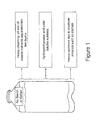
- Figure 1 is a photograph of a plastic container including a concentrated liquid human milk fortifier that does not contain any OSA-modified corn starch or low acyl gellan gum.
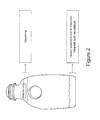
- Figure 2 is a photograph of a plastic container including a concentrated liquid human milk fortifier that contains OSA-modified corn starch but does not contain low acyl gellan gum.
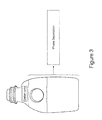
- Figure 3 is a photograph of a plastic container including a concentrated liquid human milk fortifier that contains low acyl gellan gum but does not contain OSA-modified corn starch.
- Figure 4 is a photograph of a plastic container including a concentrated liquid human milk fortifier that contains both OSA-modified corn starch and low acyl gellan gum.
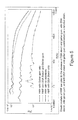
- Figure 5 is a graph showing the elastic modula of various liquid human milk fortifier samples as a function of strain.
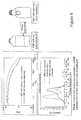
- Figure 6 shows two graphs indicating elastic modula and particle size distribution of two concentrated liquid human milk fortifiers with varying levels of stabilizers.
- Figure 7 is a graph showing dynamic modula of a liquid human milk fortifier in the absence of OSA-modified starch and low acyl gellan gum as a function of frequency.
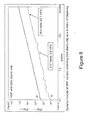
- Figure 8 is a graph showing the dynamic modula of a liquid human milk fortifier containing OSA-modified starch as a function of frequency.
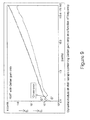
- Figure 9 is a graph showing the dynamic modula of a liquid human milk fortifier containing low acyl gellan gum as a function of frequency.
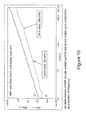
- Figure 10 is a graph showing the dynamic modula of a liquid human milk fortifier containing OSA-modified starch and low acyl gellan gum as a function of frequency.
- the concentrated liquid human milk fortifier compositions of the present disclosure generally comprise protein, fat, carbohydrate OSA-modified starch and low acyl gellan gum. These and other essential or optional elements or limitations of the concentrated liquids and methods of the present disclosure are described in detail hereinafter.
- retort packaging and “retort sterilizing” are used interchangeably herein, and unless otherwise specified, refer to the common practice of filling a container, most typically a metal can or other similar package, with a nutritional liquid and then subjecting the liquid-filled package to the necessary heat sterilization step, to form a sterilized, retort packaged, nutritional liquid product.
- aseptic packaging refers to the manufacture of a packaged product without reliance upon the above-described retort packaging step, wherein the nutritional liquid and package are sterilized separately prior to filling, and then are combined under sterilized or aseptic processing conditions to form a sterilized, aseptically packaged, nutritional liquid product.
- infant refers generally to individuals less than about 1 year of age, actual or corrected.
- preterm refers to those infants born at less than 37 weeks gestation, have a birth weight of less than 2500 gm, or both.
- fortifier solids or “total solids”, unless otherwise specified, are used interchangeably herein and refer to all material components of the compositions of the present disclosure, less water.
- hypoallergenic means that the concentrated liquid human milk fortifier has a decreased tendency to provoke an allergic reaction in a preterm or term infant as compared to non-hypoallergenic fortifiers.
- stable means that the concentrated liquid human milk fortifier is resistant to separation and precipitation for time period after manufacture of at least three months, and preferably at least six months.
- Numerical ranges as used herein are intended to include every number and subset of numbers within that range, whether specifically disclosed or not. Further, these numerical ranges should be construed as providing support for a claim directed to any number or subset of numbers in that range. For example, a disclosure of from 1 to 10 should be construed as supporting a range of from 2 to 8, from 3 to 7, from 5 to 6, from 1 to 9, from 3.6 to 4.6, from 3.5 to 9.9, and so forth.
- the various embodiments of the concentrated liquid human milk fortifiers of the present disclosure may also be substantially free of any optional or selected essential ingredient or feature described herein, provided that the remaining concentrated liquid human milk fortifier still contains all of the required ingredients or features as described herein.
- the term "substantially free” means that the selected concentrated liquid human milk fortifier contains less than a functional amount of the optional ingredient, typically less than 0.1% by weight, and also including zero percent by weight of such optional or selected essential ingredient.
- the concentrated liquid human milk fortifiers and corresponding manufacturing methods of the present disclosure can comprise, consist of, or consist essentially of the essential elements and limitations of the disclosure as described herein, as well as any additional or optional ingredients, components, or limitations described herein or otherwise useful in the concentrated liquid human milk fortifier.
- the concentrated liquid human milk fortifiers of the present disclosure have a solids content of at least about 20%, or even at least about 25%, including from about 25% to about 45%, and further including from about 29% to about 32%.
- the concentrated liquid human milk fortifiers are liquids that are capable of being poured directly from a package containing them into human milk or formula.
- the concentrated liquid human milk fortifiers are generally formulated to have a caloric density of at least about 1.25 kcal/ml (37 kcal/fl oz), including from about 1.4 kcal/ml (42 kcal/fl oz) to about 5 kcal/ml (149 kcal/fl oz), and also including from about 1.5 kcal/ml (44 kcal/fl oz) to about 2.5 kcal/ml (74 kcal/fl oz), and also including from about 1.9 kcal/ml (56 kcal/fl oz) to about 2.0 kcal/ml (59 kcal/fl oz).
- the concentrated liquid human milk fortifiers include packaged compositions further comprising a suitable unit dose package or container.
- These unit dose packages are single use containers that alone, or in combination with other unit dose packages, provide sufficient human milk fortifier to supplement human milk for immediate use, e.g., preferably within 8-24 hours, more preferably within 0-4 hours, of mixing with human milk.
- the amount or volume of concentrated liquid human milk fortifier in each unit dose package includes those embodiments in which the package contains an amount suitable to prepare an infant's next feeding.
- These unit dose packages typically contain sufficient fortifier to provide from about 0.5 g to about 10 g of fortifier solids, more typically from about 0.8 g to about 7.5 g of fortifier solids, and even more typically from about 0.85 g to about 6.0 g, of fortifier solids.
- the concentrated liquid human milk fortifiers of the present disclosure are preferably formulated so as to provide fortified human milk having an osmolality of less than about 500 mOsm/kg water, preferably from about 300 mOsm/kg water to about 400 mOsm/kg water. Based on the disclosure herein, one skilled in the art can readily formulate the concentrated liquid human milk fortifier with the appropriate carbohydrate sources and corresponding DE (dextrose equivalence) values to obtain or otherwise provide for the targeted osmolality of the human milk fortifier when combined with human milk.
- unit dose refers to individual, single-use, packages of concentrated liquid human milk fortifier containing an amount of human milk fortifier that can be used in a preparation of an infant feeding.
- the amount of fortified human milk prepared for a premature infant typically ranges from 25 ml to 150 ml a day. Consequently, a single unit dose is the appropriate amount of fortifier solids to fortify a 25 ml preparation. Multiple packages can be used to prepare larger feeding volumes, especially for term infants.
- the concentrated liquid human milk fortifiers of the present disclosure include hypoallergenic extensively hydrolyzed casein as a protein source.
- the concentrated liquid human milk fortifiers will include at least about 35%, including at least about 50%, including at least about 60%, including at least about 75%, including at least about 90% and further including about 100% extensively hydrolyzed casein, by total weight of protein in the concentrated human milk fortifier.
- the concentrated liquid human milk fortifier includes 100% extensively hydrolyzed casein, by total weight of the protein in the concentrated human milk fortifier.
- the concentrated liquid human milk fortifier is hypoallergenic.
- the concentrated liquid human milk fortifier will include from about 35% to 100%, including from about 50% to 100%, further including from about 75% to 100% extensively hydrolyzed casein, by total weight of protein in the concentrated human milk fortifier.
- the concentrated liquid human milk fortifiers of the present disclosure may optionally include other hypoallergenic or non-hypoallergenic proteins in addition to the extensively hydrolyzed casein protein.
- Extensively hydrolyzed casein proteins suitable for use in the concentrated liquid human milk fortifiers of the present disclosure include those having a degree of hydrolysis of from about 10% to about 70%, including from about 30% to about 60%), and further including from about 40% to about 60%.
- the extensively hydrolyzed casein has a ratio of total amino nitrogen (AN) to total nitrogen (TN) of from about 0.2 AN to 1.0 TN to about 0.4 AN to about 0.8 TN.
- Suitable commercially available extensively hydrolyzed caseins will generally have a protein level in the ingredient of from about 50% to about 95%, including from about 70% to about 90%.
- One suitable commercially available extensively hydro lyzed casein is Dellac CE90, which is a spray dried powder casein hydrolysate (Friesland Campina Domo, Amersfoort, The Netherlands).
- the concentrated liquid human milk fortifiers of the present disclosure include a synergistic two component stabilizer system.
- the first component is an octenyl succinic anhydride (OS A) modified starch, such as an octenyl succinic anhydride (OSA) modified corn starch.
- the second component is a low acyl gellan gum.
- the OSA-modified starch including the desirable OSA-modified corn starch, is generally prepared by esterifying a dextrinized, ungelatinized waxy corn starch with 1 -octenyl succinic anhydride. Methods of this type are well known in the art.
- One suitable commercially available OSA-modified corn starch is N- CREAMER(TM) 46 (National Starch Food Innovation, Bridgewater, New Jersey).
- the OSA-modified starch is present in the concentrated liquid human milk fortifier in an amount of from about 0.1 % to about 3.5%, including from about 0.6% to about 2.0%, including from about 0.8% to about 1.5%, and further including about 1.2% by weight of the concentrated liquid human milk fortifier.
- the low acyl gellan gum (also known as and commonly referred to as deacylated gellan gum) may be a water-soluble polysaccharide produced by fermentation of a pure culture of Sphingomonas elodea.
- low acyl means that the gellan gum has been treated such that it forms firm, non-elastic, brittle gels, that are heat stable, as compared to "high acyl” which forms soft, very elastic, non-brittle gels.
- Kelcogel F CP Kelco U.S. Inc., Atlanta Georgia.
- the low acyl gellan gum is present in the concentrated liquid human milk fortifier in an amount from greater than 125 ppm to about 800 ppm, including from about 150 ppm to about 400 ppm, including from about 200 ppm to about 300 ppm and further including about 200 ppm.
- the concentrated liquid human milk fortifiers of the present disclosure comprise carbohydrate, fat, and protein macronutrients of sufficient types and amounts, that when used in combination with human milk or other infant feeding formula, they help meet the nutritional needs of the infant, especially the premature infant.
- concentration of these macronutrients in the various embodiments of the present disclosure includes the ranges described hereinafter.
- the concentrated liquid human milk fortifiers of the present disclosure comprise a protein suitable for use in infants, especially preterm infants, at concentrations ranging from about 5% to about 50%, including from about 20% to about 40%, including from about 5% to about 30%, including from about 10% to about 25%, and also including from about 15% to about 25%, on a dry weight basis.
- the protein may be at a concentration of less than 10%, on a dry weight basis.
- the protein concentration may be from about 7 to about 15 grams, including from about 9 to about 12 grams of protein per 100 grams of final liquid product.
- the protein component of the concentrated liquid human milk fortifiers of the present disclosure is at least partially comprised of extensively hydrolyzed casein.
- the protein component of the concentrated human milk fortifier is entirely comprised of extensively hydrolyzed casein.
- the fortifier may still be made hypoallergenic by including additional hypoallergenic proteins such as soy protein hydrolysate, whey protein hydrolysate, rice protein hydrolysate, potato protein hydrolysate, fish protein hydrolysate, egg albumen hydrolysate, gelatin protein hydrolysate, pea protein hydrolysate, bean protein hydrolysate, combinations of animal and vegetable protein hydrolysates, and combinations thereof.
- additional hypoallergenic proteins such as soy protein hydrolysate, whey protein hydrolysate, rice protein hydrolysate, potato protein hydrolysate, fish protein hydrolysate, egg albumen hydrolysate, gelatin protein hydrolysate, pea protein hydrolysate, bean protein hydrolysate, combinations of animal and vegetable protein hydrolysates, and combinations thereof.
- protein hydrolysates or “hydrolyzed protein” are used interchangeably herein and include extensively hydrolyzed proteins, wherein the degree of hydrolysis is most often at least about 10%, including from about 10% to about 80%, and also including from about 30% to about 80%, even more preferably from about 40% to about 60%.
- the degree of hydrolysis is the extent to which peptide bonds are broken by a hydrolysis method.
- the degree of protein hydrolysis for purposes of characterizing the extensively hydrolyzed protein component of these embodiments is easily determined by one of ordinary skill in the formulation arts by quantifying the amino nitrogen to total nitrogen ratio (AN/TN) of the protein component of the selected formulation.
- the amino nitrogen component is quantified by USP titration methods for determining amino nitrogen content, while the total nitrogen component is determined by the Tecator Kjeldahl method, all of which are well known methods to one of ordinary skill in the analytical chemistry art.
- the concentrated liquid human milk fortifier in addition to the extensively hydrolyzed protein, may include an additional non-hypoallergenic protein source including for example, partially hydrolyzed or non-hydrolyzed (intact) protein, and can be derived from any known or otherwise suitable source such as milk (e.g., casein, whey, lactose-free milk protein isolates), animal (e.g., meat, fish), cereal (e.g., rice, corn), vegetable (e.g., soy, pea, bean), or combinations thereof.
- milk e.g., casein, whey, lactose-free milk protein isolates
- animal e.g., meat, fish
- cereal e.g., rice, corn
- vegetable e.g., soy, pea, bean
- the protein can include, or be entirely or partially replaced by, free amino acids known or otherwise suitable for use in nutritional products, non-limiting examples of which include Non-limiting examples of free amino acids include L-alanine, L-arginine, L-asparagine, L-aspartic acid, L- carnitine, L-cystine, L-glutamic acid, L-glutamine, glycine, L-histidine, L-isoleucine, L-leucine, L-lysine, L-methionine, L-phenylalanine, L-proline, L-serine, L-taurine, L- threonine, L-tryptophan, L-tyrosine, L-valine, and combinations thereof.
- free amino acids include L-alanine, L-arginine, L-asparagine, L-aspartic acid, L- carnitine, L-cystine, L-glutamic acid, L-glutamine, gly
- the concentrated liquid human milk fortifiers of the present disclosure comprise a carbohydrate suitable for use in infants, especially preterm infants, at concentrations most typically ranging up to about 75% by weight on a dry weight basis, including from about 5% to about 50%, and also including from about 20% to about 40%, by weight on a dry weight basis.
- Carbohydrates suitable for use in the concentrated liquid human milk fortifiers may include hydrolyzed or intact, naturally and/or chemically modified, starches sourced from corn, tapioca, rice or potato, in waxy or non-waxy forms.
- suitable carbohydrate sources include hydrolyzed cornstarch, maltodextrin (i.e.
- the carbohydrates may comprise lactose or can be substantially free of lactose.
- One embodiment of the present disclosure includes a non-reducing carbohydrate component, which may represent from about 10% to 100%, including from about 80% to 100%, and also including 100%, by weight of the total carbohydrate in the concentrated liquid human milk fortifier.
- a non-reducing carbohydrate may enhance the product stability and is generally better tolerated by infants, especially premature infants.
- Non-limiting examples of non-reducing carbohydrates include sucrose or other carbohydrates that do not readily oxidize or react with Tollen's, Benedict's, or Fehling's reagents.
- the present invention therefore includes those embodiments comprising a carbohydrate component, wherein the carbohydrate component comprises a mono- and/or disaccharide such that at least about 50%, including from about 80% to 100%, and also including 100%, of the mono- and/or disaccharide is a non-reducing carbohydrate.
- the concentrated liquid human milk fortifiers of the present disclosure also comprise a fat component suitable for use in infants, especially preterm infants, at concentrations most typically ranging up to about 40% by weight on a dry weight basis, including from about 10% to about 40%, and also including from about 15% to about 37%, and also including from about 18% to about 30%, by weight on a dry weight basis.
- Fats suitable for use in the concentrated liquid human milk fortifiers of the present disclosure may include coconut oil, soy oil, corn oil, olive oil, safflower oil, high oleic safflower oil, MCT oil (medium chain triglycerides), sunflower oil, high oleic sunflower oil, structured triglycerides, palm and palm kernel oils, palm olein, canola oil, marine oils, cottonseed oils, and combinations thereof.
- coconut oil soy oil, corn oil, olive oil, safflower oil, high oleic safflower oil, MCT oil (medium chain triglycerides), sunflower oil, high oleic sunflower oil, structured triglycerides, palm and palm kernel oils, palm olein, canola oil, marine oils, cottonseed oils, and combinations thereof.
- Suitable fats for use in the concentrated liquid human milk fortifiers include emulsifiers to help the various fortifier components readily disperse when combined with human milk.
- suitable emulsifiers include soya bean lecithin, polyoxythylene stearate, polyoxyethylene sorbitan mono-oleate, polyoxyethylene sorbitan monopalmitate, polyoxyethylene sorbitan monostearate, ammonium phosphatides, polyoxyethylene sorbitan monolaurate, citric acid esters of mono and diglycerides of fatty acids, tartaric acid esters of mono and diglycerides of fatty acids, and combinations thereof. Natural soy lecithin is especially useful in this respect.
- the fat component of the concentrated liquid human milk fortifier may therefore optionally include any emulsifier suitable for use in infant nutritional products.
- Emulsifier concentrations in these products may range up to about 10%, including from about 1% to about 10%, even more typically from about 1.5% to about 5%, by weight of the total fat component.
- Another aspect of the present disclosure includes those embodiments in which the weight ratio of fat to protein in the concentrated liquid human milk fortifier is at least about 0.3, including from about 0.4 to about 5, and also including from about 2 to about 4. These ratios may be helpful in further stabilizing the concentrated liquid human milk fortifier.
- the concentrated liquid human milk fortifiers of the present disclosure also include those embodiments that comprise as part of the fat component one or more of arachidonic acid, docosahexaenoic acid, or combinations thereof, alone or in further combination with linoleic acid, linolenic acid, or both.
- the concentrated liquid human milk fortifiers of the present disclosure may further comprise any of a variety of vitamins, non-limiting examples of which include vitamin A, vitamin D, vitamin E, vitamin K, thiamine, riboflavin, pyridoxine, vitamin B12, niacin, folic acid, pantothenic acid, biotin, vitamin C, choline, inositol, salts and derivatives thereof, and combinations thereof.
- vitamins non-limiting examples of which include vitamin A, vitamin D, vitamin E, vitamin K, thiamine, riboflavin, pyridoxine, vitamin B12, niacin, folic acid, pantothenic acid, biotin, vitamin C, choline, inositol, salts and derivatives thereof, and combinations thereof.
- the concentrated liquid human milk fortifiers may also further comprise any of a variety of minerals known or otherwise suitable for us in infant or other nutritional formulas, non-limiting examples of which include phosphorus, magnesium, calcium as described hereinbefore, zinc, manganese, copper, iodine, sodium, potassium, chloride, selenium, and combinations thereof.
- the concentrated liquid human milk fortifiers of the present disclosure include those embodiments comprising per 100 kcal of fortifier solids one or more of the following: vitamin A (from about 250 to about 6500 IU), vitamin D (from about 40 to about 1200 IU), vitamin K, vitamin E (at least about 0.3 IU), vitamin C (at least about 8 mg), thiamine, vitamin B12, niacin, folic acid, pantothenic acid, biotin, choline (at least about 7 mg), and inositol (at least about 2 mg).
- the concentrated liquid human milk fortifiers also include those embodiments comprising per 100 kcal of the fortifier solids one or more of the following: calcium (at least about 50 mg), phosphorus (at least about 25 mg), magnesium (at least about 6 mg), iodine, zinc (at least about 0.5 mg), copper, manganese, sodium (from about 20 to about 60 mg), potassium (from about 80 to about 200 mg), chloride (from about 55 to about 150 mg) and selenium (at least about 0.5 mcg).
- the concentrated liquid human milk fortifiers of the present disclosure may further optionally comprise other ingredients that may modify the physical, chemical, aesthetic or processing characteristics of the formulas or serve as pharmaceutical or additional nutritional components when used in the targeted population.
- Many such optional ingredients are known for use in food and nutritional products, including infant formulas, and may also be used in the concentrated liquid human milk fortifiers of the present disclosure, provided that such optional materials are compatible with the essential materials described herein, are safe and effective for their intended use, and do not otherwise unduly impair product performance.
- Non-limiting examples of such optional ingredients include preservatives, antioxidants, various pharmaceuticals, buffers, carotenoids, colorants, flavors, nucleotides and nucleosides, thickening agents, prebiotics, probiotics, sialic acid-containing materials, and other excipients or processing aids.
- the concentrated liquid human milk fortifiers of the present disclosure may be sterilized and aseptically packaged.
- the aseptic packaging can be accomplished using any of a variety of techniques well known to those of ordinary skill in the formulation art, so long as the heat treatment is sufficient to achieve long term shelf stability of the concentrated liquid.
- an aseptic process is utilized that includes a high temperature short time (HTST) processing step (i.e., about 74°C for about 16 seconds) or an ultra high temperature (UHT) processing step (i.e., about 292°C for about 5 seconds).
- HTST high temperature short time
- UHT ultra high temperature
- a typical aseptic process in accordance with the present disclosure involves the preparation of a slurry from one or more fluid combinations that may contain water and one or more of the following: carbohydrates, extensively hydrolyzed casein protein, fats, vitamins and minerals.
- This slurry is typically emulsified, deaerated, homogenized and cooled to form a sterilized formula, and then aseptically packaged to form a sterilized, aseptically packaged concentrated liquid human milk fortifier.
- Various other solutions may be added to the slurry at most any time before, during, or after processing.
- Suitable aseptic packaging techniques include any of the well known aseptic packaging methods disclosed in the formulation arts for preparing nutritional formulation, all of which are generally directed to the sealing or filling of a sterilized liquid into a sterilized, air-tight container.
- the aseptically packaged embodiments of the present disclosure may include any container or package suitable for use with liquid human milk fortifiers and also capable of withstanding aseptic processing conditions (e.g., high temperature sterilization).
- containers include single or multi use bags, plastic bottles or containers, pouches, metal cans glass bottles, foil or other flexible pouches, syringes, vials, or any other container meeting the above-described criteria.
- the aseptically packaged container for these embodiments is typically sterilized prior to being filled with its sterilized contents.
- the container is most typically sterilized by the application of hydrogen peroxide or other suitable disinfectant to the inside surface of the container.
- the hydrogen peroxide or other disinfectant is often applied in an atomized mist.
- the container may be transported along a conveyor system during which time the container may be subjected to one or more sprayings of hot sterilized air, preferably hot, sterilized, dry air.
- the container is then preferably injected with nitrogen gas.
- the aseptically prepared container is then aseptically filled with sterilized product and sealed.
- the concentrated liquid human milk fortifier is typically heat treated with a high temperature short time (HTST) process or an ultra high temperature (UHT) process to sufficiently reduce the bioburden to allow the products to maintain commercially sterile over an extended shelf-life of the finished product exceeding about 12 months.
- HTST high temperature short time
- UHT ultra high temperature
- the treated formula is then homogenized at 1000 psi or higher and aseptically packaged.
- the concentrated human milk fortifiers of the present disclosure may also be sterilized and retort packaged utilizing conventional means known in the art.
- the concentrated liquid human milk fortifier of the present disclosure is used in combination with human milk or other suitable infant formula, wherein the resulting fortified human milk or fortified infant formula has an osmolality suitable for oral administration to an infant.
- the osmolality will most typically be less than about 500 mOsm/kg water, more typically from about 300 mOsm/kg water to about 400 mOsm/kg water.
- the concentrated liquid human milk fortifier of the present disclosure may be added directly to human milk in a volume to volume ratio of from about 1 :3 to about 1 :9, including from about 1 : 3.5 to about 1 :7, and also including from about 1 :4 to about 1 :6.
- the ratio is ultimately selected based primarily upon the ingredients and osmolality of the concentrated liquid human milk fortifier and in view of the particular nutritional needs of the infant.
- the concentrated liquid human milk fortifier may be added directly to every feeding or to a sufficient number of feedings (e.g., once or twice daily) to provide optimal nutrition in view of the particular nutritional needs of the infant.
- Human milk or other infant formula after fortification with the concentrated liquid human milk fortifier will most typically have a caloric density ranging from about 19 kcal/fl oz (0.64 kcal/ml) to about 26.7 kcal/fl oz (0.9 kcal/ml), with the 22-25 kcal/fl oz formulations (0.74-0.84 kcal/ml) being more useful in preterm infants, and the 19-21 kcal/fl oz (0.64-0.71 kcal/ml) formulations more useful for term infants.
- the methods of the present disclosure therefore include a method of providing nutrition to infants, especially preterm infants, said method comprising the addition of the concentrated liquid human milk fortifier to human milk or other infant feeding composition, followed by the administration of the fortified human milk or feeding composition to the infant.
- the methods of the present disclosure also include a method of reducing the risk of microbial contamination, including Cronobacter (Enterobacter) sakazakii contamination, of term or preterm infant feeding compositions, said method comprising the direct addition of the concentrated liquid human milk fortifier to human milk or other infant feeding composition followed by the administration of the fortified composition to the infant.
- microbial contamination including Cronobacter (Enterobacter) sakazakii contamination
- the concentrated liquid human milk fortifiers of the present disclosure may be prepared in accordance with the methods described hereinafter, which methods are described in association with the exemplified embodiments (see Examples).
- the concentrated liquid human milk fortifier is prepared by solubilizing and combining/mixing ingredients into a homogeneous aqueous mixture which is subjected to a sufficient thermal treatment and aseptic filling to achieve long term physical and microbial shelf stability.
- macronutrients (carbohydrate, protein, fat, and minerals) are combined in several slurries together and with water. This blend is subjected to an initial heat treatment and then tested to verify proper nutrient levels. Additional detail on this process is provided in the following paragraphs.
- An intermediate aqueous carbohydrate-mineral (CHO-MIN) slurry is prepared by heating appropriate amount of water. With agitation, the following soluble ingredients are added: maltodextrin, potassium citrate, magnesium chloride, potassium chloride, sodium chloride, and choline chloride. The carbohydrate-mineral slurry is held at elevated temperature under agitation until added to the blend.
- An intermediate oil slurry is prepared by heating MCT oil and coconut oil to an elevated temperature and then adding distilled monoglycerides with agitation for minimum 10 minutes in order to the ingredient to dissolve. Soy oil, vitamin A palmitate, vitamin D3, di-alpha-tocopheryl-acetate, phylloquinone, ARA, DHA, and mixed carotenoids are then added with agitation to the oil blend. Insoluble mineral calcium source, ultra micronized tricalcium phosphate, is added to the oil. Gellan gum and OSA-modified starch are then added to the oil blend with proper agitation. The oil blend slurry is maintained at an elevated temperature under agitation until added to the blend.
- the blend is prepared by combining the ingredient water, casein hydrolysate, all of the CHO-MIN slurry and whole oil blend slurry.
- the blend is maintained at 120°F for a period of time not to exceed two hours before further processing.
- the blend is then homogenized using one or more in-line homogenizers at pressures from 1000-4000 psig with or without a second stage homogenization from 100-500 psig followed by heat treatment using a UHTST (ultrahigh temperature short time, 292-297°F for 1-30 seconds) process.
- UHTST ultrahigh temperature short time, 292-297°F for 1-30 seconds
- the batch is cooled in a plate cooler to 33-45°F and then transferred to a refrigerated holding tank, where it is subjected to analytical testing.
- the next step in the manufacturing process involves adding vitamins, trace minerals and water in order to reach the final target total solids and vitamin/mineral contents.
- the final batch is filled into a suitable container under aseptic conditions or treated with a terminal sterilization process so the product will be stable at room temperature for an extended shelf-life. Additional detail on this process is provided in the following paragraphs.
- a trace mineral/vitamin/nutrient solution (STD 1) is prepared by heating water to 80-100°F and adding the following ingredients with agitation: potassium citrate, ferrous sulfate, zinc sulfate, copper sulfate, manganese sulfate, sodium selenate, pyridoxine hydrochloride, riboflavin, thiamine hydrochloride, cyanocobalamin, folic acid, calcium pantothenate, niacinamide, biotin, m-inositol, nucleotide/choline premix, L-carnitine, L-Leucine, and L-tyrosine.
- a vitamin C solution (STD2) is prepared by adding ascorbic acid to water solution with agitation.
- All STD1 and STD2 solutions are then added to the refrigerated batch, with agitation.
- the appropriate amount of ingredient dilution water is then added to the batch to achieve a target total solids level of 28.0- 32.0%.
- the final batch is then subjected to appropriate thermal treatment and filled into a suitable container under an aseptic conditions and processes.
- the concentrated liquid human milk fortifiers of the present disclosure may, of course, be manufactured by other known or otherwise suitable techniques not specifically described or shown herein without departing from the spirit and scope of the present disclosure.
- the present embodiments are, therefore, to be considered in all respects as illustrative and not restrictive and that all changes and equivalents also come within the description of the present disclosure.
- the following non-limiting examples will further illustrate the formulations and methods of the present disclosure.
- Examples 1-4 concentrated liquid human milk fortifiers are prepared in accordance with the present disclosure.
- the ingredients for the concentrated liquid human milk fortifier are shown in the following table.
- Ingredient (Per 1000 Kg) Example 1
- Example 2 Example 3
- Example 4 Water Q.S. Q.S. Q.S. Q.S. Q.S.
- the concentrated liquid human milk fortifier is prepared by solubilizing and combining/mixing ingredients into a homogeneous aqueous mixture which is subjected to a sufficient thermal treatment and aseptic filling to achieve long term physical and microbial shelf stability.
- macronutrients (carbohydrate, protein, fat, and minerals) are combined in several slurries together and with water. This blend is subjected to an initial heat treatment and then tested to verify proper nutrient levels. Additional detail on this process is provided in the following paragraphs.
- An intermediate aqueous carbohydrate-mineral (CHO-MIN) slurry is prepared by heating appropriate amount of water to 140-160°F. With agitation, the following soluble ingredients are added: maltodextrin, potassium citrate, magnesium chloride, potassium chloride, sodium chloride, and choline chloride. The carbohydrate-mineral slurry is held at 130-150°F under agitation until added to the blend.
- CHO-MIN carbohydrate-mineral
- An intermediate oil slurry is prepared by heating MCT oil and coconut oil to 150 to 170°C and then adding distilled monoglycerides with agitation for a minimum of 10 minutes in order to the ingredient to dissolve. Soy oil, vitamin A palmitate, vitamin D3, di-alpha-tocopheryl-acetate, phylloquinone, ARA-containing oil, DHA-containing oil, and carotenoid premix are then added with agitation to the oil blend. Insoluble mineral calcium source, and ultra micronized tricalcium phosphate is added to the oil. Gellan gum and OSA-modified starch are then added to the oil blend with proper agitation. The oil blend slurry is maintained at 130-150°F under agitation until added to the blend.
- the blend is prepared by combining the ingredient water, casein hydrolysate, all of the CHO-MIN slurry and whole oil blend slurry.
- the blend is maintained at 120°F for a period of time not to exceed two hours before further processing.
- the blend is then homogenized using one or more in-line homogenizers at pressures from 1000-4000 psig with or without a second stage homogenization from 100-500 psig followed by heat treatment using a UHTST (ultrahigh temperature short time, 292-297°F for 5-15 seconds) process. After the appropriate heat treatment, the batch is cooled in a plate cooler to 33-45°F and then transferred to a refrigerated holding tank, where it is subjected to analytical testing.
- UHTST ultrahigh temperature short time, 292-297°F for 5-15 seconds
- the next step in the manufacturing process involves adding vitamins, trace minerals, other ingredients, and water in order to reach the final target total solids and vitamin/mineral contents.
- the final batch is filled into a suitable container under aseptic conditions or treated with a terminal sterilization process so the product will be stable at room temperature for an extended shelf-life. Additional detail on this process is provided in the following paragraphs.
- a trace mineral/vitamin/nutrient solution (STD 1) is prepared by heating water to 80-100°F and adding the following ingredients with agitation: potassium citrate, ferrous sulfate, zinc sulfate, copper sulfate, manganese sulfate, sodium selenate, pyridoxine hydrochloride, riboflavin, thiamine hydrochloride, cyanocobalamin, folic acid, calcium pantothenate, niacinamide, biotin, m-inositol, nucleotide/choline premix, L-carnitine, L-Leucine, and L-tyrosine.
- a vitamin C solution (STD2) is prepared by adding ascorbic acid to a water solution with agitation.
- All STD1 and STD2 solutions are then added to the refrigerated batch, with agitation.
- the appropriate amount of ingredient dilution water is then added to the batch to achieve a target total solids level of 29.0- 32.0%.
- the final batch is then subjected to appropriate thermal treatment and filled into a suitable container under an aseptic conditions and processes
- Example 2 In this Example, four separate concentrated liquid human milk fortifiers were prepared and the overall stability in terms of amount of phase separation (emulsion stability), sediment at the bottom of the container, and creaming at the top of the liquid, of each was evaluated at 24 hours after manufacture. Each of the four tested concentrated liquid human milk fortifiers were based on the concentrated liquid human milk fortifier of Example 2.
- the first concentrated liquid human milk fortifier was identical to that of Example 2 except that it did not contain any OSA-modified corn starch and did not contain any low acyl gellan gum.
- the second fortifier was identical to that of Example 2 except that it did not contain any low acyl gellan gum.
- the third fortifier was identical to that of Example 2 except that it did not contain any OSA-modified corn starch.
- the fourth fortifier was identical to that of Example 2.
- Each of the four fortifiers was prepared in accordance with the manufacturing process of Examples 1- 4.
- the first fortifier no OSA-modified corn starch and no low acyl gellan gum
- the first fortifier showed nearly complete phase separation of the oil and water phases, and showed both heavy creaming at the top of the liquid and heavy sediment at the bottom of the container. (See Figure 1 ).
- the second fortifier (no low acyl gellan gum) showed both heavy creaming at the top of the liquid and heavy sediment at the bottom of the container. (See Figure 2 ).
- the third fortifier (no OSA-modified corn starch) showed nearly complete phase separation of the oil phase and the water phase. (See Figure 3 ).
- the fourth fortifier (containing both OSA-modified corn starch and low acyl gellan gum) showed no phase separation, no creaming, and no sediment. (See Figure 4 ).
- the stabilizing system of a combination of OSA- modified corn starch and low acyl gellan gum showed a synergistic interaction and allowed for the manufacture of physically stable concentrated liquid human milk fortifier containing extensively hydrolyzed casein and a high level of insoluble calcium salts without causing defects in emulsion stability and sediment fall out.
- Example rheological measurements were conducted on the four liquid human milk fortifiers of Example 5 to evaluate the macro-measurements that describe the bulk characteristics of the liquids. The measurements were done to elucidate emulsion and suspension characteristics of each liquid formulation. The measurements were made on an ARES G2 Rheometer (TA Instruments, New Castle, DE) at a strain sweep frequency of 10 rad/s.
- Figure 5 compares the elastic modula of the four concentrated liquid human milk fortifier samples as a function of strain.
- the most stable fortifier is the fortifier including the OSA-modified starch and low acyl gellan gum.
- This fortifier demonstrates a substantial linear range with no instabilities, thus indicating stable emulsion and suspension characteristics.
- the fortifier including low acyl gellan gum only shows a break in the structure and distinctly different linear ranges at low strain, which is representative of a phase separation.
- the formulation containing OSA-modified starch only also shows instabilities at low strains and very low elastic modula associated with a very small linear range thus revealing poor emulsion and suspension characteristics.
- the formulation without either low acyl gellan gum or OSA-modified starch also shows instabilities at low strains with very minimal linear range, which is a sign of poor emulsion and suspension characteristics.
- particle size distributions of two concentrated liquid human milk fortifiers including different amounts of stabilizers were analyzed using a LS 13 320 Laser Diffraction Particle Size Analyzer (Beckman Coulter, Inc., Brea, CA).
- the first concentrated liquid human milk fortifier was identical to Example 2 above and the second was identical to Example 2 with the exception that the low acyl gellan gum was present in an amount of 125 ppm (low level) instead of 300 ppm (high level).
- Figure 6 shows that the concentrated liquid human milk fortifier including low acyl gellan gum at the 125 ppm level has instabilities in the linear range at low strains indicating phase separations. Also, the linear range is much shorter as compared to the concentrated liquid human milk fortifier including low acyl gellan gum at the 300 ppm level. Figure 6 also shows that the concentrated human milk fortifier including the 300 ppm low acyl gellan gum demonstrated a very long linear range with no instabilities indicating good emulsion and suspension stabilities. Additionally, the particle size distribution analyses of the two samples also indicates differences in the emulsion and suspension stabilities (particle size distributions obtained using LS 13 320 laser diffraction particle size analyzer (Beckman, Coulter, Inc.).
- Example 5 the four fortifiers of Example 5 were analyzed for dynamic modula measured as a function of frequency and temperature conducted in the linear range to represent the equilibrium of the samples.
- Figure 7 the mechanical spectra for the fortifier without OSA-modified starch and low acyl gellan gum show a cross over modula at a frequency of 1 rad/s, indicating that this fortifier is like a viscoelastic gel, which can result in phase separations.
- This fortifier's strain sweep spectra also showed instabilities at low strains with very small linear range, thus further confirming a lack of an emulsion and suspension stability.
- the mechanical spectra for the fortifier with OSA-modified starch only show a very low elastic modula indicating very poor suspension stability.
- the mechanical spectra for the fortifier with low acyl gellan gum only show a possible cross over at low frequencies which results in phase separations.
- the mechanical spectra for the fortifier with both OSA-modified starch and low acyl gellan gum show that the fortifier is a viscoelastic liquid such that no gel-like activity is expected.
- the low frequency elastic modula is significantly larger than the other fortifiers with no defects showing enhanced suspension stability.
- the high frequency elastic modula is significantly larger than the other fortifiers with no defects proving good emulsion characteristics.
- the sample including the OS A starch and gellan gum was the most stable and had the best suspension characteristics.
- the OSA starch and gellan gum appear to act synergistically together to provide a significantly improved product.
Landscapes
- Chemical & Material Sciences (AREA)
- Life Sciences & Earth Sciences (AREA)
- Health & Medical Sciences (AREA)
- Dispersion Chemistry (AREA)
- Nutrition Science (AREA)
- Engineering & Computer Science (AREA)
- Food Science & Technology (AREA)
- Polymers & Plastics (AREA)
- Molecular Biology (AREA)
- Proteomics, Peptides & Aminoacids (AREA)
- Mycology (AREA)
- Chemical Kinetics & Catalysis (AREA)
- Dairy Products (AREA)
- Coloring Foods And Improving Nutritive Qualities (AREA)
- Medicinal Preparation (AREA)
- Medicines That Contain Protein Lipid Enzymes And Other Medicines (AREA)
- Pharmaceuticals Containing Other Organic And Inorganic Compounds (AREA)
- Cosmetics (AREA)
Applications Claiming Priority (2)
| Application Number | Priority Date | Filing Date | Title |
|---|---|---|---|
| US40915010P | 2010-11-02 | 2010-11-02 | |
| EP11782324.5A EP2488042B1 (de) | 2010-11-02 | 2011-10-28 | Stabiler, konzentrierter und flüssiger verstärker für menschliche milch |
Related Parent Applications (1)
| Application Number | Title | Priority Date | Filing Date |
|---|---|---|---|
| EP11782324.5 Division | 2011-10-28 |
Publications (1)
| Publication Number | Publication Date |
|---|---|
| EP2682001A1 true EP2682001A1 (de) | 2014-01-08 |
Family
ID=44947241
Family Applications (2)
| Application Number | Title | Priority Date | Filing Date |
|---|---|---|---|
| EP13004731.9A Withdrawn EP2682001A1 (de) | 2010-11-02 | 2011-10-28 | Stabiler, konzentrierter und flüssiger Verstärker für menschliche Milch |
| EP11782324.5A Not-in-force EP2488042B1 (de) | 2010-11-02 | 2011-10-28 | Stabiler, konzentrierter und flüssiger verstärker für menschliche milch |
Family Applications After (1)
| Application Number | Title | Priority Date | Filing Date |
|---|---|---|---|
| EP11782324.5A Not-in-force EP2488042B1 (de) | 2010-11-02 | 2011-10-28 | Stabiler, konzentrierter und flüssiger verstärker für menschliche milch |
Country Status (15)
| Country | Link |
|---|---|
| US (1) | US9980507B2 (de) |
| EP (2) | EP2682001A1 (de) |
| CN (1) | CN103260419B (de) |
| BR (1) | BR112013010759A2 (de) |
| CA (1) | CA2815812C (de) |
| DK (1) | DK2488042T3 (de) |
| ES (1) | ES2436517T3 (de) |
| IL (1) | IL225865A (de) |
| MX (1) | MX336759B (de) |
| MY (1) | MY170337A (de) |
| NZ (1) | NZ610471A (de) |
| PH (1) | PH12013500798A1 (de) |
| SG (1) | SG190087A1 (de) |
| TW (1) | TWI540971B (de) |
| WO (1) | WO2012061242A1 (de) |
Families Citing this family (12)
| Publication number | Priority date | Publication date | Assignee | Title |
|---|---|---|---|---|
| HK1202782A1 (en) * | 2011-12-30 | 2015-10-09 | Abbott Laboratories | Stabilized concentrated liquid human milk fortifier |
| EP2641477B2 (de) | 2012-03-19 | 2022-06-08 | Symrise AG | Stoffgemische |
| US20150110919A1 (en) * | 2012-05-24 | 2015-04-23 | Abbott Laboratories | Sterilized liquid protein supplement including a solubility enhancing nutritional protein |
| IN2015DN04002A (de) * | 2012-11-14 | 2015-10-02 | Abbott Lab | |
| SG11201504849WA (en) * | 2012-12-18 | 2015-07-30 | Abbott Lab | Liquid concentrated human milk fortifier containing hypoallergenic protein and lutein |
| AU2012321097B2 (en) * | 2012-12-25 | 2016-06-30 | The University Of Melbourne | Materials and methods |
| US20140242216A1 (en) * | 2013-02-24 | 2014-08-28 | Mead Johnson Nutrition Company | Amino Acid And Protein Hydrolysate Based Formulas With A Stable Emulsion System |
| WO2016130908A1 (en) | 2015-02-13 | 2016-08-18 | The University Of Toledo | Therapeutic polysaccharide midi-gagr and related materials and methods |
| US20160345611A1 (en) * | 2015-05-28 | 2016-12-01 | Mead Johnson Nutrition Company | Rice protein hydrolysate based formulas and production thereof |
| CN109730300B (zh) * | 2019-03-01 | 2022-01-14 | 华中农业大学 | 一种以柑橘皮渣制备低热量淀粉凝胶强化剂的方法及一种淀粉凝胶强化剂及其应用 |
| WO2021237091A1 (en) * | 2020-05-21 | 2021-11-25 | Coherus Biosciences, Inc. | Systems and methods for producing sterile injection devices |
| WO2023034317A1 (en) * | 2021-08-30 | 2023-03-09 | Premier Nutrition Company, Llc | Sleep-inducing beverage composition, its method of production and the method of use |
Citations (7)
| Publication number | Priority date | Publication date | Assignee | Title |
|---|---|---|---|---|
| US6096358A (en) | 1997-10-08 | 2000-08-01 | Abbott Laboratories | Method of manufacturing an aseptically sterilized package containing a liquid nutritional product |
| US6227261B1 (en) | 1998-12-24 | 2001-05-08 | Abbott Laboratories | Method and apparatus for the addition of sterile liquid to an aseptic system |
| US6294206B1 (en) * | 1999-04-09 | 2001-09-25 | Abbott Laboratories | Powdered human milk fortifier |
| US6371319B2 (en) | 1997-09-22 | 2002-04-16 | Abbott Laboratories | Closure system for containers |
| WO2003015538A1 (en) * | 2001-08-16 | 2003-02-27 | Kerry Inc. | Controlled-viscosity food flavoring system |
| US20030104078A1 (en) * | 2001-03-30 | 2003-06-05 | Bridget Barrett-Reis | Method of improving the antioxidant status of an infant |
| US20070098849A1 (en) * | 2005-10-26 | 2007-05-03 | Bridget Barrett-Reis | Infant formulas containing docosahexaenoic acid and lutein |
Family Cites Families (43)
| Publication number | Priority date | Publication date | Assignee | Title |
|---|---|---|---|---|
| US4414238A (en) | 1981-12-24 | 1983-11-08 | Cutter Laboratories, Inc. | Liquid elemental diet |
| DD228951A3 (de) | 1982-12-02 | 1985-10-23 | Inst Getreideverarbeitung | Verfahren zur herstellung von granulierter nahrung |
| AU577049B2 (en) | 1983-06-16 | 1988-09-15 | Farley Health Products Limited | Infant milk formula |
| US4871768A (en) | 1984-07-12 | 1989-10-03 | New England Deaconess Hospital Corporation | Dietary supplement utilizing ω-3/medium chain trigylceride mixtures |
| US4670268A (en) * | 1985-01-29 | 1987-06-02 | Abbott Laboratories | Enteral nutritional hypoallergenic formula |
| US4690820A (en) | 1985-06-07 | 1987-09-01 | The State University Of New York | High-caloric, high-fat dietary formula |
| US6020015A (en) | 1988-09-22 | 2000-02-01 | Gaull; Gerald E. | Infant formula compositions and nutrition containing genetically engineered human milk proteins |
| US5013569A (en) | 1990-05-21 | 1991-05-07 | Century Laboratories, Inc. | Infant formula |
| EP0480305A1 (de) | 1990-10-11 | 1992-04-15 | Abbott Laboratories | Carrageen-Iota enthaltende flüssige Nahrungsmittel |
| US5221545A (en) | 1992-03-09 | 1993-06-22 | Abbott Laboratories | Method of providing selenium in a nutritional product |
| WO1994027450A1 (en) | 1993-05-28 | 1994-12-08 | Abbott Laboratories | Method of adding fish oil to an enteral nutritional product |
| US5340603A (en) | 1993-08-30 | 1994-08-23 | Abbott Laboratories | Nutritional product for human infants having chronic lung disease |
| US5700590A (en) | 1994-01-10 | 1997-12-23 | Abbott Laboratories | Nutritional formula with ribo-nucleotides |
| US6136858A (en) | 1994-01-10 | 2000-10-24 | Abbott Laboratories | Infant formula and methods of improving infant stool patterns |
| US5492899A (en) | 1994-01-10 | 1996-02-20 | Abbott Laboratories | Infant nutritional formula with ribo-nucleotides |
| NZ294046A (en) | 1994-10-14 | 1998-06-26 | Morinaga Milk Industry Co Ltd | A palatable whey protein hydrolysate having antioxidant activity |
| WO1996039871A1 (en) | 1995-06-07 | 1996-12-19 | Abbott Laboratories | Mineral powders with enhanced chromium solubility and preparation methods therefor |
| US5681600A (en) | 1995-12-18 | 1997-10-28 | Abbott Laboratories | Stabilization of liquid nutritional products and method of making |
| EP0832564B1 (de) | 1996-09-11 | 2002-12-04 | Societe Des Produits Nestle S.A. | Mit Kalzium angereichte Milch, Milchgetränk oder Diätprodukt und Verfahren zu deren Herstellung |
| US5869118A (en) * | 1996-11-13 | 1999-02-09 | Abbott Laboratories | Gellan gum to improve physical stability of liquid nutritional products |
| EP0843972B1 (de) | 1996-11-20 | 2002-07-31 | N.V. Nutricia | Fette enthaltende Ernährungszusammensetzung zur Behandlung des Stoffwechselssyndroms |
| US6039985A (en) | 1996-11-22 | 2000-03-21 | Princeton Nutrition, L.L.C. | Refrigeration-shelf-stable ultra-pasteurized or pasteurized infant formula |
| EP0891719A1 (de) | 1997-07-14 | 1999-01-20 | N.V. Nutricia | Narungszusammensetzungen mit Gehalt an Methionin |
| US6200950B1 (en) | 1998-02-18 | 2001-03-13 | Nestec S.A. | Calorically dense nutritional composition |
| US6194379B1 (en) * | 1998-05-01 | 2001-02-27 | Abbott Laboratories | Elemental enteral formula |
| JP3958884B2 (ja) | 1998-09-11 | 2007-08-15 | 株式会社林原生物化学研究所 | 非還元性糖質生成酵素及びトレハロース遊離酵素ならびに該酵素を用いる糖質の製造方法 |
| US6596302B2 (en) | 2000-04-13 | 2003-07-22 | Abbott Laboratories | Infant formulas containing long-chain polyunsaturated fatty acids and uses thereof |
| US20020182243A1 (en) | 2001-05-14 | 2002-12-05 | Medo Elena Maria | Method of producing nutritional products from human milk tissue and compositions thereof |
| ITMI20011969A1 (it) | 2001-09-21 | 2003-03-21 | Istituto Giannina Gaslini | Additivo per composizioni di latte per l'infanzia |
| US20030099722A1 (en) | 2001-10-09 | 2003-05-29 | Baxter Jeffrey H. | Methods and compositions for providing glutamine |
| WO2003065816A1 (en) | 2002-02-04 | 2003-08-14 | Bristol-Myers Squibb Company | Human milk supplement |
| DE60325748D1 (de) | 2002-10-10 | 2009-02-26 | Wyeth Corp | Nukleotidhaltige fertig-babynahrung |
| WO2005051088A2 (en) | 2003-11-12 | 2005-06-09 | Abbott Laboratories | Iron-containing human milk fortifier with improved antimicrobial properties |
| DE60336480D1 (de) | 2003-11-19 | 2011-05-05 | Nestec Sa | Isolierte Bakteriophage und ihre Verwendung in Lebensmitteln oder zur Sanierung der Fabrik-Umgebung |
| US8252769B2 (en) | 2004-06-22 | 2012-08-28 | N. V. Nutricia | Intestinal barrier integrity |
| CA2537452C (en) | 2005-03-09 | 2013-12-24 | Abbott Laboratories | Concentrated human milk fortifier liquid |
| US20060233915A1 (en) | 2005-04-15 | 2006-10-19 | Bristol-Myers Squibb Company | Liquid nutritional product to supplement human milk |
| US8075934B2 (en) * | 2008-10-24 | 2011-12-13 | Mead Johnson Nutrition Company | Nutritional composition with improved digestibility |
| US20070166354A1 (en) | 2005-10-26 | 2007-07-19 | Bridget Barrett-Reis | Method of reducing the risk of retinopathy of prematurity in preterm infants |
| CN101177540B (zh) | 2006-11-10 | 2010-04-14 | 浙江医药股份有限公司新昌制药厂 | 叶黄素水溶性干粉的制备方法 |
| AU2008254417B2 (en) | 2007-05-18 | 2013-05-30 | Mjn U.S. Holdings Llc | Acidified liquid human milk supplement |
| CN102028033A (zh) | 2010-11-25 | 2011-04-27 | 内蒙古蒙牛乳业(集团)股份有限公司 | 一种含有二十二碳六烯酸的配制型含乳饮料及其生产方法 |
| CN104411186B (zh) | 2011-12-30 | 2019-04-16 | 雅培制药有限公司 | 包括深度水解蛋白的浓缩低水分活度液体母乳强化剂 |
-
2011
- 2011-10-28 BR BR112013010759A patent/BR112013010759A2/pt not_active IP Right Cessation
- 2011-10-28 CA CA2815812A patent/CA2815812C/en active Active
- 2011-10-28 DK DK11782324.5T patent/DK2488042T3/da active
- 2011-10-28 MY MYPI2013001556A patent/MY170337A/en unknown
- 2011-10-28 CN CN201180063402.0A patent/CN103260419B/zh not_active Expired - Fee Related
- 2011-10-28 PH PH1/2013/500798A patent/PH12013500798A1/en unknown
- 2011-10-28 SG SG2013033444A patent/SG190087A1/en unknown
- 2011-10-28 NZ NZ610471A patent/NZ610471A/en unknown
- 2011-10-28 EP EP13004731.9A patent/EP2682001A1/de not_active Withdrawn
- 2011-10-28 ES ES11782324.5T patent/ES2436517T3/es active Active
- 2011-10-28 US US13/509,562 patent/US9980507B2/en active Active
- 2011-10-28 EP EP11782324.5A patent/EP2488042B1/de not_active Not-in-force
- 2011-10-28 WO PCT/US2011/058365 patent/WO2012061242A1/en not_active Ceased
- 2011-10-28 MX MX2013004976A patent/MX336759B/es unknown
- 2011-11-02 TW TW100140001A patent/TWI540971B/zh not_active IP Right Cessation
-
2013
- 2013-04-21 IL IL225865A patent/IL225865A/en active IP Right Grant
Patent Citations (7)
| Publication number | Priority date | Publication date | Assignee | Title |
|---|---|---|---|---|
| US6371319B2 (en) | 1997-09-22 | 2002-04-16 | Abbott Laboratories | Closure system for containers |
| US6096358A (en) | 1997-10-08 | 2000-08-01 | Abbott Laboratories | Method of manufacturing an aseptically sterilized package containing a liquid nutritional product |
| US6227261B1 (en) | 1998-12-24 | 2001-05-08 | Abbott Laboratories | Method and apparatus for the addition of sterile liquid to an aseptic system |
| US6294206B1 (en) * | 1999-04-09 | 2001-09-25 | Abbott Laboratories | Powdered human milk fortifier |
| US20030104078A1 (en) * | 2001-03-30 | 2003-06-05 | Bridget Barrett-Reis | Method of improving the antioxidant status of an infant |
| WO2003015538A1 (en) * | 2001-08-16 | 2003-02-27 | Kerry Inc. | Controlled-viscosity food flavoring system |
| US20070098849A1 (en) * | 2005-10-26 | 2007-05-03 | Bridget Barrett-Reis | Infant formulas containing docosahexaenoic acid and lutein |
Also Published As
| Publication number | Publication date |
|---|---|
| TWI540971B (zh) | 2016-07-11 |
| PH12013500798A1 (en) | 2021-06-02 |
| CN103260419A (zh) | 2013-08-21 |
| SG190087A1 (en) | 2013-06-28 |
| CN103260419B (zh) | 2014-12-24 |
| EP2488042B1 (de) | 2013-10-02 |
| DK2488042T3 (da) | 2014-01-06 |
| BR112013010759A2 (pt) | 2016-07-12 |
| US20120276251A1 (en) | 2012-11-01 |
| WO2012061242A1 (en) | 2012-05-10 |
| NZ610471A (en) | 2014-12-24 |
| CA2815812A1 (en) | 2012-05-10 |
| CA2815812C (en) | 2018-10-23 |
| MX336759B (es) | 2016-01-29 |
| TW201223460A (en) | 2012-06-16 |
| IL225865A (en) | 2017-09-28 |
| MX2013004976A (es) | 2013-06-07 |
| HK1174205A1 (en) | 2013-06-07 |
| ES2436517T3 (es) | 2014-01-02 |
| EP2488042A1 (de) | 2012-08-22 |
| MY170337A (en) | 2019-07-18 |
| US9980507B2 (en) | 2018-05-29 |
Similar Documents
| Publication | Publication Date | Title |
|---|---|---|
| EP2488042B1 (de) | Stabiler, konzentrierter und flüssiger verstärker für menschliche milch | |
| CA2537452C (en) | Concentrated human milk fortifier liquid | |
| CA2861682C (en) | Concentrated low water activity liquid human milk fortifier including extensively hydrolyzed protein | |
| WO2014100088A1 (en) | Liquid concentrated human milk fortifier containing hypoallergenic protein and lutein | |
| CA2858832C (en) | Stabilized concentrated liquid human milk fortifier | |
| HK1190571A (en) | Stable concentrated liquid human milk fortifier | |
| HK1174205B (en) | Stable concentrated liquid human milk fortifier | |
| NZ625371B2 (en) | Stabilized concentrated liquid human milk fortifier | |
| NZ626631B2 (en) | Concentrated low water activity liquid human milk fortifier including extensively hydrolyzed protein |
Legal Events
| Date | Code | Title | Description |
|---|---|---|---|
| PUAI | Public reference made under article 153(3) epc to a published international application that has entered the european phase |
Free format text: ORIGINAL CODE: 0009012 |
|
| AC | Divisional application: reference to earlier application |
Ref document number: 2488042 Country of ref document: EP Kind code of ref document: P |
|
| AK | Designated contracting states |
Kind code of ref document: A1 Designated state(s): AL AT BE BG CH CY CZ DE DK EE ES FI FR GB GR HR HU IE IS IT LI LT LU LV MC MK MT NL NO PL PT RO RS SE SI SK SM TR |
|
| REG | Reference to a national code |
Ref country code: HK Ref legal event code: DE Ref document number: 1190571 Country of ref document: HK |
|
| 17P | Request for examination filed |
Effective date: 20140708 |
|
| RBV | Designated contracting states (corrected) |
Designated state(s): AL AT BE BG CH CY CZ DE DK EE ES FI FR GB GR HR HU IE IS IT LI LT LU LV MC MK MT NL NO PL PT RO RS SE SI SK SM TR |
|
| GRAP | Despatch of communication of intention to grant a patent |
Free format text: ORIGINAL CODE: EPIDOSNIGR1 |
|
| RIC1 | Information provided on ipc code assigned before grant |
Ipc: A23L 33/17 20160101AFI20160524BHEP Ipc: A23L 33/10 20160101ALI20160524BHEP |
|
| INTG | Intention to grant announced |
Effective date: 20160622 |
|
| STAA | Information on the status of an ep patent application or granted ep patent |
Free format text: STATUS: GRANT OF PATENT IS INTENDED |
|
| STAA | Information on the status of an ep patent application or granted ep patent |
Free format text: STATUS: THE APPLICATION IS DEEMED TO BE WITHDRAWN |
|
| 18D | Application deemed to be withdrawn |
Effective date: 20161103 |
|
| REG | Reference to a national code |
Ref country code: HK Ref legal event code: WD Ref document number: 1190571 Country of ref document: HK |