EP2678796B1 - Verfahren zum datenaustausch in einer gesicherten laufzeitumgebung - Google Patents
Verfahren zum datenaustausch in einer gesicherten laufzeitumgebung Download PDFInfo
- Publication number
- EP2678796B1 EP2678796B1 EP12711339.7A EP12711339A EP2678796B1 EP 2678796 B1 EP2678796 B1 EP 2678796B1 EP 12711339 A EP12711339 A EP 12711339A EP 2678796 B1 EP2678796 B1 EP 2678796B1
- Authority
- EP
- European Patent Office
- Prior art keywords
- secure
- environment
- runtime environment
- swd
- data
- Prior art date
- Legal status (The legal status is an assumption and is not a legal conclusion. Google has not performed a legal analysis and makes no representation as to the accuracy of the status listed.)
- Active
Links
Images


Classifications
-
- G—PHYSICS
- G06—COMPUTING OR CALCULATING; COUNTING
- G06F—ELECTRIC DIGITAL DATA PROCESSING
- G06F21/00—Security arrangements for protecting computers, components thereof, programs or data against unauthorised activity
- G06F21/60—Protecting data
- G06F21/606—Protecting data by securing the transmission between two devices or processes
-
- G—PHYSICS
- G06—COMPUTING OR CALCULATING; COUNTING
- G06F—ELECTRIC DIGITAL DATA PROCESSING
- G06F21/00—Security arrangements for protecting computers, components thereof, programs or data against unauthorised activity
-
- G—PHYSICS
- G06—COMPUTING OR CALCULATING; COUNTING
- G06F—ELECTRIC DIGITAL DATA PROCESSING
- G06F21/00—Security arrangements for protecting computers, components thereof, programs or data against unauthorised activity
- G06F21/30—Authentication, i.e. establishing the identity or authorisation of security principals
- G06F21/31—User authentication
- G06F21/36—User authentication by graphic or iconic representation
-
- G—PHYSICS
- G06—COMPUTING OR CALCULATING; COUNTING
- G06F—ELECTRIC DIGITAL DATA PROCESSING
- G06F21/00—Security arrangements for protecting computers, components thereof, programs or data against unauthorised activity
- G06F21/30—Authentication, i.e. establishing the identity or authorisation of security principals
- G06F21/31—User authentication
- G06F21/42—User authentication using separate channels for security data
-
- G—PHYSICS
- G06—COMPUTING OR CALCULATING; COUNTING
- G06F—ELECTRIC DIGITAL DATA PROCESSING
- G06F21/00—Security arrangements for protecting computers, components thereof, programs or data against unauthorised activity
- G06F21/50—Monitoring users, programs or devices to maintain the integrity of platforms, e.g. of processors, firmware or operating systems
- G06F21/52—Monitoring users, programs or devices to maintain the integrity of platforms, e.g. of processors, firmware or operating systems during program execution, e.g. stack integrity ; Preventing unwanted data erasure; Buffer overflow
- G06F21/53—Monitoring users, programs or devices to maintain the integrity of platforms, e.g. of processors, firmware or operating systems during program execution, e.g. stack integrity ; Preventing unwanted data erasure; Buffer overflow by executing in a restricted environment, e.g. sandbox or secure virtual machine
-
- G—PHYSICS
- G06—COMPUTING OR CALCULATING; COUNTING
- G06F—ELECTRIC DIGITAL DATA PROCESSING
- G06F21/00—Security arrangements for protecting computers, components thereof, programs or data against unauthorised activity
- G06F21/70—Protecting specific internal or peripheral components, in which the protection of a component leads to protection of the entire computer
- G06F21/71—Protecting specific internal or peripheral components, in which the protection of a component leads to protection of the entire computer to assure secure computing or processing of information
-
- G—PHYSICS
- G06—COMPUTING OR CALCULATING; COUNTING
- G06F—ELECTRIC DIGITAL DATA PROCESSING
- G06F21/00—Security arrangements for protecting computers, components thereof, programs or data against unauthorised activity
- G06F21/70—Protecting specific internal or peripheral components, in which the protection of a component leads to protection of the entire computer
- G06F21/71—Protecting specific internal or peripheral components, in which the protection of a component leads to protection of the entire computer to assure secure computing or processing of information
- G06F21/74—Protecting specific internal or peripheral components, in which the protection of a component leads to protection of the entire computer to assure secure computing or processing of information operating in dual or compartmented mode, i.e. at least one secure mode
-
- H—ELECTRICITY
- H04—ELECTRIC COMMUNICATION TECHNIQUE
- H04L—TRANSMISSION OF DIGITAL INFORMATION, e.g. TELEGRAPHIC COMMUNICATION
- H04L63/00—Network architectures or network communication protocols for network security
- H04L63/10—Network architectures or network communication protocols for network security for controlling access to devices or network resources
- H04L63/105—Multiple levels of security
-
- G—PHYSICS
- G06—COMPUTING OR CALCULATING; COUNTING
- G06F—ELECTRIC DIGITAL DATA PROCESSING
- G06F2221/00—Indexing scheme relating to security arrangements for protecting computers, components thereof, programs or data against unauthorised activity
- G06F2221/21—Indexing scheme relating to G06F21/00 and subgroups addressing additional information or applications relating to security arrangements for protecting computers, components thereof, programs or data against unauthorised activity
- G06F2221/2105—Dual mode as a secondary aspect
-
- G—PHYSICS
- G06—COMPUTING OR CALCULATING; COUNTING
- G06F—ELECTRIC DIGITAL DATA PROCESSING
- G06F2221/00—Indexing scheme relating to security arrangements for protecting computers, components thereof, programs or data against unauthorised activity
- G06F2221/21—Indexing scheme relating to G06F21/00 and subgroups addressing additional information or applications relating to security arrangements for protecting computers, components thereof, programs or data against unauthorised activity
- G06F2221/2141—Access rights, e.g. capability lists, access control lists, access tables, access matrices
-
- G—PHYSICS
- G06—COMPUTING OR CALCULATING; COUNTING
- G06F—ELECTRIC DIGITAL DATA PROCESSING
- G06F2221/00—Indexing scheme relating to security arrangements for protecting computers, components thereof, programs or data against unauthorised activity
- G06F2221/21—Indexing scheme relating to G06F21/00 and subgroups addressing additional information or applications relating to security arrangements for protecting computers, components thereof, programs or data against unauthorised activity
- G06F2221/2149—Restricted operating environment
-
- H—ELECTRICITY
- H04—ELECTRIC COMMUNICATION TECHNIQUE
- H04W—WIRELESS COMMUNICATION NETWORKS
- H04W88/00—Devices specially adapted for wireless communication networks, e.g. terminals, base stations or access point devices
- H04W88/02—Terminal devices
Definitions
- the invention relates to a method for data exchange between a secure runtime environment in which a number of secure applications can be executed, and an insecure environment of a microprocessor unit, in particular in a mobile terminal.
- microprocessor unit is to be understood as the entirety of the hardware used for program execution, in particular the actual microprocessor and corresponding volatile and non-volatile memory, which are used in the program execution for filing data.
- US 2009/0327552 describes a system and method for writing a message, from a sender, to blocks of memory space, where the memory space is shared by the sender and a recipient of the message, and transmitting, by the sender, an interrupt corresponding to the message.
- WO 00/43876 describes a small footprint device that can securely execute multiple programs from independent providers by including a context barrier that isolates the execution of the programs. Access from one program to another via the context barrier can be achieved under controlled conditions using an entry point object.
- the transmission of application data and control data via different buffers are made using a storage area of a memory that can be read and / or written by the secure runtime environment and the insecure environment.
- the control data of different types are transmitted via different buffers. It is preferred if the switching data between the secure runtime environment and the insecure environment is transmitted via a separate, secure buffer.
- the control data can be used to switch between a secure runtime environment and an insecure environment. As a result, in particular fast context switching times can be achieved, resulting in a good performance in a task change between processes.
- the transmission of the application data and the control data as well as optionally the control data is based on an ARM monitor code, implemented in a monitor unit having interfaces to the secure runtime environment and the insecure environment.
- the transmission of the application data and the control data takes place between the secure runtime environment and a driver of the unsafe environment.
- a scheduler implemented in the non-secure environment particularly in an interface of the driver for the control data, determines which of the secure applications will be executed in the secure runtime environment.
- the memory area is preferably initialized by a control message.
- the runtime environment saved via control messages is notified of data intended for this in the memory area.
- the control data are preferably provided with a unique session identifier (session ID), by means of which the secure runtime environment can assign the control message to one of the applications executed in the secure runtime environment.
- each process running in the secure runtime environment is assigned a defined computing time that can not be exceeded. For safety reasons, this must not be exceeded. This allows a strict process isolation can be achieved.
- the process running in the secure runtime environment has the following thread structure: Identifier (ID) of the thread; current state of the thread; local Exception handler the thread; Priority of the thread.
- a respective process has the following task structure: Current state of the task; Task identifier of the generator task; external exception handler of the task; Computing time quota of the task; Number of threads that the task can enable or provide; Priority and rights of the task. Due to the thread and / or task structures described, no large amounts of data need to be copied during a context switch. This allows fast context switching times to be achieved.
- the invention further provides a microprocessor unit with a secure runtime environment and an insecure environment, which is designed such that for data exchange between the secure runtime environment and the unsafe environment, the transmission of application data and control data via different buffers.
- a microprocessor unit is to be understood broadly and includes all hardware components necessary for the execution of the data exchange, e.g. a portable data carrier and in particular a chip card.
- the invention further relates to a mobile terminal, in particular a mobile phone, which includes a corresponding microprocessor unit.
- Fig.1 Based on Fig.1 the data exchange between a secure runtime environment SWd and an insecure environment NWd of a microprocessor unit is described, which is in the form of a so-called ARM trust zone.
- the ARM trust zone represents a known technology with which a protected area is generated in a microprocessor unit, which is used as a secure runtime environment SWd for carrying out applications called trustlets.
- the secure runtime environment is referred to as "Secure World", the unsafe environment as "Normal World”.
- the ARM trust zone is implemented in a hardware platform, the so-called trust zone hardware, of a mobile terminal, for example a mobile telephone.
- the runtime environment represents a software layer between the application and the operating system layer of the microprocessor unit.
- Fig.1 schematically shows such a microprocessor unit with a secure runtime environment SWd with a communication unit MCCM, which is designed as a so-called. MobiCore communication module.
- the communication unit MCCM uses the operating system MC (MobiCore) of the secured runtime environment SWd. Also shown is the non-secure environment NWd with a driver MCD, which is designed as a so-called. MobiCore driver.
- the operating system is Rich OS. Secured runtime environment SWd and insecure environment NWd are implemented in a so-called trust zone hardware TZH.
- a monitor unit M is provided for the data exchange between the secured runtime environment SWd and the insecure environment NWd.
- the transmission of application data AD, control data MCP (MobiCore Control Protocol data), control data NQ (Notification Queue) and control data FC (so-called fast calls) takes place via respective, different buffers.
- the transmission of the application data AD, the control data MCP and NQ and the control data FC is based on ARM monitor code which is implemented in the monitor unit M which has interfaces to the secure runtime environment SWd and the non-secure environment NWd.
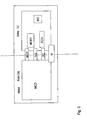
- Fig. 2 shows the necessary for the realization of the method according to the invention components of a microprocessor unit MP.
- This has the already described secure runtime environment SWd and the non-secure environment NWd.
- the secured environment is also referred to as a trust zone TZ.
- This contains at least one application called Trustlet TL.
- An application-specific interface (MC Trustlet API) communicates with an operating system of the secure runtime environment MC, for example MobiCore, (block B1).
- drivers DRV are included in the secure runtime environment SWd (block B2).
- At least one application APP is provided which has an application-specific interface (application-specific API) with an application connector TLC (so-called trustlet connector) in block A1 can exchange data.
- the application connector can communicate via an interface TCI with an application TL in the secure runtime environment.
- a driver MCD for example a MobiCore driver
- MC driver API application-specific interface
- a virtual driver VDRV is included in the unsafe environment.
- the MobiCore driver MCD can communicate via an interface MCI with the operating system MC of the secure runtime environment. Via an interface DCI a communication between the virtual driver VDRV and the DRV driver of the secure runtime environment is possible.
- Properties of the microprocessor unit according to the invention are an outsourced process scheduler in the unsafe environment in the MobiCore driver MCD.
- MobiCore In the operating system of the secure runtime environment, for example. MobiCore, an optimized ⁇ Kernel is included, which, for example. Does not include inter-process communication.
- MC preemptive multitasking with time quotas.
- MC includes an optimized task context.
- the microprocessor unit comprises a multi-layered driver concept in blocks A1, A2, A3 which are optimized for asynchronous communication with a multitasking environment in B1.
- the MobiCore driver MCD (block A2) is as in Fig. 3 shown, constructed and includes three interfaces for the transmission of control data MCP and NQ and control data FC between the non-secure environment and the secure runtime environment SWd.
- a runtime management unit MCRT and a control data handler FCH are also provided.
- the monitoring unit M already mentioned above for coordinating the data exchange between the secured runtime environment SWd and the insecure environment NWd is shown.
- the interface assigned to the transmission of the control data MCP is mainly responsible for the control of the MobiCore operating system MC. Here it is decided which tasks of the operating system are started and stopped. The data supplied by the MobiCore operating system is checked for proper formatting. For communication, a special buffer is reserved in a memory, which is initialized via a control message FC. The memory is called World Shared Memory. These can be accessed both from the non-secure environment NWd and from the secure runtime environment SWd.
- the interface associated with the transmission of the control data NQ is responsible for informing the runtime management unit MCRT by means of messages that data is ready for collection in the memory.
- This data can originate from the MobiCore driver MCD, that is to say for data communication between an application of the insecure environment NWd and a specific application (trustlet TL) of the secure runtime environment SWd.
- the messages are provided with an identifier, a so-called session ID, by means of which the MobiCore operating system MC can unambiguously assign the message to a specific application TL of the secure runtime environment SWd.
- control data from the layer of control data MCP may be in the buffer of the control data NQ.
- the interface assigned to NQ informs the runtime management unit MCRP about the provision of a special interrupt (preferably a special trust zone interrupt SIQ) via data provided.
- a special interrupt preferably a special trust zone interrupt SIQ
- the actual change between the non-secure environment NWd and the secure runtime environment SWd takes place via the interface assigned to the control data FC.
- monitor unit M Via so-called fast calls, N-SIQ messages or NQ-IRQ messages.
- the latter are called Notification IRQ.
- the first two only switch from the unsafe environment to the secure runtime environment. In the case of NQ-IRQs, switching in the reverse direction is also possible.
- the task of the scheduler adopts the interface assigned to the control data MCP in the MobiCore driver MCD of the unsafe environment.
- the driver decides which MobiCore task to run.
- MobiCore processes can still exchange data through a shared memory (World Shared Memory).
- MobiCore processes are assigned a certain amount of computing time, which can not be exceeded for security reasons.
- a MobiCore process has simple thread or task structures. This eliminates the need to copy large amounts of data when changing context. This results in fast context change pages.
- the thread structure is as follows: ID of the thread, current state of the thread, local exception handler of the threads, priority of the thread.
- the task structure is as follows: Current state of the task, Task ID of the generator task, external task exception handler, task time limit, number of threads that the task can activate or donate, priority and rights of the task.
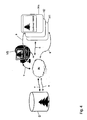
- An application in a secure area of a mobile telephone H1, H2,..., Hn communicates with a central background system (database D) and receives from there information for presentation in the display of the security mode.
- the information to be displayed can be, for example, a number column, an image, a logo, etc.
- the background system D modifies the information to be displayed in the security mode.
- the information to be presented is publicly announced at the same time to a broad circle of users.
- the user of the terminal H1, H2, ..., Hn which comprises a secure display device, can check the currently valid information via a second communication channel.
- the second communication channel may be, for example, an Internet-capable computer, the browser of the mobile phone that includes a web connection from the secure world, a daily newspaper, and so on.
Landscapes
- Engineering & Computer Science (AREA)
- Computer Security & Cryptography (AREA)
- Theoretical Computer Science (AREA)
- Computer Hardware Design (AREA)
- Physics & Mathematics (AREA)
- Software Systems (AREA)
- General Engineering & Computer Science (AREA)
- General Physics & Mathematics (AREA)
- Mathematical Physics (AREA)
- Health & Medical Sciences (AREA)
- General Health & Medical Sciences (AREA)
- Bioethics (AREA)
- Computing Systems (AREA)
- Computer Networks & Wireless Communication (AREA)
- Signal Processing (AREA)
- Storage Device Security (AREA)
- Mobile Radio Communication Systems (AREA)
Description
- Die Erfindung betrifft ein Verfahren zum Datenaustausch zwischen einer gesicherten Laufzeitumgebung, in welcher eine Anzahl an sicheren Applikationen ausführbar ist, und einer unsicheren Umgebung einer Mikroprozessoreinheit, insbesondere in einem mobilen Endgerät.
- Gesicherte Lauf Zeitumgebungen sind aus dem Stand der Technik bekannt und ermöglichen eine gegen Angriffe geschützte Ausführung von Programmen mit einer Mikroprozessoreinheit. Unter Mikroprozessoreinheit ist dabei die Gesamtheit der zur Programmausführung verwendeten Hardware zu verstehen, insbesondere der eigentliche Mikroprozessor sowie entsprechende flüchtige und nicht-flüchtige Speicher, welche bei der Programmausführung zur Ablage von Daten verwendet werden.
- Um den Sicherheitsanforderungen, den Speicherbeschränkungen und Kommunikationsmechanismen von Mikroprozessoreinheiten mit gesicherten Laufzeitumgebungen gerecht zu werden, ist es erforderlich, eine Multitasking-Eigenschaft zu optimieren.
-
US 2009/0327552 beschreibt ein System und ein Verfahren zum Schreiben einer Nachricht, von einem Absender, in Blöcke eines Speicherraumes, wobei der Speicherraum von dem Absender und einem Empfänger der Nachricht geteilt wird, und Senden, durch den Absender, eines der Nachricht entsprechenden Interrupts. -
WO 00/43876 - Es ist Aufgabe der vorliegenden Erfindung, ein Verfahren zum Datenaustausch zwischen einer gesicherten Laufzeitumgebung und einer unsicheren Umgebung einer Mikroprozessoreinheit anzugeben, welches eine verbesserte Multitasking-Eigenschaft ermöglicht. Eine weitere Aufgabe der Erfindung besteht darin, eine Mikroprozessoreinheit anzugeben, welche verbesserte Multitasking-Eigenschaften aufweist.
- Diese Aufgaben werden gelöst durch ein Verfahren gemäss den Merkmalen des Patentanspruches 1 sowie eine Mikroprozessoreinheit gemäss den Merkmalen des Patentanspruches 11. Vorteilhafte Ausgestaltungen der Erfindung sind in den abhängigen Patentansprüchen angegeben.
- Bei dem erfindungsgemässen Verfahren von Datenaustausch zwischen einer gesicherten Laufzeitumgebung, in welcher eine Anzahl an sicheren Applikationen ausführbar ist, und einer unsicheren Umgebung einer Mikroprozessoreinheit, insbesondere in einem mobilen Endgerät, erfolgt die Übertragung von Applikationsdaten und Steuerdaten über verschiedene Puffer. Die Puffer erfolgen unter Nutzung eines, von der gesicherten Laufzeitumgebung und der unsicheren Umgebung les- und/oder beschreibbaren, Speicherbereichs eines Speichers.
- Hierdurch wird eine strikte Prozessisolierung ermöglicht, die das sichere Nachladen von Binär-Code ermöglicht. Weiterhin wird ein schnellerer Datenaustausch von Applikationen der unsicheren Umgebung mit Prozessen in der gesicherten Laufzeitumgebung ermöglicht.
- Die Steuerdaten unterschiedlicher Art werden über unterschiedliche Puffer übertragen. Es ist es bevorzugt, wenn, die Umschaltung zwischen der gesicherten Laufzeitumgebung und der unsicheren Umgebung betreffende, Kontrolldaten über einen eigenen, sicheren Puffer übertragen werden. Anhand der Kontrolldaten kann ein Wechsel zwisehen gesicherter Laufzeitumgebung und unsicherer Umgebung erfolgen. Hierdurch können insbesondere schnelle Kontextwechselzeiten erzielt werden, wodurch sich eine gute Performance bei einem Taskwechsel zwischen Prozessen ergibt.
- In einer weiteren zweckmässigen Ausgestaltung basiert die Übertragung der Applikationsdaten und der Steuerdaten sowie optional der Kontrolldaten auf einem ARM-Monitorcode, der in einer Monitor-Einheit implementiert ist, welche Schnittstellen zu der gesicherten Laufzeitumgebung und der unsicheren Umgebung aufweist.
- Es ist weiter bevorzugt, wenn die Übertragung der Applikationsdaten und der Steuerdaten zwischen der gesicherten Laufzeitumgebung und einem Treiber der unsicheren Umgebung erfolgt. Zweckmässigerweise legt ein in der unsicheren Umgebung, insbesondere in einer Schnittstelle des Treibers für die Steuerdaten, implementierter Scheduler fest, welche der sicheren Applikationen in der gesicherten Lauf zeitumgebung zur Ausführung gebracht wird.
- Der Speicherbereich wird vorzugsweise durch eine Kontrollnachricht initialisiert. Insbesondere ist hierbei vorgesehen, dass die über Steuernachrichten gesicherte Laufzeitumgebung über für diese bestimmte Daten in dem Speicherbereich benachrichtigt wird. Dabei werden die Steuerdaten vorzugsweise mit einem eindeutigen Sitzungs-Kennzeichner (Session-ID) versehen, anhand dem die gesicherte Lauf zeitumgebung die Steuernachricht einer der in der gesicherten Laufzeitumgebung ausgeführten Applikation zuordnen kann.
- In einer weiteren vorteilhaften Ausgestaltung wird jedem in der gesicherten Laufzeitumgebung ablaufenden Prozess eine definierte, nicht überschreitbare Rechenzeit zugewiesen. Diese darf aus Sicherheitsgründen nicht überschritten werden. Hierdurch kann eine strikte Prozessisolierung erzielt werden.
- Gemäss einer weiteren zweckmässigen Ausgestaltung weist der in der gesicherten Laufzeitumgebung ablaufende Prozess nachfolgende Threadstruktur auf: Kennzeichner (ID) des Threads; aktueller Zustand des Threads; lokaler Exception Handler der Thread; Priorität des Threads. Vorzugsweise weist ein jeweiliger Prozess nachfolgende Task-Struktur auf: Momentaner Zustand der Task; Task-Kennzeichner der Erzeuger-Task; externer Exception Handler der Task; Rechenzeitkontingent der Task; Anzahl der Threads, die die Task aktivieren oder bereitstellen kann; Priorität und Rechte der Task. Durch die beschriebenen Thread- und/ oder Task-Strukturen müssen bei einem Kontextwechsel keine großen Datenmengen umkopiert werden. Hierdurch lassen sich schnelle Kontextwechselzeiten erzielen.
- Die Erfindung schafft weiterhin eine Mikroprozessoreinheit mit einer gesicherten Laufzeitumgebung und einer unsicheren Umgebung, welche derart ausgestaltet ist, dass zum Datenaustausch zwischen der gesicherten Laufzeitumgebung und der unsicheren Umgebung die Übertragung von Applikationsdaten und Steuerdaten über verschiedene Puffer erfolgt. Der Begriff der Mikroprozessoreinheit ist dabei wiederum weit zu verstehen und umfasst alle für die Ausführung des Datenaustauschs notwendigen Hardware-Komponenten, z.B. einen tragbaren Datenträger und insbesondere eine ChipKarte.
- Die Erfindung betrifft darüber hinaus ein mobiles Endgerät, insbesondere ein Mobiltelefon, welches eine entsprechende Mikroprozessoreinheit beinhaltet.
- Die Erfindung wird nachfolgend näher anhand von Ausführungsbeispielen in der Zeichnung erläutert. Es zeigen:
- Fig. 1
- eine schematische Darstellung des erfindungsgemäßen Verfahrens,
- Fig. 2
- eine schematische Darstellung der zur Verwirklichung des erfindungsgemäßen Verfahrens notwendigen Komponenten einer Mikroprozessoreinheit,
- Fig. 3
- eine schematische Darstellung, anhand der die Funktionsweise des erfindungsgemäßen Verfahrens erläutert wird, und
- Fig. 4
- eine schematische Darstellung eines Anwendungsbeispiels des erfindungsgemäßen Verfahrens.
- Anhand von
Fig.1 wird der Datenaustausch zwischen einer gesicherten Laufzeitumgebung SWd und einer unsicheren Umgebung NWd einer Mikroprozessoreinheit beschrieben, welche in der Form einer sog. ARM-Trust-Zone ausgebildet ist. Die ARM-Trust-Zone stellt eine bekannte Technologie dar, mit der in einer Mikroprozessoreinheit ein geschützter Bereich generiert wird, der als gesicherte Laufzeitumgebung SWd zur Durchführung von als Trustlets bezeichneten Applikationen verwendet wird. Die gesicherte Laufzeitumgebung wird als "Secure World" bezeichnet, die unsichere Umgebung als "Normal World". In der hier beschriebenen Ausführungsform ist die ARM-Trust-Zone in einer Hardware-Plattform, der sog. Trust-Zone-Hardware, eines mobilen Endgerätes, bspw. einem Mobiltelefon, implementiert. Die Laufzeitumgebung stellt dabei eine Software-Schicht zwischen der Applikations- und der Betriebssystem-Schicht der Mikroprozessoreinheit dar. -
Fig.1 zeigt schematisch eine solche Mikroprozessoreinheit mit einer gesicherten Laufzeitumgebung SWd mit einer Kommunikationseinheit MCCM, die als sog. MobiCore-Kommunikationsmodul ausgebildet ist. Die Kommunikationseinheit MCCM nutzt dabei das Betriebssystem MC (MobiCore) der gesicherten Laufzeitumgebung SWd. Ferner dargestellt ist die unsichere Umgebung NWd mit einem Treiber MCD, der als sog. MobiCore-Treiber ausgebildet ist. Als Betriebssystem wird Rich OS verwendet. Gesicherte Laufzeitumgebung SWd und unsichere Umgebung NWd sind in einer sog. Trust-Zone-Hardware TZH verwirklicht. - Für den Datenaustausch zwischen gesicherter Laufzeitumgebung SWd und unsicherer Umgebung NWd ist eine Monitoreinheit M vorgesehen. Die Übertragung von Applikationsdaten AD, Steuerdaten MCP (MobiCore Control Protocol Daten), Steuerdaten NQ (Notification Queue) und Kontrolldaten FC (sog. Fast Calls) erfolgt über jeweilige, verschiedene Puffer. Die Übertragung der Applikationsdaten AD, der Steuerdaten MCP und NQ sowie der Kontrolldaten FC basiert auf ARM-Monitorcode, der in der Monitoreinheit M implementiert ist, welche Schnittstellen zu der gesicherten Laufzeitumgebung SWd und der unsicheren Umgebung NWd aufweist.
-
Fig. 2 zeigt die zur Verwirklichung des erfindungsgemäßen Verfahrens notwendigen Komponenten einer Mikroprozessoreinheit MP. Diese weist die bereits beschriebene gesicherte Laufzeitumgebung SWd und die unsichere Umgebung NWd auf. Die gesicherte Umgebung wird auch als Trust-Zone TZ bezeichnet. In dieser ist wenigstens ein als Trustlet TL bezeichnete Applikation enthalten. Über eine applikationsspezifische Schnittstelle (MC Trustlet API) kommuniziert diese mit einem Betriebssystem der gesicherten Laufzeitumgebung MC, bspw. MobiCore, (Block B1). Darüber hinaus sind Treiber DRV in der gesicherten Laufzeitumgebung SWd enthalten (Block B2). - In der unsicheren Umgebung, welches als Betriebssystem z.B. Rich OS nutzt, ist wenigstens eine Applikation APP vorgesehen, welche über eine anwendungsspezifische Schnittstelle (Application specific API) mit einem Applikationsverbinder TLC (sog. Trustlet Connector) im Block A1 Daten austauschen kann. Der Applikationsverbinder kann über eine Schnittstelle TCI mit einer Applikation TL in der gesicherten Laufzeitumgebung kommunizieren. In der unsicheren Umgebung NWd ist ferner in einem Block A2 ein Treiber MCD, bspw. ein MobiCore-Treiber, enthalten, dem eine applikationsspezifische Schnittstelle (MC-Driver API) zugeordnet ist. Darüber hinaus ist in einem Block A3 ein virtueller Treiber VDRV in der unsicheren Umgebung enthalten. Der MobiCore-Treiber MCD kann über eine Schnittstelle MCI mit dem Betriebssystem MC der gesicherten Laufzeitumgebung kommunizieren. Über eine Schnittstelle DCI ist eine Kommunikation zwischen dem virtuellen Treiber VDRV und dem Treiber DRV der gesicherten Laufzeitumgebung möglich.
- Erfindungsgemäße Eigenschaften der Mikroprozessoreinheit sind ein ausgelagerter Prozess-Scheduler in der unsicheren Umgebung in dem MobiCore-Treiber MCD. In dem Betriebssystem der gesicherten Laufzeitumgebung, bspw. MobiCore, ist ein optimierter µKernel enthalten, welcher bspw. keine Inter-Prozess-Kommunikation umfasst. In MC erfolgt ein preemptives Multitasking mit Zeitkontingenten. Darüber hinaus umfasst MC einen optimierten Task-Kontext. Schließlich umfasst die Mikroprozessoreinheit ein mehrschichtiges Treiberkonzept in den Blöcken A1, A2, A3, welche optimiert auf eine asynchrone Kommunikation mit einer multitaskingfähigen Umgebung in B1 sind.
- Das mehrschichtige Treiberkonzept wird nachfolgend näher anhand
Fig. 3 erläutert. Der MobiCore-Treiber MCD (Block A2) ist, wie inFig. 3 dargestellt, aufgebaut und umfasst drei Schnittstellen für die Übertragung von Steuerdaten MCP und NQ sowie Kontrolldaten FC zwischen der unsicheren Umgebung und der gesicherten Laufzeitumgebung SWd. In dem MobiCore-Betriebssystem (Block B1) sind ferner eine Laufzeitmanagementeinheit MCRT und ein Kontrolldaten-Handler FCH vorgesehen. Darüber hinaus ist die eingangs bereits erwähnte Monitoreinheit M zur Koordination des Datenaustauschs zwischen gesicherter Laufzeitumgebung SWd und unsicherer Umgebung NWd dargestellt. - Die der Übertragung der Steuerdaten MCP zugeordnete Schnittstelle ist für die Steuerung des MobiCore-Betriebssystems MC hauptverantwortlich. Hier wird entschieden, welche Tasks des Betriebssystems gestartet und gestoppt werden. Die von dem MobiCore-Betriebssystem gelieferten Daten werden auf richtige Formatierung überprüft. Für die Kommunikation wird ein spezieller Puffer in einem Speicher reserviert, der über eine Kontrollnachricht FC initialisiert wird. Der Speicher wird als World Shared Memory bezeichnet. Auf diesen kann sowohl von der unsicheren Umgebung NWd als auch von der gesicherten Laufzeitumgebung SWd zugegriffen werden.
- Die der Übertragung der Steuerdaten NQ zugeordnete Schnittstelle ist dafür verantwortlich, mittels Nachrichten die Laufzeitmanagementeinheit MCRT zu informieren, dass Daten zur Abholung in dem Speicher bereit liegen. Diese Daten können von dem MobiCore-Treiber MCD stammen, d.h. zur Datenkommunikation zwischen einer Applikation der unsicheren Umgebung NWd mit einer bestimmten Applikation (Trustlet TL) der gesicherten Laufzeitumgebung SWd gehören. Im Falle einer Kommunikation auf der Schicht des MobiCore-Treibers MCD sind die Nachrichten mit einem Kennzeichner, einer sog. Session ID, versehen, anhand der das MobiCore-Betriebssystem MC die Nachricht eindeutig einer bestimmten Applikation TL der gesicherten Laufzeitumgebung SWd zuordnen kann.
- Ebenso können Steuerdaten aus der Schicht der Steuerdaten MCP im Puffer der Steuerdaten NQ sein. In beiden Fällen informiert die NQ zugeordnete Schnittstelle über das Auslösen eines speziellen Interrupts (vorzugsweise ein spezieller Trust-Zone-Interrupt SIQ) die Laufzeitmanagement-Einheit MCRP über bereitgestellte Daten.
- Über die den Kontrolldaten FC zugeordnete Schnittstelle findet der eigentliche Wechsel zwischen der unsicheren Umgebung NWd und der gesicherten Laufzeitumgebung SWd statt. Hierzu gibt es drei Möglichkeiten, wie mit der Monitoreinheit M interagiert werden kann. Über sog. Fast Calls, N-SIQ-Nachrichten oder NQ-IRQ-Nachrichten. Letztere werden als Notification IRQ bezeichnet. Die beiden ersten schalten lediglich von der unsicheren Umgebung in die gesicherte Laufzeitumgebung um. Im Fall von NQ-IRQs ist auch eine Umschaltung in umgekehrter Richtung möglich.
- Die Aufgabe des Schedulers übernimmt die den Steuerdaten MCP zugeordnete Schnittstelle im MobiCore-Treiber MCD der unsicheren Umgebung. Der Treiber entscheidet, welche MobiCore-Task zur Ausführung gebracht wird.
- Das beschriebene Konzept ermöglicht Optimierungen im µKernel-Ansatz. Im Vergleich zu klassischen µKernel-Ansätzen ist im MobiCore-Betriebssystem MC keine Interprozesskommunikation IPC implementiert. MobiCore-Prozesse können dennoch Daten austauschen über einen gemeinsam benutzten Speicher (World Shared Memory). MobiCore-Prozessen wird darüber hinaus eine bestimmte Rechenzeit zugewiesen, die aus Sicherheitsgründen nicht überschritten werden kann.
- Ein MobiCore-Prozess besitzt einfache Threads- bzw. Task-Strukturen. Hierdurch müssen bei einem Kontextwechsel keine großen Datenmengen kopiert werden. Dadurch ergeben sich schnelle Kontextwechselseiten.
- Die Thread-Struktur ist wie folgt: ID des Threads, aktueller Zustand des Threads, lokaler Exception Handler der Threads, Priorität des Threads. Die Task-Struktur ist wie folgt: Momentaner Zustand der Task, Task ID der Erzeuger-Task, externer Exception Handler der Task, Rechenzeitkontingent der Task, Anzahl der Threads, die die Task aktivieren oder spenden kann, Priorität und Rechte der Task.
- Die Übertragung von Applikationsdaten, Steuerdaten und Kontrolldaten über verschiedene Puffer kann für die in
Fig. 4 dargestellte Anwendung genutzt werden. - Eine Applikation in einem sicheren Bereich eines mobilen Telefons H1, H2, ..., Hn kommuniziert mit einem zentralen Hintergrundsystem (Datenbank D) und bekommt von dort eine Information zur Darstellung im Display des Sicherheitsmodus übermittelt. Die darzustellende Information kann bspw. eine Zahlenkolonne, ein Bild, ein Logo usw. sein. In regelmäßigen Abständen modifiziert das Hintergrundsystem D die im Sicherheitsmodus darzustellende Information. Die darzustellende Information wird zusätzlich einem breiten Nutzerkreis zeitgleich öffentlich bekannt gegeben. Der Anwender des Endgeräts H1, H2, ..., Hn, das eine sichere Anzeigevorrichtung umfasst, kann über einen zweiten Kommunikationskanal die aktuell gültige Information überprüfen. Der zweite Kommunikationskanal kann bspw. ein Internetfähiger Rechner, der Browser des Mobiltelefons, das eine Web-Verbindung aus der sicheren Welt umfasst, eine Tageszeitung usw. sein.
- Hiermit steht nicht der Schutz von sicherheitskritischen Daten, z.B. kryptografische Schlüssel, im Vordergrund. Stattdessen ist hier die Nutzerwahrnehmung eines sicheren Displays oder eines sicheren Eingabemittels von Bedeutung. Hierdurch kann das Vertrauen von Endanwendern in mobile Endgeräte, bspw. für mobile Bankanwendungen oder Zahlungsanwendungen, erhöht werden.
- Hierzu sind in dem Datenbanksystem D Informationen hinterlegt, die in den Endgeräten H1, H2, ..., Hn mittels eines in den Endgeräten implementierten Aktualisierungs-Servers über einen Aktualisierungs-Client der Datenbank ausgewechselt werden. Die Information ist in
Fig. 4 beispielhaft ein Weihnachtsbaum. Dieselbe Information wird auch über einen in dem Datenbanksystem integrierten Web-Server öffentlich beliebigen Systemen zur Verifikation VS über einen öffentlichen Kanal v zugänglich gemacht. Der Ablauf der Aktualisierung der Information ist wie folgt: - 1. Der Update-Server kontaktiert über einen sicheren Kanal s alle in der Datenbank D gelisteten mobilen Endgeräte H1, H2, ..., Hn, um eine neue Information zu verschicken. Dies bedeutet, in regelmäßigen Abständen modifiziert das Hintergrundsystem die im Sicherheitsmodus des mobilen Endgeräts H1, H2, ..., Hn darzustellende Information.
- 2. Um eine erfolgreiche Aktualisierung durchzuführen, muss der Aktualisierungs-Client sich bei dem Aktualisierungs-Server in dem Endgerät authentisieren. Dies kann bspw. mit einem Client-Zertifikat erfolgen. Ebenso muss auch der Aktualisierungs-Server des Endgeräts beim Aktualisierungs-Client der Datenbank nachweisen, dass der richtige Server für die Aktualisierung kontaktiert wurde. Dies kann mittels eines Server-Zertifikats erfolgen.
- 3. Nach der erfolgreichen gegenseitigen Authentisierung wird über den gesicherten Kanal s zwischen dem Aktualisierungs-Server der Handgeräte und dem Aktualisierungs-Client der Datenbank die neue Information (hier: Weihnachtsbaum) in das Endgerät in einem nur dem Sicherheitsmodus zugänglichen Bereich eingespielt.
- 4. Optional ist die Information mit einem digitalen Wasserzeichen geschützt und für jedes Endgerät personalisiert.
- 5. Die Personalisierung kann bspw. in der gesicherten Laufzeitumgebung überprüft werden. Falls sie nicht für das Endgerät passend ist, werden bestimmte Funktionalitäten der gesicherten Laufzeitumgebung blockiert. Dies hat bspw. zur Folge, dass keine mobilen Zahlvorgänge möglich sind.
- Der Ablauf der Verifikation durch den Endanwender ist wie folgt:
- 1. Der Endanwender führt eine Aktion durch, die das mobile Endgerät H1, H2, ..., Hn in einen Sicherheitsmodus schaltet.
- 2. Das betreffende mobile Endgerät zeigt nun an einer bestimmten Stelle im sicheren Bildschirm eine beliebige Information, hier den Weihnachtsbaum, an.
- 3. Der Anwender des Endgeräts kann nun über einen zweiten, parallelen Kanal überprüfen, ob die Information auf seinem mobilen Endgerät mit der anderweitig veröffentlichten Information überein stimmt.
- Hierdurch wird das Vertrauen des Endanwenders in ein Mobiltelefon, speziell für Bezahl- und Bankanwendungen, erhöht. Angriffe, die einen Sicherheitszustand eines elektronischen Endgeräts vortäuschen, werden deutlich erschwert. Der Benutzer wird in die Lage versetzt, zu überprüfen, ob sich das mobile Gerät im Sicherheitsmodus befindet. Hierdurch wird ein höheres Vertrauen des Anwenders in die oben genannten Applikationen geschaffen.
Claims (13)
- Verfahren zum Datenaustausch zwischen einer gesicherten Laufzeitumgebung (SWd), in welcher eine Anzahl an sicheren Applikationen (TL) ausführbar ist, und einer unsicheren Umgebung (NWd) einer Mikroprozessoreinheit (MP), insbesondere in einem mobilen Endgerät, dadurch gekennzeichnet dass die Übertragung von Applikationsdaten (AD) und Steuerdaten (MCP, NQ) über verschiedene Puffer erfolgt, wobei die Steuerdaten (MCP, NQ) unterschiedlicher Art über unterschiedliche Puffer übertragen werden, und die Puffer unter Nutzung eines von der gesicherten Laufzeitumgebung (SWd) und der unsicheren Umgebung (NWd) les- und/oder beschreibbaren, Speicherbereichs eines Speichers (WSM) erfolgen.
- Verfahren nach Anspruch 1, dadurch gekennzeichnet, dass, die Umschaltung zwischen der gesicherten Laufzeitumgebung (SWd) und der unsicheren Umgebung (NWd) betreffende, Kontrolldaten (FC) über einen eigenen sicheren Puffer übertragen werden.
- Verfahren nach einem der vorhergehenden Ansprüche, dadurch gekennzeichnet, dass die Übertragung der Applikationsdaten (AD) und der Steuerdaten (MCP, NQ) sowie optional der Kontrolldaten (FC) auf einem ARM Monitorcode basiert, der in einer Monitoreinheit (M) implementiert ist, welche Schnittstellen zur der gesicherten Laufzeitumgebung (SWd) und der unsicheren Umgebung (NWd) aufweist.
- Verfahren nach einem der vorhergehenden Ansprüche, dadurch gekennzeichnet, dass die Übertragung der Applikationsdaten (AD) und der Steuerdaten (MCP, NQ) zwischen der gesicherten Laufzeitumgebung (SWd) und einem Treiber (MCD) der unsicheren Umgebung (NWd) erfolgt.
- Verfahren nach Anspruch 4, dadurch gekennzeichnet, dass ein in der unsicheren Umgebung (NWd), insbesondere in einer Schnittstelle des Treibers (MCD) für die Steuerdaten (MCP), implementierter Scheduler festlegt, welche der sicheren Applikationen (TL) in der gesicherten Lauf zeitumgebung (SWd) zur Ausführung gebracht wird.
- Verfahren nach Anspruch 1, dadurch gekennzeichnet, dass über Steuernachrichten die gesicherte Laufzeitumgebung über für diese bestimmte Daten in dem Speicherbereich benachrichtigt wird.
- Verfahren nach Anspruch 6, dadurch gekennzeichnet, dass die Steuernachrichten mit einem eindeutigen Sitzungs-Kennzeichner versehen werden, anhand dem die gesicherte Laufzeitumgebung (SWd) die Steuernachricht einer der in der gesicherten Laufzeitumgebung (SWd) ausgeführten Applikationen (TL) zuordnen kann.
- Verfahren nach einem der vorhergehenden Ansprüche, dadurch gekennzeichnet, dass jedem in der gesicherten Lauf zeitumgebung (SWd) ablaufenden Prozess eine definierte, nicht überschreitbare Rechenzeit zugewiesen wird.
- Verfahren nach Anspruch 8, dadurch gekennzeichnet, dass ein jeweiliger Prozess nachfolgende Threadstruktur aufweist: Kennzeichner (ID) des Threads; Aktueller Zustand des Threads; Lokaler Exception Handler der Threads; Priorität des Threads.
- Verfahren nach Anspruch 8, dadurch gekennzeichnet, dass ein jeweiliger Prozess nachfolgende Taskstruktur aufweist: Momentaner Zustand der Task; Task-Kennzeichner der Erzeuger-Task; Externer Exception Handler der Task; Rechenzeitkontingent der Task; Anzahl der Threads, die die Task aktivieren oder bereitstellen kann; Priorität und Rechte der Task.
- Mikroprozessoreinheit mit einer gesicherten Laufzeitumgebung (SWd) und einer unsicheren Umgebung (NWd), dadurch gekennzeichnet dass zum Datenaustausch zwischen der gesicherten Laufzeitumgebung (SWd) und der unsicheren Umgebung (NWd) die Übertragung von Applikationsdaten (AD) und Steuerdaten (MCP, NQ, FC) über verschiedene Puffer erfolgt, wobei die Steuerdaten (MCP, NQ) unterschiedlicher Art über unterschiedliche Puffer übertragen werden, und die Puffer unter Nutzung eines von der gesicherten Laufzeitumgebung (SWd) und der unsicheren Umgebung (NWd) les- und/oder beschreibbaren, Speicherbereichs eines Speichers (WSM) erfolgen.
- Mikroprozessoreinheit nach Anspruch 11, dadurch gekennzeichnet, dass diese derart ausgestaltet ist, dass durch diese ein Verfahren nach einem der Ansprüche 2 bis 10 ausführbar ist.
- Mobiles Endgerät, umfassend eine Mikroprozessoreinheit nach Anspruch 11 oder 12.
Applications Claiming Priority (2)
| Application Number | Priority Date | Filing Date | Title |
|---|---|---|---|
| DE102011012227A DE102011012227A1 (de) | 2011-02-24 | 2011-02-24 | Verfahren zum Datenaustausch in einer gesicherten Laufzeitumgebung |
| PCT/EP2012/000763 WO2012113545A2 (de) | 2011-02-24 | 2012-02-22 | Verfahren zum datenaustausch in einer gesicherten laufzeitumgebung |
Publications (2)
| Publication Number | Publication Date |
|---|---|
| EP2678796A2 EP2678796A2 (de) | 2014-01-01 |
| EP2678796B1 true EP2678796B1 (de) | 2015-08-19 |
Family
ID=45922632
Family Applications (1)
| Application Number | Title | Priority Date | Filing Date |
|---|---|---|---|
| EP12711339.7A Active EP2678796B1 (de) | 2011-02-24 | 2012-02-22 | Verfahren zum datenaustausch in einer gesicherten laufzeitumgebung |
Country Status (7)
| Country | Link |
|---|---|
| US (1) | US20140007251A1 (de) |
| EP (1) | EP2678796B1 (de) |
| JP (1) | JP2014506704A (de) |
| KR (1) | KR20140027109A (de) |
| CN (1) | CN103477344A (de) |
| DE (1) | DE102011012227A1 (de) |
| WO (1) | WO2012113545A2 (de) |
Families Citing this family (12)
| Publication number | Priority date | Publication date | Assignee | Title |
|---|---|---|---|---|
| DE102011018431A1 (de) | 2011-04-21 | 2012-10-25 | Giesecke & Devrient Gmbh | Verfahren zur Anzeige von Informationen auf einer Anzeigeeinrichtung eines Endgeräts |
| DE102011115135A1 (de) | 2011-10-07 | 2013-04-11 | Giesecke & Devrient Gmbh | Mikroprozessorsystem mit gesicherter Laufzeitumgebung |
| US9342695B2 (en) | 2012-10-02 | 2016-05-17 | Mordecai Barkan | Secured automated or semi-automated systems |
| US9672360B2 (en) | 2012-10-02 | 2017-06-06 | Mordecai Barkan | Secure computer architectures, systems, and applications |
| WO2014055372A2 (en) | 2012-10-02 | 2014-04-10 | Mordecai Barkan | Secure computer architectures, systems, and applications |
| US11188652B2 (en) | 2012-10-02 | 2021-11-30 | Mordecai Barkan | Access management and credential protection |
| FR3003967B1 (fr) * | 2013-03-29 | 2015-05-01 | Alstom Transport Sa | Procede d'execution d'un logiciel securitaire et d'un logiciel non securitaire entrelaces |
| GB201408539D0 (en) * | 2014-05-14 | 2014-06-25 | Mastercard International Inc | Improvements in mobile payment systems |
| CN104378381A (zh) * | 2014-11-27 | 2015-02-25 | 上海斐讯数据通信技术有限公司 | 智能终端企业邮件安全办公方法及系统 |
| CN110059500A (zh) * | 2015-11-30 | 2019-07-26 | 华为技术有限公司 | 用户界面切换方法和终端 |
| CN106845160B (zh) * | 2015-12-03 | 2018-04-20 | 国家新闻出版广电总局广播科学研究院 | 一种用于智能操作系统的数字版权管理(drm)方法和系统 |
| CN113641518B (zh) * | 2021-08-16 | 2024-07-16 | 京东科技控股股份有限公司 | 服务调用方法、装置及存储介质 |
Family Cites Families (18)
| Publication number | Priority date | Publication date | Assignee | Title |
|---|---|---|---|---|
| JPH01185734A (ja) * | 1988-01-20 | 1989-07-25 | Fujitsu Ltd | バッファメモリ管理方式 |
| JPH05265779A (ja) * | 1992-03-23 | 1993-10-15 | Nec Corp | タスク間通信システム |
| US6633984B2 (en) * | 1999-01-22 | 2003-10-14 | Sun Microsystems, Inc. | Techniques for permitting access across a context barrier on a small footprint device using an entry point object |
| US6795905B1 (en) * | 2000-03-31 | 2004-09-21 | Intel Corporation | Controlling accesses to isolated memory using a memory controller for isolated execution |
| GB0226874D0 (en) * | 2002-11-18 | 2002-12-24 | Advanced Risc Mach Ltd | Switching between secure and non-secure processing modes |
| JP4423206B2 (ja) * | 2002-11-18 | 2010-03-03 | エイアールエム リミテッド | 安全モードと非安全モードとを切り換えるプロセッサ |
| GB2396930B (en) * | 2002-11-18 | 2005-09-07 | Advanced Risc Mach Ltd | Apparatus and method for managing access to a memory |
| GB2406403B (en) * | 2003-09-26 | 2006-06-07 | Advanced Risc Mach Ltd | Data processing apparatus and method for merging secure and non-secure data into an output data stream |
| DE102004054571B4 (de) * | 2004-11-11 | 2007-01-25 | Sysgo Ag | Verfahren zur Verteilung von Rechenzeit in einem Rechnersystem |
| US7627807B2 (en) * | 2005-04-26 | 2009-12-01 | Arm Limited | Monitoring a data processor to detect abnormal operation |
| US7765399B2 (en) * | 2006-02-22 | 2010-07-27 | Harris Corporation | Computer architecture for a handheld electronic device |
| CN101299228B (zh) * | 2008-01-26 | 2010-09-01 | 青岛大学 | 一种基于单cpu双总线的安全网络终端 |
| GB2459097B (en) * | 2008-04-08 | 2012-03-28 | Advanced Risc Mach Ltd | A method and apparatus for processing and displaying secure and non-secure data |
| US9002014B2 (en) * | 2008-05-24 | 2015-04-07 | Via Technologies, Inc. | On-die cryptographic apparatus in a secure microprocessor |
| US7809875B2 (en) * | 2008-06-30 | 2010-10-05 | Wind River Systems, Inc. | Method and system for secure communication between processor partitions |
| US8595491B2 (en) * | 2008-11-14 | 2013-11-26 | Microsoft Corporation | Combining a mobile device and computer to create a secure personalized environment |
| JP4698724B2 (ja) * | 2008-12-01 | 2011-06-08 | 株式会社エヌ・ティ・ティ・ドコモ | プログラム実行装置 |
| US9207968B2 (en) * | 2009-11-03 | 2015-12-08 | Mediatek Inc. | Computing system using single operating system to provide normal security services and high security services, and methods thereof |
-
2011
- 2011-02-24 DE DE102011012227A patent/DE102011012227A1/de not_active Withdrawn
-
2012
- 2012-02-22 US US14/001,332 patent/US20140007251A1/en not_active Abandoned
- 2012-02-22 KR KR1020137024122A patent/KR20140027109A/ko not_active Withdrawn
- 2012-02-22 WO PCT/EP2012/000763 patent/WO2012113545A2/de not_active Ceased
- 2012-02-22 JP JP2013554811A patent/JP2014506704A/ja active Pending
- 2012-02-22 CN CN2012800103219A patent/CN103477344A/zh active Pending
- 2012-02-22 EP EP12711339.7A patent/EP2678796B1/de active Active
Also Published As
| Publication number | Publication date |
|---|---|
| WO2012113545A2 (de) | 2012-08-30 |
| DE102011012227A1 (de) | 2012-08-30 |
| EP2678796A2 (de) | 2014-01-01 |
| JP2014506704A (ja) | 2014-03-17 |
| US20140007251A1 (en) | 2014-01-02 |
| CN103477344A (zh) | 2013-12-25 |
| KR20140027109A (ko) | 2014-03-06 |
| WO2012113545A3 (de) | 2013-01-10 |
Similar Documents
| Publication | Publication Date | Title |
|---|---|---|
| DE102011012227A1 (de) | Verfahren zum Datenaustausch in einer gesicherten Laufzeitumgebung | |
| DE60006217T2 (de) | Techniken zum gewähren des zugriffs durch eine kontextsperre in einem gerät mit kleinem platzbedarf unter verwendung von einem eingangspunktobjekt | |
| EP1818844B1 (de) | Verfahren zur Benutzung von Sicherheitstoken | |
| DE602004011871T2 (de) | Bereitstellung einer sicheren Eingabe an ein System mit einer Hochsicherheitsumgebung | |
| DE69729356T2 (de) | Verfahren und gerät zur sicherung des zugangs einer station zu mindestens einem server | |
| DE60211163T2 (de) | Rechnersystem mit dem Modemtreiber in privilegiertem Modus | |
| EP2764464A1 (de) | Mikroprozessorsystem mit gesicherter laufzeitumgebung | |
| DE112011103580B4 (de) | Verfahren, sichere Einheit, System und Computerprogrammprodukt für das sichere Verwalten des Benutzerzugriffs auf ein Dateisystem | |
| DE60010433T2 (de) | Verfahren zur durchführung von sicherheitvorgaben in einem kleingerät unter verwendung von einer kontextsperre | |
| EP1989621A1 (de) | Betriebssystem für eine chipkarte mit einem multi - tasking kernel | |
| EP2795934B1 (de) | Verfahren zur kommunikation mit einer applikation auf einem portablen datenträger sowie ein solcher portabler datenträger | |
| DE112004000626T5 (de) | Verfahren und Gerät zur Schaffung einer Programmlauf- bzw. Ausführungsabschirmung | |
| DE102019209086B3 (de) | Kraftfahrzeug-Computersystem mit Hypervisor sowie Kraftfahrzeug | |
| EP2923264B1 (de) | Verfahren und system zur applikationsinstallation in einem sicherheitselement | |
| DE102007018777A1 (de) | Steuervorrichtung für Fahrzeuge | |
| EP1801696B1 (de) | Multithreading - fähige virtuelle Maschine | |
| EP4505301B1 (de) | Verfahren und system zur bereitstellung von steuerungsanwendungen | |
| EP2219115B1 (de) | Verfahren zum Einsatz einer Multifunktionsspeicherkarte auf Endgeräten | |
| WO2010009896A1 (de) | Rechneranordnung mit automatisierter zugriffssteuerung von einer und zugriffskontrolle auf eine applikation sowie entsprechendes zugriffssteuerungs- und zugriffskontrollverfahren | |
| DE102006037493A1 (de) | Tragbarer Datenträger | |
| DE102024201607A1 (de) | Steuergerätearchitektur mit verbesserten Job-Handling-Möglichkeiten | |
| DE102024200771A1 (de) | Zugriff auf eine Sicherheitsfunktionalität in einer Recheneinheit durch eine Anwendung | |
| EP2071455B1 (de) | Datenträger und Verfahren zum Betreiben eines Mikroprozessors eines Datenträgers | |
| EP4065403A1 (de) | Verfahren zum betreiben einer berührungssensitiven eingabeeinheit sowie bedienvorrichtung und kraftfahrzeug | |
| DE102016122982B4 (de) | Multiplexer zum Steuern eines Zugriffs einer Datenverarbeitungsvorrichtung auf eine Smartcard |
Legal Events
| Date | Code | Title | Description |
|---|---|---|---|
| PUAI | Public reference made under article 153(3) epc to a published international application that has entered the european phase |
Free format text: ORIGINAL CODE: 0009012 |
|
| 17P | Request for examination filed |
Effective date: 20130813 |
|
| AK | Designated contracting states |
Kind code of ref document: A2 Designated state(s): AL AT BE BG CH CY CZ DE DK EE ES FI FR GB GR HR HU IE IS IT LI LT LU LV MC MK MT NL NO PL PT RO RS SE SI SK SM TR |
|
| DAX | Request for extension of the european patent (deleted) | ||
| REG | Reference to a national code |
Ref country code: DE Ref legal event code: R079 Ref document number: 502012004211 Country of ref document: DE Free format text: PREVIOUS MAIN CLASS: G06F0021000000 Ipc: G06F0021360000 |
|
| GRAP | Despatch of communication of intention to grant a patent |
Free format text: ORIGINAL CODE: EPIDOSNIGR1 |
|
| RIC1 | Information provided on ipc code assigned before grant |
Ipc: G06F 21/53 20130101ALI20150226BHEP Ipc: G06F 21/42 20130101ALI20150226BHEP Ipc: G06F 21/71 20130101ALI20150226BHEP Ipc: G06F 21/36 20130101AFI20150226BHEP Ipc: G06F 21/60 20130101ALI20150226BHEP Ipc: G06F 21/74 20130101ALI20150226BHEP |
|
| INTG | Intention to grant announced |
Effective date: 20150313 |
|
| GRAS | Grant fee paid |
Free format text: ORIGINAL CODE: EPIDOSNIGR3 |
|
| GRAA | (expected) grant |
Free format text: ORIGINAL CODE: 0009210 |
|
| AK | Designated contracting states |
Kind code of ref document: B1 Designated state(s): AL AT BE BG CH CY CZ DE DK EE ES FI FR GB GR HR HU IE IS IT LI LT LU LV MC MK MT NL NO PL PT RO RS SE SI SK SM TR |
|
| REG | Reference to a national code |
Ref country code: GB Ref legal event code: FG4D Free format text: NOT ENGLISH |
|
| REG | Reference to a national code |
Ref country code: CH Ref legal event code: EP |
|
| REG | Reference to a national code |
Ref country code: IE Ref legal event code: FG4D Free format text: LANGUAGE OF EP DOCUMENT: GERMAN |
|
| REG | Reference to a national code |
Ref country code: AT Ref legal event code: REF Ref document number: 744256 Country of ref document: AT Kind code of ref document: T Effective date: 20150915 |
|
| REG | Reference to a national code |
Ref country code: DE Ref legal event code: R096 Ref document number: 502012004211 Country of ref document: DE |
|
| REG | Reference to a national code |
Ref country code: LT Ref legal event code: MG4D Ref country code: FR Ref legal event code: PLFP Year of fee payment: 5 |
|
| REG | Reference to a national code |
Ref country code: NL Ref legal event code: MP Effective date: 20150819 |
|
| PG25 | Lapsed in a contracting state [announced via postgrant information from national office to epo] |
Ref country code: GR Free format text: LAPSE BECAUSE OF FAILURE TO SUBMIT A TRANSLATION OF THE DESCRIPTION OR TO PAY THE FEE WITHIN THE PRESCRIBED TIME-LIMIT Effective date: 20151120 Ref country code: FI Free format text: LAPSE BECAUSE OF FAILURE TO SUBMIT A TRANSLATION OF THE DESCRIPTION OR TO PAY THE FEE WITHIN THE PRESCRIBED TIME-LIMIT Effective date: 20150819 Ref country code: NO Free format text: LAPSE BECAUSE OF FAILURE TO SUBMIT A TRANSLATION OF THE DESCRIPTION OR TO PAY THE FEE WITHIN THE PRESCRIBED TIME-LIMIT Effective date: 20151119 Ref country code: LT Free format text: LAPSE BECAUSE OF FAILURE TO SUBMIT A TRANSLATION OF THE DESCRIPTION OR TO PAY THE FEE WITHIN THE PRESCRIBED TIME-LIMIT Effective date: 20150819 Ref country code: LV Free format text: LAPSE BECAUSE OF FAILURE TO SUBMIT A TRANSLATION OF THE DESCRIPTION OR TO PAY THE FEE WITHIN THE PRESCRIBED TIME-LIMIT Effective date: 20150819 |
|
| PG25 | Lapsed in a contracting state [announced via postgrant information from national office to epo] |
Ref country code: PT Free format text: LAPSE BECAUSE OF FAILURE TO SUBMIT A TRANSLATION OF THE DESCRIPTION OR TO PAY THE FEE WITHIN THE PRESCRIBED TIME-LIMIT Effective date: 20151221 Ref country code: ES Free format text: LAPSE BECAUSE OF FAILURE TO SUBMIT A TRANSLATION OF THE DESCRIPTION OR TO PAY THE FEE WITHIN THE PRESCRIBED TIME-LIMIT Effective date: 20150819 Ref country code: SE Free format text: LAPSE BECAUSE OF FAILURE TO SUBMIT A TRANSLATION OF THE DESCRIPTION OR TO PAY THE FEE WITHIN THE PRESCRIBED TIME-LIMIT Effective date: 20150819 Ref country code: PL Free format text: LAPSE BECAUSE OF FAILURE TO SUBMIT A TRANSLATION OF THE DESCRIPTION OR TO PAY THE FEE WITHIN THE PRESCRIBED TIME-LIMIT Effective date: 20150819 Ref country code: IS Free format text: LAPSE BECAUSE OF FAILURE TO SUBMIT A TRANSLATION OF THE DESCRIPTION OR TO PAY THE FEE WITHIN THE PRESCRIBED TIME-LIMIT Effective date: 20151219 Ref country code: RS Free format text: LAPSE BECAUSE OF FAILURE TO SUBMIT A TRANSLATION OF THE DESCRIPTION OR TO PAY THE FEE WITHIN THE PRESCRIBED TIME-LIMIT Effective date: 20150819 |
|
| PG25 | Lapsed in a contracting state [announced via postgrant information from national office to epo] |
Ref country code: NL Free format text: LAPSE BECAUSE OF FAILURE TO SUBMIT A TRANSLATION OF THE DESCRIPTION OR TO PAY THE FEE WITHIN THE PRESCRIBED TIME-LIMIT Effective date: 20150819 |
|
| PG25 | Lapsed in a contracting state [announced via postgrant information from national office to epo] |
Ref country code: IT Free format text: LAPSE BECAUSE OF FAILURE TO SUBMIT A TRANSLATION OF THE DESCRIPTION OR TO PAY THE FEE WITHIN THE PRESCRIBED TIME-LIMIT Effective date: 20150819 Ref country code: DK Free format text: LAPSE BECAUSE OF FAILURE TO SUBMIT A TRANSLATION OF THE DESCRIPTION OR TO PAY THE FEE WITHIN THE PRESCRIBED TIME-LIMIT Effective date: 20150819 Ref country code: CZ Free format text: LAPSE BECAUSE OF FAILURE TO SUBMIT A TRANSLATION OF THE DESCRIPTION OR TO PAY THE FEE WITHIN THE PRESCRIBED TIME-LIMIT Effective date: 20150819 Ref country code: EE Free format text: LAPSE BECAUSE OF FAILURE TO SUBMIT A TRANSLATION OF THE DESCRIPTION OR TO PAY THE FEE WITHIN THE PRESCRIBED TIME-LIMIT Effective date: 20150819 Ref country code: SK Free format text: LAPSE BECAUSE OF FAILURE TO SUBMIT A TRANSLATION OF THE DESCRIPTION OR TO PAY THE FEE WITHIN THE PRESCRIBED TIME-LIMIT Effective date: 20150819 |
|
| REG | Reference to a national code |
Ref country code: DE Ref legal event code: R097 Ref document number: 502012004211 Country of ref document: DE |
|
| PG25 | Lapsed in a contracting state [announced via postgrant information from national office to epo] |
Ref country code: BE Free format text: LAPSE BECAUSE OF NON-PAYMENT OF DUE FEES Effective date: 20160229 Ref country code: RO Free format text: LAPSE BECAUSE OF FAILURE TO SUBMIT A TRANSLATION OF THE DESCRIPTION OR TO PAY THE FEE WITHIN THE PRESCRIBED TIME-LIMIT Effective date: 20150819 |
|
| PLBE | No opposition filed within time limit |
Free format text: ORIGINAL CODE: 0009261 |
|
| STAA | Information on the status of an ep patent application or granted ep patent |
Free format text: STATUS: NO OPPOSITION FILED WITHIN TIME LIMIT |
|
| 26N | No opposition filed |
Effective date: 20160520 |
|
| PG25 | Lapsed in a contracting state [announced via postgrant information from national office to epo] |
Ref country code: SI Free format text: LAPSE BECAUSE OF FAILURE TO SUBMIT A TRANSLATION OF THE DESCRIPTION OR TO PAY THE FEE WITHIN THE PRESCRIBED TIME-LIMIT Effective date: 20150819 |
|
| PG25 | Lapsed in a contracting state [announced via postgrant information from national office to epo] |
Ref country code: LU Free format text: LAPSE BECAUSE OF FAILURE TO SUBMIT A TRANSLATION OF THE DESCRIPTION OR TO PAY THE FEE WITHIN THE PRESCRIBED TIME-LIMIT Effective date: 20160222 Ref country code: MC Free format text: LAPSE BECAUSE OF FAILURE TO SUBMIT A TRANSLATION OF THE DESCRIPTION OR TO PAY THE FEE WITHIN THE PRESCRIBED TIME-LIMIT Effective date: 20150819 |
|
| REG | Reference to a national code |
Ref country code: CH Ref legal event code: PL |
|
| PG25 | Lapsed in a contracting state [announced via postgrant information from national office to epo] |
Ref country code: CH Free format text: LAPSE BECAUSE OF NON-PAYMENT OF DUE FEES Effective date: 20160229 Ref country code: LI Free format text: LAPSE BECAUSE OF NON-PAYMENT OF DUE FEES Effective date: 20160229 |
|
| REG | Reference to a national code |
Ref country code: IE Ref legal event code: MM4A |
|
| REG | Reference to a national code |
Ref country code: FR Ref legal event code: PLFP Year of fee payment: 6 |
|
| PG25 | Lapsed in a contracting state [announced via postgrant information from national office to epo] |
Ref country code: IE Free format text: LAPSE BECAUSE OF NON-PAYMENT OF DUE FEES Effective date: 20160222 |
|
| PG25 | Lapsed in a contracting state [announced via postgrant information from national office to epo] |
Ref country code: MT Free format text: LAPSE BECAUSE OF FAILURE TO SUBMIT A TRANSLATION OF THE DESCRIPTION OR TO PAY THE FEE WITHIN THE PRESCRIBED TIME-LIMIT Effective date: 20150819 |
|
| REG | Reference to a national code |
Ref country code: FR Ref legal event code: PLFP Year of fee payment: 7 |
|
| REG | Reference to a national code |
Ref country code: AT Ref legal event code: MM01 Ref document number: 744256 Country of ref document: AT Kind code of ref document: T Effective date: 20170222 |
|
| PG25 | Lapsed in a contracting state [announced via postgrant information from national office to epo] |
Ref country code: SM Free format text: LAPSE BECAUSE OF FAILURE TO SUBMIT A TRANSLATION OF THE DESCRIPTION OR TO PAY THE FEE WITHIN THE PRESCRIBED TIME-LIMIT Effective date: 20150819 Ref country code: AT Free format text: LAPSE BECAUSE OF NON-PAYMENT OF DUE FEES Effective date: 20170222 Ref country code: CY Free format text: LAPSE BECAUSE OF FAILURE TO SUBMIT A TRANSLATION OF THE DESCRIPTION OR TO PAY THE FEE WITHIN THE PRESCRIBED TIME-LIMIT Effective date: 20150819 Ref country code: HU Free format text: LAPSE BECAUSE OF FAILURE TO SUBMIT A TRANSLATION OF THE DESCRIPTION OR TO PAY THE FEE WITHIN THE PRESCRIBED TIME-LIMIT; INVALID AB INITIO Effective date: 20120222 |
|
| PG25 | Lapsed in a contracting state [announced via postgrant information from national office to epo] |
Ref country code: HR Free format text: LAPSE BECAUSE OF FAILURE TO SUBMIT A TRANSLATION OF THE DESCRIPTION OR TO PAY THE FEE WITHIN THE PRESCRIBED TIME-LIMIT Effective date: 20150819 Ref country code: TR Free format text: LAPSE BECAUSE OF FAILURE TO SUBMIT A TRANSLATION OF THE DESCRIPTION OR TO PAY THE FEE WITHIN THE PRESCRIBED TIME-LIMIT Effective date: 20150819 Ref country code: MK Free format text: LAPSE BECAUSE OF FAILURE TO SUBMIT A TRANSLATION OF THE DESCRIPTION OR TO PAY THE FEE WITHIN THE PRESCRIBED TIME-LIMIT Effective date: 20150819 |
|
| PG25 | Lapsed in a contracting state [announced via postgrant information from national office to epo] |
Ref country code: BG Free format text: LAPSE BECAUSE OF FAILURE TO SUBMIT A TRANSLATION OF THE DESCRIPTION OR TO PAY THE FEE WITHIN THE PRESCRIBED TIME-LIMIT Effective date: 20150819 |
|
| PG25 | Lapsed in a contracting state [announced via postgrant information from national office to epo] |
Ref country code: AL Free format text: LAPSE BECAUSE OF FAILURE TO SUBMIT A TRANSLATION OF THE DESCRIPTION OR TO PAY THE FEE WITHIN THE PRESCRIBED TIME-LIMIT Effective date: 20150819 |
|
| REG | Reference to a national code |
Ref country code: DE Ref legal event code: R082 Ref document number: 502012004211 Country of ref document: DE Representative=s name: D YOUNG & CO LLP, DE |
|
| P01 | Opt-out of the competence of the unified patent court (upc) registered |
Effective date: 20230515 |
|
| PGFP | Annual fee paid to national office [announced via postgrant information from national office to epo] |
Ref country code: GB Payment date: 20260216 Year of fee payment: 15 |
|
| PGFP | Annual fee paid to national office [announced via postgrant information from national office to epo] |
Ref country code: DE Payment date: 20260220 Year of fee payment: 15 |
|
| REG | Reference to a national code |
Ref country code: DE Ref legal event code: R081 Ref document number: 502012004211 Country of ref document: DE Owner name: TT SECURE PLATFORM LIMITED, GB Free format text: FORMER OWNER: TRUSTONIC LTD., CAMBRIDGE, GB |
|
| PGFP | Annual fee paid to national office [announced via postgrant information from national office to epo] |
Ref country code: FR Payment date: 20260227 Year of fee payment: 15 |