EP2662284A2 - Vereisungsschutz für Flugzeug mithilfe elektroaktiver Polymeroberflächen - Google Patents
Vereisungsschutz für Flugzeug mithilfe elektroaktiver Polymeroberflächen Download PDFInfo
- Publication number
- EP2662284A2 EP2662284A2 EP13163796.9A EP13163796A EP2662284A2 EP 2662284 A2 EP2662284 A2 EP 2662284A2 EP 13163796 A EP13163796 A EP 13163796A EP 2662284 A2 EP2662284 A2 EP 2662284A2
- Authority
- EP
- European Patent Office
- Prior art keywords
- actuators
- ice
- eap
- external surface
- formation
- Prior art date
- Legal status (The legal status is an assumption and is not a legal conclusion. Google has not performed a legal analysis and makes no representation as to the accuracy of the status listed.)
- Withdrawn
Links
- 229920001746 electroactive polymer Polymers 0.000 title 1
- 230000015572 biosynthetic process Effects 0.000 claims abstract description 48
- 230000037303 wrinkles Effects 0.000 claims abstract description 13
- 229920000642 polymer Polymers 0.000 claims abstract description 6
- 238000000034 method Methods 0.000 claims description 37
- 229920001971 elastomer Polymers 0.000 description 15
- 239000000806 elastomer Substances 0.000 description 13
- 230000005684 electric field Effects 0.000 description 9
- 230000002265 prevention Effects 0.000 description 7
- 238000001514 detection method Methods 0.000 description 6
- 230000009286 beneficial effect Effects 0.000 description 3
- 230000007613 environmental effect Effects 0.000 description 3
- 238000012986 modification Methods 0.000 description 3
- 230000004048 modification Effects 0.000 description 3
- 230000010355 oscillation Effects 0.000 description 3
- 230000006835 compression Effects 0.000 description 2
- 238000007906 compression Methods 0.000 description 2
- 238000010586 diagram Methods 0.000 description 2
- 239000012528 membrane Substances 0.000 description 2
- 238000009825 accumulation Methods 0.000 description 1
- 230000004913 activation Effects 0.000 description 1
- 239000003990 capacitor Substances 0.000 description 1
- 230000015556 catabolic process Effects 0.000 description 1
- 238000010276 construction Methods 0.000 description 1
- 238000006731 degradation reaction Methods 0.000 description 1
- 239000000463 material Substances 0.000 description 1
Images


Classifications
-
- B—PERFORMING OPERATIONS; TRANSPORTING
- B64—AIRCRAFT; AVIATION; COSMONAUTICS
- B64D—EQUIPMENT FOR FITTING IN OR TO AIRCRAFT; FLIGHT SUITS; PARACHUTES; ARRANGEMENT OR MOUNTING OF POWER PLANTS OR PROPULSION TRANSMISSIONS IN AIRCRAFT
- B64D15/00—De-icing or preventing icing on exterior surfaces of aircraft
- B64D15/16—De-icing or preventing icing on exterior surfaces of aircraft by mechanical means, e.g. pulsating mats or shoes attached to, or built into, surface
- B64D15/163—De-icing or preventing icing on exterior surfaces of aircraft by mechanical means, e.g. pulsating mats or shoes attached to, or built into, surface using electro-impulsive devices
Definitions
- Another existing system used to remove ice from the leading edges of an aircraft is a heater system.
- This system uses heat to melt the ice from the leading edges of the aircraft.
- Heater systems use large amounts of energy, which limits ice protection to only the most critical areas.
- Another problem associated with conventional thermal systems is run-back ice, formed if the melted ice re-freezes on the aircraft.
- One embodiment of the present disclosure is a method of protecting an external surface from ice, the method comprising preventing the formation of ice on an external surface by oscillating at least a portion of a plurality of actuators on an electro-active polymer (EAP) surface.
- the method may include applying the EAP surface to an external surface.
- the method may include detecting that conditions exists that are conducive to the formation of ice on the external surface.
- the method may include sending a signal to a signal generator to oscillate at least a portion of the plurality of actuators based on detecting conditions conducive to the formation of ice on the external surface.
- the external surface may be an external surface of an aircraft, such as the leading edge of the aircraft.
- the method may include oscillating each of the plurality of actuators at the same frequency to prevent the formation of ice.
- the plurality of actuators may be oscillated at frequencies on the order of about 1 Hz to more than 1 kHz.
- the actuators may be dimple actuators, bump actuators, and/or wrinkle actuators.
- the method may include individually oscillating a portion of the plurality of actuators to form a pattern on the external surface to prevent the formation of ice on the external surface.
- the method may include individually oscillating the plurality of actuators to form a wave on the external surface to prevent the formation of ice on the external surface.
- the present application involves the use of electro-active polymers (EAPs), which are a category of materials that are well-known in the art.
- EAPs electro-active polymers
- the EAP surface comprises a compliant capacitor that includes an elastomer dielectric film sandwiched between two compliant electrodes.
- an electric field is applied to the compliant electrodes creating an electrostatic pressure, also referred to as Maxwell Stress, compressing the elastomer film.
- Maxwell Stress also referred to as Maxwell Stress
- An application of an electric field between two oppositely charged electrodes causes a mechanical compression between the two electrodes.
- an application of an electric field between two like charged electrodes causes a mechanical expansion between the two electrodes.
- the mechanical force due to the electrostatic pressure causes an out-of-plane movement, such as a depression or dimple as shown in the actuator 50 of FIG. 2 .
- the mechanical force of the elastomer film can create other out-of-plane movements, such as a bump or protrusion, as shown in the bump actuator 20 of FIG. 2 - FIG. 5 , or a wrinkle or line as shown in the wrinkle actuator 40 of FIG. 6 .
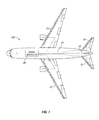
- FIG. 1 shows one embodiment of the application of EAP surfaces 10 on selected exterior surfaces of a vehicle.
- the vehicle comprises an aircraft 100, and the selected exterior surfaces comprise the leading edges of the wings and tail of the aircraft.
- the EAP surfaces 10 may be applied to various other external surfaces to prevent the formation of ice on the external surface or to remove ice from the external surface.
- EAP surfaces 10 may be applied to a wide variety of other vehicles, such as helicopters, unmanned aerial vehicles (UAVs), ships, trains, automobiles, etc.
- EAP surfaces 10 may be applied to any suitable exterior surface on which the removal and/or prevention of ice may be beneficial, such as, for example, a roof, staircase, sidewalk, or road.
- a signal generator 30 is connected to the EAP surfaces via lines 32.
- a single signal generator 30 is shown for illustrative purposes only. Multiple signal generators and various configurations connecting the signal generators to the actuators of the EAP surfaces 10 may be used as would be appreciated by one of ordinary skill in the art having the benefit of this disclosure.
- the EAP surfaces 10 may be applied to any desired surface on the aircraft 100, such as the leading edges of each wing, empennage, etc.
- the EAP surface 10 may comprise a film or skin layer applied to the surface of the leading edges of the aircraft 100. In some embodiments, the EAP surface 10 may have a thickness of about 1 millimeter.
- FIG. 2 shows one embodiment of an EAP surface 10 with all of the actuators 20, 50 in the actuated position.
- the signal generator 30 is connected to the actuators 20, 50 of the EAP surface 10 via connection 32.
- the signal generator 30 may oscillate each of the actuators 20, 50 of the EAP surface 10 at the same frequency so that all of the actuators 20, 50 are actuated at the same time to prevent the formation of ice on an external surface of an aircraft and/or to remove ice that has formed on the external surface of an aircraft.
- Some of the actuators 50 may be depression or dimple actuators and some of the actuators 20 may be bump or protrusion actuators.
- the signal generator 30 will continue to actuate each row in succession until the wave has traveled the length of the EAP surface 10.
- the use of an actuator wave along the EAP surface 10 may be beneficial to prevent the formation of ice and/or removal of ice on the EAP surface 10.
- the signal generator 30 may be adapted to actuate the actuators 20 to create waves of various shapes to prevent and/or remove ice formed on the EAP surface 10 as would be appreciated by one of ordinary skill in the art having the benefit of this disclosure.
- FIG. 5 shows the actuators 20 being actuated by the signal generator 30 in a pattern on the EAP surface 10.
- the actuators 20 are being activated in a diagonal or zigzag pattern along the EAP surface 10.
- the signal generator 30 may be adapted to oscillate the actuators 20 in various patterns on the EAP surface 10 for the prevention and/or removal of ice on the EAP surface 10.
- the signal generator 30 may oscillate the actuators 20 in a pattern of concentric circles, a checkerboard, or various other patterns as would be appreciated by one of ordinary skill in the art having the benefit of this disclosure.
- the EAP surface 10 may include dimple actuators 50 (as shown in FIG. 7 ), bump actuators 20 (as shown in FIG. 3 - FIG. 5 ), and/or wrinkle actuators 40 (as shown in FIG. 6 ) and a combination of each of these actuators.
- the system may include a sensor 60 that detects the formation of ice on the EAP surface 10 or on an external surface of a vehicle or structure, such as the leading edges of an aircraft.
- the sensor 60 may be connected via line 32 to the signal generator 30 so that upon detection of the formation of ice the signal generator 30 may cause the oscillation of the actuators of the EAP surface 10 at various frequencies and in various patterns to break of the formation of ice.
- the EAP surface 10 may include an ice conditions sensor 70 that during environmental conditions that are conducive to the formation of ice causes the signal generator to oscillate the actuators to prevent the formation of ice.
- the ice conditions sensor 70 may be connected via line 32 to the signal generator 30 so that upon the detection of conditions conducive to the formation of ice the signal generator 30 may cause the oscillation of the actuators of the EAP surface 10 at various frequencies and in various patterns to prevent the formation of ice on the EAP surface 10.
- the ice sensor 60 and/or the ice conditions sensor 70 may be integral with the EAP surface 10.
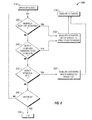
- FIG. 8 illustrates an example of a method 200 for protecting an external surface from ice.
- the method 200 begins with an optional first step 210, in which an EAP surface is applied to the external surface to be protected.
- this first step 210 is unnecessary because, for example, the EAP surface is fabricated as an integral component of the external surface to be protected.
- the decision may be made to manually oscillate the actuators. If the decision is made to oscillate the actuators of the EAP surface, the actuators may be oscillated at step 230.
- the actuators may be oscillated under to control of a signal generator at various frequencies and in various patterns to prevent to formation of ice and/or remove the formation of ice from an external surface.
- the actuators may oscillate for a short period of time and the method may return to step 220.
- the actuators may be turned off in step 270 and the method may return to step 220.
- the next step 240 is whether conditions conducive to the formation of ice are detected.
- this detection step 240 is performed by a suitable environmental sensor, such as ice conditions sensor 70.
- a suitable environmental sensor such as ice conditions sensor 70.
- one or more actuators of the EAP surface are oscillated to prevent the formation of ice on the external surface.
- the actuators of the EAP surface can be oscillated under the control of a signal generator at various frequencies and in various patterns to prevent ice formation.
- the actuators may oscillate for a short period of time and the method may return to step 220.
- the actuators may optionally be turned off at step 270 and the process may return to step 220.
- the method 200 may include a step 250, in which the formation of ice is detected by a suitable sensor, such as ice sensor 60.
- a suitable sensor such as ice sensor 60.
- one or more actuators of the EAP surface are oscillated to remove the ice from the external surface.
- the actuators of the EAP surface can be oscillated under the control of a signal generator at various frequencies and in various patterns to remove ice form the external surface.
- the actuators may oscillate for a short period of time and the method may return to step 220.
- the actuators may be turned off at step 270 after oscillating the actuators at step 260 and the process may return to step 220.
Landscapes
- Engineering & Computer Science (AREA)
- Mechanical Engineering (AREA)
- Aviation & Aerospace Engineering (AREA)
- General Electrical Machinery Utilizing Piezoelectricity, Electrostriction Or Magnetostriction (AREA)
- Materials Applied To Surfaces To Minimize Adherence Of Mist Or Water (AREA)
- Laminated Bodies (AREA)
Applications Claiming Priority (1)
| Application Number | Priority Date | Filing Date | Title |
|---|---|---|---|
| US13/466,912 US20130299637A1 (en) | 2012-05-08 | 2012-05-08 | Ice protection for aircraft using electroactive polymer surfaces |
Publications (2)
| Publication Number | Publication Date |
|---|---|
| EP2662284A2 true EP2662284A2 (de) | 2013-11-13 |
| EP2662284A3 EP2662284A3 (de) | 2015-07-15 |
Family
ID=48143101
Family Applications (1)
| Application Number | Title | Priority Date | Filing Date |
|---|---|---|---|
| EP13163796.9A Withdrawn EP2662284A3 (de) | 2012-05-08 | 2013-04-15 | Vereisungsschutz für Flugzeug mithilfe elektroaktiver Polymeroberflächen |
Country Status (7)
| Country | Link |
|---|---|
| US (1) | US20130299637A1 (de) |
| EP (1) | EP2662284A3 (de) |
| JP (1) | JP6169410B2 (de) |
| CN (1) | CN103387055A (de) |
| AU (1) | AU2013200796A1 (de) |
| BR (1) | BR102013011261B1 (de) |
| CA (1) | CA2804556C (de) |
Cited By (2)
| Publication number | Priority date | Publication date | Assignee | Title |
|---|---|---|---|---|
| EP3165468A1 (de) * | 2015-11-05 | 2017-05-10 | Airbus Defence and Space GmbH | Mikroelektronisches modul zur reinigung einer oberfläche, modulanordnung und verfahren zur reinigung einer oberfläche |
| US10426021B2 (en) | 2016-07-26 | 2019-09-24 | Airbus Defence and Space GmbH | Microelectronic module for altering the electromagnetic signature of a surface, module array and method for altering the electromagnetic signature of a surface |
Families Citing this family (12)
| Publication number | Priority date | Publication date | Assignee | Title |
|---|---|---|---|---|
| US8998144B2 (en) * | 2012-02-06 | 2015-04-07 | Textron Innovations Inc. | Thermal insulation barrier for an aircraft de-icing heater |
| BR112015010408A2 (pt) * | 2012-11-08 | 2017-07-11 | Saab Ab | disposição de degelo e método para degelar um elemento estrutural |
| US8939410B2 (en) * | 2013-02-06 | 2015-01-27 | Reginald J Exton | Boundary layer flow disruptors for delaying transition to turbulent flow |
| WO2014181186A2 (en) * | 2013-03-15 | 2014-11-13 | Amir Snir | Methods and system for deicing a surface |
| EP3367912B1 (de) * | 2015-10-27 | 2018-12-26 | Koninklijke Philips N.V. | Medizinische sonde zur ultraschallabbildung |
| CN105869212B (zh) * | 2016-03-11 | 2018-10-12 | 空气动力学国家重点实验室 | 一种冰形简化方法 |
| FR3050435B1 (fr) * | 2016-04-26 | 2018-04-20 | Safran | Systeme de propulsion d'un aeronef comprenant un organe recouvert d'une structure rainuree |
| KR101946168B1 (ko) * | 2017-12-05 | 2019-02-11 | 한국철도기술연구원 | 전기식 제빙 부츠 |
| KR102486792B1 (ko) * | 2021-05-25 | 2023-01-10 | 한국항공우주연구원 | 멀티콥터 |
| CN113530896B (zh) * | 2021-05-31 | 2024-07-23 | 武汉船用机械有限责任公司 | 油箱和液压系统 |
| EP4545413A1 (de) * | 2023-10-27 | 2025-04-30 | Airbus Operations GmbH | Flügelanordnung und verfahren zum dispergieren von material |
| CN119348834A (zh) * | 2024-12-30 | 2025-01-24 | 中国空气动力研究与发展中心低速空气动力研究所 | 一种飞行器蒙皮用防除冰表面结构 |
Family Cites Families (26)
| Publication number | Priority date | Publication date | Assignee | Title |
|---|---|---|---|---|
| US4732351A (en) * | 1985-03-21 | 1988-03-22 | Larry Bird | Anti-icing and deicing device |
| US5206806A (en) * | 1989-01-10 | 1993-04-27 | Gerardi Joseph J | Smart skin ice detection and de-icing system |
| US5129598A (en) * | 1989-12-22 | 1992-07-14 | B. F. Goodrich Co. | Attachable electro-impulse de-icer |
| US5686003A (en) * | 1994-06-06 | 1997-11-11 | Innovative Dynamics, Inc. | Shape memory alloy de-icing technology |
| US7320457B2 (en) * | 1997-02-07 | 2008-01-22 | Sri International | Electroactive polymer devices for controlling fluid flow |
| US7537197B2 (en) * | 1999-07-20 | 2009-05-26 | Sri International | Electroactive polymer devices for controlling fluid flow |
| US8181338B2 (en) * | 2000-11-02 | 2012-05-22 | Danfoss A/S | Method of making a multilayer composite |
| US7175136B2 (en) * | 2003-04-16 | 2007-02-13 | The Boeing Company | Method and apparatus for detecting conditions conducive to ice formation |
| PT1665880E (pt) * | 2003-09-03 | 2013-02-04 | Stanford Res Inst Int | Transdutores de polímero electroactivo para deformação de superfícies |
| US7089099B2 (en) * | 2004-07-30 | 2006-08-08 | Automotive Technologies International, Inc. | Sensor assemblies |
| US7901524B1 (en) * | 2005-02-04 | 2011-03-08 | Hrl Laboratories, Llc | Actuation concepts for variable stiffness materials |
| US7626319B2 (en) * | 2005-03-21 | 2009-12-01 | Artificial Muscle, Inc. | Three-dimensional electroactive polymer actuated devices |
| US20070063099A1 (en) * | 2005-09-20 | 2007-03-22 | Mobodyne Corporation | Buoyancy-assisted air vehicle and system and method thereof |
| US7732999B2 (en) * | 2006-11-03 | 2010-06-08 | Danfoss A/S | Direct acting capacitive transducer |
| US8074938B2 (en) * | 2006-12-01 | 2011-12-13 | The Invention Science Fund I, Llc | Active control of a body by altering surface drag |
| US8074939B2 (en) * | 2006-12-01 | 2011-12-13 | The Invention Science Fund I, Llc | Active control of surface drag |
| US7988103B2 (en) * | 2007-01-19 | 2011-08-02 | John Hopkins University | Solid state supersonic flow actuator and method of use |
| US20090047197A1 (en) * | 2007-08-16 | 2009-02-19 | Gm Global Technology Operations, Inc. | Active material based bodies for varying surface texture and frictional force levels |
| FR2922522B1 (fr) * | 2007-10-22 | 2010-04-16 | Aircelle Sa | Degivrage piezo-electrique d'une entree d'air |
| US8381601B2 (en) * | 2008-05-05 | 2013-02-26 | John F. Stumpf | Transducer matrix film |
| US8091437B2 (en) * | 2008-05-05 | 2012-01-10 | John Stumpf | Transducer matrix film |
| EP2239793A1 (de) * | 2009-04-11 | 2010-10-13 | Bayer MaterialScience AG | Elektrisch schaltbarer Polymerfilmaufbau und dessen Verwendung |
| EP2385562A1 (de) * | 2010-05-04 | 2011-11-09 | Koninklijke Philips Electronics N.V. | Betätigungsvorrichtung mit verbesserten taktilen Eigenschaften |
| US9016633B2 (en) * | 2011-06-13 | 2015-04-28 | The Boeing Company | Electromechanical actuator (EMA) heat sink integrated de-icing system |
| CN102407942B (zh) * | 2011-09-06 | 2016-05-04 | 中国商用飞机有限责任公司 | 结冰条件探测器 |
| AU2012325893B2 (en) * | 2011-10-19 | 2015-04-16 | Sympara Medical Inc. | Methods and devices for treating hypertension |
-
2012
- 2012-05-08 US US13/466,912 patent/US20130299637A1/en not_active Abandoned
-
2013
- 2013-02-01 CA CA2804556A patent/CA2804556C/en active Active
- 2013-02-11 AU AU2013200796A patent/AU2013200796A1/en not_active Abandoned
- 2013-04-15 EP EP13163796.9A patent/EP2662284A3/de not_active Withdrawn
- 2013-05-07 BR BR102013011261-5A patent/BR102013011261B1/pt active IP Right Grant
- 2013-05-07 JP JP2013097476A patent/JP6169410B2/ja active Active
- 2013-05-08 CN CN2013101659859A patent/CN103387055A/zh active Pending
Non-Patent Citations (1)
| Title |
|---|
| None |
Cited By (3)
| Publication number | Priority date | Publication date | Assignee | Title |
|---|---|---|---|---|
| EP3165468A1 (de) * | 2015-11-05 | 2017-05-10 | Airbus Defence and Space GmbH | Mikroelektronisches modul zur reinigung einer oberfläche, modulanordnung und verfahren zur reinigung einer oberfläche |
| US10821486B2 (en) | 2015-11-05 | 2020-11-03 | Airbus Defence and Space GmbH | Microelectronic module for cleaning a surface, module array, and method for cleaning a surface |
| US10426021B2 (en) | 2016-07-26 | 2019-09-24 | Airbus Defence and Space GmbH | Microelectronic module for altering the electromagnetic signature of a surface, module array and method for altering the electromagnetic signature of a surface |
Also Published As
| Publication number | Publication date |
|---|---|
| BR102013011261B1 (pt) | 2022-10-11 |
| US20130299637A1 (en) | 2013-11-14 |
| EP2662284A3 (de) | 2015-07-15 |
| BR102013011261A2 (pt) | 2016-07-12 |
| CN103387055A (zh) | 2013-11-13 |
| JP2013233925A (ja) | 2013-11-21 |
| JP6169410B2 (ja) | 2017-07-26 |
| CA2804556C (en) | 2016-04-05 |
| AU2013200796A1 (en) | 2013-11-28 |
| CA2804556A1 (en) | 2013-11-08 |
Similar Documents
| Publication | Publication Date | Title |
|---|---|---|
| CA2804556C (en) | Ice protection for aircraft using electroactive polymer surfaces | |
| US9821915B2 (en) | Method and apparatus for inhibiting formation of and/or removing ice from aircraft components | |
| EP3012187B1 (de) | Aktiv gesteuerte superhydrophobe oberflächen | |
| US10131449B2 (en) | Actuator mounting method and method for producing an ice protection device as well as mounting device | |
| CA3095372C (en) | Ice removal system | |
| JP6757786B2 (ja) | 航空機における氷の形成を検出するための装置 | |
| RU2602266C2 (ru) | Устройство и способ устранения обледенения и/или предотвращения образования льда и профильное тело и летательный аппарат с таким устройством | |
| EP2621806B1 (de) | Verfahren und anordnung zur enteisung eines strukturelements | |
| EP4596412A1 (de) | Flugzeugbauteil mit eingebettetem piezoelektrischem eisschutz | |
| CN116834959B (zh) | 运动体失速自驱动预警单元、预警方法和辅助设计方法 | |
| US12104526B2 (en) | Aircraft part anti-icing treatment method | |
| US12091160B2 (en) | Actively controlled surfaces | |
| US6852171B2 (en) | Method and apparatus for deicing mirrors or windows | |
| EP4545413A1 (de) | Flügelanordnung und verfahren zum dispergieren von material | |
| JPS61119498A (ja) | 着氷防止装置 |
Legal Events
| Date | Code | Title | Description |
|---|---|---|---|
| PUAI | Public reference made under article 153(3) epc to a published international application that has entered the european phase |
Free format text: ORIGINAL CODE: 0009012 |
|
| AK | Designated contracting states |
Kind code of ref document: A2 Designated state(s): AL AT BE BG CH CY CZ DE DK EE ES FI FR GB GR HR HU IE IS IT LI LT LU LV MC MK MT NL NO PL PT RO RS SE SI SK SM TR |
|
| AX | Request for extension of the european patent |
Extension state: BA ME |
|
| PUAL | Search report despatched |
Free format text: ORIGINAL CODE: 0009013 |
|
| RIC1 | Information provided on ipc code assigned before grant |
Ipc: B64D 15/16 20060101AFI20150602BHEP |
|
| AK | Designated contracting states |
Kind code of ref document: A3 Designated state(s): AL AT BE BG CH CY CZ DE DK EE ES FI FR GB GR HR HU IE IS IT LI LT LU LV MC MK MT NL NO PL PT RO RS SE SI SK SM TR |
|
| AX | Request for extension of the european patent |
Extension state: BA ME |
|
| 17P | Request for examination filed |
Effective date: 20160115 |
|
| RBV | Designated contracting states (corrected) |
Designated state(s): AL AT BE BG CH CY CZ DE DK EE ES FI FR GB GR HR HU IE IS IT LI LT LU LV MC MK MT NL NO PL PT RO RS SE SI SK SM TR |
|
| STAA | Information on the status of an ep patent application or granted ep patent |
Free format text: STATUS: THE APPLICATION IS DEEMED TO BE WITHDRAWN |
|
| 18D | Application deemed to be withdrawn |
Effective date: 20160116 |