EP2654934B1 - Apparatus and method for preparing an emulsion - Google Patents
Apparatus and method for preparing an emulsion Download PDFInfo
- Publication number
- EP2654934B1 EP2654934B1 EP11813625.8A EP11813625A EP2654934B1 EP 2654934 B1 EP2654934 B1 EP 2654934B1 EP 11813625 A EP11813625 A EP 11813625A EP 2654934 B1 EP2654934 B1 EP 2654934B1
- Authority
- EP
- European Patent Office
- Prior art keywords
- column
- phase
- microparticles
- contemplated
- poly
- Prior art date
- Legal status (The legal status is an assumption and is not a legal conclusion. Google has not performed a legal analysis and makes no representation as to the accuracy of the status listed.)
- Active
Links
Images



Classifications
-
- A—HUMAN NECESSITIES
- A61—MEDICAL OR VETERINARY SCIENCE; HYGIENE
- A61P—SPECIFIC THERAPEUTIC ACTIVITY OF CHEMICAL COMPOUNDS OR MEDICINAL PREPARATIONS
- A61P17/00—Drugs for dermatological disorders
- A61P17/18—Antioxidants, e.g. antiradicals
-
- A—HUMAN NECESSITIES
- A61—MEDICAL OR VETERINARY SCIENCE; HYGIENE
- A61P—SPECIFIC THERAPEUTIC ACTIVITY OF CHEMICAL COMPOUNDS OR MEDICINAL PREPARATIONS
- A61P23/00—Anaesthetics
-
- A—HUMAN NECESSITIES
- A61—MEDICAL OR VETERINARY SCIENCE; HYGIENE
- A61P—SPECIFIC THERAPEUTIC ACTIVITY OF CHEMICAL COMPOUNDS OR MEDICINAL PREPARATIONS
- A61P25/00—Drugs for disorders of the nervous system
- A61P25/04—Centrally acting analgesics, e.g. opioids
-
- A—HUMAN NECESSITIES
- A61—MEDICAL OR VETERINARY SCIENCE; HYGIENE
- A61P—SPECIFIC THERAPEUTIC ACTIVITY OF CHEMICAL COMPOUNDS OR MEDICINAL PREPARATIONS
- A61P25/00—Drugs for disorders of the nervous system
- A61P25/08—Antiepileptics; Anticonvulsants
-
- A—HUMAN NECESSITIES
- A61—MEDICAL OR VETERINARY SCIENCE; HYGIENE
- A61P—SPECIFIC THERAPEUTIC ACTIVITY OF CHEMICAL COMPOUNDS OR MEDICINAL PREPARATIONS
- A61P25/00—Drugs for disorders of the nervous system
- A61P25/18—Antipsychotics, i.e. neuroleptics; Drugs for mania or schizophrenia
-
- A—HUMAN NECESSITIES
- A61—MEDICAL OR VETERINARY SCIENCE; HYGIENE
- A61P—SPECIFIC THERAPEUTIC ACTIVITY OF CHEMICAL COMPOUNDS OR MEDICINAL PREPARATIONS
- A61P3/00—Drugs for disorders of the metabolism
- A61P3/08—Drugs for disorders of the metabolism for glucose homeostasis
- A61P3/10—Drugs for disorders of the metabolism for glucose homeostasis for hyperglycaemia, e.g. antidiabetics
-
- A—HUMAN NECESSITIES
- A61—MEDICAL OR VETERINARY SCIENCE; HYGIENE
- A61P—SPECIFIC THERAPEUTIC ACTIVITY OF CHEMICAL COMPOUNDS OR MEDICINAL PREPARATIONS
- A61P31/00—Antiinfectives, i.e. antibiotics, antiseptics, chemotherapeutics
-
- A—HUMAN NECESSITIES
- A61—MEDICAL OR VETERINARY SCIENCE; HYGIENE
- A61P—SPECIFIC THERAPEUTIC ACTIVITY OF CHEMICAL COMPOUNDS OR MEDICINAL PREPARATIONS
- A61P31/00—Antiinfectives, i.e. antibiotics, antiseptics, chemotherapeutics
- A61P31/10—Antimycotics
-
- A—HUMAN NECESSITIES
- A61—MEDICAL OR VETERINARY SCIENCE; HYGIENE
- A61P—SPECIFIC THERAPEUTIC ACTIVITY OF CHEMICAL COMPOUNDS OR MEDICINAL PREPARATIONS
- A61P31/00—Antiinfectives, i.e. antibiotics, antiseptics, chemotherapeutics
- A61P31/12—Antivirals
-
- A—HUMAN NECESSITIES
- A61—MEDICAL OR VETERINARY SCIENCE; HYGIENE
- A61P—SPECIFIC THERAPEUTIC ACTIVITY OF CHEMICAL COMPOUNDS OR MEDICINAL PREPARATIONS
- A61P33/00—Antiparasitic agents
- A61P33/02—Antiprotozoals, e.g. for leishmaniasis, trichomoniasis, toxoplasmosis
- A61P33/06—Antimalarials
-
- A—HUMAN NECESSITIES
- A61—MEDICAL OR VETERINARY SCIENCE; HYGIENE
- A61P—SPECIFIC THERAPEUTIC ACTIVITY OF CHEMICAL COMPOUNDS OR MEDICINAL PREPARATIONS
- A61P37/00—Drugs for immunological or allergic disorders
- A61P37/02—Immunomodulators
- A61P37/04—Immunostimulants
-
- A—HUMAN NECESSITIES
- A61—MEDICAL OR VETERINARY SCIENCE; HYGIENE
- A61P—SPECIFIC THERAPEUTIC ACTIVITY OF CHEMICAL COMPOUNDS OR MEDICINAL PREPARATIONS
- A61P37/00—Drugs for immunological or allergic disorders
- A61P37/02—Immunomodulators
- A61P37/06—Immunosuppressants, e.g. drugs for graft rejection
-
- A—HUMAN NECESSITIES
- A61—MEDICAL OR VETERINARY SCIENCE; HYGIENE
- A61P—SPECIFIC THERAPEUTIC ACTIVITY OF CHEMICAL COMPOUNDS OR MEDICINAL PREPARATIONS
- A61P37/00—Drugs for immunological or allergic disorders
- A61P37/08—Antiallergic agents
-
- A—HUMAN NECESSITIES
- A61—MEDICAL OR VETERINARY SCIENCE; HYGIENE
- A61P—SPECIFIC THERAPEUTIC ACTIVITY OF CHEMICAL COMPOUNDS OR MEDICINAL PREPARATIONS
- A61P7/00—Drugs for disorders of the blood or the extracellular fluid
- A61P7/02—Antithrombotic agents; Anticoagulants; Platelet aggregation inhibitors
-
- A—HUMAN NECESSITIES
- A61—MEDICAL OR VETERINARY SCIENCE; HYGIENE
- A61P—SPECIFIC THERAPEUTIC ACTIVITY OF CHEMICAL COMPOUNDS OR MEDICINAL PREPARATIONS
- A61P7/00—Drugs for disorders of the blood or the extracellular fluid
- A61P7/04—Antihaemorrhagics; Procoagulants; Haemostatic agents; Antifibrinolytic agents
-
- A—HUMAN NECESSITIES
- A61—MEDICAL OR VETERINARY SCIENCE; HYGIENE
- A61P—SPECIFIC THERAPEUTIC ACTIVITY OF CHEMICAL COMPOUNDS OR MEDICINAL PREPARATIONS
- A61P9/00—Drugs for disorders of the cardiovascular system
-
- A—HUMAN NECESSITIES
- A61—MEDICAL OR VETERINARY SCIENCE; HYGIENE
- A61P—SPECIFIC THERAPEUTIC ACTIVITY OF CHEMICAL COMPOUNDS OR MEDICINAL PREPARATIONS
- A61P9/00—Drugs for disorders of the cardiovascular system
- A61P9/12—Antihypertensives
-
- B—PERFORMING OPERATIONS; TRANSPORTING
- B01—PHYSICAL OR CHEMICAL PROCESSES OR APPARATUS IN GENERAL
- B01F—MIXING, e.g. DISSOLVING, EMULSIFYING OR DISPERSING
- B01F23/00—Mixing according to the phases to be mixed, e.g. dispersing or emulsifying
- B01F23/40—Mixing liquids with liquids; Emulsifying
- B01F23/41—Emulsifying
-
- B—PERFORMING OPERATIONS; TRANSPORTING
- B01—PHYSICAL OR CHEMICAL PROCESSES OR APPARATUS IN GENERAL
- B01F—MIXING, e.g. DISSOLVING, EMULSIFYING OR DISPERSING
- B01F25/00—Flow mixers; Mixers for falling materials, e.g. solid particles
- B01F25/40—Static mixers
- B01F25/45—Mixers in which the materials to be mixed are pressed together through orifices or interstitial spaces, e.g. between beads
- B01F25/452—Mixers in which the materials to be mixed are pressed together through orifices or interstitial spaces, e.g. between beads characterised by elements provided with orifices or interstitial spaces
- B01F25/4524—Mixers in which the materials to be mixed are pressed together through orifices or interstitial spaces, e.g. between beads characterised by elements provided with orifices or interstitial spaces the components being pressed through foam-like inserts or through a bed of loose bodies, e.g. balls
- B01F25/45241—Mixers in which the materials to be mixed are pressed together through orifices or interstitial spaces, e.g. between beads characterised by elements provided with orifices or interstitial spaces the components being pressed through foam-like inserts or through a bed of loose bodies, e.g. balls through a bed of balls
-
- B—PERFORMING OPERATIONS; TRANSPORTING
- B01—PHYSICAL OR CHEMICAL PROCESSES OR APPARATUS IN GENERAL
- B01J—CHEMICAL OR PHYSICAL PROCESSES, e.g. CATALYSIS OR COLLOID CHEMISTRY; THEIR RELEVANT APPARATUS
- B01J19/00—Chemical, physical or physico-chemical processes in general; Their relevant apparatus
- B01J19/0053—Details of the reactor
- B01J19/006—Baffles
-
- B—PERFORMING OPERATIONS; TRANSPORTING
- B01—PHYSICAL OR CHEMICAL PROCESSES OR APPARATUS IN GENERAL
- B01J—CHEMICAL OR PHYSICAL PROCESSES, e.g. CATALYSIS OR COLLOID CHEMISTRY; THEIR RELEVANT APPARATUS
- B01J2219/00—Chemical, physical or physico-chemical processes in general; Their relevant apparatus
- B01J2219/00761—Details of the reactor
- B01J2219/00763—Baffles
- B01J2219/00765—Baffles attached to the reactor wall
- B01J2219/00768—Baffles attached to the reactor wall vertical
-
- B—PERFORMING OPERATIONS; TRANSPORTING
- B01—PHYSICAL OR CHEMICAL PROCESSES OR APPARATUS IN GENERAL
- B01J—CHEMICAL OR PHYSICAL PROCESSES, e.g. CATALYSIS OR COLLOID CHEMISTRY; THEIR RELEVANT APPARATUS
- B01J2219/00—Chemical, physical or physico-chemical processes in general; Their relevant apparatus
- B01J2219/00761—Details of the reactor
- B01J2219/00763—Baffles
- B01J2219/00765—Baffles attached to the reactor wall
- B01J2219/0077—Baffles attached to the reactor wall inclined
- B01J2219/00772—Baffles attached to the reactor wall inclined in a helix
-
- B—PERFORMING OPERATIONS; TRANSPORTING
- B01—PHYSICAL OR CHEMICAL PROCESSES OR APPARATUS IN GENERAL
- B01J—CHEMICAL OR PHYSICAL PROCESSES, e.g. CATALYSIS OR COLLOID CHEMISTRY; THEIR RELEVANT APPARATUS
- B01J2219/00—Chemical, physical or physico-chemical processes in general; Their relevant apparatus
- B01J2219/30—Details relating to random packing elements
- B01J2219/302—Basic shape of the elements
- B01J2219/30207—Sphere
-
- B—PERFORMING OPERATIONS; TRANSPORTING
- B01—PHYSICAL OR CHEMICAL PROCESSES OR APPARATUS IN GENERAL
- B01J—CHEMICAL OR PHYSICAL PROCESSES, e.g. CATALYSIS OR COLLOID CHEMISTRY; THEIR RELEVANT APPARATUS
- B01J2219/00—Chemical, physical or physico-chemical processes in general; Their relevant apparatus
- B01J2219/30—Details relating to random packing elements
- B01J2219/302—Basic shape of the elements
- B01J2219/30296—Other shapes
-
- B—PERFORMING OPERATIONS; TRANSPORTING
- B01—PHYSICAL OR CHEMICAL PROCESSES OR APPARATUS IN GENERAL
- B01J—CHEMICAL OR PHYSICAL PROCESSES, e.g. CATALYSIS OR COLLOID CHEMISTRY; THEIR RELEVANT APPARATUS
- B01J2219/00—Chemical, physical or physico-chemical processes in general; Their relevant apparatus
- B01J2219/30—Details relating to random packing elements
- B01J2219/304—Composition or microstructure of the elements
- B01J2219/30408—Metal
-
- B—PERFORMING OPERATIONS; TRANSPORTING
- B01—PHYSICAL OR CHEMICAL PROCESSES OR APPARATUS IN GENERAL
- B01J—CHEMICAL OR PHYSICAL PROCESSES, e.g. CATALYSIS OR COLLOID CHEMISTRY; THEIR RELEVANT APPARATUS
- B01J2219/00—Chemical, physical or physico-chemical processes in general; Their relevant apparatus
- B01J2219/30—Details relating to random packing elements
- B01J2219/304—Composition or microstructure of the elements
- B01J2219/30416—Ceramic
-
- B—PERFORMING OPERATIONS; TRANSPORTING
- B01—PHYSICAL OR CHEMICAL PROCESSES OR APPARATUS IN GENERAL
- B01J—CHEMICAL OR PHYSICAL PROCESSES, e.g. CATALYSIS OR COLLOID CHEMISTRY; THEIR RELEVANT APPARATUS
- B01J2219/00—Chemical, physical or physico-chemical processes in general; Their relevant apparatus
- B01J2219/30—Details relating to random packing elements
- B01J2219/31—Size details
- B01J2219/312—Sizes
Definitions
- the invention relates to a method for preparing an emulsion. More particularly, an apparatus is disclosed which is a column having dividers for partitioning a packing material and directing fluid flow through the column to produce an emulsion product.
- Encapsulation of pharmaceuticals in biocompatible, biodegradable polymer microparticles can prolong the maintenance of therapeutic drug levels relative to administration of the drug itself. Sustained release may be extended up to several months depending on the formulation and the active molecule encapsulated.
- the drug may be formulated within a matrix into a slow release formulation. Following administration, the drug then is released via diffusion out of, or via erosion of, the matrix.
- Encapsulation within biocompatible, biodegradable polyesters, such as, for example, copolymers of lactide and glycolide has been utilized to deliver small molecule therapeutics ranging from insoluble steroids to small peptides.
- EP 2002882A1 describes a process for manufacturing an emulsion, in accordance with the preamble of claim 1, wherein a feed comprising a dispersed phase, a continuous phase and optionally an emulsifying agent is passed through a packed bed.
- U.S. Pat. No. 6,706,289 discloses controlled release formulations of biologically active molecules that are coupled to hydrophilic polymers such as polyethylene glycol and methods of their production.
- the formulations are based on solid microparticles formed of the combination of biodegradable polymers such as poly(lactic acid) (PLA), poly(glycolic acid) (PGA), and copolymers thereof.
- the methods have a first phase consisting of an organic solvent, a polymer and a biological or chemical agent dissolved or dispersed in the first solvent.
- the second phase comprises water and a stabilizer and, optionally, the first solvent.
- the first and the second phases are emulsified and, after an emulsion is formed, the first solvent is removed from the emulsion, producing hardened microparticles.
- two immiscible solutions are added to a packed bed of spherical beads within an emulsion column.
- the two solutions have a combined mass flow rate that creates laminar flow conditions.
- the flow of the solutions is repeatedly divided and recombined to create homogenous fluid volumes that contain a portion of each immiscible solution.
- the lesser portion separates into spherical droplets as a dispersed phase in the larger portion (the continuous phase).
- the repeated division and recombination is critical to the formation of the homogenate.
- each divider extends along at least a portion of the longitudinal length of the interior cavity of the column.
- the dividers are configured to partition the packing material and to direct fluid flow through the column.
- Ranges can be expressed herein as from “about” one particular value, and/or to "about” another particular value. When such a range is expressed, another aspect includes from the one particular value and/or to the other particular value. Similarly, when values are expressed as approximations, by use of the antecedent "about,” it will be understood that the particular value forms another aspect. It will be further understood that the endpoints of each of the ranges are significant both in relation to the other endpoint, and independently of the other endpoint.
- biodegradable refers to polymers that dissolve or degrade in vivo within a period of time that is acceptable in a particular therapeutic situation. This time is typically less than five years and usually less than one year after exposure to a physiological pH and temperature, such as a pH ranging from about 6 to about 9 and a temperature ranging from about 25° C to about 38° C.
- packed bed apparatus refers to any vessel containing packing material capable of creating an emulsion upon contact with two immiscible fluids.
- active agent refers to any biological or chemical agent.
- microparticles refers to particles having a diameter of typically less than 1.0 mm, and more typically between 1.0 and 250 ⁇ m (microns).
- the microparticles of the present invention include, but are not limited to, microspheres, microcapsules, microsponges, microgranules and particles in general, with an internal structure comprising a matrix of agent and excipient. Microparticles may also include nanoparticles.
- nanoparticles refers to particles having a diameter of typically between about 20 nanometers (nm) and about 2.0 microns, more typically between about 100 nm and about 1.0 microns.
- injection is a preparation intended for parenteral administration. Injections include, but are not limited to, liquid preparations that are drug substances or solutions or suspensions thereof.
- controlled release refers to control of the rate and/or quantity of biologically active molecules delivered according to the drug delivery formulations of the invention.
- the controlled release kinetics can be continuous, discontinuous, variable, linear or non-linear. This can be accomplished using one or more types of polymer compositions, drug loadings, inclusion of excipients or degradation enhancers, or other modifiers, administered alone, in combination or sequentially to produce the desired effect.
- Controlled release" microparticles include, but are not limited to, "sustained release” microparticles and "delayed release” microparticles.
- sustained release refers to releasing a biologically active agent into the body steadily, over an extended period of time.
- Sustained release formulations offer the ability to provide a subject with a biologically active agent over a time period greater than that achieved by a typical bolus administration of the biologically active agent.
- Sustained release microparticles may advantageously reduce the dosing frequency of a biologically active agent.
- a “biologically active agent”, “bioactive agent” “biologically active moiety” or “biologically active molecule” can be any substance which can affect any physical or biochemical properties of a biological organism, including but not limited to, viruses, bacteria, fungi, plants, animals, and humans.
- Biologically active molecules can include any substance intended for diagnosis, cure mitigation, treatment, or prevention of disease in humans or other animals, or to otherwise enhance physical or mental well being of humans or animals.
- treating is meant the medical management of a patient with the intent that a cure, amelioration, stasis or prevention of a disease, pathological condition, or disorder will result.
- active treatment that is, treatment directed specifically toward improvement of a disease, pathological condition, or disorder
- causal treatment that is, treatment directed toward removal of the cause of the disease, pathological condition, or disorder.
- palliative treatment that is, treatment designed for the relief of symptoms rather than the curing of the disease, pathological condition, or disorder
- preventive treatment that is, treatment directed to prevention of the disease, pathological condition, or disorder
- supportive treatment that is, treatment employed to supplement another specific therapy directed toward the improvement of the disease, pathological condition, or disorder.
- treating also includes symptomatic treatment, that is, treatment directed toward constitutional symptoms of the disease, pathological condition, or disorder.
- syringability refers to uptake and delivery of microparticles through a needle without substantial clumping of the particles or clogging of the needle.
- Subject is used herein to refer to any target of administration.
- the subject can be a vertebrate, for example, a mammal.
- the subject can be a human.
- the term does not denote a particular age or sex. Thus, adult and newborn subjects, as well as fetuses, whether male or female, are intended to be covered.
- a "patient” refers to a subject afflicted with a disease or disorder and includes human and veterinary subjects.
- These and other materials are disclosed herein, and it is understood that when combinations, subsets, interactions, groups, etc. of these materials are disclosed that while specific reference of each various individual and collective combinations and permutation of these compounds may not be explicitly disclosed, each is specifically contemplated and described herein. For example, if a number of different polymers and agents are disclosed and discussed, each and every combination and permutation of the polymer and agent is specifically contemplated unless specifically indicated to the contrary.
- the sub-group of A-E, B-F, and C-E is specifically contemplated and should be considered disclosed from disclosure of A, B, and C; D, E, and F; and the example combination A-D.
- This concept applies to all aspects of this disclosure including, but not limited to, steps in methods of making and using the disclosed compositions.
- steps in methods of making and using the disclosed compositions are a variety of additional steps that can be performed it is understood that each of these additional steps can be performed with any specific embodiment or combination of embodiments of the disclosed methods, and that each such combination is specifically contemplated and should be considered disclosed.
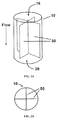
- a column 10 for receiving a packing material 40 is disclosed.
- the column 10 can have a longitudinal axis 12 and a periphery 14 defining an interior cavity 16.
- the interior cavity 16 can have a longitudinal length 13.
- the packing material 40 can be configured to permit fluid flow through the column 10 along the longitudinal axis 12. It is further contemplated that gaps formed within the packing material 40 inside the interior cavity 16 can function as channels which repeatedly cross paths as the fluid flows through the column 10.
- the column 10 can be a vessel of any shape capable of being filled with the packing material 40.
- the cross section of the column 10 can be substantially rectangular, square, round, or circular.
- the interior cavity 16 of the column 10 can have a diameter 17, and the column can be substantially cylindrical.
- the longitudinal length 13 of the interior cavity 16 of the column 10 can range from about 1 cm to about 100 cm. In yet another aspect, the longitudinal length 13 of the interior cavity 16 of the column 10 can range from about 5 cm to about 20 cm.
- the column (10) used in the claimed method comprises an inlet 18 in fluid communication with the interior cavity 16. It this aspect, the inlet 18 can be configured to receive at least one fluid.
- the column (10) also comprises an outlet 20 in fluid communication with the interior cavity 16. In one exemplary aspect, and as depicted in Figure 1A , the outlet 20 can be spaced from the inlet 18 along the longitudinal axis 12 of the column 10.
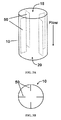
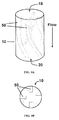
- the column 10 comprises at least one divider 50 positioned within the interior cavity 16.
- each divider 50 of the at least one divider extends along at least a portion of the longitudinal length 13 of the interior cavity 16.
- the at least one divider 50 is configured to partition the packing material 40 and direct fluid flow therethrough the interior cavity 16 of the column 10. It is contemplated that the at least one divider 50 can be configured to limit the formation of preferred pathways and static areas within the packing material 40 and to thereby maintain laminar flow therethrough the interior cavity 16 of the column 10. It is further contemplated that the at least one divider 50 can be scaled in a corresponding manner to the column 10 to provide similar benefits, regardless of the size of the column.
- the at least one divider 50 can optionally be spaced from the inlet 18 of the column. In a further aspect, the at least one divider 50 can optionally be spaced from the outlet 20 of the column. In still a further optional aspect, the at least one divider 50 can be spaced from both the inlet 18 and the outlet 20 of the column.
- the at least one divider 50 can be secured thereto the periphery 14 of the column 10.
- the column 10 can further comprise an inlet screen attached to the inlet of the column and an outlet screen attached to the outlet of the column, and the at least one divider can be secured thereto at least one of the inlet screen and the outlet screen.
- the at least one divider 50 can comprise a plurality of dividers.
- the plurality of dividers 50 can comprise two, three, four, five, six, seven, eight, nine, ten, eleven, twelve, or more dividers.
- each divider 50 of the plurality of dividers can extend inwardly from, or proximate to, the periphery 14 of the column 10 substantially orthogonally to the longitudinal axis 12 of the column.
- at least two dividers 50 of the plurality of dividers can intersect within the interior cavity 16 of the column 10.
- all of the plurality of dividers 50 can intersect within the interior cavity 16 of the column 10.
- the plurality of dividers 50 can extend substantially helically along the longitudinal length 13 of the interior cavity 16 of the column 10.
- the at least one divider 50 can comprise materials that are similar or identical to the materials of the column 10. It is further contemplated that the at least one divider 50 can comprise materials that are similar or identical to the materials of the packing material 40. In some aspects, the column 10 and the packing material 40 can comprise different materials. However, it is also contemplated that the column 10 and the packing material 40 can comprise similar or identical materials.
- each divider 50 of the at least one divider can have a longitudinal length 52, a width 54, and a thickness 56.
- the periphery 14 of the column 10 can have a thickness 11, and the thickness of the periphery of the column can be substantially equal to the thickness 56 of each divider 50 of the at least one divider.
- the ratio of the longitudinal length 52 of each divider 50 to the longitudinal length 13 of the interior cavity 16 of the column 10 can range from about 0.1:1.0 to about 1.0:1.0, including 0.2:1.0, 0.3:1.0, 0.4:1.0, 0.5:1.0, 0.6:1.0, 0.7:1.0, 0.8:1.0, 0.9:1.0, and all ratios in between.
- the ratio of the width 54 of each divider 50 to the diameter 17 of the interior cavity 16 of the column 10 can range from about 0.1:1.0 to about 1.0:1.0, including 0.2:1.0, 0.3:1.0, 0.4:1.0, 0.5:1.0, 0.6:1.0, 0.7:1.0, 0.8:1.0, 0.9:1.0, and all ratios in between.
- the plurality of dividers 50 can comprise at least one divider extending along substantially the entire longitudinal length 13 of the interior cavity 16 of the column 10. In this aspect, it is contemplated that the plurality of dividers 50 can further comprise at least one divider extending along only a portion of the longitudinal length 13 of the interior cavity 16 of the column 10. In another exemplary and non-limiting aspect, the plurality of dividers 50 can be staggered along the longitudinal length 13 of the interior cavity 16 of the column 10.
- the at least one divider 10 can comprise at least one cylindrical divider 50 having a longitudinal axis and a diameter 58.
- the diameter 58 of each cylindrical divider 50 of the at least one cylindrical divider can be less than the diameter 17 of the interior cavity 16 of the column 10.
- each cylindrical divider 50 can be secured within the interior cavity 16 of the column 10 such that the longitudinal axis of the cylindrical divider is substantially aligned with the longitudinal axis 12 of the column 10.
- the longitudinal axis of the at least one cylindrical divider 50 can coincide with, and be common with, the longitudinal axis 12 of the column 10.
- the at least one cylindrical divider 50 can comprise a plurality of cylindrical dividers having incrementally decreasing diameters.
- the plurality of cylindrical dividers 50 can be secured within the interior cavity 16 such that the cylindrical dividers are radially spaced from one another relative to the longitudinal axis 12 of the column.
- the at least one divider 50 can comprise at least one cylindrical divider and at least one divider extending inwardly from the periphery 15 of the column 10, as described herein.
- the packing material 40 can comprise at least one of metal, ceramics, plastic, and glass. In another aspect, the packing material 40 can be formed as at least one of conventional spheres, beads, pellets, chips, fibers, sponges, and pillows. In one exemplary aspect, the packing material 40 can be one of glass and a non-reactive metal, such as stainless steel. In another exemplary aspect, the packing material 40 can be one of boro-silicate glass beads and stainless steel beads. In a further aspect, when the packing material 40 comprises beads, the beads can have a diameter ranging from about 20 microns to about 2,000 microns. In yet another aspect, the beads can have a diameter ranging from about 50 microns to about 1,000 microns. In still another aspect, the beads can have a diameter ranging from about 300 microns to about 800 microns.
- the disclosed columns can be employed in a method of preparing an emulsion according to claim 1.
- the term "emulsion product" can refer to any emulsion resulting from the mixture of the plurality of fluids, including emulsions comprising a continuous phase that surrounds a dispersed phase containing active agents.
- the emulsion product can comprise a dissolved active agent in the dispersed phase.
- the emulsion product can comprise a suspended active agent in the dispersed phase.
- the emulsion product can comprise a dispersed active agent in the dispersed phase.
- the emulsion product can comprise a microsuspension containing the active agent.
- the plurality of fluids can comprise a first phase and a second phase.
- the first and second phases of the plurality of fluids can be any two fluids that are immiscible with one another.
- the first phase can serve as a dispersed phase while the second phase can serve as a continuous phase that surrounds the first phase.
- the resulting product from the first and second phases is combined with the third phase.
- the product from the combination of the first and second phases and the third phase can be any two fluids that are immiscible with one another.
- the first phase can comprise a solvent and an active agent.
- Solvents for the first phase may be any organic or aqueous solvents. Examples of solvents include, but are not limited to, water, methylene chloride, chloroform, ethyl acetate, benzyl alcohol, diethyl carbonate, methyl ethyl ketone and mixtures of the above.
- the solvent is ethyl acetate or methylene chloride.
- the first phase can comprise a solution of a biodegradable polymer and a biological or chemical agent as a solution or suspension. Alternatively, it is contemplated that the biological or chemical agent can be dissolved or suspended in the second phase.
- the second phase can comprise a solvent.
- the solvent for the second phase can be any organic or aqueous fluid that is immiscible with the first phase. Examples include, but are not limited to, water, a water-based solution, an organic solvent, and the like.
- the second phase can contain water, an emulsion stabilizer and, optionally, a solvent.
- the second phase can contain water, one or more biological or chemical agents and, optionally, a water-soluble polymer.
- the second phase can contain a second organic solvent, one or more biological or chemical agents, and a polymer.
- the third phase can comprise a solvent.
- the solvent of the third phase can be any organic solvent or water.
- the solvents of the first phase and the second phase can be selected from the group consisting of methylene chloride, chloroform, ethyl acetate, benzyl alcohol, diethyl carbonate, methyl ethyl ketone, and water.
- Active agents of the invention can be any biological or chemical agent.
- biologically active agents include, but are not limited to, antibodies, peptides, proteins, enzymes, fusion proteins, porphyrins, nucleic acids, nucleosides, oligonucleotides, antisense oligonucleotides, RNA, DNA, siRNA, RNAi, aptamers, and small molecule drugs.
- Other biologically active agents include, but are not limited to, dyes, lipids, cells, and viruses.
- Biological agents of use in the invention may be any agent capable of having an effect when administered to an animal or human.
- they include, but are not limited to, an organic molecule, an inorganic molecule, antiinfectives, cytotoxics, antihypertensives, antifungal agents, anti-anxiety agents, antiinflammatory agents, anti-tumor agents, anti-tubulin agents, antipsychotics, antibodies, proteins, peptides, antidiabetic agents, immune stimulants, immune suppressants, antibiotics, antivirals, anticonvulsants, antihistamines, cardiovascular agents, anticoagulants, hormones, antimalarials, analgesics, anesthetics, nucleic acids, steroids, aptamers, blood clotting factors, hemopoietic factors, cytokines, interleukins, colony stimulating factors, growth factors, growth factor analogs, fragments thereof and the like.
- biological agents include PEGylated bioactive agents.
- a biologically active molecule is conjugated to a non-toxic, long-chain, hydrophilic, hydrophobic or amphiphilic polymer.
- a bioactive agent such as insulin is conjugated to polyethylene glycol.
- Exemplary chemical agents can be any synthetic or natural agent, including, for example and without limitation, antioxidants, porosity enhancers, solvents, salts, cosmetics, food additives, textile-chemicals, agro-chemicals, plasticizers, stabilizers, pigments, opacifiers, adhesives, pesticides, fragrances, antifoulants, dyes, oils, inks, catalysts, detergents, curing agents, flavors, foods, fuels, herbicides, metals, paints, photographic agents, biocides, pigments, plasticizers, propellants, solvents, stabilizers, polymer additives and the like.
- the active agent of the first phase can be selected from the group consisting of antioxidants, porosity enhancers, solvents, salts, cosmetics, food additives, textile-chemicals, agro-chemicals, plasticizers, stabilizers, pigments, opacifiers, adhesives, pesticides, fragrances, antifoulants, dyes, salts, oils, inks, cosmetics, catalysts, detergents, curing agents, flavors, foods, fuels, herbicides, metals, paints, photographic agents, biocides, pigments, plasticizers, propellants, solvents, stabilizers, polymer additives, an organic molecule, an inorganic molecule, antiinfectives, cytotoxics, antihypertensives, antifungal agents, antipsychotics, antibodies, proteins, peptides, antidiabetic agents, immune stimulants, immune suppressants, antibiotics, antivirals, anticonvulsants, antihistamines, cardiovascular agents, anticoagulants, hormones,
- the emulsion product can comprise a microsuspension containing microparticles as described herein.
- the microsuspension of the emulsion product can contain the active agent of the first phase.
- the second phase can further comprise an emulsion stabilizer.
- the first phase can comprise an emulsion stabilizer.
- the emulsion stabilizer can be selected from the group consisting of poly(vinyl alcohol), polysorbate, protein, and poly(vinyl pyrrolidone).
- the concentration of the emulsion stabilizer can range from about 0% to about 20% of either or both of the first phase and the second phase. In another aspect, the concentration of the emulsion stabilizer can range from about 0.5% to about 5% of either or both of the first phase and the second phase.
- At least one of the first phase and the second phase can comprise a polymer, such as, for example and without limitation, a biodegradable polymer.
- the polymer can be selected from the group consisting of poly(d,l-lactic acid), poly(1-lactic acid), poly(glycolic acid), poly(d,1-lactide-co-glycolide) (PLGA), poly(caprolactone), poly(orthoesters), poly(acetals), and poly(hydroxybutryate).
- the polymer when the polymer is PLGA, it is contemplated that the polymer can have a monomer ratio of lactide:glycolide ranging from about 40:60 to about 100:0.
- the polymer can have a monomer ratio of lactide:glycolide ranging from about 45:55 to about 100:0.
- the polymer can comprise block copolymers of hydrophilic and hydrophobic polymers.
- the inherent viscosity of the polymer can range from about 0.1 to about 2.0 dL/g.
- the inherent viscosity of the polymer can range from about 0.1 to about 1.0 dL/g, including, for example and without limitation, 0.15 dL/g, 0.30 dL/g, 0.60 dL/g, and 0.90 dL/g.
- the concentration of the polymer in the first and/or the second phase can range from about 1% to about 50% w/w. In yet another aspect, it is contemplated that the concentration of the polymer in the first and/or the second phase can range from about 5% to about 20% w/w.
- the method for producing an emulsion for microparticle production includes (1) forming a first phase typically containing an organic solvent, a polymer, and one or more biologically active agents and/or chemicals; (2) forming a second phase typically containing water as the second solvent, an emulsion stabilizer and optionally a solvent; and (3) passing the first and second phases through the column to form an "oil in water” type emulsion.
- the method for production of an emulsion includes (1) forming a first phase typically containing an organic solvent and an emulsion stabilizer; (2) forming a second phase typically containing water as the second solvent, one or more biologically active agents and/or chemicals, and a water soluble polymer; and (3) passing the first and the second phases through the column to form a "water in oil” type emulsion.
- the invention provides methods for producing emulsions by (1) forming a first phase containing an organic solvent and, optionally, an emulsion stabilizer; (2) forming a second phase containing a second organic solvent, one or more biologically active agents and/or chemicals, and a polymer; and (3) passing the first and the second phases through the column to form an organic emulsion.
- the invention provides methods for producing emulsions by (1) forming a first phase typically containing water, one or more biologically active agents and/or chemicals and an emulsion stabilizer; (2) forming a second phase typically containing an organic solvent and a polymer; (3) forming a third phase typically containing water and optionally containing a stabilizer; (4) passing the first and the second phases through a first column to form a "water in oil” type emulsion; and (5) passing the first emulsion and the third phase through a second column to form a "water in oil in water” emulsion.
- the use of the disclosed columns to create an emulsion provides for uniform droplets and resultant microparticle size distribution, as well as conditions suitable for many chemical or biological agents. Additionally, it is contemplated that the methods of the invention can easily produce scalable results. It is further contemplated that desirable batches of microparticles produced in the laboratory on a small scale can easily be reproduced on a larger manufacturing scale merely by utilizing the same packing material in a column with a larger diameter. Therefore, it is contemplated that the column permits inexpensive and efficient scaling of the production process once the desired microparticles are produced on a small scale in the laboratory.
- the methods of the invention provide a continuous process for making an emulsion for microparticle production in a wide range of flow rates and volumes.
- the methods involve a process for making microparticles with a pre-determined size distribution.
- the methods provide a continuous process for making microparticles at very low flow rates.
- microparticles are not dependent on turbulent flow. Rather, the methods of making microparticles of the present invention work at laminar flow rates. It is contemplated that microparticles with a narrow and repeatedly precise particle size distribution can be produced using the disclosed methods. Additionally, it is contemplated that the microparticles can be produced on a small scale and easily scaled-up to manufacturing size by merely altering the diameter of the column.
- the emulsions are made as the two fluids, or phases (typically oil and water), are flowing through the gaps inside the packing material.
- phases typically oil and water
- the continuous phase usually the water
- the discontinuous phase usually the oil
- the discontinuous phase droplet size is reduced repeatedly until a final droplet size is achieved. Once the discontinuous droplets have reached a certain size, they will not be reduced any further even if they continue flowing through the packing material.
- the disclosed methods permit formation of a precisely sized emulsion at laminar flow conditions.
- the very unique dynamics of the packing material allow for the continuous production of microparticles at very low flow rates. These low flow rates permit consistent production of high-quality microparticles in batches as small as 0.1 grams that maintain consistent particle size distribution. Additionally, these unique flow dynamics also provide for scalability from laboratory to manufacturing sized batches.
- the disclosed columns and methods of using the columns provide an emulsion-based process for making microparticles that is insensitive to flow rates within the laminar flow region. Unlike turbulent mixer-based processes, the methods of the invention are not sensitive to changes in the flow rates when operated within a laminar flow region.
- the flow rate of use in the invention can be any laminar flow rate. In one exemplary aspect, the flow rate of the fluids through the column can range from about 10 ml/minute to about 50 liters/minute. In another exemplary aspect, the flow rate of the fluids through the column can range from about 20 ml/minute to about 5 liters/minute.
- the disclosed columns and methods of using the columns provide an emulsion-based process for making microparticles that is easily scalable from laboratory to manufacturing sized batches.
- a typical batch may demonstrate 10,000-fold scalability.
- the size of the batch may be chosen from one or more of, but not limited to, 0.1 gram, 1 gram, 10 grams, 50 grams, 100 grams, 250 grams, 0.5 kilograms, 1 kilogram, 2 kilogram, 5 kilograms, 10 kilograms, 15 kilograms, 20 kilograms, 25 kilograms, 30 kilograms, and the like.
- One method of increasing the scale of a batch of microparticles is to increase the diameter of the vessel. Such increase will function to increase the volume of emulsion through the vessel, thus directly increasing the size of the batch produced.
- the disclosed columns and methods of using the columns provide an emulsion-based process for making microparticles that provides for tight control of the particle size distribution.
- Microparticle size distribution may be manipulated by altering the packing material size, shape and type; rearranging the inlet or outlet enclosures; alteration of the physical properties of the first, second or third phases; altering the length or diameter/width of the column and the like.
- the final microparticle size can be determined by the size of the packing material, such as the diameter of a glass bead.
- the length of the column can directly affect the particle size distribution.
- the phases can be introduced into the column by any method.
- the phases are introduced through pipes or tubes and can be pumped, forced by gas or another type of pressure source, fed by gravity, or pulled by a vacuum in communication with the inlet of the column.
- the liquid phases can be carried by pipes comprising stainless steel, glass or plastic compatible with the solvents and temperatures used.
- the fluid phases may be at ambient temperature or at any temperature required between approximately freezing and approximately boiling for the particular fluid. It is contemplated that the disclosed column and methods of using the disclosed column can be utilized at any pressure compatible with the equipment utilized. It is further contemplated that the pressure can be adjusted to a pressure necessary to overcome the resistance of the packing material and to provide a flow rate in the laminar flow region of the column.
- Microparticles containing a biological or chemical agent are collected from the emulsion product of the packed bed apparatus via solvent extraction.
- Solvent extraction can be done by, but is not limited to, the methods of spray drying, extraction into a water or other liquid bath, freeze-drying, evaporation and the like.
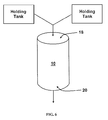
- the disclosed columns 10 can be employed as part of a packed bed apparatus.
- the packed bed apparatus can comprise one or more conventional holding tanks or feed vessels for holding the first or second phases.
- the holding tanks or feed vessels can be jacketed or otherwise equipped to provide temperature control of the first or second phases.
- a tube may run from each holding tank or feed vessel through a pump and later merge with the tube from other holding tanks or feed vessels proximate the inlet 18 of the column 10.
- the packed bed apparatus can include pumps or other means of moving the phases into and through the column 10.
- the phases can flow from the holding tanks or feed vessels into the column 10 without pumps, by simple gravity, by pressure, or by a vacuum from the other end of the packed bed apparatus, and the like.
- the tubes can further include addition of flow meters, feedback control, flow rate programming via programmed logic control, and the like.
- the disclosed methods are functional at any temperature within the operating range of the equipment, solvents and active agents. Factors that determine the appropriate temperature for a particular process include the optimum temperature for the two phases to be transported through the column. If a third phase is utilized, it is contemplated that the temperature of the first column can be the same or different than that of the second column. It is further contemplated that the temperature needs to be such that the two phases are maintained at a desirable viscosity. Additionally, the solubility of the polymer and active molecule can require an increase in temperature in order to produce a complete solution. The temperature can additionally be affected by the stability limit of any biological or chemical agents present in the various phases. In various aspects, typical operating temperatures can range from about 0 to 50 degrees Celsius. In one aspect, typical operating temperatures can range from about 10 to about 40 degrees Celsius. In another aspect, typical operating temperatures can range from about 15 to about 30 degrees Celsius. In yet another aspect, typical operating temperatures can range from about 18 to about 25 degrees Celsius.
- the microparticles produced by the disclosed methods can be used for any purpose. In one aspect, they are administered to a subject. In this aspect, it is contemplated that they can be administered to subjects in single or multiple doses. It is further contemplated that the microparticles can also be administered in a single dose form that functions to further release the biological or chemical agent over a prolonged period of time, eliminating the need for multiple administrations.
- the microparticles produced by the disclosed methods can be stored as a dry material.
- the dry microparticles can be suspended in an injection vehicle. Upon suspension, the microparticles can then be injected into the subject or otherwise utilized.
- an injection vehicle (“diluent”, “injection medium”, “injection solution”, “pharmaceutical liquid vehicle”, “suspension medium”, “excipient”, “carrier”) is an aqueous or non-aqueous liquid for suspending and injecting microparticles.
- Aqueous injection vehicles comprise water and at least one of a buffer, salts, non-ionic tonicity compounds, viscosity enhancers, stabilizers, antimicrobials, and surfactants.
- the microparticles can be suspended in an injection solution comprising SDS, Tween 20 or mannitol.
- the injection vehicle can be 0.5%-2.5% sodium carboxymethylcellulose in water.
- the injection vehicle can be 0-1.5% (w/w) sodium carboxymethylcellulose, 0-0.5% (w/w) Tween-80 or Tween-20, 0-330 mM NaCl, 0-10 mM sodium phosphate in water, pH 5-9.
- the microparticles can be suspended in an injection solution comprising 0.5% SDS.
- the injection vehicle can comprise 0.2% Tween-20 in water.
- microparticles can vary in size, ranging from submicron to millimeter diameters. Microparticle size is partially determined by the size and shape of individual packing material particles within the column. Large and misfit packing materials generally pack together less closely than smaller packing material particles and produce larger gaps for the fluids to flow through. Thus, it is contemplated that larger gaps in the packing material produce larger microparticles and smaller gaps in the packing material produce smaller microparticles. It is further contemplated that the flow rate does not affect the size of the microparticles produced from a particular column.
- the diameters of the microparticles produced by the disclosed methods can range from about 1 micron to about 200 microns, thereby facilitating administration to a subject through a syringe needle. In another aspect, the diameters of the microparticles produced by the disclosed methods can range from about 10 microns to about 100 microns. In an additional aspect, the diameters of the microparticles can be less than about 90 microns. In an exemplary aspect, the diameters of the microparticles produced by the disclosed methods can range from about 25 microns to about 125 microns. In another exemplary aspect, the diameters of the microparticles can range from about 25 microns to about 80 microns.
- the microparticles produced by the disclosed methods can have a mean diameter ranging from about 25 microns to about 80 microns. In yet another aspect, the microparticles can have a mean diameter ranging from about 10 microns to about 50 microns. In one exemplary aspect, the diameters of the microparticles produced by the disclosed methods can be less than or equal to about 75% of the inner diameter of a needle to be used to inject the microparticles into a subject. In another aspect, the diameters of the microparticles can be less than or equal to about 50% of the inner diameter of the needle. In yet another aspect, the diameters of the microparticles can be less than or equal to about 35% of the inner diameter of the needle. In still another aspect, the diameters of the microparticles can be less than or equal to 25% of the inner diameter of the needle. In still another aspect, the diameters of the microparticles can be less than or equal to 10% of the inner diameter of the needle.
- the diameter of the microparticles produced by the disclosed methods can range from about 1 micron to about 200 microns. In another aspect, it is contemplated that the diameter of the microparticles can range from about 1 micron to about 100 microns. In yet another aspect, it is contemplated that the diameter of the microparticles can range from about 10 microns to about 50 microns.
- Microparticle size distribution can be measured by several methods including, but not limited to, laser light diffraction, scanning electron microscopy, visible light microscopy, and conventional electrical sensing zone methods.
- results can be expressed as an average (mean or mode) value, a standard deviation or half width, the diameters below which 10%, 50% and 90% of the particles are found (d 10 , d 50 , d 90 ), and the fraction of the microparticles within a given range, among others.
- data can be expressed by volume weighted or number weighted statistics. For the instant description, laser diffraction measurements are used, volume weighted statistics are employed, the average is expressed as a mean value, and d 10 , d 50 , d 90 , etc., as well as a fraction within a range, are used to describe particle size distributions.
- the use of the disclosed columns to form microparticles can provide a narrow size distribution centered at a desired mean diameter with most of the particles contained in a desired range.
- filtration is typically used to exclude particles with diameters lower or higher than the desired cutoffs.
- traditional microparticle manufacturing involving turbulent mixing, the particle size distribution is broad, and the yield in a narrow range can be too low to be economical so that a wide particle size range is necessitated.
- narrow particle size distributions can be obtained, and final filtration (sieving) to achieve the desired cutoff diameters can produce a high yield of microparticles. It is further contemplated that the narrow particle size distribution obtained through use of the disclosed columns can lead to more effective syringing of the microparticles through small needles.
- the diameters of the microparticles produced using the disclosed methods can range from about 1 micron to about 6 microns. In other aspects, the diameters of the microparticles produced using the disclosed methods can range from about 10 microns to about 25 microns. In still other aspects, the diameters of the microparticles produced using the disclosed methods can range from about 25 microns to about 80 microns. In an exemplary aspect, the microparticles can have an average diameter of less than about 45 microns. In yet another aspect, the microparticles have an average diameter of about 30 microns. In a further aspect, the diameter of the microparticles can range from about 10 microns to about 30 microns.
- greater than about 80% of the microparticles can have a diameter ranging from about 25 to about 63 microns. In still another aspect, greater than about 90% of the microparticles can have a diameter ranging from about 25 microns to about 63 microns.
- the microparticles can be of a suitable size and morphology to allow for delivery though a needle having a small inner-diameter, such as a 25 gauge needle or narrower.
- Microparticles are referred to herein as "syringable” if they are able to be taken up and delivered though a needle without substantial clumping of the microparticles or clogging of the needle.
- the microparticles are syringable through a 25 gauge needle or narrower.
- Microparticles are referred to herein as "injectable” if they consistently can be injected into a desired locus of a subject though a needle.
- the microparticles are injectable through a 25 gauge needle or narrower.
- the microparticles can be syringable through a needle having a gauge of at least 25 and having a nominal inner diameter of 0.0095 inches (241 microns) or less.
- the microparticles can be syringable through a needle having a gauge of at least 27 and having a nominal inner diameter of 0.0075 inches (190 microns) or less.
- the microparticles can be syringable through a needle having a gauge of at least 29 and having a nominal inner diameter of 0.0065 inches (165 microns) or less.
- the microparticles can be syringable through a needle having a gauge of at least 30 and having a nominal inner diameter of 0.0055 (140 microns) inches or less.
- the microparticles when suspended in an injection vehicle at a concentration ranging from about 50 mg/ml to about 600 mg/ml, the microparticles can be syringable through a needle having a gauge of 25, 27, 29 or 30.
- the microparticles when suspended in an injection vehicle at a concentration ranging from about 50 mg/ml to about 200 mg/ml, the microparticles can be syringable through a needle having a gauge of 25, 27, 29 or 30.
- the microparticles when suspended in an injection vehicle at a concentration ranging from about 100 mg/ml to about 600 mg/ml, the microparticles can be syringable through a needle having a gauge of 25 or 27.
- the microparticles produced by the disclosed methods can flow freely without the formation of aggregates and can be readily suspended in an injection vehicle for injection. It is contemplated that free-flowing and/or un-agglomerated powders are advantageous because they roll with substantially no friction and can be easily placed in containers and/or suspended or incorporated into a solution suitable for injection. Flowability of microparticles can be measured by any suitable means such as a Jenike Shear Tester (Jenike & Johanson, Inc., Westford, Mass.), which measures the direct shear strength of powders and other bulk solid materials.
- Jenike Shear Tester Jenike & Johanson, Inc., Westford, Mass.
- a shear cell (base and ring) is filled with material; a vertical load is applied to the covered cell, using weights and the weight carrier; and the shear cell ring is pushed horizontally across the base, with the required force measured and recorded.
- Other apparatuses for measuring flowability include a powder rheometer (Freeman Technology, Worcestershire, UK) that measures the force of a twisted blade along a helical path through a powder sample, thereby establishing a required flow rate and pattern of flow. A critical orifice and an angle of repose using an avalanche process may also be measured.
- the microparticles produced using the disclosed methods can have a core load sufficient to deliver a biologically active agent to maintain therapeutically effective levels of the biologically active agent for sustained periods.
- the microparticles can have a core load ranging from about 2.5% to about 90% by weight of the biologically active agent.
- the microparticles can have a core load of greater than or equal to about 5% by weight of the biologically active agent.
- the microparticles can have a core load of greater than or equal to about 10% by weight of the biologically active agent.
- the microparticles can have a core load of greater than or equal to about 15% by weight of the biologically active agent.
- the microparticles can have a core load of greater than or equal to about 20% by weight of the biologically active agent. In still a further aspect, the microparticles can have a core load of greater than or equal to about 30% by weight of the biologically active agent.
- the microparticles produced using the disclosed methods can be configured to release a biologically active agent over a period of at least about 1 month to about 12 months.
- the microparticles can be configured to release a bioactive agent over a period of at least about 3 months to about 6 months.
- the microparticles can be configured to release a bioactive agent over a period of about 1 week to about 3 months.
- biodegradable polymer compositions can be varied to affect the sustained release duration of a given composition.
- PLGA with a 45:55 lactide:glycolide ratio and an inherent viscosity of 0.15 dL/g can release drug over a one to two week period.
- 85:15 lactide:glycolide PLGA with an inherent viscosity of 0.91, reflecting a molecular weight of over 100,000 daltons, gives a much longer drug release profile that can last more than 6 months.
- the microparticles produced using the disclosed methods can have high encapsulation efficiency. It is further contemplated that the microparticles can have an encapsulation efficiency of greater than or equal to about 80%. In another aspect, the microparticles can have an encapsulation efficiency of greater than or equal to about 90%. In yet another aspect, , the microparticles can have an encapsulation efficiency of greater than or equal to about 95%. In still another aspect, the microparticles can have an encapsulation efficiency of about 100%.
- the microparticles produced by the disclosed methods can have any suitable morphology.
- the microparticles can be solid.
- the microparticles can be smooth or non-pitted.
- the microparticles can be homogenous or monolithic.
- the microparticles can have a morphology allowing for a high core load, high encapsulation efficiency, low burst, sustained release, and syringability.
- the microparticles produced using the disclosed methods can be administered to a patient in need of treatment by injection, nasal, pulmonary, oral, vaginal or other means of delivery.
- the disclosed methods can be used to deliver a biologically active agent to any desired site, including, but not limited to, intramuscular, intradermal, subcutaneous, intraorbital, intraocular, intravitreal, intraaural, intratympanic, intrathecal, intracavitary, peritumoral, intratumoral, intraspinal, epidural, intracranial, and intracardial sites of a patient.
- the microparticles produced by the disclosed methods can release a biologically active agent by any suitable means to allow for a controlled release of the biologically active agent. It is further contemplated that the microparticles can release the biologically active agent by bulk erosion, diffusion or a combination of both. It is still further contemplated that the microparticles can be easily suspendable and syringable while also being configured to provide increased duration, increased stability, decreased burst and controlled, sustained or delayed release of biologically active agents in vivo.
- a surfactant can be used in order to provide formulations that have the required syringability.
- a surfactant can be used to provide a stable emulsion during the process of forming the microparticles as disclosed herein.
- a surfactant can be used to prevent agglomeration during drying of the microparticles.
- a surfactant can be used to prevent agglomeration within the injection vehicle during the process of delivering the microparticles. It is contemplated that surfactants can provide batch-to-batch consistency of microparticles by forming a thin layer of material around the microparticles that helps prevent clumping.
- Suitable surfactants include, but are not limited to, cationic, anionic, and nonionic compounds such as poly(vinyl alcohol), carboxymethyl cellulose (CMC), lecithin, gelatin, poly(vinyl pyrrolidone), polyoxyethylenesorbitan fatty acid ester (Tween 80, Tween 60, Tween 20), sodium dodecyl sulfate (SDS) and the like.
- the microparticles can be formed using an emulsion comprising poly (vinyl alcohol). More particularly, the microparticles can be formed using an emulsion comprising 1.0% poly (vinyl alcohol). In various aspects, the concentration of surfactant in the process medium is established to be an amount sufficient to stabilize the emulsion.
- the microparticles can be lyophilized in a solution comprising SDS, Tween 20 or mannitol. In one particular aspect, the microparticles can be lyophilized in a solution comprising 7.8% SDS.
- the disclosed methods can be used to produce microparticles comprising PEGylated insulin. It is contemplated that these microparticles can have a burst release in vivo and in vitro of less than 5%, a drug core load greater than 12% (w/w) and an encapsulation efficiency of greater than 80%. It is further contemplated that these microparticles can have a mean diameter of less than 45 microns, and greater than 90% (volume weighted) of the microparticles can have a diameter ranging from about 25 microns to about 63 microns. It is still further contemplated that the microparticles of this invention can be capable of injection into a subject through needles of 25, 27 and 29 gauge or narrower, whereby the insulin plasma level is maintained for about one week to about four weeks.
Landscapes
- Health & Medical Sciences (AREA)
- Chemical & Material Sciences (AREA)
- Chemical Kinetics & Catalysis (AREA)
- Organic Chemistry (AREA)
- Life Sciences & Earth Sciences (AREA)
- Veterinary Medicine (AREA)
- General Chemical & Material Sciences (AREA)
- Medicinal Chemistry (AREA)
- Nuclear Medicine, Radiotherapy & Molecular Imaging (AREA)
- Pharmacology & Pharmacy (AREA)
- Animal Behavior & Ethology (AREA)
- General Health & Medical Sciences (AREA)
- Public Health (AREA)
- Bioinformatics & Cheminformatics (AREA)
- Engineering & Computer Science (AREA)
- Immunology (AREA)
- Diabetes (AREA)
- Communicable Diseases (AREA)
- Biomedical Technology (AREA)
- Oncology (AREA)
- Hematology (AREA)
- Neurosurgery (AREA)
- Neurology (AREA)
- Tropical Medicine & Parasitology (AREA)
- Heart & Thoracic Surgery (AREA)
- Pain & Pain Management (AREA)
- Dispersion Chemistry (AREA)
- Cardiology (AREA)
- Psychiatry (AREA)
- Virology (AREA)
- Emergency Medicine (AREA)
- Endocrinology (AREA)
- Transplantation (AREA)
- Pulmonology (AREA)
- Biochemistry (AREA)
- Dermatology (AREA)
- Anesthesiology (AREA)
- Obesity (AREA)
- Medicinal Preparation (AREA)
- Colloid Chemistry (AREA)
Priority Applications (1)
| Application Number | Priority Date | Filing Date | Title |
|---|---|---|---|
| PL11813625T PL2654934T3 (pl) | 2010-12-23 | 2011-12-22 | Urządzenie i sposób przygotowania emulsji |
Applications Claiming Priority (2)
| Application Number | Priority Date | Filing Date | Title |
|---|---|---|---|
| US201061426705P | 2010-12-23 | 2010-12-23 | |
| PCT/US2011/066833 WO2012088409A2 (en) | 2010-12-23 | 2011-12-22 | Apparatus and methods for preparing an emulsion |
Publications (2)
| Publication Number | Publication Date |
|---|---|
| EP2654934A2 EP2654934A2 (en) | 2013-10-30 |
| EP2654934B1 true EP2654934B1 (en) | 2015-03-04 |
Family
ID=45532020
Family Applications (1)
| Application Number | Title | Priority Date | Filing Date |
|---|---|---|---|
| EP11813625.8A Active EP2654934B1 (en) | 2010-12-23 | 2011-12-22 | Apparatus and method for preparing an emulsion |
Country Status (12)
| Country | Link |
|---|---|
| US (2) | US10258941B2 (pl) |
| EP (1) | EP2654934B1 (pl) |
| JP (2) | JP2014505585A (pl) |
| CN (2) | CN103260734B (pl) |
| AU (1) | AU2011348141B2 (pl) |
| CA (1) | CA2822833C (pl) |
| ES (1) | ES2537381T3 (pl) |
| HK (1) | HK1208841A1 (pl) |
| IL (1) | IL226603A (pl) |
| PL (1) | PL2654934T3 (pl) |
| RU (1) | RU2590928C2 (pl) |
| WO (1) | WO2012088409A2 (pl) |
Families Citing this family (29)
| Publication number | Priority date | Publication date | Assignee | Title |
|---|---|---|---|---|
| JP2014505585A (ja) | 2010-12-23 | 2014-03-06 | エボニック コーポレイション | エマルジョンを製造するための装置および方法 |
| US9555379B2 (en) | 2013-03-13 | 2017-01-31 | Bayer Healthcare Llc | Fluid path set with turbulent mixing chamber, backflow compensator |
| CN103807866B (zh) * | 2014-02-11 | 2016-05-18 | 金余其 | 带刀切片污泥分流装置 |
| DE102014118367A1 (de) * | 2014-12-10 | 2016-06-16 | Endress+Hauser Flowtec Ag | Meßaufnehmer vom Vibrationstyp sowie damit gebildetes Meßsystem |
| CN105195007B (zh) * | 2015-08-27 | 2017-09-12 | 中国科学院过程工程研究所 | 一种循环流化床反应器内构件及其应用 |
| JP2019510008A (ja) | 2016-02-23 | 2019-04-11 | バイオデリバリー サイエンシーズ インターナショナル インコーポレイティッド | 持続放出性ブプレノルフィンミクロスフェア(srbm)及びその使用方法 |
| EP3423130B1 (en) | 2016-03-03 | 2025-05-14 | Bayer Healthcare LLC | System and method for improved fluid delivery in multi-fluid injector systems |
| GB201615066D0 (en) * | 2016-09-06 | 2016-10-19 | Ge Healthcare Bioprocess R&D Ab | Packed bed emulsification |
| WO2018049419A2 (en) * | 2016-09-12 | 2018-03-15 | Sun Desert Corp. | Method and apparatus for instantaneous on-line carbonation of water through electrostatic charging |
| EP3538182A1 (en) | 2016-11-14 | 2019-09-18 | Bayer Healthcare LLC | Methods and systems for verifying the contents of a syringe used for medical fluid delivery |
| AU2018326485B2 (en) | 2017-08-31 | 2024-01-04 | Bayer Healthcare Llc | Injector pressure calibration system and method |
| CN110809482B (zh) | 2017-08-31 | 2023-03-07 | 拜耳医药保健有限公司 | 流体注入器系统体积补偿系统和方法 |
| AU2018323442B2 (en) | 2017-08-31 | 2024-06-27 | Bayer Healthcare Llc | Fluid path impedance assessment for improving fluid delivery performance |
| CN110891630B (zh) | 2017-08-31 | 2022-04-26 | 拜耳医药保健有限公司 | 驱动构件定位和流体注入器系统机械校准的系统和方法 |
| JP7493337B2 (ja) | 2017-08-31 | 2024-05-31 | バイエル・ヘルスケア・エルエルシー | 流体インジェクタシステムにおける動的圧力制御のための方法 |
| US10561620B2 (en) * | 2017-09-15 | 2020-02-18 | Rezolute, Inc. | Coiled tube emulsification systems |
| JP6944844B2 (ja) * | 2017-09-26 | 2021-10-06 | 東レエンジニアリング株式会社 | リアクタ |
| CA3097557A1 (en) | 2018-04-19 | 2019-10-24 | Bayer Healthcare Llc | System and method for air detection in fluid injector |
| JP2021536278A (ja) | 2018-08-28 | 2021-12-27 | バイエル・ヘルスケア・エルエルシーBayer HealthCare LLC | 比性能を改善した流体注入器システム |
| CA3110859A1 (en) | 2018-08-28 | 2020-03-05 | Bayer Healthcare Llc | Fluid injector system, method of preventing fluid backflow, and computer program product |
| US20200376128A1 (en) * | 2019-06-01 | 2020-12-03 | Lupin Holdings B.V. | Monodisperse resorbable polyester polymer compositions, systems, and methods |
| IL314250A (en) | 2020-02-21 | 2024-09-01 | Bayer Healthcare Llc | Fluid path connectors for administering medical fluids |
| EP4110452B1 (en) | 2020-02-28 | 2024-10-16 | Bayer HealthCare LLC | Fluid mixing set |
| WO2021188460A1 (en) | 2020-03-16 | 2021-09-23 | Bayer Healthcare Llc | Stopcock apparatus for angiography injector fluid paths |
| WO2021217550A1 (zh) * | 2020-04-30 | 2021-11-04 | 兰州兰石中科纳米科技有限公司 | 一种多相界面反应器 |
| CN115697435B (zh) | 2020-06-18 | 2026-03-03 | 拜耳医药保健有限责任公司 | 用于血管造影注入器流体路径的在线气泡悬浮装置 |
| KR20240164970A (ko) | 2020-08-11 | 2024-11-21 | 바이엘 헬쓰케어 엘엘씨 | 혈관 조영술 주사기의 피처 |
| EP4255525A2 (en) | 2020-12-01 | 2023-10-11 | Bayer HealthCare, LLC | Cassette for retention of fluid path components for fluid injector system |
| EP4355382A1 (en) | 2021-06-17 | 2024-04-24 | Bayer Healthcare LLC | System and method for detecting fluid type in tubing for fluid injector apparatus |
Family Cites Families (31)
| Publication number | Priority date | Publication date | Assignee | Title |
|---|---|---|---|---|
| US3682446A (en) * | 1970-08-21 | 1972-08-08 | Robert E Eron | Foam-solids blender |
| US4068830A (en) * | 1974-01-04 | 1978-01-17 | E. I. Du Pont De Nemours And Company | Mixing method and system |
| JPS50101958A (pl) * | 1974-01-06 | 1975-08-12 | ||
| DE2532355C3 (de) | 1975-07-19 | 1979-06-07 | Bayer Ag, 5090 Leverkusen | Vorrichtung zum statischen Mischen von fließfähigen Stoffen |
| JPS5385671U (pl) * | 1976-12-15 | 1978-07-14 | ||
| DE2808154C3 (de) * | 1978-02-25 | 1980-09-11 | Roehm Gmbh, 6100 Darmstadt | Verfahren und Kolonne zur Gelfiltration |
| JPS54153468U (pl) * | 1978-04-19 | 1979-10-25 | ||
| JPS54153468A (en) | 1978-05-24 | 1979-12-03 | Hitachi Ltd | Outer frame for hoist |
| JPS57201519A (en) | 1981-06-04 | 1982-12-10 | Esuko:Kk | Liquid mixer |
| EP0077652B1 (en) * | 1981-10-15 | 1985-04-17 | West Point-Pepperell, Inc. | Foam generating apparatus |
| US4438072A (en) * | 1982-02-22 | 1984-03-20 | Freeman Chemical Corporation | Continuous stream mixer having variable dwell time chamber with auger |
| JPS6115029U (ja) * | 1984-06-29 | 1986-01-28 | 荏原インフイルコ株式会社 | 迂流式混合装置 |
| JPS61196162A (ja) * | 1985-02-27 | 1986-08-30 | Terukatsu Miyauchi | クロマトグラフイ分取用カラム |
| JPH04193337A (ja) * | 1990-11-27 | 1992-07-13 | Nouken Kogyo Kk | スタティックミキサー |
| ATA166091A (de) * | 1991-08-23 | 1996-02-15 | Faigle Heinz Kg | Füllkörper |
| CN2150916Y (zh) * | 1992-09-26 | 1993-12-29 | 大连金州混合器厂 | 一种静态混合器 |
| DE4336983C2 (de) | 1993-10-29 | 2001-10-18 | Montz Gmbh Julius | Kolonne mit einer Trennwand |
| RU2050918C1 (ru) * | 1993-12-09 | 1995-12-27 | Алексей Ильич Гурьянов | Тепломассообменный аппарат гаспака-1 |
| JPH10109024A (ja) * | 1996-10-04 | 1998-04-28 | Jasco Corp | エマルション調整方法及び装置 |
| FR2782657B1 (fr) * | 1998-09-02 | 2000-09-29 | Inst Francais Du Petrole | Systeme distributeur-collecteur de fluides et son procede |
| US6495166B1 (en) * | 1999-11-12 | 2002-12-17 | Alkermes Controlled Therapeutics Inc. | Apparatus and method for preparing microparticles using in-line solvent extraction |
| CN1507357A (zh) | 2000-10-31 | 2004-06-23 | PRҩƷ����˾ | 提高生物活性分子传递的方法和组合物 |
| DE60221036T2 (de) | 2001-02-23 | 2007-10-11 | Japan Science And Technology Agency, Kawaguchi | Vorrichtung zum Erzeugen von Emulsionen und Mikrokapseln |
| GB2395196B (en) | 2002-11-14 | 2006-12-27 | Univ Cardiff | Microfluidic device and methods for construction and application |
| US20070207211A1 (en) | 2003-04-10 | 2007-09-06 | Pr Pharmaceuticals, Inc. | Emulsion-based microparticles and methods for the production thereof |
| ES2427092T3 (es) * | 2003-04-10 | 2013-10-28 | Evonik Corporation | Un método para la producción de micropartículas a base de emulsión |
| US20050032238A1 (en) | 2003-08-07 | 2005-02-10 | Nanostream, Inc. | Vented microfluidic separation devices and methods |
| US7484384B2 (en) * | 2006-03-18 | 2009-02-03 | Technip Usa Inc. | Boil off gas condenser |
| EP2136786B8 (en) | 2007-03-28 | 2012-11-14 | President and Fellows of Harvard College | Apparatus for forming droplets |
| EP2002882A1 (en) | 2007-06-15 | 2008-12-17 | Wageningen University | Process for manufacturing an emulsion |
| JP2014505585A (ja) | 2010-12-23 | 2014-03-06 | エボニック コーポレイション | エマルジョンを製造するための装置および方法 |
-
2011
- 2011-12-22 JP JP2013546420A patent/JP2014505585A/ja active Pending
- 2011-12-22 CA CA2822833A patent/CA2822833C/en active Active
- 2011-12-22 AU AU2011348141A patent/AU2011348141B2/en active Active
- 2011-12-22 EP EP11813625.8A patent/EP2654934B1/en active Active
- 2011-12-22 CN CN201180061647.XA patent/CN103260734B/zh active Active
- 2011-12-22 ES ES11813625.8T patent/ES2537381T3/es active Active
- 2011-12-22 CN CN201510115371.9A patent/CN104772056A/zh active Pending
- 2011-12-22 WO PCT/US2011/066833 patent/WO2012088409A2/en not_active Ceased
- 2011-12-22 RU RU2013134159/05A patent/RU2590928C2/ru active
- 2011-12-22 PL PL11813625T patent/PL2654934T3/pl unknown
- 2011-12-22 US US13/334,154 patent/US10258941B2/en active Active
-
2013
- 2013-05-28 IL IL226603A patent/IL226603A/en active IP Right Grant
-
2014
- 2014-02-14 HK HK15109581.9A patent/HK1208841A1/xx unknown
-
2016
- 2016-11-11 JP JP2016220522A patent/JP6362659B2/ja active Active
-
2019
- 2019-04-12 US US16/383,067 patent/US20190240630A1/en not_active Abandoned
Also Published As
| Publication number | Publication date |
|---|---|
| AU2011348141A1 (en) | 2013-06-13 |
| RU2590928C2 (ru) | 2016-07-10 |
| CN103260734A (zh) | 2013-08-21 |
| CA2822833C (en) | 2018-10-02 |
| AU2011348141B2 (en) | 2015-11-26 |
| JP2014505585A (ja) | 2014-03-06 |
| ES2537381T3 (es) | 2015-06-08 |
| WO2012088409A3 (en) | 2012-09-07 |
| WO2012088409A8 (en) | 2013-03-21 |
| US20190240630A1 (en) | 2019-08-08 |
| CN104772056A (zh) | 2015-07-15 |
| HK1188175A1 (zh) | 2014-04-25 |
| PL2654934T3 (pl) | 2015-08-31 |
| JP6362659B2 (ja) | 2018-07-25 |
| EP2654934A2 (en) | 2013-10-30 |
| US20120178629A1 (en) | 2012-07-12 |
| JP2017051950A (ja) | 2017-03-16 |
| CA2822833A1 (en) | 2012-06-28 |
| RU2013134159A (ru) | 2015-01-27 |
| CN103260734B (zh) | 2016-03-09 |
| IL226603A (en) | 2017-10-31 |
| WO2012088409A2 (en) | 2012-06-28 |
| HK1208841A1 (en) | 2016-03-18 |
| US10258941B2 (en) | 2019-04-16 |
Similar Documents
| Publication | Publication Date | Title |
|---|---|---|
| EP2654934B1 (en) | Apparatus and method for preparing an emulsion | |
| US20070207211A1 (en) | Emulsion-based microparticles and methods for the production thereof | |
| Procopio et al. | Recent fabrication methods to produce polymer-based drug delivery matrices (experimental and in silico approaches) | |
| EP1615959B1 (en) | A method for the production of emulsion-based micro particles | |
| Xia et al. | Uniform biodegradable microparticle systems for controlled release | |
| Elizondo et al. | Nanostructuring molecular materials as particles and vesicles for drug delivery, using compressed and supercritical fluids | |
| Enayati et al. | Size mapping of electric field-assisted production of polycaprolactone particles | |
| CN103768012A (zh) | 一种姜黄素脂质纳米粒悬浮液或纳米粒的制备方法 | |
| KR20200051735A (ko) | 코일형 튜브 유화 시스템 및 방법 | |
| Schneider et al. | Use of hydrodynamic flow focusing for the generation of biodegradable camptothecin‐loaded polymer microspheres | |
| Xia et al. | Uniform biodegradable microparticle systems for controlled release | |
| Lee et al. | Semibatch and continuous electrohydrodynamic mixing nanoprecipitation for scalable polymer nanostructure production | |
| HK1188175B (en) | Apparatus and method for preparing an emulsion | |
| Poko et al. | Technology of Preparation of Microencapsulated Forms for Sustained Release using Biodegradable Poly Lactic-Co-Glycolic Acid (Plga) Polymer–Review | |
| Pathak et al. | A review on new trends in preparation of long acting microspheres | |
| Paul et al. | A review on microspheres as controlled release drug delivery | |
| Gupta et al. | A Novel Biodegradable Microparticulated Drug Delivery System: On Review | |
| Caprasse | Microfluidic formulation: offering new biomedical perspectives to poly (phospho) ester microparticles | |
| Chinthaginjala et al. | International Journal of Modern Pharmaceutical Research | |
| Thakur et al. | Parenteral Controlled Drug Delivery System | |
| Shinde et al. | An updated era on nanoparticle sustained release matrix tablets of NSAID using wet granulation technique | |
| Shabna et al. | Delivery of Macromolecular Drugs using Microsphere Technology | |
| BRUNNENMEIER et al. | 424A. A novel technique for preparation of monodisperse giant liposomes. TAYLOR, P., XU, C., FLETCHER, PDI, and PAUNOV, VN Chemical Communications, 2003, 14, 1732–1733. A potential approach for decreasing the burst effect of protein from PLGA microspheres. FU, K., HARRELL, R., ZINSKI, K., UM, C., JAKLENEC, A., FRAZIER, J., LOTAN, N., BURKE, P. | |
| Singh et al. | MICROSPHERES AS DRUG DELIVERY SYSTEM–A REVIEW |
Legal Events
| Date | Code | Title | Description |
|---|---|---|---|
| PUAI | Public reference made under article 153(3) epc to a published international application that has entered the european phase |
Free format text: ORIGINAL CODE: 0009012 |
|
| 17P | Request for examination filed |
Effective date: 20130604 |
|
| AK | Designated contracting states |
Kind code of ref document: A2 Designated state(s): AL AT BE BG CH CY CZ DE DK EE ES FI FR GB GR HR HU IE IS IT LI LT LU LV MC MK MT NL NO PL PT RO RS SE SI SK SM TR |
|
| DAX | Request for extension of the european patent (deleted) | ||
| GRAP | Despatch of communication of intention to grant a patent |
Free format text: ORIGINAL CODE: EPIDOSNIGR1 |
|
| INTG | Intention to grant announced |
Effective date: 20141007 |
|
| GRAP | Despatch of communication of intention to grant a patent |
Free format text: ORIGINAL CODE: EPIDOSNIGR1 |
|
| INTG | Intention to grant announced |
Effective date: 20141112 |
|
| GRAS | Grant fee paid |
Free format text: ORIGINAL CODE: EPIDOSNIGR3 |
|
| GRAA | (expected) grant |
Free format text: ORIGINAL CODE: 0009210 |
|
| AK | Designated contracting states |
Kind code of ref document: B1 Designated state(s): AL AT BE BG CH CY CZ DE DK EE ES FI FR GB GR HR HU IE IS IT LI LT LU LV MC MK MT NL NO PL PT RO RS SE SI SK SM TR |
|
| REG | Reference to a national code |
Ref country code: GB Ref legal event code: FG4D |
|
| REG | Reference to a national code |
Ref country code: CH Ref legal event code: EP |
|
| REG | Reference to a national code |
Ref country code: IE Ref legal event code: FG4D |
|
| REG | Reference to a national code |
Ref country code: AT Ref legal event code: REF Ref document number: 713353 Country of ref document: AT Kind code of ref document: T Effective date: 20150415 |
|
| REG | Reference to a national code |
Ref country code: DE Ref legal event code: R096 Ref document number: 602011014476 Country of ref document: DE Effective date: 20150416 |
|
| REG | Reference to a national code |
Ref country code: ES Ref legal event code: FG2A Ref document number: 2537381 Country of ref document: ES Kind code of ref document: T3 Effective date: 20150608 |
|
| REG | Reference to a national code |
Ref country code: SE Ref legal event code: TRGR |
|
| REG | Reference to a national code |
Ref country code: NL Ref legal event code: T3 |
|
| REG | Reference to a national code |
Ref country code: AT Ref legal event code: MK05 Ref document number: 713353 Country of ref document: AT Kind code of ref document: T Effective date: 20150304 |
|
| PG25 | Lapsed in a contracting state [announced via postgrant information from national office to epo] |
Ref country code: NO Free format text: LAPSE BECAUSE OF FAILURE TO SUBMIT A TRANSLATION OF THE DESCRIPTION OR TO PAY THE FEE WITHIN THE PRESCRIBED TIME-LIMIT Effective date: 20150604 Ref country code: FI Free format text: LAPSE BECAUSE OF FAILURE TO SUBMIT A TRANSLATION OF THE DESCRIPTION OR TO PAY THE FEE WITHIN THE PRESCRIBED TIME-LIMIT Effective date: 20150304 Ref country code: LT Free format text: LAPSE BECAUSE OF FAILURE TO SUBMIT A TRANSLATION OF THE DESCRIPTION OR TO PAY THE FEE WITHIN THE PRESCRIBED TIME-LIMIT Effective date: 20150304 Ref country code: HR Free format text: LAPSE BECAUSE OF FAILURE TO SUBMIT A TRANSLATION OF THE DESCRIPTION OR TO PAY THE FEE WITHIN THE PRESCRIBED TIME-LIMIT Effective date: 20150304 |
|
| REG | Reference to a national code |
Ref country code: LT Ref legal event code: MG4D |
|
| PG25 | Lapsed in a contracting state [announced via postgrant information from national office to epo] |
Ref country code: LV Free format text: LAPSE BECAUSE OF FAILURE TO SUBMIT A TRANSLATION OF THE DESCRIPTION OR TO PAY THE FEE WITHIN THE PRESCRIBED TIME-LIMIT Effective date: 20150304 Ref country code: RS Free format text: LAPSE BECAUSE OF FAILURE TO SUBMIT A TRANSLATION OF THE DESCRIPTION OR TO PAY THE FEE WITHIN THE PRESCRIBED TIME-LIMIT Effective date: 20150304 Ref country code: GR Free format text: LAPSE BECAUSE OF FAILURE TO SUBMIT A TRANSLATION OF THE DESCRIPTION OR TO PAY THE FEE WITHIN THE PRESCRIBED TIME-LIMIT Effective date: 20150605 Ref country code: AT Free format text: LAPSE BECAUSE OF FAILURE TO SUBMIT A TRANSLATION OF THE DESCRIPTION OR TO PAY THE FEE WITHIN THE PRESCRIBED TIME-LIMIT Effective date: 20150304 |
|
| REG | Reference to a national code |
Ref country code: PL Ref legal event code: T3 |
|
| PG25 | Lapsed in a contracting state [announced via postgrant information from national office to epo] |
Ref country code: SK Free format text: LAPSE BECAUSE OF FAILURE TO SUBMIT A TRANSLATION OF THE DESCRIPTION OR TO PAY THE FEE WITHIN THE PRESCRIBED TIME-LIMIT Effective date: 20150304 Ref country code: RO Free format text: LAPSE BECAUSE OF FAILURE TO SUBMIT A TRANSLATION OF THE DESCRIPTION OR TO PAY THE FEE WITHIN THE PRESCRIBED TIME-LIMIT Effective date: 20150304 Ref country code: PT Free format text: LAPSE BECAUSE OF FAILURE TO SUBMIT A TRANSLATION OF THE DESCRIPTION OR TO PAY THE FEE WITHIN THE PRESCRIBED TIME-LIMIT Effective date: 20150706 Ref country code: EE Free format text: LAPSE BECAUSE OF FAILURE TO SUBMIT A TRANSLATION OF THE DESCRIPTION OR TO PAY THE FEE WITHIN THE PRESCRIBED TIME-LIMIT Effective date: 20150304 Ref country code: CZ Free format text: LAPSE BECAUSE OF FAILURE TO SUBMIT A TRANSLATION OF THE DESCRIPTION OR TO PAY THE FEE WITHIN THE PRESCRIBED TIME-LIMIT Effective date: 20150304 |
|
| PG25 | Lapsed in a contracting state [announced via postgrant information from national office to epo] |
Ref country code: IS Free format text: LAPSE BECAUSE OF FAILURE TO SUBMIT A TRANSLATION OF THE DESCRIPTION OR TO PAY THE FEE WITHIN THE PRESCRIBED TIME-LIMIT Effective date: 20150704 |
|
| REG | Reference to a national code |
Ref country code: DE Ref legal event code: R097 Ref document number: 602011014476 Country of ref document: DE |
|
| REG | Reference to a national code |
Ref country code: FR Ref legal event code: PLFP Year of fee payment: 5 |
|
| PLBE | No opposition filed within time limit |
Free format text: ORIGINAL CODE: 0009261 |
|
| STAA | Information on the status of an ep patent application or granted ep patent |
Free format text: STATUS: NO OPPOSITION FILED WITHIN TIME LIMIT |
|
| PG25 | Lapsed in a contracting state [announced via postgrant information from national office to epo] |
Ref country code: DK Free format text: LAPSE BECAUSE OF FAILURE TO SUBMIT A TRANSLATION OF THE DESCRIPTION OR TO PAY THE FEE WITHIN THE PRESCRIBED TIME-LIMIT Effective date: 20150304 |
|
| 26N | No opposition filed |
Effective date: 20151207 |
|
| PG25 | Lapsed in a contracting state [announced via postgrant information from national office to epo] |
Ref country code: SI Free format text: LAPSE BECAUSE OF FAILURE TO SUBMIT A TRANSLATION OF THE DESCRIPTION OR TO PAY THE FEE WITHIN THE PRESCRIBED TIME-LIMIT Effective date: 20150304 |
|
| PG25 | Lapsed in a contracting state [announced via postgrant information from national office to epo] |
Ref country code: BE Free format text: LAPSE BECAUSE OF NON-PAYMENT OF DUE FEES Effective date: 20151231 |
|
| PG25 | Lapsed in a contracting state [announced via postgrant information from national office to epo] |
Ref country code: LU Free format text: LAPSE BECAUSE OF FAILURE TO SUBMIT A TRANSLATION OF THE DESCRIPTION OR TO PAY THE FEE WITHIN THE PRESCRIBED TIME-LIMIT Effective date: 20151222 Ref country code: MC Free format text: LAPSE BECAUSE OF FAILURE TO SUBMIT A TRANSLATION OF THE DESCRIPTION OR TO PAY THE FEE WITHIN THE PRESCRIBED TIME-LIMIT Effective date: 20150304 |
|
| PG25 | Lapsed in a contracting state [announced via postgrant information from national office to epo] |
Ref country code: BE Free format text: LAPSE BECAUSE OF FAILURE TO SUBMIT A TRANSLATION OF THE DESCRIPTION OR TO PAY THE FEE WITHIN THE PRESCRIBED TIME-LIMIT Effective date: 20150304 |
|
| REG | Reference to a national code |
Ref country code: FR Ref legal event code: PLFP Year of fee payment: 6 |
|
| PG25 | Lapsed in a contracting state [announced via postgrant information from national office to epo] |
Ref country code: SM Free format text: LAPSE BECAUSE OF FAILURE TO SUBMIT A TRANSLATION OF THE DESCRIPTION OR TO PAY THE FEE WITHIN THE PRESCRIBED TIME-LIMIT Effective date: 20150304 Ref country code: BG Free format text: LAPSE BECAUSE OF FAILURE TO SUBMIT A TRANSLATION OF THE DESCRIPTION OR TO PAY THE FEE WITHIN THE PRESCRIBED TIME-LIMIT Effective date: 20150304 Ref country code: HU Free format text: LAPSE BECAUSE OF FAILURE TO SUBMIT A TRANSLATION OF THE DESCRIPTION OR TO PAY THE FEE WITHIN THE PRESCRIBED TIME-LIMIT; INVALID AB INITIO Effective date: 20111222 |
|
| PG25 | Lapsed in a contracting state [announced via postgrant information from national office to epo] |
Ref country code: CY Free format text: LAPSE BECAUSE OF FAILURE TO SUBMIT A TRANSLATION OF THE DESCRIPTION OR TO PAY THE FEE WITHIN THE PRESCRIBED TIME-LIMIT Effective date: 20150304 |
|
| PG25 | Lapsed in a contracting state [announced via postgrant information from national office to epo] |
Ref country code: MT Free format text: LAPSE BECAUSE OF FAILURE TO SUBMIT A TRANSLATION OF THE DESCRIPTION OR TO PAY THE FEE WITHIN THE PRESCRIBED TIME-LIMIT Effective date: 20150304 |
|
| REG | Reference to a national code |
Ref country code: FR Ref legal event code: PLFP Year of fee payment: 7 |
|
| PG25 | Lapsed in a contracting state [announced via postgrant information from national office to epo] |
Ref country code: MK Free format text: LAPSE BECAUSE OF FAILURE TO SUBMIT A TRANSLATION OF THE DESCRIPTION OR TO PAY THE FEE WITHIN THE PRESCRIBED TIME-LIMIT Effective date: 20150304 Ref country code: TR Free format text: LAPSE BECAUSE OF FAILURE TO SUBMIT A TRANSLATION OF THE DESCRIPTION OR TO PAY THE FEE WITHIN THE PRESCRIBED TIME-LIMIT Effective date: 20150304 |
|
| PG25 | Lapsed in a contracting state [announced via postgrant information from national office to epo] |
Ref country code: AL Free format text: LAPSE BECAUSE OF FAILURE TO SUBMIT A TRANSLATION OF THE DESCRIPTION OR TO PAY THE FEE WITHIN THE PRESCRIBED TIME-LIMIT Effective date: 20150304 |
|
| REG | Reference to a national code |
Ref country code: DE Ref legal event code: R079 Ref document number: 602011014476 Country of ref document: DE Free format text: PREVIOUS MAIN CLASS: B01F0003080000 Ipc: B01F0023400000 |
|
| P01 | Opt-out of the competence of the unified patent court (upc) registered |
Effective date: 20230524 |
|
| REG | Reference to a national code |
Ref country code: DE Ref legal event code: R081 Ref document number: 602011014476 Country of ref document: DE Owner name: EVONIK CORP., PISCATAWAY, US Free format text: FORMER OWNER: EVONIK CORP., PARSIPPANY, N.J., US Ref country code: DE Ref legal event code: R081 Ref document number: 602011014476 Country of ref document: DE Owner name: EVONIK OPERATIONS GMBH, DE Free format text: FORMER OWNER: EVONIK CORP., PARSIPPANY, N.J., US |
|
| REG | Reference to a national code |
Ref country code: NL Ref legal event code: PD Owner name: EVONIK OPERATIONS GMBH; DE Free format text: DETAILS ASSIGNMENT: CHANGE OF OWNER(S), ASSIGNMENT; FORMER OWNER NAME: EVONIK CORPORATION Effective date: 20250414 |
|
| REG | Reference to a national code |
Ref country code: DE Ref legal event code: R081 Ref document number: 602011014476 Country of ref document: DE Owner name: EVONIK OPERATIONS GMBH, DE Free format text: FORMER OWNER: EVONIK CORP., PISCATAWAY, NJ, US |
|
| REG | Reference to a national code |
Ref country code: GB Ref legal event code: 732E Free format text: REGISTERED BETWEEN 20250911 AND 20250917 |
|
| REG | Reference to a national code |
Ref country code: CH Ref legal event code: U11 Free format text: ST27 STATUS EVENT CODE: U-0-0-U10-U11 (AS PROVIDED BY THE NATIONAL OFFICE) Effective date: 20260101 |
|
| PGFP | Annual fee paid to national office [announced via postgrant information from national office to epo] |
Ref country code: DE Payment date: 20251211 Year of fee payment: 15 |
|
| PGFP | Annual fee paid to national office [announced via postgrant information from national office to epo] |
Ref country code: GB Payment date: 20251219 Year of fee payment: 15 |
|
| PGFP | Annual fee paid to national office [announced via postgrant information from national office to epo] |
Ref country code: IT Payment date: 20251223 Year of fee payment: 15 |
|
| PGFP | Annual fee paid to national office [announced via postgrant information from national office to epo] |
Ref country code: FR Payment date: 20251223 Year of fee payment: 15 Ref country code: NL Payment date: 20251219 Year of fee payment: 15 |
|
| PGFP | Annual fee paid to national office [announced via postgrant information from national office to epo] |
Ref country code: SE Payment date: 20251219 Year of fee payment: 15 |
|
| PGFP | Annual fee paid to national office [announced via postgrant information from national office to epo] |
Ref country code: IE Payment date: 20251219 Year of fee payment: 15 |
|
| PGFP | Annual fee paid to national office [announced via postgrant information from national office to epo] |
Ref country code: PL Payment date: 20251216 Year of fee payment: 15 |
|
| PGFP | Annual fee paid to national office [announced via postgrant information from national office to epo] |
Ref country code: ES Payment date: 20260130 Year of fee payment: 15 |
|
| PGFP | Annual fee paid to national office [announced via postgrant information from national office to epo] |
Ref country code: CH Payment date: 20260101 Year of fee payment: 15 |