EP2654874B1 - Drug eluting balloon for the treatment of stenosis and method for manufacturing the balloon - Google Patents
Drug eluting balloon for the treatment of stenosis and method for manufacturing the balloon Download PDFInfo
- Publication number
- EP2654874B1 EP2654874B1 EP10798089.8A EP10798089A EP2654874B1 EP 2654874 B1 EP2654874 B1 EP 2654874B1 EP 10798089 A EP10798089 A EP 10798089A EP 2654874 B1 EP2654874 B1 EP 2654874B1
- Authority
- EP
- European Patent Office
- Prior art keywords
- folds
- drug
- balloon
- fold
- angioplasty balloon
- Prior art date
- Legal status (The legal status is an assumption and is not a legal conclusion. Google has not performed a legal analysis and makes no representation as to the accuracy of the status listed.)
- Not-in-force
Links
- 229940079593 drug Drugs 0.000 title claims description 128
- 239000003814 drug Substances 0.000 title claims description 128
- 238000000034 method Methods 0.000 title claims description 29
- 208000031481 Pathologic Constriction Diseases 0.000 title description 15
- 230000036262 stenosis Effects 0.000 title description 15
- 208000037804 stenosis Diseases 0.000 title description 15
- 238000004519 manufacturing process Methods 0.000 title description 3
- 238000002399 angioplasty Methods 0.000 claims description 80
- 238000011068 loading method Methods 0.000 claims description 9
- 238000000151 deposition Methods 0.000 claims description 3
- 230000017531 blood circulation Effects 0.000 description 9
- 210000004204 blood vessel Anatomy 0.000 description 9
- 239000000243 solution Substances 0.000 description 9
- 229930012538 Paclitaxel Natural products 0.000 description 8
- 229960001592 paclitaxel Drugs 0.000 description 8
- RCINICONZNJXQF-MZXODVADSA-N taxol Chemical compound O([C@@H]1[C@@]2(C[C@@H](C(C)=C(C2(C)C)[C@H](C([C@]2(C)[C@@H](O)C[C@H]3OC[C@]3([C@H]21)OC(C)=O)=O)OC(=O)C)OC(=O)[C@H](O)[C@@H](NC(=O)C=1C=CC=CC=1)C=1C=CC=CC=1)O)C(=O)C1=CC=CC=C1 RCINICONZNJXQF-MZXODVADSA-N 0.000 description 8
- 238000000576 coating method Methods 0.000 description 7
- 239000011248 coating agent Substances 0.000 description 6
- 239000000203 mixture Substances 0.000 description 6
- 239000002904 solvent Substances 0.000 description 6
- 239000008280 blood Substances 0.000 description 5
- 210000004369 blood Anatomy 0.000 description 5
- 230000001028 anti-proliverative effect Effects 0.000 description 4
- 230000001681 protective effect Effects 0.000 description 4
- 208000037803 restenosis Diseases 0.000 description 4
- 230000000694 effects Effects 0.000 description 3
- 230000037361 pathway Effects 0.000 description 3
- 238000005406 washing Methods 0.000 description 3
- RTZKZFJDLAIYFH-UHFFFAOYSA-N Diethyl ether Chemical compound CCOCC RTZKZFJDLAIYFH-UHFFFAOYSA-N 0.000 description 2
- NKANXQFJJICGDU-QPLCGJKRSA-N Tamoxifen Chemical compound C=1C=CC=CC=1C(/CC)=C(C=1C=CC(OCCN(C)C)=CC=1)/C1=CC=CC=C1 NKANXQFJJICGDU-QPLCGJKRSA-N 0.000 description 2
- WYURNTSHIVDZCO-UHFFFAOYSA-N Tetrahydrofuran Chemical compound C1CCOC1 WYURNTSHIVDZCO-UHFFFAOYSA-N 0.000 description 2
- 239000004480 active ingredient Substances 0.000 description 2
- 230000015572 biosynthetic process Effects 0.000 description 2
- 239000006185 dispersion Substances 0.000 description 2
- 229930013356 epothilone Natural products 0.000 description 2
- 150000003883 epothilone derivatives Chemical class 0.000 description 2
- 239000012530 fluid Substances 0.000 description 2
- 239000000463 material Substances 0.000 description 2
- 239000000546 pharmaceutical excipient Substances 0.000 description 2
- 229920000642 polymer Polymers 0.000 description 2
- ZAHRKKWIAAJSAO-UHFFFAOYSA-N rapamycin Natural products COCC(O)C(=C/C(C)C(=O)CC(OC(=O)C1CCCCN1C(=O)C(=O)C2(O)OC(CC(OC)C(=CC=CC=CC(C)CC(C)C(=O)C)C)CCC2C)C(C)CC3CCC(O)C(C3)OC)C ZAHRKKWIAAJSAO-UHFFFAOYSA-N 0.000 description 2
- 229960002930 sirolimus Drugs 0.000 description 2
- QFJCIRLUMZQUOT-HPLJOQBZSA-N sirolimus Chemical compound C1C[C@@H](O)[C@H](OC)C[C@@H]1C[C@@H](C)[C@H]1OC(=O)[C@@H]2CCCCN2C(=O)C(=O)[C@](O)(O2)[C@H](C)CC[C@H]2C[C@H](OC)/C(C)=C/C=C/C=C/[C@@H](C)C[C@@H](C)C(=O)[C@H](OC)[C@H](O)/C(C)=C/[C@@H](C)C(=O)C1 QFJCIRLUMZQUOT-HPLJOQBZSA-N 0.000 description 2
- 125000006850 spacer group Chemical group 0.000 description 2
- XLYOFNOQVPJJNP-UHFFFAOYSA-N water Substances O XLYOFNOQVPJJNP-UHFFFAOYSA-N 0.000 description 2
- PUDHBTGHUJUUFI-SCTWWAJVSA-N (4r,7s,10s,13r,16s,19r)-10-(4-aminobutyl)-n-[(2s,3r)-1-amino-3-hydroxy-1-oxobutan-2-yl]-19-[[(2r)-2-amino-3-naphthalen-2-ylpropanoyl]amino]-16-[(4-hydroxyphenyl)methyl]-13-(1h-indol-3-ylmethyl)-6,9,12,15,18-pentaoxo-7-propan-2-yl-1,2-dithia-5,8,11,14,17-p Chemical compound C([C@H]1C(=O)N[C@H](CC=2C3=CC=CC=C3NC=2)C(=O)N[C@@H](CCCCN)C(=O)N[C@H](C(N[C@@H](CSSC[C@@H](C(=O)N1)NC(=O)[C@H](N)CC=1C=C2C=CC=CC2=CC=1)C(=O)N[C@@H]([C@@H](C)O)C(N)=O)=O)C(C)C)C1=CC=C(O)C=C1 PUDHBTGHUJUUFI-SCTWWAJVSA-N 0.000 description 1
- FPVKHBSQESCIEP-UHFFFAOYSA-N (8S)-3-(2-deoxy-beta-D-erythro-pentofuranosyl)-3,6,7,8-tetrahydroimidazo[4,5-d][1,3]diazepin-8-ol Natural products C1C(O)C(CO)OC1N1C(NC=NCC2O)=C2N=C1 FPVKHBSQESCIEP-UHFFFAOYSA-N 0.000 description 1
- GNFTZDOKVXKIBK-UHFFFAOYSA-N 3-(2-methoxyethoxy)benzohydrazide Chemical compound COCCOC1=CC=CC(C(=O)NN)=C1 GNFTZDOKVXKIBK-UHFFFAOYSA-N 0.000 description 1
- MWWSFMDVAYGXBV-RUELKSSGSA-N Doxorubicin hydrochloride Chemical compound Cl.O([C@H]1C[C@@](O)(CC=2C(O)=C3C(=O)C=4C=CC=C(C=4C(=O)C3=C(O)C=21)OC)C(=O)CO)[C@H]1C[C@H](N)[C@H](O)[C@H](C)O1 MWWSFMDVAYGXBV-RUELKSSGSA-N 0.000 description 1
- HKVAMNSJSFKALM-GKUWKFKPSA-N Everolimus Chemical compound C1C[C@@H](OCCO)[C@H](OC)C[C@@H]1C[C@@H](C)[C@H]1OC(=O)[C@@H]2CCCCN2C(=O)C(=O)[C@](O)(O2)[C@H](C)CC[C@H]2C[C@H](OC)/C(C)=C/C=C/C=C/[C@@H](C)C[C@@H](C)C(=O)[C@H](OC)[C@H](O)/C(C)=C/[C@@H](C)C(=O)C1 HKVAMNSJSFKALM-GKUWKFKPSA-N 0.000 description 1
- GHASVSINZRGABV-UHFFFAOYSA-N Fluorouracil Chemical compound FC1=CNC(=O)NC1=O GHASVSINZRGABV-UHFFFAOYSA-N 0.000 description 1
- FBOZXECLQNJBKD-ZDUSSCGKSA-N L-methotrexate Chemical compound C=1N=C2N=C(N)N=C(N)C2=NC=1CN(C)C1=CC=C(C(=O)N[C@@H](CCC(O)=O)C(O)=O)C=C1 FBOZXECLQNJBKD-ZDUSSCGKSA-N 0.000 description 1
- PCZOHLXUXFIOCF-UHFFFAOYSA-N Monacolin X Natural products C12C(OC(=O)C(C)CC)CC(C)C=C2C=CC(C)C1CCC1CC(O)CC(=O)O1 PCZOHLXUXFIOCF-UHFFFAOYSA-N 0.000 description 1
- ZDZOTLJHXYCWBA-VCVYQWHSSA-N N-debenzoyl-N-(tert-butoxycarbonyl)-10-deacetyltaxol Chemical compound O([C@H]1[C@H]2[C@@](C([C@H](O)C3=C(C)[C@@H](OC(=O)[C@H](O)[C@@H](NC(=O)OC(C)(C)C)C=4C=CC=CC=4)C[C@]1(O)C3(C)C)=O)(C)[C@@H](O)C[C@H]1OC[C@]12OC(=O)C)C(=O)C1=CC=CC=C1 ZDZOTLJHXYCWBA-VCVYQWHSSA-N 0.000 description 1
- 239000004952 Polyamide Substances 0.000 description 1
- QJJXYPPXXYFBGM-LFZNUXCKSA-N Tacrolimus Chemical compound C1C[C@@H](O)[C@H](OC)C[C@@H]1\C=C(/C)[C@@H]1[C@H](C)[C@@H](O)CC(=O)[C@H](CC=C)/C=C(C)/C[C@H](C)C[C@H](OC)[C@H]([C@H](C[C@H]2C)OC)O[C@@]2(O)C(=O)C(=O)N2CCCC[C@H]2C(=O)O1 QJJXYPPXXYFBGM-LFZNUXCKSA-N 0.000 description 1
- XSQUKJJJFZCRTK-UHFFFAOYSA-N Urea Chemical compound NC(N)=O XSQUKJJJFZCRTK-UHFFFAOYSA-N 0.000 description 1
- JXLYSJRDGCGARV-WWYNWVTFSA-N Vinblastine Natural products O=C(O[C@H]1[C@](O)(C(=O)OC)[C@@H]2N(C)c3c(cc(c(OC)c3)[C@]3(C(=O)OC)c4[nH]c5c(c4CCN4C[C@](O)(CC)C[C@H](C3)C4)cccc5)[C@@]32[C@H]2[C@@]1(CC)C=CCN2CC3)C JXLYSJRDGCGARV-WWYNWVTFSA-N 0.000 description 1
- 230000004308 accommodation Effects 0.000 description 1
- 230000009471 action Effects 0.000 description 1
- 239000003242 anti bacterial agent Substances 0.000 description 1
- 229940046836 anti-estrogen Drugs 0.000 description 1
- 230000001833 anti-estrogenic effect Effects 0.000 description 1
- 230000000340 anti-metabolite Effects 0.000 description 1
- 230000002927 anti-mitotic effect Effects 0.000 description 1
- 229940088710 antibiotic agent Drugs 0.000 description 1
- 229940100197 antimetabolite Drugs 0.000 description 1
- 239000002256 antimetabolite Substances 0.000 description 1
- 239000003080 antimitotic agent Substances 0.000 description 1
- LMEKQMALGUDUQG-UHFFFAOYSA-N azathioprine Chemical compound CN1C=NC([N+]([O-])=O)=C1SC1=NC=NC2=C1NC=N2 LMEKQMALGUDUQG-UHFFFAOYSA-N 0.000 description 1
- 229960002170 azathioprine Drugs 0.000 description 1
- 239000004202 carbamide Substances 0.000 description 1
- 230000008859 change Effects 0.000 description 1
- 238000004891 communication Methods 0.000 description 1
- 238000010276 construction Methods 0.000 description 1
- 229920001577 copolymer Polymers 0.000 description 1
- 230000007547 defect Effects 0.000 description 1
- 230000008021 deposition Effects 0.000 description 1
- 230000010339 dilation Effects 0.000 description 1
- 238000007598 dipping method Methods 0.000 description 1
- 239000003534 dna topoisomerase inhibitor Substances 0.000 description 1
- 229960003668 docetaxel Drugs 0.000 description 1
- 229960002918 doxorubicin hydrochloride Drugs 0.000 description 1
- 239000000328 estrogen antagonist Substances 0.000 description 1
- VJJPUSNTGOMMGY-MRVIYFEKSA-N etoposide Chemical compound COC1=C(O)C(OC)=CC([C@@H]2C3=CC=4OCOC=4C=C3[C@@H](O[C@H]3[C@@H]([C@@H](O)[C@@H]4O[C@H](C)OC[C@H]4O3)O)[C@@H]3[C@@H]2C(OC3)=O)=C1 VJJPUSNTGOMMGY-MRVIYFEKSA-N 0.000 description 1
- 229960005420 etoposide Drugs 0.000 description 1
- 229960005167 everolimus Drugs 0.000 description 1
- 238000011049 filling Methods 0.000 description 1
- 229960002949 fluorouracil Drugs 0.000 description 1
- 238000011010 flushing procedure Methods 0.000 description 1
- 239000000499 gel Substances 0.000 description 1
- SDUQYLNIPVEERB-QPPQHZFASA-N gemcitabine Chemical compound O=C1N=C(N)C=CN1[C@H]1C(F)(F)[C@H](O)[C@@H](CO)O1 SDUQYLNIPVEERB-QPPQHZFASA-N 0.000 description 1
- 229960005277 gemcitabine Drugs 0.000 description 1
- 239000000017 hydrogel Substances 0.000 description 1
- 238000002347 injection Methods 0.000 description 1
- 239000007924 injection Substances 0.000 description 1
- 238000003780 insertion Methods 0.000 description 1
- 230000037431 insertion Effects 0.000 description 1
- 238000002955 isolation Methods 0.000 description 1
- 229960002437 lanreotide Drugs 0.000 description 1
- 108010021336 lanreotide Proteins 0.000 description 1
- 230000002045 lasting effect Effects 0.000 description 1
- 230000000670 limiting effect Effects 0.000 description 1
- PCZOHLXUXFIOCF-BXMDZJJMSA-N lovastatin Chemical compound C([C@H]1[C@@H](C)C=CC2=C[C@H](C)C[C@@H]([C@H]12)OC(=O)[C@@H](C)CC)C[C@@H]1C[C@@H](O)CC(=O)O1 PCZOHLXUXFIOCF-BXMDZJJMSA-N 0.000 description 1
- 229960004844 lovastatin Drugs 0.000 description 1
- QLJODMDSTUBWDW-UHFFFAOYSA-N lovastatin hydroxy acid Natural products C1=CC(C)C(CCC(O)CC(O)CC(O)=O)C2C(OC(=O)C(C)CC)CC(C)C=C21 QLJODMDSTUBWDW-UHFFFAOYSA-N 0.000 description 1
- GLVAUDGFNGKCSF-UHFFFAOYSA-N mercaptopurine Chemical compound S=C1NC=NC2=C1NC=N2 GLVAUDGFNGKCSF-UHFFFAOYSA-N 0.000 description 1
- 229960001428 mercaptopurine Drugs 0.000 description 1
- 229960000485 methotrexate Drugs 0.000 description 1
- 239000011859 microparticle Substances 0.000 description 1
- 239000004005 microsphere Substances 0.000 description 1
- 238000012986 modification Methods 0.000 description 1
- 230000004048 modification Effects 0.000 description 1
- 230000036961 partial effect Effects 0.000 description 1
- FPVKHBSQESCIEP-JQCXWYLXSA-N pentostatin Chemical compound C1[C@H](O)[C@@H](CO)O[C@H]1N1C(N=CNC[C@H]2O)=C2N=C1 FPVKHBSQESCIEP-JQCXWYLXSA-N 0.000 description 1
- 229960002340 pentostatin Drugs 0.000 description 1
- 230000000144 pharmacologic effect Effects 0.000 description 1
- KASDHRXLYQOAKZ-ZPSXYTITSA-N pimecrolimus Chemical compound C/C([C@H]1OC(=O)[C@@H]2CCCCN2C(=O)C(=O)[C@]2(O)O[C@@H]([C@H](C[C@H]2C)OC)[C@@H](OC)C[C@@H](C)C/C(C)=C/[C@H](C(C[C@H](O)[C@H]1C)=O)CC)=C\[C@@H]1CC[C@@H](Cl)[C@H](OC)C1 KASDHRXLYQOAKZ-ZPSXYTITSA-N 0.000 description 1
- 229960005330 pimecrolimus Drugs 0.000 description 1
- 229920002647 polyamide Polymers 0.000 description 1
- 230000000284 resting effect Effects 0.000 description 1
- 230000000717 retained effect Effects 0.000 description 1
- 230000009291 secondary effect Effects 0.000 description 1
- 238000003860 storage Methods 0.000 description 1
- 229960001967 tacrolimus Drugs 0.000 description 1
- QJJXYPPXXYFBGM-SHYZHZOCSA-N tacrolimus Natural products CO[C@H]1C[C@H](CC[C@@H]1O)C=C(C)[C@H]2OC(=O)[C@H]3CCCCN3C(=O)C(=O)[C@@]4(O)O[C@@H]([C@H](C[C@H]4C)OC)[C@@H](C[C@H](C)CC(=C[C@@H](CC=C)C(=O)C[C@H](O)[C@H]2C)C)OC QJJXYPPXXYFBGM-SHYZHZOCSA-N 0.000 description 1
- 229960001603 tamoxifen Drugs 0.000 description 1
- RCINICONZNJXQF-XAZOAEDWSA-N taxol® Chemical compound O([C@@H]1[C@@]2(CC(C(C)=C(C2(C)C)[C@H](C([C@]2(C)[C@@H](O)C[C@H]3OC[C@]3(C21)OC(C)=O)=O)OC(=O)C)OC(=O)[C@H](O)[C@@H](NC(=O)C=1C=CC=CC=1)C=1C=CC=CC=1)O)C(=O)C1=CC=CC=C1 RCINICONZNJXQF-XAZOAEDWSA-N 0.000 description 1
- YLQBMQCUIZJEEH-UHFFFAOYSA-N tetrahydrofuran Natural products C=1C=COC=1 YLQBMQCUIZJEEH-UHFFFAOYSA-N 0.000 description 1
- 229940044693 topoisomerase inhibitor Drugs 0.000 description 1
- 229960000303 topotecan Drugs 0.000 description 1
- UCFGDBYHRUNTLO-QHCPKHFHSA-N topotecan Chemical compound C1=C(O)C(CN(C)C)=C2C=C(CN3C4=CC5=C(C3=O)COC(=O)[C@]5(O)CC)C4=NC2=C1 UCFGDBYHRUNTLO-QHCPKHFHSA-N 0.000 description 1
- 230000001988 toxicity Effects 0.000 description 1
- 231100000419 toxicity Toxicity 0.000 description 1
- 229960001099 trimetrexate Drugs 0.000 description 1
- NOYPYLRCIDNJJB-UHFFFAOYSA-N trimetrexate Chemical compound COC1=C(OC)C(OC)=CC(NCC=2C(=C3C(N)=NC(N)=NC3=CC=2)C)=C1 NOYPYLRCIDNJJB-UHFFFAOYSA-N 0.000 description 1
- 229960003048 vinblastine Drugs 0.000 description 1
- JXLYSJRDGCGARV-XQKSVPLYSA-N vincaleukoblastine Chemical compound C([C@@H](C[C@]1(C(=O)OC)C=2C(=CC3=C([C@]45[C@H]([C@@]([C@H](OC(C)=O)[C@]6(CC)C=CCN([C@H]56)CC4)(O)C(=O)OC)N3C)C=2)OC)C[C@@](C2)(O)CC)N2CCC2=C1NC1=CC=CC=C21 JXLYSJRDGCGARV-XQKSVPLYSA-N 0.000 description 1
- 229960004528 vincristine Drugs 0.000 description 1
- OGWKCGZFUXNPDA-XQKSVPLYSA-N vincristine Chemical compound C([N@]1C[C@@H](C[C@]2(C(=O)OC)C=3C(=CC4=C([C@]56[C@H]([C@@]([C@H](OC(C)=O)[C@]7(CC)C=CCN([C@H]67)CC5)(O)C(=O)OC)N4C=O)C=3)OC)C[C@@](C1)(O)CC)CC1=C2NC2=CC=CC=C12 OGWKCGZFUXNPDA-XQKSVPLYSA-N 0.000 description 1
- OGWKCGZFUXNPDA-UHFFFAOYSA-N vincristine Natural products C1C(CC)(O)CC(CC2(C(=O)OC)C=3C(=CC4=C(C56C(C(C(OC(C)=O)C7(CC)C=CCN(C67)CC5)(O)C(=O)OC)N4C=O)C=3)OC)CN1CCC1=C2NC2=CC=CC=C12 OGWKCGZFUXNPDA-UHFFFAOYSA-N 0.000 description 1
Images




Classifications
-
- A—HUMAN NECESSITIES
- A61—MEDICAL OR VETERINARY SCIENCE; HYGIENE
- A61M—DEVICES FOR INTRODUCING MEDIA INTO, OR ONTO, THE BODY; DEVICES FOR TRANSDUCING BODY MEDIA OR FOR TAKING MEDIA FROM THE BODY; DEVICES FOR PRODUCING OR ENDING SLEEP OR STUPOR
- A61M25/00—Catheters; Hollow probes
- A61M25/10—Balloon catheters
- A61M25/104—Balloon catheters used for angioplasty
-
- A—HUMAN NECESSITIES
- A61—MEDICAL OR VETERINARY SCIENCE; HYGIENE
- A61L—METHODS OR APPARATUS FOR STERILISING MATERIALS OR OBJECTS IN GENERAL; DISINFECTION, STERILISATION OR DEODORISATION OF AIR; CHEMICAL ASPECTS OF BANDAGES, DRESSINGS, ABSORBENT PADS OR SURGICAL ARTICLES; MATERIALS FOR BANDAGES, DRESSINGS, ABSORBENT PADS OR SURGICAL ARTICLES
- A61L29/00—Materials for catheters, medical tubing, cannulae, or endoscopes or for coating catheters
- A61L29/14—Materials characterised by their function or physical properties, e.g. lubricating compositions
- A61L29/16—Biologically active materials, e.g. therapeutic substances
-
- A—HUMAN NECESSITIES
- A61—MEDICAL OR VETERINARY SCIENCE; HYGIENE
- A61M—DEVICES FOR INTRODUCING MEDIA INTO, OR ONTO, THE BODY; DEVICES FOR TRANSDUCING BODY MEDIA OR FOR TAKING MEDIA FROM THE BODY; DEVICES FOR PRODUCING OR ENDING SLEEP OR STUPOR
- A61M25/00—Catheters; Hollow probes
- A61M25/10—Balloon catheters
- A61M25/1027—Making of balloon catheters
- A61M25/1038—Wrapping or folding devices for use with balloon catheters
-
- A—HUMAN NECESSITIES
- A61—MEDICAL OR VETERINARY SCIENCE; HYGIENE
- A61L—METHODS OR APPARATUS FOR STERILISING MATERIALS OR OBJECTS IN GENERAL; DISINFECTION, STERILISATION OR DEODORISATION OF AIR; CHEMICAL ASPECTS OF BANDAGES, DRESSINGS, ABSORBENT PADS OR SURGICAL ARTICLES; MATERIALS FOR BANDAGES, DRESSINGS, ABSORBENT PADS OR SURGICAL ARTICLES
- A61L2300/00—Biologically active materials used in bandages, wound dressings, absorbent pads or medical devices
- A61L2300/40—Biologically active materials used in bandages, wound dressings, absorbent pads or medical devices characterised by a specific therapeutic activity or mode of action
- A61L2300/416—Anti-neoplastic or anti-proliferative or anti-restenosis or anti-angiogenic agents, e.g. paclitaxel, sirolimus
-
- A—HUMAN NECESSITIES
- A61—MEDICAL OR VETERINARY SCIENCE; HYGIENE
- A61L—METHODS OR APPARATUS FOR STERILISING MATERIALS OR OBJECTS IN GENERAL; DISINFECTION, STERILISATION OR DEODORISATION OF AIR; CHEMICAL ASPECTS OF BANDAGES, DRESSINGS, ABSORBENT PADS OR SURGICAL ARTICLES; MATERIALS FOR BANDAGES, DRESSINGS, ABSORBENT PADS OR SURGICAL ARTICLES
- A61L2300/00—Biologically active materials used in bandages, wound dressings, absorbent pads or medical devices
- A61L2300/60—Biologically active materials used in bandages, wound dressings, absorbent pads or medical devices characterised by a special physical form
- A61L2300/62—Encapsulated active agents, e.g. emulsified droplets
-
- A—HUMAN NECESSITIES
- A61—MEDICAL OR VETERINARY SCIENCE; HYGIENE
- A61L—METHODS OR APPARATUS FOR STERILISING MATERIALS OR OBJECTS IN GENERAL; DISINFECTION, STERILISATION OR DEODORISATION OF AIR; CHEMICAL ASPECTS OF BANDAGES, DRESSINGS, ABSORBENT PADS OR SURGICAL ARTICLES; MATERIALS FOR BANDAGES, DRESSINGS, ABSORBENT PADS OR SURGICAL ARTICLES
- A61L2300/00—Biologically active materials used in bandages, wound dressings, absorbent pads or medical devices
- A61L2300/60—Biologically active materials used in bandages, wound dressings, absorbent pads or medical devices characterised by a special physical form
- A61L2300/63—Crystals
-
- A—HUMAN NECESSITIES
- A61—MEDICAL OR VETERINARY SCIENCE; HYGIENE
- A61M—DEVICES FOR INTRODUCING MEDIA INTO, OR ONTO, THE BODY; DEVICES FOR TRANSDUCING BODY MEDIA OR FOR TAKING MEDIA FROM THE BODY; DEVICES FOR PRODUCING OR ENDING SLEEP OR STUPOR
- A61M25/00—Catheters; Hollow probes
- A61M25/10—Balloon catheters
- A61M25/1002—Balloon catheters characterised by balloon shape
- A61M2025/1004—Balloons with folds, e.g. folded or multifolded
-
- A—HUMAN NECESSITIES
- A61—MEDICAL OR VETERINARY SCIENCE; HYGIENE
- A61M—DEVICES FOR INTRODUCING MEDIA INTO, OR ONTO, THE BODY; DEVICES FOR TRANSDUCING BODY MEDIA OR FOR TAKING MEDIA FROM THE BODY; DEVICES FOR PRODUCING OR ENDING SLEEP OR STUPOR
- A61M25/00—Catheters; Hollow probes
- A61M25/10—Balloon catheters
- A61M25/1027—Making of balloon catheters
- A61M25/1029—Production methods of the balloon members, e.g. blow-moulding, extruding, deposition or by wrapping a plurality of layers of balloon material around a mandril
- A61M2025/1031—Surface processing of balloon members, e.g. coating or deposition; Mounting additional parts onto the balloon member's surface
-
- A—HUMAN NECESSITIES
- A61—MEDICAL OR VETERINARY SCIENCE; HYGIENE
- A61M—DEVICES FOR INTRODUCING MEDIA INTO, OR ONTO, THE BODY; DEVICES FOR TRANSDUCING BODY MEDIA OR FOR TAKING MEDIA FROM THE BODY; DEVICES FOR PRODUCING OR ENDING SLEEP OR STUPOR
- A61M25/00—Catheters; Hollow probes
- A61M25/10—Balloon catheters
- A61M2025/1043—Balloon catheters with special features or adapted for special applications
- A61M2025/105—Balloon catheters with special features or adapted for special applications having a balloon suitable for drug delivery, e.g. by using holes for delivery, drug coating or membranes
-
- A—HUMAN NECESSITIES
- A61—MEDICAL OR VETERINARY SCIENCE; HYGIENE
- A61M—DEVICES FOR INTRODUCING MEDIA INTO, OR ONTO, THE BODY; DEVICES FOR TRANSDUCING BODY MEDIA OR FOR TAKING MEDIA FROM THE BODY; DEVICES FOR PRODUCING OR ENDING SLEEP OR STUPOR
- A61M25/00—Catheters; Hollow probes
- A61M25/10—Balloon catheters
- A61M2025/1043—Balloon catheters with special features or adapted for special applications
- A61M2025/1052—Balloon catheters with special features or adapted for special applications for temporarily occluding a vessel for isolating a sector
-
- A—HUMAN NECESSITIES
- A61—MEDICAL OR VETERINARY SCIENCE; HYGIENE
- A61M—DEVICES FOR INTRODUCING MEDIA INTO, OR ONTO, THE BODY; DEVICES FOR TRANSDUCING BODY MEDIA OR FOR TAKING MEDIA FROM THE BODY; DEVICES FOR PRODUCING OR ENDING SLEEP OR STUPOR
- A61M25/00—Catheters; Hollow probes
- A61M25/10—Balloon catheters
- A61M25/1011—Multiple balloon catheters
Definitions
- the present invention relates to a balloon for angioplasty and pharmacologic treatment of stenosis.
- the invention further relates to a method of loading a drug under the folds of the said balloon.
- Balloon catheters for the angioplasty treatment of stenosis within the human body circulatory system have been known for a long time. These catheters comprise a balloon at the distal end thereof. The balloon catheter is inserted within the blood vessels with the balloon in a deflated configuration and is brought proximate to the site of stenosis. At this point, the balloon is inflated for a relatively short time span to obtain the dilation of the vessel and concomitantly a mechanical treatment of the stenosis, which is suitable to restore the section of the blood vessel.
- this mechanical action may cause in some patients, at the site of intervention, a cell hyperproliferation known as restenosis, which may again lead to an obstruction of the blood vessel and to severe consequences to the patient.
- Suitable drugs for this kind of treatment are antiproliferative drugs. These drugs can be, for example: rapamycin, epothilone and mainly paclitaxel.
- Patent applications WO 2004/028610 , WO 2004/028582 , and WO 2002/076509 to Ulrich Speck describe the positioning of a lipophilic drug, such as paclitaxel, on the outer portion of an angioplasty balloon.
- the balloon catheter in order to reach the site of stenosis, the balloon catheter is required to travel along a relatively long pathway within the healthy blood vessels, while being exposed to the blood stream. Along this pathway, the drug, even if lipophilic, is very likely to be partially removed from the balloon due to friction against the vessel walls or to the flushing and rinsing effect of the blood flow.
- An angioplasty balloon catheter that comprises a chamber between the folds filled with a drug is known. It has been observed however that, when immersed into a blood environment, this type of balloon may partially lose an amount of drug before reaching the final destination, as the folds tend to open or the plasma tends to reach the cavity under the folds by capillarity.
- WO 2005/118046 A1 relates to a balloon folding apparatus, methods and products.
- WO 2009/135125 A2 relates to catheter balloon drug adherence techniques and methods.
- US 6,013,092 relates to the folding of catheter-mounted balloons to facilitate non-rotational radial expansion of intraluminal devices.
- EP 1023913 A1 relates to a balloon catheter and method of production thereof.
- An object of the present invention is to provide an angioplasty balloon and a method for loading a drug under the folds of the same, which obviates at least partially the drawbacks mentioned above with reference to the prior art.
- Another object of the present invention is to provide an angioplasty balloon which allows administering a substantial amount of the drug provided thereon to the stenosis area when it is introduced within the patient's body.
- a further object of the present invention is to provide a drug eluting angioplasty balloon, which restrains the dispersion of the drug in unintended districts of the patient's body.
- a further object of the present invention is to provide a drug eluting angioplasty balloon which allows to deliver substantially all the drug loaded thereon to the site of intervention.
- Another object of the present invention is to provide an angioplasty device which restrains the dispersion of the drug after it has been released, thereby preventing the rinsing effect that commonly occurs when the normal blood flow has been restored.
- Another object of the present invention is to provide a folded angioplasty balloon which effectively keeps the drug under the folds when exposed to a blood stream.
- a further object of the invention is to provide a folded angioplasty balloon wherein a drug reservoir is created under the folds and wherein the surface of the balloon outside the folds is free of drug.
- a further object of the invention is a method of coating the surface of an angioplasty balloon with a drug to obtain a folded drug eluting angioplasty balloon, wherein a substantial amount of the drug is included under the folds.
- Another object of the invention is a method of coating the surface of an angioplasty balloon with a drug to obtain a folded drug eluting angioplasty balloon, wherein the balloon surface outside the folds is substantially free of drug.
- Another object of the present invention is a method of coating the surface of a folded angioplasty balloon with a drug, wherein a substantial amount of the drug is included under the folds.
- a drug eluting angioplasty balloon as defined in claim 1 and methods of loading a drug under the folds fo said balloon according to claim 8.
- site of stenosis and “site of intervention” are synonymous and refer to the section or sections of a blood vessel which are affected by stenosis and which require an angioplasty intervention.
- drug or "antiproliferative drug” means a drug which is able to treat or prevent restenosis, particularly via an antiproliferative effect.
- drug eluting angioplasty balloon refers to an angioplasty balloon whose external surface or parts thereof is loaded with an amount of drug or it is coated by a drug.
- the term "substantial amount of drug” means an amount which is greater than 70% or greater than 80% or even greater than 90%, with respect to the amount of drug loaded onto the balloon.
- an angioplasty balloon is mounted at the distal end of a catheter 2.
- the catheter 2 further comprises an elongated tubular body 3 that is provided with a plurality of lumens 4, 4' (passages for the guide-wire and for inflating or deflating the balloon, respectively), and a connector means 5 at the proximal end thereof.
- lumens 4, 4' are positioned side by side, but a coaxial arrangement may also be foreseen.
- the balloon In the collapsed configuration, the balloon is suitable to be inserted within the circulatory system of a patient's body and to be advanced along a vessel to reach a vessel section that is affected by stenosis.
- the balloon 1 is further suitable to apply, when it passes from the collapsed configuration to the deployed configuration, a radial force to the stenosis area such as to expand the latter and restore the nominal section of the vessel.
- the balloon 1 comprises an outer wall 10 disposed around a core 11.
- the core 11 represents a distal region of the catheter 2, and in particular it is a single lumen extension of the tubular body 3.
- the core 11 defines an axis X about which the balloon 1 is developed and comprises a lumen for receiving a guide-wire.
- the balloon 1 in the collapsed configuration, comprises a plurality of folds 12, 12' or 112 that are formed about the core 11.
- the folds 12, 12', 112 are arranged in pairs.
- a fold 12, 112 of a pair and the adjacent fold 12', 112 of an adjacent pair are circumferentially wrapped in opposite directions, i.e. if a fold is wrapped clockwise, the adjacent fold is wrapped counter-clockwise, or vice versa, so that the two adjacent folds overlap.
- the folds 12, 12', 112 according to the invention are single-folded, which means that they are folded only once.
- cavities 13a, 13b, 113, 213a and 213b are created. Such cavities extend longitudinally along the balloon length.
- a drug 14 is loaded onto the balloon (represented for instance in figure 9 ).
- a drug 14 is positioned inside the cavities 13a, 13b, 113, 213a and 213b (represented for instance in figure 8 ).
- the folds 12, 12', 112 are wrapped in such a way that a fold of one pair overlaps an adjacent fold of another adjacent pair.
- the folds 12, 12', 112 are wrapped in such a way that a fold of one pair substantially overlaps an adjacent fold of another pair.
- substantially overlaps means that the fold of one pair overlaps for at least 60% of its circumferential length the adjacent fold of another pair.
- the term “substantially overlaps” means that the fold of one pair overlaps for at least 70% of its circumferential length the adjacent fold of another pair.
- the term "substantially overlaps” means that the fold of one pair overlaps for at least 80% of its circumferential length the adjacent fold of another pair.
- the folds 12, 12', 112 are wrapped in such a way that a fold of one pair completely overlaps an adjacent fold of another pair.
- the folds 12, 12', 112 are wrapped in such a way that a fold of one pair overlaps and adheres to an adjacent fold of another pair. This means that a fold of one pair not only overlaps the adjacent fold of an adjacent pair, but also that the two folds contact and touch each other along their circumferential extension which is subjected to overlapping.
- the fold of one pair overlaps and adheres for at least 60% of its circumferential length to the adjacent fold of another pair.
- the fold of one pair overlaps and adheres for at least 70% of its circumferential length to the adjacent fold of another pair.
- the fold of one pair overlaps and adheres for at least 80% of its circumferential length to the adjacent fold of another pair.
- the fold of one pair overlaps and adheres for the whole circumferential length the adjacent fold of another pair in such a way that said adjacent fold is completely covered and sealed by the overlapping fold.
- the combination of overlapping and adhesion (contact) between the folds is important since it assures a maximized tightness of the cavities 13a, 13b, 113, 213a and 213b.
- the cohesion forces between the polymeric surfaces of the contacting folds are believed to help in creating very protective cavities for a safe and lasting storage of the drug 14 until the balloon reaches the intervention site.
- the number of bands 15, and consequently the number of strips 16, depends on the number of folds 12, 12' or 112. For example, the presence of three pairs of folds such as three folds 12 and three folds 12' or of six folds 112, when the balloon is in the collapsed configuration, determines the presence of three bands 15 of drug 14 that are alternated with three strips 16 free of drug.
- Each of the longer and shorter folds 12, 12' of a pair is separated by a first gap 26 extending circumferentially between axial lines 25, 25' when the balloon is in a collapsed configuration.
- the extension of the first gap 26 may tend towards zero in order to maximize the second gap 27 for the reason that will become clear below.
- the folds 12, 12' are circumferentially wrapped in such a way that a shorter fold 12' of one pair is wrapped in one direction - for example, in a clockwise direction - and an adjacent longer fold 12 of an adjacent pair is wrapped in the opposite direction - for example, in a counter-clockwise direction - so that the second gap 27 is covered by the wrapped folds 12, 12'.
- the first possibility (shown in figure 4 ) is that the shorter fold 12' is wrapped before the longer fold 12, so that this latter overlaps the shorter fold 12'.
- the second possibility (shown in figure 5 ) is that the longer fold 12 is wrapped before the shorter fold 12' and thus the longer fold 12 is at least partially overlapped by the shorter fold 12'.
- the two cavities 13a, 13b, especially the internal cavity 13a are efficiently isolated from the external environment, so that the drug contained therein can hardly be reached by the blood flow and cannot be dispersed in unintended districts of the body before the angioplasty balloon catheter has reached the site of intervention.
- the longer folds 12 of the angioplasty balloon 1 have substantially the same circumferential length as the second gap 27.
- Figs.3-5 and examples of Figs.6,7 and 18 comprise three pairs of folds 12, 12', 112, but, in other embodiments, the number of pairs may be different depending on the diameter of the balloon, which on its turn will depend on the desired clinical application and the intervention site.
- the angioplasty balloon 101 comprises three pairs of folds 112, wherein each fold 112 has the same length.
- the folds 112 of each pair originate from distinct longitudinal lines 125, 125' on the outer surface 10 of the balloon 1 and are separated by a first gap 126.
- a second gap 127 having a greater extension than the first gap 126, separates a fold 112 of a pair from a fold 112 of an adjacent pair.
- the first gap 126 has a minor extension which may tend towards zero in order to maximize the second gap 127, for the reason explained above.
- the folds 112 are circumferentially wrapped around second gaps 127, which are supported by the core 11 in such a way that a fold 112 of one pair is wrapped in one direction - for example in a clockwise direction - and an adjacent fold 112 of an adjacent pair is wrapped in the opposite direction - for example in a counter-clockwise direction - so that the second gap 127 is covered by the wrapped folds.
- the folds 112 have all the same length, it does not matter which fold is wrapped first.
- a cavity 113 is formed between the lower fold 112 (the fold that has been wrapped first) and band 15 applied along the second gap 127.
- This cavity 113 provides an efficient tightness and isolation from the external environment, thus preserving the drug 14 contained therein. Furthermore, the single cavity 113 allows that a greater amount of drug 14 can be loaded with respect to the embodiment provided with two distinct cavities 13a and 13b.
- the folds 112 of the balloon 101 have substantially the same circumferential length as the second gap 127.
- the folds 12, 12' of the balloon 1 are arranged in pairs and are circumferentially wrapped around the second gap 27 in the same direction.
- a fold 12 and a fold 12' of the same pair are circumferentially wrapped around the second gap 27 in the same direction, so that the two folds of the same pairs overlap.
- a fold 12 in a pair and the adjacent fold 12' in another pair are circumferentially wrapped in the same direction, i.e. if a fold is wrapped clockwise, also the adjacent fold is wrapped clockwise, so that the two adjacent folds overlap.
- the folds 12, 12' of the same pair are circumferentially wrapped in such a way that a shorter fold 12' is wrapped in one direction and a longer fold 12 of the same pair is wrapped in the same direction, so that the two folds of the same pairs overlap.
- Wrapping the folds as described above may be performed in accordance with the following embodiments: the first possibility (shown in figure 18 ) is that the shorter fold 12' is wrapped before the longer fold 12, so that this latter overlaps the shorter fold 12'; the second possibility (not shown in the figures) is that the longer fold 12 is wrapped before the shorter fold 12' and thus the longer fold 12 is at least partially overlapped by the shorter fold 12'.
- the longer fold 12 completely overlaps the shorter fold 12'.
- two cavities 213a, 213b are formed between folds 12, 12': i) a first larger cavity 213a under the internal fold, i.e. the fold 12' or 12, respectively, that has been wrapped first; ii) a second smaller cavity 213b under the external fold, i.e. the fold 12 or 12', respectively, that has been wrapped last.
- the first gap 26 is part of the smaller cavity 213b.
- the catheter 2 comprises an inflation/deflation duct for the balloon 1 and an individual inflation/deflation duct for the auxiliary balloons 21, even when two of them are provided.
- the catheter 2 comprises an inflation/deflation duct for the balloon 1 and an inflation/deflation duct for each of the auxiliary balloons 21.
- a cavity 204a in the top plate 202 serves as a seat for a magnet 220.
- a plurality of connecting pins 213 is inserted in corresponding small holes 214 both in the lower and upper support elements 208, 209 and provides for a double function.
- the connecting pins 213 define a spatial distancing between the two support elements 208, 209.
- the geometrical position of the connecting pins 213 on the support elements matches the predefined geometry of the blades 215a, 215b and forms a race for the blades.
- a balloon catheter is first inserted from the top of the apparatus 200 along the longitudinal axis thereof, until its distal end abuts against the lower support element 208 surface. Then the balloon is inflated or partially inflated. As a next step, the blades 215a, 215b are synchronously actuated by the actuating means 206 and move from their retracted position to their advanced position, where they press and pinch the balloon surface as depicted in figure 15A . At this stage, the position and the dimension of the folds 12, 12' are defined. In particular, the extent of the angle ⁇ between two blades 215a, 215b of a same pair defines the shorter fold 12', while the extent of the angle ⁇ between two adjacent blades of two different pairs defines the longer fold 12.
- a syringe filled with a solution of the drug 14 is inserted in the cavities 13a, 13b, 113, 213a, 213b from one of the openings 150 (see figure 8 ) formed at the two longitudinal ends of the balloon while wrapping the folds.
- the syringe must have a needle sufficiently long to arrive to the opposed end of the cavity to be loaded.
- the delivery of the drug solution is started while retracting the needle, so that the cavity is filled along its whole length.
- a small portion of the cavity close to both ends is left free of drug, to avoid that, during the clinical use of the balloon, the blood stream could take the drug from these more external recesses.
- the balloon 1, 101 is protected with a protective sheath.
- the protective sheath has the purpose of keeping the folds in position, such that the drug 14 does not escape from the cavities.
- the balloon according to the invention when in the collapsed configuration, protects the drug 14 by means of the folds 12, 12', 112.
- the drug 14 when the balloon 1 is in the collapsed configuration, the drug 14 is not exposed to contact with the external environment and only the strips 16 of the wall not covered with drug 14 are exposed. This characteristic allows the balloon to be advanced along the vessels of the circulatory system without dispersing the drug in healthy districts along the pathway.
Landscapes
- Health & Medical Sciences (AREA)
- Life Sciences & Earth Sciences (AREA)
- Heart & Thoracic Surgery (AREA)
- General Health & Medical Sciences (AREA)
- Engineering & Computer Science (AREA)
- Biomedical Technology (AREA)
- Veterinary Medicine (AREA)
- Public Health (AREA)
- Animal Behavior & Ethology (AREA)
- Pulmonology (AREA)
- Child & Adolescent Psychology (AREA)
- Biophysics (AREA)
- Anesthesiology (AREA)
- Hematology (AREA)
- Vascular Medicine (AREA)
- Epidemiology (AREA)
- Molecular Biology (AREA)
- Medicinal Chemistry (AREA)
- Chemical & Material Sciences (AREA)
- Media Introduction/Drainage Providing Device (AREA)
Description
- The present invention relates to a balloon for angioplasty and pharmacologic treatment of stenosis. The invention further relates to a method of loading a drug under the folds of the said balloon.
- Balloon catheters for the angioplasty treatment of stenosis within the human body circulatory system have been known for a long time. These catheters comprise a balloon at the distal end thereof. The balloon catheter is inserted within the blood vessels with the balloon in a deflated configuration and is brought proximate to the site of stenosis. At this point, the balloon is inflated for a relatively short time span to obtain the dilation of the vessel and concomitantly a mechanical treatment of the stenosis, which is suitable to restore the section of the blood vessel. However, this mechanical action may cause in some patients, at the site of intervention, a cell hyperproliferation known as restenosis, which may again lead to an obstruction of the blood vessel and to severe consequences to the patient.
- It has been recently noted that the outcome of a conventional mechanical angioplasty intervention results to be dramatically improved when a drug suitable to prevent restenosis is used in association therewith. Suitable drugs for this kind of treatment are antiproliferative drugs. These drugs can be, for example: rapamycin, epothilone and mainly paclitaxel.
- Attempts have already been made to coat the angioplasty balloon with a gelatinous layer consisting of a mixture of a suitable solvent and paclitaxel. Patent applications
WO 2004/028610 ,WO 2004/028582 , andWO 2002/076509 to Ulrich Speck describe the positioning of a lipophilic drug, such as paclitaxel, on the outer portion of an angioplasty balloon. - This known method, however, is not without defects.
- In fact, in order to reach the site of stenosis, the balloon catheter is required to travel along a relatively long pathway within the healthy blood vessels, while being exposed to the blood stream. Along this pathway, the drug, even if lipophilic, is very likely to be partially removed from the balloon due to friction against the vessel walls or to the flushing and rinsing effect of the blood flow.
- This at least partial removal of drug from the balloon determines some undesirable consequences. Firstly, the administration of the drug to the stenosis area is lower than expected and a priori unknown. Secondly, an amount of the drug is dispersed in unintended districts of the body, with consequent undesirable secondary effects due to the intrinsic toxicity of the antiproliferative drug that is used.
- Moreover, it has been observed that after the drug has been carried close to the stenosis, it can immediately be lost after the normal blood flow has been restored.
- An angioplasty balloon catheter that comprises a chamber between the folds filled with a drug is known. It has been observed however that, when immersed into a blood environment, this type of balloon may partially lose an amount of drug before reaching the final destination, as the folds tend to open or the plasma tends to reach the cavity under the folds by capillarity.
- For example,
WO 2005/118046 A1 relates to a balloon folding apparatus, methods and products. -
WO 2009/135125 A2 relates to catheter balloon drug adherence techniques and methods. -
US 6,013,092 relates to the folding of catheter-mounted balloons to facilitate non-rotational radial expansion of intraluminal devices. -
EP 1023913 A1 relates to a balloon catheter and method of production thereof. - An object of the present invention is to provide an angioplasty balloon and a method for loading a drug under the folds of the same, which obviates at least partially the drawbacks mentioned above with reference to the prior art.
- Another object of the present invention is to provide an angioplasty balloon which allows administering a substantial amount of the drug provided thereon to the stenosis area when it is introduced within the patient's body.
- A further object of the present invention is to provide a drug eluting angioplasty balloon, which restrains the dispersion of the drug in unintended districts of the patient's body.
- A further object of the present invention is to provide a drug eluting angioplasty balloon which allows to deliver substantially all the drug loaded thereon to the site of intervention.
- Another object of the present invention is to provide an angioplasty device which restrains the dispersion of the drug after it has been released, thereby preventing the rinsing effect that commonly occurs when the normal blood flow has been restored.
- Another object of the present invention is to provide a folded angioplasty balloon which effectively keeps the drug under the folds when exposed to a blood stream.
- A further object of the invention is to provide a folded angioplasty balloon wherein a drug reservoir is created under the folds and wherein the surface of the balloon outside the folds is free of drug.
- A further object of the invention is a method of coating the surface of an angioplasty balloon with a drug to obtain a folded drug eluting angioplasty balloon, wherein a substantial amount of the drug is included under the folds.
- Another object of the invention is a method of coating the surface of an angioplasty balloon with a drug to obtain a folded drug eluting angioplasty balloon, wherein the balloon surface outside the folds is substantially free of drug.
- Another object of the present invention is a method of coating the surface of a folded angioplasty balloon with a drug, wherein a substantial amount of the drug is included under the folds.
- In accordance with the present invention, there is provided a drug eluting angioplasty balloon as defined in
claim 1 and methods of loading a drug under the folds fo said balloon according to claim 8. - As used in the present description, the terms "site of stenosis" and "site of intervention" are synonymous and refer to the section or sections of a blood vessel which are affected by stenosis and which require an angioplasty intervention.
- As used in the present description, the term "stenosis area" refers to the surface of a blood vessel which is affected by stenosis.
- As used in the present description, the term "drug" or "antiproliferative drug" means a drug which is able to treat or prevent restenosis, particularly via an antiproliferative effect.
- As used in the present description, the term "drug eluting angioplasty balloon" refers to an angioplasty balloon whose external surface or parts thereof is loaded with an amount of drug or it is coated by a drug.
- As used in the present description, the term "substantial amount of drug" means an amount which is greater than 70% or greater than 80% or even greater than 90%, with respect to the amount of drug loaded onto the balloon.
- As used in the present description, the term "folded angioplasty balloon" refers to an angioplasty balloon which, in its collapsed state, is folded to form overlapping or partially overlapping wrapped folds, also sometimes referred to as "wings."
- Further embodiments, features and advantages of the present invention will be better understood from the following detailed description, which is given below by way of non-limiting illustrations.
-
-
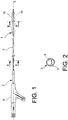
Figure 1 is a side view of an angioplasty balloon catheter; -
Figure 2 is a sectional view along the lines II-II infigure 1 ; -
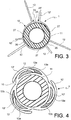
Figure 3 is a sectional view along the lines III-III of the folded balloon catheter offigure 1 according to a first embodiment of the invention, in an unwrapped collapsed configuration; -
Figure 4 is a sectional view of the folded balloon catheter offigure 3 , in a wrapped collapsed configuration; -
Figure 5 is a sectional view of the folded balloon catheter offigure 3 , in a different wrapped configuration; -
Figure 6 is a sectional view of an example of a folded balloon catheter, in an unwrapped collapsed configuration; -
Figure 7 is a sectional view of the folded balloon catheter offigure 6 , in a wrapped collapsed configuration; -
Figure 8 is a perspective view of the angioplasty balloon offigure 7 ; -
Figure 9 is a perspective view of an angioplasty balloon in a deployed configuration; -
Figure 10 is an exploded perspective view of an apparatus for the folding of the angioplasty balloon of the invention; -
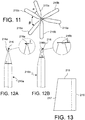
Figure 11 is a schematic top view of the blade arrangement in the apparatus offigure 10 ; -
Figures 12A and 12B are schematic top views of a particular of the blades offigure 11 ; -
Figure 13 is a side view of a blade offigure 11 ; -
Figure 14 is a top sectional view of the apparatus offigure 10 ; -
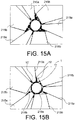
Figure 15a is a schematic top view showing a first step of the formation of the folds according to the method of the invention; -
Figure 15b is a schematic top view showing a second step of the formation of the folds according to the method of the invention; -
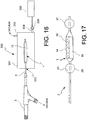
Figure 16 is a schematic side view of a device for the loading of a drug on an angioplasty balloon of the invention, in a folded collapsed configuration; -
Figure 17 is a side view of an embodiment of the angioplasty balloon of the invention, in a deployed configuration, and -
Figure 18 is a sectional view of the folded balloon catheter offigure 3 , in a different wrapped configuration. - With reference to the figures, an angioplasty balloon, indicated with the
numeral 1, is mounted at the distal end of acatheter 2. - The
catheter 2 further comprises an elongatedtubular body 3 that is provided with a plurality oflumens 4, 4' (passages for the guide-wire and for inflating or deflating the balloon, respectively), and a connector means 5 at the proximal end thereof. In the figure, thelumens 4, 4' are positioned side by side, but a coaxial arrangement may also be foreseen. - The
balloon 1 is suitable to alternatively adopt a deployed configuration and a collapsed configuration. The balloon is brought to the deployed configuration by means of the injection of a pressurized inflating fluid, and vice versa it is brought to the collapsed configuration by means of the suction of the same inflating fluid. - The angioplasty balloon of the invention can be manufactured in any polymeric material that is conventionally used for these applications, such as, without limitation, polyamide materials, their blends or copolymers thereof.
- In the collapsed configuration, the balloon is suitable to be inserted within the circulatory system of a patient's body and to be advanced along a vessel to reach a vessel section that is affected by stenosis. The
balloon 1 is further suitable to apply, when it passes from the collapsed configuration to the deployed configuration, a radial force to the stenosis area such as to expand the latter and restore the nominal section of the vessel. - The
balloon 1 comprises anouter wall 10 disposed around acore 11. Thecore 11 represents a distal region of thecatheter 2, and in particular it is a single lumen extension of thetubular body 3. Thecore 11 defines an axis X about which theballoon 1 is developed and comprises a lumen for receiving a guide-wire. - By the term "axial" it is meant the direction of a straight line parallel to the axis X. By the term "radial" it is meant the direction of a half-line originating on the axis X and perpendicular thereto. Finally, by the term "circumferential" (or "tangential") it is meant the direction of a circumference (or a tangent thereto) that is centered on the axis X and lying on a plane perpendicular to the axis X.
- In the collapsed configuration, the
balloon 1 according to the invention, as shown infigures 3 to 7 and18 , comprises a plurality offolds core 11. - According to the present invention, the
folds - According to an embodiment of the invention, a
fold adjacent fold 12', 112 of an adjacent pair are circumferentially wrapped in opposite directions, i.e. if a fold is wrapped clockwise, the adjacent fold is wrapped counter-clockwise, or vice versa, so that the two adjacent folds overlap. - The folds 12, 12', 112 according to the invention are single-folded, which means that they are folded only once.
- When two
adjacent folds more cavities - A
drug 14 is loaded onto the balloon (represented for instance infigure 9 ). - In particular, a
drug 14 is positioned inside thecavities figure 8 ). - As shown in
figures 4 ,5 ,7 and18 , thefolds - In a preferred embodiment, the
folds - The term "substantially overlaps" as used herein means that the fold of one pair overlaps for at least 60% of its circumferential length the adjacent fold of another pair.
- Preferably, the term "substantially overlaps" means that the fold of one pair overlaps for at least 70% of its circumferential length the adjacent fold of another pair.
- More preferably, the term "substantially overlaps" means that the fold of one pair overlaps for at least 80% of its circumferential length the adjacent fold of another pair.
- According to a different embodiment, the
folds - The term "completely overlaps" as used herein means that the fold of one pair overlaps for its whole circumferential length the adjacent fold of another pair in such a way that said adjacent fold is completely covered.
- As shown in
figures 4 ,5 ,7 and18 , thefolds - In particular, the fold of one pair overlaps and adheres for at least 60% of its circumferential length to the adjacent fold of another pair.
- Preferably, the fold of one pair overlaps and adheres for at least 70% of its circumferential length to the adjacent fold of another pair.
- More preferably, the fold of one pair overlaps and adheres for at least 80% of its circumferential length to the adjacent fold of another pair.
- According to another embodiment, the fold of one pair overlaps and adheres for the whole circumferential length the adjacent fold of another pair in such a way that said adjacent fold is completely covered and sealed by the overlapping fold.
- The combination of overlapping and adhesion (contact) between the folds is important since it assures a maximized tightness of the
cavities drug 14 until the balloon reaches the intervention site. The larger the contact surface between two overlapped folds, the stronger are the cohesion forces that tend to keep the folds adhered one to each other. Therefore, the unwrapping of the folds is advantageously prevented. - In the example shown in
figure 9 , theballoon 1, while in the deployed configuration, comprises a plurality ofbands 15 ofdrug 14 that are axially arranged along the balloonouter wall 10. Thebands 15 ofdrug 14 are alternated in the circumferential direction withstrips 16 in which thedrug 14 is not provided and thus theouter wall 10 is directly exposed. - The number of
bands 15, and consequently the number ofstrips 16, depends on the number offolds folds 12 and three folds 12' or of sixfolds 112, when the balloon is in the collapsed configuration, determines the presence of threebands 15 ofdrug 14 that are alternated with threestrips 16 free of drug. - According to an embodiment of the invention, as shown in
figures 3, 4 ,5 and18 , threefolds 12 of a first length and three folds 12' of a second length are provided when the balloon is in a collapsed configuration, wherein the said first length is greater than the said second length, so that the balloon, when in the collapsed configuration, does not have a plane of symmetry containing the axis X of the balloon. This particular configuration of the collapsed balloon will be indicated below as the "asymmetrical configuration" of the angioplasty balloon. - The longer folds 12 and the shorter folds 12' originate from distinct
axial lines 25, 25' on the surface of theballoon 1 and form a pair offolds 12, 12'. In the figures, references 25 and 25' indicate distinct points since these figures represent cross sections of the balloon. - Each of the longer and
shorter folds 12, 12' of a pair is separated by afirst gap 26 extending circumferentially betweenaxial lines 25, 25' when the balloon is in a collapsed configuration. - A
second gap 27, having a greater extension than thefirst gap 26, circumferentially separates alonger fold 12 of a pair from a shorter fold 12' of an adjacent pair. - The extension of the
first gap 26 may tend towards zero in order to maximize thesecond gap 27 for the reason that will become clear below. - According to an embodiment of the present invention, as shown in
figures 4 and5 thefolds 12, 12' are circumferentially wrapped in such a way that a shorter fold 12' of one pair is wrapped in one direction - for example, in a clockwise direction - and an adjacent longer fold 12 of an adjacent pair is wrapped in the opposite direction - for example, in a counter-clockwise direction - so that thesecond gap 27 is covered by the wrapped folds 12, 12'. - Wrapping the folds as described above may be performed in accordance with the following embodiments. The first possibility (shown in
figure 4 ) is that the shorter fold 12' is wrapped before thelonger fold 12, so that this latter overlaps the shorter fold 12'. The second possibility (shown infigure 5 ) is that thelonger fold 12 is wrapped before the shorter fold 12' and thus thelonger fold 12 is at least partially overlapped by the shorter fold 12'. These two ways of wrapping give different results that will be discussed herein below. - According to the wrapping configurations of both
figures 4 and5 , twocavities folds 12, 12' and the second gap 27: i) a firstlarger cavity 13a under the internal fold, i.e. thefold 12' or 12, respectively, that has been wrapped first; ii) a secondsmaller cavity 13b under the external fold, i.e. thefold 12 or 12', respectively, that has been wrapped last. - This allows modulation of the dimensions of the cavities, and thus the amount of drug that can be contained therein. In fact a decrease of the dimension of the
first gap 26 between twofolds 12, 12' of the same pair allows an increase in the dimension of an adjacentsecond gap 27 and associated increases in the circumferential width ofband 15, the dimensions of thecavities drug 14. - In these embodiments, the two
cavities internal cavity 13a, are efficiently isolated from the external environment, so that the drug contained therein can hardly be reached by the blood flow and cannot be dispersed in unintended districts of the body before the angioplasty balloon catheter has reached the site of intervention. - In one embodiment of the invention, the longer folds 12 of the
angioplasty balloon 1 have substantially the same circumferential length as thesecond gap 27. - The embodiments of
Figs.3-5 and examples ofFigs.6,7 and18 comprise three pairs offolds - According to the example shown in
figures 6 and 7 , theangioplasty balloon 101 comprises three pairs offolds 112, wherein eachfold 112 has the same length. - As in this case a plane of symmetry containing the axis X of the balloon is actually present, and the said example will be defined as a "symmetrical configuration" of the collapsed balloon.
- The
folds 112 of each pair originate from distinctlongitudinal lines 125, 125' on theouter surface 10 of theballoon 1 and are separated by afirst gap 126. - A
second gap 127, having a greater extension than thefirst gap 126, separates afold 112 of a pair from afold 112 of an adjacent pair. - As said above, the
first gap 126 has a minor extension which may tend towards zero in order to maximize thesecond gap 127, for the reason explained above. - As shown in the collapsed configuration of
figure 7 , thefolds 112 are circumferentially wrapped aroundsecond gaps 127, which are supported by the core 11 in such a way that afold 112 of one pair is wrapped in one direction - for example in a clockwise direction - and anadjacent fold 112 of an adjacent pair is wrapped in the opposite direction - for example in a counter-clockwise direction - so that thesecond gap 127 is covered by the wrapped folds. In this example, as thefolds 112 have all the same length, it does not matter which fold is wrapped first. - While the
folds 112 are wrapped around thesecond gap 127, acavity 113 is formed between the lower fold 112 (the fold that has been wrapped first) andband 15 applied along thesecond gap 127. Thiscavity 113 provides an efficient tightness and isolation from the external environment, thus preserving thedrug 14 contained therein. Furthermore, thesingle cavity 113 allows that a greater amount ofdrug 14 can be loaded with respect to the embodiment provided with twodistinct cavities - In one example of the invention, the
folds 112 of theballoon 101 have substantially the same circumferential length as thesecond gap 127. - In accordance with another embodiment of the present invention, as shown in
figure 18 , thefolds 12, 12' of theballoon 1 are arranged in pairs and are circumferentially wrapped around thesecond gap 27 in the same direction. - Preferably, as shown in
figure 18 , afold 12 and a fold 12' of the same pair are circumferentially wrapped around thesecond gap 27 in the same direction, so that the two folds of the same pairs overlap. - Alternatively (not shown in the figures) a
fold 12 in a pair and the adjacent fold 12' in another pair are circumferentially wrapped in the same direction, i.e. if a fold is wrapped clockwise, also the adjacent fold is wrapped clockwise, so that the two adjacent folds overlap. - According to a further embodiment, three
folds 12 of a first length and three folds 12' of a second length are provided when the balloon is in a collapsed configuration, wherein the said first length is greater than the said second length. The folds 12, 12' are circumferentially wrapped in such a way that a shorter fold 12' of one pair is wrapped in one direction and an adjacent longer fold 12 of an adjacent pair is wrapped in the same direction, so that the two adjacent folds overlap. - Preferably, the
folds 12, 12' of the same pair are circumferentially wrapped in such a way that a shorter fold 12' is wrapped in one direction and alonger fold 12 of the same pair is wrapped in the same direction, so that the two folds of the same pairs overlap. - Wrapping the folds as described above may be performed in accordance with the following embodiments: the first possibility (shown in
figure 18 ) is that the shorter fold 12' is wrapped before thelonger fold 12, so that this latter overlaps the shorter fold 12'; the second possibility (not shown in the figures) is that thelonger fold 12 is wrapped before the shorter fold 12' and thus thelonger fold 12 is at least partially overlapped by the shorter fold 12'. - Preferably, as shown in
figure 18 , the longer fold 12 completely overlaps the shorter fold 12'. - According to the wrapping configuration of
figure 18 , twocavities folds 12, 12': i) a firstlarger cavity 213a under the internal fold, i.e. thefold 12' or 12, respectively, that has been wrapped first; ii) a secondsmaller cavity 213b under the external fold, i.e. thefold 12 or 12', respectively, that has been wrapped last. - In these embodiments, the two
cavities internal cavity 213a, are efficiently isolated from the external environment, so that the drug contained therein can hardly be reached by the blood flow and can not be dispersed in healthy districts of the body before the angioplasty balloon catheter has reached the site of intervention. - In these embodiments, the
first gap 26 is part of thesmaller cavity 213b. - Any
drug 14 that is capable of treating or preventing restenosis can be used for the invention purposes. As an example, thedrug 14 can be chosen from rapamycin and its analogs, epothilone, everolimus, tacrolimus and pimecrolimus, angiopeptin, lovastatin, topoisomerase inhibitors such as etoposide and topotecan, antiestrogens such as tamoxifen, antimitotics such as vincristine, vinblastine, paclitaxel, docetaxel, antimetabolites such as methotrexate, mercaptopurine, pentostatin, trimetrexate, gemcitabine, azathioprine and fluorouracil, and antibiotics such as doxorubicin hydrochloride, or mixtures thereof. - In preferred embodiments of the invention, the
drug 14 is substantially lipophilic. - In accordance with an embodiment of the invention, the
drug 14 comprises paclitaxel as the active ingredient. Paclitaxel is available with the trade name of TAXOL®, which is a registered mark of Bristol-Myers Squibb. - The
drug 14 can be in any form suitable for the intended application. For example, thedrug 14 may be contained in microspheres or in microparticles and/or it can be in crystalline or microcrystalline form. - When paclitaxel is used as the
drug 14, it can be in crystalline hydrate form, i.e. di-hydrate form. - In accordance with an embodiment, the
drug 14 comprises the active ingredient and a suitable excipient, for example a gel or a paste being suitable to penetrate within thecavities wall 10 of theballoon 1. - In one embodiment, the
drug 14 is applied to the balloon as a solution in a suitable solvent, which is allowed to evaporate after the balloon coating. This solution may contain further excipients. - In one embodiment, a solution of paclitaxel and urea in a solvent is used. In a specific embodiment, the solvent is a mixture of an ether and water, preferably a mixture of tetrahydrofuran and water.
- In other embodiments, the
drug 14 is contained in or adhered to a polymer coating or a hydrogel coating. - Examples of polymer coatings are described, for instance, in the European patent application published as
EP 1 800 702 A1 - In accordance with further examples, as shown in
figure 17 , theballoon 1 according to the invention comprises containment means 20 that are suitable for stopping the blood flow in the site of intervention. - The containment means 20 allow avoiding the washing effect in the blood flow which tends to remove and disperse the
drug 14 immediately after the balloon is inflated and it contacts the vessel walls. In other words, as the blood flow is temporary stopped, the drug is given sufficient time to bind to the vessel walls and to be at least partially absorbed. - In accordance with the example depicted in
Fig. 17 , the containment means 20 comprise twoauxiliary balloons 21, one being located at an immediately proximal position and the other being located at an immediately distal position, relative to theballoon 1. - In accordance with another example (not shown), the containment means 20 comprise an individual
auxiliary balloon 21 which is located only at an immediately proximal position relative to theballoon 1. - The auxiliary balloons 21 are suitable to pass from a collapsed configuration, in which they have minimum radial overall dimensions, to a deployed configuration (illustrated in
Fig. 17 ) in which they are suitable to come in contact with the walls of the blood vessel such as to stop the blood flow. - In accordance with an example, the
auxiliary balloons 21 are different from theinventive angioplasty balloon 1 in that they comprise an elastic wall which is not suitable to apply a radial force that is typically required for an angioplasty operation. According to this example the balloon(s) 21 can be made of elastomeric rubber, for instance. - In accordance with an example the
catheter 2 comprises an inflation/deflation duct for theballoon 1 and an individual inflation/deflation duct for theauxiliary balloons 21, even when two of them are provided. In accordance with another example thecatheter 2 comprises an inflation/deflation duct for theballoon 1 and an inflation/deflation duct for each of the auxiliary balloons 21. - In the following description of the procedure for applying the catheter of
Fig. 17 in a blood vessel, reference is made to a configuration with twoauxiliary balloons 21, but the same operation substantially applies when only oneauxiliary balloon 21 is provided. The procedure for using theangioplasty balloon - inserting the
catheter 2 within a blood vessel up to the site of intervention; - bringing the
auxiliary balloons 21 from the collapsed configuration to the deployed configuration; - bringing the
balloon - bringing the
balloon - after a reasonable time (for example a few seconds), bringing the
auxiliary balloons 21 from the deployed configuration to the collapsed configuration; - removing the catheter.
- forming a plurality of
folds longitudinal lines - wrapping the said folds in such a way that a fold of one pair overlaps an adjacent fold of another pair to create
cavities drug 14. - According to an example, the method comprises the step of filling the cavities with said
drug 14. According to a further example, the method comprises the step of applying a plurality ofbands 15 ofdrug 14. Preferably, the step of applying thedrug 14 is carried out before the step of forming a plurality offolds bands 15 are axially arranged along the balloonouter wall 10. - It will now be described an apparatus and a method for creating the
folds figure 10 , an apparatus for creating thefolds angioplasty balloon apparatus 200 comprises abase plate 201 and atop plate 202 that are connected by a plurality ofcolumns 203, thus creating an elongated structure having a vertical longitudinal axis. Both thebase plate 201 and thetop plate 202 compriseholes 204 that are aligned in order to allow the opposite ends of thecolumns 203 to be inserted therein.Spacers 203a are provided at the bottom section of thecolumns 203, to act as stop means. - The
top plate 202 comprises acentral opening 205 suitable for the insertion of anangioplasty balloon - A
cavity 204a in thetop plate 202 serves as a seat for amagnet 220. - An actuating means 206 having a
central opening 212 is movably arranged between thebase plate 201 and thetop plate 202. The actuating means 206 comprises throughholes 207 aligned with theholes 204 of the base andtop plates columns 203 pass and act as guiding means for the actuating means 206. - A
cavity 204b in the top surface of the actuating means 206 serves as a seat for a magnet 220' which, in cooperation with themagnet 220 of thetop plate 202, allows hanging the actuating means 206 in a rest position in abutment against thetop plate 202. - The
central opening 212 of the actuating means 206 has a frustoconical surface which is flaring downwards. - A
lower support element 208 is fixed on thebase plate 201, while a correspondingupper support element 209 is positioned in a spatial relationship with thetop plate 202. A plurality of connectingbars 210, being fixed in correspondingholes 211 in both theupper support element 209 andtop plate 202, provide - in cooperation with thespacers 210a associated therewith - for the spaced connection of these two pieces. - The
lower support element 208 comprises acentral hole 230, which is designed to be a centering means for the angioplasty balloon, as will be described later on. - The width of the
upper support element 209 is less than the width of thecentral opening 212 of the actuating means 206 so that this latter does not interfere with theupper support element 209 when the actuating means is moved up and down. - A plurality of radially
movable blades 215 is contained in a sandwich accommodation between the upper andlower support elements - The
blades 215 are vertically positioned with theirvertical blade edge 216 facing toward the longitudinal axis of the apparatus. - As shown in
figure 13 , theside 217 of theblade 215 opposite to theedge 216 is inclined as the blade width tapers upwards. The inclination of theside 217 of theblade 215 is the same as the inclination of the surface of theopening 212 of the actuating means 206, so that the two surfaces match. - As shown in
figures 12A, 12B theblade edge 216 is wedge-shaped and presents aflat tip - In particular, according to an example, a
first blade 215a having anedge tip 216a of a first length "l" and asecond blade 215b having anedge tip 216b of a second length "L" are provided. An angle γ defines the tapering of the blade thickness to theedge 216, the said angle γ being the same for bothblades blades 215 are the same, a symmetrical beveling is made to obtain thefirst blade 215a, while an asymmetrical beveling is made for thesecond blade 215b, asfigures 12A, 12B clearly illustrate. However, it would be possible to provide thefirst blade 215a of a minor thickness and thesecond blade 215b of a major thickness, so that in both cases a symmetrical beveling is made. - A first and a
second blade figures 11 and14 , three pairs ofblades - The
blades second blade first blade 215a of a pair and an adjacentsecond blade 215b of another pair of blades, wherein β is greater than α. In an example, β is about 80° and α is about 40°. - As
figure 14 illustrates, a plurality of connectingpins 213 is inserted in correspondingsmall holes 214 both in the lower andupper support elements pins 213 define a spatial distancing between the twosupport elements pins 213 on the support elements matches the predefined geometry of theblades - The
blades - The functioning of the
apparatus 200 will now be described. - As said above, the actuating means 206, when in the rest condition, is hanging from the
top plate 202, being retained by themagnets 220, 220'. When the actuating means 206 is moved downwards (this can be made manually in the example shown in the drawings, but an automatic actuation can also be provided, such as electrical, pneumatic or the like,), it passes around theupper support element 209 and then interacts with theinclined side 217 of the blades 215 (specifically,blades Such blades 215 are so made to move synchronously from the initial retracted position to an advanced position, towards the longitudinal axis of the apparatus. - When the actuating means 206 is brought back to the resting condition, the
blades 215 are free to return to the retracted position. This may be accomplished manually, by means of suitable elastic means (such as a spring) or by any other suitable means. - A procedure for creating the
folds 12, 12' on aballoon catheter 1 will be described herein below. - A balloon catheter is first inserted from the top of the
apparatus 200 along the longitudinal axis thereof, until its distal end abuts against thelower support element 208 surface. Then the balloon is inflated or partially inflated. As a next step, theblades figure 15A . At this stage, the position and the dimension of thefolds 12, 12' are defined. In particular, the extent of the angle α between twoblades longer fold 12. - The balloon is then deflated, so that the
folds 12, 12' are finally created (as shown infigure 15 B) . - The folds are then wrapped as explained above, by wrapping first a shorter fold 12' of one pair in one direction - for example, in a clockwise direction - and then an adjacent longer fold 12 of an adjacent pair in the opposite direction - for example, in a counter-clockwise direction - so that the
second gap 27 results to be covered by the wrapped folds. As described before, it is possible to wrap first thelonger fold 12 and then the shorter fold 12', to arrive to the configuration shown infigure 5 . As described before, it is possible to wrap the longer fold 12 and the shorter fold 12' in the same circumferential direction, to arrive to the configuration shown infigure 18 . - If a symmetrical folded balloon is desired, as illustrated in
figures 6 and 7 , or if the width of the first andsecond gaps edge tip blades - It is therefore provided a method for obtaining a folded
angioplasty balloon - a) inserting the said angioplasty balloon along the longitudinal axis of the above described
apparatus 200; - b) wholly or partially inflating the said angioplasty balloon, wherein steps a) and b) are performed in any order;
- c) synchronously moving the
blades edge tip - d) deflating the angioplasty balloon in order to obtain a collapsed folded balloon wherein a plurality of
folds second gaps - e) wrapping a
fold adjacent fold second gaps folds - f) repeating step e) for each pair of
folds angioplasty balloon cavities drug 14. - In order to arrive to the configuration shown in
figure 18 , the method for obtaining a foldedangioplasty balloon 1 comprises the steps from a to d, as indicated above, and comprises also: - e') wrapping a
fold 12, 12' of a pair in one direction and then theother fold 12', 12 of the same pair in the same direction, - f') repeating step e') for each pair of
folds 12, 12', so that a wrapped foldedangioplasty balloon 1, is obtained, whereincavities drug 14. - Step a) above comprises:
- inserting a stylet into the central hole of the angioplasty balloon catheter of the invention;
- inserting the angioplasty balloon along the longitudinal axis of the
apparatus 200 until the stylet tip abuts into thecentral hole 230 of thelower support element 208 of saidapparatus 200. - To manufacture a drug eluting folded
angioplasty balloon cavities drug 14. - The
drug 14 can be loaded in the cavities of the folded balloon of the invention in any suitable way apt to allow the drug or a drug composition to be deposited under the preformed folds. - According to an embodiment, a syringe filled with a solution of the
drug 14 is inserted in thecavities figure 8 ) formed at the two longitudinal ends of the balloon while wrapping the folds. The syringe must have a needle sufficiently long to arrive to the opposed end of the cavity to be loaded. The delivery of the drug solution is started while retracting the needle, so that the cavity is filled along its whole length. Preferably, a small portion of the cavity close to both ends is left free of drug, to avoid that, during the clinical use of the balloon, the blood stream could take the drug from these more external recesses. - According to this embodiment, only the
cavities drug 14, while the external surface exposed to the blood stream is free of drug. - Another example provides for dipping the
balloon 1 into a solution of thedrug 14 or depositing in any other way the drug onto the balloon surface, when the balloon is still in the deployed condition, then performing the steps a) to f) according to the folding method depicted above. In this way, thedrug 14 is loaded both under the folds and on the external surface thereof. - In a preferred example a further step of removing the drug from the surface outside the folds is performed. The removal of the drug may be done by a dry treatment, i.e. a mechanical removal (for example with a suitable blade or brush), or by a washing treatment with a suitable solvent or by a combination of such methods. In this case, the removed drug can be recovered for a further reuse.
- According to a further example, a
device 300 for loading thedrug 14 onto theangioplasty balloon figure 16 ). - The
device 300 comprises achamber 301 apt to accommodate the distal end of a balloon catheter carrying theangioplasty balloon chamber 301 is tightly closed and comprises a sealedaperture 302 through which thecatheter 3 passes, anoutlet 303 connected to a vacuum source and aninlet 304 connected to areservoir 305 containing a suitable solution of thedrug 14. Between thereservoir 305 and theinlet 304 valve means 306 are provided to start or stop the delivery of the drug solution into thechamber 301. Thelumen 4, 4' of thecatheter 2 for the inflation/deflation of the angioplasty balloon is also connected, through the connector means 5, with a vacuum source. - The folded and wrapped
balloon chamber 301 with acatheter 2 section passing through theaperture 302, then the chamber is tightly closed. As thecatheter 2 tip is normally open, a closure (not shown) should be provided thereon, to avoid that thechamber 301 is put into communication with the exterior. - Vacuum is made into the
chamber 301 through theoutlet 303, so that all the air under thefolds chamber 301. The drug loads both thecavities core 11. Finally, thechamber 301 is emptied and the balloon is extracted. - In a preferred example, a further step of removing the drug from the surface outside the folds is performed. The removal of the drug may be done by a dry treatment, i.e. a mechanical removal (for example with a suitable blade or brush), or by a washing treatment with a suitable solvent or by a combination of such methods.
- In accordance with further example, at the end of the step of loading the
cavities drug 14, theballoon drug 14 does not escape from the cavities. - Alternatively, the protective sheath is positioned on the balloon during the step of loading the
cavities drug 14. - From what has been set forth above, those skilled in the art may appreciate that the balloon according to the invention can at least partially overcome the drawbacks of prior art balloons.
- In fact, the balloon according to the invention, when in the collapsed configuration, protects the
drug 14 by means of thefolds balloon 1 is in the collapsed configuration, thedrug 14 is not exposed to contact with the external environment and only thestrips 16 of the wall not covered withdrug 14 are exposed. This characteristic allows the balloon to be advanced along the vessels of the circulatory system without dispersing the drug in healthy districts along the pathway.
Although preferred embodiments of the invention have been described in detail, it is not the intention of the applicant to limit the scope of the claims to such particular embodiment, but to cover all modifications and alternative constructions falling within the scope of the invention as defined by the appended claims.
Claims (8)
- A drug eluting angioplasty balloon (1) suitable to adopt a deployed configuration and a collapsed configuration, having an outer wall (10) disposed around a core (11) defining an axis (X), the balloon (1) comprising in the collapsed configuration a plurality of folds (12, 12') that are laid in a tangential direction about the core (11) of the balloon (1) and form a plurality of cavities (13a, 13b, 213a, 213b) loaded with a drug (14), wherein:• the said folds (12, 12') originates from distinct longitudinal lines (25, 25') along the outer wall (10) and are arranged in pairs, andfolds (12) of a first length and folds (12') of a second length are provided, wherein the said first length is greater than the said second length to define shorter folds (12') and longer folds (12), a longer fold (12) and a shorter fold (12') forming the said pair of folds.
- The drug eluting angioplasty balloon of claim 1, wherein a longer fold (12) of one pair of folds overlaps an adjacent shorter fold (12') of another pair of folds, so that two cavities (13a, 13b; 213a, 213b) are defined between the said longer and shorter folds (12, 12') and the said core (11).
- The drug eluting angioplasty balloon of claim 1, wherein a shorter fold (12') of one pair of folds overlaps an adjacent longer fold (12) of another pair of folds, so that two cavities (13a, 13b; 213a, 213b) are defined between the said longer and shorter folds (12, 12') and the said core (11).
- The drug eluting angioplasty balloon of claim 1, wherein a shorter fold (12') of one pair and an adjacent longer fold (12) of an adjacent pair are wrapped in the same direction, so that the two adjacent folds overlap.
- The drug eluting angioplasty balloon of claim 1, wherein a shorter fold (12') of one pair and a longer fold (12) of the same pair are wrapped in the same direction, so that the two folds overlap.
- The drug eluting angioplasty balloon of claim 5, wherein the shorter fold (12') is wrapped before the longer fold (12) so that this latter overlaps the shorter fold (12').
- The drug eluting angioplasty balloon of claim 6, wherein the longer fold (12) completely overlaps the shorter fold (12').
- A method of loading a drug (14) under the folds (12, 12', 112) of an angioplasty balloon (1, 101) according to Claim 1, comprising:i) inserting the needle of a syringe filled with a solution of the drug (14) in the cavities (13a, 13b, 113, 213a, 213b) from one of the openings (150) formed at the two longitudinal ends of the angioplasty balloon (1, 101), and starting the delivery of the drug solution while retracting the needle, so that the cavities are filled along their whole length, wherein preferably a small portion of the cavities close to both ends is left free of drug; orii) pouring the angioplasty balloon (1, 101) into a solution of the drug (14) or depositing the drug (14) onto the angioplasty balloon surface, when the balloon is still in the deployed condition, before folding, wherein the method preferably comprises a step of removing the drug from the surface outside the folds after folding of the angioplasty balloon (1, 101); oriii) providing a device (300) comprising a chamber (301) apt to accommodate the distal end of an angioplasty balloon catheter (2) carrying the said angioplasty balloon (1, 101), the said chamber (301) comprising a sealed aperture (302) through which the catheter (2) passes, an outlet (303) connected to a vacuum source and an inlet (304) connected to a reservoir (305) containing a suitable solution of the drug (14), between the reservoir (305) and the inlet (304) valve means (306) being provided to start or stop the delivery of the drug solution into the chamber (301), wherein the lumen (4') of the catheter (2) for the inflation/deflation of the angioplasty balloon is also connected with a vacuum source;- accommodating the said folded and wrapped balloon (1, 101) in the chamber (301) with a catheter (2) section passing through the aperture (302);- tightly closing the chamber (301) and applying vacuum into the chamber (301) through the outlet (303), so that all the air under the folds (12, 12', 112) of the angioplasty balloon (1, 101) is extracted and the folds are slightly opened;- closing the vacuum source and opening the valve means (306) to allow the drug (14) solution to fill in the chamber (301) and load the cavities (13a, 13b, 113, 213a, 213b) under the folds;- applying vacuum into the angioplasty balloon (1, 101), so that the folds (12, 12', 112) are tightly wrapped again;- emptying the chamber (301) and extracting the angioplasty balloon;- optionally, removing the drug from the surface outside the folds after folding of the angioplasty balloon (1, 101).
Applications Claiming Priority (1)
| Application Number | Priority Date | Filing Date | Title |
|---|---|---|---|
| PCT/EP2010/070423 WO2012084024A1 (en) | 2010-12-21 | 2010-12-21 | Drug eluting balloon for the treatment of stenosis and method for manufacturing the balloon |
Publications (2)
| Publication Number | Publication Date |
|---|---|
| EP2654874A1 EP2654874A1 (en) | 2013-10-30 |
| EP2654874B1 true EP2654874B1 (en) | 2018-04-11 |
Family
ID=43836594
Family Applications (1)
| Application Number | Title | Priority Date | Filing Date |
|---|---|---|---|
| EP10798089.8A Not-in-force EP2654874B1 (en) | 2010-12-21 | 2010-12-21 | Drug eluting balloon for the treatment of stenosis and method for manufacturing the balloon |
Country Status (4)
| Country | Link |
|---|---|
| US (1) | US9168362B2 (en) |
| EP (1) | EP2654874B1 (en) |
| CN (1) | CN103260692B (en) |
| WO (1) | WO2012084024A1 (en) |
Cited By (3)
| Publication number | Priority date | Publication date | Assignee | Title |
|---|---|---|---|---|
| US11071847B1 (en) | 2019-12-24 | 2021-07-27 | Encompass Vascular, Inc. | Medical devices for fluid delivery |
| US11654268B2 (en) | 2021-02-23 | 2023-05-23 | Encompass Vascular, Inc. | Medical devices for fluid delivery and methods of use and manufacture |
| US11759550B2 (en) | 2021-04-30 | 2023-09-19 | Encompass Vascular, Inc. | Medical devices for fluid delivery and methods of use and manufacture |
Families Citing this family (27)
| Publication number | Priority date | Publication date | Assignee | Title |
|---|---|---|---|---|
| CN104645487B (en) * | 2013-11-21 | 2021-06-01 | 上海微创医疗器械(集团)有限公司 | Medical balloon and its manufacturing method and balloon dilatation catheter |
| CN104095668B (en) * | 2014-07-15 | 2016-08-24 | 中国人民解放军第二军医大学 | Special-shaped ball bellows ureteral calculus stops extractor |
| CN107427670B (en) * | 2014-12-29 | 2021-04-16 | 波士顿科学国际有限公司 | Compositions, devices and methods for multistage release of chemotherapeutic drugs |
| JP6793125B2 (en) | 2015-09-25 | 2020-12-02 | テルモ株式会社 | Balloon folding machine and balloon folding method |
| JP6623014B2 (en) * | 2015-09-25 | 2019-12-18 | テルモ株式会社 | Balloon folding machine and balloon folding method |
| US10792477B2 (en) | 2016-02-08 | 2020-10-06 | Orbusneich Medical Pte. Ltd. | Drug eluting balloon |
| CN108601930B (en) * | 2016-02-08 | 2021-12-14 | 祥丰医疗私人有限公司 | drug eluting balloon |
| EP3391930B1 (en) * | 2016-03-23 | 2024-06-05 | Terumo Kabushiki Kaisha | Balloon catheter and method for producing same |
| CN108778391B (en) * | 2016-03-23 | 2021-07-13 | 泰尔茂株式会社 | Balloon catheter and method of manufacture and treatment thereof |
| JP2017169738A (en) | 2016-03-23 | 2017-09-28 | テルモ株式会社 | Balloon catheter, and production method and treatment method therefor |
| JP6907190B2 (en) | 2016-03-23 | 2021-07-21 | テルモ株式会社 | Balloon catheter and its manufacturing method |
| JP6668131B2 (en) | 2016-03-23 | 2020-03-18 | テルモ株式会社 | Balloon catheter, manufacturing method and treatment method thereof |
| WO2018008518A1 (en) * | 2016-07-04 | 2018-01-11 | 株式会社カネカ | Balloon catheter and method for manufacturing same |
| CN109789299B (en) * | 2016-09-23 | 2021-07-23 | 泰尔茂株式会社 | Balloon Folder |
| JP2021036924A (en) * | 2017-12-27 | 2021-03-11 | テルモ株式会社 | Balloon catheter |
| CN112203712B (en) * | 2018-07-09 | 2023-11-07 | 株式会社戈德曼 | balloon catheter |
| JP7282364B2 (en) * | 2019-05-21 | 2023-05-29 | 株式会社東海メディカルプロダクツ | Balloon catheter, method for folding balloon of balloon catheter, and balloon forming apparatus |
| CN110420377B (en) * | 2019-06-28 | 2021-12-03 | 先健科技(深圳)有限公司 | Medicine balloon catheter |
| CN111388842B (en) * | 2020-03-30 | 2023-10-24 | 常州谦泰医疗科技有限公司 | Medicine-carrying saccule apparatus |
| CN113425992A (en) * | 2021-06-15 | 2021-09-24 | 伊索曼(中山)医疗器械有限公司 | Balloon catheter |
| CN113648023B (en) * | 2021-07-05 | 2023-06-16 | 科凯(南通)生命科学有限公司 | Repairing saccule for treating thrombus and calcified lesion |
| CN113350648A (en) * | 2021-07-18 | 2021-09-07 | 温州医科大学附属第一医院 | Tracheal catheter capable of accurately local anesthesia |
| CN114098896A (en) * | 2021-11-04 | 2022-03-01 | 杭州天路医疗器械有限公司 | Balloon type shock wave generation system and directional medicine delivery method thereof |
| CN217067377U (en) * | 2021-12-29 | 2022-07-29 | 上海蓝脉医疗科技有限公司 | Balloon system |
| US20250195220A1 (en) * | 2023-12-18 | 2025-06-19 | St. Jude Medical, Cardiology Division, Inc. | Minimizing Valve Rotation |
| CN118662763B (en) * | 2024-08-20 | 2024-11-01 | 杭州巴泰医疗器械有限公司 | Balloon, balloon catheter and method for manufacturing balloon |
| CN119034088A (en) * | 2024-10-31 | 2024-11-29 | 深圳市业聚实业有限公司 | Drug balloon dilation catheter and interventional medical instrument |
Citations (1)
| Publication number | Priority date | Publication date | Assignee | Title |
|---|---|---|---|---|
| US20090054837A1 (en) * | 2006-02-09 | 2009-02-26 | B. Braun Melsungen Ag | Coating Method for a Folded Balloon |
Family Cites Families (8)
| Publication number | Priority date | Publication date | Assignee | Title |
|---|---|---|---|---|
| US6306166B1 (en) | 1997-08-13 | 2001-10-23 | Scimed Life Systems, Inc. | Loading and release of water-insoluble drugs |
| CA2307021A1 (en) * | 1997-10-08 | 1999-04-15 | Kaneka Corporation | Balloon catheter and method for manufacturing same |
| US6013092A (en) * | 1998-08-18 | 2000-01-11 | Baxter International Inc. | Folding of catheter-mounted balloons to facilitate non-rotational radial expansion of intraluminal devices |
| DE10115740A1 (en) | 2001-03-26 | 2002-10-02 | Ulrich Speck | Preparation for restenosis prophylaxis |
| US7758605B2 (en) * | 2002-02-28 | 2010-07-20 | Boston Scientific Scimed, Inc. | Balloon folding apparatus, methods and products |
| DE10244847A1 (en) | 2002-09-20 | 2004-04-01 | Ulrich Prof. Dr. Speck | Medical device for drug delivery |
| WO2009135125A2 (en) * | 2008-05-01 | 2009-11-05 | Bayer Schering Pharma Ag | Catheter balloon drug adherence techniques and methods |
| US8109985B2 (en) * | 2008-07-23 | 2012-02-07 | Boston Scientific Scimed, Inc. | Occlusion crossing device and method |
-
2010
- 2010-12-21 EP EP10798089.8A patent/EP2654874B1/en not_active Not-in-force
- 2010-12-21 CN CN201080070799.1A patent/CN103260692B/en not_active Expired - Fee Related
- 2010-12-21 US US13/885,377 patent/US9168362B2/en active Active
- 2010-12-21 WO PCT/EP2010/070423 patent/WO2012084024A1/en not_active Ceased
Patent Citations (1)
| Publication number | Priority date | Publication date | Assignee | Title |
|---|---|---|---|---|
| US20090054837A1 (en) * | 2006-02-09 | 2009-02-26 | B. Braun Melsungen Ag | Coating Method for a Folded Balloon |
Cited By (7)
| Publication number | Priority date | Publication date | Assignee | Title |
|---|---|---|---|---|
| US11071847B1 (en) | 2019-12-24 | 2021-07-27 | Encompass Vascular, Inc. | Medical devices for fluid delivery |
| US11491312B2 (en) | 2019-12-24 | 2022-11-08 | Encompass Vascular, Inc. | Medical devices for fluid delivery |
| US12090286B2 (en) | 2019-12-24 | 2024-09-17 | Encompass Vascular, Inc. | Medical devices for fluid delivery |
| US11654268B2 (en) | 2021-02-23 | 2023-05-23 | Encompass Vascular, Inc. | Medical devices for fluid delivery and methods of use and manufacture |
| US12226599B2 (en) | 2021-02-23 | 2025-02-18 | Encompass Vascular, Inc. | Medical devices for fluid delivery and methods of use and manufacture |
| US11759550B2 (en) | 2021-04-30 | 2023-09-19 | Encompass Vascular, Inc. | Medical devices for fluid delivery and methods of use and manufacture |
| US11918768B2 (en) | 2021-04-30 | 2024-03-05 | Encompass Vascular, Inc. | Medical devices for fluid delivery and methods of use and manufacture |
Also Published As
| Publication number | Publication date |
|---|---|
| WO2012084024A1 (en) | 2012-06-28 |
| EP2654874A1 (en) | 2013-10-30 |
| CN103260692B (en) | 2016-10-26 |
| US9168362B2 (en) | 2015-10-27 |
| US20130303982A1 (en) | 2013-11-14 |
| CN103260692A (en) | 2013-08-21 |
Similar Documents
| Publication | Publication Date | Title |
|---|---|---|
| US9168362B2 (en) | Drug eluting balloon for the treatment of stenosis and method of manufacturing the balloon | |
| AU2007361589B9 (en) | Balloon for the treatment of stenosis and method for manufacturing the balloon | |
| JP7583073B2 (en) | Wedge dissector for medical balloons | |
| CN219440371U (en) | dual drug delivery balloon | |
| CN104822397B (en) | Retractable sheath device, system and method | |
| KR20140091752A (en) | Eluting medical devices | |
| CN102416217A (en) | Medical Therapy Balloon Dilatation Catheters | |
| US20120136367A1 (en) | Multi-segment protective sheath for expandable medical devices | |
| CN110548211A (en) | A drug balloon catheter with blocking function | |
| US20200282190A1 (en) | Drug transfer device and method for forming drug layer | |
| US11123528B2 (en) | Balloon catheter and method for manufacturing same | |
| CN106178233A (en) | The preparation method of medicine balloon dilating catheter and flap winding sacculus | |
| CN112041018A (en) | Balloon catheter | |
| CN114209961A (en) | A kind of medicine balloon dilatation catheter and preparation method thereof | |
| JP7357046B2 (en) | Balloon catheter and balloon placement method | |
| JP7357047B2 (en) | Balloon catheter and balloon placement method | |
| KR101811768B1 (en) | Drug coating Balloon catheter and method of Balloon catheter | |
| RU2010125222A (en) | CYLINDER FOR TREATMENT OF STENOSIS AND METHOD FOR PRODUCING A CYLINDER | |
| JP2020099380A (en) | Medication catheter |
Legal Events
| Date | Code | Title | Description |
|---|---|---|---|
| PUAI | Public reference made under article 153(3) epc to a published international application that has entered the european phase |
Free format text: ORIGINAL CODE: 0009012 |
|
| 17P | Request for examination filed |
Effective date: 20130709 |
|
| AK | Designated contracting states |
Kind code of ref document: A1 Designated state(s): AL AT BE BG CH CY CZ DE DK EE ES FI FR GB GR HR HU IE IS IT LI LT LU LV MC MK MT NL NO PL PT RO RS SE SI SK SM TR |
|
| DAX | Request for extension of the european patent (deleted) | ||
| 17Q | First examination report despatched |
Effective date: 20150226 |
|
| REG | Reference to a national code |
Ref country code: DE Ref legal event code: R079 Ref document number: 602010049884 Country of ref document: DE Free format text: PREVIOUS MAIN CLASS: A61M0029020000 Ipc: A61L0029160000 |
|
| RIC1 | Information provided on ipc code assigned before grant |
Ipc: A61M 25/10 20130101ALI20170210BHEP Ipc: A61L 29/16 20060101AFI20170210BHEP |
|
| GRAP | Despatch of communication of intention to grant a patent |
Free format text: ORIGINAL CODE: EPIDOSNIGR1 |
|
| INTG | Intention to grant announced |
Effective date: 20170801 |
|
| GRAJ | Information related to disapproval of communication of intention to grant by the applicant or resumption of examination proceedings by the epo deleted |
Free format text: ORIGINAL CODE: EPIDOSDIGR1 |
|
| INTC | Intention to grant announced (deleted) | ||
| GRAP | Despatch of communication of intention to grant a patent |
Free format text: ORIGINAL CODE: EPIDOSNIGR1 |
|
| INTG | Intention to grant announced |
Effective date: 20180124 |
|
| GRAS | Grant fee paid |
Free format text: ORIGINAL CODE: EPIDOSNIGR3 |
|
| GRAA | (expected) grant |
Free format text: ORIGINAL CODE: 0009210 |
|
| GRAT | Correction requested after decision to grant or after decision to maintain patent in amended form |
Free format text: ORIGINAL CODE: EPIDOSNCDEC |
|
| AK | Designated contracting states |
Kind code of ref document: B1 Designated state(s): AL AT BE BG CH CY CZ DE DK EE ES FI FR GB GR HR HU IE IS IT LI LT LU LV MC MK MT NL NO PL PT RO RS SE SI SK SM TR |
|
| REG | Reference to a national code |
Ref country code: GB Ref legal event code: FG4D |
|
| REG | Reference to a national code |
Ref country code: CH Ref legal event code: EP |
|
| REG | Reference to a national code |
Ref country code: AT Ref legal event code: REF Ref document number: 987313 Country of ref document: AT Kind code of ref document: T Effective date: 20180415 |
|
| REG | Reference to a national code |
Ref country code: IE Ref legal event code: FG4D |
|
| REG | Reference to a national code |
Ref country code: DE Ref legal event code: R096 Ref document number: 602010049884 Country of ref document: DE |
|
| REG | Reference to a national code |
Ref country code: NL Ref legal event code: MP Effective date: 20180411 |
|
| REG | Reference to a national code |
Ref country code: LT Ref legal event code: MG4D |
|
| PG25 | Lapsed in a contracting state [announced via postgrant information from national office to epo] |
Ref country code: NL Free format text: LAPSE BECAUSE OF FAILURE TO SUBMIT A TRANSLATION OF THE DESCRIPTION OR TO PAY THE FEE WITHIN THE PRESCRIBED TIME-LIMIT Effective date: 20180411 |
|
| PG25 | Lapsed in a contracting state [announced via postgrant information from national office to epo] |
Ref country code: ES Free format text: LAPSE BECAUSE OF FAILURE TO SUBMIT A TRANSLATION OF THE DESCRIPTION OR TO PAY THE FEE WITHIN THE PRESCRIBED TIME-LIMIT Effective date: 20180411 Ref country code: PL Free format text: LAPSE BECAUSE OF FAILURE TO SUBMIT A TRANSLATION OF THE DESCRIPTION OR TO PAY THE FEE WITHIN THE PRESCRIBED TIME-LIMIT Effective date: 20180411 Ref country code: NO Free format text: LAPSE BECAUSE OF FAILURE TO SUBMIT A TRANSLATION OF THE DESCRIPTION OR TO PAY THE FEE WITHIN THE PRESCRIBED TIME-LIMIT Effective date: 20180711 Ref country code: SE Free format text: LAPSE BECAUSE OF FAILURE TO SUBMIT A TRANSLATION OF THE DESCRIPTION OR TO PAY THE FEE WITHIN THE PRESCRIBED TIME-LIMIT Effective date: 20180411 Ref country code: AL Free format text: LAPSE BECAUSE OF FAILURE TO SUBMIT A TRANSLATION OF THE DESCRIPTION OR TO PAY THE FEE WITHIN THE PRESCRIBED TIME-LIMIT Effective date: 20180411 Ref country code: BG Free format text: LAPSE BECAUSE OF FAILURE TO SUBMIT A TRANSLATION OF THE DESCRIPTION OR TO PAY THE FEE WITHIN THE PRESCRIBED TIME-LIMIT Effective date: 20180711 Ref country code: FI Free format text: LAPSE BECAUSE OF FAILURE TO SUBMIT A TRANSLATION OF THE DESCRIPTION OR TO PAY THE FEE WITHIN THE PRESCRIBED TIME-LIMIT Effective date: 20180411 Ref country code: LT Free format text: LAPSE BECAUSE OF FAILURE TO SUBMIT A TRANSLATION OF THE DESCRIPTION OR TO PAY THE FEE WITHIN THE PRESCRIBED TIME-LIMIT Effective date: 20180411 |
|
| PG25 | Lapsed in a contracting state [announced via postgrant information from national office to epo] |
Ref country code: GR Free format text: LAPSE BECAUSE OF FAILURE TO SUBMIT A TRANSLATION OF THE DESCRIPTION OR TO PAY THE FEE WITHIN THE PRESCRIBED TIME-LIMIT Effective date: 20180712 Ref country code: LV Free format text: LAPSE BECAUSE OF FAILURE TO SUBMIT A TRANSLATION OF THE DESCRIPTION OR TO PAY THE FEE WITHIN THE PRESCRIBED TIME-LIMIT Effective date: 20180411 Ref country code: RS Free format text: LAPSE BECAUSE OF FAILURE TO SUBMIT A TRANSLATION OF THE DESCRIPTION OR TO PAY THE FEE WITHIN THE PRESCRIBED TIME-LIMIT Effective date: 20180411 Ref country code: HR Free format text: LAPSE BECAUSE OF FAILURE TO SUBMIT A TRANSLATION OF THE DESCRIPTION OR TO PAY THE FEE WITHIN THE PRESCRIBED TIME-LIMIT Effective date: 20180411 |
|
| REG | Reference to a national code |
Ref country code: AT Ref legal event code: MK05 Ref document number: 987313 Country of ref document: AT Kind code of ref document: T Effective date: 20180411 |
|
| PG25 | Lapsed in a contracting state [announced via postgrant information from national office to epo] |
Ref country code: PT Free format text: LAPSE BECAUSE OF FAILURE TO SUBMIT A TRANSLATION OF THE DESCRIPTION OR TO PAY THE FEE WITHIN THE PRESCRIBED TIME-LIMIT Effective date: 20180813 |
|
| REG | Reference to a national code |
Ref country code: DE Ref legal event code: R097 Ref document number: 602010049884 Country of ref document: DE |
|
| PG25 | Lapsed in a contracting state [announced via postgrant information from national office to epo] |
Ref country code: CZ Free format text: LAPSE BECAUSE OF FAILURE TO SUBMIT A TRANSLATION OF THE DESCRIPTION OR TO PAY THE FEE WITHIN THE PRESCRIBED TIME-LIMIT Effective date: 20180411 Ref country code: RO Free format text: LAPSE BECAUSE OF FAILURE TO SUBMIT A TRANSLATION OF THE DESCRIPTION OR TO PAY THE FEE WITHIN THE PRESCRIBED TIME-LIMIT Effective date: 20180411 Ref country code: DK Free format text: LAPSE BECAUSE OF FAILURE TO SUBMIT A TRANSLATION OF THE DESCRIPTION OR TO PAY THE FEE WITHIN THE PRESCRIBED TIME-LIMIT Effective date: 20180411 Ref country code: EE Free format text: LAPSE BECAUSE OF FAILURE TO SUBMIT A TRANSLATION OF THE DESCRIPTION OR TO PAY THE FEE WITHIN THE PRESCRIBED TIME-LIMIT Effective date: 20180411 Ref country code: AT Free format text: LAPSE BECAUSE OF FAILURE TO SUBMIT A TRANSLATION OF THE DESCRIPTION OR TO PAY THE FEE WITHIN THE PRESCRIBED TIME-LIMIT Effective date: 20180411 Ref country code: SK Free format text: LAPSE BECAUSE OF FAILURE TO SUBMIT A TRANSLATION OF THE DESCRIPTION OR TO PAY THE FEE WITHIN THE PRESCRIBED TIME-LIMIT Effective date: 20180411 |
|
| PGFP | Annual fee paid to national office [announced via postgrant information from national office to epo] |
Ref country code: DE Payment date: 20181126 Year of fee payment: 9 Ref country code: IE Payment date: 20181121 Year of fee payment: 9 |
|
| PLBE | No opposition filed within time limit |
Free format text: ORIGINAL CODE: 0009261 |
|
| STAA | Information on the status of an ep patent application or granted ep patent |
Free format text: STATUS: NO OPPOSITION FILED WITHIN TIME LIMIT |
|
| PG25 | Lapsed in a contracting state [announced via postgrant information from national office to epo] |
Ref country code: SM Free format text: LAPSE BECAUSE OF FAILURE TO SUBMIT A TRANSLATION OF THE DESCRIPTION OR TO PAY THE FEE WITHIN THE PRESCRIBED TIME-LIMIT Effective date: 20180411 |
|
| PGFP | Annual fee paid to national office [announced via postgrant information from national office to epo] |
Ref country code: FR Payment date: 20181127 Year of fee payment: 9 Ref country code: IT Payment date: 20181122 Year of fee payment: 9 |
|
| 26N | No opposition filed |
Effective date: 20190114 |
|
| PG25 | Lapsed in a contracting state [announced via postgrant information from national office to epo] |
Ref country code: SI Free format text: LAPSE BECAUSE OF FAILURE TO SUBMIT A TRANSLATION OF THE DESCRIPTION OR TO PAY THE FEE WITHIN THE PRESCRIBED TIME-LIMIT Effective date: 20180411 |
|
| REG | Reference to a national code |
Ref country code: CH Ref legal event code: PL |
|
| GBPC | Gb: european patent ceased through non-payment of renewal fee |
Effective date: 20181221 |
|
| PG25 | Lapsed in a contracting state [announced via postgrant information from national office to epo] |
Ref country code: LU Free format text: LAPSE BECAUSE OF NON-PAYMENT OF DUE FEES Effective date: 20181221 Ref country code: MC Free format text: LAPSE BECAUSE OF FAILURE TO SUBMIT A TRANSLATION OF THE DESCRIPTION OR TO PAY THE FEE WITHIN THE PRESCRIBED TIME-LIMIT Effective date: 20180411 |
|
| REG | Reference to a national code |
Ref country code: BE Ref legal event code: MM Effective date: 20181231 |
|
| PG25 | Lapsed in a contracting state [announced via postgrant information from national office to epo] |
Ref country code: BE Free format text: LAPSE BECAUSE OF NON-PAYMENT OF DUE FEES Effective date: 20181231 |
|
| PG25 | Lapsed in a contracting state [announced via postgrant information from national office to epo] |
Ref country code: LI Free format text: LAPSE BECAUSE OF NON-PAYMENT OF DUE FEES Effective date: 20181231 Ref country code: CH Free format text: LAPSE BECAUSE OF NON-PAYMENT OF DUE FEES Effective date: 20181231 Ref country code: GB Free format text: LAPSE BECAUSE OF NON-PAYMENT OF DUE FEES Effective date: 20181221 |
|
| PG25 | Lapsed in a contracting state [announced via postgrant information from national office to epo] |
Ref country code: MT Free format text: LAPSE BECAUSE OF NON-PAYMENT OF DUE FEES Effective date: 20181221 |
|
| PG25 | Lapsed in a contracting state [announced via postgrant information from national office to epo] |
Ref country code: TR Free format text: LAPSE BECAUSE OF FAILURE TO SUBMIT A TRANSLATION OF THE DESCRIPTION OR TO PAY THE FEE WITHIN THE PRESCRIBED TIME-LIMIT Effective date: 20180411 |
|
| PG25 | Lapsed in a contracting state [announced via postgrant information from national office to epo] |
Ref country code: HU Free format text: LAPSE BECAUSE OF FAILURE TO SUBMIT A TRANSLATION OF THE DESCRIPTION OR TO PAY THE FEE WITHIN THE PRESCRIBED TIME-LIMIT; INVALID AB INITIO Effective date: 20101221 Ref country code: CY Free format text: LAPSE BECAUSE OF FAILURE TO SUBMIT A TRANSLATION OF THE DESCRIPTION OR TO PAY THE FEE WITHIN THE PRESCRIBED TIME-LIMIT Effective date: 20180411 Ref country code: MK Free format text: LAPSE BECAUSE OF NON-PAYMENT OF DUE FEES Effective date: 20180411 |
|
| REG | Reference to a national code |
Ref country code: DE Ref legal event code: R119 Ref document number: 602010049884 Country of ref document: DE |
|
| PG25 | Lapsed in a contracting state [announced via postgrant information from national office to epo] |
Ref country code: IS Free format text: LAPSE BECAUSE OF FAILURE TO SUBMIT A TRANSLATION OF THE DESCRIPTION OR TO PAY THE FEE WITHIN THE PRESCRIBED TIME-LIMIT Effective date: 20180811 |
|
| PG25 | Lapsed in a contracting state [announced via postgrant information from national office to epo] |
Ref country code: IE Free format text: LAPSE BECAUSE OF NON-PAYMENT OF DUE FEES Effective date: 20191221 Ref country code: IT Free format text: LAPSE BECAUSE OF NON-PAYMENT OF DUE FEES Effective date: 20191221 Ref country code: DE Free format text: LAPSE BECAUSE OF NON-PAYMENT OF DUE FEES Effective date: 20200701 Ref country code: FR Free format text: LAPSE BECAUSE OF NON-PAYMENT OF DUE FEES Effective date: 20191231 |