EP2648788B1 - Dry powder inhaler - Google Patents
Dry powder inhaler Download PDFInfo
- Publication number
- EP2648788B1 EP2648788B1 EP11847102.8A EP11847102A EP2648788B1 EP 2648788 B1 EP2648788 B1 EP 2648788B1 EP 11847102 A EP11847102 A EP 11847102A EP 2648788 B1 EP2648788 B1 EP 2648788B1
- Authority
- EP
- European Patent Office
- Prior art keywords
- dry powder
- chamber
- actuator
- powder inhaler
- inhaler
- Prior art date
- Legal status (The legal status is an assumption and is not a legal conclusion. Google has not performed a legal analysis and makes no representation as to the accuracy of the status listed.)
- Active
Links
Images





Classifications
-
- A—HUMAN NECESSITIES
- A61—MEDICAL OR VETERINARY SCIENCE; HYGIENE
- A61M—DEVICES FOR INTRODUCING MEDIA INTO, OR ONTO, THE BODY; DEVICES FOR TRANSDUCING BODY MEDIA OR FOR TAKING MEDIA FROM THE BODY; DEVICES FOR PRODUCING OR ENDING SLEEP OR STUPOR
- A61M15/00—Inhalators
- A61M15/0028—Inhalators using prepacked dosages, one for each application, e.g. capsules to be perforated or broken-up
-
- A—HUMAN NECESSITIES
- A61—MEDICAL OR VETERINARY SCIENCE; HYGIENE
- A61M—DEVICES FOR INTRODUCING MEDIA INTO, OR ONTO, THE BODY; DEVICES FOR TRANSDUCING BODY MEDIA OR FOR TAKING MEDIA FROM THE BODY; DEVICES FOR PRODUCING OR ENDING SLEEP OR STUPOR
- A61M15/00—Inhalators
- A61M15/0001—Details of inhalators; Constructional features thereof
- A61M15/0003—Details of inhalators; Constructional features thereof with means for dispensing more than one drug
-
- A—HUMAN NECESSITIES
- A61—MEDICAL OR VETERINARY SCIENCE; HYGIENE
- A61M—DEVICES FOR INTRODUCING MEDIA INTO, OR ONTO, THE BODY; DEVICES FOR TRANSDUCING BODY MEDIA OR FOR TAKING MEDIA FROM THE BODY; DEVICES FOR PRODUCING OR ENDING SLEEP OR STUPOR
- A61M15/00—Inhalators
- A61M15/0001—Details of inhalators; Constructional features thereof
- A61M15/0005—Details of inhalators; Constructional features thereof with means for agitating the medicament
- A61M15/001—Details of inhalators; Constructional features thereof with means for agitating the medicament using ultrasonic means
-
- A—HUMAN NECESSITIES
- A61—MEDICAL OR VETERINARY SCIENCE; HYGIENE
- A61M—DEVICES FOR INTRODUCING MEDIA INTO, OR ONTO, THE BODY; DEVICES FOR TRANSDUCING BODY MEDIA OR FOR TAKING MEDIA FROM THE BODY; DEVICES FOR PRODUCING OR ENDING SLEEP OR STUPOR
- A61M15/00—Inhalators
- A61M15/0001—Details of inhalators; Constructional features thereof
- A61M15/0021—Mouthpieces therefor
-
- A—HUMAN NECESSITIES
- A61—MEDICAL OR VETERINARY SCIENCE; HYGIENE
- A61M—DEVICES FOR INTRODUCING MEDIA INTO, OR ONTO, THE BODY; DEVICES FOR TRANSDUCING BODY MEDIA OR FOR TAKING MEDIA FROM THE BODY; DEVICES FOR PRODUCING OR ENDING SLEEP OR STUPOR
- A61M15/00—Inhalators
- A61M15/0028—Inhalators using prepacked dosages, one for each application, e.g. capsules to be perforated or broken-up
- A61M15/003—Inhalators using prepacked dosages, one for each application, e.g. capsules to be perforated or broken-up using capsules, e.g. to be perforated or broken-up
- A61M15/0033—Details of the piercing or cutting means
- A61M15/0035—Piercing means
- A61M15/0036—Piercing means hollow piercing means
-
- A—HUMAN NECESSITIES
- A61—MEDICAL OR VETERINARY SCIENCE; HYGIENE
- A61M—DEVICES FOR INTRODUCING MEDIA INTO, OR ONTO, THE BODY; DEVICES FOR TRANSDUCING BODY MEDIA OR FOR TAKING MEDIA FROM THE BODY; DEVICES FOR PRODUCING OR ENDING SLEEP OR STUPOR
- A61M15/00—Inhalators
- A61M15/0028—Inhalators using prepacked dosages, one for each application, e.g. capsules to be perforated or broken-up
- A61M15/0063—Storages for pre-packed dosages
-
- A—HUMAN NECESSITIES
- A61—MEDICAL OR VETERINARY SCIENCE; HYGIENE
- A61M—DEVICES FOR INTRODUCING MEDIA INTO, OR ONTO, THE BODY; DEVICES FOR TRANSDUCING BODY MEDIA OR FOR TAKING MEDIA FROM THE BODY; DEVICES FOR PRODUCING OR ENDING SLEEP OR STUPOR
- A61M16/00—Devices for influencing the respiratory system of patients by gas treatment, e.g. ventilators; Tracheal tubes
- A61M16/10—Preparation of respiratory gases or vapours
- A61M16/12—Preparation of respiratory gases or vapours by mixing different gases
- A61M16/122—Preparation of respiratory gases or vapours by mixing different gases with dilution
- A61M16/125—Diluting primary gas with ambient air
- A61M16/127—Diluting primary gas with ambient air by Venturi effect, i.e. entrainment mixers
-
- A—HUMAN NECESSITIES
- A61—MEDICAL OR VETERINARY SCIENCE; HYGIENE
- A61M—DEVICES FOR INTRODUCING MEDIA INTO, OR ONTO, THE BODY; DEVICES FOR TRANSDUCING BODY MEDIA OR FOR TAKING MEDIA FROM THE BODY; DEVICES FOR PRODUCING OR ENDING SLEEP OR STUPOR
- A61M2202/00—Special media to be introduced, removed or treated
- A61M2202/06—Solids
- A61M2202/064—Powder
-
- A—HUMAN NECESSITIES
- A61—MEDICAL OR VETERINARY SCIENCE; HYGIENE
- A61M—DEVICES FOR INTRODUCING MEDIA INTO, OR ONTO, THE BODY; DEVICES FOR TRANSDUCING BODY MEDIA OR FOR TAKING MEDIA FROM THE BODY; DEVICES FOR PRODUCING OR ENDING SLEEP OR STUPOR
- A61M2205/00—General characteristics of the apparatus
- A61M2205/43—General characteristics of the apparatus making noise when used correctly
Definitions
- US 2004/0173211 A1 relates to a powder inhaler in which at least part of the inner surface coming into contact with the powder aerosol is microstructured. Preferably, it is a powder inhaler operating on the Bernoulli principle.
- WO 2006/090149 A2 relates to a powder delivery device for the delivery of a powdered substance.
- the delivery device comprises a substance supply unit which includes a chamber which receives a capsule, which contains a metered amount of a powdered substance which is to be delivered by the delivery device.
- An exhaled air flow is reduced in temperature by a heat exchanger and this cooled air is then driven through the chamber, which acts to move the capsule and entrain the powdered substance as contained by the capsule.
- WO 97/04827 A1 discloses an inhaler apparatus with a cavity that contains at least one, and more typically, a plurality of beads.
- the surface of each bead is coated with a powder.
- the beads are carried upwards until they impact a first screen. Since the beads impact the screen with substantial force, the medicament coating is dislodged from the surface of the beads.
- WO 2010/014827 A2 relates to a dry powder inhaler that includes a drug chamber configured to contain a formulation including carrier particles and working agent particles, a mouthpiece configured to direct flow of working agent particles to a user, and a retaining member proximal the mouthpiece.
- the retaining member is sized and arranged to prevent flow of substantially all carrier particles to the user while permitting flow of working agent particles to a user.
- US 6 230 707 B1 concerns an inhaler device having a tubular member connected to a chamber.
- the tubular member has a first opening at one end through which air can be sucked and the chamber has a hole therein for entry of air.
- air When air is sucked through the first opening, air enters the chamber through the hole swirls and moves towards the first opening.
- a powdered substance within the chamber is picked up by the swirling air within the chamber.
- the effect can be enhanced by adding a movable element such as a ball inside the chamber.
- US 2010/0059051 A1 relates to an inhaler for inhaling a formulation which comprises a filiform support for metering and/or conveying the formulation.
- inhaled therapy for treatment of lung diseases such as asthma, chronic obstructive pulmonary disease (COPD), and cystic fibrosis have been recognized for many years.
- Direct administration of drug to the airways minimizes systemic side effects, provides maximum pulmonary specificity, and imparts a rapid onset of action.
- Dry powder inhalers are becoming a leading device for delivery of therapeutics to the airways of patients.
- DPIs Dry powder inhalers
- Currently, all marketed dry powder inhalation products are comprised of micronized drug (either agglomerated or blended) delivered from "passive" dry powder inhalers, DPIs. These inhalers are passive in the sense that they rely on the patient's inspiratory effort to disperse the powder into a respirable aerosol.
- DPIs emit different doses depending on how the patient uses the device, for example, the inhalation effort of the patient.
- DPIs can be quite poor. In one study comparing the performance of the two most widely prescribed DPIs, only between 6% and 21 % of the dose emitted from the device was considered respirable. Improved performance for DPI devices is urgent needed from both clinical and product development standpoints. One promising approach to improving DPI performance is to modify the formulation rather than the device itself.
- carrier particles are mixed with the drug particles.
- carrier particles serve to increase the fluidization of the drug because the drug particles are normally too small to be influenced significantly by the airflow through the inhaler. The carrier particles thus improve the dose uniformity by acting as a diluent or bulking agent in the formulation.
- these carrier particles which are generally about 50-100 microns in size, improve the performance of dry powder aerosols, the performance of dry powder aerosols remains relatively poor. For instance, only approximately 30% of the drug in a typical dry powder aerosol formulation will be delivered to the target site, and often much less. Significant amounts of drug are not released from these conventional carrier particles and, due to the relatively large size of the carrier in relation to the drug, the drug is deposited in the throat and mouth of the patient where it may exert unwanted side effects.
- a dry powder formulation is typically a binary mixture, consisting of micronized drug particles (aerodynamic diameter typically between 1 and 5 ⁇ m) and larger inert carrier particles (typically lactose monohydrate with 63 - 90 ⁇ m diameters).
- Drug particles experience cohesive forces with other drug particles and adhesive forces with carrier particles (predominately via van der Waals forces), and it is these interparticulate forces that must be overcome in order to effectively disperse the powder and increase lung deposition efficiency.
- the energy used to overcome the interparticulate forces is provided by the inspired breath of the patient as they use the inhaler.
- the aerodynamic forces entrain and de-aggregate the powder, though variations in the inhalation effort of the patient (e.g.
- the active pharmaceutical ingredient also called a medicament, typically constitutes less than 5% of the formulation (%w/w), with lactose comprising the vast majority of the dose.
- lactose comprising the vast majority of the dose.
- the purpose of the carrier lactose is to prevent aggregation of the drug particles due to cohesive forces, primarily van der Waals forces arising from the instantaneous dipole moments between neighboring drug particles. Due to the small size of the drug particles these resulting cohesive forces are quite strong and not readily broken apart by the aerodynamic force provided by inhalation, producing aggregates that possess poor flow properties and end up depositing in the back of the throat.
- the drug adheres to the carriers particles instead and the larger size of the carrier particles allows them to be more easily entrained in the air stream produced when the patient inhales, carrying the API toward a mesh where the carrier particle collides; the force from the collision is often sufficient to detach the drug particles from the carrier, dispersing them in the airstream and allowing their deposition within the lung. Collisions with the inner walls of the inhaler may also be significant. However, a large fraction of API remains attached to carriers that do not collide effectively with the mesh, but instead are deflected, producing insufficient force to disperse the drug particles from its surface. API that does not dissociate from these carriers, along with drug adhered to carrier particles that slip through without any contact with the mesh, are deposited in the back of the throat via inertial impaction, often causing significant side effects in the throat.
- DPI formulations have required larger inert carrier particles to be blended with the small micronized ( ⁇ 5 microns) drug particles to improve re-dispersion of the cohesive drug particles and reduce dosing variability.
- micronized drug remains aggregated and almost all is simply inhaled as far as the throat, where it is swallowed and never reaches the intended target.
- carrier particles There have been many studies investigating these carrier particles yet modifications to their physiochemical properties (size, shape, crystallinity, surface fines, roughness, etc) have failed to yield meaningful improvements in performance of DPIs.
- these carrier particles lactose in the US
- DPI performance are also responsible for batch to batch variability in DPI performance.
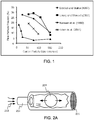
- carrier particle diameter One of the most commonly studied properties of carrier particles is carrier particle diameter. Over the course of 20 years, the general rule of thumb has been established that increasing carrier particle size leads to decreased DPI performance. Figure 1 shows several examples from previous literature that indicated that increasing carrier particle size in DPI formulations leads to decreased performance.
- Some conventional DPIs permit, and sometimes even intend, carrier particles to exit the inhaler.
- the carrier particles must be inert, and in the United States, the FDA restricts the carrier particle material to lactose.
- alternative carrier particle materials that may be more judiciously chosen based on hygroscopic properties of the carrier (e.g., a desiccant material) and the surface interactions (e.g., acid or base character of the drug and carrier) between the carrier and the drug.
- Nasal delivery is used for treatment of a variety of illnesses such as allergic rhinitis, as well as for delivery of drugs for systemic or CNS action.
- liquid delivery technologies have utilized spray pump derived technology or pressurized metered dose inhalers (pMDIs) for rapid jetting of the formulation into the nasal cavity.
- pMDIs pressurized metered dose inhalers
- nasal formulations are solution or suspension based requiring solvents or stabilizers. These are typically administered as sprays.
- Metered sprays and pump sprays have several disadvantages including:
- DPI device technologies have been applied to nasal delivery predominantly for locally acting drugs. These formulations have notable advantages such as stability and dose delivery. These can be particularly advantageous for biological drugs and drugs requiring systemic plasma concentrations. Included in these systems are modified dry powder inhalers (developed for orally inhaled aerosol delivery) with a "nostril piece” instead of a "mouth piece”. Such devices are activated by nasal inhalation. These devices have also applied known concepts from DPI technology: reservoir dry powder with dose metering mechanisms - or capsule based devices needing piercing mechanisms and special loading procedures before use and after use. These device concepts inherit the same problems experienced when using DPIs for pulmonary delivery: complicated formulation, and high airflow resistance making it difficult to achieve sufficient nasal dose delivery.
- the invention is defined by the subject-matter of claim 1.
- the present invention is directed generally to dry powder inhalation aerosols. More particularly, the present invention is designed to directly apply active agents to patients utilizing a novel actuating sphere design and an accompanying inhaler to take advantage of these unique properties. In some embodiments, the present invention also takes advantage of the high performance at low flow rates of a powder dispersion system so that powders can be successfully delivered to different regions of the nasal cavity.
- a dry powder inhaler includes an inlet channel through which air enters the inhaler, and a chamber that receives air from the inlet channel, the chamber being of a size and shape to contain an actuator to which a powdered medicament is adhered.
- the dry powder further includes a retaining member disposed at an end of the chamber opposite the inlet channel, the retaining member having one or more openings sized to permit air and the powdered medicament to pass through the retaining member, and to prevent the actuator from passing through the retaining member, and an outlet channel through which air and the powdered medicament leave the inhaler to be delivered to a patient.
- the geometry of the inhaler is such that a flow profile is generated within the chamber that causes the actuator to oscillate, thus detaching the powdered medicament from the surface of the actuator to be entrained by the air and delivered to the patient through the outlet channel.
- the cross sectional area of the flow path through the inhaler undergoes a step increase at the entrance to the chamber.
- the diameter of the chamber is at least 1.5 times the diameter of the inlet channel.
- the inlet channel may comprise a tapered tube.
- the outlet channel may comprise a tube whose cross section changes along the length of the tube.
- the outlet channel is comprised in a mouthpiece adapted to be placed within the mouth of the patient.
- the outlet channel is comprised in a nasal adapter adapted to conform to the nostrils of the patient.
- the dry powder inhaler may further comprise one or more bypass channels that receive supplemental air from outside the inhaler and deliver the supplemental air to the patient without the supplemental air having passed through the chamber.
- the inlet channel is a first inlet channel and the chamber is a first chamber
- the dry powder inhaler further comprises a second inlet channel and a second chamber.
- air and powdered medicament leaving the first and second chambers are delivered to the outlet channel.
- the outlet channel is a first outlet channel
- the dry powder inhaler further comprises a second outlet channel
- air and powdered medicament leaving the first chamber are delivered to the first outlet channel
- air and powdered medicament leaving the second chamber are delivered to the second outlet channel.
- the first and second chambers may be of the same dimensions.
- the dry powder inhaler may be separable to permit insertion of a capsule into the chamber, the capsule containing the actuator.
- the dry powder inhaler may further include features for puncturing seals at ends of the capsule. Airflow through the inhaler may be driven by inspiratory effort of the patient.
- the dry powder inhaler is combined with the actuator.
- the actuator may be made of expanded polystyrene.
- the actuator may have a density between 0.001 and 0.50 g/cm 3 .
- the actuator may have a diameter of at least 1000 microns.
- the actuator may have a diameter between 1000 and 6000 microns.
- a combination of medicaments is adhered to the actuator.
- the dry powder inhaler includes a plurality of chambers disposed on a rotary element for selectively aligning any of the chambers with the outlet channel.
- the dry powder inhaler includes at least two chambers holding at least two actuators having medicament adhered to the actuators, and wherein the flowing air causes each actuator to oscillate to dislodge powdered medicament to be inhaled.
- the same powdered medicament may be adhered to at least two actuators.
- at least two actuators have different powdered medicaments adhered to the actuators.
- the words “comprising” (and any form of comprising, such as “comprise” and “comprises”), “having” (and any form of having, such as “have” and “has”), "including” (and any form of including, such as “includes” and “include”) or “containing” (and any form of containing, such as “contains” and “contain”) are inclusive or open-ended and do not exclude additional, unrecited elements or method steps.
- An actuating sphere is a large bead or other bearing-type object comprised of a low-density, mechanically elastic material, which is prepared using any suitable technique, for example injection molding, compression molding, or cast material over a core.
- the actuating sphere may be made from ionomeric resins, polyurethanes, silicon, and other materials.
- the actuating sphere while having a generally spherical outer surface, may have a plurality of dimples or other indentations or protrusions for optimized aerodynamic properties as well as for improved retention of active agents.
- the actuating sphere is utilized in the context of providing a medium for attachment of active agents, thus releasing the active agent upon the introduction of force or inertia.
- An actuator is a bead or other bearing-type object to which a medicament is adhered, and that oscillates in response to air flow.
- An actuating sphere is one kind of actuator.
- Active Pharmaceutical Ingredients Active Agents:
- Drugs having an action on the central nervous system for example sedatives, hypnotics, antianxiety agents, analgesics and anesthetics, such as, chloral, buprenorphine, naloxone, haloperidol, fluphenazine, pentobarbital, phenobarbital, secobarbital, amobarbital, cydobarbital, codeine, lidocaine, tetracaine, dyclonine, dibucaine, cocaine, procaine, mepivacaine, bupivacaine, etidocaine, prilocaine, benzocaine, fentanyl, nicotine, and the like.
- Local anesthetics such as, benzocaine, procaine, dibucaine, lidocaine, and the like.
- Antihistaminics or antiallergic agents such as, diphenhydramine, dimenhydrinate, perphenazine, triprolidine, pyrilamine, chlorcyclizine, promethazine, carbinoxamine, tripelennamine, brompheniramine, hydroxyzine, cyclizine, meclizine, clorprenaline, terfenadine, chlorpheniramine, and the like.
- Anti-allergenics such as, antazoline, methapyrilene, chlorpheniramine, pyrilamine, pheniramine, and the like. Decongestants such as, phenylephrine, ephedrine, naphazoline, tetrahydrozoline, and the like.
- Antipyretics such as, aspirin, salicylamide, non-steroidal anti-inflammatory agents, and the like.
- Antimigrane agents such as, dihydroergotamine, pizotyline, and the like.
- Acetonide anti-inflammatory agents such as hydrocortisone, cortisone, dexamethasone, fluocinolone, triamcinolone, medrysone, prednisolone, flurandrenolide, prednisone, halcinonide, methylprednisolone, fludrocortisone, corticosterone, paramethasone, betamethasone, ibuprophen, naproxen, fenoprofen, fenbufen, flurbiprofen, indoprofen, ketoprofen, suprofen, indomethacin, piroxicam, aspirin, salicylic acid, diflunisal, methyl salicylate, phenylbutazone, su
- Steroids such as, androgenic steriods, such as, testosterone, methyltestosterone, fluoxymesterone, estrogens such as, conjugated estrogens, esterified estrogens, estropipate, 17- ⁇ estradiol, 17- ⁇ estradiol valerate, equilin, mestranol, estrone, estriol, 17 ⁇ ethinyl estradiol, diethylstilbestrol, progestational agents, such as, progesterone, 19-norprogesterone, norethindrone, norethindrone acetate, melengestrol, chlormadinone, ethisterone, medroxyprogesterone acetate, hydroxyprogesterone caproate, ethynodiol diacetate, norethynodrel, 17- ⁇ hydroxyprogesterone, dydrogesterone, dimethisterone, ethinylestrenol, norges
- Respiratory agents such as, theophilline and ⁇ 2 -adrenergic agonists, such as, albuterol, terbutaline, metaproterenol, ritodrine, carbuterol, fenoterol, quinterenol, rimiterol, solmefamol, soterenol, tetroquinol, tacrolimus and the like.
- Sympathomimetics such as, dopamine, norepinephrine, phenylpropanolamine, phenylephrine, pseudoephedrine, amphetamine, propylhexedrine, arecoline, and the like.
- Antimicrobial agents including antibacterial agents, antifungal agents, antimycotic agents and antiviral agents; tetracyclines such as, oxytetracycline, penicillins, such as, ampicillin, cephalosporins such as, cefalotin, aminoglycosides, such as, kanamycin, macrolides such as, erythromycin, chloramphenicol, iodides, nitrochanoin, nystatin, amphotericin, fradiomycin, sulfonamides, purrolnitrin, clotrimazole, itraconazole, miconazole chloramphenicol, sulfacetamide, sulfamethazine, sulfadiazine, sulfamerazine, sulfamethizole and sulfisoxazole; antivirals, including idoxuridine; clarithromycin; and other anti-infectives including nitrofurazone, and the like.
- Antihypertensive agents such as, clonidine, ⁇ -methyldopa, reserpine, syrosingopine, rescinnamine, cinnarizine, hydrazine, prazosin, and the like.
- Antihypertensive diuretics such as, chlorothiazide, hydrochlorothrazide, bendoflumethazide, trichlormethiazide, furosemide, tripamide, methylclothiazide, penfluzide, hydrothiazide, spironolactone, metolazone, and the like.
- Cardiotonics such as, digitalis, ubidecarenone, dopamine, and the like.
- Coronary vasodilators such as, organic nitrates such as, nitroglycerine, isosorbitol dinitrate, erythritol tetranitrate, and pentaerythritol tetranitrate, dipyridamole, dilazep, trapidil, trimetazidine, and the like.
- Vasoconstrictors such as, dihydroergotamine, dihydroergotoxine, and the like.
- ⁇ -blockers or antiarrhythmic agents such as, timolol pindolol, propranolol, and the like.
- Humoral agents such as, the prostaglandins, natural and synthetic, for example PGE1, PGE2 ⁇ , and PGF2 ⁇ , and the PGE1 analog misoprostol.
- Antispasmodics such as, atropine, methantheline, papaverine, cinnamedrine, methscopolamine, and the like.
- Calcium antagonists and other circulatory organ agents such as, aptopril, diltiazem, nifedipine, nicardipine, verapamil, bencyclane, ifenprodil tartarate, molsidomine, clonidine, prazosin, and the like.
- Anti-convulsants such as, nitrazepam, meprobamate, phenytoin, and the like.
- Agents for dizziness such as, isoprenaline, betahistine, scopolamine, and the like.
- Tranquilizers such as, reserprine, chlorpromazine, and antianxiety benzodiazepines such as, alprazolam, chlordiazepoxide, clorazeptate, halazepam, oxazepam, prazepam, clonazepam, flurazepam, triazolam, lorazepam, diazepam, and the like.
- Antipsychotics such as, phenothiazines including thiopropazate, chlorpromazine, triflupromazine, mesoridazine, piperracetazine, thioridazine, acetophenazine, fluphenazine, perphenazine, trifluoperazine, and other major tranqulizers such as, chlorprathixene, thiothixene, haloperidol, bromperidol, loxapine, and molindone, as well as, those agents used at lower doses in the treatment of nausea, vomiting, and the like.
- phenothiazines including thiopropazate, chlorpromazine, triflupromazine, mesoridazine, piperracetazine, thioridazine, acetophenazine, fluphenazine, perphenazine, trifluoperazine, and other major tranqulizers such as, chlorprathixene, thi
- Drugs for Parkinson's disease, spasticity, and acute muscle spasms such as levodopa, carbidopa, amantadine, apomorphine, bromocriptine, selegiline (deprenyl), trihexyphenidyl hydrochloride, benztropine mesylate, procyclidine hydrochloride, baclofen, diazepam, dantrolene, and the like.
- Respiratory agents such as, codeine, ephedrine, isoproterenol, dextromethorphan, orciprenaline, ipratropium bromide, cromglycic acid, and the like.
- Non-steroidal hormones or antihormones such as, corticotropin, oxytocin, vasopressin, salivary hormone, thyroid hormone, adrenal hormone, kallikrein, insulin, oxendolone, and the like.
- Vitamins such as, vitamins A, B, C, D, E and K and derivatives thereof, calciferols, mecobalamin, and the like for use dermatologically.
- Enzymes such as, lysozyme, urokinaze, and the like.
- Herb medicines or crude extracts such as, Aloe vera, and the like.
- Antitumor agents such as, 5-fluorouracil and derivatives thereof, krestin, picibanil, ancitabine, cytarabine, and the like.
- Anti-estrogen or anti-hormone agents such as, tamoxifen or human chorionic gonadotropin, and the like.
- Miotics such as pilocarpine, and the like.
- Cholinergic agonists such as, choline, acetylcholine, methacholine, carbachol, bethanechol, pilocarpine, muscarine, arecoline, and the like.
- Antimuscarinic or muscarinic cholinergic blocking agents such as, atropine, scopolamine, homatropine, methscopolamine, homatropine methylbromide, methantheline, cyclopentolate, tropicamide, propantheline, anisotropine, dicyclomine, eucatropine, and the like.
- Mydriatics such as, atropine, cyclopentolate, homatropine, scopolamine, tropicamide, eucatropine, hydroxyamphetamine, and the like.
- Psychic energizers such as 3-(2-aminopropy)indole, 3-(2-aminobutyl)indole, and the like.
- Antidepressant drugs such as, isocarboxazid, phenelzine, tranylcypromine, imipramine, amitriptyline, trimipramine, doxepin, desipramine, nortriptyline, protriptyline, amoxapine, maprotiline, trazodone, and the like.
- Anti-diabetics such as, insulin, and anticancer drugs such as, tamoxifen, methotrexate, and the like.
- Anorectic drugs such as, dextroamphetamine, methamphetamine, phenylpropanolamine, fenfluramine, diethylpropion, mazindol, phentermine, and the like.
- Anti-malarials such as, the 4-aminoquinolines, alphaaminoquinolines, chloroquine, pyrimethamine, and the like.
- Anti-ulcerative agents such as, misoprostol, omeprazole, enprostil, and the like.
- Antiulcer agents such as, allantoin, aldioxa, alcloxa, N-methylscopolamine methylsuflate, and the like.
- Antidiabetics such as insulin, and the like.
- Anti-cancer agent such as, cis-platin, actinomycin D, doxorubicin, vincristine, vinblastine, etoposide, amsacrine, mitoxantrone, tenipaside, taxol, colchicine, cyclosporin A, phenothiazines or thioxantheres, and the like.
- one or more antigens such as, natural, heat-killer, inactivated, synthetic, peptides and even T cell epitopes (e.g., GADE, DAGE, MAGE, etc.) and the like.
- Example therapeutic or active agents also include drugs of molecular weight from 40 to 1,100 including the following: Hydrocodone, Lexapro, Vicodin, Effexor, Paxil, Wellbutrin, Bextra, Neurontin, Lipitor, Percocet, Oxycodone, Valium, Naproxen, Tramadol, Ambien, Oxycontin, Celebrex, Prednisone, Celexa, Ultracet, Protonix, Soma, Atenolol, Lisinopril, Lortab, Darvocet, Cipro, Levaquin, Ativan, Nexium, Cyclobenzaprine, Ultram, Alprazolam, Trazodone, Norvasc, Biaxin, Codeine, Clonazepam, Toprol, Zithromax, Diovan, Skelaxin, Klonopin, Lorazepam, Depakote, Diazepam, Albuterol, Topamax, Seroquel, Amoxicillin, Ritalin, Methadone,
- active agents include those listed as BCS Class II agents.
- the active agents mentioned above may be used in combination as required.
- the above drugs may be used either in the free form or, if capable of forming salts, in the form of a salt with a suitable acid or base. If the drugs have a carboxyl group, their esters may be employed.
- FIGS 2A-2C illustrate certain principles utilized by embodiments of the invention.
- an actuator 201 resides in a chamber 202 .
- a powdered medicament is adhered to actuator 201 .
- the powdered medicament may be in a pure form, or may be adhered to carrier particles.
- the medicament may attach to actuator 201 by van der Waals forces, which may include combinations of permanent dipoles, induced dipoles, and instantaneous dipoles. Other attachment mechanisms may also be used, alternatively or additionally.
- the adhesion forces may arise from van der Waals forces, electrostatic interactions, physical interactions, capillary interactions, or combinations thereof.
- the air 203 is drawn into chamber 202 through inlet channel 204 .
- Inlet channel 204 is smaller in cross sectional area than the size of actuator 201 , so that actuator 201 cannot enter inlet channel 204 .
- a retaining member 205 at the other end of chamber 202 prevents actuator 201 from exiting that end of chamber 202 .
- Retaining member 205 may be, for example, a mesh or grid that permits flow of air through the retaining member, but retains actuator 201 within chamber 202 .
- retaining member 205 may define openings that are about 250 microns in breadth, so as to prevent the passage of particles larger than about 250 microns. In other embodiments, retaining member 205 may define openings that are about 500 microns in breadth, so as to prevent the passage of particles larger than about 500 microns.
- retaining member 205 may have less than 50% occluded area, and in other embodiments more than 50% occluded area.
- An actuator of the dry powder inhaler according to the invention and exemplified by actuator 201 is a bead to which the powdered medicament is adhered.
- An actuator may be smooth, or have indentations, dimples, protrusions, or other surface features.
- An actuator may be made of any suitable material, for example a polymer such as polystyrene, polytetrafluorethylene, or another kind of polymer, polyurethane, silicon, silicone glass, silica gel, another glass, another gel, or another kind of material or combination of materials.
- An actuator may be made of a biodegradable material or a nonbiodegradable material. Many other kinds of materials or combinations of materials may be used.
- An actuator may have a relatively low density, for example, between 0.001 and 0.5 g/cm 3 , or preferably between 0.001 and 0.12 g/cm 3 , or more preferably between 0.001 and 0.04 g/cm 3 .
- An actuator may be of any appropriate size compatible with the chamber in which it is retained.
- an actuator may have a diameter of between 500 and 25000 microns (0.5 and 25 mm), preferably between 1000 and 10000 microns (1.0 and 10.0 mm), and more preferably between 1000 and 6000 microns (1.0 and 6.0 mm).
- An actuator may be made by any suitable process, depending on the material of the actuator.
- actuators may be made by molding, extrusion, milling, spray drying, polymer imprinting, or other processes or combinations of processes.
- an actuator may have a mass of less than 10.0 mg, for example less than 5.0 mg, or less than 2.5 mg.
- an actuator may have a mass of greater than 0.001 mg, for example greater than 0.1 mg, or greater than 0.5 mg.
- an actuator may have a mass between 0.001 mg and 10.0 mg, for example, between 0.1 mg and 5.0 mg, or between 0.5 mg and 2.5 mg.
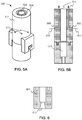
- Figure 2B illustrates the formation of re-circulating eddies 206 in empty chamber 202 .
- the flow stream detaches from the inner wall of the system at the comer of the expansion, where inlet channel 204 opens to chamber 202 , and reattaches downstream.
- part of the incoming flow stream is shed, becoming trapped as recirculating eddies 206 at the corners 207 of chamber 202 .
- actuator 201 is introduced into chamber 202 , the flow may become more complex. The net result is that actuator 201 oscillates rapidly, generally along the axis of chamber 202 .
- Actuator 201 is rotatable in up to three dimensions.
- Figure 2C is a multiple-exposure photograph of an actual system, in which actuator 201 oscillates. It has been surprisingly discovered that during oscillation, actuator 201 rarely contacts the walls or ends of chamber 202 . However, the oscillations of actuator 201 are sufficient in magnitude to dislodge powdered medicament from the surface of actuator 201 .
- actuator 201 This is in part due to the relatively large size of actuator 201 , as compared with carrier particles used in previous inhalers.
- a H is the Hamaker's constant, and is typically on the range of 10 -19 J
- D is the interparticulate distance and is commonly given as 4 Angstroms (10 -10 m)
- d 1 and d 2 are the diameters of the medicament and carrier particles respectively.
- the separation forces generated by the oscillation of actuator 201 are generally proportional to the cube of the diameter of actuator 201 . Thus, for a large actuator, it is possible to generate separation forces that exceed the adhesive forces, as shown in Figure 3 , in region 301 .
- FIG 4A shows an oblique view of a dry powder inhaler (DPI) 400 , according to an embodiment of the invention.
- DPI 400 includes a mouthpiece 401 , through which outlet channel 402 passes.
- DPI 400 also includes a chamber portion 403 , engaged with mouthpiece 401 .
- DPI 400 may also include retaining features 404 , for holding mouthpiece 401 and chamber portion 403 together.
- Connection features 404 may be releasable, to allow mouthpiece 401 and chamber portion 403 to be separated and reattached, for example for loading of DPI 400 . Any suitable connection mechanism may be used.
- Figure 4B shows a side view of DPI 400
- Figure 4C shows a section view of DPI 400 , revealing some internal details.
- Chamber portion 403 of DPI 400 includes an inlet channel 405 , leading to a chamber 406 .
- the inside surface of chamber 406 may include ridges or other surface features to minimize the contact area of an actuator contained in chamber 406 with the walls.
- Chamber 406 has a larger cross sectional area than does inlet channel 405 , and at the entrance 407 of chamber 406 , the flow path of air through DPI 400 undergoes a step increase in cross sectional area.
- Chamber 406 is of a size and shape to contain an actuator to which a powdered medicament is adhered.
- DPI 400 also includes a retaining member 407 downstream of chamber 406 .
- Retaining member 407 includes openings (not visible in Figure 4C ) sized to permit air to flow through retaining member 408 , but to retain the actuator within chamber 406 .
- Retaining member may be, for example, a mesh or grid placed across an end of chamber 406 or outlet channel 402 .
- Figure 4D illustrates DPI 400 in operation.
- an actuator 409 has been loaded into chamber 406 .
- Actuator 409 is large enough that it cannot pass through inlet channel 405 and cannot pass through the openings in retaining member 408 , and thus actuator 409 is retained within chamber 406 .
- Actuator 409 is a bead to which the powdered medicament is adhered. Because actuator 409 does not leave chamber 406 or come into contact with the patient, it need not be made of lactose, and more flexibility in the selection of materials for actuator 409 is provided than for the carrier particles in a conventional inhaler.
- Actuator 409 may be, for example, made of polystyrene, polytetrafluoroethylene (PTFE, aka Teflon), silicone glass, silica gel, glass, or another suitable material. In some embodiments, actuator 409 may be made of a biodegradable material.
- Particles 410 of a powdered medicament are adhered to actuator 409 .
- a patient places mouthpiece 401 in his or her mouth, and inhales.
- the inspiratory effort of the patient draws air 411 into inlet channel 405 .
- actuator 409 oscillates generally along the axial direction of the flow channel, dislodging particles 410 from the surface of actuator 409 such that they are entrained in the flow stream.
- the dislodged particles 410 pass through retaining member 408 , through outlet channel 402 , and exit DPI 400 to be inhaled by the patient.
- Outlet channel 402 may include ridges or grooves (similar to the rifling in the barrel of a firearm) to assist in directing the flow of the medicament in a straight path as it leaves the device.
- Actuator 409 may oscillate many of times during a single inhalation, and may oscillate as many as hundreds of times.
- the oscillation frequency is typically between 1 and 1000 Hz, and is preferably between 25 and 150Hz, although other frequencies may also occur.
- the oscillation may produce an audible sound, which can provide audible feedback to a patient using the DPI, indicating that medicament is being delivered.
- passive inhaler An inhaler that is actuated by the patient's inspiratory effort alone is known as a passive inhaler. It will be recognized that the invention may be embodied in a passive inhaler, or an inhaler that uses another energy source at least in part to promote air flow.
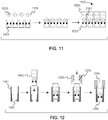
- FIG. 5A shows an oblique view of a DPI 500 according to another embodiment.
- DPI 500 includes several features similar to features of DPI 400 previously described, including a mouthpiece 501 including an outlet flow channel 502 .
- DPI 500 also includes flow bypass channels 503 that are connected to a sheath flow channel 504.
- Figure 5B is a cross section view of DPI 500, showing the internal configuration of flow bypass channels 503 and sheath flow channel 504. Supplemental air 505 is drawn into flow bypass channels 505 and through sheath flow channel 504 , reaching the patient without having passed through chamber 506 .
- Flow bypass channels may be included to reduce the flow resistance of DPI 500 , while still allowing sufficient airflow through chamber 506 to deliver powdered medicament to the patient.
- a device without bypass flow channels was measured to have a flow resistance of about 0.140 (cmH 2 O) .5 /L min -1 , resulting in a flow rate of about 46 L min -1 with a pressure drop of 4 kPa across the inhaler, while a device with bypass flow channels was measured to have a flow resistance of about 0.061 (cmH 2 O) .5 /L min -1 , resulting in a flow rate of about 105 L min -1 with a pressure drop of 4 kPa across the inhaler.
- Figure 6 illustrates a cross section of an alternative chamber portion 601 .
- Chamber portion 601 is similar to chamber portion 403 described above, but rather than a cylindrical inlet flow channel, chamber portion 601 includes a tapered inlet flow channel 602 . Many other shapes are possible.
- FIG. 7 illustrates a cross section view of a DPI 700 according to another embodiment, including dimensions of various features, given in millimeters.
- DPI 700 may accommodate an actuator having a diameter of about 4.5 - 5.5 millimeters, although other sizes may be used.
- DPI 700 includes a mouthpiece 701 having an outlet flow channel 702 .
- outlet flow channel 702 is not cylindrical, but changes in cross sectional area along its length.
- a chamber portion 703 includes an inlet flow channel 704 (which is tapered in this example), leading to a chamber 705 .
- Bypass flow channels 706 direct supplemental air to a sheath flow channel 707 without the supplemental air having passed through chamber 705 .
- DPI 700 serves as one enabling example embodiment, it will be understood that the invention claimed is not limited to the particular dimensions or combination of features shown.
- the length of mouthpiece 701 may be shorter or longer than that shown in Figure 7 .
- Outlet flow channel 702 may be cylindrical or may have a cross sectional area that varies along the length of mouthpiece 701 .
- the two ends of outlet flow channel 702 may be of equal size, or may differ in size, with either end being larger than the other.
- Cylindrical flow channels need not be circularly cylindrical, but may have cross sectional shapes in the form of polygons, ellipses, or other shapes.
- inlet flow channel 704 may be varied, and inlet flow channel 704 may be cylindrical or may have a cross sectional area that varies along the length of inlet flow channel 704 .
- Inlet flow channel 704 may be straight, tapered, curved, angled, or have another shape.
- Bypass flow channels 706 and sheath flow channel 707 may be varied in shape or size, or may be omitted.
- sheath flow channel 707 may be straight, curved, tapered, angled, or may have another shape.
- a different number of bypass flow channels 706 may be provided.
- Multiple sheath flow channels 707 may be provided.
- the length, shape, and cross sectional area of chamber 705 may be varied from the stated dimensions, within any workable ranges.
- the ratio of the chamber diameter to the inlet diameter is at least 1.5, and may be between 1.5 and 3.0, for example between 2.10 and 2.25.
- the ratio of the chamber diameter to the diameter of the actuator within the chamber is between 1.0 and 2.0, for example between 1.3 and 1.6.
- Mouthpiece 701 and chamber portion 703 may be made of any suitable material, but preferably are molded of a medical or food grade polymer such as polycarbonate, ABS, or another polymer or blend of polymers.
- the parts of DPI 700 may be reusable or may be disposable.
- the embodiment of Figure 7 was measured to have a flow resistance of about 0.059 (cmH 2 O) .5 /L min -1 . Its performance was tested in vitro using a cascade impactor, at a volumetric flow rate of 90 L min -1 , which corresponds to approximately a 2 kPa pressure drop across the inhaler. Several medicaments were tested, and results are shown below in Table 1.
- a single chamber for holding a single actuator.
- the single actuator may have a single powdered medicament adhered to it, or may have a mixture of powdered medicaments adhered to it, so that a combination of drugs may be delivered.
- multiple chambers may be provided, for holding multiple actuators.
- multiple actuators may have the same medicament or medicaments adhered to them, for delivering a stronger dose than is delivered from a single actuator, or may have different medicaments adhered to them for delivering a combination of drugs.
- Figure 8A illustrates an oblique view of a chamber portion 801 in accordance with another embodiment.
- Chamber portion 801 includes two chambers 802a and 802b , and two inlet flow channels 803a and 803b .
- Figure 8B shows a cross section view of chamber portion 801 , and includes example dimensions. The embodiment of Figures 8A and 8B may accommodate actuators having diameters between about 3.8 and 4.4 millimeters.
- Figures 8C and 8D illustrate two alternative arrangements for connecting the multiple chambers 802a and 802b to one or more outlet flow channels.
- both chambers 802a and 802b are connected to a single outlet flow channel 804 .
- chambers 802a and 802b are connected to different respective outlet flow channels 805a and 805b .
- the fine particle fraction of the delivered dose was calculated as the ratio of the drug mass collected from stages 2 - 8 of the cascade impactor over the drug mass emitted from the device, corresponding to an aerodynamic diameter cut-off size of 6.48 ⁇ m (at 90 L min -1 ).
- Figure 9A illustrates an oblique view of a chamber portion 901 in accordance with another embodiment.
- Chamber portion 901 includes three chambers 902a , 902b , and 902c , and three inlet flow channels.
- Figure 9B shows a cross section view of chamber portion 901 , and includes example dimensions. Only inlet flow channel 903a is visible in Figure 9B .
- the embodiment of Figures 9A and 9B may accommodate actuators having diameters between about 3.2 and 3.8 millimeters.
- Figure 9C illustrates the use of chamber portion 901 with a mouthpiece having a single outlet flow channel 904 to which all three of chambers 902a , 902b , and 902c deliver air and medicament. It will be understood that a mouthpiece could also be used having a separate respective outlet flow channel for each of chambers 902a , 902b , and 902c .
- inventions described above are also configured for oral inhalation of powdered medicament.
- Devices embodying the invention may also be configured to deliver medicament nasally, either in place of or in addition to oral delivery.
- the outlet flow channel or channels may be comprised in a nasal adapter.
- a cartridge is provided with a pre-loaded actuator.
- a cartridge may contain a single dose of a powdered medicament, and may be loaded into a reusable DPI that operates according to the principles of the invention.
- FIG. 10 illustrates a cartridge 1000 , for a dry powder inhaler in accordance with an embodiment.
- Cartridge 1000 includes a first shell 1001 defining a first end of the cartridge.
- First shell 1001 includes a restriction 1002 that serves as an inlet flow channel.
- Cartridge 1000 also includes a second shell 1003 that defines a second end of the cartridge.
- Second shell 1003 also defines at least a portion of a chamber 1004 , and includes a retaining element 1005 .
- Retaining element 1005 may be a mesh or grid that spans the cross section of second shell 1003 .
- An actuator 1006 is also provided, having one or more powdered medicaments adhered to it.
- First and second shells 1001 and 1003 are configured to engage to form the completed cartridge 1000 , enclosing actuator 1006 .
- the closed ends of first and second shells 1001 and 1003 are formed by first and second puncturable seals 1007 and 1008 , which also form the ends of cartridge 1000 once first and second shells 1001 and 1003 are engaged.
- Each of puncturable seals 1007 and 1008 may be, for example an aluminum foil or plastic barrier that serves to keep contaminants out of cartridge 1000 , but can be easily punctured (as described below) to open the ends of cartridge 1000 for use.
- Retaining member 1005 has openings to permit medicament dislodged from actuator 1006 to pass through retaining member 1005 during use, but retaining member does not permit actuator 1006 to leave cartridge 1000 .
- cartridge 1000 contains and protects the actuator and medicament until it is inserted into an inhaler for use.
- a cartridge may be used only once, to administer a single dose of medicament.
- Cartridges 1000 may be produced in large numbers and distributed to inhaler users for treatment of various conditions.
- Figure 11 illustrates one example method of producing cartridges 1000 .
- a number of first shells 1001 are produced, and a number of actuators 1006 are produced and coated with medicament.
- Actuators 1006 are suspended on a string 1101 for convenient handling by automated production equipment.
- Actuators 1006 are placed into first shells 1001 , and second shells 1003 are engaged with first shells 1001 to form completed cartridges 1000 .
- the action of engaging the first and second shells 1001 and 1003 cuts string 1101 , so that the individual cartridges 1000 are easily separable.
- a portion of string 1101 remains within each cartridge 1000 , suspending actuator 1006 so that it does not readily contact the walls of the cartridge.
- a first portion 1201 of an inhaler is configured to receive a first end of cartridge 1 0 00 .
- First portion 1201 includes a lip 1202 , on which cartridge 1000 rests when first loaded into first portion 1201 .
- a second portion 1203 of the inhaler including a second lip 1204 , is then placed over cartridge 1000 .
- lips 1202 and 1204 puncture the seals at the ends of cartridge 1000 , providing openings 1205 and 1206 for the passage of air.
- the action of pressing first and second inhaler portions 1201 and 1203 together further compresses cartridge 1000 , causing string 1101 to be cut and freeing actuator 1006 so that it can oscillate during inhalation.
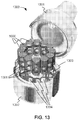
- FIG. 13 illustrates a multi-dose inhaler 1300 according to an embodiment.
- Multi-dose inhaler 1300 includes a mouthpiece portion 1301 and a round base portion 1302 .
- a rotatable carriage 1303 is disposed within base portion 1302 , and includes a set of slots 1304 configured to receive cartridges, for example cartridges similar to cartridge 1000 described above.
- Each cartridge includes an actuator 1006 , on which a powdered medicament is adhered.
- Figure 14 illustrates multi-dose inhaler 1300 after loading. Once multi-dose inhaler 1300 is loaded, the user can rotate carriage 1303 to position a fresh cartridge 1000 in line with outlet 1401 , and inhale air through inhaler 1300 . To receive another dose of medicament, the user repeats the process with another fresh cartridge 1000 .
- Table 4 compares the respirable fraction of particles produced by a DPI embodying the invention with that produced by a conventional inhaler using lactose carrier particles. Two different medicaments commonly prescribed for pulmonary disease were tested, the corticosteroid budesonide and the ⁇ -agonist salbutamol, at three different flow rates. Table 4.
- the relative insensitivity to flow rate may be especially important in the treatment of patients having compromised breathing ability, for example as a result of chronic obstructive pulmonary disease (COPD), which may make it difficult to use prior inhalers.
- COPD chronic obstructive pulmonary disease
- a DPI embodying the invention can include coatings of a wide variety of medications in doses comparable to those delivered by prior commercial inhalers. These doses may range from low doses (for example the 12 mcg of formoterol delivered by the Foradil Aerolizer and 22 mcg of tiotropium bromide delivered by the Spiriva Handihaler) to higher doses (for example 200 mcg of budesonide delivered from the Pulmicort Turbuhaler DPI, or 500 mcg fluticasone delivered by the Advair Diskus DPI).
- low doses for example the 12 mcg of formoterol delivered by the Foradil Aerolizer and 22 mcg of tiotropium bromide delivered by the Spiriva Handihaler
- higher doses for example 200 mcg of budesonide delivered from the Pulmicort Turbuhaler DPI, or 500 mcg fluticasone delivered by the Advair Diskus DPI
- Table 5A Prior Commercial Inhaler Measured Performance Pressure Drop Fluticasone Propionate Salmeterol EF (%) FPF (%) RF (%) FPD (mcg) EF (%) FPF (%) RF (%) FPD (mcg) 4 kPa 100.2 (1.5) 21.8 (0.9) 21.8 (0.8) 54.6 (2.0) 108.1 (5.1) 16.7 (0.9) 18.0 (0.5) 9.0 (0.3) 2 kPa 94.2 (8.8) 23.8 (3.4) 22.3 (0.9) 55.6 (2.4) 108.2 (2.7) 15.9 (0.6) 17.2 (1.1) 8.6 (0.5) 1 kPa 97.7 (5.0) 16.2 (0.6) 15.8 (0.8) 39.5 (2.0) 111.7 (6.3) 13.8 (0.6) 15.4 (1.5) 8.4 (0.6) Table 5B: Dual Chamber DPI Embodying the Invention Measured Performance Pressure Drop Fluticasone Propionate Salmeterol EF (%) FPF (%) RF (%) FPD (mcg) EF (%)
- emitted fraction EF
- fine particle fraction FPF
- respirable fraction RF
- fine particle dose FPD
Landscapes
- Health & Medical Sciences (AREA)
- Engineering & Computer Science (AREA)
- Bioinformatics & Cheminformatics (AREA)
- Pulmonology (AREA)
- Anesthesiology (AREA)
- Biomedical Technology (AREA)
- Heart & Thoracic Surgery (AREA)
- Hematology (AREA)
- Life Sciences & Earth Sciences (AREA)
- Animal Behavior & Ethology (AREA)
- General Health & Medical Sciences (AREA)
- Public Health (AREA)
- Veterinary Medicine (AREA)
- Pharmacology & Pharmacy (AREA)
- Emergency Medicine (AREA)
- Medicinal Preparation (AREA)
Description
- The features of the preamble of claim 1 are known from
US 2004/0173211 A1 .US 2004/0173211 A1 relates to a powder inhaler in which at least part of the inner surface coming into contact with the powder aerosol is microstructured. Preferably, it is a powder inhaler operating on the Bernoulli principle. -
WO 2006/090149 A2 relates to a powder delivery device for the delivery of a powdered substance. The delivery device comprises a substance supply unit which includes a chamber which receives a capsule, which contains a metered amount of a powdered substance which is to be delivered by the delivery device. An exhaled air flow is reduced in temperature by a heat exchanger and this cooled air is then driven through the chamber, which acts to move the capsule and entrain the powdered substance as contained by the capsule. -
WO 97/04827 A1 -
WO 2010/014827 A2 relates to a dry powder inhaler that includes a drug chamber configured to contain a formulation including carrier particles and working agent particles, a mouthpiece configured to direct flow of working agent particles to a user, and a retaining member proximal the mouthpiece. The retaining member is sized and arranged to prevent flow of substantially all carrier particles to the user while permitting flow of working agent particles to a user. -
US 6 230 707 B1 concerns an inhaler device having a tubular member connected to a chamber. The tubular member has a first opening at one end through which air can be sucked and the chamber has a hole therein for entry of air. When air is sucked through the first opening, air enters the chamber through the hole swirls and moves towards the first opening. A powdered substance within the chamber is picked up by the swirling air within the chamber. The effect can be enhanced by adding a movable element such as a ball inside the chamber. -
US 2010/0059051 A1 relates to an inhaler for inhaling a formulation which comprises a filiform support for metering and/or conveying the formulation. - The benefits of inhaled therapy for treatment of lung diseases such as asthma, chronic obstructive pulmonary disease (COPD), and cystic fibrosis have been recognized for many years. Direct administration of drug to the airways minimizes systemic side effects, provides maximum pulmonary specificity, and imparts a rapid onset of action.
- Dry powder inhalers (DPIs) are becoming a leading device for delivery of therapeutics to the airways of patients. Currently, all marketed dry powder inhalation products are comprised of micronized drug (either agglomerated or blended) delivered from "passive" dry powder inhalers, DPIs. These inhalers are passive in the sense that they rely on the patient's inspiratory effort to disperse the powder into a respirable aerosol.
- Despite their popularity and the pharmaceutical advantages over other inhaler types, passive dry powder inhalers typically have relatively poor performance with regard to consistency. In particular, DPIs emit different doses depending on how the patient uses the device, for example, the inhalation effort of the patient.
- Also, the efficiency of DPIs can be quite poor. In one study comparing the performance of the two most widely prescribed DPIs, only between 6% and 21 % of the dose emitted from the device was considered respirable. Improved performance for DPI devices is desperately needed from both clinical and product development standpoints. One promising approach to improving DPI performance is to modify the formulation rather than the device itself.
- Conventional formulations for dry powder inhalation aerosols typically contain micronized drug of particle sizes small enough to enter the airways and be deposited in the lung. To make these highly cohesive and very fine particles dispersible, so called "carrier" particles are mixed with the drug particles. These coarse, and pharmaceutically inactive (or inert), carrier particles are found in nearly all dry powder inhaler products currently marketed. The carrier particles serve to increase the fluidization of the drug because the drug particles are normally too small to be influenced significantly by the airflow through the inhaler. The carrier particles thus improve the dose uniformity by acting as a diluent or bulking agent in the formulation.
- Although these carrier particles, which are generally about 50-100 microns in size, improve the performance of dry powder aerosols, the performance of dry powder aerosols remains relatively poor. For instance, only approximately 30% of the drug in a typical dry powder aerosol formulation will be delivered to the target site, and often much less. Significant amounts of drug are not released from these conventional carrier particles and, due to the relatively large size of the carrier in relation to the drug, the drug is deposited in the throat and mouth of the patient where it may exert unwanted side effects.
- A dry powder formulation is typically a binary mixture, consisting of micronized drug particles (aerodynamic diameter typically between 1 and 5 µm) and larger inert carrier particles (typically lactose monohydrate with 63 - 90 µm diameters). Drug particles experience cohesive forces with other drug particles and adhesive forces with carrier particles (predominately via van der Waals forces), and it is these interparticulate forces that must be overcome in order to effectively disperse the powder and increase lung deposition efficiency. The energy used to overcome the interparticulate forces is provided by the inspired breath of the patient as they use the inhaler. The aerodynamic forces entrain and de-aggregate the powder, though variations in the inhalation effort of the patient (e.g. such as those arising from fibrosis or obstruction of the airways) significantly affect the dispersion and deposition of the drug, producing the flow-rate dependency of the inhaler. Obviously, there is a need for improved dry powder formulations employing novel carrier particles to maximize the safety and efficacy profiles of current DPI inhalers.
- The active pharmaceutical ingredient (API), also called a medicament, typically constitutes less than 5% of the formulation (%w/w), with lactose comprising the vast majority of the dose. The purpose of the carrier lactose is to prevent aggregation of the drug particles due to cohesive forces, primarily van der Waals forces arising from the instantaneous dipole moments between neighboring drug particles. Due to the small size of the drug particles these resulting cohesive forces are quite strong and not readily broken apart by the aerodynamic force provided by inhalation, producing aggregates that possess poor flow properties and end up depositing in the back of the throat. By employing a binary mixture, the drug adheres to the carriers particles instead and the larger size of the carrier particles allows them to be more easily entrained in the air stream produced when the patient inhales, carrying the API toward a mesh where the carrier particle collides; the force from the collision is often sufficient to detach the drug particles from the carrier, dispersing them in the airstream and allowing their deposition within the lung. Collisions with the inner walls of the inhaler may also be significant. However, a large fraction of API remains attached to carriers that do not collide effectively with the mesh, but instead are deflected, producing insufficient force to disperse the drug particles from its surface. API that does not dissociate from these carriers, along with drug adhered to carrier particles that slip through without any contact with the mesh, are deposited in the back of the throat via inertial impaction, often causing significant side effects in the throat.
- Over the past twenty years considerable research into the optimal properties of DPI formulations has been conducted. DPI formulations have required larger inert carrier particles to be blended with the small micronized (<5 microns) drug particles to improve re-dispersion of the cohesive drug particles and reduce dosing variability. Without carrier particles, micronized drug remains aggregated and almost all is simply inhaled as far as the throat, where it is swallowed and never reaches the intended target. There have been many studies investigating these carrier particles yet modifications to their physiochemical properties (size, shape, crystallinity, surface fines, roughness, etc) have failed to yield meaningful improvements in performance of DPIs. Moreover, these carrier particles (lactose in the US), are also responsible for batch to batch variability in DPI performance. One of the most commonly studied properties of carrier particles is carrier particle diameter. Over the course of 20 years, the general rule of thumb has been established that increasing carrier particle size leads to decreased DPI performance.
Figure 1 shows several examples from previous literature that indicated that increasing carrier particle size in DPI formulations leads to decreased performance. - Some conventional DPIs permit, and sometimes even intend, carrier particles to exit the inhaler. As a result, the carrier particles must be inert, and in the United States, the FDA restricts the carrier particle material to lactose. There is thus a need for advanced formulation technologies including alternative carrier particle materials that may be more judiciously chosen based on hygroscopic properties of the carrier (e.g., a desiccant material) and the surface interactions (e.g., acid or base character of the drug and carrier) between the carrier and the drug. As such, it may be desirable to provide a DPI that is completely void of carrier particles to allow for circumventing the FDA restriction of lactose as the carrier material.
- Nasal delivery is used for treatment of a variety of illnesses such as allergic rhinitis, as well as for delivery of drugs for systemic or CNS action.
- Both powder and liquid nasal delivery systems are currently on the market. The liquid delivery technologies have utilized spray pump derived technology or pressurized metered dose inhalers (pMDIs) for rapid jetting of the formulation into the nasal cavity. In general, nasal formulations are solution or suspension based requiring solvents or stabilizers. These are typically administered as sprays. Metered sprays and pump sprays have several disadvantages including:
- Need for priming in order to secure "dose uniformity"
- Complicated and expensive designs, involving many device parts in different materials.
- The devices are difficult to manufacture
- Formulations are less stable
- Control over deposition site in nasal cavity is poor
- Deposition of formulation is often concentrated to certain tissues and causes irritation on these areas while not treating other locations within the nasal cavity
- Positioning of the device during use is critical and heavily dependent on patient use, therefore variability in dosing to target tissues is high
- DPI device technologies have been applied to nasal delivery predominantly for locally acting drugs. These formulations have notable advantages such as stability and dose delivery. These can be particularly advantageous for biological drugs and drugs requiring systemic plasma concentrations. Included in these systems are modified dry powder inhalers (developed for orally inhaled aerosol delivery) with a "nostril piece" instead of a "mouth piece". Such devices are activated by nasal inhalation. These devices have also applied known concepts from DPI technology: reservoir dry powder with dose metering mechanisms - or capsule based devices needing piercing mechanisms and special loading procedures before use and after use. These device concepts inherit the same problems experienced when using DPIs for pulmonary delivery: complicated formulation, and high airflow resistance making it difficult to achieve sufficient nasal dose delivery.
- To solve these device resistance problems, insufflators that "blow" the powder formulation of the drug into the nostril have been designed. In mechanical terms these devices are "bulky" and with limited portability, and impossible to operate with discretion. In addition, they suffer from the same in-use variability and regional deposition drawbacks of spray systems.
- The invention is defined by the subject-matter of claim 1. The present invention is directed generally to dry powder inhalation aerosols. More particularly, the present invention is designed to directly apply active agents to patients utilizing a novel actuating sphere design and an accompanying inhaler to take advantage of these unique properties. In some embodiments, the present invention also takes advantage of the high performance at low flow rates of a powder dispersion system so that powders can be successfully delivered to different regions of the nasal cavity.
- According to the invention, a dry powder inhaler includes an inlet channel through which air enters the inhaler, and a chamber that receives air from the inlet channel, the chamber being of a size and shape to contain an actuator to which a powdered medicament is adhered. The dry powder further includes a retaining member disposed at an end of the chamber opposite the inlet channel, the retaining member having one or more openings sized to permit air and the powdered medicament to pass through the retaining member, and to prevent the actuator from passing through the retaining member, and an outlet channel through which air and the powdered medicament leave the inhaler to be delivered to a patient. The geometry of the inhaler is such that a flow profile is generated within the chamber that causes the actuator to oscillate, thus detaching the powdered medicament from the surface of the actuator to be entrained by the air and delivered to the patient through the outlet channel. The cross sectional area of the flow path through the inhaler undergoes a step increase at the entrance to the chamber. At the entrance to the chamber, the diameter of the chamber is at least 1.5 times the diameter of the inlet channel. The inlet channel may comprise a tapered tube. The outlet channel may comprise a tube whose cross section changes along the length of the tube. In some embodiments, the outlet channel is comprised in a mouthpiece adapted to be placed within the mouth of the patient. In some embodiments, the outlet channel is comprised in a nasal adapter adapted to conform to the nostrils of the patient.
- The dry powder inhaler may further comprise one or more bypass channels that receive supplemental air from outside the inhaler and deliver the supplemental air to the patient without the supplemental air having passed through the chamber. In some embodiments, the inlet channel is a first inlet channel and the chamber is a first chamber, the dry powder inhaler further comprises a second inlet channel and a second chamber. In some embodiments, air and powdered medicament leaving the first and second chambers are delivered to the outlet channel. In some embodiments, the outlet channel is a first outlet channel, the dry powder inhaler further comprises a second outlet channel, and air and powdered medicament leaving the first chamber are delivered to the first outlet channel, and air and powdered medicament leaving the second chamber are delivered to the second outlet channel. The first and second chambers may be of the same dimensions. The dry powder inhaler may be separable to permit insertion of a capsule into the chamber, the capsule containing the actuator. The dry powder inhaler may further include features for puncturing seals at ends of the capsule. Airflow through the inhaler may be driven by inspiratory effort of the patient. According to the invention, the dry powder inhaler is combined with the actuator. The actuator may be made of expanded polystyrene. The actuator may have a density between 0.001 and 0.50 g/cm3. The actuator may have a diameter of at least 1000 microns. The actuator may have a diameter between 1000 and 6000 microns. In some embodiments, a combination of medicaments is adhered to the actuator. In some embodiments, the dry powder inhaler includes a plurality of chambers disposed on a rotary element for selectively aligning any of the chambers with the outlet channel.
- A combination of powdered medicaments may be adhered to the actuator. In some embodiments, the dry powder inhaler includes at least two chambers holding at least two actuators having medicament adhered to the actuators, and wherein the flowing air causes each actuator to oscillate to dislodge powdered medicament to be inhaled. The same powdered medicament may be adhered to at least two actuators. In some embodiments, at least two actuators have different powdered medicaments adhered to the actuators.
-
-
Figure 1 shows several examples from previous literature indicating the relationship of carrier particle size in DPI formulations to DPI performance. -
Figures 2A-2C illustrate certain principles utilized by embodiments of the invention. -
Figure 3 illustrates relative adhesion and detachment forces as a function of carrier size. -
Figure 4A shows an oblique view of a dry powder inhaler (DPI), according to an embodiment of the invention. -
Figure 4B shows a side view of the DPI ofFigure 4A . -
Figure 4C shows a section view of the DPI ofFigure 4A . -
Figure 4D illustrates the DPI ofFigure 4A in operation. -
Figure 5A shows an oblique view of a DPI according to another embodiment. -
Figure 5B is a cross section view of the DPI ofFigure 5A . -
Figure 6 illustrates a cross section of an alternative chamber portion, according to embodiments of the invention. -
Figure 7 illustrates a cross section view of a DPI according to another embodiment. -
Figure 8A illustrates an oblique view of a chamber portion in accordance with another embodiment. -
Figure 8B shows a cross section view of the chamber portion ofFigure 8A . -
Figures 8C and 8D illustrate two alternative arrangements for connecting the multiple chambers to one or more outlet flow channels, according to embodiments of the invention. -
Figure 9A illustrates an oblique view of a chamber portion in accordance with another embodiment. -
Figure 9B shows a cross section view of the chamber portion ofFigure 9A . -
Figure 9C shows a cross section view of a DPI using the chamber portion ofFigure 9A , according to an embodiment of the invention. -
Figure 10 illustrates a cartridge, in accordance with an embodiment.Figure 11 illustrates steps in one method of producing the cartridge ofFigure 10 , in accordance with an embodiment. -
Figure 12 illustrates additional steps in a method of producing the cartridge ofFigure 10 , in accordance with an embodiment. -
Figure 13 illustrates a multi-dose inhaler according to an embodiment of the invention. -
Figure 14 illustrates the multi-dose inhaler ofFigure 13 , after loading. - To facilitate the understanding of this invention, a number or terms are defined below. Terms defined herein have meanings as commonly understood by a person of ordinary skill in the areas relevant to the present invention. Terms such as "a", "an" and "the" are not intended to refer to only a singular entity, but include the general class of which a specific example may be used for illustration. The terminology herein is used to describe specific embodiments of the invention, but their usage does not delimit the invention, except as outlined in the claims.
- The use of the word "a" or "an" when used in conjunction with the term "comprising" in the claims and/or the specification may mean "one," but it is also consistent with the meaning of "one or more," "at least one," and "one or more than one." The use of the term "or" in the claims is used to mean "and/or" unless explicitly indicated to refer to alternatives only or the alternatives are mutually exclusive, although the disclosure supports a definition that refers to only alternatives and "and/or." Throughout this application, the term "about" is used to indicate that a value includes the inherent variation of error for the device, the method being employed to determine the value, or the variation that exists among the study subjects.
- As used in this specification and claim(s), the words "comprising" (and any form of comprising, such as "comprise" and "comprises"), "having" (and any form of having, such as "have" and "has"), "including" (and any form of including, such as "includes" and "include") or "containing" (and any form of containing, such as "contains" and "contain") are inclusive or open-ended and do not exclude additional, unrecited elements or method steps.
- The term "or combinations thereof" as used herein refers to all permutations and combinations of the listed items preceding the term. For example, "A, B, C, or combinations thereof" is intended to include at least one of; A, B, C, AB, AC, BC, or ABC, and if order is important in a particular context, also BA, CA, CB, CBA, BCA, ACB, BAC, or CAB. Continuing with this example, expressly included are combinations that contain repeats of one or more item or term, such as BB, AAA, MB, BBC, AAABCCCC, CBBAAA, CABABB, and so forth. The skilled artisan will understand that typically there is no limit on the number of items or terms in any combination, unless otherwise apparent from the context.
- In the description which follows like parts may be marked throughout the specification and drawing with the same reference numerals, respectively. The drawing figures are not necessarily to scale and certain features may be shown exaggerated in scale or in somewhat generalized or schematic form in the interest of clarity and conciseness.
- An actuating sphere is a large bead or other bearing-type object comprised of a low-density, mechanically elastic material, which is prepared using any suitable technique, for example injection molding, compression molding, or cast material over a core. The actuating sphere may be made from ionomeric resins, polyurethanes, silicon, and other materials. The actuating sphere, while having a generally spherical outer surface, may have a plurality of dimples or other indentations or protrusions for optimized aerodynamic properties as well as for improved retention of active agents. The actuating sphere is utilized in the context of providing a medium for attachment of active agents, thus releasing the active agent upon the introduction of force or inertia.
- An actuator is a bead or other bearing-type object to which a medicament is adhered, and that oscillates in response to air flow. An actuating sphere is one kind of actuator.
- Active Pharmaceutical Ingredients; Active Agents:
- Active pharmaceuticals ingredients (APIs), or active agents, may include analgesic anti-inflammatory agents such as, acetaminophen, aspirin, salicylic acid, methyl salicylate, choline salicylate, glycol salicylate, 1-menthol, camphor, mefenamic acid, fluphenamic acid, indomethacin, diclofenac, alclofenac, ibuprofen, ketoprofen, naproxene, pranoprofen, fenoprofen, sulindac, fenbufen, clidanac, flurbiprofen, indoprofen, protizidic acid, fentiazac, tolmetin, tiaprofenic acid, bendazac, bufexamac, piroxicam, phenylbutazone, oxyphenbutazone, clofezone, pentazocine, mepirizole, and the like.
- Drugs having an action on the central nervous system, for example sedatives, hypnotics, antianxiety agents, analgesics and anesthetics, such as, chloral, buprenorphine, naloxone, haloperidol, fluphenazine, pentobarbital, phenobarbital, secobarbital, amobarbital, cydobarbital, codeine, lidocaine, tetracaine, dyclonine, dibucaine, cocaine, procaine, mepivacaine, bupivacaine, etidocaine, prilocaine, benzocaine, fentanyl, nicotine, and the like. Local anesthetics such as, benzocaine, procaine, dibucaine, lidocaine, and the like.
- Antihistaminics or antiallergic agents such as, diphenhydramine, dimenhydrinate, perphenazine, triprolidine, pyrilamine, chlorcyclizine, promethazine, carbinoxamine, tripelennamine, brompheniramine, hydroxyzine, cyclizine, meclizine, clorprenaline, terfenadine, chlorpheniramine, and the like. Anti-allergenics such as, antazoline, methapyrilene, chlorpheniramine, pyrilamine, pheniramine, and the like. Decongestants such as, phenylephrine, ephedrine, naphazoline, tetrahydrozoline, and the like.
- Antipyretics such as, aspirin, salicylamide, non-steroidal anti-inflammatory agents, and the like. Antimigrane agents such as, dihydroergotamine, pizotyline, and the like. Acetonide anti-inflammatory agents, such as hydrocortisone, cortisone, dexamethasone, fluocinolone, triamcinolone, medrysone, prednisolone, flurandrenolide, prednisone, halcinonide, methylprednisolone, fludrocortisone, corticosterone, paramethasone, betamethasone, ibuprophen, naproxen, fenoprofen, fenbufen, flurbiprofen, indoprofen, ketoprofen, suprofen, indomethacin, piroxicam, aspirin, salicylic acid, diflunisal, methyl salicylate, phenylbutazone, sulindac, mefenamic acid, meclofenamate sodium, tolmetin, and the like. Muscle relaxants such as, tolperisone, baclofen, dantrolene sodium, cyclobenzaprine.
- Steroids such as, androgenic steriods, such as, testosterone, methyltestosterone, fluoxymesterone, estrogens such as, conjugated estrogens, esterified estrogens, estropipate, 17-β estradiol, 17-β estradiol valerate, equilin, mestranol, estrone, estriol, 17β ethinyl estradiol, diethylstilbestrol, progestational agents, such as, progesterone, 19-norprogesterone, norethindrone, norethindrone acetate, melengestrol, chlormadinone, ethisterone, medroxyprogesterone acetate, hydroxyprogesterone caproate, ethynodiol diacetate, norethynodrel, 17-α hydroxyprogesterone, dydrogesterone, dimethisterone, ethinylestrenol, norgestrel, demegestone, promegestone, megestrol acetate, and the like.
- Respiratory agents such as, theophilline and β2 -adrenergic agonists, such as, albuterol, terbutaline, metaproterenol, ritodrine, carbuterol, fenoterol, quinterenol, rimiterol, solmefamol, soterenol, tetroquinol, tacrolimus and the like. Sympathomimetics such as, dopamine, norepinephrine, phenylpropanolamine, phenylephrine, pseudoephedrine, amphetamine, propylhexedrine, arecoline, and the like.
- Antimicrobial agents including antibacterial agents, antifungal agents, antimycotic agents and antiviral agents; tetracyclines such as, oxytetracycline, penicillins, such as, ampicillin, cephalosporins such as, cefalotin, aminoglycosides, such as, kanamycin, macrolides such as, erythromycin, chloramphenicol, iodides, nitrofrantoin, nystatin, amphotericin, fradiomycin, sulfonamides, purrolnitrin, clotrimazole, itraconazole, miconazole chloramphenicol, sulfacetamide, sulfamethazine, sulfadiazine, sulfamerazine, sulfamethizole and sulfisoxazole; antivirals, including idoxuridine; clarithromycin; and other anti-infectives including nitrofurazone, and the like.
- Antihypertensive agents such as, clonidine, α-methyldopa, reserpine, syrosingopine, rescinnamine, cinnarizine, hydrazine, prazosin, and the like. Antihypertensive diuretics such as, chlorothiazide, hydrochlorothrazide, bendoflumethazide, trichlormethiazide, furosemide, tripamide, methylclothiazide, penfluzide, hydrothiazide, spironolactone, metolazone, and the like. Cardiotonics such as, digitalis, ubidecarenone, dopamine, and the like. Coronary vasodilators such as, organic nitrates such as, nitroglycerine, isosorbitol dinitrate, erythritol tetranitrate, and pentaerythritol tetranitrate, dipyridamole, dilazep, trapidil, trimetazidine, and the like. Vasoconstrictors such as, dihydroergotamine, dihydroergotoxine, and the like. β-blockers or antiarrhythmic agents such as, timolol pindolol, propranolol, and the like. Humoral agents such as, the prostaglandins, natural and synthetic, for example PGE1, PGE2α, and PGF2α, and the PGE1 analog misoprostol. Antispasmodics such as, atropine, methantheline, papaverine, cinnamedrine, methscopolamine, and the like.
- Calcium antagonists and other circulatory organ agents, such as, aptopril, diltiazem, nifedipine, nicardipine, verapamil, bencyclane, ifenprodil tartarate, molsidomine, clonidine, prazosin, and the like. Anti-convulsants such as, nitrazepam, meprobamate, phenytoin, and the like. Agents for dizziness such as, isoprenaline, betahistine, scopolamine, and the like. Tranquilizers such as, reserprine, chlorpromazine, and antianxiety benzodiazepines such as, alprazolam, chlordiazepoxide, clorazeptate, halazepam, oxazepam, prazepam, clonazepam, flurazepam, triazolam, lorazepam, diazepam, and the like.
- Antipsychotics such as, phenothiazines including thiopropazate, chlorpromazine, triflupromazine, mesoridazine, piperracetazine, thioridazine, acetophenazine, fluphenazine, perphenazine, trifluoperazine, and other major tranqulizers such as, chlorprathixene, thiothixene, haloperidol, bromperidol, loxapine, and molindone, as well as, those agents used at lower doses in the treatment of nausea, vomiting, and the like.
- Drugs for Parkinson's disease, spasticity, and acute muscle spasms such as levodopa, carbidopa, amantadine, apomorphine, bromocriptine, selegiline (deprenyl), trihexyphenidyl hydrochloride, benztropine mesylate, procyclidine hydrochloride, baclofen, diazepam, dantrolene, and the like. Respiratory agents such as, codeine, ephedrine, isoproterenol, dextromethorphan, orciprenaline, ipratropium bromide, cromglycic acid, and the like. Non-steroidal hormones or antihormones such as, corticotropin, oxytocin, vasopressin, salivary hormone, thyroid hormone, adrenal hormone, kallikrein, insulin, oxendolone, and the like.
- Vitamins such as, vitamins A, B, C, D, E and K and derivatives thereof, calciferols, mecobalamin, and the like for use dermatologically. Enzymes such as, lysozyme, urokinaze, and the like. Herb medicines or crude extracts such as, Aloe vera, and the like.
- Antitumor agents such as, 5-fluorouracil and derivatives thereof, krestin, picibanil, ancitabine, cytarabine, and the like. Anti-estrogen or anti-hormone agents such as, tamoxifen or human chorionic gonadotropin, and the like. Miotics such as pilocarpine, and the like.
- Cholinergic agonists such as, choline, acetylcholine, methacholine, carbachol, bethanechol, pilocarpine, muscarine, arecoline, and the like. Antimuscarinic or muscarinic cholinergic blocking agents such as, atropine, scopolamine, homatropine, methscopolamine, homatropine methylbromide, methantheline, cyclopentolate, tropicamide, propantheline, anisotropine, dicyclomine, eucatropine, and the like.
- Mydriatics such as, atropine, cyclopentolate, homatropine, scopolamine, tropicamide, eucatropine, hydroxyamphetamine, and the like. Psychic energizers such as 3-(2-aminopropy)indole, 3-(2-aminobutyl)indole, and the like.
- Antidepressant drugs such as, isocarboxazid, phenelzine, tranylcypromine, imipramine, amitriptyline, trimipramine, doxepin, desipramine, nortriptyline, protriptyline, amoxapine, maprotiline, trazodone, and the like.
- Anti-diabetics such as, insulin, and anticancer drugs such as, tamoxifen, methotrexate, and the like.
- Anorectic drugs such as, dextroamphetamine, methamphetamine, phenylpropanolamine, fenfluramine, diethylpropion, mazindol, phentermine, and the like.
- Anti-malarials such as, the 4-aminoquinolines, alphaaminoquinolines, chloroquine, pyrimethamine, and the like.
- Anti-ulcerative agents such as, misoprostol, omeprazole, enprostil, and the like. Antiulcer agents such as, allantoin, aldioxa, alcloxa, N-methylscopolamine methylsuflate, and the like. Antidiabetics such as insulin, and the like.
- Anti-cancer agent such as, cis-platin, actinomycin D, doxorubicin, vincristine, vinblastine, etoposide, amsacrine, mitoxantrone, tenipaside, taxol, colchicine, cyclosporin A, phenothiazines or thioxantheres, and the like.
- For use with vaccines, one or more antigens, such as, natural, heat-killer, inactivated, synthetic, peptides and even T cell epitopes (e.g., GADE, DAGE, MAGE, etc.) and the like.
- Example therapeutic or active agents also include drugs of molecular weight from 40 to 1,100 including the following: Hydrocodone, Lexapro, Vicodin, Effexor, Paxil, Wellbutrin, Bextra, Neurontin, Lipitor, Percocet, Oxycodone, Valium, Naproxen, Tramadol, Ambien, Oxycontin, Celebrex, Prednisone, Celexa, Ultracet, Protonix, Soma, Atenolol, Lisinopril, Lortab, Darvocet, Cipro, Levaquin, Ativan, Nexium, Cyclobenzaprine, Ultram, Alprazolam, Trazodone, Norvasc, Biaxin, Codeine, Clonazepam, Toprol, Zithromax, Diovan, Skelaxin, Klonopin, Lorazepam, Depakote, Diazepam, Albuterol, Topamax, Seroquel, Amoxicillin, Ritalin, Methadone, Augmentin, Zetia, Cephalexin, Prevacid, Flexeril, Synthroid, Promethazine, Phentermine, Metformin, Doxycycline, Aspirin, Remeron, Metoprolol, Amitriptyline, Advair, Ibuprofen, Hydrochlorothiazide, Crestor, Acetaminophen, Concerta, Clonidine, Norco, Elavil, Abilify, Risperdal, Mobic, Ranitidine, Lasix, Fluoxetine, Coumadin, Diclofenac, Hydroxyzine, Phenergan, Lamictal, Verapamil, Guaifenesin, Aciphex, Furosemide, Entex, Metronidazole, Carisoprodol, Propoxyphene, Digoxin, Zanaflex, Clindamycin, Trileptal, Buspar, Keflex, Bactrim, Dilantin, Flomax, Benicar, Baclofen, Endocet, Avelox, Lotrel, Inderal, Provigil, Zantac, Fentanyl, Premarin, Penicillin, Claritin, Reglan, Enalapril, Tricor, Methotrexate, Pravachol, Amiodarone, Zelnorm, Erythromycin, Tegretol, Omeprazole, and Meclizine.
- Other active agents include those listed as BCS Class II agents.
- The active agents mentioned above may be used in combination as required. Moreover, the above drugs may be used either in the free form or, if capable of forming salts, in the form of a salt with a suitable acid or base. If the drugs have a carboxyl group, their esters may be employed.
-
Figures 2A-2C illustrate certain principles utilized by embodiments of the invention. InFigure 2A , anactuator 201 resides in achamber 202. As will be explained in more detail below, a powdered medicament is adhered toactuator 201. The powdered medicament may be in a pure form, or may be adhered to carrier particles. The medicament may attach to actuator 201 by van der Waals forces, which may include combinations of permanent dipoles, induced dipoles, and instantaneous dipoles. Other attachment mechanisms may also be used, alternatively or additionally. For example, the adhesion forces may arise from van der Waals forces, electrostatic interactions, physical interactions, capillary interactions, or combinations thereof. Theair 203 is drawn intochamber 202 throughinlet channel 204.Inlet channel 204 is smaller in cross sectional area than the size ofactuator 201, so thatactuator 201 cannot enterinlet channel 204. A retainingmember 205 at the other end ofchamber 202 prevents actuator 201 from exiting that end ofchamber 202. Retainingmember 205 may be, for example, a mesh or grid that permits flow of air through the retaining member, but retainsactuator 201 withinchamber 202. In some embodiments, retainingmember 205 may define openings that are about 250 microns in breadth, so as to prevent the passage of particles larger than about 250 microns. In other embodiments, retainingmember 205 may define openings that are about 500 microns in breadth, so as to prevent the passage of particles larger than about 500 microns. Other sieve sizes are also possible. In some embodiments, retainingmember 205 may have less than 50% occluded area, and in other embodiments more than 50% occluded area. When the sizes ofactuator 201,chamber 202, andinlet channel 204 are properly chosen, flow of air through the system causesactuator 201 to oscillate rapidly generally in the axial direction of the flow. - An actuator of the dry powder inhaler according to the invention and exemplified by
actuator 201 is a bead to which the powdered medicament is adhered. An actuator may be smooth, or have indentations, dimples, protrusions, or other surface features. An actuator may be made of any suitable material, for example a polymer such as polystyrene, polytetrafluorethylene, or another kind of polymer, polyurethane, silicon, silicone glass, silica gel, another glass, another gel, or another kind of material or combination of materials. An actuator may be made of a biodegradable material or a nonbiodegradable material. Many other kinds of materials or combinations of materials may be used. An actuator may have a relatively low density, for example, between 0.001 and 0.5 g/cm3, or preferably between 0.001 and 0.12 g/cm3, or more preferably between 0.001 and 0.04 g/cm3. An actuator may be of any appropriate size compatible with the chamber in which it is retained. For example, an actuator may have a diameter of between 500 and 25000 microns (0.5 and 25 mm), preferably between 1000 and 10000 microns (1.0 and 10.0 mm), and more preferably between 1000 and 6000 microns (1.0 and 6.0 mm). An actuator may be made by any suitable process, depending on the material of the actuator. For example, actuators may be made by molding, extrusion, milling, spray drying, polymer imprinting, or other processes or combinations of processes. In some embodiments, an actuator may have a mass of less than 10.0 mg, for example less than 5.0 mg, or less than 2.5 mg. In other embodiments, an actuator may have a mass of greater than 0.001 mg, for example greater than 0.1 mg, or greater than 0.5 mg. In some embodiments, an actuator may have a mass between 0.001 mg and 10.0 mg, for example, between 0.1 mg and 5.0 mg, or between 0.5 mg and 2.5 mg. -
Figure 2B illustrates the formation ofre-circulating eddies 206 inempty chamber 202. As the flow stream enterschamber 202, the flow stream detaches from the inner wall of the system at the comer of the expansion, whereinlet channel 204 opens tochamber 202, and reattaches downstream. At the comer of this expansion, part of the incoming flow stream is shed, becoming trapped as recirculatingeddies 206 at thecorners 207 ofchamber 202. Onceactuator 201 is introduced intochamber 202, the flow may become more complex. The net result is thatactuator 201 oscillates rapidly, generally along the axis ofchamber 202.Actuator 201 is rotatable in up to three dimensions. -
Figure 2C is a multiple-exposure photograph of an actual system, in which actuator 201 oscillates. It has been surprisingly discovered that during oscillation,actuator 201 rarely contacts the walls or ends ofchamber 202. However, the oscillations ofactuator 201 are sufficient in magnitude to dislodge powdered medicament from the surface ofactuator 201. - This is in part due to the relatively large size of
actuator 201, as compared with carrier particles used in previous inhalers. The adhesive forces holding powdered medicament to a carrier particle may be approximated by
actuator 201 are generally proportional to the cube of the diameter ofactuator 201. Thus, for a large actuator, it is possible to generate separation forces that exceed the adhesive forces, as shown inFigure 3 , inregion 301. - According to embodiments of the invention, these principles are utilized to produce an inhaler with improved performance.
-
Figure 4A shows an oblique view of a dry powder inhaler (DPI) 400, according to an embodiment of the invention.DPI 400 includes amouthpiece 401, through whichoutlet channel 402 passes.DPI 400 also includes achamber portion 403, engaged withmouthpiece 401.DPI 400 may also include retainingfeatures 404, for holdingmouthpiece 401 andchamber portion 403 together. Connection features 404 may be releasable, to allowmouthpiece 401 andchamber portion 403 to be separated and reattached, for example for loading ofDPI 400. Any suitable connection mechanism may be used.Figure 4B shows a side view ofDPI 400, andFigure 4C shows a section view ofDPI 400, revealing some internal details. -
Chamber portion 403 ofDPI 400 includes aninlet channel 405, leading to achamber 406. Optionally, the inside surface ofchamber 406 may include ridges or other surface features to minimize the contact area of an actuator contained inchamber 406 with the walls.Chamber 406 has a larger cross sectional area than doesinlet channel 405, and at theentrance 407 ofchamber 406, the flow path of air throughDPI 400 undergoes a step increase in cross sectional area.Chamber 406 is of a size and shape to contain an actuator to which a powdered medicament is adhered.DPI 400 also includes a retainingmember 407 downstream ofchamber 406. Retainingmember 407 includes openings (not visible inFigure 4C ) sized to permit air to flow through retainingmember 408, but to retain the actuator withinchamber 406. Retaining member may be, for example, a mesh or grid placed across an end ofchamber 406 oroutlet channel 402. -
Figure 4D illustratesDPI 400 in operation. InFigure 4D , anactuator 409 has been loaded intochamber 406.Actuator 409 is large enough that it cannot pass throughinlet channel 405 and cannot pass through the openings in retainingmember 408, and thus actuator 409 is retained withinchamber 406.Actuator 409 is a bead to which the powdered medicament is adhered. Becauseactuator 409 does not leavechamber 406 or come into contact with the patient, it need not be made of lactose, and more flexibility in the selection of materials foractuator 409 is provided than for the carrier particles in a conventional inhaler.Actuator 409 may be, for example, made of polystyrene, polytetrafluoroethylene (PTFE, aka Teflon), silicone glass, silica gel, glass, or another suitable material. In some embodiments,actuator 409 may be made of a biodegradable material. -
Particles 410 of a powdered medicament (shown exaggerated in size inFigure 4D ) are adhered toactuator 409. A patient placesmouthpiece 401 in his or her mouth, and inhales. The inspiratory effort of the patient drawsair 411 intoinlet channel 405. As previously explained,actuator 409 oscillates generally along the axial direction of the flow channel, dislodgingparticles 410 from the surface ofactuator 409 such that they are entrained in the flow stream. The dislodgedparticles 410 pass through retainingmember 408, throughoutlet channel 402, and exitDPI 400 to be inhaled by the patient.Outlet channel 402 may include ridges or grooves (similar to the rifling in the barrel of a firearm) to assist in directing the flow of the medicament in a straight path as it leaves the device.Actuator 409 may oscillate many of times during a single inhalation, and may oscillate as many as hundreds of times. The oscillation frequency is typically between 1 and 1000 Hz, and is preferably between 25 and 150Hz, although other frequencies may also occur. The oscillation may produce an audible sound, which can provide audible feedback to a patient using the DPI, indicating that medicament is being delivered. - These oscillations impart much more force to the actuator than is imparted to a lactose carrier particle during collisions in a conventional inhaler.
- An inhaler that is actuated by the patient's inspiratory effort alone is known as a passive inhaler. It will be recognized that the invention may be embodied in a passive inhaler, or an inhaler that uses another energy source at least in part to promote air flow.
- Within this basic framework, many variations are possible.
Figure 5A shows an oblique view of aDPI 500 according to another embodiment.DPI 500 includes several features similar to features ofDPI 400 previously described, including amouthpiece 501 including anoutlet flow channel 502.DPI 500 also includesflow bypass channels 503 that are connected to asheath flow channel 504.Figure 5B is a cross section view ofDPI 500, showing the internal configuration offlow bypass channels 503 andsheath flow channel 504.Supplemental air 505 is drawn intoflow bypass channels 505 and throughsheath flow channel 504, reaching the patient without having passed throughchamber 506. Flow bypass channels may be included to reduce the flow resistance ofDPI 500, while still allowing sufficient airflow throughchamber 506 to deliver powdered medicament to the patient. For example, in a direct comparison, a device without bypass flow channels was measured to have a flow resistance of about 0.140 (cmH2O).5/L min-1, resulting in a flow rate of about 46 L min-1 with a pressure drop of 4 kPa across the inhaler, while a device with bypass flow channels was measured to have a flow resistance of about 0.061 (cmH2O).5/L min-1, resulting in a flow rate of about 105 L min-1 with a pressure drop of 4 kPa across the inhaler. - In another variation,
Figure 6 illustrates a cross section of analternative chamber portion 601.Chamber portion 601 is similar tochamber portion 403 described above, but rather than a cylindrical inlet flow channel,chamber portion 601 includes a taperedinlet flow channel 602. Many other shapes are possible. -
Figure 7 illustrates a cross section view of aDPI 700 according to another embodiment, including dimensions of various features, given in millimeters.DPI 700 may accommodate an actuator having a diameter of about 4.5 - 5.5 millimeters, although other sizes may be used.DPI 700 includes amouthpiece 701 having anoutlet flow channel 702. Unlikeoutlet flow channel 402 described above,outlet flow channel 702 is not cylindrical, but changes in cross sectional area along its length. Achamber portion 703 includes an inlet flow channel 704 (which is tapered in this example), leading to a chamber 705.Bypass flow channels 706 direct supplemental air to asheath flow channel 707 without the supplemental air having passed through chamber 705. - While
DPI 700 serves as one enabling example embodiment, it will be understood that the invention claimed is not limited to the particular dimensions or combination of features shown. For example, the length ofmouthpiece 701 may be shorter or longer than that shown inFigure 7 .Outlet flow channel 702 may be cylindrical or may have a cross sectional area that varies along the length ofmouthpiece 701. The two ends ofoutlet flow channel 702 may be of equal size, or may differ in size, with either end being larger than the other. Cylindrical flow channels need not be circularly cylindrical, but may have cross sectional shapes in the form of polygons, ellipses, or other shapes. The length ofinlet flow channel 704 may be varied, andinlet flow channel 704 may be cylindrical or may have a cross sectional area that varies along the length ofinlet flow channel 704.Inlet flow channel 704 may be straight, tapered, curved, angled, or have another shape.Bypass flow channels 706 andsheath flow channel 707 may be varied in shape or size, or may be omitted. For example,sheath flow channel 707 may be straight, curved, tapered, angled, or may have another shape. A different number ofbypass flow channels 706 may be provided. Multiplesheath flow channels 707 may be provided. The length, shape, and cross sectional area of chamber 705 may be varied from the stated dimensions, within any workable ranges. - The ratio of the chamber diameter to the inlet diameter is at least 1.5, and may be between 1.5 and 3.0, for example between 2.10 and 2.25. The ratio of the chamber diameter to the diameter of the actuator within the chamber is between 1.0 and 2.0, for example between 1.3 and 1.6.
-
Mouthpiece 701 andchamber portion 703 may be made of any suitable material, but preferably are molded of a medical or food grade polymer such as polycarbonate, ABS, or another polymer or blend of polymers. The parts ofDPI 700 may be reusable or may be disposable. - The embodiment of
Figure 7 was measured to have a flow resistance of about 0.059 (cmH2O).5/L min-1. Its performance was tested in vitro using a cascade impactor, at a volumetric flow rate of 90 L min-1, which corresponds to approximately a 2 kPa pressure drop across the inhaler. Several medicaments were tested, and results are shown below in Table 1. - For the fluticasone propionate and salmeterol xinafoate drug-coated beads, coating was performed according to the piezo-assisted coating (PAC) technique. Briefly, 2 mg of micronized drug powder were weighed into a 30-mL scintillation vial containing three 5.2 mm polystyrene beads. The vial was sealed and the bottom half was submerged in a sonicating water bath for 2 minutes. When the vial was placed in the water bath, the energy imparted to the powder by the sonics aerosolized a fraction of the powder bed, creating a sustained plume as powder was continuously aerosolized and then deposited onto the bead surface by gravitational settling. Due to the small size, and thus negligible mass, of the primary drug particles, van der Waals interactions may overwhelm other types of forces, including gravitational forces. Other kinds of forces may also contribute to attachment of powder to the actuator, for example forces arising from electrostatic interactions, physical interactions, capillary interactions, or others. More information about the deposition of medicament on beads may be found in co-pending PCT Patent Application
PCT/US2010/047043 , published asWO/20111031564 - For fluticasone propionate and salmeterol xinafoate, drug depositing on each component of the experimental setup (bead, device, mouthpiece adaptor, USP induction port, and cascade impactor stages) was assessed via high performance liquid chromatography (HPLC). The fine particle fraction of the delivered dose was calculated as the ratio of the drug mass collected from stages 2 - 8 of the cascade impactor over the drug mass emitted from the device.
Table 1: Fine particle fractions (FPF) values of the dose delivered from the single-chamber dry powder inhaler at a volumetric flow rate of 90 L min-1 (approx. 2 kPa pressure drop across the device). Values are presented as the mean ( ± standard deviation) for N = 3 replicates. API Fine Particle Fraction (%) Salbutamol Sulphate 84.2 (0.9) salmeterol Xinafoate 88.5 (3.0) Fluticasone Propionate 80.5 (1.5) Tiotropium Bromide 85.2 (1.5) - In the embodiments described thus far, a single chamber is provided, for holding a single actuator. The single actuator may have a single powdered medicament adhered to it, or may have a mixture of powdered medicaments adhered to it, so that a combination of drugs may be delivered.
- In another variation, multiple chambers may be provided, for holding multiple actuators. For example, multiple actuators may have the same medicament or medicaments adhered to them, for delivering a stronger dose than is delivered from a single actuator, or may have different medicaments adhered to them for delivering a combination of drugs.
-
Figure 8A illustrates an oblique view of achamber portion 801 in accordance with another embodiment.Chamber portion 801 includes twochambers inlet flow channels Figure 8B shows a cross section view ofchamber portion 801, and includes example dimensions. The embodiment ofFigures 8A and 8B may accommodate actuators having diameters between about 3.8 and 4.4 millimeters. -
Figures 8C and 8D illustrate two alternative arrangements for connecting themultiple chambers Figure 8C , bothchambers outlet flow channel 804. In the embodiment ofFigure 8D ,chambers outlet flow channels 805a and 805b. - To assess the aerosol performance of the dual chamber devices (using the same inhaler base, with the type of mouthpiece being varied) in vitro, beads coated with fluticasone and salmeterol (using the PAC method) were actuated at 90 L min-1 (corresponding to approximately a 2 kPa pressure drop across the device) into a next generation cascade impactor. Drug depositing on each component of the experimental setup (bead, device, mouthpiece adaptor, USP induction port, and cascade impactor stages) was assessed via high performance liquid chromatography (mobile phase = 75:25 mixture of methanol and 0.8% (w/v) ammonium acetate buffer at a pH of 5.5; stationary phase = 5 µm C18; detection wavelength = 228 nm). The fine particle fraction of the delivered dose was calculated as the ratio of the drug mass collected from stages 2 - 8 of the cascade impactor over the drug mass emitted from the device, corresponding to an aerodynamic diameter cut-off size of 6.48 µm (at 90 L min-1).
- The performance of the embodiment of
Figure 8C is summarized in Table 2.Table 2: Fine particle fractions (FPF) values of the dose delivered from a dual-chamber dry powder inhaler at a volumetric flow rate of 90 L min-1 (approx. 2 kPa pressure drop across the device). Values are presented as the mean ( ± standard deviation) for N = 3 replicates. API Fine Particle Fraction (emitted) (%) Fluticasone Propionate 76.8 (1.8) Salmeterol Xinafoate 49.1 (5.1) - The performance of the embodiment of
Figure 8D is summarized in Table 3.Table 3: Fine particle fractions (FPF) values of the dose delivered from a dual-chamber dry powder inhaler with separate powder flow channels at a volumetric flow rate of 90 L min-1 (approx. 2 kPa pressure drop across the device). Values are presented as the mean ( ± standard deviation) for N = 3 replicates. API Fine Particle Fraction (emitted) (%) Fluticasone Propionate 77.5 (1.6) Salmeterol Xinafoate 54.1 (9.4) -
Figure 9A illustrates an oblique view of achamber portion 901 in accordance with another embodiment.Chamber portion 901 includes threechambers Figure 9B shows a cross section view ofchamber portion 901, and includes example dimensions. Onlyinlet flow channel 903a is visible inFigure 9B . The embodiment ofFigures 9A and 9B may accommodate actuators having diameters between about 3.2 and 3.8 millimeters. -
Figure 9C illustrates the use ofchamber portion 901 with a mouthpiece having a singleoutlet flow channel 904 to which all three ofchambers chambers - The examples above show dual and triple chambers, wherein the overall diameter of the inhaler has been kept constant, requiring that the dimensions of the chambers and inlet flow channels be reduced and that smaller actuators be used as compared with the single-chamber embodiments. This is not a requirement. The overall dimensions of the inhaler may be also be varied if desired.
- While the embodiments of
Figures 8A-9C serve as enabling example embodiments, it will be understood that the dimensions and combinations of features shown are by way of example, and that may variations are possible. - The embodiments described above are also configured for oral inhalation of powdered medicament. Devices embodying the invention may also be configured to deliver medicament nasally, either in place of or in addition to oral delivery. For example, the outlet flow channel or channels may be comprised in a nasal adapter.
- According to another aspect, a cartridge is provided with a pre-loaded actuator. Such a cartridge may contain a single dose of a powdered medicament, and may be loaded into a reusable DPI that operates according to the principles of the invention.
-
Figure 10 illustrates acartridge 1000, for a dry powder inhaler in accordance with an embodiment.Cartridge 1000 includes afirst shell 1001 defining a first end of the cartridge.First shell 1001 includes arestriction 1002 that serves as an inlet flow channel.Cartridge 1000 also includes asecond shell 1003 that defines a second end of the cartridge.Second shell 1003 also defines at least a portion of achamber 1004, and includes aretaining element 1005. Retainingelement 1005 may be a mesh or grid that spans the cross section ofsecond shell 1003. Anactuator 1006 is also provided, having one or more powdered medicaments adhered to it. First andsecond shells cartridge 1000, enclosingactuator 1006. The closed ends of first andsecond shells puncturable seals cartridge 1000 once first andsecond shells puncturable seals cartridge 1000, but can be easily punctured (as described below) to open the ends ofcartridge 1000 for use. Retainingmember 1005 has openings to permit medicament dislodged from actuator 1006 to pass through retainingmember 1005 during use, but retaining member does not permit actuator 1006 to leavecartridge 1000. Thus,cartridge 1000 contains and protects the actuator and medicament until it is inserted into an inhaler for use. In some embodiments, a cartridge may be used only once, to administer a single dose of medicament. -
Cartridges 1000 may be produced in large numbers and distributed to inhaler users for treatment of various conditions.Figure 11 illustrates one example method of producingcartridges 1000. A number offirst shells 1001 are produced, and a number ofactuators 1006 are produced and coated with medicament.Actuators 1006 are suspended on astring 1101 for convenient handling by automated production equipment.Actuators 1006 are placed intofirst shells 1001, andsecond shells 1003 are engaged withfirst shells 1001 to form completedcartridges 1000. In some embodiments, the action of engaging the first andsecond shells cuts string 1101, so that theindividual cartridges 1000 are easily separable. Preferably, a portion ofstring 1101 remains within eachcartridge 1000, suspendingactuator 1006 so that it does not readily contact the walls of the cartridge. - The act of loading one of
cartridges 1000 into an inhaler may punctureseals Figure 12 . Afirst portion 1201 of an inhaler is configured to receive a first end ofcartridge 1000.First portion 1201 includes alip 1202, on whichcartridge 1000 rests when first loaded intofirst portion 1201. Asecond portion 1203 of the inhaler, including asecond lip 1204, is then placed overcartridge 1000. When first andsecond portions lips cartridge 1000, providingopenings second inhaler portions cartridge 1000, causingstring 1101 to be cut and freeingactuator 1006 so that it can oscillate during inhalation. - According to another aspect, a multi-dose inhaler is provided.
Figure 13 illustrates amulti-dose inhaler 1300 according to an embodiment.Multi-dose inhaler 1300 includes amouthpiece portion 1301 and around base portion 1302. Arotatable carriage 1303 is disposed withinbase portion 1302, and includes a set ofslots 1304 configured to receive cartridges, for example cartridges similar tocartridge 1000 described above. Each cartridge includes anactuator 1006, on which a powdered medicament is adhered. -
Figure 14 illustratesmulti-dose inhaler 1300 after loading. Oncemulti-dose inhaler 1300 is loaded, the user can rotatecarriage 1303 to position afresh cartridge 1000 in line withoutlet 1401, and inhale air throughinhaler 1300. To receive another dose of medicament, the user repeats the process with anotherfresh cartridge 1000. - Tests have shown that devices according to embodiments may still effectively deliver medicament, even at low air flow rates, as compared with previous devices. Table 4 below compares the respirable fraction of particles produced by a DPI embodying the invention with that produced by a conventional inhaler using lactose carrier particles. Two different medicaments commonly prescribed for pulmonary disease were tested, the corticosteroid budesonide and the β-agonist salbutamol, at three different flow rates.
Table 4. Comparison of respirable fraction produced by embodiments of the present invention with prior lactose-based delivery Drug Flow Rate (L m-1) Fine Particle Fraction (loaded) Lactose Standard Present Invention Budesonide 45 28 % 58 % 30 26 % 53 % 15 5 % 24 % Salbutamol 45 47 % 67 % 30 46 % 68 % 15 8 % 45 % - The relative insensitivity to flow rate may be especially important in the treatment of patients having compromised breathing ability, for example as a result of chronic obstructive pulmonary disease (COPD), which may make it difficult to use prior inhalers.
- Testing has also shown that a DPI embodying the invention can include coatings of a wide variety of medications in doses comparable to those delivered by prior commercial inhalers. These doses may range from low doses (for example the 12 mcg of formoterol delivered by the Foradil Aerolizer and 22 mcg of tiotropium bromide delivered by the Spiriva Handihaler) to higher doses (for example 200 mcg of budesonide delivered from the Pulmicort Turbuhaler DPI, or 500 mcg fluticasone delivered by the Advair Diskus DPI).
- · In another comparison test, the performance of a dual-chamber DPI embodying the inventions was compared with the performance of a prior commercial inhaler of a different design, in dispensing two different medicaments, fluticasone propionate and salmeterol xinafoate. Each of the two actuators in the DPI embodying the invention held one of the two medicaments. The test results are shown in Tables 5A and 5B below. Table 5A lists results for the prior commercial inhaler, and Table 5B lists results for the DPI embodying the invention.
Table 5A: Prior Commercial Inhaler Measured Performance Pressure Drop Fluticasone Propionate Salmeterol EF (%) FPF (%) RF (%) FPD (mcg) EF (%) FPF (%) RF (%) FPD (mcg) 4 kPa 100.2 (1.5) 21.8 (0.9) 21.8 (0.8) 54.6 (2.0) 108.1 (5.1) 16.7 (0.9) 18.0 (0.5) 9.0 (0.3) 2 kPa 94.2 (8.8) 23.8 (3.4) 22.3 (0.9) 55.6 (2.4) 108.2 (2.7) 15.9 (0.6) 17.2 (1.1) 8.6 (0.5) 1 kPa 97.7 (5.0) 16.2 (0.6) 15.8 (0.8) 39.5 (2.0) 111.7 (6.3) 13.8 (0.6) 15.4 (1.5) 8.4 (0.6) Table 5B: Dual Chamber DPI Embodying the Invention Measured Performance Pressure Drop Fluticasone Propionate Salmeterol EF (%) FPF (%) RF (%) FPD (mcg) EF (%) FPF (%) RF (%) FPD (mcg) 4 kPa 65.2 (1.6) 70.0 (2.7) 45.7 (2.6) 69.1 (6.6) 56.6 (3.5) 78.2 (3.4) 45.5 (3.0) 16.6 (1.7) 2 kPa 56.5 (0.3) 70.8 (2.5) 40.0 (1.4) 66.2 (6.1) 56.6 (4.3) 72.1 (3.2) 40.8 (4.2) 15.0 (3.4) 1 kPa 48.1 (2.9) 61.7 (0.6) 29.7 (1.6) 46.7 (2.5) 42.9 (4.6) 62.1 (5.6) 26.5 (0.3) 9.1 (1.5) - In Tables 5A and 5B, emitted fraction (EF), fine particle fraction (FPF), respirable fraction (RF), and fine particle dose (FPD) values were determined in vitro for both inhalers. For the prior commercial inhaler, EF and RF are provided as the percentage of the labeled dose. All values are presented as mean (± standard deviation) for three replicates. As is apparent, the DPI embodying the invention provides a significantly higher medicament delivery, and also delivers significant doses of medicament at low flow rates. The relatively low values of FPF achieved by the prior commercial inhaler are believed to be due to the fact that a significant portion of the powdered medicament remained attached to the carrier particles used in that system, and did not emerge in respirable particle sizes. By contrast, in the DPI embodying the invention, only the powdered medicament, without carrier particles, emerges from the DPI, and thus a much larger percentage of the emitted medicament is respirable.
- In another comparison test, two adult human volunteer subjects were re-enrolled from a cohort of subjects who participated in a safety study of inhaled Tacrolimus via nebulization (5 mg). Peak blood Tacrolimus concentrations 1 hr post-inhalation in subjects exposed to drug by nebulization ranged from 5 to 8 ng/ml. In the current study, subjects inhaled Tacrolimus via a DPI embodying the invention or HandiHaler DPI standard on
study days 1 or 8, respectively. Tacrolimus levels were measured from blood samples 1 hr post-inhalation. The results from this study are summarized in Table 6 below.Table 6: Comparison of blood level of Tacrolimus DPI Drug Excipients Total Powder (µg) Fine Particle Fraction (loaded) (%) Drug Level 1 hr Post-Inhalation (ng/ml) HandiHaler Tacrolimus Yes 2000 32 ± 3 7.7-10.0 DPI Embodying Invention Tacrolimus No (pure) 1095 ± 123 68 ± 2 14.2-15.5 - It is to be understood that any workable combination of any features described herein is also considered to be disclosed. The invention has now been described in detail for the purposes of clarity and understanding. However, those skilled in the art will appreciate that certain changes and modifications may be practiced within the scope of the appended claims.
Claims (21)
- A dry powder inhaler, comprising:an inlet channel (204, 405, 602, 704, 803a, 803b, 903a) for air (203, 411) to enter the inhaler (400, 500, 700);a single actuator (201, 409, 1006);a chamber (202, 406, 506, 802a, 802b, 902a, 902b, 902c) to receive air from the inlet channel (204, 405, 602, 704, 803a, 803b, 903a), the chamber (202, 406, 506, 802a, 802b, 902a, 902b, 902c) being of a size and shape to contain the single actuator (201, 409, 1006), and the chamber (202, 406, 506, 802a, 802b, 902a, 902b, 902c) having an axis, wherein the geometry of the inhaler (400, 500, 700) is such that a flow profile is generated within the chamber (202, 406, 506, 802a, 802b, 902a, 902b, 902c) that causes the single actuator (201, 409, 1006) to oscillate generally along the axis in response to air flow;a retaining member (205, 408, 1005) disposed at an end of the chamber (202, 406, 506, 802a, 802b, 902a, 902b, 902c) opposite the inlet channel (204, 405, 602, 704, 803a, 803b, 903a), the retaining member (205, 408, 1005) having one or more openings sized to permit air and a powdered medicament (410) to pass through the retaining member (205, 408, 1005), and to prevent the actuator (201, 409, 1006) from passing through the retaining member (205, 408, 1005); andan outlet channel (402, 502, 702, 804, 805a, 805b, 904, 1401) as an exit for air and the powdered medicament (410);wherein the diameter of the chamber (202, 406, 506, 802a, 802b, 902a, 902b, 902c) is at least 1.5 times the diameter of the inlet channel (204, 405, 602, 704, 803a, 803b, 903a) at an entrance to the chamber (202, 406, 506, 802a, 802b, 902a, 902b, 902c) and the cross-sectional area of the flow path through the inhaler undergoes a step increase at the entrance to the chamber (202, 406, 506, 802a, 802b, 902a, 902b, 902c),wherein the actuator (201, 409, 1006) is large enough that it cannot pass through the inlet channel (204, 405, 602, 704, 803a, 803b, 903a) and cannot pass through the openings in the retaining member (205, 408, 1005) andwherein a ratio of the diameter of the chamber to the diameter of the single actuator (201, 409, 1006) within the chamber is between 1.0 and 2.0;characterized in thatthe single actuator (201, 409, 1006) is rotatable in up to three dimensions within the chamber (202, 406, 506, 802a, 802b, 902a, 902b, 902c) and is a bead to which the powdered medicament (410) is adhered, the oscillation of the single actuator (201, 409, 1006) thus detaching the powdered medicament (410) from the surface of the actuator (201, 409, 1006) to be entrained by the air and delivered to the patient through the outlet channel (402, 502, 702, 804, 805a, 805b, 904, 1401).
- The dry powder inhaler of claim 1, wherein the inlet channel (204, 405, 602, 704, 803a, 803b, 903a) comprises a tapered tube.
- The dry powder inhaler of claim 1, wherein the outlet channel (402, 502, 702, 804, 805a, 805b, 904, 1401) comprises a tube whose cross section changes along the length of the tube.
- The dry powder inhaler of claim 1, wherein the outlet channel (402, 502, 702, 804, 805a, 805b, 904, 1401) is comprised in a mouth piece (401,501,701, 1301) adapted to be placed within the mouth of the patient.
- The dry powder inhaler of claim 1, wherein the outlet channel (402, 502, 702, 804, 805a, 805b, 904, 1401) is comprised in a nasal adapter adapted to conform to the nostrils of the patient.
- The dry powder inhaler of claim 1, further comprising one or more bypass channels (503, 706) for supplemental air (505) received from outside the inhaler and to be delivered to the patient without the supplemental air (505) having passed through the chamber (202, 406, 506, 802a, 802b, 902a, 902b, 902c).
- The dry powder inhaler of claim 1, wherein the inlet channel (803a, 803b) is a first inlet channel (803a) and the chamber (802a, 802b) is a first chamber (802a), the dry powder inhaler further comprising a second inlet channel (803b) and a second chamber (802b).
- The dry powder inhaler of claim 7, wherein the first and second chambers (802a, 802b) are connected to a single outlet channel (804) for delivering air and powdered medicament leaving the first and second chambers (802a, 802b) to the outlet channel (804).
- The dry powder inhaler of claim 7, wherein the outlet channel (805a, 805b) is a first outlet channel (805a), the dry powder inhaler further comprising a second outlet channel (805b), and wherein the first and second chambers (802a, 802b) are connected to the first and second outlet channels (805a, 805b), respectively, for delivering air and powdered medicament leaving the first chamber (802a) to the first outlet channel (805a), and air and powdered medicament leaving the second chamber (802b) to the second outlet channel (805b).
- The dry powder inhaler of claim 7 wherein the first and second chambers (802a, 802b) are of the same dimensions.
- The dry powder inhaler of claim 1, wherein the dry powder inhaler is separable to permit insertion of a capsule into the chamber (202,406,506, 802a, 802b, 902a, 902b, 902c), the capsule containing the actuator (201, 409, 1006).
- The dry powder inhaler of claim 11, further comprising features for puncturing seals (1007, 1008) at ends of the capsule.
- The dry powder inhaler of claim 1, being a passive inhaler actuatable by inspiratory effort of the patient alone to drive an airflow through the inhaler.
- The dry powder inhaler of claim 1, wherein the actuator (201, 409, 1006) is made of expanded polystyrene.
- The dry powder inhaler of claim 1, wherein the actuator (201, 409, 1006) has a density between 0.001 and 0.50 g/cm3.
- The dry powder inhaler of claim 1, wherein the actuator (201,409, 1006) has a diameter of at least 1000 microns.
- The dry powder inhaler of claim 1, wherein the actuator (201, 409, 1006) has a diameter between 1000 and 6000 microns.
- The dry powder inhaler of claim 1, wherein the actuator (201, 409, 1006) has a mass of between 0.1 and 5.0 milligrams.
- The dry powder inhaler of claim 1, wherein the actuator (201, 409, 1006) has a mass of between 0.5 and 2.5 milligrams.
- The dry powder inhaler of claim 1, wherein a combination of medicaments is adhered to the actuator (201, 409, 1006).
- The dry powder inhaler of claim 1, comprising a plurality of chambers (1304) disposed on a rotary element (1303) for selectively aligning any of the chambers (1304) with the outlet channel (1401).
Applications Claiming Priority (3)
| Application Number | Priority Date | Filing Date | Title |
|---|---|---|---|
| US42063910P | 2010-12-07 | 2010-12-07 | |
| US201161442872P | 2011-02-15 | 2011-02-15 | |
| PCT/US2011/063816 WO2012078804A1 (en) | 2010-12-07 | 2011-12-07 | Dry powder inhaler |
Publications (3)
| Publication Number | Publication Date |
|---|---|
| EP2648788A1 EP2648788A1 (en) | 2013-10-16 |
| EP2648788A4 EP2648788A4 (en) | 2015-01-07 |
| EP2648788B1 true EP2648788B1 (en) | 2017-08-09 |
Family
ID=46198057
Family Applications (1)
| Application Number | Title | Priority Date | Filing Date |
|---|---|---|---|
| EP11847102.8A Active EP2648788B1 (en) | 2010-12-07 | 2011-12-07 | Dry powder inhaler |
Country Status (5)
| Country | Link |
|---|---|
| US (2) | US8561609B2 (en) |
| EP (1) | EP2648788B1 (en) |
| JP (1) | JP6050758B2 (en) |
| ES (1) | ES2646748T3 (en) |
| WO (1) | WO2012078804A1 (en) |
Families Citing this family (44)
| Publication number | Priority date | Publication date | Assignee | Title |
|---|---|---|---|---|
| US7749089B1 (en) | 1999-02-26 | 2010-07-06 | Creative Kingdoms, Llc | Multi-media interactive play system |
| IL191190A0 (en) * | 2008-05-01 | 2009-08-03 | Dan Adler | Dry powder inhaler |
| JP5705112B2 (en) * | 2008-07-30 | 2015-04-22 | エスティーシー.ユーエヌエム | Formulations containing large carrier particles for dry powder inhalation aerosols |
| JP6050758B2 (en) | 2010-12-07 | 2016-12-21 | レスピラ セラピューティクス インコーポレイテッドRespira Therapeutics,Inc. | Dry powder inhaler and method of operating the same |
| US20180369513A1 (en) * | 2012-02-21 | 2018-12-27 | Respira Therapeutics, Inc. | Powder dispersion devices and methods |
| US10463815B2 (en) | 2012-02-21 | 2019-11-05 | Respira Therapeutics, Inc. | Inhaler to deliver substances for prophylaxis or prevention of disease or injury caused by the inhalation of biological or chemical agents |
| US9370635B2 (en) * | 2012-08-23 | 2016-06-21 | Mercury Enterprises, Inc. | Optimized breathing assistance device |
| WO2014070769A1 (en) | 2012-10-29 | 2014-05-08 | The University Of North Carolina At Chapel Hill | Methods and compositions for treating mucosal tissue disorders |
| US9757395B2 (en) * | 2012-12-20 | 2017-09-12 | Otitopic Inc. | Dry powder inhaler and methods of use |
| US9757529B2 (en) | 2012-12-20 | 2017-09-12 | Otitopic Inc. | Dry powder inhaler and methods of use |
| CN105473133A (en) * | 2013-04-30 | 2016-04-06 | 欧缇托匹克公司 | Dry powder formulations and methods of use |
| WO2015053361A1 (en) * | 2013-10-11 | 2015-04-16 | 株式会社リーチハイアー | Inhalation aid for oral powder |
| EP3082428A4 (en) | 2013-12-09 | 2017-08-02 | Respira Therapeutics, Inc. | Pde5 inhibitor powder formulations and methods relating thereto |
| CN112656780A (en) | 2014-02-20 | 2021-04-16 | 奥迪托皮克股份有限公司 | Dry powder formulations for inhalation |
| EP3110484A4 (en) * | 2014-02-21 | 2018-02-14 | Respira Therapeutics, Inc. | Powder inhaler, system and methods |
| UA122894C2 (en) * | 2014-04-28 | 2021-01-20 | Філіп Морріс Продактс С.А. | Nicotine powder inhaler |
| CA2943459C (en) * | 2014-04-28 | 2023-05-02 | Philip Morris Products S.A. | Nicotine powder inhaler |
| CN106170313B (en) | 2014-04-28 | 2020-11-10 | 菲利普莫里斯生产公司 | Flavored nicotine powder inhaler |
| GB201411526D0 (en) * | 2014-06-27 | 2014-08-13 | British American Tobacco Co | Powder |
| DE102014017409B4 (en) | 2014-11-26 | 2016-06-09 | Klaus Dieter Beller | Single-dose powder inhaler and process for its preparation |
| CN107427650A (en) * | 2015-01-14 | 2017-12-01 | 瑞必治公司 | Powder process for dispersing and device |
| EP3283151B1 (en) * | 2015-04-15 | 2022-07-20 | Philip Morris Products S.A. | Dry powder inhaler and method of use |
| JP7189765B2 (en) * | 2015-04-15 | 2022-12-14 | フィリップ・モーリス・プロダクツ・ソシエテ・アノニム | Flavoring elements for inhalation devices |
| SE539111C2 (en) * | 2015-06-03 | 2017-04-11 | Iconovo Ab | Single dose dry powder inhaler |
| MY186270A (en) | 2015-12-24 | 2021-07-01 | Philip Morris Products Sa | Flavoured nicotine powder |
| KR102649827B1 (en) | 2015-12-24 | 2024-03-21 | 필립모리스 프로덕츠 에스.에이. | Nicotine Powder Delivery System |
| UA123586C2 (en) | 2015-12-24 | 2021-04-28 | Філіп Морріс Продактс С.А. | Nicotine particle capsule |
| SG11201811250TA (en) * | 2016-07-07 | 2019-01-30 | Philip Morris Products Sa | Nicotine inhaler system |
| EP4620525A3 (en) | 2016-12-14 | 2025-12-03 | Respira Therapeutics, Inc. | Methods and compositions for treatment of pulmonary hypertension and other lung disorders |
| GB201700727D0 (en) * | 2017-01-16 | 2017-03-01 | Teva Pharma | Inhalers and airflow adaptors therefor |
| EP3630239B1 (en) | 2017-05-31 | 2024-07-17 | Virginia Commonwealth University | Devices, systems, and methods for dry powder therapies |
| KR101992171B1 (en) * | 2017-06-27 | 2019-06-25 | 한국유나이티드제약 주식회사 | Inhaler for dry powder |
| US11844859B2 (en) | 2017-08-20 | 2023-12-19 | Nasus Pharma Ltd. | Dry powder compositions for intranasal delivery |
| AU2018319592B2 (en) | 2017-08-20 | 2024-06-27 | Nasus Pharma Ltd. | Dry powder compositions for intranasal delivery |
| EP3684338A4 (en) | 2017-09-22 | 2021-06-23 | Otitopic Inc. | DRY POWDER COMPOSITIONS CONTAINING MAGNESIUM STEARATE |
| US10786456B2 (en) | 2017-09-22 | 2020-09-29 | Otitopic Inc. | Inhaled aspirin and magnesium to treat inflammation |
| CN109821118B (en) * | 2017-11-23 | 2025-12-23 | 正大天晴药业集团股份有限公司 | Novel pulmonary drug delivery system |
| CN209917010U (en) * | 2018-04-03 | 2020-01-10 | 东莞永胜医疗制品有限公司 | Improved moisture dissipating cartridge and breathing circuit and breathing system incorporating same |
| DE102018108958A1 (en) * | 2018-04-16 | 2019-10-17 | Emphasys Importadora Exportadora E Distribuidora Ltda. | dry powder inhaler |
| DE102020100550A1 (en) * | 2019-01-14 | 2020-07-16 | Alfred Von Schuckmann | Device for inhaling powdery substances, substance container for such a device and method for filling such a device |
| WO2021079343A1 (en) * | 2019-10-25 | 2021-04-29 | Philip Morris Products S.A. | Inhaler article with open distal end, and inhaler system |
| CN114568018B (en) * | 2019-10-25 | 2025-01-10 | 菲利普莫里斯生产公司 | Inhaler article with tangential airflow end element |
| US12427270B2 (en) | 2019-11-18 | 2025-09-30 | Vectura Delivery Devices Limited | Inhaler for use with a compliance monitor |
| US12268807B1 (en) | 2023-12-20 | 2025-04-08 | Yale University | Devices, systems, and methods for providing individualized delivery of suspended medication |
Citations (2)
| Publication number | Priority date | Publication date | Assignee | Title |
|---|---|---|---|---|
| EP0147755A2 (en) * | 1983-12-17 | 1985-07-10 | Boehringer Ingelheim Kg | Inhalator |
| EP2082764A1 (en) * | 2008-01-24 | 2009-07-29 | Boehringer Ingelheim International GmbH | Inhaler |
Family Cites Families (188)
| Publication number | Priority date | Publication date | Assignee | Title |
|---|---|---|---|---|
| US361748A (en) | 1887-04-26 | John w | ||
| US376819A (en) | 1888-01-24 | Medicinal vapors | ||
| US598286A (en) | 1898-02-01 | Inhaler | ||
| US419942A (en) | 1890-01-21 | Insufflator | ||
| US16066A (en) | 1856-11-11 | Medical kespibatok | ||
| US263451A (en) | 1882-08-29 | adams | ||
| US2603216A (en) | 1952-07-15 | Powder inhaler | ||
| US631621A (en) | 1898-11-16 | 1899-08-22 | James J Curran | Inhaler. |
| US658436A (en) | 1900-05-28 | 1900-09-25 | Hans Hennerich Groth | Insufflator. |
| US844097A (en) | 1906-08-07 | 1907-02-12 | Yancey Q Caldwell | Inhaler. |
| US1599959A (en) | 1923-03-23 | 1926-09-14 | Fujimoto Buheiji | Atomizer |
| US1752956A (en) | 1927-04-21 | 1930-04-01 | Karl Zeyen | Apparatus for spraying pulverulent material |
| US2214032A (en) | 1939-06-23 | 1940-09-10 | Walter B Stewart | Apparatus for administering powdered aluminum |
| US2513145A (en) | 1946-11-27 | 1950-06-27 | Charles C Chapple | Inhaler |
| US2693805A (en) | 1947-03-08 | 1954-11-09 | George V Taplin | Apparatus for administering therapeutic agents |
| US2470296A (en) | 1948-04-30 | 1949-05-17 | Abbott Lab | Inhalator |
| US2642063A (en) * | 1948-07-31 | 1953-06-16 | Frederick M Turnbull | Inhaler |
| US2603215A (en) | 1949-02-12 | 1952-07-15 | American Cyanamid Co | Drug inhalator |
| US2534636A (en) | 1949-02-12 | 1950-12-19 | American Cyanamid Co | Powder dispenser |
| US2641255A (en) | 1949-03-31 | 1953-06-09 | Abbott Lab | Inhaler |
| US2517482A (en) | 1949-04-09 | 1950-08-01 | Sharp & Dohme Inc | Inhaler |
| GB671582A (en) | 1949-04-16 | 1952-05-07 | Donald Herbert Brooks | Improvements in dispensers for medicinal and other powders |
| US2549303A (en) | 1949-04-20 | 1951-04-17 | Bristol Lab Inc | Inhaler for crystalline pencilllin or the like |
| US2587215A (en) | 1949-04-27 | 1952-02-26 | Frank P Priestly | Inhalator |
| US2573918A (en) | 1949-11-05 | 1951-11-06 | Vick Chemical Company | Device for dispensing medicaments |
| US2581182A (en) | 1950-03-14 | 1952-01-01 | Abbott Lab | Inhaler |
| GB705404A (en) | 1950-05-19 | 1954-03-10 | A M Bickford & Sons Ltd | An inhaler for medicinal substances |
| US2992645A (en) | 1958-05-06 | 1961-07-18 | Benger Lab Ltd | Disperser for powders |
| US3105488A (en) | 1959-09-17 | 1963-10-01 | Albert M Richards | Respiratory devices |
| GB1182779A (en) | 1966-09-17 | 1970-03-04 | Fisons Pharmaceuticals Ltd | Inhalation Device |
| GB1268051A (en) | 1968-06-07 | 1972-03-22 | Fisons Pharmaceuticals Ltd | Inhalation device |
| IT941426B (en) | 1971-07-17 | 1973-03-01 | Isf Spa | SWIRL-CHAMBER INHALER FOR POWDER-SHAPING MEDICINAL SUBSTANCES |
| US3888253A (en) | 1972-08-04 | 1975-06-10 | Beecham Group Ltd | Device for administration of medicines |
| GB1392945A (en) | 1972-08-23 | 1975-05-07 | Fisons Ltd | Inhalation device |
| GB1459426A (en) | 1973-02-26 | 1976-12-22 | Allen & Hanburys Ltd | Inhalation devices |
| FR2224175B1 (en) | 1973-04-04 | 1978-04-14 | Isf Spa | |
| GB1387954A (en) | 1973-05-08 | 1975-03-19 | Miles Lab | Insufflator |
| US3980074A (en) | 1973-07-18 | 1976-09-14 | Beecham Group Limited | Device for the administration of powders |
| GB1479283A (en) | 1973-07-23 | 1977-07-13 | Bespak Industries Ltd | Inhaler for powdered medicament |
| US3888252A (en) | 1974-01-23 | 1975-06-10 | Anthony J Side | Powder inhaler |
| IT1016489B (en) | 1974-03-18 | 1977-05-30 | Isf Spa | INHALER |
| US3971377A (en) | 1974-06-10 | 1976-07-27 | Alza Corporation | Medicament dispensing process for inhalation therapy |
| IT1017153B (en) | 1974-07-15 | 1977-07-20 | Isf Spa | APPARATUS FOR INHALATIONS |
| US3964483A (en) | 1975-01-13 | 1976-06-22 | Syntex Puerto Rico, Inc. | Inhalation device |
| US3948264A (en) | 1975-05-21 | 1976-04-06 | Mead Johnson & Company | Inhalation device |
| GB1518998A (en) | 1975-08-28 | 1978-07-26 | Gillette Co | Packaging flowable materials |
| US4147166A (en) | 1977-05-02 | 1979-04-03 | American Cyanamid Company | Oral inhalator powder dispenser |
| US4216768A (en) | 1978-03-23 | 1980-08-12 | Whitfield Jack | Device for inhaling powdered substance |
| IT1116047B (en) | 1979-04-27 | 1986-02-10 | Sigma Tau Ind Farmaceuti | DEVICE FOR THE QUICK INHALATION OF POWDER DRUGS BY PERSONS SUFFERING FROM ASTHMA |
| BR8007911A (en) | 1979-12-06 | 1981-06-16 | Glaxo Group Ltd | PERFECTED INHALER |
| ES8206980A1 (en) | 1980-10-30 | 1982-09-01 | Riker Laboratories Inc | Powder inhalation device. |
| ATE23272T1 (en) | 1981-07-08 | 1986-11-15 | Draco Ab | POWDER INHALER. |
| US4570630A (en) | 1983-08-03 | 1986-02-18 | Miles Laboratories, Inc. | Medicament inhalation device |
| EP0211595B1 (en) | 1985-07-30 | 1991-11-13 | Glaxo Group Limited | Devices for administering medicaments to patients |
| AT384552B (en) | 1985-08-01 | 1987-12-10 | Hurka Wilhelm | INHALATION DEVICE FOR DOSING AND DISTRIBUTING SOLID BODIES INTO THE BREATHING AIR |
| JPS62204756A (en) | 1986-03-04 | 1987-09-09 | 大研医工株式会社 | Drug volatilizing method and apparatus |
| SE453566B (en) | 1986-03-07 | 1988-02-15 | Draco Ab | POWDER INHALATOR DEVICE |
| EP0470154B1 (en) | 1989-04-28 | 1996-06-05 | Riker Laboratories, Inc. | Dry powder inhalation device |
| GB8909891D0 (en) | 1989-04-28 | 1989-06-14 | Riker Laboratories Inc | Device |
| US5176132A (en) | 1989-05-31 | 1993-01-05 | Fisons Plc | Medicament inhalation device and formulation |
| US5239991A (en) | 1989-06-21 | 1993-08-31 | Fisons Plc | Disposable powder medicament inhalation device with peel-off cover |
| IT1237118B (en) | 1989-10-27 | 1993-05-18 | Miat Spa | MULTI-DOSE INHALER FOR POWDER DRUGS. |
| US5201308A (en) | 1990-02-14 | 1993-04-13 | Newhouse Michael T | Powder inhaler |
| GB9004781D0 (en) | 1990-03-02 | 1990-04-25 | Glaxo Group Ltd | Device |
| HU213221B (en) | 1990-03-02 | 1997-03-28 | Glaxo Group Ltd | Inhalation device and medicine packet for device |
| US5615670A (en) | 1990-03-07 | 1997-04-01 | Fisons Plc | Powder inhaler with centrifugal force used to meter powder |
| NZ250988A (en) | 1990-06-14 | 1995-09-26 | Rhone Poulenc Rorer Ltd | Powder inhaler: swirling chamber with anti-static walls |
| GB9015522D0 (en) | 1990-07-13 | 1990-08-29 | Braithwaite Philip W | Inhaler |
| DE4027390C2 (en) | 1990-08-30 | 1994-11-03 | Boehringer Ingelheim Kg | Propellant-free inhalation device |
| US5429122A (en) | 1990-09-26 | 1995-07-04 | Zanen; Pieter | Inhaler devices provided with a reservoir for several doses of medium for inhaling, transporting device, whirl chamber |
| GB9021433D0 (en) | 1990-10-02 | 1990-11-14 | Atomic Energy Authority Uk | Power inhaler |
| US5042472A (en) | 1990-10-15 | 1991-08-27 | Merck & Co., Inc. | Powder inhaler device |
| GB9024760D0 (en) | 1990-11-14 | 1991-01-02 | Riker Laboratories Inc | Inhalation device and medicament carrier |
| GB9026025D0 (en) | 1990-11-29 | 1991-01-16 | Boehringer Ingelheim Kg | Inhalation device |
| GB9027234D0 (en) | 1990-12-15 | 1991-02-06 | Harris Pharma Ltd | An inhalation device |
| US5186164A (en) | 1991-03-15 | 1993-02-16 | Puthalath Raghuprasad | Mist inhaler |
| US5327883A (en) | 1991-05-20 | 1994-07-12 | Dura Pharmaceuticals, Inc. | Apparatus for aerosolizing powdered medicine and process and using |
| FR2676929B1 (en) | 1991-05-30 | 1994-02-11 | Aerosols Bouchage Ste Fse | POWDER INHALER. |
| WO1993000951A1 (en) | 1991-07-02 | 1993-01-21 | Inhale, Inc. | Method and device for delivering aerosolized medicaments |
| US5161524A (en) | 1991-08-02 | 1992-11-10 | Glaxo Inc. | Dosage inhalator with air flow velocity regulating means |
| ES2089474T3 (en) | 1991-08-16 | 1996-10-01 | Sandoz Ltd | INHALER FOR THE ADMINISTRATION OF POWDERED SUBSTANCES. |
| US5469843A (en) | 1991-11-12 | 1995-11-28 | Minnesota Mining And Manufacturing Company | Inhalation device |
| US5476093A (en) | 1992-02-14 | 1995-12-19 | Huhtamaki Oy | Device for more effective pulverization of a powdered inhalation medicament |
| WO1993018812A1 (en) | 1992-03-25 | 1993-09-30 | Tebro S.A. | Powder jet dispenser for medicament inhalation therapies |
| WO1993024165A1 (en) | 1992-05-29 | 1993-12-09 | Ggu Gesellschaft Für Gesundheits- Und Umweltforschung Mbh & Co. Vertriebs Kg | Device for generating inhalable active substance particles |
| US5394868A (en) | 1992-06-25 | 1995-03-07 | Schering Corporation | Inhalation device for powdered medicaments |
| US5239993A (en) | 1992-08-26 | 1993-08-31 | Glaxo Inc. | Dosage inhalator providing optimized compound inhalation trajectory |
| WO1994006497A1 (en) | 1992-09-11 | 1994-03-31 | Glaxo Group Limited | Inhalation device |
| CA2152088C (en) | 1992-12-18 | 1999-12-07 | Thomas J. Ambrosio | Inhaler for powdered medications |
| US5743250A (en) | 1993-01-29 | 1998-04-28 | Aradigm Corporation | Insulin delivery enhanced by coached breathing |
| IL108780A (en) | 1993-02-27 | 1999-06-20 | Fisons Plc | Inhalation device |
| WO1994023772A2 (en) | 1993-04-06 | 1994-10-27 | Minnesota Mining And Manufacturing Company | Deagglomerators for dry powder inhalers |
| US5372128A (en) * | 1993-04-14 | 1994-12-13 | Habley Medical Technology Corporation | Fluidizing powder inhaler |
| US5533502A (en) | 1993-05-28 | 1996-07-09 | Vortran Medical Technology, Inc. | Powder inhaler with aerosolization occurring within each individual powder receptacle |
| GB9312984D0 (en) | 1993-06-23 | 1993-08-04 | Bespak Plc | Atomising dispenser |
| US5349947A (en) | 1993-07-15 | 1994-09-27 | Newhouse Michael T | Dry powder inhaler and process that explosively discharges a dose of powder and gas from a soft plastic pillow |
| SE9302550D0 (en) * | 1993-07-30 | 1993-07-30 | Ernst Hoerlin | POWDER INHALES |
| US5388572A (en) | 1993-10-26 | 1995-02-14 | Tenax Corporation (A Connecticut Corp.) | Dry powder medicament inhalator having an inhalation-activated piston to aerosolize dose and deliver same |
| DE4340768A1 (en) | 1993-11-30 | 1995-06-01 | Bayer Ag | Inhalation device |
| US5415162A (en) | 1994-01-18 | 1995-05-16 | Glaxo Inc. | Multi-dose dry powder inhalation device |
| PT101450B (en) | 1994-02-02 | 1999-11-30 | Hovione Produtos Farmaceuticos | NEW INHALATION DEVICE |
| GB9417399D0 (en) | 1994-08-30 | 1994-10-19 | Scherer Corp R P | Ocular treatment device |
| WO1996008284A2 (en) | 1994-09-16 | 1996-03-21 | Laboratoire Glaxo Wellcome | Inhalation device |
| FR2725626A1 (en) | 1994-10-18 | 1996-04-19 | Sofab | DEVICE FOR INHALING POWDERED PRODUCTS |
| GB9501841D0 (en) | 1995-01-31 | 1995-03-22 | Co Ordinated Drug Dev | Improvements in and relating to carrier particles for use in dry powder inhalers |
| US5622166A (en) | 1995-04-24 | 1997-04-22 | Dura Pharmaceuticals, Inc. | Dry powder inhaler delivery system |
| JP3299971B2 (en) | 1995-06-21 | 2002-07-08 | アスタ メディカ アクチエンゲゼルシャフト | Medicinal powder cartridge with integrated metering device and powdered drug inhaler |
| SE504458C2 (en) | 1995-06-21 | 1997-02-17 | Lars Gunnar Nilsson | Inhalator for electrical dosing of substances |
| GB9513218D0 (en) | 1995-06-29 | 1995-09-06 | Fisons Plc | Inhalation device and method |
| DE19523516C1 (en) | 1995-06-30 | 1996-10-31 | Asta Medica Ag | Inhaler for administering medication from blister packs |
| US5642727A (en) * | 1995-07-25 | 1997-07-01 | David Sarnoff Research Center, Inc. | Inhaler apparatus using a tribo-electric charging technique |
| US6209538B1 (en) | 1995-08-02 | 2001-04-03 | Robert A. Casper | Dry powder medicament inhalator having an inhalation-activated flow diverting means for triggering delivery of medicament |
| US5692496A (en) | 1995-08-02 | 1997-12-02 | Innovative Devices, Llc | Dry powder medicament inhalator having an inhalation-activated flow diverting means for triggering delivery of medicament |
| ES2216418T3 (en) | 1995-12-07 | 2004-10-16 | Jago Research Ag | NOZZLE FOR AN INHALER FOR THE ADMINISTRATION OF VARIOUS DOSE OF A DRY PHARMACOLOGICAL POWDER. |
| US5669378A (en) | 1995-12-21 | 1997-09-23 | Pera; Ivo | Inhaling device |
| NZ324374A (en) | 1996-01-03 | 1999-06-29 | Glaxo Group Ltd | Inhalation device |
| US6026809A (en) | 1996-01-25 | 2000-02-22 | Microdose Technologies, Inc. | Inhalation device |
| US5694920A (en) | 1996-01-25 | 1997-12-09 | Abrams; Andrew L. | Inhalation device |
| US5699789A (en) | 1996-03-11 | 1997-12-23 | Hendricks; Mark R. | Dry powder inhaler |
| JPH09253208A (en) * | 1996-03-21 | 1997-09-30 | Unisia Jecs Corp | Nasal administration device |
| JP3328132B2 (en) | 1996-03-21 | 2002-09-24 | 株式会社ユニシアジェックス | Inhaler type dispenser |
| US5875776A (en) | 1996-04-09 | 1999-03-02 | Vivorx Pharmaceuticals, Inc. | Dry powder inhaler |
| US5857456A (en) | 1996-06-10 | 1999-01-12 | Sarnoff Corporation | Inhaler apparatus with an electronic means for enhanced release of dry powders |
| SE9700424D0 (en) | 1997-02-07 | 1997-02-07 | Astra Ab | Powder inhales |
| SE9700421D0 (en) | 1997-02-07 | 1997-02-07 | Astra Ab | Single dose inhalation I |
| TW469832U (en) | 1997-03-14 | 2001-12-21 | Astra Ab | Inhalation device |
| US6237590B1 (en) | 1997-09-18 | 2001-05-29 | Delsys Pharmaceutical Corporation | Dry powder delivery system apparatus |
| US6237591B1 (en) | 1998-11-02 | 2001-05-29 | Dura Pharmaceuticals, Inc. | Turbine dry powder inhaler |
| AU742962B2 (en) | 1998-01-30 | 2002-01-17 | Mibe Gmbh Arzneimittel | Inhalation apparatus for powder medications |
| GB9810126D0 (en) | 1998-05-13 | 1998-07-08 | Glaxo Group Ltd | |
| US6257233B1 (en) | 1998-06-04 | 2001-07-10 | Inhale Therapeutic Systems | Dry powder dispersing apparatus and methods for their use |
| US6152130A (en) | 1998-06-12 | 2000-11-28 | Microdose Technologies, Inc. | Inhalation device with acoustic control |
| US6234169B1 (en) | 1998-08-14 | 2001-05-22 | Arthur Slutsky | Inhaler |
| US6328033B1 (en) | 1999-06-04 | 2001-12-11 | Zohar Avrahami | Powder inhaler |
| ITMI991582A1 (en) | 1999-07-16 | 2001-01-16 | Chiesi Farma Spa | DUST CONSTITUTED FROM PARTICLES HAVING THE PERFECTLY SMOOTH SURFACE FOR USE AS VEHICLES FOR THE PREPARATION OF INALA MIXTURES |
| US6810872B1 (en) | 1999-12-10 | 2004-11-02 | Unisia Jecs Corporation | Inhalant medicator |
| US7069929B2 (en) | 2000-02-01 | 2006-07-04 | Quadrant Technologies Limited | Dry powder inhaler |
| US6427688B1 (en) * | 2000-02-01 | 2002-08-06 | Dura Pharmaceuticals, Icn. | Dry powder inhaler |
| US6971383B2 (en) | 2001-01-24 | 2005-12-06 | University Of North Carolina At Chapel Hill | Dry powder inhaler devices, multi-dose dry powder drug packages, control systems, and associated methods |
| TWI224515B (en) | 2000-06-23 | 2004-12-01 | Norton Healthcare Ltd | Pre-metered dose magazine for breath-actuated dry powder inhaler |
| WO2002013897A2 (en) | 2000-08-14 | 2002-02-21 | Advanced Inhalation Research, Inc. | Inhalation device and method |
| SE517227C2 (en) | 2000-09-25 | 2002-05-14 | Microdrug Ag | Dry powder inhaler with foil cutter |
| FI20002363A0 (en) | 2000-10-27 | 2000-10-27 | Orion Yhtymae Oyj | powder inhaler |
| GB0026647D0 (en) | 2000-10-31 | 2000-12-13 | Glaxo Group Ltd | Medicament dispenser |
| US6626173B2 (en) | 2001-01-08 | 2003-09-30 | Iep Pharmaceutical Devices Inc. | Dry powder inhaler |
| US6766799B2 (en) | 2001-04-16 | 2004-07-27 | Advanced Inhalation Research, Inc. | Inhalation device |
| CA2444729A1 (en) * | 2001-05-10 | 2002-11-14 | Vectura Delivery Devices Limited | Inhalers |
| GB2375308A (en) | 2001-05-10 | 2002-11-13 | Cambridge Consultants | Inhalers |
| SE0101825D0 (en) * | 2001-05-22 | 2001-05-22 | Astrazeneca Ab | An inhalation device |
| EG24184A (en) | 2001-06-15 | 2008-10-08 | Otsuka Pharma Co Ltd | Dry powder inhalation system for transpulmonary |
| WO2003013633A1 (en) | 2001-08-09 | 2003-02-20 | Glaxo Group Limited | Inhalation device with a pharmaceutical composition |
| GB0120018D0 (en) | 2001-08-16 | 2001-10-10 | Meridica Ltd | Pack containing medicament and dispensing device |
| US6779520B2 (en) | 2001-10-30 | 2004-08-24 | Iep Pharmaceutical Devices Inc. | Breath actuated dry powder inhaler |
| GR1004350B (en) | 2002-03-29 | 2003-09-26 | Inhaler for dry powder | |
| SE524957C2 (en) | 2002-04-12 | 2004-11-02 | Microdrug Ag | Method for dividing and distributing in air of dry powder drug |
| US6889690B2 (en) | 2002-05-10 | 2005-05-10 | Oriel Therapeutics, Inc. | Dry powder inhalers, related blister devices, and associated methods of dispensing dry powder substances and fabricating blister packages |
| US7118010B2 (en) | 2002-05-10 | 2006-10-10 | Oriel Therapeutics, Inc. | Apparatus, systems and related methods for dispensing and /or evaluating dry powders |
| GB0217198D0 (en) * | 2002-07-25 | 2002-09-04 | Glaxo Group Ltd | Medicament dispenser |
| DE60239639D1 (en) | 2002-07-31 | 2011-05-12 | Chiesi Farma Spa | powder inhaler |
| US7284553B2 (en) | 2002-12-12 | 2007-10-23 | Boehringer Ingelheim Pharma Gmbh & Co. Kg | Powder inhaler comprising a chamber for a capsule for taking up a non-returnable capsule being filled with an active ingredient |
| DE10300982A1 (en) * | 2003-01-14 | 2004-07-22 | Boehringer Ingelheim Pharma Gmbh & Co. Kg | powder inhaler |
| US20040173211A1 (en) * | 2003-01-14 | 2004-09-09 | Boehringer Ingelheim International Gmbh | Powder inhaler |
| CA2519228C (en) | 2003-03-20 | 2014-10-14 | Galephar M/F | Improved dry powder inhaler system |
| EP1488819A1 (en) | 2003-06-16 | 2004-12-22 | Rijksuniversiteit te Groningen | Dry powder inhaler and method for pulmonary inhalation of dry powder |
| GB2405798A (en) | 2003-09-15 | 2005-03-16 | Vectura Ltd | Dry powder inhaler with primary and secondary piercing elements and a medicament pack for use with an inhalation device. |
| DE10352277A1 (en) | 2003-11-08 | 2005-06-02 | Boehringer Ingelheim Pharma Gmbh & Co. Kg | powder inhaler |
| NZ549590A (en) | 2004-02-06 | 2010-05-28 | Microdose Therapeutx Inc | A blister pack for use with an inhalation device |
| US7556035B2 (en) | 2004-05-28 | 2009-07-07 | Quadrant Technologies Limited | Unit dose dry powder inhaler |
| US8365725B2 (en) | 2004-09-13 | 2013-02-05 | Oriel Therapeutics, Inc. | Dry powder inhalers that inhibit agglomeration, related devices and methods |
| GB0427028D0 (en) | 2004-12-09 | 2005-01-12 | Cambridge Consultants | Dry powder inhalers |
| GB0427856D0 (en) | 2004-12-20 | 2005-01-19 | Glaxo Group Ltd | Maniflod for use in medicament dispenser |
| GB0503738D0 (en) * | 2005-02-23 | 2005-03-30 | Optinose As | Powder delivery devices |
| IL175664A0 (en) | 2006-05-16 | 2006-09-05 | Aespira Ltd | Dry-powder inhaler |
| EP1795221A1 (en) * | 2005-12-02 | 2007-06-13 | Boehringer Ingelheim Pharma GmbH & Co. KG | Dispensing device, storage device and method for dispensing a formulation |
| AU2007210177C1 (en) | 2006-01-31 | 2012-11-01 | Oriel Therapeutics, Inc. | Dry powder inhalers having spiral travel paths, unit dose microcartridges with dry powder, related devices and methods |
| JP5188991B2 (en) | 2006-03-03 | 2013-04-24 | エスティーシー.ユーエヌエム | Dry powder inhaler with aeroelastic distribution mechanism |
| US8037880B2 (en) | 2006-04-07 | 2011-10-18 | The University Of Western Ontario | Dry powder inhaler |
| PT103481B (en) | 2006-05-16 | 2008-08-01 | Hovione Farmaciencia S A | INHALER OF SIMPLE USE AND INHALATION METHOD |
| CN104841045A (en) | 2006-06-16 | 2015-08-19 | 希普拉有限公司 | Improved dry powder inhaler |
| EP2043717A1 (en) | 2006-07-14 | 2009-04-08 | Astra Zeneca AB | Inhalation system and delivery device for the administration of a drug in the form of dry powder |
| DE102006044755A1 (en) * | 2006-09-20 | 2008-04-10 | Boehringer Ingelheim Pharma Gmbh & Co. Kg | inhaler |
| WO2009046072A1 (en) | 2007-10-02 | 2009-04-09 | Baxter International Inc | Dry powder inhaler |
| GB0802028D0 (en) | 2008-02-05 | 2008-03-12 | Dunne Stephen T | Powder inhaler flow regulator |
| US20090235929A1 (en) * | 2008-03-19 | 2009-09-24 | Marc Egen | Powder inhalers |
| SG10201507036TA (en) | 2008-06-13 | 2015-10-29 | Mannkind Corp | A dry powder inhaler and system for drug delivery |
| FR2933620B1 (en) | 2008-07-11 | 2010-09-03 | Valois Sa | INHALATION DEVICE FOR POWDER. |
| JP5705112B2 (en) * | 2008-07-30 | 2015-04-22 | エスティーシー.ユーエヌエム | Formulations containing large carrier particles for dry powder inhalation aerosols |
| JP6050758B2 (en) | 2010-12-07 | 2016-12-21 | レスピラ セラピューティクス インコーポレイテッドRespira Therapeutics,Inc. | Dry powder inhaler and method of operating the same |
-
2011
- 2011-12-07 JP JP2013543324A patent/JP6050758B2/en active Active
- 2011-12-07 WO PCT/US2011/063816 patent/WO2012078804A1/en not_active Ceased
- 2011-12-07 ES ES11847102.8T patent/ES2646748T3/en active Active
- 2011-12-07 EP EP11847102.8A patent/EP2648788B1/en active Active
- 2011-12-07 US US13/313,778 patent/US8561609B2/en active Active
-
2012
- 2012-05-11 US US13/469,963 patent/US8651104B2/en active Active
Patent Citations (2)
| Publication number | Priority date | Publication date | Assignee | Title |
|---|---|---|---|---|
| EP0147755A2 (en) * | 1983-12-17 | 1985-07-10 | Boehringer Ingelheim Kg | Inhalator |
| EP2082764A1 (en) * | 2008-01-24 | 2009-07-29 | Boehringer Ingelheim International GmbH | Inhaler |
Also Published As
| Publication number | Publication date |
|---|---|
| US20120291780A1 (en) | 2012-11-22 |
| WO2012078804A1 (en) | 2012-06-14 |
| US8651104B2 (en) | 2014-02-18 |
| EP2648788A1 (en) | 2013-10-16 |
| US8561609B2 (en) | 2013-10-22 |
| EP2648788A4 (en) | 2015-01-07 |
| ES2646748T3 (en) | 2017-12-15 |
| US20120145150A1 (en) | 2012-06-14 |
| JP2014500779A (en) | 2014-01-16 |
| JP6050758B2 (en) | 2016-12-21 |
Similar Documents
| Publication | Publication Date | Title |
|---|---|---|
| US8561609B2 (en) | Dry powder inhaler | |
| EP2863972B1 (en) | Powder dispersion devices | |
| CA2444129C (en) | Inhalation device and method | |
| JP2007517537A (en) | Low dosage pharmaceutical powder for inhalation | |
| RU2677766C2 (en) | Devices and methods for puncturing capsule to release powdered medication therefrom | |
| AU2002255808A1 (en) | Inhalation device and method | |
| EP1485154B1 (en) | Powder inhalation device | |
| EP3842031A1 (en) | New therapeutic inhalation system providing reduced dose of fluticasone propionate and salmeterol xinafoate with improved efficacy and safety profile | |
| HK1061658B (en) | Inhalation device |
Legal Events
| Date | Code | Title | Description |
|---|---|---|---|
| PUAI | Public reference made under article 153(3) epc to a published international application that has entered the european phase |
Free format text: ORIGINAL CODE: 0009012 |
|
| 17P | Request for examination filed |
Effective date: 20130703 |
|
| AK | Designated contracting states |
Kind code of ref document: A1 Designated state(s): AL AT BE BG CH CY CZ DE DK EE ES FI FR GB GR HR HU IE IS IT LI LT LU LV MC MK MT NL NO PL PT RO RS SE SI SK SM TR |
|
| DAX | Request for extension of the european patent (deleted) | ||
| REG | Reference to a national code |
Ref country code: DE Ref legal event code: R079 Ref document number: 602011040506 Country of ref document: DE Free format text: PREVIOUS MAIN CLASS: A61M0016000000 Ipc: A61M0015000000 |
|
| A4 | Supplementary search report drawn up and despatched |
Effective date: 20141208 |
|
| RIC1 | Information provided on ipc code assigned before grant |
Ipc: A61M 15/00 20060101AFI20141202BHEP Ipc: A61M 16/12 20060101ALI20141202BHEP |
|
| 17Q | First examination report despatched |
Effective date: 20160209 |
|
| GRAP | Despatch of communication of intention to grant a patent |
Free format text: ORIGINAL CODE: EPIDOSNIGR1 |
|
| INTG | Intention to grant announced |
Effective date: 20170217 |
|
| GRAS | Grant fee paid |
Free format text: ORIGINAL CODE: EPIDOSNIGR3 |
|
| GRAA | (expected) grant |
Free format text: ORIGINAL CODE: 0009210 |
|
| AK | Designated contracting states |
Kind code of ref document: B1 Designated state(s): AL AT BE BG CH CY CZ DE DK EE ES FI FR GB GR HR HU IE IS IT LI LT LU LV MC MK MT NL NO PL PT RO RS SE SI SK SM TR |
|
| REG | Reference to a national code |
Ref country code: GB Ref legal event code: FG4D |
|
| REG | Reference to a national code |
Ref country code: CH Ref legal event code: EP Ref country code: AT Ref legal event code: REF Ref document number: 916147 Country of ref document: AT Kind code of ref document: T Effective date: 20170815 |
|
| REG | Reference to a national code |
Ref country code: IE Ref legal event code: FG4D |
|
| REG | Reference to a national code |
Ref country code: DE Ref legal event code: R096 Ref document number: 602011040506 Country of ref document: DE |
|
| REG | Reference to a national code |
Ref country code: FR Ref legal event code: PLFP Year of fee payment: 7 |
|
| RAP2 | Party data changed (patent owner data changed or rights of a patent transferred) |
Owner name: RESPIRA THERAPEUTICS, INC. |
|
| REG | Reference to a national code |
Ref country code: DE Ref legal event code: R082 Ref document number: 602011040506 Country of ref document: DE Representative=s name: SPARING - ROEHL - HENSELER, DE Ref country code: DE Ref legal event code: R081 Ref document number: 602011040506 Country of ref document: DE Owner name: RESPIRA THERAPEUTICS, INC., ALBUQUERQUE, US Free format text: FORMER OWNER: RESPIRA THERAPEUTICS, INC., SANTA FE, N.MEX., US |
|
| REG | Reference to a national code |
Ref country code: NL Ref legal event code: MP Effective date: 20170809 |
|
| REG | Reference to a national code |
Ref country code: ES Ref legal event code: FG2A Ref document number: 2646748 Country of ref document: ES Kind code of ref document: T3 Effective date: 20171215 |
|
| REG | Reference to a national code |
Ref country code: LT Ref legal event code: MG4D |
|
| REG | Reference to a national code |
Ref country code: AT Ref legal event code: MK05 Ref document number: 916147 Country of ref document: AT Kind code of ref document: T Effective date: 20170809 |
|
| PG25 | Lapsed in a contracting state [announced via postgrant information from national office to epo] |
Ref country code: NO Free format text: LAPSE BECAUSE OF FAILURE TO SUBMIT A TRANSLATION OF THE DESCRIPTION OR TO PAY THE FEE WITHIN THE PRESCRIBED TIME-LIMIT Effective date: 20171109 Ref country code: LT Free format text: LAPSE BECAUSE OF FAILURE TO SUBMIT A TRANSLATION OF THE DESCRIPTION OR TO PAY THE FEE WITHIN THE PRESCRIBED TIME-LIMIT Effective date: 20170809 Ref country code: SE Free format text: LAPSE BECAUSE OF FAILURE TO SUBMIT A TRANSLATION OF THE DESCRIPTION OR TO PAY THE FEE WITHIN THE PRESCRIBED TIME-LIMIT Effective date: 20170809 Ref country code: FI Free format text: LAPSE BECAUSE OF FAILURE TO SUBMIT A TRANSLATION OF THE DESCRIPTION OR TO PAY THE FEE WITHIN THE PRESCRIBED TIME-LIMIT Effective date: 20170809 Ref country code: AT Free format text: LAPSE BECAUSE OF FAILURE TO SUBMIT A TRANSLATION OF THE DESCRIPTION OR TO PAY THE FEE WITHIN THE PRESCRIBED TIME-LIMIT Effective date: 20170809 Ref country code: HR Free format text: LAPSE BECAUSE OF FAILURE TO SUBMIT A TRANSLATION OF THE DESCRIPTION OR TO PAY THE FEE WITHIN THE PRESCRIBED TIME-LIMIT Effective date: 20170809 Ref country code: NL Free format text: LAPSE BECAUSE OF FAILURE TO SUBMIT A TRANSLATION OF THE DESCRIPTION OR TO PAY THE FEE WITHIN THE PRESCRIBED TIME-LIMIT Effective date: 20170809 |
|
| PG25 | Lapsed in a contracting state [announced via postgrant information from national office to epo] |
Ref country code: PL Free format text: LAPSE BECAUSE OF FAILURE TO SUBMIT A TRANSLATION OF THE DESCRIPTION OR TO PAY THE FEE WITHIN THE PRESCRIBED TIME-LIMIT Effective date: 20170809 Ref country code: RS Free format text: LAPSE BECAUSE OF FAILURE TO SUBMIT A TRANSLATION OF THE DESCRIPTION OR TO PAY THE FEE WITHIN THE PRESCRIBED TIME-LIMIT Effective date: 20170809 Ref country code: GR Free format text: LAPSE BECAUSE OF FAILURE TO SUBMIT A TRANSLATION OF THE DESCRIPTION OR TO PAY THE FEE WITHIN THE PRESCRIBED TIME-LIMIT Effective date: 20171110 Ref country code: LV Free format text: LAPSE BECAUSE OF FAILURE TO SUBMIT A TRANSLATION OF THE DESCRIPTION OR TO PAY THE FEE WITHIN THE PRESCRIBED TIME-LIMIT Effective date: 20170809 Ref country code: IS Free format text: LAPSE BECAUSE OF FAILURE TO SUBMIT A TRANSLATION OF THE DESCRIPTION OR TO PAY THE FEE WITHIN THE PRESCRIBED TIME-LIMIT Effective date: 20171209 Ref country code: BG Free format text: LAPSE BECAUSE OF FAILURE TO SUBMIT A TRANSLATION OF THE DESCRIPTION OR TO PAY THE FEE WITHIN THE PRESCRIBED TIME-LIMIT Effective date: 20171109 |
|
| REG | Reference to a national code |
Ref country code: FR Ref legal event code: CA Effective date: 20180221 |
|
| PG25 | Lapsed in a contracting state [announced via postgrant information from national office to epo] |
Ref country code: DK Free format text: LAPSE BECAUSE OF FAILURE TO SUBMIT A TRANSLATION OF THE DESCRIPTION OR TO PAY THE FEE WITHIN THE PRESCRIBED TIME-LIMIT Effective date: 20170809 Ref country code: CZ Free format text: LAPSE BECAUSE OF FAILURE TO SUBMIT A TRANSLATION OF THE DESCRIPTION OR TO PAY THE FEE WITHIN THE PRESCRIBED TIME-LIMIT Effective date: 20170809 Ref country code: RO Free format text: LAPSE BECAUSE OF FAILURE TO SUBMIT A TRANSLATION OF THE DESCRIPTION OR TO PAY THE FEE WITHIN THE PRESCRIBED TIME-LIMIT Effective date: 20170809 |
|
| REG | Reference to a national code |
Ref country code: DE Ref legal event code: R097 Ref document number: 602011040506 Country of ref document: DE |
|
| PG25 | Lapsed in a contracting state [announced via postgrant information from national office to epo] |
Ref country code: SM Free format text: LAPSE BECAUSE OF FAILURE TO SUBMIT A TRANSLATION OF THE DESCRIPTION OR TO PAY THE FEE WITHIN THE PRESCRIBED TIME-LIMIT Effective date: 20170809 Ref country code: EE Free format text: LAPSE BECAUSE OF FAILURE TO SUBMIT A TRANSLATION OF THE DESCRIPTION OR TO PAY THE FEE WITHIN THE PRESCRIBED TIME-LIMIT Effective date: 20170809 Ref country code: SK Free format text: LAPSE BECAUSE OF FAILURE TO SUBMIT A TRANSLATION OF THE DESCRIPTION OR TO PAY THE FEE WITHIN THE PRESCRIBED TIME-LIMIT Effective date: 20170809 |
|
| PLBE | No opposition filed within time limit |
Free format text: ORIGINAL CODE: 0009261 |
|
| STAA | Information on the status of an ep patent application or granted ep patent |
Free format text: STATUS: NO OPPOSITION FILED WITHIN TIME LIMIT |
|
| 26N | No opposition filed |
Effective date: 20180511 |
|
| REG | Reference to a national code |
Ref country code: CH Ref legal event code: PL |
|
| PG25 | Lapsed in a contracting state [announced via postgrant information from national office to epo] |
Ref country code: SI Free format text: LAPSE BECAUSE OF FAILURE TO SUBMIT A TRANSLATION OF THE DESCRIPTION OR TO PAY THE FEE WITHIN THE PRESCRIBED TIME-LIMIT Effective date: 20170809 |
|
| REG | Reference to a national code |
Ref country code: IE Ref legal event code: MM4A |
|
| PG25 | Lapsed in a contracting state [announced via postgrant information from national office to epo] |
Ref country code: LU Free format text: LAPSE BECAUSE OF NON-PAYMENT OF DUE FEES Effective date: 20171207 Ref country code: MT Free format text: LAPSE BECAUSE OF NON-PAYMENT OF DUE FEES Effective date: 20171207 |
|
| REG | Reference to a national code |
Ref country code: BE Ref legal event code: MM Effective date: 20171231 |
|
| PG25 | Lapsed in a contracting state [announced via postgrant information from national office to epo] |
Ref country code: IE Free format text: LAPSE BECAUSE OF NON-PAYMENT OF DUE FEES Effective date: 20171207 |
|
| PG25 | Lapsed in a contracting state [announced via postgrant information from national office to epo] |
Ref country code: LI Free format text: LAPSE BECAUSE OF NON-PAYMENT OF DUE FEES Effective date: 20171231 Ref country code: CH Free format text: LAPSE BECAUSE OF NON-PAYMENT OF DUE FEES Effective date: 20171231 Ref country code: BE Free format text: LAPSE BECAUSE OF NON-PAYMENT OF DUE FEES Effective date: 20171231 |
|
| PG25 | Lapsed in a contracting state [announced via postgrant information from national office to epo] |
Ref country code: MC Free format text: LAPSE BECAUSE OF FAILURE TO SUBMIT A TRANSLATION OF THE DESCRIPTION OR TO PAY THE FEE WITHIN THE PRESCRIBED TIME-LIMIT Effective date: 20170809 Ref country code: HU Free format text: LAPSE BECAUSE OF FAILURE TO SUBMIT A TRANSLATION OF THE DESCRIPTION OR TO PAY THE FEE WITHIN THE PRESCRIBED TIME-LIMIT; INVALID AB INITIO Effective date: 20111207 |
|
| PG25 | Lapsed in a contracting state [announced via postgrant information from national office to epo] |
Ref country code: CY Free format text: LAPSE BECAUSE OF NON-PAYMENT OF DUE FEES Effective date: 20170809 |
|
| PG25 | Lapsed in a contracting state [announced via postgrant information from national office to epo] |
Ref country code: MK Free format text: LAPSE BECAUSE OF FAILURE TO SUBMIT A TRANSLATION OF THE DESCRIPTION OR TO PAY THE FEE WITHIN THE PRESCRIBED TIME-LIMIT Effective date: 20170809 |
|
| PG25 | Lapsed in a contracting state [announced via postgrant information from national office to epo] |
Ref country code: TR Free format text: LAPSE BECAUSE OF FAILURE TO SUBMIT A TRANSLATION OF THE DESCRIPTION OR TO PAY THE FEE WITHIN THE PRESCRIBED TIME-LIMIT Effective date: 20170809 |
|
| PG25 | Lapsed in a contracting state [announced via postgrant information from national office to epo] |
Ref country code: PT Free format text: LAPSE BECAUSE OF FAILURE TO SUBMIT A TRANSLATION OF THE DESCRIPTION OR TO PAY THE FEE WITHIN THE PRESCRIBED TIME-LIMIT Effective date: 20170809 |
|
| PG25 | Lapsed in a contracting state [announced via postgrant information from national office to epo] |
Ref country code: AL Free format text: LAPSE BECAUSE OF FAILURE TO SUBMIT A TRANSLATION OF THE DESCRIPTION OR TO PAY THE FEE WITHIN THE PRESCRIBED TIME-LIMIT Effective date: 20170809 |
|
| P01 | Opt-out of the competence of the unified patent court (upc) registered |
Effective date: 20230523 |
|
| PGFP | Annual fee paid to national office [announced via postgrant information from national office to epo] |
Ref country code: GB Payment date: 20251229 Year of fee payment: 15 |
|
| PGFP | Annual fee paid to national office [announced via postgrant information from national office to epo] |
Ref country code: IT Payment date: 20251219 Year of fee payment: 15 |
|
| PGFP | Annual fee paid to national office [announced via postgrant information from national office to epo] |
Ref country code: FR Payment date: 20251226 Year of fee payment: 15 |
|
| PGFP | Annual fee paid to national office [announced via postgrant information from national office to epo] |
Ref country code: ES Payment date: 20260102 Year of fee payment: 15 |
|
| PGFP | Annual fee paid to national office [announced via postgrant information from national office to epo] |
Ref country code: DE Payment date: 20251229 Year of fee payment: 15 |