EP2646599B1 - Reaktive metallische systeme und verfahren zum herstellen von reaktiven metallischen systemen - Google Patents
Reaktive metallische systeme und verfahren zum herstellen von reaktiven metallischen systemen Download PDFInfo
- Publication number
- EP2646599B1 EP2646599B1 EP11817470.5A EP11817470A EP2646599B1 EP 2646599 B1 EP2646599 B1 EP 2646599B1 EP 11817470 A EP11817470 A EP 11817470A EP 2646599 B1 EP2646599 B1 EP 2646599B1
- Authority
- EP
- European Patent Office
- Prior art keywords
- ruthenium
- multilayer
- aluminium
- multilayers
- use according
- Prior art date
- Legal status (The legal status is an assumption and is not a legal conclusion. Google has not performed a legal analysis and makes no representation as to the accuracy of the status listed.)
- Active
Links
Images


Classifications
-
- B—PERFORMING OPERATIONS; TRANSPORTING
- B23—MACHINE TOOLS; METAL-WORKING NOT OTHERWISE PROVIDED FOR
- B23K—SOLDERING OR UNSOLDERING; WELDING; CLADDING OR PLATING BY SOLDERING OR WELDING; CUTTING BY APPLYING HEAT LOCALLY, e.g. FLAME CUTTING; WORKING BY LASER BEAM
- B23K1/00—Soldering, e.g. brazing, or unsoldering
- B23K1/0006—Exothermic brazing
-
- B—PERFORMING OPERATIONS; TRANSPORTING
- B23—MACHINE TOOLS; METAL-WORKING NOT OTHERWISE PROVIDED FOR
- B23K—SOLDERING OR UNSOLDERING; WELDING; CLADDING OR PLATING BY SOLDERING OR WELDING; CUTTING BY APPLYING HEAT LOCALLY, e.g. FLAME CUTTING; WORKING BY LASER BEAM
- B23K35/00—Rods, electrodes, materials, or media, for use in soldering, welding, or cutting
- B23K35/22—Rods, electrodes, materials, or media, for use in soldering, welding, or cutting characterised by the composition or nature of the material
- B23K35/24—Selection of soldering or welding materials proper
-
- B—PERFORMING OPERATIONS; TRANSPORTING
- B32—LAYERED PRODUCTS
- B32B—LAYERED PRODUCTS, i.e. PRODUCTS BUILT-UP OF STRATA OF FLAT OR NON-FLAT, e.g. CELLULAR OR HONEYCOMB, FORM
- B32B15/00—Layered products comprising a layer of metal
- B32B15/01—Layered products comprising a layer of metal all layers being exclusively metallic
- B32B15/017—Layered products comprising a layer of metal all layers being exclusively metallic one layer being formed of aluminium or an aluminium alloy, another layer being formed of an alloy based on a non ferrous metal other than aluminium
-
- B—PERFORMING OPERATIONS; TRANSPORTING
- B32—LAYERED PRODUCTS
- B32B—LAYERED PRODUCTS, i.e. PRODUCTS BUILT-UP OF STRATA OF FLAT OR NON-FLAT, e.g. CELLULAR OR HONEYCOMB, FORM
- B32B15/00—Layered products comprising a layer of metal
- B32B15/16—Layered products comprising a layer of metal next to a particulate layer
-
- C—CHEMISTRY; METALLURGY
- C23—COATING METALLIC MATERIAL; COATING MATERIAL WITH METALLIC MATERIAL; CHEMICAL SURFACE TREATMENT; DIFFUSION TREATMENT OF METALLIC MATERIAL; COATING BY VACUUM EVAPORATION, BY SPUTTERING, BY ION IMPLANTATION OR BY CHEMICAL VAPOUR DEPOSITION, IN GENERAL; INHIBITING CORROSION OF METALLIC MATERIAL OR INCRUSTATION IN GENERAL
- C23C—COATING METALLIC MATERIAL; COATING MATERIAL WITH METALLIC MATERIAL; SURFACE TREATMENT OF METALLIC MATERIAL BY DIFFUSION INTO THE SURFACE, BY CHEMICAL CONVERSION OR SUBSTITUTION; COATING BY VACUUM EVAPORATION, BY SPUTTERING, BY ION IMPLANTATION OR BY CHEMICAL VAPOUR DEPOSITION, IN GENERAL
- C23C14/00—Coating by vacuum evaporation, by sputtering or by ion implantation of the coating forming material
- C23C14/0005—Separation of the coating from the substrate
-
- C—CHEMISTRY; METALLURGY
- C23—COATING METALLIC MATERIAL; COATING MATERIAL WITH METALLIC MATERIAL; CHEMICAL SURFACE TREATMENT; DIFFUSION TREATMENT OF METALLIC MATERIAL; COATING BY VACUUM EVAPORATION, BY SPUTTERING, BY ION IMPLANTATION OR BY CHEMICAL VAPOUR DEPOSITION, IN GENERAL; INHIBITING CORROSION OF METALLIC MATERIAL OR INCRUSTATION IN GENERAL
- C23C—COATING METALLIC MATERIAL; COATING MATERIAL WITH METALLIC MATERIAL; SURFACE TREATMENT OF METALLIC MATERIAL BY DIFFUSION INTO THE SURFACE, BY CHEMICAL CONVERSION OR SUBSTITUTION; COATING BY VACUUM EVAPORATION, BY SPUTTERING, BY ION IMPLANTATION OR BY CHEMICAL VAPOUR DEPOSITION, IN GENERAL
- C23C14/00—Coating by vacuum evaporation, by sputtering or by ion implantation of the coating forming material
- C23C14/06—Coating by vacuum evaporation, by sputtering or by ion implantation of the coating forming material characterised by the coating material
- C23C14/14—Metallic material, boron or silicon
-
- C—CHEMISTRY; METALLURGY
- C23—COATING METALLIC MATERIAL; COATING MATERIAL WITH METALLIC MATERIAL; CHEMICAL SURFACE TREATMENT; DIFFUSION TREATMENT OF METALLIC MATERIAL; COATING BY VACUUM EVAPORATION, BY SPUTTERING, BY ION IMPLANTATION OR BY CHEMICAL VAPOUR DEPOSITION, IN GENERAL; INHIBITING CORROSION OF METALLIC MATERIAL OR INCRUSTATION IN GENERAL
- C23C—COATING METALLIC MATERIAL; COATING MATERIAL WITH METALLIC MATERIAL; SURFACE TREATMENT OF METALLIC MATERIAL BY DIFFUSION INTO THE SURFACE, BY CHEMICAL CONVERSION OR SUBSTITUTION; COATING BY VACUUM EVAPORATION, BY SPUTTERING, BY ION IMPLANTATION OR BY CHEMICAL VAPOUR DEPOSITION, IN GENERAL
- C23C24/00—Coating starting from inorganic powder
- C23C24/02—Coating starting from inorganic powder by application of pressure only
- C23C24/04—Impact or kinetic deposition of particles
-
- C—CHEMISTRY; METALLURGY
- C23—COATING METALLIC MATERIAL; COATING MATERIAL WITH METALLIC MATERIAL; CHEMICAL SURFACE TREATMENT; DIFFUSION TREATMENT OF METALLIC MATERIAL; COATING BY VACUUM EVAPORATION, BY SPUTTERING, BY ION IMPLANTATION OR BY CHEMICAL VAPOUR DEPOSITION, IN GENERAL; INHIBITING CORROSION OF METALLIC MATERIAL OR INCRUSTATION IN GENERAL
- C23C—COATING METALLIC MATERIAL; COATING MATERIAL WITH METALLIC MATERIAL; SURFACE TREATMENT OF METALLIC MATERIAL BY DIFFUSION INTO THE SURFACE, BY CHEMICAL CONVERSION OR SUBSTITUTION; COATING BY VACUUM EVAPORATION, BY SPUTTERING, BY ION IMPLANTATION OR BY CHEMICAL VAPOUR DEPOSITION, IN GENERAL
- C23C28/00—Coating for obtaining at least two superposed coatings either by methods not provided for in a single one of groups C23C2/00 - C23C26/00 or by combinations of methods provided for in subclasses C23C and C25C or C25D
- C23C28/02—Coating for obtaining at least two superposed coatings either by methods not provided for in a single one of groups C23C2/00 - C23C26/00 or by combinations of methods provided for in subclasses C23C and C25C or C25D only coatings only including layers of metallic material
- C23C28/023—Coating for obtaining at least two superposed coatings either by methods not provided for in a single one of groups C23C2/00 - C23C26/00 or by combinations of methods provided for in subclasses C23C and C25C or C25D only coatings only including layers of metallic material only coatings of metal elements only
-
- Y—GENERAL TAGGING OF NEW TECHNOLOGICAL DEVELOPMENTS; GENERAL TAGGING OF CROSS-SECTIONAL TECHNOLOGIES SPANNING OVER SEVERAL SECTIONS OF THE IPC; TECHNICAL SUBJECTS COVERED BY FORMER USPC CROSS-REFERENCE ART COLLECTIONS [XRACs] AND DIGESTS
- Y10—TECHNICAL SUBJECTS COVERED BY FORMER USPC
- Y10T—TECHNICAL SUBJECTS COVERED BY FORMER US CLASSIFICATION
- Y10T428/00—Stock material or miscellaneous articles
- Y10T428/12—All metal or with adjacent metals
- Y10T428/12014—All metal or with adjacent metals having metal particles
- Y10T428/12028—Composite; i.e., plural, adjacent, spatially distinct metal components [e.g., layers, etc.]
-
- Y—GENERAL TAGGING OF NEW TECHNOLOGICAL DEVELOPMENTS; GENERAL TAGGING OF CROSS-SECTIONAL TECHNOLOGIES SPANNING OVER SEVERAL SECTIONS OF THE IPC; TECHNICAL SUBJECTS COVERED BY FORMER USPC CROSS-REFERENCE ART COLLECTIONS [XRACs] AND DIGESTS
- Y10—TECHNICAL SUBJECTS COVERED BY FORMER USPC
- Y10T—TECHNICAL SUBJECTS COVERED BY FORMER US CLASSIFICATION
- Y10T428/00—Stock material or miscellaneous articles
- Y10T428/12—All metal or with adjacent metals
- Y10T428/12431—Foil or filament smaller than 6 mils
- Y10T428/12438—Composite
-
- Y—GENERAL TAGGING OF NEW TECHNOLOGICAL DEVELOPMENTS; GENERAL TAGGING OF CROSS-SECTIONAL TECHNOLOGIES SPANNING OVER SEVERAL SECTIONS OF THE IPC; TECHNICAL SUBJECTS COVERED BY FORMER USPC CROSS-REFERENCE ART COLLECTIONS [XRACs] AND DIGESTS
- Y10—TECHNICAL SUBJECTS COVERED BY FORMER USPC
- Y10T—TECHNICAL SUBJECTS COVERED BY FORMER US CLASSIFICATION
- Y10T428/00—Stock material or miscellaneous articles
- Y10T428/12—All metal or with adjacent metals
- Y10T428/12493—Composite; i.e., plural, adjacent, spatially distinct metal components [e.g., layers, joint, etc.]
- Y10T428/12736—Al-base component
- Y10T428/1275—Next to Group VIII or IB metal-base component
Definitions
- the invention relates to the use of a method for local heat generation.
- Reactive metallic systems consist of metallic particles in the form of powders or pastes or of metallic multilayers.
- the controlled release of heat is often required locally.
- An example is soldering or bonding in microsystem technology.
- One possibility for generating local heat is the use of reactive metallic systems in the form of metallic multilayers.
- Such multilayers consist of superimposed, thin metallic individual layers with thicknesses in the nanometer range.
- the total thickness of the multilayer can be several tens of microns.
- By local supply of heat energy, for example by a laser beam or by a spark, an exothermic chemical reaction between the metallic elements is triggered there. Due to heat transport, this reaction propagates through the entire multilayer parallel to the individual layers.
- the propagation speed can be several m / s.
- the resulting heat heats the multilayer to a temperature that can vary between 1000 ° C and 1600 ° C depending on the material combination used. This temperature, or amount of heat, is ultimately exploited in the different applications.
- the described chemical reaction belongs in the field of the synthesis of materials by means of self-advancing reactions. Such reactions can be induced both in powders and in metallic multilayers.
- the reaction products are intermetallic phases.
- the quantitative ratio of the element powders or the layer thickness ratio of the individual layers determines the stoichiometry. The latter is adjusted so that the reactions are as strong as possible exothermic and thus much heat is released. Orientation is provided by the heat of formation of the different intermetallic phases.
- the B2 phase NiAl has the greatest negative heat of formation.
- a layer thickness ratio of Al to Ni layer of 1.52 is set for the 1: 1 stoichiometry.
- the achievable temperatures are material-dependent and can reach values well above 1000 ° C.
- the intermetallic phases formed as reaction products have a high brittleness at room temperature. The latter limits the application, especially for applications at room temperature.
- delay elements comprising reactive multilayers, detonators containing such delay elements and a manufacturing method therefor are known.
- US 2006/0236887 A1 describes reactive multilayer-based delay elements, and a manufacturing method thereof.
- Structures based on reactive multilayers are used in the WO 01/83205 A2 described.
- the invention is based on the object to create new techniques for manufacturing technology.
- This object is achieved in a first embodiment of the invention in that in the manufacturing technology for large-scale joining two metallic surface elements sequentially ruthenium or aluminum thin films to form a multilayer are deposited on top of each other, wherein the single layer thickness of the ruthenium or the aluminum layers between 10th and 500 nm and the multilayer is locally heated by means of a laser beam, spark or open flame and an exothermic reaction of Ru and Al is induced to RuAl.
- the object is achieved in that in the manufacturing technology for large-scale joining of two metallic surface elements powder containing ruthenium or aluminum particles, is applied, wherein the ruthenium or the aluminum particles have an average diameter of 10 to 100 nm and the powder is heated locally by means of a laser beam, spark or by open flame and an exothermic reaction of Ru and Al is induced to RuAl.
- the powder consists of ruthenium and aluminum particles.
- the powder system is based on Ru / Al and is therefore (among other things or exclusively) composed of ruthenium and aluminum powder.
- the powder is composed of aluminum-coated ruthenium particles or ruthenium-coated aluminum particles. The invention thereby detects reactions between two particles and within a particle.
- the presented invention solves the problem by the choice of the system Ru / Al as a basic system.
- the strongest exothermic reaction and thus the most released amount of heat are expected for stoichiometric reactive systems.
- the Educational heat is greatest.
- the resulting intermetallic phase RuAl is advantageous. In contrast to many comparable intermetallic phases, such as NiAl, this is extremely ductile at room temperature.
- H f is a first indicator for the application of reactive multilayers. It categorizes the metallic systems in terms of the potentially releasable amount of heat. H f scales with the maximum amount of heat available.
- the room temperature ductility is a second important parameter. The latter is characterized by the brittle-ductile transition temperature T BD . Below this temperature a generally brittle behavior is to be expected.
- the single layer thickness of the ruthenium or aluminum layers is between 10 and 500 nm.
- the layer thickness of the multilayer is up to 100 microns.
- the invention also provides a process for the production of reactive metallic systems in which ruthenium or aluminum thin films are sequentially deposited on a substrate to form a multilayer, the individual layer thickness of the ruthenium or aluminum layers being between 10 and 500 nm is.
- the deposition of the ruthenium or aluminum thin layers takes place by means of physical or chemical vapor deposition.
- a development of the invention consists in that the sequentially deposited ruthenium and aluminum thin films are lifted off from the substrate as a multilayer.
- the multilayer has a layer thickness of up to 100 ⁇ m.
- a multilayer stack is formed from a plurality of multilayers.
- Such a multilayer stack preferably has a total layer thickness of up to 1 cm.
- the particles have an average diameter of 10 to 100 nm.
- the reactive metallic system be in a form suitable for thick film applications, especially in powder, paste or ink form.
- the advantages achieved by the present invention relate to several areas. First of all, considering the soldering or bonding sector, it is expected that the mechanical strength of the joint will be increased due to the significantly increased room temperature ductility of the RuAl phase remaining in the joint. Secondly, temperature measurements show that they reach values above at least 1850 ° C in the Ru / Al multilayers. In previous multi-layer systems, such values have not been achieved. For example, compared to commercially distributed Ni / Al nanofoil layers, temperatures are higher by 400 ° C. The same applies to powder systems. This opens up new fields of application for reactive metallic systems. In the case of the reactive multilayers according to the present invention, they can be used for local heat generation, for example in production technology for the large-area joining of two metallic surface elements. It is advantageous that due to the localized heat generation optionally existing adjacent heat-sensitive components are spared. Due to the fact that the RuAl phase is an excellent electrical conductor, the multilayers according to the invention can be used in all areas in which the electrical conductivity is important.
- Fig. 1 1 / T BD and H f are plotted against each other to characterize ductility and reactivity.
- NiAl and CoAl are brittle at room temperature and characterized by a T BD of 400 and 300 ° C, respectively. If a ductility at temperatures ⁇ 100 ° C is determined for material optimization, then Fig. 1 defines a property window with the best combination of reactivity and room temperature ductility. The intermetallic phase RuAl falls into this window.
- ruthenium (Ru) and aluminum (Al) thin films are sequentially deposited on top of each other on a suitable substrate.
- the single layer thickness of the Ru or Al layers is in the range between 10 and 500 nm.
- the total layer thickness of such a multilayer stack reaches values up to 1 cm (depending on the particular application).
- the multilayer can be removed from its substrate.
- the Ru / Al multilayer is locally heated and thus induced the exothermic chemical reaction of Ru and Al to RuAl.
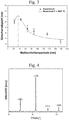
- the heat released in turn induces phase formation in the immediate environment. Due to atomic diffusion and heat transport, this reaction propagates parallel to the individual layers with velocities v between 2 and 11 m / s through the multilayer (cf. Fig. 3 ).
- the reaction conditions and thus the speed can be controlled.
- the reaction product is the intermetallic phase RuAl. If higher-component systems based on Ru / Al are used, corresponding alloys are produced based on RuAl.
- the common structural feature is namely the small layer thicknesses in the case of the multilayers or, in the case of a powder system, the particle sizes in a similar dimension. This structural feature allows short diffusion paths between the reactants, favoring the reaction between ruthenium and aluminum.
Landscapes
- Chemical & Material Sciences (AREA)
- Engineering & Computer Science (AREA)
- Mechanical Engineering (AREA)
- Chemical Kinetics & Catalysis (AREA)
- Materials Engineering (AREA)
- Metallurgy (AREA)
- Organic Chemistry (AREA)
- Powder Metallurgy (AREA)
- Physical Vapour Deposition (AREA)
Description
- Die Erfindung betrifft die Verwendung eines Verfahrens zur lokalen Wärmeerzeugung.
- Reaktive metallische Systeme bestehen aus metallischen Partikeln in Form von Pulvern oder Pasten bzw. aus metallischen Multischichten.
- In technischen Anwendungen wird oftmals lokal die kontrollierte Freisetzung von Wärme verlangt. Beispiel ist das Löten bzw. Bonden in der Mikrosystemtechnik. Eine Möglichkeit lokal Wärme zu erzeugen, ist die Verwendung reaktiver metallischer Systeme in Form von metallischen Multischichten. Solche Multischichten bestehen aus übereinander abgeschiedenen, dünnen metallischen Einzelschichten mit Dicken im Nanometerbereich. Die Gesamtdicke der Multischicht kann mehrere zehn µm betragen. Durch lokale Zufuhr von Wärmeenergie, beispielsweise durch einen Laserstrahl oder durch einen Zündfunken, wird dort eine exotherme chemische Reaktion zwischen den metallischen Elementen ausgelöst. Bedingt durch Wärmetransport pflanzt sich diese Reaktion durch die gesamte Multischicht parallel zu den Einzelschichten fort. Die Ausbreitungsgeschwindigkeit kann dabei mehrere m/s betragen. Die entstehende Wärme erhitzt die Multischicht bis auf eine Temperatur, die je nach verwendeter Materialkombination zwischen 1000 °C und 1600 °C variieren kann. Diese Temperatur, bzw. Wärmemenge, wird letztlich in den unterschiedlichen Applikationen ausgenutzt.
- Der Einsatz einer solchen lokalen Wärmequelle in Form schnell reagierender Multischichtfolien zur Herstellung von beispielsweise Lotverbindungen minimiert den Wärme- und Spannungseintrag in angrenzende Bauteile. Die Wärme wird direkt im Fügespalt freigesetzt. Diese Methode bietet daher gegenüber dem konventionellen Löten mehrere Vorteile. Zunächst werden keine äußeren Wärmequellen (außer zur Reaktionsinitiierung) benötigt. Außerdem kann der Fügeprozess in einer beliebigen Atmosphäre durchgeführt werden. Besonders signifikant ist der Aspekt einzuschätzen, dass die Temperatur der zu fügenden Bauteile nicht ansteigt. Die Wärmeeinflusszone bei maximaler Temperatur bleibt beim Fügen von Edelstahl auf einen Bereich von einigen zehn µm um die reaktive Dünnschicht beschränkt.
- Im Rahmen reaktiver metallischer Multischichten wurden viele Materialkombinationen untersucht. Die Systeme Rh/Si, Ni/Si, Zr/Si sowie Ni/Al, Ti/Al, Monel/Al, and Zr/Al werden in der
US 6,736,942 B2 beschrieben, wobei Multischichten auf Ni/Al und Monel®/Al Basis schon kommerziell verfügbar sind. Generell ist vom theoretischen und auch experimentellen Standpunkt aus festzustellen, dass für das System Ni/Al der Kenntnisstand am größten ist. - Wissenschaftlich gehört die beschriebene chemische Reaktion in das Feld der Synthese von Werkstoffen mittels selbstfortschreitender (self-progating) Reaktionen. Solche Reaktionen können sowohl in Pulvern als auch in metallischen Multischichten induziert werden Die Reaktionsprodukte sind intermetallische Phasen. Das Mengenverhältnis der Elementpulver bzw. das Schichtdickenverhältnis der individuellen Schichten legt die Stöchiometrie fest. Letztere wird so eingestellt, daß die Reaktionen möglichst stark exotherm sind und somit viel Wärme freigesetzt wird. Orientierung dafür bieten die Bildungswärmen der unterschiedlichen intermetallischen Phasen. Im System Ni/Al besitzt die B2-Phase NiAl die größte negative Bildungswärme. Für reaktive Multischichten wird beispielsweise ein Schichtdickenverhältnis von Al- zu Ni-Schicht von 1.52 wird für die 1:1 Stöchiometrie eingestellt. Die erreichbaren Temperaturen sind materialabhängig und können Werte weit oberhalb von 1000 °C erreichen. Allerdings weisen die als Reaktionsprodukte entstehenden intermetallischen Phasen eine hohe Sprödigkeit bei Raumtemperatur auf. Letzteres begrenzt die Anwendung vor allem für Applikationen bei Raumtemperatur.
- Aus der
WO 2007/095303 A2 sind Verzögerungselemente, die reaktive Multischichten aufweisen, Detonatoren, die solche Verzögerungselemente enthalten und ein Herstellungsverfahren hierfür bekannt. - Auch die
US 2006/0236887 A1 beschreibt Verzögerungselemente auf der Basis von reaktiven Multischichten, und ein Herstellungsverfahren hierfür. - Freistehende Folien aus reaktiven Multischichten und deren Verwendung sind aus der
WO 01/83182 A1 - Strukturen auf Grundlage von reaktiven Multischichten werden in der
WO 01/83205 A2 - Der Erfindung liegt die Aufgabe zu Grunde, neue Techniken für die Fertigungstechnik zu schaffen.
- Diese Aufgabe wird bei einer ersten Ausgestaltung der Erfindung dadurch gelöst, dass in der Fertigungstechnik zum großflächigen Fügen zweier metallischer Flächenelemente sequentiell Ruthenium- bzw. Aluminium-Dünnschichten zur Bildung einer Multischicht übereinander abgeschieden werden, wobei die Einzelschichtdicke der Ruthenium- bzw. der Aluminiumschichten zwischen 10 und 500 nm beträgt und die Multischicht mittels eines Laserstrahls, Zündfunkens oder per offener Flamme lokal erhitzt und eine exotherme Reaktion von Ru und Al zu RuAl induziert wird.
- Bei einer zweiten Ausgestaltung der Erfindung wird die Aufgabe dadurch gelöst, dass in der Fertigungstechnik zum großflächigen Fügen zweier metallischer Flächenelemente Pulver, welches Ruthenium- bzw. Aluminium-Partikel enthält, appliziert wird, wobei die Ruthenium- bzw. der Aluminiumpartikel einen mittleren Durchmesser von 10 bis 100 nm aufweisen und das Pulver mittels eines Laserstrahls, Zündfunkens oder per offener Flamme lokal erhitzt und eine exotherme Reaktion von Ru und Al zu RuAl induziert wird.
- Es ist auch möglich, dass das Pulver aus Ruthenium- und Aluminiumpartikeln besteht.
- Das Pulversystem ist auf Ru/Al-Basis und ist daher (unter anderem oder ausschließlich) aus Ruthenium- und Aluminiumpulver aufgebaut. Alternativ ist das Pulver aus aluminiumbeschichteten Rutheniumpartikeln bzw. rutheniumbeschichteten Aluminiumpartikeln aufgebaut. Die Erfindung erfasst dadurch Reaktionen zwischen zwei Partikeln und innerhalb eines Partikels.
- Die vorgelegte Erfindung löst die Aufgabe durch die Wahl des Systems Ru/Al als Grundsystem. Die stärkste exotherme Reaktion und damit die meiste freigesetzte Wärmemenge sind für stöchiometrisch aufgebaute reaktive Systeme zu erwarten. Hier ist die Bildungswärme am größten. Vorteilhaft ist die entstehende intermetallische Phase RuAl. Diese ist im Gegensatz zu vielen vergleichbaren intermetallischen Phasen, wie etwa NiAl, bei Raumtemperatur äußerst duktil.
- Die Auswahl von RuAl sei im Folgenden nochmals näher erläutert. Die Standardbildungsenthalpie Hf ist ein erster Indikator für die Applikation von reaktiven Multischichten. Sie kategorisiert die metallischen Systeme hinsichtlich der potentiell freisetzbaren Wärmemenge. Hf skaliert mit der maximal verfügbaren Wärmemenge. In der Anwendung zeigte sich weiterhin, dass die Raumtemperaturduktilität ein zweiter wichtiger Parameter ist. Letztere wird charakterisiert durch die Spröd-Duktil-Übergangstemperatur TBD. Unterhalb dieser Temperatur ist ein generell sprödes Verhalten zu erwarten. Während des schnellen Abkühlens der Dünnschicht von etwa 1000 °C auf Raumtemperatur innerhalb einiger ms werden extrinsisch Spannungen in der Schicht generiert. Im System NiAl führen diese Spannungen zum Bruch der Schicht. Ursächlich dafür ist die niedrige Duktilität von NiAl bei Raumtemperatur. Darüber hinaus wird die Lotverbindung überwiegend niedrigen Temperaturen um Raumtemperatur ausgesetzt, sodass die mechanischen Raumtemperatureigenschaften mitbestimmend für die Verwendbarkeit des reaktiven metallischen Systems sind.
- Es ist zur Erfindung gehörig, dass die Einzelschichtdicke der Ruthenium- bzw. der Aluminiumschichten zwischen 10 und 500 nm beträgt.
- Ebenso ist zur Erfindung gehörig, dass die Schichtdicke der Multischicht bis zu 100 µm beträgt.
- Im Rahmen der Erfindung liegt auch ein Verfahren zum Herstellen von reaktiven metallischen Systemen, gemäß dem sequentiell Ruthenium- bzw. Aluminium-Dünnschichten auf einem Substrat zur Bildung einer Multischicht übereinander abgeschieden werden, wobei die Einzelschichtdicke der Ruthenium- bzw. der Aluminiumschichten zwischen 10 und 500 nm beträgt.
- In diesem Zusammenhang ist es vorteilhaft, dass das Abscheiden der Ruthenium- bzw. Aluminium-Dünnschichten mittels physikalischer oder chemischer Dampfabscheidung erfolgt.
- Eine Weiterbildung der Erfindung besteht darin, dass die sequentiell abgeschiedenen Ruthenium- und Aluminium-Dünnschichten als Multischicht von dem Substrat abgehoben werden.
- Es liegt dann eine freistehende Multischicht vor, die folienartig ausgebildet ist.
- Bei dem erfindungsgemäßen Verfahren ist vorgesehen, dass die Multischicht eine Schichtdicke von bis zu 100 µm aufweist.
- Schließlich ist auch zur Erfindung gehörig, dass aus mehreren Multischichten ein Multischichtstapel gebildet wird.
- Vorzugsweise weist ein derartiger Multischichtstapel eine Gesamtschichtdicke von bis zu 1 cm auf.
- Vorzugsweise weisen die Partikel einen mittleren Durchmesser von 10 bis 100 nm auf.
- Es liegt im Rahmen der Erfindung, daß das reaktive metallische System in einer Form vorliegt, die für Dickschichtapplikationen geeignet ist, insbesondere in Pulver-, Pasten- oder Tintenform.
- Die erreichten Vorteile durch die vorliegende Erfindung betreffen mehrere Bereiche. Betrachtet man erstens den Sektor des Lötens bzw. Bondings, so ist vor allem zu erwarten, dass, bedingt durch die signifikant gesteigerte Raumtemperaturduktilität der in der Fügestelle verbleibenden RuAl-Phase, die mechanische Belastbarkeit der Fügestelle erhöht wird. Zweitens zeigen eigene Messungen der Temperatur, dass diese in den Ru/Al-Multischichten Werte oberhalb von mindestens 1850 °C erreichen. In bisherigen Multischichtsystemen sind solche Werte nicht erreicht worden. Im Vergleich zu kommerziell vertriebenen Ni/Al-Nanofoil-Schichten sind die Temperaturen beispielsweise um 400°C höher. Entsprechendes gilt auch für Pulversysteme. Neue Anwendungsfelder für reaktive metallische Systeme können dadurch erschlossen werden. Im Falle der reaktiven Multischichten gemäß der vorliegenden Erfindung können diese zur lokalen Wärmeerzeugung, beispielsweise in der Fertigungstechnik zum großflächigen Fügen zweier metallischer Flächenelemente, verwendet werden. Hierbei ist von Vorteil, daß aufgrund der lokal begrenzten Wärmeerzeugung gegebenenfalls vorhandene benachbarte wärmeempfindliche Bauteile geschont werden. Aufgrund der Tatsache, daß die RuAl-Phase ein exzellenter elektrischer Leiter ist, können die erfindungsgemäßen Multischichten in allen Bereichen Anwendung finden, in denen die elektrische Leitfähigkeit von Bedeutung ist.
- Nachfolgend wird die Erfindung anhand von Figuren am Ausführungsbeispiel einer reaktiven Multischicht auf Ru/Al-Basis näher erläutert.
- Es zeigen
- Figur 1
- die Reaktivität (= Hf) und Duktilität (= 1/TBD) untersuchter reaktiver Multischichten,
- Figur 2
- eine schematische Darstellung der Prozesse während der Reaktion,
- Figur 3
- die Abhängigkeit der Geschwindigkeit von der Multischichtperiode (Summe der Einzelschichtdicken) für selbstausbreitende Reaktionen in binären Ru/Al-Multischichten,
- Figur 4
- ein Röntgendiffraktogramm einer Ru/Al-Multischicht nach der Reaktion und
- Figur 5
- Temperaturprofile für Ru/Al-Multischichten mit Perioden zwischen 22 und 178 nm.
- In
Fig. 1 sind 1/TBD und Hf zur Charakterisierung von Duktilität bzw. Reaktivität gegeneinander aufgetragen. Mit Ni/Al- und Co/Al-Multischichten sind bereits erfolgreich Bauteile gefügt worden. Dieser Bereich der Reaktivität kann somit als ausreichend für die Anwendung betrachtet werden. Unzureichend ist hingegen für beide Systeme die Raumtemperaturduktilität der intermetallischen Aluminide. NiAl und CoAl sind bei Raumtemperatur spröde und durch eine TBD von 400 bzw. 300 °C charakterisiert. Legt man zur Werkstoffoptimierung eine Duktilität bei Temperaturen < 100 °C fest, so wird inFig. 1 ein Eigenschaftsfenster mit der besten Kombination aus Reaktivität und Raumtemperaturduktilität definiert. Die intermetallische Phase RuAl fällt in dieses Fenster. Sie kombiniert einzigartig eine hohe Reaktivität (Hf = 48 kJ/mol) mit einer hohen Raumtemperaturduktilität (TBD < 23 °C). Die Bildungswärme von B2-RuAl ist mit der von NiAl vergleichbar (vgl.Fig. 1 ). - Somit sind reaktive Ru/Al-Multischichten unter Bildung der B2-Phase RuAl vielversprechend bei der Materialoptimierung von reaktiven metallischen Multischichten.
- Anhand von
Fig. 2 wird die Erfindung näher beschrieben. - Mittels Dünnschichtmethodik (Methoden der physikalischen oder chemischen Dampfabscheidung) werden sequentiell Ruthenium (Ru)- und Aluminium (Al)-Dünnschichten übereinander auf einem geeigneten Substrat abgeschieden. Die Einzelschichtdicke der Ru- bzw. Al Schichten liegt im Bereich zwischen 10 und 500 nm. Die Gesamtschichtdicke eines solchen Multischichtstapels erreicht Werte bis 1 cm (abhängig von der jeweiligen Anwendung). Anschließend kann die Multischicht von ihrem Substrat entfernt werden. Mittels eines Laserstrahls, Zündfunkens oder per offener Flamme wird die Ru/Al-Multischicht lokal erhitzt und damit die exotherme chemische Reaktion von Ru und Al zu RuAl induziert. Die dadurch freigesetzte Wärme induziert in der direkten Umgebung wiederum die Phasenbildung. Aufgrund von atomarer Diffusion und Wärmetransport breitet sich diese Reaktion parallel zu den Einzelschichten mit Geschwindigkeiten v zwischen 2 und 11 m/s durch die Multischicht aus (vgl.
Fig 3 ). - Durch gezielte Wahl der sogenannten Multischichtperiode, d.h. der Summe der Einzelschichtdicken, können die Reaktionsbedingungen und damit die Geschwindigkeit kontrolliert werden. Das Reaktionsprodukt ist im Falle von binären Ru/Al-Multischichten die intermetallische Phase RuAl. Werden höherkomponentige Systeme auf Ru/Al-Basis verwendet, entstehen entsprechende Legierungen auf RuAl-Basis.
- Eigene Untersuchungen mittels Röntgendiffraktion zeigen eindeutig, dass im ersteren Fall tatsächlich die intermetallische Phase RuAl einphasig in den beschriebenen Schichten entstanden ist (vgl.
Fig 4 ). Es sind ausschließlich die Reflexe der RuAl-Phase zu identifizieren. - Darüber hinaus belegen eigene Temperaturmessungen mittels Hochgeschwindigkeitspyrometrie, dass während der Reaktion Temperaturen von mindestens 1850 °C erreicht werden (vgl.
Fig 5 ). - Entsprechendes gilt auch für Pulversysteme. Gemeinsames strukturelles Merkmal sind nämlich die kleinen Schichtdicken im Falle der Multischichten bzw. bei einem Pulversystem die Partikelgrößen in ähnlicher Dimension. Dieses strukturelle Charakteristikum erlaubt kurze Diffusionswege zwischen den Reaktionspartnern, sodass die Reaktion zwischen Ruthenium und Aluminium begünstigt wird.
Claims (7)
- Verwendung eines Verfahrens zur lokalen Wärmeerzeugung in der Fertigungstechnik zum großflächigen Fügen zweier metallischer Flächenelemente, wobei sequentiell Ruthenium- bzw. Aluminium-Dünnschichten zur Bildung einer Multischicht übereinander abgeschieden werden, wobei die Einzelschichtdicke der Ruthenium- bzw. der Aluminiumschichten zwischen 10 und 500 nm beträgt und die Multischicht mittels eines Laserstrahls, Zündfunkens oder per offener Flamme lokal erhitzt und eine exotherme Reaktion von Ru und Al zu RuAl induziert wird.
- Verwendung eines Verfahrens zur lokalen Wärmeerzeugung in der Fertigungstechnik zum großflächigen Fügen zweier metallischer Flächenelemente, wobei Pulver, welches Ruthenium- bzw. Aluminium-Partikel enthält, appliziert wird, wobei die Ruthenium- bzw. der Aluminiumpartikel einen mittleren Durchmesser von 10 bis 100 nm aufweisen und das Pulver mittels eines Laserstrahls, Zündfunkens oder per offener Flamme lokal erhitzt und eine exotherme Reaktion von Ru und Al zu RuAl induziert wird.
- Verwendung gemäß Anspruch 1, dadurch gekennzeichnet, dass das Abscheiden der Ruthenium- bzw. Aluminium-Dünnschichten mittels physikalischer oder chemischer Dampfabscheidung erfolgt.
- Verwendung gemäß Anspruch 1, dadurch gekennzeichnet, dass die sequentiell abgeschiedenen Ruthenium- und Aluminium-Dünnschichten als Multischicht von dem Substrat abgehoben werden.
- Verwendung gemäß Anspruch 4, dadurch gekennzeichnet, dass die Multischicht eine Schichtdicke von bis zu 100 µm aufweist.
- Verwendung gemäß einem der Ansprüche 1, 3, 4 oder 5, dadurch gekennzeichnet, daß aus mehreren Multischichten ein Multischichtstapel gebildet wird.
- Verwendung gemäß Anspruch 6, dadurch gekennzeichnet, daß der Multischichtstapel eine Gesamtschichtdicke von bis zu 1 cm aufweist.
Applications Claiming Priority (2)
| Application Number | Priority Date | Filing Date | Title |
|---|---|---|---|
| DE102010060937A DE102010060937A1 (de) | 2010-12-01 | 2010-12-01 | Reaktive metallische Multischichten und Verfahren zum Herstellen von reaktiven metallischen Multischichten |
| PCT/DE2011/075295 WO2012072073A1 (de) | 2010-12-01 | 2011-12-01 | Reaktive metallische systeme und verfahren zum herstellen von reaktiven metallischen systemen |
Publications (2)
| Publication Number | Publication Date |
|---|---|
| EP2646599A1 EP2646599A1 (de) | 2013-10-09 |
| EP2646599B1 true EP2646599B1 (de) | 2018-02-07 |
Family
ID=45592114
Family Applications (1)
| Application Number | Title | Priority Date | Filing Date |
|---|---|---|---|
| EP11817470.5A Active EP2646599B1 (de) | 2010-12-01 | 2011-12-01 | Reaktive metallische systeme und verfahren zum herstellen von reaktiven metallischen systemen |
Country Status (4)
| Country | Link |
|---|---|
| US (1) | US20130330567A1 (de) |
| EP (1) | EP2646599B1 (de) |
| DE (1) | DE102010060937A1 (de) |
| WO (1) | WO2012072073A1 (de) |
Families Citing this family (7)
| Publication number | Priority date | Publication date | Assignee | Title |
|---|---|---|---|---|
| DE102013009835A1 (de) | 2013-06-07 | 2014-12-11 | Fraunhofer-Gesellschaft zur Förderung der angewandten Forschung e.V. | Zusammenstellung für die Ausbildung eines reaktiven Schichtsystems oder Multischichtsystems sowie deren Verwendung |
| DE102013109879A1 (de) * | 2013-09-10 | 2015-03-12 | Fraunhofer-Gesellschaft zur Förderung der angewandten Forschung e.V. | Fügeverfahren, Material- oder Phasentransformationsverfahren, Sicherungsverfahren, Fügemittel und Sicherheitssystem unter Verwendung reaktiver Materialsysteme |
| DE102015103494B4 (de) | 2015-03-10 | 2020-07-16 | Friedrich-Schiller-Universität Jena | Verfahren zur Herstellung eines Reflektorelements und Reflektorelement |
| CN104722965B (zh) * | 2015-03-25 | 2016-08-10 | 武汉大学 | 一种基于自蔓延技术的带状钎料制备方法 |
| US9725373B1 (en) | 2015-06-15 | 2017-08-08 | National Technology & Engineering Solutions Of Sandia, Llc | Ignitable solids having an arrayed structure and methods thereof |
| US11060194B2 (en) * | 2016-12-21 | 2021-07-13 | The United States Of America, As Represented By The Secretary Of The Navy | Methods for producing composite structures using diffusion or thermal reactions of a plurality of layers |
| CN109570745B (zh) * | 2018-12-06 | 2021-02-02 | 北京工业大学 | 一种超声波辅助自蔓延连接金属与非金属的方法 |
Family Cites Families (9)
| Publication number | Priority date | Publication date | Assignee | Title |
|---|---|---|---|---|
| JP2989169B2 (ja) * | 1997-08-08 | 1999-12-13 | 日立金属株式会社 | Ni−Al系金属間化合物ターゲットおよびその製造方法ならびに磁気記録媒体 |
| US6736942B2 (en) | 2000-05-02 | 2004-05-18 | Johns Hopkins University | Freestanding reactive multilayer foils |
| CN100513038C (zh) * | 2000-05-02 | 2009-07-15 | 约翰斯霍普金斯大学 | 使用可独立反应的多层薄片的结合方法以及结合结构 |
| JP3997527B2 (ja) * | 2003-03-31 | 2007-10-24 | 日立金属株式会社 | Ru−Al金属間化合物ターゲットの製造方法、Ru−Al金属間化合物ターゲットおよび磁気記録媒体 |
| AU2006212875B2 (en) * | 2005-02-08 | 2011-06-02 | Dyno Nobel Inc. | Delay units and methods of making the same |
| WO2007095303A2 (en) * | 2006-02-13 | 2007-08-23 | Dyno Nobel Inc. | Delay elements, detonators containing the same and methods of making |
| US20100120608A1 (en) * | 2006-06-02 | 2010-05-13 | Haskew James W | Reactive metal and catalyst amalgam and method for improving the combustibility of fuel oils |
| AU2011224469B2 (en) * | 2010-03-09 | 2014-08-07 | Dyno Nobel Inc. | Sealer elements, detonators containing the same, and methods of making |
| WO2012033160A1 (ja) * | 2010-09-09 | 2012-03-15 | 独立行政法人物質・材料研究機構 | 耐酸化特性に優れた高温用合金材料およびその製造方法 |
-
2010
- 2010-12-01 DE DE102010060937A patent/DE102010060937A1/de not_active Withdrawn
-
2011
- 2011-12-01 US US13/991,180 patent/US20130330567A1/en not_active Abandoned
- 2011-12-01 EP EP11817470.5A patent/EP2646599B1/de active Active
- 2011-12-01 WO PCT/DE2011/075295 patent/WO2012072073A1/de not_active Ceased
Also Published As
| Publication number | Publication date |
|---|---|
| DE102010060937A1 (de) | 2012-06-06 |
| WO2012072073A1 (de) | 2012-06-07 |
| EP2646599A1 (de) | 2013-10-09 |
| US20130330567A1 (en) | 2013-12-12 |
Similar Documents
| Publication | Publication Date | Title |
|---|---|---|
| WO2012072073A1 (de) | Reaktive metallische systeme und verfahren zum herstellen von reaktiven metallischen systemen | |
| DE102007020389B4 (de) | Fügeverfahren zum Fügen von Bauteilen im Luft- und Raumfahrtbereich | |
| EP0123702B1 (de) | Verfahren zum Verbinden von metallischen Bauelementen | |
| DE3512986C2 (de) | ||
| DE102015115962B4 (de) | Verfahren zur Erzeugung eines metallischen Werkstoffgemischs bei der additiven Fertigung | |
| DE102011089194A1 (de) | Verfahren zur Fertigung eines kompakten Bauteils sowie mit dem Verfahren herstellbares Bauteil | |
| EP2276711B1 (de) | Verfahren zur herstellung von keramischen objekten mittels selektiven laserschmelzens | |
| EP3249064A1 (de) | Additive fertigung von hochtemperaturbauteilen aus tial | |
| EP2783076A1 (de) | Verfahren zur panzerung der z-notch von tial-schaufeln | |
| DE102020105638A1 (de) | Verfahren zur bildung von metallischen gradientenkörpern durch additive fertigung | |
| WO2010112468A1 (de) | Verfahren zum herstellen einer verbindung von graphit und trägermetall, sowie verbundelement | |
| WO2008106935A1 (de) | Verfahren und vorrichtung zum beschichten von bauteilen einer gasturbine | |
| EP2809826A1 (de) | Verfahren zur aufbringung einer schutzschicht auf eine turbinenkomponente | |
| DE69403320T2 (de) | Difffusionsbarriere-schichten | |
| WO2012159607A1 (de) | Lotpaste sowie verfahren zur herstellung einer lötverbindung mit hilfe der lotpaste | |
| WO2016091482A1 (de) | Aktivhartlotmaterial und verfahren zur aktivhartlötung von bauteilen | |
| DE102013109879A1 (de) | Fügeverfahren, Material- oder Phasentransformationsverfahren, Sicherungsverfahren, Fügemittel und Sicherheitssystem unter Verwendung reaktiver Materialsysteme | |
| DE102011008311A1 (de) | Reaktivfolie zum Verlöten von metallischen Bauteilen | |
| DE69704010T2 (de) | Verfahren zur Beschichtung eines Substrates aus einer Superlegierung auf Nickel- oder Kobaltbasis | |
| DE102009015502B4 (de) | Verfahren zum Herstellen eines reaktiven Halbzeuges und reaktives Halbzeug | |
| DE102012017135A1 (de) | Verfahren zur Herstellung eines Stoffverbundes für eine Panzerung sowie Panzerung | |
| Cloots | Empirische und simulative Studie über die Verarbeitbarkeit von IN738LC mittels SLM | |
| DE4130785A1 (de) | Beschichtungsverfahren und schutzschichten fuer den oxidationsschutz mit kompatibilitaetsschicht | |
| DE3737361C2 (de) | ||
| EP2906386B1 (de) | Schichtverbund |
Legal Events
| Date | Code | Title | Description |
|---|---|---|---|
| PUAI | Public reference made under article 153(3) epc to a published international application that has entered the european phase |
Free format text: ORIGINAL CODE: 0009012 |
|
| 17P | Request for examination filed |
Effective date: 20130624 |
|
| AK | Designated contracting states |
Kind code of ref document: A1 Designated state(s): AL AT BE BG CH CY CZ DE DK EE ES FI FR GB GR HR HU IE IS IT LI LT LU LV MC MK MT NL NO PL PT RO RS SE SI SK SM TR |
|
| RAP1 | Party data changed (applicant data changed or rights of an application transferred) |
Owner name: STEINBEIS FORSCHUNGS- UND INNOVATIONSZENTREN GMBH |
|
| DAX | Request for extension of the european patent (deleted) | ||
| 17Q | First examination report despatched |
Effective date: 20170328 |
|
| GRAP | Despatch of communication of intention to grant a patent |
Free format text: ORIGINAL CODE: EPIDOSNIGR1 |
|
| INTG | Intention to grant announced |
Effective date: 20170906 |
|
| GRAS | Grant fee paid |
Free format text: ORIGINAL CODE: EPIDOSNIGR3 |
|
| GRAA | (expected) grant |
Free format text: ORIGINAL CODE: 0009210 |
|
| AK | Designated contracting states |
Kind code of ref document: B1 Designated state(s): AL AT BE BG CH CY CZ DE DK EE ES FI FR GB GR HR HU IE IS IT LI LT LU LV MC MK MT NL NO PL PT RO RS SE SI SK SM TR |
|
| REG | Reference to a national code |
Ref country code: GB Ref legal event code: FG4D Free format text: NOT ENGLISH |
|
| REG | Reference to a national code |
Ref country code: AT Ref legal event code: REF Ref document number: 968829 Country of ref document: AT Kind code of ref document: T Effective date: 20180215 Ref country code: CH Ref legal event code: EP |
|
| REG | Reference to a national code |
Ref country code: IE Ref legal event code: FG4D Free format text: LANGUAGE OF EP DOCUMENT: GERMAN |
|
| REG | Reference to a national code |
Ref country code: DE Ref legal event code: R096 Ref document number: 502011013698 Country of ref document: DE |
|
| REG | Reference to a national code |
Ref country code: CH Ref legal event code: PFA Owner name: STEINBEIS TRANSFER GMBH, DE Free format text: FORMER OWNER: STEINBEIS FORSCHUNGS- UND INNOVATIONSZENTREN GMBH, DE |
|
| REG | Reference to a national code |
Ref country code: NL Ref legal event code: MP Effective date: 20180207 |
|
| PG25 | Lapsed in a contracting state [announced via postgrant information from national office to epo] |
Ref country code: ES Free format text: LAPSE BECAUSE OF FAILURE TO SUBMIT A TRANSLATION OF THE DESCRIPTION OR TO PAY THE FEE WITHIN THE PRESCRIBED TIME-LIMIT Effective date: 20180207 Ref country code: NL Free format text: LAPSE BECAUSE OF FAILURE TO SUBMIT A TRANSLATION OF THE DESCRIPTION OR TO PAY THE FEE WITHIN THE PRESCRIBED TIME-LIMIT Effective date: 20180207 Ref country code: CY Free format text: LAPSE BECAUSE OF FAILURE TO SUBMIT A TRANSLATION OF THE DESCRIPTION OR TO PAY THE FEE WITHIN THE PRESCRIBED TIME-LIMIT Effective date: 20180207 Ref country code: FI Free format text: LAPSE BECAUSE OF FAILURE TO SUBMIT A TRANSLATION OF THE DESCRIPTION OR TO PAY THE FEE WITHIN THE PRESCRIBED TIME-LIMIT Effective date: 20180207 Ref country code: LT Free format text: LAPSE BECAUSE OF FAILURE TO SUBMIT A TRANSLATION OF THE DESCRIPTION OR TO PAY THE FEE WITHIN THE PRESCRIBED TIME-LIMIT Effective date: 20180207 Ref country code: HR Free format text: LAPSE BECAUSE OF FAILURE TO SUBMIT A TRANSLATION OF THE DESCRIPTION OR TO PAY THE FEE WITHIN THE PRESCRIBED TIME-LIMIT Effective date: 20180207 Ref country code: NO Free format text: LAPSE BECAUSE OF FAILURE TO SUBMIT A TRANSLATION OF THE DESCRIPTION OR TO PAY THE FEE WITHIN THE PRESCRIBED TIME-LIMIT Effective date: 20180507 |
|
| PG25 | Lapsed in a contracting state [announced via postgrant information from national office to epo] |
Ref country code: PL Free format text: LAPSE BECAUSE OF FAILURE TO SUBMIT A TRANSLATION OF THE DESCRIPTION OR TO PAY THE FEE WITHIN THE PRESCRIBED TIME-LIMIT Effective date: 20180207 Ref country code: RS Free format text: LAPSE BECAUSE OF FAILURE TO SUBMIT A TRANSLATION OF THE DESCRIPTION OR TO PAY THE FEE WITHIN THE PRESCRIBED TIME-LIMIT Effective date: 20180207 Ref country code: BG Free format text: LAPSE BECAUSE OF FAILURE TO SUBMIT A TRANSLATION OF THE DESCRIPTION OR TO PAY THE FEE WITHIN THE PRESCRIBED TIME-LIMIT Effective date: 20180507 Ref country code: IS Free format text: LAPSE BECAUSE OF FAILURE TO SUBMIT A TRANSLATION OF THE DESCRIPTION OR TO PAY THE FEE WITHIN THE PRESCRIBED TIME-LIMIT Effective date: 20180607 Ref country code: GR Free format text: LAPSE BECAUSE OF FAILURE TO SUBMIT A TRANSLATION OF THE DESCRIPTION OR TO PAY THE FEE WITHIN THE PRESCRIBED TIME-LIMIT Effective date: 20180508 Ref country code: SE Free format text: LAPSE BECAUSE OF FAILURE TO SUBMIT A TRANSLATION OF THE DESCRIPTION OR TO PAY THE FEE WITHIN THE PRESCRIBED TIME-LIMIT Effective date: 20180207 Ref country code: LV Free format text: LAPSE BECAUSE OF FAILURE TO SUBMIT A TRANSLATION OF THE DESCRIPTION OR TO PAY THE FEE WITHIN THE PRESCRIBED TIME-LIMIT Effective date: 20180207 |
|
| PG25 | Lapsed in a contracting state [announced via postgrant information from national office to epo] |
Ref country code: MT Free format text: LAPSE BECAUSE OF FAILURE TO SUBMIT A TRANSLATION OF THE DESCRIPTION OR TO PAY THE FEE WITHIN THE PRESCRIBED TIME-LIMIT Effective date: 20180207 |
|
| PG25 | Lapsed in a contracting state [announced via postgrant information from national office to epo] |
Ref country code: RO Free format text: LAPSE BECAUSE OF FAILURE TO SUBMIT A TRANSLATION OF THE DESCRIPTION OR TO PAY THE FEE WITHIN THE PRESCRIBED TIME-LIMIT Effective date: 20180207 Ref country code: IT Free format text: LAPSE BECAUSE OF FAILURE TO SUBMIT A TRANSLATION OF THE DESCRIPTION OR TO PAY THE FEE WITHIN THE PRESCRIBED TIME-LIMIT Effective date: 20180207 Ref country code: AL Free format text: LAPSE BECAUSE OF FAILURE TO SUBMIT A TRANSLATION OF THE DESCRIPTION OR TO PAY THE FEE WITHIN THE PRESCRIBED TIME-LIMIT Effective date: 20180207 Ref country code: EE Free format text: LAPSE BECAUSE OF FAILURE TO SUBMIT A TRANSLATION OF THE DESCRIPTION OR TO PAY THE FEE WITHIN THE PRESCRIBED TIME-LIMIT Effective date: 20180207 |
|
| REG | Reference to a national code |
Ref country code: DE Ref legal event code: R097 Ref document number: 502011013698 Country of ref document: DE |
|
| PG25 | Lapsed in a contracting state [announced via postgrant information from national office to epo] |
Ref country code: DK Free format text: LAPSE BECAUSE OF FAILURE TO SUBMIT A TRANSLATION OF THE DESCRIPTION OR TO PAY THE FEE WITHIN THE PRESCRIBED TIME-LIMIT Effective date: 20180207 Ref country code: SM Free format text: LAPSE BECAUSE OF FAILURE TO SUBMIT A TRANSLATION OF THE DESCRIPTION OR TO PAY THE FEE WITHIN THE PRESCRIBED TIME-LIMIT Effective date: 20180207 Ref country code: CZ Free format text: LAPSE BECAUSE OF FAILURE TO SUBMIT A TRANSLATION OF THE DESCRIPTION OR TO PAY THE FEE WITHIN THE PRESCRIBED TIME-LIMIT Effective date: 20180207 Ref country code: SK Free format text: LAPSE BECAUSE OF FAILURE TO SUBMIT A TRANSLATION OF THE DESCRIPTION OR TO PAY THE FEE WITHIN THE PRESCRIBED TIME-LIMIT Effective date: 20180207 |
|
| PLBE | No opposition filed within time limit |
Free format text: ORIGINAL CODE: 0009261 |
|
| STAA | Information on the status of an ep patent application or granted ep patent |
Free format text: STATUS: NO OPPOSITION FILED WITHIN TIME LIMIT |
|
| 26N | No opposition filed |
Effective date: 20181108 |
|
| PG25 | Lapsed in a contracting state [announced via postgrant information from national office to epo] |
Ref country code: SI Free format text: LAPSE BECAUSE OF FAILURE TO SUBMIT A TRANSLATION OF THE DESCRIPTION OR TO PAY THE FEE WITHIN THE PRESCRIBED TIME-LIMIT Effective date: 20180207 |
|
| PG25 | Lapsed in a contracting state [announced via postgrant information from national office to epo] |
Ref country code: MC Free format text: LAPSE BECAUSE OF FAILURE TO SUBMIT A TRANSLATION OF THE DESCRIPTION OR TO PAY THE FEE WITHIN THE PRESCRIBED TIME-LIMIT Effective date: 20180207 Ref country code: LU Free format text: LAPSE BECAUSE OF NON-PAYMENT OF DUE FEES Effective date: 20181201 |
|
| REG | Reference to a national code |
Ref country code: IE Ref legal event code: MM4A |
|
| REG | Reference to a national code |
Ref country code: BE Ref legal event code: MM Effective date: 20181231 |
|
| PG25 | Lapsed in a contracting state [announced via postgrant information from national office to epo] |
Ref country code: IE Free format text: LAPSE BECAUSE OF NON-PAYMENT OF DUE FEES Effective date: 20181201 |
|
| PG25 | Lapsed in a contracting state [announced via postgrant information from national office to epo] |
Ref country code: BE Free format text: LAPSE BECAUSE OF NON-PAYMENT OF DUE FEES Effective date: 20181231 |
|
| REG | Reference to a national code |
Ref country code: AT Ref legal event code: MM01 Ref document number: 968829 Country of ref document: AT Kind code of ref document: T Effective date: 20181201 |
|
| PG25 | Lapsed in a contracting state [announced via postgrant information from national office to epo] |
Ref country code: TR Free format text: LAPSE BECAUSE OF FAILURE TO SUBMIT A TRANSLATION OF THE DESCRIPTION OR TO PAY THE FEE WITHIN THE PRESCRIBED TIME-LIMIT Effective date: 20180207 |
|
| PG25 | Lapsed in a contracting state [announced via postgrant information from national office to epo] |
Ref country code: AT Free format text: LAPSE BECAUSE OF NON-PAYMENT OF DUE FEES Effective date: 20181201 |
|
| PG25 | Lapsed in a contracting state [announced via postgrant information from national office to epo] |
Ref country code: PT Free format text: LAPSE BECAUSE OF FAILURE TO SUBMIT A TRANSLATION OF THE DESCRIPTION OR TO PAY THE FEE WITHIN THE PRESCRIBED TIME-LIMIT Effective date: 20180207 |
|
| PG25 | Lapsed in a contracting state [announced via postgrant information from national office to epo] |
Ref country code: HU Free format text: LAPSE BECAUSE OF FAILURE TO SUBMIT A TRANSLATION OF THE DESCRIPTION OR TO PAY THE FEE WITHIN THE PRESCRIBED TIME-LIMIT; INVALID AB INITIO Effective date: 20111201 Ref country code: MK Free format text: LAPSE BECAUSE OF NON-PAYMENT OF DUE FEES Effective date: 20180207 |
|
| PGFP | Annual fee paid to national office [announced via postgrant information from national office to epo] |
Ref country code: GB Payment date: 20231220 Year of fee payment: 13 |
|
| PGFP | Annual fee paid to national office [announced via postgrant information from national office to epo] |
Ref country code: FR Payment date: 20231215 Year of fee payment: 13 Ref country code: DE Payment date: 20231214 Year of fee payment: 13 |
|
| PGFP | Annual fee paid to national office [announced via postgrant information from national office to epo] |
Ref country code: CH Payment date: 20240110 Year of fee payment: 13 |
|
| REG | Reference to a national code |
Ref country code: DE Ref legal event code: R119 Ref document number: 502011013698 Country of ref document: DE |
|
| REG | Reference to a national code |
Ref country code: CH Ref legal event code: PL |
|
| GBPC | Gb: european patent ceased through non-payment of renewal fee |
Effective date: 20241201 |
|
| PG25 | Lapsed in a contracting state [announced via postgrant information from national office to epo] |
Ref country code: DE Free format text: LAPSE BECAUSE OF NON-PAYMENT OF DUE FEES Effective date: 20250701 |
|
| PG25 | Lapsed in a contracting state [announced via postgrant information from national office to epo] |
Ref country code: GB Free format text: LAPSE BECAUSE OF NON-PAYMENT OF DUE FEES Effective date: 20241201 |
|
| PG25 | Lapsed in a contracting state [announced via postgrant information from national office to epo] |
Ref country code: FR Free format text: LAPSE BECAUSE OF NON-PAYMENT OF DUE FEES Effective date: 20241231 |
|
| PG25 | Lapsed in a contracting state [announced via postgrant information from national office to epo] |
Ref country code: CH Free format text: LAPSE BECAUSE OF NON-PAYMENT OF DUE FEES Effective date: 20241231 |