EP2639504A2 - Thermische Solaranlage und Verfahren zum Betreiben einer thermischen Solaranlage - Google Patents
Thermische Solaranlage und Verfahren zum Betreiben einer thermischen Solaranlage Download PDFInfo
- Publication number
- EP2639504A2 EP2639504A2 EP20130153144 EP13153144A EP2639504A2 EP 2639504 A2 EP2639504 A2 EP 2639504A2 EP 20130153144 EP20130153144 EP 20130153144 EP 13153144 A EP13153144 A EP 13153144A EP 2639504 A2 EP2639504 A2 EP 2639504A2
- Authority
- EP
- European Patent Office
- Prior art keywords
- fluid
- solar
- heat
- gas turbine
- passage
- Prior art date
- Legal status (The legal status is an assumption and is not a legal conclusion. Google has not performed a legal analysis and makes no representation as to the accuracy of the status listed.)
- Granted
Links
Images
Classifications
-
- F—MECHANICAL ENGINEERING; LIGHTING; HEATING; WEAPONS; BLASTING
- F01—MACHINES OR ENGINES IN GENERAL; ENGINE PLANTS IN GENERAL; STEAM ENGINES
- F01K—STEAM ENGINE PLANTS; STEAM ACCUMULATORS; ENGINE PLANTS NOT OTHERWISE PROVIDED FOR; ENGINES USING SPECIAL WORKING FLUIDS OR CYCLES
- F01K23/00—Plants characterised by more than one engine delivering power external to the plant, the engines being driven by different fluids
- F01K23/02—Plants characterised by more than one engine delivering power external to the plant, the engines being driven by different fluids the engine cycles being thermally coupled
- F01K23/06—Plants characterised by more than one engine delivering power external to the plant, the engines being driven by different fluids the engine cycles being thermally coupled combustion heat from one cycle heating the fluid in another cycle
- F01K23/10—Plants characterised by more than one engine delivering power external to the plant, the engines being driven by different fluids the engine cycles being thermally coupled combustion heat from one cycle heating the fluid in another cycle with exhaust fluid of one cycle heating the fluid in another cycle
-
- F—MECHANICAL ENGINEERING; LIGHTING; HEATING; WEAPONS; BLASTING
- F01—MACHINES OR ENGINES IN GENERAL; ENGINE PLANTS IN GENERAL; STEAM ENGINES
- F01K—STEAM ENGINE PLANTS; STEAM ACCUMULATORS; ENGINE PLANTS NOT OTHERWISE PROVIDED FOR; ENGINES USING SPECIAL WORKING FLUIDS OR CYCLES
- F01K23/00—Plants characterised by more than one engine delivering power external to the plant, the engines being driven by different fluids
- F01K23/02—Plants characterised by more than one engine delivering power external to the plant, the engines being driven by different fluids the engine cycles being thermally coupled
- F01K23/06—Plants characterised by more than one engine delivering power external to the plant, the engines being driven by different fluids the engine cycles being thermally coupled combustion heat from one cycle heating the fluid in another cycle
- F01K23/10—Plants characterised by more than one engine delivering power external to the plant, the engines being driven by different fluids the engine cycles being thermally coupled combustion heat from one cycle heating the fluid in another cycle with exhaust fluid of one cycle heating the fluid in another cycle
- F01K23/101—Regulating means specially adapted therefor
-
- F—MECHANICAL ENGINEERING; LIGHTING; HEATING; WEAPONS; BLASTING
- F02—COMBUSTION ENGINES; HOT-GAS OR COMBUSTION-PRODUCT ENGINE PLANTS
- F02C—GAS-TURBINE PLANTS; AIR INTAKES FOR JET-PROPULSION PLANTS; CONTROLLING FUEL SUPPLY IN AIR-BREATHING JET-PROPULSION PLANTS
- F02C6/00—Plural gas-turbine plants; Combinations of gas-turbine plants with other apparatus; Adaptations of gas-turbine plants for special use
- F02C6/18—Plural gas-turbine plants; Combinations of gas-turbine plants with other apparatus; Adaptations of gas-turbine plants for special use using the waste heat of gas-turbine plants outside the plants themselves, e.g. gas-turbine power heat plants
-
- F—MECHANICAL ENGINEERING; LIGHTING; HEATING; WEAPONS; BLASTING
- F03—MACHINES OR ENGINES FOR LIQUIDS; WIND, SPRING, OR WEIGHT MOTORS; PRODUCING MECHANICAL POWER OR A REACTIVE PROPULSIVE THRUST, NOT OTHERWISE PROVIDED FOR
- F03G—SPRING, WEIGHT, INERTIA OR LIKE MOTORS; MECHANICAL-POWER PRODUCING DEVICES OR MECHANISMS, NOT OTHERWISE PROVIDED FOR OR USING ENERGY SOURCES NOT OTHERWISE PROVIDED FOR
- F03G6/00—Devices for producing mechanical power from solar energy
- F03G6/0055—Devices for producing mechanical power from solar energy having other power cycles, e.g. Stirling or transcritical, supercritical cycles; combined with other power sources, e.g. wind, gas or nuclear
-
- F—MECHANICAL ENGINEERING; LIGHTING; HEATING; WEAPONS; BLASTING
- F03—MACHINES OR ENGINES FOR LIQUIDS; WIND, SPRING, OR WEIGHT MOTORS; PRODUCING MECHANICAL POWER OR A REACTIVE PROPULSIVE THRUST, NOT OTHERWISE PROVIDED FOR
- F03G—SPRING, WEIGHT, INERTIA OR LIKE MOTORS; MECHANICAL-POWER PRODUCING DEVICES OR MECHANISMS, NOT OTHERWISE PROVIDED FOR OR USING ENERGY SOURCES NOT OTHERWISE PROVIDED FOR
- F03G6/00—Devices for producing mechanical power from solar energy
- F03G6/06—Devices for producing mechanical power from solar energy with solar energy concentrating means
- F03G6/065—Devices for producing mechanical power from solar energy with solar energy concentrating means having a Rankine cycle
-
- F—MECHANICAL ENGINEERING; LIGHTING; HEATING; WEAPONS; BLASTING
- F03—MACHINES OR ENGINES FOR LIQUIDS; WIND, SPRING, OR WEIGHT MOTORS; PRODUCING MECHANICAL POWER OR A REACTIVE PROPULSIVE THRUST, NOT OTHERWISE PROVIDED FOR
- F03G—SPRING, WEIGHT, INERTIA OR LIKE MOTORS; MECHANICAL-POWER PRODUCING DEVICES OR MECHANISMS, NOT OTHERWISE PROVIDED FOR OR USING ENERGY SOURCES NOT OTHERWISE PROVIDED FOR
- F03G6/00—Devices for producing mechanical power from solar energy
- F03G6/06—Devices for producing mechanical power from solar energy with solar energy concentrating means
- F03G6/065—Devices for producing mechanical power from solar energy with solar energy concentrating means having a Rankine cycle
- F03G6/067—Binary cycle plants where the fluid from the solar collector heats the working fluid via a heat exchanger
-
- F—MECHANICAL ENGINEERING; LIGHTING; HEATING; WEAPONS; BLASTING
- F03—MACHINES OR ENGINES FOR LIQUIDS; WIND, SPRING, OR WEIGHT MOTORS; PRODUCING MECHANICAL POWER OR A REACTIVE PROPULSIVE THRUST, NOT OTHERWISE PROVIDED FOR
- F03G—SPRING, WEIGHT, INERTIA OR LIKE MOTORS; MECHANICAL-POWER PRODUCING DEVICES OR MECHANISMS, NOT OTHERWISE PROVIDED FOR OR USING ENERGY SOURCES NOT OTHERWISE PROVIDED FOR
- F03G6/00—Devices for producing mechanical power from solar energy
- F03G6/121—Controlling or monitoring
-
- F—MECHANICAL ENGINEERING; LIGHTING; HEATING; WEAPONS; BLASTING
- F22—STEAM GENERATION
- F22B—METHODS OF STEAM GENERATION; STEAM BOILERS
- F22B1/00—Methods of steam generation characterised by form of heating method
- F22B1/006—Methods of steam generation characterised by form of heating method using solar heat
-
- F—MECHANICAL ENGINEERING; LIGHTING; HEATING; WEAPONS; BLASTING
- F22—STEAM GENERATION
- F22B—METHODS OF STEAM GENERATION; STEAM BOILERS
- F22B1/00—Methods of steam generation characterised by form of heating method
- F22B1/02—Methods of steam generation characterised by form of heating method by exploitation of the heat content of hot heat carriers
- F22B1/18—Methods of steam generation characterised by form of heating method by exploitation of the heat content of hot heat carriers the heat carrier being a hot gas, e.g. waste gas such as exhaust gas of internal-combustion engines
- F22B1/1807—Methods of steam generation characterised by form of heating method by exploitation of the heat content of hot heat carriers the heat carrier being a hot gas, e.g. waste gas such as exhaust gas of internal-combustion engines using the exhaust gases of combustion engines
- F22B1/1815—Methods of steam generation characterised by form of heating method by exploitation of the heat content of hot heat carriers the heat carrier being a hot gas, e.g. waste gas such as exhaust gas of internal-combustion engines using the exhaust gases of combustion engines using the exhaust gases of gas-turbines
-
- F—MECHANICAL ENGINEERING; LIGHTING; HEATING; WEAPONS; BLASTING
- F24—HEATING; RANGES; VENTILATING
- F24S—SOLAR HEAT COLLECTORS; SOLAR HEAT SYSTEMS
- F24S10/00—Solar heat collectors using working fluids
- F24S10/30—Solar heat collectors using working fluids with means for exchanging heat between two or more working fluids
-
- Y—GENERAL TAGGING OF NEW TECHNOLOGICAL DEVELOPMENTS; GENERAL TAGGING OF CROSS-SECTIONAL TECHNOLOGIES SPANNING OVER SEVERAL SECTIONS OF THE IPC; TECHNICAL SUBJECTS COVERED BY FORMER USPC CROSS-REFERENCE ART COLLECTIONS [XRACs] AND DIGESTS
- Y02—TECHNOLOGIES OR APPLICATIONS FOR MITIGATION OR ADAPTATION AGAINST CLIMATE CHANGE
- Y02E—REDUCTION OF GREENHOUSE GAS [GHG] EMISSIONS, RELATED TO ENERGY GENERATION, TRANSMISSION OR DISTRIBUTION
- Y02E10/00—Energy generation through renewable energy sources
- Y02E10/40—Solar thermal energy, e.g. solar towers
- Y02E10/44—Heat exchange systems
-
- Y—GENERAL TAGGING OF NEW TECHNOLOGICAL DEVELOPMENTS; GENERAL TAGGING OF CROSS-SECTIONAL TECHNOLOGIES SPANNING OVER SEVERAL SECTIONS OF THE IPC; TECHNICAL SUBJECTS COVERED BY FORMER USPC CROSS-REFERENCE ART COLLECTIONS [XRACs] AND DIGESTS
- Y02—TECHNOLOGIES OR APPLICATIONS FOR MITIGATION OR ADAPTATION AGAINST CLIMATE CHANGE
- Y02E—REDUCTION OF GREENHOUSE GAS [GHG] EMISSIONS, RELATED TO ENERGY GENERATION, TRANSMISSION OR DISTRIBUTION
- Y02E10/00—Energy generation through renewable energy sources
- Y02E10/40—Solar thermal energy, e.g. solar towers
- Y02E10/46—Conversion of thermal power into mechanical power, e.g. Rankine, Stirling or solar thermal engines
-
- Y—GENERAL TAGGING OF NEW TECHNOLOGICAL DEVELOPMENTS; GENERAL TAGGING OF CROSS-SECTIONAL TECHNOLOGIES SPANNING OVER SEVERAL SECTIONS OF THE IPC; TECHNICAL SUBJECTS COVERED BY FORMER USPC CROSS-REFERENCE ART COLLECTIONS [XRACs] AND DIGESTS
- Y02—TECHNOLOGIES OR APPLICATIONS FOR MITIGATION OR ADAPTATION AGAINST CLIMATE CHANGE
- Y02E—REDUCTION OF GREENHOUSE GAS [GHG] EMISSIONS, RELATED TO ENERGY GENERATION, TRANSMISSION OR DISTRIBUTION
- Y02E20/00—Combustion technologies with mitigation potential
- Y02E20/14—Combined heat and power generation [CHP]
-
- Y—GENERAL TAGGING OF NEW TECHNOLOGICAL DEVELOPMENTS; GENERAL TAGGING OF CROSS-SECTIONAL TECHNOLOGIES SPANNING OVER SEVERAL SECTIONS OF THE IPC; TECHNICAL SUBJECTS COVERED BY FORMER USPC CROSS-REFERENCE ART COLLECTIONS [XRACs] AND DIGESTS
- Y02—TECHNOLOGIES OR APPLICATIONS FOR MITIGATION OR ADAPTATION AGAINST CLIMATE CHANGE
- Y02E—REDUCTION OF GREENHOUSE GAS [GHG] EMISSIONS, RELATED TO ENERGY GENERATION, TRANSMISSION OR DISTRIBUTION
- Y02E20/00—Combustion technologies with mitigation potential
- Y02E20/16—Combined cycle power plant [CCPP], or combined cycle gas turbine [CCGT]
Definitions
- the invention relates to a thermal solar system and a method for operating a thermal solar system.
- a solar thermal system comprising: a solar collector arrangement having a plurality of solar collectors, wherein the solar collector arrangement defines a solar collector fluid passage for passing a fluid, so that a first amount of heat can be supplied to the fluid from solar radiation incident on the solar collectors, and wherein the solar collector fluid passage a first fluid feed port for feeding fluid to be heated into the solar panel fluid passage and a first fluid discharge port for discharging heated fluid from the solar panel fluid passage; a gas turbine with an exhaust outlet; an exhaust heat exchanger having an exhaust gas passage connected to the exhaust gas outlet of the gas turbine through the exhaust passage passing hot gas of the gas turbine, and a heat exchanger fluid passage for passing a fluid so that a second amount of heat can be supplied to the fluid from the exhaust gas flowing through the exhaust gas passage wherein the heat exchanger fluid passage has a second fluid feed port for feeding fluid to be heated into the heat exchanger fluid passage and a second fluid discharge port for discharging heated fluid from the heat exchanger fluid passage; wherein the first
- the invention has for its object to provide a solar thermal system and a method for operating a solar thermal system, whereby a higher energy efficiency efficiency can be achieved.
- a solar thermal system comprises: a solar collector arrangement having a plurality of solar collectors, the solar collector arrangement defining a solar collector fluid passage for passing a fluid so that a first amount of heat can be supplied to the fluid from solar radiation striking the solar collectors, and wherein the solar collector fluid passage has a first fluid feed port for feeding fluid to be heated into the solar panel fluid passage and a first fluid discharge port for discharging heated fluid from the solar panel fluid passage; a gas turbine with an exhaust outlet; an exhaust heat exchanger having an exhaust gas passage connected to the exhaust gas outlet of the gas turbine to pass through the exhaust gas passage hot gas of the gas turbine, and a heat exchanger fluid passage for passing a fluid, so that a second amount of heat supplied to the fluid from the exhaust gas flowing through the exhaust gas passage wherein the heat exchanger fluid passage has a second fluid feed port for feeding fluid to be heated into the heat exchanger fluid passage and a second fluid discharge port for discharging heated fluid from the heat exchanger fluid passage; a hot fluid receiving device fluidly
- the control device can preferably be designed as an electrical or electronic control device and contain control algorithms in the form of software, firmware and / or hardware.
- the hot fluid intake device connected to the fluid inlet of the consumer device is preferably fluidly connected directly to the first fluid delivery port and fluidly connects the second fluid delivery port directly to the first fluid discharge port bypassing the solar collector fluid passage, the solar collector fluid passage and the heat exchanger fluid passage are connected in parallel with each other ,
- the fluid heated in the solar collector fluid passage need not be passed through the heat exchanger fluid passage, thereby avoiding heat loss and thus increasing the energy use efficiency of solar energy.
- control device is set up to only put the gas turbine into operation when the first quantity of heat falls below a predetermined limit value.
- the limit can be exceeded according to the invention, when the solar energy convertible from the solar array into heat energy solar energy is reduced at sunset or on days with cloudy. In this way, the operation of the gas turbine is limited to the times in which no or insufficient solar energy is available to reach the limit, thus further increasing the energy efficiency and cost of the solar thermal system.
- the control device is set up when the first quantity of heat falls below the predetermined limit value, supplying a portion of the second quantity of heat to the fluid flowing through the solar collector fluid passage so that it is kept at a predetermined temperature.
- the fluid to be passed through the solar collector fluid passage and through the heat exchanger fluid passage is formed by water, wherein the fluid to be supplied to the consumer device via its fluid inlet is formed by water vapor.
- the first and second fluid feed ports are fluidly interconnected, the exhaust gas heat exchanger being formed by a waste heat boiler configured to evaporate fluid passing through the heat exchanger fluid passage to water vapor removable at the second fluid discharge port the solar collector arrangement is set up to evaporate the fluid flowing through the solar collector fluid passage via direct solar evaporation to water vapor which can be removed at the first fluid discharge connection.
- the solar direct evaporation is a further improvement in efficiency over, for example, achieved with a thermal oil as a fluid in the solar collector arrangement operated solar thermal systems. Up there Oil-specific components can be dispensed with, the costs are reduced and at the same time the process temperature and thus the efficiency compared to the oil technology can be increased.
- the consumer device has a steam turbine and an electric generator rotatably driven by the steam turbine.
- the gas turbine, the steam turbine and the electric generator are arranged in the form of a single-shaft system or in alignment on a common axis, the gas turbine and e.g.
- the steam turbine may also be selectively brought into and out of rotary drive connection with the electric generator via a clutch that can be triggered by the control device.
- the then only electric generator can be rotated by both the steam turbine and the gas turbine to generate electricity, so that costs for a further electric generator can be saved.
- this can be disconnected from the electric generator, so that energy losses are avoided.
- servicing the steam turbine this can also be disconnected from the electric generator, so that energy losses are avoided. Due to the configuration as a single-shaft system, the arrangement of gas turbine, steam turbine and electric generator and possibly a transmission is extremely compact and cost-efficient.
- the hot fluid receiving device has a plurality of steam lines such as conduits.
- the Hot fluid receiving device also have a plurality of controllable by the control valve control valves.
- steam lines of the hot fluid receiving device may be fluidly connected to the first and second fluid discharge ports.
- this also has a feed fluid receiving device.
- the feed fluid intake device preferably has a plurality of water lines, such as conduits.
- the Jardinfluiding also have a plurality of controllable by the control device control valves and pumps.
- water lines of the feed fluid receiving device are fluid-connected to a fluid outlet of the consumer device and to the first and the second fluid feed connection.
- water lines of the feed fluid intake device may preferably be fluidly connected to the second fluid discharge port.
- a method for operating a solar thermal system comprises: by means of a solar collector arrangement, supplying a fluid passing through a solar collector fluid passage of the solar collector assembly and transferring at least a portion of the first quantity of heat to a hot fluid receiver; Comparing the first amount of heat with a threshold value; when the first quantity of heat is less than the limit value, a gas turbine and an exhaust gas heat exchanger connected to an exhaust gas outlet of the gas turbine supply a second quantity of heat to a fluid passing through a heat exchanger fluid passage of the exhaust gas heat exchanger and bypassing the solar panel fluid passage transmitting at least one Part of the second amount of heat to the hot fluid receiving device; and by means of a fluid supply at least a portion of the first and second amounts of heat to a consumer device.
- the first and second heat can be transferred to the hot fluid intake device in parallel become.
- the fluid heated in the solar collector fluid passage is not passed through the heat exchanger fluid passage, thereby preventing heat loss and thus increasing the energy use efficiency of solar energy.
- the limit can be exceeded according to the invention, when the solar energy convertible from the solar array into heat energy solar energy is reduced at sunset or on days with cloudy. In this way, the operation of the gas turbine is limited to the times in which no or insufficient solar energy is available to reach the limit, thus further increasing the energy efficiency and cost of the solar thermal system.
- a portion of the second quantity of heat is supplied to the fluid flowing through the solar collector fluid passage of the solar collector assembly so that it is maintained at a predetermined temperature.
- the first amount of heat is supplied to water as fluid, so that steam is generated therefrom via solar direct evaporation, which steam is introduced into a steam line of the hot fluid intake device, wherein the second quantity of heat is supplied with water as fluid, so that water vapor is produced therefrom which is introduced into the steam line of the hot fluid receiver.
- the solar direct evaporation is a further improvement in efficiency over, for example, achieved with a thermal oil as a fluid in the solar collector arrangement operated solar thermal systems. Since it is possible to dispense with oil-specific components, the costs are reduced and at the same time the process temperature and thus the efficiency compared with the oil technology can be increased.
- a thermal solar system is provided according to embodiments of the invention, which is configured as a CSP plant (Concentrated Solar Power) with direct solar evaporation. It is also provided according to embodiments of the invention, a method for operating such a solar thermal system.
- the invention consists in the combinatorics of a solar field (solar collector arrangement) and a steam turbine with the arrangement and integration of an industrial gas turbine in the overall process.
- the gas turbine can be started at sunset and thus falls below the limit for the first amount of heat and thus decreasing steam production from the solar field.
- the steam produced in the downstream waste heat boiler can be fed to the steam turbine, which in this hybrid mode drives night operation preferably at partial load according to the available steam quantity from the gas turbine process.
- On days with heavy clouds and the resulting lower than the limit for the first heat quantity and thus decreasing steam production also offers the opportunity to produce steam with the help of the gas turbine and operate the steam turbine continuously in partial load.
- the additionally produced electrical power of the gas turbine can be fed into the power grid in addition to the electrical power produced by the steam turbine.
- steam may be removed from the waste heat boiler to maintain the solar field at a preheat temperature. This supports and accelerates the start-up process of the solar field on the following day or when the cloud cover subsides.
- the annual full-load operating hours of the solar thermal system preferably combined to form a power plant in solar operation can be significantly increased by eliminating the warm-up times.
- a thermal Salt storage offers the use of an industrial gas turbine to bridge the times in which the solar field can not produce steam.
- the invention further includes the arrangement of the two turbomachines, namely the gas turbine and the steam turbine with their ancillary systems, such as generator, oil system and cooling systems. Accordingly, the turbo train of gas turbine, transmission, generator, transmission, steam turbine as a single-shaft system with z.T. switchable couplings are designed for hybrid operation.
- the cyclic daily steam turbine operation due to the dependence / limitation of sunshine hours can be avoided.
- This promotes the transient start-up behavior of the steam turbine, which in turn enables the user to represent greater economy.
- steam production can be maintained at night by means of the downstream waste heat boiler for continuous steam turbine operation.
- the CSP system can be kept warm with its piping system, so that the start-up process can be optimized and rapid at sunrise or when the cloud cover subsides. The overall efficiency and thus the economic efficiency is significantly improved.
- An unspecified embodiment of the solar thermal system according to the invention has in addition to or instead of the gas turbine on a gas and / or diesel engine. Although it still requires additional modifications for the integration of the gas or diesel engine in some embodiments within the overall arrangement, for example, additional or extended exhaust gas exits, fuel supplies, connections to electric generators and control devices, but these are not relevant to the invention.
- FIGS. 1 and 2 Embodiments of a solar thermal system 1 according to the invention described.
- the thermal solar system 1 is configured as a CSP plant (Concentrated Solar Power) combined with an electric power plant with direct solar evaporation.
- solar thermal system 1 includes a solar collector assembly 10 having a plurality of solar collectors (not shown in detail), a gas turbine 20, an exhaust heat exchanger 30, a hot fluid receiver 40, a feed fluid receiver 50, a consumer device 60, and a controller 70.
- the control device 70 may preferably be designed as an electrical or electronic control device and contain control algorithms in the form of software, firmware and / or hardware.
- the control device 70 is connected to the solar collector assembly 10, the gas turbine 20, the exhaust gas heat exchanger 30, the hot fluid receiver 40, the feed fluid receiver 50, and the consumer device 60 for controlling them.
- the hot fluid intake device 40 has a plurality of steam lines H such as conduits and a plurality of controllable by the controller 70 control valves (not labeled).
- the feed fluid intake device 50 has a plurality of water lines S such as conduits and a plurality of controllable by the controller 70 control valves (not labeled), pumps (not labeled) and other components (not designated) such as heat exchangers, water separators, etc. on.
- the steam lines H carry water vapor and lead the water lines S water or feed water and / or possibly steam on a relative to the water vapor in the steam lines H reduced temperature level.
- the solar collector assembly 10 defines a solar collector fluid passage 11 for passing a fluid so that a first amount of heat Q1 can be supplied to the fluid from solar radiation incident on the solar collectors.
- the solar collector fluid passage 11 has a first fluid feed port 11a for feeding the fluid to be heated into the solar collector fluid passage 11 in the form of feed water and a first fluid discharge port 11b for discharging heated fluid in the form of water vapor out of the solar collector fluid passage 11.
- the solar collector assembly 10 is adapted to generate via solar direct evaporation of water via the supply of the first amount of heat Q1 water vapor.
- the solar collector assembly 10 configured to evaporate through the solar collector fluid passage 11 flowing fluid in the form of water via direct solar evaporation to the first fluid discharge port 11 b removable water vapor.
- the solar collector assembly 10 reaches live steam parameters of 40 bar and 400 ° C.
- the gas turbine 20 is operated with natural gas as the fuel gas and has an exhaust outlet 21 which is connected via an exhaust pipe A to an exhaust passage 31 of the exhaust heat exchanger 30 through the exhaust passage 31 passing hot exhaust gas of the gas turbine 20th
- the exhaust heat exchanger 30 is formed by a waste heat boiler and has a heat exchanger fluid passage 32 for passing a fluid, so that a second amount of heat Q 2 can be supplied to the fluid from the exhaust gas flowing through the exhaust passage 31.
- the heat exchange fluid passage 32 has a second fluid feed port 32a for feeding fluid to be heated in the heat exchanger fluid passage 32 in the form of water and a second fluid discharge port 32b for discharging heated fluid in the form of water vapor from the heat exchanger fluid passage 32.
- the exhaust heat exchanger 30 is thus adapted to evaporate fluid passing through the heat exchanger fluid passage 32 in the form of water via the supply of the second heat quantity Q2 to water vapor removable at the second fluid discharge port 32b.
- the hot fluid intake device 40 via one or more steam lines H directly to the first fluid discharge port 11 b of the solar collector fluid passage 11 fluidly connected.
- the hot fluid intake device 40 fluidly connects the second fluid discharge port 32 b of the heat exchanger fluid passage 32 via one or more vapor lines H By-passing the solar collector fluid passage 11 directly to the first fluid discharge port 11b.
- the consumer device 60 has a steam turbine 61 and an electric generator 62 rotatably driven by the steam turbine 61.
- the steam turbine 61 has a fluid inlet 61 a and a fluid outlet 61 b.
- the fluid inlet 61 a is connected to the hot fluid intake device 40, so that at least a portion of the first and second amounts of heat Q1, Q2 can be supplied to the consumer device 60 via a fluid.
- the fluid inlet 61a is fluidly connected to the first fluid discharge port 11b of the solar collector fluid passage 11 via one or more vapor lines H of the hot fluid pickup device 40 and directly to the second fluid discharge port 32b of the heat exchanger fluid passage 32.
- the fluid outlet 61b is fluidly connected to the first fluid feed port 11a of the solar collector fluid passage 11 and the second fluid feed port 32a of the heat exchanger fluid passage 32 via one or more water conduits S and other components (such as a feedwater receiver 51) of the feed fluid receiver 50.
- the first and second fluid feed ports 11a, 32a are also fluidly connected to one another via one or more water conduits S of the feed fluid intake device 50.
- the controller 70 is configured according to the invention to control an operation of the gas turbine 20 in response to a magnitude of the first heat quantity Q1.
- the control device 70 is set up, the gas turbine 20 only to put into operation when the first amount of heat Q1 falls below a predetermined threshold.
- this limit value can be undershot if the solar energy convertible into heat energy by the solar collector arrangement 10 is reduced at sunset or on days with cloud cover.
- the control device 70 is set up when the first quantity of heat Q1 falls below the predetermined limit value, supplying a portion of the second quantity of heat Q2 to the fluid flowing through the solar collector fluid passage 11 so that it is at a predetermined temperature, namely, a preheating temperature is maintained.
- the consumer device 60 has the electric generator 62 which, when rotationally driven, feeds electrical energy into a power grid 80.
- the gas turbine 20 can also be rotationally connected to an electric generator 63, so that the electric generator 63 feeds electrical energy into the power grid 80 when it is rotated.
- the gas turbine 20 can be selectively brought into and out of rotational drive connection with the electric generator 62, 63 via a clutch 22 that can be activated by the control device 70.
- the steam turbine 61 via a controllable by the controller 70 clutch selectively in and out of rotary drive connection with the electric generator 62, 63 be brought.
- the method comprises at least the steps: by means of the solar collector assembly 10, supplying the first heat quantity Q1 to the fluid passing through the solar collector fluid passage 11 of the solar collector assembly 10 and transferring at least a portion of the first heat quantity Q1 to the hot fluid receiver 40; in the controller 70, comparing the first amount of heat Q1 with the threshold value; When the first heat quantity Q1 is smaller than the threshold value, the gas turbine 20 and by means of the exhaust gas heat exchanger 30 connected to the exhaust gas outlet 21 of the gas turbine engine 20 supply the second heat quantity Q2 to the fluid passing through the heat exchanger fluid passage 32 of the exhaust gas heat exchanger 30 and below Bypassing the solar collector fluid passage 11 transferring at least a portion of the second heat Q2 to the hot fluid receiver 40; and supplying, by means of a fluid, at least a portion of the first and second quantities of heat Q1, Q2 to the consumer device 60.
- electric energy is generated by means of the rotary drive provided by the steam turbine 61 of the consumer device 60 during its operation, which is fed into the power grid 80, wherein electric energy is also generated by means of the rotary drive provided by the gas turbine 20 during its operation is fed into the power grid 80.
- a part of the second heat quantity Q2 is passed through the solar collector fluid passage 11 of FIG Solar collector assembly 10 is supplied through flowing fluid so that it is maintained at the predetermined temperature (preheating temperature).
- the first quantity of heat Q1 is supplied with water as fluid, so that steam is generated therefrom via solar direct evaporation, which steam is introduced into one or more steam lines H of the hot fluid intake device 40, the second quantity of heat Q2 being supplied with water as fluid to produce steam therefrom, which is introduced into the one or more steam lines H of the hot fluid intake device 40.
- the gas turbine 20 can be started at sunset, thus falling below the limit value for the first heat quantity Q1 and thus decreasing steam production from the solar collector arrangement 10.
- the water vapor produced in the downstream exhaust gas heat exchanger 30 can be supplied to the steam turbine 61 which, in this hybrid mode, drives night operation preferably at partial load according to the available steam quantity from the gas turbine process.
- the steam turbine 61 which, in this hybrid mode, drives night operation preferably at partial load according to the available steam quantity from the gas turbine process.
- the additionally produced electrical power of the gas turbine 20 can be fed into the power grid 80 in addition to the electric power produced by the steam turbine 61. Additionally, water vapor may be removed from the exhaust heat exchanger 30 to maintain the solar collector assembly 10 at the preheat temperature. This supports and accelerates the start-up process of the solar collector assembly 10 on the following day or when the clouding subsides.
- the claimed device is also suitable in combination with a large diesel engine.
- the energy of the exhaust gases of the large diesel engine for operating subcomponents, such as the gas or steam turbine, the claimed device can be used.
Landscapes
- Engineering & Computer Science (AREA)
- Chemical & Material Sciences (AREA)
- Combustion & Propulsion (AREA)
- Life Sciences & Earth Sciences (AREA)
- Sustainable Energy (AREA)
- Mechanical Engineering (AREA)
- General Engineering & Computer Science (AREA)
- Sustainable Development (AREA)
- Physics & Mathematics (AREA)
- Thermal Sciences (AREA)
- Engine Equipment That Uses Special Cycles (AREA)
- Heat-Pump Type And Storage Water Heaters (AREA)
Abstract
Description
- Die Erfindung betrifft eine thermische Solaranlage und ein Verfahren zum Betreiben einer thermischen Solaranlage.
- Aus
DE 10 2010 061 262 A1 ist bekannt eine thermische Solaranlage mit: einer Solarkollektorenanordnung mit einer Mehrzahl von Solarkollektoren, wobei die Solarkollektorenanordnung eine Solarkollektoren-Fluidpassage definiert zum Hindurchleiten eines Fluids, so dass dem Fluid von auf die Solarkollektoren auftreffender Sonneneinstrahlung eine erste Wärmemenge zuführbar ist, und wobei die Solarkollektoren-Fluidpassage einen ersten Fluideinspeiseanschluss zum in die Solarkollektoren-Fluidpassage Einspeisen von zu erwärmendem Fluid und einen ersten Fluidabgabeanschluss zum aus der Solarkollektoren-Fluidpassage Abgeben von erwärmtem Fluid aufweist; einer Gasturbine mit einem Abgasausgang; einem Abgaswärmetauscher mit einer Abgaspassage, die an den Abgasausgang der Gasturbine angeschlossen ist zum durch die Abgaspassage Hindurchleiten von heißem Abgas der Gasturbine, und einer Wärmetauscher-Fluidpassage zum Hindurchleiten eines Fluids, so dass dem Fluid von dem durch die Abgaspassage hindurchströmenden Abgas eine zweite Wärmemenge zuführbar ist, wobei die Wärmetauscher-Fluidpassage einen zweiten Fluideinspeiseanschluss zum in die Wärmetauscher-Fluidpassage Einspeisen von zu erwärmendem Fluid und einen zweiten Fluidabgabeanschluss zum aus der Wärmetauscher-Fluidpassage Abgeben von erwärmtem Fluid aufweist; wobei der erste Fluidabgabeanschluss direkt mit dem zweiten Fluideinspeiseanschluss fluidverbunden ist, so dass die Solarkollektoren-Fluidpassage und die Wärmetauscher-Fluidpassage miteinander in Reihe fluidverbunden sind; einer Heißfluidaufnahmeeinrichtung, die mit dem zweiten Fluidabgabeanschluss fluidverbunden ist; einer Verbrauchereinrichtung mit einem Fluideingang, der mit der Heißfluidaufnahmeeinrichtung verbunden ist, so dass zumindest ein Teil der ersten und zweiten Wärmemengen über ein Fluid der Verbrauchereinrichtung zuführbar ist; und einer Steuereinrichtung, die mit der Gasturbine verbunden ist und die eingerichtet ist, einen Betrieb der Gasturbine in Abhängigkeit von einer Größe der ersten Wärmemenge zu steuern. - Aus
DE 10 2010 061 262 A1 ist außerdem bekannt ein Verfahren zum Betreiben einer thermischen Solaranlage, aufweisend: mittels einer Solarkollektorenanordnung Zuführen einer ersten Wärmemenge zu einem durch eine Solarkollektoren-Fluidpassage der Solarkollektorenanordnung hindurchströmenden Fluid; Betreiben einer Gasturbine in Abhängigkeit von einer Größe der ersten Wärmemenge und mittels eines an einen Abgasausgang der Gasturbine angeschlossenen Abgaswärmetauschers Zuführen einer zweiten Wärmemenge zu einem durch eine Wärmetauscher-Fluidpassage des Abgaswärmetauschers hindurchströmenden Fluid; Übertragen zumindest eines Teils der ersten Wärmemenge auf das durch die Wärmetauscher-Fluidpassage des Abgaswärmetauschers hindurchströmende Fluid und Übertragen zumindest eines Teils einer Summe aus erster und zweiter Wärmemenge auf die Heißfluidaufnahmeeinrichtung; und mittels eines Fluids Zuführen von zumindest einem Teil der Summe aus erster und zweiter Wärmemenge zu einer Verbrauchereinrichtung. - Der Erfindung liegt die Aufgabe zugrunde, eine thermische Solaranlage und ein Verfahren zum Betreiben einer thermischen Solaranlage bereitzustellen, womit eine höhere Energienutzungseffizienz erzielbar ist.
- Dies wird mit einer thermischen Solaranlage gemäß Anspruch 1 und einem Verfahren gemäß Anspruch 8 erreicht. Weiterbildungen der Erfindung sind in den jeweiligen abhängigen Ansprüchen definiert.
- Gemäß einem ersten Aspekt der Erfindung weist eine thermische Solaranlage auf: eine Solarkollektorenanordnung mit einer Mehrzahl von Solarkollektoren, wobei die Solarkollektorenanordnung eine Solarkollektoren-Fluidpassage definiert zum Hindurchleiten eines Fluids, so dass dem Fluid von auf die Solarkollektoren auftreffender Sonneneinstrahlung eine erste Wärmemenge zuführbar ist, und wobei die Solarkollektoren-Fluidpassage einen ersten Fluideinspeiseanschluss zum in die Solarkollektoren-Fluidpassage Einspeisen von zu erwärmendem Fluid und einen ersten Fluidabgabeanschluss zum aus der Solarkollektoren-Fluidpassage Abgeben von erwärmtem Fluid aufweist; eine Gasturbine mit einem Abgasausgang; einen Abgaswärmetauscher mit einer Abgaspassage, die an den Abgasausgang der Gasturbine angeschlossen ist zum durch die Abgaspassage Hindurchleiten von heißem Abgas der Gasturbine, und einer Wärmetauscher-Fluidpassage zum Hindurchleiten eines Fluids, so dass dem Fluid von dem durch die Abgaspassage hindurchströmenden Abgas eine zweite Wärmemenge zuführbar ist, wobei die Wärmetauscher-Fluidpassage einen zweiten Fluideinspeiseanschluss zum in die Wärmetauscher-Fluidpassage Einspeisen von zu erwärmendem Fluid und einen zweiten Fluidabgabeanschluss zum aus der Wärmetauscher-Fluidpassage Abgeben von erwärmtem Fluid aufweist; eine Heißfluidaufnahmeeinrichtung, die mit dem ersten Fluidabgabeanschluss fluidverbunden ist und die den zweiten Fluidabgabeanschluss unter Umgehung der Solarkollektoren-Fluidpassage mit dem ersten Fluidabgabeanschluss fluidverbindet; eine Verbrauchereinrichtung mit einem Fluideingang, der mit der Heißfluidaufnahmeeinrichtung verbunden ist, so dass zumindest ein Teil der ersten und zweiten Wärmemengen über ein Fluid der Verbrauchereinrichtung zuführbar ist; und eine Steuereinrichtung, die mit der Gasturbine verbunden ist und die eingerichtet ist, einen Betrieb der Gasturbine in Abhängigkeit von einer Größe der ersten Wärmemenge zu steuern.
- Die Steuereinrichtung kann bevorzugt als elektrische bzw. elektronische Steuereinrichtung ausgebildet sein und Steueralgorithmen in Form von Software, Firmware und/oder Hardware enthalten.
- Dadurch, dass die mit dem Fluideingang der Verbrauchereinrichtung verbundene Heißfluidaufnahmeeinrichtung bevorzugt direkt mit dem ersten Fluidabgabeanschluss fluidverbunden ist und den zweiten Fluidabgabeanschluss unter Umgehung der Solarkollektoren-Fluidpassage bevorzugt direkt mit dem ersten Fluidabgabeanschluss fluidverbindet, sind die Solarkollektoren-Fluidpassage und die Wärmetauscher-Fluidpassage zueinander parallel geschaltet. Damit muss, wenn genügend Sonnenenergie zur Verfügung steht, so dass ein Betrieb der Gasturbine unterbleiben kann, das in der Solarkollektoren-Fluidpassage erwärmte Fluid nicht durch die Wärmetauscher-Fluidpassage hindurchgeleitet werden, wodurch Wärmeverluste vermieden und damit die Energienutzungseffizienz der Sonnenenergie erhöht ist.
- Gemäß einer Ausführungsform der erfindungsgemäßen thermischen Solaranlage ist die Steuereinrichtung eingerichtet, die Gasturbine nur dann in Betrieb zu nehmen, wenn die erste Wärmemenge einen vorbestimmten Grenzwert unterschreitet.
- Der Grenzwert kann gemäß der Erfindung unterschritten werden, wenn die von der Solarkollektorenanordnung in Wärmeenergie umwandelbare Sonnenenergie bei Sonnenuntergang oder an Tagen mit Bewölkung reduziert ist. Auf diese Weise wird der Betrieb der Gasturbine auf die Zeiten begrenzt, in denen keine oder nicht genügend Sonnenenergie zum Erreichen des Grenzwertes zur Verfügung steht, womit die Energienutzungseffizienz bzw. Wirtschaftlichkeit der thermischen Solaranlage weiter erhöht werden.
- Gemäß einer weiteren Ausführungsform der erfindungsgemäßen thermischen Solaranlage ist die Steuereinrichtung eingerichtet, wenn die erste Wärmemenge den vorbestimmten Grenzwert unterschreitet, einen Teil der zweiten Wärmemenge dem durch die Solarkollektoren-Fluidpassage hindurchströmenden Fluid zuzuführen, so dass dieses auf einer vorbestimmten Temperatur gehalten wird. Mit dieser Ausgestaltung der erfindungsgemäßen thermischen Solaranlage ist es vorteilhaft möglich, das Fluid in der Solarkollektoren-Fluidpassage der Solarkollektorenanordnung auf einer Vorwärmtemperatur zu halten, so dass bei einem Wiederanfahren der Wärmeproduktion über die Solarkollektorenanordnung schneller die erste Wärmemenge auf bzw. über den Grenzwert ansteigt und dadurch in der Gasturbine genutztes Brenngas eingespart werden kann.
- Gemäß noch einer Ausführungsform der erfindungsgemäßen thermischen Solaranlage ist das durch die Solarkollektoren-Fluidpassage und durch die Wärmetauscher-Fluidpassage hindurchzuleitende Fluid von Wasser gebildet, wobei das der Verbrauchereinrichtung über deren Fluideingang zuzuführende Fluid von Wasserdampf gebildet ist.
- Durch die Vermeidung von kostenintensiven speziellen Fluiden, wie z.B. Öl, und die Verwendung von Wasser und Wasserdampf als Fluid können Kosten eingespart werden.
- Gemäß noch einer weiteren Ausführungsform der erfindungsgemäßen thermischen Solaranlage sind der erste und der zweite Fluideinspeiseanschluss miteinander fluidverbunden, wobei der Abgaswärmetauscher von einem Abhitzekessel gebildet ist, der eingerichtet ist, durch die Wärmetauscher-Fluidpassage hindurchströmendes Fluid zu am zweiten Fluidabgabeanschluss entnehmbarem Wasserdampf zu verdampfen, und wobei die Solarkollektorenanordnung eingerichtet ist, durch die Solarkollektoren-Fluidpassage hindurchströmendes Fluid via solarer Direktverdampfung zu am ersten Fluidabgabeanschluss entnehmbarem Wasserdampf zu verdampfen.
- Durch die solare Direktverdampfung wird eine weitere Verbesserung der Wirtschaftlichkeit gegenüber z.B. mit einem Wärmeträgeröl als Fluid in der Solarkollektorenanordnung betriebenen solarthermischen Anlagen erzielt. Da auf Öl-spezifische Komponenten verzichtet werden kann, sinken die Kosten und kann gleichzeitig die Prozesstemperatur und damit der Wirkungsgrad gegenüber der Öl-Technologie erhöht werden.
- Gemäß einer weiteren Ausführungsform der erfindungsgemäßen thermischen Solaranlage weist die Verbrauchereinrichtung eine Dampfturbine und einen von der Dampfturbine drehantreibbaren Elektrogenerator auf.
- Gemäß noch einer Ausführungsform der erfindungsgemäßen thermischen Solaranlage sind die Gasturbine, die Dampfturbine und der Elektrogenerator in Form einer Einwellenanlage bzw. in einer Flucht auf einer gemeinsamen Achse angeordnet, wobei die Gasturbine und z.B. für Wartungszwecke bevorzugt auch die Dampfturbine jeweils über eine von der Steuereinrichtung ansteuerbare Kupplung selektiv in und außer Drehantriebsverbindung mit dem Elektrogenerator bringbar sind.
- Dadurch kann der dann einzige Elektrogenerator sowohl von der Dampfturbine als auch von der Gasturbine zur Stromerzeugung drehangetrieben werden, so dass Kosten für einen weiteren Elektrogenerator eingespart werden können. Bei Abschaltung der Gasturbine kann diese vom Elektrogenerator abgekuppelt werden, so dass Energieverluste vermieden werden. Bei Wartung der Dampfturbine kann diese ebenfalls vom Elektrogenerator abgekuppelt werden, so dass Energieverluste vermieden werden. Durch die Ausgestaltung als Einwellenanlage wird die Anordnung von Gasturbine, Dampfturbine und Elektrogenerator sowie ggf. einem Getriebe außerordentlich kompakt und kosteneffizient.
- Gemäß noch einer weiteren Ausführungsform der erfindungsgemäßen thermischen Solaranlage weist die Heißfluidaufnahmeeinrichtung eine Mehrzahl von Dampfleitungen wie Leitungsrohren auf. Bevorzugt kann die Heißfluidaufnahmeeinrichtung außerdem eine Mehrzahl von von der Steuereinrichtung ansteuerbaren Stellventilen aufweisen. Bevorzugt können Dampfleitungen der Heißfluidaufnahmeeinrichtung mit dem ersten und mit dem zweiten Fluidabgabeanschluss fluidverbunden sein.
- Gemäß noch einer Ausführungsform der erfindungsgemäßen thermischen Solaranlage weist diese außerdem eine Speisefluidaufnahmeeinrichtung auf. Die Speisefluidaufnahmeeinrichtung weist bevorzugt eine Mehrzahl von Wasserleitungen wie Leitungsrohren auf. Bevorzugt kann die Speisefluidaufnahmeeinrichtung außerdem eine Mehrzahl von von der Steuereinrichtung ansteuerbaren Stellventilen und Pumpen aufweisen. Bevorzugt sind Wasserleitungen der Speisefluidaufnahmeeinrichtung mit einem Fluidausgang der Verbrauchereinrichtung sowie mit dem ersten und dem zweiten Fluideinspeiseanschluss fluidverbunden. Außerdem können bevorzugt Wasserleitungen der Speisefluidaufnahmeeinrichtung mit dem zweiten Fluidabgabeanschluss fluidverbunden sein.
- Gemäß einem zweiten Aspekt der Erfindung weist ein Verfahren zum Betreiben einer thermischen Solaranlage auf: mittels einer Solarkollektorenanordnung Zuführen einer ersten Wärmemenge zu einem durch eine Solarkollektoren-Fluidpassage der Solarkollektorenanordnung hindurchströmenden Fluid und Übertragen zumindest eines Teils der ersten Wärmemenge auf eine Heißfluidaufnahmeeinrichtung; Vergleichen der ersten Wärmemenge mit einem Grenzwert; wenn die erste Wärmemenge kleiner als der Grenzwert ist, in Betrieb nehmen einer Gasturbine und mittels eines an einen Abgasausgang der Gasturbine angeschlossenen Abgaswärmetauschers Zuführen einer zweiten Wärmemenge zu einem durch eine Wärmetauscher-Fluidpassage des Abgaswärmetauschers hindurchströmenden Fluid und unter Umgehung der Solarkollektoren-Fluidpassage Übertragen zumindest eines Teils der zweiten Wärmemenge auf die Heißfluidaufnahmeeinrichtung; und mittels eines Fluids Zuführen von zumindest einem Teil der ersten und zweiten Wärmemengen zu einer Verbrauchereinrichtung.
- Dadurch, dass zumindest ein Teil der ersten Wärmemenge bevorzugt direkt auf die Heißfluidaufnahmeeinrichtung übertragen wird und zumindest ein Teil der zweiten Wärmemenge bevorzugt direkt unter Umgehung der Solarkollektoren-Fluidpassage auf die Heißfluidaufnahmeeinrichtung übertragen wird, können die erste und die zweite Wärme zueinander parallel auf die Heißfluidaufnahmeeinrichtung übertragen werden. Damit wird, wenn genügend Sonnenenergie zur Verfügung steht, so dass ein Betrieb der Gasturbine unterbleiben kann, das in der Solarkollektoren-Fluidpassage erwärmte Fluid nicht durch die Wärmetauscher-Fluidpassage hindurchgeleitet, wodurch Wärmeverluste vermieden und damit die Energienutzungseffizienz der Sonnenenergie erhöht ist.
- Der Grenzwert kann gemäß der Erfindung unterschritten werden, wenn die von der Solarkollektorenanordnung in Wärmeenergie umwandelbare Sonnenenergie bei Sonnenuntergang oder an Tagen mit Bewölkung reduziert ist. Auf diese Weise wird der Betrieb der Gasturbine auf die Zeiten begrenzt, in denen keine oder nicht genügend Sonnenenergie zum Erreichen des Grenzwertes zur Verfügung steht, womit die Energienutzungseffizienz bzw. Wirtschaftlichkeit der thermischen Solaranlage weiter erhöht werden.
- Gemäß einer Ausführungsform des erfindungsgemäßen Verfahrens wird mittels eines von der Verbrauchereinrichtung während ihres Betriebs bereitgestellten Drehantriebs Elektroenergie erzeugt, die in ein Stromnetz eingespeist wird, wobei mittels eines von der Gasturbine während ihres Betriebs bereitgestellten Drehantriebs Elektroenergie erzeugt wird, die in das Stromnetz eingespeist wird.
- Auf diese Weise werden vorteilhaft beide zur Verfügung stehende Drehantriebe zur Stromerzeugung bzw. Elektroenergieerzeugung genutzt, was die Energienutzungseffizienz weiter erhöht.
- Gemäß einer weiteren Ausführungsform des erfindungsgemäßen Verfahrens wird, wenn die erste Wärmemenge kleiner als der Grenzwert ist, ein Teil der zweiten Wärmemenge dem durch die Solarkollektoren-Fluidpassage der Solarkollektorenanordnung hindurchströmenden Fluid zugeführt, so dass dieses auf einer vorbestimmten Temperatur gehalten wird.
- Mit dieser Ausgestaltung des erfindungsgemäßen Verfahrens ist es vorteilhaft möglich, das Fluid in der Solarkollektoren-Fluidpassage der Solarkollektorenanordnung auf einer Vorwärmtemperatur zu halten, so dass bei einem Wiederanfahren der Wärmeproduktion über die Solarkollektorenanordnung schneller die erste Wärmemenge auf bzw. über den Grenzwert ansteigt und dadurch in der Gasturbine genutztes Brenngas eingespart werden kann.
- Gemäß noch einer Ausführungsform des erfindungsgemäßen Verfahrens wird die erste Wärmemenge Wasser als Fluid zugeführt, so dass daraus via solarer Direktverdampfung Wasserdampf erzeugt wird, der in eine Dampfleitung der Heißfluidaufnahmeeinrichtung eingeleitet wird, wobei die zweite Wärmemenge Wasser als Fluid zugeführt wird, so dass daraus Wasserdampf erzeugt wird, der in die Dampfleitung der Heißfluidaufnahmeeinrichtung eingeleitet wird.
- Durch die Vermeidung von kostenintensiven speziellen Fluiden, wie z.B. Öl, und die Verwendung von Wasser und Wasserdampf als Fluid können Kosten eingespart werden. Durch die solare Direktverdampfung wird eine weitere Verbesserung der Wirtschaftlichkeit gegenüber z.B. mit einem Wärmeträgeröl als Fluid in der Solarkollektorenanordnung betriebenen solarthermischen Anlagen erzielt. Da auf Öl-spezifische Komponenten verzichtet werden kann, sinken die Kosten und kann gleichzeitig die Prozesstemperatur und damit der Wirkungsgrad gegenüber der Öl-Technologie erhöht werden.
- Im Fazit wird gemäß Ausführungsformen der Erfindung eine thermische Solaranlage bereitgestellt, die als CSP-Anlage (Concentrated Solar Power) mit solarer Direktverdampfung konfiguriert ist. Es wird außerdem gemäß Ausführungsformen der Erfindung ein Verfahren zum Betreiben einer solchen thermischen Solaranlage bereitgestellt.
- Die Erfindung besteht in der Kombinatorik eines Solarfeldes (Solarkollektorenanordnung) und einer Dampfturbine mit der Anordnung und Einbindung einer Industrie-Gasturbine in den Gesamtprozess.
- Gemäß der Erfindung kann bei Sonnenuntergang und somit Unterschreitung des Grenzwertes für die erste Wärmemenge sowie damit abnehmender Dampfproduktion aus dem Solarfeld, die Gasturbine gestartet werden. Der im nachgeschalteten Abhitzekessel produzierte Dampf kann der Dampfturbine zugeführt werden, die in diesem Hybrid-Modus den Nachtbetrieb bevorzugt in Teillast gemäß der zur Verfügung stehenden Dampfmenge aus dem Gasturbinenprozess fährt. An Tagen mit starker Bewölkung und daraus resultierender Unterschreitung des Grenzwertes für die erste Wärmemenge sowie damit abnehmender Dampfproduktion bietet sich ebenfalls die Möglichkeit, mit Hilfe der Gasturbine Dampf zu produzieren und die Dampfturbine kontinuierlich in Teillast zu betreiben.
- Die zusätzlich produzierte elektrische Leistung der Gasturbine kann neben der von der Dampfturbine produzierten elektrischen Leistung in das Stromnetz eingespeist werden. Zusätzlich kann Dampf aus dem Abhitzekessel entnommen werden, um das Solarfeld auf einer Vorwärmtemperatur zu halten. Damit wird am Folgetag bzw. bei Abklingen der Bewölkung der Anfahrprozess des Solarfeldes unterstützt und beschleunigt vollzogen. Die jährlichen Volllast-Betriebsstunden der bevorzugt zu einem Kraftwerk kombinierten thermischen Solaranlage im Solarbetrieb können durch den Wegfall der Aufwärmzeiten deutlich erhöht werden. Speziell bei dezentralen Anlagen, für die der wirtschaftliche Einsatz eines thermischen Salzspeichers aus Kostengründen nicht in Frage kommt, bietet sich der Einsatz einer Industrie-Gasturbine zur Überbrückung der Zeiten an, in denen das Solarfeld keinen Dampf produzieren kann.
- Die Erfindung beinhaltet ferner die Anordnung der beiden Turbomaschinen, nämlich der Gasturbine und der Dampfturbine mit deren Nebensystemen, wie Generator, Ölsystem und Kühlsystemen. Demnach kann der Turbostrang von Gasturbine, Getriebe, Generator, Getriebe, Dampfturbine als Einwellenanlage mit z.T. zuschaltbaren Kupplungen für den Hybrid-Betrieb ausgeführt sein.
- Durch die Erfindung kann der zyklische tägliche Dampfturbinenbetrieb aufgrund der Abhängigkeit/Begrenzung der Sonnenscheinstunden vermieden werden. Dadurch wird das transiente Anfahrverhalten der Dampfturbine begünstigt, was wiederum den Nutzer in die Lage versetzt, eine höhere Wirtschaftlichkeit darzustellen. Durch die verfahrensseitig optimierte Hinzuschaltung der Gasturbine zum CSP-Dampfturbinenprozess kann in den Nachtstunden die Dampfproduktion mittels des nachgeschalteten Abhitzekessels für den kontinuierlichen Dampfturbinenbetrieb aufrechterhalten werden. Außerdem kann die CSP-Anlage mit ihrem Rohrleitungs-System warm gehalten werden, so dass der Anfahrprozess bei Sonnenaufgang bzw. Abklingen der Bewölkung optimiert und schnell erfolgen kann. Der Gesamtnutzungsgrad und damit die Wirtschaftlichkeit wird deutlich verbessert.
- Die Erfindung erstreckt sich ausdrücklich auch auf solche Ausführungsformen, welche nicht durch Merkmalskombinationen aus expliziten Rückbezügen der Ansprüche gegeben sind, womit die offenbarten Merkmale der Erfindung - soweit dies technisch sinnvoll ist - beliebig miteinander kombiniert sein können.
- Eine nicht näher beschriebene Ausführungsform der erfindungsgemäßen thermischen Solaranlage weist zusätzlich oder anstelle der Gasturbine einen Gas-und/oder Dieselmotor auf. Zwar bedarf es für die Integration des Gas- bzw. Dieselmotors bei einigen Ausgestaltungen noch zusätzlicher Modifikationen innerhalb der Gesamtanordnung, beispielsweise zusätzliche oder erweiterte Abgasausgänge, Brennstoffzuführungen, Anbindungen an Elektrogeneratoren und Steuerungseinrichtungen, doch sind diese nicht erfindungsrelevant.
- Im Folgenden wird die Erfindung anhand einer bevorzugten Ausführungsform und unter Bezugnahme auf die beigefügten Figuren detaillierter beschrieben.
- Fig.1
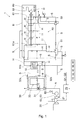
- zeigt ein schematisches Schaltbild einer thermischen Solaranlage gemäß einer Ausführungsform der Erfindung.
- Fig.2
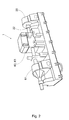
- zeigt eine perspektivische Darstellung der in Form einer Einwellenanlage gestalteten Anordnung von Gasturbine, Dampfturbine und Elektrogenerator einer thermischen Solaranlage gemäß einer Ausführungsform der Erfindung.
- Im Folgenden werden unter Bezugnahme auf die
Figuren 1 und2 Ausführungsformen einer thermischen Solaranlage 1 gemäß der Erfindung beschrieben. - Die thermische Solaranlage 1 ist als zu einem elektrischen Kraftwerk kombinierte CSP-Anlage (Concentrated Solar Power) mit solarer Direktverdampfung konfiguriert. Wie
Fig.1 zeigt, weist die thermische Solaranlage 1 eine Solarkollektorenanordnung 10 mit einer Mehrzahl von Solarkollektoren (nicht im Einzelnen gezeigt), eine Gasturbine 20, einen Abgaswärmetauscher 30, eine Heißfluidaufnahmeeinrichtung 40, eine Speisefluidaufnahmeeinrichtung 50, eine Verbrauchereinrichtung 60 und eine Steuereinrichtung 70 auf. - Die Steuereinrichtung 70 kann bevorzugt als elektrische bzw. elektronische Steuereinrichtung ausgebildet sein und Steueralgorithmen in Form von Software, Firmware und/oder Hardware enthalten. Die Steuereinrichtung 70 ist mit der Solarkollektorenanordnung 10, der Gasturbine 20, dem Abgaswärmetauscher 30, der Heißfluidaufnahmeeinrichtung 40, der Speisefluidaufnahmeeinrichtung 50 und der Verbrauchereinrichtung 60 zum Steuern bzw. Regeln dieser verbunden.
- Die Heißfluidaufnahmeeinrichtung 40 weist eine Mehrzahl von Dampfleitungen H wie Leitungsrohren sowie eine Mehrzahl von von der Steuereinrichtung 70 ansteuerbaren Stellventilen (nicht bezeichnet) auf.
- Die Speisefluidaufnahmeeinrichtung 50 weist eine Mehrzahl von Wasserleitungen S wie Leitungsrohren sowie eine Mehrzahl von von der Steuereinrichtung 70 ansteuerbaren Stellventilen (nicht bezeichnet), Pumpen (nicht bezeichnet) und weiteren Komponenten (nicht bezeichnet) wie Wärmetauschern, Wasserabscheidern usw. auf.
- Gemäß der Erfindung führen die Dampfleitungen H Wasserdampf und führen die Wasserleitungen S Wasser bzw. Speisewasser und/oder ggf. Wasserdampf auf einem gegenüber dem Wasserdampf in den Dampfleitungen H reduzierten Temperaturniveau.
- Die Solarkollektorenanordnung 10 definiert eine Solarkollektoren-Fluidpassage 11 zum Hindurchleiten eines Fluids, so dass dem Fluid von auf die Solarkollektoren auftreffender Sonneneinstrahlung eine erste Wärmemenge Q1 zuführbar ist. Die Solarkollektoren-Fluidpassage 11 weist einen ersten Fluideinspeiseanschluss 11a zum in die Solarkollektoren-Fluidpassage 11 Einspeisen von zu erwärmendem Fluid in Form von Speisewasser und einen ersten Fluidabgabeanschluss 11 b auf zum aus der Solarkollektoren-Fluidpassage 11 Abgeben von erwärmtem Fluid in Form von Wasserdampf.
- Demgemäß ist die Solarkollektorenanordnung 10 eingerichtet, via solarer Direktverdampfung von Wasser über die Zuführung der ersten Wärmemenge Q1 Wasserdampf zu erzeugen. Mit anderen Worten ist die Solarkollektorenanordnung 10 eingerichtet, durch die Solarkollektoren-Fluidpassage 11 hindurchströmendes Fluid in Form von Wasser via solarer Direktverdampfung zu am ersten Fluidabgabeanschluss 11 b entnehmbarem Wasserdampf zu verdampfen. Die Solarkollektorenanordnung 10 erreicht dabei Frischdampfparameter von 40 bar und 400°C.
- Die Gasturbine 20 wird mit Erdgas als Brenngas betrieben und weist einen Abgasausgang 21 auf, der über eine Abgasleitung A an eine Abgaspassage 31 des Abgaswärmetauschers 30 angeschlossen ist zum durch die Abgaspassage 31 Hindurchleiten von heißem Abgas der Gasturbine 20.
- Der Abgaswärmetauscher 30 ist von einem Abhitzekessel gebildet und hat eine Wärmetauscher-Fluidpassage 32 zum Hindurchleiten eines Fluids, so dass dem Fluid von dem durch die Abgaspassage 31 hindurchströmenden Abgas eine zweite Wärmemenge Q2 zuführbar ist. Die Wärmetauscher-Fluidpassage 32 weist einen zweiten Fluideinspeiseanschluss 32a zum in die Wärmetauscher-Fluidpassage 32 Einspeisen von zu erwärmendem Fluid in Form von Wasser und einen zweiten Fluidabgabeanschluss 32b auf zum aus der Wärmetauscher-Fluidpassage 32 Abgeben von erwärmtem Fluid in Form von Wasserdampf.
- Der Abgaswärmetauscher 30 ist somit eingerichtet, durch die Wärmetauscher-Fluidpassage 32 hindurchströmendes Fluid in Form von Wasser über die Zuführung der zweiten Wärmemenge Q2 zu am zweiten Fluidabgabeanschluss 32b entnehmbarem Wasserdampf zu verdampfen.
- Wie aus
Fig.1 ersichtlich, ist die Heißfluidaufnahmeeinrichtung 40 über eine oder mehrere Dampfleitungen H direkt mit dem ersten Fluidabgabeanschluss 11 b der Solarkollektoren-Fluidpassage 11 fluidverbunden. Außerdem fluidverbindet die Heißfluidaufnahmeeinrichtung 40 über eine oder mehrere Dampfleitungen H den zweiten Fluidabgabeanschluss 32b der Wärmetauscher-Fluidpassage 32 unter Umgehung der Solarkollektoren-Fluidpassage 11 direkt mit dem ersten Fluidabgabeanschluss 11b. - Die Verbrauchereinrichtung 60 weist eine Dampfturbine 61 und einen von der Dampfturbine 61 drehantreibbaren Elektrogenerator 62 auf. Die Dampfturbine 61 hat einen Fluideingang 61 a und einen Fluidausgang 61 b.
- Der Fluideingang 61 a ist mit der Heißfluidaufnahmeeinrichtung 40 verbunden, so dass zumindest ein Teil der ersten und zweiten Wärmemengen Q1, Q2 über ein Fluid der Verbrauchereinrichtung 60 zuführbar ist. In der gezeigten Ausführungsform ist der Fluideingang 61 a über eine oder mehrere Dampfleitungen H der Heißfluidaufnahmeeinrichtung 40 direkt mit dem ersten Fluidabgabeanschluss 11b der Solarkollektoren-Fluidpassage 11 und direkt mit dem zweiten Fluidabgabeanschluss 32b der Wärmetauscher-Fluidpassage 32 fluidverbunden.
- Der Fluidausgang 61 b ist über eine oder mehrere Wasserleitungen S und weitere Komponenten (wie einen Speisewassersammelbehälter 51) der Speisefluidaufnahmeeinrichtung 50 mit dem ersten Fluideinspeiseanschluss 11a der Solarkollektoren-Fluidpassage 11 und dem zweiten Fluideinspeiseanschluss 32a der Wärmetauscher-Fluidpassage 32 fluidverbunden. Wie aus
Fig.1 ersichtlich, sind außerdem der erste und der zweite Fluideinspeiseanschluss 11a, 32a über eine oder mehrere Wasserleitungen S der Speisefluidaufnahmeeinrichtung 50 miteinander fluidverbunden. - Die Steuereinrichtung 70 ist gemäß der Erfindung eingerichtet, einen Betrieb der Gasturbine 20 in Abhängigkeit von einer Größe der ersten Wärmemenge Q1 zu steuern. Gemäß einer Ausführungsform der erfindungsgemäßen thermischen Solaranlage 1 ist die Steuereinrichtung 70 eingerichtet, die Gasturbine 20 nur dann in Betrieb zu nehmen, wenn die erste Wärmemenge Q1 einen vorbestimmten Grenzwert unterschreitet.
- Dieser Grenzwert kann gemäß der Erfindung unterschritten werden, wenn die von der Solarkollektorenanordnung 10 in Wärmeenergie umwandelbare Sonnenenergie bei Sonnenuntergang oder an Tagen mit Bewölkung reduziert ist.
- Gemäß einer weiteren Ausführungsform der erfindungsgemäßen thermischen Solaranlage 1 ist die Steuereinrichtung 70 eingerichtet, wenn die erste Wärmemenge Q1 den vorbestimmten Grenzwert unterschreitet, einen Teil der zweiten Wärmemenge Q2 dem durch die Solarkollektoren-Fluidpassage 11 hindurchströmenden Fluid zuzuführen, so dass dieses auf einer vorbestimmten Temperatur, nämlich einer Vorwärmtemperatur, gehalten wird.
- Wie oben erwähnt, weist die Verbrauchereinrichtung 60 den Elektrogenerator 62 auf, der bei Drehantrieb Elektroenergie in ein Stromnetz 80 einspeist. Wie aus
Fig.1 ersichtlich, kann auch die Gasturbine 20 mit einem Elektrogenerator 63 drehantriebsverbunden sein, so dass der Elektrogenerator 63 bei Drehantrieb Elektroenergie in das Stromnetz 80 einspeist. - Gemäß einer in
Fig.2 gezeigten Ausführungsform der erfindungsgemäßen thermischen Solaranlage 1 sind die Gasturbine 20, die Dampfturbine 61 und ein einziger Elektrogenerator 62 oder 63 in Form einer Einwellenanlage bzw. in einer Flucht auf einer gemeinsamen Achse angeordnet. Die Gasturbine 20 ist über eine von der Steuereinrichtung 70 ansteuerbare Kupplung 22 selektiv in und außer Drehantriebsverbindung mit dem Elektrogenerator 62, 63 bringbar. Gemäß einer inFig.2 nicht gezeigten Ausführungsform der erfindungsgemäßen thermischen Solaranlage 1 kann z.B. für Wartungszwecke auch die Dampfturbine 61 über eine von der Steuereinrichtung 70 ansteuerbare Kupplung selektiv in und außer Drehantriebsverbindung mit dem Elektrogenerator 62, 63 bringbar sein. - Nun werden unter Bezugnahme auf die
Figuren 1 und2 Ausführungsformen eines erfindungsgemäßen Verfahrens zum Betreiben der erfindungsgemäßen thermischen Solaranlage 1 beschrieben. Das Verfahren weist zumindest die Schritte auf: mittels der Solarkollektorenanordnung 10 Zuführen der ersten Wärmemenge Q1 zu dem durch die Solarkollektoren-Fluidpassage 11 der Solarkollektorenanordnung 10 hindurchströmenden Fluid und Übertragen zumindest eines Teils der ersten Wärmemenge Q1 auf die Heißfluidaufnahmeeinrichtung 40; in der Steuervorrichtung 70 Vergleichen der ersten Wärmemenge Q1 mit dem Grenzwert; wenn die erste Wärmemenge Q1 kleiner als der Grenzwert ist, in Betrieb nehmen der Gasturbine 20 und mittels des an den Abgasausgang 21 der Gasturbine 20 angeschlossenen Abgaswärmetauschers 30 Zuführen der zweiten Wärmemenge Q2 zu dem durch die Wärmetauscher-Fluidpassage 32 des Abgaswärmetauschers 30 hindurchströmenden Fluid und unter Umgehung der Solarkollektoren-Fluidpassage 11 Übertragen zumindest eines Teils der zweiten Wärmemenge Q2 auf die Heißfluidaufnahmeeinrichtung 40; und mittels eines Fluids Zuführen von zumindest einem Teil der ersten und zweiten Wärmemengen Q1, Q2 zu der Verbrauchereinrichtung 60. - Gemäß einer Ausführungsform des erfindungsgemäßen Verfahrens wird mittels des von der Dampfturbine 61 der Verbrauchereinrichtung 60 während ihres Betriebs bereitgestellten Drehantriebs Elektroenergie erzeugt, die in das Stromnetz 80 eingespeist wird, wobei außerdem mittels des von der Gasturbine 20 während ihres Betriebs bereitgestellten Drehantriebs Elektroenergie erzeugt wird, die in das Stromnetz 80 eingespeist wird.
- Gemäß einer weiteren Ausführungsform des erfindungsgemäßen Verfahrens wird, wenn die erste Wärmemenge Q1 kleiner als der Grenzwert ist, ein Teil der zweiten Wärmemenge Q2 dem durch die Solarkollektoren-Fluidpassage 11 der Solarkollektorenanordnung 10 hindurchströmenden Fluid zugeführt, so dass dieses auf der vorbestimmten Temperatur (Vorwärmtemperatur) gehalten wird.
- Gemäß noch einer Ausführungsform des erfindungsgemäßen Verfahrens wird die erste Wärmemenge Q1 Wasser als Fluid zugeführt, so dass daraus via solarer Direktverdampfung Wasserdampf erzeugt wird, der in eine oder mehrere Dampfleitungen H der Heißfluidaufnahmeeinrichtung 40 eingeleitet wird, wobei die zweite Wärmemenge Q2 Wasser als Fluid zugeführt wird, so dass daraus Wasserdampf erzeugt wird, der in die eine oder die mehreren Dampfleitungen H der Heißfluidaufnahmeeinrichtung 40 eingeleitet wird.
- Gemäß der Erfindung kann bei Sonnenuntergang und somit Unterschreitung des Grenzwertes für die erste Wärmemenge Q1 sowie damit abnehmender Dampfproduktion aus der Solarkollektorenanordnung 10, die Gasturbine 20 gestartet werden. Der im nachgeschalteten Abgaswärmetauscher 30 produzierte Wasserdampf kann der Dampfturbine 61 zugeführt werden, die in diesem Hybrid-Modus den Nachtbetrieb bevorzugt in Teillast gemäß der zur Verfügung stehenden Dampfmenge aus dem Gasturbinenprozess fährt. An Tagen mit starker Bewölkung und daraus resultierender Unterschreitung des Grenzwertes für die erste Wärmemenge Q1 sowie damit abnehmender Dampfproduktion bietet sich ebenfalls die Möglichkeit, mit Hilfe der Gasturbine 20 Wasserdampf zu produzieren und die Dampfturbine 61 kontinuierlich in Teillast zu betreiben.
- Die zusätzlich produzierte elektrische Leistung der Gasturbine 20 kann neben der von der Dampfturbine 61 produzierten elektrischen Leistung in das Stromnetz 80 eingespeist werden. Zusätzlich kann Wasserdampf aus dem Abgaswärmetauscher 30 entnommen werden, um die Solarkollektorenanordnung 10 auf der Vorwärmtemperatur zu halten. Damit wird am Folgetag bzw. bei Abklingen der Bewölkung der Anfahrprozess der Solarkollektorenanordnung 10 unterstützt und beschleunigt vollzogen.
- Bei der oben beschriebenen Ausführungsform kann für ISO-Bedingungen z.B. somit in der Nacht mit z.B. 8,43 MW nahezu eine Nominalleistung von 9 MW des elektrischen Kraftwerks elektrisch aufrecht erhalten werden. Der zusätzliche Erdgasbedarf für die Gasturbine 20 kann sich z.B. auf 0,425 kg/s belaufen. Im reinen Solarbetrieb ohne Gasturbine 20 kann z.B. ein Bruttowirkungsgrad von 29,4 % erreicht werden, und im Hybridbetrieb mit Gasturbine 20 und Dampfturbine 61 kann z.B. ein Bruttowirkungsgrad von 39,7 % erreicht werden.
- An dieser Stelle sei noch erwähnt, dass die beanspruchte Vorrichtung sich ebenfalls in Kombination mit einem Großdieselmotor eignet. Beispielsweise kann die Energie der Abgase des Großdieselmotors zum Betreiben von Teilkomponenten, z.B. der Gas- oder Dampfturbine, der beanspruchten Vorrichtung verwendet werden.
-
- 1
- thermische Solaranlage
- 10
- Solarkollektorenanordnung
- 11
- Solarkollektoren-Fluidpassage
- 11 a
- erster Fluideinspeiseanschluss
- 11 b
- erster Fluidabgabeanschluss
- 20
- Gasturbine / Gasmotor / Dieselmotor
- 21
- Abgasausgang
- 22
- Kupplung
- 30
- Abgaswärmetauscher
- 31
- Abgaspassage
- 32
- Wärmetauscher-Fluidpassage
- 32a
- zweiter Fluideinspeiseanschluss
- 32b
- zweiter Fluidabgabeanschluss
- 40
- Heißfluidaufnahmeeinrichtung
- H
- Dampfleitung
- 50
- Speisefluidaufnahmeeinrichtung
- S
- Wasserleitung
- 51
- Speisewassersammelbehälter
- 60
- Verbrauchereinrichtung
- 61
- Dampfturbine
- 61 a
- Fluideingang
- 61 b
- Fluidausgang
- 62
- Elektrogenerator
- 63
- Elektrogenerator
- 70
- Steuereinrichtung
- 80
- Stromnetz
- Q1
- erste Wärmemenge
- Q2
- zweite Wärmemenge
- A
- Abgasleitung
Claims (12)
- Thermische Solaranlage (1) mit:einer Solarkollektorenanordnung (10) mit einer Mehrzahl von Solarkollektoren, wobei die Solarkollektorenanordnung (10) eine Solarkollektoren-Fluidpassage (11) definiert zum Hindurchleiten eines Fluids, so dass dem Fluid von auf die Solarkollektoren auftreffender Sonneneinstrahlung eine erste Wärmemenge (Q1) zuführbar ist, und wobei die Solarkollektoren-Fluidpassage (11) einen ersten Fluideinspeiseanschluss (11a) zum in die Solarkollektoren-Fluidpassage (11) Einspeisen von zu erwärmendem Fluid und einen ersten Fluidabgabeanschluss (11b) zum aus der Solarkollektoren-Fluidpassage (11) Abgeben von erwärmtem Fluid aufweist;einer Gasturbine (20) mit einem Abgasausgang (21);einem Abgaswärmetauscher (30) mit einer Abgaspassage (31), die an den Abgasausgang (21) der Gasturbine (20) angeschlossen ist zum durch die Abgaspassage (31) Hindurchleiten von heißem Abgas der Gasturbine (20), und einer Wärmetauscher-Fluidpassage (32) zum Hindurchleiten eines Fluids, so dass dem Fluid von dem durch die Abgaspassage (31) hindurchströmenden Abgas eine zweite Wärmemenge (Q2) zuführbar ist, wobei die Wärmetauscher-Fluidpassage (32) einen zweiten Fluideinspeiseanschluss (32a) zum in die Wärmetauscher-Fluidpassage (32) Einspeisen von zu erwärmendem Fluid und einen zweiten Fluidabgabeanschluss (32b) zum aus der Wärmetauscher-Fluidpassage (32) Abgeben von erwärmtem Fluid aufweist;einer Heißfluidaufnahmeeinrichtung (40), die mit dem ersten Fluidabgabeanschluss (11b) fluidverbunden ist und die den zweiten Fluidabgabeanschluss (32b) unter Umgehung der Solarkollektoren-Fluidpassage (11) mit dem ersten Fluidabgabeanschluss (11b) fluidverbindet;einer Verbrauchereinrichtung (60) mit einem Fluideingang (61 a), der mit der Heißfluidaufnahmeeinrichtung (40) verbunden ist, so dass zumindest ein Teil der ersten und zweiten Wärmemengen (Q1, Q2) über ein Fluid der Verbrauchereinrichtung (60) zuführbar ist; undeiner Steuereinrichtung (70), die mit der Gasturbine (20) verbunden ist und die eingerichtet ist, einen Betrieb der Gasturbine (20) in Abhängigkeit von einer Größe der ersten Wärmemenge (Q1) zu steuern.
- Thermische Solaranlage (1) gemäß Anspruch 1, wobei die Steuereinrichtung (70) eingerichtet ist, die Gasturbine (20) nur dann in Betrieb zu nehmen, wenn die erste Wärmemenge (Q1) einen vorbestimmten Grenzwert unterschreitet.
- Thermische Solaranlage (1) gemäß Anspruch 2, wobei die Steuereinrichtung (70) eingerichtet ist, wenn die erste Wärmemenge (Q1) den vorbestimmten Grenzwert unterschreitet, einen Teil der zweiten Wärmemenge (Q2) dem durch die Solarkollektoren-Fluidpassage (11) hindurchströmenden Fluid zuzuführen, so dass dieses auf einer vorbestimmten Temperatur gehalten wird.
- Thermische Solaranlage (1) gemäß einem der Ansprüche 1 bis 3, wobei das durch die Solarkollektoren-Fluidpassage (11) und durch die Wärmetauscher-Fluidpassage (32) hindurchzuleitende Fluid von Wasser gebildet ist, und wobei das der Verbrauchereinrichtung (60) über deren Fluideingang (61 a) zuzuführende Fluid von Wasserdampf gebildet ist.
- Thermische Solaranlage (1) gemäß Anspruch 4, wobei der erste und der zweite Fluideinspeiseanschluss (11a, 32a) miteinander fluidverbunden sind, wobei der Abgaswärmetauscher (30) von einem Abhitzekessel gebildet ist, der eingerichtet ist, durch die Wärmetauscher-Fluidpassage (32) hindurchströmendes Fluid zu am zweiten Fluidabgabeanschluss (32b) entnehmbarem Wasserdampf zu verdampfen, und wobei die Solarkollektorenanordnung (10) eingerichtet ist, durch die Solarkollektoren-Fluidpassage (11) hindurchströmendes Fluid via solarer Direktverdampfung zu am ersten Fluidabgabeanschluss (11 b) entnehmbarem Wasserdampf zu verdampfen.
- Thermische Solaranlage (1) gemäß einem der Ansprüche 1 bis 5, wobei die Verbrauchereinrichtung (60) eine Dampfturbine (61) und einen von der Dampfturbine (61) drehantreibbaren Elektrogenerator (62, 63) aufweist.
- Thermische Solaranlage (1) gemäß Anspruch 6, wobei die Gasturbine (20), die Dampfturbine (61) und der Elektrogenerator (62, 63) in Form einer Einwellenanlage angeordnet sind, und wobei die Gasturbine (20) über eine von der Steuereinrichtung (70) ansteuerbare Kupplung (22) selektiv in und außer Drehantriebsverbindung mit dem Elektrogenerator (62, 63) bringbar ist.
- Thermische Solaranlage (1) nach einem der vorherigen Ansprüche, mit einem Gas- und/oder Dieselmotor (20) zusätzlich zu oder anstelle der Gasturbine (20).
- Verfahren zum Betreiben einer thermischen Solaranlage (1), aufweisend:mittels einer Solarkollektorenanordnung (10) Zuführen einer ersten Wärmemenge (Q1) zu einem durch eine Solarkollektoren-Fluidpassage (11) der Solarkollektorenanordnung (10) hindurchströmenden Fluid und Übertragen zumindest eines Teils der ersten Wärmemenge (Q1) auf eine Heißfluidaufnahmeeinrichtung (40);Vergleichen der ersten Wärmemenge (Q1) mit einem Grenzwert;wenn die erste Wärmemenge (Q1) kleiner als der Grenzwert ist, in Betrieb nehmen einer Gasturbine (20) und mittels eines an einen Abgasausgang (21) der Gasturbine (20) angeschlossenen Abgaswärmetauschers (30) Zuführen einer zweiten Wärmemenge (Q2) zu einem durch eine Wärmetauscher-Fluidpassage (32) des Abgaswärmetauschers (30) hindurchströmenden Fluid und unter Umgehung der Solarkollektoren-Fluidpassage (11) Übertragen zumindest eines Teils der zweiten Wärmemenge (Q2) auf die Heißfluidaufnahmeeinrichtung (40); undmittels eines Fluids Zuführen von zumindest einem Teil der ersten und zweiten Wärmemengen (Q1, Q2) zu einer Verbrauchereinrichtung (60).
- Verfahren gemäß Anspruch 8, wobei mittels eines von der Verbrauchereinrichtung (60) während ihres Betriebs bereitgestellten Drehantriebs Elektroenergie erzeugt wird, die in ein Stromnetz (80) eingespeist wird, und wobei mittels eines von der Gasturbine (20) während ihres Betriebs bereitgestellten Drehantriebs Elektroenergie erzeugt wird, die in das Stromnetz (80) eingespeist wird.
- Verfahren gemäß Anspruch 8 oder 9, wobei, wenn die erste Wärmemenge (Q1) kleiner als der Grenzwert ist, ein Teil der zweiten Wärmemenge (Q2) dem durch die Solarkollektoren-Fluidpassage (11) der Solarkollektorenanordnung (10) hindurchströmenden Fluid zugeführt wird, so dass dieses auf einer vorbestimmten Temperatur gehalten wird.
- Verfahren nach einem der vorherigen Ansprüche, mit einem Gas- und/oder Dieselmotor (20) zusätzlich zu oder anstelle der Gasturbine (20).
Applications Claiming Priority (1)
| Application Number | Priority Date | Filing Date | Title |
|---|---|---|---|
| DE201210203805 DE102012203805A1 (de) | 2012-03-12 | 2012-03-12 | Thermische Solaranlage und Verfahren zum Betreiben einer thermischen Solaranlage |
Publications (3)
| Publication Number | Publication Date |
|---|---|
| EP2639504A2 true EP2639504A2 (de) | 2013-09-18 |
| EP2639504A3 EP2639504A3 (de) | 2017-08-30 |
| EP2639504B1 EP2639504B1 (de) | 2021-03-10 |
Family
ID=47709879
Family Applications (1)
| Application Number | Title | Priority Date | Filing Date |
|---|---|---|---|
| EP13153144.4A Not-in-force EP2639504B1 (de) | 2012-03-12 | 2013-01-29 | Thermische Solaranlage und Verfahren zum Betreiben einer thermischen Solaranlage |
Country Status (5)
| Country | Link |
|---|---|
| US (1) | US9127653B2 (de) |
| EP (1) | EP2639504B1 (de) |
| JP (1) | JP6305681B2 (de) |
| CN (1) | CN103306760B (de) |
| DE (1) | DE102012203805A1 (de) |
Citations (1)
| Publication number | Priority date | Publication date | Assignee | Title |
|---|---|---|---|---|
| DE102010061262A1 (de) | 2009-12-22 | 2011-06-30 | General Electric Company, N.Y. | System und Verfahren zur Erwärmung von Speisewasser unter Verwendung eines Solarheizsystems |
Family Cites Families (19)
| Publication number | Priority date | Publication date | Assignee | Title |
|---|---|---|---|---|
| DE2948306C2 (de) | 1979-11-30 | 1987-04-23 | Kraftwerk Union AG, 4330 Mülheim | Einrichtung zum Teillastbetrieb eines Solarkraftwerkes |
| DE4126037A1 (de) * | 1991-08-06 | 1993-02-11 | Siemens Ag | Gas- und dampfturbinenkraftwerk mit einem solar beheizten dampferzeuger |
| JPH06185375A (ja) * | 1992-12-14 | 1994-07-05 | Mitsubishi Heavy Ind Ltd | 送風加熱装置 |
| DE4409197A1 (de) * | 1994-03-17 | 1995-09-21 | Siemens Ag | Verfahren und Einrichtung zur solaren Dampferzeugung |
| US5444972A (en) * | 1994-04-12 | 1995-08-29 | Rockwell International Corporation | Solar-gas combined cycle electrical generating system |
| JPH10501600A (ja) * | 1995-04-03 | 1998-02-10 | カンパーニャ セビラーナ デ エレクトリシダッド エス.エー. | 太陽エネルギーを統合した火力発電装置 |
| US5727379A (en) * | 1996-05-31 | 1998-03-17 | Electric Power Research Institute | Hybid solar and fuel fired electrical generating system |
| US6000211A (en) * | 1997-06-18 | 1999-12-14 | York Research Corporation | Solar power enhanced combustion turbine power plant and methods |
| US6233914B1 (en) * | 1997-07-31 | 2001-05-22 | Ormat Industries Ltd. | Method of an apparatus for producing power having a solar reformer and a steam generator which generate fuel for a power plant |
| US6321539B1 (en) | 1998-09-10 | 2001-11-27 | Ormat Industries Ltd. | Retrofit equipment for reducing the consumption of fossil fuel by a power plant using solar insolation |
| DE10144841B9 (de) * | 2001-09-06 | 2004-10-21 | Deutsches Zentrum für Luft- und Raumfahrt e.V. | Solarthermisches Gas- und Dampfkraftwerk und Verfahren zur Umwandlung von thermischer Energie in elektrische Energie |
| ES2279658B1 (es) * | 2004-07-22 | 2008-08-01 | Serled Consultores, S.L. | Procedimiento de generacion de electricidad a partir de energia termica solar y biomasa. |
| JP4322902B2 (ja) * | 2006-08-10 | 2009-09-02 | 川崎重工業株式会社 | 太陽熱発電設備および熱媒体供給設備 |
| JP4786504B2 (ja) * | 2006-11-10 | 2011-10-05 | 川崎重工業株式会社 | 熱媒体供給設備および太陽熱複合発電設備ならびにこれらの制御方法 |
| EP2329144A2 (de) | 2008-09-17 | 2011-06-08 | Siemens Concentrated Solar Power Ltd. | Solarthermisches kraftwerk |
| DE102008051384B3 (de) * | 2008-10-11 | 2010-02-11 | Technische Universität Dresden | Solarhybridbetriebenes Gas- und Dampfkraftwerk |
| WO2011068880A2 (en) * | 2009-12-01 | 2011-06-09 | Areva Solar, Inc. | Utilizing steam and/or hot water generated using solar energy |
| US8327641B2 (en) | 2009-12-01 | 2012-12-11 | General Electric Company | System for generation of power using solar energy |
| US20120102950A1 (en) * | 2010-11-02 | 2012-05-03 | Alliance For Sustainable Energy, Llc. | Solar thermal power plant with the integration of an aeroderivative turbine |
-
2012
- 2012-03-12 DE DE201210203805 patent/DE102012203805A1/de not_active Ceased
-
2013
- 2013-01-29 EP EP13153144.4A patent/EP2639504B1/de not_active Not-in-force
- 2013-02-25 JP JP2013034385A patent/JP6305681B2/ja not_active Expired - Fee Related
- 2013-03-11 US US13/793,756 patent/US9127653B2/en not_active Expired - Fee Related
- 2013-03-12 CN CN201310077697.8A patent/CN103306760B/zh not_active Expired - Fee Related
Patent Citations (1)
| Publication number | Priority date | Publication date | Assignee | Title |
|---|---|---|---|---|
| DE102010061262A1 (de) | 2009-12-22 | 2011-06-30 | General Electric Company, N.Y. | System und Verfahren zur Erwärmung von Speisewasser unter Verwendung eines Solarheizsystems |
Also Published As
| Publication number | Publication date |
|---|---|
| DE102012203805A1 (de) | 2013-09-12 |
| JP6305681B2 (ja) | 2018-04-04 |
| US9127653B2 (en) | 2015-09-08 |
| JP2013189973A (ja) | 2013-09-26 |
| CN103306760A (zh) | 2013-09-18 |
| US20130234441A1 (en) | 2013-09-12 |
| EP2639504B1 (de) | 2021-03-10 |
| CN103306760B (zh) | 2016-08-31 |
| EP2639504A3 (de) | 2017-08-30 |
Similar Documents
| Publication | Publication Date | Title |
|---|---|---|
| EP0436536B1 (de) | Verfahren und anlage zur abhitzedampferzeugung | |
| DE102009059316B4 (de) | Vorrichtung zum Starten einer Dampfturbine gegen Nenndruck | |
| EP0099501B1 (de) | Verfahren zum Verändern der Abgabe von elektrischer Energie eines Heizkraftwerkes ohne Beeinflussung der Wärmeabgabe an angeschlossene Wärmeverbraucher | |
| EP0439754B1 (de) | Verfahren zum Anfahren einer Kombianlage | |
| EP2372116B1 (de) | Verfahren zum Betrieb eines integrierten Solar-Kombikraftwerks sowie Solar-Kombikraftwerk zur Durchführung des Verfahrens | |
| DE112016003348B4 (de) | Wasserversorgungssystem, wasserversorgungsverfahren, und dampf erzeugende anlage, die mit wasserversorgungssystem bereitgestellt wird | |
| EP2467601B1 (de) | Solarthermisches kraftwerk mit wärmetauscher in der speisewasservorwärmstrecke und verfahren zum betrieb des kraftwerks | |
| DE112011102629T5 (de) | Emissionskritische Ladekühlung unter Verwendung eines organischen Rankine-Kreislaufes | |
| EP2603672A2 (de) | Abhitzedampferzeuger | |
| DE2227435A1 (de) | Verfahren zum Verdampfen eines strömenden kryogenen Mediums | |
| EP2553244B1 (de) | Verfahren zum erhöhen des wirkungsgrades einer mit einer gasturbine ausgestatteten kraftwerksanlage sowie kraftwerksanlage zur durchführung des verfahrens | |
| EP2918793A1 (de) | Regelkonzept zur Fernwärmeauskopplung bei einer Dampfkraftanlage | |
| DE69812811T2 (de) | Verfahren und Anordnung für Kombikraftwerk | |
| DE69711608T2 (de) | Methode und einrichtung zur rückgewinnung von wärme aus der ladeluft eines motors | |
| EP2322768B1 (de) | Dampfkraftanlage sowie Verfahren zum Betrieb einer Dampfkraftanlage | |
| DE4126036A1 (de) | Gas- und dampfturbinenkraftwerk mit einem solar beheizten dampferzeuger | |
| EP3533976B1 (de) | Anlage mit entnahmekondensationsturbine und orc-prozess | |
| WO2012095243A1 (de) | Gas/dampfturbinenanlage für solare anbindung | |
| DE19602330C1 (de) | Blockheizkraftwerk sowie Verfahren zu dessen Betrieb | |
| DE102014113328A1 (de) | Dampfturbinensystem mit Dampfturbinenkupplung | |
| EP2639504B1 (de) | Thermische Solaranlage und Verfahren zum Betreiben einer thermischen Solaranlage | |
| DE2512774A1 (de) | Gasturbinen-heizkraftwerk | |
| DE1074326B (de) | Wärmekraftanlage | |
| DE19507167C1 (de) | Dampfturbinenanlage | |
| DE202008001386U1 (de) | Heizanlage durch Anordnung eines Verbrennungsmotors mit Generator und Luft-Wasser Wärmepumpe |
Legal Events
| Date | Code | Title | Description |
|---|---|---|---|
| PUAI | Public reference made under article 153(3) epc to a published international application that has entered the european phase |
Free format text: ORIGINAL CODE: 0009012 |
|
| AK | Designated contracting states |
Kind code of ref document: A2 Designated state(s): AL AT BE BG CH CY CZ DE DK EE ES FI FR GB GR HR HU IE IS IT LI LT LU LV MC MK MT NL NO PL PT RO RS SE SI SK SM TR |
|
| AX | Request for extension of the european patent |
Extension state: BA ME |
|
| PUAL | Search report despatched |
Free format text: ORIGINAL CODE: 0009013 |
|
| AK | Designated contracting states |
Kind code of ref document: A3 Designated state(s): AL AT BE BG CH CY CZ DE DK EE ES FI FR GB GR HR HU IE IS IT LI LT LU LV MC MK MT NL NO PL PT RO RS SE SI SK SM TR |
|
| AX | Request for extension of the european patent |
Extension state: BA ME |
|
| RIC1 | Information provided on ipc code assigned before grant |
Ipc: F01K 23/10 20060101ALI20170727BHEP Ipc: F22B 1/18 20060101ALI20170727BHEP Ipc: F24J 2/30 20060101ALI20170727BHEP Ipc: F02C 6/18 20060101ALI20170727BHEP Ipc: F03G 6/06 20060101ALI20170727BHEP Ipc: F22B 1/00 20060101AFI20170727BHEP |
|
| STAA | Information on the status of an ep patent application or granted ep patent |
Free format text: STATUS: REQUEST FOR EXAMINATION WAS MADE |
|
| 17P | Request for examination filed |
Effective date: 20180223 |
|
| RBV | Designated contracting states (corrected) |
Designated state(s): AL AT BE BG CH CY CZ DE DK EE ES FI FR GB GR HR HU IE IS IT LI LT LU LV MC MK MT NL NO PL PT RO RS SE SI SK SM TR |
|
| RAP1 | Party data changed (applicant data changed or rights of an application transferred) |
Owner name: MAN ENERGY SOLUTIONS SE |
|
| STAA | Information on the status of an ep patent application or granted ep patent |
Free format text: STATUS: EXAMINATION IS IN PROGRESS |
|
| 17Q | First examination report despatched |
Effective date: 20190329 |
|
| GRAP | Despatch of communication of intention to grant a patent |
Free format text: ORIGINAL CODE: EPIDOSNIGR1 |
|
| STAA | Information on the status of an ep patent application or granted ep patent |
Free format text: STATUS: GRANT OF PATENT IS INTENDED |
|
| RIC1 | Information provided on ipc code assigned before grant |
Ipc: F01K 23/10 20060101ALI20200922BHEP Ipc: F03G 6/06 20060101ALI20200922BHEP Ipc: F02C 6/18 20060101ALI20200922BHEP Ipc: F24S 10/30 20180101ALI20200922BHEP Ipc: F22B 1/18 20060101ALI20200922BHEP Ipc: F22B 1/00 20060101AFI20200922BHEP |
|
| INTG | Intention to grant announced |
Effective date: 20201013 |
|
| GRAS | Grant fee paid |
Free format text: ORIGINAL CODE: EPIDOSNIGR3 |
|
| GRAA | (expected) grant |
Free format text: ORIGINAL CODE: 0009210 |
|
| STAA | Information on the status of an ep patent application or granted ep patent |
Free format text: STATUS: THE PATENT HAS BEEN GRANTED |
|
| AK | Designated contracting states |
Kind code of ref document: B1 Designated state(s): AL AT BE BG CH CY CZ DE DK EE ES FI FR GB GR HR HU IE IS IT LI LT LU LV MC MK MT NL NO PL PT RO RS SE SI SK SM TR |
|
| REG | Reference to a national code |
Ref country code: GB Ref legal event code: FG4D Free format text: NOT ENGLISH |
|
| REG | Reference to a national code |
Ref country code: AT Ref legal event code: REF Ref document number: 1370207 Country of ref document: AT Kind code of ref document: T Effective date: 20210315 Ref country code: CH Ref legal event code: EP |
|
| REG | Reference to a national code |
Ref country code: DE Ref legal event code: R096 Ref document number: 502013015545 Country of ref document: DE |
|
| REG | Reference to a national code |
Ref country code: IE Ref legal event code: FG4D Free format text: LANGUAGE OF EP DOCUMENT: GERMAN |
|
| REG | Reference to a national code |
Ref country code: LT Ref legal event code: MG9D |
|
| PG25 | Lapsed in a contracting state [announced via postgrant information from national office to epo] |
Ref country code: FI Free format text: LAPSE BECAUSE OF FAILURE TO SUBMIT A TRANSLATION OF THE DESCRIPTION OR TO PAY THE FEE WITHIN THE PRESCRIBED TIME-LIMIT Effective date: 20210310 Ref country code: HR Free format text: LAPSE BECAUSE OF FAILURE TO SUBMIT A TRANSLATION OF THE DESCRIPTION OR TO PAY THE FEE WITHIN THE PRESCRIBED TIME-LIMIT Effective date: 20210310 Ref country code: GR Free format text: LAPSE BECAUSE OF FAILURE TO SUBMIT A TRANSLATION OF THE DESCRIPTION OR TO PAY THE FEE WITHIN THE PRESCRIBED TIME-LIMIT Effective date: 20210611 Ref country code: LT Free format text: LAPSE BECAUSE OF FAILURE TO SUBMIT A TRANSLATION OF THE DESCRIPTION OR TO PAY THE FEE WITHIN THE PRESCRIBED TIME-LIMIT Effective date: 20210310 Ref country code: BG Free format text: LAPSE BECAUSE OF FAILURE TO SUBMIT A TRANSLATION OF THE DESCRIPTION OR TO PAY THE FEE WITHIN THE PRESCRIBED TIME-LIMIT Effective date: 20210610 Ref country code: NO Free format text: LAPSE BECAUSE OF FAILURE TO SUBMIT A TRANSLATION OF THE DESCRIPTION OR TO PAY THE FEE WITHIN THE PRESCRIBED TIME-LIMIT Effective date: 20210610 |
|
| REG | Reference to a national code |
Ref country code: NL Ref legal event code: MP Effective date: 20210310 |
|
| PG25 | Lapsed in a contracting state [announced via postgrant information from national office to epo] |
Ref country code: SE Free format text: LAPSE BECAUSE OF FAILURE TO SUBMIT A TRANSLATION OF THE DESCRIPTION OR TO PAY THE FEE WITHIN THE PRESCRIBED TIME-LIMIT Effective date: 20210310 Ref country code: LV Free format text: LAPSE BECAUSE OF FAILURE TO SUBMIT A TRANSLATION OF THE DESCRIPTION OR TO PAY THE FEE WITHIN THE PRESCRIBED TIME-LIMIT Effective date: 20210310 Ref country code: RS Free format text: LAPSE BECAUSE OF FAILURE TO SUBMIT A TRANSLATION OF THE DESCRIPTION OR TO PAY THE FEE WITHIN THE PRESCRIBED TIME-LIMIT Effective date: 20210310 |
|
| PG25 | Lapsed in a contracting state [announced via postgrant information from national office to epo] |
Ref country code: NL Free format text: LAPSE BECAUSE OF FAILURE TO SUBMIT A TRANSLATION OF THE DESCRIPTION OR TO PAY THE FEE WITHIN THE PRESCRIBED TIME-LIMIT Effective date: 20210310 |
|
| PG25 | Lapsed in a contracting state [announced via postgrant information from national office to epo] |
Ref country code: EE Free format text: LAPSE BECAUSE OF FAILURE TO SUBMIT A TRANSLATION OF THE DESCRIPTION OR TO PAY THE FEE WITHIN THE PRESCRIBED TIME-LIMIT Effective date: 20210310 Ref country code: CZ Free format text: LAPSE BECAUSE OF FAILURE TO SUBMIT A TRANSLATION OF THE DESCRIPTION OR TO PAY THE FEE WITHIN THE PRESCRIBED TIME-LIMIT Effective date: 20210310 Ref country code: SM Free format text: LAPSE BECAUSE OF FAILURE TO SUBMIT A TRANSLATION OF THE DESCRIPTION OR TO PAY THE FEE WITHIN THE PRESCRIBED TIME-LIMIT Effective date: 20210310 |
|
| PG25 | Lapsed in a contracting state [announced via postgrant information from national office to epo] |
Ref country code: RO Free format text: LAPSE BECAUSE OF FAILURE TO SUBMIT A TRANSLATION OF THE DESCRIPTION OR TO PAY THE FEE WITHIN THE PRESCRIBED TIME-LIMIT Effective date: 20210310 Ref country code: IS Free format text: LAPSE BECAUSE OF FAILURE TO SUBMIT A TRANSLATION OF THE DESCRIPTION OR TO PAY THE FEE WITHIN THE PRESCRIBED TIME-LIMIT Effective date: 20210710 Ref country code: SK Free format text: LAPSE BECAUSE OF FAILURE TO SUBMIT A TRANSLATION OF THE DESCRIPTION OR TO PAY THE FEE WITHIN THE PRESCRIBED TIME-LIMIT Effective date: 20210310 Ref country code: PT Free format text: LAPSE BECAUSE OF FAILURE TO SUBMIT A TRANSLATION OF THE DESCRIPTION OR TO PAY THE FEE WITHIN THE PRESCRIBED TIME-LIMIT Effective date: 20210712 Ref country code: PL Free format text: LAPSE BECAUSE OF FAILURE TO SUBMIT A TRANSLATION OF THE DESCRIPTION OR TO PAY THE FEE WITHIN THE PRESCRIBED TIME-LIMIT Effective date: 20210310 Ref country code: ES Free format text: LAPSE BECAUSE OF FAILURE TO SUBMIT A TRANSLATION OF THE DESCRIPTION OR TO PAY THE FEE WITHIN THE PRESCRIBED TIME-LIMIT Effective date: 20210310 |
|
| REG | Reference to a national code |
Ref country code: DE Ref legal event code: R097 Ref document number: 502013015545 Country of ref document: DE |
|
| PLBE | No opposition filed within time limit |
Free format text: ORIGINAL CODE: 0009261 |
|
| STAA | Information on the status of an ep patent application or granted ep patent |
Free format text: STATUS: NO OPPOSITION FILED WITHIN TIME LIMIT |
|
| PG25 | Lapsed in a contracting state [announced via postgrant information from national office to epo] |
Ref country code: DK Free format text: LAPSE BECAUSE OF FAILURE TO SUBMIT A TRANSLATION OF THE DESCRIPTION OR TO PAY THE FEE WITHIN THE PRESCRIBED TIME-LIMIT Effective date: 20210310 Ref country code: AL Free format text: LAPSE BECAUSE OF FAILURE TO SUBMIT A TRANSLATION OF THE DESCRIPTION OR TO PAY THE FEE WITHIN THE PRESCRIBED TIME-LIMIT Effective date: 20210310 |
|
| 26N | No opposition filed |
Effective date: 20211213 |
|
| PG25 | Lapsed in a contracting state [announced via postgrant information from national office to epo] |
Ref country code: SI Free format text: LAPSE BECAUSE OF FAILURE TO SUBMIT A TRANSLATION OF THE DESCRIPTION OR TO PAY THE FEE WITHIN THE PRESCRIBED TIME-LIMIT Effective date: 20210310 |
|
| PG25 | Lapsed in a contracting state [announced via postgrant information from national office to epo] |
Ref country code: IT Free format text: LAPSE BECAUSE OF FAILURE TO SUBMIT A TRANSLATION OF THE DESCRIPTION OR TO PAY THE FEE WITHIN THE PRESCRIBED TIME-LIMIT Effective date: 20210310 |
|
| PG25 | Lapsed in a contracting state [announced via postgrant information from national office to epo] |
Ref country code: IS Free format text: LAPSE BECAUSE OF FAILURE TO SUBMIT A TRANSLATION OF THE DESCRIPTION OR TO PAY THE FEE WITHIN THE PRESCRIBED TIME-LIMIT Effective date: 20210710 |
|
| REG | Reference to a national code |
Ref country code: DE Ref legal event code: R119 Ref document number: 502013015545 Country of ref document: DE |
|
| PG25 | Lapsed in a contracting state [announced via postgrant information from national office to epo] |
Ref country code: MC Free format text: LAPSE BECAUSE OF FAILURE TO SUBMIT A TRANSLATION OF THE DESCRIPTION OR TO PAY THE FEE WITHIN THE PRESCRIBED TIME-LIMIT Effective date: 20210310 |
|
| REG | Reference to a national code |
Ref country code: CH Ref legal event code: PL |
|
| GBPC | Gb: european patent ceased through non-payment of renewal fee |
Effective date: 20220129 |
|
| REG | Reference to a national code |
Ref country code: BE Ref legal event code: MM Effective date: 20220131 |
|
| PG25 | Lapsed in a contracting state [announced via postgrant information from national office to epo] |
Ref country code: LU Free format text: LAPSE BECAUSE OF NON-PAYMENT OF DUE FEES Effective date: 20220129 Ref country code: GB Free format text: LAPSE BECAUSE OF NON-PAYMENT OF DUE FEES Effective date: 20220129 Ref country code: DE Free format text: LAPSE BECAUSE OF NON-PAYMENT OF DUE FEES Effective date: 20220802 |
|
| PG25 | Lapsed in a contracting state [announced via postgrant information from national office to epo] |
Ref country code: FR Free format text: LAPSE BECAUSE OF NON-PAYMENT OF DUE FEES Effective date: 20220131 Ref country code: BE Free format text: LAPSE BECAUSE OF NON-PAYMENT OF DUE FEES Effective date: 20220131 |
|
| PG25 | Lapsed in a contracting state [announced via postgrant information from national office to epo] |
Ref country code: LI Free format text: LAPSE BECAUSE OF NON-PAYMENT OF DUE FEES Effective date: 20220131 Ref country code: CH Free format text: LAPSE BECAUSE OF NON-PAYMENT OF DUE FEES Effective date: 20220131 |
|
| PG25 | Lapsed in a contracting state [announced via postgrant information from national office to epo] |
Ref country code: IE Free format text: LAPSE BECAUSE OF NON-PAYMENT OF DUE FEES Effective date: 20220129 |
|
| REG | Reference to a national code |
Ref country code: AT Ref legal event code: MM01 Ref document number: 1370207 Country of ref document: AT Kind code of ref document: T Effective date: 20220129 |
|
| PG25 | Lapsed in a contracting state [announced via postgrant information from national office to epo] |
Ref country code: AT Free format text: LAPSE BECAUSE OF NON-PAYMENT OF DUE FEES Effective date: 20220129 |
|
| PG25 | Lapsed in a contracting state [announced via postgrant information from national office to epo] |
Ref country code: HU Free format text: LAPSE BECAUSE OF FAILURE TO SUBMIT A TRANSLATION OF THE DESCRIPTION OR TO PAY THE FEE WITHIN THE PRESCRIBED TIME-LIMIT; INVALID AB INITIO Effective date: 20130129 |
|
| PG25 | Lapsed in a contracting state [announced via postgrant information from national office to epo] |
Ref country code: MK Free format text: LAPSE BECAUSE OF FAILURE TO SUBMIT A TRANSLATION OF THE DESCRIPTION OR TO PAY THE FEE WITHIN THE PRESCRIBED TIME-LIMIT Effective date: 20210310 Ref country code: CY Free format text: LAPSE BECAUSE OF FAILURE TO SUBMIT A TRANSLATION OF THE DESCRIPTION OR TO PAY THE FEE WITHIN THE PRESCRIBED TIME-LIMIT Effective date: 20210310 |
|
| PG25 | Lapsed in a contracting state [announced via postgrant information from national office to epo] |
Ref country code: MT Free format text: LAPSE BECAUSE OF FAILURE TO SUBMIT A TRANSLATION OF THE DESCRIPTION OR TO PAY THE FEE WITHIN THE PRESCRIBED TIME-LIMIT Effective date: 20210310 |
|
| PG25 | Lapsed in a contracting state [announced via postgrant information from national office to epo] |
Ref country code: TR Free format text: LAPSE BECAUSE OF FAILURE TO SUBMIT A TRANSLATION OF THE DESCRIPTION OR TO PAY THE FEE WITHIN THE PRESCRIBED TIME-LIMIT Effective date: 20210310 |