EP2639436A2 - Verfahren zur Optimierung einer Brennkraftmaschine - Google Patents
Verfahren zur Optimierung einer Brennkraftmaschine Download PDFInfo
- Publication number
- EP2639436A2 EP2639436A2 EP13000890.7A EP13000890A EP2639436A2 EP 2639436 A2 EP2639436 A2 EP 2639436A2 EP 13000890 A EP13000890 A EP 13000890A EP 2639436 A2 EP2639436 A2 EP 2639436A2
- Authority
- EP
- European Patent Office
- Prior art keywords
- internal combustion
- combustion engine
- adaptation
- processes
- started
- Prior art date
- Legal status (The legal status is an assumption and is not a legal conclusion. Google has not performed a legal analysis and makes no representation as to the accuracy of the status listed.)
- Granted
Links
Images

Classifications
-
- F—MECHANICAL ENGINEERING; LIGHTING; HEATING; WEAPONS; BLASTING
- F02—COMBUSTION ENGINES; HOT-GAS OR COMBUSTION-PRODUCT ENGINE PLANTS
- F02D—CONTROLLING COMBUSTION ENGINES
- F02D45/00—Electrical control not provided for in groups F02D41/00 - F02D43/00
-
- F—MECHANICAL ENGINEERING; LIGHTING; HEATING; WEAPONS; BLASTING
- F02—COMBUSTION ENGINES; HOT-GAS OR COMBUSTION-PRODUCT ENGINE PLANTS
- F02D—CONTROLLING COMBUSTION ENGINES
- F02D41/00—Electrical control of supply of combustible mixture or its constituents
- F02D41/24—Electrical control of supply of combustible mixture or its constituents characterised by the use of digital means
- F02D41/2406—Electrical control of supply of combustible mixture or its constituents characterised by the use of digital means using essentially read only memories
- F02D41/2409—Addressing techniques specially adapted therefor
- F02D41/2422—Selective use of one or more tables
-
- G—PHYSICS
- G06—COMPUTING OR CALCULATING; COUNTING
- G06F—ELECTRIC DIGITAL DATA PROCESSING
- G06F16/00—Information retrieval; Database structures therefor; File system structures therefor
- G06F16/30—Information retrieval; Database structures therefor; File system structures therefor of unstructured textual data
- G06F16/33—Querying
- G06F16/3331—Query processing
- G06F16/3332—Query translation
- G06F16/3334—Selection or weighting of terms from queries, including natural language queries
-
- H—ELECTRICITY
- H04—ELECTRIC COMMUNICATION TECHNIQUE
- H04Q—SELECTING
- H04Q9/00—Arrangements in telecontrol or telemetry systems for selectively calling a substation from a main station, in which substation desired apparatus is selected for applying a control signal thereto or for obtaining measured values therefrom
-
- F—MECHANICAL ENGINEERING; LIGHTING; HEATING; WEAPONS; BLASTING
- F02—COMBUSTION ENGINES; HOT-GAS OR COMBUSTION-PRODUCT ENGINE PLANTS
- F02D—CONTROLLING COMBUSTION ENGINES
- F02D41/00—Electrical control of supply of combustible mixture or its constituents
- F02D41/02—Circuit arrangements for generating control signals
- F02D41/14—Introducing closed-loop corrections
- F02D41/1438—Introducing closed-loop corrections using means for determining characteristics of the combustion gases; Sensors therefor
- F02D41/1439—Introducing closed-loop corrections using means for determining characteristics of the combustion gases; Sensors therefor characterised by the position of the sensor
- F02D41/1441—Plural sensors
-
- H—ELECTRICITY
- H04—ELECTRIC COMMUNICATION TECHNIQUE
- H04Q—SELECTING
- H04Q2209/00—Arrangements in telecontrol or telemetry systems
- H04Q2209/80—Arrangements in the sub-station, i.e. sensing device
- H04Q2209/84—Measuring functions
Definitions
- the present invention relates to a method for optimizing an internal combustion engine having the features of patent claim 1.
- a first subsystem relates, for example, to the detection of the proportion of fresh air which flows to the internal combustion engine.
- Another subsystem relates, for example, to the controlled adjustment of the proportion of fresh air which flows to the internal combustion engine.
- a still further subsystem concerns, for example, the controlled setting of a certain combustion air ratio.
- the individual mechatronic subsystems are highly interdependent.
- the detection of the proportion of fresh air, which flows to the internal combustion engine is of fundamental importance for the further subsystem of setting this proportion by means of a throttle valve or by means of a variable valve lift of the internal combustion engine.
- This dependency is also evident in the optimization, also referred to as application, as calibration or simply as "adaptation" of the internal combustion engine during the development of the internal combustion engine.
- the process of adaptation of the sensor for detecting the proportion of fresh air, which flows to the internal combustion engine, z. B. by means of an air mass meter must be so accurate that the process of adjustment of the actuator for adjusting the proportion of fresh air, which flows to the internal combustion engine, can be performed safely and efficiently.
- This object is achieved in that the to be performed for an optimal interaction of sensors, actuators, control unit and internal combustion engine individual adaptation processes depending on the achieved quality of the individual adaptation processes among each other, the environmental conditions of the internal combustion engine and the system states of the internal combustion engine in conjunction with a control program and performed.
- the interactions between the individual adaptation processes of the respective mechatronic subsystems are taken into account with regard to their quality or the sensors and actuators in cooperation with the control unit and the internal combustion engine, so that an overall concept exists which monitors, starts and evaluates the individual adaptation processes by means of a control program , prioritized and executed.
- this overall concept is refined by the inclusion of the ambient conditions, such as the ambient air pressure and / or temperature, so that in particular adaptation processes are only started and carried out if suitable ambient conditions of the internal combustion engine are present.
- This also relates to the inclusion of the system state of the internal combustion engine, represented by operating point parameters, ie in particular the current load and speed of the internal combustion engine, which are present in the operating point just driven or other relevant variables such as the coolant temperature of the internal combustion engine, so that advantageously only then adaptation processes started and be performed when the internal combustion engine is operated in suitable operating points.
- the inventive method can be carried out not only as part of an optimization of the internal combustion engine on a test bench, but also in the vehicle, so that on the one hand adaptation work depending on the achieved quality of the individual adaptation processes among each other, the environmental conditions of the internal combustion engine and the operating point parameters of the internal combustion engine started and carried out Validations can also be made to analyze and document project progress.
- the method according to the invention can be implemented in conjunction with external software and hardware tools which interact with the control unit of the internal combustion engine or else be implemented directly in the software for controlling and / or regulating the internal combustion engine contained in the control unit of the internal combustion engine during the development of an internal combustion engine or a vehicle, a self-calibration of the overall mechatronic system taking into account the process dependencies according to the invention can be carried out.
- the consideration of the respectively achieved quality of the individual adaptation processes with one another, the ambient conditions of the internal combustion engine and the operating point parameters of the internal combustion engine in the question whether an adaptation process should be started and carried out may take the form of a condition established in particular by a skilled operator, in particular as program code, whereby the information about the quality of the individual adaptation processes among themselves, the ambient conditions of the internal combustion engine and the operating point parameters of the internal combustion engine are processed recurrently by means of this predetermined condition, so that it can be determined again and again at certain times whether further adaptation processes can be started or the required conditions are met.
- the consideration of the dependencies of the quality of the individual adaptation processes with one another, the ambient conditions of the internal combustion engine and the operating point parameters of the internal combustion engine can be regarded as the order relation of a process quantity which defines the execution order of the processes.
- the method according to the invention can be represented and described in the form of directed dependent graphs, whereby the order relationships of the processes as well as their interaction are modeled.
- each adaptation process is represented in the form of a node, and the dependencies of the adaptation processes with respect to the quality achieved in each case are shown with respect to one another by directed graphs, ie edges.
- this embodiment of the present invention describes the dependencies of the quality values of the adaptation processes by means of an adjacency matrix, so that an implementation of the method according to the invention into a software framework is simple and efficient.
- the method according to the invention is described by means of an adjacency matrix in the context of a control program by a total of three sub-matrices, namely an adaptation process quality matrix, an internal combustion engine system state matrix and an engine environmental state matrix, wherein an overall matrix is formed by a multiplication of these sub-matrices.
- an internal combustion engine 1 comprises an intake system 1a, an exhaust system 1b, a fuel supply system 1c, a crankshaft 1d and a control unit 1e.
- a throttle body 1f is arranged, so that by means of this actuator, the proportion of fresh air can be adjusted, which flows to the internal combustion engine 1.
- a catalyst 1 g is arranged to clean the exhaust gases of the internal combustion engine 1.
- injectors 1 h as actuators of the internal combustion engine 1 fuel is supplied.
- a first sensor 2 is provided, the z. B. operates according to the inductive principle and scans arranged on a sensor gear teeth.
- a second sensor 3 For detecting the proportion of fresh air, which flows to the internal combustion engine 1, a second sensor 3 is provided, which is designed for example as a hot-film air mass meter and which is arranged in the intake system 1 a upstream of the throttle body 1 f.
- a third sensor 4 is provided, which is arranged upstream of the catalyst 1 g.
- a fourth sensor 5 is furthermore arranged downstream of the catalyst 1g.
- a fifth sensor 6 for detecting the ambient temperature and a sixth sensor 7 for detecting the ambient pressure are provided. All mentioned sensors and actuators are connected to the control unit 1 e, so that a total mechatronic system is formed. This overall system can be broken down into subsystems.
- a first subsystem is, for example, the intake system 1a with the throttle body 1f and the second sensor 3 for detecting the proportion of fresh air, which is the internal combustion engine 1 flows.
- a control loop is formed by means of the second sensor 3, an actual value for the proportion of fresh air is determined, which flows to the internal combustion engine 1, which is compared with a desired value and in response to a deviation between the setpoint and actual value by means of the throttle body 1f the proportion of fresh air is set; which flows to the internal combustion engine 1.
- a second subsystem is, for example, the exhaust system 1b with the catalyst 1g, the third sensor 4, the fourth sensor 5 and the fuel supply system 1c with the injectors 1h.
- a control loop is also formed by using the third sensor 4, which is arranged upstream of the catalyst 1g, an actual value for the proportion of residual oxygen in the exhaust gas is compared with a desired value, depending on a deviation between Setpoint and actual value by means of the injectors 1 h, the proportion of fuel is set, which is supplied to the internal combustion engine 1.
- a diagnosis function for determining the effectiveness of the catalyst 1g is carried out within the second subsystem, wherein depending on default values by means of the injectors 1 h at a constant proportion of fresh air, which flows to the internal combustion engine 1, the proportion of fuel over a certain period is changed , so that the combustion air ratio changes and z.
- the oxygen storage capacity of the catalyst 1 g is analyzed by means of the third sensor 4 and the fourth sensor 5, as is well known in the art.
- said subsystems are optimized or an adaptation of the sensors and actuators to the internal combustion engine 1.
- this is a Bedatung of control and regulation functions and characteristics and maps, which, as is well known, in connection with the Control unit 1 e are shown or run and allow safe and economical operation of the internal combustion engine 1.
- the first subsystem or the interacting characteristic curves, maps and control functions are first optimized by operating the internal combustion engine 1 at different operating points and the signal of the second sensor 3 for detecting the proportion of fresh air, which Internal combustion engine 1 flows, is compared with a reference signal and z. B. by variation of an operating-point-dependent factor existing deviations between the two signals can be compensated, wherein the factor obtained is stored in a map.
- the reference signal can be generated, for example, by means of a particularly calibrated further sensor or it is modeled.
- the variation of the operating point dependent Factor can, as is generally known, be done by a person by hand or automatically using software tools such as a suitable Matlab or VBA script according to the DE102004013205A1 , Ie.
- the parameters of the above-mentioned regulation for setting a desired value for the proportion of fresh air flowing to the internal combustion engine 1 can now be optimized, since now the signal of the second sensor 3 has a corresponding quality or, in other words, is accurate enough, so that it now it is possible to optimize the scheme. It first appears from the above example that within the first mechatronic subsystem of an internal combustion engine 1 there are several optimization, calibration or adaptation processes which take place during the development of an internal combustion engine 1.
- a control loop is formed within this second subsystem, by means of the third sensor 4, which is arranged upstream of the catalyst 1 g, an actual value for the proportion of residual oxygen in the exhaust gas is determined, which is compared with a desired value, depending a deviation between the setpoint and actual value by means of the injectors 1 h, the proportion of fuel is set, which is supplied to the internal combustion engine 1.
- the interaction between the first and the second subsystem results z. B.
- the z. B. consists in to approach different operating points of the internal combustion engine 1 and there to make variations of parameters of the control, which can also be done manually by hand or by software, should not be started until another adjustment process is completed or has progressed so that reaches a certain quality of adaptation is.
- the adaptation processes for the different functions for controlling and / or regulating an internal combustion engine 1 are not necessarily interdependent or do not build up all the optimization processes directly on each other or require a specific quality measure of the adaptation of another such function.
- the diagnostic function contained within the second subsystem for determining the effectiveness of the catalytic converter 1g is not dependent on the quality of the optimization of the function for providing a value for the fraction of fresh air, which is dependent on the second sensor 3, which flows to the internal combustion engine 1, since a required change in the proportion of fuel over a certain period of time is also possible if the proportion of fresh air flowing to the internal combustion engine 1 is constant, but is at an incorrect level or a certain offset of the signal of the second Sensor 3 against a reference signal is present.
- the combustion air ratio can be varied even by a change in the proportion of fuel, if the proportion of fresh air is not determined correctly, especially since the determination of the combustion air ratio upstream and downstream of the catalyst 1 g to the signals of the third sensor 4 and of the fourth sensor 5.
- the various functions for controlling and / or regulating the internal combustion engine 1 there are also environmental conditions on which it depends to start the adaptation process of a function for controlling and / or regulating the internal combustion engine 1 or to determine which quality measure has already achieved this function. For example, with the fifth sensor 6, the ambient temperature is detected.
- the signal of the sixth sensor 7 can additionally be used in the selection of the adaptation processes to be started or carried out, ie if, for example, the ambient air pressure is very low, it may be sensible not initially to adapt a function dependent on ambient air pressure.
- the method according to the invention is started in S0.
- S1 it is queried whether sufficient information is available or not for the quality of the adaptation of the individual functions of the entire mechatronic system. If not, these are first determined in S1 ', z. B. by a first test run of the internal combustion engine 1 on a test bench in predetermined operating points. Assuming that there is a first adaptation of the individual functions to the internal combustion engine 1, the quality of the adaptation is initially minimal.
- the quality can z. B. represented by percentage information / values. For example 0%, 50% or 100%.
- the value 0% is assigned to the quality of an adaptation of a function if a significant characteristic or state variable of this function has a deviation of more than 20% from a reference value.
- the value 50% will be awarded if there is only a deviation of 10%.
- the value of 100% is awarded if there is only a deviation of ⁇ 3%.
- this quality allocation can have the result that the value for the proportion of fresh air determined in dependence on the second sensor 3 compared to a reference value has a deviation of more than 20%, so that initially a value for the quality of the adaptation of this function of 0% is awarded.
- a possible characteristic or state variable of this control function can be, for example, a parameter of a response function of the controlled variable in the event of a sudden change in the setpoint value, for For example, the time until the setpoint is adjusted.
- a deviation of more than 20% from a default value so that again only a quality value of 0% is determined.
- the quality values of these three functions are subjected to a condition check in S2.
- the condition specified in S2 is z. B. predetermined by an operator.
- This specification of conditions serves to prioritize the adaptation processes of the individual functions of the mechatronic system to one another.
- an order of predetermined adaptation processes of the individual control unit functions is created, which takes into account the dependence of the individual ECU functions among each other, with regard to the already achieved quality of the optimization of this function.
- the condition in S2 is formulated, for example, such that with respect to the first function within the first subsystem for determining an actual value of the proportion of fresh air flowing to the internal combustion engine 1, by means of the second sensor 3 as long as an adaptation of this function, ie a determination of factors Correction of the signal of the second sensor 3, is made until a quality value of 100% of this function is reached and only then is started with the adaptation of the further function within the first subsystem, namely the function for the regulation of the proportion of fresh air, which the internal combustion engine 1 flows when the first function within the first subsystem for determining an actual value of the proportion of fresh air, which flows to the internal combustion engine 1, has a quality value> 50%.
- condition in S2 is further formulated such that the function for the diagnosis of the catalytic converter 1g already takes place in parallel with the adaptation of the first function within the first subsystem for determining an actual value of the proportion of fresh air which flows to the internal combustion engine 1, since this function is within the second subsystem, as already described, is independent of the quality of the adaptation of the first function within the first subsystem.
- the adaptation of the first function within the first subsystem for determining an actual value of the proportion of fresh air, which flows to the internal combustion engine 1, and the adaptation of the function for the diagnosis of the catalytic converter 1 g are started and carried out in parallel, but not the adaptation of the function another function within the first subsystem, namely the function for the regulation of the proportion of fresh air, which flows to the internal combustion engine 1.
- the starting and the implementation of the adaptation processes can be done manually, for example, after an information to the operator by the operator or the start takes place manually and the implementation is automated or the start and the implementation are carried out automatically by means of the control program.
- the quality values which are constantly improving with this adaptation are determined according to FIG. 2 S2 again supplied, for example, depending on a specific schedule.
- the condition in S2 also includes information about environmental influences or other variables of the internal combustion engine 1. If, for example, the ambient temperature, the ambient air pressure or the exhaust gas temperature does not or not yet have a specific value, the adaptation process of the first will occur according to the condition in S2 Function within the first subsystem for determining an actual value of the proportion of fresh air, which flows to the internal combustion engine 1, started, but not yet the adaptation process concerning the function for diagnosing the catalyst 1 g, since this process requires that the exhaust gas temperature reaches a certain value. In addition to the in the adaptation of the currently only one ongoing adjustment process ever improving quality value, regarding this function is, according to FIG.
- the condition in S2 also includes information on the operating point parameters of the internal combustion engine 1, d. H. the system state of the internal combustion engine 1, so that then an adjustment process is started or canceled, if not certain operating parameters are present.
- the internal combustion engine 1 is operated mainly at operating points in the high load range and it is to protect the catalyst 1g supplied a comparatively large proportion of fuel of the internal combustion engine 1, then it is not appropriate to start the adaptation process concerning the function for diagnosing the catalyst 1g or perform because the necessary variations of the combustion air ratio are not possible without risking thermal damage to the catalyst 1g.
- condition in S2 may include information on functional relationships of the individual adaptation processes with one another.
- Basic functions such as the first function within the first subsystem for determining an actual value of the proportion of fresh air, which flows to the internal combustion engine 1
- This adjacency matrix is z. B. formed of three sub-matrices.
- the adaptation process P 1 according to the aforementioned embodiment, the first function within the first subsystem for determining an actual value of the proportion of fresh air, which flows to the internal combustion engine 1, by means of the second sensor 3 and the adjustment process P 2 corresponds to the other function within the first Subsystem, namely the function of the regulated adjustment of the proportion of fresh air, which flows to the internal combustion engine 1.
- the adaptation process P 1 corresponds to the first function within the first subsystem for determining an actual value of the proportion of fresh air flowing to the internal combustion engine 1 by means of the second sensor 3 and the adaptation process P 2 corresponds to the further function within the first subsystem, namely the function for the regulated adjustment of the proportion of fresh air, which flows to the internal combustion engine 1 and the system state S 1 represents an operating point of the internal combustion engine 1 or the parameters that describe this point.
- the third sub-matrix P adj U MSG G U 1 ⁇ P 1 G U 2 ⁇ P 1 .. G U r ⁇ P 1 G U 1 ⁇ P 2 G U 2 ⁇ P 2 .. G U r ⁇ P 2 : : : G U 1 ⁇ P m G U 2 ⁇ P m .. G U r ⁇ P m relates to the consideration of the various environmental conditions U, in deciding whether an adaptation process P should be started and carried out, ie the consideration of the environmental conditions of the internal combustion engine 1, such as the air pressure or the air temperature, wherein the number of m rows corresponds to the number of adaptation processes P and number of q columns corresponds to the number of environmental states U.
- the adaptation process P 1 according to the aforementioned embodiment, the first function within the first subsystem for determining an actual value of the proportion of fresh air, which flows to the internal combustion engine 1, by means of the second sensor 3 and the adjustment process P 2 corresponds to the other function within the first Subsystem, namely the function of the regulated adjustment of the proportion of fresh air, which the internal combustion engine 1 flows into the environmental state U 1 represents z.
- B the air pressure and / or the air temperature around the internal combustion engine. 1
- P adj PSU MSG P adj P MSG • P adj S MSG • P adj U MSG which according to the invention the dependencies of the individual adaptation processes P on each other with regard to their quality G, the dependencies of the individual adaptation processes P with respect to the environmental state U (eg pressure and temperature) of the internal combustion engine 1 and the dependencies of the individual adaptation processes with respect to the system state S, in particular concerning the Operating point parameter of the internal combustion engine 1 describes.
- a control program (scheduler) is defined according to the invention, whereby matrix operations are used to define the control program.
- the occupation of the matrix elements determines the effort in the matrix operation. If certain adaptation processes P have been executed during the course of the control program, ie if there is a maximum possible quality measure G, then the corresponding elements of the first sub-matrix are filled with zeros.
- the inventive method runs by means of a control program (scheduler) using the z.
- a control program scheduling program (scheduler) using the z.
- the numerical values of each individual adjacency matrix are updated cyclically.
- the update takes place z.
- the z. B. by means of external hardware and / or software, which is connected to the control unit 1 e, are provided.
- the adjacency matrices always reflect P adj U MSG and P adj S MSG the status of the environmental conditions U and system states S reflected.
- the adjacency matrix P adj P MSG for the dependencies of the adaptation processes P among each other, P is updated as a function of their changes as part of an ongoing adaptation process.
- the current status of the scheduler ie the individual adjacency matrices P adj U MSG .
- P adj S MSG the individual adjacency matrices
- P adj P MSG the scheduler must be updated and evaluated according to the polling frequency.
- the adaptation process P is then started, which, on the basis of the evaluation of the three adjacency matrices, is the one with the highest priority.
- the scheduler is also able at any time to make an ongoing adjustment process P a new prioritization of the adaptation processes P due to the current update. This can be z. B. lead to an ongoing adjustment process P is canceled and for another, z. B. due to changes in the system states S, is started.
- the starting and the implementation of the adaptation processes P can also be done manually in this embodiment, for example, after an information to the operator by the operator or the start is done manually and the implementation is automated or the start and implementation are automated by means of the control program.
- the first adaptation process P1 relates to the adaptation of the first function within the first subsystem for determining an actual value of the proportion of fresh air which flows to the internal combustion engine 1, by means of the second sensor 3, hereinafter referred to as "charge detection".
- Charge detection is known to be a fundamental function upon which a variety of other functions build.
- the second adaptation process P2 relates to the adaptation of the so-called torque path, d. H. a function which describes the relationship between operating parameters of the internal combustion engine 1 and the torque provided by the internal combustion engine 1.
- the operating parameters are in particular the rotational speed, the ignition timing, the combustion air ratio, and the proportion of fresh air which flows to the internal combustion engine 1, hereinafter referred to as "filling".
- the torque path thus builds on the fill detection.
- the third adaptation process P3 relates to the control of the rotational speed of the internal combustion engine 1 when idling, hereinafter referred to as "idle speed controller".
- the "idle speed controller” builds on the torque path, d. H.
- torque reserves are reserved for regulating the idling speed and are used for rapid adjustment of the rotational speed, the torque reserves being derived from the torque path.
- the adaptation process P1 of the charge detection is parameterized sufficiently accurately in all operating points of the internal combustion engine 1, ie a sufficient quality of the adaptation process P1 of, in this case greater than 97%, is achieved.
- the downstream adjustment process P2 of the torque path is likewise parameterized with sufficient accuracy over all operating points of the internal combustion engine (load / speed), except in the idling range, ie. H. a quality of the adaptation process P2 of, in this case less than 97%, is only reached.
- the adaptation process P3 of the idle controller which is thus still stored thereafter, can consequently only be initiated when a sufficient quality of the adjustment process P2 of the torque path has been achieved in the idling range.
- the matrix element ( g P 1 P 2 ) thus indicates that the fill detection adjustment process P1 must have a quality of 97% until the torque path adjustment process P2 may be started.
- the matrix element ( g P 1 P 3 ) thus indicates that the fill detection adjustment process P1 must have a goodness of 97% until the idle controller adjustment process P3 may be started. However, this is more of an academic nature, since in practice it can be assumed that only sufficient accuracy of the fill detection leads to a sufficient accuracy of the torque feed.
- the matrix element ( g P 2 P 3 ) indicates that the adjustment process P2 for the torque path must have a quality of 97%, until the adjustment process P3 may be started for the idle controller.
- the adjustment process P2 of the torque path has less than 97% quality (eg, the deviation between the actually measured torque of the internal combustion engine 1 at a test bench and that by means of the Torque path modeled torque more than 3%), the adjustment process P3 for the idle controller is not started.
- LL range means that the internal combustion engine 1 is idled at a certain speed, that is, at a certain speed. H. the operating point parameters are the speed and "zero load”.
- the abbreviation "LLR" for idle controller and the phrase “vehicle is stationary / continues” refers to the fact that the internal combustion engine 1 is arranged to drive a vehicle in this and the internal combustion engine 1 is still working or active.
- the matrix elements are filled with 1 and / or 0 accordingly. Whether each of the matrix elements for the corresponding process P1, P2 or P3 must be occupied, depends on whether the corresponding system state has an influence on the corresponding process P, z. For example, the LL range for a diagnosis of the catalyst 1 g is not relevant and thus the corresponding element in the matrix would be set to zero.
- P adj PSU MSG the adaptation process P3 is not started. Therefore, this matrix can P adj PSU MSG be regarded as a reference matrix for the release of the application process P3 for the idle controller.
- P adj U MSG 1 1 0 1 1 0 1 1 0
- the scheduler can by active comparison of reference matrix P adj PSU MSG at time t 0 and updated matrix P adj PSU MSG decide at the time t 1 according to which adaptation processes P can be started and performed.
- the formation of the total and / or reference matrix P adj PSU MSG can, of course, be extended by further sub-matrices, these sub-matrices describing the functional relationships of the adaptation processes P with one another and / or the functional relationships describe which represent the interaction of the internal combustion engine, the sensors, the actuators and the control unit and which are performed by the control unit.
- these sub-matrices describing the functional relationships of the adaptation processes P with one another and / or the functional relationships describe which represent the interaction of the internal combustion engine, the sensors, the actuators and the control unit and which are performed by the control unit.
- there is a functional interaction of the adaptation processes P to each other in that first the filling detection must be adapted before the torque path can be adapted, since the torque path is based on the characteristics of the filling detection.
Landscapes
- Engineering & Computer Science (AREA)
- General Engineering & Computer Science (AREA)
- Theoretical Computer Science (AREA)
- Combustion & Propulsion (AREA)
- Mechanical Engineering (AREA)
- Chemical & Material Sciences (AREA)
- Computer Networks & Wireless Communication (AREA)
- Computational Linguistics (AREA)
- Databases & Information Systems (AREA)
- Physics & Mathematics (AREA)
- General Physics & Mathematics (AREA)
- Data Mining & Analysis (AREA)
- Artificial Intelligence (AREA)
- Combined Controls Of Internal Combustion Engines (AREA)
- Electrical Control Of Air Or Fuel Supplied To Internal-Combustion Engine (AREA)
Abstract
Description
- Die vorliegende Erfindung betrifft ein Verfahren zur Optimierung einer Brennkraftmaschine mit den Merkmalen des Patentanspruches 1.
- Zur Steuerung bzw. Regelung weisen Brennkraftmaschinen eine Vielzahl von Sensoren und Aktoren auf, die mit einem Steuergerät zusammenwirken. Im Rahmen der Entwicklung von Brennkraftmaschinen ist es vorbekannt, dieses Zusammenwirken derart zu optimieren, dass die Sensoren die tatsächlichen physikalischen Größen erfassen und mittels der Aktoren mit einer für den sicheren und effizienten Betrieb der Brennkraftmaschine notwendigen Genauigkeit eingestellt werden. Dieses so gebildete mechatronische Gesamtsystem kann in Teilsysteme zerlegt werden. Ein erstes Teilsystem betrifft zum Beispiel die Erfassung des Anteils an Frischluft, welcher der Brennkraftmaschine zufließt. Ein weiteres Teilsystem betrifft zum Beispiel die geregelte Einstellung des Anteils an Frischluft, welcher der Brennkraftmaschine zufließt. Ein noch weiteres Teilsystem betrifft zum Beispiel die geregelte Einstellung eines bestimmten Verbrennungsluftverhältnisses. Die einzelnen mechatronischen Teilsysteme sind stark voneinander abhängig. Zum Beispiel ist die Erfassung des Anteils an Frischluft, welcher der Brennkraftmaschine zufließt, von grundlegender Bedeutung für das weitere Teilsystem der Einstellung dieses Anteils mittels einer Drosselklappe oder mittels eines variablen Ventilhubes der Brennkraftmaschine. Diese Abhängigkeit wird auch bei der Optimierung, bezeichnet auch als Applikation, als Kalibrierung oder einfach als "Anpassung" der Brennkraftmaschine, während der Entwicklung der Brennkraftmaschine deutlich. D. h. der Prozess der Anpassung der Sensorik zur Erfassung des Anteils an Frischluft, welcher der Brennkraftmaschine zufließt, z. B. mittels eines Luftmassenmessers, muss derart genau sein, dass der Prozess der Anpassung der Aktorik zur Einstellung des Anteils an Frischluft, welcher der Brennkraftmaschine zufließt, sicher und effizient durchgeführt werden kann. Gegenwärtig wird hierzu von einer Bedienperson ein Anpassungsprozess nach dem anderen durchgeführt, wobei wenn ein bestimmter Reifegrad der Anpassung eines einzelnen Teilsystems erreicht ist, ein weiterer oder mehrere weitere Anpassungsprozesse begonnen werden. Die dabei gewonnenen Datensatzfragmente werden dann von der Bedienperson auf ihre Plausibilität geprüft und in einen übergeordneten Datensatz einarbeitet. Gemäß der
DE102004013205A1 ist es vorbekannt, die Anpassungsprozesse der mechatronischen Teilsysteme einer Brennkraftmaschine zu automatisieren. Dabei wird in einer Planungsebene ein Anpassungsprozess grafisch modelliert und in einer Durchführungsebene unter Verwendung einer Software zur Messung und Einstellung von Kenngrößen einer Brennkraftmaschine abgearbeitet. D. h. mittels dieses Verfahrens ist es lediglich möglich, die einzelnen Anpassungsprozesse zu automatisieren. Es ist daher Aufgabe der vorliegenden Erfindung, eine Möglichkeit zu schaffen, die Optimierung einer Brennkraftmaschine noch effizienter und sicherer zu gestalten. - Diese Aufgabe wird erfindungsgemäß dadurch gelöst, dass die für ein optimales Zusammenwirken von Sensoren, Aktoren, Steuergerät und Brennkraftmaschine durchzuführenden einzelnen Anpassungsprozesse in Abhängigkeit der jeweils erreichten Güte der einzelnen Anpassungsprozesse untereinander, der Umgebungsbedingungen der Brennkraftmaschine und der Systemzustände der Brennkraftmaschine in Verbindung mit einem Steuerprogramm gestartet und durchgeführt werden. Somit werden erfindungsgemäß die Wechselwirkungen zwischen den einzelnen Anpassungsprozessen der jeweiligen mechatronischen Teilsysteme hinsichtlich ihrer Güte bzw. der Sensorik und Aktorik im Zusammenwirken mit dem Steuergerät und der Brennkraftmaschine berücksichtigt, so dass ein Gesamtkonzept vorliegt, das die einzelnen Anpassungsprozesse mittels eines Steuerprogramms überwacht, startet, bewertet, priorisiert und durchführt. Dieses Gesamtkonzept wird erfindungsgemäß durch die Einbeziehung der Umgebungsbedingungen, wie dem Umgebungsluftdruck und/oder -temperatur verfeinert, so dass insbesondere nur dann Anpassungsprozesse gestartet und durchgeführt werden, wenn dafür geeignete Umgebungsbedingungen der Brennkraftmaschine vorliegen. Das betrifft auch die Einbeziehung des Systemzustands der Brennkraftmaschine, repräsentiert durch Betriebspunktparameter, d. h. insbesondere der aktuellen Last und Drehzahl der Brennkraftmaschine, die in dem gerade gefahrenen Betriebspunkt vorliegen oder anderen relevanten Größen wie der Kühlmitteltemperatur der Brennkraftmaschine, so dass erfindungsgemäß vorteilhaft nur dann Anpassungsprozesse gestartet und durchgeführt werden, wenn die Brennkraftmaschine in dafür geeigneten Betriebspunkten betrieben wird. Das erfindungsgemäße Verfahren kann nicht nur im Rahmen einer Optimierung der Brennkraftmaschine an einem Prüfstand durchgeführt werden, sondern auch im Fahrzeug, so dass einerseits Anpassungsarbeiten in Abhängigkeit der jeweils erreichten Güte der einzelnen Anpassungsprozesse untereinander, der Umgebungsbedingungen der Brennkraftmaschine und der Betriebspunktparameter der Brennkraftmaschine gestartet und durchgeführt werden, wobei auch Validierungen vorgenommen werden können, um den Projektfortschritt zu analysieren und zu dokumentieren. Das erfindungsgemäße Verfahren kann in Verbindung mit externen Soft- und Hardware-Werkzeugen, die in Wechselwirkung mit dem Steuergerät der Brennkraftmaschine stehen, ausgeführt werden oder aber direkt in der im Steuergerät der Brennkraftmaschine enthaltenen Software zur Steuerung und/oder Regelung der Brennkraftmaschine implementiert sein, so dass während der Entwicklung einer Brennkraftmaschine bzw. eines Fahrzeuges, eine Selbstkalibrierung des mechatronischen Gesamtsystems unter Berücksichtigung der erfindungsgemäßen Verfahrensabhängigkeiten durchgeführt werden kann. Von besonderem Vorteil ist es, dass durch die erfindungsgemäße Berücksichtigung der jeweils erreichten Güte der einzelnen Anpassungsprozesse untereinander, der Umgebungsbedingungen der Brennkraftmaschine und der Betriebspunktparameter der Brennkraftmaschine bei der Frage, ob ein Anpassungsprozess gestartet und durchgeführt werden soll oder nicht, unnötige Aufzeichnungen von Messdaten vermieden werden, da stets nur der Anpassungsprozess mit einer damit verbundenen Messdatenerfassung und -auswertung gestartet und durchgeführt wird, wenn dieser Anpassungsprozess auch mit einer bestimmten Sicherheit und Effizienz abgeschlossen werden kann. Erfindungsgemäß kann die Berücksichtigung der jeweils erreichten Güte der einzelnen Anpassungsprozesse untereinander, der Umgebungsbedingungen der Brennkraftmaschine und der Betriebspunktparameter der Brennkraftmaschine bei der Frage, ob ein Anpassungsprozess gestartet und durchgeführt werden soll oder nicht, in Form einer insbesondere von einer fachkundigen Bedienperson erstellten Bedingung ausgeführt sein, insbesondere als Programmcode, wobei mittels dieser vorgegebenen Bedingung die Informationen über die Güte der einzelnen Anpassungsprozesse untereinander, der Umgebungsbedingungen der Brennkraftmaschine und der Betriebspunktparameter der Brennkraftmaschine wiederkehrend verarbeitet werden, so dass zu bestimmten Zeitpunkten immer wieder bestimmt werden kann, ob weitere Anpassungsprozesse gestartet werden können bzw. die dafür erforderlichen Bedingungen vorliegen. Erfindungsgemäß kann die Berücksichtigung der Abhängigkeiten der Güte der einzelnen Anpassungsprozesse untereinander, der Umgebungsbedingungen der Brennkraftmaschine und der Betriebspunktparameter der Brennkraftmaschine als Ordnungsrelation einer Prozessmenge angesehen werden, welche die Ausführungsreihenfolge der Prozesse definiert. D. h. das erfindungsgemäße Verfahren kann in Form von gerichteten abhängigen Graphen dargestellt und beschrieben werden, wobei dabei die Reihenfolgebeziehungen der Prozesse sowie deren Interaktion modelliert werden. Hierbei wird insbesondere jeder Anpassungsprozess in Form eines Knotens repräsentiert und die Abhängigkeiten der Anpassungsprozesse hinsichtlich der jeweils erreichten Güte werden untereinander durch gerichtete Graphen, d. h. Kanten dargestellt. Zweckmäßig für diese Ausführung der vorliegenden Erfindung ist eine Beschreibung der Abhängigkeiten der Gütewerte der Anpassungsprozesse mittels einer Adjazenzmatrix, so dass eine Implementierung des erfindungsgemäßen Verfahrens in einen Softwarerahmen einfach und effizient möglich ist. Im Wesentlichen wird das erfindungsgemäße Verfahren mittels einer Adjazenzmatrix im Rahmen eines Steuerprogramms durch insgesamt drei Teilmatrizen beschrieben, nämlich eine Anpassungsprozess-Gütematrix, eine Brennkraftmaschinen-Systemzustandsmatrix und eine Brennkraftmaschinen-Umweltzustandsmatrix, wobei durch eine Multiplikation dieser Teilmatrizen eine gesamthafte Matrix gebildet wird. Diese Matrix beschreibt dann vollständig die erfindungsgemäß berücksichtigten Abhängigkeiten für einen planmäßigen und effizienten Ablauf der einzelnen Anpassungsprozesse untereinander und in Abhängigkeit des Systemzustands sowie des Umweltzustandes und erlaubt somit gesamthaft eine Optimierung des mechatronischen Gesamtsystems, bestehend aus Brennkraftmaschine, den Sensoren und Aktoren, dem Steuergerät und den dort abgebildeten funktionalen Zusammenhängen zu Steuerung und/oder Regelung der Brennkraftmaschine.
- Weitere vorteilhafte Ausgestaltungen sind in den abhängigen Patentansprüchen enthalten und werden in dem folgenden Ausführungsbeispiel näher beschrieben.
- Hierbei zeigen:
- Fig. 1:
- eine schematische Darstellung einer Brennkraftmaschine,
- Fig. 2:
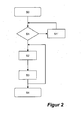
- ein Flussdiagramm des erfindungsgemäßen Verfahrens.
- Wie in
Figur 1 gezeigt, ümfasst eine Brennkraftmaschine 1 eine Ansauganlage 1a, eine Abgasanlage 1b, eine Kraftstoffversorgungsanlage 1 c, eine Kurbelwelle 1d und ein Steuergerät 1e. In der Ansauganlage 1a ist ein Drosselorgan 1f angeordnet, so dass mittels dieses Aktors der Anteil an Frischluft eingestellt werden kann, welcher der Brennkraftmaschine 1 zufließt. In der Abgasanlage 1 b ist zur Reinigung der Abgase der Brennkraftmaschine 1 ein Katalysator 1g angeordnet. Mittels Injektoren 1 h als Aktoren wird der Brennkraftmaschine 1 Kraftstoff zugeführt. Zur Erfassung der Drehzahl der Kurbelwelle 1 d ist ein erster Sensor 2 vorgesehen, der z. B. gemäß dem induktiven Prinzip arbeitet und die auf einem Geberrad angeordneten Zähne abtastet. Zur Erfassung des Anteils an Frischluft, welcher der Brennkraftmaschine 1 zufließt, ist ein zweiter Sensor 3 vorgesehen, der zum Beispiel als Heißfilmluftmassenmesser ausgeführt ist und der in der Ansauganlage 1a stromaufwärts des Drosselorgans 1f angeordnet ist. Zur Erfassung des Anteils an Restsauerstoff im Abgas der Brennkraftmaschine 1 ist ein dritter Sensor 4 vorgesehen, der stromauf des Katalysators 1 g angeordnet ist. Zum Zweck der Bestimmung der Wirksamkeit des Katalysators 1g ist weiterhin stromab des Katalysators 1g ein vierter Sensor 5 angeordnet. Darüber hinaus sind ein fünfter Sensor 6 zur Erfassung der Umgebungstemperatur und ein sechster Sensor 7 zur Erfassung des Umgebungsdruckes vorgesehen. Alle genannten Sensoren und Aktoren sind mit dem Steuergerät 1 e verbunden, so dass ein mechatronisches Gesamtsystem gebildet wird. Dieses Gesamtsystem kann in Teilsysteme zerlegt werden. - Ein erstes Teilsystem ist zum Beispiel die Ansauganlage 1a mit dem Drosselorgan 1f und dem zweiten Sensor 3 zur Erfassung des Anteils an Frischluft, welcher der Brennkraftmaschine 1 zufließt. Innerhalb dieses ersten Teilsystems wird ein Regelkreis gebildet, indem mittels des zweiten Sensors 3 ein Istwert für den Anteil an Frischluft ermittelt wird, welcher der Brennkraftmaschine 1 zufließt, der mit einem Sollwert verglichen wird und in Abhängigkeit einer Abweichung zwischen Soll- und Istwert mittels des Drosselorgans 1f der Anteil an Frischluft eingestellt wird; welcher der Brennkraftmaschine 1 zufließt.
- Ein zweites Teilsystem ist zum Beispiel die Abgasanlage 1b mit dem Katalysator 1g, dem dritten Sensor 4, dem vierten Sensor 5 sowie der Kraftstoffversorgungsanlage 1 c mit den Injektoren 1h. innerhalb dieses zweiten Teilsystems wird ebenfalls ein Regelkreis gebildet, indem mittels des dritten Sensors 4, der stromauf des Katalysators 1g angeordnet ist, ein Istwert für den Anteil an Restsauerstoff im Abgas bestimmt wird, der mit einem Sollwert verglichen wird, wobei in Abhängigkeit einer Abweichung zwischen Soll- und Istwert mittels der Injektoren 1 h der Anteil an Kraftstoff eingestellt wird, welcher der Brennkraftmaschine 1 zugeführt wird.
- Ferner wird innerhalb des zweiten Teilsystems eine Diagnosefunktion zur Bestimmung der Wirksamkeit des Katalysators 1g ausgeführt, wobei in Abhängigkeit von Vorgabewerten mittels der Injektoren 1 h bei einem konstanten Anteil an Frischluft, welcher der Brennkraftmaschine 1 zufließt, der Anteil an Kraftstoff über einen bestimmten Zeitraum verändert wird, so dass sich das Verbrennungsluftverhältnis verändert und z. B. die Sauerstoffspeicherfähigkeit des Katalysators 1g mittels des dritten Sensors 4 und des vierten Sensors 5 analysiert wird, wie dem Fachmann allgemein bekannt ist. Bei der Entwicklung einer Brennkraftmaschine 1 werden die genannten Teilsysteme optimiert bzw. erfolgt eine Anpassung der Sensoren und Aktoren an die Brennkraftmaschine 1. Insbesondere erfolgt dazu eine Bedatung von Steuerungs- und Regelungsfunktionen sowie Kennlinien und Kennfeldern, die, wie allgemein bekannt, in Verbindung mit dem Steuergerät 1 e abgebildet sind bzw. ablaufen und einen sicheren und wirtschaftlichen Betrieb der Brennkraftmaschine 1 ermöglichen.
- Beispielsweise wird das erste Teilsystem bzw. werden die damit in Wechselwirkung stehenden Kennlinien, Kennfelder und Steuerungs- und Regelungsfunktionen zunächst dadurch optimiert, dass die Brennkraftmaschine 1 in verschiedenen Betriebspunkten betrieben wird und das Signal des zweiten Sensors 3 zur Erfassung des Anteils an Frischluft, welcher der Brennkraftmaschine 1 zufließt, einem Referenzsignal gegenübergestellt wird und z. B. durch Variation eines betriebspunktabhängigen Faktors vorhandene Abweichungen zwischen den beiden Signalen ausgeglichen werden, wobei der dabei gewonnene Faktor in einem Kennfeld abgelegt wird. Das Referenzsignal kann zum Beispiel mittels eines besonders geeichten weiteren Sensors erzeugt werden oder es wird modelliert. Die Variation des betriebspunktabhängigen Faktors kann, wie allgemein bekannt, durch eine Person per Hand erfolgen oder automatisch mittels Softwarewerkzeugen, wie einem geeigneten Matlab- oder VBA-Skript gemäß der
DE102004013205A1 . D. h. sämtliche im Folgenden als Anpassungsprozesse definierte Abläufe zur Optimierung einer Brennkraftmaschine 1 können manuell oder automatisiert gestartet und durchgeführt bzw. abgeschlossen werden. Sind die Faktoren für alle Betriebspunkte optimiert, d. h. das Signal des zweiten Sensors 3 und das Referenzsignal stimmen überein oder weisen nur noch eine Abweichung in einer bestimmten Bandbreite auf, ist die Grundlage für weitere Optimierungsschritte gelegt. - Insbesondere können nun die Parameter der oben genannten Regelung zur Einstellung eines Sollwertes für den Anteil an Frischluft, welcher der Brennkraftmaschine 1 zufließt, optimiert werden, da nun das Signal des zweiten Sensors 3 eine entsprechende Güte aufweist oder anders gesagt genau genug ist, so dass es nun möglich ist, die Regelung zu optimieren. Es zeigt sich anhand des vorgenannten Beispiels zunächst, dass es innerhalb des ersten mechatronischen Teilsystems einer Brennkraftmaschine 1 mehrere Optimierungs-, Kalibrierungs- oder Anpassungsprozesse gibt, die bei der Entwicklung einer Brennkraftmaschine 1 ablaufen. Ferner zeigt sich, dass diese Prozesse miteinander in Wechselwirkung stehen, d. h. ist eine bestimmte Güte einer "Grundbedatung" noch nicht erreicht bzw. ist der Prozess zur Anpassung einer grundlegenden Steuerungs- und/oder Regelungsfunktion noch nicht so weit fortgeschritten, sollte eine darauf aufbauende weitere Steuerungs- und/oder Regelungsfunktion noch nicht angepasst werden; da diese Anpassung dann nicht zu einem befriedigenden Ergebnis führen wird infolge der sich noch ändernden "Basisgrößen". Diese während der Optimierung innerhalb des ersten mechatronischen Teilsystems ablaufenden Anpassungsprozesse stehen darüber hinaus auch mit Anpassungsprozessen des zweiten mechatronischen Teilsystems in Wechselwirkung. Wie beschrieben, wird innerhalb dieses zweiten Teilsystems ein Regelkreis gebildet, indem mittels des dritten Sensors 4, der stromauf des Katalysators 1 g angeordnet ist, ein Istwert für den Anteil an Restsauerstoff im Abgas bestimmt wird, der mit einem Sollwert verglichen wird, wobei in Abhängigkeit einer Abweichung zwischen Soll- und Istwert mittels der Injektoren 1 h der Anteil an Kraftstoff eingestellt wird, welcher der Brennkraftmaschine 1 zugeführt wird. Die Wechselwirkung zwischen dem ersten und dem zweiten Teilsystem ergibt sich z. B. daraus, dass die Einstellung des Anteils an Kraftstoff, welcher der Brennkraftmaschine 1 zugeführt wird, in Abhängigkeit des Anteils an Frischluft erfolgt, welcher der Brennkraftmaschine 1 zugeführt wird, d. h. in Abhängigkeit der Genauigkeit des zweiten Sensors 3, so dass es nicht zweckmäßig ist, die genannte Regelung innerhalb des zweiten Teilsystems dann zu kalibrieren, wenn die grundlegende Funktion zur Bereitstellung eines Signals des zweiten Sensors 3 noch nicht ausreichend zuverlässig ist. D. h. der Anpassungsprozess betreffend die vorgenannte Regelung, der z. B. darin besteht, verschiedene Betriebspunkte der Brennkraftmaschine 1 anzufahren und dort Variationen von Parametern der Regelung vorzunehmen, was per Hand oder per Software auch selbständig erfolgen kann, sollte nicht gestartet werden, bevor nicht ein anderer Anpassungsprozess abgeschlossen ist oder derart fortgeschritten ist, dass eine bestimmte Güte der Anpassung erreicht ist.
- Andererseits sind die Anpassungsprozesse für die unterschiedlichen Funktionen zur Steuerung- und/oder Regelung einer Brennkraftmaschine 1 nicht zwangsläufig voneinander abhängig bzw. bauen nicht alle Optimierungsprozesse unmittelbar aufeinander auf oder bedingen ein bestimmtes Gütemaß der Anpassung einer weiteren solchen Funktion. Zum Beispiel ist die.innerhalb des zweiten Teilsystems enthaltene Diagnosefunktion zur Bestimmung der Wirksamkeit des Katalysators 1g nicht abhängig von der Güte der Optimierung der Funktion zur Bereitstellung eines in Abhängigkeit des zweiten Sensors 3 bestimmten Wertes für den Anteil an Frischluft, welcher der Brennkraftmaschine 1 zufließt, da eine dafür erforderliche Veränderung des Anteils an Kraftstoff über einen bestimmten Zeitraum auch dann möglich ist, wenn der Anteil an Frischluft, welcher der Brennkraftmaschine 1 zufließt, konstant ist, sich aber auf einem nicht korrekten Niveau befindet bzw. ein bestimmter Offset des Signals des zweiten Sensors 3 gegenüber einem Referenzsignal vorhanden ist. Mit anderen Worten kann das Verbrennungsluftverhältnis auch dann durch eine Änderung des Anteils an Kraftstoff variiert werden, wenn der Anteil an Frischluft noch nicht korrekt bestimmt wird, zumal sich die Ermittlung des Verbrennungsluftverhältnisses stromauf und stromab des Katalysators 1 g auf die Signale des dritten Sensors 4 und des vierten Sensors 5 stützt. Neben den beschriebenen vorhandenen oder nicht vorhandenen Abhängigkeiten unter den Anpassungsprozessen der verschiedenen Funktionen zur Steuerung und/oder Regelung der Brennkraftmaschine 1 gibt es auch Umweltbedingungen, von denen es abhängig ist, den Anpassungsprozess einer Funktion zur Steuerung und/oder Regelung der Brennkraftmaschine 1 zu starten oder zu bestimmen, welches Gütemaß diese Funktion schon erreicht hat. Zum Beispiel wird mit dem fünften Sensor 6 die Umgebungstemperatur erfasst. Ist die Umgebungstemperatur sehr hoch, beispielsweise 30 Grad Celsius, dann ist es nicht sinnvoll, einen Anpassungsprozess zur Optimierung des Kaltstarts oder des Warmlaufes der Brennkraftmaschine 1 zu starten oder einen Prozess zu starten, der dazu dient, zu bestimmen, welches Gütemaß die Optimierung dieser Funktion schon erreicht hat. Dementsprechend kann auch das Signal des sechsten Sensors 7 bei der Auswahl der zu startenden bzw. durchzuführenden Anpassungsprozesse zusätzlich herangezogen werden, d. h. ist zum Beispiel der Umgebungsluftdruck sehr niedrig, kann es sinnvoll sein, eine vom Umgebungsluftdruck abhängige Funktion zunächst nicht anzupassen.
- Erfindungsgemäß wird für eine effiziente Optimierung des Betriebes der Brennkraftmaschine 1, z. B. wie in
Figur 2 gezeigt, mittels eines Steuerprogramms verfahren. Zunächst wird das erfindungsgemäße Verfahren in S0 gestartet, In S1 wird abgefragt, ob für die Güte der Anpassung der einzelnen Funktionen des gesamten mechatronischen Systems schon ausreichende Informationen vorliegen oder nicht. Wenn nicht, werden diese zunächst in S1' ermittelt, z. B. durch einen ersten Prüflauf der Brennkraftmaschine 1 auf einem Prüfstand in vorgegebenen Betriebspunkten. Angenommen, es erfolgt eine erste Anpassung der einzelnen Funktionen an die Brennkraftmaschine 1, dann ist die Güte der Anpassung zunächst jeweils minimal. Die Güte kann z. B. durch prozentuale Angaben/Werte dargestellt werden. Beispielsweise 0%, 50% oder 100%. Der Wert 0% wird zum Beispiel dann für die Güte einer Anpassung einer Funktion vergeben, wenn eine wesentliche Kenn- oder Zustandsgröße dieser Funktion gegenüber einem Referenzwert eine Abweichung von mehr als 20% aufweist. Der Wert 50% wird dann vergeben, wenn nur noch eine Abweichung von 10% vorhanden ist. Der Wert von 100% wird vergeben, wenn nur noch eine Abweichung von <3% vorhanden ist. Diese Gütezuordnung kann zum Beispiel für die beschriebene grundlegende Funktion innerhalb des ersten mechatronischen Teilsystems zur Bestimmung des Wertes für den Anteil an Frischluft, welcher der Brennkraftmaschine 1 zufließt, das Ergebnis haben, dass der in Abhängigkeit des zweiten Sensors 3 ermittelte Wert für den Anteil an Frischluft gegenüber einem Referenzwert eine Abweichung von mehr als 20% aufweist, so dass zunächst ein Wert für die Güte der Anpassung dieser Funktion von 0% vergeben wird. Während dieses Prüflaufes in S1' wird auch die Güte der Anpassung der weiteren innerhalb des ersten Teilsystems enthaltenen Funktion zur Regelung des Anteils an Frischluft, welcher der Brennkraftmaschine 1 zufließt, ermittelt. Eine mögliche Kenn- oder Zustandsgröße dieser Regelungsfunktion kann zum Beispiel ein Parameter einer Antwortfunktion der Regelgröße sein bei einer sprunghaften Änderung des Sollwertes, z. B. die Zeit, bis der Sollwert eingeregelt ist. Auch hier wird beispielsweise noch eine Abweichung von mehr als 20% gegenüber einem Vorgabewert vorliegen, so dass auch wieder nur ein Gütewert von 0% ermittelt wird. Das trifft nun zum Beispiel auch für die innerhalb des zweiten Teilsystems enthaltene Diagnosefunktion des Katalysators 1g zu, d. h. dass zum Beispiel die Zeit, bis ein auswertbares Signal bereit- steht, welches die Speicherkapazität des Katalysators 1g beschreibt, noch mehr als 20% von einem Zielwert entfernt ist, so dass auch hier nur ein Gütewert von 0% ermittelt wird. - Erfindungsgemäß werden in S2 die Gütewerte dieser drei Funktionen einer Bedingungsprüfung unterzogen. Die in S2 vorgegebene Bedingung wird z. B. von einer Bedienperson vorgegeben. Diese Vorgabe von Bedingungen dient der Priorisierung der Anpassungsprozesse der einzelnen Funktionen des mechatronischen Systems zueinander. Mit anderen Worten wird durch die im Folgenden genauer beschriebenen Bedingungen eine Reihenfolge der durchzuführenden Anpassungsprozesse der einzelnen Steuergerätefunktionen vorgegeben. Somit wird quasi ein Ablaufplan erstellt, welcher die Abhängigkeit der einzelnen Steuergerätefunktionen untereinander, hinsichtlich der schon erreichten Güte der Optimierung dieser Funktion berücksichtigt. Die Bedingung in S2 ist beispielsweise derart formuliert, dass betreffend der ersten Funktion innerhalb des ersten Teilsystems zur Bestimmung eines Istwertes des Anteils an Frischluft, welcher der Brennkraftmaschine 1 zufließt, mittels des zweiten Sensors 3 solange eine Anpassung dieser Funktion, also eine Bestimmung von Faktoren zur Korrektur des Signals des zweiten Sensors 3, vorgenommen wird, bis ein Gütewert von 100% dieser Funktion erreicht ist und dass erst dann mit der Anpassung der weiteren Funktion innerhalb des ersten Teilsystems begonnen wird, nämlich der Funktion zu der Regelung des Anteils an Frischluft, welcher der Brennkraftmaschine 1 zufließt, wenn die erste Funktion innerhalb des ersten Teilsystems zur Bestimmung eines Istwertes des Anteils an Frischluft, welcher der Brennkraftmaschine 1 zufließt, einen Gütewert >50% hat. Die Bedingung in S2 ist ferner so formuliert, dass die Funktion zur Diagnose des Katalysators 1g schon parallel mit der Anpassung der ersten Funktion innerhalb des ersten Teilsystems zur Bestimmung eines Istwertes des Anteils an Frischluft erfolgt, welcher der Brennkraftmaschine 1 zufließt, da diese Funktion innerhalb des zweiten Teilsystems, wie schon beschrieben, unabhängig von der Güte der Anpassung der ersten Funktion innerhalb des ersten Teilsystems ist. Gemäß
Figur 2 wird demnach in S3 zunächst die Anpassung der ersten Funktion innerhalb des ersten Teilsystems zur Bestimmung eines Istwertes des Anteils an Frischluft, welcher der Brennkraftmaschine 1 zufließt, sowie parallel die Anpassung der Funktion zur Diagnose des Katalysators 1 g gestartet und durchgeführt, jedoch nicht die Anpassung der weiteren Funktion innerhalb des ersten Teilsystems, nämlich der Funktion zu der Regelung des Anteils an Frischluft, welcher der Brennkraftmaschine 1 zufließt. Das Starten und die Durchführung der Anpassungsprozesse kann, beispielsweise nach einer Information an die Bedienperson von der Bedienperson manuell erfolgen oder aber der Start erfolgt manuell und die Durchführung automatisiert oder der Start und die Durchführung erfolgen automatisiert mittels des Steuerprogramms. Die sich bei dieser Anpassung immer weiter verbessernden Gütewerte werden gemäßFigur 2 wieder S2 zugeführt, beispielsweise in Abhängigkeit von einem bestimmten Zeitplan. Somit erfolgt in S2 immer wieder eine Prüfung der genannten Bedingung, wobei dann mit der Anpassung der weiteren Funktion innerhalb des ersten Teilsystems begonnen wird, d. h. mit der Funktion zu der Regelung des Anteils an Frischluft, welcher der Brennkraftmaschine 1 zufließt, wenn gemäß S2 die erste Funktion innerhalb des ersten Teilsystems zur Bestimmung eines Istwertes des Anteils an Frischluft, welcher der Brennkraftmaschine 1 zufließt, einen Gütewert >50% erreicht hat. Erfindungsgemäß laufen die Anpassungsprozesse für alle drei genannten Funktionen ab dem Zeitpunkt parallel zueinander. Haben alle Anpassungsprozesse einen Zielwert erreicht, insbesondere einen Gütewert von 100%, dann wird das erfindungsmäße Verfahren in S4 beendet. - Erfindungsgemäß umfasst die Bedingung in S2 auch noch Informationen über Umwelteinflüsse bzw. andere Größen der Brennkraftmaschine 1. Weist zum Beispiel die Umgebungstemperatur, der Umgebungsluftdruck oder die Abgastemperatur nicht oder noch nicht einen bestimmten Wert auf, wird gemäß der Bedingung in S2 zwar der Anpassungsprozess der ersten Funktion innerhalb des ersten Teilsystems zur Bestimmung eines Istwertes des Anteils an Frischluft, welcher der Brennkraftmaschine 1 zufließt, gestartet, noch nicht aber der Anpassungsprozess betreffend die Funktion zur Diagnose des Katalysators 1 g, da dieser Prozess verlangt, dass die Abgastemperatur einen bestimmten Wert erreicht. Neben dem sich bei der Anpassung des aktuell nur einen laufenden Anpassungsprozesses immer weiter verbessernden Gütewertes, betreffend diese Funktion, wird gemäß
Figur 2 nicht nur dieser Gütewert wieder S2 zugeführt, sondern auch Informationen zu der Abgastemperatur, wobei wenn die Abgastemperatur einen bedingungsgemäßen Wert erreicht hat, neben dem schon laufenden Anpassungsprozess den Anpassungsprozess betreffend die Funktion zur Diagnose des Katalysators 1g gestartet wird oder bei Unterschreiten des bedingungsgemäßen Wertes wieder abgebrochen wird. - Erfindungsgemäß umfasst die Bedingung in S2 auch noch Informationen zu den Betriebspunktparametern der Brennkraftmaschine 1, d. h. dem Systemzustand der Brennkraftmaschine 1, so dass dann ein Anpassungsprozess gestartet oder abgebrochen wird, wenn nicht bestimmte Betriebsparameter vorliegen. Angenommen die Brennkraftmaschine 1 wird vorwiegend in Betriebspunkten im Hochlastbereich betrieben und es wird zum Schutz des Katalysators 1g ein vergleichsweise großer Anteil an Kraftstoff der Brennkraftmaschine 1 zugeführt, dann ist es nicht zweckmäßig, den Anpassungsprozess betreffend die Funktion zur Diagnose des Katalysators 1g zu starten oder durchzuführen, da die dafür nötigen Variationen des Verbrennungsluftverhältnisses nicht möglich sind, ohne eine thermische Schädigung des Katalysator 1g zu riskieren.
- Ferner kann die Bedingung in S2 Informationen zu funktionalen Zusammenhängen der einzelnen Anpassungsprozesse untereinander aufweisen. D. h. grundlegende Funktionen, wie zum Beispiel die erste Funktion innerhalb des ersten Teilsystems zur Bestimmung eines Istwertes des Anteils an Frischluft, welcher der Brennkraftmaschine 1 zufließt, sind quasi system- bzw. funktionsbedingt vor darauf aufbauenden Funktionen, wie zum Beispiel der weiteren Funktion innerhalb des ersten Teilsystems, nämlich der Funktion zu der Regelung des Anteils an Frischluft, welcher der Brennkraftmaschine 1 zufließt, anzupassen. Erfindungsgemäß ist es weiterhin möglich, die Abhängigkeit der einzelnen Anpassungsprozesse untereinander hinsichtlich der erreichten Güte, der Umweltbedingungen und der Betriebspunktparameter der Brennkraftmaschine innerhalb eines Steuerprogramms mittels einer Adjazenzmatrix zu beschreiben. Diese Adjazenzmatrix wird dabei z. B. aus drei Teilmatrizen gebildet. Eine erste Teilmatrix

betrifft die Güte G der einzelnen Anpassungsprozesse P, bei der Entscheidung, ob ein Anpassurigsprozess P gestartet und durchgeführt werden soll. Diese erste Teilmatrix ist quadratisch, d. h. hat die gleiche Anzahl von m Zeilen und von n Spalten, entsprechend der Anzahl m = n der Anpassungsprozesse P und beschreibt die einzelnen Abhängigkeiten der Anpassungsprozesse P untereinander. Beispielsweise entspricht der Anpassungsprozess P1 gemäß dem vorgenannten Ausführungsbeispiel, der ersten Funktion innerhalb des ersten Teilsystems zur Bestimmung eines Istwertes des Anteils an Frischluft, welcher der Brennkraftmaschine 1 zufließt, mittels des zweiten Sensors 3 und der Anpassungsprozess P2 entspricht der weiteren Funktion innerhalb des ersten Teilsystems, nämlich der Funktion zu der geregelten Einstellung des Anteils an Frischluft, welcher der Brennkraftmaschine 1 zufließt. - Die zweite Teilmatrix

betrifft die Berücksichtigung der verschiedenen Systemzustände S, bei der Entscheidung, ob ein Anpassungsprozess P gestartet und durchgeführt werden soll, d. h. insbesondere die Berücksichtigung der Betriebspunktparameter der Brennkraftmaschine 1, wobei die Anzahl der m Zeilen der Anzahl der Anpassungsprozesse P entspricht und die Anzahl der q Spalten der Anzahl der Systemzustände S entspricht. Beispielsweise entspricht der Anpassungsprozess P1 gemäß dem vorgenannten Ausführungsbeispiel, der ersten Funktion innerhalb des ersten Teilsystems zur Bestimmung eines Istwertes des Anteils an Frischluft, welcher der Brennkraftmaschine 1 zufließt, mittels des zweiten Sensors 3 und der Anpassungsprozess P2 entspricht der weiteren Funktion innerhalb des ersten Teilsystems, nämlich der Funktion zu der geregelten Einstellung des Anteils an Frischluft, welcher der Brennkraftmaschine 1 zufließt und der Systemzustand S1 repräsentiert einen Betriebspunkt der Brennkraftmaschine 1 bzw. die Parameter, die diesen Punkt beschreiben. - Die dritte Teilmatrix

betrifft die Berücksichtigung der verschiedenen Umweltzustände U, bei der Entscheidung, ob ein Anpassungsprozess P gestartet und durchgeführt werden soll, d. h. die Berücksichtigung der Umgebungsbedingungen der Brennkraftmaschine 1, wie dem Luftdruck oder der Lufttemperatur, wobei die Anzahl der m Zeilen der Anzahl der Anpassungsprozesse P entspricht und Anzahl der q Spalten der Anzahl der Umweltzustände U entspricht. Beispielsweise entspricht der Anpassungsprozess P1 gemäß dem vorgenannten Ausführungsbeispiel, der ersten Funktion innerhalb des ersten Teilsystems zur Bestimmung eines Istwertes des Anteils an Frischluft, welcher der Brennkraftmaschine 1 zufließt, mittels des zweiten Sensors 3 und der Anpassungsprozess P2 entspricht der weiteren Funktion innerhalb des ersten Teilsystems, nämlich der Funktion zu der geregelten Einstellung des Anteils an Frischluft, welcher der Brennkraftmaschine 1 zufließt der Umweltzustand U1 repräsentiert z. B. den Luftdruck und/oder die Lufttemperatur rund um die Brennkraftmaschine 1. - Die Multiplikation der drei Teilmatrizen ergibt eine gesamthafte Matrix,

welche erfindungsgemäß die Abhängigkeiten der einzelnen Anpassungsprozesse P untereinander hinsichtlich ihrer Güte G, die Abhängigkeiten der einzelnen Anpassungsprozesse P hinsichtlich des Umweltzustands U (z. B. Druck und Temperatur) der Brennkraftmaschine 1 und die Abhängigkeiten der einzelnen Anpassungsprozesse hinsichtlich des Systemzustands S, insbesondere betreffend die Betriebspunktparameter der Brennkraftmaschine 1 beschreibt. - D. h. es wird erfindungsgemäß ein Steuerprogramm (Scheduler) definiert, wobei zur Definition des Steuerprogramms Matrixoperationen genutzt werden. Die Besetzung der Matrixelemente bestimmt den Aufwand in der Matrixoperation. Sind bestimmte Anpassungsprozesse P bei dem Ablauf des Steuerprogramms abgearbeitet, d. h. es liegt eine maximal mögliches Gütemaß G vor, dann werden die entsprechenden Elemente der ersten Teilmatrix mit Nullen gefüllt.
- Zusammengefasst läuft das erfindungsgemäße Verfahren mittels eines Steuerprogramms (Scheduler) unter Nutzung der z. B. drei genannten Adjazenzmatrizen wie folgt ab.
- Die numerischen Werte jeder einzelnen Adjazenzmatrix werden zyklisch aktualisiert.
- D. h. die Aktualisierung erfolgt z. B. durch Polling, d. h. durch eine zyklische Abfrage von Änderungen von Werten betreffend die Umweitzustände U und die Systemzustände S, die z. B. mittels externer Hard- und/oder Software, die mit dem Steuergerät 1 e verbunden ist, bereitgestellt werden.
- Dadurch spiegeln zu jedem Zeitpunkt die Adjazenzmatrizen


- Die Adjazenzmatrix

- Um zu jedem durch das Polling vorgegebenen Zeitpunkt den aktuellen Status des Schedulers, d. h. der einzelnen Adjazenzmatrizen


- Aus dieser zyklischen Auswertung heraus, wird dann der Anpassungsprozess P gestartet, welcher aufgrund der Auswertung der drei Adjazenzmatrizen derjenige ist, der die höchste Priorität hat.
- Der Scheduler ist auch jederzeit in der Lage einen laufenden Anpassungsprozess P aufgrund der laufenden Aktualisierung eine neue Priorisierung der Anpassungsprozesse P vorzunehmen. Dieses kann z. B. dazu führen, dass ein laufender Anpassungsprozess P abgebrochen wird und dafür ein anderer, z. B. aufgrund von Änderungen in den Systemzuständen S, gestartet wird.
- Das Starten und die Durchführung der Anpassungsprozesse P kann auch bei dieser Ausführung, beispielsweise nach einer Information an die Bedienperson von der Bedienperson manuell erfolgen oder aber der Start erfolgt manuell und die Durchführung automatisiert oder der Start und die Durchführung erfolgen automatisiert mittels des Steuerprogramms.
- Zur Veranschaulichung sei das erfindungsgemäße Verfahren mittels eines Steuerprogramms (Scheduler) unter Nutzung einer Adjazenzmatrix hier nochmals an einem praktischen Beispiel skizziert:
- Zum einem Zeitpunkt t0 sei folgende Konstellation gegeben. Zur Vereinfachung sei hier nur der Leerlaufbereich der Brennkraftmaschine 1 betrachtet. Es sind drei Anpassungsprozesse P1 bis P3 gegeben.
- Der erste Anpassungsprozess P1 betrifft die Anpassung der ersten Funktion innerhalb des ersten Teilsystems zur Bestimmung eines Istwertes des Anteils an Frischluft, welcher der Brennkraftmaschine 1 zufließt, mittels des zweiten Sensors 3, im weiteren Verlauf als "Füllungserfassung" bezeichnet. Die Füllungserfassung ist bekannterweise eine grundlegende Funktion, auf die eine Vielzahl weiterer Funktionen aufbauen.
- Der zweite Anpassungsprozess P2 betrifft die Anpassung des so genannten Momentenpfades, d. h. einer Funktion, welche den Zusammenhang zwischen Betriebsparametern der Brennkraftmaschine 1 und dem von der Brennkraftmaschine 1 bereitgestellten Drehmoment beschreibt. Die Betriebsparameter sind insbesondere die Drehzahl, der Zündzeitpunkt, das Verbrennungsluftverhältnis, und der Anteil an Frischluft, welcher der Brennkraftmaschine 1 zufließt, im Weiteren als "Füllung" bezeichnet. Der Momentenpfad baut folglich auf der Füllungserfassung auf.
- Der dritte Anpassungsprozess P3 betrifft die Regelung der Drehzahl der Brennkraftmaschine 1. im Leerlauf, im weiteren Verlauf als "Leerlaufregler" bezeichnet. Der "Leerlaufregler" baut auf dem Momentenpfad auf, d. h. es werden, wie allgemein bekannt, zur Regelung der Drehzahl im Leerlauf so genannte Drehmomentreserven vorgehalten und zur schnellen Einstellung der Drehzahl verwendet, wobei die Drehmomentreserven aus dem Momentenpfad abgeleitet werden.
- Der Anpassungsprozess P1 der Füllungserfassung sei in allen Betriebspunkten der Brennkraftmaschine 1 hinreichend genau parametriert, d. h. eine ausreichende Güte des Anpassungsprozesses P1 von, in diesem Fall größer 97%, ist erreicht.
- Der nachgelagerte Anpassungsprozess P2 des Momentenpfades sei ebenfalls über alle Betriebspunkte der Brennkraftmaschine (Last/Drehzahl), außer im Leerlaufbereich, hinreichend genau parametriert, d. h. eine Güte des Anpassungsprozesses P2 von, in diesem Fall kleiner 97%, ist erst erreicht.
- Der somit noch danach gelagerte Anpassungsprozess P3 des Leerlaufreglers kann folglich erst angestoßen werden, wenn im Leerlaufbereich eine hinreichende Güte des Anpassungsprozesses P2 des Momentenpfades erreicht worden ist.
- Damit haben die drei Matrizen, wie oben skizziert, folgenden Zustand zum Zeitpunkt t0:

- Das Matrixelement (g P
1 P2 ) gibt demnach an, dass der Anpassungsprozess P1 für die Füllungserfassung eine Güte von 97% aufweisen muss, bis der Anpassungsprozess P2 für den Momentenpfad gestartet werden darf. - Das Matrixelement (g P
1 P3 ) gibt demnach an, dass der Anpassungsprozess P1 für die Füllungserfassung eine Güte von 97% aufweisen muss, bis der Anpassungsprozess P3 für den Leerlaufregler gestartet werden darf. Dies ist jedoch mehr akademischer Natur, da in der Praxis davon auszugehen ist, dass nur eine hinreichende Genauigkeit der Füllungserfassung zu einer hinreichenden Genauigkeit der Momentenbedatung führt. - Das Matrixelement (g P
2 P3 ) gibt demnach an, dass der Anpassungsprozess P2 für den Momentenpfad eine Güte von 97% aufweisen muss, bis der Anpassungsprozess P3 für den Leerlaufregler gestartet werden darf. - D. h. sowohl die Füllungserfassung, als auch der Momentenpfad müssen eine Genauigkeit von 97% aufweisen, bevor der Leerlaufregler parametriert werden kann.
- Sollte die Auswertung des Schedulers ergeben, dass der Anpassungsprozess P2 des Momentenpfades kleiner 97 % Güte hat (z. B. beträgt die Abweichung zwischen dem real gemessenen Drehmoment der Brennkraftmaschine 1 an einem Prüfstand und dem mittels des Momentenpfades modellierten Drehmomentes mehr als 3%), wird der Anpassungsprozess P3 für den Leerlaufregler nicht gestartet.
- Hinsichtlich der Systemzustände S ergibt sich nun folgendes:

- Hierbei bedeutet "LL-Bereich", dass die Brennkraftmaschine 1 im Leerlauf bei einer bestimmten Drehzahl betrieben wird, d. h. die Betriebspunktparameter sind die Drehzahl und "Null-Last".
- Hierbei steht weiterhin die Abkürzung "LLR" für Leerlaufregler und die Formulierung "Fahrzeug steht/fährt" bezieht sich darauf, dass die Brennkraftmaschine 1 zum Antrieb eines Fahrzeuges in diesem angeordnet ist und die Brennkraftmaschine 1 dennoch arbeitet bzw. aktiv ist.
- D. h. je nach Systemzustand (hier wird nur der Leerlaufbereich betrachtet), werden die Matrixelemente entsprechend mit 1 und/oder 0 besetzt. Ob jedes der Matrixelemente für den entsprechenden Prozess P1, P2 oder P3 besetzt sein muss, hängt davon ab, ob der entsprechende Systemzustand einen Einfluss auf den entsprechenden Prozess P hat, z. B. ist der LL-Bereich für eine Diagnose des Katalysators 1 g nicht relevant und damit würde das entsprechende Element in der Matrix zu Null gesetzt werden.
- Für die Umgebungszustände U ergibt sich bei warmer Brennkraftmaschine 1 (z. B. Kühlwassertemperatur größer 70°C) und Umgebungsdruck von 1024 mbar (d. h. sonst keine weiteren Umweltzustände) folgendes Bild:

- Auch hier gilt das bisher gesagte, dass nur die Matrixelemente besetzt werden, deren Elemente (Umgebungszustände U) einen Einfluss auf den dazugehörigen Prozess P haben. Durch die Multiplikation aller Matrizen ergibt sich hiermit folgendes Bild:


- Zum Zeitpunkt t1 wird angenommen, dass das Fahrzeug fährt. Es ergeben sich dann folgenden Matrizen:


- Wie zu erkennen, haben sich die Werte der Elemente in der Gesamtmatrix


- Die Bildung der Gesamt- und/oder Referenzmatrix

- Weitere Betriebspunktparameter, das gilt für aktuelle Werte als auch für Sollwerte, die vom Steuergerät vorgegeben werden sind: Drehzahl/Einspritzmenge, Geschwindigkeit/Last, Geschwiridigkeit/Einspritzmenge, Drehzahl/Moment, Geschwindigkeit/Moment, Kühlwassertemperatur, Ansauglufttemperatur, Zeit nach Startende, Katalysatortemperatur (vor, im, nach Kat), Luftmenge, Lambda (vor und nach Kat) Status Leerlauf, Status von jeder einzelnen Diagnose (Betriebsbereit, Freigegeben, Gesperrt, Blockiert, etc.), Drosselklappenstellung, VVT-Stellung, Ventilsteuerzeiten, Status Luftmassenmesser, Öltemperatur, Öldruck, Kraftstofftemperatur, Temperatursensorik im Abgasnachbehandlungssystem.
Claims (5)
- Verfahren zur Optimierung einer Brennkraftmaschine, die Sensoren, Aktoren und ein Steuergerät umfasst, wobei das Zusammenwirken der Brennkraftmaschine, der Sensoren, der Aktoren und des Steuergerätes durch funktionale Zusammenhänge beschrieben ist, die mittels des Steuergerätes ausgeführt werden, wobei für ein optimales Zusammenwirken von Sensoren, Aktoren, Steuergerät und Brennkraftmaschine während der Entwicklung der Brennkraftmaschine einzelne Anpassungsprozesse durchgeführt werden, wobei die einzelnen Anpassungsprozesse durch Verwendung eines Steuerprogramms gestartet und durchgeführt werden, wobei die einzelnen Anpassungsprozesse in Abhängigkeita) der jeweils erreichten Güte der einzelnen Anpassungsprozesse,b) der Umgebungsbedingungen undc) des Systemzustandes der Brennkraftmaschinegestartet und durchgeführt werden, wobei die Abhängigkeiten durch Teilmatrizen beschrieben werden, wobei aus den Teilmatrizen eine Adjazenzmatrix gebildet wird, wobei eine Referenz-Adjazenzmatrix gebildet wird, welche die Abhängigkeiten beschreibt, die für den Start und eine Durchführung der einzelnen Anpassungsprozesse bestehen, wobei die Adjazenzmatrix fortlaufend aktualisiert wird und in Abhängigkeit einer Gegenüberstellung der Referenz-Adjazenzmatrix mit der aktualisierten Adjazenzmatrix die Anpassungsprozesse gestartet und durchgeführt werden.
- Verfahren nach Patentanspruch 1, wobei die einzelnen Anpassungsprozesse weiterhin in Abhängigkeitd) der funktionalen Zusammenhänge der Anpassungsprozesse untereinandergestartet und durchgeführt werden.
- Verfahren nach Patentanspruch 1 oder 2, wobei die Umgebungsbedingungen der Umgebungsluftdruck und/oder die Umgebungstemperatur und/oder die Ansauglufttemperatur sind.
- Verfahren nach Patentanspruch 1 bis 3, wobei der Systemzustand der Brennkraftmaschine durch Betriebspunktparameter der Brennkraftmaschine beschrieben ist.
- Verfahren nach Patentanspruch 4, wobei die Betriebspunktparameter die Drehzahl und/oder die Last der Brennkraftmaschine sind.
Applications Claiming Priority (1)
| Application Number | Priority Date | Filing Date | Title |
|---|---|---|---|
| DE102012005197A DE102012005197B3 (de) | 2012-03-16 | 2012-03-16 | Verfahren zur Optimierung einer Brennkraftmaschine |
Publications (3)
| Publication Number | Publication Date |
|---|---|
| EP2639436A2 true EP2639436A2 (de) | 2013-09-18 |
| EP2639436A3 EP2639436A3 (de) | 2018-08-08 |
| EP2639436B1 EP2639436B1 (de) | 2019-07-24 |
Family
ID=47877685
Family Applications (1)
| Application Number | Title | Priority Date | Filing Date |
|---|---|---|---|
| EP13000890.7A Active EP2639436B1 (de) | 2012-03-16 | 2013-02-22 | Verfahren zur optimierung einer brennkraftmaschine |
Country Status (3)
| Country | Link |
|---|---|
| US (1) | US9617948B2 (de) |
| EP (1) | EP2639436B1 (de) |
| DE (1) | DE102012005197B3 (de) |
Families Citing this family (4)
| Publication number | Priority date | Publication date | Assignee | Title |
|---|---|---|---|---|
| FR2706749B1 (fr) * | 1993-06-23 | 1995-08-25 | Oreal | Brosse pour appliquer un produit de maquillage, en particulier du mascara |
| DE102015207252A1 (de) | 2015-04-21 | 2016-10-27 | Avl List Gmbh | Verfahren und Vorrichtung zur modellbasierten Optimierung einer technischen Einrichtung |
| KR102627101B1 (ko) * | 2016-01-05 | 2024-01-22 | 엘지전자 주식회사 | 기액분리기 및 이를 구비하는 의류처리장치 |
| US11346275B2 (en) | 2020-04-07 | 2022-05-31 | Tianjin University | Apparatus for optimizing fuel/air mixing process of internal combustion engine |
Citations (1)
| Publication number | Priority date | Publication date | Assignee | Title |
|---|---|---|---|---|
| DE102004013205A1 (de) | 2004-03-17 | 2005-10-06 | Iav Gmbh Ingenieurgesellschaft Auto Und Verkehr | System und Verfahren zur automatisierten Applikation |
Family Cites Families (30)
| Publication number | Priority date | Publication date | Assignee | Title |
|---|---|---|---|---|
| JPS6128738A (ja) * | 1984-07-17 | 1986-02-08 | Fuji Heavy Ind Ltd | 自動車用エンジンの電子制御方式 |
| DE19836748C1 (de) | 1998-08-13 | 2000-04-20 | Siemens Ag | Verfahren zum Applizieren von Steuerdaten eines elektronischen Kraftfahrzeug-Steuergeräts |
| IT1308379B1 (it) * | 1999-02-19 | 2001-12-17 | Magneti Marelli Spa | Metodo di autoadattamento del controllo del titolo in un impianto diiniezione per un motore a combustione interna. |
| US6234149B1 (en) * | 1999-02-25 | 2001-05-22 | Cummins Engine Company, Inc. | Engine control system for minimizing turbocharger lag including altitude and intake manifold air temperature compensation |
| DE19941440B4 (de) | 1999-08-31 | 2006-10-19 | Siemens Ag | Verfahren zum gesteuerten Betrieb einer Vorrichtung |
| US6560528B1 (en) * | 2000-03-24 | 2003-05-06 | Internal Combustion Technologies, Inc. | Programmable internal combustion engine controller |
| DE10107367B4 (de) | 2001-02-16 | 2016-09-01 | Robert Bosch Gmbh | Verfahren und Einrichtung zur Diagnose durch Fehlermustererkennung |
| DE10121587A1 (de) | 2001-05-03 | 2002-11-07 | Volkswagen Ag | Verfahren und Vorrichtung zur automatisierten Prüfung grundlegender CAN-Eigenschaften von Steuergeräten |
| US7023869B2 (en) | 2001-05-10 | 2006-04-04 | Emc Corporation | Data storage system with one or more integrated server-like behaviors |
| DE10126863A1 (de) | 2001-06-01 | 2002-12-12 | Siemens Ag | Programmierwerkzeug und Verfahren zur Erstellung von Programmen, insbesondere der Automatisierungstechnik |
| DE10133670A1 (de) | 2001-07-11 | 2003-01-30 | Daimler Chrysler Ag | Verfahren zur automatischen Erzeugung einer Wissensbasis für ein Diagnosesystem |
| DE10142511B4 (de) | 2001-08-30 | 2004-04-29 | Daimlerchrysler Ag | Fehlerbehandlung von Softwaremodulen |
| DE10259851B4 (de) | 2002-12-17 | 2015-06-25 | Iav Gmbh Ingenieurgesellschaft Auto Und Verkehr | Verfahren zur Kennlinienadaption eines im Steuergerät eines Kraftfahrzeuges gespeicherten Kennlinienfeldes |
| DE10307365B4 (de) | 2003-02-21 | 2005-08-11 | Volkswagen Ag | Vorrichtung und Verfahren zur Fehlerdiagnose bei Fahrzeugen |
| DE10328787A1 (de) | 2003-06-26 | 2005-01-27 | Robert Bosch Gmbh | Verfahren zur korrelationsbasierten Bedatung eines diskretisierten Kennfeldes in einem Steuergerät einer Brennkraftmaschine |
| DE10332246A1 (de) | 2003-07-11 | 2005-02-03 | Iav Gmbh Ingenieurgesellschaft Auto Und Verkehr | Wissensbasierte Plausibilitätsprüfung von Datensätzen |
| DE102004017661A1 (de) | 2004-04-05 | 2005-10-20 | Volkswagen Ag | Verfahren und Vorrichtung zur Bedatung elektronischer Steuergeräte |
| DE102004026583B3 (de) * | 2004-05-28 | 2005-11-24 | Robert Bosch Gmbh | Verfahren zur Optimierung von Kennfeldern |
| DE102004040924B4 (de) * | 2004-08-24 | 2019-04-11 | Robert Bosch Gmbh | Verfahren und Vorrichtung zur Überwachung von Drucksensoren im Abgasstrang |
| DE102006010400B4 (de) | 2006-03-03 | 2023-04-13 | Dspace Gmbh | Verfahren zur Erstellung eines optimierten Ablaufplans für ein zeitgesteuertes verteiltes Rechnersystem |
| DE102006015677A1 (de) * | 2006-04-04 | 2007-10-18 | Siemens Ag | Verfahren und Vorrichtung zum Betreiben eines Kraftfahrzeugs, Verfahren und Vorrichtung zum Zugreifen auf eine Zuordnungsvorschrift, und Computerprogrammprodukt |
| FR2901576B1 (fr) * | 2006-05-23 | 2008-08-29 | Renault Sas | Procede de determination d'une cartographie de controle moteur pour un processus de combustion homogene |
| DE102006056220B4 (de) | 2006-11-29 | 2011-12-15 | Günter Fendt | Verfahren zum Benachrichtigen von Kfz-Benutzern bei außerplanmäßigen amFahrzeug anstehenden Inspektionsarbeiten |
| DE102008005712A1 (de) * | 2008-01-21 | 2009-07-23 | Volkswagen Ag | Verfahren und Anordnung zur Steuerung von Motoren sowie ein entsprechendes Computerprogramm und ein entsprechendes computerlesbares Speichermedium |
| DE102009021781A1 (de) | 2009-05-18 | 2010-11-25 | Fev Motorentechnik Gmbh | Verfahren zur Berechnung eines Kennfelds |
| US8224519B2 (en) * | 2009-07-24 | 2012-07-17 | Harley-Davidson Motor Company Group, LLC | Vehicle calibration using data collected during normal operating conditions |
| DE102009037254B4 (de) * | 2009-08-12 | 2011-12-08 | Man Diesel & Turbo Se | Verfahren und Vorrichtung zum Steuern des Beriebs einer Brennkraftmaschine |
| DE102009057979A1 (de) | 2009-12-11 | 2011-06-16 | Bayerische Motoren Werke Aktiengesellschaft | Verfahren und Vorrichtung zur Konfiguration eines Steuergeräts eines Fahrzeugs |
| DE102011006915A1 (de) * | 2011-04-07 | 2012-10-11 | Robert Bosch Gmbh | Verfahren zum Kalibrieren einer Einspritzmenge |
| AT511577B1 (de) * | 2011-05-31 | 2015-05-15 | Avl List Gmbh | Maschinell umgesetztes verfahren zum erhalten von daten aus einem nicht linearen dynamischen echtsystem während eines testlaufs |
-
2012
- 2012-03-16 DE DE102012005197A patent/DE102012005197B3/de not_active Expired - Fee Related
-
2013
- 2013-02-22 EP EP13000890.7A patent/EP2639436B1/de active Active
- 2013-03-15 US US13/832,536 patent/US9617948B2/en not_active Expired - Fee Related
Patent Citations (1)
| Publication number | Priority date | Publication date | Assignee | Title |
|---|---|---|---|---|
| DE102004013205A1 (de) | 2004-03-17 | 2005-10-06 | Iav Gmbh Ingenieurgesellschaft Auto Und Verkehr | System und Verfahren zur automatisierten Applikation |
Also Published As
| Publication number | Publication date |
|---|---|
| EP2639436A3 (de) | 2018-08-08 |
| US9617948B2 (en) | 2017-04-11 |
| EP2639436B1 (de) | 2019-07-24 |
| DE102012005197B3 (de) | 2013-06-13 |
| US20130245917A1 (en) | 2013-09-19 |
Similar Documents
| Publication | Publication Date | Title |
|---|---|---|
| DE102014113476B4 (de) | Abgassystem und verfahren zum schätzen einer russbeladung eines dieselpartikelfilters unter verwendung eines zweilagigen neuronalen netzes | |
| DE68904437T2 (de) | Steuerung fuer motor-kraftstoffeinspritzung. | |
| DE69534456T2 (de) | Verfahren und System zur Steuerung von Brennkraftmaschinen | |
| AT510912B1 (de) | Verfahren zur Emissionsoptimierung von Verbrennungskraftmaschinen | |
| DE102014202101B4 (de) | Abschwächung des fehlertrends zur verschlechterung von luft-kraftstoff-verhältnissensoren | |
| DE102020103445A1 (de) | Vorrichtung zum Schätzen eines PM-Betrages, System zum Schätzen eines PM-Betrages, Verfahren zum Schätzen eines PM-Betrages, Datenanalysevorrichtung, Steuervorrichtung für einen Verbrennungsmotor und Empfänger | |
| DE102014113474A1 (de) | Abgassystem und verfahren zum schätzen einer russbeladung eines dieselpartikelfilters dafür | |
| DE102012218176A1 (de) | Verfahren zum Betreiben eines Kraftstoffeinspritzsystems | |
| EP2639436B1 (de) | Verfahren zur optimierung einer brennkraftmaschine | |
| DE102009052714A1 (de) | Steuersysteme und -verfahren zum Schätzen von Motorkühlmittel-Wärmeverlust | |
| EP2796690A1 (de) | Steuerung für ein Common-Rail-Einspritzsystem | |
| DE102018106104A1 (de) | Vorrichtung und verfahren zur schnellen positionssteuerung eines hydraulischen stellglieds | |
| DE102019125974A1 (de) | System und Verfahren zur Kalibrierung einer Steuervorrichtung zur Steuerung einer Leerlaufdrehzahl | |
| DE112012006284B4 (de) | Dieselmotor und Verfahren zur Steuerung von Dieselmotor | |
| DE112014001773B4 (de) | Verfahren und System zum Steuern eines Verbrennungsmotors | |
| DE102014225920B4 (de) | Verfahren zum Betrieb eines Dieselmotors | |
| DE102013219770A1 (de) | Verfahren zum Regenerieren eines Filters in einem Auspuff | |
| DE102012205673A1 (de) | Steuerung für eine Brennkraftmaschine | |
| DE102019114787A1 (de) | Steuerung im stabilen betrieb von auf modellprädiktiver steuerung basiertem antriebsstrang mit stufenlosem getriebe | |
| DE10230701A1 (de) | Verfahren zur Bestimmung der Leistung einer Brennstoffeinspritzvorrichtung an Bord und elektronisches Steuermodul zur Anwendung davon | |
| DE10138045B4 (de) | Vorrichtung und Verfahren zur CPU-Diagnose | |
| EP4058666B1 (de) | Verfahren und system zum kalibrieren einer steuerung einer maschine | |
| WO2015185414A1 (de) | Verfahren zur korrektur einer spannungs-lambda-kennlinie | |
| DE10247942A1 (de) | Diagnoseverfahren für einen Motor mit variabler Kompression | |
| DE102019220343A1 (de) | Verfahren zum Steuern eines SCR-Katalysators |
Legal Events
| Date | Code | Title | Description |
|---|---|---|---|
| PUAI | Public reference made under article 153(3) epc to a published international application that has entered the european phase |
Free format text: ORIGINAL CODE: 0009012 |
|
| AK | Designated contracting states |
Kind code of ref document: A2 Designated state(s): AL AT BE BG CH CY CZ DE DK EE ES FI FR GB GR HR HU IE IS IT LI LT LU LV MC MK MT NL NO PL PT RO RS SE SI SK SM TR |
|
| AX | Request for extension of the european patent |
Extension state: BA ME |
|
| PUAL | Search report despatched |
Free format text: ORIGINAL CODE: 0009013 |
|
| AK | Designated contracting states |
Kind code of ref document: A3 Designated state(s): AL AT BE BG CH CY CZ DE DK EE ES FI FR GB GR HR HU IE IS IT LI LT LU LV MC MK MT NL NO PL PT RO RS SE SI SK SM TR |
|
| AX | Request for extension of the european patent |
Extension state: BA ME |
|
| RIC1 | Information provided on ipc code assigned before grant |
Ipc: G06F 17/30 20060101ALI20180703BHEP Ipc: G08C 15/00 20060101ALI20180703BHEP Ipc: F02D 41/24 20060101ALI20180703BHEP Ipc: F02D 41/14 20060101AFI20180703BHEP |
|
| STAA | Information on the status of an ep patent application or granted ep patent |
Free format text: STATUS: REQUEST FOR EXAMINATION WAS MADE |
|
| 17P | Request for examination filed |
Effective date: 20180823 |
|
| RBV | Designated contracting states (corrected) |
Designated state(s): AL AT BE BG CH CY CZ DE DK EE ES FI FR GB GR HR HU IE IS IT LI LT LU LV MC MK MT NL NO PL PT RO RS SE SI SK SM TR |
|
| RIC1 | Information provided on ipc code assigned before grant |
Ipc: F02D 41/24 20060101ALI20190108BHEP Ipc: F02D 41/14 20060101AFI20190108BHEP Ipc: G08C 15/00 20060101ALI20190108BHEP Ipc: H04Q 9/00 20060101ALI20190108BHEP Ipc: F02D 45/00 20060101ALI20190108BHEP Ipc: G06F 17/00 20190101ALI20190108BHEP Ipc: H04L 12/775 20130101ALI20190108BHEP |
|
| GRAP | Despatch of communication of intention to grant a patent |
Free format text: ORIGINAL CODE: EPIDOSNIGR1 |
|
| STAA | Information on the status of an ep patent application or granted ep patent |
Free format text: STATUS: GRANT OF PATENT IS INTENDED |
|
| INTG | Intention to grant announced |
Effective date: 20190327 |
|
| GRAS | Grant fee paid |
Free format text: ORIGINAL CODE: EPIDOSNIGR3 |
|
| GRAA | (expected) grant |
Free format text: ORIGINAL CODE: 0009210 |
|
| STAA | Information on the status of an ep patent application or granted ep patent |
Free format text: STATUS: THE PATENT HAS BEEN GRANTED |
|
| AK | Designated contracting states |
Kind code of ref document: B1 Designated state(s): AL AT BE BG CH CY CZ DE DK EE ES FI FR GB GR HR HU IE IS IT LI LT LU LV MC MK MT NL NO PL PT RO RS SE SI SK SM TR |
|
| REG | Reference to a national code |
Ref country code: GB Ref legal event code: FG4D Free format text: NOT ENGLISH |
|
| REG | Reference to a national code |
Ref country code: CH Ref legal event code: EP |
|
| REG | Reference to a national code |
Ref country code: DE Ref legal event code: R096 Ref document number: 502013013194 Country of ref document: DE |
|
| REG | Reference to a national code |
Ref country code: AT Ref legal event code: REF Ref document number: 1158483 Country of ref document: AT Kind code of ref document: T Effective date: 20190815 |
|
| REG | Reference to a national code |
Ref country code: IE Ref legal event code: FG4D Free format text: LANGUAGE OF EP DOCUMENT: GERMAN |
|
| REG | Reference to a national code |
Ref country code: SE Ref legal event code: TRGR |
|
| REG | Reference to a national code |
Ref country code: NL Ref legal event code: MP Effective date: 20190724 |
|
| REG | Reference to a national code |
Ref country code: LT Ref legal event code: MG4D |
|
| PG25 | Lapsed in a contracting state [announced via postgrant information from national office to epo] |
Ref country code: HR Free format text: LAPSE BECAUSE OF FAILURE TO SUBMIT A TRANSLATION OF THE DESCRIPTION OR TO PAY THE FEE WITHIN THE PRESCRIBED TIME-LIMIT Effective date: 20190724 Ref country code: PT Free format text: LAPSE BECAUSE OF FAILURE TO SUBMIT A TRANSLATION OF THE DESCRIPTION OR TO PAY THE FEE WITHIN THE PRESCRIBED TIME-LIMIT Effective date: 20191125 Ref country code: NL Free format text: LAPSE BECAUSE OF FAILURE TO SUBMIT A TRANSLATION OF THE DESCRIPTION OR TO PAY THE FEE WITHIN THE PRESCRIBED TIME-LIMIT Effective date: 20190724 Ref country code: BG Free format text: LAPSE BECAUSE OF FAILURE TO SUBMIT A TRANSLATION OF THE DESCRIPTION OR TO PAY THE FEE WITHIN THE PRESCRIBED TIME-LIMIT Effective date: 20191024 Ref country code: LT Free format text: LAPSE BECAUSE OF FAILURE TO SUBMIT A TRANSLATION OF THE DESCRIPTION OR TO PAY THE FEE WITHIN THE PRESCRIBED TIME-LIMIT Effective date: 20190724 Ref country code: NO Free format text: LAPSE BECAUSE OF FAILURE TO SUBMIT A TRANSLATION OF THE DESCRIPTION OR TO PAY THE FEE WITHIN THE PRESCRIBED TIME-LIMIT Effective date: 20191024 Ref country code: FI Free format text: LAPSE BECAUSE OF FAILURE TO SUBMIT A TRANSLATION OF THE DESCRIPTION OR TO PAY THE FEE WITHIN THE PRESCRIBED TIME-LIMIT Effective date: 20190724 |
|
| PG25 | Lapsed in a contracting state [announced via postgrant information from national office to epo] |
Ref country code: IS Free format text: LAPSE BECAUSE OF FAILURE TO SUBMIT A TRANSLATION OF THE DESCRIPTION OR TO PAY THE FEE WITHIN THE PRESCRIBED TIME-LIMIT Effective date: 20191124 Ref country code: RS Free format text: LAPSE BECAUSE OF FAILURE TO SUBMIT A TRANSLATION OF THE DESCRIPTION OR TO PAY THE FEE WITHIN THE PRESCRIBED TIME-LIMIT Effective date: 20190724 Ref country code: ES Free format text: LAPSE BECAUSE OF FAILURE TO SUBMIT A TRANSLATION OF THE DESCRIPTION OR TO PAY THE FEE WITHIN THE PRESCRIBED TIME-LIMIT Effective date: 20190724 Ref country code: GR Free format text: LAPSE BECAUSE OF FAILURE TO SUBMIT A TRANSLATION OF THE DESCRIPTION OR TO PAY THE FEE WITHIN THE PRESCRIBED TIME-LIMIT Effective date: 20191025 Ref country code: LV Free format text: LAPSE BECAUSE OF FAILURE TO SUBMIT A TRANSLATION OF THE DESCRIPTION OR TO PAY THE FEE WITHIN THE PRESCRIBED TIME-LIMIT Effective date: 20190724 Ref country code: AL Free format text: LAPSE BECAUSE OF FAILURE TO SUBMIT A TRANSLATION OF THE DESCRIPTION OR TO PAY THE FEE WITHIN THE PRESCRIBED TIME-LIMIT Effective date: 20190724 |
|
| PG25 | Lapsed in a contracting state [announced via postgrant information from national office to epo] |
Ref country code: TR Free format text: LAPSE BECAUSE OF FAILURE TO SUBMIT A TRANSLATION OF THE DESCRIPTION OR TO PAY THE FEE WITHIN THE PRESCRIBED TIME-LIMIT Effective date: 20190724 |
|
| PG25 | Lapsed in a contracting state [announced via postgrant information from national office to epo] |
Ref country code: PL Free format text: LAPSE BECAUSE OF FAILURE TO SUBMIT A TRANSLATION OF THE DESCRIPTION OR TO PAY THE FEE WITHIN THE PRESCRIBED TIME-LIMIT Effective date: 20190724 Ref country code: DK Free format text: LAPSE BECAUSE OF FAILURE TO SUBMIT A TRANSLATION OF THE DESCRIPTION OR TO PAY THE FEE WITHIN THE PRESCRIBED TIME-LIMIT Effective date: 20190724 Ref country code: EE Free format text: LAPSE BECAUSE OF FAILURE TO SUBMIT A TRANSLATION OF THE DESCRIPTION OR TO PAY THE FEE WITHIN THE PRESCRIBED TIME-LIMIT Effective date: 20190724 Ref country code: RO Free format text: LAPSE BECAUSE OF FAILURE TO SUBMIT A TRANSLATION OF THE DESCRIPTION OR TO PAY THE FEE WITHIN THE PRESCRIBED TIME-LIMIT Effective date: 20190724 |
|
| PG25 | Lapsed in a contracting state [announced via postgrant information from national office to epo] |
Ref country code: SM Free format text: LAPSE BECAUSE OF FAILURE TO SUBMIT A TRANSLATION OF THE DESCRIPTION OR TO PAY THE FEE WITHIN THE PRESCRIBED TIME-LIMIT Effective date: 20190724 Ref country code: IS Free format text: LAPSE BECAUSE OF FAILURE TO SUBMIT A TRANSLATION OF THE DESCRIPTION OR TO PAY THE FEE WITHIN THE PRESCRIBED TIME-LIMIT Effective date: 20200224 Ref country code: SK Free format text: LAPSE BECAUSE OF FAILURE TO SUBMIT A TRANSLATION OF THE DESCRIPTION OR TO PAY THE FEE WITHIN THE PRESCRIBED TIME-LIMIT Effective date: 20190724 Ref country code: CZ Free format text: LAPSE BECAUSE OF FAILURE TO SUBMIT A TRANSLATION OF THE DESCRIPTION OR TO PAY THE FEE WITHIN THE PRESCRIBED TIME-LIMIT Effective date: 20190724 |
|
| REG | Reference to a national code |
Ref country code: DE Ref legal event code: R097 Ref document number: 502013013194 Country of ref document: DE |
|
| PLBE | No opposition filed within time limit |
Free format text: ORIGINAL CODE: 0009261 |
|
| STAA | Information on the status of an ep patent application or granted ep patent |
Free format text: STATUS: NO OPPOSITION FILED WITHIN TIME LIMIT |
|
| PG2D | Information on lapse in contracting state deleted |
Ref country code: IS |
|
| 26N | No opposition filed |
Effective date: 20200603 |
|
| PG25 | Lapsed in a contracting state [announced via postgrant information from national office to epo] |
Ref country code: SI Free format text: LAPSE BECAUSE OF FAILURE TO SUBMIT A TRANSLATION OF THE DESCRIPTION OR TO PAY THE FEE WITHIN THE PRESCRIBED TIME-LIMIT Effective date: 20190724 |
|
| REG | Reference to a national code |
Ref country code: CH Ref legal event code: PL |
|
| REG | Reference to a national code |
Ref country code: BE Ref legal event code: MM Effective date: 20200229 |
|
| PG25 | Lapsed in a contracting state [announced via postgrant information from national office to epo] |
Ref country code: LU Free format text: LAPSE BECAUSE OF NON-PAYMENT OF DUE FEES Effective date: 20200222 Ref country code: MC Free format text: LAPSE BECAUSE OF FAILURE TO SUBMIT A TRANSLATION OF THE DESCRIPTION OR TO PAY THE FEE WITHIN THE PRESCRIBED TIME-LIMIT Effective date: 20190724 |
|
| PG25 | Lapsed in a contracting state [announced via postgrant information from national office to epo] |
Ref country code: CH Free format text: LAPSE BECAUSE OF NON-PAYMENT OF DUE FEES Effective date: 20200229 Ref country code: LI Free format text: LAPSE BECAUSE OF NON-PAYMENT OF DUE FEES Effective date: 20200229 |
|
| PG25 | Lapsed in a contracting state [announced via postgrant information from national office to epo] |
Ref country code: IE Free format text: LAPSE BECAUSE OF NON-PAYMENT OF DUE FEES Effective date: 20200222 |
|
| PG25 | Lapsed in a contracting state [announced via postgrant information from national office to epo] |
Ref country code: BE Free format text: LAPSE BECAUSE OF NON-PAYMENT OF DUE FEES Effective date: 20200229 |
|
| PGFP | Annual fee paid to national office [announced via postgrant information from national office to epo] |
Ref country code: AT Payment date: 20220215 Year of fee payment: 10 |
|
| PG25 | Lapsed in a contracting state [announced via postgrant information from national office to epo] |
Ref country code: MT Free format text: LAPSE BECAUSE OF FAILURE TO SUBMIT A TRANSLATION OF THE DESCRIPTION OR TO PAY THE FEE WITHIN THE PRESCRIBED TIME-LIMIT Effective date: 20190724 Ref country code: CY Free format text: LAPSE BECAUSE OF FAILURE TO SUBMIT A TRANSLATION OF THE DESCRIPTION OR TO PAY THE FEE WITHIN THE PRESCRIBED TIME-LIMIT Effective date: 20190724 |
|
| PGFP | Annual fee paid to national office [announced via postgrant information from national office to epo] |
Ref country code: SE Payment date: 20220221 Year of fee payment: 10 Ref country code: IT Payment date: 20220228 Year of fee payment: 10 |
|
| PG25 | Lapsed in a contracting state [announced via postgrant information from national office to epo] |
Ref country code: MK Free format text: LAPSE BECAUSE OF FAILURE TO SUBMIT A TRANSLATION OF THE DESCRIPTION OR TO PAY THE FEE WITHIN THE PRESCRIBED TIME-LIMIT Effective date: 20190724 |
|
| P01 | Opt-out of the competence of the unified patent court (upc) registered |
Effective date: 20230627 |
|
| REG | Reference to a national code |
Ref country code: SE Ref legal event code: EUG |
|
| REG | Reference to a national code |
Ref country code: AT Ref legal event code: MM01 Ref document number: 1158483 Country of ref document: AT Kind code of ref document: T Effective date: 20230222 |
|
| PG25 | Lapsed in a contracting state [announced via postgrant information from national office to epo] |
Ref country code: SE Free format text: LAPSE BECAUSE OF NON-PAYMENT OF DUE FEES Effective date: 20230223 Ref country code: AT Free format text: LAPSE BECAUSE OF NON-PAYMENT OF DUE FEES Effective date: 20230222 |
|
| PG25 | Lapsed in a contracting state [announced via postgrant information from national office to epo] |
Ref country code: IT Free format text: LAPSE BECAUSE OF NON-PAYMENT OF DUE FEES Effective date: 20230222 |
|
| PGFP | Annual fee paid to national office [announced via postgrant information from national office to epo] |
Ref country code: GB Payment date: 20260219 Year of fee payment: 14 |
|
| PGFP | Annual fee paid to national office [announced via postgrant information from national office to epo] |
Ref country code: DE Payment date: 20260326 Year of fee payment: 14 |
|
| PGFP | Annual fee paid to national office [announced via postgrant information from national office to epo] |
Ref country code: FR Payment date: 20260223 Year of fee payment: 14 |