EP2635615B1 - Emulsionsförmige reaktionsmischung und verfahren zur herstellung von polyurethanschäumen aus einer solchen reaktionsmischung - Google Patents
Emulsionsförmige reaktionsmischung und verfahren zur herstellung von polyurethanschäumen aus einer solchen reaktionsmischung Download PDFInfo
- Publication number
- EP2635615B1 EP2635615B1 EP11782102.5A EP11782102A EP2635615B1 EP 2635615 B1 EP2635615 B1 EP 2635615B1 EP 11782102 A EP11782102 A EP 11782102A EP 2635615 B1 EP2635615 B1 EP 2635615B1
- Authority
- EP
- European Patent Office
- Prior art keywords
- isocyanate
- weight
- reaction mixture
- blowing agent
- phase
- Prior art date
- Legal status (The legal status is an assumption and is not a legal conclusion. Google has not performed a legal analysis and makes no representation as to the accuracy of the status listed.)
- Not-in-force
Links
Images


Classifications
-
- C—CHEMISTRY; METALLURGY
- C08—ORGANIC MACROMOLECULAR COMPOUNDS; THEIR PREPARATION OR CHEMICAL WORKING-UP; COMPOSITIONS BASED THEREON
- C08G—MACROMOLECULAR COMPOUNDS OBTAINED OTHERWISE THAN BY REACTIONS ONLY INVOLVING UNSATURATED CARBON-TO-CARBON BONDS
- C08G18/00—Polymeric products of isocyanates or isothiocyanates
- C08G18/06—Polymeric products of isocyanates or isothiocyanates with compounds having active hydrogen
-
- C—CHEMISTRY; METALLURGY
- C08—ORGANIC MACROMOLECULAR COMPOUNDS; THEIR PREPARATION OR CHEMICAL WORKING-UP; COMPOSITIONS BASED THEREON
- C08G—MACROMOLECULAR COMPOUNDS OBTAINED OTHERWISE THAN BY REACTIONS ONLY INVOLVING UNSATURATED CARBON-TO-CARBON BONDS
- C08G18/00—Polymeric products of isocyanates or isothiocyanates
- C08G18/06—Polymeric products of isocyanates or isothiocyanates with compounds having active hydrogen
- C08G18/08—Processes
- C08G18/0838—Manufacture of polymers in the presence of non-reactive compounds
- C08G18/0842—Manufacture of polymers in the presence of non-reactive compounds in the presence of liquid diluents
- C08G18/0861—Manufacture of polymers in the presence of non-reactive compounds in the presence of liquid diluents in the presence of a dispersing phase for the polymers or a phase dispersed in the polymers
-
- C—CHEMISTRY; METALLURGY
- C08—ORGANIC MACROMOLECULAR COMPOUNDS; THEIR PREPARATION OR CHEMICAL WORKING-UP; COMPOSITIONS BASED THEREON
- C08G—MACROMOLECULAR COMPOUNDS OBTAINED OTHERWISE THAN BY REACTIONS ONLY INVOLVING UNSATURATED CARBON-TO-CARBON BONDS
- C08G18/00—Polymeric products of isocyanates or isothiocyanates
- C08G18/06—Polymeric products of isocyanates or isothiocyanates with compounds having active hydrogen
- C08G18/08—Processes
- C08G18/14—Manufacture of cellular products
-
- C—CHEMISTRY; METALLURGY
- C08—ORGANIC MACROMOLECULAR COMPOUNDS; THEIR PREPARATION OR CHEMICAL WORKING-UP; COMPOSITIONS BASED THEREON
- C08J—WORKING-UP; GENERAL PROCESSES OF COMPOUNDING; AFTER-TREATMENT NOT COVERED BY SUBCLASSES C08B, C08C, C08F, C08G or C08H
- C08J9/00—Working-up of macromolecular substances to porous or cellular articles or materials; After-treatment thereof
- C08J9/04—Working-up of macromolecular substances to porous or cellular articles or materials; After-treatment thereof using blowing gases generated by a previously added blowing agent
- C08J9/12—Working-up of macromolecular substances to porous or cellular articles or materials; After-treatment thereof using blowing gases generated by a previously added blowing agent by a physical blowing agent
- C08J9/127—Mixtures of organic and inorganic blowing agents
-
- C—CHEMISTRY; METALLURGY
- C08—ORGANIC MACROMOLECULAR COMPOUNDS; THEIR PREPARATION OR CHEMICAL WORKING-UP; COMPOSITIONS BASED THEREON
- C08J—WORKING-UP; GENERAL PROCESSES OF COMPOUNDING; AFTER-TREATMENT NOT COVERED BY SUBCLASSES C08B, C08C, C08F, C08G or C08H
- C08J9/00—Working-up of macromolecular substances to porous or cellular articles or materials; After-treatment thereof
- C08J9/04—Working-up of macromolecular substances to porous or cellular articles or materials; After-treatment thereof using blowing gases generated by a previously added blowing agent
- C08J9/12—Working-up of macromolecular substances to porous or cellular articles or materials; After-treatment thereof using blowing gases generated by a previously added blowing agent by a physical blowing agent
- C08J9/14—Working-up of macromolecular substances to porous or cellular articles or materials; After-treatment thereof using blowing gases generated by a previously added blowing agent by a physical blowing agent organic
- C08J9/141—Hydrocarbons
-
- C—CHEMISTRY; METALLURGY
- C08—ORGANIC MACROMOLECULAR COMPOUNDS; THEIR PREPARATION OR CHEMICAL WORKING-UP; COMPOSITIONS BASED THEREON
- C08J—WORKING-UP; GENERAL PROCESSES OF COMPOUNDING; AFTER-TREATMENT NOT COVERED BY SUBCLASSES C08B, C08C, C08F, C08G or C08H
- C08J9/00—Working-up of macromolecular substances to porous or cellular articles or materials; After-treatment thereof
- C08J9/04—Working-up of macromolecular substances to porous or cellular articles or materials; After-treatment thereof using blowing gases generated by a previously added blowing agent
- C08J9/12—Working-up of macromolecular substances to porous or cellular articles or materials; After-treatment thereof using blowing gases generated by a previously added blowing agent by a physical blowing agent
- C08J9/14—Working-up of macromolecular substances to porous or cellular articles or materials; After-treatment thereof using blowing gases generated by a previously added blowing agent by a physical blowing agent organic
- C08J9/143—Halogen containing compounds
- C08J9/144—Halogen containing compounds containing carbon, halogen and hydrogen only
- C08J9/146—Halogen containing compounds containing carbon, halogen and hydrogen only only fluorine as halogen atoms
-
- C—CHEMISTRY; METALLURGY
- C08—ORGANIC MACROMOLECULAR COMPOUNDS; THEIR PREPARATION OR CHEMICAL WORKING-UP; COMPOSITIONS BASED THEREON
- C08J—WORKING-UP; GENERAL PROCESSES OF COMPOUNDING; AFTER-TREATMENT NOT COVERED BY SUBCLASSES C08B, C08C, C08F, C08G or C08H
- C08J9/00—Working-up of macromolecular substances to porous or cellular articles or materials; After-treatment thereof
- C08J9/04—Working-up of macromolecular substances to porous or cellular articles or materials; After-treatment thereof using blowing gases generated by a previously added blowing agent
- C08J9/12—Working-up of macromolecular substances to porous or cellular articles or materials; After-treatment thereof using blowing gases generated by a previously added blowing agent by a physical blowing agent
- C08J9/14—Working-up of macromolecular substances to porous or cellular articles or materials; After-treatment thereof using blowing gases generated by a previously added blowing agent by a physical blowing agent organic
- C08J9/149—Mixtures of blowing agents covered by more than one of the groups C08J9/141 - C08J9/143
-
- C—CHEMISTRY; METALLURGY
- C08—ORGANIC MACROMOLECULAR COMPOUNDS; THEIR PREPARATION OR CHEMICAL WORKING-UP; COMPOSITIONS BASED THEREON
- C08G—MACROMOLECULAR COMPOUNDS OBTAINED OTHERWISE THAN BY REACTIONS ONLY INVOLVING UNSATURATED CARBON-TO-CARBON BONDS
- C08G2110/00—Foam properties
- C08G2110/0041—Foam properties having specified density
- C08G2110/0066—≥ 150kg/m3
-
- C—CHEMISTRY; METALLURGY
- C08—ORGANIC MACROMOLECULAR COMPOUNDS; THEIR PREPARATION OR CHEMICAL WORKING-UP; COMPOSITIONS BASED THEREON
- C08J—WORKING-UP; GENERAL PROCESSES OF COMPOUNDING; AFTER-TREATMENT NOT COVERED BY SUBCLASSES C08B, C08C, C08F, C08G or C08H
- C08J2203/00—Foams characterized by the expanding agent
- C08J2203/06—CO2, N2 or noble gases
-
- C—CHEMISTRY; METALLURGY
- C08—ORGANIC MACROMOLECULAR COMPOUNDS; THEIR PREPARATION OR CHEMICAL WORKING-UP; COMPOSITIONS BASED THEREON
- C08J—WORKING-UP; GENERAL PROCESSES OF COMPOUNDING; AFTER-TREATMENT NOT COVERED BY SUBCLASSES C08B, C08C, C08F, C08G or C08H
- C08J2203/00—Foams characterized by the expanding agent
- C08J2203/14—Saturated hydrocarbons, e.g. butane; Unspecified hydrocarbons
-
- C—CHEMISTRY; METALLURGY
- C08—ORGANIC MACROMOLECULAR COMPOUNDS; THEIR PREPARATION OR CHEMICAL WORKING-UP; COMPOSITIONS BASED THEREON
- C08J—WORKING-UP; GENERAL PROCESSES OF COMPOUNDING; AFTER-TREATMENT NOT COVERED BY SUBCLASSES C08B, C08C, C08F, C08G or C08H
- C08J2203/00—Foams characterized by the expanding agent
- C08J2203/14—Saturated hydrocarbons, e.g. butane; Unspecified hydrocarbons
- C08J2203/142—Halogenated saturated hydrocarbons, e.g. H3C-CF3
Definitions
- the present invention relates to an emulsion-shaped reaction mixture suitable for further reaction to polyurethanes comprising a first and a second phase in the emulsion and further comprising polyols, blowing agents, surfactants and isocyanates. It further relates to a process for the preparation of polyurethane foams to provide such a reaction mixture, the use of such a reaction mixture for the production of polyurethane foams and the resulting polyurethane foams.
- a goal of current technical research and development is to produce nanocellular foams.
- One application of nanocellular foams is, for example, the thermal insulation of buildings, pipe insulation and refrigerators. Here you can take advantage of the Knudsen effect. If the internal structures of the foams are in the range of the mean free path of the gas molecules, the thermal conductivity drops significantly.
- the foam should preferably be producible in large blocks.
- Conventional foam plastic typically contains 10 3 to 10 6 bubbles per cm 3 . It would be desirable to raise the bubble density to over 10 9 cm -3 .
- blowing agents are used to make polymeric foams.
- the polymers to be foamed, polymeric fluids or polymerizable mixtures are foamed with the aid of the blowing agent.
- This may be gaseous or a volatile component which is vaporized by the heat of reaction of the polymerization or by heating.
- the details of nucleation processes in technical applications are little known and difficult to control.
- the product may vary greatly in terms of the homogeneity and properties of the foam.
- the addition of particles or the introduction of air bubbles is an attempt to initiate nucleation, but can not achieve very high number densities of bubbles.
- the heterogeneous particles remain in the final product.
- microemulsions offer themselves.
- these water and oil are brought with the help of a surfactant in a macroscopically homogeneous, thermodynamically stable, nanometer fine structured dispersion.
- a surfactant in a macroscopically homogeneous, thermodynamically stable, nanometer fine structured dispersion.
- the oil is in the form of nanometer-sized oil droplets encased in a surfactant film.
- the oil usually a condensed hydrocarbon, can also be replaced by short-chain hydrocarbons, such as ethane, propane, etc., or by CO 2 .
- the propellant is in the form of very small droplets within the polar phase of a microemulsion.
- the diameters of such droplets can range from 1 to 100 nanometers.
- the POSME procedure is in DE 102 60 815 A1 described.
- This patent application discloses foamed material and a process for producing the foamed material. Foamed material with nano-sized foam bubbles is to be generated without having to overcome the energy barrier that usually occurs in phase transformations and nucleation processes. Associated with this is the goal of controllably producing a foamed material which has a number density of foam bubbles between 10 12 and 10 18 per cm 3 and an average diameter of the foam bubbles between 10 nm and 10 microns.
- the basis is the dispersion of a second fluid in the form of pools in a matrix of a first fluid. In a reaction space, the first fluid is present as a matrix and the second fluid in pools.
- the second fluid By pressure and / or temperature change, the second fluid is converted into a near or supercritical state with a liquid-near density. Thus, the second fluid is completely or almost completely in pools, which are evenly distributed throughout the first fluid. By depressurizing, the second fluid returns to a gaseous density state where the pools are inflated into nanoscale foam bubbles. No energy barrier needs to be overcome, nor do the blowing agent molecules have to diffuse to the growing bubbles.
- the first fluid a polymerizable substance is generally proposed here.
- the second fluid should consist of a group of hydrocarbons, such as methane or ethane, as well as alkanols and chlorofluorocarbons or CO 2 selected.
- an amphiphilic material is used, which should have at least one block inclined towards the first fluid and at least one block inclined towards the second fluid.
- reaction components needed to form a polymer are present in the same phase of the emulsion.
- U.S. Pat US 5,387,619 discloses a method for inhibiting chemical reactions in a fluid reactive organic material by mixing with a supercritical or near critical fluid, especially supercritical carbon dioxide.
- the method includes the ability to inhibit a normally occurring between functionally compatible organic molecules chemical reaction by using a supercritical fluid, preferably carbon dioxide.
- the reaction can then take place at a predetermined, but deviating from the normal time.
- a system of a polyol, carbon dioxide, a catalyst and MDI is described. Only after lowering the pressure to subcritical conditions did the polyaddition begin, as observed by a rapid increase in the viscosity of the mixture.
- supercritical carbon dioxide may be used according to EP 0 353 061 A2 be dissolved in the TDI component and serve as a foaming agent in the foaming.
- EP 0 353 061 A2 be dissolved in the TDI component and serve as a foaming agent in the foaming.
- nothing is reported about microcellular or nanocellular foams.
- Another possibility for the production of polymers is that of interfacial polymerization.
- two reaction partners which form the polymer, at a phase interface for the reaction.
- a well-known example is the preparation of nylon 6,10, in which hexamethylenediamine is reacted with sebacic chloride in suitable solvents, but the solvents do not mix, via the macroscopic interface.
- the reaction mixture according to the invention two phases which are at least partially immiscible with one another are present side by side, the first phase comprising polyols and the second phase comprising the blowing agent and the isocyanate.
- the second phase is present as an internal phase, that is, for example, droplet-shaped within the first phase.
- the propellant is in the supercritical state, so there are conditions above the critical temperature T c and the critical pressure p c . But it can also be in the near critical state. This is to be understood that at the temperature T, the critical temperature T c of the propellant of the condition (T c - T) / T ⁇ 0.4 is sufficient. This condition may also be (T c -T) / T ⁇ 0.3 or (T c -T) / T ⁇ 0.2.
- the propellant can be present, for example, in a droplet size of ⁇ 1 nm to ⁇ 100 nm.
- the droplet size may also be ⁇ 3 nm to ⁇ 30 nm. It can be determined, for example, by means of dynamic light scattering or neutron small angle scattering and is to be understood as the mean value of the droplet sizes.
- Such droplet sizes are achieved in particular if the reaction mixture according to the invention is present as a microemulsion.
- a small droplet size is advantageous because it causes a small cell size in the resulting foam in a further processing of the composition into polymer foams.
- the isocyanate in the second phase to ⁇ 10% by weight of the total amount of isocyanate in the composition is included.
- the proportion can also be higher, for example 80% by weight or ⁇ 90% by weight.
- the isocyanate may be dissolved, suspended, emulsified or otherwise contained in the propellant phase.
- the emulsified propellant can be gaseous to form a microcellular or nanocellular foam.
- the isocyanate becomes available for interfacial polymerization with the polyol, thereby curing the cell walls of the foam. Without being bound by theory, it is believed that the amount of surfactant is no longer sufficient to separate polyol and isocyanate.
- interfacial polymerization is meant here also the interfacial polyaddition of polyols and isocyanates.
- the polyols which can be used according to the invention can have, for example, a number average molecular weight M n of ⁇ 62 g / mol to ⁇ 8000 g / mol, preferably from ⁇ 90 g / mol to ⁇ 5000 g / mol and more preferably from ⁇ 92 g / mol to ⁇ 1000 g / mol.
- the OH number of component A) indicates the OH number in the case of a single polyol added. In the case of mixtures, the average OH number is given. This value can be determined using DIN 53240.
- the average OH functionality of said polyols is ⁇ 2, for example in a range from ⁇ 2 to ⁇ 6, preferably from ⁇ 2.1 to ⁇ 5 and more preferably from ⁇ 2.2 to ⁇ 4.
- Polyether polyols which can be used according to the invention are, for example, polytetramethylene glycol polyethers obtainable by polymerization of tetrahydrofuran by means of cationic ring opening.
- polyether polyols are addition products of styrene oxide, ethylene oxide, propylene oxide, butylene oxides and / or epichlorohydrin to di- or polyfunctional starter molecules.
- Suitable starter molecules are, for example, water, ethylene glycol, diethylene glycol, butyldiglycol, glycerol, diethylene glycol, trimethylolpropane, propylene glycol, pentaerythritol, sorbitol, sucrose, ethylenediamine, toluenediamine, triethanolamine, 1,4-butanediol, 1,6-hexanediol and low molecular weight, hydroxyl-containing esters such polyols with dicarboxylic acids.
- Polyester polyols which can be used according to the invention include, among others, polycondensates of di- and also tri- and tetraols and di- and also tri- and tetracarboxylic acids or hydroxycarboxylic acids or lactones. Instead of the free polycarboxylic acids, it is also possible to use the corresponding polycarboxylic acid anhydrides or corresponding polycarboxylic acid esters of lower alcohols for the preparation of the polyesters.
- diols examples include ethylene glycol, butylene glycol, diethylene glycol, triethylene glycol, polyalkylene glycols such as polyethylene glycol, furthermore 1,2-propanediol, 1,3-propanediol, butanediol (1,3), butanediol (1,4), hexanediol (1,6) and isomers, neopentyl glycol or hydroxypivalic acid neopentyl glycol ester.
- polyalkylene glycols such as polyethylene glycol, furthermore 1,2-propanediol, 1,3-propanediol, butanediol (1,3), butanediol (1,4), hexanediol (1,6) and isomers, neopentyl glycol or hydroxypivalic acid neopentyl glycol ester.
- polyols such as trimethylolpropane, glycerol, erythritol, pentaerythritol, trimethylolbenzene or trishydroxyethyl isocyanurate.
- polycarboxylic acids examples include phthalic acid, isophthalic acid, terephthalic acid, tetrahydrophthalic acid, hexahydrophthalic acid, cyclohexanedicarboxylic acid, adipic acid, azelaic acid, sebacic acid, glutaric acid, tetrachlorophthalic acid, maleic acid, fumaric acid, itaconic acid, malonic acid, suberic acid, 2-methylsuccinic acid, 3,3-diethylglutaric acid, 2 2-dimethyl succinic acid, dodecanedioic acid, endomethylendrahydrophthalic acid, dimer fatty acid, trimer fatty acid, citric acid, or trimellitic acid.
- the acid source used may also be the corresponding anhydrides.
- the average functionality of the polyol to be esterified is ⁇ 2
- monocarboxylic acids such as benzoic acid and hexanecarboxylic acid.
- Hydroxycarboxylic acids which can be co-used as reactants in the preparation of a hydroxyl-terminated polyester polyol include, for example, hydroxycaproic acid, hydroxybutyric acid, hydroxydecanoic acid, hydroxystearic acid, and the like.
- Suitable lactones include caprolactone, butyrolactone and homologs.
- Polycarbonate polyols which can be used according to the invention are hydroxyl-containing polycarbonates, for example polycarbonate diols. These are obtainable by reaction of carbonic acid derivatives, such as diphenyl carbonate, dimethyl carbonate or phosgene, with polyols, preferably diols, or by the reaction of epoxides, such as propylene oxide with carbon dioxide.
- carbonic acid derivatives such as diphenyl carbonate, dimethyl carbonate or phosgene
- polyols preferably diols
- epoxides such as propylene oxide with carbon dioxide.
- diols examples include ethylene glycol, 1,2- and 1,3-propanediol, 1,3- and 1,4-butanediol, 1,6-hexanediol, 1,8-octanediol, neopentyl glycol, 1,4-bis-hydroxymethylcyclohexane, 2- Methyl-1,3-propanediol, 2,2,4-trimethylpentanediol-1,3, dipropylene glycol, polypropylene glycols, dibutylene glycol, polybutylene glycols, bisphenol A and lactone-modified diols of the aforementioned kind.
- polyether-polycarbonate diols instead of or in addition to pure polycarbonate diols, it is also possible to use polyether-polycarbonate diols.
- Polyetherester polyols which can be used according to the invention are those compounds which contain ether groups, ester groups and OH groups.
- Organic dicarboxylic acids having up to 12 carbon atoms are suitable for preparing the polyetheresterpolyols, preferably aliphatic dicarboxylic acids having ⁇ 4 to ⁇ 6 carbon atoms or aromatic dicarboxylic acids, used singly or in admixture.
- Examples which may be mentioned are suberic acid, azelaic acid, decanedicarboxylic acid, maleic acid, malonic acid, phthalic acid, pimelic acid and sebacic acid, and in particular glutaric acid, fumaric acid, succinic acid, adipic acid, phthalic acid, terephthalic acid and isoterephthalic acid.
- suberic acid azelaic acid, decanedicarboxylic acid
- maleic acid malonic acid
- phthalic acid pimelic acid and sebacic acid
- glutaric acid fumaric acid, succinic acid, adipic acid, phthalic acid, terephthalic acid and isoterephthalic acid.
- glutaric acid fumaric acid
- succinic acid adipic acid
- phthalic acid terephthalic acid
- isoterephthalic acid as derivatives of these acids, for example, their anhydrides and their esters and half esters with low molecular weight, mono
- polyether polyols which are obtained by alkoxylating starter molecules such as polyhydric alcohols.
- the starter molecules are at least difunctional, but may optionally also contain fractions of higher-functionality, especially trifunctional starter molecules.
- Starter molecules are, for example, diols with primary OH groups and number average molecular weights M n of preferably ⁇ 18 g / mol to ⁇ 400 g / mol or from ⁇ 62 g / mol to ⁇ 200 g / mol such as 1,2-ethanediol, 1, 3-propanediol, 1,4-butanediol, 1,5-pentanediol, 1,5-pentanediol, Neopentyl glycol, 1,6-hexanediol, 1,7-heptanediol, octanediol-1,8, 1,10-decanediol, 2-methyl-1,3-propanediol, 2,2-dimethyl-1,3-propanediol, 3 Methyl-1, 5-pentanediol, 2-butyl-2-ethyl-1,3-propanediol, 2-
- polyols with number-average functionalities of> 2 to ⁇ 8, or of ⁇ 3 to ⁇ 4, for example 1,1,1-trimethylolpropane, triethanolamine, glycerol, sorbitan and pentaerythritol, and polyethylene oxide polyols started on triols or tetraols with average molecular weights of preferably ⁇ 18 g / mol to ⁇ 400 g / mol or from ⁇ 62 g / mol to ⁇ 200 g / mol.
- Polyacrylate polyols can be obtained by free-radical polymerization of hydroxyl-containing, olefinically unsaturated monomers or by free-radical copolymerization of hydroxyl-containing, olefinically unsaturated monomers with optionally other olefinically unsaturated monomers.
- Examples thereof are ethyl acrylate, butyl acrylate, 2-ethylhexyl acrylate, isobornyl acrylate, methyl methacrylate, ethyl methacrylate, butyl methacrylate, cyclohexyl methacrylate, isobornyl methacrylate, styrene, acrylic acid, acrylonitrile and / or methacrylonitrile.
- Suitable hydroxyl-containing, olefinically unsaturated monomers are, in particular, 2-hydroxyethyl acrylate, 2-hydroxyethyl methacrylate, the hydroxypropyl acrylate isomer mixture obtainable by addition of propylene oxide onto acrylic acid and the hydroxypropyl methacrylate isomer mixture obtainable by addition of propylene oxide onto methacrylic acid. Terminal hydroxyl groups may also be in protected form.
- Suitable radical initiators are those from the group of azo compounds, such as azoisobutyronitrile (AIBN), or from the group of peroxides, such as di-tert-butyl peroxide.
- the blowing agents B) which can be used according to the invention can be used in the near-critical or supercritical state.
- supercritical carbon dioxide can be used.
- the carbon dioxide may have been introduced from outside or be formed by reaction of water with isocyanate groups.
- further blowing agents are linear C 1 -C 5 -alkanes, branched C 4 -C 5 -alkanes and cyclic C 3 -C 5 -alkanes.
- propellants are methane, ethane, propane, n-butane, iso-butane, n-pentane and / or cyclopentane.
- Further examples are the partially fluorinated or perfluorinated derivatives of methane, ethane, propane, n-butane, isobutane, n-pentane and / or cyclopentane.
- alkoxylated alkanols which can be used according to the invention are, for example, ethers of linear or branched alkanols having ⁇ 6 to ⁇ 30 carbon atoms with polyalkylene glycols having ⁇ 1 to ⁇ 100 alkylene oxide units.
- they may be ethers of linear alkanols having ⁇ 15 to ⁇ 20 carbon atoms with polyalkylene glycols having ⁇ 5 to ⁇ 30 ethylene oxide units.
- alkoxylated alkylphenols alkoxylated fatty acids, fatty acid esters, polyalkyleneamines, alkylsulfates, alkylpolyethers, alkylpolyglucosides, phosphatidylinositols, fluorinated surfactants, surfactants comprising polysiloxane groups and / or bis (2-ethyl-1-hexyl) sulfosuccinate.
- Fluorinated surfactants may be perfluorinated or partially fluorinated. Examples of these are partially fluorinated ethoxylated alkanols or carboxylic acids such as perfluorooctanoic acid.
- a surfactant comprising polysiloxane groups may be, for example, a siloxane-terminated polyalkylene oxide polyether. These surfactants may be linear or branched. Such a surfactant to be used in the present invention can be obtained, for example, by the hydrosilylation of an unsaturated compound with a polysiloxane carrying Si-H groups.
- the unsaturated compound may inter alia be the reaction product of allyl alcohol with ethylene oxide or propylene oxide.
- the surfactant may also be obtained by the reaction of polyether alcohols with a polysiloxane bearing Si-Cl groups.
- all end groups can be siloxane-terminated.
- mixed end groups are present, that is to say that siloxane end groups and OH end groups or OH end groups functionalized by reaction are present, such as methoxy groups.
- the siloxane-terminus can be a monosiloxane group R 3 Si-O or an oligo- or polysiloxane group R 3 Si-O- [R 2 Si-O] n - [AO] with, for example, n ⁇ 1 to ⁇ 100.
- the radical R is preferably an alkyl group, in particular a methyl group.
- the group [AO] is a polyalkylene oxide radical, preferably polyethylene oxide and / or polypropylene oxide.
- the group [AO] can also be attached via a linking group such as C 3 H 6 to the siloxane.
- an isocyanate with an NCO functionality of ⁇ 2 is also referred to as polyisocyanates. Consequently, there is now a reaction mixture which can react to polyurethane or even PolyisocyanuratTypeumen.
- polyisocyanates examples include 1,4-butylene diisocyanate, 1,5-pentane diisocyanate, 1,6-hexamethylene diisocyanate (HDI), isophorone diisocyanate (IPDI), 2,2,4- and / or 2,4,4-trimethylhexamethylene diisocyanate, the isomers Bis (4,4'-isocyanatocyclohexyl) methanes or mixtures thereof of any isomer content, 1,4-cyclohexylene diisocyanate, 1,4-phenylene diisocyanate, 2,4- and / or 2,6-toluene diisocyanate (TDI), 1,5-naphthylene diisocyanate, 2,2'- and / or 2,4'- and / or 4,4'-diphenylmethane diisocyanate (MDI) or a higher homologue (polymeric MDI), 1,3- and / or 1,4-bis (2-methyl)
- modified diisocyanates with uretdione, isocyanurate, urethane, carbodiimide, uretonimine, allophanate, biuret, iminooxadiazinedione and / or oxadiazinetrione structure as well as unmodified polyisocyanate having more than 2 NCO groups per molecule may also be proportionally added such as 4-isocyanatomethyl-1,8-octane diisocyanate (nonane triisocyanate) or triphenylmethane-4,4 ', 4 "triisocyanate are used with.
- This parameter can also be in a range from ⁇ 180: 100 to ⁇ 330: 100 or else from ⁇ 90: 100 to ⁇ 140: 100.
- the isocyanate D) comprises diphenylmethane-4,4'-diisocyanate and also tolylene diisocyanate.
- TDI preferably 2,4- and / or 2,6-TDI
- the isocyanate D) is contained in the second phase in a proportion of ⁇ 90% by weight to ⁇ 100% by weight of the total amount of isocyanate D) in the composition.
- the isocyanate is completely or substantially completely contained in the propellant phase.
- the proportion of the isocyanate may also be in a range from ⁇ 95% by weight to ⁇ 100% by weight or from ⁇ 98% by weight to ⁇ 100% by weight. The more isocyanate dissolved in the blowing agent phase and correspondingly less in the polyol phase, the more effectively the polymerization can take place at the phase interface.
- the isocyanate D) is dissolved in the blowing agent B) in the reaction mixture according to the invention. Included here are mixtures of different isocyanates.
- this is at a pressure of ⁇ 30 bar to ⁇ 300 bar and a temperature of ⁇ 0 ° C to ⁇ 100 ° C before.
- the pressure can also be in a range from ⁇ 40 bar to ⁇ 150 bar or from ⁇ 60 bar to ⁇ 100 bar.
- the temperature can also be in a range from ⁇ 10 ° C to ⁇ 80 ° C or from ⁇ 20 ° C to ⁇ 60 ° C.
- the isocyanate-reactive component A) comprises a difunctional polyester polyol having an OH number of ⁇ 240 mg KOH / g to ⁇ 340 mg KOH / g.
- the surfactant component B) comprises a polyethylene oxide polyether having oligodimethylsiloxane end groups, the number of dimethylsiloxane units being ⁇ 5.
- X may be an optional linking group such as alkyl- ⁇ or is co-diyl, o is ⁇ 1 to ⁇ 100, preferably ⁇ 5 to ⁇ 30, and more preferably ⁇ 10 to ⁇ 20, and p is ⁇ 2.
- the group X may be, for example, -CH 2 -CH 2 -CH 2 -.
- a preferred surfactant is 3- (polyoxyethylene) propylheptamethyltrisiloxane. This is commercially available from Dow Corning under the trade name Q2-5211®.
- the isocyanate is at least partially in the propellant phase. Preferably, it is solved there.
- the isocyanate in the blowing agent phase does not react with the polyol as long as near critical or supercritical conditions prevail. Upon expansion of the blowing agent, isocyanate and polyol come into direct contact and an interfacial polymerization can take place.
- an emulsion or microemulsion with the polyol phase and the blowing agent phase is first prepared.
- the subsequent added isocyanate will at least partially stay in the blowing agent phase.
- it is solved there.
- the isocyanate in the blowing agent phase does not react with the polyol as long as near critical or supercritical conditions prevail.
- isocyanate and polyol come into direct contact and an interfacial polymerization can take place.
- the composition comprising the blowing agent is maintained at a pressure of ⁇ 1 bar to ⁇ 300 bar and at a temperature of ⁇ 0 ° C to ⁇ 100 ° C.
- the pressure can also be in a range from ⁇ 10 bar to ⁇ 180 bar or from ⁇ 20 bar to ⁇ 150 bar.
- the temperature can also be in a range from ⁇ 10 ° C to ⁇ 80 ° C or from ⁇ 20 ° C to ⁇ 60 ° C.
- the transfer of the blowing agent component B) to the subcritical state takes place in a closed mold, wherein the closed mold is not part of a mixing head of a mixing plant and is arranged so that its internal volume and / or in its interior prevailing pressure after the introduction of the mixture can be changed by external influence.
- the isocyanate is already present in the near-critical or supercritical propellant before being combined with the polyol phase.
- the isocyanate is dissolved in the blowing agent. It is further preferred that after mixing the polyol phase and the blowing agent phase, the resulting composition is further maintained under conditions where the blowing agent is near critical or supercritical.
- the composition comprising the blowing agent is maintained at a pressure of ⁇ 1 bar to ⁇ 300 bar and at a temperature of ⁇ 0 ° C to ⁇ 100 ° C.
- the pressure can also be in a range from ⁇ 10 bar to ⁇ 180 bar or from ⁇ 20 bar to ⁇ 150 bar.
- the temperature can also be in a range from ⁇ 10 ° C to ⁇ 80 ° C or from ⁇ 20 ° C to ⁇ 60 ° C.
- the present invention relates to a polyurethane foam obtained by a method as described above.
- the polyurethane foam according to the invention can be present, for example, as a foam having an average pore diameter of ⁇ 10 nm to ⁇ 10000 nm.
- the pore density of the polyurethane foam according to the invention can also be from ⁇ 10 7 pores / cm 3 to ⁇ 10 18 pores / cm 3 .
- the present invention also provides the use of a reaction mixture according to the invention for the production of polyurethane foams.
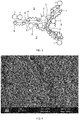
- FIG. 1 Figure 4 shows an emulsion of a near or supercritical reactant-dissolved propellant in an external phase with dissolved other reactant.
- the emulsion which may also be a microemulsion, comprises an external phase 1 and an internal, droplet-like phase 2.
- the polyol 3 is shown schematically as a reactant.
- This external phase 1 can be solvent-free or additional solvents include water, polar solvents, volatile solvents and mixtures thereof.
- additional polymers and additives such as H 2 O, flame retardants such as TCP or salts, etc. may be included.
- internal phase 2 is the near-critical or supercritical propellant such as CO 2 , methane, ethane, propane or mixtures thereof. Furthermore, in the internal phase 2 is the isocyanate 4 shown schematically with a functionality of 2 NCO groups. The isocyanate 4 is dissolved in the internal phase 2 and thus in the propellant, suspended, emulsified or contained in any other form. The separation between the internal phase 2 and the external phase 1 is achieved by surfactant molecules 5, which are directed with their hydrophilic head to the external phase 1 and with their lipophilic tail to the internal phase 2.
- surfactant molecules 5 which are directed with their hydrophilic head to the external phase 1 and with their lipophilic tail to the internal phase 2.
- FIG. 2 shows the state of the emulsion FIG. 1 after lowering the pressure, ie after the near-critical or supercritical fluid of the internal phase 2 has changed to the gaseous state.
- the fluid droplets expand.
- the amount of surfactant molecules 5 is no longer sufficient to achieve the separation between the internal phase 2 and the external phase 1. So there is a direct contact between the two phases. This is represented by the phase boundary 6.
- the phase boundary 6 Because the fluid in the internal phase 2 is now in the gaseous state, its capacity for dissolving, suspending, emulsifying or otherwise absorbing the isocyanate 4 decreases. In the case of a solution, therefore, the isocyanate 4 would precipitate.
- the precipitated isocyanate 4 at the phase boundary 6 is not separated from the polar phase by surfactant molecules 5 but comes in direct contact with the polyol 3. Consequently, these reactants react with each other.
- FIG. 3 shows an enlarged view at the phase boundary during the reaction of the reactants.
- the further expanding gas bubbles of the internal phase 2 meet each other, so that isocyanate molecules 4 can react at the edge of a gas bubble of the internal phase 2 with a polyol molecule 3 in the external phase 1 and continue to react via a free functionality of the polyol 3 with an isocyanate molecule 4 of another gas bubble can.
- the cell wall of the obtained foam is stabilized, so that a foam can be obtained.
- the solubility of monomeric MDI (Desmodur® VP.PU 1806), Desmodur® 44V70L and TDI (Desmodur® T 80) in propane was determined by equal volumes of isocyanate and propane at a temperature of 25 ° C and a pressure of 220 bar was premixed. It was found that VP.PU 1806 and Desmodur 44V70L formed two phases and each dissolved about 20% of the propane in the lower phase (isocyanate). In contrast, Desmodur® T 80 was completely miscible with propane, i. it formed a phase.
- the solubility of monomeric MDI (Desmodur® VP.PU 1806), Desmodur® 44V70L and TDI Desmodur® T 80 in CO 2 was determined by equal volumes of isocyanate and CO 2 at a temperature of 25 ° C and a pressure of 220 bar was premixed. It was found that VP.PU 1806 formed two phases and about 50% of the propane dissolved in the lower phase (isocyanate) and in Desmodur 44V70L two phases formed and about 50% of the propane dissolved in the lower phase (isocyanate). In contrast, Desmodur T 80 was completely miscible with CO 2 , ie it formed a phase.
- a microemulsion available according to the above teaching was converted to a polyurethane foam.
- the mixture of polyols and catalysts (DBTDL and DABCO) and surfactant at 34 ° C and a pressure of 170 bar with CO 2 was added. Without being limited to theory, it is believed that this formed a microemulsion of scCO 2 droplets in the polyol phase.
- This emulsion was mixed with the polyisocyanate in a high-pressure mixing head. Subsequently, the reaction mixture was introduced into a mold with a certain backpressure.
- CO 2 in the mold was still subject to supercritical conditions. Only after introduction into the mold heated to 35 ° C.
- FIG. 4 shows an electron micrograph of the polyurethane foam of Example 1. It shows that the average pore size is significantly smaller than 500 nm.
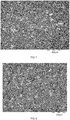
- FIG. 5 shows a light micrograph of the polyurethane foam of Example 2. This shows a pore size of well below 50 microns.
- FIG. 6 shows a light micrograph of the polyurethane foam of Example 3. This shows a pore size of well below 80 microns.
- FIG. 7 shows a light micrograph of the polyurethane foam of Example 4. This shows a pore size of well below 60 microns.
- FIG. 8th shows a light micrograph of the polyurethane foam of Comparative Example 5. This shows a pore size of well over 100 microns.
Landscapes
- Chemical & Material Sciences (AREA)
- Health & Medical Sciences (AREA)
- Chemical Kinetics & Catalysis (AREA)
- Medicinal Chemistry (AREA)
- Polymers & Plastics (AREA)
- Organic Chemistry (AREA)
- Engineering & Computer Science (AREA)
- Materials Engineering (AREA)
- Manufacturing & Machinery (AREA)
- Dispersion Chemistry (AREA)
- Inorganic Chemistry (AREA)
- Polyurethanes Or Polyureas (AREA)
Applications Claiming Priority (2)
| Application Number | Priority Date | Filing Date | Title |
|---|---|---|---|
| DE102010060390A DE102010060390A1 (de) | 2010-11-05 | 2010-11-05 | Emulsionsförmige Reaktionsmischung und Verfahren zur Herstellung von Polyurethanschäumen aus einer solchen Reaktionsmischung |
| PCT/EP2011/069343 WO2012059547A1 (de) | 2010-11-05 | 2011-11-03 | Emulsionsförmige reaktionsmischung und verfahren zur herstellung von polyurethanschäumen aus einer solchen reaktionsmischung |
Publications (2)
| Publication Number | Publication Date |
|---|---|
| EP2635615A1 EP2635615A1 (de) | 2013-09-11 |
| EP2635615B1 true EP2635615B1 (de) | 2017-04-05 |
Family
ID=44947074
Family Applications (1)
| Application Number | Title | Priority Date | Filing Date |
|---|---|---|---|
| EP11782102.5A Not-in-force EP2635615B1 (de) | 2010-11-05 | 2011-11-03 | Emulsionsförmige reaktionsmischung und verfahren zur herstellung von polyurethanschäumen aus einer solchen reaktionsmischung |
Country Status (7)
| Country | Link |
|---|---|
| US (1) | US20140011897A1 (enExample) |
| EP (1) | EP2635615B1 (enExample) |
| JP (2) | JP6022466B2 (enExample) |
| CN (1) | CN103459448B (enExample) |
| DE (1) | DE102010060390A1 (enExample) |
| RU (1) | RU2586883C2 (enExample) |
| WO (1) | WO2012059547A1 (enExample) |
Families Citing this family (15)
| Publication number | Priority date | Publication date | Assignee | Title |
|---|---|---|---|---|
| WO2015109488A1 (en) * | 2014-01-23 | 2015-07-30 | Dow Global Technologies Llc | Rigid polyurethane foam having a small cell size |
| CN104388073B (zh) * | 2014-11-27 | 2017-07-28 | 中国石油化工股份有限公司 | 超临界二氧化碳固体增稠剂及其制备方法和用途 |
| CN109196014B (zh) * | 2016-04-12 | 2021-11-09 | 赢创运营有限公司 | 硅氧烷-氧化烯共聚物表面活性剂组合物 |
| IL245656B (en) | 2016-05-16 | 2018-02-28 | Technion Res & Dev Foundation | Polymer structures with high absorption capacity |
| WO2018002916A1 (en) | 2016-06-26 | 2018-01-04 | Technion Research & Development Foundation Limited | Hhh |
| IL247302B (en) | 2016-08-16 | 2019-03-31 | Technion Res & Dev Foundation | Systems for releasing materials based on polymer emulsions |
| CN106947009B (zh) * | 2017-03-22 | 2019-06-28 | 北京化工大学 | 一种开孔型有机泡沫材料的制备方法 |
| WO2019016816A1 (en) | 2017-07-19 | 2019-01-24 | Technion Research & Development Foundation Limited | HYDROGELS WITH EMULSION MATRIX DOUBLELY RETICULATED BY REVERSIBLE METAL COORDINATION |
| IL255404B (en) | 2017-11-02 | 2018-10-31 | Technion Res & Dev Foundation | A zwitterionic hydrogel in the configuration of an internal multiphase emulsion |
| CN110105537B (zh) * | 2019-04-25 | 2021-08-13 | 江南大学 | 一种聚氨酯硬泡材料及其制备方法 |
| CN110041498B (zh) * | 2019-04-26 | 2021-04-30 | 福鼎利都超纤皮革有限公司 | 耐水解腐蚀的聚氨酯合成革 |
| CN111040421A (zh) * | 2019-12-03 | 2020-04-21 | 江苏科趣新材料科技有限公司 | 一种聚氨酯泡沫塑料 |
| CN110890183B (zh) * | 2019-12-17 | 2021-01-05 | 东莞市骏豪电线科技有限公司 | 一种抗拉撕脚踩电线的制作方法及其电线 |
| CN113387651B (zh) * | 2021-06-29 | 2022-03-22 | 东北林业大学 | 一种凝结时间长且施工和易性好的季冻区钢桥面铺装用聚氨酯混凝土及其制备方法 |
| CN121652575B (zh) * | 2026-02-06 | 2026-06-30 | 福建海润速丰新材料有限公司 | 一种高回弹超临界发泡中底材料及其制备方法 |
Family Cites Families (21)
| Publication number | Priority date | Publication date | Assignee | Title |
|---|---|---|---|---|
| US4906672A (en) | 1988-07-29 | 1990-03-06 | Pmc, Inc. | Blowing agents for polyurethane foam |
| US5107068A (en) * | 1989-05-06 | 1992-04-21 | Mitsui Toatsu Chemicals, Inc. | Polyurethane resin and utilization thereof |
| JPH05125362A (ja) | 1991-03-27 | 1993-05-21 | Union Carbide Chem & Plast Technol Corp | 化学反応抑制方法 |
| US6174956B1 (en) * | 1995-06-02 | 2001-01-16 | National Starch And Chemical Investment Holding Corporation | Synthesis of condensation polymers in densified fluids |
| FR2780409B1 (fr) * | 1998-06-30 | 2001-07-13 | Omya Sa | Procede pour traiter une charge minerale par un phosphate, charge minerale ainsi traitee, mousses de polyurethanne et polyurethannes composites utilisant cette charge, objets moules ou non les contenant |
| JP4107732B2 (ja) * | 1998-10-20 | 2008-06-25 | 松下電器産業株式会社 | 有機多孔体の製造方法 |
| DE19905989A1 (de) * | 1999-02-13 | 2000-08-17 | Bayer Ag | Feinzellige, wassergetriebene Polyurethanhartschaumstoffe |
| JP3885225B2 (ja) * | 2000-05-23 | 2007-02-21 | 日本ポリウレタン工業株式会社 | 建築断熱材用硬質ウレタンスプレーフォームの製造法 |
| DE10030384A1 (de) * | 2000-06-21 | 2002-01-03 | Hennecke Gmbh | Verfahren zur Herstellung von Blockschaum |
| JP4154654B2 (ja) * | 2002-09-13 | 2008-09-24 | アキレス株式会社 | 硬質ポリウレタンフォームの製造方法 |
| US7053131B2 (en) | 2002-12-03 | 2006-05-30 | Kimberly-Clark Worldwide, Inc. | Absorbent articles comprising supercritical fluid treated HIPE, I-HIPE foams and other foams |
| DE10260815B4 (de) * | 2002-12-23 | 2008-07-03 | Universität Zu Köln | Aufgeschäumtes Material und Herstellverfahren für das aufgeschäumte Material |
| JP2006328232A (ja) * | 2005-05-26 | 2006-12-07 | Toyo Tire & Rubber Co Ltd | 液化二酸化炭素を利用したウレタンフォームの製造方法およびその装置 |
| AU2006315842A1 (en) * | 2005-11-14 | 2007-05-24 | Dow Global Technologies Llc | Method of molding rigid polyurethane foams with enhanced thermal conductivity |
| US20070259979A1 (en) * | 2006-05-03 | 2007-11-08 | Aspen Aerogels, Inc. | Organic aerogels reinforced with inorganic aerogel fillers |
| JP5099878B2 (ja) * | 2006-11-30 | 2012-12-19 | 花王株式会社 | 発泡ポリウレタンの製造方法 |
| JP5248075B2 (ja) * | 2007-09-28 | 2013-07-31 | アキレス株式会社 | 硬質ポリウレタンフォームの製造方法および該方法により得られる硬質ポリウレタンフォーム |
| JP5145998B2 (ja) * | 2008-02-14 | 2013-02-20 | 東ソー株式会社 | ポリウレタンフォーム用ポリオール組成物及びポリウレタンフォームの製造方法 |
| DE102009053224A1 (de) * | 2009-11-06 | 2011-07-14 | Bayer MaterialScience AG, 51373 | Verfahren zur Herstellung eines Polyurethanschaums und hieraus erhältlicher Polyurethanschaum |
| DE102009053218A1 (de) * | 2009-11-06 | 2011-07-14 | Bayer MaterialScience AG, 51373 | Verfahren zur Herstellung eines Polyurethanschaums mittels über- oder nahekritischen Treibmittels |
| JP2012072343A (ja) * | 2010-09-30 | 2012-04-12 | Sanyo Chem Ind Ltd | ポリウレタンフォームの製造方法 |
-
2010
- 2010-11-05 DE DE102010060390A patent/DE102010060390A1/de not_active Withdrawn
-
2011
- 2011-11-03 RU RU2013125692/04A patent/RU2586883C2/ru not_active IP Right Cessation
- 2011-11-03 WO PCT/EP2011/069343 patent/WO2012059547A1/de not_active Ceased
- 2011-11-03 EP EP11782102.5A patent/EP2635615B1/de not_active Not-in-force
- 2011-11-03 CN CN201180064297.2A patent/CN103459448B/zh not_active Expired - Fee Related
- 2011-11-03 JP JP2013537133A patent/JP6022466B2/ja not_active Expired - Fee Related
- 2011-11-03 US US13/883,013 patent/US20140011897A1/en not_active Abandoned
-
2016
- 2016-07-20 JP JP2016142706A patent/JP2017020022A/ja active Pending
Also Published As
| Publication number | Publication date |
|---|---|
| JP2017020022A (ja) | 2017-01-26 |
| RU2013125692A (ru) | 2014-12-10 |
| JP6022466B2 (ja) | 2016-11-09 |
| DE102010060390A1 (de) | 2012-05-10 |
| CN103459448B (zh) | 2015-10-21 |
| JP2014500345A (ja) | 2014-01-09 |
| RU2586883C2 (ru) | 2016-06-10 |
| US20140011897A1 (en) | 2014-01-09 |
| WO2012059547A1 (de) | 2012-05-10 |
| CN103459448A (zh) | 2013-12-18 |
| EP2635615A1 (de) | 2013-09-11 |
Similar Documents
| Publication | Publication Date | Title |
|---|---|---|
| DE102010060390A1 (de) | Emulsionsförmige Reaktionsmischung und Verfahren zur Herstellung von Polyurethanschäumen aus einer solchen Reaktionsmischung | |
| EP2496618B1 (de) | Verfahren zur herstellung eines polyurethanschaums und hieraus erhältlicher polyurethanschaum | |
| EP2496624B1 (de) | Verfahren zur herstellung eines polyurethanschaums mittels über- oder nahekritischen treibmittels | |
| EP2702096B1 (de) | Polyurethanschaum und verfahren zu seiner herstellung | |
| EP2635628B1 (de) | Verfahren zur herstellung eines geschäumten materials, hierbei eingesetzte emulsionsförmige zusammensetzung und hieraus erhältliches geschäumtes material | |
| EP3592791B1 (de) | Polyurethanschaum und verfahren zu seiner herstellung | |
| EP2702095B1 (de) | Polyurethanschaum und verfahren zu seiner herstellung | |
| EP2908995B1 (de) | Reaktionssystem zur herstellung von pur- und pir hartschaumstoffen enthaltend schichtsilikate | |
| AU2002245114A1 (en) | Process for preparing aqueous dispersions of hybrid polyurethane particles | |
| EP3066144B1 (de) | Polyurethanschaum und verfahren zu seiner herstellung | |
| EP3789417A1 (de) | Polyurethan-basierter isolationskörper und verfahren zu seiner herstellung | |
| WO2019211200A1 (de) | Verfahren zur herstellung von geschlossenzelligem polyurethanschaum | |
| EP4275857A1 (de) | Werkzeug zur herstellung von schaumstoffen |
Legal Events
| Date | Code | Title | Description |
|---|---|---|---|
| PUAI | Public reference made under article 153(3) epc to a published international application that has entered the european phase |
Free format text: ORIGINAL CODE: 0009012 |
|
| 17P | Request for examination filed |
Effective date: 20130605 |
|
| AK | Designated contracting states |
Kind code of ref document: A1 Designated state(s): AL AT BE BG CH CY CZ DE DK EE ES FI FR GB GR HR HU IE IS IT LI LT LU LV MC MK MT NL NO PL PT RO RS SE SI SK SM TR |
|
| RIN1 | Information on inventor provided before grant (corrected) |
Inventor name: SOTTMANN, THOMAS Inventor name: FRIEDERICHS, WOLFGANG Inventor name: DAHL, VERENA Inventor name: STREY, REINHARD Inventor name: LINDNER, STEFAN Inventor name: KHAZOVA, ELENA Inventor name: KRAMER, LORENZ |
|
| DAX | Request for extension of the european patent (deleted) | ||
| 17Q | First examination report despatched |
Effective date: 20150203 |
|
| RAP1 | Party data changed (applicant data changed or rights of an application transferred) |
Owner name: COVESTRO DEUTSCHLAND AG |
|
| GRAP | Despatch of communication of intention to grant a patent |
Free format text: ORIGINAL CODE: EPIDOSNIGR1 |
|
| STAA | Information on the status of an ep patent application or granted ep patent |
Free format text: STATUS: GRANT OF PATENT IS INTENDED |
|
| INTG | Intention to grant announced |
Effective date: 20161111 |
|
| GRAS | Grant fee paid |
Free format text: ORIGINAL CODE: EPIDOSNIGR3 |
|
| GRAA | (expected) grant |
Free format text: ORIGINAL CODE: 0009210 |
|
| STAA | Information on the status of an ep patent application or granted ep patent |
Free format text: STATUS: THE PATENT HAS BEEN GRANTED |
|
| AK | Designated contracting states |
Kind code of ref document: B1 Designated state(s): AL AT BE BG CH CY CZ DE DK EE ES FI FR GB GR HR HU IE IS IT LI LT LU LV MC MK MT NL NO PL PT RO RS SE SI SK SM TR |
|
| REG | Reference to a national code |
Ref country code: GB Ref legal event code: FG4D Free format text: NOT ENGLISH |
|
| REG | Reference to a national code |
Ref country code: CH Ref legal event code: EP |
|
| REG | Reference to a national code |
Ref country code: AT Ref legal event code: REF Ref document number: 881766 Country of ref document: AT Kind code of ref document: T Effective date: 20170415 |
|
| REG | Reference to a national code |
Ref country code: IE Ref legal event code: FG4D Free format text: LANGUAGE OF EP DOCUMENT: GERMAN |
|
| REG | Reference to a national code |
Ref country code: DE Ref legal event code: R096 Ref document number: 502011011994 Country of ref document: DE |
|
| REG | Reference to a national code |
Ref country code: NL Ref legal event code: MP Effective date: 20170405 |
|
| REG | Reference to a national code |
Ref country code: LT Ref legal event code: MG4D |
|
| PG25 | Lapsed in a contracting state [announced via postgrant information from national office to epo] |
Ref country code: NL Free format text: LAPSE BECAUSE OF FAILURE TO SUBMIT A TRANSLATION OF THE DESCRIPTION OR TO PAY THE FEE WITHIN THE PRESCRIBED TIME-LIMIT Effective date: 20170405 |
|
| PG25 | Lapsed in a contracting state [announced via postgrant information from national office to epo] |
Ref country code: LT Free format text: LAPSE BECAUSE OF FAILURE TO SUBMIT A TRANSLATION OF THE DESCRIPTION OR TO PAY THE FEE WITHIN THE PRESCRIBED TIME-LIMIT Effective date: 20170405 Ref country code: GR Free format text: LAPSE BECAUSE OF FAILURE TO SUBMIT A TRANSLATION OF THE DESCRIPTION OR TO PAY THE FEE WITHIN THE PRESCRIBED TIME-LIMIT Effective date: 20170706 Ref country code: NO Free format text: LAPSE BECAUSE OF FAILURE TO SUBMIT A TRANSLATION OF THE DESCRIPTION OR TO PAY THE FEE WITHIN THE PRESCRIBED TIME-LIMIT Effective date: 20170705 Ref country code: HR Free format text: LAPSE BECAUSE OF FAILURE TO SUBMIT A TRANSLATION OF THE DESCRIPTION OR TO PAY THE FEE WITHIN THE PRESCRIBED TIME-LIMIT Effective date: 20170405 Ref country code: FI Free format text: LAPSE BECAUSE OF FAILURE TO SUBMIT A TRANSLATION OF THE DESCRIPTION OR TO PAY THE FEE WITHIN THE PRESCRIBED TIME-LIMIT Effective date: 20170405 Ref country code: ES Free format text: LAPSE BECAUSE OF FAILURE TO SUBMIT A TRANSLATION OF THE DESCRIPTION OR TO PAY THE FEE WITHIN THE PRESCRIBED TIME-LIMIT Effective date: 20170405 |
|
| PG25 | Lapsed in a contracting state [announced via postgrant information from national office to epo] |
Ref country code: IS Free format text: LAPSE BECAUSE OF FAILURE TO SUBMIT A TRANSLATION OF THE DESCRIPTION OR TO PAY THE FEE WITHIN THE PRESCRIBED TIME-LIMIT Effective date: 20170805 Ref country code: RS Free format text: LAPSE BECAUSE OF FAILURE TO SUBMIT A TRANSLATION OF THE DESCRIPTION OR TO PAY THE FEE WITHIN THE PRESCRIBED TIME-LIMIT Effective date: 20170405 Ref country code: SE Free format text: LAPSE BECAUSE OF FAILURE TO SUBMIT A TRANSLATION OF THE DESCRIPTION OR TO PAY THE FEE WITHIN THE PRESCRIBED TIME-LIMIT Effective date: 20170405 Ref country code: LV Free format text: LAPSE BECAUSE OF FAILURE TO SUBMIT A TRANSLATION OF THE DESCRIPTION OR TO PAY THE FEE WITHIN THE PRESCRIBED TIME-LIMIT Effective date: 20170405 Ref country code: PL Free format text: LAPSE BECAUSE OF FAILURE TO SUBMIT A TRANSLATION OF THE DESCRIPTION OR TO PAY THE FEE WITHIN THE PRESCRIBED TIME-LIMIT Effective date: 20170405 Ref country code: BG Free format text: LAPSE BECAUSE OF FAILURE TO SUBMIT A TRANSLATION OF THE DESCRIPTION OR TO PAY THE FEE WITHIN THE PRESCRIBED TIME-LIMIT Effective date: 20170705 |
|
| REG | Reference to a national code |
Ref country code: DE Ref legal event code: R097 Ref document number: 502011011994 Country of ref document: DE |
|
| PG25 | Lapsed in a contracting state [announced via postgrant information from national office to epo] |
Ref country code: EE Free format text: LAPSE BECAUSE OF FAILURE TO SUBMIT A TRANSLATION OF THE DESCRIPTION OR TO PAY THE FEE WITHIN THE PRESCRIBED TIME-LIMIT Effective date: 20170405 Ref country code: SK Free format text: LAPSE BECAUSE OF FAILURE TO SUBMIT A TRANSLATION OF THE DESCRIPTION OR TO PAY THE FEE WITHIN THE PRESCRIBED TIME-LIMIT Effective date: 20170405 Ref country code: DK Free format text: LAPSE BECAUSE OF FAILURE TO SUBMIT A TRANSLATION OF THE DESCRIPTION OR TO PAY THE FEE WITHIN THE PRESCRIBED TIME-LIMIT Effective date: 20170405 Ref country code: CZ Free format text: LAPSE BECAUSE OF FAILURE TO SUBMIT A TRANSLATION OF THE DESCRIPTION OR TO PAY THE FEE WITHIN THE PRESCRIBED TIME-LIMIT Effective date: 20170405 Ref country code: RO Free format text: LAPSE BECAUSE OF FAILURE TO SUBMIT A TRANSLATION OF THE DESCRIPTION OR TO PAY THE FEE WITHIN THE PRESCRIBED TIME-LIMIT Effective date: 20170405 |
|
| PLBE | No opposition filed within time limit |
Free format text: ORIGINAL CODE: 0009261 |
|
| STAA | Information on the status of an ep patent application or granted ep patent |
Free format text: STATUS: NO OPPOSITION FILED WITHIN TIME LIMIT |
|
| PG25 | Lapsed in a contracting state [announced via postgrant information from national office to epo] |
Ref country code: SM Free format text: LAPSE BECAUSE OF FAILURE TO SUBMIT A TRANSLATION OF THE DESCRIPTION OR TO PAY THE FEE WITHIN THE PRESCRIBED TIME-LIMIT Effective date: 20170405 |
|
| 26N | No opposition filed |
Effective date: 20180108 |
|
| PG25 | Lapsed in a contracting state [announced via postgrant information from national office to epo] |
Ref country code: SI Free format text: LAPSE BECAUSE OF FAILURE TO SUBMIT A TRANSLATION OF THE DESCRIPTION OR TO PAY THE FEE WITHIN THE PRESCRIBED TIME-LIMIT Effective date: 20170405 |
|
| PG25 | Lapsed in a contracting state [announced via postgrant information from national office to epo] |
Ref country code: MC Free format text: LAPSE BECAUSE OF FAILURE TO SUBMIT A TRANSLATION OF THE DESCRIPTION OR TO PAY THE FEE WITHIN THE PRESCRIBED TIME-LIMIT Effective date: 20170405 |
|
| PG25 | Lapsed in a contracting state [announced via postgrant information from national office to epo] |
Ref country code: LI Free format text: LAPSE BECAUSE OF NON-PAYMENT OF DUE FEES Effective date: 20171130 Ref country code: CH Free format text: LAPSE BECAUSE OF NON-PAYMENT OF DUE FEES Effective date: 20171130 |
|
| PG25 | Lapsed in a contracting state [announced via postgrant information from national office to epo] |
Ref country code: LU Free format text: LAPSE BECAUSE OF NON-PAYMENT OF DUE FEES Effective date: 20171103 |
|
| REG | Reference to a national code |
Ref country code: FR Ref legal event code: ST Effective date: 20180731 |
|
| REG | Reference to a national code |
Ref country code: IE Ref legal event code: MM4A |
|
| PG25 | Lapsed in a contracting state [announced via postgrant information from national office to epo] |
Ref country code: MT Free format text: LAPSE BECAUSE OF FAILURE TO SUBMIT A TRANSLATION OF THE DESCRIPTION OR TO PAY THE FEE WITHIN THE PRESCRIBED TIME-LIMIT Effective date: 20170405 |
|
| PG25 | Lapsed in a contracting state [announced via postgrant information from national office to epo] |
Ref country code: IE Free format text: LAPSE BECAUSE OF NON-PAYMENT OF DUE FEES Effective date: 20171103 Ref country code: FR Free format text: LAPSE BECAUSE OF NON-PAYMENT OF DUE FEES Effective date: 20171130 |
|
| REG | Reference to a national code |
Ref country code: AT Ref legal event code: MM01 Ref document number: 881766 Country of ref document: AT Kind code of ref document: T Effective date: 20171103 |
|
| PG25 | Lapsed in a contracting state [announced via postgrant information from national office to epo] |
Ref country code: AT Free format text: LAPSE BECAUSE OF NON-PAYMENT OF DUE FEES Effective date: 20171103 |
|
| PG25 | Lapsed in a contracting state [announced via postgrant information from national office to epo] |
Ref country code: HU Free format text: LAPSE BECAUSE OF FAILURE TO SUBMIT A TRANSLATION OF THE DESCRIPTION OR TO PAY THE FEE WITHIN THE PRESCRIBED TIME-LIMIT; INVALID AB INITIO Effective date: 20111103 |
|
| PG25 | Lapsed in a contracting state [announced via postgrant information from national office to epo] |
Ref country code: CY Free format text: LAPSE BECAUSE OF NON-PAYMENT OF DUE FEES Effective date: 20170405 |
|
| PG25 | Lapsed in a contracting state [announced via postgrant information from national office to epo] |
Ref country code: MK Free format text: LAPSE BECAUSE OF FAILURE TO SUBMIT A TRANSLATION OF THE DESCRIPTION OR TO PAY THE FEE WITHIN THE PRESCRIBED TIME-LIMIT Effective date: 20170405 |
|
| PG25 | Lapsed in a contracting state [announced via postgrant information from national office to epo] |
Ref country code: PT Free format text: LAPSE BECAUSE OF FAILURE TO SUBMIT A TRANSLATION OF THE DESCRIPTION OR TO PAY THE FEE WITHIN THE PRESCRIBED TIME-LIMIT Effective date: 20170405 |
|
| PG25 | Lapsed in a contracting state [announced via postgrant information from national office to epo] |
Ref country code: AL Free format text: LAPSE BECAUSE OF FAILURE TO SUBMIT A TRANSLATION OF THE DESCRIPTION OR TO PAY THE FEE WITHIN THE PRESCRIBED TIME-LIMIT Effective date: 20170405 |
|
| PGFP | Annual fee paid to national office [announced via postgrant information from national office to epo] |
Ref country code: TR Payment date: 20201102 Year of fee payment: 10 |
|
| PGFP | Annual fee paid to national office [announced via postgrant information from national office to epo] |
Ref country code: GB Payment date: 20201022 Year of fee payment: 10 |
|
| PGFP | Annual fee paid to national office [announced via postgrant information from national office to epo] |
Ref country code: BE Payment date: 20201028 Year of fee payment: 10 |
|
| PGFP | Annual fee paid to national office [announced via postgrant information from national office to epo] |
Ref country code: IT Payment date: 20211027 Year of fee payment: 11 |
|
| GBPC | Gb: european patent ceased through non-payment of renewal fee |
Effective date: 20211103 |
|
| PG25 | Lapsed in a contracting state [announced via postgrant information from national office to epo] |
Ref country code: BE Free format text: LAPSE BECAUSE OF NON-PAYMENT OF DUE FEES Effective date: 20211130 |
|
| REG | Reference to a national code |
Ref country code: BE Ref legal event code: MM Effective date: 20211130 |
|
| PG25 | Lapsed in a contracting state [announced via postgrant information from national office to epo] |
Ref country code: GB Free format text: LAPSE BECAUSE OF NON-PAYMENT OF DUE FEES Effective date: 20211103 |
|
| PGFP | Annual fee paid to national office [announced via postgrant information from national office to epo] |
Ref country code: DE Payment date: 20220621 Year of fee payment: 12 |
|
| PG25 | Lapsed in a contracting state [announced via postgrant information from national office to epo] |
Ref country code: IT Free format text: LAPSE BECAUSE OF NON-PAYMENT OF DUE FEES Effective date: 20221103 |
|
| REG | Reference to a national code |
Ref country code: DE Ref legal event code: R119 Ref document number: 502011011994 Country of ref document: DE |
|
| PG25 | Lapsed in a contracting state [announced via postgrant information from national office to epo] |
Ref country code: TR Free format text: LAPSE BECAUSE OF NON-PAYMENT OF DUE FEES Effective date: 20211103 |
|
| PG25 | Lapsed in a contracting state [announced via postgrant information from national office to epo] |
Ref country code: DE Free format text: LAPSE BECAUSE OF NON-PAYMENT OF DUE FEES Effective date: 20240601 |
|
| PG25 | Lapsed in a contracting state [announced via postgrant information from national office to epo] |
Ref country code: DE Free format text: LAPSE BECAUSE OF NON-PAYMENT OF DUE FEES Effective date: 20240601 |