EP2632550B1 - Verfahren und zusammensetzungen zur behandlung von hiv-assoziierter diarrhoe - Google Patents
Verfahren und zusammensetzungen zur behandlung von hiv-assoziierter diarrhoe Download PDFInfo
- Publication number
- EP2632550B1 EP2632550B1 EP11837249.9A EP11837249A EP2632550B1 EP 2632550 B1 EP2632550 B1 EP 2632550B1 EP 11837249 A EP11837249 A EP 11837249A EP 2632550 B1 EP2632550 B1 EP 2632550B1
- Authority
- EP
- European Patent Office
- Prior art keywords
- crofelemer
- subject
- per day
- administering
- composition
- Prior art date
- Legal status (The legal status is an assumption and is not a legal conclusion. Google has not performed a legal analysis and makes no representation as to the accuracy of the status listed.)
- Active
Links
Images
Classifications
-
- A—HUMAN NECESSITIES
- A61—MEDICAL OR VETERINARY SCIENCE; HYGIENE
- A61K—PREPARATIONS FOR MEDICAL, DENTAL OR TOILETRY PURPOSES
- A61K31/00—Medicinal preparations containing organic active ingredients
- A61K31/33—Heterocyclic compounds
- A61K31/335—Heterocyclic compounds having oxygen as the only ring hetero atom, e.g. fungichromin
- A61K31/35—Heterocyclic compounds having oxygen as the only ring hetero atom, e.g. fungichromin having six-membered rings with one oxygen as the only ring hetero atom
- A61K31/352—Heterocyclic compounds having oxygen as the only ring hetero atom, e.g. fungichromin having six-membered rings with one oxygen as the only ring hetero atom condensed with carbocyclic rings, e.g. methantheline
- A61K31/353—3,4-Dihydrobenzopyrans, e.g. chroman, catechin
-
- A—HUMAN NECESSITIES
- A61—MEDICAL OR VETERINARY SCIENCE; HYGIENE
- A61P—SPECIFIC THERAPEUTIC ACTIVITY OF CHEMICAL COMPOUNDS OR MEDICINAL PREPARATIONS
- A61P1/00—Drugs for disorders of the alimentary tract or the digestive system
-
- A—HUMAN NECESSITIES
- A61—MEDICAL OR VETERINARY SCIENCE; HYGIENE
- A61P—SPECIFIC THERAPEUTIC ACTIVITY OF CHEMICAL COMPOUNDS OR MEDICINAL PREPARATIONS
- A61P1/00—Drugs for disorders of the alimentary tract or the digestive system
- A61P1/12—Antidiarrhoeals
-
- A—HUMAN NECESSITIES
- A61—MEDICAL OR VETERINARY SCIENCE; HYGIENE
- A61P—SPECIFIC THERAPEUTIC ACTIVITY OF CHEMICAL COMPOUNDS OR MEDICINAL PREPARATIONS
- A61P25/00—Drugs for disorders of the nervous system
- A61P25/04—Centrally acting analgesics, e.g. opioids
-
- A—HUMAN NECESSITIES
- A61—MEDICAL OR VETERINARY SCIENCE; HYGIENE
- A61P—SPECIFIC THERAPEUTIC ACTIVITY OF CHEMICAL COMPOUNDS OR MEDICINAL PREPARATIONS
- A61P31/00—Antiinfectives, i.e. antibiotics, antiseptics, chemotherapeutics
- A61P31/12—Antivirals
- A61P31/14—Antivirals for RNA viruses
- A61P31/18—Antivirals for RNA viruses for HIV
Definitions
- Diarrhea remains an important problem for HIV-infected subjects in the highly active antiretroviral therapy (HAART) era, impacting negatively on quality of life, despite the extensive use of anti-diarrheals.
- causes are many and include HIV enteropathy, overgrowth of unusual microbial agents, common enteric pathogens malignancy, and adverse effects of HAART therapy itself (Kartalija 1999).
- Managing diarrhea will assist in improving overall efficacy of anti-viral drug therapies, as well as quality of life, and controlling weight loss in HIV-positive subjects.
- Diarrhea may result in reduced antiretroviral compliance and/or necessitate switching ARV regimens.
- Diarrhea has also been associated with reduced antiretroviral drug levels, suggesting that adequate treatment will improve the absorption of ARV medication.
- adherence to drug treatment regimens and maintenance of adequate ARV levels are important for minimizing the development of drug resistant strains of the virus. Therefore, drug-related diarrhea in HIV-positive subjects represents an important and unmet clinical need requiring more effective management.
- prescribed therapies are only partially effective or are plagued by unacceptable side effects such as constipation and the potential for addiction.
- the development of a drug for the treatment of HIV-associated diarrhea with a low potential for drug-drug interactions, effects on drug metabolism, or abuse potential would provide an important benefit for HIV-infected subjects.
- the methods presented herein prevent, ameliorate or treat HIV-associated diarrhea and highly active antiretroviral therapy (HAART) associated diarrhea.
- HAART highly active antiretroviral therapy
- HAART highly active antiretroviral therapy
- presented herein are methods of treating stool consistency in an HIV positive subject, comprising: administering about 250 mg to about 1000 mg per day; administering about 250 mg per day; administering about 500 mg per day; administering about 1000 mg per day; administering about 125 mg two times per day; administering about 250 mg two times per day; or administering about 500 mg two times per day of crofelemer to a subject in need thereof
- presented herein are methods of improving stool consistency in an HIV positive subject, comprising: administering about 250 mg to about 1000 mg per day; administering about 250 mg per day; administering about 500 mg per day; administering about 1000 mg per day; administering about 125 mg two times per day; administering about 250 mg two times per day; or administering about 500 mg two times per day of crofelemer to a subject in need thereof
- presented herein are methods of alleviating watery diarrhea in an HIV positive subject, comprising: administering about 250 mg to about 1000 mg per day; administering about 250 mg per day; administering about 500 mg per day; administering about 1000 mg per day; administering about 125 mg two times per day; administering about 250 mg two times per day; or administering about 500 mg two times per day of crofelemer to a subject in need thereof.
- presented herein are methods of decreasing the number of bowel movements per day in an HIV positive subject, comprising: administering about 250 mg to about 1000 mg per day; administering about 250 mg per day; administering about 500 mg per day; administering about 1000 mg per day; administering about 125 mg two times per day; administering about 250 mg two times per day; or administering about 500 mg two times per day of crofelemer to a subject in need thereof.
- the administering is from between about 1 month and about 5 months. In one embodiment, the administering is from between about 1 month and about 6 months. In one embodiment, the administering comprises about 6 months. In another embodiment, the administering comprises 6 months or longer.
- the administering is from between about 3 days and 5 months. In one embodiment, the administering is from between about 3 days and 6 months.
- improvement of symptoms begins on day 3.
- improvement of symptoms increases with a longer duration of administration after day 3.
- the subject is of Caucasian or Hispanic descent.
- the crofelemer is administered for at least 8 days.
- the crofelemer is administered from between 8 days and 24 weeks or 8 days and 26 weeks.
- a subject is considered treated if the subject demonstrates one or more of a decrease in the number of bowel movements per day, a decrease in the number of watery bowel movements per day, a improvement in the daily abdominal score for pain or discomfort, an improvement in the score for daily stool consistency, a decrease in stool consistency score (from watery to formed), a decrease in the number of days per week that subjects experienced urgency, a decrease in the number of days per week that subjects experienced fecal incontinence, or a decrease in the unscheduled visit for a significant worsening of diarrhea.
- a subject is considered treated if the subject demonstrates an improvement in the score for daily stool consistency.
- a subject is considered treated if the subject demonstrates a decrease in stool consistency.
- a subject is considered treated if the subject demonstrates a decrease in the number of watery bowel movements per day.
- subject is considered treated if the subject demonstrates a decrease in the number of bowel movements per day.
- symptoms increased or decreased are measured from a baseline.
- the administering is for about 5 months. In another embodiment, the administering is for about 6 months.
- the administering is about 5 months or longer. In another embodiment, the administering is about 6 months or longer.
- the administering is for the duration of the HIV infection.
- the response to treatment increases after the crofelemer has been administered for longer than 4 months.
- the methods disclosed herein involved the administration of effective amounts of a proanthocyanidin polymer, e.g., crofelemer, to subjects having, for example, HIV associated diarrhea or highly active antiretroviral therapy (HAART) associated diarrhea.
- a proanthocyanidin polymer e.g., crofelemer
- Proanthocyanidins are a group of condensed tannins. Crude extracts from medicinal plants, for example, Pycanthus angolenis and Baphia nitida, have been shown to have antidiarrheal qualities in animal tests ( Onwukaeme and Anuforo, 1993, Discovery and Innovation, 5:317 ; Onwukaeme and Lot, 1991, Phytotherapy Res., 5:254 ). Crude extracts which contain tannins, in particular extracts from carob pods and sweet chestnut wood, have been proposed as treatments or prophylactics ( U.S. Pat. No. 5,043,160 ; European Patent No. 481,396 ).
- Proanthocyanidins are comprised of at least two or more monomer units that may be of the same or different monomeric structure.
- the monomer units (generally termed “leucoanthocyanidin”) are generally monomeric flavonoids which include catechins, epicatechins, gallocatechins, galloepicatechins, flavanols, flavonols, and flavan-3,4-diols, leucocyanidins and anthocyanidins. Therefore, the polymer chains are based on different structural units, which create a wide variation of polymeric proanthocyanidins and a large number of possible isomers ( Hemingway et al., 1982, J. C. S. Perkin, 1:1217 ).
- Proanthocyanidin polymers are found in a wide variety of plants, particularly those with a woody habit of growth (e.g., Croton spp. and Calophyllum spp.).
- a number of different Croton tree species including Croton sakutaris, Croton gossypifolius, Croton palanostima, Croton lechleri, Croton erythrochilus and Croton draconoides, found in South America, produce a red viscous latex sap called Sangre de Drago or "Dragon's Blood".
- U.S. Pat. No. 5,211,944 first described the isolation of an aqueous soluble proanthocyanidin polymer composition from Croton spp.
- the proanthocyanidin polymer composition was shown to have antiviral activity against a variety of viruses including, respiratory syncytial, influenza, parainfluenza and herpes viruses.
- U.S. Pat. No. 5,211,944 also discloses the isolation of an aqueous soluble proanthocyanidin polymer composition from Calophyllum inophylum and the use of this composition as an antiviral agent.
- proanthocyanidin polymer compositions useful in the methods presented herein are preferably isolated from a Croton spp. or Calophyllum spp by any method known in the art.
- the proanthocyanidin polymer composition may be isolated from a Croton spp. or Calophyllum spp. by the method disclosed in U.S. Pat. No. 5,211,944 or in Ubillas et al., 1994, Phytomedicine 1: 77-106 .
- Proanthocyanidin polymer compositions useful in the methods presented herein may also be made in vitro using synthetic techniques.
- a proanthocyanidin polymer composition useful in the methods presented herein is crofelemer.
- Crofelemer is an oligomeric proanthocyanidin extracted and purified from the red, viscous latex of the plant Croton lechleri of the family Euphorbiace.
- the plant is widely distributed throughout tropical Central America and South America and is widely recognized by ethnobotanists and local healers for its medicinal properties (McRae 1988), including for the treatment of diarrhea.
- Crofelemer is believed to exert its anti-diarrhea effect through luminal blockade of CFTR (cystic fibrosis transmembrane conductance regulator) chloride (C1-) channel.
- CFTR cystic fibrosis transmembrane conductance regulator
- Crofelemer has demonstrated in vitro activity against cholera toxin, forskolin, E coli LT and STa toxin-mediated Cl- secretion, and to normalize electrolyte and fluid accumulation in CT-treated mice (Gabriel 1999, Fischer 2004, Adam 2005) via its effects on the CFTR channel. Crofelemer also significantly improved the secretory diarrhea in humans due to enterotoxigenic E. coli (DiCesare 2002), which is also thought to evoke secretory diarrhea through activation of CFTR (Kunzelmann 2002). Blockade of the CFTR channel could be anticipated to have negative consequences in man, even mimicking cystic fibrosis. However, crofelemer has virtually no systemic bioavailability in humans. When studied, the results indicated that there was little or no absorption of crofelemer from the GI tract, and that crofelemer was well tolerated by normal male subjects. Thus, the site of action of crofelemer is topical in the gastrointestinal tract.
- Crofelemer (CAS 148465-45-6) is an oligomeric proanthocyanidin of varying chain lengths derived from the Dragon's Blood Croton lecheri of the family Euphorbiaceae. Crofelemer has an average molecular weight of between approximately 1500 daltons and approximately 2900 daltons.
- the monomers comprising crofelemer comprise catechin, epicatechin, gallocatechin, and epigallocatechin.
- the chain length of crofelemer ranges from about 3 to about 30 units with an average chain length of about 8 units. The structure of crofelemer is shown below.
- a raw latex obtained from a Croton species or a Calophyllum species or an extract obtained from a Croton species or a Calophyllum species are useful in the methods presented herein.
- Exemplary extracts are described in Persinos et al., 1979, J. Pharma. Sci. 68:124 and Sethi, 1977, Canadian J. Pharm. Sci. 12:7 .
- “Ameliorate,” “amelioration,” “improvement” or the like refers to, for example, a detectable improvement or a detectable change consistent with improvement that occurs in a subject or in at least a minority of subjects, e.g., in at least about 2%, 5%, 10%, 15%, 20%, 25%, 30%, 40%, 50%, 60%, 70%, 75%, 80%, 85%, 90%, 95%, 98%, 100% or in a range between about any two of these values.
- Such improvement or change may be observed in treated subjects as compared to subjects not treated with crofelemer, where the untreated subjects have, or are subject to developing, the same or similar disease, condition, symptom or the like.
- Amelioration of a disease, condition, symptom or assay parameter may be determined subjectively or objectively, e.g., self assessment by a subject(s), by a clinician's assessment or by conducting an appropriate assay or measurement.
- Amelioration may be transient, prolonged or permanent or it may be variable at relevant times during or after crofelemer is administered to a subject or is used in an assay or other method described herein or a cited reference, e.g., within timeframes described infra, or about 1 hour after the administration or use of crofelemer to about 7 days, 2 weeks, 28 days, or 1, 3, 6, 9 months or more after a subject(s) has received such treatment.
- the "modulation" of, e.g., a symptom, level or biological activity of a molecule, or the like refers, for example, that the symptom or activity, or the like is detectably increased or decreased. Such increase or decrease may be observed in treated subjects as compared to subjects not treated with crofelemer, where the untreated subjects have, or are subject to developing, the same or similar disease, condition, symptom or the like. Such increases or decreases may be at least about 2%, 5%, 10%, 15%, 20%, 25%, 30%, 40%, 50%, 60%, 70%, 75%, 80%, 85%, 90%, 95%, 98%, 100%, 150%, 200%, 250%, 300%, 400%, 500%, 1000% or more or within any range between any two of these values.
- Modulation may be determined subjectively or objectively. Modulation may be transient, prolonged or permanent or it may be variable at relevant times during or after crofelemer is administered to a subject or is used in an assay or other method described herein or a cited reference, e.g., within times descried infra, or about 1 hour of the administration or use of crofelemer to about 2 weeks, 28 days, 3, 6, 9 months or more after a subject(s) has received crofelemer.
- a prophylactically effective amount of a compound refers to an amount of crofelemer which is effective, upon single or multiple dose administration to the subject, in preventing or treating diarrhea, e.g., HIV-associated diarrhea.
- subject includes organisms which are capable of suffering from HIV associated diarrhea or HAART associated diarrhea or who could otherwise benefit from the administration of crofelemer as described herein, such as humans and non-human animals.
- non-human animals includes all vertebrates, e.g., mammals such as non-human primates, other mammals, e.g., rodents, and sheep, dog, and cow, at risk for HIV associated diarrhea or HAART associated diarrhea.
- a subject at risk for HIV associated diarrhea or HAART associated diarrhea is meant to include a subject at risk of developing or contracting an HIV infection
- a prophylactically effective amount of a compound refers to an amount of crofelemer which is effective, upon single or multiple dose administration to the subject, in preventing or treating the diarrhea.
- administration includes routes of introducing crofelemer to a subject to perform their intended function.
- routes of administration include injection, oral, inhalation, vaginal, rectal and transdermal.
- the pharmaceutical preparations may be given by forms suitable for each administration route. For example, these preparations are administered in tablet or capsule form, by injection, inhalation, ointment, or suppository. Administration may also be by injection, infusion or inhalation; topical by lotion or ointment; and rectal by suppositories. Oral administration is preferred.
- crofelemer can be coated with or disposed in a selected material to protect it from natural conditions that may detrimentally affect its ability to perform its intended function. Crofelemer can be administered alone, or in conjunction with either another agent or agents as described above or with a pharmaceutically-acceptable carrier, or both. Exemplary enteric coated forms of crofelemer are described in, for example, US Patent 7,556,831 .
- Administration "in combination with” one or more further therapeutic agents includes simultaneous (concurrent) and consecutive administration in any order.
- the useful in vivo dosage to be administered and the particular mode of administration may vary depending upon the age, weight and mammalian species treated, the particular compounds employed, and/or the specific use for which these compounds are employed.
- the determination of effective dosage levels that is the dosage levels necessary to achieve the desired result, can be accomplished by one skilled in the art using routine pharmacological methods and in consultation with the data presented herein.
- crofelemer it may be advantageous to administer 125 mg crofelemer two times per day to treat watery diarrhea if fewer watery stools are desired over a week. It is also advantageous to treat with 500 mg two times per day if an improvement in stool consistency is desired.
- obtaining as in “obtaining crofelemer” is intended to include purchasing, synthesizing, isolating, extracting or otherwise acquiring crofelemer.
- a prophylactically effective amount of a compound refers to an amount of crofelemer which is effective, upon single or multiple dose administration to the subject, in preventing or treating an indication.
- the indication is HIV-associated diarrhea.
- exemplary diarrhea that can be treated or prevented using the methods presented herein include HIV associated diarrhea or highly active antiretroviral therapy (HAART) associated diarrhea.
- HAART highly active antiretroviral therapy
- treating HIV-associated diarrhea includes an improvement of the following symptoms of HIV associated diarrhea or HAART associated diarrhea, including, for example, a decrease in the number of bowel movements per day (frequency), a decrease in the number of watery bowel movements per day, a decrease in symptom frequency (urgency, fecal incontinence), a decrease in symptom severity (abdominal pain or discomfort), a decrease in daily stool consistency score (watery to formed), or a decrease in stool consistency leading to formed stools from watery stools.
- treatment is defined as two or less watery bowel movements per week. More specifically, treatment is defined as two or less watery bowel movements per week during at least two of the four weeks of treatment with crofelemer.
- treatment can also include, for example, one or more of a decrease in the number of bowel movements per day, a decrease in the number of watery bowel movements per day, a improvement in the daily abdominal score for pain or discomfort, an improvement in the score for daily stool consistency, a decrease in the number of days per week that subjects experienced urgency, a decrease in the number of days per week that subjects experienced fecal incontinence, or a decrease in the unscheduled visit for a significant worsening of diarrhea.
- a decrease in the number of bowel movements per day a decrease in the number of watery bowel movements per day
- a improvement in the daily abdominal score for pain or discomfort an improvement in the score for daily stool consistency
- a decrease in the number of days per week that subjects experienced urgency a decrease in the number of days per week that subjects experienced fecal incontinence
- a decrease in the unscheduled visit for a significant worsening of diarrhea can also include, for example, one or more of a decrease in the number of bowel movements per day,
- HAART highly active antiretroviral therapy
- Treatment of the diarrhea can include, for example, one or more of a decrease in the number of bowel movements per day, a decrease in the number of watery bowel movements per day, a improvement in the daily abdominal score for pain or discomfort, an improvement in the score for daily stool consistency, a decrease in stool consistency, a decrease in the number of days per week that subjects experienced urgency, a decrease in the number of days per week that subjects experienced fecal incontinence, or a decrease in the unscheduled visit for a significant worsening of diarrhea.
- a subject is considered treated if there is an improvement in the score for daily stool consistency and/or a decrease in stool consistency score a measured throughout the day or days or weeks. This decrease may be measured from a baseline.
- the baseline may be determined in the days to week prior to treatment with crofelemer.
- Treatment comprises administering about 250 mg to about 1000 mg per day; administering about 250 mg per day; administering 1000 mg per day; administering about 125 mg two times per day; or administering about 500 mg two times per day of crofelemer to a subject in need thereof.
- a subject is considered treated if there is an improvement in stool consistency and/or a decrease in stool consistency throughout the day or days or weeks.
- This increase may be measured from a baseline.
- the baseline may be determined in the days to week prior to treatment with crofelemer.
- Treatment comprises administering about 250 mg to about 1000 mg per day; administering about 250 mg per day; administering 1000 mg per day; administering about 125 mg two times per day; or administering about 500 mg two times per day of crofelemer to a subject in need thereof.
- a subject is considered treated if the subject experiences a decrease in the number of watery bowel movements per day and/or over days, a week or weeks of administration of crofelemer.
- This decrease may be measured from a baseline.
- the baseline may be determined in the days to week prior to treatment with crofelemer.
- Treatment comprises administering about 250 mg to about 1000 mg per day; administering about 250 mg per day; administering 1000 mg per day; administering about 125 mg two times per day; or administering about 500 mg two times per day of crofelemer to a subject in need thereof.
- a decreasing the number of bowel movements per day wherein a subject is considered treated if there is a decrease in the number of bowel movements per day as measured from a baseline.
- the baseline may be determined in the days to week prior to treatment with crofelemer.
- Treatment comprises administering about 250 mg to about 1000 mg per day; administering about 250 mg per day; administering 1000 mg per day; administering about 125 mg two times per day; or administering about 500 mg two times per day of crofelemer to a subject in need thereof.
- Crofelemer may be administered, for example, once a day, twice a day, three times a day, or four times or more often as necessary per day. Crofelemer may be administered in doses, for example of from about between 25 mg BID to about 3000 mg TID, preferably crofelemer is administered from between about 125 mg to about 1000 mg per day. In another embodiment, crofelemer is administered between 125mg BID to about 500 mg BID depending of symptoms. In another embodiment, crofelemer is administered as 125mg BID. In another embodiment, crofelemer is administered as 500 mg BID. Crofelemer may be administered orally, for example, in tablet form, powered form, liquid form or in capsules.
- the subject is administered 250, 500, or 1000 mg/day of crofelemer.
- the subject is administered 125, 250 or 500mg p.o. b.i.d (orally twice per day).
- Other appropriate dosages for methods may be determined by health care professionals or by the subject.
- the amount of crofelemer administered daily may be increased or decreased based on the weight, age, health, sex or medical condition of the subject.
- One of skill in the art would be able to determine the proper dose for a subject based on this disclosure and the data presented in the Examples, which follow.
- the subject is treated with crofelemer for 2, 4, 6, 8, 10, 12, 14, 16, 18, 20, 22, 24 or more weeks or 26 or more weeks.
- the subject is administered crofelemer for the duration of the disease. Length of treatment may vary depending on the type and length of disease and the proper length of treatment may be easily determined by one of skill in the art having the benefit of this disclosure. Treatment may be prior to infection, during infection, or after suspected infection and for a period of time suggested by a medical professional to reduce or eliminate diarrhea.
- Subjects in need thereof include subjects having or that are susceptible to or who have HIV-associated diarrhea or HAART associated diarrhea.
- a therapeutically effective amount means an amount effective, when administered to a human or non-human subject, to provide a therapeutic benefit such as an amelioration of symptoms, e.g., an amount effective to decrease the symptoms HIV-associated diarrhea.
- crofelemer may be administered in combination with other compounds, including for example, anti-diarrheal agents or anti-HIV agents, including, for example, anti-retroviral agents.
- HAART highly active antiretroviral therapy
- PIs protease inhibitors
- compositions comprising an effective amount of a crofelemer described herein and a pharmaceutically acceptable carrier.
- the effective amount is effective to treat HIV-associated diarrhea and/or HAART associated diarrhea.
- One embodiment includes pharmaceutical compositions comprising crofelemer and a pharmaceutically acceptable carrier.
- compositions described herein may further comprise excipients, for example, one or more of a diluting agent, binding agent, lubricating agent, disintegrating agent, coloring agent, flavoring agent or sweetening agent.
- excipients for example, one or more of a diluting agent, binding agent, lubricating agent, disintegrating agent, coloring agent, flavoring agent or sweetening agent.
- Compositions may be formulated for selected coated and uncoated tablets, hard and soft gelatin capsules, sugar-coated pills, lozenges, wafer sheets, pellets and powders in sealed packet.
- compositions may be formulated for topical use, for example, ointments, pomades, creams, gels and lotions.
- these pharmaceutical compositions are suitable for topical or oral administration to a subject.
- the pharmaceutical compositions may be specially formulated for administration in solid or liquid form, including those adapted for the following: (1) oral administration, for example, drenches (aqueous or non-aqueous solutions or suspensions), tablets, boluses, powders, granules, pastes; (2) parenteral administration, for example, by subcutaneous, intramuscular or intravenous injection as, for example, a sterile solution or suspension; (3) topical application, for example, as a cream, ointment or spray applied to the skin; (4) intravaginally or intrarectally, for example, as a pessary, cream or foam; or (5) aerosol, for example, as an aqueous aerosol, liposomal preparation or solid particles containing the compound.
- oral administration for example, drenches (aqueous or non-aqueous solutions or suspensions), tablets, boluses, powders, granules, pastes
- phrases "pharmaceutically acceptable” refers to crofelemer as described herein, compositions containing crofelemer, and/or dosage forms which are, within the scope of sound medical judgment, suitable for use in contact with the tissues of human beings and animals without excessive toxicity, irritation, allergic response, or other problem or complication, commensurate with a reasonable benefit/risk ratio.
- pharmaceutically-acceptable carrier includes pharmaceutically-acceptable material, composition or vehicle, such as a liquid or solid filler, diluent, excipient, solvent or encapsulating material, involved in carrying or transporting the subject chemical from one organ, or portion of the body, to another organ, or portion of the body.
- Each carrier must be “acceptable” in the sense of being compatible with the other ingredients of the formulation and not injurious to the patient.
- materials which can serve as pharmaceutically-acceptable carriers include: (1) sugars, such as lactose, glucose and sucrose; (2) starches, such as corn starch and potato starch; (3) cellulose, and its derivatives, such as sodium carboxymethyl cellulose, ethyl cellulose and cellulose acetate; (4) powdered tragacanth; (5) malt; (6) gelatin; (7) talc; (8) excipients, such as cocoa butter and suppository waxes; (9) oils, such as peanut oil, cottonseed oil, safflower oil, sesame oil, olive oil, corn oil and soybean oil; (10) glycols, such as propylene glycol; (11) polyols, such as glycerin, sorbitol, mannitol and polyethylene glycol; (12) esters, such as ethyl oleate and ethyl laurate; (13) agar; (14) buffering agents, such as magnesium hydroxide and aluminum hydrox
- wetting agents such as sodium lauryl sulfate and magnesium stearate, as well as coloring agents, release agents, coating agents, sweetening, flavoring and perfuming agents, preservatives and antioxidants can also be present in the compositions.
- antioxidants examples include: (1) water soluble antioxidants, such as ascorbic acid, cysteine hydrochloride, sodium bisulfate, sodium metabisulfite, sodium sulfite and the like; (2) oil-soluble antioxidants, such as ascorbyl palmitate, butylated hydroxyanisole (BHA), butylated hydroxytoluene (BHT), lecithin, propyl gallate, alpha-tocopherol, and the like; and (3) metal chelating agents, such as citric acid, ethylenediamine tetraacetic acid (EDTA), sorbitol, tartaric acid, phosphoric acid, and the like.
- water soluble antioxidants such as ascorbic acid, cysteine hydrochloride, sodium bisulfate, sodium metabisulfite, sodium sulfite and the like
- oil-soluble antioxidants such as ascorbyl palmitate, butylated hydroxyanisole (BHA), butylated hydroxytoluene (BHT), le
- compositions containing crofelemer include those suitable for oral, nasal, topical (including buccal and sublingual), rectal, vaginal, aerosol and/or parenteral administration.
- the compositions may conveniently be presented in unit dosage form and may be prepared by any methods known in the art of pharmacy.
- the amount of active ingredient which can be combined with a carrier material to produce a single dosage form will vary depending upon the host being treated, the particular mode of administration.
- the amount of active ingredient which can be combined with a carrier material to produce a single dosage form will generally be that amount of the compound which produces a therapeutic effect. Generally, out of one hundred percent, this amount will range from about 0.01% to about 99% of active ingredient, for example, from about 5% to about 70%, or from about 10% to about 30%.
- Liquid dosage forms for oral or rectal administration of crofelemer may include, for example, pharmaceutically-acceptable emulsions, microemulsions, solutions, suspensions, syrups and elixirs.
- the liquid dosage forms may contain inert diluents commonly used in the art, such as, for example, water or other solvents, solubilizing agents and emulsifiers, such as ethyl alcohol, isopropyl alcohol, ethyl carbonate, ethyl acetate, benzyl alcohol, benzyl benzoate, propylene glycol, 1,3-butylene glycol, oils (in particular, cottonseed, groundnut, corn, germ, olive, castor and sesame oils), glycerol, tetrahydrofuryl alcohol, polyethylene glycols and fatty acid esters of sorbitan, and mixtures thereof.
- inert diluents commonly used in the art, such as, for example, water or
- Suspensions in addition to crofelemer may contain suspending agents as, for example, ethoxylated isostearyl alcohols, polyoxyethylene sorbitol and sorbitan esters, microcrystalline cellulose, aluminum metahydroxide, bentonite, agar-agar and tragacanth, and mixtures thereof.
- suspending agents as, for example, ethoxylated isostearyl alcohols, polyoxyethylene sorbitol and sorbitan esters, microcrystalline cellulose, aluminum metahydroxide, bentonite, agar-agar and tragacanth, and mixtures thereof.
- Dosage forms for the topical or transdermal administration ofcrofelemer can include, for example, powders, sprays, ointments, pastes, creams, lotions, gels, solutions, patches and inhalants.
- the ointments, pastes, creams and gels may contain, in addition to crofelemer, excipients, such as animal and vegetable fats, oils, waxes, paraffins, starch, tragacanth, cellulose derivatives, polyethylene glycols, silicones, bentonites, silicic acid, talc and zinc oxide, or mixtures thereof.
- Powders and sprays can contain, in addition to a croflemer, excipients such as lactose, talc, silicic acid, aluminum hydroxide, calcium silicates and polyamide powder, or mixtures of these substances.
- Sprays can additionally contain customary propellants, such as chlorofluorohydrocarbons and volatile unsubstituted hydrocarbons, such as butane and propane.
- aqueous and non-aqueous carriers which may be employed in the pharmaceutical compositions can include, for example, water, ethanol, polyols (such as glycerol, propylene glycol, polyethylene glycol, and the like), and suitable mixtures thereof, vegetable oils, such as olive oil, and injectable organic esters, such as ethyl oleate.
- polyols such as glycerol, propylene glycol, polyethylene glycol, and the like
- vegetable oils such as olive oil
- injectable organic esters such as ethyl oleate.
- Proper fluidity can be maintained, for example, by the use of coating materials, such as lecithin, by the maintenance of the required particle size in the case of dispersions, and by the use of surfactants.
- crofelemer is enteric coated so as to protect it from degradation by the acidic conditions of the stomach and/or from interactions with proteins, such as pepsin, present in the stomach, e.g., an enteric protected formulation.
- crofelemer is in tablet form.
- the tablet is enteric coated, e.g., Eudragit®.
- crofelemer is formulated as an enteric coated bead or granule in an enteric coated capsule shell.
- crofelemer is formulated in a delayed release composition.
- the composition is formulated with a compound or compounds which neutralize stomach acid.
- the pharmaceutical composition containing the composition is administered either concurrent with or subsequent to or after administration of a pharmaceutical composition which neutralize stomach acid.
- Compounds, such as antacids, which are useful for neutralizing stomach acid include, but are not limited to, aluminum carbonate, aluminum hydroxide, bismuth subnitrate, bismuth subsalicylate, calcium carbonate, dihydroxyaluminum sodium carbonate, magaldrate, magnesium carbonate, magnesium hydroxide, magnesium oxide, and mixtures thereof.
- antacids aluminum hydroxide, aluminum carbonate, aluminum glycinate, magnesium oxide, magnesium hydroxide, magnesium carbonate, calcium carbonate, sodium bicarbonate
- stomach acid blockers a combination of any of the foregoing.
- any drug that has been approved for sale by the relevant government agency and is able to reduce the production of stomach acid and/or reduce the acidity of stomach fluid can be administered in combination with an inhibitor molecule, such as crofelemer, in accordance with the methods presented herein.
- crofelemer is formulated with one or more compounds that are able to reduce the secretion of stomach acid and/or able to reduce the acidity of stomach fluid.
- crofelemer is formulated in a controlled release (delayed release) composition, such as Merck GEM, Alza OROS, wax matrix (release is primarily delayed until after the formulation passes out of the stomach and into the intestine).
- crofelemer comprising the composition along with a pharmaceutically acceptable vehicle, at a dose which is therapeutically effective at treating HIV associated diarrhea or HAART associated diarrhea.
- a directly compressible crofelemer e.g., that can be directly compressed, without excipients, into a tablet of pharmaceutically acceptable hardness and friability
- a lubricant such as but not limited to magnesium stearate
- These formulations can be prepared by methods known in the art, see, e.g. methods described in Remington's Pharmaceutical Sciences, 18th Ed., ed. Alfonso R. Gennaro, Mack Publishing Co., Easton, Pa., 1990 .
- the proanthocyanidin polymer composition comprises crofelemer (CAS 148465-45-6).
- a composition is enteric coated.
- Enteric coatings are those coatings that remain intact in the stomach, but will dissolve and release the contents of the dosage form once it reaches the small intestine.
- a large number of enteric coatings are prepared with ingredients that have acidic groups such that, at the very low pH present in the stomach, i.e. pH 1.5 to 2.5, the acidic groups are not ionized and the coating remains in an undissociated, insoluble form.
- the enteric coating is converted to an ionized form, which can be dissolved to release the inhibitor molecule.
- Other enteric coatings remain intact until they are degraded by enzymes in the small intestine, and others break apart after a defined exposure to moisture, such that the coatings remain intact until after passage into the small intestines.
- Polymers which are useful for the preparation of enteric coatings include, but are not limited to, shellac, starch and amylose acetate phthalates, styrene-maleic acid copolymers, cellulose acetate succinate, cellulose acetate phthalate (CAP), polyvinylacetate phthalate (PVAP), hydroxypropylmethylcellulose phthalate (grades HP-50 and HP-55), ethylcellulose, fats, butyl stearate, and methacrylic acid-methacrylic acid ester copolymers with acid ionizable groups.
- the pharmaceutical composition contains a polymeric proanthocyanidin composition and the enteric coating polymer Eudragit®.
- the enteric coating polymer is Eudragit®. L 30D-55.
- Application of the enteric coating to the crofelemer composition can be accomplished by any method known in the art for applying enteric coatings.
- the enteric polymers can be applied using organic solvent based solutions containing from 5 to 10% w/w polymer for spray applications and up to 30% w/w polymer for pan coatings.
- Solvents that are commonly in use include, but are not limited to, acetone, acetone/ethyl acetate mixtures, methylene chloride/methanol mixtures, and tertiary mixtures containing these solvents.
- Some enteric polymers, such as methacrylic acid-methacrylic acid ester copolymers can be applied using water as a dispersant.
- the volatility of the solvent system must be tailored to prevent sticking due to tackiness and to prevent high porosity of the coating due to premature spray drying or precipitation of the polymer as the solvent evaporates.
- the pharmaceutical composition comprising crofelemer is formulated as enteric coated granules or powder (microspheres with a diameter of 300-5001) provided in either hard shell gelatin capsules or suspended in an oral solution for pediatric administration.
- enteric coated powder or granules may also be mixed with food, particularly for pediatric administration.
- the granules and powder can be prepared using any method known in the art, such as but not limited to, crystallization, spray-drying or any method of comminution, for example, using a high speed mixer/granulator.
- Exemplary formulations may be found, for example, in the following US patents and applications US Patent No. 7,341,744 ; USSN 11/510,152 ; and USSN 12/175,131 .
- crofelemer is formulated into pharmaceutically-acceptable dosage forms by methods known to those of skill in the art.
- both the compounds and the other drug agent(s) are administered to mammals (e.g., humans, male or female) by methods known in the art.
- the agents may be administered in a single dosage form or in separate dosage forms.
- Effective amounts of the other therapeutic agents are well known to those skilled in the art. However, it is well within the skilled artisan's purview to determine the other therapeutic agent's optimal effective-amount range. In one embodiment in which another therapeutic agent is administered to an animal, the effective amount of the compound is less than its effective amount in case the other therapeutic agent is not administered. In another embodiment, the effective amount of the agent is less than its effective amount in case the compound is not administered. In this way, undesired side effects associated with high doses of either agent may be minimized. Other potential advantages (including without limitation improved dosing regimens and/or reduced drug cost) will be apparent to those skilled in the art.
- the therapies are administered less than 5 minutes apart, less than 30 minutes apart, 1 hour apart, at about 1 hour apart, at about 1 to about 2 hours apart, at about 2 hours to about 3 hours apart, at about 3 hours to about 4 hours apart, at about 4 hours to about 5 hours apart, at about 5 hours to about 6 hours apart, at about 6 hours to about 7 hours apart, at about 7 hours to about 8 hours apart, at about 8 hours to about 9 hours apart, at about 9 hours to about 10 hours apart, at about 10 hours to about 11 hours apart, at about 11 hours to about 12 hours apart, at about 12 hours to 18 hours apart, 18 hours to 24 hours apart, 24 hours to 36 hours apart, 36 hours to 48 hours apart, 48 hours to 52 hours apart, 52 hours to 60 hours apart, 60 hours to 72 hours apart, 72 hours to 84 hours apart, 84 hours to 96 hours apart, or 96 hours to 120 hours part.
- two or more therapies are administered within the same patient's visit.
- Kits are also provided herein, for example, kits for treating a diarrhea, e.g., HIV-associated diarrhea in a subject.
- the kits may contain, for example, crofelemer or a pharmaceutical composition comprising crofelemer and instructions for use.
- the instructions for use may contain prescribing information, dosage information, storage information, and the like.
- Label instructions include, for example, instructions to take the crofelemer for at least 3 days for the treatment of HIV associated or HAART associated diarrhea.
- the instructions could also read, for example, take from between 125mg BID to 500mg BID of crofelemer until resolution of symptoms or for 24 weeks for treatment or HIV-associated diarrhea.
- the instructions could also read, for example, take 125mg BID of crofelemer until resolution of symptoms or for 24 weeks for treatment or HIV-associated diarrhea.
- the instructions could also read, for example, take 500mg BID of crofelemer until resolution of symptoms or for 24 weeks for treatment or HIV-associated diarrhea.
- Label instructions may further or alternately include, for example, instructions to take the crofelemer from between 125mg BID to 500mg BID of crofelemer until resolution of symptoms or for 26 weeks for treatment or HIV-associated diarrhea.
- the instructions could also read, for example, take 125mg BID of crofelemer until resolution of symptoms or for 26 weeks for treatment or HIV-associated diarrhea.
- the instructions could also read, for example, take 250 mg BID of crofelemer until resolution of symptoms or for 26 weeks for treatment or HIV-associated diarrhea.
- the instructions could also read, for example, take 500mg BID of crofelemer until resolution of symptoms or for 26 weeks for treatment or HIV-associated diarrhea.
- Crofelemer Three treatment groups of eight male rats were administered Crofelemer at respective dose levels of 60, 200, and 600 mg/kg. An additional group of eight male rats served as control animals and were administered the vehicle, purified water. Crofelemer and vehicle were administered at a dose volume of 10 mL/kg. One additional group of eight male rats received the positive control article, baclofen, at a dose level of 100 mg/kg and a dose volume of 15 mL/kg. Crofelemer, positive control article, and vehicle were administered to all groups via oral gavage.
- Crofelemer administered orally to male rats at doses of 60, 200, and 600 mg/kg did not produce any effects on mortality or any of the quantitative respiratory endpoints over the course of the study. With respect to the basic respiratory endpoints evaluated in this study, oral administration of Crofelemer produced no adverse effects in rats at doses up to and including 60 mg/kg.
- Three treatment groups of 15 male and 15 female mice were administered Crofelemer at respective dose levels of 40, 400, and 1200 mg/kg/day.
- One additional group of 15 animals/sex served as the control and received the vehicle, purified water.
- the vehicle or Crofelemer was administered to all groups at a dose volume of 10 mL/kg.
- four groups of eight or 39 animals/sex/group served as toxicokinetic (TK) animals and received the control or Crofelemer in the same manner as the main study groups at respective dose levels of 0, 40, 400, or 1200 mg/kg/day. Due to mortalities, the main study and TK animals at 1200 mg/kg/day were administered Crofelemer for up to 55 or 56 days, respectively.
- the toxicokinetic parameters were determined for Crofelemer from concentration time data in the test species.
- necropsy examinations were performed and organ weights were recorded for all main study animals and designated TK animals at 1200 mg/kg/day.
- Tissues were microscopically examined for main study animals at 0, 400, and 1200 mg/kg/day. Beginning on Day 7, a limited gross necropsy examination was performed on any TK animal euthanized in extremis or found dead in an effort to determine the cause of death. Tissues were collected and preserved for possible future examination from main study animals at 40 mg/kg/day and designated TK animals at 1200 mg/kg/day.
- Crofelemer-related mortalities were evident in a single male at 40 mg/kg/day and in both sexes at 400 and 1200 mg/kg/day.
- Crofelemer-related body weight effects were evident at ⁇ 400 mg/kg/day in both sexes, and food consumption effects were evident at 40 mg/kg/day in females and ⁇ 400 mg/kg/day in both sexes.
- Clinical pathology, organ weight, and macroscopic effects were observed in both sexes at 1200 mg/kg/day. Due to mortality at 40 mg/kg/day, there was no No-Observed-Adverse-Effect-Level (NOAEL) in males; however, the NOAEL was determined to be 40 mg/kg/day in females.
- NOAEL No
- Crofelemer Three treatment groups of six male rats were administered Crofelemer at respective dose levels of 60, 200, and 600 mg/kg.
- One additional group of six male rats served as the control and received the vehicle, purified water.
- Another additional group of six male rats received the positive control article, chlorpromazine hydrochloride, at a dose level of 20 mg/kg.
- Crofelemer, positive control article, or vehicle was administered to all groups once via oral gavage at a dose volume of 10 mL/kg.
- Crofelemer administered orally to male rats at doses of 60, 200, and 600 mg/kg did not produce any effects on mortality, clinical observations, body weight, or any of the neurobehavioral measures tested. Therefore, with respect to the basic neurobehavioral endpoints evaluated in this study, oral administration of Crofelemer produced no effects in rats at doses up to and including 600 mg/kg.
- Three treatment groups of eight male rats were administered Crofelemer at respective dose levels of 60, 200, and 600 mg/kg.
- One additional group of eight male rats received the positive control article, morphine, at a dose level of 20 mg/kg.
- An additional group of eight male rats served as the control and received the vehicle, purified water.
- the vehicle, positive control article, or Crofelemer was administered to all groups via oral gavage once on Day 1 of the study at a dose volume of 10 mL/kg.
- the test meal, 5% charcoal suspension in 10% Acacia in deionized water was administered to all animals via oral gavage at a dose volume of 10 mL/kg.
- Crofelemer, administered orally to male rats at doses of 60, 200, or 600 mg/kg did not produce mortality or any clinical observations.
- Crofelemer-related, dose-dependent decreases in gastrointestinal propulsion were noted in all Crofelemer-treated groups; however, statistically significant decreases were only noted following the 200 and 600 mg/kg doses. Due to low recovery values, the dose levels actually administered to the animals in the 60 and 200 mg/kg groups were 51 and 169 mg/kg, respectively.
- the same four male beagle dogs were administered the control article, placebo tablets in gelatin number 12 Torpac lock ring gelatin capsules (0 mg/kg), and Crofelemer at dose levels of approximately 60, 200, and 600 mg/kg according to a modified Latin square design, with one animal/sex/treatment dosing each week followed by at least a 7 day washout period between administrations, until each animal received all treatments.
- the control article and Crofelemer were administered to all animals orally via gelatin capsule.
- the animals were previously surgically instrumented with radio transmitters for measurement of body temperature, blood pressure, heart rate, and the electrocardiogram (ECG).
- Body temperature, systolic, diastolic, and mean arterial blood pressures, heart rate, and ECG parameters were monitored continuously from at least 2 hours prior to dosing until at least 20 hours postdose.
- QRS duration and the RR, PR, and QT intervals were monitored continuously from at least 2 hours prior to dosing until at least 20 hours postdose.
- untreated animals were continuously monitored for cardiovascular endpoints for at least 22 hours. These data were used in the calculation of the corrected QT interval throughout the study.
- Crofelemer administered orally to male dogs at doses of 60, 200, and 600 mg/kg did not produce mortality nor any effects on the ECG over the course of the study.
- the test article produced clinical observations of red, black, or brown feces; soft, watery, and/or mucoid feces; and/or black or brown material below the cage (fecal material). Therefore, with respect to all the physiological parameters evaluated as a part of this cardiovascular study, a no-observable-adverse-effect-level (NOAEL) of 600 mg/kg has been established.
- NOAEL no-observable-adverse-effect-level
- the hERG channel was stably expressed in a subclone (HEK-293/hERG) of the HEK-293 cell line.
- the effect of Crofelemer was measured on the maximum amplitude of the tail current. This parameter was determined from current traces obtained from voltage-clamped HEK-293/hERG cells, using patch-clamp techniques in the whole cell configuration.
- Crofelemer was tested at 5 concentrations for the first set of experiments: 0.001 ⁇ M, 0.01 ⁇ M, 0.1 ⁇ M, 1.0 ⁇ M, and 10.0 ⁇ M and 6 concentrations for the second set of experiments: 0.1 ⁇ M, 0.3 ⁇ M, 1 ⁇ M, 3 ⁇ M, 10 ⁇ M, and 30 ⁇ M. Positive control article was tested at 10 ⁇ M. Negative control article was deionized water.
- Blood samples for PK analyses of crofelemer were collected pre-dose and up to 48 hours post-dose following both fasted and fed single-dose treatment administrations.
- PK/PD pharmacokinetic/pharmacodynamic
- the mean baseline corrected change in heart rate showed a decrease in heart rate of - 1.1 bpm and -1.0 bpm for crofelemer fasting and fed, respectively, at 4 hours.
- the mean baseline corrected change in heart rate showed an increase in heart rate of 3.5 bpm and 1.6 bpm for crofelemer fasting and fed, respectively, at 12 hours.
- the heart rate changes were of no clinical significance. There were no tachycardic or bradycardic outliers on crofelemer fasting or fed.
- Example 8 Efficacy and Safety of Crofelemer For The Treatment of HIV Associated Diarrhea
- the study was a randomized, double-blind, parallel-group, placebo-controlled, multicenter study
- the study was done in two stages. Both stages consisted of a 10 + 4 day, single-blind, placebo screening phase; followed by randomization and a 31-day, double-blind, placebo-controlled treatment phase; and concluded with a 20-week placebo-free extension phase.
- Stage I dose selection stage
- the double-blind phase had four arms: three doses of crofelemer (125 mg b.i.d., 250 mg b.i.d., and 500 mg b.i.d.) and placebo b.i.d..
- the chance of receiving crofelemer or placebo was 3:1 (1:1:1:1 ratio).
- Stage II Subjects on crofelemer rolling over into the extension phase remained on their same dose, or if on placebo was re-randomized to one of the three aforementioned doses.
- Stage II After Stage I is completed an interim analysis was conducted and the dose of crofelemer that appears to work better, be safer, and/or better tolerated than the others, was selected to use exclusively in Stage II.
- Stage II will have only two arms in the double blind, placebo-controlled treatment phase: the selected dose of crofelemer (crofelemer 125mg) and placebo. The chances of receiving crofelemer or placebo will be 1:1. All subjects rolling over into the 20-week placebo-free extension phase in Stage II were assigned the previously selected dose of crofelemer.
- the key efficacy analyses were based on the data from the 4-week efficacy assessment period of the placebo-controlled treatment phase. Analysis of the primary endpoint was based on the Intent to Treat (ITT) population and will compare the proportion of responders in the placebo group to the proportion of responders in the crofelemer 125 mg group.
- the primary efficacy endpoint was clinical response, defined as two or less watery bowel movements per week, during at least two of the four weeks of the 4-week efficacy assessment period in the ITT population.
- the secondary efficacy variables during the 4-week efficacy assessment period in the ITT population were:
- This study consisted of a dose-selection stage, an interim analysis period, and a dose-assessment stage.
- Subjects were randomized 1:1:1:1, at approximately 50 subjects per treatment group: crofelemer 125 mg p.o. b.i.d.; crofelemer 250 mg p.o. b.i.d.; crofelemer 500 mg p.o. b.i.d.; and placebo p.o. b.i.d.
- the double-blind, placebo-controlled treatment phase consisted of an initial 3-day run-in period (Days -3 to -1) followed by a 4-week efficacy assessment period (Days 1 to 28).
- the run-in period assured that the effects of study medication were established before the 4-week efficacy assessment period is commenced.
- Subjects who completed the placebo-controlled treatment phase entered a 20-week placebo-free extension phase.
- Subjects in the Crofelemer 125 mg p.o. b.i.d., Crofelemer 250 mg p.o. b.i.d or Crofelemer 500 mg b.i.d. groups continued to receive these therapies throughout the placebo-free treatment phase; subjects who received placebo were re-randomized to receive either Crofelemer 125 mg p.o. b.i.d, Crofelemer 250 mg p.o. b.i.d. or 500 mg p.o. b.i.d (1:1:1).
- There was no risk of placebo during the 20-week extension phase and subjects were permitted ad libitum (prn) use of ADM.
- Stage I ended when about 50 subjects were randomized to each of the four treatment groups. Enrollment was stopped at approximately 50 subjects per treatment group until the interim analysis and decision for Stage II are completed.
- Subjects were screened for eligibility for randomization based on the criteria in Stage I. Subjects who enter the double-blind, placebo-controlled treatment phase in Stage II were randomized to one of two treatment groups: crofelemer 125 mg p.o. b.i.d. or placebo p.o. b.i.d.
- An objective of the dose-assessment stage was to determine the proportion of HIV-positive subjects experiencing relief of diarrhea with crofelemer 125 mg p.o. b.i.d. compared to placebo p.o. b.i.d. during the placebo-controlled treatment phase.
- Other objectives were to evaluate the effects of crofelemer 125 mg p.o. b.i.d. vs. placebo on:
- the ratio of randomization to crofelemer 125 mg p.o. b.i.d or placebo p.o. b.i.d was 1:1.
- Subjects who completed the double-blind treatment phase participated in the 20-week, placebo-free extension phase and received crofelemer 125 mg p.o. b.i.d.
- subjects were re-assigned to crofelemer 125 mg p.o. b.i.d. if, in the opinion of the investigator, the response to or tolerance to their current dose was inadequate.
- Treatment remained blinded during this treatment period, including the possibility that subjects were switched to the same dose they had initially been taking.
- Diarrhea includes, frequent loose or watery bowel movements
- Bowel movement is defined as a trip to the bathroom with evacuation of stool; number of bowel movements means number of trips to the bathroom with evacuation of stool.
- Urgency is defined as having to rush to the bathroom for a bowel movement
- Fecal incontinence is defined as leaking or passing stool at unwanted times (two teaspoons or more of stool).
- Abdominal pain or discomfort is defined as pain, cramping, or bloating that is uncomfortable and/or interrupts normal activities.
- the primary efficacy endpoint is clinical response; subjects are classified responders if they reported two or less watery bowel movements per week, during at least two of the four weeks of the efficacy assessment period of the placebo-controlled treatment phase.
- the stool consistency score was computed from the mean of these scores each day.
- Table 1 below shows the baseline characteristics for the placebo-controlled treatment phase, including the diagnosed cause of diarrhea, the CD4 cell count and the CD4 cell category. This table demonstrates that the subjects in each group were similar.
- Baseline was the average of daily stool consistency scores from the 7 days prior to first dose day of randomized study drug.
- the daily score (1*# of very hard stools + 2*# of hard stools + 3*# of formed stools + 4*# of loose stools +5*# of watery stools)/(# of total stools).
- Table 2 below shows additional baseline characteristics of the placebo-controlled treatment phase, including use of antibiotics during the study.
- Tables 3 and 3a below show the percentage of subjects with clinical response, e.g., improvement of watery diarrhea, in the placebo-controlled treatment phase, and the change in response from baseline as a function of time, respectively.
- all three treatment groups from Stage I were statistically significant for treatment of watery diarrhea, as well at the combined group of subjects dosed 125mg in both stages.
- Table 3a sets forth data indicating that, regardless of treatment group, the primary endpoint (Clinical Response) demonstrated responsiveness by consistently correlating with other daily assessments collected in the study for changes in symptoms scoring.
- Responders i.e., subjects with ⁇ 2 watery stools per week, had significantly greater improvements in daily symptom severity scores than non-responders at each week during the course of the study.
- f P-values were obtained from a Wilcoxon rank-sum test for comparison of the responder vs. non-responder groups.
- Placebo 9.8% 15.0% 28.0% 1-Sided 97.5% CI [1] (-8.1%, 00 ) (-2.6%, 00 ) (-8.8%, 00 ) 1-Sided P-value (vs. Placebo) [1] 0.1412 0.0470 0.0021 Combined Responder - n/Ni (%) 49/186 (35.5%) 53/136 (39.0%) Treatment Difference vs. Placebo 3.5% 1-Sided 97.5% CI [1] [-5.0%, 00 ) 1-Sided P-value (vs. Placebo) [1] 0.1428
- Placebo [1] 0.5956 0.5504 1.0000 Combined Responder - n/Ni (%) 5/55 (9.1%) 5/52 (9.6%) Treatment Difference vs. Placebo 0.5 % [95% CI] [-10.5%, 11.6%] P-value (vs. Placebo) [1] 1.0000
- Table 9 below shows additional supportive data showing that crofelemer 125mg, 250 mg and 500 mg were efficacious at treating HIV associated diarrhea.
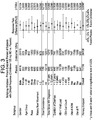
- Table 10 below shows that crofelemer is particularly efficacious in treating males with HIV associated diarrhea. Additional subgroup analysis is show in in Figure 1 .
- the primary endpoint was analyzed in subgroups defined by demographics and baseline characteristics to assess the consistency of the treatment effect.
- Figure 1 provides a summary of each of these subgroup analyses, showing the treatment difference in percentage of responders (crofelemer 125 mg BID vs. placebo) with associated confidence intervals and p-values. As shown in the figure, consistent efficacy was observed across subgroups; a higher percentage of subjects treated with crofelemer 125 mg BID experienced clinical response compared with placebo in all subgroups analyzed. Table 10.
- HAART highly active antiretroviral therapy
- Table 11 shows that subject taking protease inhibitors responded particularly well to treatment with crofelemer.
- HAART highly active antiretroviral therapy
- PIs protease inhibitors
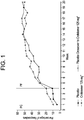
- Figure 1 and Table 13 show subjects with clinical response in the crossover to placebo-free phase of the safety population.
- PC Placebo-controlled Phase
- PF Placebo-free Phase. This data shows that subjects previously on placebo had a sharp increase in efficacy when they were crossed-over onto 125mg crofelemer. This data also demonstrates that crofelemer efficacy continued to rise with length of use. Table 13.
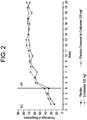
- Figure 2 and Table 14 show subjects with stool consistency response in the crossover to placebo-free phase in the safety population.
- PC Placebo-controlled Phase
- PF Placebo-free Phase. This data shows that subjects previously on placebo had a sharp increase in efficacy when they were crossed-over onto 125mg crofelemer. This data also demonstrates that crofelemer efficacy continued to rise with length of use. Table 15.
- Table 15 demonstrates that crofelemer is safe to be given to subjects and that there are no QT Interval issues associated with use. This is surprising and advantageous over other molecules used to treat diarrhea and IBS, which are know to be associated with QT issues.
- Table 16 demonstrates that crofelemer is an efficacious treatment for d-IBS. It also demonstrates that crofelemer is an efficacious treatment for treating abnormal stool consistency associated with d-IBS.
- crofelemer is administered to treat abnormal stool consistency associated with d-IBS for at least one month.
- crofelemer is administered to treat abnormal stool consistency associated with d-IBS from between one month and two months or longer. In one embodiment, crofelemer is administered to treat abnormal stool consistency associated with d-IBS from between about one month and about three months or longer.
- crofelemer is administered to treat abnormal stool consistency associated with d-IBS for at least one month at about 125mg b.i.d. In one embodiment, crofelemer is administered to treat abnormal stool consistency associated with d-IBS from between one month and two months or longer at about 125 mg b.i.d. In one embodiment, crofelemer is administered to treat abnormal stool consistency associated with d-IBS from between one month and three months or longer at about 125 mg b.i.d. Table 17.
- Table 17 demonstrates that crofelemer is an efficacious treatment for d-IBS, especially to treat d-IBS in females. It also demonstrates that crofelemer is an efficacious treatment for treating abnormal stool consistency associated with d-IBS, and especially to treat abnormal stool consistency associated with d-IBS in females.
- crofelemer is administered to treat abnormal stool consistency associated with d-IBS in females for at least one month at 125mg b.i.d. In one embodiment, crofelemer is administered to treat abnormal stool consistency associated with d-IBS in females from between one month and two months at about 125 mg b.i.d. In one embodiment, crofelemer is administered to treat abnormal stool consistency associated with d-IBS in females from between one month and three months or longer at about 125 mg b.i.d. Table 18.
- Table 18 demonstrates that crofelemer is an efficacious treatment for d-IBS, especially to treat d-IBS in females. It also demonstrates that crofelemer is an efficacious treatment for treating abdominal pain associated with d-IBS, and especially to treat abdominal pain associated with d-IBS in females.
- crofelemer is administered to treat d-IBS for at least one month.
- crofelemer is administered to treat d-IBS from between one month and two months or longer. In one embodiment, crofelemer is administered to treat d-IBS from between about one month and about three months or longer.
- crofelemer is administered to treat d-IBS for at least one month at about 125mg b.i.d. In one embodiment, crofelemer is administered to treat d-IBS from between one month and two months or longer at about 125 mg b.i.d. In one embodiment, crofelemer is administered to treat d-IBS from between one month and three months or longer at about 125 mg b.i.d.
- crofelemer is administered to treat d-IBS in females for at least one month at 125mg b.i.d. In one embodiment, crofelemer is administered to treat d-IBS in females from between one month and two months at about 125 mg b.i.d. In one embodiment, crofelemer is administered to treat d-IBS in females from between one month and three months or longer at about 125 mg b.i.d.
- crofelemer is administered to treat abdominal pain associated with d-IBS for at least one month.
- crofelemer is administered to treat abdominal pain associated with d-IBS from between one month and two months or longer. In one embodiment, crofelemer is administered to treat abdominal pain associated with d-IBS from between about one month and about three months or longer.
- crofelemer is administered to treat abdominal pain associated with d-IBS for at least one month at about 125mg b.i.d. In one embodiment, crofelemer is administered to treat abdominal pain associated with d-IBS from between one month and two months or longer at about 125 mg b.i.d. In one embodiment, crofelemer is administered to treat abdominal pain associated with d-IBS from between one month and three months or longer at about 125 mg b.i.d.
- crofelemer is administered to treat abdominal pain associated with d-IBS in females for at least one month at 125mg b.i.d. In one embodiment, crofelemer is administered to treat abdominal pain associated with d-IBS in females from between one month and two months at about 125 mg b.i.d. In one embodiment, crofelemer is administered to treat abdominal pain associated with d-IBS in females from between one month and three months or longer at about 125 mg b.i.d.
- Example 10 A Double-blind, Randomized, Placebo-Controlled, Phase II Study to Assess the Safety and Efficacy of Orally Administered Crofelemer for the Symptomatic Treatment of Diarrhea in Acquired Immunodeficiency Syndrome (AIDS) Patients
- This study was a randomized, double-blind, multicenter (2 study sites), placebo-controlled, parallel-group study designed to assess the efficacy and safety of crofelemer 500 mg beads in subjects with HIV-associated diarrhea.
- the primary objectives of the study were to evaluate the safety and efficacy of orally administered crofelemer for 96 hours for the symptomatic treatment of diarrhea in AIDS patients.
- the secondary objectives were 1) to characterize stool chloride ion concentration and daily stool chloride output in AIDS patients with diarrhea, 2) to compare stool chloride ion concentration and daily stool chloride output in AIDS patients with diarrhea treated with crofelemer or placebo, and 3) to assess stool consistency in AIDS patients with diarrhea treated with crofelemer or placebo.
- Efficacy measurements included assessments of stool weight and frequency, abnormal stool frequency, DGIS, MORE, body weight, time to diarrhea recurrence, and number of early dropouts (prior to completion of 4 days of treatment).
- Concomitant antiretroviral medications were received by majority of subjects (71 of 85): 36 of 42 (85.7%) in the placebo group and 35 of 43 (81.4%) in the crofelemer group. Protease inhibitors were taken by 69.4% of subjects. The concomitant use of antiretrovirals, including protease inhibitors, was balanced between groups.
- the primary efficacy analysis was change in total daily stool weight during the 4-day in-patient treatment period.
- the primary endpoint of reduction in stool weight is an appropriate measure of the extent of watery diarrhea in patients with HIV-associated diarrhea due to high water content in the diarrhea experienced by these patients.
- a P-value for baseline mean comparison is from generalized linear model with analysis center as a covariate.
- P-value for baseline percentage comparison is from CMH test with analysis center as a covariate.
- a P-value for baseline mean comparison is from generalized linear model with analysis center as a covariate.
- P-value for baseline percentage comparison is from CMH test with analysis center as a covariate.
- a P-value for baseline mean comparison is from generalized linear model with analysis center as a covariate.
- P-value for baseline percentage comparison is from CMH test with analysis center as a covariate.
Landscapes
- Health & Medical Sciences (AREA)
- Life Sciences & Earth Sciences (AREA)
- Animal Behavior & Ethology (AREA)
- Veterinary Medicine (AREA)
- Public Health (AREA)
- General Health & Medical Sciences (AREA)
- Pharmacology & Pharmacy (AREA)
- Chemical & Material Sciences (AREA)
- Medicinal Chemistry (AREA)
- Organic Chemistry (AREA)
- Chemical Kinetics & Catalysis (AREA)
- General Chemical & Material Sciences (AREA)
- Nuclear Medicine, Radiotherapy & Molecular Imaging (AREA)
- Bioinformatics & Cheminformatics (AREA)
- Engineering & Computer Science (AREA)
- Epidemiology (AREA)
- Virology (AREA)
- Molecular Biology (AREA)
- Tropical Medicine & Parasitology (AREA)
- Pain & Pain Management (AREA)
- Oncology (AREA)
- AIDS & HIV (AREA)
- Biomedical Technology (AREA)
- Neurology (AREA)
- Neurosurgery (AREA)
- Communicable Diseases (AREA)
- Pharmaceuticals Containing Other Organic And Inorganic Compounds (AREA)
- Medicines That Contain Protein Lipid Enzymes And Other Medicines (AREA)
- Medicines Containing Plant Substances (AREA)
Claims (20)
- Crofelemerzusammensetzung zur Verwendung in der Behandlung von HIV-bedingter Diarrhöe oder durch hochaktive-antiretrovirale-Therapie-(HAART)-bedingter Diarrhöe in einem HIV-positiven Subjekt durch Verabreichen von etwa 250 mg bis etwa 1000 mg pro Tag; Verabreichen von etwa 250 mg pro Tag; Verabreichen von etwa 500 mg pro Tag; Verabreichen von etwa 1000 mg pro Tag; Verabreichen von etwa 125 mg zweimal pro Tag; Verabreichen von etwa 250 mg zweimal pro Tag; oder Verabreichen von etwa 500 mg zweimal pro Tag an Crofelemer an das Subjekt, welches Bedarf dafür hat, oder
gegebenenfalls wobei das Subjekt als behandelt angesehen wird, wenn das Subjekt eines oder mehr aus einer Abnahme von der Anzahl an Stuhlgängen pro Tag, einer Abnahme in der Anzahl an wässrigen Stuhlgängen pro Tag, einer Verbesserung in der täglichen Bewertung für Abdominalschmerz oder -beschwerden, einer Verbesserung in der Bewertung der täglichen Stuhlkonsistenz, einer Abnahme in der Stuhlkonsistenz, eine Abnahme der Anzahl an Tagen pro Woche, an denen die Subjekte Drang erfahren, einer Abnahme der Anzahl an Tagen pro Woche, an denen die Subjekte fäkale Inkontinenz erfahren, oder einer Abnahme an ungeplanten Arztbesuchen aufgrund einer deutlichen Verschlechterung der Diarrhöe, zeigt. - Zusammensetzung zur Verwendung gemäß Anspruch 1, wobei die Stuhlkonsistenz des HIV-positiven Subjekts behandelt wird;
gegebenenfalls wobei das Subjekt als behandelt angesehen wird, wenn das Subjekt eine Verbesserung in der Bewertung der täglichen Stuhlkonsistenz zeigt. - Zusammensetzung zur Verwendung gemäß Anspruch 1, wobei die Stuhlkonsistenz des HIV-positiven Subjekts verbessert wird,
gegebenenfalls wobei das Subjekt als behandelt angesehen wird, wenn das Subjekt eine Abnahme in der Stuhlkonsistenz zeigt. - Zusammensetzung zur Verwendung gemäß Anspruch 1, wobei die wässrige Diarrhöe bei einem HIV-positiven Subjekt gelindert wird,
gegebenenfalls wobei das Subjekt als behandelt angesehen wird, wenn das Subjekt eine Abnahme der Anzahl an wässrigen Stuhlgängen pro Tag zeigt. - Zusammensetzung zur Verwendung gemäß Anspruch 1, wobei die Anzahl an Stuhlgängen pro Tag des HIV-positiven Subjekts abnimmt,
gegebenenfalls wobei das Subjekt als behandelt angesehen wird, wenn das Subjekt eine Abnahme der Anzahl an Stuhlgängen pro Tag zeigt. - Zusammensetzung zur Verwendung gemäß einem der Ansprüche 1 bis 5, wobei die Verabreichung
zwischen etwa einem Monat und etwa sechs Monaten, oder zwischen etwa 3 Tagen und 6 Monaten erfolgt. - Zusammensetzung zur Verwendung gemäß einem der Ansprüche 1 bis 5,
wobei die Verbesserung der Symptome an Tag 3 beginnt, oder
wobei die Verbesserung der Symptome mit der längeren Verabreichungsdauer nach Tag 3 zunimmt. - Zusammensetzung zur Verwendung gemäß einem der Ansprüche 1 bis 5, wobei das Subjekt von kaukasischer oder hispanischer Abstammung ist.
- Zusammensetzung zur Verwendung gemäß einem der Ansprüche 1 bis 5, wobei die Verabreichung
wenigstens 8 Tage,
zwischen etwa 8 Tagen und etwa 24 Wochen,
etwa 6 Monate,
etwa 6 Monate oder länger, oder
während der Dauer der HIV-Infektion
erfolgt. - Zusammensetzung zur Verwendung gemäß einem der Ansprüche 1 bis 5, wobei die Reaktion auf die Behandlung zunimmt, nachdem das Crofelemer für mehr als 4 Monate verabreicht worden ist.
- Zusammensetzung zur Verwendung gemäß einem der Ansprüche 1 bis 5, wobei die Zunahme oder Abnahme der Symptome von einer Basislinie aus bestimmt wird.
- Zusammensetzung zur Verwendung gemäß Anspruch 1, wobei die Anzahl an Tagen pro Woche, an denen das Subjekt mit HIV-bedingter Diarrhöe oder HAART-bedingter Diarrhöe assoziierte fäkale Inkontinenz erfährt, abnimmt.
- Zusammensetzung zur Verwendung gemäß Anspruch 1, wobei das Subjekt ein männliches HIV-positives Subjekt ist.
- Zusammensetzung zur Verwendung gemäß Anspruch 1, wobei das Subjekt ein HIV-positives Subjekt ist, welches zuvor Proteaseinhibitoren verwendet hat.
- Zusammensetzung zur Verwendung gemäß einem der vorangehenden Ansprüche in der Behandlung von HIV-bedingter Diarrhöe oder hochaktiver-antiretroviraler-Therapie-(HAART)-bedingter Diarrhöe in einem HIV-positiven Subjekt, umfassend Verabreichen von etwa 250 mg Crofelemer pro Tag an das Subjekt.
- Zusammensetzung zur Verwendung gemäß einem der vorangehenden Ansprüche in der Behandlung von HIV-bedingter Diarrhöe oder hochaktiver-antiretroviraler-Therapie-(HAART)-bedingter Diarrhöe in einem HIV-positiven Subjekt, umfassend Verabreichen von etwa 500 mg Crofelemer pro Tag an das Subjekt.
- Zusammensetzung zur Verwendung gemäß einem der vorangehenden Ansprüche in der Behandlung von HIV-bedingter Diarrhöe oder hochaktiver-antiretroviraler-Therapie-(HAART)-bedingter Diarrhöe in einem HIV-positiven Subjekt, umfassend Verabreichen von etwa 1000 mg Crofelemer pro Tag an das Subjekt.
- Zusammensetzung zur Verwendung gemäß einem der vorangehenden Ansprüche in der Behandlung von HIV-bedingter Diarrhöe oder hochaktiver-antiretroviraler-Therapie-(HAART)-bedingter Diarrhöe in einem HIV-positiven Subjekt, umfassend Verabreichen von etwa 125 mg Crofelemer zweimal pro Tag an das Subjekt.
- Zusammensetzung zur Verwendung gemäß einem der vorangehenden Ansprüche in der Behandlung von HIV-bedingter Diarrhöe oder hochaktiver-antiretroviraler-Therapie-(HAART)-bedingter Diarrhöe in einem HIV-positiven Subjekt, umfassend Verabreichen von etwa 250 mg Crofelemer zweimal pro Tag an das Subjekt.
- Zusammensetzung zur Verwendung gemäß einem der vorangehenden Ansprüche in der Behandlung von HIV-bedingter Diarrhöe oder hochaktiver-antiretroviraler-Therapie-(HAART)-bedingter Diarrhöe in einem HIV-positiven Subjekt, umfassend Verabreichen von etwa 500 mg Crofelemer zweimal pro Tag an das Subjekt.
Priority Applications (1)
| Application Number | Priority Date | Filing Date | Title |
|---|---|---|---|
| PL11837249T PL2632550T3 (pl) | 2010-10-31 | 2011-10-31 | Sposoby i kompozycja do leczenia biegunki związanej z HIV |
Applications Claiming Priority (5)
| Application Number | Priority Date | Filing Date | Title |
|---|---|---|---|
| US40862210P | 2010-10-31 | 2010-10-31 | |
| US40933510P | 2010-11-02 | 2010-11-02 | |
| US41624910P | 2010-11-22 | 2010-11-22 | |
| US201161434379P | 2011-01-19 | 2011-01-19 | |
| PCT/US2011/058549 WO2012058664A1 (en) | 2010-10-31 | 2011-10-31 | Methods and compositions for treating hiv-associated diarrhea |
Publications (3)
| Publication Number | Publication Date |
|---|---|
| EP2632550A1 EP2632550A1 (de) | 2013-09-04 |
| EP2632550A4 EP2632550A4 (de) | 2014-04-23 |
| EP2632550B1 true EP2632550B1 (de) | 2017-05-03 |
Family
ID=45994461
Family Applications (1)
| Application Number | Title | Priority Date | Filing Date |
|---|---|---|---|
| EP11837249.9A Active EP2632550B1 (de) | 2010-10-31 | 2011-10-31 | Verfahren und zusammensetzungen zur behandlung von hiv-assoziierter diarrhoe |
Country Status (20)
| Country | Link |
|---|---|
| US (4) | US8962680B2 (de) |
| EP (1) | EP2632550B1 (de) |
| JP (2) | JP6063385B2 (de) |
| CN (2) | CN107595836A (de) |
| AU (1) | AU2011320155B2 (de) |
| BR (1) | BR112013010774A2 (de) |
| CA (1) | CA2816416C (de) |
| DK (1) | DK2632550T3 (de) |
| EC (1) | ECSP13012650A (de) |
| ES (1) | ES2635435T3 (de) |
| HK (1) | HK1249036A1 (de) |
| HU (1) | HUE035393T2 (de) |
| MX (1) | MX348184B (de) |
| PE (1) | PE20140036A1 (de) |
| PH (1) | PH12013500857A1 (de) |
| PL (1) | PL2632550T3 (de) |
| PT (1) | PT2632550T (de) |
| RU (1) | RU2597746C2 (de) |
| WO (1) | WO2012058664A1 (de) |
| ZA (1) | ZA201303136B (de) |
Families Citing this family (11)
| Publication number | Priority date | Publication date | Assignee | Title |
|---|---|---|---|---|
| US20070254050A1 (en) | 2006-05-01 | 2007-11-01 | Quart Barry D | Method for treatment of diarrhea-predominant irritable bowel syndrome |
| WO2007130892A2 (en) | 2006-05-01 | 2007-11-15 | Napo Pharmaceuticals, Inc. | Method for treatment of constipation-predominant irritable bowel syndrome |
| EP2529626B1 (de) * | 2006-05-01 | 2017-11-22 | Napo Pharmaceuticals, Inc. | Zusammensetzungen und Verfahren für die Behandlung oder Vorbeugung von Darmkrebs |
| PL2632550T3 (pl) | 2010-10-31 | 2017-10-31 | Napo Pharmaceuticals Inc | Sposoby i kompozycja do leczenia biegunki związanej z HIV |
| MX2015007065A (es) * | 2012-12-07 | 2017-03-01 | Napo Pharmaceuticals Inc | Metodo y composiciones para tratar diarrea asociada con vih. |
| US11389424B2 (en) | 2017-03-09 | 2022-07-19 | Napo Pharmaceuticals, Inc. | Methods and compositions for treating chemotherapy-induced diarrhea |
| IL270984B2 (en) | 2017-05-31 | 2026-05-01 | Napo Pharmaceuticals Inc | Methods and preparations for treating congenital diarrheal disorder |
| WO2018222921A1 (en) | 2017-05-31 | 2018-12-06 | Napo Pharmaceuticals, Inc. | Methods and compositions for treating bile acid diarrhea, diarrhea associated with small intestine resection or gallbladder removal, and short bowel syndrome |
| EP3935581A4 (de) | 2019-03-04 | 2022-11-30 | Iocurrents, Inc. | Datenkompression und -kommunikation mit maschinenlernung |
| IL299028A (en) * | 2020-06-19 | 2023-02-01 | Napo Pharmaceuticals Inc | Methods and compositions for treating chemotherapy-induced diarrhea |
| WO2022115481A1 (en) * | 2020-11-24 | 2022-06-02 | Napo Pharmaceuticals, Inc. | Methods and compositions for treating post-acute infection gastrointestinal disorders |
Family Cites Families (19)
| Publication number | Priority date | Publication date | Assignee | Title |
|---|---|---|---|---|
| US5211944A (en) | 1990-10-12 | 1993-05-18 | Shaman Pharmaceuticals, Inc. | Proanthocyanidin polymers having antiviral activity and methods of obtaining same |
| EP0935417B1 (de) | 1996-10-16 | 2009-05-06 | Napo Pharmaceuticals, Inc. | Enteral-formulierungen von proanthocyanidzusammensetzungen gegen diarrhöe |
| WO2000047062A2 (en) * | 1999-02-01 | 2000-08-17 | Shaman Pharmaceuticals, Inc. | Enteric formulations of proanthocyanidin polymer dietary supplements and methods for preparing same |
| US20040071793A1 (en) | 2002-10-05 | 2004-04-15 | Bobrowski Paul J. | Oral rehydration methods and compositions |
| US20080025966A1 (en) * | 2004-01-30 | 2008-01-31 | Currie Mark G | Methods And Compositions For The Treatment Of Gastrointestinal disorders |
| CA2667449A1 (en) * | 2005-06-22 | 2007-01-04 | University Of Massachusetts | Hiv-1 protease inhibitors, and methods of making and using them |
| WO2007068383A1 (en) | 2005-12-15 | 2007-06-21 | Bayer Healthcare Ag | Diaryl ureas for treating virus infections |
| EP2529626B1 (de) | 2006-05-01 | 2017-11-22 | Napo Pharmaceuticals, Inc. | Zusammensetzungen und Verfahren für die Behandlung oder Vorbeugung von Darmkrebs |
| WO2007130892A2 (en) * | 2006-05-01 | 2007-11-15 | Napo Pharmaceuticals, Inc. | Method for treatment of constipation-predominant irritable bowel syndrome |
| US20070254050A1 (en) | 2006-05-01 | 2007-11-01 | Quart Barry D | Method for treatment of diarrhea-predominant irritable bowel syndrome |
| WO2010021681A2 (en) | 2008-08-18 | 2010-02-25 | Combinatorx (Singapore) Pte. Ltd. | Compositions and methods for treatment of viral diseases |
| US7928115B2 (en) | 2008-10-02 | 2011-04-19 | Salix Pharmaceuticals, Ltd. | Methods of treating travelers diarrhea and hepatic encephalopathy |
| WO2011024049A2 (en) | 2009-08-26 | 2011-03-03 | Glenmark Pharmaceuticals Ltd | Method for producing proanthocyanidin polymer compositions for pharmaceutical formulations |
| JP2013506716A (ja) * | 2009-10-06 | 2013-02-28 | ザ レゲンツ オブ ジ ユニヴァーシティ オブ カリフォルニア | クロフェレマーなどのプロアントシアニジンオリゴマーを用いて疾患を治療する方法 |
| US20110087530A1 (en) | 2009-10-09 | 2011-04-14 | Visa U.S.A. Inc. | Systems and Methods to Provide Loyalty Programs |
| PL2632550T3 (pl) | 2010-10-31 | 2017-10-31 | Napo Pharmaceuticals Inc | Sposoby i kompozycja do leczenia biegunki związanej z HIV |
| BR112013018688B1 (pt) | 2011-01-27 | 2021-08-24 | Napo Pharmaceuticals, Inc | Método de produção de uma composição polimérica de proantocianidina |
| MY197454A (en) | 2011-12-22 | 2023-06-19 | Napo Pharmaceuticals Inc | Non-enteric pharmaceutical composition comprising crofelemer |
| MX2015007065A (es) | 2012-12-07 | 2017-03-01 | Napo Pharmaceuticals Inc | Metodo y composiciones para tratar diarrea asociada con vih. |
-
2011
- 2011-10-31 PL PL11837249T patent/PL2632550T3/pl unknown
- 2011-10-31 CN CN201711077144.7A patent/CN107595836A/zh active Pending
- 2011-10-31 MX MX2013004873A patent/MX348184B/es active IP Right Grant
- 2011-10-31 CA CA2816416A patent/CA2816416C/en active Active
- 2011-10-31 BR BR112013010774A patent/BR112013010774A2/pt not_active Application Discontinuation
- 2011-10-31 AU AU2011320155A patent/AU2011320155B2/en active Active
- 2011-10-31 PE PE2013000926A patent/PE20140036A1/es not_active Application Discontinuation
- 2011-10-31 WO PCT/US2011/058549 patent/WO2012058664A1/en not_active Ceased
- 2011-10-31 ES ES11837249.9T patent/ES2635435T3/es active Active
- 2011-10-31 EP EP11837249.9A patent/EP2632550B1/de active Active
- 2011-10-31 PH PH1/2013/500857A patent/PH12013500857A1/en unknown
- 2011-10-31 PT PT118372499T patent/PT2632550T/pt unknown
- 2011-10-31 JP JP2013536904A patent/JP6063385B2/ja active Active
- 2011-10-31 HU HUE11837249A patent/HUE035393T2/en unknown
- 2011-10-31 RU RU2013123794/15A patent/RU2597746C2/ru active
- 2011-10-31 CN CN2011800637391A patent/CN103370101A/zh active Pending
- 2011-10-31 DK DK11837249.9T patent/DK2632550T3/en active
- 2011-10-31 US US13/285,397 patent/US8962680B2/en active Active
- 2011-11-11 US US13/294,307 patent/US20120107370A1/en not_active Abandoned
-
2013
- 2013-04-29 ZA ZA2013/03136A patent/ZA201303136B/en unknown
- 2013-05-31 EC ECSP13012650 patent/ECSP13012650A/es unknown
-
2014
- 2014-06-17 US US14/307,175 patent/US20140294903A1/en not_active Abandoned
-
2015
- 2015-01-15 US US14/597,740 patent/US9585868B2/en active Active
-
2016
- 2016-08-02 JP JP2016151656A patent/JP6310971B2/ja active Active
-
2018
- 2018-07-09 HK HK18108819.2A patent/HK1249036A1/zh unknown
Also Published As
Similar Documents
| Publication | Publication Date | Title |
|---|---|---|
| US9585868B2 (en) | Methods and compositions for treating HIV-associated diarrhea | |
| JP6159084B2 (ja) | 酒さまたは赤面に関連する皮膚疾患を治療するための、ベルベリンまたはその類似体を含有する組成物 | |
| US20140163096A1 (en) | Methods and compositions for treating hiv-associated diarrhea | |
| JP7402907B2 (ja) | ネコの全身性疾患の予防又は治療用アンジオテンシンii受容体拮抗薬 | |
| EP3634455B1 (de) | Zusammensetzungen zur behandlung von gallensäurediarrhoe und kurzdarmsyndrom | |
| US11857510B2 (en) | Methods and compositions for treating congenital diarrhea disorder | |
| HK1183263A (en) | Methods and compositions for treating hiv-associated diarrhea | |
| HK1183263B (en) | Methods and compositions for treating hiv-associated diarrhea | |
| CN112789052A (zh) | 用于保护皮肤免受紫外线辐射的番茄红素组合物和方法 | |
| WO2022115481A1 (en) | Methods and compositions for treating post-acute infection gastrointestinal disorders | |
| HK40016516A (en) | Compositions for use in treating congenital diarrhea disorder | |
| US20150328272A1 (en) | Compositions for Improving the Development of Arteriosclerotic Vascular Diseases | |
| HK40048453A (en) | Lycopene compositions and methods for protecting skin against ultraviolet radiation | |
| Lemar | Cell death in the human pathogen Candida albicans: effects of garlic (Allium sativum), and garlic constituents allyl alcohol and diallyl disulphide |
Legal Events
| Date | Code | Title | Description |
|---|---|---|---|
| PUAI | Public reference made under article 153(3) epc to a published international application that has entered the european phase |
Free format text: ORIGINAL CODE: 0009012 |
|
| 17P | Request for examination filed |
Effective date: 20130508 |
|
| AK | Designated contracting states |
Kind code of ref document: A1 Designated state(s): AL AT BE BG CH CY CZ DE DK EE ES FI FR GB GR HR HU IE IS IT LI LT LU LV MC MK MT NL NO PL PT RO RS SE SI SK SM TR |
|
| AX | Request for extension of the european patent |
Extension state: BA ME |
|
| REG | Reference to a national code |
Ref country code: HK Ref legal event code: DE Ref document number: 1183263 Country of ref document: HK |
|
| A4 | Supplementary search report drawn up and despatched |
Effective date: 20140325 |
|
| RIC1 | Information provided on ipc code assigned before grant |
Ipc: A61P 1/12 20060101AFI20140319BHEP |
|
| RAP1 | Party data changed (applicant data changed or rights of an application transferred) |
Owner name: NAPO PHARMACEUTICALS INC Owner name: SALIX PHARMACEUTICALS, INC. |
|
| GRAP | Despatch of communication of intention to grant a patent |
Free format text: ORIGINAL CODE: EPIDOSNIGR1 |
|
| RAP1 | Party data changed (applicant data changed or rights of an application transferred) |
Owner name: NAPO PHARMACEUTICALS, INC. |
|
| INTG | Intention to grant announced |
Effective date: 20160623 |
|
| GRAS | Grant fee paid |
Free format text: ORIGINAL CODE: EPIDOSNIGR3 |
|
| GRAJ | Information related to disapproval of communication of intention to grant by the applicant or resumption of examination proceedings by the epo deleted |
Free format text: ORIGINAL CODE: EPIDOSDIGR1 |
|
| GRAL | Information related to payment of fee for publishing/printing deleted |
Free format text: ORIGINAL CODE: EPIDOSDIGR3 |
|
| INTC | Intention to grant announced (deleted) | ||
| GRAP | Despatch of communication of intention to grant a patent |
Free format text: ORIGINAL CODE: EPIDOSNIGR1 |
|
| INTG | Intention to grant announced |
Effective date: 20161208 |
|
| GRAA | (expected) grant |
Free format text: ORIGINAL CODE: 0009210 |
|
| AK | Designated contracting states |
Kind code of ref document: B1 Designated state(s): AL AT BE BG CH CY CZ DE DK EE ES FI FR GB GR HR HU IE IS IT LI LT LU LV MC MK MT NL NO PL PT RO RS SE SI SK SM TR |
|
| AX | Request for extension of the european patent |
Extension state: BA ME |
|
| REG | Reference to a national code |
Ref country code: GB Ref legal event code: FG4D |
|
| REG | Reference to a national code |
Ref country code: AT Ref legal event code: REF Ref document number: 889313 Country of ref document: AT Kind code of ref document: T Effective date: 20170515 Ref country code: CH Ref legal event code: EP |
|
| REG | Reference to a national code |
Ref country code: IE Ref legal event code: FG4D |
|
| REG | Reference to a national code |
Ref country code: DE Ref legal event code: R096 Ref document number: 602011037665 Country of ref document: DE |
|
| REG | Reference to a national code |
Ref country code: CH Ref legal event code: NV Representative=s name: RENTSCH PARTNER AG, CH |
|
| REG | Reference to a national code |
Ref country code: NL Ref legal event code: FP Ref country code: PT Ref legal event code: SC4A Ref document number: 2632550 Country of ref document: PT Date of ref document: 20170802 Kind code of ref document: T Free format text: AVAILABILITY OF NATIONAL TRANSLATION Effective date: 20170727 |
|
| REG | Reference to a national code |
Ref country code: DK Ref legal event code: T3 Effective date: 20170803 |
|
| REG | Reference to a national code |
Ref country code: SE Ref legal event code: TRGR |
|
| REG | Reference to a national code |
Ref country code: FR Ref legal event code: PLFP Year of fee payment: 7 |
|
| REG | Reference to a national code |
Ref country code: LT Ref legal event code: MG4D |
|
| REG | Reference to a national code |
Ref country code: CH Ref legal event code: PCAR Free format text: NEW ADDRESS: BELLERIVESTRASSE 203 POSTFACH, 8034 ZUERICH (CH) |
|
| REG | Reference to a national code |
Ref country code: ES Ref legal event code: FG2A Ref document number: 2635435 Country of ref document: ES Kind code of ref document: T3 Effective date: 20171003 |
|
| REG | Reference to a national code |
Ref country code: NO Ref legal event code: T2 Effective date: 20170503 |
|
| PG25 | Lapsed in a contracting state [announced via postgrant information from national office to epo] |
Ref country code: LT Free format text: LAPSE BECAUSE OF FAILURE TO SUBMIT A TRANSLATION OF THE DESCRIPTION OR TO PAY THE FEE WITHIN THE PRESCRIBED TIME-LIMIT Effective date: 20170503 Ref country code: HR Free format text: LAPSE BECAUSE OF FAILURE TO SUBMIT A TRANSLATION OF THE DESCRIPTION OR TO PAY THE FEE WITHIN THE PRESCRIBED TIME-LIMIT Effective date: 20170503 |
|
| PG25 | Lapsed in a contracting state [announced via postgrant information from national office to epo] |
Ref country code: RS Free format text: LAPSE BECAUSE OF FAILURE TO SUBMIT A TRANSLATION OF THE DESCRIPTION OR TO PAY THE FEE WITHIN THE PRESCRIBED TIME-LIMIT Effective date: 20170503 Ref country code: LV Free format text: LAPSE BECAUSE OF FAILURE TO SUBMIT A TRANSLATION OF THE DESCRIPTION OR TO PAY THE FEE WITHIN THE PRESCRIBED TIME-LIMIT Effective date: 20170503 Ref country code: BG Free format text: LAPSE BECAUSE OF FAILURE TO SUBMIT A TRANSLATION OF THE DESCRIPTION OR TO PAY THE FEE WITHIN THE PRESCRIBED TIME-LIMIT Effective date: 20170803 |
|
| PG25 | Lapsed in a contracting state [announced via postgrant information from national office to epo] |
Ref country code: EE Free format text: LAPSE BECAUSE OF FAILURE TO SUBMIT A TRANSLATION OF THE DESCRIPTION OR TO PAY THE FEE WITHIN THE PRESCRIBED TIME-LIMIT Effective date: 20170503 Ref country code: RO Free format text: LAPSE BECAUSE OF FAILURE TO SUBMIT A TRANSLATION OF THE DESCRIPTION OR TO PAY THE FEE WITHIN THE PRESCRIBED TIME-LIMIT Effective date: 20170503 Ref country code: SK Free format text: LAPSE BECAUSE OF FAILURE TO SUBMIT A TRANSLATION OF THE DESCRIPTION OR TO PAY THE FEE WITHIN THE PRESCRIBED TIME-LIMIT Effective date: 20170503 |
|
| REG | Reference to a national code |
Ref country code: GR Ref legal event code: EP Ref document number: 20170402119 Country of ref document: GR Effective date: 20180119 Ref country code: DE Ref legal event code: R097 Ref document number: 602011037665 Country of ref document: DE |
|
| PG25 | Lapsed in a contracting state [announced via postgrant information from national office to epo] |
Ref country code: SM Free format text: LAPSE BECAUSE OF FAILURE TO SUBMIT A TRANSLATION OF THE DESCRIPTION OR TO PAY THE FEE WITHIN THE PRESCRIBED TIME-LIMIT Effective date: 20170503 |
|
| PLBE | No opposition filed within time limit |
Free format text: ORIGINAL CODE: 0009261 |
|
| STAA | Information on the status of an ep patent application or granted ep patent |
Free format text: STATUS: NO OPPOSITION FILED WITHIN TIME LIMIT |
|
| REG | Reference to a national code |
Ref country code: HK Ref legal event code: GR Ref document number: 1183263 Country of ref document: HK |
|
| 26N | No opposition filed |
Effective date: 20180206 |
|
| REG | Reference to a national code |
Ref country code: HU Ref legal event code: AG4A Ref document number: E035393 Country of ref document: HU |
|
| PG25 | Lapsed in a contracting state [announced via postgrant information from national office to epo] |
Ref country code: MC Free format text: LAPSE BECAUSE OF FAILURE TO SUBMIT A TRANSLATION OF THE DESCRIPTION OR TO PAY THE FEE WITHIN THE PRESCRIBED TIME-LIMIT Effective date: 20170503 Ref country code: SI Free format text: LAPSE BECAUSE OF FAILURE TO SUBMIT A TRANSLATION OF THE DESCRIPTION OR TO PAY THE FEE WITHIN THE PRESCRIBED TIME-LIMIT Effective date: 20170503 |
|
| PG25 | Lapsed in a contracting state [announced via postgrant information from national office to epo] |
Ref country code: LU Free format text: LAPSE BECAUSE OF NON-PAYMENT OF DUE FEES Effective date: 20171031 |
|
| PG25 | Lapsed in a contracting state [announced via postgrant information from national office to epo] |
Ref country code: MT Free format text: LAPSE BECAUSE OF NON-PAYMENT OF DUE FEES Effective date: 20171031 |
|
| REG | Reference to a national code |
Ref country code: FR Ref legal event code: PLFP Year of fee payment: 8 |
|
| REG | Reference to a national code |
Ref country code: AT Ref legal event code: UEP Ref document number: 889313 Country of ref document: AT Kind code of ref document: T Effective date: 20170503 |
|
| PG25 | Lapsed in a contracting state [announced via postgrant information from national office to epo] |
Ref country code: CY Free format text: LAPSE BECAUSE OF NON-PAYMENT OF DUE FEES Effective date: 20170503 |
|
| PG25 | Lapsed in a contracting state [announced via postgrant information from national office to epo] |
Ref country code: MK Free format text: LAPSE BECAUSE OF FAILURE TO SUBMIT A TRANSLATION OF THE DESCRIPTION OR TO PAY THE FEE WITHIN THE PRESCRIBED TIME-LIMIT Effective date: 20170503 |
|
| PG25 | Lapsed in a contracting state [announced via postgrant information from national office to epo] |
Ref country code: AL Free format text: LAPSE BECAUSE OF FAILURE TO SUBMIT A TRANSLATION OF THE DESCRIPTION OR TO PAY THE FEE WITHIN THE PRESCRIBED TIME-LIMIT Effective date: 20170503 |
|
| P01 | Opt-out of the competence of the unified patent court (upc) registered |
Effective date: 20230427 |
|
| PGFP | Annual fee paid to national office [announced via postgrant information from national office to epo] |
Ref country code: PT Payment date: 20250926 Year of fee payment: 15 Ref country code: FI Payment date: 20250926 Year of fee payment: 15 |
|
| PGFP | Annual fee paid to national office [announced via postgrant information from national office to epo] |
Ref country code: DK Payment date: 20250926 Year of fee payment: 15 |
|
| PGFP | Annual fee paid to national office [announced via postgrant information from national office to epo] |
Ref country code: NO Payment date: 20250912 Year of fee payment: 15 Ref country code: GR Payment date: 20250925 Year of fee payment: 15 |
|
| PGFP | Annual fee paid to national office [announced via postgrant information from national office to epo] |
Ref country code: PL Payment date: 20250915 Year of fee payment: 15 Ref country code: NL Payment date: 20250916 Year of fee payment: 15 Ref country code: TR Payment date: 20250925 Year of fee payment: 15 |
|
| PGFP | Annual fee paid to national office [announced via postgrant information from national office to epo] |
Ref country code: BE Payment date: 20250916 Year of fee payment: 15 Ref country code: GB Payment date: 20250911 Year of fee payment: 15 |
|
| PGFP | Annual fee paid to national office [announced via postgrant information from national office to epo] |
Ref country code: FR Payment date: 20250912 Year of fee payment: 15 |
|
| PGFP | Annual fee paid to national office [announced via postgrant information from national office to epo] |
Ref country code: IE Payment date: 20250912 Year of fee payment: 15 Ref country code: CZ Payment date: 20250923 Year of fee payment: 15 |
|
| REG | Reference to a national code |
Ref country code: CH Ref legal event code: U11 Free format text: ST27 STATUS EVENT CODE: U-0-0-U10-U11 (AS PROVIDED BY THE NATIONAL OFFICE) Effective date: 20251101 |
|
| PGFP | Annual fee paid to national office [announced via postgrant information from national office to epo] |
Ref country code: HU Payment date: 20251008 Year of fee payment: 15 |
|
| PGFP | Annual fee paid to national office [announced via postgrant information from national office to epo] |
Ref country code: IS Payment date: 20251002 Year of fee payment: 15 Ref country code: DE Payment date: 20250912 Year of fee payment: 15 |
|
| PGFP | Annual fee paid to national office [announced via postgrant information from national office to epo] |
Ref country code: AT Payment date: 20250926 Year of fee payment: 15 |
|
| PGFP | Annual fee paid to national office [announced via postgrant information from national office to epo] |
Ref country code: IT Payment date: 20251013 Year of fee payment: 15 |
|
| PGFP | Annual fee paid to national office [announced via postgrant information from national office to epo] |
Ref country code: CH Payment date: 20251101 Year of fee payment: 15 Ref country code: SE Payment date: 20251010 Year of fee payment: 15 |
|
| PGFP | Annual fee paid to national office [announced via postgrant information from national office to epo] |
Ref country code: ES Payment date: 20251105 Year of fee payment: 15 |